



Your muscles do not need another challenge after the workout. They need room to downshift.
A good yoga cool down gives you that space. It can bring your breathing back under control, ease the tight, grabby feeling that shows up in hips and calves, and stop you from walking around like a bent coat hanger for the rest of the day.
The best post-workout stretch work is not dramatic. It is calm, repeatable, and specific to what you trained. Heavy leg day calls for different recovery than a pile of push-ups and overhead presses. A run leaves a different trail of stiffness than rowing, cycling, or boxing. That is why a single random stretch never feels quite right.
These 15 routines are built for real workouts, real fatigue, and real bodies that do not want to be yanked into anything. Keep the effort soft. You should be able to breathe through your nose, speak a full sentence if you had to, and leave each position feeling a little more like yourself.
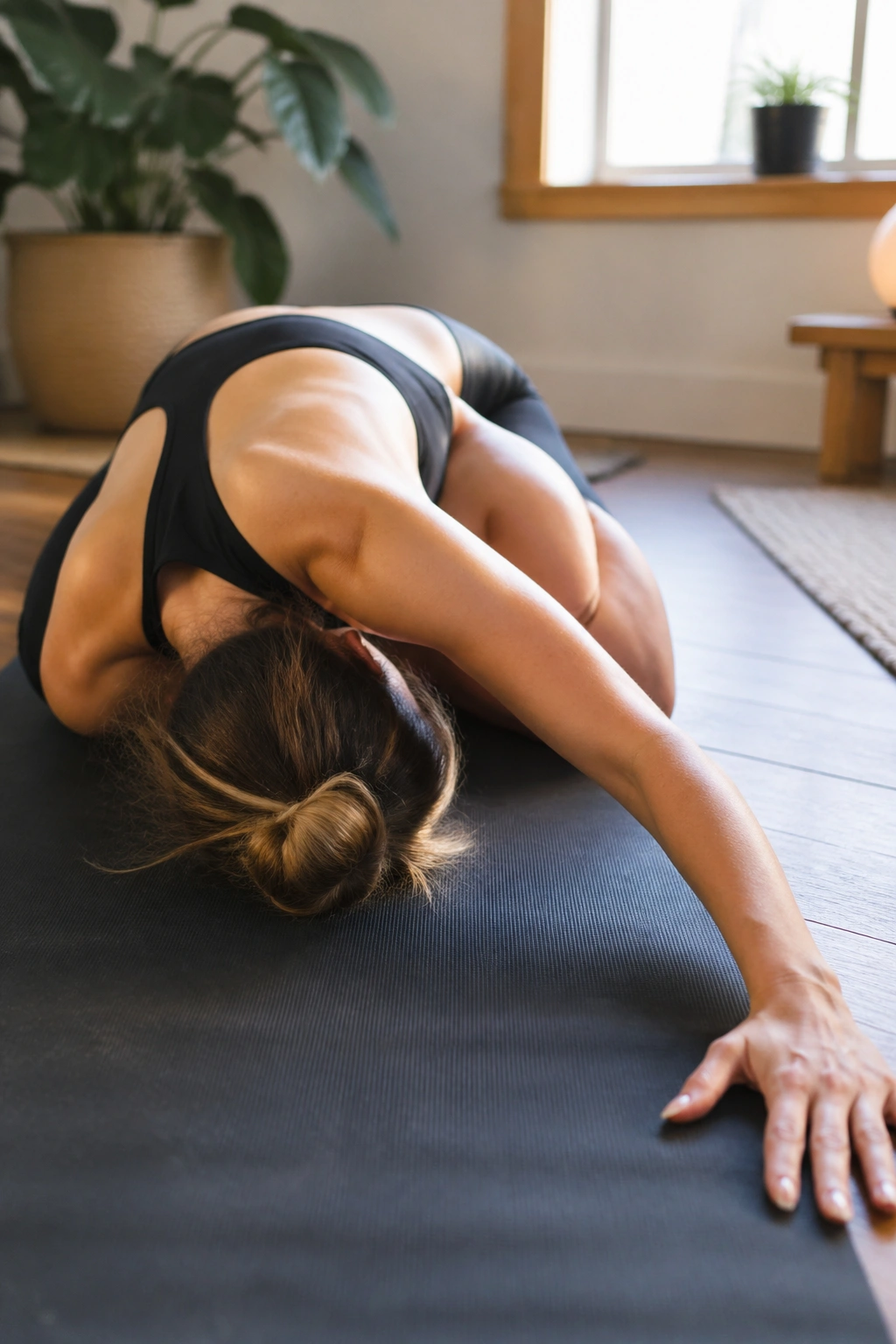
1. Child’s Pose With Side Reach for Tight Lats
If your back, shoulders, and sides feel packed after pull-ups, rows, swimming, or heavy carries, start here. Child’s Pose is one of those shapes people skip because it looks simple, but it can do a lot when your lats are the part that’s complaining.
Kneel on a mat, sink your hips back toward your heels, and walk both hands forward until your torso lengthens. Then slide both hands a few inches to the right so you feel the stretch along the left side of your rib cage. Hold for 4 to 6 slow breaths, switch sides, and keep your forehead on a block or folded towel if the floor feels too far away.
How to make it gentler
- Keep your knees wide if your belly or hips feel cramped.
- Place a folded blanket between your calves and thighs if your ankles are sensitive.
- Let your elbows soften instead of forcing your arms straight.
- Breathe into the side ribs, not just the belly.
The side reach matters. It changes the stretch from a simple back release into something that opens the long line under the arm, and that is often where upper-body tension hides. I like this one after any session with a lot of pulling because it takes the edge off without making you feel flopped open. Clean, quiet, useful.
2. Cat-Cow Into Thread the Needle for a Stiff Upper Back
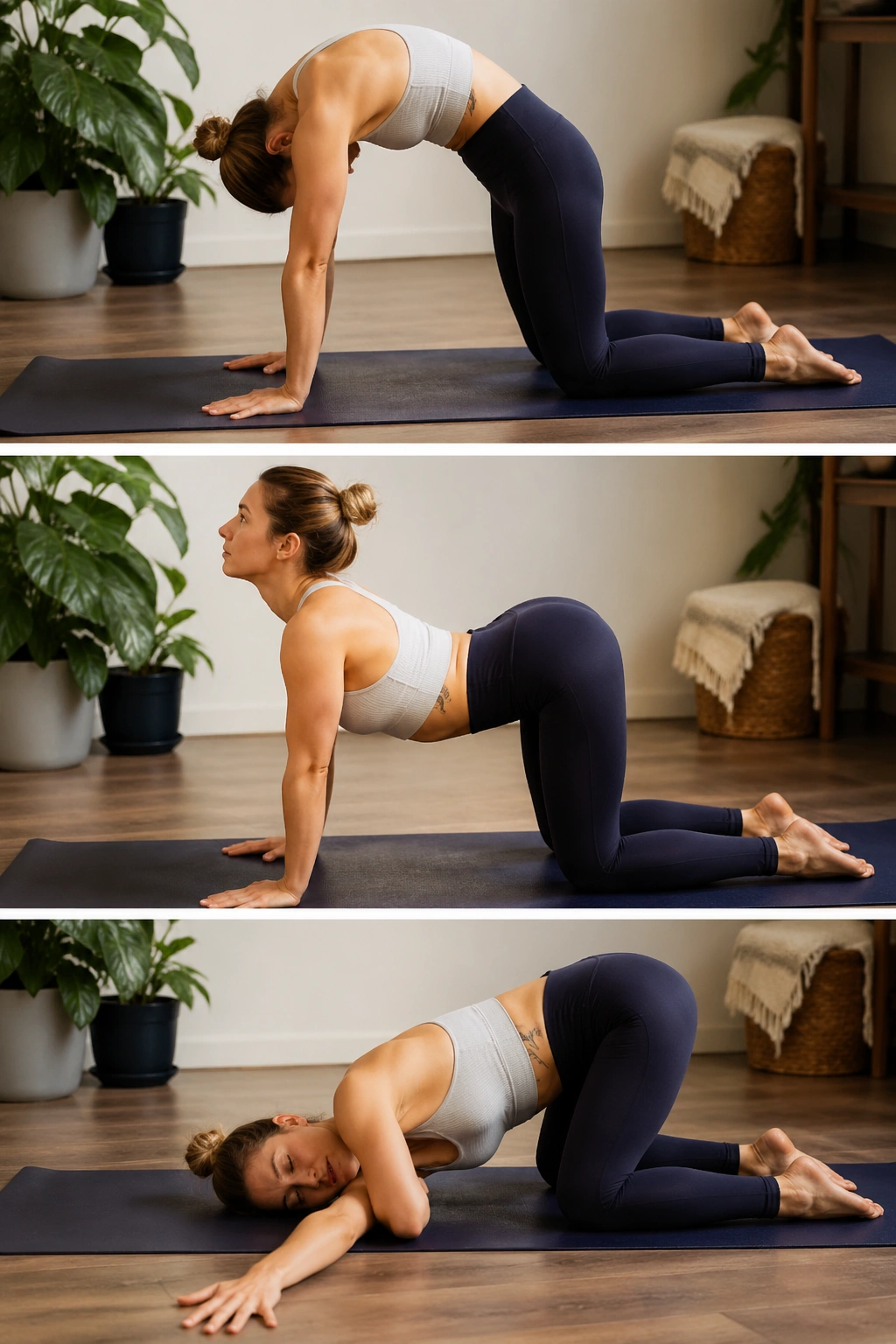
Why does the upper back get so sticky after training? Because it is usually asked to brace, hold, and stabilize long before it gets a chance to move. Cat-Cow followed by Thread the Needle gives that area a small reset without asking for a heroic stretch.
Come onto hands and knees. Press the floor away as you round your spine for Cat, then drop the belly and lift the chest for Cow. Keep the motion smooth and unhurried for 6 to 8 rounds. After that, slide your right arm under your left arm, rest your right shoulder and ear down, and breathe into the twist for 5 breaths before switching sides.
The point is not to crank the spine into a deep twist. The point is to wake it up, then let it settle. If your lower back starts taking over, shorten the range and make the movement smaller. That is not a failure; that is smart.
What to feel
- Cat should feel like your shoulder blades are spreading apart.
- Cow should open the front chest without jamming the neck.
- Thread the Needle should tug along the upper back and outer shoulder, not pinch the neck.
- Your hands should stay planted, with fingers spread wide.
This is a good match after push days, desk-heavy days, and any workout that leaves the thoracic spine feeling glued together. It is also one of the best ways to move from “still working” into “starting to recover” without shocking the body.
3. Downward Dog Pedals for Calves and Ankles
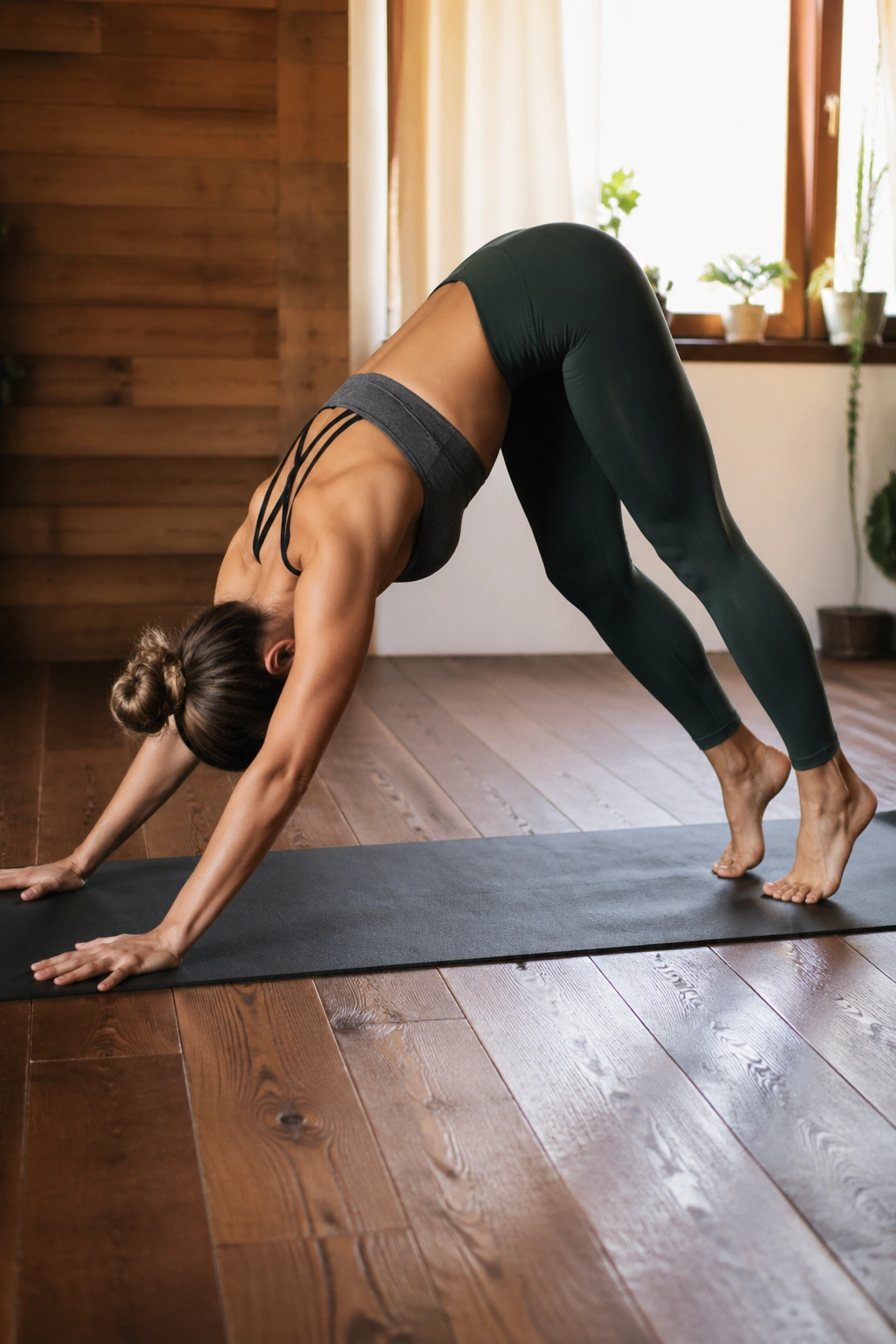
Calves after sprints can feel like piano wire. Calves after jump rope can feel worse. Downward Dog with slow pedal work gives them a chance to lengthen while your shoulders and hamstrings get a little help too.
Set up in Downward Dog with your hands shoulder-width apart and your feet about hip-width apart. Bend one knee deeply while pressing the opposite heel toward the floor, then switch sides in a slow rhythm. Stay there for 5 to 8 breaths, and let the movement feel almost like a lazy march. If the back of your legs are angry, keep both knees bent. That makes the pose friendlier and often more effective.
A lot of people try to force both heels down at once. Don’t. That usually turns the stretch into a fight. A small bend in the knees lets the calves release without pulling the low back into the whole thing.
- Spread your fingers and press evenly through the whole palm.
- Keep your hips high rather than chasing a bigger stretch.
- Move through the pedal slowly so the ankle gets time to open.
- If your wrists are tired, place your hands on dumbbells or yoga blocks.
I reach for this after any workout that includes running, box jumps, or a bunch of calf raises. It is plain, but plain can be excellent when the lower legs feel tight enough to change the way you walk.
4. Low Lunge to Half Split for Hip Flexors and Hamstrings
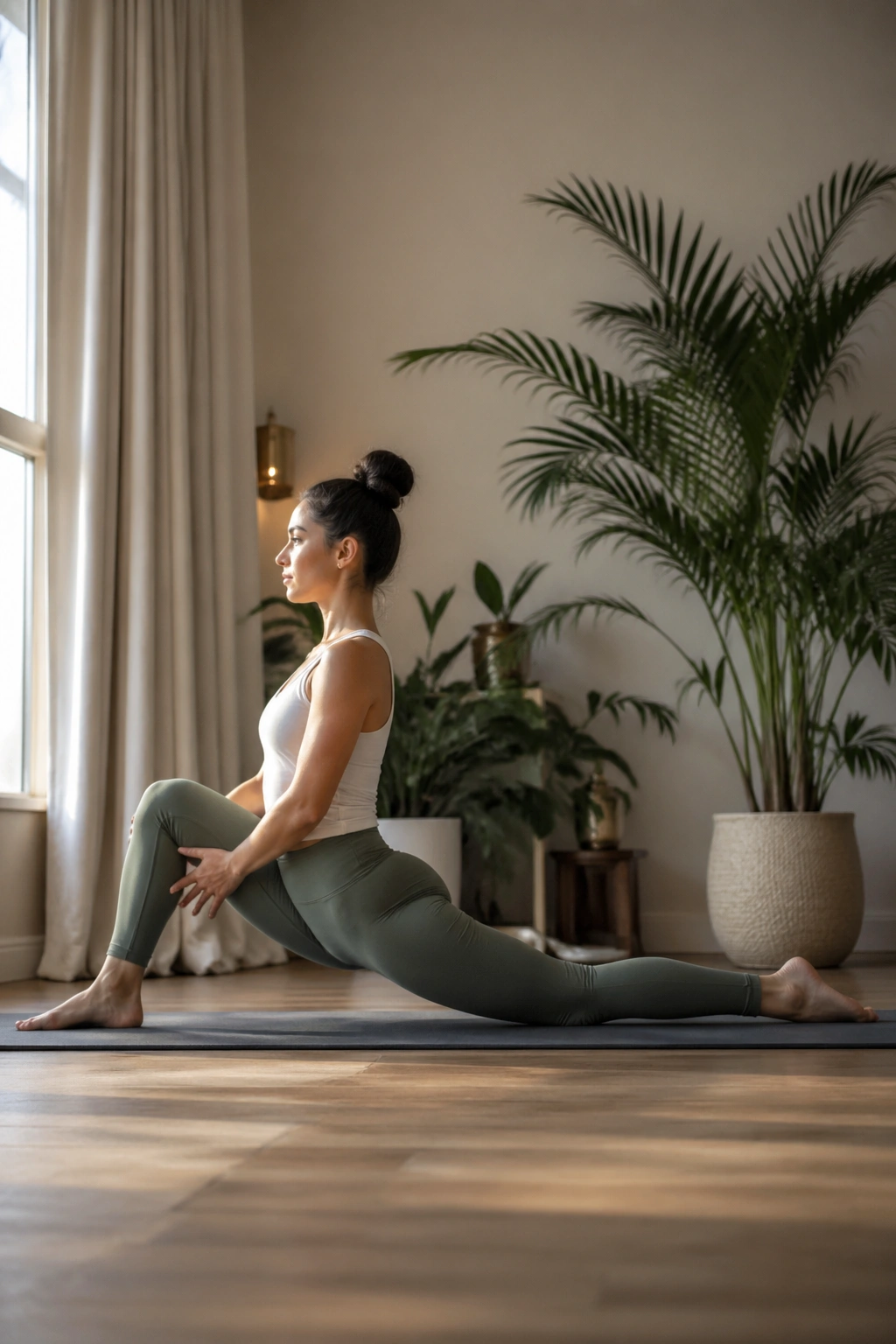
This is the sequence I’d choose for the classic “front of the hip is tight, back of the leg is tight” complaint. It shows up after squats, bike rides, and runs all the time, usually at the exact same moment you sit down and realize your stride feels shorter than usual.
Step one is a low lunge. Bring your right foot forward between your hands, lower your back knee to the floor, and stack your front knee over the ankle. Keep the pelvis level and gently tuck the tailbone under so the stretch lands in the front of the left hip instead of dumping into the low back. Hold for 4 breaths.
Then shift your hips back into Half Split by straightening the front leg a little and folding over it with a long spine. The front foot can flex or point slightly up; I usually prefer a flexed foot because it wakes up the hamstring without cramping the calf. Hold for 4 to 5 breaths, then flow back to Low Lunge and repeat once more if the area feels especially stubborn.
The subtle part matters here. A lot of people drop aggressively into the lunge, then round hard in the half split. That turns a helpful recovery drill into two awkward shapes. Move like you mean to be gentle.
5. Kneeling Quad Stretch With a Cactus Arm Reach
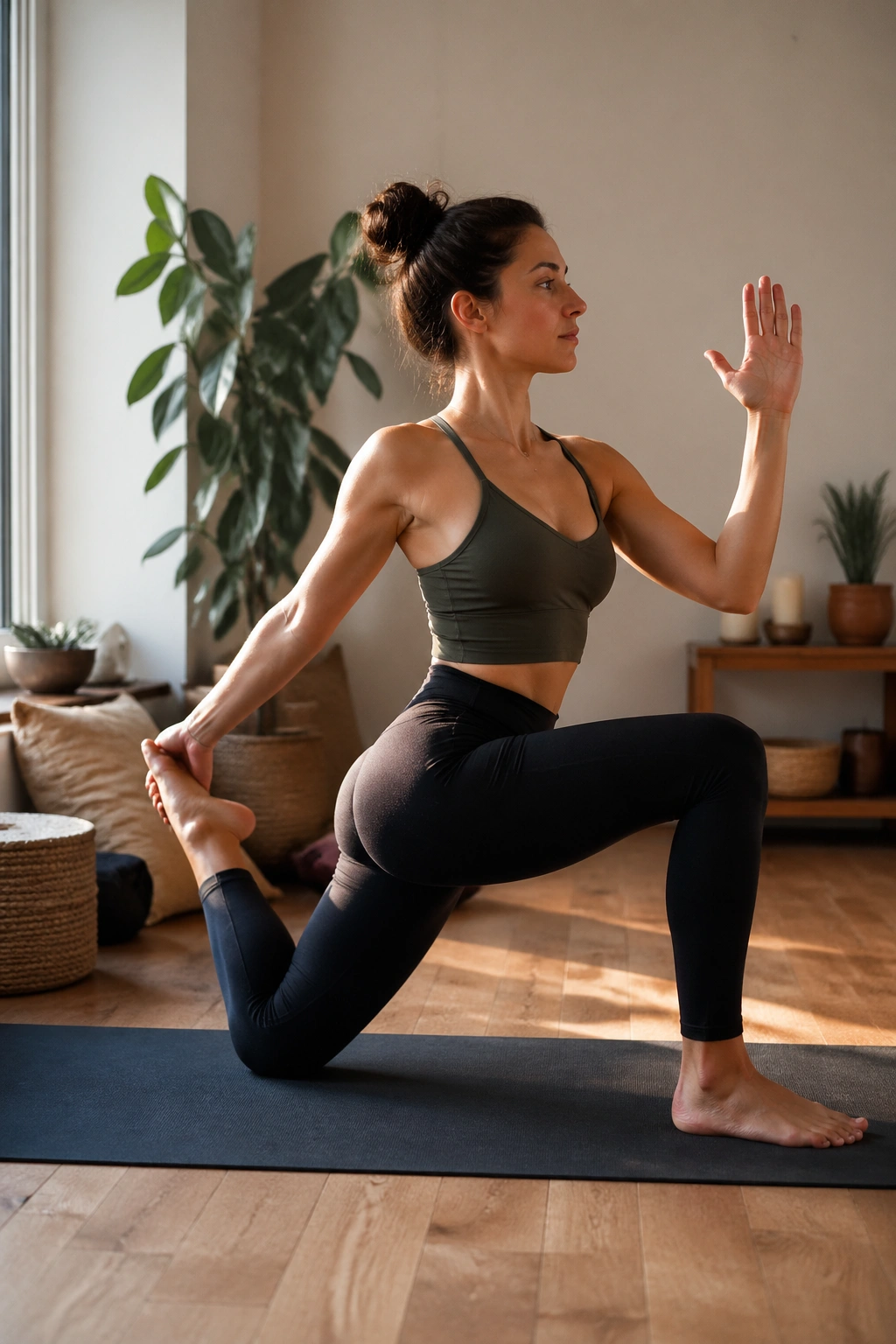
Quads get short and stubborn after leg presses, hill sprints, and long rides. A kneeling quad stretch hits the front of the thigh, but the cactus arm variation adds a chest opener that makes the whole thing feel less compressed.
Kneel on a folded mat or blanket with your right knee down and left foot planted in front of you. Reach back to hold the right foot or ankle, then keep the knees close together and gently press the hip forward until you feel the front of the thigh wake up. If the shoulder on that side feels jammed, open the opposite arm into a cactus shape and turn the chest a little. Hold for 3 to 5 breaths before changing sides.
A few small fixes that help
- Put extra padding under the back knee if the floor feels sharp.
- Keep the front glute lightly engaged so the stretch stays in the quad, not the low back.
- Don’t pull the foot hard toward the seat. Ease into it.
- If grabbing the foot is awkward, loop a strap around the ankle.
This is one of those routines that gets much better when you stop trying to make it intense. The front of the thigh already had a big day. Give it space, not a tug-of-war.
6. Standing Forward Fold to Ragdoll Release
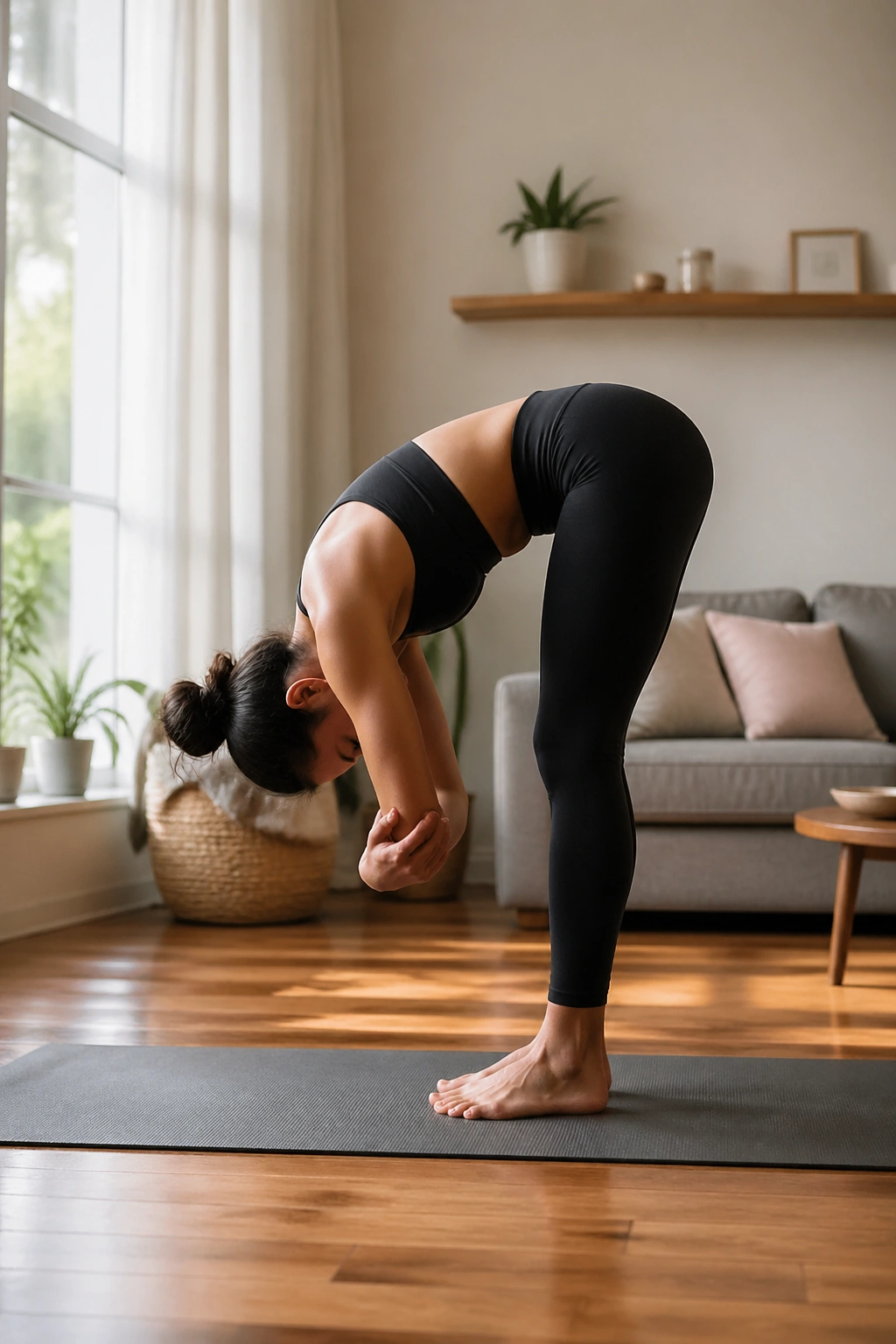
Sometimes floor work feels like too much after a hard session. Standing Forward Fold solves that problem nicely because you can keep your feet grounded and let gravity do some of the work.
Stand with feet hip-width apart, soften your knees a lot, and fold forward from the hips. Let your head hang. Grab opposite elbows for a Ragdoll variation and sway side to side for 5 to 8 breaths. The bend in the knees is not cheating here. It is the part that keeps the hamstrings from slamming shut and lets the spine unfurl a little.
You can shift your weight toward the balls of the feet, then back toward the heels, until the whole back line feels like it is melting out of the day. If you feel a hamstring grab behind the knee, bend the knees more and fold less deeply. That tiny adjustment is usually what separates a good stretch from a cranky one.
This works well after full-body circuits, deadlifts, and any workout that leaves you slightly dizzy but not ready to lie down. It also pairs well with a slow exhale through the nose. Long exhale. Soft jaw. Simple things.
7. Figure-Four on Your Back for Glutes and Piriformis
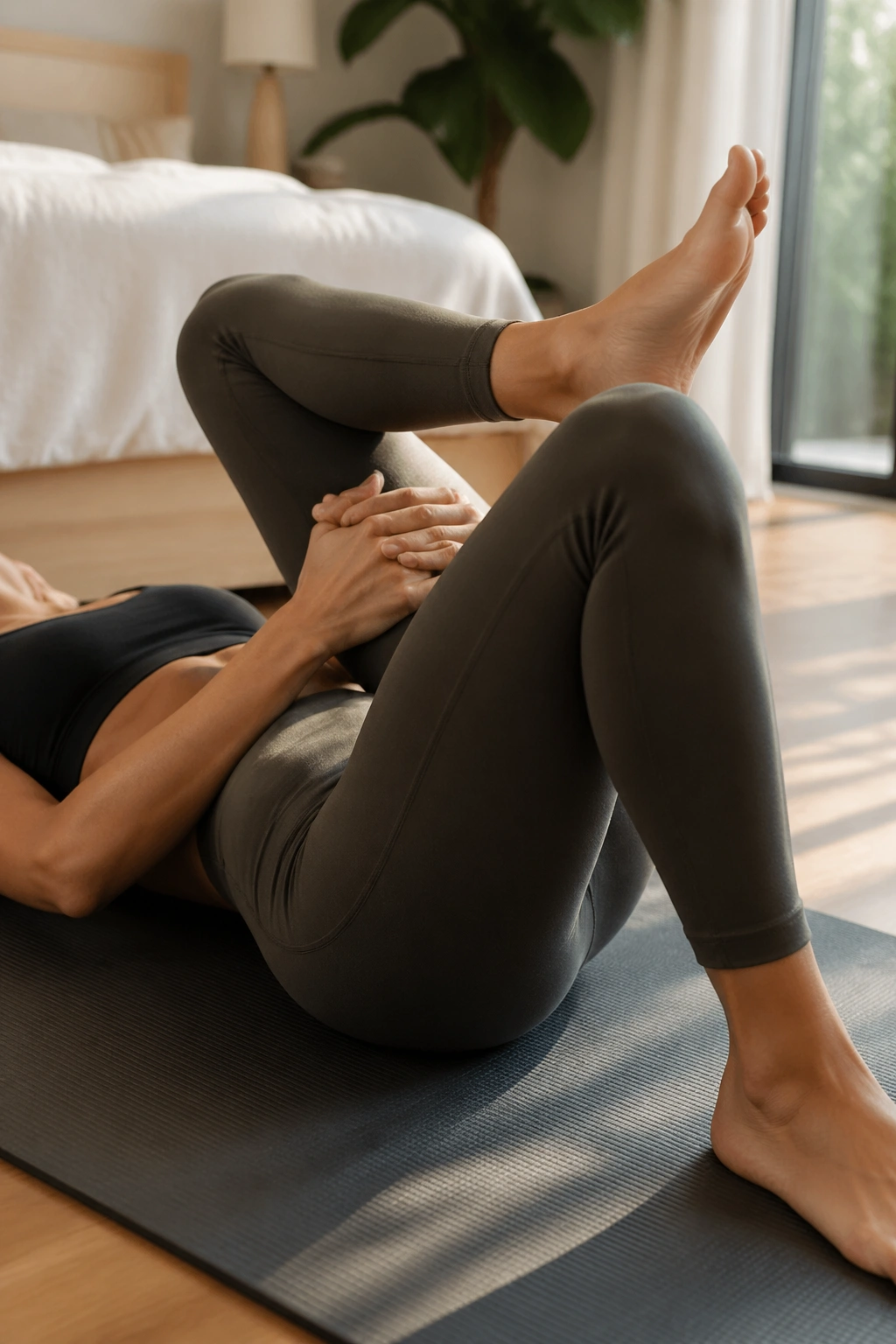
If your seat feels tight after squats, lunges, or long runs, the figure-four stretch on your back is one of the cleanest ways to address it. It gives the glutes space without putting weight on the knees or asking your balance to cooperate.
Lie on your back, bend both knees, and place your right ankle over your left thigh just above the knee. Flex the right foot so the knee stays protected. From there, either keep the left foot on the floor for a milder version or draw the left thigh toward you for a deeper stretch. Hold for 5 breaths, then switch.
The nice thing about this one is that you can make it as easy or as deep as your body wants. If the stretch disappears, pull the shin a little closer. If it bites, back off and keep the lower foot planted. The glute will still get the message.
A lot of people feel this in the outer hip, deep in the back pocket area. That is the spot. No need to chase a big range. In fact, a smaller, calmer version usually works better after training because the tissue is already warm and a little tired.
8. Supine Spinal Twist for the Lower Back
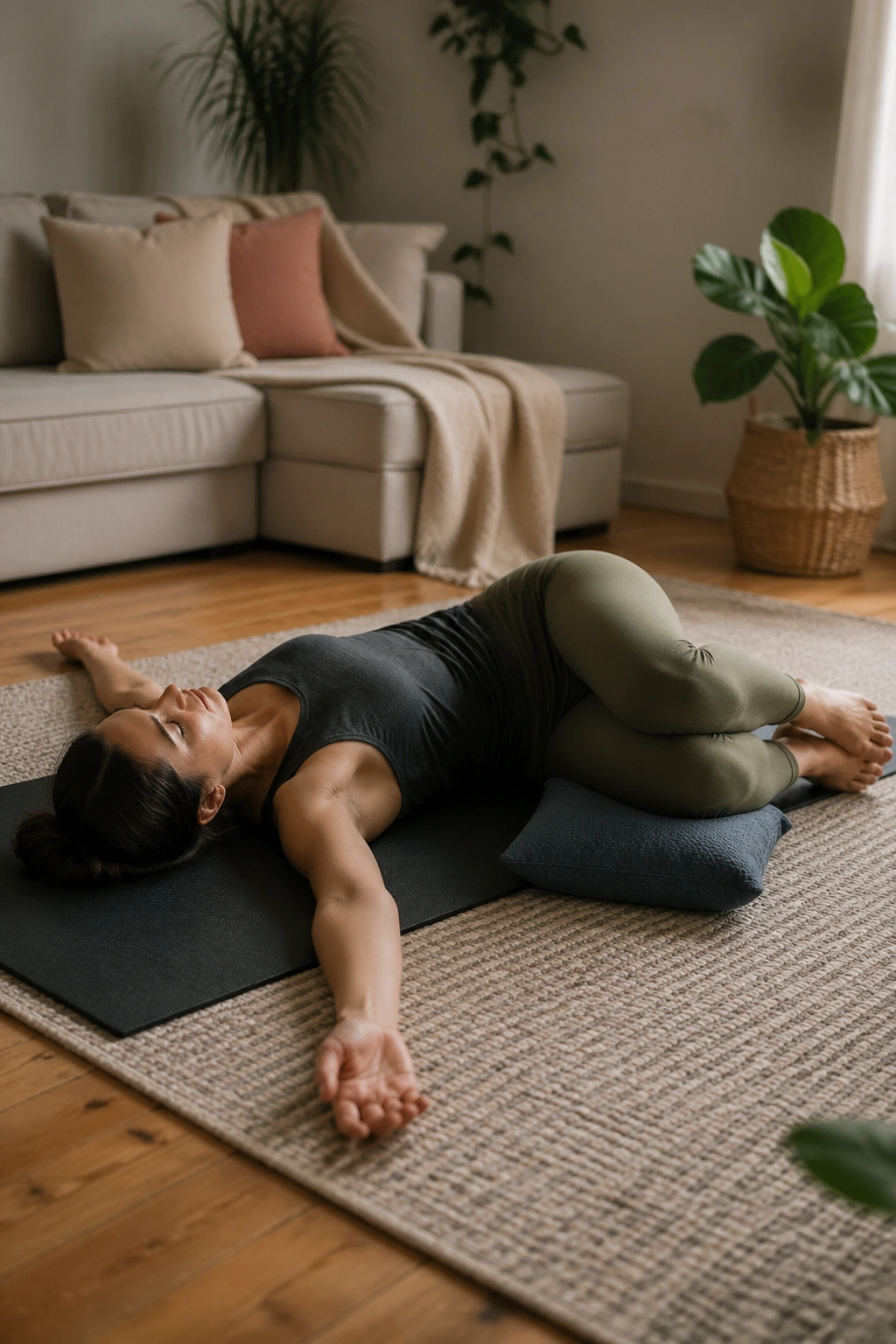
A twist feels even better after lifting when you realize your lower back has been acting like a plank all session. Supine Spinal Twist gives that area a gentle release without the drama of a standing rotation.
Pull both knees into your chest, extend your arms out in a T shape, and let your knees fall to one side while keeping both shoulders heavy on the floor. If the knees do not reach the floor, that is fine. Stack a pillow, block, or folded blanket under them. Stay for 5 slow breaths, then switch sides.
What to keep in mind
- The twist should feel like a lengthening, not a wrench.
- Keep the top shoulder from lifting.
- If your neck is fussy, look straight up instead of turning the head.
- Place a pillow between the knees if the hips feel uneven.
This is one of those finishes that works after deadlifts, kettlebell swings, and boxing combos because it asks the spine to soften after all the bracing. It can also help when you’ve spent too much of the day in a chair. Nothing flashy. Just a quiet way to let the back unpack itself.
9. Reclined Butterfly for Inner Thighs and Breath
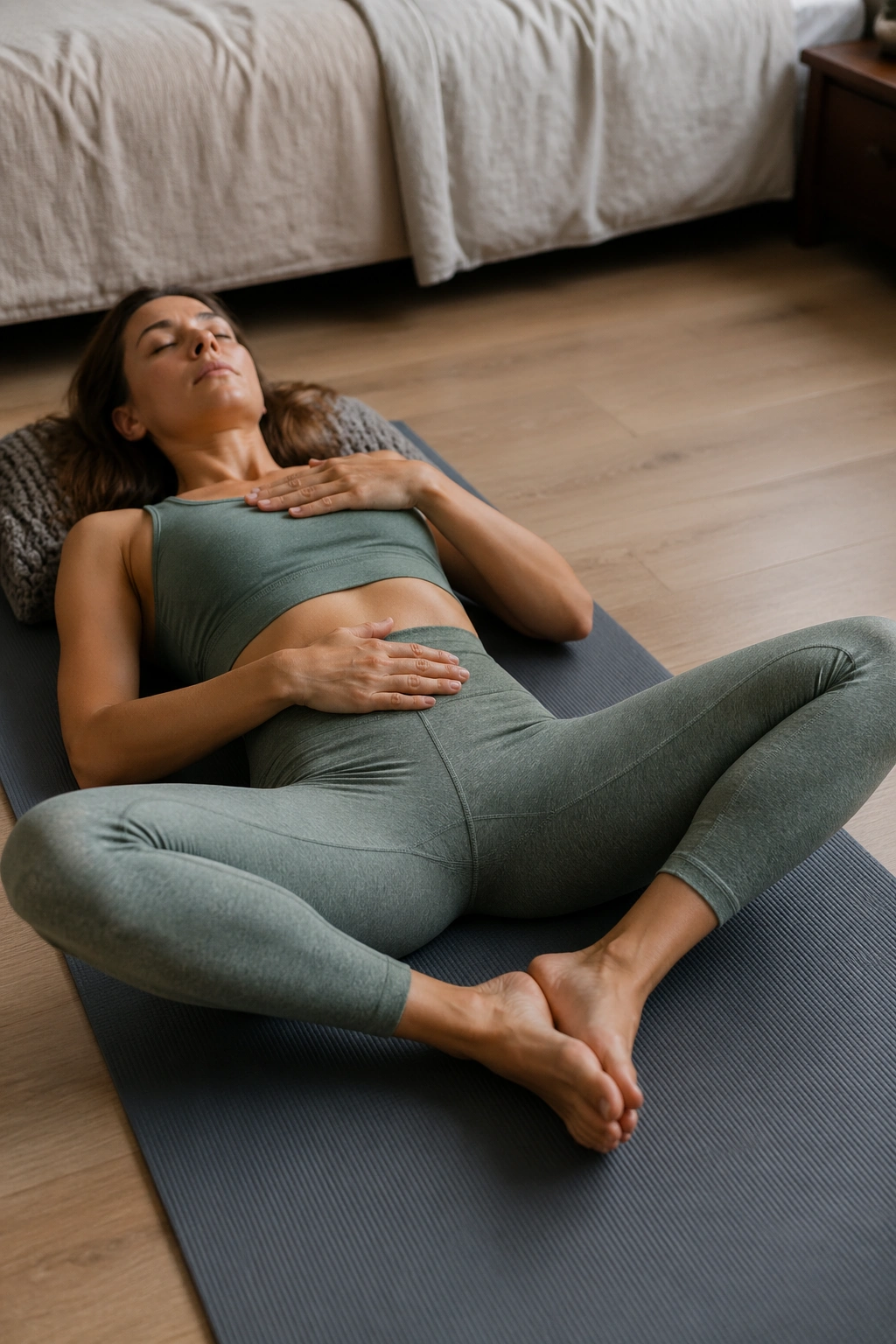
Reclined Butterfly is the one I reach for when the workout left the hips feeling closed and the breath a little fast. The shape is simple: lie on your back, bring the soles of your feet together, and let your knees fall open.
If your inner thighs are tight, slide your feet farther away from your pelvis so the stretch stays mild. If your knees hover high, place blocks or pillows underneath them. Then rest one hand on your belly and one on your chest, and breathe for 6 to 10 slow breaths. The goal is not to pin the knees down. The goal is to let the groin soften while the breathing slows.
This pose works especially well after rowing, spin classes, sled pushes, and anything that leaves the inner thighs doing more work than they wanted. It also pairs nicely with a long exhale because the body tends to relax into the floor once the knees are supported.
If you want to make it feel more like recovery than stretching, keep the eyes closed and notice the rise and fall of the ribs. That small attention shift matters. The body hears calm.
10. Pigeon Pose With Block Support for Deep Hip Release
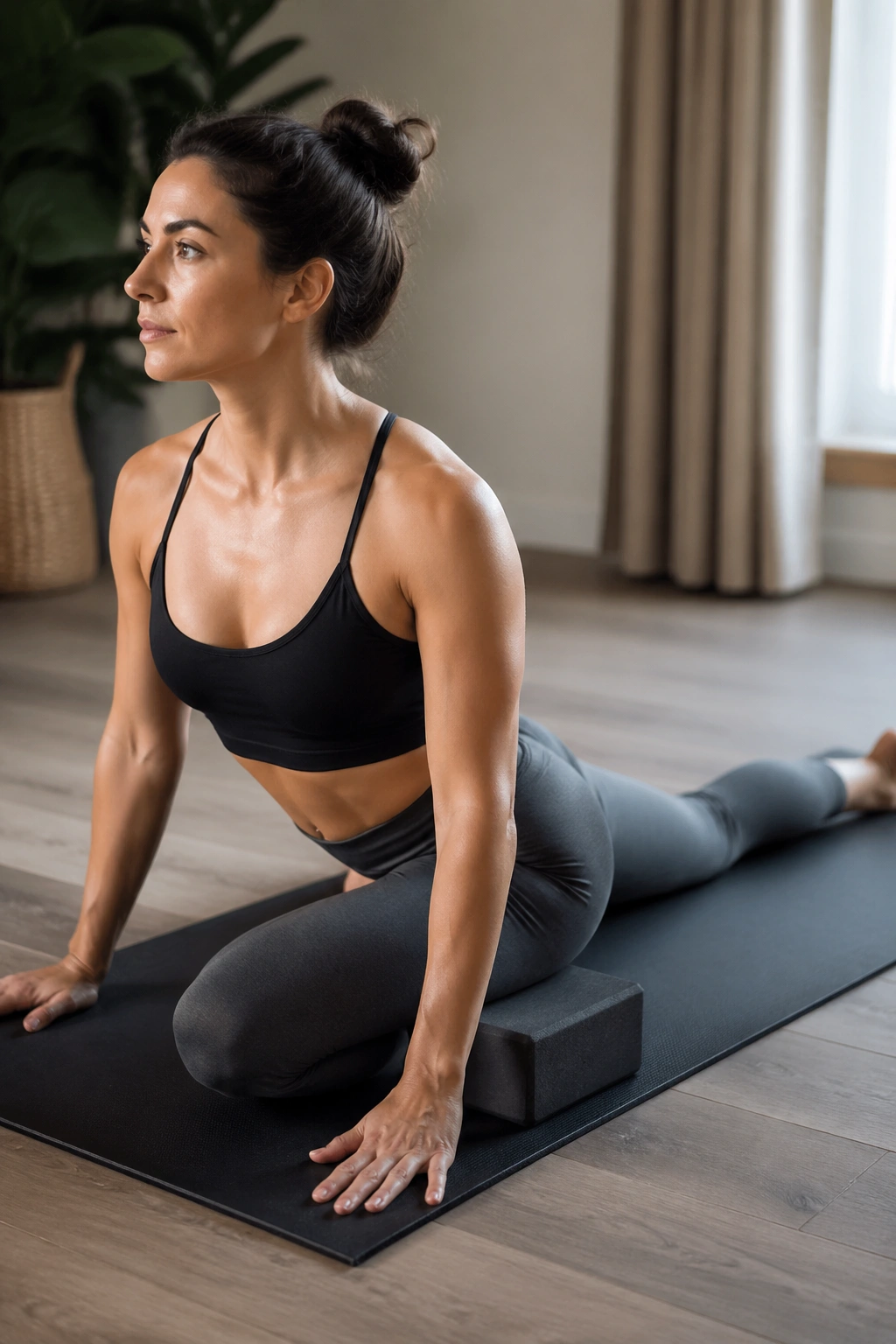
Runners love Pigeon Pose right up until they sit too low and the front knee starts talking back. When it is set up well, though, it can be one of the best ways to open the outside of the hip after miles, squats, or repeated lunges.
Start in a tabletop or Downward Dog, bring the right knee forward behind the right wrist, and slide the left leg long behind you. Keep the right foot in a comfortable angle, not forced into a perfect right angle. If the right hip hangs in the air, place a block or folded blanket under it. Stay upright at first, then fold forward only if the knee and hip feel fine.
What to watch for
- The front knee should feel cushioned, not pinched.
- The pelvis should stay as level as possible.
- The back leg should stay long and active.
- Exit the pose early if the front knee aches.
This stretch gets overdone all the time. People sink, collapse, and then wonder why their knee complains later. Better to stay higher and breathe for 5 to 8 breaths than force depth for the sake of it. If Pigeon never feels good, figure-four on the back is a smarter choice. No prize for suffering.
11. Sphinx Pose for Abs, Hip Flexors, and the Front Body
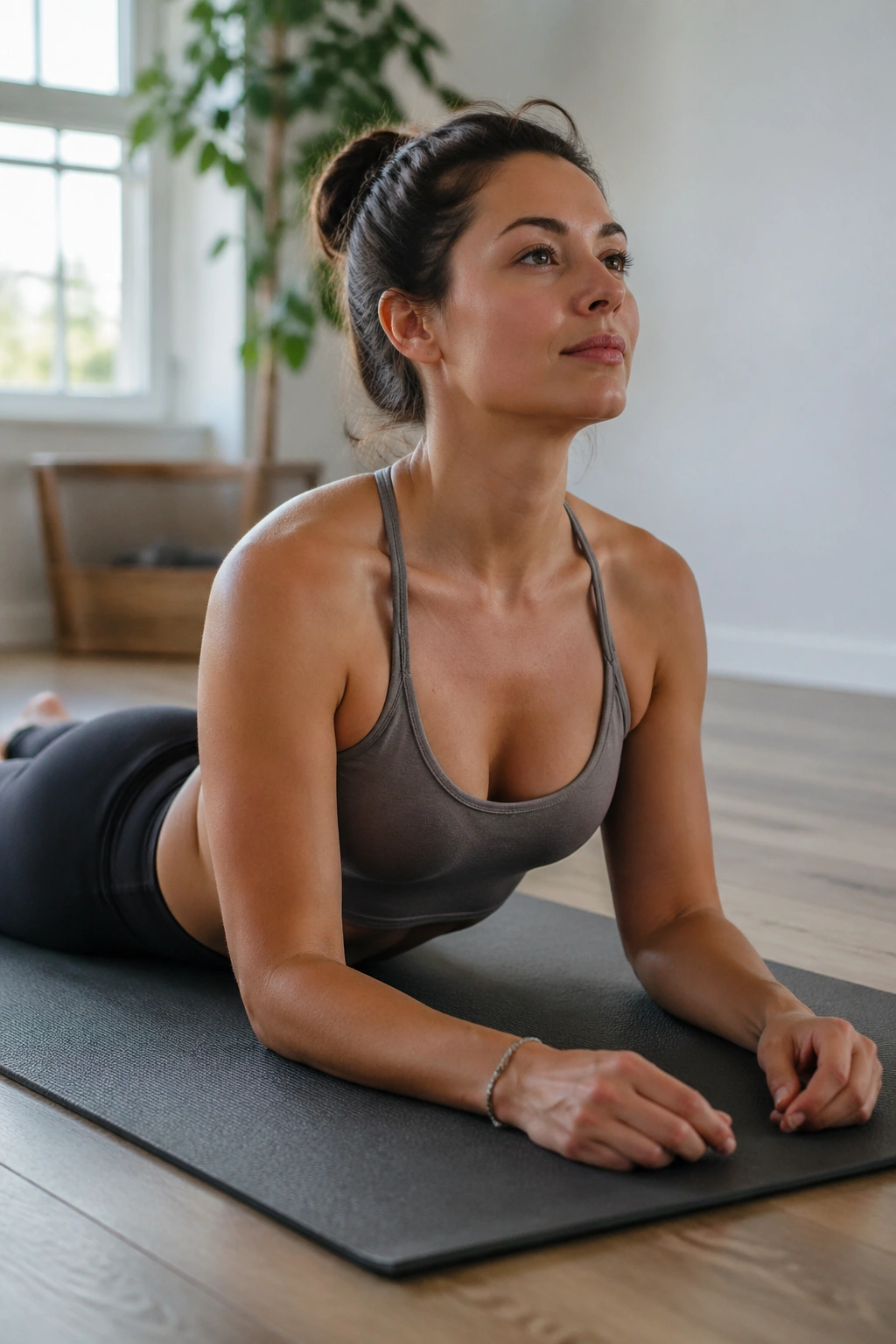
Not every cool down should be a fold. After ab work, sprint intervals, push-ups, or any session that keeps the front of the body in a shortened position, a gentle backbend can feel like a relief valve opening.
Lie on your stomach and prop up on your forearms so your elbows sit under or slightly ahead of your shoulders. Press the pubic bone gently into the floor, lengthen the tailbone, and let the chest broaden without dumping into the low back. Stay for 5 breaths, then come down and rest if you need to. That rest matters.
If your lower back pinches, slide the elbows farther forward or keep the chest lower. Sphinx is not supposed to feel like a giant bend. It should feel like the front body has room again. That includes the abs, the hip flexors, and the sternum area that gets locked down when you spend a workout bracing hard.
This is a good one to pair with a prone breath. If your forehead is comfortable on the floor between rounds, take one slow inhale into the ribs and a long exhale that softens the belly. Small thing. Big difference.
12. Lizard Lunge for Runners and Cyclists
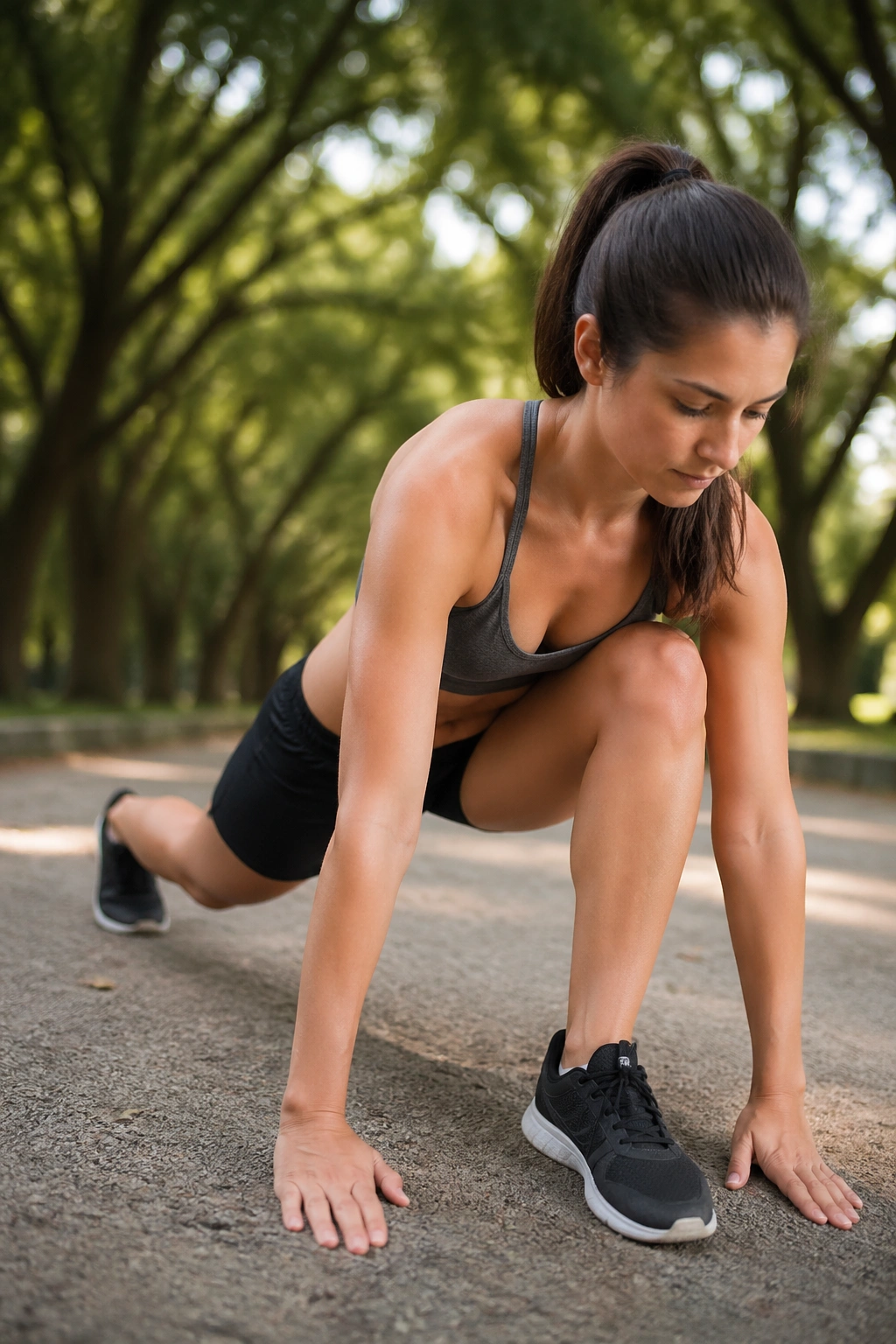
One long ride can leave the outer hips stubborn in a way that surprises people. Lizard Lunge is useful because it reaches the hip flexors, groin, and glutes in one shape, but only if you keep it honest and avoid dumping all the weight into the joints.
Step your right foot to the outside of your right hand and lower your back knee to the floor. Stay on your hands, or drop to your forearms if the pose feels stable and your lower back stays long. Keep the back leg active and let the front knee track in a line that feels safe. Hold for 4 to 6 breaths, then repeat on the other side.
The mistake here is trying to look advanced. Deep is not better. If the front hip screams or the back knee twists weirdly, shorten the stance and keep the chest higher. You can even keep the back toes tucked for a more active version, which is often nicer after fast leg work because it gives the foot and calf something to do.
I like this one after cycling or hill runs because it handles the hip crease and the inner thigh at the same time. It is a bit more demanding than a reclined stretch, so save it for when your body wants a little more floor work and less lounging.
13. Seated Straddle Fold for Hamstrings and Adductors
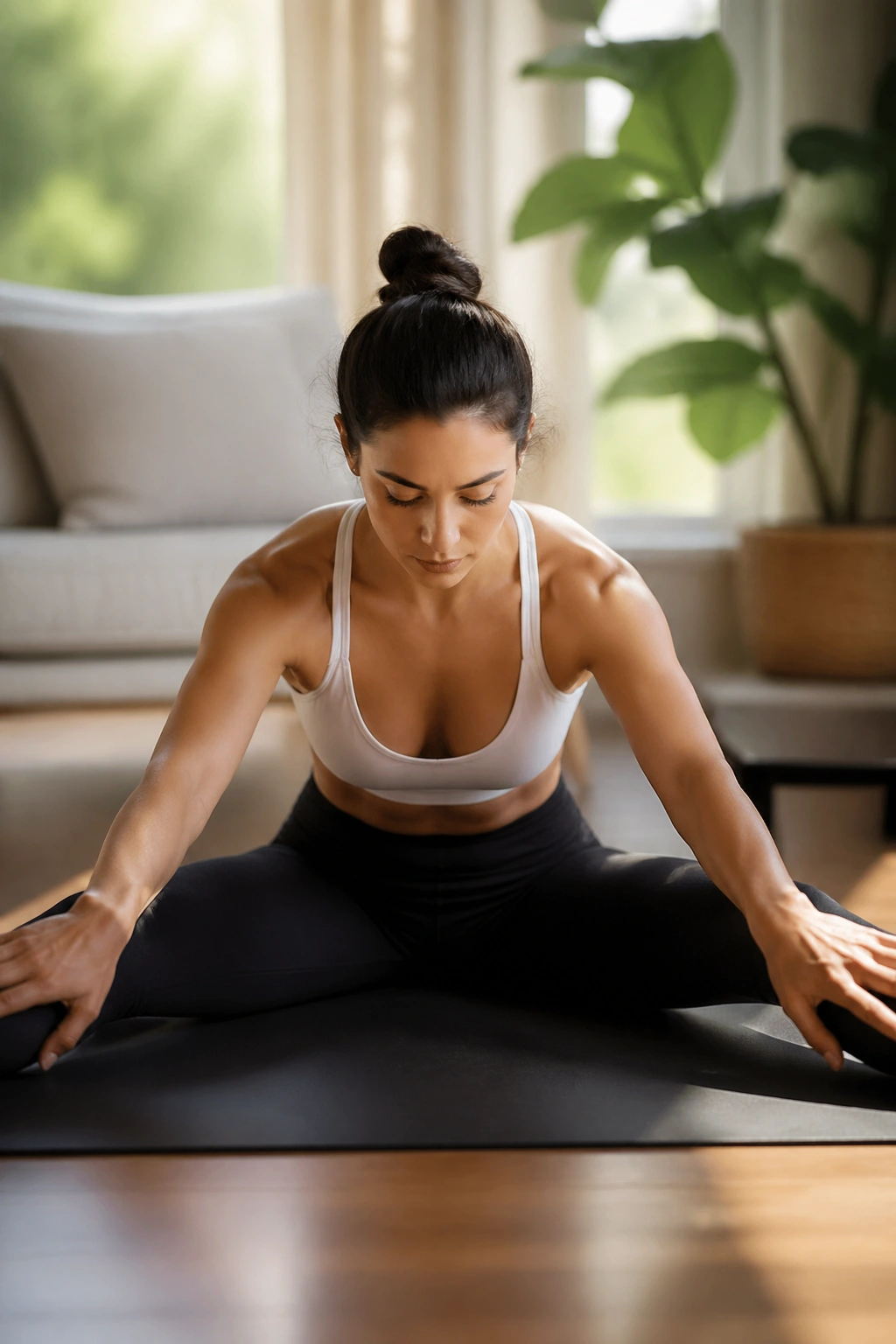
What if your hamstrings hate straight-leg stretching? Then a seated straddle fold is a better place to go. The wide position gives the pelvis more room, which often makes the stretch feel less threatening and more useful.
Sit on the floor or on a folded blanket with your legs open in a comfortable V. Keep your knees softly bent if you need to. Sit tall first, then walk your hands forward and hinge at the hips instead of collapsing through the spine. You may only travel a few inches. That is fine. Stay there for 5 breaths, come back up, and repeat once if you want a little more.
This one hits the inner thighs too, which makes it especially useful after heavy lower-body sessions or sports that involve quick changes of direction. If your lower back rounds the second you reach forward, stop chasing depth and sit higher on a prop. A taller seat often makes the hamstrings easier to access because the pelvis can tip forward without fighting the floor.
A lot of people treat folds like a test. They are not. They are a conversation. If the legs feel guarded, back off and breathe longer rather than trying to win a range of motion contest.
14. Neck, Shoulder, and Wrist Reset After Upper-Body Training
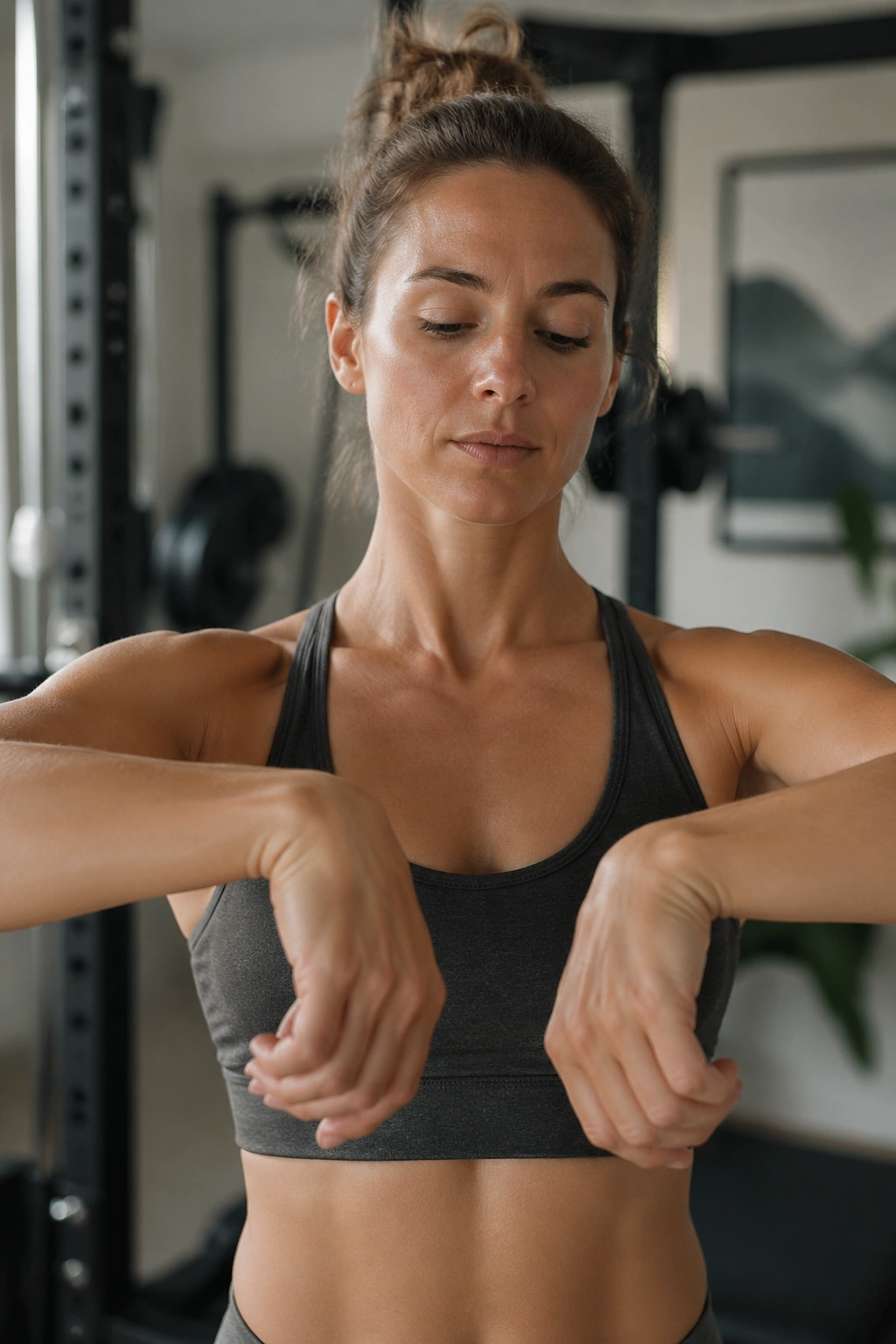
Wrists and traps take a beating that people forget about. Push-ups, planks, cleans, presses, and even bear crawls can leave small joints and small muscles feeling oddly tired, which is why a short reset here is worth doing instead of skipping straight to the shower.
A simple sequence
- Circle the wrists 5 times each direction, then press the palms together in front of the chest and lower the hands slowly.
- Interlace the fingers behind your back and straighten the arms a little to open the chest.
- Drop one ear toward one shoulder, then the other, keeping the shoulders heavy.
- Roll the shoulders back 8 times, pausing for a breath between each roll if they feel crunchy.
Don’t force the neck stretch. The neck is touchy after training, and yanking it around helps nobody. Keep the motion small enough that it feels almost boring. Boring is fine here.
This little sequence works well after upper-body days, desk work, or any session where you gripped hard for a long time. It also makes the transition into the next stretch or the final rest pose smoother because the body is not hanging onto so much tension in the upper chain.
15. Legs-Up-the-Wall Savasana to Finish the Cool Down
If your breathing is still ragged, this is where the whole session should land. Legs-Up-the-Wall Savasana is the least fussy recovery shape on the list, and after a hard workout that is exactly why it works.
Sit beside a wall, swing your legs up, and lower your back to the floor so your hips are as close to the wall as feels comfortable. A folded blanket under the hips can make the position feel softer, but it is optional. Let the arms rest out wide, close the eyes, and breathe in through the nose for 4 counts, out for 6. Stay for 2 to 5 minutes if that feels good, or longer if you have the time.
If your hamstrings are tight, scoot a little farther from the wall so the legs are not forced straight. If your lower back wants to arch, place a small pillow under the pelvis. The shape should feel easy enough that you almost forget you are “doing” anything.
That is the whole point. After a workout, recovery should not feel like a second performance. It should feel like the body being allowed to settle back into its own pace, one breath at a time.
