



Sore legs have a funny way of showing up the minute you stop moving. A good set of post workout stretches for sore muscles can take the edge off that grabby, tight feeling after squats, running, cycling, rowing, or a hard upper-body session that leaves your shoulders acting like they’ve forgotten how to rest.
The trick is not to fight your body. Hard pulling, bouncing, or cranking into a stretch usually makes things worse, especially when the muscles are warm but tired. A better target is a mild pull, slow breathing, and enough time for the tissue to settle instead of brace up again.
Most of the stretches below work best when you hold them for 20 to 30 seconds, breathe out slowly, and stay out of sharp pain. Some are quiet and static. A couple move a little. That mix matters, because sore quads, tight hip flexors, stiff calves, and cranky shoulders do not all calm down the same way.
1. Standing Quad Stretch
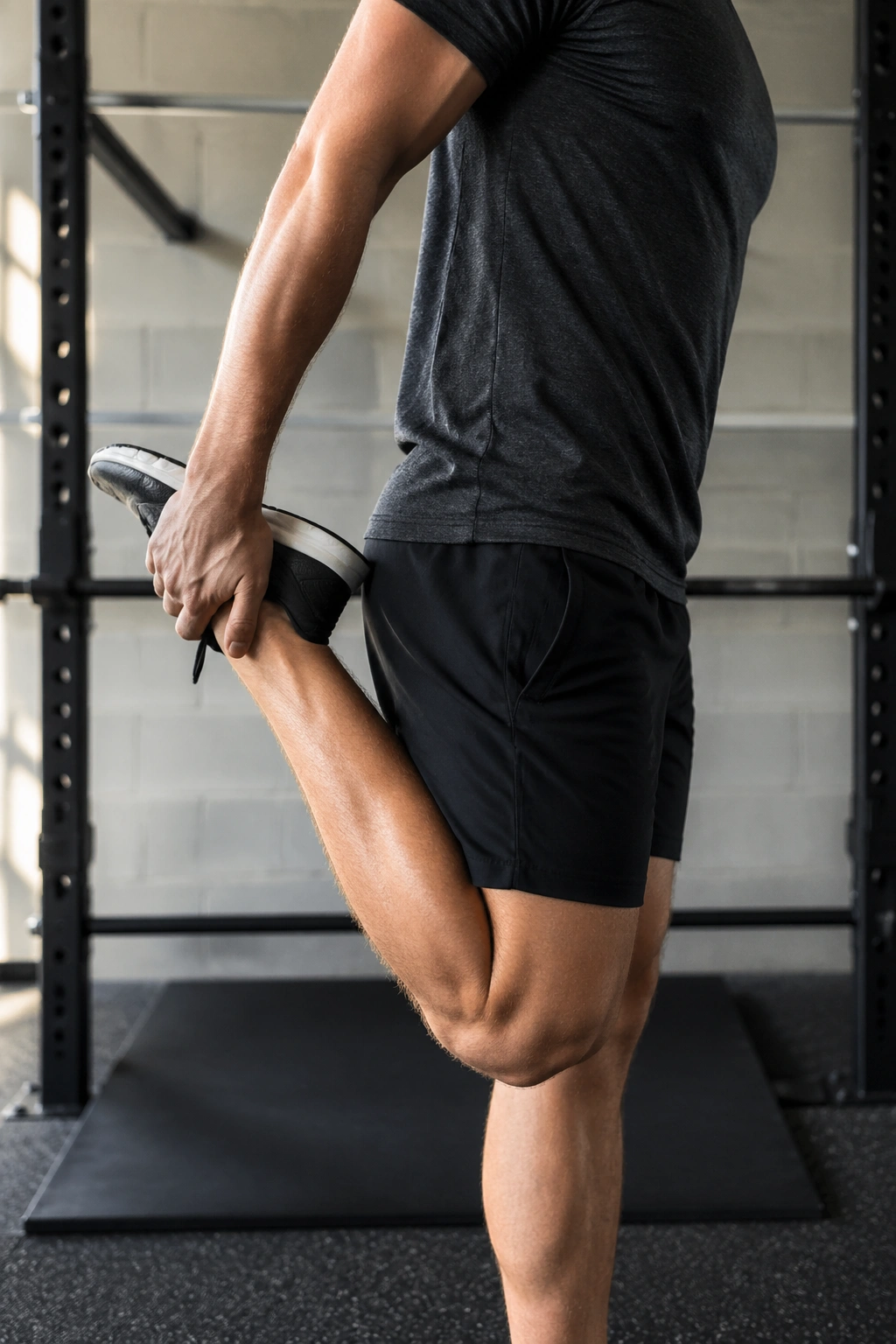
The standing quad stretch is the one people skip until their front thighs start barking on stairs. It looks simple, and that’s part of why it works so well after leg day: you isolate the quadriceps without making the whole body work for the stretch.
How to Get It Right
Stand tall, bend one knee, and grab the ankle on the same side. Bring your knees close together, then gently tuck your pelvis so your lower back does not arch. You should feel the stretch along the front of the thigh and maybe a little into the hip, not a pinch in the low back.
If balance is shaky, put one hand on a wall or rack. That small support lets you relax the lifted leg instead of wobbling through it. Hold for 20 to 30 seconds per side, then switch.
- Keep your knees near each other.
- Squeeze the glute on the stretching side.
- Don’t yank the foot toward your seat.
- Stop short of knee pain or a low-back pinch.
One good cue: pull the heel up, not the knee back. That keeps the stretch where you want it.
2. Kneeling Hip Flexor Stretch
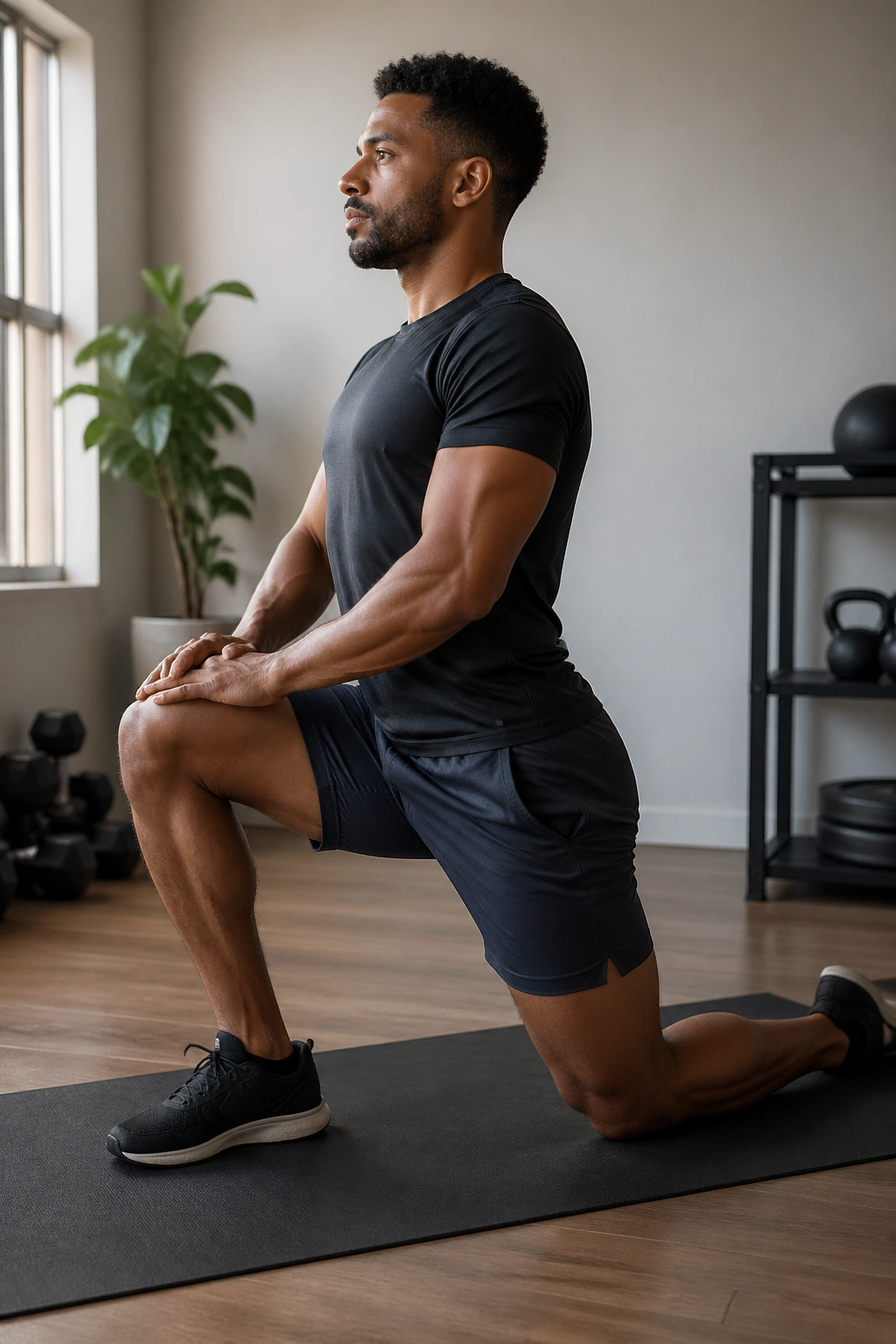
A tight hip flexor can make your whole stride feel short and choppy. That’s especially true after sprint work, heavy squats, long rides, or a day spent sitting after training, which is the kind of combo that makes the front of the hips feel welded shut.
This stretch earns its place fast. Half-kneel on the floor, with one knee down and the other foot planted in front. Tuck the tailbone, squeeze the glute on the kneeling side, and then shift forward only an inch or two. If you lunge too far, the stretch gets dumped into your lower back. That’s the wrong place.
Keep your ribs stacked over your pelvis. Breathe into the front pocket of the hip on the kneeling side and wait for the pull to show up there. It usually takes a few slow exhales before the body stops guarding.
A pad or folded towel under the back knee helps a lot. So does staying upright instead of leaning forward like you’re trying to win a lunge contest. A small shift goes farther than a big one when the muscles are already sore.
3. Seated Hamstring Reach
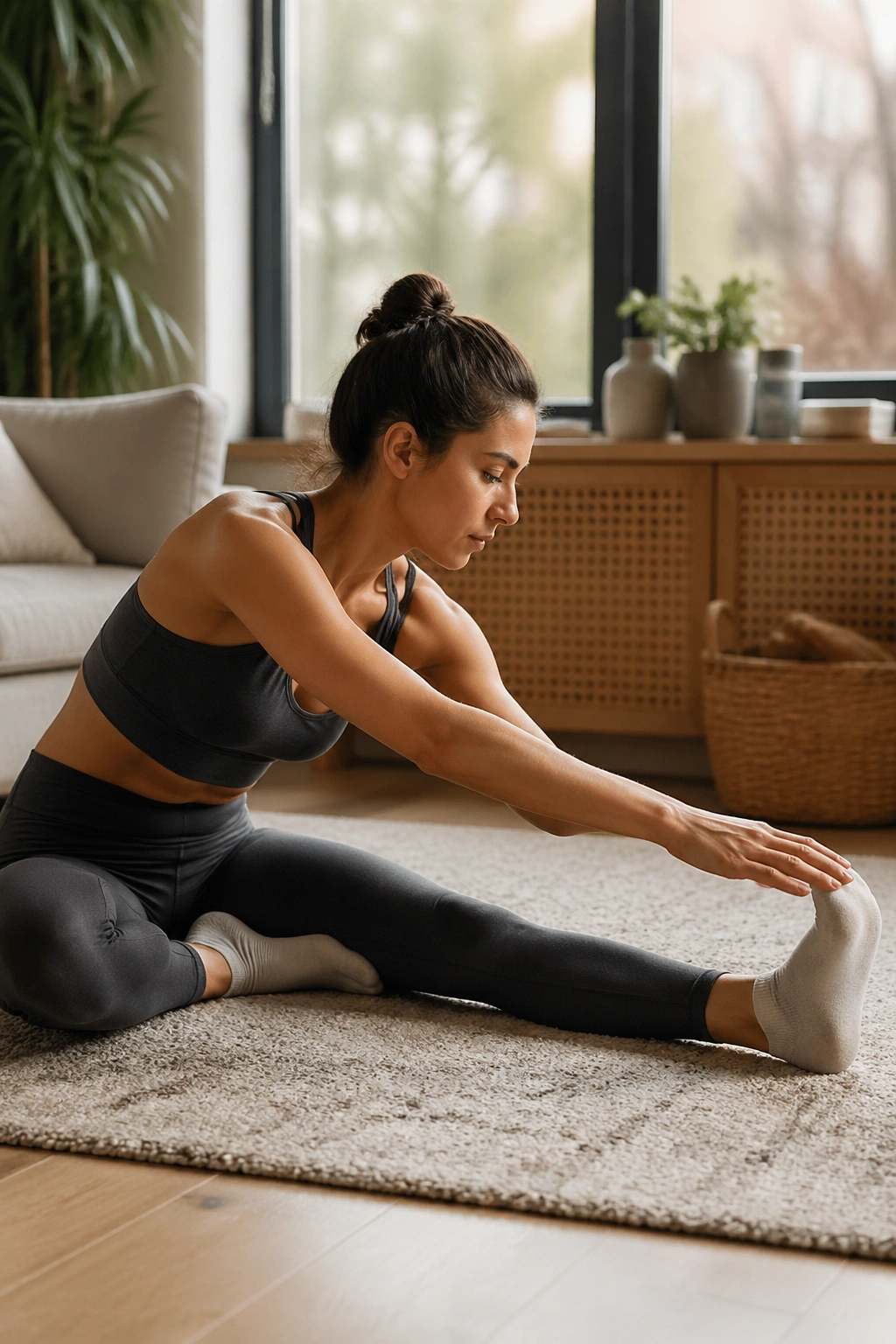
Why do hamstrings feel so stubborn after a run or deadlift session? Because they’re involved in nearly everything that asks for hip extension, and they tend to clamp down when you ask for too much too soon.
Sit on the floor with one leg straight and the other leg bent so the sole of that foot rests near the inner thigh. Hinge forward from the hips, not the waist, and keep the spine long as you reach toward the toes or shin of the straight leg. The point is a pull along the back of the thigh, not a rounded fold that makes your back do all the work.
How to Use It
Hold for 20 to 30 seconds, then come out slowly and switch sides. If you’re tight, loop a towel or strap around the foot and hold the ends so you can keep the chest open without jerking forward.
A lot of people fold their back into this stretch and call it hamstring work. It isn’t. The hinge matters. So does a soft knee if the leg is pulling hard behind the knee. You want length, not a twitchy nerve complaint.
4. Figure Four Glute Stretch
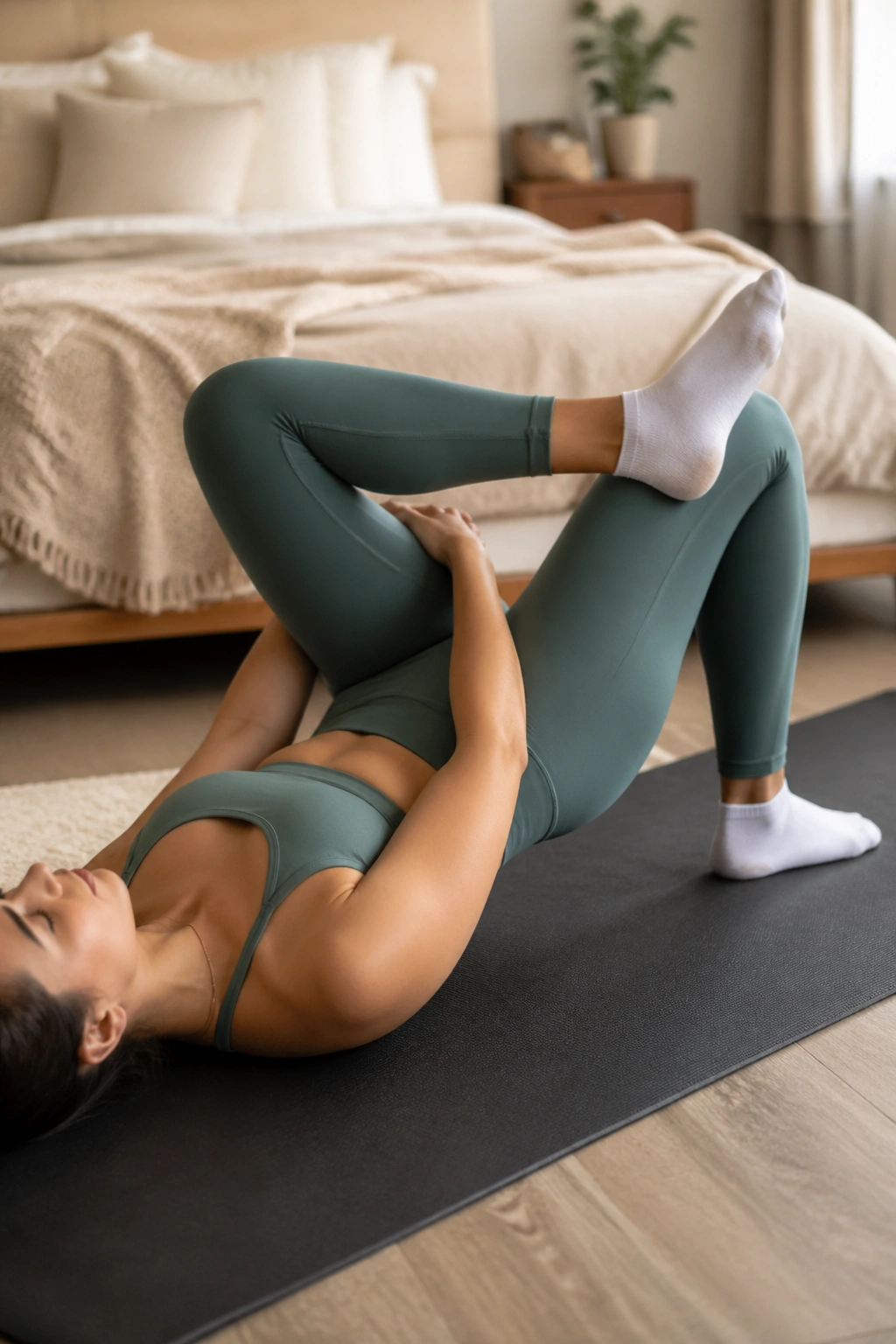
You know the feeling: glutes heavy, hips stiff, maybe a little ache deep in the outer hip after deadlifts or a long walk with a weighted pack. The figure four stretch usually helps because it hits the piriformis and the surrounding glute muscles without demanding much effort from the sore area.
Lie on your back with both knees bent. Cross one ankle over the opposite thigh, just above the knee, so your legs make a rough “4” shape. Thread your hands behind the supporting thigh and draw it toward you until you feel a broad stretch through the outer hip and butt.
- Keep the crossed ankle flexed, not dangling loose.
- Pull from behind the thigh, not from the knee joint.
- Hold for 20 to 40 seconds on each side.
- If you feel knee pressure, back off the range.
The nicest thing about this one is how little it asks from the spine. You can keep your shoulders heavy on the floor and let the hip soften on its own. That’s the win here: low effort, high payoff.
5. Wall Calf Stretch
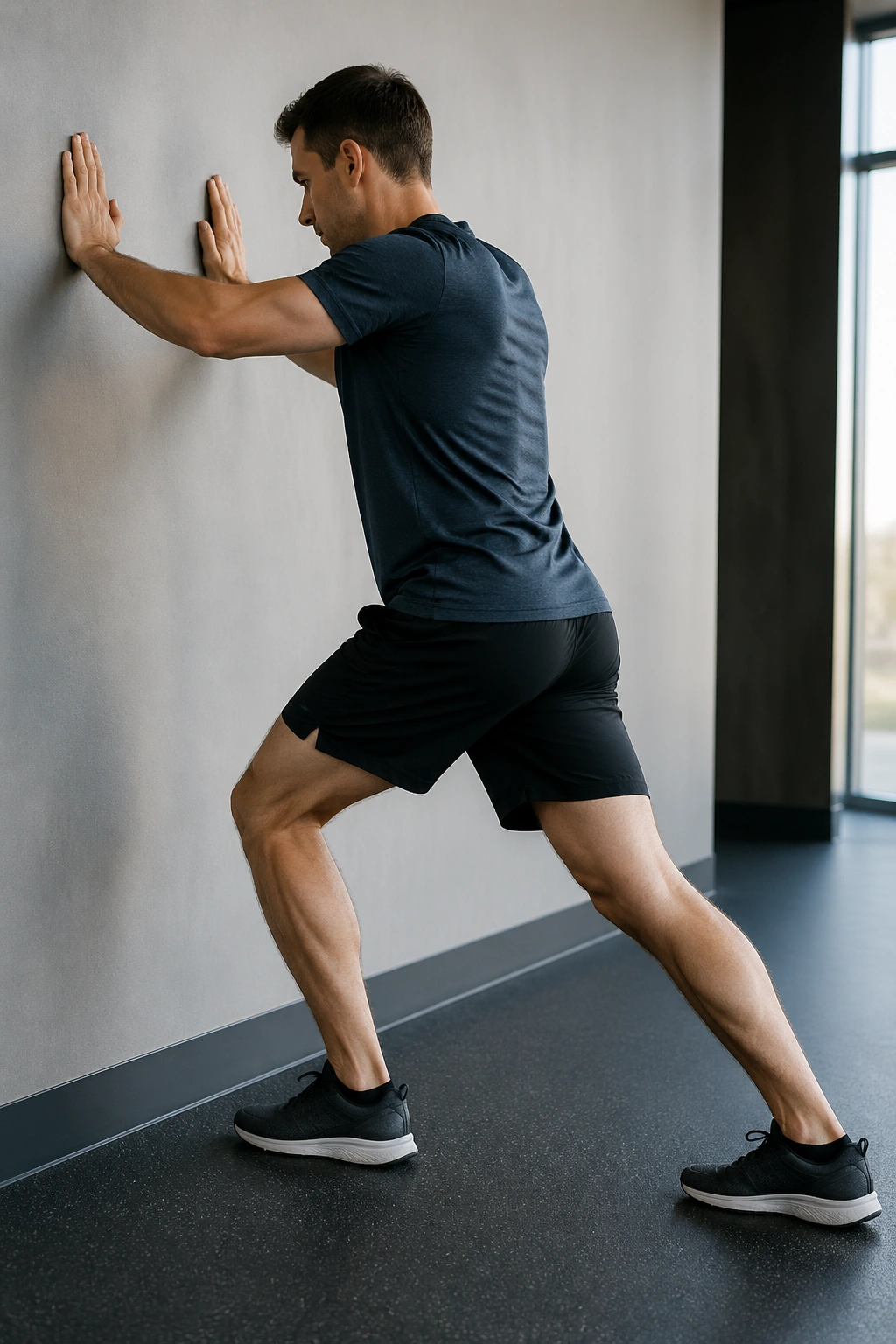
Calves get ignored until they start dragging every step down a staircase. Runners notice it. Lifters notice it after leg presses and jumps. Anyone who wears stiff shoes all day notices it by the end of the workout, when the ankles feel like they’ve lost half their range.
Face a wall, put both hands on it, and step one foot back. Keep the back heel glued to the floor and the back leg straight while you bend the front knee. You should feel the stretch in the upper calf of the back leg. Hold there for about 20 to 30 seconds, then bend the back knee slightly to shift the pull lower into the soleus.
That bent-knee variation is worth doing. The straight-knee version hits more of the big calf muscle; the bent-knee version reaches deeper into the lower part that often stays tight after repeated pushes off the ground. People skip the second part and wonder why the calf still feels stiff. There’s your answer.
Keep the back foot pointed straight ahead or only slightly turned out. If the arch collapses, the stretch gets sloppy. Heel down, ribs quiet, no bouncing.
6. Child’s Pose
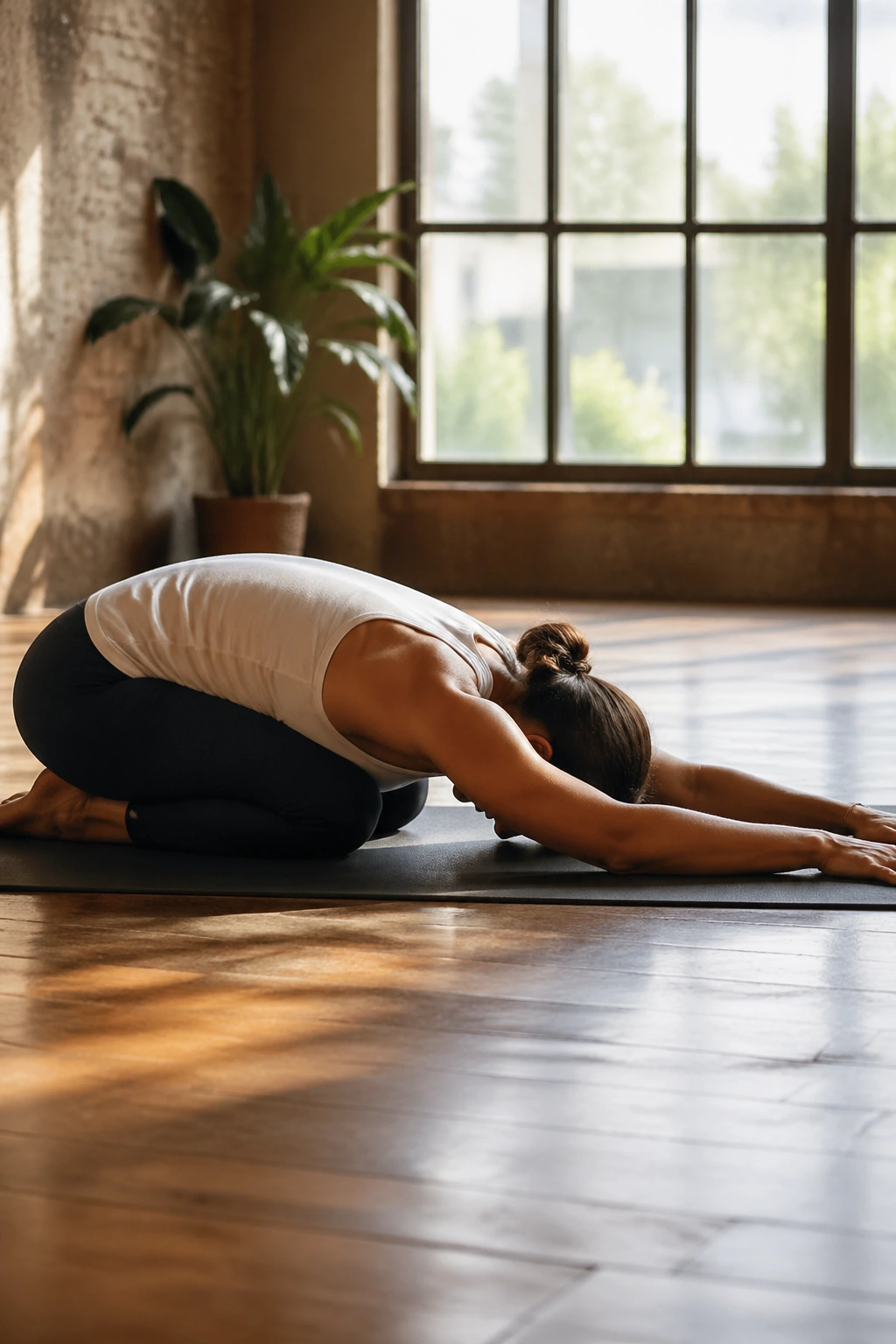
Child’s pose is less about chasing a dramatic stretch and more about letting the body drop its shoulders for a minute. After heavy presses, pull-ups, carries, or a hard core session, that can be the difference between feeling cooked and feeling calm.
Unlike stretches that ask your hips to stay active, child’s pose is a downshift. Kneel on the floor, sit the hips back toward the heels, and reach the arms forward until the chest melts toward the ground. If your knees are cranky, widen them. If your ankles hate the full sit-back, place a folded towel under the hips.
The breath matters more here than the shape. Send the air into the side ribs and low back. On the exhale, let the belly get heavy. That sounds soft, but it’s the whole point. You’re trying to tell the nervous system the work is over.
Some people hold this for 30 seconds. Others stay here for a full minute. Either is fine. If your shoulders feel jammed, walk the hands slightly to one side to open the side body before coming back to center.
7. Thread the Needle
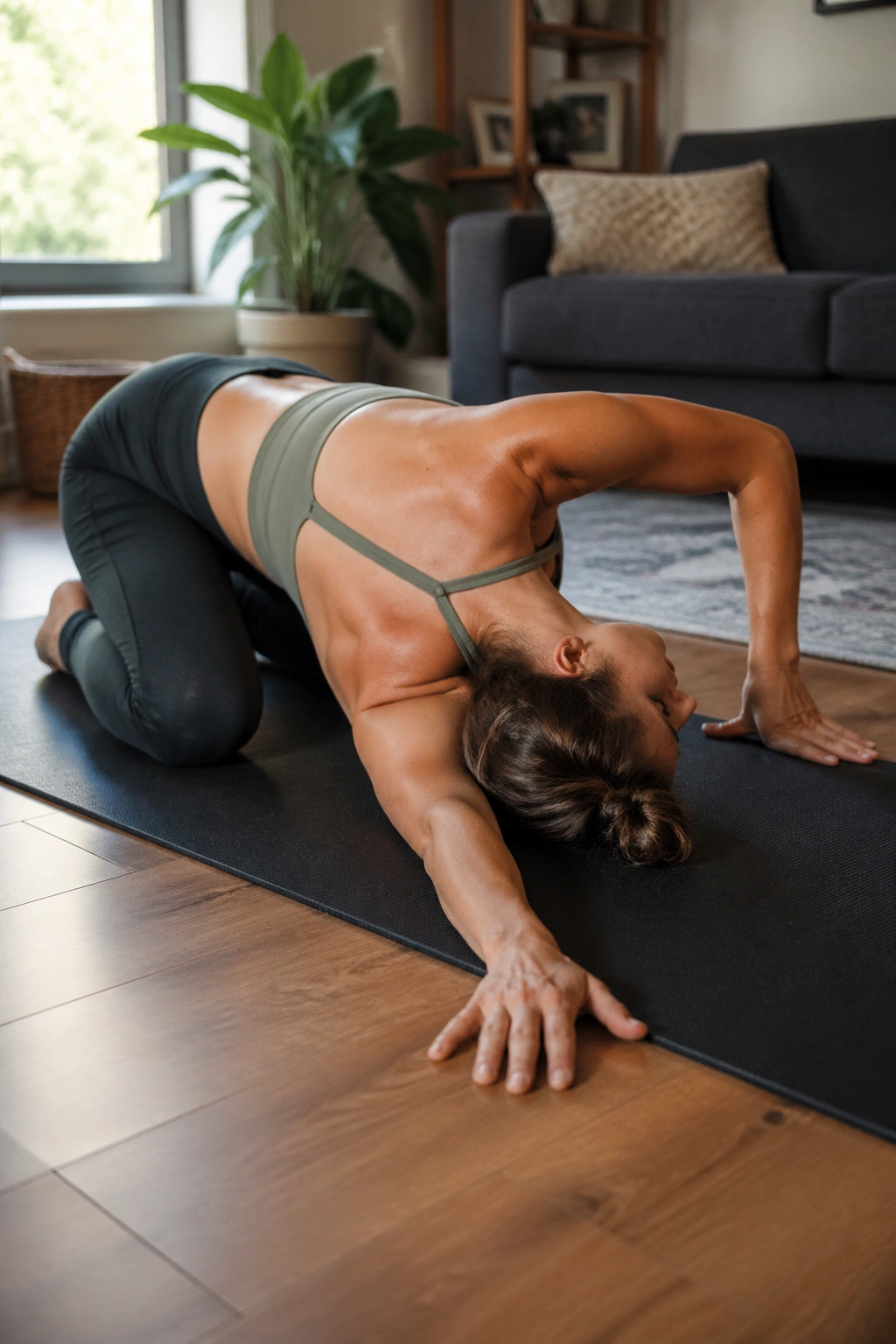
Thread the needle is one of those stretches that sneaks up on you. The shoulders start the movement, but the upper back and side ribs are the parts that usually sigh in relief.
Start on hands and knees. Reach one arm under the body and slide the shoulder and side of the head toward the floor. The other hand stays planted for support, and the hips stay stacked above the knees instead of rolling hard to the side. That keeps the stretch honest.
Why It Feels So Good
This stretch opens the back of the shoulder blade area, which often tightens up after rows, presses, or any workout where the arms live in front of the torso. It also gives the thoracic spine a little rotation, which can feel oddly refreshing after a day of being hunched over a desk or barbell.
If the floor feels too far away, place the working arm on a yoga block or a folded towel. Hold for 20 to 30 seconds per side, or take 3 slow breaths and switch. Small range, steady breath, no forcing.
8. Doorway Chest Stretch
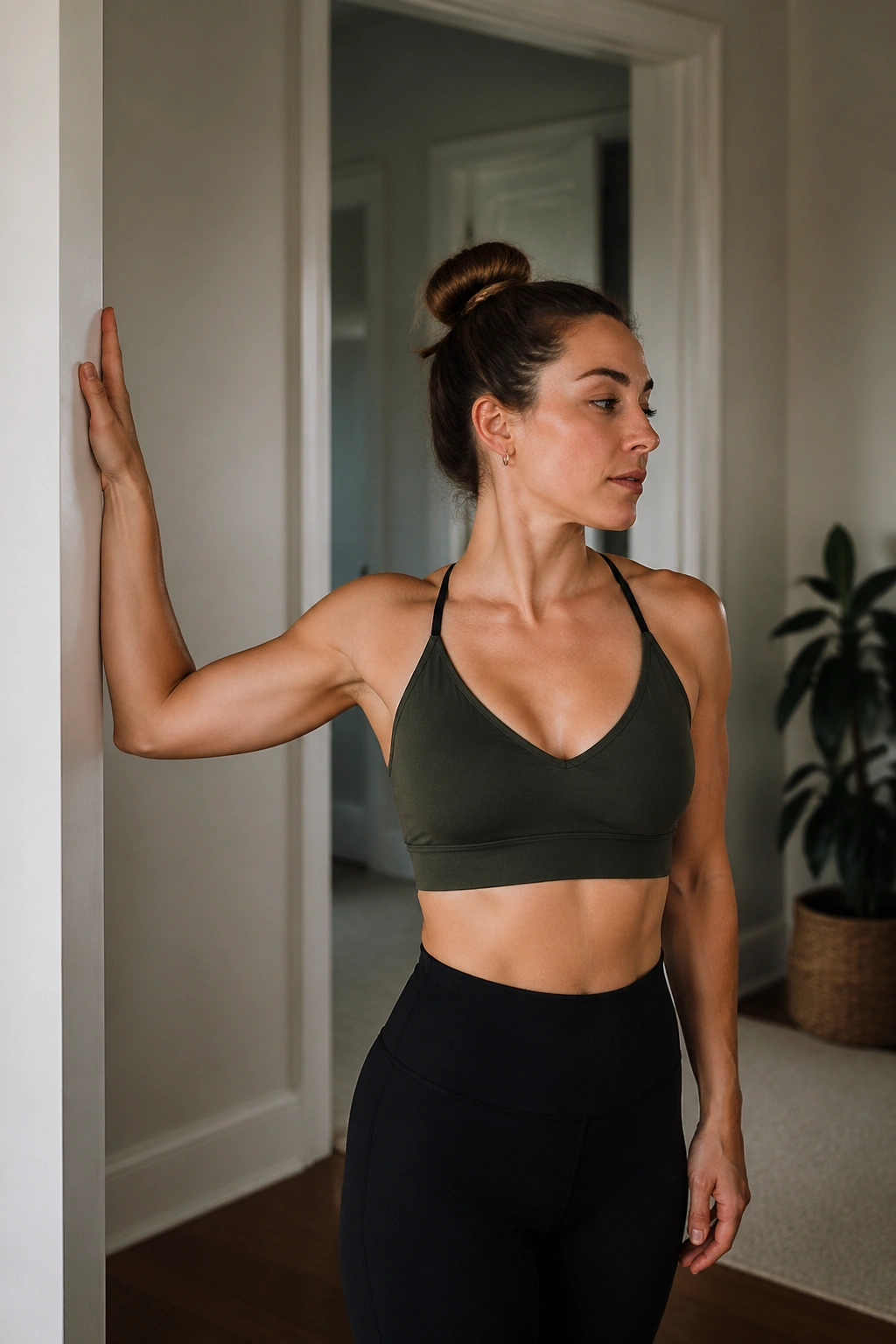
The doorway chest stretch is the one that reminds you how much pressing, typing, carrying, and shrugging can pile up in the front of the body. Tight pecs are sneaky. They pull the shoulders forward and make the upper back feel like it’s always doing extra work.
Stand in a doorway and place one forearm on the frame, elbow about shoulder height. Step the same-side foot forward a little and gently turn your chest away from the arm until you feel the stretch across the chest and front of the shoulder. Keep the ribs from flaring up. That part matters more than people think.
If your shoulders are sensitive, lower the elbow a bit below shoulder height. That often feels smoother and keeps the stretch out of the front of the joint. You can also bend the arm more to reduce the angle.
This stretch is useful after push-ups, bench work, dips, or anything that leaves the chest shortened. Open the chest, but don’t jam the shoulder forward. There’s a thin line between a useful stretch and a cranky one.
9. Cross-Body Shoulder Stretch
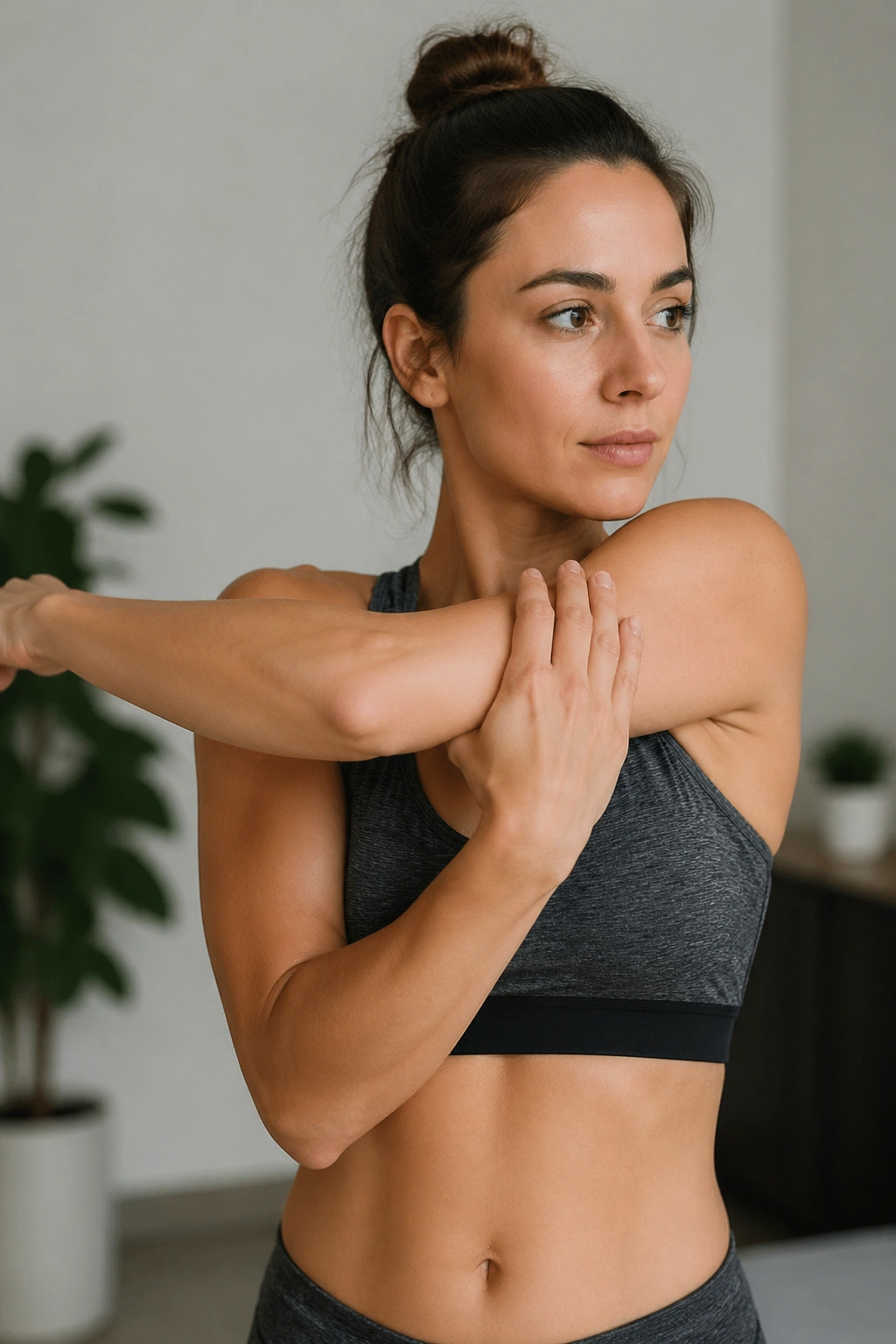
What if the shoulder itself feels tight, not the chest? That’s where the cross-body stretch earns its keep. It’s especially useful after throwing, swimming, pressing, or any workout that loads the back of the shoulder.
Bring one arm across your chest and use the opposite hand to guide it closer, but only until you feel a stretch in the rear shoulder. Keep the shoulder of the stretching arm down instead of letting it hike toward the ear. That single detail changes the whole feel.
What to Watch For
- The pull should stay in the rear delt and upper shoulder.
- The elbow can stay slightly bent if the joint dislikes full extension.
- The hand that pulls should be gentle, not aggressive.
- Hold for 20 to 30 seconds, then switch sides.
A lot of people overdo this one and end up stretching the neck instead of the shoulder. No need. A calm pull is enough. If the shoulder feels pinchy at the front, reduce the angle and shorten the hold. The rear shoulder wants pressure, not a wrestling match.
10. Overhead Triceps Stretch
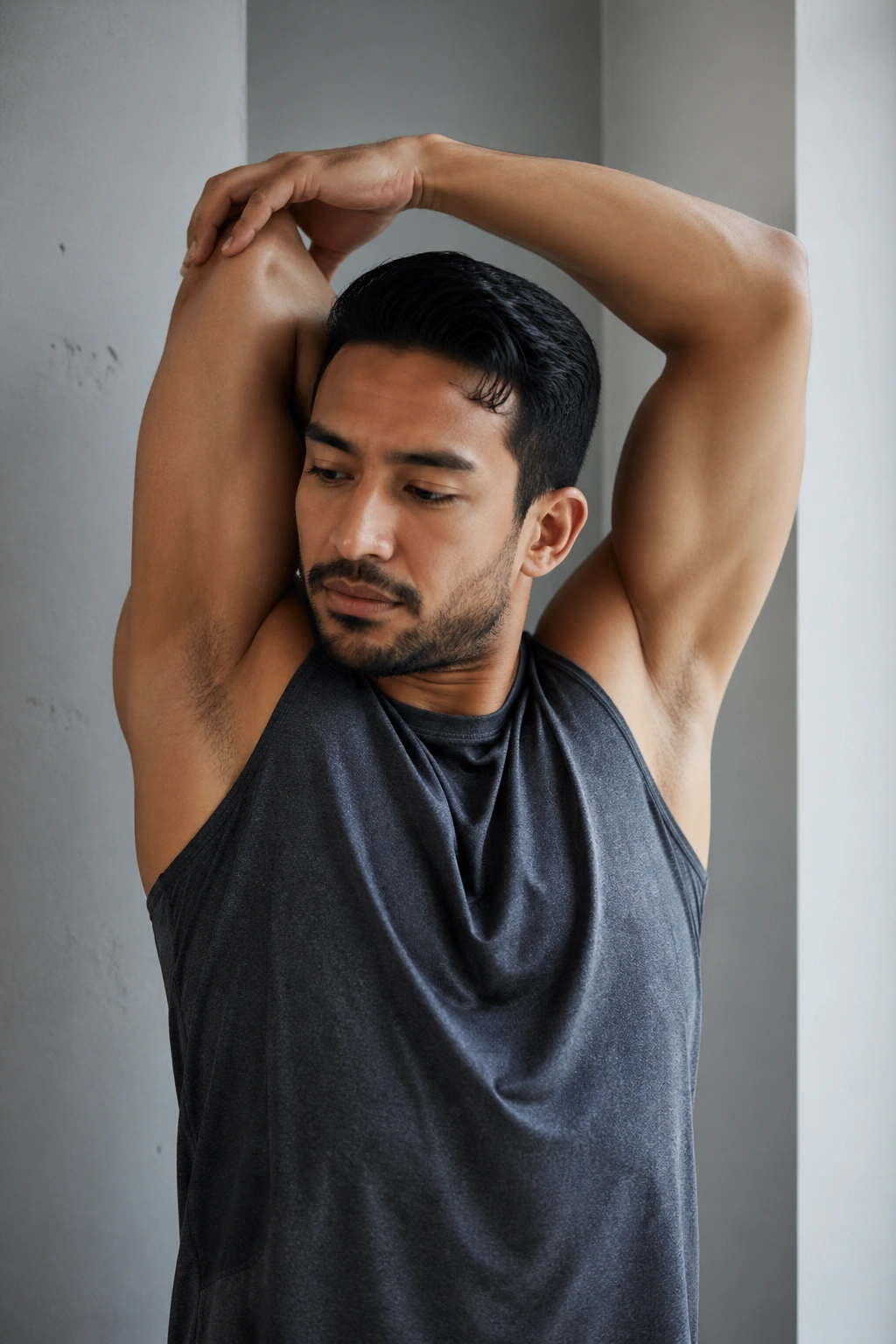
After push-ups, dips, overhead presses, or climbing work, the back of the upper arm can feel like a rubber band that’s been stretched all afternoon. The overhead triceps stretch is simple, but it reaches a spot people forget until it starts tightening up the whole shoulder line.
Lift one arm overhead, bend the elbow so the hand drops behind the neck, and use the opposite hand to guide the bent elbow a little deeper. Keep the ribs from flaring. If you arch the low back to “get more stretch,” you’re cheating the shape and asking your spine to do the arm’s job.
A useful variation is to stand next to a wall and lightly press the bent elbow inward while keeping the shoulder down. That gives you more control if your balance is off or if the standing version makes you shrug.
This one works best when you breathe into the side ribs and let the triceps lengthen slowly. The goal is a long, quiet line from elbow to shoulder, not a bent-back pose. If you feel the neck taking over, ease up. That’s the body warning you.
11. Cat-Cow Flow
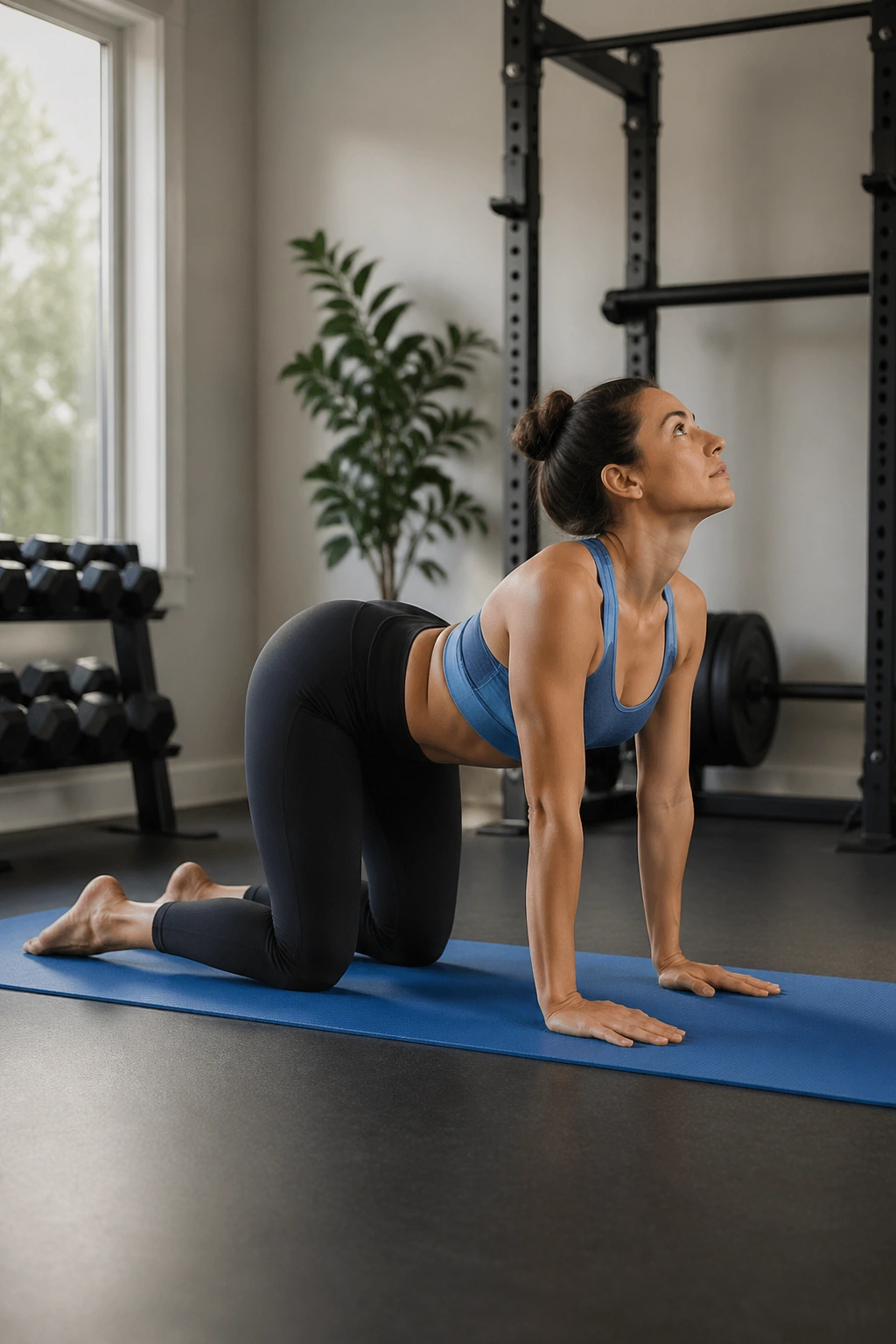
Some stretches need stillness. Cat-cow is not one of them, and that’s why it belongs in a post-workout cooldown. It gives the spine a gentle round-and-arch pattern that feels good when the back is stiff, the ribs are tight, or the whole trunk has been bracing through heavy lifts.
Start on hands and knees with your hands under your shoulders and knees under your hips. Inhale as you drop the belly and lift the chest slightly into cow. Exhale as you round the spine and tuck the pelvis into cat. The movement should be slow enough that you can feel each segment of the back changing shape.
Do 6 to 8 smooth reps instead of rushing through twenty. If your neck gets cranky, keep the gaze down and let the motion come from the middle of the back. If the wrists hurt, make fists or hold onto dumbbells on the floor.
It’s not really a stretch in the classic still-hold sense. Fine. It still earns a spot because it helps sore backs feel less rusty. Think of it as a moving exhale for the spine.
12. Supine Spinal Twist
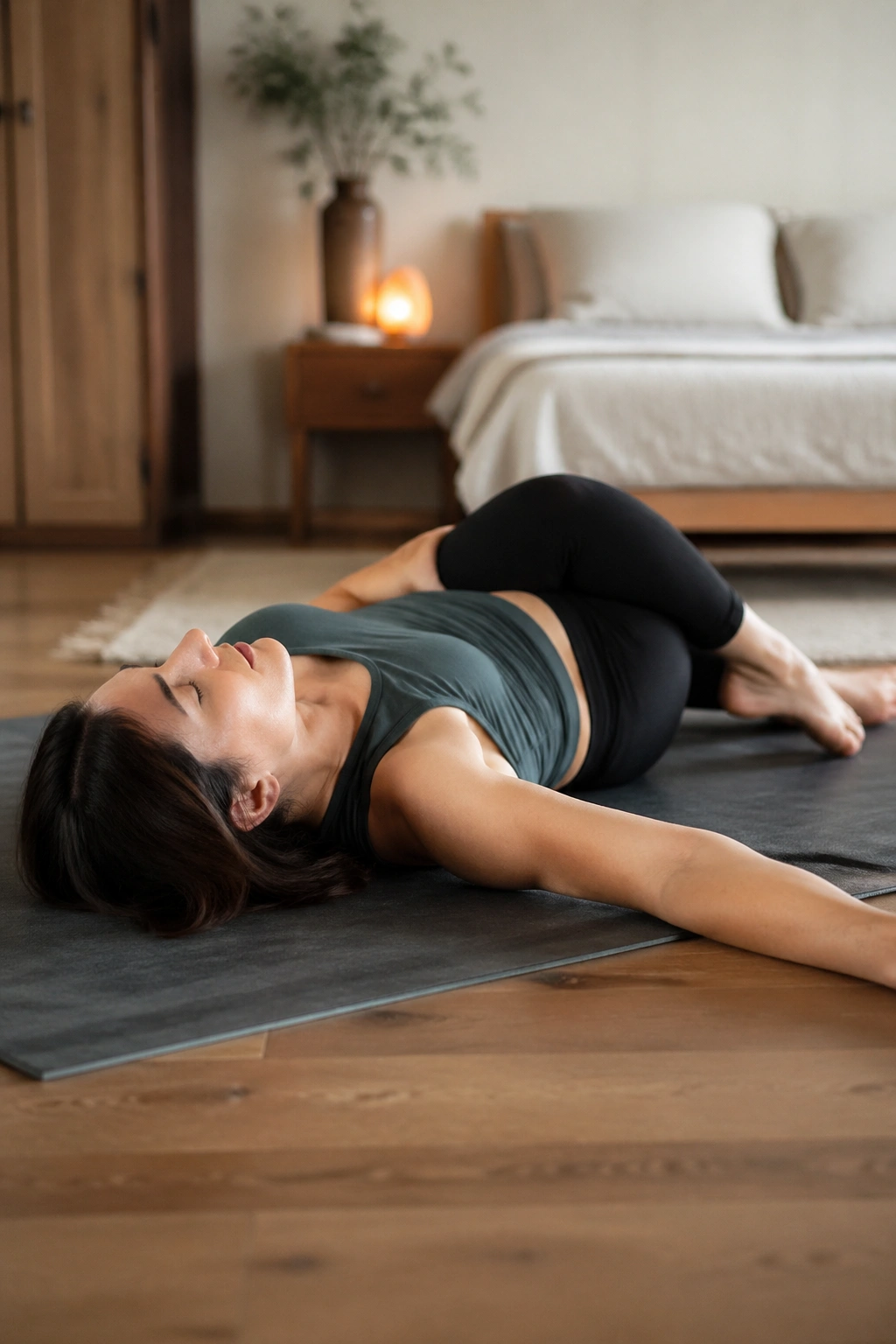
The supine spinal twist is a good example of a stretch that looks small but lands deep. You lie on your back, bring one or both knees toward the chest, and then lower them to one side while keeping the shoulders planted. The result is a gentle rotation through the lower back, waist, and outer hip.
Unlike child’s pose, which is all about decompression, this one asks for rotation. That’s useful after deadlifts, split-stance work, or sports that involve turning the torso. It can also feel nice after sitting too long, which is a different kind of stiffness but the same annoying outcome.
Let the knees fall only as far as the spine is comfortable. If both shoulders pop off the floor, the twist is too big. Place a pillow or folded blanket under the knees if you need support. Hold for 20 to 40 seconds and breathe into the side that feels open.
Some backs love this stretch. Some do not. If twisting makes the low back feel pinchy instead of loose, keep the angle smaller or skip it entirely. A mild twist is useful; a forced twist is not.
13. Butterfly Stretch
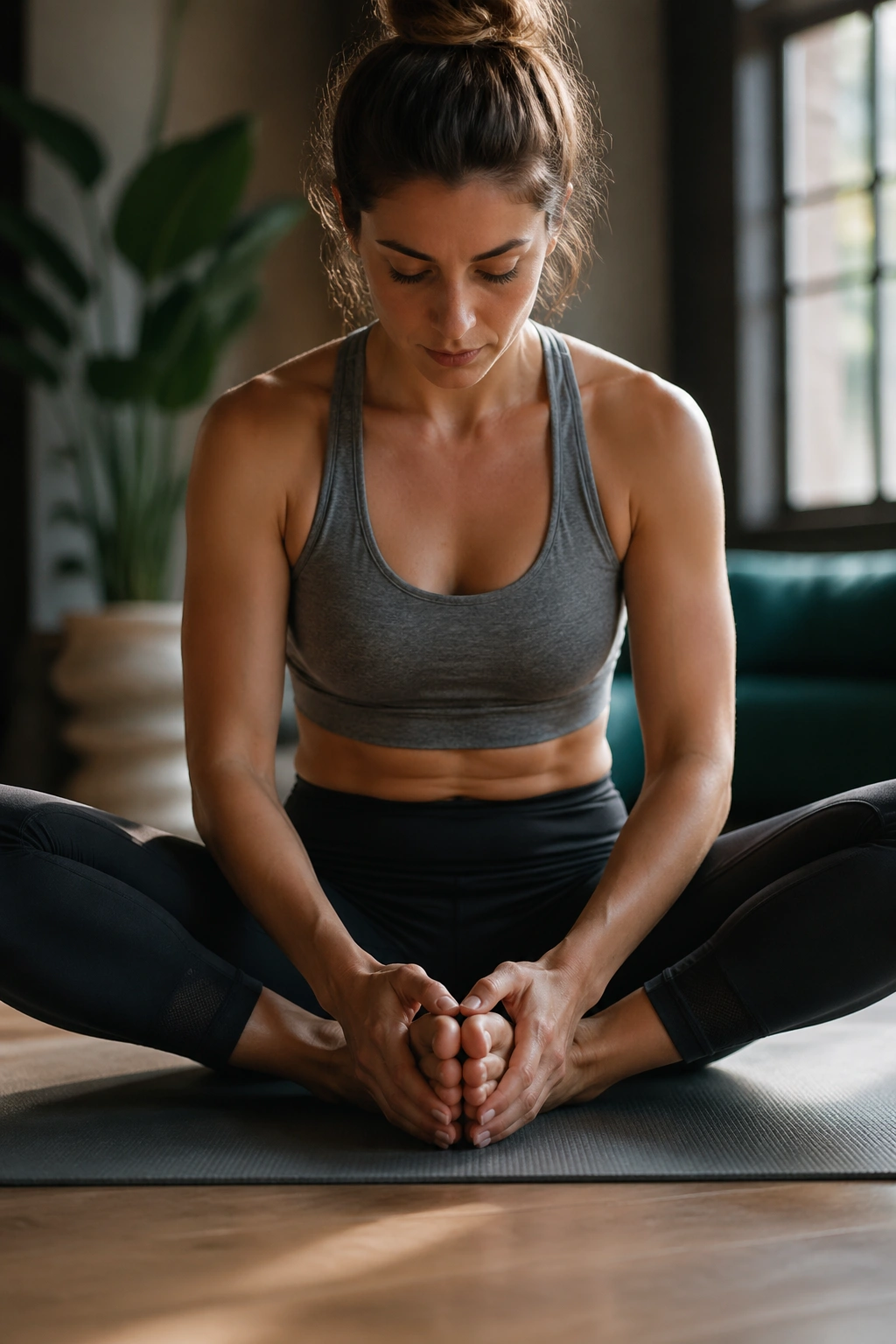
The butterfly stretch is one of the cleanest ways to open the inner thighs after lower-body training. It is also one of the easiest to rush, which usually means people bounce their knees, round forward, and wonder why the hips still feel tight.
Sit tall, bring the soles of your feet together, and let the knees fall out to the sides. Hold the feet or ankles and gently hinge forward from the hips. You should feel a stretch through the adductors and maybe into the groin, but the sensation should stay broad and manageable. If the knees are far above the floor, that’s fine. Don’t force them down.
Small Details That Help
- Sit on a folded towel if the pelvis tilts backward.
- Move the feet farther away from the body for a deeper pull.
- Hold the ankles rather than pressing the knees.
- Breathe for 30 to 45 seconds without bouncing.
This stretch can feel especially useful after squats, lunges, or any side-to-side footwork. Tall spine first, fold second. If you skip the tall spine part, the stretch tends to spill into the lower back and gets messy fast.
14. Kneeling Lat Stretch
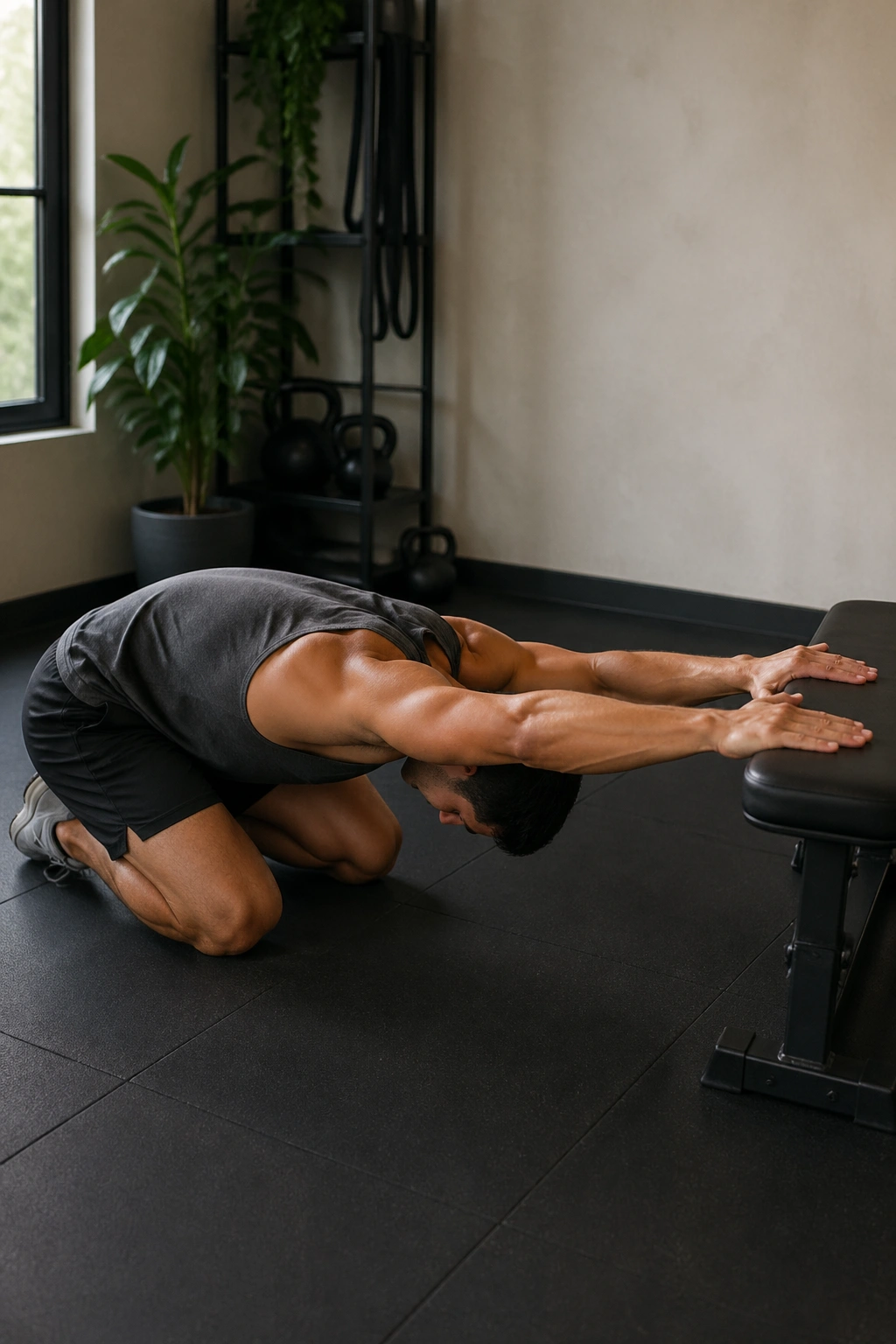
Your lats can stay tight after back day even when the shoulders themselves feel fine. That’s because the latissimus dorsi runs from the ribs and spine into the upper arm, so when it shortens up, it can tug on a lot of other movements.
Kneel in front of a bench, sofa, or wall and place both hands on the surface in front of you. Walk the hips back while keeping the arms long and the chest sinking toward the floor. You should feel the stretch along the sides of the torso and under the armpits. If the shoulders shrug, reset and lengthen the neck.
This stretch is a quiet favorite after pulling work. Rows, pull-ups, climbing, kettlebell swings, and even long carries can leave the lats feeling dense. A 20- to 30-second hold here can make overhead reaching feel easier right away.
If the full kneeling version bothers the knees, stand and place the hands on a high table or counter instead. The angle changes, but the shape stays useful. Long arms, heavy hips, soft breathing. That’s the whole formula.
15. Happy Baby Stretch
Happy baby is the stretch that feels like a reset button at the end of a hard session. It opens the hips, lengthens the inner thighs, and gives the low back a break without asking you to balance, brace, or think too hard.
Lie on your back and bend both knees toward your chest. Grab the outside edges of your feet, ankles, or shins, then gently let the knees drift apart while the soles of the feet face the ceiling. If reaching the feet is too much, hold behind the thighs instead. The lower back should stay heavy on the floor.
A tiny rock side to side can feel good here. So can a small pause and a slow exhale. Some people like to pull the knees a little wider. Some prefer to keep them closer to the ribs. Neither is wrong. What matters is that the hips feel open and the spine feels supported.
This is a smart last stop after a workout because it catches a lot of areas at once without turning into a chore. If one stretch deserves to feel a little luxurious, it’s this one. Not flashy. Just effective, and easy to stay in for half a minute longer than you planned.
A simple cooldown does not need to be fancy to work. Pick four or five of these post workout stretches for sore muscles, hold each one with steady breathing, and pay attention to the spots that keep asking for more. The body usually tells you where the real tightness lives if you stop trying to bully it.
