



Dizziness and yoga are a tricky pair. When the room is already tilting, the last thing you want is a pose that sends your head below your heart or asks for fast balance. A small cluster of grounded, slow yoga poses for vertigo can calm the nervous system, loosen a tight neck, and give you a steadier sense of where your body is in space.
Vertigo is not the same as ordinary tiredness. Some dizzy spells come from the inner ear, some from dehydration or low blood sugar, and some from stress, neck tension, or a mix of all three; yoga cannot sort every cause out. What it can do is stop the spiral of panic that often makes dizziness feel worse. That part matters.
If dizziness is sudden, severe, or tied to chest pain, fainting, trouble speaking, a bad headache, weakness, or hearing loss, stop and get medical help. For the rest of the time, the safest approach is boring in the best way — walls, chairs, blankets, slow exhalations, and no quick head drops. Start there.
1. Supported Mountain Pose Against a Wall
The wall changes everything.
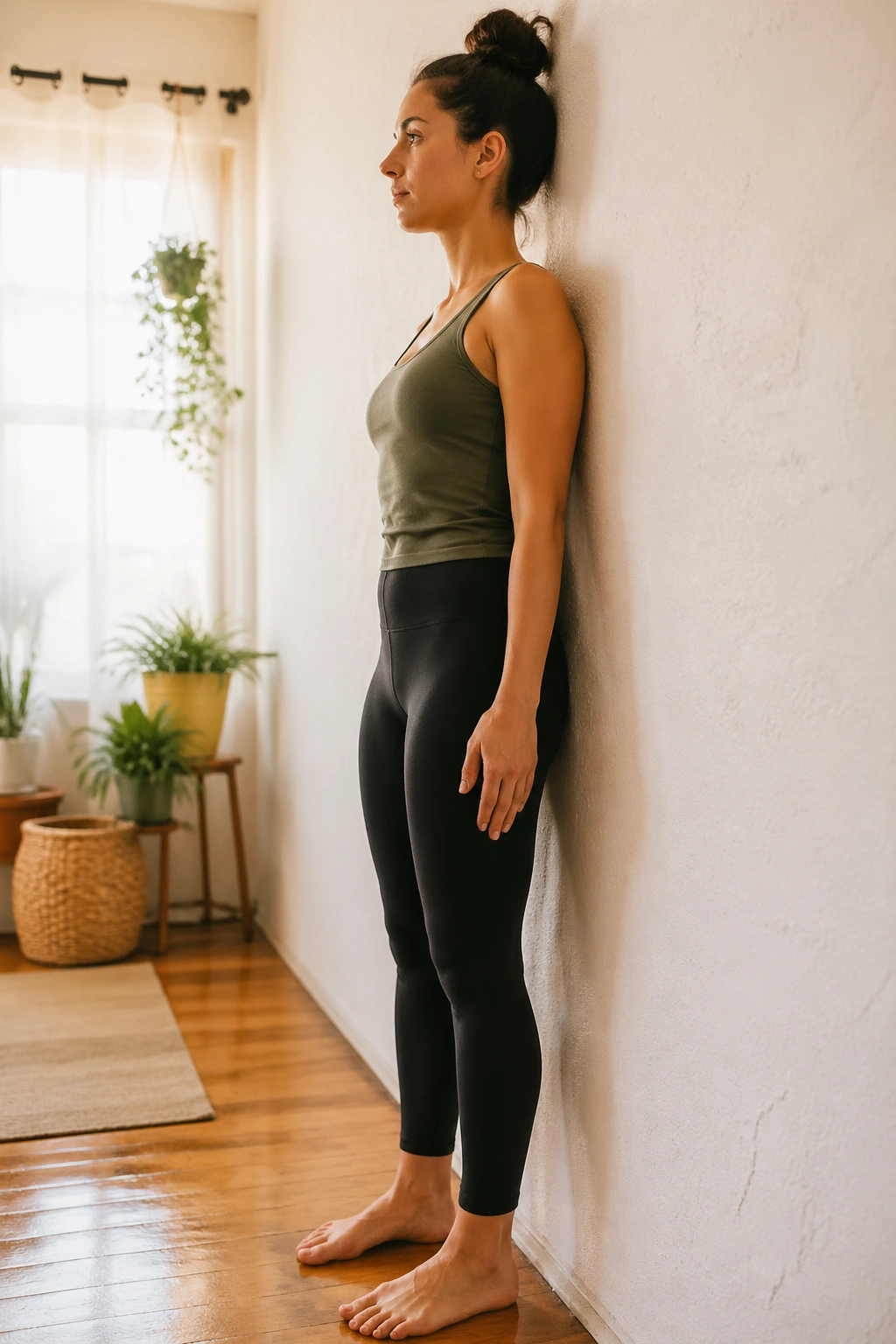
Supported Mountain Pose looks plain, and that is exactly why it works so well when balance feels shaky. Stand with your feet hip-width apart, heels a few inches from a wall, and let the back of your pelvis, upper back, or even the back of your head touch lightly if that feels steady. Keep your gaze level, not up and not down. The point is contact. The floor is doing one job, the wall is doing another, and your nervous system gets a clearer map.
I like this pose as the first stop because it teaches your body a simple truth: you do not need to fight for perfect posture. Stand tall, soften the knees a little, and breathe into the sides of the ribs. If your neck feels tight, let the chin drift back a few millimeters so the back of the neck stays long.
Slow wins. Hold for 5 to 8 breaths, or longer if the room feels calm. If your eyes make you dizzy, keep them open and fixed on one point straight ahead. The moment you feel unstable, step down to seated work. No need to prove anything.
2. Seated Breath Awareness Pose

Can sitting still count as yoga? Yes, and during a dizzy spell it may be the smartest kind.
Sit on a firm chair or on a folded blanket so your hips are a little higher than your knees. Place one hand on your belly and the other on your upper chest. Breathe in through the nose for a count of 4, then breathe out for a count of 6 or 7. That longer exhale helps nudge the body out of fight-or-flight mode, which is useful when vertigo is already making your pulse jump.
What to Feel For
- Your shoulders should drop on the exhale, not creep toward your ears.
- The belly hand should move more than the chest hand.
- Your jaw can stay loose; a clenched jaw often goes with tense breathing.
- If counting makes you feel worse, stop counting and just lengthen the out-breath a little.
I prefer this pose with the eyes open, especially if closing them makes the spinning worse. Keep the room simple. One chair, one wall, one steady breath. That is enough for today.
3. Wall-Assisted Tree Pose
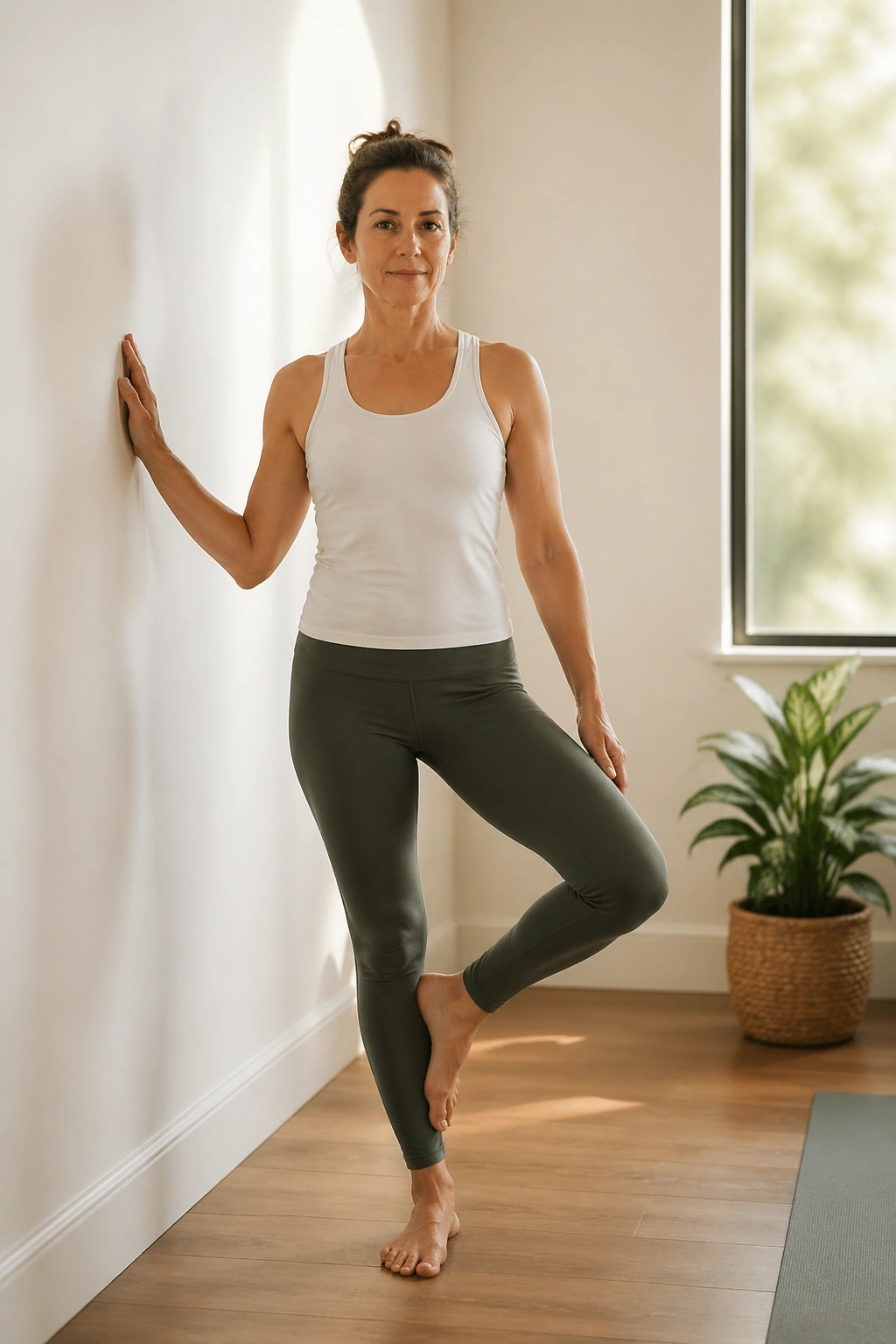
Picture standing near a wall after a long day when your legs feel wobbly and the floor seems a little too honest. Wall-Assisted Tree Pose is the version that stays kind.
Place one hand on the wall, then shift your weight into the standing leg. Rest the opposite foot at the ankle or calf — not on the knee — and keep the lifted toes on the floor if full balance feels like too much. The wall is there for light touch, not for hanging. Your standing foot should feel like it is rooting down through the big toe mound, the little toe mound, and the heel.
This pose trains balance without making a drama out of it. The eyes stay soft and level. The breath stays slow. If the lifted leg makes you sway, lower the foot immediately and try again with a smaller shape. Tiny counts.
- Stay for 3 to 5 breaths on each side.
- Keep your hips facing forward.
- Avoid closing your eyes; that is too much challenge for most dizzy spells.
- Step out before fatigue shows up.
The useful part here is not the fancy shape. It is the quiet practice of standing without bracing.
4. Chair Pose With a Wall
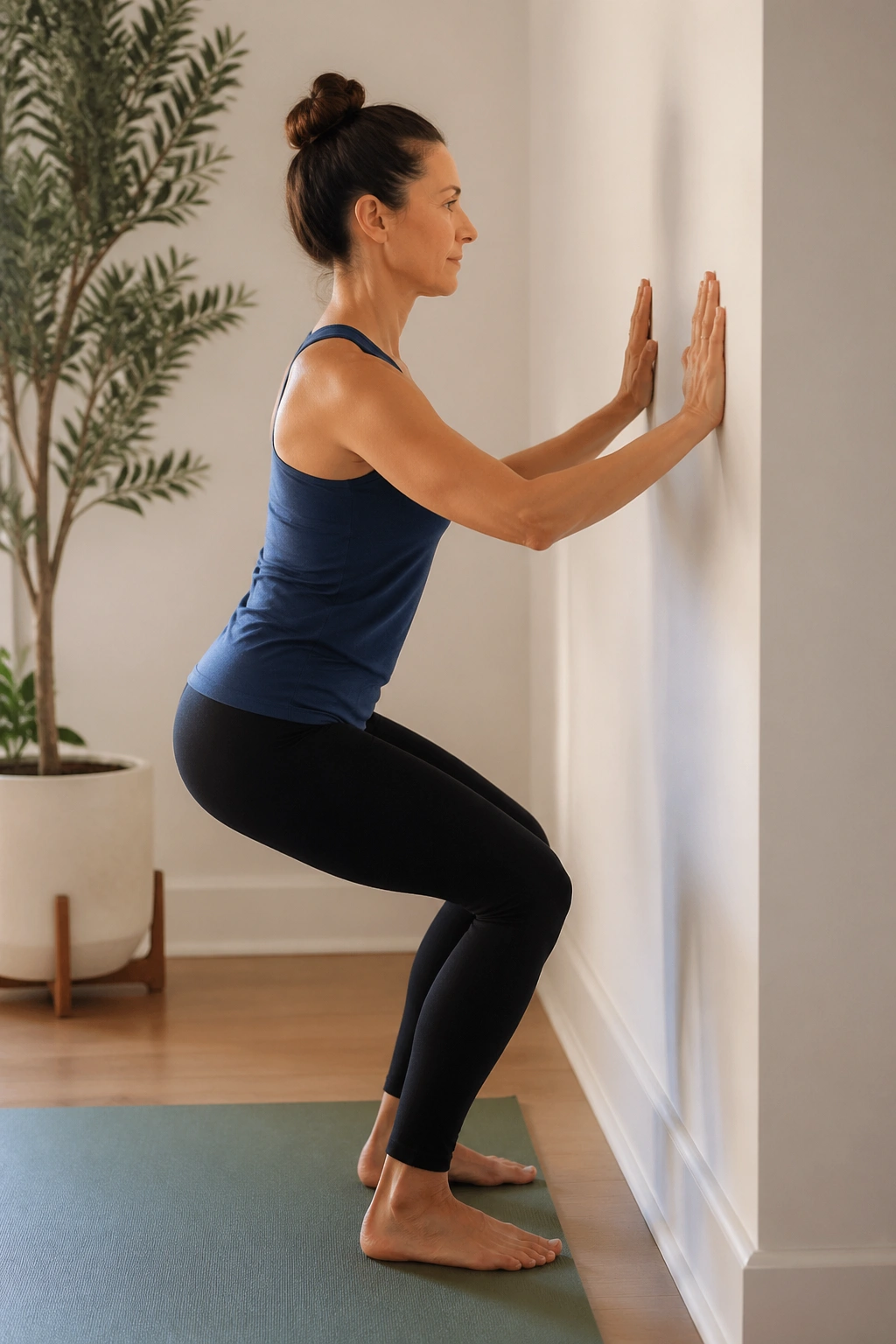
Why make Chair Pose tiny? Because a full squat is a terrible idea when you already feel off-balance.
Stand with your back a few inches from a wall and slide your hips back only a short distance, as if you were about to sit into a very high stool. Keep your hands on the wall or on the backs of a sturdy chair. The knees bend a little, the chest stays lifted, and the spine stays long. No deep drop. No racing heart. Just a mild load in the thighs and a clear sense of where your feet are.
How to Make It Steady
- Keep your feet hip-width apart so you have a wider base.
- Press evenly through both heels.
- Look straight ahead, not at the floor.
- Come up the moment your head starts to buzz.
This is one of those shapes that feels almost too simple, which is why I trust it. A small dose of leg work can help bring you back into your body without tipping the inner ear into revolt. If standing still is too much, skip it and move to the chair-seated sections below.
5. Seated Staff Pose
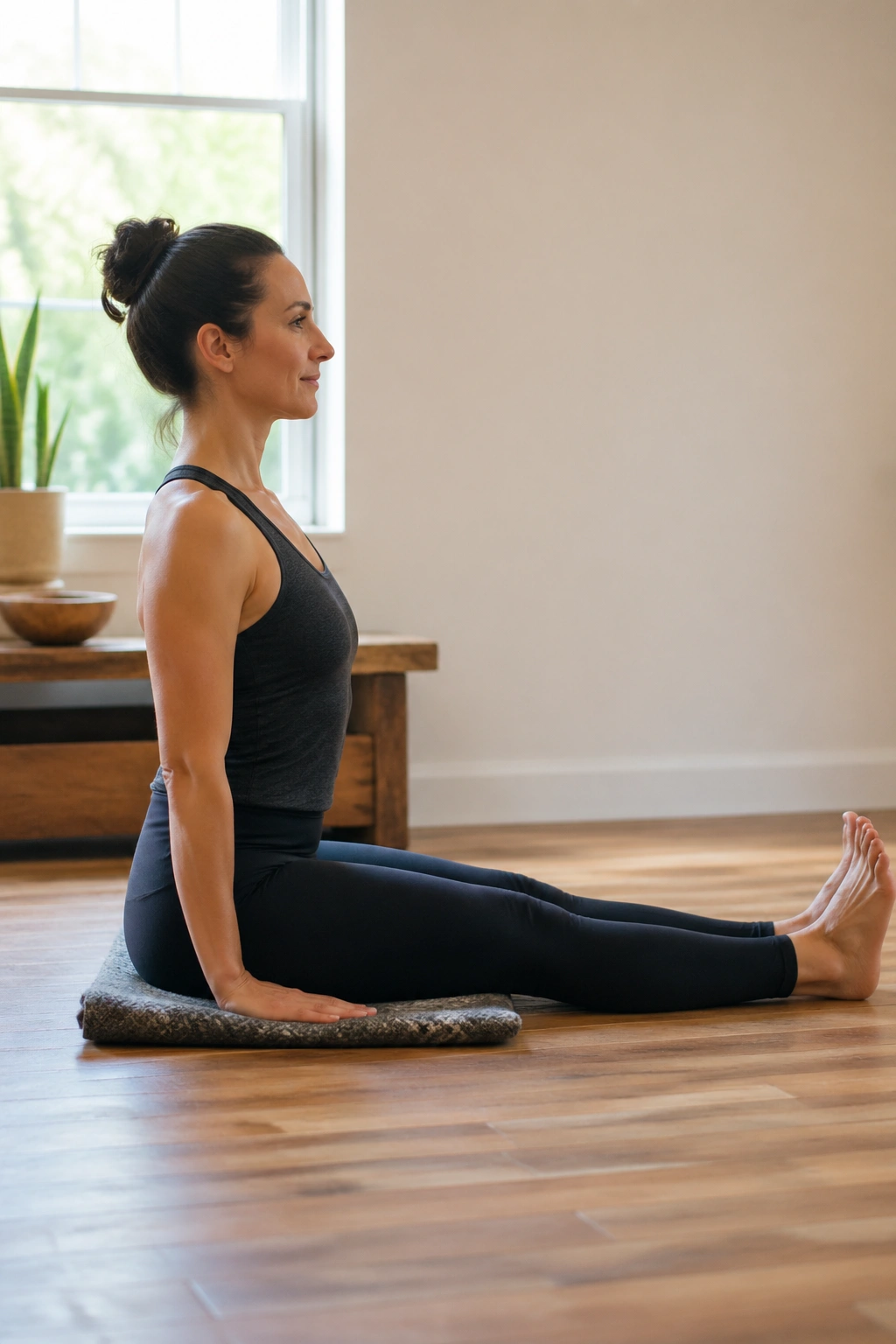
Long legs are not the goal.
Seated Staff Pose is a quiet, upright position that gives your body a clean line from hips to crown without demanding much balance. Sit on the floor with your legs extended in front of you, or bend the knees slightly if your hamstrings pull your pelvis backward. A folded blanket under the hips usually helps more than people expect. Flex the feet and rest the hands beside the thighs.
The real work here is gentle alignment. You are teaching your trunk to stack without effort. That can be helpful when dizziness makes everything feel slippery. If your low back rounds, bend the knees more. If your neck wants to crane forward, tuck the chin a touch and lengthen the back of the neck.
One-sentence version: sit up, breathe, and do less than you think you need.
Hold for 5 to 10 breaths. If you want to make it even easier, sit against a wall so your spine gets a little backup. There is no prize for making it harder.
6. Cat-Cow on Hands and Knees
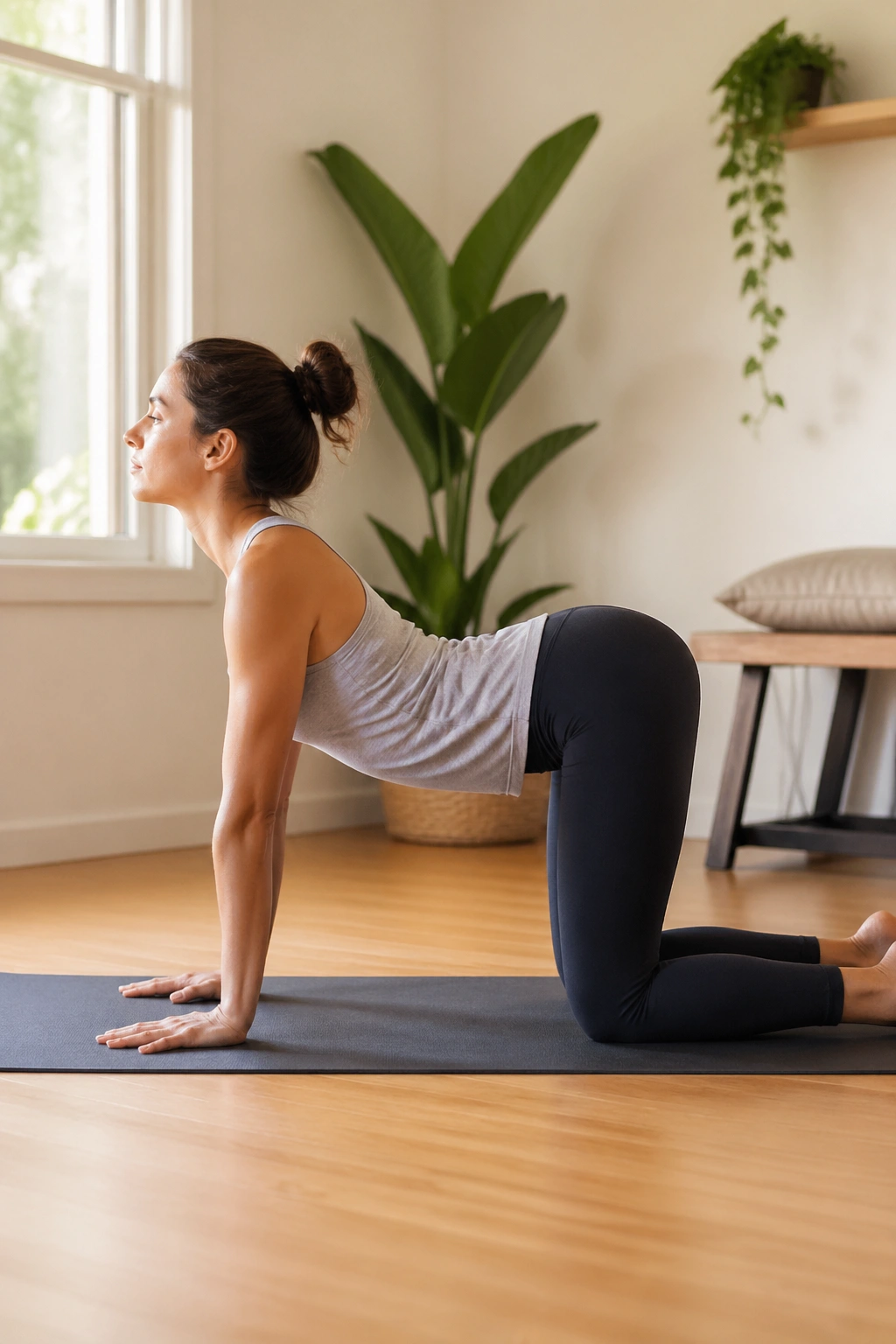
Cat-Cow can feel a little wobbly with vertigo, so the range should stay small.
Come to hands and knees with your wrists under shoulders and knees under hips. Keep the head in line with the spine instead of dropping it hard toward the floor. On the inhale, let the belly soften and the chest widen; on the exhale, round the upper back a little and draw the navel toward the spine. The movement should look smooth, but it does not need to be big. Small is safer here.
How to Keep It Vertigo-Friendly
- Keep your gaze on a spot between your hands.
- Move slowly enough that you could stop mid-way.
- If the head movement makes the room tilt, shorten the range by half.
- Rest in neutral table-top between rounds if you need a pause.
This pose can be excellent for people whose dizziness is tangled up with neck stiffness and shoulder tension. It is not the pose to force if being on all fours makes you feel exposed or unsteady. Three to five rounds are plenty. More is not better if the room starts to swim.
7. Sphinx Pose
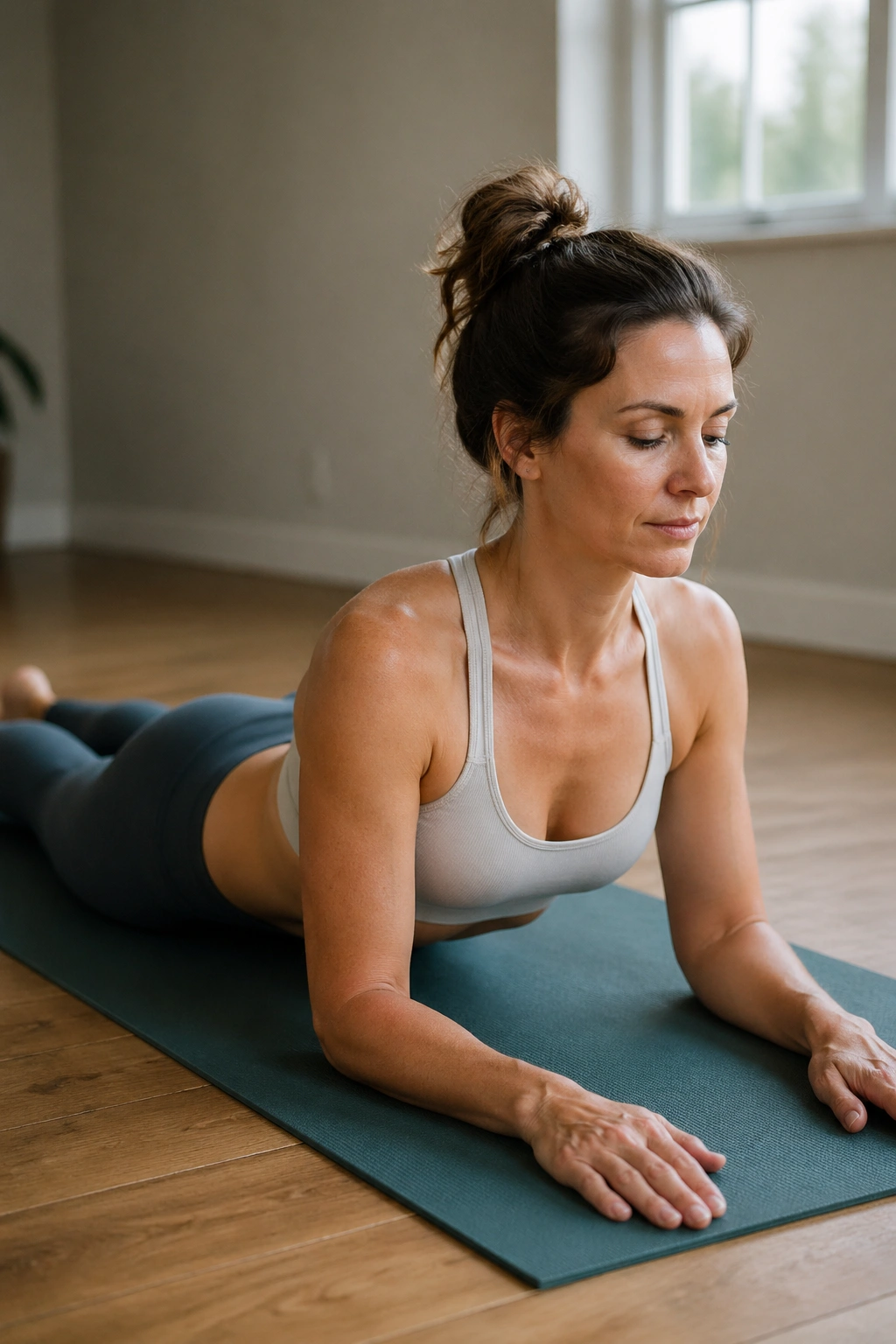
Sphinx is the backbend I trust when I want chest opening without a lot of drama.
Lie on your belly, place your forearms on the floor with elbows under the shoulders, and let the chest lift only as much as it wants to. Your gaze can stay down and slightly forward, which keeps the neck from crunching. The pelvis stays heavy. The lower ribs stay soft. It is a small shape, but small is often the whole point when vertigo is in the picture.
Unlike deeper backbends, Sphinx does not ask you to throw the head back or bear weight through the wrists. That makes it easier on people who get dizzy when their neck moves fast. If the lower back feels pinchy, shift the elbows slightly forward and lower the chest a little. If the front of the hips feel tight, tuck a folded towel under the pubic bone.
Hold for 3 to 6 breaths. Then lower slowly. No rush. The exhale should feel longer than the inhale, and the throat should stay soft.
8. Supported Child’s Pose
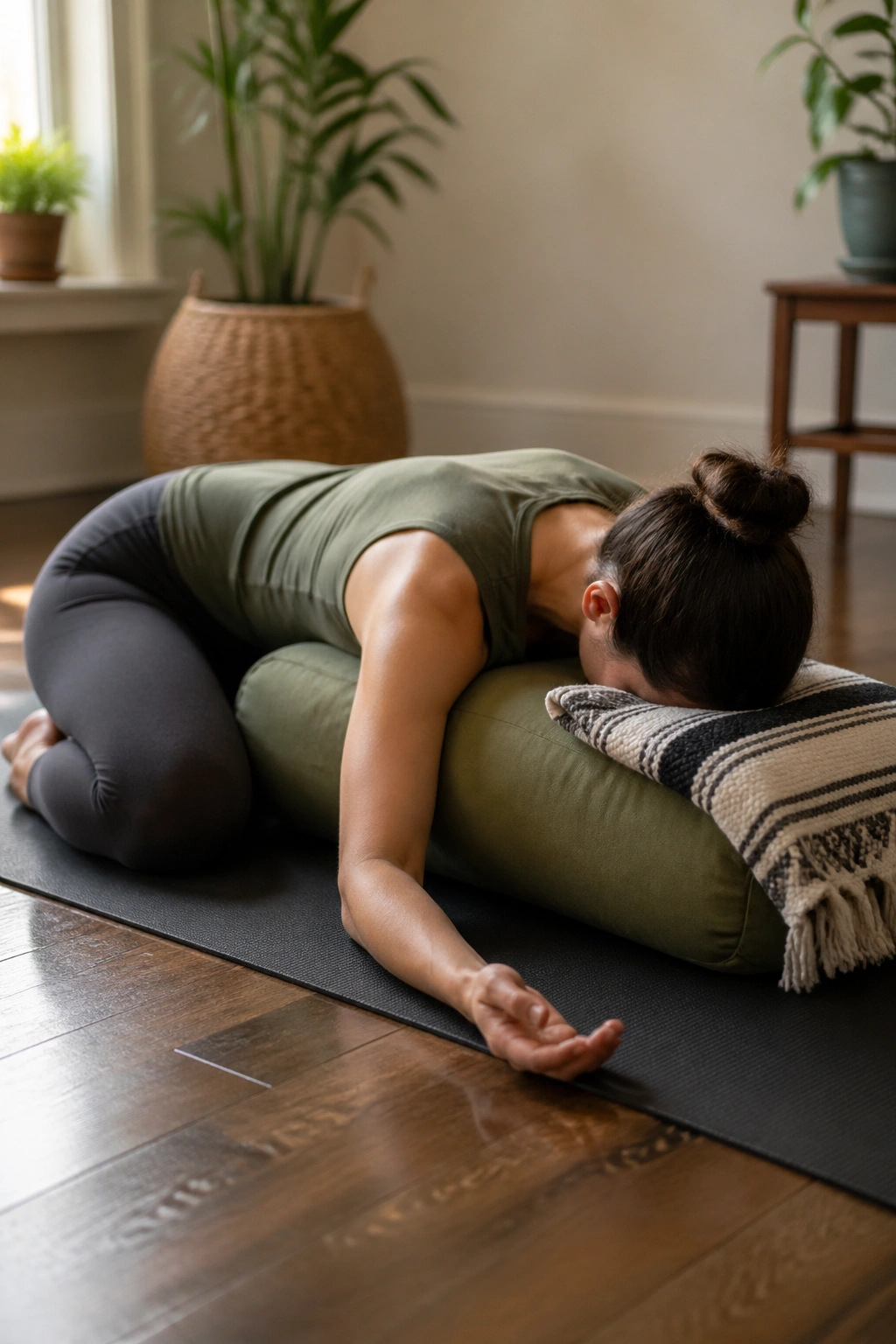
Does Child’s Pose always help? Not at all. For some people with vertigo, it is perfect; for others, the lower head position is a hard no.
If you want to try it, place a bolster or stacked pillows under the chest so the torso is lifted higher than the hips. Knees can be wide, big toes touching, and the head can rest on a thick blanket or block so it does not hang low. The floor should feel close. Safe. Not like a drop.
When to Skip It
- If lowering your head triggers spinning.
- If your knees or hips feel pinched.
- If you feel short of breath in the shape.
- If you keep wanting to get out of it before 30 seconds have passed.
This is a rest pose, not a test of courage. A supported version can be deeply soothing when your nervous system is frayed, but only if the head stays comfortable. Keep the eyes open the first time you try it. If the room tips, back out slowly and choose a higher resting shape instead.
9. Calves on a Chair
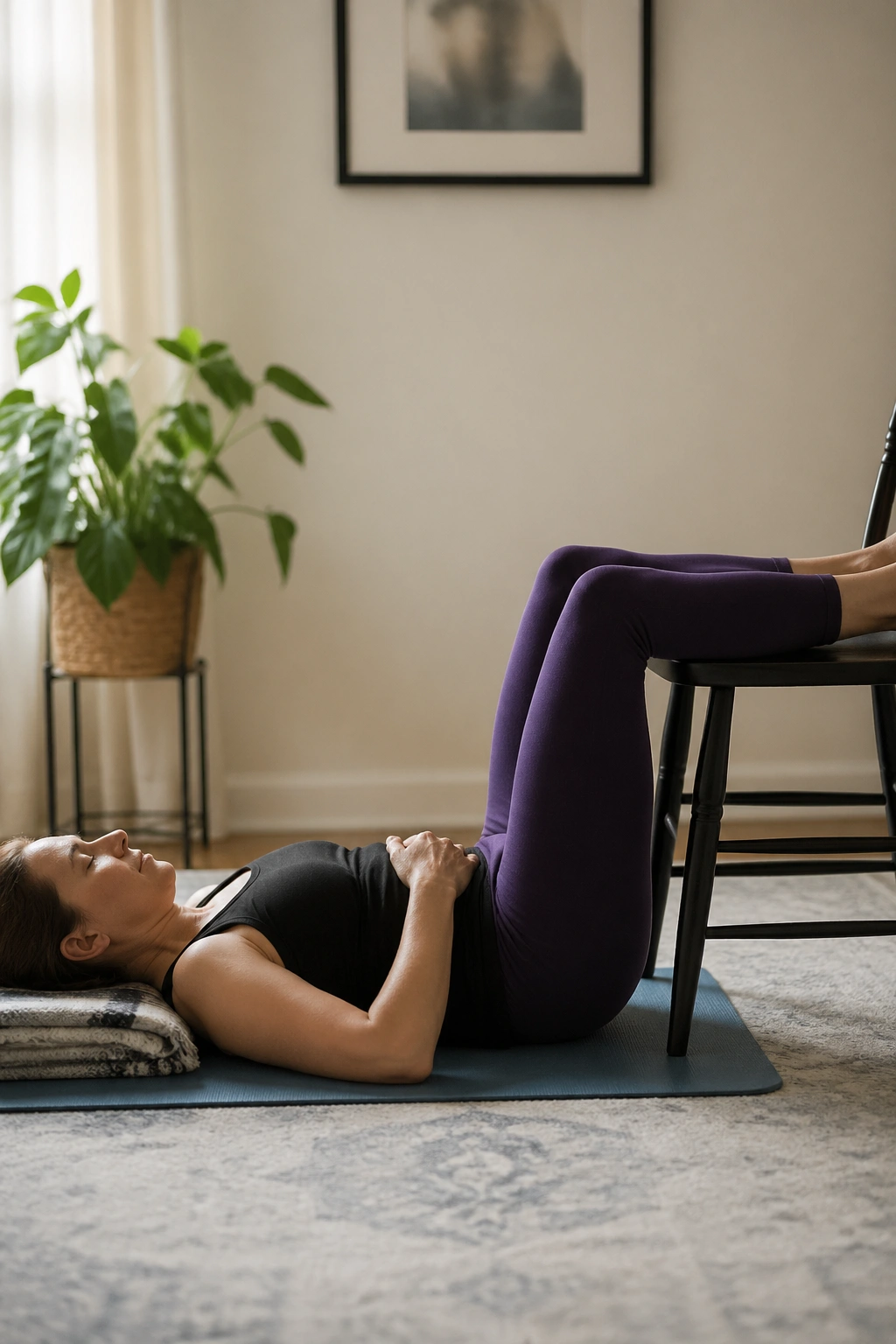
This is the pose I reach for when standing is a bad idea and lying flat still feels a bit much.
Lie on your back with your calves resting on the seat of a sturdy chair, knees bent about 90 degrees, and your head on a thin blanket if the chin feels tucked too far. The hips should feel heavy on the floor. The legs get a break, the low back gets space, and the eyes have a chance to settle because there is no demand to balance anything.
A couch seat or bed edge can work too. The exact furniture does not matter nearly as much as the angle. If your feet slip, put a yoga mat, rug, or folded blanket on the chair seat for grip. Stay here for 2 to 10 minutes. Longer is fine if the body feels calmer, shorter is fine if the position makes you restless.
- Keep the arms relaxed at your sides.
- Let the lower jaw unclench.
- Breathe out slowly through the nose.
- Exit by bending the knees, rolling to one side, and sitting up in stages.
The slow exit matters. A lot.
10. Constructive Rest Pose
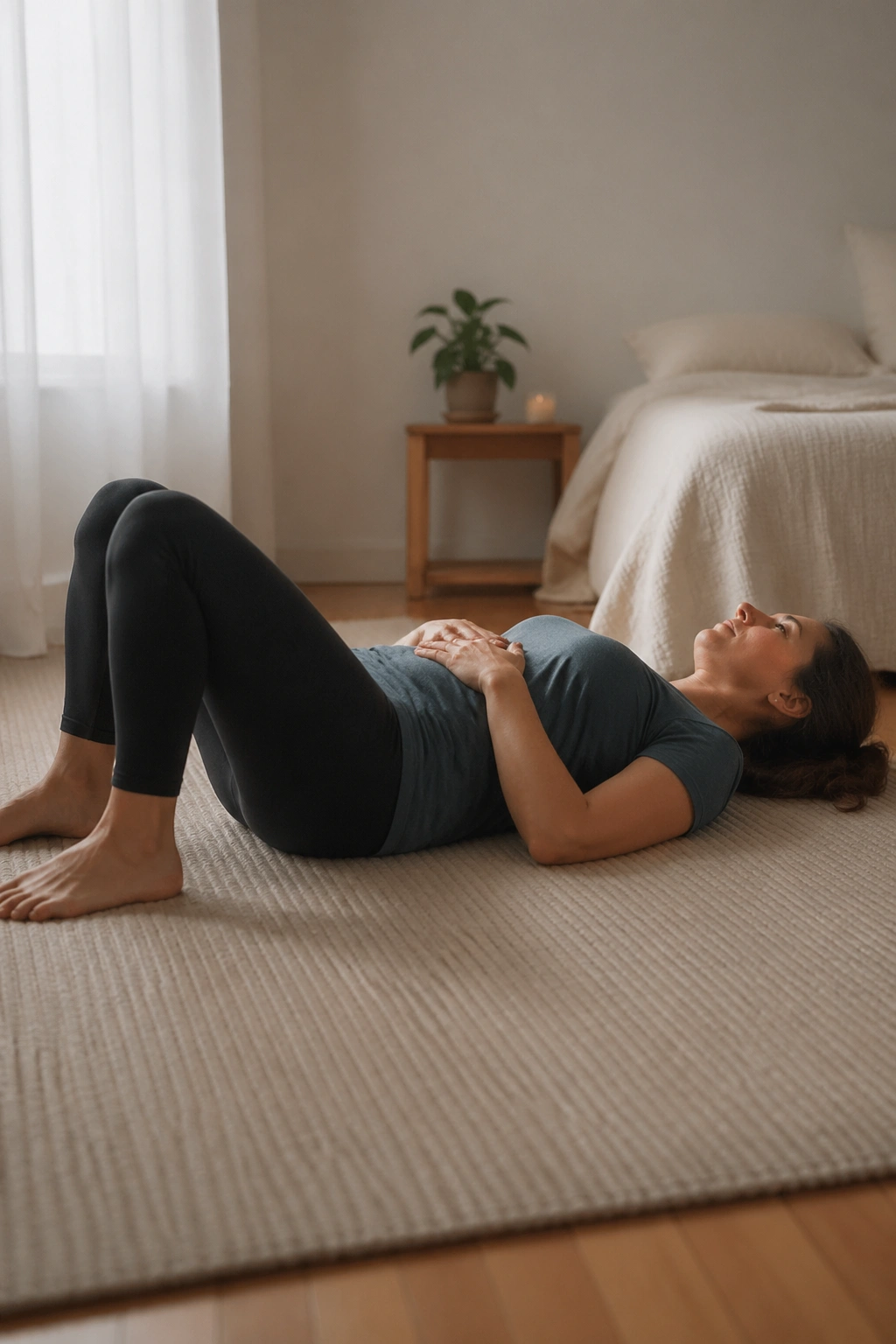
Constructive Rest is plain, and plain is underrated.
Lie on your back with your knees bent, feet flat on the floor, and legs about hip-width apart. Let the knees lean inward just a little if that feels good, or keep them parallel if your back prefers it. One hand can rest on the belly, the other on the ribs. Nothing fancy. The spine gets to settle into the floor while the feet stay planted.
No drama. No work. That is the charm here.
This pose is useful after a dizzy spell because it gives your brain clean signals: floor beneath you, ceiling above you, breath moving in and out. If the room feels floaty, keep the gaze soft and fixed. If you are dealing with nausea, stay here only as long as it feels steady. There is no rule that says a rest pose must be held forever.
I like to use 6 slow breaths here before deciding whether to move on or stop for the day. That little check-in can save you from pushing into a worse spell.
11. Bridge Pose With a Block
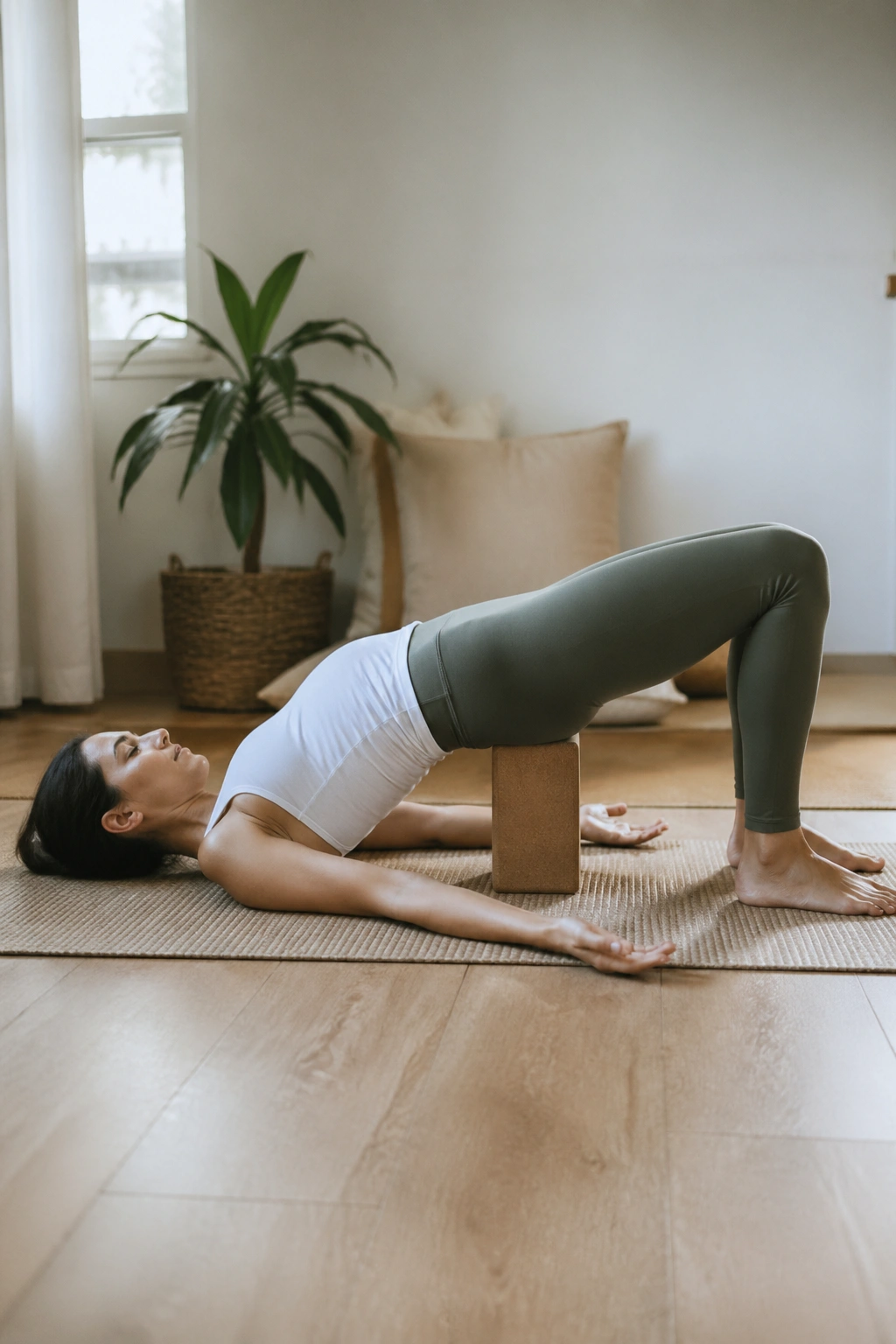
Bridge can be helpful, but only when it stays low and controlled.
Lie on your back, bend the knees, and place the feet hip-width apart close to the sitting bones. On an exhale, lift the hips only a few inches. If that feels fine, slide a yoga block under the sacrum for a supported version. The shoulders stay heavy, the neck stays long, and the chin does not jut upward. Keep the gaze straight up.
What to Watch For
- No head turning once you are in the pose.
- No squeezing the glutes so hard that the low back tightens.
- No high lift if the chest feels pressured.
- Come down slowly, one vertebra at a time.
This shape gives a mild opening through the front of the hips and chest without asking for standing balance. It is not the first pose I’d choose during an active spin, but it can feel grounding once symptoms have settled a little. If you are unsure, keep the block out and do a few gentle pelvic lifts instead. Tiny bridge repetitions often feel safer than a long hold.
12. Reclined Bound Angle Pose
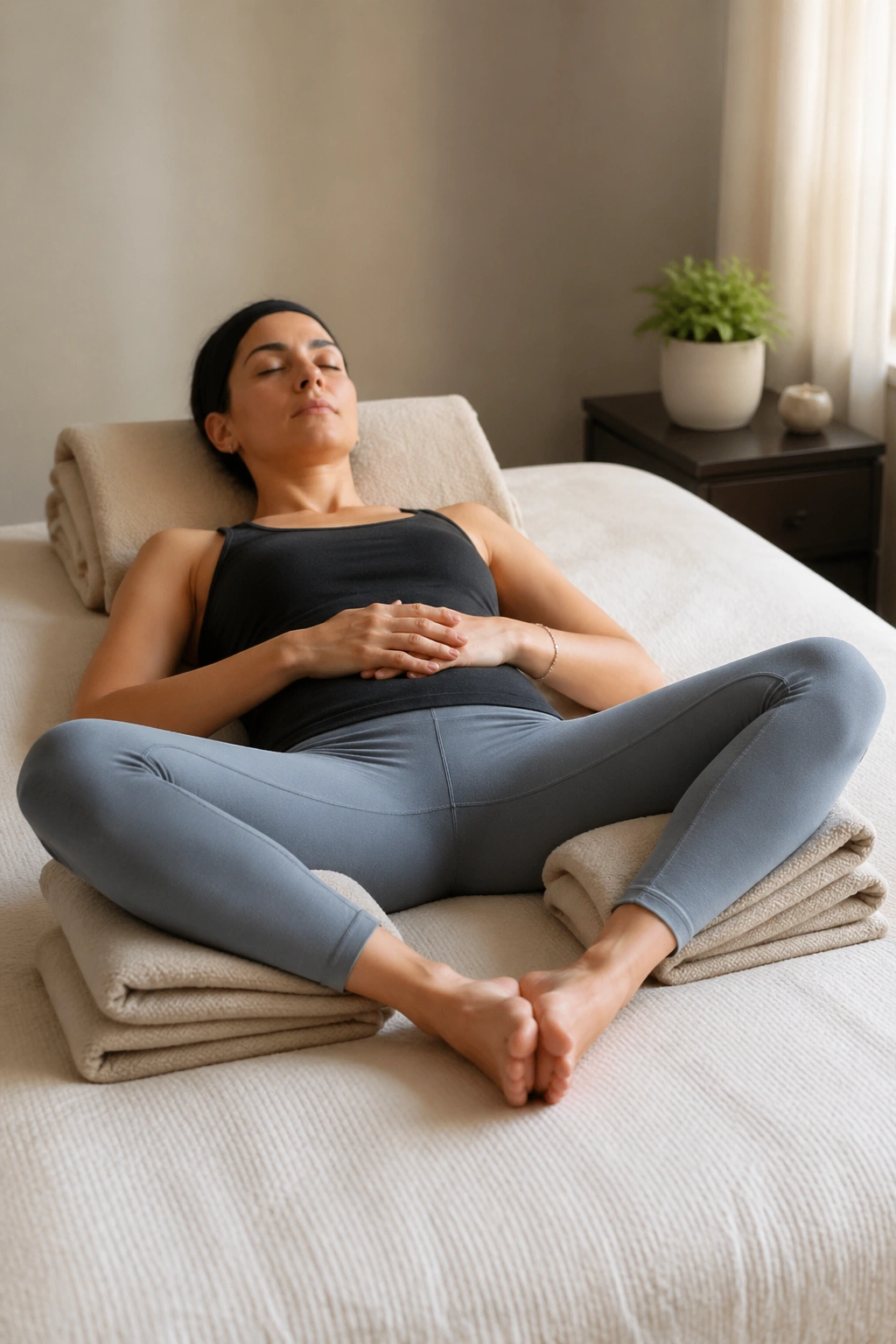
Reclined Bound Angle Pose is a classic rest shape, but during vertigo it needs generous support.
Lie on your back, bring the soles of the feet together, and let the knees open wide only as far as they can without strain. Put folded blankets, pillows, or yoga blocks under each thigh so the legs are held up instead of hanging from the hip joints. If the low back feels tense, place a cushion under the knees and skip the wide opening. There is no rule that says the knees must touch the floor.
This is the kind of pose that helps people who hold their breath when they are anxious. The front of the body can soften. The abdomen gets room. The breath slows. If your inner ears hate the feeling of being flat, raise the head and upper back slightly with a folded blanket.
Stay for 5 to 8 breaths at first. If the hips feel numb or the dizziness rises, come out sooner. Gentle opening is useful; forcing a shape is not.
13. Supine Figure-Four Stretch
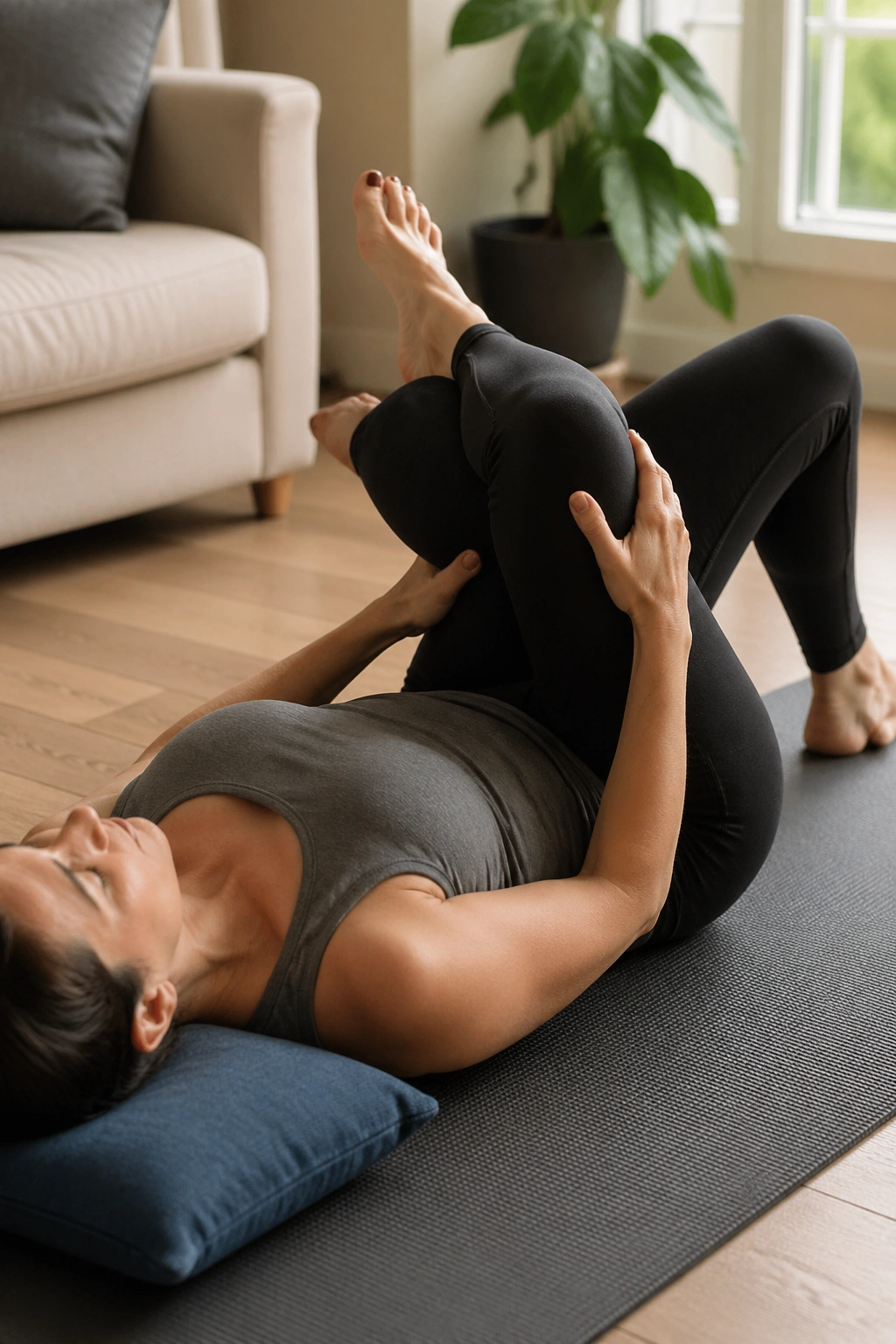
Can tight hips make dizziness worse? Not directly, but they often make the whole body feel more guarded, which is close enough to matter.
Lie on your back with both knees bent. Cross the right ankle over the left thigh, just above the knee, then either keep the left foot on the floor or draw the left thigh in toward you with both hands. Flex the crossed foot to protect the knee. The stretch should land in the outer hip and glute, not in the knee joint. If you feel pinching, back off right away.
This is a good one after long sitting, long standing, or any day when the lower body feels like it has been bracing for hours. You can keep the head flat or prop it on a thin blanket if that feels calmer. The movement into the pose and out of it should be slow enough that the head never has to snap.
I prefer 3 to 5 breaths per side. Longer is fine if the room stays steady. If not, you already know the answer.
14. Gentle Seated Twist
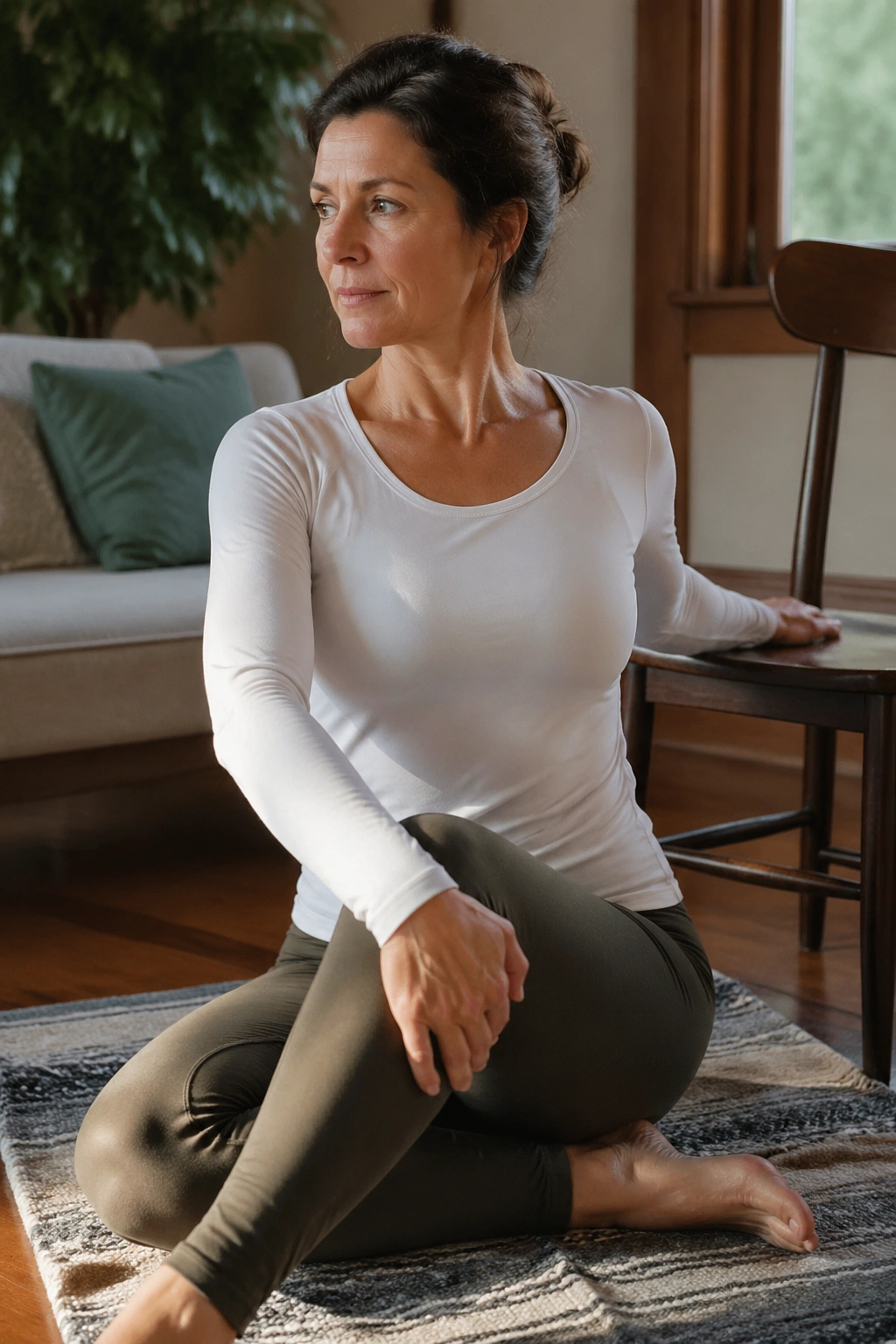
A twist can help, but only the small, civilized kind.
Sit on a blanket or chair so your spine feels tall. Place one hand on the opposite knee and the other behind you, then rotate only a few degrees from the ribs. The head can stay centered or follow the chest very slowly at the end. No whipping. No cranking. The goal is spinal ease, not maximum range.
The Small-Twist Rule
- Keep the belly soft.
- Keep both sitting bones heavy.
- Stop before the neck starts to guard.
- Inhale to lengthen, exhale to rotate a touch more.
Twists are the section where people tend to overdo it. They think more range means more benefit. Usually, it means more head movement and more chance of a dizzy flare. So stay tiny. If seated twisting feels sketchy, do the same motion in a chair with your feet planted. That version is often enough.
I like this pose best after the body has already settled. It works as a final bit of movement, not a first response to a spinning room.
15. Side-Lying Savasana
When the spinning will not quite let go, side-lying rest is often the least annoying option.
Lie on your side with a pillow under your head, another between the knees, and maybe a rolled towel in front of the chest to rest the top arm on. The body should feel enclosed, not twisted. Keep the eyes open for a minute if closing them makes the room sway, then let them soften. Some people find this position easier than lying flat on the back because the head and inner ear feel less exposed.
The exit matters here too. Roll slowly onto the back, pause, then bend the knees and turn to one side before sitting up. If you stand up too fast, you may undo the calm you just built. I would rather see someone spend an extra minute on the floor than rush into a second wave of dizziness.
A simple routine can be enough: wall-supported standing, seated breathing, then one or two restorative floor poses. That is a full practice for a rough day. Not every yoga session needs to look polished. The steadier version is often the wiser one.
