



Your quads are humming, your breathing is still a little ragged, and the gym floor suddenly feels far too hard. That is the moment when a lot of people grab their bag and leave — and it is also the moment when a short, honest cooldown can save you from feeling glued together the next morning.
Post workout stretches are not magic. They will not erase a brutal squat session or turn a sloppy warm-up into a good idea. What they can do is bring your heart rate down, remind tight muscles what length feels like, and give your joints a few calm minutes after being asked to move hard and fast.
The trick is matching the stretch to the work. Hip flexors after cycling. Calves after runs and jumps. Chest and lats after pressing or pulling. And if a stretch sends a sharp pinch into a joint, stop chasing it; that is your body telling you to back off, not a challenge to win.
The list below is built for those real, after-training minutes when you want something useful, not fussy. Start with the big muscle groups, breathe slower than you think you need to, and stay out of the pain cave.
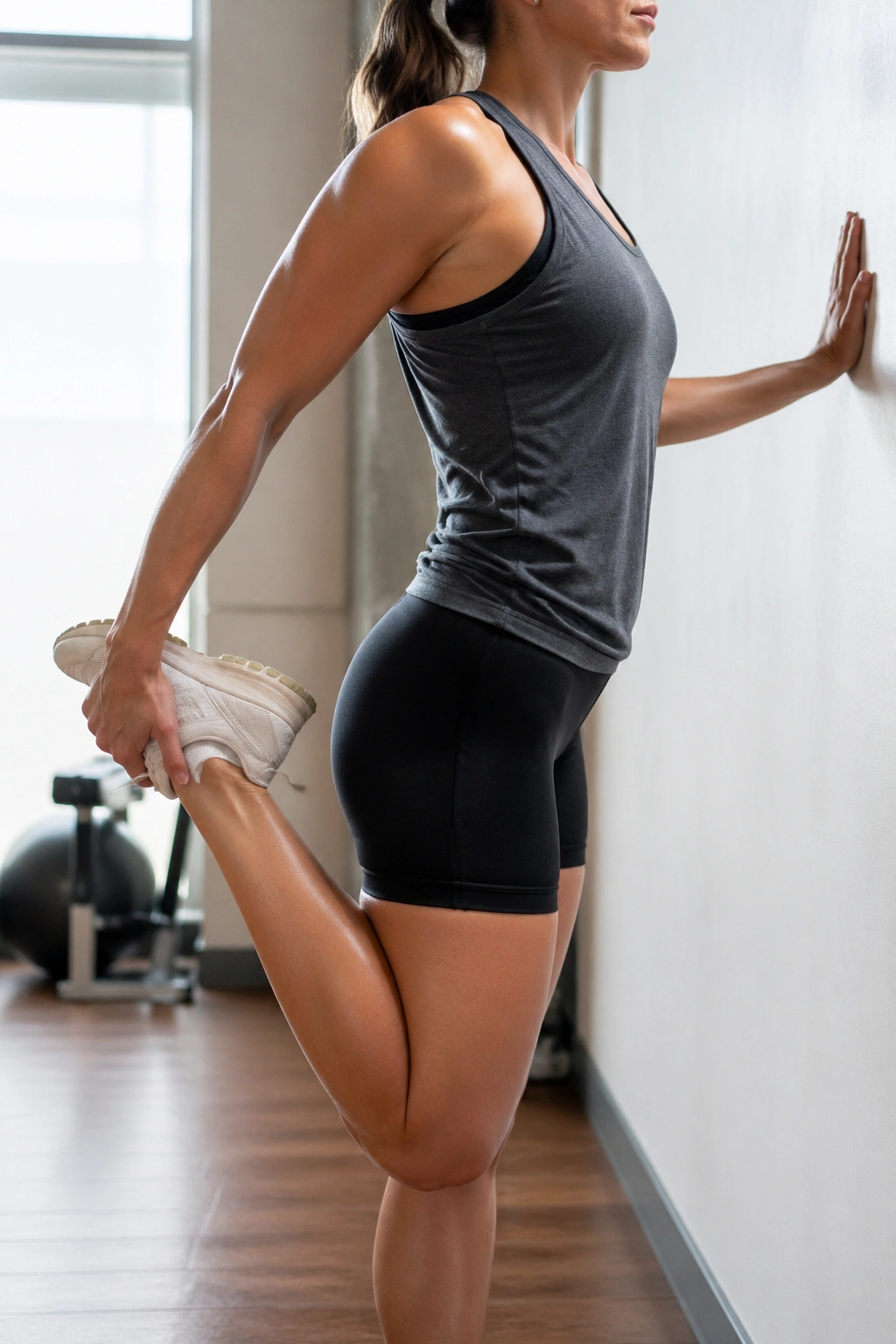
1. Standing Quad Stretch
Your quads do not hide how hard you trained. If you ran, squatted, or rode a bike with any real effort, the front of your thighs are usually the first place that feels tight.
How to set it up
- Stand next to a wall, rack, or sturdy chair so you do not wobble.
- Grab the ankle on the same side, not the toes.
- Gently pull the heel toward your glute until you feel the front of the thigh lengthen.
- Keep your knees close together and your ribs stacked over your pelvis.
- Hold for 20 to 30 seconds per side, then repeat once if the legs still feel springy.
The big mistake is arching your lower back and pretending that counts as a stretch. It usually does not. You want the hip slightly tucked under, almost like you are zipping your belt buckle upward, so the stretch lands in the quad instead of dumping into your spine.
If balancing feels messy, keep one hand on the wall and bend the standing knee a little. Clean position matters more than how high you yank the heel.
2. Half-Kneeling Hip Flexor Stretch
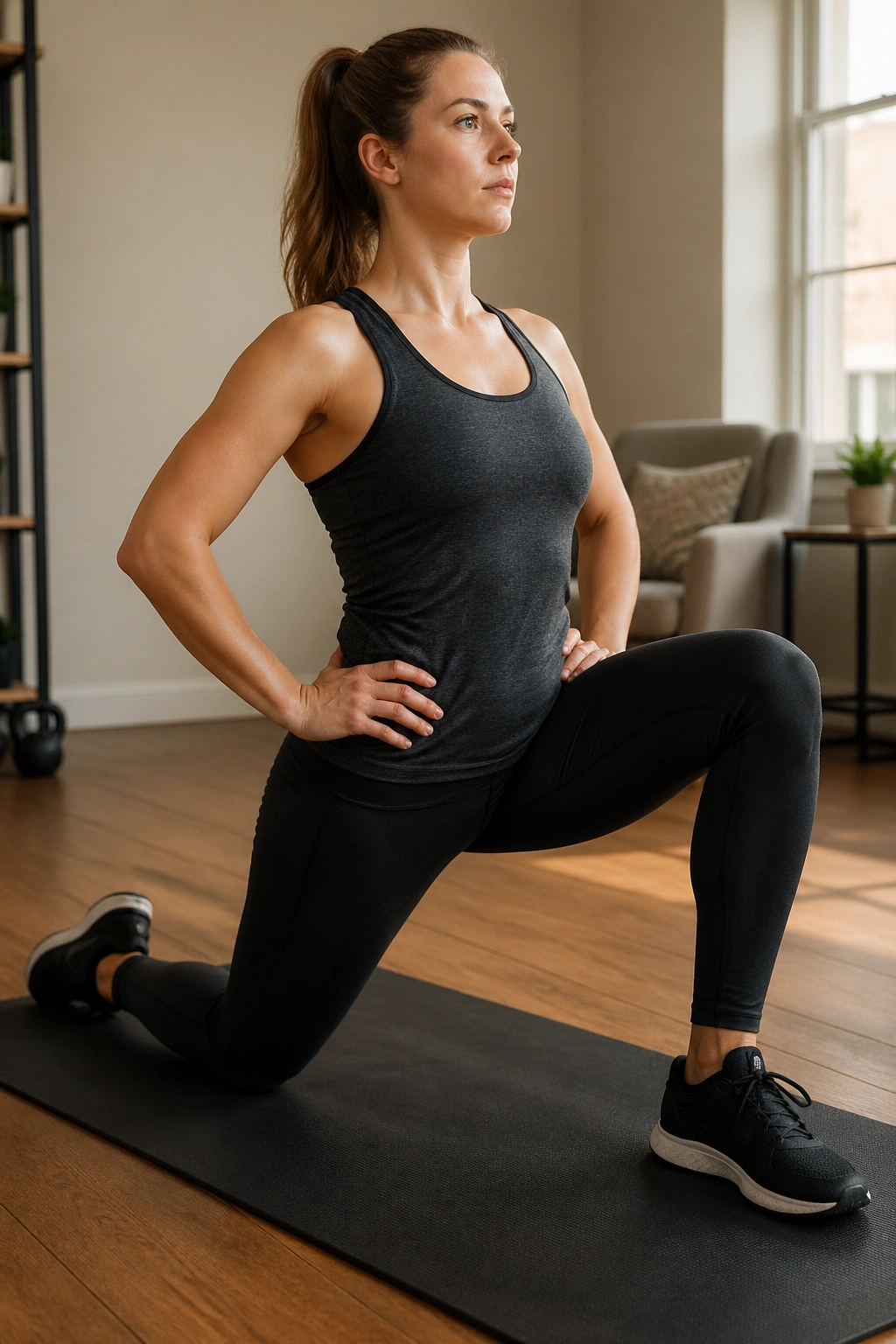
If you sit a lot or hit lunges hard, this stretch can feel like the front of the hip finally gets room again. It is a quiet one, but it does a lot of work.
Drop one knee to a pad or folded towel, plant the other foot in front, and keep your torso tall. Then shift forward only a few inches, enough to feel the stretch just below the front hip bone of the back leg.
Squeeze the glute on the kneeling side. That cue changes everything. It tilts the pelvis slightly and stops you from hanging on the low back, which is where a lot of people accidentally cheat.
One-sentence reminder: Do not lunge forward wildly. A small shift is enough.
If you want a deeper line through the side of the body, reach the arm on the kneeling side overhead and lean away a touch. Hold for 20 to 40 seconds, breathe through the nose if you can, and switch sides. After deadlifts, biking, or a day spent in a chair, this one earns its keep.
3. Seated Figure-Four Stretch
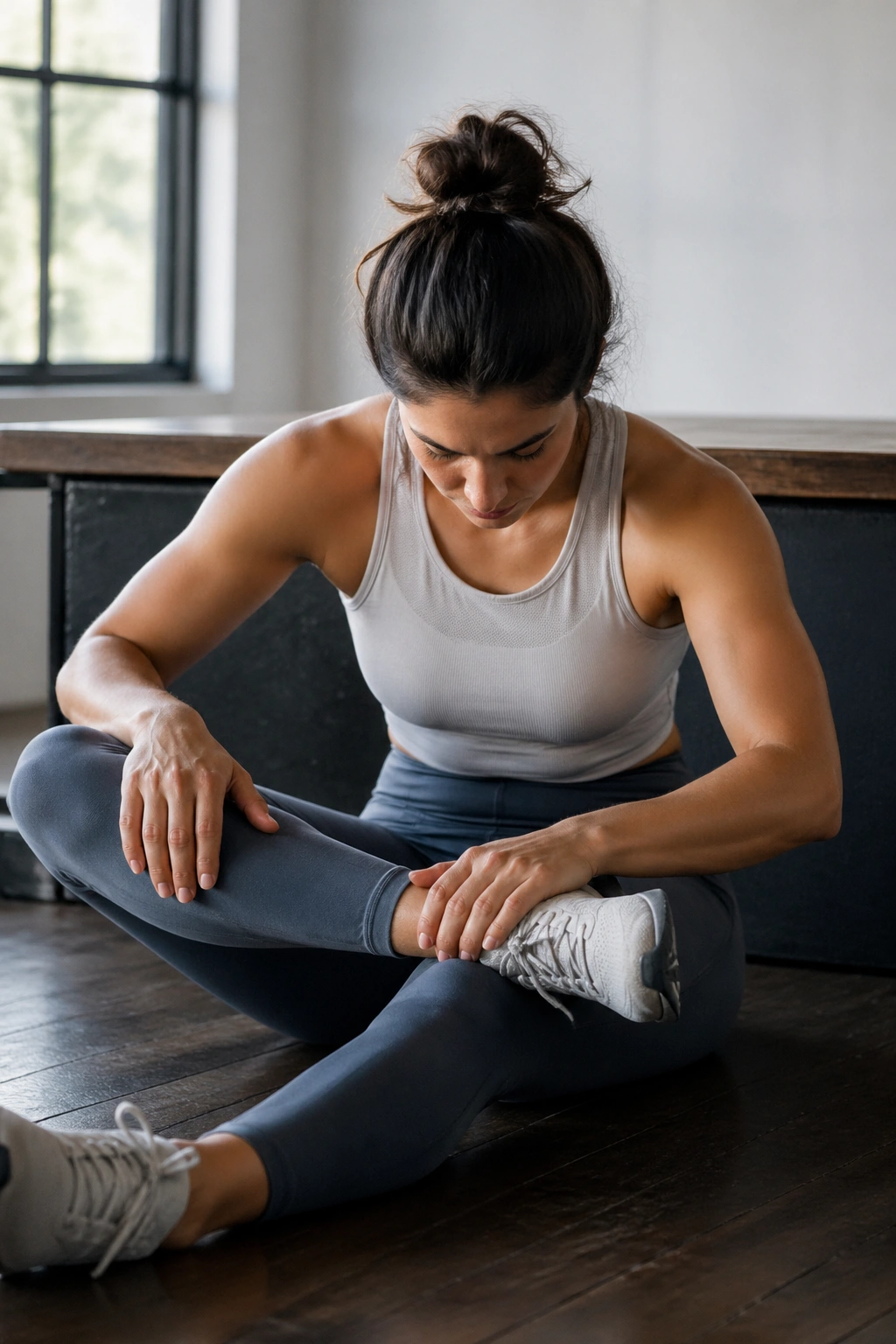
Why does this one feel so clean after a run? Because it goes after the glutes, the outer hip, and that grumpy little area that often gets blamed for all sorts of things.
Sit on the floor or on a bench, cross one ankle over the opposite knee, and let the top knee fall open. Keep your back long, then hinge forward from the hips until you feel the stretch in the back pocket of the crossed leg. If your chest rounds a little, fine. If you are collapsing like a folding chair, back off.
Make it easier on your knees
- Keep the foot on the floor flexed.
- Stay higher on the bench if the floor is too intense.
- Lie on your back and pull the lower leg toward you if sitting feels awkward.
That last version is my favorite when the hips are cranky. It removes the balance piece and lets you relax into the stretch without fuss.
Hold for 20 to 30 seconds per side. The cue is a deep glute stretch, not a twist in the knee. If the knee complains, shorten the position right away.
4. Wall Calf Stretch
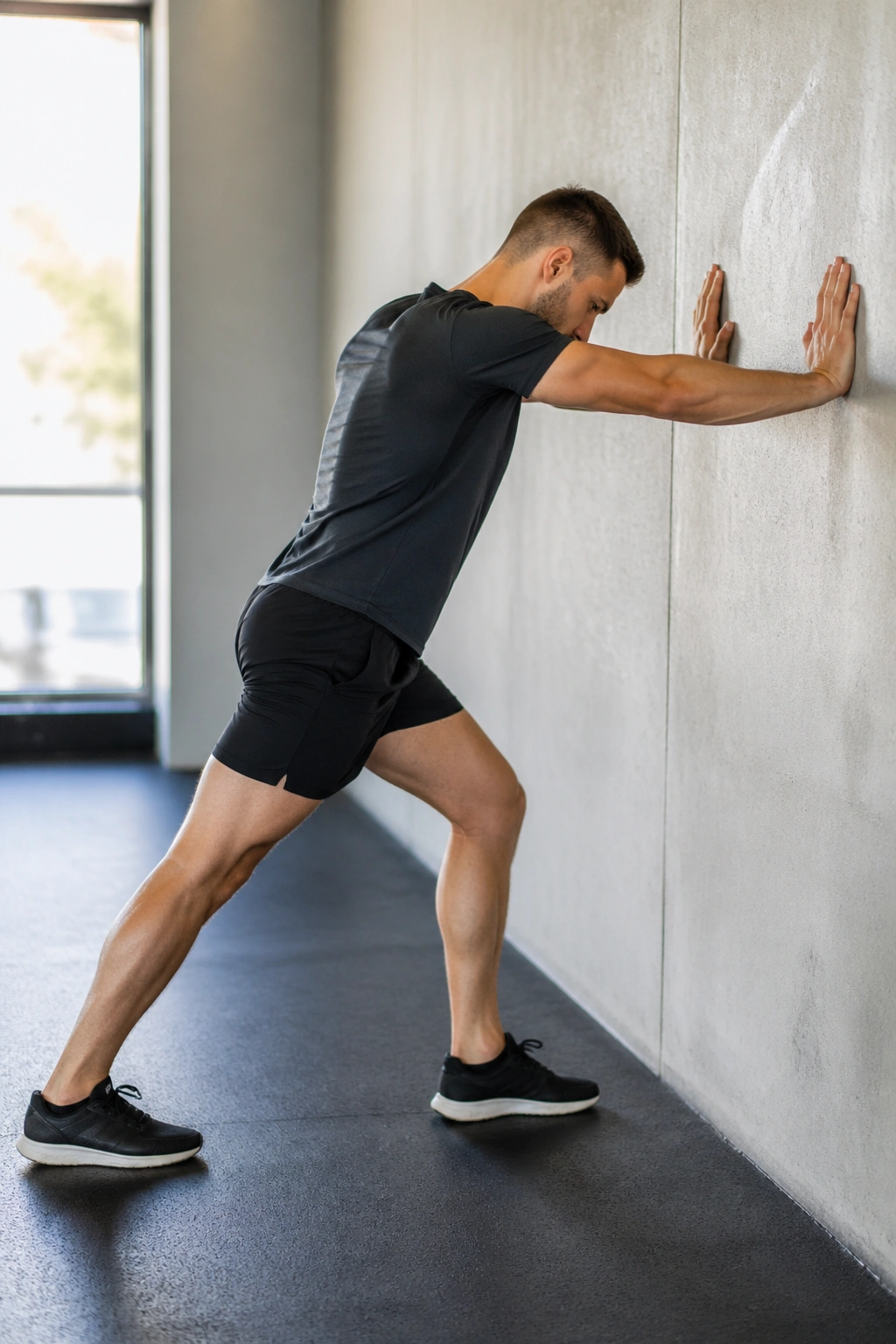
After sprints, jump rope, hill work, or a heavy leg session, calves can feel like guitar strings. This wall stretch is plain-looking and useful, which is exactly why I keep coming back to it.
Stand facing a wall, place both hands on it, and step one foot back with the heel flat. Keep the back leg straight first to aim the stretch at the larger calf muscle, then bend the back knee slightly to hit the lower, deeper part near the Achilles area.
That two-angle approach matters. Straight-knee calf stretching and bent-knee calf stretching are not the same thing, and if you only do one, you miss half the tissue that tends to tighten up after impact work.
Hold each position for 15 to 20 seconds, then switch the bend and repeat. Do not let the back heel float. If it does, shorten the stance until the heel stays rooted.
I like this one near the end of a cooldown because it feels like the floor gets a little softer under your feet when you finish.
5. Child’s Pose With a Side Reach
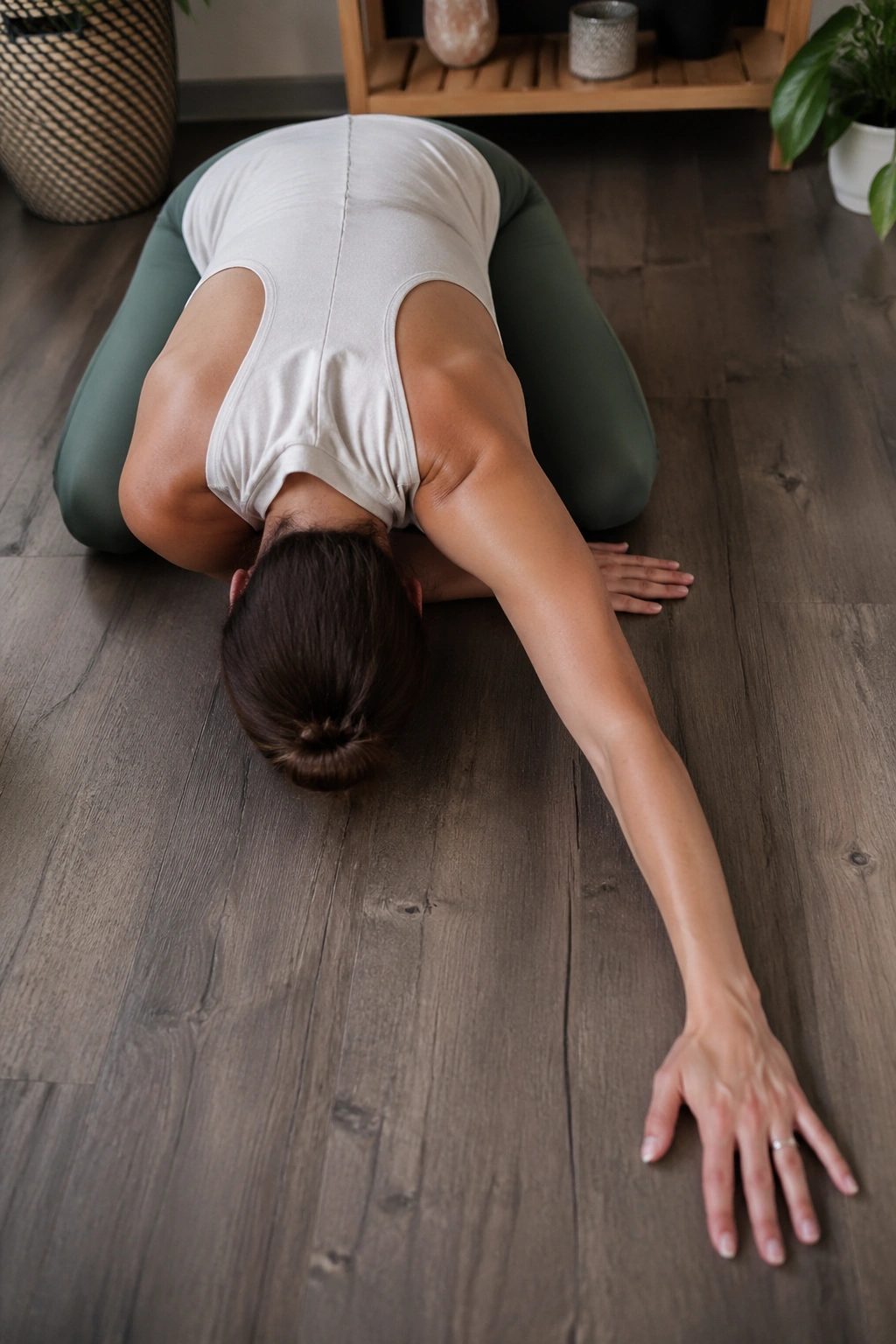
Child’s pose is already a nice reset, but the side reach gives it more use. It opens the lats, the side body, and the ribs, which can feel welded shut after rows, pull-ups, kettlebell swings, or any session where your arms spent time above shoulder level.
Kneel on the floor, sit the hips back toward the heels, and stretch both arms forward. Then walk both hands to the right until you feel the left side of your back and rib cage lengthen. After a few breaths, walk them to the other side.
A few cues that keep it honest
- Keep the knees wide if your stomach feels compressed.
- Let your forehead rest on the floor, a block, or stacked fists.
- Breathe into the side ribs, not the neck.
- Hold each side for 20 to 30 seconds.
The side reach is the part people skip, and that is a shame. It often gives a better stretch than the straight-ahead version, especially if your training involved pulling or climbing.
If your hips feel tight too, stay in the middle longer before reaching out to the sides.
6. Cross-Body Shoulder Stretch
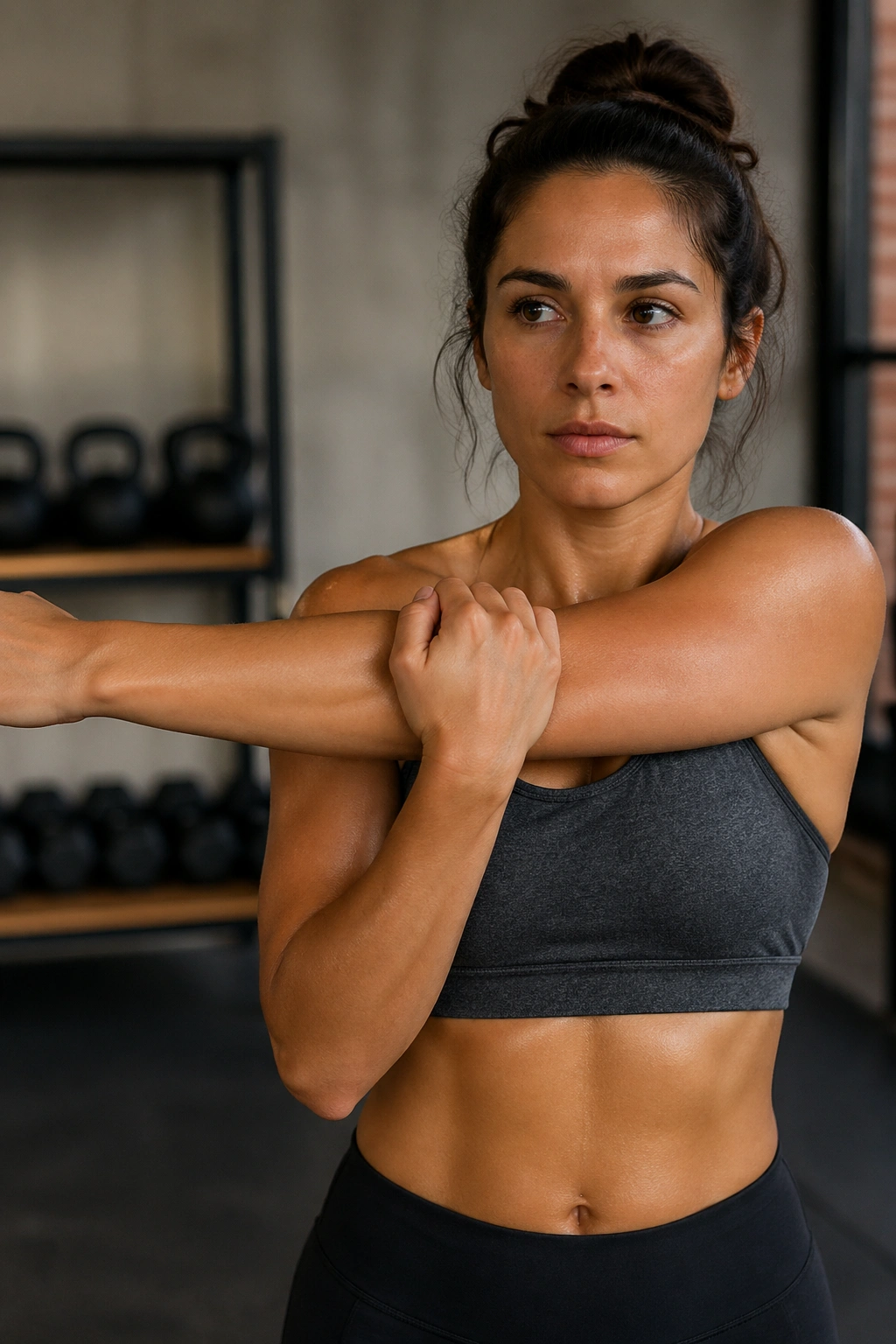
A shoulder that has been pressing, punching, swimming, or planking all session usually wants something simple. This stretch is exactly that.
Bring one arm across your chest and use the other arm to hold it in place, either above the elbow or at the forearm. Keep the shoulder of the stretched arm down and away from your ear. The goal is to feel the back of the shoulder, not to yank the arm across your body like you are trying to win a tug-of-war.
This works best when the torso stays square. If you rotate hard to one side, the stretch slips away from the rear delt and gets murky fast.
Hold for 20 to 30 seconds per side. If the shoulder pinches, lower the arm angle a little. A slightly lower line across the chest is often kinder than forcing the arm at shoulder height.
This is one of those stretches that looks too easy to matter. It matters.
7. Doorway Chest Stretch
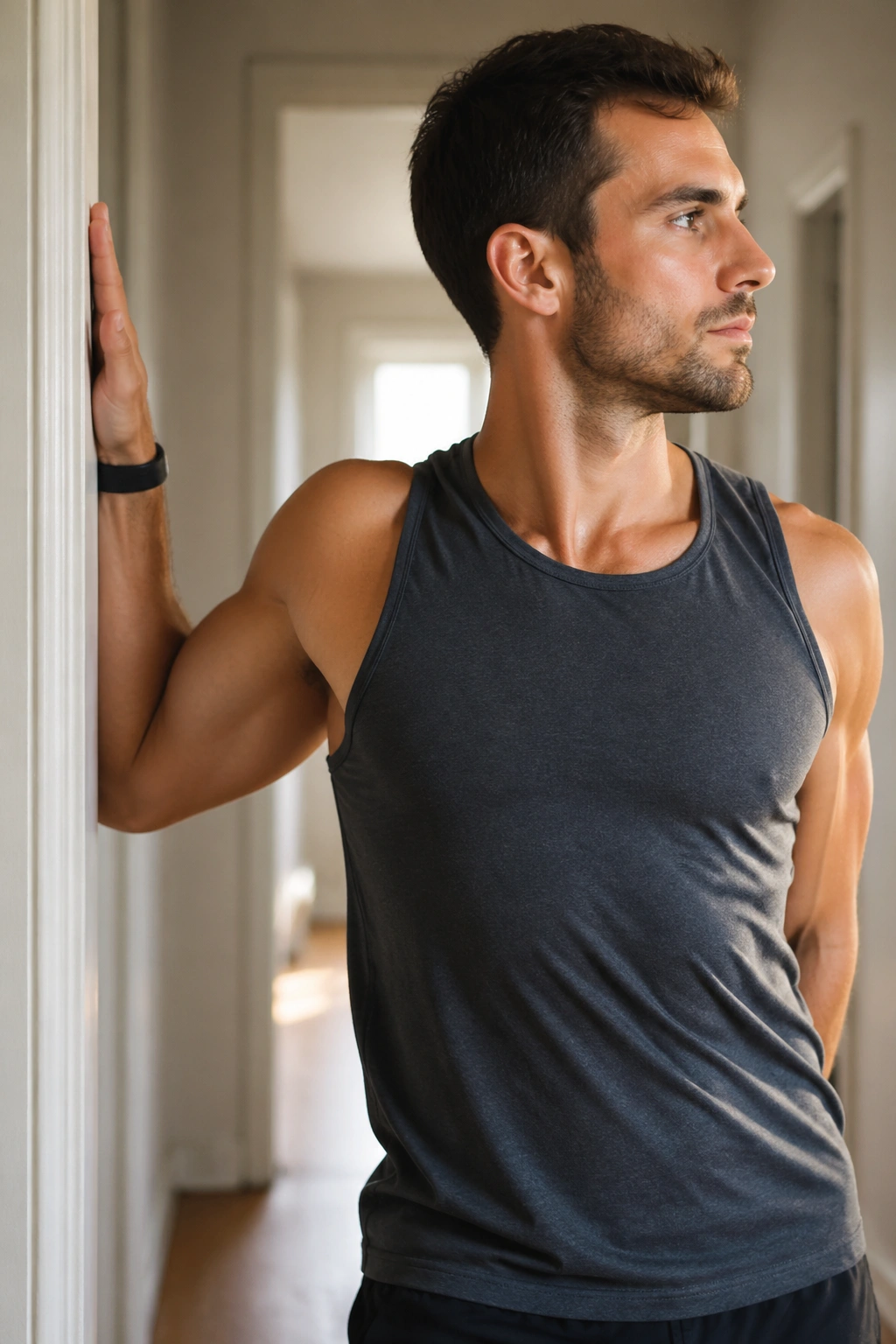
The front of the shoulders and chest can get short and tight after bench press, push-ups, dips, or just a day spent rounded over a desk. A doorway stretch opens that whole front line in a way that feels almost suspiciously simple.
Place one forearm on the side of a doorway, elbow at shoulder height or a little lower, then step through slowly until you feel the chest lengthen. Keep the shoulder blade from shrugging upward. You want the pecs to open, not the top of the neck to jam up.
What to watch for
- Use a lower elbow angle if your shoulder feels cranky.
- Step forward only a few inches at first.
- Turn the torso slightly away to vary the angle of the stretch.
- Hold 20 to 30 seconds, then change sides.
I prefer this stretch after upper-body sessions because it changes how the front of the chest feels when you stand up again. The posture shift is subtle, but you notice it when you move your arms overhead later in the day.
Too much force here is pointless. A steady, quiet stretch beats a dramatic lean every time.
8. Seated Forward Fold
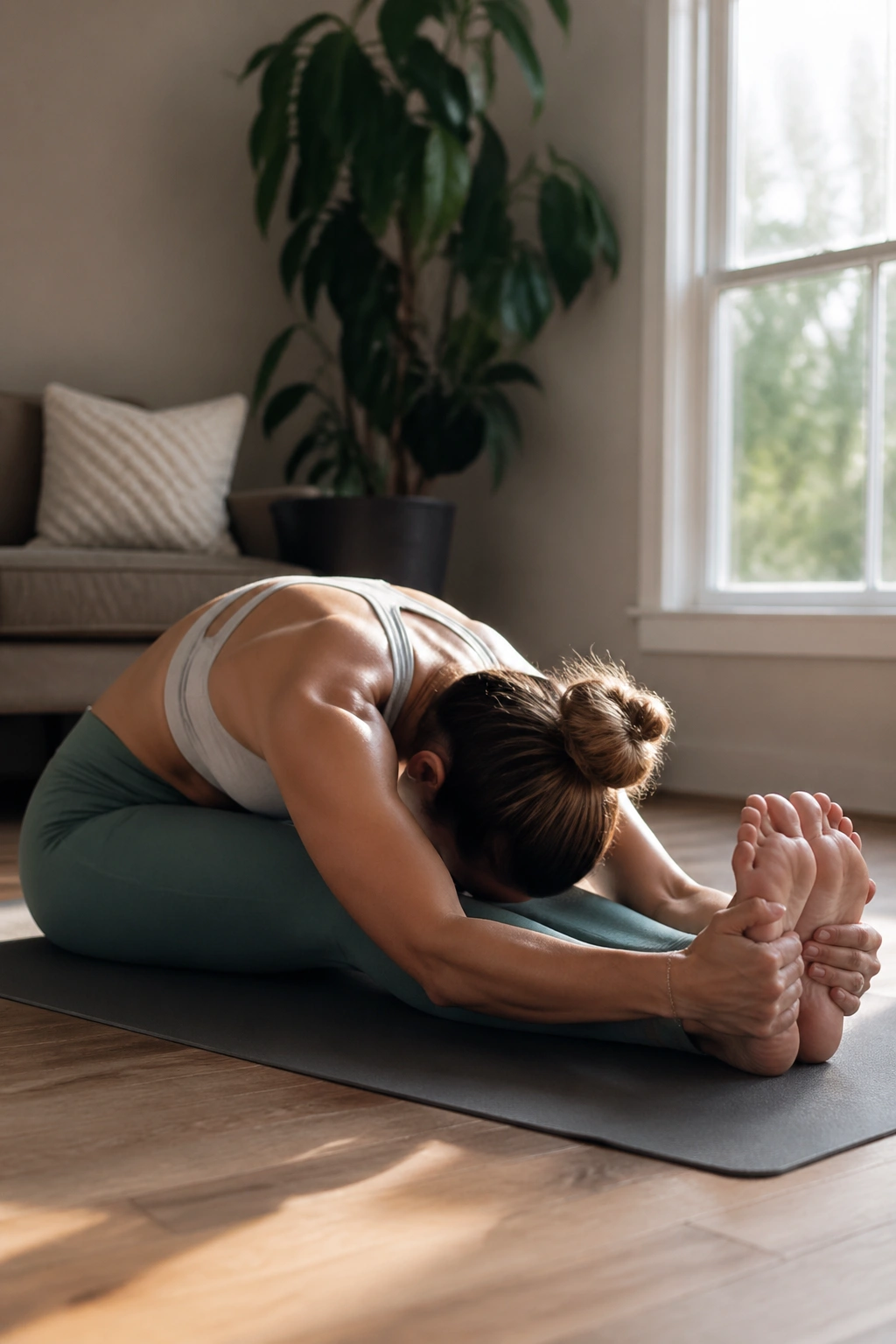
People either love this one or fight it. There is not much middle ground.
Sit with your legs straight in front of you, hinge from the hips, and reach toward the feet while keeping the spine long for as long as you can. The stretch should show up in the hamstrings, maybe the calves, and maybe the low back if you are stiff enough. A little knee bend is fine. A lot of people need it, especially after heavy leg work.
The trick is not to collapse into a rounded heap. A long spine and a soft knee will usually get you farther than forcing your chest onto your thighs. If you only feel the tug behind the knees, back off a little and breathe.
Hold for 20 to 40 seconds. Exhale and let the torso fold a millimeter more on each breath instead of pushing all at once.
Some days this stretch feels huge. Other days it barely gives. Both are normal.
9. Happy Baby Pose
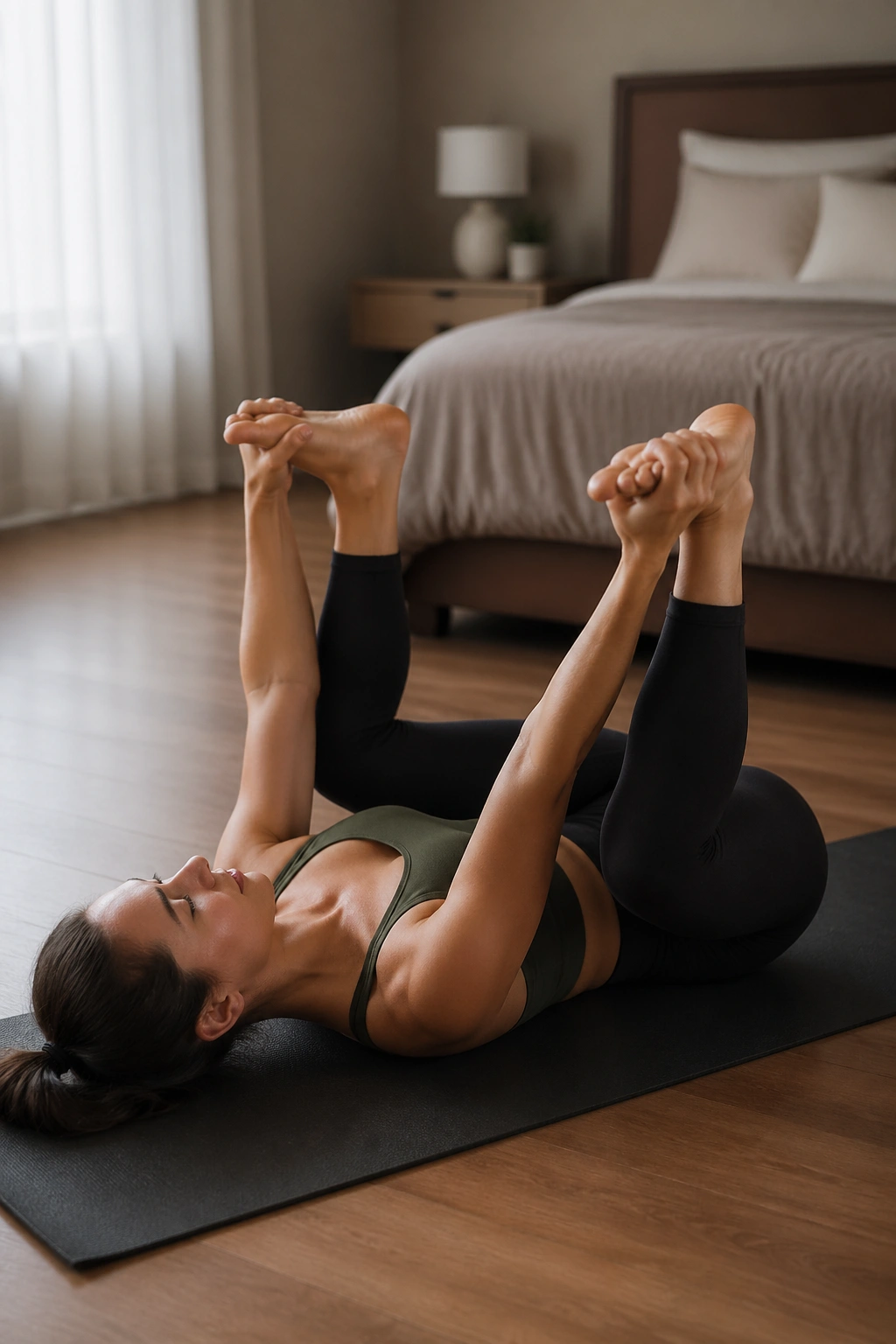
Happy baby looks playful, but it is a serious reset for the hips. It opens the inner thighs, the groin, and the lower back all at once, which makes it a strong choice after squats, lunges, cycling, skating, or anything that kept the legs moving in a narrow pattern.
Lie on your back, bend the knees toward your chest, and grab the outsides of the feet or the backs of the thighs. Let the knees drift toward the armpits while the tailbone stays heavy on the floor.
Easy ways to make it less awkward
- Hold behind the thighs if reaching the feet feels cramped.
- Keep one leg bent more than the other if the hips are uneven.
- Rock gently side to side if your low back wants motion.
- Stay here for 20 to 30 seconds, or a little longer if it feels good.
Do not force the knees to the floor. That is not the point. The stretch should feel broad and soft through the hips, almost like the body is getting wider for a minute.
If the lower back gets cranky, shorten the range and keep your chin relaxed.
10. Thread the Needle
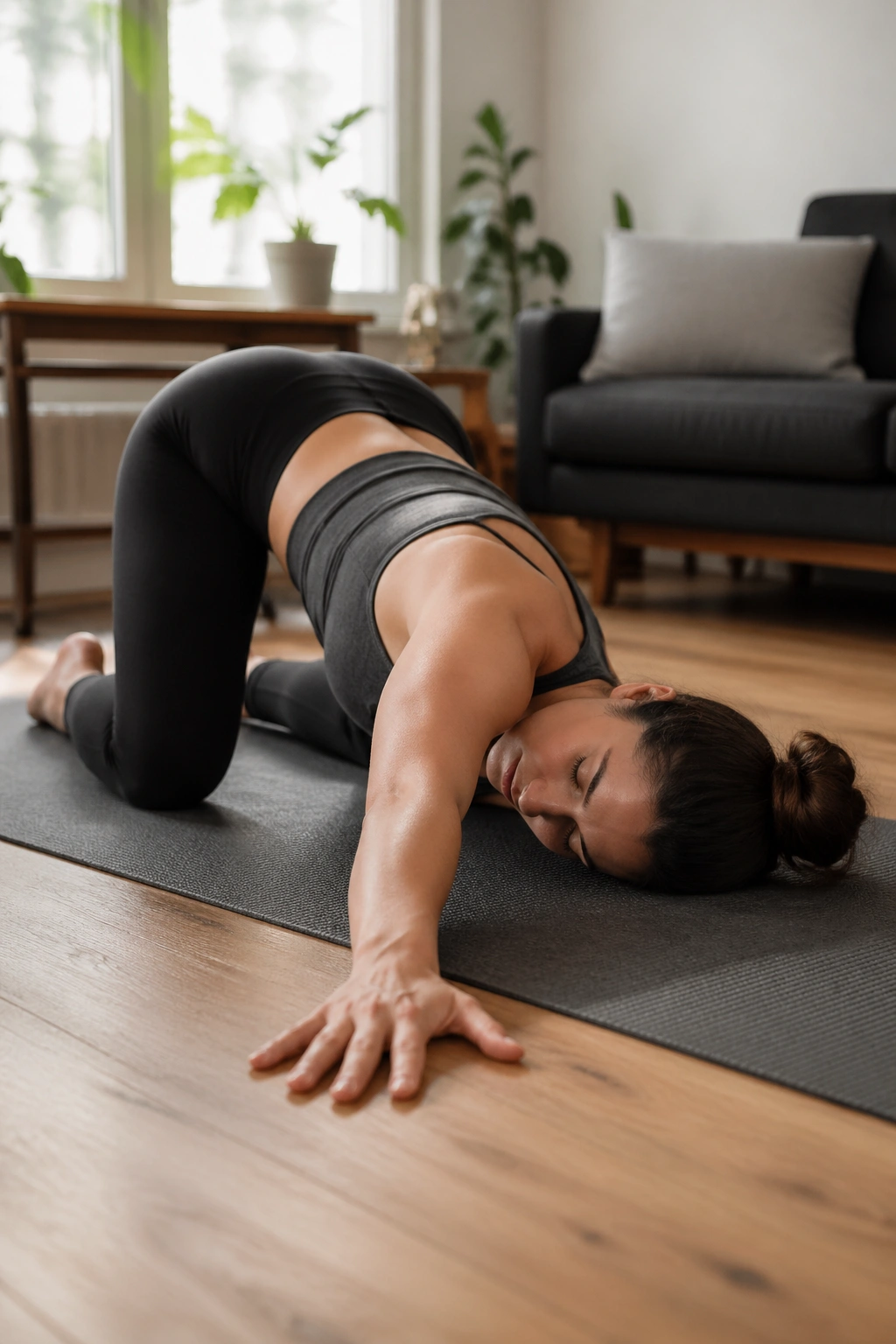
This one looks modest, then suddenly your upper back says thank you. It targets the thoracic spine, the rear shoulder, and the space between the shoulder blades, which is a useful place to open after pressing, rowing, or any workout that left your upper body feeling a bit welded together.
Start on all fours. Slide one arm under the body, palm up, and let the shoulder and temple rest on the floor. Keep the hips mostly stacked over the knees instead of dumping all your weight forward. Then breathe into the upper back for a few slow breaths before switching sides.
Do not chase the floor with force. If the shoulder or neck tightens, ease out a bit and keep the movement smaller.
Hold for 20 seconds per side, or take 4 to 5 slow breaths on each side. If you want a little more, shift the supporting hand a touch farther forward and let the ribs open as the arm slides through.
This is one of the better post workout stretches for people who train upper body a lot and spend the rest of the day at a keyboard.
11. Kneeling Lat Stretch
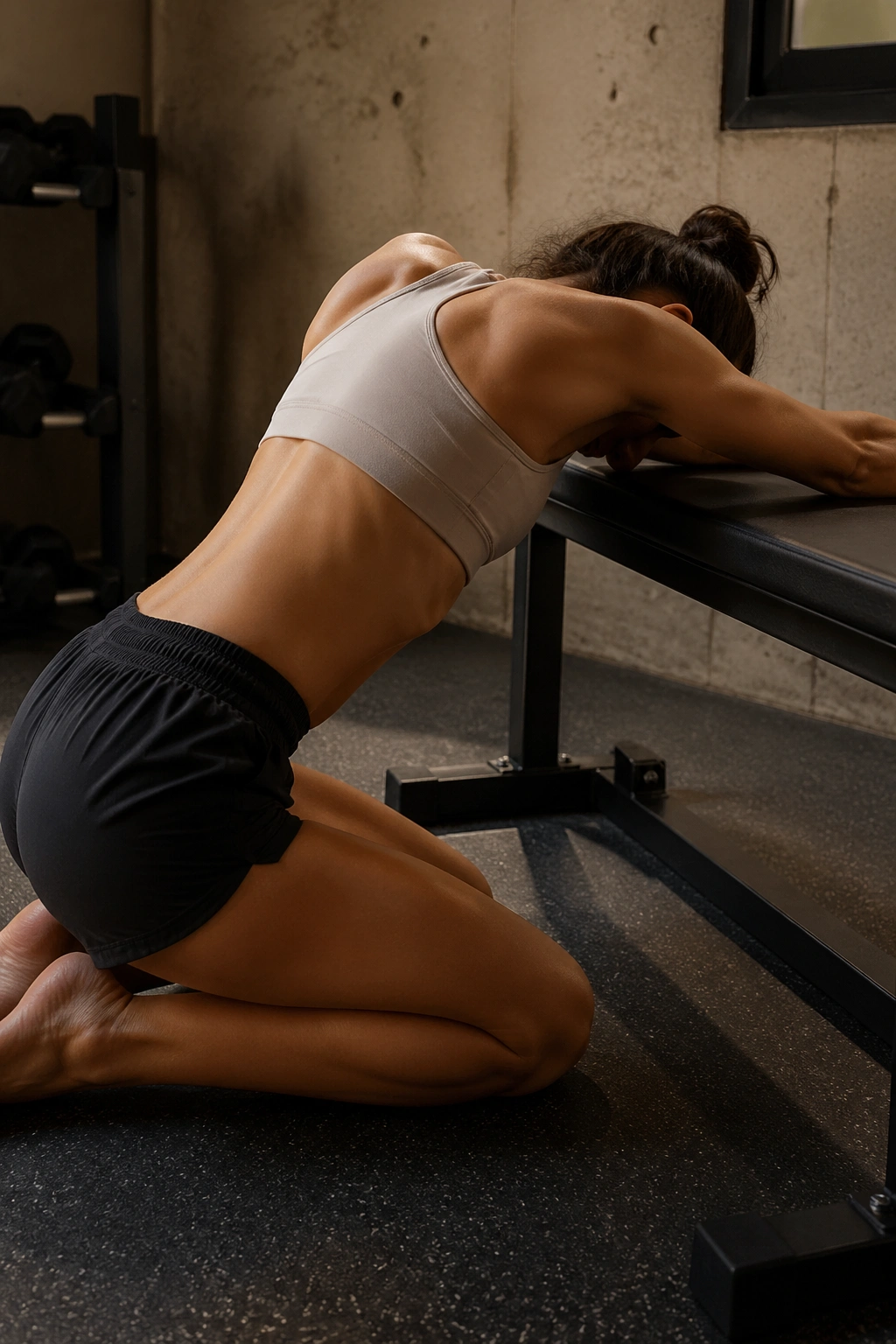
A lot of people ignore the lats until overhead work starts feeling jammed. Then they notice. Fast.
Kneel in front of a bench, box, or sturdy chair, place both forearms on the surface, and sit the hips back until the underarm and side of the rib cage begin to lengthen. Keep the ribs from flaring upward. The more you arch the lower back, the less this stretch lands where you want it.
You can bias one side by sliding the hands slightly to the right or left. That small shift changes the angle more than people expect. If you pulled heavy, climbed, did pull-ups, or spent time hanging from a bar, this stretch can feel like it opens a stuck zipper along the side of the torso.
Hold for 20 to 30 seconds. A little breath-led movement works better than forcing the chest down all at once.
I like this one because it improves how the arms feel overhead later. Not in a flashy way. Just enough to notice.
12. Supine Spinal Twist
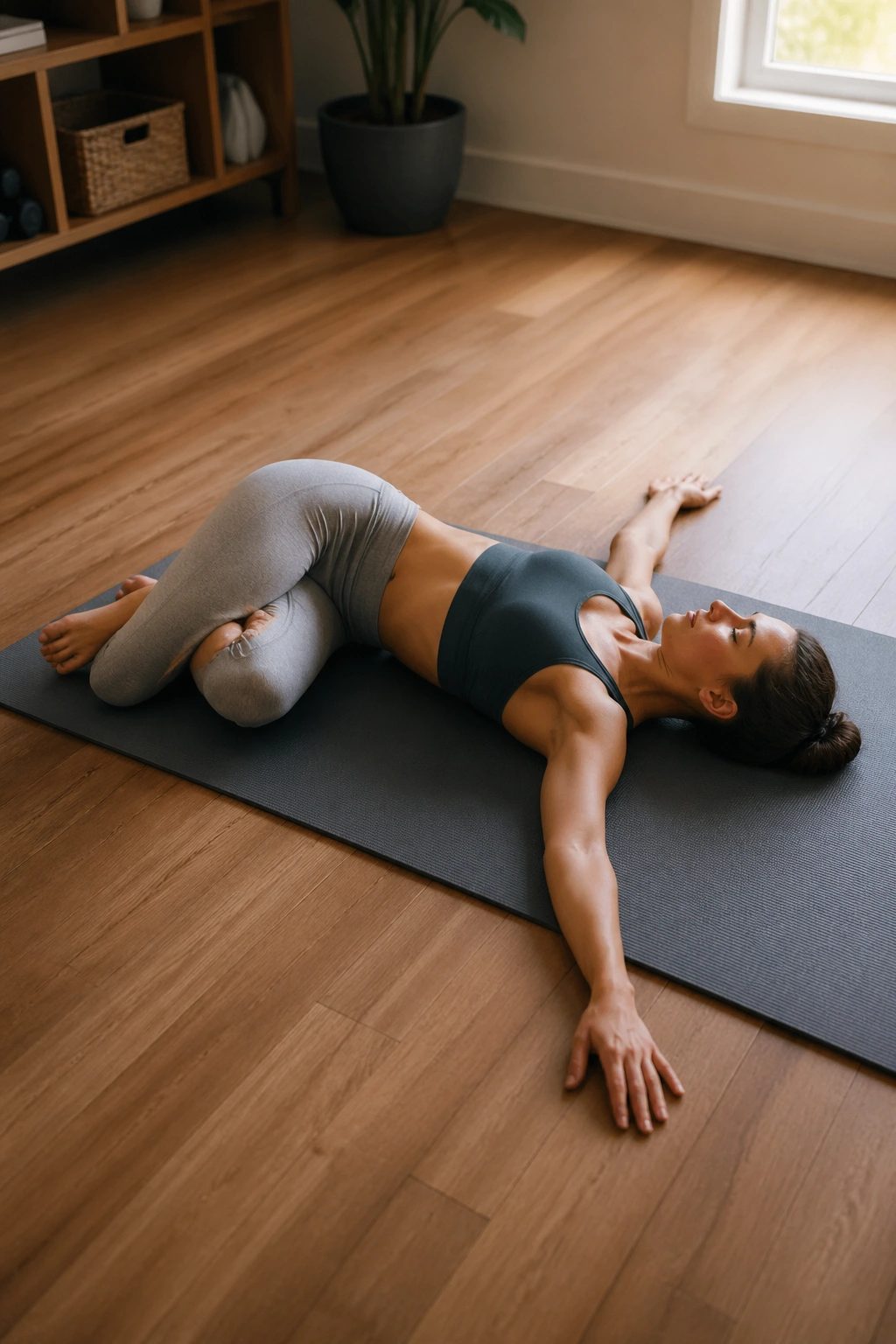
Lie on your back, hug one knee toward your chest, then guide it across the body toward the opposite side while the other arm opens out wide. Keep both shoulders heavy on the floor if you can. The stretch should run through the low back, the outer hip, and a bit of the spine.
If your lower back feels tender, place a pillow or folded towel between the knees or under the lower leg. There is no prize for dragging the knees all the way to the floor. A smaller twist held quietly is often the better choice.
This one works well after full-body training because it gives the trunk a chance to settle. Your body has been bracing, hinging, pressing, and pulling. A slow twist tells it that the work is over.
Hold each side for 20 to 30 seconds and breathe into the side ribs. If your neck strains when you look toward the open arm, let the head stay neutral.
Simple. Calm. Useful.
13. Butterfly Stretch
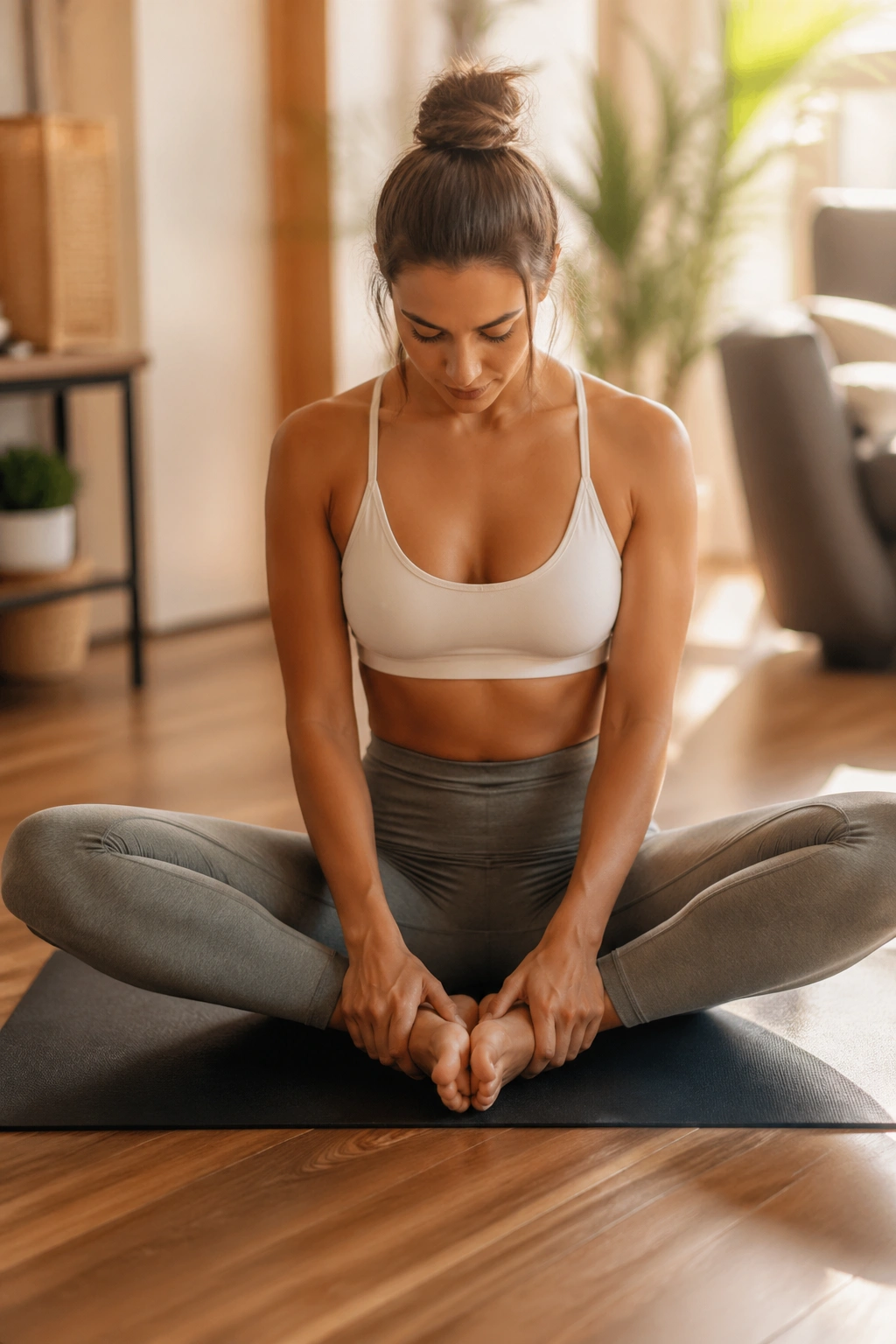
The butterfly stretch goes straight at the inner thighs and groin, and it earns its spot after squats, deadlifts, cycling, skating, and any workout where your legs spent time pushing against force from the inside out.
Sit tall, bring the soles of the feet together, and let the knees fall open. Hold the ankles or feet lightly, then hinge forward from the hips until you feel the stretch in the inner thighs. The back does not need to round much. A slight hinge is enough.
A small hinge beats forcing the knees down
- Keep your feet a comfortable distance from the body.
- Sit on a folded towel if your pelvis tips backward.
- Use your elbows inside the thighs only if the pressure stays gentle.
- Hold 20 to 40 seconds.
The big mistake is pressing the knees down with your hands. That tends to irritate the joint and does not teach the muscles much. The stretch belongs in the groin, not in the knee.
If the hips are stiff, let the knees sit higher. The position gets better with patience.
14. Downward Dog Pedal
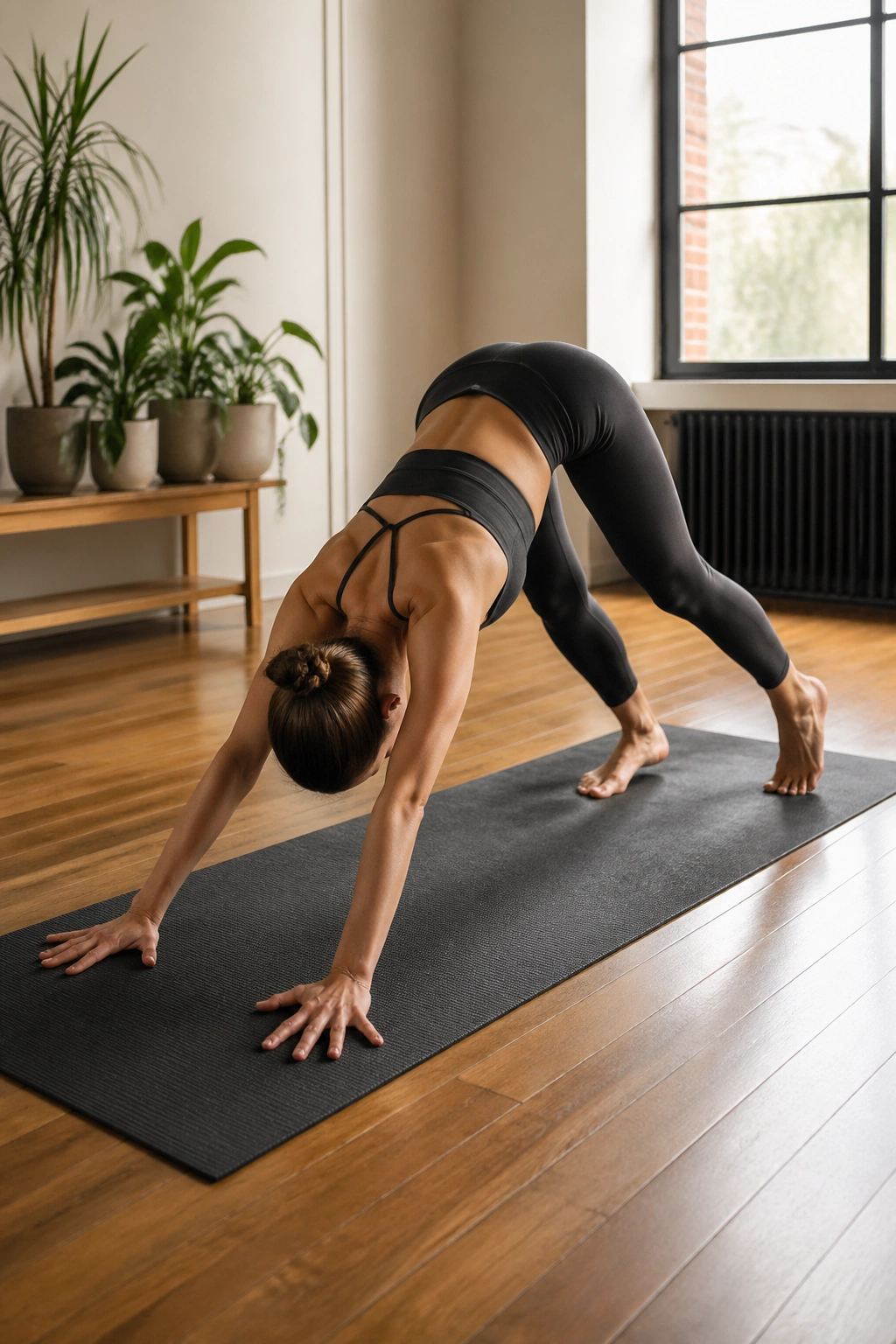
This one is half stretch, half reset. It is especially good if you want to keep moving a little while the heart rate settles, and it works well after running, jumping, circuits, or any session where your calves and hamstrings feel a little hot.
From hands and feet, lift the hips high and press the floor away. Bend one knee and then the other in a slow pedal, letting each heel drop toward the floor in turn. Keep the knees soft if the hamstrings are screaming. Straight legs are not the goal here.
The pedal gives you a moving stretch instead of a fixed hold, which can feel better when the body is still buzzing from work. It also lets the shoulders open a bit at the same time, so you are getting more than one benefit out of the position.
Try 5 to 8 slow pedals per side, then hold the pose for a few breaths if it feels good. If your wrists are sore, skip this one or place your hands on a bench instead.
It is a useful bridge between training and the quieter stretches that follow.
15. Couch Stretch
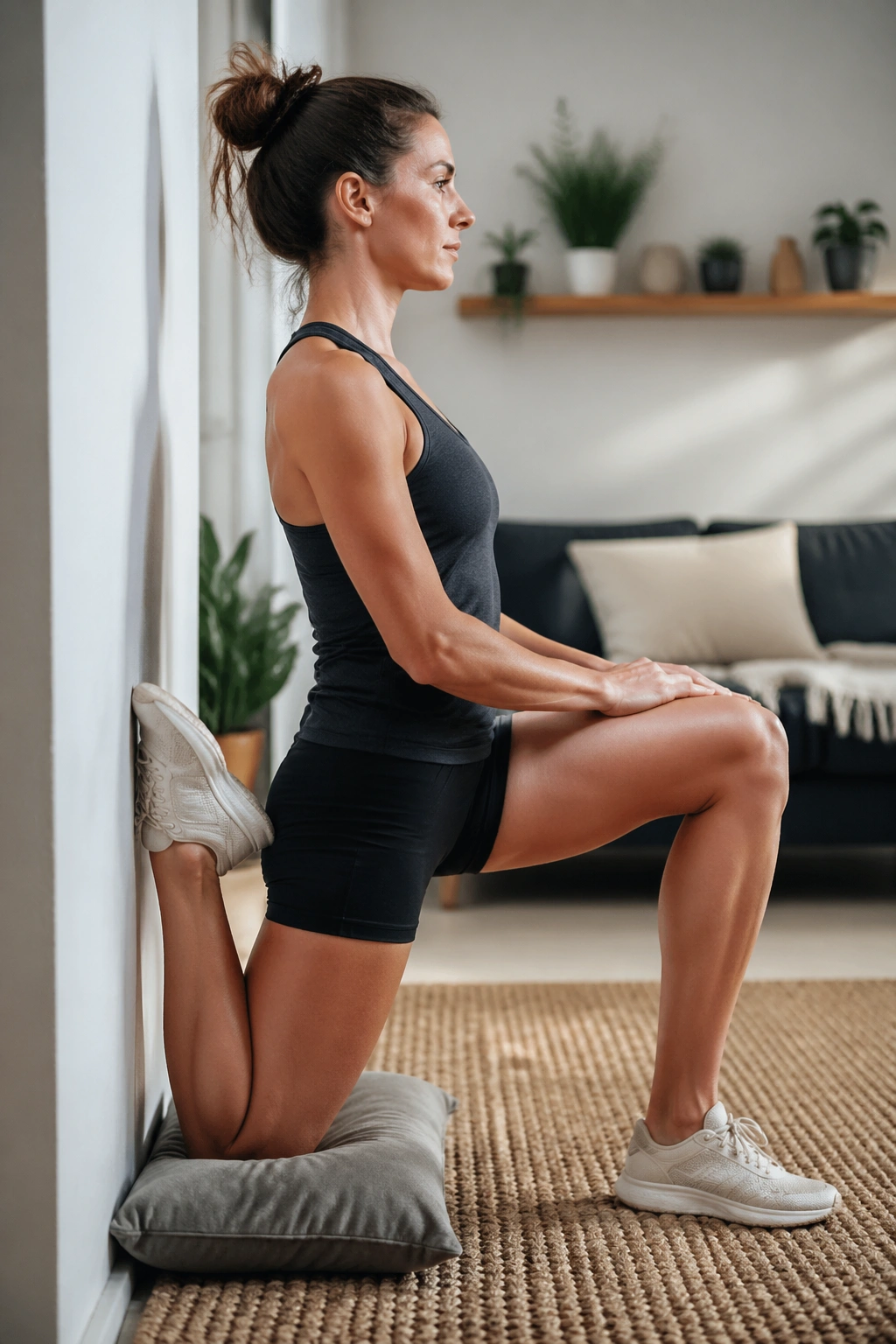
This is the stretch that makes athletes groan for a reason. It hits the quads and hip flexors hard, especially the rectus femoris, which is the part of the quad that crosses the hip and often gets cranky after leg day.
Set one knee on a pad near a wall or couch, place the shin of the same leg up the wall, and step the other foot forward into a half-kneeling position. Stay tall, squeeze the back-side glute, and keep the ribs from flaring. You will feel a deep line through the front of the thigh and hip.
Do not rush it
- Start with 15 to 20 seconds if this stretch is new.
- Keep a cushion under the knee; this one can be rough on bare floors.
- Move the front foot farther away if the knee angle feels pinchy.
- Breathe out slowly and avoid leaning forward at the waist.
I like the couch stretch, but I also respect it. It is not subtle, and if you force it, your body will tell you off. When it is done well, though, it can change how your legs feel after a hard lower-body session.
16. Overhead Triceps Stretch
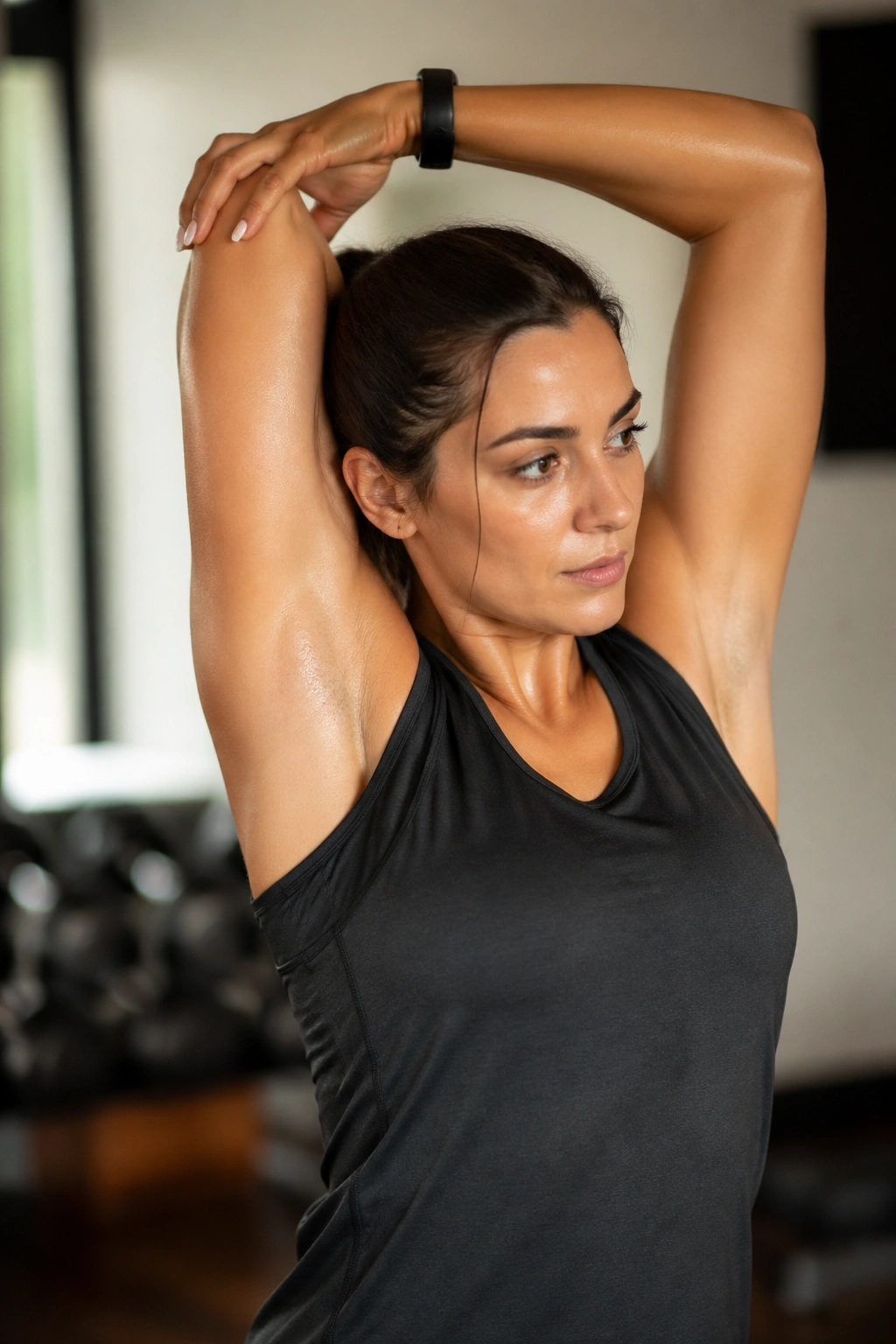
This stretch does more than hit the back of the upper arm. It also reaches into the lats and the side of the torso a bit, which makes it handy after pressing, overhead lifts, or push-heavy workouts.
Raise one arm overhead, bend the elbow so the hand drops down the back, and use the other hand to guide the elbow lightly. Keep the ribs stacked and avoid the temptation to arch the lower back just to go deeper. The stretch should stay in the triceps and shoulder area, not spill into a sloppy spine position.
If the elbow is stiff or tender, a towel can help. Hold the towel in the top hand and let the bottom hand hold the other end behind the back. That version gives you a little more control and usually feels easier on the joint.
Hold for 20 to 30 seconds per side. The shoulder should feel open, not jammed. If the upper arm brushes your head and the neck starts to strain, loosen up a bit.
It is a small stretch, but it pays off fast.
17. Standing Side Bend Reach
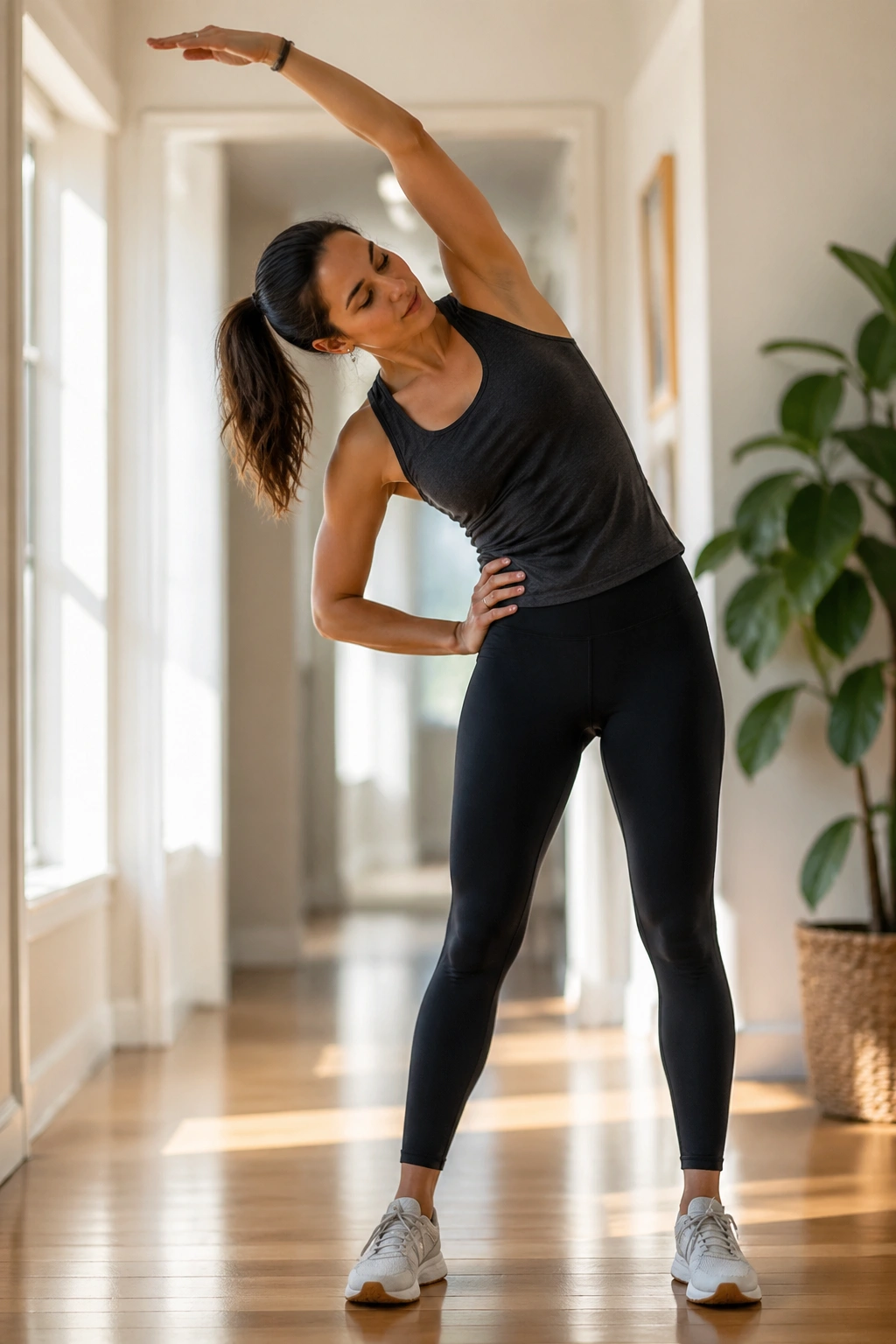
This one gets skipped because it looks too simple. That is a mistake.
Stand tall, bring one arm overhead, and lean away from that arm just enough to feel the side body lengthen from the hip to the rib cage. Keep the hips mostly level and avoid collapsing forward. You want a clean arc through the obliques and lats, not a sloppy fold.
A wall helps if balance is shaky. You can also do it with both feet planted wide and the opposite hand on the hip for a little more control. After carries, climbing, rowing, or long bike rides, this stretch can feel oddly relieving because it gives the rib cage room to move again.
Hold for 20 seconds per side and breathe into the stretched side. The breath cue matters here. If you can send air into the ribs, the stretch tends to soften without forcing.
This is the kind of cooldown move that feels small in the moment and surprisingly useful later.
18. Legs Up the Wall
If you want the quietest end to a workout, this is the one. It is less of a classic stretch and more of a full-body shutdown button.
Lie on your back and place your legs up the wall with the knees soft and the hips close enough that the back does not strain. Let the arms rest out to the sides, palms up if that feels comfortable. Stay there and breathe. That is the whole job.
This position helps the lower body settle after long runs, hard leg days, or any session where your feet spent a long time pounding the floor. Some people like it for 2 minutes. Others stay 5 or 6. You do not need to chase a number; you just need enough time for the body to stop bracing.
If you feel dizzy when you first come out, roll to one side and sit up slowly. No rush. The point is to lower the system a notch, not to spring back up like nothing happened.
Five honest minutes here beats a rushed cooldown every time, and that is usually the difference between feeling trained and feeling chewed up.
