



Your hamstrings do not need punishment.
The best yoga stretching sequences for tight muscles feel more like a conversation than a tug-of-war. You move a little, breathe, back off, then return with a little more room. That rhythm matters, because a muscle that feels tight is often guarding, not just short.
Sitting all day can make the hip flexors and chest feel welded shut. Lifting can leave the calves and lats grumpy. Running tends to light up the hip flexors, calves, and glutes at the same time, which is why a random forward fold rarely fixes the whole mess.
If the stretch sends sharp pain, numbness, or a zing down the leg, skip it. Soft-tissue work should feel like a steady exhale, not a fight you have to win. Start with the sequence that matches the place you feel stiff, and the rest gets easier from there.
1. Neck, Jaw, and Upper-Trap Reset
Why does your neck get tight even on a day when you never trained your neck at all? Because the jaw clamps, the shoulders creep up, and the upper traps end up doing overtime.
That’s why I like to start here when the whole upper body feels wound tight. A few slow neck movements can calm down a bigger pattern. Small motion. Big payoff.
How to run it
- Sit tall and take 2 slow breaths through the nose, then soften the jaw and let the tongue rest lightly on the roof of the mouth.
- Lower the chin a little, then make 5 tiny nods as if saying “yes” without collapsing the chest.
- Tip the right ear toward the right shoulder and hold for 3 to 5 breaths. Keep the left shoulder heavy.
- Turn the head slightly toward the armpit on the tight side if that feels better, but do not yank on the head with your hand.
Finish with 5 slow shoulder rolls in each direction. If the neck is extra cranky, lie on your back with a rolled towel under the skull and breathe there for a minute. That little setup takes the pressure off the muscles that usually grab first.
2. Shoulder Rolls and Chest Opening at the Wall
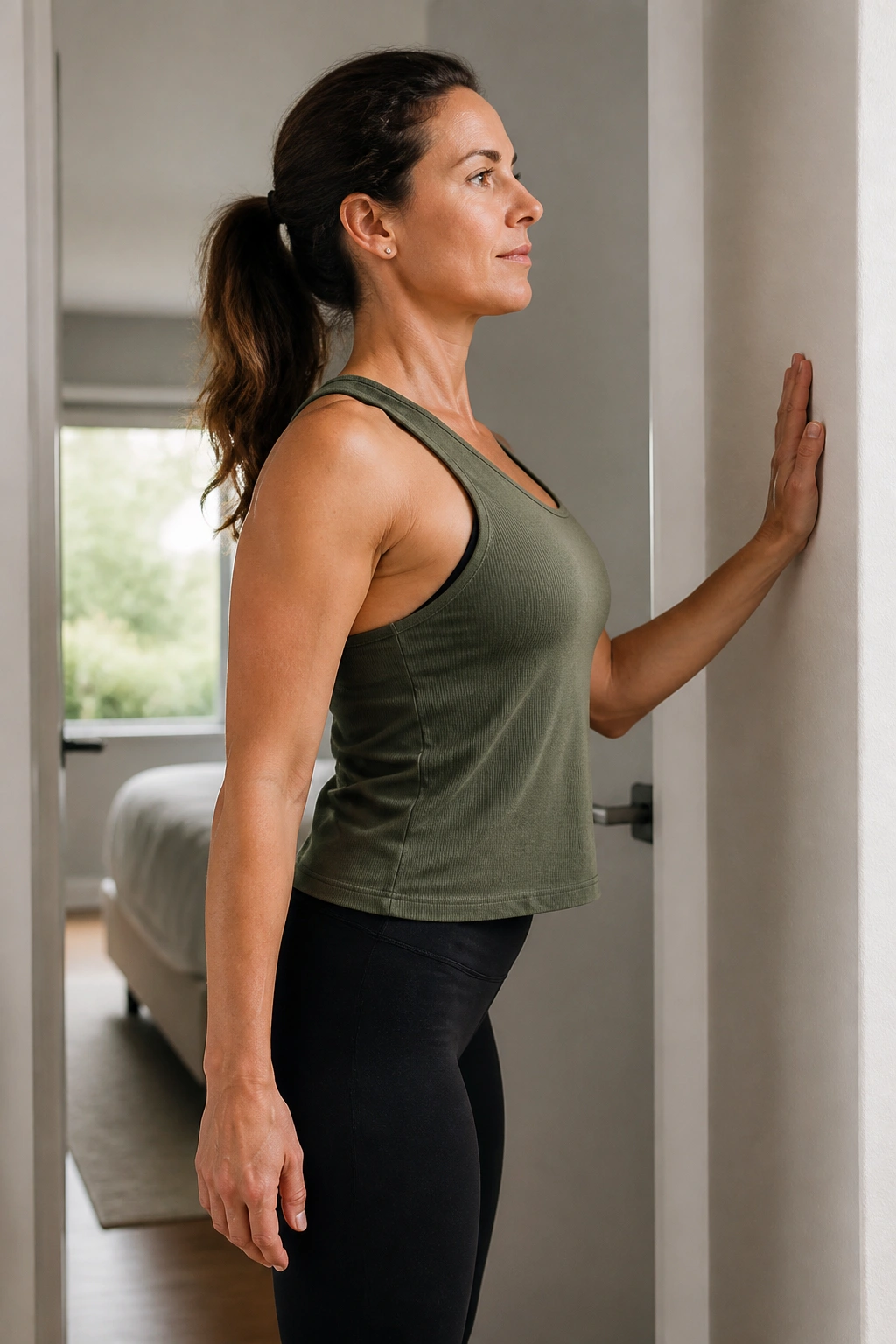
A tight chest often feels like a tight neck. The front of the shoulders shortens, the upper back rounds, and the whole area starts feeling pinched when you reach overhead.
A wall works better than people expect. It gives you feedback. You can feel when the ribs flare, when the shoulder creeps forward, and when the stretch turns from useful to aggressive.
- Start with 10 slow shoulder rolls backward, making them big enough to move the shoulder blades but not so big that the neck tenses.
- Stand in a doorway or beside a wall and place one forearm at shoulder height.
- Step through until you feel a stretch across the chest, then hold for 20 to 30 seconds.
- Switch to a cactus-arm wall shape, elbows bent at about 90 degrees, and gently press the forearms back for another 3 breaths.
- If the front of the shoulder feels pinchy, drop the elbow lower.
The best chest-opening work is mild. If you feel a deep stretch across the pecs and a little space around the collarbones, you’re in the right spot. If your lower back arches hard, you’ve gone too far.
3. Cat-Cow Into Thread-the-Needle
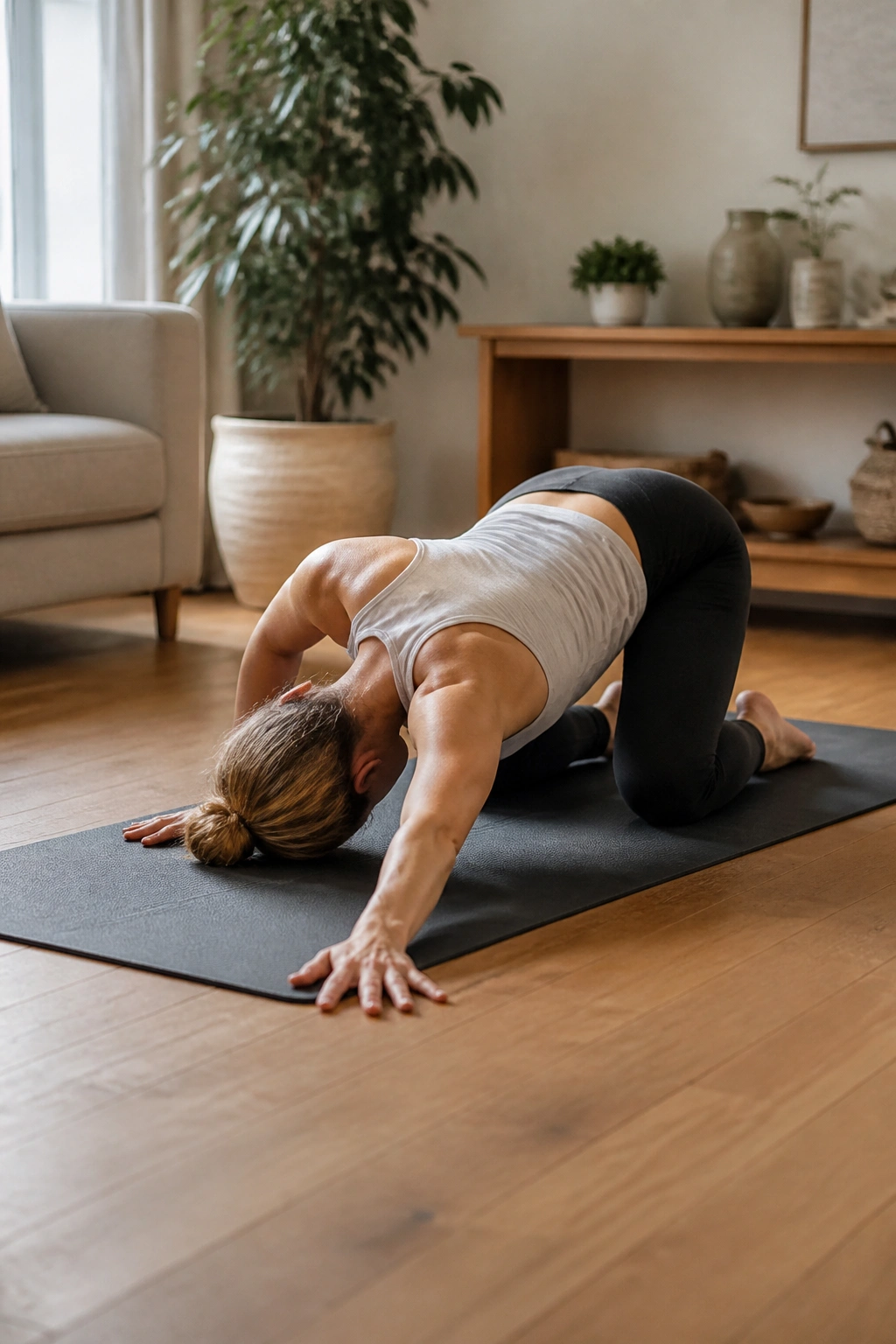
After a long stretch of desk work, the middle of the back can feel like it has rusted shut. Cat-cow gets the spine moving again, and thread-the-needle adds the rotation that a lot of tight upper backs are missing.
I like this sequence because it doesn’t ask for a huge stretch right away. It asks for motion first. That makes the next pose feel cleaner and less dramatic in the bad way.
Start on hands and knees. Move through 6 slow rounds of cat-cow, matching the breath to the shape: exhale to round, inhale to arch. Then slide the right arm under the left and rest the right shoulder and temple down for 3 to 5 breaths. Repeat on the other side.
If the shoulder is sensitive, keep the top arm in a small arc instead of forcing it all the way through. A block or folded blanket under the chest can help, too. You want the back of the ribcage to open, not the shoulder joint to complain.
4. Side-Body Reach for Lats and Obliques
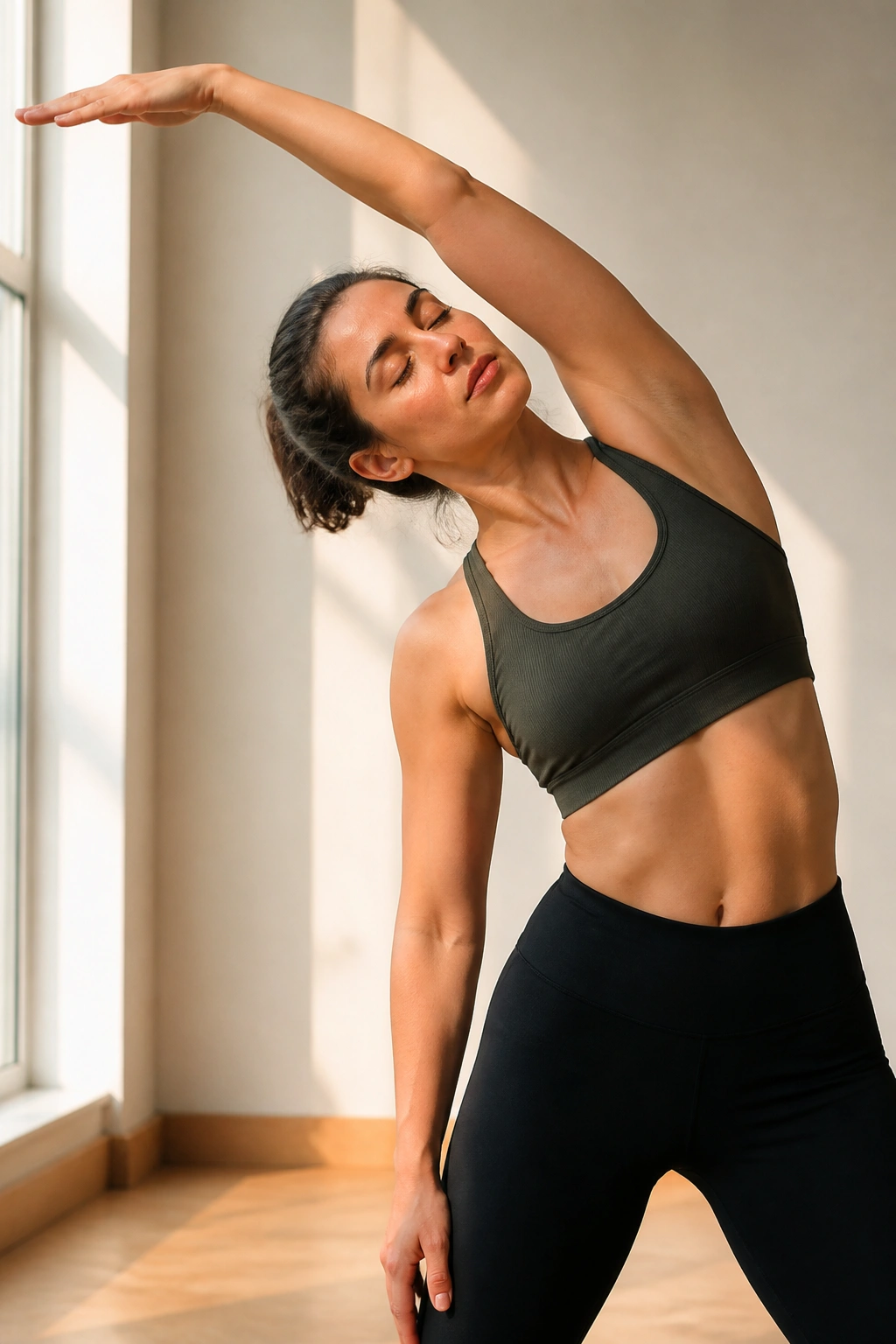
If forward folds feel pinchy, the side body is probably part of the story. Tight lats and obliques can make the ribs feel stuck to the pelvis, which is a miserable setup if you spend a lot of time reaching, lifting, or twisting.
This is one of those stretches that looks soft but can get deep fast. Take that seriously. Ease into it, and let the breath widen the ribs from the inside.
Three poses that work together
- Child’s pose with hands walked to the right for the left side body, then switch sides after 4 breaths.
- Gate pose with one leg kneeling and the other extended, top arm reaching overhead for 20 seconds.
- Standing crescent side reach with the arm overhead and the other hand on the hip for a slower, upright version.
The cue I like here is simple: breathe into the side ribs, not the low back. If the low back takes over, shorten the reach and bend the elbow a little. The stretch should feel long, not cranked.
5. Wrist and Forearm Release for Typing and Lifting
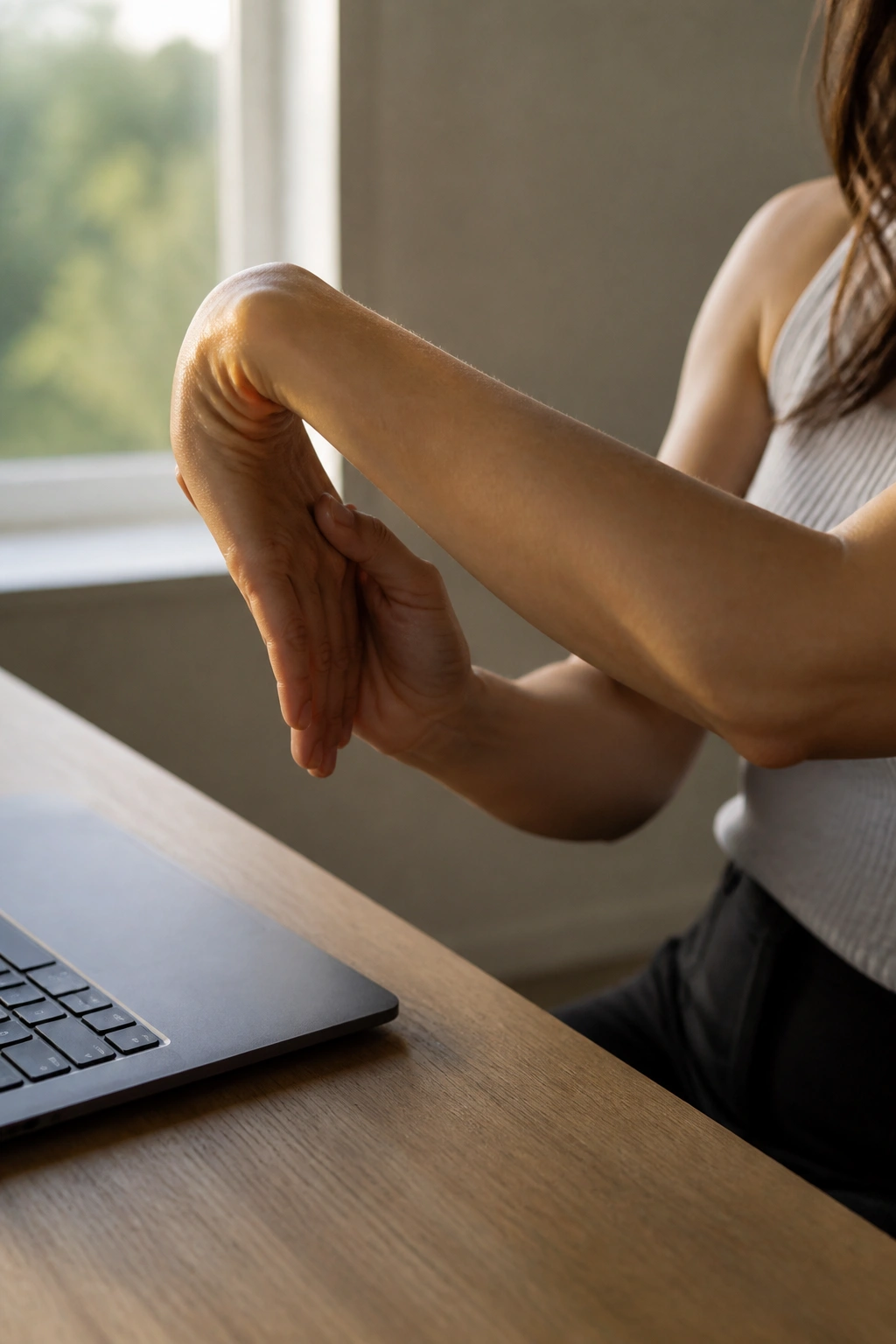
Tight forearms make a lot of people miserable, and they’re easy to ignore until gripping a barbell, holding a dog leash, or typing for two hours starts to ache. The wrists hate being treated like hinges with no warm-up.
This sequence is small, but I use it all the time. It’s one of the few mobility drills that can change how the whole upper body feels in under five minutes.
Begin on all fours and make 10 gentle wrist rocks forward and back with the palms flat. Then turn the palms slightly inward and repeat with the fingers pointing out to the sides if that feels comfortable. Shift to a seated forearm stretch with the palm up, elbow straight, and hold for 15 to 20 seconds. Finish with the back of the hand on the floor or a table, leaning in only until you feel a mild stretch.
Stop if you feel tingling, numbness, or sharp pain. That is not normal stretch discomfort. A mild pull in the forearm is fine. A zap into the fingers is not.
6. Pedaling Downward Dog for Calves and Feet
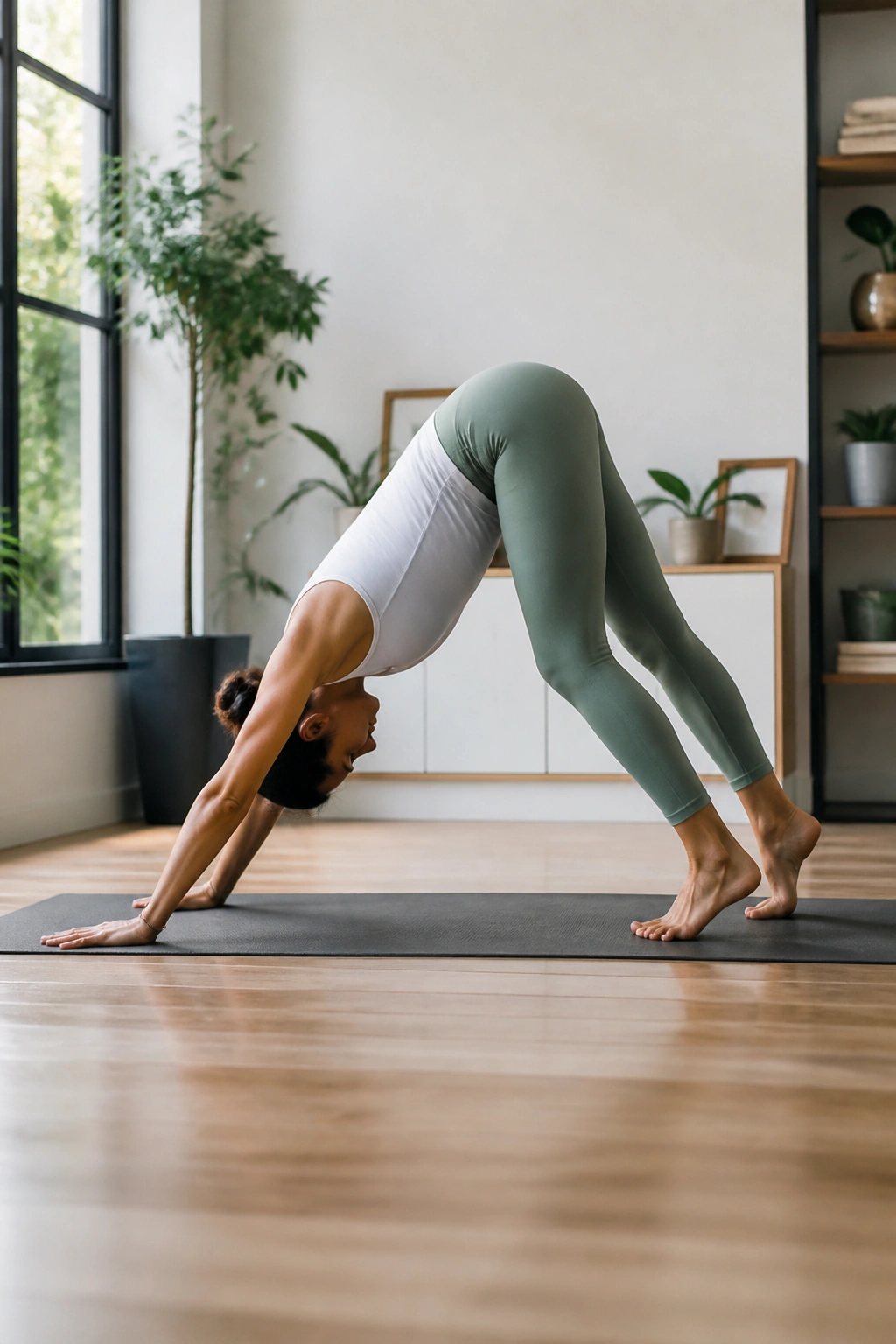
A stiff calf has a way of pretending it’s a bigger problem than it is. Then you take a few steps barefoot in the morning and everything feels weird.
Downward dog pedals are useful because they stretch both the calf and the ankle without locking you into one long hold too soon. They also wake up the feet, which get lazy fast.
Start in downward dog with a generous bend in the knees. Pedal the heels slowly for 10 to 12 reps, letting one heel drop while the other bends. Then hold one heel down for 3 breaths while keeping the opposite knee bent. Switch sides. If the calves are extra tight, shift forward into a short plank and then press back again a few times.
A small bend in the knees is not cheating. It usually makes the stretch better. If the Achilles tendon feels cranky, keep the range smaller and skip aggressive heel drops.
7. Half Split for Tight Hamstrings
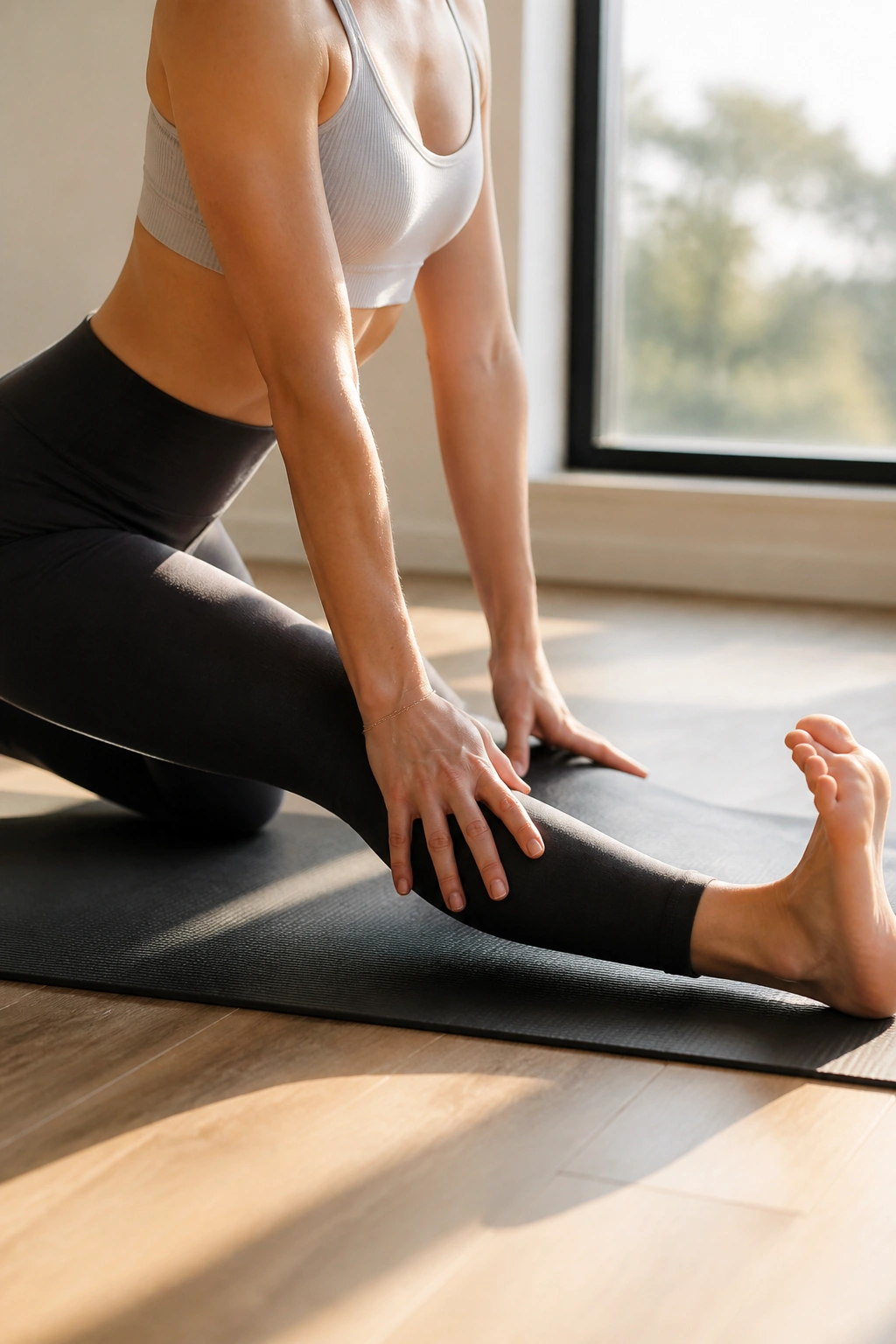
Does your hamstring stretch feel like a tug at the sit bone and nothing else? That’s usually a sign the pelvis is dumping forward while the leg stays locked out.
Half split fixes that by changing the angle first. You fold over a straighter leg, yes, but you do it with control instead of collapsing into the joint.
How to use it well
- Step into a low lunge, then shift the hips back until the front leg straightens into half split.
- Flex the front foot so the toes pull back toward the shin.
- Keep a small bend in the knee if the back of the leg feels too sharp.
- Fold from the hip line, not the waist, and hold for 20 to 30 seconds.
- Repeat with 3 slow exhales before switching sides.
A lot of people try to force the chest to the thigh. Skip that. A long spine and a steady breath do more than a collapsed back ever will. If you want more hamstring length, pull the hips back a touch farther instead of rounding harder.
8. Low Lunge to Couch Stretch for Hip Flexors
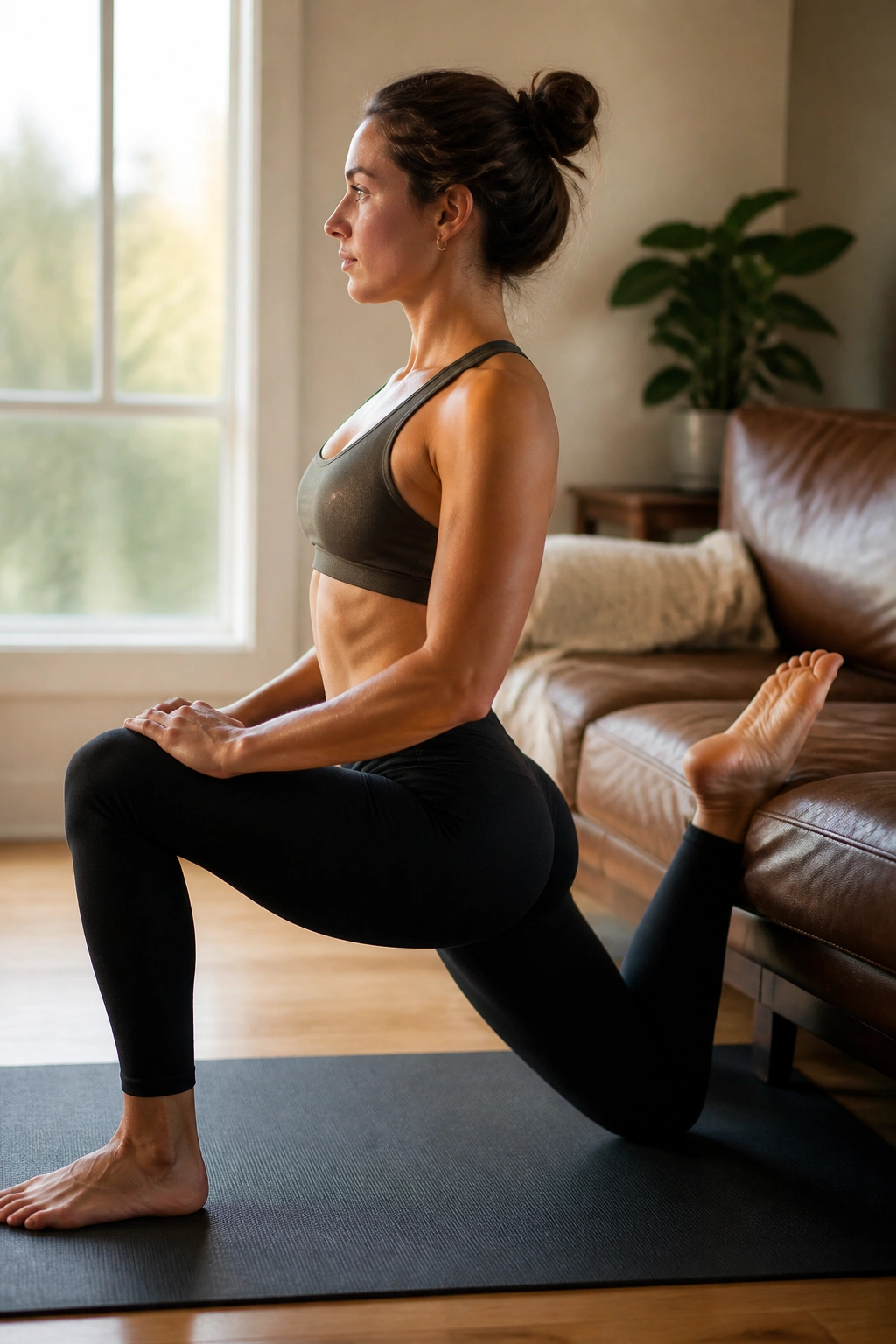
Hip flexors get blamed for almost everything, and sometimes that’s fair. Long sitting, hill running, sprinting, and heavy leg work can all leave the front of the hips feeling welded shut.
The trick is not to yank the pelvis forward and call it a stretch. The trick is to tuck the pelvis slightly, squeeze the back-side glute, and let the front of the hip open from there.
Start in a low lunge with the back knee down. Gently tip the pelvis under, like you’re shortening the distance between the front ribs and the pubic bone. Hold for 4 breaths. If it feels good, shift into a couch stretch with the back foot up a wall or on the edge of a couch, then stay for 20 to 40 seconds.
This one can bite if you arch the low back. Don’t. Keep the ribs stacked over the hips as much as you can. A mild front-of-hip stretch and a glute squeeze are the right signs. A low-back pinch means back off.
9. Figure Four and Reclined Pigeon for Glutes
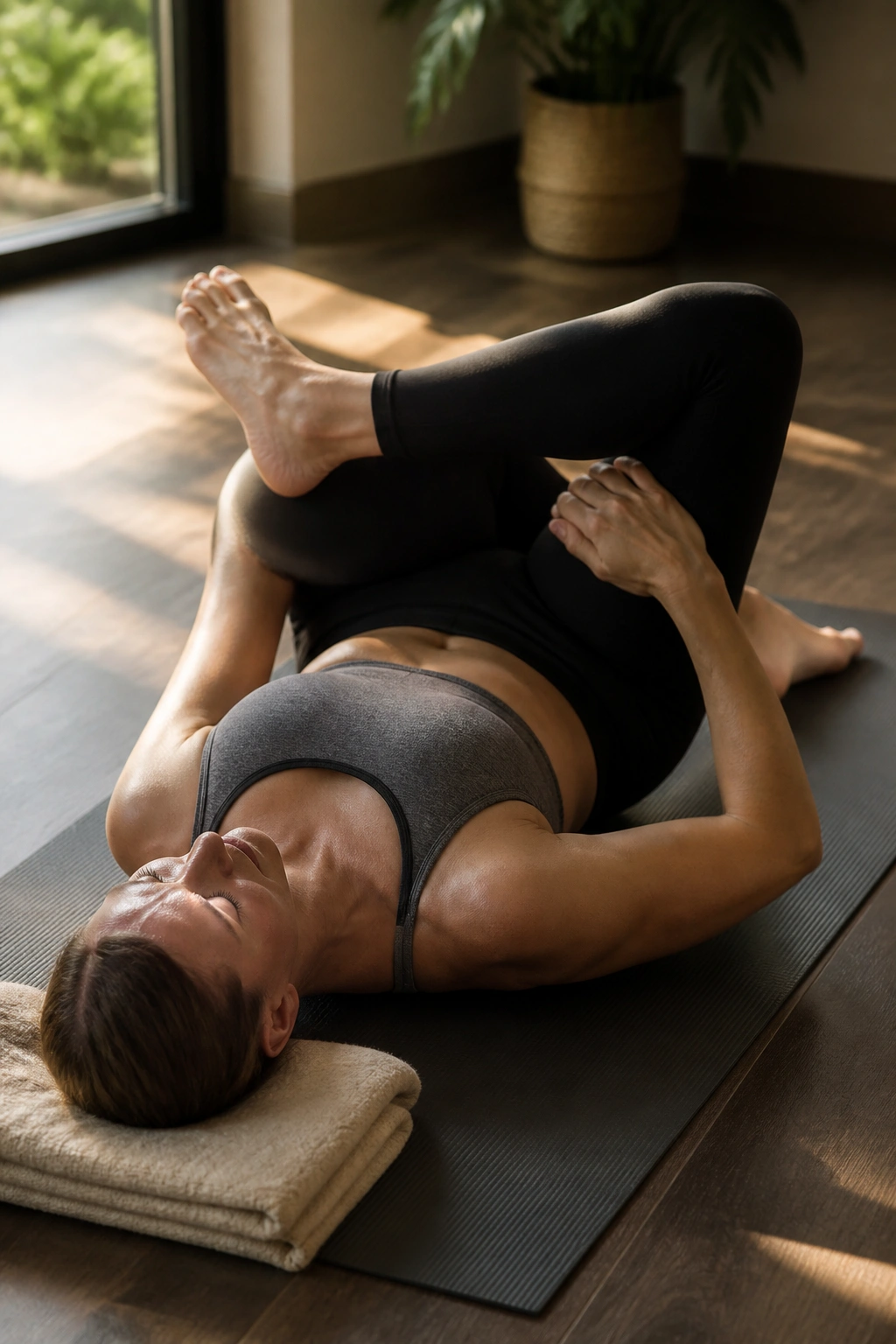
A stiff glute often feels like a deep ache in the hip pocket or a dull pull down the outside of the leg. People jump straight to pigeon pose, but that can be too much for a cranky knee or a cold hip.
Figure four is the friendlier place to start. It gives you the same general shape with a lot more control.
Lie on your back and cross the right ankle over the left thigh. Draw the left thigh toward you and hold behind it for 3 to 5 breaths. If that feels smooth, keep the neck relaxed and let the right knee drift a little farther away from the chest. Then, if you want more, move into reclined pigeon by pressing the right foot to a wall or placing the shin on a bench.
Keep the ankle flexed to protect the knee. If the outside of the hip feels clamped, pause there and breathe. You do not need to win the pose.
10. Lizard Lunge for Adductors and Groin
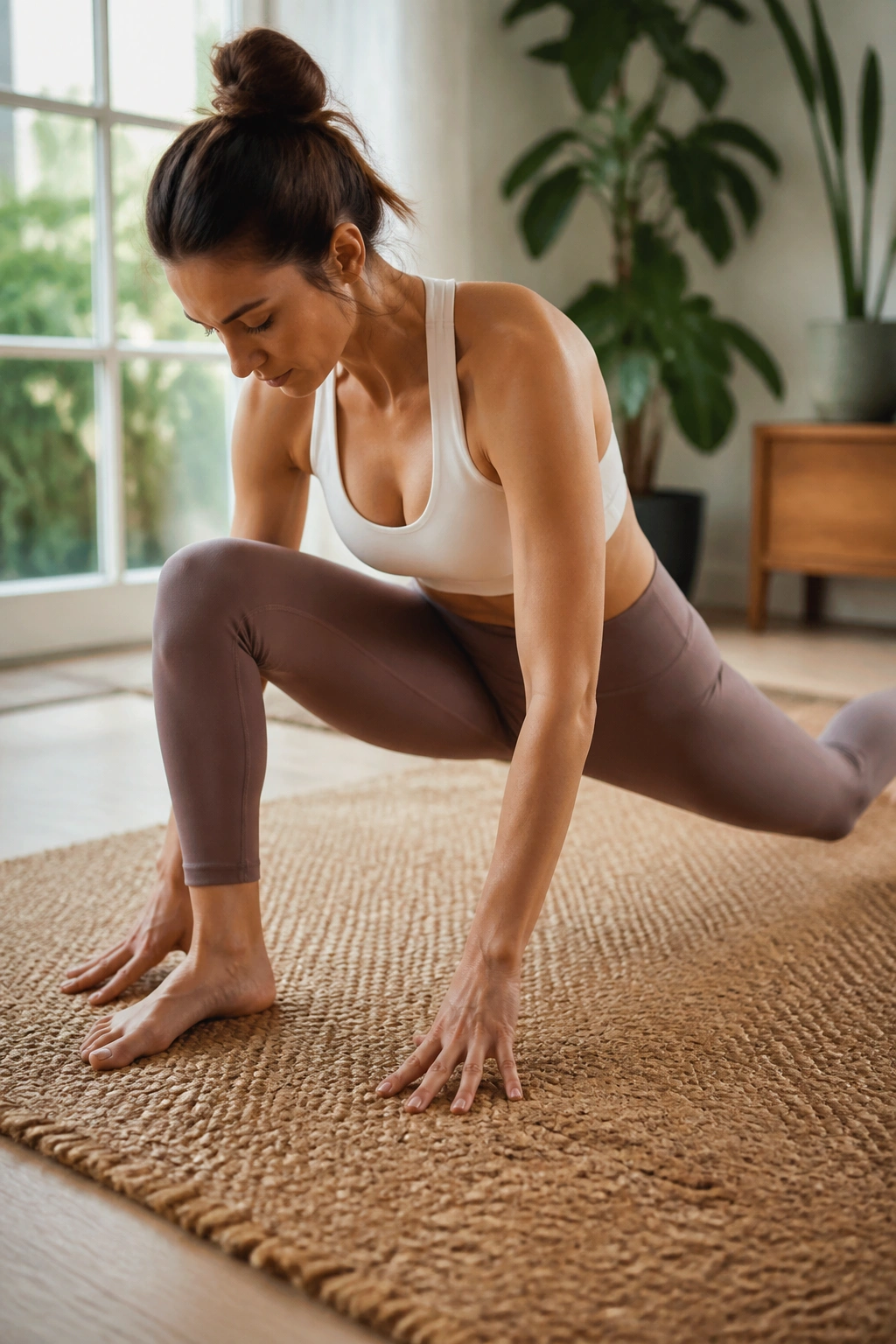
The inner thighs are sneaky. They tighten when you walk, squat, change direction, or sit with your legs crossed for half the day, and then they complain in a deep, awkward way when you try to open them too fast.
Lizard lunge is useful because it can be made gentle or intense without losing the shape of the stretch. That matters when the groin is tight but not ready for a full wide stance.
Step from a high lunge into a low lunge, then walk both hands inside the front foot. Drop to the hands or forearms if it feels good. Rock forward and back 5 times to wake up the tissue, then hold the end position for 3 breaths. Keep the back leg active so the pelvis doesn’t spill around.
If your knees dislike wide-angle work, keep the feet closer together and support the forearms on blocks. The stretch should live in the inner thigh, not in the knee joint. That distinction matters more than people think.
11. Frog Pose for Inner-Thigh Stiffness
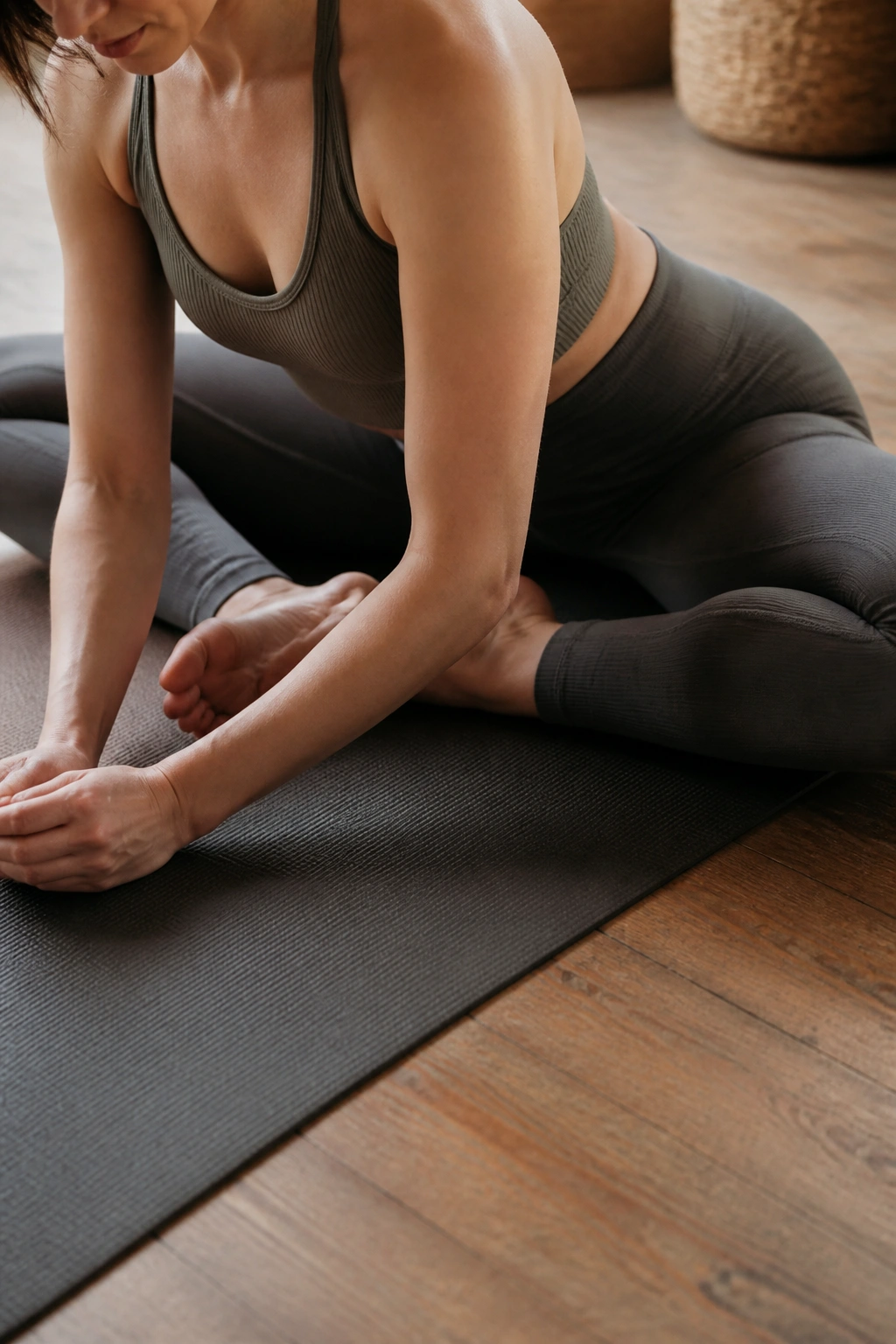
Frog pose is not subtle. It reaches deeper into the adductors than most other shapes, which is why it can feel amazing one day and annoying the next.
That’s also why I prefer frog as a slow, almost quiet sequence rather than a pose you drop into aggressively. The opening comes from patience, not from how wide your knees can go.
A safer way to do it
- Come to hands and knees, then slide the knees wider until you feel a mild stretch in the inner thighs.
- Keep the ankles in line with the knees, and place a blanket under the knees if the floor is hard.
- Rock the hips back 3 to 5 inches and forward again for 6 slow reps.
- Hold the deepest comfortable spot for 3 breaths, then rest in child’s pose for 2 breaths.
Do not force the knees wider just because the pose looks more intense. Wider is not better. Smoother is better. If you can breathe through your nose and keep the face calm, you’re probably in the right range.
12. Quad Stretch Flow for the Front of the Thighs
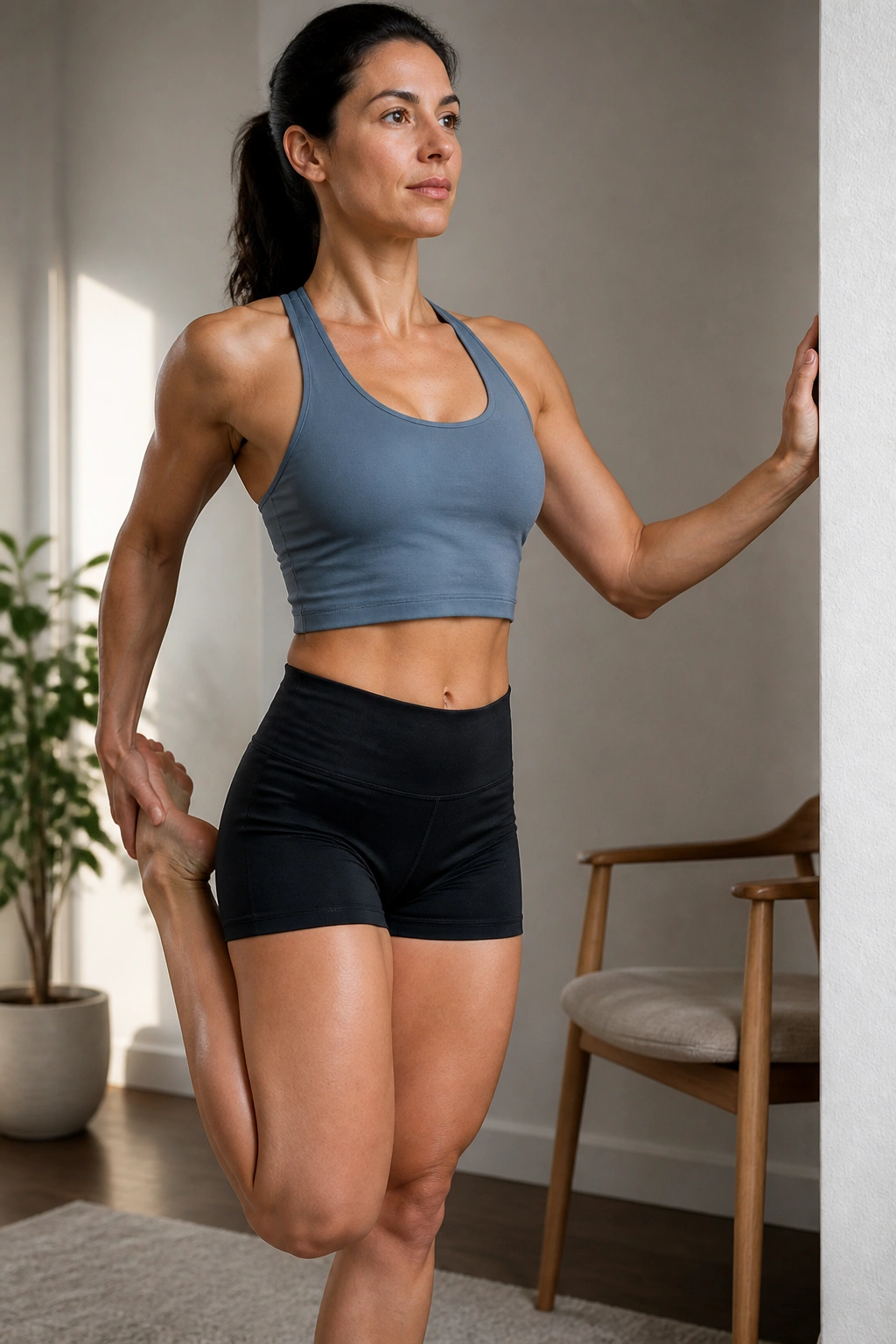
Quads tighten fast after climbing stairs, cycling, squats, or a hard run. They also get stiff when the hip flexors are doing too much and the glutes are not helping enough.
A good quad sequence needs a little balance. If you only pull the foot toward the butt, the low back often arches and the stretch gets messy. Add a lunge shape and the whole front line tends to calm down.
Start with a standing quad stretch, knees close together, and hold the ankle for 20 seconds. Then move into a low lunge and bend the back knee so the top of the foot reaches toward the glute. Squeeze the glute lightly and tuck the pelvis. If you want a third layer, lie on one side and pull the top foot back in a side-lying quad stretch.
If your balance is shaky, hold a wall or chair. That is not a downgrade. It lets the thigh relax, which is the whole point.
13. Sphinx, Baby Cobra, and Seal for the Front Line
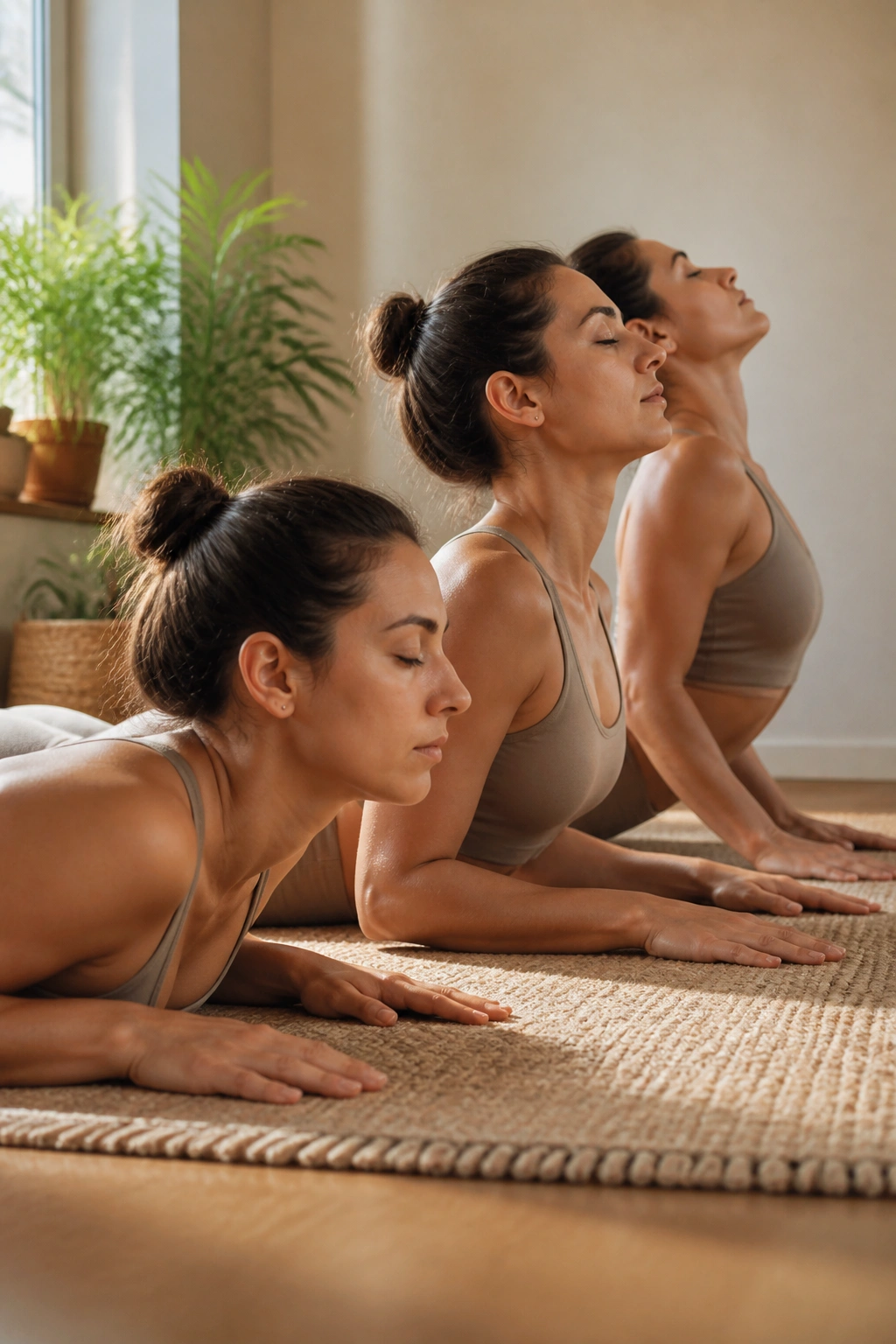
Most people think stretching means folding forward. Sometimes the body needs the opposite.
The front of the body — abs, hip flexors, lower chest, and the muscles along the front of the spine — gets shorter when you sit, crunch, brace, and round. Back-bending shapes open that line in a way forward folds can’t touch.
Start in sphinx for 4 breaths and keep the elbows under the shoulders. If that feels fine, lift into baby cobra with the hands light and the chest reaching forward. Keep the glutes soft so the low back does not clamp down. Seal pose comes last, and only if the spine feels happy there.
The feeling you want is length along the belly and the front of the hips. If you feel a pinch in the low back, come lower. A small backbend held with control is far better than a big one that makes you brace harder.
14. Supine Twist for a Stubborn Lower Back
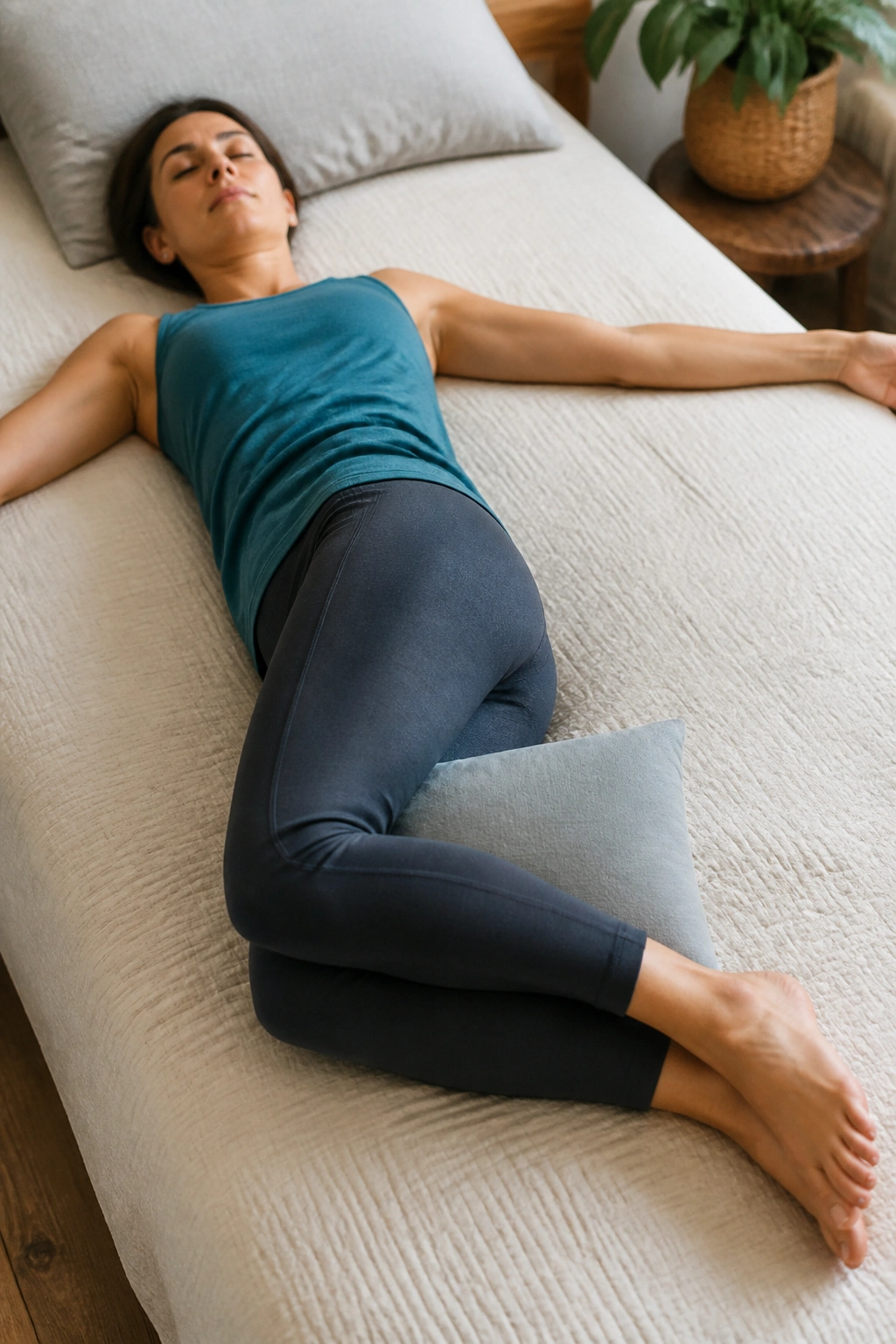
Can a twist fix a lower back that feels tight after a long day? Sometimes, yes — but only if the twist comes from the ribcage and hips, not from yanking the knee across the body.
A floor twist is one of the gentlest ways to ask the back to unwind. It gives the lumbar spine a break and lets the glutes, outer hips, and mid-back share the load.
The sequence
- Lie on your back and pull both knees to the chest for 2 breaths.
- Let the knees fall to one side while the shoulders stay heavy.
- Place a pillow or block under the knees if the twist feels too deep.
- Keep the head neutral or turn it the opposite way if that feels better.
- Hold for 4 to 6 breaths, then switch sides.
If your low back is angry, keep the twist tiny. A tiny twist with long exhalations often beats a dramatic twist with a clenched jaw. The body likes room. It does not like being bossed around.
15. Happy Baby for Deep Hip Release
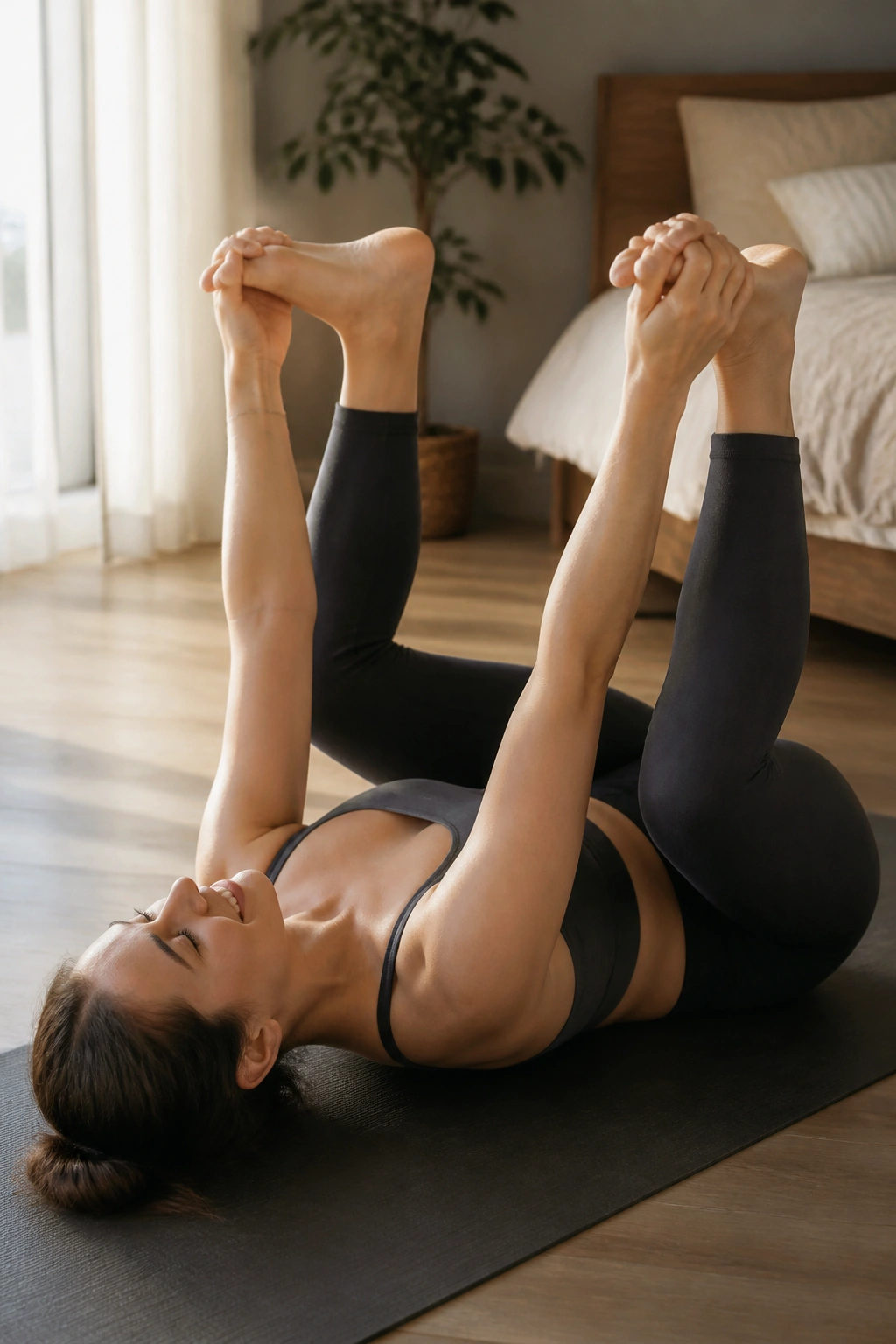
Happy baby works because it takes the hips into flexion while the low back stays supported on the floor. That makes it feel safer than a lot of seated hip openers, especially when the pelvis is tired.
It’s also one of the few stretches that can calm the whole body while still getting into the joints. Weirdly useful. Very little drama. A lot of relief.
Lie on your back, bend the knees toward the chest, and hold the outer edges of the feet or the backs of the thighs. Let the knees drift toward the ribs or armpits as long as the shoulders stay down. Rock side to side 5 times if that feels nice, then hold for 4 breaths.
If the hands can’t reach the feet, use a strap around each foot. That keeps the shoulders relaxed and prevents you from straining the neck. A little sway is fine. A hard pull is not.
16. Ankle Circles and Toe Squats for Stiff Ankles
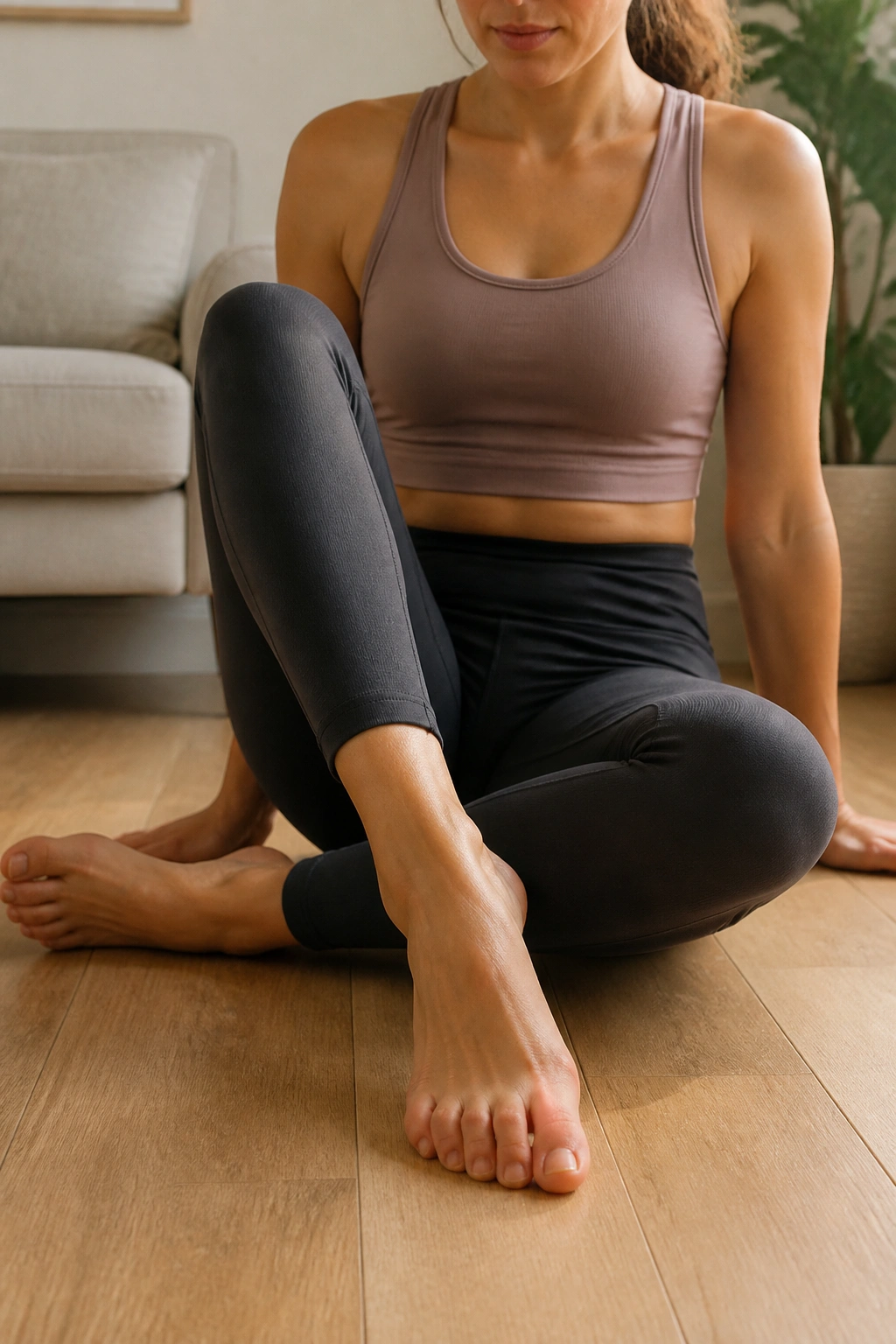
Ankles get ignored until they stop bending well. Then squats feel awkward, running feels heavy, and even walking downstairs can feel clunky.
You do not need a fancy setup to wake them up. You need controlled movement and a little tolerance for weird sensations in the feet.
- Sit on the floor and make 10 ankle circles in each direction for each foot.
- Tuck the toes under and sit back onto the heels for 15 seconds if that is tolerable.
- Rock forward and back in a kneeling ankle stretch for 8 reps.
- Stand and do a short downward dog with bent knees to link the ankle work to the calf.
If toe squats cramp, shorten the hold. If the top of the foot feels tender, skip that part and stick to circles and kneeling rocks. Ankles like consistency more than heroics.
17. Open Book Rotation for a Rigid Upper Back
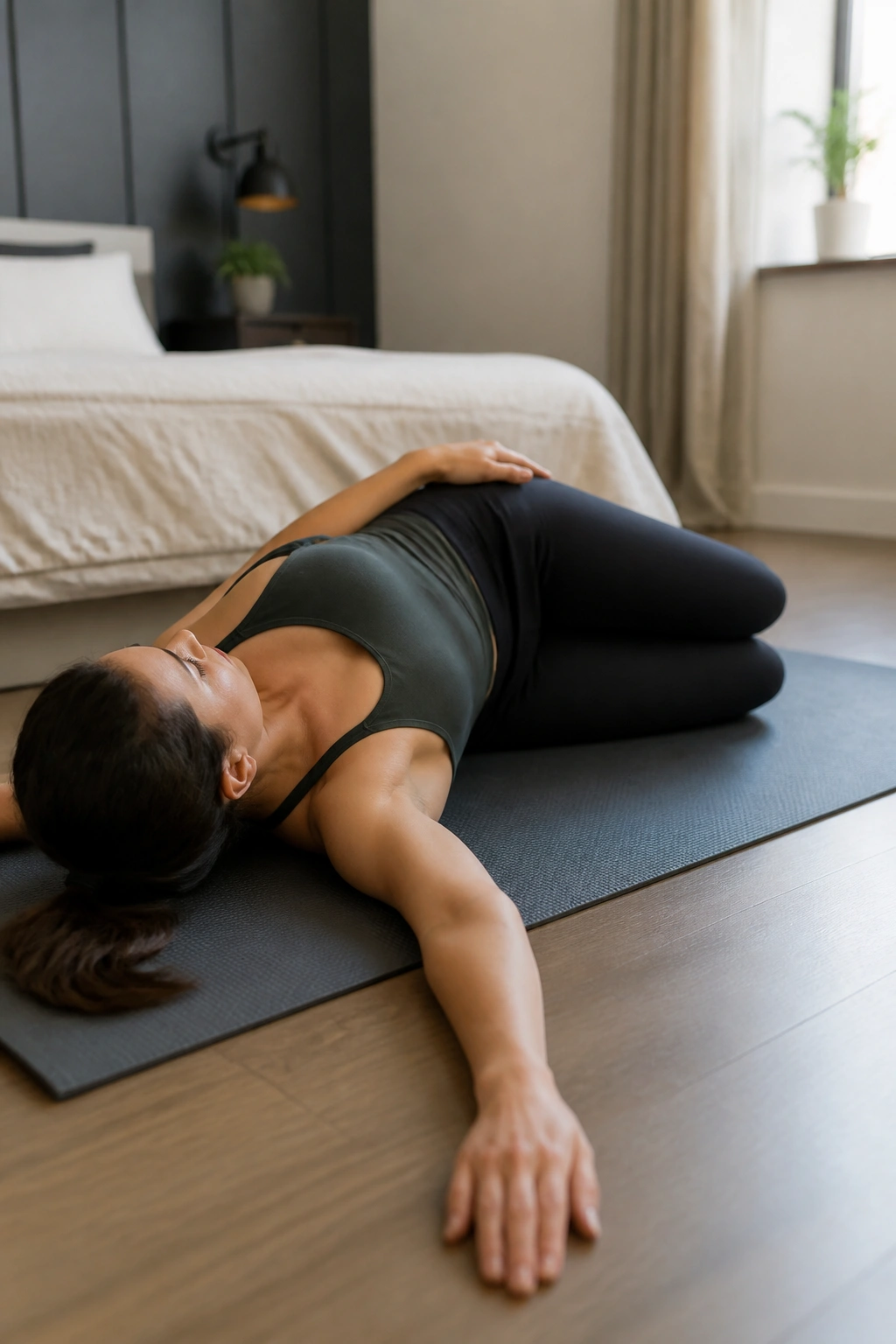
Your low back is often blamed for pain that starts higher up. When the upper back cannot rotate, the lower spine steals the motion and gets irritated for its trouble.
Open book is one of my favorite fixes for that. It is gentle, easy to control, and easier to do well than a lot of seated twists.
Lie on your side with the knees bent and stacked. Reach the top arm forward, then sweep it open across the body like you’re opening a book on the floor. Let the chest follow only as far as it can without the knees peeling apart. Hold the open position for 3 breaths, then return and repeat 5 times per side.
If the shoulder feels sticky, keep a pillow between the knees and another under the top arm at the start. That little bit of support makes rotation cleaner. Clean motion beats forced motion every time.
18. Standing Forward Fold and Chair Fold for the Whole Back Line
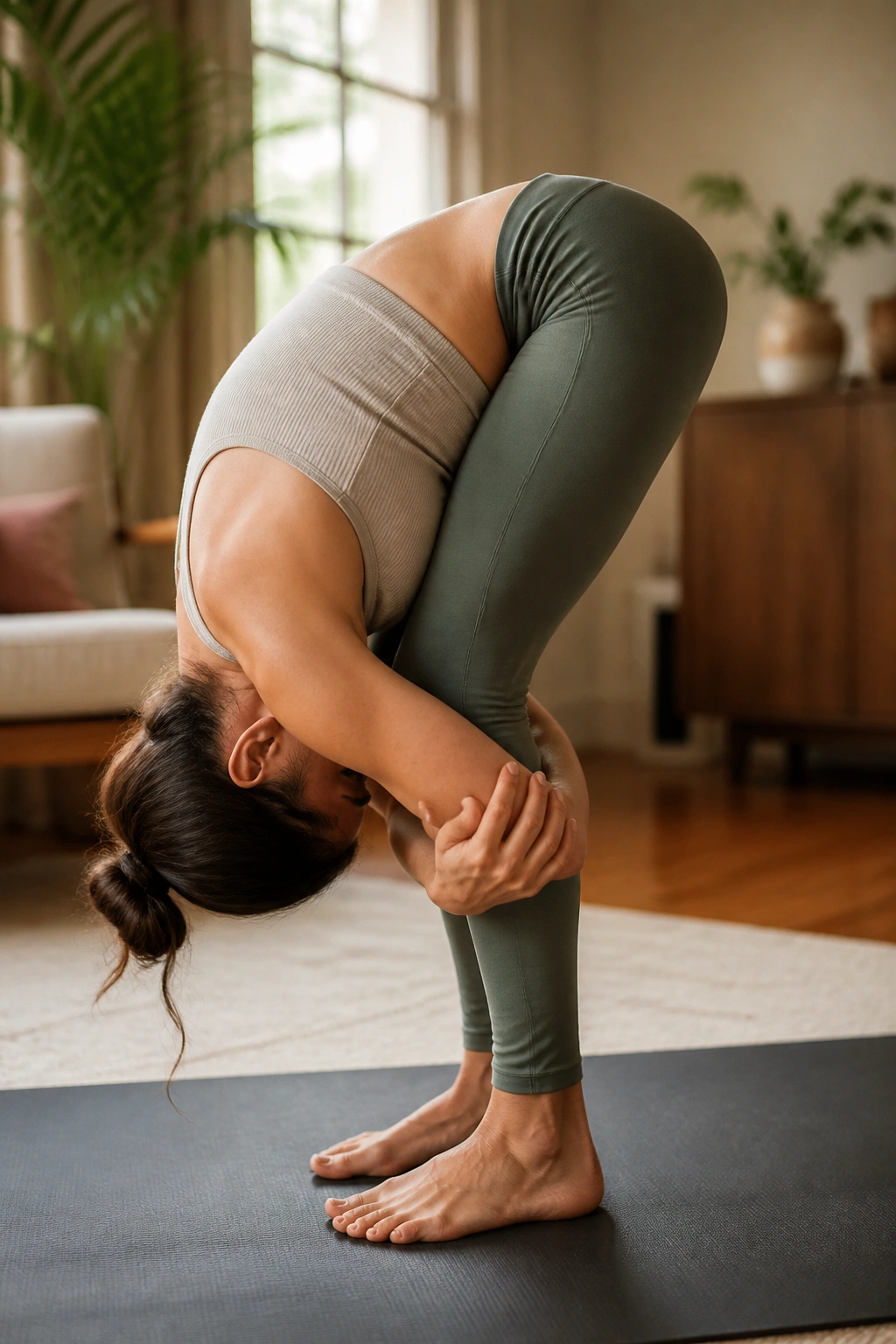
A lot of people need a full-body reset, not a single-muscle stretch. Hamstrings, calves, glutes, and the whole back line can tighten together, especially after lifting or a long block of standing.
This is where the classic fold earns its place. Done well, it decompresses the back without turning into a slumped hang.
Use it like this
- Stand tall, inhale, then fold into a ragdoll with knees bent.
- Hold opposite elbows and sway gently for 5 breaths.
- Rise halfway, then sit back into a chair fold with the spine long for 3 breaths.
- Finish with a wider stance and another soft fold, letting the head hang.
The bent knees matter. They keep the stretch in the muscles instead of hanging all the stress on the low back. If your hamstrings are very tight, keep your hands on blocks or on a chair seat. That still counts.
19. Quick Pre-Workout Wake-Up Flow
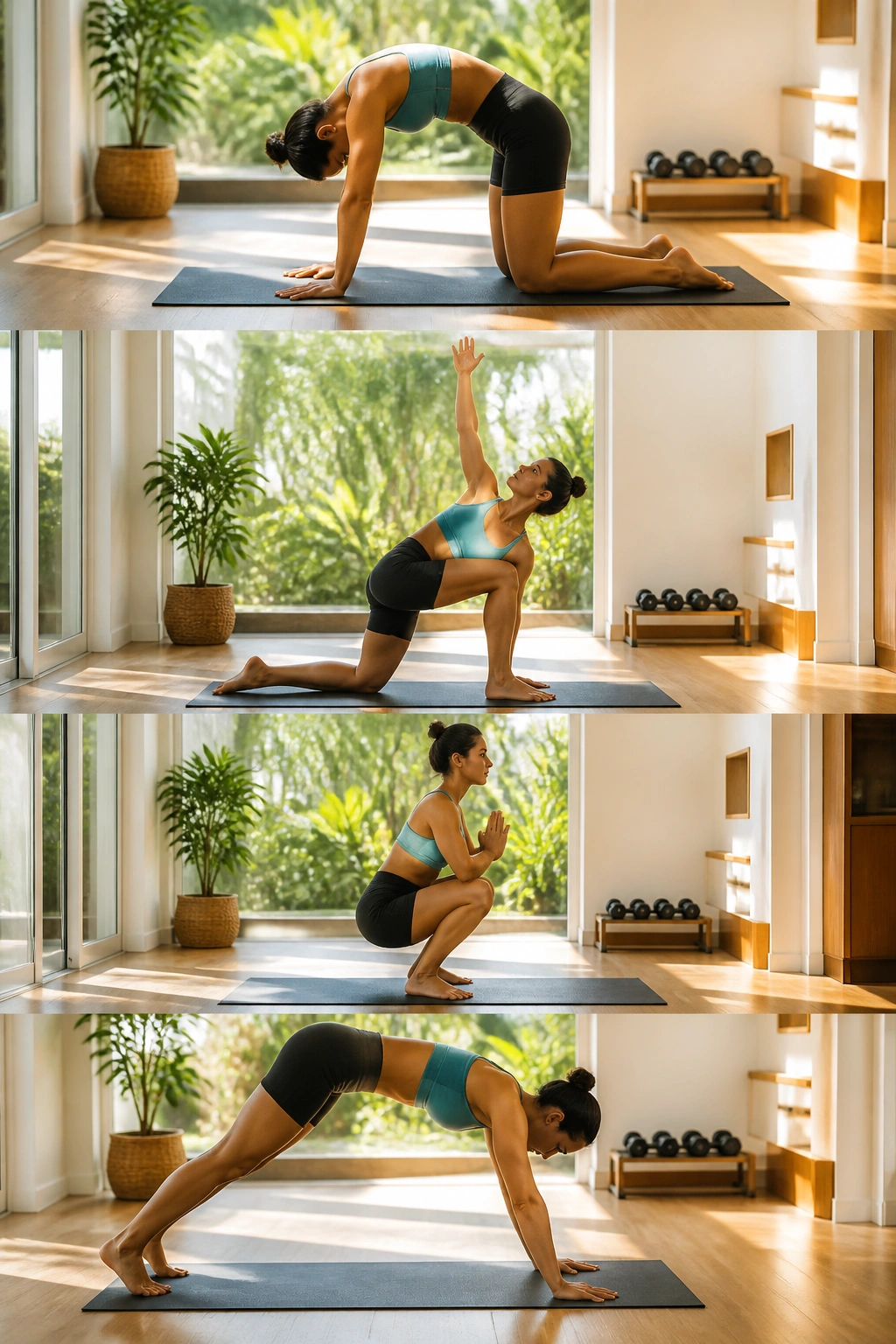
Stretching before a workout should wake you up, not empty the tank. Long holds can make some people feel loose in a way that isn’t useful before lifting, sprinting, or a hard class.
So keep this one short and active. Think “lubricate the joints,” not “chase the deepest possible range.”
- Do 4 cat-cows.
- Step into a low lunge and reach the arm up for 2 breaths per side.
- Move into 5 squat-to-stands, keeping the heels down if possible.
- Finish with 3 inchworms to plank and back.
That’s enough for most bodies. If you feel a muscle snag, repeat the movement once instead of adding a long hold. Moving tissue before training usually lands better than hanging out in a deep stretch right before you ask it to work.
20. Post-Run Recovery Flow for Tired Legs
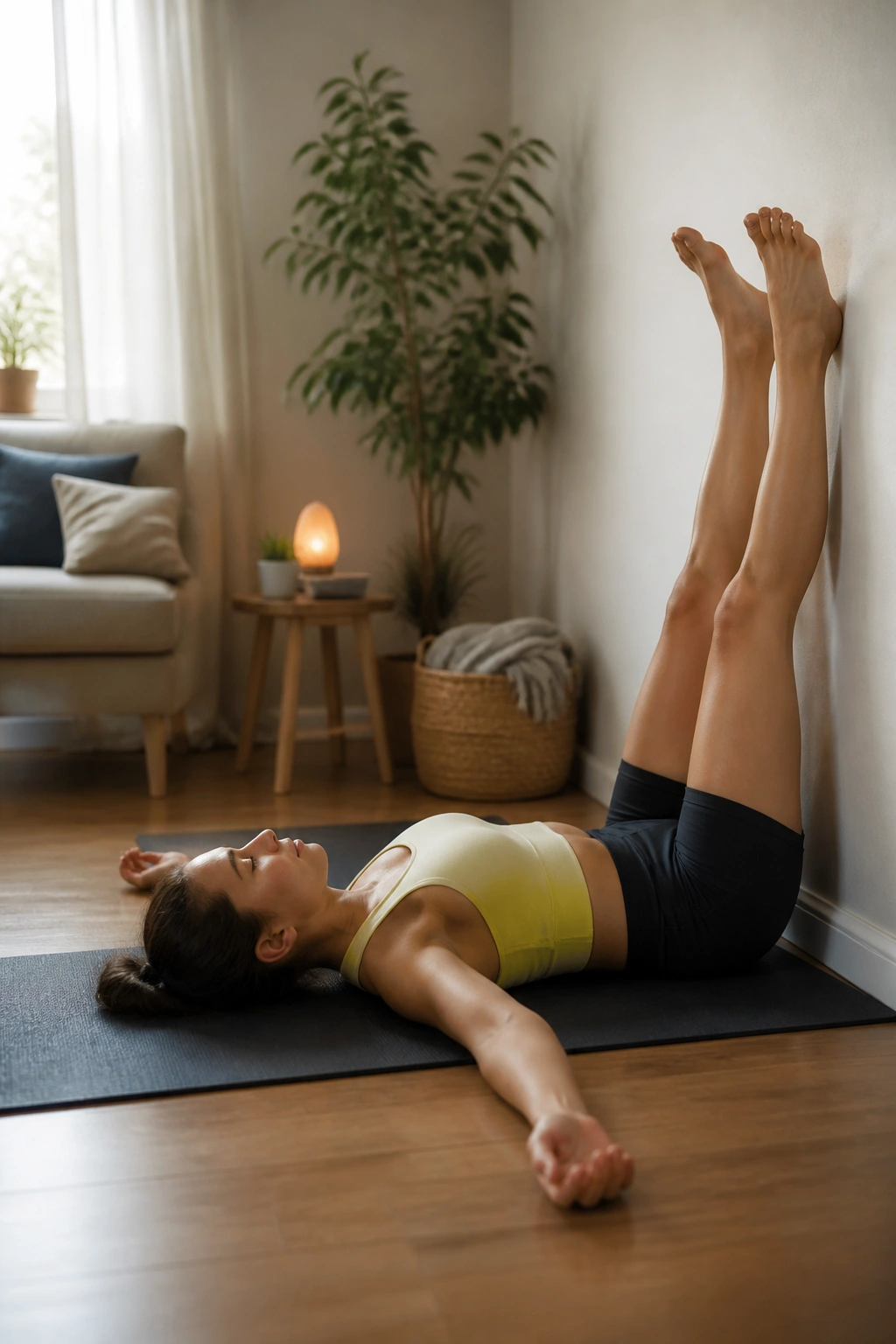
A tired runner does not need a huge, showy sequence. The legs are already loaded. What they usually need is a calm downshift that hits the calves, hip flexors, quads, and glutes without making anything more irritated.
This flow works best after a cool-down walk and a little water. Not while you’re still breathless. Give the system a minute to settle first.
Start with downward dog pedals for the calves, then step into a low lunge with the back knee down and hold for 3 breaths. Move to half split on each side for the hamstrings. If the quads are the real sore spot, add a couch stretch for 20 seconds per side. Finish with legs up the wall for 1 to 3 minutes.
The wall pose is the underrated piece here. It lets the lower legs drain, the breathing slow down, and the whole lower body stop bracing for a minute. That matters more than people want to admit.
21. Desk-Reset Flow for Neck, Hips, and Wrists
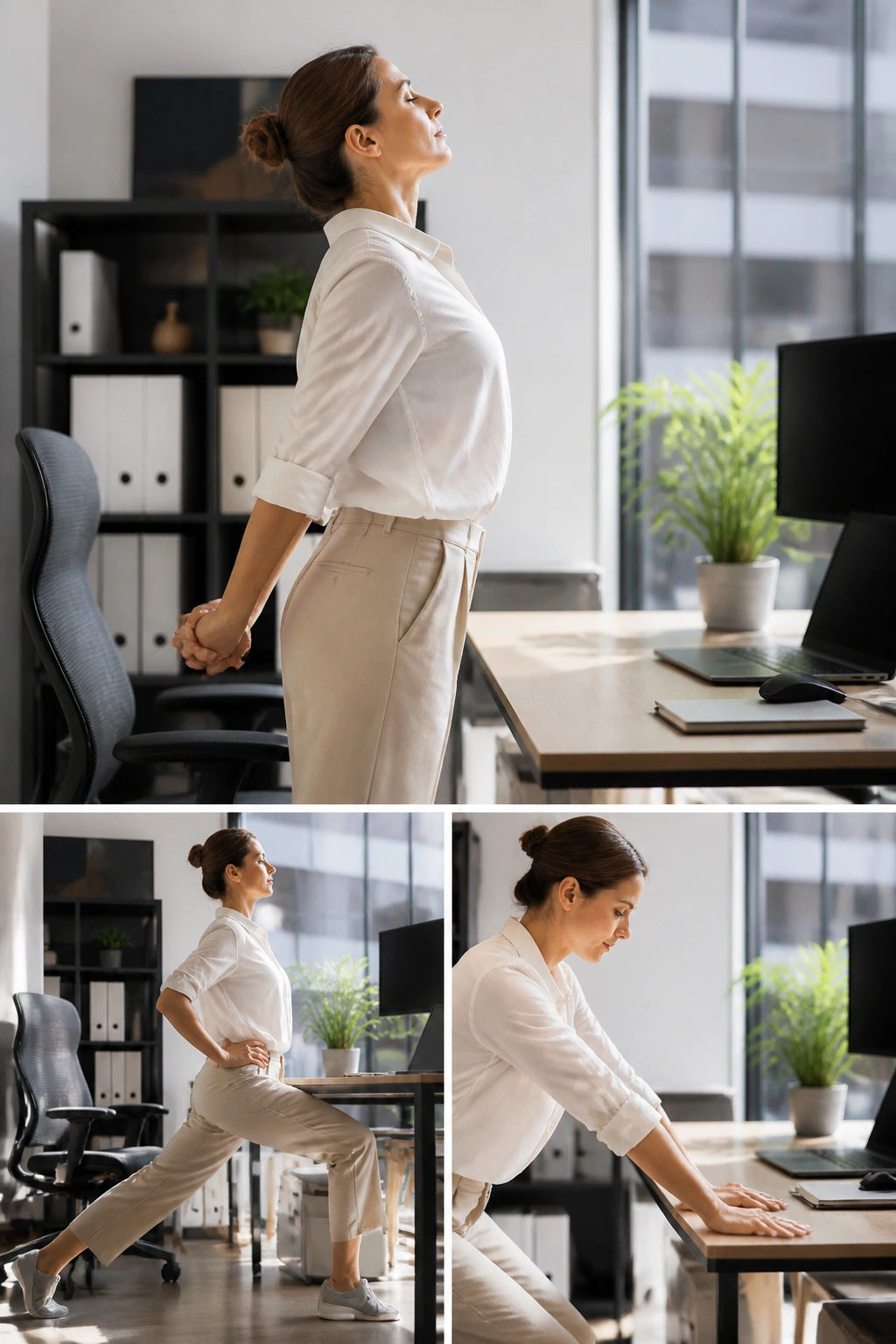
Can five minutes after a long desk block change how the body feels? Yes. Not forever, but enough to make the next hour less annoying.
This sequence is built for the person who gets tight in three places at once: neck, hips, wrists. That is a very normal office-body pattern, and it needs a broad reset.
A simple desk reset
- Stand and interlace the hands behind the back for a chest opener.
- Step one foot back into a short lunge and hold the hip flexor stretch for 3 breaths per side.
- Stretch the wrists by pressing the palms lightly against a desk edge for 15 seconds.
- Add a standing side bend to each side for 2 breaths.
- Finish with a soft forward fold and a slow head nod.
If you sit all day, this may feel almost too easy. Good. That means you can actually repeat it tomorrow. Repetition beats intensity here.
22. Bedtime Downshift Flow for Full-Body Tightness
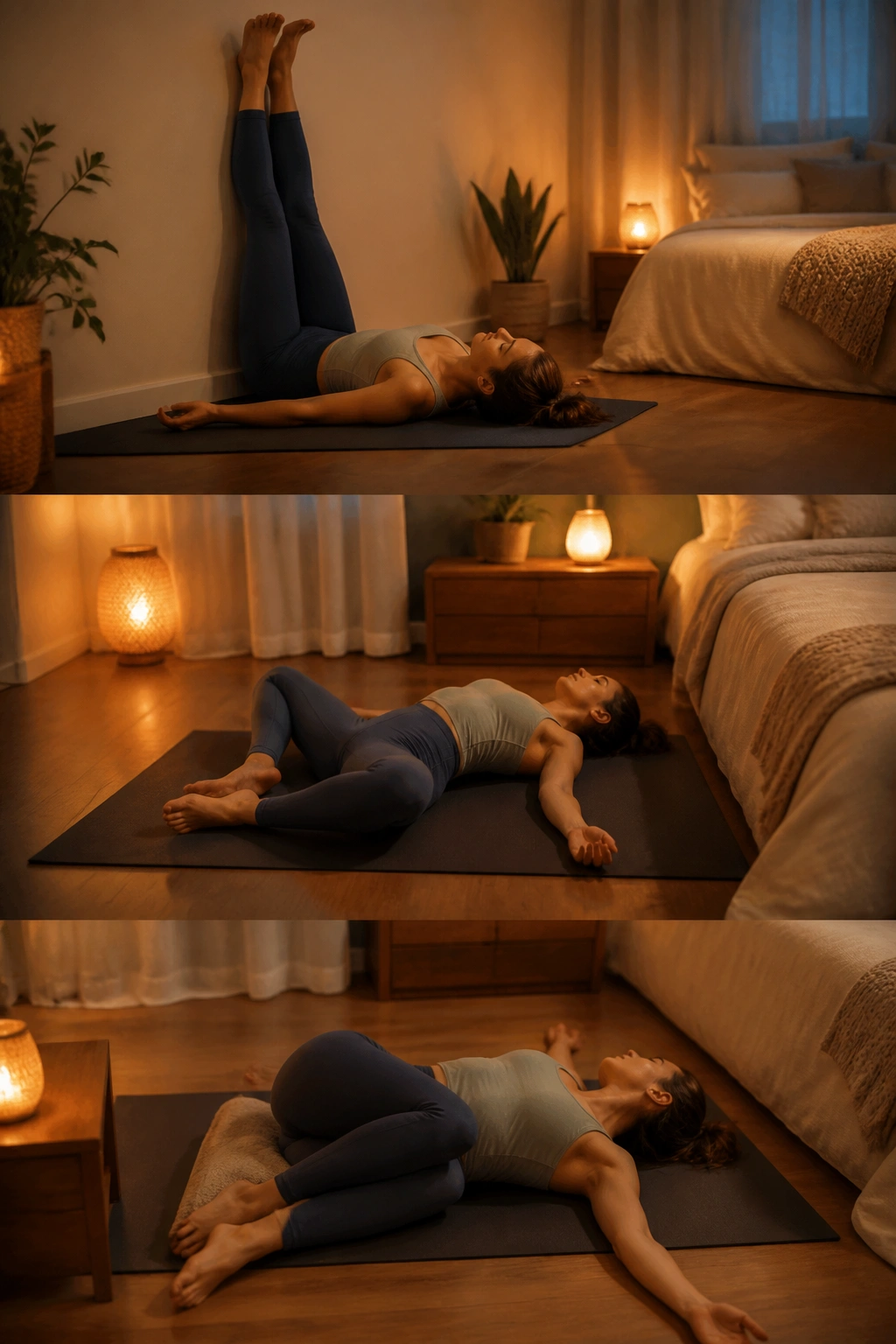
The body often feels tightest when the day is over and the nervous system is tired. That is not the moment for a deep stretch contest. It’s the moment for slow shapes, low light, and a longer exhale.
I like this kind of sequence because it does two jobs at once. It loosens the muscles a bit, and it tells the rest of the system to stop bracing so hard.
Lie with the legs up the wall for 2 minutes. Shift into reclined butterfly with the soles of the feet together for 4 breaths. Add a gentle supine twist on each side, then end with knees hugged in or a light happy baby. Keep the exhale a little longer than the inhale — say 4 counts in, 6 counts out.
No force. No pushing. If a position feels busy, make it smaller. The best bedtime stretches leave you feeling wider, quieter, and a little heavier in the good sense.
Final Thoughts
Tight muscles usually improve faster when the sequence matches the problem. A stiff neck wants shoulder and ribcage support. Tight hips often need both movement and a little patience. A cranky calf rarely loves being bullied into a long hold.
The smartest routine is the one you can repeat without dreading it. Five minutes before training, ten minutes after a run, or one slow floor sequence before bed can do more than a heroic one-off stretch session.
Pick the area that feels most stubborn and start there. Then pay attention to what actually changes — not just how deep the stretch looks, but how you move when you stand up and walk away.
