



Your arms can feel fine at the last rep and still tighten up ten minutes later like someone shortened the cables in your shoulders. That is when arm stretches after your workout earn their place.
Pressing, pulling, climbing, boxing, swimming, carrying heavy bags — it all leaves the triceps, biceps, forearms, wrists, and the front and back of the shoulders doing work they do not get at rest. A good post-workout stretch does not try to beat the body into submission. It should feel like a long exhale, a little pressure, and then a clean release.
Hold each stretch for about 20 to 30 seconds, breathe slowly, and back off if the sensation turns sharp, pinchy, or numb. A mild pull in the muscle is fine. A joint complaint is not.
Start with the triceps. They usually answer first.
1. Overhead Triceps Stretch
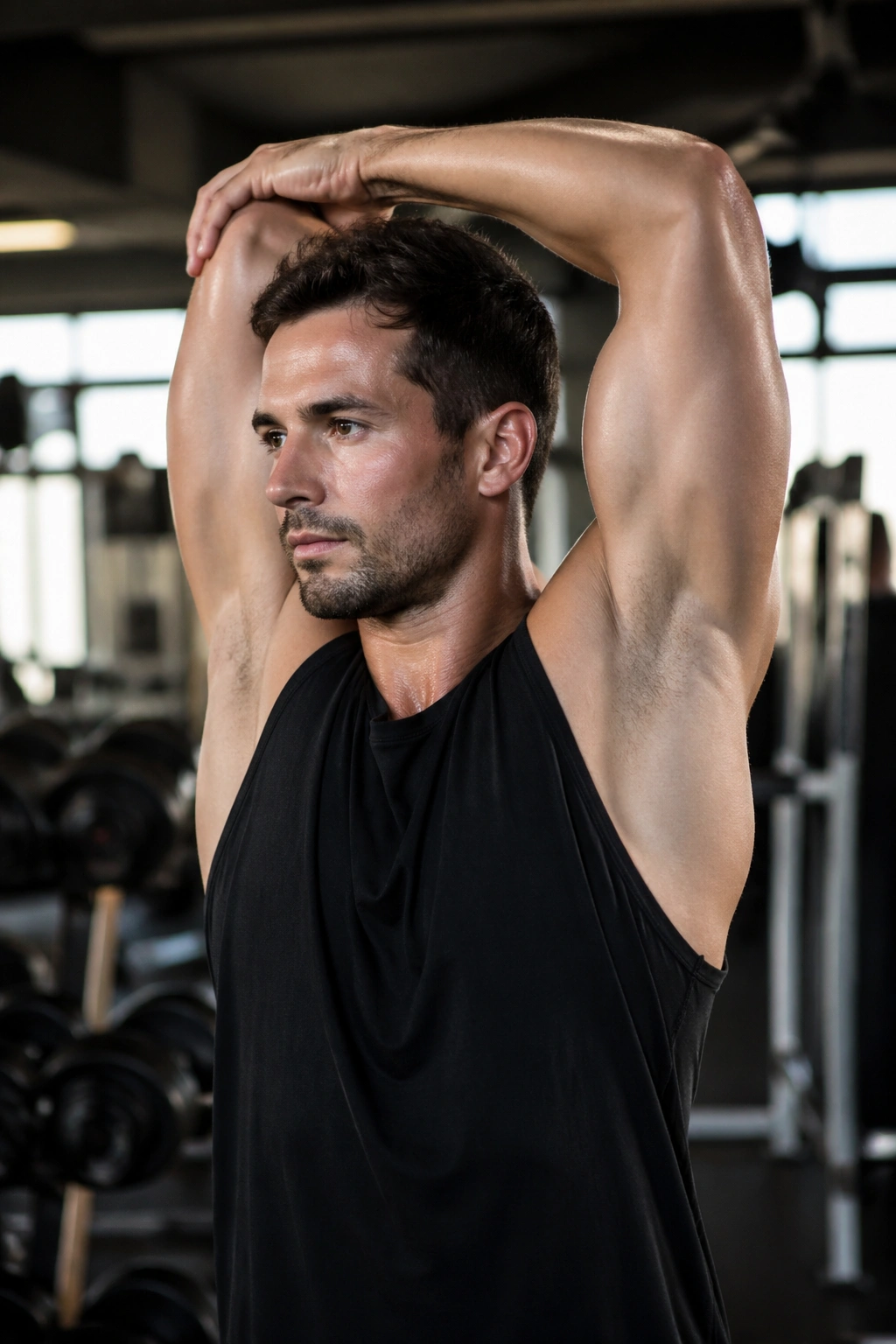
The overhead triceps stretch is the old reliable. If your workout included push-ups, dips, skull crushers, overhead pressing, or even a long set of planks, the back of the upper arm can feel shortened in a hurry.
Bring one arm overhead, bend the elbow, and let the hand slide down between your shoulder blades. Use the other hand to rest on the bent elbow and guide it a little deeper. Keep the ribs down so you are stretching the arm, not arching the lower back to fake the shape.
No yanking.
A lot of people pull too hard and end up shrugging the shoulder toward the ear. That steals the stretch from the triceps and puts it into the neck, which is a bad trade. If your shoulder feels crowded at the top, lower the elbow a little and soften the pull.
Best cue: imagine the elbow reaching toward the ceiling while the shoulder stays heavy.
2. Cross-Body Shoulder Stretch
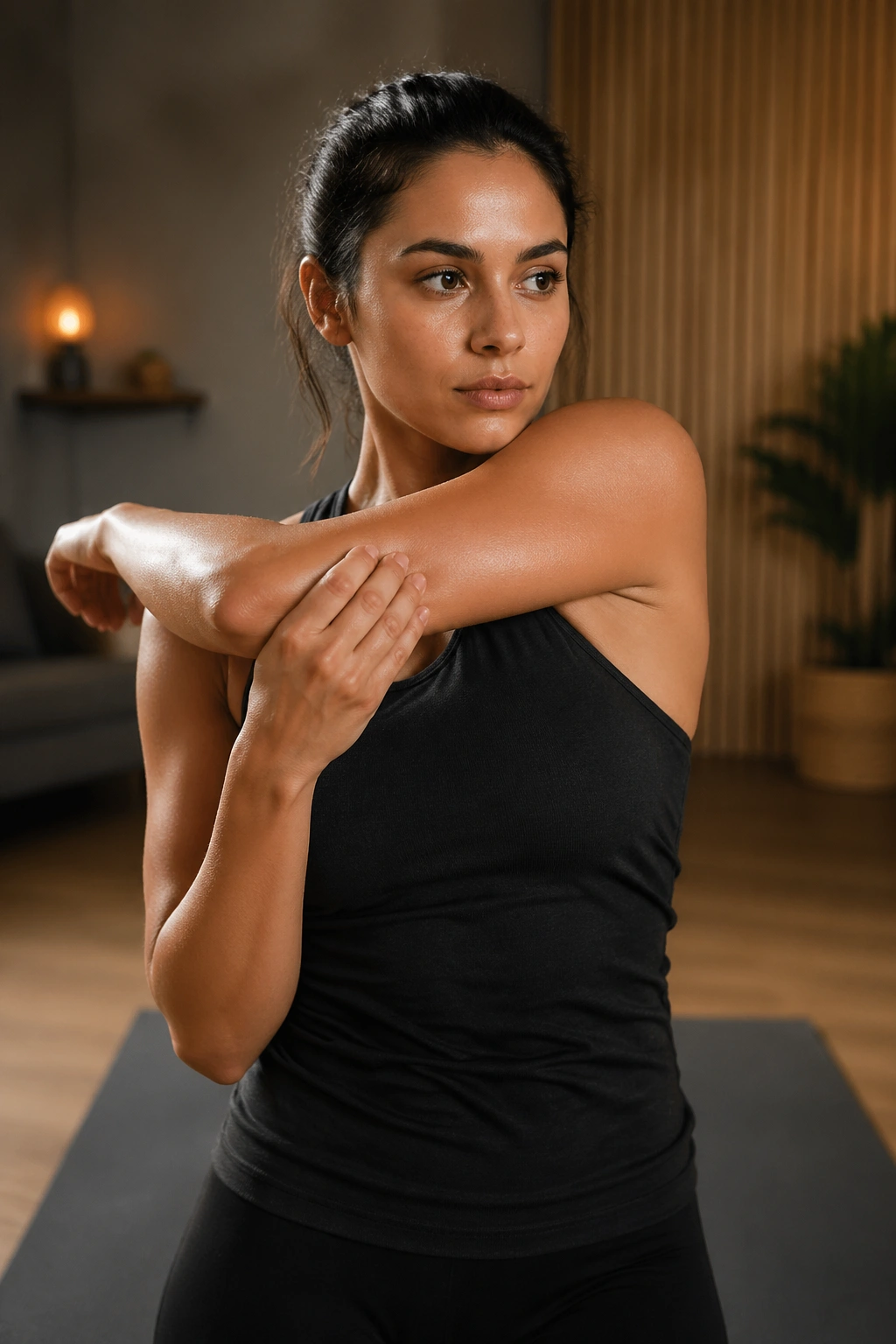
Why does the back of the shoulder get so stubborn after rows or benching? Because the rear delt and the small muscles around it work all day, then they refuse to let go when you stop.
Pull one arm across your chest at about shoulder height and hold it with the opposite hand above or below the elbow. Keep the shoulder of the stretched arm from creeping up. If your torso twists to help, the stretch gets shallower and the neck starts doing the work.
How to get the most from it
- Hold the upper arm, not the wrist.
- Keep the shoulder blade level.
- Breathe into the back of the shoulder, not the neck.
- Use a softer pull if the joint feels crowded.
This one is sneaky-good after pulling sessions, but it also helps after a lot of computer work. The rear shoulder gets stiff in both places, and it tends to complain in the same blunt way. If one side sits tighter, spend an extra round there without forcing the arm farther across.
3. Wall Biceps Stretch
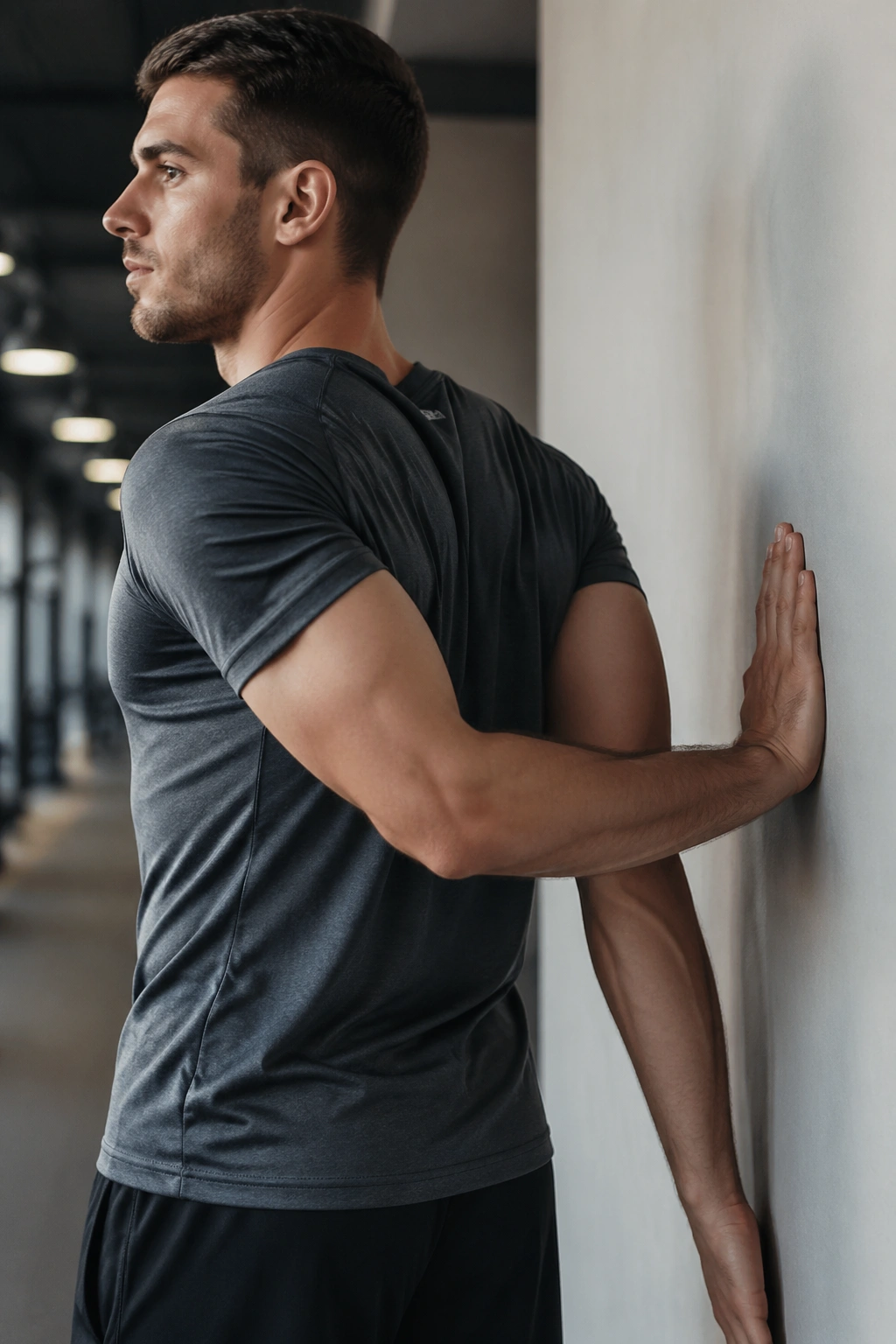
The biceps stretch gets skipped all the time, which is odd because the front of the upper arm can feel short after chin-ups, curls, rope work, and even heavy carries. It is not only a vanity muscle thing. Tight biceps can tug on the front of the shoulder and make overhead work feel cramped the next day.
Stand beside a wall and place the palm or fingers of the stretched arm against it with the arm slightly behind your body. Turn your chest away from the wall until you feel the front of the arm lengthen. Keep the elbow straight but not jammed hard into lockout.
A small adjustment changes everything here. If the stretch lands in the wrist instead of the biceps, move the hand a little higher or lower on the wall. If your shoulder pinches, reduce the turn of the torso and keep the elbow slightly bent.
One small note: the front of the arm should feel long, not cranked.
This stretch works well after curls because it opens the whole line from the palm to the shoulder. It also pairs well with the chest stretch below, since those two areas tend to clamp down together.
4. Doorway Chest Stretch for Post-Workout Tightness

Tight pecs make the arms feel shorter than they are. That sounds dramatic, but anyone who has finished a hard pressing session and then tried to stand tall knows the feeling.
Place one forearm on a doorframe with the elbow around shoulder height, then step the same-side foot forward until the chest opens. Keep the chin level and the shoulder down. You are after a stretch across the front of the shoulder and upper chest, not a backbend that steals the work into the lower spine.
A narrow doorway gives more control than a wide one. A wide frame can tempt you to overreach and dump the stretch into the shoulder joint. If that happens, move the elbow a little lower and reduce the step forward. The stretch should feel broad and even across the chest.
Common mistakes that make this stretch worse
- Overarching the lower back.
- Letting the shoulder ride up.
- Holding the breath.
- Pressing so far forward that the front of the shoulder stabs.
After benching, push-ups, dips, or boxing combinations, this one is worth keeping in the rotation. It opens the front side of the body so the arms can settle back into a cleaner position.
5. Wrist Flexor Stretch
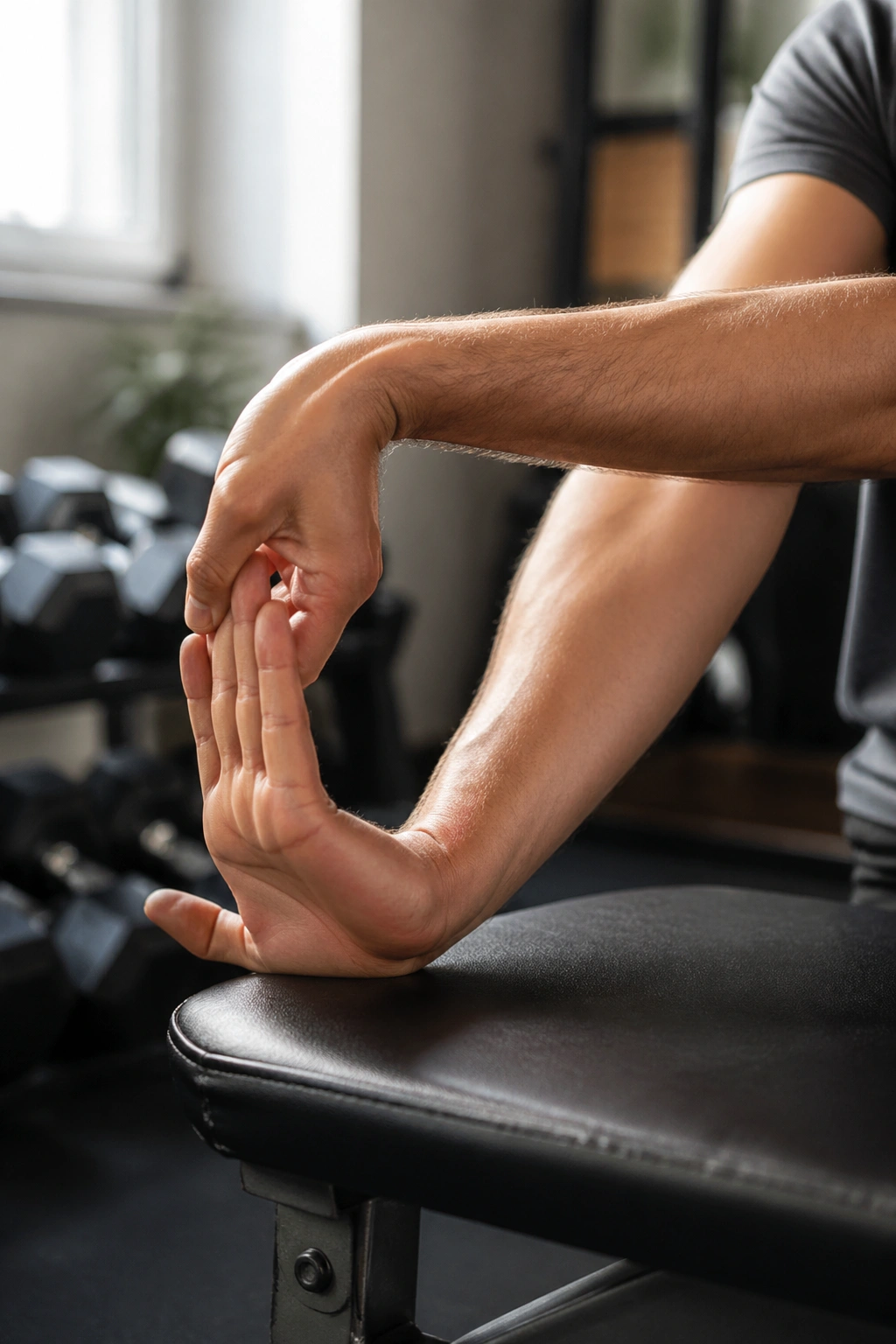
The underside of the forearm takes more abuse than people admit. Gripping dumbbells, rows, pull-ups, kettlebells, and even hours of typing can leave the wrist flexors feeling tight and a little cranky.
Extend one arm straight in front of you with the palm facing up. Use the other hand to gently pull the fingers back toward the floor so the wrist opens. Keep the elbow straight and the shoulder relaxed. If the stretch slides into the elbow crease, ease off a little and soften the angle.
This is one of those stretches that feels tiny until you need it. Then it feels like oxygen.
If your forearms are sensitive after heavy gripping, start with 15 seconds instead of 30. The first hold often feels sharpest, and the tissue usually calms down on the second round. Do not force the fingers back with a hard tug. A small pull is enough.
A good sign is a stretch along the palm side of the forearm. A bad sign is a jab near the wrist joint.
6. Wrist Extensor Stretch After Heavy Lifting
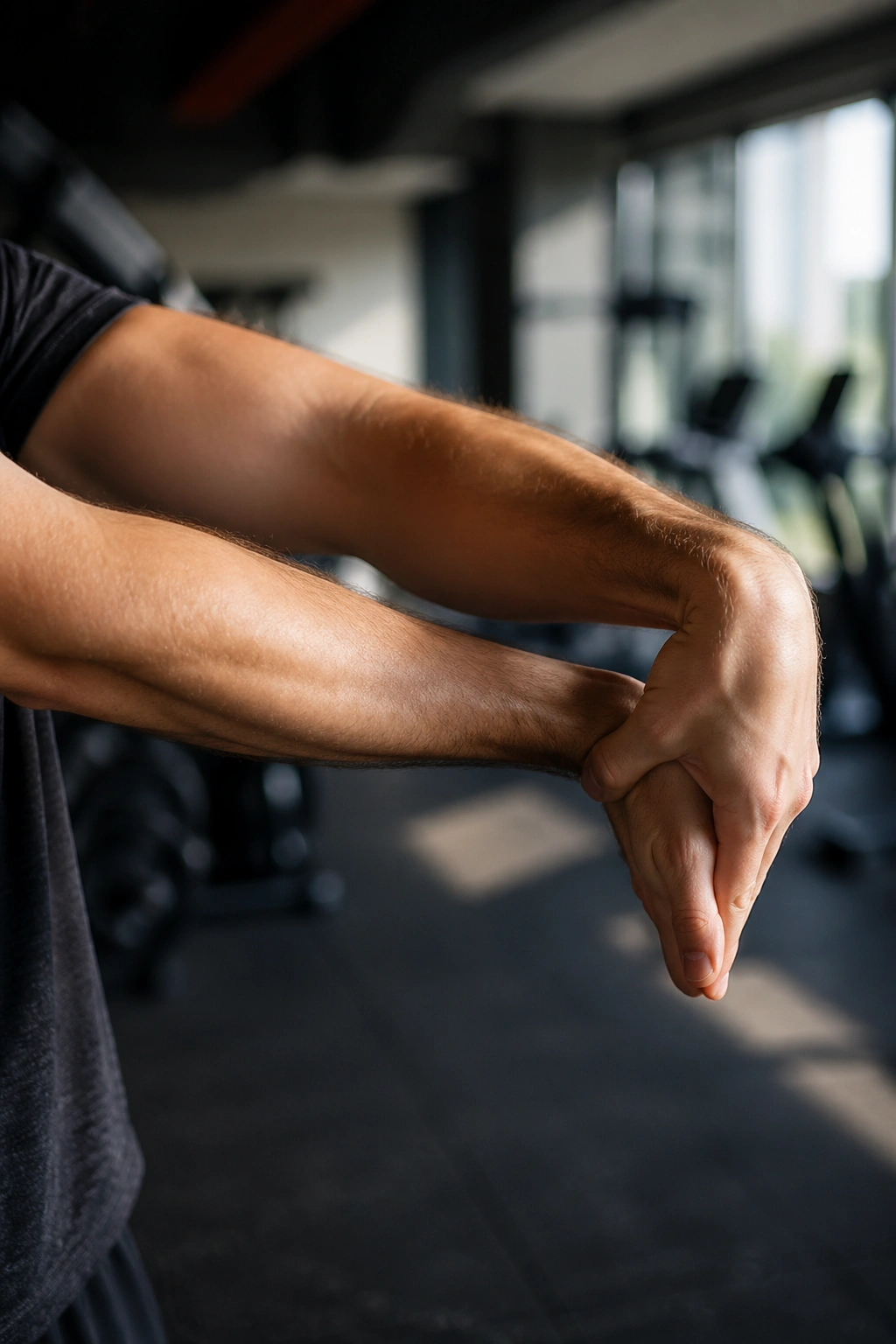
The top of the forearm gets its own share of abuse, especially after deadlifts, rows, racket sports, or anything that asks the hand to hang on for dear life. This stretch handles the other side of the wrist.
Extend one arm with the palm facing down. Use the opposite hand to bend the fingers toward the floor and toward your body until the back of the forearm lengthens. Keep the shoulder quiet and the elbow mostly straight. If the pull travels into the outer elbow instead of the forearm, back off a little.
What to watch for
- The elbow should stay soft, not locked hard.
- The wrist should flex gently, not fold into a sharp angle.
- The stretch belongs in the muscle, not the joint.
- A tingling hand means you went too far.
This one matters more than people expect after grip-heavy training. The extensor muscles often stay quiet during the workout, then they grip the bar on the way home and keep right on complaining. If you feel that deep back-of-forearm burn, this is the stretch to stay with for an extra round.
7. Prayer Stretch
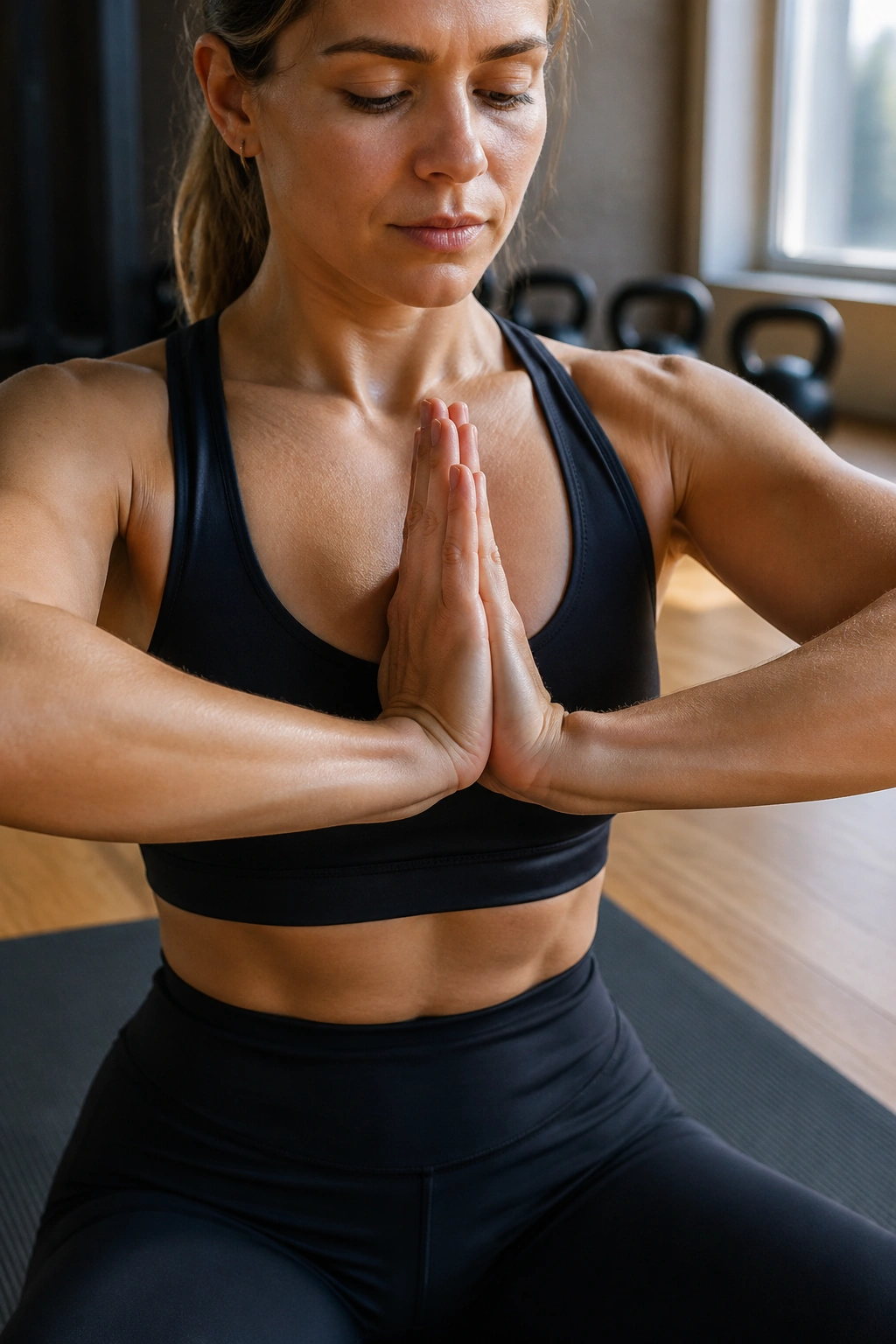
The prayer stretch is a clean, low-drama way to open both wrists and forearms at once. It works well after push-ups, planks, handstands, and any workout where the palms spent a long time on the floor.
Bring the palms together in front of the chest, elbows out to the sides, then lower the hands a little toward the waist. Keep the wrists in line with the forearms as much as you can. The stretch should show up through the forearms and the base of the wrists, not as a sharp bend in the hands.
Slow is better.
A lot of people drop the elbows and lose the line of the stretch. Keep the elbows lifted enough that the palms keep pressure against each other. If the shoulders creep upward, reset them first and then lower the hands again. There is no prize for going lower if the posture falls apart.
This is one of the few stretches that feels good enough to do seated at a desk, which is handy if your post-workout routine ends in traffic or a laptop. It is simple, but simple is not the same thing as weak.
8. Reverse Prayer Stretch
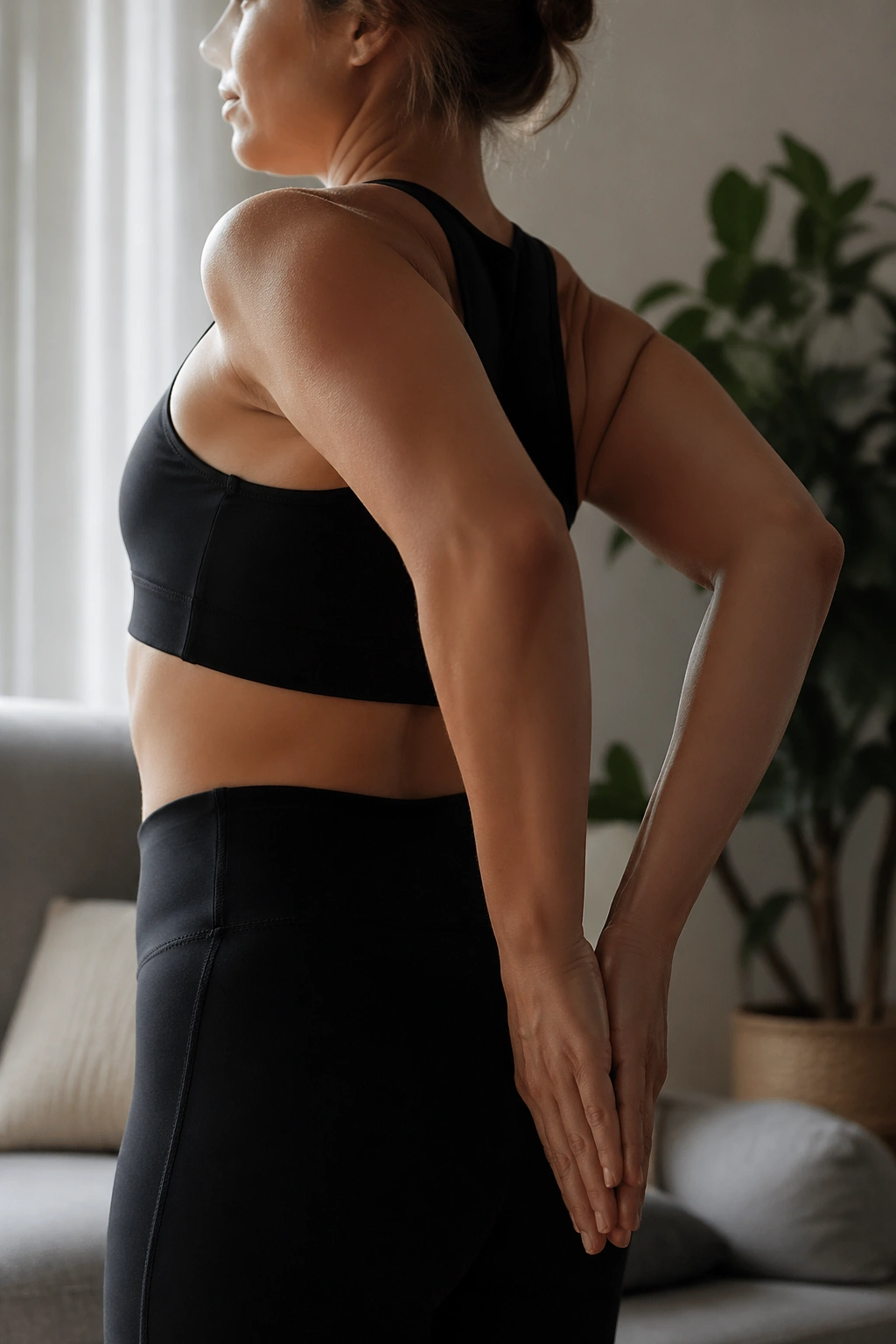
This one is smaller and fussier than the regular prayer stretch, and that is part of why it matters. The reverse prayer position reaches the back of the wrists and the forearm muscles that almost never get a clean stretch.
Place the backs of the hands together near the lower ribs or belly, fingers pointing down. Lift the elbows a little and keep the shoulders relaxed. If the hands do not meet cleanly, do not force the shape. Use a partial version with fingertips touching and work from there.
The reverse prayer stretch can feel awkward the first few times. Fine. Awkward is not the same as wrong.
I would not push this one after a day that already hammered the wrists. If your joints feel warm, irritated, or unstable, stay with the prayer stretch instead. The reverse version is best when the wrists feel stiff, not angry.
A short hold is enough here — 15 to 20 seconds can do the job. The position is already intense for many people, so more time is not always more useful.
9. Eagle Arms Stretch
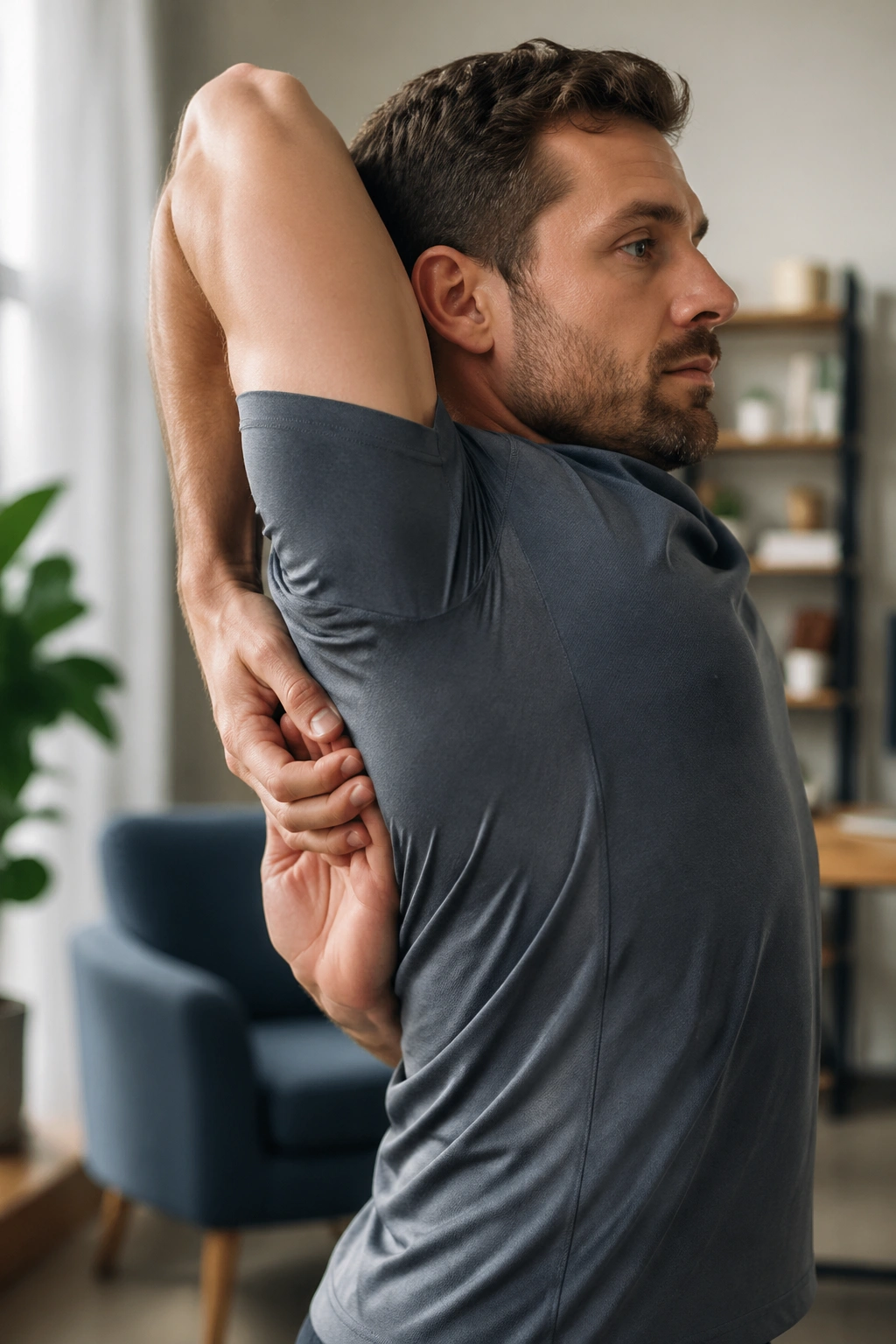
After a long set of rows, or a day spent hunched over a keyboard, the upper back can feel tied in a knot. Eagle arms catch that web of tension in a way that surprises people the first time.
Wrap one arm under the other in front of your chest, then bend the elbows and try to bring the backs of the hands or palms together. Lift the elbows slightly and keep the shoulders down. The stretch should land between the shoulder blades and across the rear delts.
Weird-looking? Yes. Worth it? Also yes.
Small tweaks that change the feel
- Raise the elbows to hit more upper back.
- Lower them a touch for a milder shoulder stretch.
- Sit down if balance keeps distracting you.
- Keep the jaw loose. A clenched jaw steals the effect.
This stretch is one of my favorites after upper-body training because it gives the shoulder girdle a place to settle. It does not need much drama. Hold, breathe, and let the arms feel heavy for a moment.
10. Thread-the-Needle Stretch
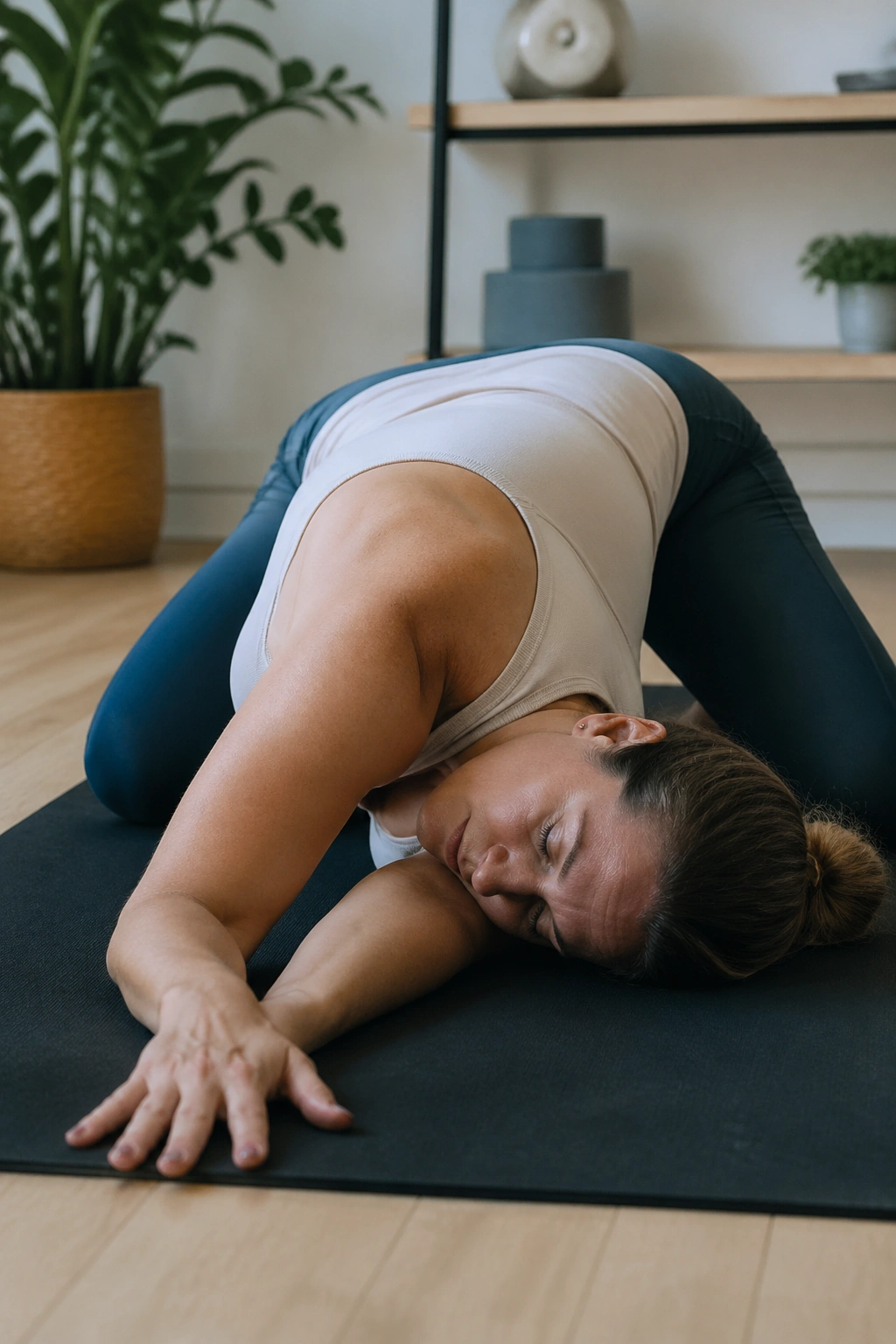
After heavy pressing, the back of the shoulder can feel wrapped in a towel that got twisted too tight. Thread-the-needle is the cleanest way I know to untwist it without making a mess of the joint.
Start on hands and knees. Slide one arm under the body with the palm facing up, then let the shoulder and temple rest lightly on the floor. Keep the hips stacked over the knees. If the floor feels too low, place a folded mat, towel, or block under the shoulder so the neck does not crank.
How to keep it gentle
- Keep the weight light on the planted hand.
- Do not force the torso to rotate.
- Stay on the shoulder, not the neck.
- Breathe into the back ribs.
You can stay still in the threaded position, or you can add a small rotation by reaching the free arm toward the ceiling. That version opens the upper back a bit more, but it should still feel smooth. If the shoulder feels pinched, skip the rotation and keep the lower version.
This stretch works well after rows, presses, and any workout where the upper back stayed rigid for too long. It gives the rear shoulder and the spine a small reset.
11. Overhead Side-Bend Lat Stretch After Rows and Pull-Ups
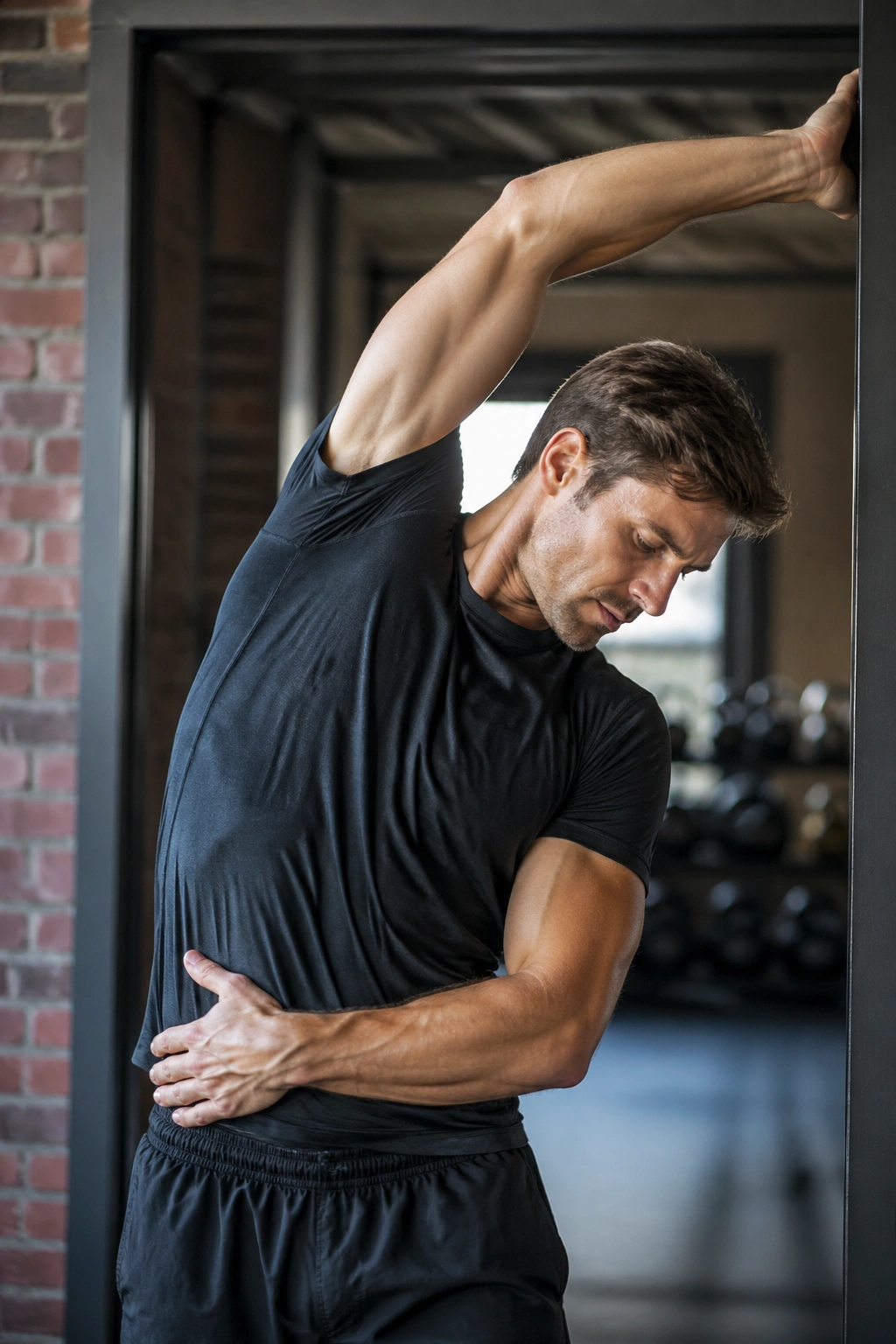
Lats are arm muscles in disguise. They pull on the upper arm, help control the shoulder blade, and get tight after pull-ups, pulldowns, climbing, and even hard sets of dumbbell rows.
Reach one arm overhead, then lean away from that side while keeping the hips mostly square. The higher arm can hold a wall, rack, pole, or doorway edge for support. You should feel the stretch from the side of the ribs up into the armpit and outer upper arm. If the lower back starts to arch, shorten the side bend and keep the ribs from flaring.
Unlike a basic triceps stretch, this one runs along a longer line. That is why it feels so different.
I like this stretch after any session where the arms spent a lot of time pulling against resistance. It eases that thick, glued-together feeling around the side of the torso. Hold both sides, but give the tighter side another round if one arm feels jammed overhead.
A small bend in the elbow is fine. A collapsed shoulder is not.
12. Towel-Assisted Triceps Stretch
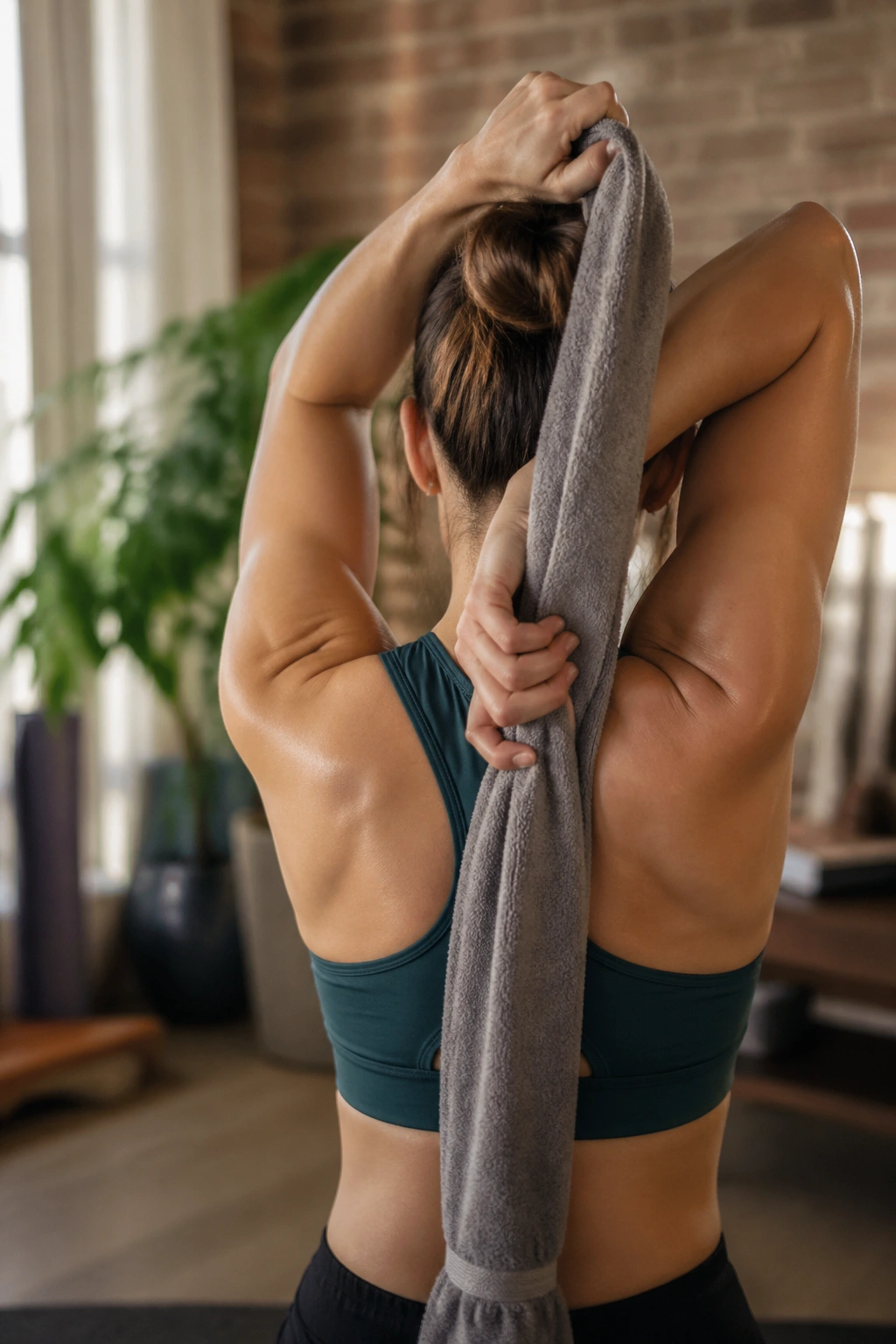
A towel makes this stretch easier when the shoulder is tight or the hands cannot meet comfortably behind the head. That is not a weakness. It is a workaround that saves the neck and still gets the job done.
Hold one end of a towel overhead with the stretched arm and let the towel drop behind the back. Reach the other hand up from below to grab the lower end. Gently draw the towel upward with the top hand while the lower hand adds a little resistance. The triceps and the side of the shoulder should lengthen without the elbow being forced into an awkward angle.
A thin towel or strap works better than a bulky bath towel. Thick fabric slips and makes you grip too hard, which defeats the point. If the towel twists, reset it before adding more pull.
This stretch is especially useful after heavy triceps work or overhead lifting because it lets the shoulder settle into a cleaner line. If you only have one good range of motion on a given day, use that. The body is not a machine with a fixed setting, no matter how much people wish it were.
Keep the pull steady and mild. The stretch should unfold, not snap open.
13. Behind-the-Back Shoulder Clasp
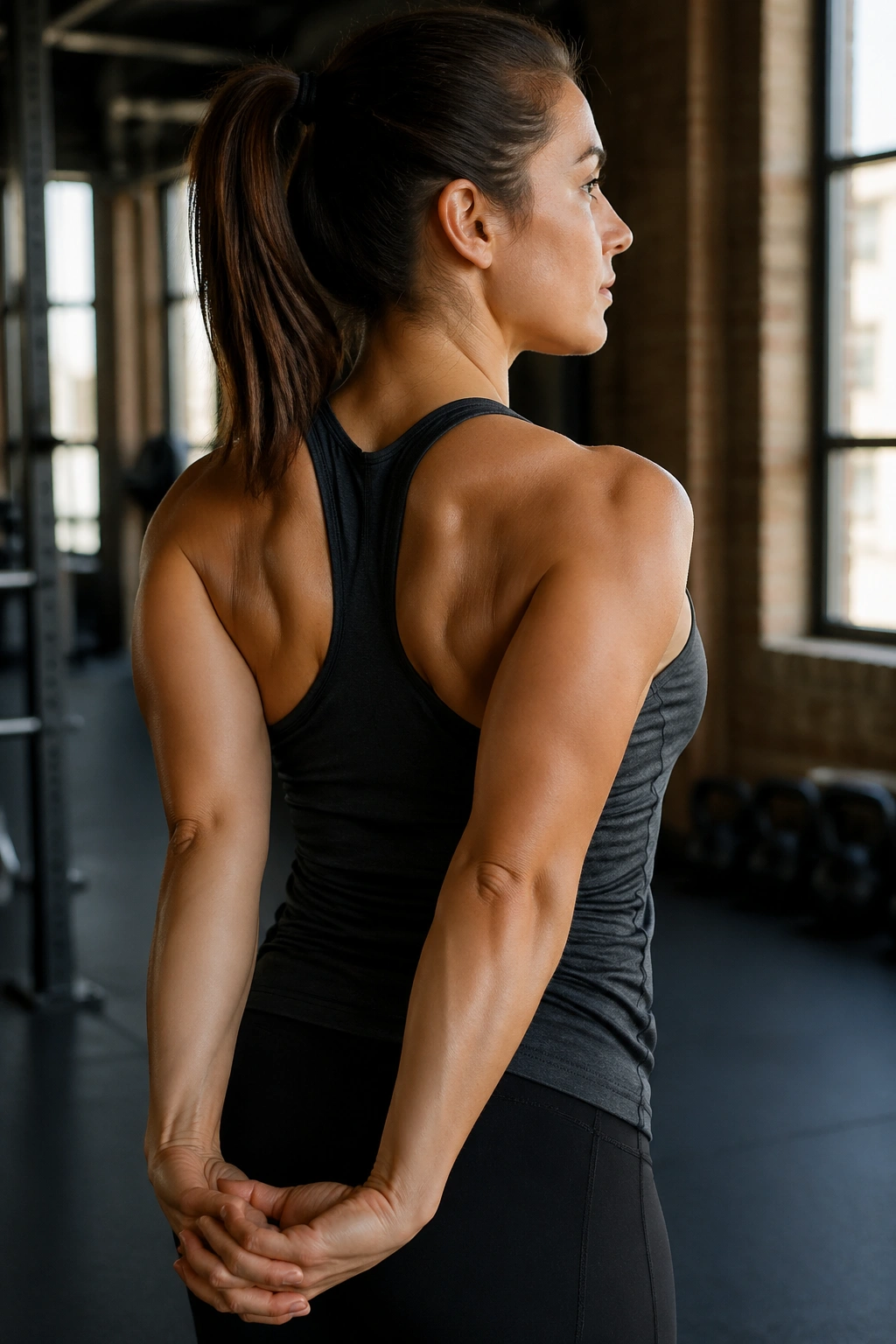
Clasping the hands behind the back does two jobs at once: it opens the front of the shoulders and reminds the chest to stop pulling everything forward. After rows, presses, or long hours at a desk, that feels like a relief.
Let the arms reach behind you and clasp the hands if they meet. Straighten the elbows a little and lift the knuckles a few inches away from the body. Keep the chest broad without forcing the ribs forward. The stretch should show up across the front of the shoulders and a little through the biceps.
If the hands do not connect, use a towel, strap, or even a light resistance band between them. That keeps the shoulders from yanking into a bad shape just to make the fingers touch.
A small lift is enough here. Too much and the lower back arches, which changes the target. Too little and the chest stays shut. There is a narrow sweet spot, and you will feel it.
I like this one after pressing because it puts the shoulders back into a more neutral line. It is a quiet stretch. Nothing flashy. That is part of the appeal.
14. Single-Arm Wall Pec Stretch

One shoulder often feels more pulled forward than the other after a workout, and the single-arm wall pec stretch lets you fix that side without guessing.
Place one forearm on a wall with the elbow roughly at shoulder height. Step the same-side foot forward and turn the torso away until the front of the shoulder and chest open. Keep the shoulder blade from hiking up. If the elbow angle feels harsh, lower the forearm a few inches and try again.
Best version for tight shoulders
- Use a wall instead of a doorway for more control.
- Lower the elbow to reduce shoulder strain.
- Step forward in small increments, not a lunge.
- Keep the neck long and relaxed.
This stretch is cleaner than a big doorway lean when one side of the chest feels far tighter than the other. It gives you room to adjust the angle by inches instead of taking a giant step and hoping for the best. That matters more than people think.
If the front of the shoulder pinches, ease out and try a lower elbow position. The pec should lengthen. The joint should stay quiet.
15. Child’s Pose with Side Reach
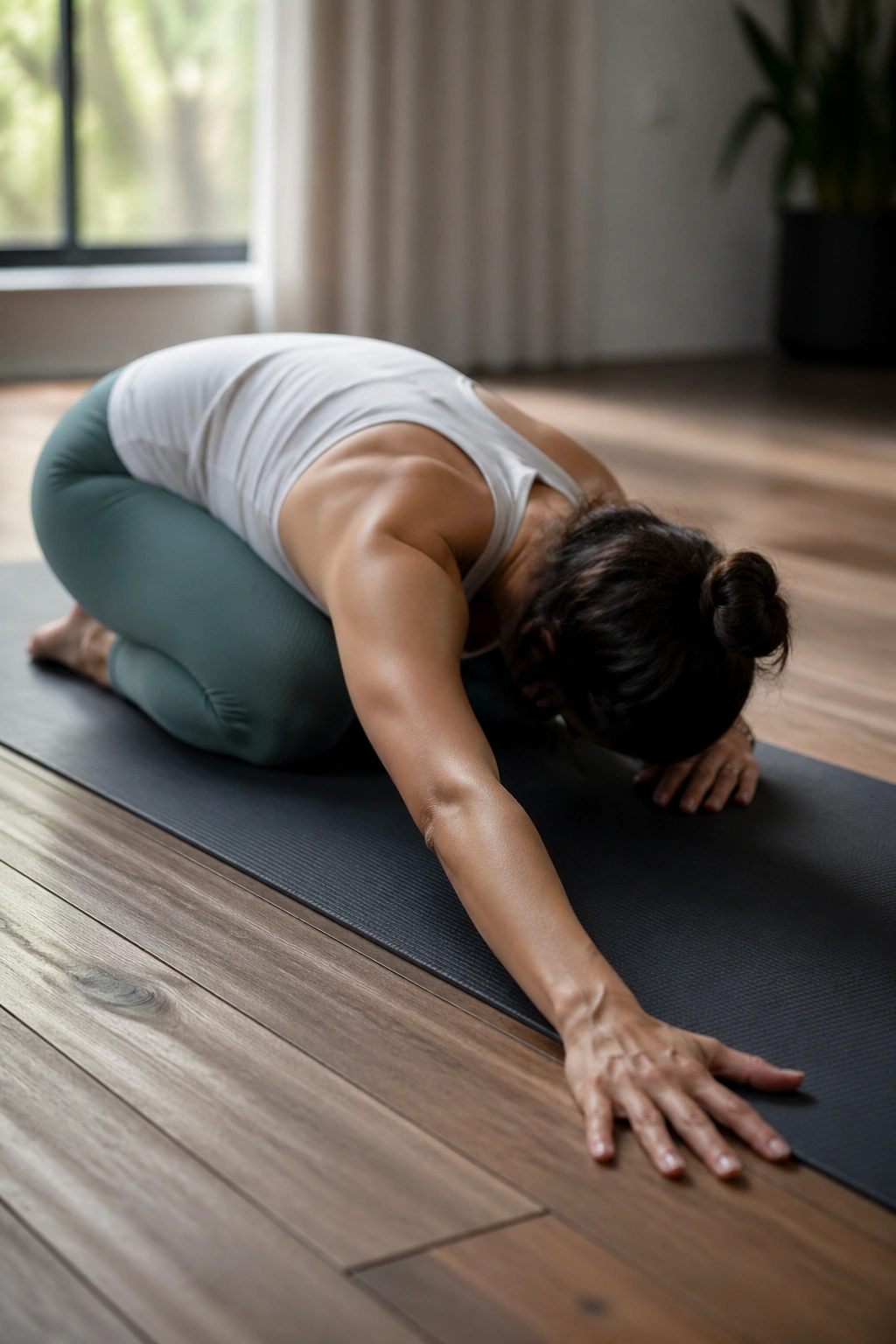
If your shoulders, lats, and upper arms all feel boxed in at once, this is the stretch that gives the whole area room to breathe. It is not fancy. It works anyway.
Kneel on the floor, sit the hips back toward the heels, and walk both hands forward. Then shift both hands to one side so the stretch lands through the side of the torso, shoulder, and upper arm. Hold, breathe, and then switch sides. If kneeling bothers your knees, use a bench or stack a cushion under them.
No spectacle.
The side reach pulls on the lat, the back of the shoulder, and the triceps in one line, which makes it useful after pull-ups, overhead work, swimming, or any session where the upper body felt compressed. One side will often feel tighter. That is normal. Spend a little longer there, but do not grind into the floor to prove a point.
This is a good stretch to end on because it slows everything down. By the time you come up out of it, the arms usually feel less defensive and a little easier to move.
Final Thoughts
A solid post-workout stretch session does not need to be long. Pick the spots that were under load and give them 20 to 30 calm seconds each. After pressing, I would reach for triceps, chest, and a shoulder opener. After pulling or grip-heavy work, I would lean harder on forearms, lats, and cross-body stretches.
The biggest mistake is treating every stretch like a contest. If the shoulder feels pinched, the wrist feels cranky, or the neck takes over, the range is too big. Back off, make the angle smaller, and keep the breath slow.
I usually like a mix of one front-of-arm stretch, one back-of-arm stretch, and one forearm stretch. That covers more ground than trying to do everything and losing focus halfway through.
