



We have all been there. You bend down to tie your shoes or pick up a pen you dropped, and suddenly you feel that sharp, unforgiving tug behind your knees. It is not just annoyance; it is a signal. Your hamstrings—the thick band of three muscles running down the back of your thigh—have tightened up. When these muscles lose their elasticity, they do more than just make you feel stiff. They pull on your pelvis, which in turn tugs on your lower back, often leading to chronic tension that has nothing to do with your spine and everything to do with your legs.
Most people approach flexibility with a “more is better” mentality, cranking into a stretch as hard as they can. That is the quickest way to pull a muscle rather than lengthen it. Effective hamstring work is about patience, breathing, and knowing exactly where the tension is coming from. It is not about touching your toes—it is about creating space in the muscle belly. If you have been struggling to get lower in your forward fold, or if you simply want to move through your day without feeling like your legs are made of stiff rope, you need a diverse toolkit.
The list below covers everything from gentle, restorative options to deep, active stretches. You do not need to do all of these in one sitting. In fact, please do not. Pick two or three that feel right for your body and your goals, and commit to them. Consistency beats intensity every single time.
1. Standing Forward Fold
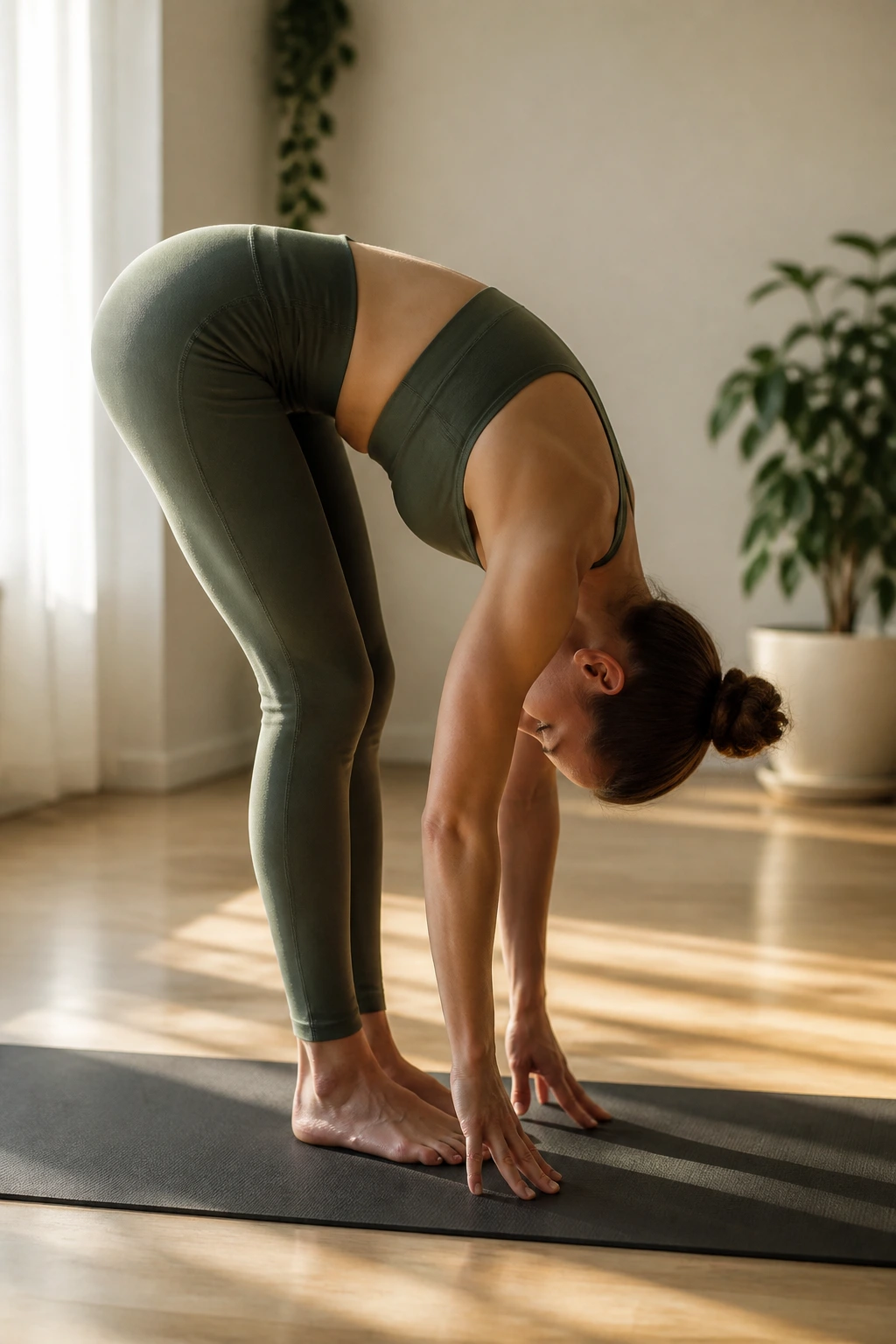
This is the classic, the one everyone knows, and the one almost everyone gets wrong. Most people stand with locked knees and round their spine, trying to force their hands to the floor. The goal here is not to touch the ground; it is to rotate your pelvis forward.
How to Get It Right
Stand with your feet hip-width apart. Micro-bend your knees—just a tiny fraction—to take the pressure off the joint. Hinge at your hips, not your waist. Imagine your torso is a flat board lowering down toward your thighs. If your back starts to curve like a C-shape, stop. That curve means you have gone past your hamstring’s range and are now just pulling on your lower back.
The Key Adjustment
Let your head hang heavy. When you look forward, your neck tenses, and that tension cascades down your spine. Keep your gaze toward your shins or behind you. If you feel that deep, juicy ache in the center of your hamstrings, you are in the right spot.
2. Seated Single-Leg Reach
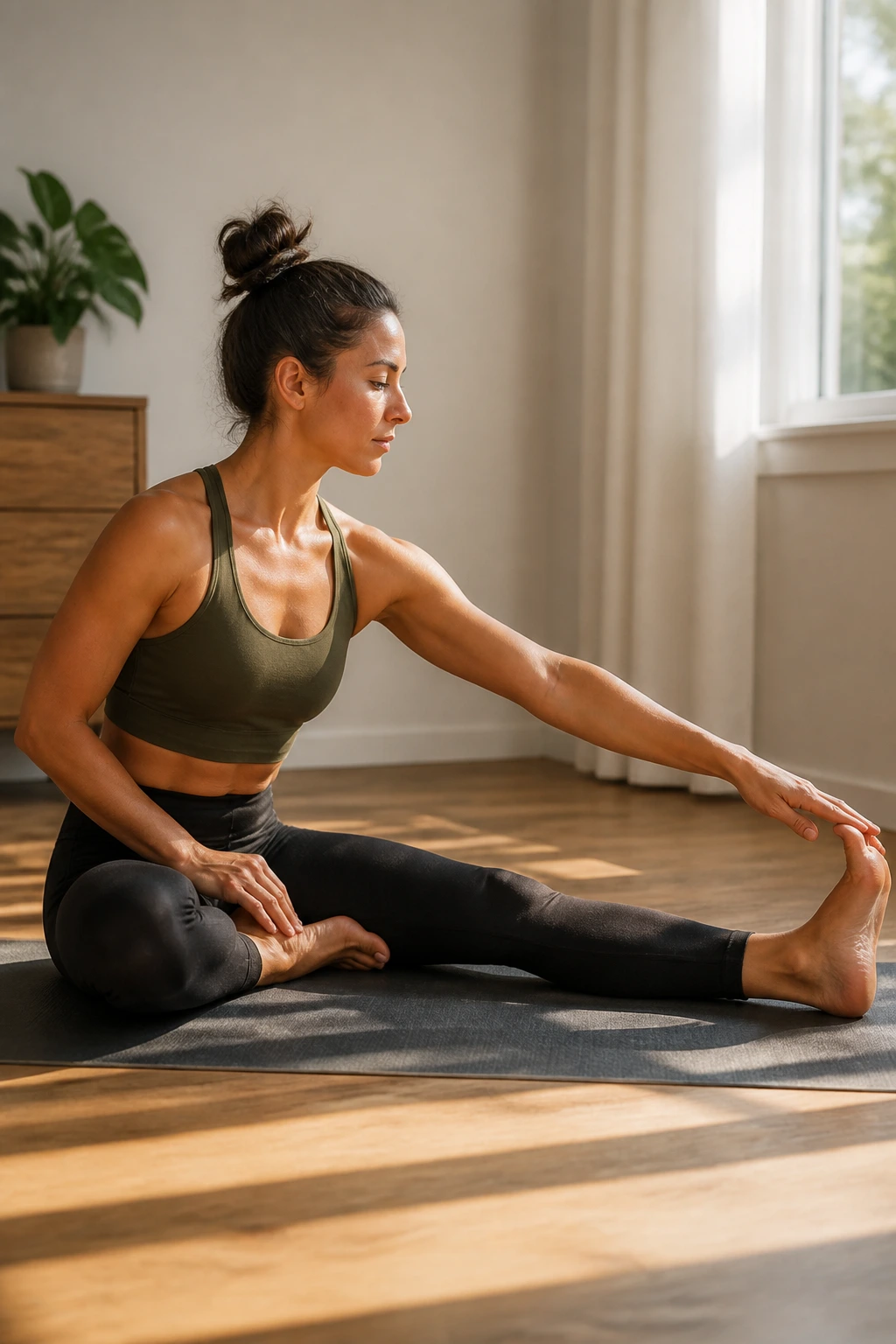
Sitting on the floor gives you a stable base, which allows you to focus entirely on the leg you are stretching. This is my go-to when I want to isolate the hamstrings without worrying about balance.
Sit on the floor with both legs extended. Pull your left foot into your inner right thigh, so your left sole is resting against your right leg. Now, square your shoulders toward your right foot. You are aiming for a neutral spine. Reach toward your right toes. Do not grab them unless you can do so while keeping your chest lifted. If you reach for your foot and your shoulders collapse, you have missed the point. Keep the chest broad, hinge from the hips, and reach out, not down. This modification keeps the focus on lengthening the posterior chain rather than rounding the upper back.
3. Lying Hamstring Stretch with Strap
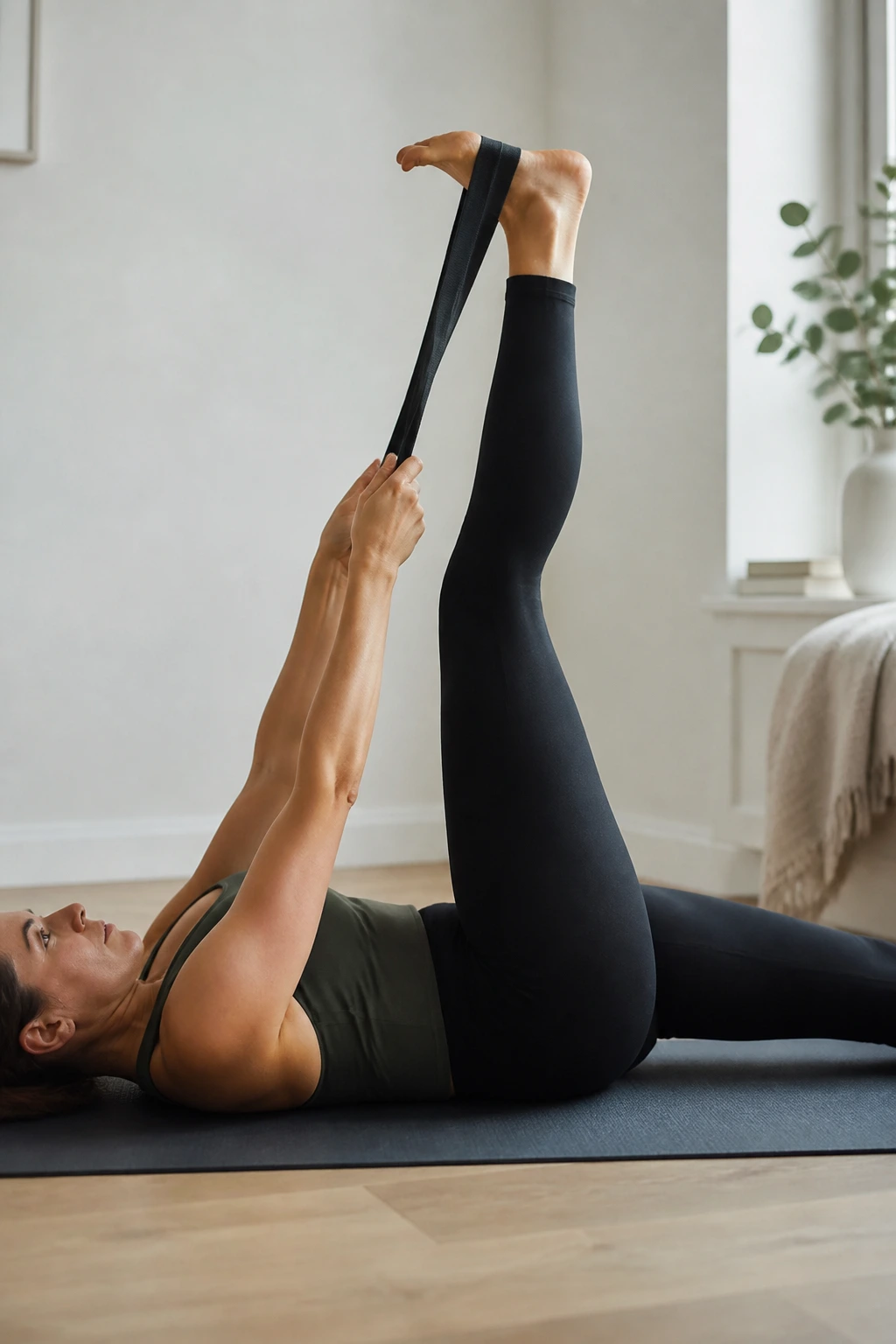
If you have tight hamstrings, gravity can be your enemy. Lying on your back removes the struggle of fighting your own body weight, letting you focus on the stretch.
- Preparation: Lie flat on your back, keeping both legs long on the floor.
- The Action: Loop a yoga strap, a sturdy belt, or even a towel around the arch of your right foot. Holding the ends of the strap with both hands, gently lift your right leg toward the ceiling.
- The Control: Keep your left leg pressed firmly into the floor. This anchors your pelvis and ensures the stretch stays in the right leg.
- The Detail: Only bring the leg up as far as you can while keeping your knee straight. If the knee bends, the stretch moves into the calf. Keep it straight to target the hamstring belly.
Pro tip: Pull your toes toward your face to engage the calf and intensify the stretch through the entire back of the leg.
4. Half Splits (Ardha Hanumanasana)
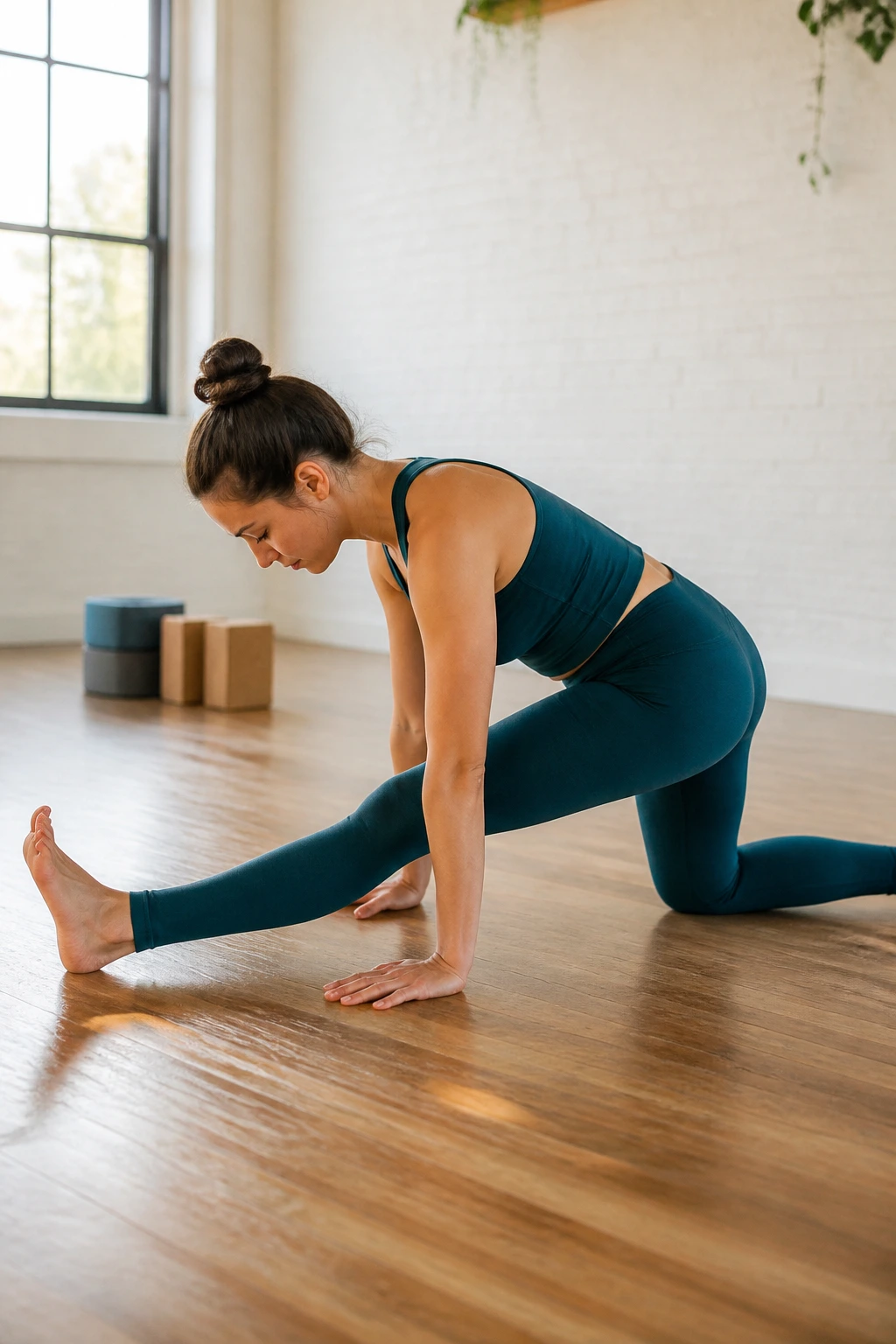
This is a staple in many movement practices, and for good reason. It puts the hamstring in a loaded, functional position. You are essentially doing a lunge and a stretch simultaneously.
Start on your hands and knees. Step your right foot forward between your hands. Shift your hips back, straightening your right leg. Lift your right toes off the floor so you are balancing on your right heel. Your left hip should stay stacked directly over your left knee. This keeps the pelvis neutral. If you feel like you are going to topple over, use two blocks under your hands. The goal is to keep the spine long. Lead with your heart, not your chin. You will feel a strong, direct stretch in the hamstring of the front leg.
5. Elevated Heel Stretch

Sometimes the floor is just too far away. If you have extremely tight hamstrings, trying to get to the floor can be frustrating and counterproductive. Using an elevated surface changes the angles in your favor.
Why does this work? When you elevate the heel, you change the starting point of the tension. Find a low step, a sturdy book, or a curb. Place your right heel on the edge. Keep both legs straight but soft at the knee. Hinge forward at the hips, keeping your back straight. You will notice that because your foot is elevated, you do not have to fold as deeply to feel the same level of intensity. This is perfect for beginners or for those days when you feel particularly stiff, like in the morning before your muscles have warmed up.
6. Supine Wall Stretch
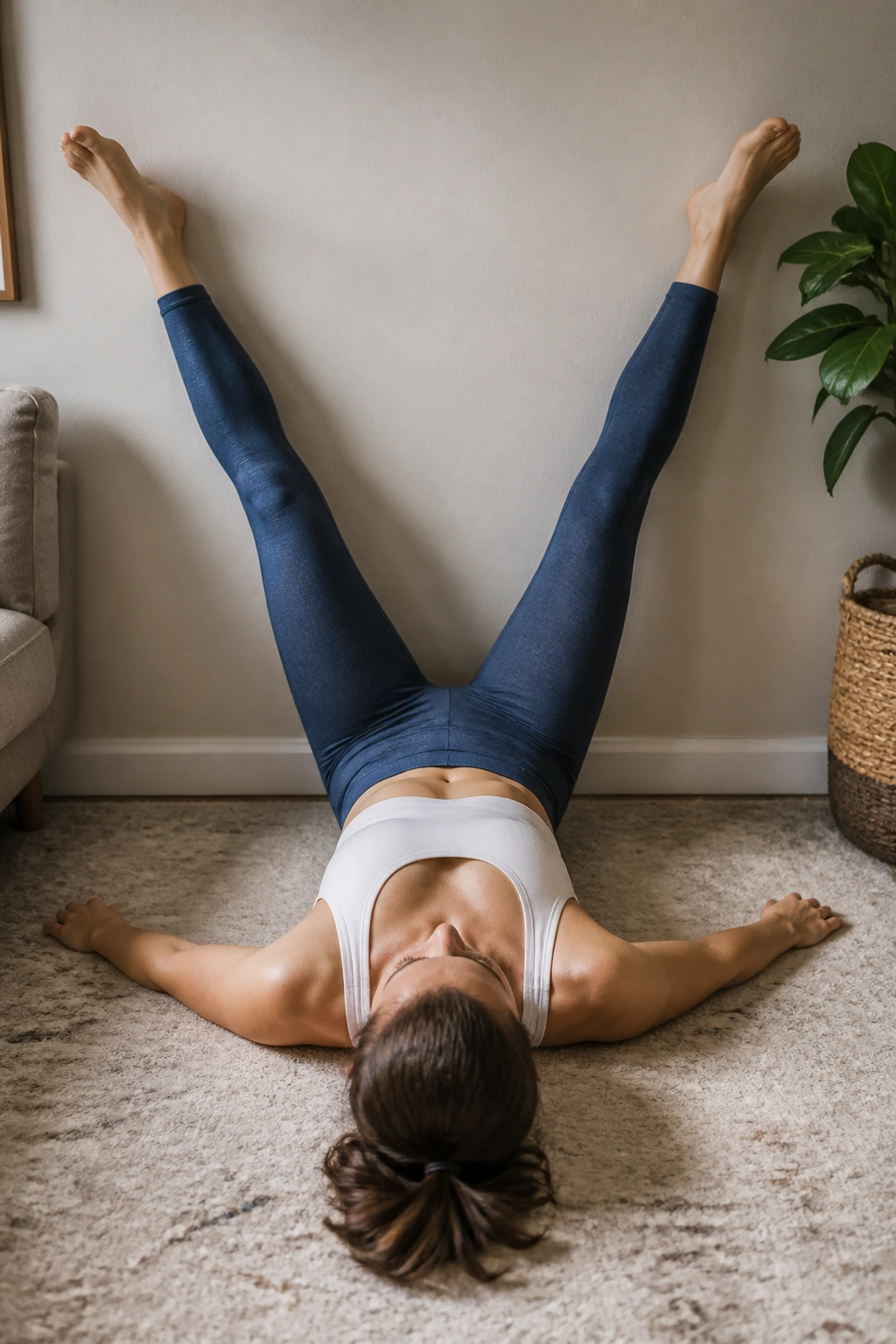
We often forget that the wall can be the best prop in the room. This stretch is almost effortless, making it perfect for the end of a long day when you want to release tension without doing “work.”
Lie on your back with your glutes as close to the wall as possible. Extend both legs up the wall. Slide your legs apart into a wide V-shape. This targets the hamstrings and the inner thighs (adductors) simultaneously. The wall provides a constant, passive resistance. Because your back is fully supported by the floor, you don’t have to engage your core to stay upright. You can stay here for five, ten, or even fifteen minutes. Read a book, listen to a podcast, or just breathe. Gravity does the heavy lifting, slowly encouraging the muscles to release their hold.
7. Dynamic Leg Swings
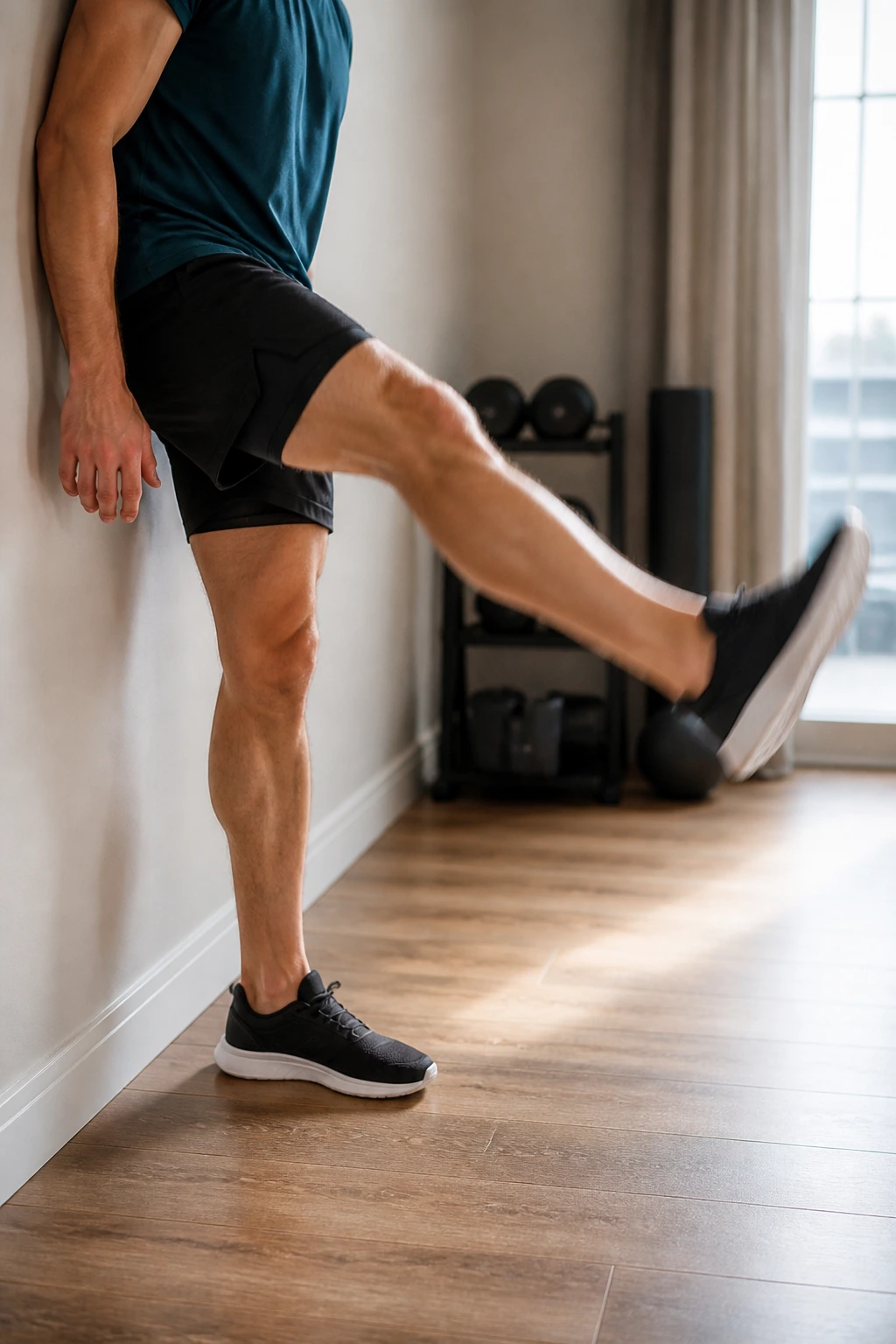
Static stretching—holding a pose—is great, but dynamic movement is how we actually prepare our bodies for activity. Think of this as “flossing” the nerves and muscles rather than pulling them.
Stand near a wall for balance. Stand on your left leg and swing your right leg forward and backward, like a pendulum. Keep your torso upright; don’t lean forward as your leg goes back. The swing should be controlled, not violent. You aren’t trying to kick a field goal. Focus on the sensation of the muscle stretching at the peak of the forward swing and contracting slightly on the backswing. Do 15 swings per leg. This increases blood flow and temperature in the hamstrings, making them much more receptive to deeper, static stretching afterward.
8. Hurdler’s Stretch
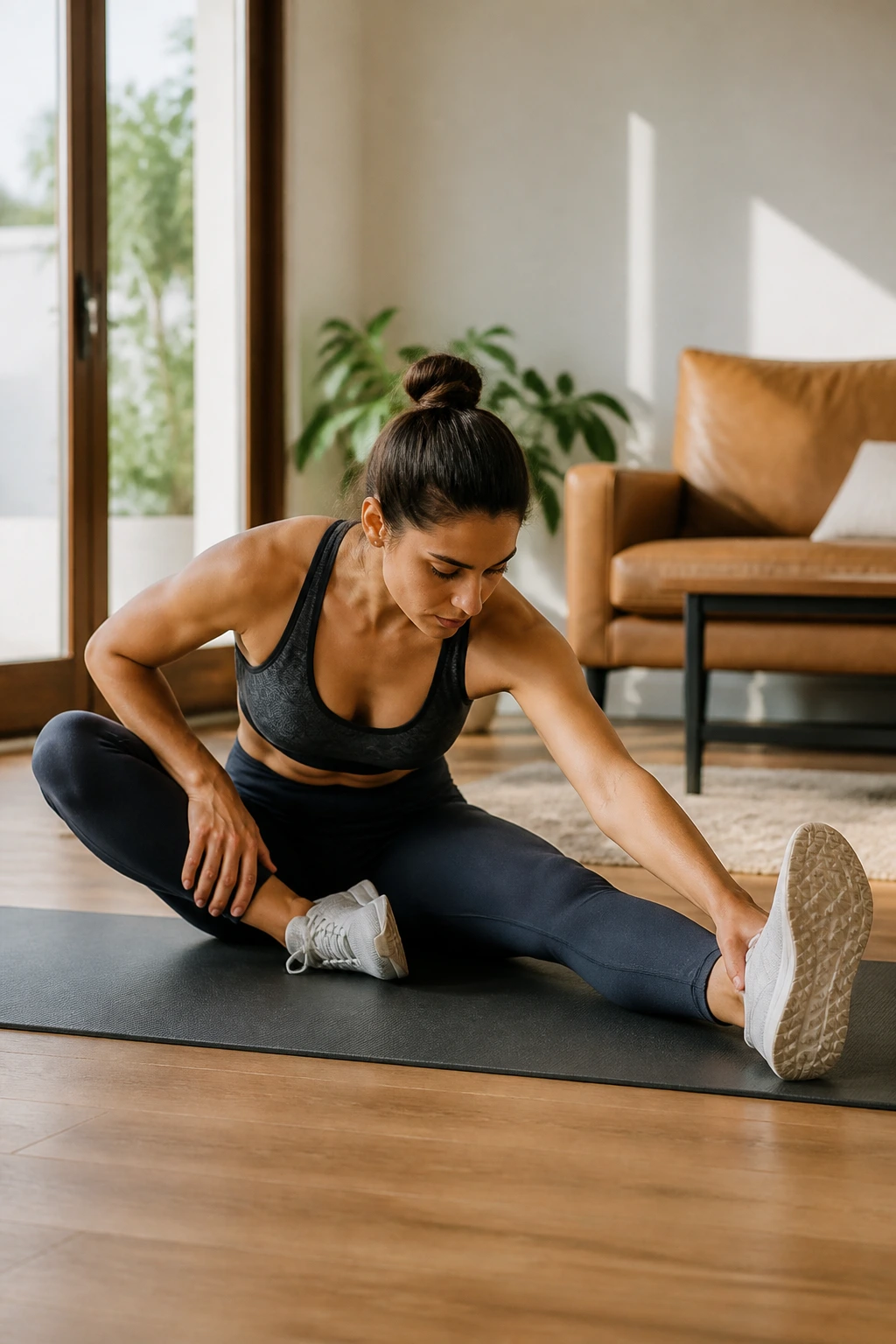
This move is a classic, but it requires caution. It’s effective because it mimics a seated position while putting the hamstring under a specific type of tension.
Sit on the floor. Extend your right leg straight out. Bend your left knee and bring the sole of your left foot to your inner right thigh, just like the seated single-leg reach. However, in this variation, you lean your torso slightly toward the bent knee or keep it center, depending on where you feel the tightness. The key mistake people make is jamming the knee of the straight leg down into the floor. Don’t do that. Keep the back of the knee soft and engaged. If you have any history of knee pain, skip this one. Otherwise, it is a fantastic way to target the hamstring while also opening the hip.
9. Scissor Stretch
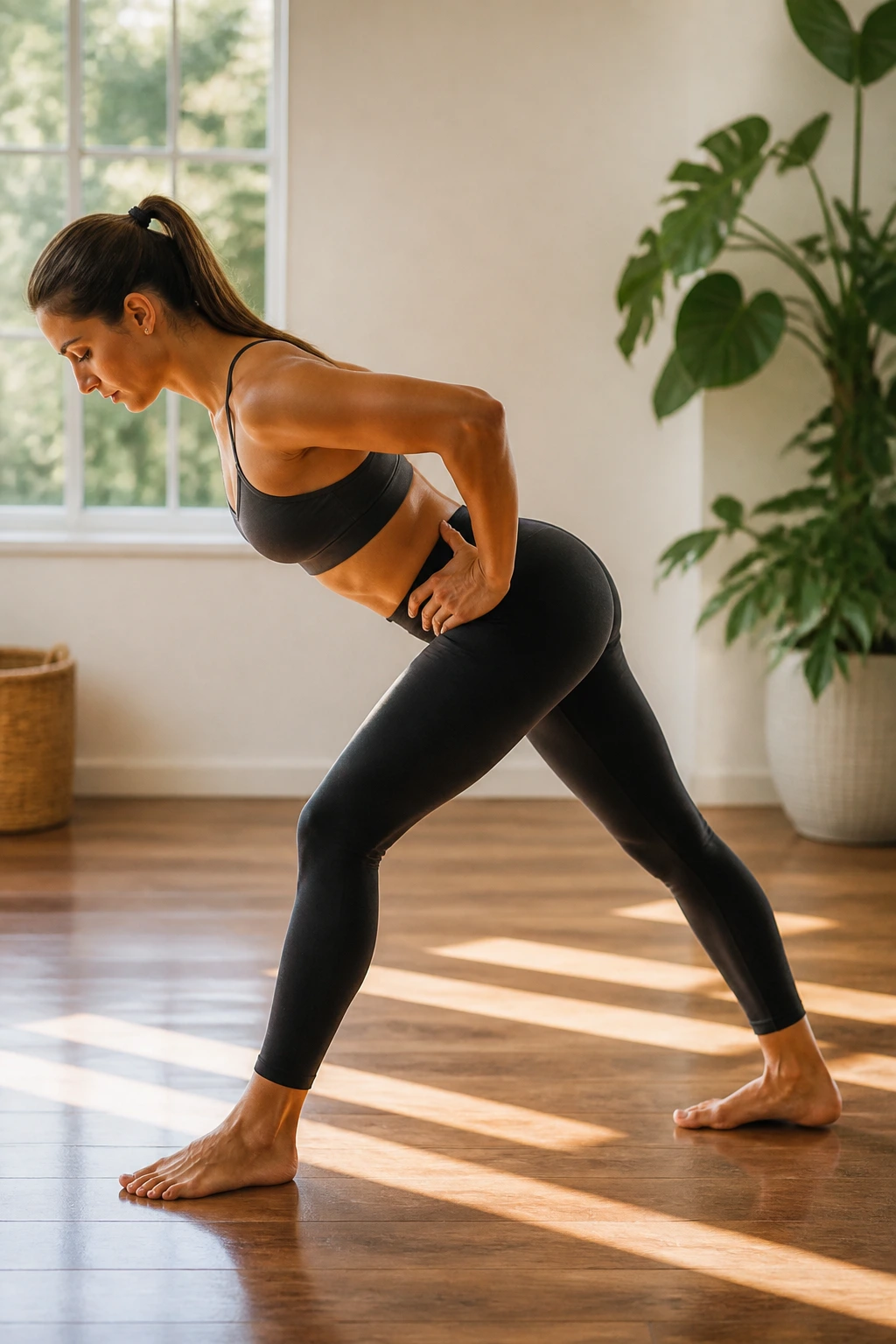
This is an active stretch, meaning you use your own muscles to help you get deeper. It’s brilliant for anyone who feels like they aren’t “getting anywhere” with static stretches.
Stand with your feet together. Step your right foot about two feet in front of your left foot. Keep your toes pointing forward. Place your hands on your hips. Keep your spine long and hinge forward at the hips. You are putting the weight of your torso over your front leg. Because your legs are staggered, you can control the intensity by shifting your weight forward or back. It feels like a standing version of the half split. Hold for 30 seconds, then switch. You will find that you can go deeper into this one than a traditional standing forward fold because your base of support is more stable.
10. Pigeon Pose (Variation for Hamstrings)
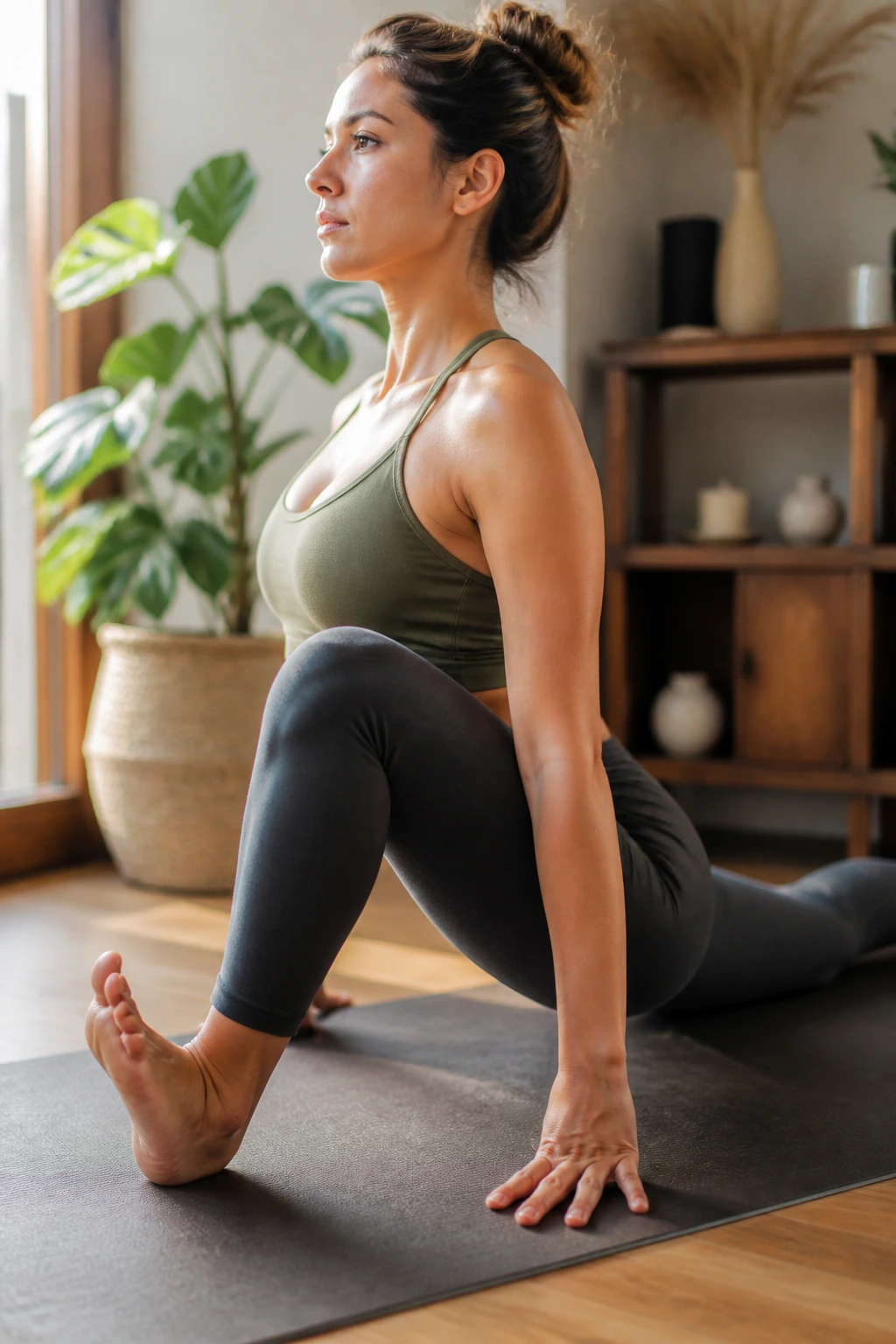
Most people know Pigeon Pose as a glute and hip opener, but with a slight tweak, it becomes a potent hamstring stretch.
Get into your standard Pigeon Pose: right knee forward near your right wrist, left leg extended behind you. Instead of collapsing your torso down onto the floor, stay upright on your fingertips. Now, flex your front foot—pull your toes toward your shin. This activation changes the leverage point. It forces the hamstring to engage as it stretches. It is a more intense sensation than a passive stretch. If you find your hips are very tight, put a block under your right glute. You want your hips level, not tilted.
11. Seated Wide-Leg Straddle
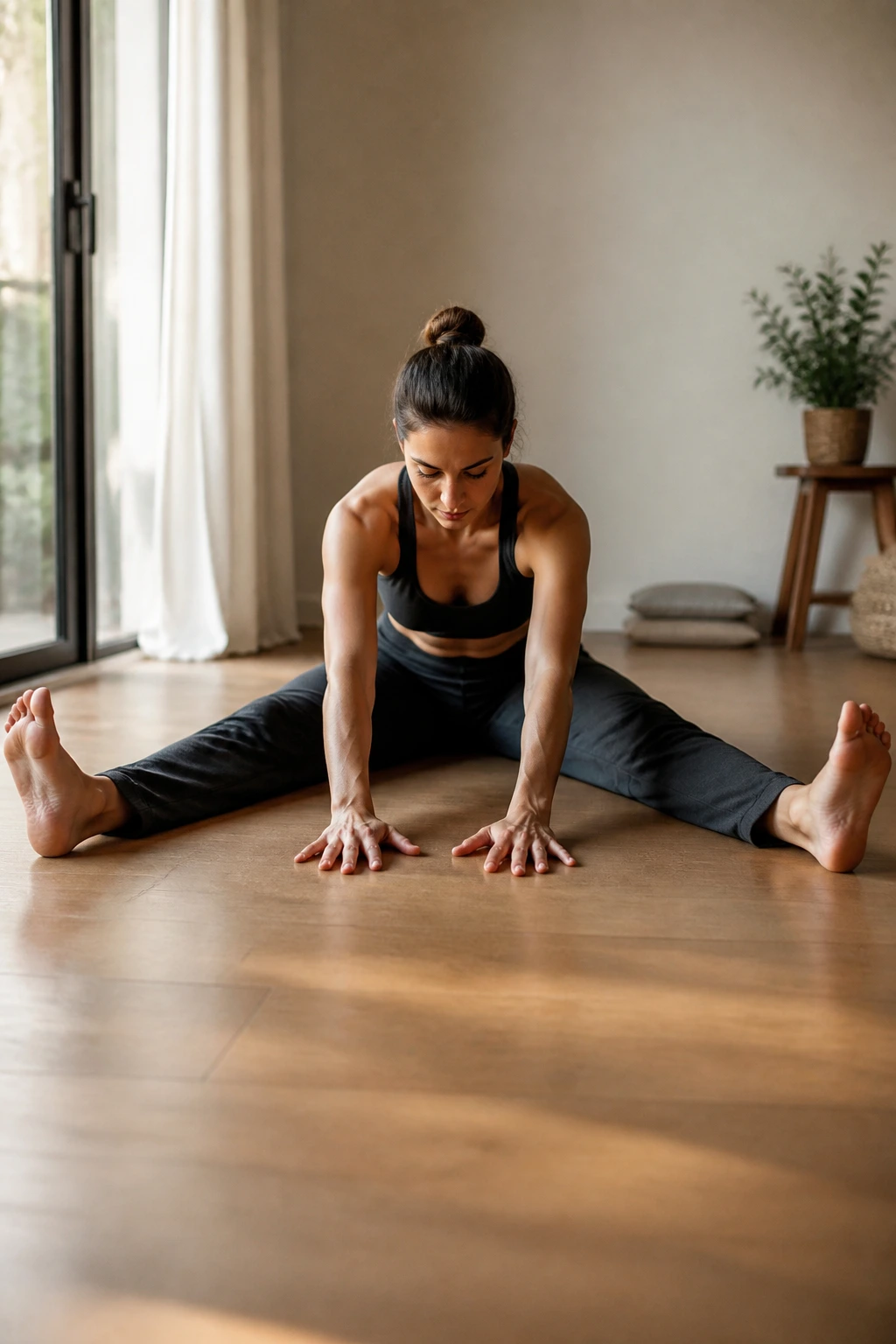
Hamstrings are complex; they don’t just run straight down the back of the leg. They have medial (inner) and lateral (outer) components. A wide-leg straddle hits those medial hamstrings that often get missed in narrower stretches.
Sit on the floor and open your legs into a wide V. Keep your knees pointing toward the ceiling—if they roll inward, you’re missing the stretch. Flex your feet. Slowly walk your hands forward in front of you. Go only as far as you can while maintaining a straight spine. If you hunch your back to get your forehead to the floor, you are cheating. Keep the spine long. Imagine your belly button trying to touch the floor before your nose does. This is a slow-burn stretch. Hold for a minute, breathing deeply into the tension.
12. Bridge Pose with Hamstring Focus
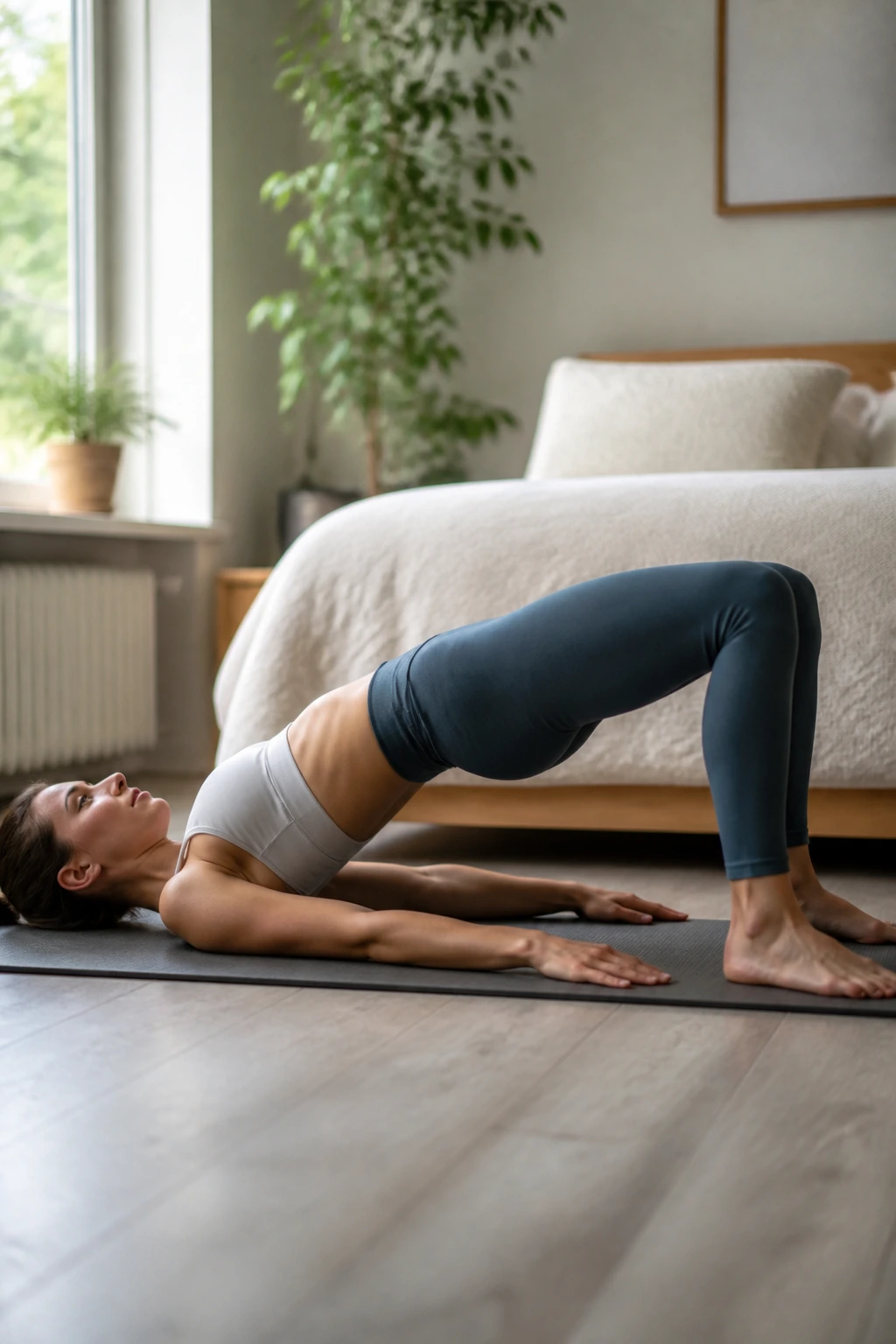
This is an “active stretch.” You are using your muscles to stretch the hamstrings, which is often more effective than just pulling on them.
Lie on your back, knees bent, feet flat on the floor. Lift your hips into a standard bridge. Now, without moving your feet, imagine you are trying to drag your heels toward your glutes. You won’t actually move your feet—they are stuck—but that engagement turns your hamstrings “on.” Hold that tension for five seconds, then release. Do this ten times. The engagement followed by the contraction helps the muscle fibers “reset.” It is excellent for people who feel “stuck” in their flexibility and need to engage the muscle to loosen it.
13. Forward Fold with Blocks
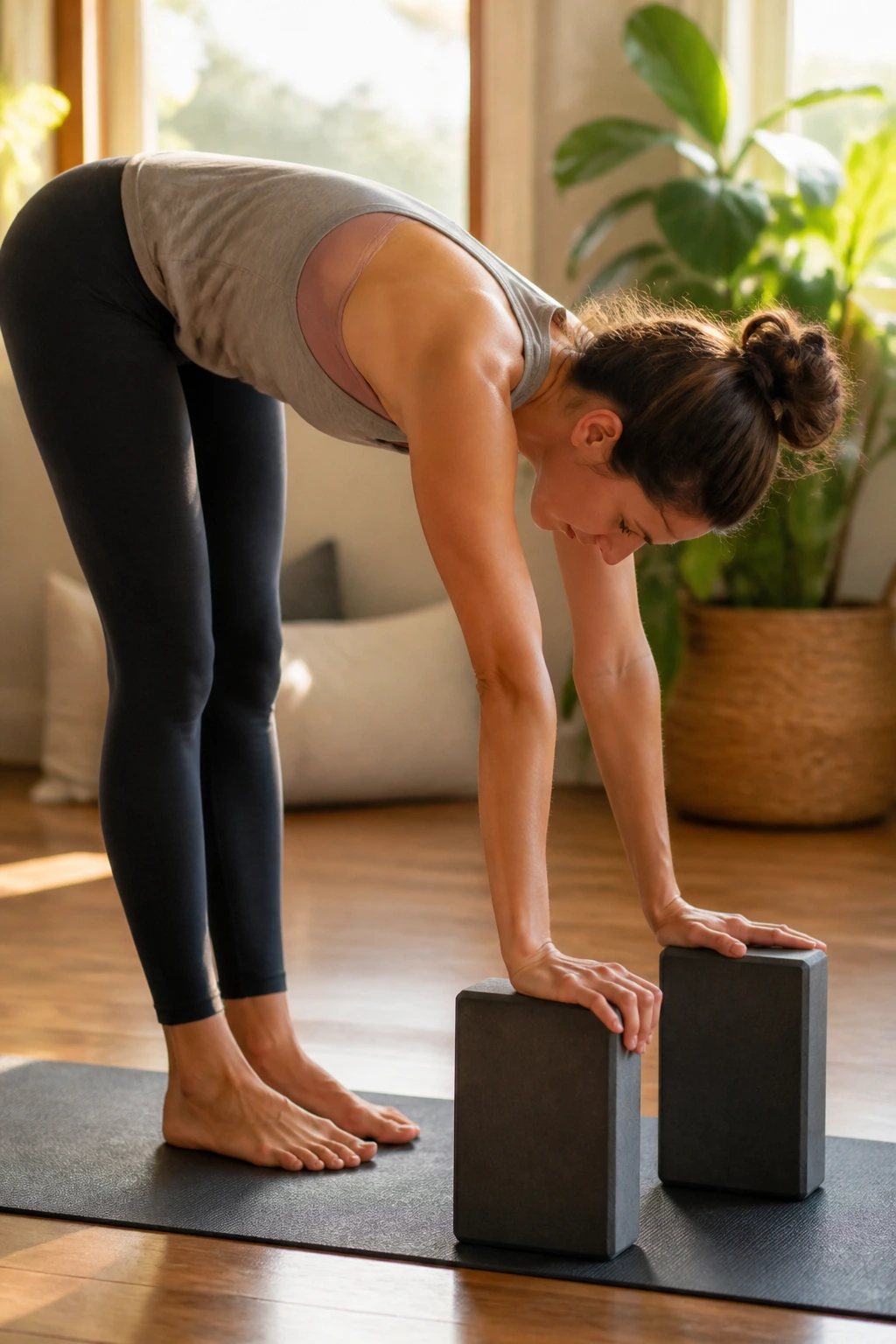
I am a huge advocate for using blocks. Many people think they are a crutch, but they are actually a tool for better alignment. If you cannot reach the floor, you aren’t failing—you are just not tall enough for the pose yet.
Place two yoga blocks on their highest setting in front of your feet. When you forward fold, place your hands on the blocks instead of reaching for the floor. This allows you to keep your back perfectly flat. A flat back stretches the hamstrings; a rounded back stretches your spine. By elevating the floor, you can get into a deeper hamstring stretch while keeping your posture pristine. It is the difference between a mediocre stretch and an incredibly effective one.
14. Gate Pose (Parighasana)
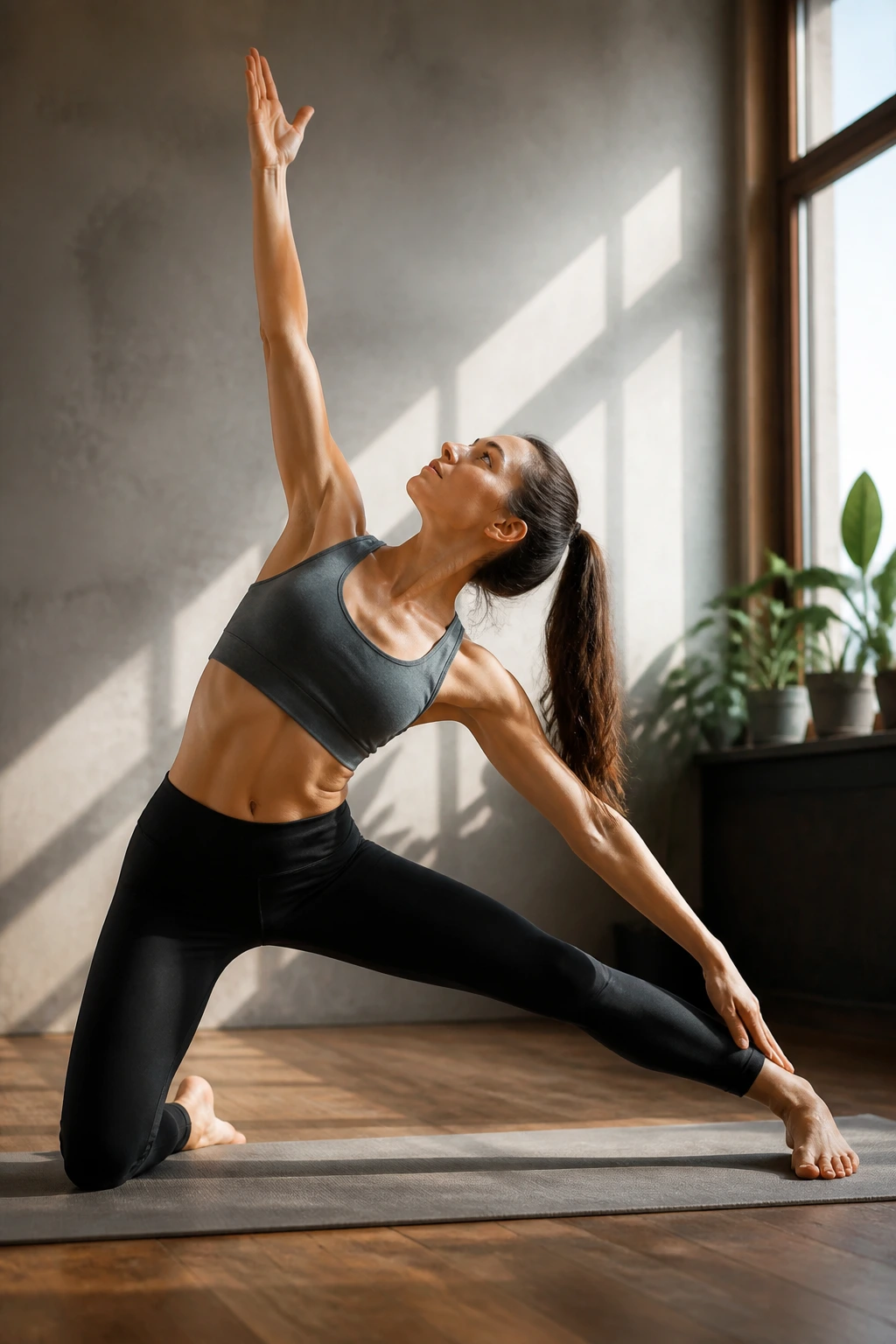
This is a kneeling pose that hits the hamstrings and the side body. It’s elegant and highly effective.
Kneel on the floor. Extend your right leg out to the side, foot flat on the ground. Your right foot should be in line with your left knee. Inhale, raise your left arm, and exhale, reach over toward your right foot. You are stretching your side, yes, but because the right leg is straight and rooted, you are also getting a deep stretch along the inside of the right hamstring and adductor. Keep your chest open to the ceiling. Do not let your torso collapse forward. It should feel like you are stretching between two panes of glass.
15. The “Toe Touch” Chair Stretch
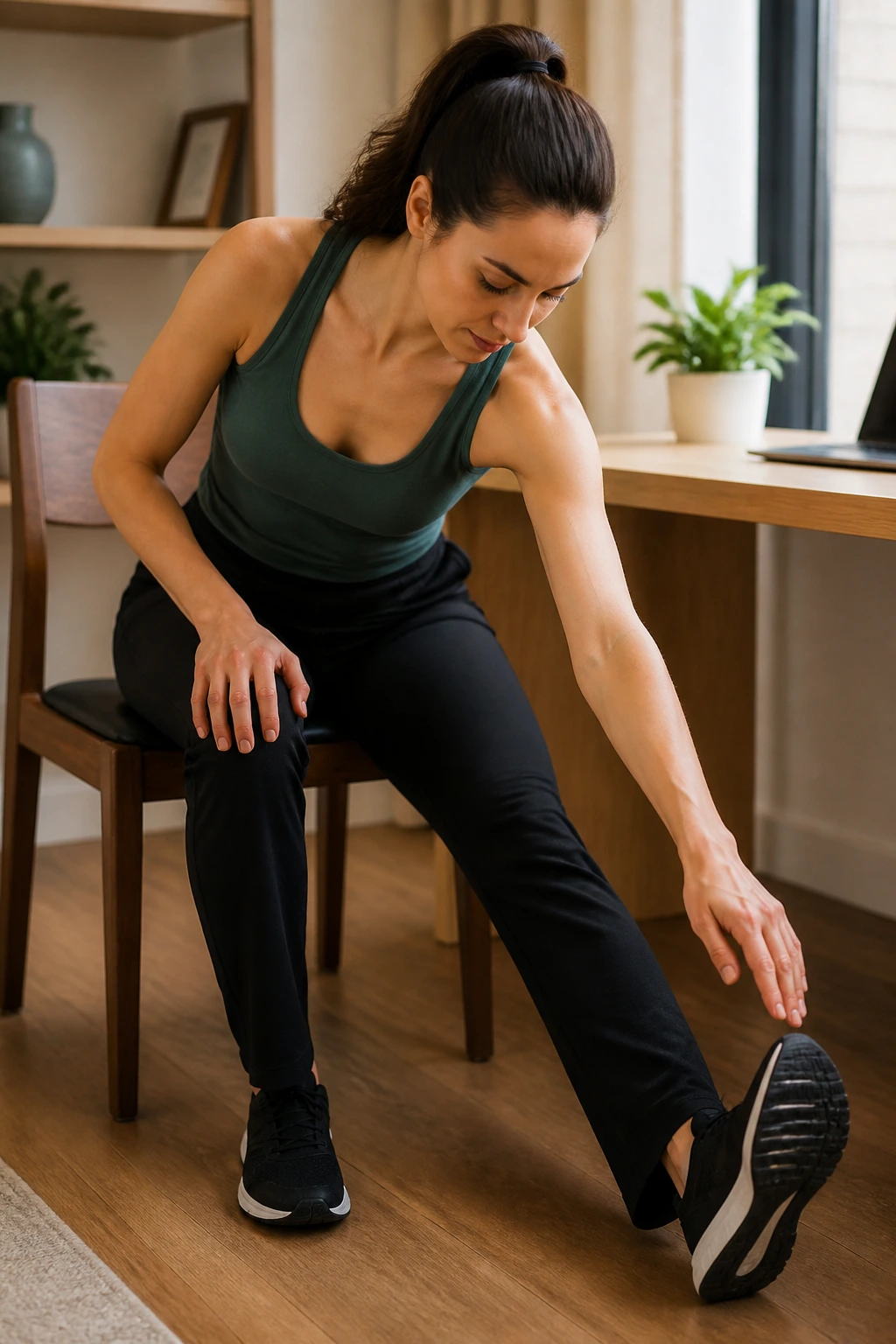
You do not need a gym to work on your flexibility. This move can be done at your desk or while watching television.
Sit on the edge of a sturdy chair. Extend your right leg out straight, heel on the floor, toes pointing up. Keep your left knee bent at 90 degrees. Sit tall. Hinge at your hips and reach toward your right toes. Because you are sitting, you are already slightly elevated, which makes the reach easier. This is a great maintenance stretch for the middle of the day. If you spend hours at a desk, your hamstrings shorten because they are in a bent position all day. This move helps reverse that “shortened” position quickly.
16. Downward-Facing Dog with Pedal
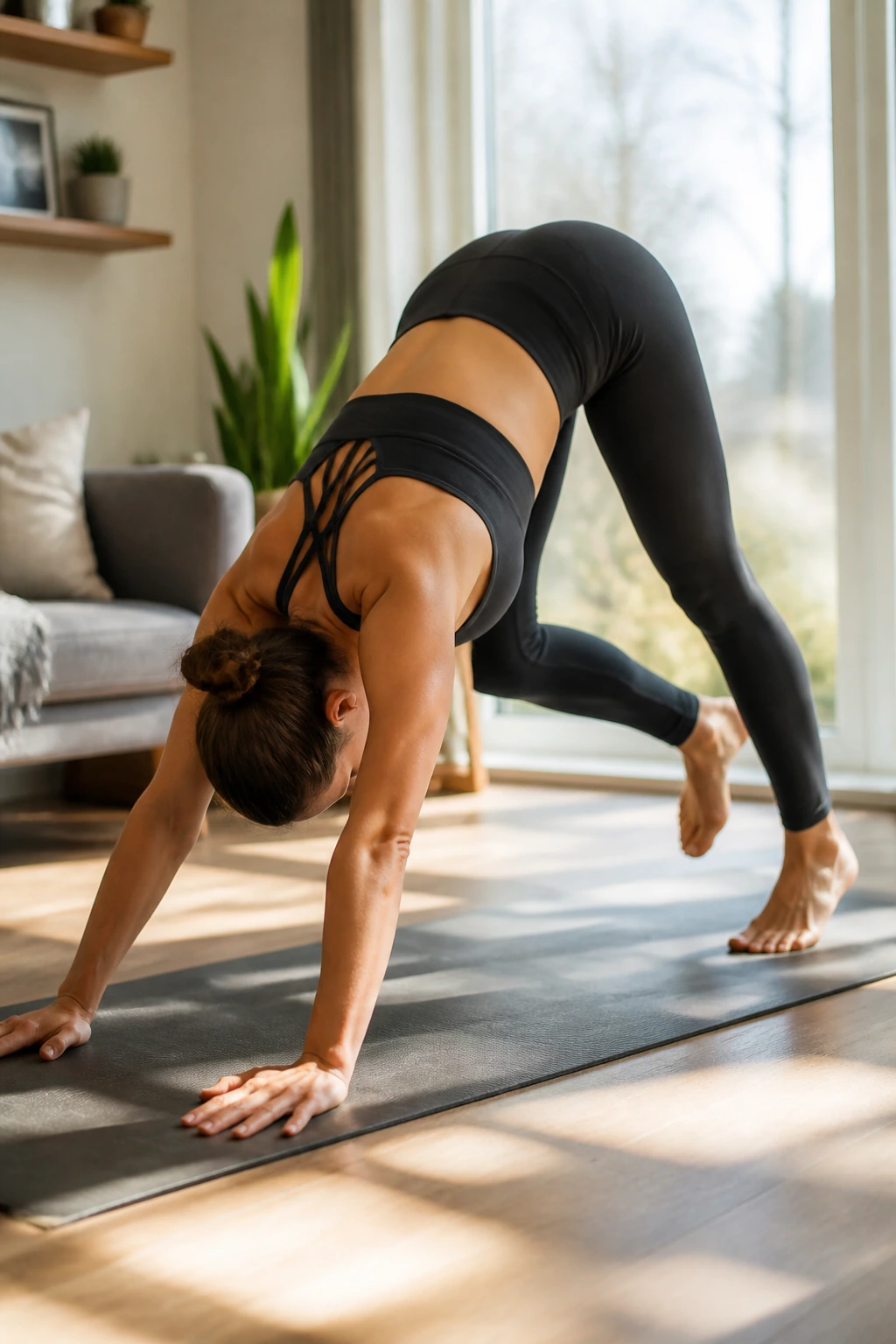
The “pedal” is the key here. Many people hold a static Downward Dog, which is fine, but it doesn’t give you the range of motion that pedaling does.
Get into your Downward Dog position: hands and feet on the floor, hips high. Now, bend your right knee deeply and press your left heel toward the floor. Hold for two seconds. Switch: bend your left knee, press your right heel down. The press of the heel is what triggers the hamstring stretch. By pedaling, you are isolating one leg at a time, allowing you to focus your attention entirely on the tension in that specific limb. It turns a general posture into a targeted therapeutic movement.
17. Pyramid Pose
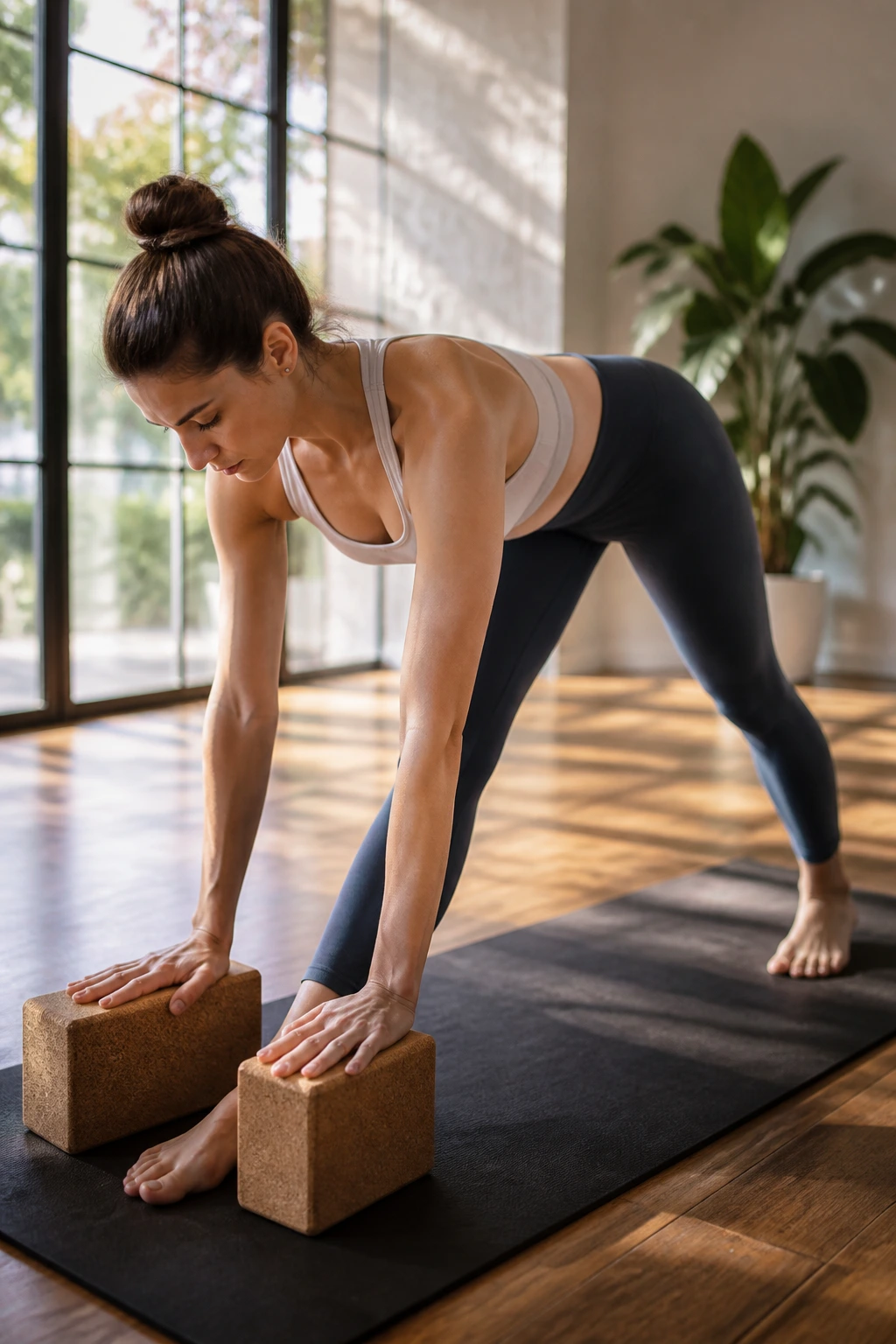
Pyramid Pose is arguably the gold standard for intense hamstring stretching. It is essentially a standing split-leg forward fold.
Step your right foot forward about three feet and your left foot back. Turn your left foot slightly outward, but keep your hips square to the front. This is the hardest part—keeping the hips square. Place your hands on blocks or your hips. Hinge forward over the right leg. Keep the right knee micro-bent. You will feel this one immediately. It is intense because both legs are straight and weight-bearing. Hold for five breaths, focusing on relaxing the jaw and shoulders. If you are holding your breath, your muscles will naturally tighten to protect you. Breathe into it.
18. Partner-Assisted Hamstring Stretch
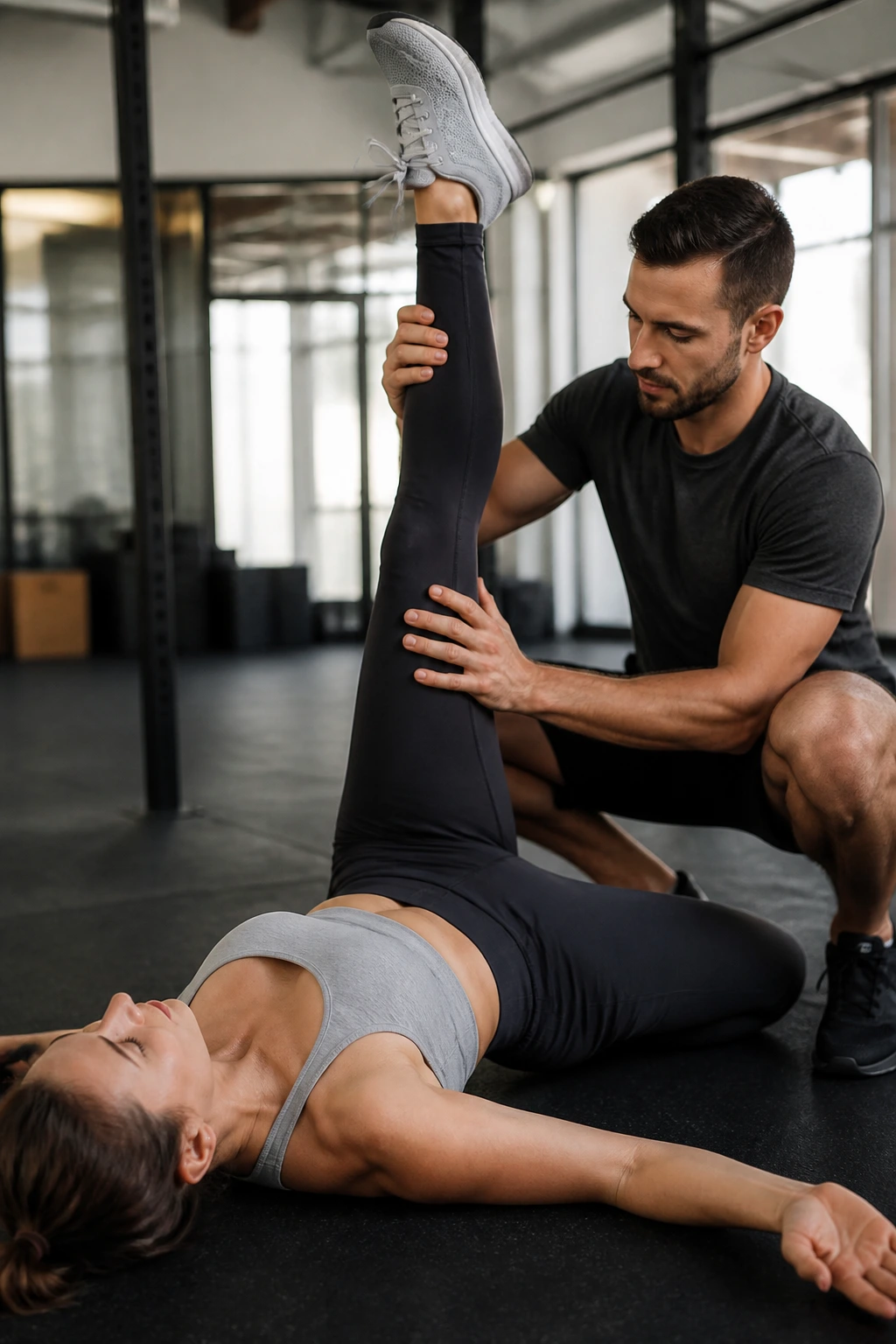
If you have a willing partner, this is one of the most effective ways to go deep. It requires trust, so be sure you communicate clearly.
Lie on your back. Lift your right leg toward the ceiling. Your partner stands beside you. They place your right foot against their shoulder or hold your leg just above the knee (never on the joint). They slowly lean forward, gently pushing your leg back. You must keep your other leg flat on the floor. If the person stretching you pushes too hard, give them a verbal signal immediately. This shouldn’t be painful. It should be a strong, deliberate sensation of lengthening. Because they are providing the force, you can focus 100% on relaxing the target muscle.
19. The Pillow-Supported Reclined Stretch
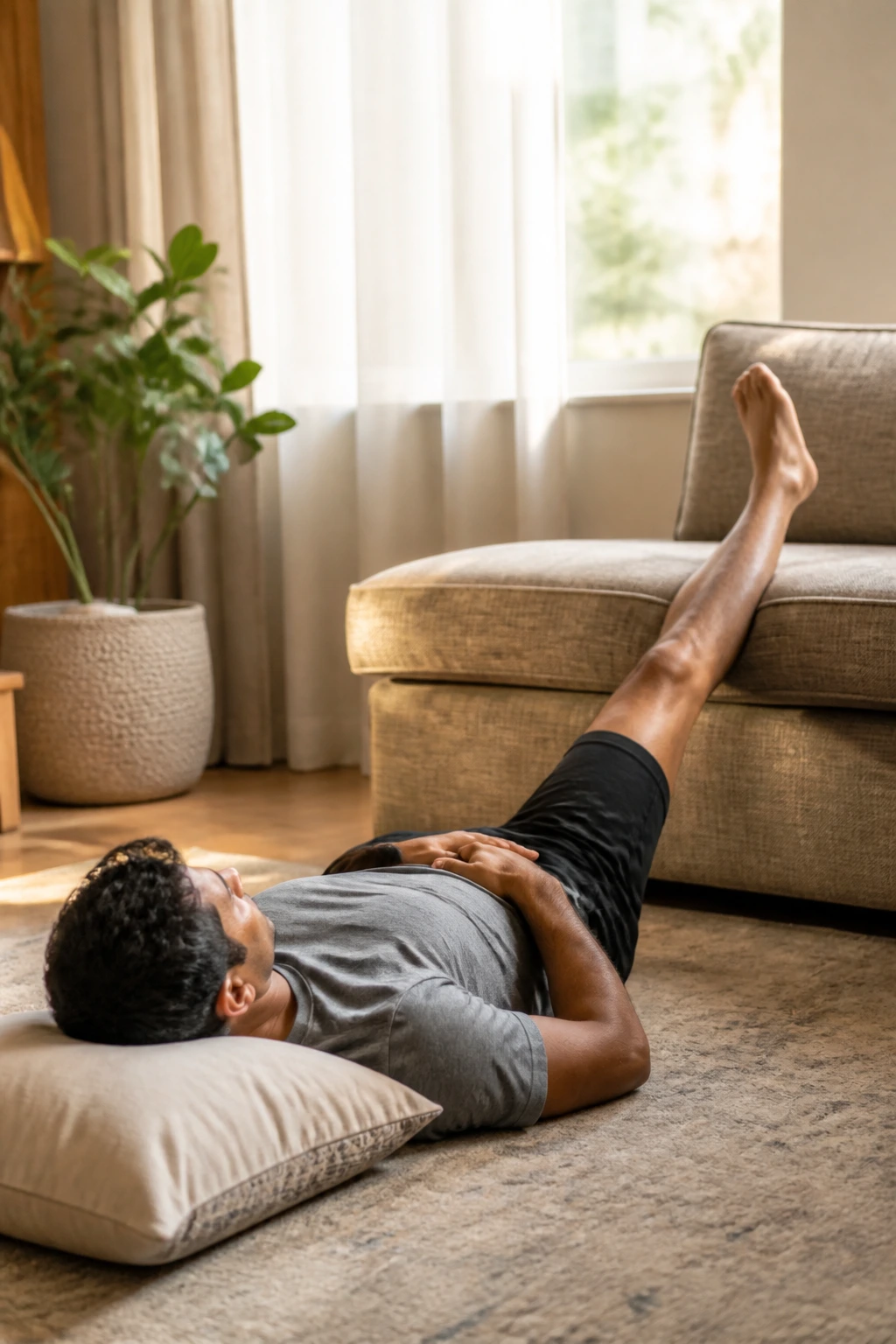
This is the ultimate “lazy” stretch. It is restorative, meaning it is designed to calm the nervous system while slowly opening the tissue.
Lie on your back near a couch or a sturdy low table. Lift your right leg and rest your heel on the edge of the couch. You can put a pillow under your head for comfort. Your left leg can be bent or straight, whatever feels good. Because your leg is supported, you can just lie there. Your hamstrings will slowly “melt” over time. This isn’t for an intense, muscular stretch; it’s for long-term tissue lengthening. It is perfect for right before bed. It helps lower your heart rate and signals to your body that it is safe to release tension.
20. Standing Split (Beginner Variation)
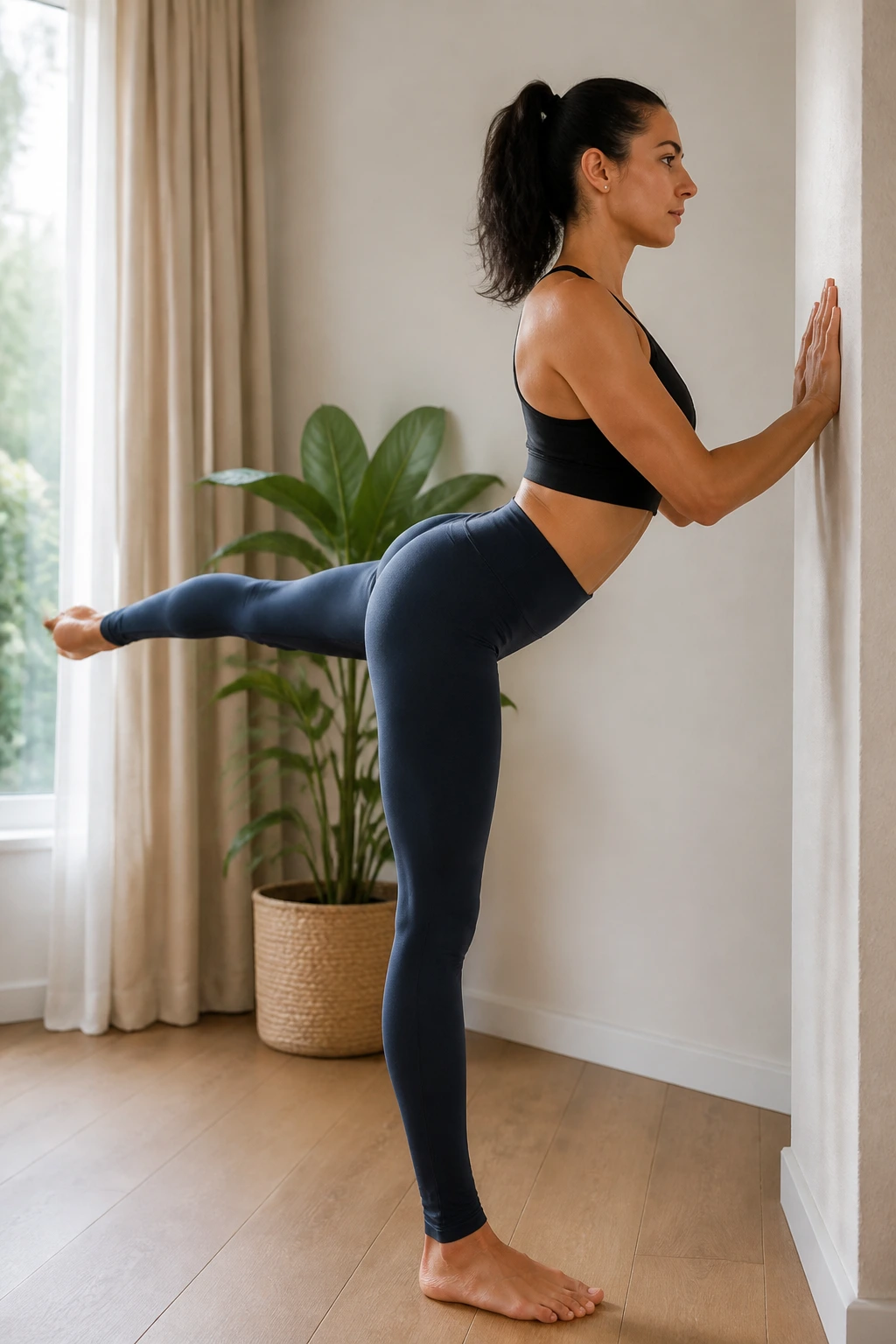
Don’t let the name intimidate you. You don’t need to do the splits. This is about balance and focused extension.
Stand in front of a wall or a sturdy chair. Hinge forward at the hips, placing your hands on the wall or the back of the chair for support. Lift your right leg behind you, just a few inches. Now, engage your glute and squeeze the back of the leg. Slowly raise the leg higher, but keep your hips square to the floor. Do not open your hip to the side. By keeping the hips square, you maximize the stretch in the standing leg’s hamstring. It’s an active stretch that builds strength while improving flexibility. It is one of the best ways to train your muscles to be long and capable under load.
Final Thoughts
Flexibility is a funny thing. You can’t force it, but you can definitely encourage it. If you try to power through these stretches, your body will naturally tighten up to prevent injury—it is a built-in protective reflex. You are fighting against your own biology. Instead, approach your practice with a sense of curiosity. Which one of these stretches feels “right” today? Which one feels like it is hitting a spot you didn’t even know was tight?
Forget about the metrics of how low you can go. Stop worrying about whether your palms touch the floor. That is just a side effect of the practice, not the goal. The goal is to create a body that moves easily, without that nagging pull at the back of the knee. Choose two or three of these movements, perform them slowly, breathe deeply, and be patient. Consistency is the only secret that actually works. Over time, you will find that the floor feels a little bit closer, and those daily movements—tying shoes, picking up pens—don’t come with that sharp, unwelcome reminder of how tight your hamstrings are.
