



A gym can be loud and busy and still produce almost nothing if the exercise selection is weak. The best exercises to build muscle are the ones that let you load the body hard, repeat the movement with control, and make a little more progress over time without beating yourself into the floor.
That sounds simple. It is simple, but not easy.
Muscle growth — hypertrophy, if you want the technical word — responds to tension, effort, and enough recovery to do the work again. Some movements give you a lot of that in one shot: squats, presses, rows, hinges, carries. Others are more specialized, which is fine, but they should support the main lifts rather than crowd them out.
All levels matter here. A beginner needs movements that teach good positions and forgive small mistakes. An intermediate lifter needs exercises that can keep growing with added load, better range of motion, and more honest effort. An advanced lifter needs variation, because the body gets stubborn when it has seen the same pattern for months on end. The trick is not finding magical moves. It is picking the ones that still work when you get stronger.
1. Back Squats for Thick Legs and Serious Total-Body Loading
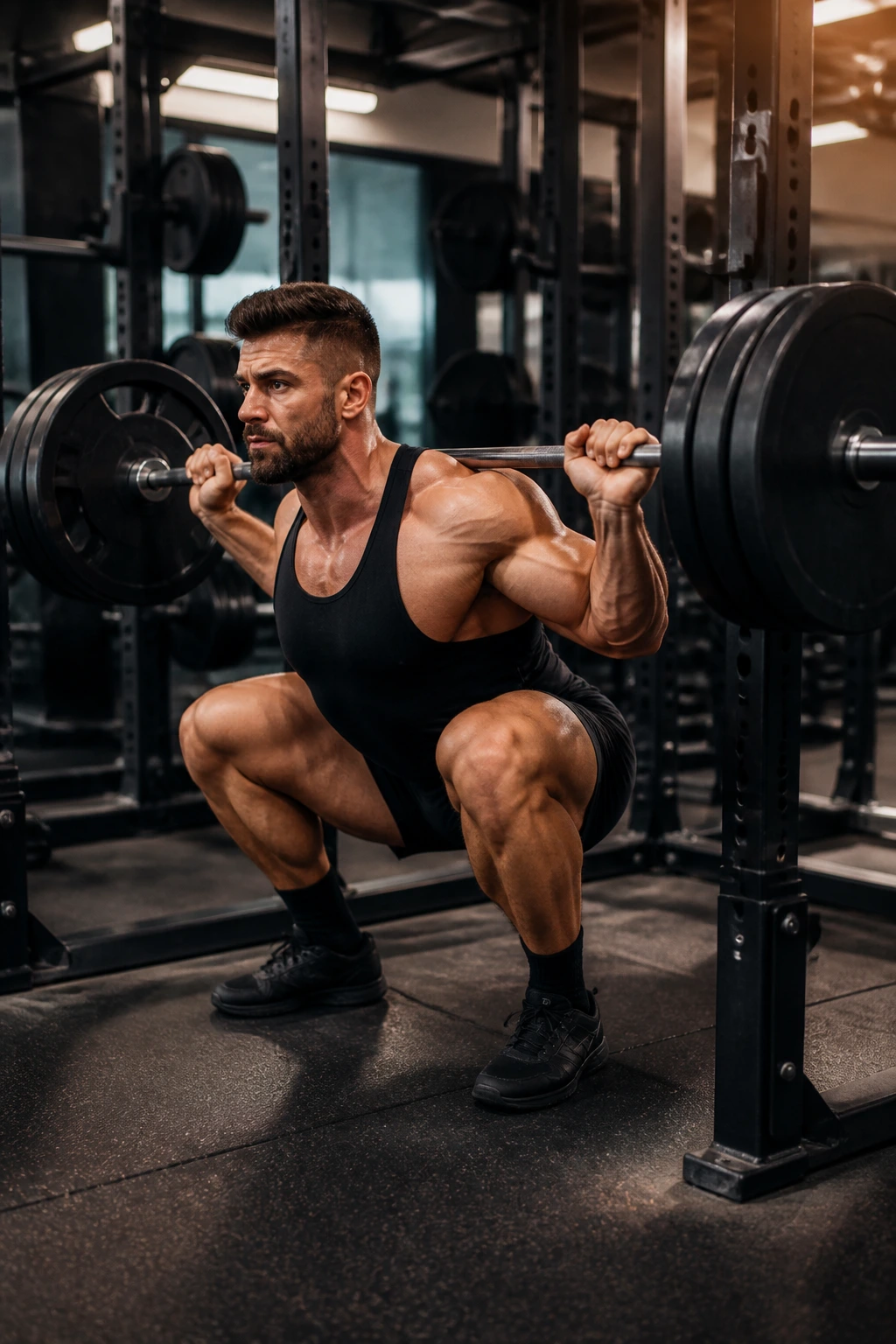
The back squat earns its place because it loads more than your legs. Your trunk braces, your hips drive, your upper back holds the bar steady, and your quads and glutes take the brunt of the work. Done well, it teaches you how to create tension from the floor up.
I like the back squat best when the goal is plain old size. Three to five hard sets of 5 to 8 reps is a sweet spot for most lifters, though some people grow well a little higher. Stay controlled on the way down. Stand up like you mean it.
A lot of people rush the setup and then wonder why the bar feels shaky. Don’t. Take a breath into your belly, lock your ribs down, and keep the bar over mid-foot. If your heels peel up or your chest dumps forward, the weight is probably too heavy or your stance needs work.
What to watch for
- Knees that cave inward on the way up.
- A bounce off the bottom that turns into a dive bomb.
- Bar position that makes your wrists angry for no reason.
Best beginner move: start with a goblet squat first, then move to a light barbell. The pattern matters more than the load at the start.
2. Goblet Squats for Easy Form and Honest Depth
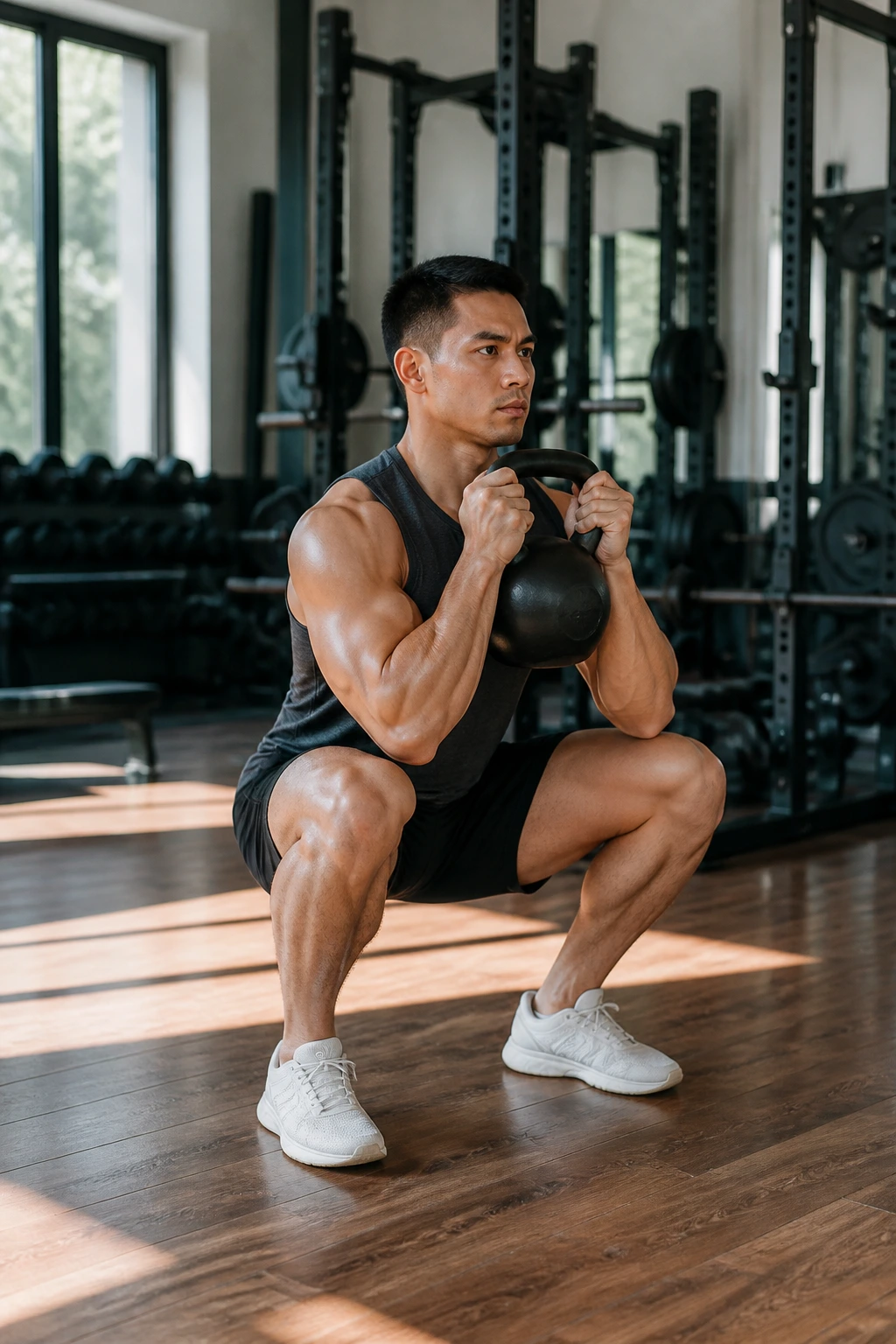
Why does a goblet squat show up on a muscle-building list with barbell lifts? Because it teaches a clean squat fast. Holding the weight in front of your chest acts like a counterbalance, which makes it easier to sit between your hips and keep your torso upright.
That upright position is gold for beginners. It helps you learn depth, bracing, and foot pressure without a bar on your back. I also like it for lifters who want extra quad work but don’t want to grind through heavy spinal loading every session.
If you want to make goblet squats harder, use a heavier dumbbell or kettlebell and slow the lowering phase to 3 seconds. Pausing for 1 second at the bottom works too, and it will expose sloppy positions in a hurry. You’ll feel it in the quads first, then the glutes, then maybe your lungs.
How to use it
- Great as a warm-up before back squats.
- Great as your main leg lift if you train at home.
- Great for 3 to 4 sets of 8 to 12 reps.
One thing to remember: once the weight gets too awkward to hold in front of your chest, it’s time to graduate. That’s a good problem.
3. Romanian Deadlifts for Hamstrings That Actually Work
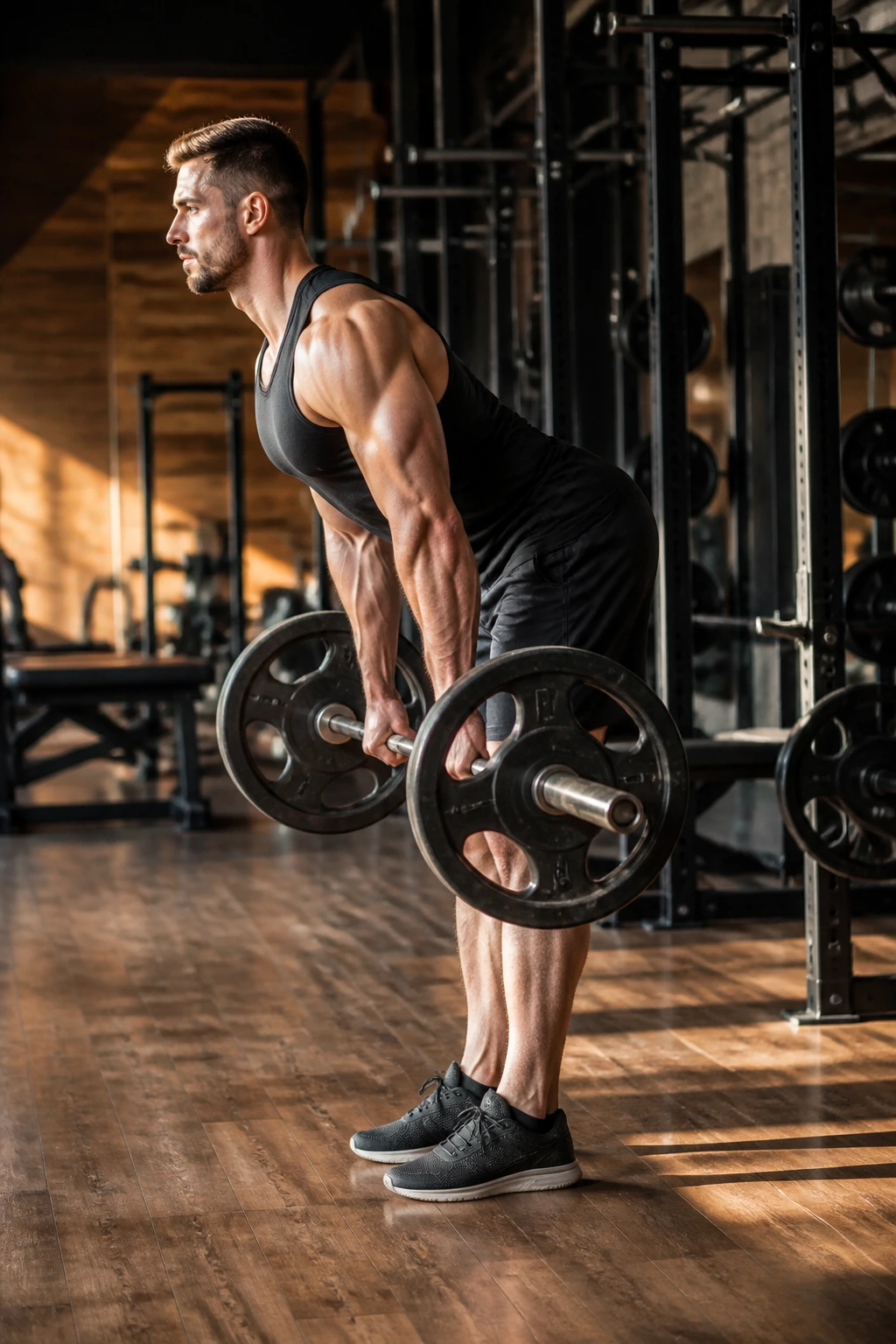
Romanian deadlifts are one of those exercises people half-do and then blame on genetics. That’s a shame, because when you get them right, they light up the hamstrings and glutes in a way that’s hard to fake.
The movement is a hinge, not a squat. Your knees stay slightly bent, your hips travel back, and the bar stays close to your legs the whole way. Stop the descent when your hamstrings hit a deep stretch and your back position starts to shift.
Heavy is not the point at first. Clean tension is. I’d rather see someone do 3 sets of 8 with a controlled 3-second lowering phase than yank a sloppy weight for 10 ugly reps. You’ll know it’s working when the back of your legs feels tight on the way up and slightly sore the next day.
Common mistakes
- Bending the knees too much and turning it into a squat.
- Letting the bar drift away from the thighs.
- Dropping too low and losing the hinge.
Useful cue: think “hips back, ribs down, bar close.” That one usually fixes more than three coaching cues stacked on top of each other.
4. Trap-Bar Deadlifts for Big Loads With Less Fuss
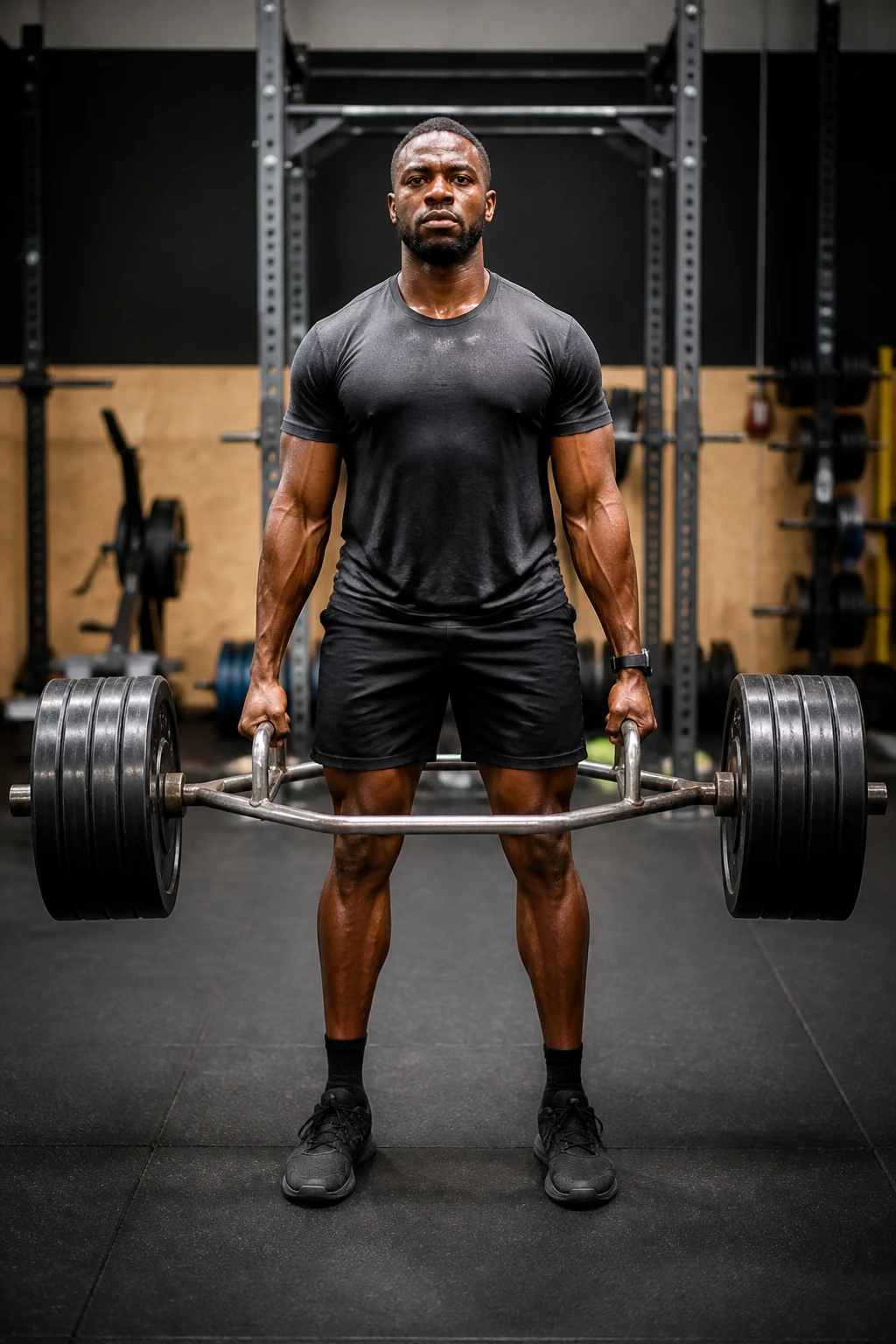
A trap bar makes deadlifts friendlier for a lot of people. The handles sit at your sides, so the load stays more centered and the start position feels more natural than a straight bar for many lifters.
That matters if you want muscle without turning every session into a lower-back fight. Trap-bar deadlifts still train the legs, glutes, and back hard, but the setup is usually easier to learn. They’re a smart pick for taller lifters, beginners who struggle with conventional deadlifts, and anyone who wants heavy loading with a slightly cleaner path.
Use a stance that lets your shins stay fairly vertical at the start. Brace hard, push the floor away, and stand tall without leaning back at the top. Three to five sets of 4 to 6 reps is a solid muscle-building lane, especially if the reps stay crisp.
Who benefits most
- Beginners who need a more forgiving pull.
- Lifters with cranky lower backs.
- Anyone who likes heavy work without a lot of technical drama.
The trap bar is not magic. But it is a very practical tool, and practical tools tend to get used more often.
5. Bench Press for Chest, Triceps, and Front Delts
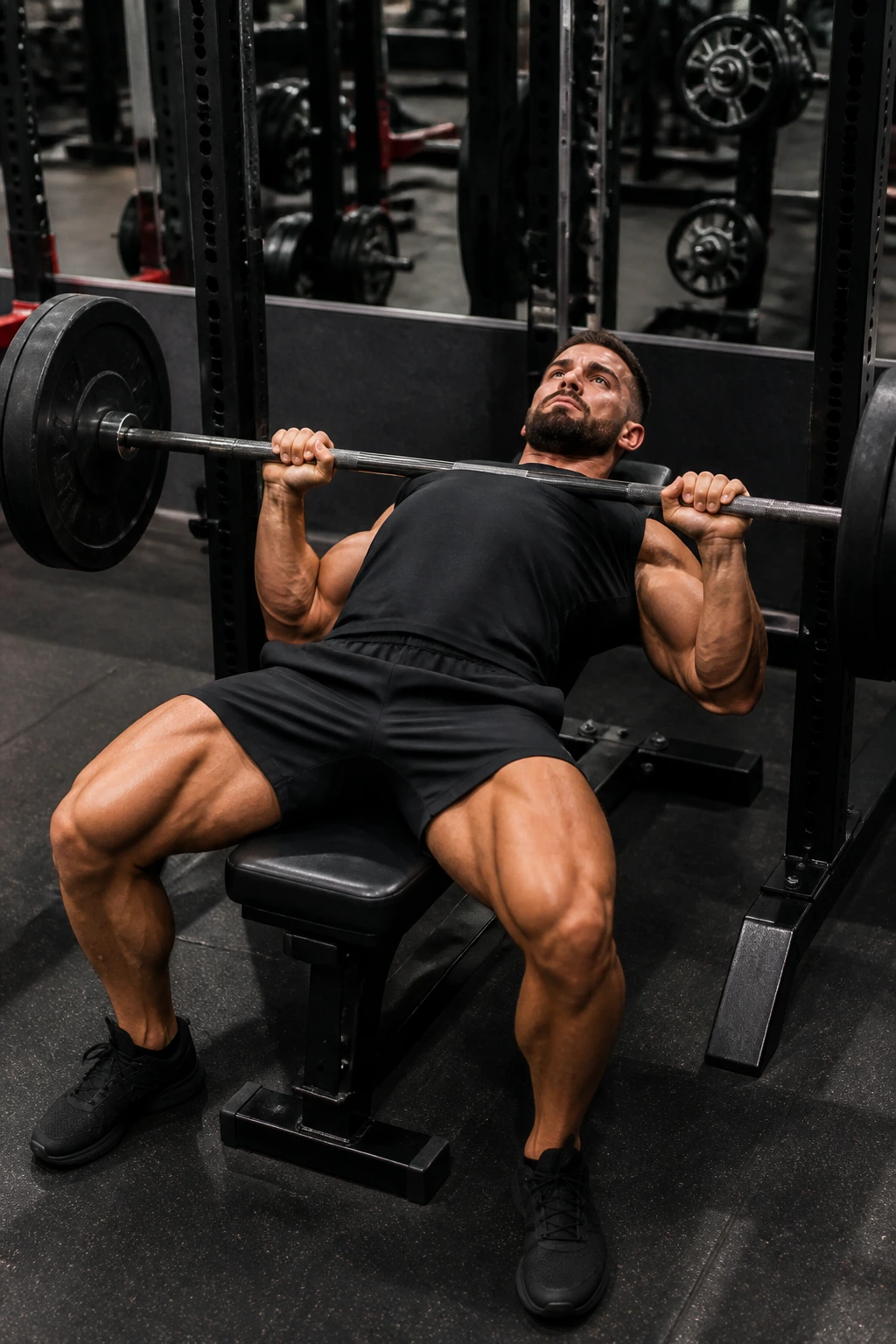
The bench press gets talked about like it’s only for chest. That’s lazy. A good bench press builds the chest, triceps, and front delts at the same time, which is one reason it stays in serious programs for years.
The real payoff comes from repeatable positions. Plant your feet, keep a little arch in the upper back, and bring the bar down to the lower chest or sternum area with control. Touch and press in a path that feels smooth, not shoved straight up and down like you’re trying to bend the bar in half.
A lot of lifters make the mistake of chasing a huge arch or bouncing the bar off the chest. Both are ugly habits. You want enough tightness to stay stable, not a circus act. If your shoulders feel beat up, dumbbell pressing can help while you clean up the barbell work.
What makes it grow
- Stable shoulder blades.
- A controlled pause or soft touch on the chest.
- Hard sets in the 5 to 8 rep range.
My opinion: if you only do one upper-body barbell lift, this is the one most people should learn well.
6. Push-Ups for Loadable Bodyweight Muscle
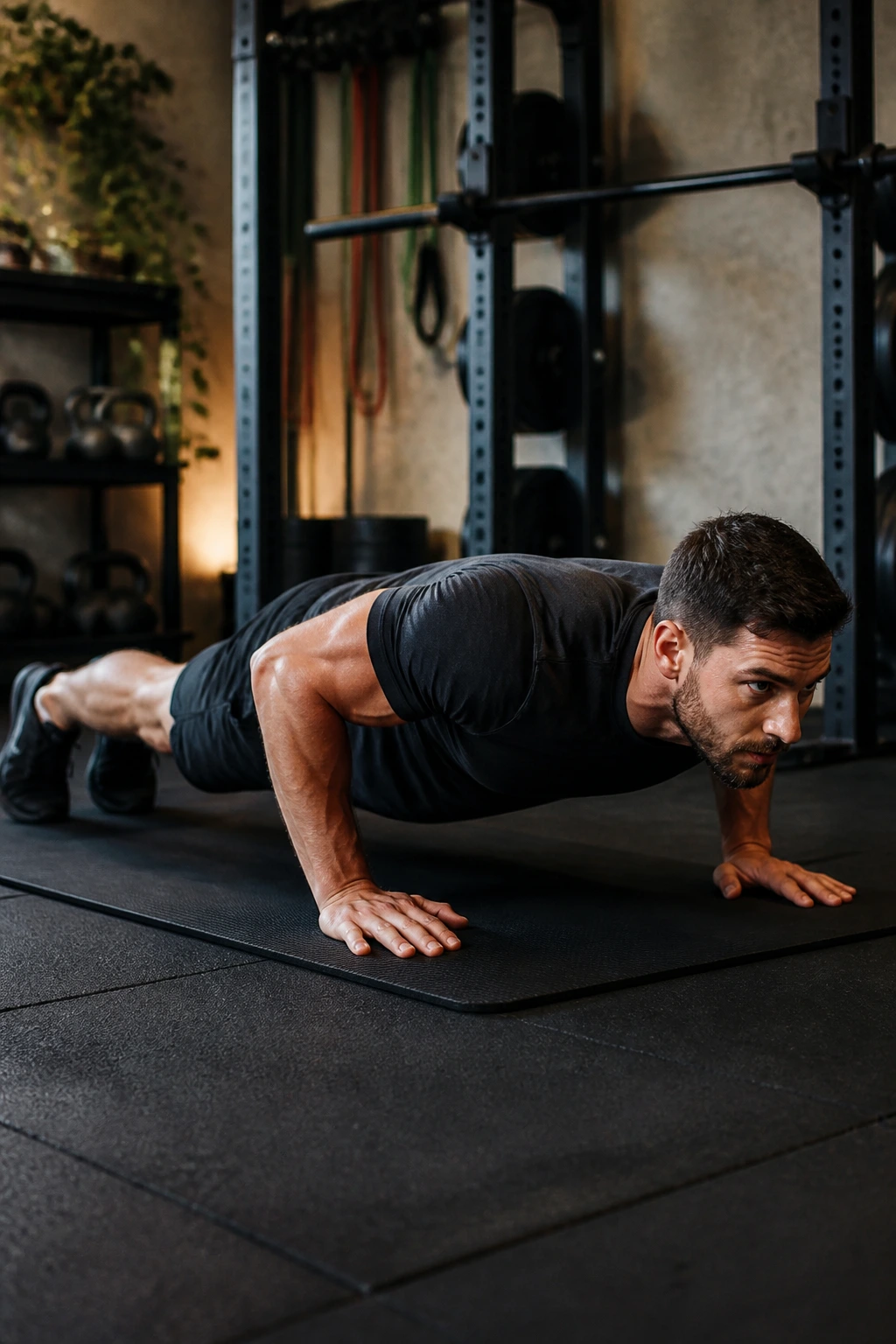
Push-ups get dismissed because they look simple. That is a mistake. A well-executed push-up can be brutally hard, especially when you slow the lowering phase, elevate the feet, or add a weighted vest.
The nice thing about push-ups is that they scale cleanly. Beginners can do hands-elevated push-ups on a bench or box. Stronger lifters can use rings, deficit handles, or plain old plates on the back if they have a spotter and good control. The chest, triceps, and serratus all get involved, and the core has to stay braced.
If your hips sag, the set is done. If your shoulders shrug toward your ears, the set is slipping too. Keep your body in one long line and let your elbows travel at about a 30- to 45-degree angle from the torso. That usually feels better on the shoulders than flaring them wide.
Best ways to progress
- Add a pause at the bottom.
- Raise your feet 6 to 18 inches.
- Use a vest or backpack with weight.
Push-ups are humble. They’re also one of the cleanest ways to get extra pressing volume without needing a rack.
7. Overhead Press for Shoulders That Don’t Fold
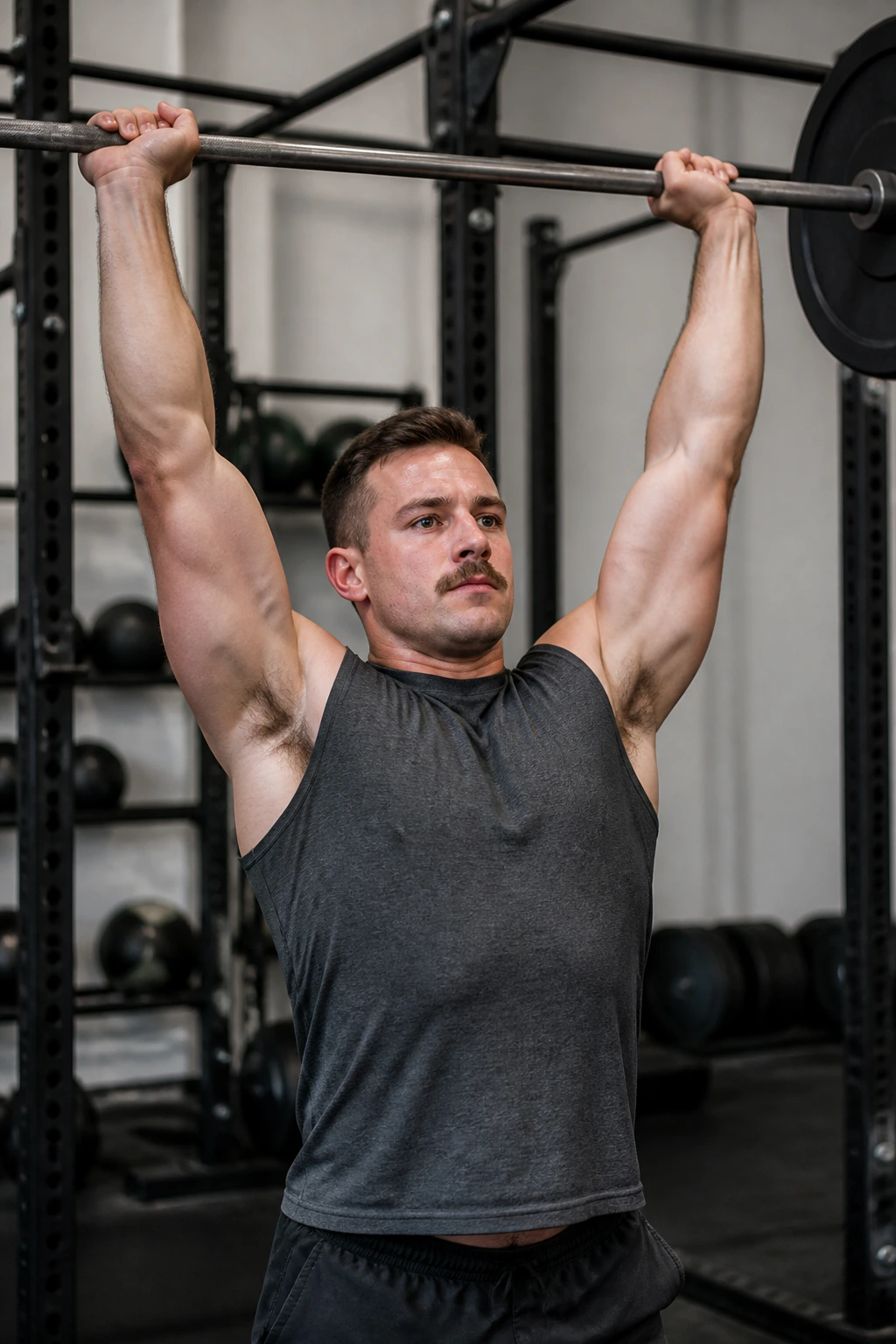
The overhead press is a blunt tool, and I mean that as praise. It forces you to move weight from the shoulders and triceps while keeping your torso honest. No bench, no back support, no place to hide.
Standing presses are the version I prefer for most lifters because they teach bracing and transfer well to other lifts. Keep the bar close to your face, move your head back slightly to clear the path, then finish with the bar stacked over the middle of the foot. That top position matters more than people think. If the bar ends up in front of you, the set got messy.
You do not need to grind huge loads here. Three to five sets of 4 to 8 reps can build plenty of size if the reps are hard and the movement stays tight. Dumbbells are a useful swap if shoulder mobility is limited or if one side keeps cheating more than the other.
A few useful cues
- Squeeze glutes before each rep.
- Keep ribs from flaring.
- Press in a straight line after the bar clears the nose.
Heavy overhead work feels plain and honest. That’s part of why I like it.
8. Dumbbell Incline Press for Upper-Chest Work
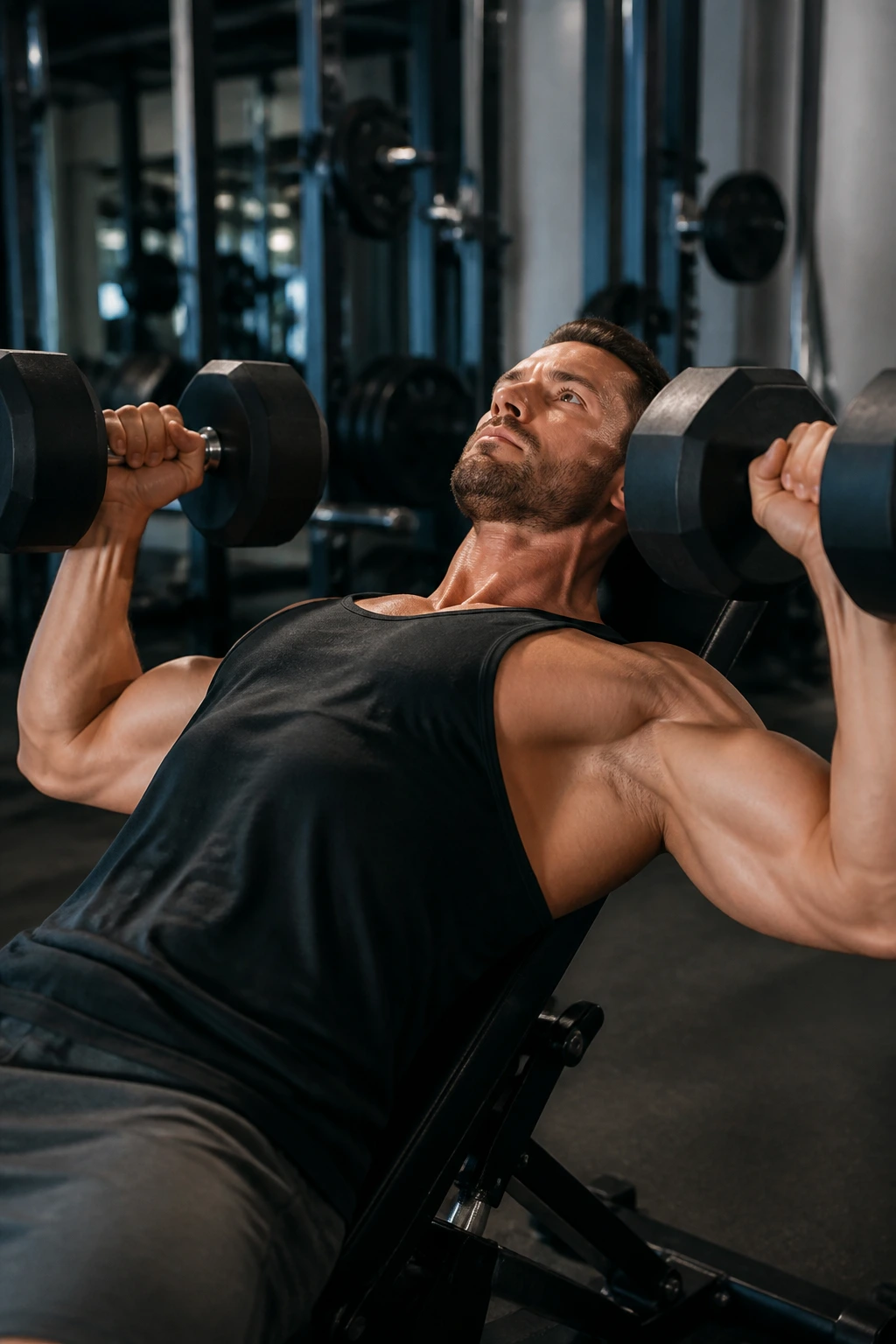
Flat pressing is useful. Incline pressing fills in a gap that flat bench often misses. A modest incline — around 15 to 30 degrees — shifts more work to the upper chest and front delts without turning the movement into a shoulder press.
Dumbbells give you a little more freedom than a barbell. Your hands can move in a natural path, and the bottom position usually feels friendlier on the shoulders. Lower the bells until you get a deep chest stretch, then press up without banging them together at the top. That little pause at the bottom can be sneaky-hard.
I like this lift for intermediate lifters who want more chest size without living on the flat bench. It also helps beginners learn how to press with control, since dumbbells punish sloppy balance fast. Six to 12 reps works well, though heavier work in the 5 to 8 range still has a place.
One small detail matters here: don’t set the bench too steep. Once it gets upright, the movement stops being a chest press and starts becoming a shoulder press with a bad disguise.
9. Pull-Ups for Lats, Upper Back, and Real Strength
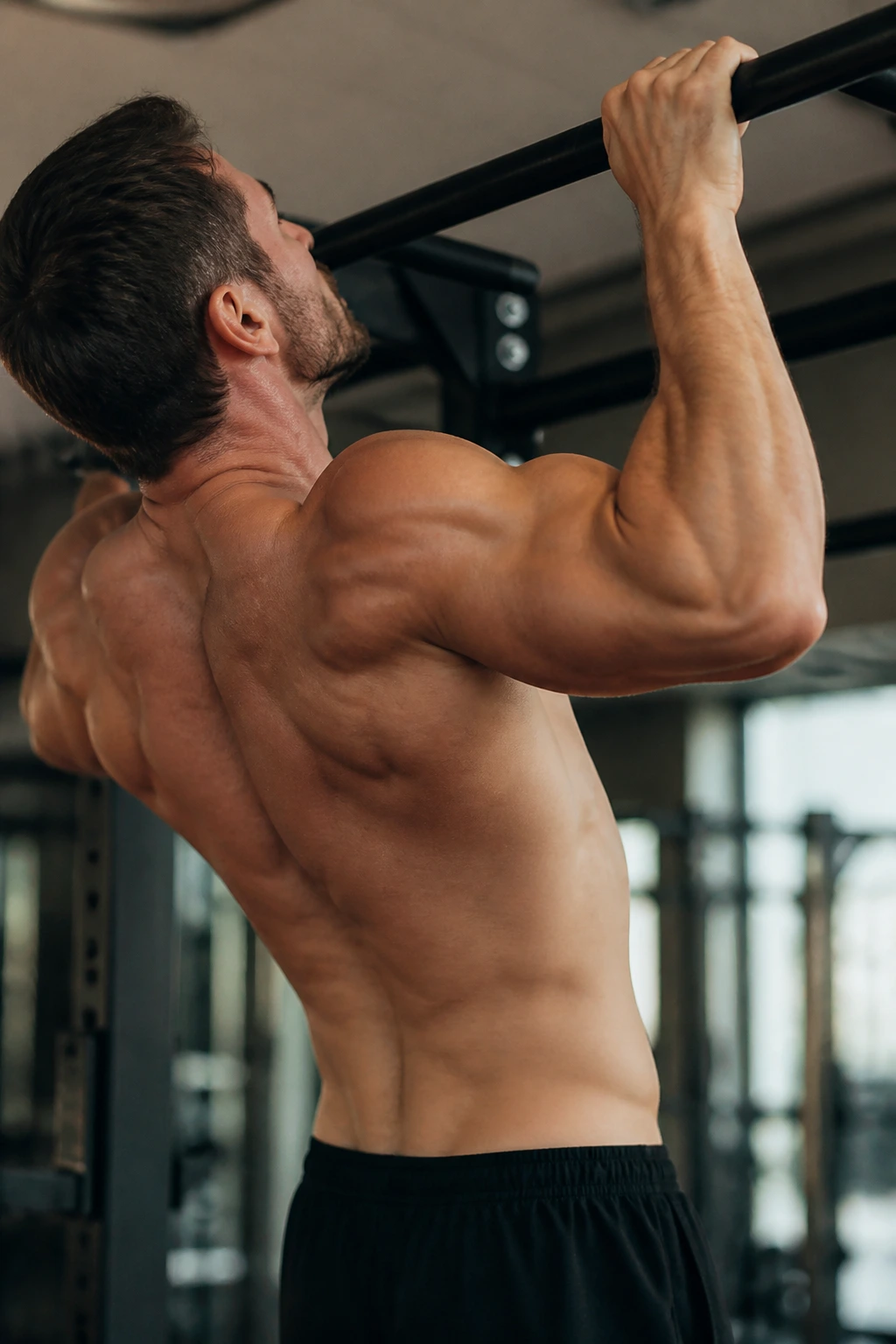
A pull-up tells the truth. If you can do clean reps, great. If you can’t, the bar doesn’t care.
The movement builds the lats, biceps, lower traps, and all the little muscles that keep your shoulder blades moving well. For beginners, assisted pull-ups, banded pull-ups, or eccentric-only reps are the entry point. For stronger lifters, adding load with a belt turns it into a serious muscle move.
Grip width matters less than people think. A moderate grip usually feels best for most bodies. Pull your chest toward the bar, keep the ribs from flaring wildly, and avoid turning every rep into a half-rep shrug. The descent should be controlled, not a drop.
How to make pull-ups work for you
- Start with 3 to 5 sets of as many clean reps as possible.
- Use assistance if you can’t hit 3 solid reps yet.
- Add a 2-second lower if bodyweight reps are easy.
Pull-ups are not beginner-proof, but they are beginner-friendly when you scale them properly. That’s the difference.
10. Lat Pulldowns for Back Volume Without the Guesswork
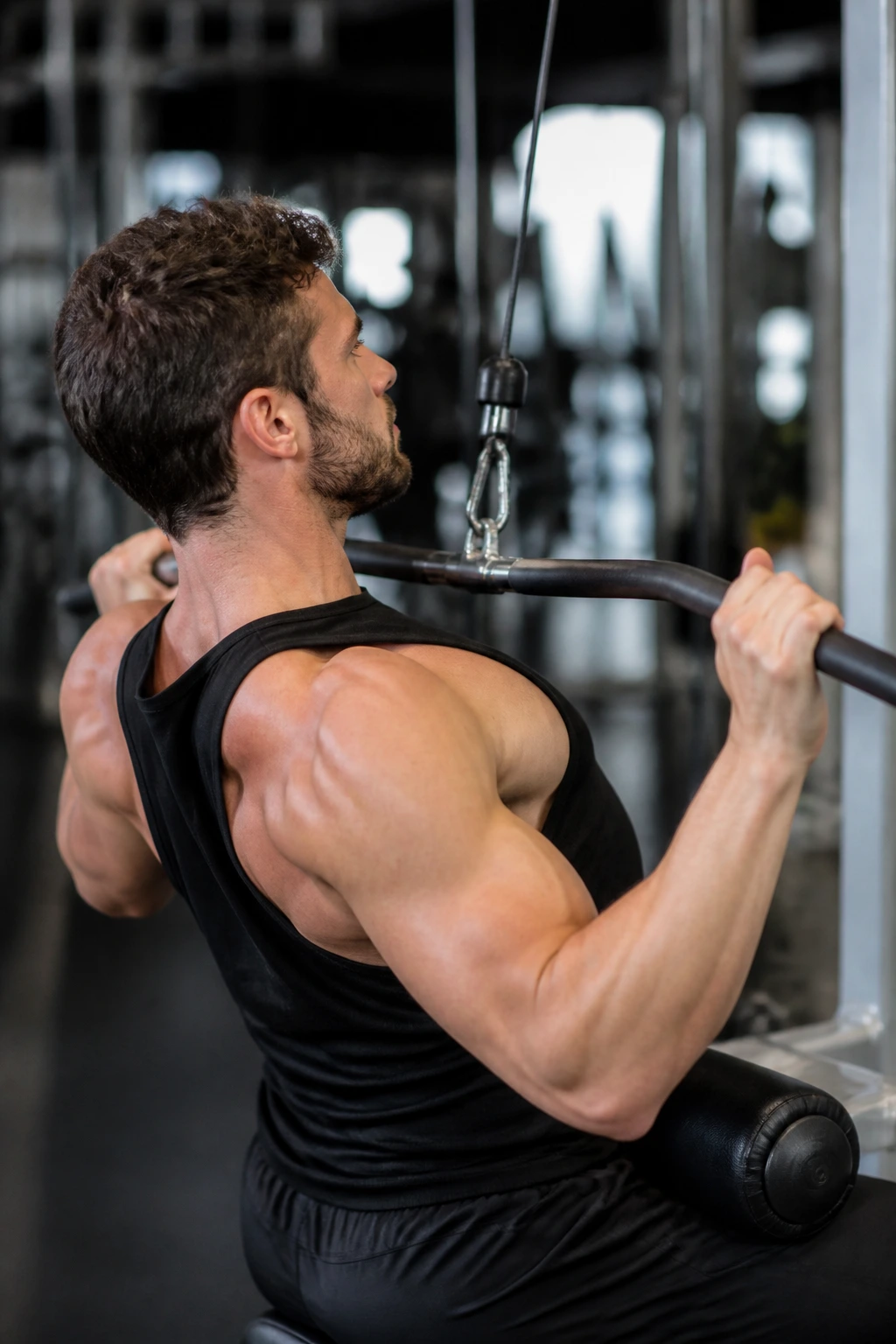
Lat pulldowns are the practical cousin of pull-ups. Same general muscle group, less bodyweight drama, more control over the load. That makes them useful when you want extra back volume without fatiguing your grip or turning the workout into a chin-up contest.
I like pulldowns because they let you focus on the squeeze. Sit tall, pin your thighs under the pad, and pull the bar to the upper chest while driving the elbows down and back. If you yank with your hands, the lats never get a fair shot. If you lean back too far, the movement turns into a sloppy row.
This is one of the best high-rep back builders in the room. Ten to 15 reps works well, and even 15 to 20 can make sense if the last few reps stay controlled. You can use a straight bar, neutral-grip handles, or a close V-bar depending on what feels best on your shoulders.
It’s not flashy. It works, though. That’s enough.
11. Barbell Rows for Thick Mid-Back Development
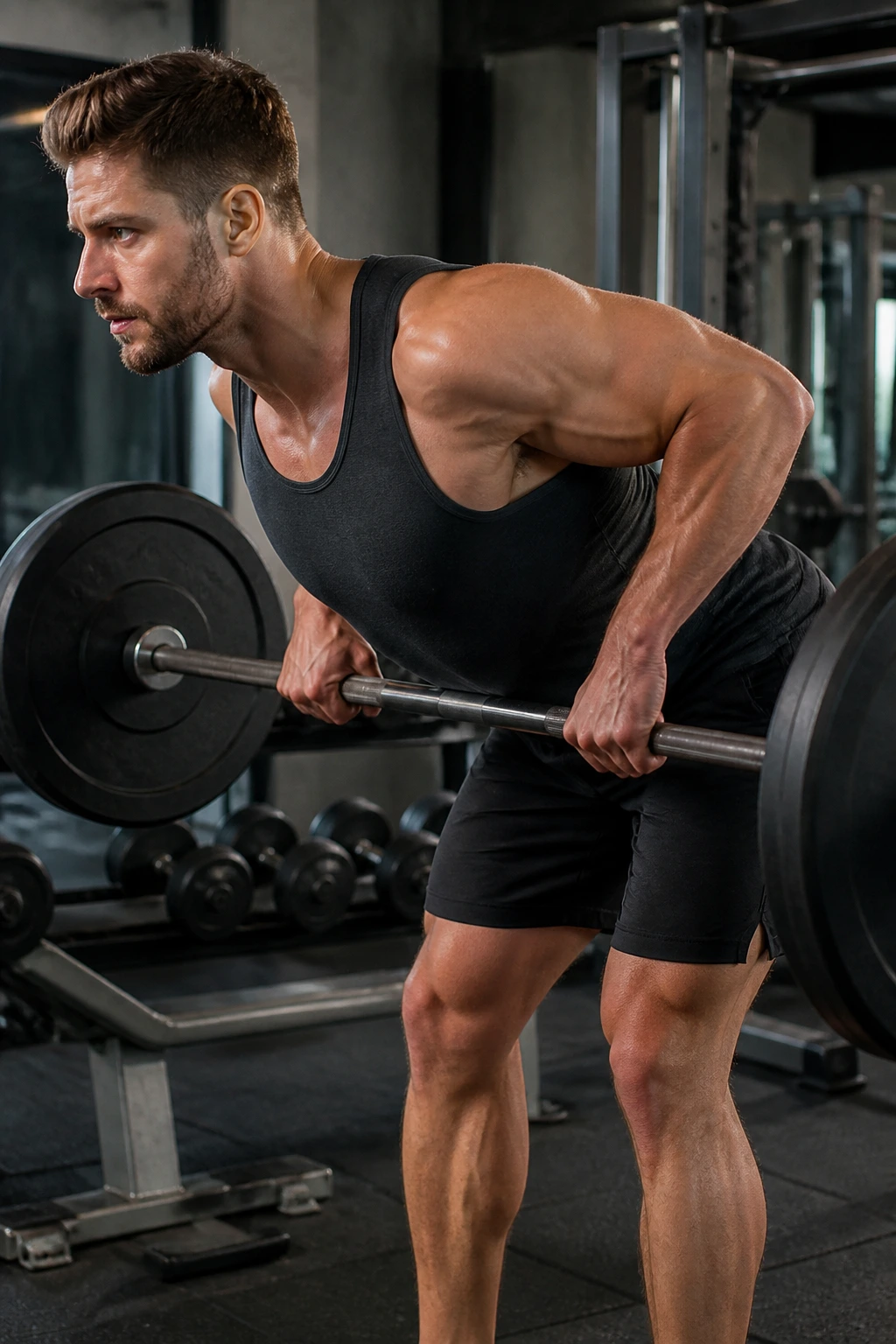
Barbell rows look simple until you try to keep your torso fixed under a real load. Then they get honest fast.
What makes them worth the effort is the amount of upper-back work you get from one movement. The lats, rhomboids, rear delts, and spinal erectors all have to do their part. I prefer a torso angle that stays around 30 to 45 degrees from the floor, though a little variation is fine if the bar path stays clean.
Keep these details tight
- Pull the bar toward the lower ribs or upper stomach.
- Brace before each rep.
- Do not turn the lift into a hip snap.
The biggest mistake is cheating so hard that the back barely works. A tiny bit of body English is normal on hard sets. Whole-body heaving is not. If your lower back is the thing failing first, use straps or switch to chest-supported rows for a while.
Barbell rows reward patience. They’re a bit boring, and that’s fine. Boring lifts often build the most useful muscle.
12. Chest-Supported Rows for Upper-Back Size Without Lower-Back Fatigue
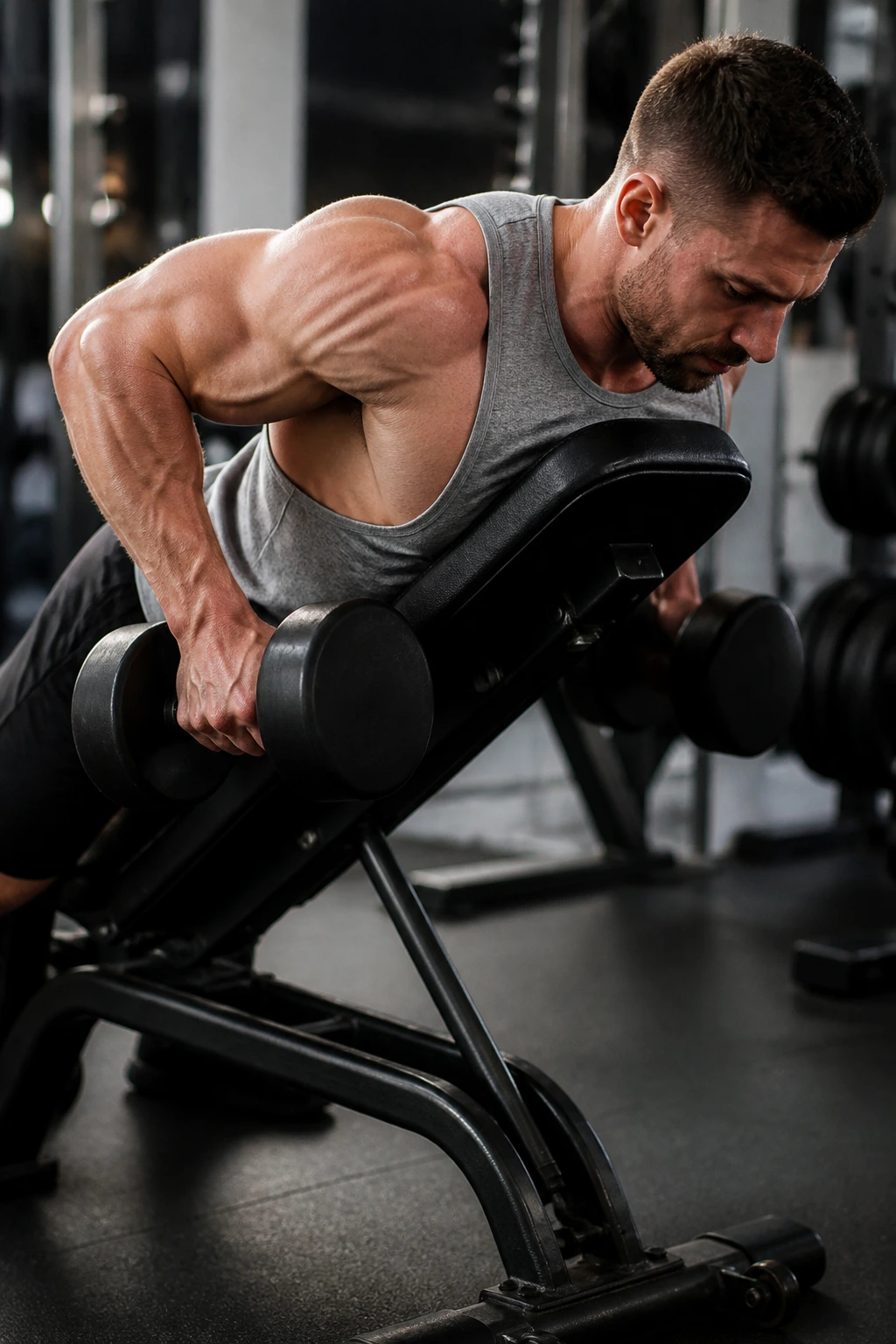
Sometimes the best row is the one that takes your lower back out of the argument. Chest-supported rows do exactly that.
Lying against an incline bench or machine pad lets you row hard without holding a hip hinge the whole time. That means more of your energy goes into the lats, rear delts, and mid-back, not into keeping your spine from getting tired. If your lower back is already cooked from deadlifts or squats, this is a smart choice.
The setup matters. Adjust the bench so your chest can stay planted while your arms move through a full range. Pull with the elbows, pause for a beat at the top, and lower until the shoulder blades fully stretch. Dumbbells, a T-bar machine, or a cable setup all work.
This is one of my favorite “high return, low drama” exercises.
If you want back size and you’re tired of your lower back quitting early, this is the row that stays in the program.
13. Bulgarian Split Squats for Quads, Glutes, and Balance
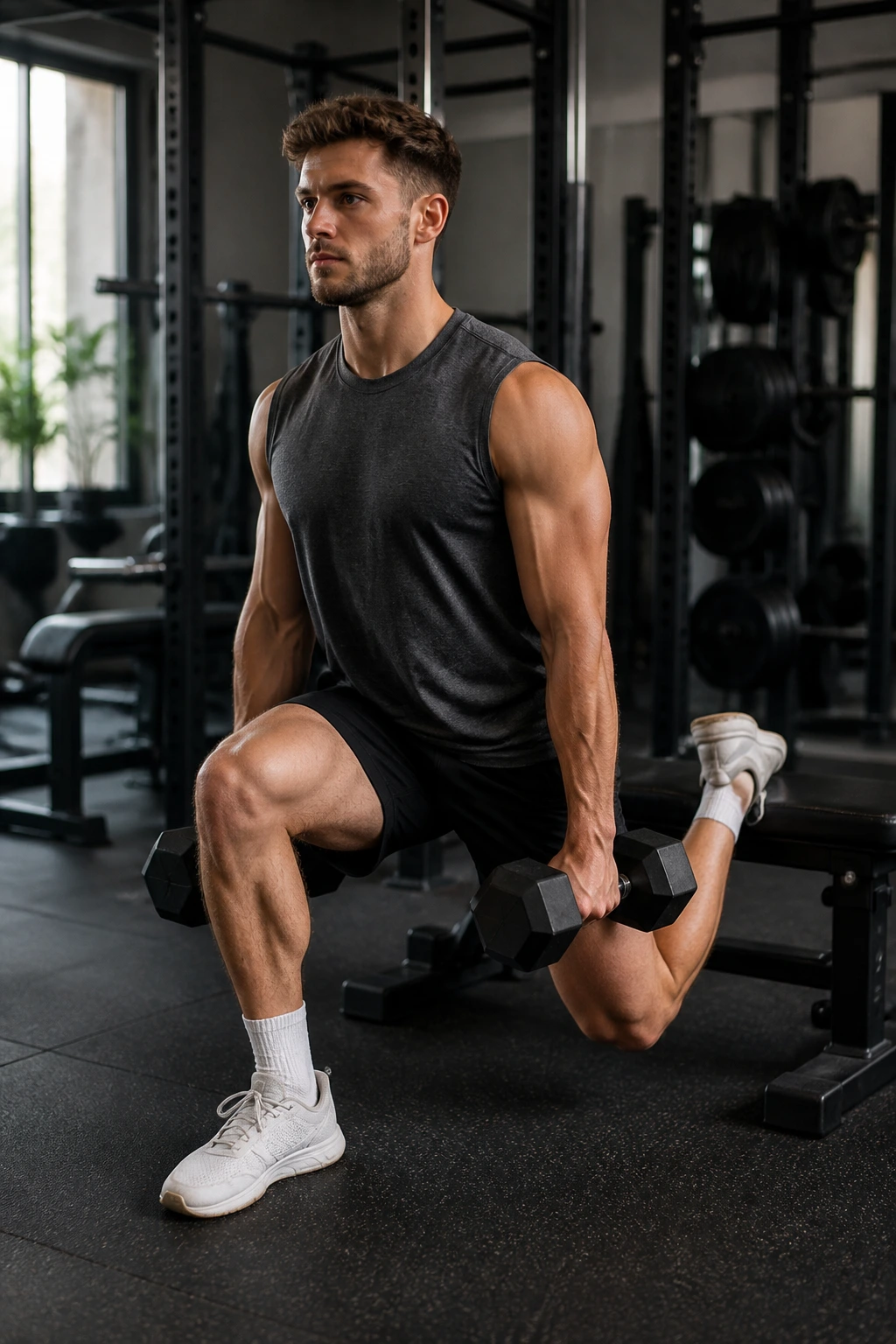
The first rep feels fine. The last rep feels like a small argument with gravity.
Bulgarian split squats are awkward in the best way. One foot stays forward, the back foot rests on a bench, and the front leg does most of the work. That setup hits the quads and glutes hard while also exposing side-to-side differences that bilateral lifts can hide.
Start with a short step if you want more quad emphasis. Use a slightly longer step if you want more glute work and a bit less knee travel. Keep the torso tall, drop under control, and let the front knee travel forward naturally instead of trying to freeze it in place. A front-foot-elevated version can make the range of motion even deeper, which is useful once the basic version feels easy.
Useful notes
- Hold dumbbells at your sides once bodyweight feels too light.
- Use a rack for balance if needed.
- Stop the set when the front foot starts slipping.
This exercise is one of the cleanest ways to add leg size without piling on more barbell volume. It earns every bit of its reputation.
14. Hip Thrusts for Glutes That Actually Extend the Hips
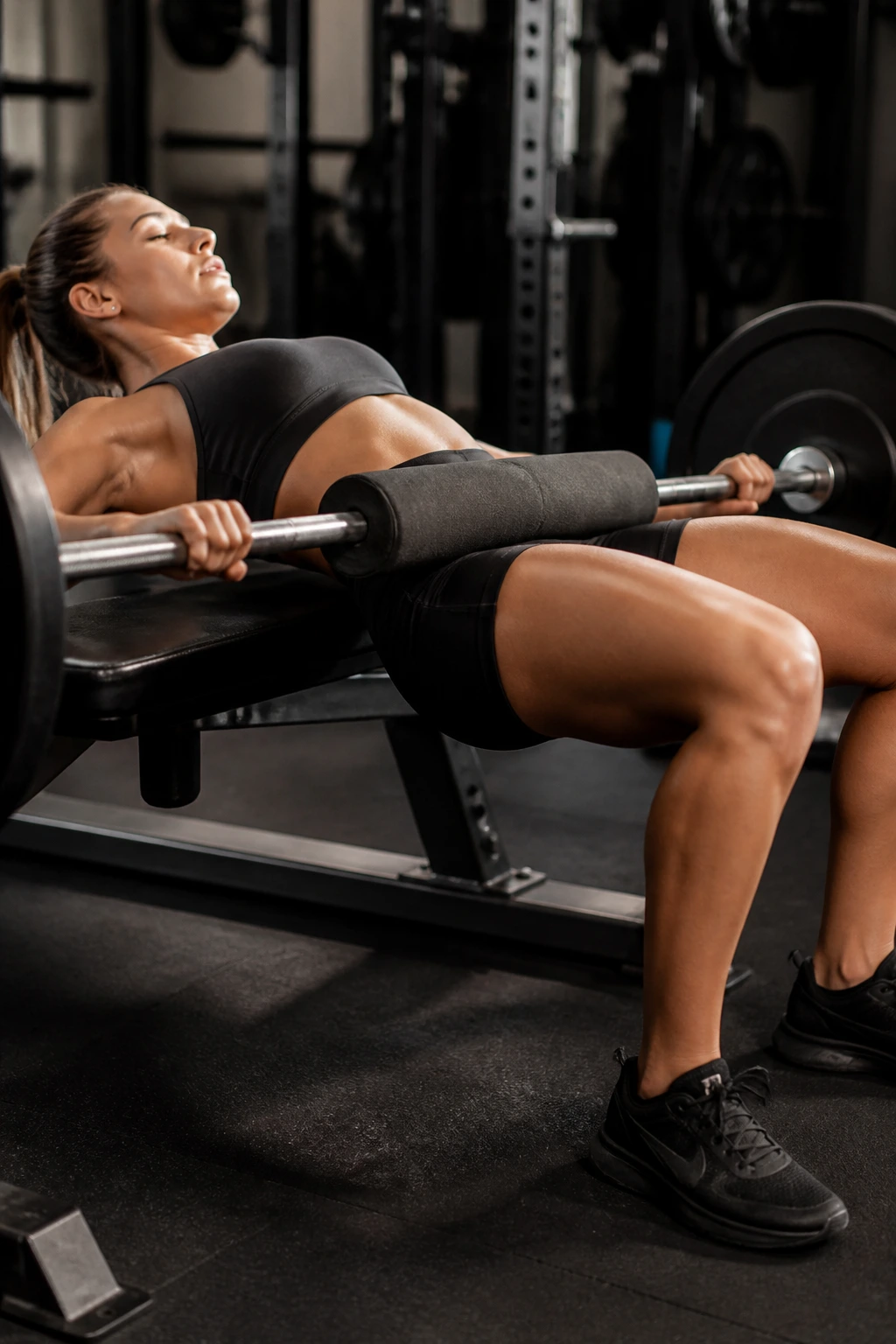
A lot of lifters say they want bigger glutes, then spend most of their time on half-hearted leg work. Hip thrusts fix that problem fast.
The movement is simple: upper back on a bench, feet planted, barbell or pad across the hips, then drive the hips up until the torso is roughly parallel to the floor. At the top, squeeze the glutes hard and avoid arching your lower back to fake the lockout. That last part matters. The lift is about hip extension, not spine extension.
I prefer hip thrusts for lifters who want glute size without a ton of spinal loading. They’re also handy when squats and deadlifts are already doing plenty, but the glutes still need direct work. Eight to 12 reps usually works well, though heavier sets of 5 to 8 can build too if your setup is solid.
Small setup details that matter
- Use a pad or folded towel if the bar digs into your hips.
- Keep your chin tucked slightly.
- Put your feet far enough forward that you feel the glutes, not your quads, doing all the work.
Glute work is rarely glamorous. Hip thrusts are one of the rare exceptions because they’re plain effective.
15. Lateral Raises for Wider Shoulders
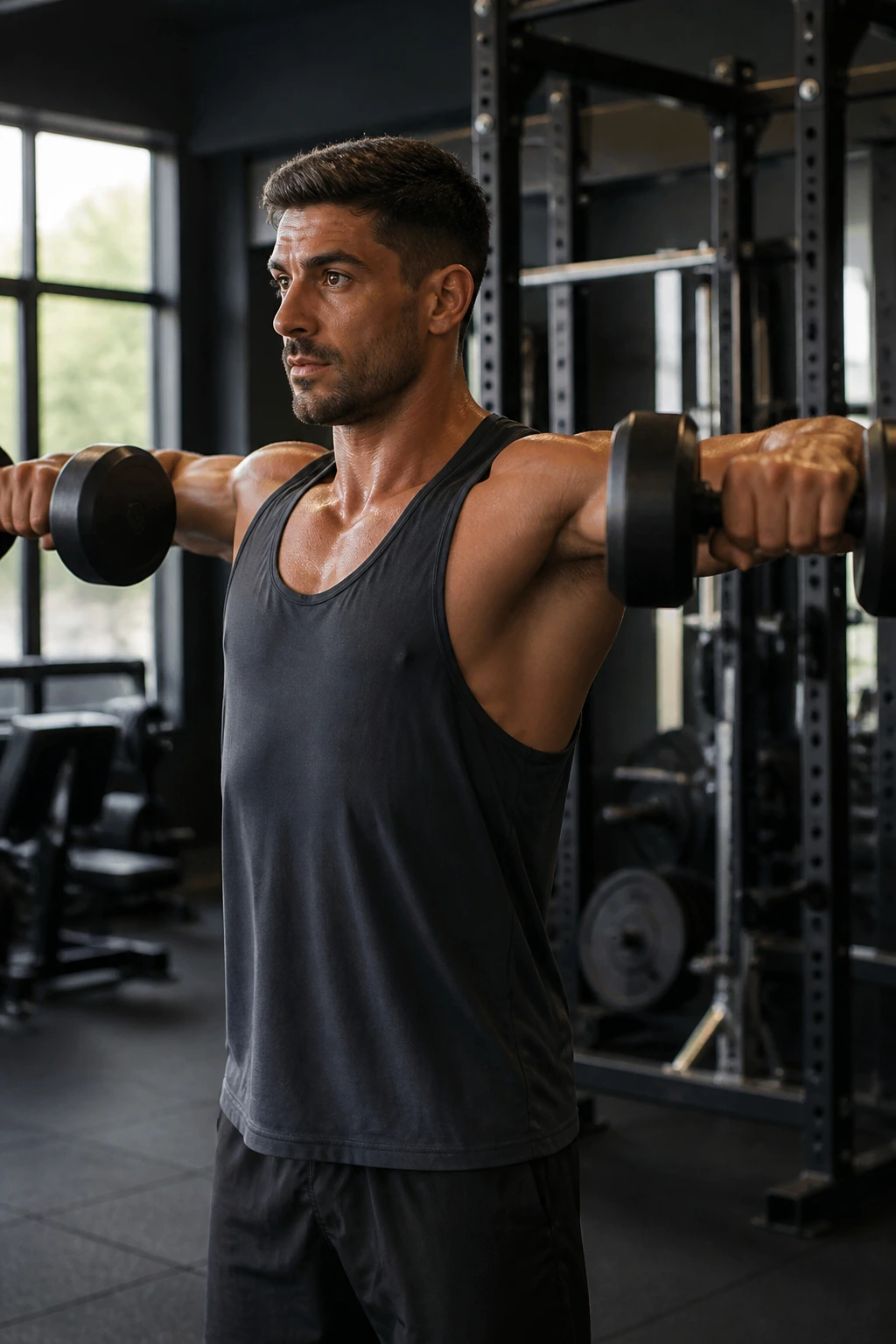
Shoulders look bigger from the side long before they look bigger from the front. That’s why lateral raises matter.
The side delts are small compared with the chest or legs, but they respond well to direct work. A dumbbell lateral raise is the classic version. Hold the weights slightly in front of your thighs, lead with the elbows, and raise until your upper arms are about shoulder height. Higher than that usually turns into trap shrugging.
Control is the whole game. If you swing the bells or use a weight that forces you to heave your torso, the side delts get less work and the joints get more irritation. I like 12 to 20 reps here, often with a lighter load than people expect. Burn is fine. Slop is not.
One detail most people miss: keep your wrists slightly below your elbows as you lift. That tiny angle helps keep tension where it belongs instead of letting the hands take over.
Lateral raises are not macho. They are useful. That is enough reason to keep them.
16. Biceps Curls for Arm Size and Elbow-Friendly Volume
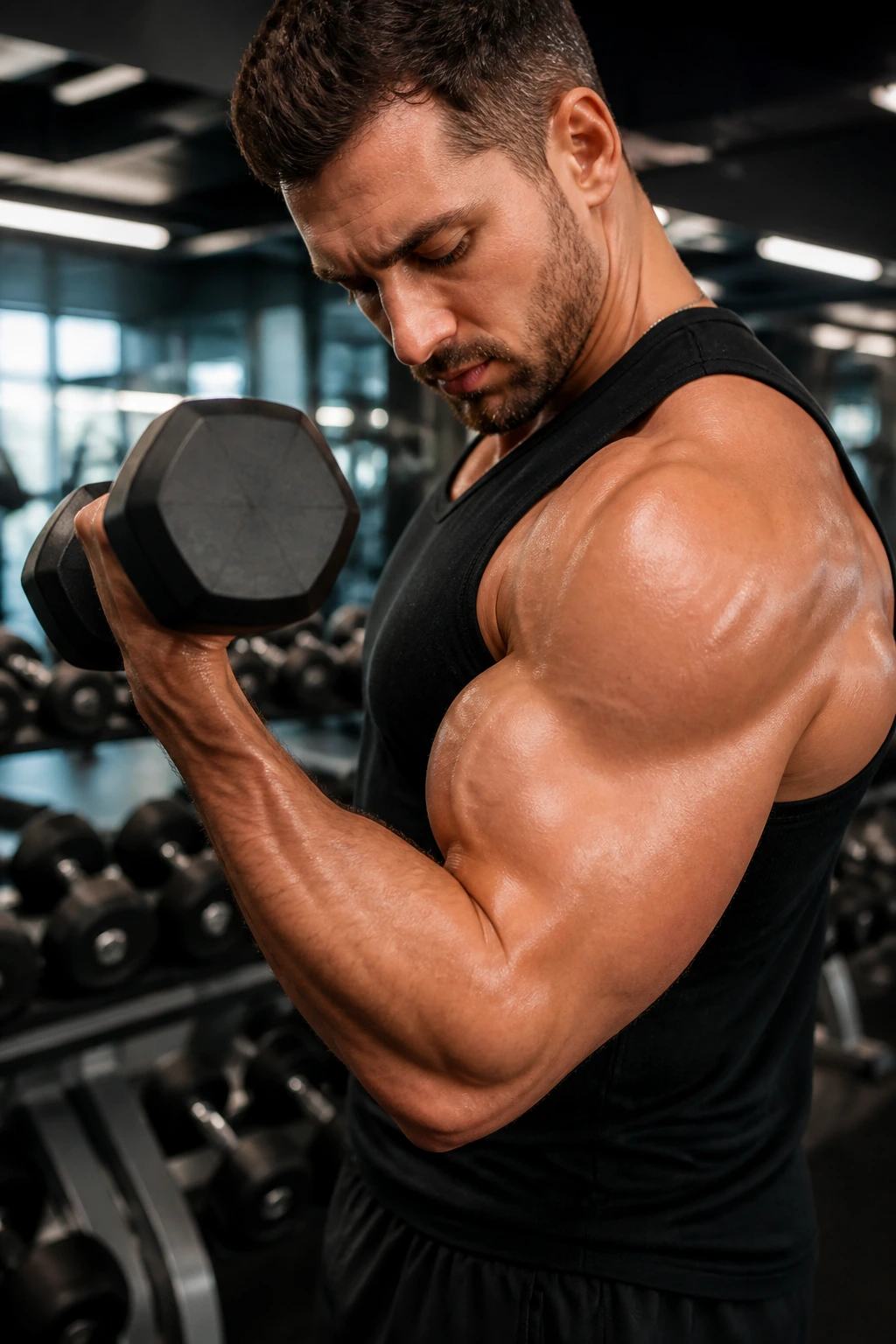
Arm training gets mocked until sleeves get tight.
Biceps curls are not a vanity exercise. They help build elbow flexion strength, fill out the front of the arm, and support pulling work that already depends on the biceps. A strict dumbbell curl is the easiest place to start. Keep the upper arm mostly still, curl through a full range, and lower under control instead of dropping the weight like it burned your hand.
Cable curls are a nice swap when you want constant tension from the bottom to the top. Barbell curls let you load heavier, though some people feel them in the wrists more than the dumbbell or cable versions. Pick the version that lets you train hard without turning the shoulders into a swinging machine.
How to keep the tension where it belongs
- Stop the set when the elbows drift far forward.
- Use a 2 to 3 second lowering phase.
- Stay within 8 to 15 reps for most work.
Biceps respond well to volume, but volume only counts if the curls are clean. Messy reps are just expensive choreography.
17. Triceps Pushdowns for Upper-Arm Size That Shows
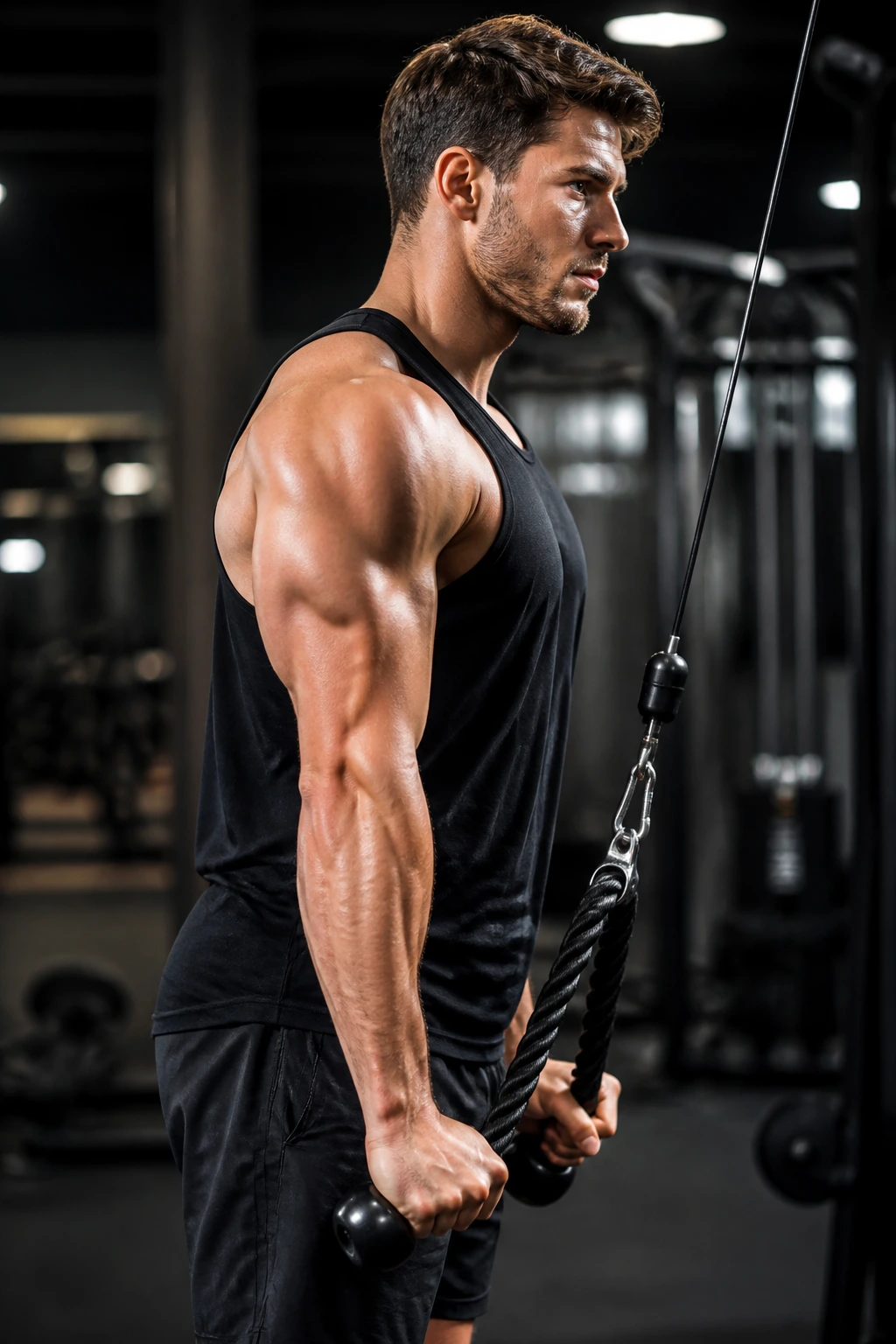
A lot of people chase biceps and forget the triceps. Bad trade. The triceps make up more of the upper arm, and pushdowns give them a simple, repeatable hit.
Use a rope, straight bar, or angled attachment on a cable machine. Keep the upper arms pinned close to your sides, extend fully at the bottom, and let the rope split apart if you’re using one. That small flare at the end can help you squeeze the triceps harder, especially the lateral head.
I like pushdowns because they’re easy to load without wrecking form. They work well after benching, overhead pressing, or any other heavy pressing day. Ten to 15 reps is a sweet spot, though higher-rep sets can also work if the elbows stay happy.
Contrary to what some people assume, isolation work matters. Not because it replaces compound lifts. Because it fills in the gaps those lifts leave behind.
18. Farmer’s Carries for Grip, Traps, and Full-Body Density
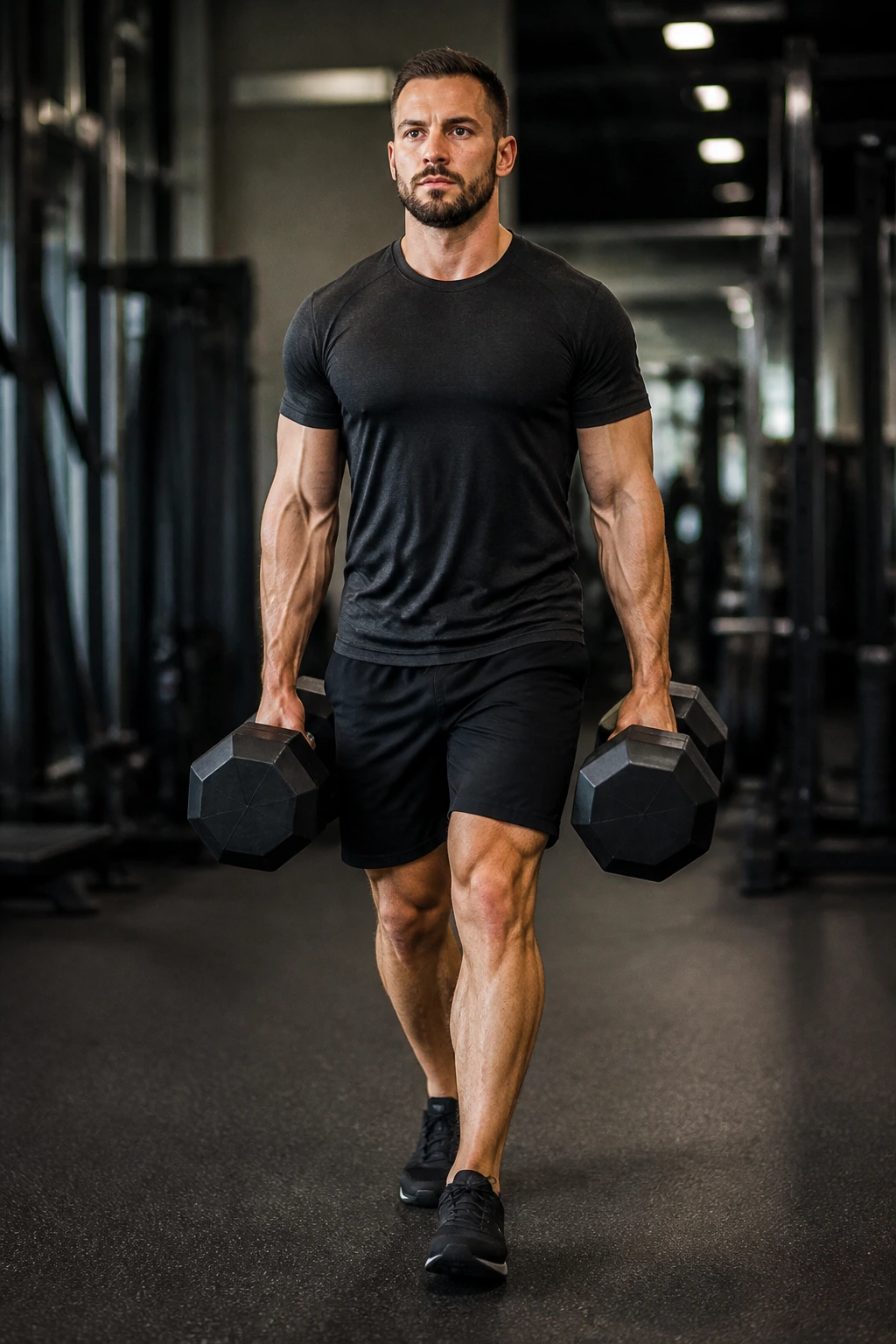
Pick up two heavy implements and walk. That’s the exercise. Nothing fancy.
Farmer’s carries build grip strength, traps, core stability, and a strange kind of whole-body toughness that shows up in the big lifts later. Your shoulders have to stay packed, your trunk has to resist side-to-side wobble, and your hands have to keep the handles from slipping. It is one of the few movements that feels useful almost immediately.
Use dumbbells, kettlebells, trap bar handles, or farmer’s carry implements if the gym has them. Walk for 20 to 40 meters, or 20 to 60 seconds, depending on space. Stay tall, keep the ribs down, and do not let the weights drag you into a crooked lean. If your grip gives out early, that’s the point. If your posture collapses early, the load is too high.
A simple way to program it
- 3 to 5 rounds after your main lifts.
- Rest 60 to 120 seconds between walks.
- Add distance first, then weight.
Farmer’s carries are one of those movements I almost always keep around. They’re practical, they’re brutally honest, and they leave you looking and feeling like you did real work — which, on a good day, is exactly the goal.
