



A pair of light dumbbells can do more in a Pilates session than a stack of heavy gym gear if you use them with care. Pilates with weights routines at home work best when the load feels almost suspiciously light at first, because the real job is not moving fast or moving heavy — it’s keeping your ribs quiet, your hips steady, and your shoulders out of your ears.
That’s the part a lot of people miss. They pick up weights and start muscling through the movements, then wonder why the work feels clumsy instead of clean. Too much load turns a crisp Pilates sequence into a shaky strength circuit, and the whole point gets muddy. A 1- to 3-pound dumbbell in the hand, a 0.5- to 2-pound ankle weight on the leg, or even a tiny hand weight you can control for 8 to 12 slow reps is usually enough to make the exercise honest.
At home, that honesty matters. You don’t have studio reformers, mirrors on every wall, or a teacher walking over to tap your ribs back down. You do have a mat, a little floor space, and the chance to slow things down until you can feel the difference between tension and control. That’s a pretty good setup, actually. Better than people think.
The 18 routines below are built for that kind of space: a living room, a bedroom corner, a quiet patch of floor beside the sofa. Some are gentle. Some are sneaky-hard. A few are the sort of thing that makes your arms quiver while your breathing stays calm. Start with the ones that match how you feel today, then keep the others nearby for the days when your body wants more load without losing the Pilates feel.
1. The 2-Pound Arm Arc Wake-Up
This is the routine I reach for when the body feels stiff and the brain hasn’t fully clocked in yet. Two-pound dumbbells are enough here; if they feel heavy on the first set, that’s a sign to keep the movement smaller, not faster.
How to run it
Stand tall or sit on the front edge of a chair. Hold a light dumbbell in each hand with soft elbows. Sweep the arms forward to shoulder height, open them wide, then draw small circles for 20 to 30 seconds. After that, add overhead reaches and slow lateral lifts, keeping the shoulders low.
A good version looks almost too neat. The ribs stay stacked over the pelvis. The neck stays long. The wrists don’t collapse.
- 30 seconds arm circles forward
- 30 seconds arm circles backward
- 8 slow front raises
- 8 slow side raises
- 8 overhead reaches
- Repeat the sequence twice
Tip: If your shoulders start creeping up, stop the rep short. Shorter range, cleaner shape, better work.
2. Hundred Pulses With Dumbbells
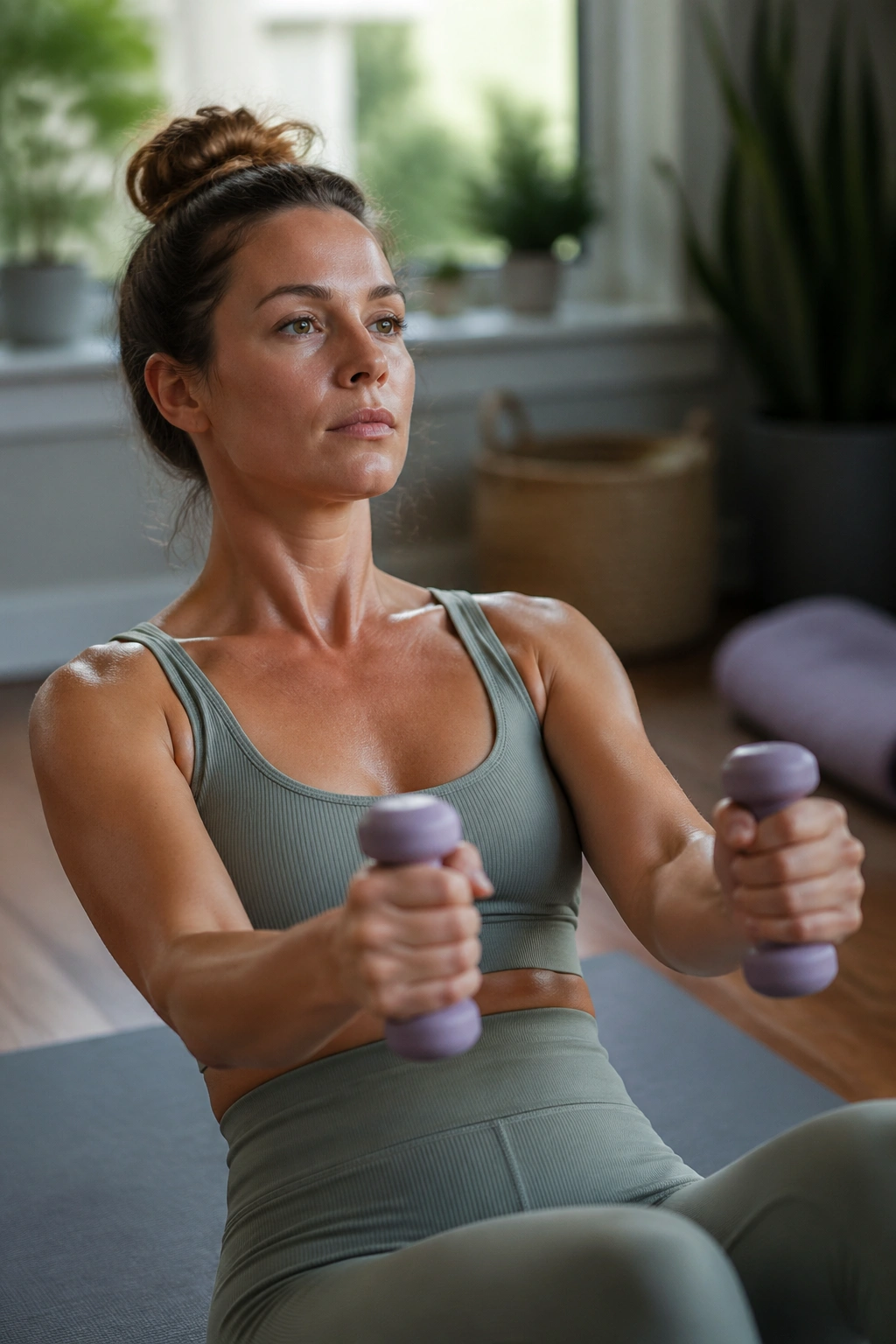
The classic hundred gets a little meaner with weights in your hands. Not cruel. Just honest.
Hold 1- to 2-pound dumbbells straight above the ribs, pump the arms in short, sharp pulses, and keep the breath steady for five counts in and five counts out. If your neck gets cranky, keep the head down and do the same arm rhythm with the legs in tabletop or feet on the floor. That version still counts. It still works.
The reason this one feels so different is simple: the arms can’t drift. They have to stay alive even when your core is doing the boring job of holding the whole shape together. That’s where the challenge lives.
Do one round of 10 breaths if you’re new to it. Do two rounds if the first set feels controlled and your lower back stays heavy on the mat.
The mistake is swinging the weights from the shoulder like you’re trying to fan yourself in July. Tiny pulses. Controlled breath. Quiet ribs.
3. Roll-Up Press and Lower
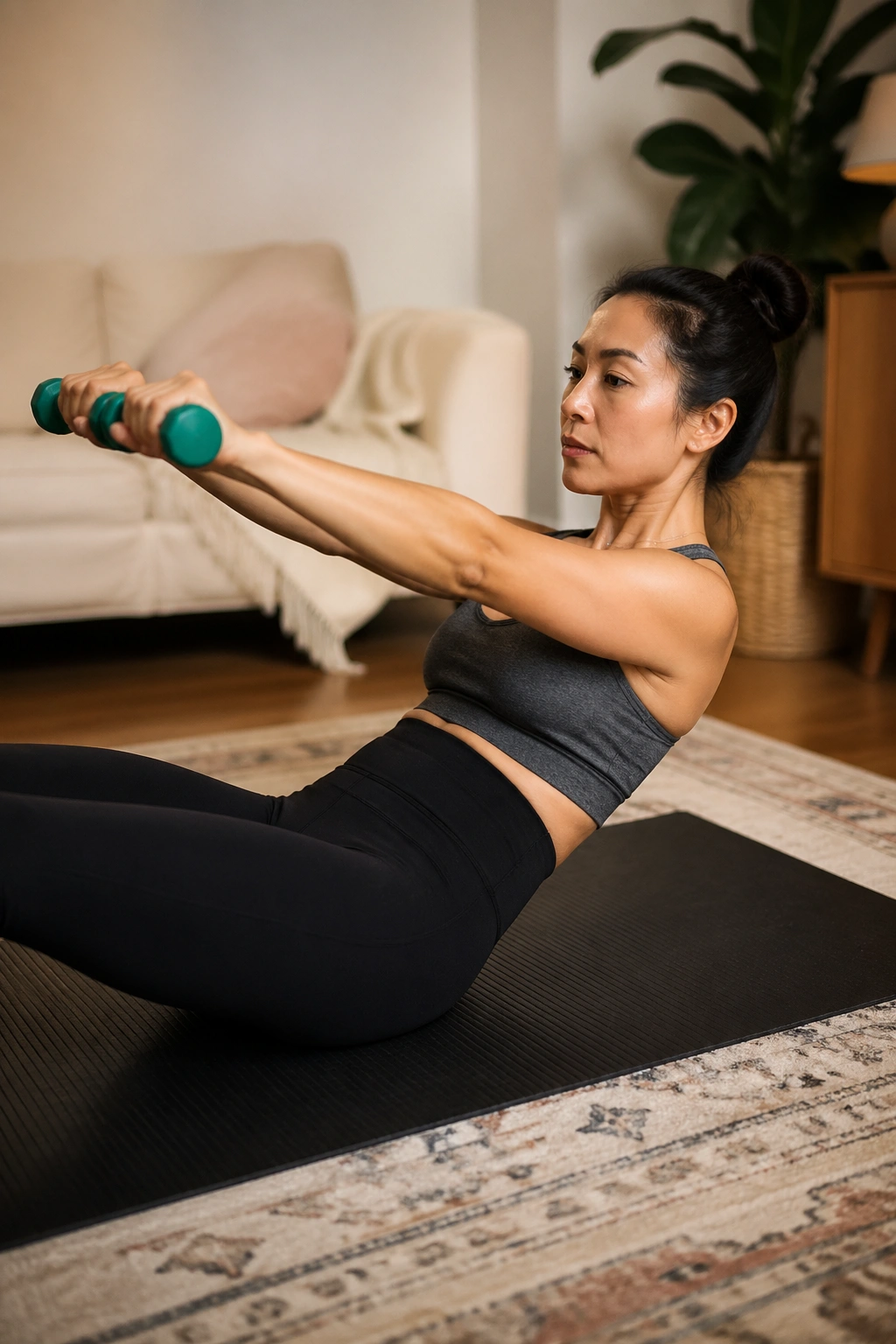
Why does a roll-up feel harder with weights? Because the dumbbells make every inch of the movement more obvious. There’s no cheating the descent.
Lie down with a light dumbbell in each hand, arms reaching to the ceiling. Curl up one vertebra at a time, press the weights forward once you’re seated, then lower with the same slow control. A 2- to 5-pound pair is plenty. If the lower back lifts or the hips grab, the load is too much or the range is too big.
What makes this one worth keeping
The pressing action wakes up the shoulders. The lowering phase trains the abs to control the spine instead of dropping out of the movement halfway through. That matters more than it sounds like it should.
Try 6 to 8 reps, then pause and check your breathing. If the neck is doing the work, soften the elbows a little and keep the gaze at the thighs, not the ceiling. Never yank yourself upright. That’s not Pilates. That’s just momentum in nicer clothes.
4. Glute Bridge Ladder With One Dumbbell
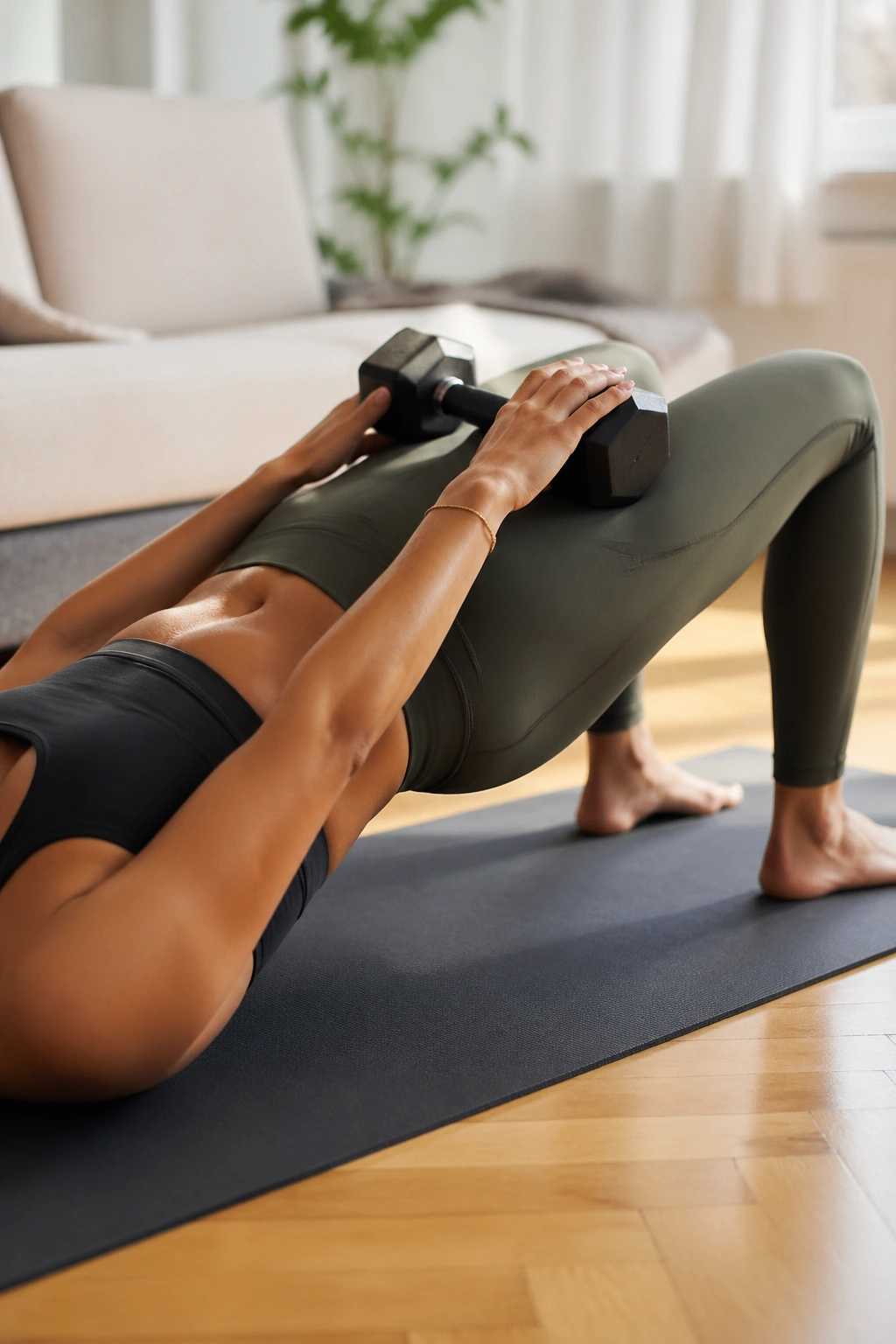
A bridge that feels easy on bodyweight becomes a different animal once you place a dumbbell across the hips. I like this one for the days when the glutes are sleepy and the hamstrings want to take over.
Set a 5- to 10-pound dumbbell across the front of the pelvis, hold it steady with both hands, and lift into a bridge. At the top, pulse the hips for 10 small reps, lower halfway, lift again, then hold for 10 seconds. Keep the feet parallel and the ribs down.
Setup matters here
A folded towel under the dumbbell can make it feel less awkward. If the weight slides, stop and reset. Do not chase a bigger dumbbell if the lighter one already forces you to brace.
- 10 bridge lifts
- 10 top pulses
- 1 10-second hold
- 10 more bridge lifts
- Repeat for 2 to 3 rounds
The best cue is simple: you should feel the back of the thighs and the seat, not your lower back. If the back pinches, shorten the lift.
5. Side-Kick Series With Ankle Weights
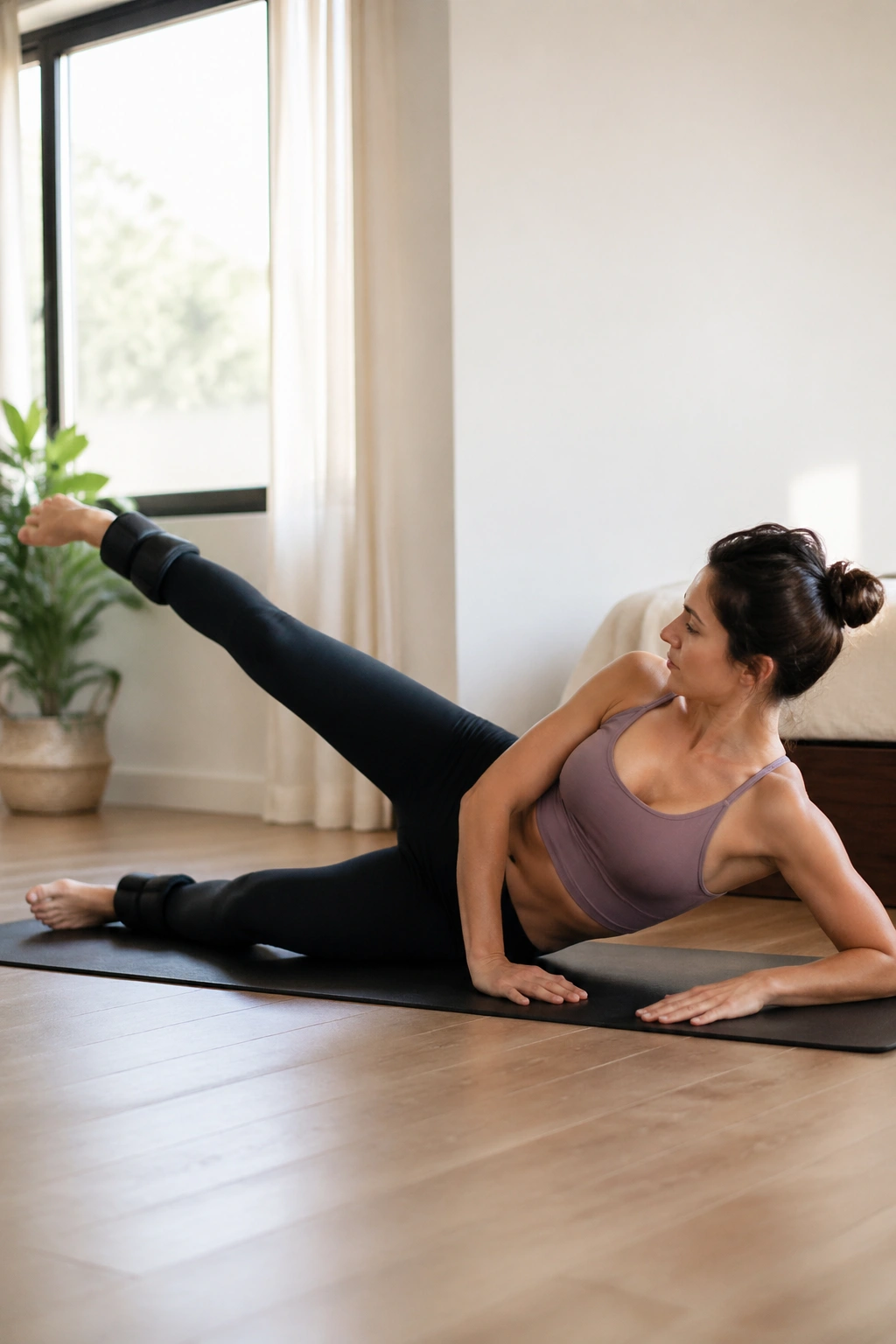
Side-lying leg work gets spicy fast once the ankle weights go on. Even 0.5 to 1.5 pounds per ankle is enough to change the whole feel of the routine.
Lie on your side with the bottom arm long or propped under the head. Stack the hips, flex the top foot, and run through front kicks, back kicks, circles, and small lifts. The pelvis should stay still. Still. That’s the whole trick.
A lot of people make this one about height. Bad idea. The leg does not need to climb high to work hard. What matters is the path of the leg and the quietness of the waistline. If the hip rolls back every time the leg goes behind you, the weight is too much.
I like 8 to 10 reps of each pattern, then a quick switch to the other side. The inner thigh on the top leg usually burns before the hip flexors complain, which is exactly where you want the conversation to happen.
6. Dead Bug Chest Fly Core Circuit
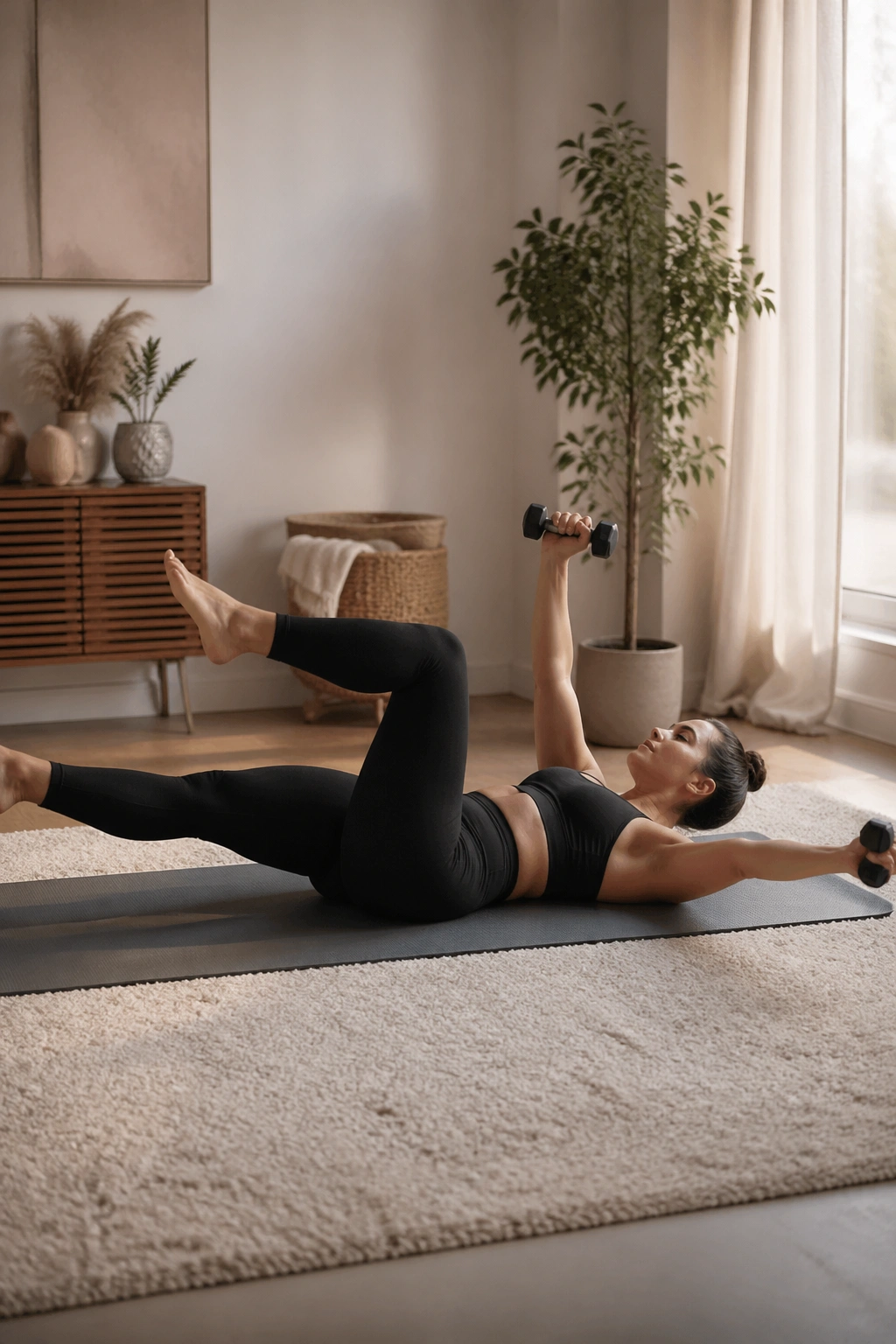
A dead bug with dumbbells is not a fancy trick. It’s just a way to make your abs answer a harder question.
Hold 2- to 3-pound weights above the chest, lower one heel and the opposite arm at the same time, then return to center. If you want more work, add a small chest fly at the top before the next rep. The fly is what makes the rib cage want to flare, which is why it’s useful.
Unlike a regular dead bug, this version punishes sloppy breathing. If you brace too hard, the whole thing turns rigid. If you don’t brace enough, your back arches and the mat wins. The sweet spot is somewhere in the middle, and it’s annoyingly specific.
Keep an eye on three things
- Low back stays heavy
- Dumbbells travel straight up and down
- Exhale happens on the hardest part of the rep
Do 6 to 8 reps per side. If the neck tightens, lower the weights or keep the head down. That’s not a step back. It’s the smart version.
7. Kneeling Row and Triceps Flow
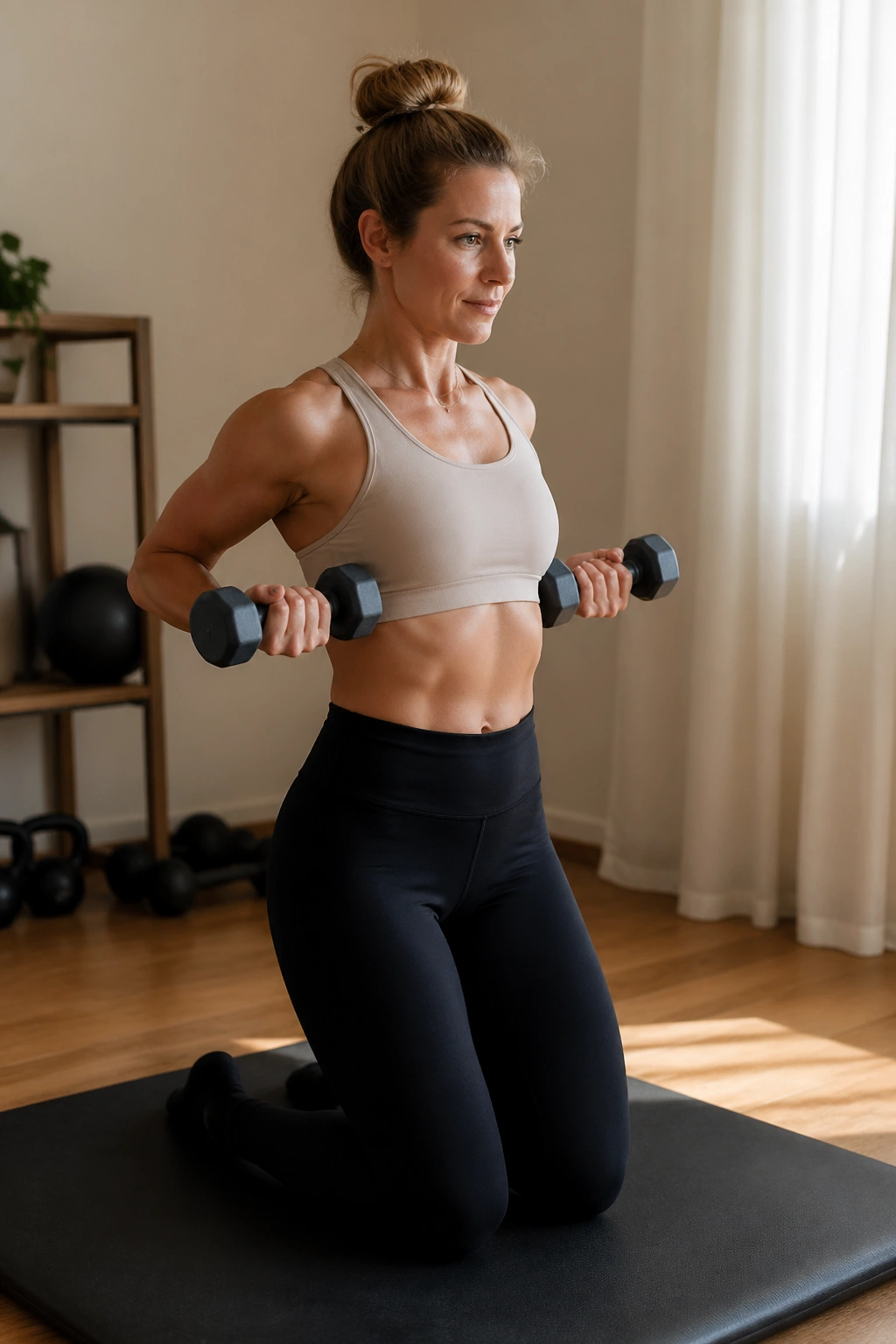
Tall kneeling changes everything. Your legs stop helping so much, and your trunk has to do the job on its own.
Hold a pair of light dumbbells and row them toward your ribs, then press one or both weights overhead into a triceps extension. Keep the glutes gently squeezed and the pelvis stacked over the knees. If you arch your lower back here, the move loses its point fast.
Why kneeling helps
The floor locks your lower body in place. That means you can feel the shoulder blades move without the hips drifting around to steal the work. Nice and brutal.
Use 3- to 5-pound dumbbells and keep the tempo slow: 2 counts up, 2 counts down. I like 8 rows and 8 triceps presses, repeated twice. If the shoulders get noisy, reduce the range of the overhead piece before you drop the weight.
A towel under the knees is not optional for most people. Hard floors are rude.
8. Single-Leg Balance Row and Reach
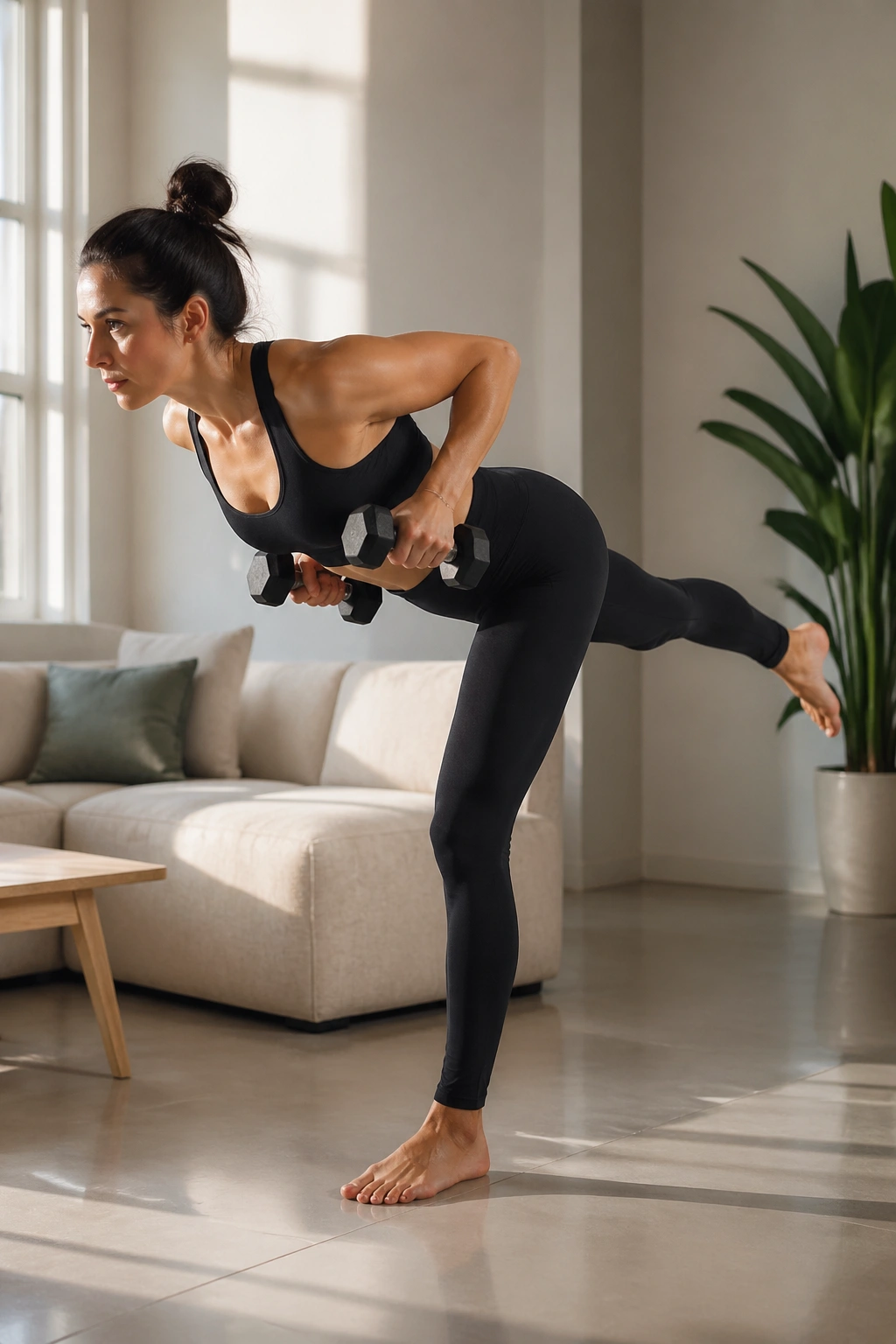
This is where balance stops being cute. One foot plants, the other leg reaches back, and suddenly the core has to organize everything while the arm moves.
Hold 2- to 4-pound dumbbells. Hinge slightly at the hips, keep one leg lightly lifted behind you, and row the arms in a slow diagonal. The standing foot should feel rooted. The lifted leg should stay long, not wild.
The big mistake here is twisting the torso to fake the row. That steals the challenge and makes the lower back do too much. Keep the chest square. If you wobble, don’t panic. Wobbling is part of the lesson. Just make the motion smaller and cleaner.
A neat way to run it is 6 reps on one side, 6 on the other, then one final 20-second hold without the arm movement. That hold tells you more than the reps do. If the foot is gripping the floor like it owes you money, ease up and reset.
9. Mermaid Side Bend With a Light Dumbbell
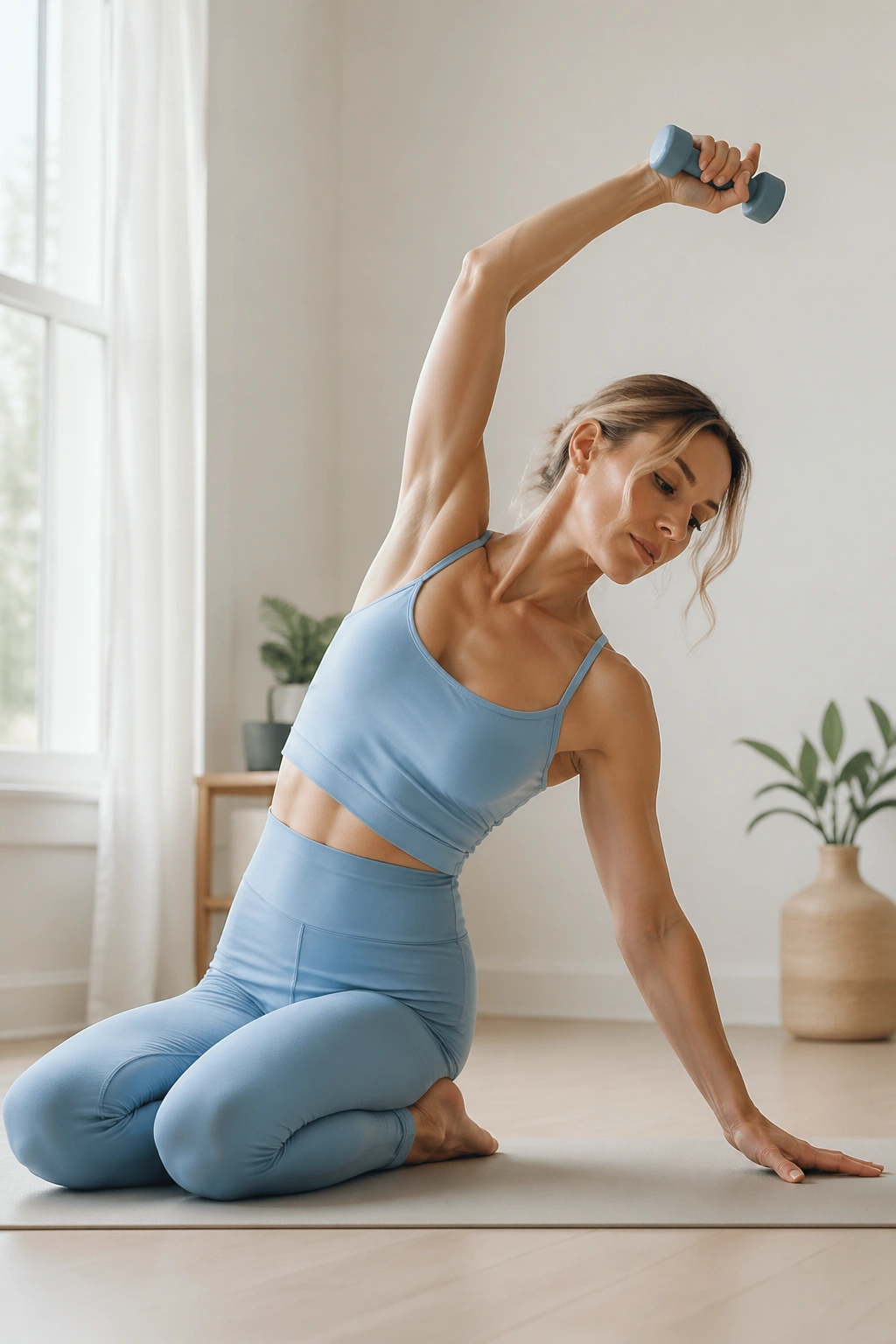
A side bend seems easy until you add load. Then the whole shape changes, and the obliques have to work for real.
Sit in a mermaid position, hold a 2- to 5-pound dumbbell in the top hand, and side bend over slowly, then come back to tall. The other hand can rest on the floor or on the thigh. Keep both sitting bones heavy so the bend comes from the waist, not the hip slipping off to the side.
What to feel
The lower ribs should open on the lift and compress on the bend. The shoulder on the loaded side should stay away from the ear. If the neck gets tight, the weight is too high or the reach is too long.
This one is lovely on days when the torso feels glued together. It also pairs well with a slow breath pattern: inhale to lengthen, exhale to fold. Do 5 to 8 reps per side. If you want more challenge, pause for one full breath at the bottom without collapsing into the shoulder.
10. Standing Posture Reset With Overhead Press
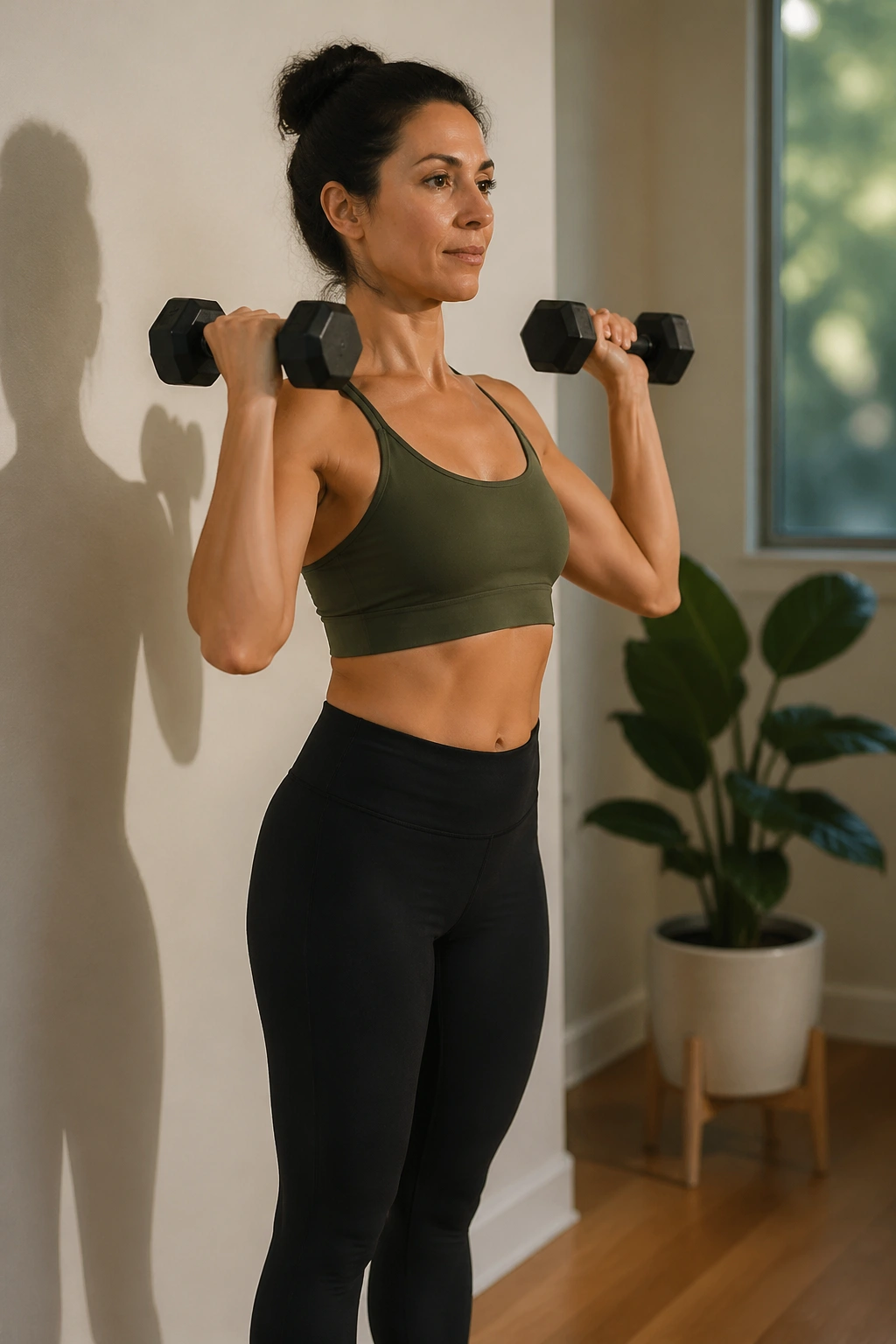
People think posture work has to be dull. It doesn’t.
Stand with 3- to 5-pound dumbbells by the sides, lift them to shoulder height, press overhead, then lower with a three-count descent. Finish each rep with a small calf raise. The whole sequence should feel tall, not rushed. If the ribs flare on the press, stop the rep short and bring the arms down before you lose the stack.
A wall can help here. Stand a few inches away from it and keep the back of the head, ribs, and pelvis aware of that line. Not glued. Just aware.
- 8 presses
- 8 calf raises
- 8 combined press-and-rise reps
- 1 final 15-second hold overhead
This routine is useful when sitting has made the upper back feel sticky. It opens the chest a little, wakes up the shoulders, and gives the ankles some work too. Oddly satisfying.
11. Inner-Thigh Ladder With Ankle Weights
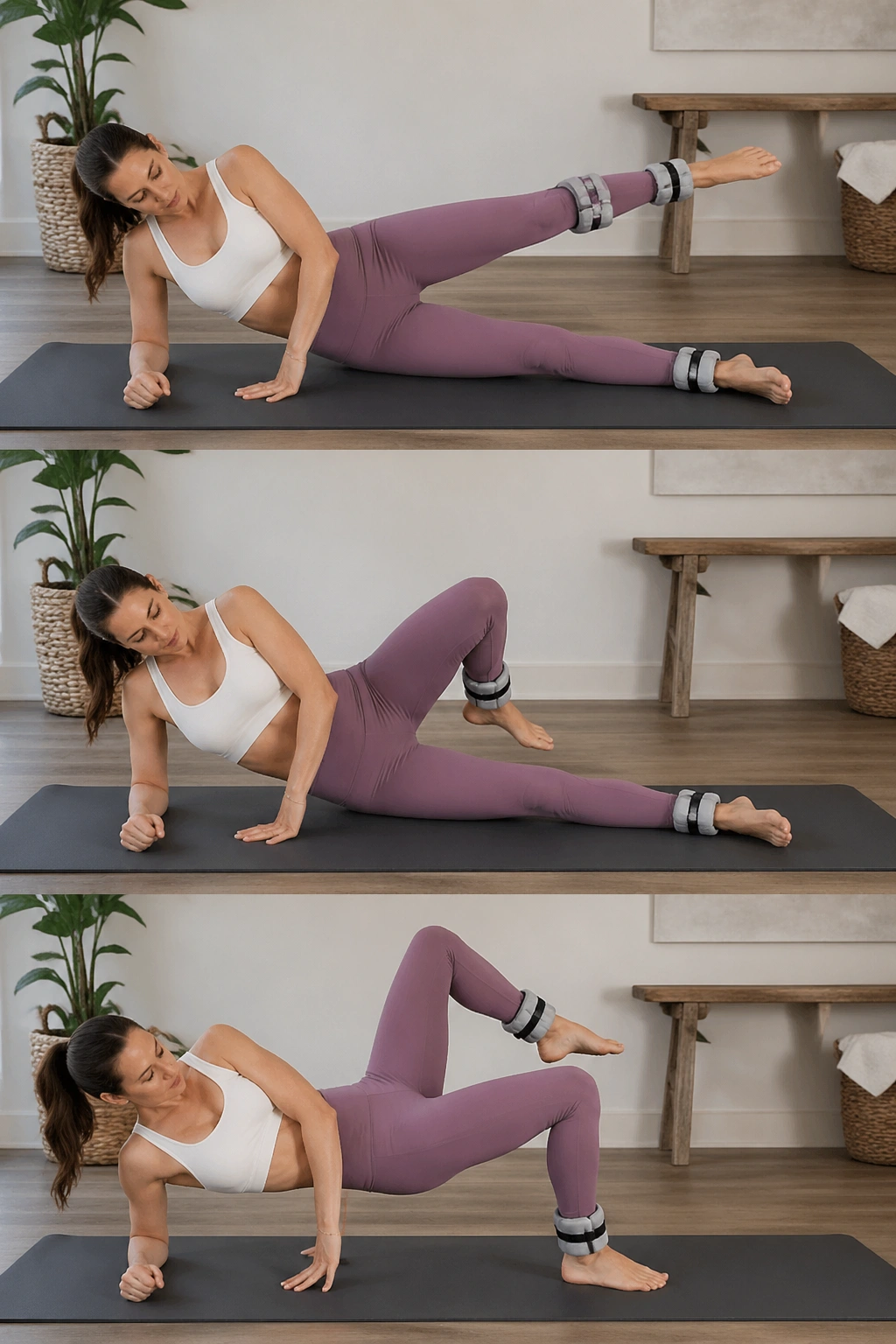
Inner thighs get ignored in a lot of home workouts, which is a shame because they help so much with leg control and pelvic stability.
Lie on your side, place 0.5- to 1-pound ankle weights on, and lift the bottom leg in a small, straight line. Then switch into a bent-knee inner-thigh press, followed by a slow bridge march with the feet on the floor. The three moves create a tidy little ladder of work without needing much space.
The key is restraint. If the leg swings up high, the hip flexor starts shouting and the inner thigh disappears. Keep the range modest. You want a clean lift of a few inches, not a showy kick.
I’d do 10 reps of each move, then switch sides. On the bridge march, keep the pelvis level enough that a glass of water would survive on the hips. That image works because it’s annoying and useful.
12. Prone Back Extension With Wrist Weights
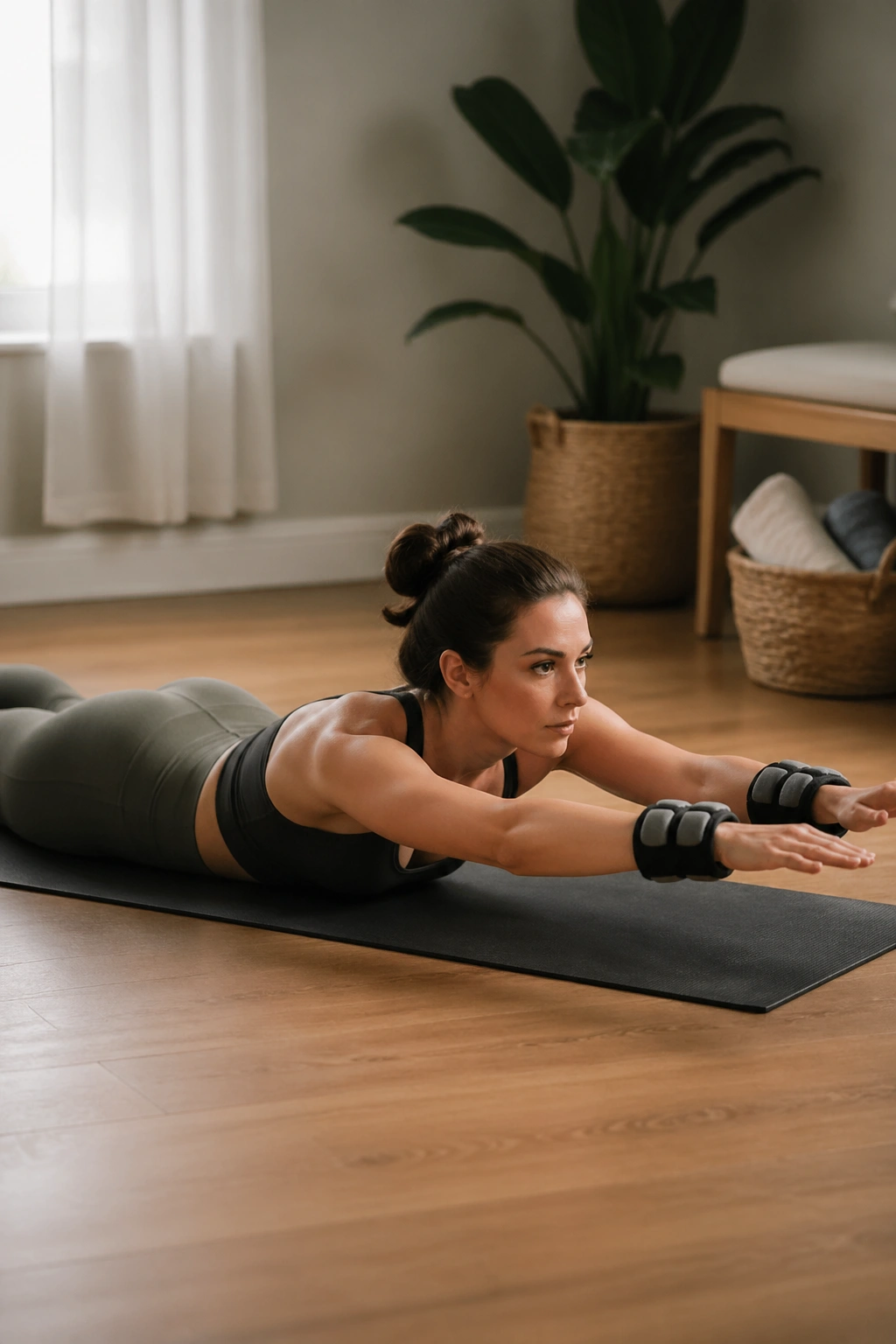
Light wrist weights make prone back work much more interesting. They drag the arms just enough to expose sloppy form.
Lie face down with your forehead on a towel and place 0.5- to 1-pound wrist weights on. Lift the chest slightly, draw the elbows toward the ribs, then reach the arms long and float them back down. Keep the neck long and the gaze toward the mat, not forward.
The back should do a smooth, modest amount of work. You are not trying to jackknife the chest off the floor. That’s a fast track to a tight lower back and a grumpy neck.
A cleaner version
- Lift for 2 counts
- Hold for 1 count
- Lower for 3 counts
- Repeat 8 to 10 times
Do not shrug. That’s the biggest trap here. If the upper traps take over, the weight is too much or the lift is too high. Small and deliberate beats dramatic every time.
13. Oblique Woodchop and Twist Sequence
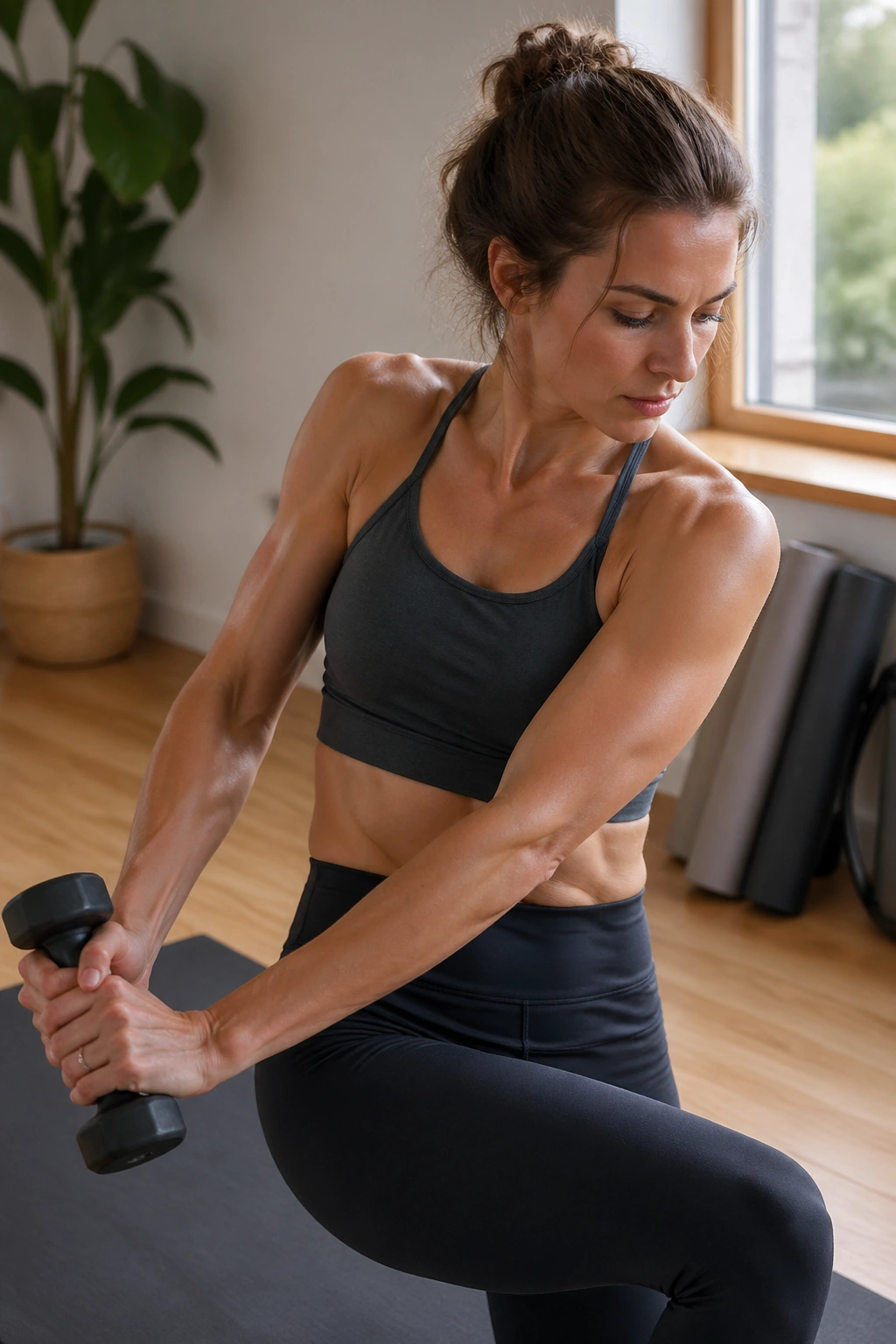
Need something that feels athletic without turning messy? This is a good place to go.
Hold a single 5-pound dumbbell with both hands in a half-kneeling or standing stance. Start high and sweep the weight diagonally across the body toward the opposite hip, then return with control. The movement should feel like a controlled chop, not a baseball swing.
Where the work lives
The front waistline should feel active, and the hips should stay mostly square. If the torso keeps spinning, cut the range in half. The dumbbell is there to load the rotation a little, not to invite the whole body to fling around.
Try 8 reps per side, then switch. On the last rep, pause halfway for one breath. That tiny stop makes the obliques work harder than most people expect.
I like this one for posture and waist strength, but also because it teaches patience. Rotation that’s rushed tends to be sloppy. Slow rotation is a different animal.
14. Squat-to-Calf-Raise Pilates Burner
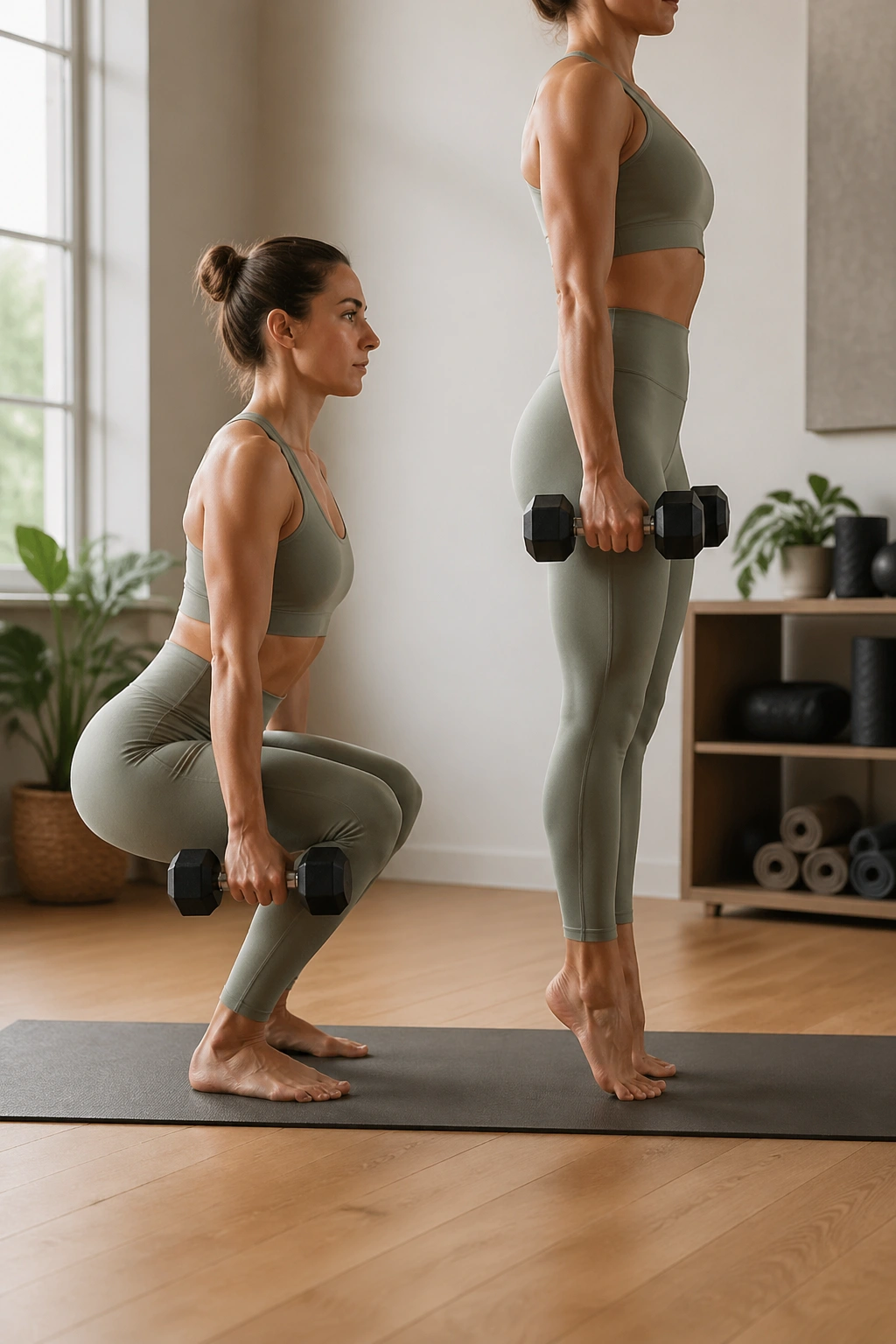
Yes, Pilates can include squats. The trick is keeping the movement tidy instead of turning it into a bounce-fest.
Hold 3- to 8-pound dumbbells and take a narrow, comfortable stance. Sit down into a squat, stand up, then rise onto the balls of the feet at the top. Lower the heels with control. That calf lift is what makes the sequence feel longer than it looks.
Unlike a heavy gym squat, this one is less about load and more about alignment. The knees track over the toes. The ribs stay stacked. The dumbbells stay quiet by the sides.
- 10 slow squats
- 10 squat-to-calf-raise reps
- 10 tiny pulses at the bottom
- Repeat twice
The pulse set is optional, and a little evil. If the knees wobble inward, skip the pulses and clean up the base first. A stable squat with light weights is far better than a deep one that looks impressive and feels sloppy.
15. Boxing Arms and Hollow Hold Combo
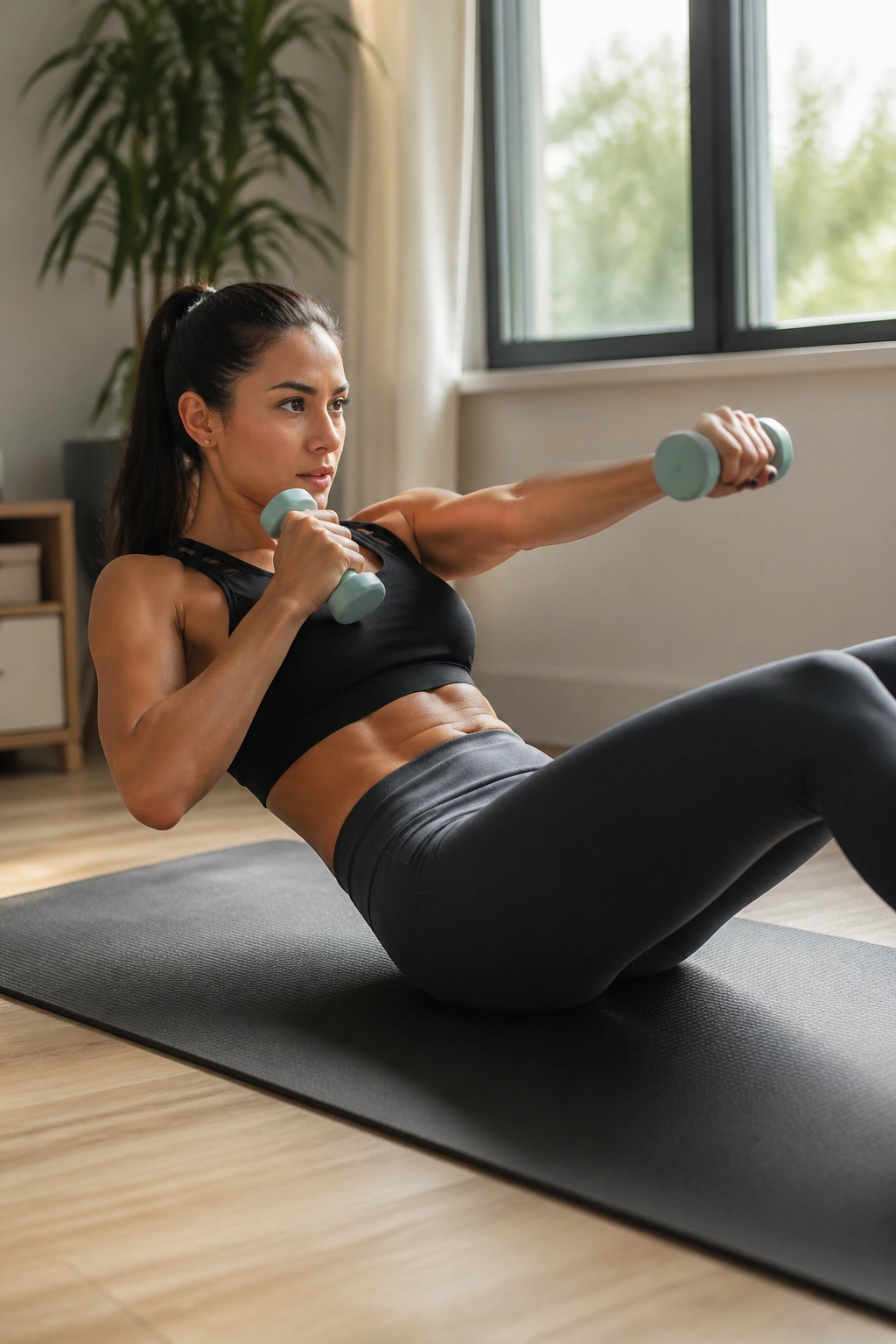
Small weights can make your arms shake in about three minutes flat. This routine does that on purpose.
Lie in a hollow hold or keep the feet down if needed. Hold 1- to 2-pound dumbbells and punch forward in alternating jabs, then cross the arms over the body in controlled hooks. The abs stay on, the lower back stays connected, and the arms keep moving.
The combination matters. Punching alone is fine. Punching while the torso refuses to arch is what makes the work real.
A smart way to run it is 20 seconds of jabs, 20 seconds of crosses, 20 seconds of overhead punches, then 20 seconds of rest. Repeat for 3 rounds. If the shoulders burn before the core does, lower the weights immediately. That’s your body giving you a pretty useful clue.
I like this better than fast cardio-style arm work because it still feels deliberate. Sweaty, yes. Sloppy, no.
16. Teaser Prep With Reach and Lower
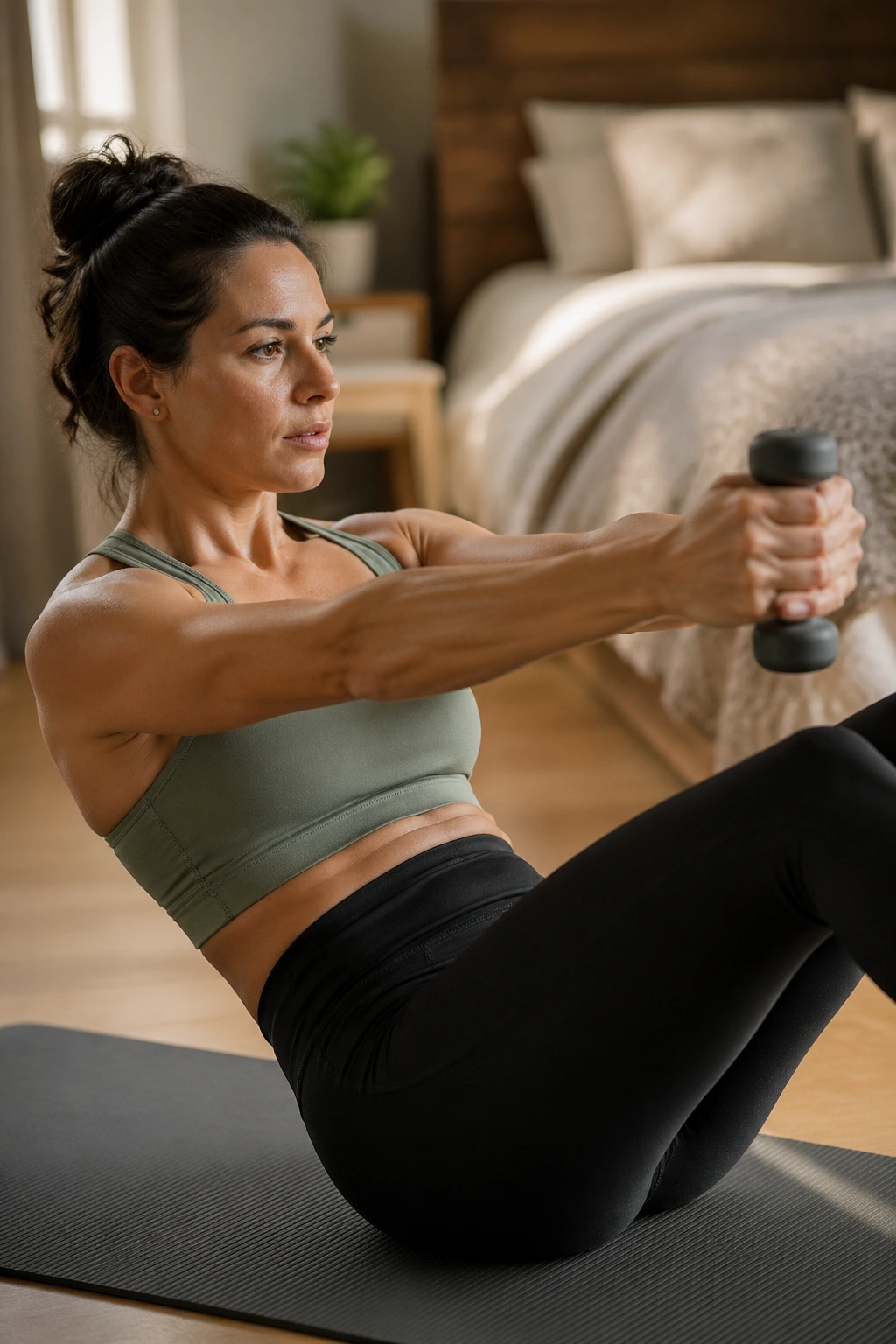
A teaser is one of those moves that looks elegant right up until it isn’t. The prep version is kinder, and frankly, more useful for most people.
Hold a single 2- to 3-pound dumbbell in both hands, start reclined, then curl the spine into a V shape as the arms reach forward. Lower one vertebra at a time. The weight gives the shoulders something to manage, but the abs still control the shape.
What makes it work
The ribs need to stay knit, and the legs need to stay long without bracing so hard that the hips take over. If the hamstrings cramp, bend the knees a bit and shorten the hold.
Do 5 to 6 reps with a pause at the top. A one-second pause is enough. You don’t need to sit there forever. The point is to prove control, not survive the position.
This one is harder than it looks, which is half the appeal. Start small. Make the descent slow. That’s where the teaching happens.
17. Low-Impact Recovery Circuit With Micro Weights
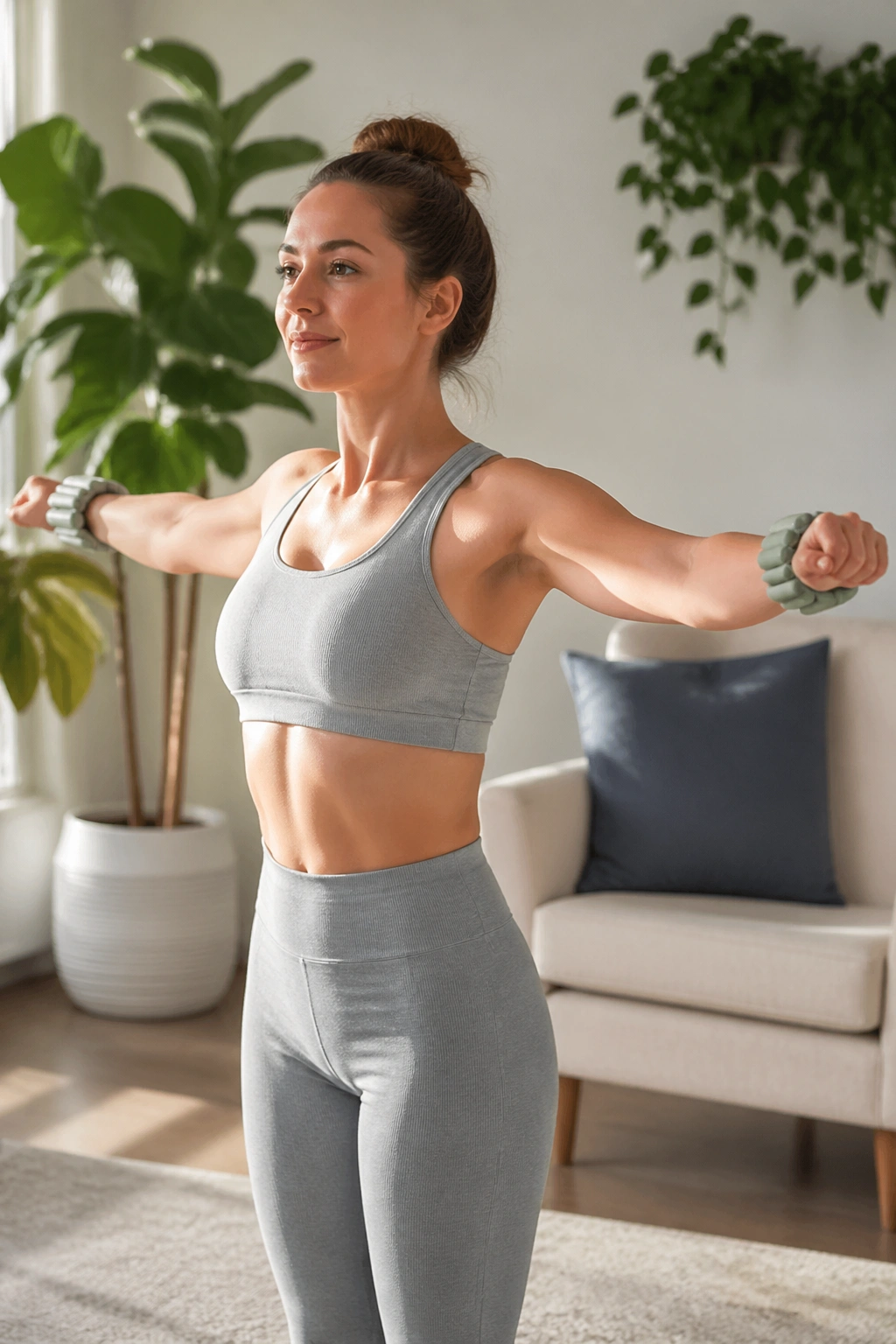
Recovery days do not have to mean doing nothing. They can mean moving with enough load to wake the body up, but not enough to leave it cooked.
Use 0.5- to 1-pound wrist weights or tiny dumbbells and move through arm sweeps, standing side steps, gentle squats, and chest-openers. Keep the pace conversational. The whole circuit should feel like a reset, not a test.
A simple flow
- 30 seconds arm sweeps
- 30 seconds side steps
- 30 seconds squat pulses
- 30 seconds chest lifts and lowers
- Rest 30 seconds
- Repeat 3 rounds
The reason I like this routine is that it keeps the joints moving without demanding much from the nervous system. If your shoulders feel heavy or your hips feel sticky, micro weights can still create a clean pattern without dragging you into fatigue.
One rule: if the movement starts to feel grinding, cut the load and the range. Recovery work should leave you better than you started.
18. The 30-Minute Full-Body Mat Circuit
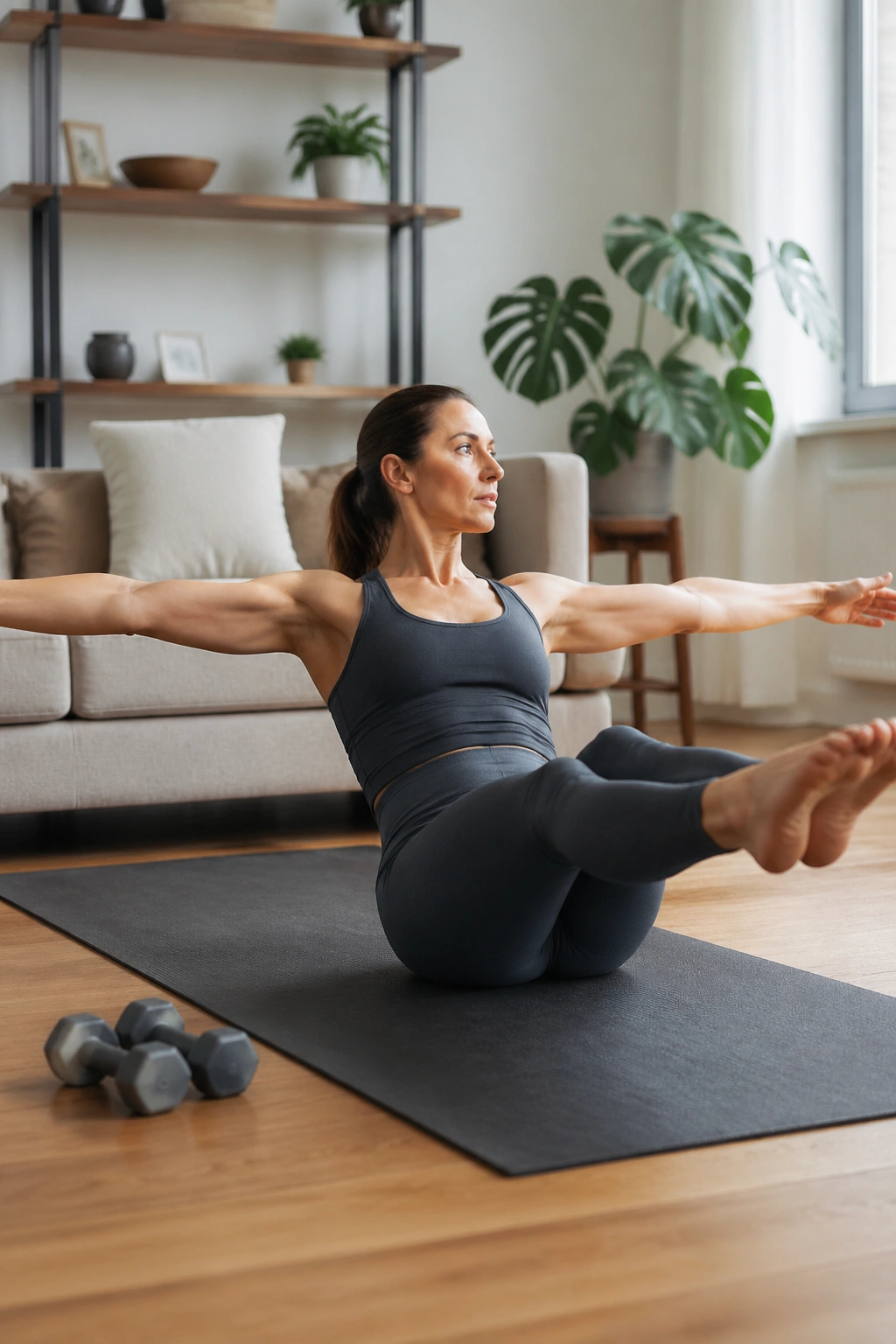
This is the one to save if you want a single session that covers arms, core, glutes, back, and balance without wandering around your home for equipment.
Start with 1- to 3-pound dumbbells, an optional pair of ankle weights, and one mat. Run each block for 45 seconds, rest 15 seconds, and repeat the circuit 2 times. The sequence can look like this: arm arcs, hundred pulses, glute bridges, side kicks, rows, woodchops, squat-to-calf-raises, and teaser prep.
One clean order
- Arm arcs
- Hundred pulses
- Glute bridges
- Side-kick series
- Kneeling rows
- Woodchops
- Squat-to-calf-raises
- Teaser prep
The order matters because it moves from light upper-body work into core and lower-body patterns, then finishes with balance and control. That keeps the session from feeling random. It also makes the transitions easier. No extra thinking.
If you want to make the circuit harder, slow the lowering phase on every rep to three counts. If you want it gentler, keep the same moves and shorten the work blocks to 30 seconds. Same bones. Different stress.
Final Thoughts
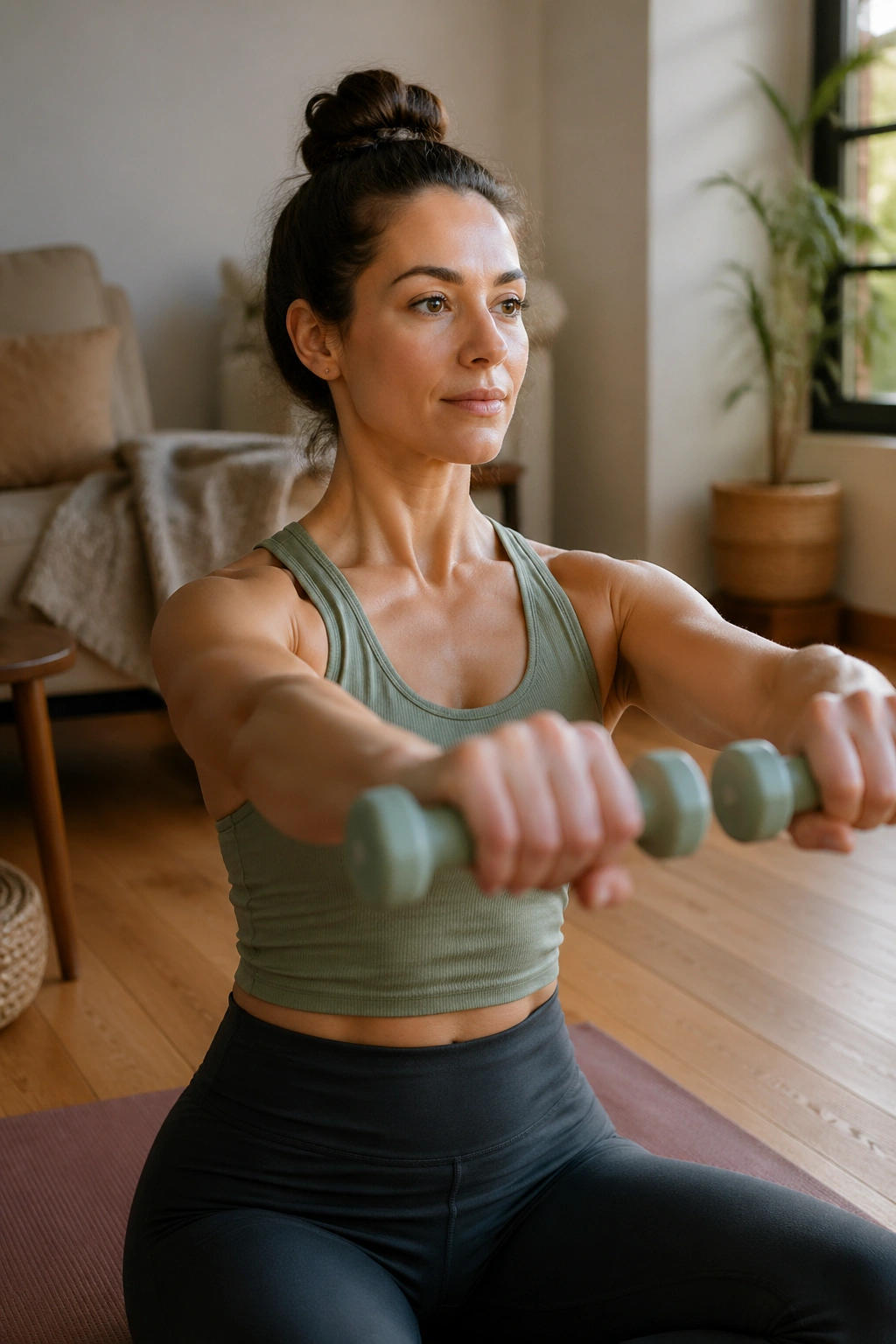
The best Pilates with weights routines at home are the ones you can do cleanly, not the ones that leave you gasping because the dumbbells were too ambitious. Light load, slow control, honest breathing. That trio does more for most people than chasing a heavier pair ever will.
A good rule is to start with two routines that feel easy on paper and one that feels slightly annoying in the right way. Keep the weights light enough that you can finish the last rep without swinging, shrugging, or arching your lower back. That’s where the good work lives.
And if one day you only have ten minutes, take it. Ten minutes done with control beats a perfect plan that never happens.
