



Pilates workouts for women work best when they stay tight, clear, and mercifully short. Fifteen minutes is enough to wake up the deep core, lift the glutes, and unkink the upper back without turning the session into a project.
The trick is choosing a narrow goal and letting the workout do one job well. One clean bridge and one honest side-lying series will do more for posture and hip strength than twelve rushed moves done with sloppy form.
I like routines that fit around a mat, a wall, and maybe a light pair of weights. If your wrists get cranky, swap planks for forearms — the work stays the same. If your neck likes to complain, keep your head down, shorten the range, and stop trying to “earn” extra points by going bigger than your body wants.
These 15-minute sessions are built to stand alone or stack together, depending on the day. Start with the one that matches how your body feels right now.
1. The Core Reset That Wakes Up the Deep Abdominals
If the lower belly feels sleepy, start here.
This is the kind of mat work that looks almost too calm until you notice your ribs, pelvis, and breath all cooperating for once. The goal is not to blast through crunches. It is to bring the deep support system online so the rest of your movement feels steadier.
Why It Works
The exhale is doing a lot of the work here. When you breathe out fully, the ribs soften, the waist narrows, and the deep abdominal wall learns how to hold without bracing like a brick.
- Lie on your back with knees bent.
- Take 5 slow breaths, hands on the lower ribs.
- Do 8 pelvic tilts, pressing the lower back gently toward the mat.
- Add 10 toe taps, one leg at a time.
- Finish with 12 glute bridges, pausing for 2 seconds at the top.
Keep everything slow enough that your pelvis does not rock from side to side. If your back arches, shorten the lever by keeping one foot down. That small change matters more than trying to force a bigger move.
2. The Glute Bridge Ladder for Stronger Hips
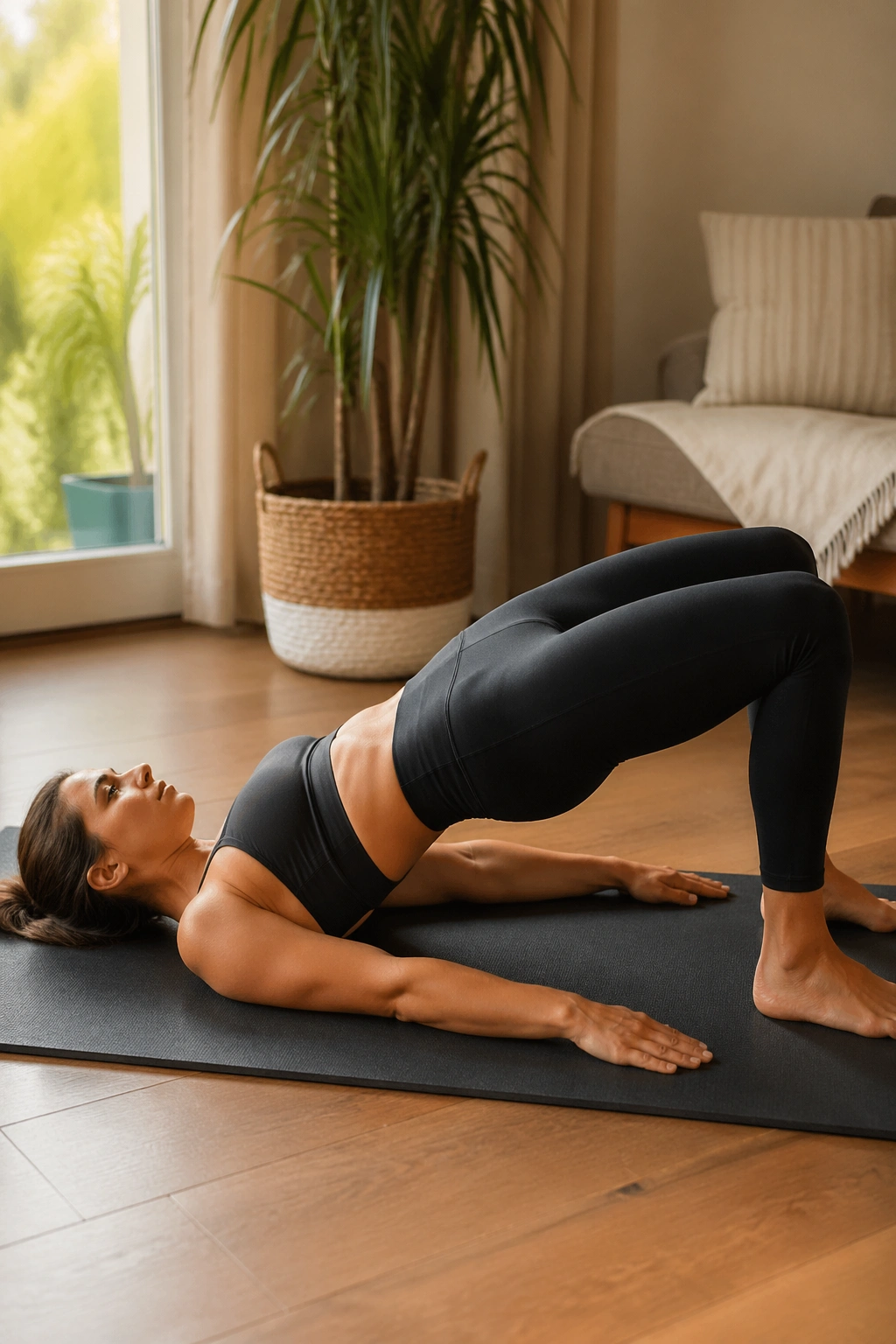
A bridge ladder is the kind of session that looks easy until rep eight. Then the back line starts talking.
This one is excellent for women who sit a lot, carry kids, or feel the front of the hips taking over every time they climb stairs. The bridge shifts work back where it belongs. No drama. Just glutes, hamstrings, and a little patience on the lowering phase.
Try this ladder: 6 slow bridges, 8 bridges with a 1-second squeeze, and 10 bridges with tiny pulses at the top. Rest for 20 seconds between rounds, then repeat the whole thing once more. If you want more challenge, place a mini band above the knees and press gently outward the whole time.
The cue I care about most is simple: keep the ribs down and push through the heels, not the toes. If your hamstrings start cramping, move your feet a little farther away and reduce the height of the lift. That usually fixes the problem before it gets annoying.
3. The Standing Posture Flow for Better Alignment
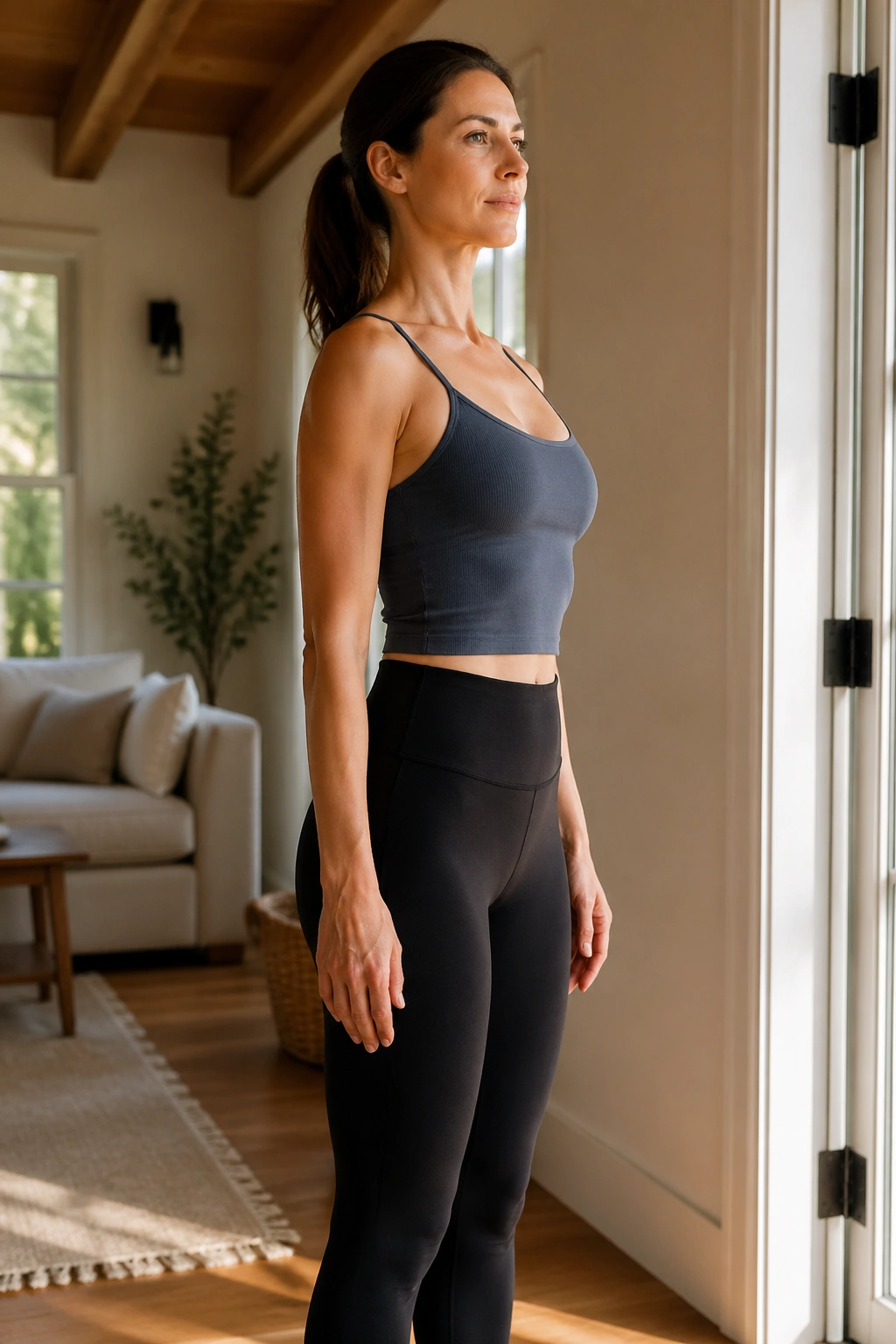
Need a Pilates workout you can do without getting all the way down on the floor?
This standing flow is underrated, which is a shame, because it clears out that stiff, compressed feeling that shows up after long desk hours or a day of hauling bags around. The moves are small on purpose. You are training the body to stack the ribs over the pelvis, not to fling itself around.
Start with 5 roll-downs, moving one vertebra at a time until your hands reach toward the floor. Then do 10 wall slides, 8 heel raises, 8 standing side bends per side, and 10 small squat pulses with your arms reaching forward. Keep your feet grounded and your neck long.
What to Feel
Your calves should work during the heel raises. Your side waist should catch during the bends. Your lower belly should stay gently zipped, not sucked in so hard that you lose the breath.
This is one of those workouts that feels oddly polite while it is working you over. It also leaves you taller, which is a nice side effect.
4. The Inner Thigh and Lower Belly Squeeze
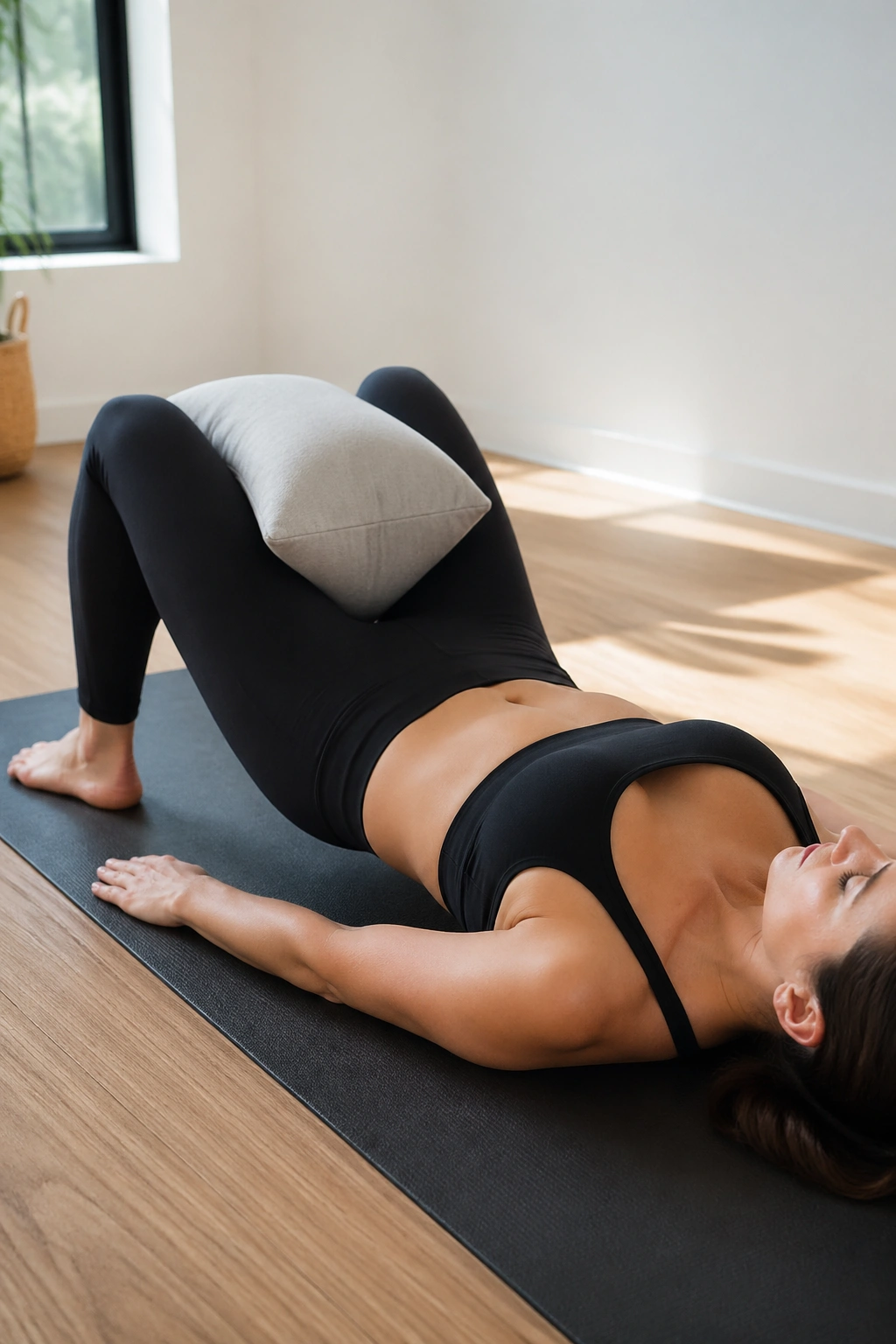
A pillow between the knees changes the whole feeling of the mat.
That one little prop brings the inner thighs into the conversation, and they matter more than people admit. Strong adductors help support the pelvis, give the glutes something to pair with, and make certain core moves feel much more stable. I like this workout for the days when the lower belly feels loose and the hips feel sleepy.
Use a small pillow, soft ball, or Pilates ring. Do 45 seconds of pillow squeezes with bent knees, 45 seconds of bridge and squeeze, 45 seconds of frog presses, and 45 seconds of heel slides. Rest for 20 seconds, then repeat the circuit one more time. If you have extra time, finish with 30 seconds of tabletop hold and slow breaths.
Timer Setup
- 45 seconds: squeeze and release
- 45 seconds: bridge with the squeeze
- 45 seconds: frog press
- 45 seconds: heel slides
- 20 seconds: rest
- Repeat once
The key is not to crush the prop. Use about 30 to 40 percent pressure, enough to wake the muscles without locking the hips. If your hip flexors start gripping, bring the feet closer to your seat.
5. The Arms, Shoulders, and Long Spine Circuit
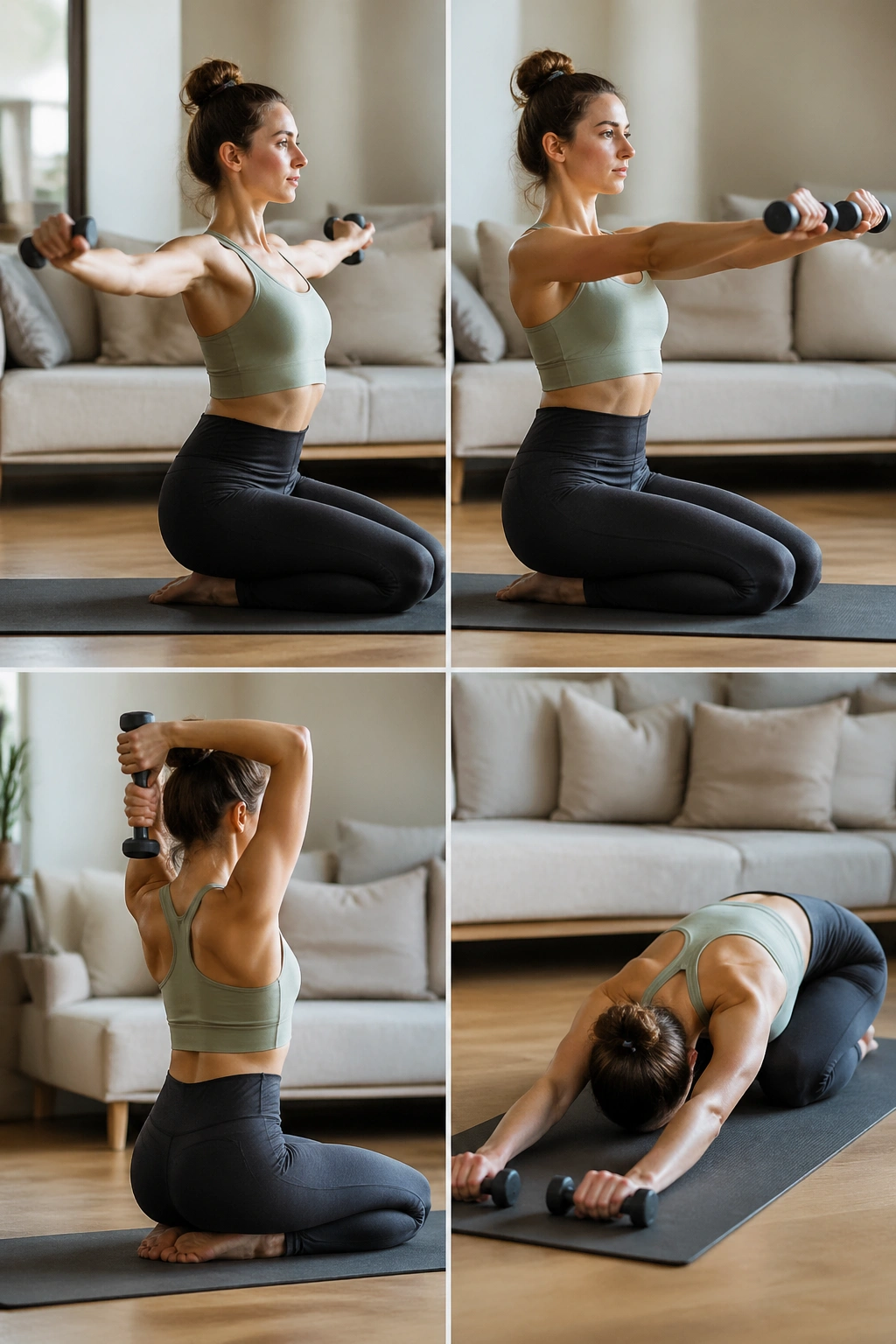
Light weights can make a Pilates session hum.
That surprises people until they try it. One- to three-pound hand weights are enough when the arms are moving slowly and the shoulder blades are told to stay where they belong. The upper back gets involved, the posture improves, and the arms stop freeloading off the neck.
Do 10 chest expansions, 10 front raises, 10 triceps presses, and 8 spine stretch forwards with the weights held close. Then add 8 seated or kneeling arm circles in each direction. If you do not have weights, water bottles work fine, and even empty hands still give you the alignment work.
The one thing I would not skip is the rib check. Keep the ribs heavy and the shoulders down. If the neck starts helping too much, lower the arms halfway and slow the tempo by a full count. That usually makes the difference between a clean burn and a sloppy shrug-fest.
6. The Low-Back Relief Pilates Flow
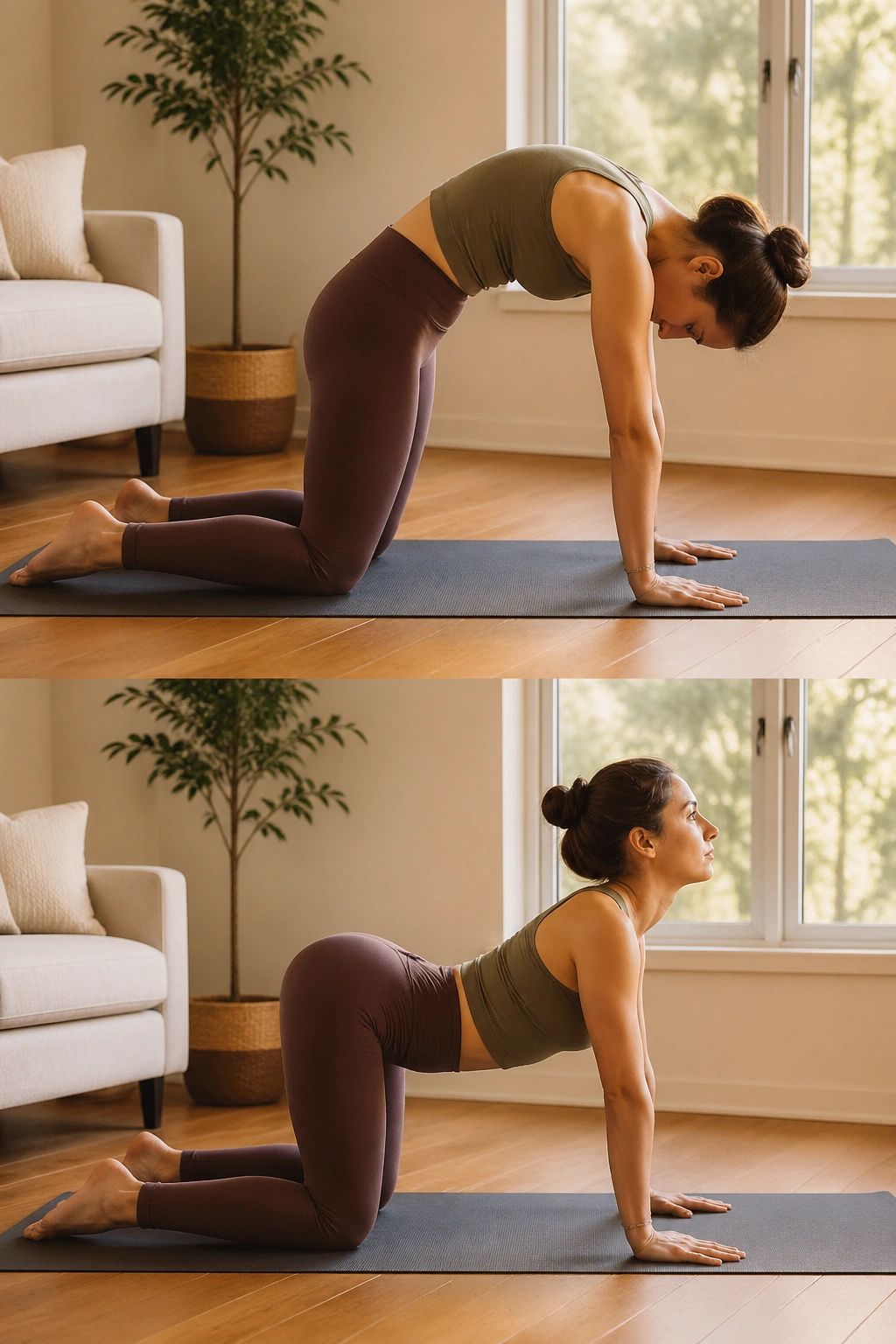
Why do slow core moves feel kinder to a sore back than fast ones?
Because they stop the back from doing every single job. This flow is built for days when the lower back feels tight, compressed, or a little cranky after a lot of sitting. It gives the hips something to do, wakes up the abs, and keeps the spine moving without forcing deep range.
Start with cat-cow for 6 slow rounds. Then move into 8 knee folds, 6 bird-dog reaches per side, and 8 figure-four stretches with a soft hold at the end. If the back likes extension, add 6 very small swan-prep lifts. If not, leave that part out and keep the work on the floor.
What to Skip When the Back Is Angry
- Big roll-ups
- Fast twisting
- Deep back bends
- Any move that pinches in the low spine
If pain shoots, stops you from standing up straight, or feels sharp rather than stiff, do not try to power through it. A gentle session is useful. A stubborn one is not.
7. The Side-Lying Hip Sculpt
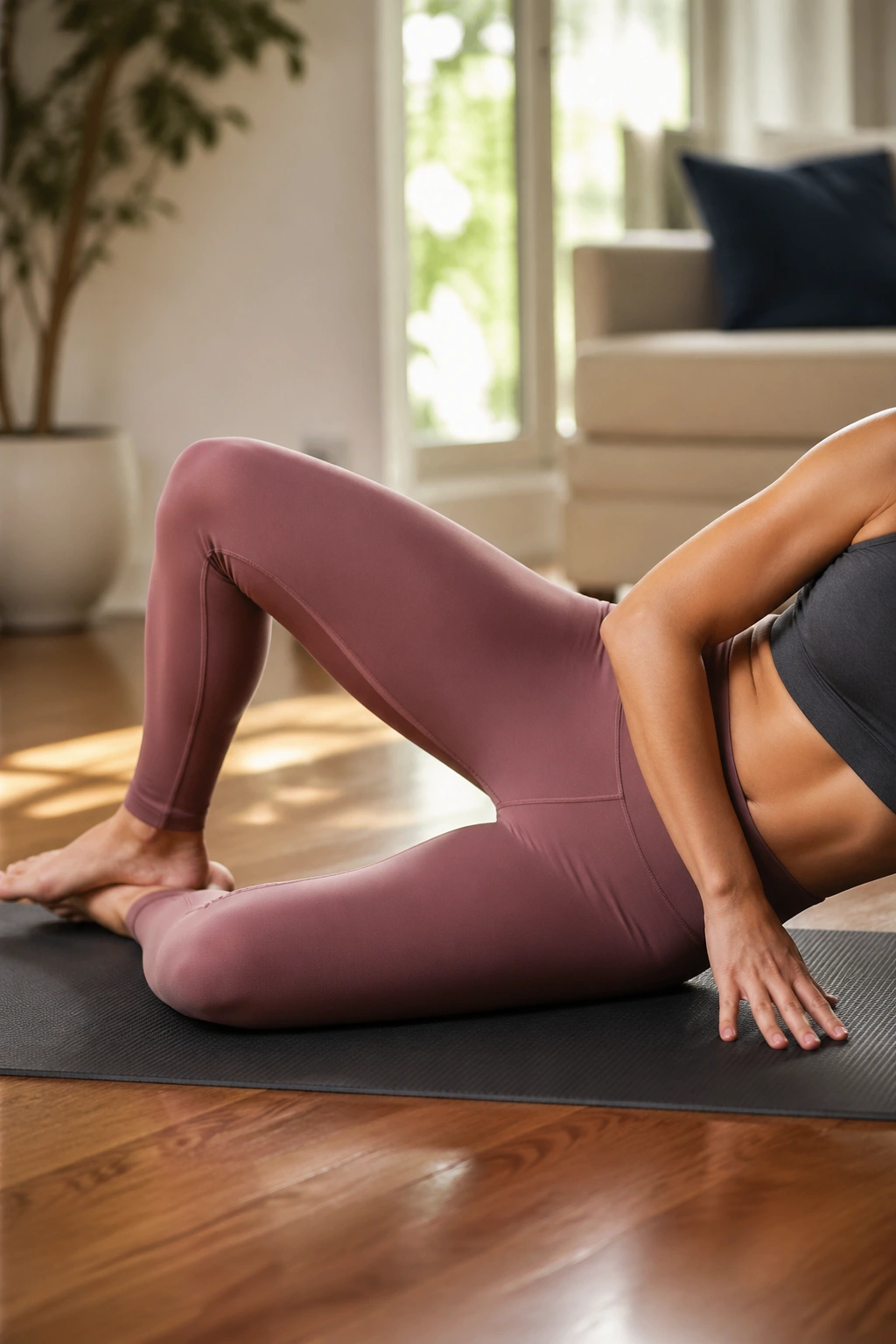
Your outer hip will start talking by the third round.
That is the nature of side-lying work. It seems quiet at first, then the glute medius shows up and reminds you why balance feels better when this muscle is awake. I like this workout because it does a lot with almost no setup. No machines. No complicated transitions. Just a mat and some honest side work.
Do 15 clamshells, 12 straight-leg lifts, 10 small circles forward and back, and 12 side kicks front to back on one side before switching. If you want more burn, add a 5-second hold at the top of each lift. Keep the waist lifted away from the mat so the pelvis does not roll backward.
The Tiny Adjustment That Matters
The top hip should stay stacked over the bottom hip. That is the whole trick.
If the front hip starts opening toward the ceiling, the lower back steals the effort and the side of the glute misses the point. Keep the movement smaller than you think it should be. Smaller usually works better here.
8. The Breath-Led Deep Core Sequence
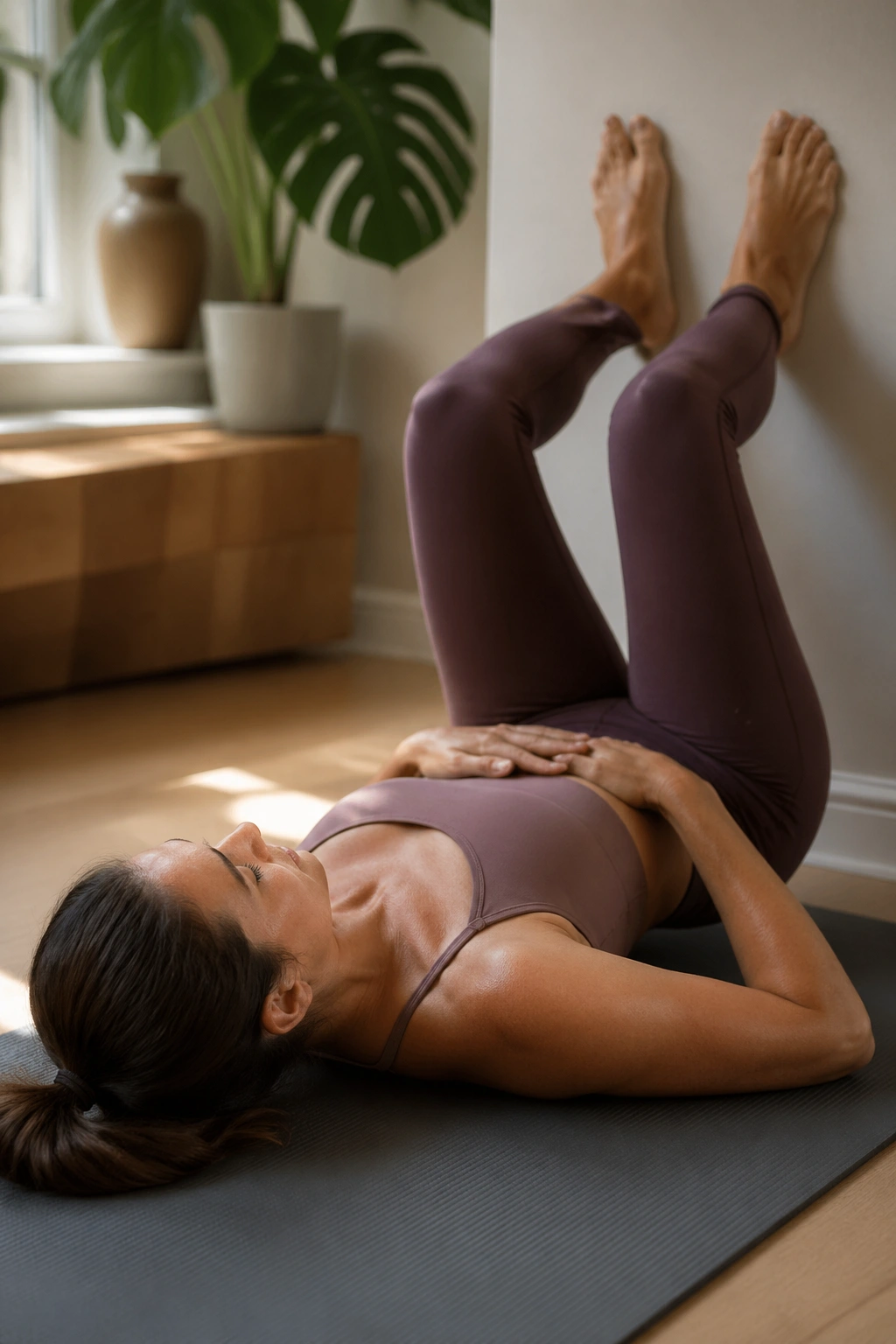
This is the workout I reach for when crunches feel like a bad idea.
It uses the breath to teach the core how to hold the torso without neck strain or sloppy momentum. That makes it a smart choice for women who want a flatter, more stable middle without pounding away at the spine. It is also a nice reset after travel, a heavy training day, or a long stretch of desk time.
Start with 90/90 breathing for 1 minute, heels on the wall and ribs soft. Then do 8 heel slides, 10 toe taps, 6 single-leg stretch reps per side, and a 20-second hundred prep hold. Repeat the whole sequence once.
- 1 minute: 90/90 breathing
- 8 reps: heel slides
- 10 reps: toe taps
- 6 reps per side: single-leg stretch
- 20 seconds: hundred prep
- Repeat once
Exhale first. Move second. That is the rhythm that keeps the belly from bulging and the lower back from arching. If your neck gets tired, keep the head down and cut the lever in half.
9. The Full-Body Pilates Burn
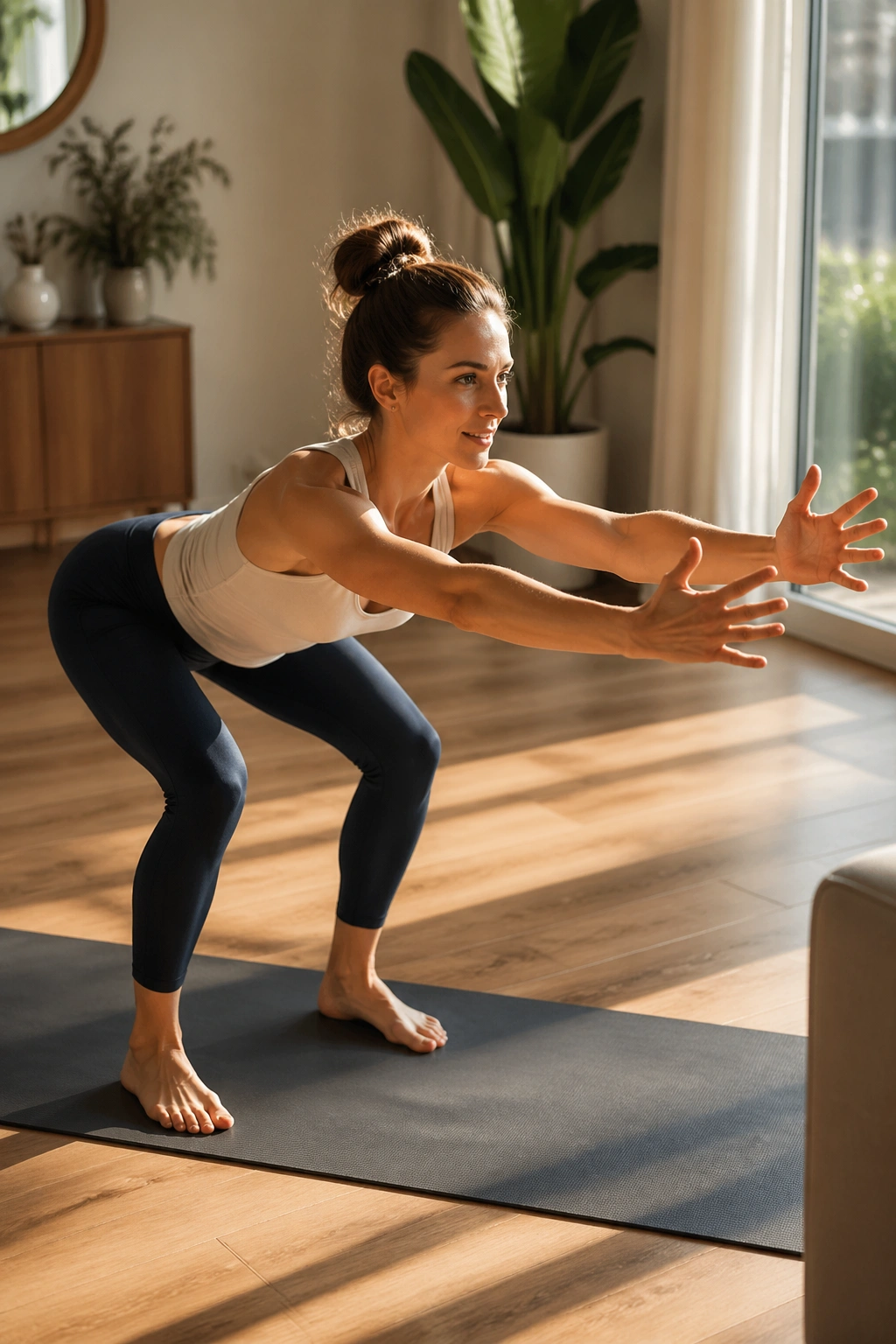
Half mat, half standing, all business.
This is the session that gives you a little of everything: core, legs, arms, balance, and a quiet cardio lift without turning into a jumpy mess. I like it when the goal is to feel worked but still mobile enough to walk into the rest of the day without wobbling.
Try 45 seconds each of squat reach, plank shoulder taps, bridge marches, standing side lifts, and knee drive pulses. Rest for 15 seconds between moves. Run the whole circuit twice, then take the final minute for a long forward fold or a child’s pose breathing reset.
The nice part is that each transition asks for control. The squat should feel like a sit-back, not a drop. The plank should be steady enough that the hips do not sway like a hammock.
If your wrists complain, do the plank taps on a wall or on forearms. The workout still works. It just changes shape.
10. The Morning Mobility Flow
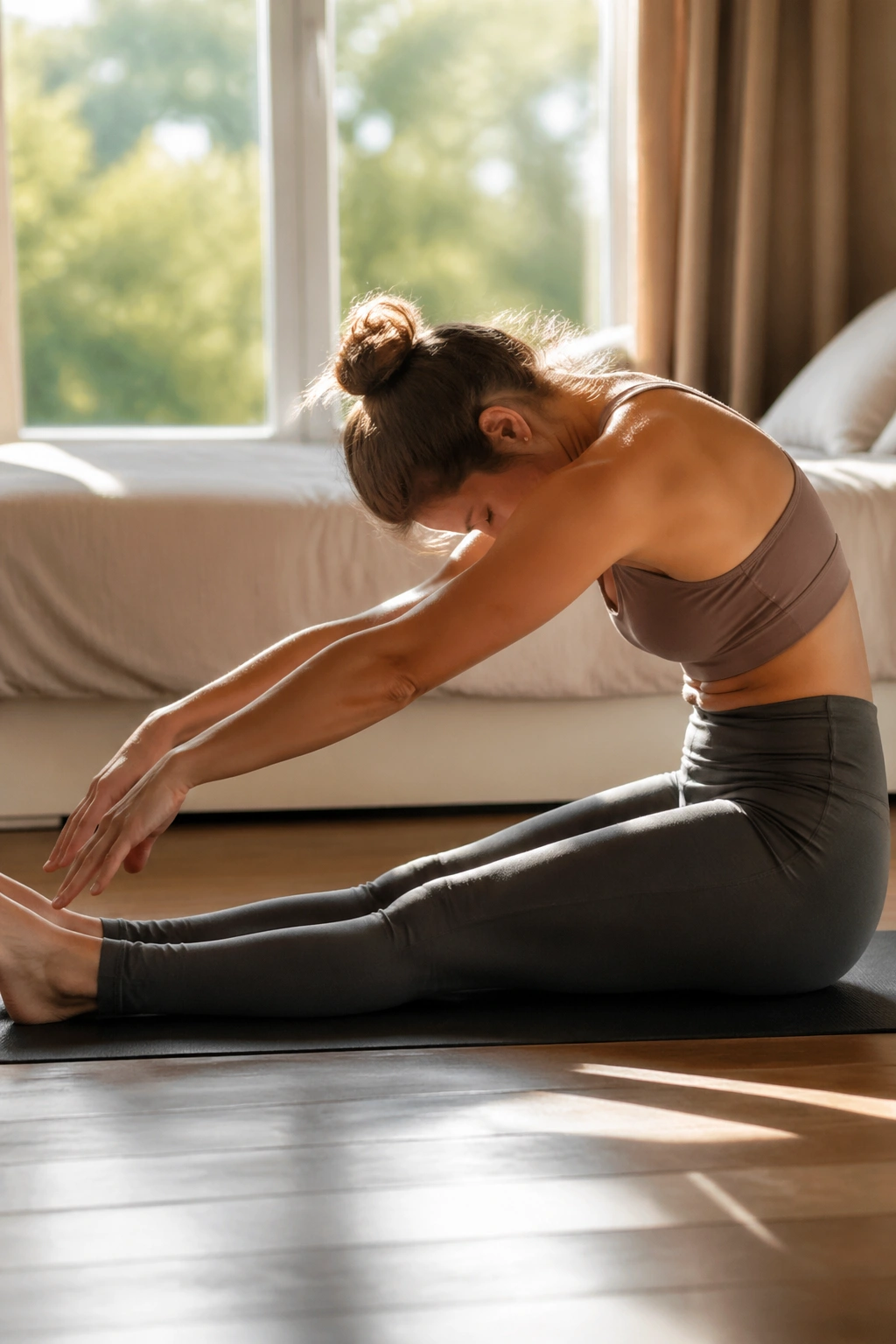
Before coffee, the spine often feels like a rusty hinge.
That is the hour when small circles, folds, and twists can feel like a miracle. This is not a sweat-heavy routine. It is a wake-up call for joints that have gone still overnight, and it works best when you keep your movements smooth and your breathing slow.
Begin with 5 roll-downs, then move into 6 cat-cow waves, 8 seated or standing spine twists, 6 kneeling lunge reaches per side, and 8 hamstring sweeps. End with 30 seconds of standing side reach on each side. Take your time getting from one move to the next. Speed wrecks the benefit.
Best Pace
A count of four on the fold and a count of four on the rise usually feels right. If your hamstrings bite back, bend the knees.
Nope, you do not need to reach your toes. You need the spine to move cleanly and the hips to stop guarding so hard.
11. The Desk-Shoulder Undoer
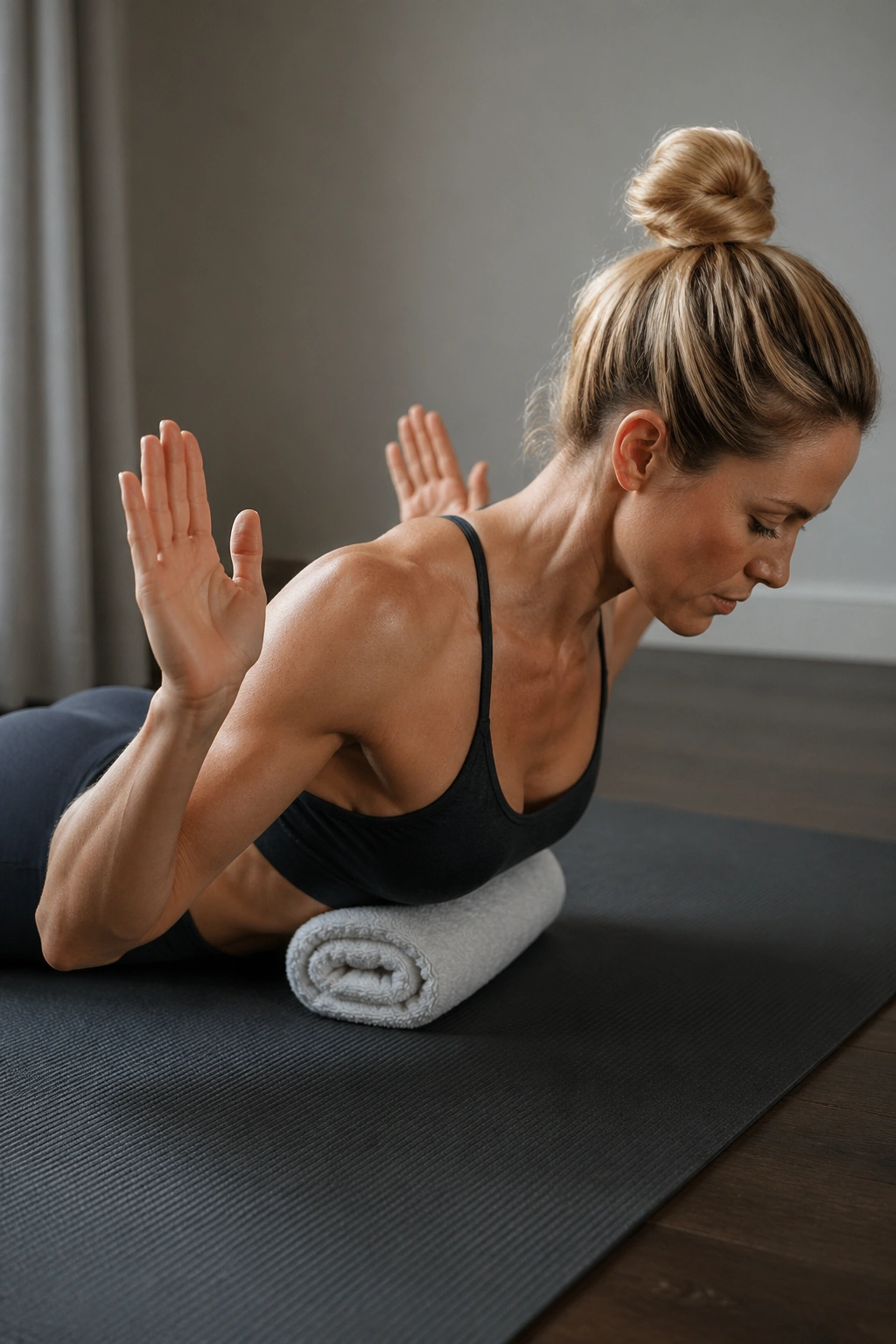
Rounded shoulders hate tiny back work.
They also hate being forced into a big chest opener before the upper back has done any lifting of its own. This session fixes that order. It starts behind the body, where the support should live, and then opens the front a little later.
Do 10 prone W lifts, 10 T raises, 8 swimming prep lifts, and 6 chest-openers with a towel rolled under the upper back. If you have a light band, add 12 band pull-aparts at the end. Keep your forehead lightly down, shoulders away from the ears, and ribs heavy against the mat.
The sensation should feel like the shoulder blades are sliding into the back pockets of a jacket. Not jammed. Not pinched. Just settled. That little distinction matters because a lot of people shrug through upper-body work without realizing it.
If the lower back tries to arch during the prone lifts, put a folded towel under the hips or shorten the range. Clean reps beat bigger reps every time.
12. The Standing Balance and Stability Drill
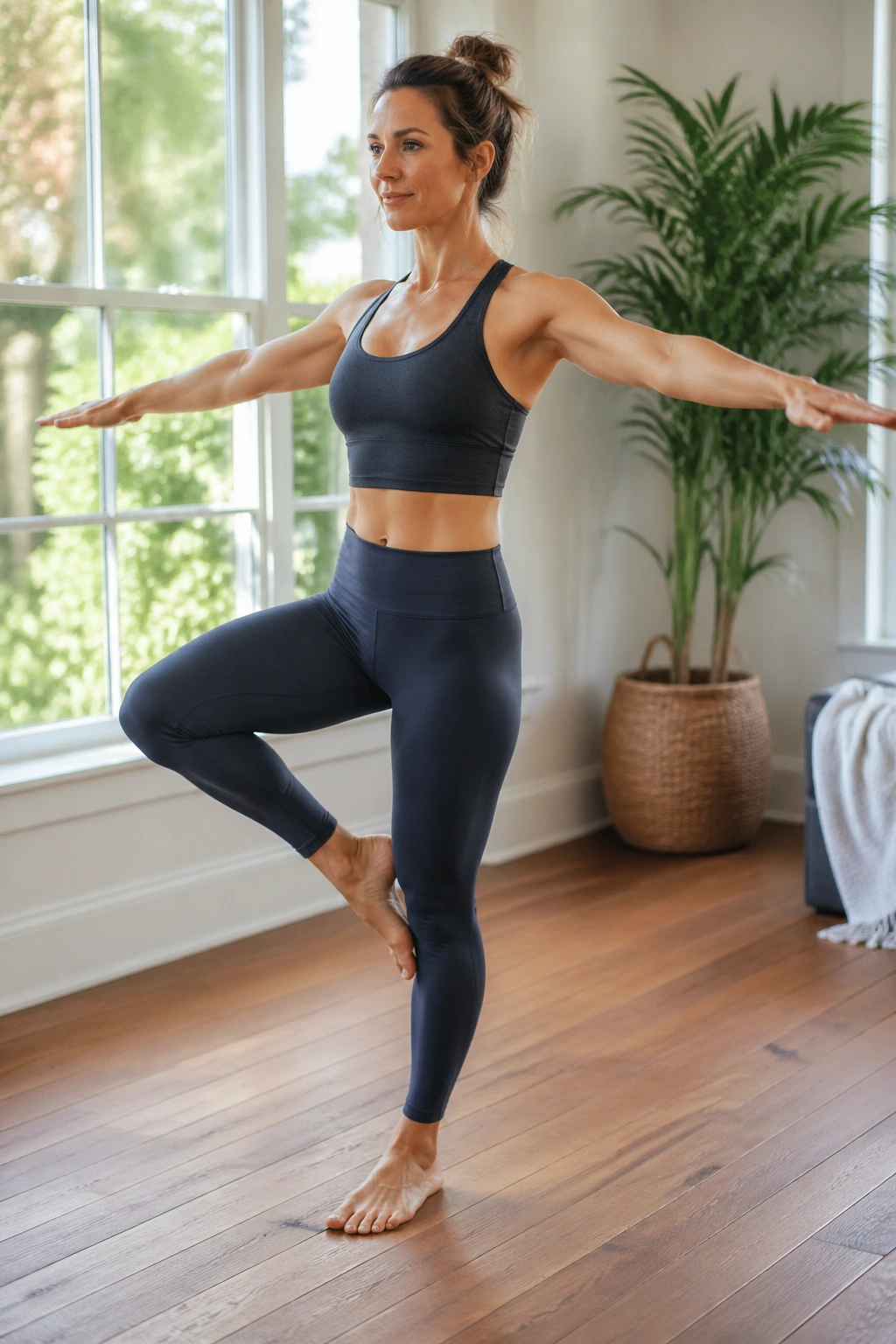
Can you stay on one leg without gripping your toes?
That little test says a lot about ankle, hip, and core control. Balance work is not only for athletes or ballet fans. It is useful for anyone who wants steadier steps, calmer knees, and better body awareness when carrying groceries or climbing stairs.
Start with 8 single-leg reaches per side, 10 calf raises, 8 standing arabesques, and 6 slow knee lifts with an arm sweep overhead. Then stand on one leg for 20 seconds and switch sides. If you wobble, keep the free toes lightly touching the floor until the standing leg feels stronger.
The real cue is under the foot. Press the big toe, little toe, and heel down evenly. That tripod helps the ankle stop wobbling and gives the hip a base to work from.
Short answer: shake is fine. Gripping is not.
13. A Beginner Pilates Flow for Women
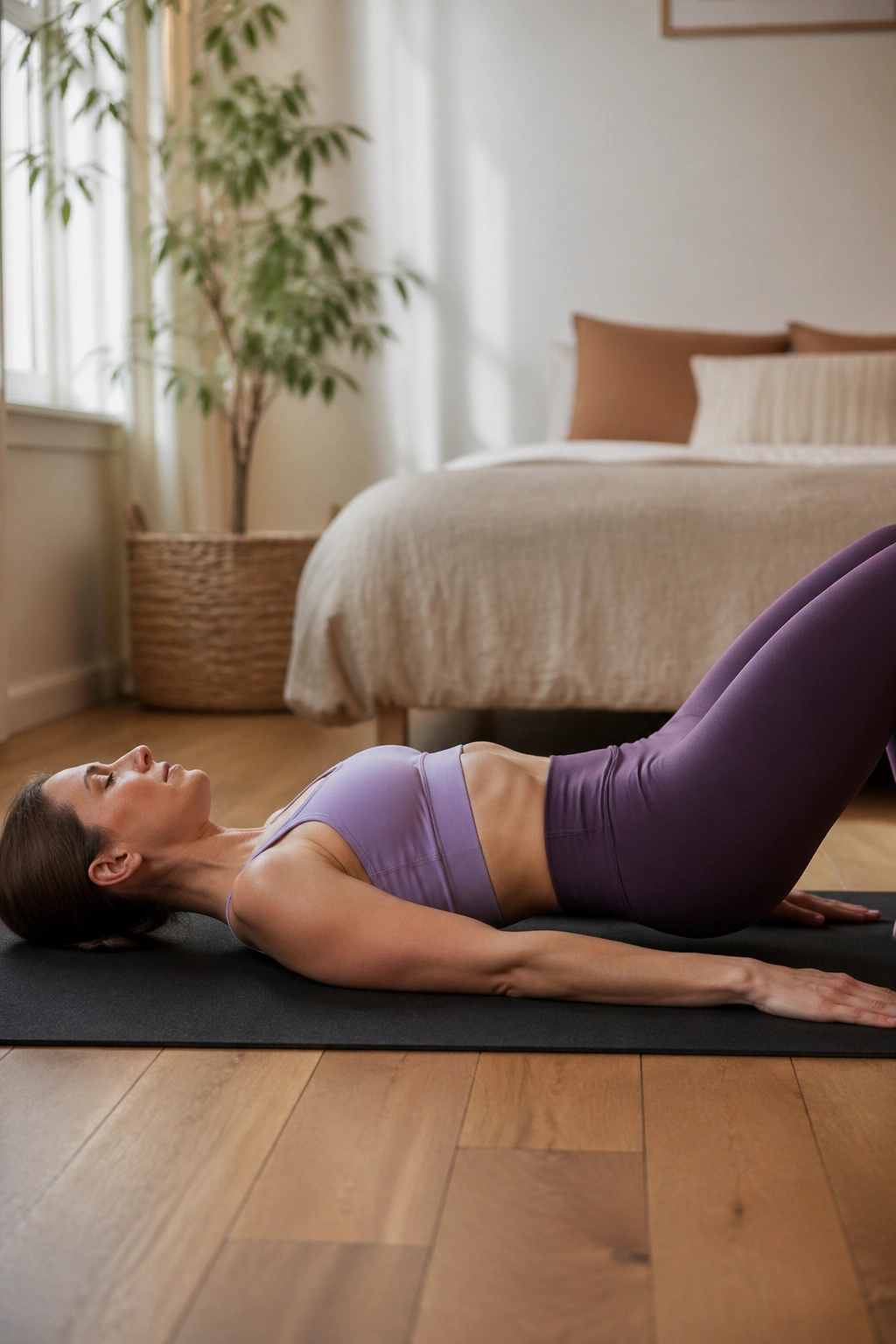
New to Pilates? Start here.
This is one of the easiest Pilates workouts for women to repeat on busy days because it keeps the moves small and the instructions simple. There is no need to chase a hard burn right away. You are building control, breath, and confidence in the spine and pelvis first.
Do 8 pelvic tilts, 8 heel slides, 8 bent-knee fallouts per side, 10 bridges, and 8 side-lying leg lifts per side. Rest when you need it. If you want to extend the session to the full 15 minutes, repeat the first three moves once more before the bridge set.
Modifications That Keep It Friendly
- Keep the head down if the neck feels strained.
- Use a pillow under the head or knees for more comfort.
- Shorten the leg range if the lower back arches.
- Slow the exhale if the belly domes upward.
If you are postpartum or dealing with pelvic floor symptoms, a long exhale and a smaller range usually help more than intensity. The goal is calm control, not force. That is a better place to build from.
14. The Oblique and Waistline Flow
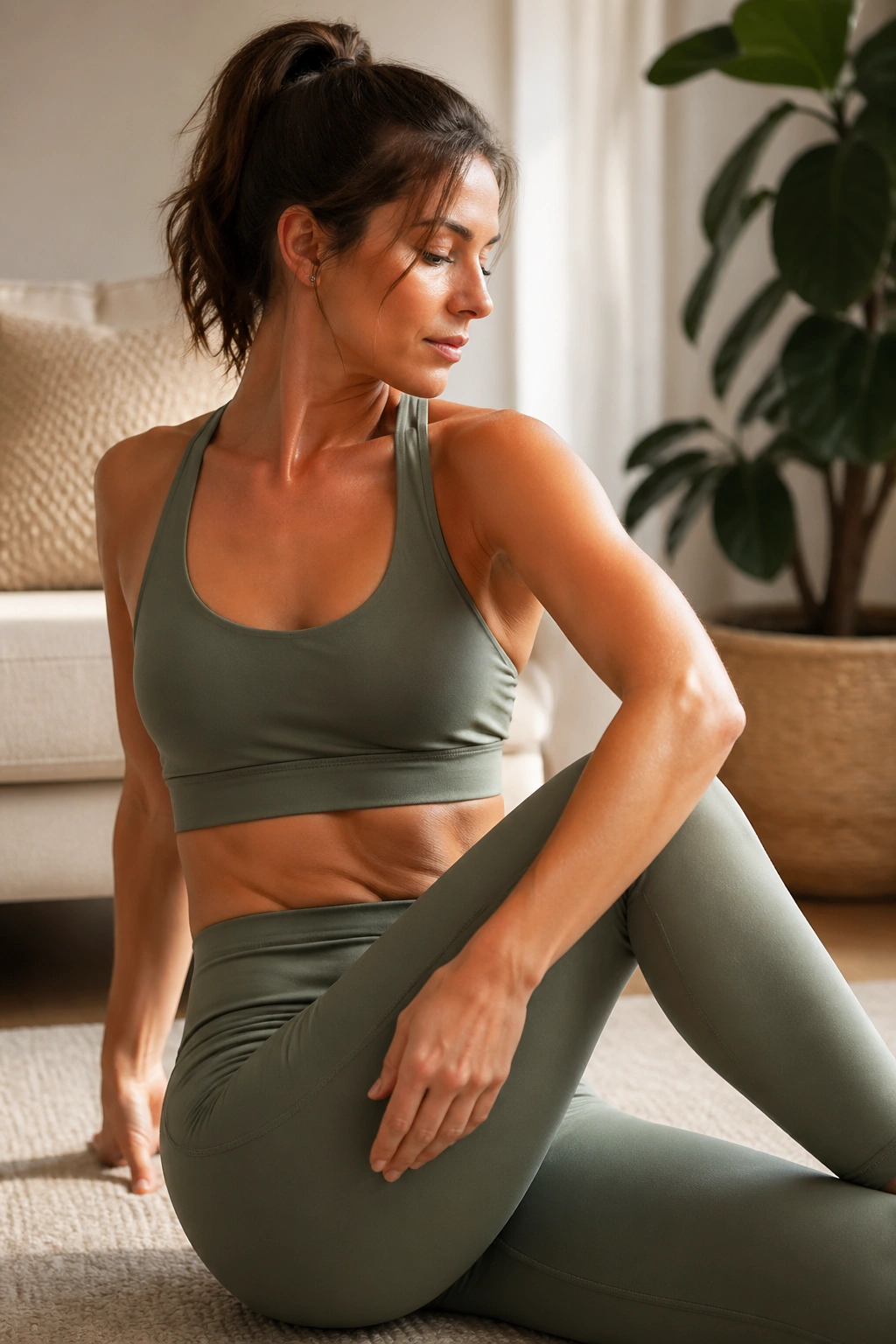
If you want the sides of the waist to work, keep the ribs quiet.
That is the whole trick. A lot of people yank with the neck or fling the elbows wide and call it an oblique workout. The better version is slower, smaller, and much harder than it looks.
Try 10 crisscross reaches, 8 side plank knee drops per side, 6 seated saws, 8 corkscrew circles, and 8 standing side bends with one arm overhead. If side planks irritate the wrist, put the forearm down or keep the bottom knee on the mat. Keep the breath steady and the pelvis from rocking.
The obliques should feel like they are shortening and lengthening, not clenching. If your neck takes over, the range is too big. Pull the movement back by a few inches and the right muscles show up again.
This is a sneaky one. It looks tidy. It burns.
15. The Cardio-Pilates Interval Set
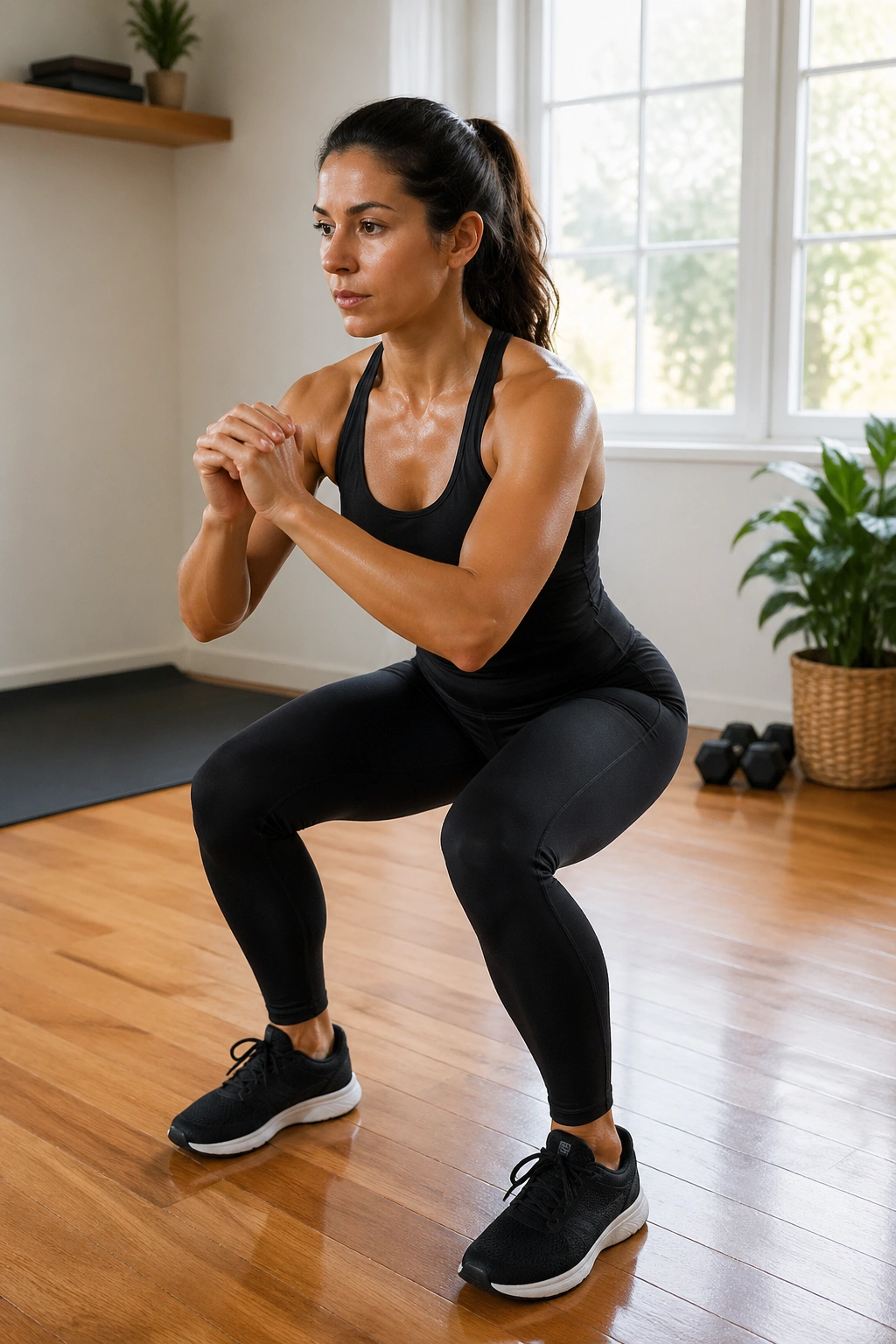
Fast feet. Slow control.
That is the mood here. The heart rate rises, but the session still feels like Pilates because every move asks for posture, breath, and clean lines. I like this for days when you want a little sweat without pounding the joints.
Set a timer for 40 seconds of work and 20 seconds of rest. Move through squat pulses, modified mountain climbers, skater steps, plank knee drives, and standing kickbacks. Repeat the full circuit twice. If your form gets fuzzy, slow the tempo before you add another round.
The important part is the landing. Keep your feet quiet. Keep the ribs from flaring. Keep the shoulders from climbing toward your ears.
This is not a sprint workout dressed in Pilates clothes. It is a controlled interval session with a low-impact feel.
16. The Glute and Hamstring Strength Block
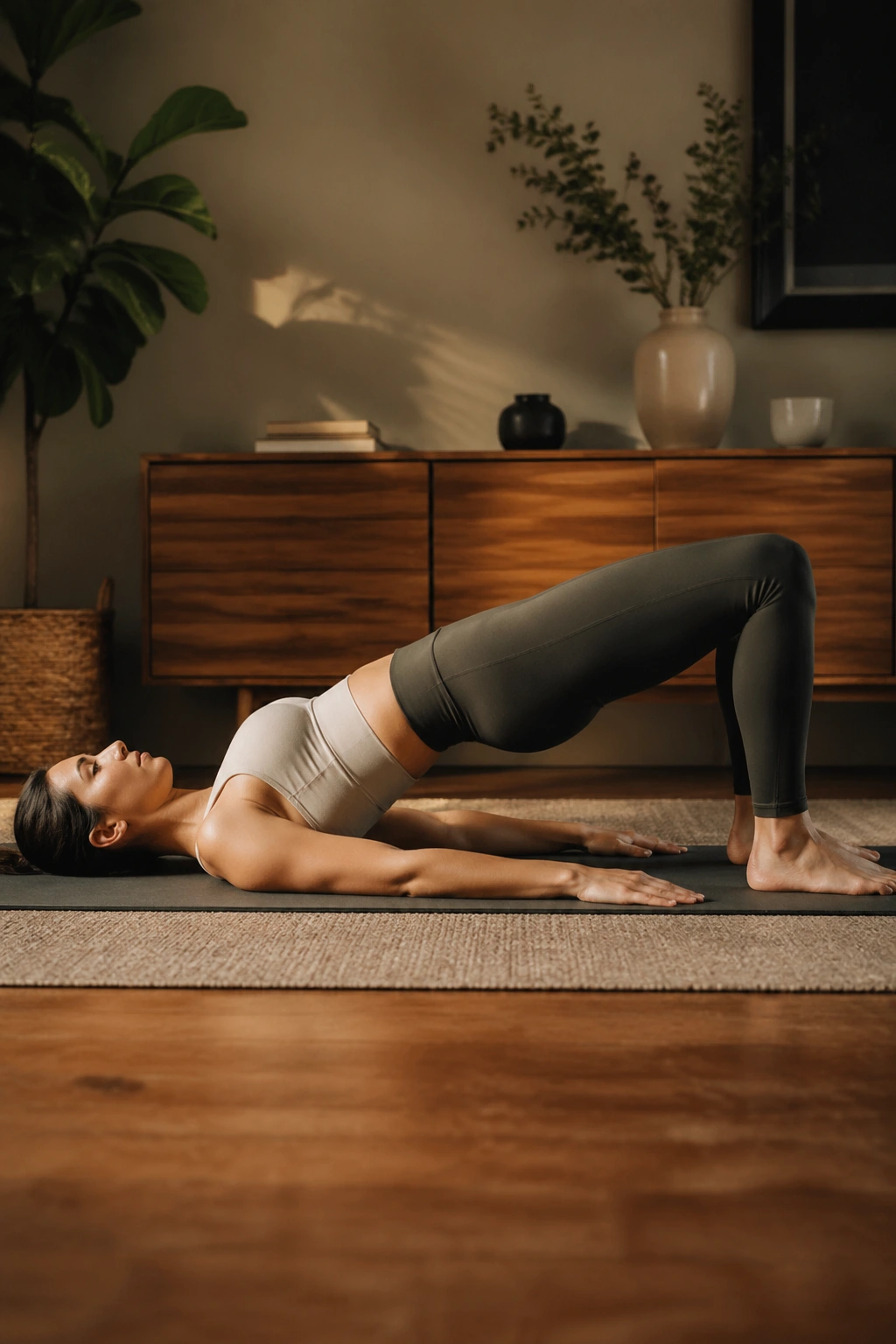
Why do bridges feel harder when the heels are farther away?
Because the hamstrings step in more aggressively. That is useful when you want the back of the legs to help the glutes, not just the front of the thighs to dominate everything. This block is strong, compact, and excellent for anyone who wants more power in the posterior chain.
Start with 10 heel-dig bridges, then 8 slider or towel hamstring curls, 6 single-leg bridge assists per side, and 12 donkey kicks per side. If you do not have sliders, socks on a smooth floor work. A hand towel on tile does the same job.
What You Should Feel
- Heels: pressing down and pulling back
- Hamstrings: working, not cramping
- Glutes: lifting the hips instead of the lower back
- Belly: staying lightly braced, not pushed outward
If the hamstrings cramp, move the heels closer and lower the bridge height. That almost always settles it. Strong does not have to mean sloppy.
17. The Recovery Day Stretch and Strength Routine
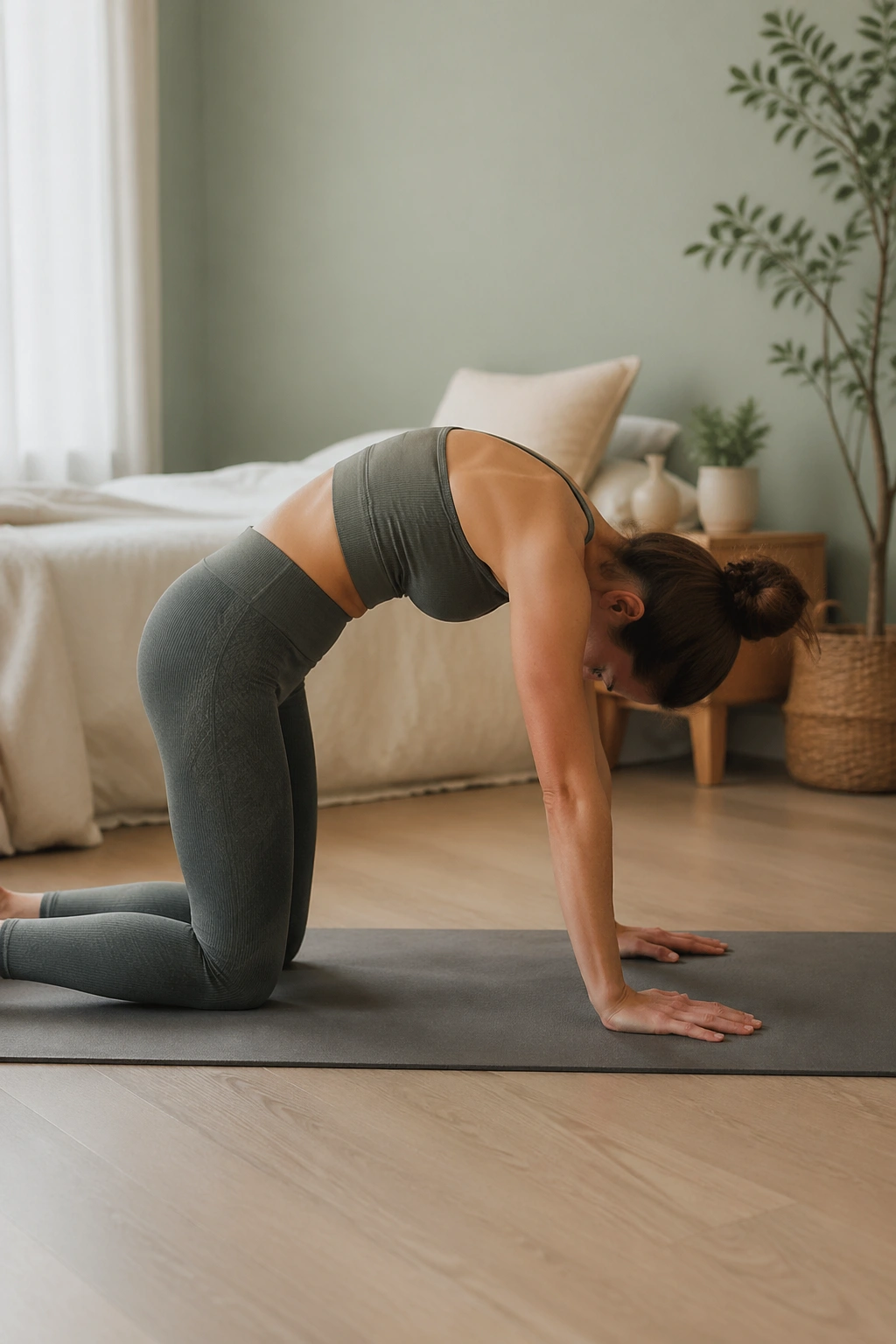
A recovery workout should still feel organized.
That does not mean hard. It means the body gets a clear plan instead of a random wander through stretches. On tired days, that little bit of structure helps the nervous system calm down while the joints keep moving.
Use 5 cat-cows, 30 seconds of child’s pose breathing, 6 thread-the-needle reaches per side, 8 dead-bug breaths, and 8 gentle side-lying leg lifts per side. End with a long figure-four stretch and a slow roll to standing. Keep the range small and the transitions easy.
This is the session I would choose after a heavier strength day, a long walk, or a poor night of sleep. It helps when you feel puffy, stiff, or just not interested in pushing.
No need to chase a sweat.
A good recovery routine should leave you looser, not flattened.
18. The Total-Body Quiet Burn
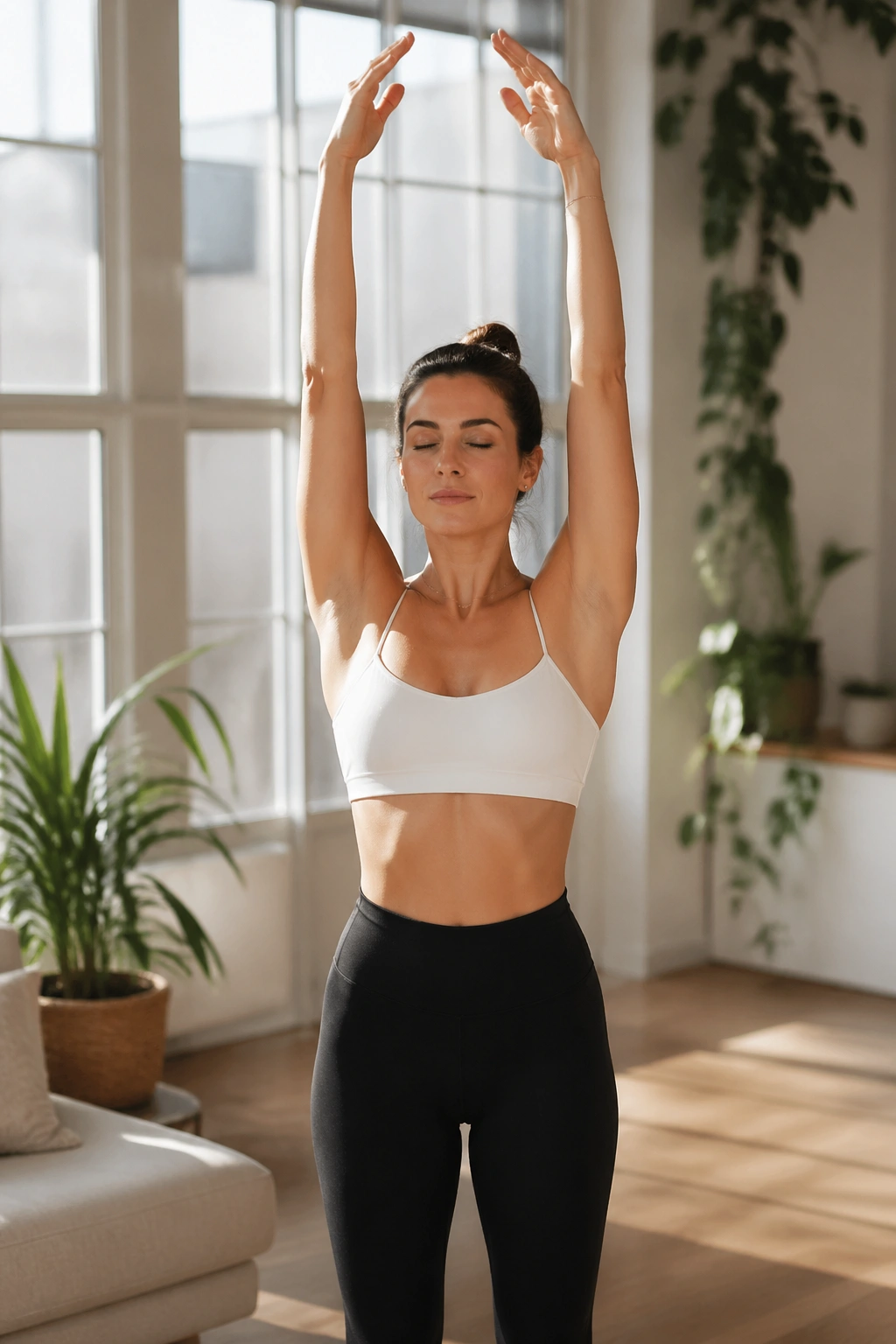
The best 15-minute finishers do not look dramatic.
They just make you feel switched on from head to toe. This one pulls the whole body together: legs, core, back, shoulders, and balance. It is a clean way to close a workout week, or to use when you want one session that feels complete without feeling punishing.
Run 2 rounds of 6 roll-downs, 10 squat reaches, 8 plank knee drives per side, 12 bridge lifts with a 2-second hold, 10 side-lying kicks per side, and 30 seconds of standing breath work at the end. Keep the movements slow enough that your form stays tidy all the way through. If you lose control, trim the reps before you trim the rest.
The beauty of this kind of flow is that it leaves no big weak spot untouched. The standing work wakes the legs. The floor work wakes the core. The bridge and side-lying pieces catch the hips that tend to get ignored.
Finish taller than you started. That is usually the sign the session did its job.
The Bottom Line
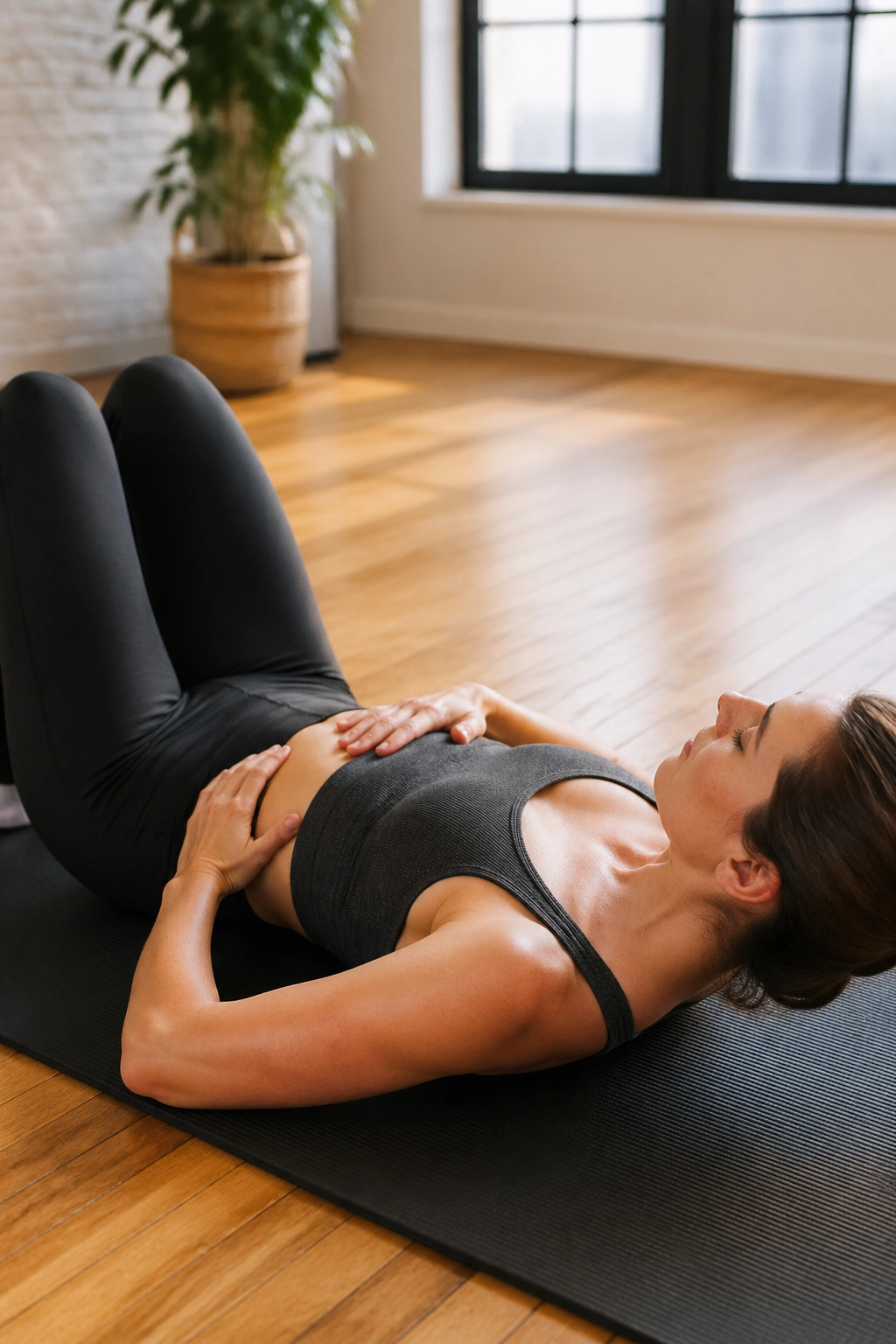
The best 15-minute Pilates routine is the one that matches the body you have on the mat, not the body you wish showed up. Some days want core control, some need glute work, and some are just asking for your shoulders to unclench.
Rotate the harder sessions with the quieter ones. A good mix is one core day, one lower-body day, one posture day, and one recovery day. That keeps the work from becoming repetitive and gives the smaller stabilizers enough chances to catch up.
And if a move causes neck strain, back pinching, or that ugly bulge through the middle of the abdomen, scale it back. Small, clean reps done often tend to beat heroic efforts done badly.
