



Lower body challenges for women at home work best when they feel a little unfair. A chair, a wall, a stair, and ten focused minutes can hit your quads, glutes, hamstrings, and calves harder than a casual circuit that never gets close to fatigue.
That’s the part most home routines miss. They move. They sweat. They do not challenge anything.
No gym required.
If you want stronger legs and better shape without the drive, the wait, or the crowded equipment floor, the trick is picking challenges that make your muscles work in different ways: long holds, slow reps, balance drills, pulse sets, stair work, and a few moves that look easy until they are not. A 3-minute warm-up — marching in place, 10 bodyweight squats, 10 reverse lunges, and a few ankle circles — makes every one of these feel cleaner.
Start with the first challenge that matches your mood. Fresh energy? Go for the squat work. Tired but stubborn? Pick bridges, holds, or band work. Sore in the knees? There are smarter options here than mindless jumping.
1. Wall Sit Ladder Challenge
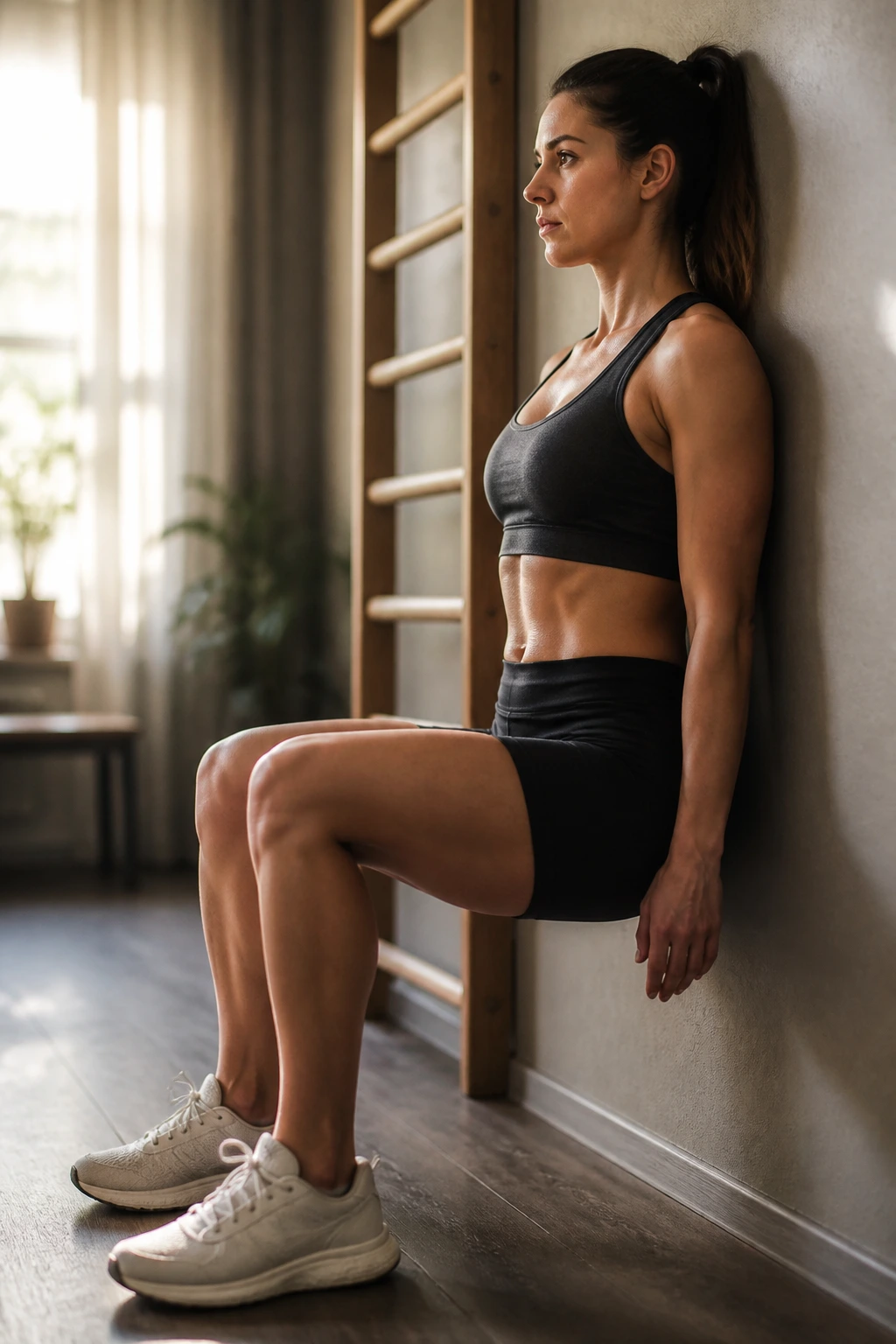
Wall sits are rude in the best possible way. They look calm from across the room, then your thighs start shaking and your brain gets very interested in the clock.
The ladder setup keeps the challenge honest. Hold a wall sit for 20 seconds, then 30, then 40, resting for 20 seconds between each hold. Do 3 rounds if you want a short leg burn, or 4 rounds if you like a bigger finish. Keep your feet about one to two foot-lengths away from the wall, knees stacked roughly over the ankles, and your lower back pressed into the wall. If your knees drift too far forward, the burn moves in a way that feels sloppy instead of useful.
How to make it harder
- Hold a water bottle or dumbbell at chest height.
- Add a 5-second pause at the end of each hold.
- Lift one heel for the last 10 seconds of the final round.
- Keep your ribs down. That sounds small. It matters.
Best cue: your quads should feel hot, but your lower back should not take over. If it does, stand up, reset, and sit a touch higher.
2. Glute Bridge March Challenge
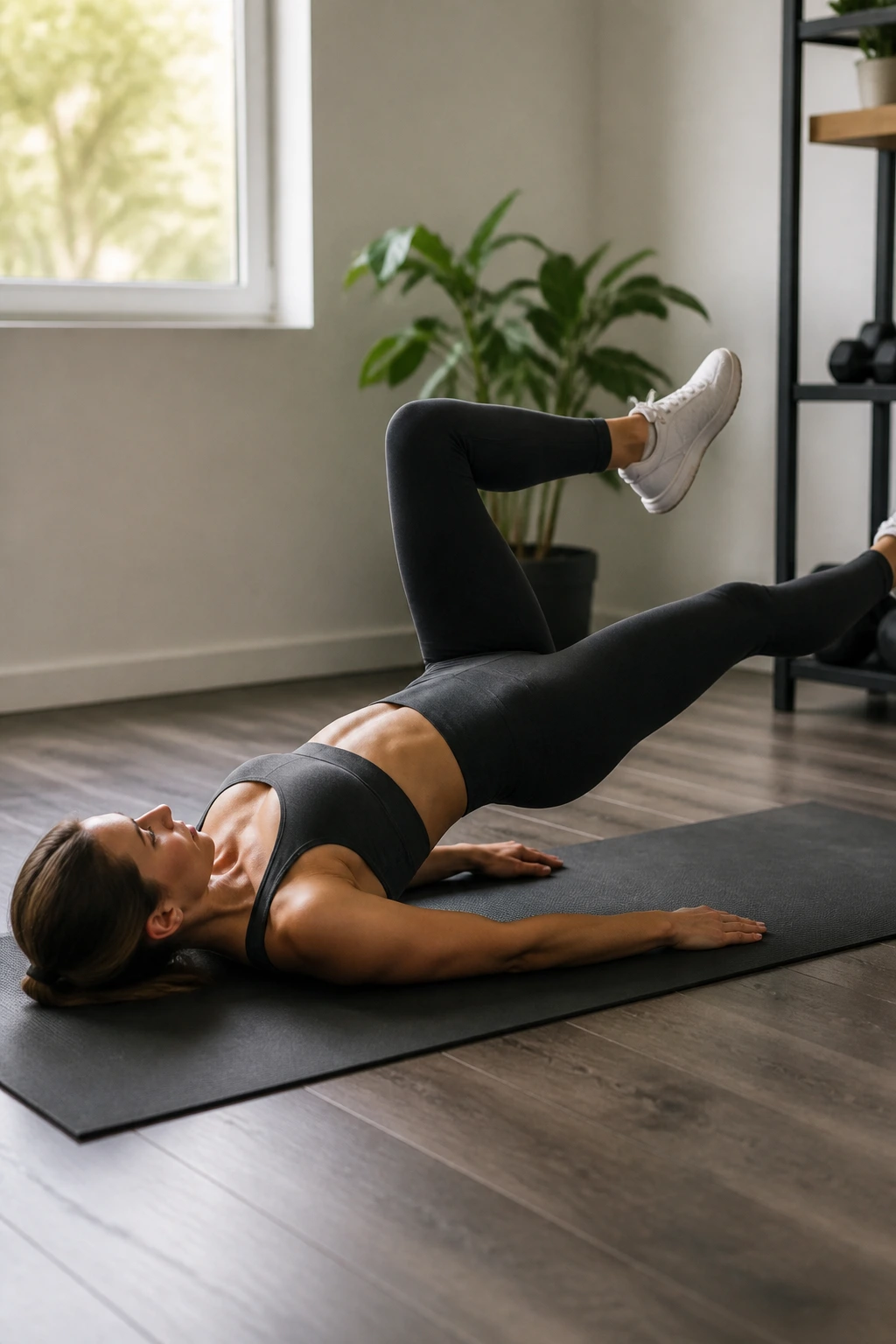
Why do glute bridges still humble strong legs? Because once you start marching, your pelvis has to stay level while one leg leaves the floor. That little shift exposes every weak link around the glutes and core.
Set yourself on the floor with knees bent and feet flat, heels close enough that your fingertips can graze them. Lift into a bridge, squeeze the glutes, and then march one knee up at a time without letting your hips wobble. A clean version usually looks simple. A real version feels like you’re trying not to spill a glass of water on your stomach.
Run 3 sets of 20 marches total, or do 30 seconds of bridges + 10 controlled marches for 4 rounds. Keep your ribs tucked down and avoid arching the low back to cheat the lift. The movement should come from the glutes, not from flinging the hips higher.
What to watch for
Your hamstrings may help a little. Fine. They should not dominate.
If you cramp behind the thighs, move your heels a few inches farther from your hips and slow the march down. One more thing: pause for a full second at the top of each march. That pause is where the work gets real.
3. Reverse Lunge Pyramid Challenge
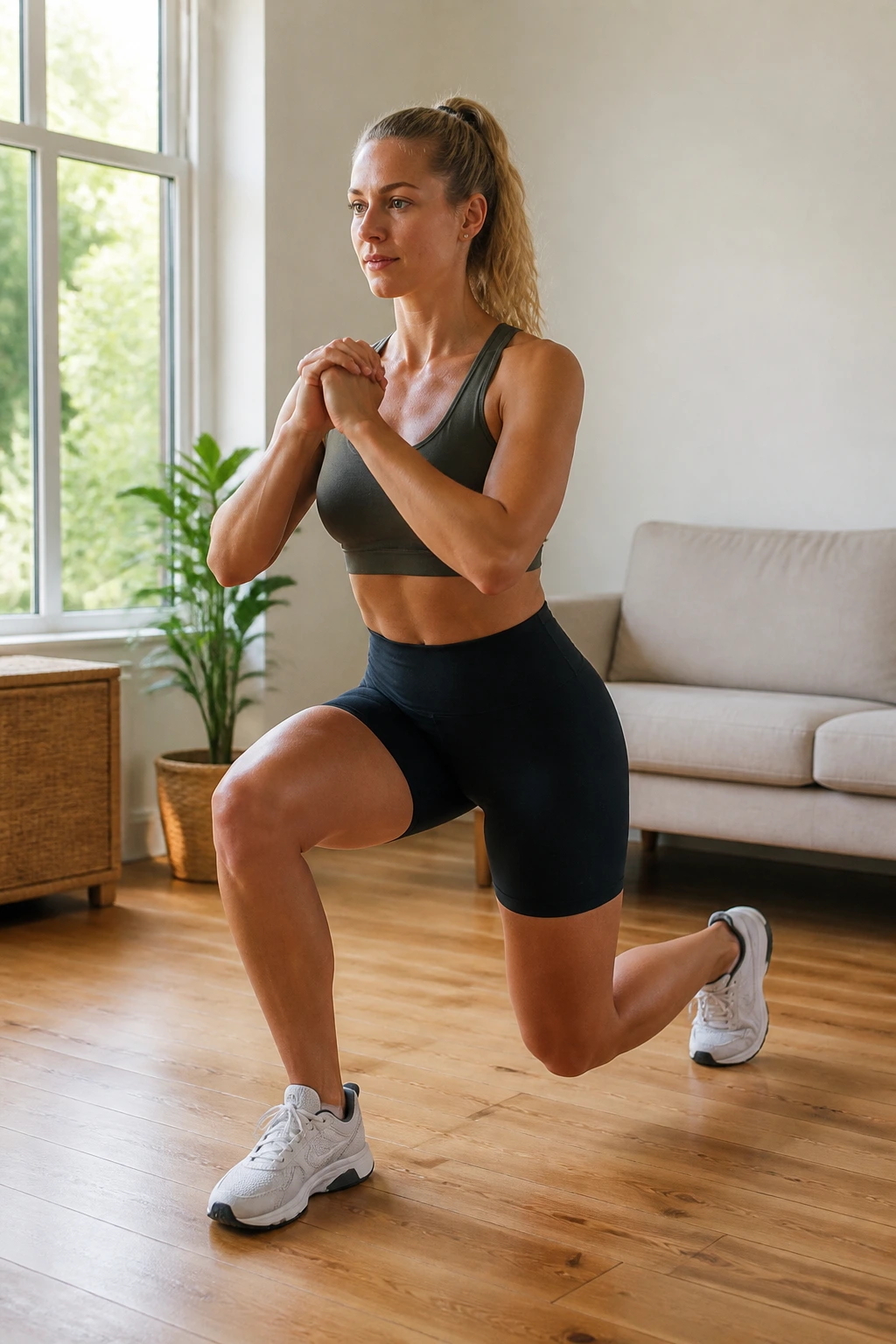
A reverse lunge pyramid is one of those home workouts that looks almost too civilized on paper. Then the last few reps arrive and your front leg tells the truth.
Start with 6 reps per side, then move to 8, then 10, then 12, resting 30 to 45 seconds between sets. Step back far enough that your front knee can stay in a comfortable line over the ankle. You want a vertical drop, not a forward slam. The back knee should hover close to the floor, not crash into it.
A reverse lunge usually feels friendlier on the knees than a forward lunge, and I think that matters when you’re training at home without a spotter or a rack to steady you. Keep your torso tall, push through the front heel as you stand, and avoid leaning so far forward that the whole thing becomes a balance act.
Small changes that make a big difference
- Hold a chair back lightly if your balance is shaky.
- Slow the lowering phase to 3 seconds.
- Pause for 1 second at the bottom.
- Add a backpack once bodyweight stops feeling hard.
One good pyramid can light up glutes, quads, and inner thighs without needing any fancy setup.
4. Tempo Squat Challenge
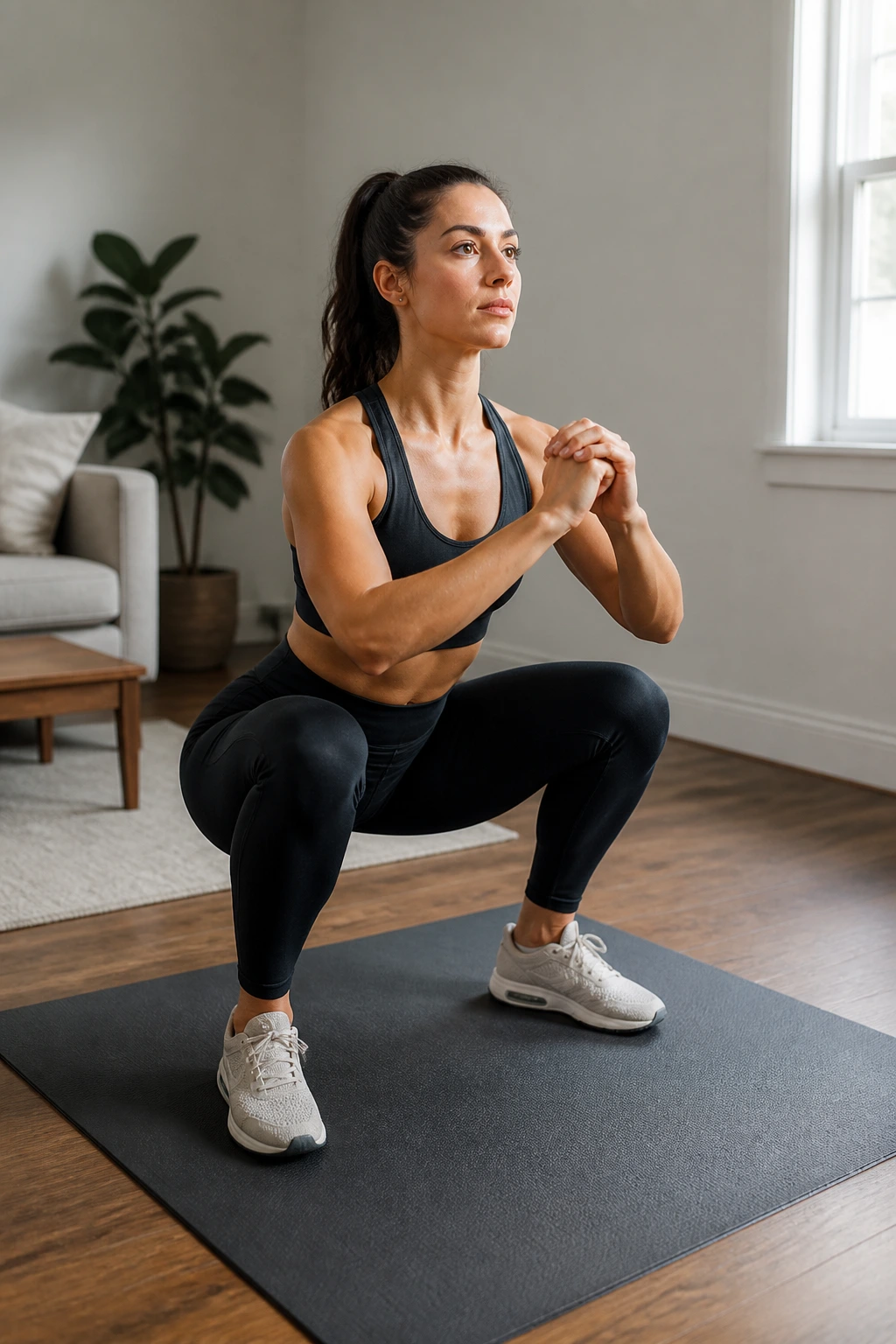
Fast squats are fine. Slow squats are different.
A tempo squat challenge forces you to feel every inch of the rep instead of coasting through it. Use a 3-second lower, a 1-second pause at the bottom, and a strong stand back up. Do 3 sets of 12 to 15 reps, resting 45 seconds between sets. If your form gets messy, cut the reps before you cut the speed. Speed is not the point here.
The nice thing about tempo work is that it makes ordinary bodyweight squats feel much heavier. Your quads stay under tension longer, your glutes have to help more at the bottom, and your core can’t relax and wander off. No jumping needed. No equipment needed either.
Keep your chest lifted, but don’t flare your ribs. That’s the line people miss. If you lift the chest by arching the lower back, the squat stops being a leg exercise and turns into a bad habit.
Try touching a chair lightly behind you on the first set if depth feels uncertain. After that, take the chair away and squat to the same depth on your own.
5. Stair Step-Up Intervals
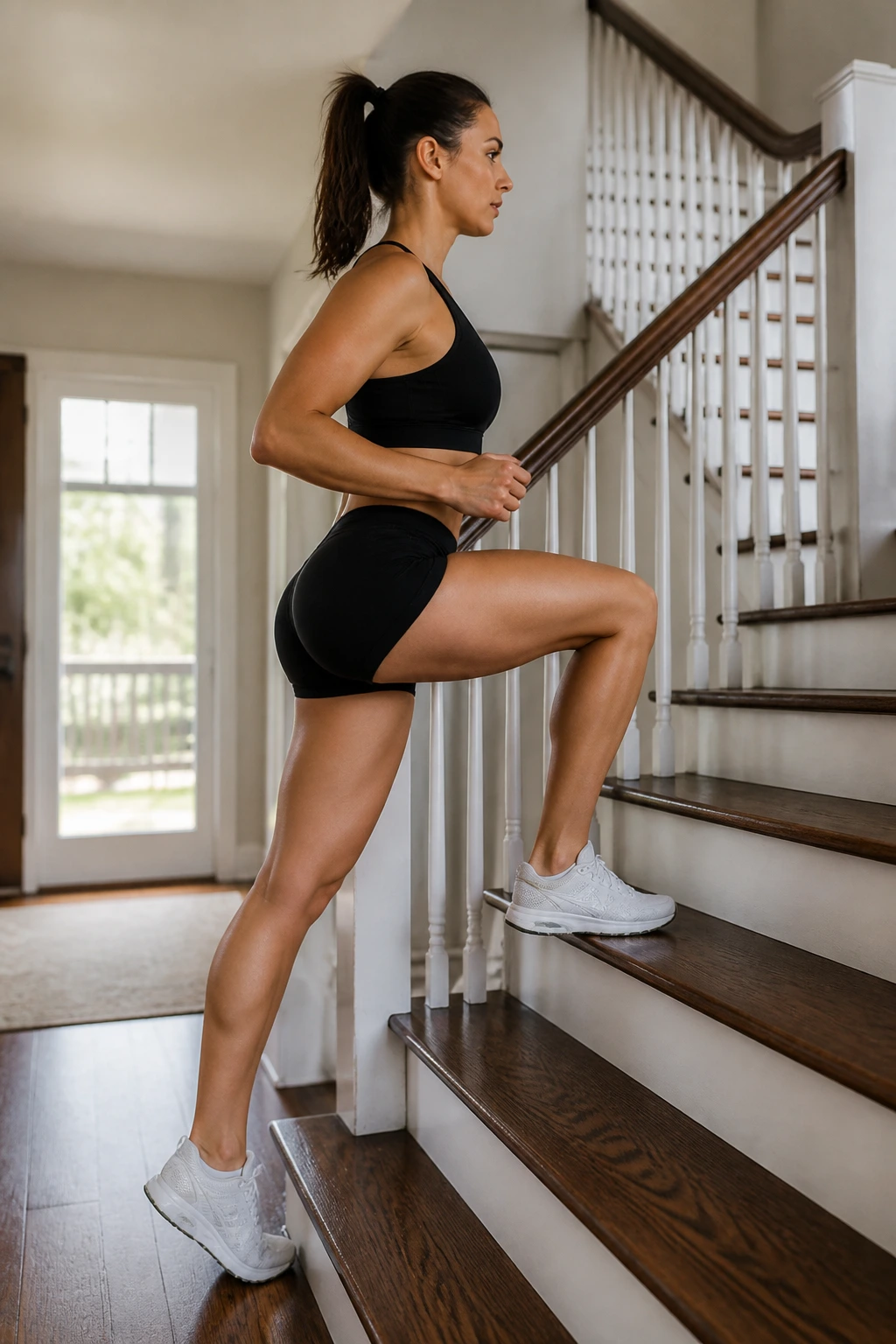
A staircase is one of the best home tools nobody brags about enough.
Use the bottom stair or a sturdy step and run 30 seconds of step-ups, 30 seconds of rest, for 8 rounds. Switch the lead leg halfway through, or alternate legs each rep if that feels smoother. Drive through the whole foot on the step, not just the toes, and keep the working knee tracking over the middle toes. If the step feels unstable, stop. A shaky surface is not a challenge. It is a problem.
Why it hits differently
Step-ups load the glutes and quads in a way that feels close to climbing, which is why they burn fast. They also ask the trailing leg to help without doing all the work. That tiny distinction matters. You’re not just standing up. You’re controlling your own bodyweight through a forward-and-up path, and that gets expensive fast.
A slight forward lean from the hips is fine. A collapsing chest is not.
One useful rule: if you can skip the push from the back leg, do it. The front leg should do the bulk of the work. That’s where the challenge lives.
6. Lateral Lunge Reach Challenge
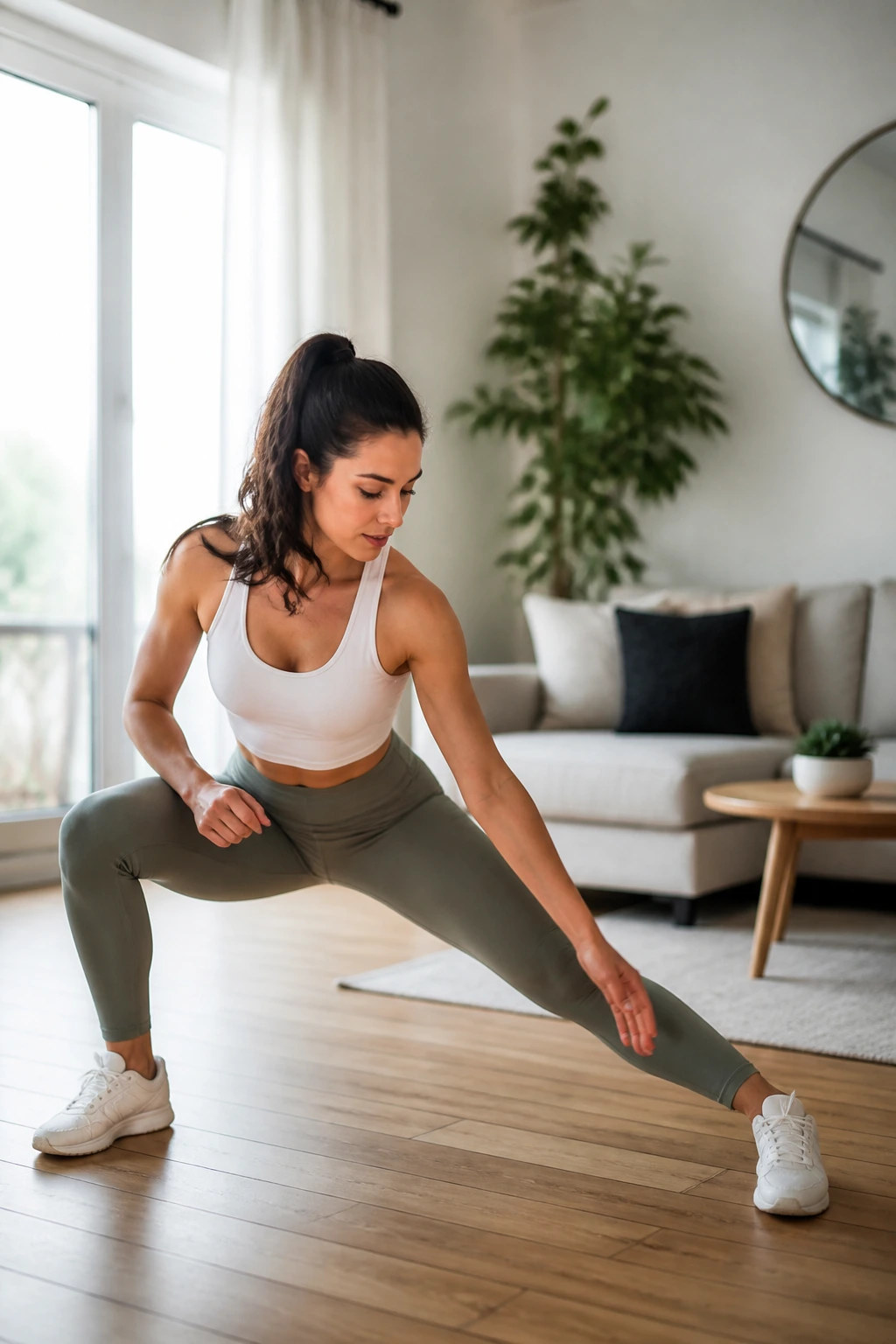
Most people live in forward-and-back leg work. Side-to-side movement gets ignored, then the inner thighs and hip stabilizers complain the first time you try anything athletic.
The lateral lunge reach fixes that. Step one foot wide, bend that knee, sit the hips back, and send the other leg straight. Reach both hands toward the working side so the torso stays honest. Do 8 to 10 reps per side for 3 to 4 rounds, resting about 30 seconds between rounds. The stretched leg should feel long. The working leg should feel loaded.
This move is one of my favorites for at-home lower body work because it opens the inner thigh on one side while loading the outer hip on the other. That combination is hard to fake. If you rush it, the knees take over and you lose the point.
Use a shorter range if your hips feel tight. Use a deeper sit only if the working foot stays flat and the knee doesn’t cave inward.
A nice side effect: the first few reps feel awkward. Then they start to feel athletic. That’s usually a good sign.
7. Single-Leg Deadlift Balance Challenge
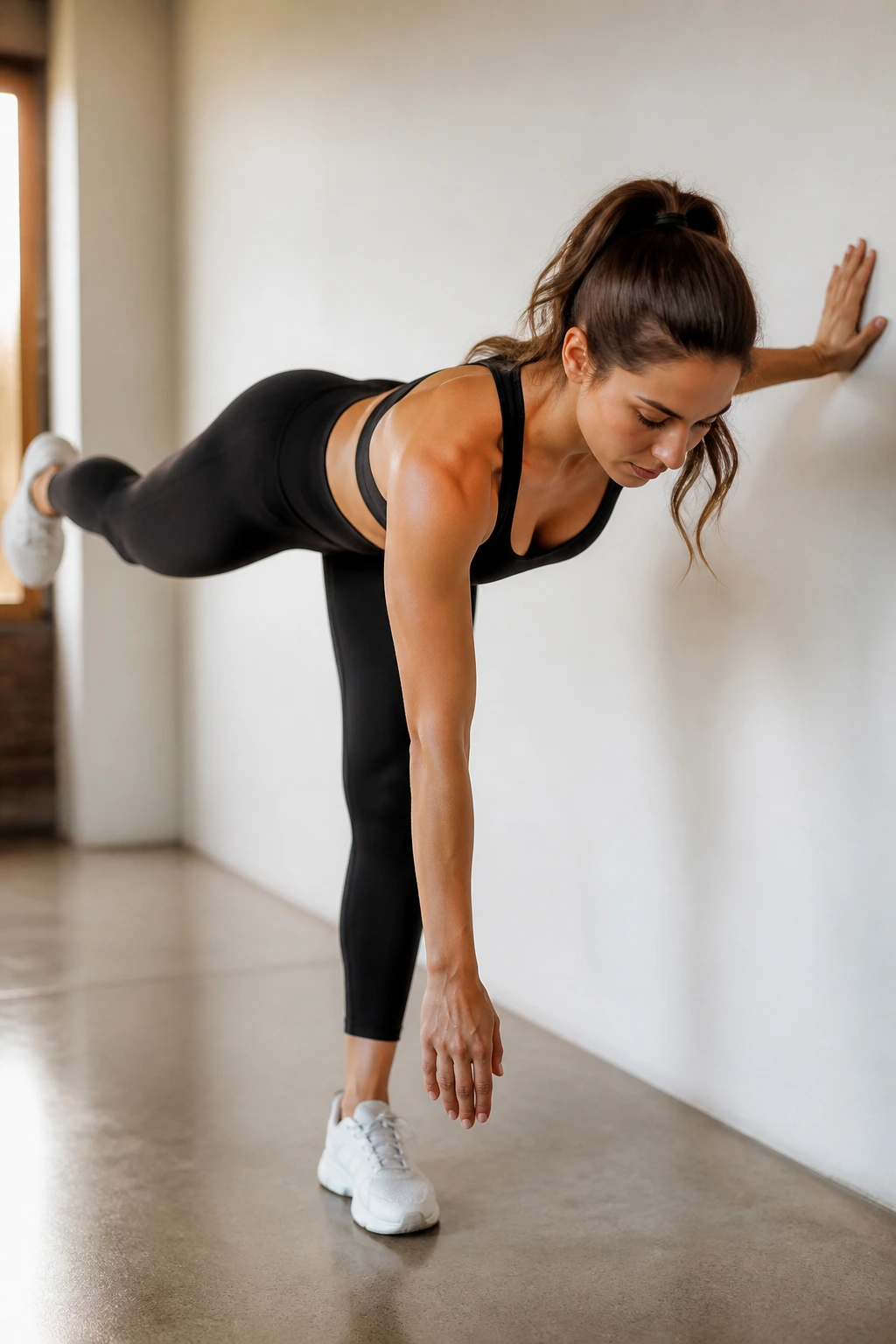
The first 10 seconds tell you everything.
Stand on one leg, hinge at the hips, and send the free leg straight back as your torso tips forward. Keep the standing knee soft, the hips square, and the neck long. If balance is weak, keep one hand on a wall or couch. Do 6 to 8 reps per side for 3 sets, or hold the bottom position for 3 seconds on each rep if you want more difficulty.
What should stay still
- The standing foot should feel like a tripod: big toe, little toe, heel.
- The hips should not twist open.
- The lower back should stay quiet.
- The moving leg does not need to go high.
A backpack held with both hands adds load without making the drill clumsy. Water bottles work too. Keep the weight close to your body and lower until the torso is roughly parallel to the floor or until your hamstring says that’s enough.
This challenge is great when you want hamstring work without lying on the floor. It also teaches the kind of balance that makes other lower body moves feel cleaner.
8. Chair Squat Pulse Challenge
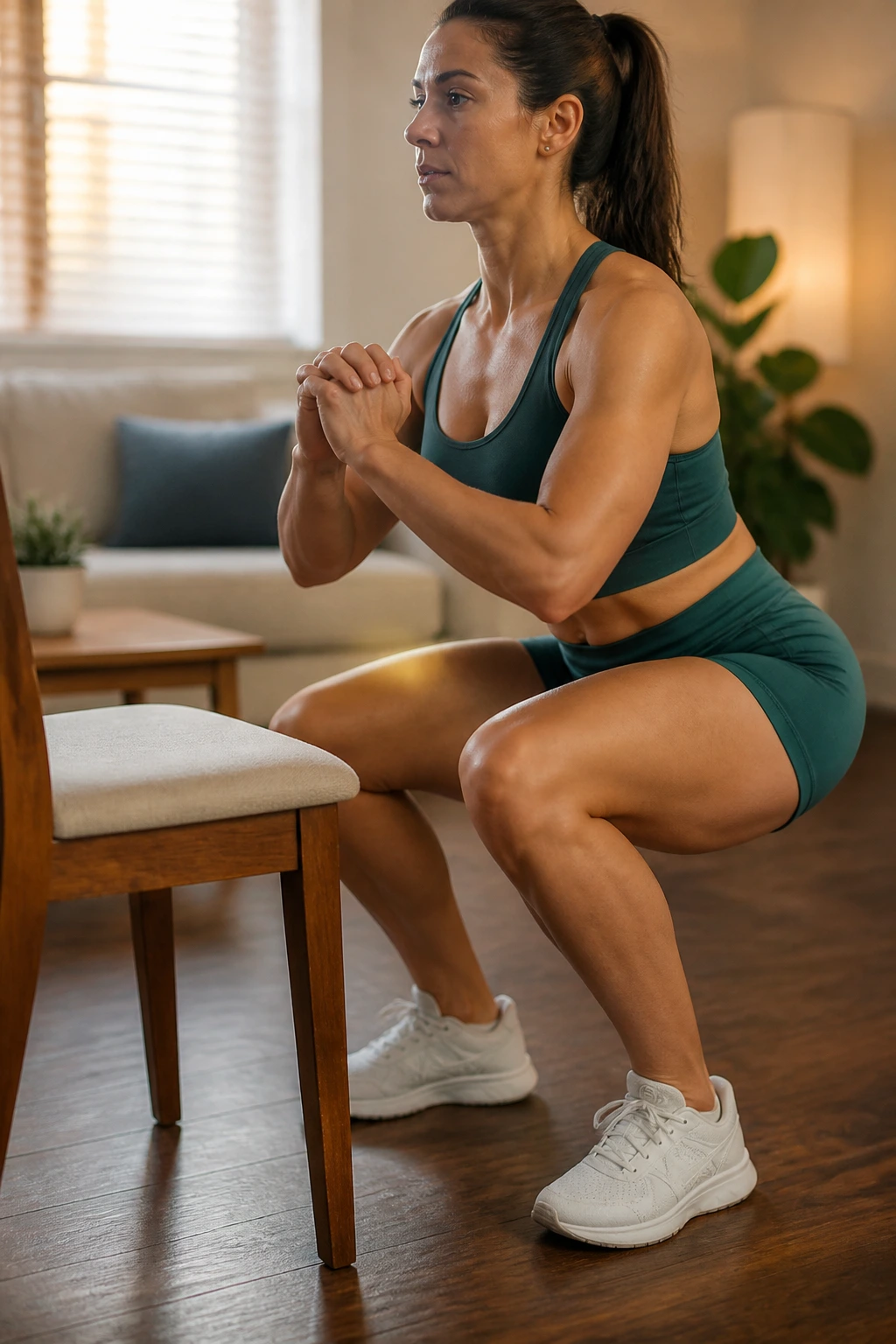
Pulses are not cheating when they come after a full squat. They’re the part that strips away the polite feeling and gets right to the burn.
Set a sturdy chair behind you and do 15 full squats, barely tapping the chair each time. Then stay low and do 20 tiny pulses without fully standing. Rest 45 seconds, then repeat for 3 to 5 rounds. The pulses should be short. Think inches, not half reps. If they turn into bouncing, you’ve gone too far.
The chair gives you a depth target, which helps a lot when you’re training at home and not paying attention to form. Sit back, keep the knees from collapsing inward, and drive through the heels as you rise. On the final pulse set, the quads will feel loud. That’s normal. Your glutes will probably join in too.
Do not slam onto the chair. Light contact is enough. The goal is control, not a noisy landing.
If your knees feel cranky, use a higher chair and slow the descent. The challenge still works.
9. Side-Lying Leg Lift Burnout
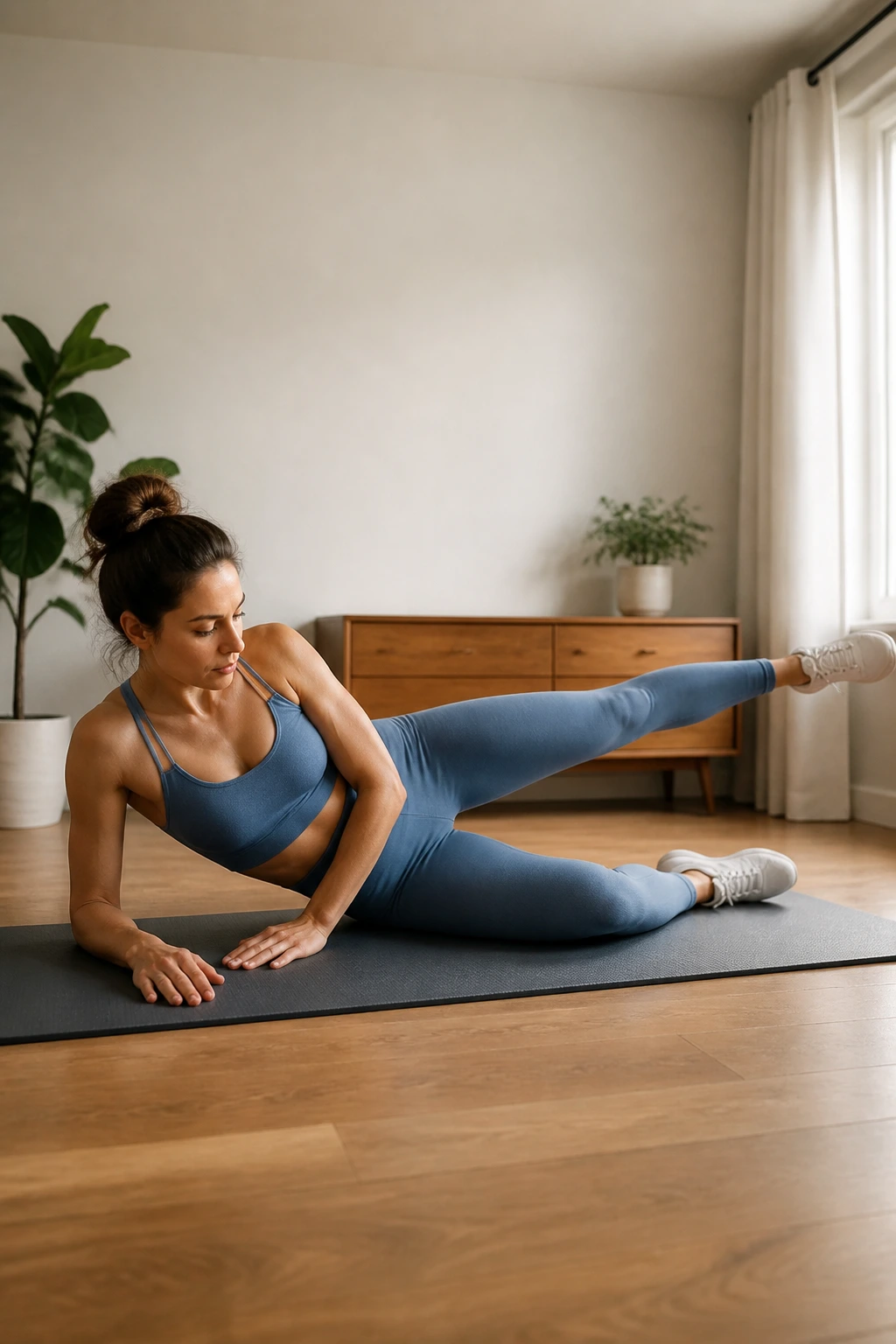
You are on the floor, one arm under your head, top leg floating, and the room is very quiet. Then the outer hip starts talking.
Side-lying leg lifts are a clean way to hit the glute medius, the muscle that helps keep hips steady when you walk, climb, and stand on one leg. Lie on your side, stack the hips, point the top toes slightly down, and lift the leg only as high as you can without rolling backward. Do 20 slow lifts, then 20 tiny pulses at the top. Repeat for 3 rounds on each side.
The mistake people make here is lifting too high and turning the whole thing into a lower-back move. Stop before that happens. The lift can be small and still work. Small is fine.
A mini band above the knees changes the feel fast, but bodyweight alone is enough if you move slowly. Keep the bottom leg bent for support or straight for a little extra side-body work.
This one is sneaky. It looks gentle. It is not.
10. Calf Raise Endurance Test
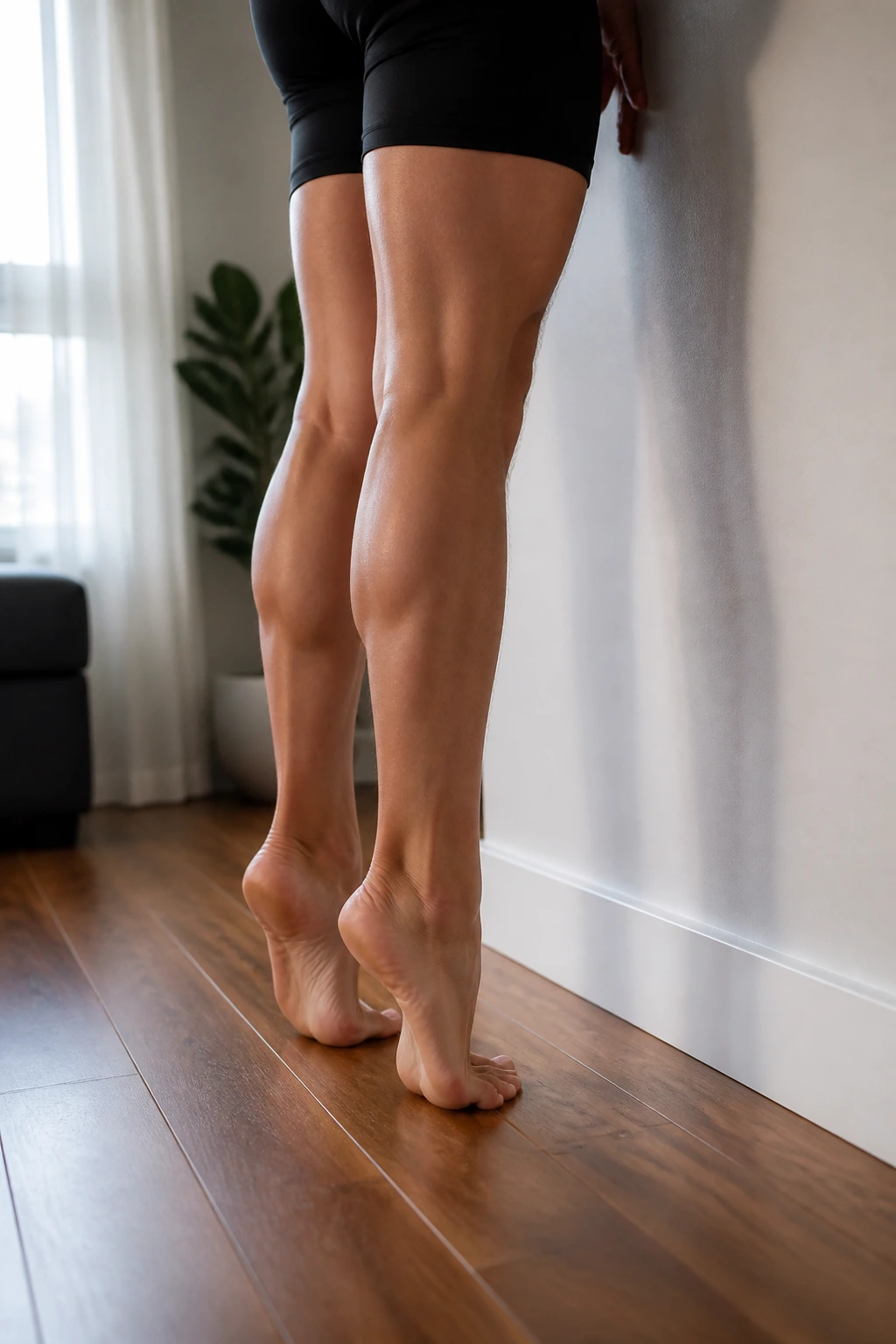
Calves get ignored until you spend one honest minute on them. Then the bottom half of the leg starts trembling in a way that feels deeply personal.
This challenge uses both straight-knee and bent-knee calf raises. Stand on the floor or on a stair edge, rise up on both feet for 30 reps, then bend the knees slightly and do 20 more. Finish with 20 single-leg reps per side. Rest as needed, but keep the pauses short. The point is endurance, not a long nap.
Why both versions matter
Straight-knee calf raises hit the gastrocnemius, the larger outer calf muscle. Bent-knee raises shift more work to the soleus, which sits underneath and matters more than people think. Together, they give you a fuller lower-leg hit and better ankle strength for stairs, walking, and all the little things legs do all day.
Use a wall for balance if needed.
A useful cue: go all the way up, pause for one beat, then lower slowly until your heels nearly kiss the floor. That slow lower is where the calf work gets honest.
11. Lower Body Challenges for Women at Home: Resistance Band Side Walk Circuit
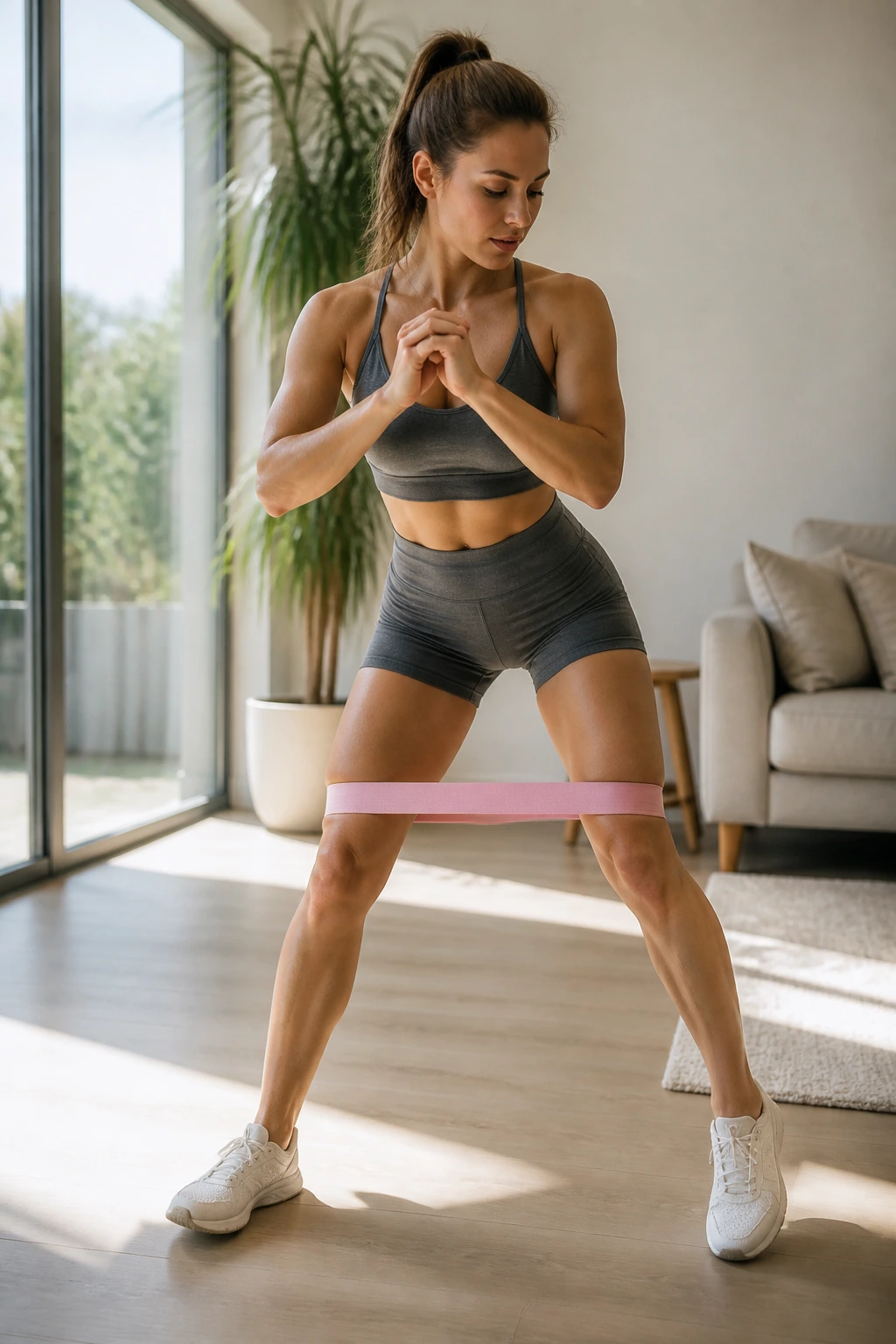
Want something that makes your hips work without pounding your knees? This is the one I’d pick first.
Loop a mini band above the knees or around the ankles and sink into a shallow squat. Step 10 times to the right, then 10 to the left, then add 12 monster walks forward and back, and finish with a 20-second squat hold. Do 3 rounds. If the band slips, move it higher. If the burn disappears, move it lower.
Where the band belongs
- Above the knees: easier on the ankles, better for beginners.
- At the ankles: tougher on the hips and core.
- Below the knees: a middle ground that still keeps tension honest.
Keep your toes pointed mostly forward and avoid letting the knees snap together on every step back in. The band should stay under tension the whole time. If you come fully upright between steps, you’ve let the work go slack.
This is one of those lower body challenges for women at home that looks simple but changes the way your hips feel during squats, lunges, and even walking up stairs. The side glute work matters. A lot.
12. Hamstring Slider Challenge
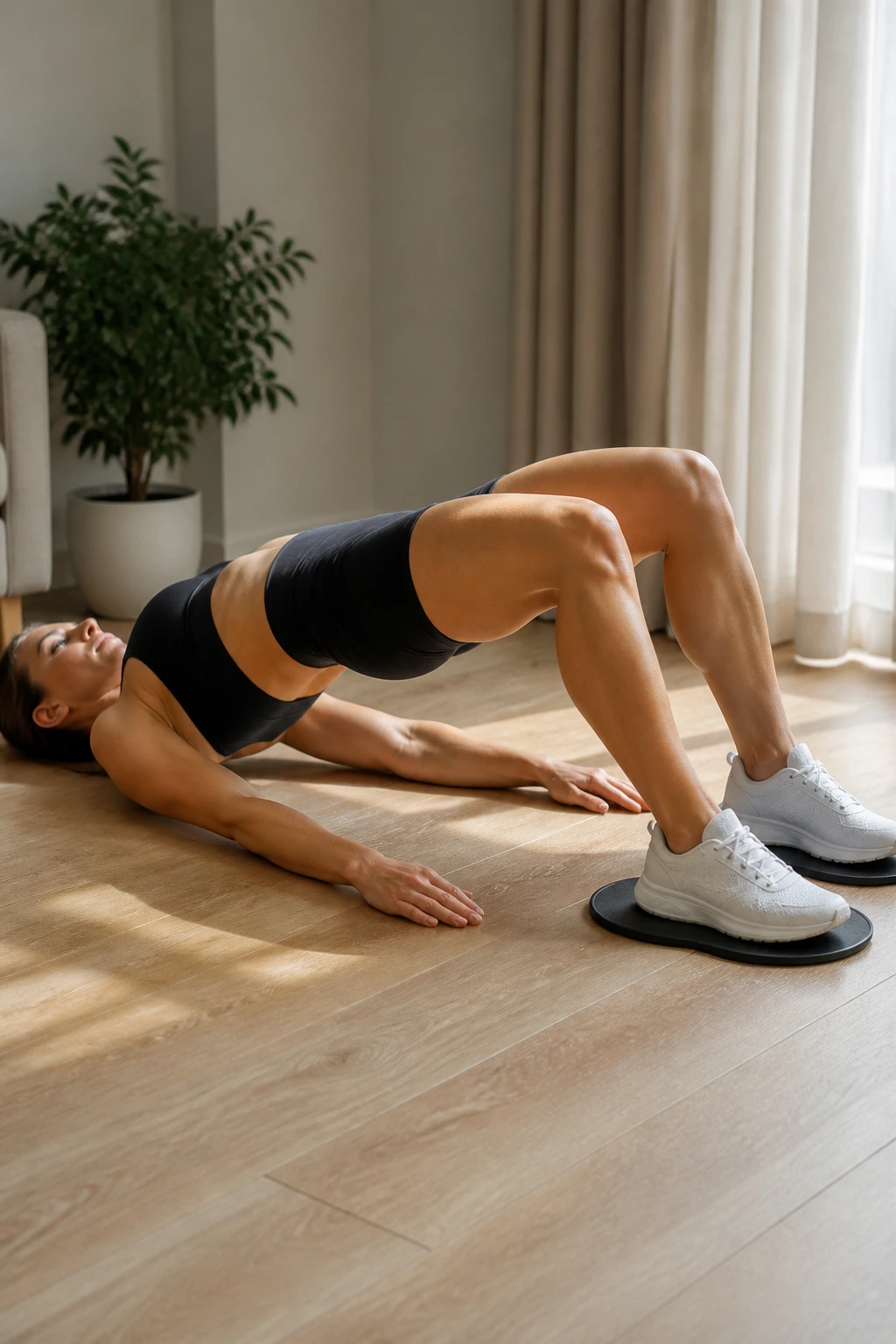
If your floor is smooth, you’ve got a hamstring machine.
Lie on your back with heels on a towel, socks, or sliders. Lift your hips into a bridge, then slowly slide the heels away until the legs get long. Pull them back in without dropping the hips. Do 8 slow reps, then hold the bridge for 10 seconds on the last rep. Run 3 sets with about 45 seconds between them.
The hardest part is not the sliding. It’s keeping the hips up while the legs extend. If the hips sag, the hamstrings lose tension and the lower back starts helping more than it should. Keep the ribs tucked, press through the heels, and move slower than feels necessary.
A few ways to scale it
- Bend the knees less if you want an easier version.
- Lift one foot at a time for a brutal single-leg variation.
- Put a folded towel under the pelvis if your floor is hard.
This one leaves the backs of the legs warm in a way that’s hard to fake. It also pairs nicely with squat work on another day, because the stress pattern is different.
13. Split Squat Hold and Pulse Challenge
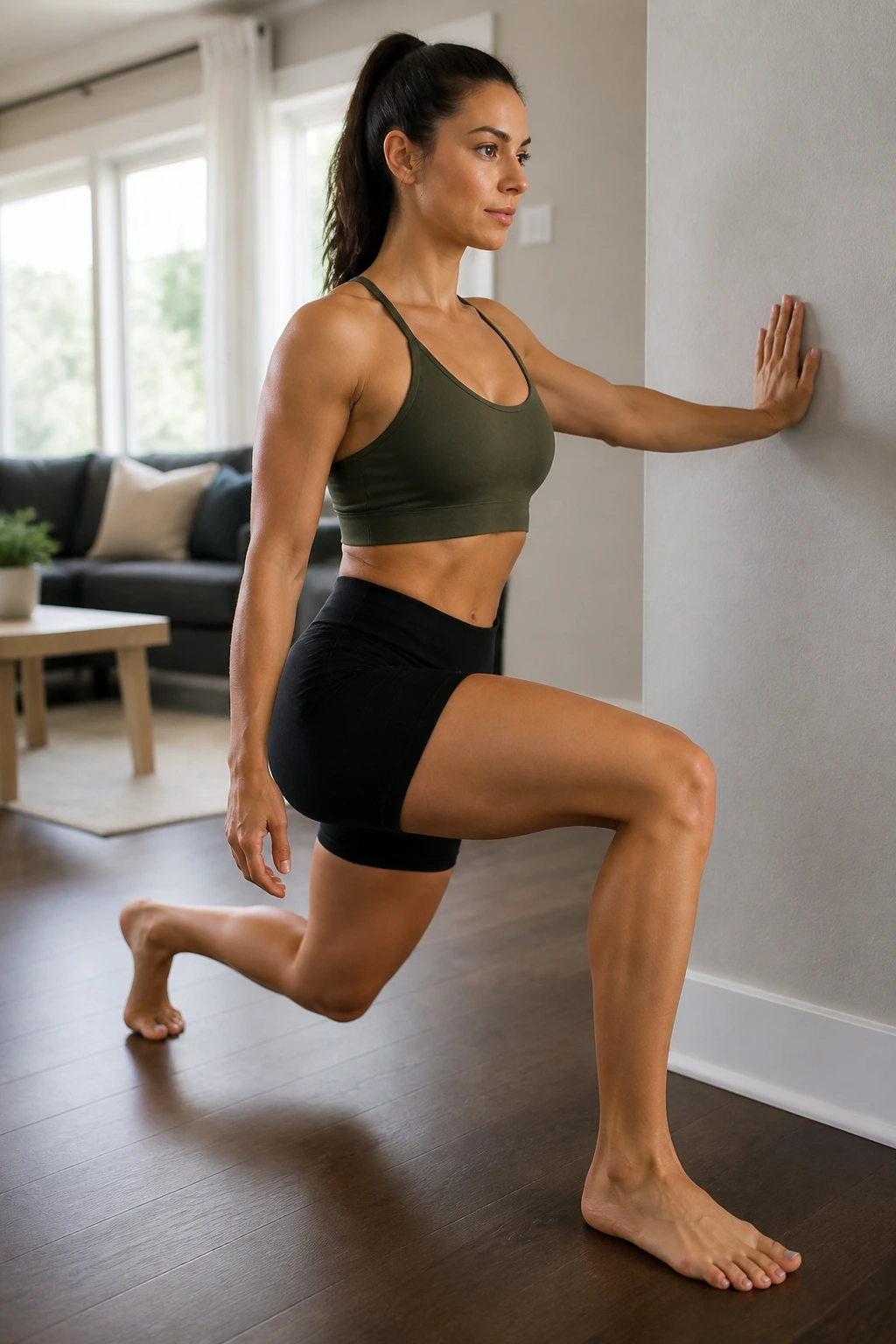
Split squats are already annoying. Turning them into a hold-and-pulse challenge makes them meaner.
Set one foot forward and one foot back, using a wall or couch for balance if needed. Lower into the split squat and hold the bottom position for 30 seconds per side. After the hold, pulse 10 times, then finish with 8 full reps. Do 2 to 3 rounds total. The front foot should stay flat, and the back heel stays lifted.
The front shin can lean a little forward if you want more glute work. An upright torso shifts the work more toward the quads. Neither is wrong. They just feel different, and that difference matters when you’re deciding what to train.
One sentence on this move: your front leg will not be impressed by your excuses.
Use a shorter stance if the balance feels off or if your hip flexors get cranky. Use a longer stance if you want more stretch through the back leg and more glute load on the front side. Tiny changes, big feel.
14. Lower Body Challenges for Women at Home: Donkey Kick and Fire Hydrant Combo
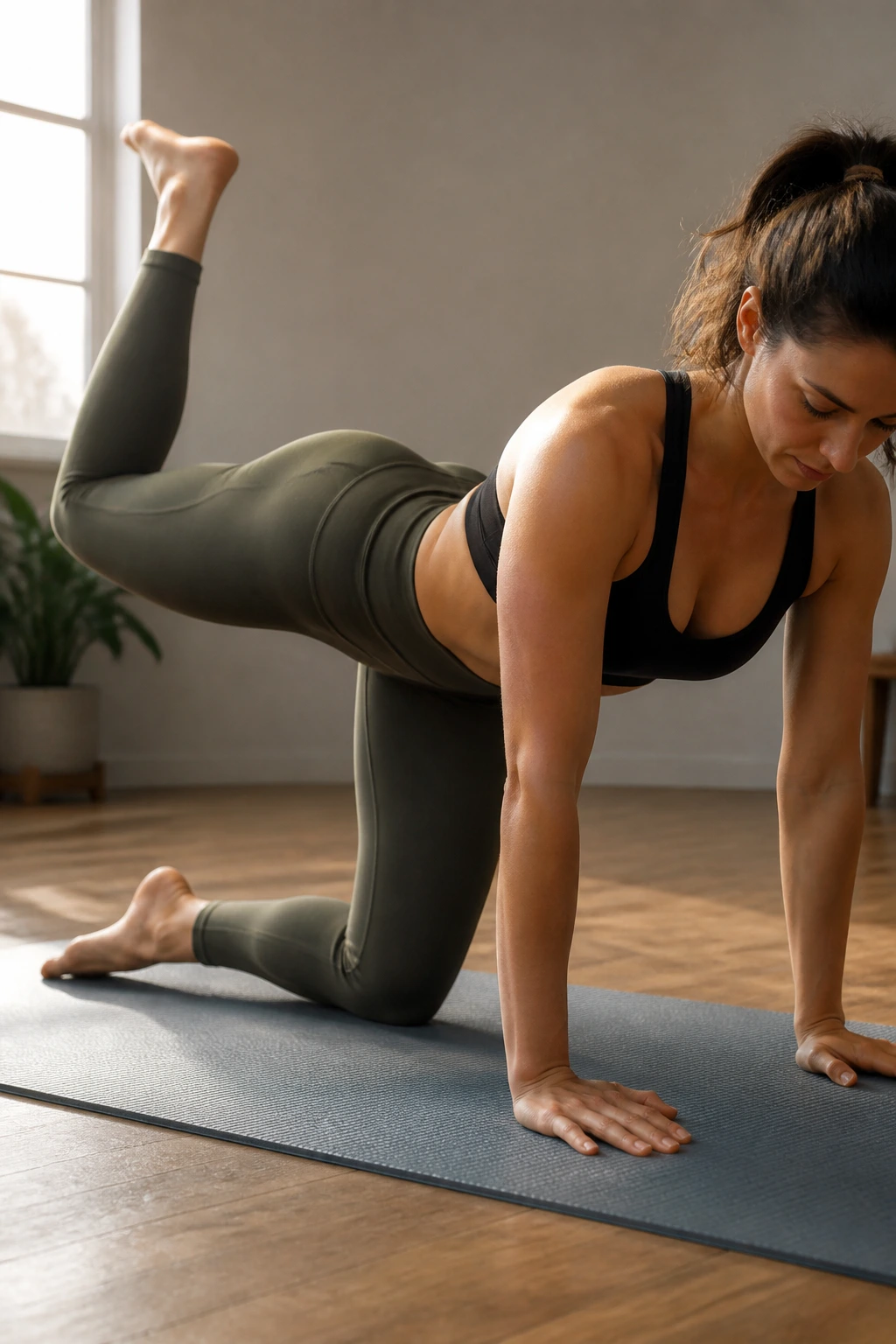
Why do two small floor moves earn a spot here? Because they hit the glutes from two angles that bodyweight squats never quite cover.
Start on hands and knees. For the donkey kick, keep the knee bent and press the heel up toward the ceiling without arching the back. For the fire hydrant, lift the bent knee out to the side while keeping the pelvis as still as you can. Do 12 donkey kicks per side, then 12 hydrants per side, then repeat the pair for 3 rounds.
What each move does
- Donkey kick: more direct glute max work.
- Fire hydrant: more side-glute and hip stability work.
- Both together: a neat way to finish a leg day without needing standing balance.
Keep the movement controlled. If the lower back sways, the rep is too high. If the shoulder blades are scrunched and your wrists hate life, put a folded towel under the hands.
This is one of the best lower body challenges for women at home when you want glute focus without jumping, lunging, or using much space. Quiet. Small. Effective.
15. Skater Step and Curtsy Combo
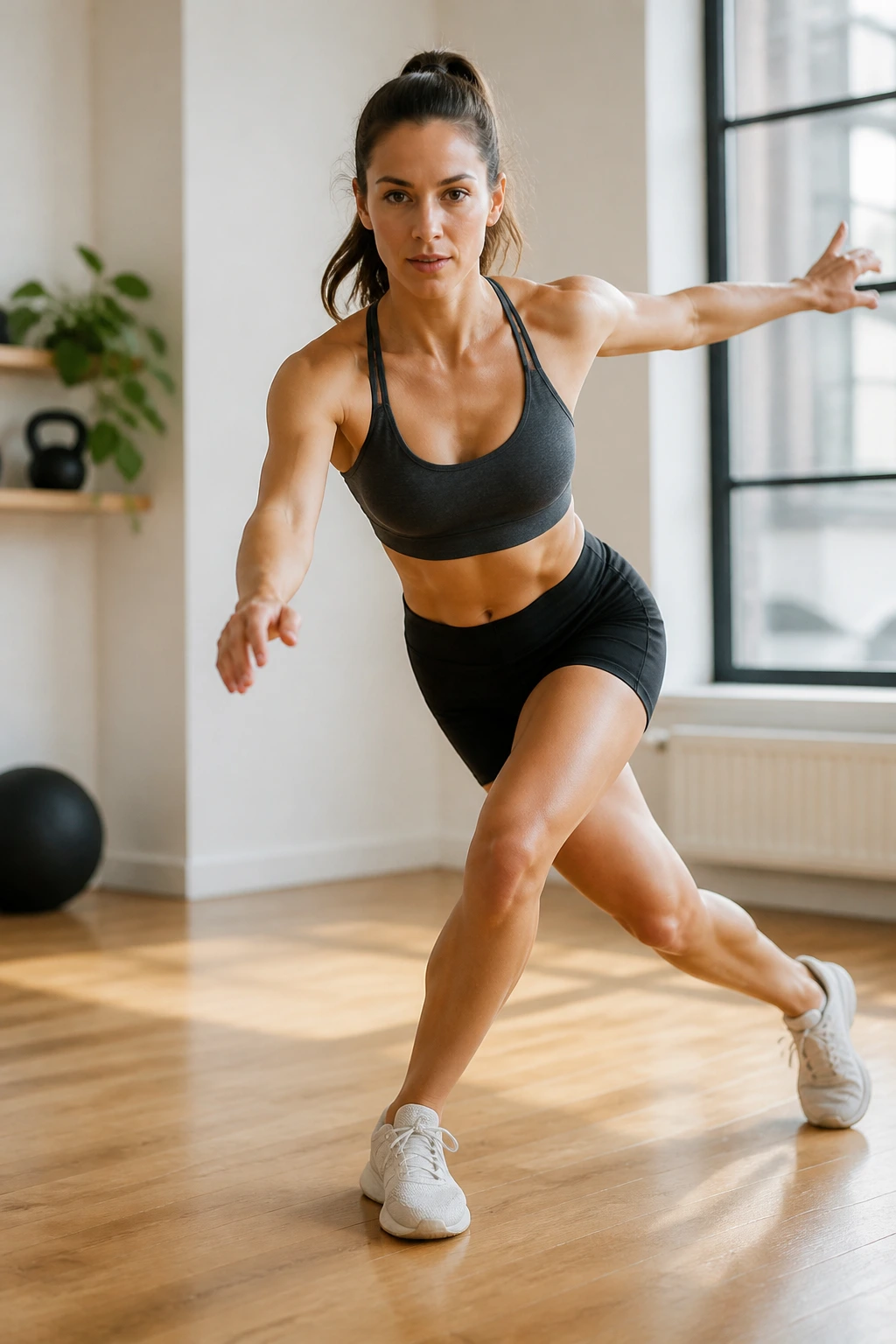
Side-to-side leg work feels different from straight-line work. That’s the whole point.
Step or lightly hop from side to side like a skater, then add a curtsy lunge on each landing. If impact is not your thing, keep the movement low and step instead of jump. Run 40 seconds of work, then 20 seconds of rest, for 6 rounds. Stay light on the feet, but keep the trunk stable. The outer hip should help control the landing, and the inner thigh will notice the side load too.
Curtsy lunges can bother some knees if the step crosses too far behind. Keep the back leg on a shallow path and do not force the range. A smaller diagonal step still gives the glutes and hips a job to do.
This combo has a lively feel. It is not elegant. It is not supposed to be. The side-to-side pattern gets your stabilizers involved in a way that regular squats skip.
If you want a lower-impact version, remove the jump and simply step across, touch down, and return. The burn stays.
16. Backpack Load Squat Ladder
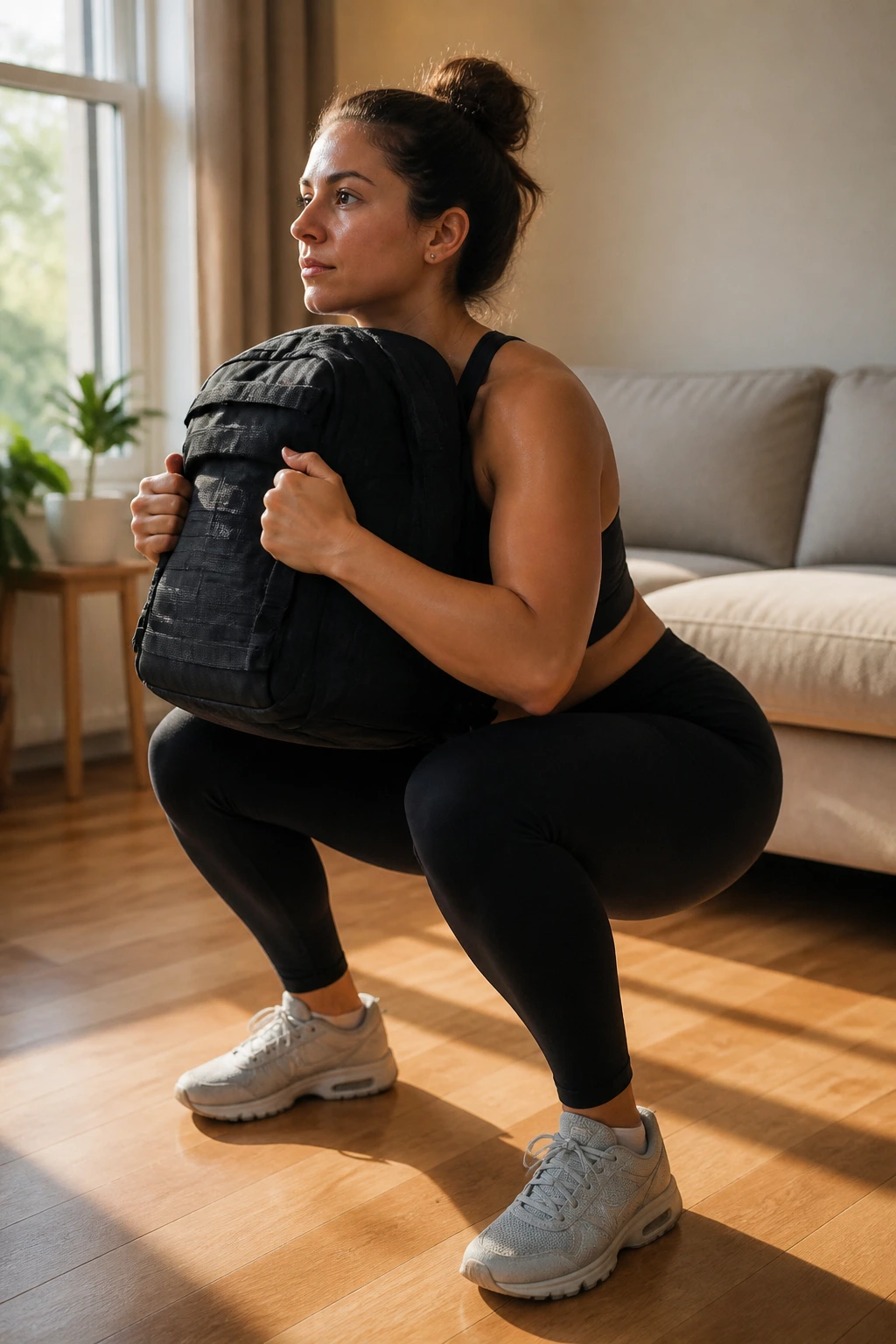
A backpack full of books can do a lot more than sit by the door.
Load a sturdy backpack with 5 to 20 pounds of books, water bottles, or canned goods, hold it at chest height or wear it on your back, and run a squat ladder: 5 reps, 10 reps, 15 reps, 10 reps, 5 reps. Rest 45 to 60 seconds between rungs. Keep the bag close and stable so the weight doesn’t swing. If it shifts around, tighten the straps or choose a smaller load.
Why load matters
Bodyweight squats are useful, but added weight changes the game fast. The glutes and quads have to produce more force per rep, and the set starts to feel more like strength work instead of pure endurance. That’s useful when your bodyweight squats stop feeling hard.
A backpack also gives you a built-in progression tool. Add a book. Remove a book. Keep notes.
One warning: don’t load the bag so high that it pulls your shoulders backward and forces a weird lower-back arch. The weight should feel compact, not sloppy.
This challenge is a nice bridge between beginner bodyweight work and more serious strength training.
17. EMOM Leg Day Challenge
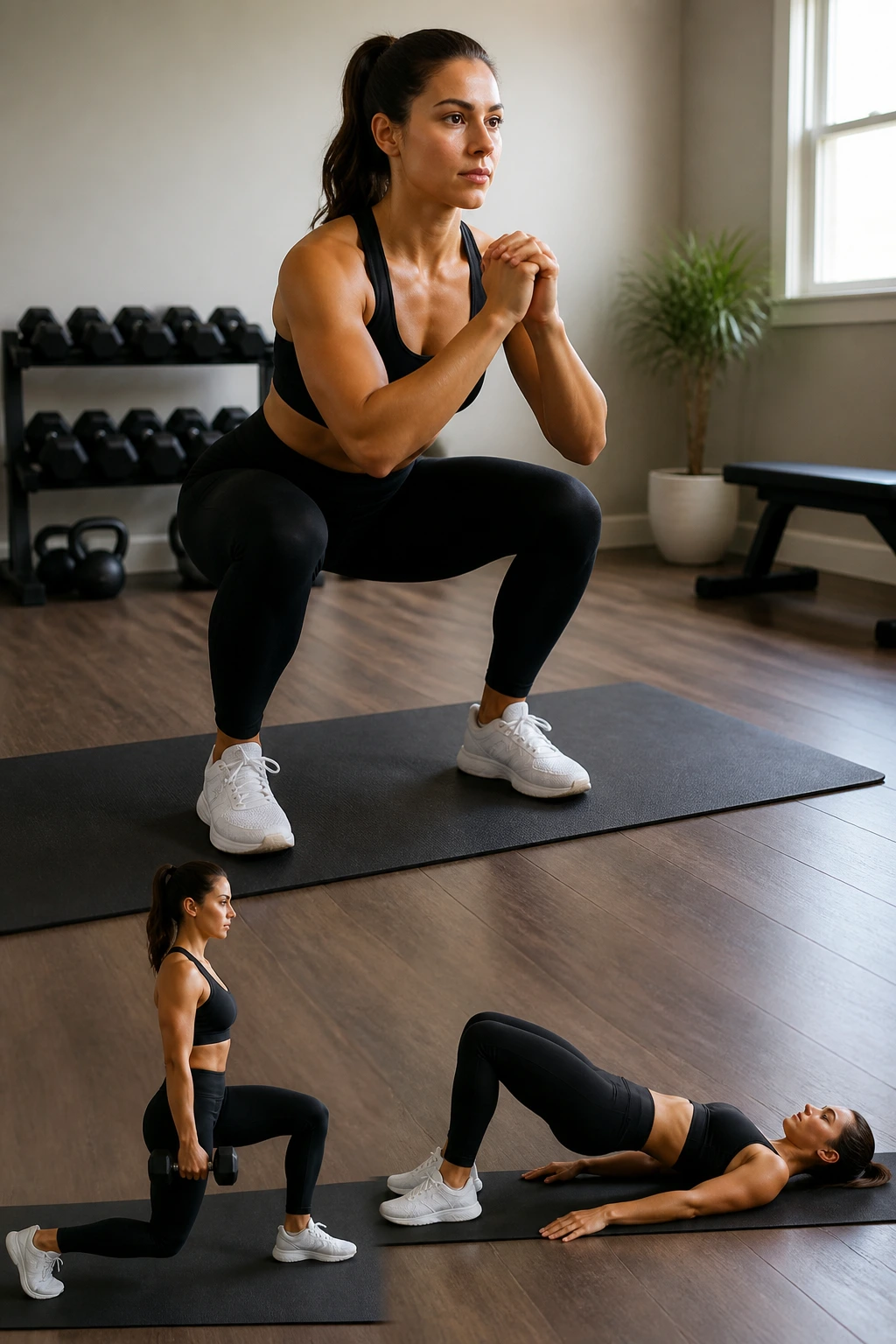
At the top of every minute, you start again. That’s the whole idea.
For a 10-minute EMOM, do minute 1: 10 squats, minute 2: 8 reverse lunges per side, and repeat until the clock runs out. If you finish a minute early, rest for the remainder. If you don’t finish early, the reps are too high. Simple rule. Very useful rule.
Why EMOMs work
They force you to stay on pace without turning the workout into a blur. You get structure, but you also get little pockets of rest that let you keep good form. That makes the challenge feel crisp instead of messy.
Pick movements that stay clean under pressure. Squats, reverse lunges, glute bridges, and calf raises all work well here. Plyometrics can work too, but only if your landing mechanics are already decent and your floor is forgiving.
A smart version of this challenge for home looks like:
- Minute 1: 10 squats
- Minute 2: 12 glute bridges
- Minute 3: 8 reverse lunges per side
- Minute 4: 20 calf raises
- Repeat
It’s efficient, and it gets honest fast. You will know exactly where the weak minute is.
18. Frog Pump Burnout
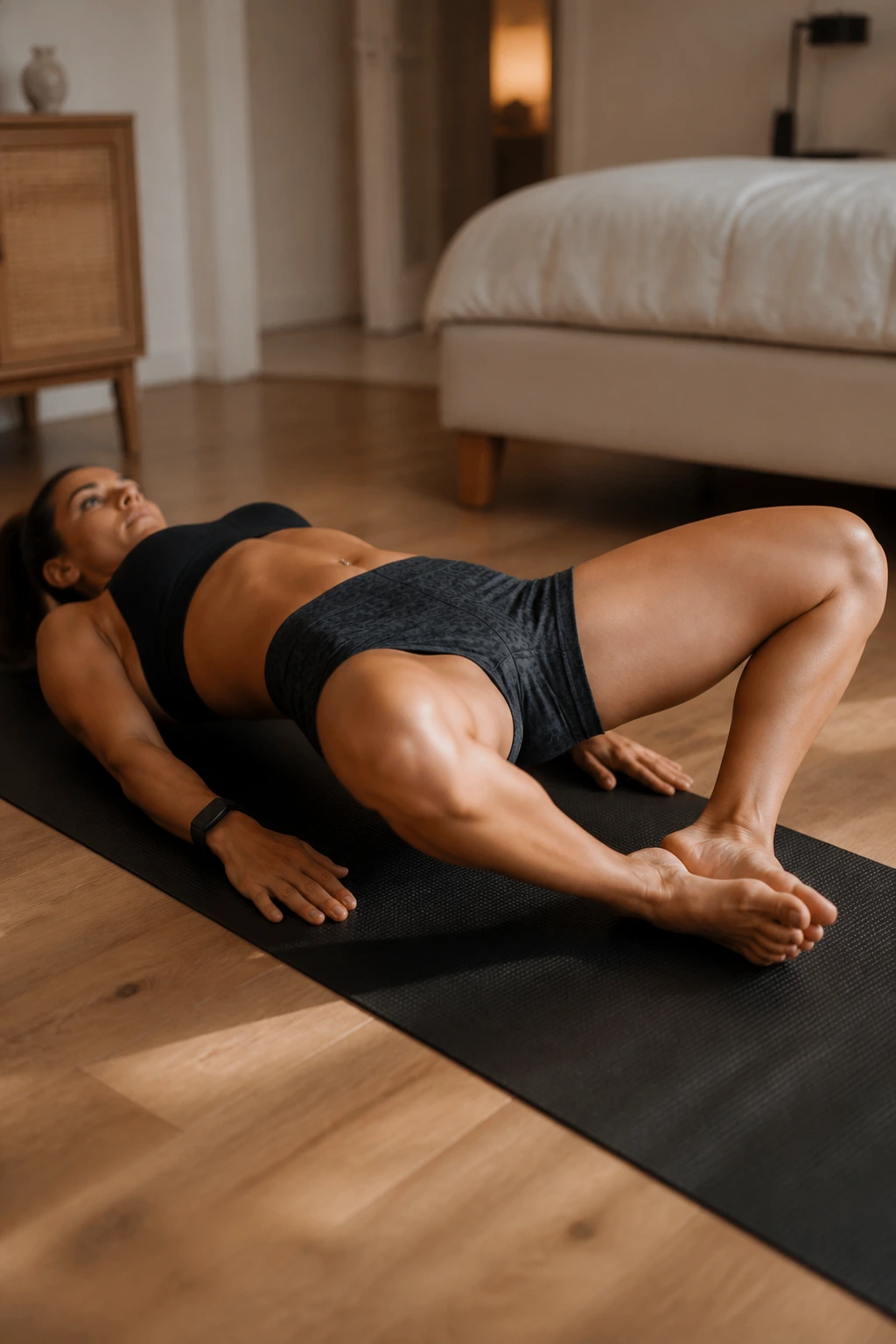
Bigger range is not always better. Frog pumps prove it.
Lie on your back, press the soles of your feet together, let the knees fall open, and lift the hips in short, sharp reps. Do 30 reps, rest 20 seconds, then repeat for 3 rounds. On the last rep of each round, hold the top for 15 seconds and squeeze the glutes hard without arching the lower back.
This move is famous for a reason: it isolates the glutes in a way that feels almost too small until the burn shows up. The range is short, the setup is odd, and the effort climbs fast. Keep the feet close to the body and the heels together. If your lower back starts to steal the lift, lower the hips a little and reset the brace.
Best uses for frog pumps
- Finisher after squats or lunges
- Low-impact glute day
- Activation before a harder lower body session
- Home workouts where you need something quiet
I like this move when energy is low but I still want the glutes to work. It’s not flashy. It does not need to be.
19. 100-Rep Mixed Ladder Challenge
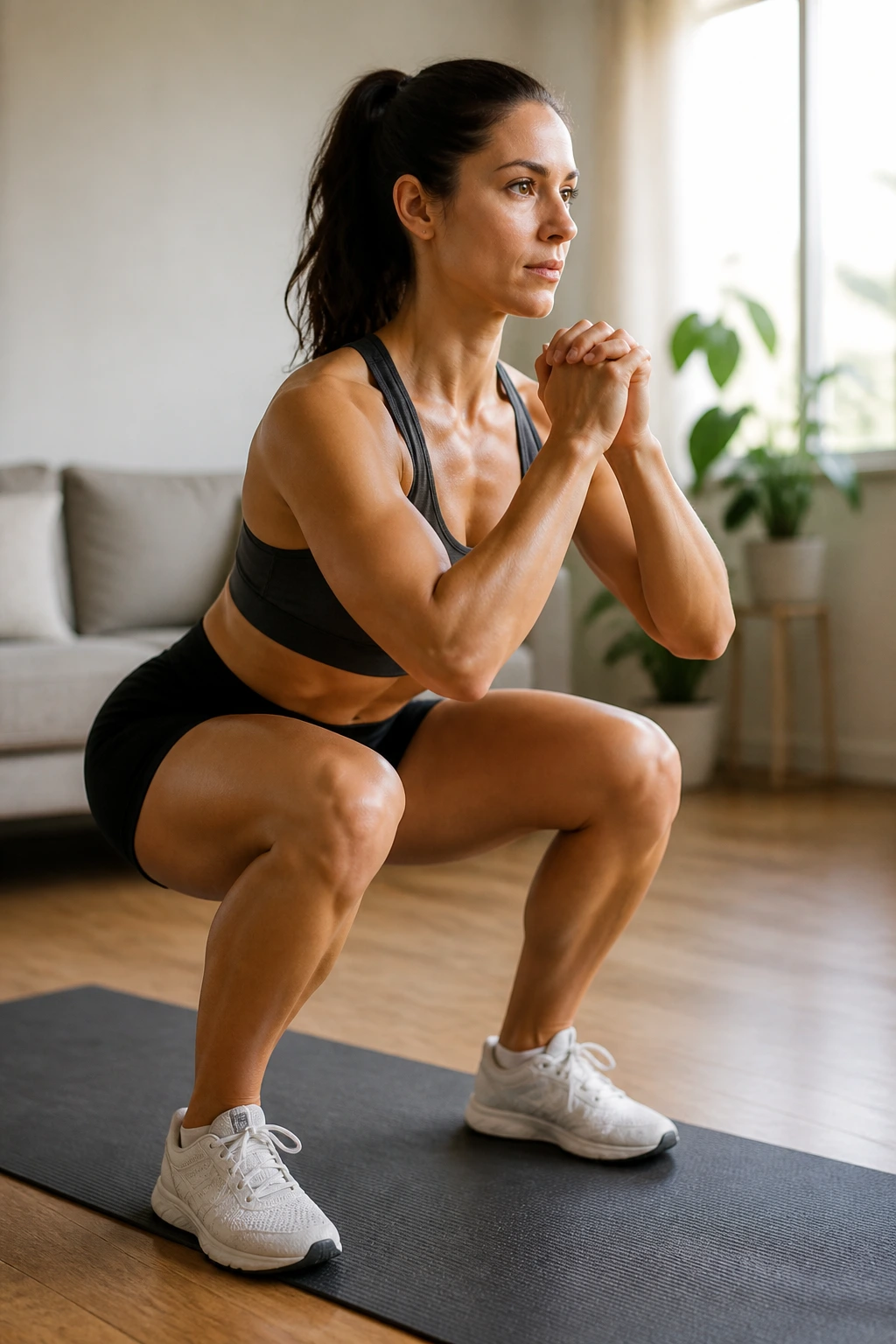
A single exercise can get boring fast. Mixing five patterns keeps the work spread out and makes the challenge feel more like a real home leg day.
Choose 5 moves and do 20 total reps of each:
- 20 squats
- 20 reverse lunges, each leg counted separately
- 20 glute bridges
- 20 calf raises
- 20 side steps with a mini band, each direction counted evenly
Rest only when form starts to slip, not when the workout gets mentally annoying. That little distinction changes everything.
How to pace it
Start with the move you care about most while you’re fresh. If glutes are the priority, put bridges first. If quads need work, lead with squats. If you want the cleanest finish, save calf raises for last because they’re easy to do badly when you’re tired.
A mixed ladder is great on days when you want variety without wandering around the room trying to invent a plan. It gives you a target, a count, and a finish line. Not every workout needs more creativity. Some just need a solid structure.
This is also one of the easiest challenges to repeat every two weeks and compare notes. Same five moves. Different fatigue. That tells you more than a mirror does.
20. Lower Body Challenges for Women at Home: The Retest Circuit
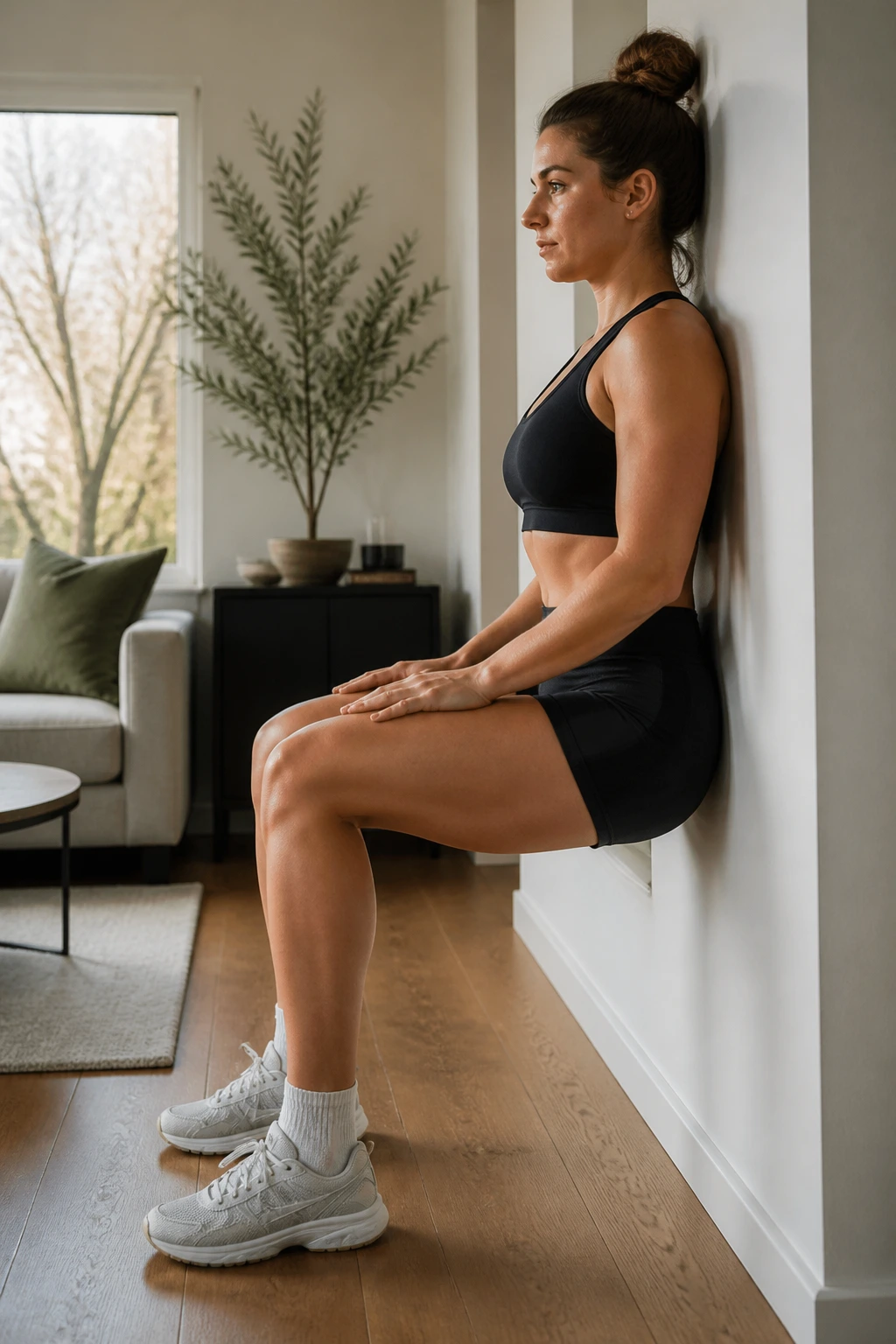
A good home challenge should leave a trace you can measure later. That’s where the retest day earns its place.
Pick 4 benchmarks and repeat them every few weeks:
- Wall sit max hold
- One-minute squat count
- Single-leg glute bridge hold per side
- Calf raises in 60 seconds
Write the numbers down. Put the note somewhere you can find without hunting through your phone. Then try the same test again after a stretch of regular lower body work. If the wall sit lasts longer, the squats feel smoother, or the single-leg bridge stops wobbling, that matters. A lot.
The best part is that these tests are simple enough to repeat at home without any gear. They also cover different qualities: endurance, control, balance, and ankle strength. That gives you a more honest picture than one exercise ever could.
One more thing. Don’t chase a huge jump every time. Sometimes the win is cleaner form, less shaking, or one extra rep with the same bodyweight. That still counts.
Keep the retest circuit tidy, keep the notes plain, and use it as your proof that the work is adding up.
