



The deadlift is the king of posterior chain movements for a reason. It is the rawest test of your ability to pick something heavy off the ground, a fundamental skill that translates to everything from carrying groceries to jumping higher. When you shift your focus from the barbell to the kettlebell, the dynamic changes. You gain a level of freedom in your range of motion and an offset center of gravity that forces your glutes to work overtime, often much harder than a standard barbell lift would allow.
You do not need a rack full of weight plates to build powerful, aesthetic, and functional glutes. A pair of heavy kettlebells or even a single bell can provide enough stimulus to trigger significant muscle growth and strength gains. The key is in the variation. If you do the same standard hinge movement every single week, your progress will hit a wall. Your glutes are complex muscles; they require variety in loading patterns, foot positioning, and tempo to maximize their potential.
This is about getting surgical with your training. We are moving beyond the basic hinge and into the specific tweaks that isolate the posterior chain, challenge your stability, and force your glutes to fire in ways they never have before. Stop thinking about the weight and start thinking about the tension. These movements are tools. If you use them correctly, the glutes will respond.
1. Double Kettlebell Deadlift
This is your baseline. Using two kettlebells, one in each hand, moves the center of gravity closer to the body compared to a single-bell suitcase carry, allowing you to handle more total weight while keeping your spine in a neutral, safer position. You get the benefits of a barbell deadlift but with a slightly wider grip that encourages more lat engagement.
The Setup Mechanics
Place the bells between your heels. If you stand too wide, you will turn this into a squat; if you stand too narrow, you will bump into the weights. Aim for a hip-width stance. Push your hips back as if you are trying to close a car door with your glutes. When you reach the bottom, your shins should be relatively vertical. Grip the handles, pack your shoulders into your back pockets, and drive through the heels.
Pro tip: Imagine you are trying to bend the kettlebell handles in half. This simple cue keeps your lats engaged throughout the entire movement, preventing your chest from collapsing forward under the load.
2. Kettlebell Sumo Deadlift
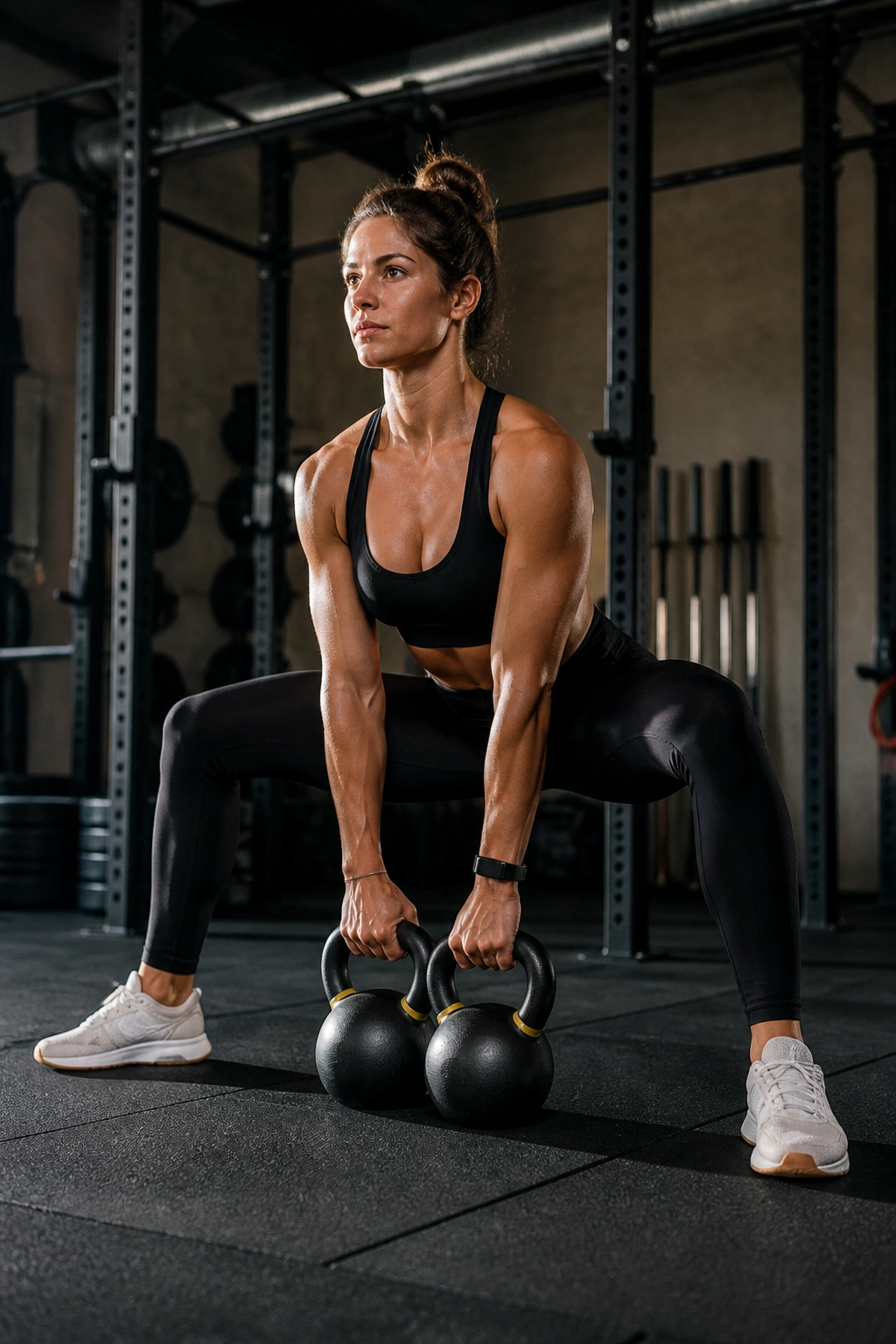
Widening your stance changes the biomechanics of the lift significantly. By stepping out wider and pointing your toes slightly outward, you shift the load demand away from the lower back and place a massive emphasis on the gluteus maximus and the adductors. This is less about spinal extension and more about pure hip drive.
Why This Variation Rules
The sumo stance shortens the range of motion, which might tempt you to think it is “easier,” but it allows for a much more aggressive hip snap. You are shortening the distance the weight has to travel, but you are widening the base for a more explosive lockout. Because your legs are spread, you can drop your hips lower, making this a hybrid between a hinge and a squat. It is a fantastic movement for those who find standard deadlifts irritate their lower back.
3. Kettlebell Stiff-Leg Deadlift
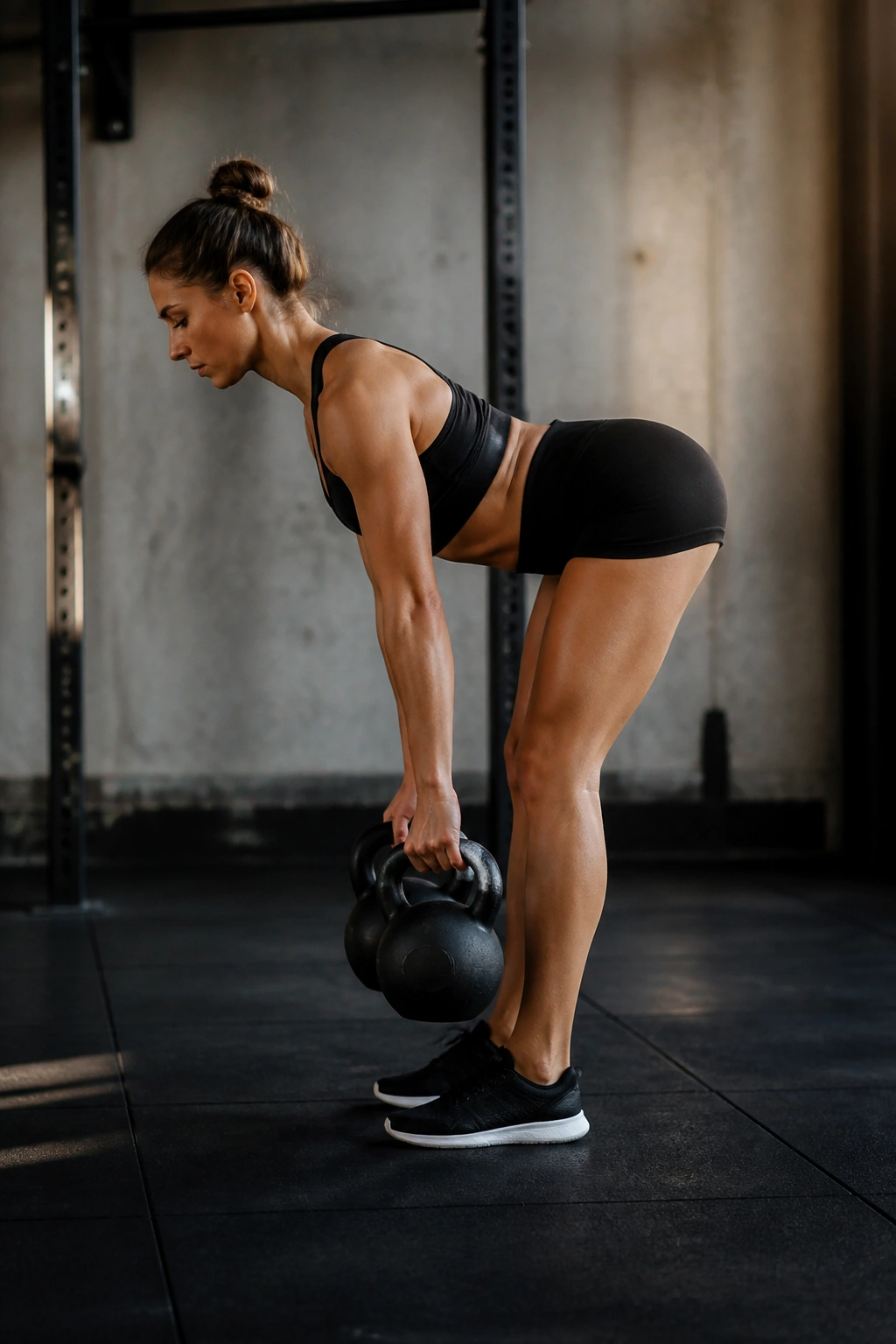
If you want to feel your glutes and hamstrings working, this is the exercise. You are effectively removing the “squat” portion of the deadlift. By keeping your knees soft—but not bent—you place the hamstrings and glutes in a stretched position throughout the entire repetition.
Executing the Perfect Hinge
The secret here is to stop moving the moment your hips stop traveling backward. Do not try to touch the floor if your hamstrings do not have the range of motion for it; you will only end up rounding your back to compensate. Go down until you feel a deep, intense stretch in the glutes, pause for a split second, and then drive your hips forward. This is not about speed. It is about control. Keep the bells close to your shins the entire time.
4. Single-Leg Kettlebell Deadlift
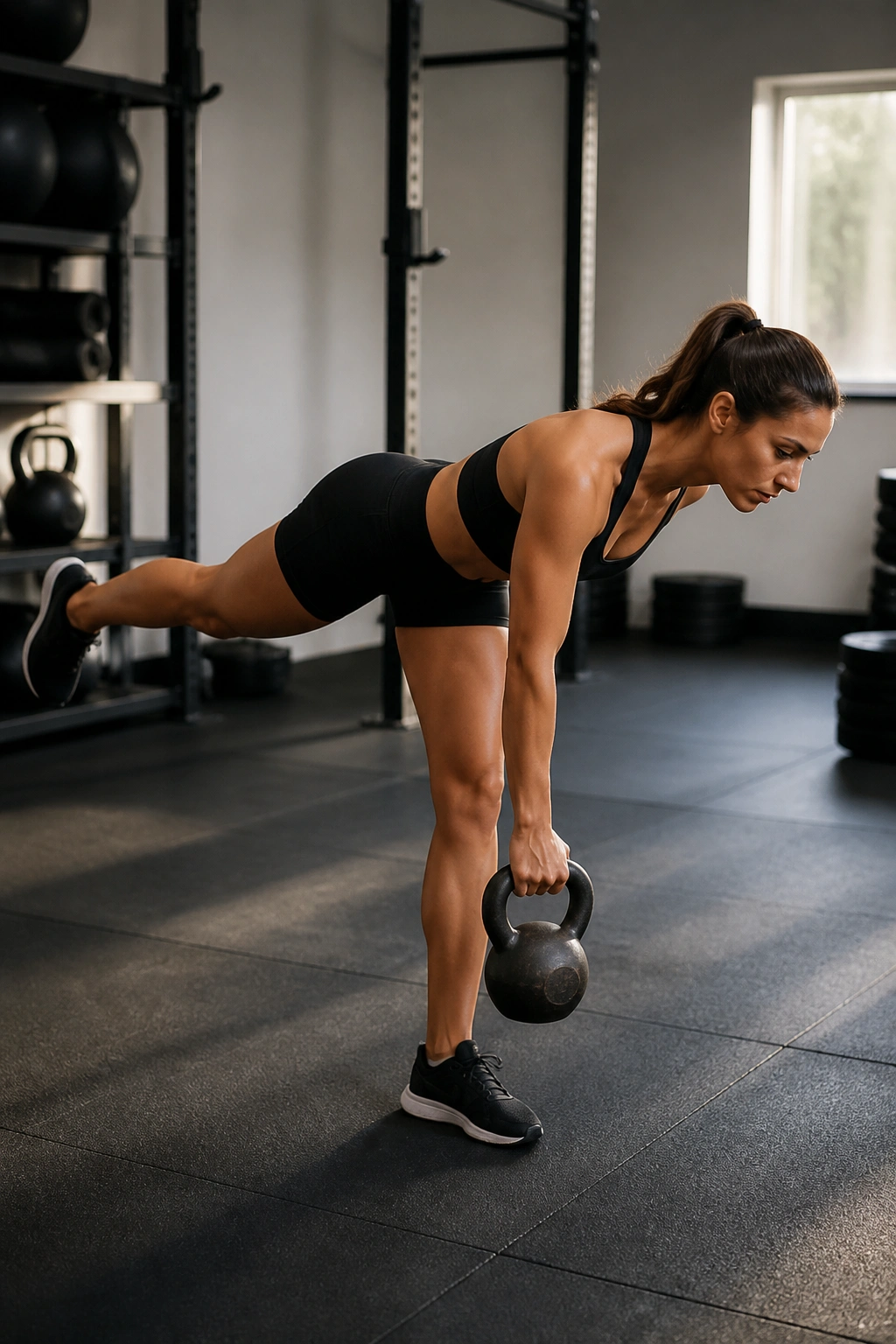
This is the ultimate test of hip stability. When you stand on one leg, your gluteus medius has to fire intensely to keep your pelvis from dropping. You are training strength, balance, and proprioception all at once. It is humbling, difficult, and one of the best ways to fix muscle imbalances between your left and right sides.
Managing the Wobble
Start with a single kettlebell in the hand opposite the working leg. This creates a cross-body stabilization challenge. As you hinge, reach your free leg back behind you. Think about “printing” your heel into the wall behind you. Do not rush. If you fall over, you are going too fast. The goal is to keep your hips square to the floor. If you tilt your hips, you lose the glute isolation.
5. Kettlebell B-Stance Deadlift
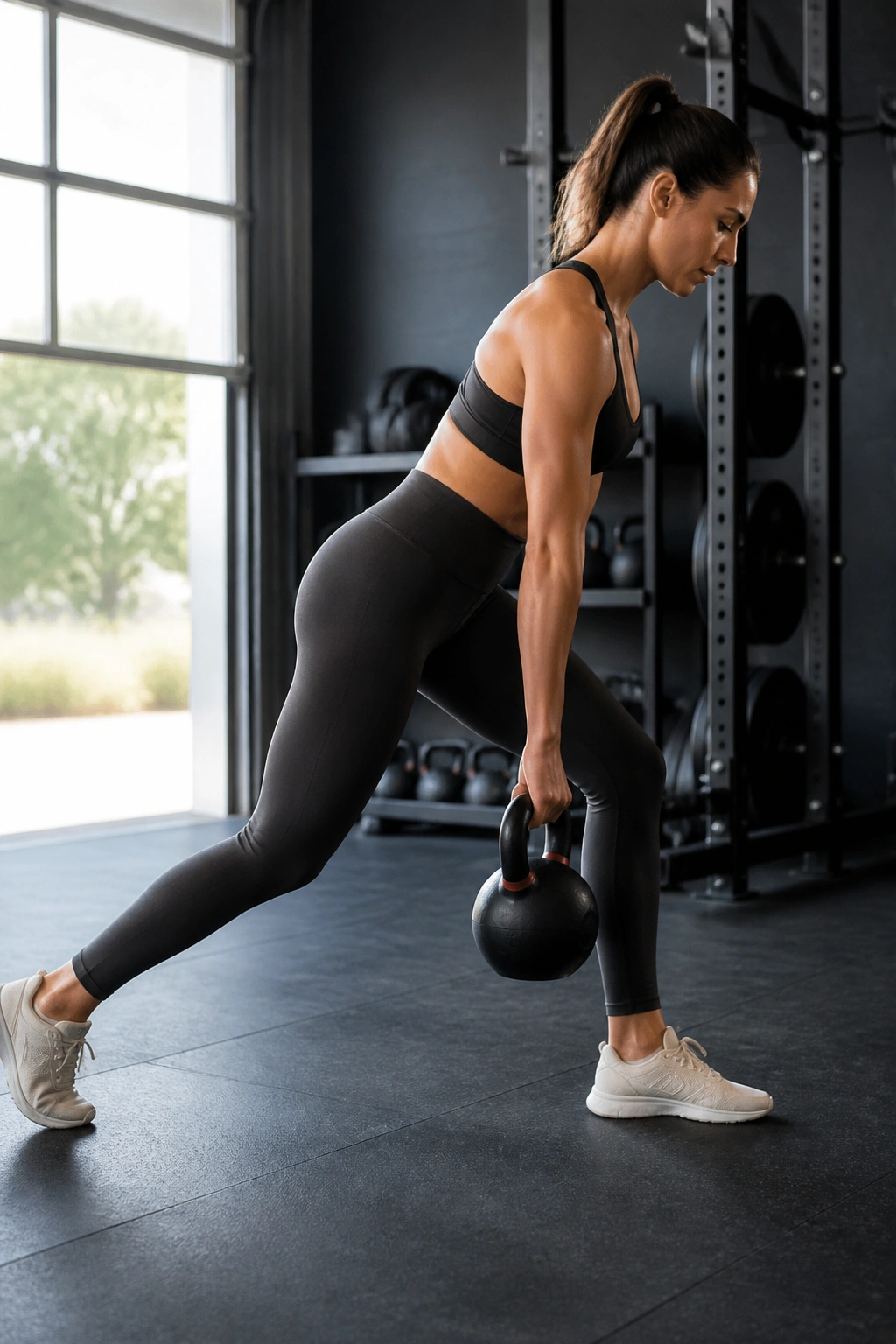
The B-stance, or “kickstand” deadlift, is the middle ground between a double-leg deadlift and a single-leg deadlift. You place one foot slightly behind you, resting only on the toes. This takes about 20% of the weight off that back leg, forcing the front leg to do the vast majority of the work without requiring the extreme balance of a true single-leg movement.
Why It Works for Glute Hypertrophy
It isolates the glute of the front leg without the instability limiting the weight you can use. You can go significantly heavier on a B-stance deadlift than a single-leg deadlift. Keep your weight centered over the front heel. The back toe is only there for balance—do not put weight on it. If you feel the back leg working too hard, you are standing too far back. Slide it closer to your heel.
6. Kettlebell Romanian Deadlift (RDL)
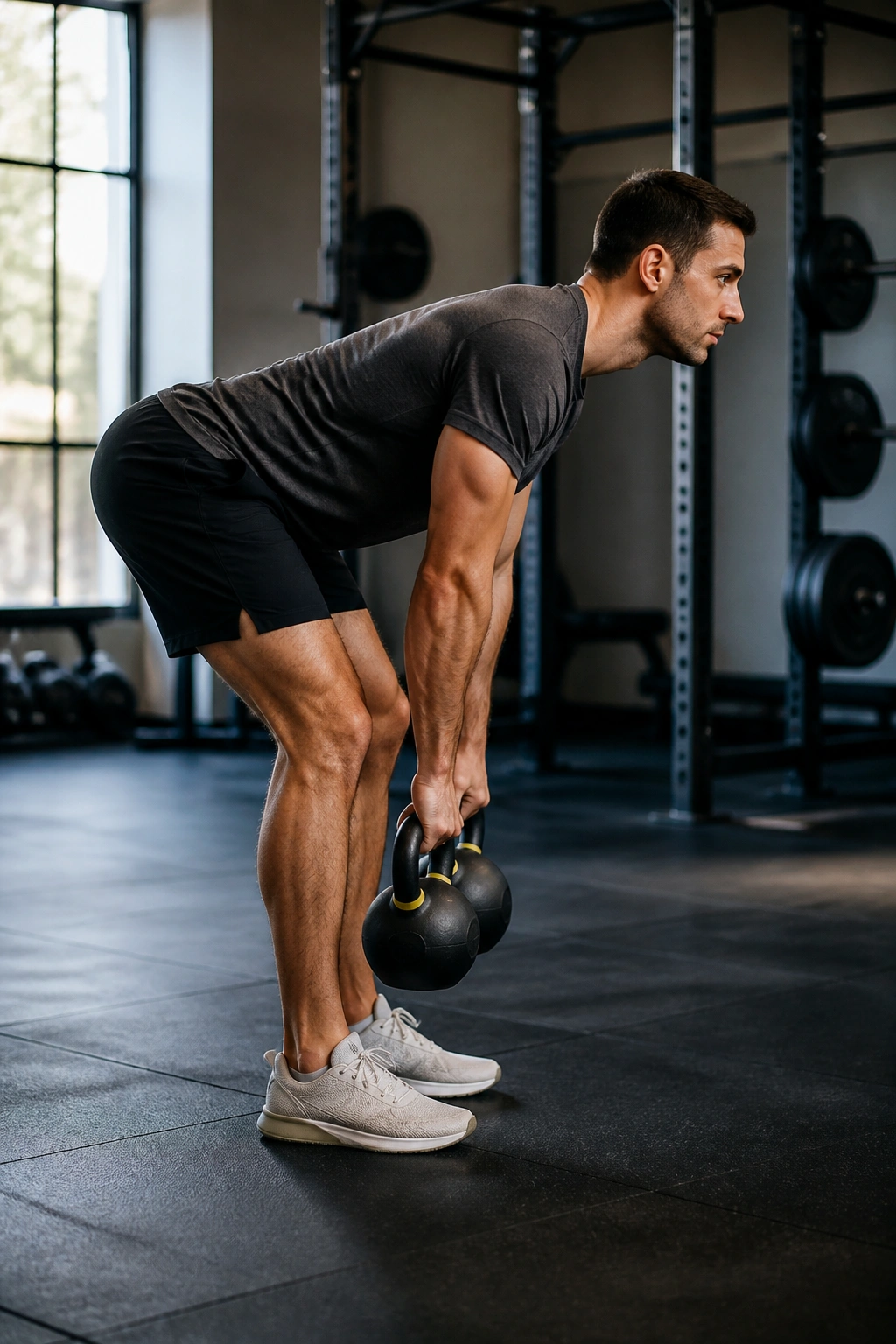
The RDL is the most refined version of the hinge. Unlike a standard deadlift, you do not start from the floor. You start from the standing position, lower the weight to about mid-shin, and pull back up. This constant tension is what makes it superior for hypertrophy.
The Tempo Control
Lower the bells over a 3-second count. Feel the glutes lengthening and the tension building. When you hit the bottom, do not bounce. Reverse the motion immediately. By removing the rest at the bottom, you keep the blood in the glutes and prevent any momentum from doing the work for you. Avoid the temptation to squat. If your knees move forward, it is a squat, not an RDL.
7. Kettlebell Deficit Deadlift
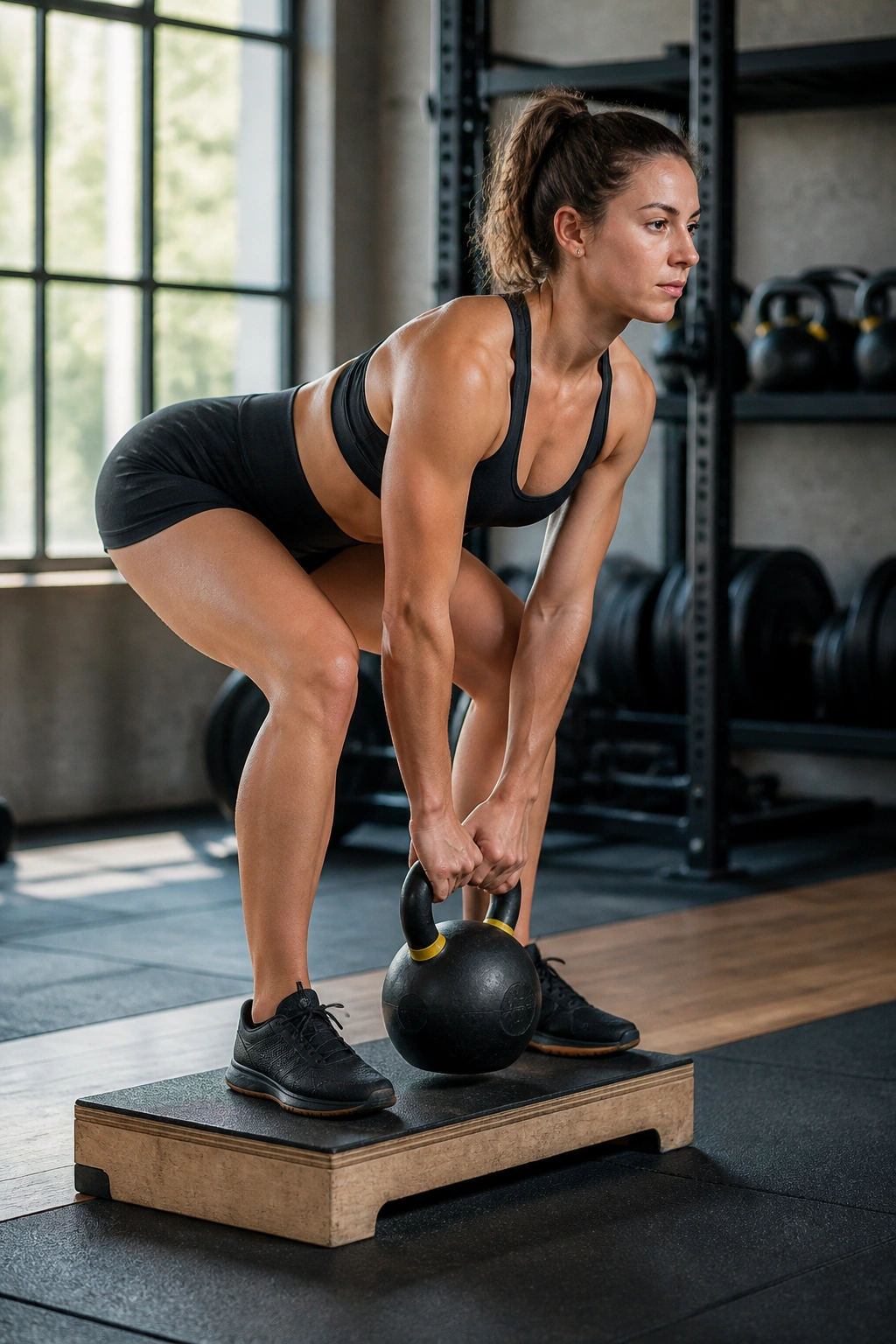
Standing on a small platform—like a couple of weight plates or a yoga block—increases the range of motion. This extra inch or two of depth forces you to get deeper into the hinge, lengthening the gluteus maximus fibers at the bottom of the movement.
When to Use This Variation
Only perform this once your form on a standard deadlift is perfect. Because you have to reach lower, the risk to your lower back increases if you lose core tension. Start with light weight. The goal is to reach that deeper stretch, not to hit a personal best on the weight. Once you feel the stretch in your glutes, push the floor away aggressively.
8. Kettlebell Suitcase Deadlift
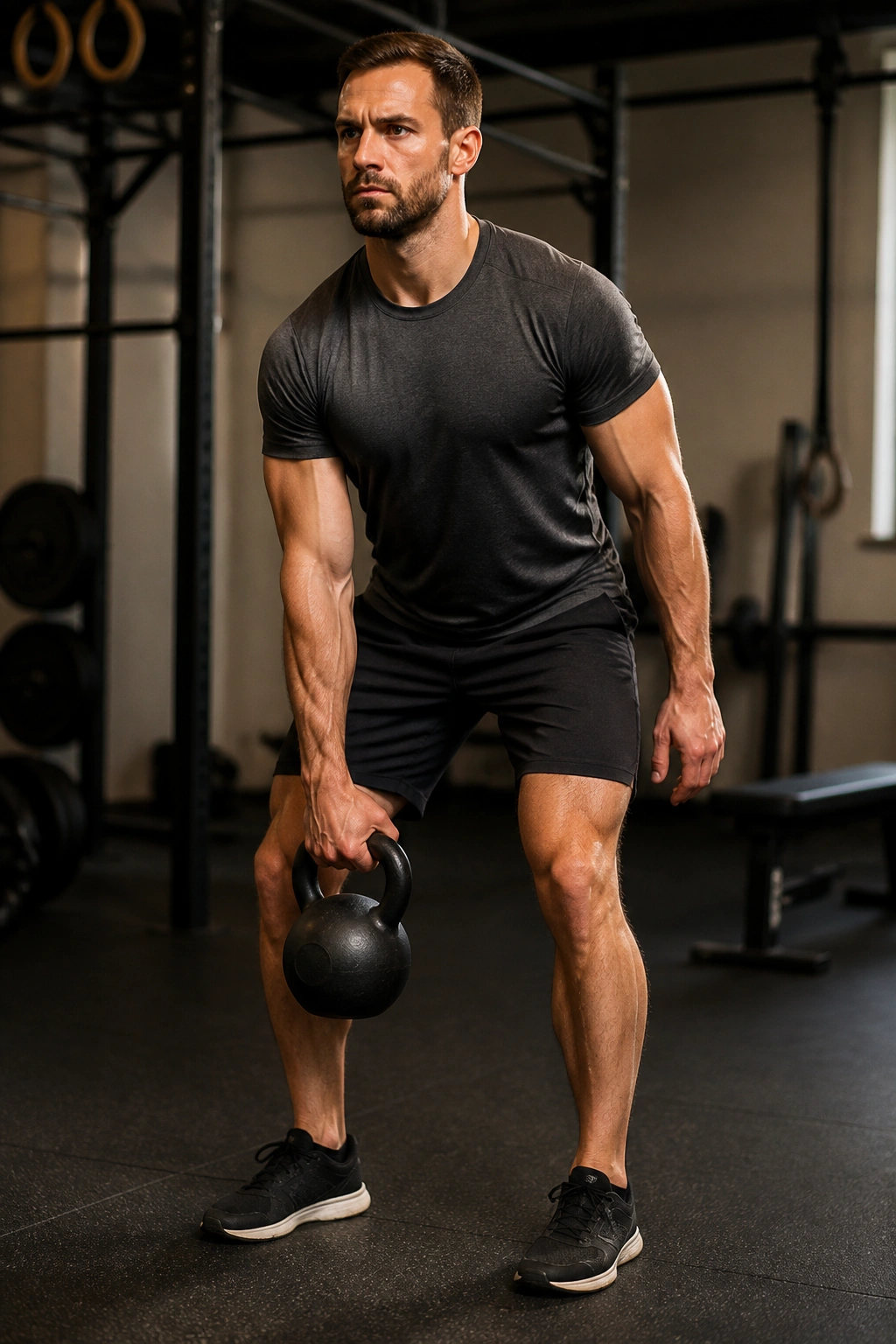
In a suitcase deadlift, the bell is placed to the side of your body, like you are carrying a piece of luggage. This creates an uneven load that forces your obliques and deep spinal stabilizers to fight against the weight to keep you upright. It is a fantastic way to train the glutes while forcing the core to work harder.
Maintaining Alignment
Your natural tendency will be to lean toward the weight. Fight it. Keep your shoulders parallel to the floor. If you let yourself tilt, you lose the unilateral engagement that makes this exercise so effective. Perform your sets on one side, then switch. You will likely notice that one side of your glutes is significantly weaker or harder to activate than the other.
9. Kettlebell Band-Resisted Deadlift
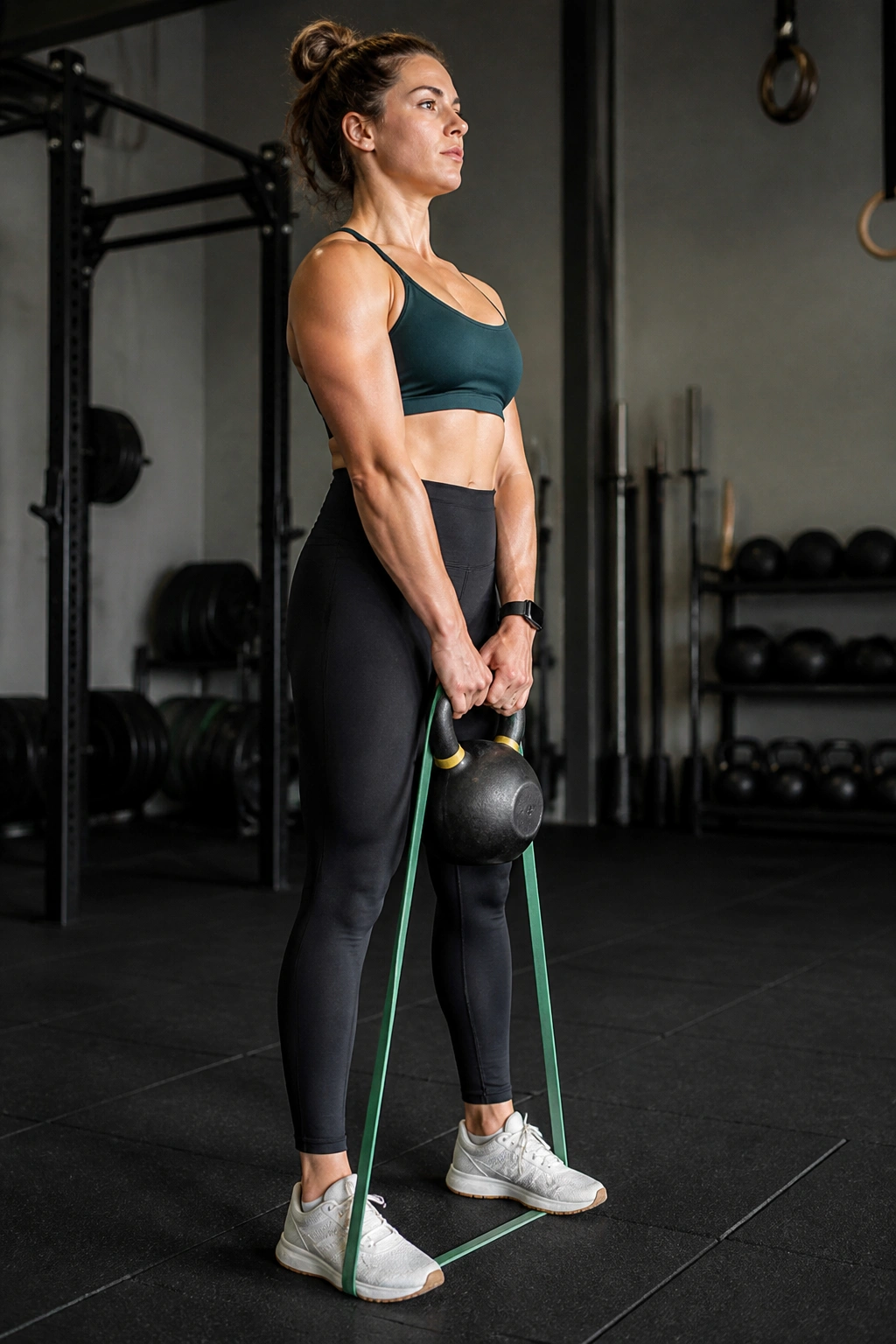
Adding a resistance band to your kettlebell deadlift changes the strength curve. As you stand up, the band stretches and the resistance increases. This mimics the way your glutes work: they are strongest at the top of the movement. By using bands, you force them to work harder through the lockout.
Setting the Tension
Loop a resistance band around the handle of the kettlebell and stand on the band with both feet. As you pull, the band fights your extension. It teaches you to squeeze the glutes violently at the top. If you have been struggling to “feel” the lockout or to get a full contraction, this is the variation that will fix that issue instantly.
10. Kettlebell Pause Deadlift
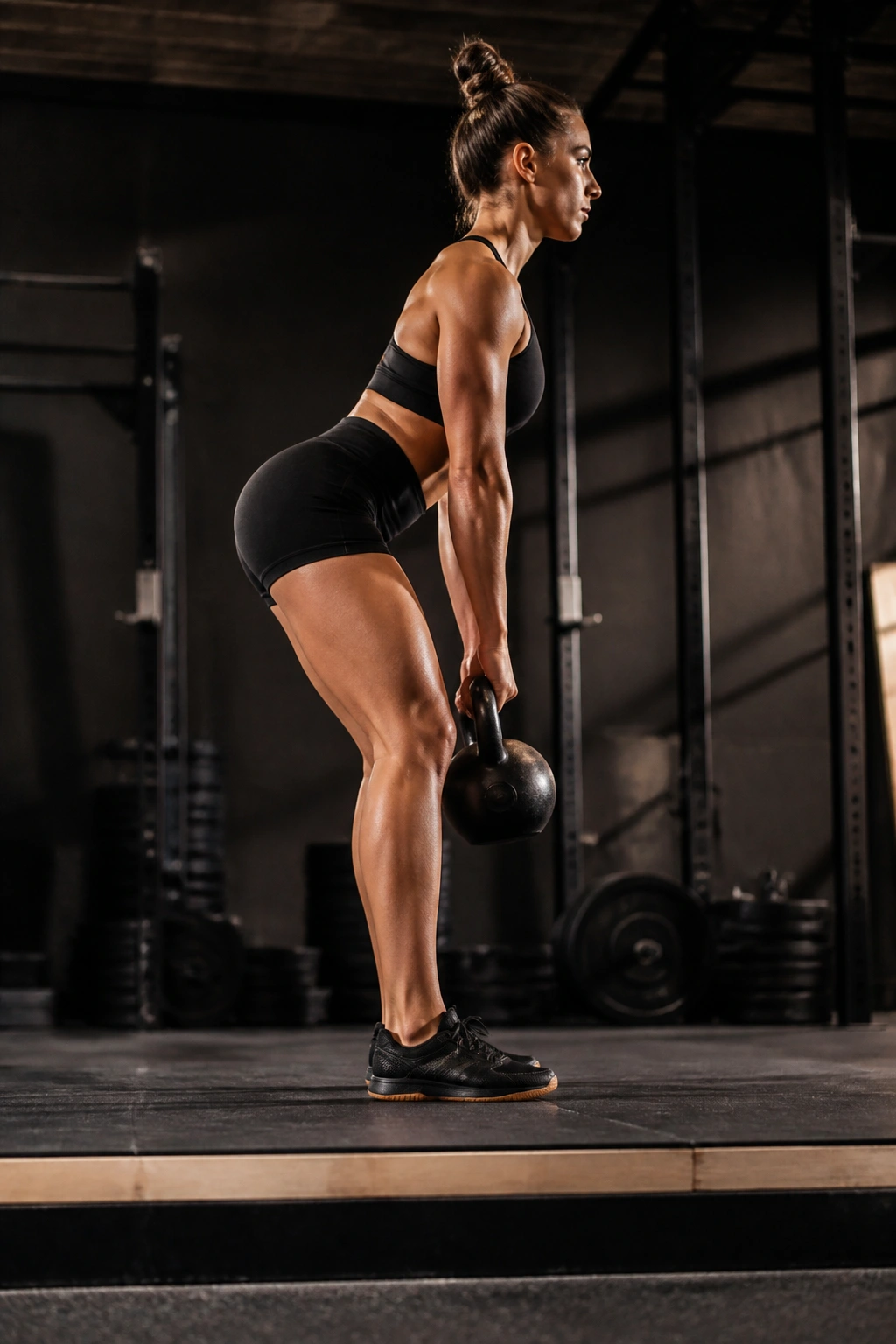
This is a tempo variation that eliminates the “bouncing” habit. You pause for two seconds in the position where the kettlebell is at your mid-shin. This forces you to hold the most difficult part of the lift under tension.
Why the Pause Matters
When you stop moving, momentum disappears. You are forced to rely purely on muscle strength to initiate the upward phase. This is arguably the best variation for fixing a weak lockout or a breakdown in form off the floor. Do not hold your breath during the pause. Keep breathing, stay tight, and then explode up. The pause is not a rest; it is an active hold.
11. Kettlebell Single-Arm Romanian Deadlift
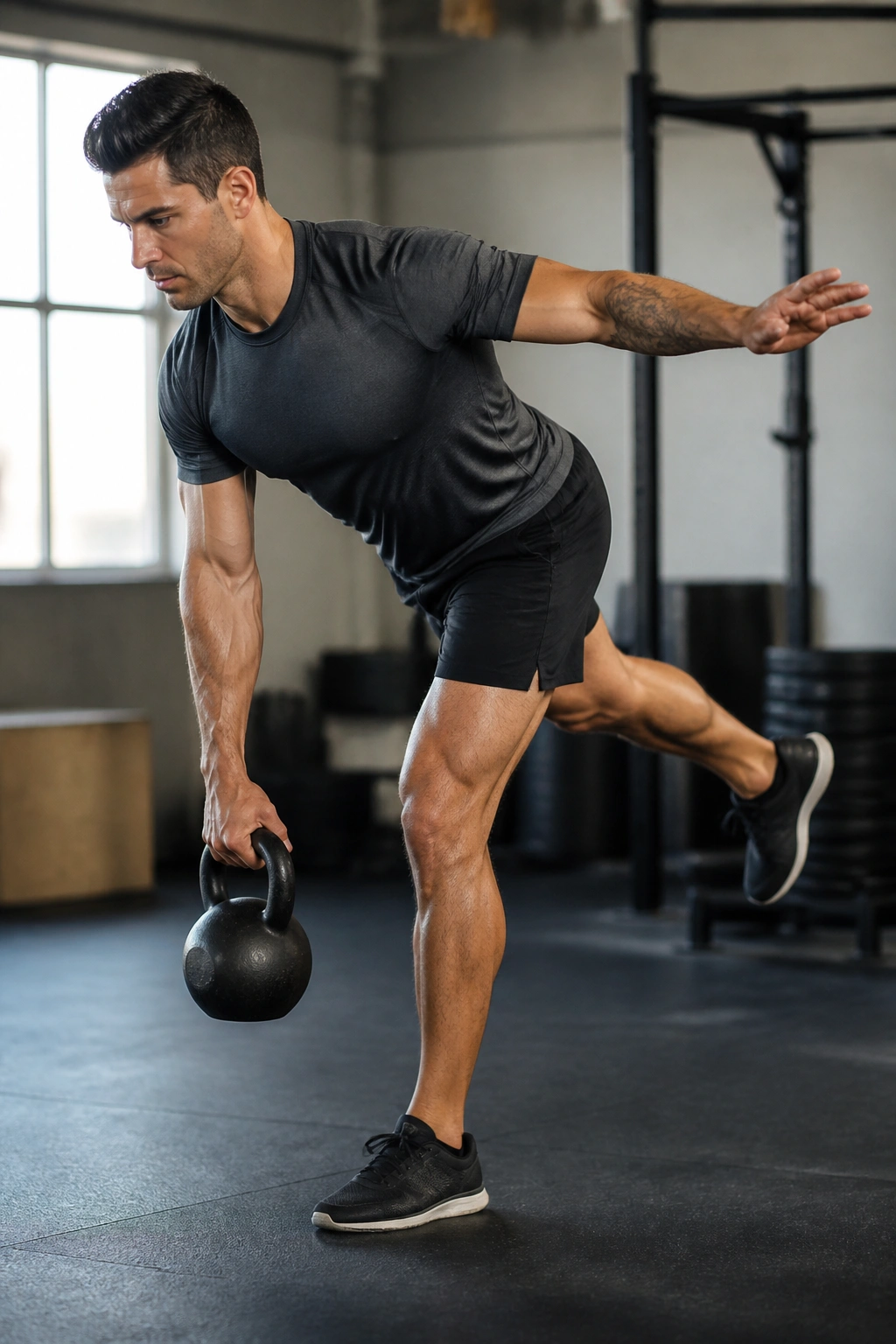
Take the single-leg RDL and remove the balance challenge, then add an offset load. This variation is all about anti-rotation. With a bell in only one hand, your body will want to twist toward the weight. Your core and glutes must resist that rotation.
Glute Medius Activation
Because you have to stabilize against the rotational force of the single bell, the glute medius on the working leg gets hit incredibly hard. It is a subtle muscle, but it is essential for hip health and shape. Keep the shoulder of the empty hand down and back. Don’t let it shrug or roll forward as you hinge.
12. Kettlebell Jefferson Deadlift
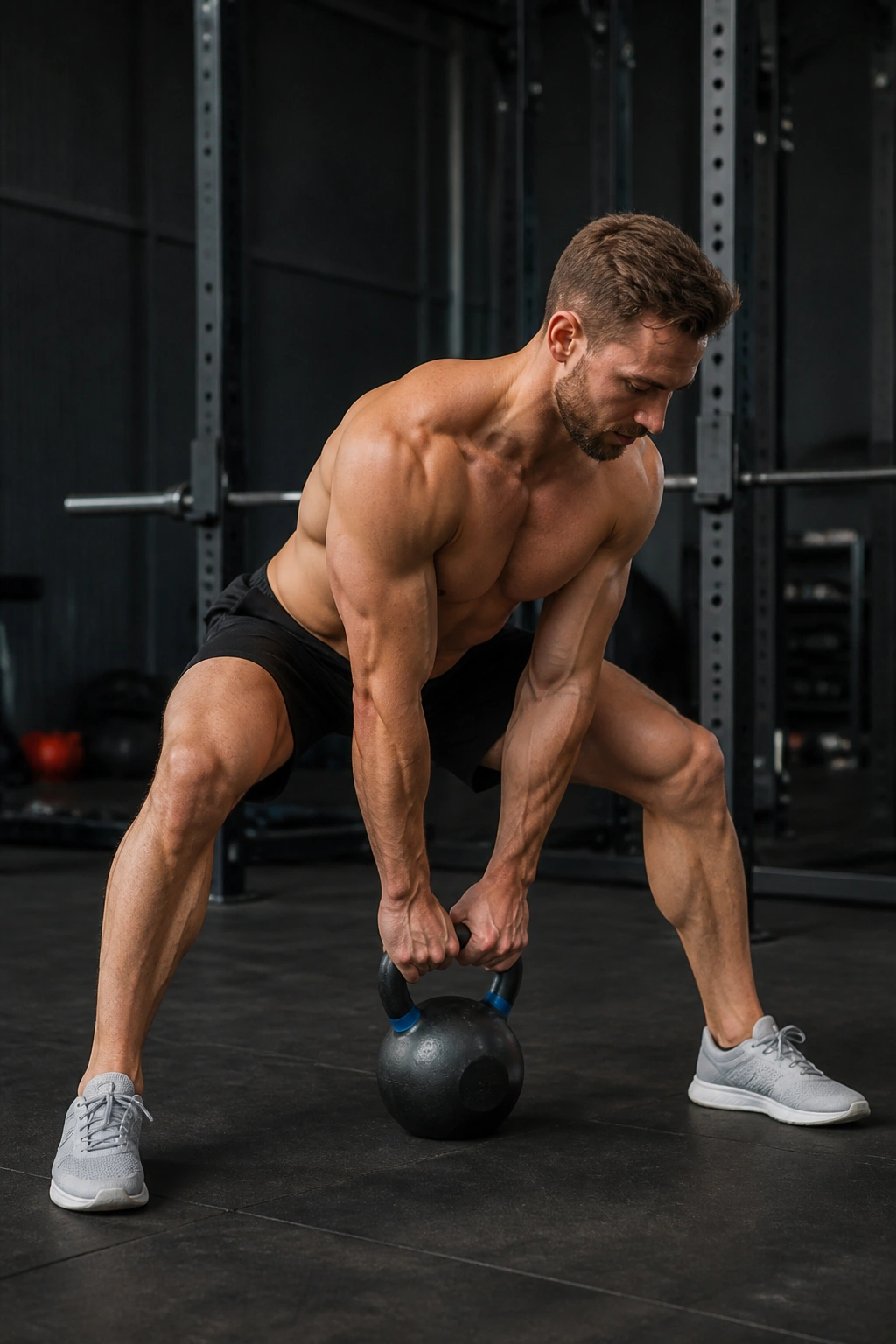
The Jefferson deadlift involves straddling the kettlebell so it is directly between your feet. You are essentially doing a deadlift from a lunge-like position without the lunge. It is a very wide-stance move that hits the glutes from a completely different angle than a standard deadlift.
Managing the Stance
The bell should be directly under your center of gravity. As you grip the handle, your hips will be lower than in a standard deadlift. Drive up through the heels. Because of the straddle, you get a significant amount of adductor and glute involvement. It feels awkward at first, but it is one of the best movements for glute development that you are not currently doing.
13. Kettlebell Gorilla Deadlift
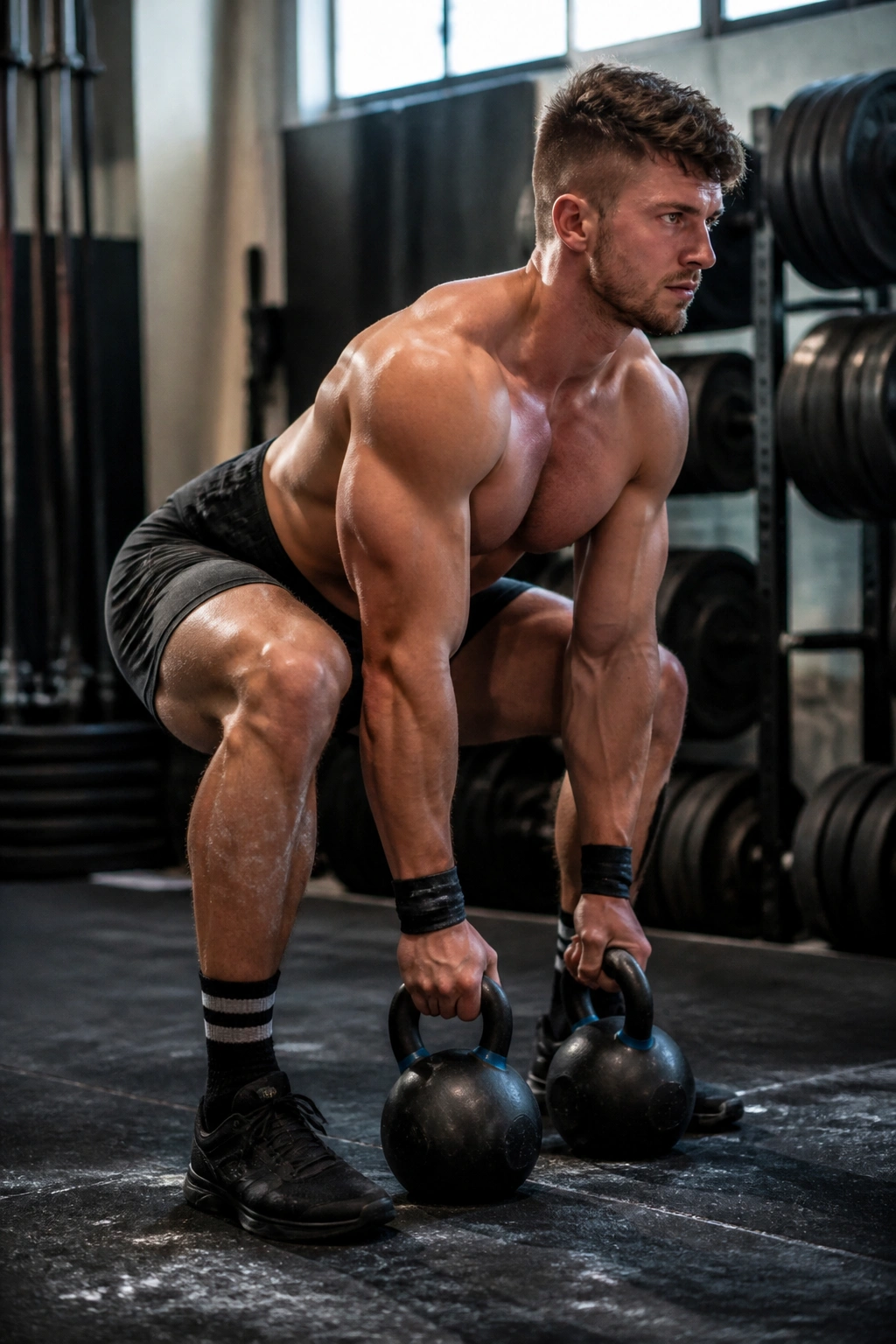
This variation involves placing two kettlebells between your feet. You get into a deep hinge, grip both handles, and perform a deadlift. The setup forces you to keep your chest up and your back arched perfectly. It feels somewhat like a sumo deadlift but requires much more flexibility in the hips to reach the bells.
Why “Gorilla” Matters
The starting position is what makes this move special. You are essentially locked into a deep hinge. You cannot “cheat” by starting from a higher position. You must maintain a flat back at the very bottom. It forces massive tension onto the glutes right from the initiation of the pull. If you want to build raw strength in the bottom half of the lift, this is it.
14. Kettlebell Sumo RDL
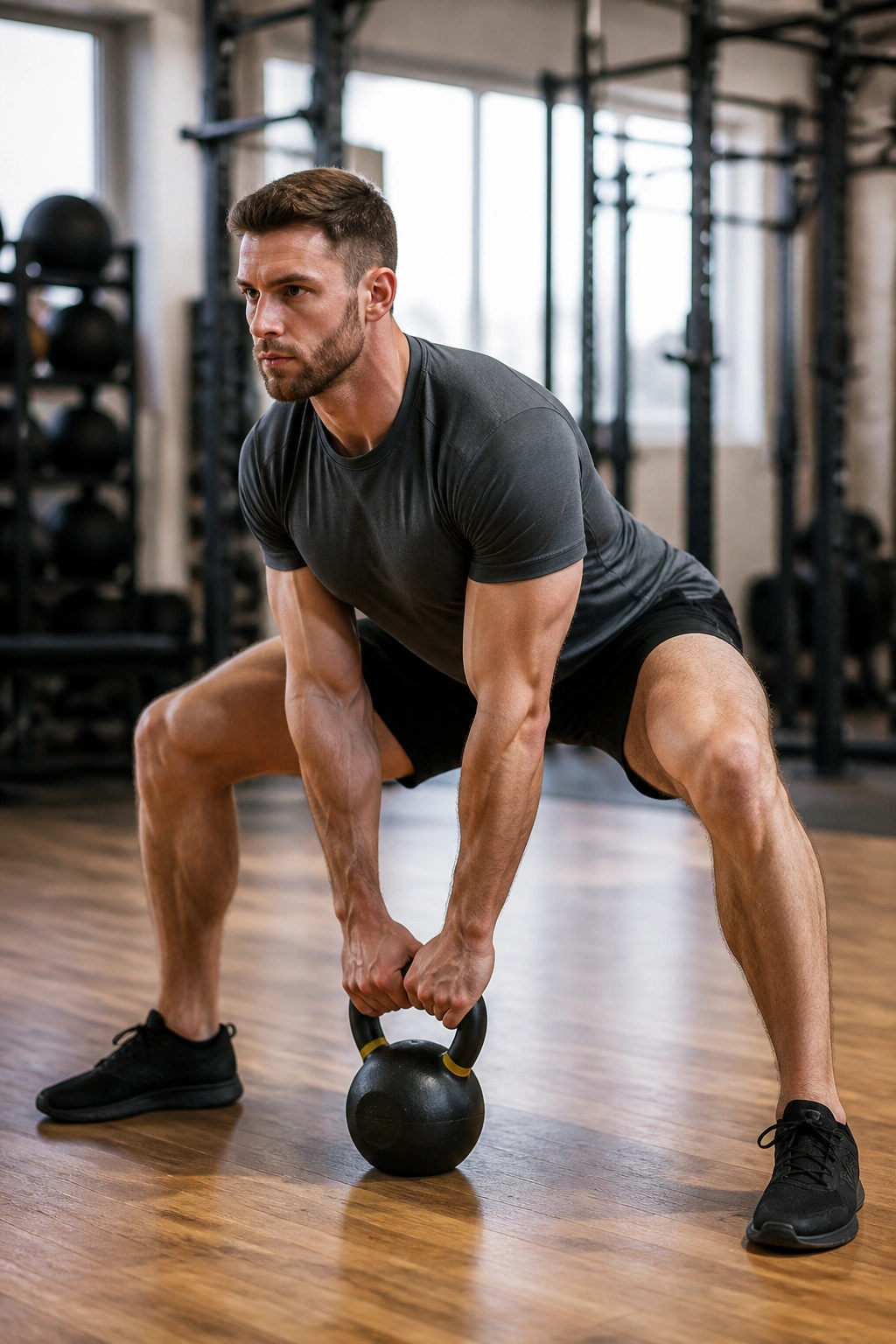
Take the width of a sumo deadlift and combine it with the tension of an RDL. By widening your stance, you take the lower back out of the equation and move the stress directly onto the glutes and inner thighs.
The Hip Hinge Difference
In a standard RDL, you push your hips back. In a sumo RDL, you push your hips back and slightly out, as if you are trying to spread the floor with your heels. This “spreading” cue is vital. It creates tension in the glutes before the weight even moves. Keep the kettlebell handle at arm’s length, centered between your legs.
15. Kettlebell Offset Deadlift
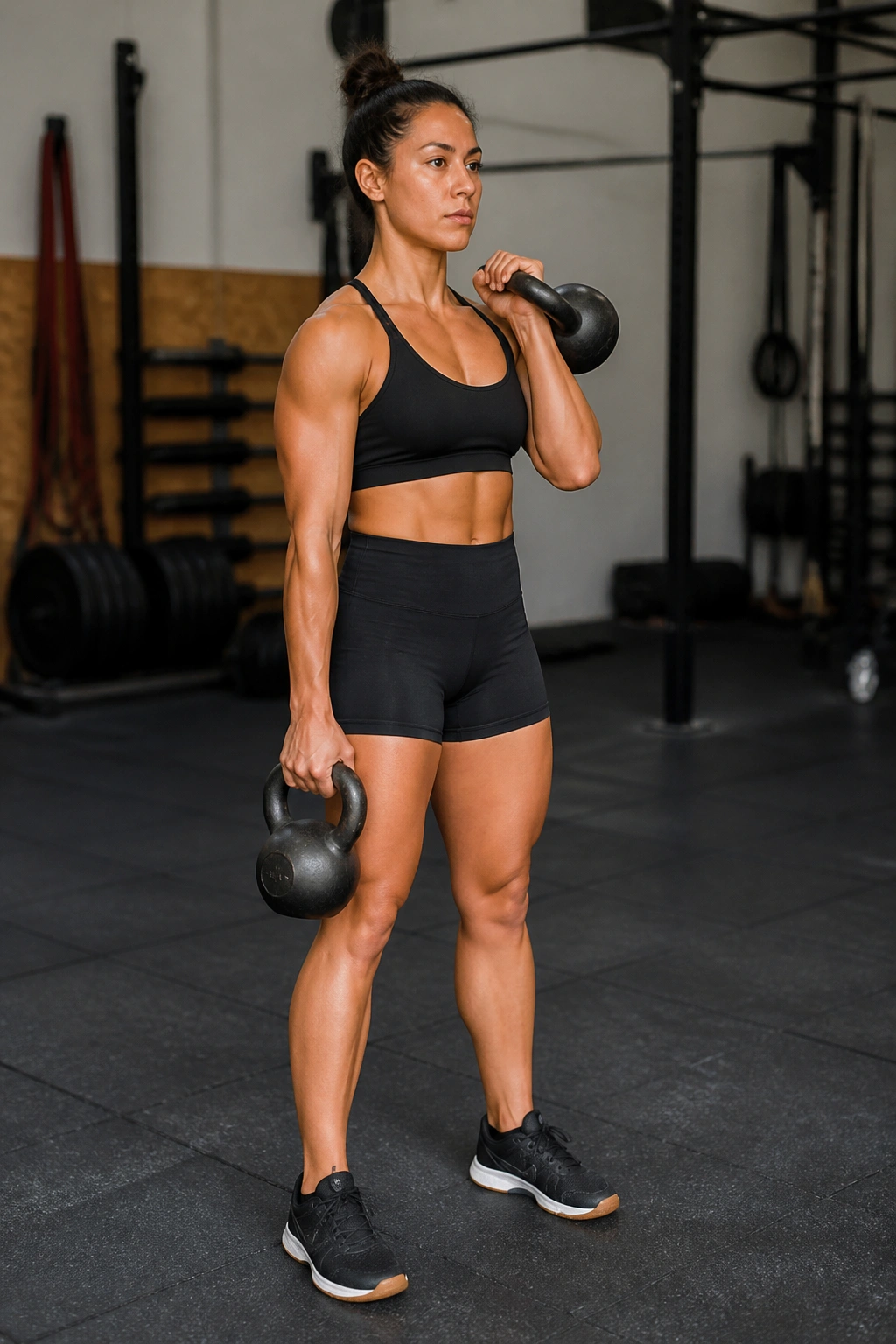
Hold one kettlebell in the standard position and one kettlebell in a racked position (at the shoulder). This is an offset load. One side is pulling you down, the other is challenging your stability.
Balancing the Load
This is a masterclass in core-glute coordination. Because the load is uneven, your body has to dynamically adjust its muscle firing patterns to keep you vertical. The glute on the side of the heavy/racked load has to work harder to stabilize the hip. Perform the set, then switch the bells to the opposite positions to ensure you are training both sides equally.
16. Kettlebell Landmine Deadlift
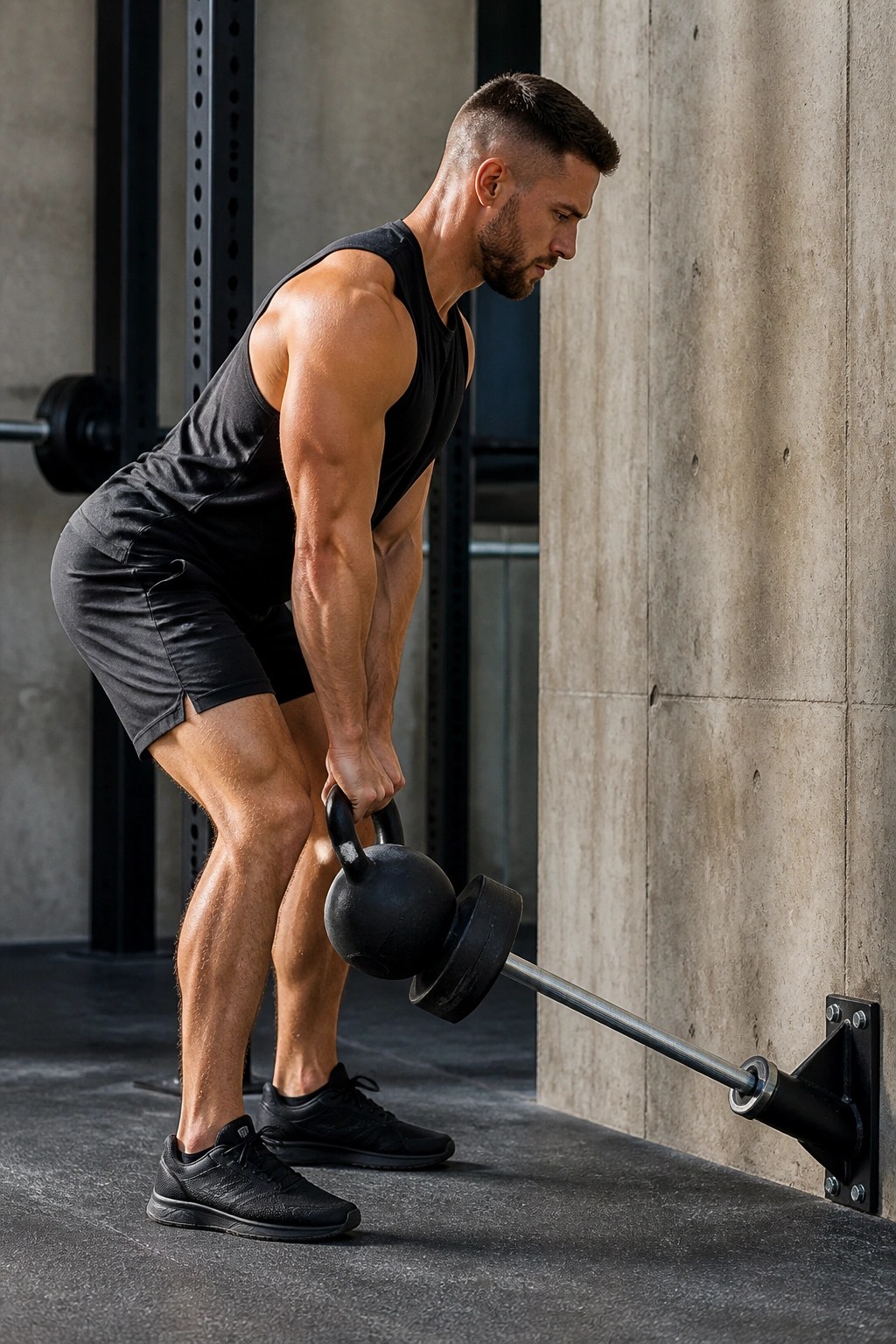
If you have a landmine attachment (or can wedge a barbell into a corner), you can perform a deadlift using the barbell loaded with a kettlebell for resistance, or by holding the kettlebell in the landmine sleeve. This creates an arc of motion rather than a straight vertical line.
The Mechanics of the Arc
The beauty of the landmine variation is the way the resistance changes as you move. It is very heavy at the bottom and slightly lighter at the top, which perfectly matches the strength curve of the glute muscles. It is also inherently safer for the lower back because the fixed pivot point prevents the weight from swinging away from your body.
17. Kettlebell Snatch-Grip Deadlift
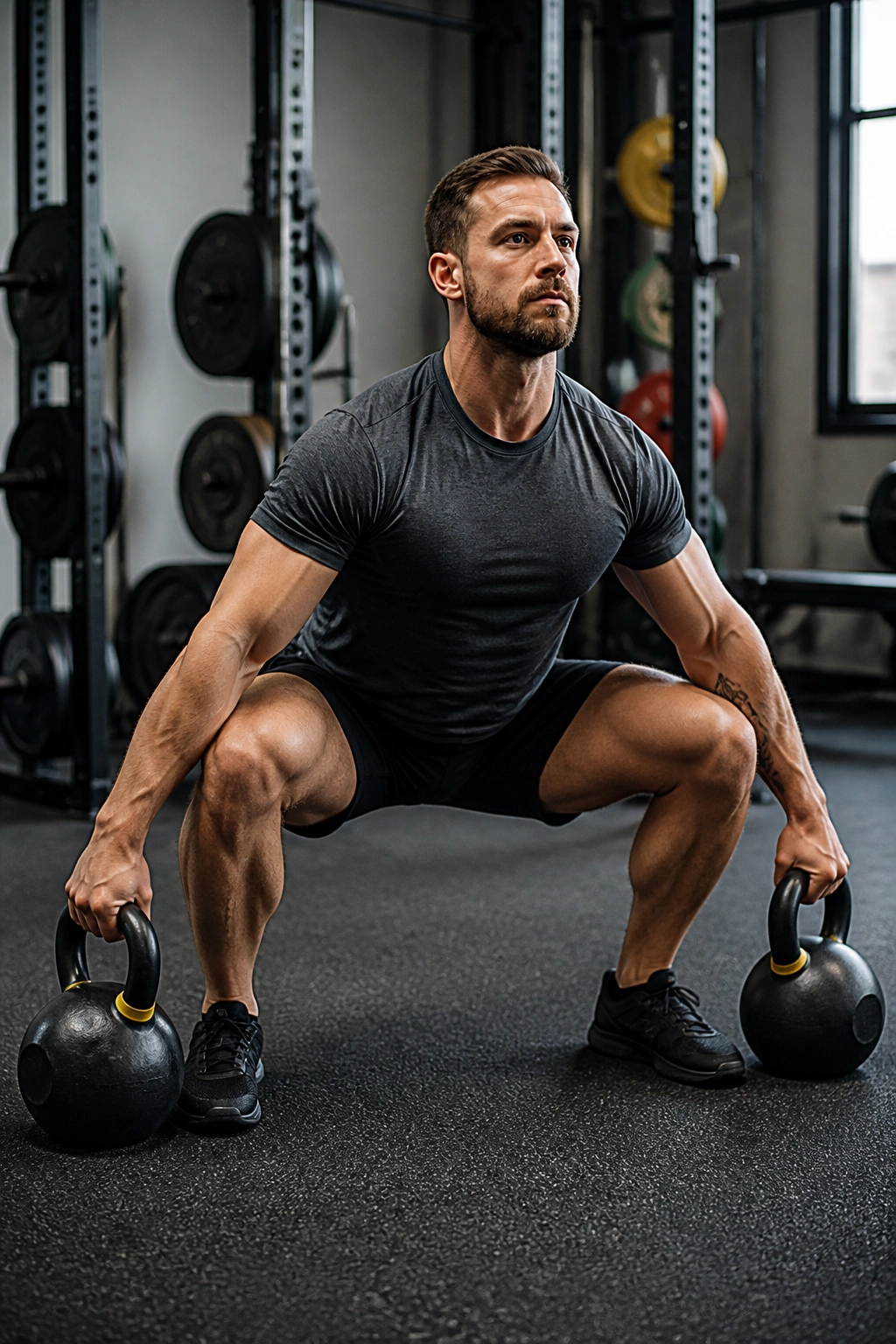
A snatch-grip means taking a very wide grip on the kettlebell handles. By widening your hands, you force your hips to sink lower and your torso to become more upright. It is essentially a wide-grip deadlift that targets the upper back and the glutes simultaneously.
Engaging the Upper Back
This is a “two-for-one” move. You get a massive glute workout, but your traps and rhomboids also get hammered because you have to work much harder to hold onto the weights at such a wide angle. It teaches you to keep your chest proud. If you slouch in this position, the bells will hit your knees instantly.
18. Kettlebell Trap Bar Style Deadlift
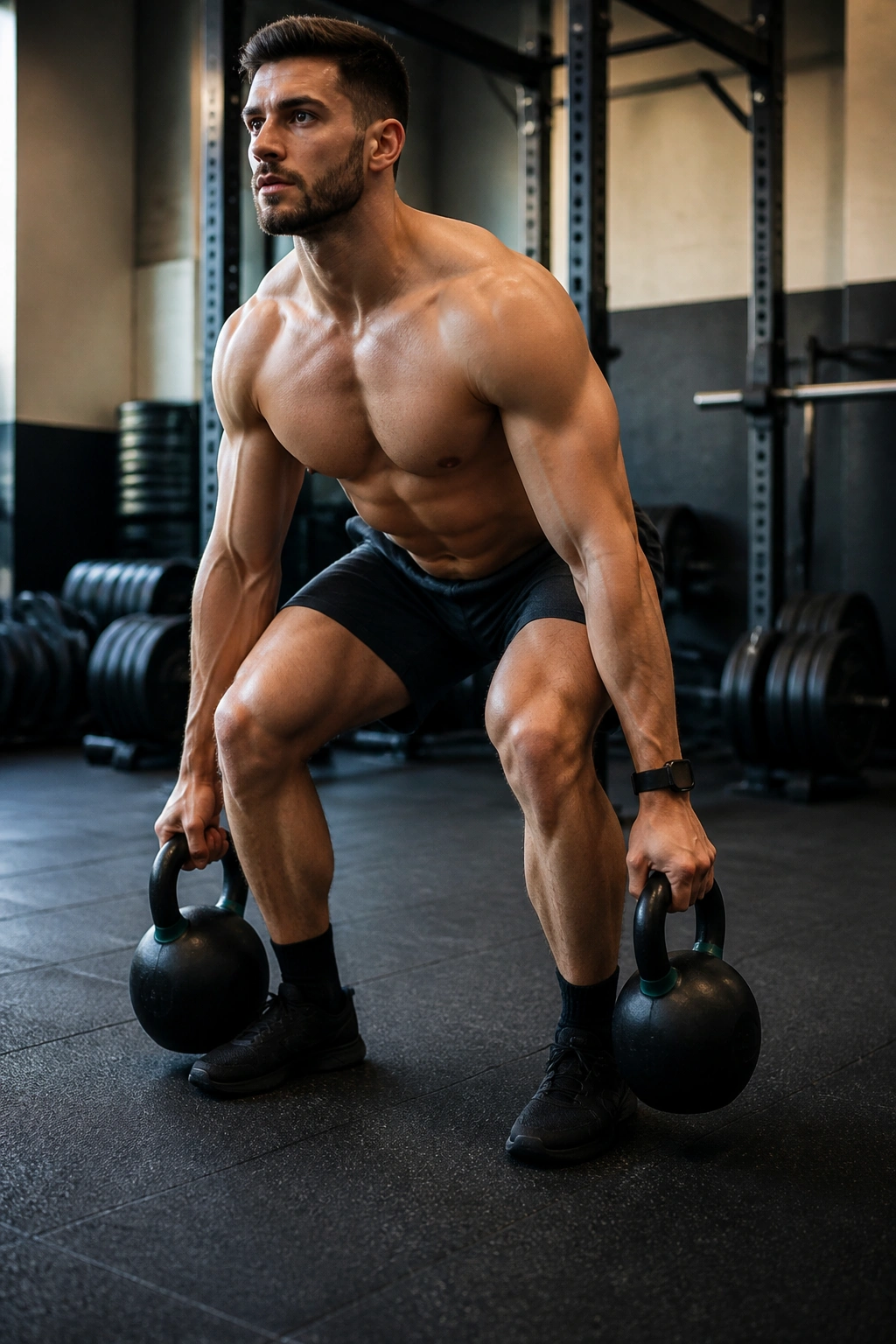
This isn’t an official exercise name, but it is a technique. Stand with two kettlebells, one on the outside of each foot. This mimics the mechanics of a trap bar deadlift. It keeps the weight perfectly aligned with your center of gravity, which is the most natural position for human biomechanics.
Why It Feels Better
Most people find this to be the most comfortable way to deadlift because it eliminates the “weight in front” issue of a barbell. It allows you to maintain a perfectly neutral spine while loading the glutes and quads with heavy weight. It is the closest you can get to a trap bar deadlift without owning a trap bar. Make sure your stance is wide enough to fit your feet comfortably between the bells.
Final Thoughts
Building strong glutes is not about picking the heaviest weight and hoping for the best; it is about finding the angles that challenge your muscles in new ways. The deadlift is a tool, but a tool is only as good as the technique you apply to it. If you have been grinding away at the same standard deadlift, your progress has likely stalled because your body has adapted to the stress.
Try introducing these variations one or two at a time. Do not try to overhaul your entire lower body day in one session. Focus on the feeling—the stretch, the contraction, and the way your glutes actually fire during the movement. If you do not feel it in your glutes, you are probably not hinging correctly or you are using too much lower back. Slow it down, refine the setup, and put your ego aside. The growth happens when you master the movement, not when you master the weight.
