



Most people walk into a gym, look at the wall of heavy, oddly shaped iron balls, and walk right past them to the cardio machines. They assume the kettlebell is just a glorified weight or some obscure tool for circus strongmen. That is a massive mistake. If your goal is to strip away body fat while simultaneously building functional strength, there is arguably no piece of equipment more efficient than the humble kettlebell. It isn’t just about moving weight; it’s about momentum, timing, and recruiting every single muscle fiber in your posterior chain from the first swing to the final rep.
When you perform high-intensity interval training—or HIIT—with a kettlebell, you aren’t just doing cardio. You are performing a metabolic heist. You are forcing your heart rate into the red zone and keeping it there, which triggers a physiological response known as excess post-exercise oxygen consumption, or EPOC. In plain English, this means your body continues to incinerate calories long after you have racked the bell and walked out the door. It is uncomfortable. It is taxing. And it works better than almost anything else for real-world fat loss.
Don’t worry about needing a massive rack of equipment. All you need is one or two bells that challenge you—heavy enough to make the last few reps of a set feel like a genuine struggle, but not so heavy that your form crumbles and you end up putting your back out. Whether you have ten minutes or thirty, the following routines are designed to turn your body into a furnace.
1. The Classic Swing-Squat Burner
This is your bread and butter. If you master this, you have mastered the foundation of kettlebell training. We are combining the hinge-dominant kettlebell swing with the quad-heavy goblet squat to create a full-body movement pattern that demands a lot of oxygen. The goal here is simple: keep moving.
The Protocol
You will perform a ladder. Start with 10 swings followed immediately by 5 goblet squats. Without resting, do 9 swings and 4 squats. Continue this descending pattern until you reach 1 swing and 1 squat. Your goal is to finish the entire ladder without ever putting the kettlebell down.
Why It Torches Fat
The swing is a hip hinge, which targets your hamstrings and glutes, while the squat hits your quads. By alternating them, you are forcing blood to travel from your lower body to your upper body and back again. It sounds basic, but your lungs will be burning by the time you reach the bottom of the ladder. If you need to put the bell down, you have failed the challenge—grab a lighter weight next time.
2. The “Ladder of Death” Progression
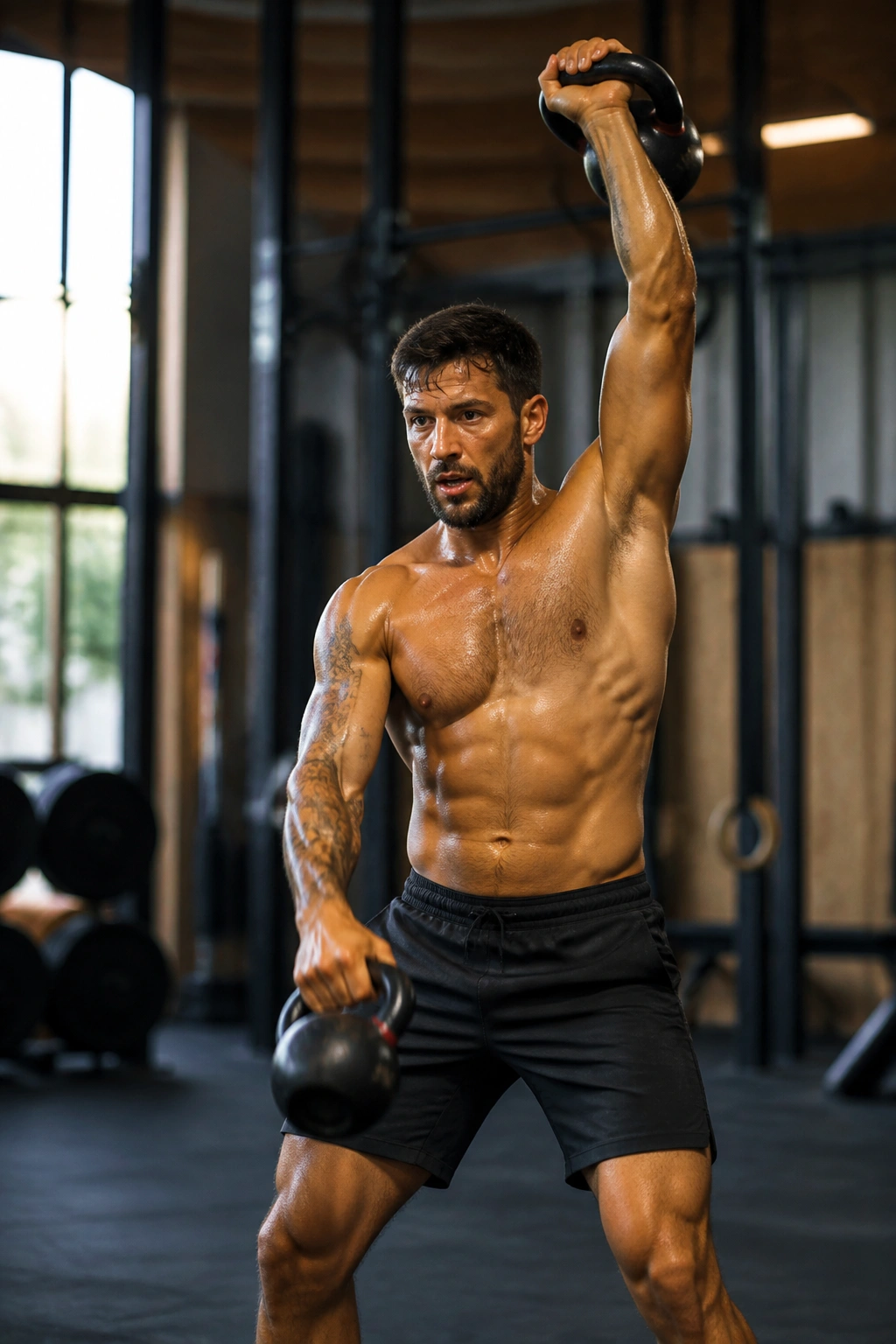
This routine is mentally taxing because it forces you to embrace the suck. It isn’t just about endurance; it’s about discipline. You aren’t counting reps; you are counting minutes. This works exceptionally well for people who find traditional gym sessions boring because it forces you to focus entirely on the clock.
How to Execute
Set a timer for 10 minutes. In the first minute, perform 5 snatches on your right arm and 5 snatches on your left. Rest for the remainder of that minute. In the second minute, perform 6 snatches per arm. Every minute, you add one repetition to each side.
Critical Success Factors
The secret here is the rest period. At the beginning, the rest feels generous. By minute seven or eight, that rest period will vanish as you struggle to finish the reps before the clock rolls over. If you cannot finish the reps within the minute, stop the clock. That is your baseline. Do not cheat the rest period; the efficiency of this workout lives and dies by the interval.
3. Single-Arm Snatch Interval

The snatch is an aggressive, explosive movement. It requires coordination, timing, and a fair bit of grip strength. Because it’s a unilateral (single-side) movement, it forces your core to engage in ways that a bilateral movement like a squat simply cannot.
The Workout Structure
Perform 30 seconds of all-out snatches on the right arm, then immediately switch to 30 seconds of snatches on the left. Rest for 30 seconds. That is one round. Aim for 8 to 10 rounds total. Do not sacrifice speed, but never let your form get sloppy. If the bell starts banging against your wrist, you’ve lost the technique—tighten your grip or switch to a lighter bell.
Common Mistakes to Avoid
The most common error is “muscling” the weight up. The snatch is not a shoulder press; it’s a hip-drive exercise. The bell should float at the top of the movement. If you are using your arm strength to haul it up, you will gas out in two minutes. Use your hips to generate the power, and let your arm simply guide the trajectory.
4. The 10-Minute EMOM Challenge

EMOM stands for “Every Minute on the Minute.” It is a classic CrossFit staple, but it works brilliantly for kettlebell fat loss because it provides a rigid structure. You do not get to decide when to rest; the clock decides for you.
The Movement Pattern
For this 10-minute block, you will perform 15 kettlebell swings and 10 push-ups every minute. If it takes you 40 seconds, you get 20 seconds of rest. If it takes you 50 seconds, you get 10 seconds of rest. If you take 60 seconds, you are in trouble.
Keeping the Pace
The push-up component is crucial here. It forces you to move from a standing explosive movement to a horizontal position, which spikes your blood pressure and heart rate. It is physically uncomfortable, which is exactly why it works. If you find yourself consistently finishing with less than 10 seconds of rest, scale down the swing reps to 12. You need that buffer to recover, or your form will disintegrate by the fifth minute.
5. Renegade Row and Burpee Combo

This is a high-intensity circuit that combines strength, stability, and pure aerobic capacity. It is not for the faint of heart, and it certainly isn’t for those who skip their warm-up. You need two kettlebells of equal weight for this one.
How to Perform the Circuit
Assume a plank position with your hands gripping the handles of two kettlebells. Perform a row with your right arm, then a row with your left arm. Jump your feet forward, stand up, perform a burpee, and jump back into the plank. That is one rep. Do 10 reps, rest for 60 seconds, and repeat for 5 total sets.
The Core Stabilization Factor
When you perform the renegade row, your instinct will be to rotate your hips to get the bell off the ground. Don’t. Your entire goal is to keep your torso perfectly parallel to the floor. The moment you twist, you lose the core-strengthening benefit. Use your feet to widen your stance if you need more stability—that is a pro move, not a cheat.
6. The Clean-to-Press Pyramid
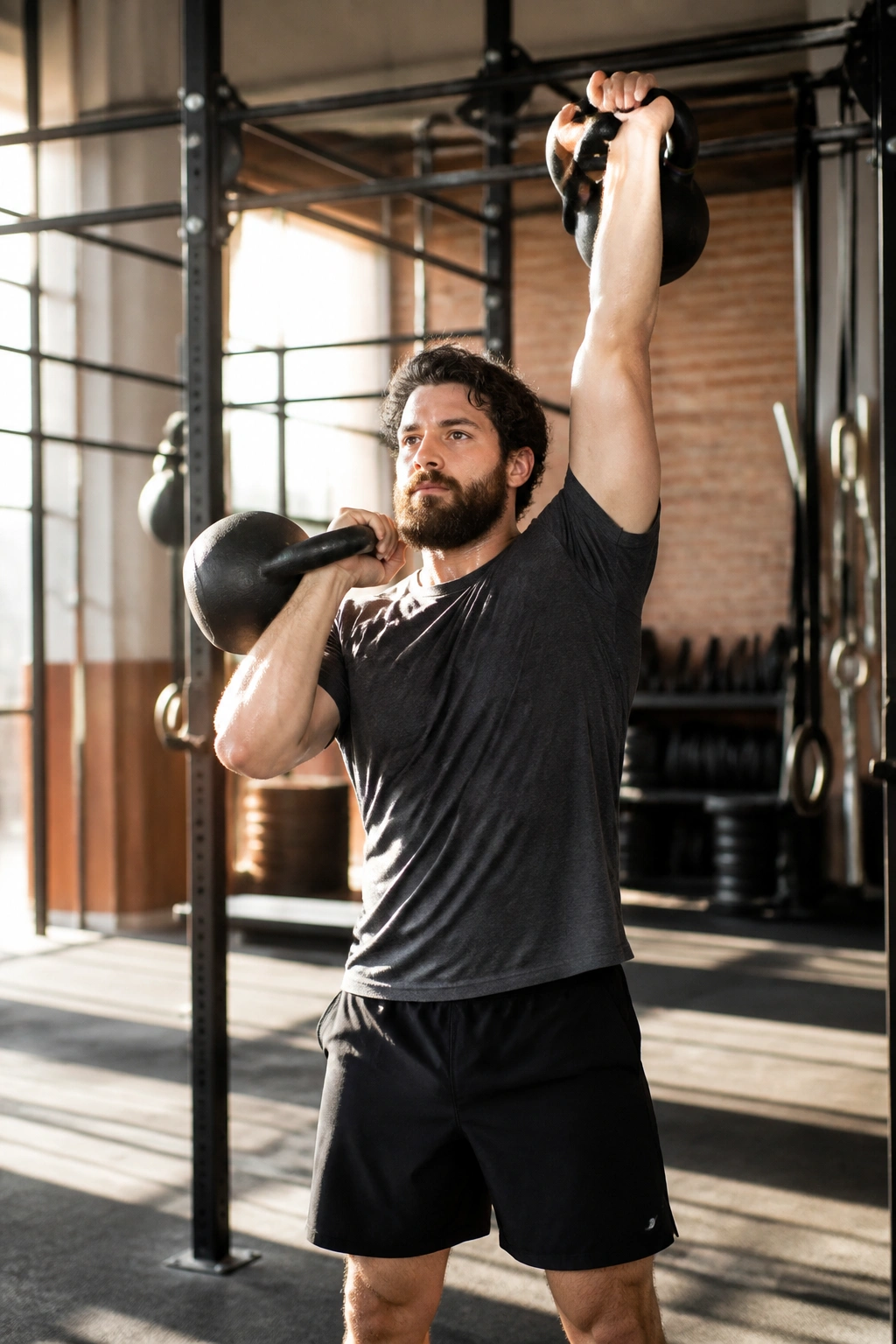
This workout focuses on the upper body and shoulder girdle, but don’t be fooled—it is still a full-body metabolic spike. By moving the weight from the floor to the rack, and then overhead, you involve nearly every major muscle group.
The Pyramid Structure
Start with 2 cleans and 2 presses per arm. Then do 4 cleans and 4 presses. Then 6, 8, and 10. Once you hit 10, start working your way back down to 2. If you are using a heavy kettlebell, you will be shaking by the time you reach the top of the pyramid.
Why It Works for Weight Loss
The overhead press is a deceptively tiring movement. Holding a heavy bell overhead for multiple reps requires significant stabilization from your abdominal wall. When you combine this with the explosive clean, you keep your heart rate elevated for a longer duration than a simple sprint would. It’s strength training disguised as cardio.
7. The Russian Twist and Halo Core Crusher
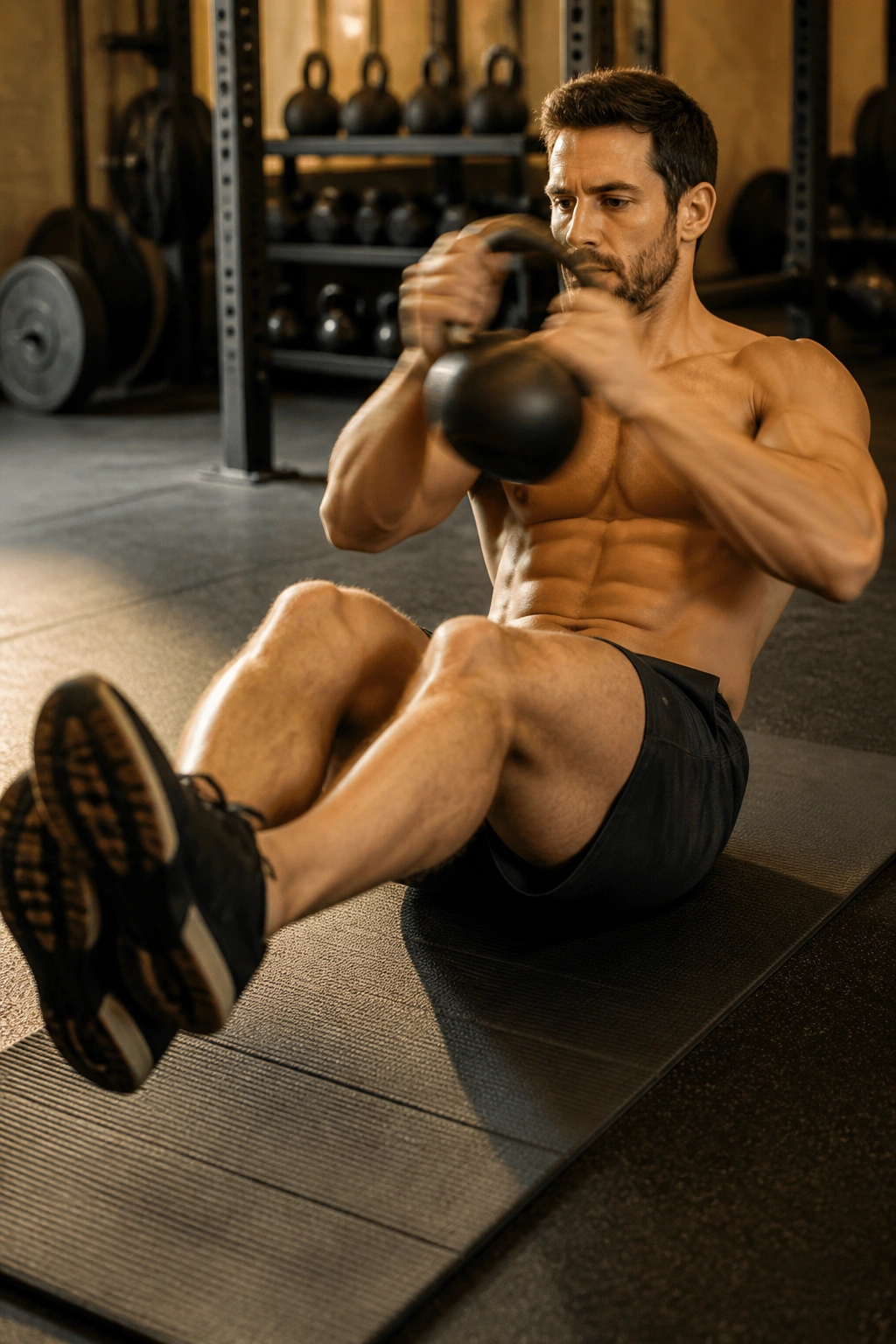
Sometimes you need a break from the explosive hip-hinge movements. This routine focuses heavily on rotational core strength and shoulder stability, which is often a neglected area in fat-loss programming.
The Protocol
Perform 20 Russian twists (using the kettlebell as resistance) followed by 10 halos (swinging the bell around your head). Do 5 rounds. Focus on keeping your legs elevated during the twists to maximize the burn.
Why Core Matters in Fat Loss
While you cannot “spot reduce” fat, a stronger core allows you to perform other exercises—like the heavy swing or the snatch—with better form. Better form means more intensity. More intensity means more calories burned. This circuit isn’t just about vanity; it’s about creating the structural foundation you need to push harder in the other workouts.
8. The Goblet Squat AMRAP

AMRAP stands for “As Many Reps As Possible.” This is the ultimate test of grit. You aren’t counting rounds or sets here; you are counting the total number of squats you can endure before your legs give out.
The Rules of Engagement
Set a timer for 5 minutes. Grab a kettlebell that is moderately heavy. Perform goblet squats at a steady, consistent pace. If you have to pause, pause at the top—never at the bottom. Do not put the weight down until the 5 minutes are up.
Pacing Yourself
The temptation is to sprint the first minute. Do not do it. If you go out too fast, your legs will lock up by minute three. Aim for a pace that feels like a 7 out of 10. By minute four, you’ll be at a 10 out of 10 regardless. This is a mental game. It tests your ability to keep moving when your muscles are screaming for a break.
9. Windmill and Turkish Get-Up Flow
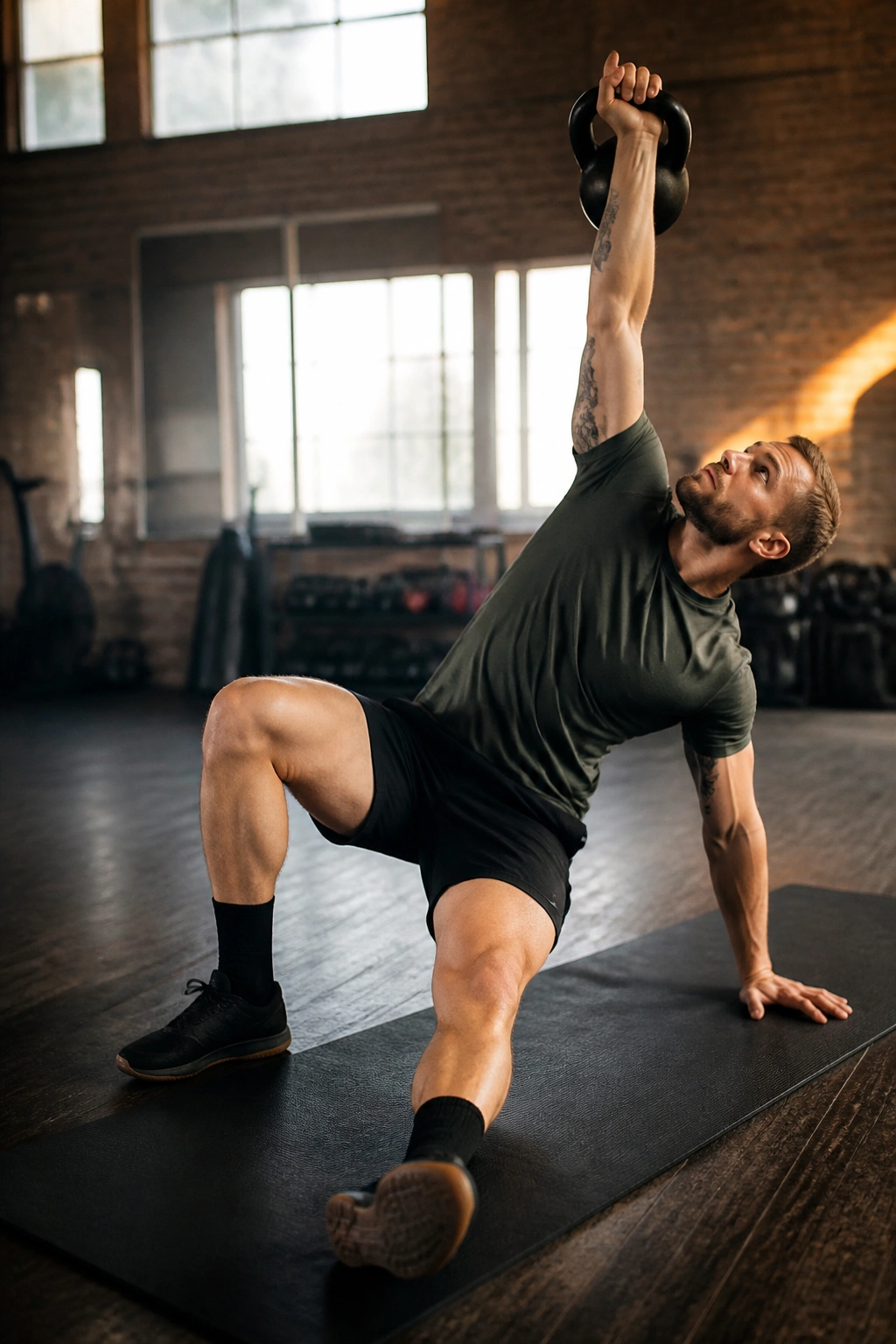
This is slower than the other workouts, but do not mistake “slow” for “easy.” This flow works your stability, mobility, and deep core strength. It helps fix the postural issues that desk jobs create, allowing you to train harder and more efficiently in your daily life.
The Workout
Perform 5 Turkish Get-Ups per side, followed by 10 Windmills per side. This is not for speed; it is for precision. Use a light to medium weight. If you lose balance during a Get-Up, reset. The fat-burning element here comes from the sustained tension. You are effectively performing a continuous, high-difficulty movement pattern for a sustained duration.
Why Mobility Equals Efficiency
If your hips are tight, your swings suck. If your shoulders are stiff, your snatches are dangerous. By adding this flow into your rotation once a week, you ensure that you can maintain the intensity required for the other 14 workouts on this list. It is the “maintenance” workout that keeps your engine running smooth.
10. The Bottoms-Up Kettlebell Stability Circuit
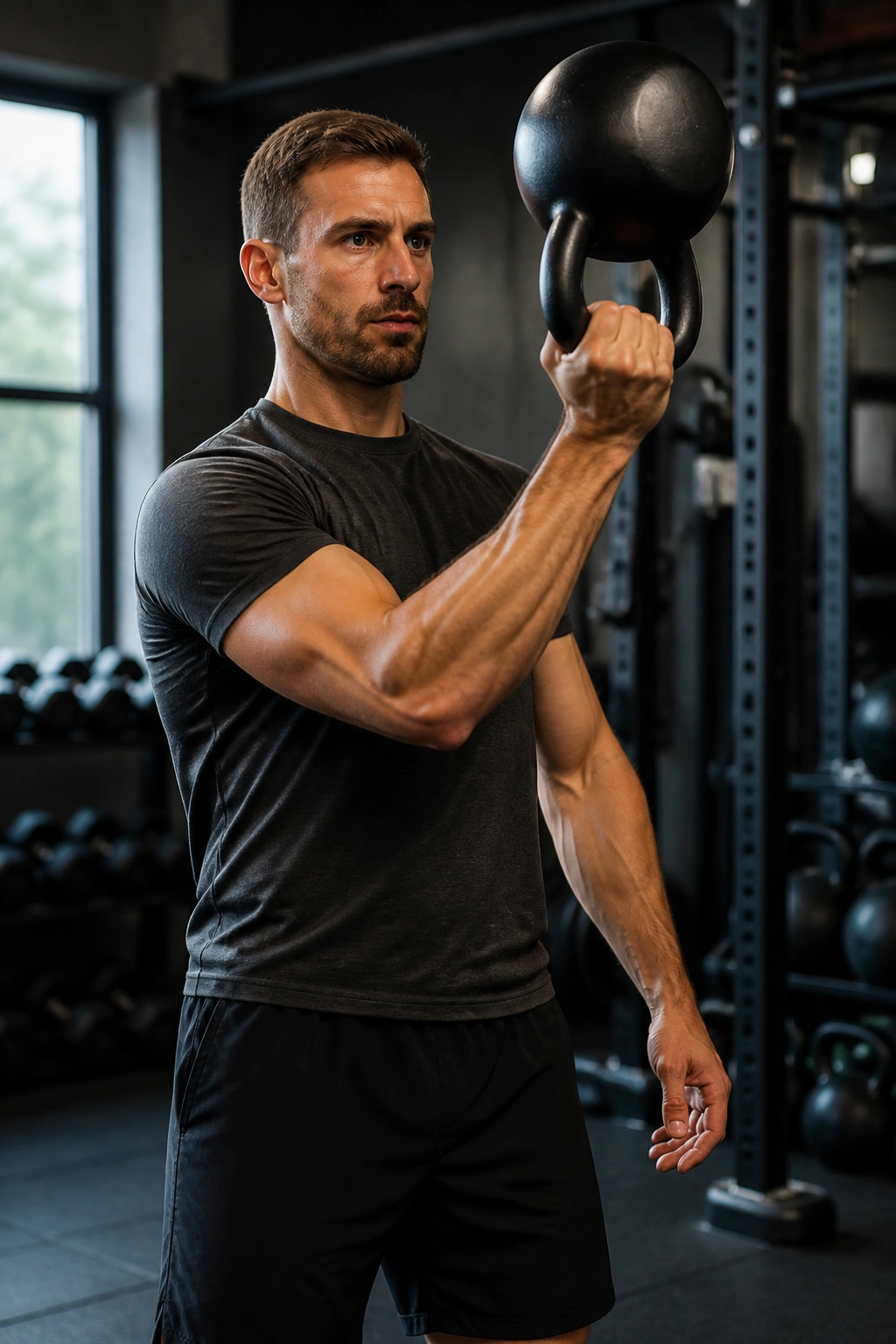
This is a grip-intensive workout. Holding a kettlebell in the “bottoms-up” position (handle down, weight up) requires immense neurological control. It forces you to stabilize the weight through sheer forearm tension.
The Movements
Perform 5 bottoms-up presses per arm, then 10 bottoms-up carries (walk 20 steps). Repeat for 5 rounds. You will notice that your heart rate stays high simply because of the focus required to keep the bell stable. It’s amazing how much energy your brain uses when you are trying not to drop a heavy piece of iron on your toes.
Improving Grip Strength
Your grip is the limiting factor in almost every kettlebell exercise. When your hands fail, your workout ends. By training bottoms-up, you strengthen the supporting muscles in your forearms, which means you can hold onto the bell longer for swings and rows. It’s a force multiplier for your entire training regimen.
11. The Figure-Eight to Lunge
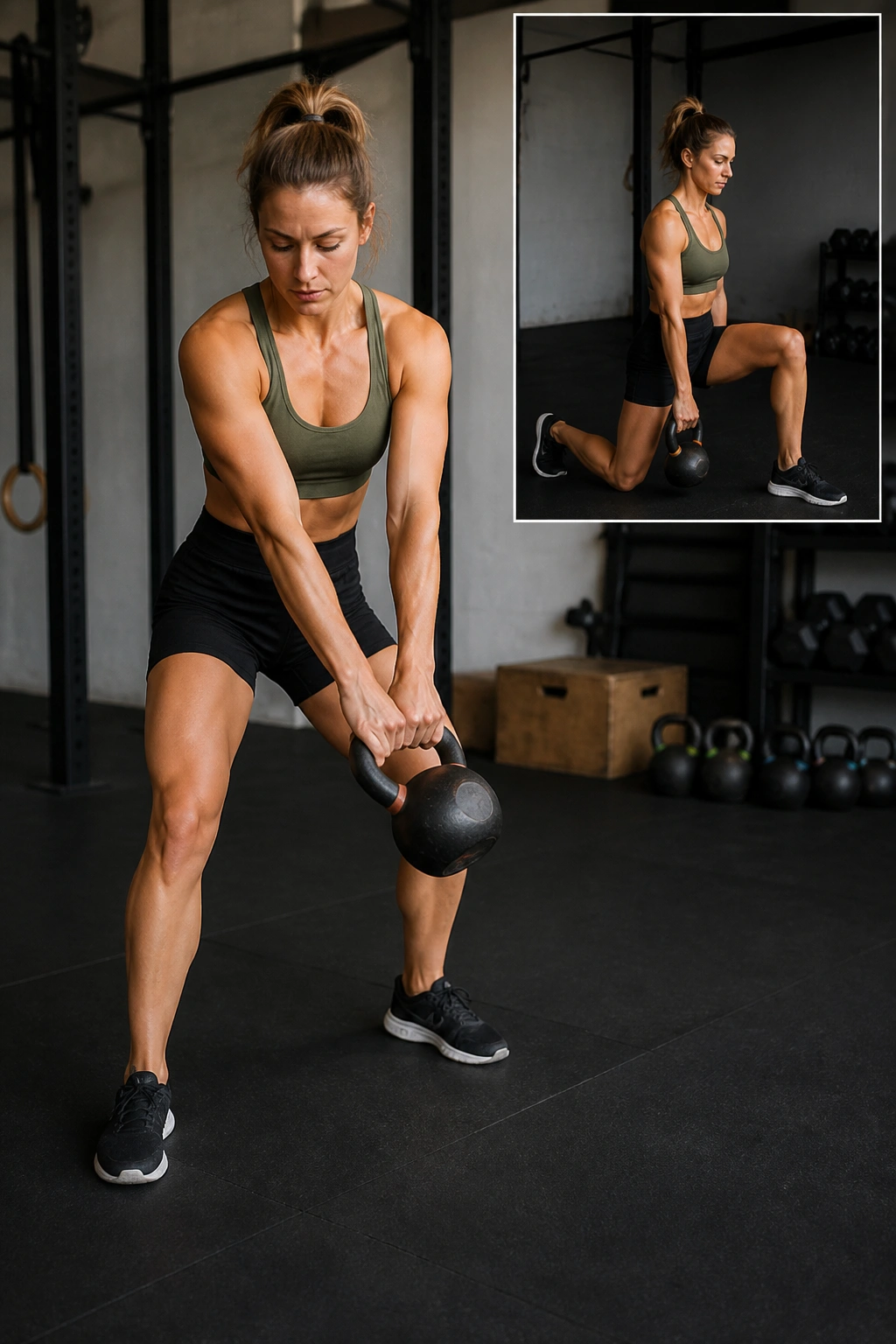
This workout introduces a lateral component and a change of direction, which is fantastic for athletic conditioning. It isn’t just up and down; it’s side to side.
The Routine
Perform a figure-eight (passing the bell between your legs in a rhythmic pattern) for 10 reps, then immediately step into a reverse lunge with the bell held at your chest. Do 10 lunges per leg. Repeat for 5 rounds. This challenges your proprioception—your body’s ability to know where it is in space.
Coordination and Calorie Burn
The more complex the movement, the more energy your central nervous system consumes. By forcing your brain to coordinate the figure-eight movement with the lunge, you are effectively taxing your body twice as hard as you would with a simple movement. It forces you to stay present. You cannot zone out during this workout, or you will drop the bell.
12. Heavy Kettlebell Slow-Burn Tabata

Tabata is usually associated with speed, but we are going to flip the script. We are using a heavier kettlebell and performing the movements slowly, focusing on time under tension.
The Protocol
Perform 20 seconds of work, 10 seconds of rest, for 8 rounds. The work? Heavy, slow goblet squats. Sink into the squat, pause for three seconds at the bottom, and explode up. During the 10 seconds of rest, hold the bell at your chest—do not put it down.
Why Time Under Tension Matters
Muscle hypertrophy and metabolic stress are highly dependent on how long the muscle is under load. By slowing the tempo, you increase the difficulty of the movement exponentially. You don’t need a heavier bell to make the exercise harder; you just need to move more slowly. It’s a great way to save your joints while still getting an incredible stimulus.
13. Double Kettlebell Complex
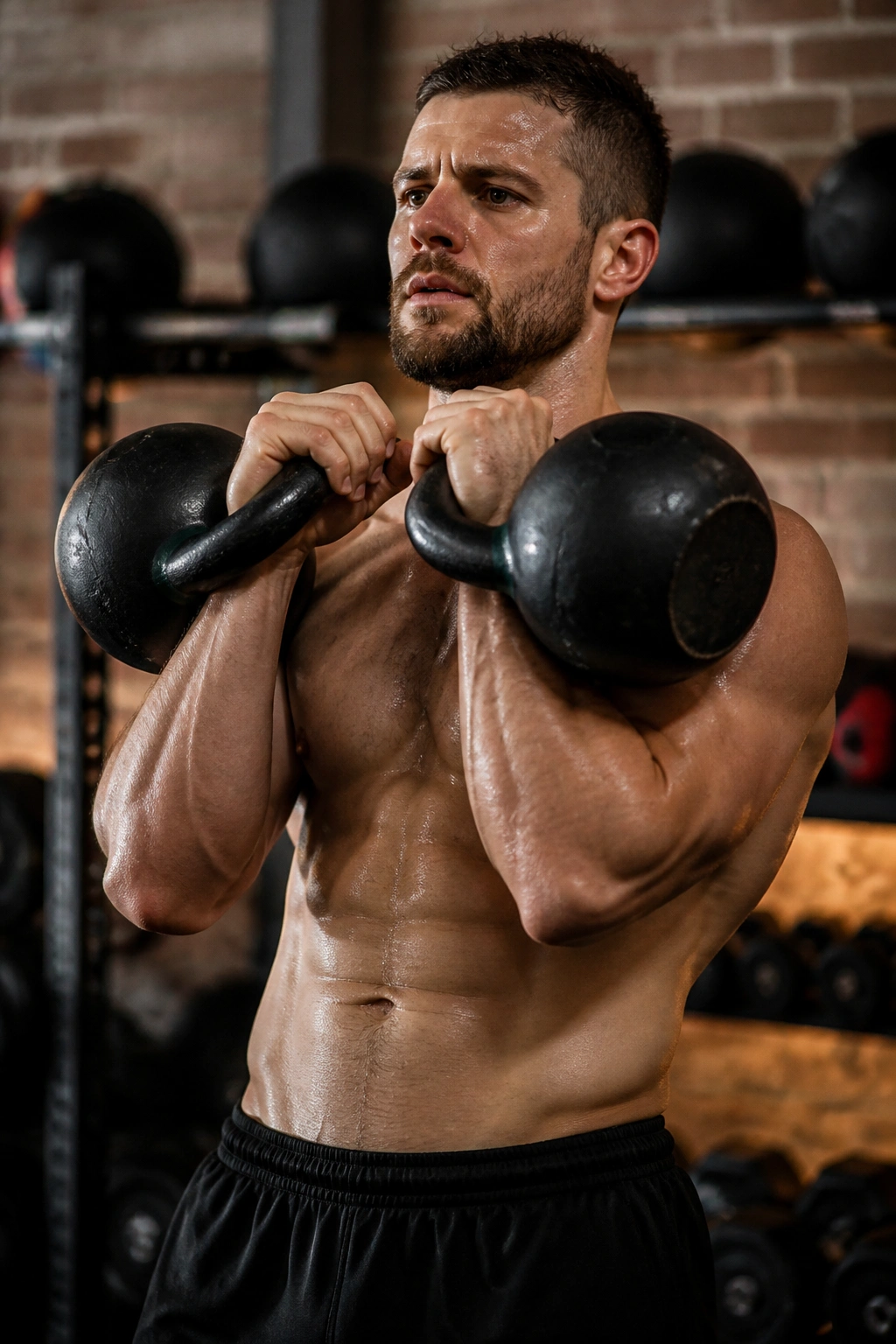
Once you are comfortable with single-bell work, you graduate to double kettlebell work. This is where the real “beast mode” training happens. You are moving twice the weight, which requires a tighter, more rigid torso.
The Complex
Clean two bells, perform 5 double squats, then 5 double presses. Repeat for 5 rounds. This is a brutal volume of work. It is not for beginners. If you haven’t mastered the single-bell movements, do not attempt this. The risk of form breakdown is too high.
Developing Real-World Strength
When you move double bells, you cannot use momentum as easily. You are forced to rely on raw strength. This builds a different kind of endurance—the kind that makes everyday tasks feel effortless. Carrying heavy groceries, moving furniture, playing sports—it all becomes easier when you’ve trained your body to move heavy iron in unison.
14. High-Rep Kettlebell Swing Finisher

Sometimes, you just want to end your workout on a high note. Or, more accurately, a note that leaves you gasping for air. This is a simple, brutal finisher that you can tack onto the end of any gym session.
The Challenge
Perform 100 kettlebell swings as fast as you can. That’s it. Stop only if you have to, but try to get through it in as few sets as possible. If you can do it in under 5 minutes, you are fit. If you can do it in under 3, you are an athlete.
The “All-Out” Mindset
This is not a technical drill. This is a test of your ability to push through the “burn.” When your hamstrings start to scream at rep 60, that is when the magic happens. That is when your body decides whether it’s going to adapt and grow stronger or give up. Keep breathing, keep hinging, and don’t let the bell stop moving until you hit 100.
15. The “Deck of Cards” Kettlebell Challenge
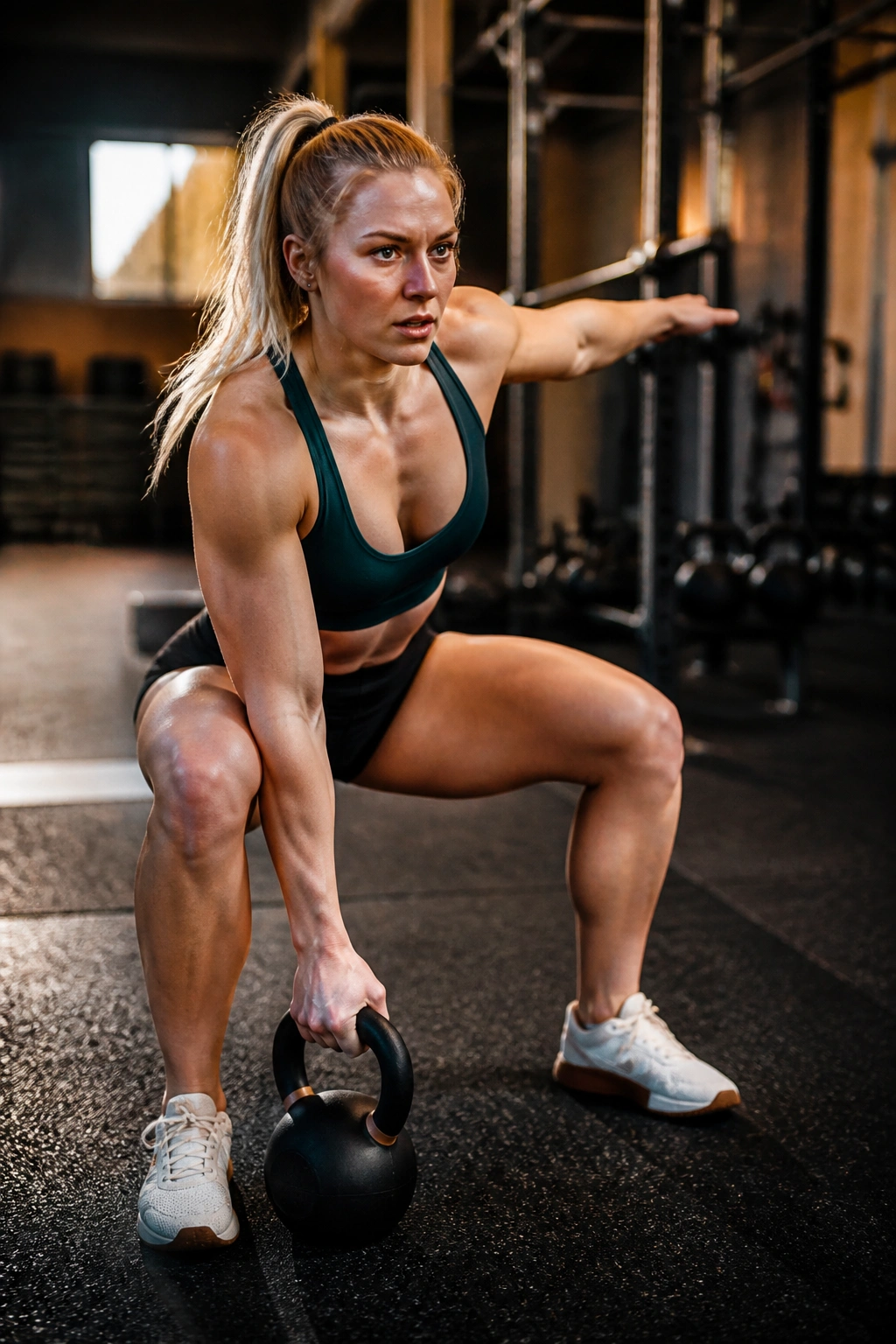
This is the ultimate boredom buster. It introduces randomness, which keeps your brain engaged and prevents you from mentally pacing yourself for a known duration.
How to Play
Grab a deck of cards. Assign a movement to each suit:
- Spades: Swings
- Hearts: Squats
- Diamonds: Cleans
- Clubs: Push-ups Flip a card, perform the number of reps on the card (Face cards = 10, Ace = 11). Go through the entire deck.
The Surprise Factor
Because you don’t know what’s coming next, you can’t mentally prepare. You might flip three Spades in a row, leading to 30 swings, or you might hit a mix of everything. This randomness creates a “randomized interval training” effect that keeps your metabolic rate erratic and high. It’s fun, it’s engaging, and it’s an incredibly efficient way to burn fat without ever looking at a clock.
Final Thoughts

Kettlebell training is honest. There is no machine to assist you, no pulleys to counterbalance the weight, and no digital interface to gamify the experience. It’s just you and a lump of iron. That simplicity is the greatest asset for fat loss. It forces you to own the movement.
Start with a weight you can handle, but do not stay there. The body is an adaptive machine; if you provide the same stimulus every single session, it will eventually stop changing. Once the 10-minute EMOM feels manageable, increase the bell weight or the rep count. Chase the discomfort. That feeling of wanting to stop is exactly the moment you need to keep going. That is where the results live. Keep the form sharp, keep the intensity high, and let the iron do the heavy lifting for you.
