



Pilates isn’t just about looking a certain way or building a specific type of physique. It is a system of movement that prioritizes the quality of the action over the quantity of the repetition. When you step onto the mat, you are not just exercising; you are recalibrating your body’s relationship with gravity. Most people spend their days hunched over desks, steering wheels, or devices, and this creates a pattern of tension that becomes the new normal. Pilates breaks that cycle.
Establishing a consistent practice is often the hardest part of the journey. We tend to overcomplicate fitness, thinking we need an hour of intense effort or expensive equipment to see changes. The reality is that ten or twenty minutes of focused, high-quality movement is infinitely more effective than an hour of distracted, half-hearted exertion. The following routines are designed to be modular. You can repeat them, mix them, or stick to one for a week until you feel you have mastered the movement patterns. By keeping the sessions varied, you challenge your body to adapt constantly, preventing the dreaded plateau that keeps many people from reaching their goals.
1. The Mat Fundamentals Reset
This routine is the bedrock of the entire method. If you cannot master these foundational movements, the more complex variations will never feel right. This is about establishing the connection between your breath and your movement. You should perform this slowly—there is no race here.
The Essential Sequence
- The Hundred (Prepped): Lie on your back, knees in tabletop, and pulse your arms at your sides while holding your head and chest up. This warms up the entire body and sets the rhythm for your breath.
- The Roll-Up: Focus on articulating the spine one vertebra at a time. Do not use momentum. If your feet lift off the floor, you are likely rushing the movement.
- Single Leg Circles: Keep your pelvis perfectly still while moving your leg. The goal is to isolate the hip joint without allowing the rest of your body to wiggle or shift.
Pro tip: Imagine you have a glass of water balanced on your pelvis. Your goal is to move your legs and arms without spilling a single drop. If you feel your hips rocking, tighten your abdominal connection—the deep, internal “corset” muscles—and reduce your range of motion. Precision beats depth every time.
2. Core-First Activation Routine
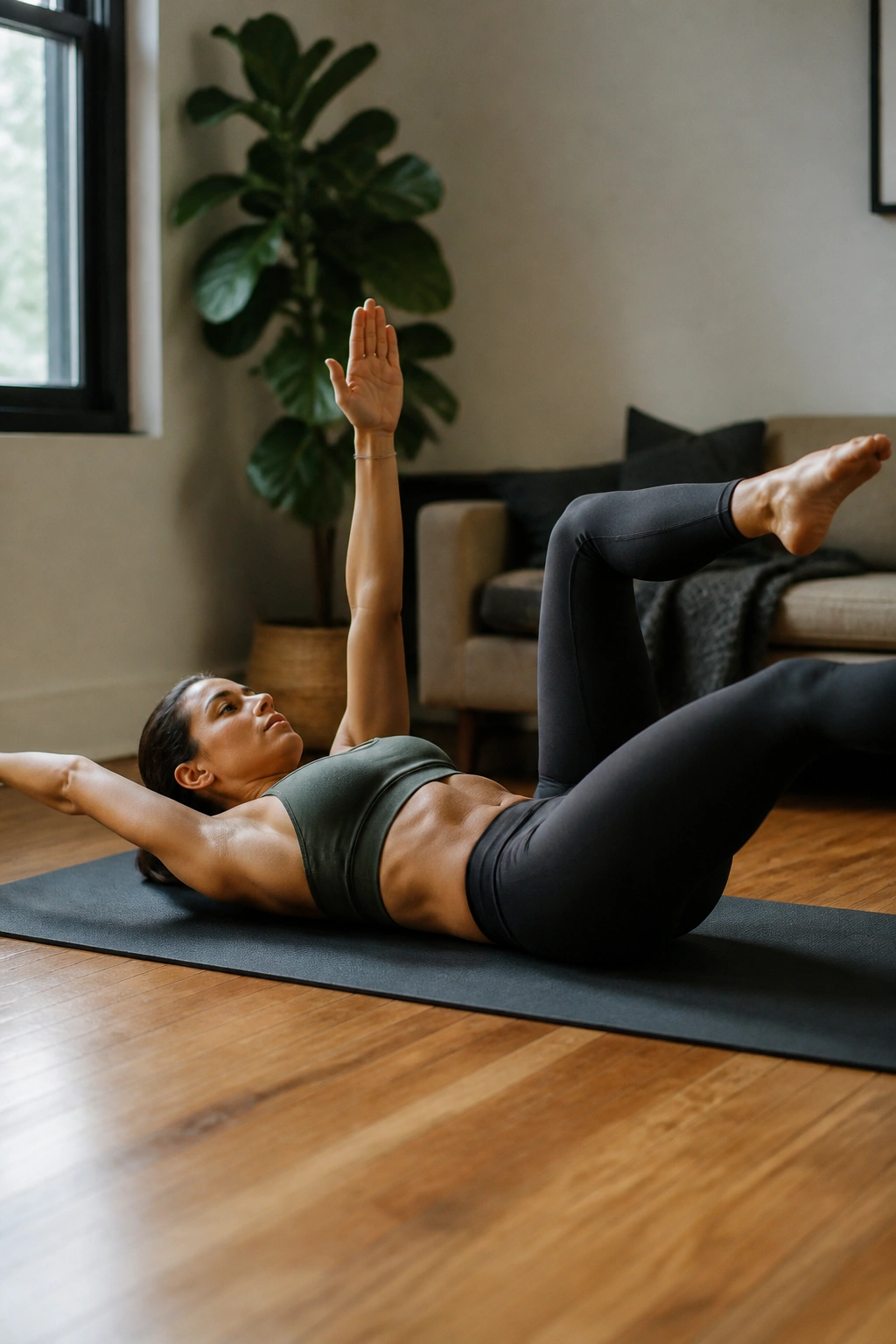
We often hear about the “core” as a catch-all term, but in Pilates, we mean the deep, intrinsic muscles that support the spine. This routine focuses entirely on recruitment. You will not find any crunches here. Instead, you will find movements that demand engagement from the pelvic floor, the transverse abdominis, and the multifidus.
What to Expect
This routine is physically taxing even though it looks incredibly calm. You will start with the “Dead Bug” progression, where you extend the opposite arm and leg while maintaining a neutral spine against the mat. If your lower back arches, you have gone too far.
Follow this with the “Swimming” exercise. Lying on your stomach, you will lift your chest, arms, and legs, then flutter them as if you are moving through water. The key is to keep the neck long and the shoulders away from the ears. If you feel tension in your neck, lower your chest slightly. You want the work to be in your mid-back and glutes, not your traps.
3. Upper Body Toning Without Weights
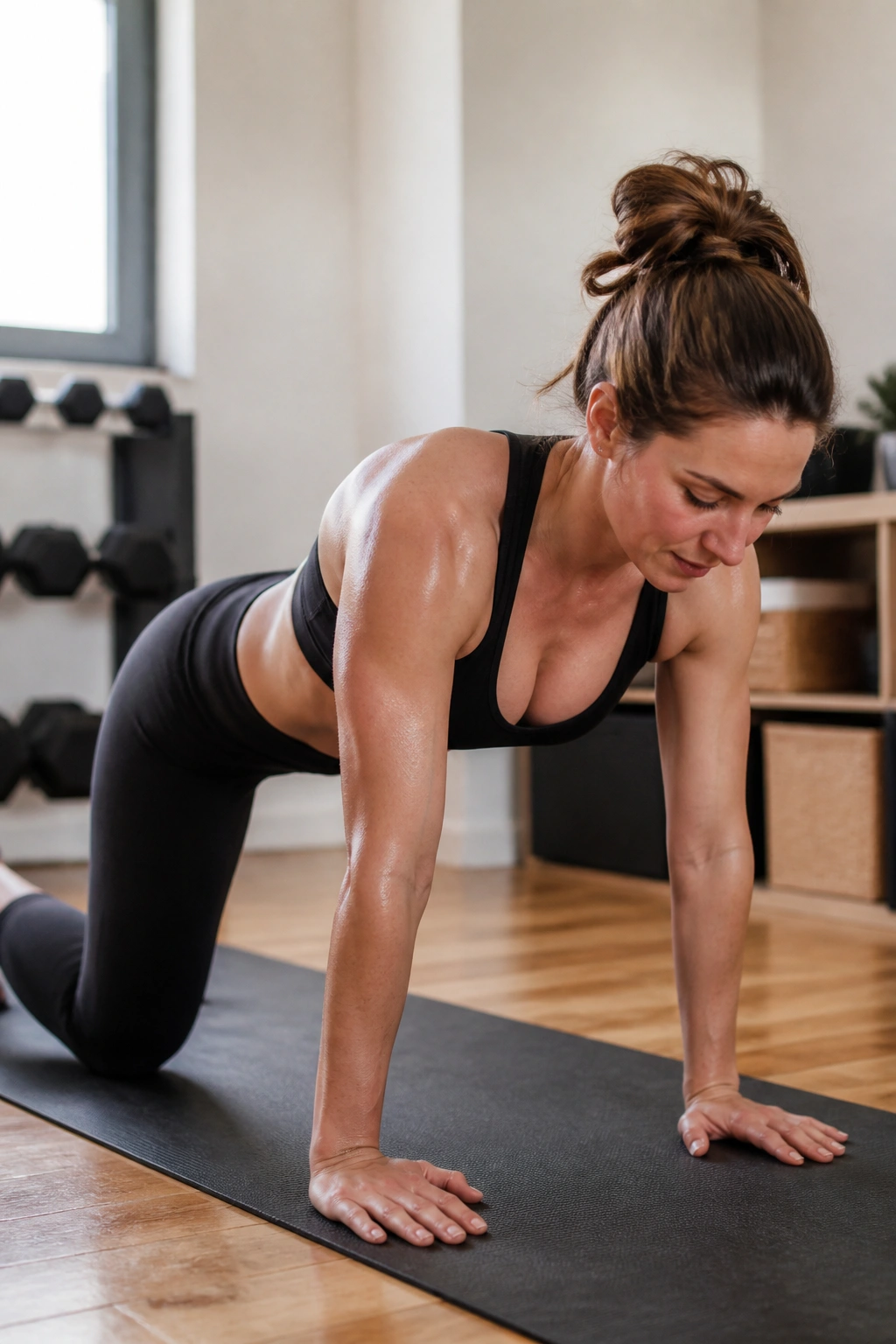
You do not need heavy dumbbells to create definition in the arms and shoulders. Pilates relies on the internal resistance of your own limbs and the constant engagement of the scapular stabilizers. This routine targets the areas that get neglected in traditional gym settings: the underside of the arms (triceps) and the muscles surrounding the shoulder blades.
Start in a quadruped position—all fours—and move into a modified plank. From here, shift your body weight forward and backward by pushing through your toes, maintaining a perfectly straight line from head to heels. This is not about holding still; it is about moving through the tension. Follow this with “arm circles,” where you extend your arms to the sides and make small, controlled circles. Feel the burn in the back of your shoulders. If your shoulders hunch up toward your ears, pause, drop them down your back, and resume.
4. Lateral Glute Burner
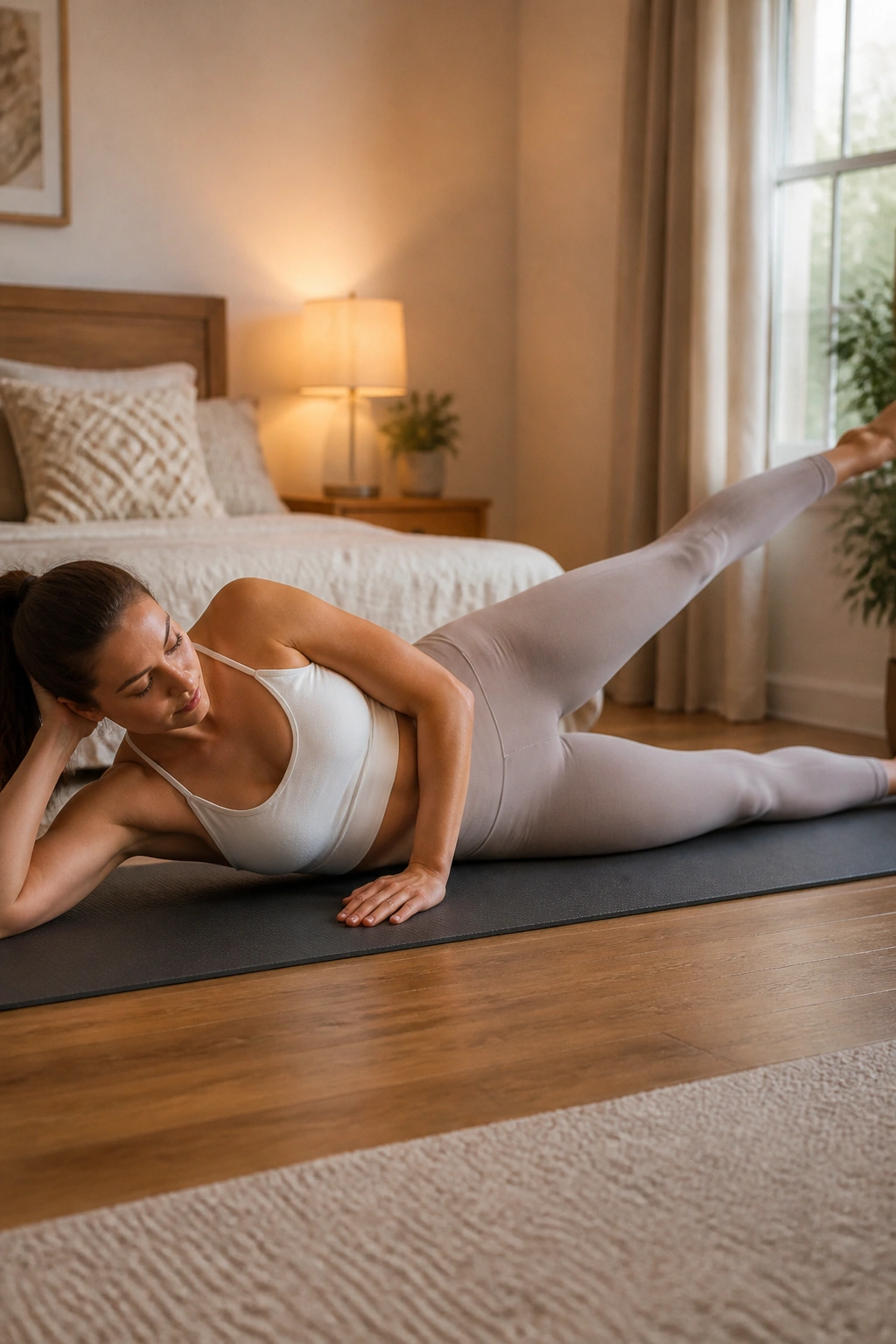
The gluteus medius is often the weak link in our posterior chain, yet it is vital for hip stability and knee health. Most people rely too much on their quads or lower back during lower-body movements. This routine forces the gluteus medius to do the heavy lifting by removing the assistance of the larger, more dominant muscle groups.
Lie on your side, supporting your head with your hand. Stack your hips perfectly—imagine they are resting against a wall. If your top hip rolls backward, you are bypassing the glute. Perform “leg lifts” where you lift the top leg to hip height and lower it with control. Follow this with “clamshells,” where your feet stay together and your top knee opens and closes.
Watch for: The tendency to “cheat” by using your lower back. Keep your ribcage knitted together and your waist lifted off the mat. If you feel this in your lower back instead of the side of your hip, readjust your hip alignment.
5. Spinal Articulation and Decompression
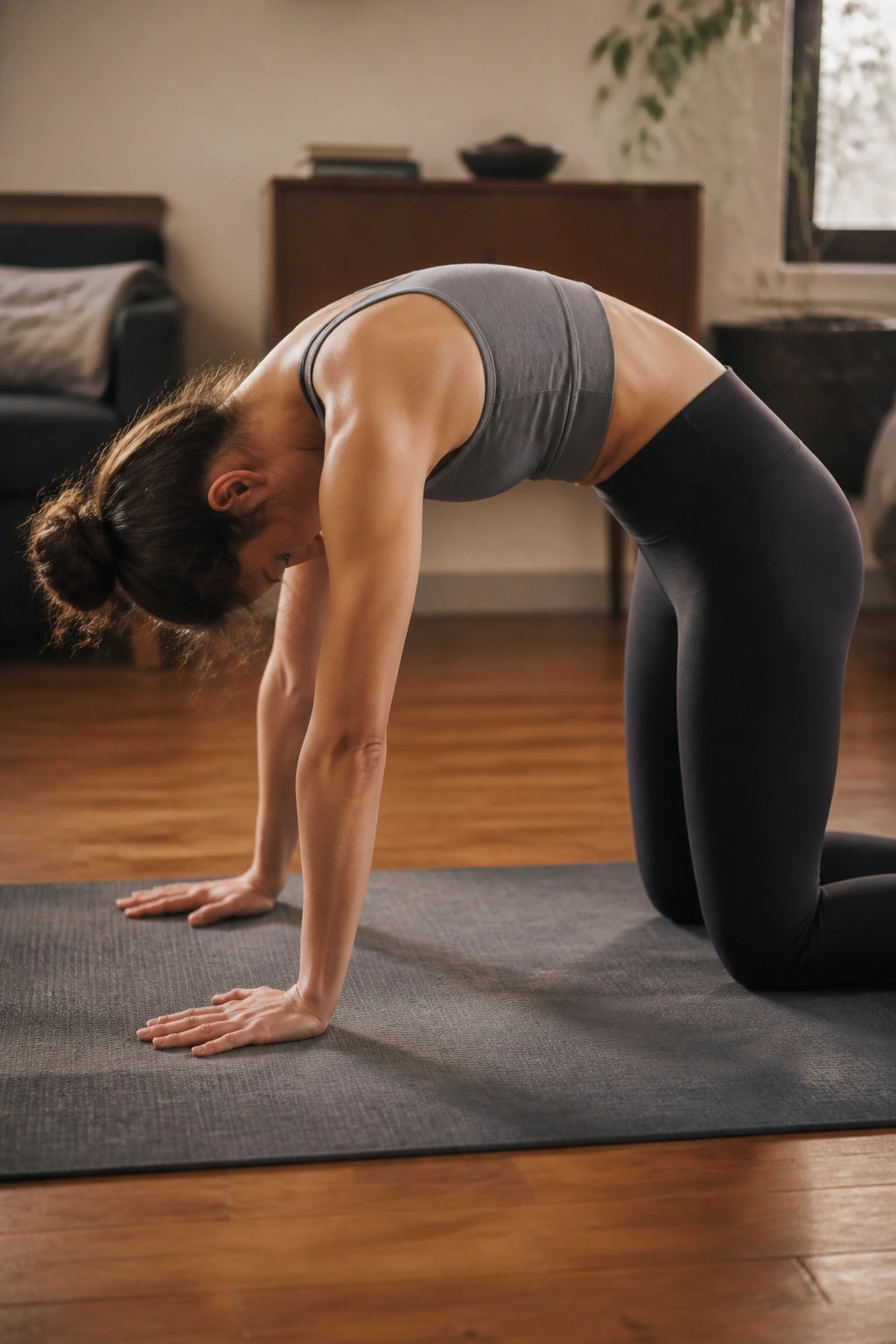
After a long day of sitting, the spine often feels compressed and stiff. This routine is less about “working out” and more about “working in.” It focuses on mobilizing the spine in every direction—flexion, extension, rotation, and lateral flexion.
- Cat-Cow Variation: Move slowly, starting the movement from the tailbone and finishing at the head.
- Thread the Needle: This opens the upper back and chest, providing a gentle twist.
- Swan Prep: Extend through the crown of your head to lift the chest.
Do not force the range of motion. Instead, breathe into the tight spaces. Think of your spine as a string of pearls; you want to move each pearl individually, not just bend the whole chain at once. This routine is excellent for reducing general stiffness and improving posture.
6. Standing Balance Flow
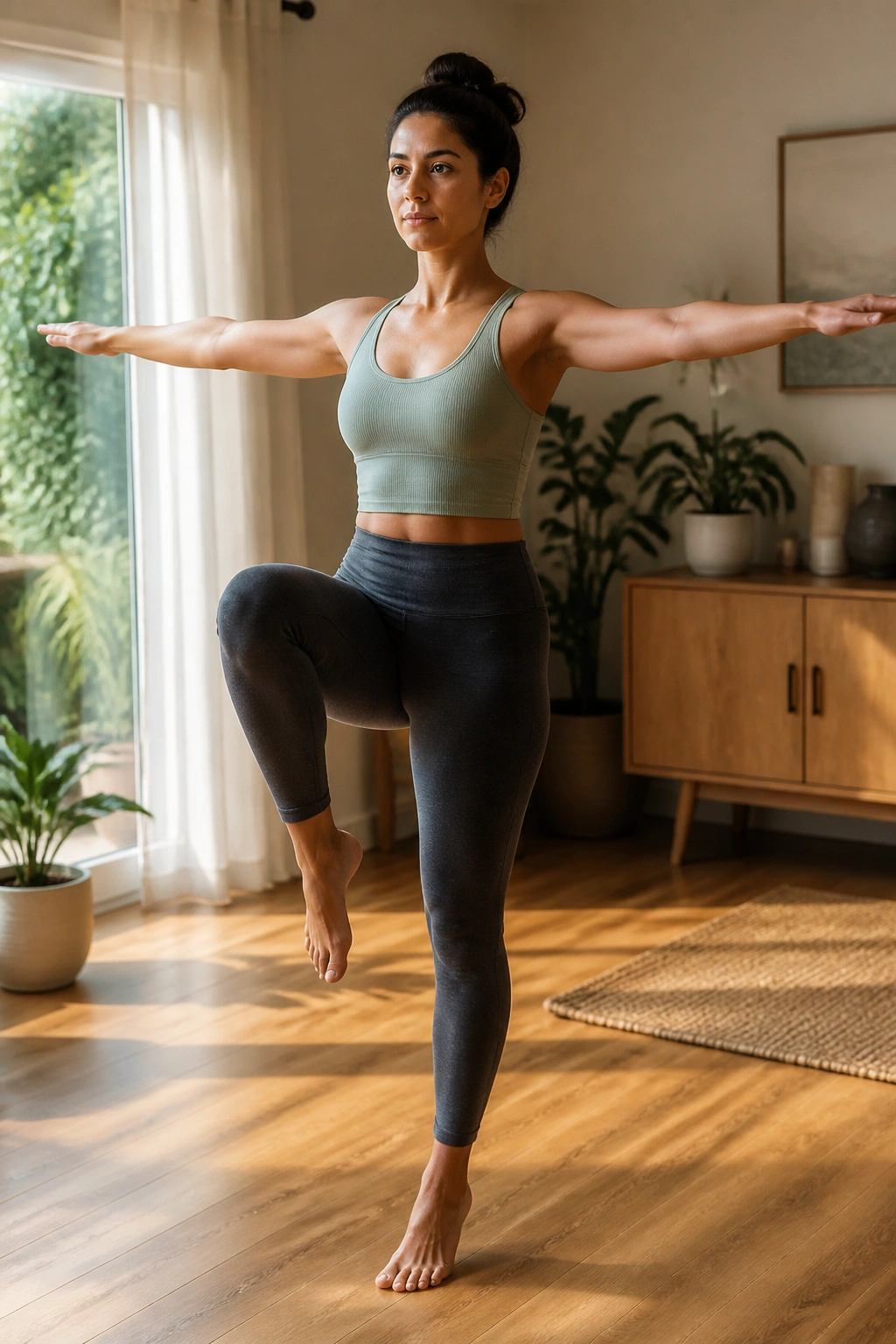
Balance work is frequently overlooked, yet it is one of the most effective ways to fire up the deep stabilizers in your ankles, knees, and hips. This routine takes Pilates off the mat and into a standing position, requiring you to navigate your center of gravity.
Start by standing on one leg. Lift the other knee into a tabletop position. From here, hinge forward at the hips while extending the lifted leg behind you, arms reaching forward. You are creating a “T” shape with your body. Move slowly—balance is a skill, not a static position. If you wobble, that is good; it means your stabilizing muscles are waking up. Repeat this five times on each side, focusing on keeping your hips level. If one side feels significantly shakier, do an extra set on that side to address the imbalance.
7. The Desk-Bound Chest Opener
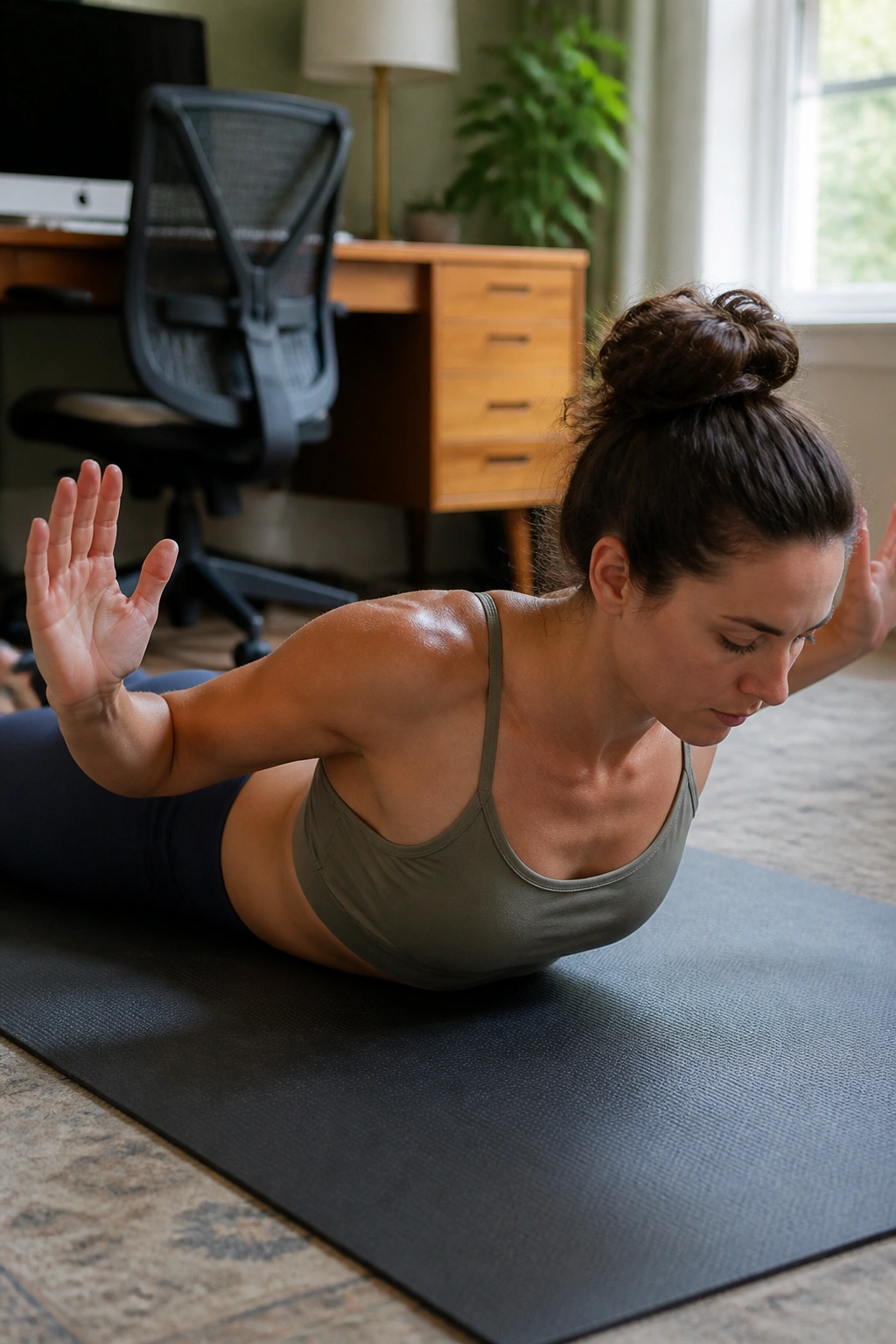
If you spend hours at a computer, your chest muscles are likely tight, pulling your shoulders forward and rounding your upper back. This routine is designed specifically to counteract that posture. It prioritizes opening the pectoral muscles and strengthening the rhomboids between your shoulder blades.
Lie on your stomach with your arms in a “goalpost” position—elbows at 90-degree angles. Gently lift your chest while pulling your shoulder blades together. Do not crank your neck upward; keep your gaze toward the floor. As you lower, actively reach your hands away from you. The sensation should be one of “lengthening” rather than “crunching.” Do this for three sets of ten. By the end, your chest should feel wider and your shoulders more relaxed.
8. High-Rep Endurance Marathon
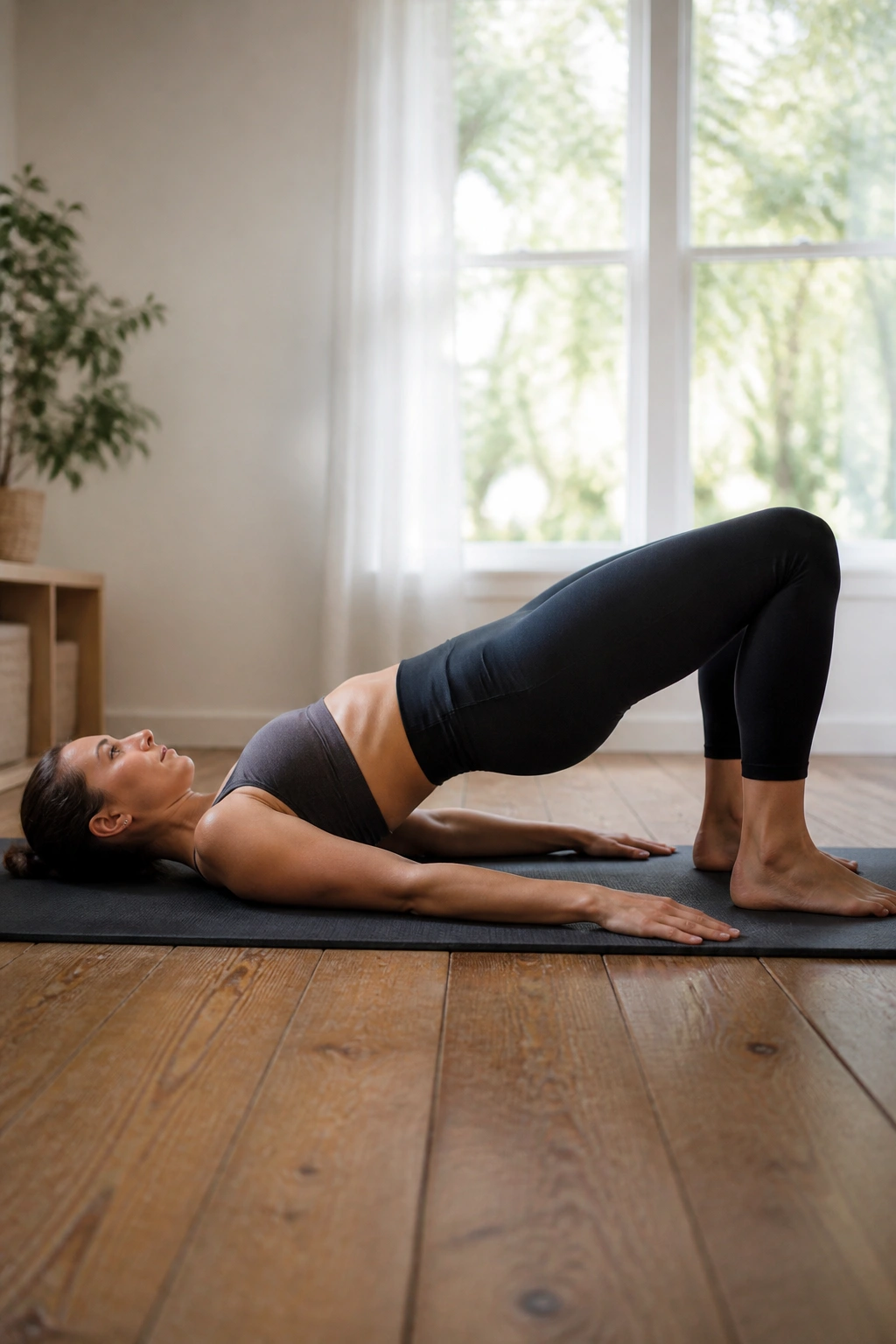
Pilates is famous for lower-rep, high-control movements, but sometimes we need to tap into muscular endurance. This routine is about consistency. You will perform each move for two minutes straight without stopping. The goal is to keep the movement fluid and rhythmic.
Select a simple movement, like the “bridge” or “side-lying leg lift,” and commit to the full two minutes. You will find that at the 45-second mark, your muscles start to fatigue. This is when the real work begins. Do not speed up to get through it. Keep the pace the same as when you started. That discipline—maintaining form when you are tired—is what builds the “Pilates body” endurance. If your form breaks, stop for five seconds, reset, and jump back in.
9. The “Slow-Mo” Precision Flow
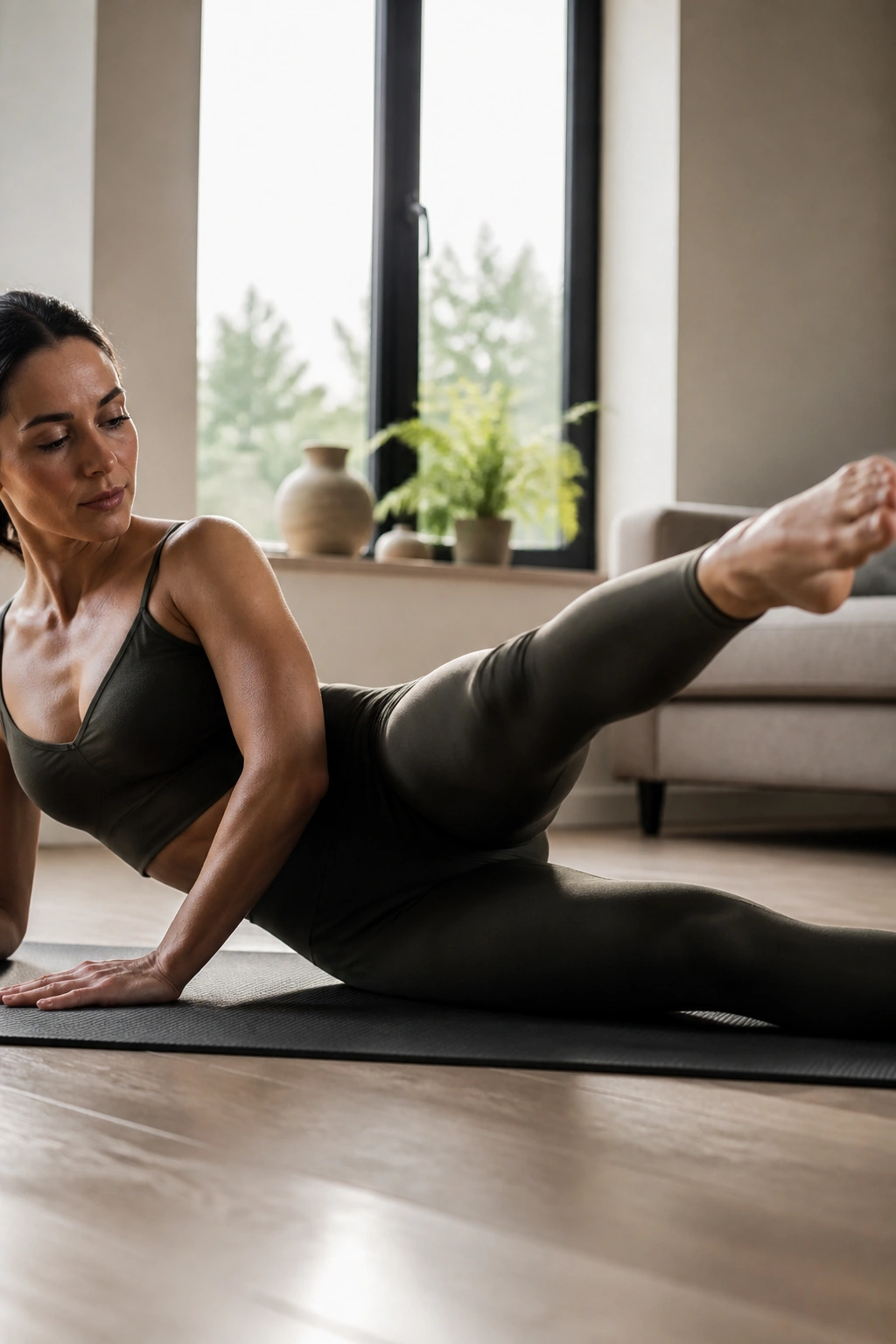
This routine is the antithesis of the endurance marathon. Everything is done at half the normal speed. When you move slowly, you cannot rely on momentum, and you cannot hide from your imbalances. You will feel every micro-adjustment your body makes to stay stable.
Perform your leg circles or roll-ups to a count of eight seconds up and eight seconds down. You will notice that “shaking” sensation—that is your motor neurons firing rapidly to stabilize your joints. Embrace the shake. It is a sign that you are challenging your neuromuscular system. This routine is phenomenal for learning how to control your body with total intent.
10. Full-Body Coordination Challenge
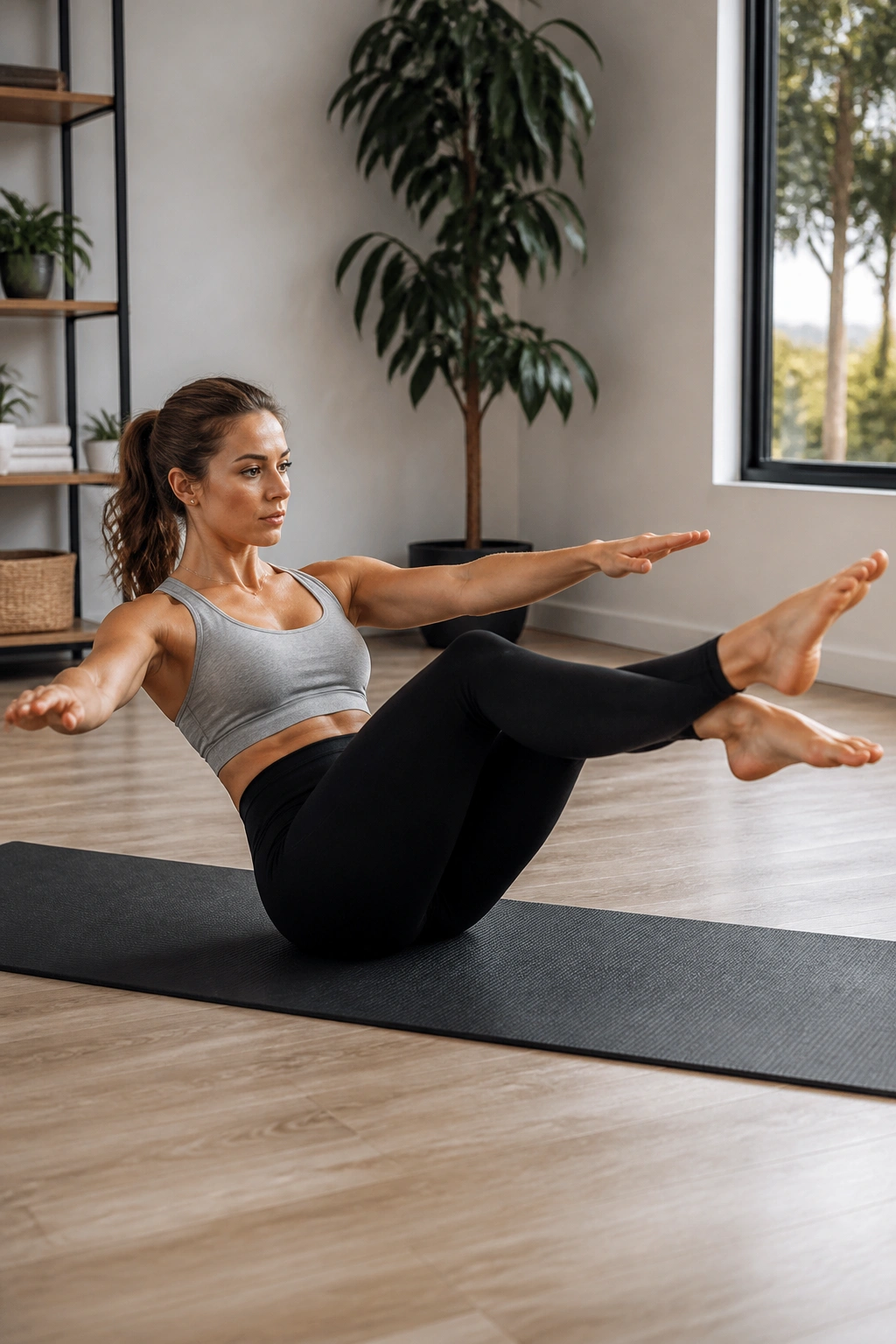
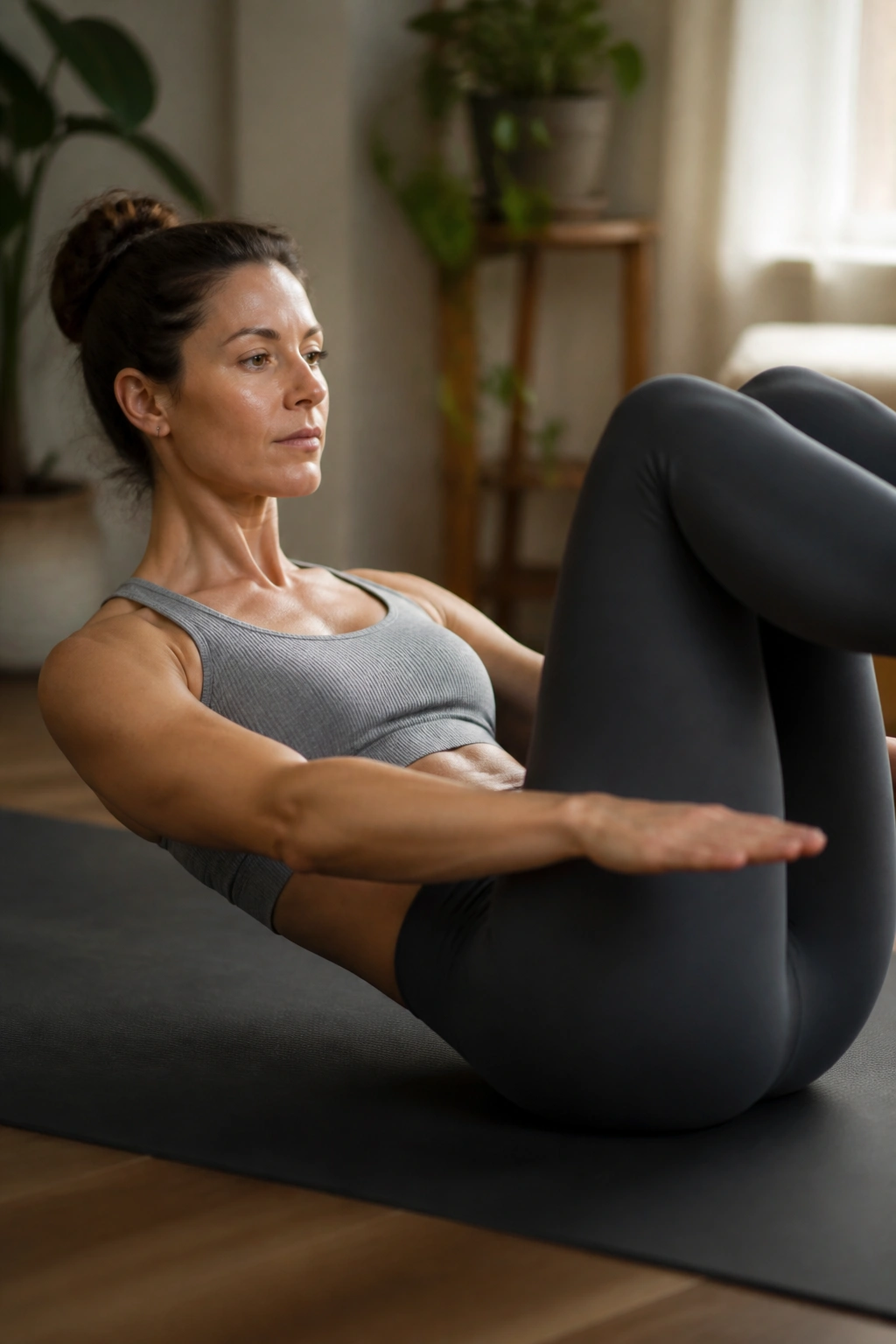
Coordination is a major component of Pilates. We often do different things with our arms and legs simultaneously. This routine incorporates moves like the “Coordination” exercise from the Pilates repertoire.
Lie on your back, knees in tabletop, head curled up. Extend your arms and legs away from you, then bend your knees back in, and then open and close your arms. It sounds simple, but the mental concentration required to sequence the movements correctly is immense. The benefit here is twofold: you get a full-body burn, and you sharpen your mind-body connection. If you get confused, stop, breathe, and reset. It takes practice to synchronize the limbs.
11. Inner Thigh Precision Work
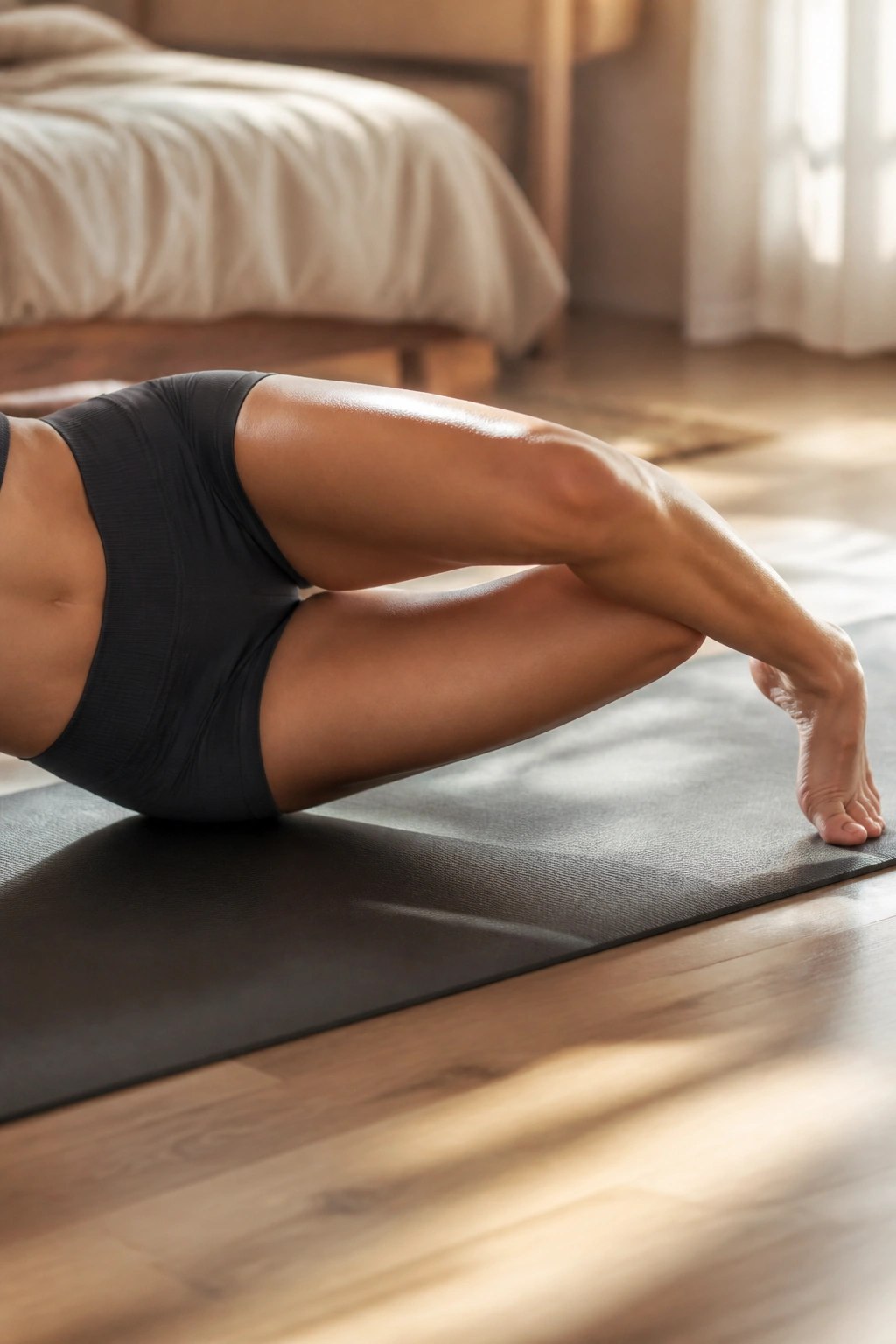
The adductors, or inner thighs, are difficult to target effectively without specialized equipment, but the floor-based side-lying series is a game-changer. This routine is focused entirely on the lower leg.
Lie on your side and cross your top leg over your bottom leg, placing the foot on the floor in front of you. Lift the bottom leg straight up, squeezing the inner thigh. The movement should be small and controlled. Do not try to lift your leg toward the ceiling; think of lengthening the leg out of the hip socket and lifting it just an inch or two. You should feel an immediate activation in the inner thigh muscle. This is not about bulk; it is about tone and pelvic stability.
12. Advanced Flow: Linking Movements
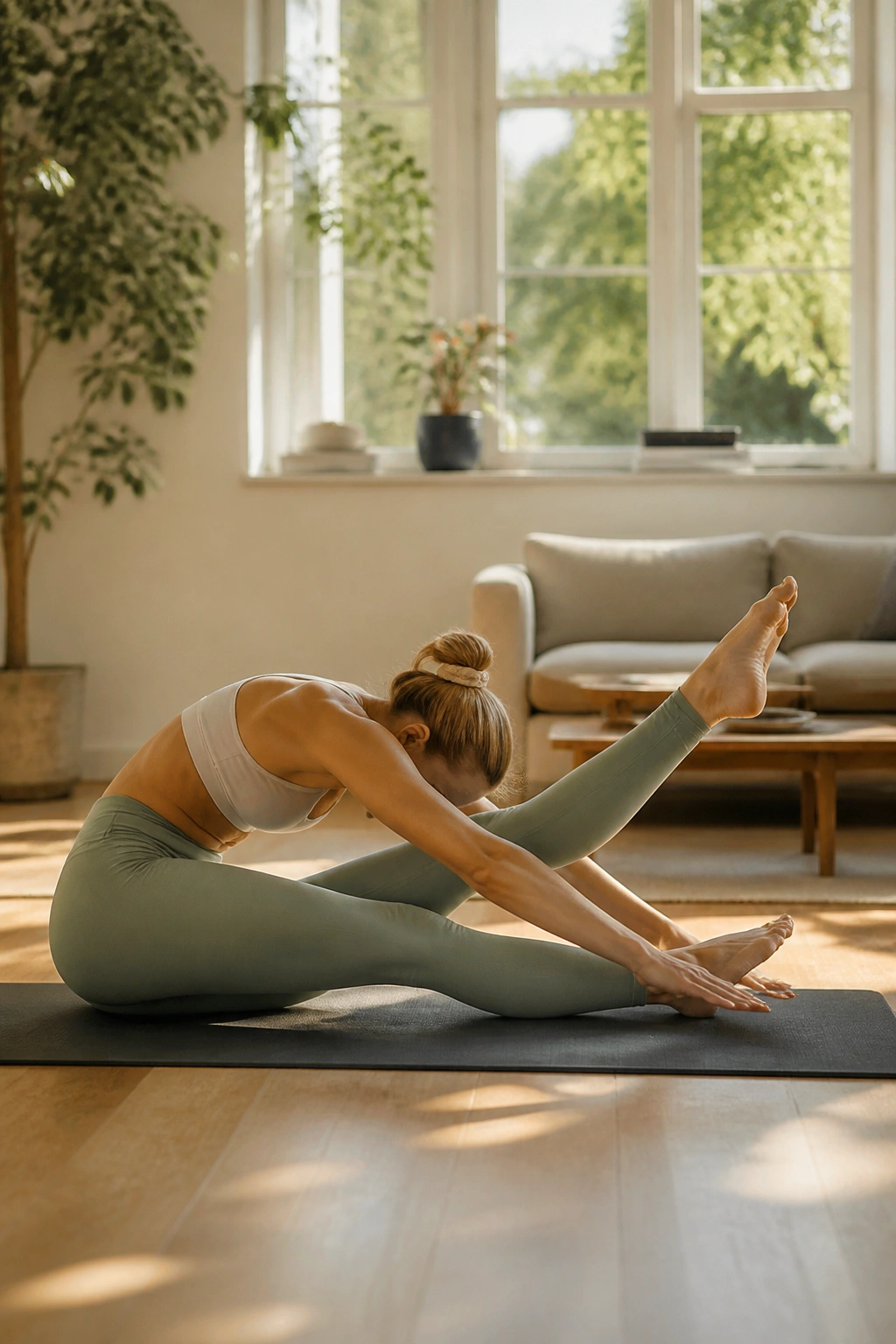
This routine requires you to know your basic moves well. You will not have pauses between exercises. Instead, you will use the “bridge” of one movement to transition into the next.
For example, roll up to a seated position, immediately transition into a spine stretch forward, then roll back down, and go directly into single-leg circles. The key is to keep the flow constant. This increases your heart rate and mimics a true classical Pilates class experience. If you find yourself getting breathless, slow down your tempo, but keep moving. This flow builds stamina and improves your spatial awareness as you move through space.
13. Morning Wake-Up Flow
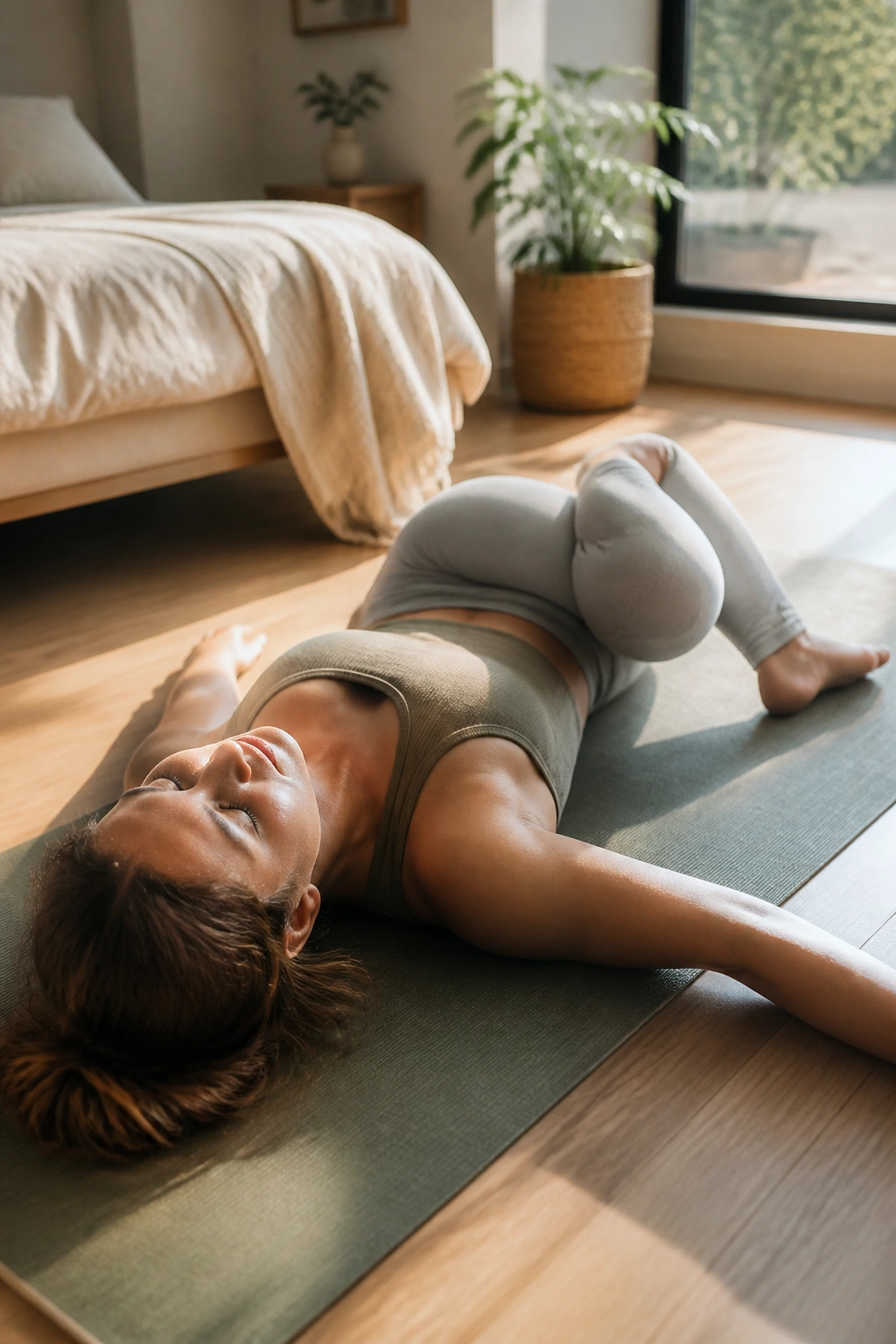
You don’t need high-intensity movement first thing in the morning. Your muscles are likely tight from sleep, and your nervous system is just coming online. This routine is designed to gently wake up your joints and get blood flowing to your extremities.
Start with “gentle rotation”—lying on your back, knees bent, and gently dropping your knees from side to side. Follow this with “the Hundred,” but keep the intensity low. Move into “the Roll-Up” but keep the knees bent to accommodate tight hamstrings. Finally, finish with a full-body stretch, reaching fingers and toes in opposite directions. The goal is to feel energized and mobile, not exhausted.
14. Evening Restorative Wind-Down
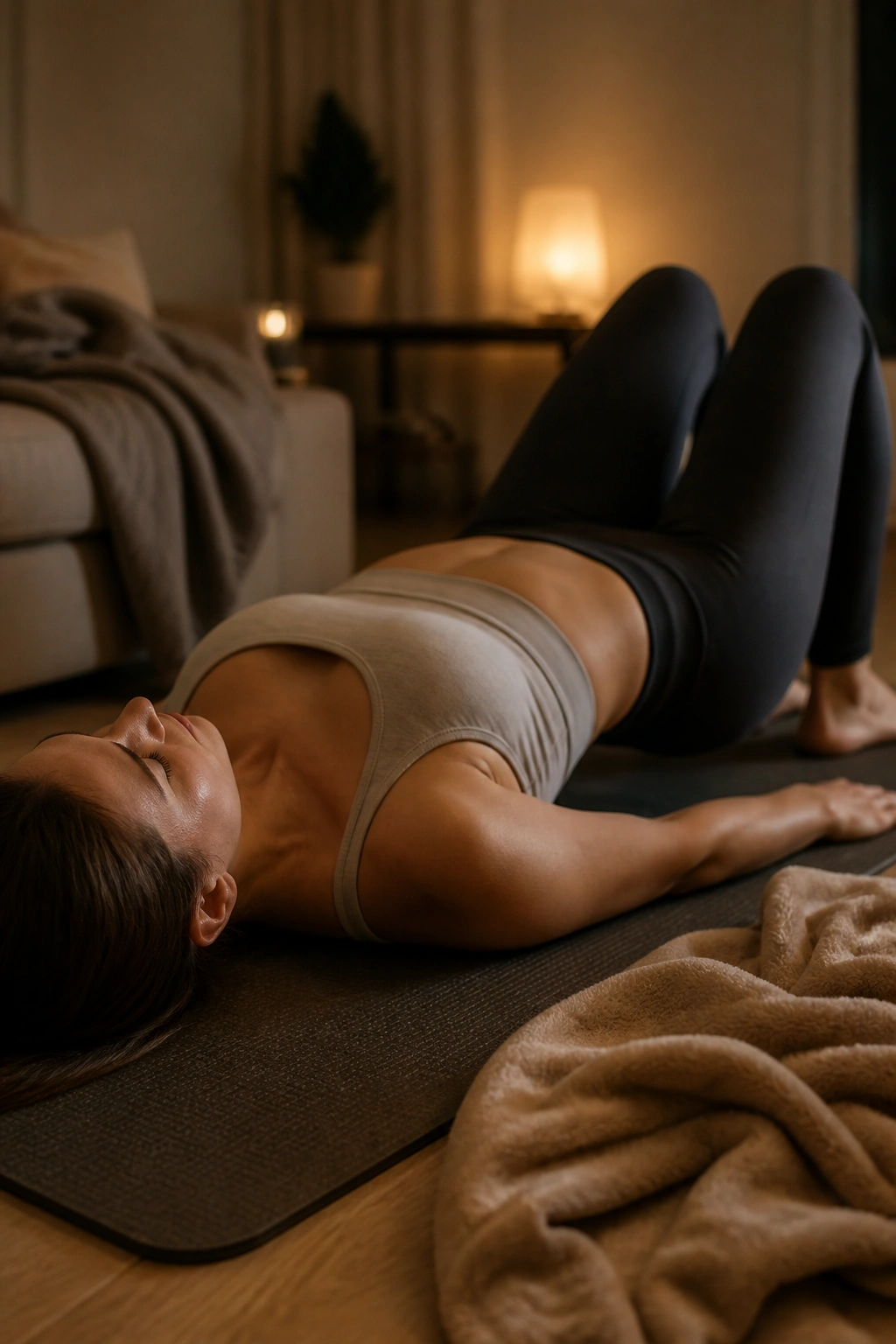
This routine is the opposite of the morning flow. It focuses on releasing tension, slowing the breath, and preparing the body for sleep. You will avoid any heavy abdominal work or planking that might elevate your heart rate.
Focus on “pelvic tilts” to soothe the lower back. Use “hip openers” by lying on your back and letting your knees fall open like a butterfly. Spend time in “child’s pose” to stretch the back. The most important part of this routine is the breath: slow, deep, diaphragmatic breaths. As you exhale, imagine your muscles literally melting into the floor. This is as much a mental practice as a physical one.
15. The Equipment-Free Travel Protocol
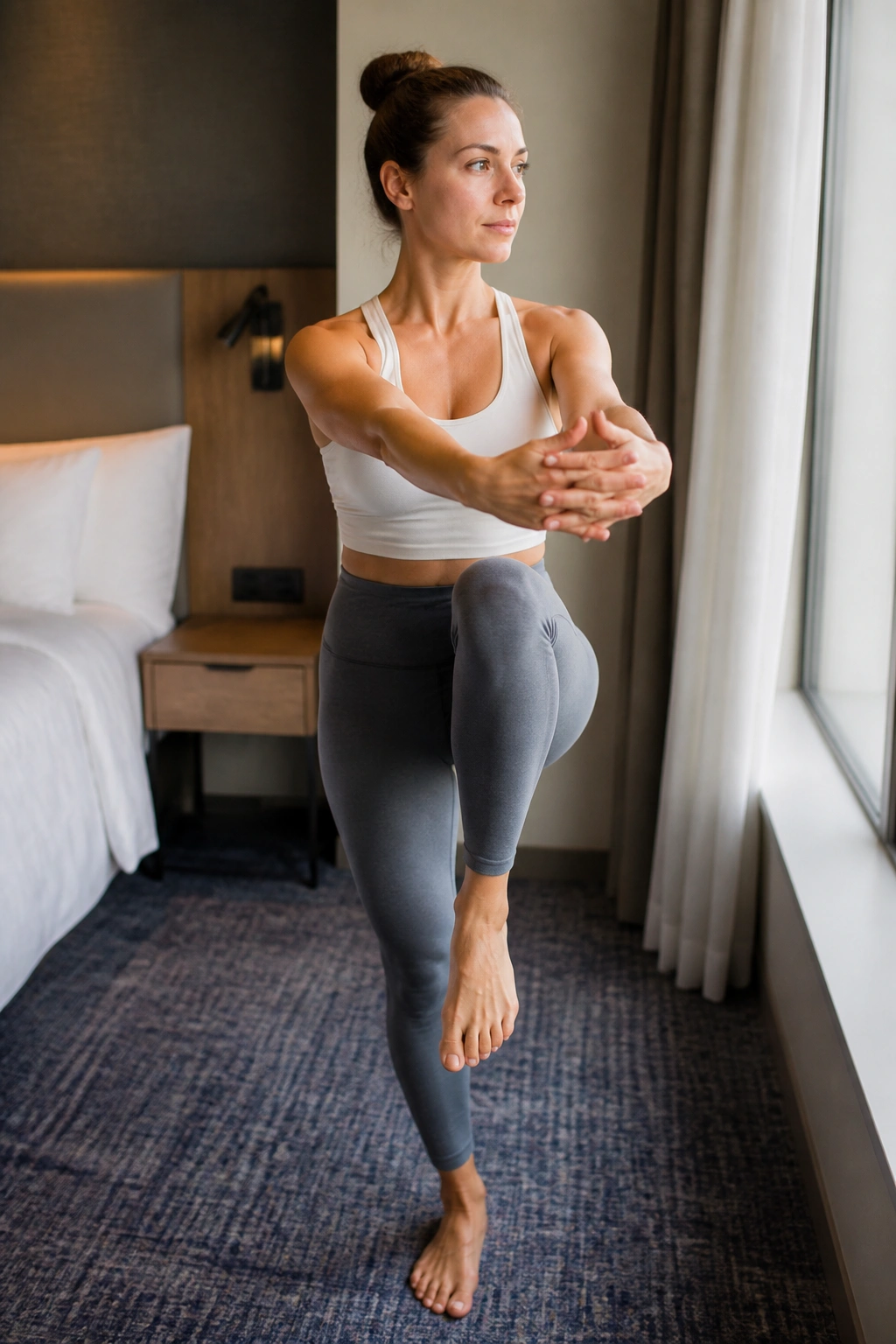
When you are on the road, you often lack space, equipment, and sometimes even a proper mat. This routine is designed to be done on a hotel room carpet or a towel. It utilizes only body weight and gravity.
Focus on movements that keep you in a small footprint: standing balance work, side-lying glute work, and quadruped (all-fours) movements. You don’t need to move across the room to get an effective workout. By sticking to the floor, you ensure you have everything you need. Focus on quality repetitions—aim for 15 reps of each exercise to make up for the lack of external resistance.
16. Posterior Chain Strength (Back Focus)
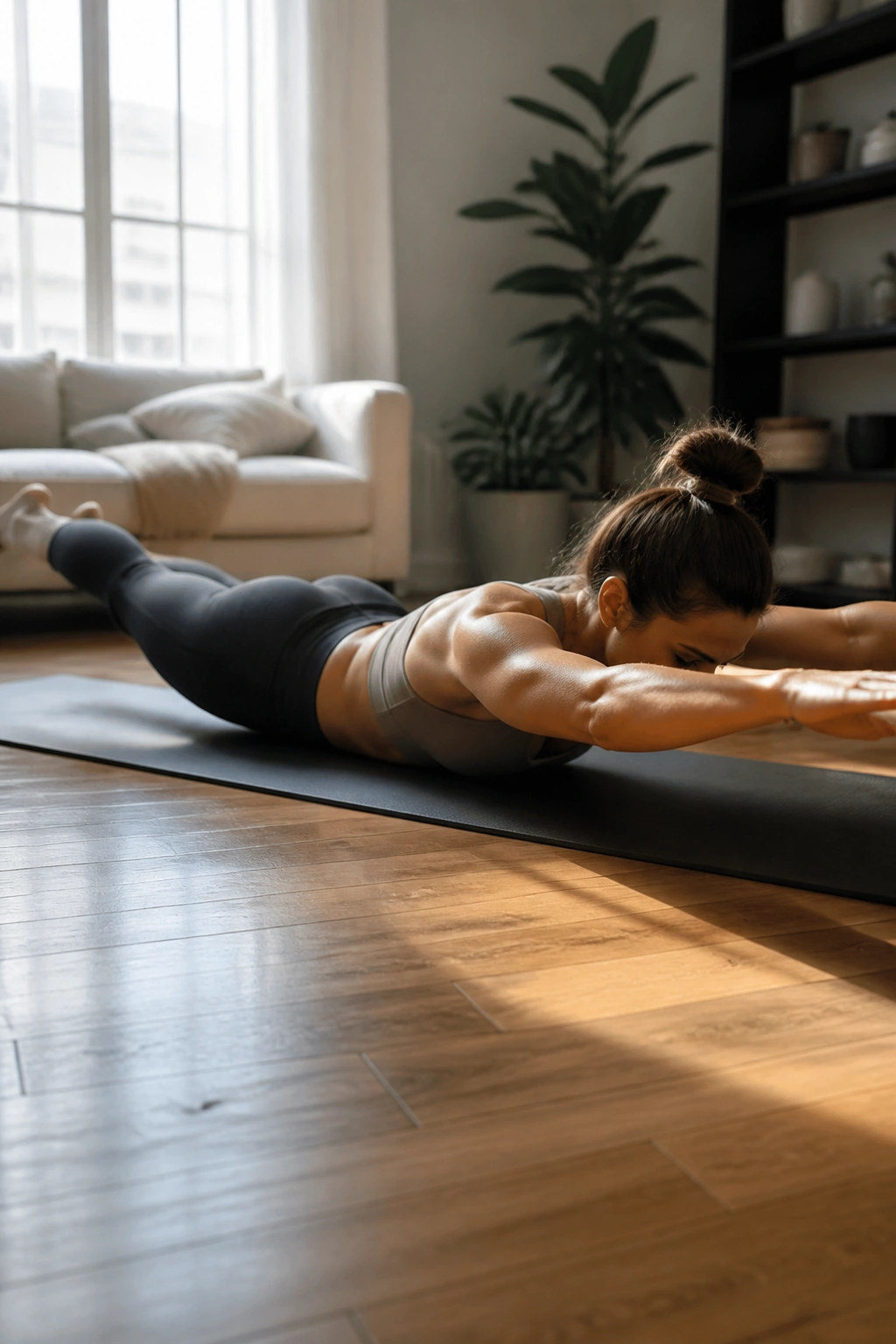
We spend our lives looking down at screens, which leads to a “forward” posture. We need to counter this by strengthening the back of the body—the posterior chain. This routine specifically targets the glutes, hamstrings, and the muscles surrounding the spine.
Spend most of this routine on your stomach. Start with “swimming,” move into “swan prep,” and finish with “glute bridges” on your back. The focus should be on the pulling sensation. When you lift your chest, imagine someone is pulling your head forward and up. When you lift your hips for a bridge, think of your hamstrings doing the work, not your quads. Your lower back should feel “worked,” but never “pinched.” If it pinches, decrease your range of motion immediately.
17. Arm and Shoulder Sculpting (Floor Based)
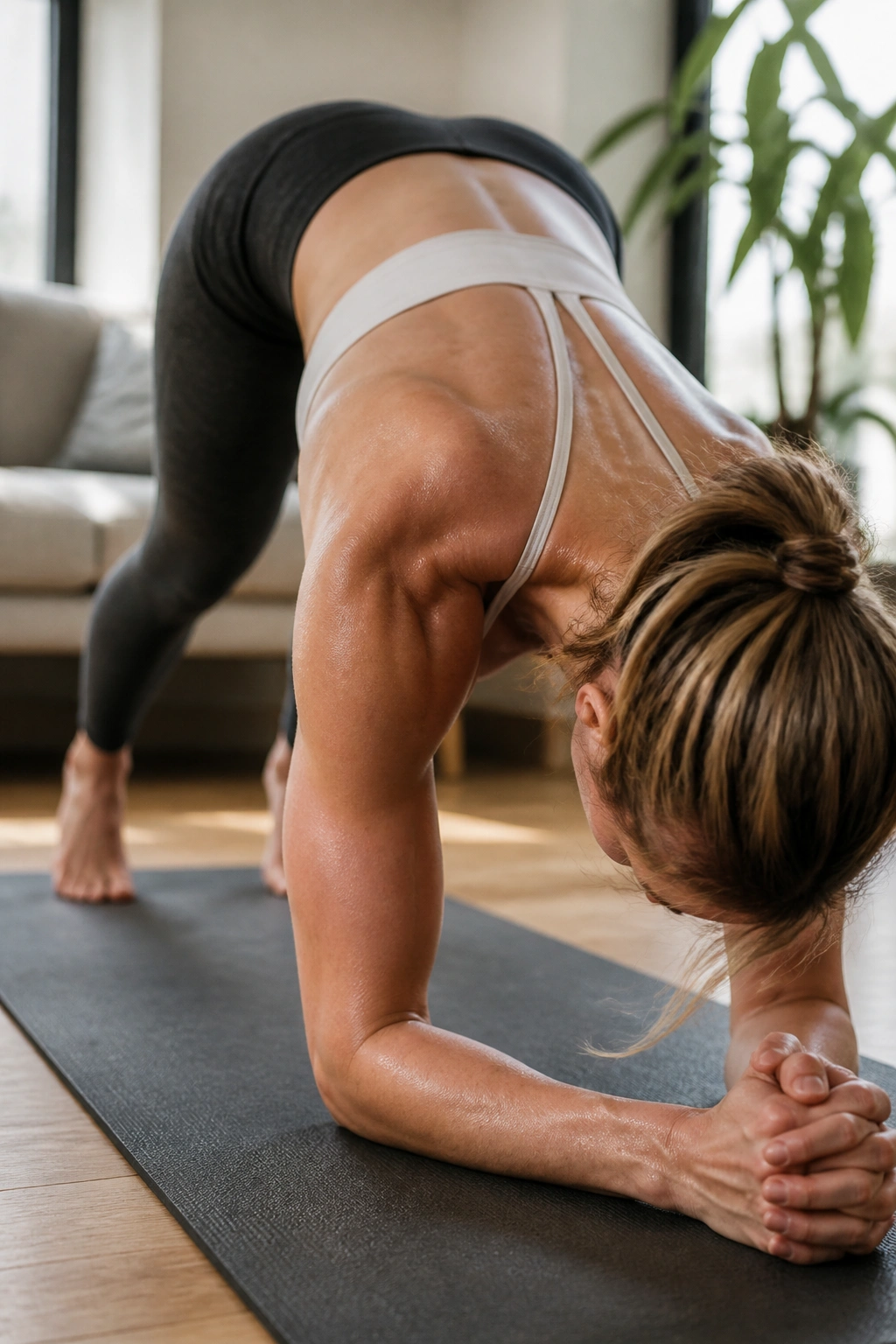
This routine is brilliant for those who want defined shoulders without lifting weights. You will use the floor to provide support, allowing you to focus on the muscular contraction rather than balance.
Start in a plank position. From here, perform “pike ups,” lifting your hips toward the ceiling while keeping your legs straight. This is a massive shoulder stabilizer. Follow it with “tricep pushups,” keeping your elbows tucked tightly against your ribs. These are not standard pushups; the focus is on the back of the arms. Finally, do “arm reaches” while lying on your stomach, lifting the arms and squeezing the shoulder blades. You will feel the fatigue in your arms almost immediately.
18. Oblique and Twist Focus
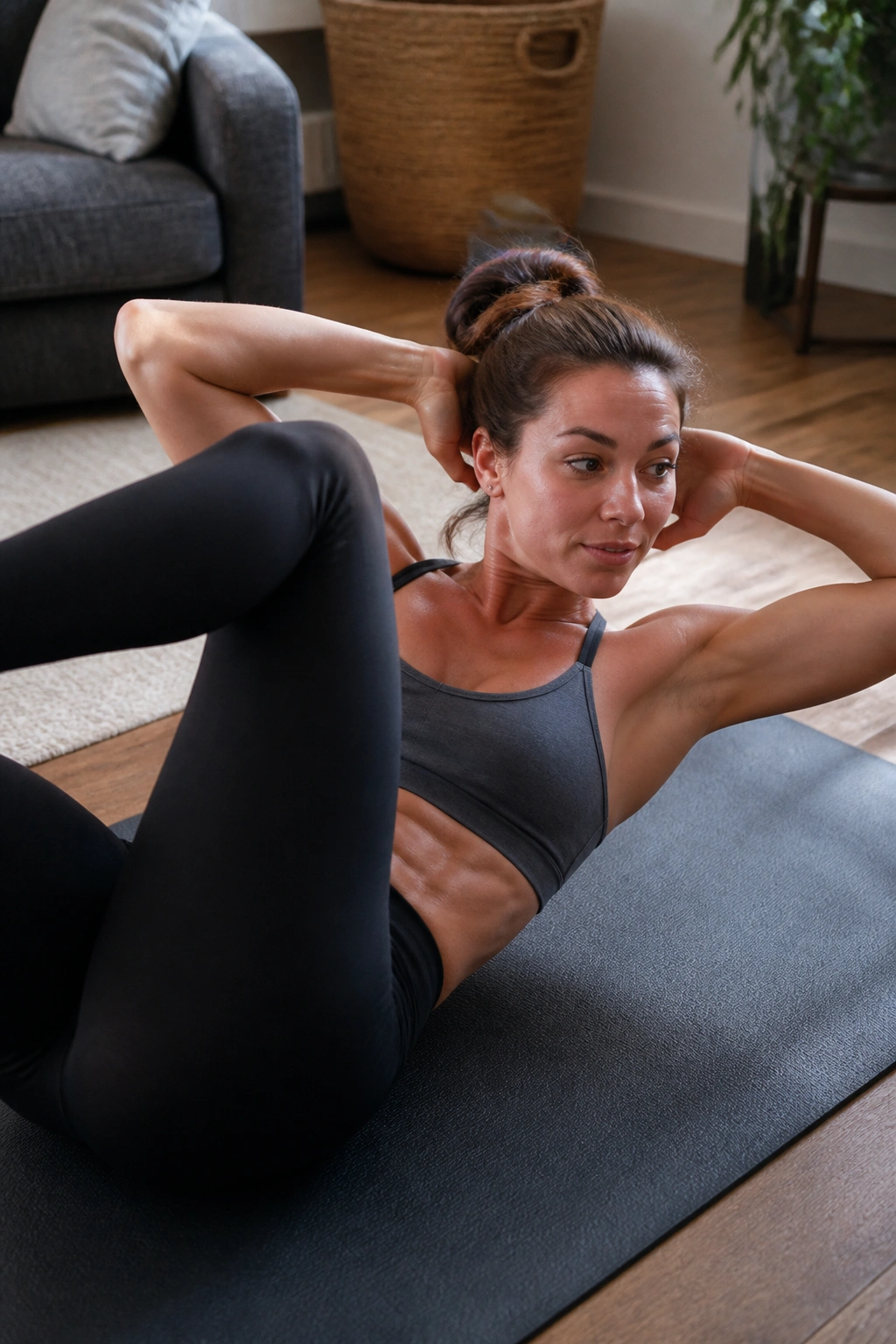
Twisting is one of the most beneficial movements for spinal health, but it must be done with control. This routine targets the obliques, the muscles on the sides of your abdomen that control rotation.
Use the “Criss-Cross” movement—a classic Pilates move where you lie on your back, hands behind your head, and bring the opposite elbow to the opposite knee. The key is to lift your shoulder blade off the mat, not just twist your neck. You want the rotation to come from the waist, not the cervical spine. Perform these slowly. The slower you twist, the more your obliques have to fight against gravity, which is where the toning happens.
19. Hip Mobility and Stability
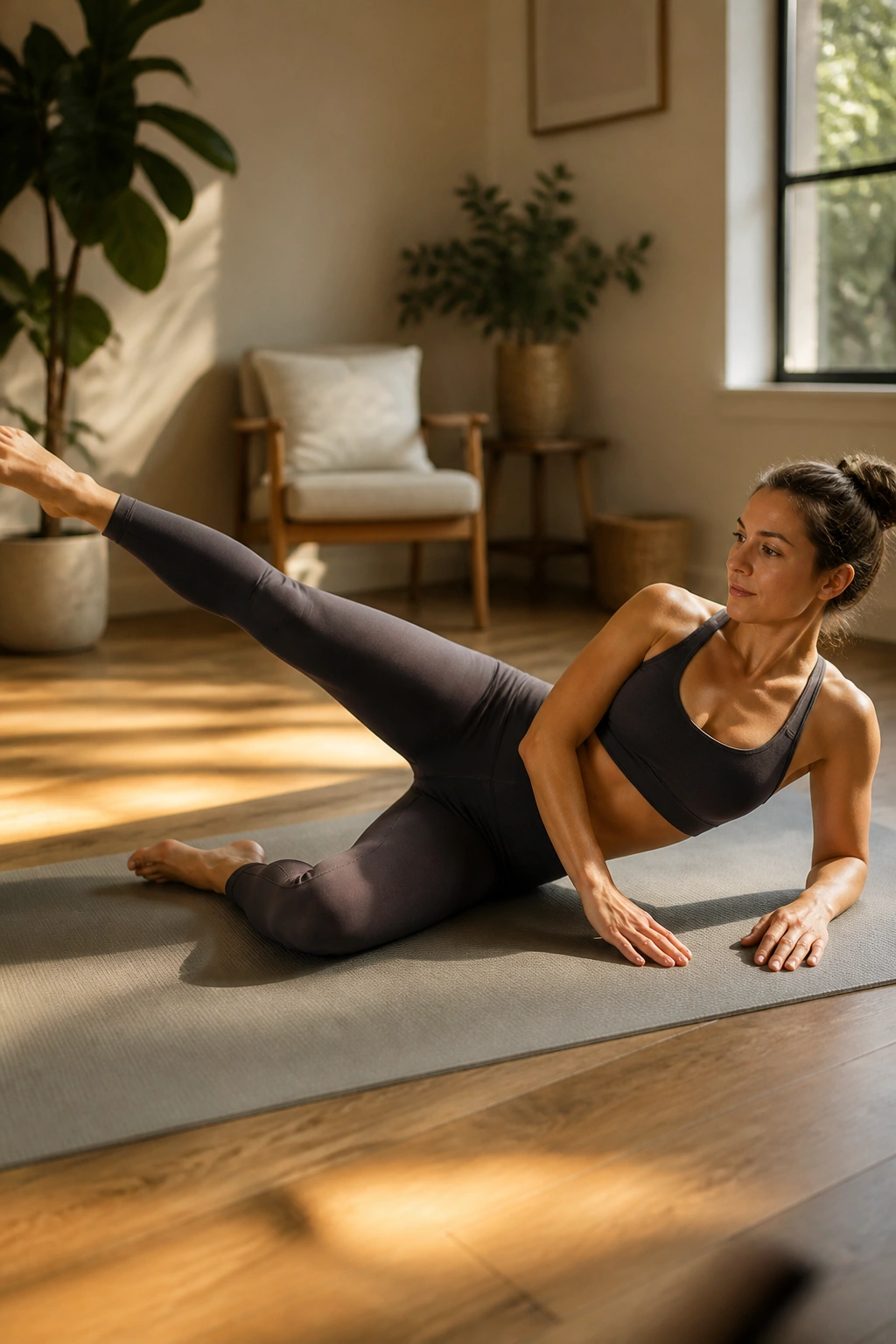
The hips are the crossroads of the body. If they are tight, the lower back suffers. If they are weak, the knees suffer. This routine is about opening the hip capsule while simultaneously strengthening the surrounding musculature.
Start with “Leg Circles” to lubricate the joint. Move into “Side-lying Leg Series” to strengthen the stabilizers. Finish with “The Mermaid,” a seated side-stretch that opens the hip flexors and the lats. This combination is powerful. You aren’t just stretching; you are stretching and strengthening in the same session. This creates “functional flexibility”—the ability to be both strong and mobile through a full range of motion.
20. The “Total Reset” Full-Body Circuit
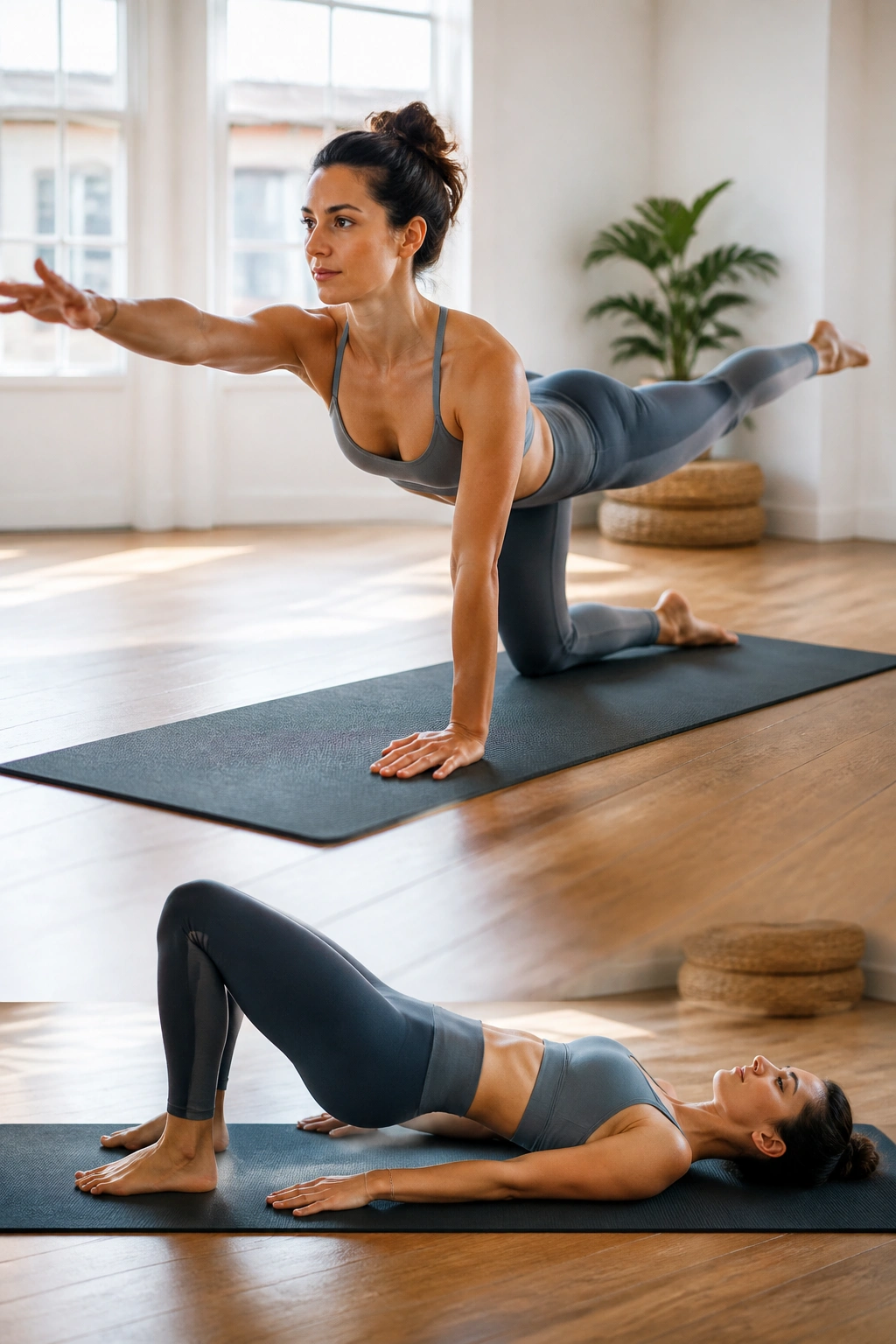
If you only have time for one routine, this is the one to pick. It hits every major muscle group and addresses mobility, strength, and core control in a compact 20-minute format.
- The Hundred (Warm-up): 1 minute.
- Roll-Ups: 10 reps.
- Single-Leg Circles: 8 reps each leg.
- Plank to Pike: 10 reps.
- Glute Bridges: 20 reps.
- Side-Lying Leg Lifts: 20 reps per side.
- Swan Prep: 10 reps.
This routine is balanced. You get core activation, posterior chain work, upper body endurance, and spinal mobility. If you repeat this routine twice a week, you will likely notice improvements in your posture and general strength within a month. Do not rush it. The goal is to finish feeling like you have moved your body with intelligence and care.
Final Thoughts
Consistency is the silent architect of physical change. You do not need to perform a different, complex workout every time you touch your mat. In fact, most veteran Pilates practitioners find that repeating a core set of movements allows them to go deeper into the technique. When you are no longer worried about “what comes next” in a video or class, you can focus entirely on the nuance of your alignment.
Pay attention to how your body responds to these routines over time. Some weeks, your hips might feel tighter, requiring more focus on the mobility-centric sessions. Other weeks, you might feel strong and capable, prompting you to lean into the endurance or advanced flow days. Listen to that feedback. That internal dialogue is the essence of Pilates—it is a practice of moving with awareness, not just moving for the sake of burning calories. Stick with it, keep your movements precise, and the results will speak for themselves.
