



A pair of dumbbells can do more than people give it credit for. Used well, they build real strength at home, not the fake tired feeling you get from flinging light weights around for 20 minutes and calling it a workout.
The trick is simple and a little old-school: choose moves that force your legs, hips, back, chest, and shoulders to work together, then rest long enough to keep the reps sharp. That is what full body dumbbell workouts for strength at home are supposed to feel like. Heavy enough to demand focus. Clean enough to repeat.
Most home workouts go sideways because they chase sweat instead of force. Sweat is fine. But if your goal is strength, you need lower reps, better bracing, and a load that makes the last two reps matter. Ten sloppy reps will gas you out. Five honest reps will build something you can feel when you stand up from a chair, carry groceries, or pick up a packed suitcase without grunting.
Different days call for different tools. Some workouts below use straight sets and long rests. Some use ladders, complexes, EMOMs, and unilateral work that exposes the weak side you usually ignore. Keep that in mind as you read: not every strong session has to look the same, but every good one should make the dumbbells feel worth their weight.
1. The Full Body Dumbbell Workout That Feels Like Real Strength Training
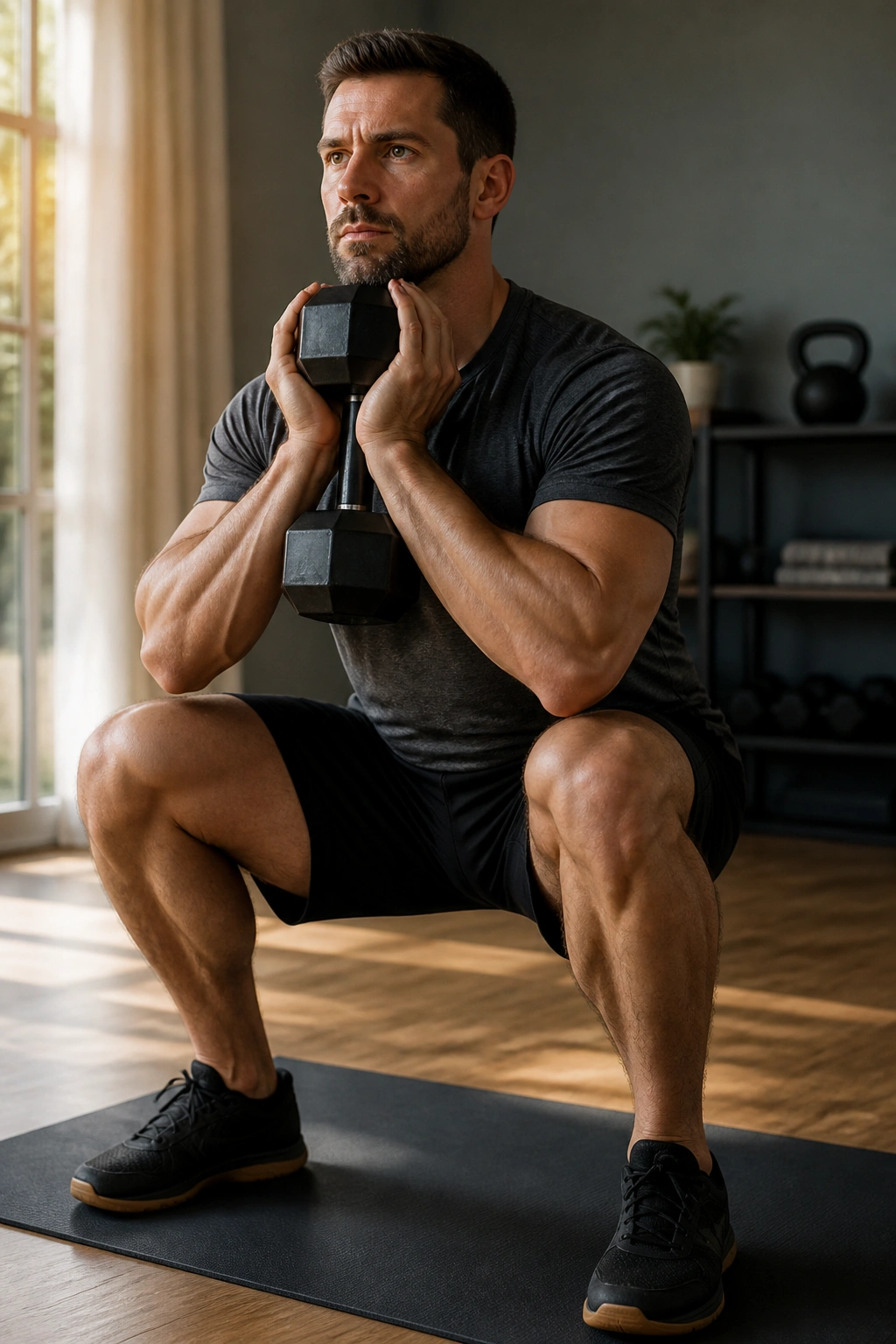
Three moves. That’s enough.
If you want a session that feels like strength training instead of fitness theater, start here. A heavy goblet squat, a floor press, and a bent-over row cover the biggest jobs in the body without wasting time. Legs, chest, back. Done properly, it feels dense and blunt in the best way.
How to run it
- 5 rounds
- 5 goblet squats
- 5 dumbbell floor presses
- 8 bent-over rows
- Rest 90 to 120 seconds between rounds
Pick a load that leaves about 2 good reps in the tank on round one. By round four, you should still be moving clean, not racing the clock or shrugging your shoulders up toward your ears.
Use a 3-second lowering phase if the dumbbells are a little light. That one change makes the session bite harder without turning it into a sloppy grind.
2. The Reverse Lunge, One-Arm Press, and Romanian Deadlift Combo
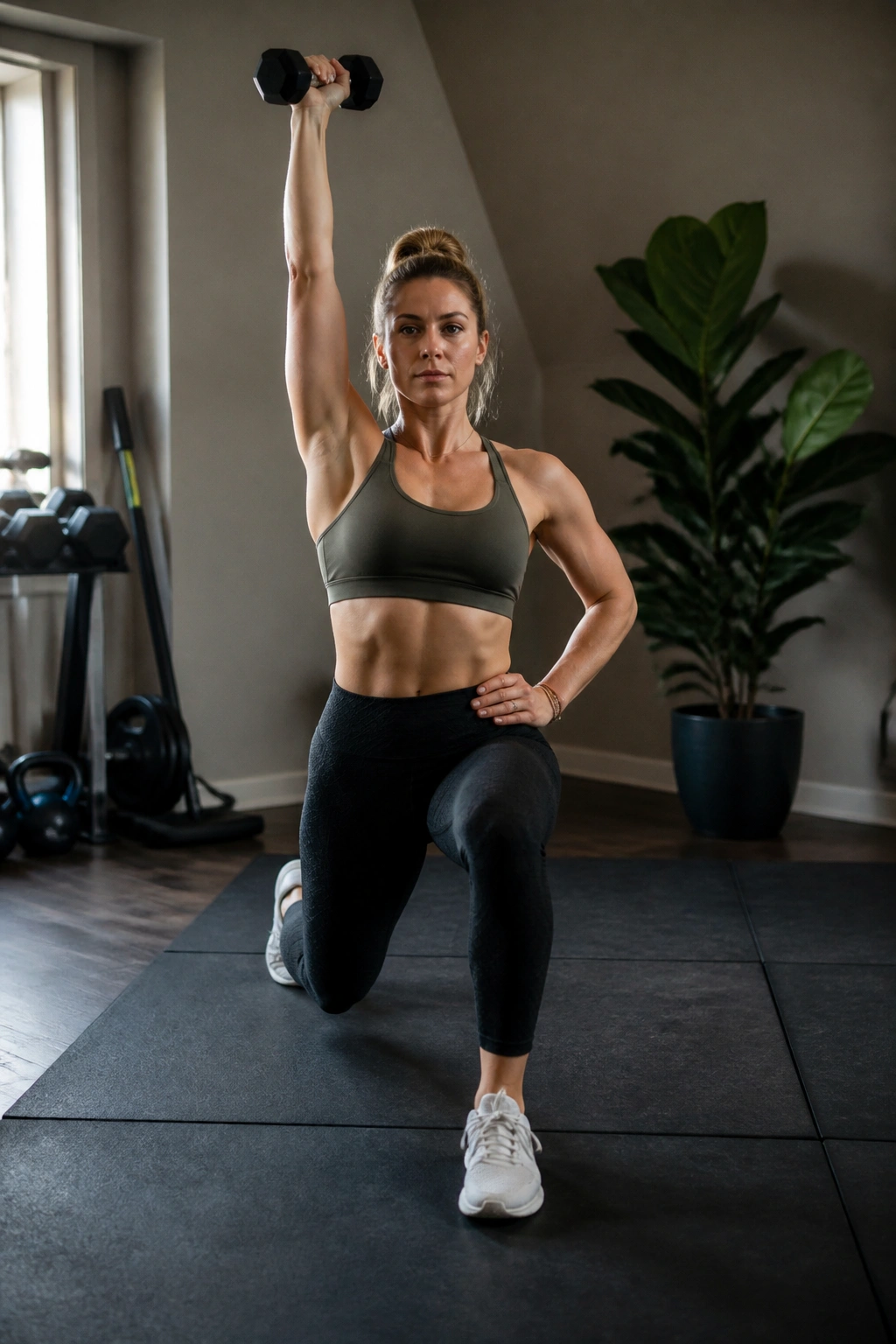
If one side always feels a little weaker, this is the kind of workout that stops pretending that does not matter. Unilateral work exposes balance gaps fast, and the reverse lunge is a nicer test than a forward lunge because it usually feels kinder on the knees.
The flow is simple: reverse lunge, one-arm overhead press, Romanian deadlift. You’re asking the lower body to stabilize, then the shoulders to work without cheating, then the hips to hinge hard. That mix is gold when you train at home and want more than a generic burn.
Run 4 sets of 6 reverse lunges per leg, 6 one-arm presses per side, and 8 Romanian deadlifts. Rest about 75 seconds between sets. If your torso twists on the press, slow down and reset your feet. That little fix matters more than adding another rep.
3. The Dumbbell Deadlift, Clean, Push Press, and Row Session
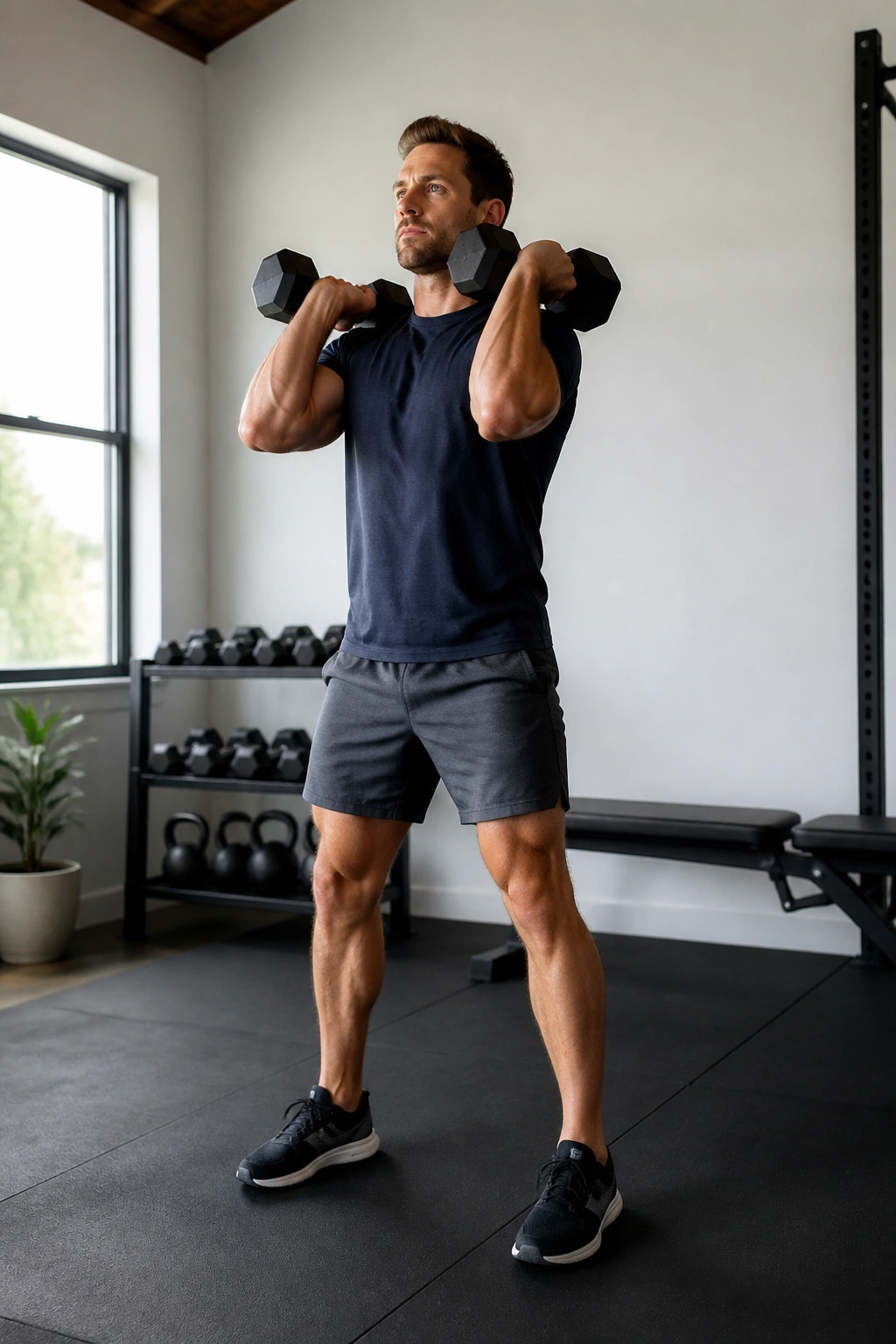
Why do cleans belong in a home strength plan? Because they teach you to move load with purpose instead of dragging the dumbbells through space.
This workout has a little power in it. Start with dumbbell deadlifts, then clean the bells to your shoulders, push press them overhead, and finish with rows. The deadlift loads the hinge. The clean builds timing. The push press transfers force through the legs. The row keeps the back honest. Not bad for four moves.
Load and rest
- 4 to 6 rounds
- 6 dumbbell deadlifts
- 4 cleans
- 4 push presses
- 8 rows
- Rest 90 seconds, or longer if the cleans get sloppy
Keep the cleans crisp. If the dumbbells start crashing into your forearms, the set is over. Power work should feel snappy, not heroic.
4. The Goblet Squat, Press, and Carry Circuit
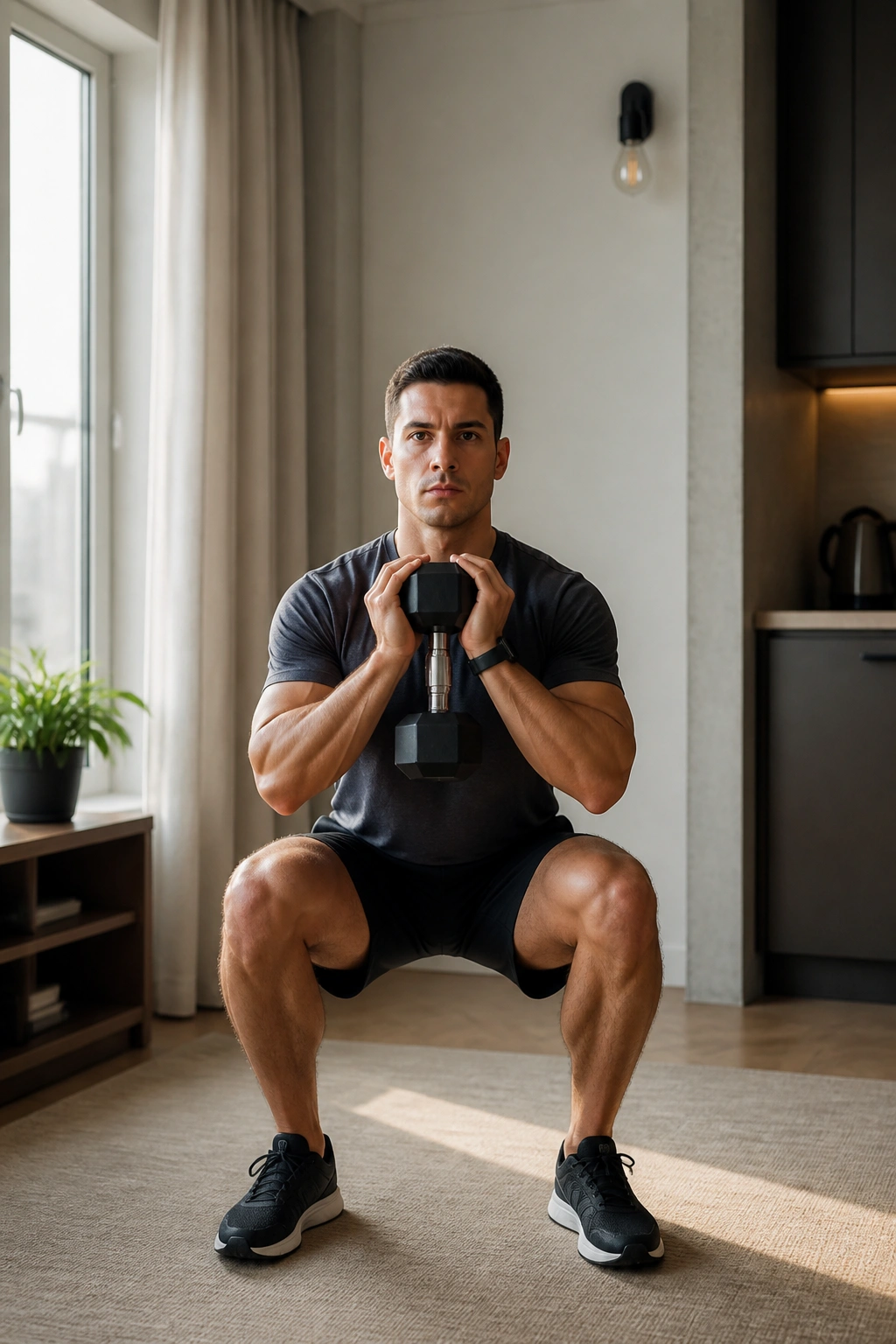
A small apartment floor is enough. That’s one of the nicest things about this workout.
The goblet squat gives you a strong leg pattern without needing a rack. The standing press hits shoulders and upper back. Then the carry ties everything together because your grip, ribs, and trunk all have to stay stacked while you walk. Carries are underrated. I’ll say that plainly.
Do 4 rounds of 8 goblet squats, 6 standing presses, and a 30- to 40-second farmer carry. If you have space, walk 20 to 30 meters. If you don’t, march in place with tall posture and slow steps. The goal is not speed. It’s control.
Keep the dumbbells glued to your sides during the carry. If they drift forward, your ribs pop up and the core loses the job.
5. The Split-Stance Floor Press and Row Session
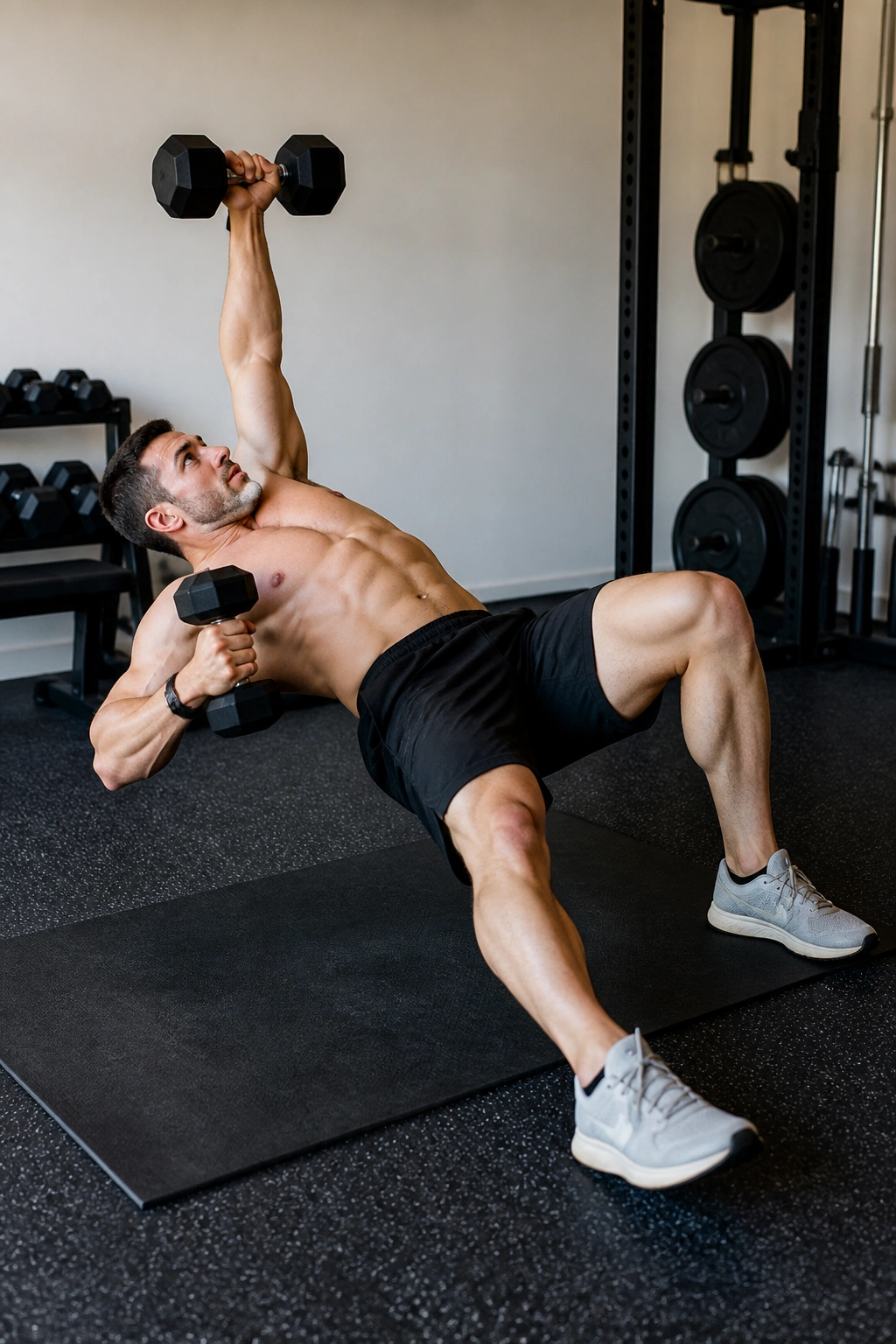
Split stance sounds boring until you feel how much it shuts down cheating.
Set one foot a half-step back and keep the rear heel light. That tiny change makes the floor press and the row feel steadier, because your trunk has to resist rotation the whole time. It is a sneaky good way to get more out of moderate dumbbells, especially if you do not have a bench.
Use 4 sets of 8 split-stance floor presses per side, 8 one-arm rows per side, and 6 step-back lunges per leg. Rest 60 to 90 seconds. The lunge can stay controlled and upright; no need to make it a circus trick.
One-sentence truth: this is a core workout wearing a strength workout’s clothes.
6. The Clean to Front Squat to Press Complex
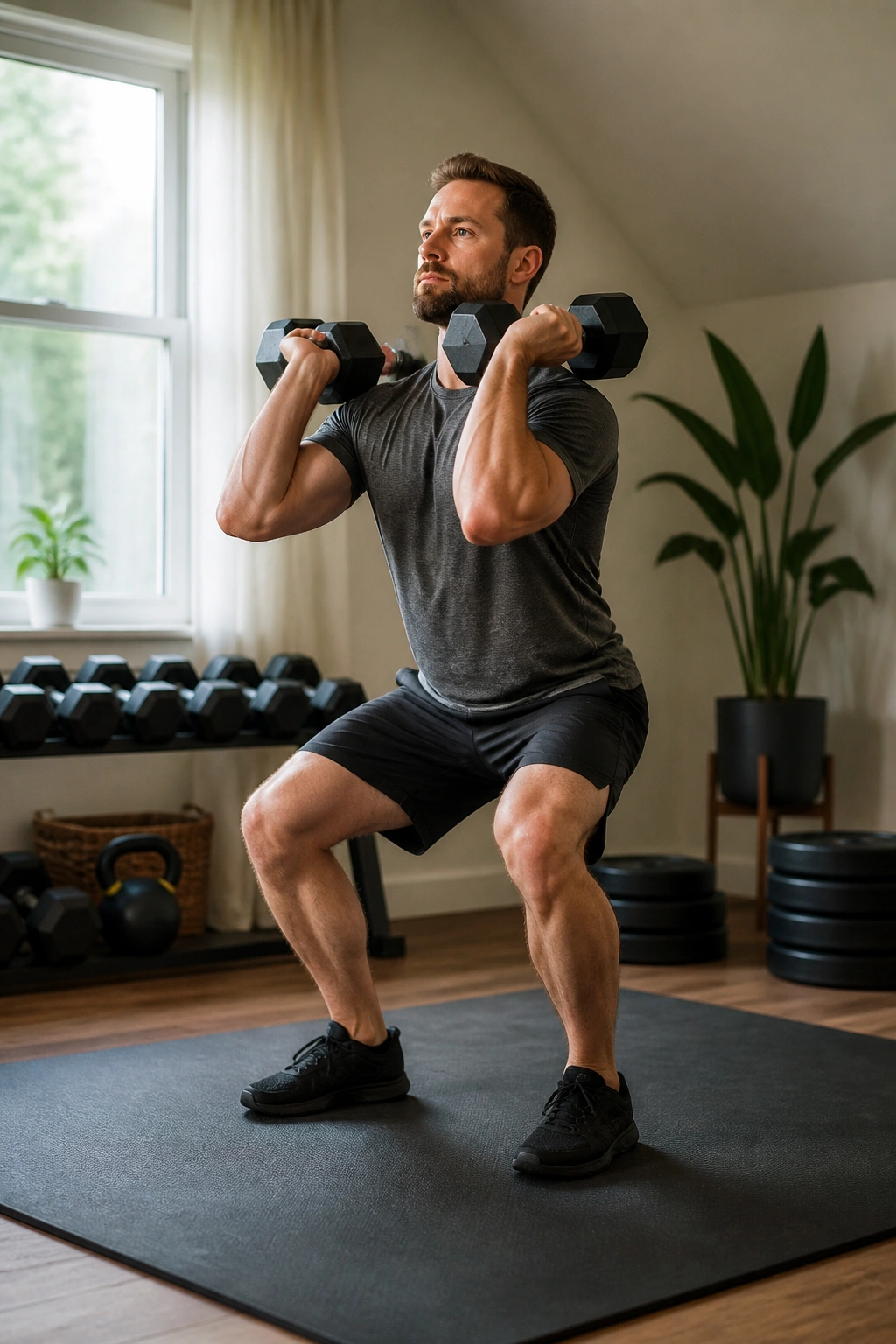
A complex is different from straight sets. You pick the dumbbells up once, then keep moving through a small chain of lifts without setting them down.
That matters because it changes the whole feel. Instead of resting after every rep, you earn the right to breathe only after the sequence is done. For home training, that is a smart way to get more work from a pair of dumbbells that might not be heavy enough for endless single lifts.
Try 5 rounds of 4 cleans, 4 front squats, and 4 presses. Rest 90 to 120 seconds between rounds. If the front squat turns ugly, cut the clean reps first. Do not keep piling on fatigue just because the set looks impressive on paper.
Best for: lifters who already know how to rack dumbbells cleanly and want a session that feels dense without being messy.
7. The Renegade Row and Thruster Grind
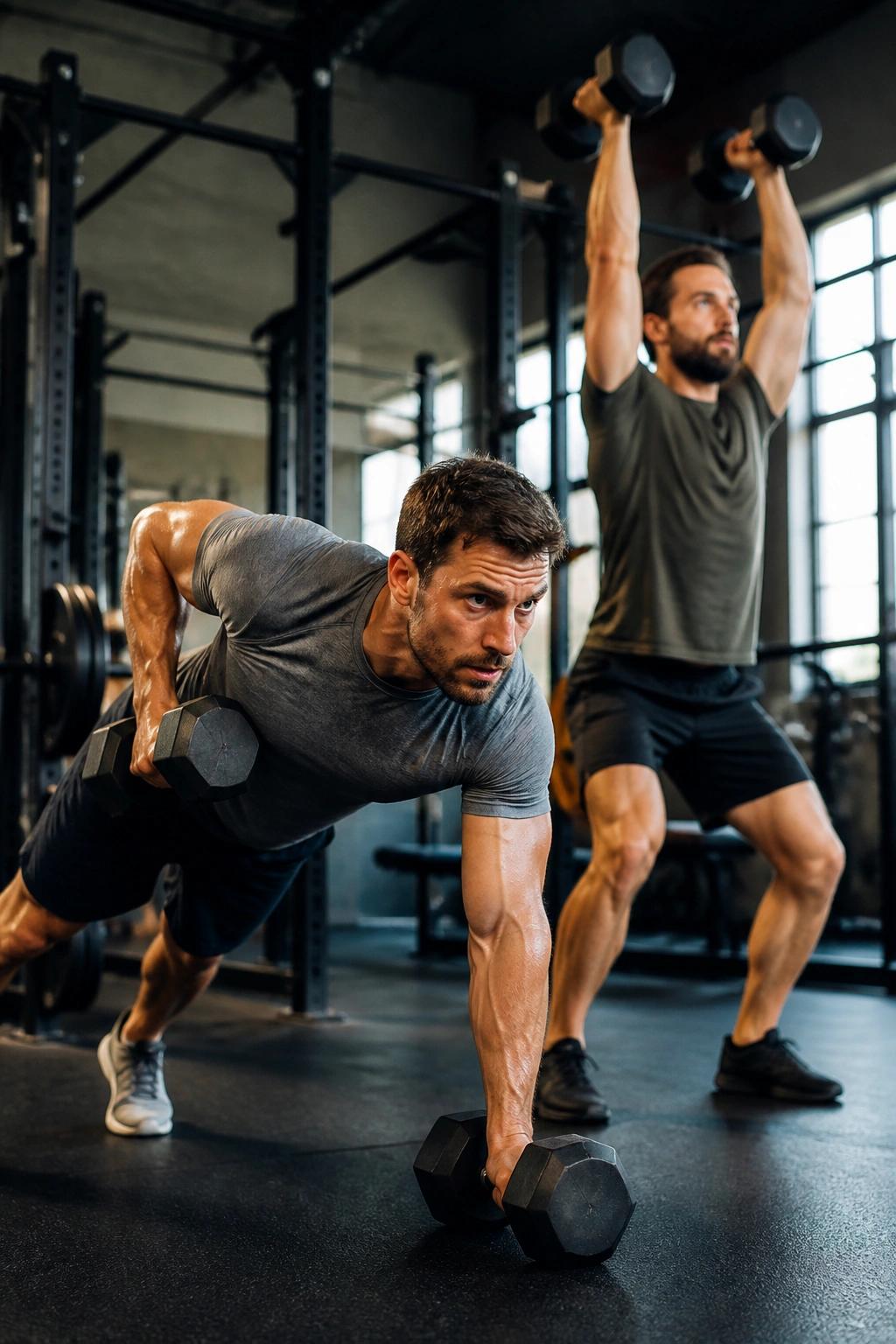
The renegade row is a test of more than back strength. It asks for bracing, foot pressure, shoulder stability, and patience. Then the thruster comes along and reminds you that the legs still have work to do.
Why it works
You start in a plank with your hands on the dumbbells, row one side at a time, then stand and drive the bells overhead from a squat. The row punishes sloppy hips. The thruster punishes half-hearted legs. Put together, they hit a lot of ground.
- 4 to 5 rounds
- 4 renegade rows per side
- 6 thrusters
- Rest 90 seconds
- Use a wider foot stance if your hips swivel
If your lower back talks during the plank, widen your feet and shorten the row. That is not failure. That is good coaching.
8. A Full Body Dumbbell Workout for Strength at Home With One Pair
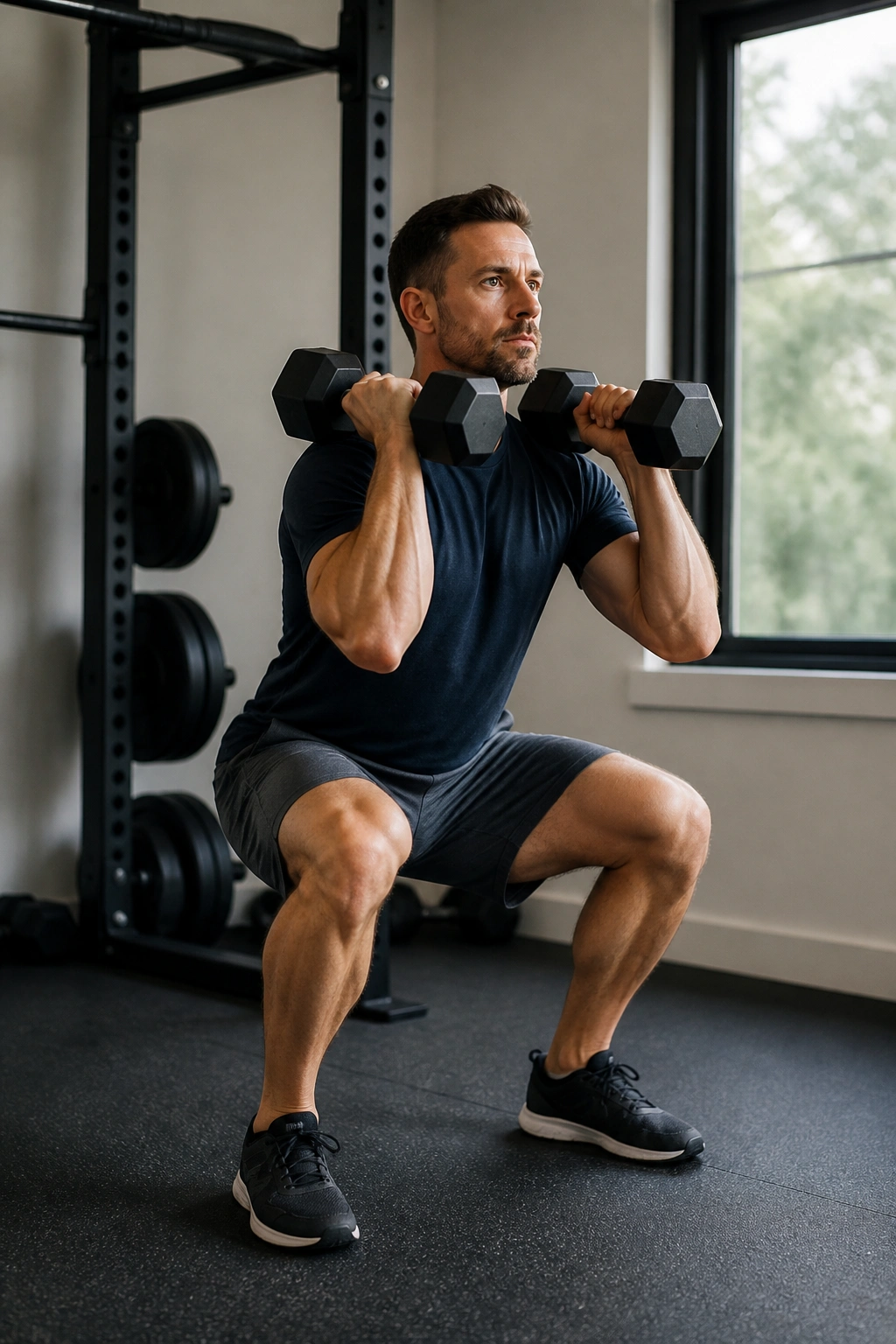
Only have one pair of dumbbells? Good. That is enough.
A lot of people wait for perfect equipment, then do nothing. You do not need a garage full of gear to build strength at home. You need a pair that challenges your legs, a push, a pull, and some kind of carry or brace. One pair can cover all of that if you stop trying to make every exercise look different.
What to prioritize
- 1 squat or lunge pattern
- 1 press
- 1 row
- 1 hinge
- 1 carry or hold
A simple version looks like this: 5 rounds of 6 front squats, 6 floor presses, 8 one-arm rows per side, and a 30-second suitcase hold per side. Rest 75 to 90 seconds. If the dumbbells are modest, slow the lowering and pause the last rep of each set.
One-sentence verdict: a basic pair of dumbbells, used hard, still beats a fancy setup used badly.
9. The Tempo Goblet Squat and Floor Press Session
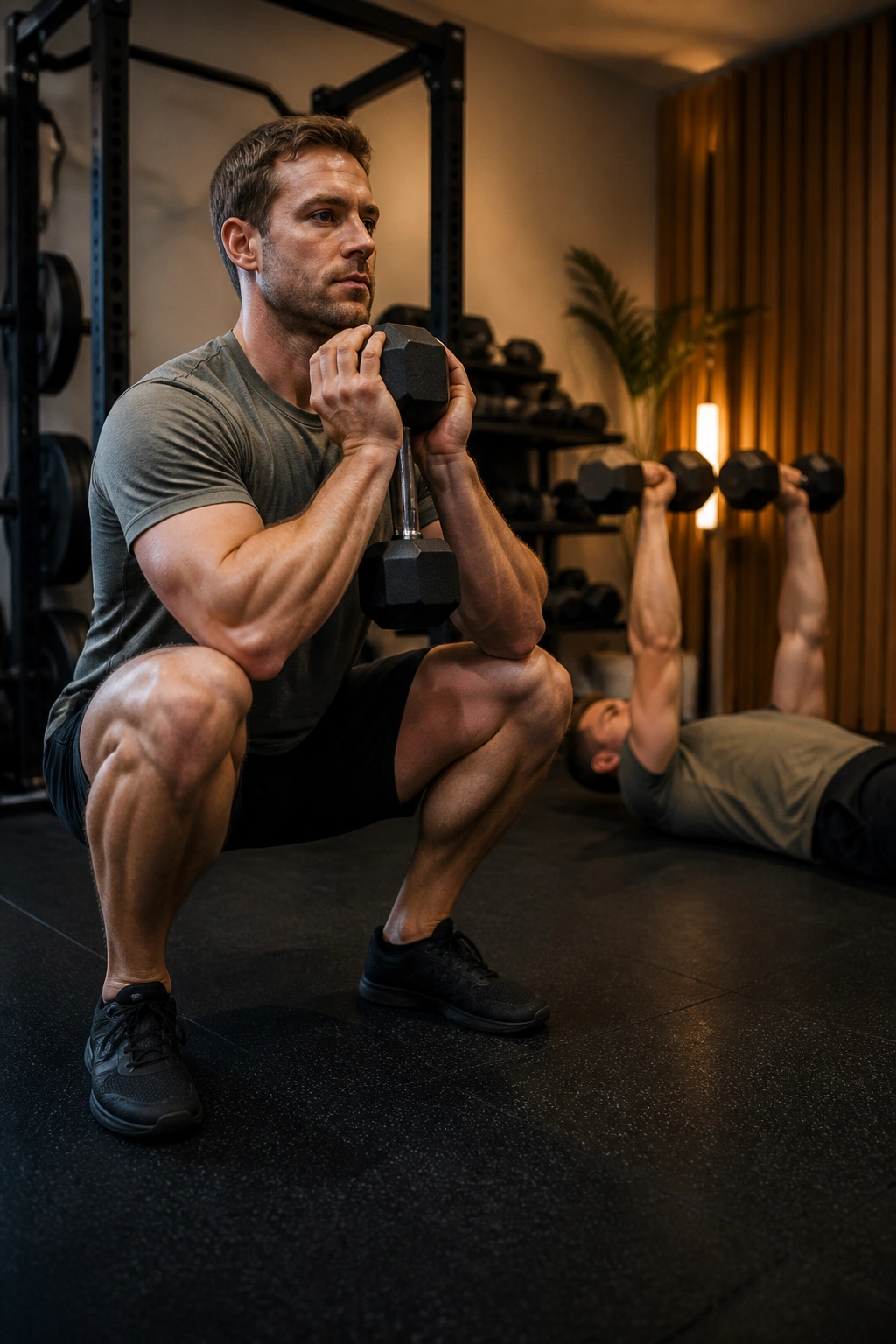
Tempo is the honest way to make a medium load feel heavy.
That’s the whole point here. Instead of chasing bigger dumbbells right away, you slow the lowering phase and pause where the lift is hardest. A 3-second descent on a goblet squat changes the game. So does a brief pause just above the floor on a press, where the chest and triceps have to restart the weight.
Run 4 sets of 6 tempo goblet squats, 8 floor presses with a 2-second pause near the bottom, and 8 plank rows per side. Rest 90 seconds. Keep your belly tight during the rows so the dumbbells do not drag your torso around.
This is a good choice when your weights are midrange and you want the session to feel serious without turning the whole thing into a race.
10. The Sumo Deadlift and Bent-Over Row Pairing
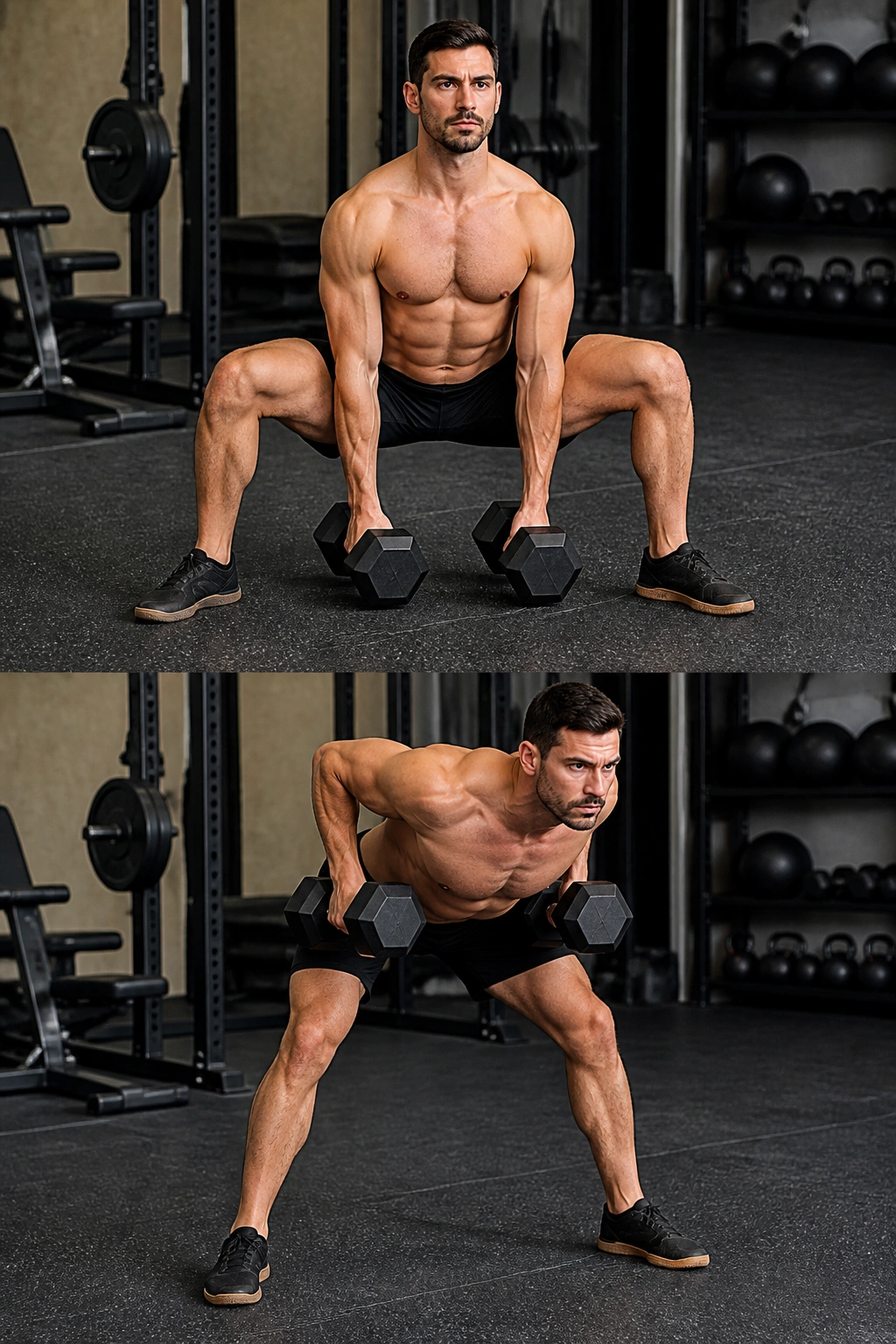
If your dumbbells are too light for regular deadlifts, a sumo stance can save the day.
The wider stance shortens the range a bit, lets you stay more upright, and usually makes the inner thighs and glutes work harder. Pair that with rows and you have a clean lower-body and back session that does not rely on speed or endless reps. I like this one because it is blunt. No fluff.
Do 5 sets of 6 sumo deadlifts, 8 bent-over rows, and 6 reverse lunges per leg. Rest 90 seconds. Keep the chest open and let the hips drop between the knees instead of folding forward at the waist.
What to watch for: if the dumbbells drift forward of your shins, reset the stance. That small positioning error makes the lift feel harder for the wrong reasons.
11. The Front Rack Lunge and Push Press Plan
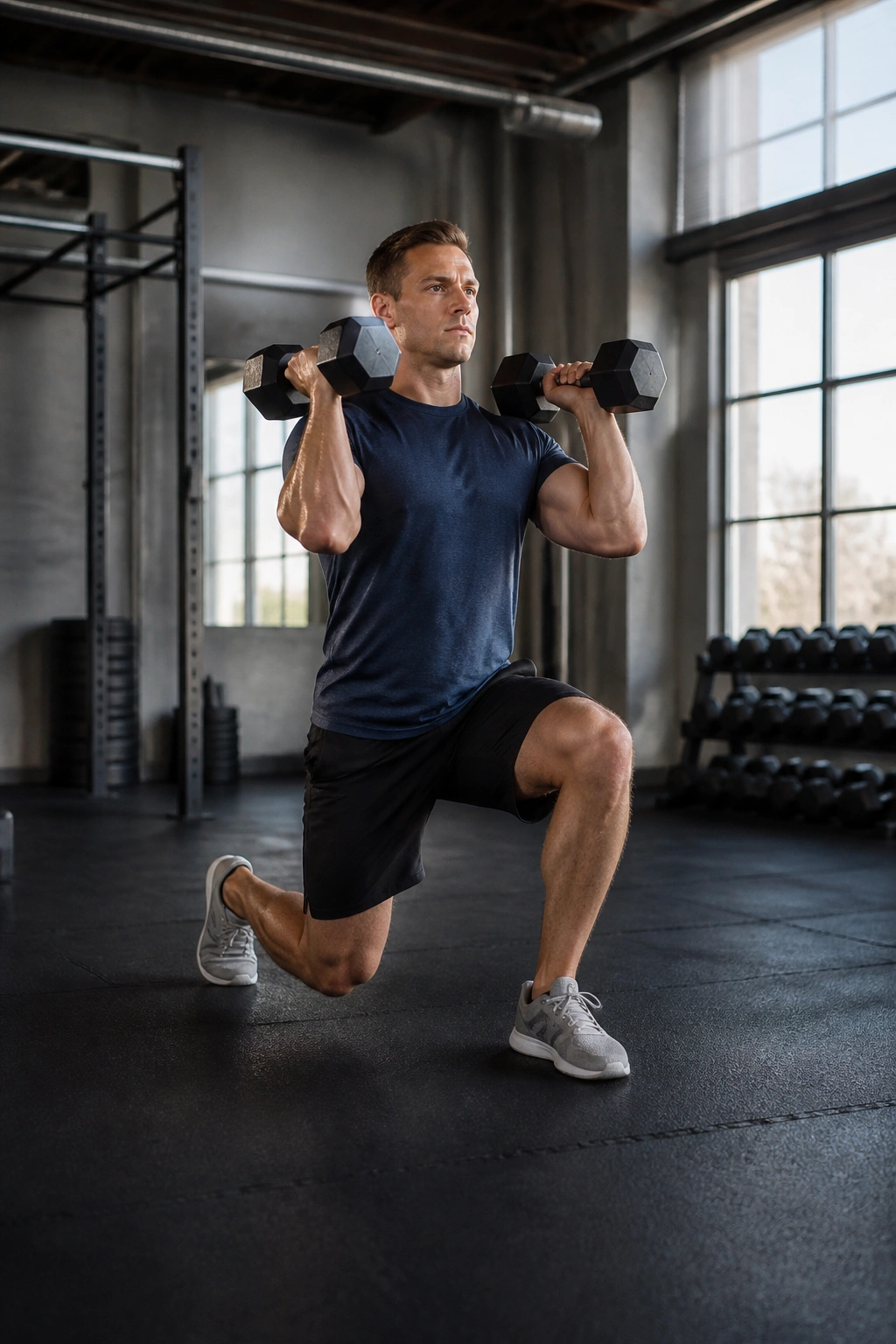
Front rack work feels different. The dumbbells sit at shoulder height, the upper back stays switched on, and the core cannot drift into laziness.
Compared with a goblet setup, front rack loading asks more from your shoulders and trunk. That makes this workout especially useful if you want your home sessions to look a little more like real strength work. The lunge challenges your legs. The push press teaches you to use leg drive, not just shoulder muscle, when the weight gets ugly.
Use 4 rounds of 5 front rack reverse lunges per leg, 5 push presses, and 8 rows. Rest about 90 seconds. Keep the elbows slightly forward during the rack position so the dumbbells don’t smash against your collarbone.
This is a strong option for lifters who already have decent wrist comfort and want a harder upper-body brace.
12. The EMOM Dumbbell Strength Workout
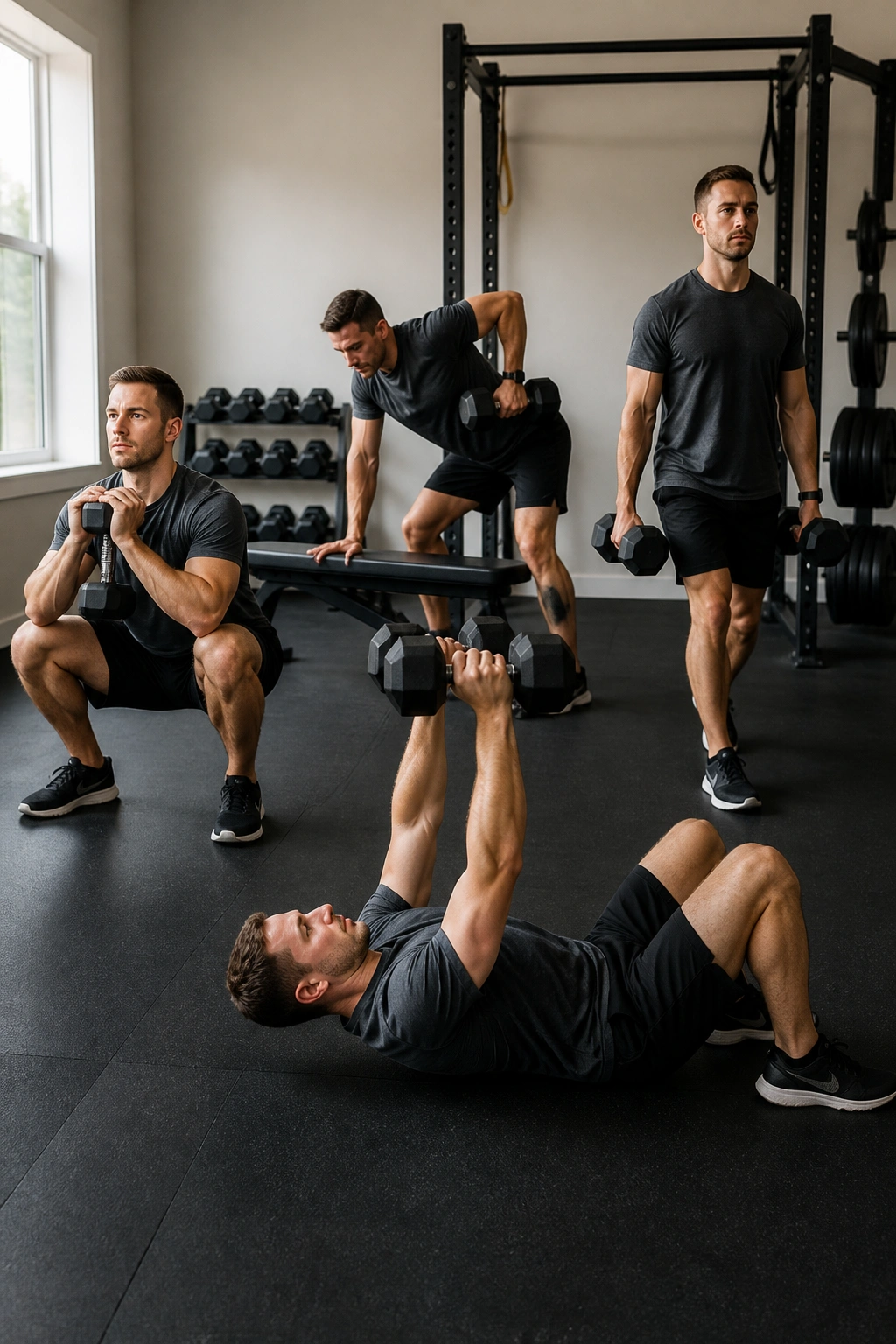
EMOM stands for every minute on the minute. It sounds neat because it is neat.
The structure forces discipline. You do the work, then you rest until the next minute starts. That creates a built-in cap on your rest and keeps the session honest. Just do not turn it into a gas-pedal workout. If the load is too light, you’ll just move fast and get sweaty. If the load is too heavy, you’ll miss the next minute and the whole thing collapses.
Minute-by-minute setup
- Minute 1: 5 goblet squats
- Minute 2: 6 floor presses
- Minute 3: 8 rows
- Minute 4: 20-second farmer hold or carry
- Repeat for 4 to 6 rounds
Use a weight that leaves 15 to 25 seconds of rest each minute. That gap is the sweet spot. Too much rest, and the workout feels soft. Too little, and your form starts leaking.
13. The Density Block for Legs, Back, and Chest
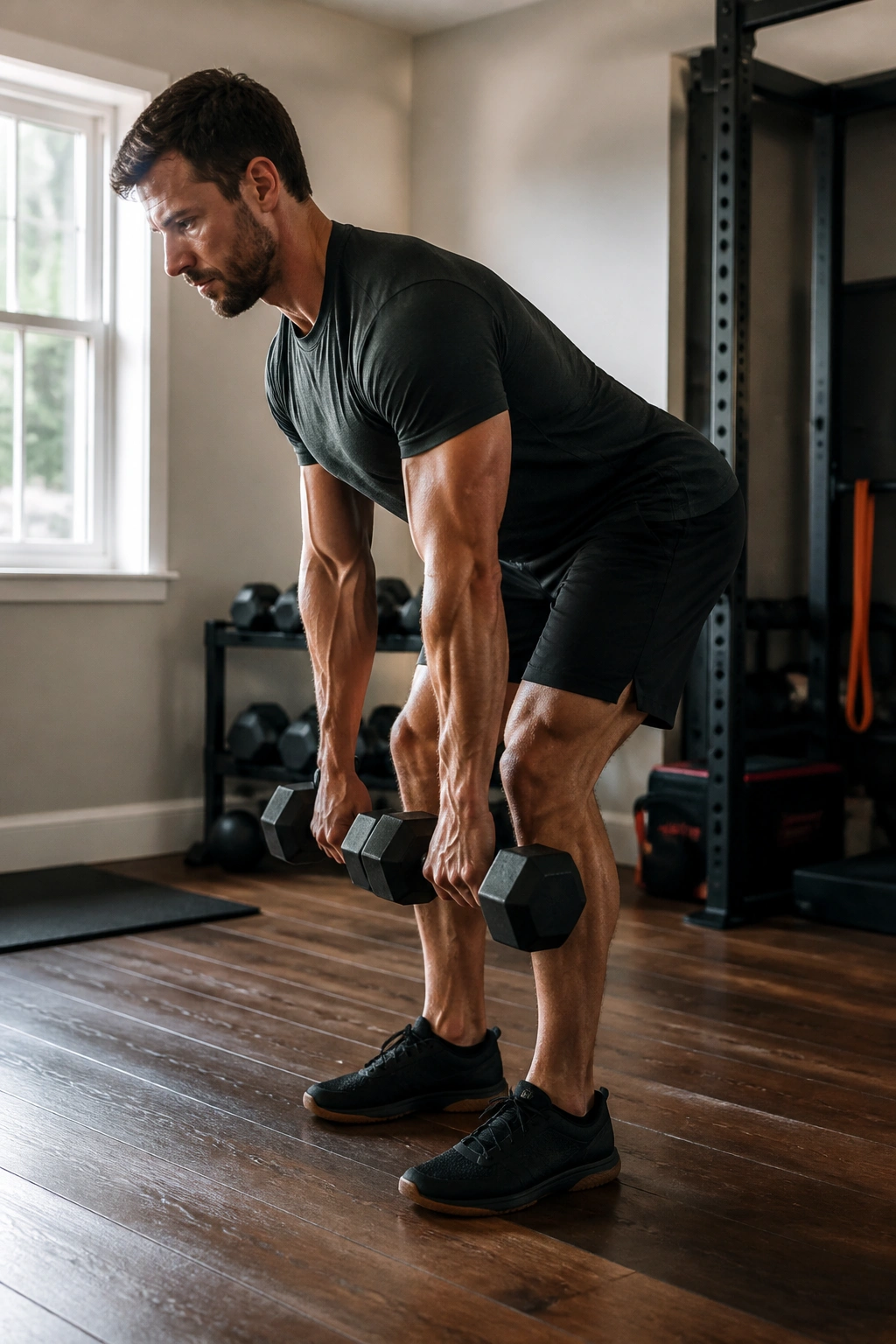
Set a clock for 12 minutes and keep the reps crisp. That’s the frame.
A density block is simple: do as much good work as you can in a set window without rushing into garbage reps. This style is handy when you want a full body dumbbell workout but don’t want to think too hard about sets and rest. It also teaches pacing, which home lifters often ignore until their shoulders are smoked and their legs quit early.
Use 6 Romanian deadlifts, 8 push-ups, 8 one-arm rows per side, and 6 reverse lunges per leg. Repeat the circuit for 12 minutes. If you start dragging, cut one round short and keep the reps clean. The goal is not survival. It is repeatable strength work.
One-sentence reminder: good form beats a longer score every time.
14. The Offset-Load Unilateral Grinder
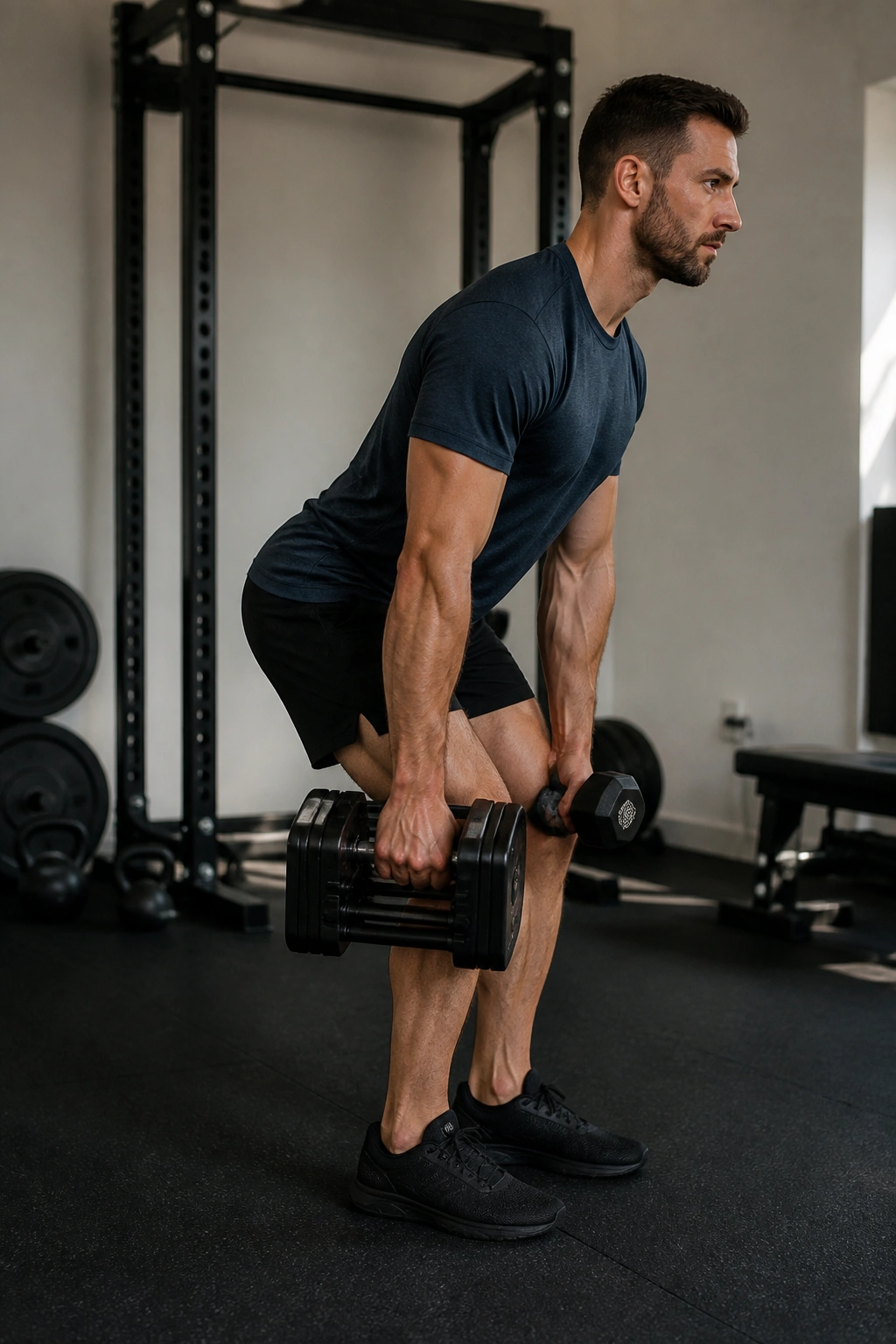
What happens when one dumbbell is heavier than the other? More than you think.
Offset loading creates an anti-rotation challenge that a balanced pair cannot match. Your torso has to fight to stay square, and that makes the core work without you having to do endless crunches or fancy floor drills. It is a very useful trick if you have mismatched dumbbells, or if one adjustable bell ends up heavier than the other by accident.
How to use the imbalance
- 4 sets of suitcase deadlifts for 6 reps per side
- 4 sets of staggered-stance presses for 6 reps per side
- 3 sets of offset carries for 20 to 30 seconds per side
The heavier side will feel clumsier. That is the point. Keep the ribs down and let the feet do the work of balancing, not the lower back.
15. The Push-Pull Legs Ladder
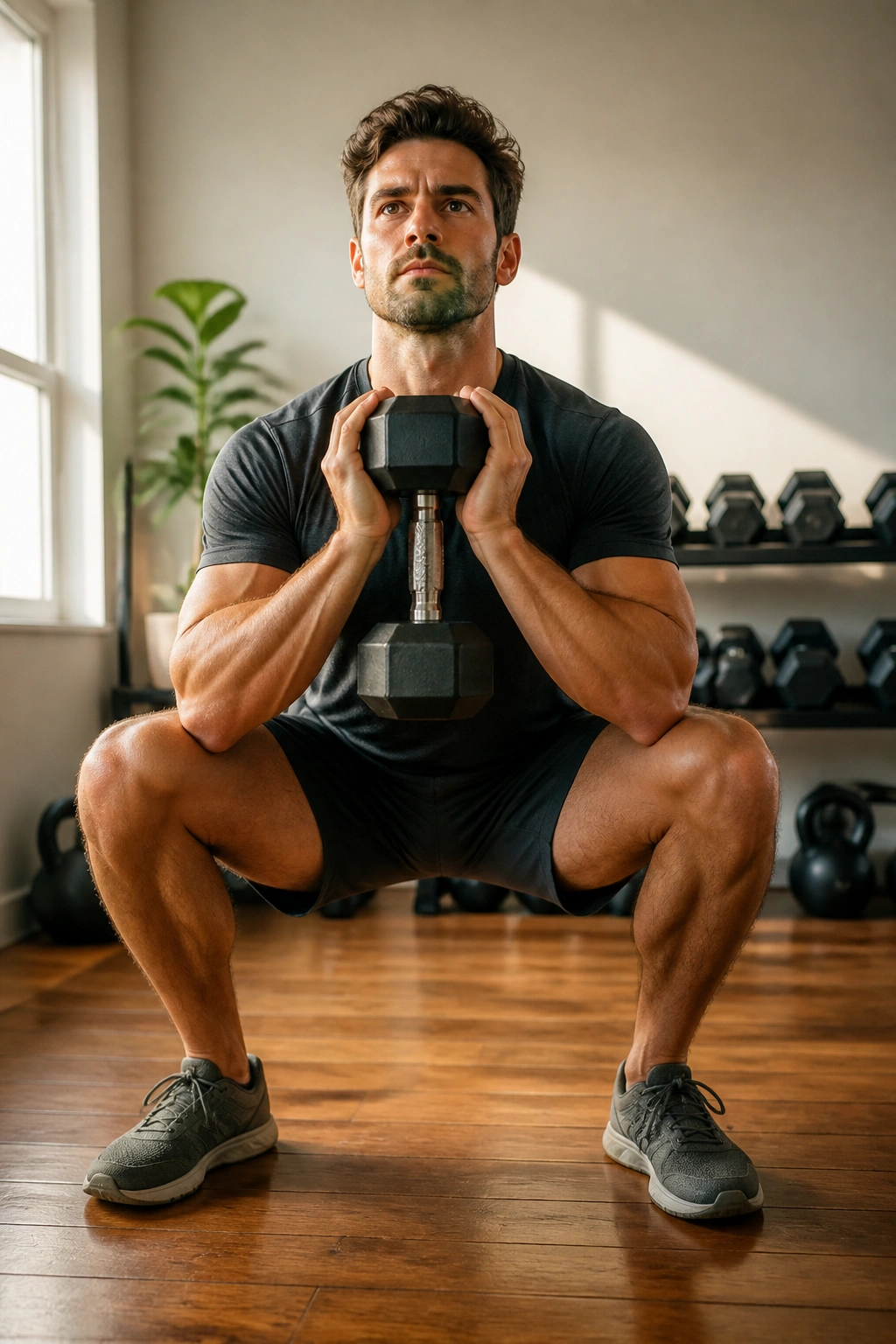
A ladder gives the workout a shape. I like that.
Instead of grinding through the same rep count over and over, you climb up in small steps. That keeps the session focused and gives you enough variety to stay sharp. For strength at home, a ladder is useful because it preserves good form better than a marathon circuit does.
Try 2, 4, 6, and 8 reps for goblet squats, floor presses, rows, and reverse lunges. Rest 30 to 45 seconds between rungs, then take 2 minutes after the final round. If the 8-rep rung turns ugly, stop at 6 and keep the quality high.
Best for: days when you want structure, but not the grind of long straight sets.
16. The Minimal Equipment Core and Strength Circuit
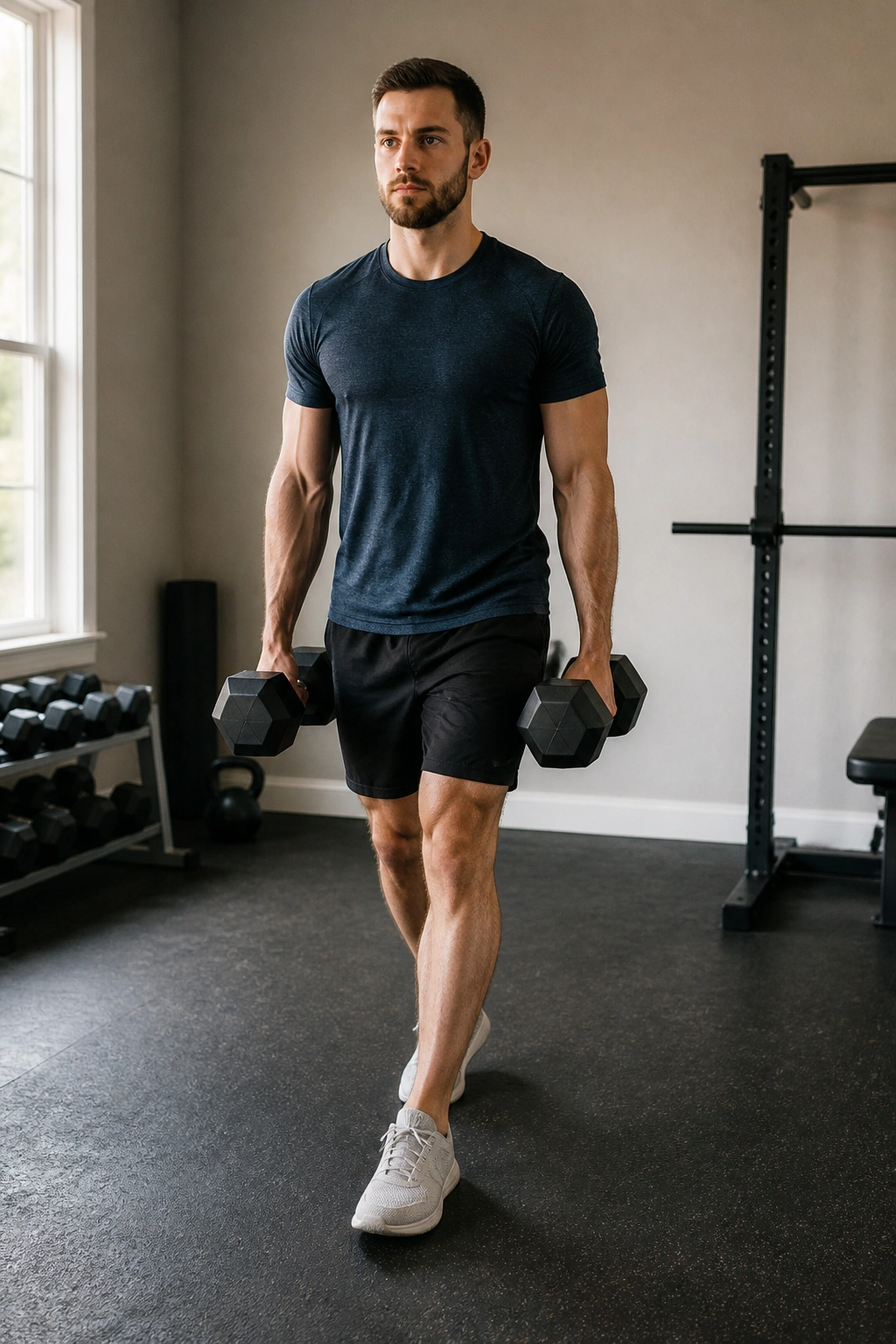
A small room can still support a real session.
You do not need a full home gym layout for this one. Two dumbbells, a clear patch of floor, and enough patience to keep the reps honest will do. The session leans on carries and bracing as much as it does on the usual squat-and-press pattern, which makes it useful if you want your midsection to work without turning the workout into a core-only day.
Run 4 rounds of 8 dumbbell deadlifts, 6 standing presses, 8 step-back lunges per leg, and a 30-second farmer march. Rest 60 to 90 seconds. Keep the march slow and tall; think long spine, quiet shoulders, steady breathing.
That last piece matters. If you rush the carry, you miss the whole point.
17. The Heavy Lower-Body and Upper-Body Alternator
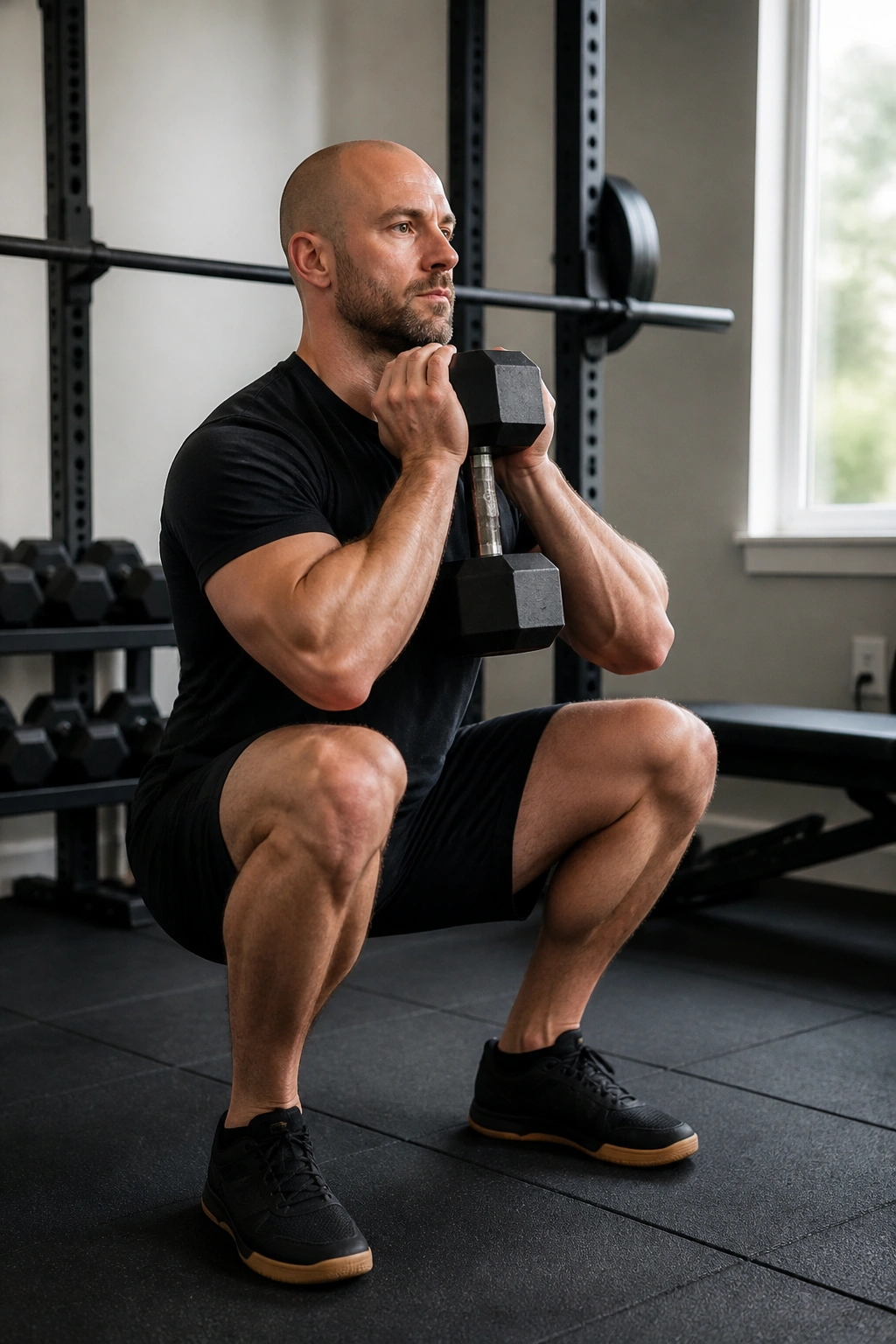
Unlike a fast circuit, this workout gives each big lift its own breathing room.
That makes it a better choice when strength is the main goal. You alternate a heavy lower-body move with a heavy upper-body move, then repeat with another pairing. The rest stays long enough to keep the rep quality up, which is what you want if the dumbbells are genuinely challenging.
A good version looks like this: 5 goblet squats, rest 60 seconds, 5 floor presses, rest 60 seconds, 6 Romanian deadlifts, rest 60 seconds, 8 rows. Repeat for 4 to 5 rounds. If you want more focus, keep the squat and press heavier, then use the hinge and row as strong accessories.
This works best for people who can tolerate longer sessions and do not mind training with a little more discipline.
18. The One-Dumbbell Around-the-Body Session
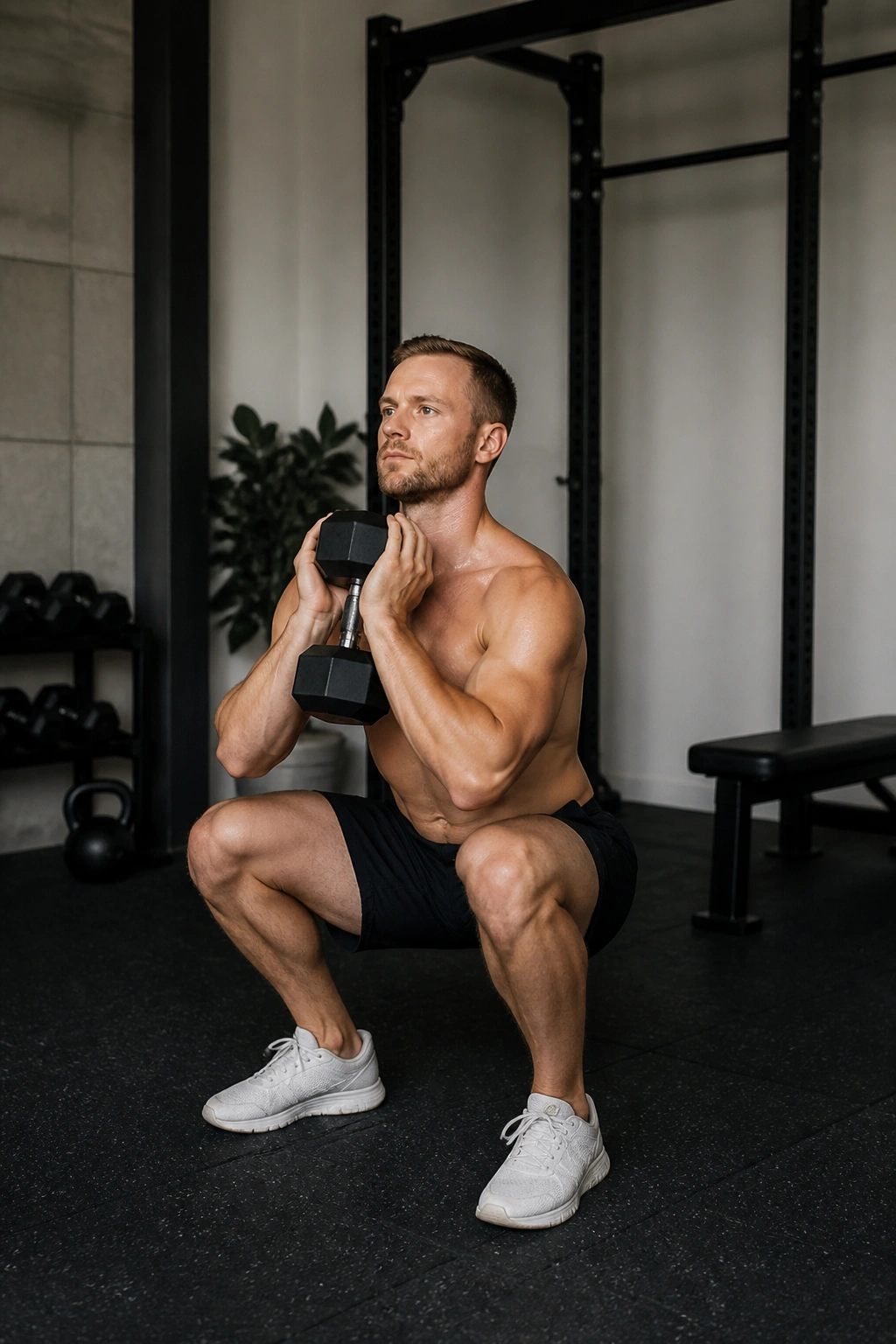
Sometimes one dumbbell is all you get. That’s not a problem.
A single bell can still cover the body if you move it through enough positions. Goblet, rack, press, carry, hinge. The workout becomes a sequence of angles instead of a pile of different equipment. I actually like one-dumbbell sessions because they force cleaner posture. You can’t hide much when one side is doing all the work.
- 5 goblet squats
- 6 single-arm cleans per side
- 6 single-arm presses per side
- 8 single-arm rows per side
- 30-second suitcase carry per side
Do 4 rounds and rest 60 to 90 seconds. Keep the free hand active—either on your ribcage for feedback or hanging tall at your side. That tiny detail helps you stay square.
19. The Full-Body Complex for Grip and Power
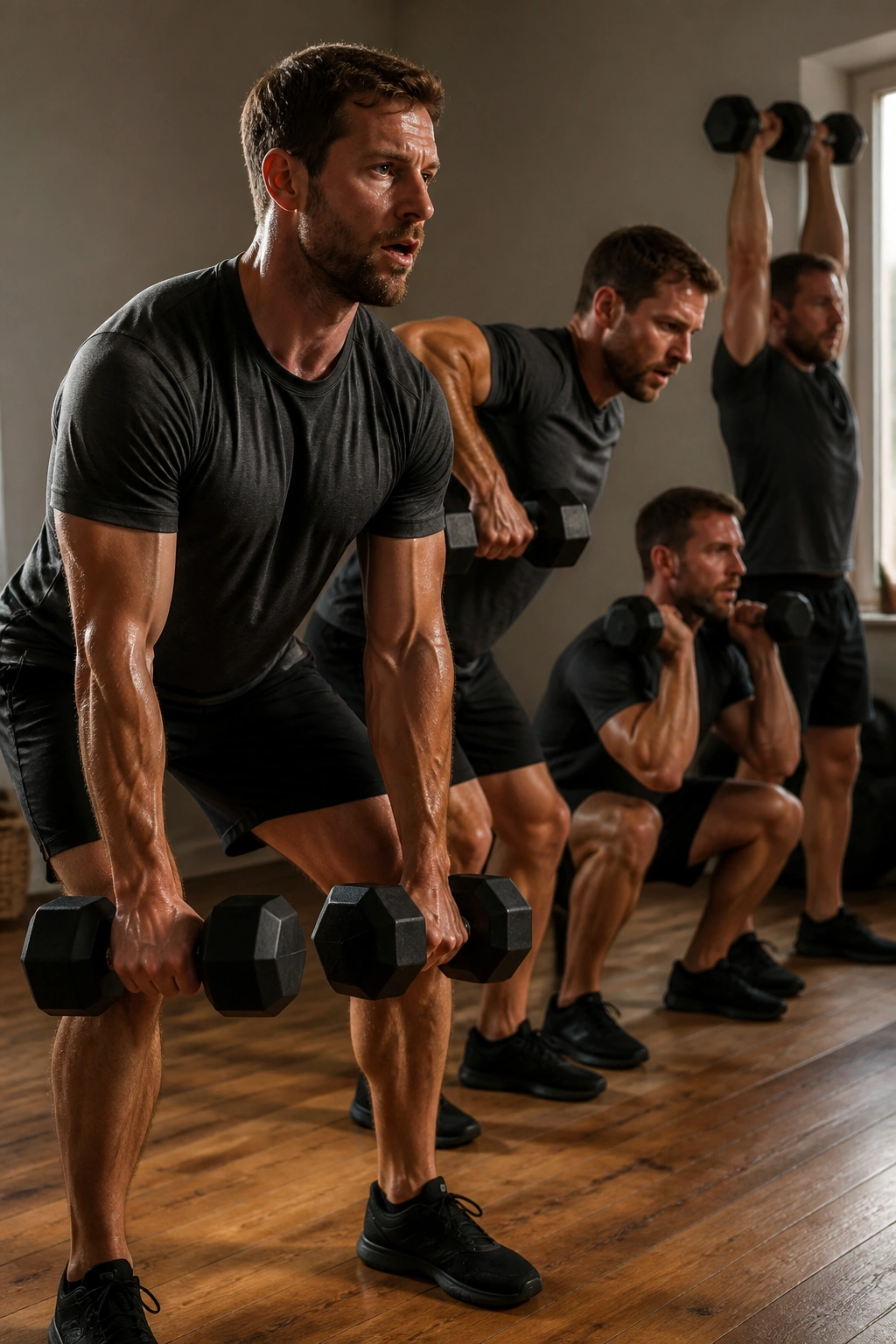
A complex is not subtle. That is why it works.
You hold the dumbbells for a chain of movements and don’t set them down until the set is done. Grip gets taxed. Breathing gets harder. The body has to move from hinge to pull to squat to press without a reset, and that makes the session feel bigger than the equipment suggests. It also exposes sloppy transitions fast, which I count as a plus.
Use 5 reps each of dumbbell deadlifts, bent-over rows, cleans, front squats, and push presses. Do the whole chain once, rest 2 minutes, then repeat for 4 rounds. If your clean is shaky, break the complex into two halves: deadlift-row-clean, then front squat-press. Same idea. Less mess.
Do not chase speed here. Smooth transitions beat rushed ones every time.
20. The Low-Rep Strength Day With Long Rest
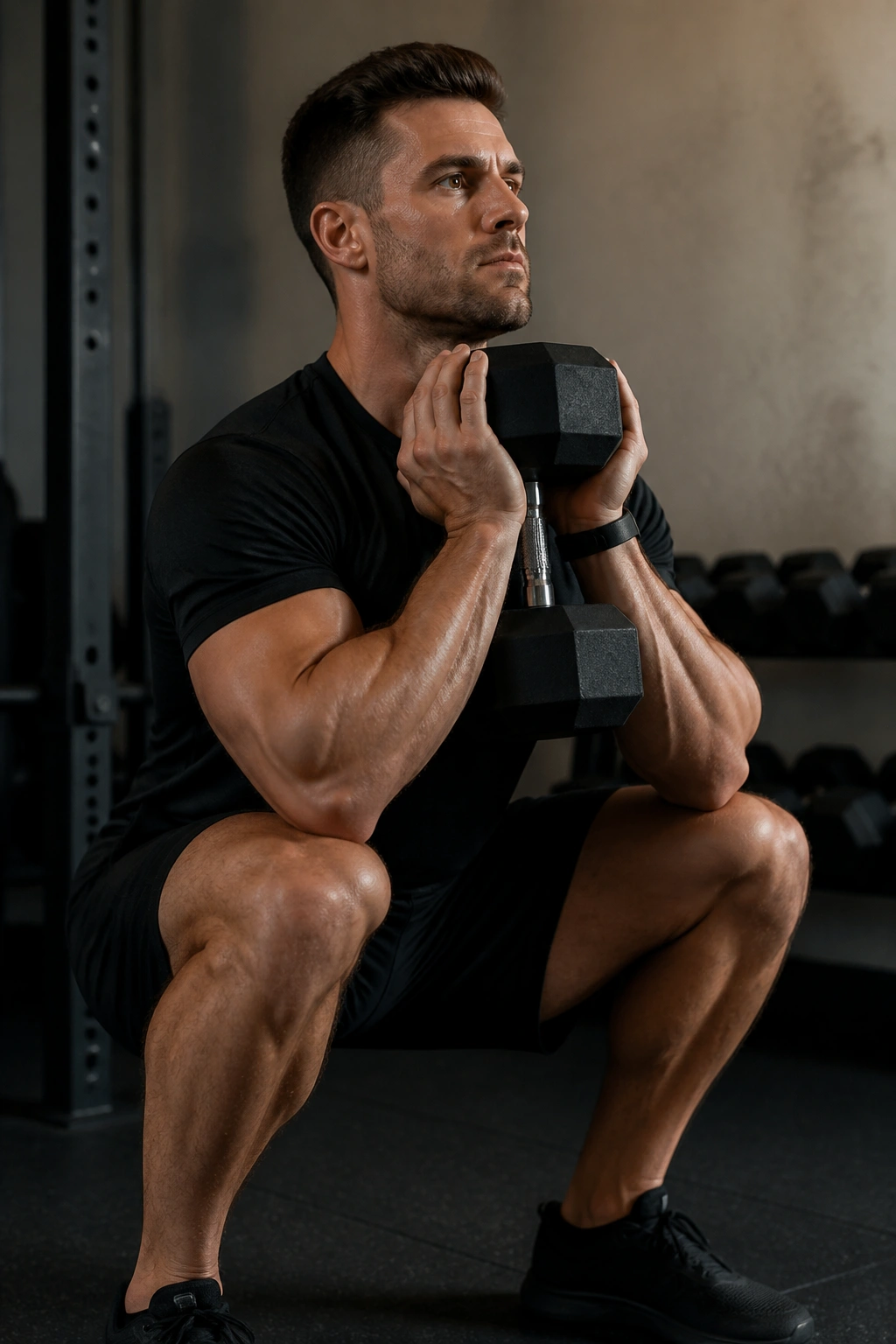
Strength gets built when reps stay low and rest gets long.
That’s the blunt version, and it still holds up at home. If you own a pair of heavier dumbbells, or adjustable bells that can get serious, use them for this style of workout. You are not trying to breathe hard. You are trying to produce force, recover, and do it again with good form.
Choose 3 to 5 reps for each main lift: goblet squat, floor press, one-arm row, and Romanian deadlift. Do 4 to 6 sets per exercise, resting 2 minutes or more between sets. If the dumbbells are too light, add a 2-second pause at the bottom of the squat and a slower lowering phase on the press.
This is the session I’d pick for a day when I want the room quiet and the work serious.
21. The 30-Minute Strength Ladder
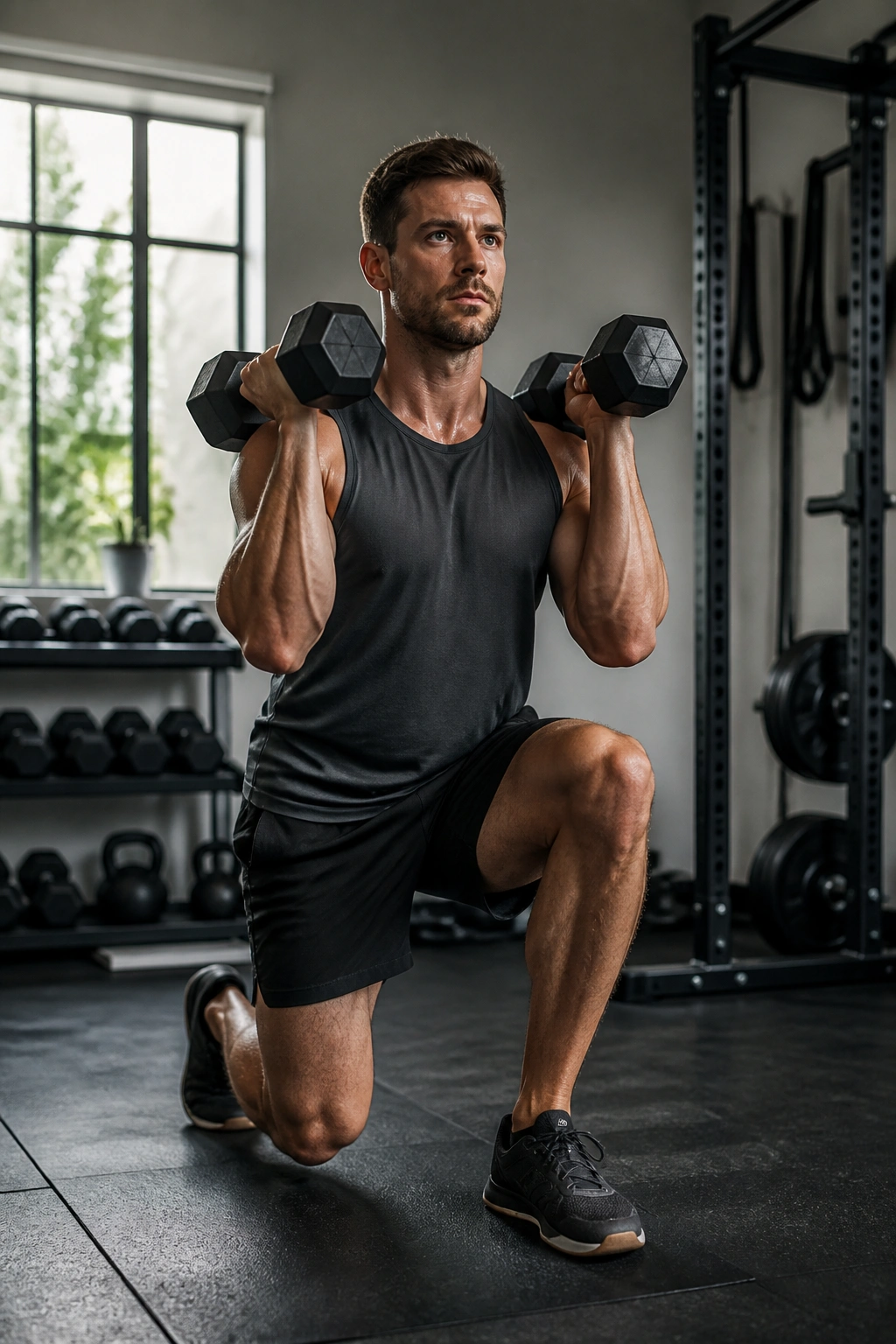
Can you get a real strength session done in half an hour? Yes. If you keep the format tight.
The ladder gives you a clean frame and keeps the session from wandering. You start small, add reps, then climb back down. It sounds almost too neat until you do it with dumbbells and realize how fast the work piles up when every rep is done with intent.
How to climb it
- Round 1: 2 goblet squats, 2 floor presses, 2 rows per side, 2 reverse lunges per leg
- Round 2: 4 of each
- Round 3: 6 of each
- Round 4: 4 of each
- Round 5: 2 of each
Rest 30 to 60 seconds between rounds. Keep the heaviest round in reserve. If you blow yourself up on round 3, the descent gets ugly fast.
This one works best when you want a session that fits a tight window without feeling thin.
22. The No-Bench Full Body Dumbbell Workout You’ll Keep Repeating
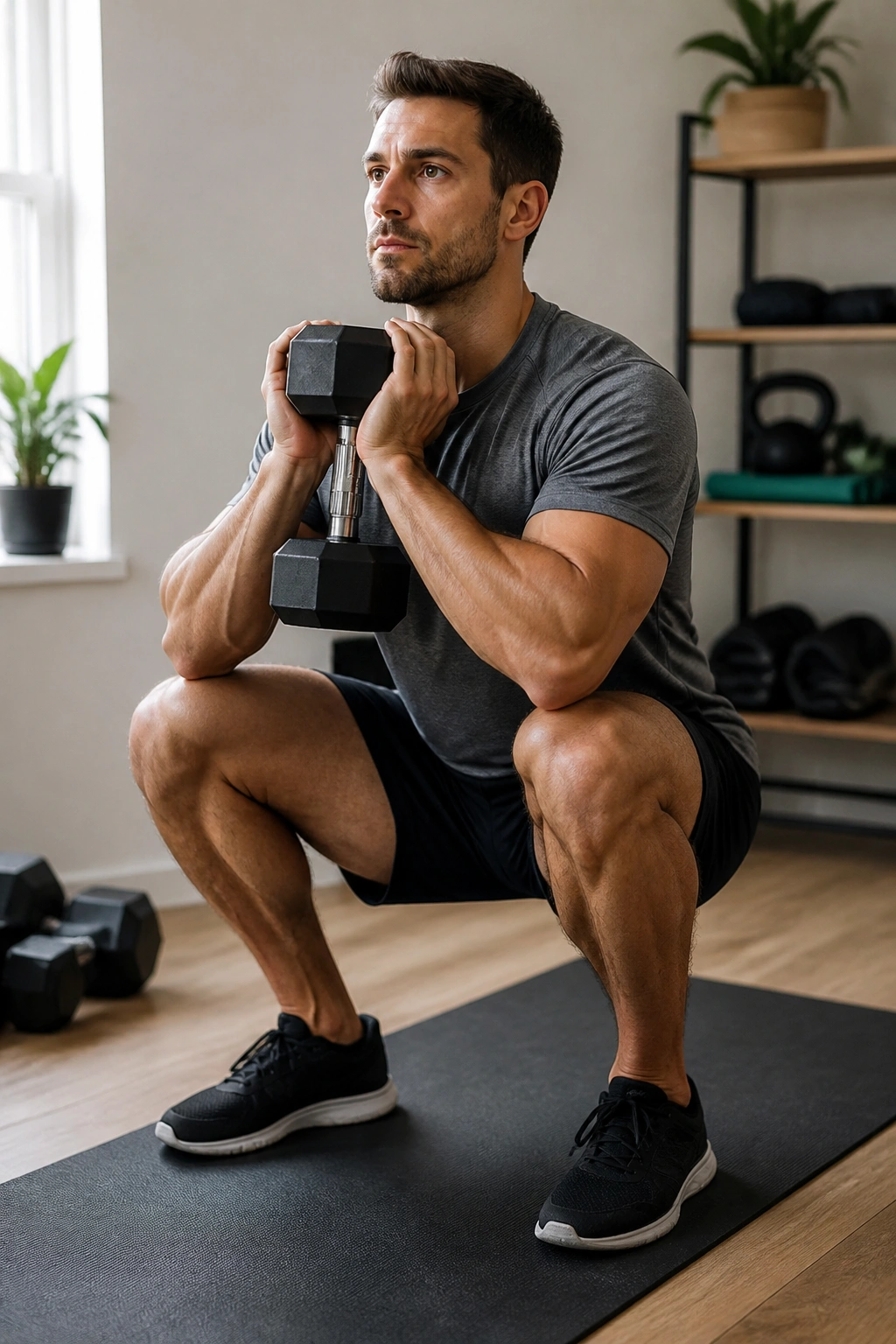
No bench. No problem.
That setup limitation pushes you toward exercises that actually travel well at home: floor press, hinge, squat, row, carry. It is the kind of workout I keep coming back to because it does not rely on anything fancy, and it does not ask you to overthink the plan. The weights stay in your hands, the posture stays clean, and the session gets its job done.
Use 5 rounds of 5 goblet squats, 5 floor presses, 8 rows, 6 Romanian deadlifts, and a 30-second farmer carry. Rest 90 seconds between rounds. If the dumbbells are heavy, that is enough. If they are moderate, slow the lowering on the squat and deadlift, then pause for one count at the bottom.
That is the whole trick, really. Simple lifts, honest loads, enough rest. Keep that formula and your home strength work stops feeling improvised.
