



Shoulders creep forward quietly.
One day you notice your shirt sits a little differently, your neck feels busy by midafternoon, and your upper back seems to clock out early. That is where back workouts for posture earn their keep: not by turning you into a rigid statue, but by teaching your shoulder blades, ribs, and spine to hold a better shape when real life keeps tugging them out of line.
The tricky part is that weak posture usually is not one problem. It is a stack of small ones. Tight pecs, sleepy mid-back muscles, a ribcage that likes to flare, glutes that stop helping, and a habit of reaching your head toward the screen all day. So the answer has to be a mix too — rows, pulls, carries, hinges, and a few boring-looking drills that work better than they look.
Boring is fine here. Boring wins.
What follows is a mix of gym staples and home-friendly movements that build the upper back, lats, spinal erectors, rear delts, and the stabilizers that keep your torso from folding forward. Use a few of them twice a week, keep the reps honest, and stop treating posture like a cue you say to yourself once in the mirror. It’s a training problem. Treat it like one.
1. Chest-Supported Dumbbell Rows for Posture
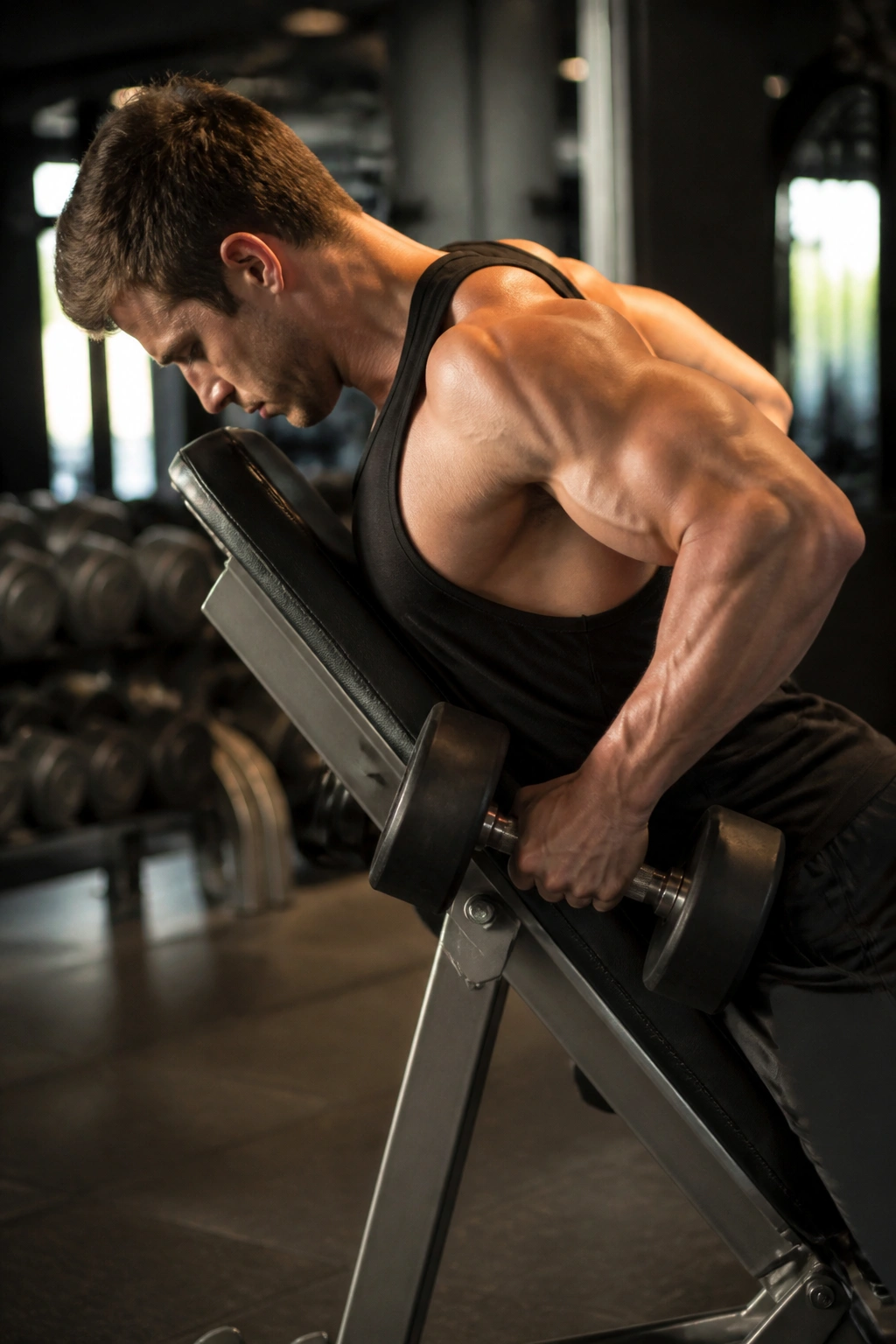
Chest-supported rows are the cleanest place to start because they take cheating off the table. Your torso stays planted, your lower back gets a break, and the mid-back has to do the work it keeps avoiding during sloppy row variations. If your posture collapses the second the weight gets heavy, this is the row that tells the truth.
Why the chest support matters
Set an incline bench around 30 to 45 degrees and let your chest stay glued to the pad. Pull the dumbbells toward your lower ribs, not your shoulders, and pause for a full second at the top. That pause matters. It’s the difference between “I moved the weight” and “I actually trained the muscles that keep my shoulders from rolling forward.”
A lot of people shrug through rows without noticing. Don’t. Keep your neck long, think about sliding your shoulder blades back and down, and lower the dumbbells slowly for 2 to 3 seconds. A controlled lowering phase does more for posture than a wild heave ever will.
Setup cues that keep it honest
- Use a neutral grip if your shoulders feel cranky.
- Keep your chin slightly tucked, not jammed forward.
- Stop the pull when your elbows pass your torso by a few inches.
- Use 3 to 4 sets of 8 to 12 reps.
Best cue: pull with your elbows, not your hands.
2. Seated Cable Rows That Teach You to Hold Position
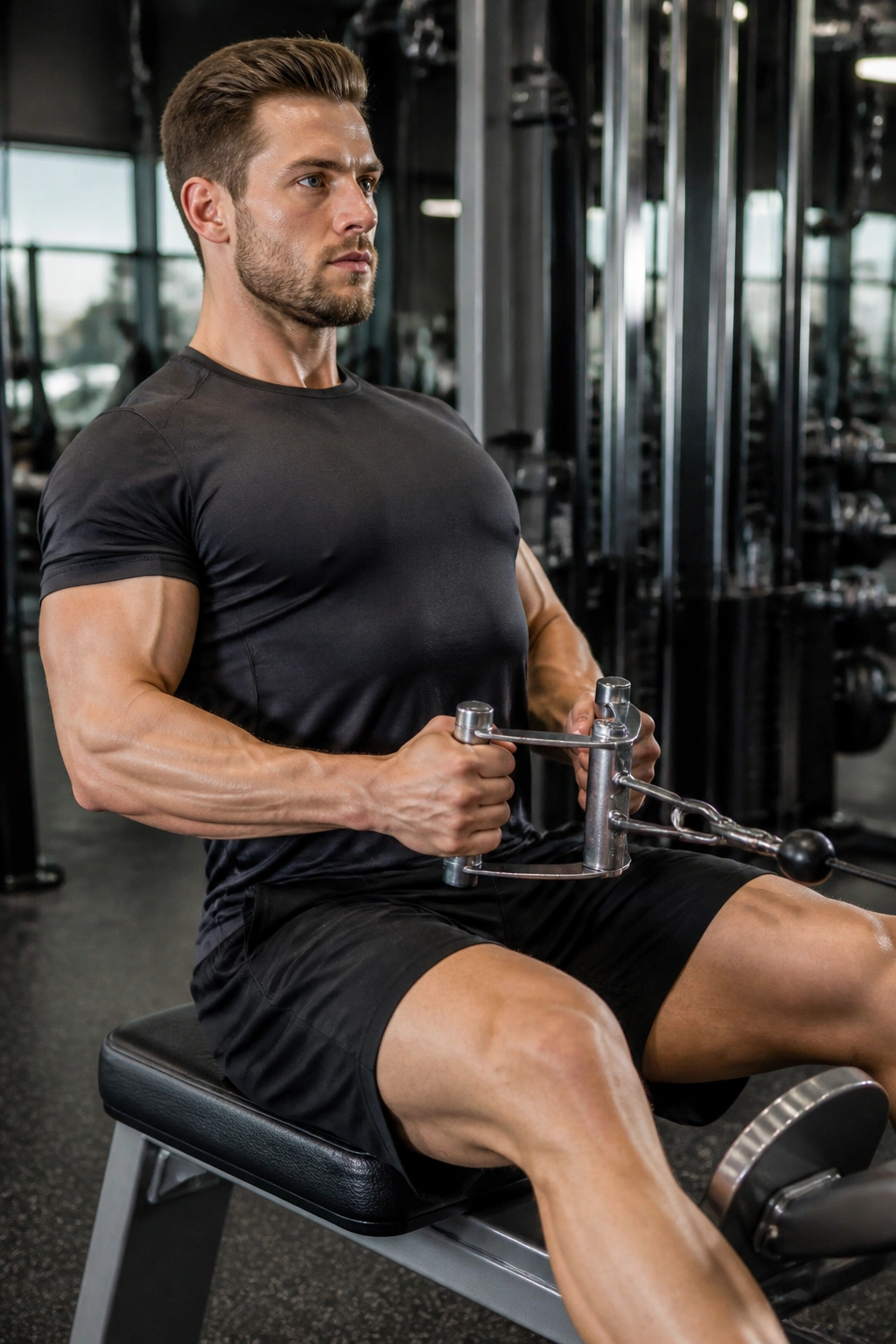
Why do cable rows show up in posture work so often? Because the cable keeps tension on the muscle through the whole rep, and that constant pull makes it harder to coast. You feel the middle of your back working instead of just yanking the handle and calling it training.
A seated cable row also lets you choose your grip. A neutral handle is usually the safest place to begin, especially if your shoulders sit forward all day and need clean motion before they need heavy load. Pull toward the lower ribs, keep the chest tall, and stop before you turn the rep into a full-body lean-back contest.
Handle choice changes the feel
A close neutral grip puts more stress on the lats and mid-back. A slightly wider attachment shifts a bit more work to the upper back and rear delts. Neither one is magic. The big win is the pause. Hold the squeezed position for 1 second, then let the cable pull your arms forward under control.
Skip the dramatic torso swing. It looks strong and trains almost nothing you want. If your shoulders drift up toward your ears, the load is too heavy.
3. Face Pulls for Shoulders That Drift Forward
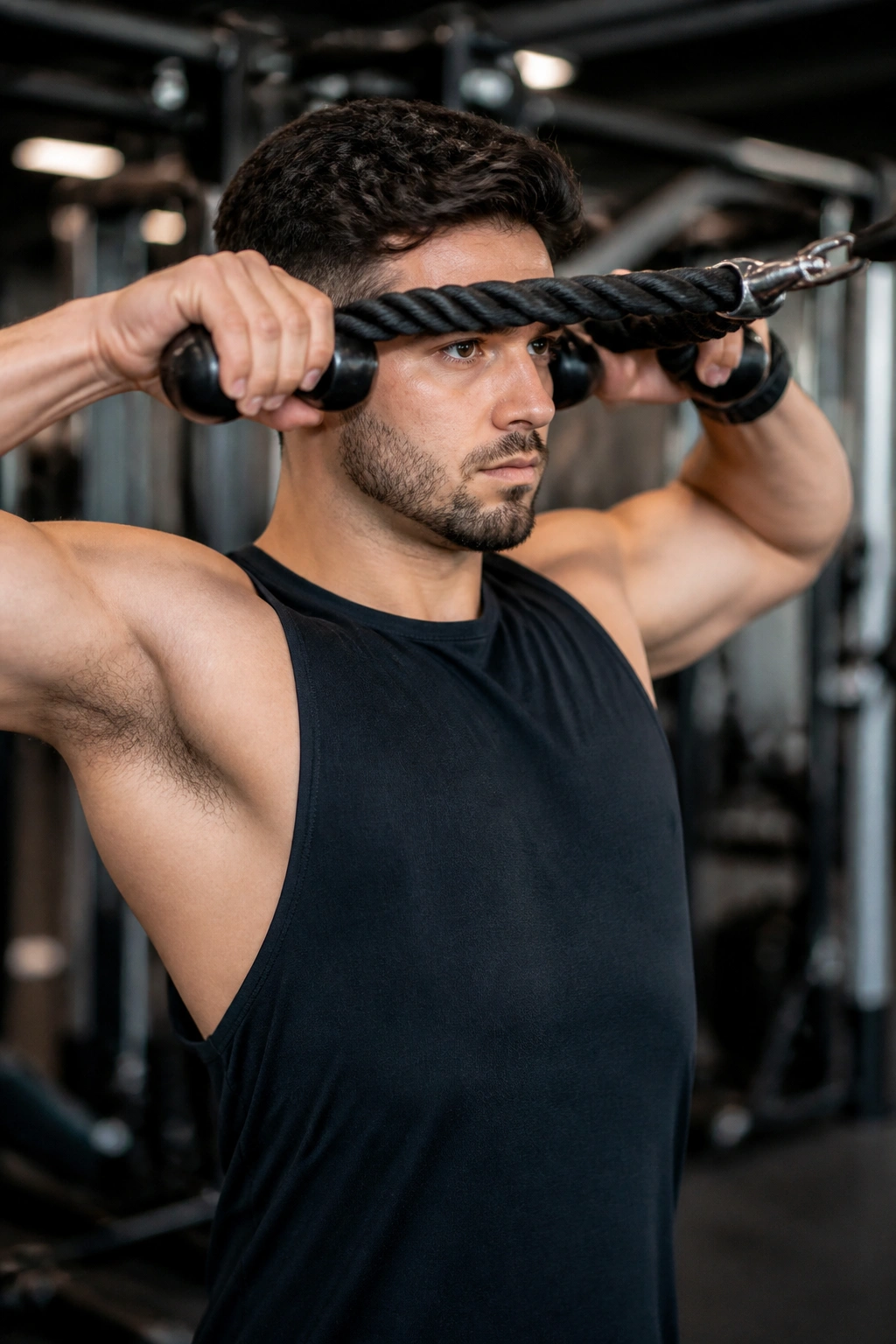
Face pulls have a plain reputation, and honestly, that’s fair. They look small. They are small. Then you start doing them with enough control to matter, and suddenly your upper back starts waking up in a way heavy pressing often misses.
Set the rope at forehead height and pull the ends toward your eyebrows or the bridge of your nose while your elbows rise to shoulder level. Finish with your thumbs moving back and your shoulder blades gliding together, not jammed down like you are trying to flatten them into your ribs. The goal is rear delts, lower traps, and the muscles that help the shoulder sit in a better spot.
What to watch for
- Keep the ribs down.
- Don’t turn it into a standing shrug.
- Use 2 to 4 sets of 12 to 20 reps.
- The last 3 reps should burn in the upper back, not pinch in the neck.
If you feel it mostly in your traps near the neck, lower the weight and slow down. Face pulls are sneaky that way. Light and clean beats heavy and ugly every time.
4. Prone Y Raises for Lower Trap Strength
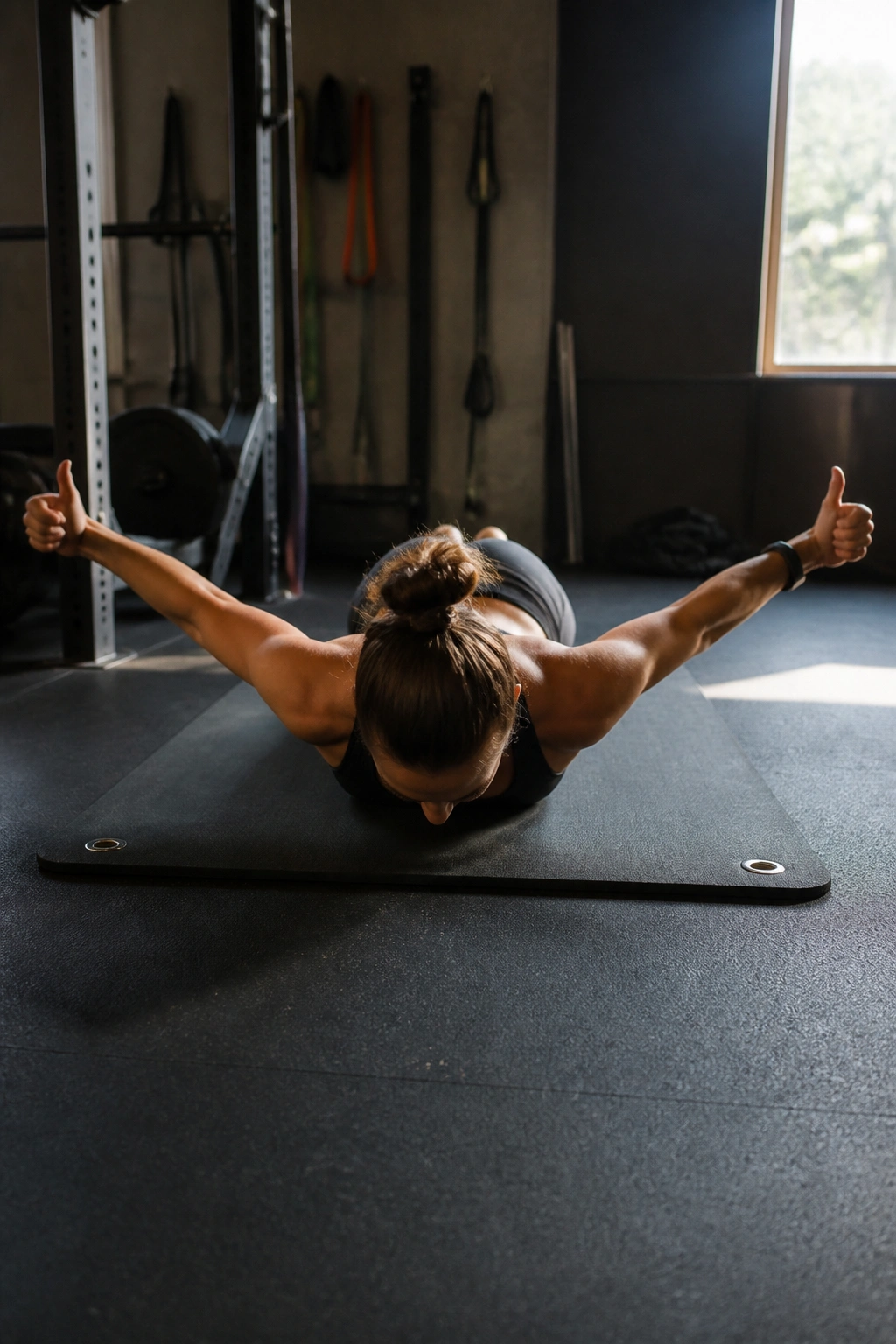
Prone Y raises are one of those exercises people skip because the weight is tiny, which is a shame. The lower traps help upwardly rotate and stabilize the shoulder blade, and when they are weak, posture gets lazy fast. Your shoulders round, your neck takes over, and you end up doing all the work in the wrong place.
Lie face down on an incline bench or flat floor with your arms reaching into a Y shape. Thumbs point up. Lift only a few inches, then lower slowly. If the shoulders creep toward your ears, the weight is too heavy or the movement is too big. Small range, clean line, no drama.
Light is fine. Heavy is the trap.
Use bodyweight first or add 1 to 5 pound dumbbells once you can keep the movement quiet. Two to three sets of 10 to 12 reps is plenty. The point is not to torch yourself. The point is to teach your shoulder blades where they belong when your upper back gets tired.
5. Reverse Flyes for the Back of the Shoulder
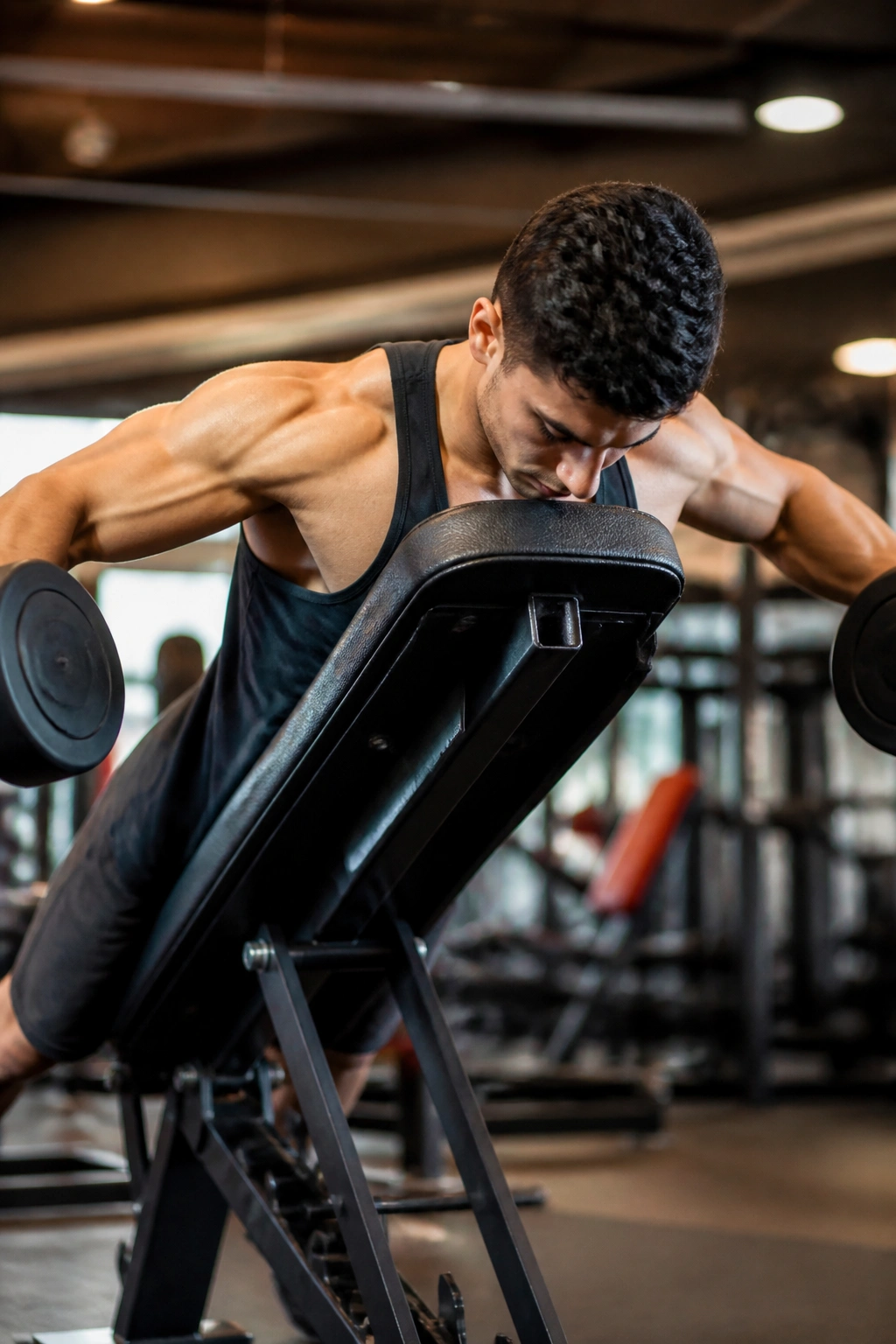
Reverse flyes get a lot of love for rear delts, and that is fair, but they also help the upper back learn how to open without yanking the shoulders into a shrug. That matters if your posture has that rounded, desk-bound shape that makes your arms hang a little too far in front of you.
Chest-supported reverse flyes are the easiest version to own. Bend your elbows slightly, open the arms out to the sides, and stop when the shoulder blades finish the movement. Don’t fling the dumbbells past your body. That extra range usually belongs to momentum, not muscle.
What makes this version worth doing
If dumbbells feel sloppy, cables are cleaner. The cable keeps tension on the back of the shoulder through the whole arc, which is handy when your form starts to drift as the set goes on. Use 12 to 15 reps with a smooth tempo and a one-count squeeze at the top.
A good reverse fly feels like the back of your shoulders and the middle of your back are sharing the load. A bad one feels like a fast, flappy arm raise. If you have to swing, the weight is too much.
6. Lat Pulldowns That Build a Taller Torso
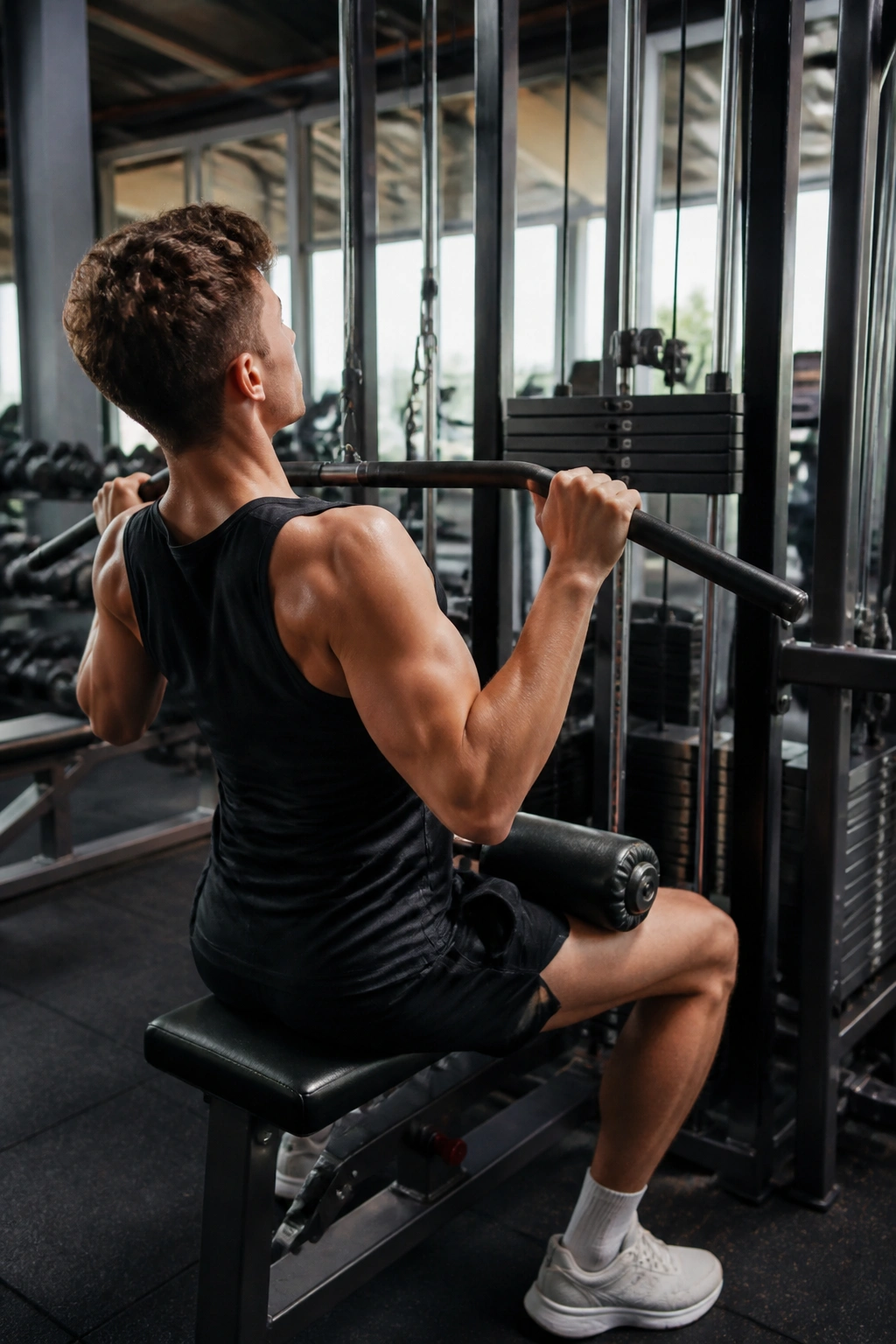
Lat pulldowns are not just about building a wide back. They also teach your torso to stay stacked while your arms work overhead, which is a big deal if your ribs like to flare and your shoulders like to ride up. That sloppy combo shows up in weak posture all the time.
Choose a grip you can control — neutral or medium-width usually works well — and pull the bar to the upper chest without leaning so far back that the exercise turns into a half-row. Keep your sternum up, but not flared. There’s a difference, and it matters. Tall torso, quiet ribs, elbows down.
What makes pulldowns different from rows
Rows train retraction. Pulldowns train depression and control through a slightly more overhead path. That makes them useful when your shoulders sit high and forward at the same time. You want the lats to help hold the ribcage in place while the shoulder blade moves cleanly.
Use 3 sets of 8 to 12 reps. Pause for a second at the bottom. Let the bar rise slowly until your arms are almost straight, then pull again. People rush the top half and miss the whole point. Don’t.
7. One-Arm Dumbbell Rows for Uneven Posture
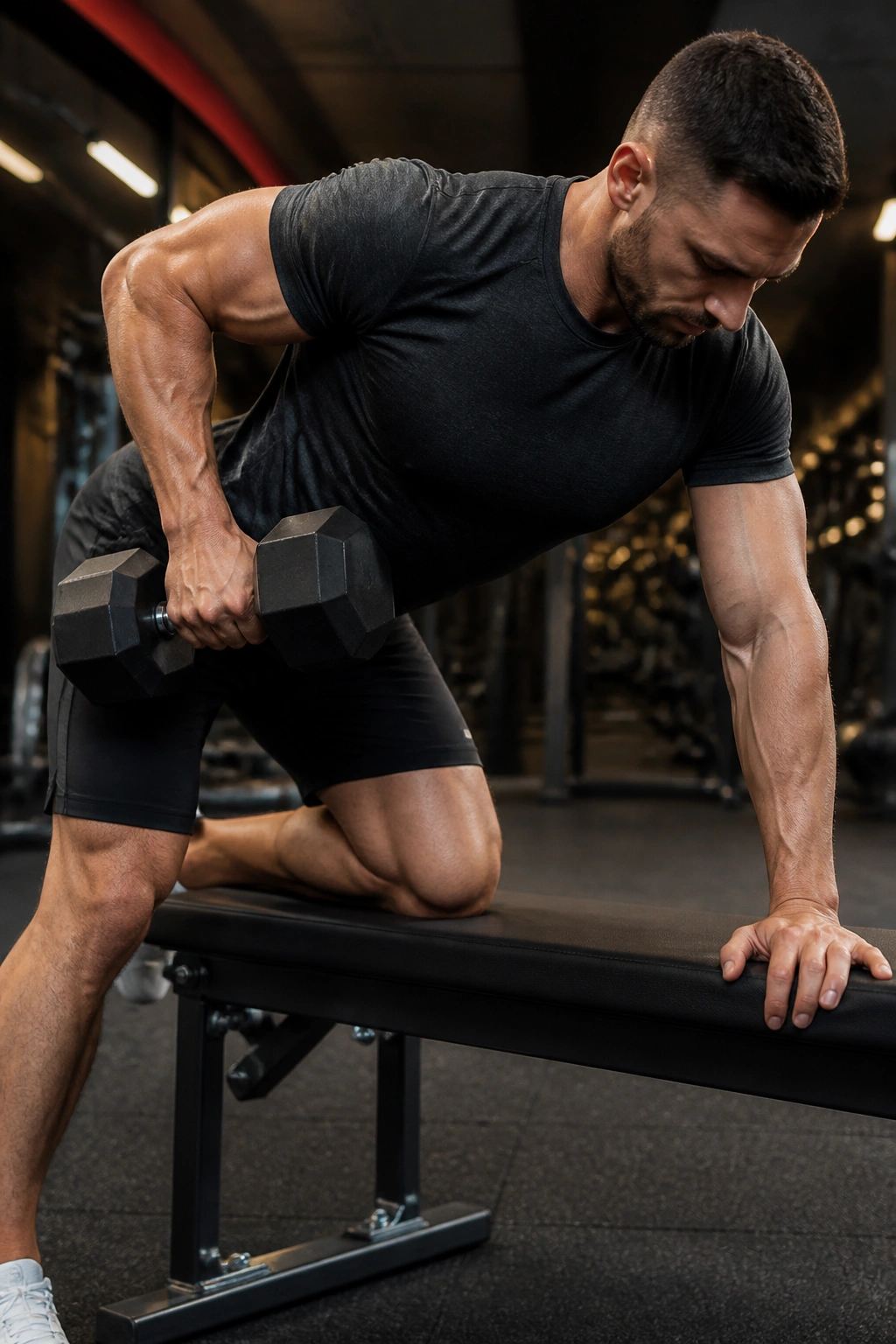
If one shoulder sits higher than the other, one-arm dumbbell rows will tell you fast. There is nowhere to hide. The non-working side cannot steal the rep, and your trunk has to stay square while one arm pulls against gravity. That makes them excellent for people whose posture twists a little more than it should.
Set one knee and one hand on a bench, square your hips, and row the dumbbell toward your hip pocket. Keep the elbow close enough that the lat stays involved, but not so tight that the movement turns awkward. At the top, pause without rotating the torso open. Your ribs should stay quiet.
A simple way to keep them clean
- Brace your free hand into the bench hard.
- Let the shoulder blade reach forward at the bottom.
- Pull with a smooth path toward the hip.
- Use 3 sets of 8 to 10 reps per side.
A small twist is not the end of the world. A big twist is cheating, plain and simple. Start lighter than you think, because unilateral rows expose imbalance faster than most lifts do.
8. Romanian Deadlifts for a Stronger Back Chain
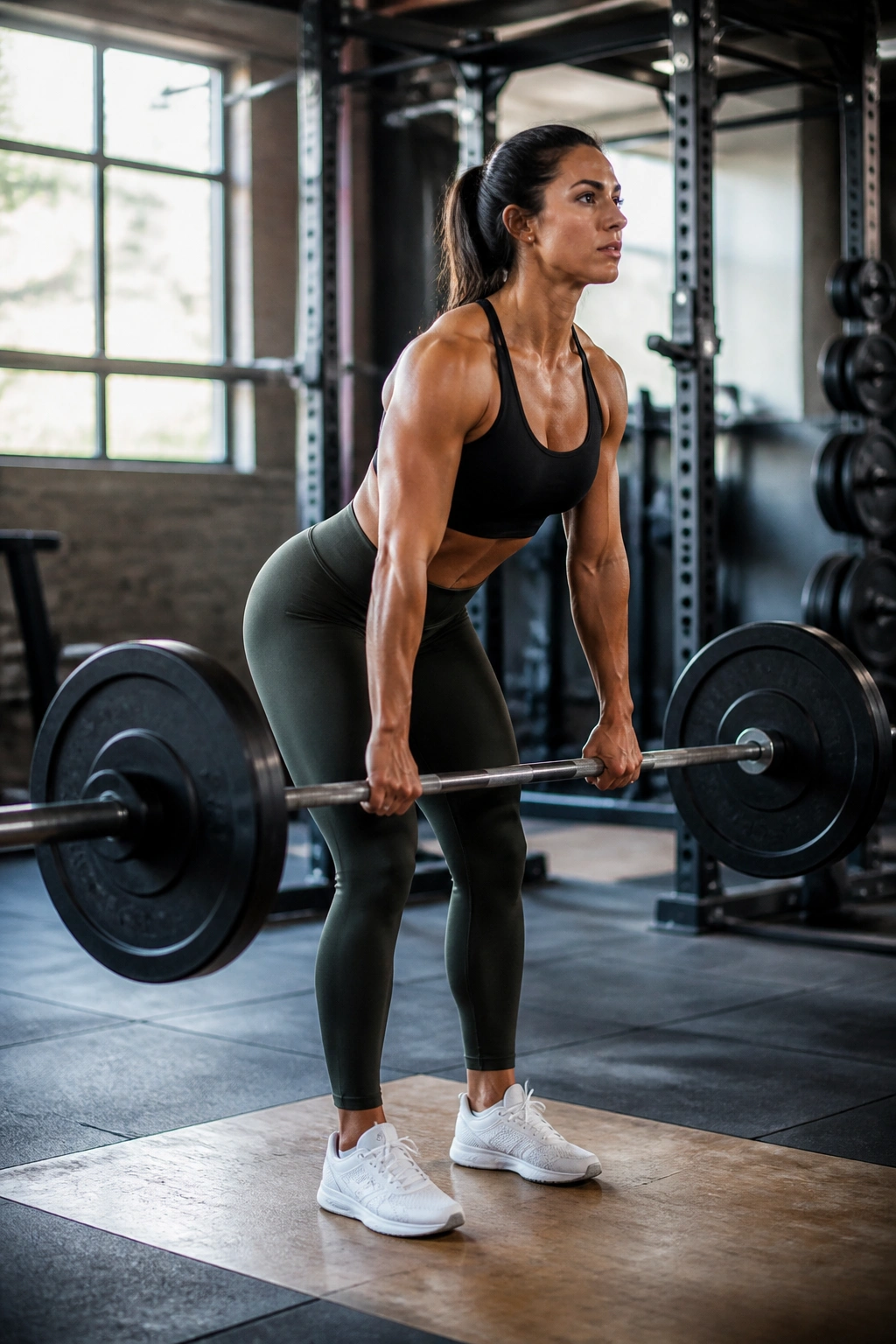
People love to call Romanian deadlifts a lower-back exercise. That is only half true. The real work comes from the whole posterior chain — hamstrings, glutes, spinal erectors — learning to hold a strong hinge without folding up like a folding chair.
Stand tall with the bar close to your thighs, knees soft, and push your hips back until the hamstrings go taut. The spine stays long. The chest stays proud without flaring the ribs. Once the bar reaches just below the knees or the hinge starts to lose shape, come back up by driving the hips forward. Stop the descent before your back rounds.
What to feel, not what to force
Your hamstrings should feel stretched, your glutes should be ready to fire, and your back should feel braced rather than strained. If you feel the movement mostly in your hands or your shoulders, reset your grip and think about sliding the bar down your legs.
Use 3 sets of 6 to 10 reps. Go slower than you want on the way down. And if you have a history of back pain, get your hinge pattern checked by a coach or clinician before loading it hard. That is not cautious fluff. It is common sense.
9. Back Extensions Without Cranking the Lower Back
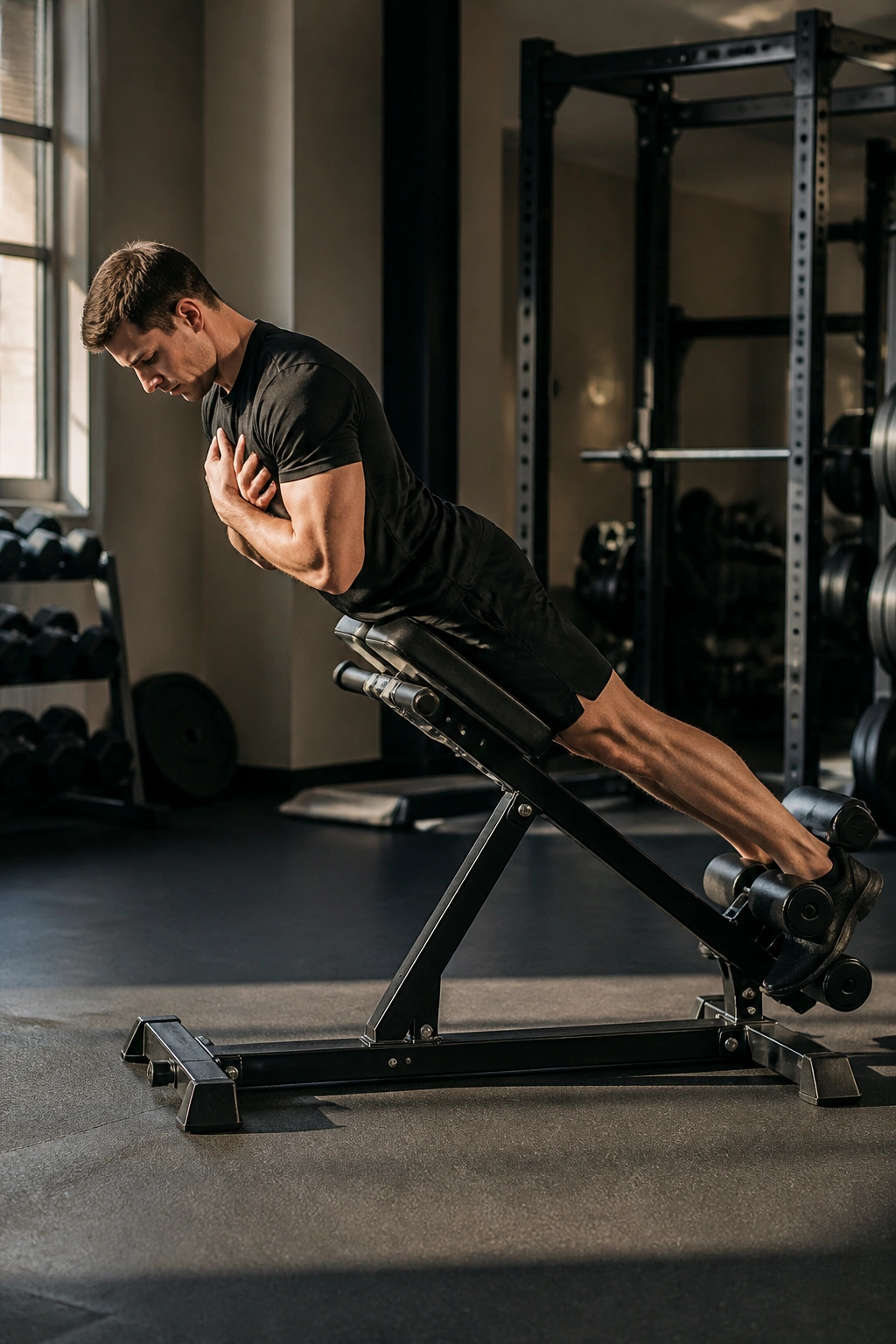
Back extensions can help posture a lot, but only if you stop turning them into a hyperextension contest. The goal is spinal erector and glute strength, not a dramatic arc that jams the low back into end range. A lot of people go too high because they think “more” means “better.” It doesn’t.
Use a 45-degree back extension bench if you have one. Cross your arms or hold a plate against your chest. Hinge down under control, then come up until your body is in a straight line from head to heel. That is enough. You do not need to flare backward at the top. Straight line. Not a back bend.
The rep should feel like a strong hinge with the glutes finishing the job. If your neck cranes up, tuck it. If your lower back pinches, shorten the range and slow the tempo. Two to three sets of 10 to 15 reps works well here, and a 2-second squeeze at the top is usually plenty.
10. Bird Dogs for a Stable Spine
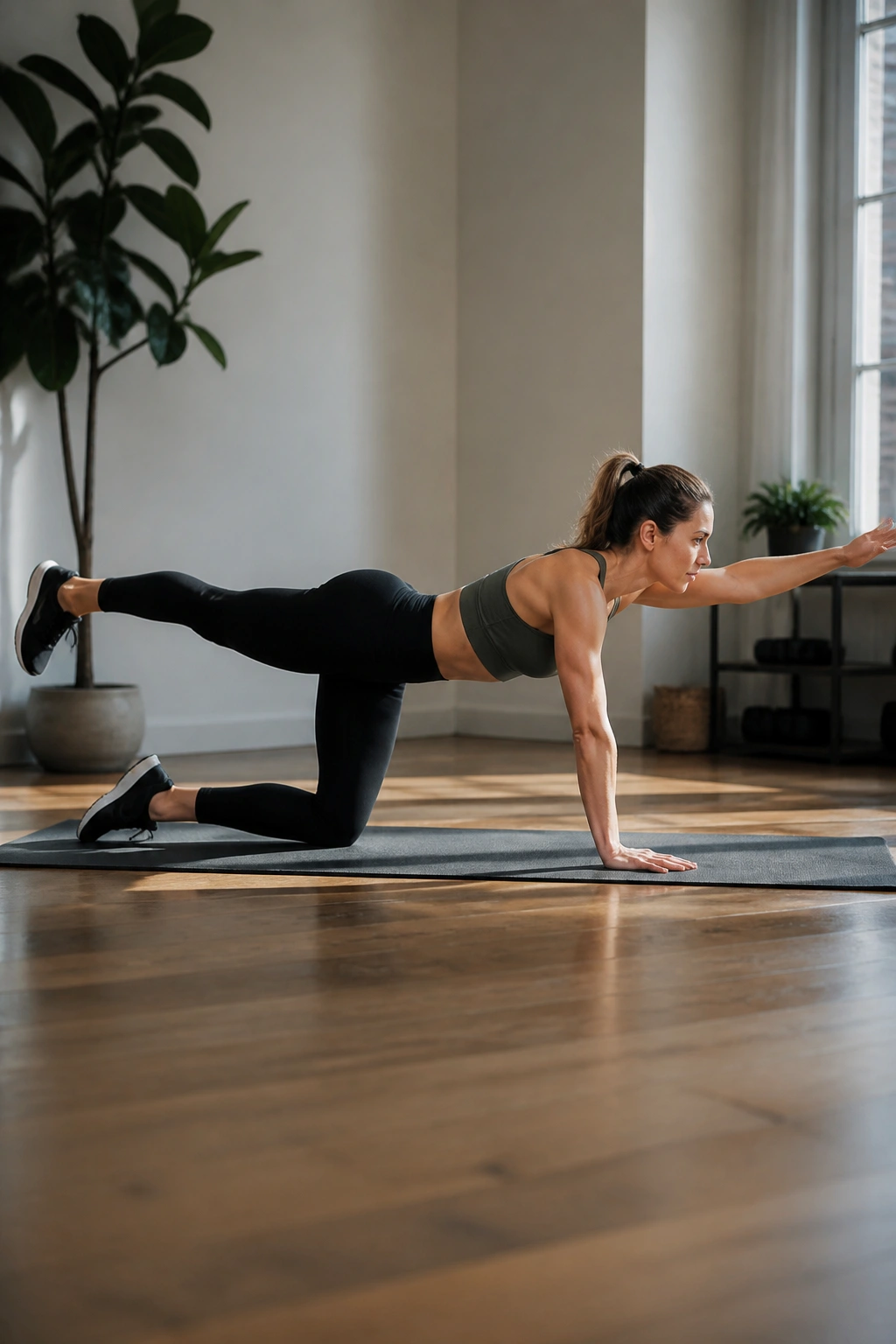
Bird dogs look almost too easy until you hold the position long enough for your trunk to start wobbling. That is the point. Posture gets weak when the body cannot keep the spine steady while the arms and legs move. Bird dogs train that missing link with almost no equipment and no ego.
Start on hands and knees. Reach one leg straight back and the opposite arm forward. Keep the hips level and the lower back from sagging. Hold for 3 to 5 seconds, then return with control. Slow beats large here.
What to feel
- The glute on the extended leg should switch on.
- The belly should stay firm, not sucked in hard.
- The lower back should stay long and quiet.
- Your shoulders should stay level, not twist.
A good bird dog feels almost boring. That is a compliment. Do 6 to 8 reps per side for 2 to 3 sets, or use it as a warm-up before rows and hinges. It’s the kind of drill that quietly makes heavier work feel cleaner.
11. Band Pull-Aparts for Easy Daily Volume
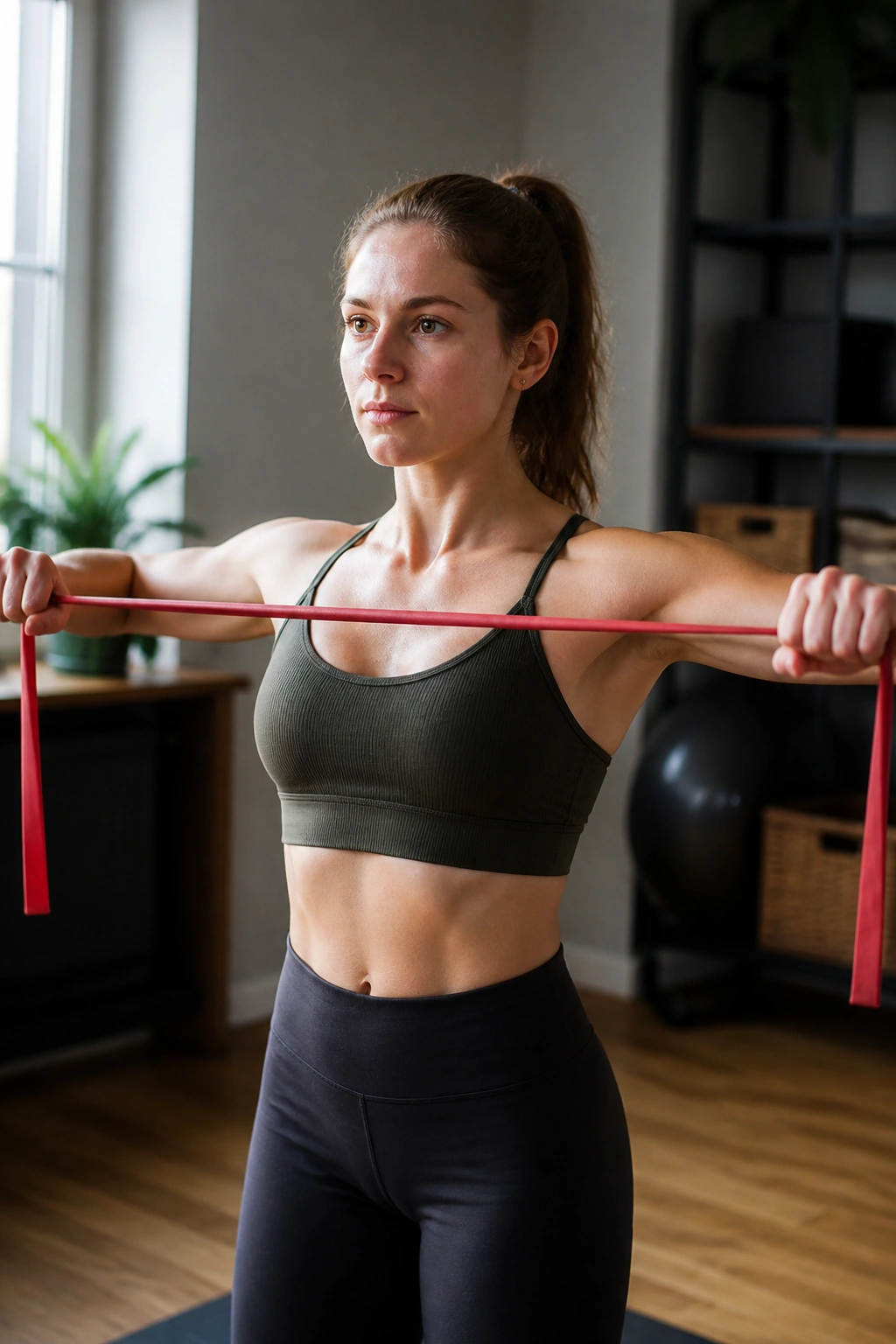
Band pull-aparts are the exercise you can do between meetings, beside the TV, or right before a heavier upper-body session. They are simple, cheap, and useful in a way that fancier movements sometimes aren’t. Your mid-back, rear delts, and external rotators get a ton of clean repetitions without much joint stress.
Hold the band at chest height, keep your arms almost straight, and pull until your hands move out to the sides and the band touches your chest. Do not overreach. Do not flare the ribs. And do not let the shoulders ride up. The rep ends when the shoulder blades have moved, not when your arms travel as far as possible.
The best part is how easy they are to dose. Fifteen to 20 reps, 2 or 3 rounds, and you’re done. You can also turn the palms up for a slightly different feel if your shoulders like that better. The movement is small. The payoff is not.
12. Scapular Pull-Ups for Cleaner Shoulder Blade Control
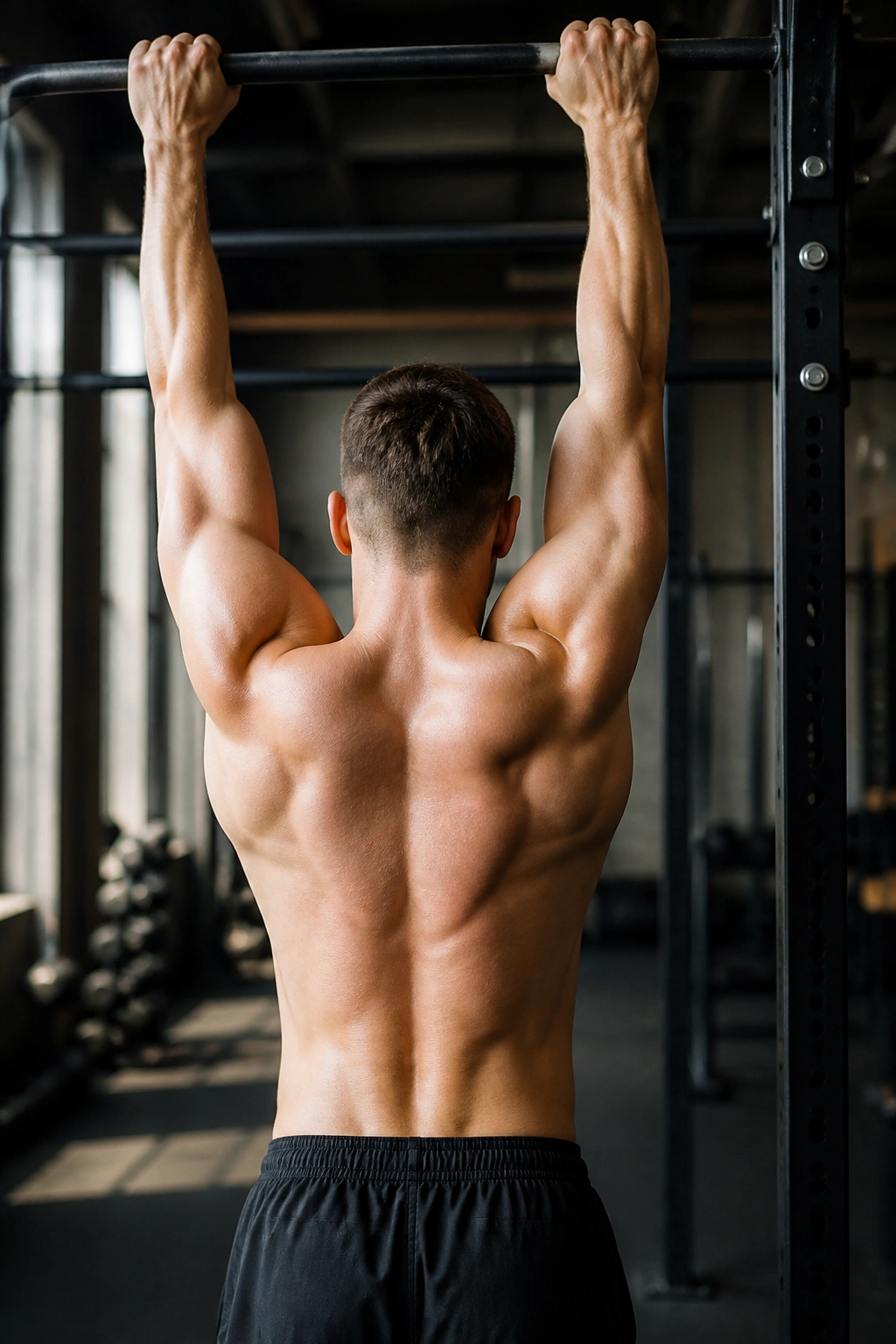
Scapular pull-ups are basically pull-up practice for your shoulder blades, which makes them a smart bridge if your posture gets worse the second your arms go overhead. The elbows stay straight. The body moves only a little. Yet the lats and lower traps learn to control the start of every pull-up before you ever do a full rep.
Hang from a bar with a relaxed grip, then pull your shoulders down away from your ears without bending your elbows. Your body should rise an inch or two. Lower back into a dead hang under control. That tiny motion is the whole thing. If the elbows bend, you’ve turned it into a different exercise.
How to use it
Do 5 to 8 reps, or hold the active hang for 10 to 20 seconds if reps feel messy. A slow lower teaches more than a fast drop. This is one of those movements people underestimate until they notice their pull-ups feel smoother and their upper back is less cranky during regular training.
13. Inverted Rows for Bodyweight Strength
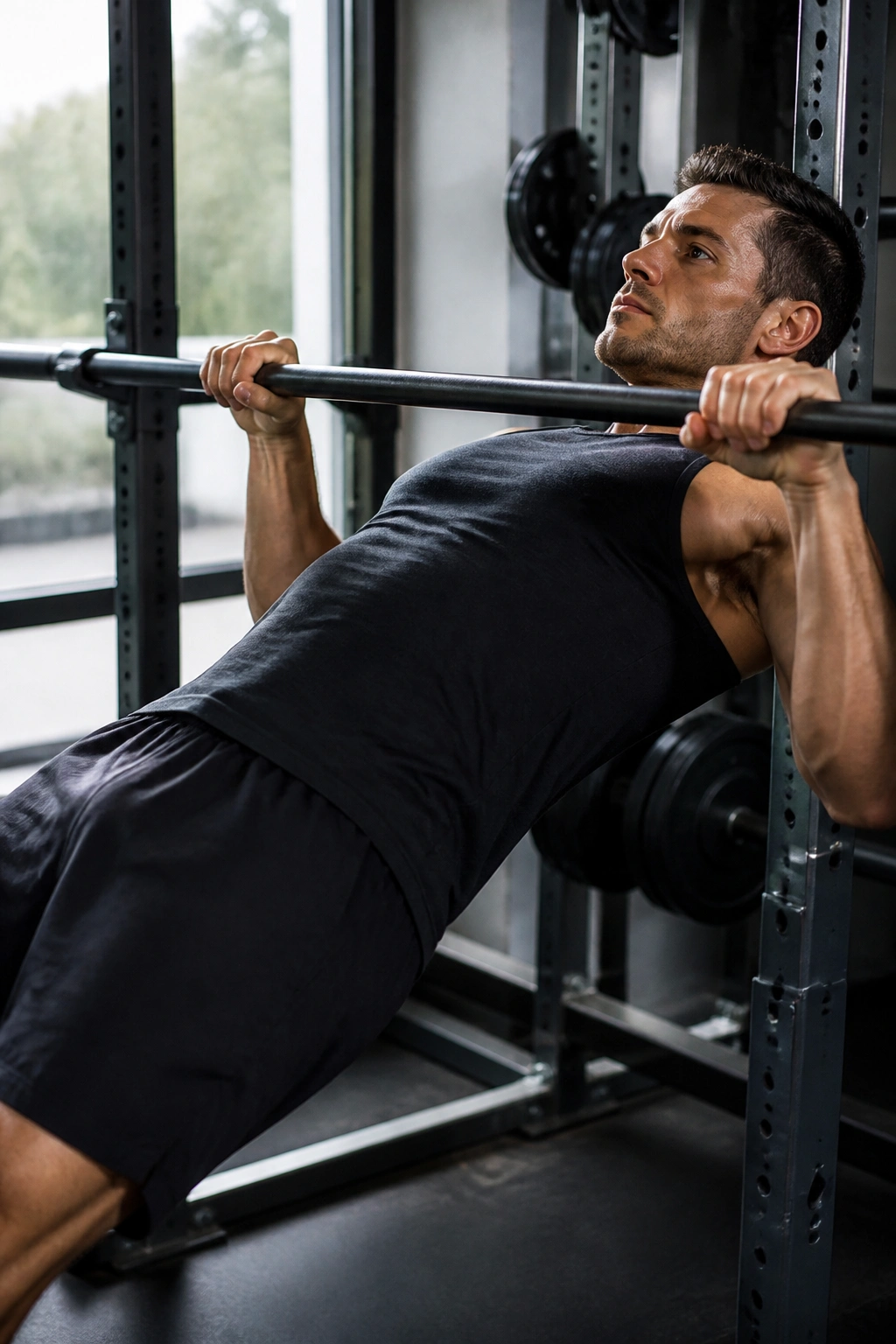
Inverted rows are the simplest honest pull you can do with a bar, rings, or a Smith machine. Your body stays in a plank-like line while your upper back, lats, and arms do the work. That makes them excellent for posture because the trunk has to resist collapse while the shoulders pull.
Set the bar higher if you need an easier version. Set it lower if you want to make the rep harder. Pull your chest toward the bar, pause for a beat, and lower all the way until your arms are straight again. Keep the body rigid. No hip sagging. No neck jutting forward. If your hips drop, your posture cue has already gone missing.
What makes them worth keeping
Unlike a machine row, the inverted row makes you manage your own body angle. That teaches control in a way that carries over to daily life and other lifts. Three sets of 8 to 12 reps is a solid target, and elevating the feet is the next step if the movement gets too easy.
14. Wall Angels for Ribcage and Shoulder Control
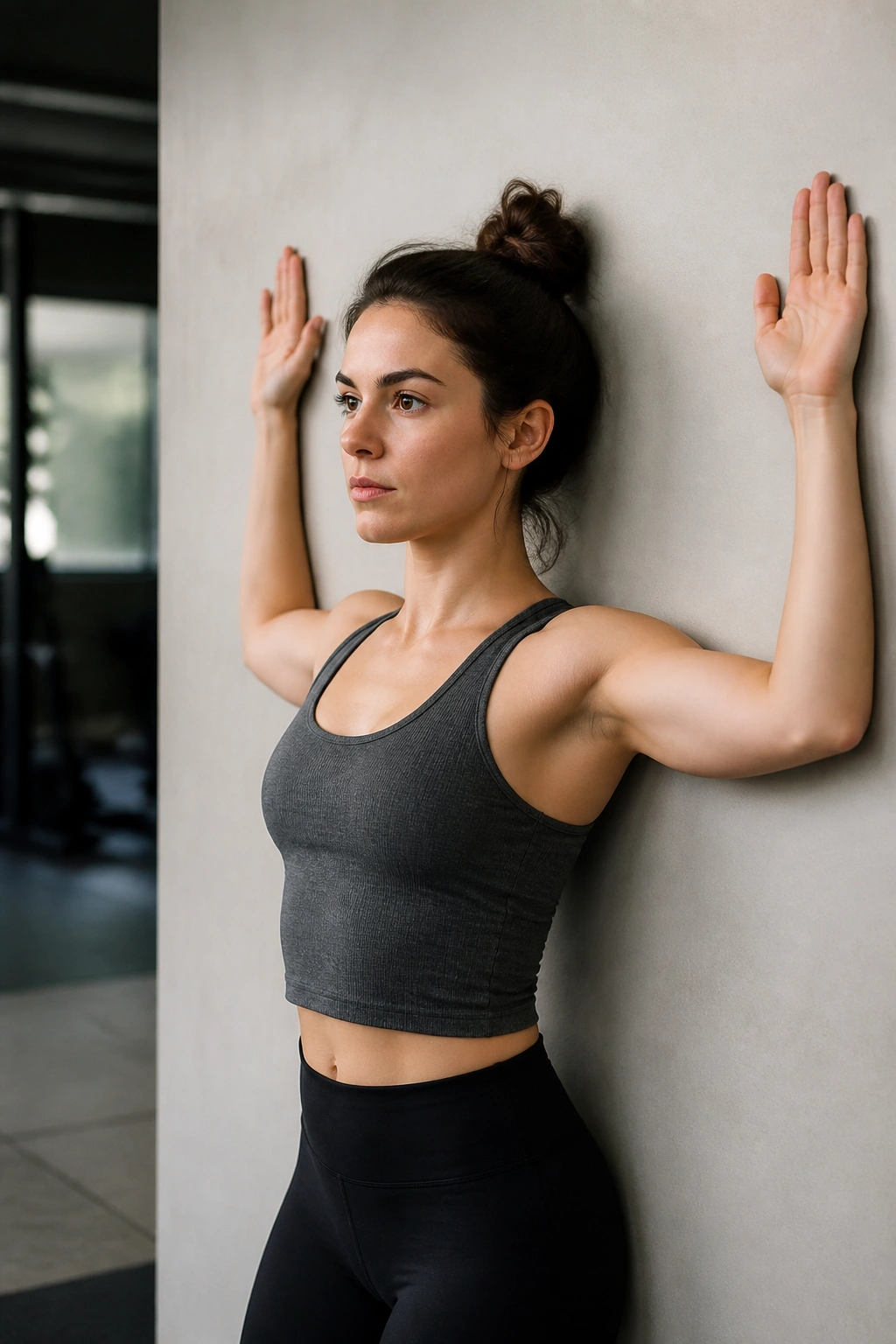
Wall angels are not flashy, and I would never call them glamorous. They are, however, annoyingly effective when your shoulders sit forward and your ribcage pops up the second your arms rise. That combo is common with weak posture, especially if you spend too much time bent over a desk or a phone.
Stand with your back against a wall, feet a few inches forward, and try to keep your ribs, head, and pelvis stacked as you slide your arms up and down. If your wrists do not touch the wall, that is fine. Go as high as you can without cheating. The win is control, not perfect range.
A good wall angel feels slow and a little humbling. You will notice tightness in the chest, lats, or upper back right away, which is useful information. Use 8 to 10 controlled reps or hold the top position for 20 to 30 seconds. It is a small drill, but it teaches the body how to stay organized.
15. Suitcase Carries for Side-to-Side Stability
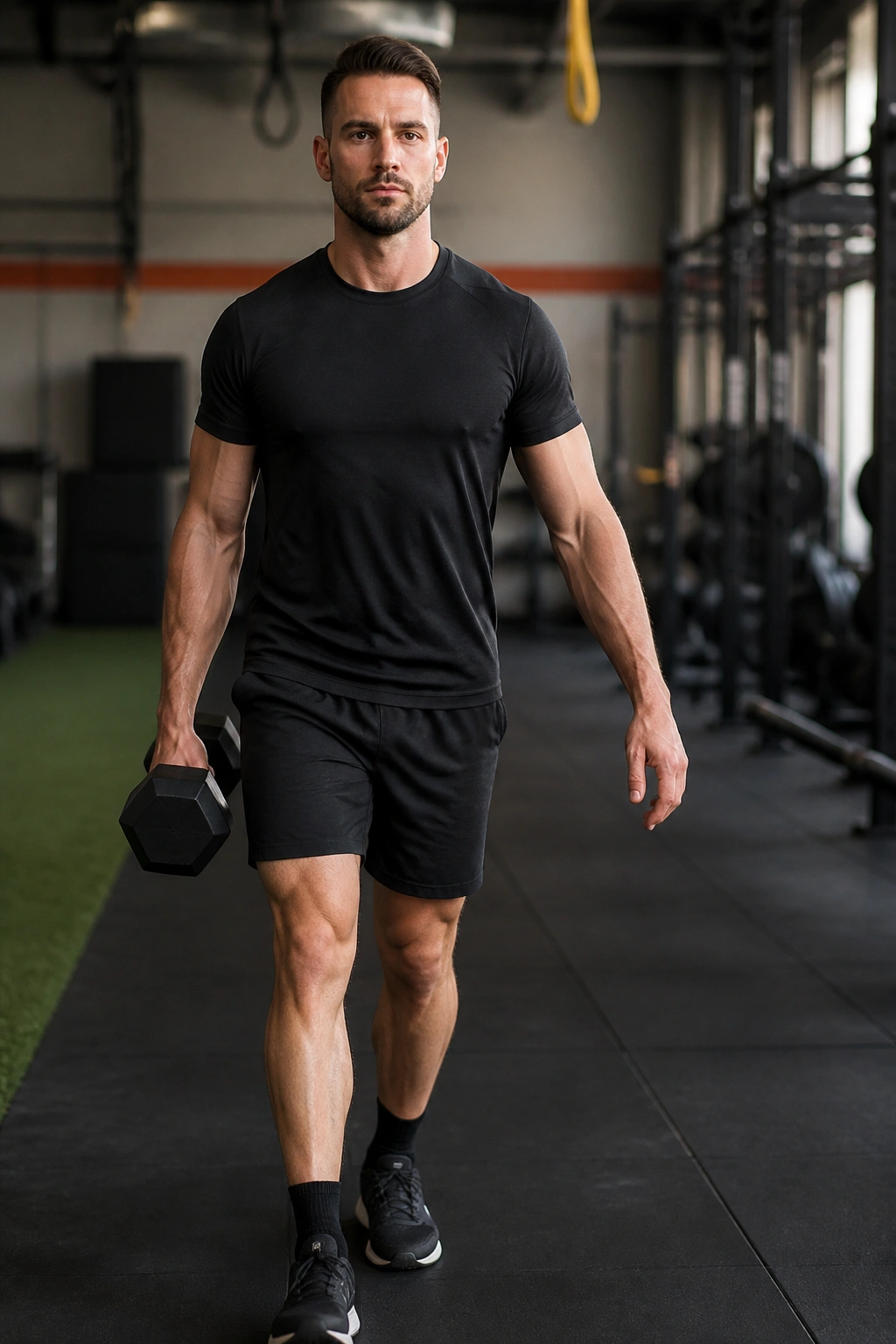
Suitcase carries are one of the best posture exercises nobody brags about at parties. One weight, one hand, and your body has to resist tipping toward the loaded side while the trunk stays tall. That challenge hits the obliques, quadratus lumborum, grip, and the whole chain that keeps you from leaning and collapsing when you walk.
Pick up a heavy dumbbell or kettlebell in one hand. Stand tall. Walk 20 to 40 meters without letting the weight drag your shoulder down or your torso lean away. Switch sides and repeat. Your goal is to look boring from the outside.
Form cues that matter
- Keep the ribs stacked over the pelvis.
- Let the free arm swing naturally.
- Walk slowly enough to stay controlled.
- Use 3 rounds per side.
If your neck tightens, the load is too heavy or your shoulder is creeping up. Drop the weight and clean up the walk. This one carries over to everyday posture more than people expect.
16. Farmer Carries for Tall, Braced Posture
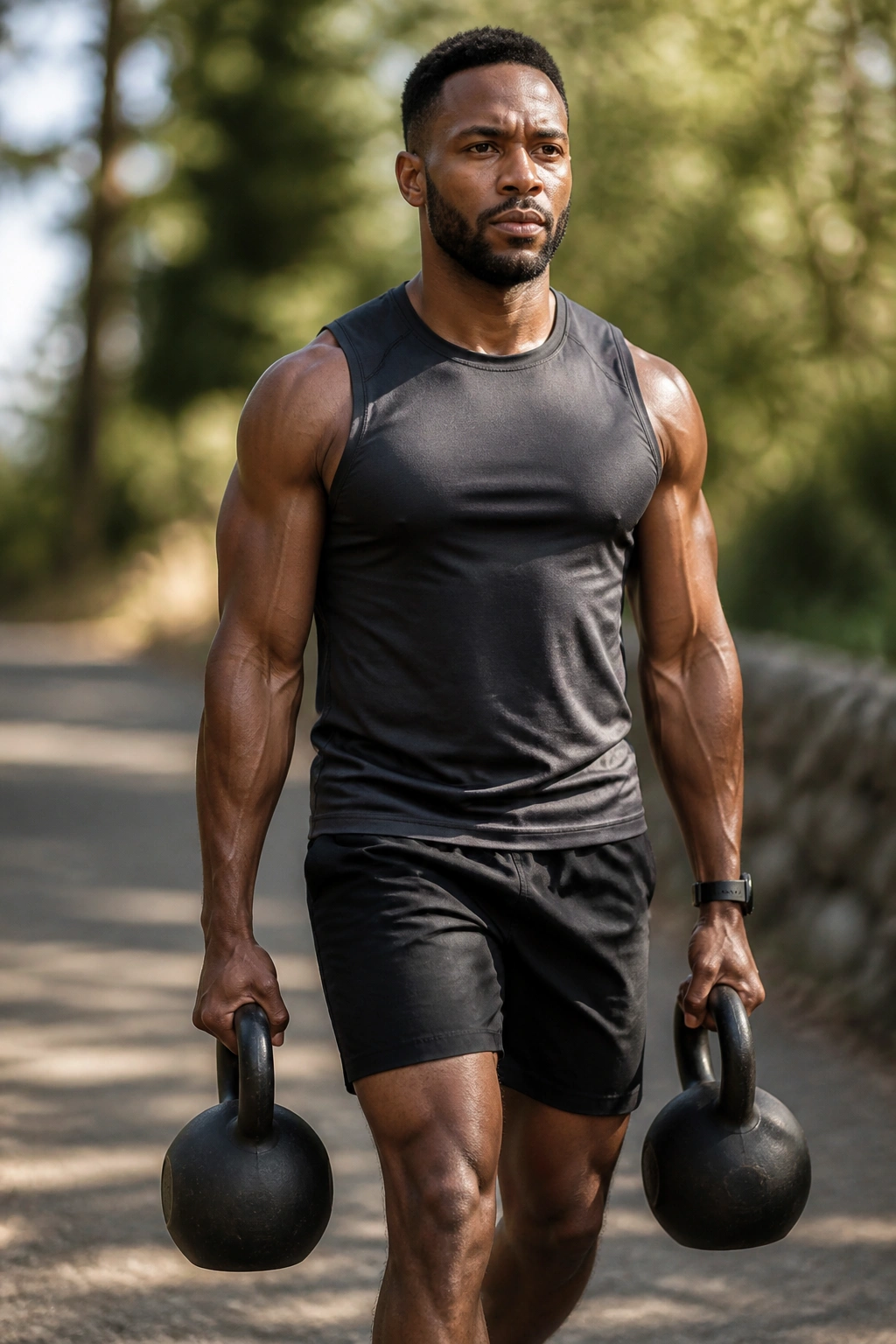
Farmer carries are the heavier cousin of the suitcase carry, and they are brutally simple. Grab a pair of dumbbells or kettlebells, stand tall, brace your midsection, and walk. That’s it. And yet that simple load teaches your upper back, grip, and trunk to stay organized under pressure.
The trick is not to turn the walk into a lean-back parade. Keep the shoulders level, ribs stacked, and eyes forward. The weights should feel challenging, but you should still look smooth moving across the floor. If your hands are shaking and your trap muscles are climbing toward your ears, the load is probably a touch too much.
Why this one matters for posture
Farmer carries train the body to hold a shape while gravity is trying to pull it apart. That is real-life posture training. Use 3 rounds of 20 to 40 meters, resting long enough to keep the walks crisp. A short, heavy carry often beats a long, sloppy one.
17. High Cable Rows for Upper-Back Thickness
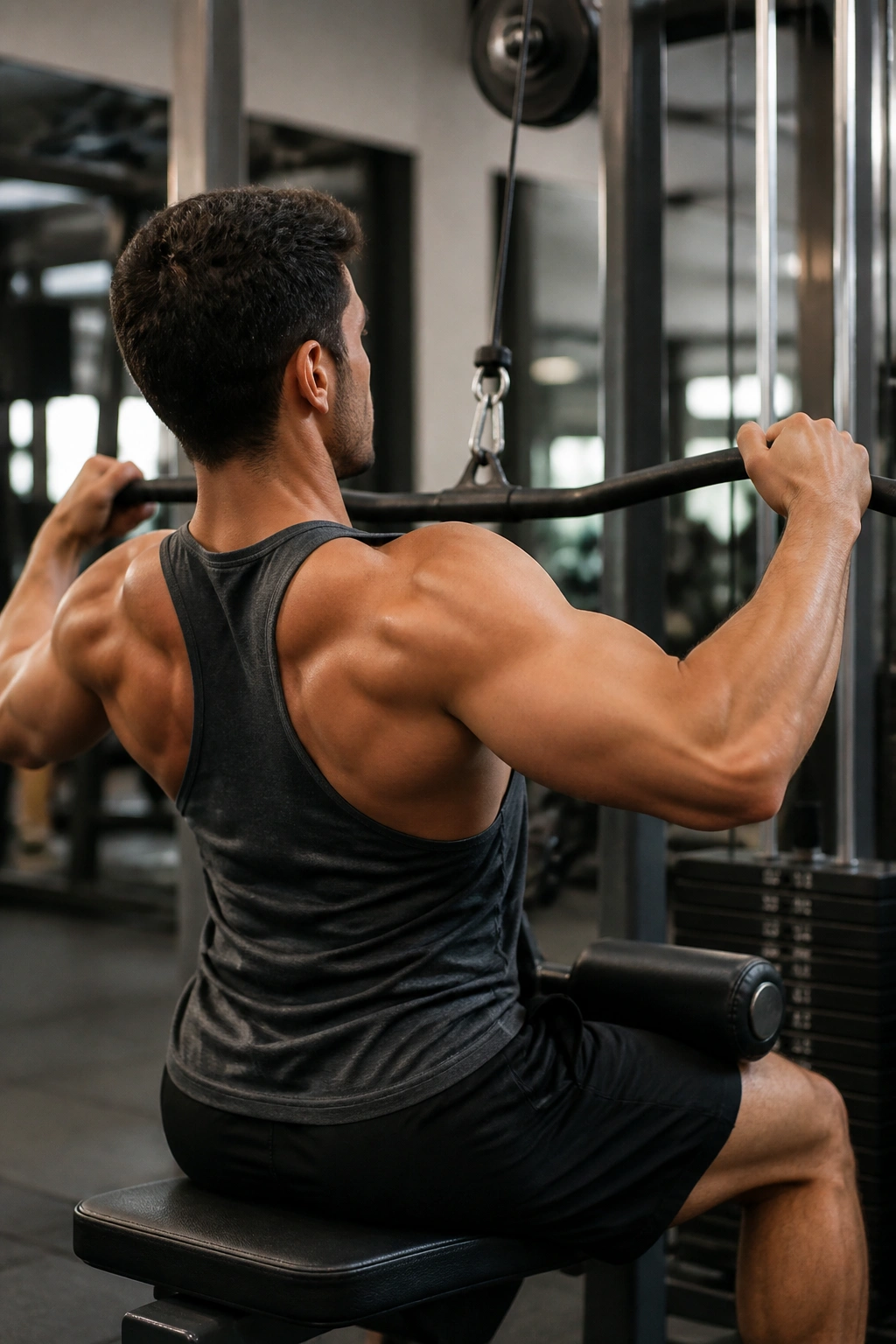
High cable rows change the angle just enough to hit the upper back and rear delts a little differently than standard rows. Instead of pulling low toward the waist, you pull higher toward the upper chest or collarbone area with the elbows traveling out at roughly 45 to 70 degrees. That path is useful if your posture needs more work in the rear shoulder and mid-trap zone.
The key is not to turn the movement into a shrug. Keep the neck long, pull with the elbows, and squeeze the shoulder blades together without jamming them down or up. The line should feel clean. Higher pull, same control.
This one is especially nice if low rows feel too lat-heavy and do not wake up the upper back enough. Use 3 sets of 10 to 12 reps with a one-second hold at the top. If you want a back workout that makes posture changes show up a little faster in the mirror and in the way your shirts sit, this belongs in the rotation.
18. Straight-Arm Pulldowns for a Locked-In Ribcage
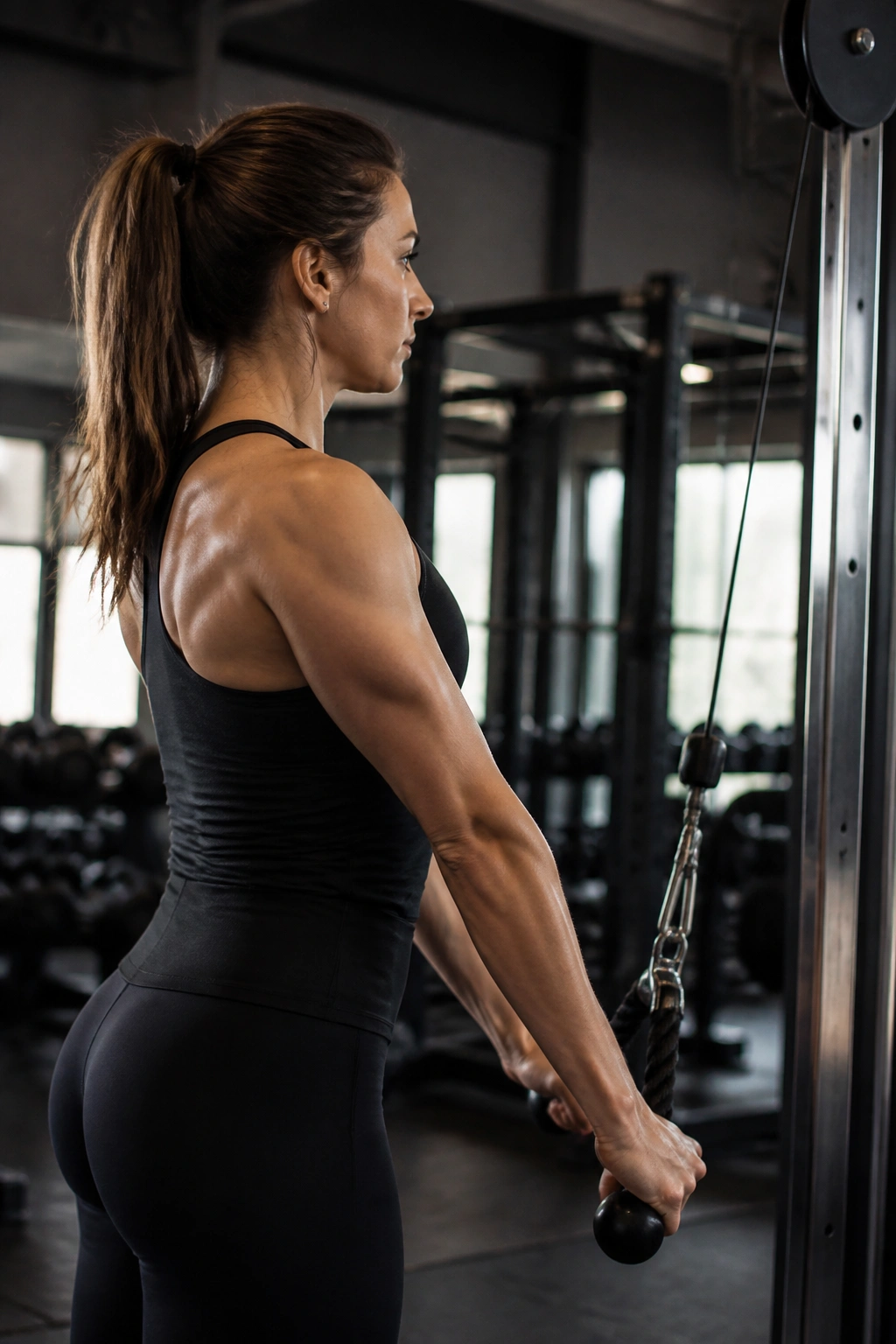
Straight-arm pulldowns are a lat exercise, yes, but they also teach one of the most useful posture skills in the gym: keeping the ribcage from floating around while the arms move. That makes them a sneaky-good finisher for weak posture, especially when your lower ribs like to flare and your shoulders sit too far forward.
Stand tall with a cable set high, arms almost straight, and pull the bar or rope down toward your thighs without bending the elbows much. Think about driving the shoulders down and the lats on, then return slowly until your arms are back near overhead. The movement should feel controlled the whole time. If the elbows start bending, the exercise starts changing.
Three sets of 12 to 15 reps is a solid range. Use a 1-second squeeze at the bottom, breathe out as the bar comes down, and keep the neck relaxed. This is also a nice place to end a session because it reinforces the tall, stacked position you want from all the other work. If you only remember one thing from the list, remember this: posture improves when your back can pull, your trunk can brace, and you practice both under load. That’s the part most people skip.
