



Hard work doesn’t always look like progress. You can train four days a week, eat a little better, and still stare at the mirror wondering where the payoff went. The best fitness results usually arrive in quieter ways: a rep that feels lighter, a waist measurement that shifts by half an inch, a hill that stops wrecking you.
That slow pace frustrates people. It also weeds out the ones chasing drama instead of adaptation. Bodies change when the training signal is clear, food is enough, and recovery keeps up — not when every workout is a surprise party for your nervous system.
One useful habit keeps showing up in real progress stories: if you cannot point to the thing that changed, you probably are not controlling enough. Training log, sleep, protein, step count, rest intervals, total weekly work. Messy at first. Worth it.
1. Track the Numbers Behind Your Fitness Results

If you don’t measure it, your brain will lie to you. That’s not a motivational slogan. It’s just how people work. A workout can feel awful and still be productive, while a “great” week can be a total dead end if the numbers never move.
The four numbers I would keep
- Bodyweight average: use 3 to 7 morning weigh-ins, then look at the average instead of one random day.
- Waist measurement: take it at the same spot, with the tape level and snug, not crushed into your skin.
- Key lift performance: squat, press, deadlift, pull-up, row, or whatever main movements you repeat most.
- Energy and recovery: a 1-to-5 score is enough. If you feel flat for four straight sessions, that means something.
Numbers keep you honest.
The scale alone can be noisy. Salt, carbs, stress, sleep, and hard leg day all pull it around. Waist size and lift performance fill in the picture. If your weight is steady but your waist is shrinking and your presses are climbing, that is real progress even if the mirror is being moody.
One small rule helps a lot: review the same data on the same day every week. Sunday night works for many people because it is quiet and you can spot patterns before the next block starts.
2. Follow a Written Plan for 6 to 8 Weeks

A random workout feels exciting for about ten minutes. Then it starts stealing your results. If your exercises, sets, and reps change every time you walk into the gym, your body never gets a clean signal to adapt.
That does not mean your plan needs to be fancy. It needs to be repeatable. A simple push-pull-leg split, an upper/lower rotation, or three full-body sessions can all work if you actually stay with them long enough to see what happens. The important part is that Monday’s squat work looks enough like next Monday’s squat work that you can compare them.
A lot of people mistake novelty for progress.
They swap from goblet squats to Smith machine lunges to hack squats to barbell front squats in four weeks, then wonder why nothing is moving. The issue is not that those exercises are bad. The issue is that your body never gets enough repeated exposure to improve the same pattern.
Pick a lane and stay in it. Six weeks is a fair test. Eight is better. If your joints are unhappy or a movement feels off, change one thing, not the whole plan. Keep the rest of the pieces stable so you can tell what helped.
3. Add One Small Thing at a Time
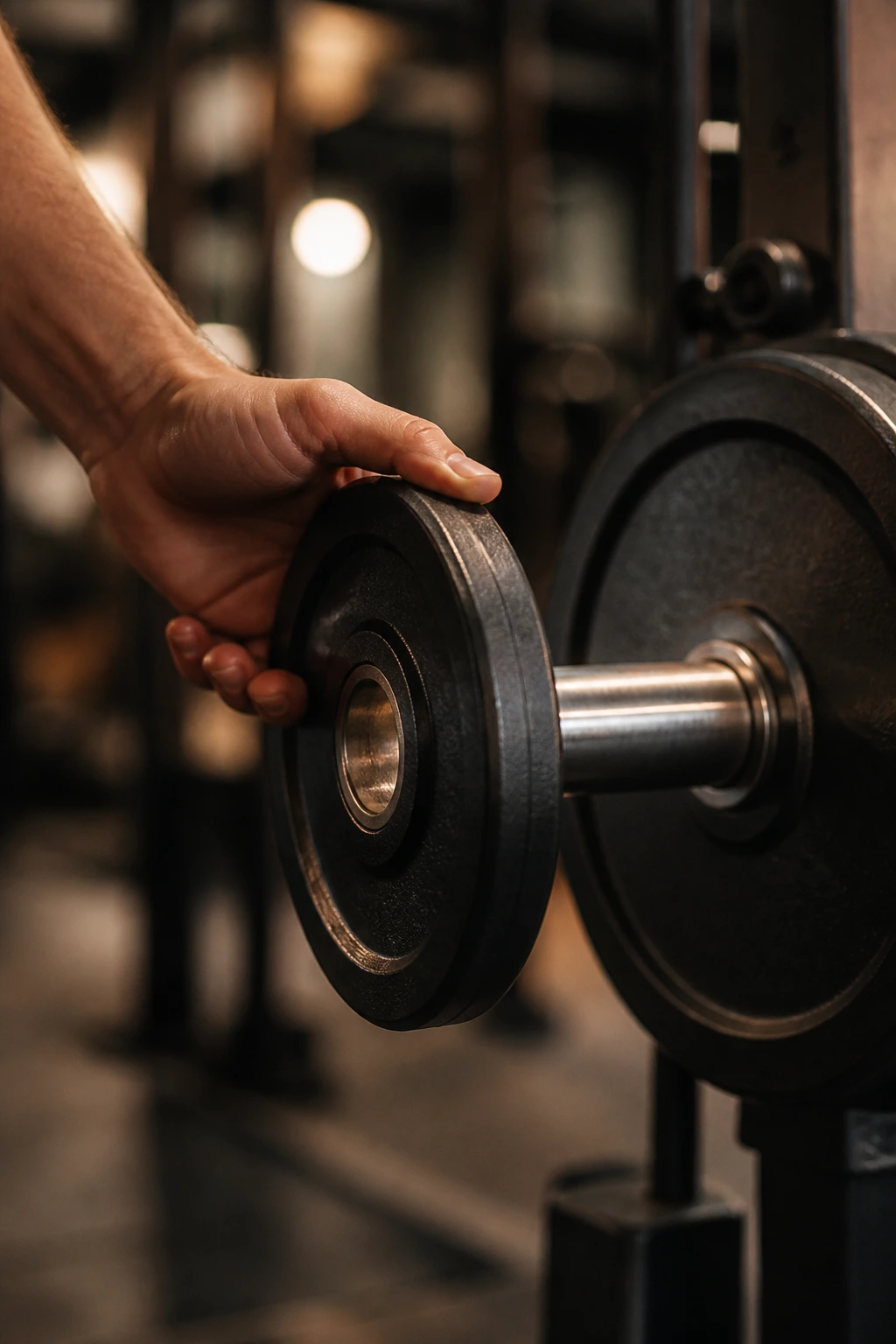
Progressive overload sounds technical, but the real version is plain: ask your body for a little more work than last time. Not a giant leap. Just a little.
That can mean one extra rep on the last set, 2.5 to 5 pounds on the bar, one more set for a muscle group, or 30 seconds less rest on an accessory lift. Small changes stack faster than people think, and they are easier to recover from than big, sloppy jumps.
The mistake is trying to push everything at once. More weight, more sets, more cardio, fewer calories, worse sleep. That pile-up feels hard, but it often just creates fatigue. Fatigue is not the same thing as training quality.
A cleaner approach works better:
- Add one rep before adding weight.
- Add weight only when the rep target is clean.
- Add sets only when recovery is still good.
- Add difficulty to one lift, not all of them.
Tiny wins count. A stronger set of dumbbell presses after four weeks is progress. So is holding the same weight for more reps with cleaner form. Bodies love small, repeated requests. They do not love being bullied every day.
4. Stop Training Miles From Failure

Easy sets feel safe. They also waste time.
If every set ends with half your strength still sitting in the tank, you are collecting sweat, not adaptation. For most muscle-building work, the sweet spot is usually a few reps shy of failure. That gives you enough stimulus to grow without turning every session into a recovery problem.
What close enough feels like
- On big compound lifts, you often want to stop with 1 to 3 reps in reserve.
- On machines or isolation work, you can get closer to failure without the same cost.
- If your form starts to unravel, the set is over even if your ego wants more.
The first few sessions will feel humbling. Good. That usually means you were underestimating how much work a real set takes.
One useful check: if a set ends and you feel like you could have done eight more reps, the set was too easy. If you are grinding like a car climbing a steep hill every time, recovery will catch up with you fast. There is a middle zone, and it is where a lot of useful training lives.
Hard does not have to mean ugly. You want strain, not chaos.
5. Keep the Core Lifts in Place

Your body gets good at what you repeat. That is the whole trick.
If your goal is steadier strength gains or better body composition, keep a few core lifts in the program long enough for them to matter. Squat or a squat pattern. Hinge. Press. Pull. Carry if it fits your setup. You do not need a circus of new movements every week.
People often think they are “avoiding plateaus” by constantly switching exercises. More often, they are avoiding mastery. The first time you learn how a Romanian deadlift should feel through the hamstrings, or how a row should hit the upper back, there is a learning curve. Changing the lift before that curve flattens out is a fast way to stay stuck.
Machines are fine here. So are dumbbells. Barbell purists can relax.
The point is not the tool. The point is repeatable loading. If a machine press lets you train chest hard without shoulder irritation, use it. If a barbell squat keeps your technique honest, keep it in. Keep the main patterns around long enough to get better at them.
6. Use Full Range of Motion on Purpose

Half reps can hide a lot.
They make a weight look impressive while quietly cutting the work short. Full range of motion — the range you can control with good form — usually gives you more muscle tension, better joint control, and a cleaner signal that says, “We need to adapt here.”
That does not mean chasing depth for ego points. A squat that folds at the bottom is not better than a shallow squat you own. Range only helps when you can control it.
What to look for
- Squats: lower as deep as you can without losing brace or knee control.
- Presses: bring the bar or dumbbells through a full path without bouncing.
- Rows: let the shoulder blade reach, then pull all the way back.
- Lunges: get a real stretch on the working leg, not a half-hearted dip.
The useful range is the one you own. That is the part people skip.
A shorter movement can still have a place, especially after injury or when a machine’s built-in path suits your joints better. But if the same exercise always stops two inches before the hard part, you are leaving something on the table. Clean depth beats fake load.
7. Slow the Lowering Phase Just Enough

Most people drop the weight and call it a rep. That’s a waste.
The lowering phase, or eccentric portion, is where you can build control and make the muscle do real work. A 2- to 4-second lowering phase is enough for many lifts. You do not need to turn every rep into a dramatic slow-motion scene. That usually just makes the set awkward and harder to repeat.
A better version is simple: lower with intent, keep the path clean, and feel the muscle stay loaded on the way down. On curls, presses, split squats, and rows, this matters a lot. On bigger barbell work, a controlled descent also keeps your positions from getting sloppy.
What a useful tempo looks like
- 2 seconds down on presses and rows.
- 3 seconds down on squats or split squats.
- No bouncing out of the bottom unless the movement is built for it.
- Same speed on every rep instead of a fast first rep and a crash at the end.
This one change can make lighter weights feel more serious. It can also clean up form fast. If the lowering phase is messy, the whole lift tends to be messy.
8. Rest Long Enough to Lift Well Again

Short rest periods make some workouts feel hard. They also make some workouts worse.
If you are trying to build strength or muscle, you need enough recovery between sets to keep output high. Heavy compound lifts usually do better with 2 to 4 minutes of rest. Smaller lifts, cable work, and isolation exercises can often live in the 60- to 90-second range. The point is not to stare at a stopwatch. The point is to get back to the next set with enough gas to produce work, not just survive it.
Rest is part of the plan. That sentence deserves more respect than it gets.
If you cut rest too hard, the weight on the bar may stay the same, but the quality drops. Reps slow down. Technique gets sloppy. The last two sets become junk volume. People call that “hardcore.” It’s usually just inefficient.
A useful test: if your breathing is still ragged and your last working set feels like cardio, take longer next time. For big lifts, err on the side of more rest. For accessories, keep things moving but don’t rush just to stay busy.
9. Eat Protein at Every Meal

Protein is not magic, but it is non-negotiable if you want better body composition and recovery.
A practical target for many active people sits around 1.6 to 2.2 grams per kilogram of bodyweight each day. If math makes you groan, translate that into a simpler habit: get 25 to 40 grams of protein at 3 to 4 meals. That covers a lot of ground without forcing you to do algebra before lunch.
What counts? Eggs, Greek yogurt, cottage cheese, chicken, turkey, lean beef, fish, tofu, tempeh, edamame, protein shakes, and a few combinations that add up. A bowl of oatmeal with a spoonful of peanut butter is not enough by itself. Oatmeal is fine. It is not protein-heavy.
A meal pattern that works:
- Breakfast: 30 g protein
- Lunch: 30 to 40 g protein
- Post-workout meal: 30 to 40 g protein
- Dinner: 30 to 40 g protein
That is not a rigid law. It is a useful baseline.
If you train hard and eat light, recovery gets choppy. Protein won’t fix a bad program, but it will stop you from underfeeding the tissue you are asking to grow.
10. Stop Undereating Your Hard Training Days

A lot of people accidentally sabotage their own fitness results by eating less on the days they train hardest. They think they “earned” it. The body usually disagrees.
Hard sessions burn through glycogen, raise stress, and create the exact kind of demand that needs fuel afterward. If you stack that on top of low calories, you often get flat workouts, cranky moods, poor pumps, and slow recovery. That doesn’t mean you must eat giant meals. It means you should match intake to output.
Signs you may be under-fueling
- Your lifts stall late in the week.
- You feel cold or drained for no clear reason.
- Sleep gets lighter, even when you’re tired.
- Hunger gets weird: not much appetite, then sudden cravings.
- Legs feel dead on sessions that used to feel fine.
A simple fix is to add 30 to 60 grams of carbs before or after a demanding workout, especially lower-body work. Rice, potatoes, fruit, oats, toast, and sports drink all work. If your goal is fat loss, keep the deficit modest. Crash dieting and heavy training are a bad couple.
Fuel the work. The session comes first.
11. Sleep Like It’s Part of the Workout

Sleep is not recovery fluff. It is where a lot of the repair happens.
If you want better training adaptation, aim for 7 to 9 hours and try to keep your sleep and wake times steady. One good night can help. A string of them helps more. The body likes rhythm. It hates chaos, especially when you are lifting hard, doing cardio, and trying to change how you look.
A few boring habits matter more than people want to admit. Cut caffeine earlier than you think you need to. Keep the room dark and cool. Stop scrolling in bed like the blue light is somehow harmless. And if you are short on sleep, reduce training volume a little instead of pretending you are invincible.
That last part matters.
You can push through a bad night once. A bad week starts to cost you. If the bar feels heavy and your coordination is off, the answer is not always “try harder.” Sometimes the answer is “go to bed.”
12. Put Cardio in the Right Dose

Cardio helps heart health, work capacity, recovery, and body composition. It is not the enemy. The mistake is using too much of the wrong kind at the wrong time.
If your main goal is muscle gain or strength, a few brisk walks, incline treadmill sessions, or moderate cycling blocks usually play nicer with lifting than repeated all-out intervals. If your goal is general fitness, a mix can work well. The key is matching the dose to the rest of your week so your legs are not cooked before the important sessions even start.
Cardio is a tool, not a rival.
That line saves people a lot of confusion. You do not need to fear 20 to 30 minutes of moderate work after lifting. You do need to watch the total fatigue if you stack hard runs, sprints, and leg day like they are all friends. They are not.
A clean approach looks like this:
- Walk more days than you sprint.
- Put hard intervals away from heavy lower-body lifts.
- Use easier cardio when recovery is already tight.
- Let conditioning support your lifting instead of hijacking it.
13. Warm Up for the First Heavy Set

Cold joints and a sloppy first set are a bad combo.
A warm-up should do three things: raise body temperature, rehearse the movement, and find the working weight without shocking your system. That does not take forever. It takes a few smart ramp sets and a little patience.
A ramp-up that actually helps
- Move for 5 minutes at an easy pace until you feel your breathing pick up.
- Do 2 to 4 lighter sets with gradually heavier weights, keeping the reps crisp.
- Use the last warm-up set to rehearse the exact brace, path, and depth you want on the work sets.
Your first working set should feel ready, not random.
A warm-up can be too long. That happens. If you spend 20 minutes “getting loose,” you may be burning time and focus. Better to get warm, get specific, and get to the work. If a movement is new or your joints are cranky, spend a little more time on mobility and activation. If it is a lift you do every week, keep the warm-up efficient.
Prepared beats pumped up. Every time.
14. Deload Before Your Body Forces You

There comes a point when hard work starts looking stubborn instead of productive. Bar speed drops. Sleep gets worse. Joints complain. Motivation thins out. That is usually a sign to back off before your body does it for you.
A deload is not quitting. It is a short reduction in training stress so you can keep making progress after fatigue fades. You can cut sets by about 30 to 50 percent, shave some load off the bar, or both. Keep the movement patterns in place. You are trying to recover, not disappear from the gym.
A few signs point to a deload being useful:
- Reps feel heavier for no obvious reason.
- Your usual warm-up weights feel slow.
- Your mood is flat and your sleep is worse.
- Small aches are starting to pile up.
- Motivation is turning into dread.
Watch performance, not ego. If the numbers and the body are both waving red flags, listen.
Some people need deloads on a predictable rhythm. Others need them when the data says so. Either way, the goal is the same: come back fresher, not just more stubborn.
15. Fix the Weak Link Instead of Chasing More Exercise

Adding more exercises is often a dodge.
If your squat stalls in the hole, piling on random leg work won’t solve the real issue unless you know what failed. Was it brace? Was it quad strength? Was it ankle position? Did your torso fold because your upper back gave up? Each of those needs a different fix. The same goes for presses, deadlifts, rows, and pull-ups.
A smarter move is to find the point where the lift breaks down.
- Squat breaks low: practice pause squats, brace harder, check ankle and hip control.
- Deadlift breaks off the floor: clean up setup, strengthen lats, practice leg drive.
- Bench stalls near the chest: use paused reps, build triceps, tighten upper back.
- Pull-ups stall halfway: add banded reps, slow eccentrics, and more total practice.
That is useful work. Throwing ten more machine exercises at the problem is not.
Weak links change the whole lift. Fixing them usually gives you more back than another random accessory ever will.
16. Measure the Changes the Scale Misses

The scale can be useful. It can also be rude.
If you are gaining muscle and losing fat at the same time, bodyweight may barely move. That is one reason people quit too early. They look at the number, get annoyed, and miss the fact that their waist is smaller, their shoulders look fuller, or their jeans fit differently. Fitness results are often visible before they are obvious on a bathroom scale.
What to measure besides weight
- Front, side, and back photos in the same light and the same stance.
- Waist, hip, thigh, arm, and chest measurements with a tape.
- How clothes fit at the waist, thighs, shoulders, and sleeves.
- Performance markers like extra reps, steadier breathing, or faster recovery.
Take photos every 2 to 4 weeks, not every morning. Morning photos can turn into a weird hobby. A tape measure is enough if you use it the same way every time — same spot, same tension, same posture.
A little patience goes a long way here. If you only look for dramatic change, you will miss the quiet kind that actually lasts.
17. Make Showing Up Ridiculously Easy

Consistency is not about heroic discipline. It is about removing excuses before they show up.
If the workout is buried in friction, you will skip it more often than you think. Pack the gym bag the night before. Keep shoes where you can see them. Put your training plan in your phone notes. Set the time you usually train and defend it like an appointment. None of that is glamorous. All of it helps.
A tiny minimum is also useful. If the full workout feels impossible, have a fallback: 10 minutes of movement, one main lift, one accessory, and a walk. Once you start, you often do more. If you don’t, you still kept the chain alive.
The goal is to make the first step stupidly small.
That matters more than people admit. A home gym setup, a locker packed in advance, or a meal prep container waiting in the fridge can be the difference between a real week and a fantasy week.
18. Keep the Basics Long Enough to Pay Off

A new split every Monday is a great way to stay a beginner.
The body adapts to repeated stress over time, not to constant reinvention. If you want steady real progress, keep the basics around long enough for the trend line to show itself. Squat, hinge, press, pull, walk, eat enough, sleep enough, repeat. That sounds dull because it is. It also works.
People get bored and start hunting for novelty when the real issue is impatience. They want the reward before the adaptation has had time to land. A stronger body, a leaner waist, and better conditioning usually arrive after a boring stretch of consistency that nobody posts about.
Boring works. Not forever. Long enough.
Keep one training block intact long enough to learn from it, then change one thing at a time based on what the numbers say. That single habit does more for fitness results than chasing a new plan every time motivation gets shaky.
Final Thoughts
Steady progress rarely looks dramatic from day to day. It looks like one more rep, one better set, one cleaner week of eating, one night of decent sleep. Then, if you keep going, it adds up in a way that feels almost unfair.
The smart move is not to train harder in every direction. It is to get clearer about what you are measuring, cleaner about how you train, and a little more patient than your mood wants you to be.
Keep the basics on repeat. That is where the real change hides.
