



A waistband that rolls halfway through a squat can ruin a workout fast. So can a bra band that digs when your ribcage has already changed shape, or a top that turns clingy the minute you start sweating.
Maternity workout clothes earn their keep when the fit follows your body instead of fighting it. That sounds obvious, but online shopping makes the bad choices easy: a cute photo can hide a stiff seam, a weak waistband, or a fabric that goes limp after one wash. The little details matter more than the color block or the pretty model pose.
The smartest buys tend to be the pieces that solve one narrow problem well. A good panel that stays in place. A bra that holds without crushing. Shorts that stop thigh rub before it starts. A layer you can peel off after a warm-up and shove into a stroller basket or gym bag without thinking twice.
1. Over-Belly Maternity Leggings
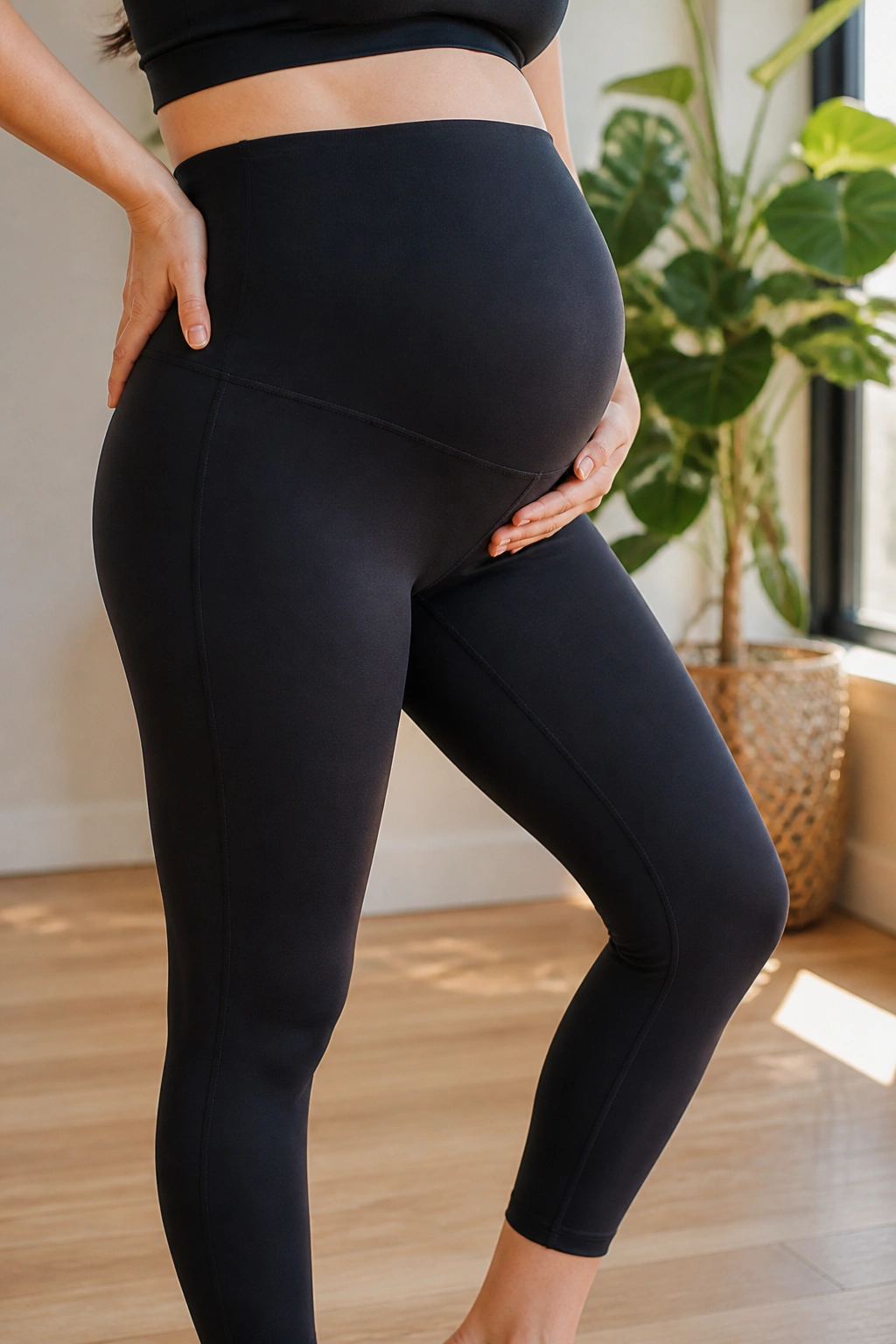
These are the pair most people reach for first, and for good reason. A wide over-belly panel can smooth the line of a growing bump without pressing hard on it, which matters more than people think once you start moving through squats, lunges, or a long walk.
Why They Stay Put
The best over-belly leggings do two things at once: they hold their shape at the waist and they move with your hips. That means a high panel that feels soft, not stiff, plus a leg fabric with enough stretch to keep up when your stride changes.
A panel that folds or rolls is a deal breaker. So is a seam that lands right on the widest part of the bump and cuts in when you sit.
- Look for a double-layer panel with smooth stitching.
- A 7/8 length works well if you want less fabric bunching at the ankle.
- Flat seams help cut down on rubbing during walking or prenatal strength work.
- A brushed nylon-spandex knit usually feels smoother than cotton-heavy blends.
Pro tip: If the waistband feels secure in a deep squat and doesn’t slide when you march in place, it’ll probably hold up in a real workout.
2. Under-Belly Maternity Leggings
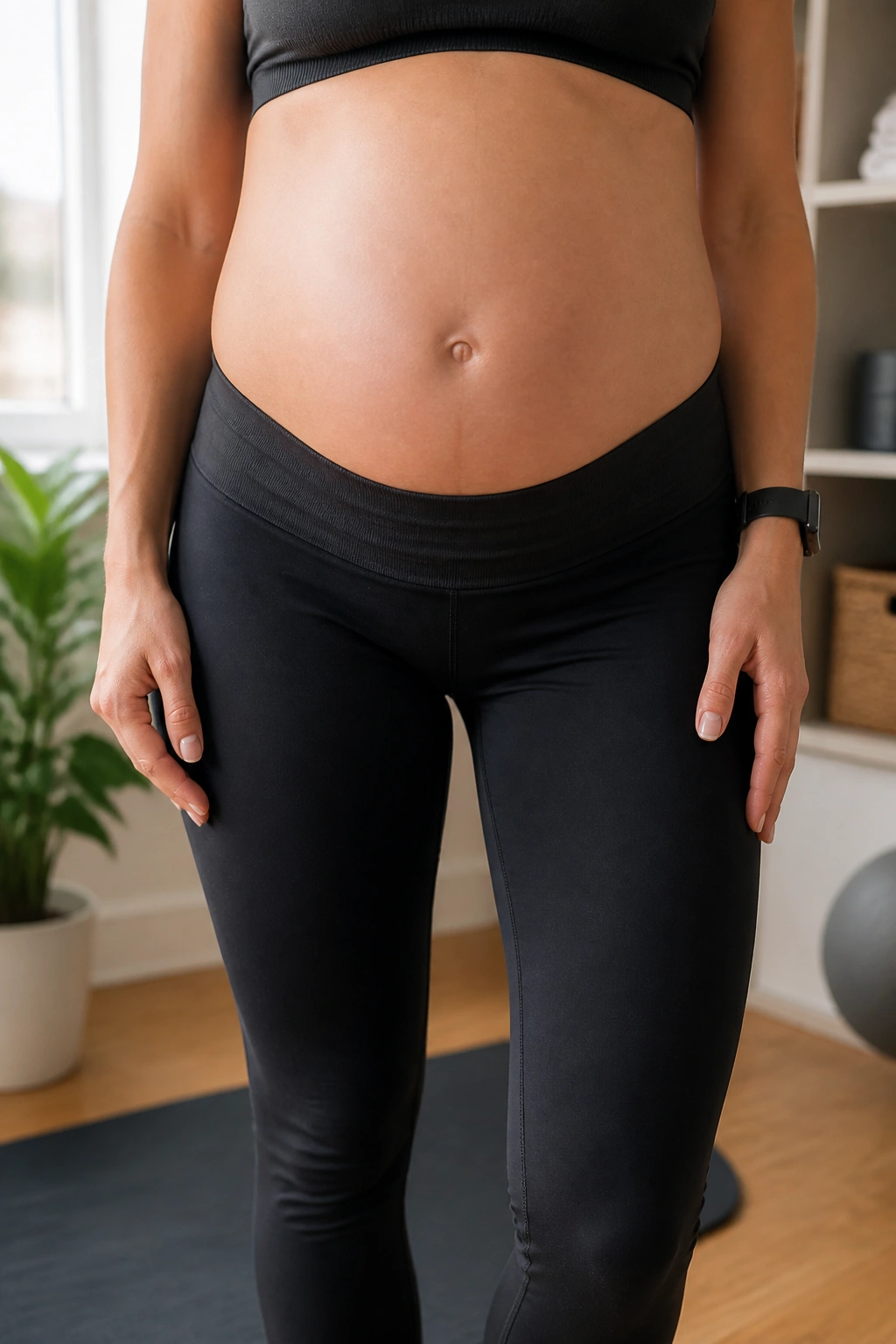
A lower rise can feel like a relief once the bump gets bigger. That is the whole appeal, really. Less fabric on the stomach means less heat, less pressure, and fewer moments where you want to tug at your clothes between sets.
Some people assume over-belly is always the safer choice. Not true. If you run warm, or if a panel makes your stomach feel boxed in, under-belly leggings can be the pair you keep pulling out of the drawer.
They work best when the waistband has a wide, soft band rather than a skinny elastic strip. Skinny elastic digs. It always does. A good under-belly pair should sit low and steady under the bump without sliding down every time you bend.
I like these most for indoor cycling, easy jogs, and long walks when the weather turns sticky. They’re also a smart option if you need a little less coverage around the belly because a full panel feels too much on a given day. That small detail can change whether you want to keep moving or call it quits early.
3. Maternity Bike Shorts
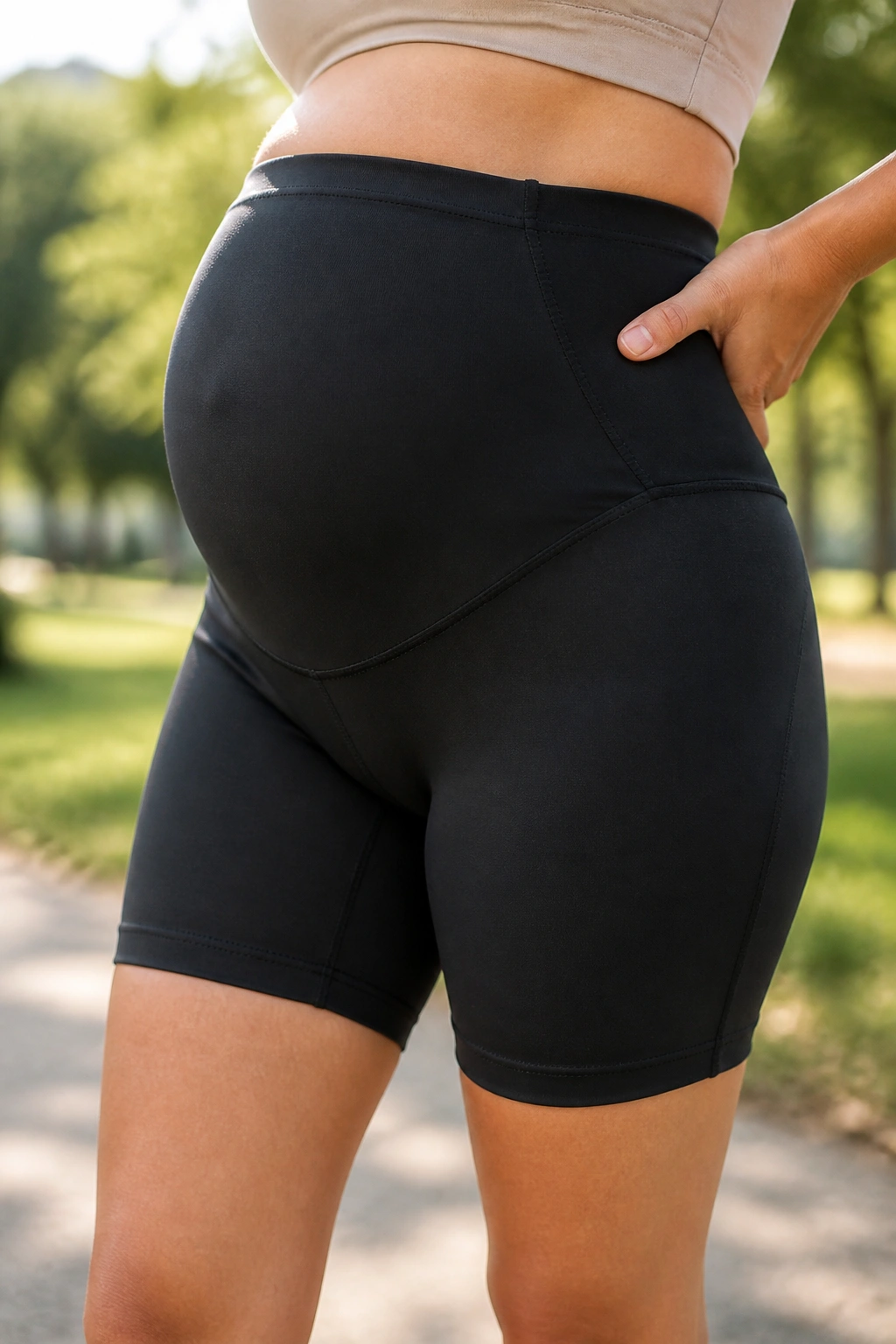
Picture a warm day, a stroller walk, and thighs that start rubbing before you’ve even made it out of the neighborhood. That’s where maternity bike shorts earn their spot.
They are not fancy. They are useful. A good pair gives you the same held-in feel as leggings, minus the extra fabric around the calves and ankles, which makes a big difference when you’re heating up fast.
What Makes a Good Pair
The inseam matters more than the photo. A 5-inch inseam is often enough for walking and low-impact classes, while 7-inch or 8-inch styles usually stay put better if you want more coverage.
- Choose a wide waistband or belly panel that sits flat under a top.
- Check for grip at the leg opening so the hem doesn’t ride up.
- Side pockets are not a gimmick here; they keep a phone from bouncing around.
- A smooth gusset helps the shorts move without pulling at the crotch seam.
Tiny detail, big payoff: If the leg opening flares out at the wrong spot, you’ll spend the whole workout adjusting it. Skip that pair.
4. Maternity Running Shorts
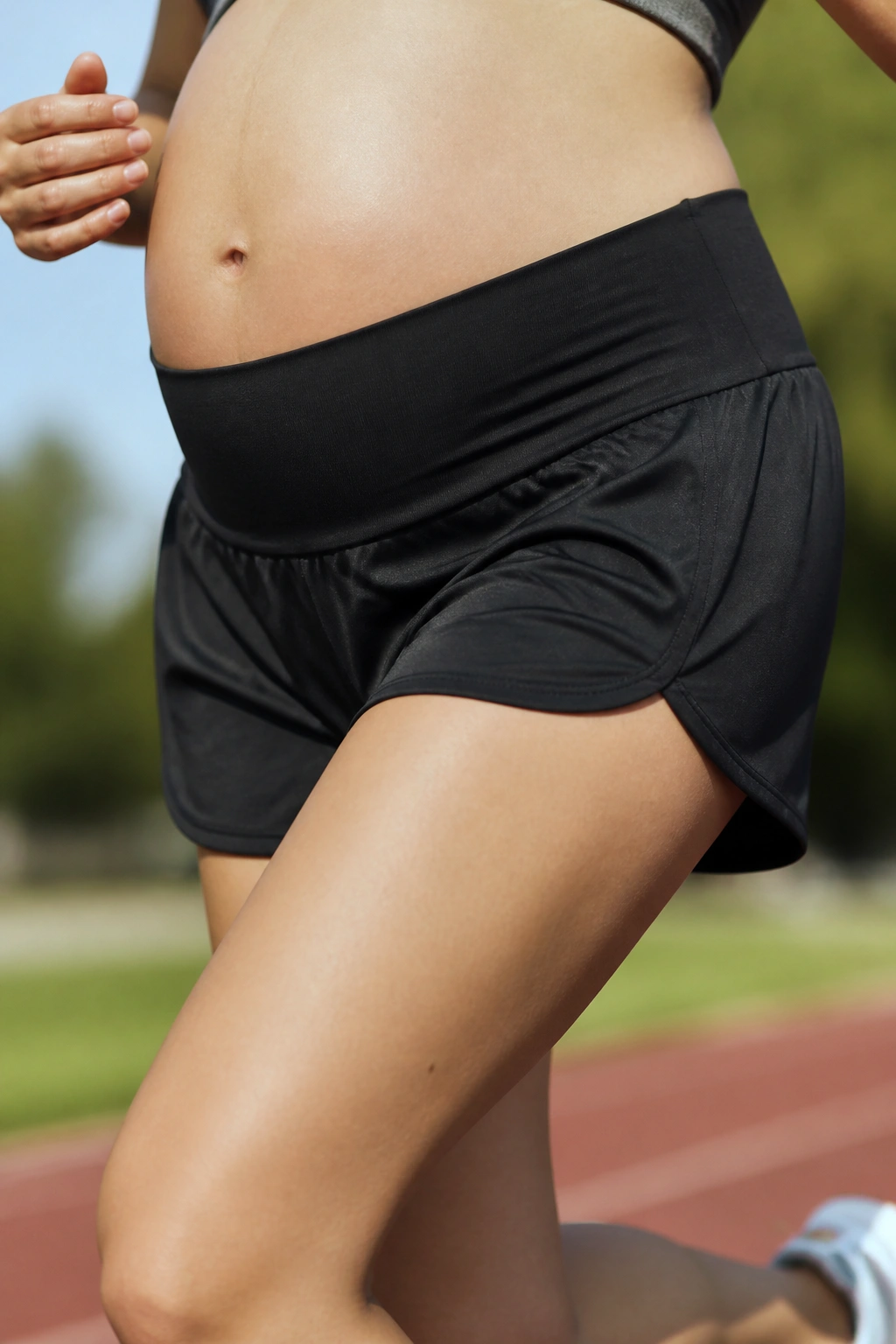
Can maternity running shorts actually stay in place, or do they spend the whole run creeping upward? They can work well, but only if the cut is right.
The best pairs balance two things that usually fight each other: airflow and security. You want enough room through the thigh to move, but not so much fabric that the shorts flap around with every stride. A built-in liner can help, though only if the liner is soft and doesn’t pinch.
How to Shop Them
Look closely at the rise and the hem. A high front waistband can be fine, but it shouldn’t press into the belly when you sit down. A curved hem or split hem often gives a little more leg room without making the shorts feel skimpy.
If you run outdoors, pockets matter more than you think. One zip pocket can keep a key from bouncing around in a way that gets old fast. A waistband drawcord helps too, especially if you’re between sizes or your shape is changing from week to week.
For treadmill work, these are easy. For road running, I’d lean toward a pair with a slightly longer inseam and a liner that feels smooth against skin, not papery or rough.
5. Seamless Maternity Sports Bra
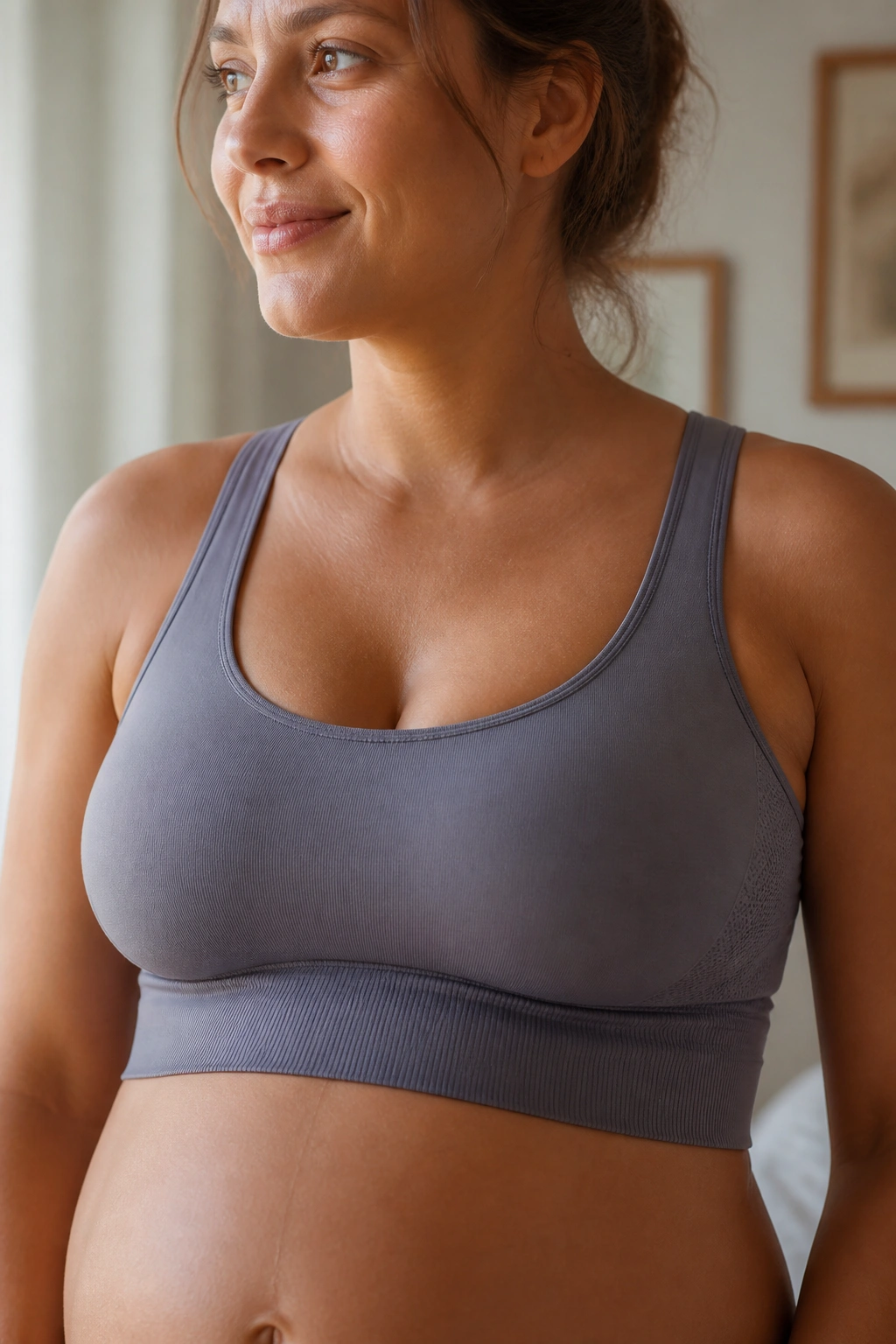
A seamless maternity sports bra is the piece that saves you on the days when every seam seems to announce itself. The fabric usually feels soft and stretchy from the first wear, with fewer hard edges pressing into your ribs or underbust.
That matters because pregnancy changes the way bras fit in a way that online photos rarely show. Your band can feel tighter one week and looser the next, and a bra with a forgiving knit handles that swing better than a structured bra with stiff cups.
Seamless bras are usually best for low- to medium-impact work: yoga, walking, mobility drills, and strength sessions where you are not bouncing around. The nice part is that they tend to disappear under a tee. The downside is support. If you want bounce control for faster running, this is probably not the pair.
I like seamless styles with a wide band under the bust and straps that do not dig where they meet the shoulder. If the knit feels slick and springy between your fingers, that is a good sign. If it feels thin in the hands, it may stretch out too fast after a few wears.
6. High-Support Maternity Sports Bra
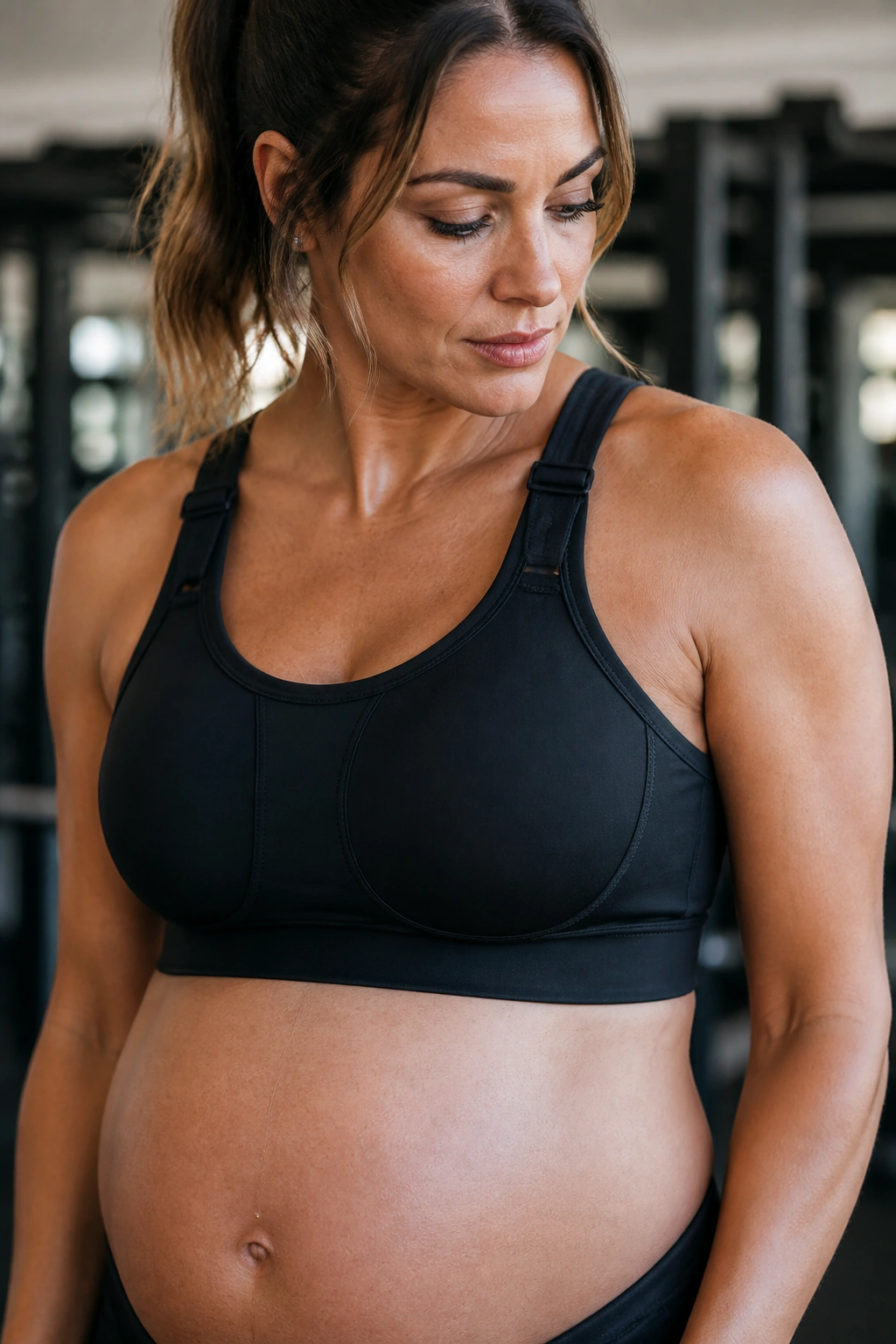
Unlike the seamless style, this is the bra for days when you need real hold. A high-support maternity sports bra usually has firmer cups, wider straps, and a band that sits more like equipment than loungewear.
That sounds less fun than it is. For running, rowing, or anything that makes your chest move a lot, the extra structure is worth it. The trick is finding support without compression that feels mean. Your chest and ribcage are already changing; the bra should stabilize, not squeeze.
Look for adjustable straps if you can find them. A hook-and-eye closure in the back makes fit changes easier as your body changes, though some pull-on styles still work if the fabric is thick enough and the band is wide. Molded cups can help keep shape under a tee, but they should not trap heat or fold awkwardly when you bend forward.
One sentence answer: if you plan to keep walking fast, jogging, or doing studio cardio, buy this before you buy another cute top.
7. Nursing Maternity Sports Bra
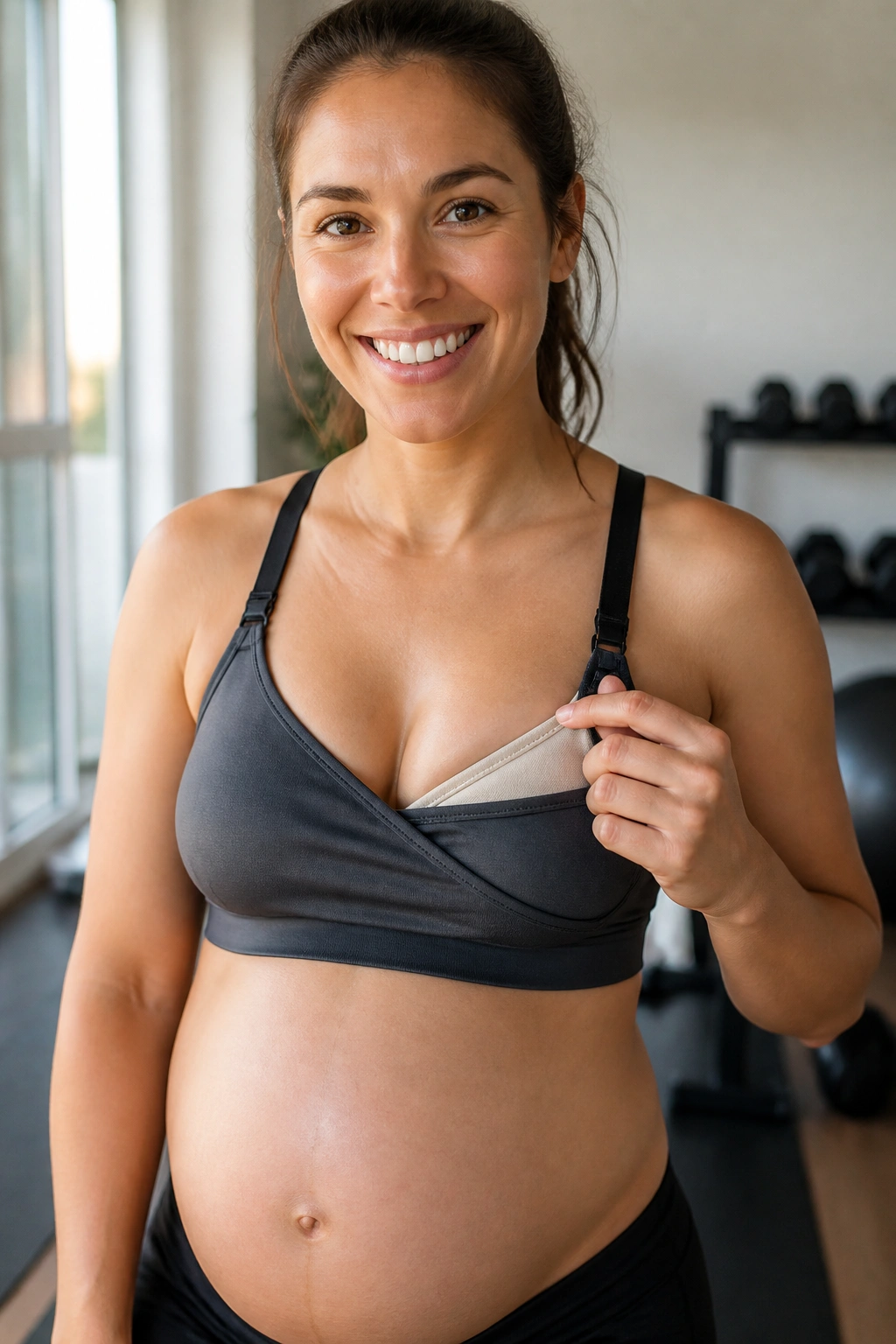
Buy this one sooner than you think you need it. A good nursing maternity sports bra pulls double duty, and that matters because nobody wants to replace half their wardrobe twice.
Why It’s Worth the Space
The best styles open with one hand, hold their shape after repeated washing, and still feel decent during a workout. That is a harder balance than it sounds. Some nursing bras are fine for sleep and awful for movement. Others look sporty but are a pain to unclip mid-set.
- Drop-down cups should open cleanly without snagging the strap.
- A soft inner lining helps if you plan to wear it for long stretches.
- Wide shoulder straps spread weight better than narrow spaghetti straps.
- A slightly taller side panel can stop spillover when you bend or twist.
The best use case is mixed: walking, gym classes, stroller runs, travel days, and then nursing afterward without changing. That convenience is the point. If it takes two hands, a deep breath, and a prayer to open, it misses the mark.
8. Maternity Racerback Tank
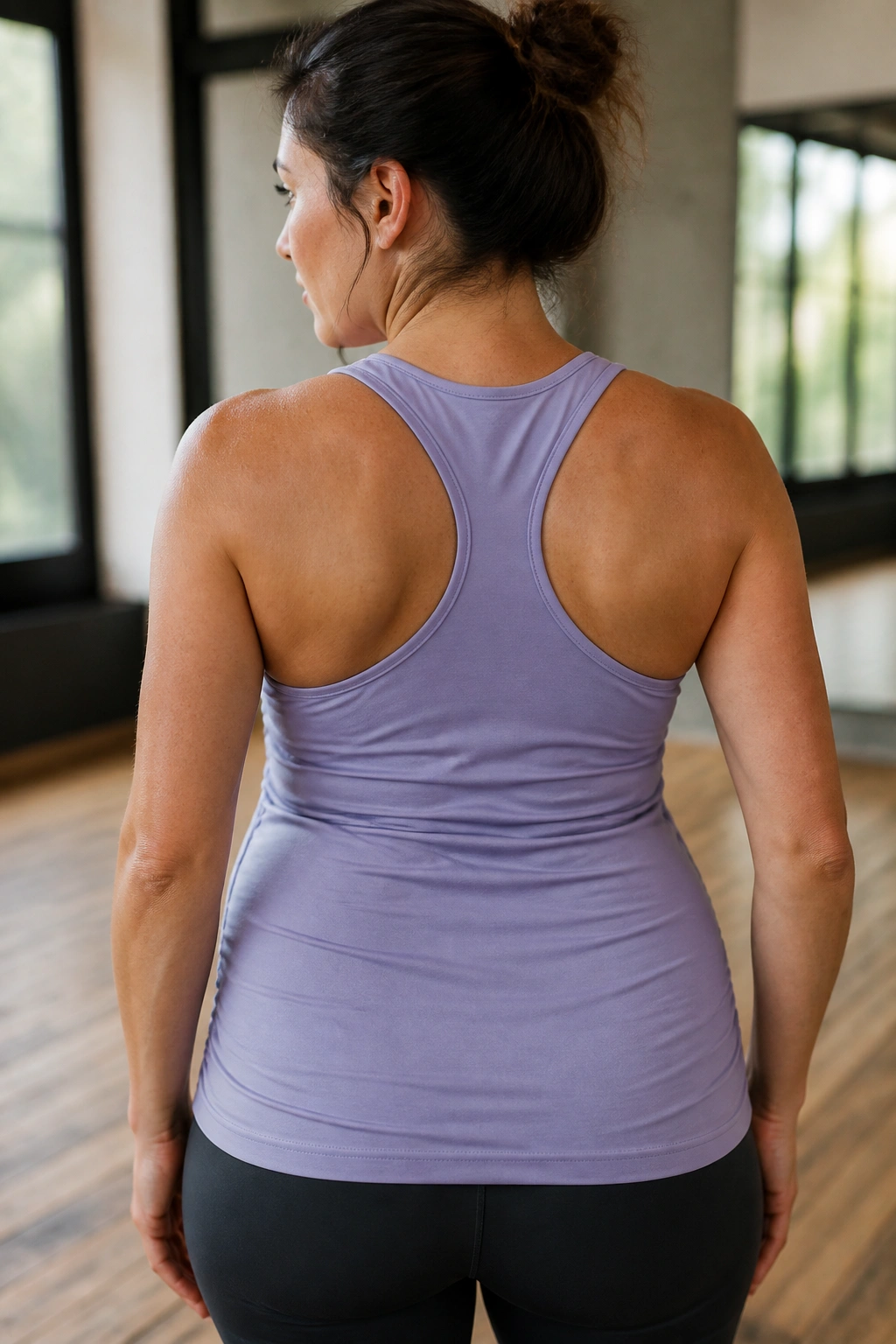
A racerback tank sounds basic until you wear one under a loaded barbell or through a sweaty prenatal yoga class. Then the shoulder cut starts making sense.
The open back gives your shoulders room to move without the straps slipping off every five minutes. That sounds small. It isn’t. Slipping straps make people fidget, and fidgeting ruins the rhythm of a workout faster than a hard set does.
Choose a fabric that drapes a little instead of clinging like wet paper. A tank with a built-in shelf bra can work for walking or stretching, though many people prefer to layer it over a separate bra for more control. If you do that, check the armholes. Too large, and you’ll spend the session adjusting underarm coverage. Too small, and the whole top feels trapped.
The best racerback tanks end a bit below the bump without riding up when you lift your arms. That little bit of length matters more than the print on the front.
9. Longline Maternity Tank
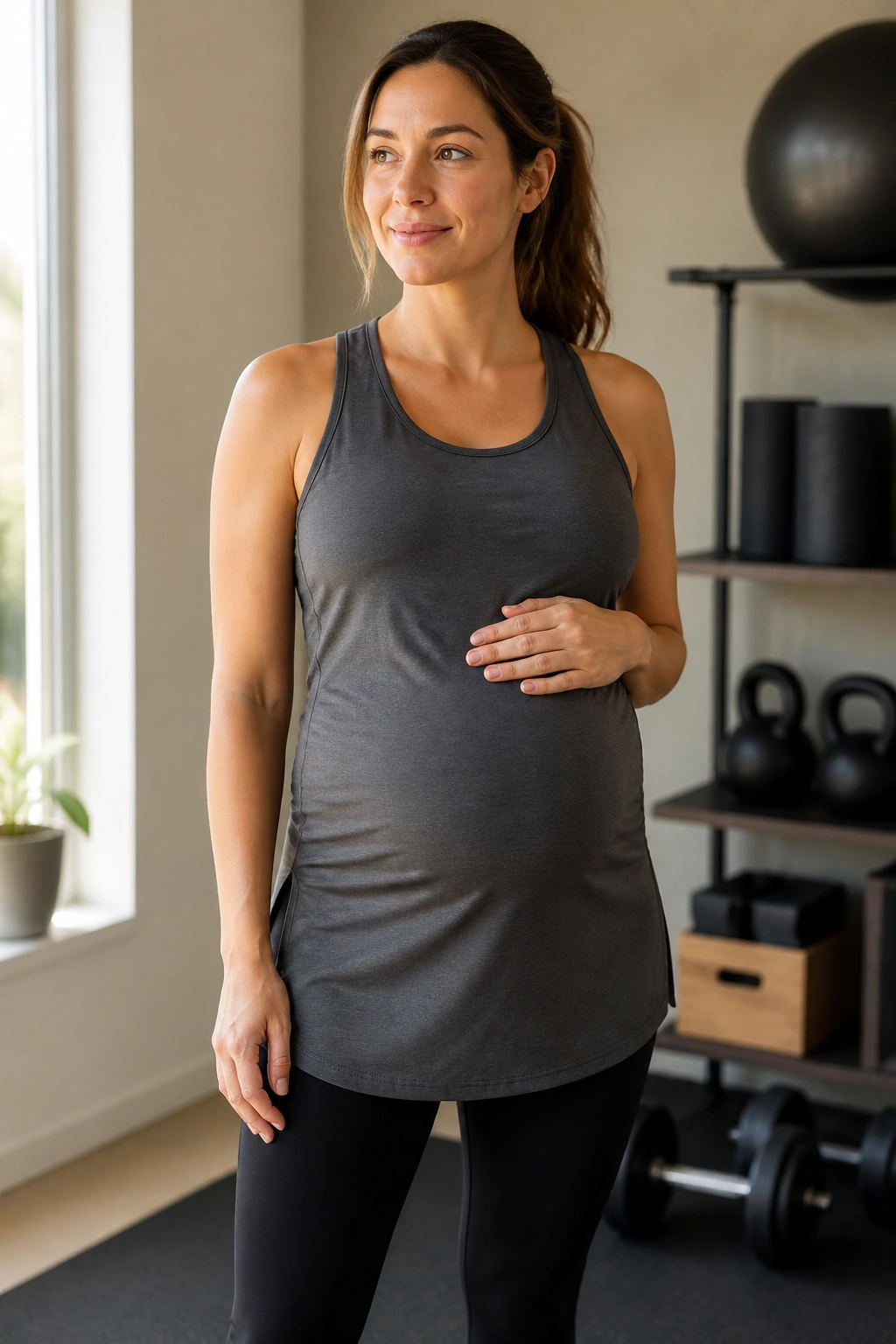
Why buy a longline tank instead of a short one? Because the extra length saves you from the constant hem tug that happens the moment a belly starts to sit lower and rounder.
A longline cut usually reaches past the top of the bump and covers the waistband of leggings or shorts better than a standard tank. That matters for people who want less skin showing during squats, side bends, or a treadmill walk where the shirt keeps climbing.
How to Use It
I like longline tanks layered over a supportive bra on strength days. They give enough coverage to feel finished without the heaviness of a full tee. In a studio class, they also keep you from feeling overexposed when you raise your arms.
The sweet spot is length without bulk. A tank that is too long can bunch around the hips and make you look swallowed by fabric. One that has a bit of stretch and a curved hem usually hangs better.
If you want one top that works across yoga, light lifting, and errands after the gym, this is the cleanest buy on the list.
10. Maternity Performance Tee
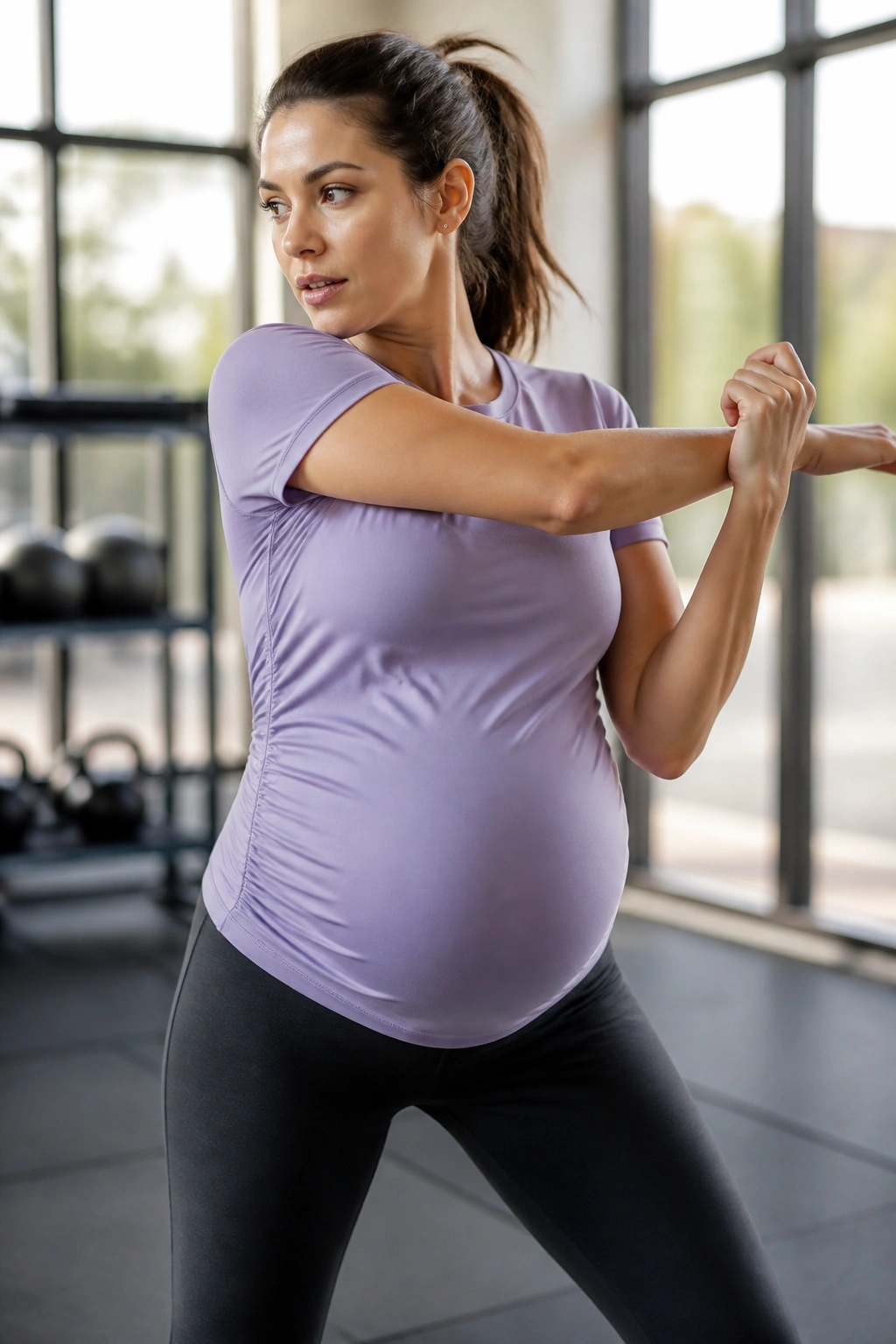
A performance tee is the answer for anyone who hates clingy tops. Cotton can feel nice at first, but once you sweat, it turns heavy and slow to dry. A performance tee stays lighter on the skin and tends to move sweat away instead of holding onto it.
That matters in pregnancy because temperature swings are annoying. One minute you’re fine. The next minute your back feels damp and your shirt has decided to stick to your stomach. A quick-drying knit solves a lot of that irritation.
Look for a tee with side slits, a curved hem, or a relaxed cut through the waist. A boxy shape can work if it still has enough length to cover the bump. Drop shoulders help keep the shirt from pulling across the chest, which changes a lot for many people as they go through pregnancy.
One thing I’d skip: thick cotton blends marketed as “soft” but built like a blanket. They feel nice on a hanger and miserable after ten minutes on a bike.
11. Maternity Long-Sleeve Base Layer
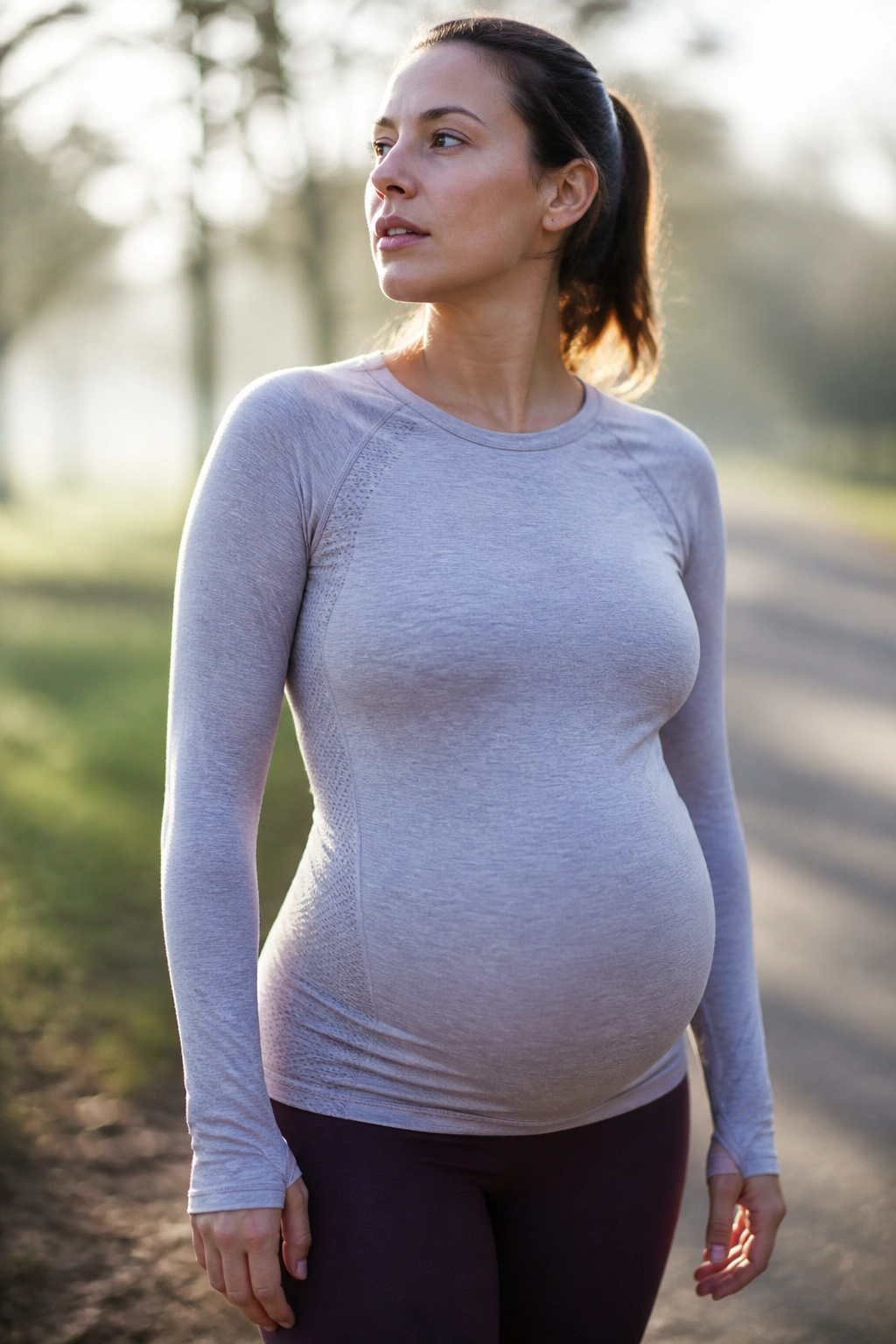
Unlike a sweatshirt, a long-sleeve base layer should breathe. That is the whole point. It gives you coverage without trapping every drop of heat once you start moving.
The best versions use a smooth knit with flat seams and a close fit through the arms. Not skin-tight. Close. That distinction matters because a layer that hugs too hard can feel clingy around the ribs, while a loose one bunches under a jacket and rides up at the wrists.
What to Watch For
Thumb holes can help keep sleeves in place when you warm up outside, but they should not pull the cuff tight across your hand. A quarter zip or half zip adds temperature control, which is useful if you start cold and finish sweaty. A brushed interior can feel nice, though too much pile makes the top bulky.
This is the layer I’d buy for cooler walks, early strength work, and any gym where the air conditioning is set to arctic. It also helps during travel. A good base layer disappears under a vest or light jacket and doesn’t need constant adjustment.
12. Maternity Quarter-Zip Pullover
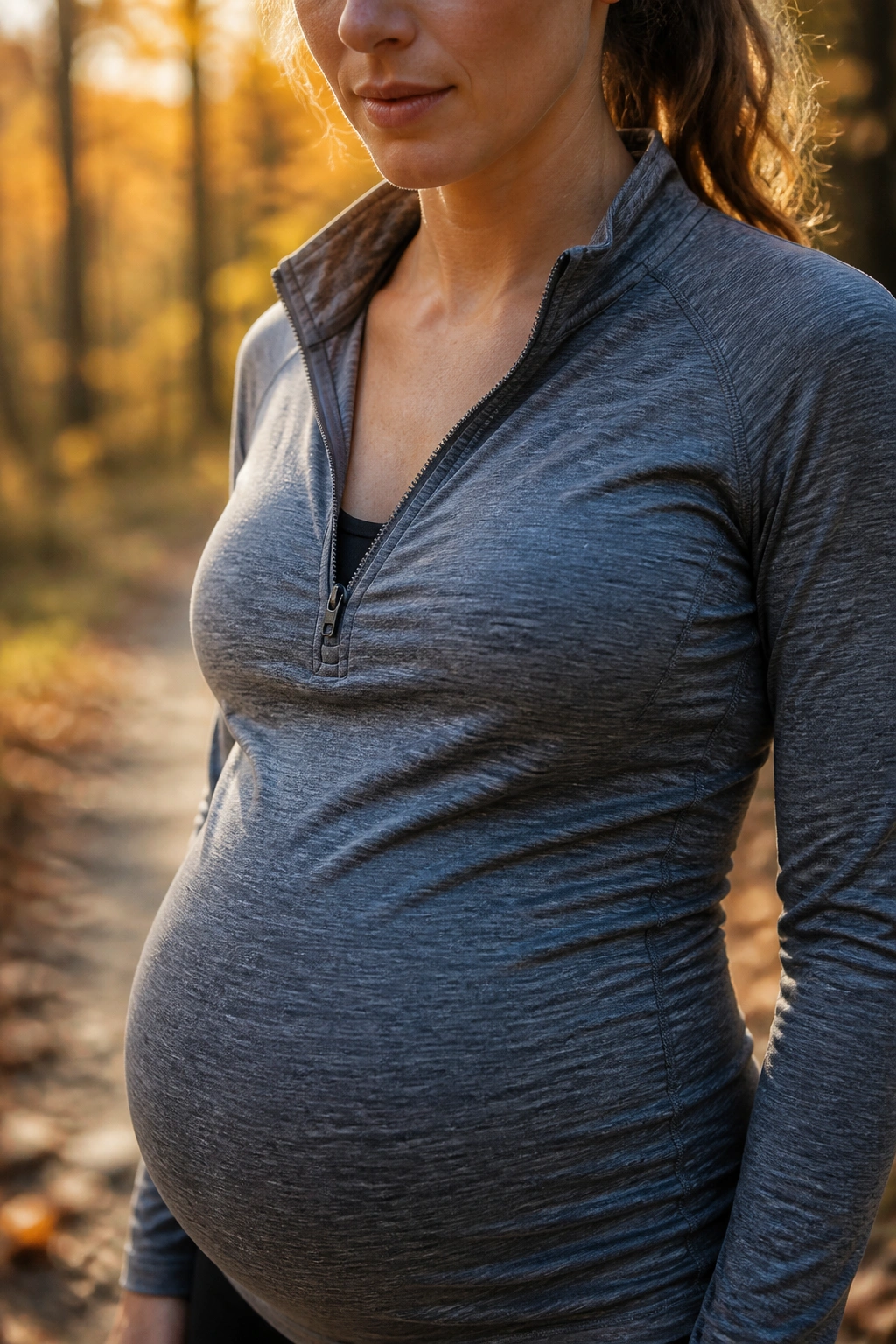
A quarter-zip is the easy answer when you want one layer that can be peeled off fast. It is a small thing. It matters a lot.
The zipper gives you control that a crewneck cannot. Start warm, unzip halfway when you heat up, and zip it back when you cool down between sets. That makes it useful for outdoor walks, warm-up laps, and drives to and from the gym when you do not want a full jacket.
Key Fit Details
- A slightly longer torso keeps the hem from popping up over the bump.
- Raglan sleeves usually move better than set-in sleeves.
- A chin guard at the zipper top helps keep the metal or plastic edge from rubbing.
- Thumb holes are a nice extra if the sleeves tend to slide.
The best quarter-zips are thin enough to layer and thick enough to block a little wind. If the fabric feels bulky in the hand, it will probably feel worse on your body once you start moving. This is one of those pieces where less weight usually means more use.
13. Lightweight Maternity Running Jacket
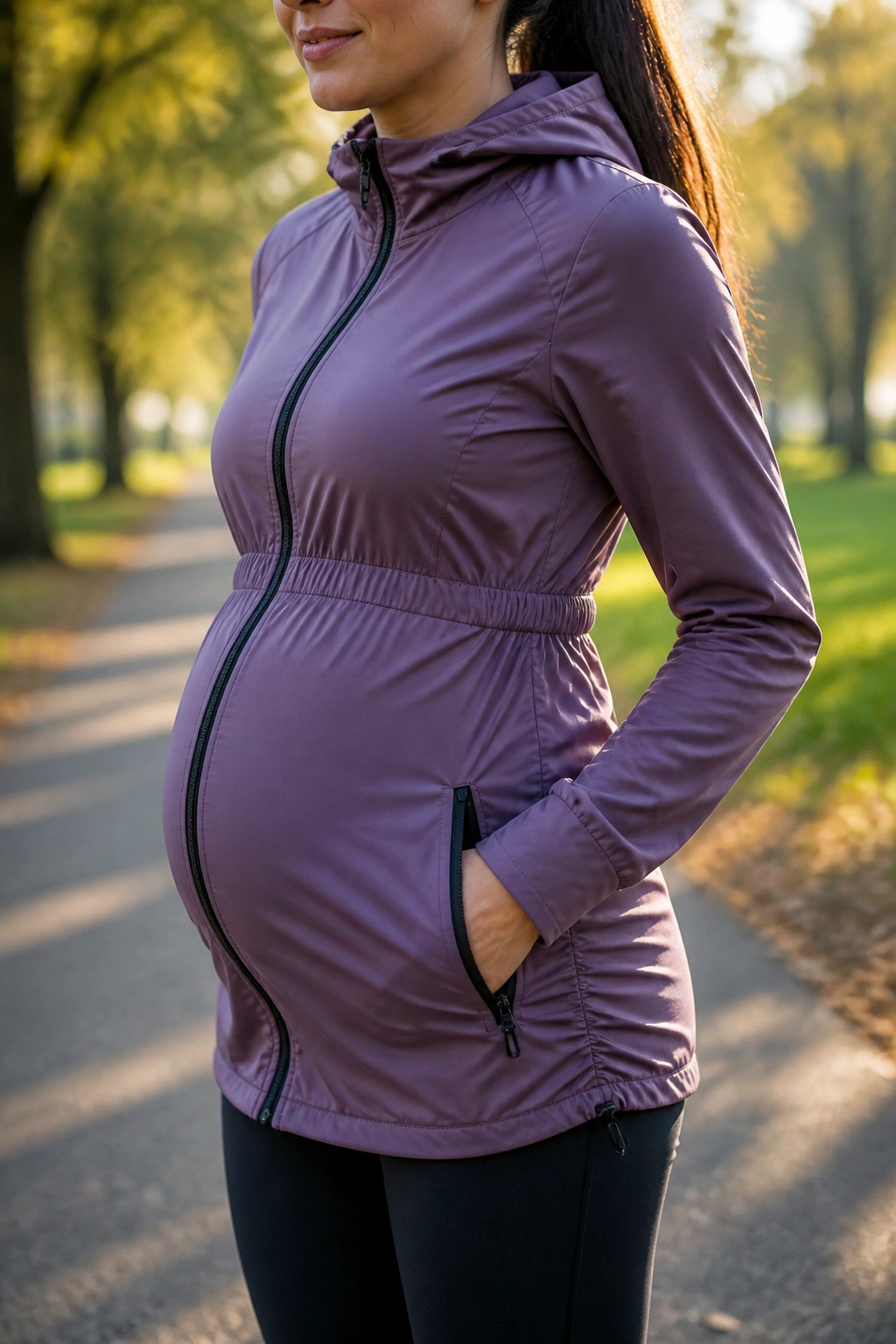
A lightweight running jacket is the piece that keeps a drizzle or a breezy morning from ending your workout before it starts. Not a heavy coat. A shell. Something you can move in.
The fit should leave room for a bump without ballooning at the waist. Too much volume catches wind and makes the jacket flap around. Too little, and it pulls across the chest or belly when you swing your arms. The sweet spot is a trim shape with room in the front panel and shoulders.
Zipper pockets are worth paying attention to here. A jacket with secure pockets can hold a key, card, or tissue without making the fabric sag. A hem drawcord helps if you want to tighten the waist slightly after the bump grows. I also like cuffs that sit flat instead of elastic that bites into the wrist.
This is not the layer you throw on for warmth indoors. It is the layer that buys you another ten minutes outside without complaint.
14. Maternity Joggers
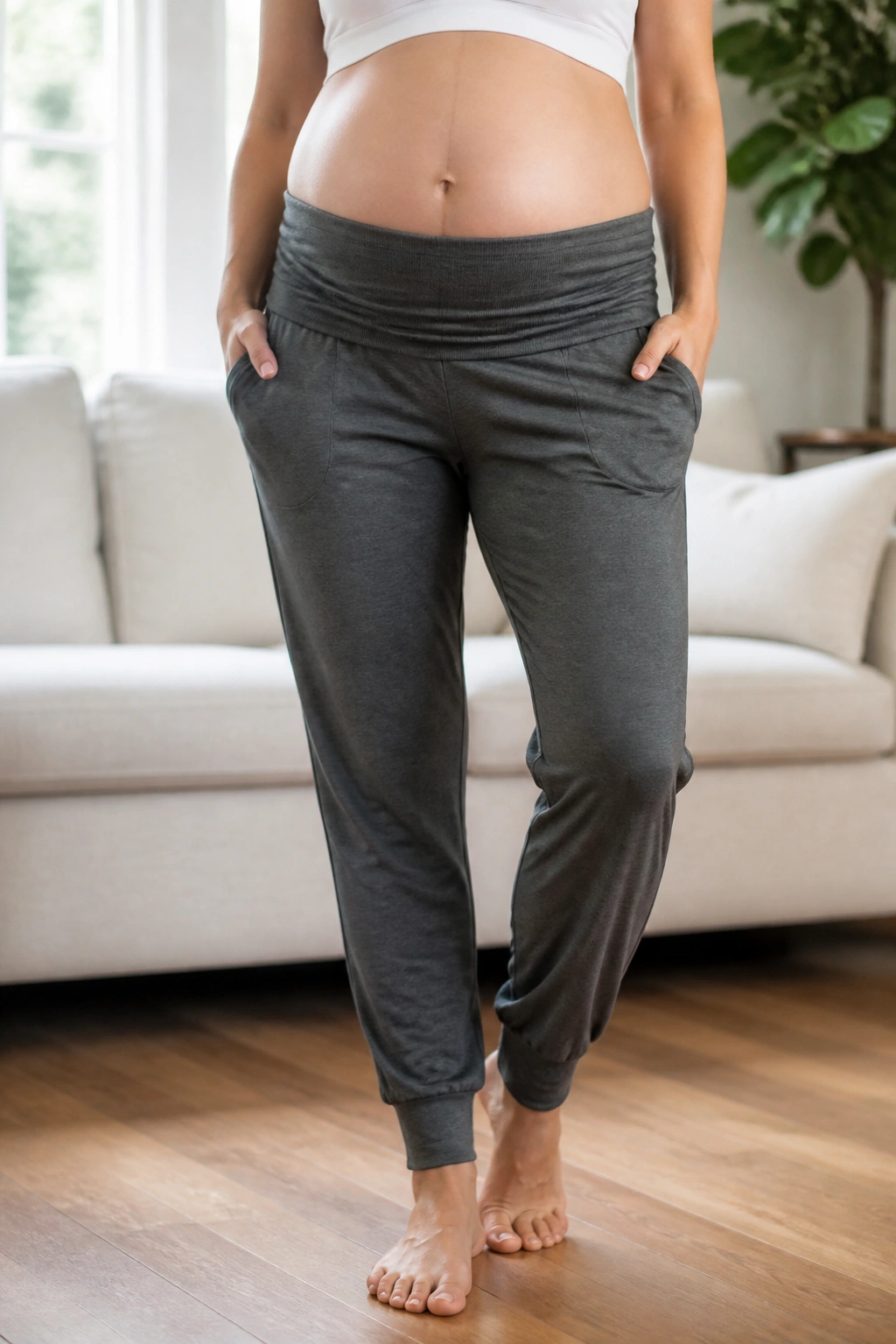
Maternity joggers are the pair that leave the gym and keep going to the grocery store without looking out of place. That is why people keep buying them.
The best joggers have a soft waistband, a tapered leg, and enough structure to avoid the pajama look. A cuffed ankle helps keep the hem off the ground, which is handy if you’re walking, stretching, or doing a slow warm-up on a mat. Pockets are useful here too, though they should sit flat and not bulge in a weird way.
I prefer joggers with a smooth front and a wide belly panel or foldover waistband. The fabric should drape, not cling. If the material grabs the thighs or turns shiny when stretched, it will probably lose shape after a few wears. A midweight knit is often the sweet spot for errands and low-impact workouts.
One blunt note: if you want a pair that feels polished, avoid anything with giant logos or too much ruching. Clean lines age better.
15. Maternity Skort
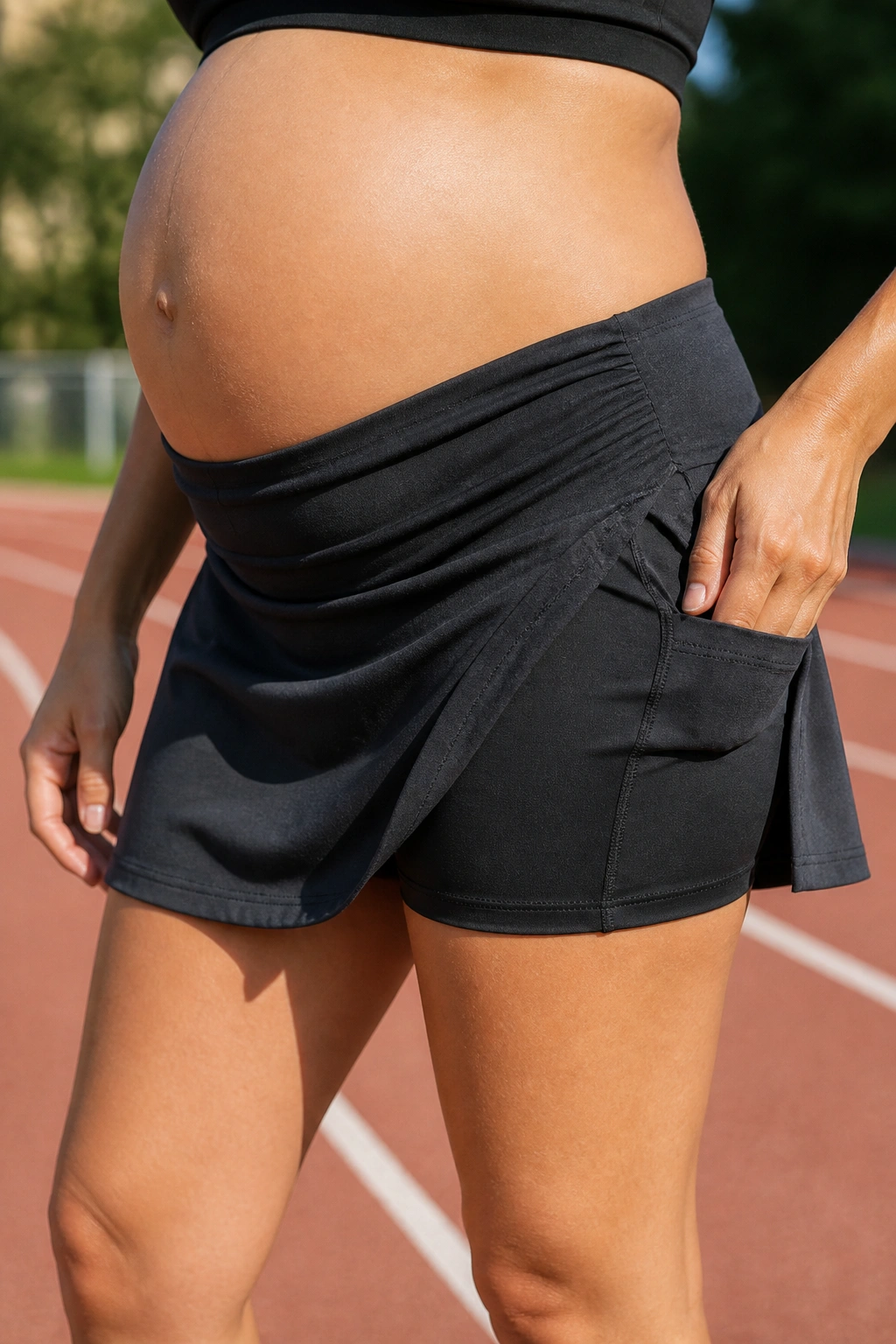
Can a skort work for workouts? Absolutely, if the shorts underneath are built properly and not sewn in as an afterthought.
A maternity skort is a smart buy for walking, tennis, pickleball, golf, and some gym days when you want a little more coverage than bike shorts give you. The outer skirt softens the look, while the inner short handles movement and keeps things from riding up. When that short layer is cut well, the whole piece feels easier than it sounds.
What to Look For
The inner short should have enough stretch to let you sit, lunge, and climb stairs without pinching. A waistband that folds under the belly can feel better here than a very high panel, especially in warm weather. Side pockets on the short are useful. A hidden ball pocket or phone pocket is even better if you are outside a lot.
One more thing: the skirt should move, not stick. A hem that hangs too stiffly tends to flare in an odd way. Soft fabric, a little drape, and a secure inner short make the difference.
16. Maternity Unitard
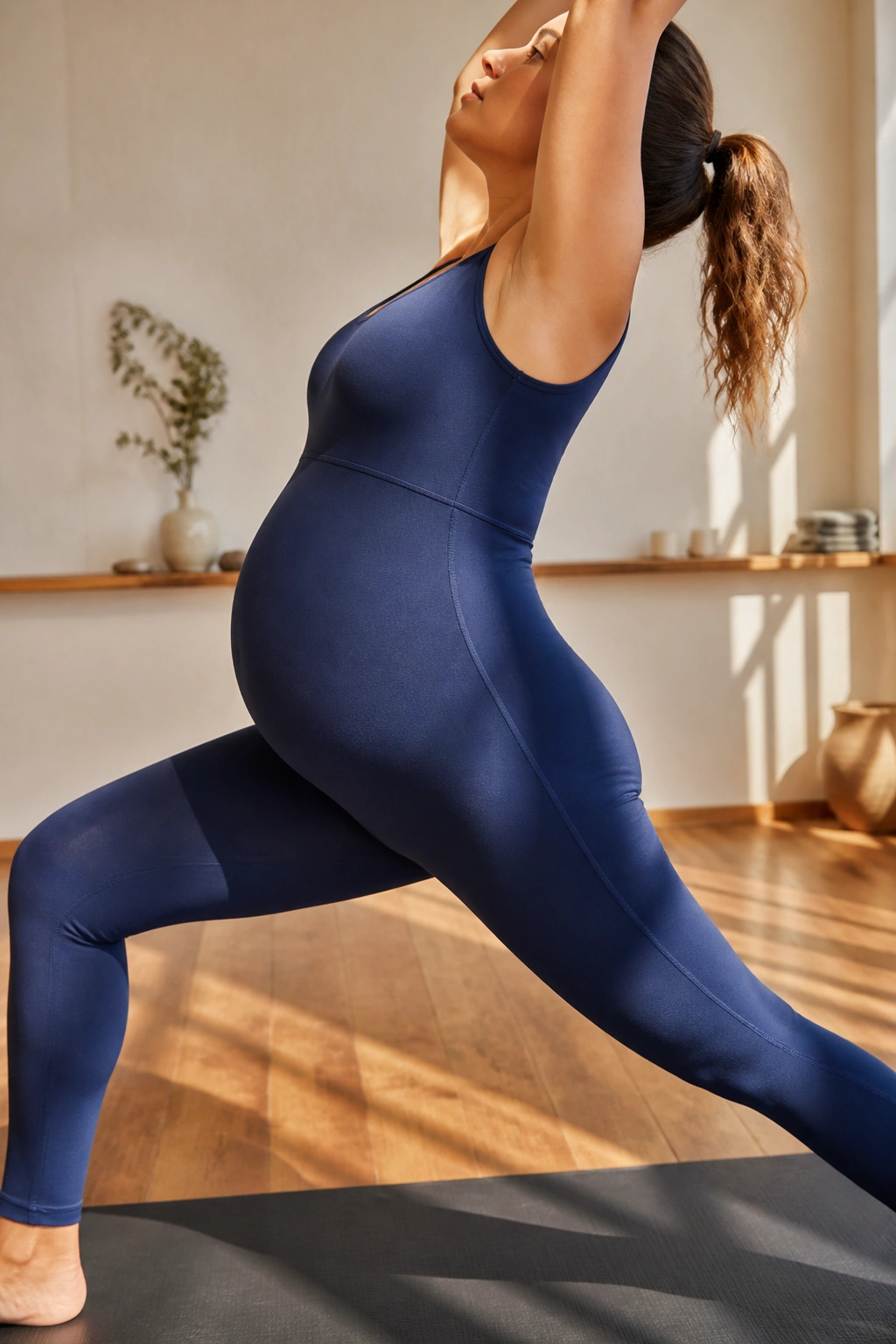
A maternity unitard is a bit of a love-it-or-leave-it piece. When it works, it feels like one smooth layer with no waistband to roll, no hem to bunch, and no shirt creeping upward in the middle of a set.
That makes it a nice choice for yoga, barre, dance, and studio classes where you spend time on the floor or moving through a lot of shapes. The fabric usually needs more stretch than a tee or jogger, so a blend with enough spandex matters. I’d look for a gusset, flat seams, and a torso length that gives room for a bump without pulling at the shoulders.
The downside is obvious. Bathroom breaks are annoying. Not impossible. Annoying.
Still, a good unitard can feel cleaner than juggling separate pieces, especially if you get tired of tops bunching around the waist. If you want one item that makes you feel pulled together with almost no thought, this is the oddball buy that can earn its place.
17. Maternity Tankini Swim Top
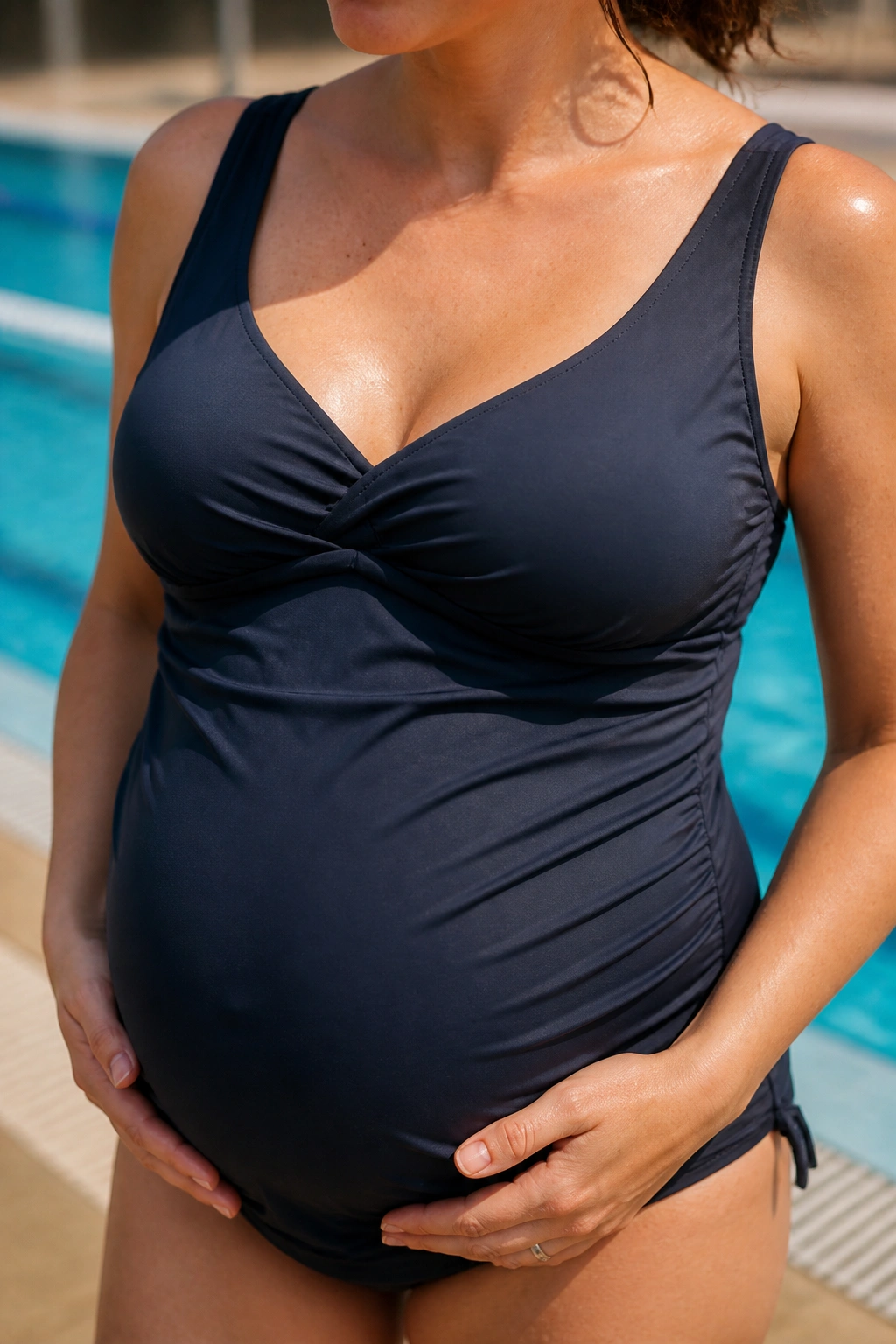
A tankini swim top earns its spot if you use the pool for laps, water walking, or gentle aqua classes. It gives a little more coverage than a bikini top and more flexibility than a one-piece, which can make changing easier if your body is shifting shape fast.
The best tankini tops do not float up when you push off the wall. That sounds small until you’re halfway through a lap and you have to stop to fix it. A longer hem, a secure shelf bra, and straps wide enough to stay flat all help. If the fabric has a lot of chlorine resistance, even better.
Compared with a one-piece, a tankini is easier to mix with different bottoms. Compared with a loose swim tee, it tends to stay more stable during actual swimming. It is a practical middle ground, which is why plenty of people end up wearing it more than they expected.
If your workouts include water at all, this is a useful buy. Simple. No drama.
18. Maternity Zip Hoodie
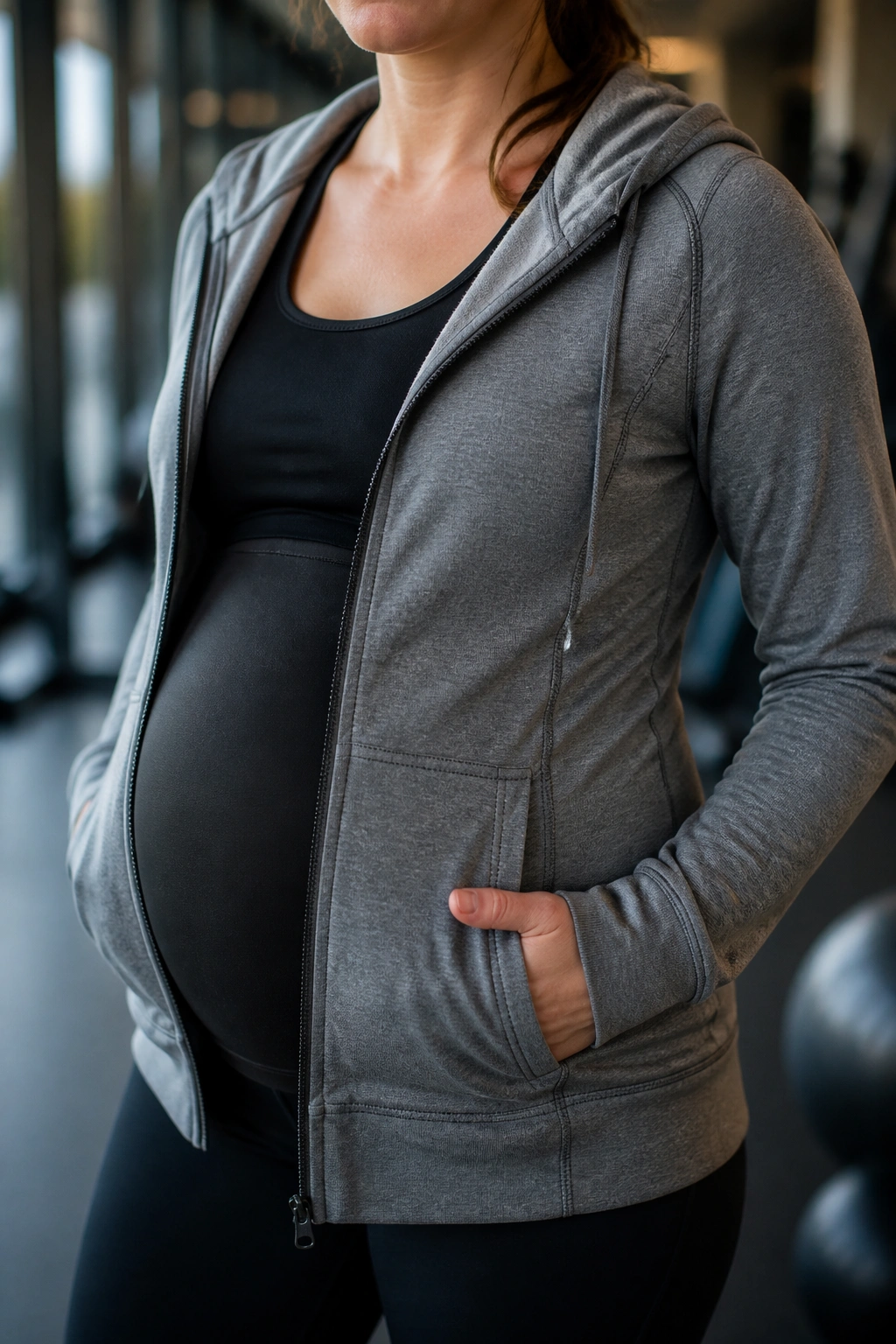
A maternity zip hoodie is the layer you want when the workout is over and your body temperature drops fast. It also works before the workout, after the shower, and during every odd stretch of the day when you want a soft layer that opens and closes easily.
The best hoodies have enough room through the middle without turning into a tent. That means a slightly shaped torso, not a boxy cut with no thought to the bump. A sturdy zipper matters more than people think, because a cheap zipper gets sticky and makes the whole thing feel annoying after a few wears. Pockets should sit low enough to use without pulling the front panel down.
I like hoodies with a little stretch in the rib knit so the cuffs hold shape without cutting into the wrist. Fleece can be nice, but a lighter French terry often gets more use because it works over leggings, joggers, and even bike shorts without feeling heavy.
If your cart needs trimming, I would buy this after leggings and a bra. If your cart has room for a third piece, this is the one that keeps the rest of the outfit useful outside the gym too.
