



Fifteen minutes is enough.
Not enough to impress strangers at the gym. Enough to change the way your body feels by dinner. A solid 15-minute workout at home can wake up sleepy hips, get your heart rate moving, and remind your brain that movement still fits inside a messy day with laundry, calls, and dishes waiting in the sink.
I’ve always liked short sessions for one plain reason: they leave less room for nonsense. No wandering around the room. No forty-minute negotiation with yourself about shoes, music, or whether you “have time.” A timer forces honesty, and honesty works.
The trick is structure. A minute-on-the-minute format, quick intervals, ladders, boxing rounds, or a tight mobility flow gives those fifteen minutes some shape, which matters more than people think. The CDC’s basic activity advice still points in the same direction: regular movement and strength work add up. Short sessions do not replace everything, but they absolutely count.
Some days you want to sweat. Some days you want your shoulders to stop feeling like coat hangers. Some days you just want to move enough that you feel human again. Pick the session that matches the day, set a timer, and start before your brain gets cute.
1. No-Equipment EMOM Full-Body Workout
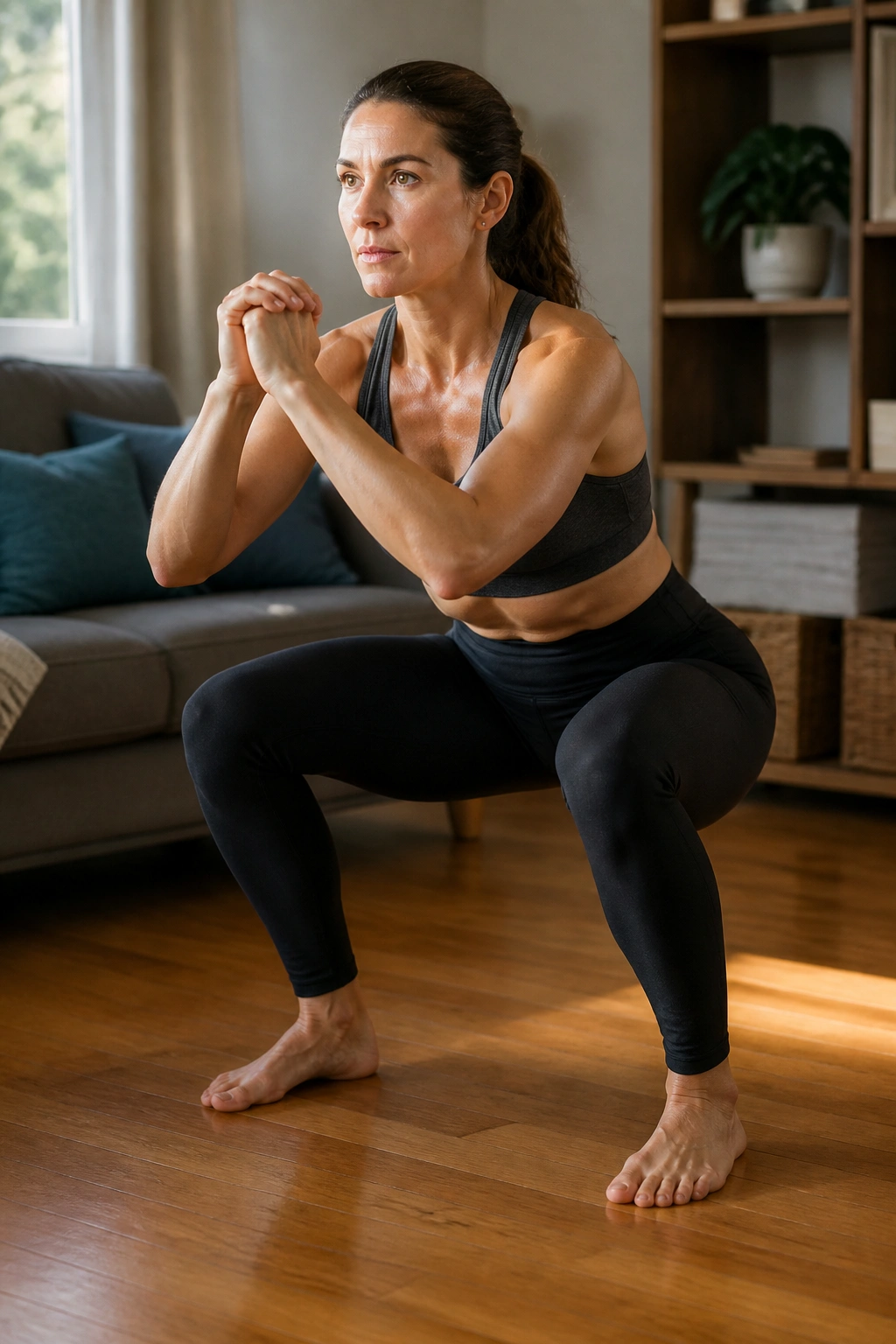
EMOM means “every minute on the minute,” and it’s one of the cleanest ways to make a short workout feel organized instead of random. You work at the top of each minute, finish the reps, and use whatever time is left to breathe before the next round starts.
That pause matters. A lot. If you leave yourself 10 to 20 seconds of rest each minute, the session stays crisp. If you cram in too many reps and keep falling behind the clock, the whole thing turns sloppy.
How the minute works
- Minute 1: 10 air squats
- Minute 2: 8 incline push-ups on a counter or sturdy table
- Minute 3: 10 reverse lunges per leg
- Minute 4: 20 mountain climbers total
- Minute 5: 30-second plank hold
Repeat that five-minute block twice. Use the first two minutes of the workout for marching in place, shoulder rolls, hip circles, and a few easy bodyweight squats. Use the last minute to slow down, walk around, and get your breathing back under control.
The sweet spot is finishing each minute with a little time left. That’s the whole game. If you’re gasping by second 45, cut the reps. If you’re done by second 20, add two reps next round.
This is the session I reach for when I want a full-body hit without fuss. It needs no equipment, no setup, and no planning beyond a timer.
2. Low-Impact Cardio That Still Gets You Sweaty
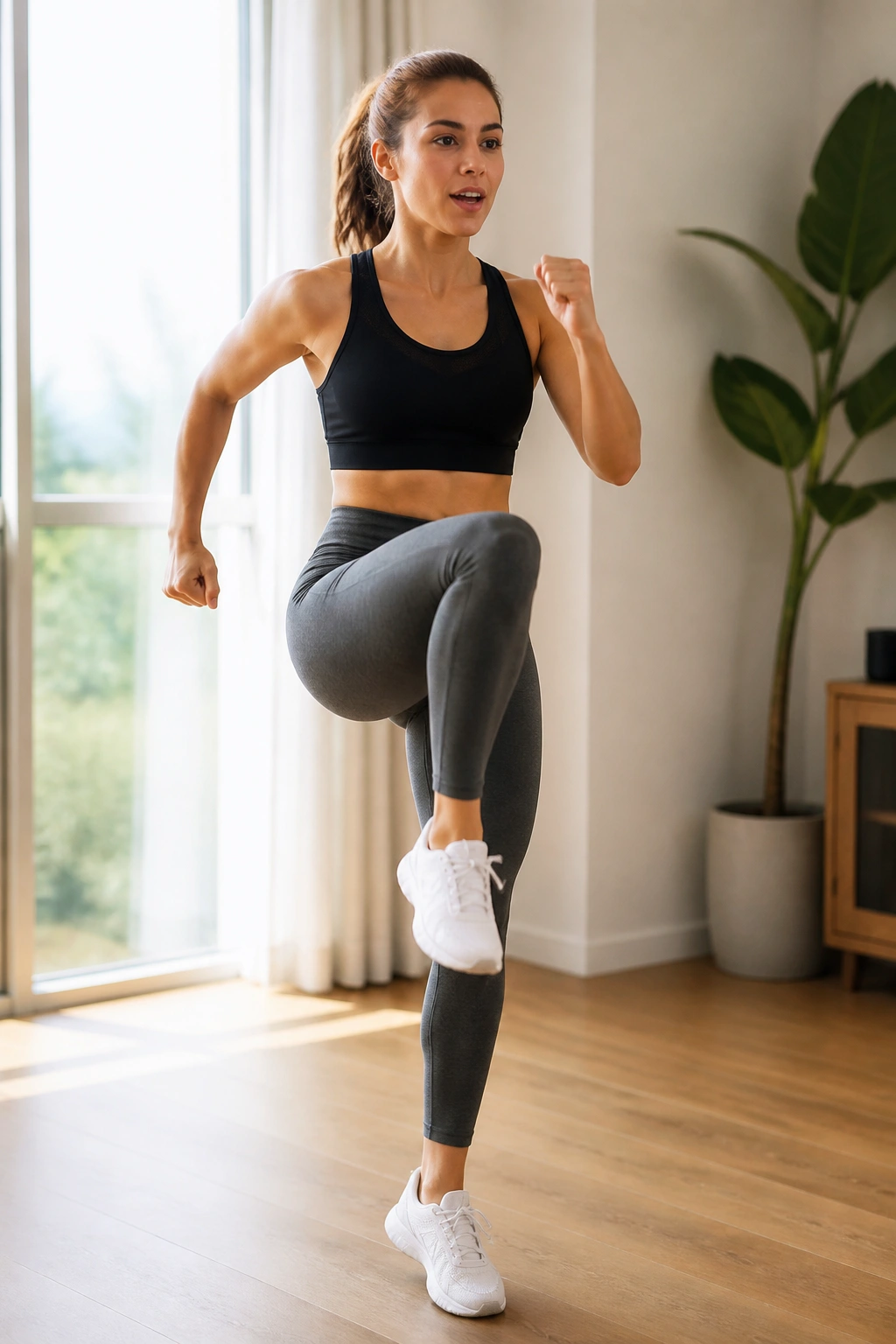
No jumping does not mean no effort.
That’s the first thing people get wrong about low-impact cardio. They picture gentle movement and assume it will feel easy, then they hit twenty seconds of fast step-jacks, knee drives, and squat reaches and start blinking at the clock. Smooth on the joints. Not soft.
A good low-impact session works because it keeps one foot close to the floor and asks your upper body to help. Swing your arms. Reach overhead. Drive your knees with intent. Move fast enough that you can talk in short phrases, not full speeches.
Try this pattern for fifteen minutes:
- 1 minute fast march with strong arm swings
- 1 minute step-jacks
- 1 minute alternating knee drives
- 1 minute skaters with a toe tap instead of a jump
- 1 minute squat to reach
- 30 seconds easy march
Repeat that circuit twice. If you want a little more bite, cut the rests and keep the transitions tight. If your floor is slippery, wear shoes. If your knees hate impact, this is a smart place to live.
One small thing that helps: keep your feet quiet. The louder your landing, the harder your joints have to work. That alone changes the feel of the session.
3. Squat-and-Lunge Legs for People Who Sit Too Much
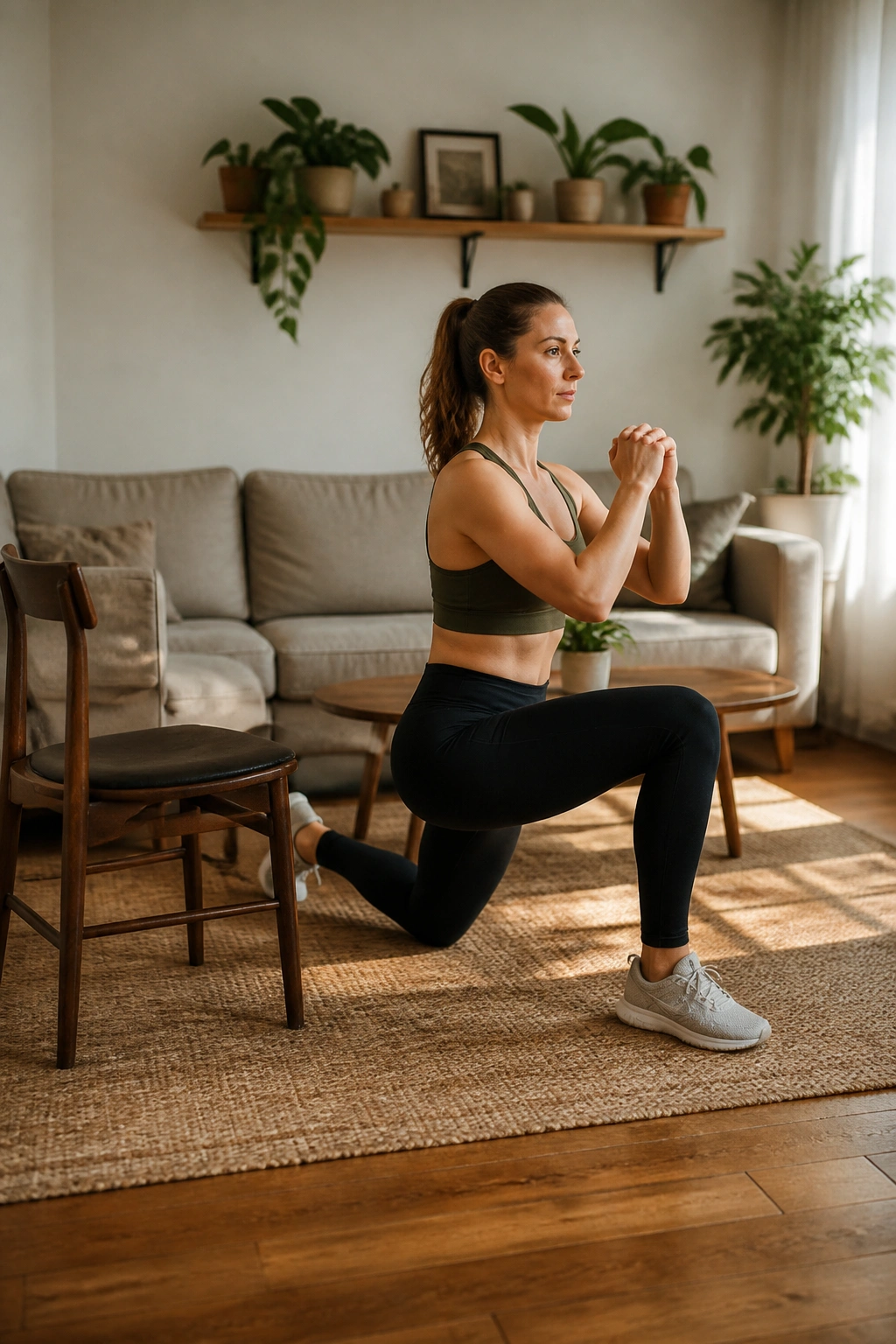
Want your legs to feel every minute?
This is the one I would hand to anyone who spends long stretches in a chair and then complains that stairs feel rude. Squats, lunges, and a few isometric holds wake up the quads, glutes, and inner thighs without needing a barbell or a fancy setup.
Start with one round of 45 seconds each: air squats, alternating reverse lunges, glute bridge holds, and lateral lunges. Rest for 30 seconds. Then run the same circuit again, but cut the rest to 15 seconds. Finish with a wall sit for as long as you can hold clean form, which usually lands somewhere around 30 to 45 seconds.
How to scale it
If deep lunges bother your knees, shorten the step and keep your shin more vertical. If squats feel awkward, sit back to a chair for the first few rounds and stand up with control. A couch edge or sturdy chair makes a useful target.
The part most people skip is the glute bridge hold. Don’t. That slow squeeze at the top is what helps this session feel balanced instead of just quad-heavy. You should feel your heels press down and your hips doing the work, not your lower back arching like a bad bridge on purpose.
This workout is plain, but it gets the job done. Legs are honest that way.
4. Push-Up, Row, and Plank Upper-Body Session
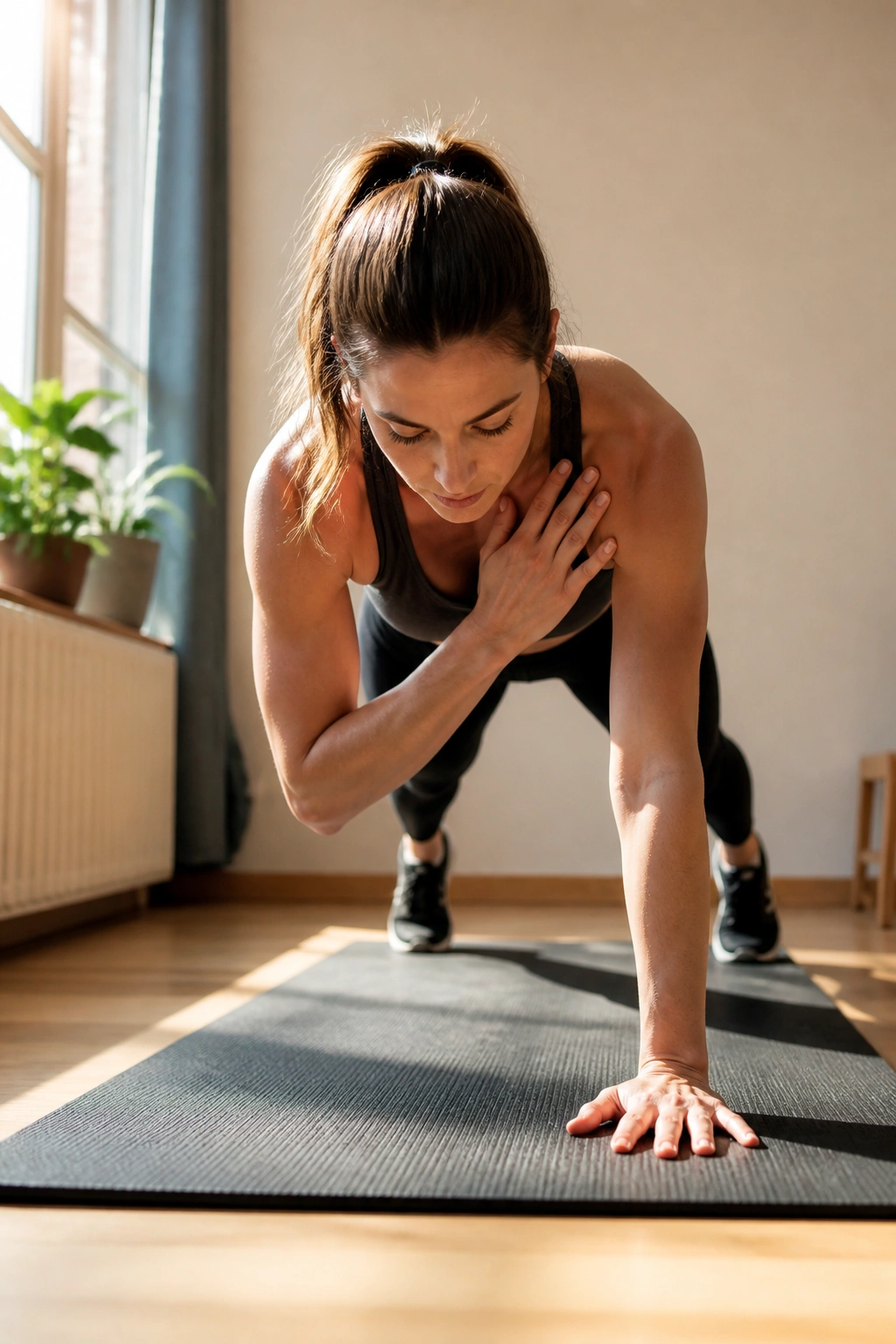
A lot of at-home upper-body work turns into a pile of push-ups and not much else.
That’s fine for a minute. Not for long. If you want your shoulders, chest, back, and arms to feel more balanced, you need some kind of pulling action. A backpack row, a band row, or even a towel row against a sturdy anchored point does more for posture than people give it credit for.
Use a 40-seconds-on, 20-seconds-off format and run these four moves in order:
- incline push-ups on a counter
- bent-over backpack rows
- shoulder taps from a high plank or a countertop plank
- slow mountain climbers or forearm plank holds
Do that twice. If you still have time, add a final round of wall slides or prone Y raises on the floor.
Use a counter, not a soft sofa. Soft surfaces steal force and make the push-up less useful. The same goes for rows. A backpack packed with books works better than a floppy tote bag because it stays stable and gives you a cleaner pull.
This session is one of the best fifteen-minute home workouts for anyone who wants to feel less hunched after desk time. You’ll know it’s working when your upper back starts talking halfway through the second round.
5. Core Stability Without the Crunch Marathon
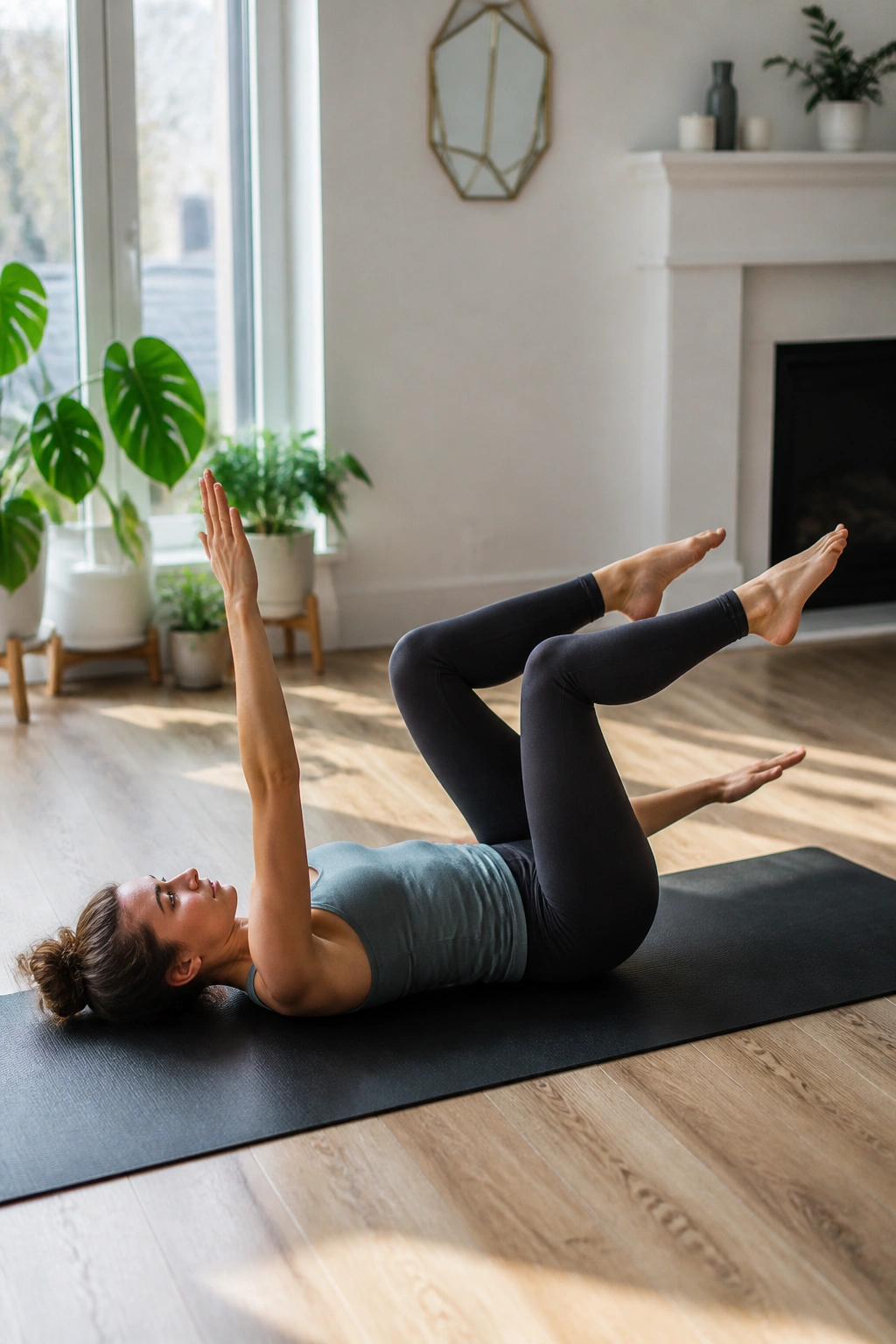
The core is not just your abs.
That sounds obvious until you watch people do fifty fast crunches and wonder why their lower back still feels cranky. A better core session teaches bracing, breathing, and control. The goal is to keep your torso steady while your arms and legs move around it.
Try this flow for fifteen minutes:
Dead bugs for 40 seconds. Rest 20. Bird dogs for 40 seconds. Rest 20. Side planks for 30 seconds per side. Hollow hold or tuck hold for 20 to 30 seconds. Finish with suitcase marches holding one loaded backpack or dumbbell on one side.
That last move is ugly in the best way. You stand tall, resist leaning, and walk slowly for 20 to 30 steps before switching sides. Your ribs want to flare. Don’t let them.
What to feel
Your lower back should feel quiet. Your belly should tighten when you exhale. Your neck should stay loose.
If a dead bug makes your back arch, bend your knees more and shorten the leg reach. If a side plank makes your shoulder complain, drop to the knees and keep going. Better shape beats heroics every time.
This is not the sweaty, flashy core workout people post about. It is the one that helps you carry groceries, twist less awkwardly, and stand up from the floor without grunting like a broken hinge.
6. A Dumbbell Complex for Fast Strength
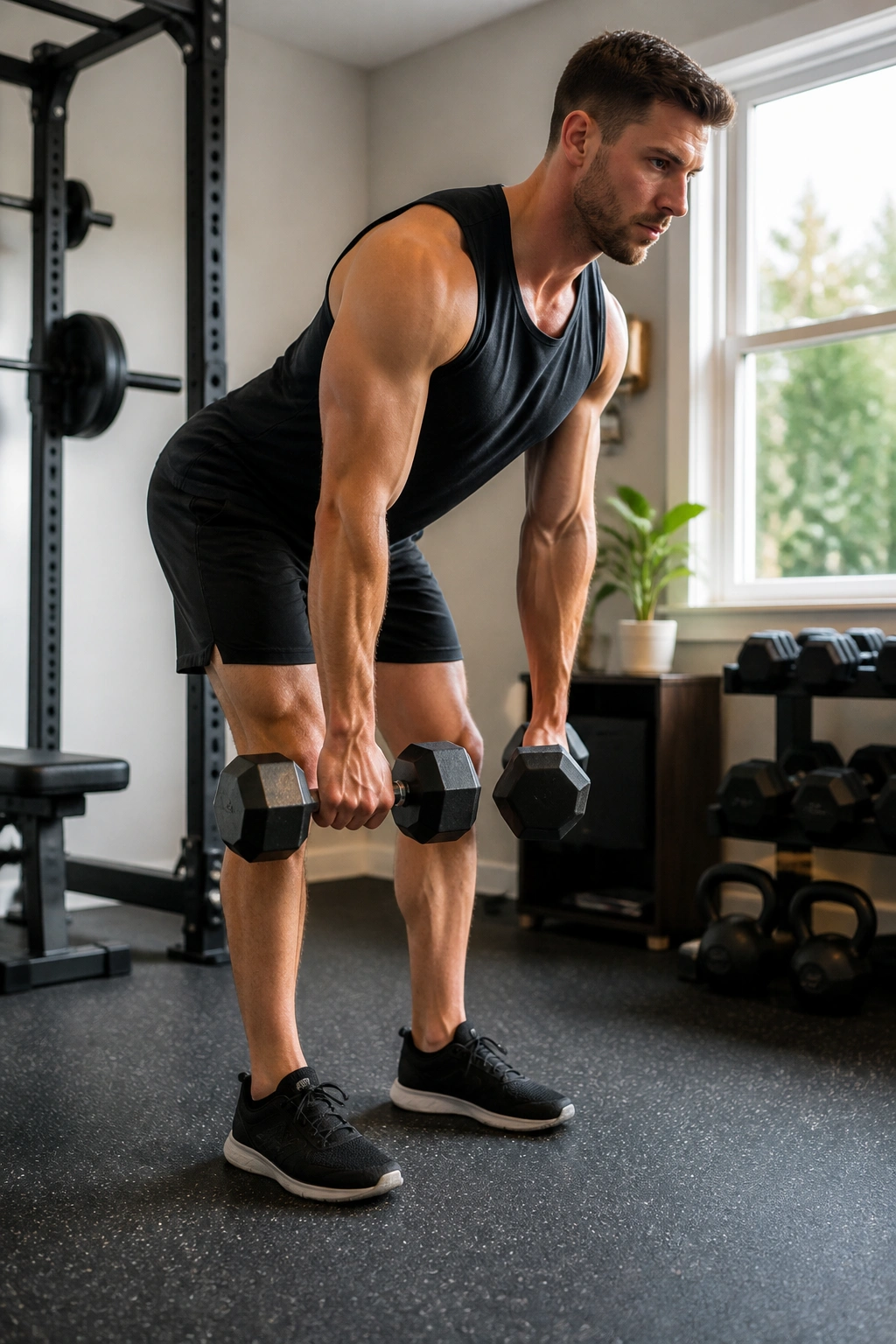
A dumbbell complex is strength training without the endless rest breaks. You hold the same pair of weights through a string of exercises, which keeps the session tight and makes fifteen minutes feel full.
This version is best if you have adjustable dumbbells or a pair that feels moderate for rows and presses. Pick a load you could press for about ten clean reps, not the heaviest thing you own. Heavy enough to matter. Light enough to move well.
Do five reps of each move without putting the weights down:
- Romanian deadlift
- bent-over row
- front squat
- overhead press
- reverse lunge, five per leg
Rest for 60 to 75 seconds. Repeat three times.
What makes it different
Unlike a straight strength session with long rests, a complex keeps your whole body under tension. Your grip gets involved. Your breathing gets involved. Your midsection has to stabilize the awkward transitions between movements.
That awkwardness is useful.
If the overhead press feels rough after the squat, lower the weight and keep the shape clean. If your back starts rounding on the deadlift, stop the descent at mid-shin. No prize for touching the floor with bad form.
I like this workout for days when I want to feel strong, not wrecked. It’s a fast, tidy way to get real work done without turning the living room into a circus.
7. Stair or Step Intervals That Make Every Floorboard Count
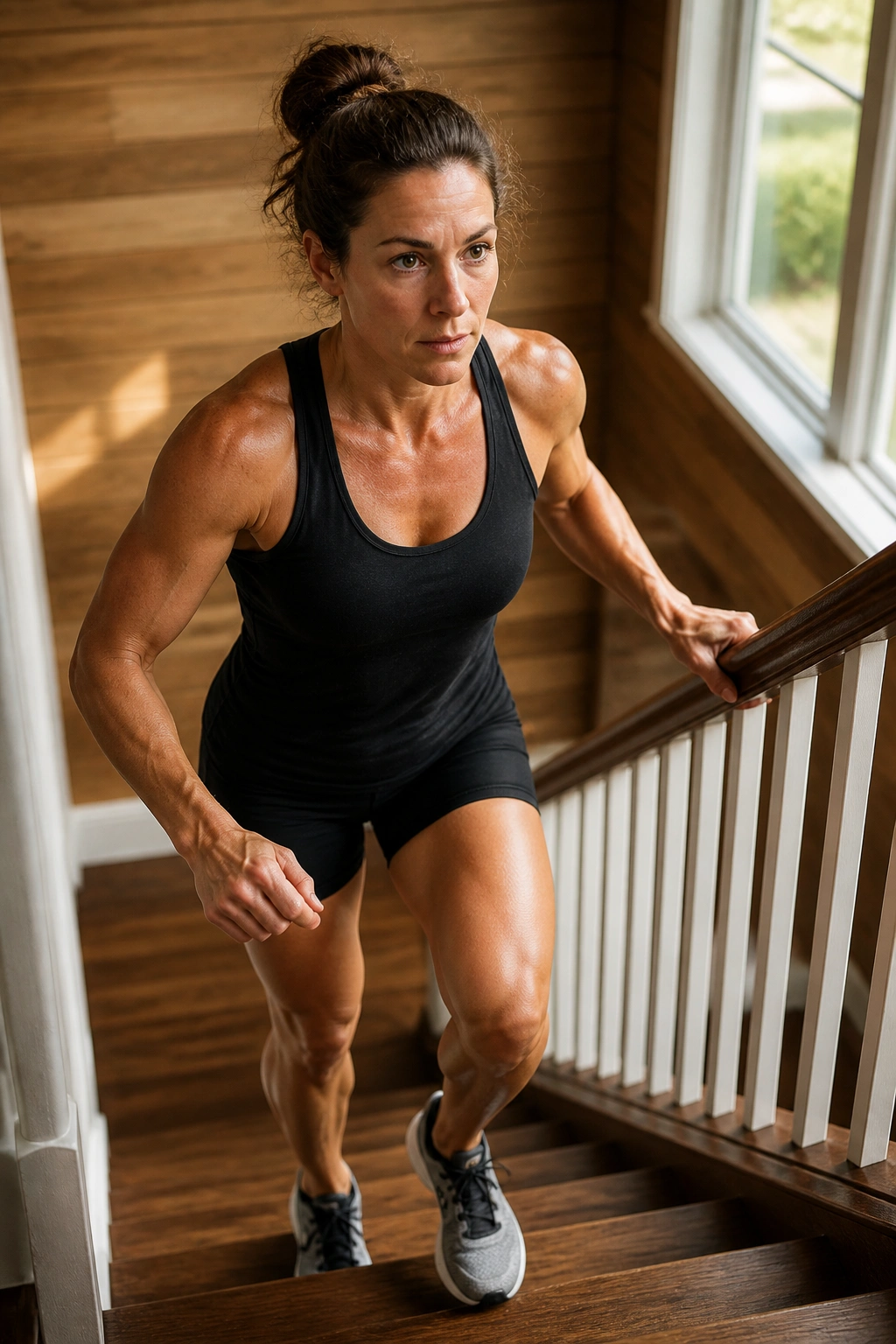
A single staircase can be a nasty little gym.
I mean that fondly. If you have stairs, a sturdy step, or even a low aerobic bench, you’ve got one of the best home cardio tools around. The incline changes everything. Your heart rate climbs faster, your glutes have to fire harder, and your calves stop pretending they’re off duty.
Use this 15-minute pattern:
- 1 minute brisk stair climbs
- 1 minute step-ups on the right lead leg
- 1 minute step-ups on the left lead leg
- 1 minute side steps up and down
- 1 minute easy walk and breathing reset
Run that circuit twice. Keep one hand near the rail if you need it, but don’t lean on it like a crutch unless balance is a real issue. The goal is steady work, not a race.
A few details matter here. Clear the stairs first. Dry socks can slide, so shoes help. If the climb feels too hot, slow the pace and shorten the step rather than taking giant lunging steps that trash your knees.
This workout is simple, and that is exactly why it works. The same few inches of elevation can leave your legs warm, your breathing sharper, and your mood less flat.
8. Shadow Boxing Rounds for Cardio and Coordination

Boxing rounds at home feel different from most cardio. There’s rhythm, timing, and a little bit of attitude.
You do not need to punch hard to get something out of it. In fact, beginners usually do better when they stay light on the feet and focus on clean shapes: jab, cross, hook, slip, reset. The power comes later. First, learn to move without freezing your shoulders.
Set a timer for three rounds of three minutes with 30 seconds of rest between rounds. During round one, stick to jabs and footwork. Round two, add crosses and hooks. Round three, mix in slips, uppercuts, and quick pivots.
Keep your hands up around cheek level. Rotate through your hips, not just your arms. And breathe out on the punch. That little exhale keeps you from holding tension in your neck.
This is one of the best fifteen minute workouts at home if you want to burn off nervous energy. It also wakes up coordination in a way that straight cardio sometimes misses. There’s a reason people end up smiling halfway through, even when they’re sweating hard.
Not every workout has to be polite. This one isn’t.
9. Glute Bridge and Hip Hinge Day
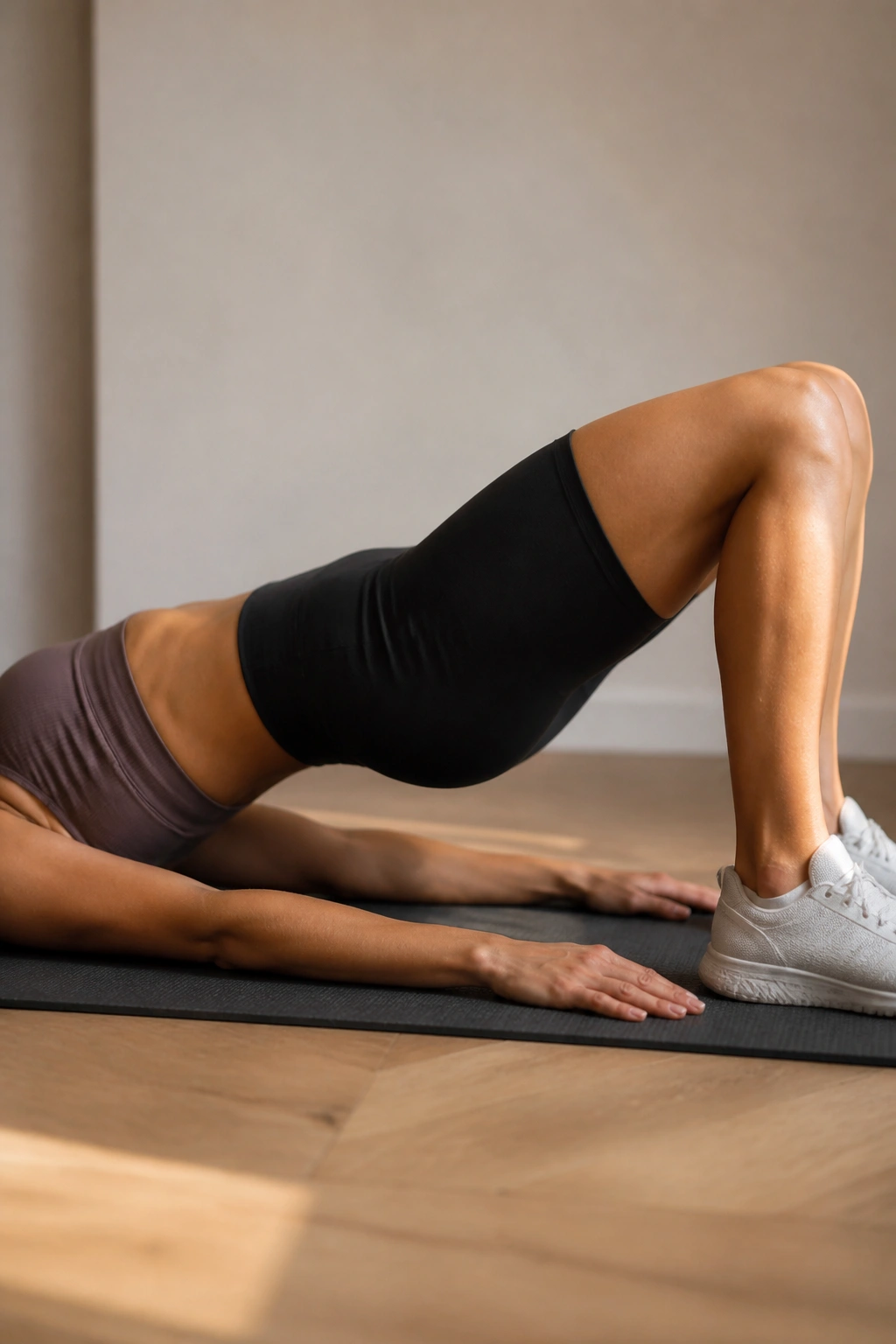
Your hips can get lazy.
Sitting has a way of doing that. The front of the hips tighten, the glutes switch off, and then everything feels weird when you stand up fast. A hip-focused session brings the chain back online without needing a ton of space.
Start on the floor with glute bridges. Drive through your heels and pause at the top for two full seconds. After ten reps, move into frog pumps, then a backpack Romanian deadlift if you have one. Finish with hip thrusts with your shoulders on a couch or bed edge if that setup feels stable.
What to watch for
If your hamstrings cramp, move your feet a little closer to your hips. If your lower back takes over, reduce the range and think about tucking the tail slightly at the top. If you’re using a backpack, pack the books tightly so the load does not swing around like a loose sack of potatoes.
This session is less glamorous than a sweat-heavy circuit, but I’d argue it solves more real-life problems. Tight hips make walking feel clunky. Weak glutes make stairs and deadlifts worse. A good hip hinge day fixes both.
Some workouts leave you drained. This one leaves you taller.
10. Pilates-Style Floor Flow for Deep Core Control
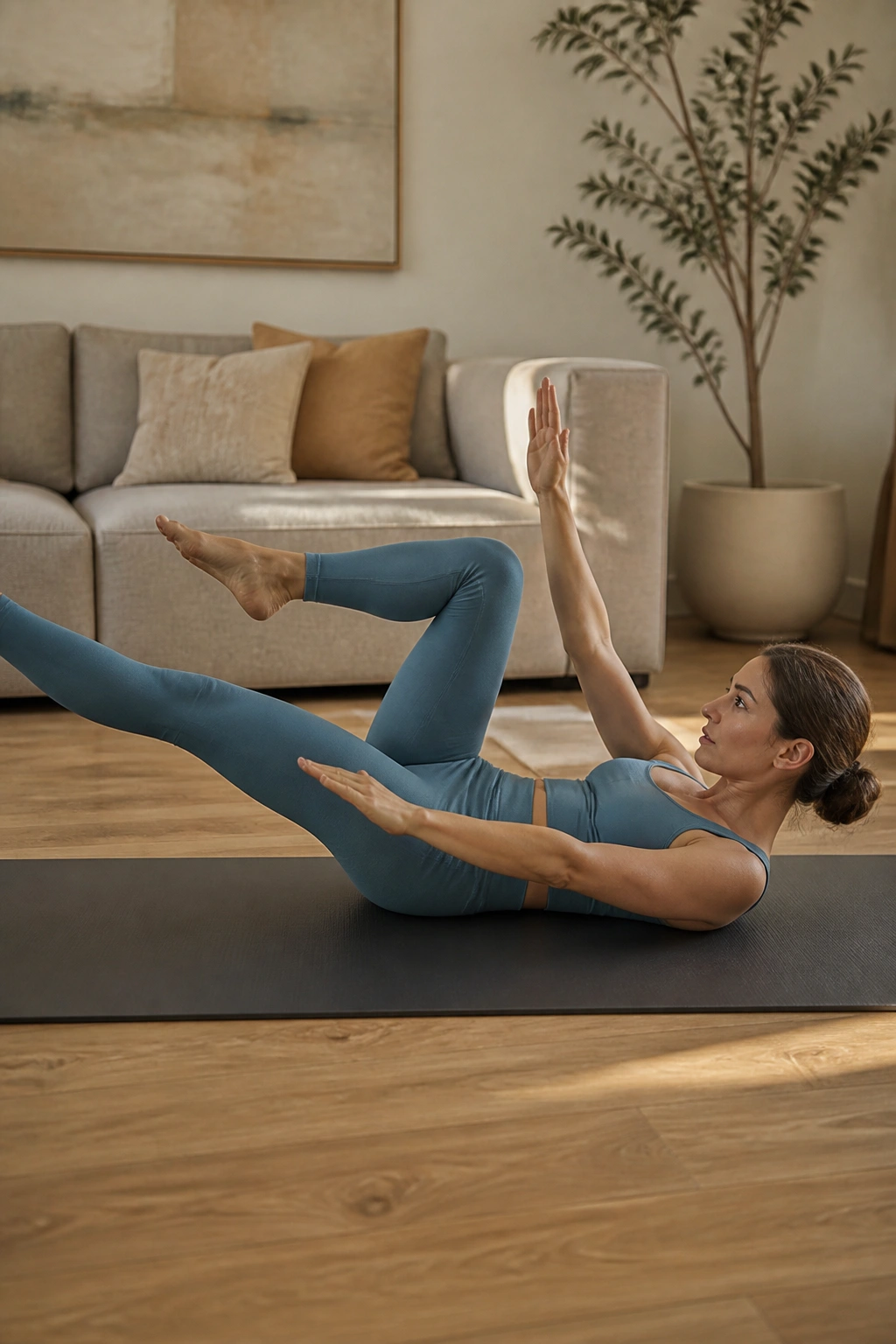
Want a workout that looks gentle and sneaks up on you? This is it.
Pilates-style floor work is sneaky because the movements are small, but the control demands are not. You’re holding your ribs in place, moving one limb at a time, and trying not to fling your lower back around like it’s part of the dance.
A tight 15-minute flow can look like this:
- 1 minute breathing and pelvic tilts
- 1 minute dead bugs with slow exhale
- 1 minute toe taps
- 1 minute single-leg stretch
- 1 minute side-lying leg lifts
- 1 minute glute bridge with alternating heel lifts
Repeat the block twice, then spend the final minute doing a slow roll-down to standing and a few deep breaths.
Keep the movement smooth. Not fast. If your neck wants to help, stop and reset. If your ribs pop up, shorten the lever and make the exercise smaller. The point is control, not drama.
I like this one on days when my body feels stiff but not exhausted. It sharpens the middle without pounding the joints, and the floor gives you instant feedback when your form gets sloppy. You either stay steady, or you don’t. There’s not much hiding.
11. Tabata Cardio With No Jumping
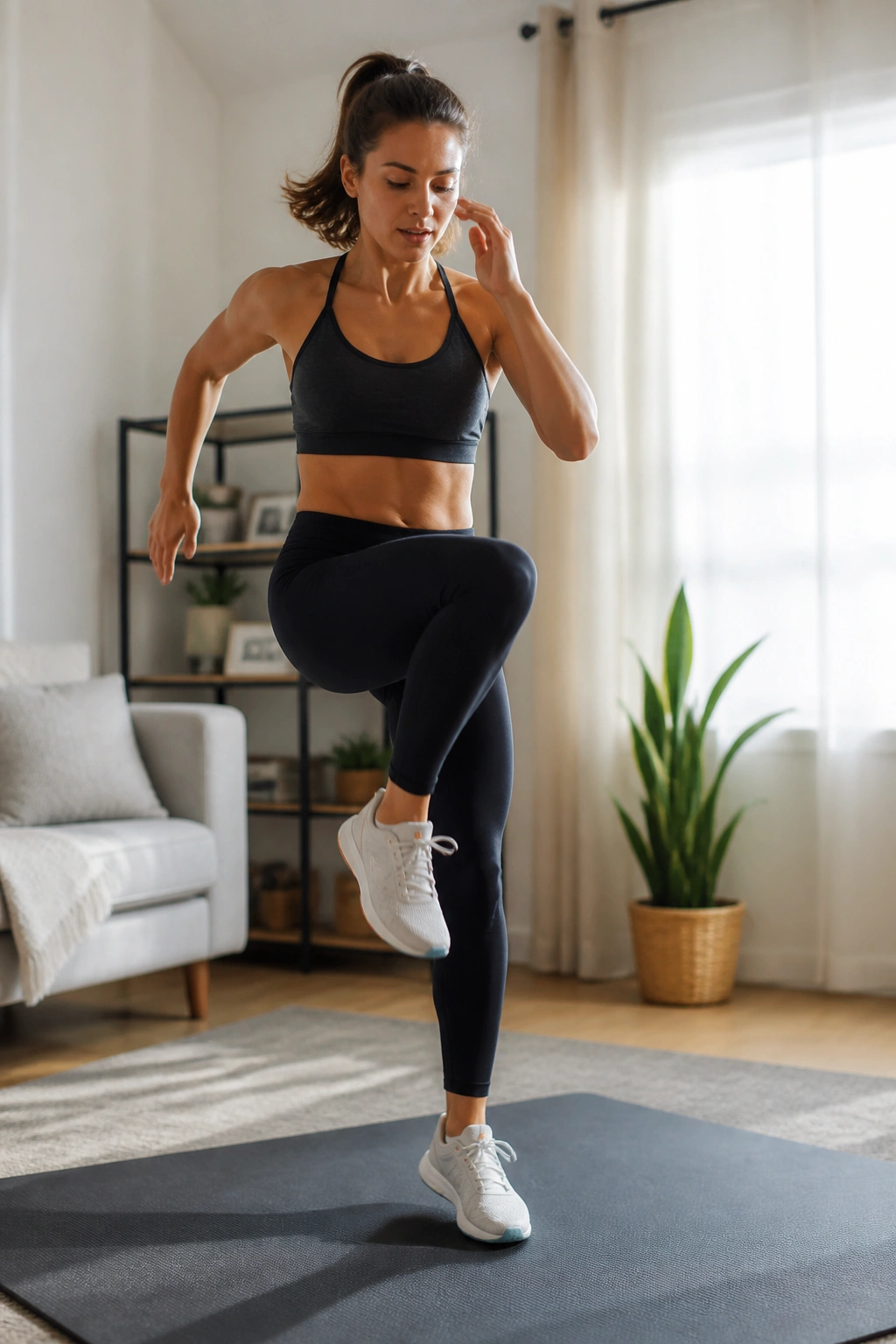
Four minutes can feel rude.
That is the nice thing about Tabata-style work. Twenty seconds on, ten seconds off, repeated eight times, and suddenly you’ve had a conversation with your lungs whether you planned to or not. The trick is choosing moves that raise your heart rate without turning the session into impact soup.
Use two blocks:
- Block one: fast high-knee marches and squat-to-reach
- Block two: mountain climbers and punch-outs
Do each block for four minutes, then rest for one minute between blocks. Add a three-minute warm-up at the start and a gentle walk or stretch at the end.
Form matters more than speed here. If your shoulders start climbing toward your ears during punch-outs, slow down. If your low back starts sagging in mountain climbers, raise your hands onto a bench or couch edge.
I like no-jump Tabata because it gets to the point fast. There’s no wandering. No wasted minutes. Just a short, sharp hit of work, a little rest, and then another round of paying attention.
It is not subtle. That’s the appeal.
12. Chair Workout for Tight Spaces
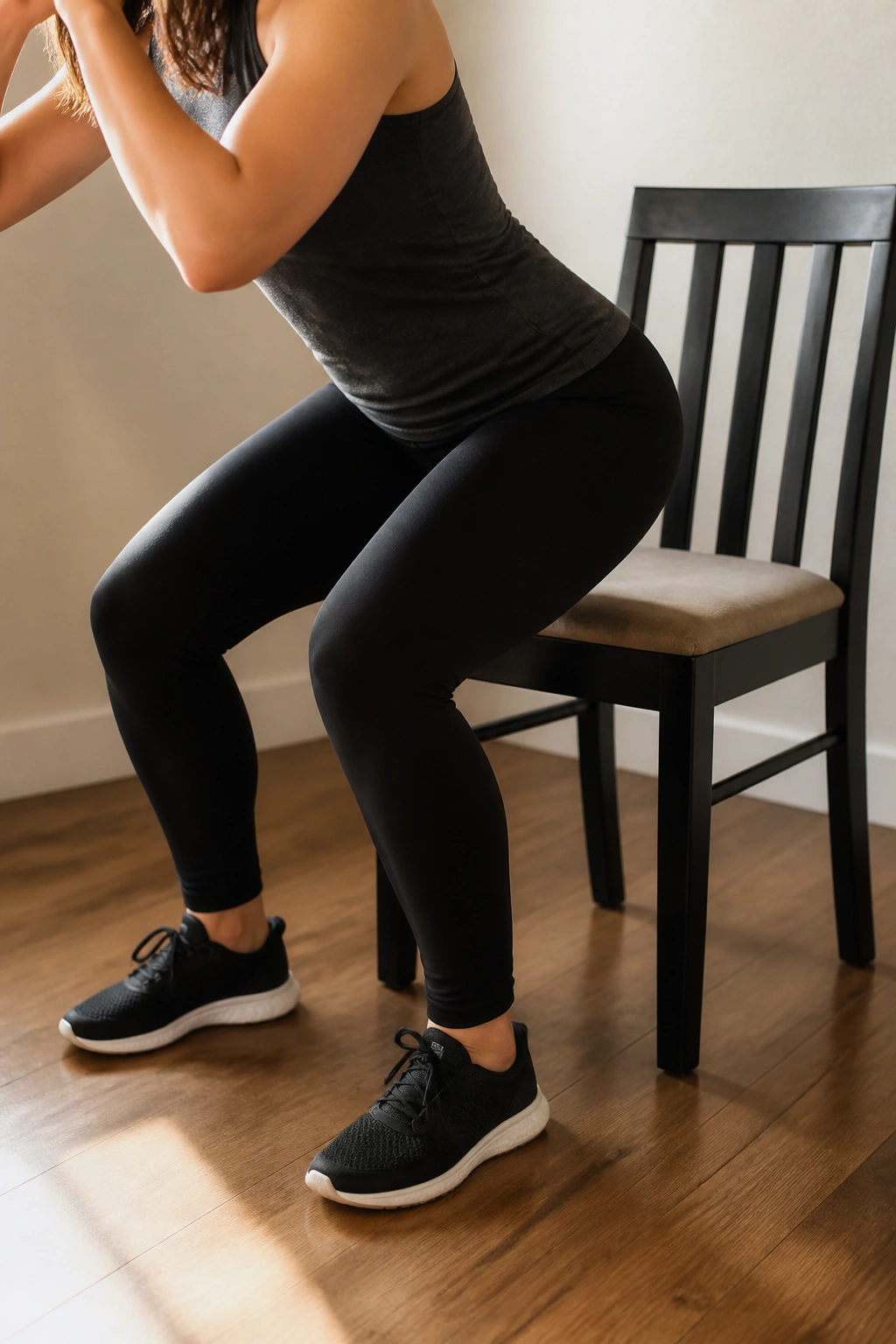
Some days the floor is covered with life.
Toy pieces. Laundry. A dog bed. A laptop bag you meant to move two hours ago. That is when a chair workout saves the day. One sturdy chair, preferably backed against a wall, gives you enough support to train without rearranging the room.
Try this circuit:
- sit-to-stand squats from the chair
- incline push-ups with hands on the seat or a kitchen counter
- standing knee drives with one hand lightly on the chair back
- seated knee extensions
- supported split squats with the rear foot on the floor
Run each move for 45 seconds, then rest 15 seconds. Repeat the circuit twice.
A couple of safety notes matter here. Use a chair that does not wobble. Skip wheels. If the chair slides, put it against a wall or on a rug with grip. Small detail. Big difference.
This is one of the more beginner-friendly home workout options because the chair gives you a reference point. You know how low you can squat. You know where your hands are. That kind of feedback takes the guesswork out of the session, which helps more than people realize.
Not every workout needs the floor to be perfect.
13. Resistance Band Circuit for Smooth, Constant Tension
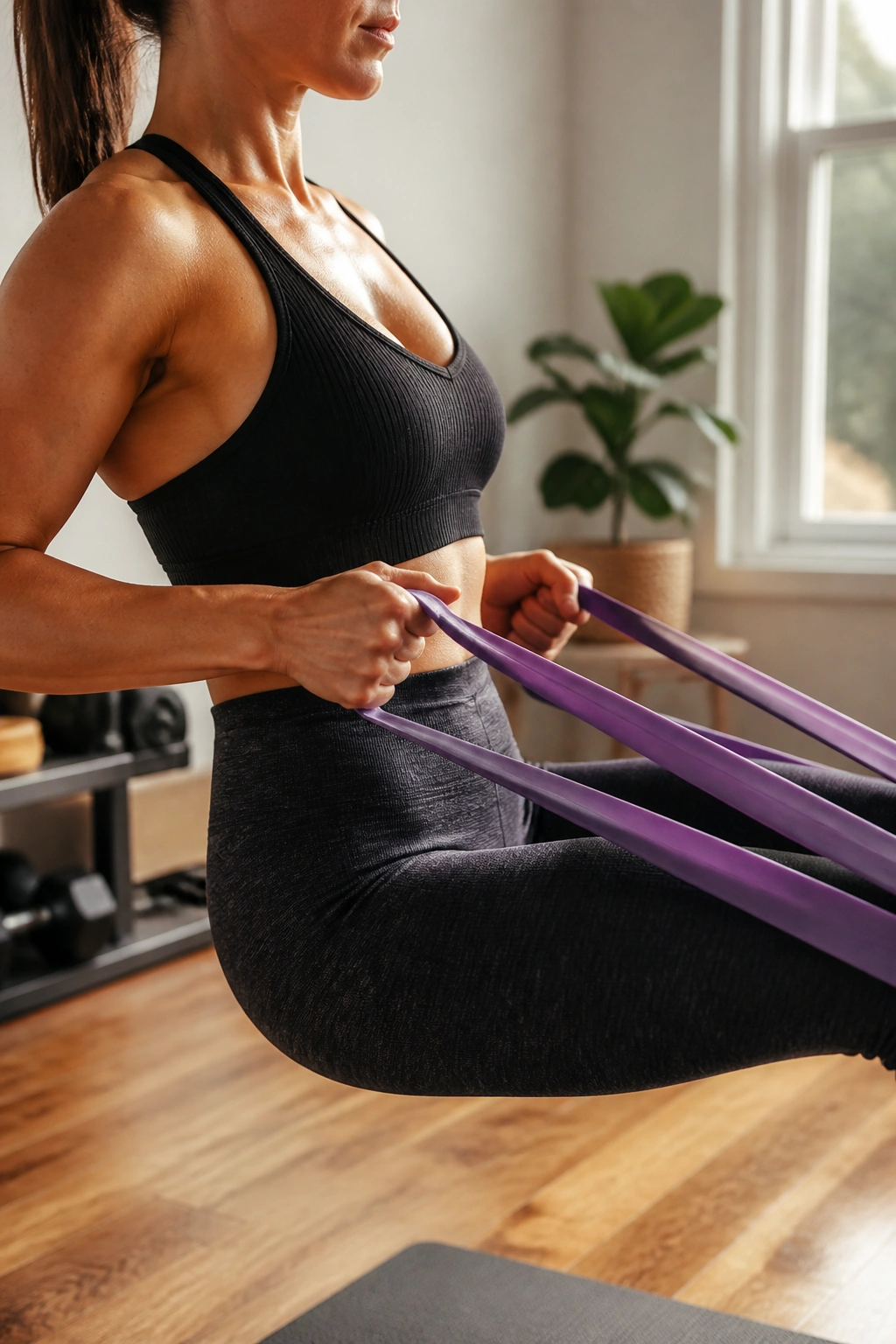
Bands are sneaky.
They look harmless in a drawer, then they light up your back, shoulders, and legs with a kind of tension dumbbells do not quite match. The pull gets harder as the band stretches, which means the top of each rep can feel tougher than the bottom. That changes the whole rhythm of the workout.
Use a long loop band or a handled band and move through this circuit:
- band rows
- band pull-aparts
- band squats
- lateral band walks
- overhead presses or chest presses
Work for 40 seconds, rest 20, and run the circuit twice. If the band feels too light, step wider or choke up on the handles. If it feels too tight and yanks your joints, go down a level. People get stubborn about bands and then blame the exercise. Wrong target.
Best setup
A light-to-medium band works best for most home sessions. If you only buy one, get one that feels easy on the first few reps but still gives resistance when stretched halfway across the room. That middle ground is where most home training lives.
I reach for bands when I want joint-friendly strength work that still feels active. They travel well. They take up nothing. And they punish lazy range of motion in a way that feels annoyingly fair.
14. Mobility Flow for Stiff Hips and Shoulders
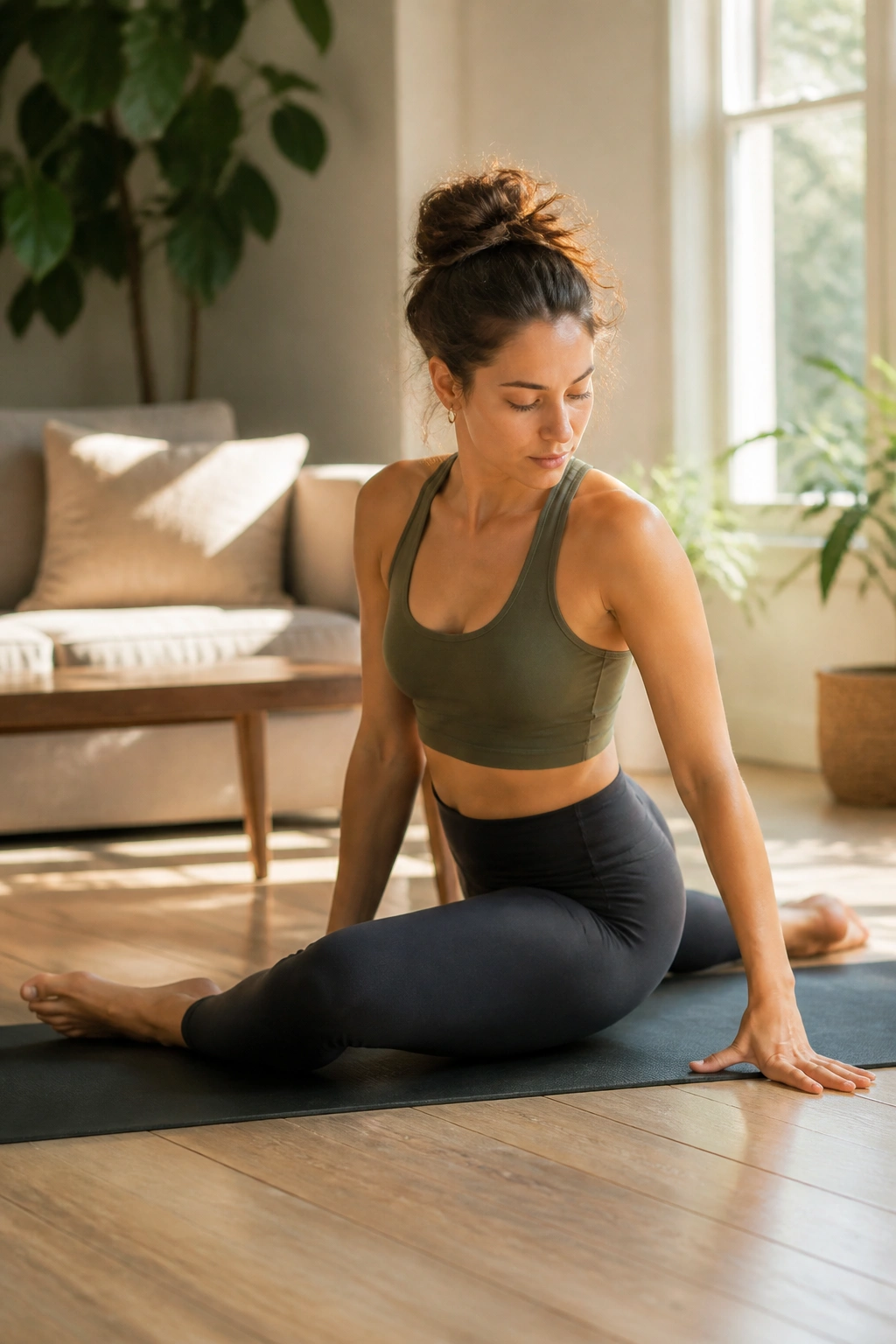
Your body can feel stiff without being injured.
That’s a useful distinction. Stiffness often comes from sitting too long, breathing shallow, or not taking joints through their full range for a while. A mobility flow helps more than a random stretch here and there because it keeps movement connected.
Start with cat-cow for the spine, then move into 90/90 hip switches. Follow that with a half-kneeling lunge and a reach overhead, thoracic rotations on all fours, wall slides, and ankle rocks against the floor or wall. Spend about a minute on each, then repeat the few that feel especially tight.
A simple 15-minute flow
- 2 minutes cat-cow and deep breathing
- 3 minutes 90/90 switches
- 3 minutes lunge with reach, both sides
- 3 minutes thoracic rotations
- 2 minutes wall slides
- 2 minutes ankle rocks and calf stretches
Breathe out as you sink into the stretch. Don’t bounce. And don’t force a range your body clearly does not have yet. A tiny improvement held for a few breaths beats a dramatic pose you wobble through.
This one is not a sweat session. It is a reset. On stiff mornings or after a long desk stretch, it can be the difference between moving like wood and moving like a person.
15. Single-Leg Balance and Stability Session
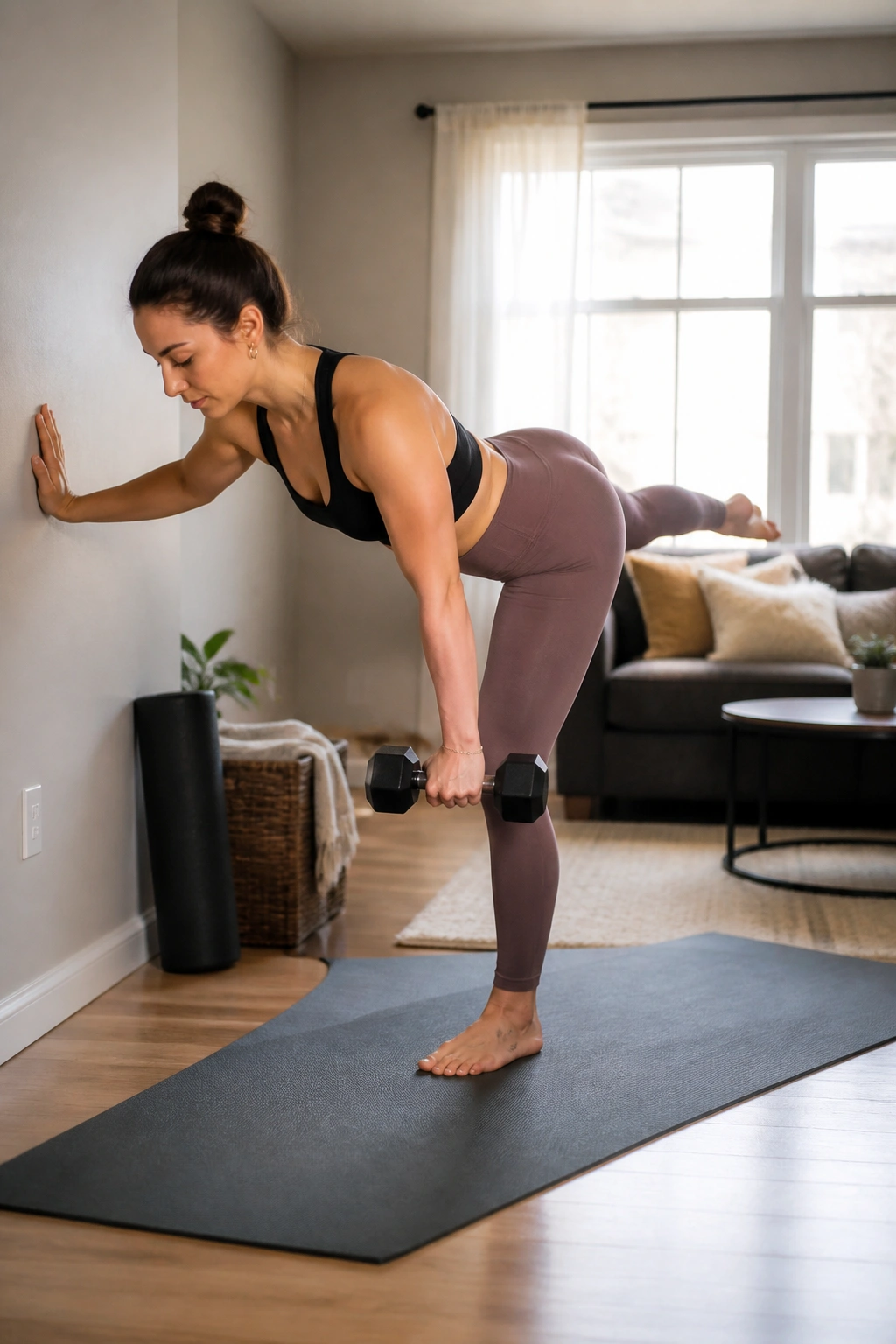
Most people ignore balance until the floor wins.
A wobbly ankle, a weak glute med, a knee that caves inward on stairs—those little faults usually show up under load, not on cue. Single-leg work fixes that. It also teaches your body to stop cheating by shifting everything to the stronger side.
Use this sequence:
- single-leg Romanian deadlift to a wall or chair
- split squat hold for 20 to 30 seconds per side
- heel-to-toe walk across the room
- side reach while standing on one leg
- slow calf raises, one leg at a time
Do each move for 40 seconds, then rest 20. Run the sequence twice.
Keep a wall nearby if you need it. A fingertip on the wall is fine. A death grip is not. The point is to train the balance system, not to stage a wobble contest.
This workout feels modest while you’re doing it, then you notice the result later: walking downstairs feels cleaner, standing on one leg feels less like a gamble, and your ankles stop feeling as cheap as they used to.
Small work. Real payoff.
16. Dance Cardio Intervals for a Lighter Mood
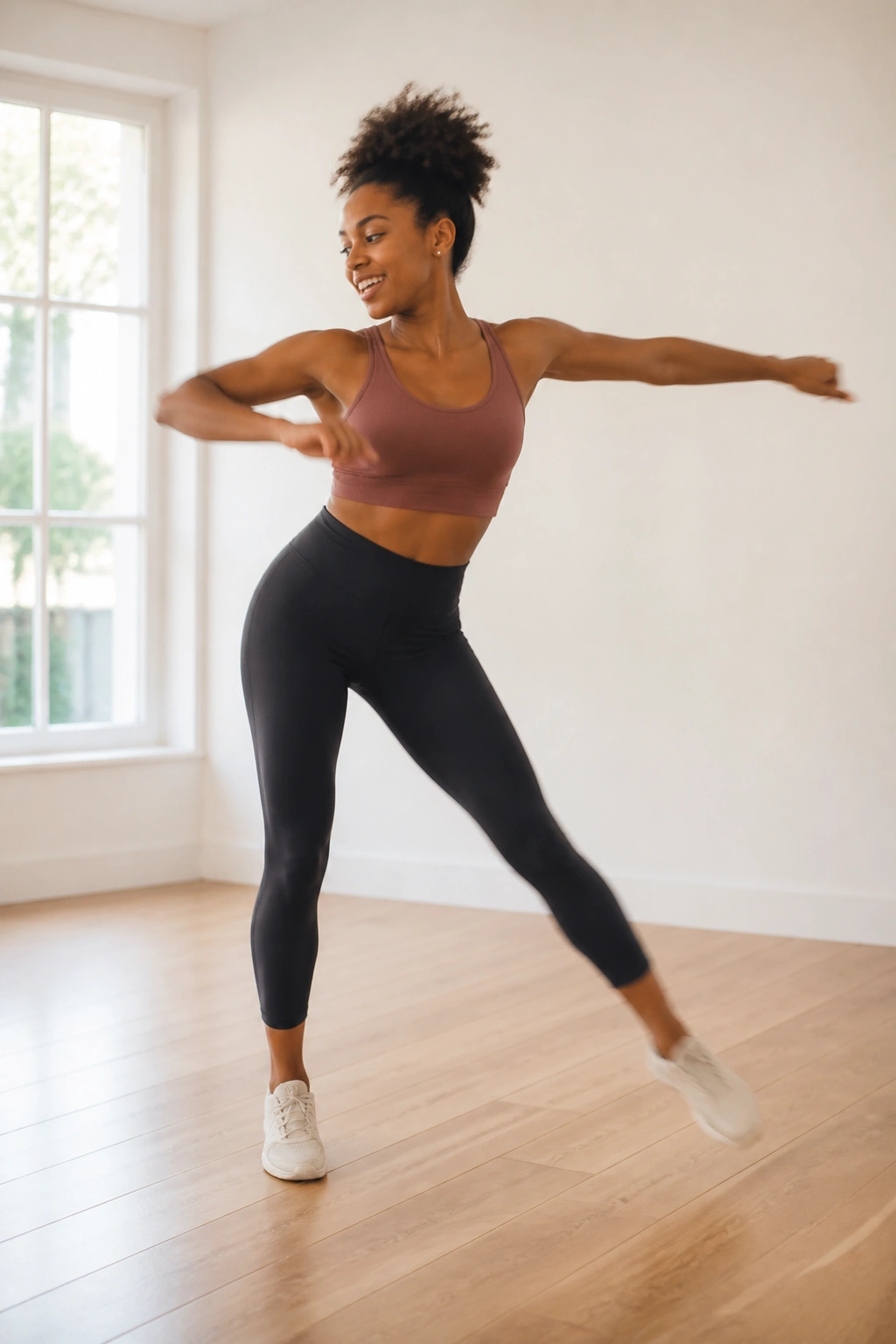
If a workout feels like punishment, people quit it.
Dance cardio fixes that faster than most plans because the goal is not perfection. The goal is to keep moving. Step touch, grapevine, knee lift, reach overhead, turn, repeat. That’s enough. You do not need choreography that looks like a music video.
Set a timer for 45 seconds on, 15 seconds off. Choose four simple moves and rotate through them for three rounds. A clean sequence might look like this:
- step touch with arm swings
- grapevine right and left
- alternating knee lifts with a reach
- quick march or heel digs
If you want more challenge, add bigger arm sweeps or a low squat between steps. If you want less impact, keep one foot close to the floor and make the movements smaller.
I like this workout because it changes the tone of the room. It feels less clinical. More human. You finish with a little sweat, sure, but also with a better mood, which is not a minor detail at all.
And yes, the music matters. Pick songs that make you move without thinking too hard.
17. Backpack Total-Body Strength Circuit
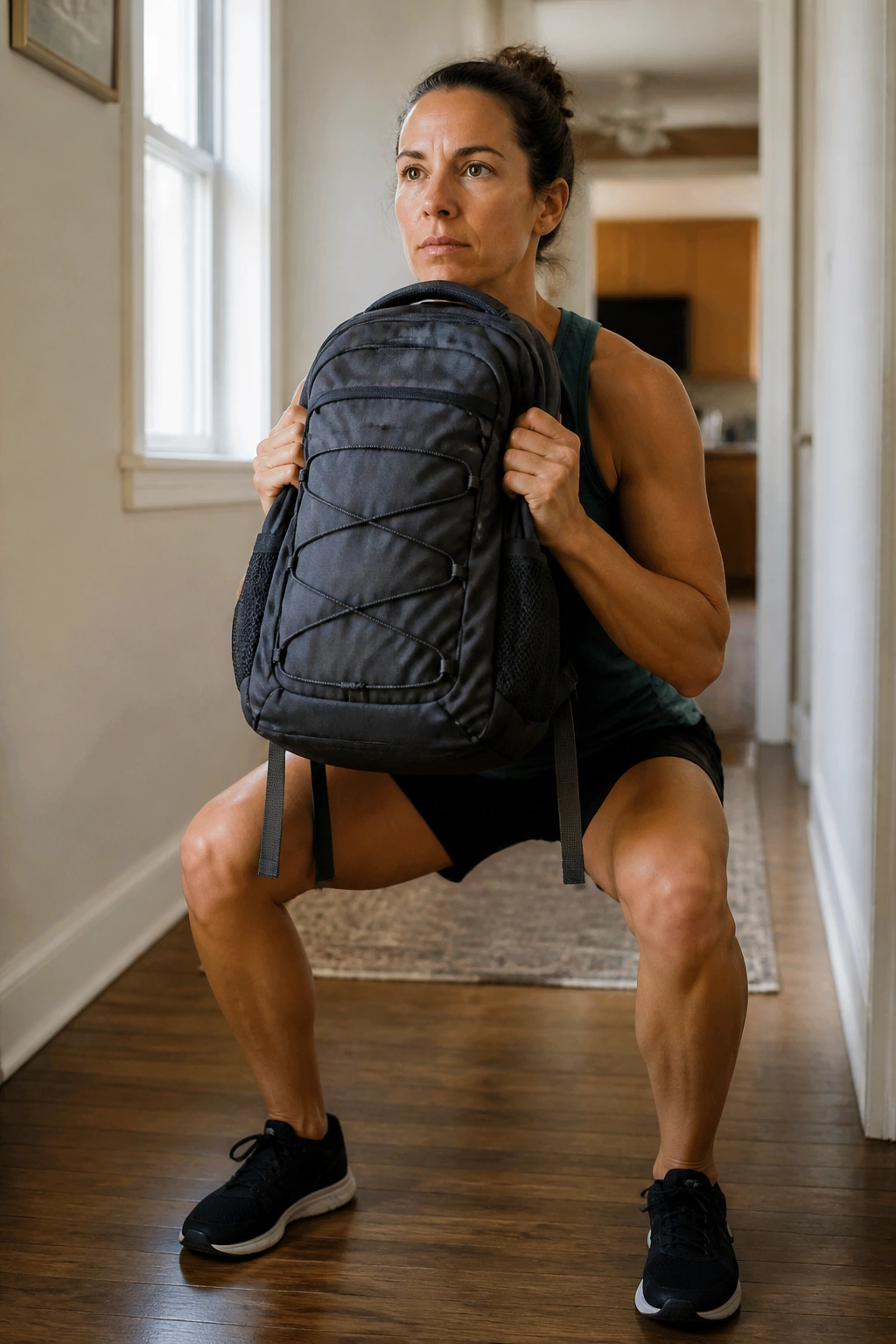
A backpack full of books is not glamorous, and it works.
That’s probably why I like it. Home fitness gets easier when you stop waiting for perfect equipment and use what’s already there. A sturdy backpack can become a goblet squat, a row, a deadlift load, or a carry. The shape is awkward enough to make your core pay attention.
Pack the bag so the weight does not bang around. About 10 to 15 pounds is enough for many people to start, though a heavier setup may make sense if the bag is strong and the books are dense. Zip it tight. Check the straps.
Use this circuit:
- backpack goblet squats
- bent-over backpack rows
- backpack Romanian deadlifts
- overhead press or front raise
- suitcase carry march around the room
Work 40 seconds per move, rest 20, and repeat twice.
Who this suits
This is the session for anyone who wants strength work without buying anything new. It also suits apartment living, because a backpack does not clank the way dumbbells can. If you hear a lot of sloshing or shifting inside the bag, tighten the load before you start.
There is something satisfying about making ordinary stuff work hard. A backpack should hold books, sure. It can also teach your body to lift.
18. Recovery Reset With Stretching and Breathing
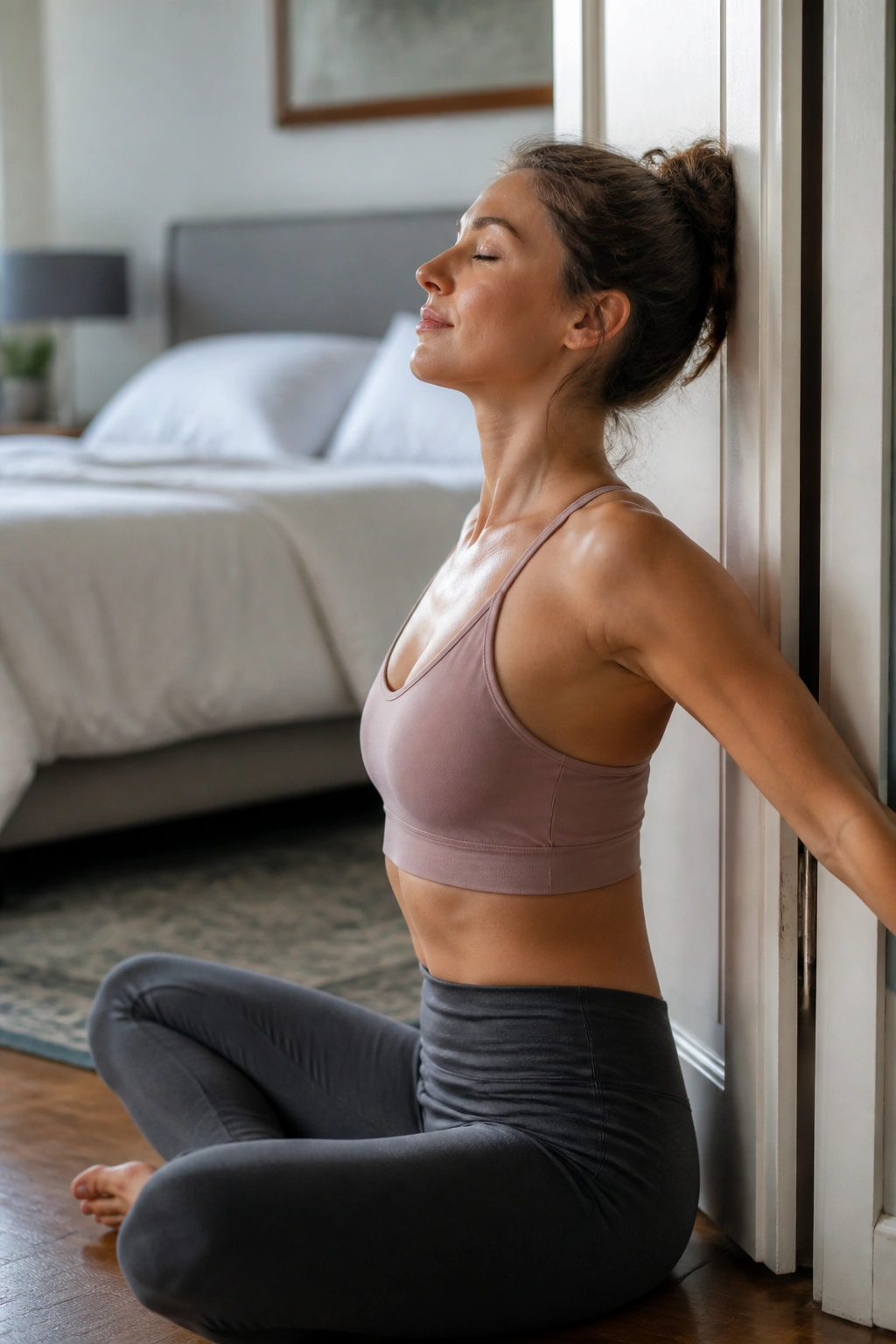
Not every fifteen-minute session needs to leave you wiped out.
Some days the smartest move is to bring the nervous system down a notch and let your joints feel space again. A recovery reset still counts. I’d argue it counts a lot, because consistency dies when every workout demands a full emotional commitment.
Try this sequence:
- 2 minutes slow nasal breathing while walking around the room
- 2 minutes cat-cow and child’s pose
- 2 minutes hip flexor stretch, one side at a time
- 2 minutes hamstring stretch with a bent knee
- 2 minutes chest opener against a wall or doorway
- 3 minutes easy marching, shoulder rolls, and ankle circles
- 2 minutes still breathing on the floor or seated
Keep everything slow. No forcing. No bouncing. The exhale should be longer than the inhale for most of this, which helps your body settle after harder sessions or a tense day.
This is the one I use when I know I should move but do not have the appetite for a full sweat session. It loosens the spots that get tight from life, not just exercise. And it leaves you in a better place for tomorrow, which is often the point people miss when they think every workout must feel dramatic.
Some sessions build. Some sessions repair. Keep both in the mix, and the fifteen-minute home workouts start looking less like a compromise and more like a system.
