



Dumbbell arm workouts work best when they stop pretending biceps are the whole story. If you want arms that look firmer in a T-shirt and still move well overhead, you need curls, triceps work, shoulder raises, and a little forearm training—not 40 shaky reps of the nearest curl variation.
The clean look people call toned comes from two things: enough muscle to give the arm shape, and low enough body fat to let that shape show. Dumbbells help with the first part. They also force each side of your body to pull its own weight, which matters more than most people want to admit when one arm keeps stealing the set.
Heavy is not the answer by itself. A 10-pound dumbbell you can control for 10 strict reps will do more for your arms than a 25-pound one that turns every curl into a hip swing. The elbow stays pinned. The wrist stays quiet. The target muscle actually works.
Pick 4 to 6 of the moves below for one session, or spread them across two upper-body days. Some are pure biceps work, some hit the triceps hard, and a few widen the shoulders just enough to make the whole arm look better from the front and side. Start with the first one and the pattern will make sense fast.
1. Dumbbell Arm Workouts Start Here: Alternating Dumbbell Curl
The alternating dumbbell curl is the plain-looking move that still earns its place in almost any arm session. It gives you a clean path to build biceps size without turning the set into a full-body wobble. If your goal is firmer arms, this is the kind of work that pays off because it teaches control before anything else.
Stand tall, keep your ribs down, and curl one dumbbell at a time with the palm turning up as the weight rises. Three sets of 8 to 12 reps per arm is a solid starting point. The last two reps should feel slow but not ugly. If your torso starts rocking, the weight is too heavy. Simple.
How to keep it honest
- Keep your elbow close to your side.
- Lower the dumbbell for 2 to 3 seconds.
- Squeeze the biceps for a full second at the top.
- Let the non-working arm stay quiet instead of helping.
My blunt opinion: if you can’t lower the dumbbell under control, you’re not training your biceps. You’re rehearsing a swing.
2. Hammer Curl Builds Arm Thickness Fast
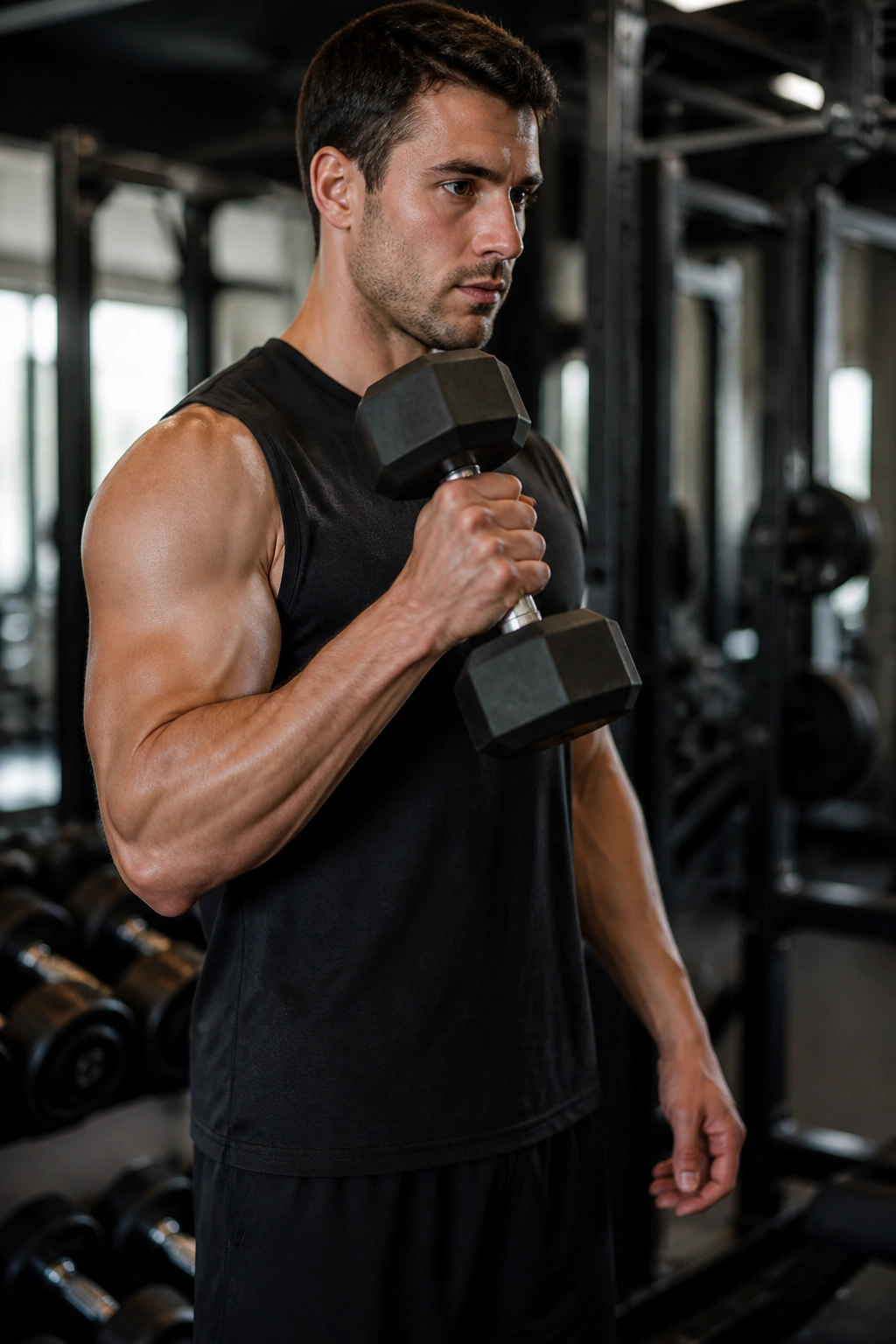
Hammer curls are the move I reach for when a straight curl starts feeling stale. The neutral grip—palms facing in—hits the brachialis and brachioradialis along with the biceps, which is why the upper arm and forearm start to look thicker from the side.
That matters. A lot of people chase the front-view biceps peak and ignore the meat that sits underneath it. Hammer curls fix that without needing fancy equipment or a bench. Do 3 sets of 10 to 12 reps, standing or seated, and keep the dumbbells moving in a straight line instead of drifting forward.
The easy mistake is turning the rep into a shrug. Don’t. Your shoulders should stay low, your wrists should stay straight, and the top of the rep should feel like a hard stop—not a fling.
A good hammer curl feels dense. Not flashy. Dense.
3. Concentration Curl Forces Strict Form
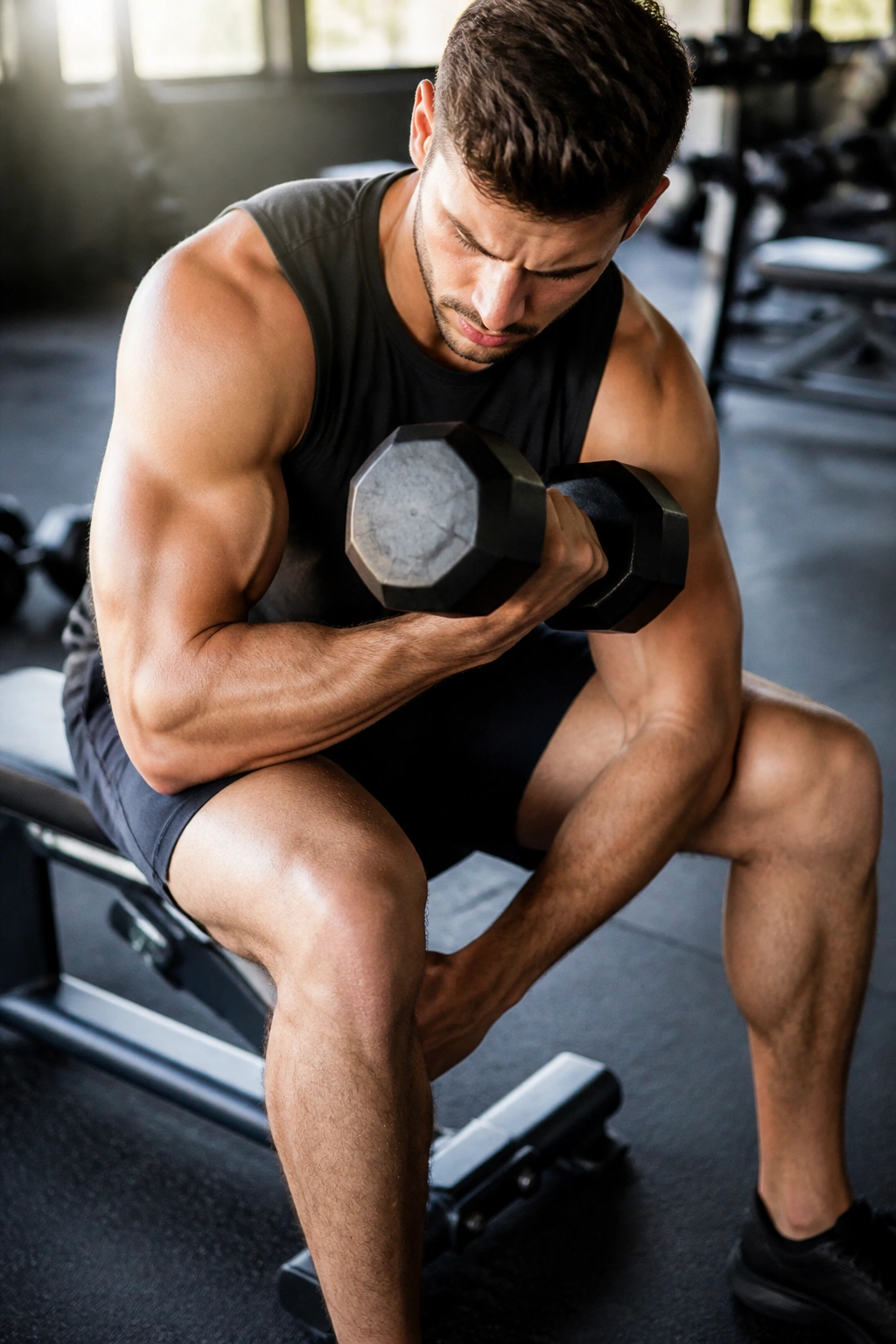
There’s nowhere to hide in a concentration curl. You sit down, brace your elbow against the inside of your thigh, and curl one dumbbell without the usual help from momentum. That’s why this one shows up in good arm routines so often. It punishes sloppy technique in a way standing curls don’t.
Use a moderate weight and take your time. Two to three sets of 10 to 12 reps each side is plenty. The curl path should feel short and exact, almost like you’re drawing the weight up in a narrow lane. At the top, pause for a second and squeeze hard.
What to watch for
- Don’t let the shoulder roll forward.
- Don’t bounce your elbow off your leg.
- Don’t use a weight that forces you to twist your torso.
- Keep the lowering phase slow and clean.
If you want a move that makes the biceps do the work and nothing else, this is a good one. It is also humbling. That part is useful.
4. Incline Dumbbell Curl Creates a Long Stretch
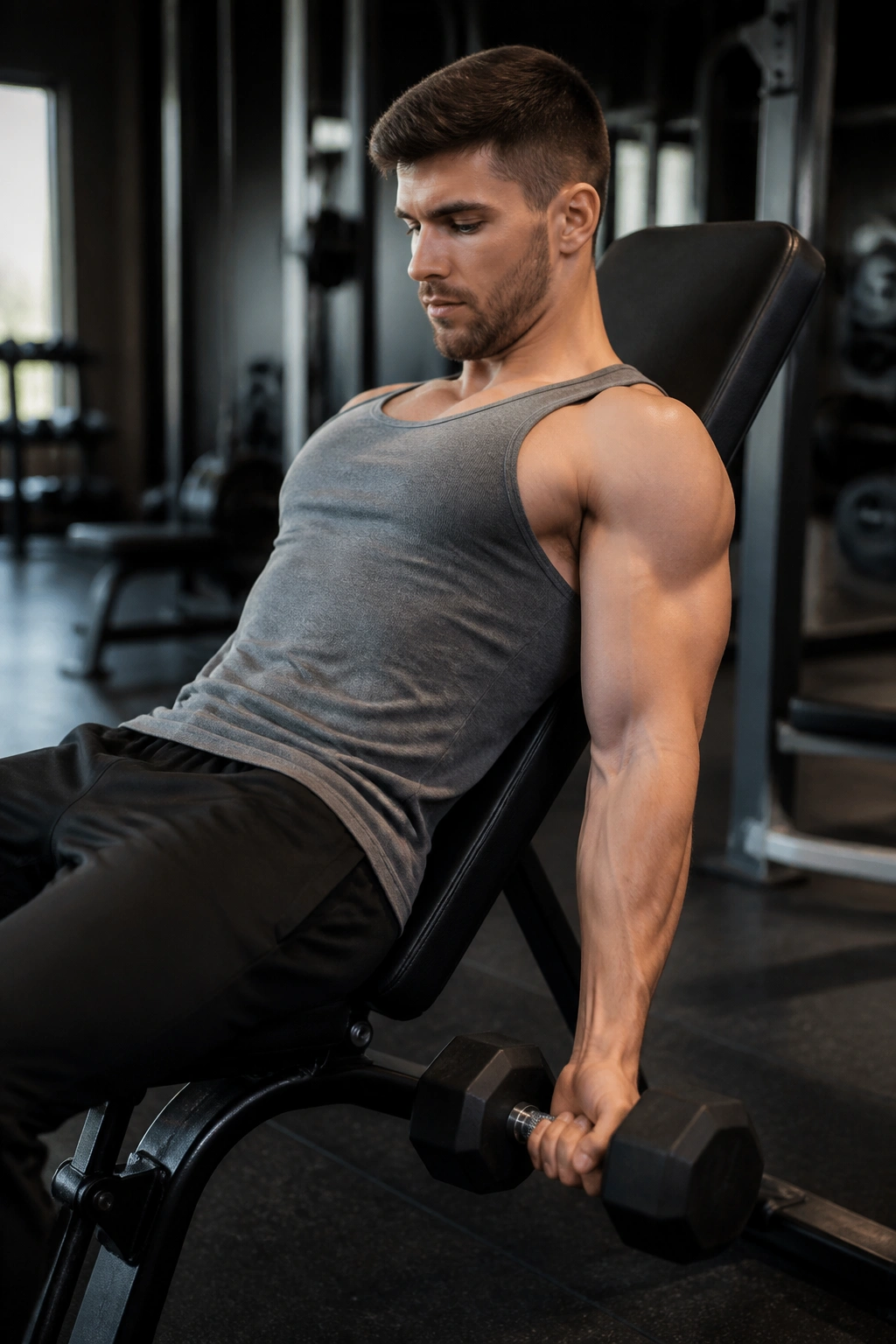
Set a bench to about 45 to 60 degrees, sit back, and let your arms hang slightly behind your torso. That stretched position is the whole point of the incline dumbbell curl. It loads the biceps when the muscle is already long, which is a different feel from standing curls and, for many people, a better one.
The first rep can feel strange if you’re used to swinging weights around. Good. That usually means the curl is doing its job. Keep your upper arms still, turn the palms up as you lift, and lower slowly until your elbows feel fully open without losing control. Three sets of 8 to 10 reps is plenty.
Why the stretch matters
The biceps do not only work well when they’re shortened and squeezed. They also respond to controlled work in the stretched position, and incline curls are one of the easiest ways to get that without fancy gear.
You’ll know you’ve done it right when the bottom half of the rep feels hard and the shoulders stay calm. If your chest pops forward or your elbows drift, cut the load.
5. Zottman Curls Hit Biceps and Forearms Together
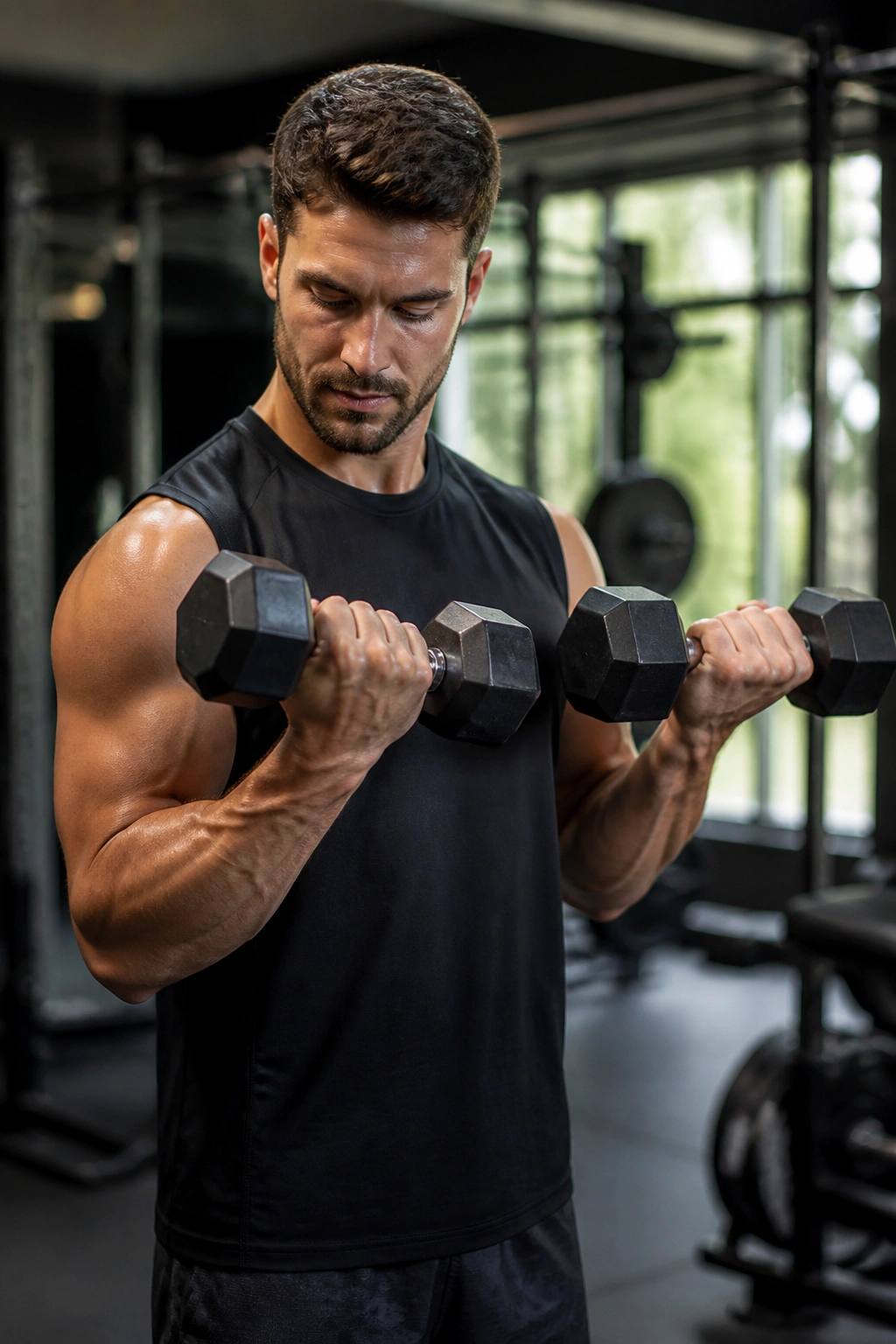
The turning part is the point. Curl the dumbbells up with palms facing forward, rotate to palms-down at the top, then lower under control in that reverse grip. That one twist changes the whole exercise. Biceps handle the lift, then the forearms and grip get punished on the way down.
Zottman curls are one of those sneaky moves that look simple until you try to keep the lowering phase clean. Use 3 sets of 8 to 10 reps and go lighter than you think you should. If the rotation feels jerky, the weight is too ambitious.
The payoff shows up in places people forget to train. Forearm size, elbow stability, grip stamina. All of that matters when you stack dumbbell work over time.
Tiny rule: if the wrist bends back on the way down, stop and reset.
6. Cross-Body Hammer Curl Fills Out the Upper Arm
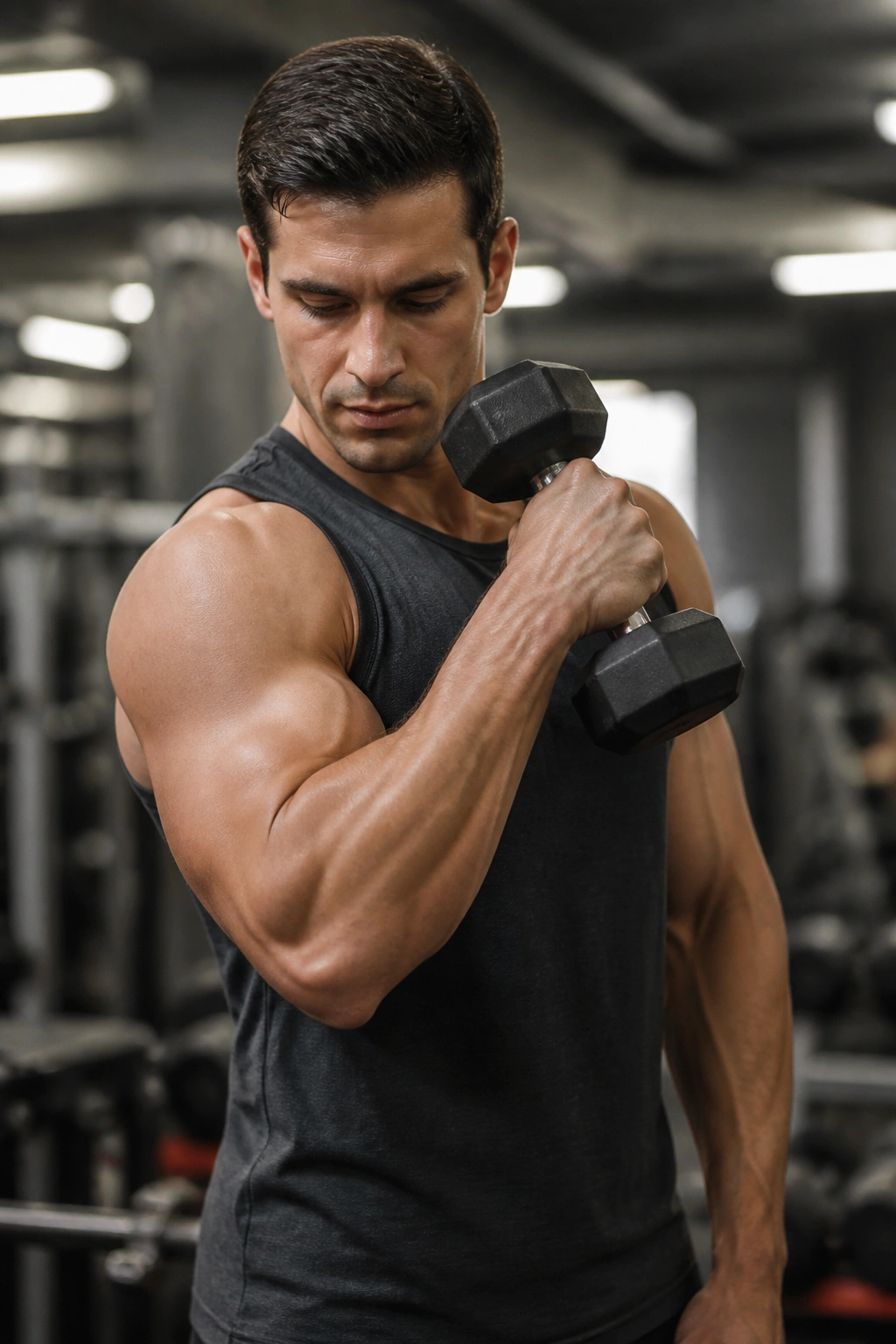
Cross-body hammer curls send the dumbbell toward the opposite shoulder instead of straight up the front. That small path change shifts the feel toward the brachialis and brachioradialis, which is why this variation often builds a fuller-looking upper arm than people expect.
Stand tall, keep one dumbbell in a neutral grip, and curl across the body so the hand ends near the opposite chest pocket. Three sets of 10 to 12 reps per arm works well. The motion should feel clean, almost like a diagonal rail. If the elbow drifts outward, you lose the point of the movement.
A lot of lifters like this one because it feels friendlier on the wrists than a straight supinated curl. It also pairs well with a heavier triceps move, since the grip position gives the elbow a break from constant turning.
Good form here is quiet. No body English. No shoulders jumping. Just a solid pull across the body and a slow return.
7. Overhead Dumbbell Triceps Extension Stretches the Long Head
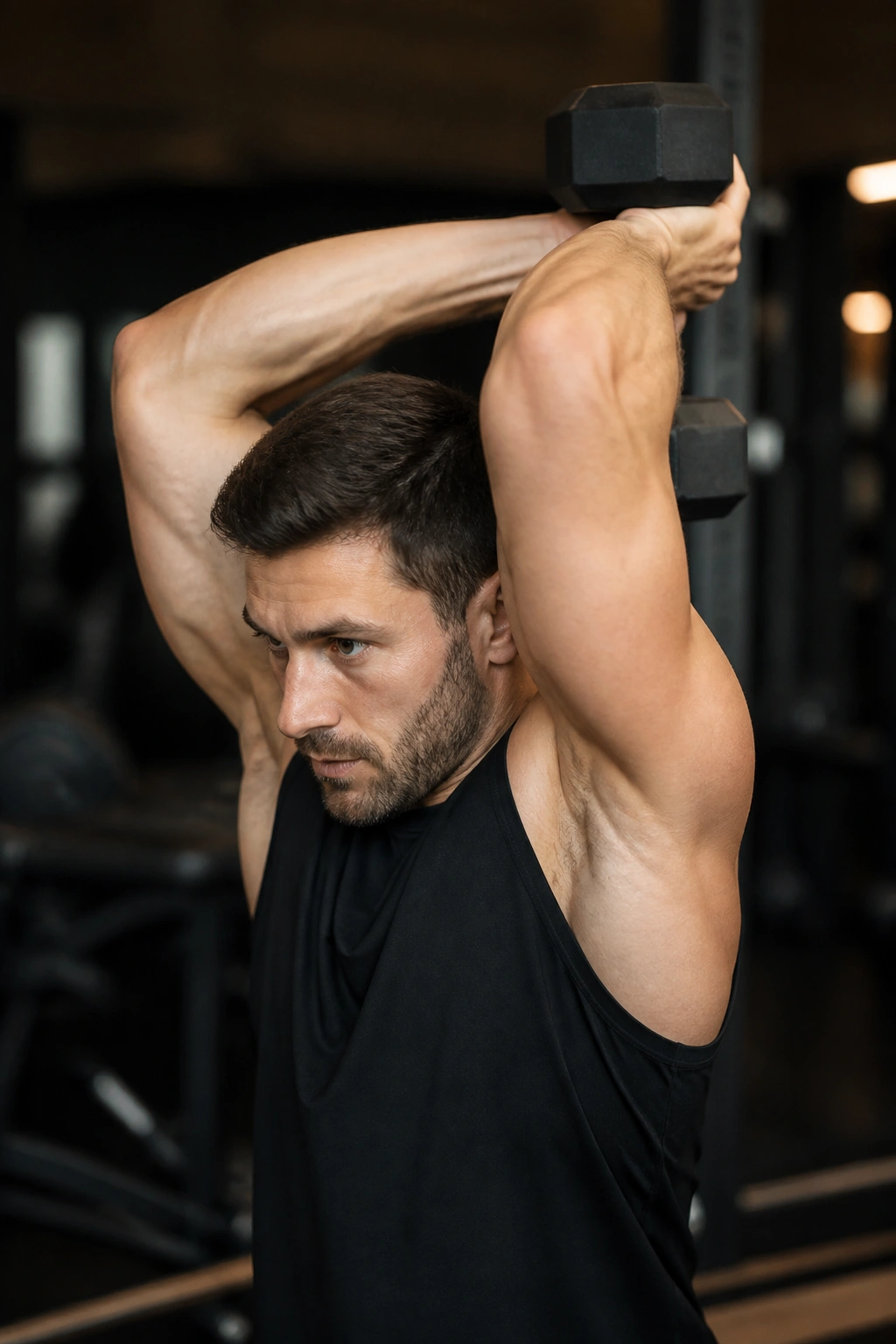
Why does this show up in so many arm sessions? Because the triceps long head gets stretched hard when your arm is overhead, and that’s a useful position if you want the back of the arm to look fuller. One dumbbell is enough. Two work too, if they stay balanced.
Hold the weight overhead, keep your elbows pointing forward or slightly in, and lower behind your head under control. Then press back up until the elbows straighten without locking so hard that your shoulders shrug. Three sets of 10 to 15 reps usually hits the sweet spot.
Elbow rules that save the set
- Keep the elbows close together.
- Don’t flare your ribs.
- Lower until you feel a strong stretch, not shoulder pain.
- Use a weight you can move without bending back at the lower spine.
A lot of people rush this one and turn it into a back arch. Bad idea. The triceps should feel stretched and challenged. Your lower back should not.
8. Dumbbell Triceps Kickbacks Reward Patience
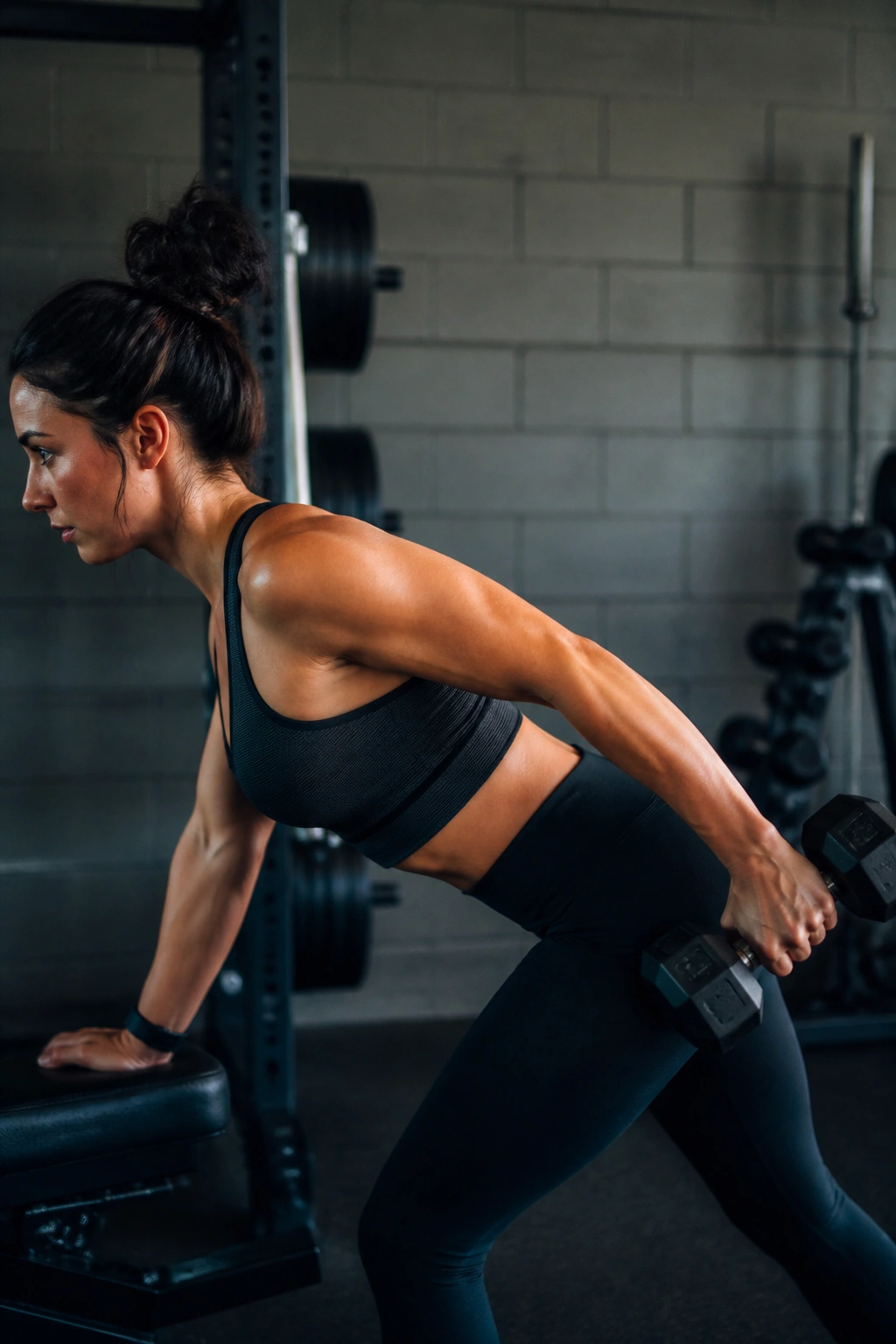
Triceps kickbacks look small, and that’s the point. They strip away momentum and make you hold the upper arm in place while the elbow extends. There isn’t much range of motion, so you need to make the most of every inch.
Hinge at the hips or kneel on a bench, keep the upper arm parallel to the floor, and extend the dumbbell back until the arm is straight. The dumbbell should move like it’s on a shelf. Two to three sets of 12 to 15 reps is enough, usually with lighter weights than your ego wants to pick up.
This move is better when it’s strict than when it’s heavy. If the elbow drops, the shoulder takes over. If the shoulder takes over, the triceps lose the set. That’s the whole story.
It’s not the flashiest arm exercise. It is, though, one of the best for teaching the back of the arm to finish a rep instead of quitting halfway.
9. Dumbbell Skull Crushers Demand Control
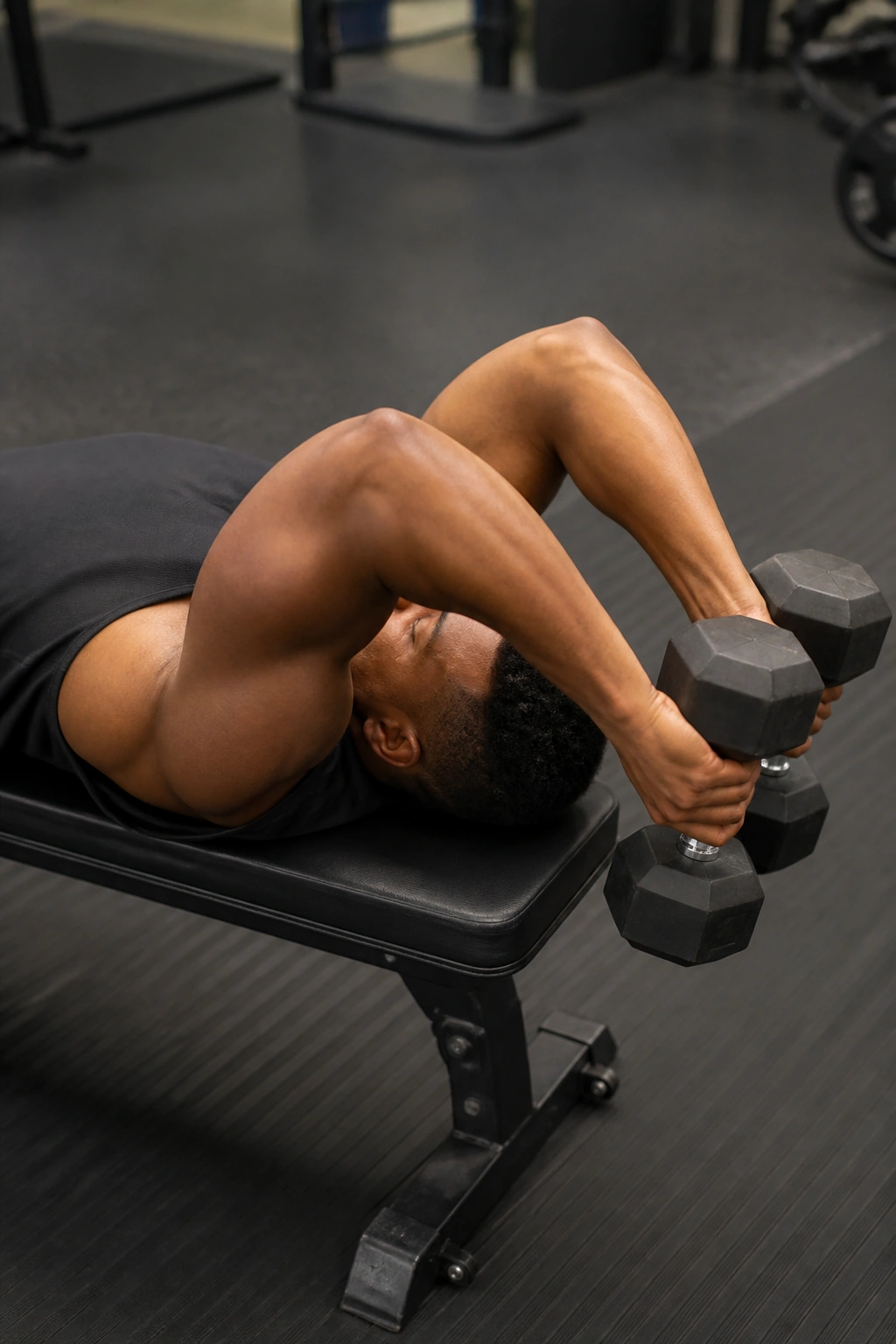
Lying triceps extensions—people call them skull crushers for a reason—are brutally honest. They punish sloppy elbow position and reward patience, which is exactly why they’re so useful. Use a bench if you have one. The floor works too and feels a little kinder on the shoulders.
Lower the dumbbells beside the head, not straight to the face. Keep the elbows angled slightly back, then press the weights up by straightening the arms. Three sets of 8 to 12 reps is a good range for most people. The rep should feel smooth, with the triceps doing the work and the shoulders staying out of the fight.
A small but useful detail
If the dumbbells drift too far back, the elbows usually scream about it. Stop before that happens. A shorter, cleaner range beats a messy deep one.
This is one of those lifts where a modest load done well can beat a heavy load done badly for months.
10. Dumbbell Arm Workouts Need a Press Too: Close-Grip Dumbbell Floor Press
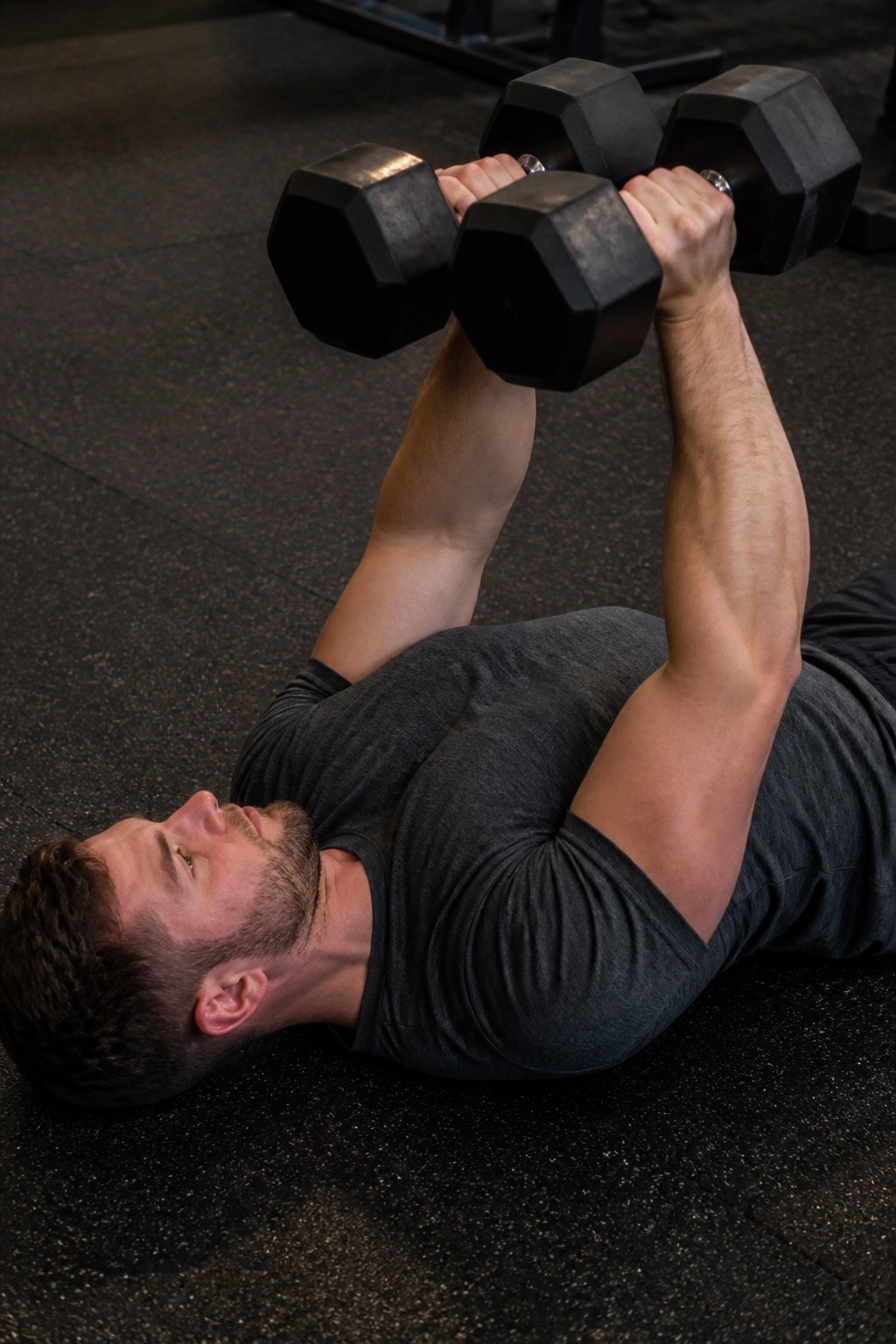
A lot of people build arm sessions from curls alone and then wonder why the triceps never seem to catch up. The close-grip dumbbell floor press fixes that. It lets you press with a narrow elbow path, keeps your range controlled, and lets the triceps work hard without the shoulder stretch that can make bench pressing feel messy.
Lie on the floor, hold the dumbbells close to the ribs, and press them up with the elbows tucked at about 30 to 45 degrees from the body. The floor stops the bottom half of the rep, which is part of the appeal. You get strong lockout work and less chance of going too deep. Three to four sets of 8 to 12 reps is a smart place to start.
The floor press also feels practical. You can load it fairly heavy, and the setup doesn’t require much. That makes it one of the better dumbbell arm workouts for days when you want real triceps work without turning the whole session into a circus.
11. Arnold Press Gives the Arms a Bigger Frame
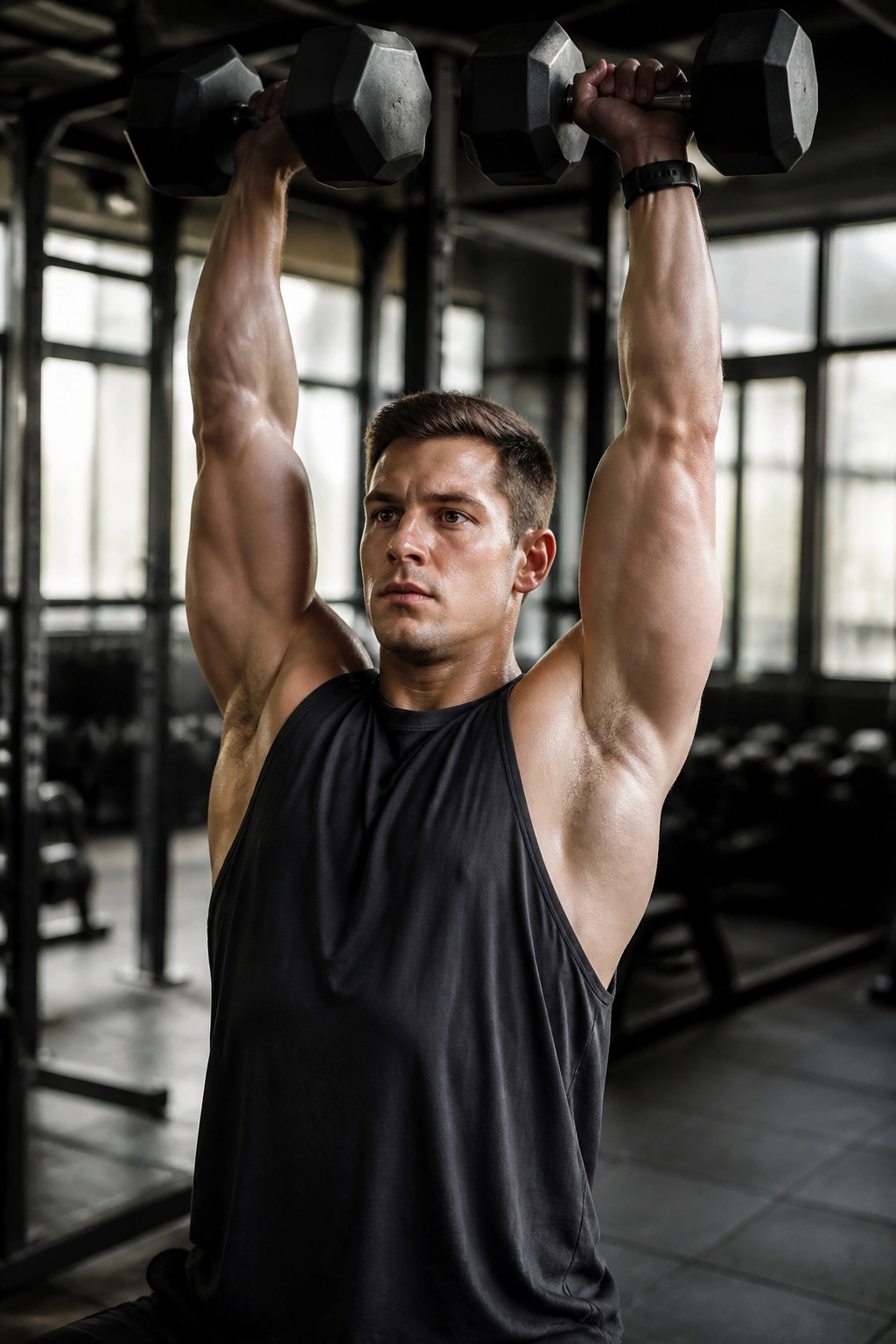
The Arnold press is partly a shoulder move, sure, but it helps the arms look better because it builds the front delts and triceps while forcing a clean pressing pattern. Bigger shoulders make arms look more complete. That’s not vanity; that’s geometry.
Start with the dumbbells in front of your face, palms toward you. Press overhead while rotating the hands outward, then bring them back down under control. Keep the ribs down and don’t turn the lift into a backbend. Three sets of 8 to 10 reps is enough for most people.
What makes it different
The rotation creates a smoother path through the press and keeps the movement from feeling as dull as a straight overhead press. It also makes you stay honest about shoulder control, which matters more than people think.
Use a moderate weight. If the dumbbells clack together overhead, they’re probably too heavy.
12. Lateral Raises Make the Whole Arm Look Cleaner
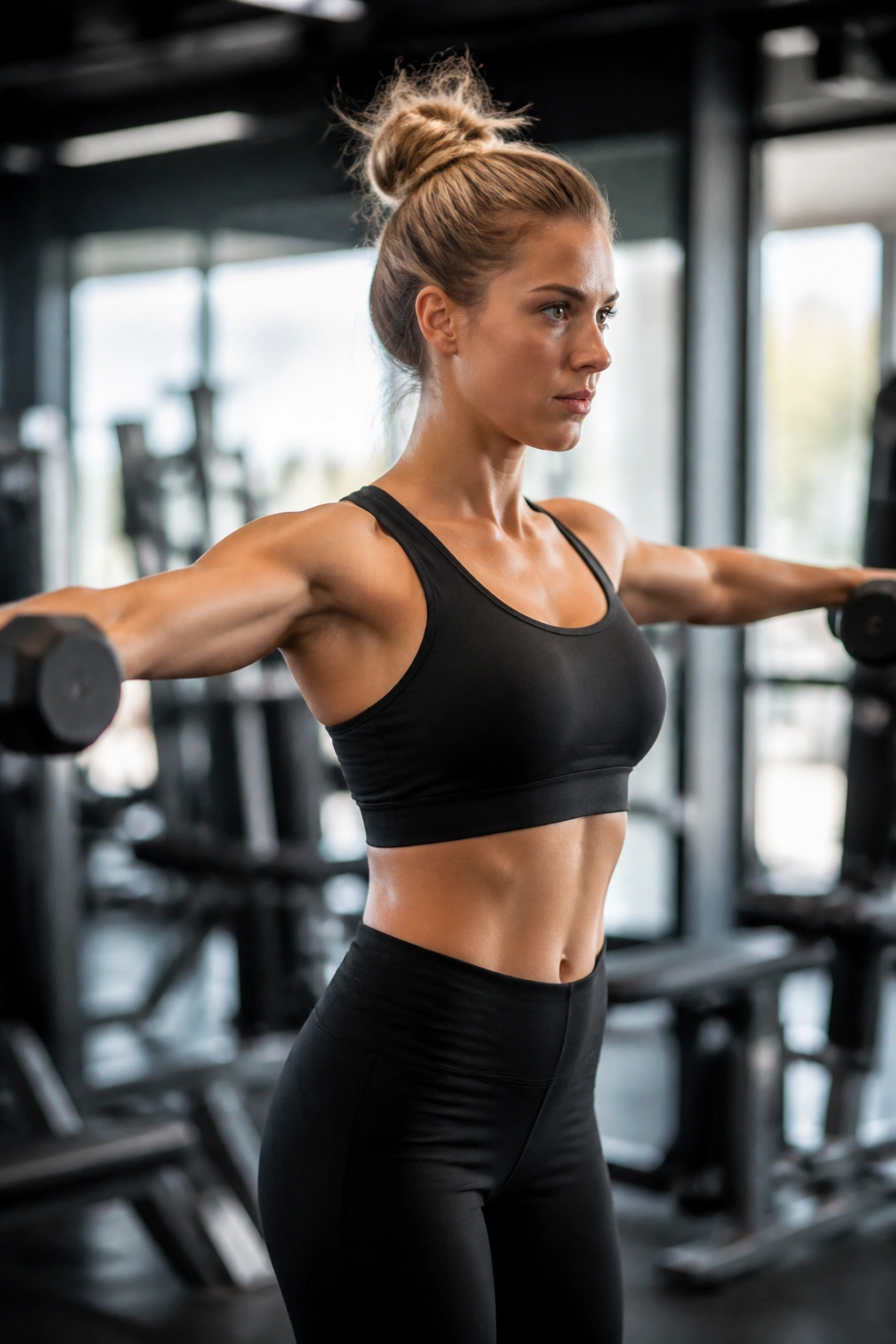
Lateral raises are not an arm exercise in the narrow sense, but they belong here because shoulder width changes how the upper arm looks in plain clothes. A little extra side-delt work can make the arm line look sharper without adding a ton of bulk.
Use light dumbbells. Lighter than you want, probably. Raise the arms out to shoulder height with a soft bend in the elbows, then lower slowly. Three sets of 12 to 15 reps is enough, and the burn usually shows up before the weight feels impressive.
The biggest mistake is turning this into a shrugging contest. Don’t yank the weights up. Don’t swing them. Keep the movement smooth and stop around shoulder height; going much higher often steals work from the delts and dumps it into the traps.
Short version: if your neck is doing the work, the set has gone off the rails.
13. Reverse Curl Strengthens the Forearm and Elbow Area
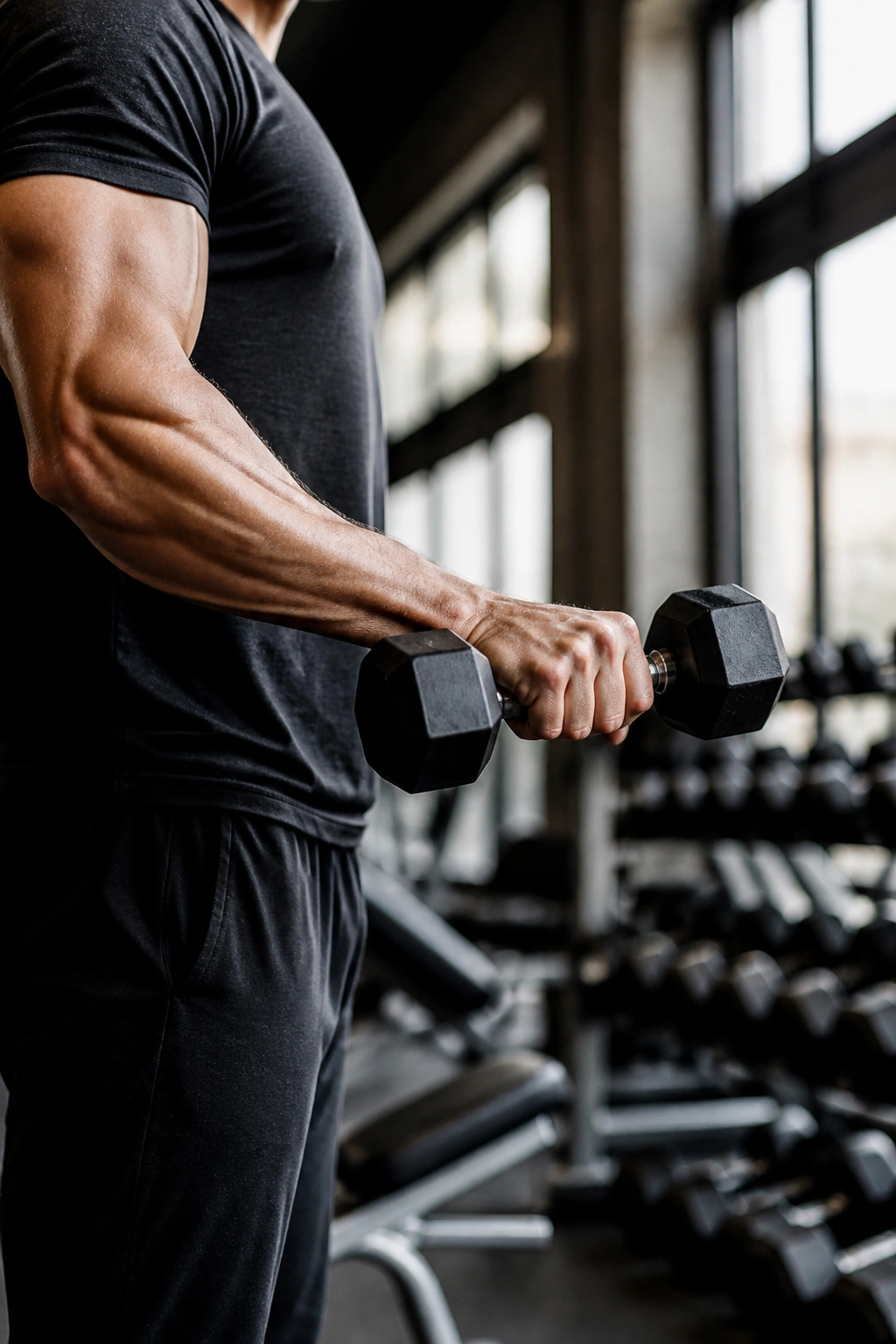
Reverse curls feel awkward the first time, and that’s a clue that they’re worth keeping. Palms face down, dumbbells travel up the front of the body, and the forearms have to work harder because the grip and wrist position change the load. The biceps still help, but they do not get the whole story.
Use a light to moderate weight and keep the wrists neutral, not bent back. Three sets of 10 to 12 reps usually works well. The lift should look tidy from the side, with no shoulder swing and no cheating from the lower back.
People who type a lot, carry bags, or train pull movements often notice this exercise more than they expect. It fills in the underside of the forearm and can make the arm look thicker near the elbow.
A good reverse curl feels weird in a useful way. That’s the sign.
14. Wrist Curls Add Size Where Most People Ignore It
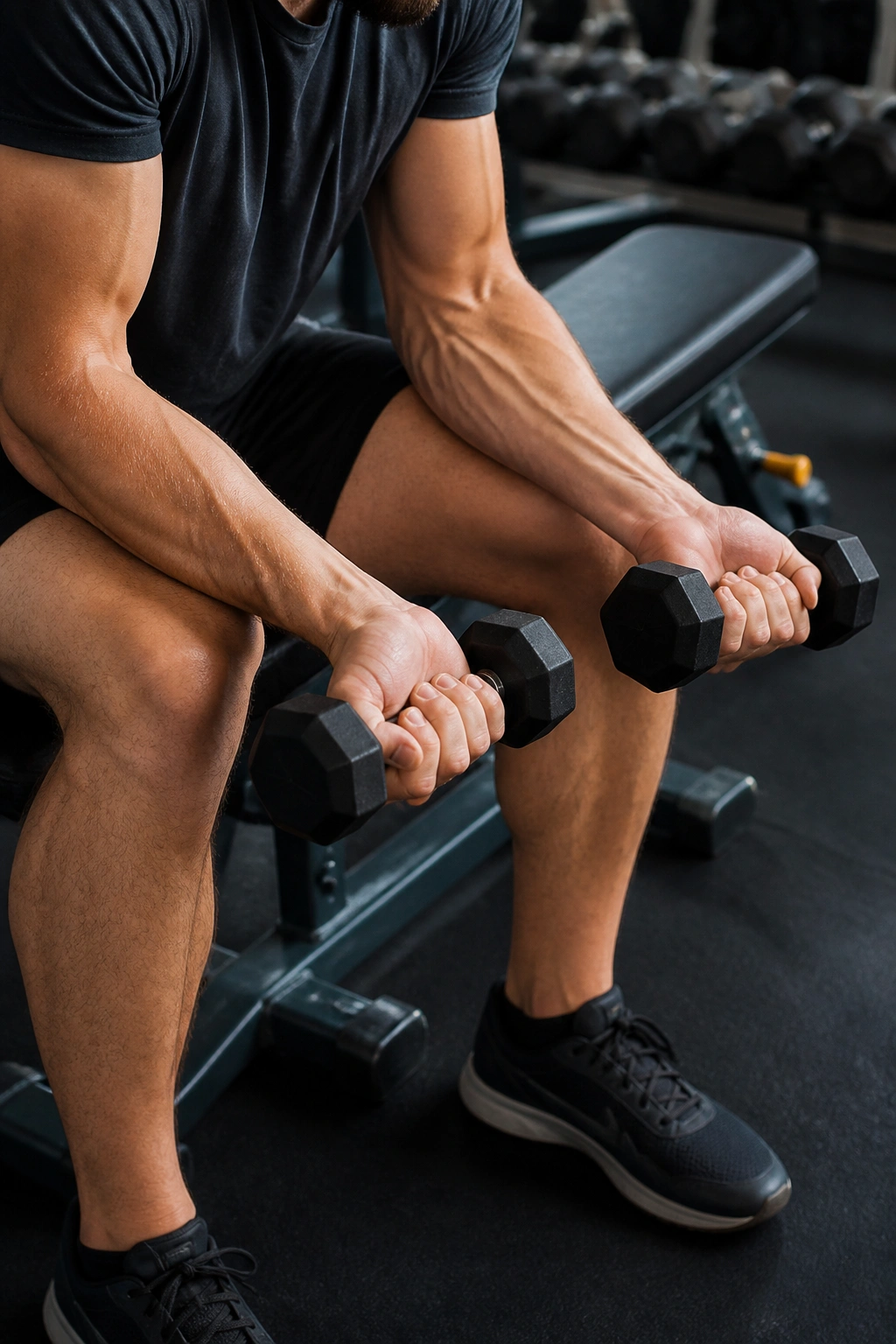
Wrist curls are tiny, and that’s exactly why many lifters skip them. I think that’s a mistake if the goal is balanced arms. The forearm is part of the arm. You can’t really fake that.
Sit with your forearms supported on your thighs or a bench, palms up, and let the dumbbells roll down into the fingers before curling them back into the palm and up through the wrist. The motion is small. Keep it that way. Two to three sets of 15 to 20 reps works best with light weights, because the forearm muscles respond well to clean, repeated tension.
You’ll feel a deep burn before you see anything obvious in the mirror. That’s normal. Let the wrists move through their range without jerking, and stop if the grip starts to slip. Sloppy wrist curls can turn into a hand workout for all the wrong reasons.
Small move. Big burn. That’s the whole deal.
15. Reverse Wrist Curls Balance the Forearm
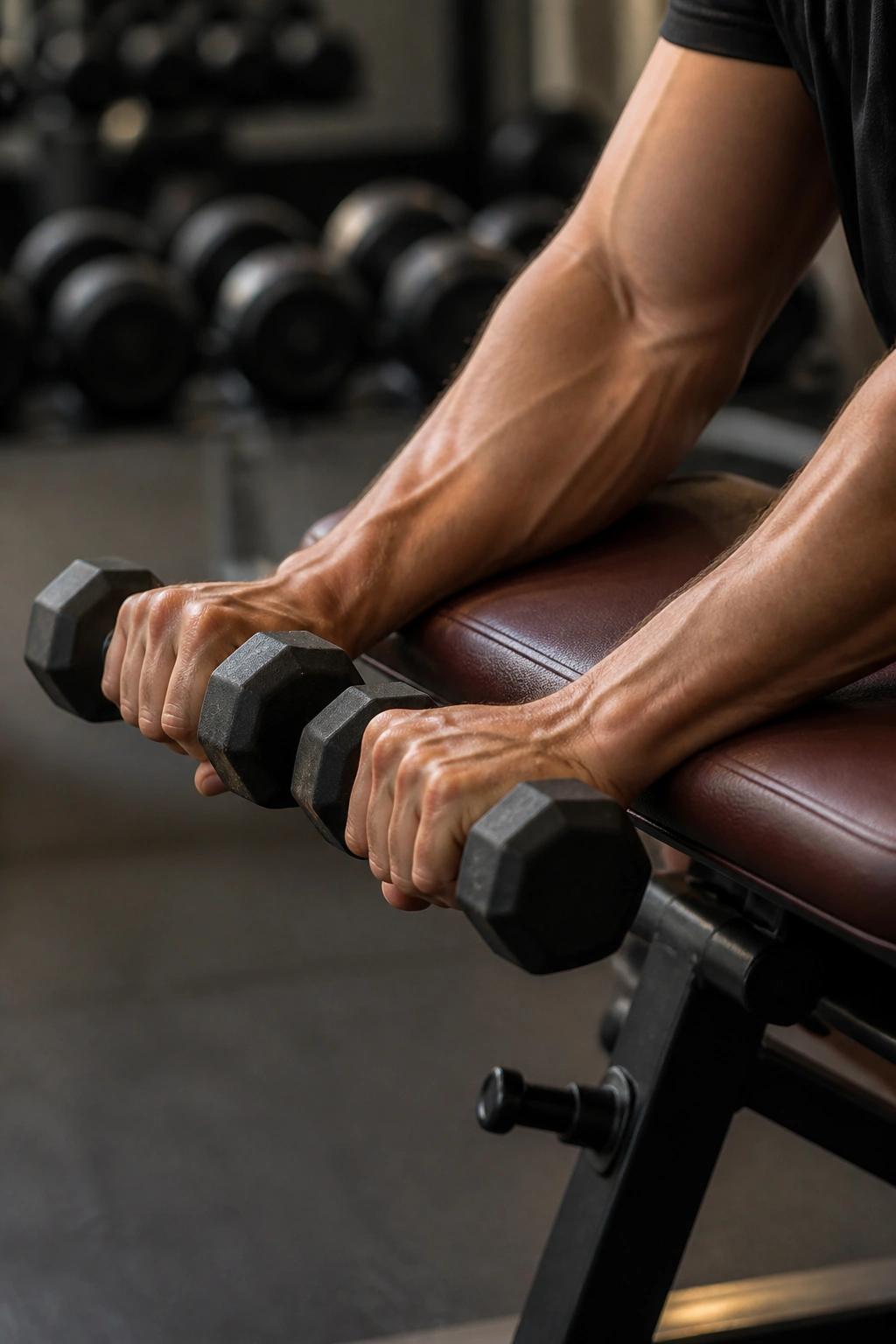
The back of the forearm matters more than people think. Reverse wrist curls train the extensors, the muscles on the top side of the forearm, and they help keep the lower arm from looking front-heavy. They also support healthier wrist balance if you do a lot of curls, presses, or keyboard work.
Set your forearms on your thighs or a bench with palms facing down. Lift the backs of the hands toward the ceiling, then lower slowly. Keep the dumbbells light. Two to three sets of 15 to 20 reps is enough, and the burn comes fast even with tiny weights.
This is one of those exercises that looks like a throwaway until you actually do it. Then your forearms start talking back.
If the range feels cramped, shorten the dumbbell’s reach rather than forcing the wrist through pain. The goal is tension, not irritation. There’s no prize for making your tendons angry.
16. Biceps 21s Turn One Set Into Three Jobs
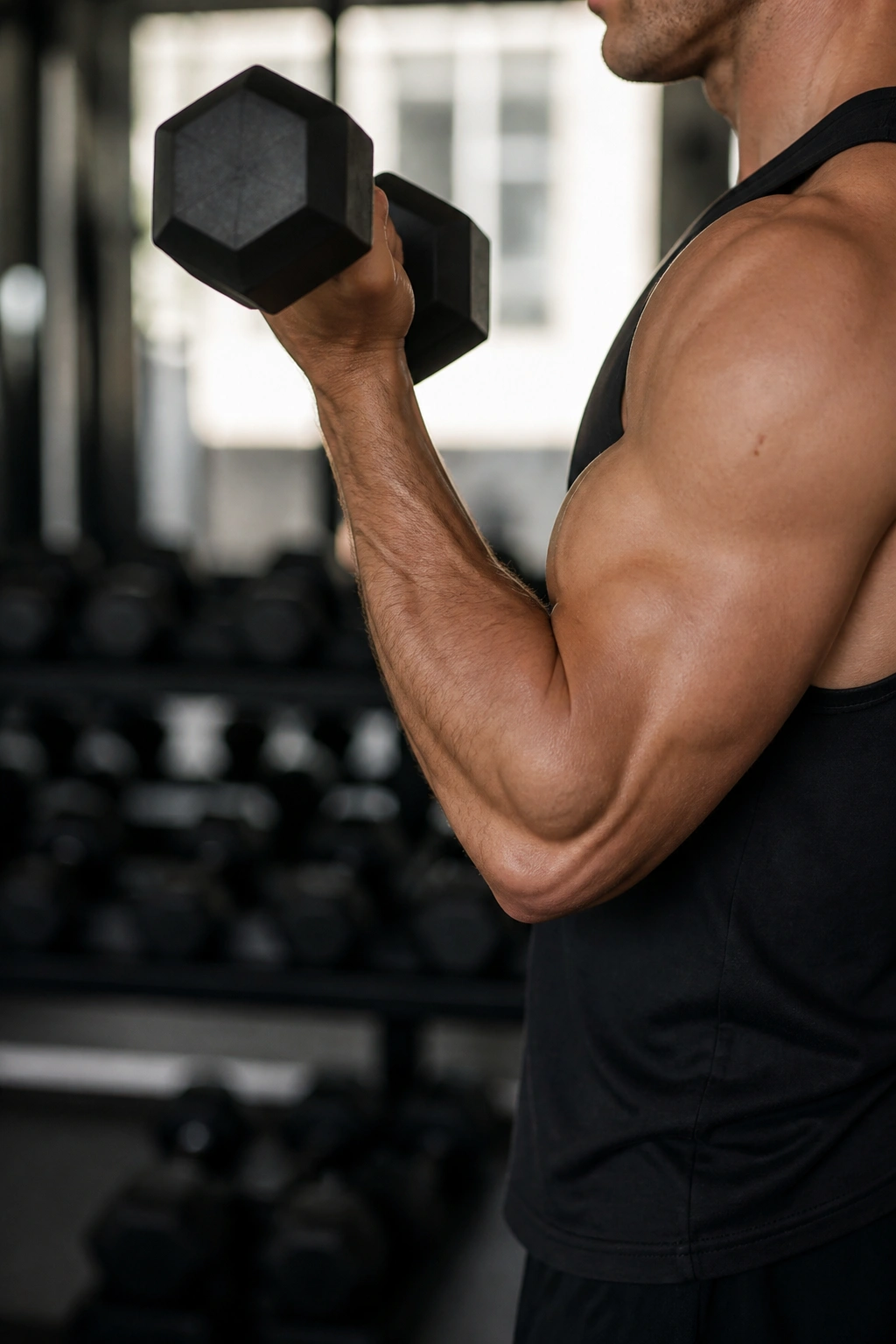
Biceps 21s are the old-school finisher that still works because it keeps the muscle under tension in three different zones. Seven reps in the lower half, seven in the upper half, then seven full-range reps. That’s one set. Done well, it feels much longer than it sounds.
Use a weight you can control even when you’re already tired. That part matters. People usually go too heavy and lose the point. The lower-half reps build drive off the bottom, the upper-half reps punish the squeeze, and the full reps tie it together. One to three sets is plenty at the end of an arm session.
Why people keep coming back to it
Because it burns. Because it teaches control. Because the set exposes every bit of cheating you’ve been hiding in your regular curls.
Do not use this as your first exercise. Your form will fall apart. Put it near the end, when the arms are already warm and a little grumpy.
17. Spider Curls Keep the Biceps From Cheating
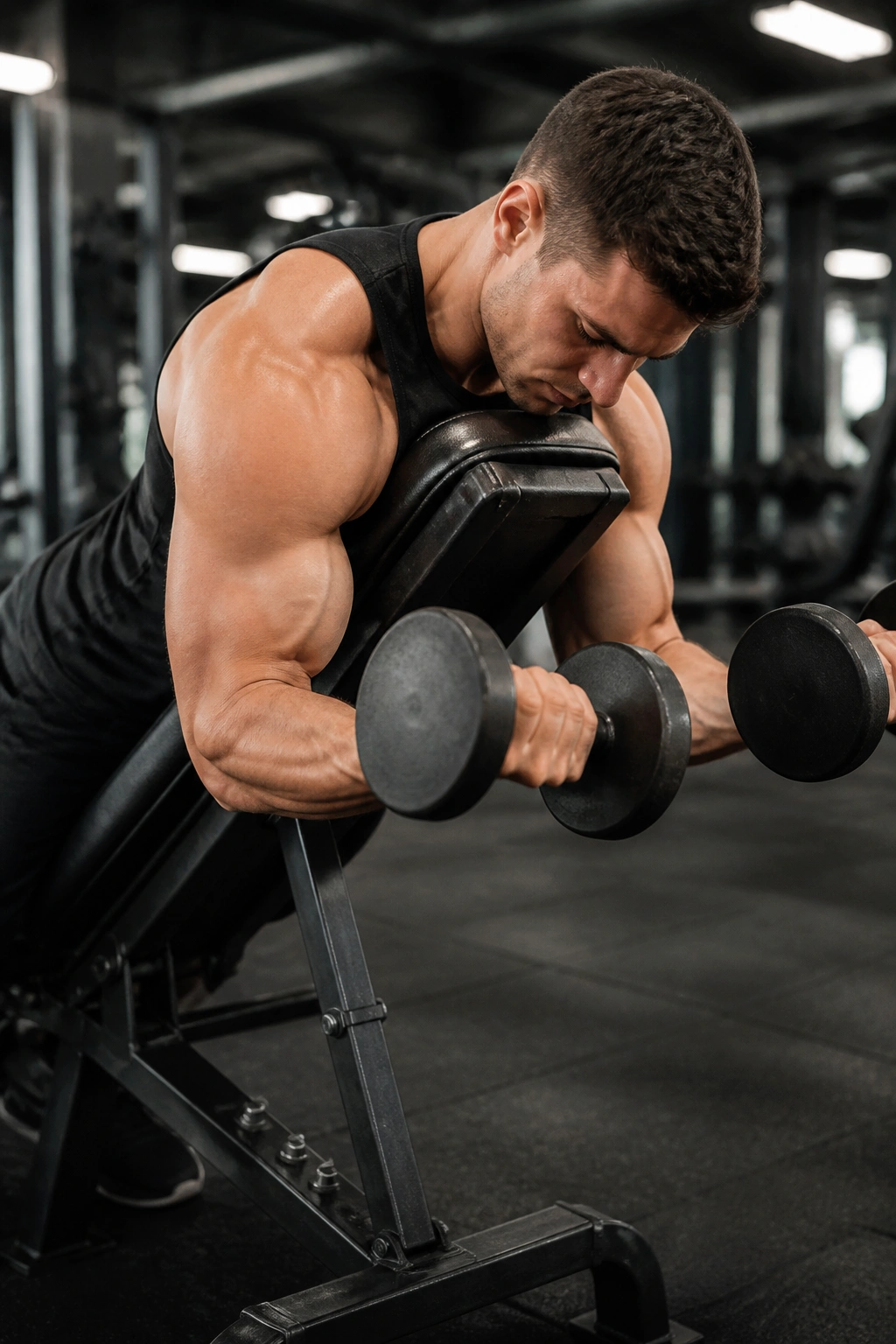
Why do spider curls feel so honest? Because the chest stays supported on an incline bench, the arms hang down in front of you, and there’s nowhere to swing the dumbbells. If your curl form gets loose on standing work, spider curls clean that up fast.
Set the bench at about 45 degrees, lie face down, and let the dumbbells hang straight toward the floor. Curl them up without letting the shoulders roll forward, then lower slowly until the arms are almost straight. Three sets of 8 to 12 reps is a strong range. The top of the rep should feel sharp and controlled, not rushed.
What to pay attention to
- Keep your chest glued to the pad.
- Stop the elbows from drifting backward.
- Use a weight that lets you pause at the top.
- Lower with patience.
This is one of the best dumbbell arm workouts when you want pure biceps tension and fewer excuses. It’s strict. That’s the appeal.
18. Dumbbell Arm Workouts End Well With the Tate Press
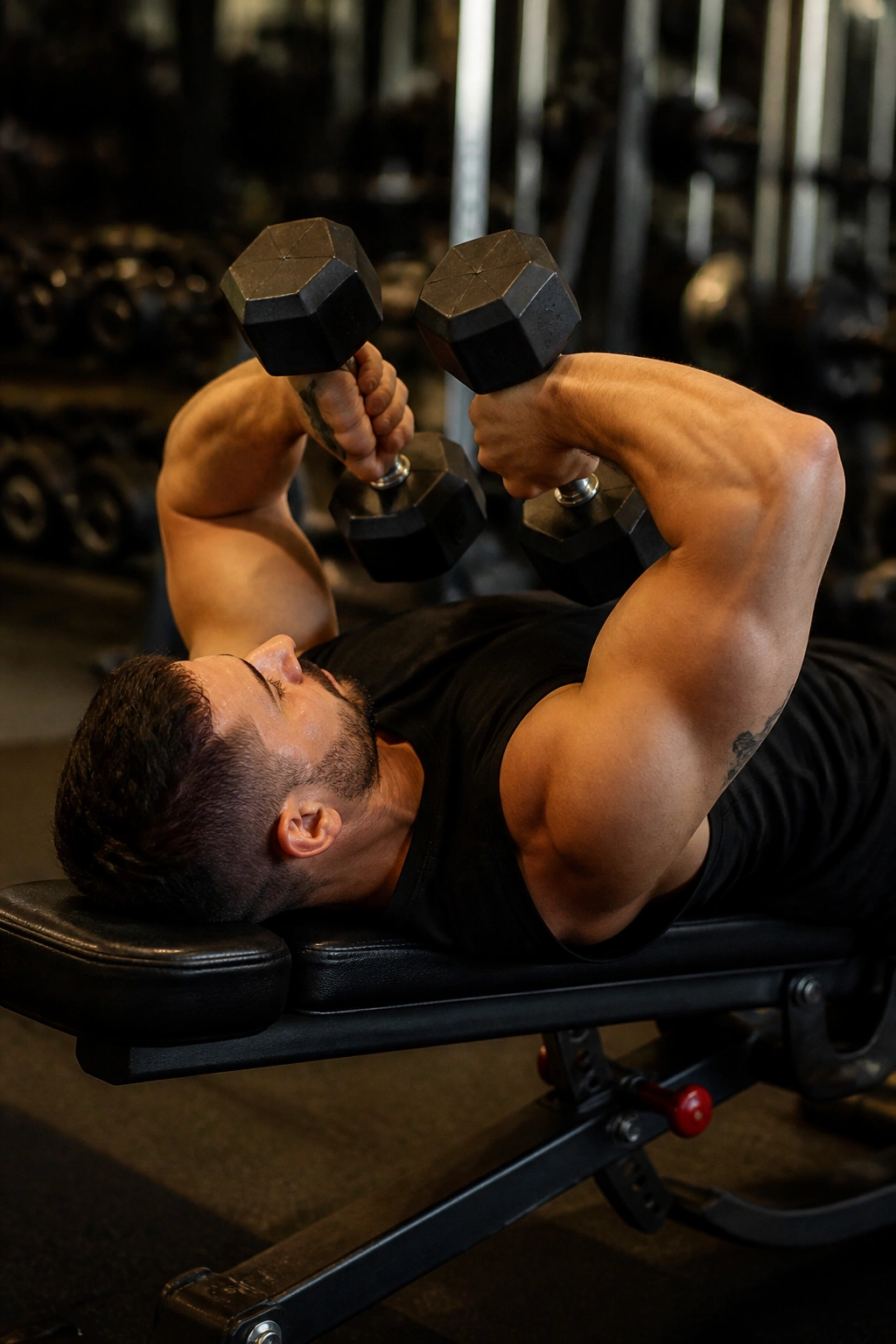
The Tate press is a triceps move that feels odd the first time and useful forever after. Lie on a bench or floor with dumbbells above the chest, palms facing your feet, then lower the weights inward toward the upper chest by bending the elbows out to the sides. Press them back up by straightening the arms. It’s a narrow, targeted path that keeps the triceps busy.
Use 3 sets of 10 to 12 reps and keep the motion controlled. If the elbows flare wildly or the shoulders start to ache, the load is too much or the angle is off. On the floor, the range gets shorter and a little friendlier, which is fine. The goal is a hard triceps finish, not a showy lift.
This is one of my favorite end-of-session moves because it feels different from skull crushers and overhead extensions. That difference matters. The body gets used to patterns fast, and a small change in hand path can wake the triceps back up.
Final Thoughts
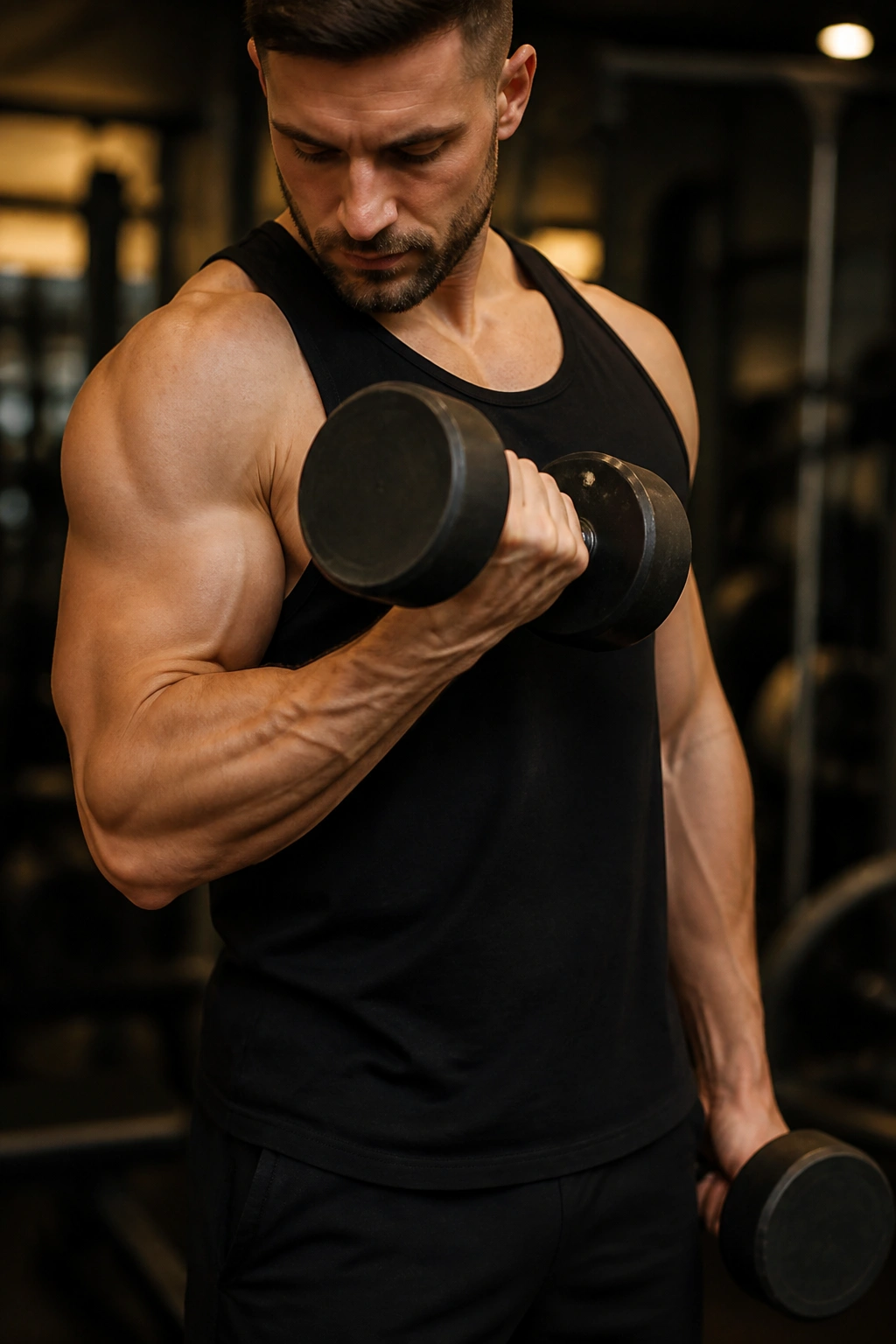
Arms change fastest when you stop treating every session like a curl contest. Biceps matter, sure. But triceps shape most of the upper arm, and shoulders make the whole thing look wider and cleaner.
Pick a few of these dumbbell arm workouts, run them with strict form, and keep a simple log of the weights and reps. That part is boring. It also works.
If you want the easiest route, pair one curl, one triceps extension, one shoulder move, and one forearm exercise. Add weight only when the last rep still looks tidy. That’s how the shape comes along without turning your elbows into the price you pay.
