



A pair of dumbbells can do more than people give them credit for.
The best dumbbell workout plans are boring in the right way: repeatable, measurable, and easy to recover from. Random curls and the occasional shoulder press won’t get you far. A clean plan will.
That matters because dumbbells are forgiving only until they are not. Once the weight is too light, too heavy, or the exercises are thrown together with no structure, progress turns muddy fast. You end up tired without getting stronger, which is a frustrating place to be.
A good dumbbell routine solves that by matching the split to the person. Two days a week can work. So can four or five. The trick is choosing the version that fits your schedule, your equipment, and the amount of effort you can repeat without dreading the next session.
The right starting weight helps too. You want the last two reps to slow down, but your form should still look like yours — not a scramble. That one detail saves a lot of wasted effort.
1. Two-Day Full-Body Dumbbell Workout Plan for Absolute Beginners
Two days is enough.
That sounds almost too simple, which is exactly why it works for a lot of people. If you are new to lifting, two full-body sessions a week give you practice, recovery, and enough volume to notice real change without getting buried under soreness.
How this split feels in practice
Each workout should cover a squat, a hinge, a push, a pull, and one carry or core move. Keep it to 5 exercises, do 2 to 3 sets of 8 to 12 reps, and rest 60 to 90 seconds between sets. That is plenty for a first month, maybe longer if you are starting from zero.
Workout A
- Goblet squat
- Dumbbell floor press
- One-arm dumbbell row
- Dumbbell Romanian deadlift
- Farmer carry
Workout B
- Reverse lunge
- Standing dumbbell shoulder press
- Chest-supported row if you have a bench, or bent-over row if you do not
- Glute bridge with dumbbell on the hips
- Dead bug holding one light dumbbell
The beauty here is that nothing feels random. You are training your whole body both days, but each session has its own little personality.
What beginners usually miss
Start lighter than your ego wants. Seriously. The goal is to learn how a goblet squat feels when your torso stays tall, and how a row feels when your shoulder blade moves before your arm yanks the weight.
If the last rep of every set looks like a rescue mission, the dumbbell is too heavy.
2. Three-Day Full-Body Dumbbell Workout Plan for Steady Progress
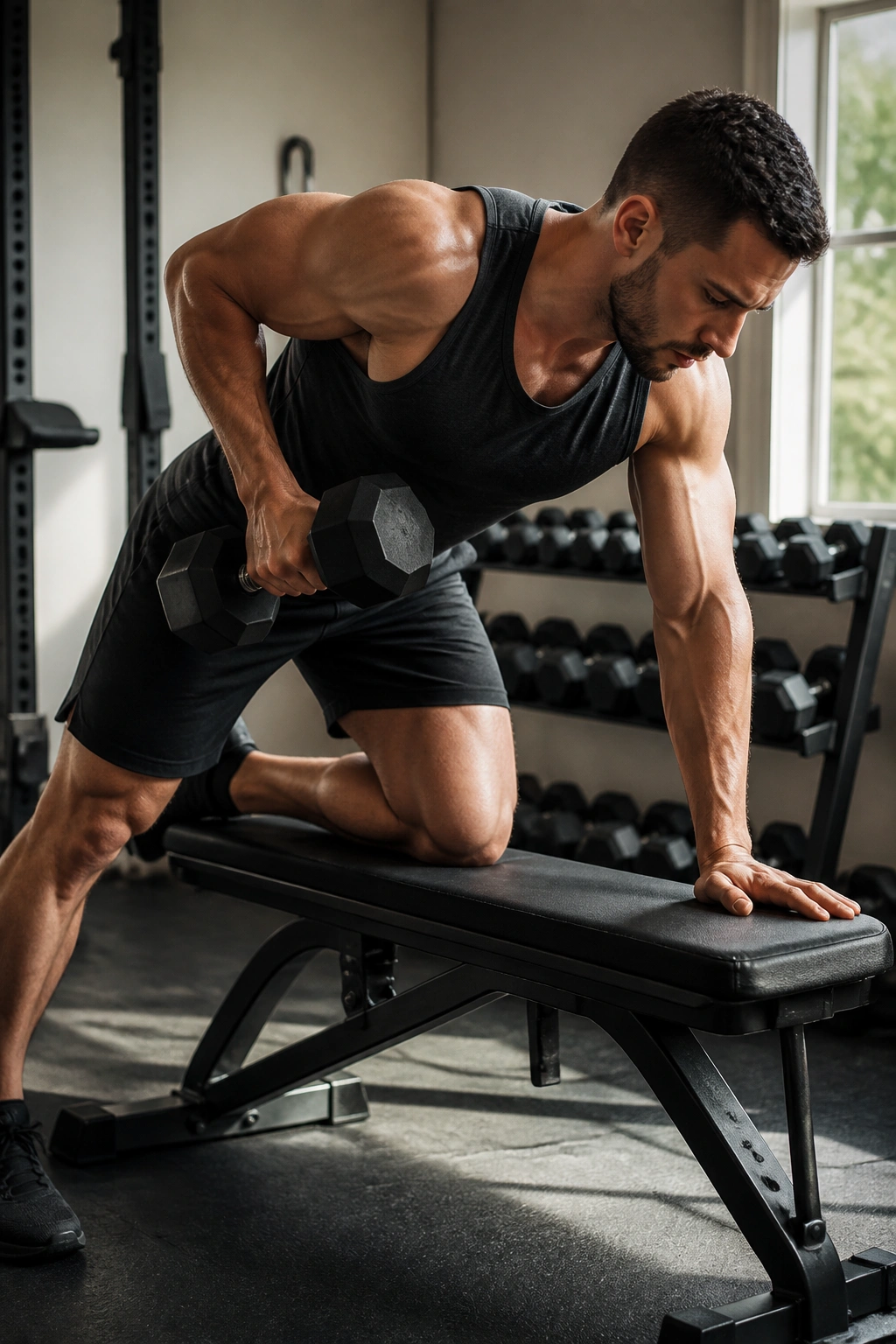
What if two days feels too thin?
Then three days is the sweet spot. It gives you more practice with the main lifts, more chances to get a little better each week, and enough recovery that you do not feel wrecked after every session.
Use a Monday-Wednesday-Friday rhythm if you can. The exact days do not matter much. What matters is spacing them out so your legs and shoulders are not taking a beating on back-to-back sessions.
A simple setup looks like this:
- Day 1: Goblet squat, floor press, row, RDL, plank
- Day 2: Split squat, overhead press, one-arm row, glute bridge, suitcase carry
- Day 3: Front-foot elevated squat, incline press if you have a bench, rear-delt fly, single-leg RDL, dead bug
Keep the main lifts at 3 sets of 6 to 10 reps. Accessories can live in the 10 to 15 rep range. That mix gives you enough work to grow without turning every session into a half-hour burn contest.
The third day is where a lot of people finally feel the rhythm. The movements start making sense, your balance gets better, and your dumbbells stop feeling like random metal blocks. That matters more than most people think.
3. Four-Day Upper-Lower Dumbbell Workout Plan
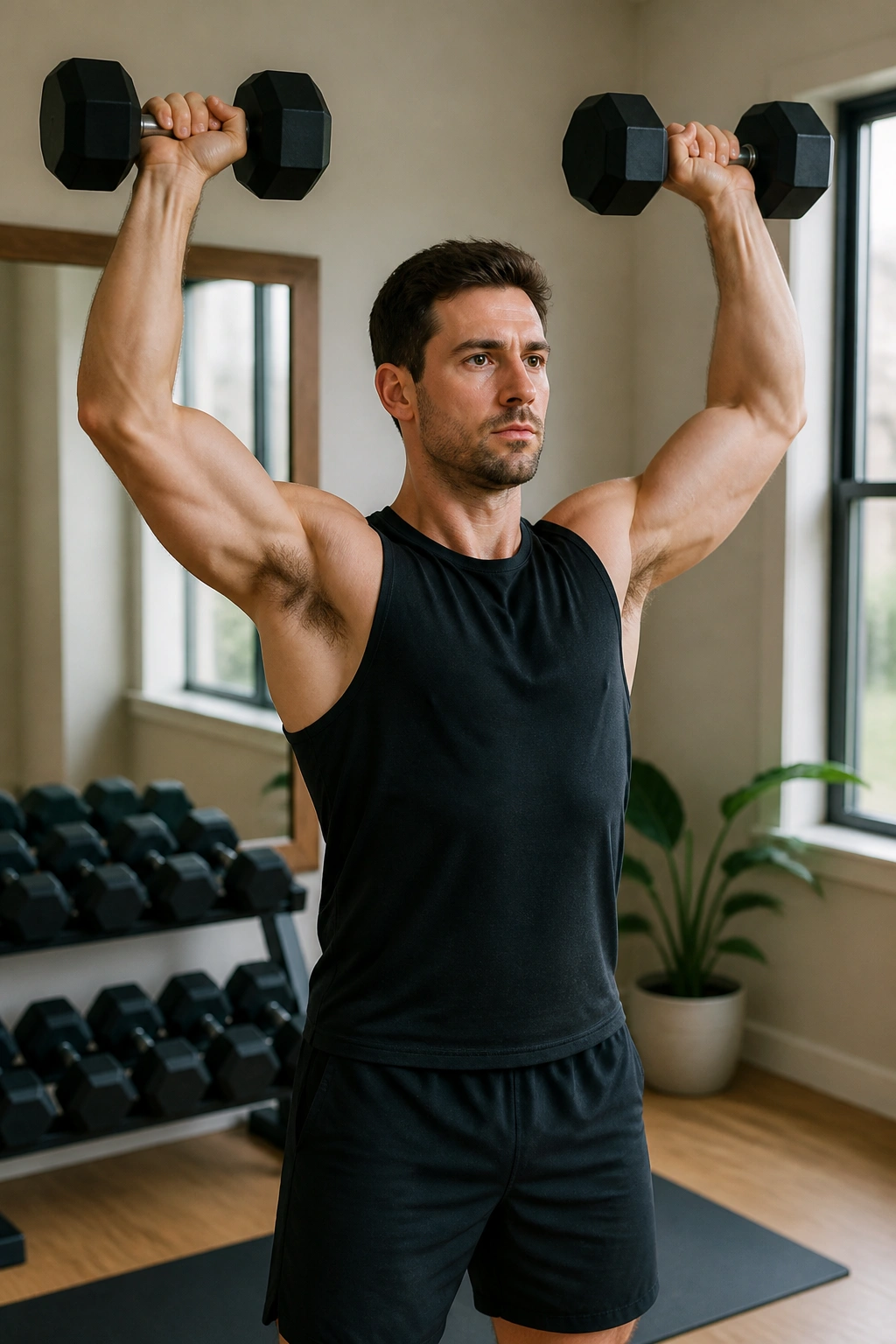
Four days gives you room to breathe.
That is the real appeal of an upper-lower split. You train the top half and lower half on separate days, which makes the sessions cleaner and usually a little longer, but not messy. You can push harder on each body part without trying to cram everything into one hour.
Upper days
On upper-body days, pair a press with a pull. That keeps the shoulders happy and stops the workout from drifting into endless chest work or endless curls.
A good upper day might include:
- Dumbbell floor press
- One-arm row
- Standing shoulder press
- Rear-delt fly
- Curl or hammer curl
- Overhead triceps extension
Use 3 to 4 sets of 8 to 12 reps on the big lifts. The smaller moves can sit at 12 to 15 reps with shorter rest.
Lower days
Lower days should be blunt and honest. Squat pattern, hinge pattern, single-leg work, then maybe calves or core if you still have gas left.
Try:
- Goblet squat
- Dumbbell Romanian deadlift
- Bulgarian split squat
- Hip thrust or glute bridge
- Standing calf raise
- Side plank
This split is a nice step up once the beginner full-body plan starts to feel crowded. It also handles muscle soreness better, because your legs can be sore while your upper body still trains normally. That’s a useful little loophole.
4. Push-Pull Dumbbell Workout Plan for Short Sessions
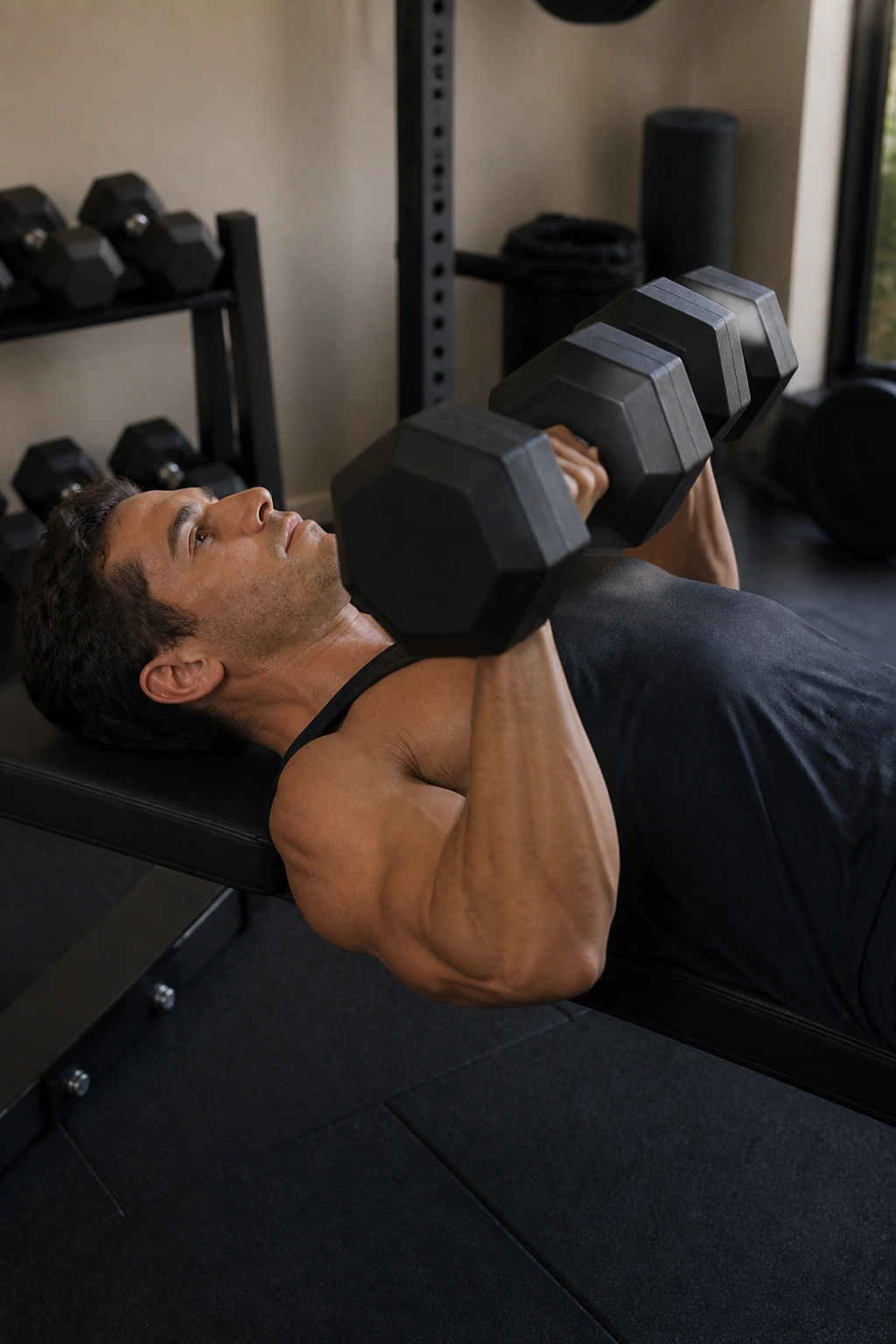
Push and pull sounds old-school for a reason.
It keeps the workout tidy. Pressing muscles work together, pulling muscles work together, and you spend less time jumping between random equipment setups. If you like short, focused sessions, this split feels natural fast.
A clean version runs 4 days a week:
- Push
- Pull
- Push
- Pull
You can tuck in leg work as a small finisher on each day, or keep legs for their own separate day if your schedule allows. I prefer the first option for people who only have dumbbells and not a full home gym. It wastes less time.
Push day
- Floor press
- Standing shoulder press
- Lateral raise
- Close-grip floor press
- Split squat finisher
Pull day
- One-arm row
- Bent-over row
- Rear-delt fly
- Hammer curl
- Dumbbell Romanian deadlift finisher
The pace matters here. Rest about 45 to 75 seconds on accessories, and a little longer on the first two lifts if your breathing is ragged. If every set feels rushed, the workout gets sloppy. If every set feels leisurely, you probably underdid it.
This split is a good fit for people who hate long sessions but still want enough structure to progress.
5. Dumbbell Circuit Workout Plan for Fat Loss and Conditioning
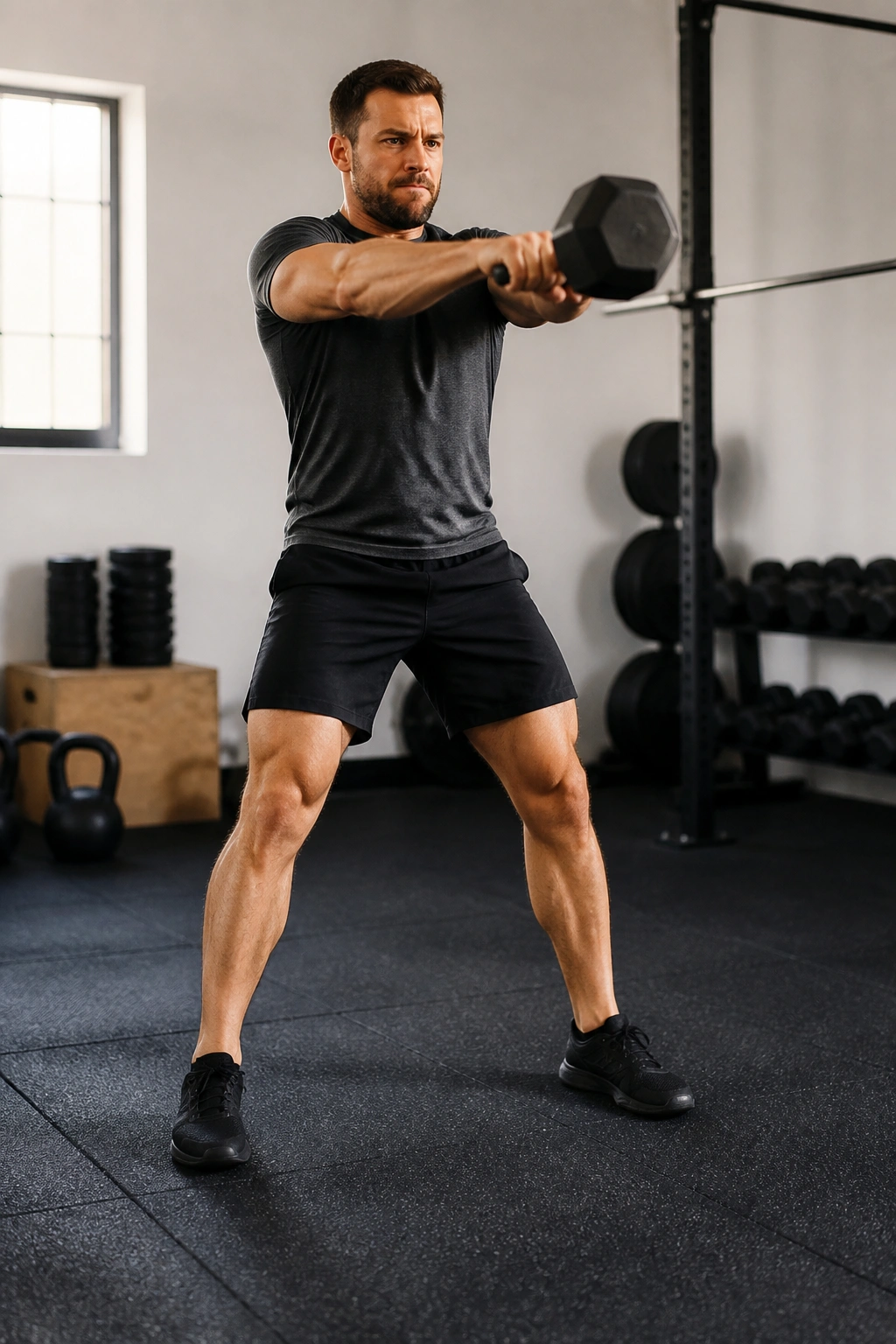
A dumbbell circuit is a blunt tool.
That is not a bad thing. It is fast, sweaty, and simple to follow when you want a conditioning session that also keeps muscle in the picture. The dumbbells are there to make your body work harder, not to turn the room into a cardio class.
Use 4 to 6 movements, keep the load moderate, and move through 3 to 5 rounds. A solid work interval is 30 to 40 seconds per move, with 15 to 30 seconds of rest between exercises. Then rest 90 seconds between rounds if your breathing gets rough.
A good circuit might look like this:
- Goblet squat
- Dumbbell push press
- One-arm row
- Reverse lunge
- Dumbbell swing or hip hinge
- Marching carry
Do not chase the heaviest dumbbell you own here. The point is sustained work, not grinding. If your form starts to wobble by round two, cut the load a little and keep the pace clean.
This style helps with calorie burn, but food still does the heavy lifting when fat loss is the goal. The workout supports the process. It does not replace the plate.
6. Dumbbell Strength Workout Plan With Lower Reps
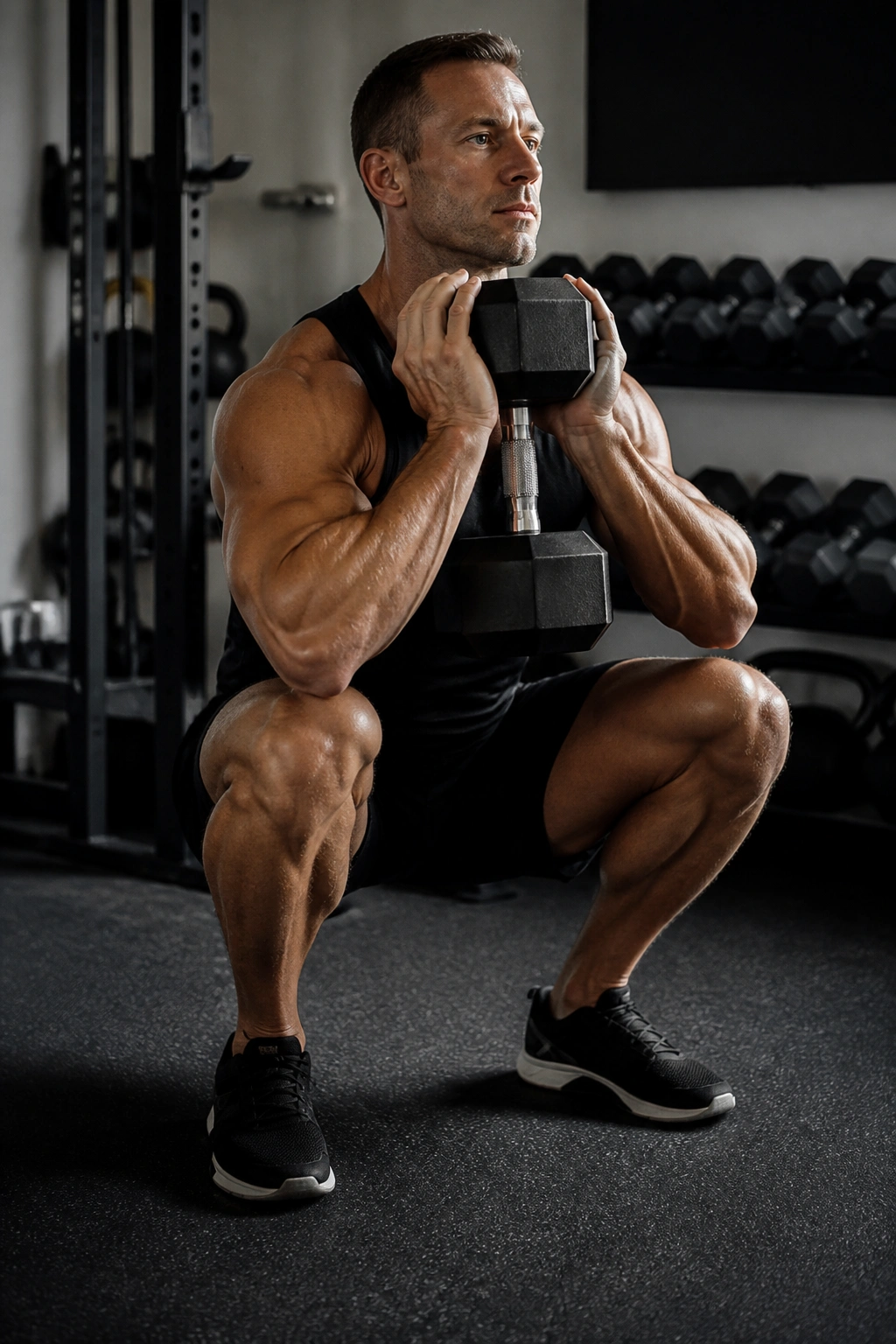
Heavy dumbbell work changes the whole feel of training.
The reps get shorter, the rest gets longer, and every set carries more focus. That is useful when you want to build strength rather than just chase a burn. You do not need barbell numbers to train this way either. Dumbbells can be plenty hard when you choose the right movements.
The simple rule
Stick to 4 to 6 reps for the main lifts and 3 to 5 sets per movement. Rest 2 to 3 minutes on the big exercises. If your dumbbells are not heavy enough for true low-rep work, switch to single-leg or single-arm versions. That raises the demand without needing a bigger pair.
Good picks include:
- Goblet squat or front-loaded squat
- Dumbbell floor press
- One-arm row
- Single-leg Romanian deadlift
- Standing push press
- Farmer carry
Train the movement, not the rep count. That line matters. A split squat with a moderate dumbbell can be harder than a sloppy two-arm squat with a heavier pair.
How to make this work at home
If your dumbbells top out too soon, slow the lowering phase to 3 seconds. Pause for 1 second at the bottom of the squat or press. Those tiny changes make light weights feel much more serious.
No need to turn it into a circus. Just make the rep count.
7. Dumbbell Muscle-Gain Workout Plan With Moderate Volume
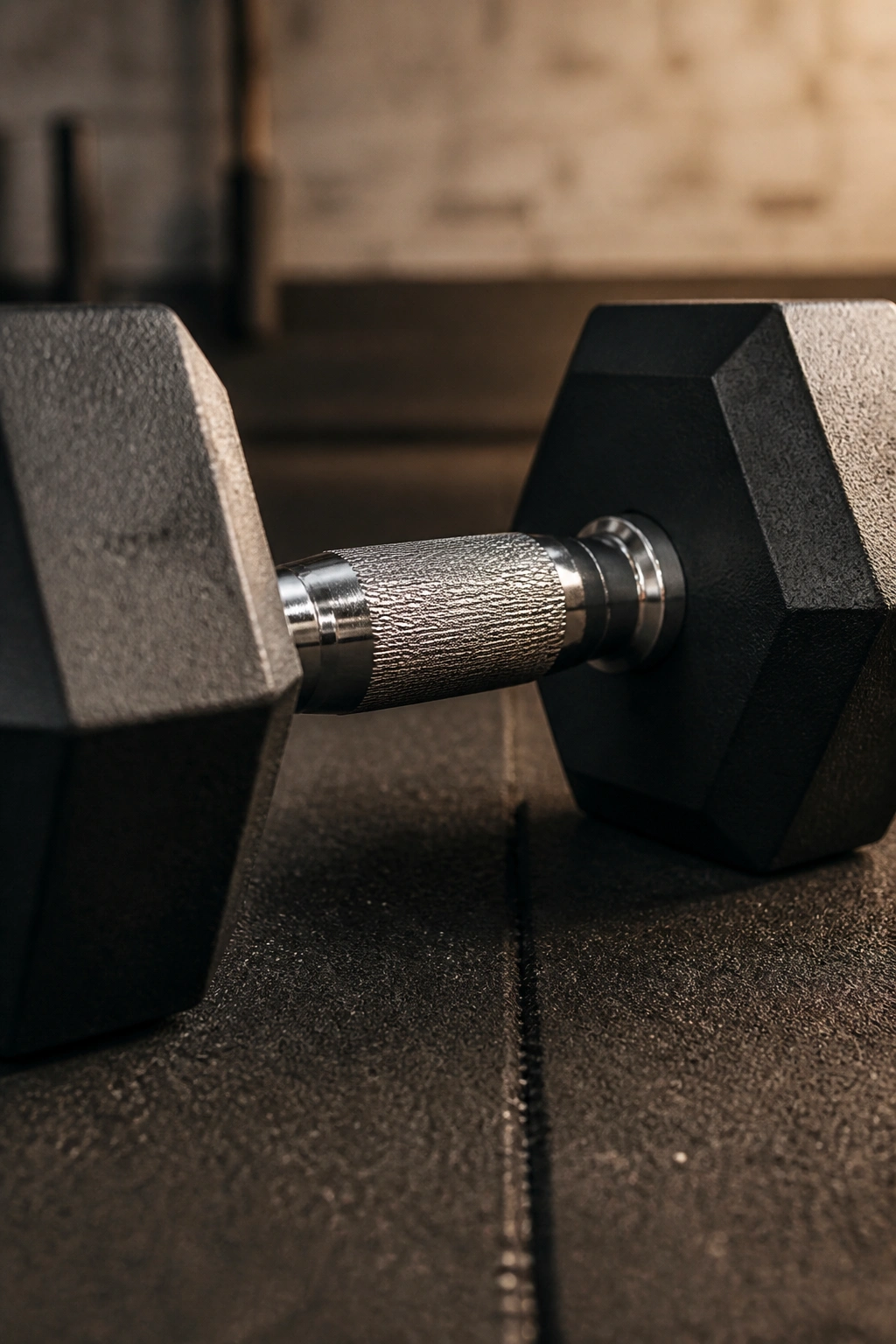
Muscle gain lives in the middle.
Not too light. Not too heavy. Just enough volume to challenge the muscle, enough food to recover, and enough consistency to keep the wheels on the road. Dumbbells are good for this because they let you train with a clean range of motion and a lot of single-limb work.
A practical muscle-building week often looks like 4 sessions:
- Upper
- Lower
- Upper
- Lower
On each major lift, use 3 to 4 sets of 8 to 12 reps. Accessories can go 10 to 15 reps. Aim for a rep or two left in the tank on the first sets, then push the final set a little closer to the edge.
A session might include:
- Dumbbell incline press
- One-arm row
- Split squat
- Dumbbell Romanian deadlift
- Lateral raise
- Curl
- Triceps extension
What people get wrong is trying to turn every set into a personal emergency. That burns you out fast. Better to accumulate solid work, week after week, and keep the exercises stable long enough to see a clear pattern in the numbers.
If the dumbbells feel dull after a few weeks, increase one rep per set before you increase load. That tiny step is often enough.
8. Twenty-Minute Dumbbell Workout Plan for Busy Weeknights
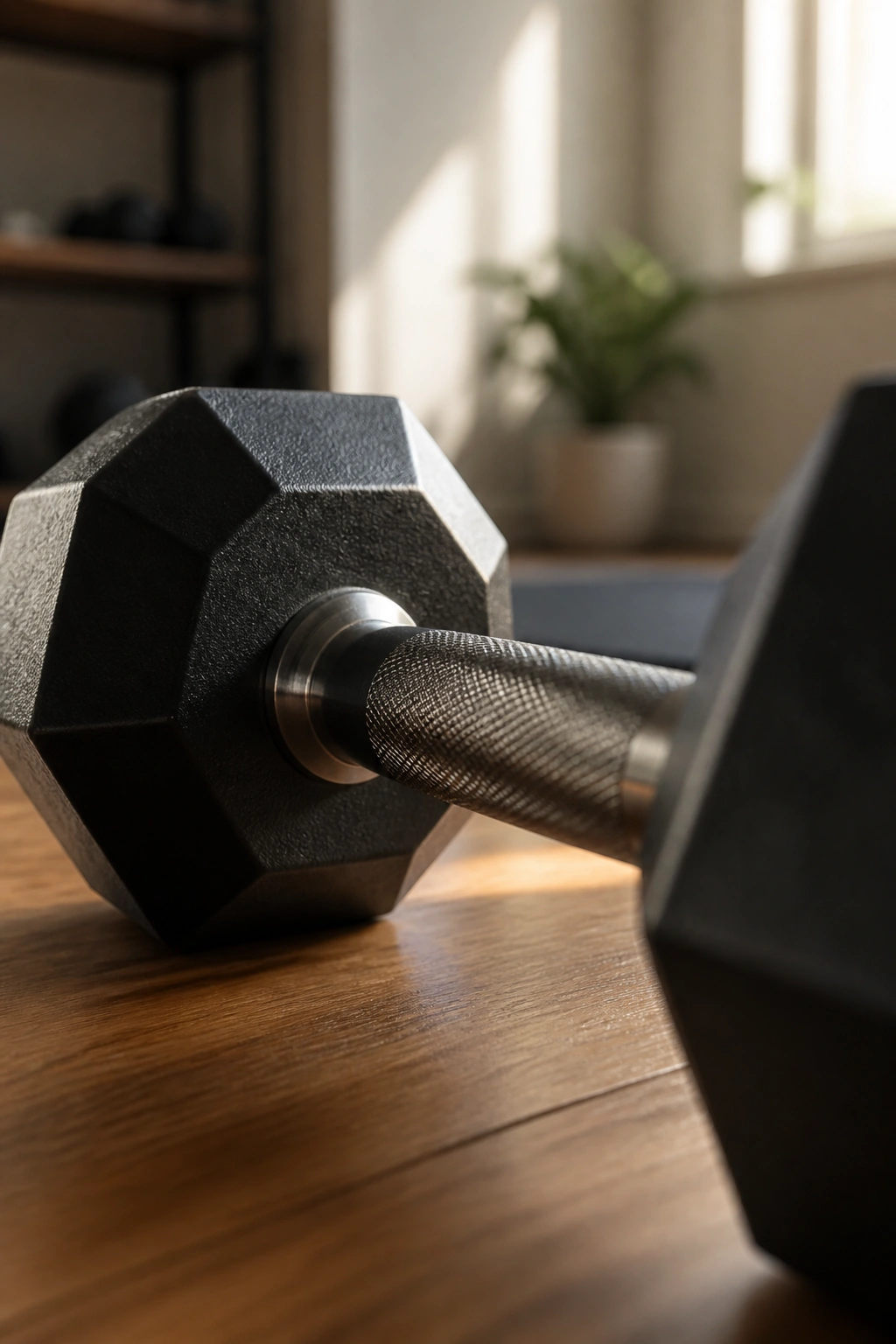
Twenty minutes is enough when the clock is mean.
You do not need a huge session to keep momentum alive. You need something repeatable that does not demand mental negotiation every time your day runs long. A short dumbbell workout can still hit the major patterns and leave you feeling better than when you started.
Set up a simple timer and run this:
- 5 minutes: quick warm-up with bodyweight squats, arm circles, hip hinges, and shoulder rolls
- 12 minutes: cycle through 3 exercises for as many clean rounds as you can
- 3 minutes: carry or core finisher
A good 12-minute work block:
- 8 goblet squats
- 8 floor presses
- 8 one-arm rows per side
That is it. Clean, direct, and easy to track. If you get 4 rounds one week and 5 the next, you are moving in the right direction.
A short workout like this is not a downgrade. It is a survival tool. And sometimes survival tools are what keep people training long enough to get strong in the first place.
9. One-Pair Dumbbell Workout Plan for Small Spaces
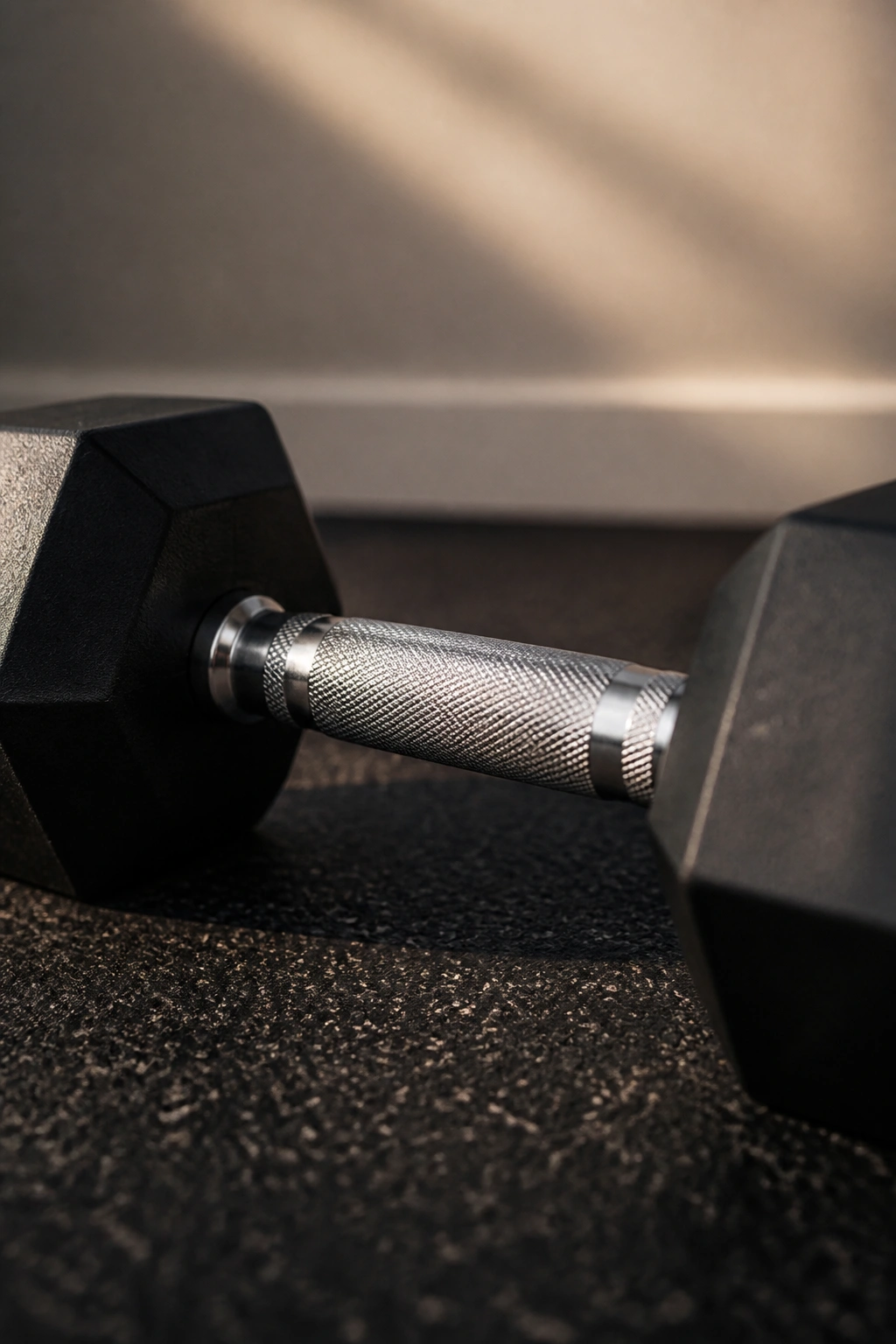
You do not need a full rack.
One pair of dumbbells can carry a surprising amount of work if you choose smart exercises and stop treating balance work like a joke. Small-space training lives on unilateral movements, slow reps, and smart pairings.
Make one pair work hard
Use moves that let one side do more of the job:
- Split squat
- Single-leg Romanian deadlift
- One-arm row
- Single-arm floor press
- Suitcase carry
- Half-kneeling shoulder press
A pair that feels light on bilateral work can feel serious on one-legged or one-armed work. That is the trick. You are not just lifting weight; you are keeping the body from twisting, leaning, or cheating.
A simple format
Try 3 rounds of:
- 10 split squats per leg
- 10 one-arm rows per side
- 10 floor presses
- 30-second suitcase carry per side
Rest 60 to 90 seconds between rounds. If you own only one pair and a small patch of floor, this style gives you a real session without cluttering the room or your schedule.
The sneaky bonus? Small-space training often forces better control. No machines to hide behind. No giant setup. Just you, the dumbbells, and the truth.
10. Dumbbell Core and Posture Plan for Desk-Bound Bodies
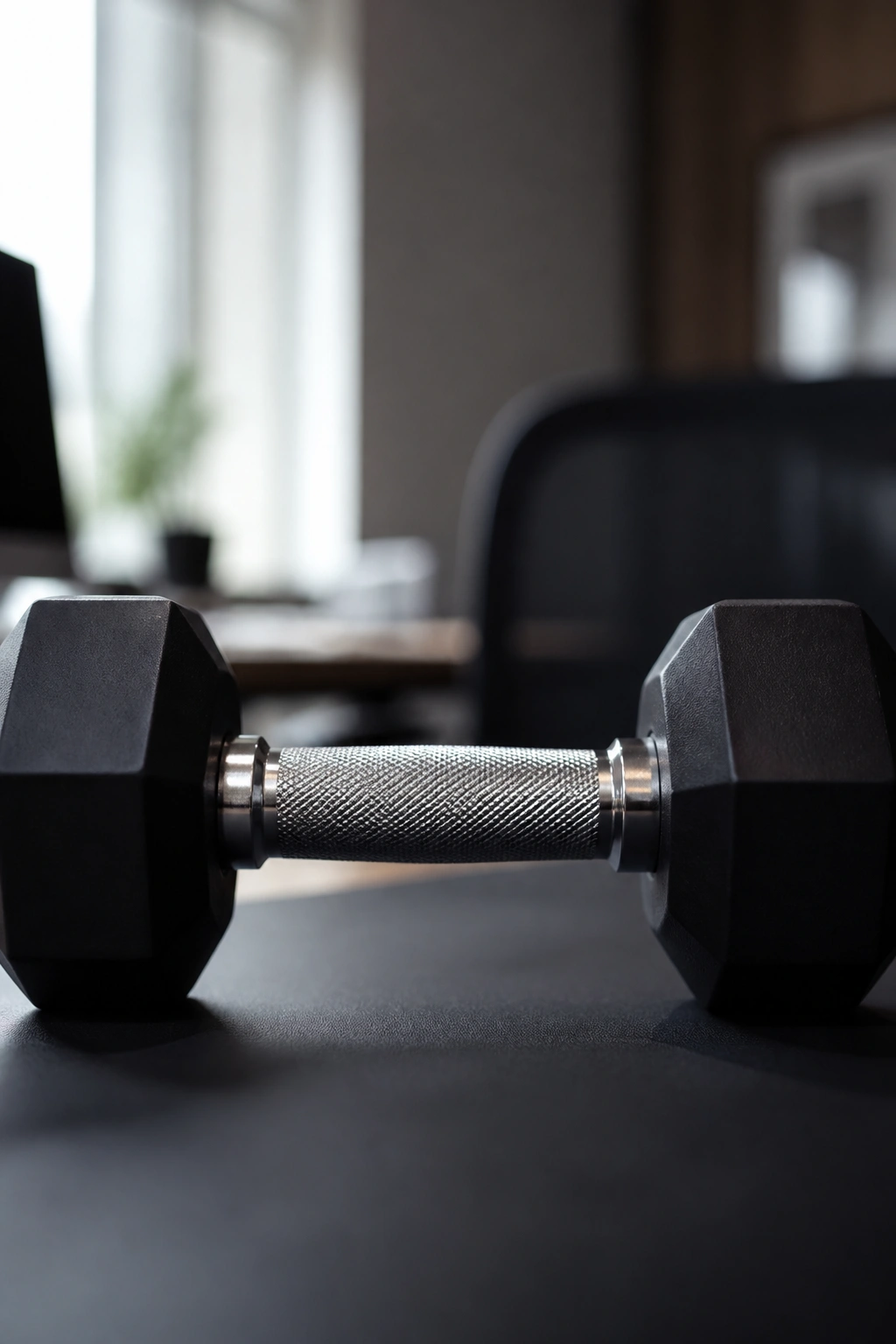
Why do your shoulders feel tired before your arms do?
For a lot of people, the answer is plain old sitting. The ribs flare, the upper back stiffens, and the core stops doing the quiet work it is supposed to do. Dumbbells can help because they load the body in awkward, useful ways.
This is not a six-pack plan. It is a posture-and-control plan.
Use it 2 to 3 times a week after your main workout or as a short standalone session. Focus on carries, anti-rotation work, and controlled rows. Good options:
- Suitcase carry
- Dead bug with a light dumbbell held overhead
- Renegade row
- Side plank with dumbbell reach
- Half-kneeling press
What to feel
The carry should make your side body work hard to keep you tall. The dead bug should feel slow and quiet, not frantic. If your low back arches off the floor, the dumbbell is too heavy or the range is too big.
A short add-on plan
- Suitcase carry: 3 x 30 seconds per side
- Dead bug: 3 x 6 reps per side
- Renegade row: 3 x 6 reps per side
- Half-kneeling press: 2 x 8 reps per side
This kind of work is not flashy. It pays off in cleaner pressing, better bracing, and less of that stiff, trapped feeling after long workdays.
11. Dumbbell Leg Day Plan for Quads, Hamstrings, and Glutes
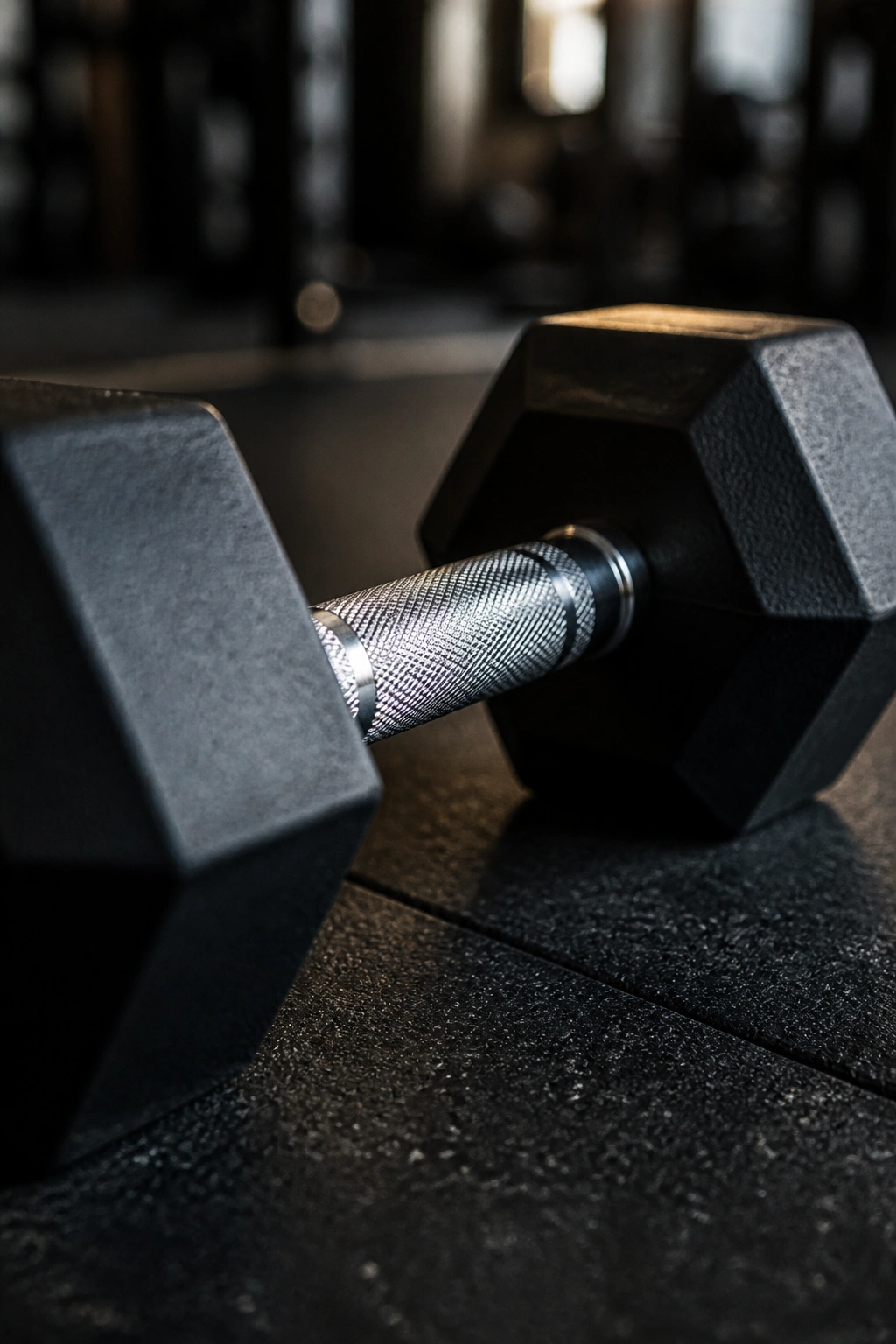
Leg day should hurt in the right places.
If your quads are burning, your glutes are working, and your hamstrings feel like they have opinions, you are probably on the right track. Dumbbells are excellent for lower body training because they reward depth, balance, and clean control.
Knee-dominant work
Start with exercises that load the front of the legs:
- Goblet squat
- Heel-elevated goblet squat
- Reverse lunge
- Bulgarian split squat
Use 3 to 4 sets of 8 to 12 reps. On split squats, stop when the back knee almost touches the floor and the front foot stays flat. That keeps the movement honest.
Hip-dominant work
Then move to the hinge pattern:
- Dumbbell Romanian deadlift
- Dumbbell hip thrust
- Single-leg Romanian deadlift
- Glute bridge with a dumbbell across the hips
These usually do best in the 8 to 15 rep range. Lower the dumbbells slowly. If they swing around, the back takes over and the glutes miss the point.
Add calves if you want them:
- Standing dumbbell calf raise, 3 sets of 15 to 20 reps
A good leg day is not a contest to see how destroyed you can get. It is a controlled grind. The next session should feel possible, not like a punishment.
12. Dumbbell Upper-Body Plan for Chest, Back, Shoulders, and Arms
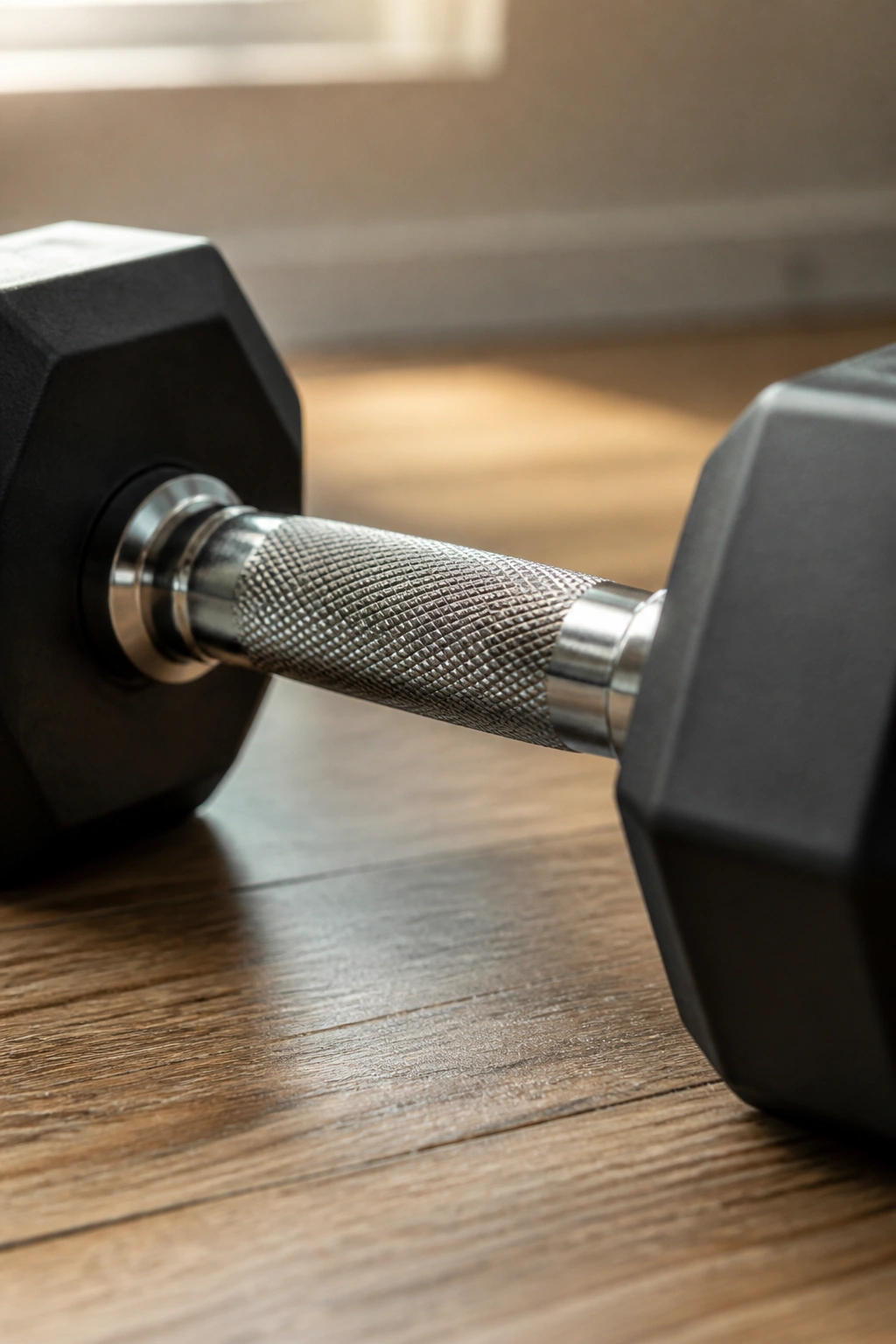
Upper-body training gets messy fast if the push-pull ratio is off.
Too much pressing and your shoulders start complaining. Too much pulling and the session turns into a back day with a couple of lonely curls at the end. Dumbbells make it easy to keep things balanced if you pair the movements on purpose.
A tidy upper-body session can use supersets:
- Floor press paired with one-arm row
- Standing shoulder press paired with rear-delt fly
- Curl paired with triceps extension
That structure saves time and keeps the workout from dragging. It also gives the pressing muscles a breather while the pulling muscles do their job, and vice versa.
Try this:
- Floor press: 4 x 8
- One-arm row: 4 x 8 per side
- Standing shoulder press: 3 x 10
- Rear-delt fly: 3 x 12
- Hammer curl: 3 x 10
- Overhead triceps extension: 3 x 10
Keep your elbows from flaring wildly on presses, and let your shoulder blades move naturally on rows. The session should feel worked, not shredded. There is a difference.
This is the kind of plan that suits home lifters who want more structure than random upper-body day. Clean, balanced, repeatable.
13. Dumbbell Push/Pull/Legs Split for Intermediate Lifters
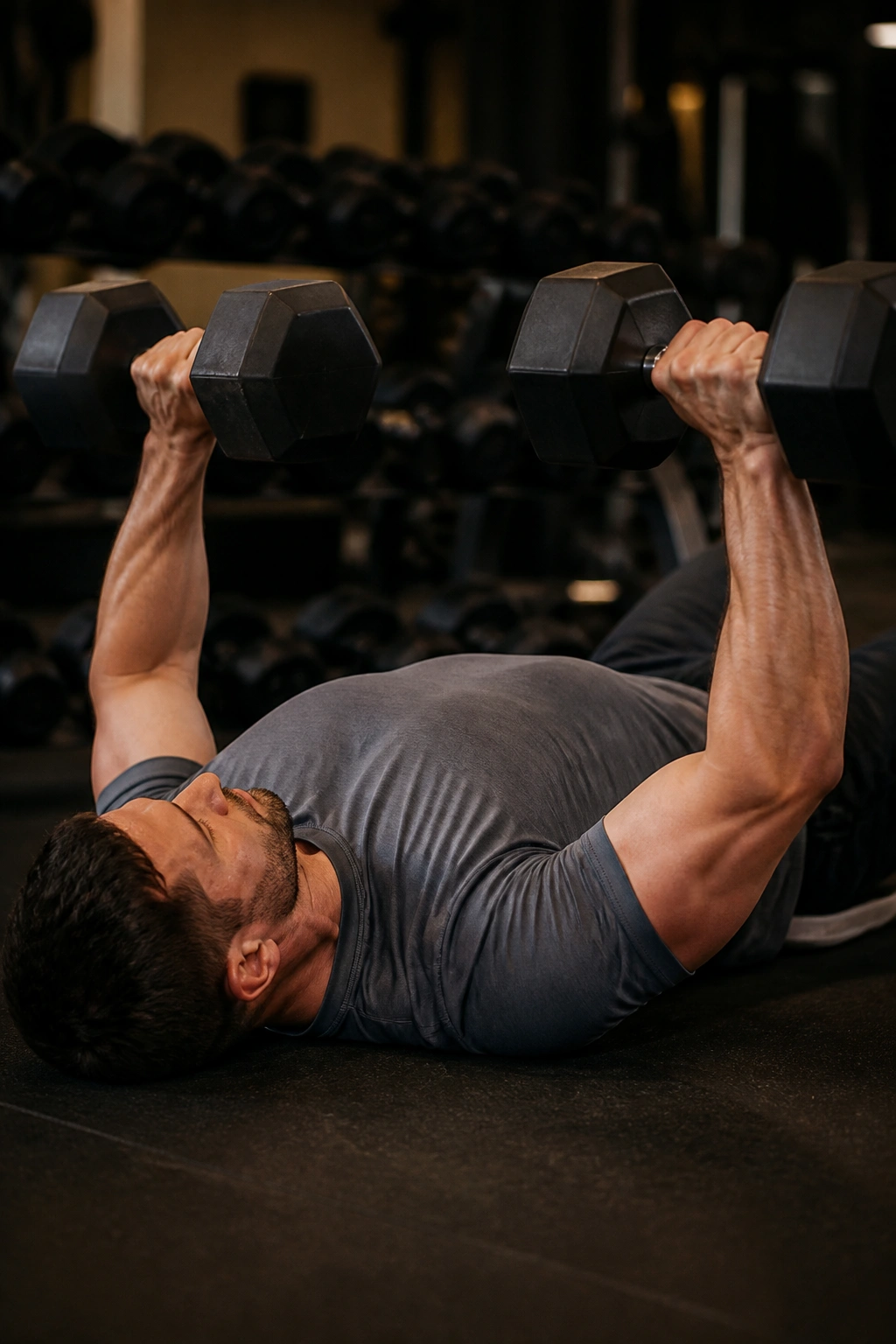
This is the split people graduate to when three days no longer feels like enough.
Push/pull/legs is old because it solves a real problem: each major movement pattern gets its own space, and the weekly volume can climb without making any one session absurdly long. With dumbbells, it works best when you keep the exercise list tight and the effort honest.
Push
- Dumbbell floor press
- Incline press if available
- Standing shoulder press
- Lateral raise
- Triceps extension
Pull
- One-arm row
- Chest-supported row
- Rear-delt fly
- Dumbbell pullover
- Curl
Legs
- Goblet squat
- Bulgarian split squat
- Romanian deadlift
- Hip thrust
- Calf raise
Most people do well with 3 to 4 sets of 6 to 12 reps, depending on the lift. Bigger compounds can sit lower. Raises and curls can live higher. No need to overthink that part.
If you can train 5 or 6 days, this split has room to breathe. If you only have 3 days, it still works as a rotating plan. Push one week, pull the next, legs after that. Not glamorous. Effective, though.
14. Dumbbell Workout Plan When Your Weights Feel Too Light
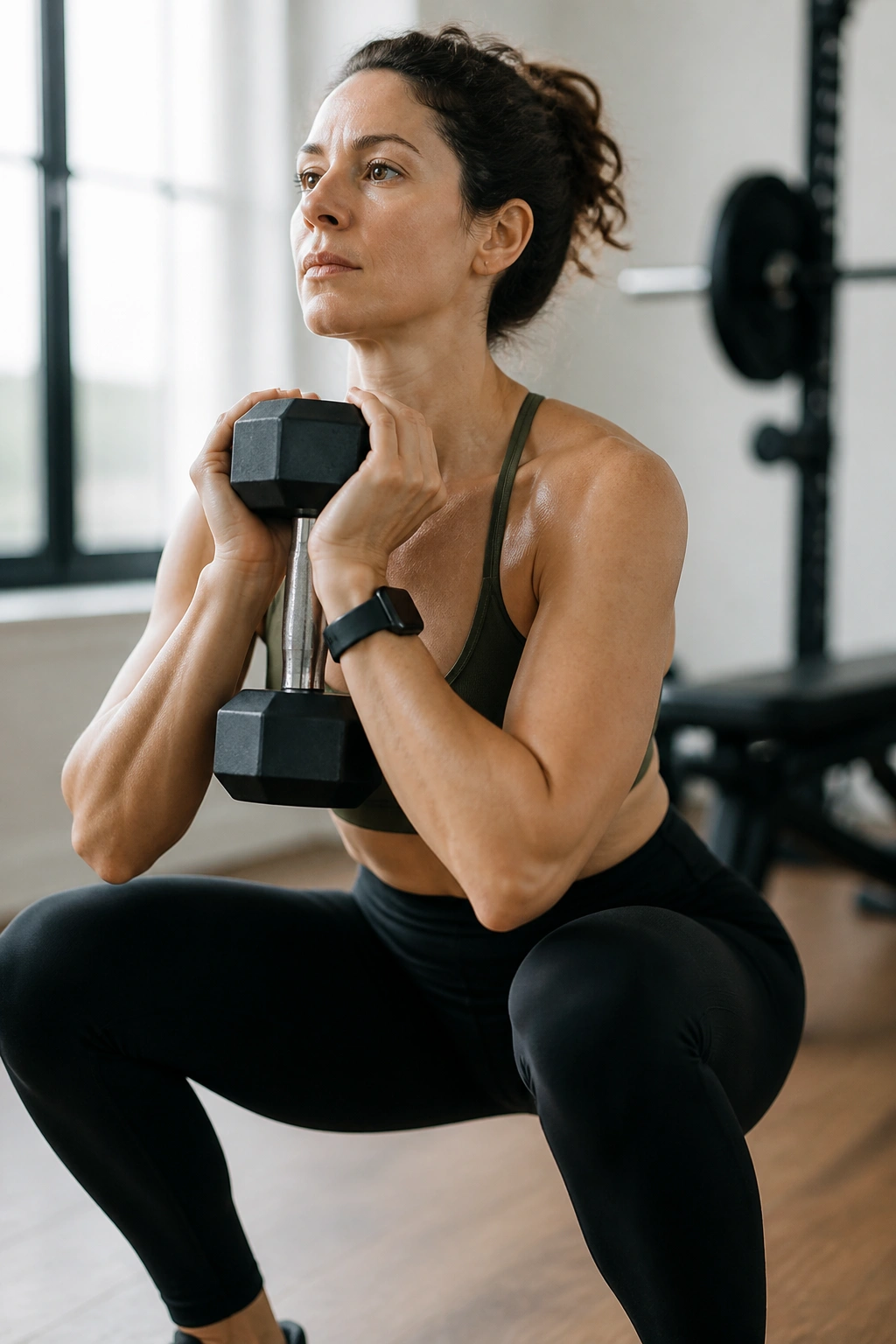
Light dumbbells are not a dead end.
They just force you to get smarter. That is a useful problem to have, honestly. Once a pair stops challenging you in the usual way, you can make the same weight much harder without buying anything new.
Before you buy heavier bells
Try these methods first:
- Slow the lowering phase to 3 or 4 seconds
- Pause for 1 to 2 seconds in the hardest part of the rep
- Switch to single-arm or single-leg versions
- Add one extra set
- Reduce rest by 15 to 30 seconds
- Use one-and-a-half reps on squats or presses
That last one is sneaky. Go down, come halfway up, go back down, then stand all the way up. It feels odd for about ten seconds and then your legs wake up fast.
Where it works best
This approach shines on goblet squats, split squats, rows, shoulder presses, and Romanian deadlifts. It is less useful on tiny isolation moves where form breaks down fast. No one needs a cursed lateral raise variation that turns into a shrug.
If the dumbbells still feel too easy after all that, then yes, it may be time for a heavier pair. But squeeze the room you already have first. Most people leave a lot of work on the table.
15. Dumbbell Workout Plan for Messy Weeks and Travel

Messy weeks need small rules, not perfect ones.
This plan is for the days when life is loud, your schedule is chopped up, and you cannot count on a neat four-day split. The goal is not maximal progress. The goal is to keep the habit alive while still doing enough work to matter.
Use 3 short sessions a week, each around 25 to 35 minutes. Keep the exercise list simple and repeat it. That cuts decision fatigue, which is half the battle on chaotic weeks.
A solid template:
- Goblet squat or split squat
- One-arm row
- Floor press or push-up holding dumbbells
- Romanian deadlift
- Suitcase carry or dead bug
Do 2 to 3 sets per move. Stop one rep before your form starts slipping. If a day gets away from you, do the first three exercises and leave. That still counts.
A backup rule worth keeping
If you only have 12 minutes, do one lower-body move, one push, and one pull. That is the floor. Anything beyond that is a bonus.
I like plans like this because they respect reality. Not every training week is neat, and pretending otherwise tends to wreck consistency. A small, repeatable workout beats a grand plan that keeps getting postponed.
Final Note
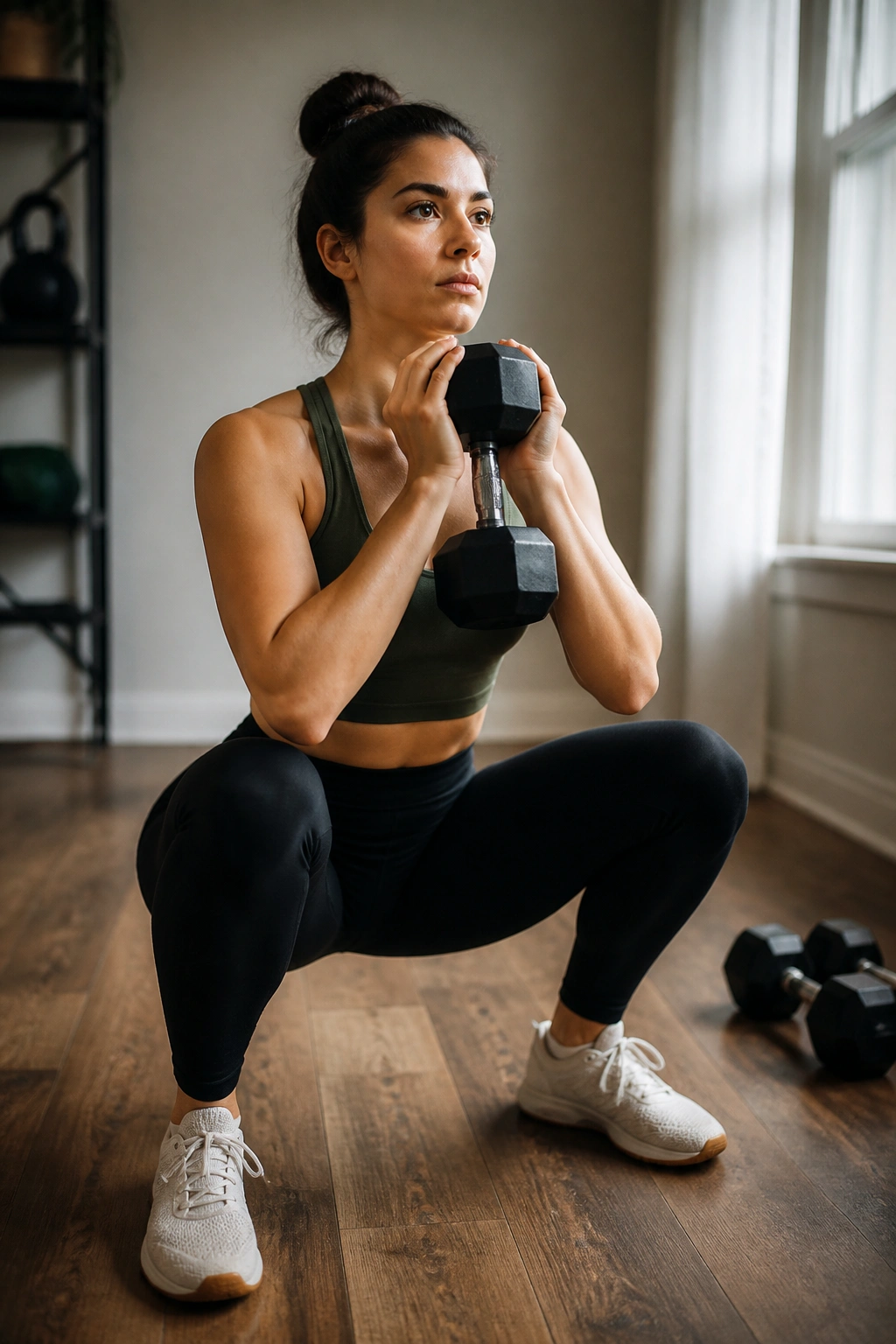
The best dumbbell workout plan is the one that matches your life and still gives you something concrete to track. Reps, sets, rest, and exercise choice matter more than hype or inspiration. Dumbbells reward people who write things down and keep the same lifts around long enough to see a pattern.
Pick one plan that fits your current week, not the week you wish you had. A beginner can start with two full-body days and do well. Someone farther along can move into an upper-lower split, push/pull/legs, or a progression plan that makes light weights earn their keep.
Keep the notes simple. If last week was 10 reps, try 11. If 20 minutes felt rushed, keep the same workout and clean up the rest periods. That quiet kind of progress is slower to brag about, and much better to live with.
