



Leg lifts look harmless until your lower abs start shaking and your lower back decides it has opinions. That’s the funny part. People see a tiny range of motion and assume the work must be tiny too, then one clean set of slow leg lifts proves otherwise.
The truth is that leg lifts are not one exercise. They’re a family of exercises, and the differences matter more than most people think. A floor leg lift can train control and lower-ab endurance. A hanging version can turn into a grip-and-core test. A side-lying lift can light up the outer hip in a way a crunch never will. Same general idea. Very different effect.
What makes these moves worth your time is not the burn alone. It’s the way they reveal weak spots fast. If your ribs flare, your hip flexors take over. If your pelvis tilts too early, your low back complains. If you rush the lowering phase, you’ve basically turned a core drill into a leg swing. Small details. Big difference.
So the list below starts simple and gets meaner. Good mean, though. The useful kind.
1. The Classic Supine Leg Lift
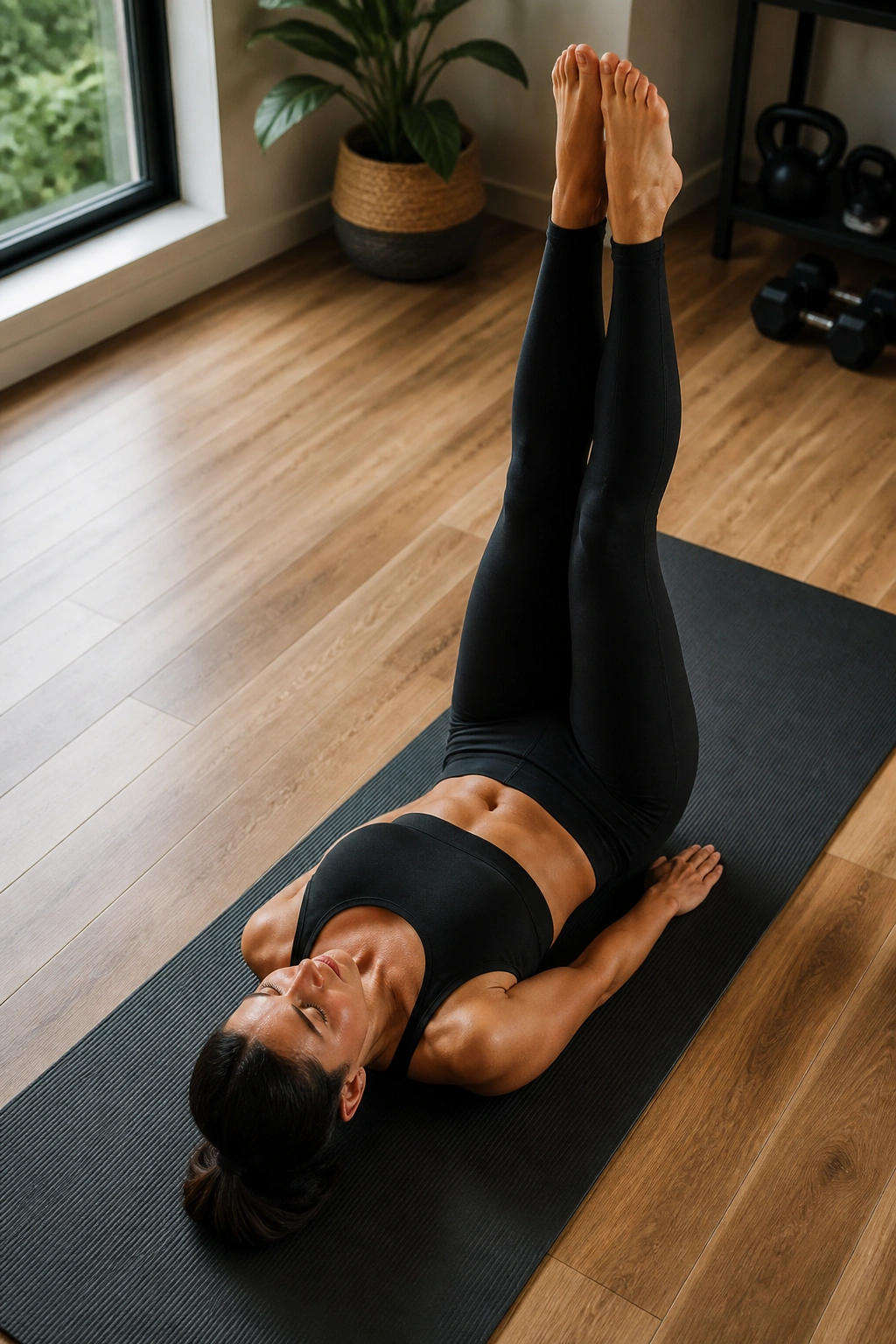
This is the version most people picture first: lying flat on your back, legs straight, lowering them under control, then bringing them back up without letting your lower back peel off the floor. It looks plain. It is not plain when you do it well.
How to feel it where you want it: press your lower ribs down, tuck your pelvis slightly, and stop the descent the moment your back wants to arch. If you have to lower only to a 45-degree angle, that’s fine. Clean reps beat fancy range every time.
Quick Form Cues
- Lie on a mat with your arms at your sides or hands under your hips.
- Start with both legs pointed to the ceiling.
- Lower them for 3 seconds until your low back starts to lift.
- Pause for a beat, then lift back up without swinging.
- Use 8 to 12 reps for control, or 20 to 30 seconds for a burn set.
The classic leg lift hits the lower abs, but it also exposes tight hip flexors fast. That’s why some people feel it in the front of the hips more than the belly. The fix is usually not “try harder.” It’s a shorter range, slower tempo, and a quieter rib cage. If your neck or back starts to take over, the set is over.
2. Bent-Knee Leg Lift
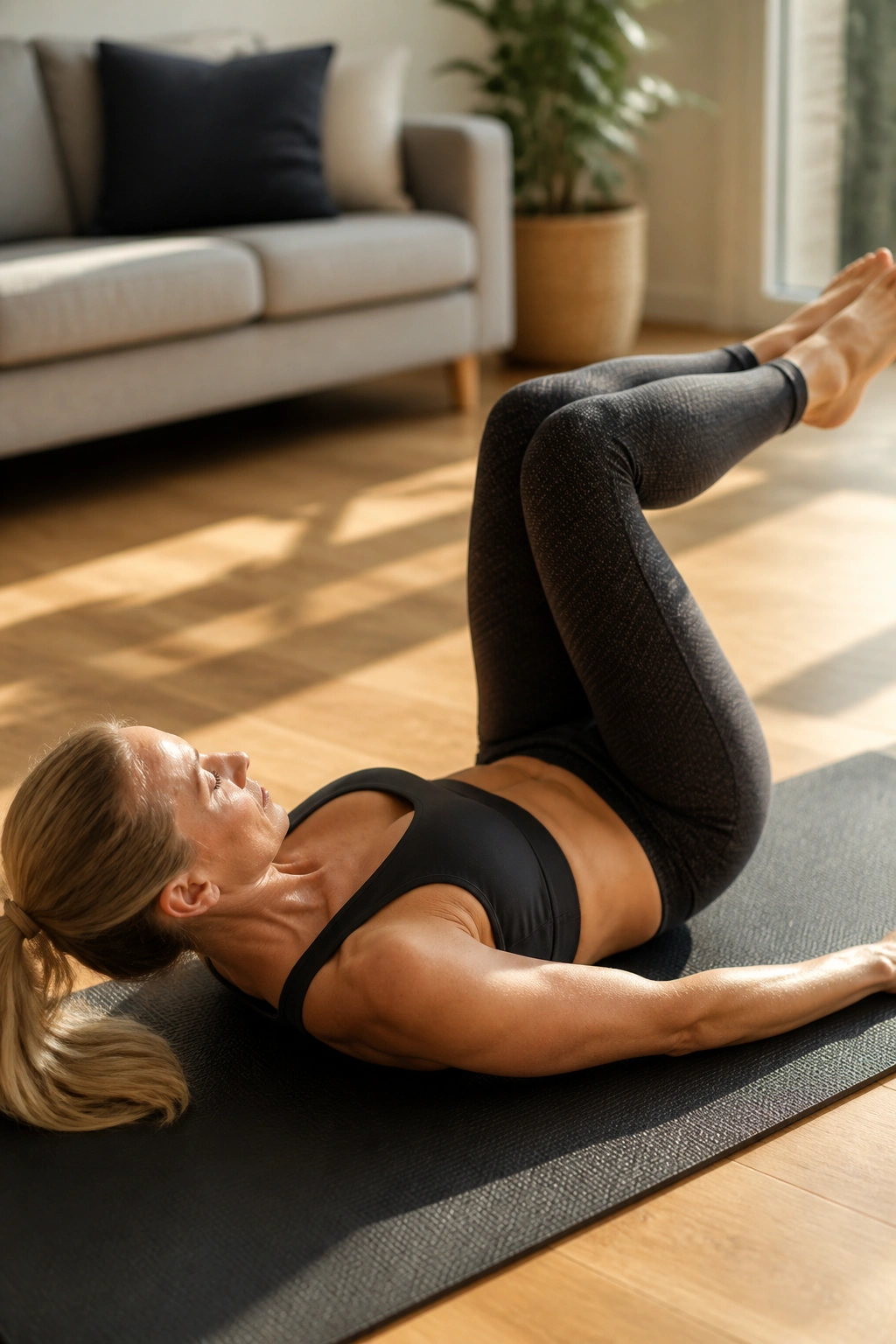
Bent knees are not a downgrade. They’re a smart reset. Shortening the lever makes the movement easier to control, which means your abs get a chance to do their job before your hips hog the spotlight.
I hand this version to beginners all the time, but I also like it for anyone whose low back gets cranky after straight-leg work. Keep the knees bent at about 90 degrees, and lower the shins only until your pelvis wants to tilt. That small range is the whole point. It teaches the body what “control” feels like without asking for heroics.
Use 2 to 3 sets of 10 to 15 reps with a slow lower. If you want it to feel harder, pause for 2 seconds with the knees hovering above the floor. Don’t arch to chase depth. That’s the trap. The move gets cleaner, cleaner, cleaner, and then suddenly your abs are the thing doing the work instead of your hip flexors.
3. Alternating Single-Leg Lowering
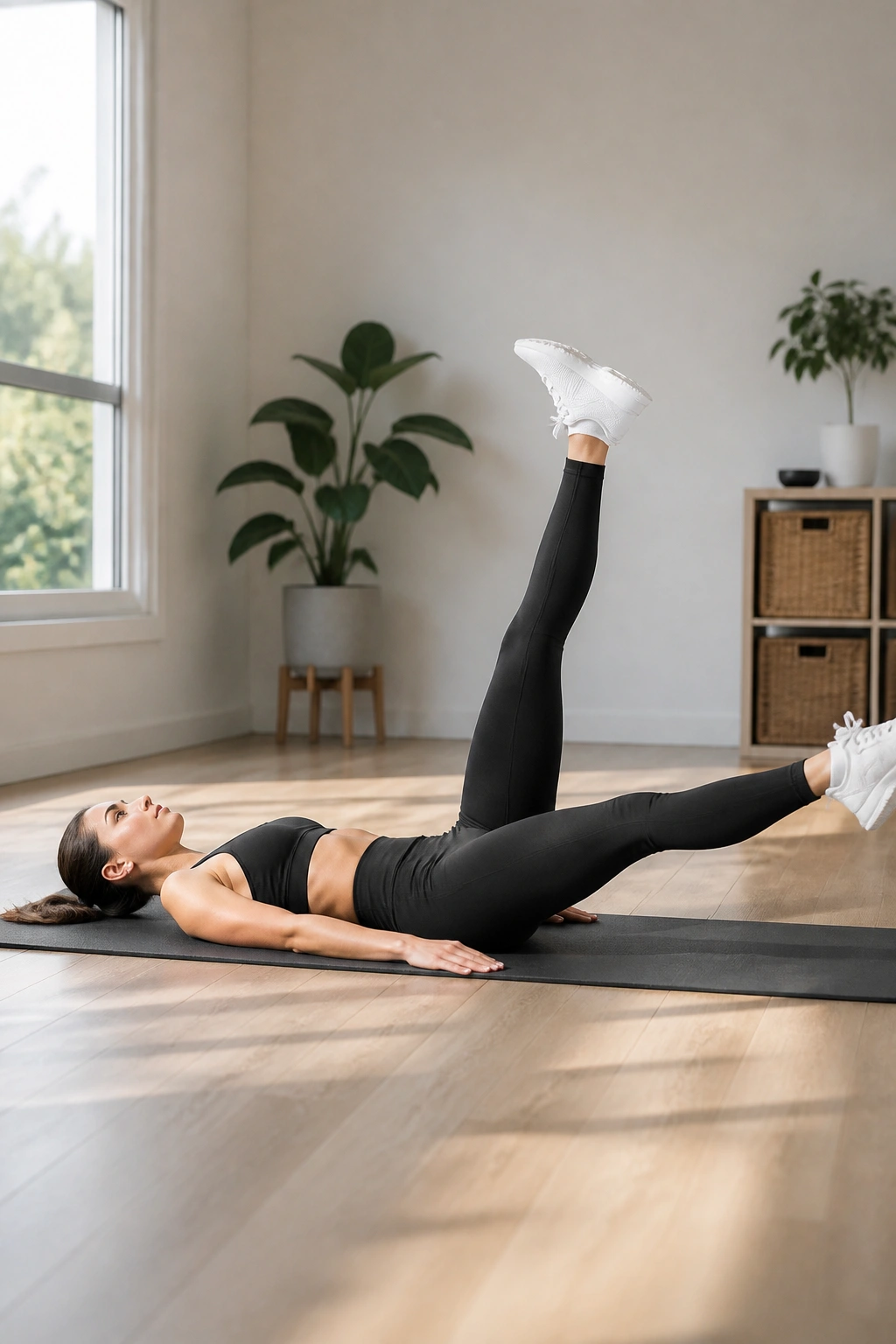
Why does alternating one leg at a time feel tougher than it looks? Because the pelvis has less help. The lifted leg gives you a little relief, sure, but the side that stays up has to keep the whole shape steady while the other one lowers.
How to use it
Start with both legs up, then lower one heel toward the floor while the other leg stays vertical. Switch sides slowly. Think one leg moving, one leg anchoring. If your low back starts to arch, the lowering leg is going too far. That is usually the first clue.
This version is useful when a full double-leg lower feels like too much. It still trains the same control, but it spreads the load out so you can actually keep the pelvis quiet. I like 6 to 8 reps per side with a deliberate 2- to 3-second lowering phase. The slower the descent, the more honest the exercise becomes. And yes, honest is the right word here. These reps tell on you.
4. Side-Lying Outer-Hip Lift
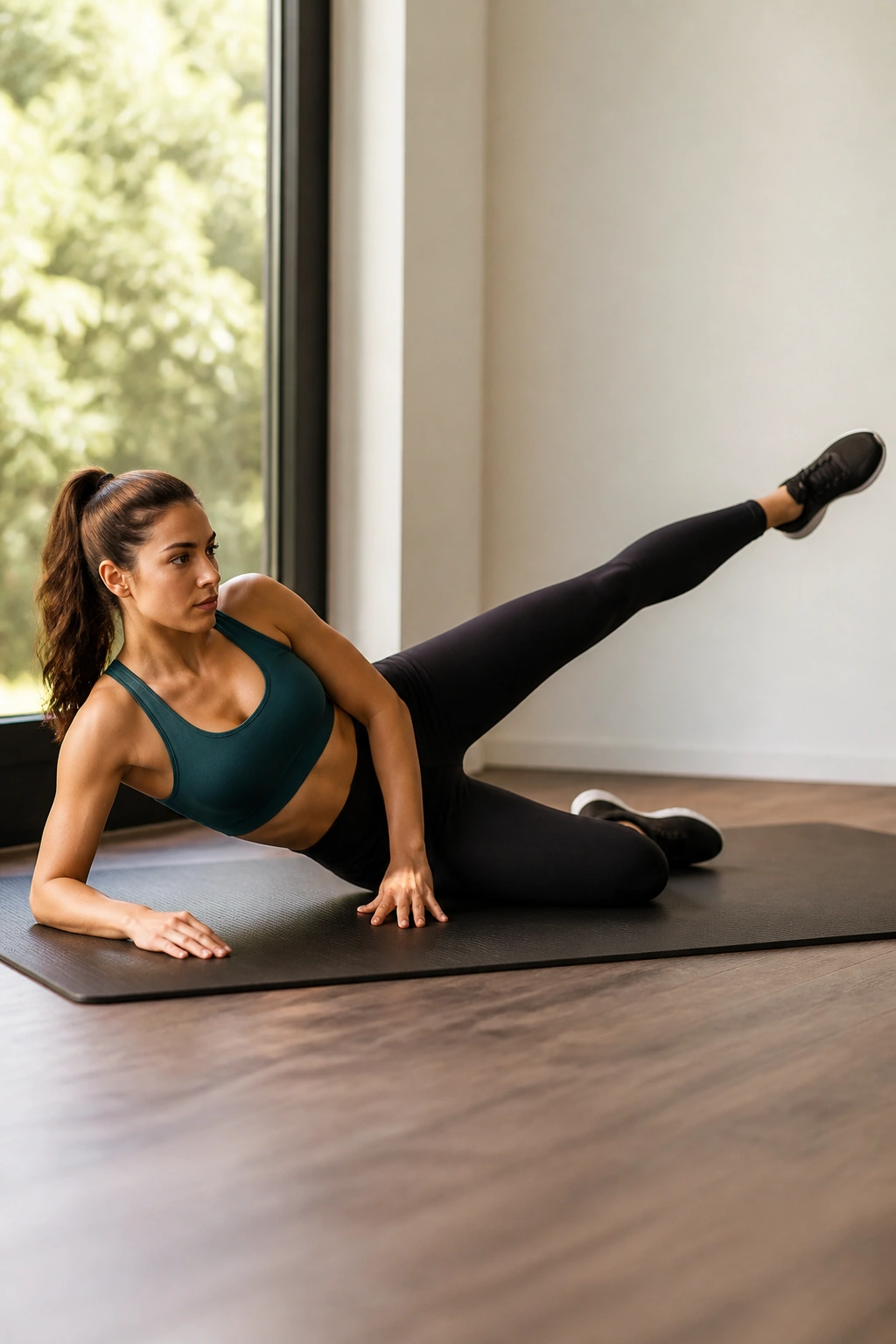
You feel this one on the side of the hip before you see much movement. That’s the point. Side-lying outer-hip lifts target the glute medius, which helps hold the pelvis level when you walk, run, or stand on one leg without wobbling like a baby deer.
Lie on your side, stack your hips, and keep the top foot slightly turned down so the toes don’t point at the ceiling. That tiny detail matters. If you let the toes roll up, the front of the hip starts helping too much and the outer hip loses the spotlight. Lift the top leg only 12 to 18 inches, not to the moon.
- Keep the bottom knee bent for balance.
- Lift on a 2-second count.
- Lower on a 3-second count.
- Stop if your torso rolls backward.
- Try 12 to 20 reps per side.
A small lift done cleanly beats a big swing every time. That sentence should probably be printed on a gym wall somewhere.
5. Side-Lying Inner-Thigh Lift
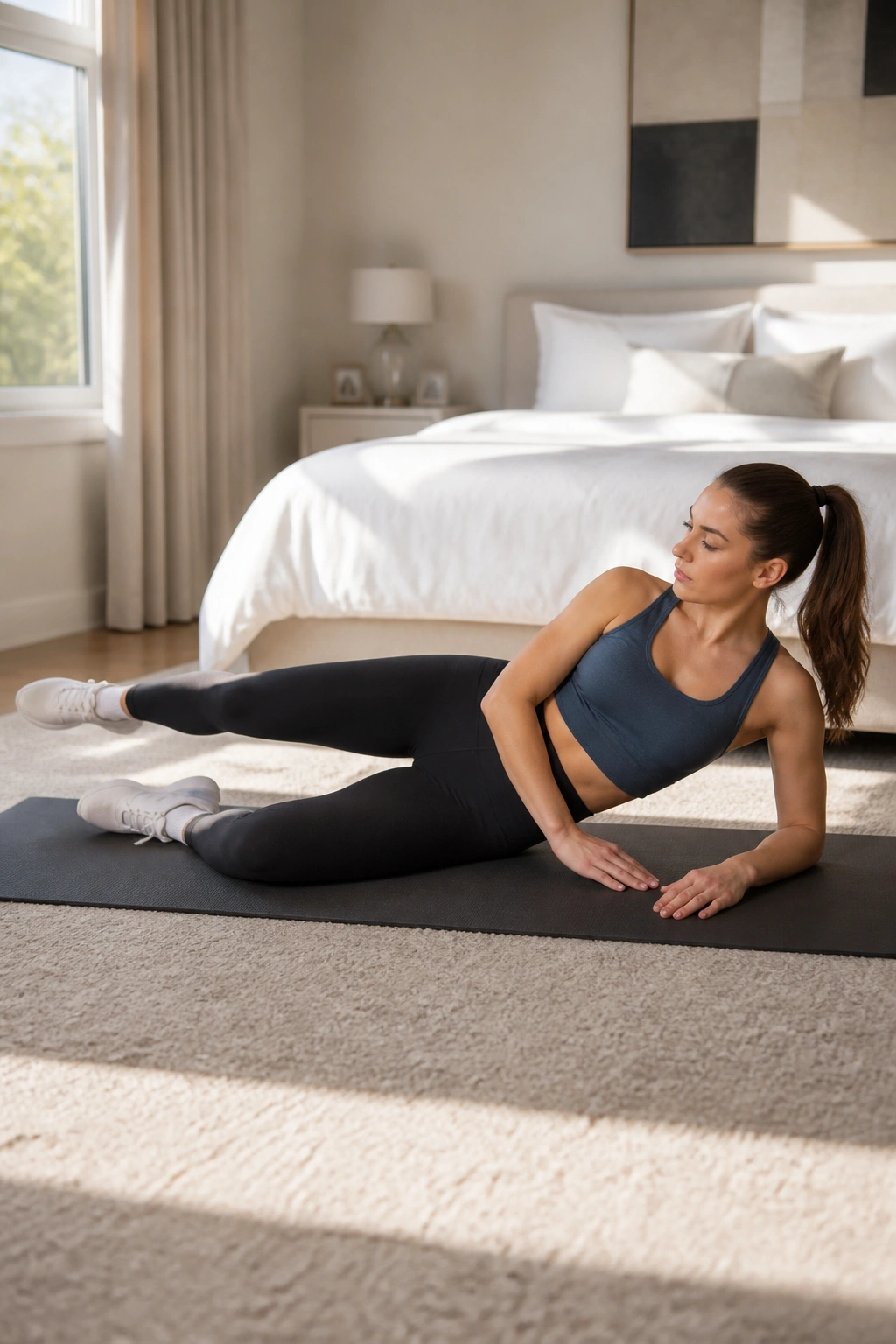
The inner-thigh version gets ignored a lot, which is a shame, because the adductors do more than squeeze things together. They help stabilize the pelvis and support the knees, especially when you move side to side or land on one leg.
Lie on your side with the top leg bent and crossed in front of the bottom leg, or keep both legs long if your hip allows it. Lift the bottom leg a few inches off the floor, then lower it with control. The range is small. It should be small. If you’re heaving the leg up, you’re missing the point and probably using momentum to fake the work.
This one can feel almost too subtle at first. Then the inner thigh starts to burn, and the lower belly often joins in. That’s normal. Use 10 to 15 reps per side and keep the torso quiet. I like it because it fills a gap most leg-lift routines leave behind. Not every strong midsection is built from front-facing work.
6. Flutter Kicks
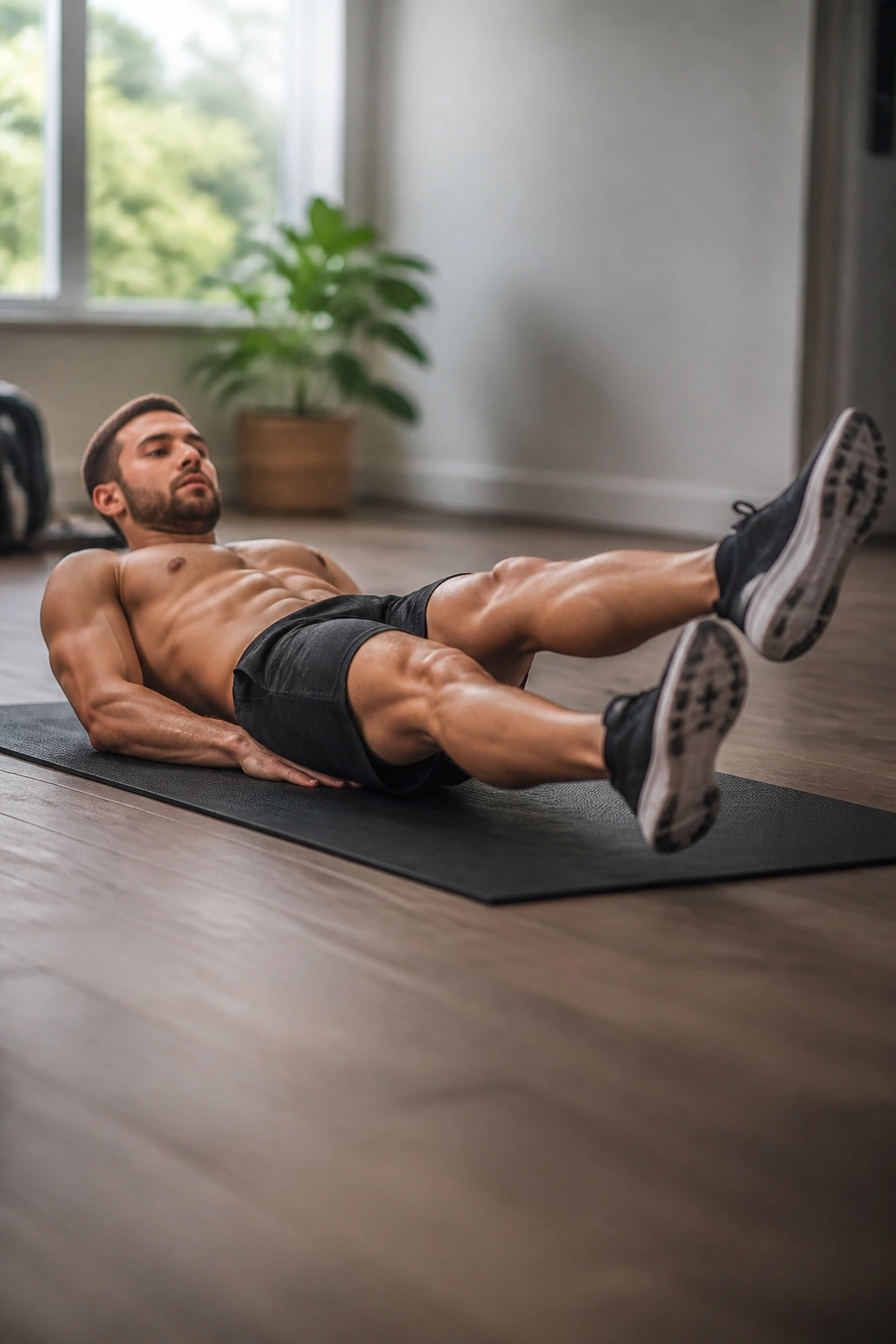
Flutter kicks are what happen when a simple leg lift decides to keep moving. Unlike slow raises, flutter kicks keep the lower abs under tension almost the whole time, which is why they feel more like a burn set than a strength drill.
The trick is to keep the kicks small and low. Tiny beats. Not giant windmills. If your legs are four feet above the floor, you’re probably making it easier on your abs and harder on your hip flexors in the dumbest possible way. Keep your lower back pressed down, soften the knees if needed, and kick from the hips with control.
I like flutter kicks in 15- to 30-second intervals. Shorter is cleaner. Longer is where form usually breaks. This move is better for endurance and conditioning than brute strength, and that’s fine. Not every useful exercise has to look serious to be serious. A good flutter-kick set leaves your midsection buzzing and your breathing a little messy.
7. Scissor Kicks
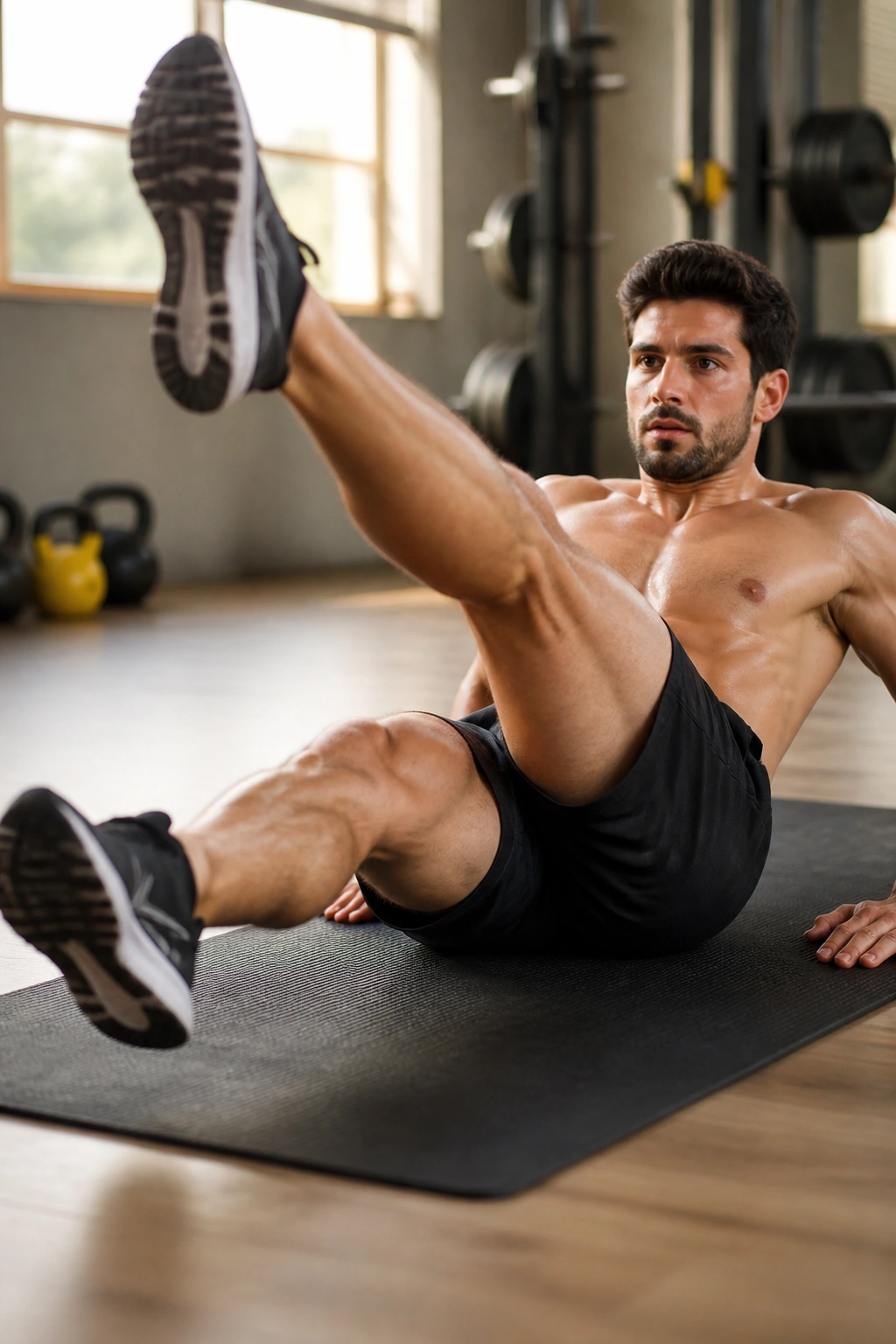
Scissor kicks look like flutter kicks with a twist, but that crossing pattern changes the job. You get more range, a bigger hamstring stretch, and a little more coordination demand, which is useful if you get bored with straight-line leg work.
Keep one leg hovering a few inches higher while the other crosses underneath, then switch. Don’t chase a huge split. A modest cross with control is enough. If your back arches, shorten the legs’ travel immediately. If your shoulders tense up, lower the head and keep your neck long. The whole move can go sideways fast when people try to make it look dramatic.
- Use a slow 1-2 rhythm.
- Keep the lower back heavy on the mat.
- Cross at the midline, not wildly wide.
- Start with 10 to 20 switches.
- Stop before your form gets sloppy.
Scissor kicks are a good fit for anyone who wants leg lifts that feel dynamic without needing equipment. They also slot nicely after slower floor work, when the core is already awake and ready for a bit more heat.
8. Reverse Crunch with Leg Extension
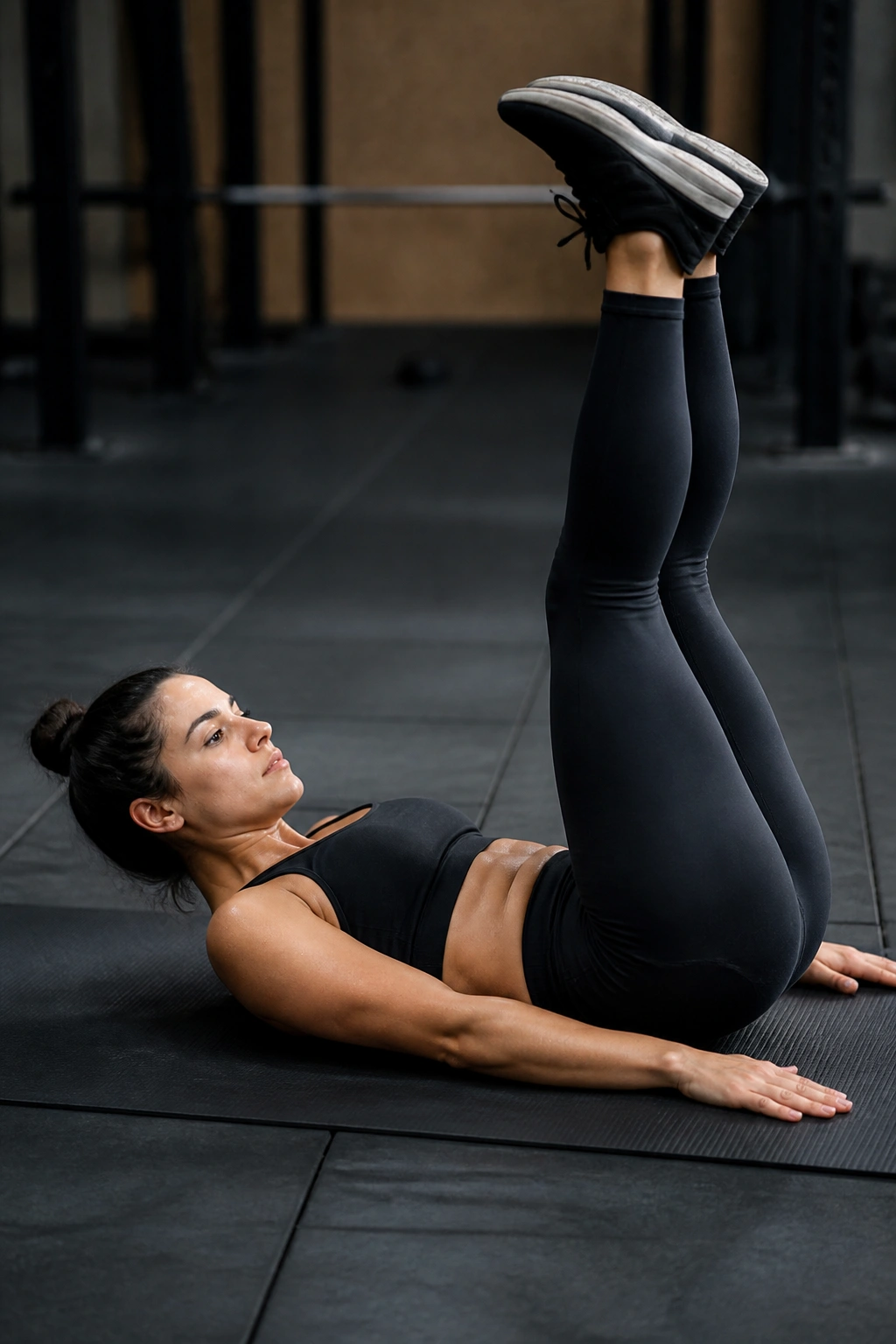
If you want lower-ab work that teaches pelvic control fast, reverse crunches with leg extension earn their keep. The important part is the curl. Not the leg swing. Not the height. The curl.
Why the curl matters
Start with knees bent and legs lifted. Pull the knees in, then curl the pelvis toward the ribs so the tailbone lifts off the floor. From there, extend the legs upward or slightly out, then bring them back in under control. That posterior pelvic tilt — the little tuck at the top — is where the abs finally get to do real work.
What to watch for
- Don’t throw the legs up.
- Don’t let the low back arch on the way down.
- Keep the motion slow enough that you can feel each phase.
- Use 8 to 12 reps for strength, or 30 seconds for a timed set.
I like this one more than a lot of flashy core moves because it’s honest. There’s nowhere to hide. If you swing, it shows. If you breathe hard and keep the ribs down, it lights up in exactly the right place.
9. Dead Bug Leg Lower
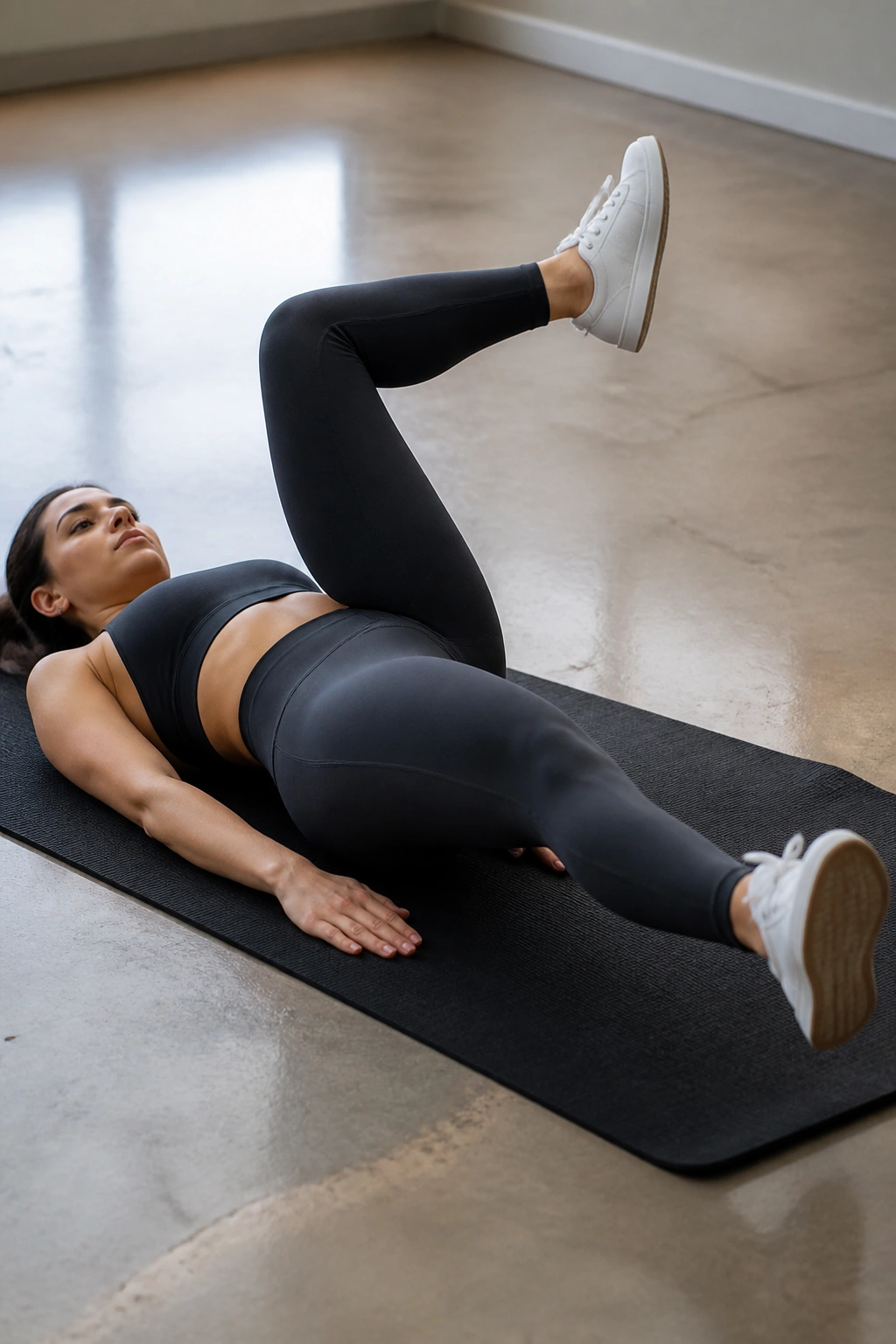
Can a leg lift be almost boring and still be brutal? Dead bug variations say yes. They look soft from across the room, but the second your back starts to arch, the exercise gets loud.
Lie on your back with your hips and knees bent to 90 degrees. Press your lower back gently into the floor. Then lower one heel toward the mat while the other leg stays still, or extend both legs a little if you’ve earned it. The rule is simple: the spine stays quiet. If the floor disappears under your low back, the range is too big.
How to make it useful
Focus on exhaling as the leg lowers. That breath helps keep the ribs from popping up. Go slowly enough that you can feel the front of the core stay on. If you want to make the drill harder without making it sloppy, pause for 1 full second with the heel just above the mat.
Dead bugs are one of those exercises people skip because they look tame. Fine. Skip them and keep chasing noisy reps. Or do them well and notice how much more stable your midsection feels in everything else.
10. Toe Tap Leg Lower
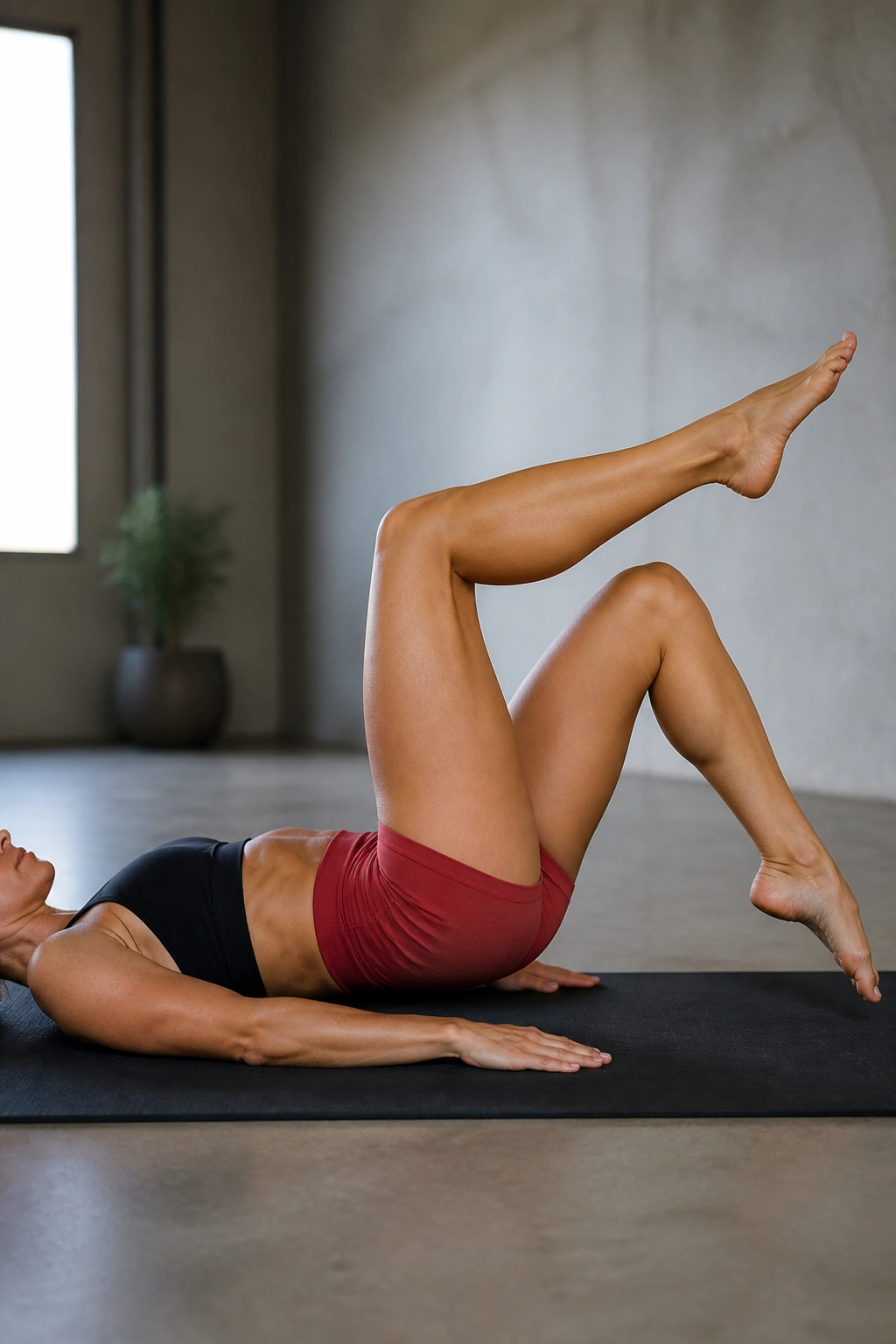
Toe taps are the friendlier cousin of the dead bug. They’re a smart choice on days when your lower back feels a little fussy and straight-leg work sounds like a bad mood waiting to happen.
Set up with both legs in tabletop, knees over hips, shins parallel to the floor. Keep your back pressed down, then lower one toe to tap the mat and bring it back up. Switch sides. The range is tiny, but tiny is the job here. If the pelvis rocks or the back arches, stop and reset before the next rep.
- Tap the floor quietly.
- Keep the movement slow.
- Exhale on the lowering phase.
- Use 8 to 12 taps per side.
- Keep the shoulders relaxed.
This is a good re-entry exercise after harder core work. It lets you practice pelvic control without that “my hips are on fire” feeling that some leg lifts bring. Clean toe taps often make better progress than ugly full-range reps. I’d rather see ten of these done well than twenty reps with the ribs flaring like a tent.
11. Hanging Knee Raise
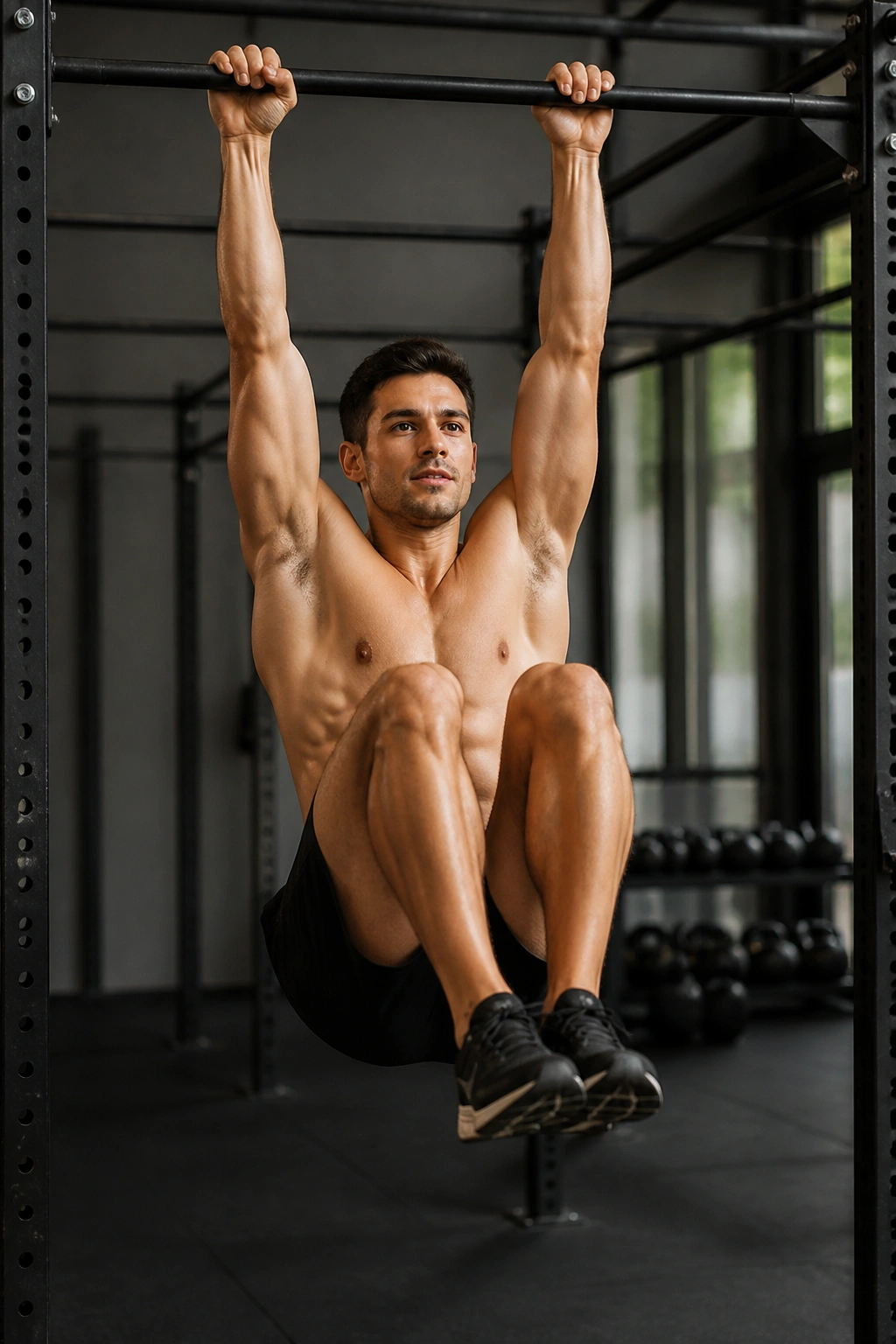
Hanging knee raises change the whole conversation. The floor is gone, gravity gets louder, and your grip joins the party whether you invited it or not.
Hang from a bar with the shoulders active, not slumped. Think long spine, ribs tucked, knees slightly bent. From there, lift the knees toward the chest without swinging. The real work happens when you control the lower half back to stillness. That pause at the bottom matters more than people want to admit.
Grip, swing, and pelvic tilt
A sloppy hang turns the move into a pendulum. A good hang keeps the body quiet enough that the abs can actually flex. Pull the knees up, exhale, then lower with enough control that the bar doesn’t start rocking.
Use 6 to 12 reps. If your shoulders are the weak link, shorten the set and keep the hold cleaner. This variation is a solid bridge between floor work and the harder hanging straight-leg raise. It teaches you how to brace against your own body weight, which is a pretty useful skill outside the gym too.
12. Hanging Straight-Leg Raise
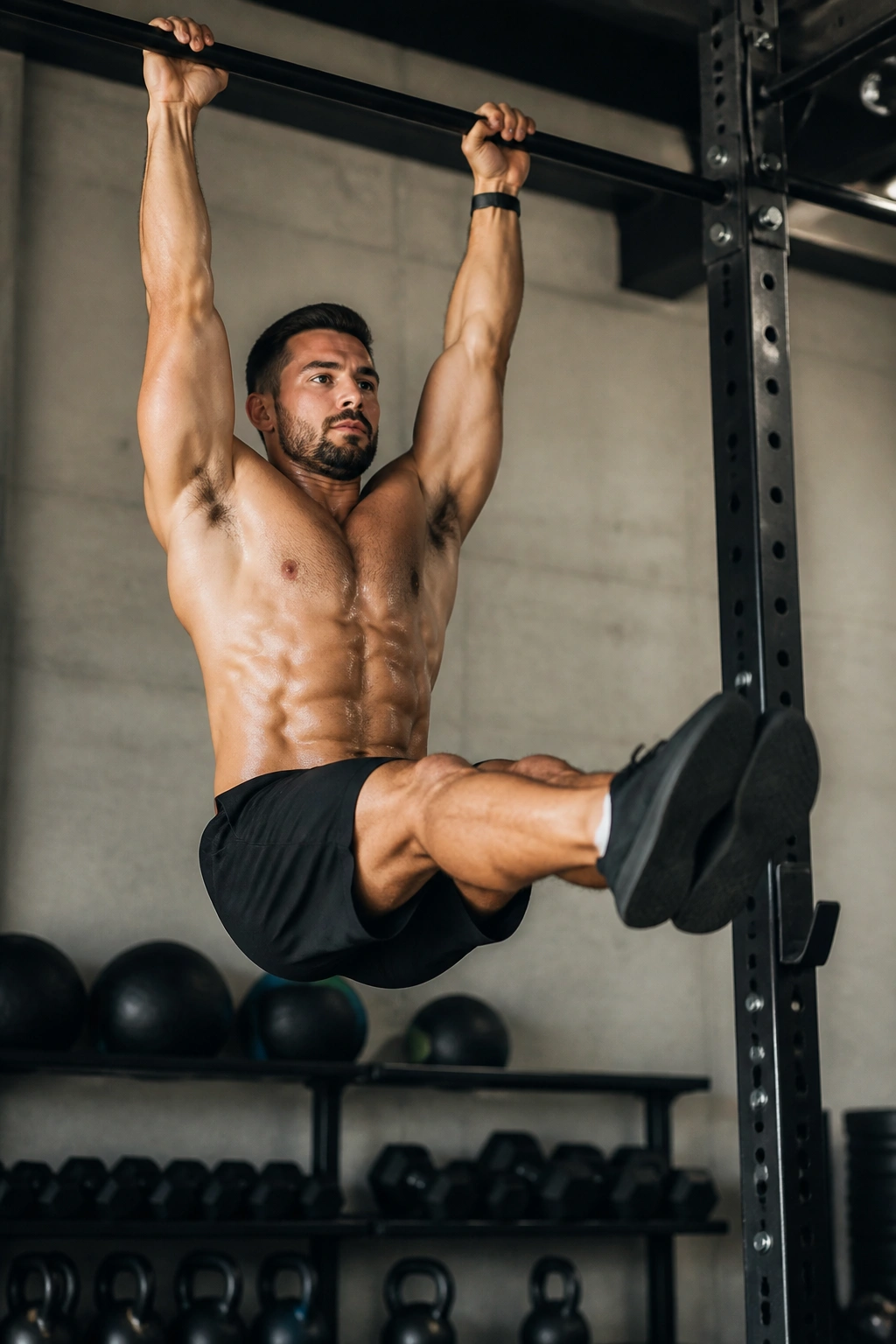
Straight legs are not automatically harder in a useful way. If you cannot keep the pelvis from tipping forward, the move just becomes a swing with better PR packaging.
Start in a dead hang or active hang, depending on your shoulder control. Lift the straight legs only as high as you can without jerking, then lower them slowly until you’re back under control. A small pause at the top helps. So does a tiny posterior pelvic tilt, even if the word sounds more technical than the movement feels.
What to watch for
- No swinging from the hips.
- No flared ribs.
- No yanking the legs up with momentum.
- Keep the descent slower than the lift.
This is a strength move, not a race. If you can only manage 3 to 5 clean reps, that still counts. It counts a lot, honestly. A clean hanging straight-leg raise teaches compression strength, body control, and patience. All three are useful. None of them happen by accident.
13. Captain’s Chair Knee Raise
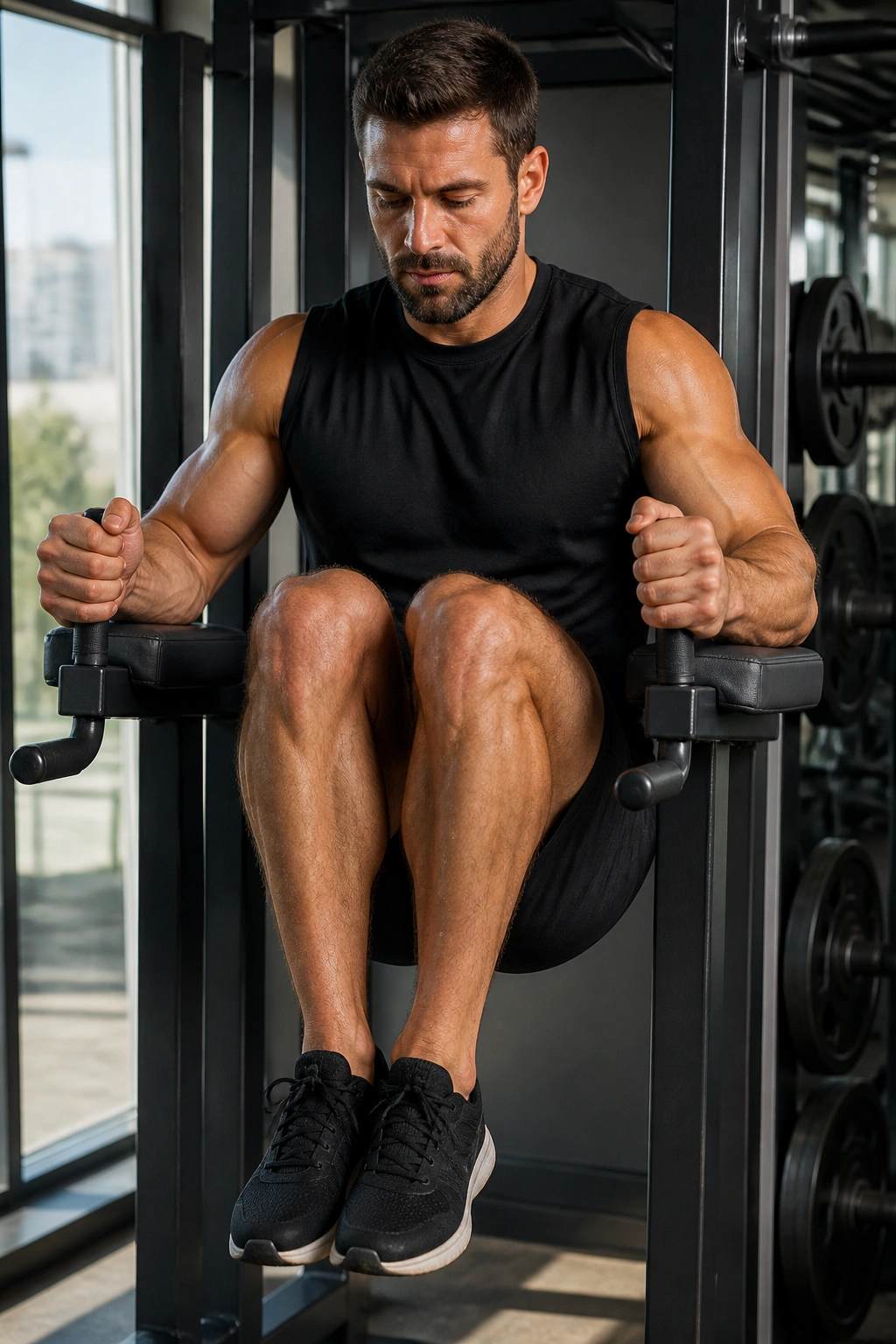
At the captain’s chair station, most people lean back and let the pads do the work. That’s the mistake. The machine gives you support, sure, but it doesn’t do the movement for you unless you hand over the keys.
Set your forearms on the pads, press your back lightly into the rest if the machine has one, and lift the knees upward by curling the pelvis. Do not just raise the thighs and hope for the best. That tiny tuck at the top is the difference between abs work and hip-flexor flailing.
- Keep the shoulders down.
- Avoid swinging the legs.
- Pull the knees up under control.
- Lower slowly to the start.
- Try 8 to 15 reps.
This version is a nice middle ground for people who want hanging work without the full grip challenge of a bar. It also lets you focus on the trunk more clearly because the machine takes some balance demands off the table. That can be a blessing or a trap. Use the support, but don’t lean on it so hard that the set turns into a shrug.
14. Incline Bench Leg Raise
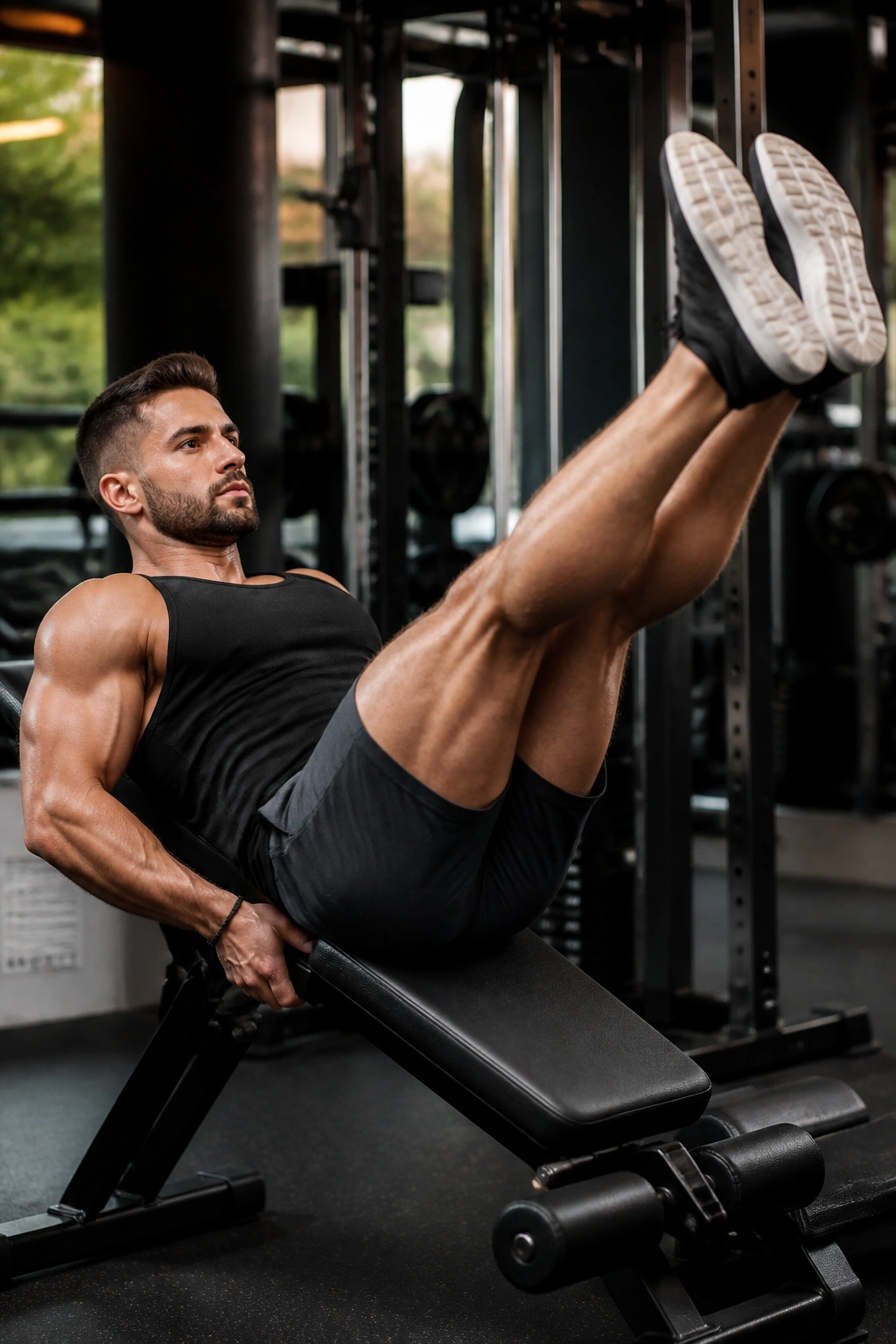
An incline bench gives you feedback you do not get on the floor. Your body is angled, your hips have a fixed edge, and every bit of swinging feels louder than it does on a mat.
Lie back on an incline bench or a bench that lets your torso stay anchored while your legs hang free. Grip the sides, brace your core, and raise the legs without kicking. The more you keep the movement smooth, the more the lower abs get to work instead of the momentum. Lower slowly until you can still control the pelvis, then repeat.
This is a useful step for people who find hanging work too jumpy but still want a bigger challenge than basic floor raises. The incline changes the line of pull, which can make the exercise feel more honest than a flat bench. It also helps expose how much you’re compensating with the hip flexors.
I like this one as a bridge exercise. Not too easy. Not too flashy. Just hard enough to teach control under load, which is usually where leg lift work starts to pay off.
15. Standing Front Leg Raise
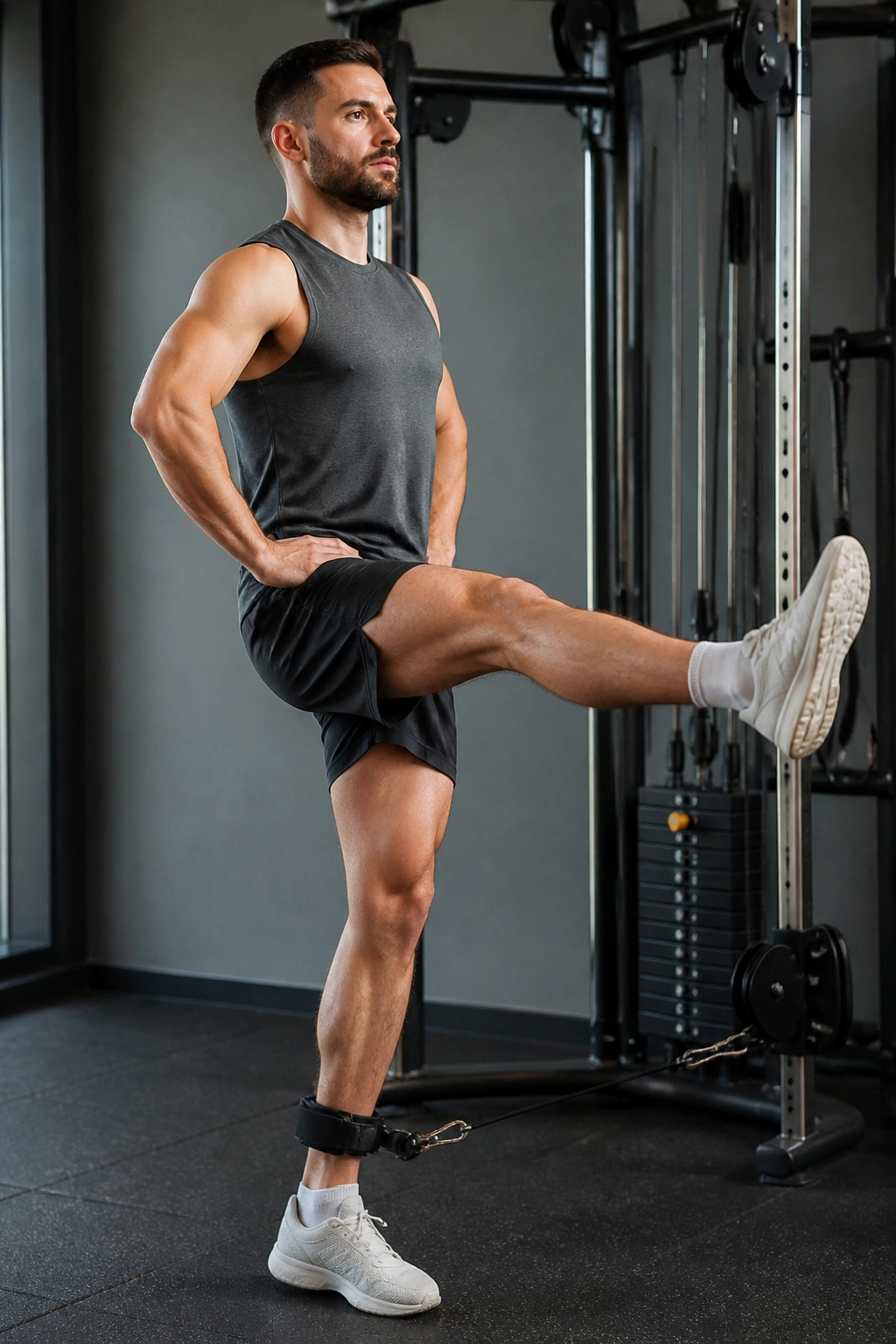
Standing front leg raises are less about crunching and more about owning your hip. They train the hip flexors and teach the standing leg to stay steady while the other leg moves without drama.
Use a cable, ankle weight, or even a light resistance band attached low. Stand tall with a soft knee on the support leg, then lift the working leg forward to about hip height or a little lower. Keep the torso from leaning back. If your chest flies open, the front of the hip is probably taking over in a messy way.
This move is useful for runners, dancers, and anyone who needs better single-leg control. It also exposes side-to-side differences fast, which can be annoying but useful. Use 10 to 15 reps per side with a slow lower. The lower phase should feel like you’re resisting the weight, not dropping it.
Small note. This is not a power move. Keep it tidy.
16. Standing Side Leg Raise
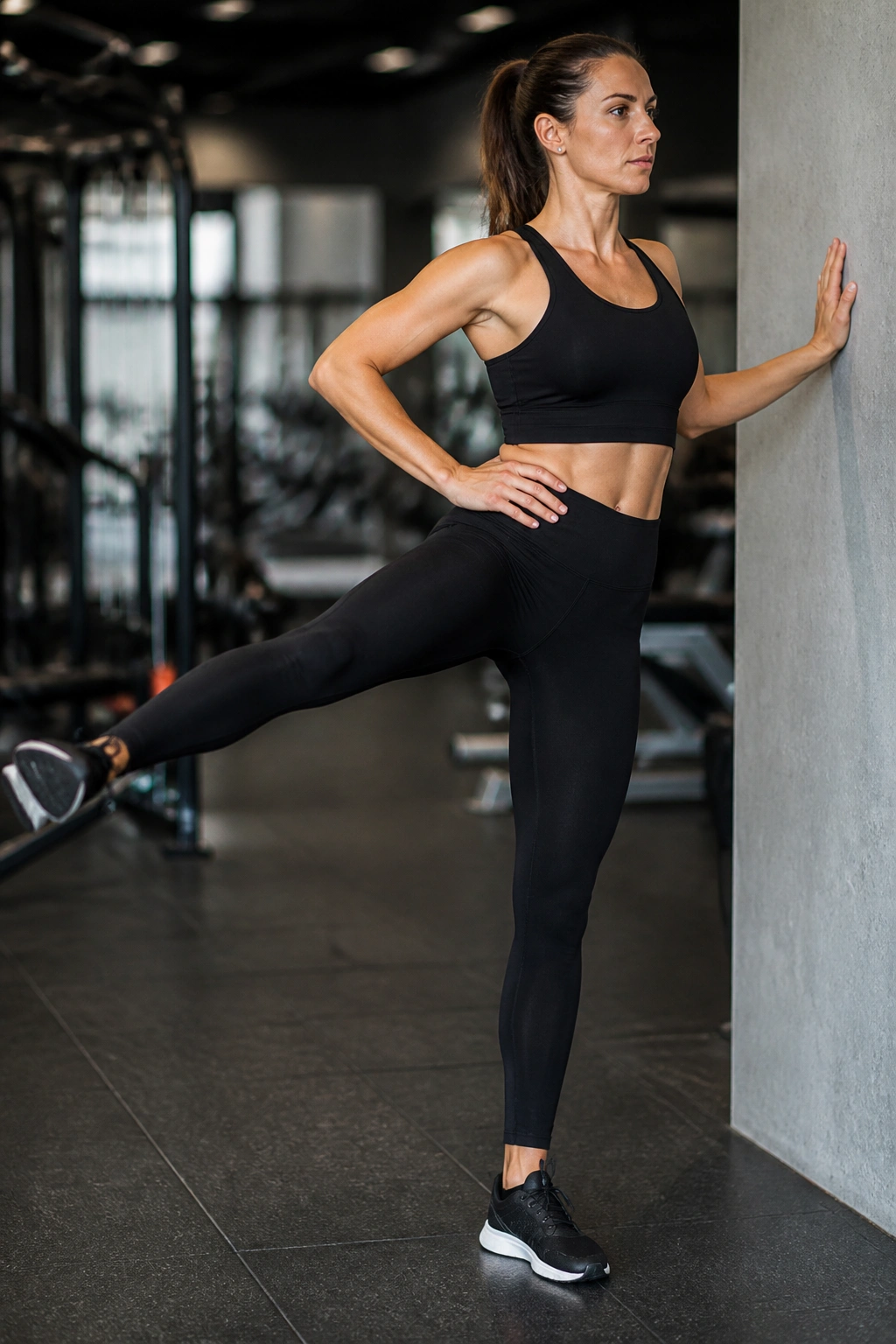
Side-lying leg lifts are fine. Standing side leg raises tell you whether your pelvis can stay level when gravity stops being polite. That’s why I like them so much.
Hold onto a wall, rack, or chair with one hand. Shift your weight onto the standing leg, keep the hips square, then lift the free leg straight out to the side a few inches. Don’t lean away from the lifted leg. Don’t toe out just to fake more height. A clean line matters more than a big range.
- Keep the standing knee soft.
- Lift slowly for 2 seconds.
- Lower even slower.
- Try 12 to 20 reps per side.
- Stop before the torso starts tipping.
This one is especially good for glute medius work, pelvic stability, and knee tracking. If one side feels clumsy, that tells you something useful. Your body usually knows. We just don’t always listen.
17. Banded Donkey Kick
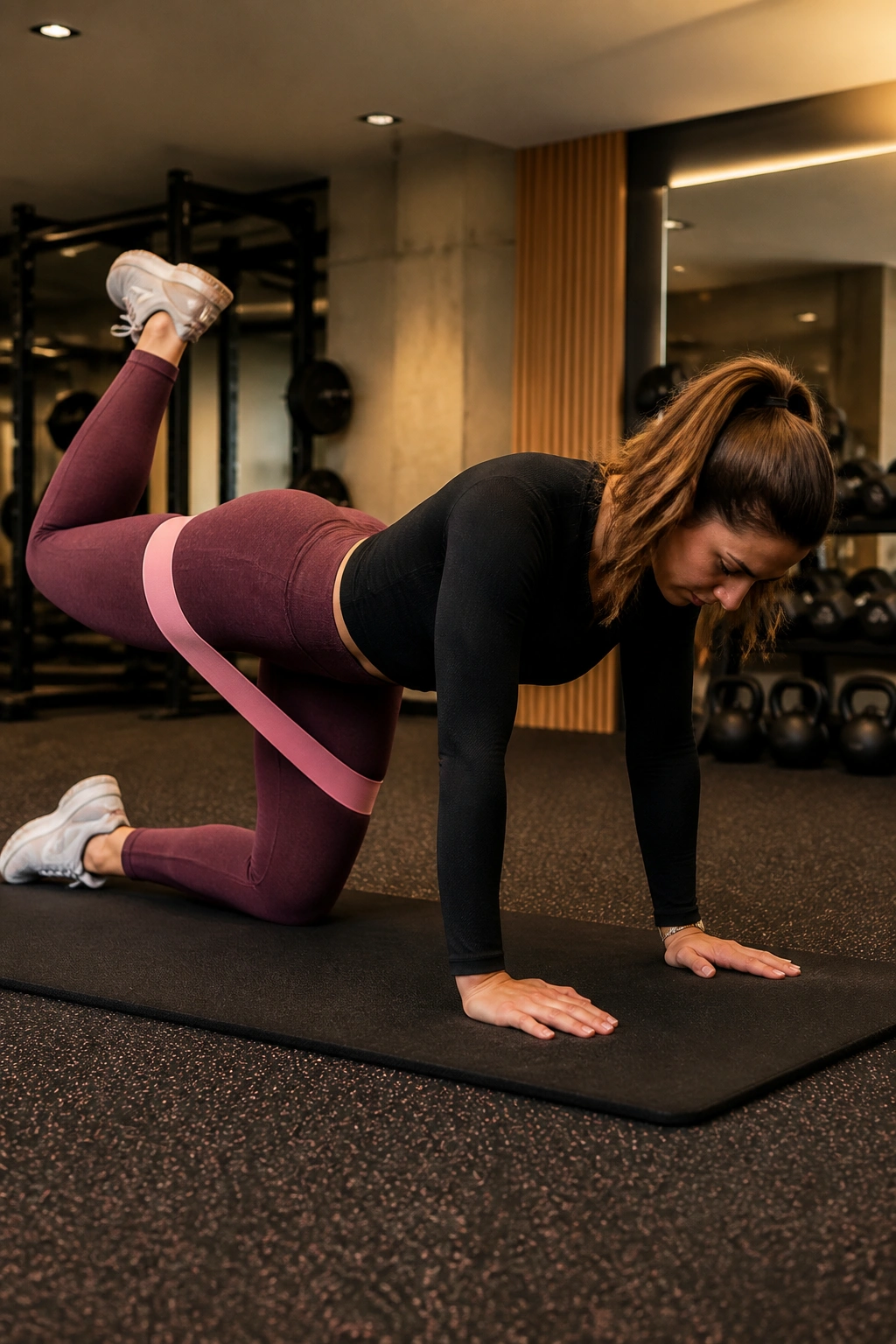
A light band turns donkey kicks from warm-up fluff into a real test. Nothing wild. Just enough resistance to make your glutes and core stay awake at the same time.
Get on all fours, loop a band around the thighs or secure it in the setup your gym uses, and keep the ribs tucked as you drive one heel up toward the ceiling with the knee bent. The motion is small. The pelvis should stay level. If you twist to get height, you’ve already lost the clean line the exercise was after.
What makes this version worth doing
- It trains hip extension under control.
- It wakes up the glutes without needing heavy load.
- It keeps the trunk from sagging if you brace well.
- It pairs well with floor leg lifts on the same day.
Use 12 to 15 reps per side and keep the tempo slow. The band should add pressure, not chaos. If your lower back feels it more than your glute, shorten the lift and tighten the core before the next rep. The best donkey kicks look almost boring. That’s usually a good sign.
18. Single-Leg Glute Bridge with Lift
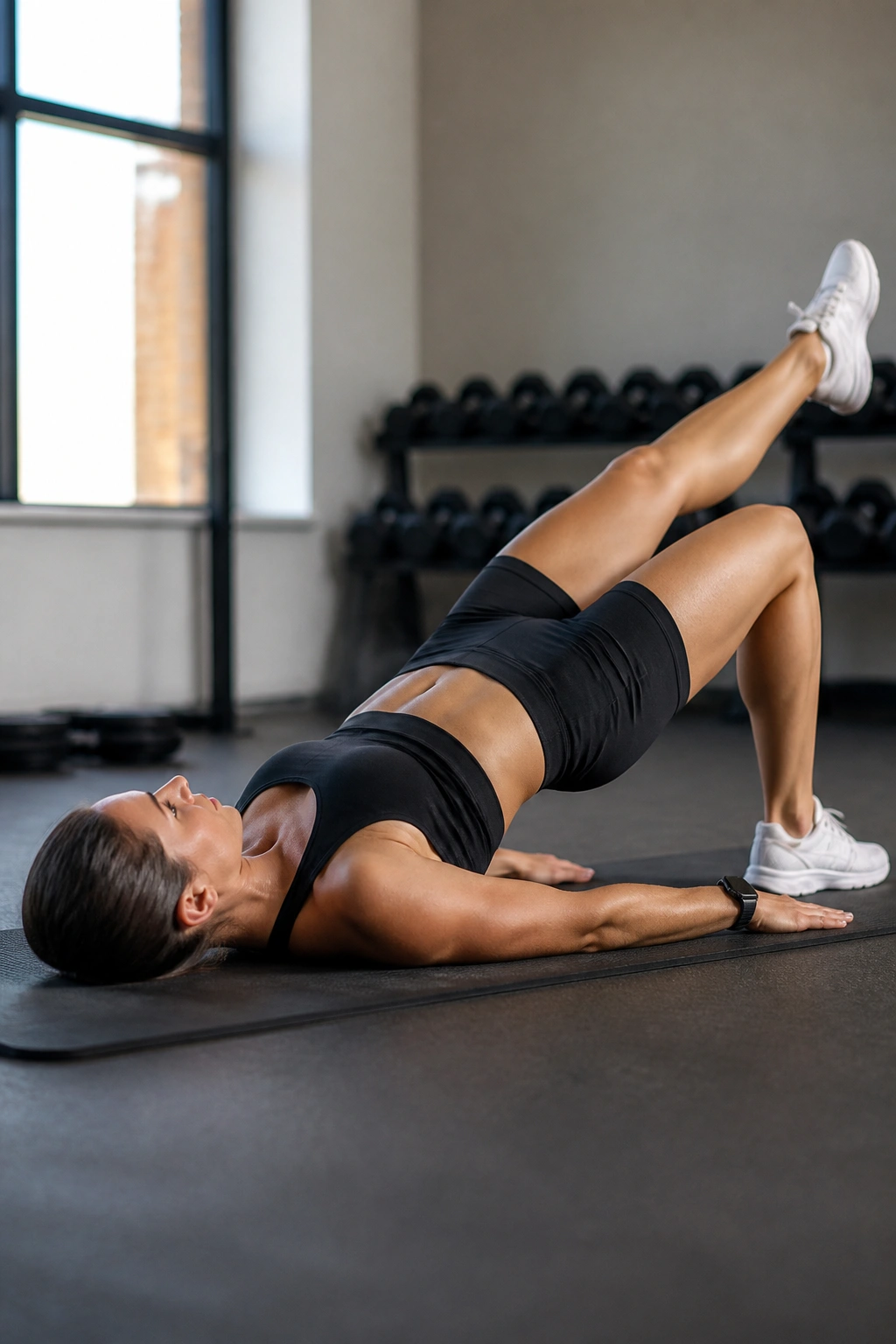
Single-leg glute bridges with a lift are where floor-based leg work starts paying rent. They ask the hips to stay level, the core to brace, and the working leg to behave without wobbling all over the place.
Lie on your back with one foot planted and the other leg extended or bent slightly off the floor. Drive through the planted heel, lift the hips until the body makes a long line from shoulder to knee, then raise the free leg a little higher without letting the pelvis tip. Lower with control. That last part matters most. A lot of people can get up. Fewer can get down cleanly.
This variation hits the glutes hard, but it also trains the midsection to resist rotation. That makes it a sneaky good leg lift workout if your goal is a core that does more than crunch. Use 8 to 12 reps per side and keep the top position for 1 full second.
If you want a simple way to program these, pair one floor move, one side-lying move, and one standing or hanging move in the same session. That gives you control, stability, and load without turning the workout into junk volume. Clean reps. No swinging. No drama. Just enough work to make your abs and hips pay attention.
