



Most people chase core strength exercises with crunches and hope for the best. That usually misses the point. A stronger midsection is about keeping your ribs, pelvis, and spine lined up when the load shifts, and that matters whether you’re lifting a suitcase, running hills, or just standing up without your lower back complaining.
The core is not one muscle. It’s a system. The front of your trunk, the sides, the deep stabilizers around the spine, the hips, even the muscles under your rib cage all work together to keep you from folding, twisting, or wobbling when you do real work.
That’s why the best core training has so much variety. Some moves resist extension. Some fight rotation. Some punish side-to-side lean. A few train the abs hard in a classic crunching pattern, but they sit inside a bigger picture. Miss that, and you end up with exercises that burn for ten seconds and do little else.
Start with the plank, because it shows the idea fast.
1. Front Plank
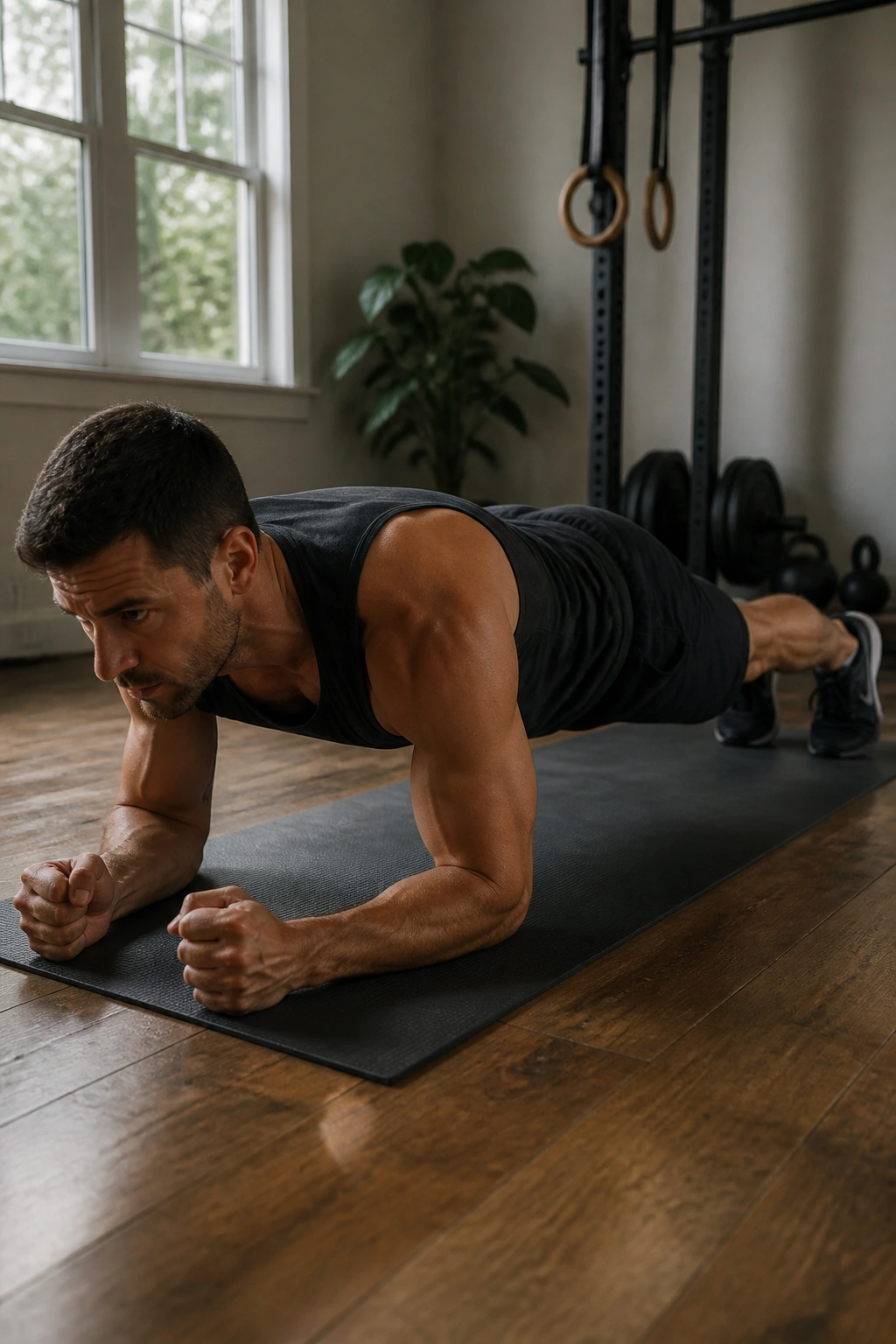
The front plank looks plain for about twelve seconds. Then it starts telling the truth. If your ribs flare and your lower back sinks, your core isn’t holding the line yet.
A good plank is not a waiting game. It’s a full-body brace. Your forearms press into the floor, your glutes tighten, your legs stay active, and your belly stays firm without holding your breath. You should feel a straight line from the back of your head to your heels, not a sagging hammock in the middle.
What to feel
Your abs should feel like they’re working to stop movement, not to crunch. If you feel it mostly in your shoulders, shift your elbows a little farther under your ribs and spread the floor with your forearms. If your lower back takes over, shorten the hold and clean up the position.
A strong plank usually works well for 15 to 45 seconds per set. Longer is not automatically better. Once the shape goes, the set is over.
- Elbows under shoulders
- Squeeze glutes hard
- Pull your ribs down
- Breathe through the brace
- Stop when the low back starts to dip
Small correction: quality beats time every single round.
2. Side Plank
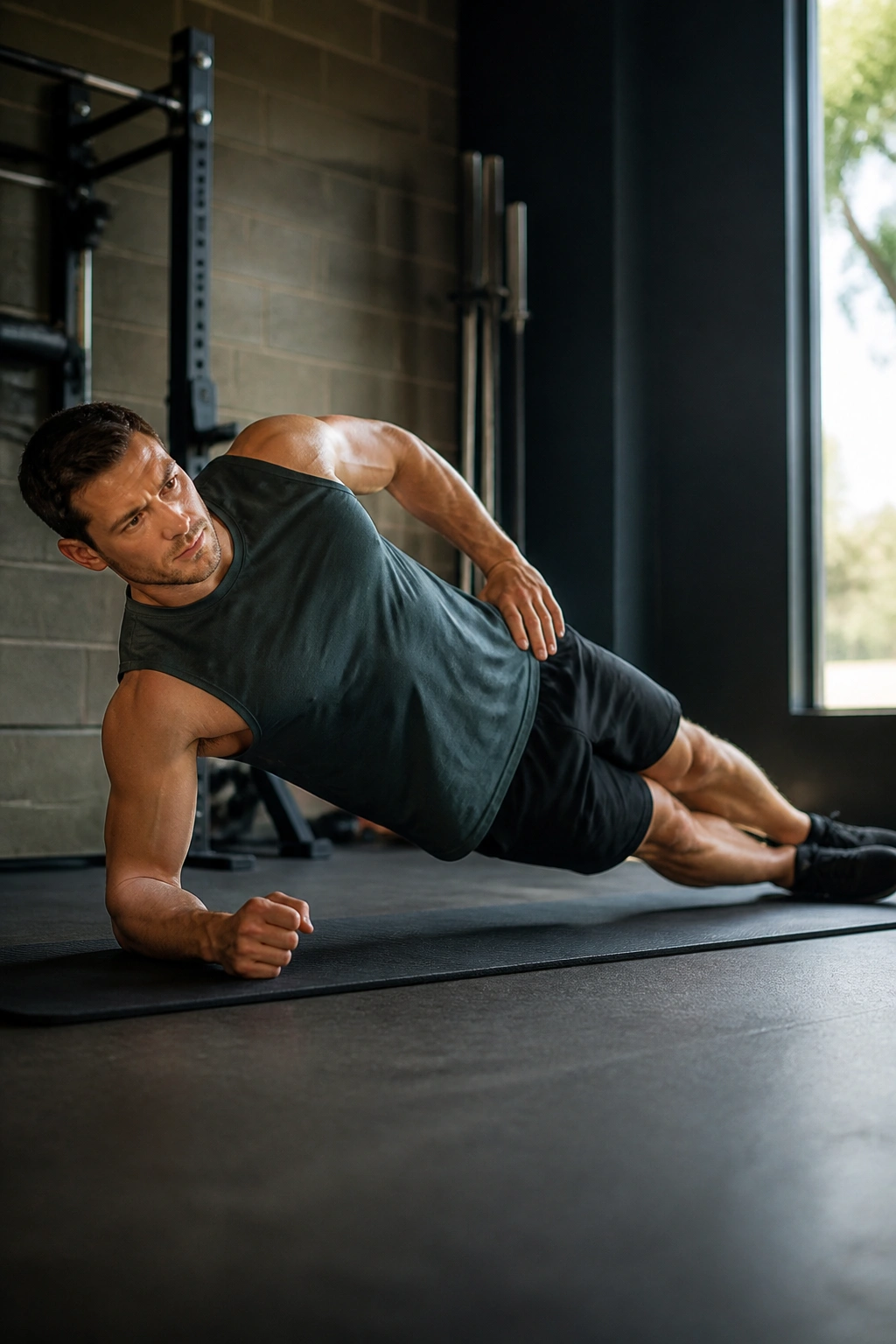
Why do side planks matter so much when most people already train the front of the body? Because the side of your trunk has to keep you from collapsing sideways, and that shows up in walking, carrying, throwing, and even standing on one leg.
The side plank lights up the obliques, the glute med on the top leg side, and the deep muscles that keep your torso stacked. It also tends to expose weak spots fast. One shoulder collapses. One hip drifts back. The whole body starts looking like it wants to fold around the floor.
A clean version starts with your elbow under your shoulder and your feet stacked, or staggered if that’s too spicy. Lift the hips until your body makes a straight line and hold that line without letting the top shoulder roll forward. If full feet-down work is too much, drop the bottom knee and keep the same shape from head to knee.
The useful range is often 10 to 30 seconds per side. Short and sharp is fine. The hold should feel demanding, not sloppy.
3. Dead Bug
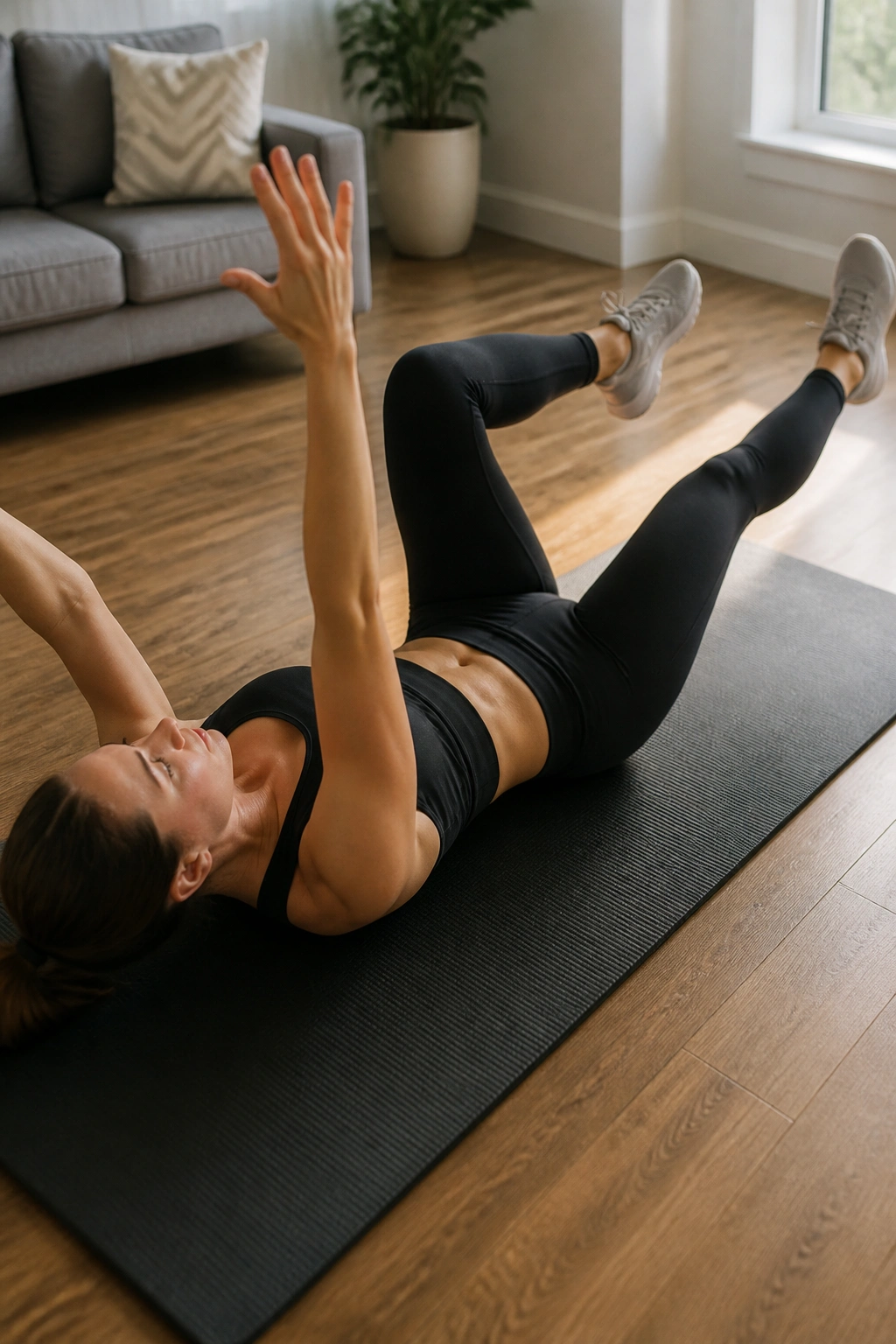
If a dead bug looks easy, your low back probably isn’t staying flat enough. That’s the whole trick. The move teaches your trunk to resist arching while your arms and legs move away from the center.
Lie on your back with your arms pointed up and your knees over your hips. Press your lower back into the floor, then slowly lower one leg and the opposite arm without letting your spine pop up. The range should be small at first. Tiny is fine. Tiny with control is better than a big reach with chaos.
How to brace
Think about exhaling as the leg goes long. That breath helps keep the ribs from flaring and makes the abs switch on in a way people can actually feel. A lot of folks rush this drill and turn it into a flailing show. That misses the point completely.
Try 6 to 10 reps per side and pause for a beat at the farthest point. If your back arches, bend the knee more or stop the leg higher. No shame in that. The exercise is still doing the job.
4. Bird Dog
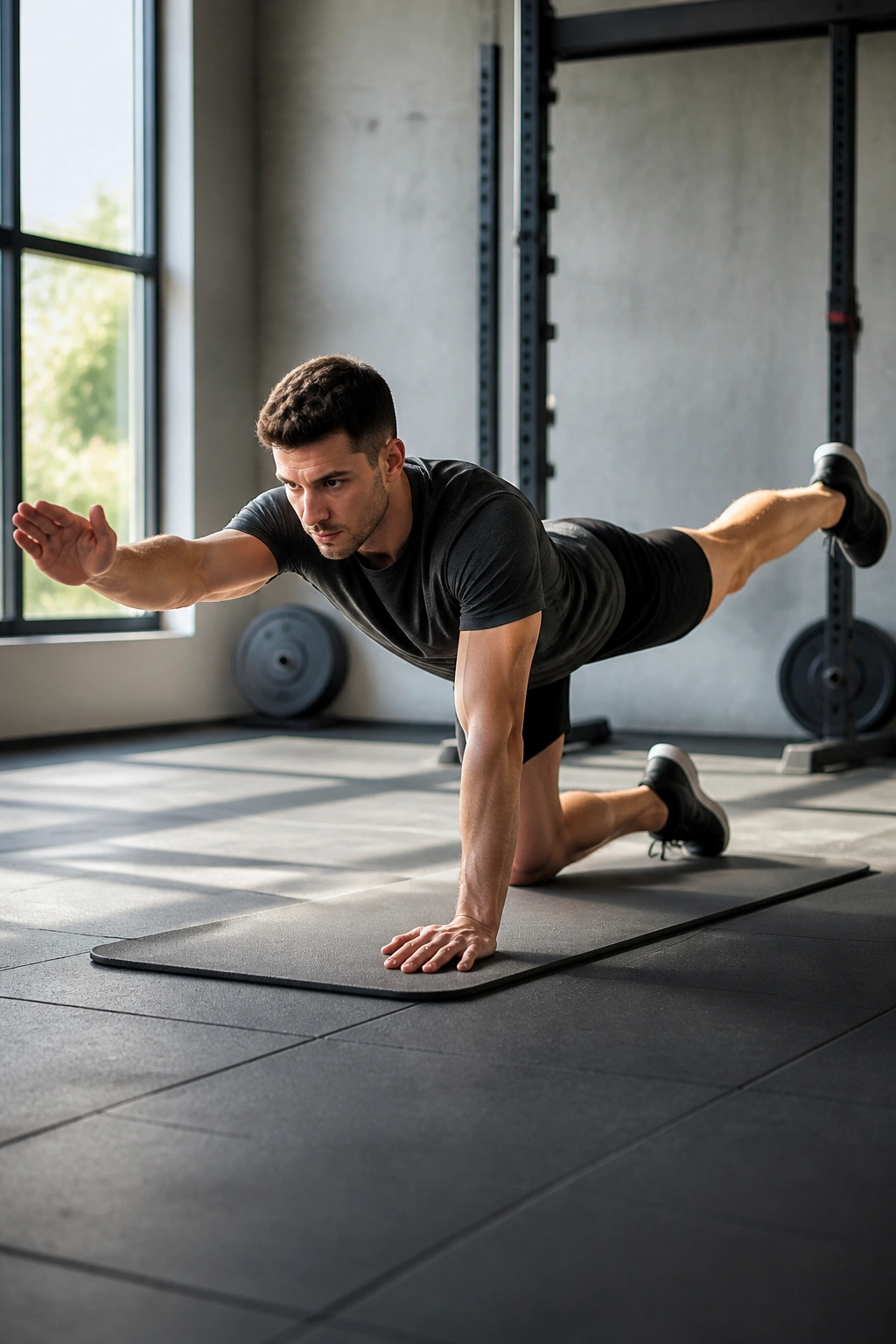
Slow bird dogs beat fast bird dogs every time. The fast version looks busy. The slow version builds a trunk that stays quiet while your limbs move.
Start on hands and knees. Reach one arm forward and the opposite leg back, but keep your hips level and your chest square to the floor. The goal is not height. The goal is steadiness. If your pelvis swings open, the rep is already losing value.
People often rush bird dogs because the movement feels familiar. That’s a mistake. A controlled pause of 2 to 3 seconds at full reach makes the drill harder and more useful. You can also think about pressing the floor away with the support hand and knee. That little pressure helps the whole shape feel tighter.
This is one of the best choices when the lower back feels cranky or when you need a warm-up that wakes up the trunk without beating it up.
5. Hollow Body Hold
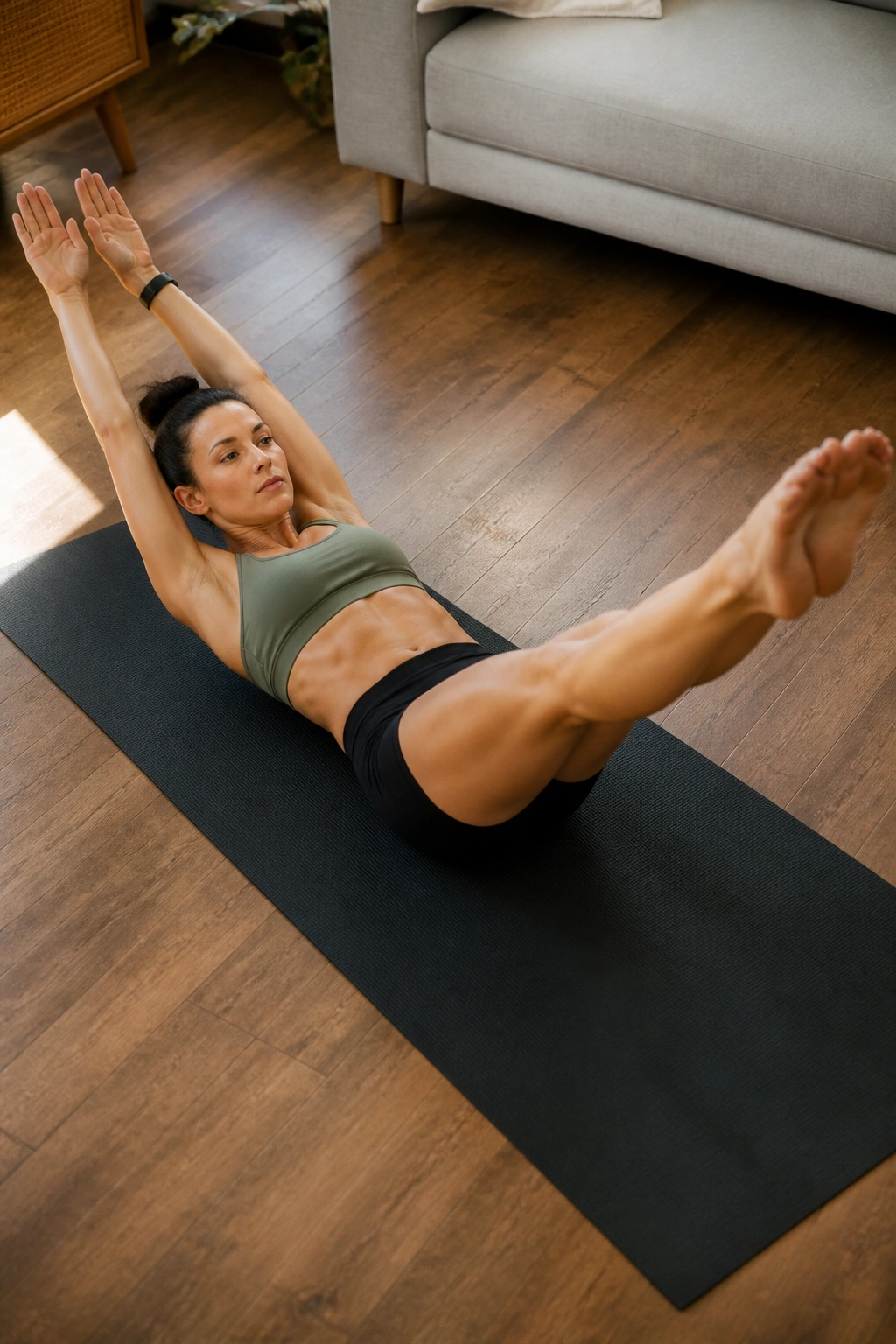
The hollow hold is the gymnastics one, and it earns its reputation fast. If the low back lifts off the floor, you’ve lost the shape.
Lie on your back, press your lower spine down, then lift your shoulders and legs just enough to create a shallow banana shape. Arms go overhead if you can keep control. If not, keep them beside your ears or even by your sides until the position holds together.
What makes it hard
The challenge is not the lift. It’s the squeeze. Your ribs want to pop. Your hips want to tilt. Your neck wants to help, which is its own problem. The trick is to keep the breath shallow and controlled while the abdomen stays braced.
Use 10 to 25 second holds and stop before the low back comes loose. A bent-knee version works well too. It still teaches the same idea, and it spares your back if straight legs feel too long or too heavy.
6. Pallof Press
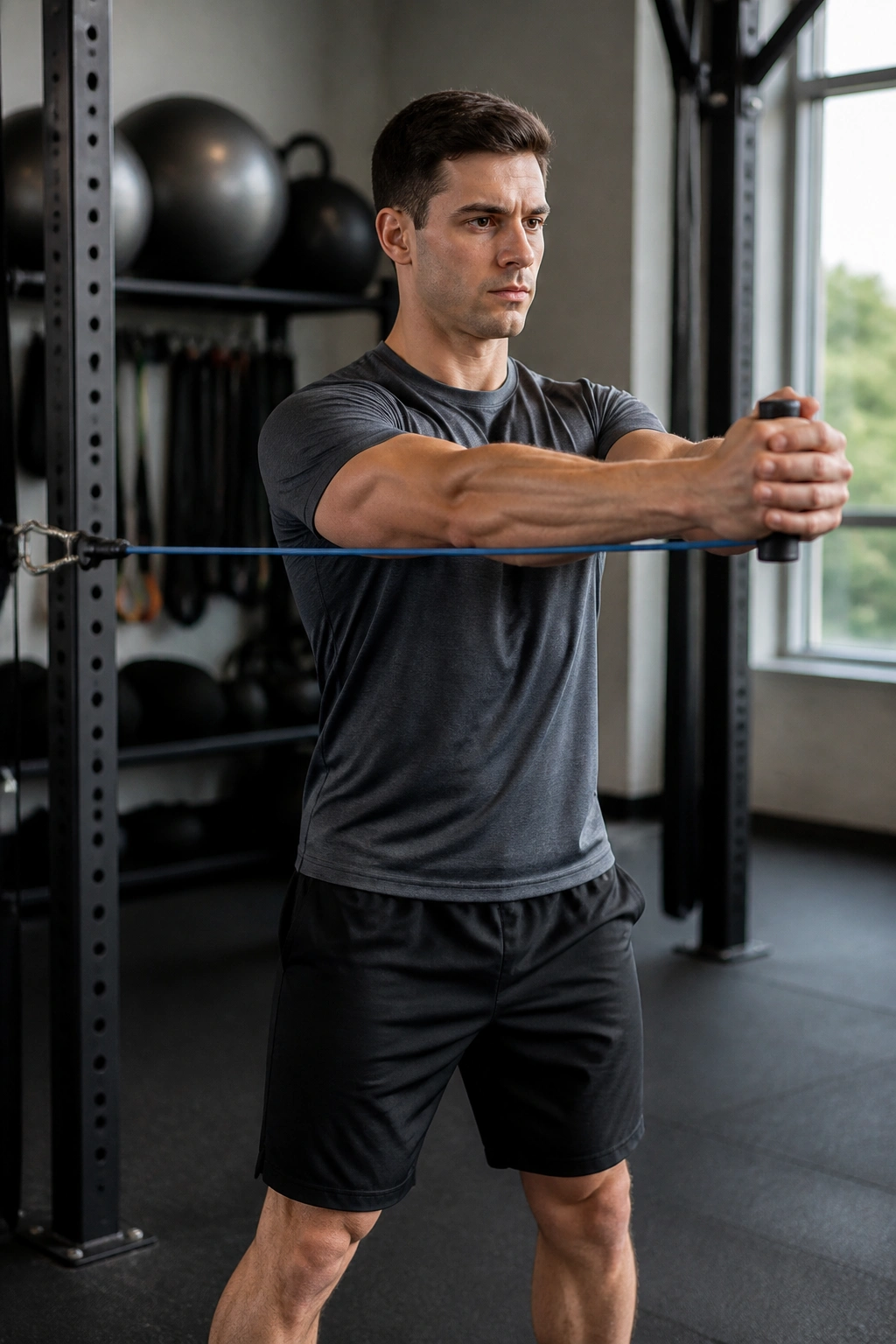
This is one of the cleanest anti-rotation drills around. A cable or band tries to twist you, and your trunk has to say no.
Stand sideways to the anchor, bring the handle to your chest, and press it straight out in front of you. Hold for a beat. The cable will want to pull your torso toward it. Don’t let it. Your feet stay planted, your hips stay square, and your ribs stay stacked over your pelvis.
A half-kneeling version works well if standing feels too easy or too wobbly. Tall kneeling cuts down on leg help and makes the core do more of the work. You can also add a small hold at full extension, which exposes sloppy bracing fast.
- Press straight ahead, not upward
- Keep your chin level
- Don’t lean toward the band
- Breathe without relaxing the brace
- Use 8 to 12 reps per side
The Pallof press is boring in the best way. It teaches restraint.
7. Bear Crawl
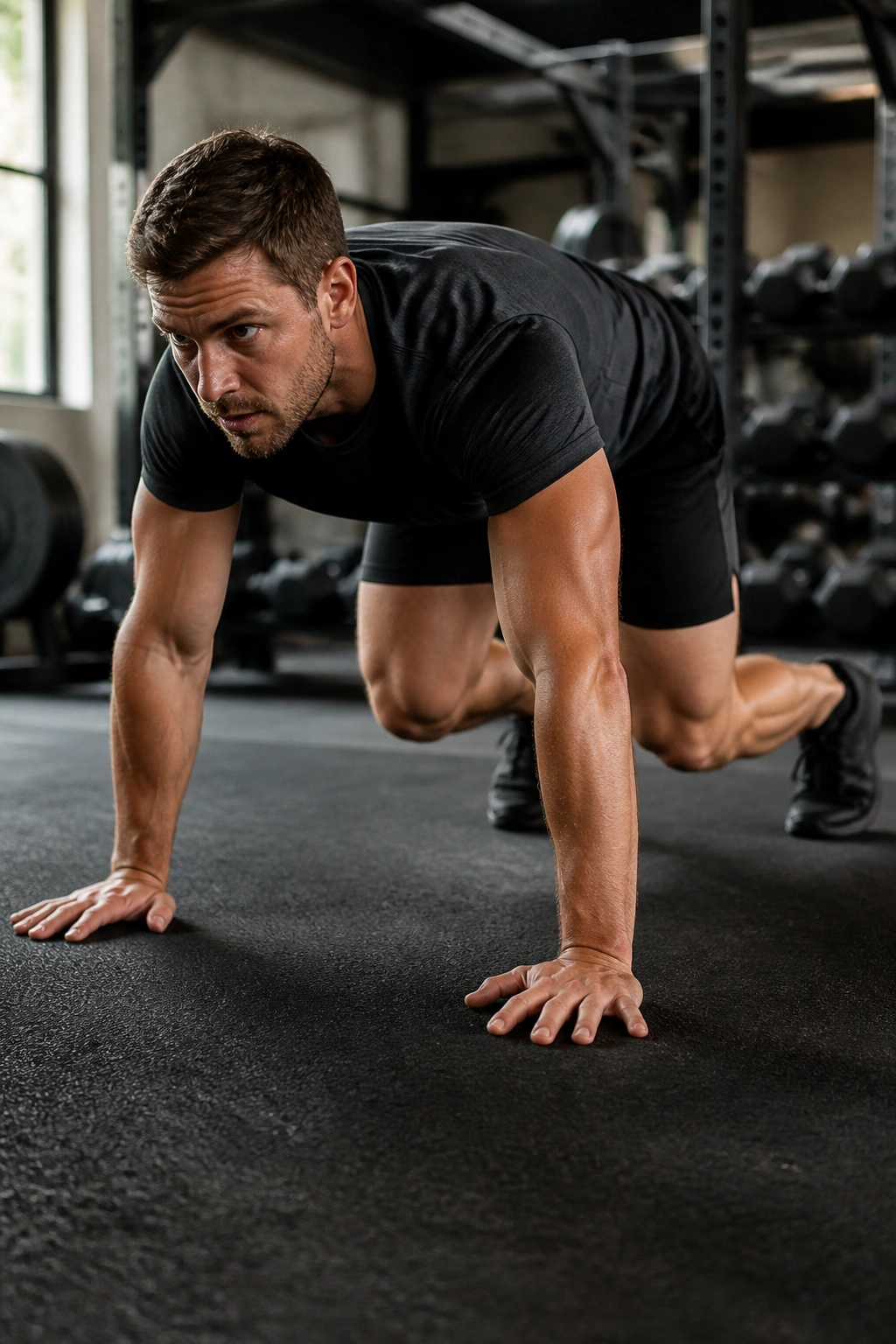
A bear crawl looks like something a kid would do on a playground. Then you try it for twenty feet and realize your trunk has to work harder than expected.
Get on hands and knees, lift your knees about an inch or two off the floor, and move opposite hand and foot at the same time. Keep the back flat and the steps quiet. If your hips sway from side to side, slow down. If your shoulders burn before your core does, you’re probably letting the position get sloppy.
What I like about bear crawls is how many things they expose at once. Weak bracing shows up. Shoulder stability shows up. Hip control shows up. Even foot pressure shows up if you pay attention.
Use short trips, maybe 10 to 20 feet, and rest a moment between sets. This is not about covering ground quickly. It’s about moving without losing your shape.
8. Hanging Knee Raise
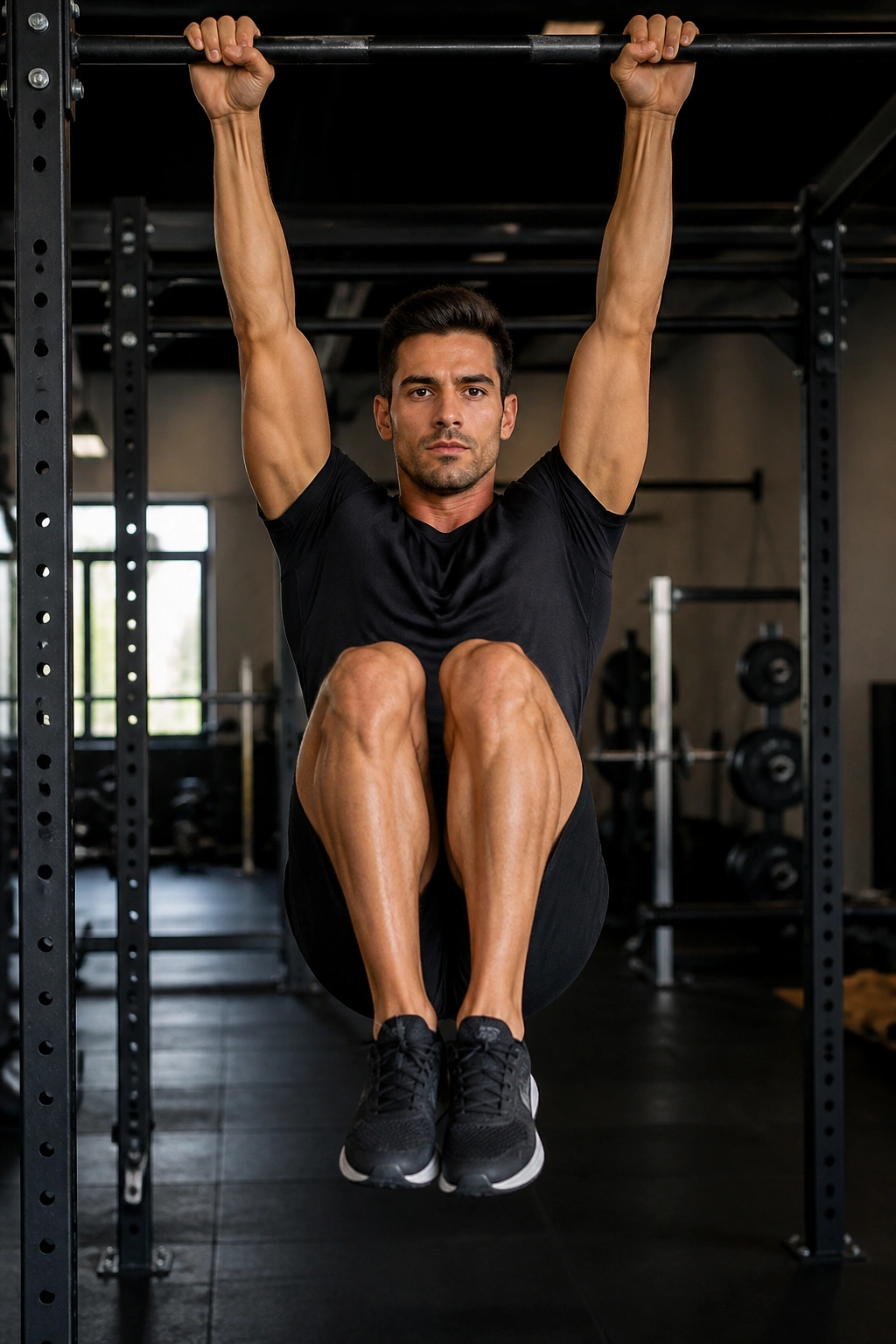
Can you keep your torso still while your hips move? Hanging knee raises answer that pretty fast.
Hang from a pull-up bar with an overhand grip, then lift your knees toward your chest without turning the movement into a swing. The first rep often feels fine. The second one reveals whether you’re controlling the pelvis or just letting momentum drag you around.
How to keep it strict
Keep your shoulders packed, not yanked up near your ears. Bring the knees up with a small tuck of the pelvis at the top. That last part matters. If you only lift your thighs, the abs miss part of the job.
If full hanging work is too much, use a captain’s chair or a chair with back support. The goal is the same: controlled abdominal flexion without a lot of body English.
Aim for 6 to 12 slow reps. Swinging around is easy. Stillness is the hard part.
9. Reverse Crunch
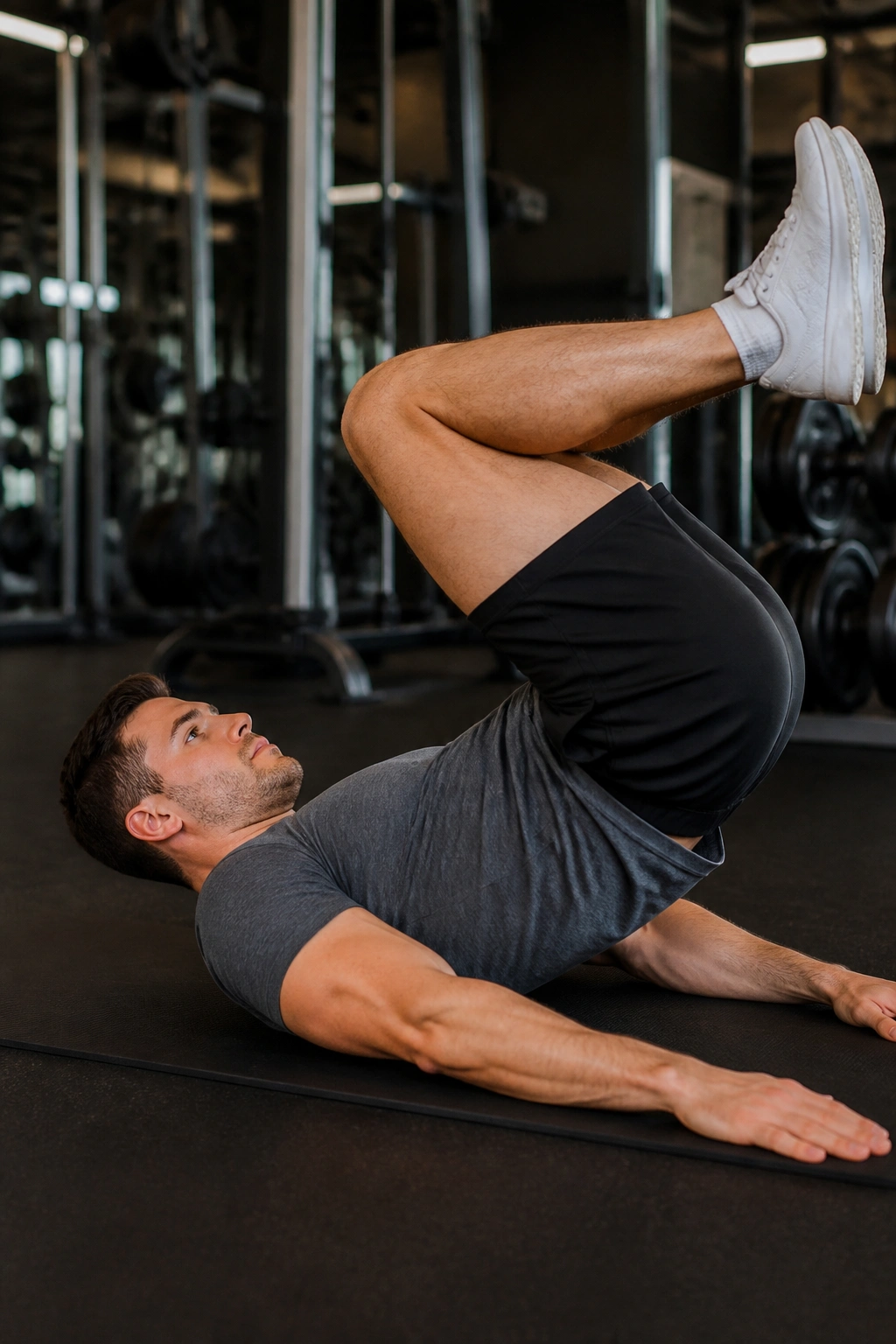
Most people swing the legs and miss the real work. The reverse crunch is better when you think about curling the pelvis, not just moving the knees.
Lie on your back with your knees bent and feet off the floor. From there, bring the knees toward your chest and lift the tailbone a few inches off the ground. That tiny curl is the money rep. Then lower slowly until the low back meets the floor again.
This exercise is often friendlier than a lot of hard crunch variations because the neck stays out of it. It also hits the lower portion of the rectus abdominis in a way people can feel fast, especially if the lowering phase is slow and controlled.
Try 10 to 15 reps with a three-count on the way down. If the motion turns into a leg swing, shorten the range. The abs should do the lifting, not the hip flexors.
10. Ab Wheel Rollout
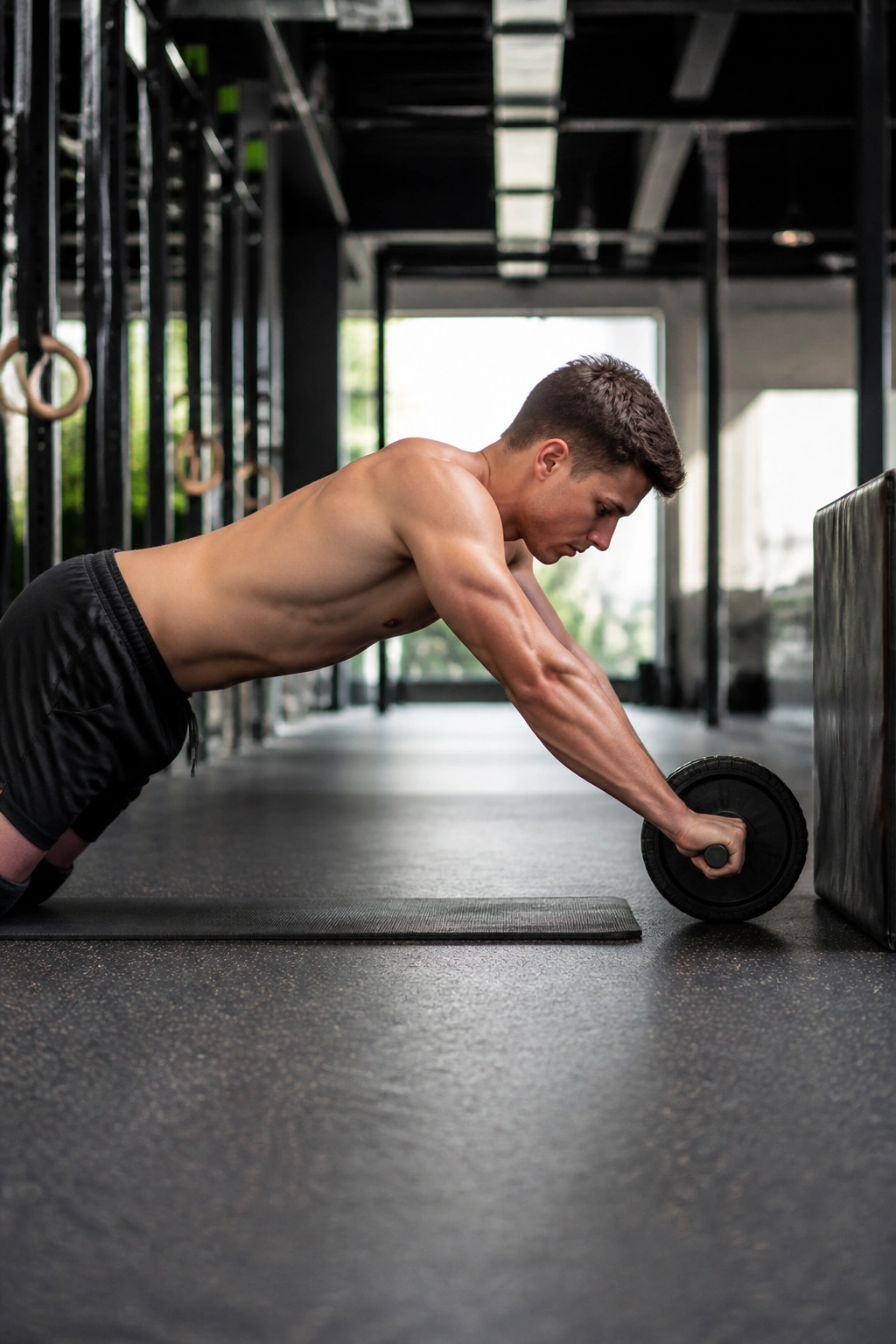
The ab wheel is not a fancy plank on wheels. It’s a test of whether you can stop your ribs from flaring when your arms reach far away from your body.
Start on your knees with the wheel under your shoulders. Roll forward slowly while keeping your abs braced and your hips from sagging. Stop before your back arches. That stopping point matters more than how far you can travel. A lot of people chase distance and lose the whole point of the exercise.
Start small on purpose
A short rollout, even just a few inches, can be plenty. From there, build the range only when you can come back without the chest dropping first. If full rollouts feel reckless, place a wall or box in front of you and use it as a range limit.
- Keep the glutes tight
- Exhale as you roll out
- Pull back through the abs, not the lower back
- Stop the set when the shape breaks
- Use 3 to 8 reps at first
This one is hard. That’s the appeal, and also the warning.
11. Mountain Climber
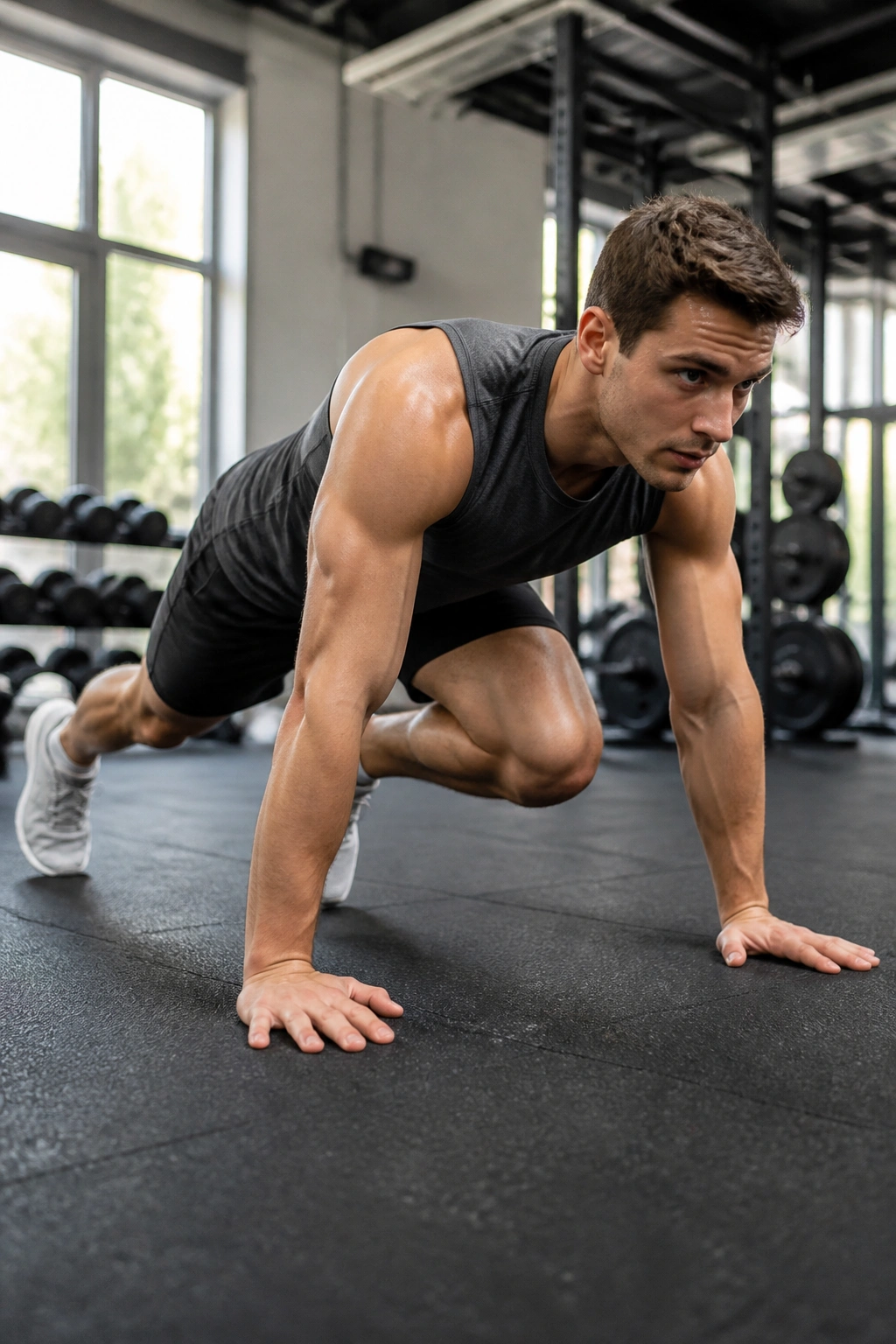
Hands hot on the floor, shoulders packed, knees driving fast. That’s the mountain climber when it’s done with intent, not just frantic motion.
Get into a plank position and drive one knee toward the chest, then switch legs in a steady rhythm. If you want more core and less cardio chaos, slow the tempo down and keep the hips low. If you want a tougher finisher, speed it up, but keep the trunk from bouncing like a spring.
The real challenge is resisting trunk movement while the legs fire. The body wants to twist. The shoulders want to drift. The hips want to rise. That’s why even a short set can feel messy in a hurry.
A work interval of 20 to 30 seconds is usually plenty. Keep the line long and the breath under control. If the floor starts swallowing your form, stop and reset.
12. Bicycle Crunch
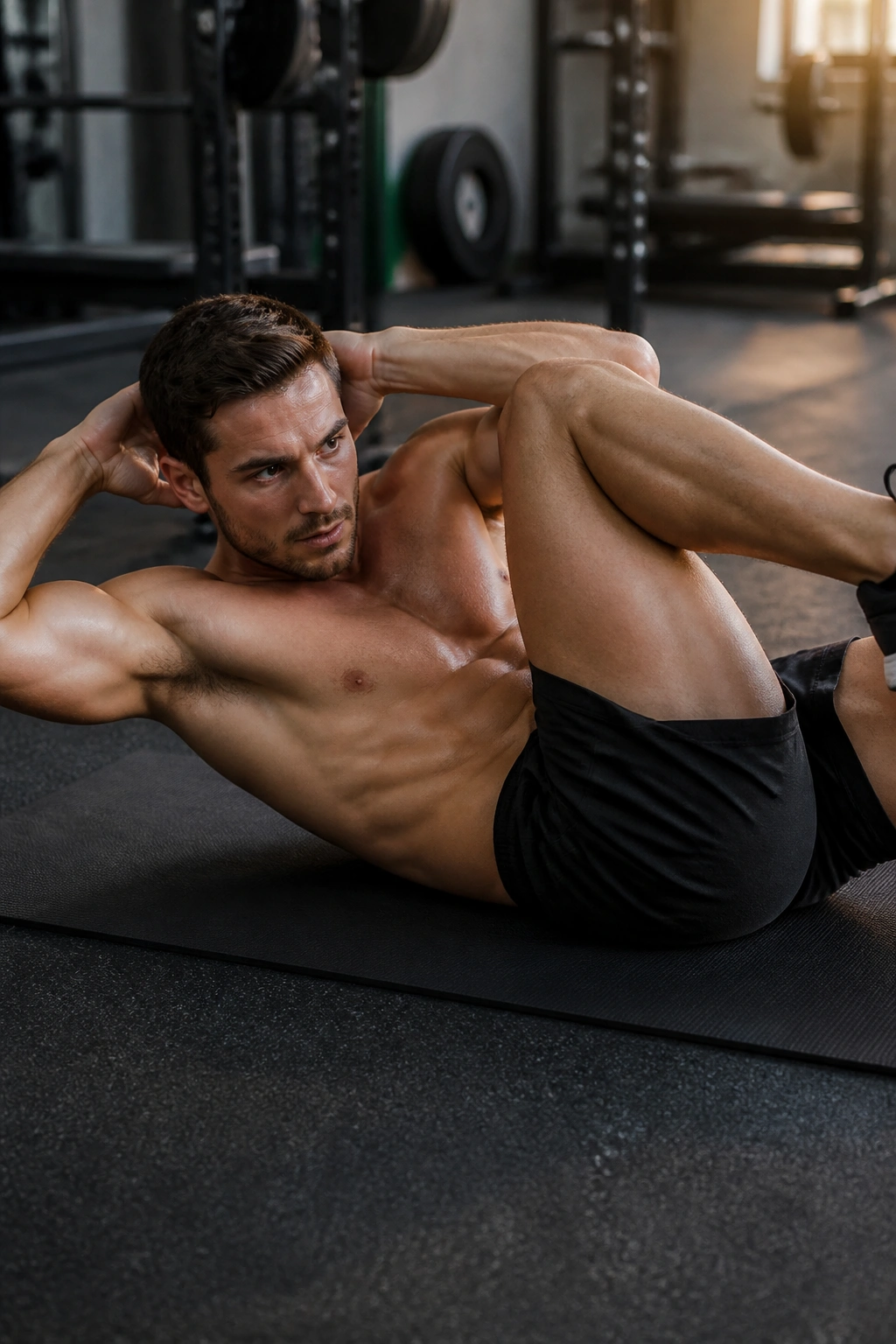
Do bicycles work? Yes, when you stop flinging the elbows around and start controlling the twist.
Lie on your back, hands lightly behind your head, and bring one shoulder toward the opposite knee while the other leg extends. The movement should come from the ribs and torso, not from yanking the neck forward. Slow is better here. Fast bicycle crunches often turn into hip flexor spam with a bit of neck strain on top.
A small pause at the top helps. So does keeping the low back from arching away from the floor. If the lower back floats, the abs are losing their leverage.
Think 8 to 12 controlled reps per side. If you want a cleaner version, shorten the extension and rotate less aggressively. You’ll still feel it. Probably more.
13. Suitcase Carry
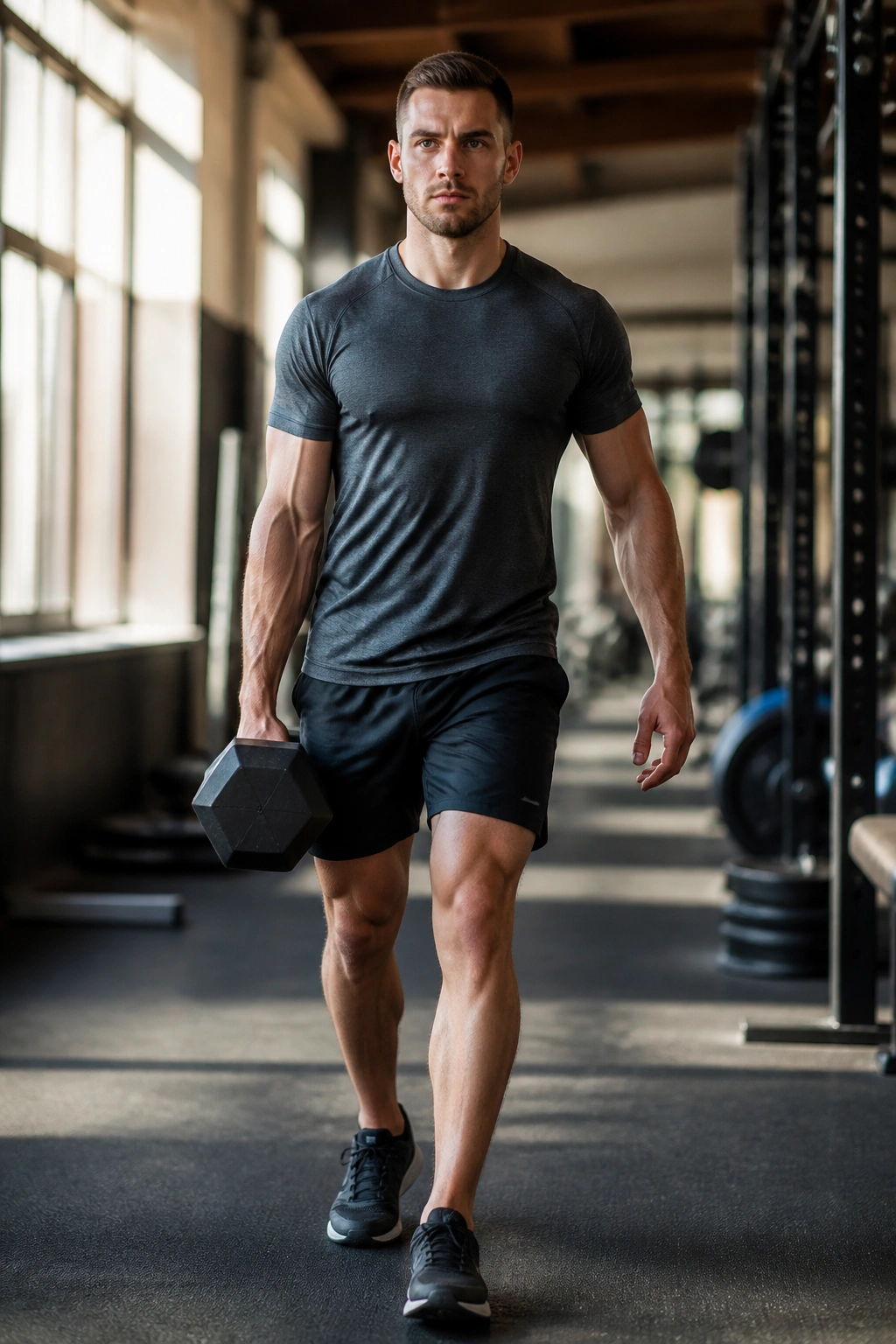
If you want a core move that feels like real life, pick up one heavy dumbbell and walk.
The suitcase carry is simple: hold a weight in one hand, stand tall, and walk without leaning toward or away from the load. Your trunk has to fight side bend, your grip has to hold on, and your hips have to stay even. That’s a lot for a move that looks like errands.
What to watch for
- Don’t let the free side collapse
- Keep the ribs stacked over the pelvis
- Walk slowly enough to stay controlled
- Switch hands before your torso starts drifting
- Use a weight that challenges your posture for 20 to 40 seconds
I like this exercise because it feels honest. If your side body is weak, you know it immediately. If your grip gives out early, that matters too. Carry work connects the abs to the way we actually move, and that connection is easy to miss with floor drills alone.
14. Cable Woodchop
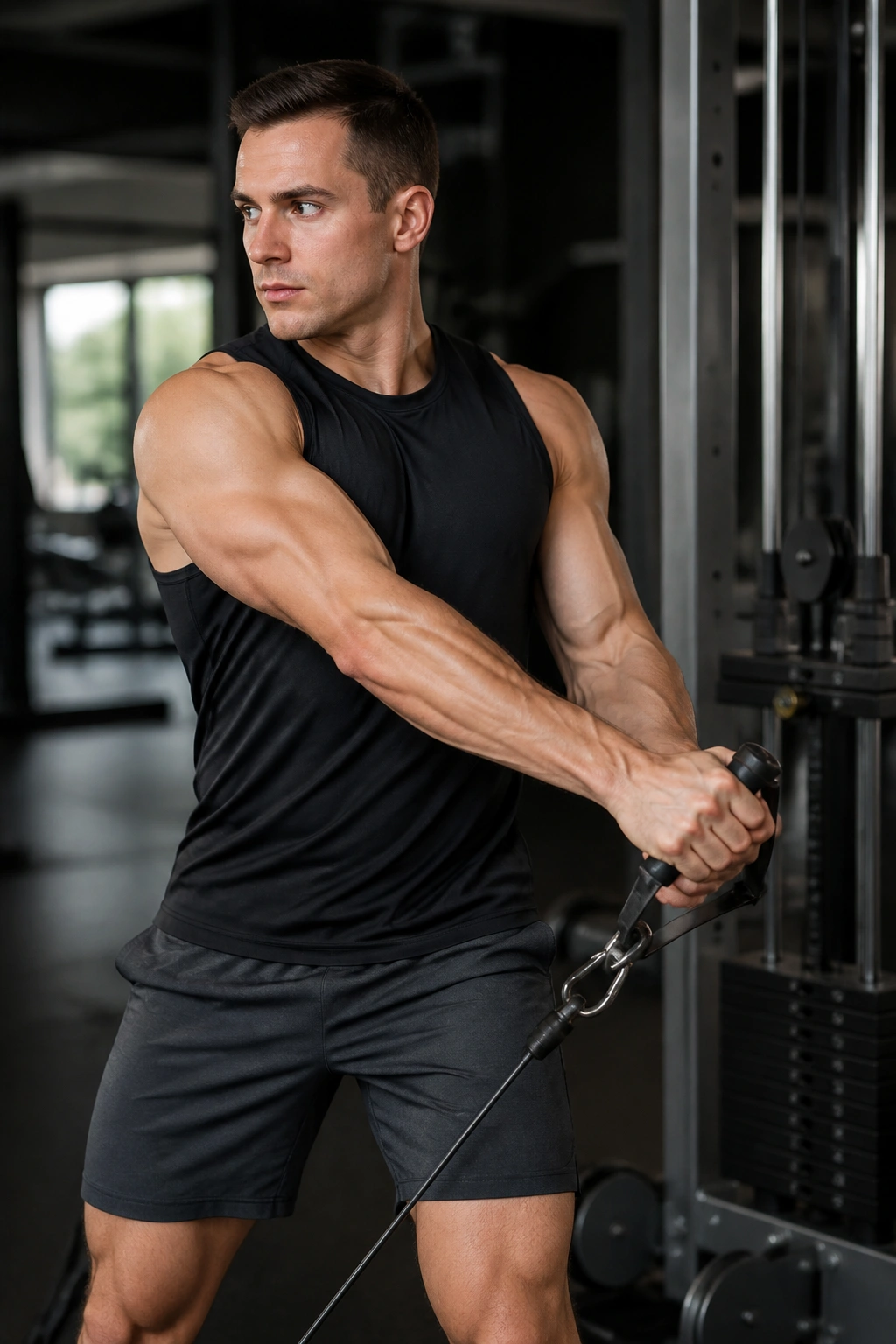
Unlike crunches, woodchops ask your trunk to control rotation instead of just flexing forward and back.
Set a cable high or low, grab the handle with both hands, and move it across your body in a smooth diagonal path. The hips stay mostly square while the torso turns under control. This is not a wild swing. The best reps feel crisp, with the abs and obliques doing the braking on the way back.
High to low or low to high
A high-to-low chop often feels a little more natural, especially for beginners. Low-to-high adds a different angle and asks the trunk to finish the rotation without getting sloppy. Both are useful. Both get messy if the arms do all the work.
Use 8 to 12 reps per side and keep the movement deliberate. If the lower back twists hard or the feet spin around, the load is probably too heavy. Drop it and clean up the pattern.
15. Glute Bridge March
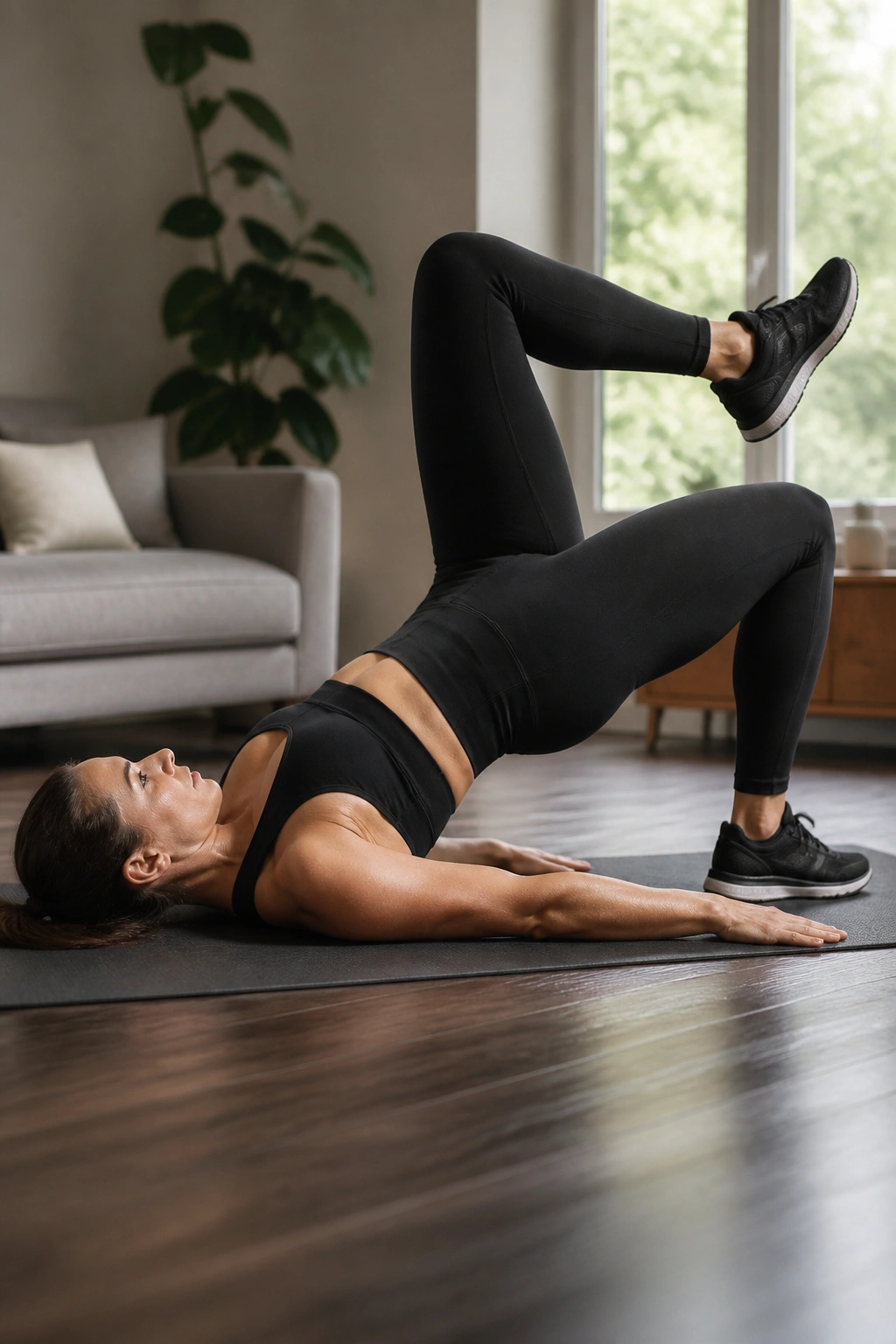
A bridge march exposes lazy hips fast. One side lifts, the pelvis wants to tilt, and suddenly the core has to fix what the glutes started.
Set up in a glute bridge with your feet flat and hips up. From there, lift one foot a few inches without dropping the pelvis, then put it back down and switch sides. The body should stay nearly still. If it rocks, the march is too quick or the bridge is too low.
Why the core cares
The abs help keep the pelvis from tipping, while the glutes keep the hips extended. That partnership matters a lot in walking and sprinting, and it matters even in simple daily movement. It’s a small drill with a sneaky amount of payoff.
Try 6 to 10 marches per side. Hold the top of the bridge for a second before each lift. If hamstrings cramp, move your feet a little closer or lower the hips a touch.
16. Plank Shoulder Tap
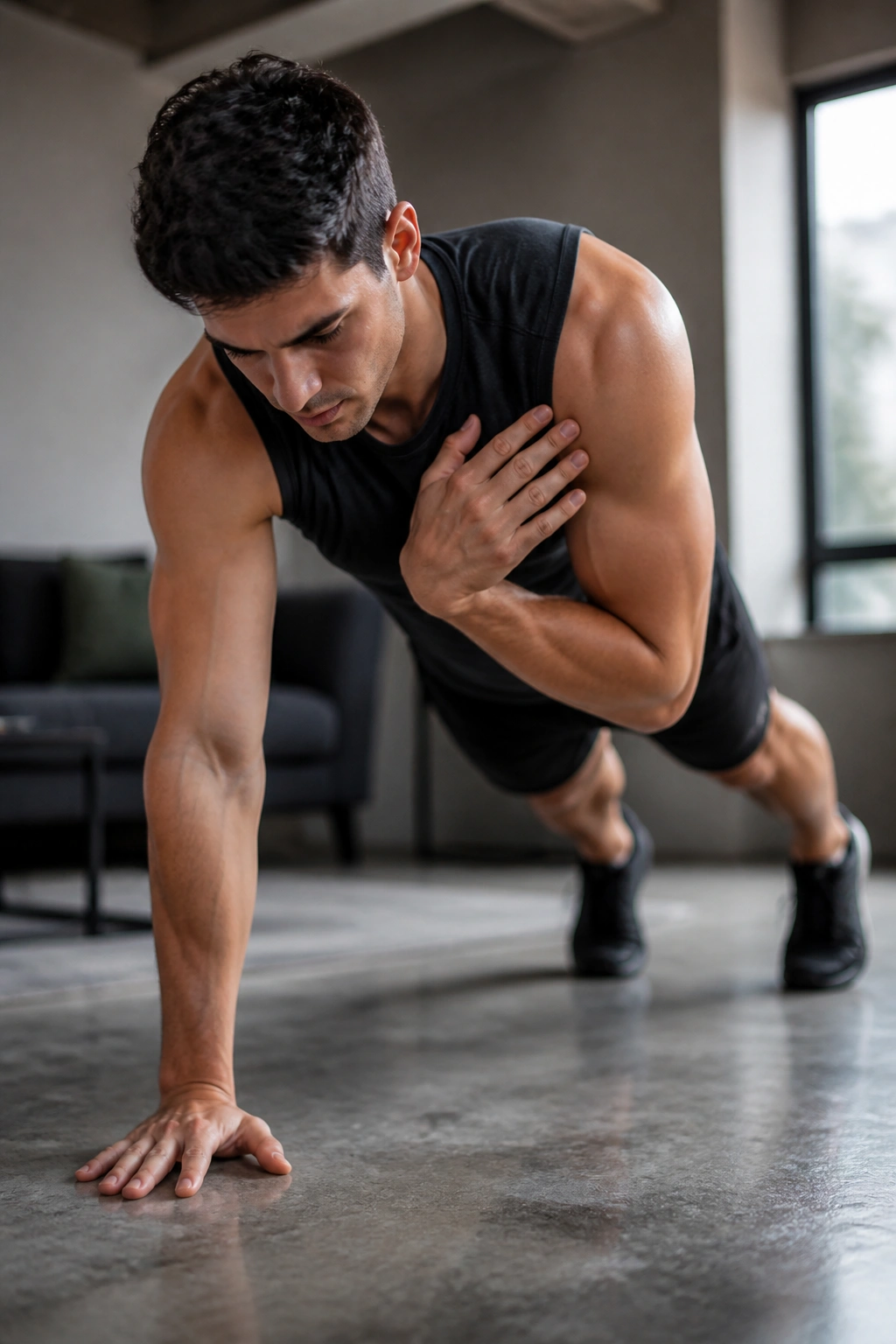
The tap itself is easy. The no-sway part is the work.
Start in a high plank with your hands under your shoulders and your feet a bit wider than hip width. Tap one shoulder with the opposite hand, then return it to the floor and switch. The challenge is keeping the trunk from shifting side to side while one arm leaves the ground.
This drill is a sharp anti-rotation test. It also tells you whether your plank has any real control behind it. If the hips rock wildly, widen the stance and slow down. A slow tap with a steady torso is miles better than a fast tap with a wobble.
Keep the reps crisp and the breath even. 6 to 10 taps per side is enough for most people. Once the body starts swaying, the set has already gotten noisy.
17. V-Up
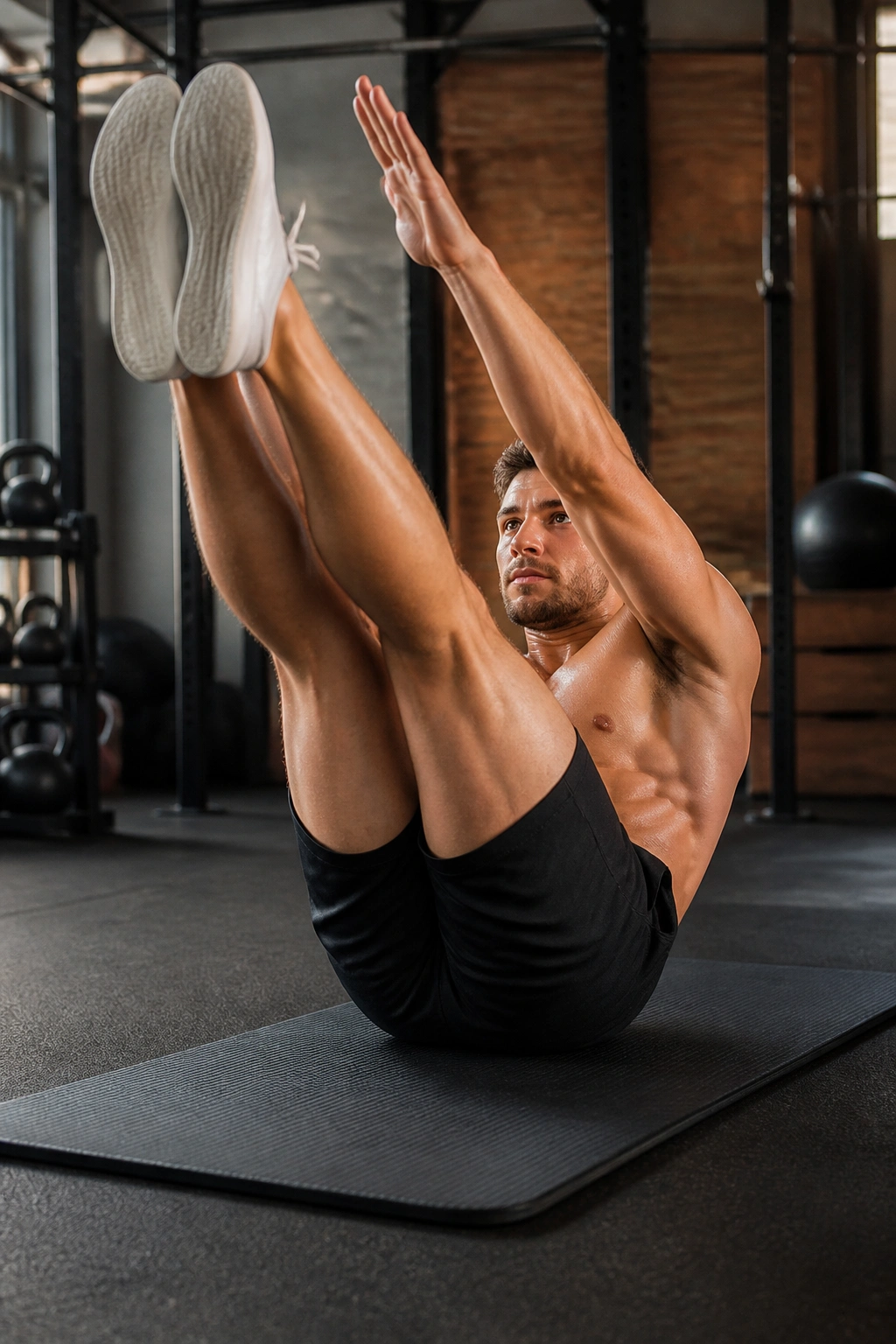
When a V-up is done well, your body folds like a pocket knife. When it’s done badly, it looks like a jumping jack that gave up halfway.
Lie flat, then lift your legs and upper body at the same time to meet in the middle. The movement should be controlled, with the abs pulling the ribs and pelvis toward each other. If the lower back arches hard or the neck strains, the variation is too hard right now.
Easier versions that still count
- Tuck-up with bent knees
- One-leg V-up
- Toe touch from a hollow hold
- Slow jackknife with a shorter range
The V-up asks a lot from the hip flexors and the abs, which is why the setup matters. Keep the arms long, the chest lifted just enough, and the descent slow. 8 to 12 reps is plenty. Chasing speed here usually ruins the quality.
18. Stir-the-Pot
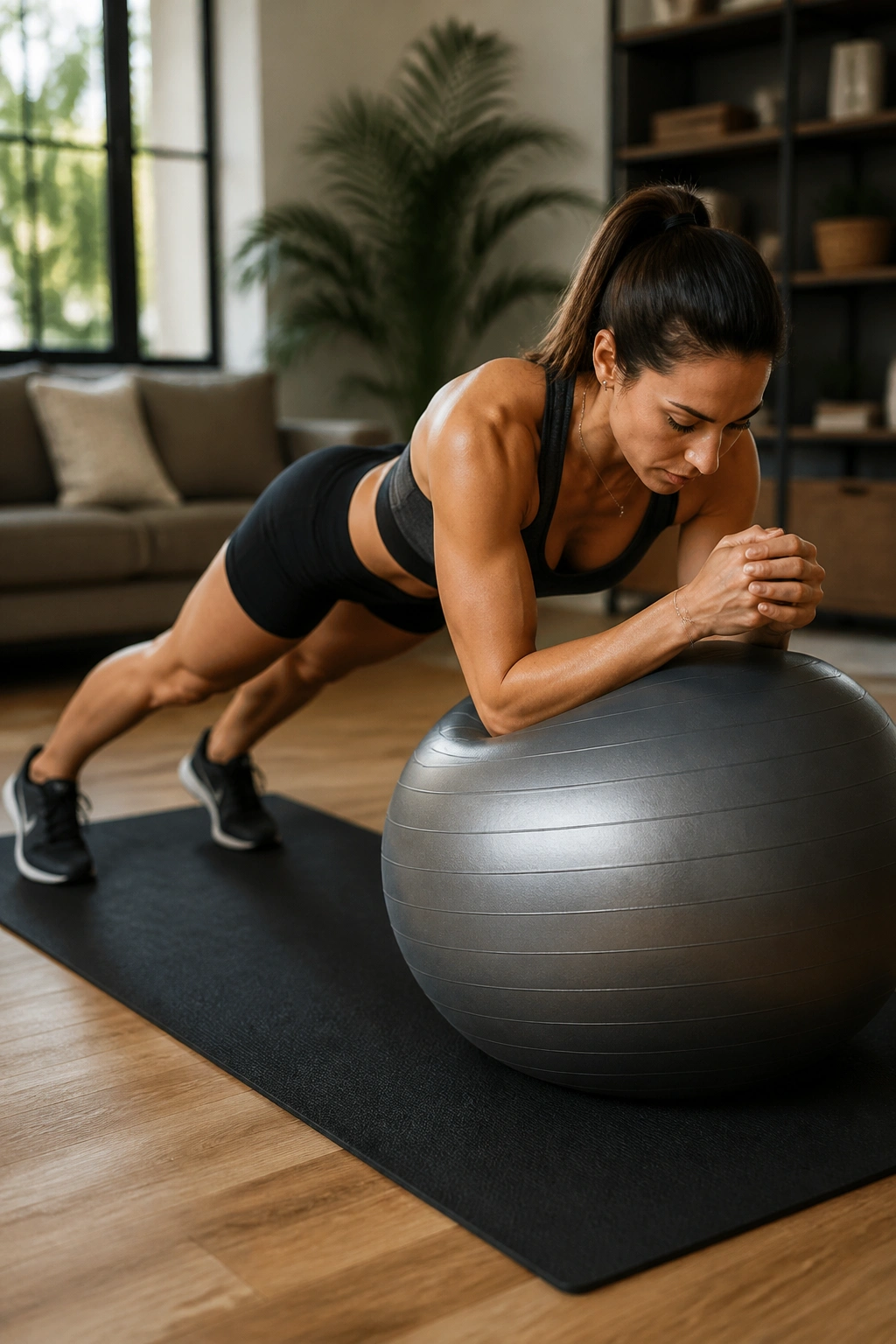
Why do tiny circles on a stability ball feel so nasty? Because your trunk has to stop a rolling surface from pulling you out of position.
Get into a forearm plank with your forearms on a stability ball. Once you’re steady, make small circles with your forearms, keeping the ribs down and the hips level. Tiny circles. Not sweeping ones. The moment the lower back starts sagging or the hips pike up, the set has gone too far.
This exercise hits the deep stabilizers in a way that a lot of floor work does not. It also punishes sloppy breathing. If you hold your breath and tense up like a statue, you’ll usually get tired faster and lose the shape sooner.
Use 10 to 20 seconds of controlled circles, then rest. If the full version is too much, hold the plank on the ball without moving it for a week or two first. That still builds a useful base, and it’s far less annoying to set up than chasing a wobbly showpiece rep.
