



The Cadillac looks almost gentle until the springs start pulling back. Cadillac Pilates exercises for strength work in a way that plain mat work can’t quite copy: your trunk has to organize, your shoulders have to stay honest, and your legs can’t get away with wandering off-script.
It is a sneaky piece of equipment.
A lot of people see the trapeze table and think stretching. That’s only half the story. The Cadillac gives you resistance from odd angles, which means the body has to stabilize while it moves. That combination is where the good work happens. You feel it in the back of the shoulders, the sides of the waist, the glutes, the hamstrings, even the small muscles around the ribs that keep you from flaring and dumping into your lower back.
The best Cadillac sessions are not the loudest ones. They are the cleanest. A bar that moves three inches under total control can do more for your strength than a bigger, messier range. And if you’ve ever yanked a spring and had it yank right back, you already know the lesson.
The exercises here lean classical because classical work tends to expose weak links fast. Some are friendly. Some are not. The hanging and inversion-adjacent pieces deserve patience, and the push-through bar deserves respect — it can move faster than you think if you rush it. Start with the earlier exercises, earn the later ones, and keep the quality of the rep ahead of the number of reps.
1. Roll Down with the Push-Through Bar
The push-through bar looks harmless until the last few inches. Then it gets honest.
Why It Works
This is one of the cleanest ways to train spinal articulation on the Cadillac while your abs, lats, and shoulder stabilizers stay awake. You are not just folding forward. You’re resisting the spring as you roll down, then controlling it as you come back up, which asks the trunk to stay organized the whole time.
The strength benefit comes from the slow return. Anyone can flop backward and call it flexibility. Fewer people can keep the ribs quiet, the pelvis heavy, and the shoulders broad while the bar tries to pull them into chaos.
Setup and Cues
Sit tall, knees bent if your hamstrings are tight, and hold the bar at about shoulder width. Exhale as you peel the spine back one piece at a time. The bar should travel with you, not win the fight. Inhale at the bottom, then exhale to return through the same path.
- Keep the elbows soft, not locked.
- Let the ribs settle before you start the next part of the roll.
- Use a smaller range if your neck starts to grip.
- Think curl and control, not yank and drop.
Best tip: if the bar feels heavy in your hands, your shoulders are probably working too hard. Let the abdominal wall do the first job.
2. The Hundred with Arm Springs
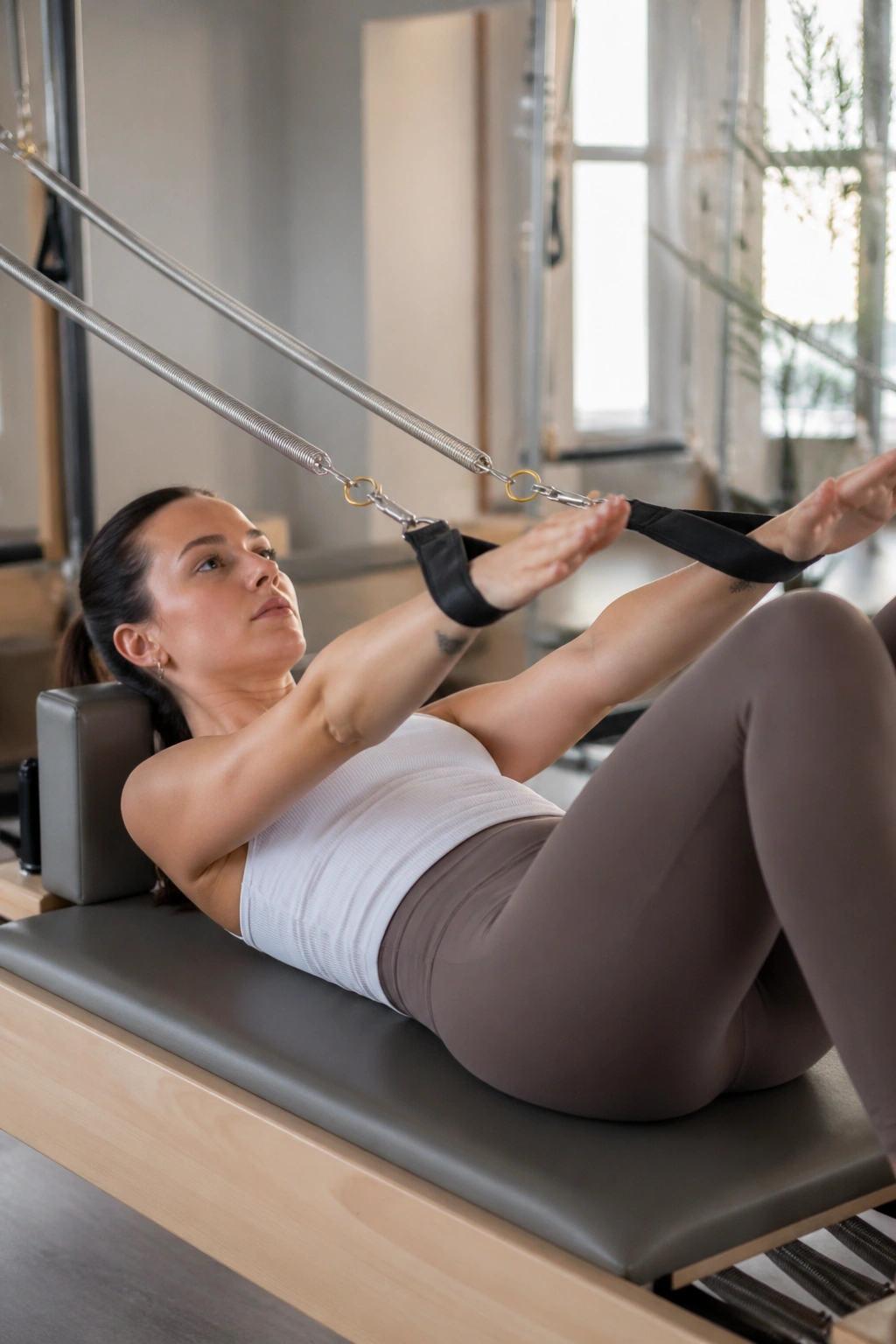
This is still one of the best ways to make the front of your body tell the truth.
The Hundred on the Cadillac adds spring resistance to an already demanding exercise, and that extra pull changes the game. Your arms do not just pump. They have to stay long and even while the ribs stay down and the breath keeps moving. That’s a lot to ask when your abdominals are already trying to hold the spine in place.
What I like here is the feedback. If one shoulder rides up, you feel it. If the lower back arches, the straps seem to shout about it. If the legs are too ambitious, the front line of the body starts shaking before the set is half done. That is useful information, not failure.
Start with your head supported and your legs bent if needed. A strong version is not the same thing as the hardest-looking version. One clean set with the ribs quiet and the neck long does more than a big, ragged performance with the elbows flaring and the chin poking forward.
Breathe in for five counts and out for five counts. Keep the pump small. If the hands travel too far, the springs stop helping and start stealing your shape.
3. Roll Up with the Roll-Down Bar
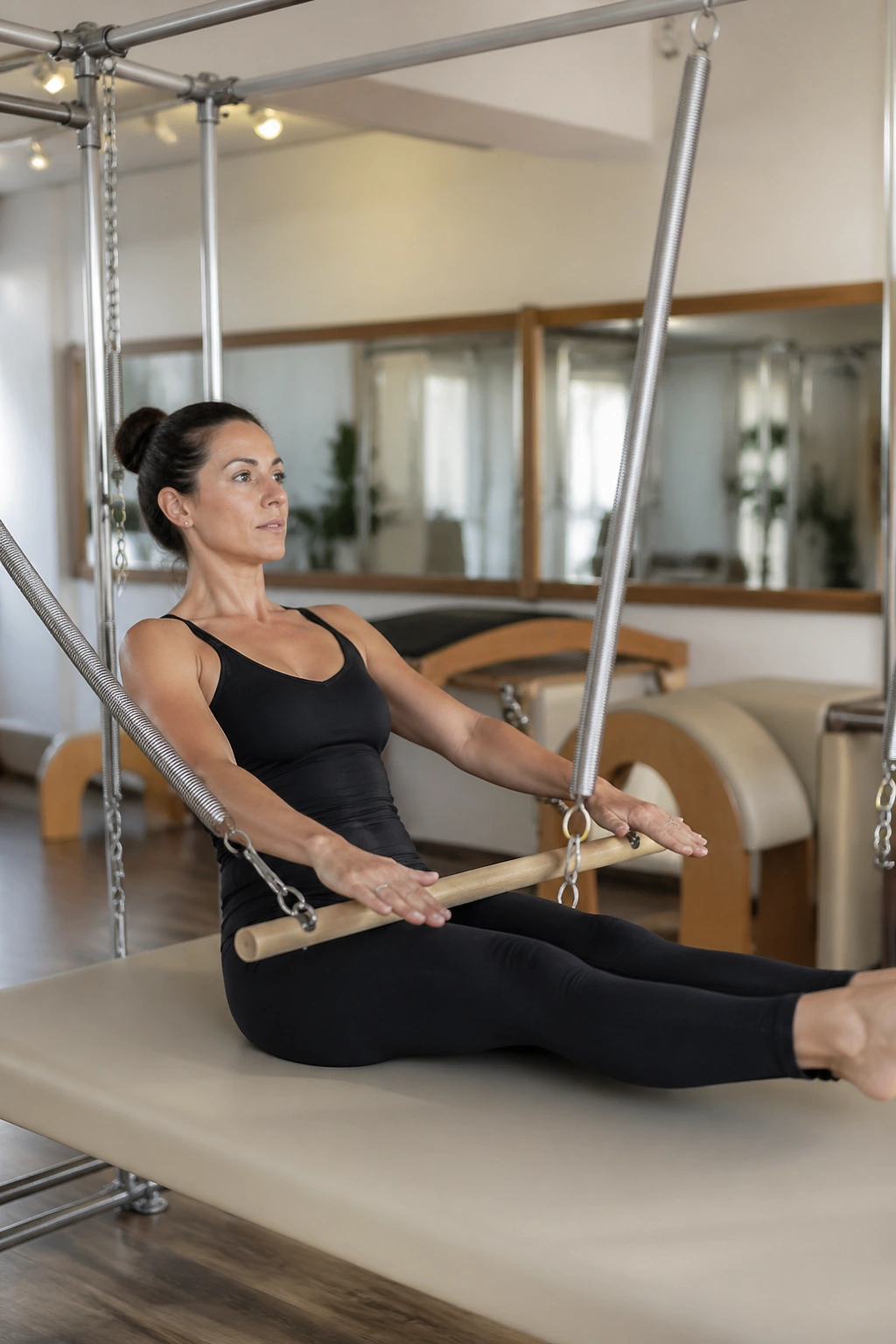
The first good roll-up feels like finding a hidden switch in your midsection.
I’ve seen people who can sit in a perfect pike on the floor still get humbled by this one, because the bar changes the rules. You cannot fake the return. The springs make you own each inch of the descent, and that is where the real strength shows up — in the lower abdominals, the hip flexors, and the long muscles along the spine.
What Makes It Different
Unlike a mat roll-up, the Cadillac gives you a bit more feedback through the bar. That can help you sequence the movement, but it can also tempt you to pull with the arms. Don’t. The hands are there to guide, not to haul.
A useful setup is to start with knees bent if your hamstrings are tight, then gradually lengthen the legs as the trunk stays more organized. The lower back should not collapse backward on the way down. It should feel like a controlled wave.
Quick Cues
- Exhale to initiate the curl.
- Keep the chin slightly tucked, not jammed.
- Let the bar stay close to the thighs.
- Stop before the shoulders shrug.
A clean roll-up is never flashy. It just looks calm while your core works like mad.
4. Chest Expansion
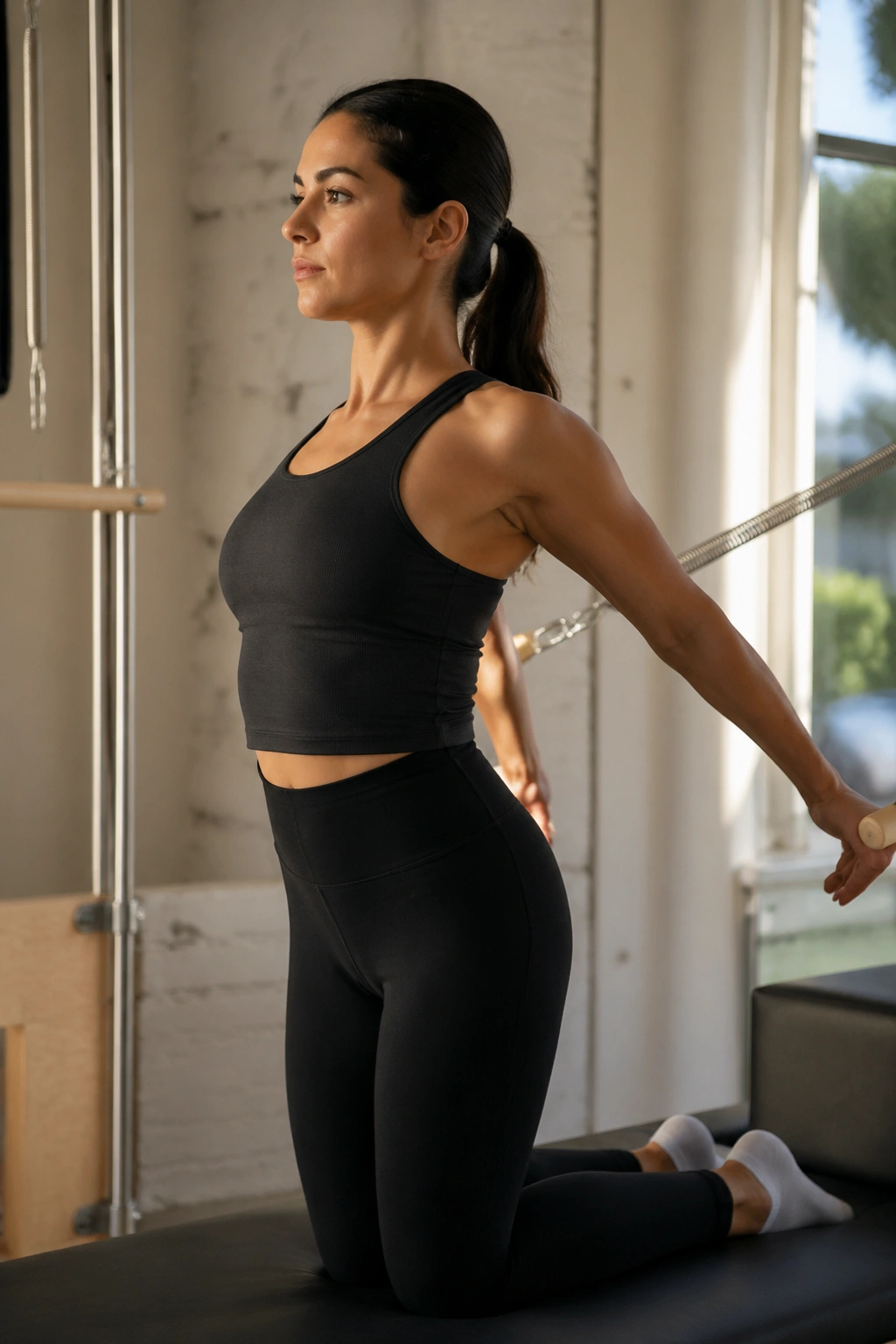
Why does standing still and pulling the springs down feel so hard?
Because your back has to do the work while your ribs stay put. Chest Expansion is one of those deceptively plain Cadillac Pilates exercises that builds a lot more than it advertises. The lats, triceps, rear shoulders, and the muscles between the shoulder blades all have to organize at once, and if the torso loses its stack, the whole thing falls apart.
Kneeling also matters here. It strips away a lot of lower-body cheating, so the glutes and abdominals have to keep the pelvis steady while the arms move behind you. That’s why the exercise often feels like a posture test. It is. A good one.
How to Use It for Strength
Start with the arms by your sides and the palms facing back or slightly inward, depending on the setup. Inhale to prepare, then exhale to press the arms straight back until you feel the upper back switch on. Pause. The pause is not decoration — it’s where you learn whether the shoulders are doing too much.
Return slowly. If the springs snap your arms forward, they were probably too heavy or your range was too large. Keep the motion honest and the ribs quiet.
5. Hug-a-Tree
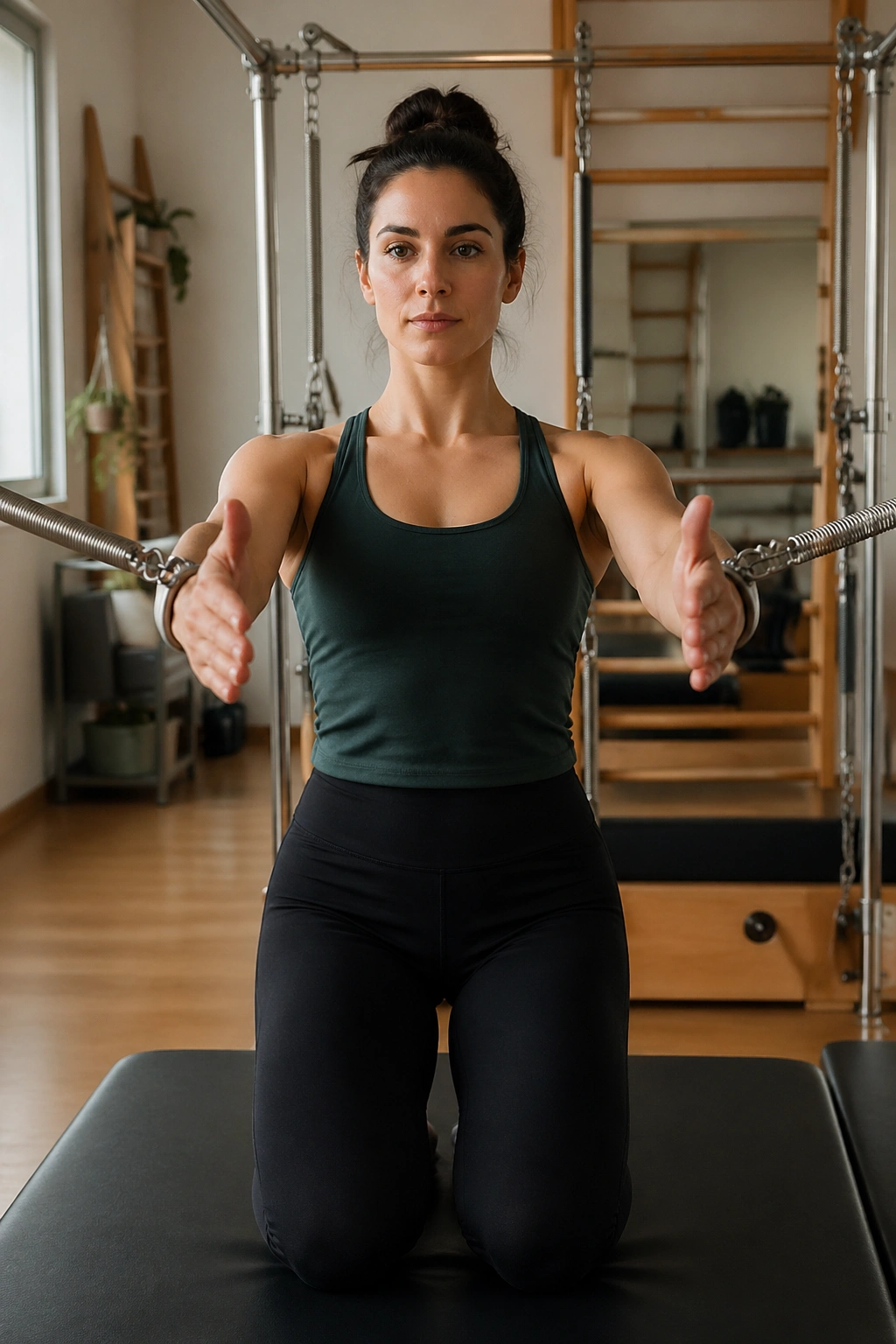
Hug-a-Tree looks soft. It isn’t.
The spring work here asks the chest, shoulders, and upper arms to stay open while the arms draw together in front of the body with control. That closed-to-open action hits the pectorals, front deltoids, and the small stabilizers around the shoulder blade. If you want upper-body strength that does not look puffy or stiff, this is a smart place to spend time.
What makes it useful is the middle range. People often try to squeeze the arms all the way together or fling them wide like they’re moving through syrup. Neither version helps much. The useful work happens when the arms move through a steady arc and the torso refuses to collapse into the springs.
Keep the ribs stacked over the pelvis. Keep the neck long. And keep the elbows soft enough that the joints do not lock out under tension. That last part matters more than people think. Locked elbows turn the movement into a shoulder shrug in disguise.
The exercise pairs well with breathing, too. A quiet inhale as the chest opens and a controlled exhale as the arms close keeps the body from turning this into a wrestling match.
6. Salute
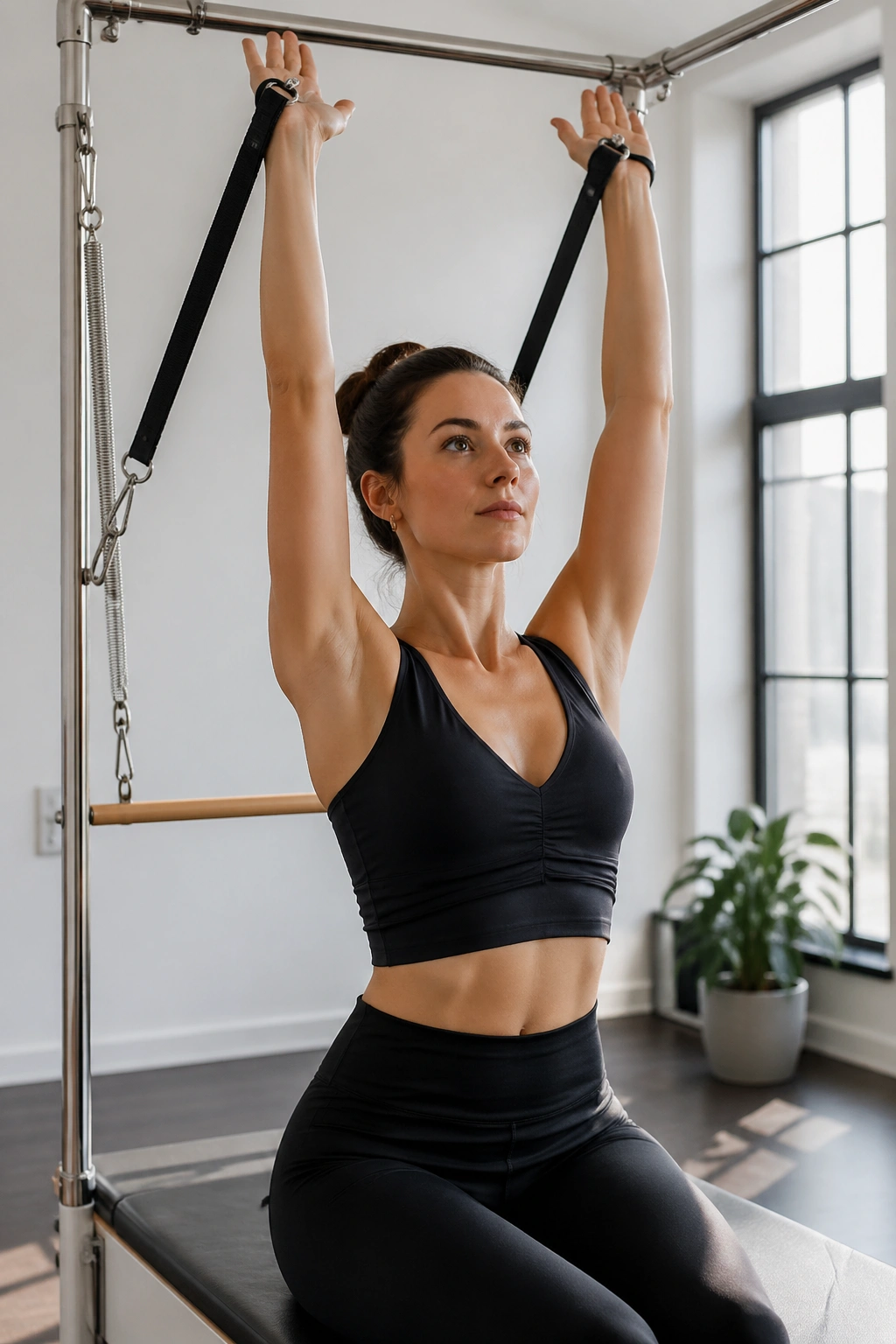
Unlike Chest Expansion, Salute asks for overhead control.
That single difference changes everything. The arms travel up through a higher line, which means the shoulder blades have to rotate and glide instead of just pinning down. If you’re used to pressing things from shoulder height, Salute will expose whether your upper traps steal the show the minute the hands rise.
The strength payoff is broad: deltoids, triceps, upper back, and the deep trunk muscles that keep the ribs from flaring. A lot of people think overhead work is only about the arms. It isn’t. If the midsection leaks, the shoulders pay for it.
I like Salute in slow counts, with a very small pause near the top. That pause tells you whether you can stay calm under load. If the shoulders creep toward the ears, back off and shorten the range. If the lower back arches, bring the arms forward a little and re-stack the ribs.
Use lighter springs than you think you need. The exercise gets better when it gets cleaner, not when it gets heavier.
7. Cat Stretch with the Push-Through Bar
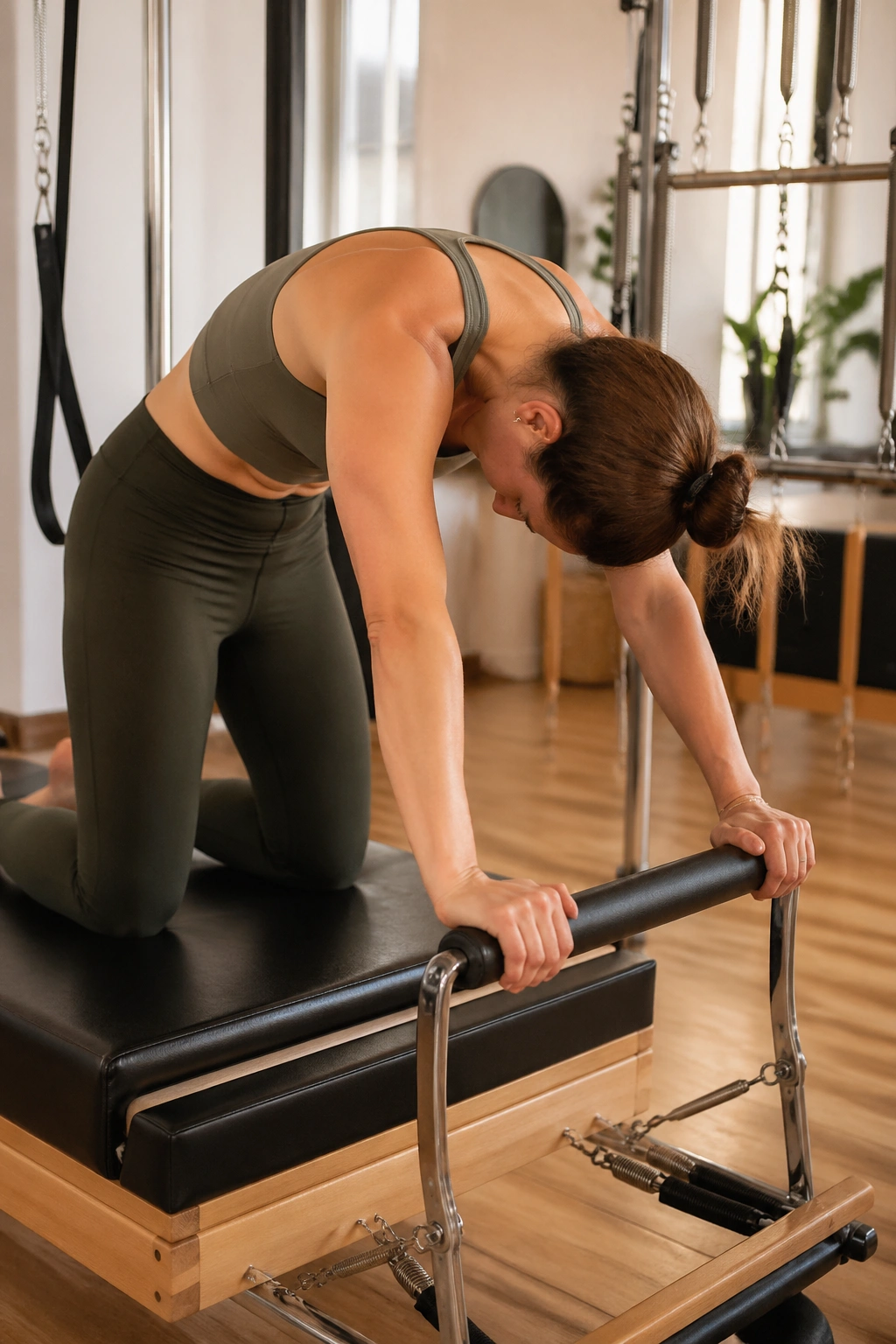
On all fours under a spring bar, your whole trunk has to organize before the bar even moves.
That’s why this version of Cat Stretch is such a strong little piece of work. You’ve got shoulder stability, abdominal control, spinal flexion, and upper-back mobility all happening in one tidy package. If the shoulders collapse, you know right away. If the ribs flare, you know that too. There’s nowhere to hide.
What to Watch For
Keep the hands steady on the bar and the wrists stacked well enough that you are not dumping weight into them. Round the spine by drawing the navel up and back, then press the bar away without losing the rounded shape. The bar should feel like a partner, not a toy.
A few clean reps are better than a big range. Really. This is one of those exercises where a smaller, slower curve often gives you more work and less mess.
- Keep the shoulder blades broad.
- Avoid sinking into the lower back.
- Exhale into the rounding phase.
- Inhale as you return to the start.
If the neck feels pinched, shorten the shape immediately. The best version of this exercise feels like the whole torso is lifting away from the floor.
8. Swan on the Cadillac
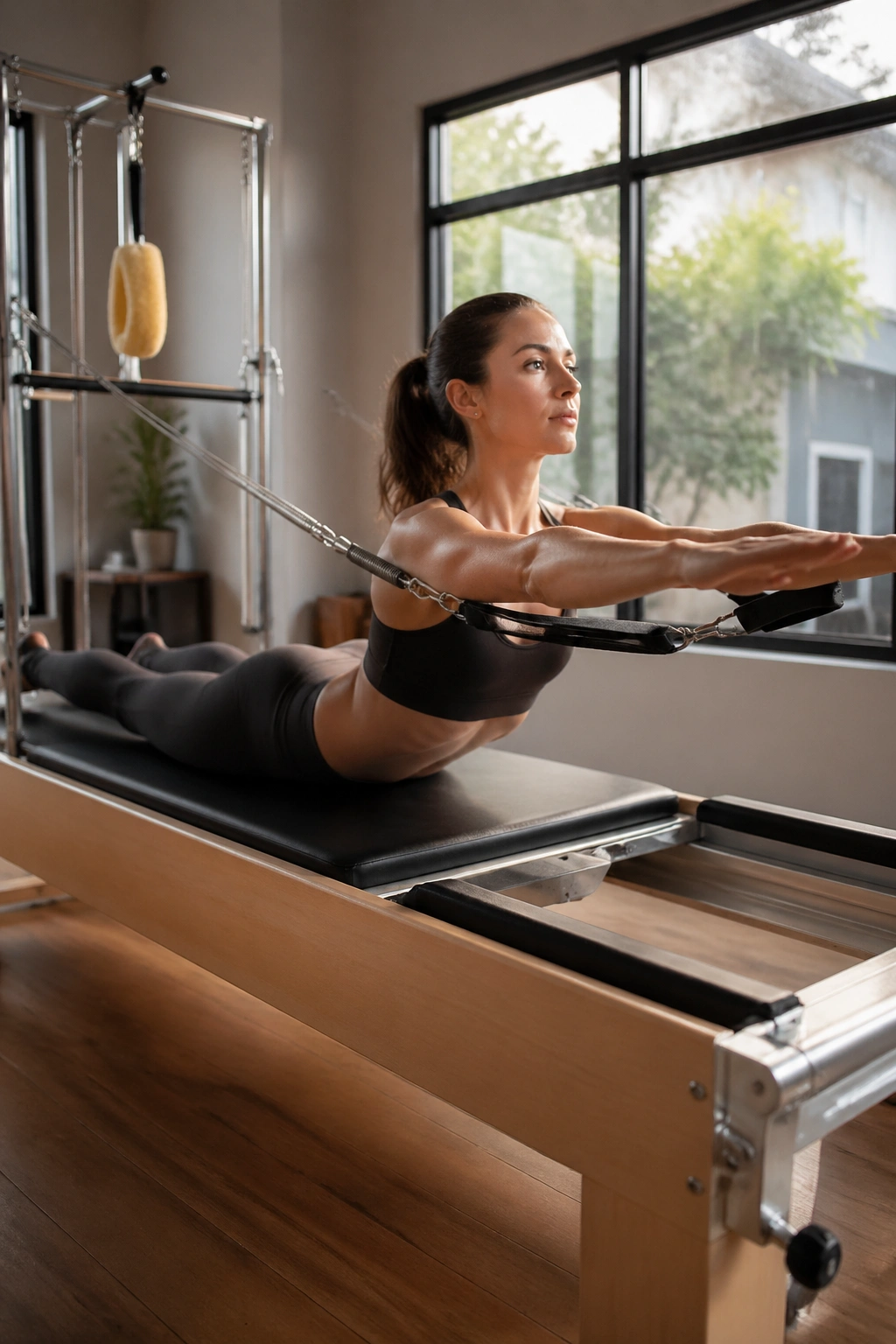
Strong backs do not come from yanking higher.
They come from length before lift. Swan on the Cadillac makes that obvious because the springs will punish any quick, messy extension. The glutes, spinal extensors, and the muscles around the shoulder girdle have to work together to lift the chest while the front of the body stays long instead of folding into the lower back.
The nice thing about the Cadillac is that you can keep the assistance small and the range precise. You do not need to chase a giant arc. A modest lift with a calm pelvis can build more useful strength than a dramatic shape that pinches the neck or jams the lumbar spine.
One simple cue helps a lot: imagine the breastbone reaching forward before it rises. That keeps the extension spreading through the upper back instead of compressing into one spot. If you lose that line, stop and reset.
This is a strength exercise, yes. It is also a humility exercise. If the neck leads, you know. If the ribs launch, you know. And if the lift stays smooth, the whole room looks different.
9. Teaser with the Roll-Down Bar
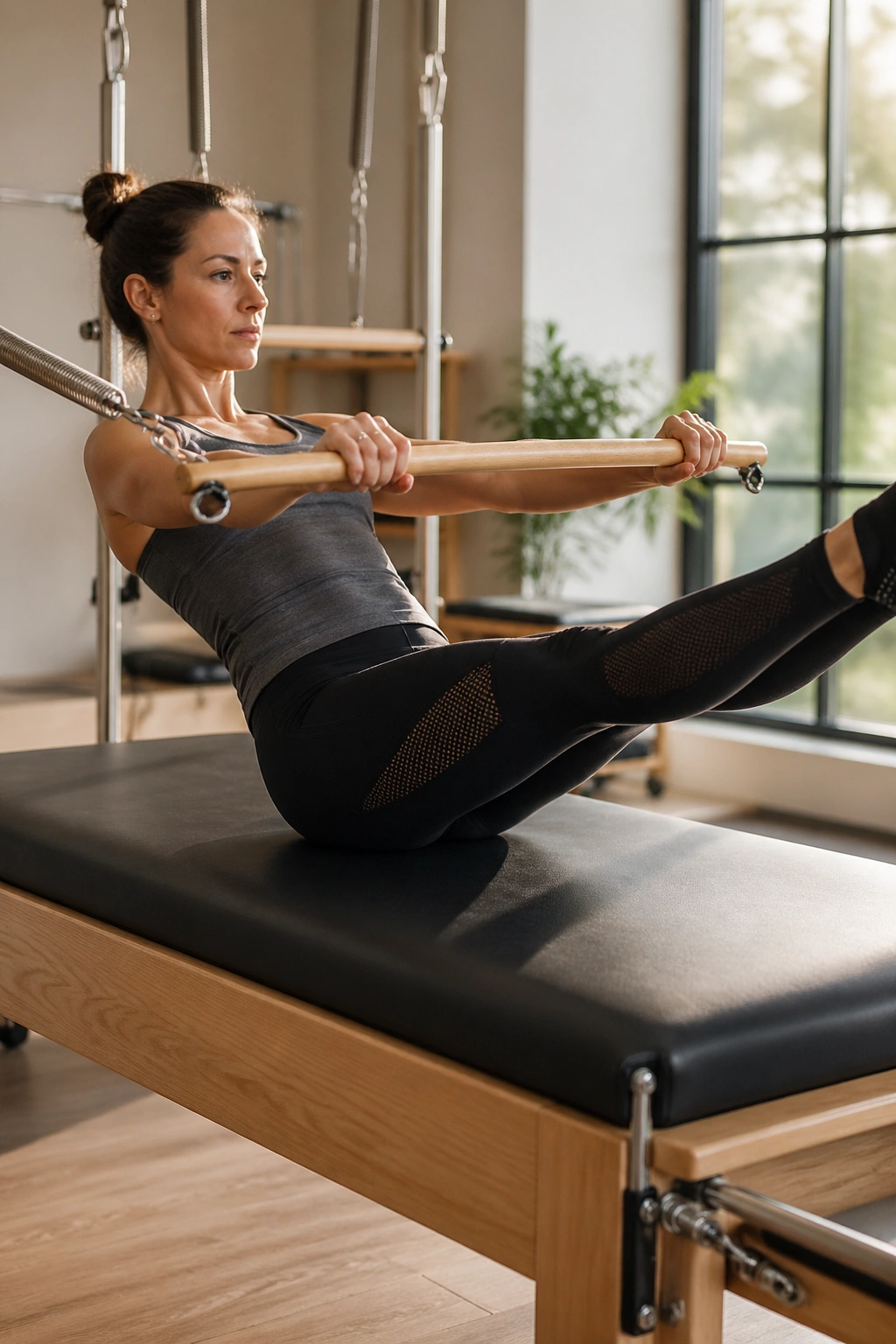
If the teaser falls apart, the problem usually isn’t the abs alone.
It’s the timing. It’s the hip flexors grabbing too soon. It’s the shoulders sneaking up. It’s the spine refusing to stay long while the legs and torso negotiate who gets to lead. The roll-down bar makes all of that visible, which is why I like it for strength work.
How to Use It
Start with the version you can keep tidy. Bent knees are fine. One leg up is fine. The bar should help create a sense of connection, not become a prop that drags you into momentum. Exhale to rise. Pause at the top with the chest open. Then lower with enough control that the descent looks almost slower than you want it to.
A clean teaser is one of the best abdominal strength markers on the Cadillac, but it also asks for hip control and long-back stability. If the lower back collapses, reduce the load. If the shoulders tense, let the arms soften. If the neck is doing all the complaining, stop for the day and come back shorter.
This is the kind of exercise that rewards patience. A lot.
10. Tower
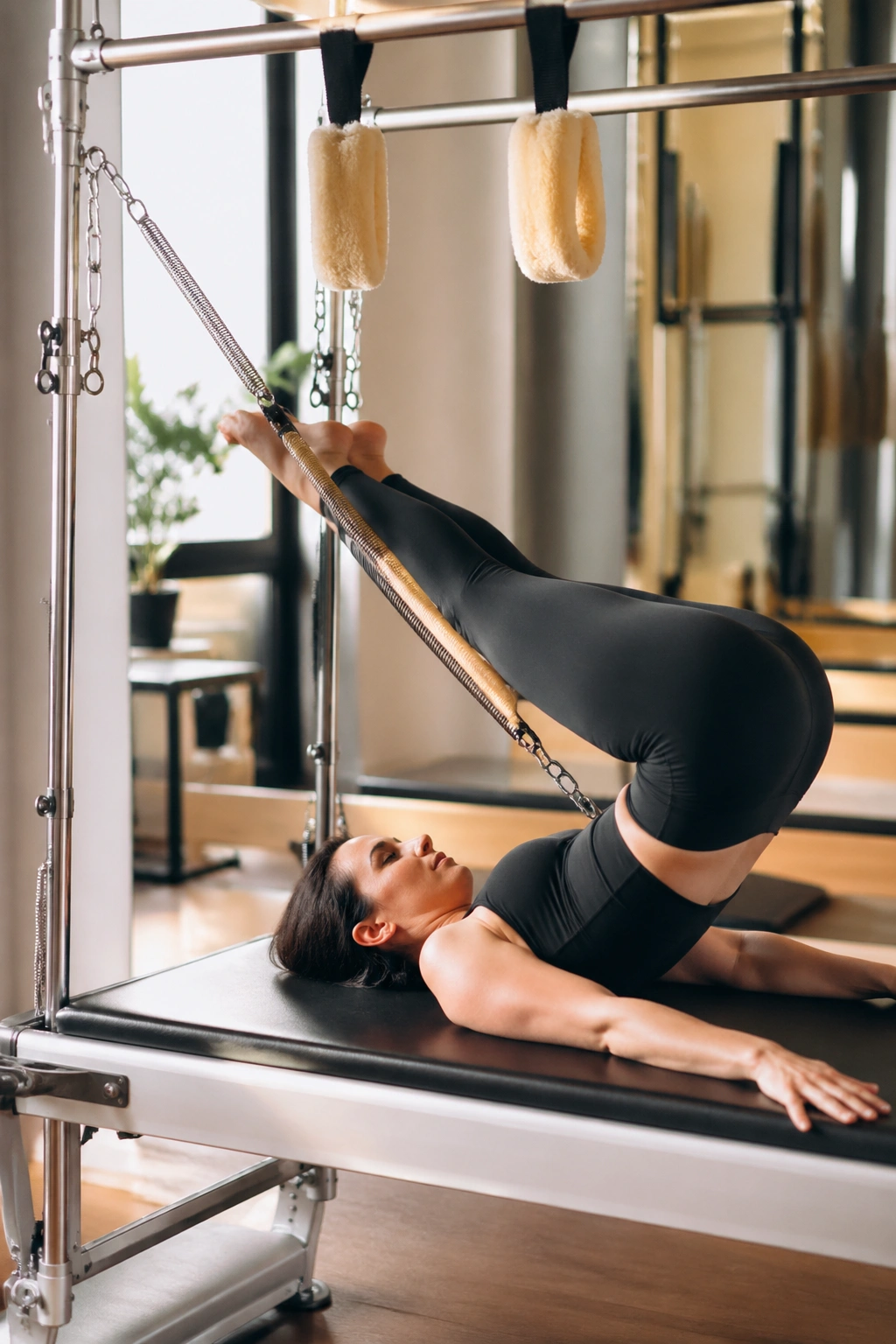
The first good Tower feels like a conversation between your hamstrings and your abs.
You start with the legs long, the pelvis organized, and the spine ready to articulate. Then the lower body goes overhead, and the real work begins. Tower is one of the best strength-building Cadillac exercises because it blends spinal control with hamstring length and deep abdominal support. It asks for brute honesty. No cheat lasts long here.
A useful image: the legs come up because the midsection stays connected, not because the feet fling themselves toward the ceiling. When the pelvis lifts, the shoulders should stay grounded and the neck should stay free. If the rib cage pops open, the control has already gone.
Key Details That Matter
- Keep the movement slow through the first lift.
- Let the spine roll up one segment at a time.
- Avoid pressing the throat into the mat.
- Bend the knees if your hamstrings pull the whole shape apart.
The return is the hard part. Anyone can toss the legs down. Fewer people can lower with quiet control and no sudden dump into the spine. That lowering phase is where the strength lives.
11. Monkey
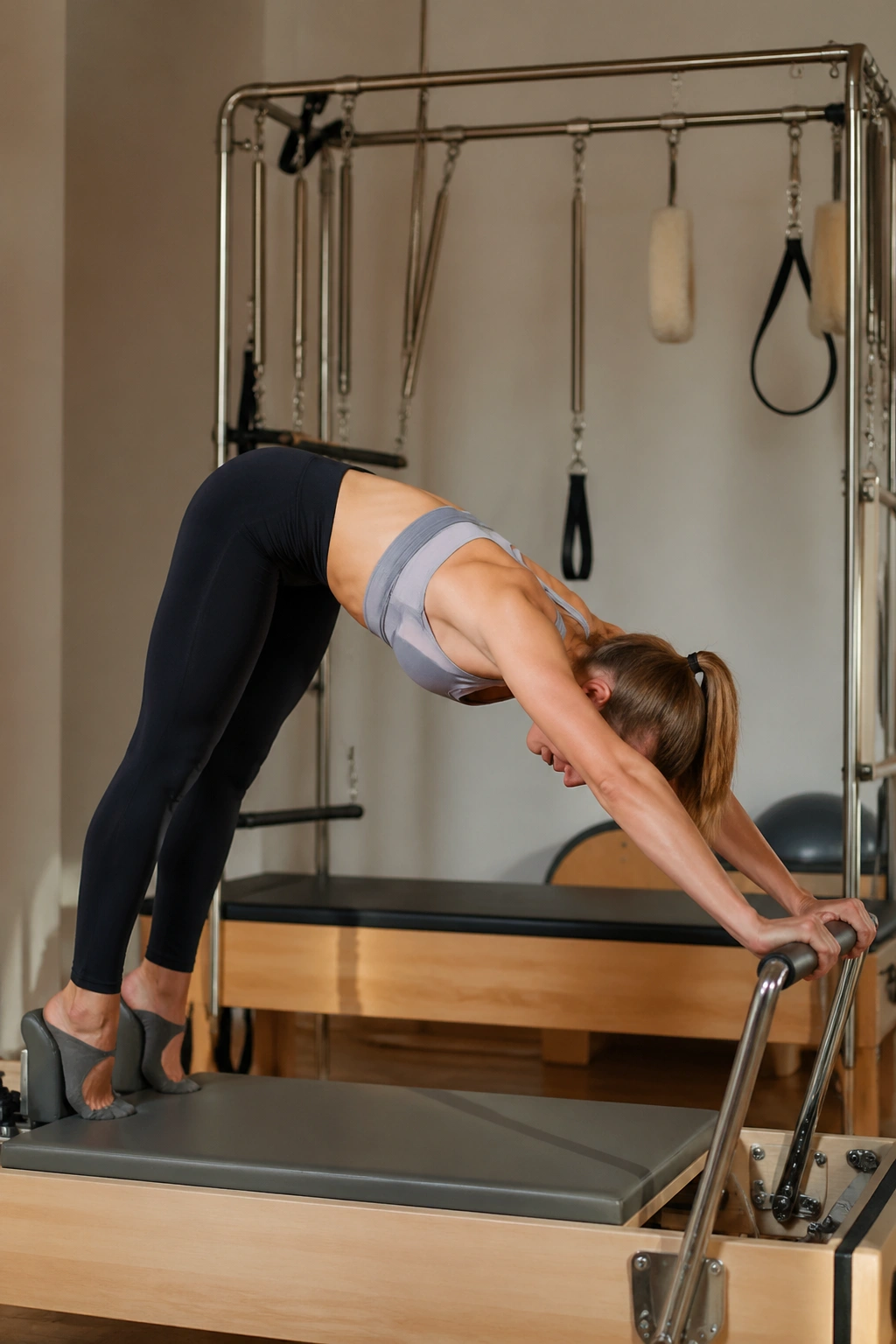
Monkey is one of those exercises that looks like a stretch until you try to keep it clean.
Then it turns into a full-body strength job. The grip has to stay awake, the shoulders have to stay active, and the abdominals have to keep the trunk from folding into the bar. Depending on the setup, the feet may stay on the bar or the platform while the body folds and extends through a controlled arc. Either way, the challenge is not just the hamstrings. It’s the whole chain.
What I like about Monkey is that it teaches strength from the feet upward. If the feet are sloppy, the pelvis follows. If the pelvis wanders, the spine follows. And if the shoulders relax too much, the hang loses shape fast. There’s a lot happening in a movement that only takes a few breaths.
It’s also a good reminder that strength does not always look rigid. A well-done Monkey is springy, organized, and calm. No jerking. No hanging on the joints. The work happens in the support muscles that keep the body long while it folds.
Do not rush this one. If the calf stretch turns into a collapse, make the range smaller and stay with the quality.
12. Frog with Leg Springs
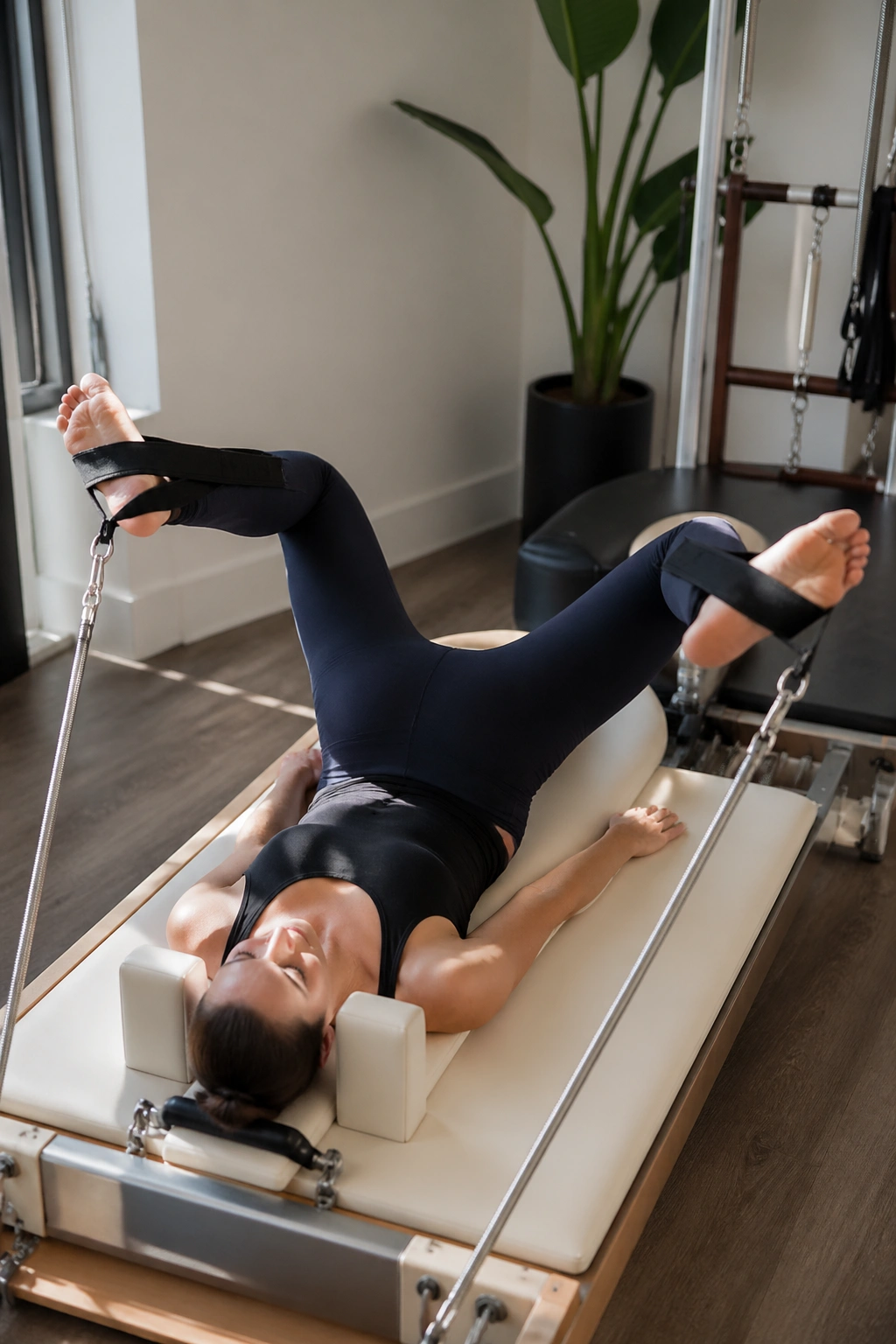
Compared with free leg lifts, Frog gives you built-in feedback.
The springs make the legs want to drift outward or let the pelvis tip. That means the adductors, lower abdominals, and hip flexors have to cooperate instead of taking over in isolation. It sounds simple. It is not. A good Frog makes the legs press out and return without the low back arching or the knees wobbling apart.
Start small. Seriously. A compact press-out with the heels together and the pelvis quiet will do more than a huge range that turns into a hip-flexor tug-of-war. If the inner thighs are weak, you’ll feel it. If the core leaks, you’ll feel that too. The springs are unforgiving in the best possible way.
The best reps feel smooth and quiet. No clicking at the hips. No popping the ribs. No swinging through the knees. If the movement gets noisy, the range is too large or the tension is too heavy.
This is one of the first leg-spring exercises I would keep in a strength-focused Cadillac series because it teaches the body how to press away without losing center. That skill shows up everywhere else.
13. Leg Circles with Leg Springs
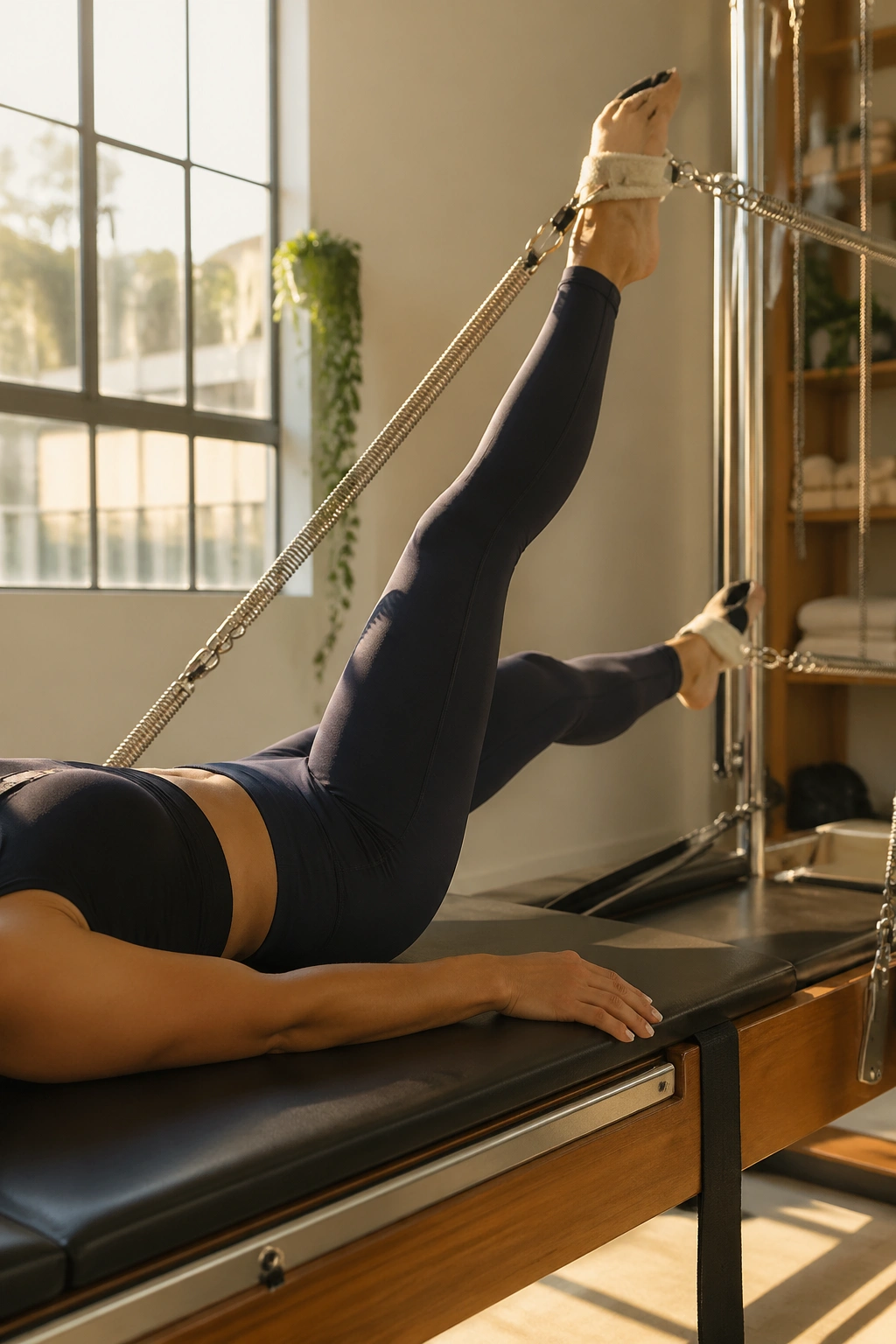
Small circles, big lies. That’s the whole story here.
Why the Circle Matters
Leg Circles on the Cadillac are less about making a beautiful shape and more about proving that the pelvis can stay still while the legs move around it. The outer hips, lower abdominals, and obliques all have to keep the trunk from rolling with every pass of the legs. If the circle gets too large, the back arches and the work shifts somewhere less useful.
The strength payoff comes from control at the edge of motion. A tiny circle can light up the hip stabilizers faster than a dramatic one because the body cannot rely on momentum. That’s what makes the springs useful. They keep the line live the whole time.
How to Get the Most From It
- Start with a small circle and a neutral pelvis.
- Keep the ribs heavy.
- Move through both directions with the same speed.
- Stop if the lower back starts to take over.
A clean set of circles should feel precise, not splashy. The legs move. The center stays put. That’s the whole point, and it’s a good one.
14. Bicycle with Leg Springs
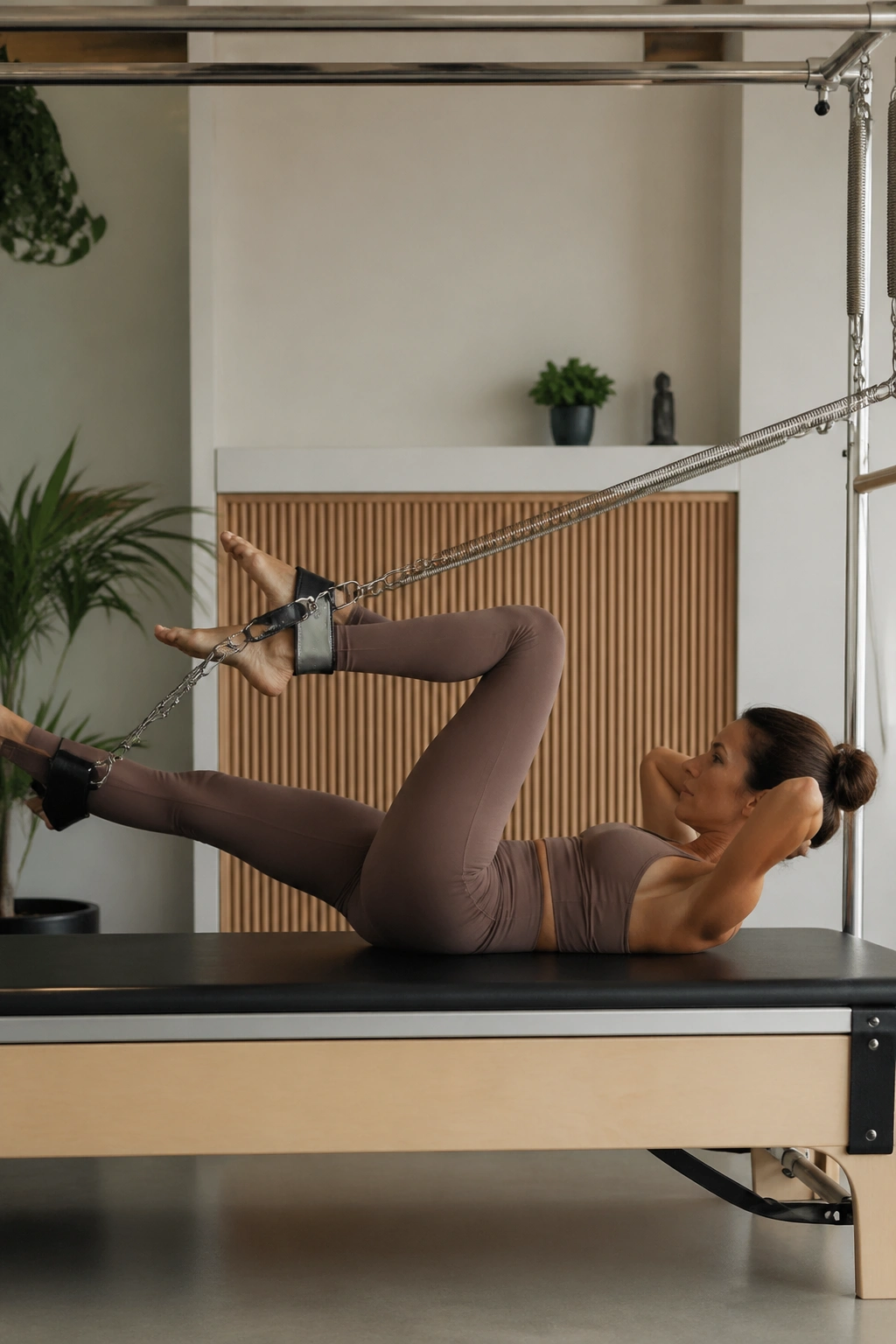
Bicycle is where the leg springs start to feel a little rude.
One leg extends while the other bends, and the pelvis has to stay square while the two sides of the body negotiate different jobs. That split action is wonderful for strength because it makes the core work against rotation, not just against gravity. The hamstrings, quads, hip flexors, and obliques all have to speak to each other without shouting.
What catches people is the temptation to make the pattern huge. Don’t. A gigantic bicycle on the Cadillac usually turns into a hip-opening show with very little trunk control. A tighter path, though, creates real work. The moving leg should feel long, the bent leg should feel organized, and the pelvis should stay heavy enough that the back doesn’t arch to borrow range.
If your lower back starts to complain, reduce the extension of the straight leg before you reduce the control. That small order of operations matters. Many people stretch first and stabilize later. On the Cadillac, that usually backfires.
A quiet, even rhythm wins here. The springs will tell you if you rush.
15. Beats with Leg Springs
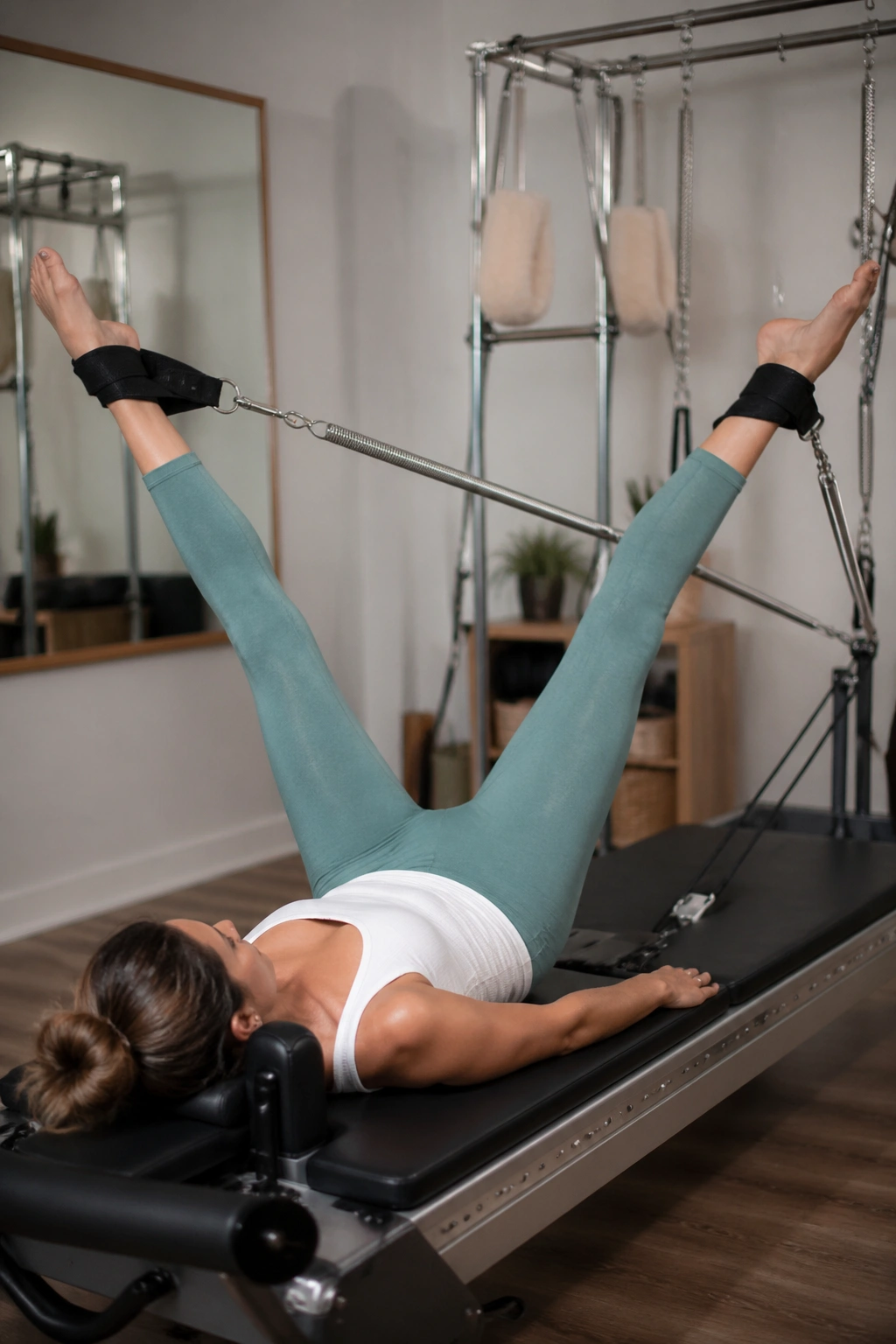
Why do tiny beats burn so fast?
Because the inner thighs do not get to hide. Beats with leg springs force the adductors to stay active through a compact range, and that steady squeeze also recruits the lower abdominals and deep pelvic support. The movement is short, but the effort stacks up fast when the pelvis remains still.
How to Get the Most From It
Keep the legs in turnout or parallel, depending on the setup, and let the beats stay small enough that the springs never go slack. If the feet drift too far apart, the work drops out of the inner line and the movement becomes more about shape than strength. The useful range is usually smaller than people expect.
A good beat set feels rhythmic and contained. The lower back stays quiet. The hips do not rock. The rib cage does not flare just because the legs are moving faster. That last part is the trap. Speed invites shortcuts. Clean beats are fast in the legs and calm everywhere else.
A brief rest between sets is fine. Your adductors will tell you when they’ve had enough. They are not subtle about it.
16. Side Leg Springs Front and Back
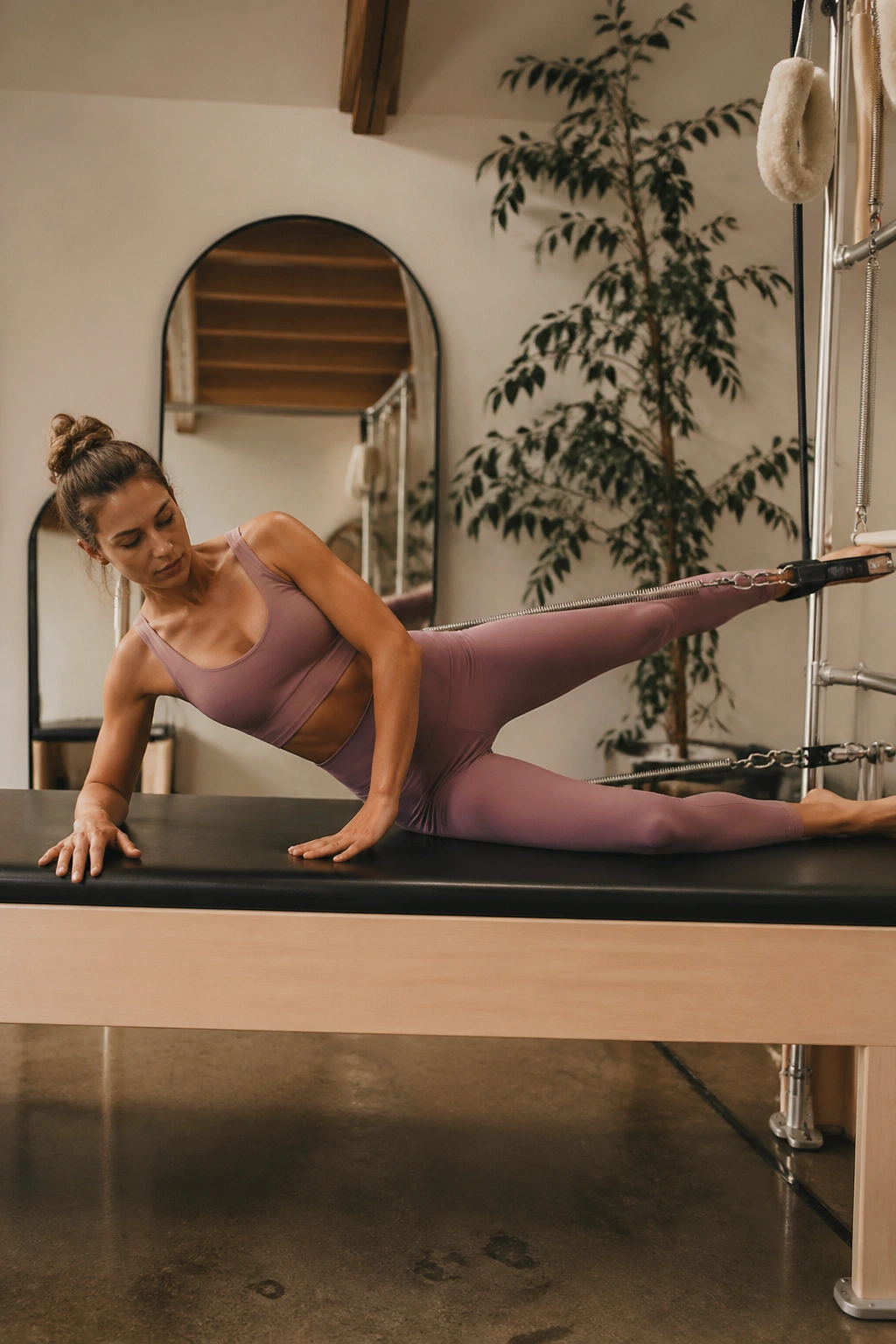
A side-lying leg spring series can humble the glutes faster than a lot of standing work.
The position looks relaxed, which is part of the trick. Once the top leg starts sweeping forward and back, the outer hip has to stabilize, the waist has to stay lifted, and the pelvis has to resist rolling open. That makes it a strong choice for glute medius work and side-body control — two things people often miss when they chase bigger, flashier movements.
What to Watch For
- Keep the waist long on the floor or mat.
- Move the leg from the hip, not the knee.
- Avoid letting the top hip drift behind you.
- Use a small range first; the back of the leg should work without the spine helping.
This is one of those exercises where the small version is usually the right one. The springs can tempt you into a big swing, but a smaller path gives you a steadier pelvis and more honest side-body strength.
If the standing leg series has ever felt unstable, this is a useful bridge. It teaches control without asking you to balance on your feet yet.
17. Airplane
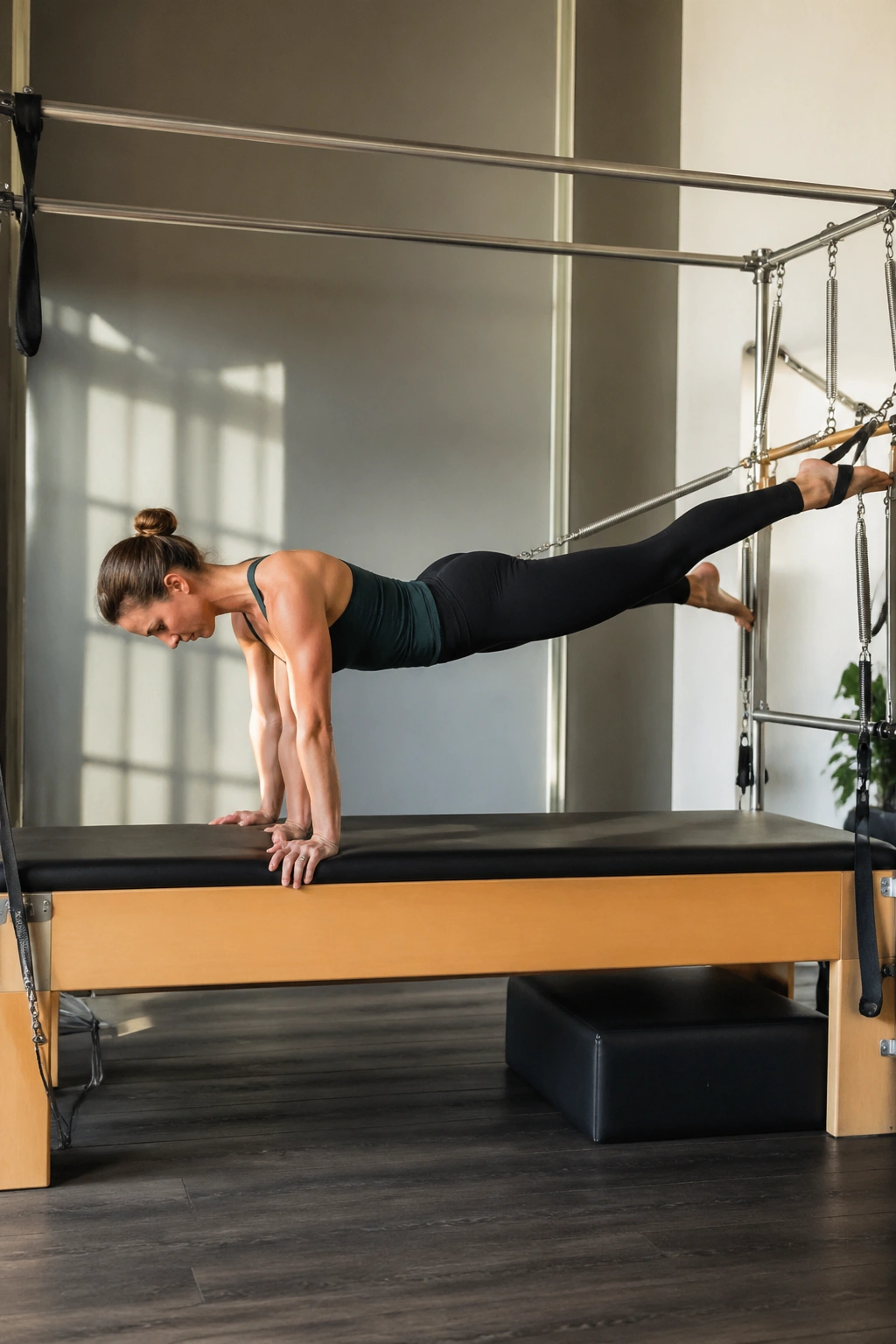
Airplane belongs to the category of exercises that make you respect your shoulders again.
It is an advanced hanging and extension-based Cadillac exercise, and it demands a clean line through the back body. The arms have to support without collapsing, the upper back has to stay broad, and the glutes and hamstrings have to keep the legs alive in the shape. If the body gets loose, the movement loses its point fast.
What makes Airplane useful for strength is the combination of openness and control. You are not locking into a stiff plank. You are balancing a long shape under spring tension, which means the trunk, shoulders, and posterior chain all have to stay in conversation. That is not casual work.
A lot of people rush Airplane because it looks dramatic. Bad idea. If the hang is unstable or the neck feels compressed, stay away from it for now. Build with Monkey, Swan, and Tower first. Then return here with better organization and a calmer grip.
The version worth keeping is the one that looks smooth from the outside and feels exact from the inside.
18. Control Balance
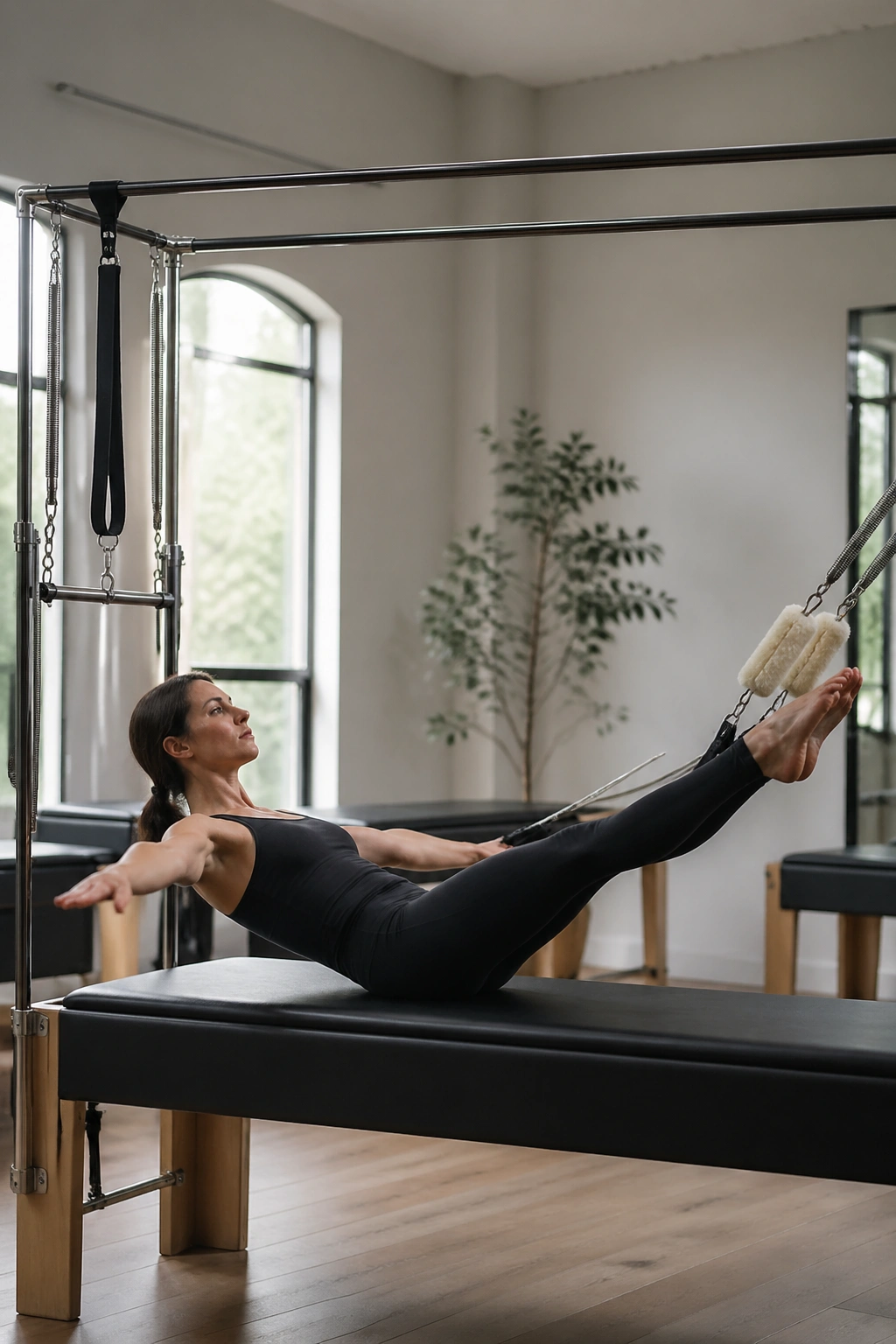
Unlike Airplane, Control Balance asks for less drama and more discipline.
That does not make it easier. It usually makes it harder. The legs may split or reach in a controlled pattern while the trunk holds the entire shape together under load, and that puts a lot of demand on the abdominals, hip flexors, back line, and shoulder stabilizers. The neck has to stay free. The shoulders have to stay alive. The pelvis has to know exactly where it is.
This is advanced Cadillac work, no question. If the setup is sloppy, the exercise becomes a neck problem fast. So keep the range small, the breath steady, and the exit path as organized as the entrance. You are trying to preserve length while the springs and gravity both test your shape.
I think of Control Balance as a final exam for line and control. It’s not the place to chase height. It’s the place to prove that you can hold the body together when everything wants to drift apart.
Work with a skilled teacher here. A calm, tidy version is far better than a big one.
Final Thoughts
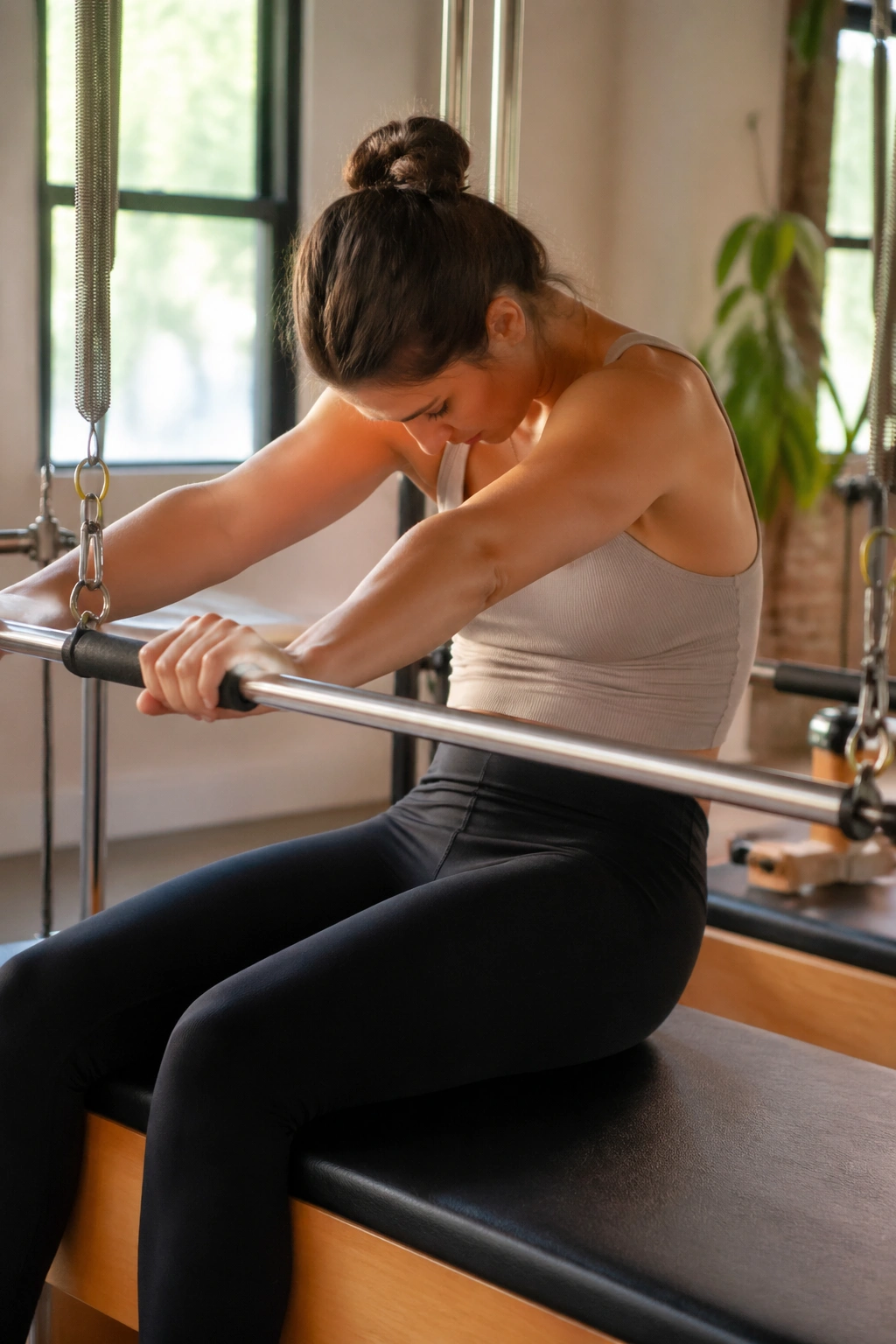
If you want strength from the Cadillac, chase control first. The springs reward steady ribs, quiet shoulders, and a pelvis that stays where you put it. The flashy reps are usually the least interesting ones.
A smart session mixes patterns. Pick one spinal flexion move, one extension move, one upper-body spring exercise, and one leg series. Keep the ranges modest at first. That approach tends to build the kind of strength people can actually use — the kind that shows up when you stand, reach, carry, or simply stay upright for a long day.
The biggest mistake on the Cadillac is not using enough spring. It’s using too much speed. Slow down, make the bar or strap answer back, and let the body prove it can stay organized under pressure.
