



The first mirror check after pregnancy can feel a little unfair. Your body changed fast, it is still changing, and that soft middle section does not always mean the same thing it meant before.
The best belly fat workouts after pregnancy at home are not the ones that punish your abdomen into submission. They are the ones that help your core wake back up, teach your ribs and pelvis to work together again, and build enough muscle and daily movement to support fat loss over time. That sounds less flashy than endless crunches, because it is. It also works better.
A lot of postpartum bellies are a mix of things: some fat, some stretched tissue, some water retention, some posture, and sometimes a core that has stopped bracing well. Add diastasis recti, a C-section scar, a weak pelvic floor, or plain old sleep deprivation, and the old “just do sit-ups” advice starts looking foolish. Bluntly, it can make things worse.
So the smart play is to start with low-pressure core work, then move into strength and gentle cardio. That gives you a path that feels doable in a living room, without fancy machines or jumping around like a fitness video from another planet. And if you see doming down the middle of your stomach, leaking, heaviness, or pain, back off and get checked before pushing harder.
1. Diaphragmatic Breathing and 360-Degree Core Bracing
Start here. Not because it sounds glamorous, but because it teaches the system underneath everything else.
When your breathing is shallow, your ribs flare and your belly tends to do all the work. When you breathe well, the transverse abdominis and pelvic floor can share the load again, which matters more than most people think in postpartum recovery.
Why this matters before any tougher move
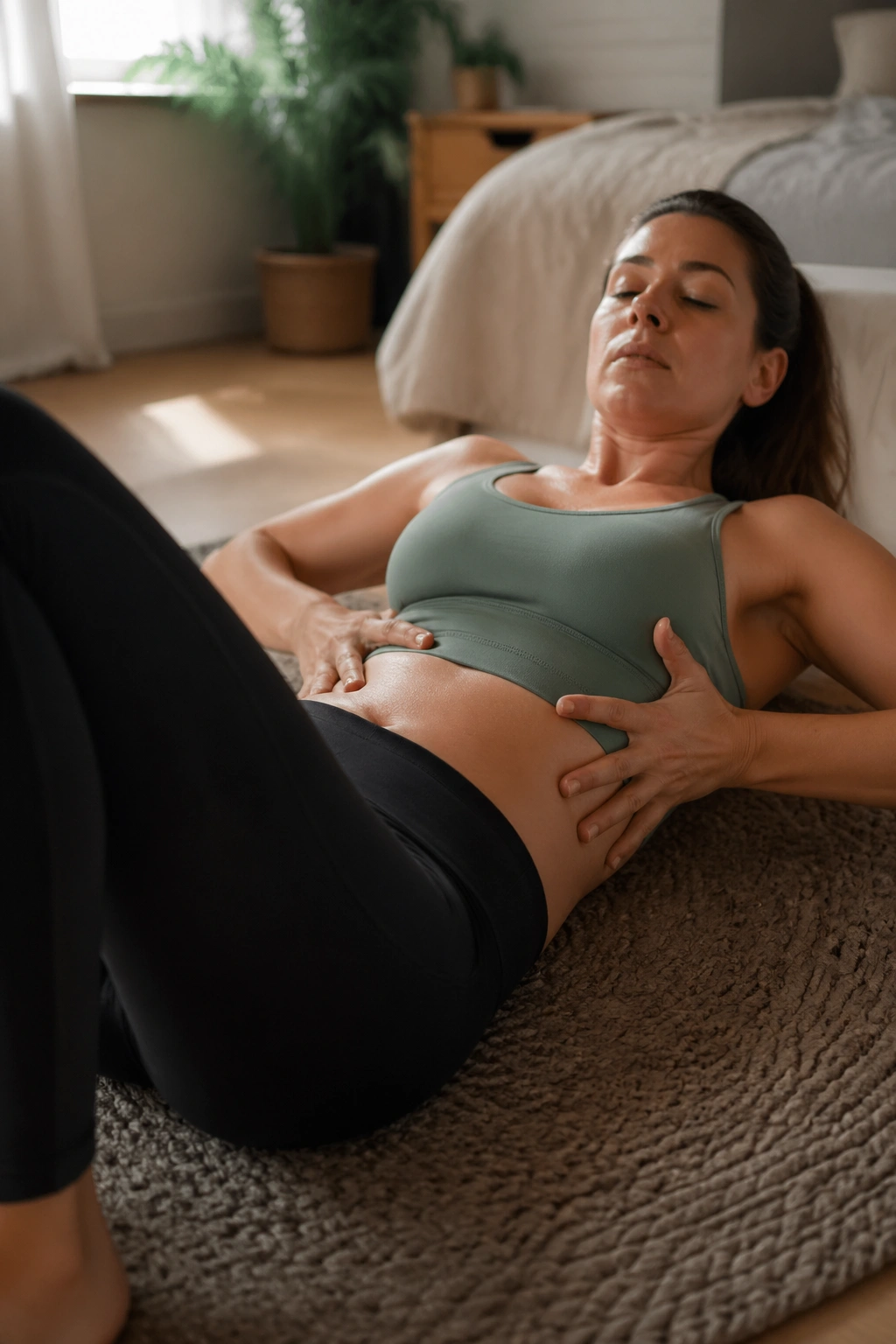
Lie on your back with your knees bent, one hand on your ribs and one hand on your lower belly. Inhale through your nose for 4 counts and try to feel your ribs expand sideways and into the floor, then exhale for 6 counts as if you were gently fogging a mirror. Do 5 breaths, rest, then repeat for 2 or 3 rounds.
- Keep your shoulders soft.
- Let the exhale be long.
- Do not suck your stomach in hard.
- Stop if you feel dizziness or pressure.
Best cue: think “expand on the inhale, gently narrow on the exhale,” not “pull everything in and hold.”
2. Heel Slides That Wake Up the Lower Abs
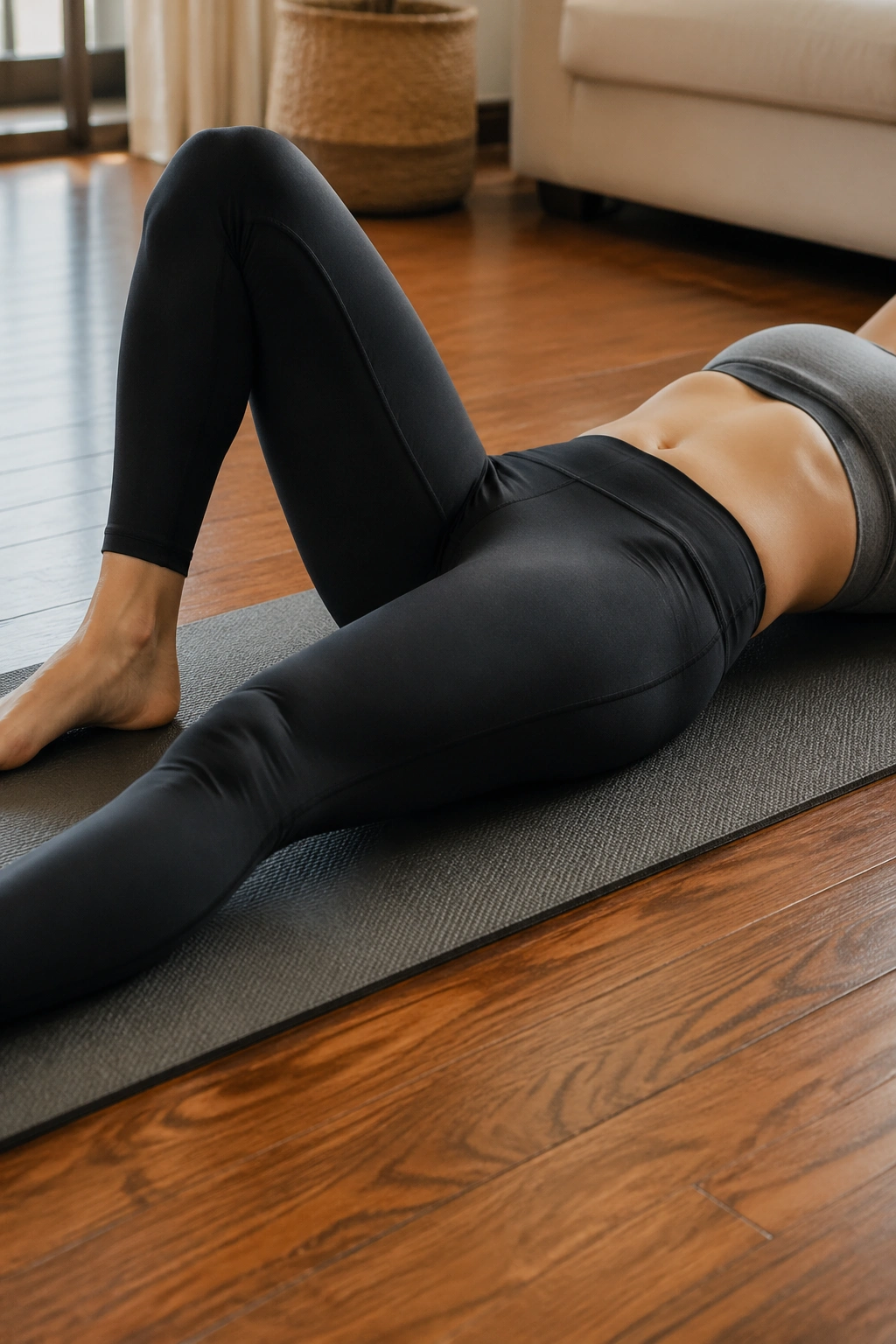
Your lower abs do not need to be attacked. They need to be reminded.
Heel slides are one of those almost-boring floor moves that earn their keep fast, especially if you get doming when you try harder core work. One leg stays bent while the other heel slides away along the floor, then returns, and the whole point is keeping your pelvis quiet.
Do 6 to 10 reps per side for 2 or 3 sets. If your low back lifts off the mat, the slide is too long or too fast. Shorten it. Slow it down. That little adjustment makes a bigger difference than forcing a bigger range.
I like this exercise because it tells you the truth. If your core is ready, the movement feels smooth and controlled. If it is not, your ribs pop up or your back arches, and the fix is obvious. That is useful information.
3. Posterior Pelvic Tilts on the Mat
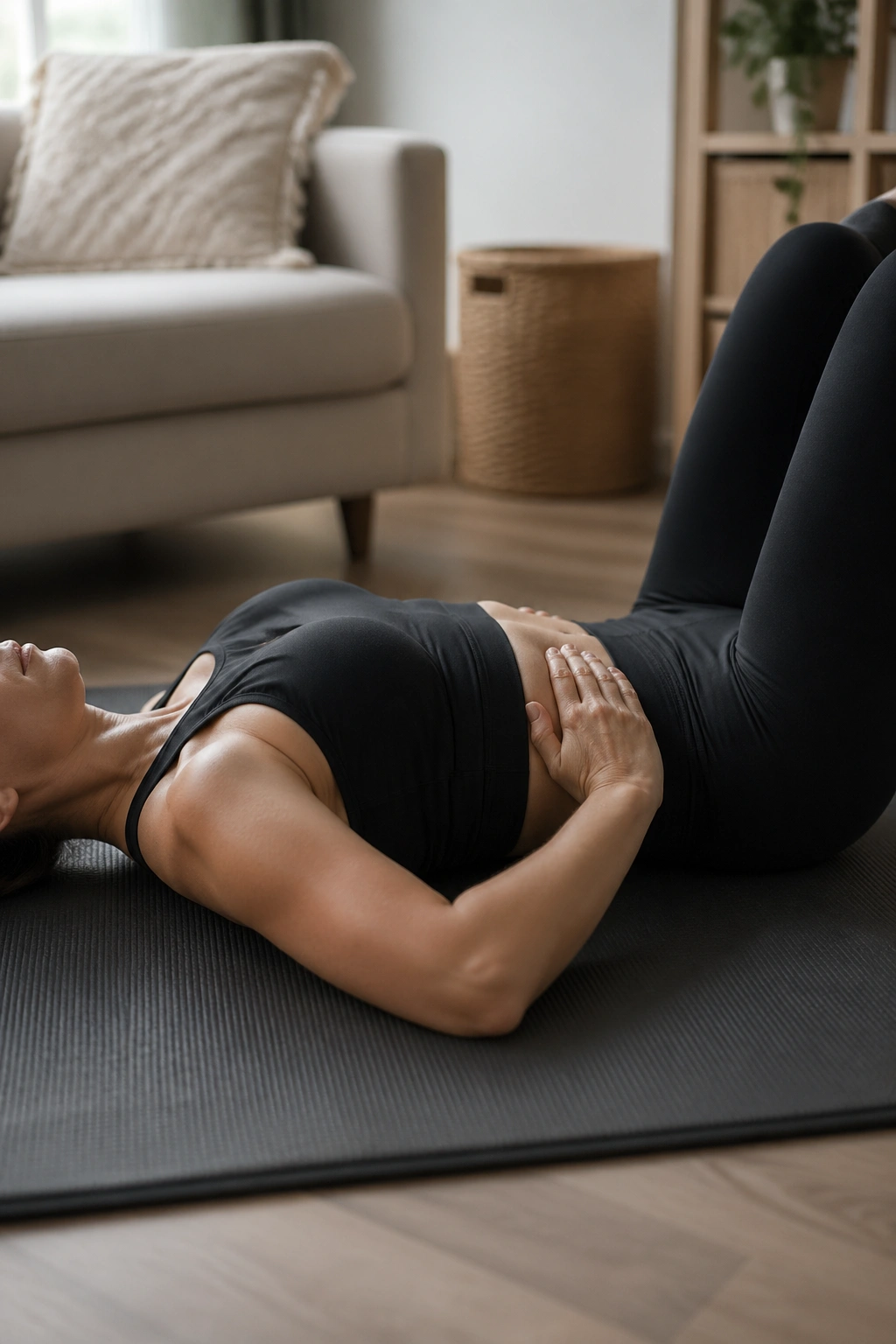
Why does a tiny tilt of the pelvis matter so much? Because postpartum posture often gets stuck in a gentle back arch, and that position makes the front of the abdomen work less than it should.
Lie on your back with knees bent and feet flat. Exhale, then gently tip your pelvis so the low back presses a little more into the mat. Inhale and return to neutral. That is the whole move.
How to keep it small
- Keep the motion slow.
- Think “zip up the front” rather than “crunch up.”
- Stop before your butt lifts.
- If your glutes start doing all the work, make the tilt smaller.
Eight to 12 reps is enough. If you want to make it more useful, pair each tilt with a long exhale. That helps the deep core and pelvic floor coordinate instead of working in separate rooms, which is how they often feel after pregnancy.
4. Glute Bridges for a Stronger Pelvic Base
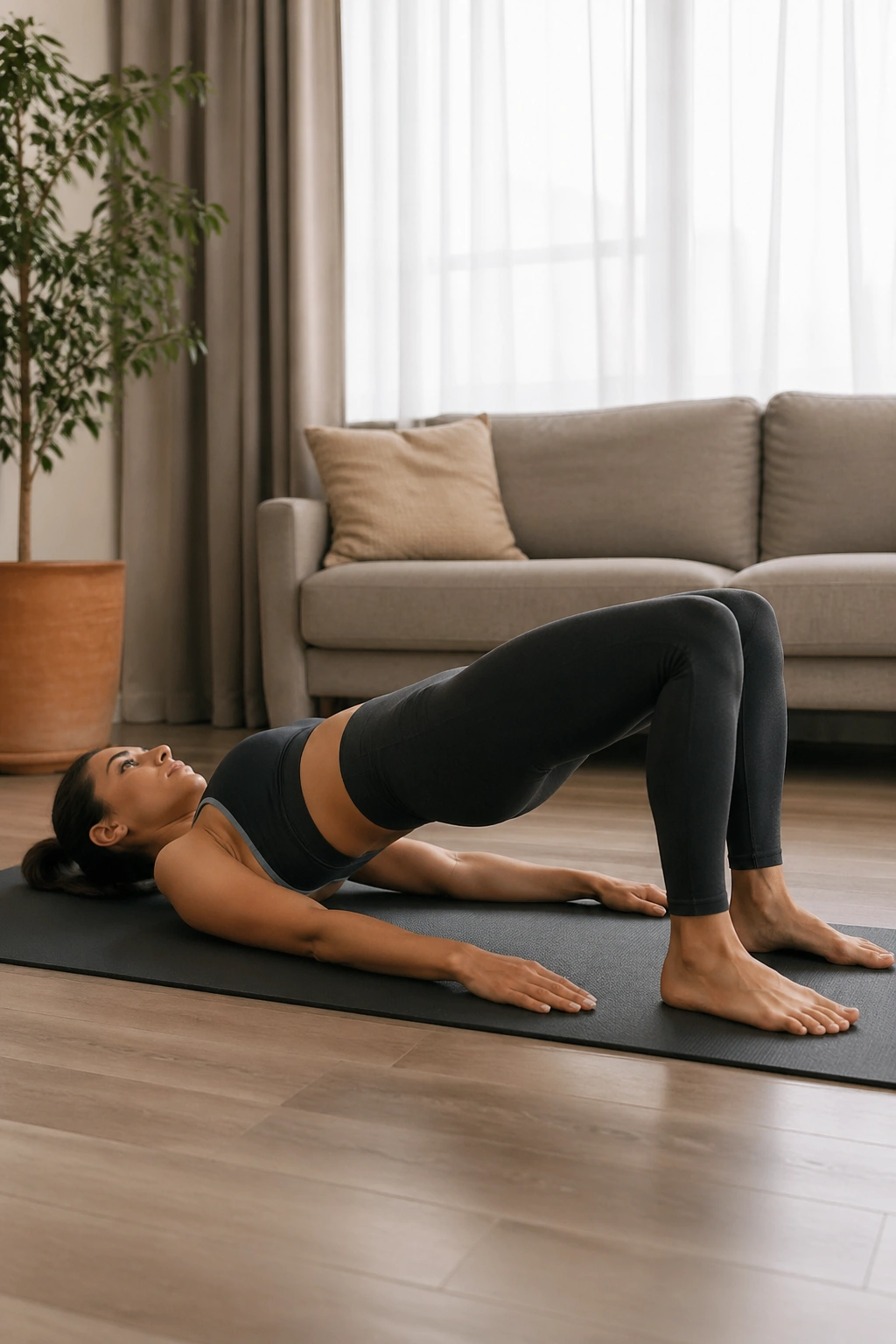
Picture yourself picking up a baby carrier, a laundry basket, and a toy that somehow rolled under the sofa. If your lower back takes over every time, glute bridges can be a nice reset.
Lie on your back with knees bent and feet about hip-width apart. Exhale, press through your heels, and lift your hips until your body makes a straight line from shoulders to knees. Pause for 2 seconds, then lower with control.
What to watch for
- Keep your ribs down.
- Do not throw your hips up with your back.
- Squeeze the glutes at the top, not the low back.
- Keep your feet planted; don’t let them slide.
Two or 3 sets of 8 to 12 reps is plenty at first. If you feel hamstrings doing all the work, move your feet a little closer to your seat. If your back pinches, reduce the height. Tiny adjustments matter here.
5. Bird Dogs From Hands and Knees
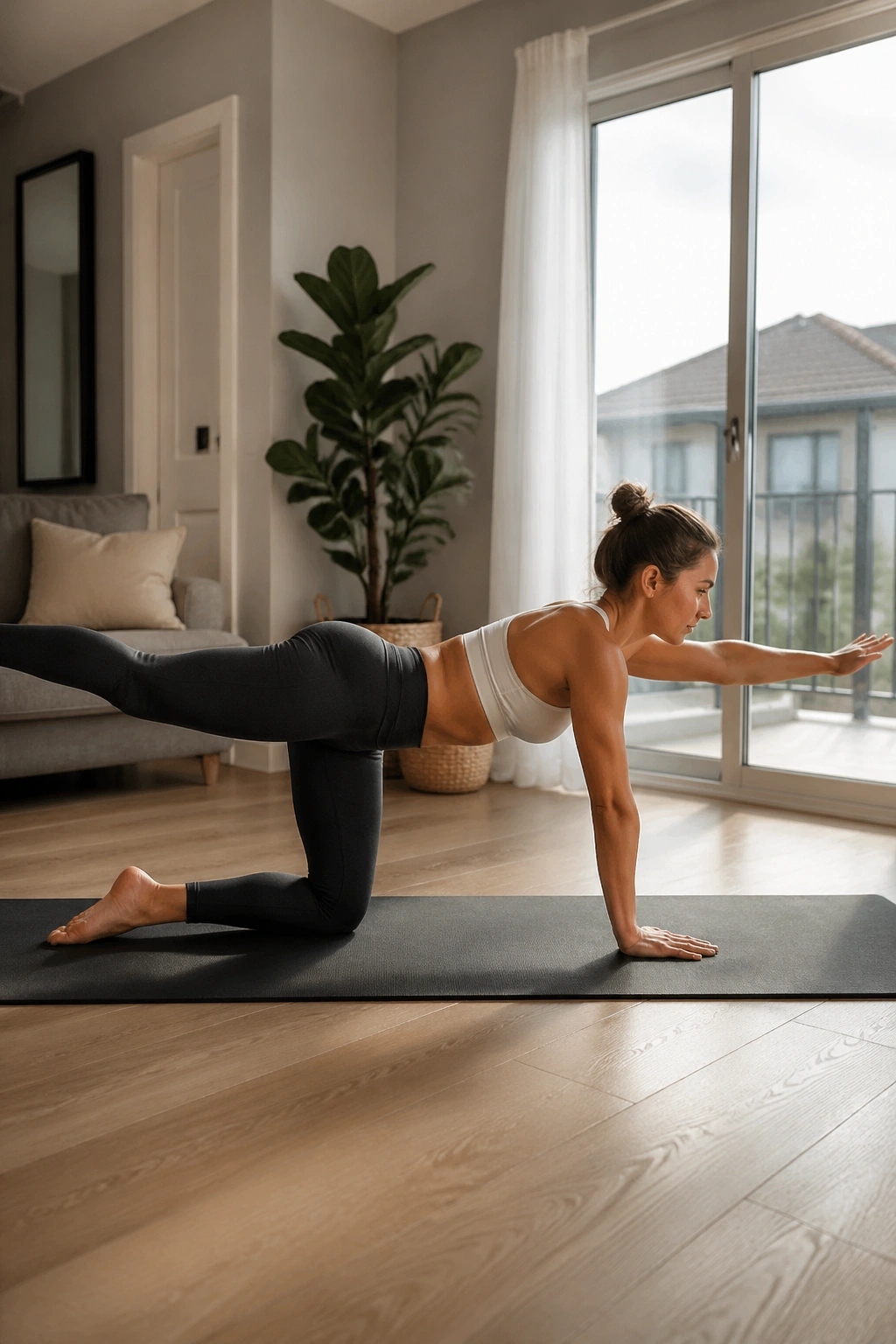
Bird dog looks simple on paper. Then you try to keep your hips from wobbling and realize it asks for more control than it first admits.
Get on hands and knees with your wrists under shoulders and knees under hips. Reach one leg back and the opposite arm forward, but only as far as you can go without shifting your trunk. Hold for a second, return, and switch sides. Six slow reps per side is a solid start.
A lot of postpartum core work is really about anti-rotation — keeping your torso steady while your limbs move. Bird dog teaches that skill in a very honest way. If your belly domes, shorten the reach. If your wrist hurts, drop to your forearms or place your hands on a folded towel.
One-sentence rule: slow is better than pretty.
6. Wall Push-Ups With a Tight Midline
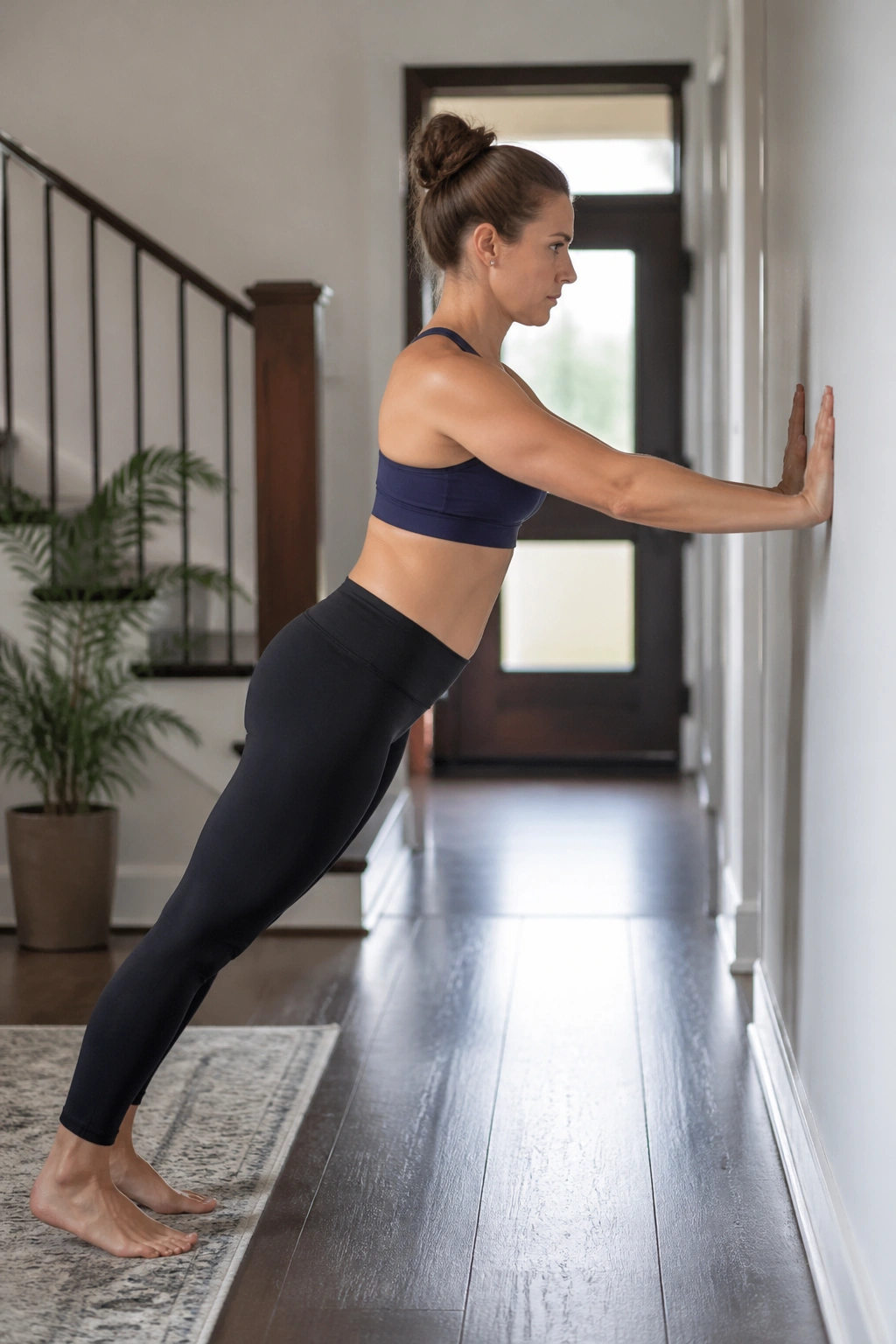
Unlike floor push-ups, wall push-ups let you press without dumping pressure into your abdomen. That makes them a good bridge between rehab and full-body strength.
Stand an arm’s length from a wall, hands on the wall at chest height. Bend your elbows and bring your chest toward the wall, then press back. Keep your body in one line and your ribs from flaring forward like a popped collar.
Why they earn a place here
Wall push-ups train your chest, shoulders, triceps, and core at the same time. That matters because postpartum fat loss is easier when you build muscle and keep moving well, not when you isolate your stomach and hope for a miracle.
Try 2 or 3 sets of 8 to 15 reps. If wall push-ups feel too easy, move to a counter. If they feel too hard, stand a little farther away and work the same pattern with less load.
7. Chair Sit-to-Stand Squats
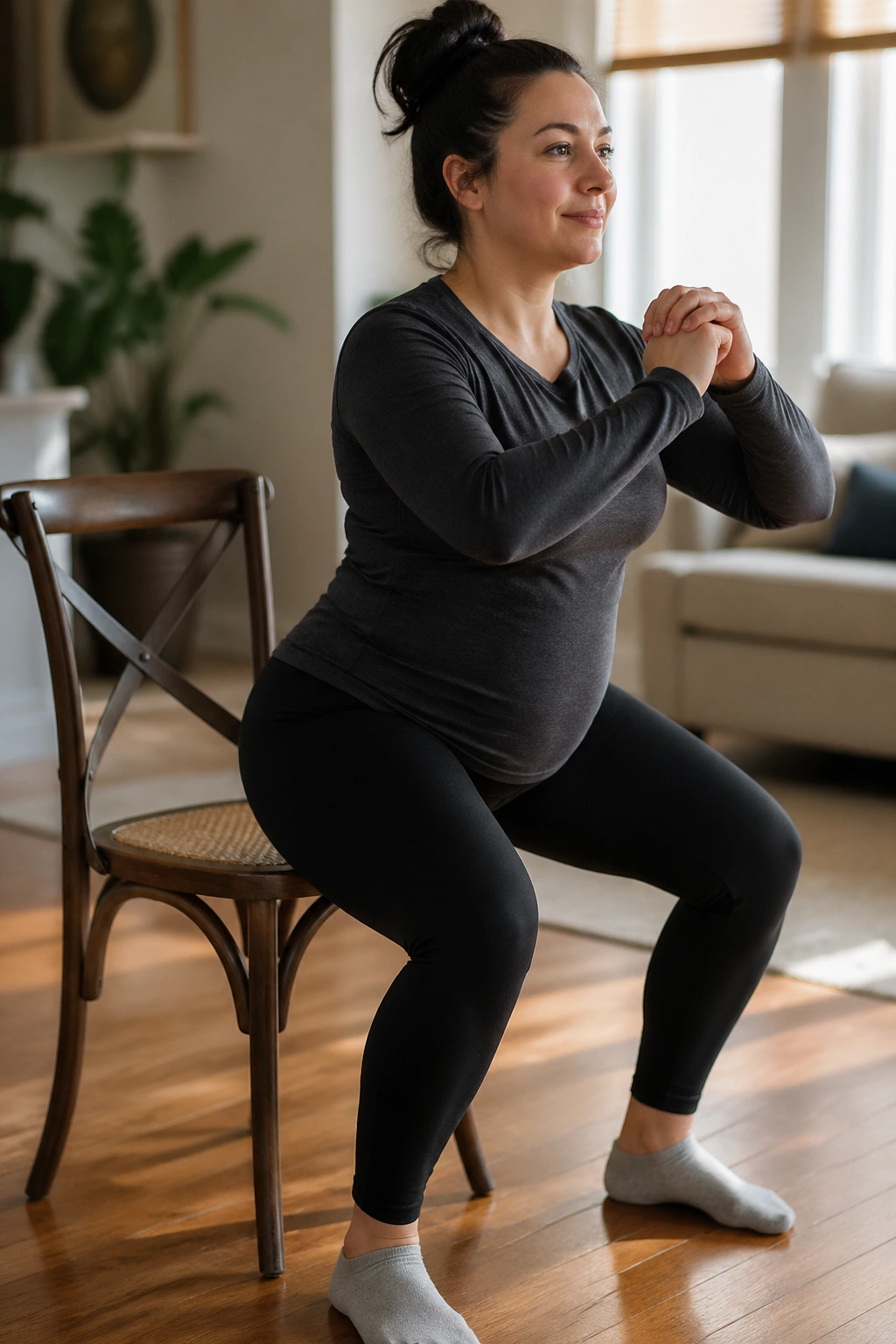
A chair is enough. Seriously.
Sit-to-stand squats are one of the best at-home postpartum exercises because they train the legs, glutes, and core in the same motion you use every day. Sit back lightly onto a sturdy chair, feet flat and about shoulder-width apart, then stand by driving through the whole foot.
If your knees cave inward, think about gently pressing them out as you rise. If you rock forward onto your toes, shift your weight back a little and try again. The movement should feel like a clean push from the floor, not a lunge for balance.
Eight to 12 reps for 2 or 3 rounds works well. Use a higher chair at first if you need it. Lowering the seat later makes the exercise harder in a way your body can actually use.
8. Side-Lying Clamshells
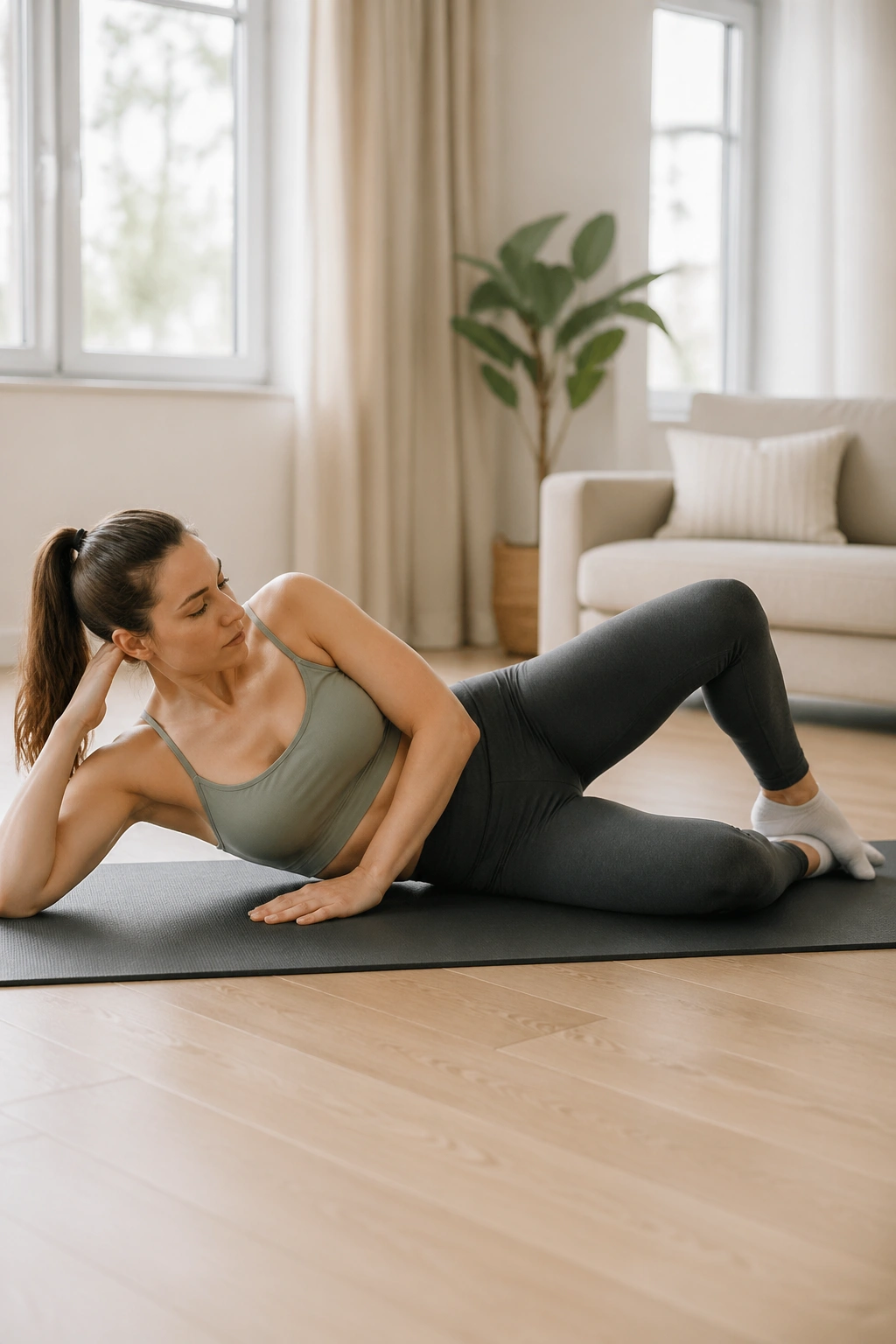
If your hips wobble on stairs or one side of your pelvis feels lazy, clamshells usually show you why.
Lie on one side with knees bent and feet together. Keep your heels touching while you open the top knee like a clam shell, then lower it slowly. The pelvis stays stacked; the waist does not roll backward.
This move targets the glute medius, which helps stabilize the pelvis during walking, carrying, and single-leg work. That sounds boring until you notice how much easier stairs feel when your hips stop arguing with each other.
Add a mini-band above the knees if the basic version feels too easy, but don’t rush that. Twelve to 15 reps per side, 2 or 3 sets, is enough to make it count.
9. Dead Bug Heel Taps
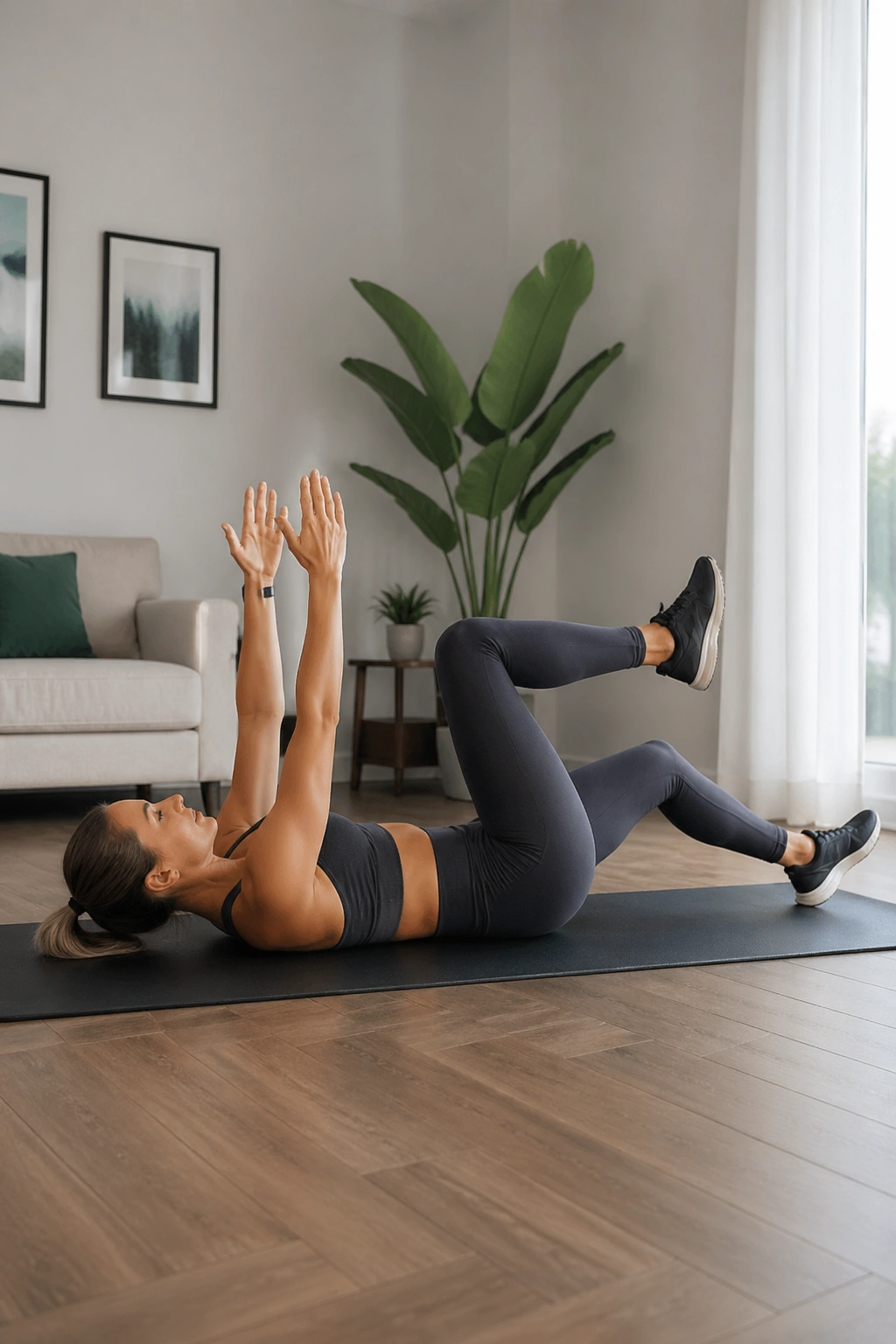
Dead bug heel taps look gentle. They are not lazy.
Lie on your back with hips and knees bent at 90 degrees, arms reaching toward the ceiling. Exhale, lower one heel toward the floor, tap lightly, then return. Alternate sides while keeping your low back from arching.
How to get the most from it
- Start with a smaller range than you think you need.
- Exhale as the leg goes down.
- Keep the ribs from popping up.
- Stop if you see doming along the midline.
This is one of the better postpartum ab exercises because it trains the front of the core without the fast, curling pressure that crunches create. If full heel taps feel shaky, keep one foot on the floor and work one side at a time. That is not cheating. That is smart load control.
10. Standing Marches With Tall Posture
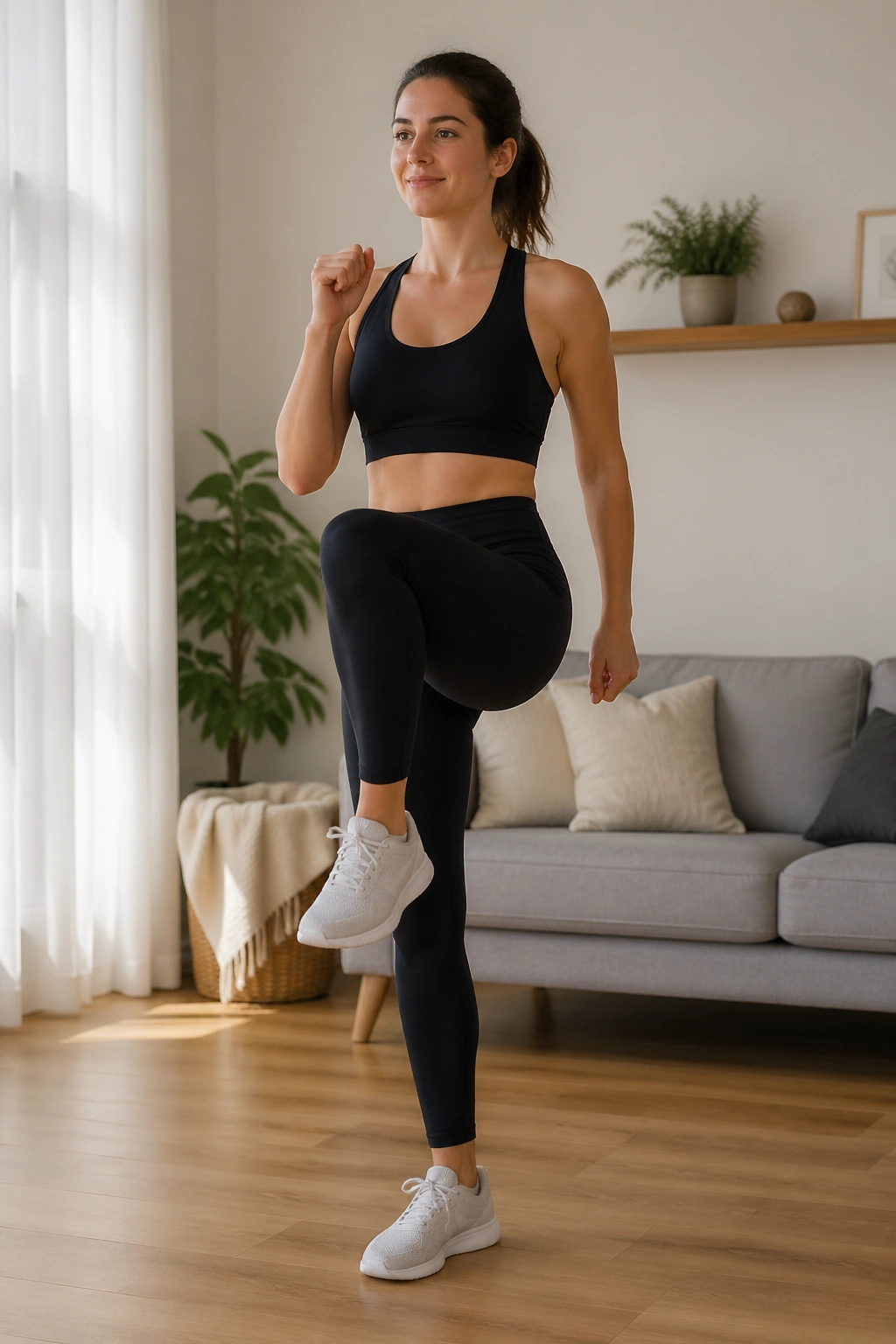
Marching in place sounds almost too easy. Then your heart rate climbs, your core starts organizing itself, and the room feels smaller in a good way.
Stand tall with feet under hips. Lift one knee to a comfortable height while the opposite arm swings forward, then switch sides with a steady rhythm. Keep your ribs stacked over your pelvis and breathe out lightly as the knee lifts.
This is useful when the floor work feels like too much, or when you need a low-impact cardio break between core sets. It also helps reconnect posture, balance, and hip flexor control, which can get sloppy after months of carrying a baby on one side.
Try 30 to 60 seconds at a time, 3 to 5 rounds. Small move. Big payoff.
11. Countertop Incline Planks
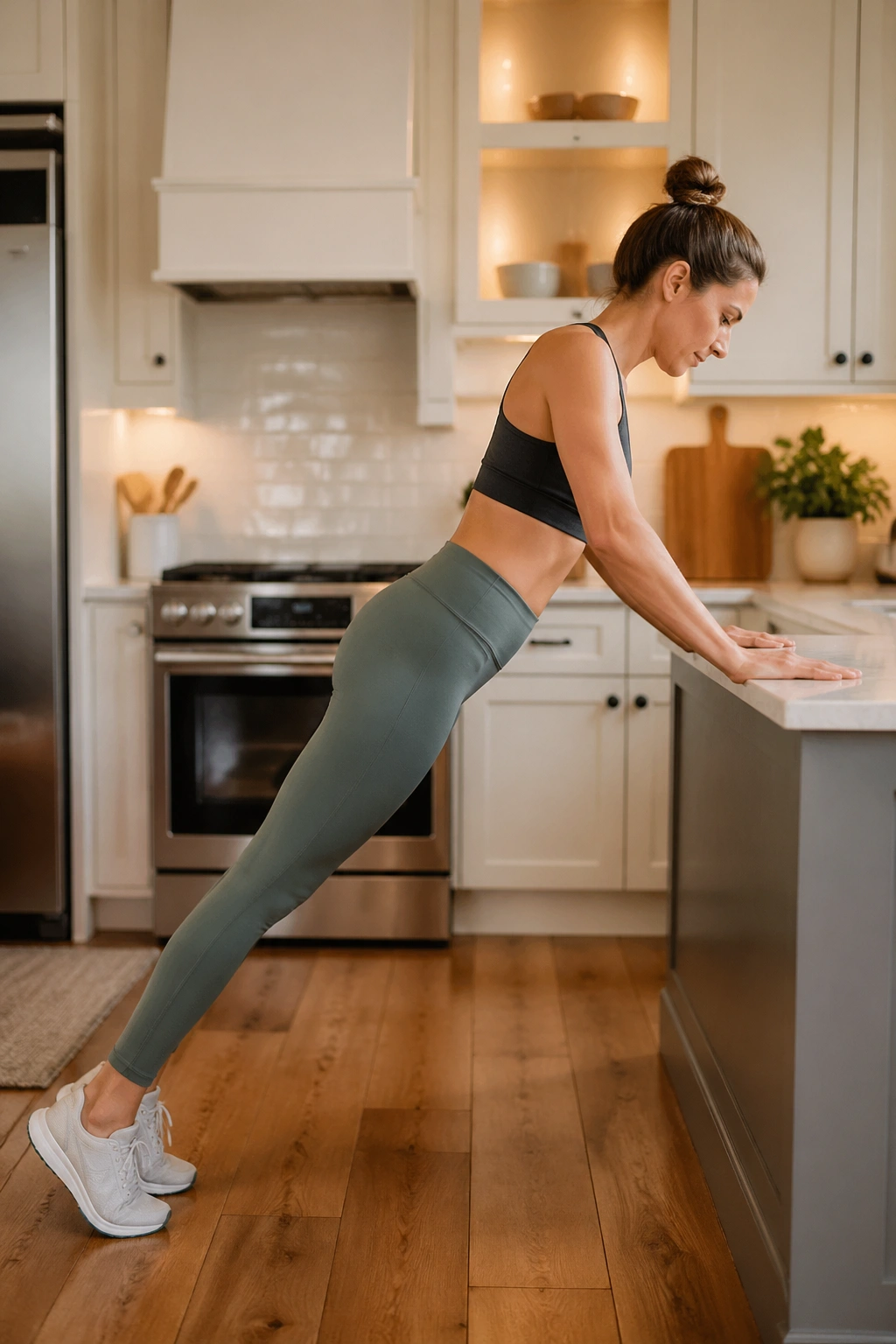
Countertop planks sit in a nice middle zone between wall work and full floor planks. They ask more of your core without making your abdomen feel like it is under siege.
Place your hands on a sturdy counter, step your feet back, and make one straight line from head to heels. Hold for 10 to 20 seconds while keeping your ribs down and glutes lightly on. Breathe. Do not hold your breath.
How to judge the right height
- Wall: easiest.
- Countertop: middle ground.
- Floor: hardest.
That progression matters after pregnancy because it lets you build pressure tolerance in stages. If you see coning, feel pelvic heaviness, or lose control of your low back, the plank is too deep right now. Raise your hands and shorten the hold.
12. Knee Side Planks
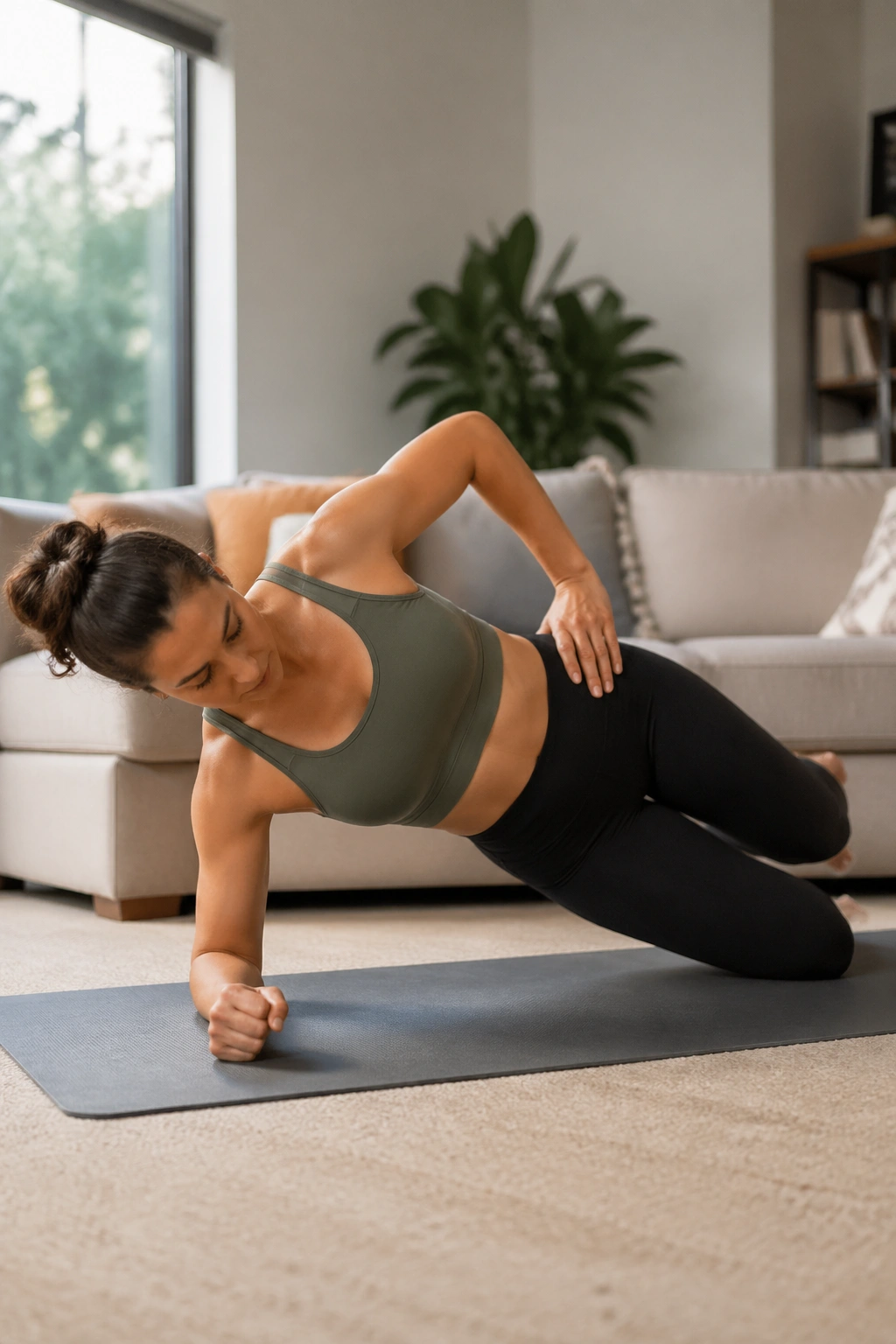
Can a side plank feel friendly after pregnancy? Yes, if you start with the knee-down version and keep the hold short.
Set your forearm on the floor and stack your knees with your feet behind you. Lift your hips so your body forms a straight line from shoulder to knee. Hold for 10 to 15 seconds, lower, and repeat on the other side.
What makes this one useful
- It trains the obliques without crunching.
- It strengthens the side of the hip.
- It helps stop the torso from collapsing when you carry weight on one side.
- It can expose asymmetry fast, which is annoying but useful.
If your shoulder complains, put your forearm on a folded towel or do the hold with your upper body against a bench. If your abdomen domes, make the hold shorter and lift less high. The goal is control, not heroics.
13. Reverse Lunges Holding a Chair
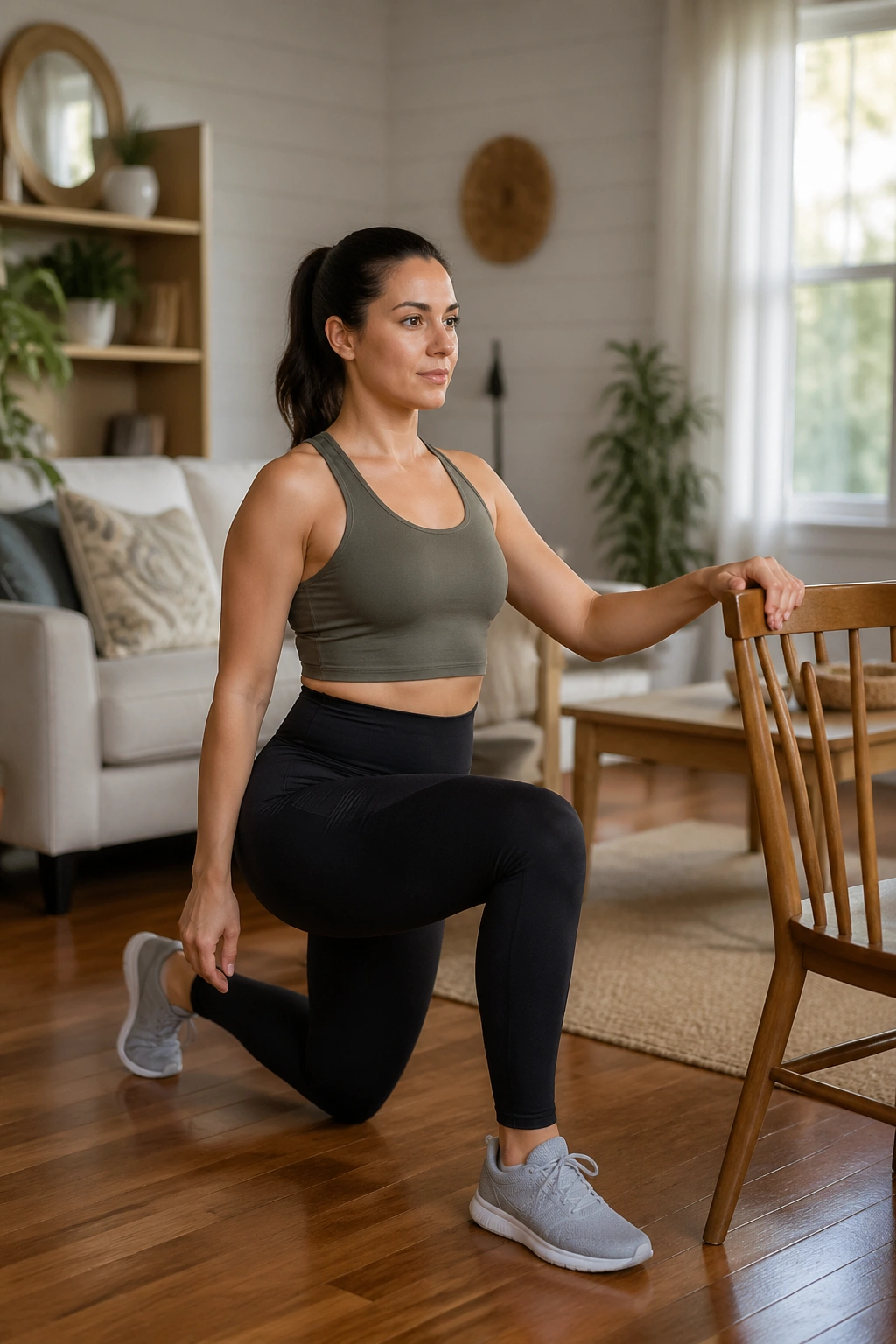
A reverse lunge shows you pretty fast whether your legs are working together or just surviving the day.
Stand tall with one hand lightly on a chair or wall for balance. Step one leg back, lower until both knees bend comfortably, then press through the front foot to return. Keep your torso upright and your front knee tracking over your middle toes.
This movement is excellent after pregnancy because it trains the glutes, quads, and balance in a way that carries over to stairs, babywearing, and getting up off the floor. It also exposes side-to-side differences, which plenty of postpartum bodies have after weeks of favoring one hip.
Start with 6 to 8 reps per side. Take a shorter step back if the lunge feels wobbly. A shorter range done well is better than a deep lunge done badly.
14. Suitcase Carries With a Water Jug
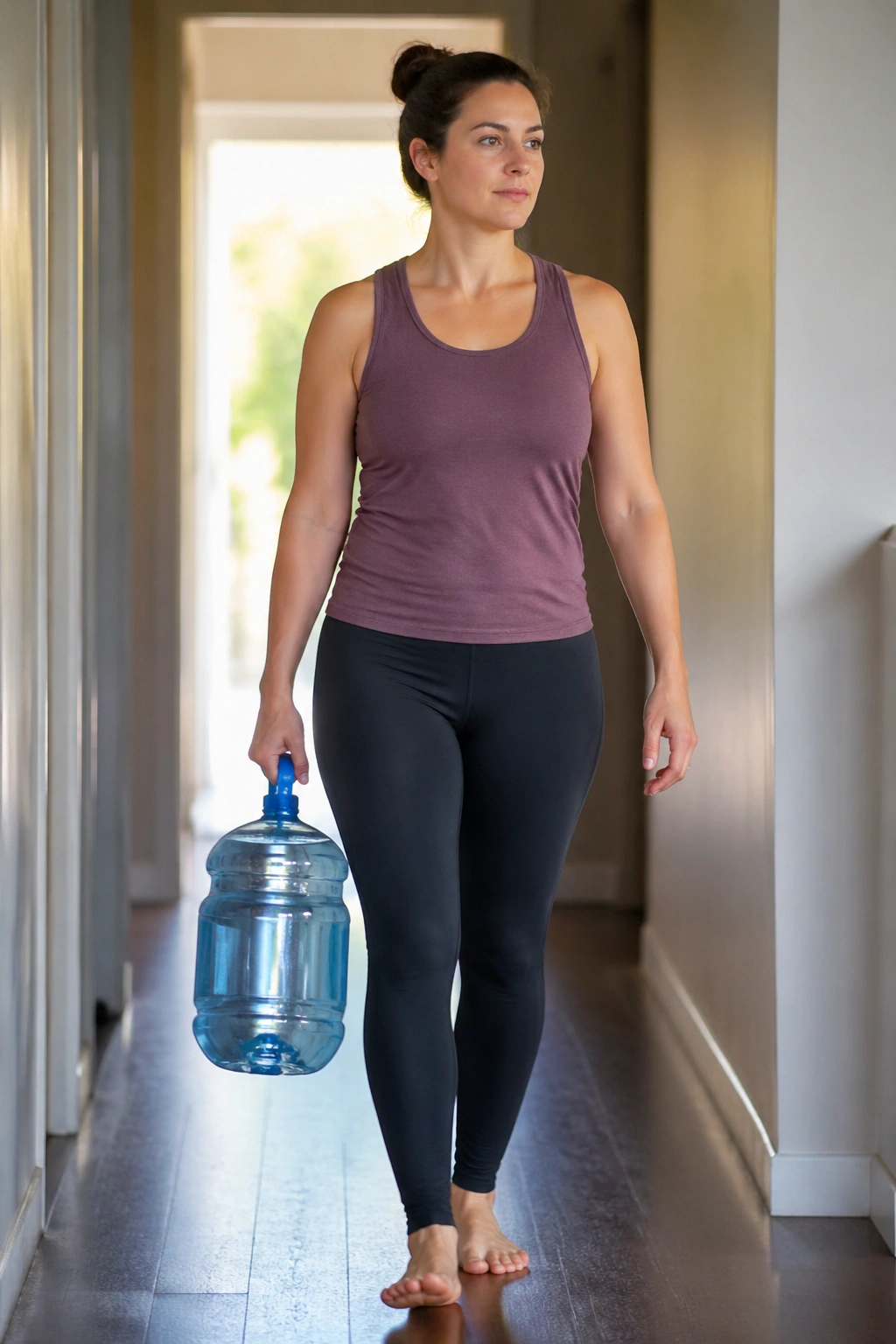
A water jug is a better core tool than it has any right to be.
Hold a heavy jug, dumbbell, or grocery bag in one hand and walk slowly for 20 to 40 seconds while staying upright. Don’t let the weight drag your shoulder down or tip your body sideways. Switch hands and repeat.
Why this works so well
Suitcase carries train the core to resist side bending, which is exactly what you need when you’re carrying a child, a diaper bag, and your own tiredness. It’s also one of the most honest abdominal exercises around because there is nowhere to hide. If you lean, the movement tells on you.
Do 2 to 4 carries per side. March in place if space is tight. A hallway is fine. A living room is fine. The point is the same: keep your torso tall while your body deals with uneven load.
15. Step-Touch Cardio With Arm Swings
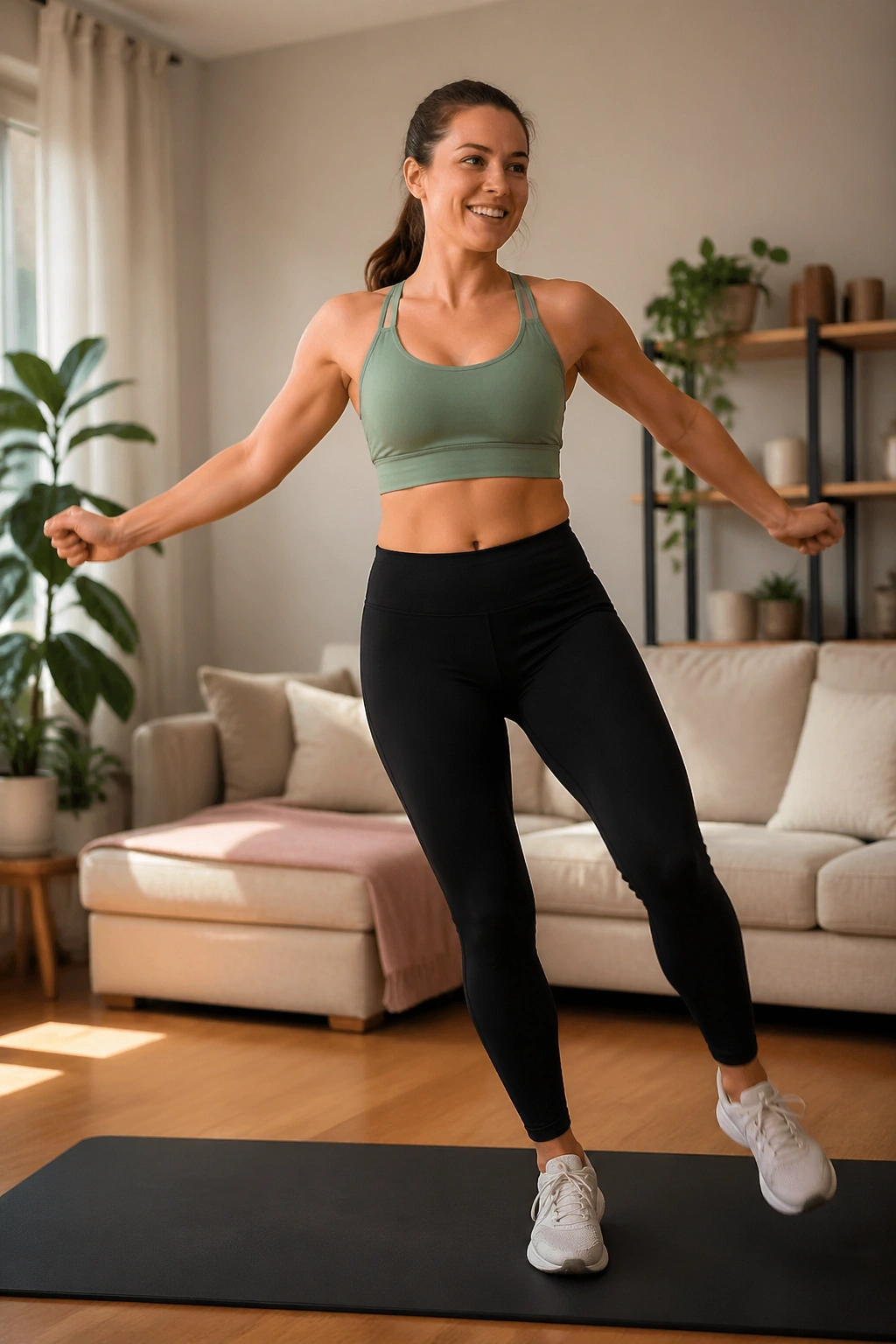
Step-touch cardio gets dismissed because it looks simple. That’s a mistake.
Step to the side with one foot, bring the other foot to meet it, then go the other way, letting your arms swing or reach overhead if that feels fine. Keep the knees soft and the steps light. Breathe in rhythm rather than forcing a bounce.
This works especially well on days when full workouts feel out of reach. It raises your heart rate without the pounding of jumping, and that matters if your pelvic floor is still sensitive. It also gives you a place to practice posture while moving, which is sneaky value.
Three minutes of step-touch, one minute of easier walking in place, then repeat. Put on a song you actually like and the time goes down easier. That helps more than people admit.
16. Stair March Intervals
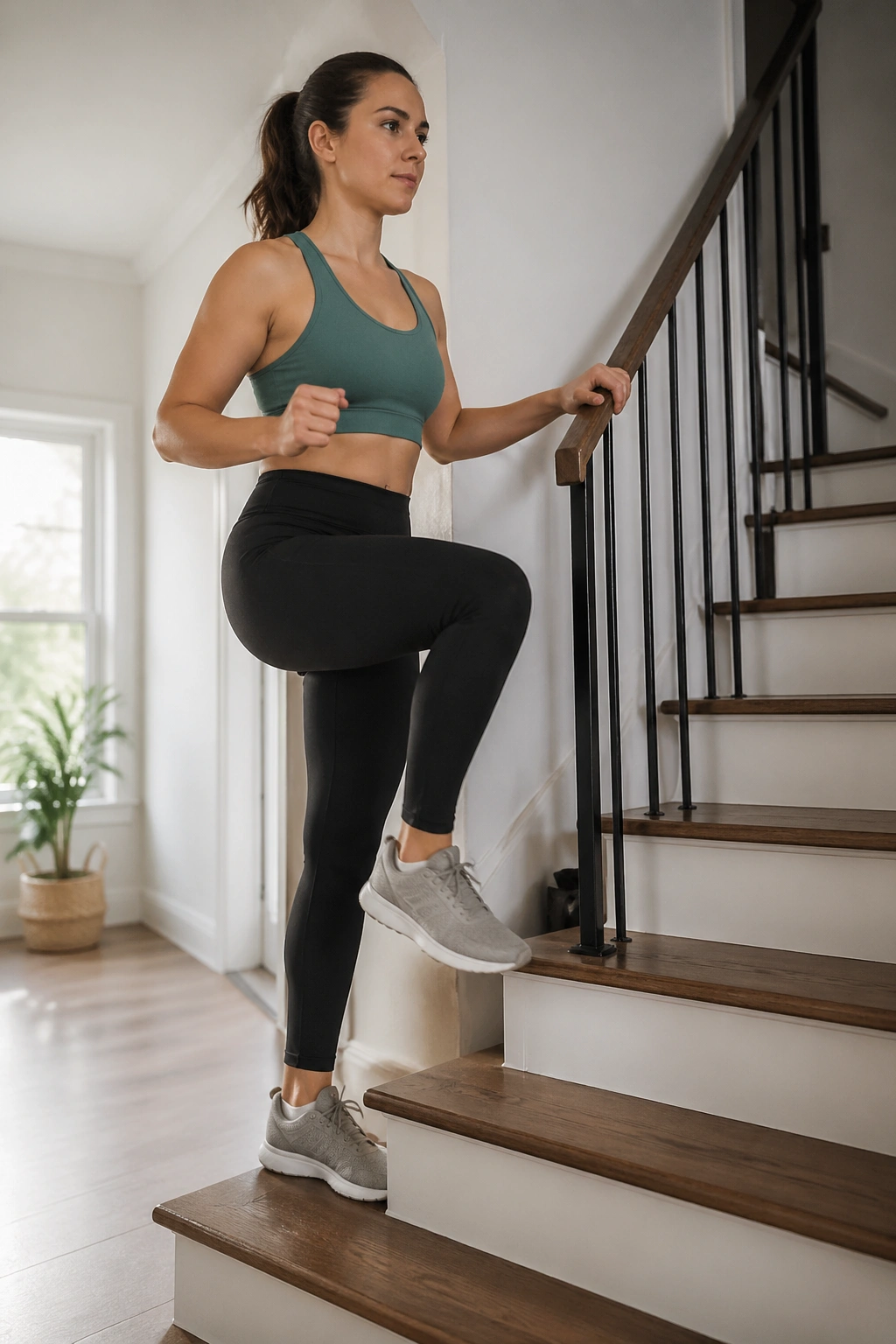
One stair can give you a solid sweat.
Use the bottom step or a short staircase and march up and down with control, or step up and step down one foot at a time. Keep your pace steady, not frantic, and hold the rail if balance is shaky. If your knees or pelvic floor feel irritated, shorten the interval and slow the pace.
A simple way to program it
- 20 seconds work.
- 40 seconds rest.
- Repeat 6 to 10 rounds.
That gives you cardio, leg work, and a little bit of calorie burn without forcing impact. It also helps with endurance, which matters if your day is packed with carrying, lifting, and getting up and down from the floor fifty times.
If you are new to exercise after pregnancy, start with marching on flat ground first. The stairs can wait until your base feels steady.
17. Low-Impact Shadow Boxing
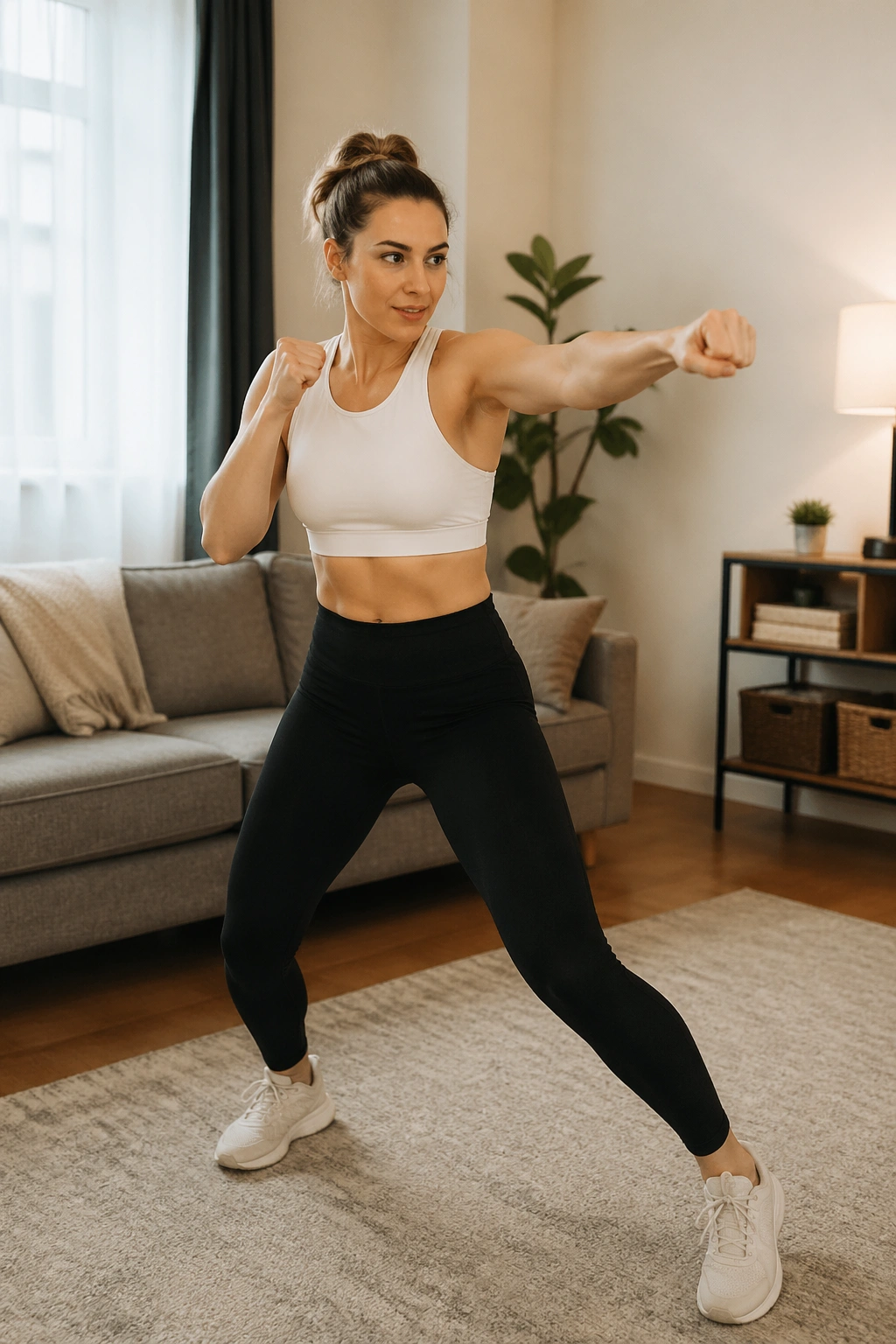
Shadow boxing is sneaky. It looks like play, then your shoulders, core, and heart rate all start speaking up.
Stand with one foot slightly in front of the other. Throw straight punches into the air, alternating hands, and let your torso rotate a little while your feet stay planted and light. Exhale on each punch. Keep your ribs from flaring and your chin tucked.
This is a strong choice for postpartum fat loss because it blends cardio with upper-body work and trunk control. It also feels different from a straight repetitive walk, which matters when motivation is thin. The movement is quick, cheap, and takes almost no space.
Try 3 rounds of 45 seconds with 30 to 45 seconds of easy walking or marching between rounds. If your wrists are cranky, keep the fists loose and punch with less force. You do not need to throw a boxing match in your living room.
18. A 12-Minute Postpartum Home Circuit
The best workout plan is the one you can repeat. That is the part people skip when they chase the hardest move in the room.
Here is a simple circuit that strings together the safer postpartum belly fat workouts at home without turning the session into a circus. Do 30 seconds each of diaphragmatic breathing, sit-to-stand squats, bird dogs, and shadow boxing, then rest 30 seconds. Repeat for 3 rounds.
How to make it work in real life
- Use breathing to start the first round.
- Keep squats shallow if your pelvis feels off.
- Make bird dogs slow and short.
- Keep shadow boxing light and crisp.
That gives you 12 minutes of purposeful work, and it covers breathing, strength, core control, and cardio in one clean block. If you’re tired, cut it to 2 rounds. If it feels easy and there’s no doming, leakage, or pressure, add a fourth round later.
A final practical note: if your belly is still soft after pregnancy, that does not mean these workouts are failing. Often it means you need a few more weeks of consistency, more walking, and a little less panic. The body usually responds to steady work better than to drama.
A quieter plan wins here. Every time.
