



The best diastasis recti workouts with baby are the ones you can actually finish before the next feed, diaper change, or sudden cry from the other room. That sounds almost too ordinary to matter, but ordinary is the point. Postpartum core rehab works better when it fits real life, not when it demands a silent room, 45 uninterrupted minutes, and a perfectly cooperative schedule.
Diastasis recti isn’t about chasing some magical number of finger-widths across your midline. What matters more is how your belly behaves when you breathe, reach, lift, sit down, or twist to grab a swaddle off the couch. If your stomach domes into a ridge, your ribs flare, or your low back takes over, your deep core is still learning how to share the load.
That is why baby-friendly work can be so useful. You get short, frequent practice with the same movements that make up your day: lifting, carrying, bending, standing, shifting, and settling. A slow exhale matters. So does keeping the ribs stacked over the pelvis. And yes, a tiny move can be harder than it looks.
If you’re recovering from pregnancy or suspect you have a separation in the abdominal wall, keep an eye out for pain, leaking, heaviness in the pelvis, or that sharp little ridge down the center of the belly. Those are signs to scale back. The safest place to start is with the basics — the floor, the wall, the chair, and a calm breath.
1. 360 Breathing With Baby on Your Chest
Why begin with something that barely looks like exercise? Because this is where control starts. A long exhale, a soft belly, and ribs that open in all directions teach your pressure system to calm down before you ask it to do anything fancier.
Lie on your back with knees bent, or recline on a firm couch if the floor feels too low. If your baby is settled and has full head support, you can place them on your chest for a short bout. If that feels awkward, set the baby beside you on a blanket and keep one hand on your ribs.
What to Feel
- Your ribs widen side to side and into the back.
- The lower belly softens on the inhale.
- The exhale stays slow through a gently open mouth.
- The space between your ribs and hips feels more stacked, less shoved forward.
Tip: If the middle of your stomach pops up while you breathe out, make the exhale longer and reduce the effort. Tiny change. Big difference.
2. Heel Slides Beside the Mat
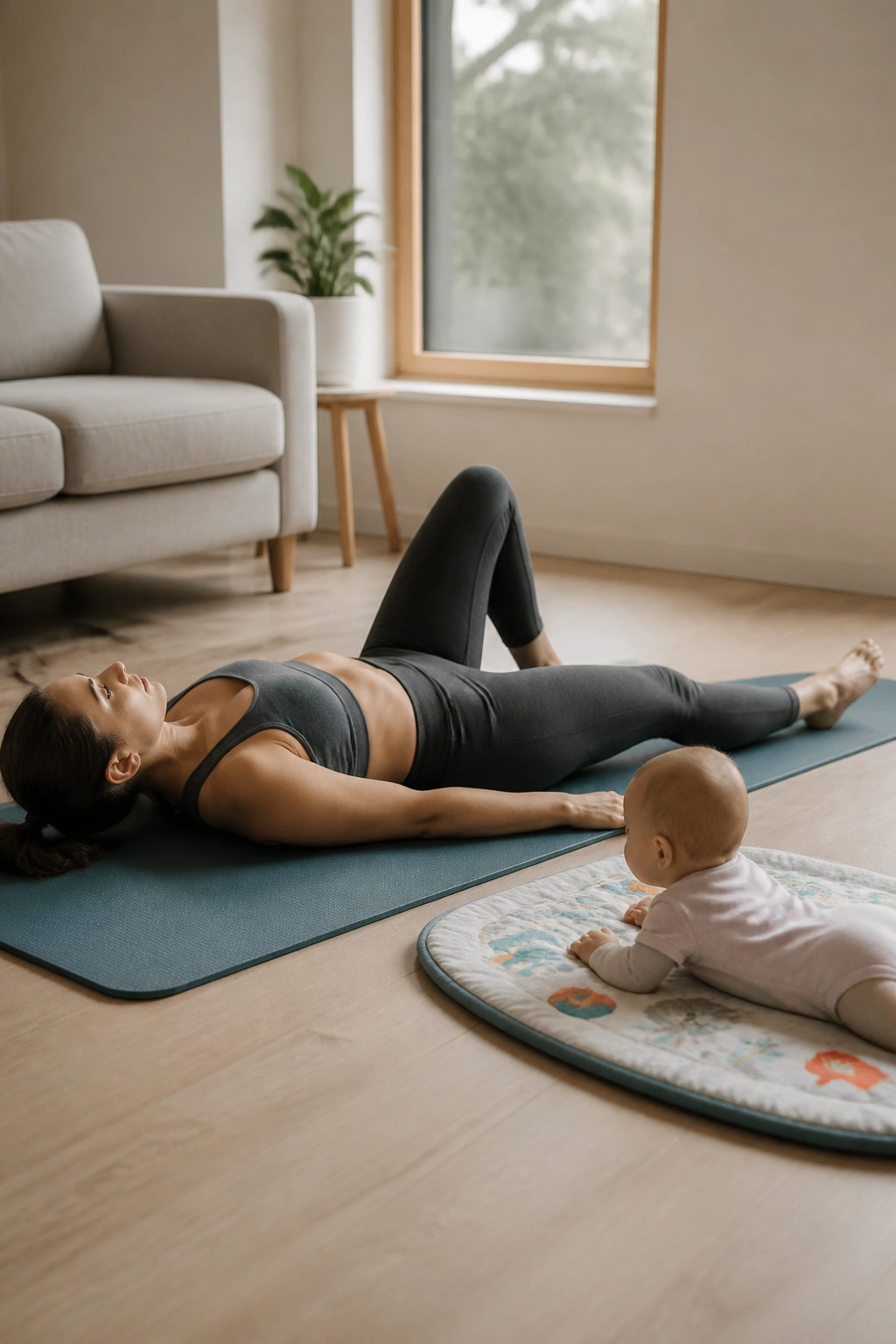
Heel slides are one of those moves that looks almost boring until you do them badly. Then the low back starts arching, the belly domes, and the whole thing turns into a lesson in humility.
Lie on your back with both knees bent. Keep one foot grounded while the other heel slides away from you just 6 to 10 inches, then comes back in. Exhale as the leg moves out, and try to keep your ribs from popping up toward the ceiling. Baby can lie on a play mat beside you, close enough to see your face. That little bit of eye contact makes the whole session feel less clinical.
Keep It Quiet
- Move slowly enough that your pelvis does not rock.
- Stop the slide before your back arches.
- Use one hand on your lower belly if you need feedback.
- Do 6 to 8 reps per side, not 30.
Watch for: any ridge along the midline. If you see it, shorten the slide. The range matters less than the control.
3. Pelvic Tilts That Reset a Tired Core
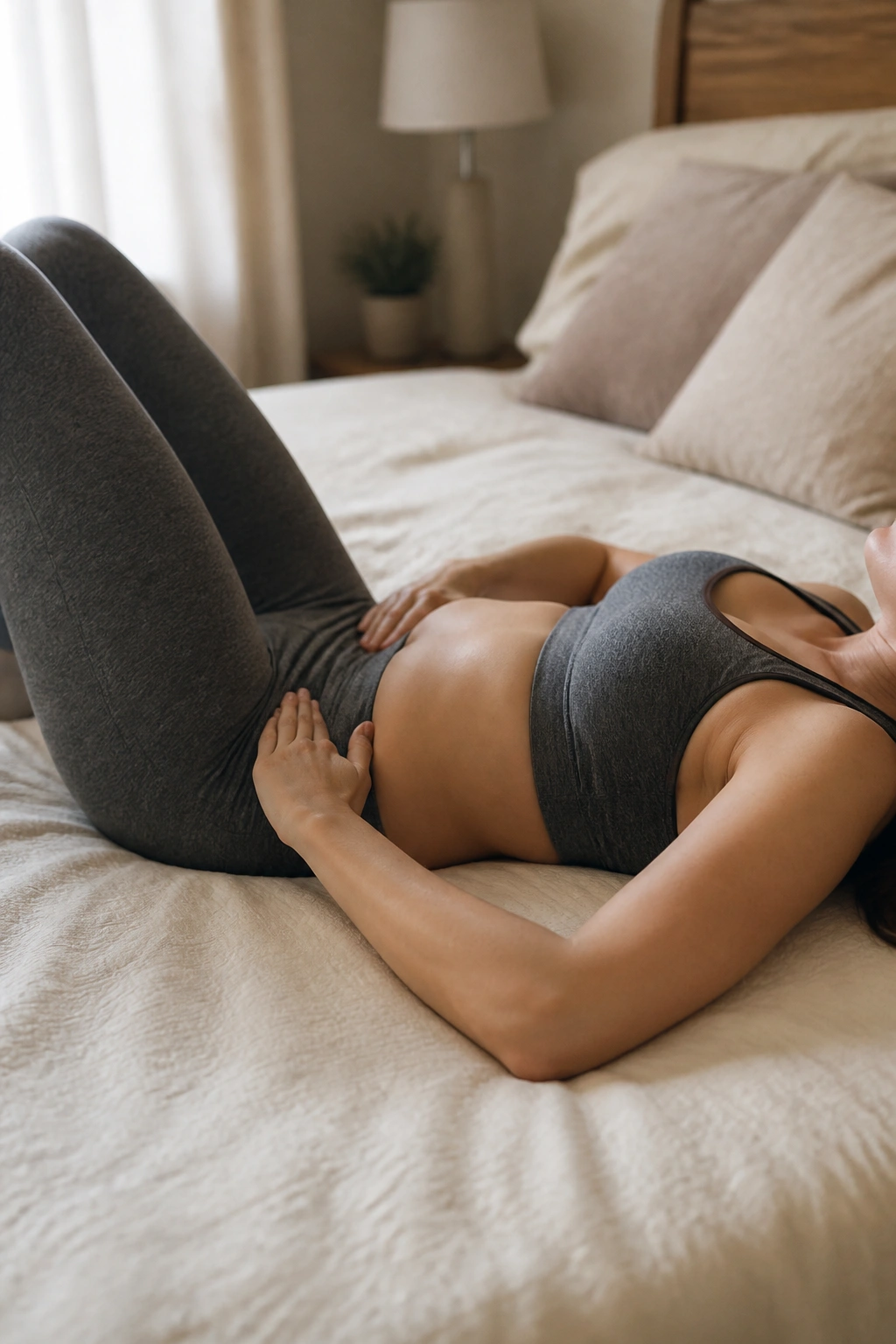
Small move, real payoff. Pelvic tilts are one of the best ways to reconnect your lower belly to your pelvis without making the workout feel like punishment.
Lying on your back with knees bent, gently tip your pelvis so the low back softens toward the floor, then release back to neutral. The motion is subtle. You are not trying to flatten the spine hard enough to crush a grape. You’re just waking up the muscles that help manage pressure from below and above.
This works nicely after a long feeding session, especially if your back feels stiff from hunching forward. It also pairs well with a slow exhale, because the breath helps the rib cage settle while the pelvis rocks.
Do 10 slow repetitions. If the movement feels locked or crunchy, place a folded towel under your head and keep the range very small. That’s not cheating. That’s smart.
4. Seated Marches While You Hold Baby Close
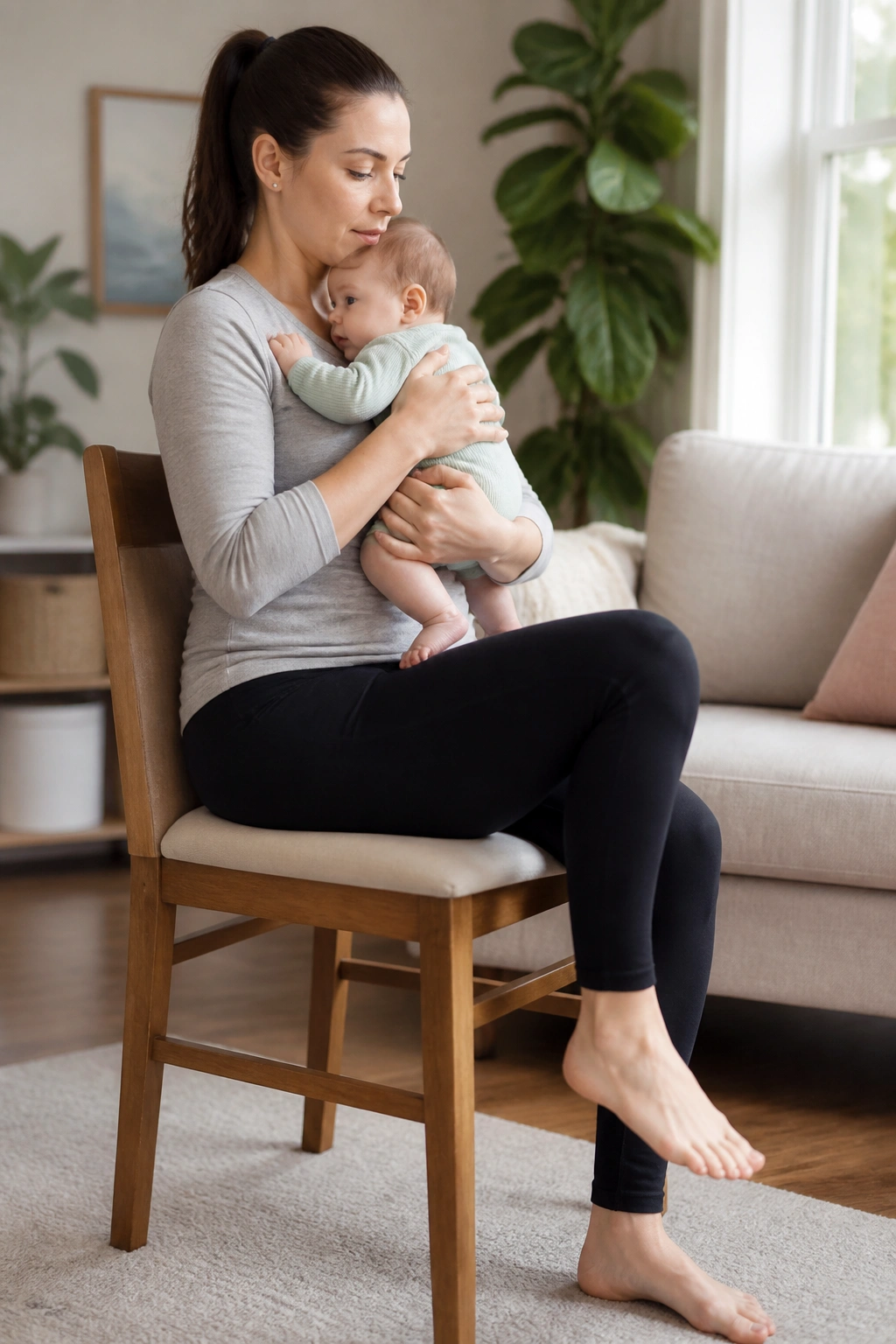
A seated march is one of my favorite postpartum moves because it looks like normal life. You’re already sitting to feed, soothe, or rock the baby. You might as well turn five of those minutes into useful core work.
Sit tall on a sturdy chair, bench, or firm couch cushion. Hold your baby close to your chest if they’re calm and well supported, or keep them on your lap with full support. Lift one foot a couple of inches off the floor, then lower it with control. Alternate sides and keep the torso quiet.
Unlike crunches, this teaches your trunk to stay stable while your legs move. That matters more than people think. Diastasis recti often shows up when the body has to manage motion and pressure at the same time, not when you’re lying still.
Good Form Checklist
- Sit on the front half of the seat.
- Keep the ribs stacked over the hips.
- Lift the foot without leaning back.
- Use 8 to 10 marches per side.
5. Wall Presses With Baby in a Carrier
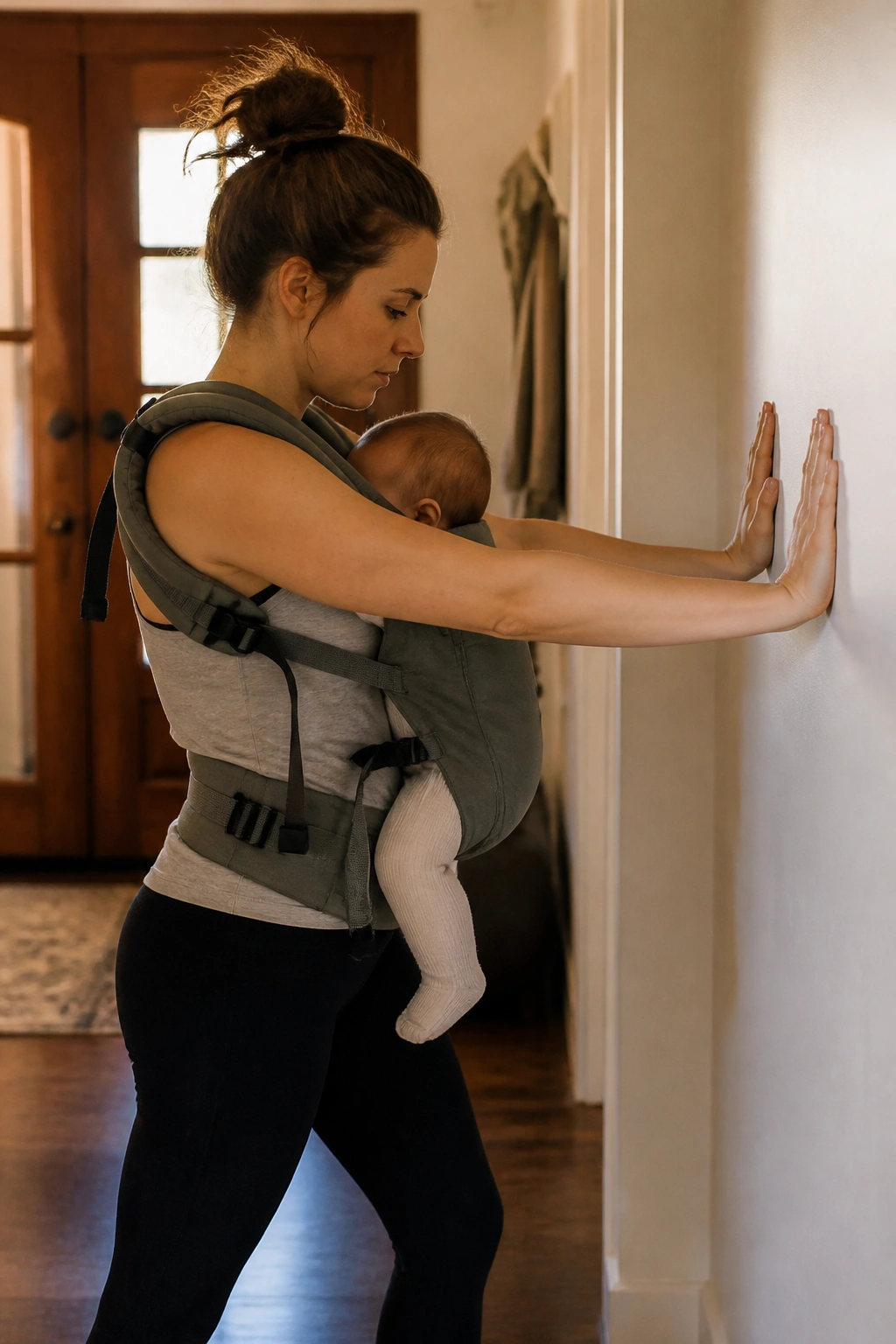
Standing drills often get ignored because they don’t feel as “core-y” as floor work. Big mistake. If your daily life involves standing, carrying, and turning, the standing work is where the payoff often lives.
Face a wall with your feet about a foot away. If your baby is comfortable in a snug carrier, this is a nice place to do the drill. Press both forearms gently into the wall while you exhale and feel the lower belly draw in without sucking hard. You’re not doing a push-up. You’re teaching the trunk to resist pressure while the arms work.
Why It Works
- The wall gives you feedback.
- The carrier adds a little load.
- The press helps your ribs stop flaring.
- The exhale keeps the belly from pushing outward.
How to Use It
Do 5 to 8 slow presses, resting between each one. If the baby gets heavy or your lower back starts arching, stop and switch to the floor.
6. Chair Squats With Baby in Your Arms
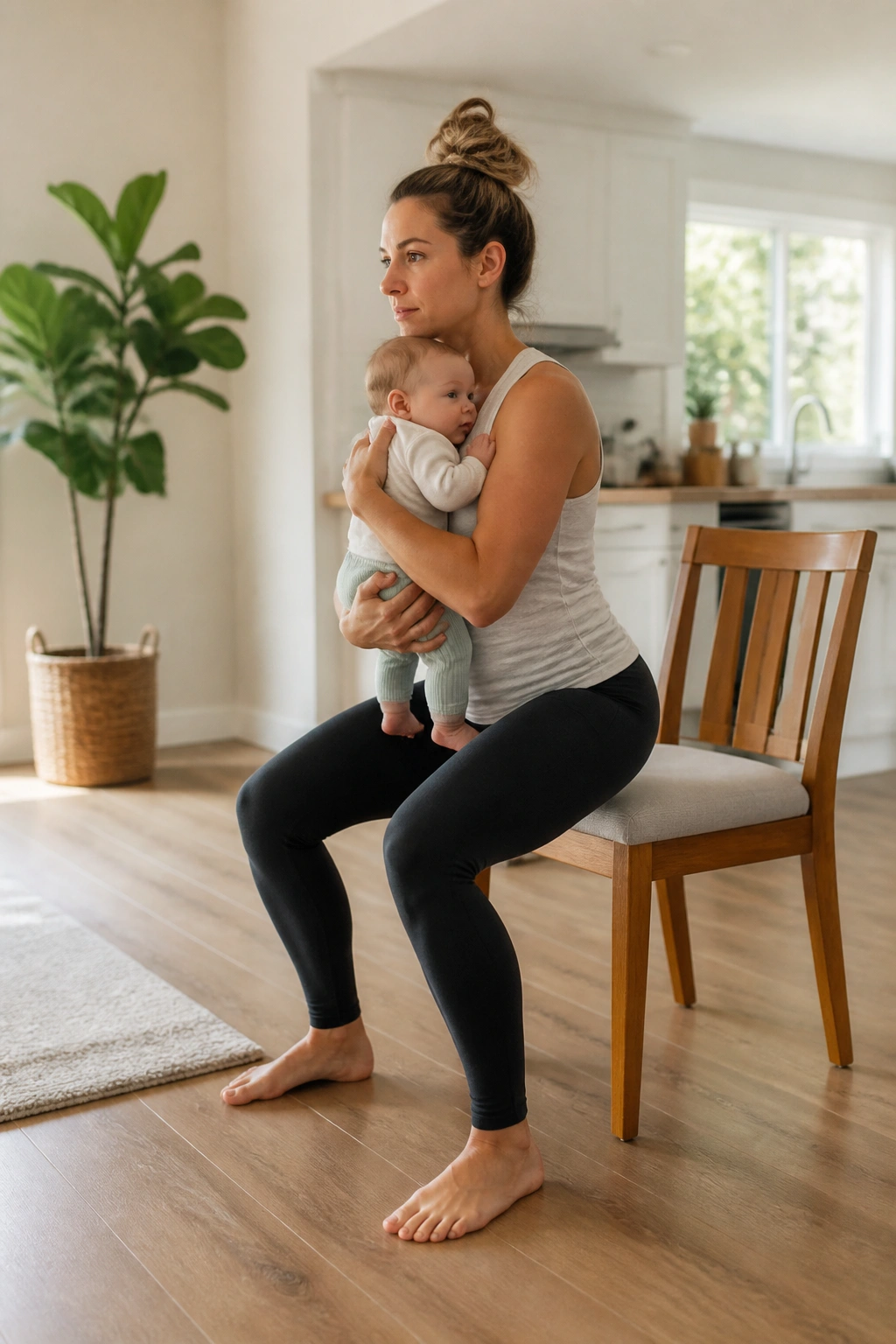
You use this pattern all day without thinking about it. Picking up the baby. Sitting down. Standing up again. A chair squat makes that motion cleaner, stronger, and a whole lot friendlier to your core.
Hold your baby close to your chest only if you feel steady and the baby has good head support. Otherwise, practice the squat without the baby first, then add load later. Sit back to a chair just until your hips touch, then stand by pressing through both feet. Exhale as you rise. Keep the baby close to your body; don’t let them pull your ribs forward.
The temptation is to lean back and heave yourself up. Don’t. That usually sends pressure into the belly and low back. A slower stand is better.
One good rep beats five messy ones.
Seriously.
If you hear yourself plopping into the chair, lower the difficulty. Use a taller seat. Use fewer reps. Keep the movement crisp.
7. Bird-Dog Reaches Beside Tummy Time
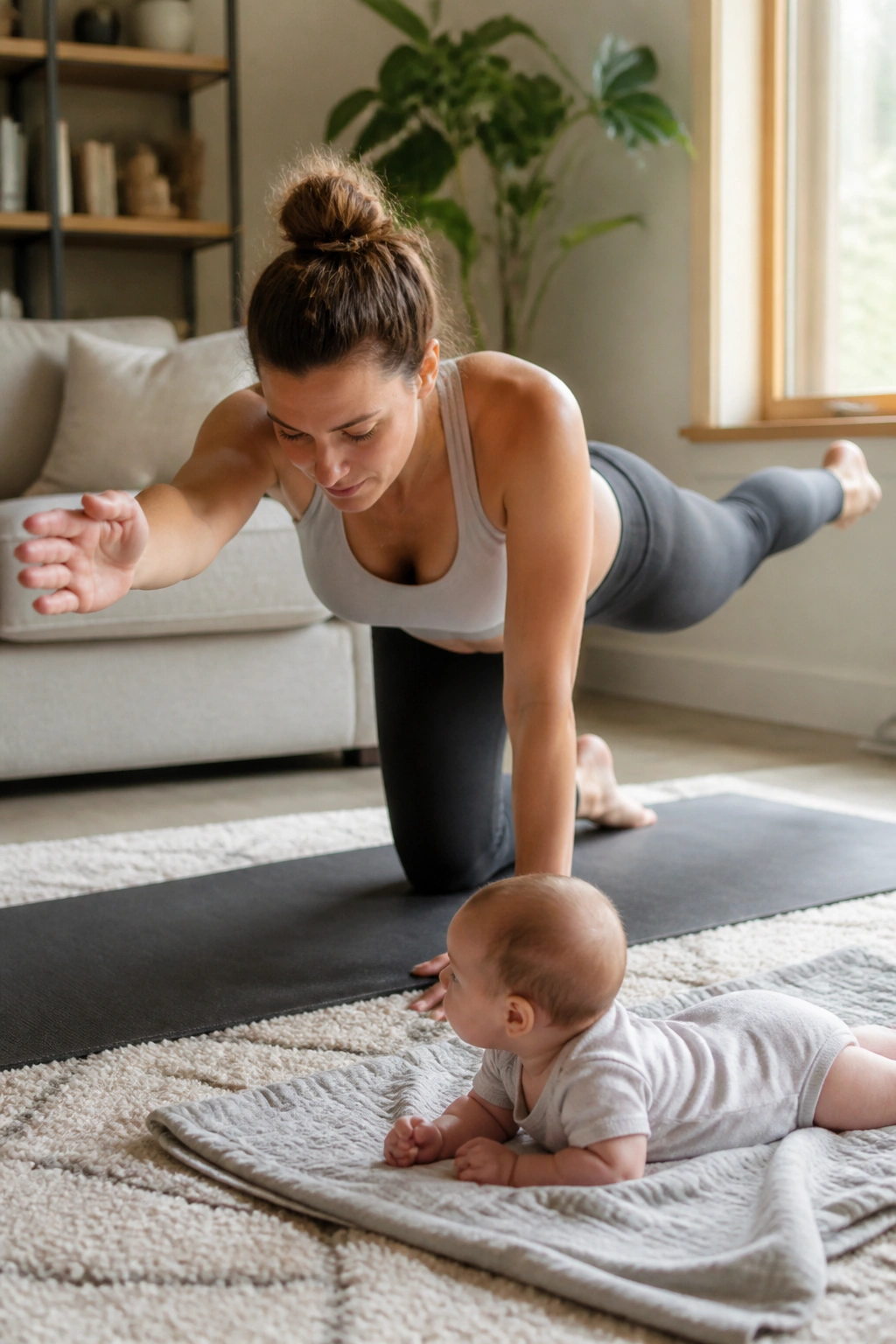
Why does bird-dog come up in so many postpartum routines? Because it teaches the body to stay steady while one arm and one leg reach away from the center. That is exactly the kind of control diastasis recti often needs.
Start on hands and knees with the baby on a blanket in front of you, where you can see them easily. Reach one leg back and the opposite arm forward, but only as far as you can go without the belly sagging or the hips twisting. Hold for a beat, then return to start.
How to Keep It Clean
- Hands under shoulders, knees under hips.
- Reach long, not high.
- Keep the neck relaxed.
- Exhale before you lift.
If your wrists are cranky, prop your hands on a low bench or the edge of the couch. If the baby starts fussing, pause. This move works best when you’re not rushing through it.
8. Clamshells During Baby’s Floor Play
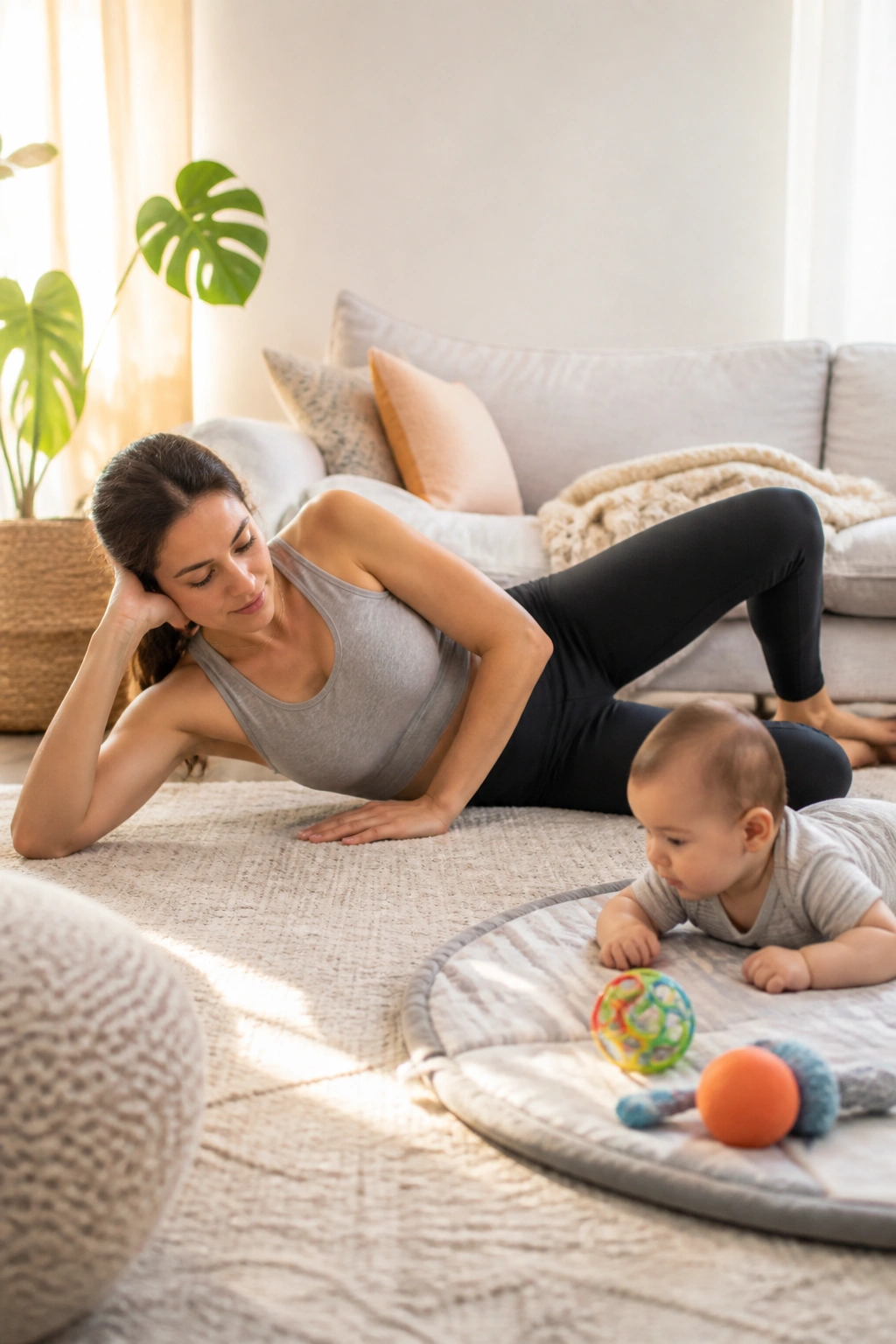
Clamshells are a quiet little side-lying glute exercise, and I like them because they ask for almost no drama. Your baby can be on tummy time beside you, kicking and grunting and staring at the ceiling fan, while you work on the hip muscles that help the pelvis stay stable.
Lie on one side with your knees bent and feet together. Keep your hips stacked. Open the top knee a few inches without rolling the pelvis backward, then lower slowly. The movement is small. That is on purpose.
Your glutes matter here because pelvic control and abdominal pressure control are cousins. When the hips are weak and sleepy, the belly often tries to compensate. That gets messy fast.
- Use 10 to 12 reps per side.
- Pause for 1 second at the top.
- Keep the waist long, not compressed.
- Stop if you feel the low back taking over.
9. Heel Taps That Keep the Ribs Down
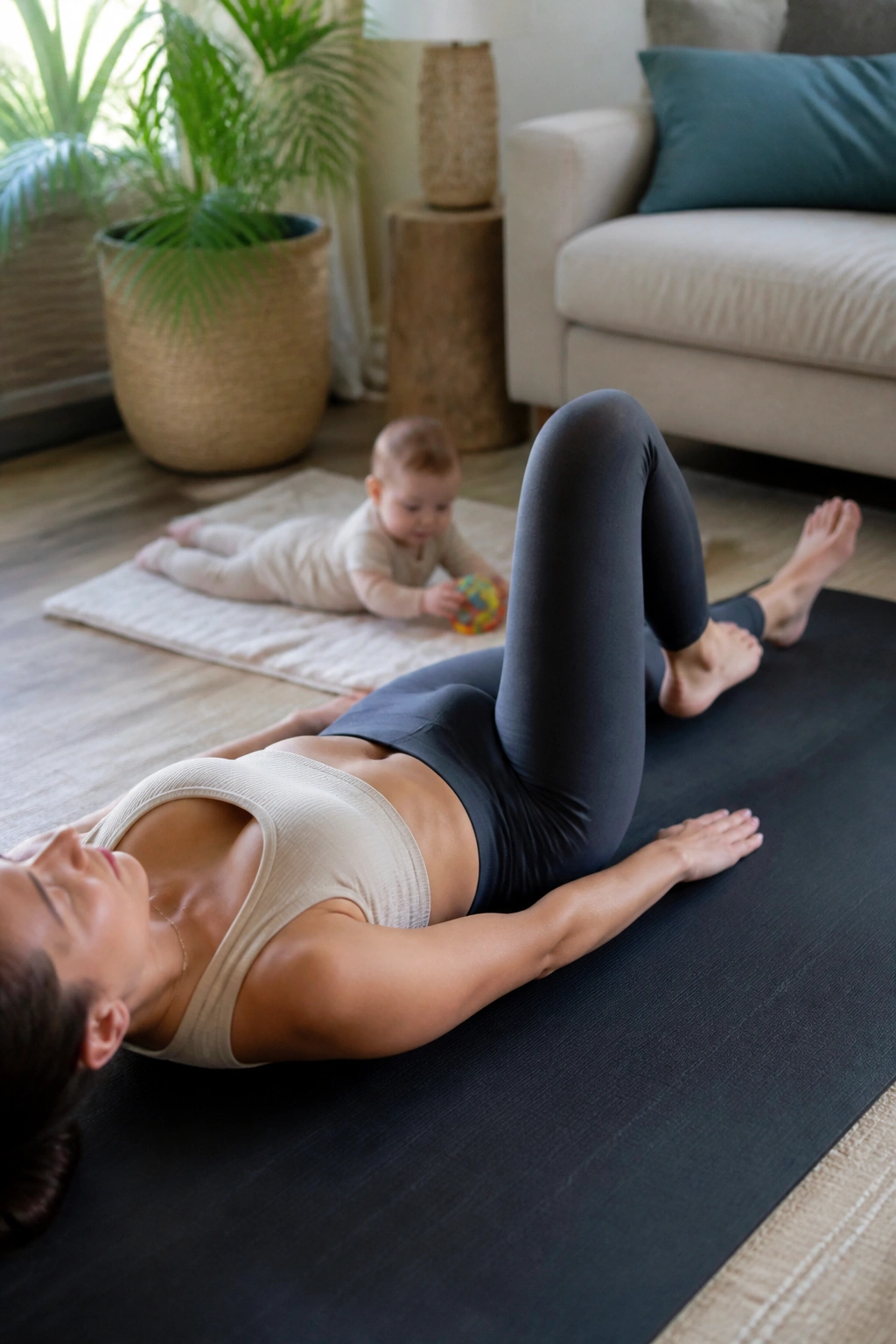
Heel taps can be brilliant or pointless. The difference is whether you keep your ribs quiet. If your chest pops up and your belly domes, the exercise is too hard for now. Shorten the movement and try again.
Lie on your back with knees bent. Lift one leg at a time into tabletop only if you can do it without strain; if not, keep both feet on the floor and tap one heel forward a few inches instead. Exhale before each tap, and use the breath to stop the ribs from flaring.
The point is not to make the abs burn. The point is to keep the belly wall smooth while the limbs move. That’s the whole game with diastasis recti, whether the baby is sleeping beside you or squealing from the play mat across the room.
A good version feels controlled, almost quiet. A bad version feels like the front of your stomach is trying to lift the sky.
10. Wall Plank Presses for Shoulder and Core Control
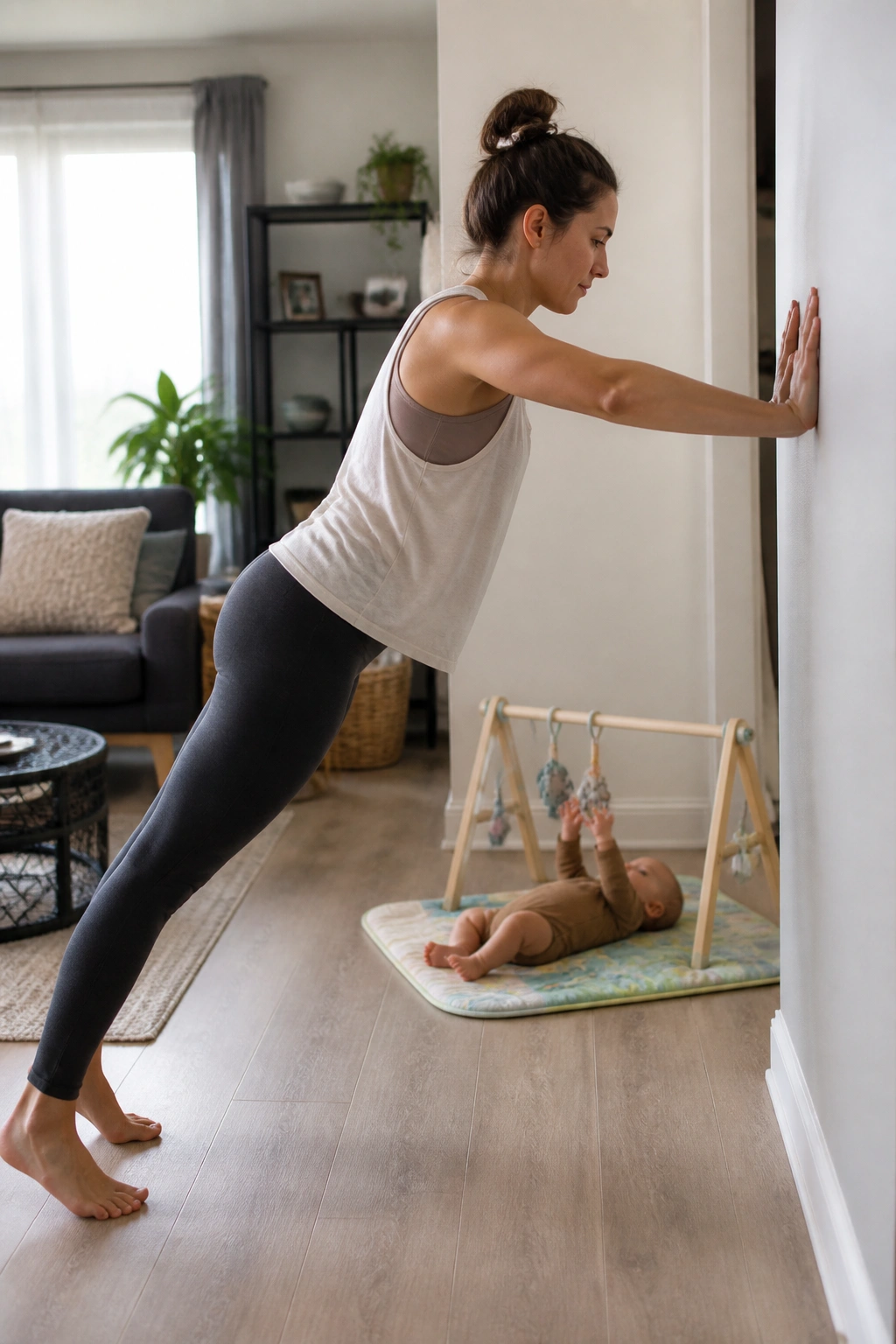
A wall plank is the friendliest version of a plank, and postpartum bodies usually appreciate the gentler option. You still get shoulder work, trunk stability, and a chance to practice pressure management without dumping into the low back.
Stand facing a wall with hands on the wall at chest height. Walk your feet back until your body forms a long line. Exhale, then gently press the wall away and feel the shoulder blades settle around the ribs. Baby can be on a play blanket nearby or in a carrier if that feels comfortable.
Unlike a floor plank, this version lets you control how much load you take on. That makes it a smart bridge if full planks still cause doming.
Best For
- Early core rebuilding.
- Shoulder stability.
- People who can’t yet hold a floor plank.
- Days when energy is low and the baby has stolen your sleep.
Hold for 3 to 5 breaths, then rest. Two or three rounds is enough.
11. Sit-to-Stand Practice With a Baby Hold
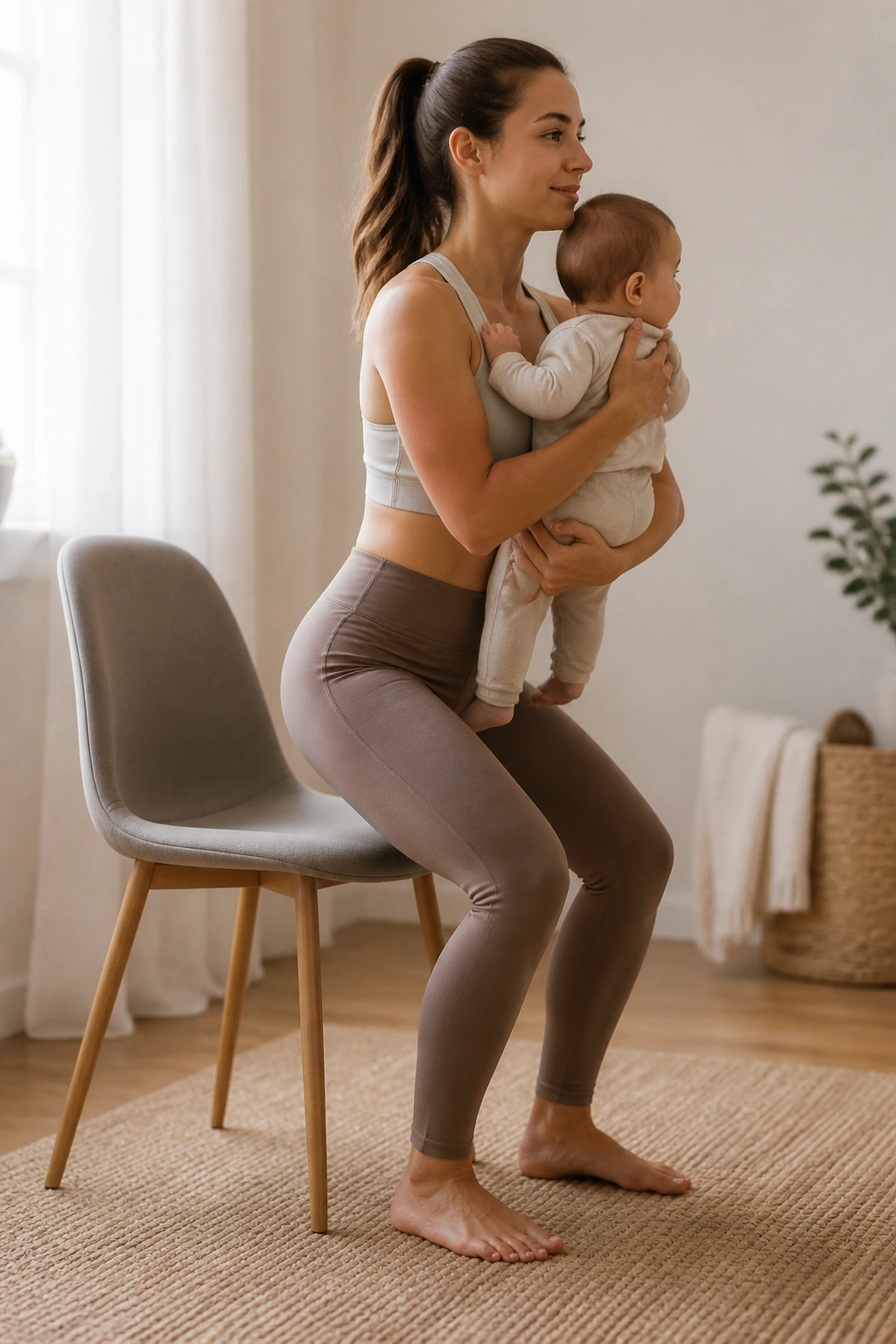
Standing up from a chair while holding a baby is not a side note in postpartum life. It is the workout. The trick is doing it on purpose instead of flinging yourself upward and hoping for the best.
Sit on a chair with both feet flat and your baby held close to your chest if they’re stable and supported. Lean forward slightly from the hips, keep the chest broad, and stand by pressing through the whole foot. The belly should stay relatively calm. If you feel the load shift into your low back, slow down and reset.
Make It Count
- Use a seat that lets your knees bend about 90 degrees.
- Keep the baby centered, not drifting out in front.
- Exhale on the stand.
- Lower yourself back down with control instead of dropping.
Do 5 to 8 stands, then stop before your form gets sloppy. This move teaches the same pattern you use for couches, car seats, and toy cleanup.
12. Standing Side Shifts in a Carrier
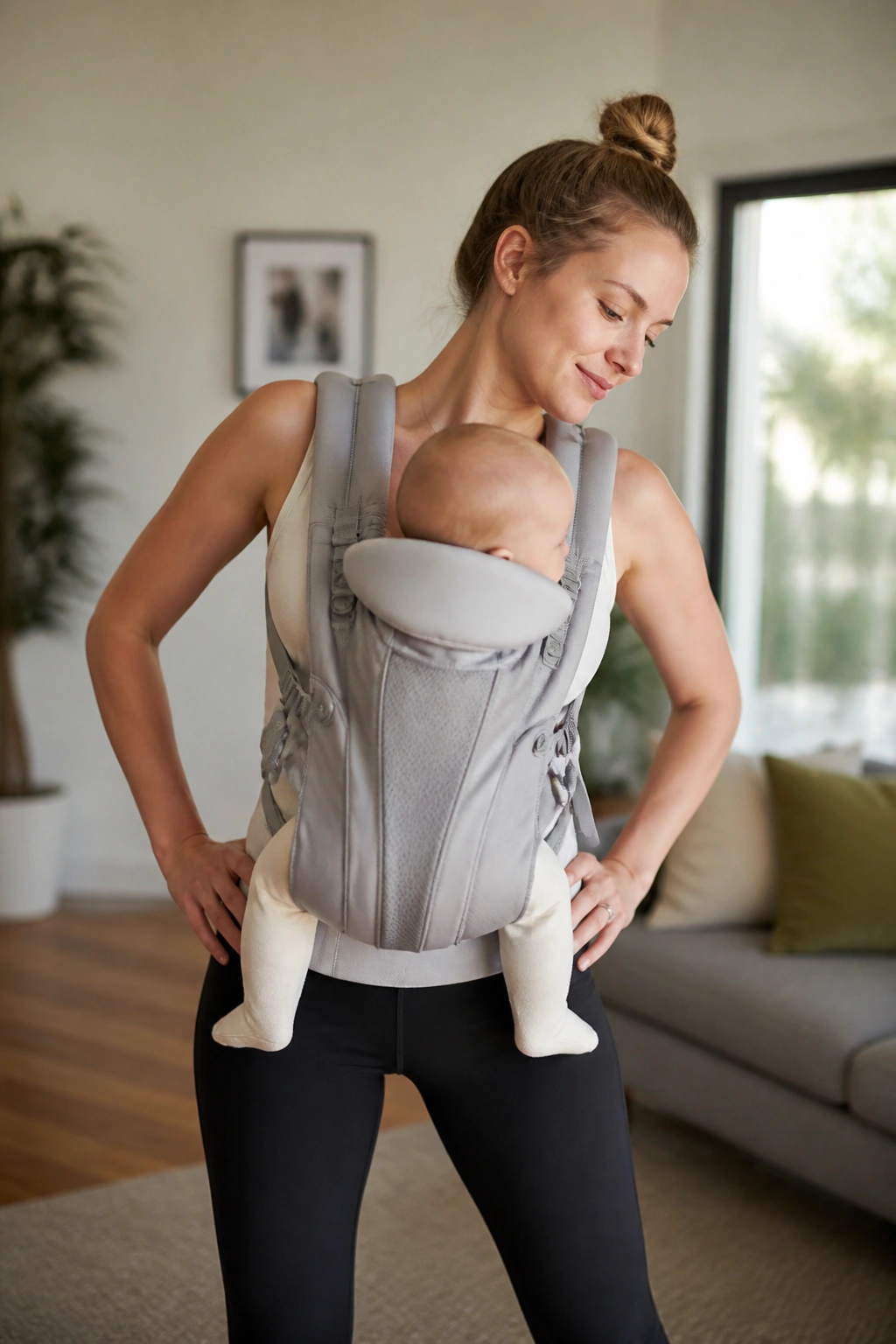
Why bother with side-to-side weight shifts? Because life does not stay centered. You reach for the pacifier. You lean toward the crib. You hold the baby on one hip while juggling a burp cloth. If your trunk cannot handle that tiny shift, the belly tends to compensate fast.
Stand with your feet about hip-width apart and the baby secure in a carrier if that feels safe and comfortable. Shift your weight a couple of inches to the right, then back to center, then left. Keep the ribs stacked and the movement smooth. No swaying. No hip fling.
How to Use It
- Start with 10 shifts per side.
- Keep the knees soft.
- Let the pelvis move a little, not a lot.
- Add a gentle arm reach once the basic shift feels easy.
This is a good exercise for the person who needs movement but does not have the energy for a full floor session. Small work still counts.
13. Step-Back Lunges for Real-Life Strength
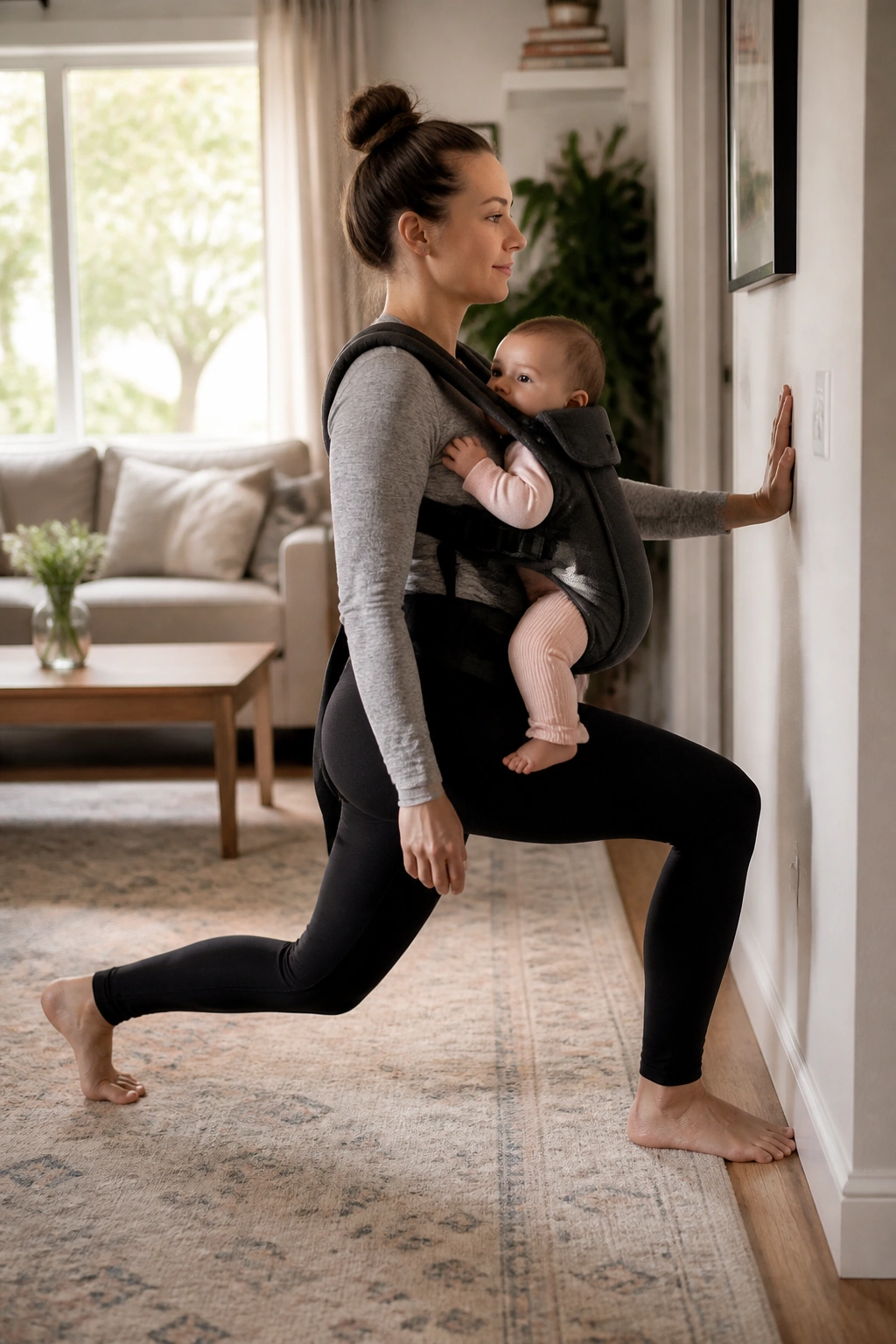
Step-back lunges are one of the first more athletic moves I’d bring in once the basics feel steady. They ask your core to stay quiet while one leg works hard, and that matters a lot when you’re carrying a baby and moving through the house on tired legs.
Stand tall and step one foot back into a short lunge, keeping the front knee stacked over the middle toes. Lower only as far as you can keep the torso upright and the belly from poking forward. Push back to standing. Keep the baby in a carrier or leave the baby nearby if balance feels shaky.
A tiny step is fine. A huge theatrical lunge is not the goal. You want control, not circus points.
- 5 to 6 reps per side is enough at first.
- Use a wall or counter for balance if needed.
- Keep the front foot flat.
- Stop if you feel pelvic heaviness.
14. Glute Bridges While Baby Watches
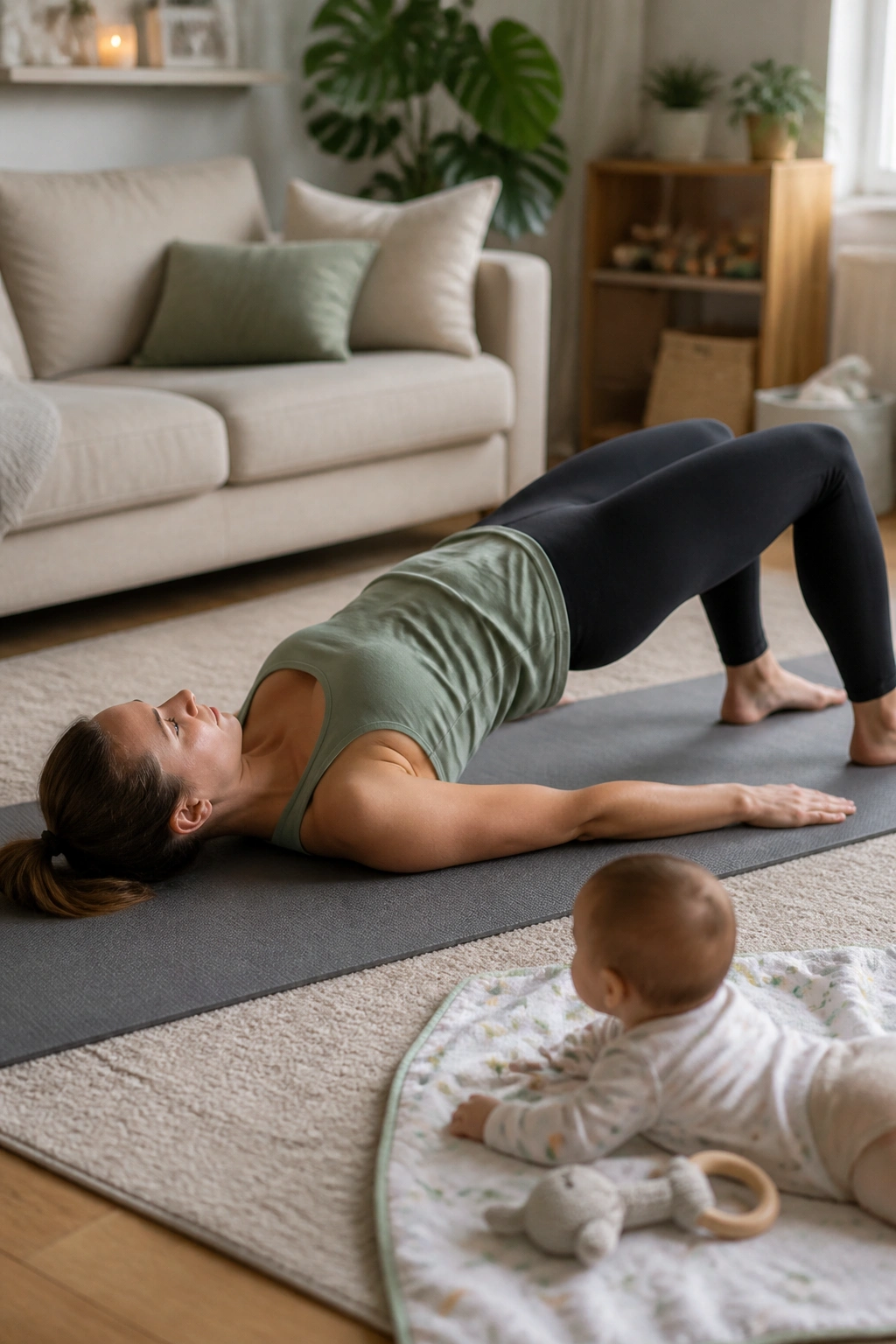
Glute bridges are still worth doing, even if they look basic. They help you reconnect your backside to your core, and that support can take pressure off the front line of the body. Just don’t turn them into a backbend.
Lie on your back with knees bent and feet planted. Baby can be on a blanket nearby, high enough that you can see them without craning your neck. Exhale, tilt the pelvis slightly, and lift the hips until the body makes a gentle slope from shoulders to knees. Pause for a second. Lower with control.
The mistake is chasing height. You do not need to launch your hips to the ceiling. If the ribs flare or the belly domes, the bridge is too big.
A good bridge feels like the glutes are doing the lift and the abs are keeping the shape steady. That’s the sweet spot.
15. Side Planks From the Knees
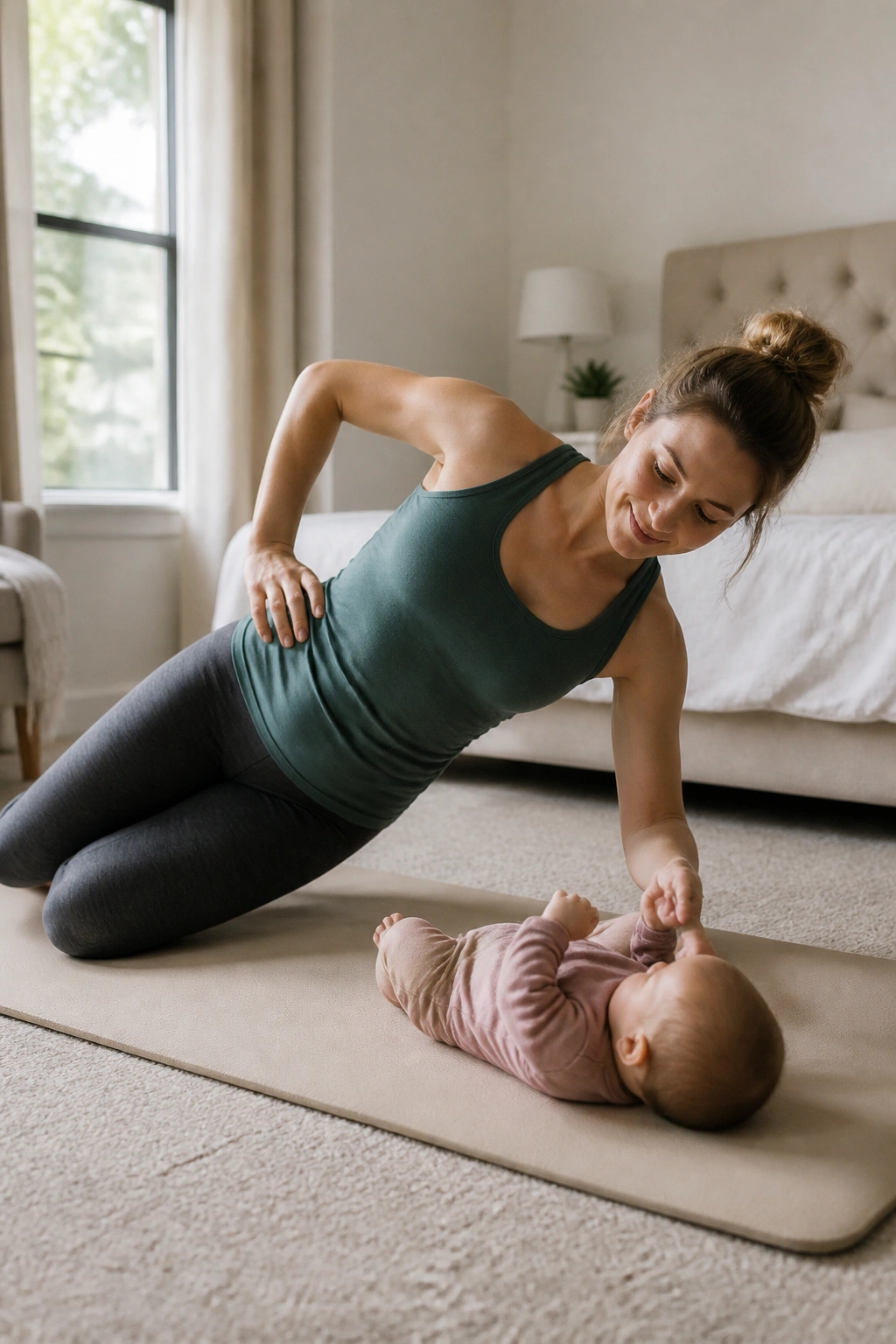
Side planks from the knees are one of the most useful “I’m ready for more” moves. They train the side body — the obliques, the hip stabilizers, the deep support muscles — without the strain that a full plank can create too soon.
Set one forearm on the floor, stack the knees, and lift the hips so your body makes a straight line from shoulder to knee. Keep the chest open, but not twisted back. Hold for 10 to 20 seconds, then come down and switch sides. Baby can stay on the mat nearby, and if you have a helper, this is a good one to do while the helper keeps an eye on the baby.
Unlike endless crunches, side planks ask the body to resist collapse. That’s a more honest test of postpartum strength.
Do not let the bottom shoulder shrug into the ear. That one ruins the whole thing fast.
16. Half-Kneeling Tall Holds
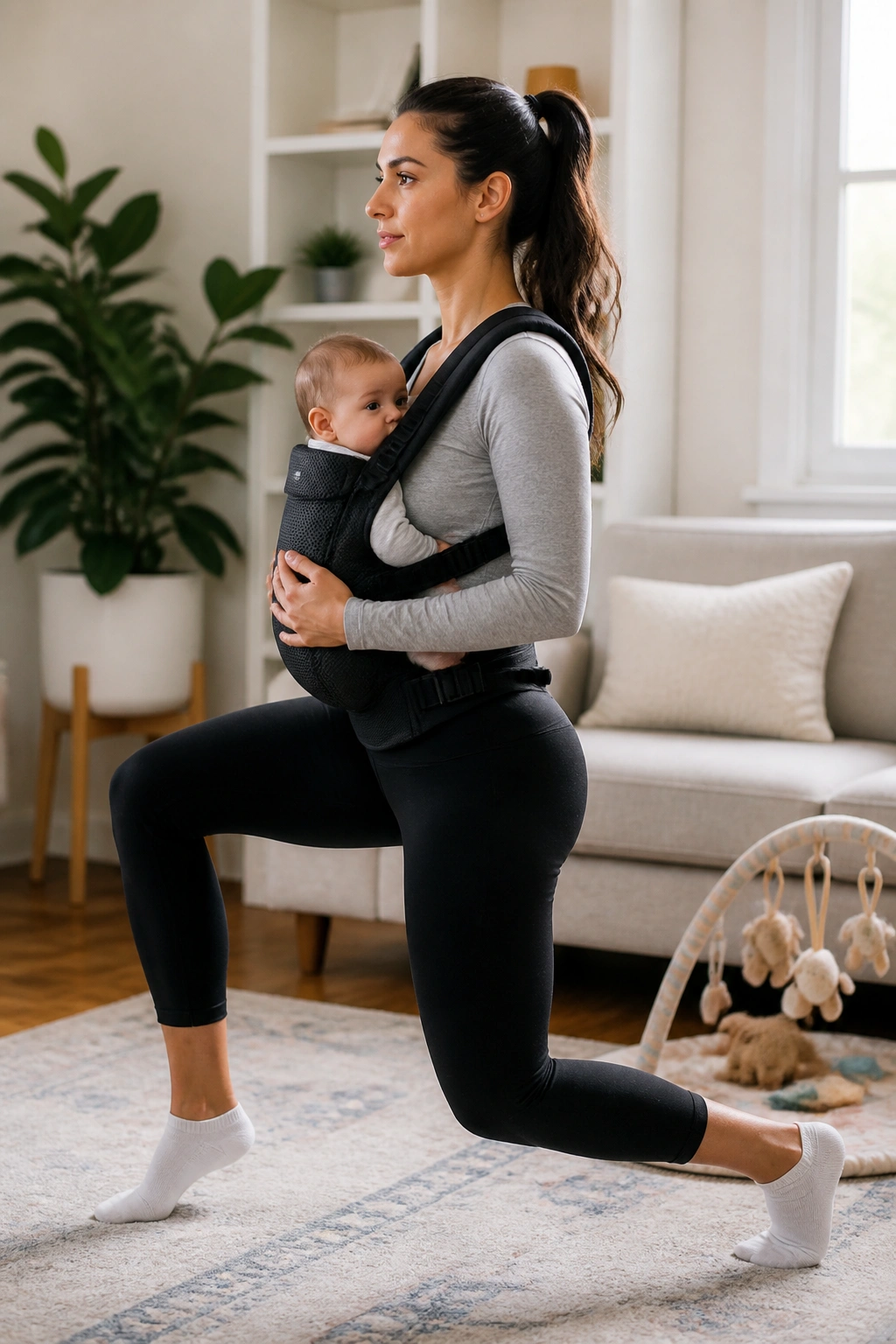
Half-kneeling is sneaky. It looks calm, almost too calm, but it shows you very quickly whether your ribs are stacked over your pelvis or drifting off into chaos.
Kneel with one knee down and the other foot flat in front. Keep the torso tall and the glutes lightly active. Baby can be in a carrier if you’re comfortable, or on the floor close by. Just hold the posture first. No fancy reach yet. Stay there for 3 slow breaths, then switch sides.
How to Use It
- Set the front foot far enough forward that you feel balanced.
- Keep the back hip gently tucked under.
- Exhale without collapsing the chest.
- Hold 10 to 15 seconds per side.
If you want more challenge, reach one arm overhead while keeping the ribs from popping forward. It’s a small change, and it tells you a lot.
17. Seated Cross-Body Reaches on the Couch
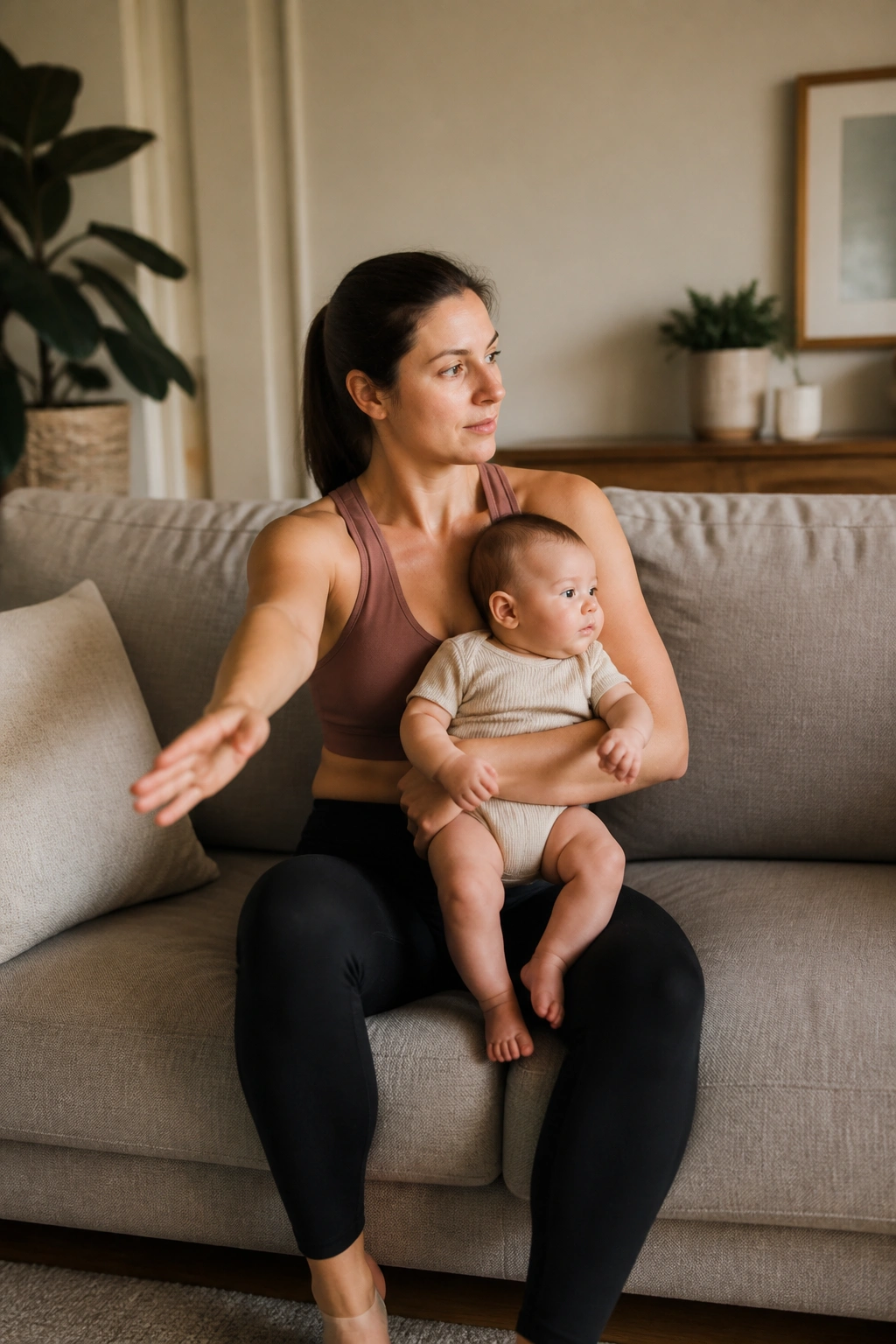
There’s a particular kind of postpartum fatigue that makes the couch feel like the only place on earth. Good. Use it. A seated cross-body reach trains rotation control without putting you on the floor when you are already done with the day.
Sit tall with the baby supported on your lap or beside you, then reach one hand toward the opposite knee or across the body in a slow diagonal line. Exhale as you reach. Come back to center and repeat on the other side. Keep the torso from slumping or twisting hard.
Key Details
- Sit on the front half of the cushion.
- Keep both sit bones heavy.
- Reach from the shoulder, not the neck.
- Do 6 to 8 reps per side.
This is not glamorous work. It is quiet, useful work. And quiet, useful work adds up when you repeat it often enough.
18. Suitcase Carries With Baby in a Carrier
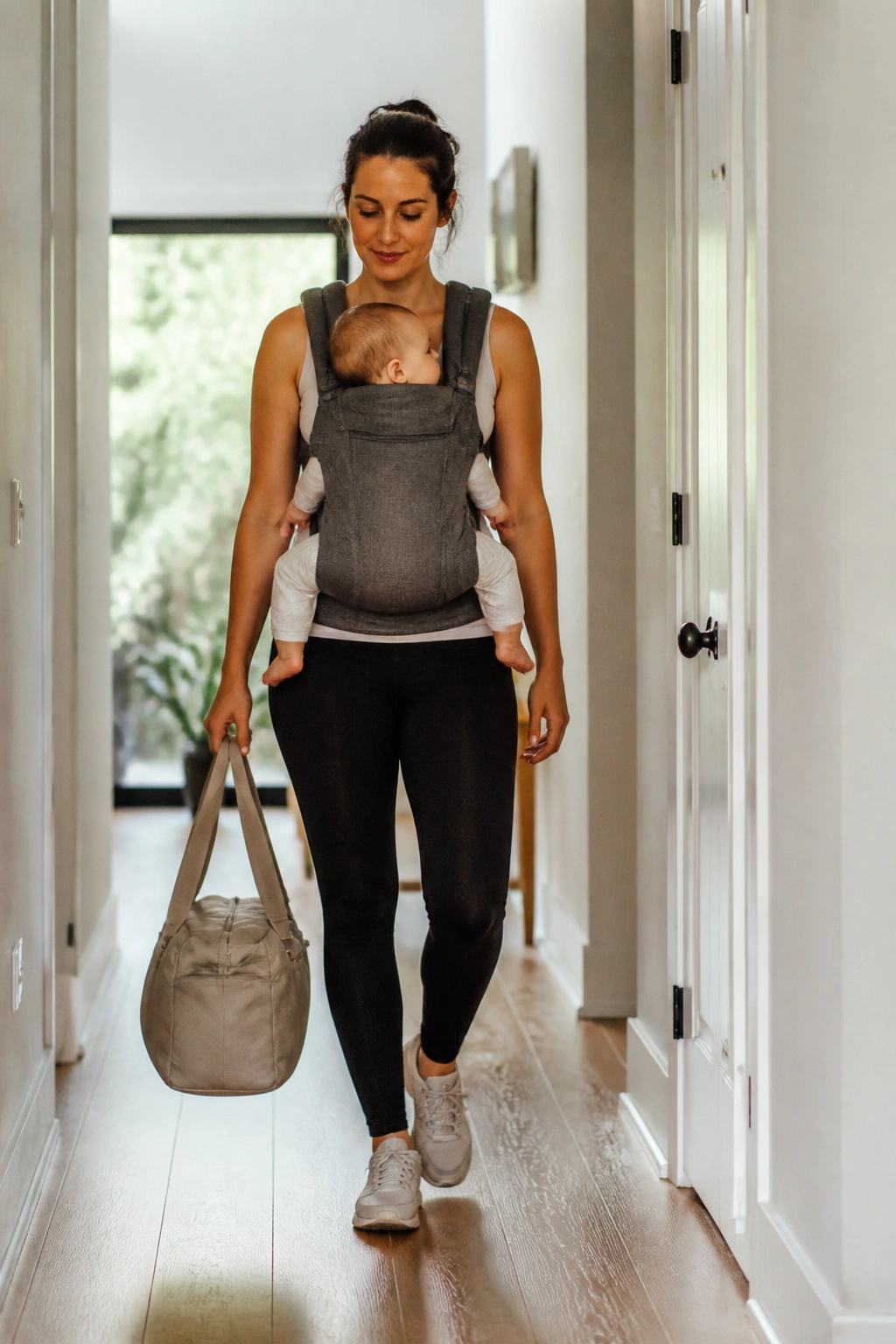
Suitcase carries are one of the best real-world core drills because they ask your body to stay upright while one side carries more load. That is exactly what life with a baby feels like when you’re also carrying a diaper bag, a bottle, or a lunch you forgot to eat.
Put your baby securely in a carrier, then hold a light bag or grocery sack in one hand. Walk slowly for 20 to 30 steps, keeping the ribs stacked and the shoulders level. Don’t lean away from the weight. Don’t sway side to side like you’re on a boat.
If that feels too much, ditch the extra load and practice walking evenly with the carrier alone. That still teaches your trunk a lot.
Start lighter than you think.
The point is control, not proving you can carry a full market basket and a baby at the same time.
19. Wall Squat Breathing
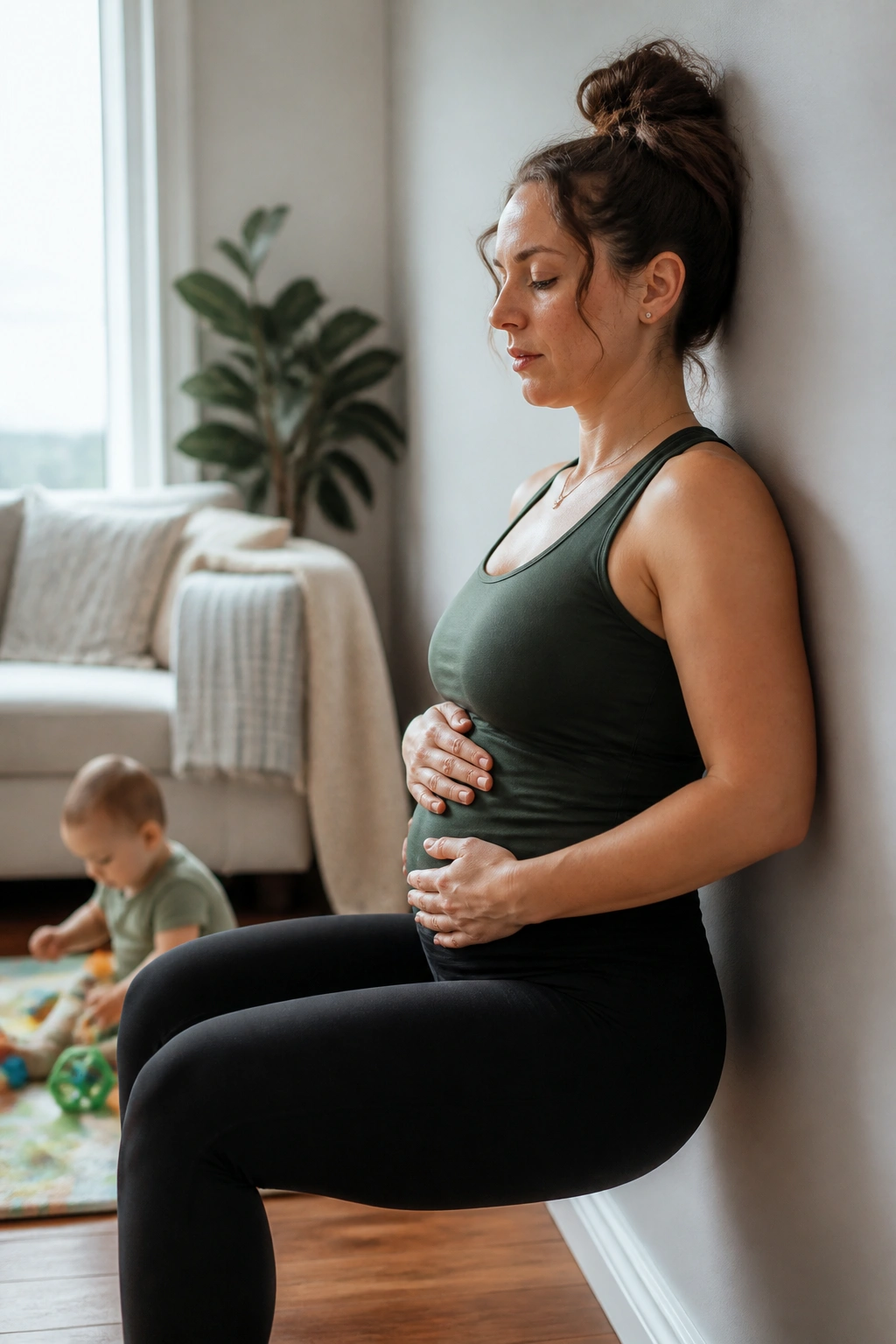
Can a squat be a breathing drill? Absolutely. In fact, that’s one reason it works so well. The wall gives you feedback, the legs do a bit of work, and the breath teaches the core to manage pressure instead of blasting it outward.
Stand with your back against a wall and slide down only a little — a quarter squat is enough. Keep your feet far enough forward that your knees stay happy. Take 3 slow breaths there, letting the exhale soften the belly and lower the ribs. Stand back up, rest, and repeat.
How to Use It
- Keep the chin level, not tucked hard.
- Hold the squat for 3 breaths, not 30.
- Use the wall to stay honest.
- Stop if the belly domes or the knees complain.
This is a strong option for days when the baby wants to be nearby but not held. You get work done without needing a full setup.
20. Cooldown Stretch and Belly Reset
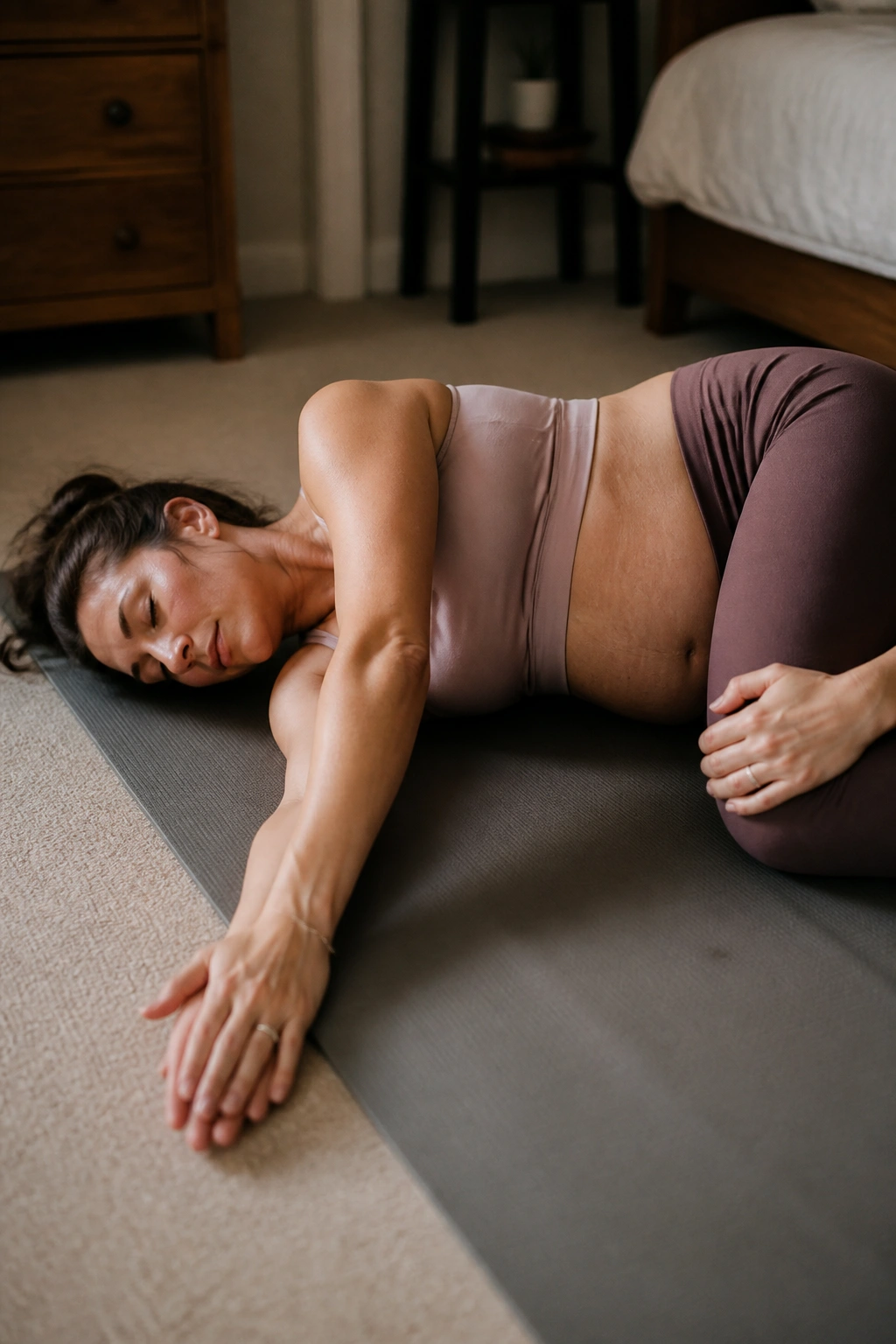
Finish with something that helps your body come back down. A cooldown is not fluff. It’s where the nervous system gets the message that the work is done and the belly can stop gripping so hard.
Lie on your side for an open-book stretch, or sit on the floor and reach your arms forward while exhaling long and slow. You can also kneel in a child’s pose variation with your knees wide if that feels good on your abdomen. Keep the baby on a mat nearby or hand them off for a few minutes if you need the quiet.
A few gentle breaths here can be more useful than one more “hard” exercise when you are already tired. The goal is to leave the session feeling more connected, not wrung out.
- 3 to 5 slow breaths.
- No strain.
- No rushing.
- No need to chase a burn.
Final Thoughts

The smartest postpartum core work is usually unglamorous. A breath. A slow stand. A wall press. A tiny heel slide. That’s the stuff that helps the deep core start cooperating again without making your body brace for a fight.
If I had to keep only one rule, it would be this: stop before the belly domes and before the back starts stealing the work. That single habit will teach you more than any complicated routine ever could.
Pick three moves from this list — one breathing drill, one floor exercise, one standing drill — and repeat them for a week. Keep the range small, the exhale long, and the baby close enough to make the session feel real. That is usually where progress begins.
