



Gentle postpartum workouts for week one should feel almost boring at first, and that is the point. The first few days after birth are not the place for sweaty ambition or a heroic fitness comeback; they’re for circulation, breath, and the slow job of waking your body back up without irritating healing tissue.
A sore abdomen, tender pelvic floor, swollen feet, stitches, a c-section incision, and a baby who seems to need something every eight minutes can make even a short walk feel like a whole production. So the smartest movement is usually the smallest movement. Tiny counts.
I like the kind of postpartum exercise that can happen beside the bed, next to the couch, or while the baby is asleep on your chest. A few minutes here, a few minutes there, is often easier to stick with than one long session, and it tends to leave you feeling looser instead of drained. If bleeding gets heavier, you feel dizzy, your incision pulls sharply, or your pelvis feels heavy and unsupported, back off and call your clinician.
Breath, circulation, posture, and gentle strength. That’s the real work of week one, and it starts with the kind of movement your body can trust.
1. Diaphragmatic Breathing in Bed
The smallest movement in this list may be the most useful. Diaphragmatic breathing helps your ribs expand, calms the nervous system a little, and gives the pelvic floor a chance to soften and lift in a more natural rhythm.
What to Feel
Lie on your back with your knees bent, or rest propped up in bed if that feels better on your incision or lower back. Place one hand on your lower ribs and one on your belly. On the inhale, aim for the ribs to widen into your hands instead of puffing your shoulders up toward your ears.
On the exhale, let the ribs slide down and in. That gentle down-and-up rhythm matters more than taking a huge breath. Big breaths can feel forced right after birth, especially if your abdomen is tender.
How to Do It
- Inhale through your nose for 3 to 4 slow counts
- Exhale through your mouth for 5 to 6 counts
- Repeat for 5 to 8 breaths
- Keep your jaw loose and your shoulders heavy
Tip: If you had a c-section, keep the inhale comfortable. There’s no prize for depth.
This is a good one to do while the baby feeds, while you wait for water to heat, or anytime your body feels wound tight. Quiet, plain, useful. That’s the whole point.
2. Gentle Pelvic Floor Reconnection

Should pelvic floor work start with a hard squeeze? No. In week one, the better move is often a light lift, then an even better release, because many people need to reconnect before they need to strengthen.
A soft pelvic floor contraction can help you find the muscles again without creating a clenched, guarded feeling. Think of a small lift around the vagina and anus, then let everything fully drop on the next inhale. If you can only feel the release at first, that’s still a win.
A Useful Cue
Try imagining that you are gently stopping gas, not bearing down. Then let the muscles soften like a small elevator going back to the ground floor. The exhale is your friend here. Use it for the lift, then breathe in and let go.
How Much
- Do 3 to 5 gentle reps
- Hold each lift for 1 to 2 seconds
- Rest for 4 to 6 seconds between reps
- Stop if you feel pressure, pain, or a pulling sensation
Some people are told to “just do Kegels” and end up clenching all day. That’s not the move. Week one is about awareness, not force. If the area feels swollen or sore, spend more time on the relaxation part than the squeeze.
3. Ankle Pumps and Circles

Swollen feet and stiff calves show up fast after birth, especially if you’ve spent a lot of time in bed, on the couch, or in a hospital chair. Ankle pumps and circles sound almost too easy, but they help blood move and keep the lower legs from feeling wooden.
This is a movement you can do half-asleep. Better yet, do it half-asleep. The mechanics are simple: point and flex the foot, then draw slow circles in each direction. No strain, no setup, no mat.
Quick Circulation Drill
- Pump each foot 10 to 20 times
- Circle each ankle 5 times each direction
- Keep the movement smooth, not jerky
- Repeat 2 or 3 rounds during the day
If your calves feel crampy, make the circles smaller. If your feet are puffy, elevate them for a few minutes afterward. A pillow under the calves can feel good, but don’t jam anything under the back of the knee for too long.
This is also a smart one during feeding sessions. By the time you finish a diaper change and a feed, you’ve already done one round without calling it exercise. That’s the kind of postpartum workout week one usually needs.
4. Heel Slides for Quiet Core Work
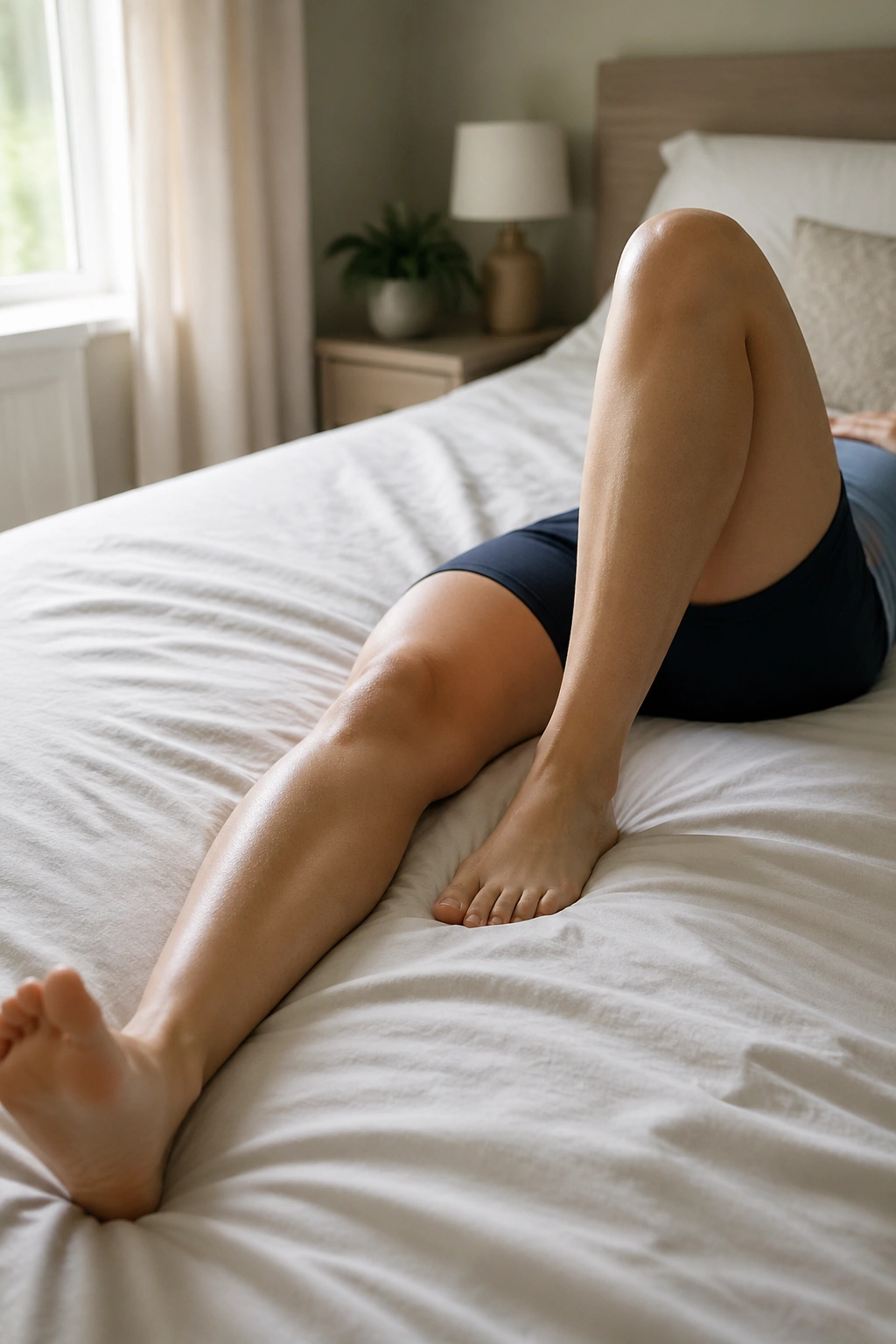
Heel slides look tiny. They are not useless. They teach your core and hips to work together again without asking your abdomen to brace hard or your pelvis to shift in a dramatic way.
Lie on your back with knees bent and feet flat. Keep one foot on the bed or mat, slowly slide that heel away from you until the leg is almost straight, then draw it back in. The key is control. If your low back arches or your ribs flare up, the range is too big.
What to Watch For
- Slide only as far as you can keep your pelvis quiet
- Exhale as the leg stretches out
- Inhale as the heel returns
- Do 5 to 8 reps per side
A c-section incision may prefer a shorter slide at first. That is fine. Even a four-inch glide can wake up coordination without tugging at the front of your abdomen.
Heel slides are useful because they bridge the gap between “I need to rest” and “I need to move.” Not flashy. Very practical. Those are the moves that tend to stick.
5. Pelvic Tilts That Wake Up the Lower Back

What if your lower back feels tight after feeding, rocking, or simply holding one position for too long? Pelvic tilts are the answer I reach for first because they’re small, easy to scale, and friendly to a sore body.
Lie on your back with knees bent, or sit slightly reclined if the floor is a hassle. Gently tip your pelvis so the low back flattens toward the bed or mat, then release back to neutral. No crunching. No forcing. The motion is almost like rocking a bowl of water just enough to see it move.
Do It on the Bed or Floor
- Inhale to return to neutral
- Exhale to gently tuck the pelvis
- Repeat 6 to 10 times
- Keep the movement slow and small
What It Should Feel Like
Your lower belly may engage a little, and your back may feel less sticky afterward. It should not feel like a hard ab workout. If you are working so hard that you hold your breath, the motion is too large.
This one often gets skipped because it looks too easy. I’d argue that’s exactly why it belongs in week one. Simple is not the same thing as pointless.
6. Shoulder Rolls and Chest Openers
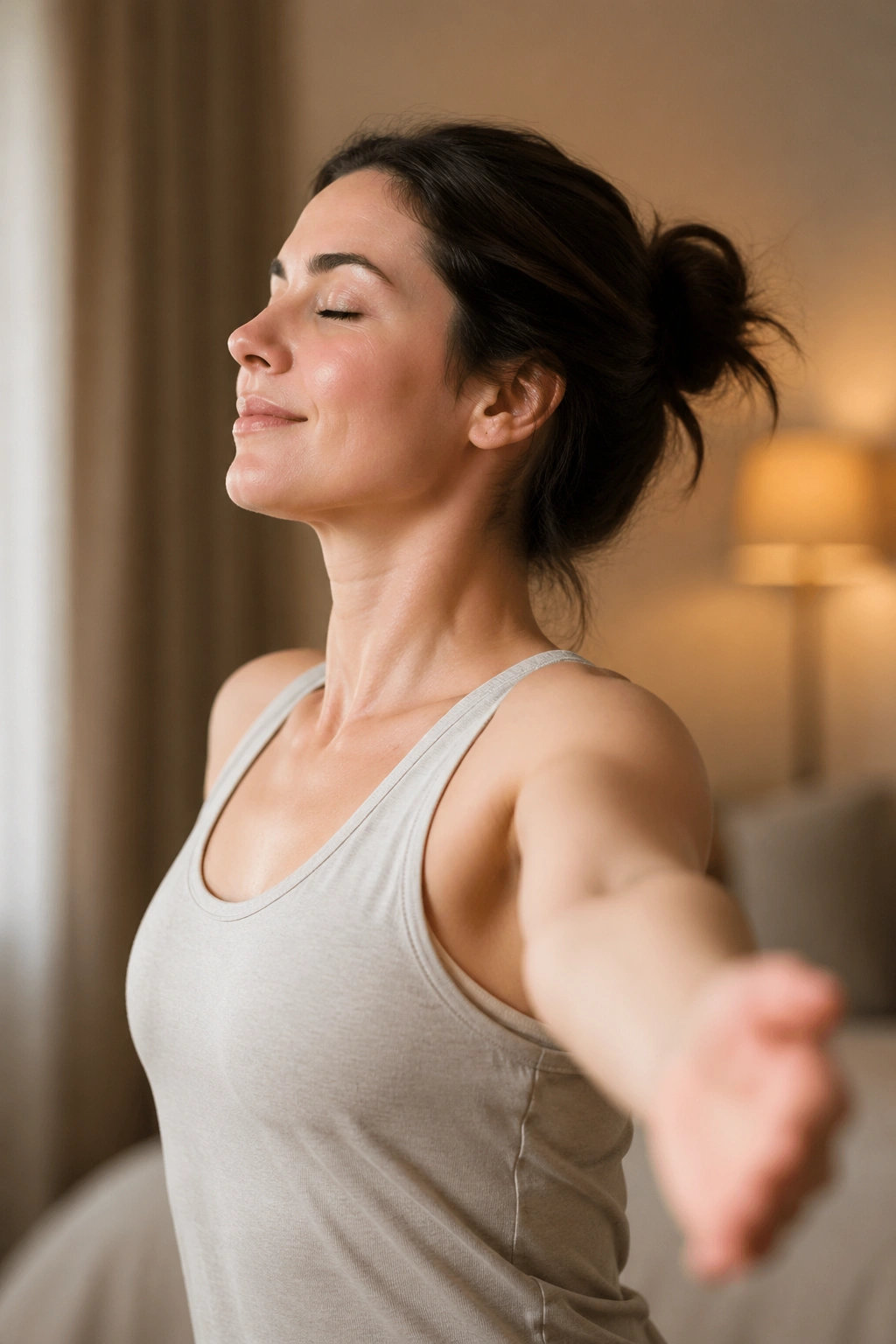
A feeding posture can live in your shoulders if you let it. After a few hours of hunching over a baby, even a gentle shoulder roll can feel oddly dramatic — in a good way.
Start with slow circles, then think about drawing the shoulder blades down and back without pinching them together hard. Add a small chest opener by clasping your hands behind your back or simply resting your elbows on the sides of a chair and letting the chest widen. Keep the range modest. You are not trying to force a big stretch.
A Better Pattern Than “Sit Up Straight”
- Roll shoulders 8 times forward
- Roll shoulders 8 times back
- Hold a gentle chest opener for 10 to 20 seconds
- Breathe without shrugging
The point is to undo the rounded shape of nursing, bottle-feeding, scrolling, and couch time. That shape creeps in fast. It’s normal. And it’s fixable in small pieces.
If your chest feels tender from engorgement or your upper back is cranky, make the opener tiny. Even a few shoulder blade squeezes while you stand at the sink can help.
7. Side-Lying Clamshells for Hip Stability
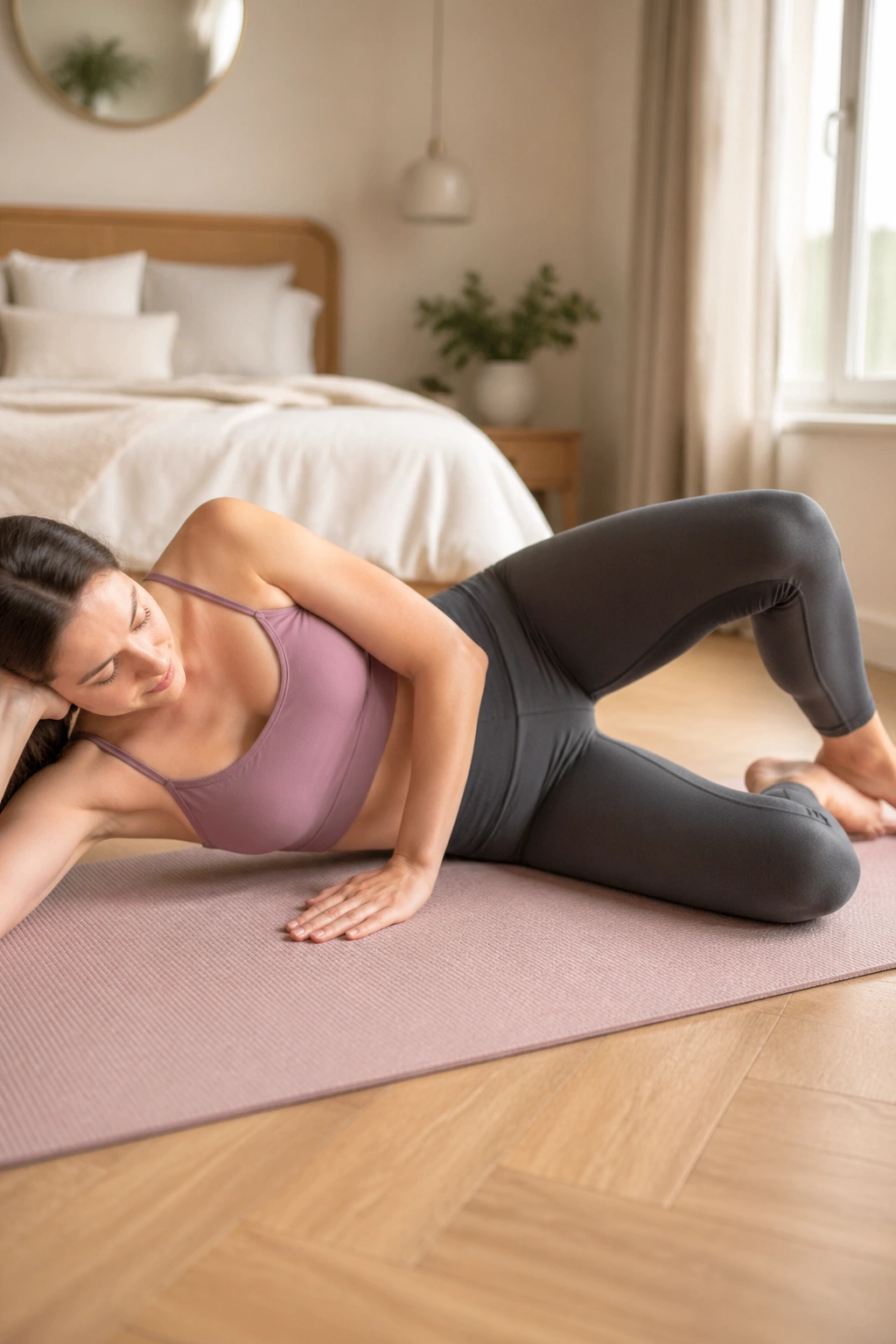
You’re probably on your side anyway for a nap, a feed, or a long, awkward stretch of trying to get comfortable. Might as well steal a minute for side-lying clamshells, one of the gentlest ways to wake up the outer hips.
Lie on one side with knees bent and feet stacked. Keep your feet touching, then open the top knee just a few inches like a clamshell opening and closing. The pelvis should stay mostly still. If it rolls backward, the range is too large.
This targets the glute medius, which helps steady the pelvis when you start walking more. It’s useful, especially when stairs or carrying the baby start to feel a little lopsided.
- Do 5 to 8 reps per side
- Pause for 1 second at the top
- Keep the motion small and clean
- Stop if rolling onto your incision hurts
If side-lying feels awful, skip it and return to standing work later. No need to be heroic. Week one rewards the person who respects the day, not the person who forces a side exercise because a plan said so.
8. Short Indoor Walks
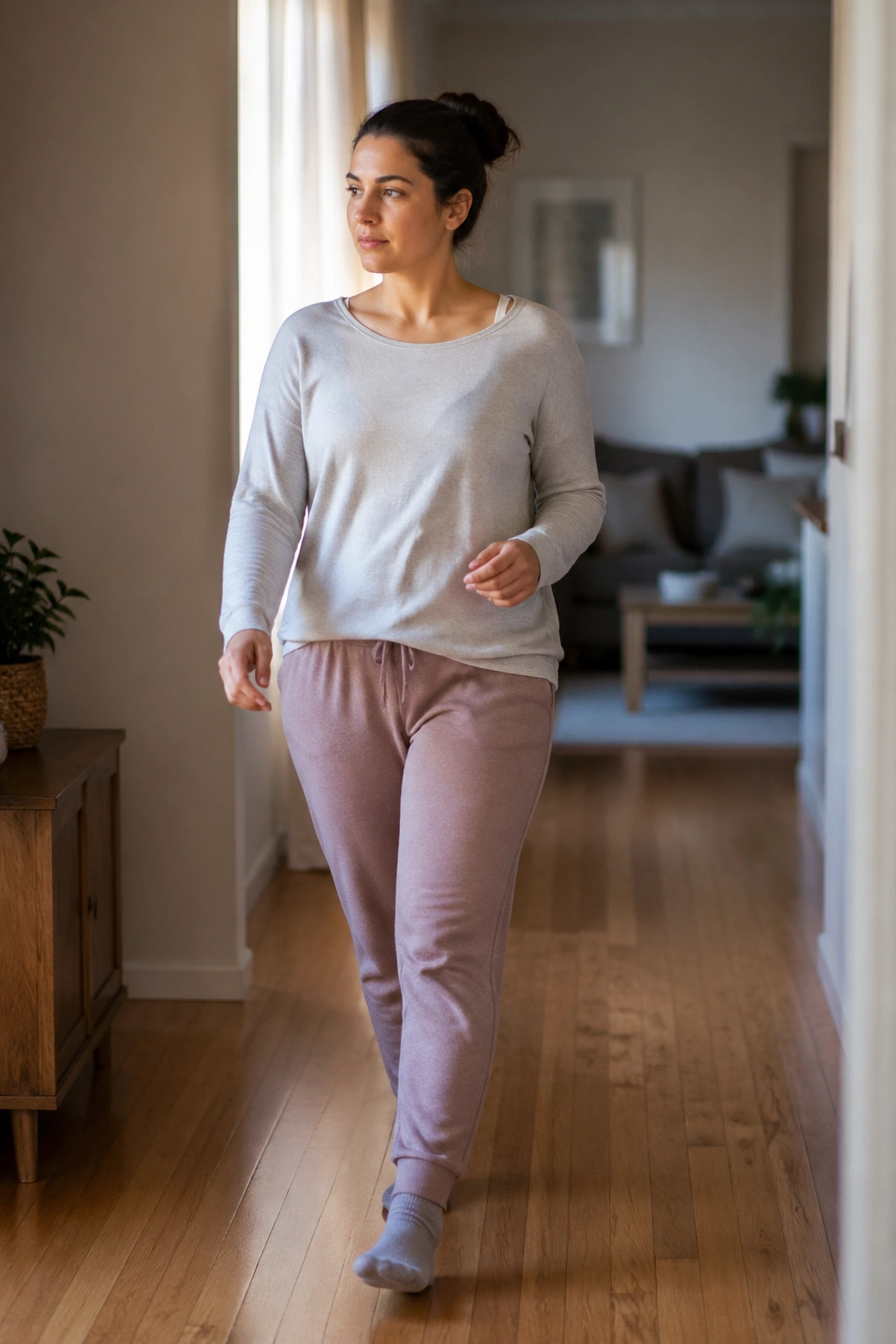
Walking is the closest thing postpartum recovery has to a quiet reset button. Short indoor walks move blood, loosen stiff hips, and help you feel less stuck in one position after long stretches of feeding or resting.
The mistake I see most often is turning a walk into a test. Don’t. In week one, a loop through the hallway or around the living room is enough. Start with 2 to 5 minutes, then sit back down before you feel tired or shaky.
What Good Walking Feels Like
You can talk while you walk. Your breath stays even. Your feet feel grounded, not heavy. When you sit down afterward, you should feel a little more open, not more swollen or sore.
A few simple cues help:
- Keep your steps short
- Let your arms swing lightly
- Avoid hiking one hip higher than the other
- Stop if bleeding suddenly increases or you feel pressure low in the pelvis
If you had a cesarean birth, the first walks may be painfully plain. That’s normal. The win is getting upright and moving a little, not covering distance.
9. Supported Sit-to-Stand Practice
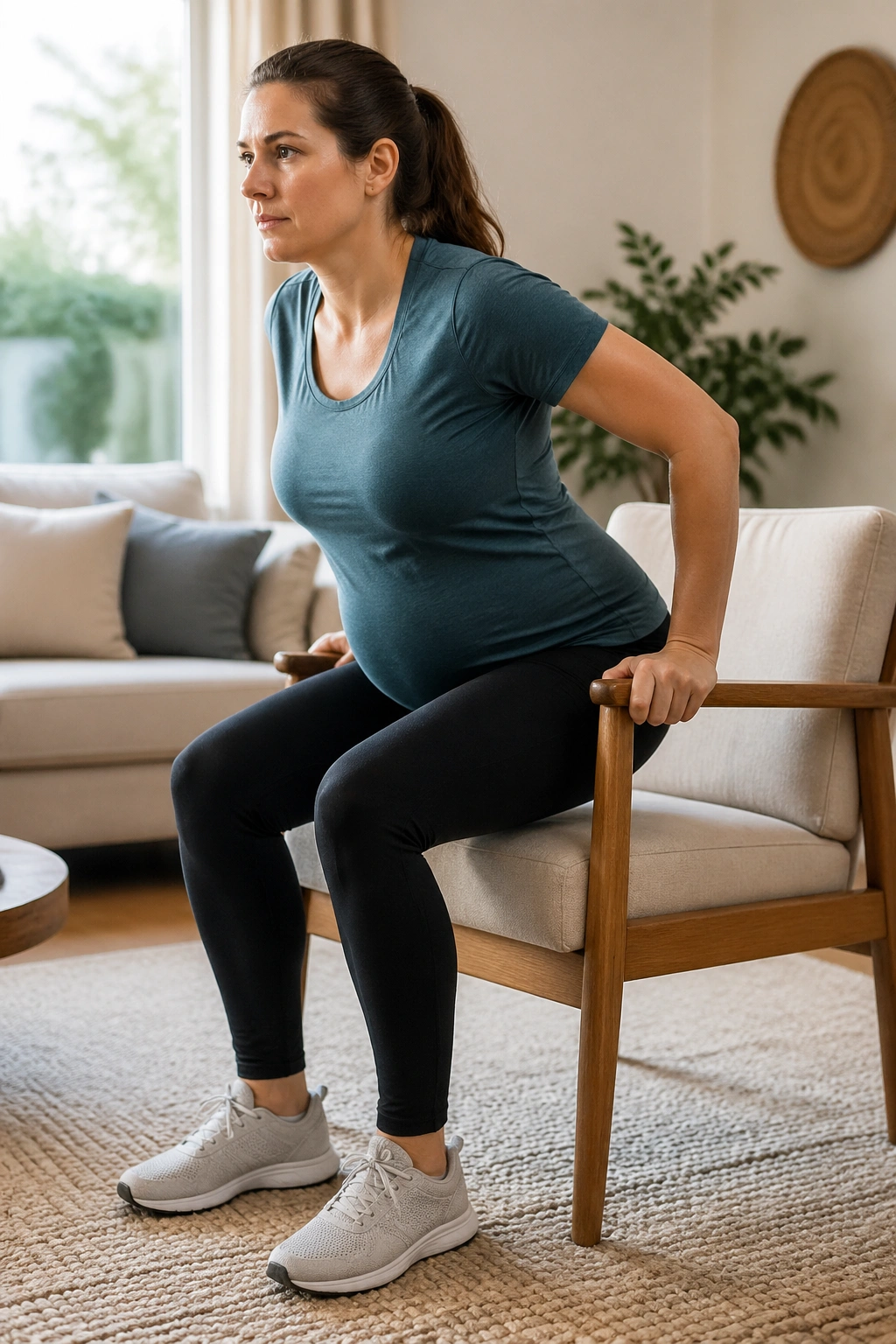
Standing up from a chair is one of the most useful postpartum strength drills because it mirrors real life. Sit-to-stand practice trains your legs, glutes, and core to work together when you are holding a baby, reaching for diapers, or getting up from the couch for the hundredth time.
Use a firm chair or the edge of the bed. Place your feet hip-width apart, lean your torso slightly forward, and stand using your legs. Use your hands on the chair arms or thighs if you need them. Lower yourself back down slowly. That controlled lowering is part of the work.
Three things matter here: steady feet, a small forward lean, and an exhale as you stand. Hold your breath and the effort jumps up fast.
- Do 3 to 5 reps
- Rest between reps if needed
- Keep the motion smooth
- Stop if you feel dizzy
This is one of those movements that quietly pays off later in the day. The baby gets heavier. Your legs need to know how to help.
10. Standing Cat-Cow at the Counter
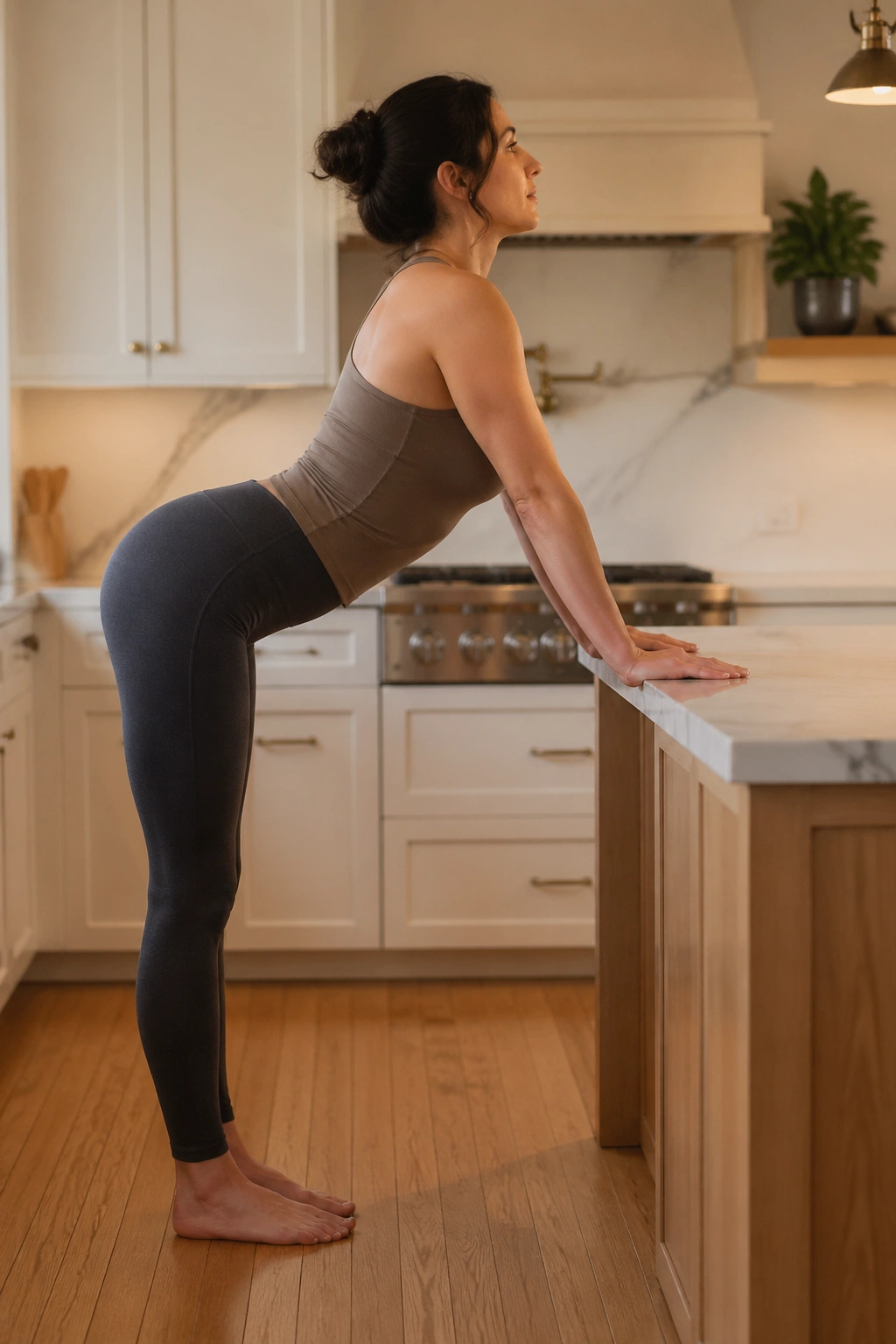
No floor space? Fine. Standing cat-cow works well when getting down and back up feels like more than you want to manage.
Stand with your hands on a countertop, the back of a sturdy chair, or even your thighs. On the exhale, round your upper back slightly and tuck the tailbone under. On the inhale, let the chest widen and the spine lengthen. Keep the motion small and smooth. You are mobilizing, not performing a yoga pose for an audience.
Why Standing Helps in Week One
Standing takes pressure off the wrists and knees, and it keeps the transition simple. That matters when you’re sleep-deprived or sore. The less setup a movement needs, the more likely you are to do it.
A tiny range is enough:
- Round for 1 breath
- Open for 1 breath
- Repeat 5 to 8 times
If your abdomen feels tight, keep the opening very gentle. If you had a c-section, avoid any stretch that tugs at the front. The goal is easier movement through the spine, not an impressive curve.
11. Wall Push-Ups for Upper-Body Support
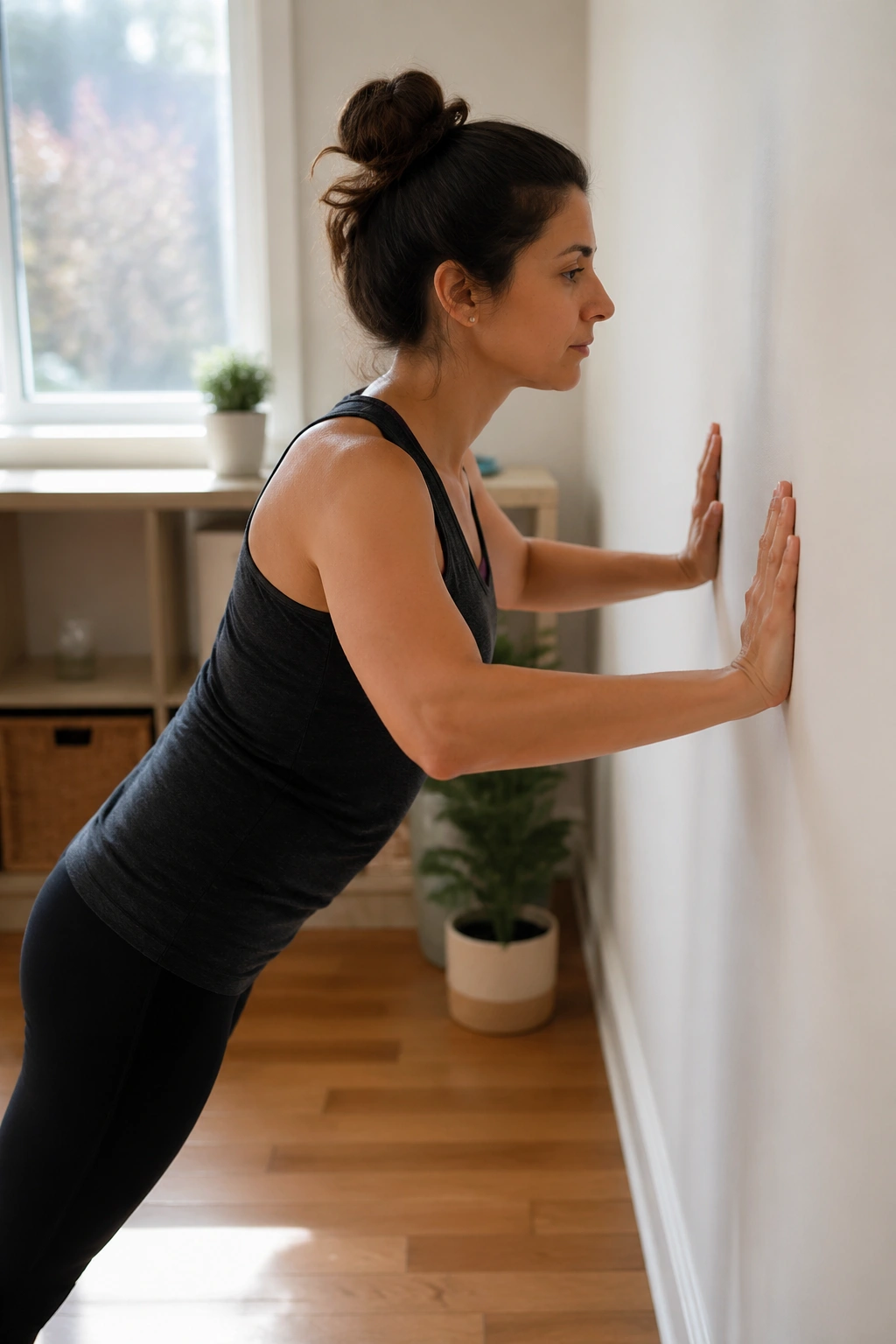
Your upper body is carrying the load now. Wall push-ups help your chest, shoulders, and arms get a little stronger without forcing you to get on the floor or brace your core hard.
Stand an arm’s length from a wall, place your hands at chest height, and walk your feet back until your body forms a straight line. Bend your elbows and lower your chest toward the wall, then press back. Keep the movement slow enough that you can feel your shoulder blades move.
What Makes Them Useful
- They’re easy to scale by stepping your feet closer or farther away
- They help with lifting and carrying
- They wake up the triceps and chest without a big strain on the abdomen
Aim for 5 to 8 reps. If that feels like too much, do 3 and stop there. There’s no virtue in turning a week-one recovery move into a sweat test.
One small warning: don’t let your shoulders creep toward your ears. That habit shows up fast. Keep the neck long, and press from the wall like you’re pushing it away from your space.
12. Supported Marching in Place
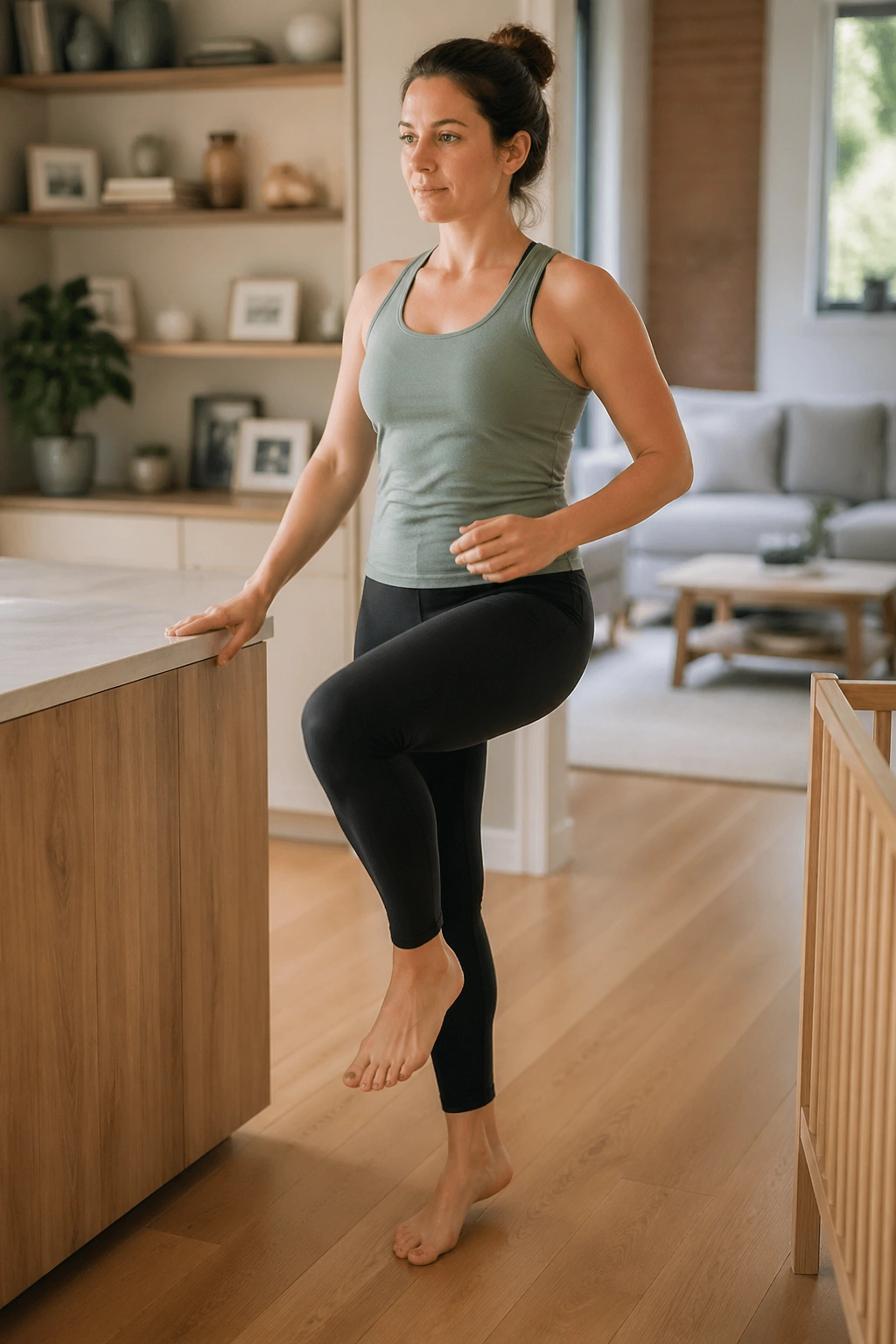
A few quiet marches can wake up your hips without making you sweaty. Supported marching in place is especially handy if you’ve been sitting a lot and want a little rhythm without going outside for a full walk.
Hold a counter, the back of a chair, or the crib rail if that feels sturdy enough. Lift one knee a few inches, set it down, then lift the other. Keep the torso tall and the breath steady. This is not high knees. Nobody needs that.
A Good Way to Pace It
Try marching for 20 to 30 seconds, then rest. If that goes well, do another round later in the day. The movement should feel easy enough that you can still talk.
A few things to avoid:
- Don’t lean back and flare the ribs
- Don’t hold your breath
- Don’t turn it into cardio
This is one of my favorite week-one options because it connects balance, posture, and circulation without demanding much. And if you feel wobbly, the support is right there in your hand. That matters more than people admit.
13. Glute Squeezes and Foot Presses
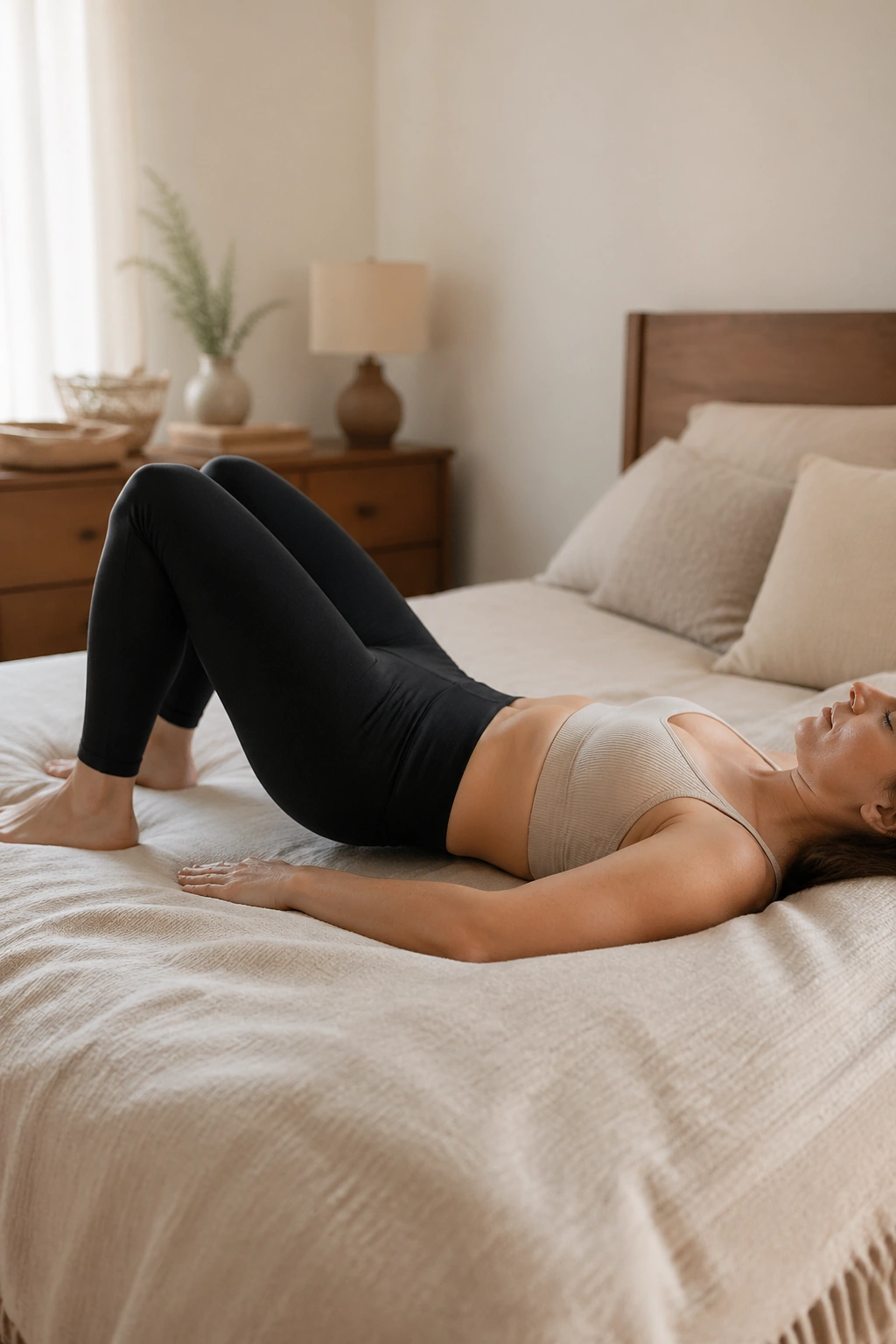
Bed rest makes muscles go sleepy. Glute squeezes and foot presses help wake the back side of the body without asking you to stand, squat, or load the incision area.
Lie down or sit with your feet flat. Squeeze your buttocks gently, hold for a second or two, then release. You can also press your feet softly into the mattress or floor and feel the back of the legs turn on. Neither move needs to be dramatic. You’re just reminding the muscles that they still have a job.
Quick Isometric Set
- Squeeze glutes for 2 to 3 seconds
- Relax for 4 to 5 seconds
- Repeat 5 to 10 times
- Add a light foot press on the exhale if it feels good
These are useful on days when you are sore, stiff, or short on patience. They’re also one of the safest ways to do a little work without piling on more motion than your body wants.
If you catch yourself bearing down in the belly, reset. The effort belongs in the muscles you’re targeting, not in the throat or abdomen.
14. Seated Trunk Rotations and Neck Resets
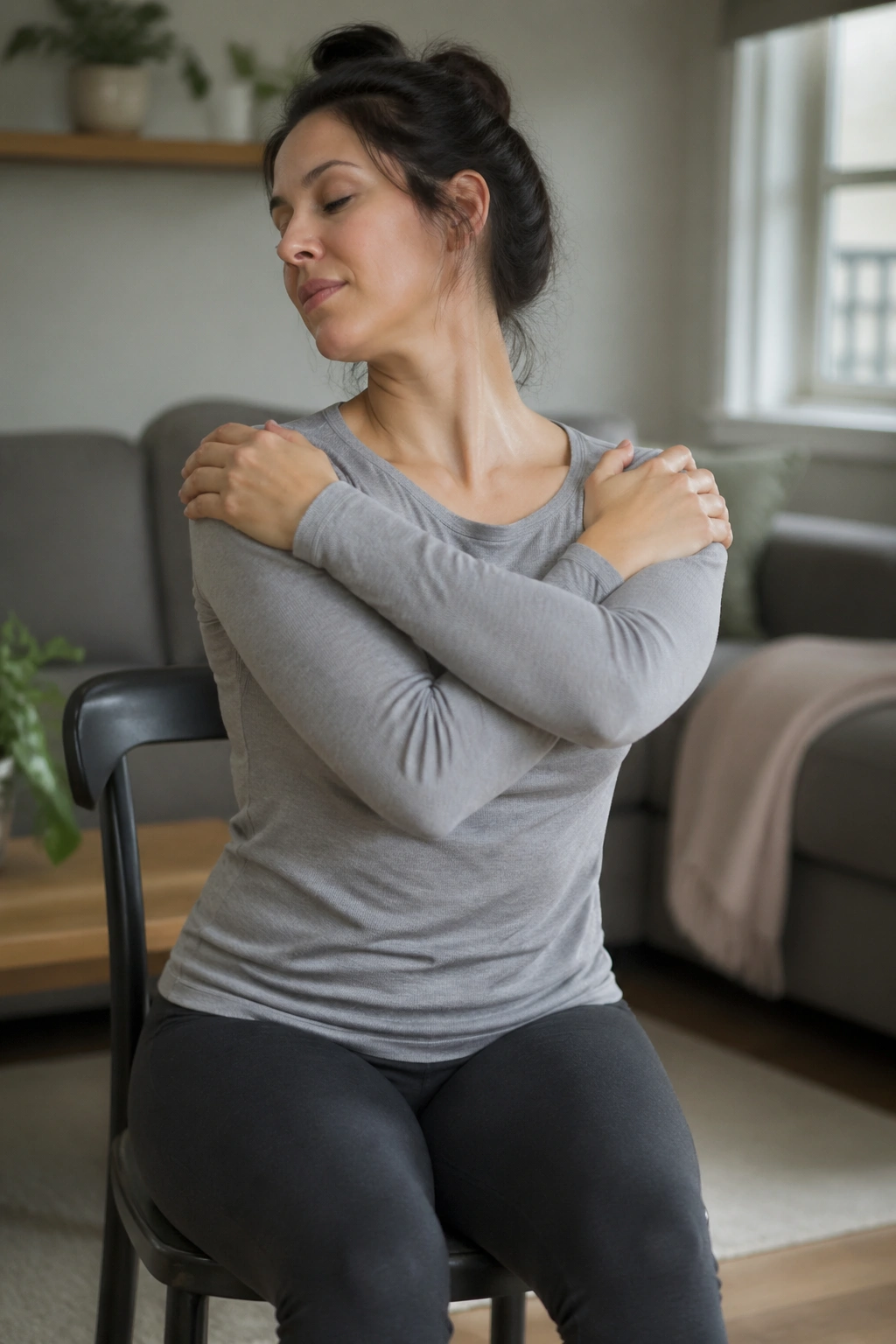
The baby gets the cuddles; your mid-back gets the complaints. Seated trunk rotations and neck resets help undo the bent-over shape that builds up fast from feeding, burping, rocking, and leaning over a changing table.
Sit tall on a chair with your feet planted. Cross your arms over your chest or rest your hands on your ribs. Rotate your upper body a few degrees to one side, then back through center and to the other side. Keep the pelvis grounded. The twist should come from the ribs and upper back, not the low back.
Then add a slow neck reset: tip one ear toward one shoulder, breathe, and switch sides. No yanking. No forcing. Just enough stretch to feel the muscles let go.
How to Keep It Safe
- Rotate only 10 to 15 degrees at first
- Keep your hips facing forward
- Stop if you feel pulling at the incision or pelvic floor
- Use 3 to 5 slow reps per side
These little resets matter because posture gets weird fast in postpartum life. The fix does not have to be elaborate. Often it’s one short sit, one breath, one small rotation.
15. A Five-Minute Recovery Circuit You Can Repeat

If a full workout feels like too much, shrink it. A five-minute recovery circuit gives you structure without pressure, and it can be repeated once or twice a day whenever your body has a little room.
Here’s a simple version:
- 1 minute: diaphragmatic breathing
- 1 minute: ankle pumps or circles
- 1 minute: heel slides or pelvic tilts
- 1 minute: shoulder rolls or wall push-ups
- 1 minute: supported marching or a short hallway walk
Keep the pace calm. You should finish feeling looser, warmer, and more awake, not shaky or wiped out. If you feel heaviness in the pelvis, sharper pain, or a jump in bleeding afterward, the circuit was too much and needs to be shortened next time.
A few week-one rules are worth repeating because they save people from pushing too hard too soon:
- Skip jumping, running, crunches, planks, and heavy lifting
- Keep every rep small and controlled
- Rest more than you think you need
- Watch for dizziness, fever, increasing incision pain, or heavier bleeding
That last part matters. A postpartum workout is only useful if your body tolerates it well. If it doesn’t, rest wins.
The best week-one movement is the kind you can repeat tomorrow without dread. Small, calm, and steady is plenty.
