



Your body does not need a heroic workout before bed. It needs a downshift.
That is where bedtime Pilates stretches earn their keep. Keep them small, keep them slow, and they can take the edge off that wired, braced feeling that builds up in the hips, neck, low back, and ribcage by the end of the day. No jumping. No sweat dripping on the mat. No strange performance where you try to prove how flexible you are at 11 p.m.
I like this kind of routine because it respects the hour. A long exhale, a few spinal movements, a couple of hip openers, and maybe one supported resting pose are usually enough. You are not trying to get loose in some dramatic, movie-scene way. You are trying to stop fighting your own body long enough to let sleep show up.
You do not need all 18 every night. Pick four or five, spend a few breaths in each, and let the sequence get quieter as you go. Sharp pain is a stop sign. A mild tug, a stretch, or a warm release is the goal. Pelvic tilts do a lot of the heavy lifting, and they are the easiest place to start.
1. Pelvic Tilts on Your Back
Small movement, big payoff.
Lie on your back with your knees bent and feet hip-width apart, then let your arms rest long by your sides. As you exhale, gently tip your pelvis so the low back nudges toward the mat. On the inhale, release back to neutral. That tiny rhythm is often enough to tell your nervous system to stop bracing.
What to Feel
- The low back should feel longer, not crushed.
- Your front ribs should soften instead of flaring.
- Your belly can gently flatten on the exhale, but there is no need to suck it in hard.
Tip: keep the motion tiny. If you can see it from across the room, it is probably too much for bedtime.
Do 8 to 12 slow rounds. If your back feels cranky, shorten the range even more and make the breath do more of the work. This is one of those Pilates stretches before sleep that seems almost too plain to matter, then suddenly your lower back stops yelling.
2. Knees-to-Chest Rocking
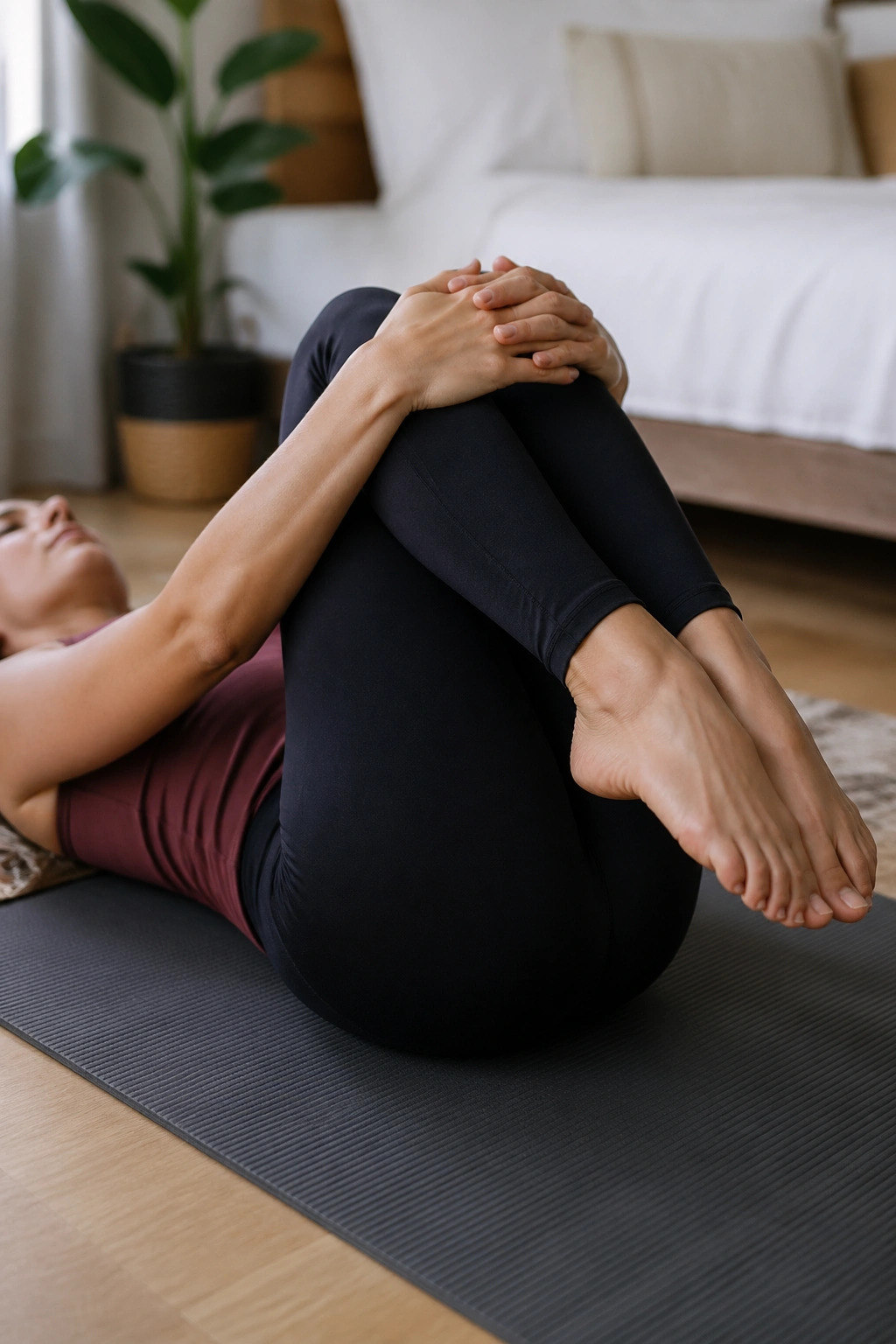
This one feels like unlatching the spine.
Bring both knees toward your chest, hold behind the thighs or over the shins, and let your tailbone stay heavy on the mat. From there, rock a little side to side. Not much. Just enough to let the lower back and sacrum settle.
If both knees feel too compressed, take one leg at a time. The single-knee version is often kinder after a long day in a chair, and it lets you notice one side at a time instead of fighting for a perfect shape.
A lot of people pull too hard here. Don’t. The stretch should feel like a soft release in the low back and outer hips, not a wrestling match with your own legs. Four to six breaths is usually enough, though a stubborn back may appreciate a few more.
3. Cat-Cow on Hands and Knees
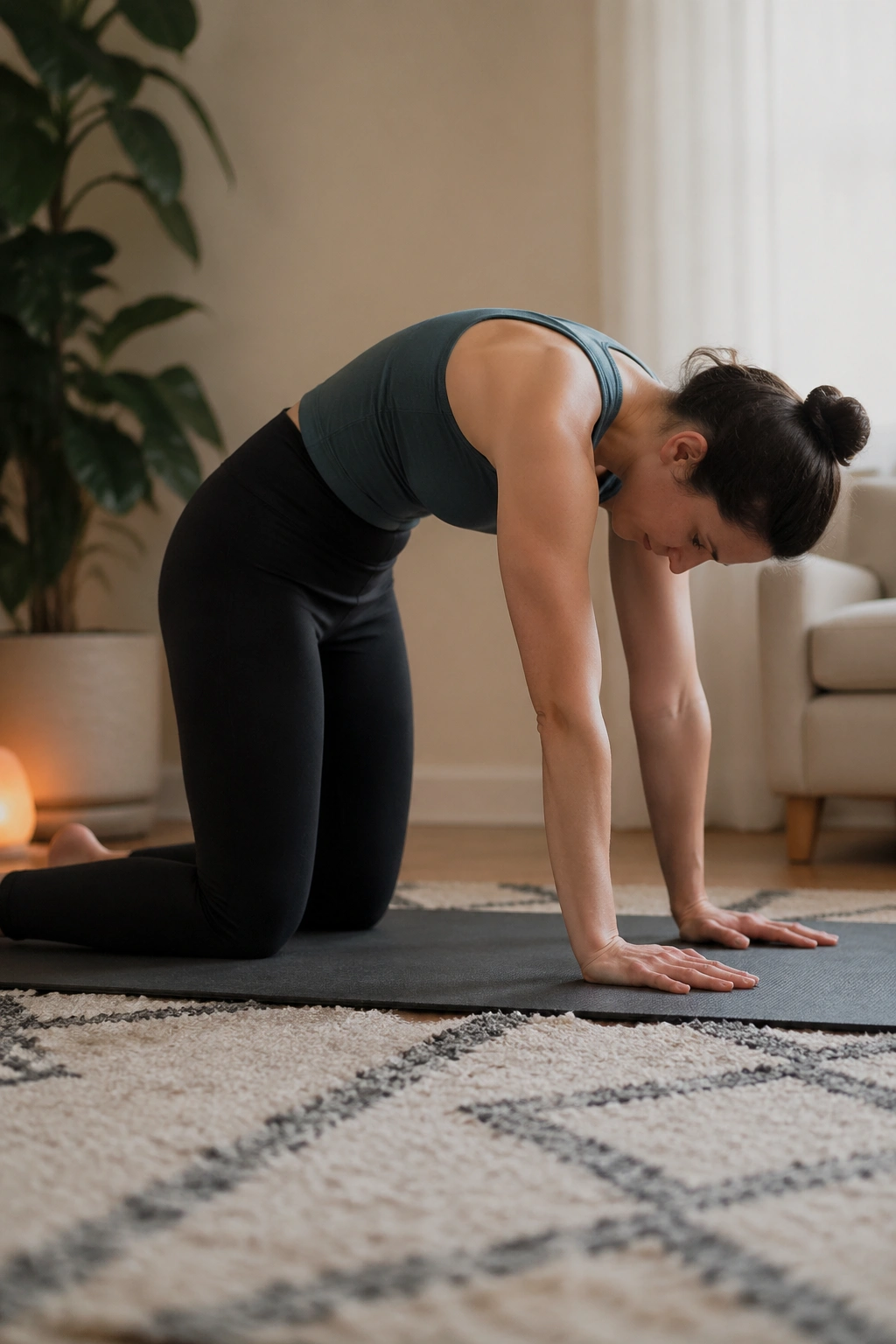
Can a few slow cat-cows make bedtime feel quieter? Usually, yes.
Come onto hands and knees with your wrists under shoulders and knees under hips. Inhale to tip the sit bones back, lift the chest, and let the tailbone rise a little. Exhale to round the spine, press the floor away, and let the head hang in a neutral way. Keep the range modest. Bedtime is not the place for a huge yoga-style wave.
How to Keep It Sleepy
- Move at a pace that matches your breathing.
- Keep your elbows soft so your arms do not lock.
- Let the ribcage move, but do not force the lower back.
Six to eight rounds is plenty. If your wrists are tired, make fists or rest on forearms. The real win here is not flexibility. It is the slow sync between breath and spine, which can feel strangely calming when your brain is still busy making lists.
4. Figure-Four Hip Stretch
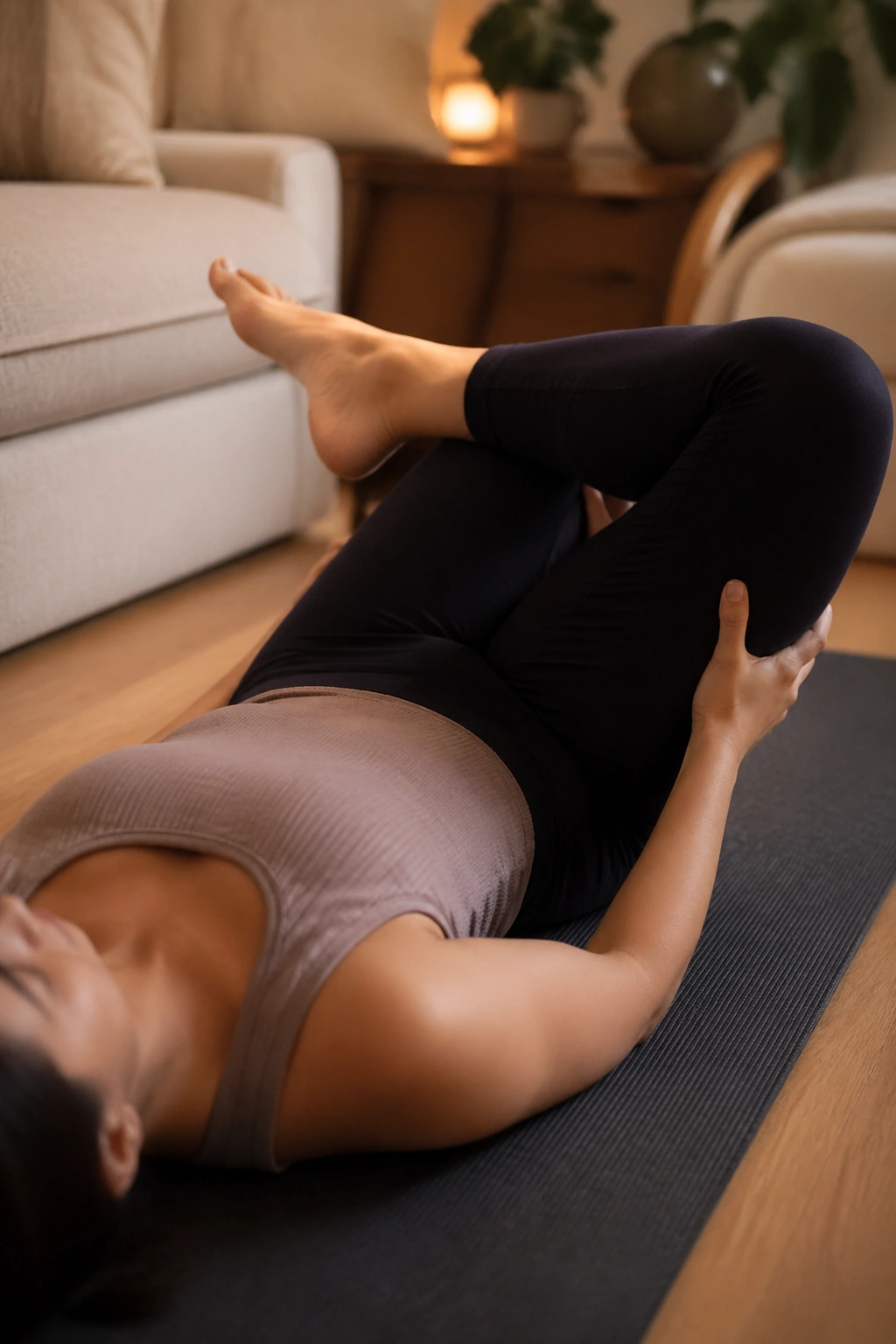
This is the one I reach for after a day of sitting.
Lie on your back, cross the right ankle over the left thigh, and let the right knee open out. You can stay there if that already feels like enough, or thread the hands behind the left thigh and draw the legs in a little. The stretch should land in the outer hip and deep glute on the crossed side.
A Few Practical Notes
- Keep the foot on the crossed leg flexed if the knee feels loose.
- Stop pulling the moment your shoulders start lifting.
- If your low back rounds too much, place the bottom foot against a wall instead.
This is not about forcing the knee toward your chest. It is about making room in that packed-up outer hip that gets tight from driving, sitting, and standing around with one leg crossed over the other. Hold for 4 to 5 breaths, then switch sides. The second side often feels different. Sometimes looser, sometimes fussier. Both count.
5. Supine Spinal Twist
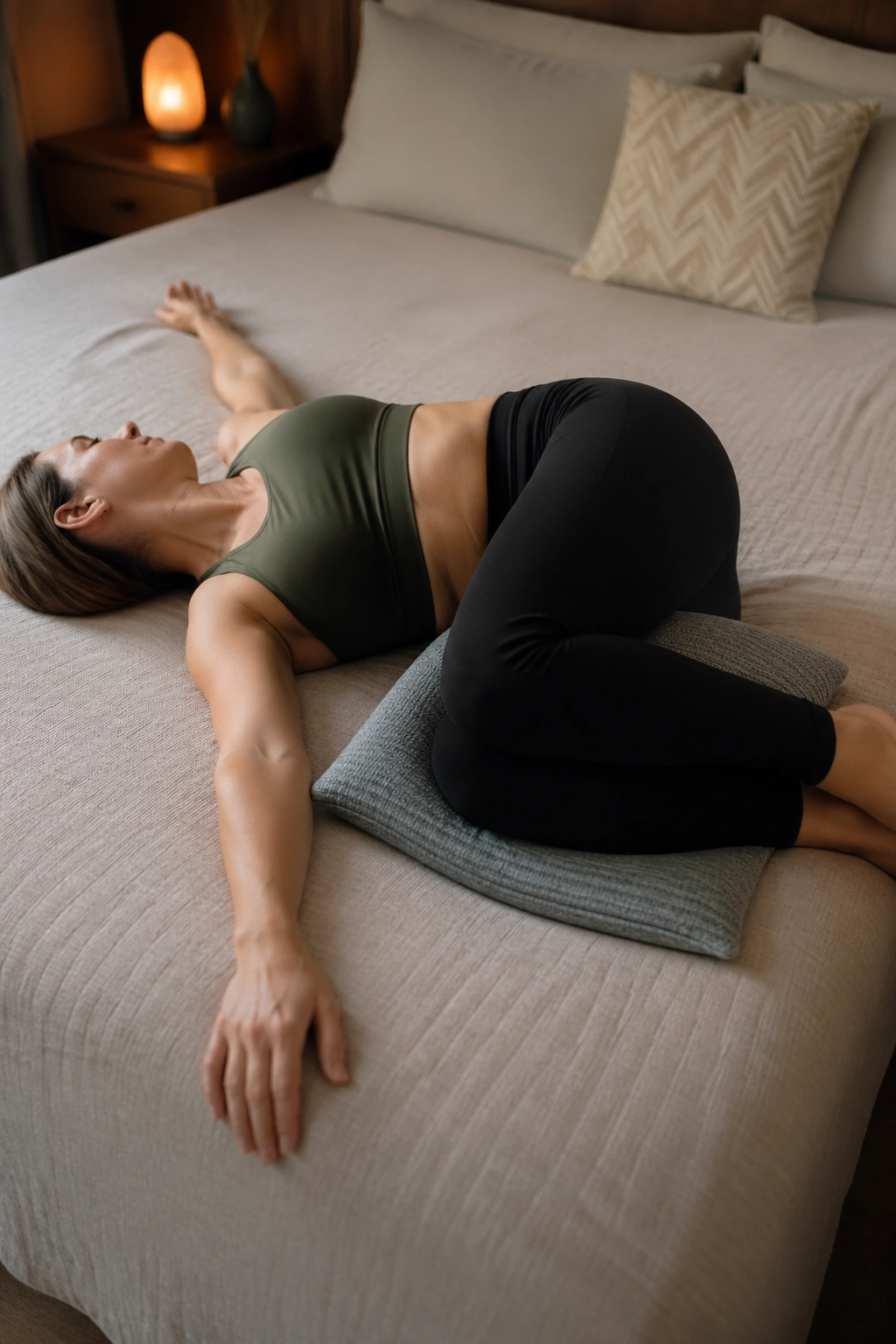
A good twist can do what a dozen vague “stretching” attempts never do.
Lie on your back, hug both knees in for a second, then let them fall to one side while your arms open wide like a T. Keep both shoulders as heavy as you can. If the top knee floats too far away from the floor, place a pillow or folded blanket under it. That one small support can change everything.
The sensation should be more along the side of the spine, mid-back, and waist than in the low back itself. If the lower back feels pinched, back off. A bedtime twist should feel like wringing out a towel, not yanking the towel apart.
Hold 5 to 8 breaths on each side. I like this one near the end of a routine because it seems to collect all the noise from the earlier moves and put it somewhere quieter.
6. Child’s Pose with Side Reach
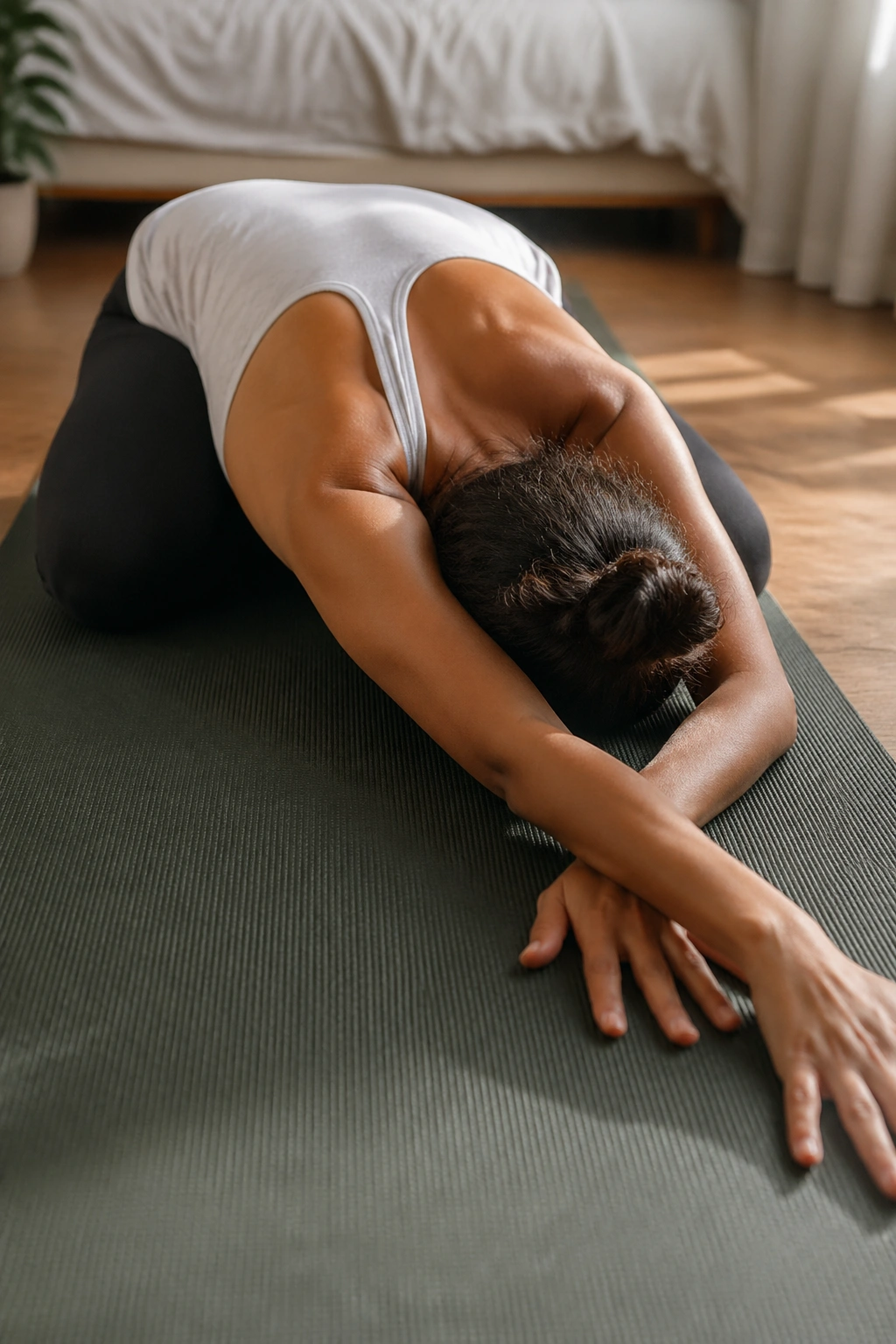
If your shoulders feel welded to your neck, this is the easy answer.
Come into child’s pose with your knees wide or together, then walk your hands forward and let your forehead rest on the mat or a pillow. Once you are settled, walk both hands a few inches to the right so the left side body opens. Stay there for a few breaths, then switch sides.
Why It Works at Night
- The back body gets a gentle stretch without load.
- The side ribs open, which can make breathing feel bigger.
- Your forehead resting down gives the nervous system a clear “we are done” signal.
Do not chase an extreme hip fold. If your hips are stiff, keep your butt far from your heels and stack a cushion under the chest. Bedtime stretches should invite release, not punish tight hamstrings for existing.
7. Mermaid Side Bend
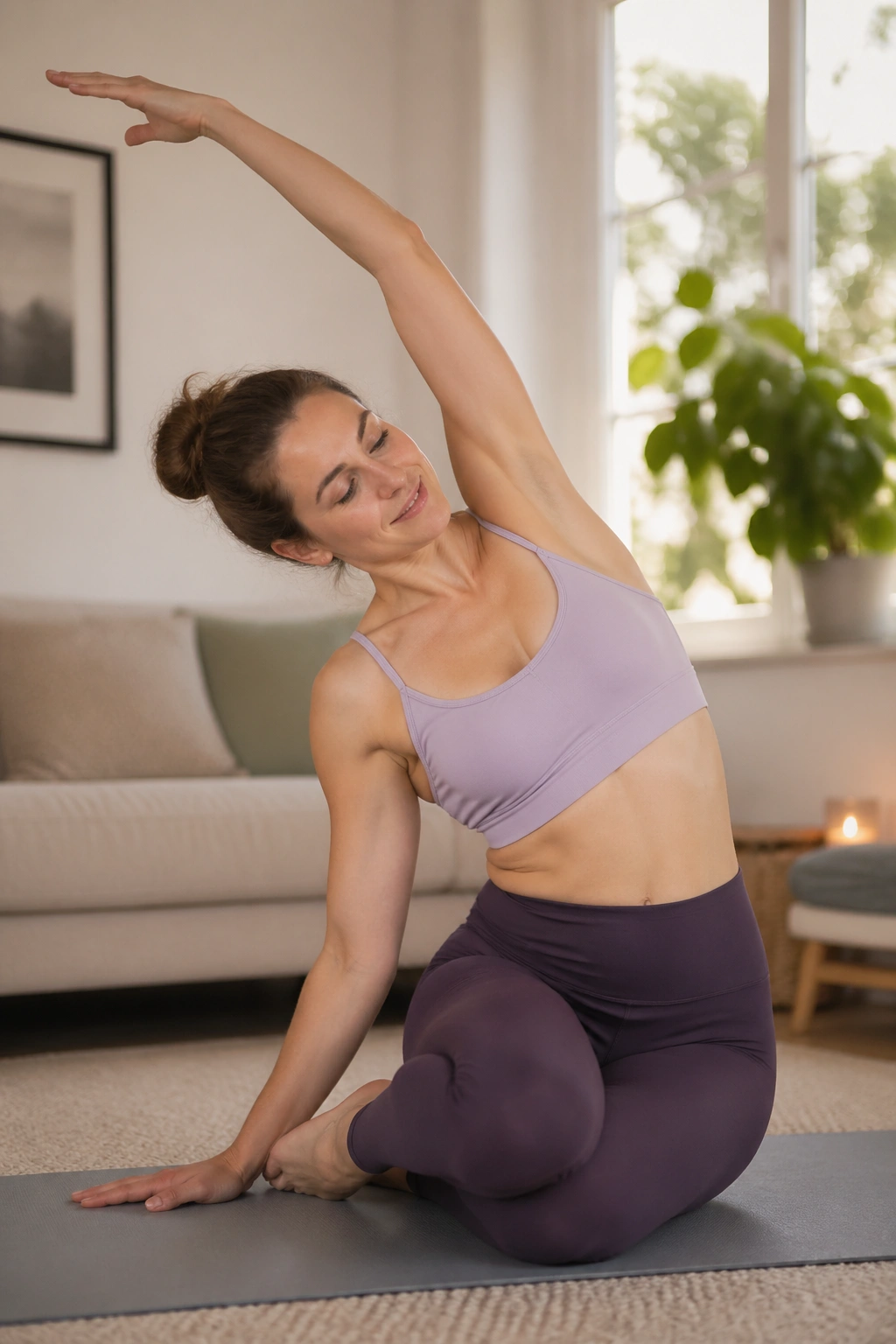
Mermaid is one of those stretches that looks elegant, but the real value is practical.
Sit with both shins folded to one side, or choose a cross-legged seat if that is friendlier for your hips. Ground one hand beside you, then sweep the opposite arm up and over into a long side bend. Keep both sit bones as even as possible. The goal is to open the ribs, obliques, and side waist, not collapse into one hip.
Unlike a forward fold, mermaid gives the breath somewhere new to go. That matters at night. When the side ribs are stiff, breathing gets shallow fast, and shallow breathing tends to keep the body alert. A side bend can feel like unlocking a stuck zipper along the ribs.
Three to four breaths per side is enough. If the floor is far away, sit on a folded blanket. That little lift often makes the shape cleaner and much more comfortable.
8. Thread-the-Needle Shoulder Release
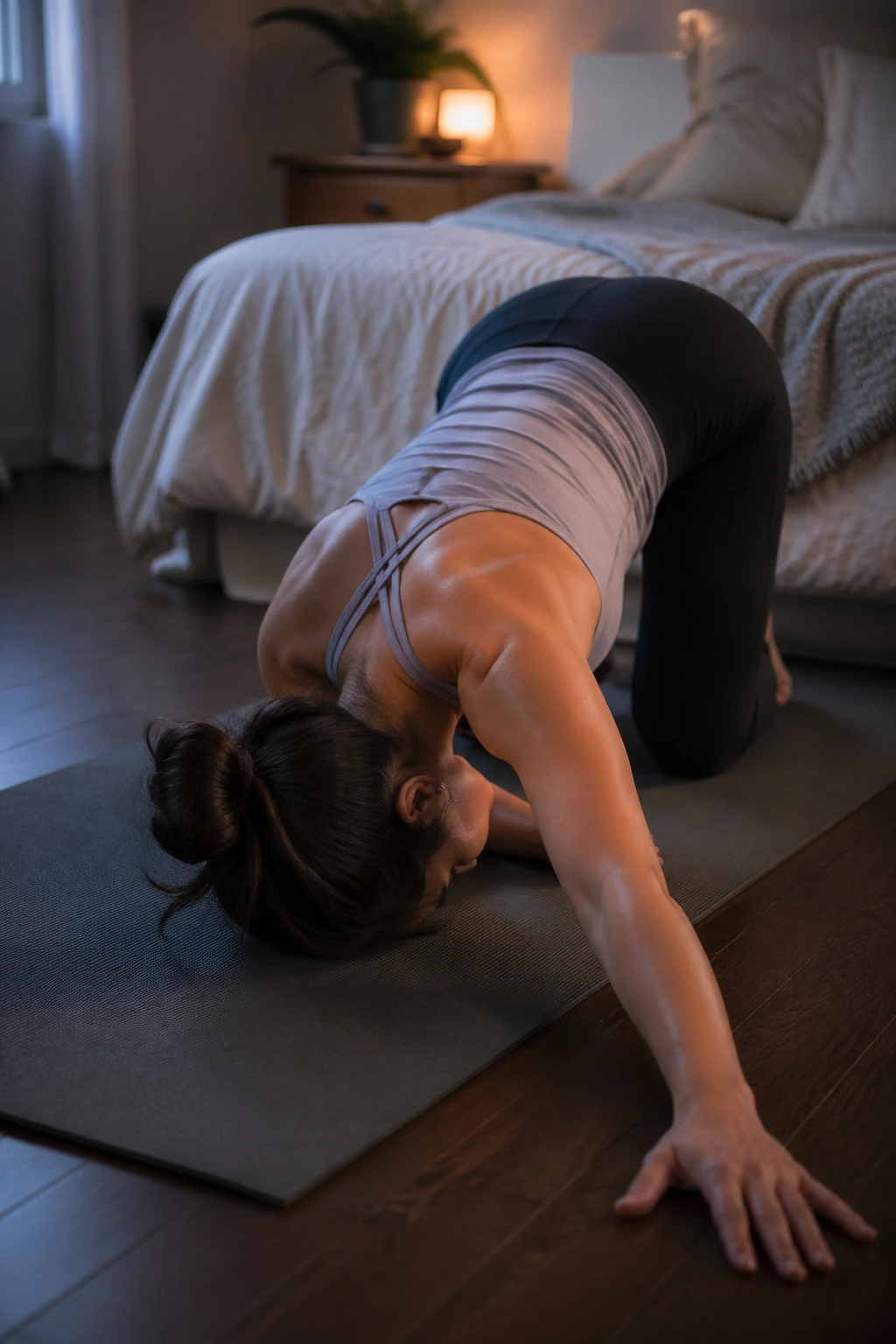
Why do shoulders hold so much tension at night? Because they do.
From hands and knees, slide your right arm under your left arm and lower the right shoulder and side of the head toward the mat. The left hand can stay planted or reach forward if that feels better. Breathe into the space between your shoulder blades, then switch sides.
Make It Gentler
- Put a pillow under the head if the neck is cranky.
- Keep the top arm active only if you want a deeper stretch.
- If the twist feels sharp in the shoulder, come out sooner.
This move works well before sleep because it targets the upper back without needing much effort from the hips or abs. It is also one of the few stretches that can make desk shoulders feel unhooked within a couple of breaths. You know the feeling when your shoulders finally drop an inch? That.
9. Seated Forward Fold with Soft Knees
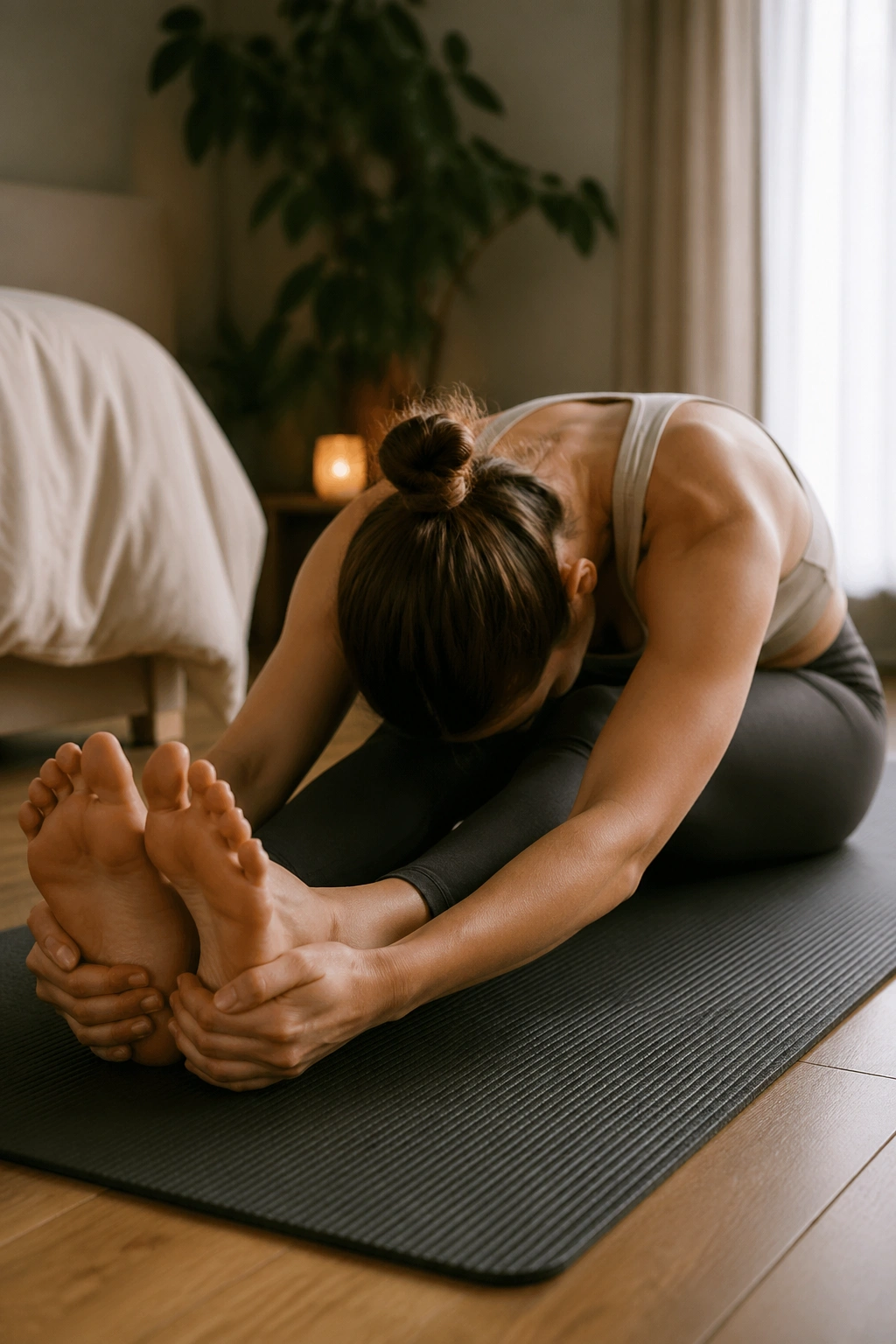
A bedtime forward fold should not look heroic.
Sit with both legs stretched out in front of you, then bend the knees as much as needed so your spine can stay long. Hinge from the hips and fold forward only until you feel the back body lengthen. Your hands can rest on your shins, ankles, or the mat. There is no prize for reaching your toes.
The key here is softness. Straight knees are optional, and for a lot of bodies they are a bad idea at night. Bent knees let the pelvis tilt forward more easily, which usually makes the fold feel calmer and less shouty in the hamstrings.
If your lower back rounds the second you go forward, sit on a folded blanket. That small lift often changes the whole angle. Hold for 4 to 6 breaths and let the forehead drop only if it happens naturally.
10. Hamstring Stretch with a Strap
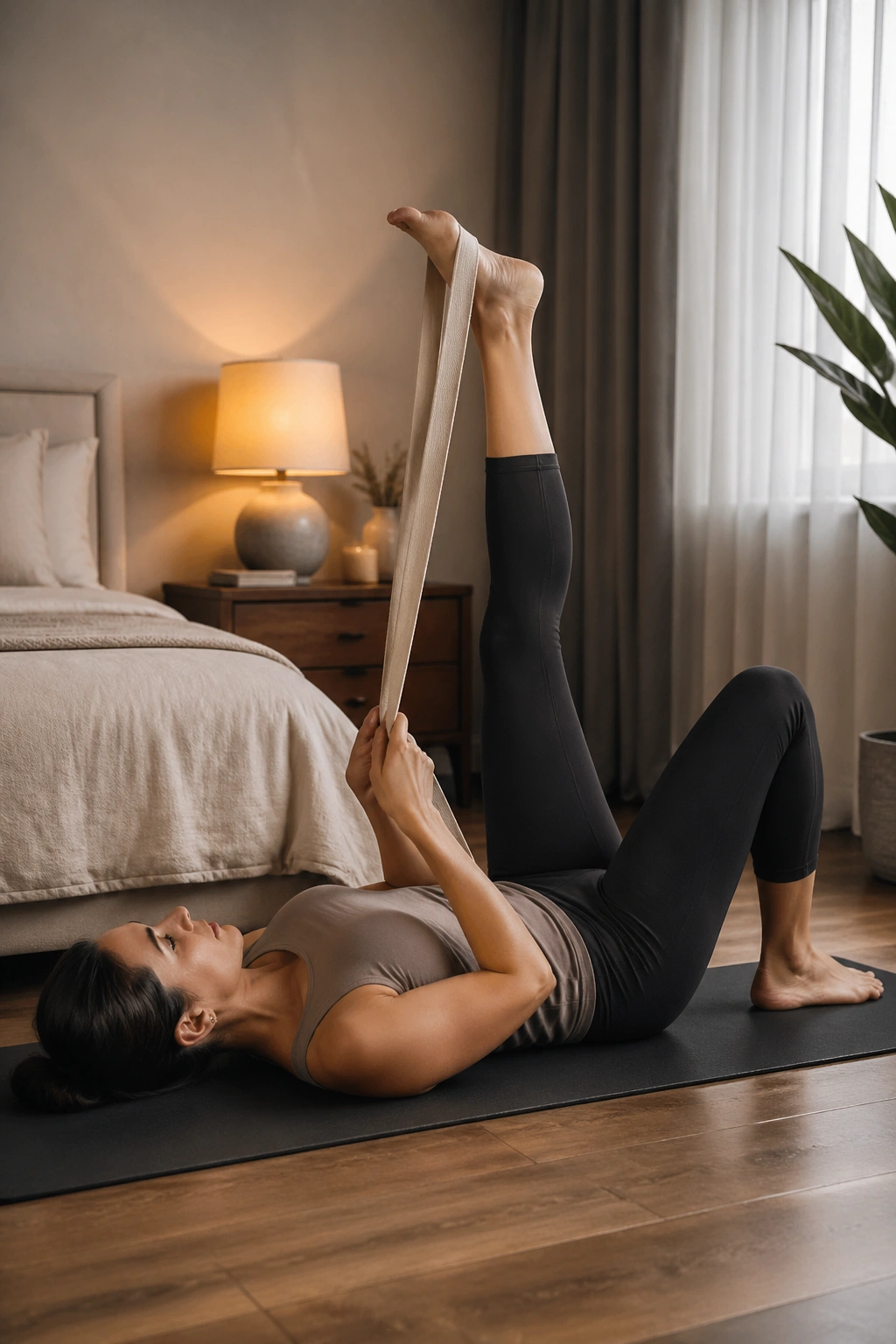
A strap gives you more control than your hands ever will.
Lie on your back, loop a yoga strap or towel around the ball of your right foot, and extend the leg toward the ceiling. Keep a soft bend in the knee if the back of the leg feels too wired, then slowly straighten only as far as you can without clenching your jaw. The other leg can stay bent with the foot on the floor.
This version is calmer than trying to force a standing hamstring stretch at the end of the day. On the floor, your back does not have to fight gravity, and your pelvis stays steadier. That usually means less tugging and more actual release.
Flex the foot if you want a stronger line through the back of the leg, or let it relax if the calf gets cranky. Hold for 20 to 30 seconds, then switch sides. If you know your hamstrings are stubborn, repeat once. Not five times. Once more is enough.
11. Open-Book Thoracic Rotation
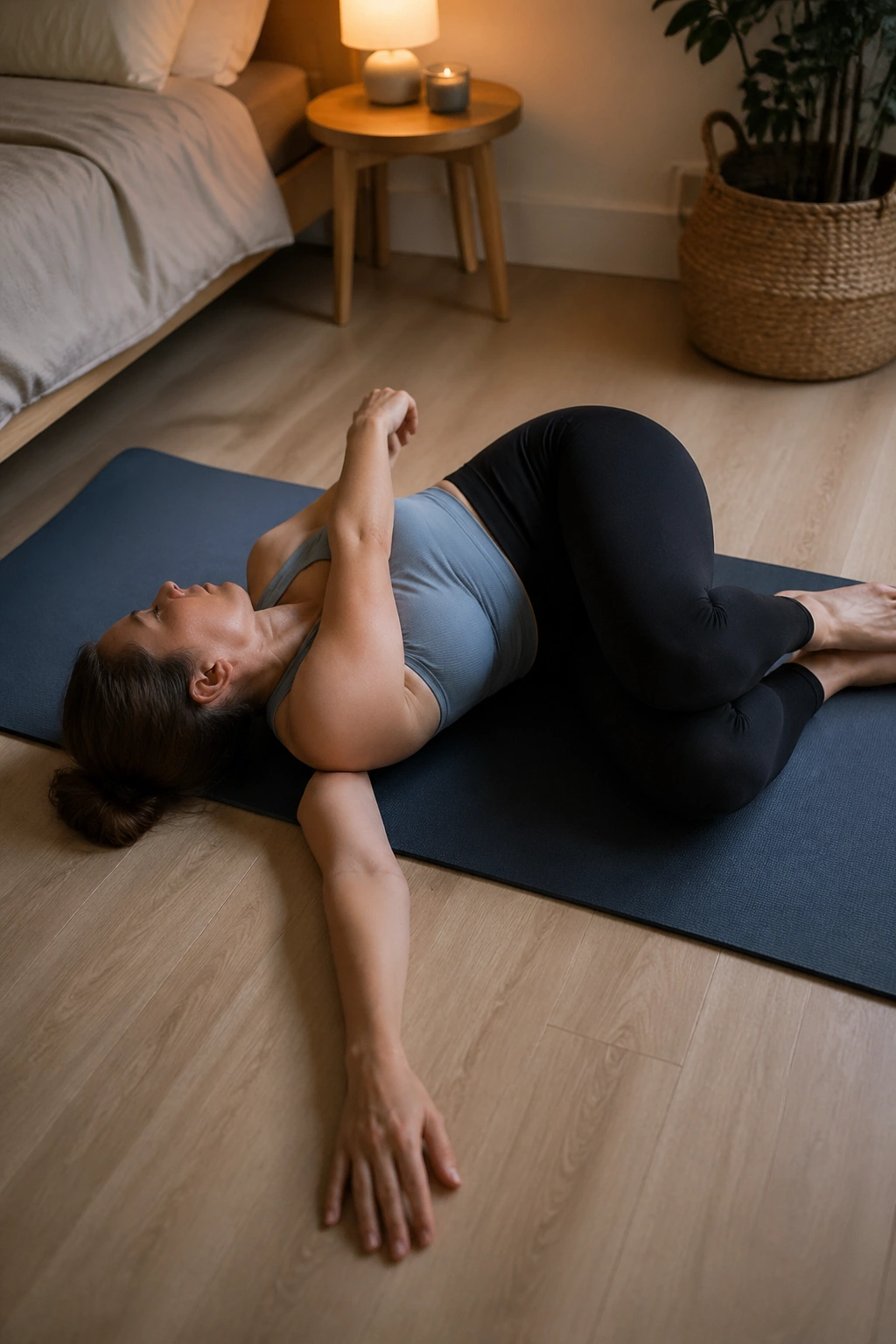
This is the stretch I want when my upper back feels glued together.
Lie on your side with knees bent and stacked, arms straight out in front. Keeping the knees still, open the top arm across your body and then out behind you, like turning a book page all the way open. Let your chest follow only as far as it can without the lower back twisting hard. Then close back up and repeat.
The upper back, or thoracic spine, is made to rotate. The low back is not supposed to do all the work. That is why this move feels so good when it is done slowly. You are giving the right part of the spine a job and letting the wrong part relax.
Five breaths per side is enough. If your arm does not touch the floor behind you, that is fine. The floor is not the point. The gentle opening across the chest and ribs is.
12. Supine Butterfly Stretch
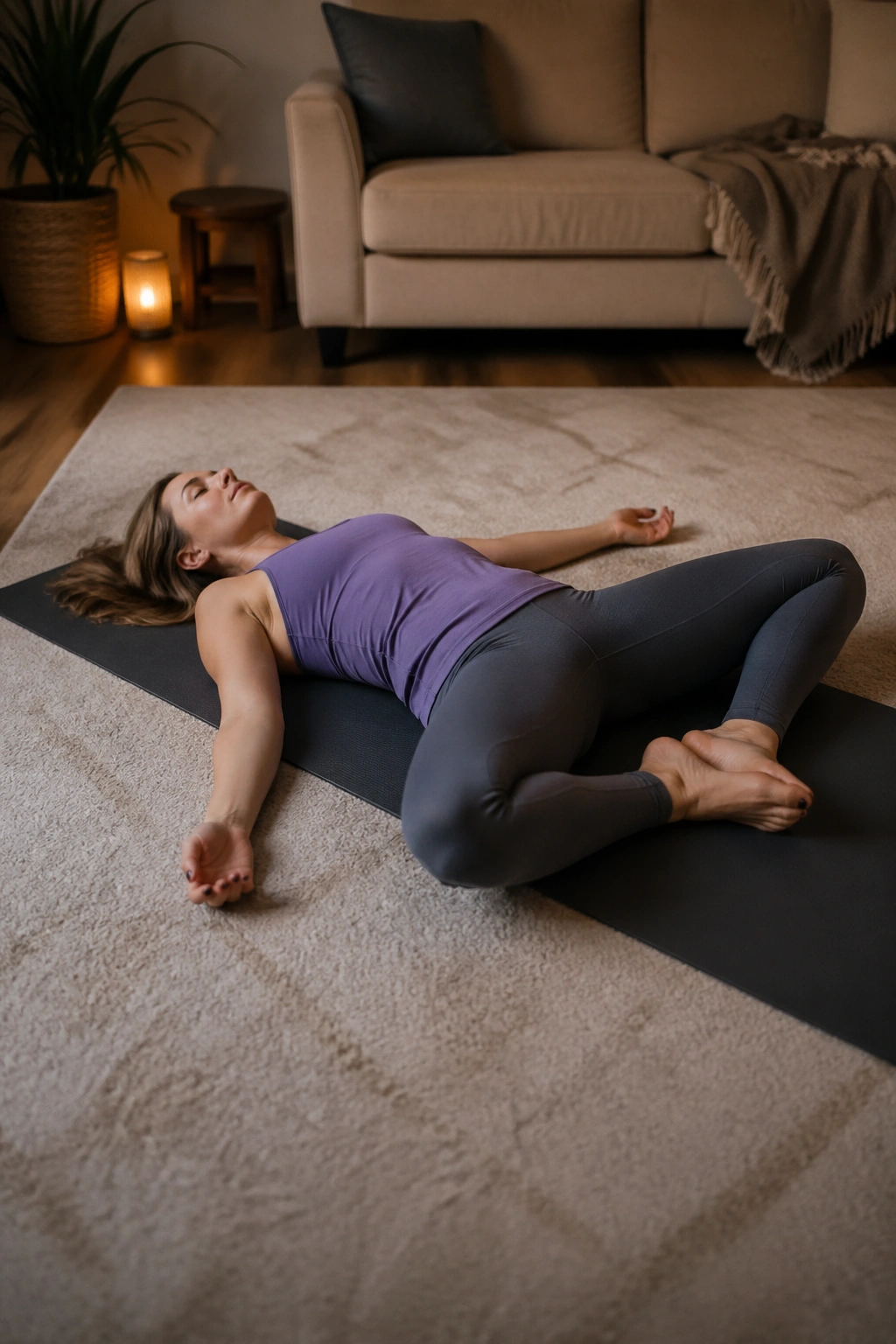
There is a reason people keep coming back to this one.
Lie on your back, bring the soles of your feet together, and let the knees fall out to the sides. You can keep the feet close to your pelvis for a stronger inner-thigh stretch, or move them farther away if your hips complain. If the knees hang too low, place pillows or blocks under them.
How to Keep the Knees Happy
- Support the outer thighs if the hips feel pinched.
- Keep the feet a little farther away if the groin feels too intense.
- Stay with a breathing pace you could maintain for a few minutes.
Supine butterfly opens the inner thighs and the front of the hips while keeping your whole back on the floor. That is a nice trade at night. The shape feels open, but the position still says rest. Let the breath stay low and wide, and stay for 5 to 8 breaths.
13. Neck Nods and Chin Tucks
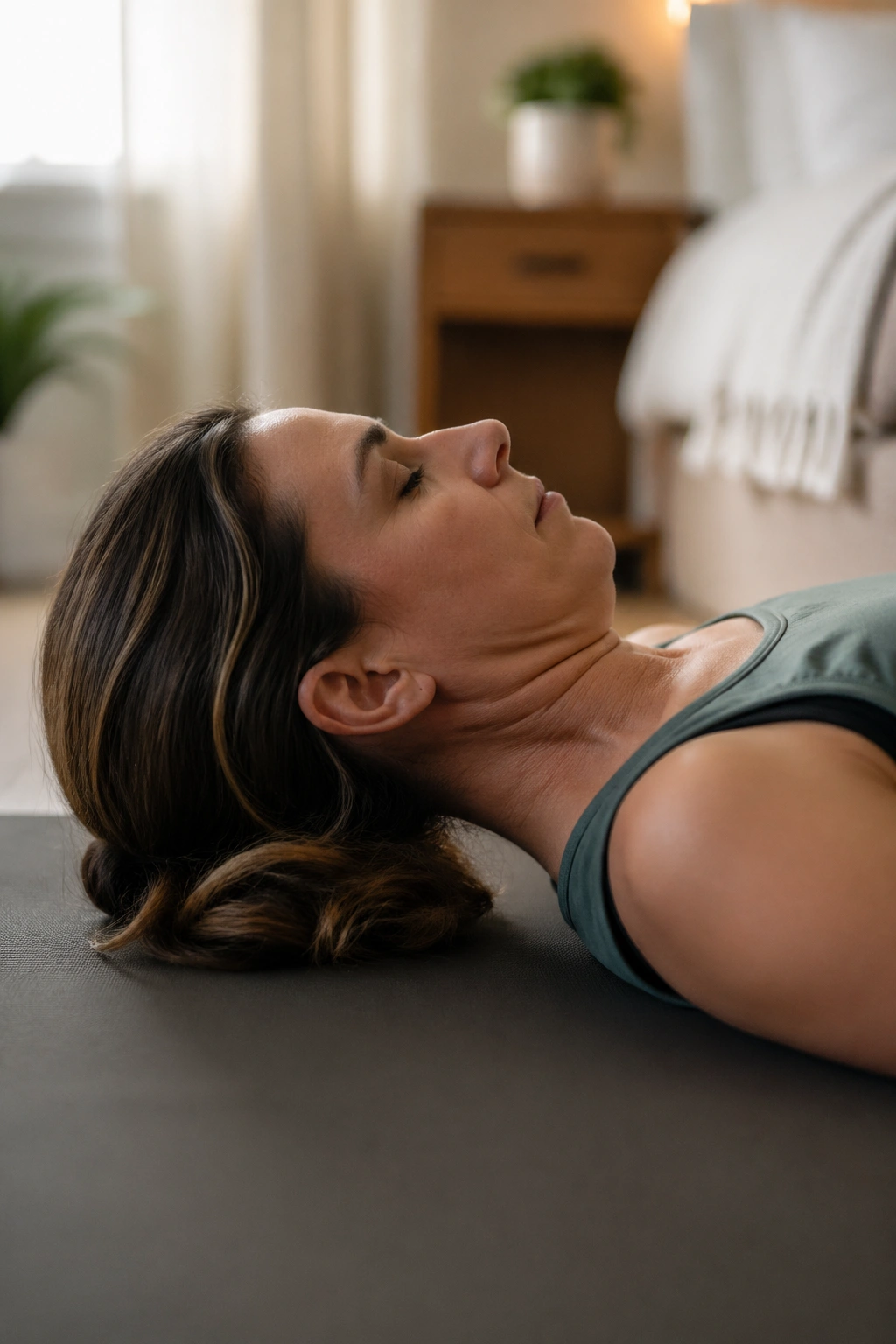
Neck work before bed sounds boring. It is. And that is exactly why it helps.
Lie on your back with the back of the head heavy on the mat. Begin with tiny nods, as if you were saying “yes” by barely moving at all. Then draw the chin in a little to lengthen the back of the neck, like making space between the skull and the shoulders. Do not jam the chin hard toward the throat. Small is better.
The goal is to stop the neck from gripping. A lot of bedtime tension sits here because the head has spent all day forward, up, and looking at things. A few slow nods can remind the base of the skull that it does not need to brace through the night.
Six to eight repetitions is plenty. If the jaw tightens, soften the teeth apart and shorten the range. I would rather see someone do three clean nods than ten sloppy ones.
14. Ankle Circles and Foot Flexes
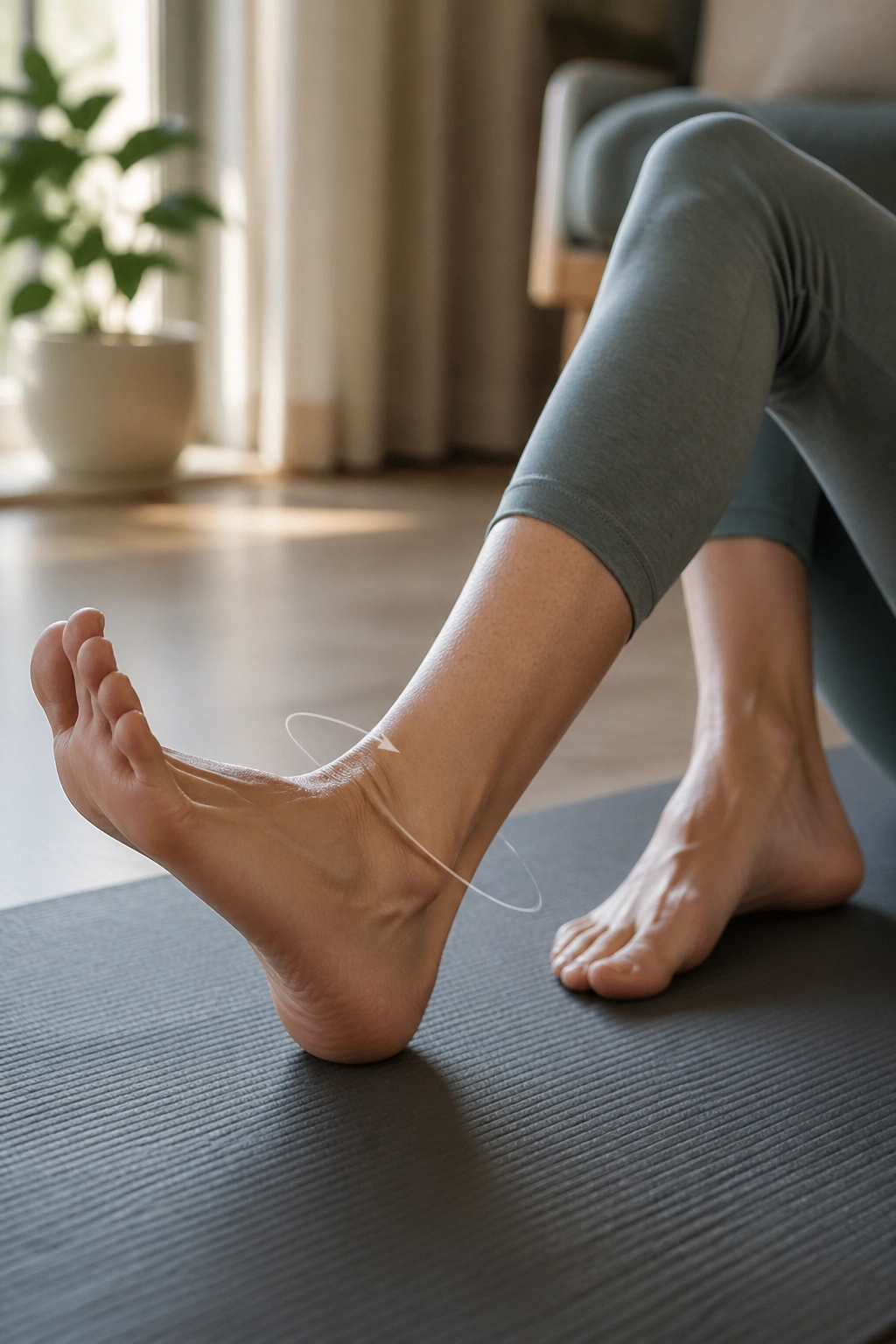
Feet matter more than people think.
Extend one leg at a time or keep both knees bent with the legs lifted, then circle the ankles slowly in each direction. After that, flex and point the feet a few times, almost like waking up the toes from a nap. It sounds too simple to matter. Then the calves unclench.
Quick Cues
- Keep the movement smooth, not choppy.
- Circle smaller if you feel pinching in the ankle joint.
- Flex the feet more than you point them if your calves tend to cramp at night.
This is a smart finisher if your lower legs get tight from walking, standing, or wearing shoes that do not leave much room for the foot. It also works nicely before legs-up-the-wall, because the calves often soften a bit after the ankle work. Ten slow circles each direction is enough.
15. Slow Glute Bridge Lowering
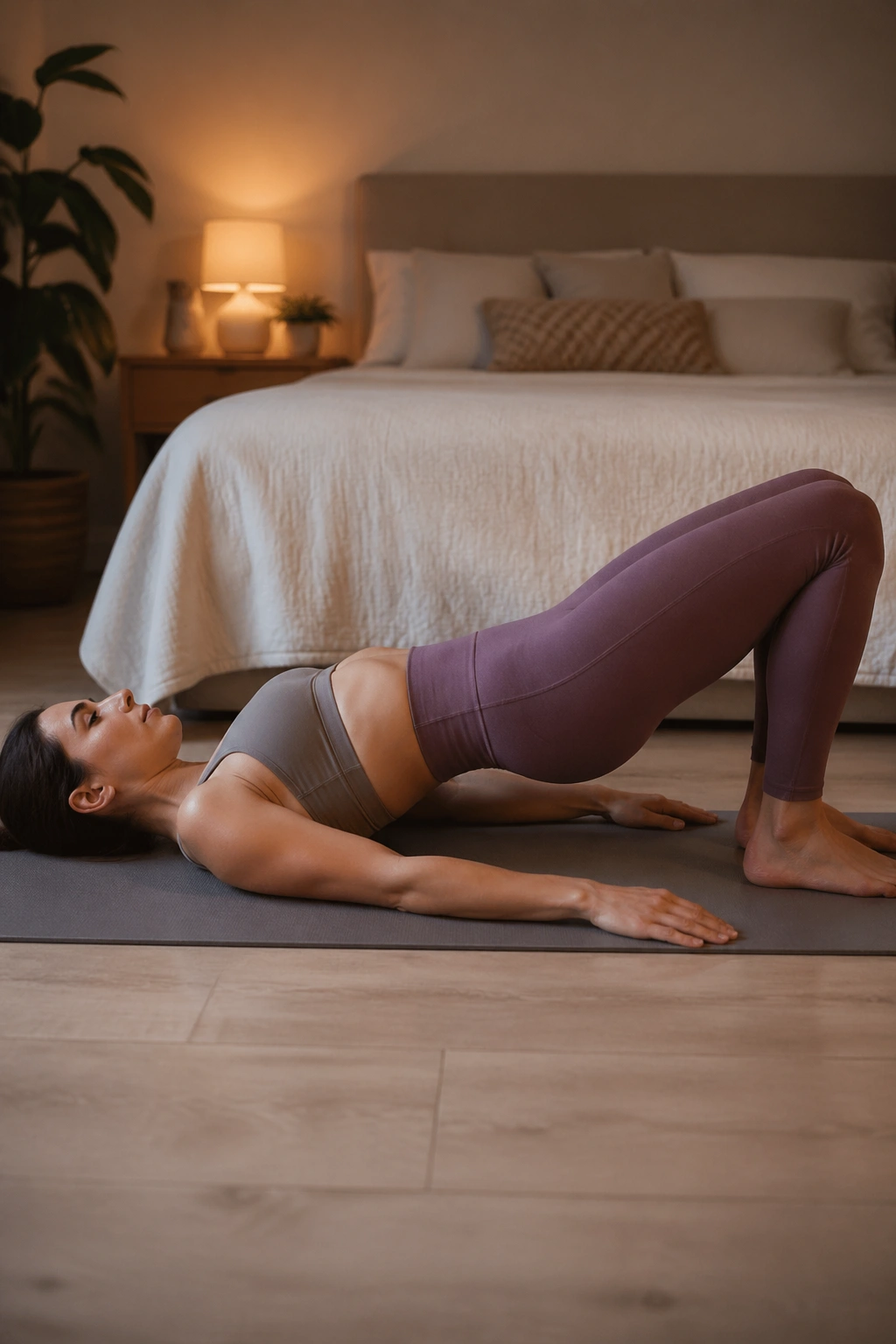
A bridge can calm you down if you make it slow enough.
Lie on your back with knees bent and feet flat, then press into the feet and lift the hips just a few inches. Do not fling them up. Think of lengthening the front of the hips first, then lowering one vertebra at a time until the tailbone settles back down. Repeat that 5 or 6 times.
The bridge is not only for strength work. Done gently, it can help the pelvis feel organized again, which is useful if you spent the day slouching, twisting, or bracing against a hard chair. The trick is to keep the movement small and the descent slow.
If bridges make you feel awake instead of sleepy, skip them at night. That is not failure. It just means your body prefers softer floor work before bed, and there is plenty of that waiting below.
16. Legs-Up-the-Wall Reset
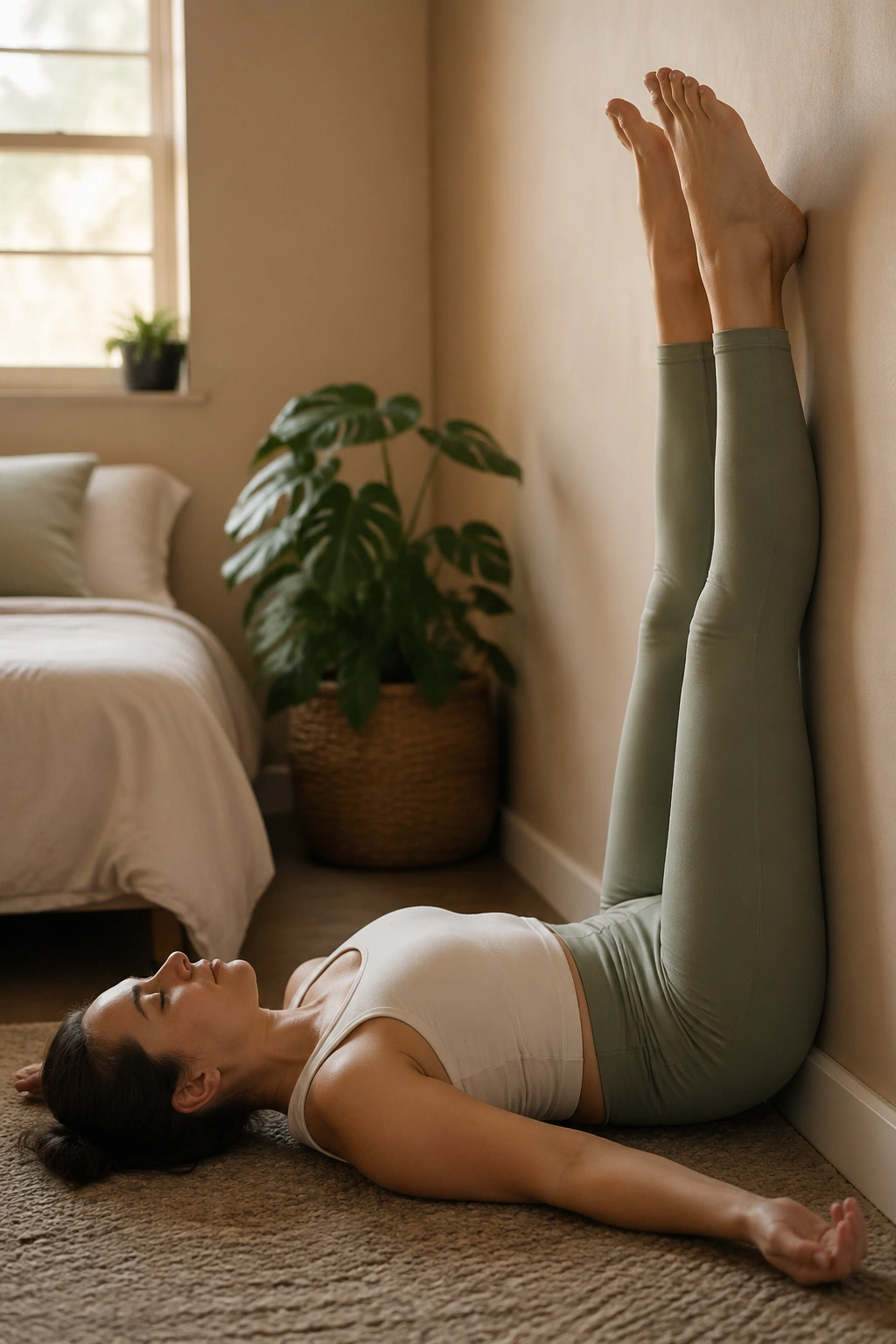
This is less a stretch and more a full-body sigh.
Sit beside a wall, swing your legs up, and lie back so your hips rest close to the wall or a little away from it. The legs can stay straight, slightly bent, or even slide a few inches down the wall if straight-up feels too intense. Your arms can rest by your sides with palms open. Then do something rare: stop.
It is worth trying a folded blanket under the hips if your lower back likes a little lift. If the backs of the knees feel tight, scoot farther from the wall so the legs make more of a diagonal than a sharp angle. That small adjustment can turn a clunky position into a deeply restful one.
Stay here for 1 to 3 minutes, or longer if it feels good and you have the time. The breathing usually starts to slow on its own. That is the point.
17. Constructive Rest Position
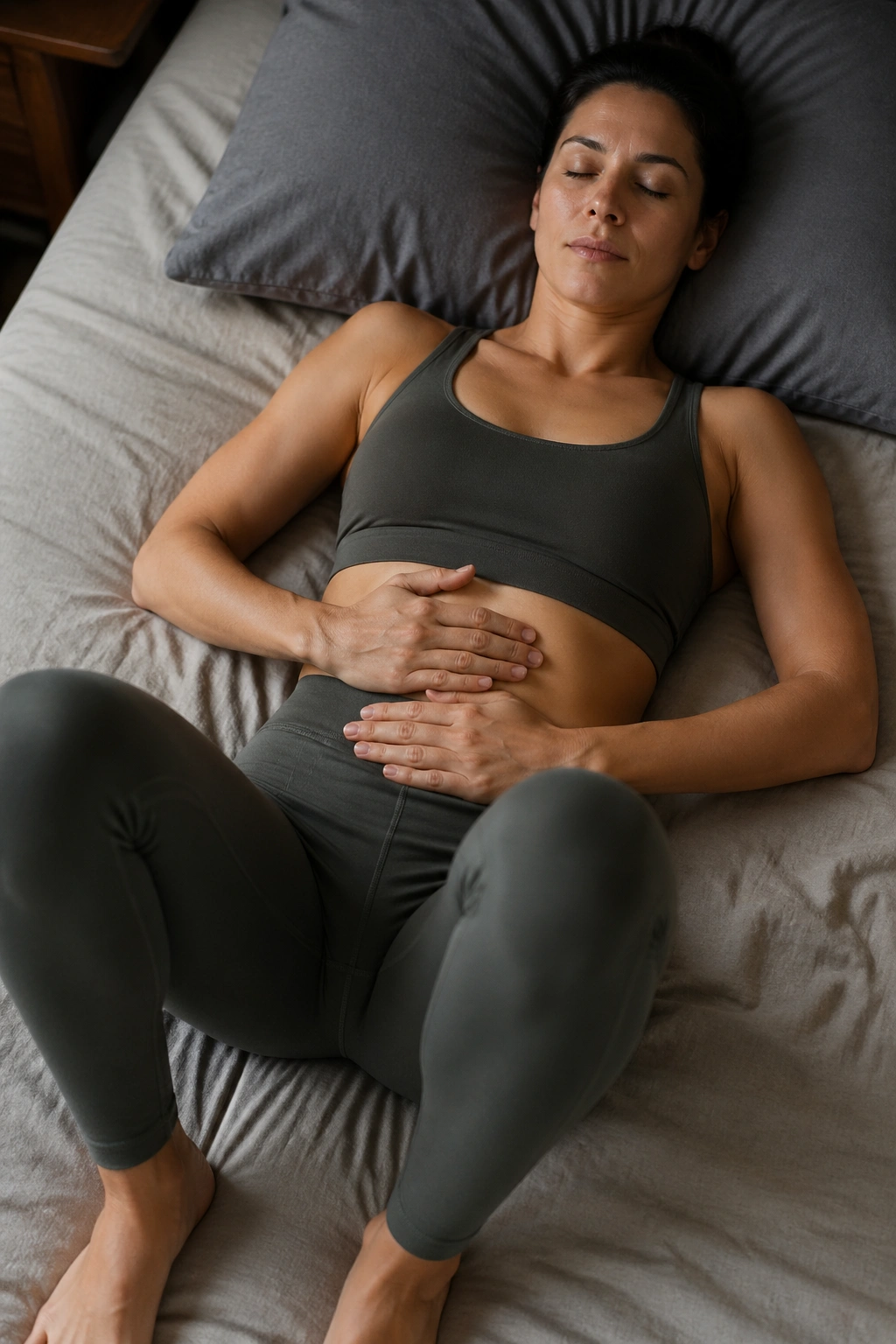
What if you stop stretching and just rest?
Lie on your back with knees bent and feet on the floor, hip-width apart. Let the ribs settle, the shoulders widen, and the hands rest on the belly or by your sides. If you want, place one hand on the ribs and one on the lower belly so you can feel the breath move. There is no shape to perfect here.
This position is almost absurdly simple, which is exactly why it belongs in a bedtime Pilates routine. After a day of doing, it gives you a chance to notice what your body feels like when it is not being asked for anything. That shift can be more useful than another stretch.
Stay for 8 to 10 breaths. Keep the jaw loose. Let the tongue rest on the floor of the mouth. If you feel your mind racing, do not wrestle it. Just keep breathing and let the floor do the heavy lifting.
18. Pelvic Clock on Your Back
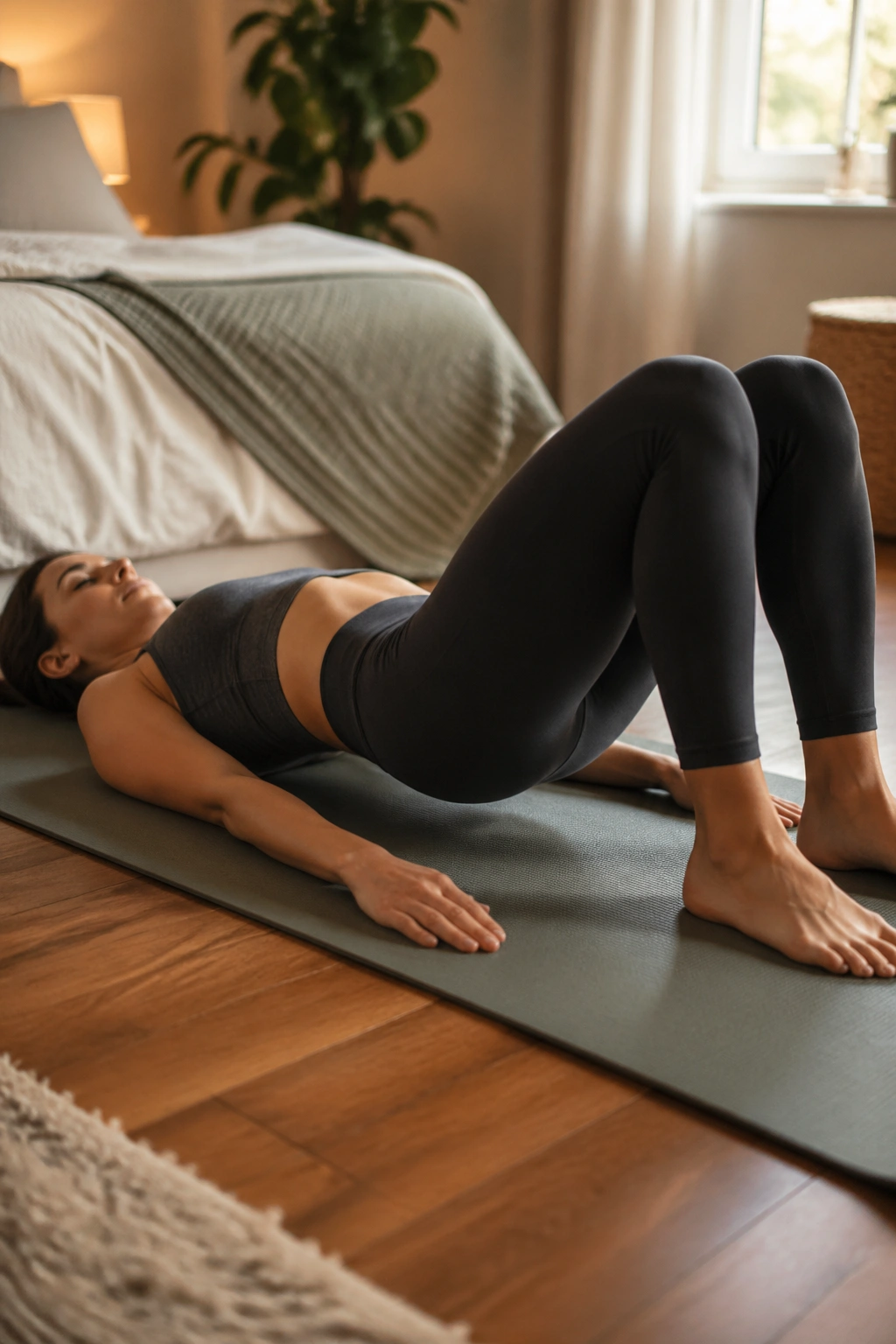
If you want one last move to stitch everything together, make it this one.
Lie on your back with knees bent, then imagine your pelvis as a clock face. Gently tip the top of the pelvis toward 12 o’clock, then toward 6, then a little toward 3 and 9, making the smallest possible circle. The motion should be slow enough that you can feel each part of your lower back make contact with the mat.
This is such a quietly useful Pilates move because it combines control, breath, and a tiny bit of exploration. You are not stretching one obvious muscle here. You are re-learning how the pelvis moves under you, which can soften the low back and calm the belly at the same time.
Do 4 circles in each direction, then lie still for a few breaths. If you want the whole routine to land somewhere softer, finish here. If your body feels calmer after the first few moves, that is fine too. The point of bedtime Pilates stretches is not to collect every option. It is to end the day with less gripping, less noise, and a body that feels ready to fold into the pillow.
