



The tension between the weight room and the Pilates studio is a common struggle for anyone chasing a balanced, athletic physique. You spend an hour under the squat rack, feeling the burn in your quads and the intensity of heavy iron, then realize your posture is slumping and your core control is nonexistent. Or, you spend an hour on a reformer, feeling the deep, precise burn of stabilizing muscles, only to feel frustrated by the lack of raw, explosive strength.
Most people try to solve this by choosing one or the other, or by haphazardly throwing them together in a way that leads to burnout or stagnation. The reality is that these two disciplines are not enemies; they are the missing halves of a complete athletic picture. Strength training builds the engine, while Pilates acts as the precision steering and chassis reinforcement.
Integrating them requires more than just showing up to the gym on Monday and a Pilates class on Tuesday. It demands a strategy. Whether you want to boost your deadlift, fix chronic lower back pain, or simply look and move better, the following schedules offer a roadmap for blending these worlds without losing your mind—or your gains.
1. The 3-Day Strength-Pilates Hybrid
This is the “bread and butter” schedule for most people. It balances intensity with recovery without demanding a seven-day commitment. You alternate between lifting and Pilates to ensure your central nervous system gets a break.
The Weekly Rhythm
- Monday: Full-body heavy strength training (squats, presses, rows).
- Tuesday: Mat Pilates focused on core and spinal mobility.
- Wednesday: Full-body heavy strength training.
- Thursday: Active recovery (walking or light mobility).
- Friday: Full-body strength or Pilates-heavy circuit.
- Saturday: Rest.
- Sunday: Rest.
Pro tip: Do not skip the mobility work on your Tuesday Pilates days. Use that session to open up the hips and shoulders that get tight from your heavy Monday lifting.
2. The Alternating 4-Day Split
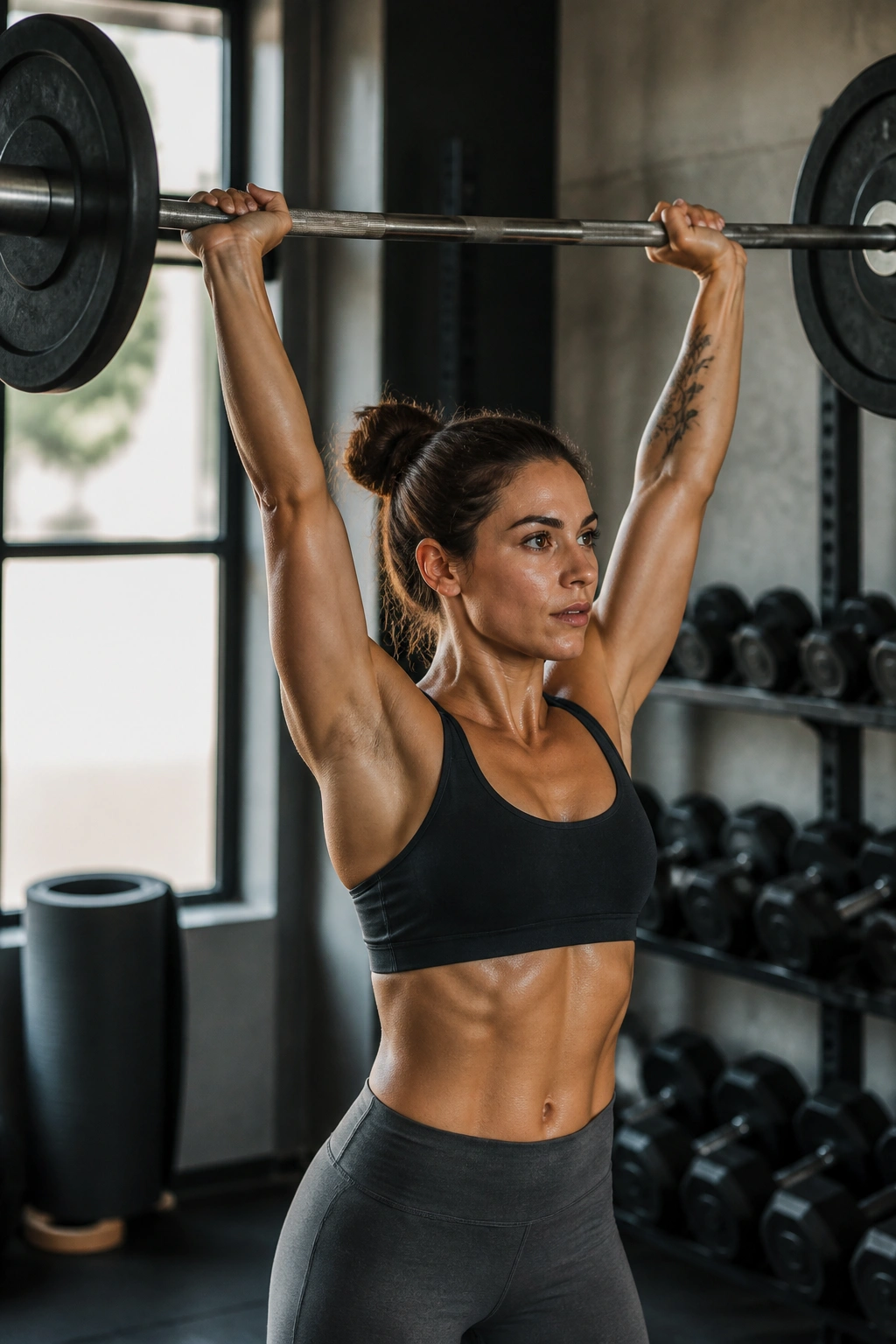
If you have a bit more time, this schedule allows for a deeper dive into specific muscle groups. By separating upper and lower body lifting days, you can push harder in the gym while using Pilates as your “glue” to connect the movements.
This structure works because it prevents the central nervous system fatigue that often comes from full-body lifting four days a week. You alternate days, meaning you rarely hit the same muscle group hard two days in a row.
How to Structure It
- Monday: Upper body strength training.
- Tuesday: Pilates focus on core, glutes, and spinal alignment.
- Wednesday: Lower body strength training.
- Thursday: Pilates focus on flexibility and deep stabilizing muscles.
- Friday through Sunday: Rest or light activity.
3. The 5-Day Intensity Protocol
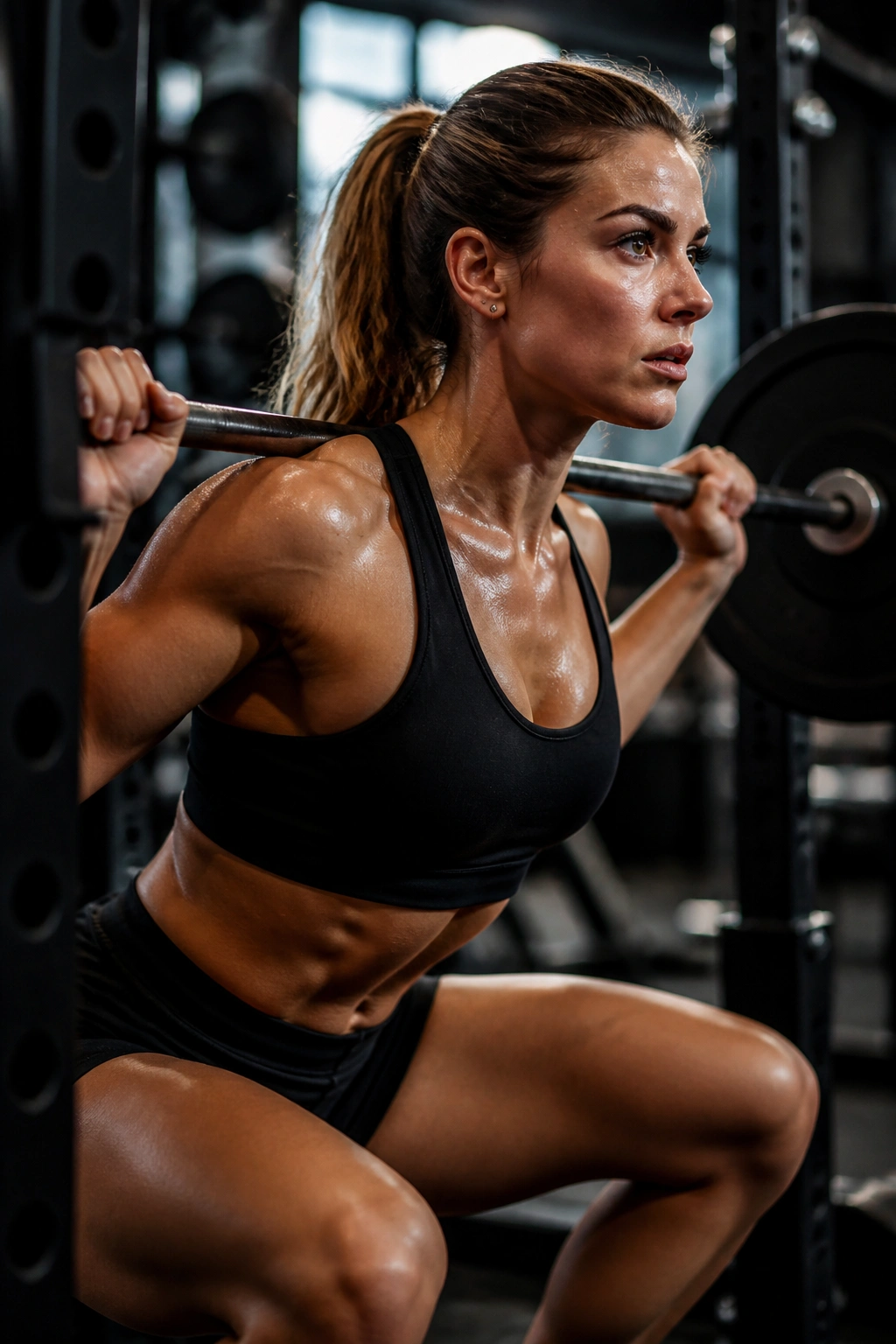
This plan is for those who are already accustomed to a high volume of work. It is not for beginners. You are essentially doing a “double-duty” style of training where every day demands a significant output, either through heavy weight or intense controlled resistance.
The Weekly Breakdown
- Monday: Heavy Compound Lifting (Deadlifts/Squats).
- Tuesday: Intermediate Reformer or Mat Pilates.
- Wednesday: Hypertrophy-focused lifting (Isolation exercises).
- Thursday: High-Intensity Pilates (Adding resistance bands or weights).
- Friday: Upper-body pushing and pulling.
- Saturday/Sunday: Full rest is required here, or you will crash.
Warning: Listen to your joints. If your elbows or knees start to ache, shift one of your Pilates sessions to a “gentle” category or take an extra rest day.
4. The 2-Day Starter Routine

If your schedule is packed, do not try to squeeze in five workouts. You will fail. Instead, focus on two high-quality, high-impact sessions that combine elements of both disciplines.
Session 1: Strength + Core Finish
Start with 45 minutes of fundamental strength moves—bench press, lunges, and overhead presses. Follow this immediately with 15 minutes of direct Pilates core work, specifically targeting the transverse abdominis.
Session 2: Pilates + Mobility
Spend an hour on full-body Pilates. Focus on long, controlled movements. In the last 15 minutes, add some light, high-rep accessory work with dumbbells—lateral raises, bicep curls, or tricep extensions—to get a bit of muscle pump without the exhaustion of heavy lifting.
5. The “Pilates-First” Progression
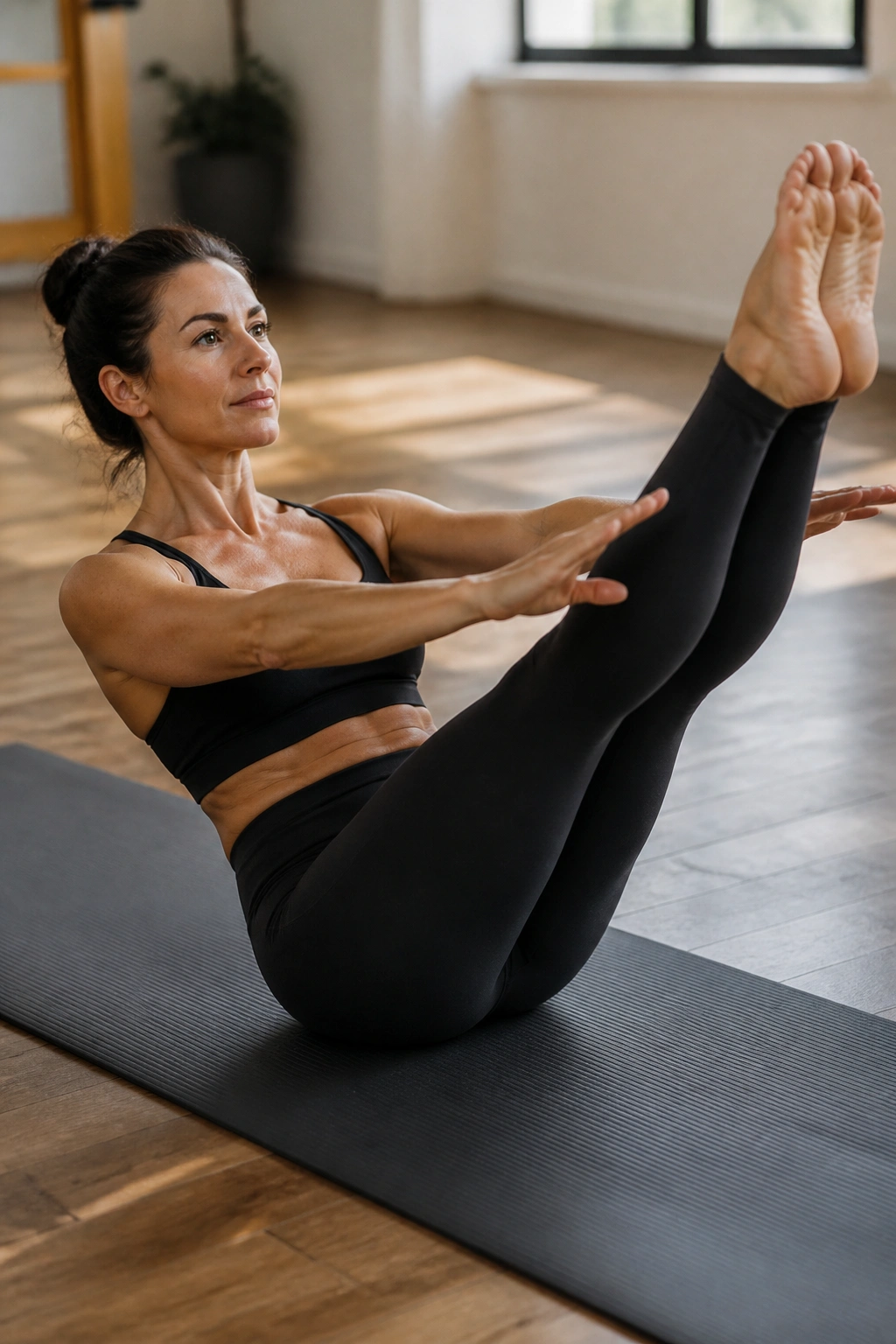
Some people find that their lifts suffer because their core is weak. If you are one of them, put Pilates at the front of your week. By the time you get to the squat rack, your stabilizing muscles will be “awake” and ready to support your heavy loads.
The Schedule
- Start your week on Monday with a dedicated hour of Pilates.
- Tuesday: Heavy strength training.
- Wednesday: Another hour of Pilates.
- Thursday: Heavy strength training.
- Friday: A short, 30-minute mix of both to wrap up the week.
This order changes your lifting game. When your core is primed by Pilates, your lumbar spine stays neutral during squats and deadlifts much more easily. You will likely find your form improves almost immediately.
6. The Strength Endurance Protocol
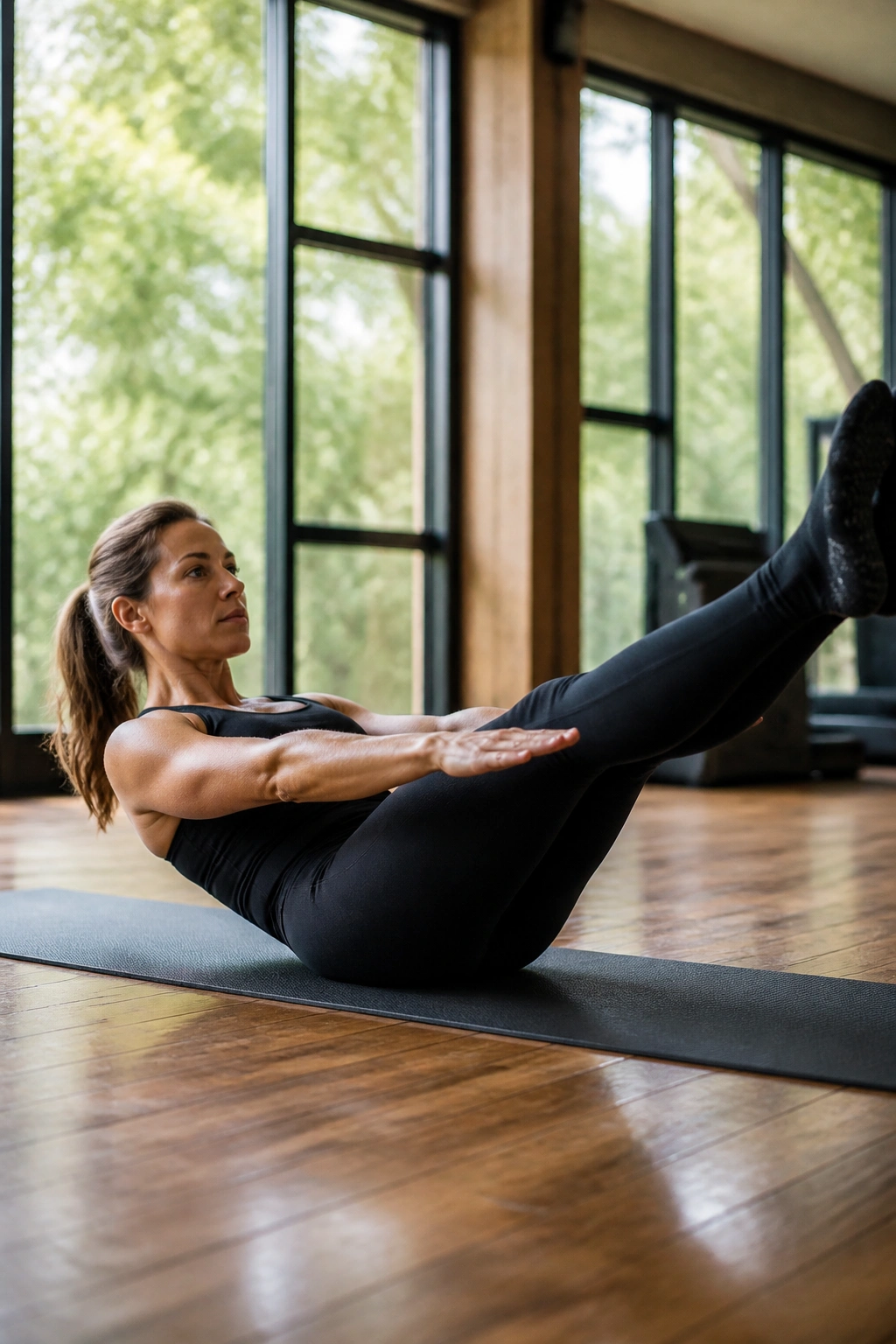
This schedule is designed for people who want to look toned, athletic, and capable. It leans heavily on higher rep ranges in the weight room and flows directly into Pilates-style movements that keep the heart rate elevated.
The Focus
- Use weights that allow for 12–15 reps per set.
- Keep rest periods between sets to 45 seconds.
- Transition immediately to Pilates movements like “The Hundred” or “Leg Circles.”
This constant motion creates a metabolic environment that builds lean muscle and improves cardiovascular health simultaneously. It is tiring, but the physical results are usually very noticeable within a few months of consistent effort.
7. The Posture-Corrective Plan
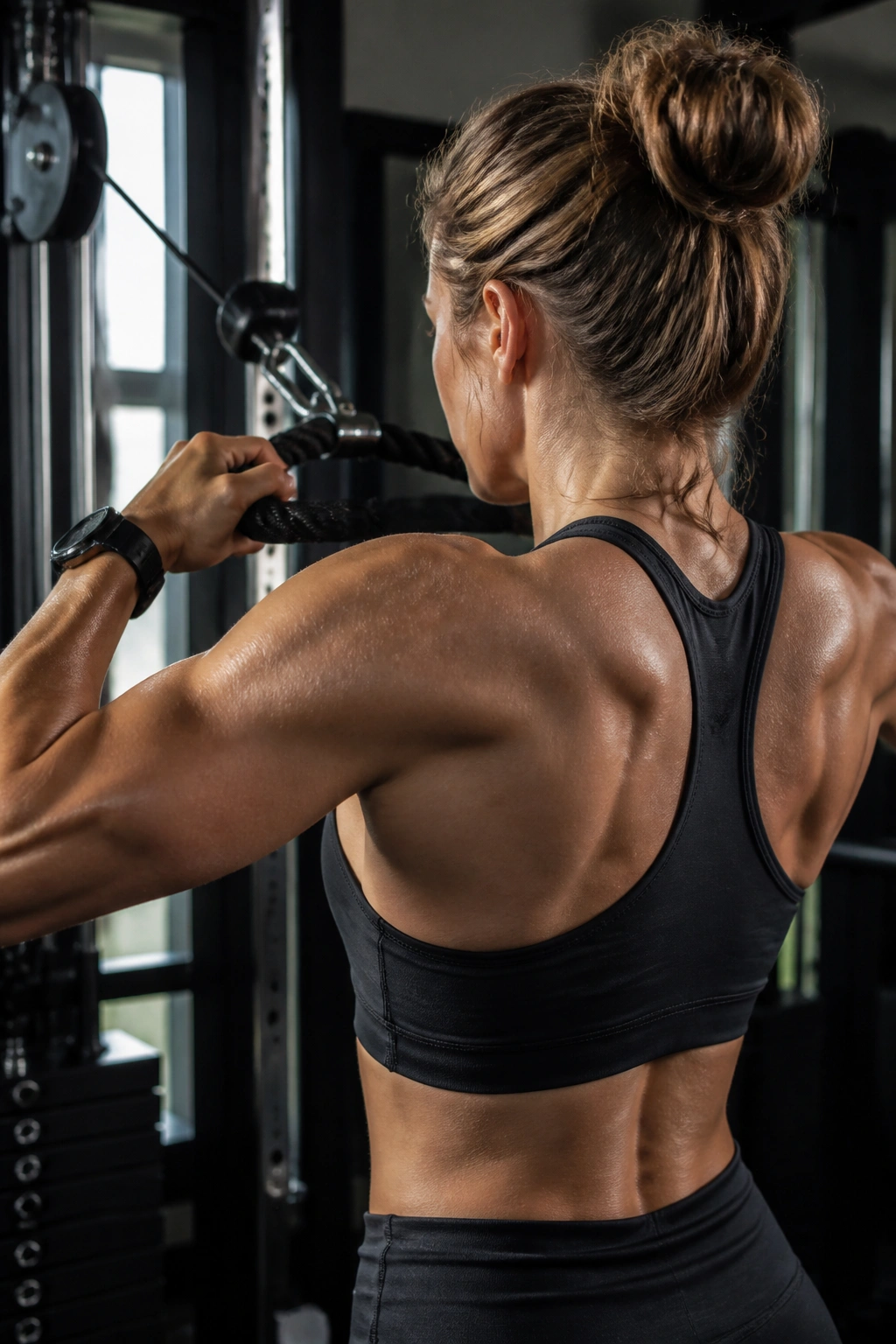
We spend too much time at desks, hunched over phones. This schedule is specifically designed to undo the damage of modern life. It prioritizes the posterior chain and chest opening movements.
What to prioritize:
- Strength focus: Rows, face pulls, and reverse flys. These build the upper back muscles that pull the shoulders back.
- Pilates focus: Spinal extension, swan prep, and shoulder bridge. These release the tightness in the front of the body.
Perform these strength moves on Monday and Thursday. Perform the postural Pilates on Tuesday and Friday. You will notice a difference in how you carry yourself within two weeks.
8. The Athletic Performance Schedule

If you play sports—basketball, tennis, or running—you need explosiveness and stability. This routine balances the two needs perfectly. You lift to generate power and do Pilates to protect your joints from the impact of that power.
The Split
- Monday: Explosive strength (Jump squats, power cleans).
- Tuesday: Pilates (Ankle stability and hip mobility).
- Wednesday: Unilateral strength (Single-leg deadlifts, Bulgarian split squats).
- Thursday: Pilates (Core rotational power).
- Friday: Full-body maintenance.
This keeps you fast, strong, and injury-resistant. You are not just building muscle; you are building an athlete’s body.
9. The Low-Impact Heavy Day Routine
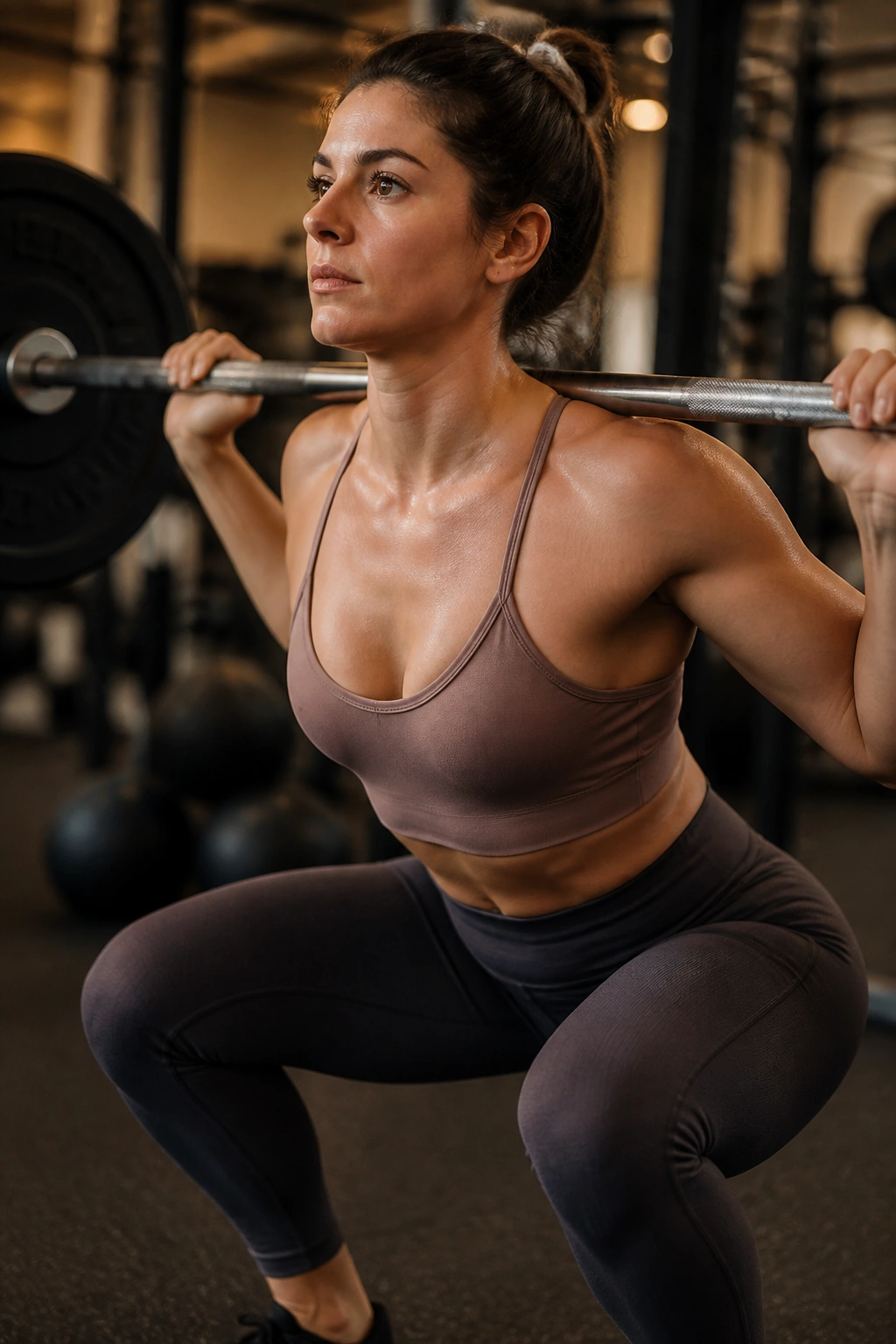
Many people avoid heavy weights because they fear joint pain. This schedule allows for heavy loading by using Pilates to “prep” the joints and keeping the high-impact cardio to a minimum.
The Method
- Use heavy, slow, controlled lifting movements.
- Focus on eccentric-focused lifts (taking 3-4 seconds to lower the weight).
- Use Pilates to mobilize joints before and after lifting.
By moving slowly in both the gym and the studio, you reduce the shear force on your tendons and ligaments. You can still move serious weight this way, and often, you will find you feel “younger” after a workout rather than battered.
10. The 30-Minute Efficiency Schedule
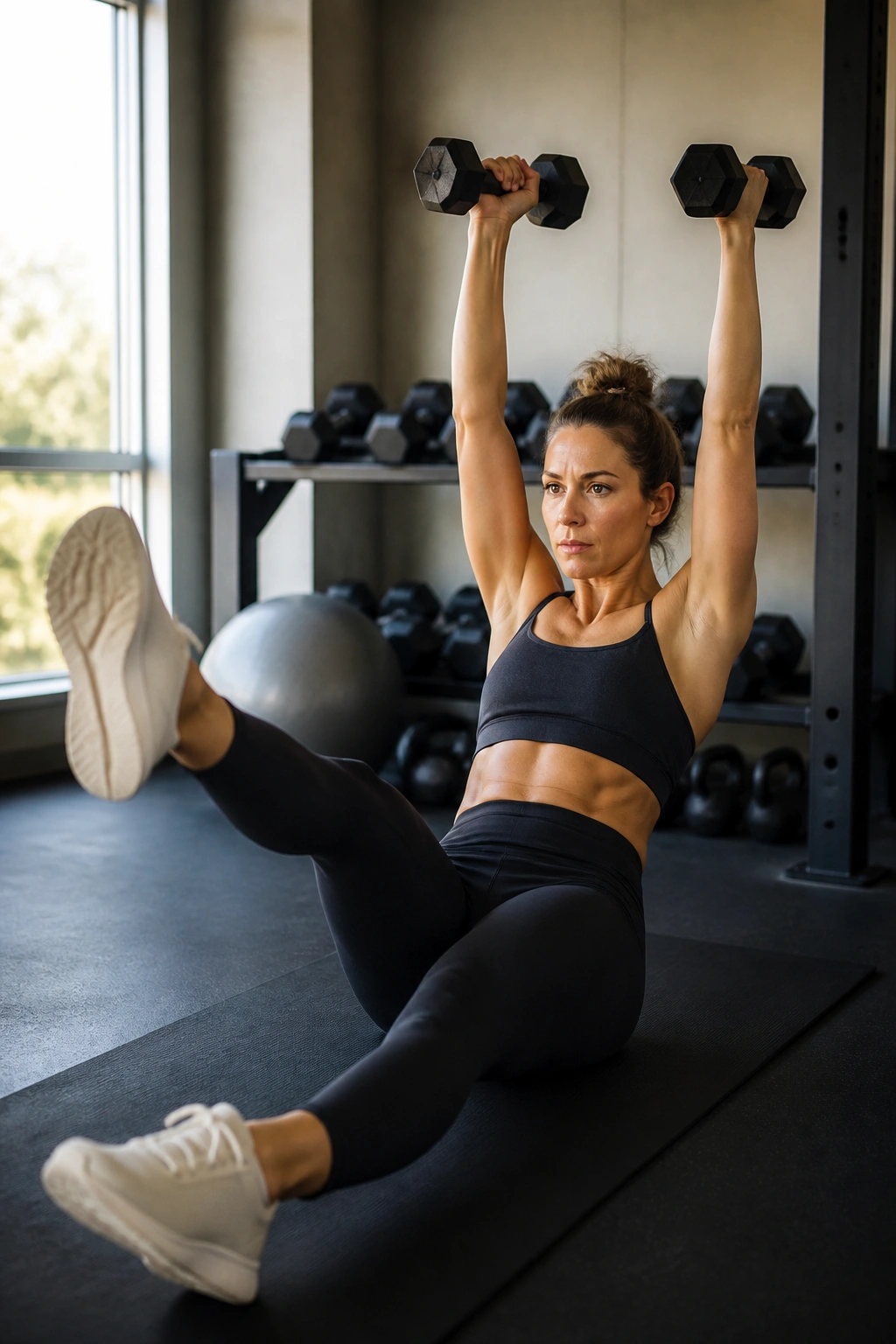
Real life is busy. If you have 30 minutes, you can get a surprisingly effective workout by combining the two styles into a circuit. This is not about record-breaking weights; it is about density.
The 30-Minute Circuit
- 5 minutes: Warm-up (Pilates-based).
- 20 minutes: Alternating strength moves (dumbbell presses, goblet squats) with Pilates floor work (planks, crunches).
- 5 minutes: Cool down.
Do not sit down between exercises. Move from a set of overhead presses right into a set of leg lifts. This keeps the intensity high and saves you time while ensuring you still hit both goals.
11. The Bodyweight Hybrid

You do not need a gym membership to build strength. Calisthenics—pull-ups, push-ups, dips—combined with Pilates offers a challenging way to build total body control.
Why It Works
Pilates teaches you to control your spine and pelvis. Calisthenics teaches you to move your body through space. Together, they create immense relative strength. You will learn to perform a push-up with perfect core engagement, which makes the movement much more difficult and rewarding than a sloppy, momentum-based rep.
12. The Hypertrophy Focus
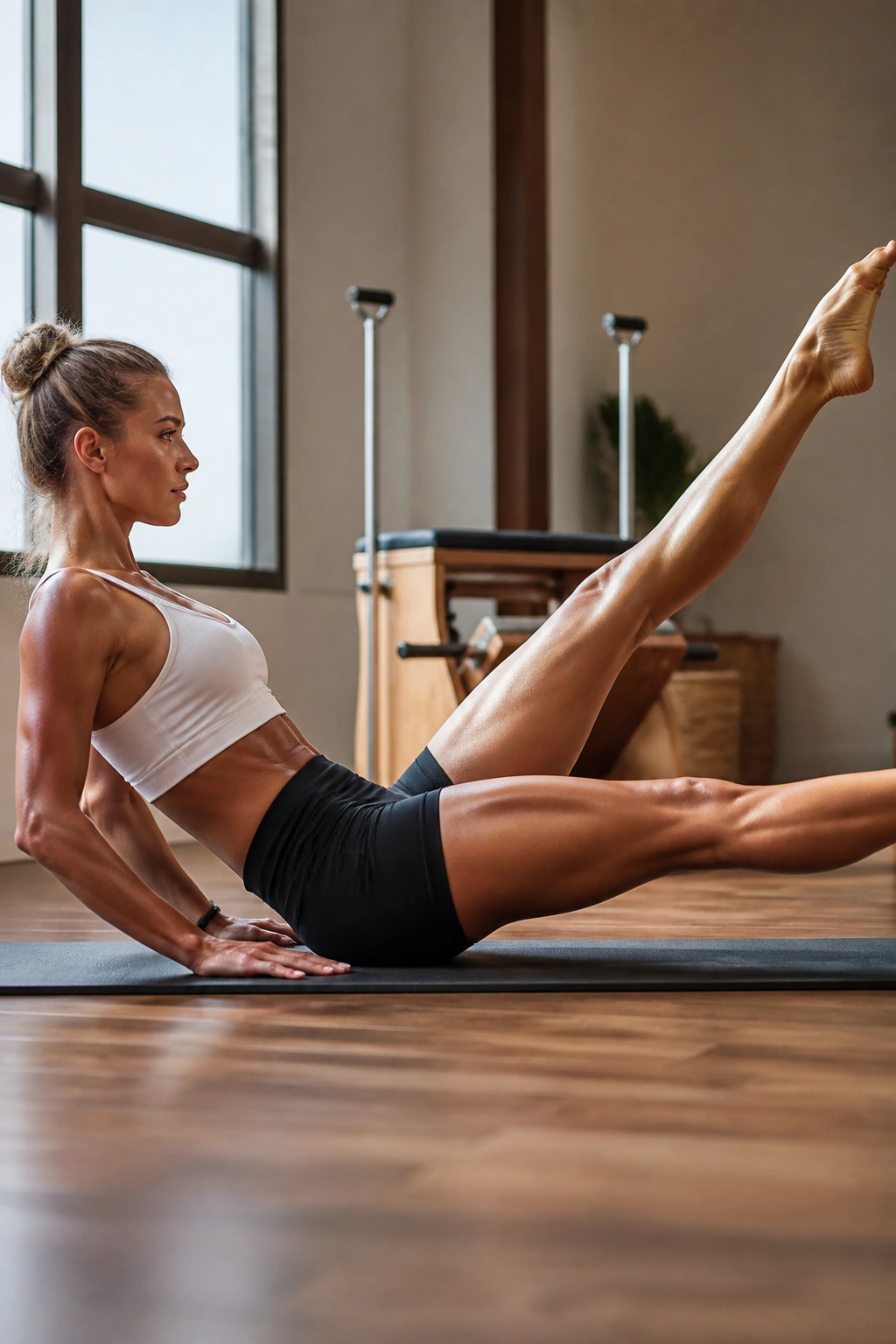
If your goal is to build size, you need time under tension. Strength training provides the load, while Pilates provides the “finish.”
The Strategy
- Perform your heavy hypertrophy work first (sets of 8-10).
- Finish each body part with a Pilates-based burnout set.
- For example: After doing heavy barbell squats, finish with 20 controlled Pilates leg extensions.
This technique exhausts the muscle fibers that the heavy lifting might have missed. It helps create that defined, “sculpted” look that heavy lifting alone sometimes fails to produce.
13. The Weekend Warrior Routine

If you are chained to a desk all week, use the weekends to do the heavy lifting. This schedule assumes you have the energy on Saturday and Sunday to put in long, focused training sessions.
The Schedule
- Monday through Friday: Light, 15-minute Pilates/stretching flows.
- Saturday: Heavy Strength Session (90 minutes).
- Sunday: Long, restorative Pilates session (60 minutes).
Use the weekdays to keep your muscles limber and your joints lubricated, so you aren’t stiff when you finally hit the gym for the big lifts on the weekend.
14. The Functional Mobility Schedule

Lifters often get “tight.” They get so strong that they lose their range of motion. If you find yourself unable to touch your toes or reach overhead without arching your back, this plan is for you.
The Focus
- Strength training with full range of motion (Deep squats, full depth bench press).
- Pilates movements specifically chosen for thoracic spine mobility.
- Avoid any exercise that restricts your movement range.
Your goal here is to be strong in the extreme ranges. If you can squat deep and have the core stability to keep your spine straight, you are doing more for your longevity than someone who just moves heavy weight a few inches.
15. The Progressive Overload Plan
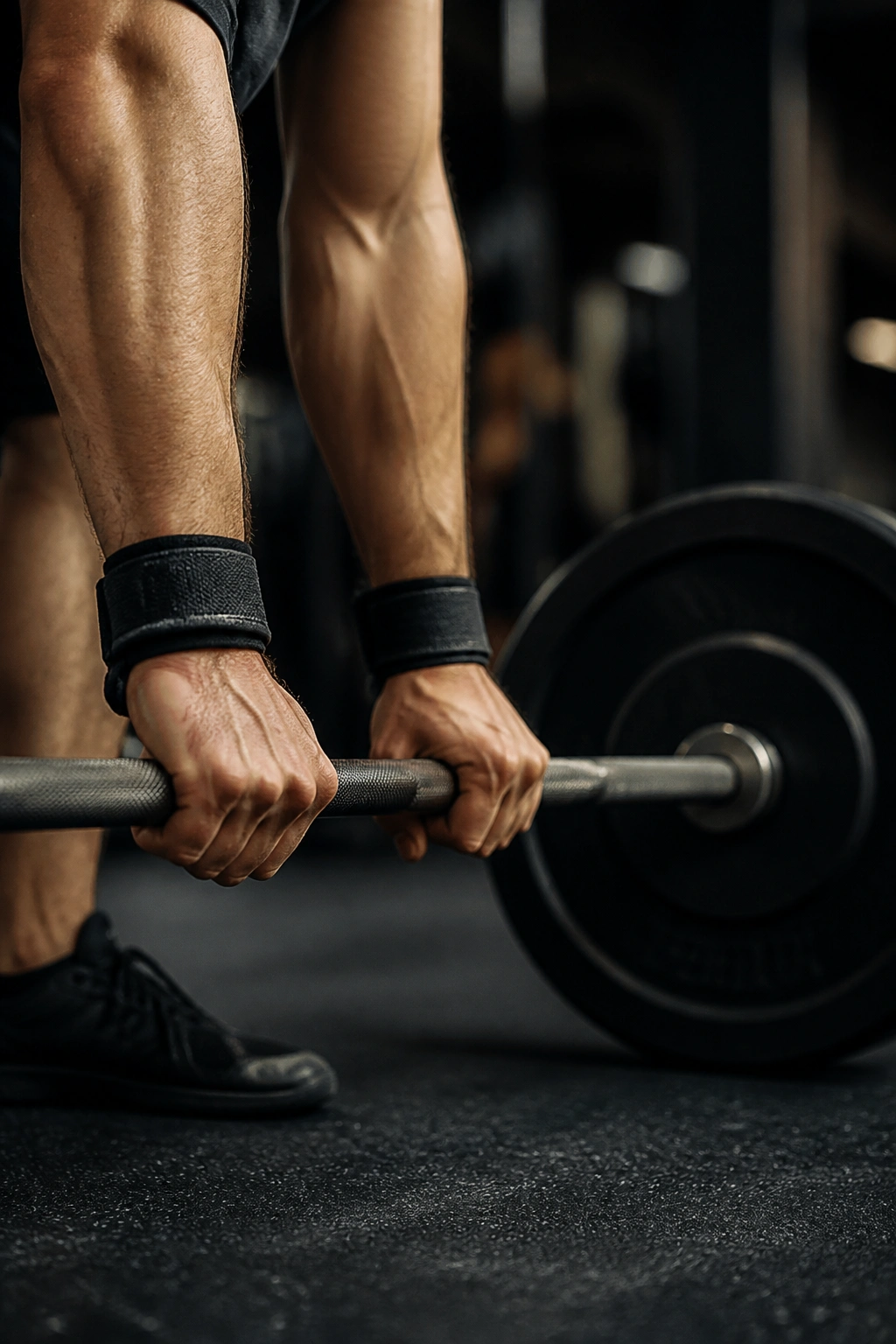
This is the classic, science-based approach. You track every rep and every pound. Pilates acts as your recovery, helping you push harder in the gym the following week.
The Rules
- Increase weight or reps every week in the gym.
- Use Pilates to stretch and recover between heavy sessions.
- Track everything.
When you do this, Pilates is not just “extra work.” It is a tool for recovery. By keeping your tissues pliable, you stay injury-free, allowing you to sustain the progressive overload for months or years at a time.
16. The Circuit-Style Hybrid

This is great for fat loss or improving work capacity. You perform your strength training in a circuit, moving from exercise to exercise, and sprinkle in Pilates-style holds (like the plank or bridge) as your “active rest” between sets.
How to set it up:
- Goblet Squat (Strength)
- Plank (Pilates)
- Dumbbell Row (Strength)
- Side Plank (Pilates)
- Repeat.
This structure keeps your heart rate high the entire time. It turns a standard weightlifting session into a high-octane conditioning workout.
17. The Deload Week Schedule
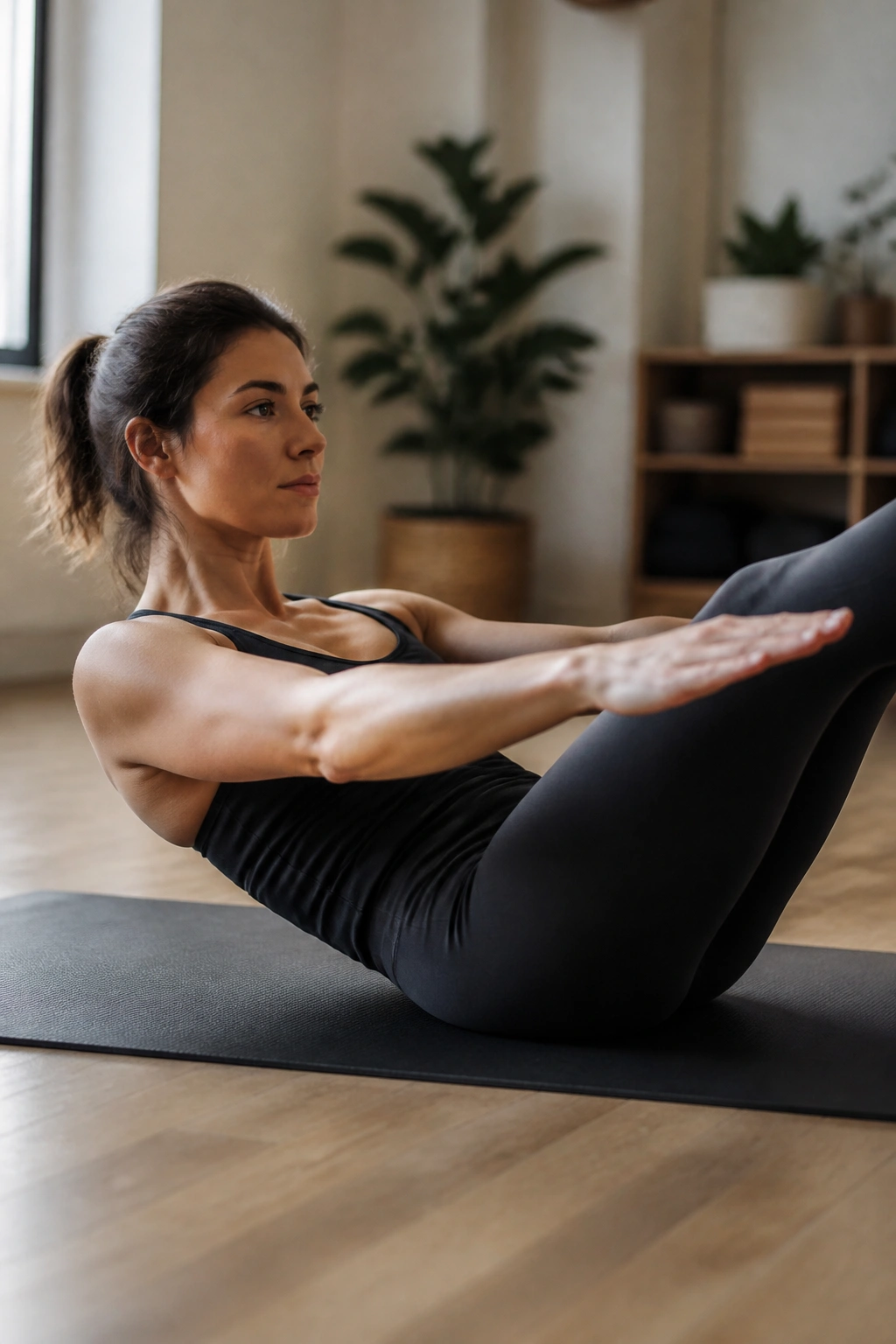
Even the strongest athletes need a break. A deload week involves reducing the weight you lift by 50%. Instead of just taking the week off, use it to master your Pilates form.
Why this matters
Use the week to focus on the “slow” side of training. Lower the weights in the gym, and spend that extra time perfecting the nuances of your Pilates technique—breathing, pelvic floor engagement, and spinal articulation. You will return to your normal routine stronger and with better technique.
18. The Home-Gym Minimalist Plan
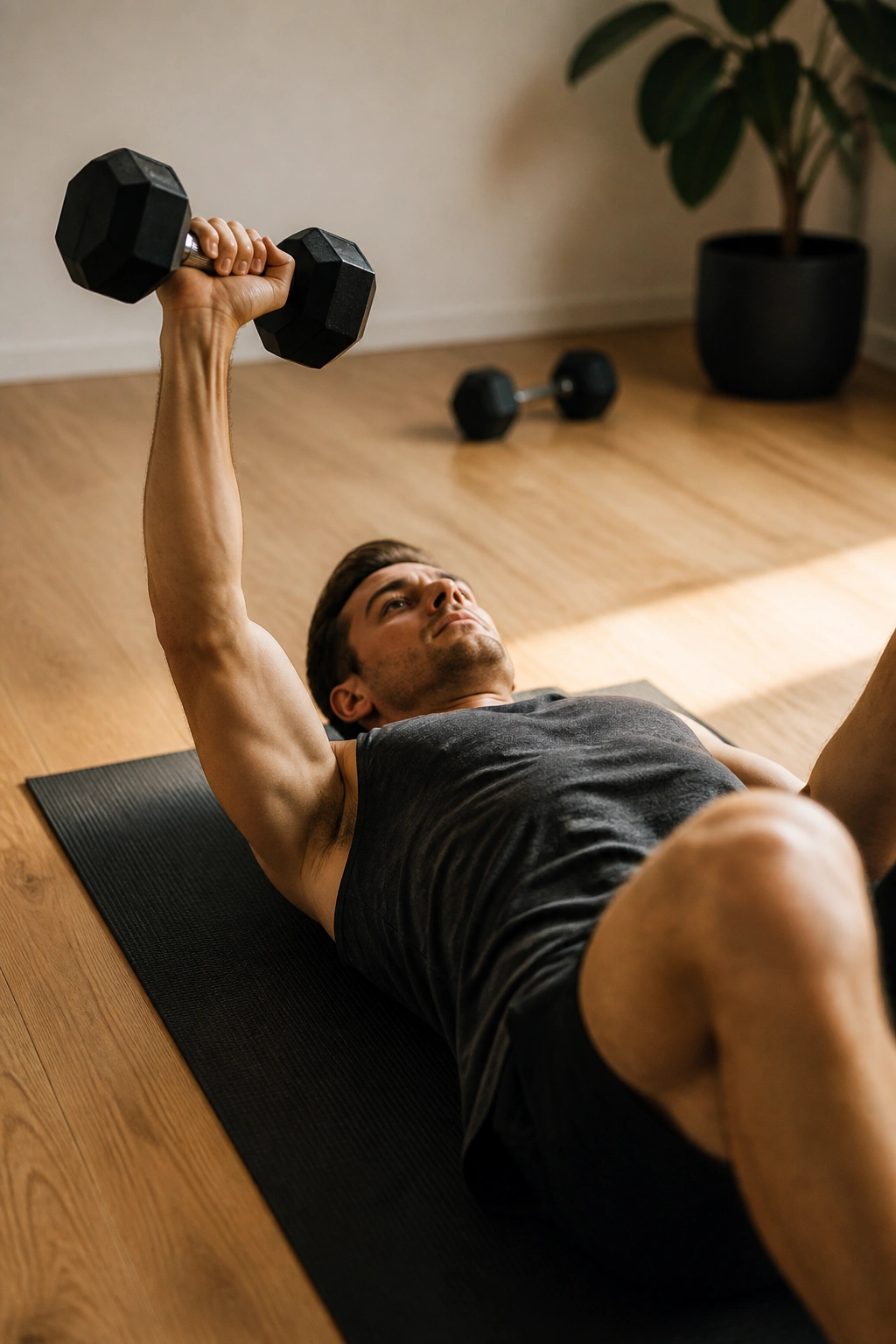
If you have a pair of dumbbells and a yoga mat, you have a complete gym. This schedule maximizes what you can do with minimal space.
The Setup
- Monday/Wednesday/Friday: Dumbbell strength training (Floor press, single-arm row, goblet squat).
- Tuesday/Thursday: Pilates bodyweight flow.
- This creates a simple, effective routine that requires zero commute time. The convenience factor alone makes it one of the easiest to stick with for the long term.
19. The Full-Body Sculpting Routine

This is for those focused purely on aesthetics. You want a lean, defined look. The key is high frequency and high control.
The Focus
- Perform full-body movements every session.
- Focus on the “squeeze” at the top of every rep.
- Use Pilates as a finisher for each session to “pump up” the target muscles.
- You will find that this high-repetition, high-control method produces a very specific, toned physique that heavy powerlifting rarely achieves on its own.
20. The Longevity and Joint Health Plan
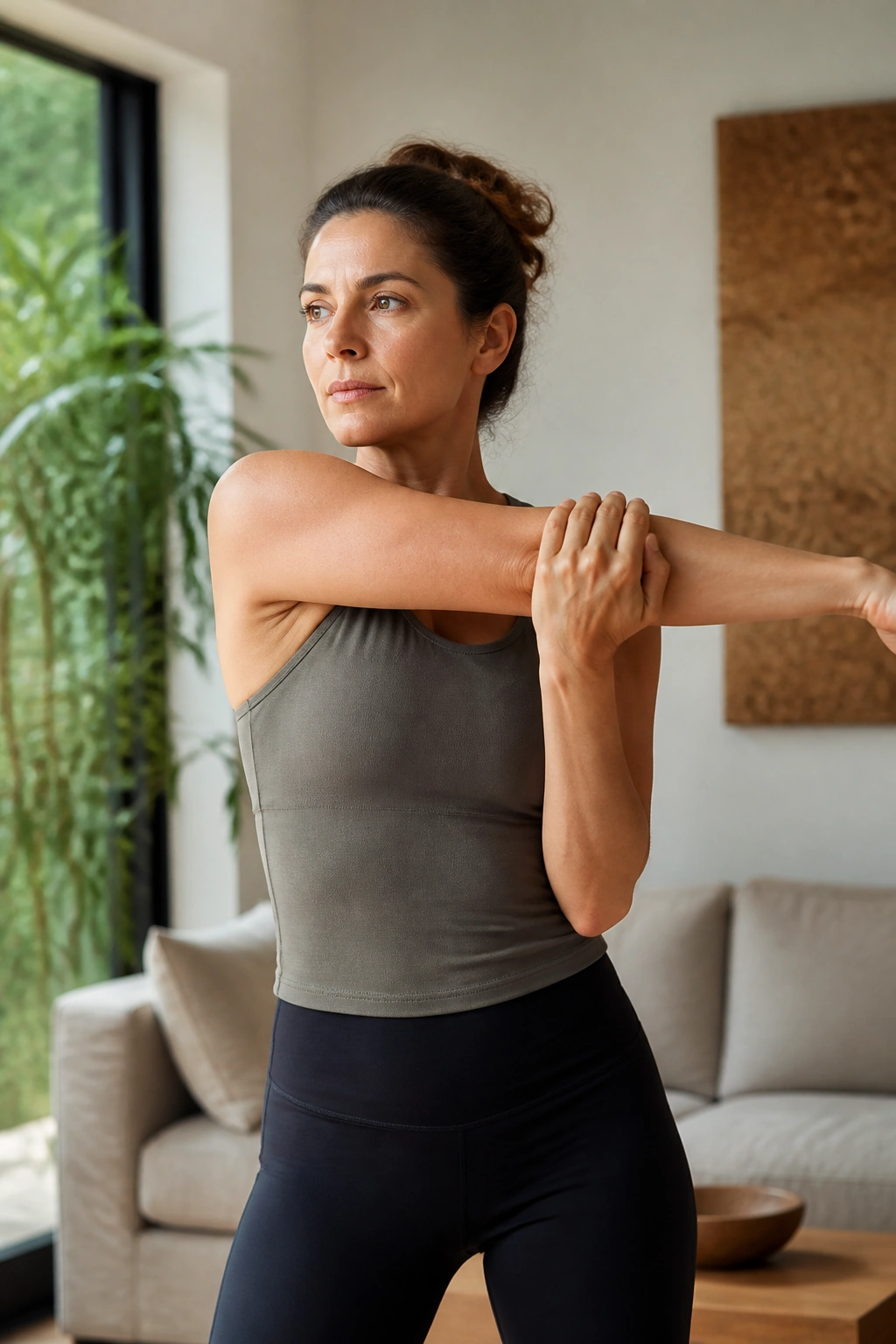
This is for the long game. You are not trying to set a PR (personal record) or get shredded in a month. You are trying to move well when you are 80.
The Principles
- Never train to absolute failure in the gym. Leave 1-2 reps in the tank.
- Prioritize Pilates exercises that focus on hip and shoulder health.
- Keep the movements slow, controlled, and intentional.
- Listen to your body every single day. If something feels off, swap the heavy lifting for an extra Pilates session. This plan is about consistency over decades, not weeks.
Final Thoughts
There is no single “best” way to combine these two disciplines. The best schedule is simply the one you can stick to for the next year, not the next week. We often get caught up in the details—the exact sets, the perfect rep ranges, the ideal day of the week—and lose sight of the fact that consistent movement is the real secret.
If you start with one of these plans and find it’s too much, adjust it. If you find you’re bored, switch to a more intense version. The goal is to build a body that is both strong enough to handle life’s challenges and mobile enough to enjoy it. Take these schedules as starting points, not rigid laws. Your body will tell you what it needs if you pay attention.
