



Throwing a punch isn’t just about arm strength. It is an act of total-body physics, requiring a chain of energy that starts in your calves, travels through your hips, accelerates through your core, and finally snaps out through your knuckles. If you are doing it right, your back, shoulders, and abs should feel the fatigue before your arms ever do. Most people think boxing requires a heavy bag, a gym membership, and a sparring partner, but the truth is that the most effective way to learn is often in your living room with nothing but your own body weight and a bit of floor space.
You do not need expensive gear to get a fighter’s workout. You need space to move, a bit of discipline to keep your hands up, and an understanding of how to sequence movements that actually tax your cardiovascular system. When you strip away the gloves and the ring, boxing becomes one of the most efficient tools for burning body fat, building functional lean muscle, and improving coordination. The following fifteen workouts are designed to be done at home, whether you have twenty minutes or an hour, and they focus on different aspects of what makes a boxer’s physique so distinct.
1. Shadow Boxing Basics: The Foundation
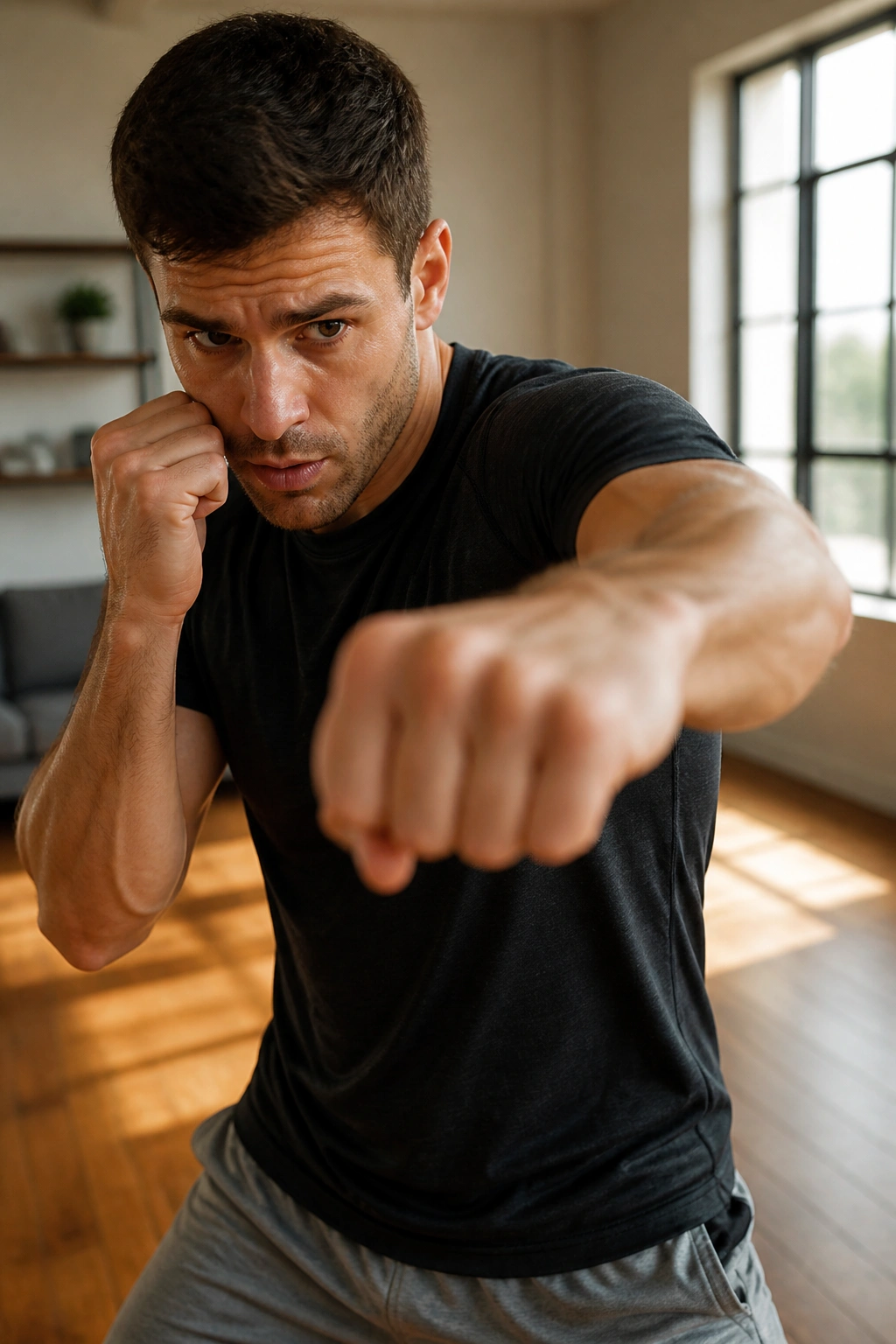
Before you worry about intensity, you have to master the mechanics. Shadow boxing is the gold standard for every fighter, from rank beginners to world champions. It teaches you how to balance your weight, rotate your torso, and keep your guard tight without the distraction of hitting a target.
Why It Matters for Beginners
If you cannot hold your form while punching air, you will certainly lose it when you are tired. This workout forces you to stay honest. Without the resistance of a bag, you are prone to overextending your joints or letting your elbows flare out. Focus on the snap at the end of the punch and the immediate return of your hand to your chin.
The Basic Routine
- Stance Check: Keep your feet shoulder-width apart, knees soft, and lead foot slightly ahead of your rear foot.
- The Jab (Lead Hand): Extend your left hand (if orthodox) in a straight line, rotating your fist so your palm faces down at the point of impact.
- The Cross (Rear Hand): Pivot your back foot and rotate your hip forward, driving the rear hand straight out.
- Return: Always pull your hand back to your face faster than you threw it out.
Pro tip: Spend five minutes just looking at your reflection in a mirror or a window. Watch your shoulders. Are they shrugging? Keep them down and relaxed. A tense shoulder is a slow shoulder.
2. The 3-Minute Round Endurance Circuit
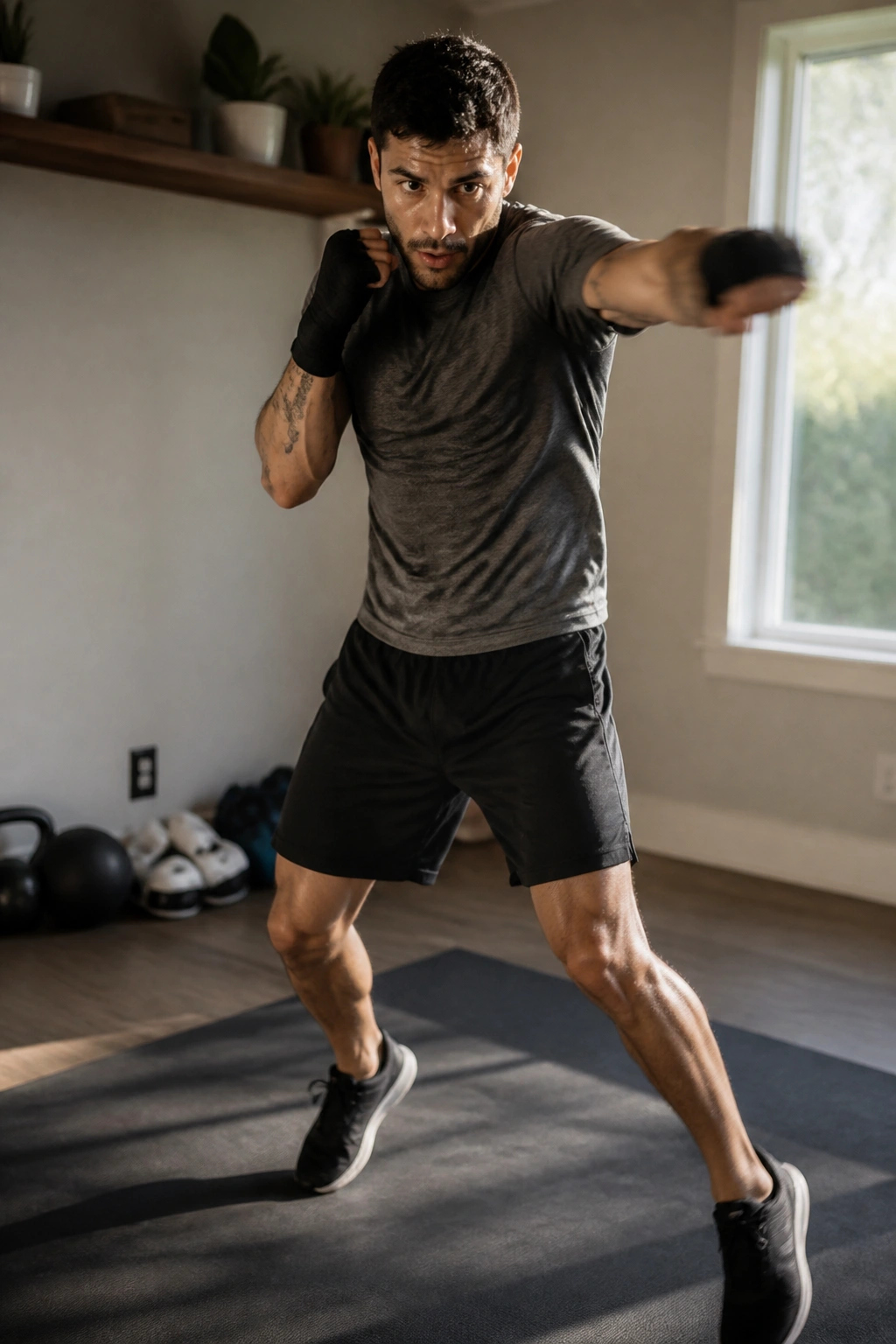
Boxing matches operate on three-minute rounds, followed by one minute of rest. If you want to build the kind of stamina that burns fat, you have to embrace this clock. This workout isn’t about being fast; it’s about not stopping for the entire three-minute duration.
When you do this, you will notice that your heart rate skyrockets around the two-minute mark. That is the wall. Pushing past that wall, even while throwing light, controlled punches, is where the aerobic benefits happen. You are not training to knock someone out; you are training to keep your oxygen levels consistent while your muscles are burning.
How to Structure Your Rounds
- Round 1: Constant, low-intensity movement. Stay on your toes. Throw light jabs and crosses.
- Round 2: Add movement. Circle to the left for 30 seconds, then circle to the right.
- Round 3: Increase the frequency of your punches. Keep the rhythm high, even if the power is low.
Do not sit down during your one-minute rest. Keep walking, keep shaking out your arms, and breathe deep through your nose. Recovering while standing teaches your body to lower its heart rate quickly, which is a major advantage for overall fitness.
3. High-Intensity Interval Training (HIIT) Boxing

This is where boxing meets metabolic conditioning. The goal here is to spike your heart rate with explosive movement for short bursts and then recover with slow, active work. You are essentially doing a HIIT session disguised as a boxing workout.
The beauty of this approach is that it requires very little space. You don’t need to move across a room; you just need to be able to stand in one spot and throw combinations as hard as you can.
The Interval Pattern
- 30 Seconds of All-Out Effort: Throw as many jabs and crosses as humanly possible. Do not worry about perfect form, but do keep your hands moving.
- 30 Seconds of Active Rest: Perform slow, steady, side-to-side steps while holding your guard. Let your heart rate settle.
- Repeat for 10-15 Minutes: This cycle should be grueling. By the time you hit the ten-minute mark, your shoulders will be screaming.
Warning: Do not hyperextend your elbows during the “all-out” phase. Because you are tired, you might lose tension in your arms. Keep a micro-bend in your elbows at all times.
4. Lower Body Integration: Lunges & Punches
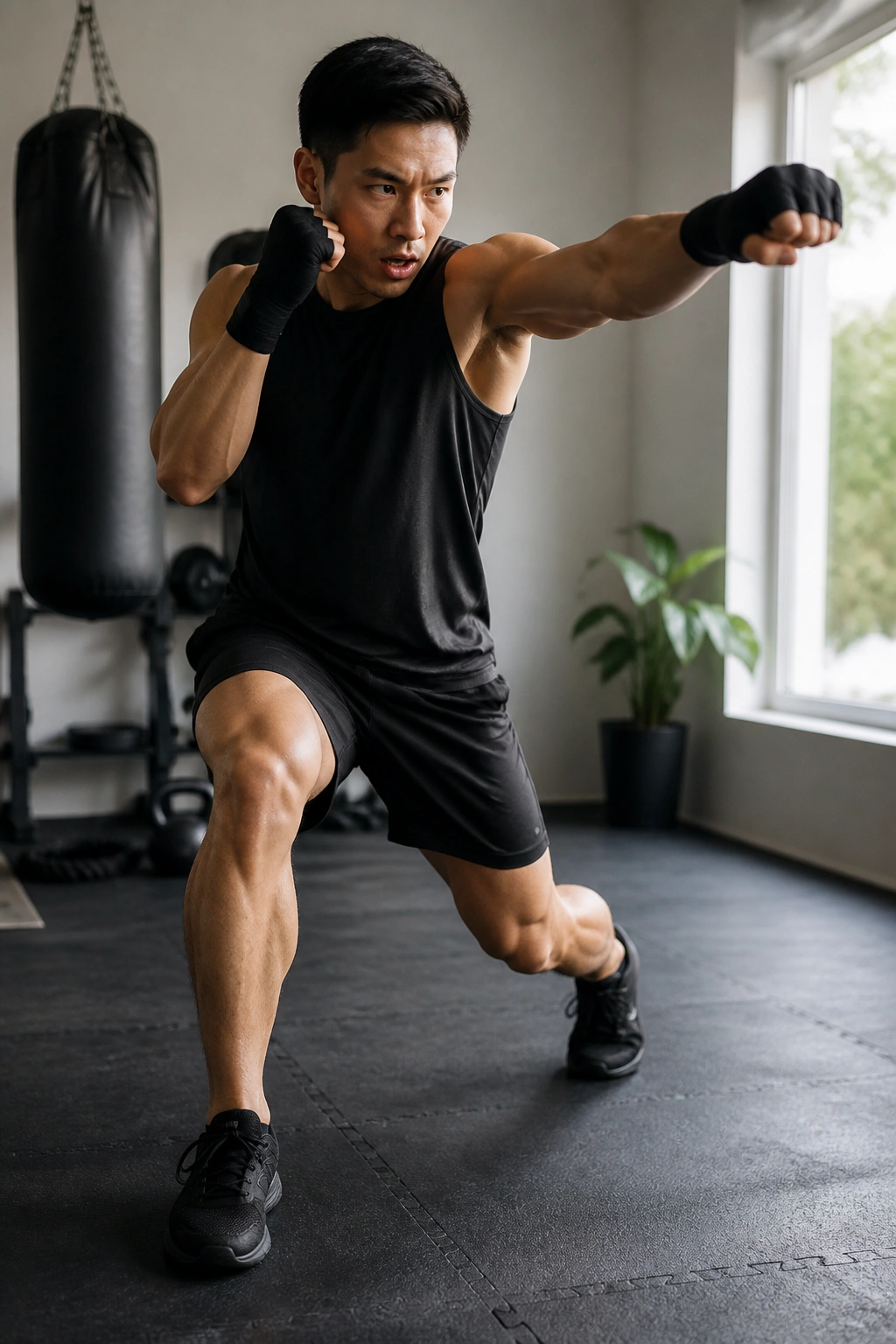
Many people treat boxing as an upper-body exercise, which is a massive mistake. Real power comes from the legs. This workout links your punching output directly to your lower-body strength, ensuring you aren’t just “arm-punching.”
Why This Combination Works
By forcing yourself to punch while your legs are fatigued from lunging, you learn to maintain a stable base. If you throw a punch while your legs are shaky, you will feel off-balance immediately. This drill corrects that tendency.
The Workout Structure
- The Lunge-Punch: Step forward into a lunge. As you descend, throw a jab-cross combination.
- Return to Center: Bring your feet back to the starting stance.
- Switch Legs: Perform the same punch combo on the other side.
- Volume: Aim for 3 sets of 20 lunges (10 per leg).
Keep your eyes forward. If you look down at your feet to check your lunge form, your guard will drop. Practice the movement enough that your legs feel the lunge without needing to look at them.
5. Core-Focused Boxing: Torso Rotation Emphasis

Boxing is one of the best ways to sculpt an obliques-heavy core. Every single punch involves a rotation of the thoracic spine and hips. This workout slows the punches down to emphasize that twisting motion.
Instead of focusing on speed, focus on the range of motion. When you throw a lead hook, imagine you are trying to look behind you with your back shoulder. The more you rotate, the more your internal oblique muscles are forced to engage to stop that momentum.
Key Rotational Movements
- The Hook: Bend your arm at a 90-degree angle. Rotate your entire torso, pivoting your lead foot as you throw the punch.
- The Uppercut: Keep your knees bent. Dip your shoulder slightly and rotate your core to drive the fist upward.
- The Slipping Motion: Pretend a punch is coming at you. Bend your knees and shift your weight from one side to the other, making a “U” shape with your head. This movement alone burns calories and tightens the core.
6. Agility & Footwork Drills
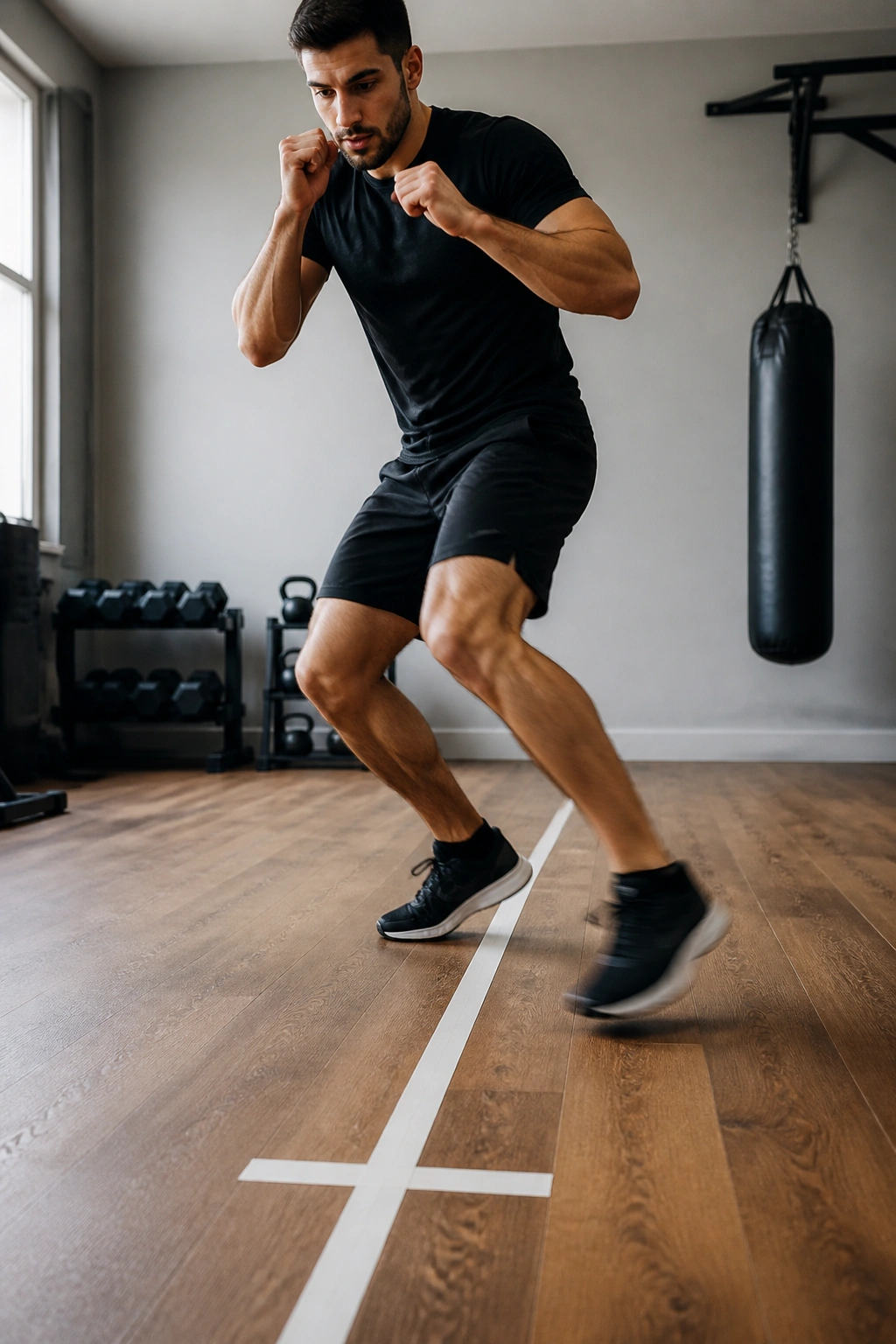
If you cannot move your feet, you cannot box. You can be the strongest person in the room, but if your feet are glued to the floor, you will be a stationary target. This workout focuses entirely on the space around you.
Establishing the Pattern
Lay a strip of masking tape on the floor or just imagine a line. Your goal is to move around that line without ever crossing your feet. A common mistake beginners make is “crossing over,” where your feet get tangled. That is how you trip.
- Step-Drag Movement: Step with your lead foot, then drag the rear foot the same distance. Maintain that same gap between your feet at all times.
- The Square Drill: Imagine you are in the center of a square on the floor. Take a step to the front, then right, then back, then left, always facing the same direction.
- Speed Variations: Start slow, ensuring your balance is perfect. Then, pick up the pace, shuffling back and forth as if you are dancing with a phantom opponent.
7. The “Heavy Bag” Mimicry Drill
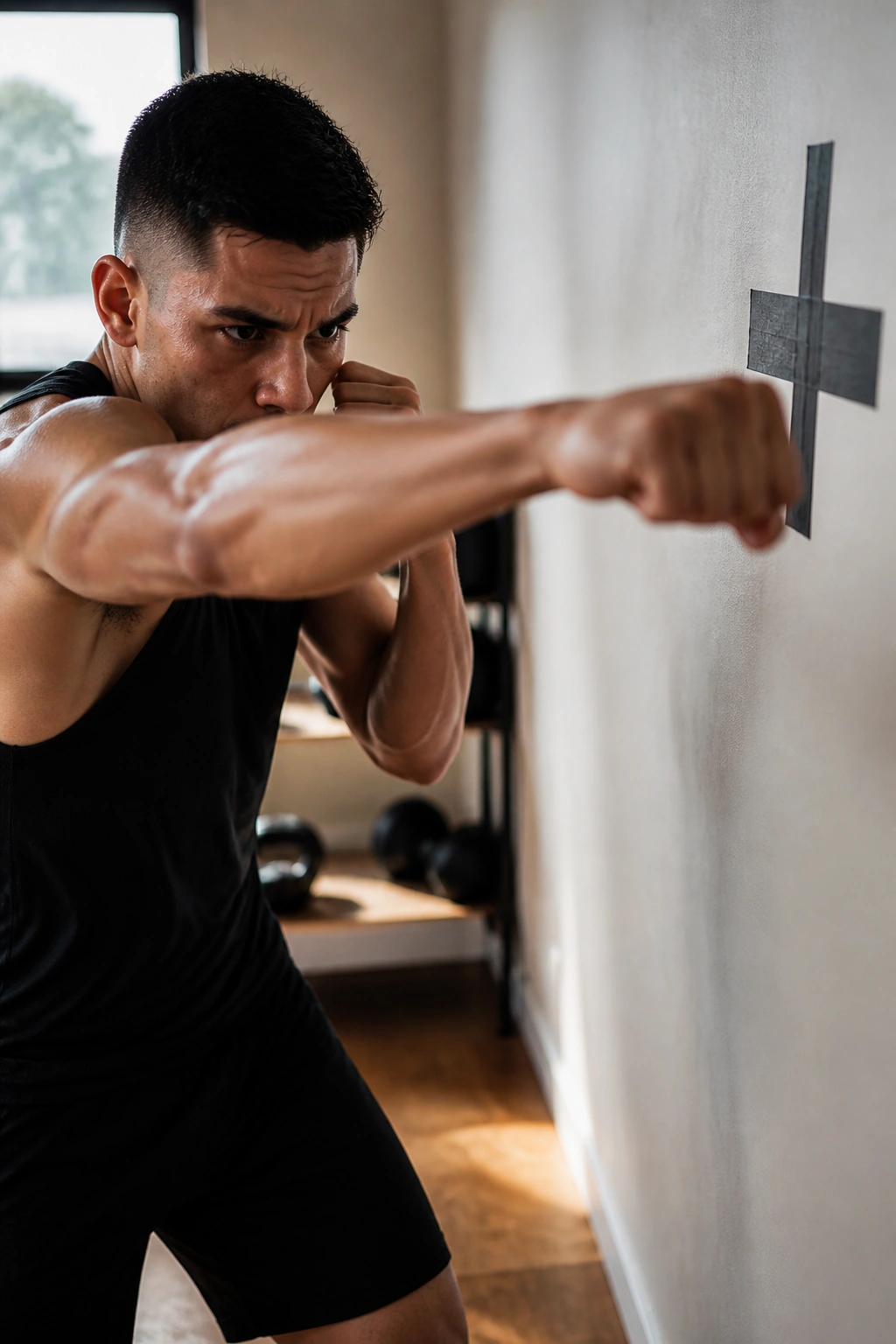
Shadow boxing is great, but sometimes you need to visualize an actual target. This workout uses your environment to simulate the presence of a heavy bag. You don’t have to hit anything, but you must react to the “bag” as if it were there.
Place a piece of tape or a sticky note at eye level on a wall. This is your target. Whenever you move, your eyes must stay locked on that point. It prevents your head from bobbing around unnecessarily and keeps you focused on your target zone.
The Drill Flow
- Approach: Move into striking range, keeping your eyes on the mark.
- Attack: Throw a 3-punch combination, aiming for the “mark” on the wall.
- Exit: Pivot out to the side, away from the “bag,” keeping your guard up.
- Repeat: Circle back and enter from a different angle.
This teaches you the rhythm of engagement: move in, hit, and get out.
8. Partner-Free Defensive Reaction Drills
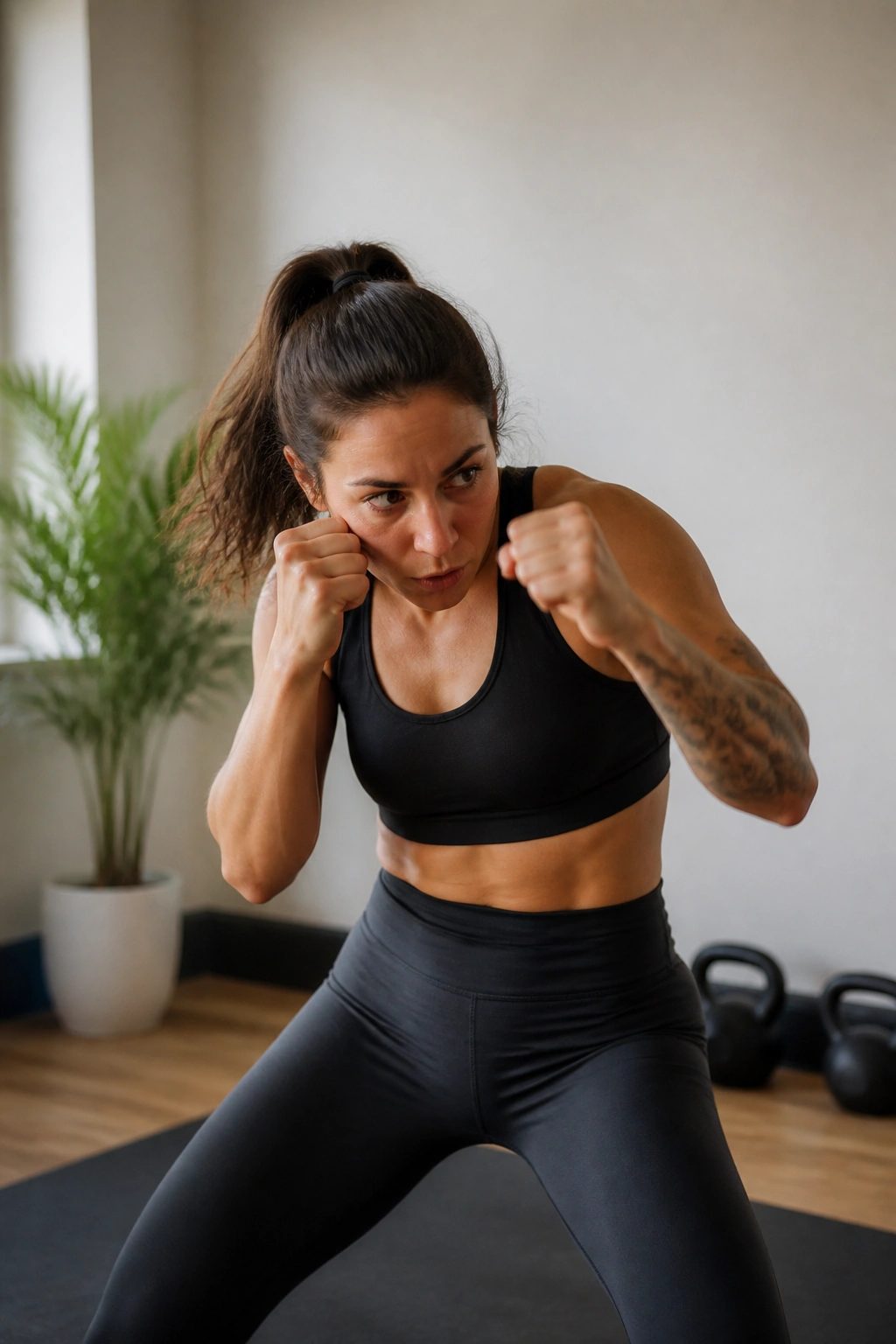
Defense is often the most overlooked aspect of boxing for solo practitioners. We spend all our time worrying about how to hit, forgetting that the goal is also not to be hit. This workout helps you internalize the sensation of dodging an attack.
Practicing Defensive Reflexes
- The Slip: Imagine a punch coming toward your temple. Quickly shift your weight to your lead leg, “slipping” your head to the outside of the imaginary strike.
- The Roll: Imagine a hook coming at your head. Bend your knees and roll underneath the punch, tracing a semi-circle with your shoulders.
- The Block: Bring your hands to your forehead, keeping your elbows tucked tight against your ribs.
Why this is effective: It burns energy because it requires constant weight shifting. If you stay rigid, you will get “hit.” The only way to move fluidly is to keep your core engaged and your legs springy.
9. Pyramid Punching: Increasing Intensity
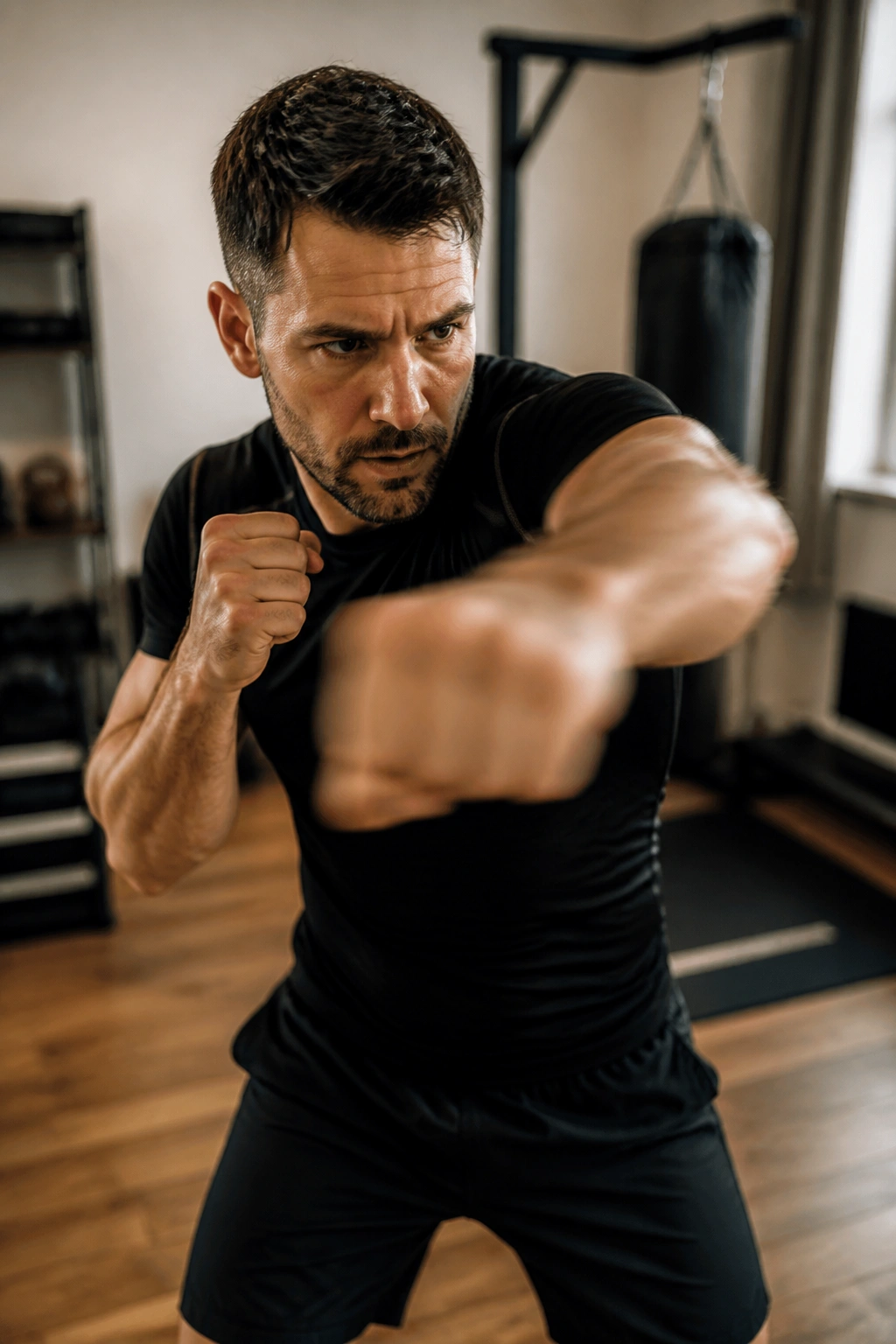
Pyramid workouts are a classic for a reason. They force you to build up volume and then strip it back down, keeping your muscles under tension for a long time. It tests your mental fortitude as much as your physical endurance.
The Pyramid Ladder
- Level 1: Throw 10 jabs, 10 crosses, 10 hooks.
- Level 2: Throw 20 of each.
- Level 3: Throw 30 of each.
- The Descent: Work your way back down to 10.
By the time you hit the 30-punch tier, your shoulders will be heavy and your lungs will be burning. The temptation will be to slow down, but force yourself to maintain the same speed you had at the start. That is where the conditioning happens.
10. Punch-Combo Cardio Flow

Boxing is essentially a rhythm game. Once you know the numbers—1 (jab), 2 (cross), 3 (lead hook), 4 (rear hook)—you can create endless combinations. This workout focuses on stringing them together into a “flow.”
Developing the Flow
- The 1-2-1: Jab, cross, jab.
- The 1-2-3-2: Jab, cross, lead hook, cross.
- The 3-2-3: Lead hook, cross, lead hook.
Don’t pause between the combinations. Treat it like a dance routine. The transition between the last punch of one combo and the first punch of the next is just as important as the punches themselves. If you have to stop and think about the next move, you break your rhythm.
11. Explosive Power Training
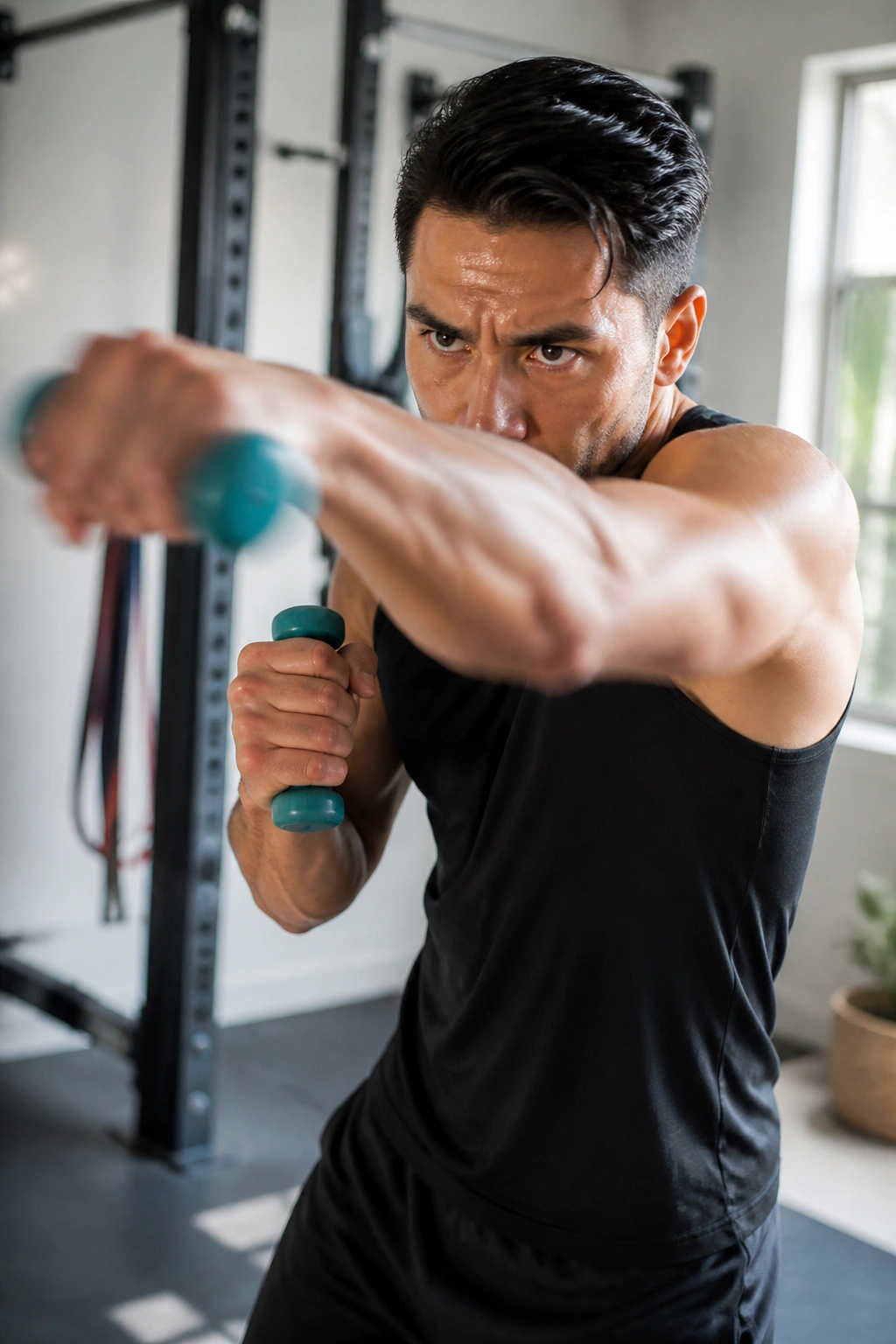
Power is not just about muscle; it is about speed. If you move your arm slowly, you have less impact. This workout focuses on “twitch” fibers—getting your muscles to fire as fast as possible.
The Method
Take a very light set of dumbbells—I mean 1 or 2 pounds at most, or even just hold two water bottles. Throw your punches at half-speed but with maximum intent. When you drop the weights and throw your punches normally, they will feel like they are flying out of your hands.
Critical Rule
Do not use heavy weights for this. Boxing with heavy weights is a great way to injure your rotator cuff or strain your elbow tendons. The point is to increase your neural drive, not to build heavy biceps. Keep the weights light and the speed fast.
12. Balance & Stability Boxing
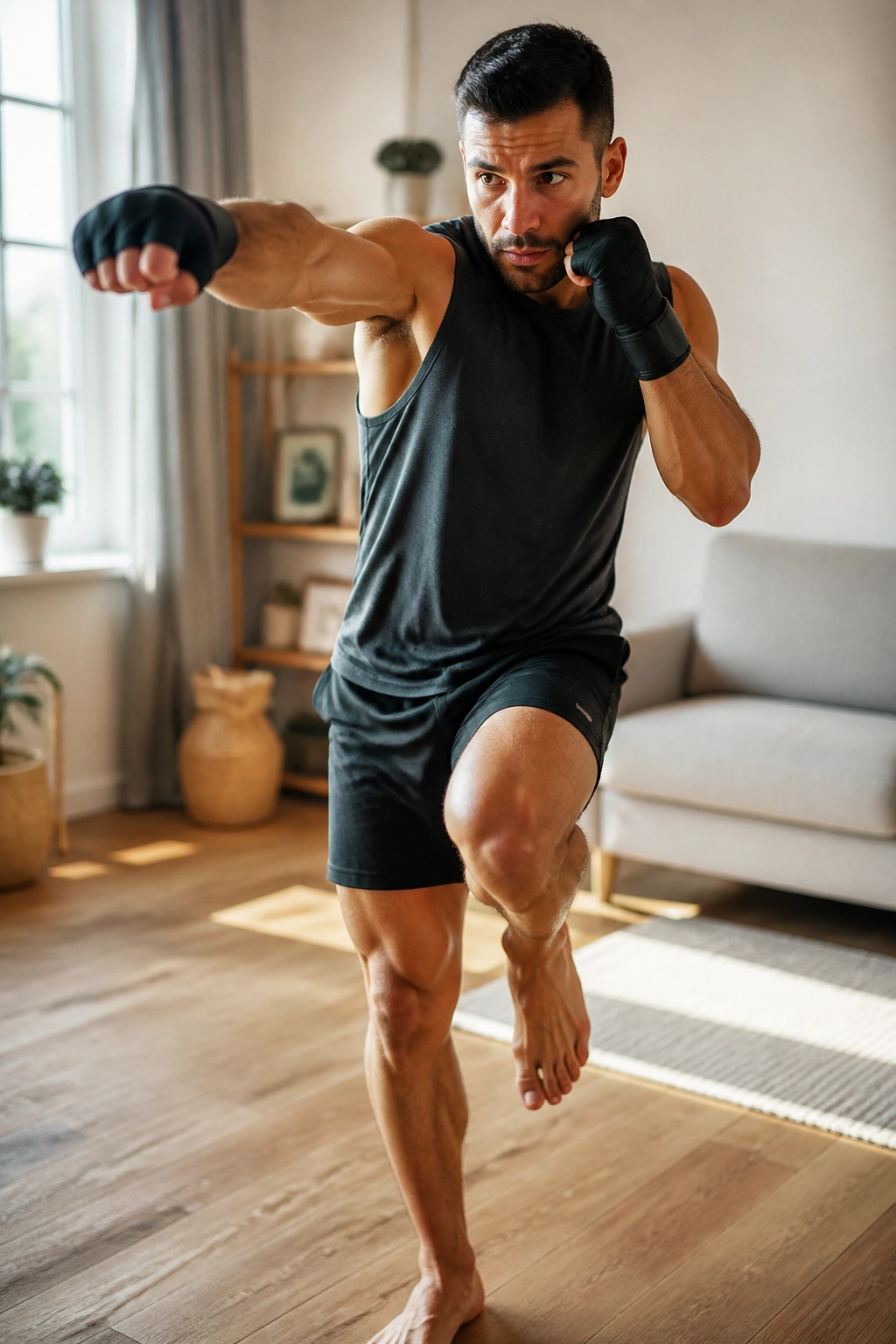
Have you ever seen a boxer punch and then lose their footing? It happens when their weight is too far forward. This workout emphasizes keeping your center of gravity perfectly centered between your feet, no matter what punch you throw.
Stability Drills
- Single-Leg Jabs: Lift your rear foot slightly off the ground. Throw jabs. You will find that you have to engage your core and stabilize your lead leg to keep from tipping over.
- Stationary Pivots: Plant your feet and practice rotating your hips without shifting your weight forward.
- Slow-Motion Punches: Throw a 1-2 combo in slow motion. Focus on the feeling of being grounded. If you feel like you are falling forward, pull your hips back.
13. Mental Focus & Precision Rounds

Sometimes, the best workout is the one that forces you to think. This is about precision. If you are just flailing, you aren’t training; you are just sweating. This workout forces you to pick a specific “target” for every single punch.
Defining Your Targets
- The Chin: Keep your punches aimed exactly at shoulder height.
- The Body: Drop your level and aim for where an opponent’s ribs would be.
- The Temple: Aim slightly above the “chin” target.
Switch targets every 30 seconds. This forces you to coordinate your eye movement with your hand movement, which is mentally taxing. It is easy to punch air; it is hard to punch a specific point in space repeatedly.
14. Recovery/Active Rest “Flow” Boxing
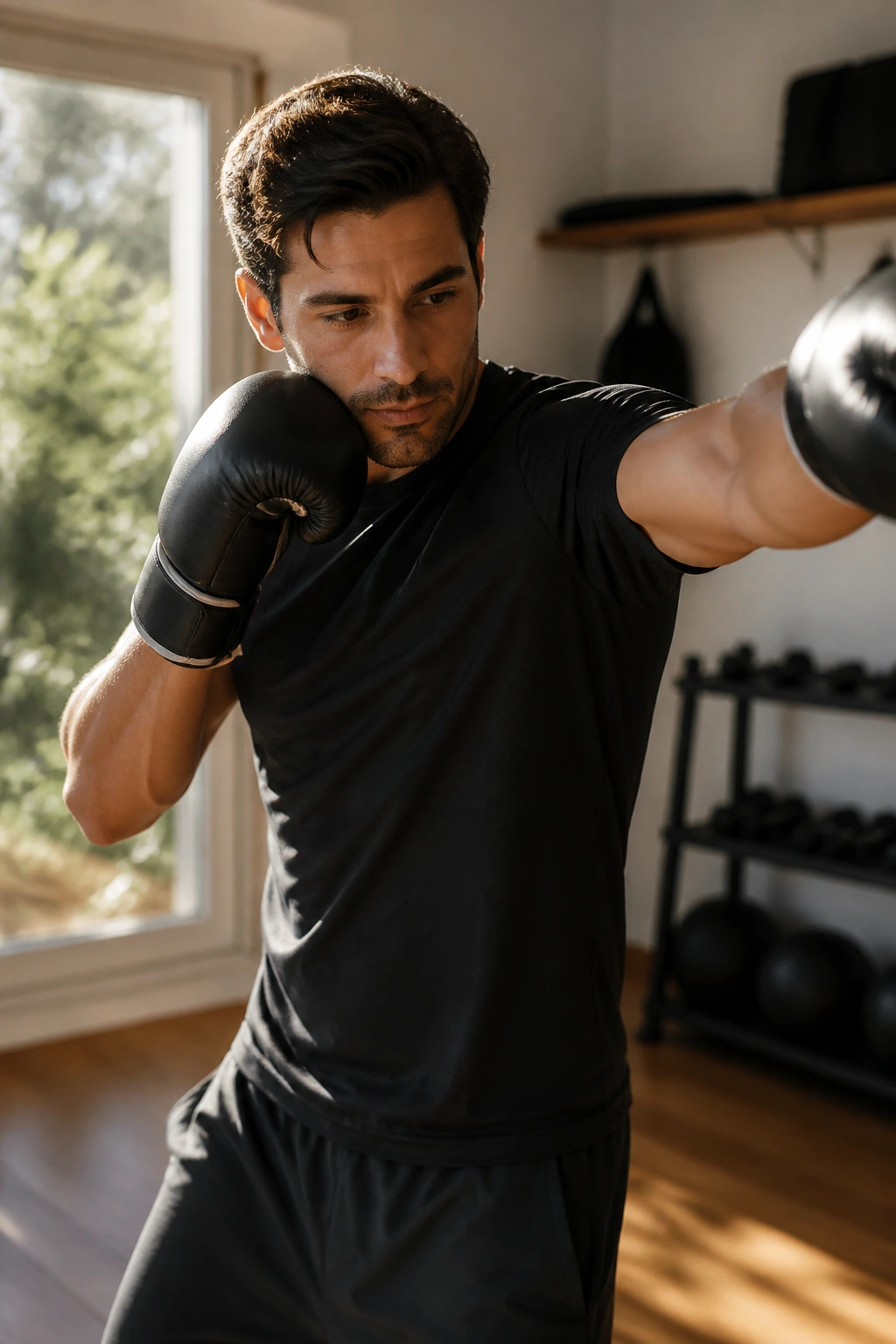
Even fighters need to recover. This is not a “burnout” workout; it is a movement workout. The goal is to keep your joints lubricated and your muscles moving without spiking your heart rate into the red zone.
The Flow Approach
- Full Range: Throw your punches slowly, focusing on rotating your shoulders fully and extending your arms completely.
- Breathing: Inhale on the extension, exhale on the return.
- Stretch: Use the movement as a dynamic stretch. Reach for the “target” and feel the pull in your lats and obliques.
This is excellent for days when you feel sore or sluggish. It helps flush metabolic waste from your muscles without adding extra strain.
15. Full-Body Conditioning Burnout

This is the finale. This is the workout you do when you want to empty the tank. It combines all the elements—footwork, punches, defensive movement, and core engagement—into one seamless, punishing circuit.
The Burnout Protocol
- 3 Minutes: Constant jab-cross-hook combinations.
- 1 Minute: Plank hold.
- 3 Minutes: Fast feet (shuffling in place) combined with random punches.
- 1 Minute: Burpees (or simple squats if you want to keep the impact low).
- 3 Minutes: All-out freestyle shadow boxing.
This workout is brutal. You will be gasping for air. That is the point. You are teaching your body how to function under extreme duress, which is the hallmark of a conditioned athlete.
Making Boxing a Consistent Habit
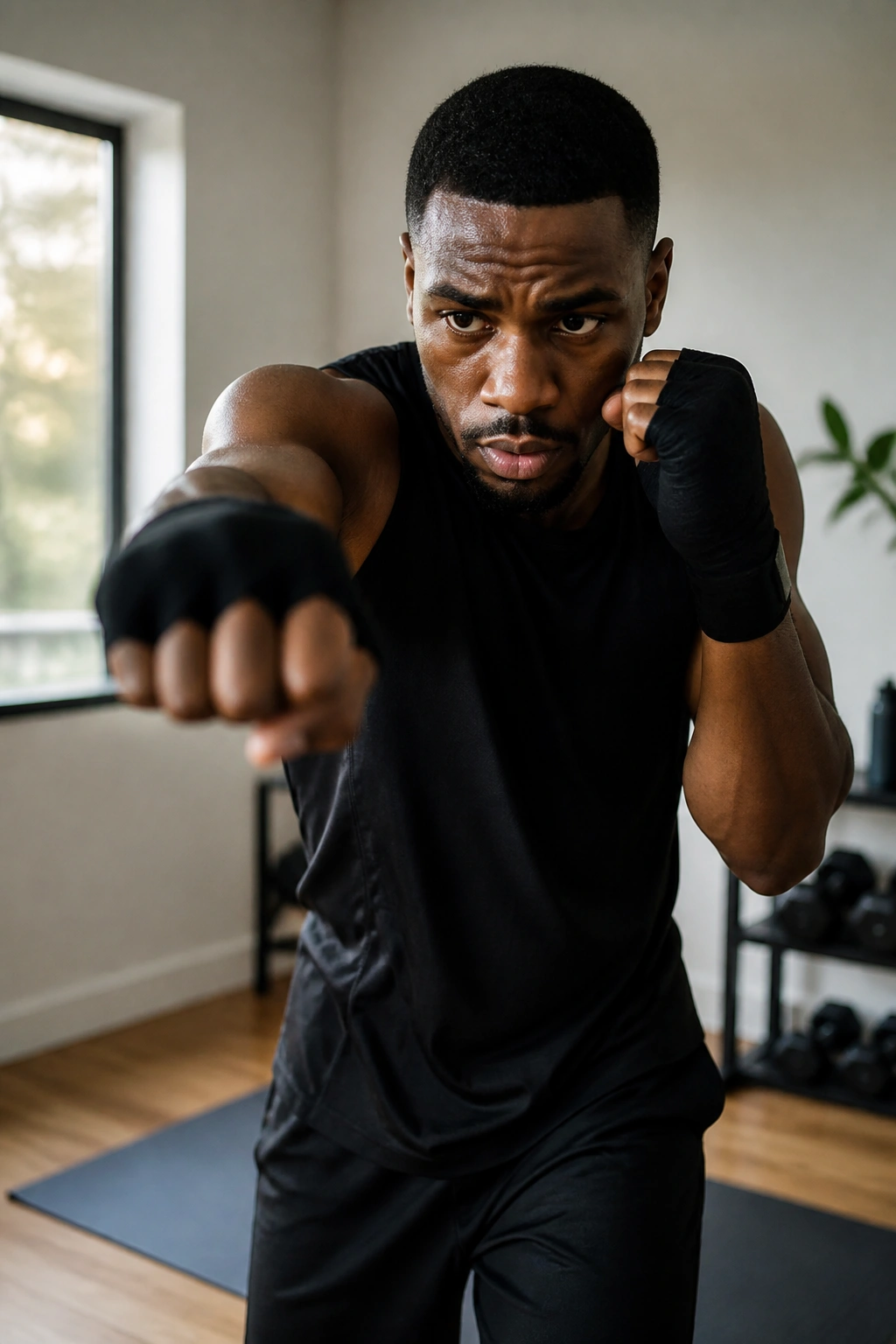
Boxing is unlike any other cardio workout because it demands your full attention. You cannot scroll through your phone or watch the news while you are shadow boxing; if your mind wanders, your form collapses. That level of focus is why so many people find it to be an incredible stress reliever. The rhythm of the punches, the snap of the guard, and the burn in your shoulders create a feedback loop that leaves you feeling accomplished and wiped out in the best possible way.
You do not need to be a pro to get a pro-level workout. Start with the basics, respect the clock, and prioritize your form over everything else. If you can maintain your guard and keep your feet moving for twenty minutes, you are doing more for your metabolic health than most people do in an hour of aimless treadmill walking. Pick one or two of these workouts to start, master the movements, and then challenge yourself to integrate the more complex footwork and conditioning circuits as you get stronger. Consistency beats intensity every time, so find a rhythm that keeps you coming back to the mat.
