



Belly fat workouts for women with PCOS work best when they do not feel punishing.
That sounds almost too plain, but plain is the point. PCOS often comes with insulin resistance, energy swings, and days when your body feels like it is negotiating with you instead of cooperating, so the routines that actually stick are usually the ones you can repeat on an ordinary weeknight without dreading them.
No workout can melt fat off one body part on command. The waist changes when overall body fat drops, muscle goes up, and your body handles glucose a little more smoothly. That is why the smartest approach usually mixes steady cardio, strength work, and low-impact intervals, not endless crunches and not punishing bootcamp sessions that leave you wiped out for two days.
If a move hurts your back, knees, wrists, or pelvic floor, skip it or scale it down. Pain is not a badge of honor. The goal is a routine you can keep doing long enough for it to matter, and that usually means choosing work that feels challenging but not chaotic.
1. Brisk Walking Intervals
You know the walk that happens after dinner, when the kitchen is finally quiet and your brain wants to sit down? That one counts, and it counts more than people like to admit.
Brisk walking intervals are one of the easiest belly fat workouts for women with PCOS because they are simple, repeatable, and low-drama. You are not trying to torch yourself. You are trying to keep moving often enough that your body gets used to using fuel instead of storing every spare bit of it.
How to make it count
- Walk for 5 minutes at an easy pace to warm up.
- Speed up for 1 to 2 minutes until you can still speak, but only in short phrases.
- Recover for 2 minutes at an easier pace.
- Repeat that pattern 6 to 8 times for a total session of about 20 to 30 minutes.
A good brisk walk leaves your breathing deeper, your legs warm, and your head a little clearer. If you finish feeling like you could do another hour, the pace is too soft. If you are gasping and angry at the sidewalk, it is too hard.
Best small upgrade: walk after meals when possible. Even a 10-minute loop can feel easier than a formal workout, and that is usually why people keep doing it.
2. Incline Treadmill Walks
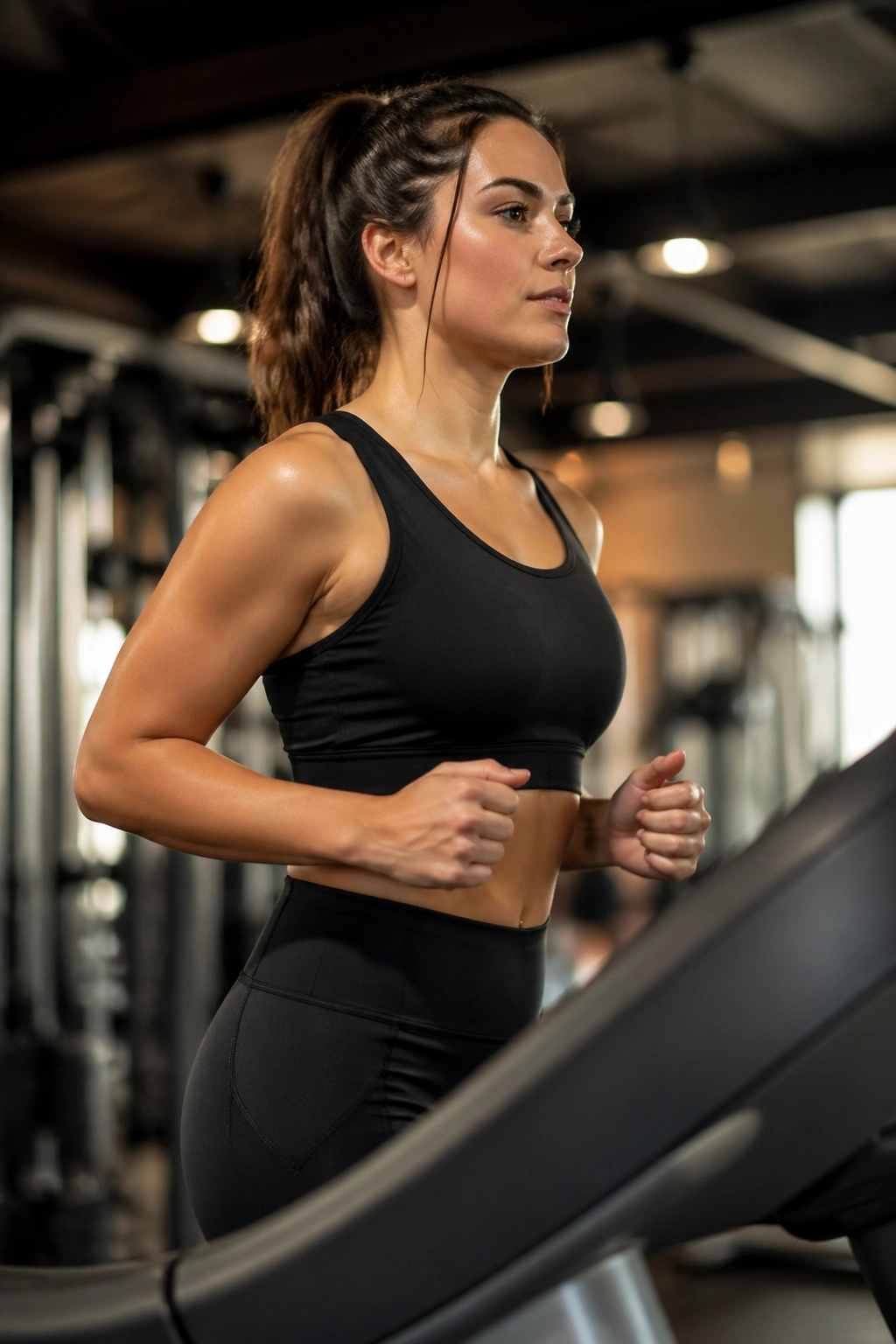
Incline walking is sneaky. It looks mild from a distance, then your calves start talking back.
A modest incline can raise your heart rate fast without the pounding that comes with running. That matters when you want fat-loss work, but your joints, fatigue, or cycle-related aches make jumping around a bad bargain. A treadmill set to 3 to 8 percent incline with a steady walking pace often gets the job done with less wear and tear.
Keep the speed honest. Something around 2.8 to 3.6 mph works for many people, though the real test is simple: you should feel your breathing deepen while still staying controlled. Do not lean on the rails unless you need them for balance. If you hang your weight on the machine, the work gets stolen from your legs and trunk.
This is a good choice when you want a workout that feels structured without being loud. It is also useful on days when your energy is uneven and you would rather not gamble on a harder interval session. Ten to 25 minutes is enough to make it worth your while.
If running has always felt like a punishment, this is the quieter, more useful cousin.
3. Kettlebell Deadlifts
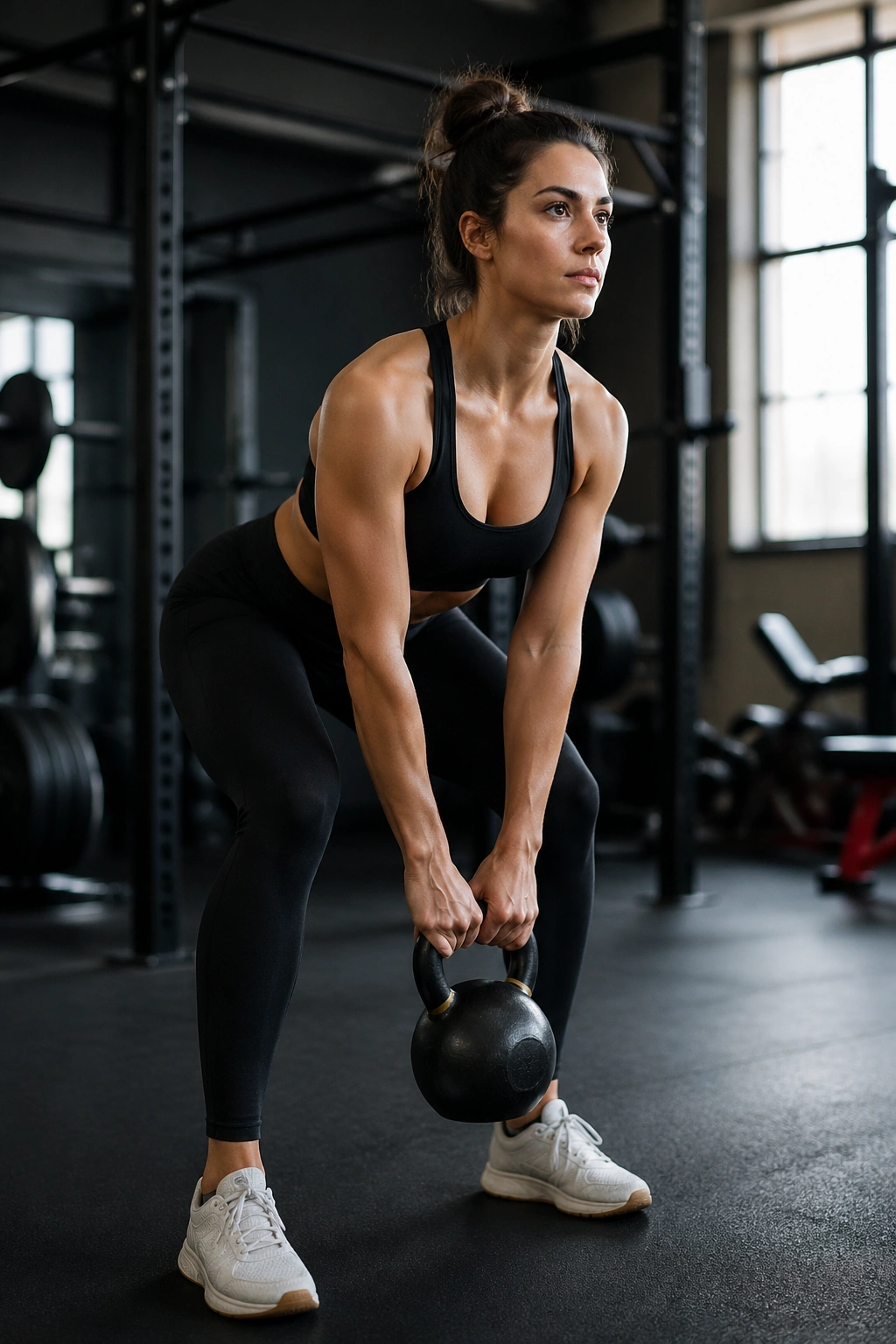
Why put a deadlift in a belly-fat workout list? Because your midsection does more work when your biggest muscles do more work.
A kettlebell deadlift trains the glutes, hamstrings, upper back, and deep core all at once. That is the kind of strength work that pays off well for PCOS because it builds muscle without needing a floor mat, an acrobatic spine, or a heroic mood. You stand up. You hinge. You lift. Clean, simple, effective.
Setup cues that matter
- Place the kettlebell between your feet.
- Push your hips back like you are closing a car door with your hips.
- Keep your chest long and your back flat.
- Stand by driving through your heels, then squeeze your glutes at the top.
- Do 3 sets of 8 to 10 reps with 60 to 90 seconds of rest.
The first few reps should feel controlled, not rushed. If your lower back is doing most of the work, the weight is too far away or too heavy. Move the bell closer to your shins and slow down.
A useful rule: if the last rep still looks as neat as the first one, you probably picked the right load.
4. Goblet Squat to Press
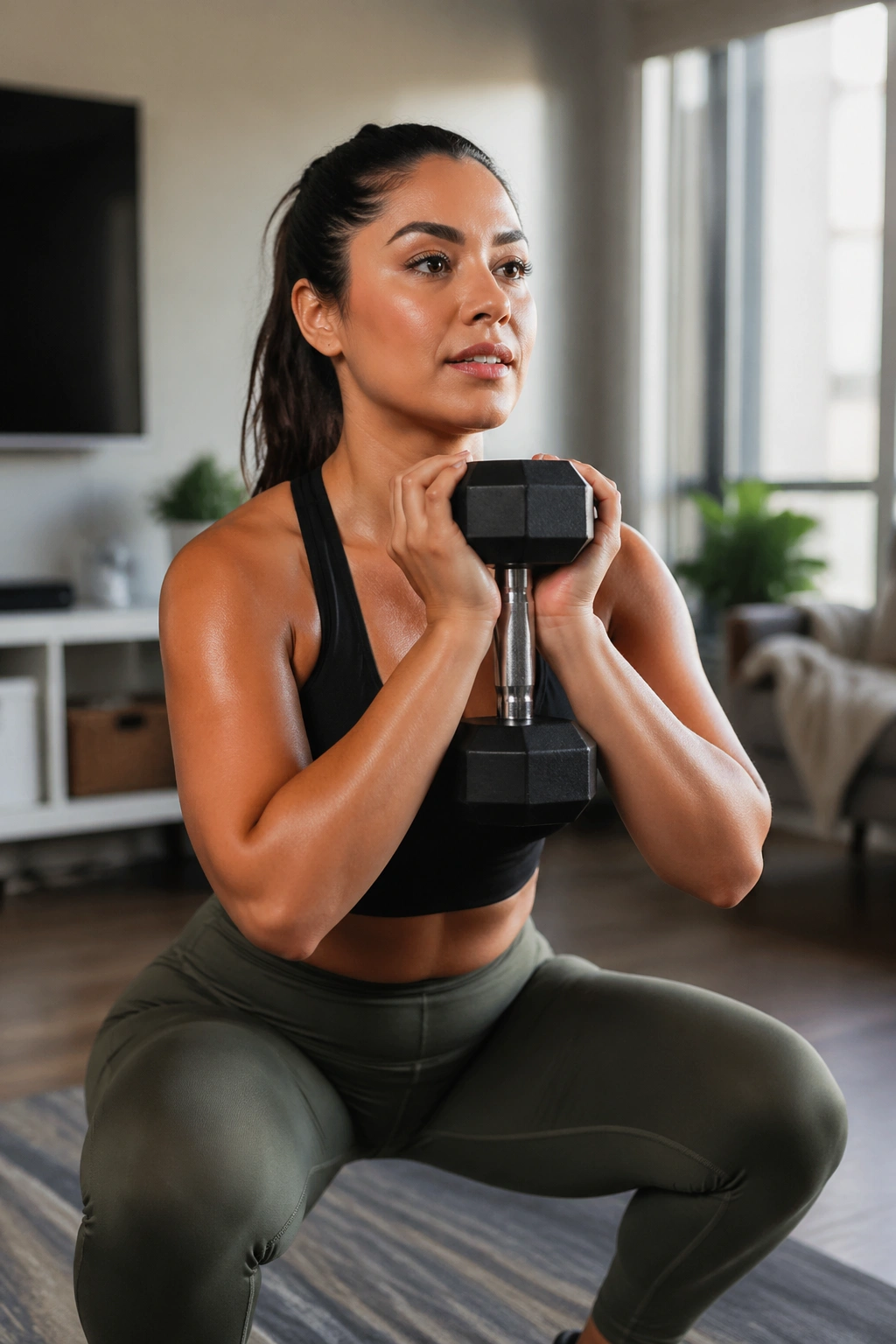
This one feels like a full-body argument with gravity. I mean that in a good way.
Hold a dumbbell or kettlebell at your chest, sink into a squat, stand up, then press the weight overhead. The combo wakes up your legs, shoulders, upper back, and trunk in one compact sequence. For women with PCOS who want workouts that help burn calories and build real strength, this is a nice middle ground: not too technical, not too fluffy.
The squat portion asks your core to stay braced while your hips and knees do the heavy lifting. The press portion makes your ribs want to flare, which is exactly why it matters to stay tall and exhale as the weight goes up. That small breath cue keeps the move from turning into a lower-back arch-fest.
Start with 3 sets of 6 to 8 reps. If the press feels awkward, use a lighter weight and keep the squat smooth. The tempo matters more than speed here. Drop into the squat under control, stand with purpose, and press only after your feet feel planted.
This is the kind of move that looks plain on paper and then leaves you surprised by how much heat it creates.
5. Low-Impact Bike Sprints
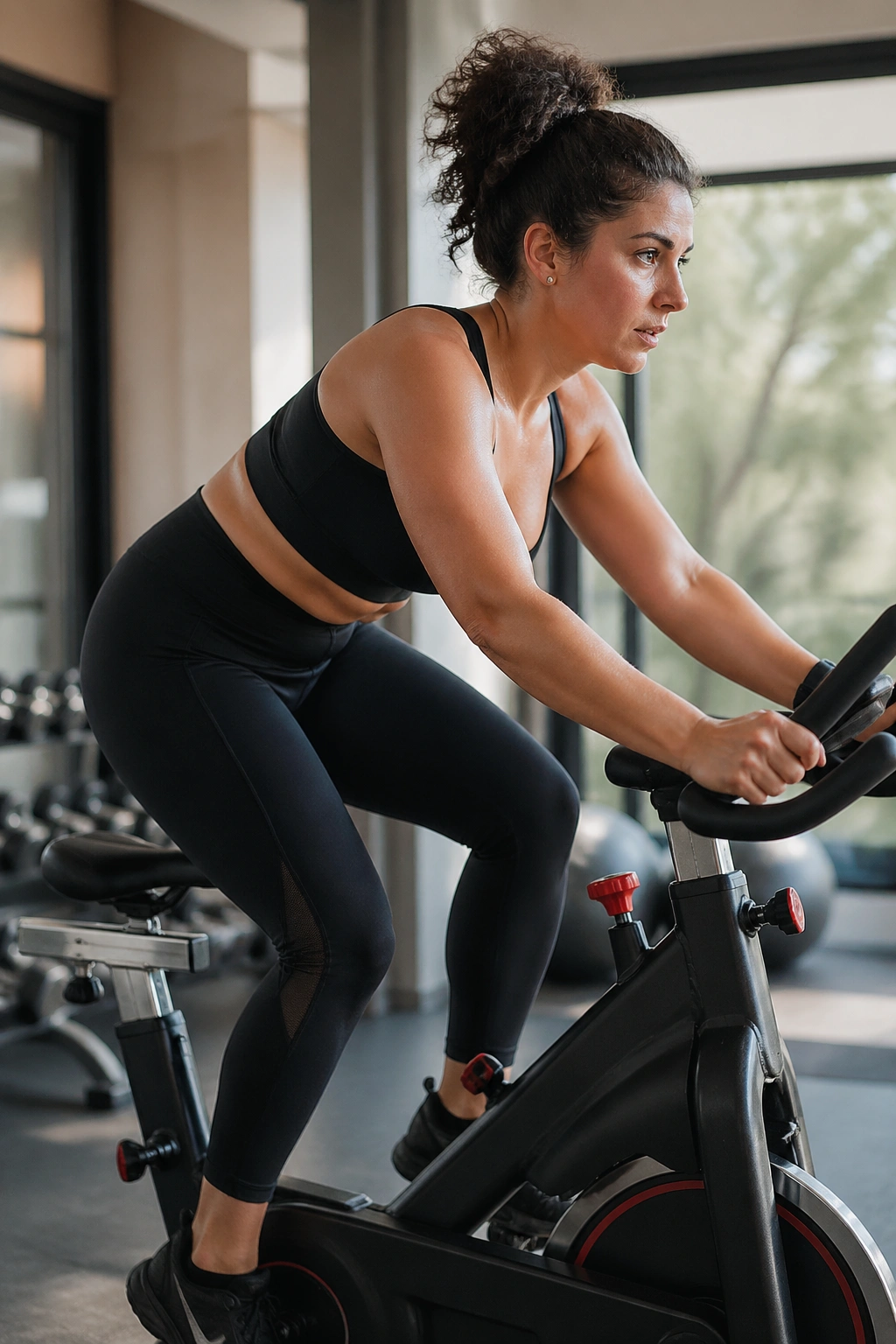
Bike sprints are a nice answer when you want intensity but your joints have veto power.
Unlike running sprints, a stationary bike gives you hard cardio with far less impact through the knees, shins, and feet. That makes it a solid option for PCOS workouts when weight-bearing intervals feel a little too sharp. You can push hard, recover, and repeat without the bounce that often ruins consistency.
Use a simple pattern: 20 seconds hard, 100 seconds easy, repeated 8 to 10 times. Hard means hard. Your legs should burn. Your breathing should get loud. Easy means easy enough that you can settle your breathing before the next round starts. If you like shorter bursts, try 30 seconds hard and 90 seconds easy instead.
Do not start at full throttle on round one unless you enjoy spending round four bargaining with your lungs. Build up. The first two intervals should feel controlled, the middle ones should sting, and the last one should make you notice your quads on the stairs later.
If the bike seat bothers you, adjust it before you blame the workout. Tiny fit issues make a big difference here.
6. Rowing Machine Intervals
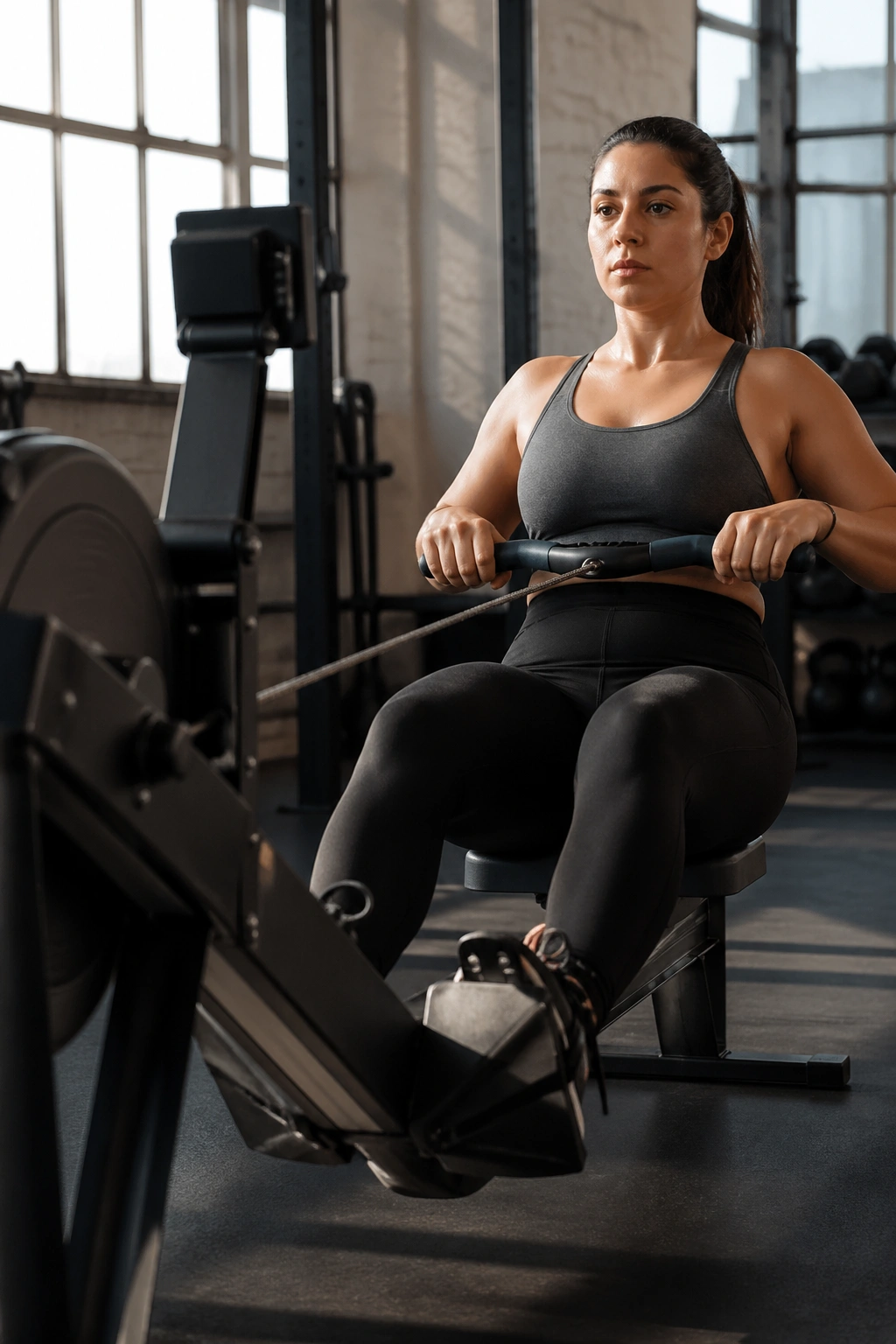
The first few pulls on a rower feel smooth. Then your legs, back, and lungs all wake up at the same time.
That is the magic of rowing for belly fat workouts with PCOS. It gives you a lot of muscle involvement in a very compact space, which is handy if you want cardio that also asks your core to do some serious stabilizing. You drive with the legs, hinge through the hips, then finish with the arms. Mess up that order and the row gets sloppy fast.
Why it works
- It uses the legs first, which makes each stroke feel powerful.
- It keeps the heart rate up without pounding.
- It rewards rhythm, not frantic speed.
- It can be scaled by stroke rate, resistance, or interval length.
Try 6 to 8 rounds of 30 seconds hard and 90 seconds easy. Keep the handle path smooth and close to your body. If your lower back starts to complain, shorten the stroke slightly and sit taller. A rower punishes lazy posture fast, which is annoying but useful.
Good rowers look calm. Their legs are doing more than the eye expects.
7. Shadow Boxing Rounds
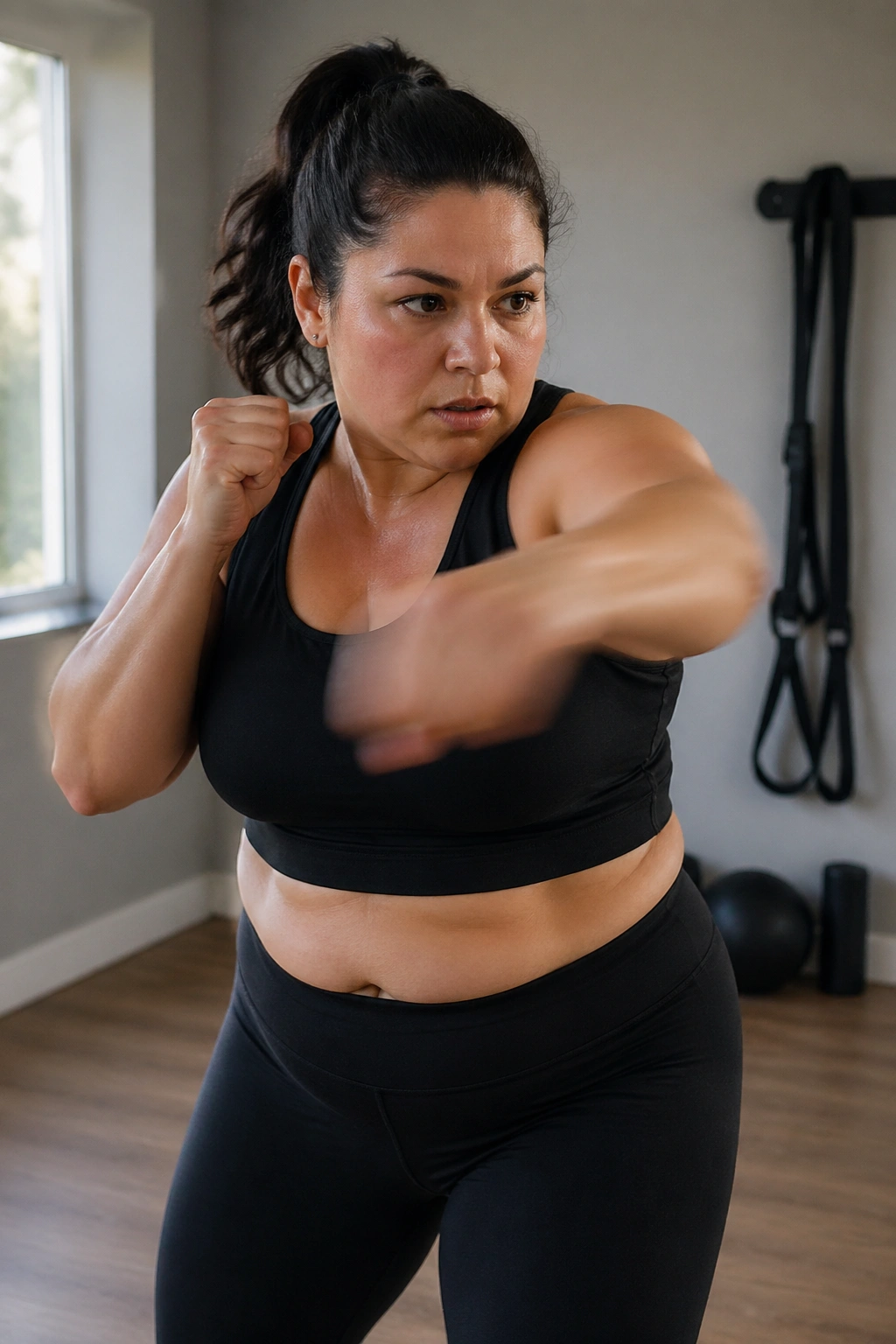
Shadow boxing is one of those workouts that looks almost too easy until the third round starts.
It is also one of the best low-cost cardio options for women who want a fat-loss workout that does not require jumping, machines, or a lot of setup. A few rounds of jabs, crosses, hooks, and footwork can get your heart rate up while also waking up your shoulders, trunk, and hips. If stress makes your body feel stiff, boxing-style movement can be a pleasant release.
Do 3 rounds of 2 to 3 minutes with 1 minute of rest between rounds. Keep your hands up, twist from the ribs and hips, and let your feet move. Standing still and punching only with your arms turns the whole thing into a shoulder burn. That is fine for a minute, not for a whole round.
A simple combo works: jab-jab-cross, step out, hook-cross, reset. The real goal is flow. You want enough coordination to keep your mind busy, but not so much complexity that you stop moving.
If the room is small, stay in place and work the angles with your torso. No equipment. No excuses.
8. Step-Up Repeats
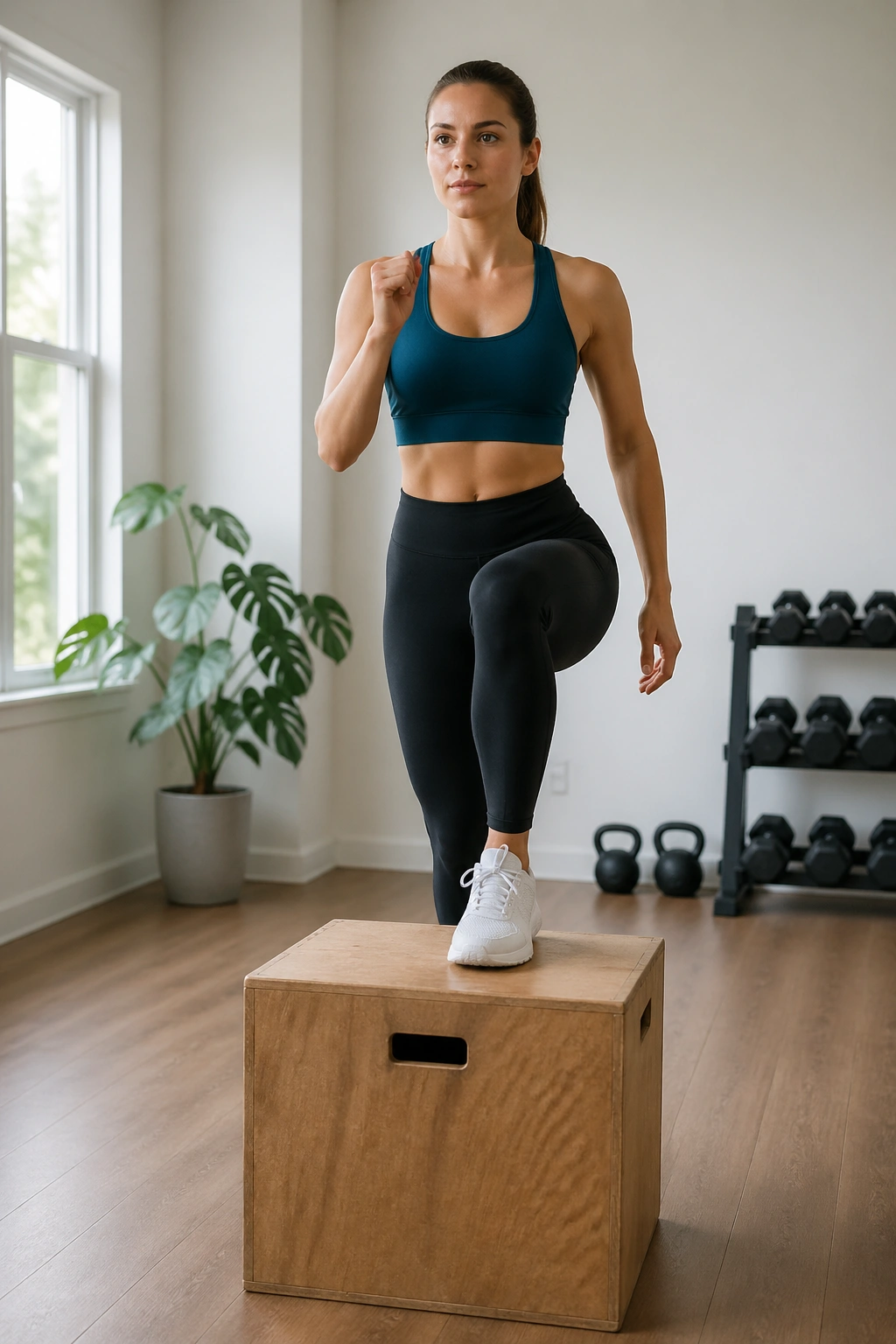
Need a move that looks simple and quietly works hard? Step-ups are that move.
Use a sturdy box, bench, or the bottom stair in your house. Step up with one foot, drive through the heel, and bring the other knee up with control. Then step back down and repeat. The pattern sounds basic, which is exactly why people underestimate it. Your glutes and quads notice the load quickly, and your core has to keep the torso from wobbling around.
Keep the setup sane
- Use a step height around mid-shin to knee level.
- Keep your whole foot on the step.
- Stand tall instead of leaning forward.
- Do 2 to 3 sets of 10 to 12 reps per side.
If one side feels clumsy, slow down instead of rushing through it. Balance work gets better when the movement is clean. You can hold dumbbells once bodyweight feels easy, but only after the pattern stops feeling shaky.
A step-up done well looks boring. A step-up done poorly looks like someone fighting furniture.
9. Dead Bug Core Work
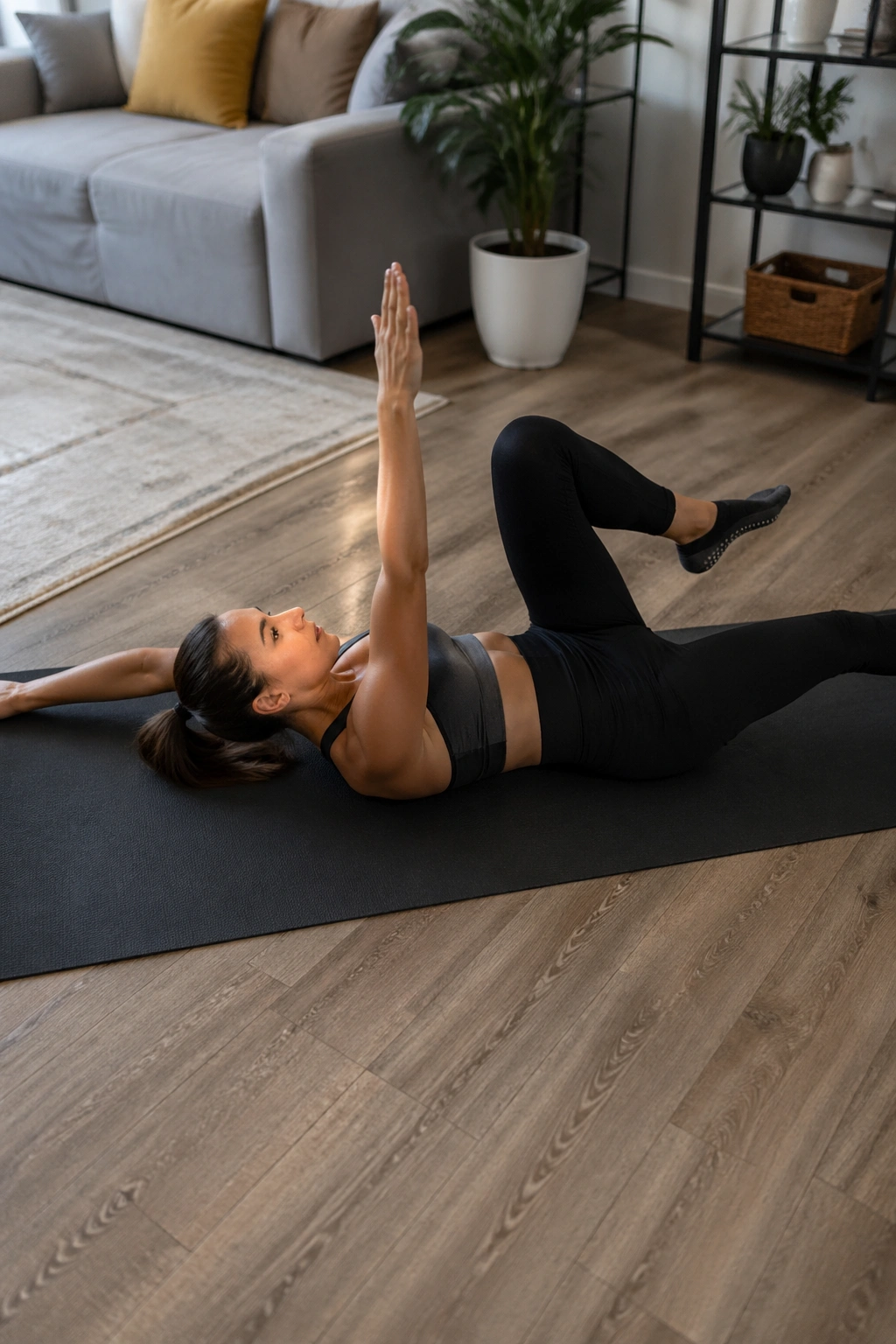
The floor is honest with dead bugs. There is nowhere to hide.
Lie on your back, bend your knees, and press your lower back gently into the mat. Then extend the opposite arm and leg away from each other without letting the ribs pop up or the back arch. The move looks tiny, but the control it asks for is not tiny at all. That is why dead bugs show up in smart core programs for women with PCOS who want more than endless crunches.
What to watch for
- Exhale before you extend a limb.
- Keep the movement slow enough to stay in control.
- Stop the rep if your lower back lifts.
- Do 3 sets of 6 to 10 reps per side.
The point is not speed. The point is to teach your trunk to hold steady while your limbs move. That matters for every other exercise on this list, from squats to carries to rower intervals.
If your hips start doing the work, the rep is over. Reset and try again.
Dead bugs are quiet, but they are not easy. That is why they keep showing up in real programs instead of in the flashy ones.
10. Bird Dog Holds
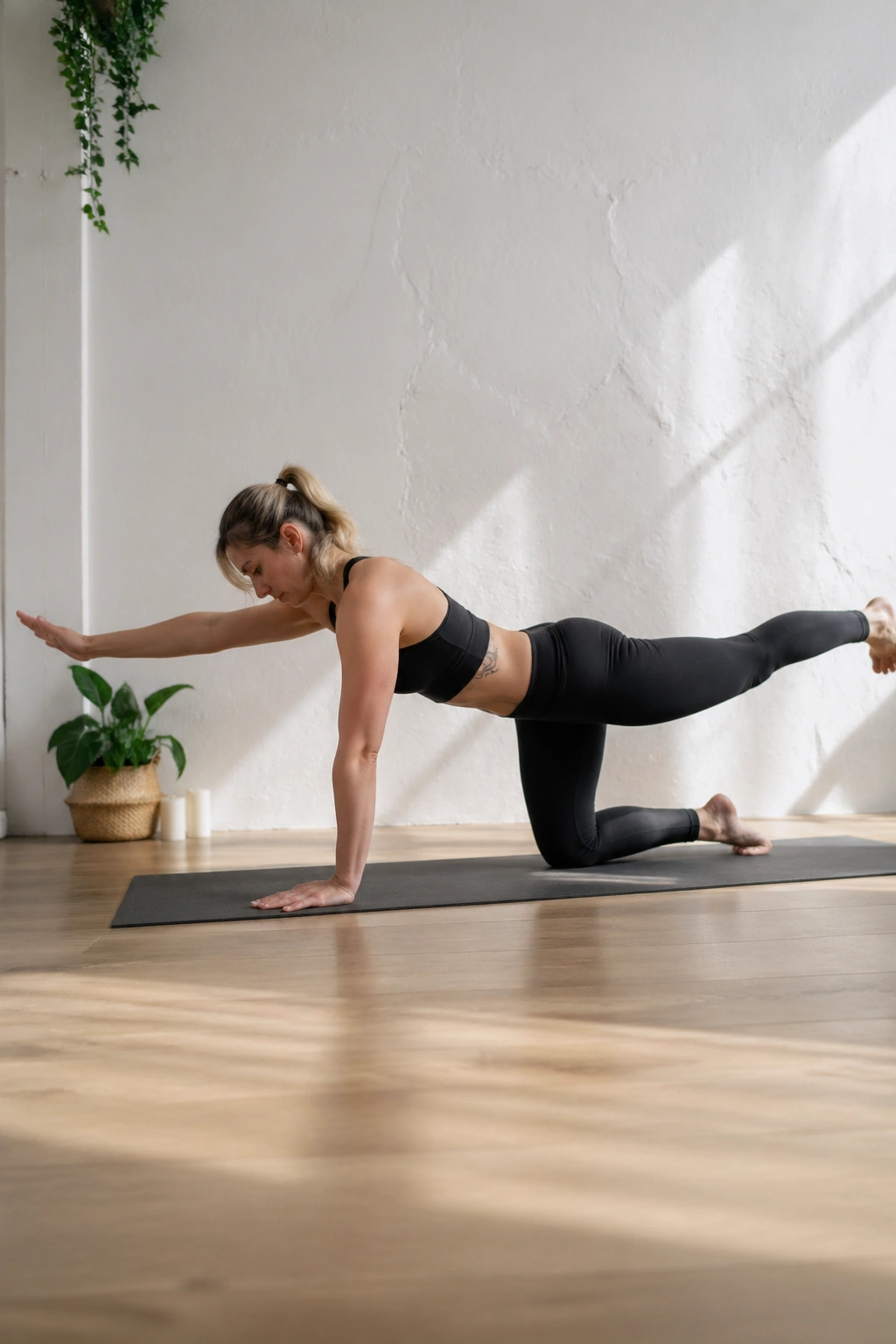
Bird dogs are the sort of exercise that looks calm until you try to hold one side steady for five seconds.
Start on hands and knees. Reach one arm forward and the opposite leg back, then pause before anything starts drifting. Your hips should stay level. Your ribs should stay tucked. The whole shape is about control, not stretch. Done well, bird dogs build the kind of midline stability that helps your waist feel tighter and your lower back feel less cranky.
A nice version of this is 5-second holds for 6 to 8 reps per side. If that feels too easy, slow the return instead of making the hold sloppy. If it feels too hard, shorten the lever: slide the leg back only a little or keep the toes on the floor for support.
This is also a good between-days exercise. Heavy leg work yesterday? Bird dogs fit today. Long sitting session at a desk? Bird dogs fit that too.
The best bird dogs are almost boring to watch. Good. That means the movement is doing what it should.
11. Mountain Climber Intervals
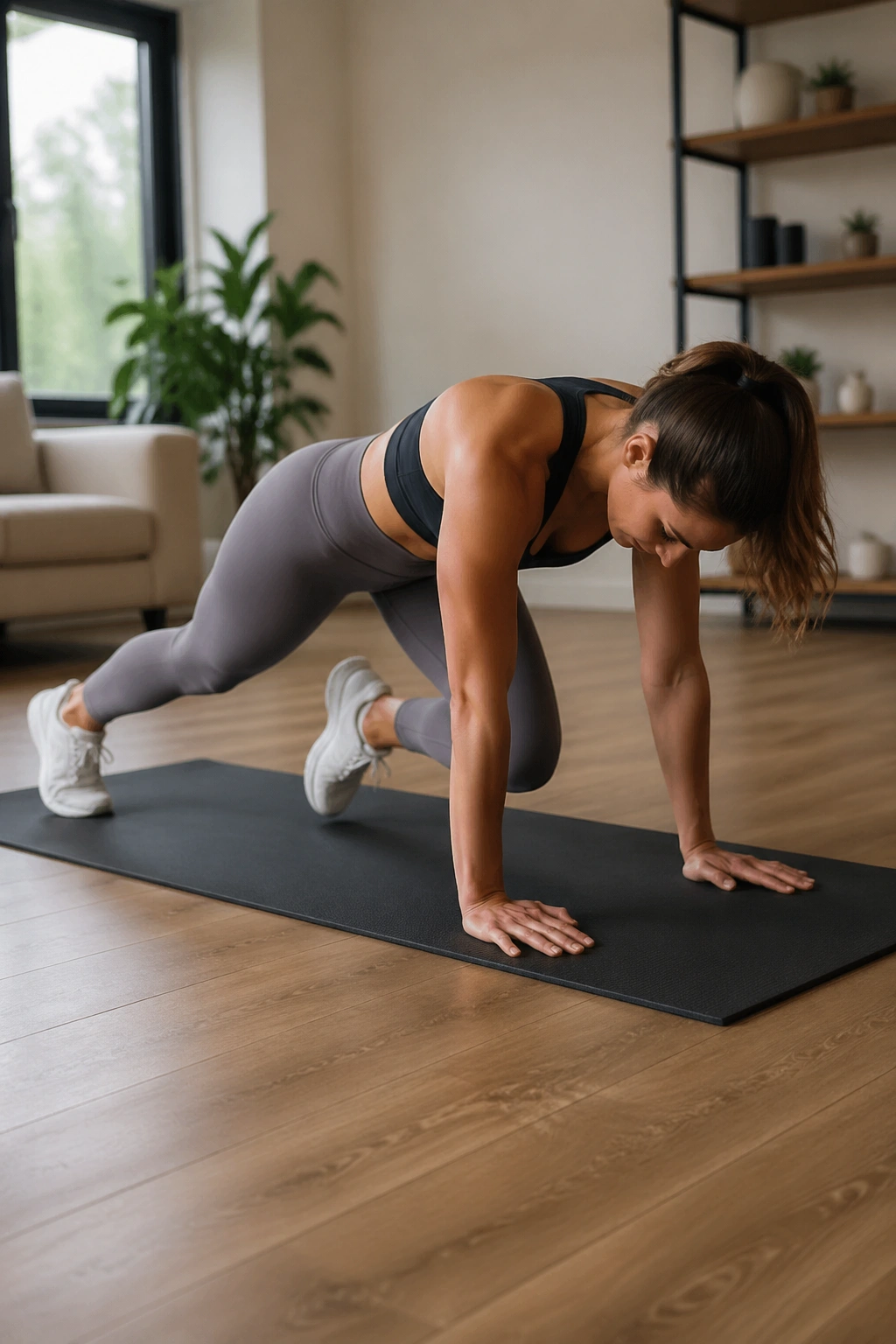
Mountain climbers are what happens when core work and cardio stop pretending to be separate things.
Unlike burpees, they do not demand a jump, a squat, and a floor plank all at once. That makes them easier to scale for PCOS workouts when you want your heart rate up but do not want a full-body wrecking ball. You can go fast, slow, or elevated on a bench if wrists or shoulders need a break.
Try 20 seconds on, 40 seconds off for 8 rounds. Keep the knees driving in a straight line under the hips, not flinging across the body like a stray fire hose. If speed makes your form ugly, slow down. A controlled climber is usually harder than a sloppy one anyway.
Hands on a bench or sturdy couch arm can take pressure off the wrists and make the angle friendlier. That small change matters more than people think. It turns the move from “maybe not” into “I can actually do this today.”
If you want a quick finisher after strength work, this is a useful one. Short, sharp, done.
12. Glute Bridge Marches
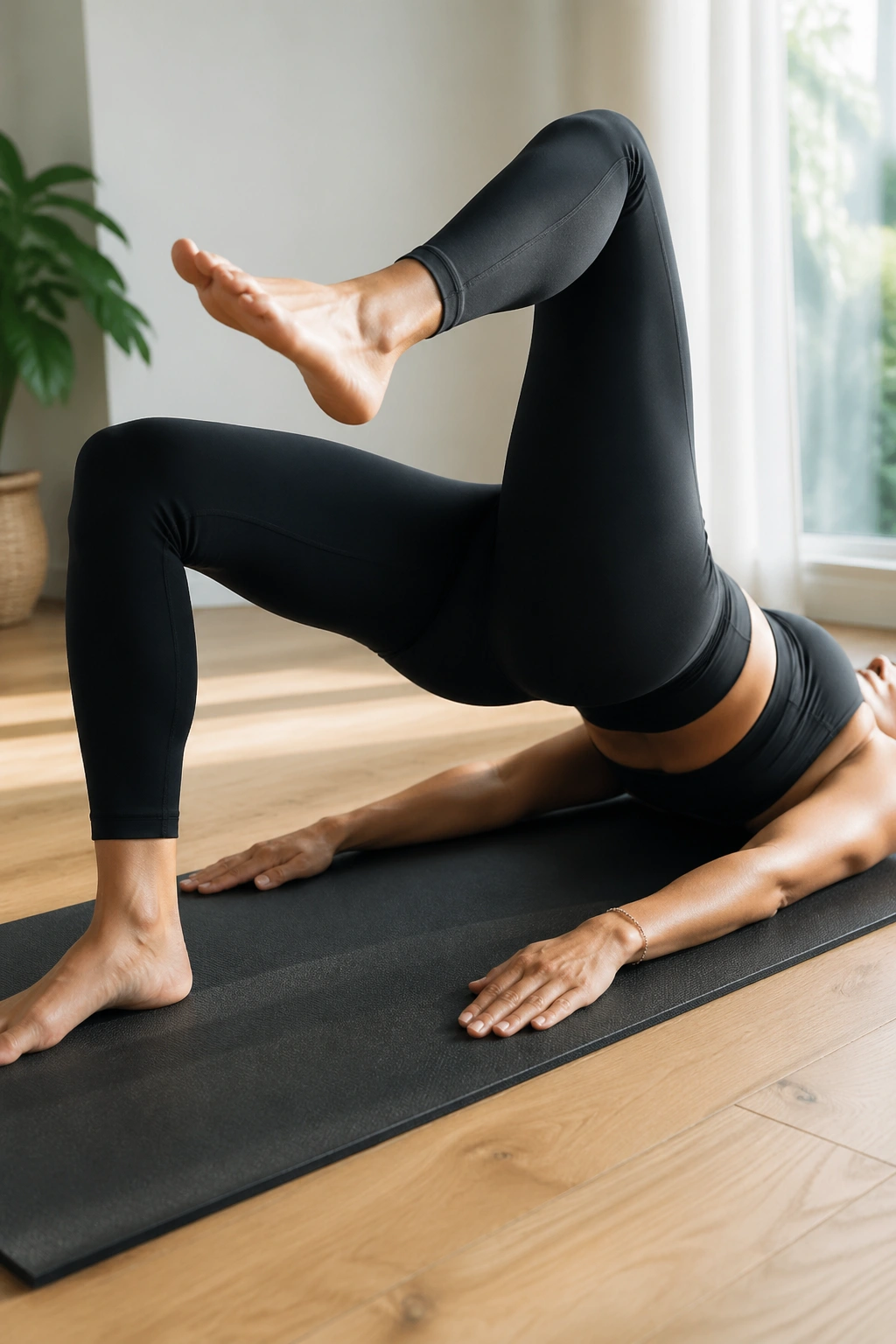
Glute bridge marches look harmless. Then your pelvis starts trying to wander, and the exercise gets serious fast.
Lie on your back with knees bent and feet flat. Lift into a bridge, squeeze the glutes, and then lift one foot a few inches while keeping the hips level. Set it down, switch sides, and keep the movement deliberate. You are training the backside of the body while also teaching the core to resist twisting. That combination is useful for waistline work because a stable pelvis makes almost every other move cleaner.
Why it sneaks up on you
- The glutes work hard to keep the hips lifted.
- The abs have to stop the lower back from arching.
- The pelvis should stay level, not rock side to side.
- A mini band above the knees adds extra work if you want it.
Do 3 sets of 8 to 10 marches per side. If hamstrings cramp, move your feet a little farther from your hips and lower the bridge height slightly.
This is one of those moves that feels elegant when it is done right and chaotic when it is not. Good enough is not the goal. Level hips are.
13. Farmer’s Carry Walks
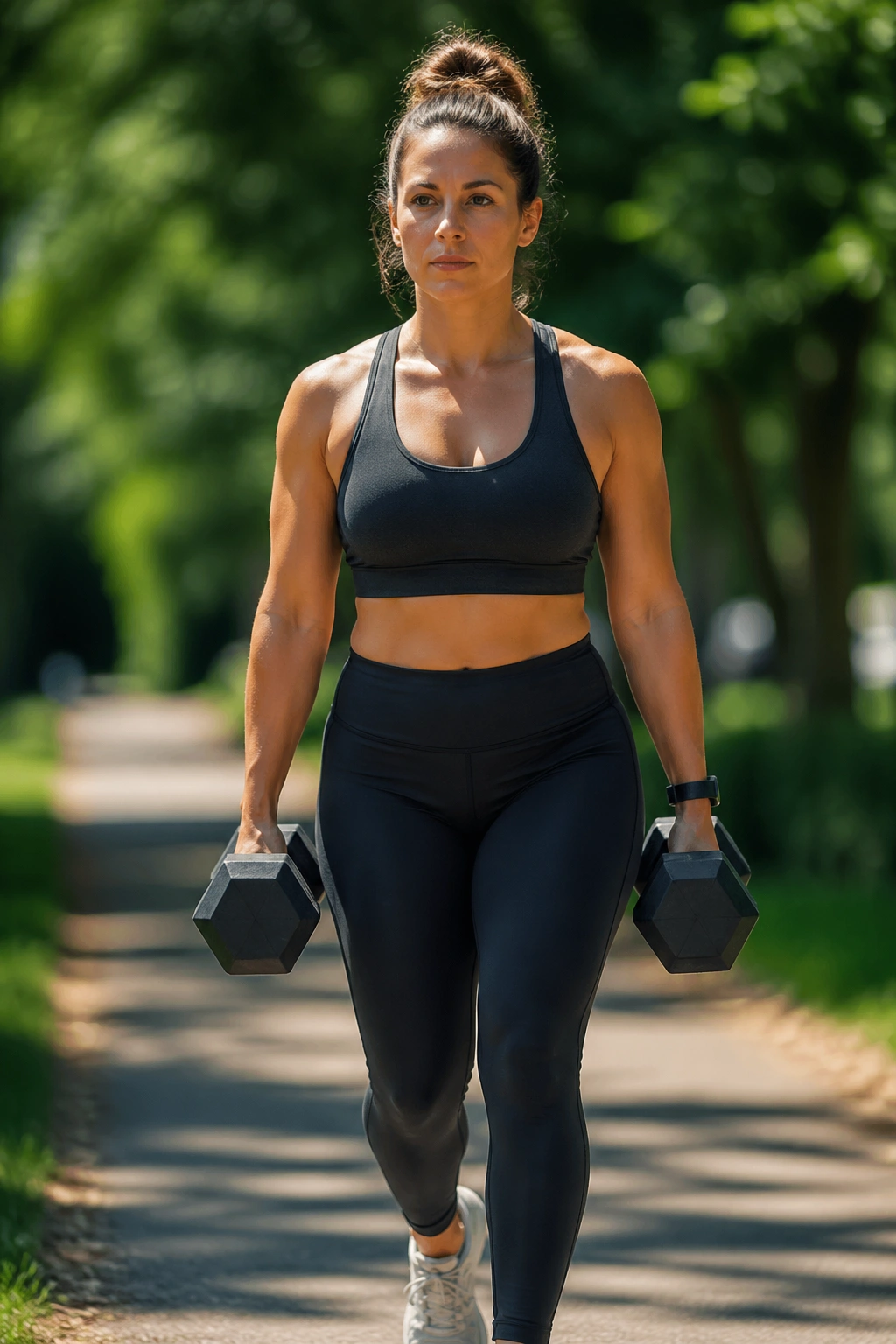
Farmer’s carries are brutally honest. Pick up the weight and your posture tells the truth within three steps.
Hold a heavy dumbbell or kettlebell in each hand and walk for 30 to 60 seconds at a time. Your shoulders stay down. Your ribs stay stacked over your pelvis. Your abs brace without you sucking in like a corset model from a century ago. The carry makes your whole midsection work, not because you are twisting or crunching, but because you are resisting collapse.
One of the nicer things about carries is that they scale well. Heavy enough to challenge you, light enough to keep the torso tidy. If space is tight, march in place. If you want more oblique work, try a suitcase carry with one weight at your side and switch hands halfway through.
This is also a good “finish the workout without fancy equipment” move. No bench. No mat. No complicated setup. Just walk, breathe, and stay tall.
A carry that makes your grip tired before your form falls apart is usually the right carry.
14. Resistance Band Anti-Rotation Press
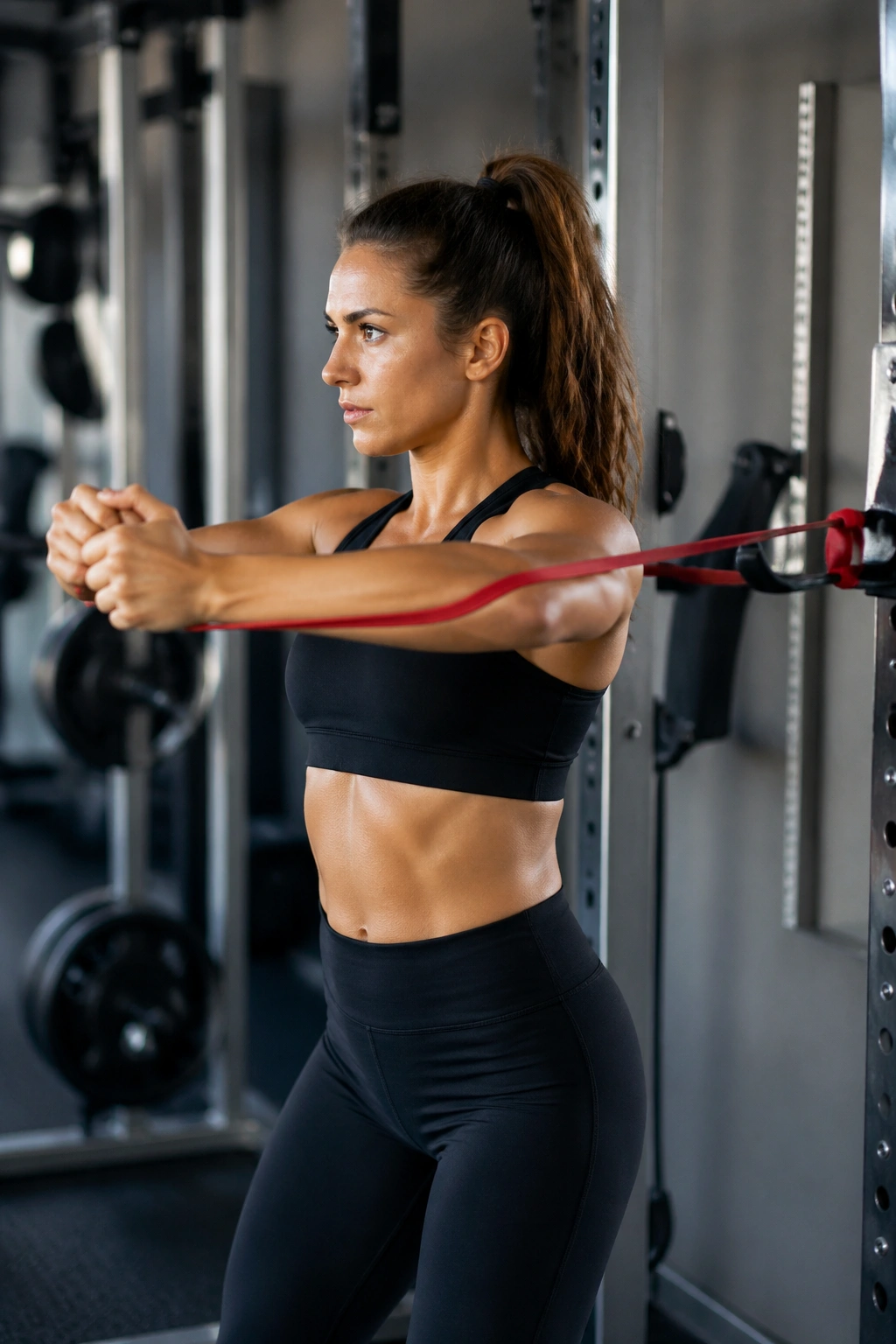
Want a core move that does not involve a single crunch? This is the one.
Anchor a resistance band at chest height, stand sideways to the anchor point, and press the band straight out from your chest. Your job is not just to push. Your job is to stop your torso from rotating toward the band. That tiny fight is what makes this exercise so useful for women with PCOS who want a tighter-feeling waist and better trunk control.
How to set it up
- Stand with feet hip-width apart.
- Hold the band close to the chest first.
- Press forward until the arms are straight.
- Pause for 1 to 2 seconds.
- Return slowly and resist the pull.
- Do 2 to 3 sets of 8 to 12 reps per side.
You should feel the side body, the abs, and even the glutes waking up a little. If you are twisting, the band is too heavy or you are standing too close to the anchor point. Step farther away and try again.
This move is simple. It is also sneaky. Simple is not the same thing as easy.
15. Pilates Hundred and Toe Taps
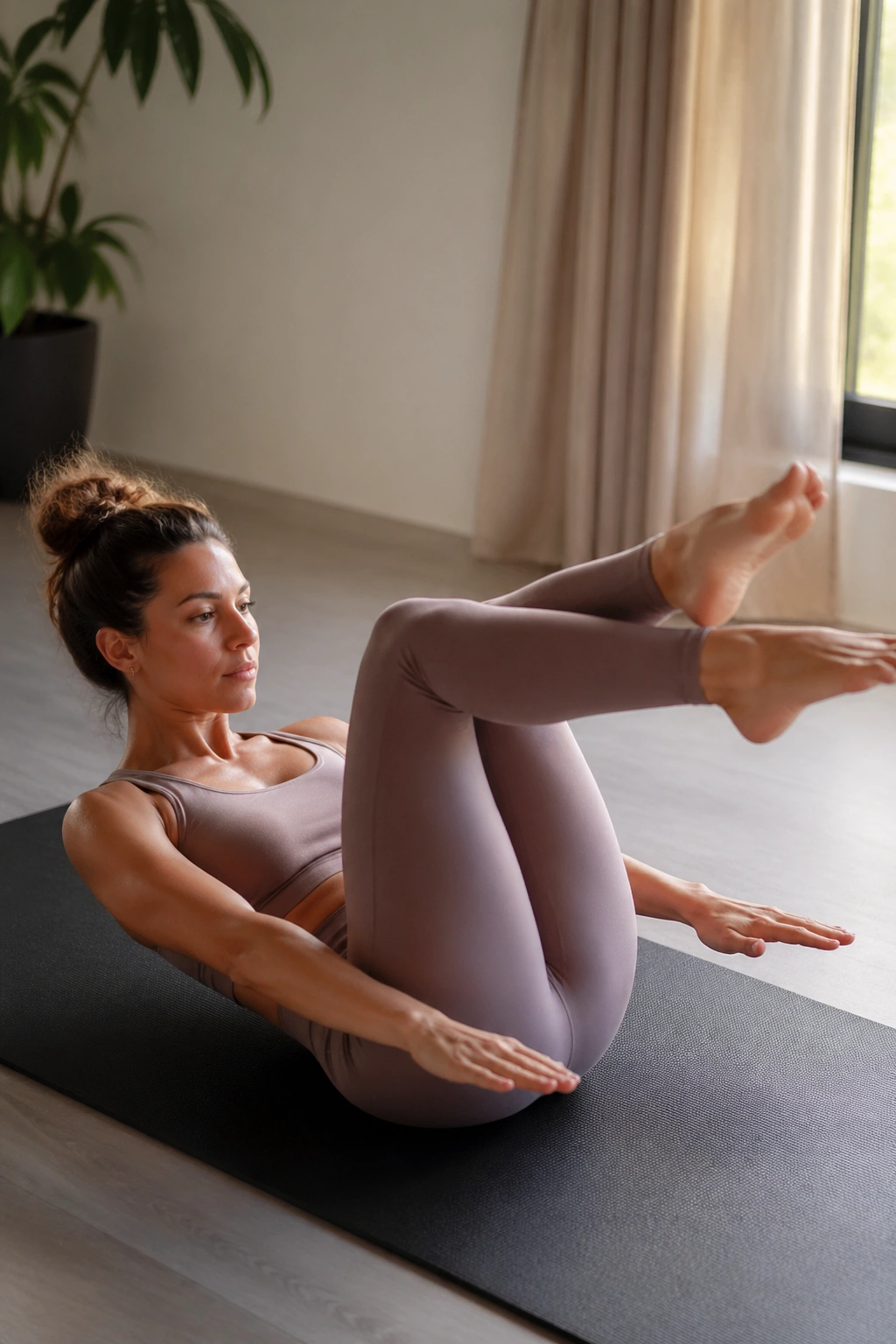
Some days your body wants less noise and more control. That is where Pilates-style work earns its keep.
The Hundred, or a softened version of it, pairs well with toe taps because both drills ask for breath control, trunk support, and patience. Lie on your back, keep the ribs down, and move the arms or legs with a rhythm that does not make your neck hate you. This is not about sweating the most. It is about holding a clean shape while your breathing stays organized.
For toe taps, bend your knees to table-top and lower one foot at a time toward the floor. Keep the lower back from lifting. Two to 3 sets of 8 to 10 taps per side is plenty. For the Hundred, use a bent-knee version if your neck gets tight. Even a short set can make the whole midsection feel more awake.
These are good on lighter days, travel days, or days when a hard workout sounds like a bad joke. They will not replace strength training, but they do support it nicely.
The best part? You can feel your core working without feeling beaten up.
16. Dumbbell Complex Circuits
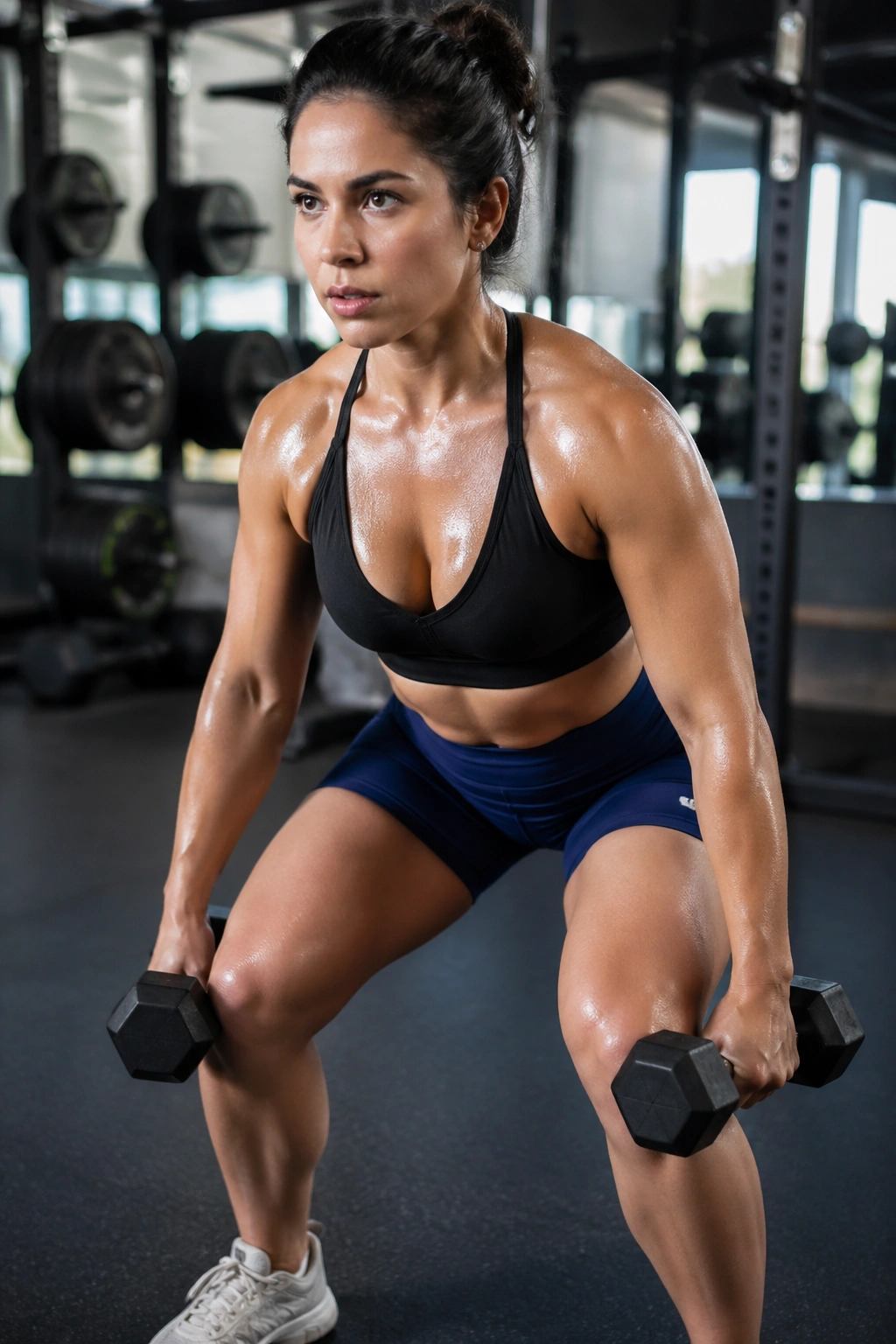
A dumbbell complex is what happens when strength work stops making excuses and gets efficient.
Pick one pair of light to moderate dumbbells and move through a sequence without setting them down. A clean complex might look like 6 deadlifts, 6 bent-over rows, 6 hang cleans, 6 front squats, and 6 overhead presses. That single round can light up your legs, back, shoulders, and midsection fast. It also keeps your heart rate high enough that you finish feeling like you actually trained.
Use weights you could press for several good reps under normal conditions. If the load is too heavy, the complex falls apart halfway through and your form starts to look like a paper bag in the wind. That is not the goal. Smooth transitions matter more than bragging rights.
Try 3 to 5 rounds with 90 seconds of rest between rounds. If hang cleans feel clunky, swap them for upright rows or even a simple high pull. The point is steady effort, not making the sequence so fancy that you spend the whole workout adjusting your wrists.
This is one of the most time-efficient ways to get a full-body sweat without needing a room full of machines.
17. Low-Impact Full-Body Finisher
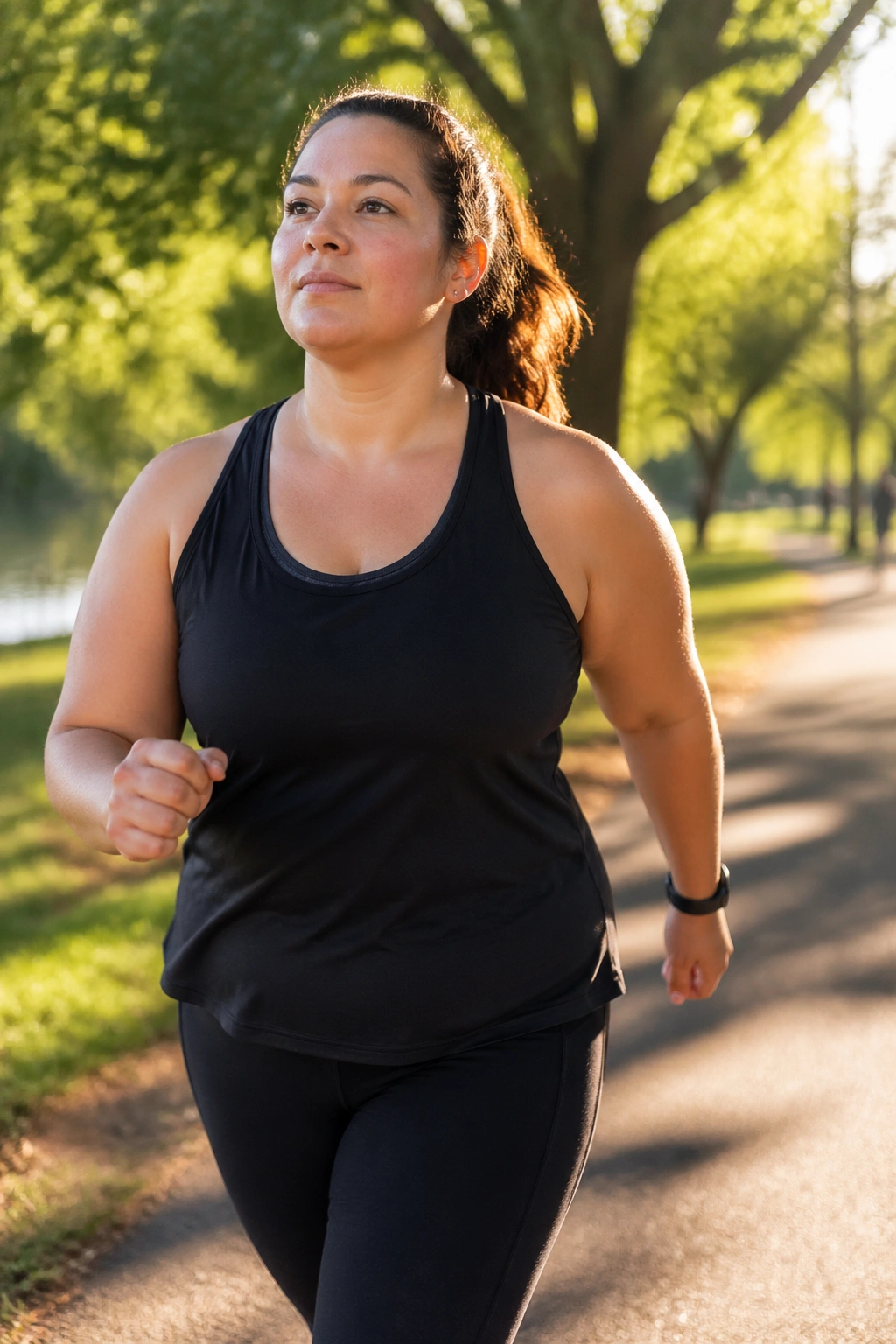
Some days you do not need a perfect workout. You need the one you will actually finish.
This finisher pulls together the best parts of the list without asking for much setup. Try 3 rounds of: 45 seconds brisk marching in place, 8 goblet squats, 10 dead bugs total, and 30 seconds shadow boxing. Rest for 60 seconds between rounds. That gives you legs, core, and cardio in one neat package, and it works well when motivation is thin but you still want to move the needle.
If you want it harder, shorten the rest to 30 seconds or add light dumbbells to the march. If you want it easier, turn the goblet squat into a sit-to-stand from a chair and keep the boxing light. Either way, you get a workout that feels organized instead of random.
This is the kind of session I like for women with PCOS because it does not depend on perfect energy, perfect mood, or perfect timing. It asks for consistency, not drama.
And honestly, consistency is the whole trick. Pick three of these workouts, repeat them often, and let the boring weeks do their job.
