



An overactive nervous system does not want a bigger workout. It wants a quieter signal.
That matters more than people think. When your body is stuck in that buzzy, high-alert state — jaw tight, shoulders up, breath shallow, mind skipping from one worry to the next — intense stretching or fast vinyasa can feel like one more demand. The yoga poses to calm an overactive nervous system are usually the ones that ask less of you, not more. They make space. They slow the breath. They give your body a clear message: you can stand down for a minute.
I always trust the floor first. Floor-based poses, gentle forward folds, light inversions, and supported holds tend to work better than heroic effort, because the point is not to “win” the stretch. The point is to let the system notice that nothing is chasing it. Long exhalations help. Stillness helps. And if a pose makes you brace harder, that’s not your pose for the day.
A good calming sequence usually feels a little ordinary at first. No drama. No burn. No performance. Then, a few breaths in, your shoulders drop, your face softens, and the room gets quieter in a way that’s almost annoying in its simplicity. Start there.
1. Child’s Pose for a Racing Nervous System
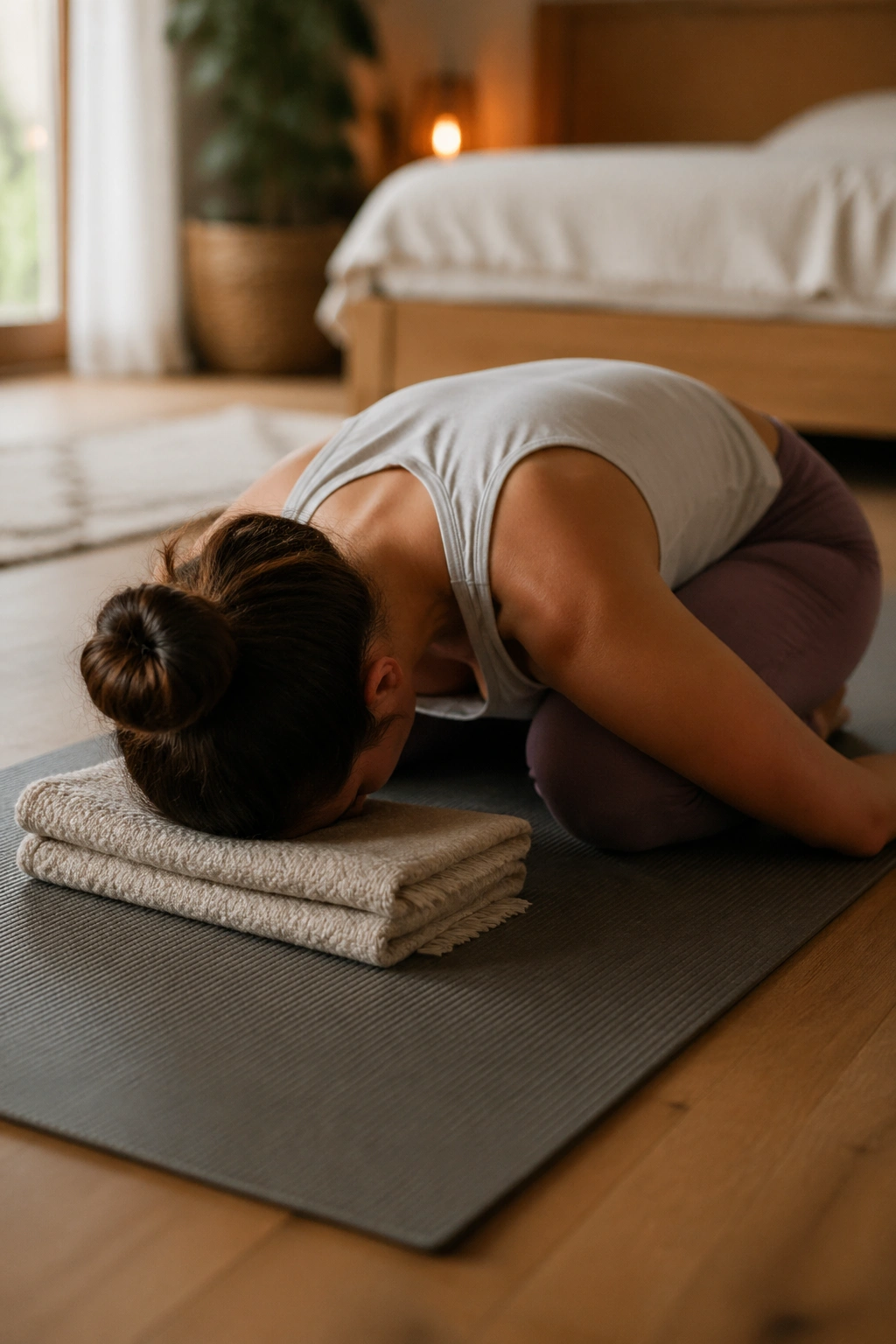
Child’s Pose is the first pose I reach for when someone looks fried. Not “a little tense.” Fried. It gives the body a shape that feels sheltered, and that sense of being held can matter more than a deep stretch ever will.
Why It Works
Knees wide or together, big toes touching, forehead on the mat or a block. That’s the basic shape. From there, let the arms reach forward or rest beside the body, and breathe into the back ribs instead of trying to force the belly to move.
A blanket under the knees helps if the floor feels unforgiving. A rolled towel under the forehead can make the whole pose easier to stay in, which matters more than looking tidy. Stay for 6 to 10 slow breaths, or longer if your breathing starts to lengthen on its own.
Best cue: let your exhale be louder in your head than your inhale. That tiny shift often changes the whole mood of the pose.
2. Cat-Cow to Unstick a Tight Spine
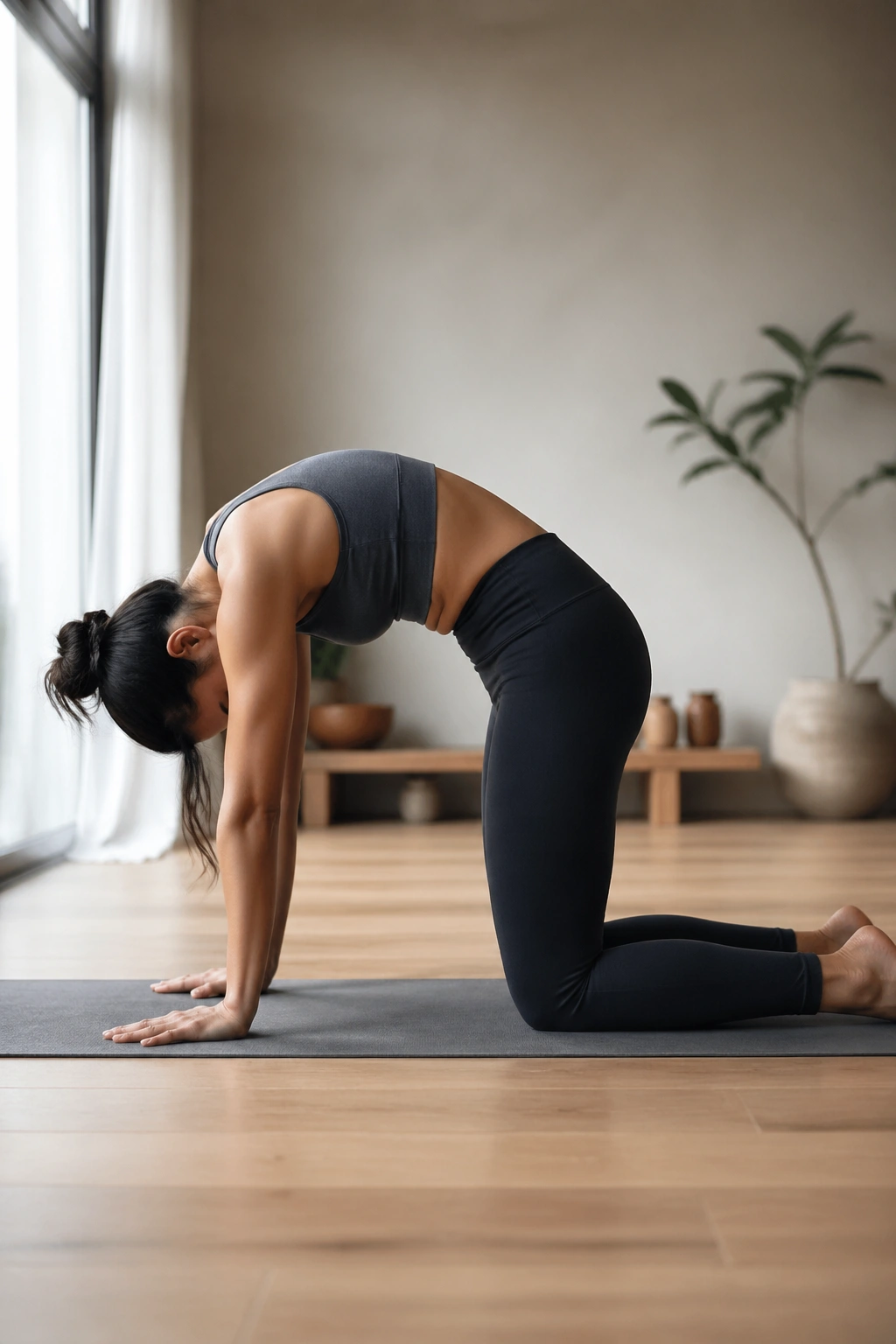
Gentle spinal movement can calm a nervous system that hates stillness. Cat-Cow is not flashy, and that is the point. When the body is wound up, a slow, paired inhale and exhale gives it a pattern to follow.
How to Move Through It
Start on hands and knees with wrists under shoulders and knees under hips. On the inhale, tip the pelvis forward and lift the chest a little. On the exhale, round the spine, press the floor away, and let the head follow the line of the back without yanking the neck.
Three to eight rounds is enough for most people. Faster is not better here. If the movement starts to feel jerky, shrink it down. Small range, clean breath, soft eyes.
What to Watch For
- Keep the elbows straight but not locked.
- Move from the pelvis, not just the shoulders.
- Let the neck stay long.
- Stop before the low back feels pinchy.
Tip: if your wrists get sore, drop to forearms on a folded blanket or do Cat-Cow at the wall with your hands on the wall at chest height. That version is underrated.
3. Standing Forward Fold When You Need a Quick Downshift
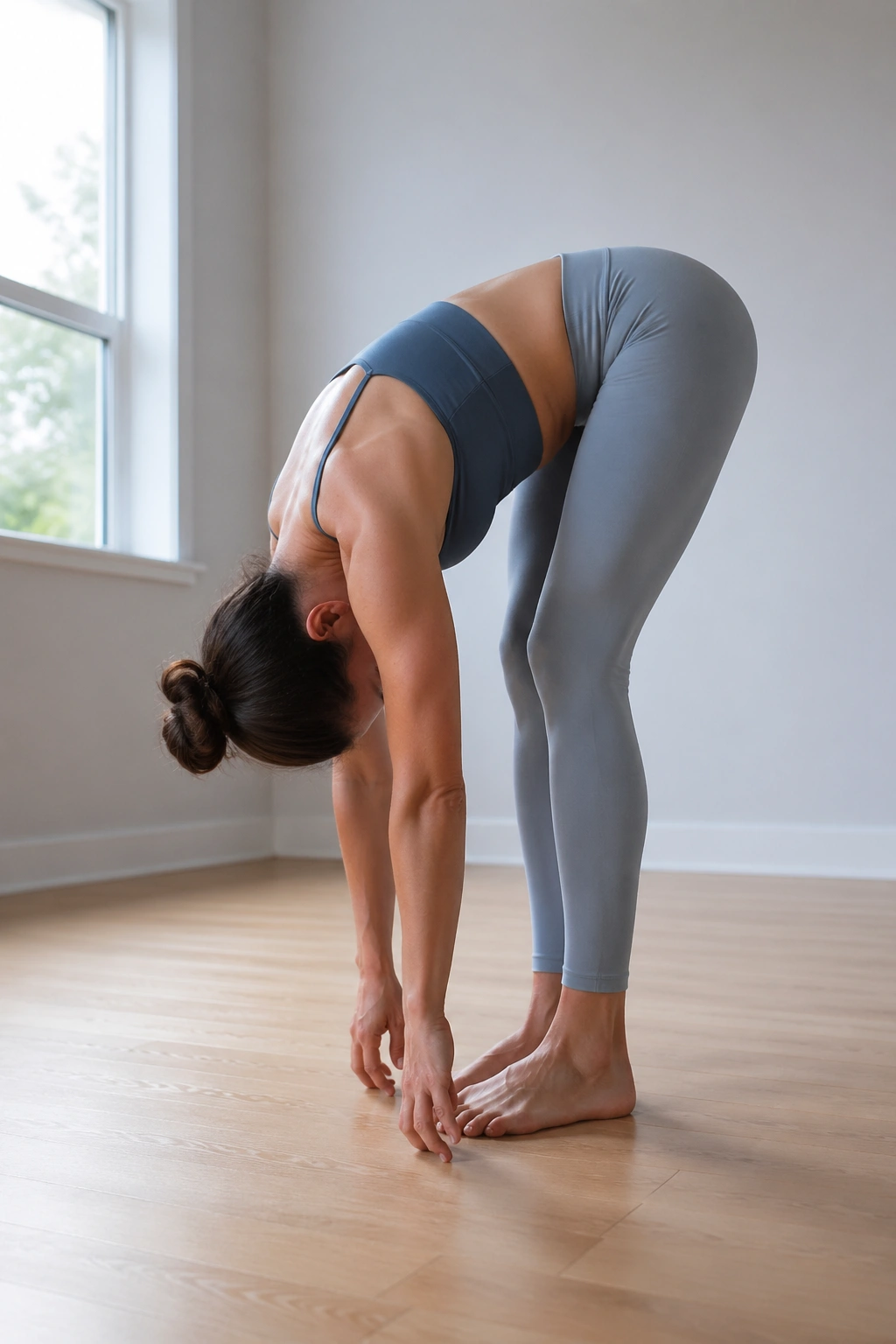
Not every calming pose needs a mat or a prop. Standing Forward Fold works because it removes the face from the business of the day. That alone can change the pace of breathing.
Hang from the hips with bent knees, feet hip-width apart, and let the arms dangle or rest on blocks. The knees can stay soft. They should stay soft if your hamstrings feel like cables. Straight legs are not the goal. A long spine is nice, but a heavy head and a slow breath matter more.
This pose can feel almost too plain, and I like that about it. You do not have to do much. You just let gravity have a turn. If your blood pressure runs low or you feel dizzy in forward bends, come out slowly and keep the hold short.
A one-minute fold after a stressful call can take the edge off in a way that surprises people. Simple. Effective. Not dramatic.
4. Seated Forward Fold for Quiet, Not Force
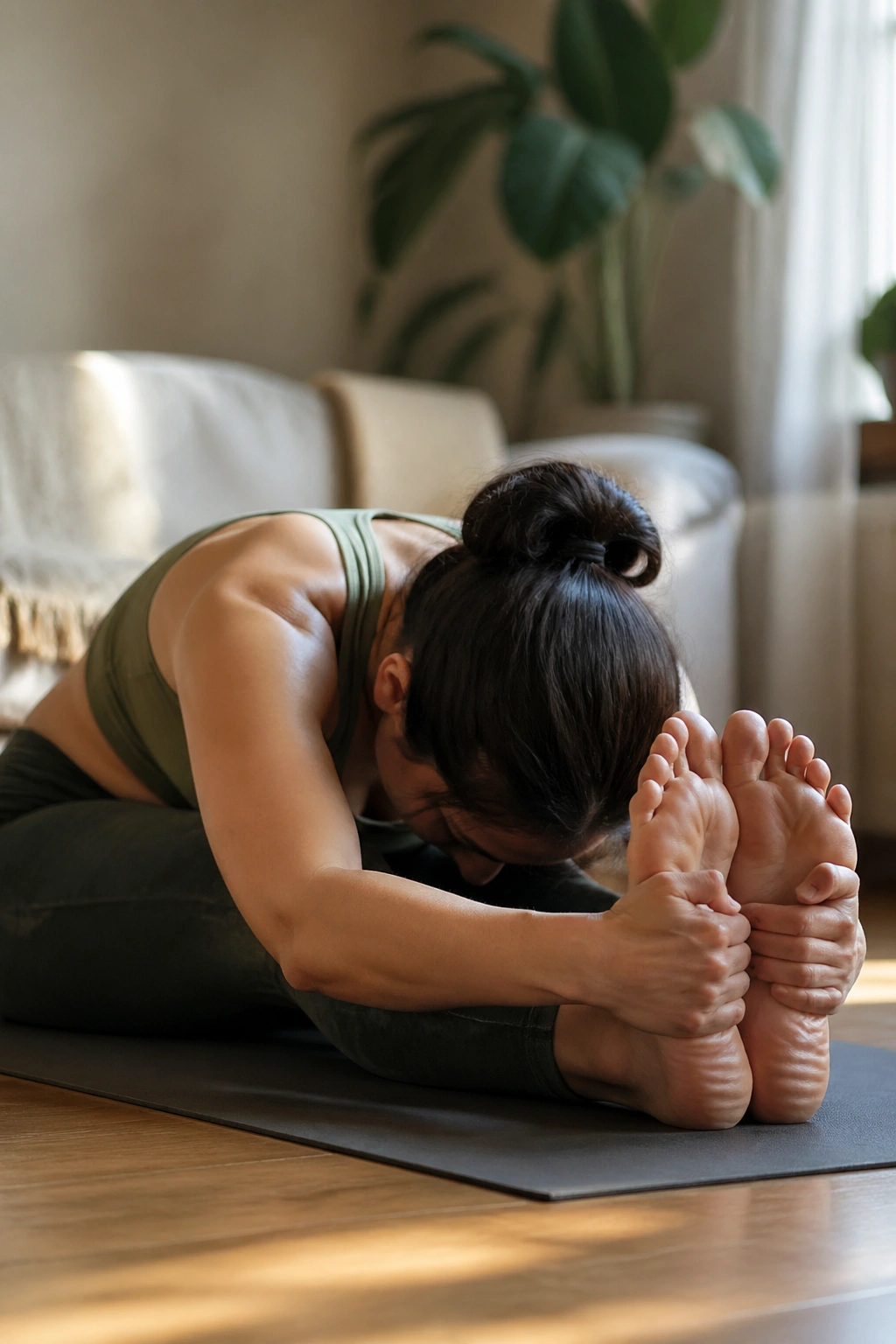
When I want a pose that settles the body without clamping it down, I pick Seated Forward Fold. It has a calmer texture than the standing version because you are already on the floor, already lower, already halfway to stillness.
Sit with your legs extended, bend the knees as much as needed, and fold from the hips rather than collapsing through the lower back. A strap around the feet can save the hamstrings from a fight they did not ask for. So can a folded blanket under the sit bones.
A Few Good Cues
- Reach the chest forward before you sink down.
- Keep the feet relaxed instead of pointing hard through the toes.
- Let the back round only as far as it wants to on that day.
- Breathe into the back of the ribs, not just the belly.
This is not a race to the toes. If you feel your face tightening, back out a little. The nervous system usually calms faster when the stretch is honest instead of aggressive.
5. Legs-Up-the-Wall to Quiet the Nervous System
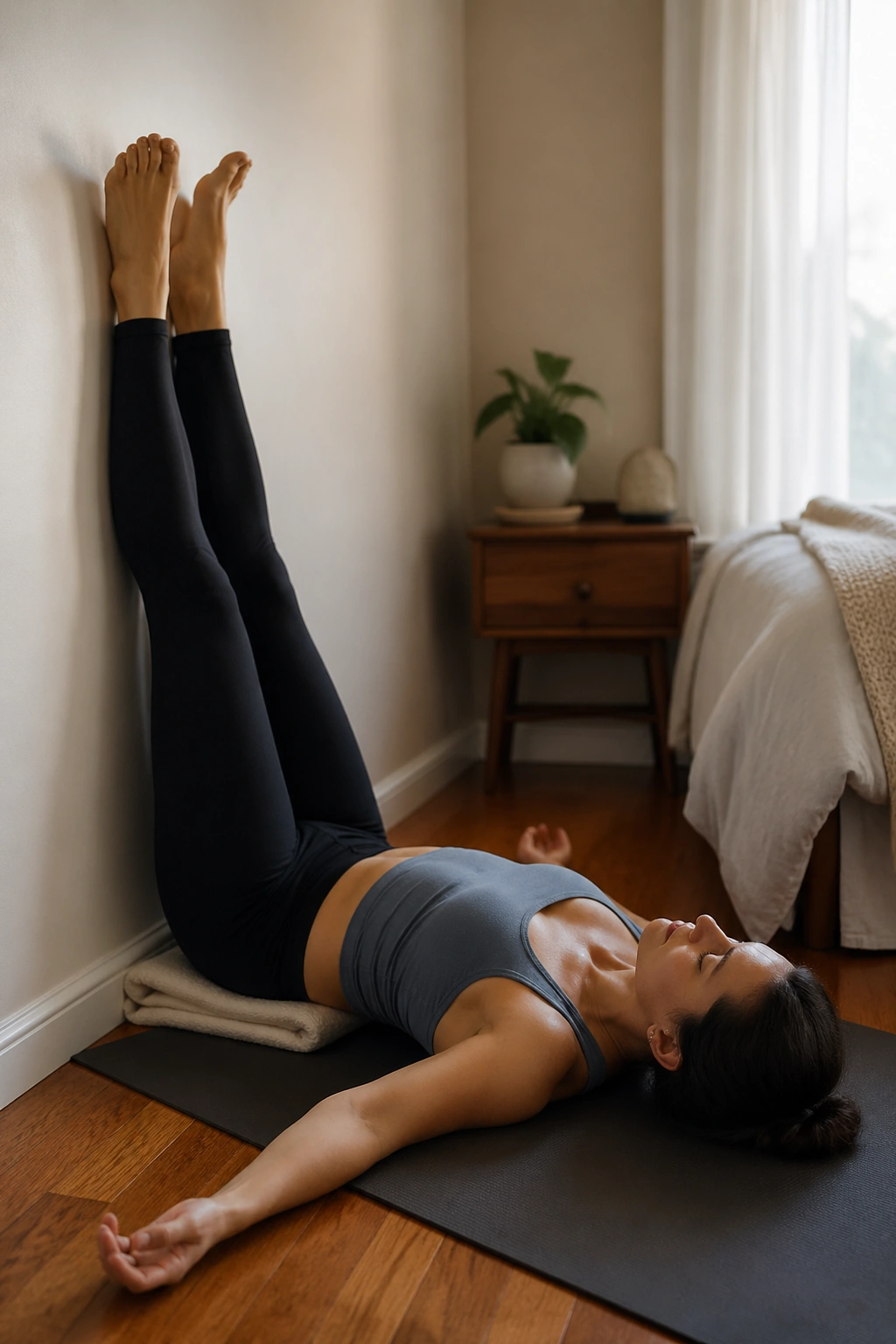
This is the easiest inversion on the list. No balancing, no wrist load, no ambition. Just legs on a wall and a spine on the floor.
Slide your hips close to the wall, swing the legs up, and let the arms rest wherever they land. A folded blanket under the sacrum can make the angle softer. If that lift feels strange, keep the hips flat and leave the props out. Five to fifteen minutes is a good window.
What Makes It Feel So Good
The lower body gets a break from holding you up. The breath tends to slow on its own. And because the pose is so passive, it can take the pressure off a mind that keeps trying to solve its way out of stress.
If you feel a pulsing headache, tingling, or pressure behind the eyes, come out. This is one of those poses that should feel steady and quiet, not headachy or forced.
Best use: after screens, after travel, after one of those days when your legs feel heavier than they should.
6. Reclined Bound Angle for a Body That Won’t Unclench
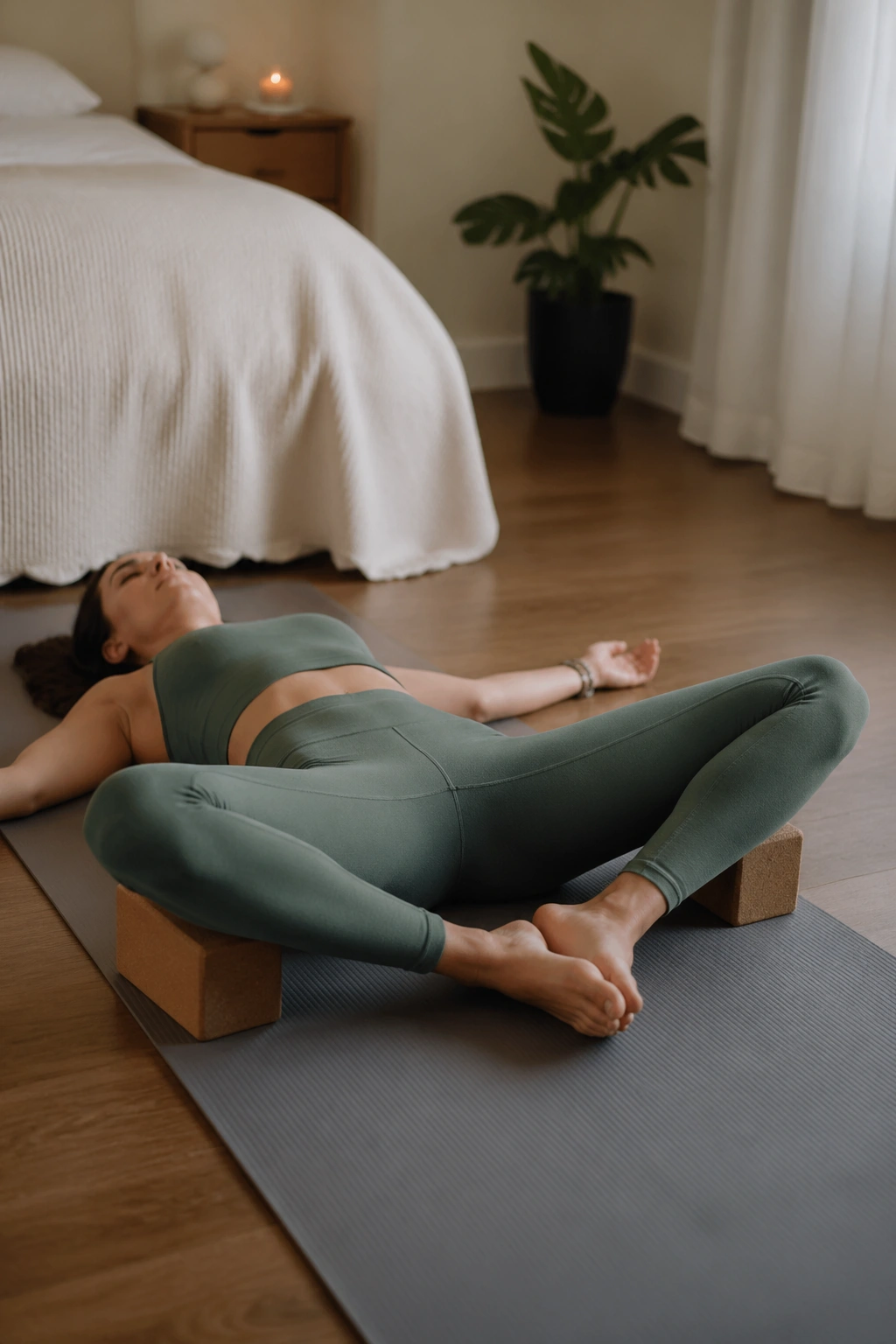
What if your hips feel guarded before you even start? Reclined Bound Angle is a nice answer. It opens the front of the body without asking you to hold yourself up.
Lie on your back, bring the soles of the feet together, and let the knees fall out to the sides. Blocks or cushions under the thighs can make a huge difference if the inner thighs or hips tug hard. A bolster lengthwise under the spine turns it into a more restful shape.
Hold it long enough for the breath to stop sounding busy. That may take 8 breaths. It may take 3 minutes. The body usually tells you which.
How to Make It Restorative
- Put a blanket under the head if the chin tips up.
- Use blocks under each thigh if the knees feel strained.
- Cover the eyes if the room feels too bright.
- Keep the hands on the belly or ribcage.
I like this pose when I want calm with a little opening. It feels spacious, but not exposed.
7. Supine Twist for a Heavy Day
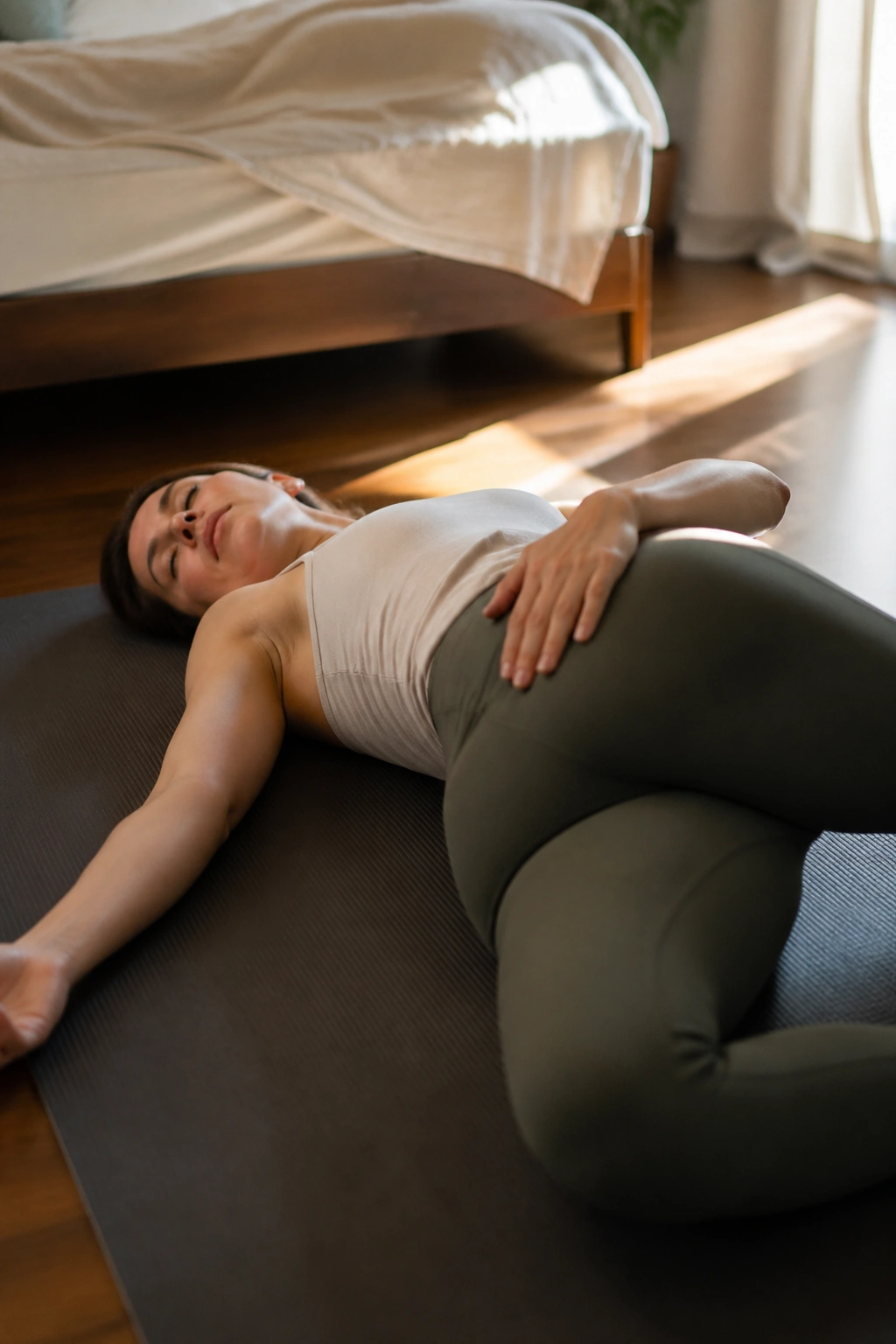
After a long day of guarding, twisting on the floor can feel like somebody turned a dimmer switch. The movement is small. The result can be huge.
Lie on your back, draw one knee in, and guide it across the body. Keep the top shoulder heavy. If the knee drifts far off the floor, place a pillow or block under it. The point is not to wrench the spine into shape. The point is to let the torso soften around the twist.
What to Notice
- The lower ribs can widen on the top side.
- The breath often gets easier after the first few exhalations.
- The neck should feel long, not cranked.
- A tiny twist is often better than a deep one.
If your back is sensitive, keep both knees bent and stack the thighs closer to the chest before letting them move over. That version is gentler and usually enough.
There is something almost rude about how well this pose works after tension piles up in the low back.
8. Knees-to-Chest for Instant Grounding
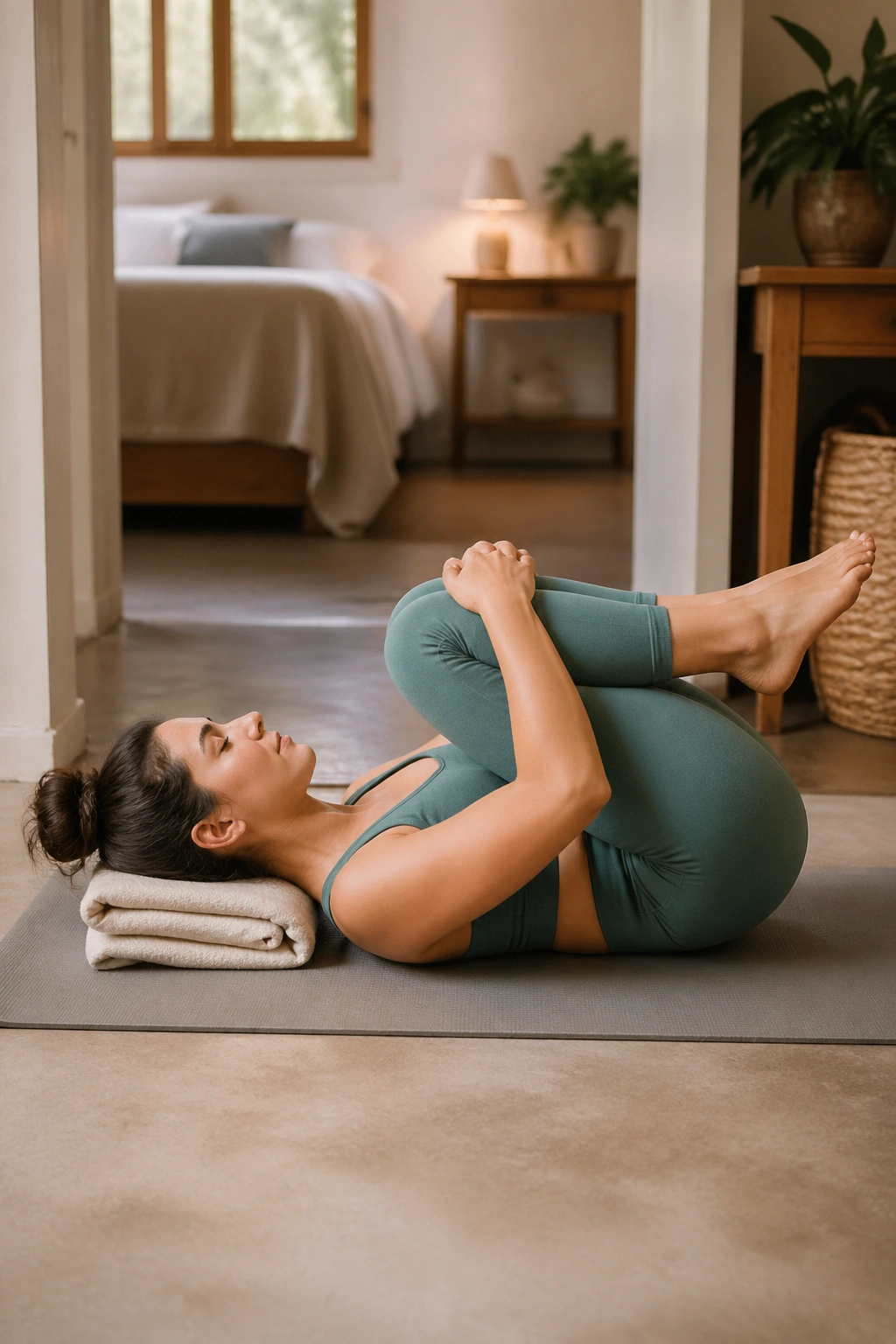
Simple, small, and underrated. Knees-to-Chest is the kind of pose people skip because it looks too easy, then end up staying in for longer than they planned.
Lie on your back and hug one knee at a time, or both together if that feels good. Rock a few inches side to side if the low back wants movement. Keep the shoulders heavy and the jaw loose. A folded blanket under the head can make the neck happier.
This pose gives the back body a break from standing, sitting, and bracing. It also tends to narrow the field of attention in a good way. When the limbs get closer to the center, the mind often follows.
A few slow breaths here can be enough to interrupt a spiral. That’s the whole appeal.
9. Thread the Needle for Tired Shoulders
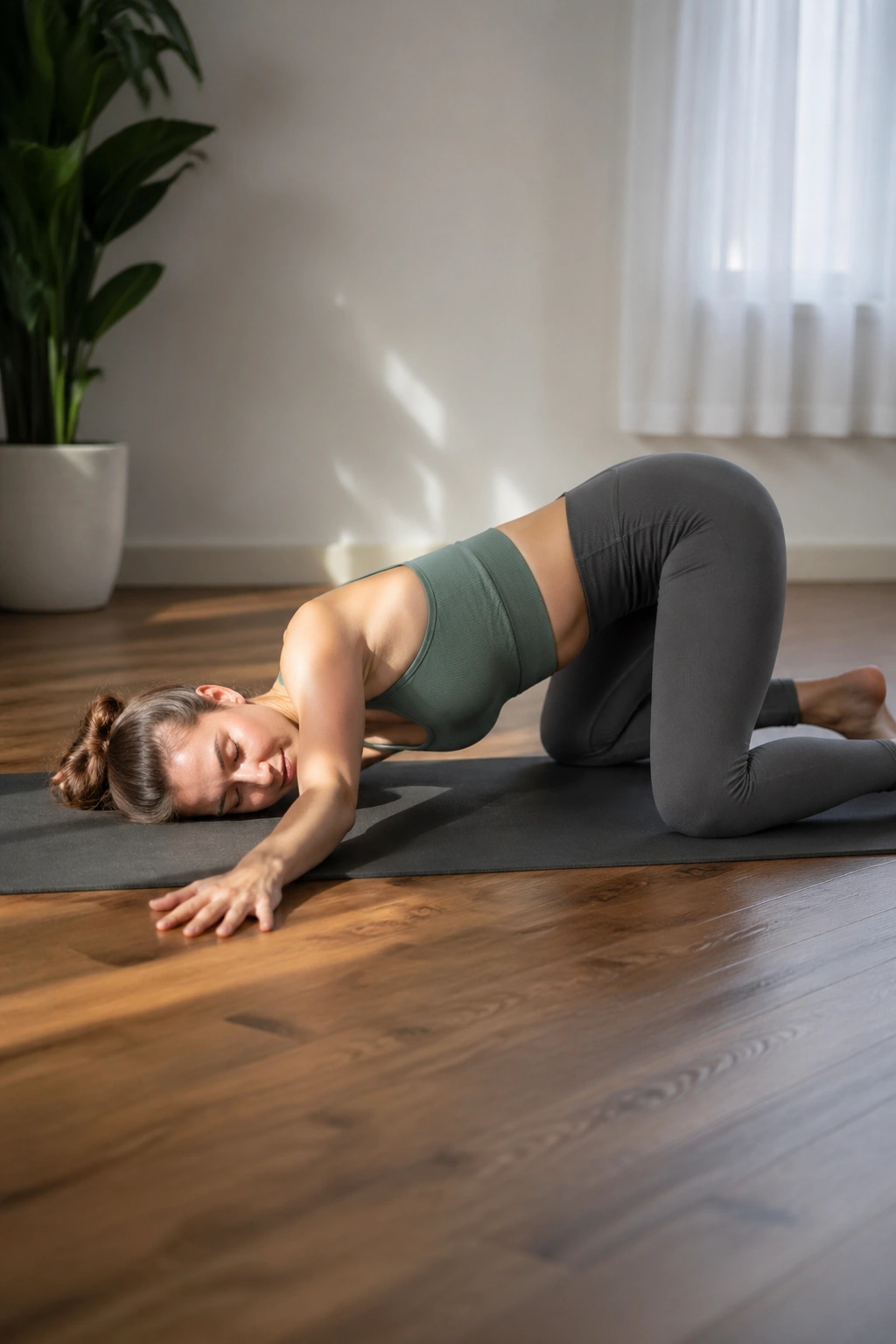
Shoulders carry stress in a way people underestimate. Thread the Needle gives them a safe place to stop gripping.
From hands and knees, slide one arm under the other palm-down and lower the shoulder and side of the head to the floor. The top hand can stay planted in front of the face or walk a little farther forward if that feels steadier. You do not need a deep reach. You need a quiet one.
Why It Feels Different
The upper back gets a gentle twist, but the front of the body stays mostly open. That makes the pose feel less trapped than a lot of shoulder stretches. It’s also easy to back off if the neck complains.
How to Use It
- Put a folded blanket under the shoulder or ear.
- Keep the hips over the knees.
- Breathe toward the back ribs.
- Stay for 5 to 8 breaths before switching sides.
If the floor feels too far away, stack books or a block under the head. The goal is support, not depth.
10. Sphinx for a Low, Steady Chest Opener
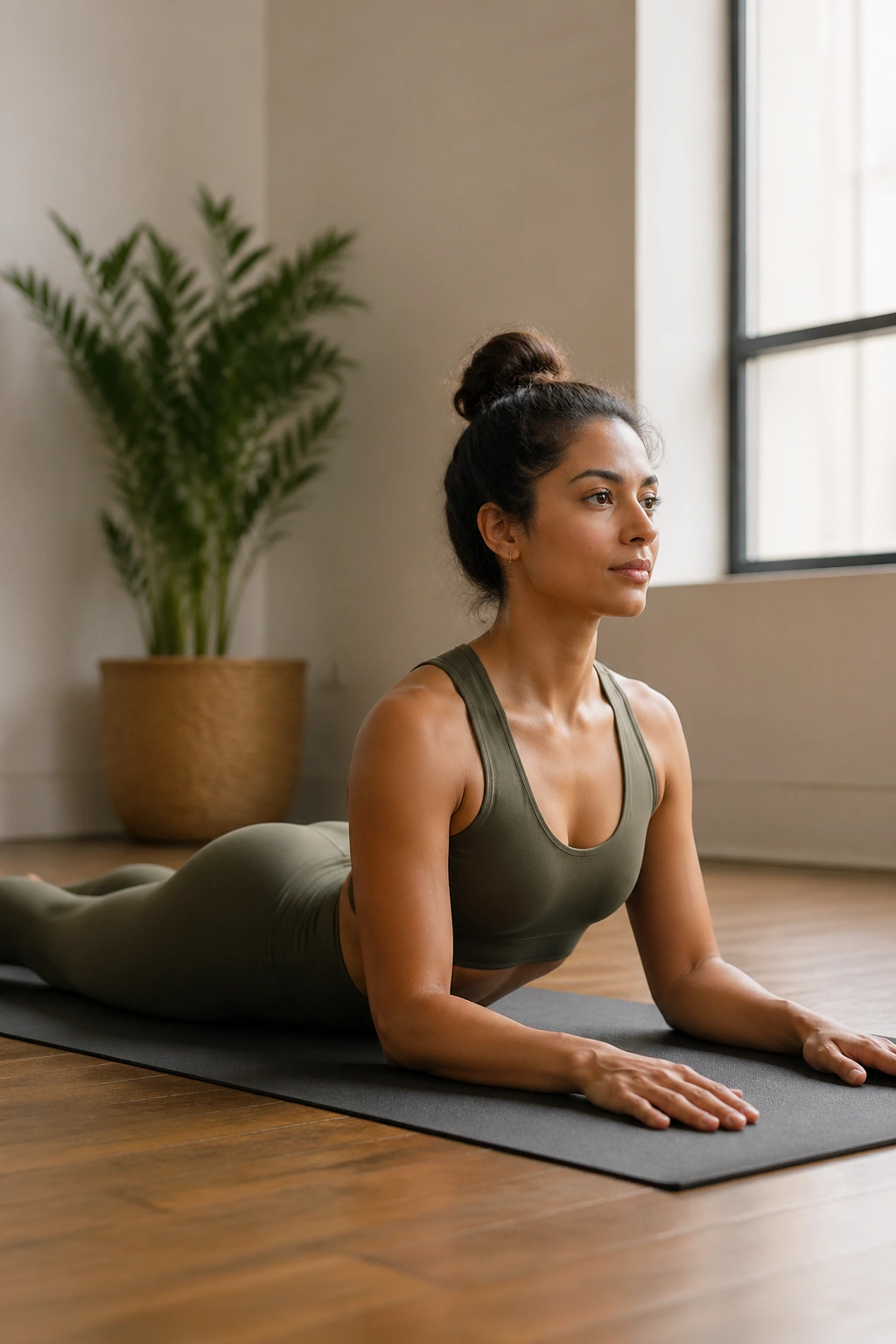
Unlike a big backbend, Sphinx stays low and stable. That’s exactly why it belongs in a calming sequence.
Lie on your stomach, bring the forearms to the floor, and place the elbows under or slightly in front of the shoulders. Let the pelvis stay heavy. The chest rises only a little. The neck stays long. If the low back feels pinchy, slide the elbows forward or rest on a folded blanket to reduce the backbend.
Sphinx can feel alerting for some people, so I treat it like a small dose rather than a pose to camp out in forever. Thirty seconds to two minutes is often enough. If the body starts to brace, that’s the sign to soften or stop.
What I like about it is the balance: a little lift, no drama. Enough to open the front of the body, not so much that it flips the system into “do more.”
11. Bridge Pose with Support Under the Sacrum
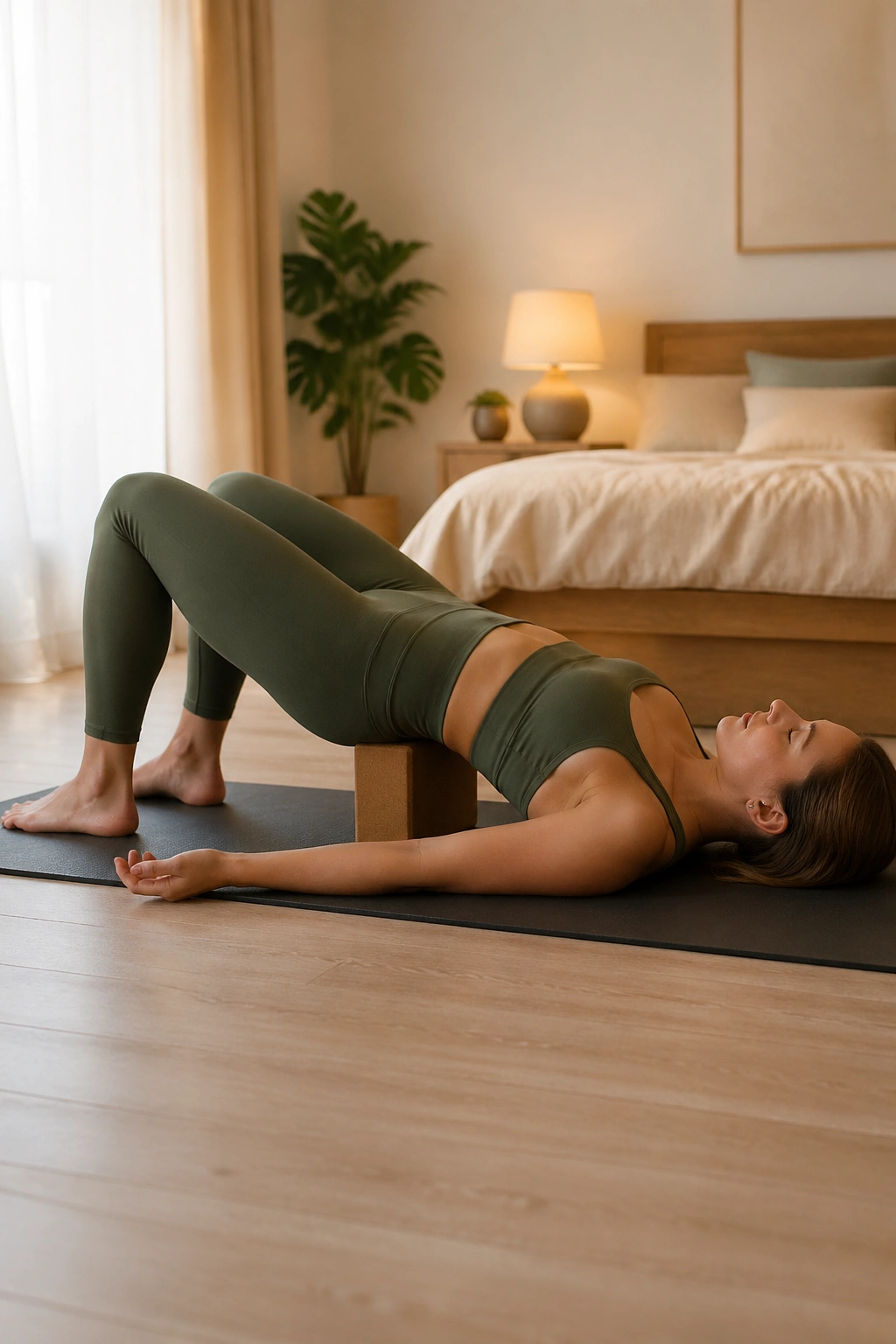
A supported Bridge can calm and ground at the same time. The key word is supported. A full active lift is nice sometimes, but an overactive nervous system often responds better to a shape that holds you up without effort.
Lie on your back with knees bent and feet hip-width apart. Press through the feet and lift the hips a few inches. If that feels fine, slide a block under the sacrum and rest there with the weight fully on the prop. The thighs can stay soft. The glutes do not need to clenched-hold the entire pose.
Support Options
- One block at the medium or low height for a gentle lift.
- A folded blanket if you want a softer landing.
- A second block under the shoulders only if it feels natural and safe.
What to Feel
The front of the hips should open a little. The low back should feel supported, not jammed. If the neck gets irritated, come out and skip the prop version.
This is a good pose when you want calm without collapsing into the floor.
12. Happy Baby for Releasing the Lower Back
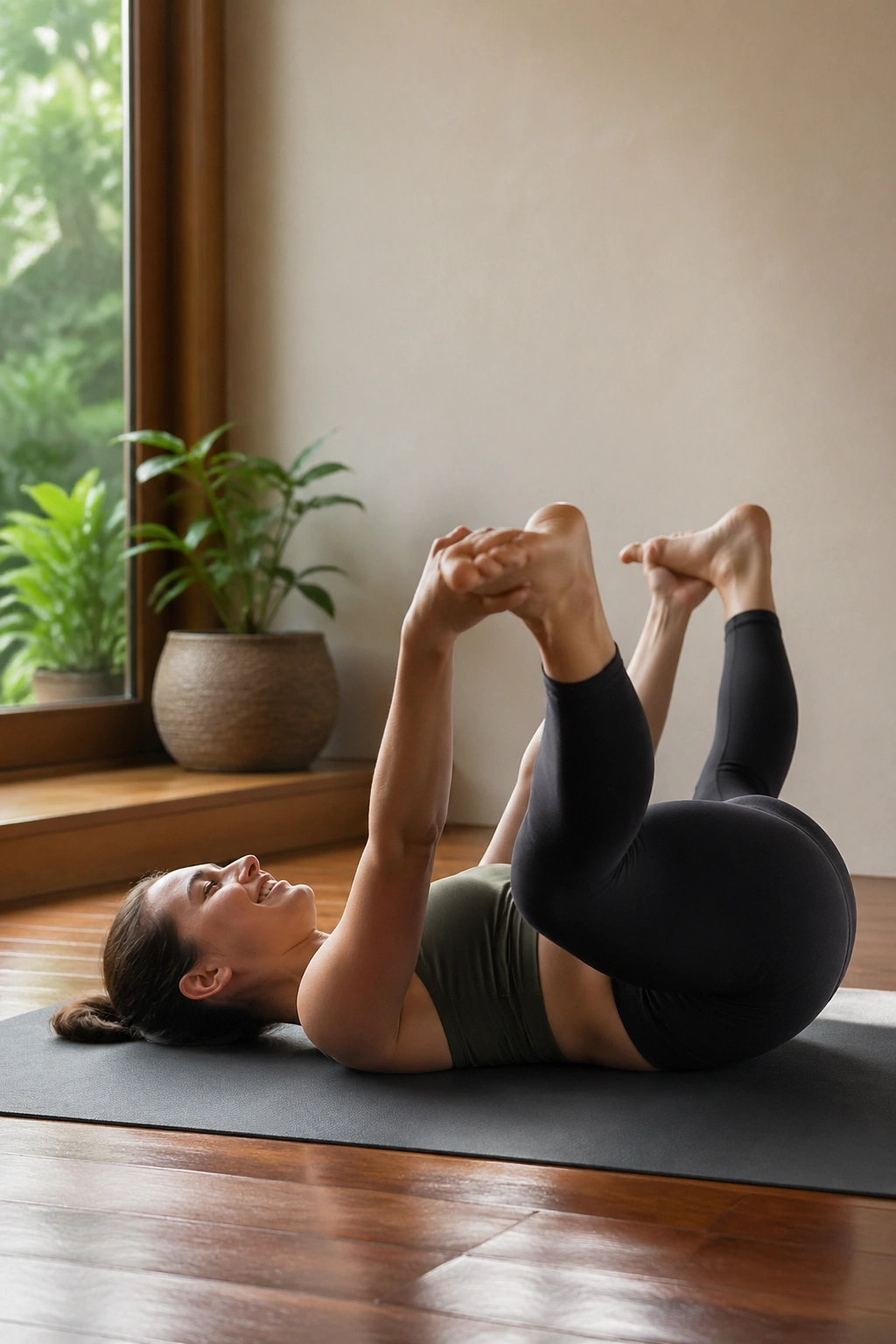
Happy Baby looks playful, but the real value is the way it lets the pelvis release its grip. If your lower back feels clenched or your hips feel welded shut, this can help.
On your back, bring the knees toward the sides of the ribs and hold the outer feet or shins. Let the tailbone stay heavy. A small rock side to side can make the pose more comfortable, but keep the motion slow. The feet do not need to be perfectly flat to the ceiling.
The worst version of this pose is the one where the shoulders jam up and the neck cranks forward. If that starts happening, widen the knees less or hold behind the thighs instead of the feet.
Some people love it. Some people hate it. I say that because it deserves honesty. If it feels playful and open, stay. If it feels like a wrestling match, choose something else and move on.
13. Supported Child’s Pose with a Bolster
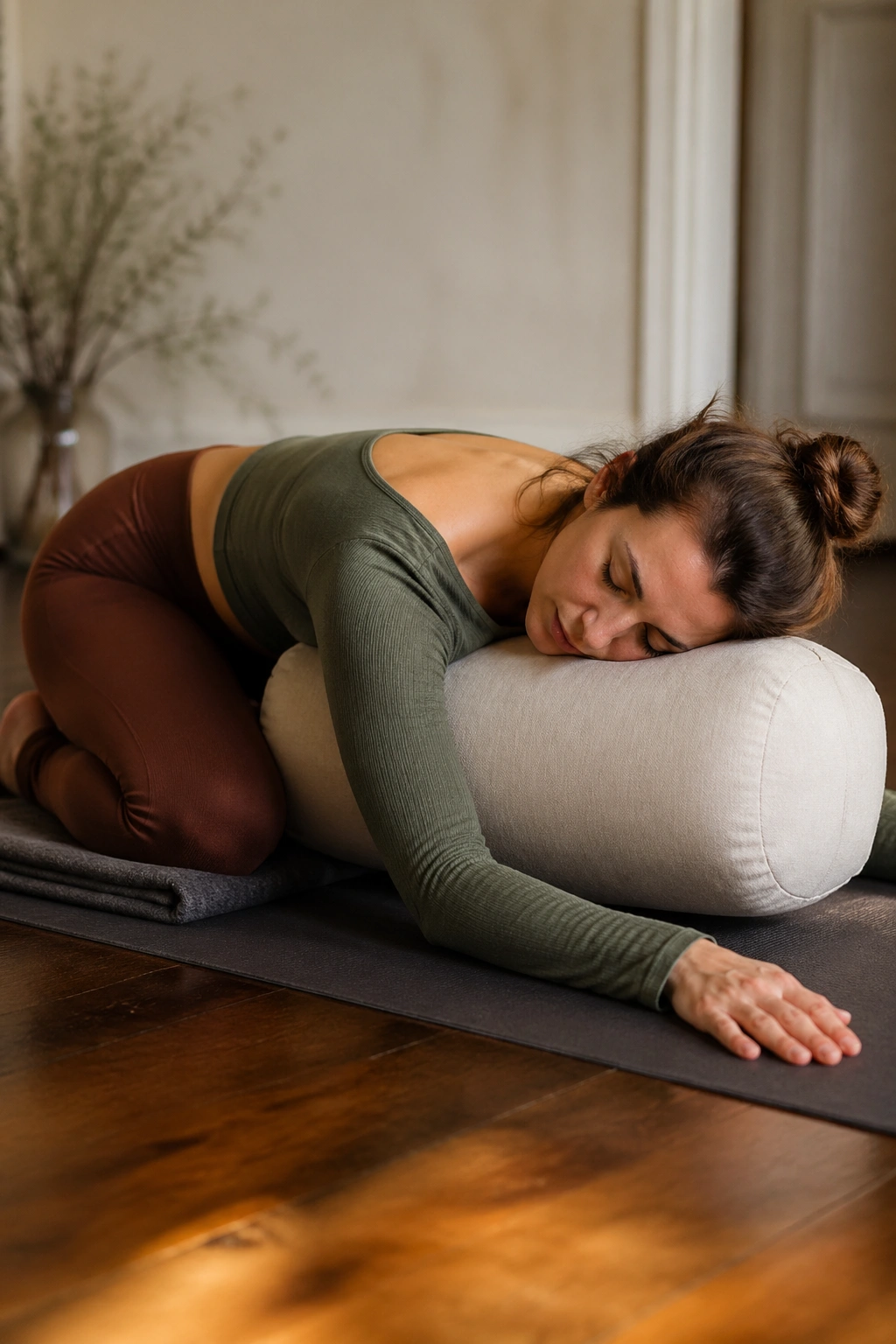
Regular Child’s Pose is good. Supported Child’s Pose is the version I reach for when I want the floor to do more of the work.
Place a bolster or a firm pillow lengthwise between the thighs or under the chest, then fold forward so the torso can rest without collapsing. The forehead can turn to one side for a few breaths, then the other. Arms can drape forward or wrap beside the bolster. The whole setup should feel like it is carrying you, not asking you to carry it.
How It Differs from the Standard Shape
This version is better for longer holds because the props take pressure off the hips, knees, and ankles. It also makes the breath easier to keep smooth. That matters when the nervous system is already noisy.
A simple setup works best:
- One bolster, or a stack of firm pillows.
- A blanket under the knees.
- A towel under the forehead if needed.
- Five to ten minutes, not thirty seconds.
If your mind keeps hopping up to check how the stretch feels, this version usually settles that. It’s almost too cozy, which is kind of the point.
14. Supported Fish for a Soft Chest and Easy Breath
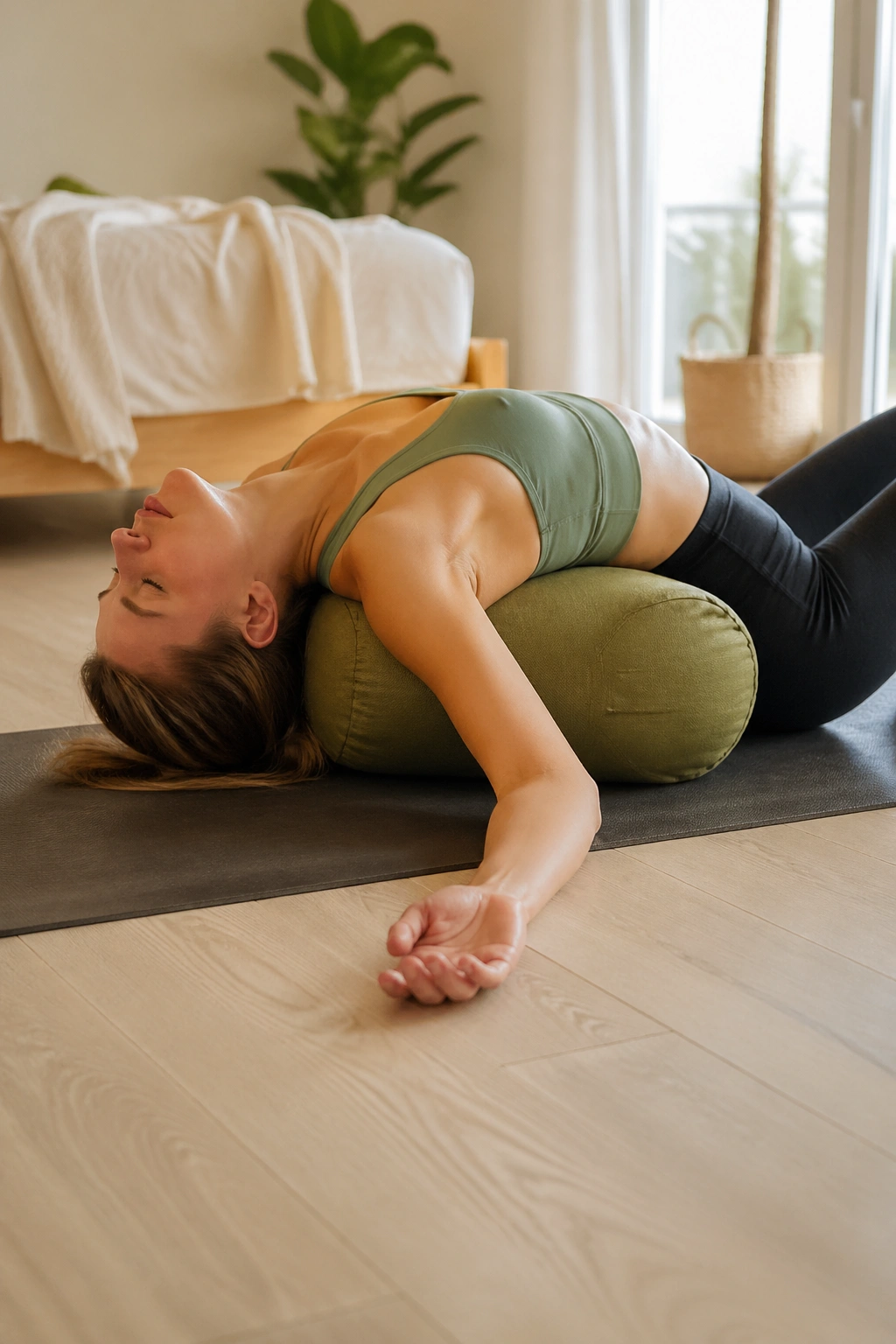
Chest openers do not have to feel aggressive. Supported Fish proves that.
Lie back over a bolster or a firm rolled blanket so the support runs along the spine, with the head either fully supported or tipped slightly back if that feels good. The arms can rest wide like goalposts or fall open to the sides. The legs stay long or bend if the lower back asks for that.
The magic here is in the breathing space across the front of the ribs. When the chest is gently lifted and the throat is soft, the breath often gets fuller without force. That can feel calming in a way that sneaks up on you.
If your low back arches hard or your neck feels compressed, use less height. A small lift is better than a big one. I prefer this pose to more dramatic chest openers when someone is already overstimulated.
15. Savasana for the Nervous System
No pose looks quieter, and few are harder to stay in.
Savasana asks you to do almost nothing, which is exactly why it earns a place at the end of a calming practice. Lie on your back with the legs long or bent over a bolster, let the feet flop outward, and place the arms a few inches from the sides of the body. A blanket under the knees, a folded towel under the head, or a light cover over the body can make the whole thing more tolerable and more effective.
Stay for at least 3 to 5 minutes if you can. Longer is fine. The real trick is not to treat it like dead time. Let the belly rise and fall on its own. Let the jaw loosen. Let the eyes rest. If thoughts keep marching through, that’s normal. The point is not to empty the mind. The point is to stop feeding every thought with extra muscle tone.
When you come out, roll to one side first and sit up slowly. A sudden jump can yank you right back into alert mode, and that would be a shame after all that work.
A steady practice with these yoga poses to calm an overactive nervous system works best when you stop trying to make the session look impressive. Use the pose that lets your breath get quieter first. That is usually the right one.
