



A hunched upper back rarely comes from one tight muscle. More often, it’s a jumble: stiff pecs, a thoracic spine that has spent too many hours curled forward, and shoulders that keep creeping toward the ears. Chest opening yoga poses can help, but only when they’re chosen with a little care and not cranked into some dramatic shape that your body never asked for.
The best ones feel broad across the collarbones and calm in the neck. The bad ones feel like a jammed low back, a pinched shoulder, or a stretch that hits hard for the first five breaths and then turns annoying. I like a mix of floor-based openers, standing resets, and a few poses that ask the back body to work, because a rounded posture usually needs both release and support.
That balance matters more than people think. If you only stretch the front of the body, you may feel loose for a few minutes and then sink right back into the same shape. If you add a little upper-back work and breathe into the front ribs without overdoing it, the change starts to feel more natural.
Sharp pain is different. If one shoulder feels unstable, numb, hot, or sharp in a bad way, skip the pose and get checked by a clinician or physical therapist. For everyone else, start gently and let the chest open from the sternum outward, not from a yanked neck or a squashed lower back.
1. Supported Fish Pose
Lie back on a bolster or a rolled blanket, and the front of the body usually starts to open on its own. Supported Fish Pose is one of those shapes that looks small but lands in a deep place, especially if your shoulders round forward from sitting.
The key is support. Place the bolster lengthwise under your spine so your head can rest on the floor, or put a folded blanket under the shoulder blades and another under the head. Let the arms fall open with the palms facing up, or bend the elbows into a soft cactus shape if that feels better on the shoulders.
What to Feel
You want to feel a spread across the chest, the upper ribs, and the front of the shoulders. Do not chase a huge backbend. If your low back starts to pinch, your prop is too low or your ribs are flaring too much.
A lot of people make this pose weird by trying to flatten the whole back body into the floor. That’s not the point. The point is ease. Breath should feel slow and full, with the collarbones widening on each inhale.
A nice cue: let the shoulder blades feel heavy while the sternum floats. Small change. Big difference.
2. Standing Cactus Arms
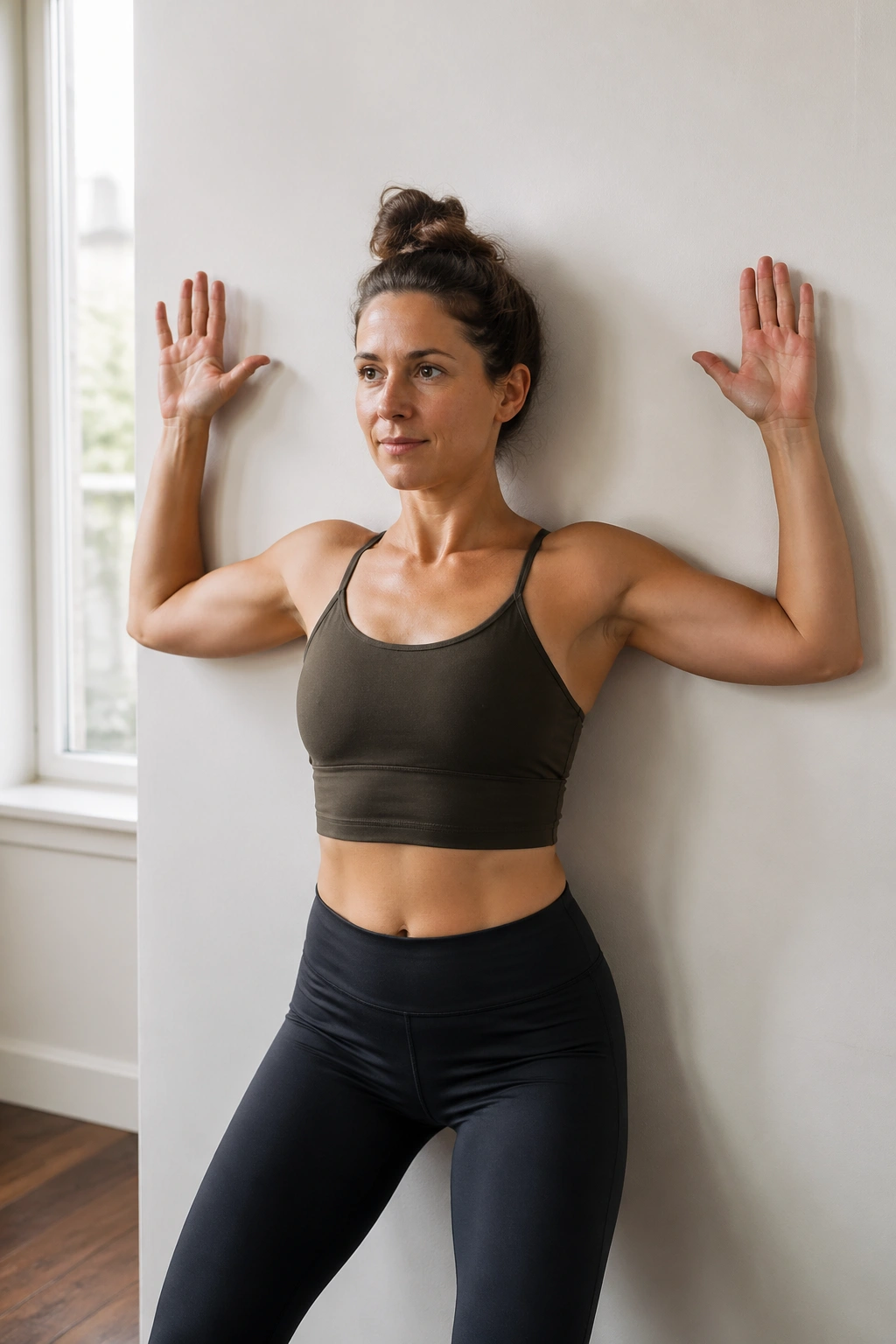
Not every opener has to happen on the floor. Standing Cactus Arms is the kind of reset I love when someone has been at a desk for hours and needs their body to remember it can stand tall again.
Stand with your feet hip-width apart, soften your knees, and bring your elbows to shoulder height with the arms in a cactus shape. Palms face forward or slightly up. From there, let the shoulder blades slide down the back without clamping them hard together.
Use It as a Posture Reset
This pose works because it asks the front shoulders to open while the upper back stays active. That matters. A passive stretch can feel nice, but this one teaches a little awareness too.
Try it near a wall if you want more feedback. The back of the head, upper back, and pelvis can lightly touch the wall while the elbows hover or brush the surface. Keep the ribs from popping forward. Rib flare is the lazy version of chest opening.
Hold for 5 to 8 slow breaths. One round is good. Two rounds are better if you’ve been folded over a keyboard all morning.
3. Puppy Pose
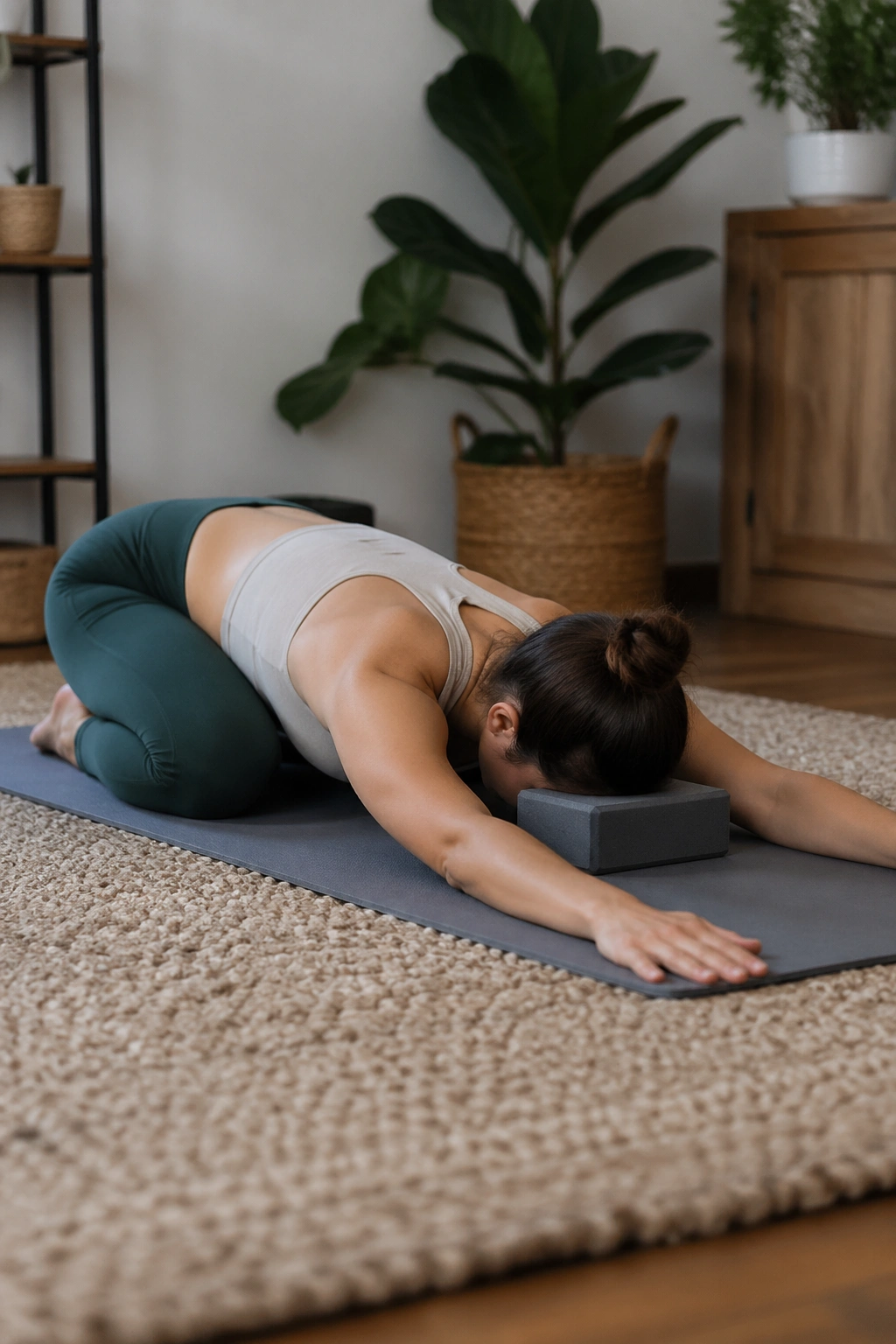
Why does Puppy Pose feel so intense? Because it sneaks a shoulder stretch and a chest opener into the same shape, and your body cannot really bluff its way through it.
Start on hands and knees. Walk the hands forward, keep the hips above the knees, and lower the chest toward the floor without dumping all your weight into the neck. You can rest the forehead, the chin, or the chest on a block if the floor feels too far away.
How to Scale It
- Keep the knees wide if the low back feels compressed.
- Put a folded blanket under the knees for comfort.
- Slide a block under the forehead so the neck can stay long.
- Stop well before the ribs collapse toward the mat.
The best version of Puppy Pose feels like the chest is melting down while the upper back stays long. If you shove the sternum down aggressively, you’ll often get a cranky low back and a grumpy front shoulder.
Take your time here. Let the breath stay smooth. If the shoulders shake a little, that’s fine. If the front of the joint feels sharp, back out immediately.
4. Camel Pose
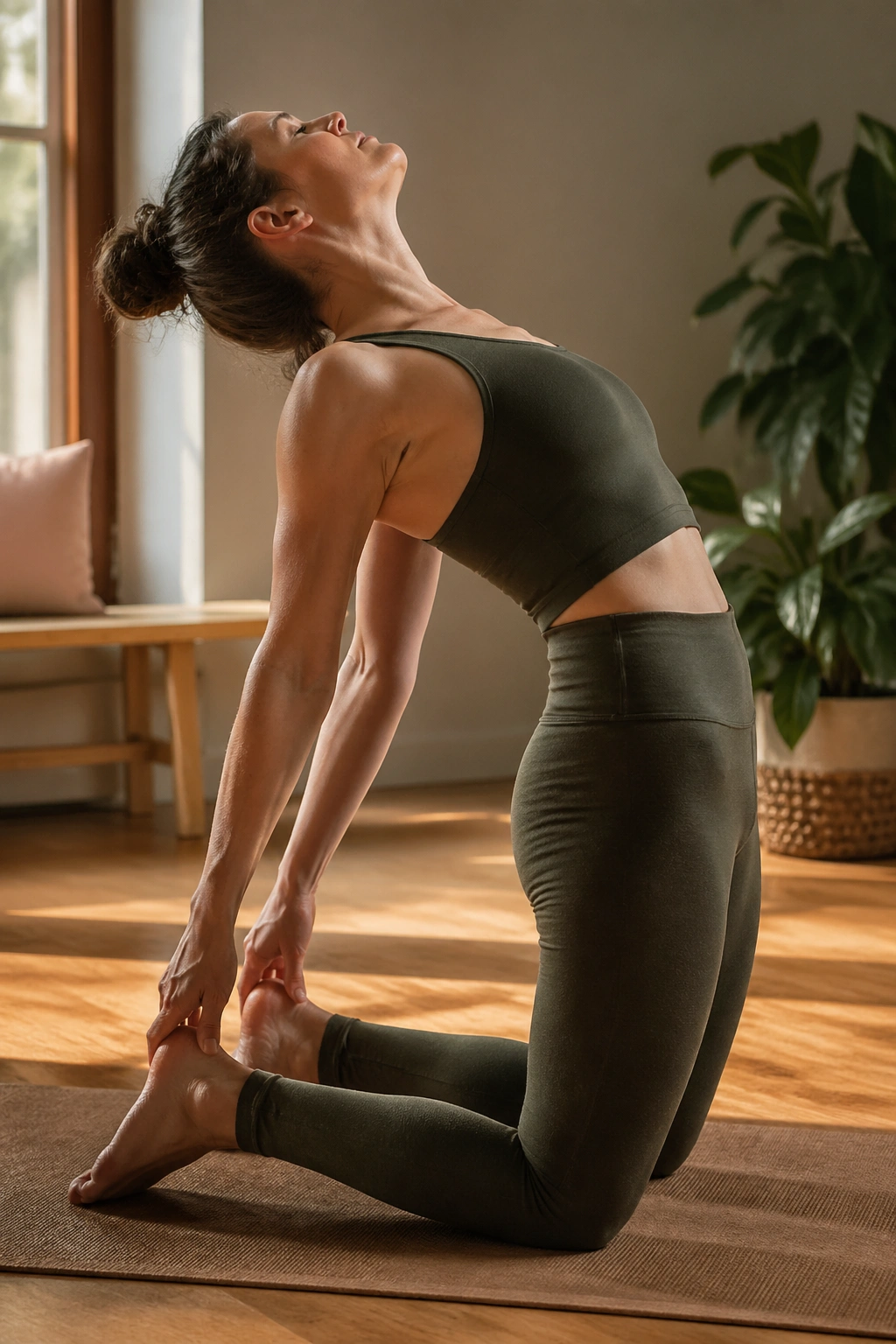
Camel Pose can help a hunched upper back, but it punishes sloppy setup. That’s the part people skip over, and it’s why the pose gets blamed when the real issue is rushing.
Kneel with the thighs vertical, tuck the toes if needed, and place the hands on the back of the pelvis. Before you reach for the heels, lift the sternum up and slightly back, then press the hips forward just enough to keep the chest open. You do not need a huge arc.
The neck does not need to be thrown back. That habit turns a chest opener into a cranky cervical compression mess. Keep the chin level or gently angled down until the front body opens first.
A Safer Way In
If full Camel feels too much, keep the hands on the sacrum or use blocks beside the ankles. You can also stay high and simply lift the chest with the hands on the back of the pelvis. That version still teaches the same shape without the drama.
Camel is powerful, but it’s not subtle. If your low back does the work before your upper spine does, come out. You want the lift to start from the breastbone and upper ribs, not from a broken hinge in the lower back.
5. Eagle Arms
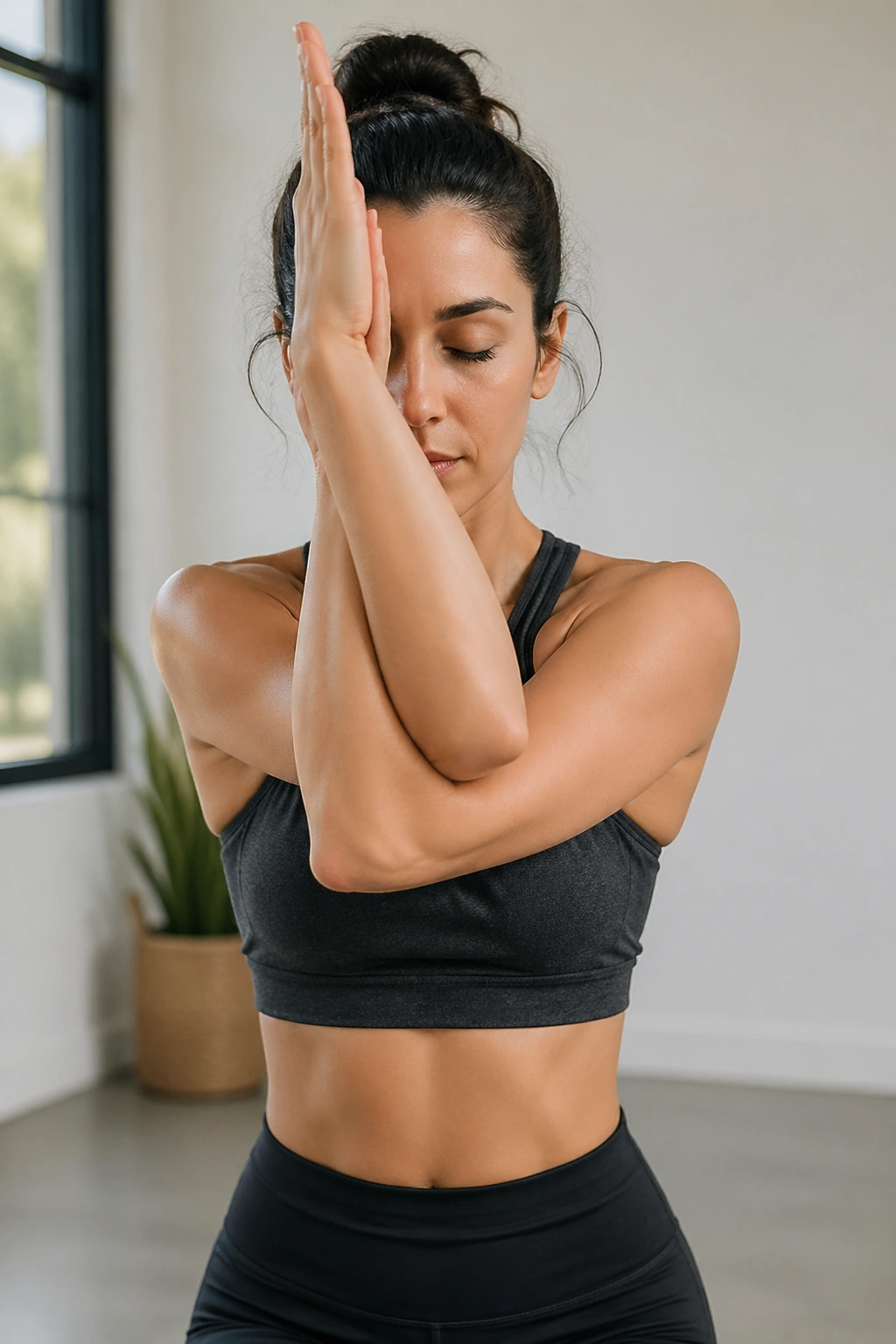
After an hour at a keyboard, Eagle Arms can feel like peeling a tight layer off the shoulder girdle. It doesn’t look like much from the outside, but the stretch lands right where a rounded posture tends to live.
Cross one elbow over the other, bend both arms, and either press the palms together or back of hands together. Lift the elbows to shoulder height if you can, then ease the forearms slightly forward until you feel the space between the shoulder blades start to widen.
What to Watch For
- Keep the shoulders away from the ears.
- Don’t arch the low back to fake more range.
- Breathe into the back of the heart, not just the chest.
- If the wrists hate this shape, separate the hands and keep the arms crossed.
I like Eagle Arms because it does a strange little trick: it opens the upper back by wrapping the shoulder blades apart, which often makes the chest feel more available afterward. That’s the real win.
You can do it seated, standing, or in a soft squat. No need to make it pretty. Let it feel practical.
6. Bridge Pose
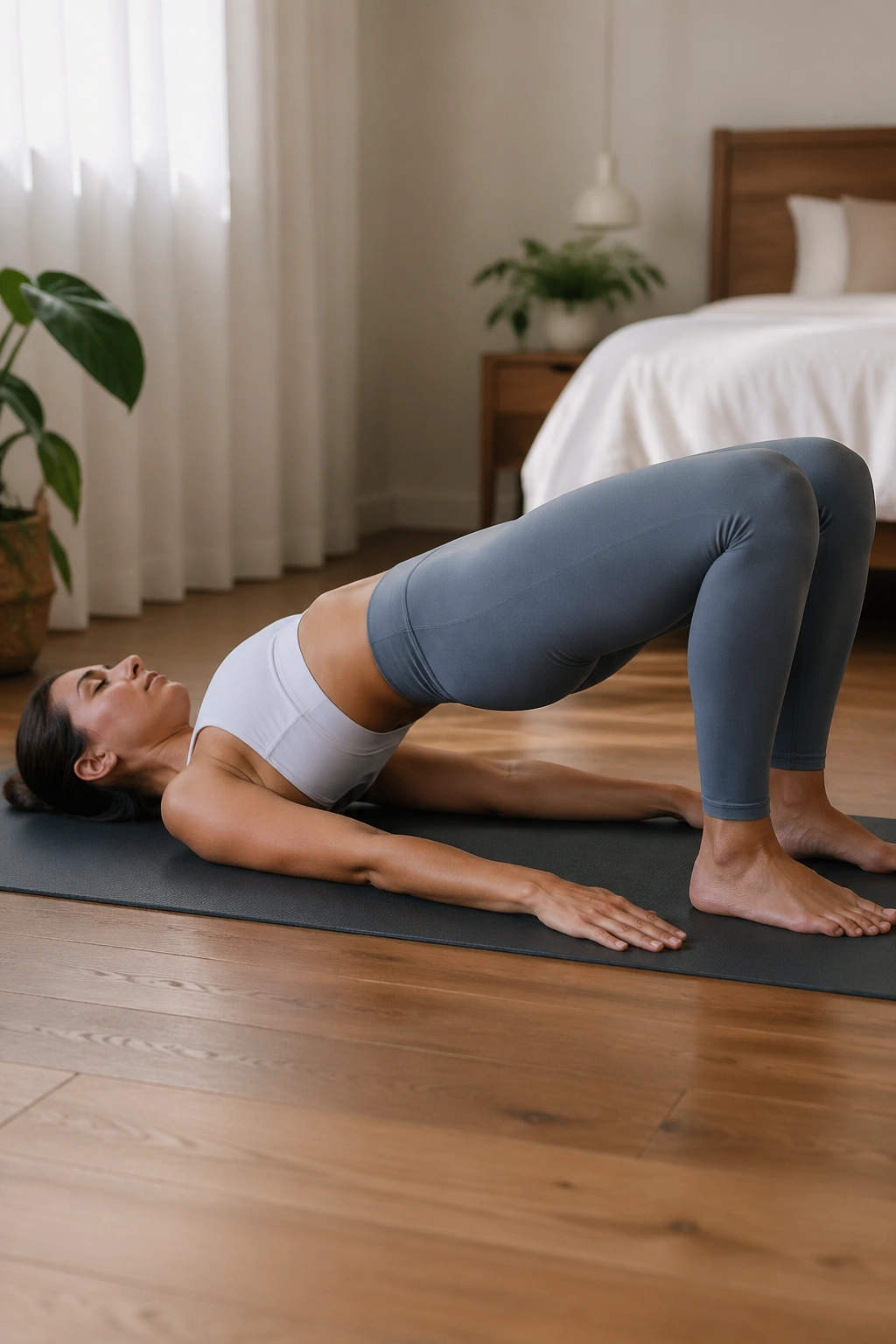
Unlike a passive floor stretch, Bridge Pose asks the back body to work while the front body opens. That matters for hunched shoulders, because the upper chest often feels better when the glutes and hamstrings help carry some of the load.
Lie on your back with the knees bent and feet planted about hip-width apart. Press the feet down, lift the hips a few inches, and let the sternum move slightly toward the chin without cramming the neck. Hands can stay by the sides, or you can lace the fingers underneath you if the shoulders tolerate it.
A lot of people overdo Bridge. They push the ribs up, squeeze the glutes until the whole pelvis tucks hard, and then wonder why the front of the body feels jammed. The better version is smaller and steadier. Lift enough to feel the chest broaden, not enough to feel your jaw tense.
If you want a gentler version, slide a yoga block under the sacrum and rest there. That supported shape is easy to breathe in and surprisingly useful after a long day of sitting. It’s one of those poses I keep coming back to because it’s boring in the best way.
7. Standing Clasped-Hands Forward Fold
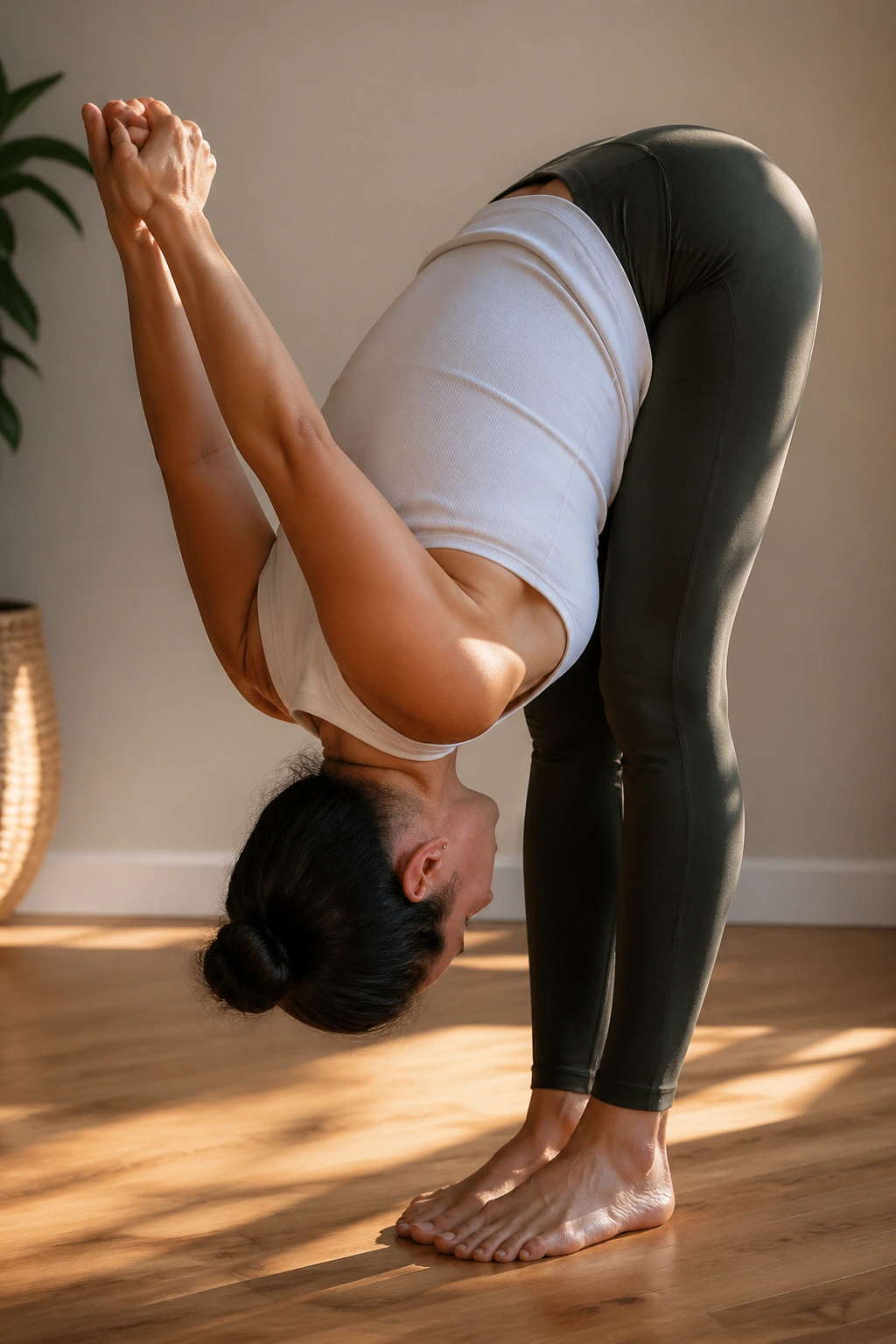
This is one of the cleanest chest openers in the bunch, and it works because the arms get to travel behind the body while the spine folds forward from the hips. That combination is gold for shoulders that live in front of the chest.
Stand tall, clasp your hands behind your back, and straighten the arms as much as feels good. Then fold from the hips, letting the chest move toward the thighs while the arms reach slightly away from the back. The shoulders should feel broad, not jammed.
How to Use It
- Keep a soft bend in the knees if the hamstrings tug too hard.
- Let the neck relax instead of forcing the gaze down.
- Lift the clasped hands away from the tailbone only a little.
- Release the grip if the shoulders start to pinch.
The temptation is to yank the arms high because that looks dramatic. Don’t. A small lift behind the back is enough for most people, and it usually gives a cleaner stretch across the pecs.
This pose is especially nice after standing or walking. You get the chest opening plus a quiet release for the neck and upper traps, which often feel guilty by association when the shoulders round.
8. Sphinx Pose
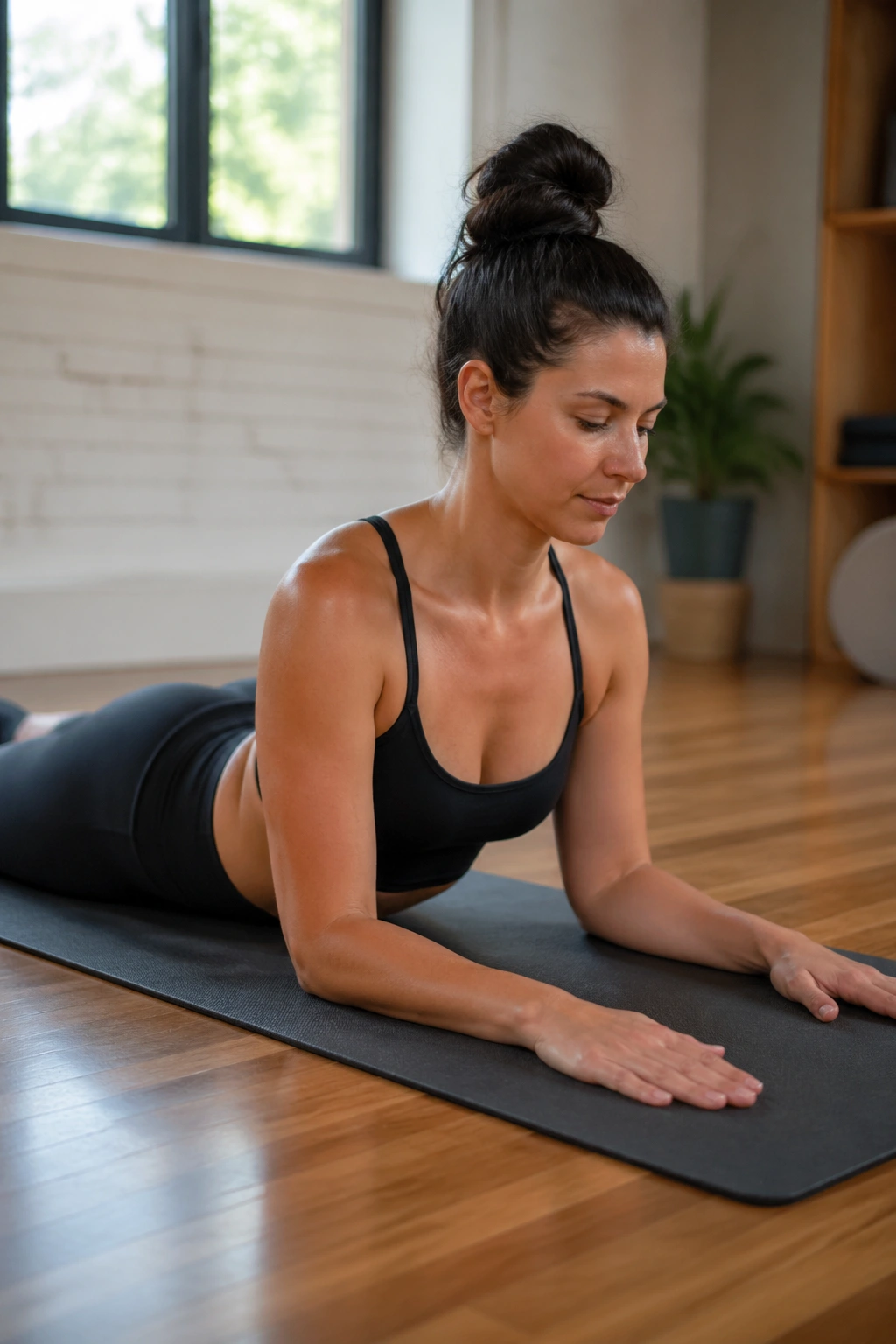
Sphinx is the yoga version of opening a book slowly. It is gentle, it is steady, and it does not demand that your spine perform a circus act.
Lie on your belly, slide the elbows under the shoulders, and rest on the forearms. Press the forearms down lightly, lengthen the legs, and let the pubic bone stay heavy on the floor. From there, draw the chest forward, almost as if the heart is moving through the space between the upper arms.
Less is more here.
If you shove too much weight into the low back, the pose starts to feel pinched fast. Keep the front ribs soft, and imagine the collarbones widening side to side. You should feel a long line from the hips through the crown of the head, not a broken fold in the lumbar spine.
Sphinx is a strong choice if deep backbends make you nervous. It gives you chest opening without asking for much from the wrists, and it’s a nice place to pause and actually breathe. That sounds small. It isn’t.
9. Cobra Pose
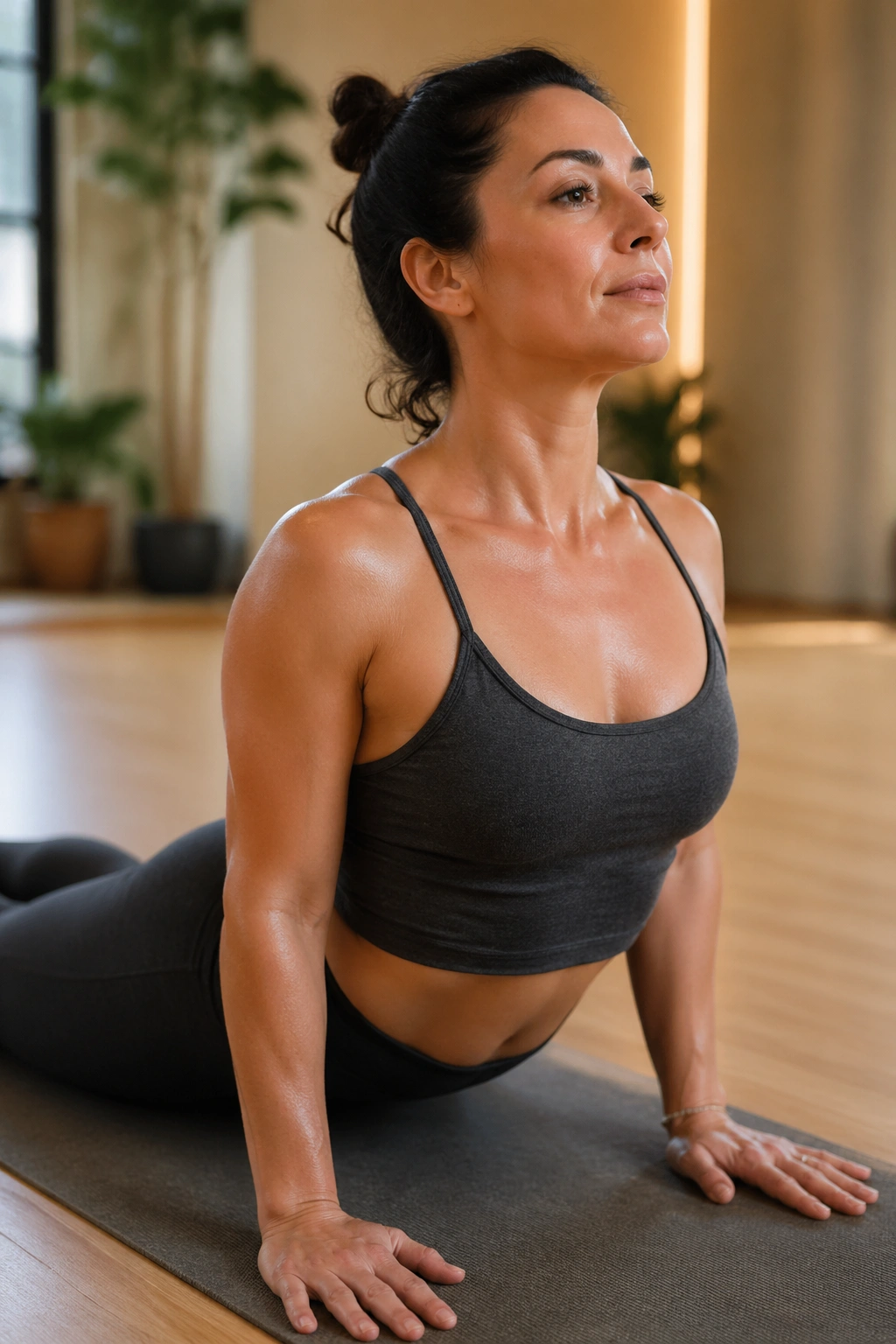
Cobra stays friendlier to stiff shoulders than many backbends because the hands can stay light and the lift can stay low. That makes it a smart chest opener for people who need shape without strain.
Lie on your belly with the palms under the shoulders or slightly forward. Press the tops of the feet down, engage the legs gently, and peel the chest forward and up while keeping a little bend in the elbows. The shoulders should move back and down, but not in a hard squeeze.
Cobra vs. Upward-Facing Dog
Upward-Facing Dog asks for a lot more shoulder extension and a bigger lift off the floor. Cobra lets the thighs stay down and keeps the hands lighter, which usually makes the front body opening feel more controlled.
If your wrists are tired or your low back is sensitive, Cobra is the better pick. If the chest feels stuck, think about moving the breastbone forward first and the head second. Lead with length, not with height.
One more thing: don’t throw the chin forward to fake an open chest. That just juts the neck. Keep the back of the neck long and let the upper spine do the work.
10. Locust Pose with Arm Reach
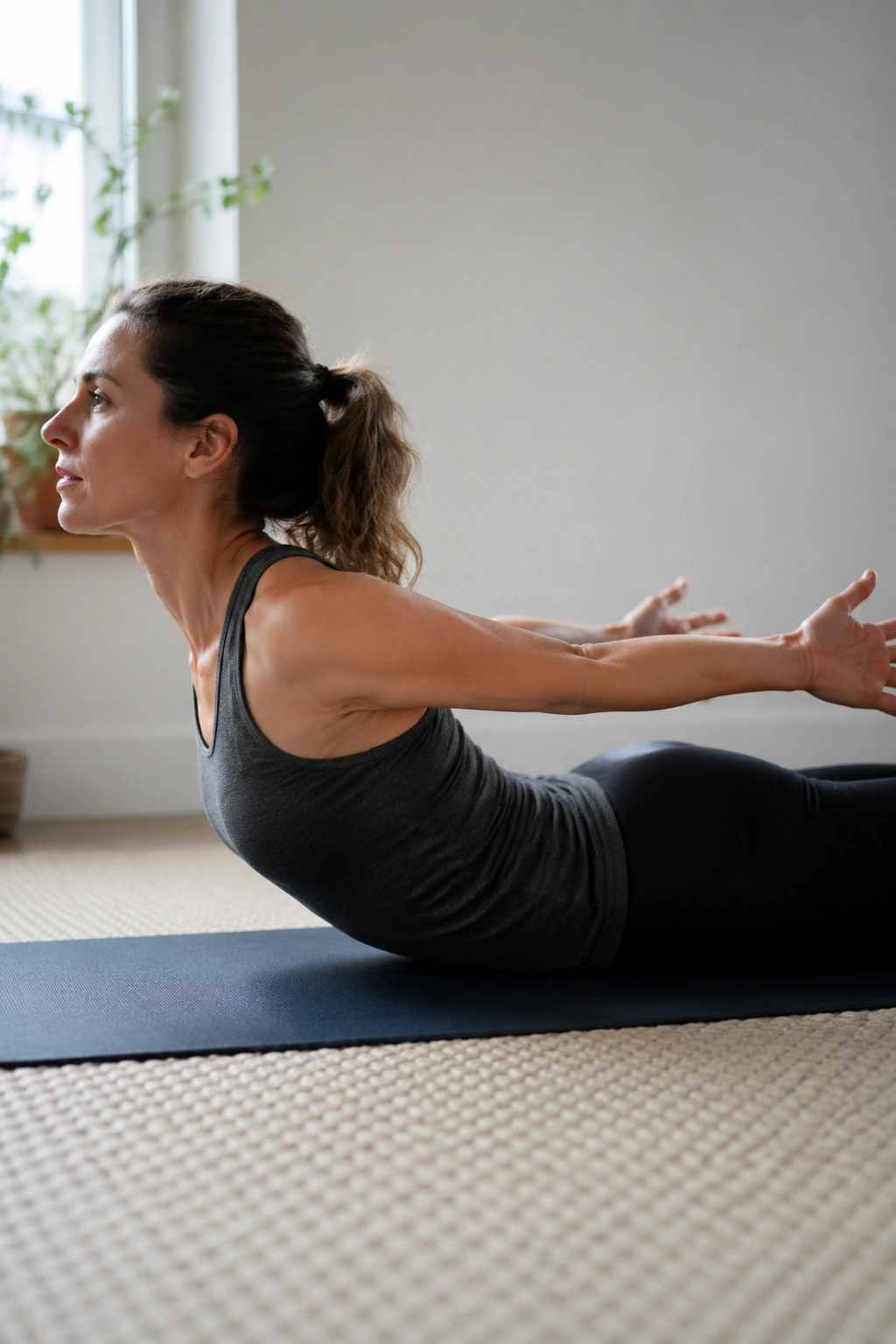
Can a back-strengthening pose open the chest too? Absolutely. Locust Pose does both jobs at once, which is why I like it for rounded shoulders that need more than a stretch.
Lie on your belly with the arms either alongside the body, palms down, or reaching straight back with the palms facing in. On an inhale, lift the chest, arms, and legs a few inches off the floor. The lift should feel active, not flung.
The point is not height. The point is shape. Keep the lower ribs connected to the mat, lengthen through the back of the neck, and let the shoulder blades move toward each other without pinching. You want the back body waking up while the chest reaches forward.
A small lift held for 3 to 5 breaths is enough. If the lumbar spine starts to squeeze, lower down and reset. Locust is one of the best reminders that posture isn’t only about opening tight tissue; it’s also about asking weaker tissue to show up.
11. Cow Face Arms
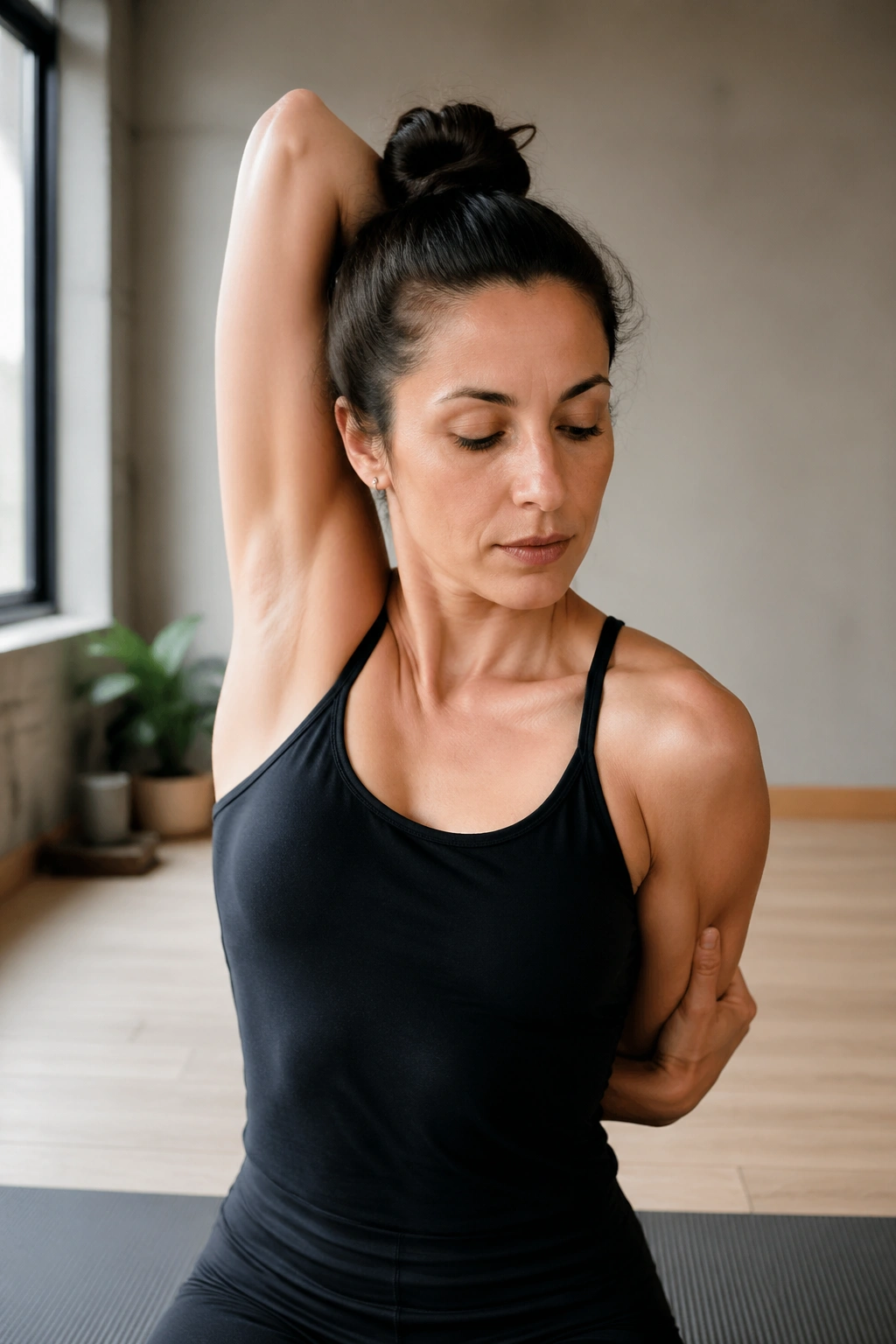
Cow Face Arms can feel awkward the first few times, which is part of the point. The shoulders don’t always like to line up neatly, and that little frustration tells you where the tight spots are.
Lift one elbow overhead, bend it so the hand drops behind the head, and take the other arm behind the back to reach upward. The hands may meet, or they may stay apart by a lot. A strap between them is perfectly fine. Honestly, it’s often the smarter choice.
What to Watch For
- Keep the rib cage from popping forward.
- Let the top elbow point mostly up, not out to the side.
- Use a strap if the bottom shoulder feels yanked.
- Stop if the neck starts bracing.
This is more of a shoulder opener than a big chest opener, but it matters because tight rotator cuffs and stiff upper arms often contribute to that rolled-forward look. If the shoulders can move better overhead and behind the body, the chest usually feels less trapped too.
Do it seated, kneeling, or standing. Pick the version that lets you breathe without jaw tension. If you’re grinding your teeth, you’ve gone too far.
12. Gate Pose
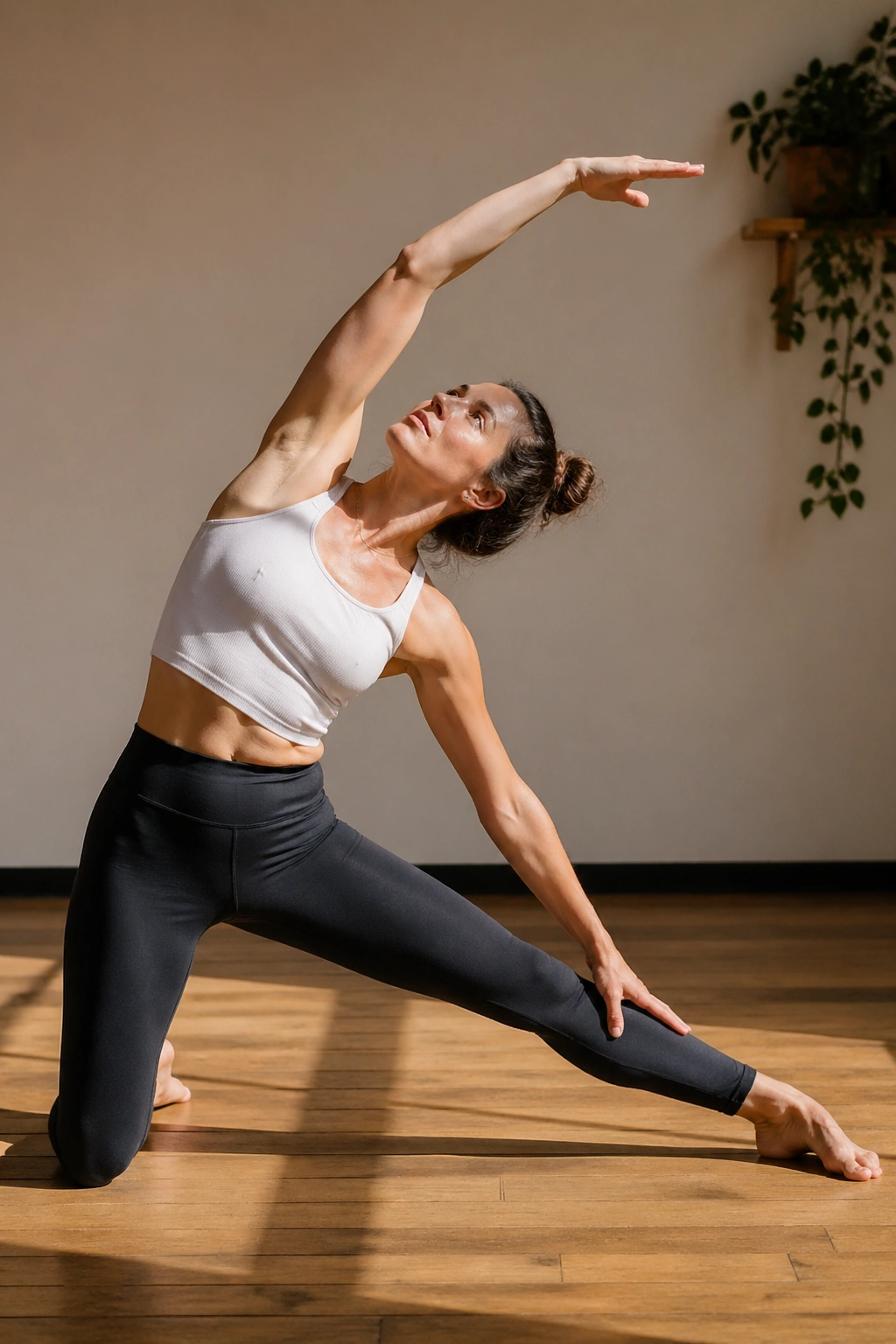
If one side of the chest feels tighter than the other, Gate Pose shows it fast. It also gives the side body a nice stretch, which makes the front ribs feel less locked in place.
Start in a kneeling side lunge or tall kneel with one leg extended to the side. Reach the opposite arm overhead, then tip the torso toward the extended leg while keeping the chest gently open. Some people like to turn the palm up and slightly back to invite more external rotation through the shoulder.
The pose can turn sloppy if you collapse into the standing hip. Resist that. Keep both sides of the waist long and let the top chest spiral open a little, almost as if you’re turning to smell the air above your shoulder.
Gate Pose is especially useful if you sit with one shoulder hiking higher than the other. It gives you enough space to notice asymmetry without forcing it into place. Small, honest movement beats big, shiny movement here.
13. Low Lunge with Cactus Arms
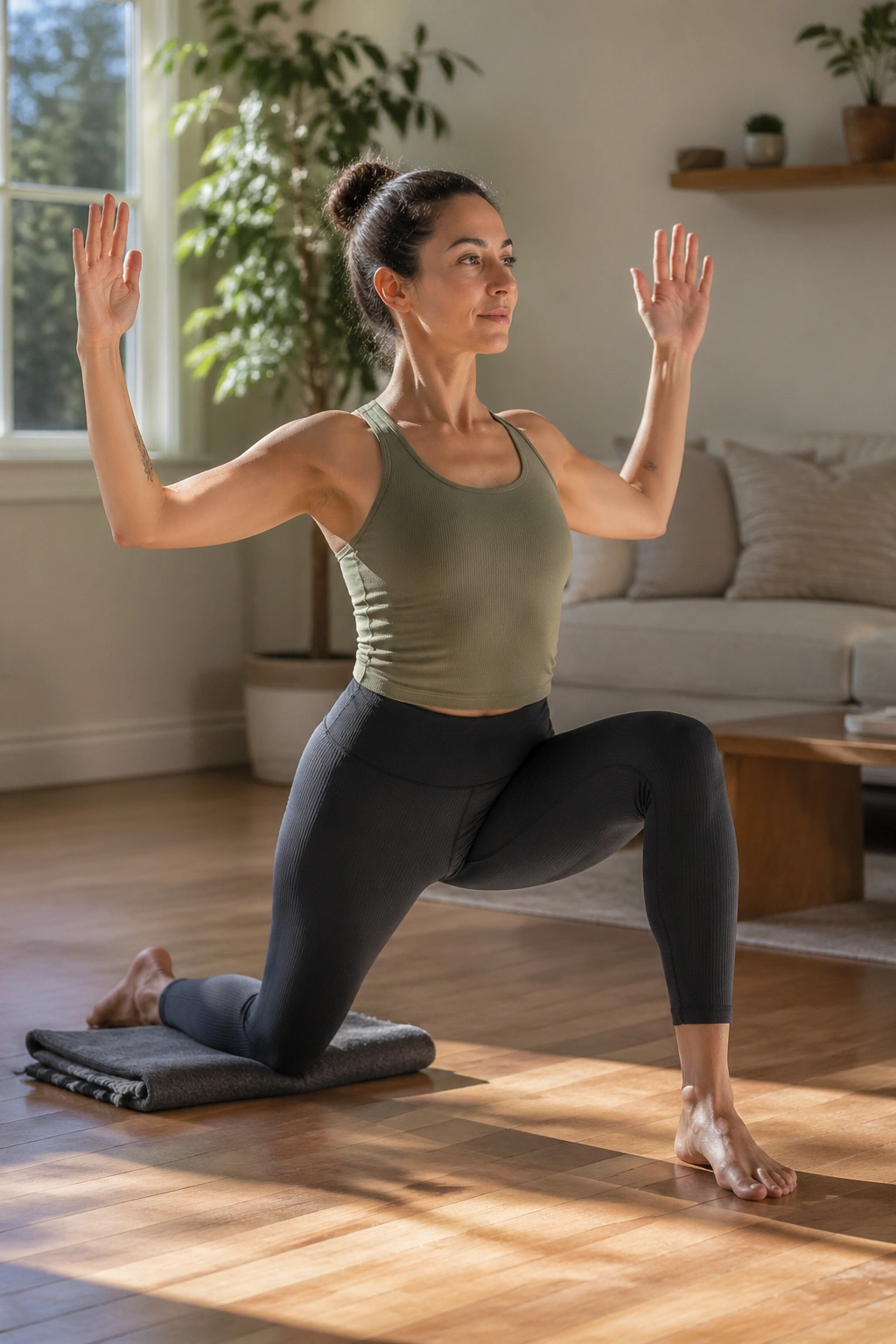
Use this one when the hips and chest both feel welded shut. The half-kneeling shape grounds the lower body, and the cactus arms give the chest a chance to open without a huge backbend.
Step one foot forward into a low lunge, lower the back knee to a blanket if needed, and stack the torso upright. Then bring the arms into cactus shape and soften the shoulder blades down the back. If the front hip flexors are tight, tuck the back toes and press the back heel away to get a little more support through the leg.
The best part is the shape’s honesty. If the pelvis is tipping forward too much, you’ll feel it immediately. If the ribs flare, the low back complains. When it’s clean, though, the pose gives a broad, grounded opening across the front body.
You can stay still for several breaths or pulse the sternum up on each inhale. I prefer stillness first. It gives you a better read on what’s actually tight versus what just wants drama.
14. Reverse Tabletop
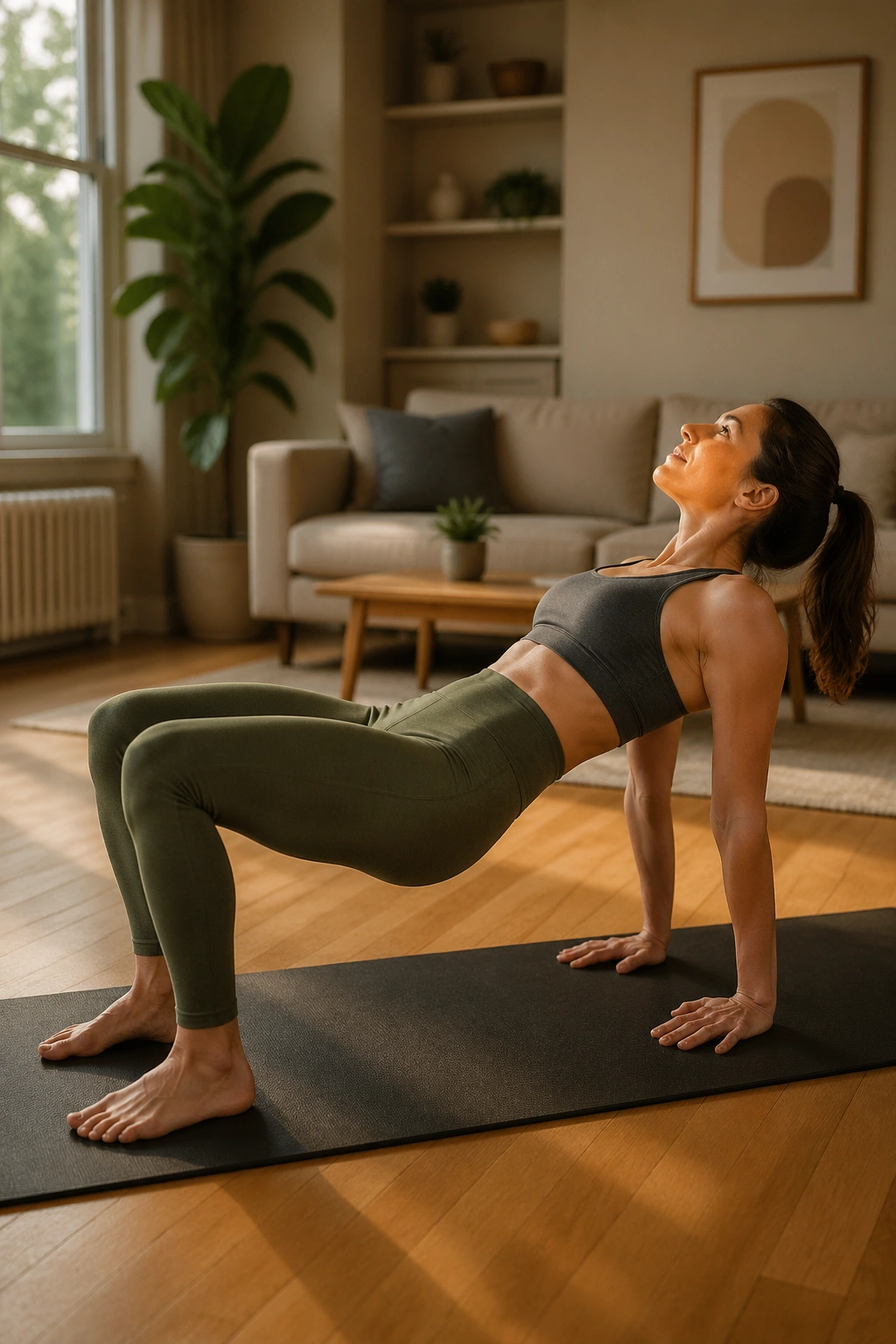
Your wrists will talk first in Reverse Tabletop. That’s normal. The pose asks for shoulder extension, chest opening, and a fair bit of honest loading through the arms.
Sit with your knees bent and feet on the floor, hands placed behind the hips with the fingers pointing toward the feet or slightly outward. Press into the feet and hands, lift the hips, and open the chest toward the ceiling. The sternum should rise more than the lower back arches.
A Few Useful Adjustments
- Bend the elbows slightly if the wrists feel cranky.
- Keep the chin softly tucked instead of throwing the head back.
- Place the feet farther away if the knees jam.
- Drop down right away if the shoulders feel unstable.
This pose is more active than most chest openers, and that’s why it’s useful. It teaches the front body to expand while the back body supports the shape. That combination can feel surprisingly good if you spend a lot of time curled in a chair.
Hold for 2 to 4 breaths at first. No prize for staying longer than your shoulders want.
15. Supported Heart Opener
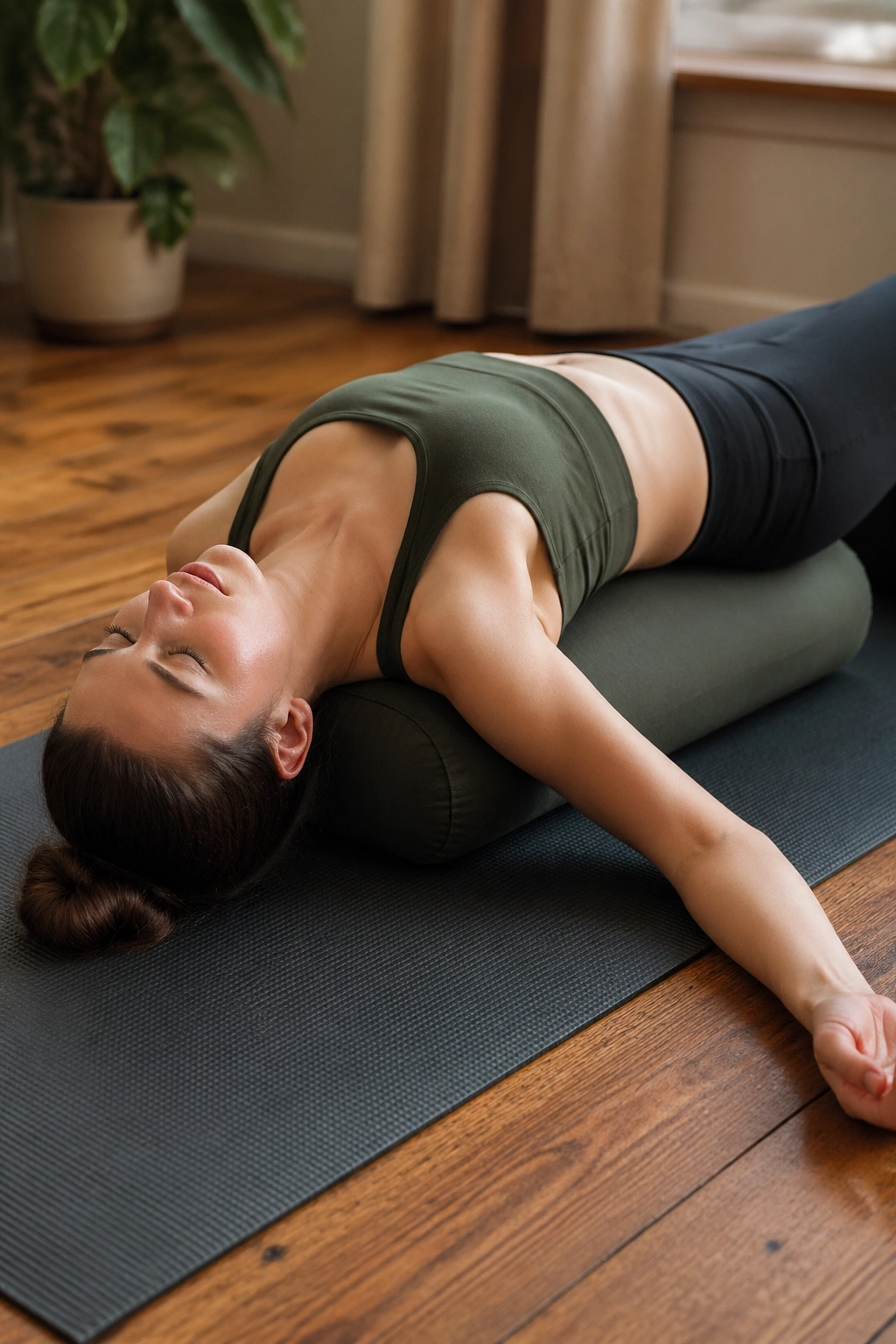
The most useful chest opener in the whole pile might be the one that asks for the least effort. A supported heart opener over a block or bolster gives the front body a chance to soften without making the spine work overtime.
Place a bolster or a long firm pillow along the spine, from the mid-back to the head, and let the arms fall open to the sides. If the full length of the spine feels too dramatic, slide a folded blanket under the head or raise the support a little higher. Bent knees can make the low back happier too.
Hold this one for 3 to 8 slow breaths, or longer if it feels peaceful. The inhale should spread across the collarbones and the upper ribs. The exhale should feel like the shoulders melt toward the floor without you forcing them there.
A little honesty goes a long way here. Chest opening yoga poses are useful, but they are not magic by themselves. If you keep living in a forward head posture, or if you never give the upper back any strength work, the shoulders will probably creep forward again. A few rows, a few back extensions, and a couple of standing breaks during the day make the stretches matter more.
And that’s the part most people skip. They want the pose to fix the shape. The smarter move is to give the body a shape it can actually keep.
