



A folded body is not a sleepy mind.
It’s one of the strangest things about yoga: the poses that look the least dramatic often do the most for attention, recall, and mental steadiness. A slow standing shape, a gentle inversion, or a balance pose can change how your breath feels, how much noise is bouncing around in your head, and how long you can hold a thought without losing it. That is why yoga poses for sharper brain function and memory are worth taking seriously, even if you came here thinking about hamstrings and shoulders.
The catch is that memory support from yoga is not about magic. It comes from a few plain things working together: better breathing, less stress, more body awareness, and the kind of focus that gets trained every time you stop wobbling, re-center, and stay with one sensation for a few more breaths. Small studies have linked regular yoga practice with better attention and working memory, especially when the practice includes slow breathing and stillness. That lines up with common sense, too. A mind that can settle is usually a mind that can remember.
I keep coming back to this because people often chase brain health through harder, faster, more complicated methods. Sometimes the smarter move is the quieter one. A few minutes in Mountain Pose can be more useful than a chaotic flow done half-distracted, and a long Savasana can matter more than another flashy balance challenge.
1. Mountain Pose
Mountain Pose looks almost too plain to matter. That’s exactly why I like it.
Stand in stillness for a minute and your brain has to do more work than it seems. You notice your weight shift, your feet wake up, your jaw unclenches, and your breath stops racing around in shallow little bites. That tiny internal inventory is useful for memory because it trains attention before effort — a skill a lot of people skip.
Why It Works
Mountain Pose, or Tadasana, is the pose I’d hand to anyone who says yoga is only stretching. It asks for posture, balance, breath, and awareness all at once, but without the distraction of movement. That makes it a clean reset when your mind feels muddy.
How to Make It Brain-Friendly
- Stand with your feet hip-width or together, and press evenly through the balls of the feet and heels.
- Lift the kneecaps gently without locking the knees.
- Stack the ribs over the pelvis, then let the shoulders drop away from the ears.
- Soften your gaze to one fixed point.
- Take 5 slow breaths, with the exhale a touch longer than the inhale.
Pro tip: If you practice Mountain Pose before reading, studying, or a meeting, you’ll often notice you stop skimming and start actually taking information in.
2. Standing Forward Fold
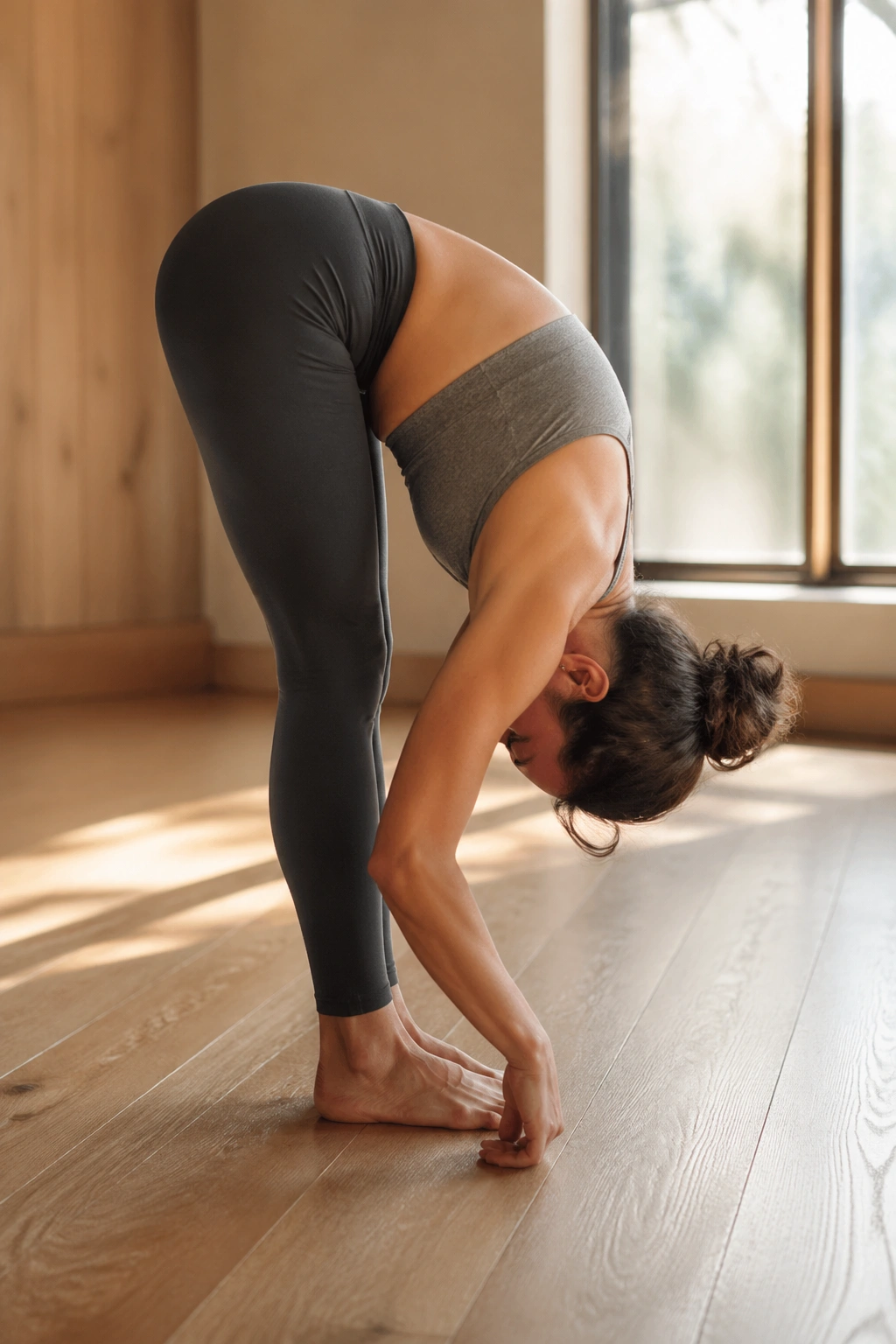
Standing Forward Fold can quiet mental noise fast. It’s one of those poses that feels simple until you spend 45 seconds in it and realize how much chatter your nervous system was carrying.
The body position matters here. When your head drops below heart level, the shift in orientation gives many people a sense of downward calm, and the hamstring stretch adds a physical cue to slow down. You do not need straight legs. Bent knees are often better, especially if your lower back gets cranky or your hamstrings fight back.
What I like most is the way this pose strips away performance. Nobody is trying to impress anybody in a fold. You hang, breathe, and let the back of the neck lengthen as your thoughts lose some of their grip.
A good cue is to keep the weight slightly forward in the balls of the feet rather than dumping into the heels. Let the arms dangle or hold opposite elbows. After 5 to 8 breaths, rise slowly, one hand at a time, so your head does not rush too fast.
3. Downward-Facing Dog
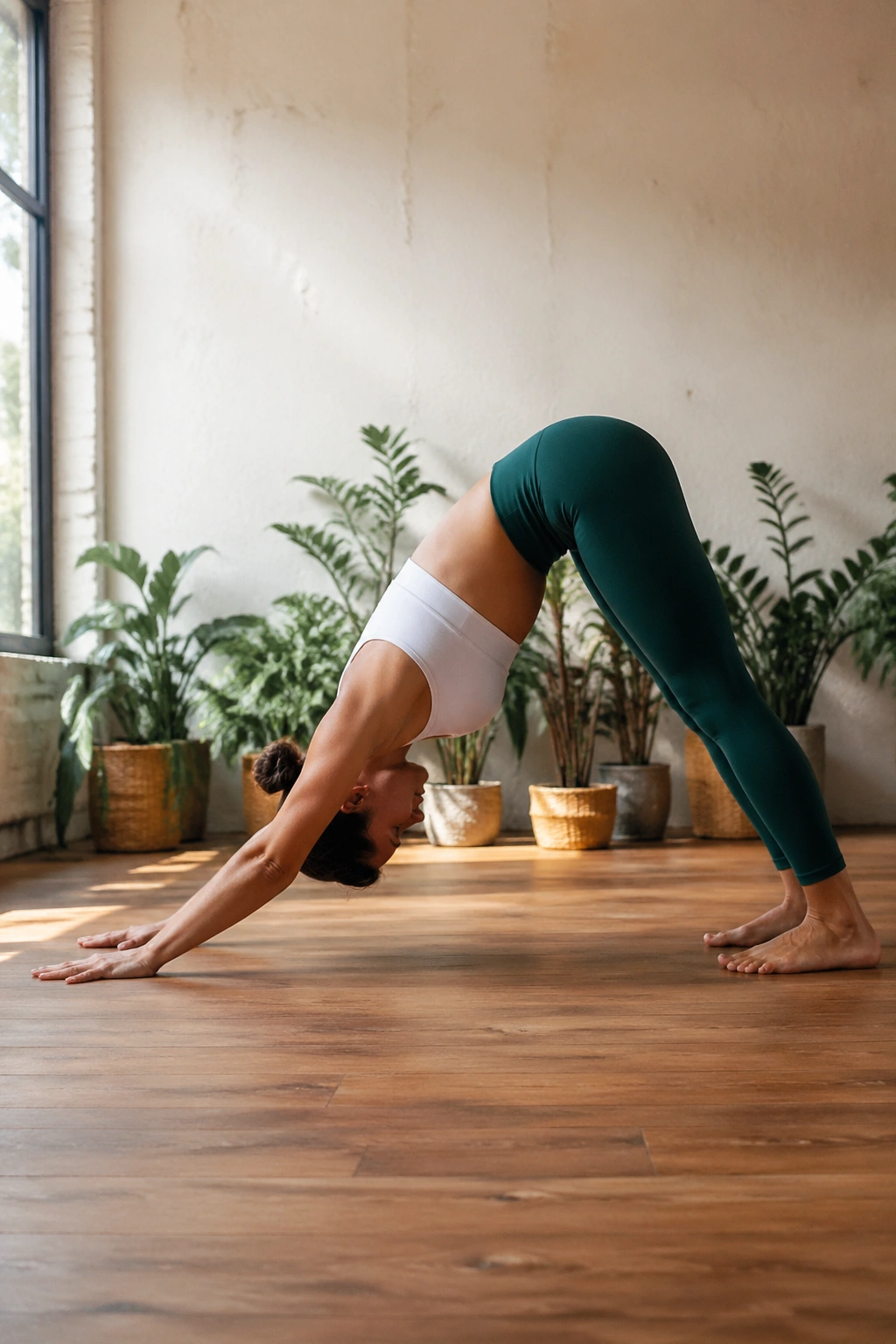
If your shoulders are tight and your thoughts are racing, Downward-Facing Dog can feel like hitting pause.
This pose asks the brain to sort out a lot at once: hand pressure, foot placement, spine length, neck position, and breath. That juggling act is part of the point. You are training coordination while your body is in a mild inversion, which makes the pose useful for both focus and memory work.
What Makes It Different
Down Dog is not just a stretch for calves and hamstrings. It also demands a steady line of attention, because the shape falls apart the moment you start holding your breath or collapsing into your shoulders. That small demand can sharpen awareness in a way a passive stretch cannot.
How to Use It
- Place your hands shoulder-width apart and spread the fingers wide.
- Press the floor away and lift the hips up and back.
- Bend the knees as much as needed so the spine can lengthen.
- Keep the ears in line with the upper arms.
- Breathe for 5 slow breaths, then come down before the wrists or shoulders start complaining.
Watch for this: If your heels are glued to the floor and your back rounds, you’ve gone too far too soon. A bent-knee Down Dog is often the smarter version.
4. Eagle Pose
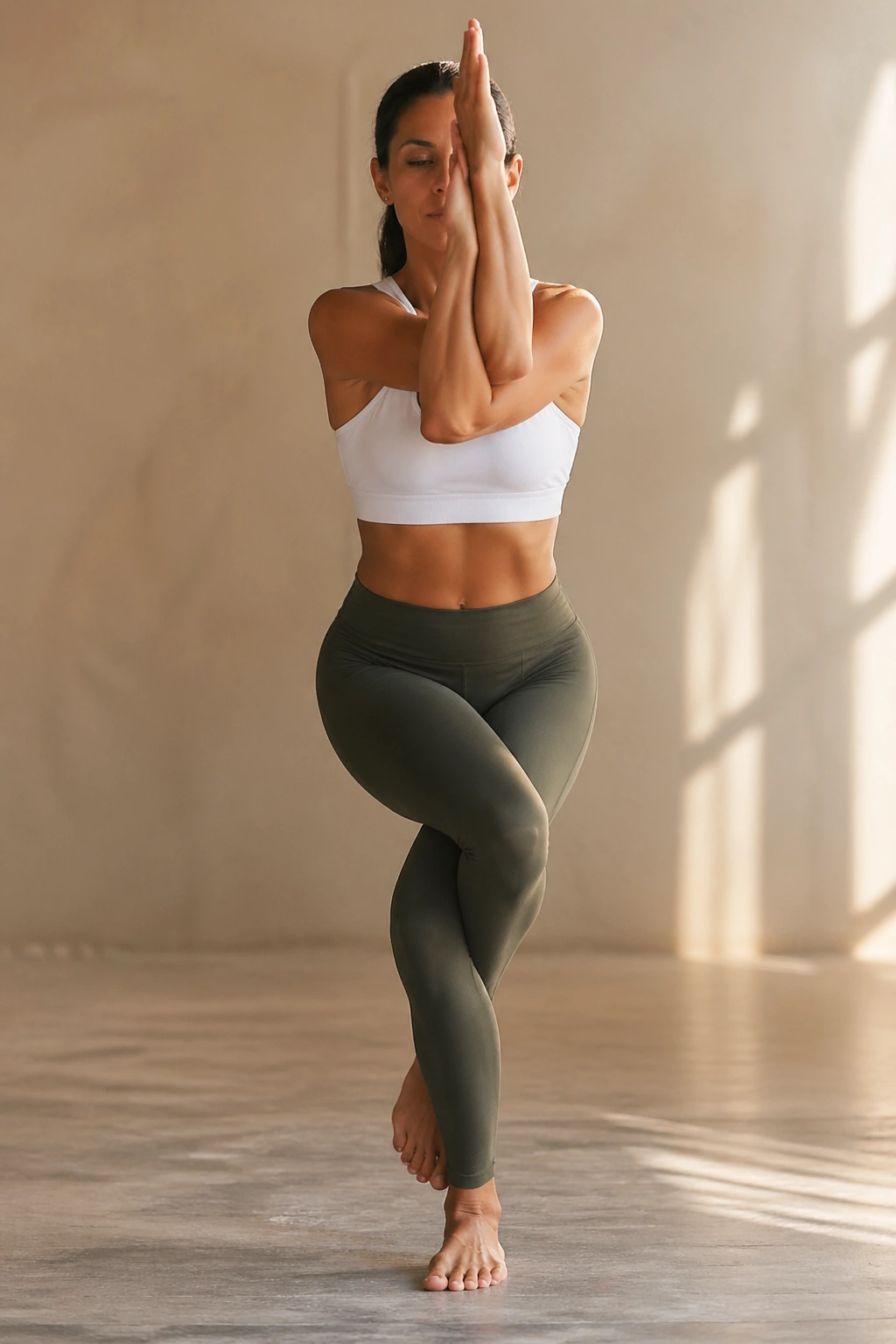
Eagle Pose looks like a balance drill, but it is also a concentration test.
Everything about Garudasana forces the brain to stay organized. The legs cross, the arms wrap, the gaze narrows, and the standing foot has to stay alive on the floor. That cross-body wrapping makes the pose feel almost like a corkscrew for attention. You cannot drift and expect to hold it.
I like Eagle for the same reason I like doing tricky puzzles before a hard task. It wakes up the part of the mind that has to sort, sequence, and hold more than one thing at once. That is a useful skill for memory, especially when you’re trying to remember instructions, names, or a list of tasks.
Use a wall if you need it. Seriously. The pose still works if you touch the wall with one fingertip. Wrap only as much as your joints allow, and keep the standing knee soft rather than locked. A 20-second hold on each side is enough to feel the point.
5. Tree Pose
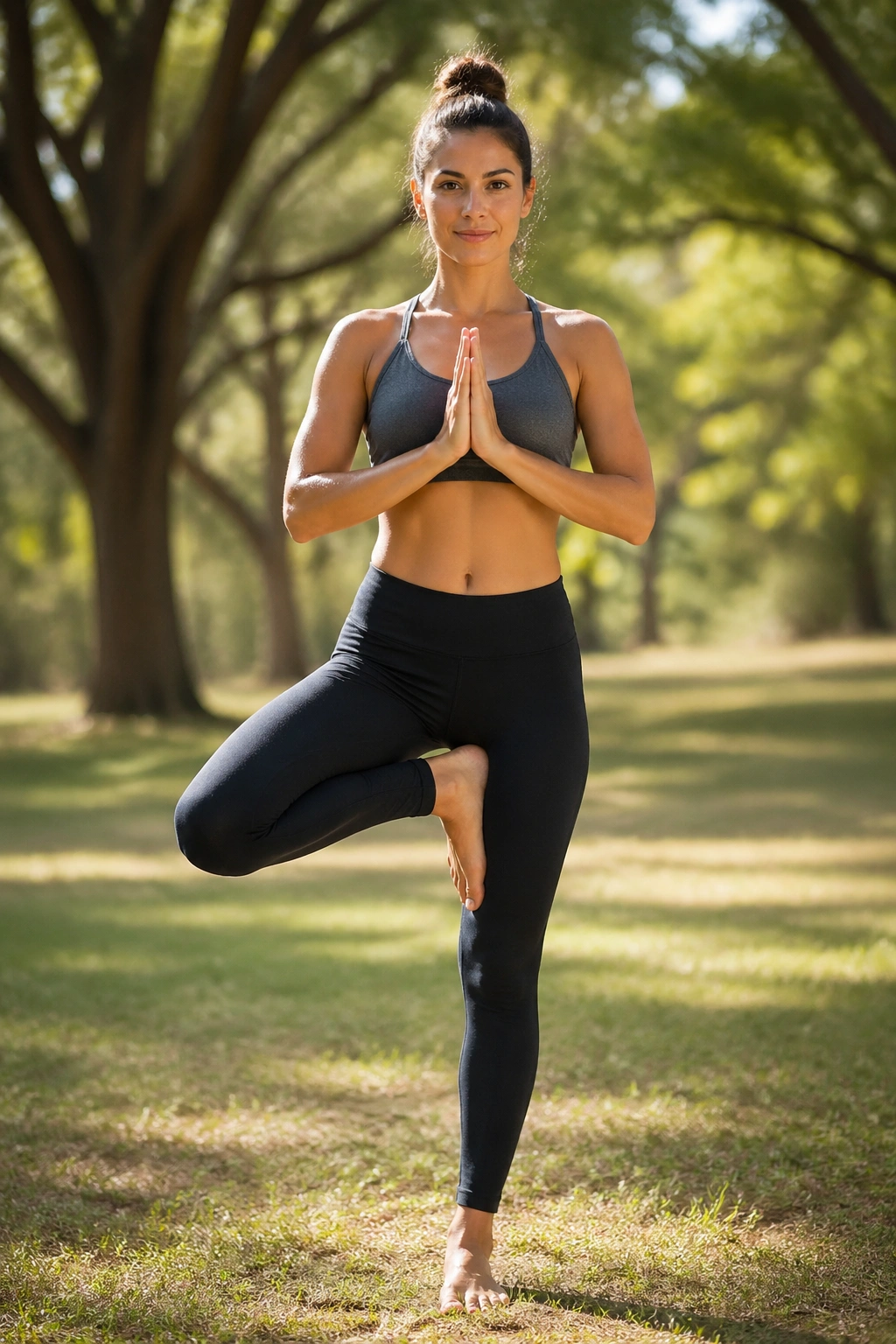
Tree Pose is the one that tells the truth.
If your attention is scattered, Tree will show it in about three seconds. If your breath is ragged, the wobble gets worse. If your eyes keep darting around the room, your standing leg often joins the chaos. That’s why I think Tree Pose is such a clean memory practice: it forces you to stay present without making a big speech about it.
How to Get the Most From It
Start with the sole of the lifted foot on the ankle, calf, or inner thigh. Skip the knee joint; that’s not a casual detail, it’s the difference between a good balance drill and a sloppy one. Press the lifted foot and standing leg into each other, then choose one point to stare at.
Hold for 20 to 40 seconds on each side. Keep the ribs stacked over the pelvis and breathe low into the belly. If you feel your focus slipping, lower the foot and start again instead of muscling through.
A small adjustment matters here: tuck the tailbone only a touch. Over-tucking makes people stiff. A little length through the lower back makes the whole pose calmer, and calmer balance is better balance.
6. Chair Pose
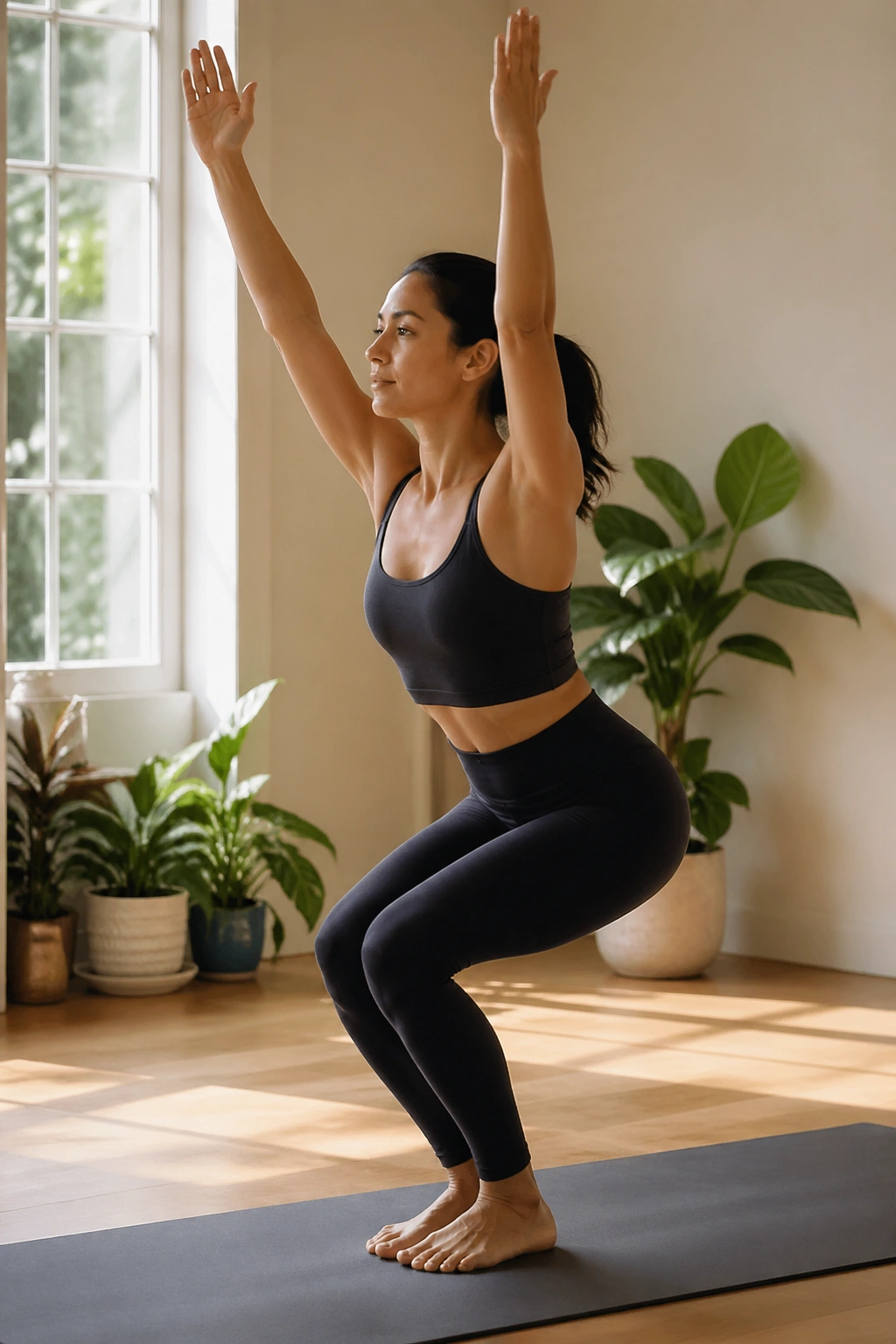
Chair Pose is not relaxing, and that is the point.
Utkatasana teaches the brain how to stay calm while the body works. Your thighs burn, your ankles wake up, your lungs notice the effort, and still you have to keep the face soft and the breath even. That combination — effort without panic — is a useful training ground for focus.
The pose also exposes sloppy posture fast. If the knees cave inward or the chest collapses, the brain has to work harder to keep things lined up. That’s part of why Chair feels mentally active, not just physically hard.
One sentence is enough here: shake is part of the deal.
Keep your weight in the heels, as much as your body allows, and reach the arms overhead or forward at shoulder height. Hold for 3 to 5 breaths, come up, and repeat once if you want a little more challenge. When the breath stays smooth under load, that’s the useful version.
7. Warrior II
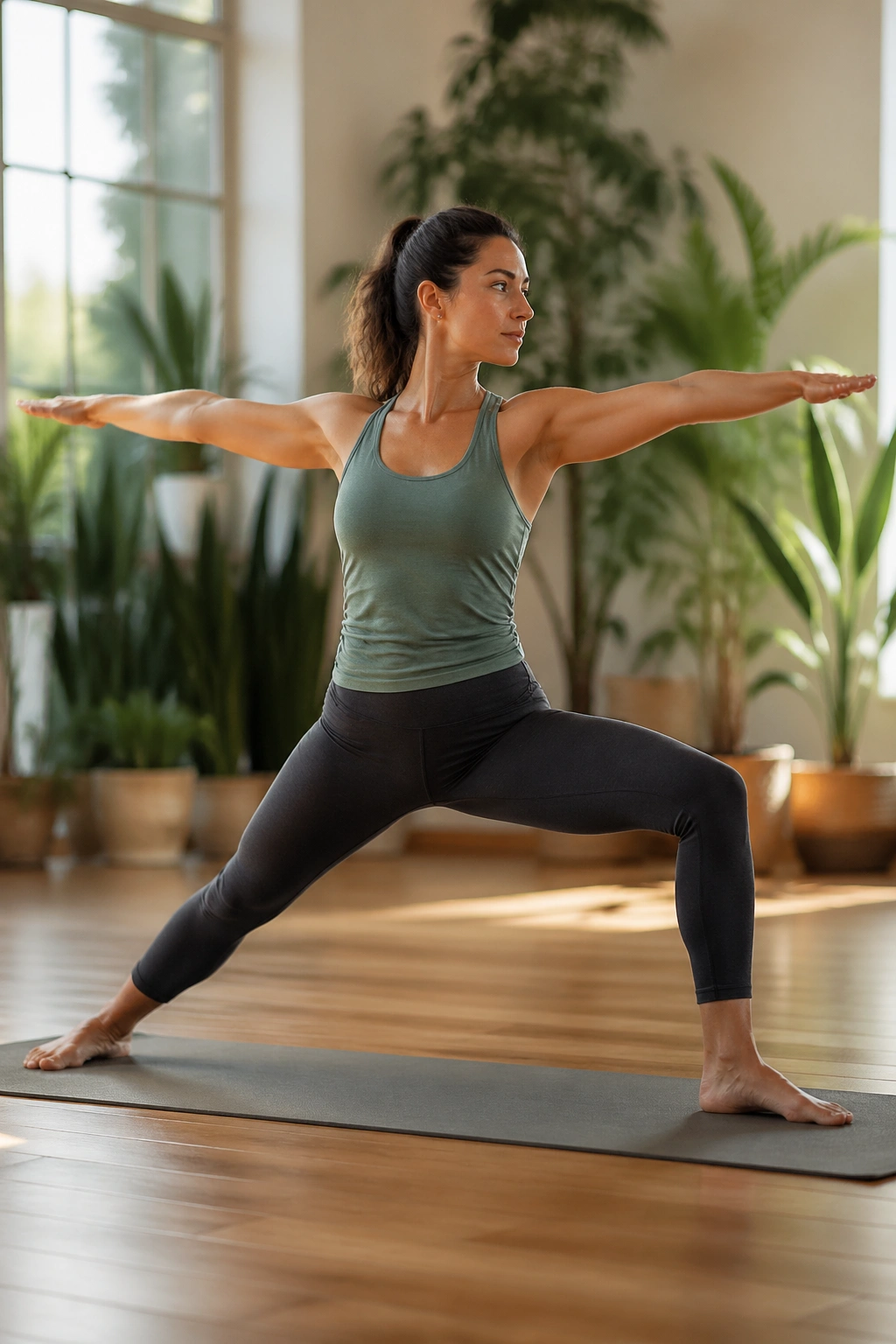
Why does a broad standing lunge matter for memory?
Because Warrior II forces steadiness without stillness. Your front knee bends, the back leg stays strong, the arms stretch in opposite directions, and the eyes hold one fixed point over the front hand. That kind of spread-out attention is a solid drill for the brain. It asks you to stay organized while the body is doing several things at once.
What to Watch For
- Front knee tracks over the middle toes.
- Back foot stays rooted, not collapsed.
- Arms reach from the shoulders, but the shoulders stay down.
- The gaze stays soft over the front fingers.
- Breath stays steady for 5 slow breaths.
The pose has a mental quality I like: composed, not frozen. There’s movement in the thighs and a lot of energy through the arms, but the face should stay almost boring. That calm face matters more than people think. Jaw tension tends to drag the rest of the nervous system with it.
If you practice Warrior II before a task that needs patience — a long email, a difficult conversation, a test, a presentation — it can help you feel less rushed. Not cured. Less rushed. That’s the useful part.
8. Half Lord of the Fishes
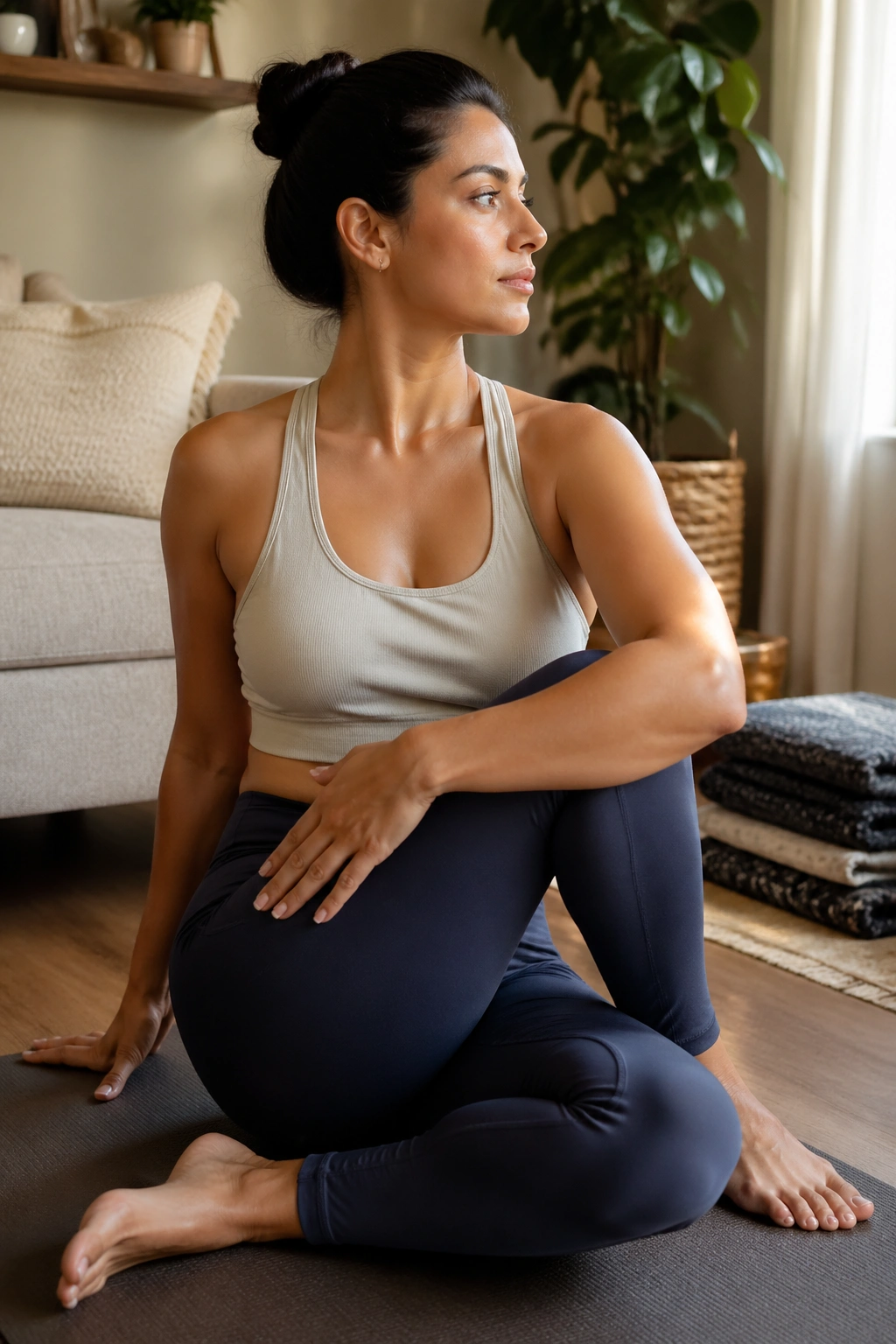
Twists are underrated for mental reset. Half Lord of the Fishes, or Ardha Matsyendrasana, gives you a clean way to pair breath with rotation, and that pairing seems to help a tired brain settle back into one track.
The trick is not to crank yourself around like a wrench. A good twist starts with a tall spine and a long exhale. The exhale is the part that matters most to me here, because it often creates the feeling of dropping unnecessary mental noise. Your body gets a bit of relief, and your mind tends to follow.
If you sit on a folded blanket, the pelvis usually tips forward more easily. That makes the twist cleaner and kinder to the lower back. Twist from the ribs first, then let the neck follow at the end. Do not yank the head around.
A simple way to use this pose is for 5 breaths each side after a long block of sitting. It’s especially nice after screen time, when your upper back starts to feel glued in place and your attention has gone flat.
9. Camel Pose
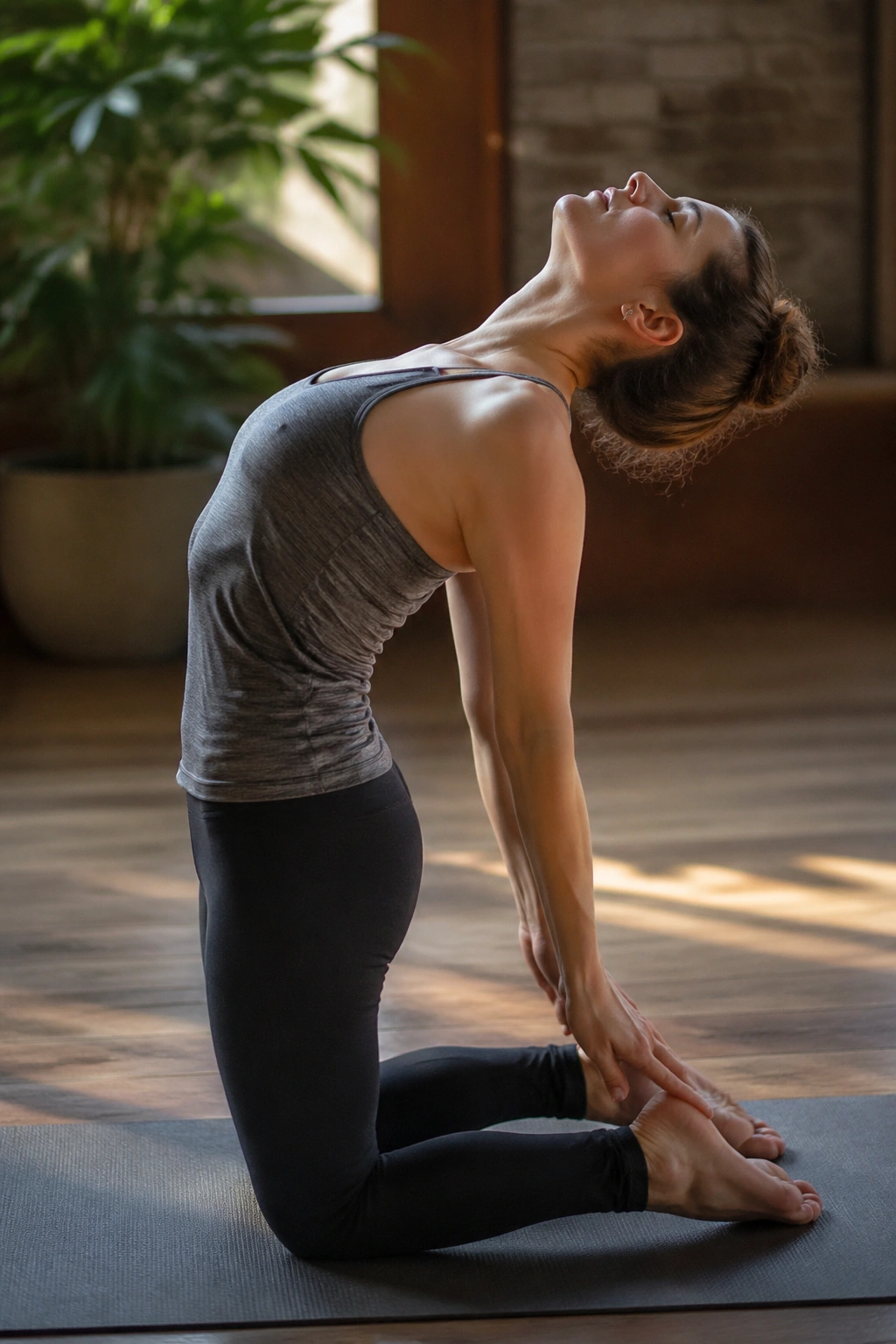
Your chest knows when it has been closed up too long.
Camel Pose opens that whole front line — throat, chest, belly, hip flexors — and the effect can feel dramatic. Not dramatic in a flashy way. More like the body suddenly remembers how to breathe more fully. That matters for brain function because shallow breathing tends to keep people tense, and tension is terrible for memory retrieval.
Camel asks for honesty. If your back bends are all about dumping into the low back, this pose will tell on you. The safer version is a lift through the sternum, thighs staying upright, hands on the low back or heels if they’re within reach. Think “lift and lengthen” before you think “bend.”
A few slow breaths here can wake you up without making you buzzy. That balance is what makes backbends useful for focus. They can shift sluggishness, but they should not leave you rattled.
Skip this one if it aggravates the neck or lower back. No pose is worth borrowing tomorrow’s comfort for today’s drama.
10. Bridge Pose
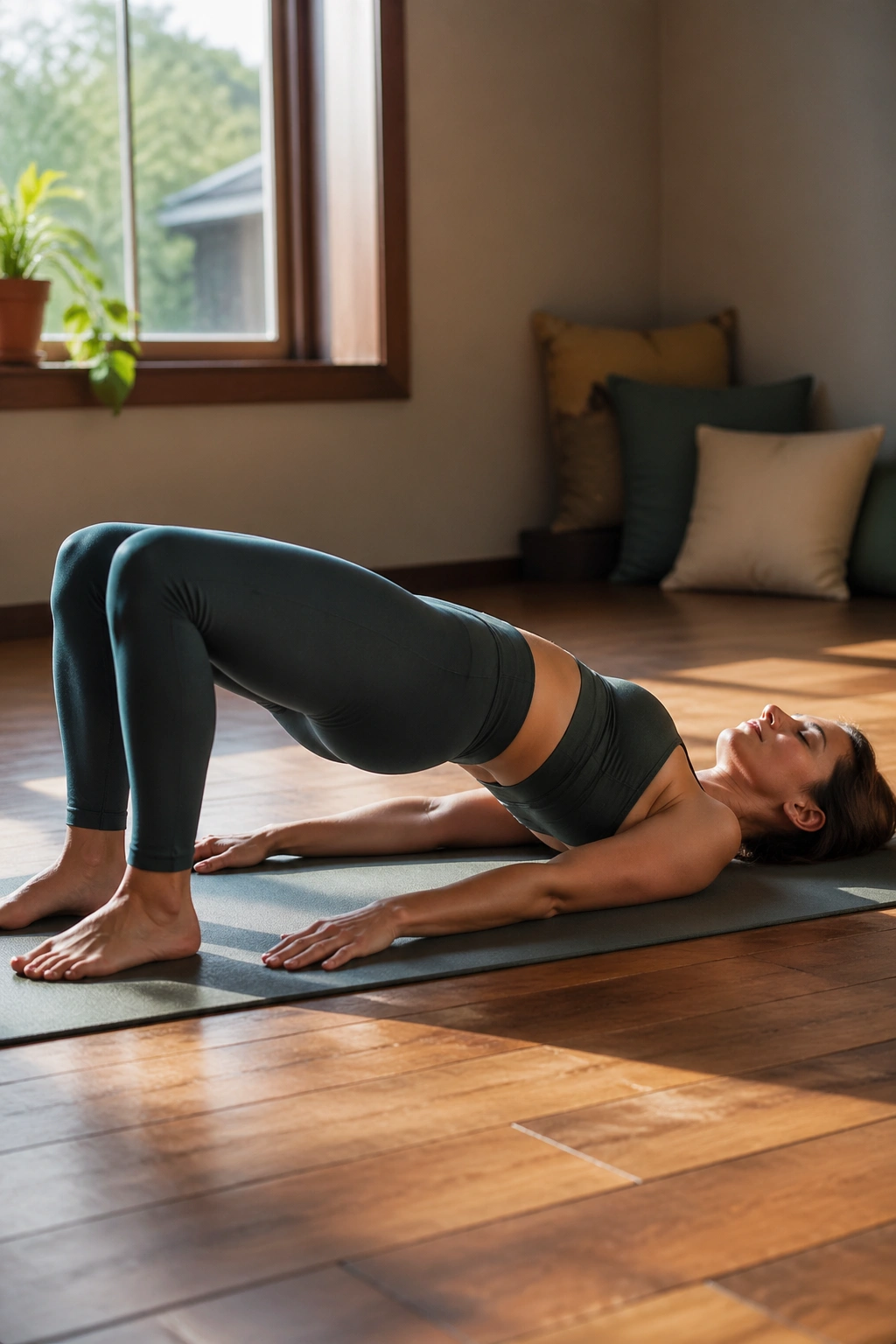
The first time Bridge Pose feels steady, it’s usually because the feet were placed better, not because the back got stronger.
That’s a small point, but it matters. Bridge is one of the best examples of a pose that rewards careful setup over brute force. Feet under the knees, heels grounded, inner thighs gently engaged, and the lift starts from the tailbone rather than being shoved into the lower back. That kind of controlled movement is useful for the nervous system, because it gives the brain clean feedback.
A Cleaner Version
Place a block under the sacrum if you want a restorative version. That turns Bridge into a supported hold, and the stillness can be surprisingly good for mental fatigue. You get the mild inversion without the effort of holding a big backbend.
If you do the active version, lift on an inhale and lower on an exhale. Keep the ribs from flaring out. A 5-breath hold is enough. Longer is not always better, especially if the neck starts to feel compressed.
I use Bridge when the mind feels sludgy, not when I want a big workout. There’s a difference. One is about waking up the body; the other is about showing off to yourself.
11. Dolphin Pose
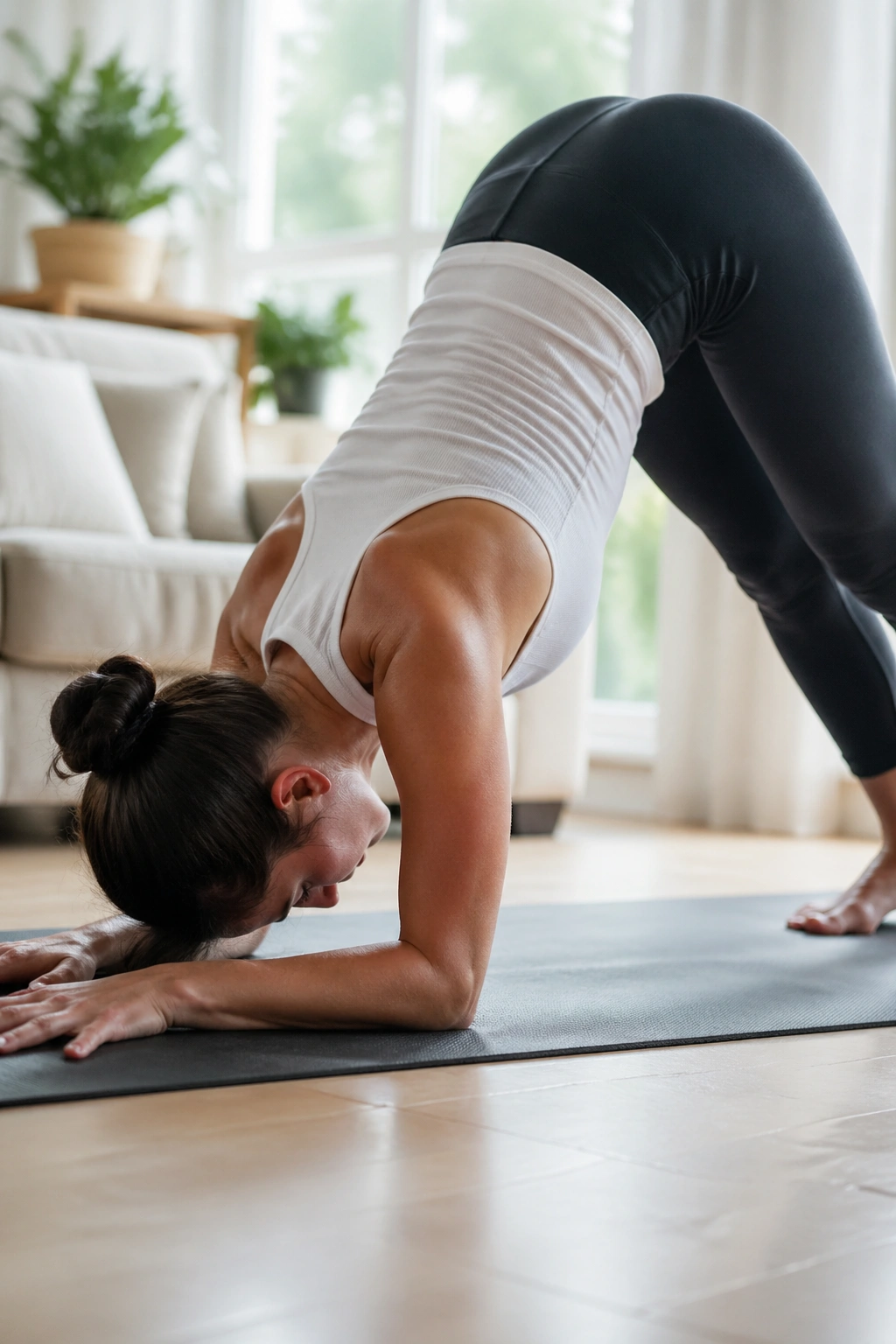
Dolphin Pose looks like a cousin of Down Dog, but it asks more from the shoulders and less from the wrists.
That makes it useful for people who want a stronger mental challenge without loading the hands so much. The forearms press down, the neck stays long, and the body has to figure out how to hold itself with fewer obvious escape routes. It is a tough little focus drill.
How to Practice
- Set the forearms parallel on the mat.
- Interlace the fingers or keep the palms flat.
- Lift the hips high, then walk the feet in a little at a time.
- Keep the head hanging lightly, not jammed.
- Stop if the neck feels pinched or the shoulders shrug toward the ears.
Dolphin can sharpen awareness because it feels awkward before it feels useful. That awkward phase is worth staying with for a few breaths, as long as you keep breathing. The moment you start holding your breath, the pose stops helping and starts turning into a struggle.
If wrists get irritated in Down Dog, Dolphin is a smart alternative. If shoulders are already tired from lifting, though, be honest and pick something gentler.
12. Legs-Up-the-Wall
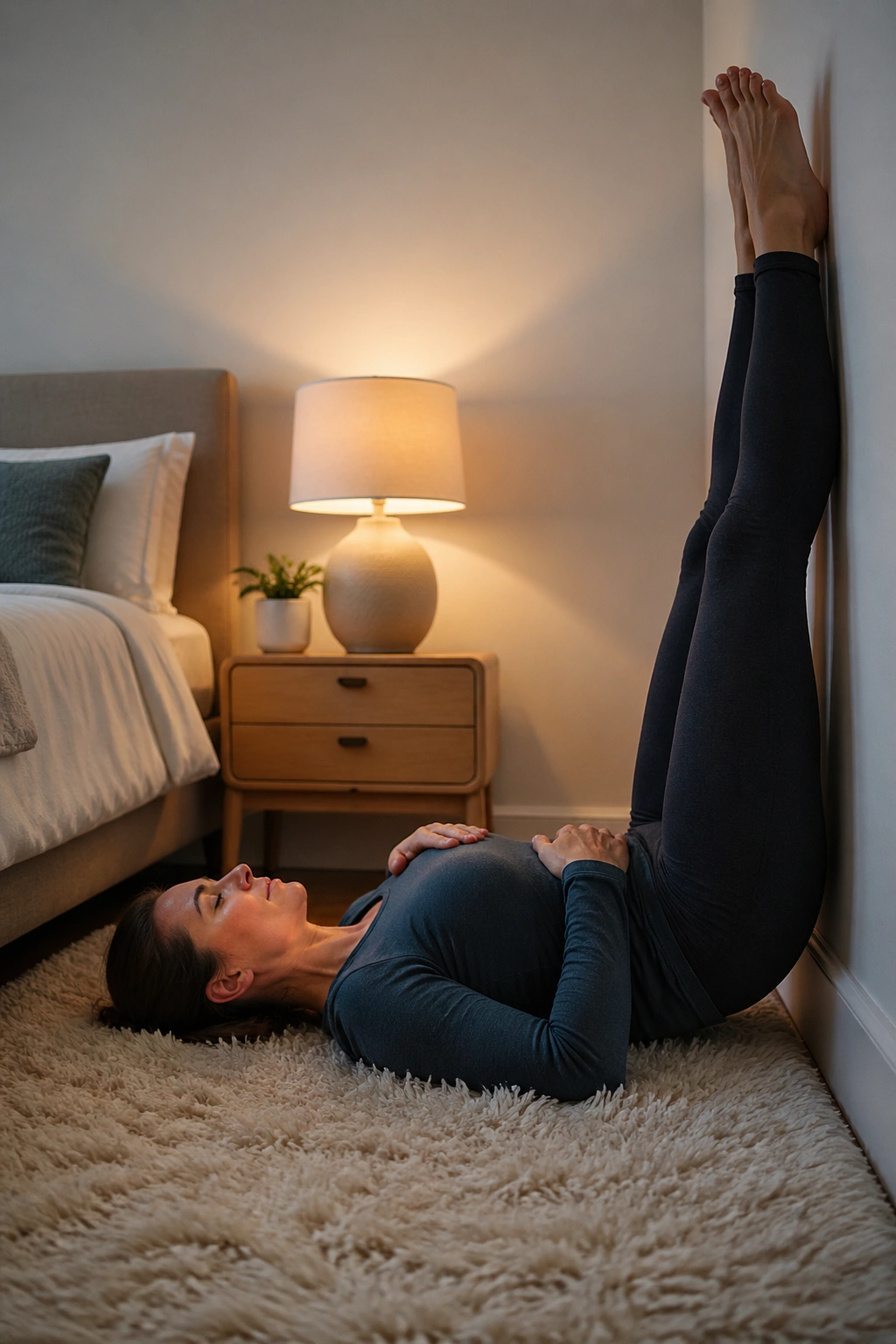
Want a pose that quiets the room in your head without asking for effort?
Legs-Up-the-Wall is one of the easiest ways to shift out of overload. You lie down, swing the legs up, and let gravity do most of the work. That passive shape can feel almost absurdly simple, yet it’s excellent for downshifting after studying, driving, or staring at a screen for too long.
The stillness matters more than the stretch. When the legs are supported by the wall, the body doesn’t have to keep making little postural corrections. That gives the nervous system a break, and a rested nervous system does a better job of sorting information later on. Memory is not only about input. It’s about recovery.
Place a folded blanket under the hips if the hamstrings feel tight or the low back wants more room. Rest one hand on the belly and one on the chest. Breathe until the exhale naturally lengthens. Five minutes is useful. Ten is better if you can spare it.
I would choose this pose over another aggressive stretch almost any day when the goal is mental clarity rather than athletic range.
13. Seated Forward Bend
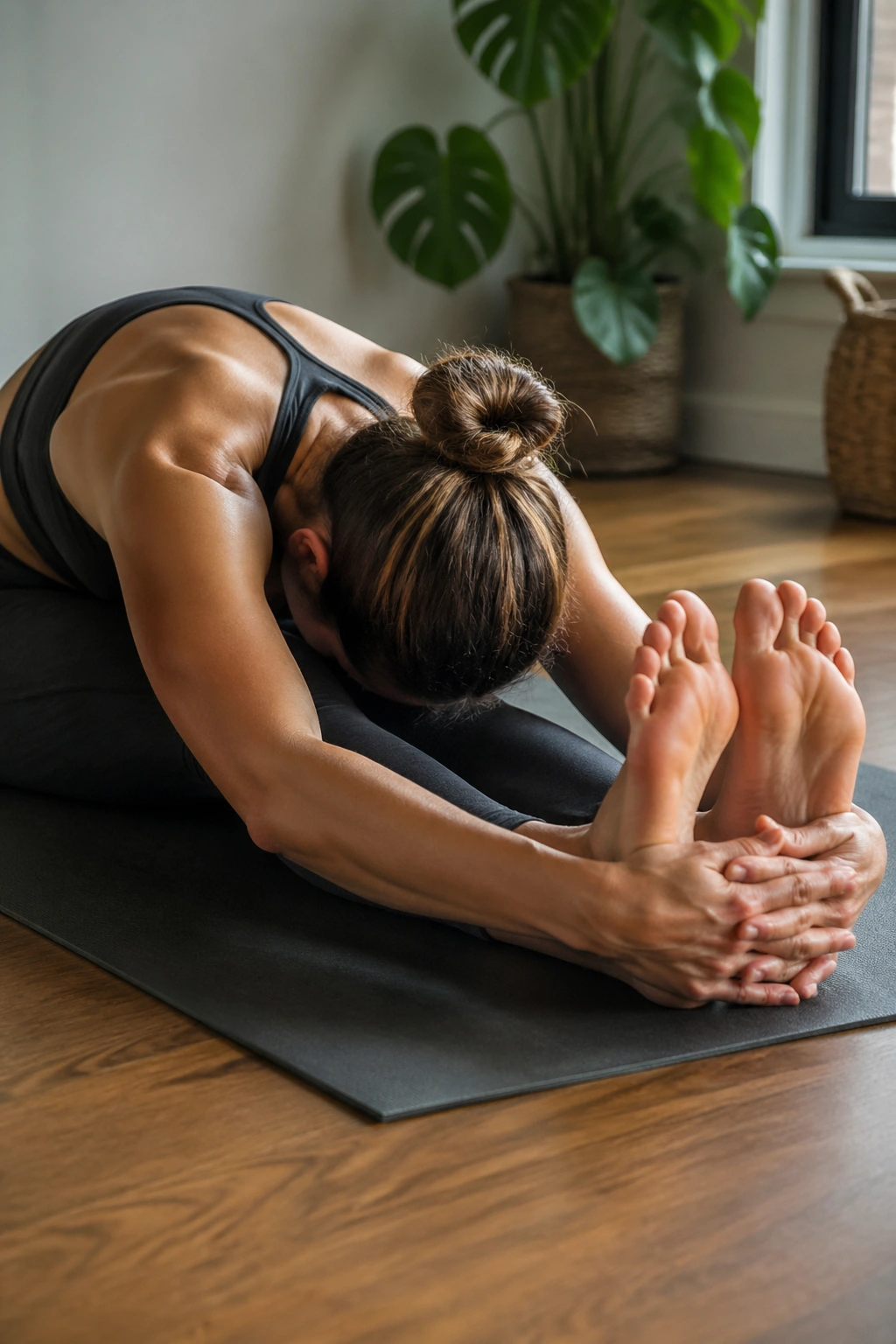
Seated Forward Bend is not flashy, and I trust it for that reason.
Paschimottanasana asks for patience. You sit tall, lengthen the spine, and fold without forcing the body into a shape it doesn’t want yet. That slow inward focus is useful for memory because it trains the mind to stay on one target for more than a few seconds.
Why It Helps Focus
The pose narrows the field of attention. Instead of looking around, balancing, or reaching, you’re dealing with breath, spine length, and a stretch along the back of the legs. That simplicity can feel almost meditative, which is useful when the brain has been scattered all day.
Use a strap around the feet if you can’t reach comfortably. Bend the knees if your lower back rounds hard. A rounded spine is not a badge of honor here. What matters is a long exhale and a sense that the fold is unfolding from the hips, not collapsing from the ribs.
I also like this one before sleep or quiet reading. It has a gentle, inward quality that makes the rest of the day feel farther away.
14. Child’s Pose
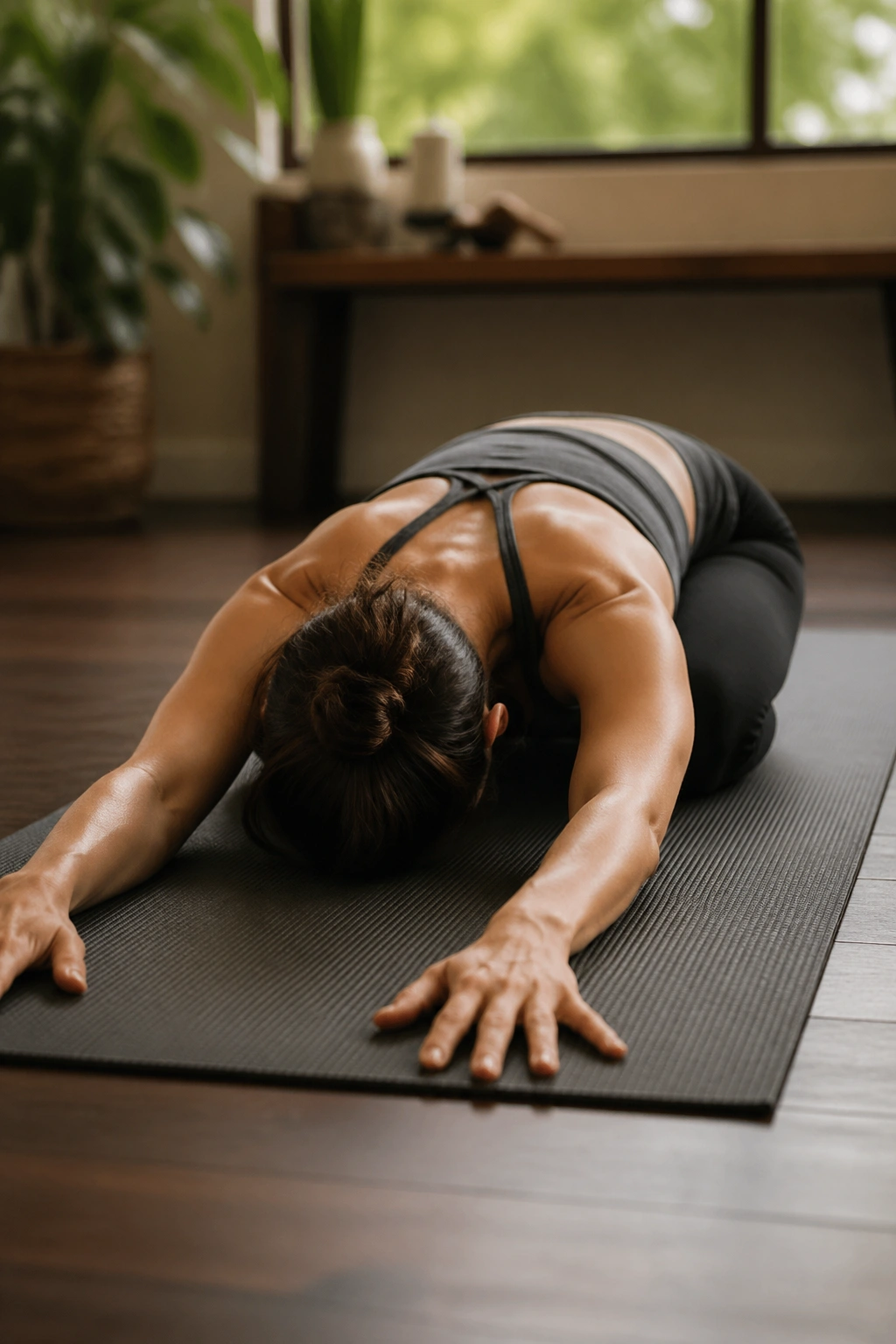
Child’s Pose is where a frantic nervous system starts to back off.
That sounds dramatic. It isn’t. Knees wide or together, hips sinking toward the heels, forehead resting down, arms forward or back — the shape is basically a permission slip to stop performing. And that matters because mental clutter often gets worse when the body never gets a clear off-switch.
The forehead-to-floor contact is the little detail I love most. It gives the brain a simple pressure cue and often makes breathing feel slower and more contained. If the front of the body feels exposed or overworked, Child’s Pose creates a safe little cave.
Use a bolster under the chest or a folded blanket under the hips if the pose feels cramped. If the knees complain, widen them and tuck a blanket behind the thighs. A real rest pose should feel like rest. If it feels like punishment, fix it.
I’ll be blunt: people skip Child’s Pose because it looks too easy. Then they wonder why their practice feels rushed.
15. Corpse Pose
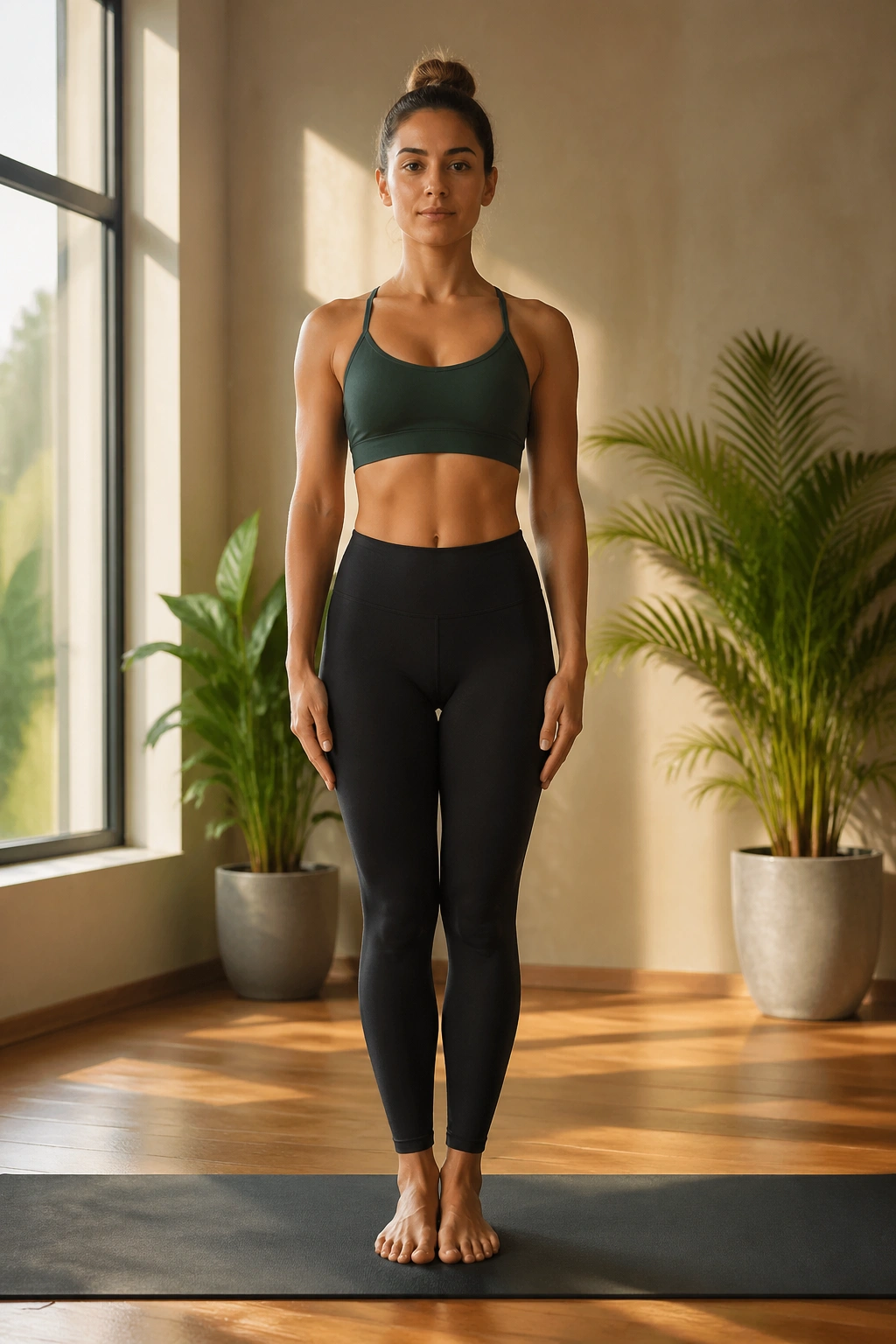
Savasana looks like doing nothing. It is not.
Corpse Pose is where the whole practice has a chance to settle. Your muscles stop bracing, your breath slows on its own, and the mind gets a rare moment to stop chasing the next thing. If you care about memory, that last part matters. Rest is part of how the brain stores and organizes information, and this pose gives you a clean, simple way to practice resting well.
How to Stay Still Without Fidgeting
- Lie on your back with the legs long, or rest the knees over a bolster.
- Let the arms fall a little away from the body, palms up if that feels natural.
- Soften the tongue away from the roof of the mouth.
- Keep the eyes closed or half-lidded.
- Stay for 3 to 10 minutes, longer if your body settles easily.
The hard part is not the position. The hard part is staying there without mentally grabbing your phone, your to-do list, or the next pose. That’s the real training. Stillness can feel inconvenient, which is a funny thing to say about a pose that asks for no movement at all.
If you do only one thing for brain support after a yoga session, make it this. A short, honest Savasana after a sequence of balance, breath, and gentle inversion often does more for clarity than one more ambitious stretch ever will.
