



Heavy squats do not care that your hips feel polite. The first rep tells the truth fast, and if your ankles, thoracic spine, or hips are stiff, the bar makes you pay for it.
That is why pre workout yoga stretches for lifters work best when they act like a smart warm-up, not a nap in stretchy pants. You want positions that wake up the pieces that actually matter under load: hips that rotate, a spine that can extend and rotate without drama, shoulders that can reach overhead, and calves that stop fighting your squat depth.
Long, sleepy holds are a different tool. Before a barbell session, the sweet spot is usually short, active, and specific—enough to change how you move, not enough to leave you feeling loose in a useless way.
A good warm-up should make your first working set feel less awkward. That’s the whole game. And the stretches below are built with that in mind.
1. Cat-Cow on All Fours
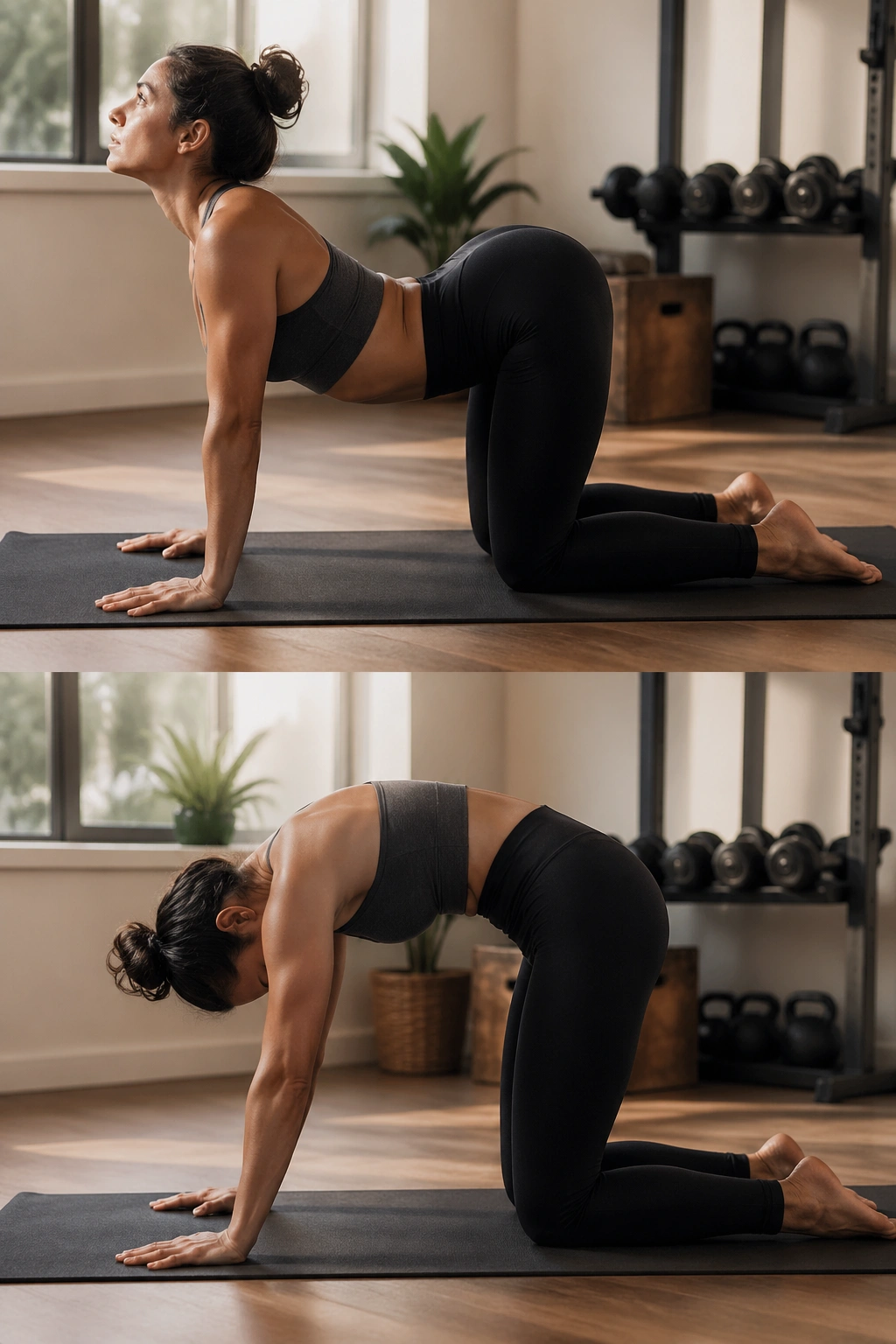
Cat-cow looks almost too simple to earn a place in a lifting warm-up. It earns it anyway.
This is the easiest way to wake up the spine, ribcage, and breathing pattern before you touch a barbell. The movement is small, but it does a useful job: it reminds your torso how to flex and extend without the neck taking over. For lifters, that matters on deadlifts, front squats, overhead work, and anything where you need a hard brace without feeling jammed up.
What it wakes up
The big win here is not a dramatic stretch. It is coordination. When you move through cat-cow with your breath, your ribs start to move with your pelvis instead of acting like a stiff block. That gives you a cleaner brace later.
If your lower back tends to feel cranky during warm-ups, this is often a better first move than something aggressive. It is gentle enough to calm things down, but active enough to raise temperature and get the spinal segments moving one by one.
How to do it
- Set your hands under your shoulders and knees under your hips.
- Inhale as you drop the belly slightly, lift the chest, and tip the tailbone up.
- Exhale as you press the floor away, round the upper back, and tuck the pelvis.
- Move for 6 to 8 slow cycles.
- Keep the motion smooth. No jerking.
Pro tip: If your neck gets tight, keep your gaze down instead of cranking your head up. The spine is the point here, not a dramatic chin lift.
2. Thread-the-Needle Shoulder Rotation
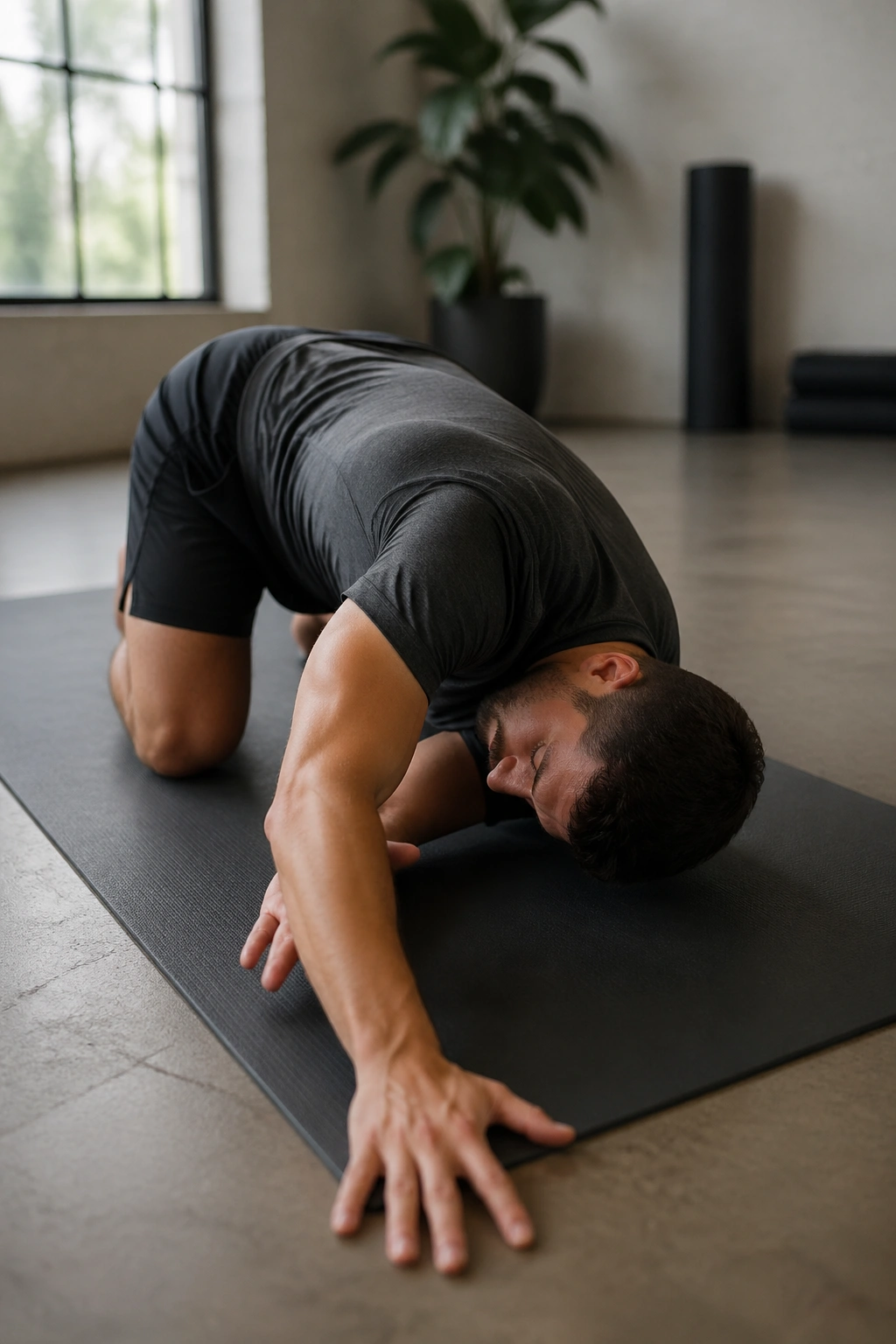
If your upper back feels welded shut, Thread-the-Needle is the move I’d reach for first.
It opens the thoracic spine and the back of the shoulder in a way that carries over to bench pressing, front rack positions, and any overhead work where one stiff side ruins the setup. You slide one arm under the other, then let the chest rotate toward the floor while your breathing does some of the heavy lifting.
That last part matters. Don’t force the stretch with your shoulder joint. Let the exhale soften the ribs and give you a little more room, then settle into it. Lifters often miss this and just crank harder, which is a waste of time and a nice way to irritate the front of the shoulder.
I like this one because it also exposes side-to-side differences fast. One arm will often reach farther, or one shoulder blade will feel pinned while the other glides. That information is useful. If your right side is much tighter than your left, you’ll feel it here before it shows up as a crooked bench setup or a bench bar that drifts off line.
Use 3 to 5 breaths per side. Keep the hips stacked over the knees, and do not collapse the whole body onto the shoulder you’re rotating toward. You want rotation, not a pile of joints.
3. Downward Dog Pedal and Reach
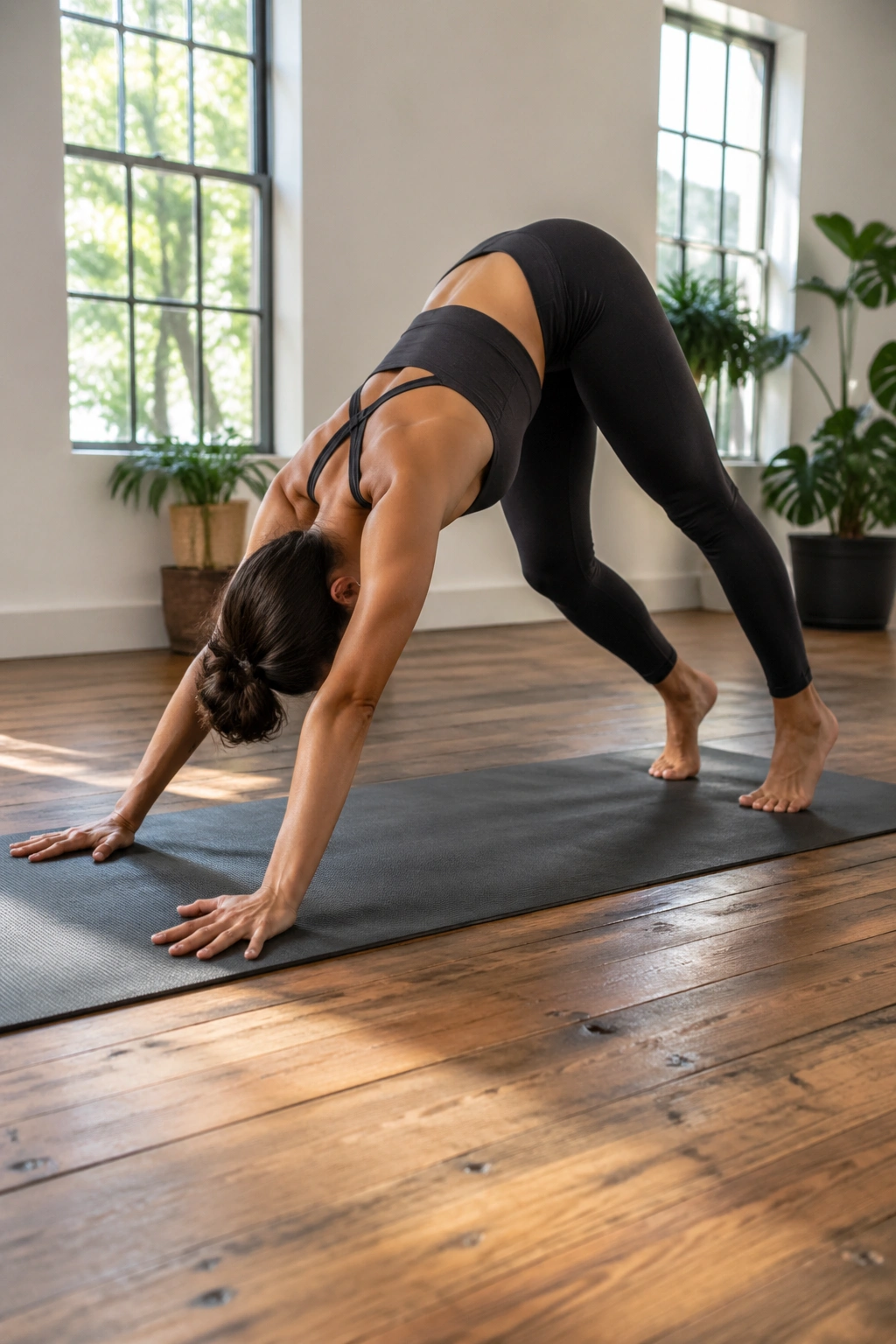
Why do lifters keep coming back to Downward Dog before deadlifts and pressing days?
Because it quietly hits a lot of the places that get cranky under load. Calves, hamstrings, lats, shoulders, and even the back of the ribcage all get a say. The pose also gives you a quick read on ankle stiffness, which is handy if your squat depth depends on it.
How to use it before a barbell session
Start in a short, steady Downward Dog instead of trying to make it look pretty. Bend one knee, press the other heel toward the floor, then switch sides. After a few pedaling reps, reach one hand toward the opposite ankle or press the chest gently back toward the thighs to wake up the lats.
- Pedal for 8 to 10 slow switches.
- Hold each side for 1 to 2 breaths.
- Keep the hands rooted.
- Let the heels move, but do not force them down.
The most common mistake is turning this into a sloppy slump through the shoulders. Don’t. Push the floor away, keep the neck long, and think about making space between the ears and shoulders. If your wrists hate the full pose, place your hands on a bench or the safety pins in a rack. Same idea, less irritation.
Use it before lower-body days when your calves feel like bricks, and before upper-body days if your lats make overhead work feel ugly. Short, useful, done.
4. Half-Kneeling Hip Flexor Lunge
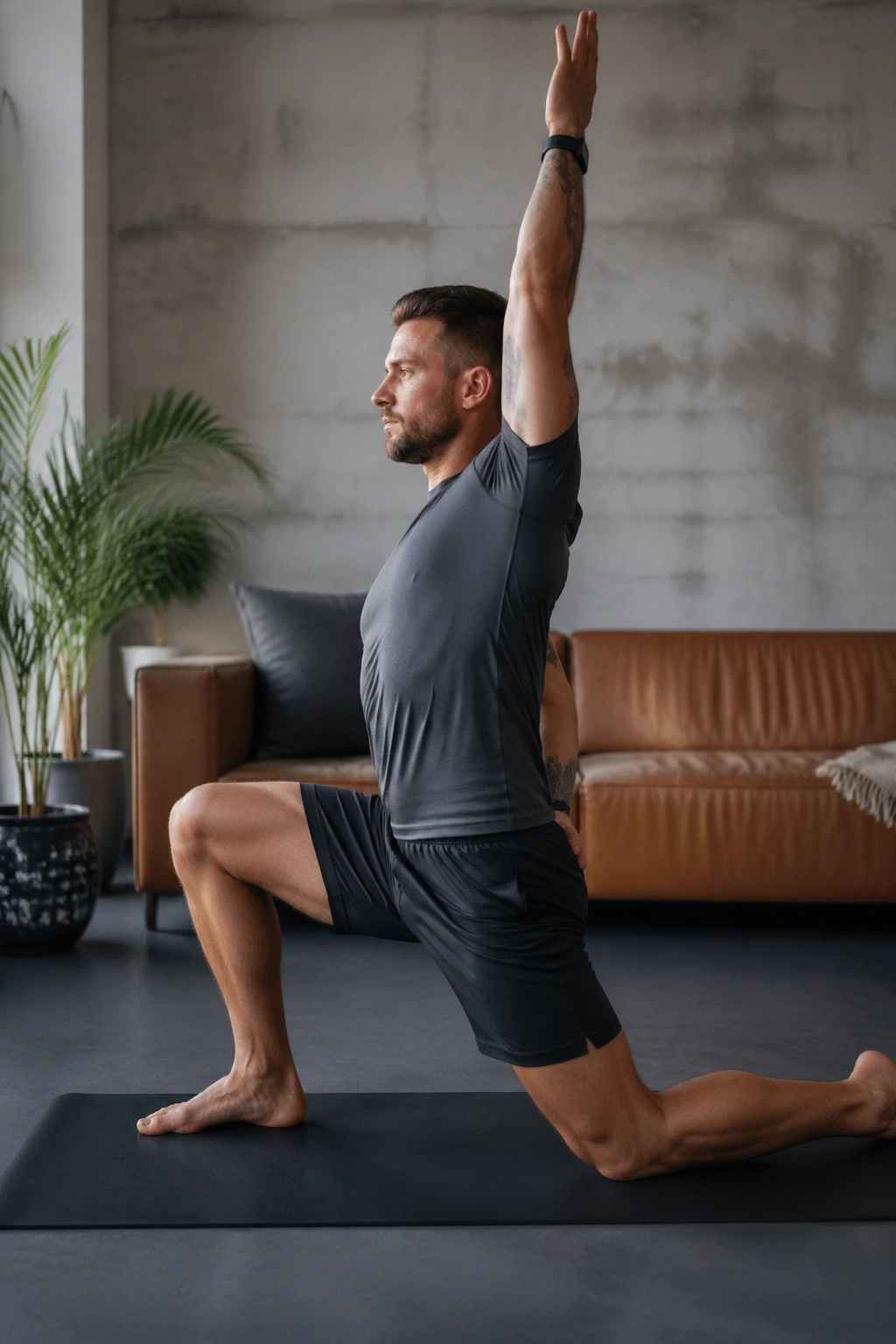
The first sign of tight hip flexors is not pain. It’s the way your front foot starts doing too much work in the squat.
A half-kneeling hip flexor lunge gives you a cleaner way to open the front of the trailing hip without turning the stretch into a low-back dump. One knee is down, the other foot is planted in front, and you tuck the pelvis slightly before reaching up on the same side as the kneeling leg.
That reach is not decorative. It adds a little length through the front of the hip and the side of the torso, which is exactly where a lot of lifters feel stuck after too much sitting or too many heavy leg days stacked together. Keep the glute of the kneeling side switched on. If you skip that, the stretch slides into your lower back and stops being useful.
Quick cues
- Squeeze the glute on the kneeling side.
- Tuck the tail slightly.
- Shift forward only a few inches.
- Reach the same-side arm overhead if it feels smooth.
- Hold for 3 to 5 breaths per side.
This one is especially good before squats, split squats, lunges, and Olympic lifts. If the front of your hip pinches, back out a little. That pinch is not the goal. A deep, steady pull through the front of the thigh is.
5. World’s Greatest Stretch
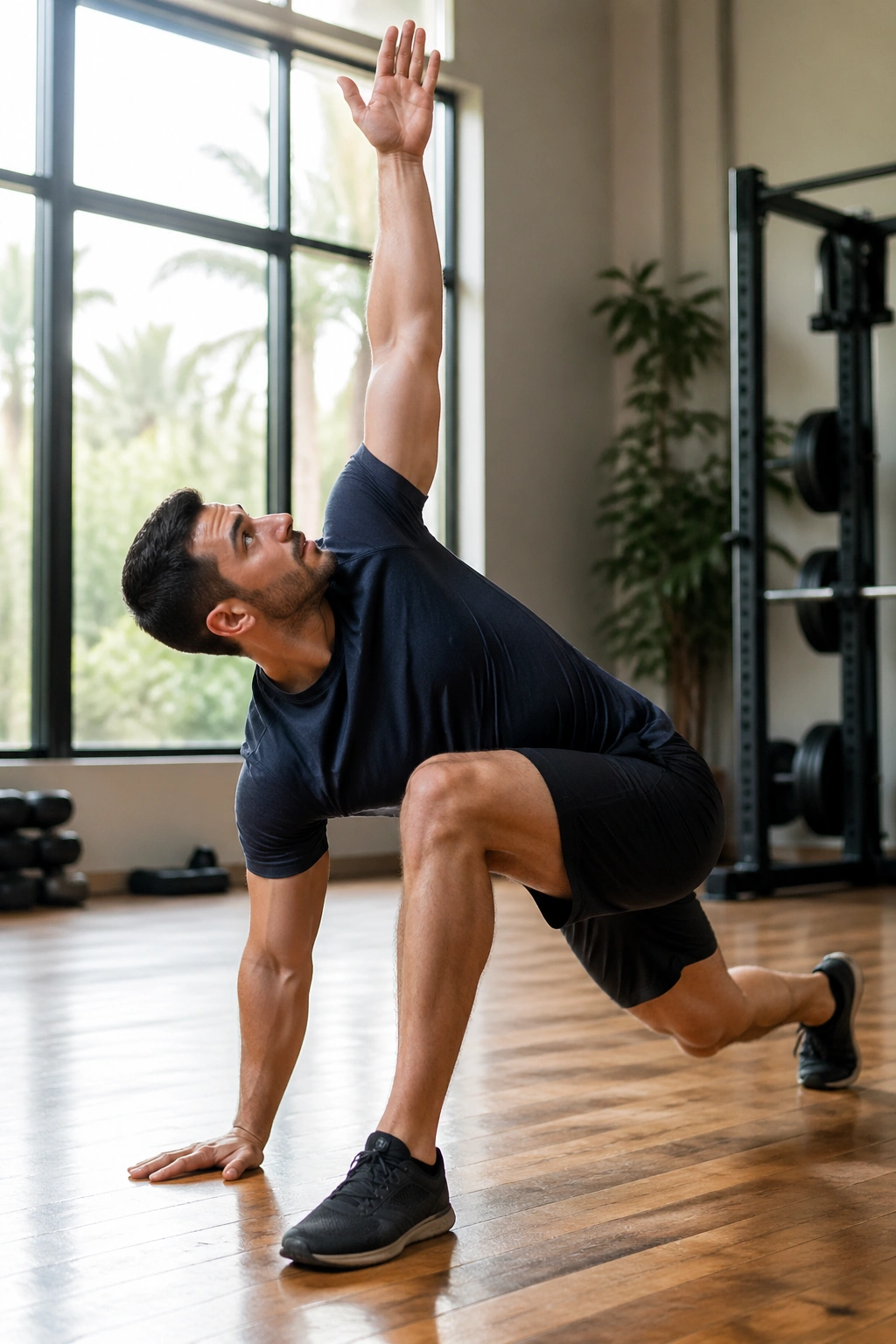
This stretch gets named a lot because it does a lot. Fair enough.
The pattern is simple: step one foot forward into a lunge, place the inside hand on the floor or a block, thread the elbow down if you need a little adductor opening, then rotate the chest open and reach toward the ceiling. It sounds like a mouthful, and on paper it is. In practice, it saves time because it hits the hips, adductors, thoracic spine, and front of the shoulders in one flow.
Busy and useful. That is the real appeal.
For lifters, the value is that it connects pieces that normally get treated one at a time. A squat is not just hips. A clean is not just ankles. A press is not just shoulders. When you rotate and reach from a lunge, you’re teaching your body to keep the pelvis steady while the upper body moves. That skill carries over fast.
I like 4 to 5 controlled reps per side, with a pause at the top of the rotation. The front foot should stay flat. The back knee can rest on the floor if you want less intensity, or stay lifted if you need more hip work. Do not rush the transition. If the move feels frantic, it stops being a warm-up and turns into a mobility contest nobody wins.
One small thing: keep the reach smooth. A lot of people yanked the arm up and call it “opening” the upper back. That’s not it. Breathe into the rotation and let the ribs turn without losing the lunge.
6. Low Lunge with Side Bend
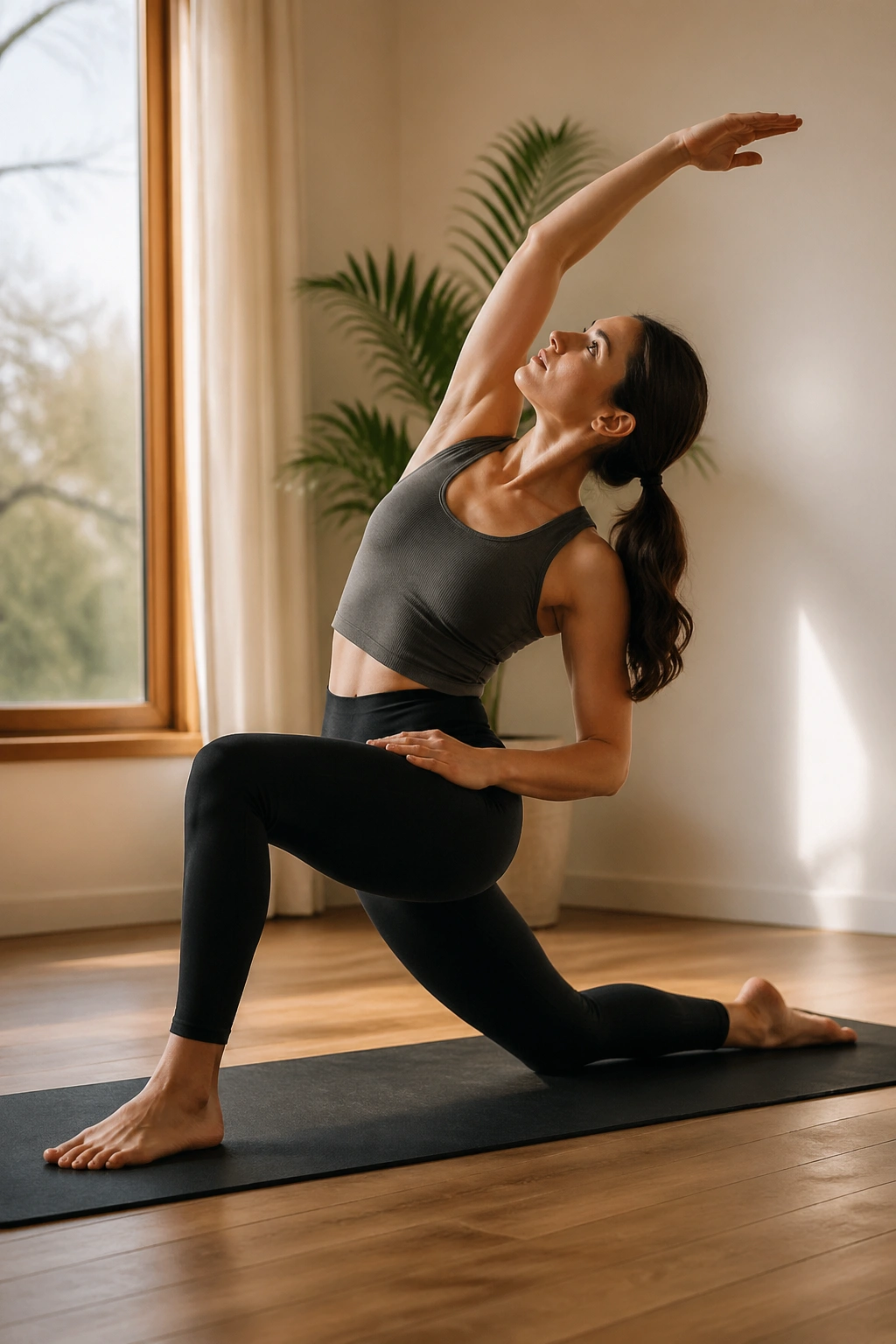
Unlike a straight hip-flexor lunge, this version opens the lat and ribcage on the same side too.
That makes it a nice pick for overhead press days, front squat days, and anything where a stiff torso makes the bar path ugly. Set up in a low lunge, keep the hips square, and reach the arm of the kneeling side overhead and slightly across the body. The side bend changes the line of the stretch just enough that you feel it up the side body, not only in the front of the hip.
The difference sounds small. It is not. A plain lunge can leave the ribcage locked while the hips feel open. This one tends to link the two, which is what you actually want before lifting. If one side of your upper back feels packed tight, you’ll notice it here when the reach gets shorter or the ribs flare to fake more range.
Hold it for 3 slow breaths per side, then switch. Keep the front foot rooted and the back glute lightly engaged. If you arch hard through the lower back, shorten the reach and think about lengthening from the hip to the fingertips instead.
This is a better fit than a long passive hold if you’re about to press, snatch, jerk, or even row. The goal is a better stack, not a dramatic side bend.
7. Frog Pose Rockbacks
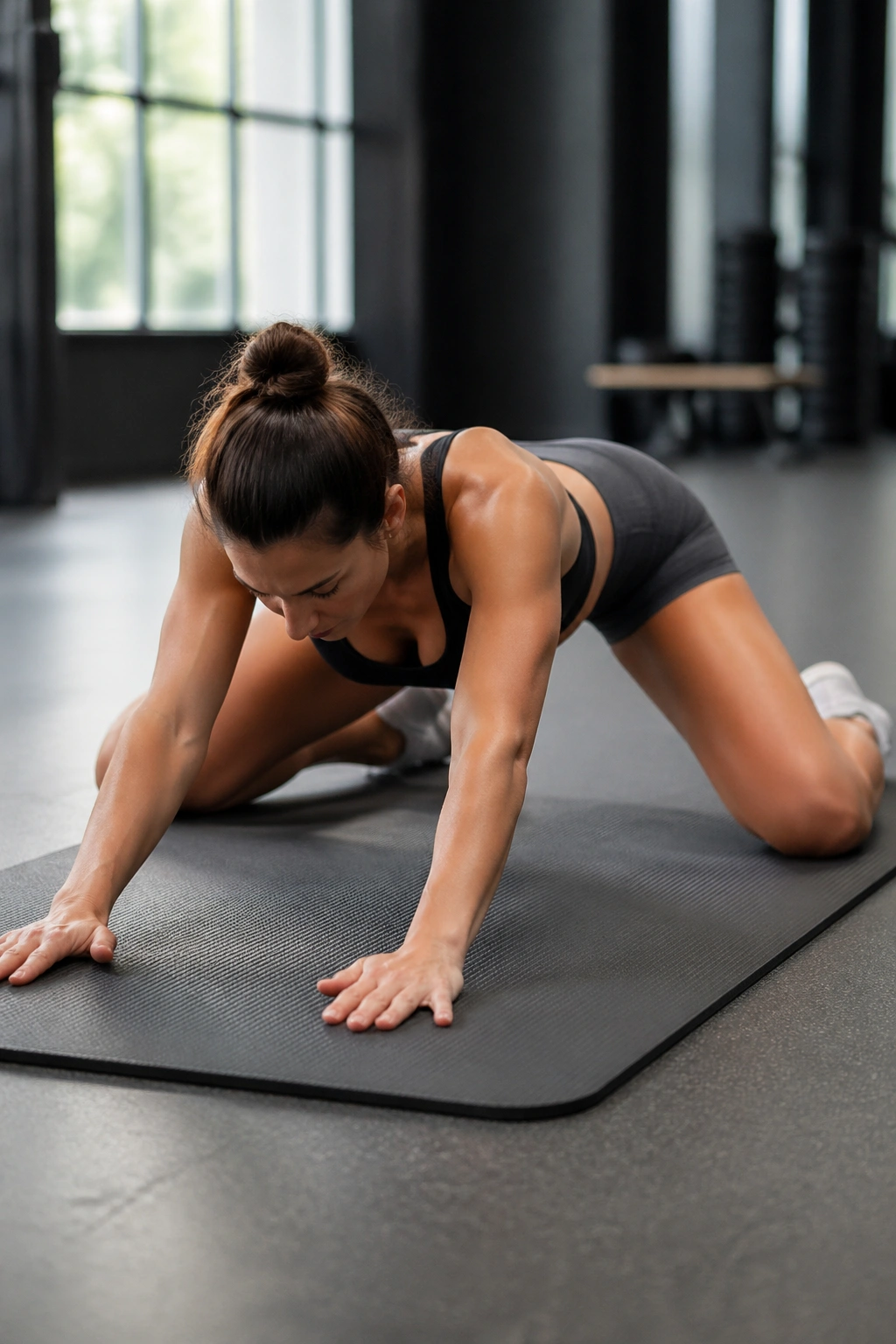
Adductors drive squat depth more than most lifters want to admit.
Frog pose rockbacks are one of the cleanest ways to work them before training. Start on hands and knees, slide the knees wide, turn the feet out, and keep your lower legs roughly in line with your knees. From there, rock your hips back toward your heels and forward again in a controlled rhythm.
What to feel
You should feel a broad stretch through the inner thighs, not a sharp tug at the groin. If the knees scream, you went too wide. Pull them in a bit and keep the movement smaller.
The rockback pattern matters more than a long hold. It keeps the hips active, teaches the adductors to lengthen and shorten under control, and warms up the groin without making it sleepy. That makes it a smart choice before squats, sumo deadlifts, and wide-stance work.
- Rock back for 8 to 12 reps.
- Pause 1 second at the back.
- Keep the torso long.
- Stop if the inner thigh feels sharp or crampy.
A lot of people try to sit all the way back as if more pain equals more progress. Nope. You’ll get more out of a smaller, controlled range that you can breathe through. If the floor is hard on your knees, pad them. Simple fix.
8. 90/90 Hip Switches
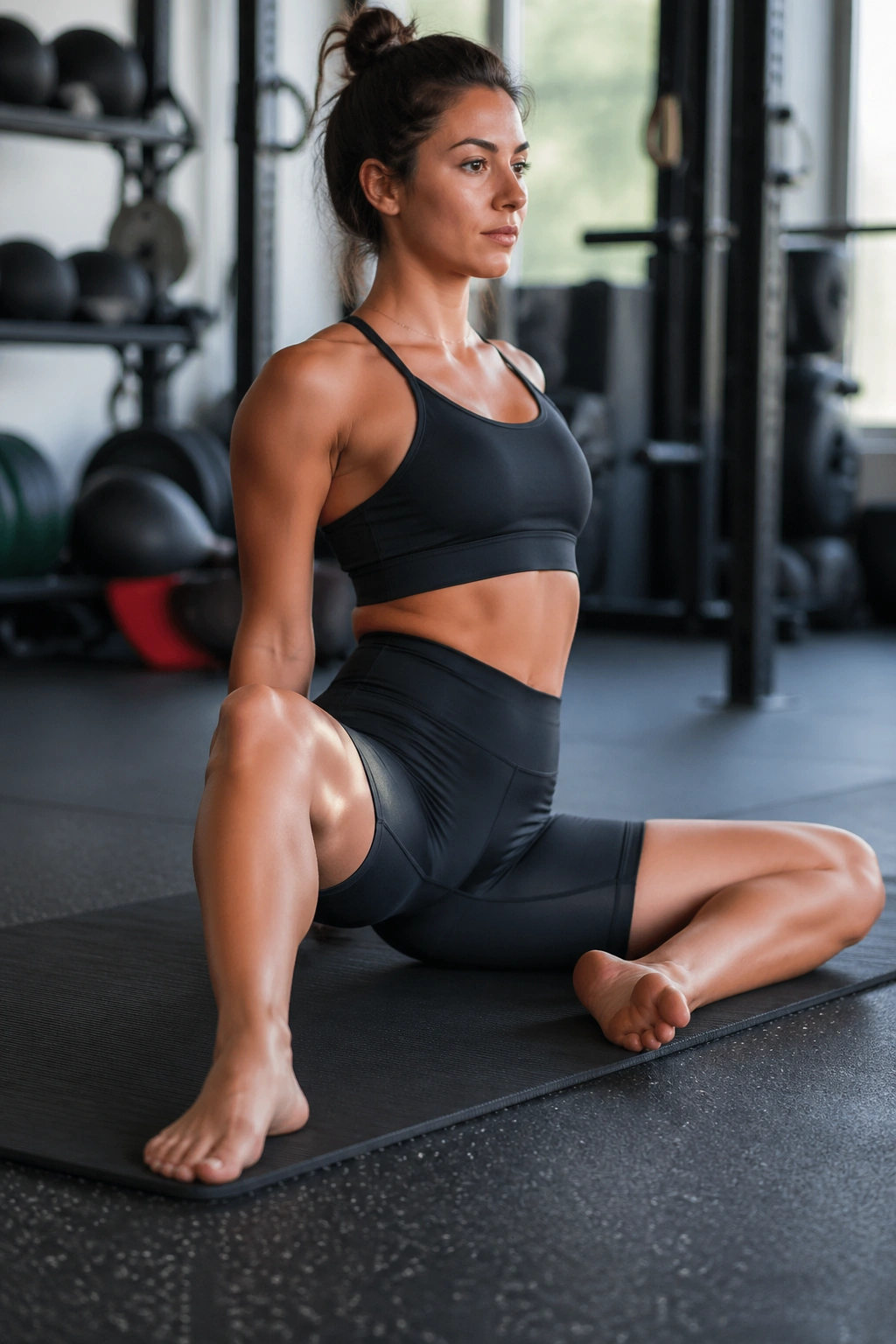
Can your hips rotate without your spine stealing the job?
That is what 90/90 hip switches ask, and the answer matters more than people think. Set one leg in front with the knee bent about 90 degrees and the other leg out to the side in the opposite 90. Then rotate both knees to the other side without using your hands to fling yourself around.
The first few reps usually feel awkward. Good. Awkward is useful here because it shows you where rotation gets stuck. Lifters who live in sagittal-plane movements—squats, deadlifts, presses, rows—often discover that internal and external hip rotation is not as clean as they thought. This drill makes that obvious fast.
A clean switch is the goal, not speed. Sit tall. Keep your torso from collapsing. If needed, place one hand behind you for support, but don’t use your hands to drag the knees around. Move slowly enough that you can feel both hips working.
How to turn it into a warm-up drill
- Do 5 to 8 controlled switches.
- Pause in each position for one breath.
- Lean slightly forward over the front shin if you want more intensity.
- Keep both sit bones close to the floor, even if they do not touch.
This one is gold before lower-body sessions, especially if you squat deep or pull sumo. It also pairs well with a short walk between sets if you want to stay warm without losing the groove.
9. Deep Squat Pry Hold
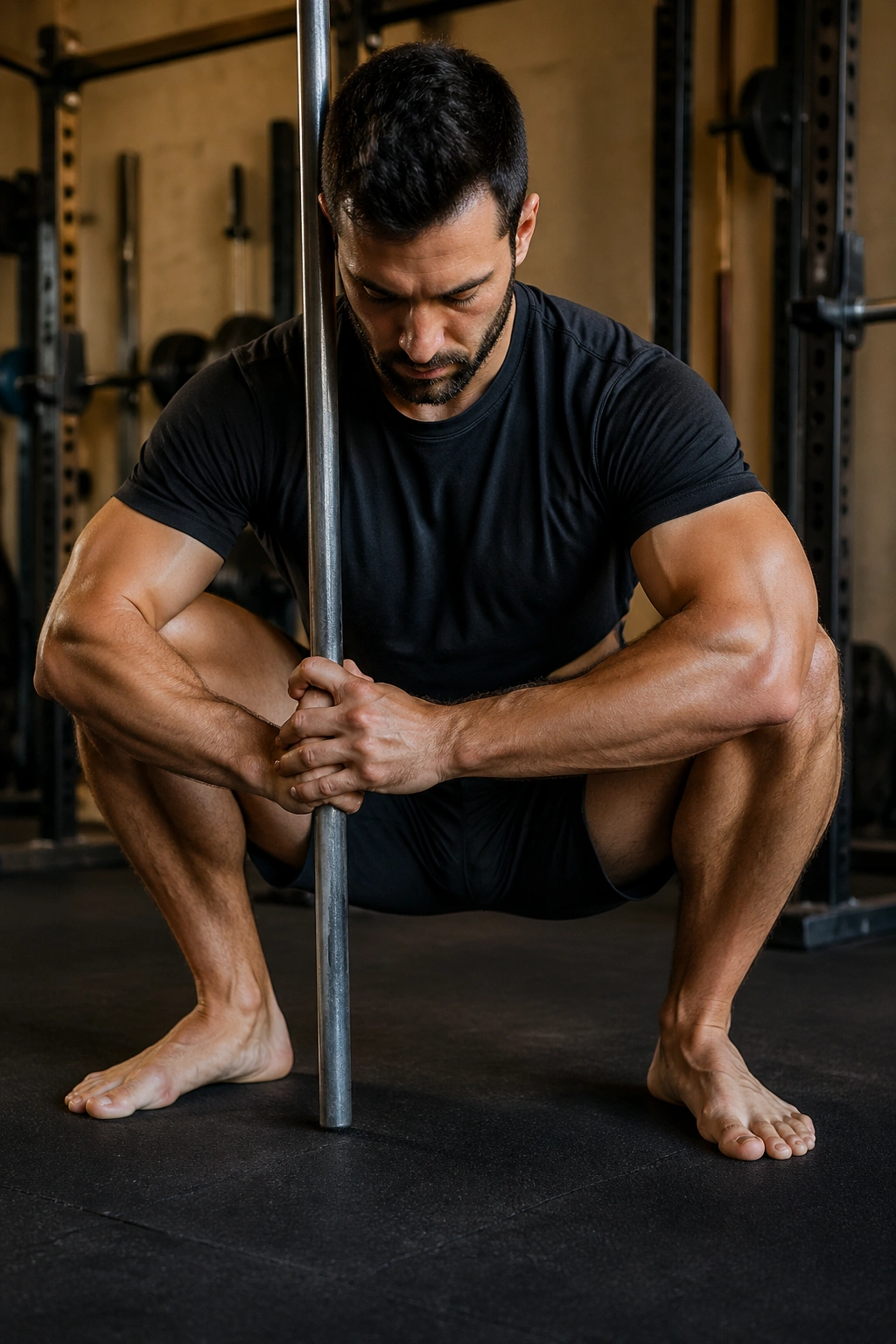
You drop into a deep squat between warm-up sets and your heels pop up immediately. That’s the clue.
A deep squat pry hold lets you hang out in the bottom position long enough to improve ankle dorsiflexion, adductor length, and confidence in the hole. Hold onto a post, a rack upright, or a light plate out in front of you if balance is shaky. Once you’re down there, use your elbows to gently press the knees apart and shift side to side a few inches.
This is not a max stretch contest. The point is to teach your body that the bottom position is safe and normal. If the heels lift hard or your lower back rounds like crazy, use a small heel lift or hold onto a support. Better mechanics, less drama.
A few cues that matter
- Keep the whole foot planted.
- Breathe into the belly, not the chest.
- Rock a little side to side.
- Stay in the position for 20 to 40 seconds.
I like this one before squat days and even before cleans, because the bottom position matters there too. The surprising part is how much it can settle the ankles while also giving the hips a break. It looks simple. It is simple. And it works because it teaches the exact position you need, not some abstract substitute.
10. Sphinx Pose to Cobra Waves
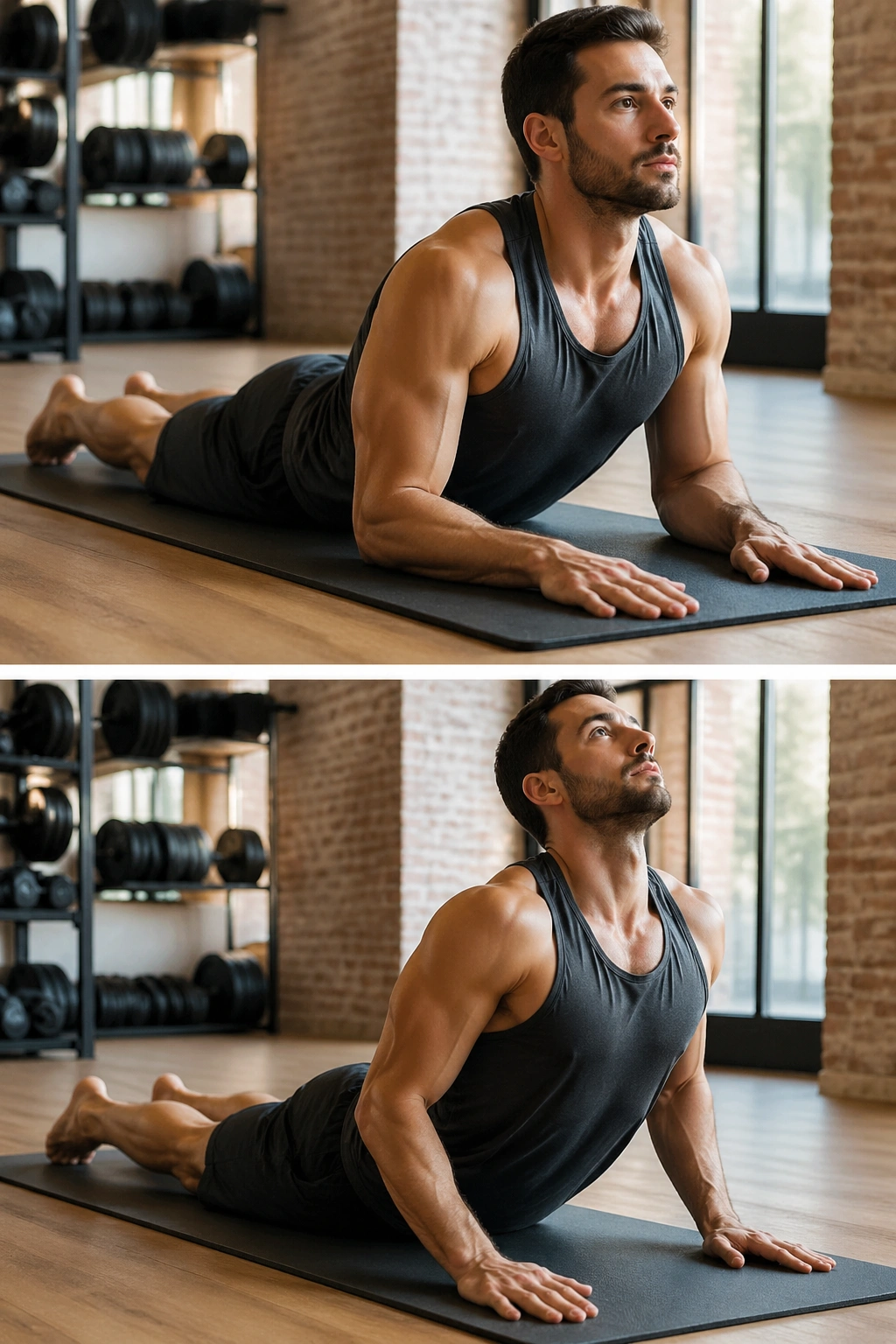
Back extensions belong in a lifter’s warm-up.
Sphinx and cobra waves are one of the cleaner ways to wake up spinal extension without turning the lower back into a crampy mess. Start in sphinx with your forearms down and chest gently lifted. Then press into cobra for a slightly higher extension, and drop back down again. That up-and-down pattern is the useful part.
For lifters, this helps more than people expect. Deadlifts need a strong neutral brace, yes, but they also need a spine that can move into extension when asked, then hold steady there. Front rack positions and overhead work benefit too, because a stiff ribcage tends to shove the whole lift out of line.
How it helps your brace
The trick is to keep the glutes lightly on and avoid yanking the neck back. The movement should come from the upper back opening, not a hard low-back crunch. If you feel a pinch in the lumbar spine, lower the range and slow down.
- Move between sphinx and cobra for 5 to 6 waves.
- Pause for a breath at the top.
- Keep the shoulders away from the ears.
- Stop before the low back gets grippy or cramped.
This is a nice bridge between mobility and activation. You are not trying to become extra flexible. You’re trying to remind the torso how to extend, stack, and then hold. That’s a useful warm-up skill.
11. Standing Hinge Hamstring Sweep
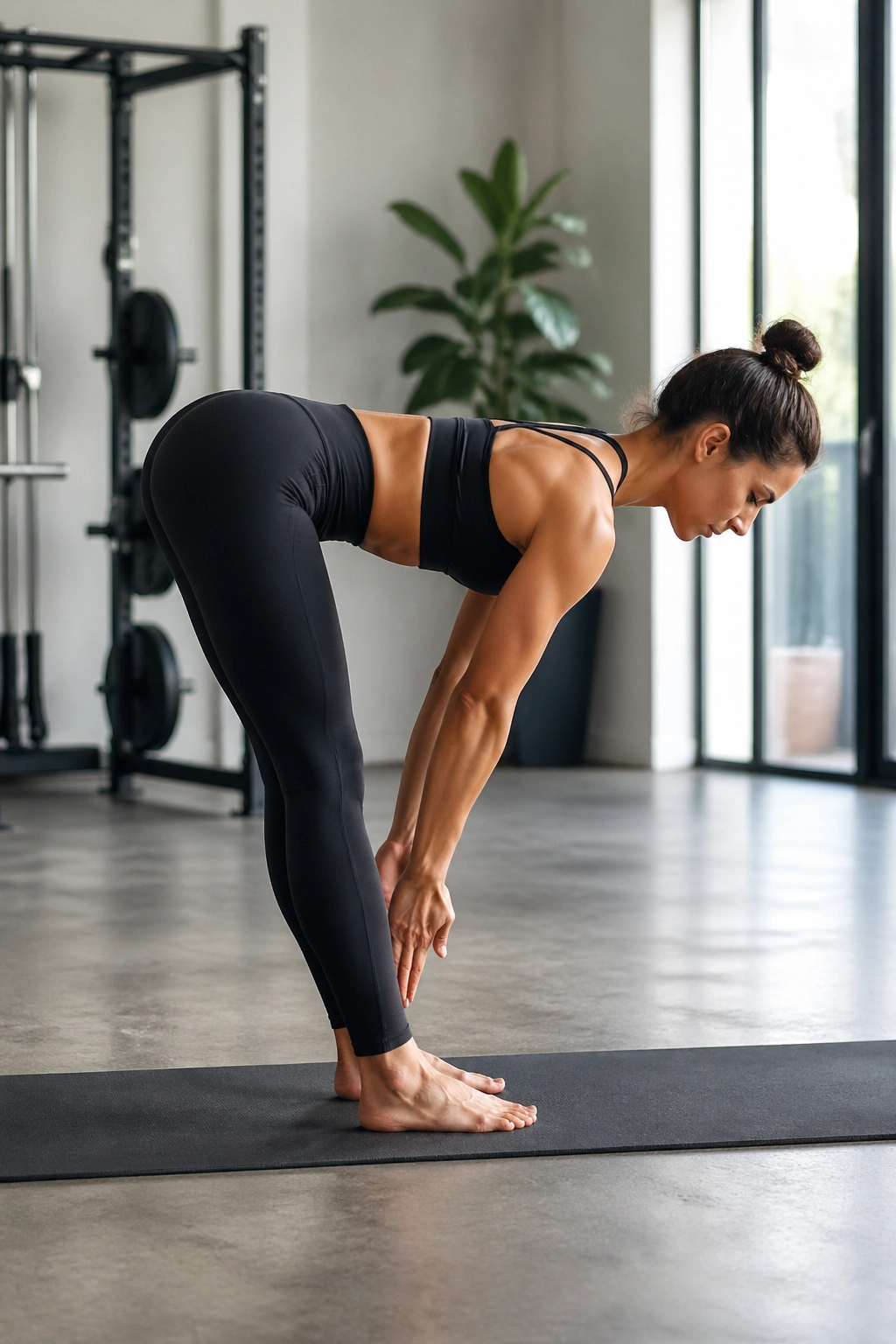
A lazy toe-touch does almost nothing.
If you want hamstring work that actually helps your lifting, hinge at the hips with a flat back and a soft bend in the knees. Reach the hips backward, keep the chest long, and let the hands sweep down the legs only as far as you can maintain position. Then come back up by driving through the feet and squeezing the glutes.
That pattern matters because it resembles the start of a deadlift more than a folded-over stretch does. You’re training length under control, not hanging on passive tissues. The hamstrings get a stretch, the glutes stay in the picture, and your back learns to keep its shape while the hips move.
One-sentence truth: hamstrings like load, not jerky stretching.
A few slow reps are enough. I usually like 5 to 8 hinges, with a pause at the bottom where the hamstrings feel taut but not angry. If the lower back rounds early, shorten the range and think about sending the hips farther behind you instead of chasing the floor.
This is one of the better pre-lift options before deadlifts, Romanian deadlifts, good mornings, and any hinge-heavy day. It also works well after a long day of sitting, which is when the back of the legs tends to feel sneaky-tight.
12. Puppy Pose with Bench Lat Stretch
What stretch should close the warm-up when shoulders are the limiting factor?
Puppy pose, especially with the hands on a bench or box, is one of the best answers. It opens the lats, the triceps, and the front of the shoulders while giving the thoracic spine a little room to extend. For lifters, that matters on overhead press days, pull-up days, and any session where the lats keep stealing range from the arms.
The bench version is often friendlier than the floor version. If your knees are annoyed by kneeling on the floor, or if your shoulders like a slightly higher angle, put your hands on a bench, sink your chest toward the floor, and keep the ribs from flaring hard. That last bit is key. A rib flare is not extra mobility. It’s just a bad strategy.
Hold this one for 3 to 5 calm breaths, then come out slowly. You should feel length through the sides of the torso and the back of the shoulders, not a pinchy tug in the front of the joint. If the front of the shoulder complains, bring the elbows slightly wider and reduce how far you reach.
This is a strong last stop before pressing, pulling, or overhead work because it leaves you open without making you feel flattened. And that’s the line to keep in mind with all of these pre workout yoga stretches: warm, awake, and ready to move under load. Not floppy. Never floppy.
