



A sore knee doesn’t mean you have to sit still.
Running is often the first thing people cut when a knee gets cranky, and that makes sense. What matters more is not quitting movement; it’s choosing workouts with no running for sore knees that keep impact low, keep the joint warm, and don’t force a painful bend every few seconds.
If the knee is swollen, unstable, locking, or sharp pain shows up during normal walking, that’s a different problem. Get it checked.
For the rest of us, there are plenty of ways to train without pounding the joint into the floor. I usually think in three buckets: supported cardio, water work, and strength or mobility sessions that build the muscles around the knee without irritating the joint itself. Keep the effort at a level where you could still speak in short sentences, and treat any pain above a mild ache as a stop sign.
No heroics.
1. Recumbent Bike Intervals
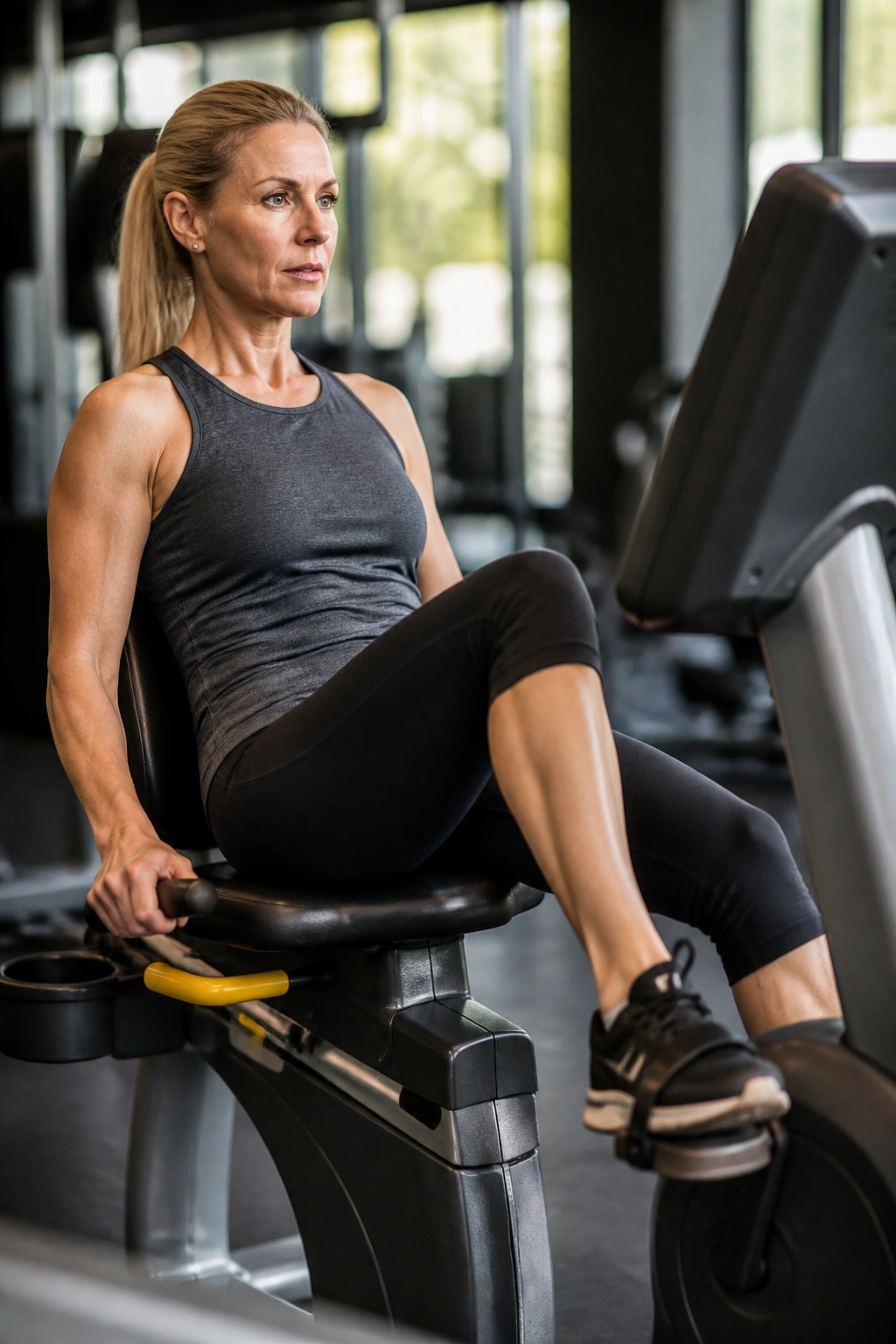
A recumbent bike is probably the easiest starting point when your knee feels touchy. The reclined seat spreads your weight out, and your feet stay out in front of you instead of underneath your hips, which usually feels calmer on a sore joint.
Why It Feels Easier on Sore Knees
The big win here is less load, less jarring, less drama. You still get a cardio session, but your body isn’t absorbing impact with every step the way it does in a run or a jump-heavy class.
Seat setup matters more than people think. If the seat is too close, the knee gets shoved into a tight bend; too far away, and you start reaching at the bottom of each pedal stroke. That awkward reach is where a lot of cranky knees start complaining.
- Set the seat so your knee stays slightly bent at the bottom of the pedal stroke.
- Use a light resistance first, then add a notch only if the motion stays smooth.
- Aim for a pedal speed that feels round, not stompy.
- Keep your hips still; rocking is usually a sign the seat is off.
Best use: a 5-minute easy warm-up, then 6 rounds of 1 minute moderate effort and 2 minutes easy spinning.
If you hear yourself mashing the pedals, back off. The point is a smooth leg turn, not a fight with the machine.
2. Upright Stationary Bike Endurance Ride
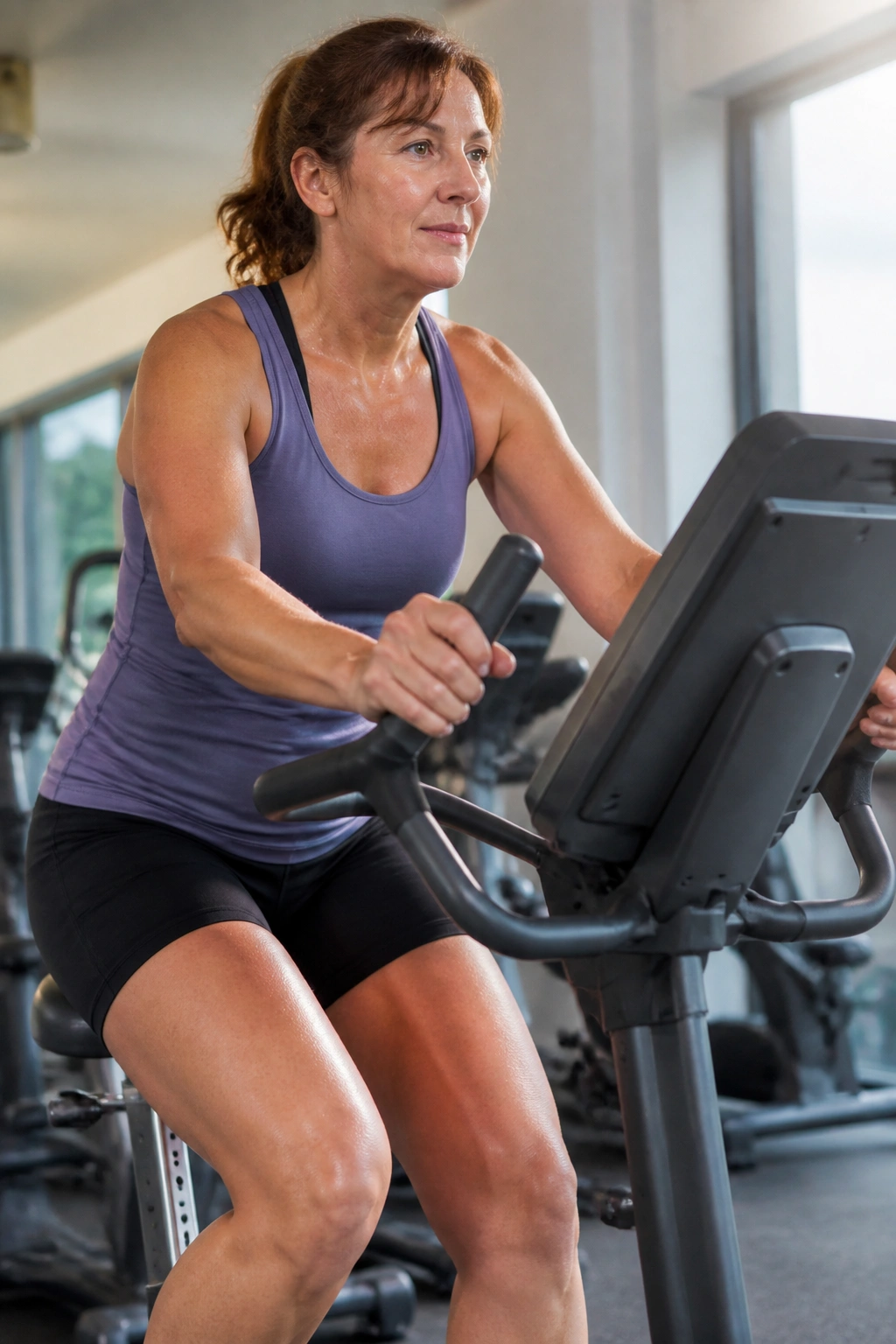
Do you want a bit more of a workout than the recumbent bike gives you? An upright stationary bike is the next logical step. It still keeps you off your feet, but it asks a little more from your core and upper body.
The trick is seat height. Your knee should stay softly bent at the bottom of the pedal stroke, not jammed straight and not folded up like a lawn chair. If the handlebars are too low, you’ll slump forward and start loading your back and shoulders for no good reason.
I like this choice for people who want a longer, steady ride instead of intervals. Twenty to 40 minutes at a pace where you can breathe through your nose for part of it is a solid target. Keep the resistance moderate, not heavy. Heavy gears are where knees start sounding like they’ve had enough.
Skip the standing climbs. Skip the giant gear changes. And if your knee starts to feel hot or pinchy on the front of the joint, shorten the ride before it turns into an argument.
3. Pool Walking in Chest-Deep Water
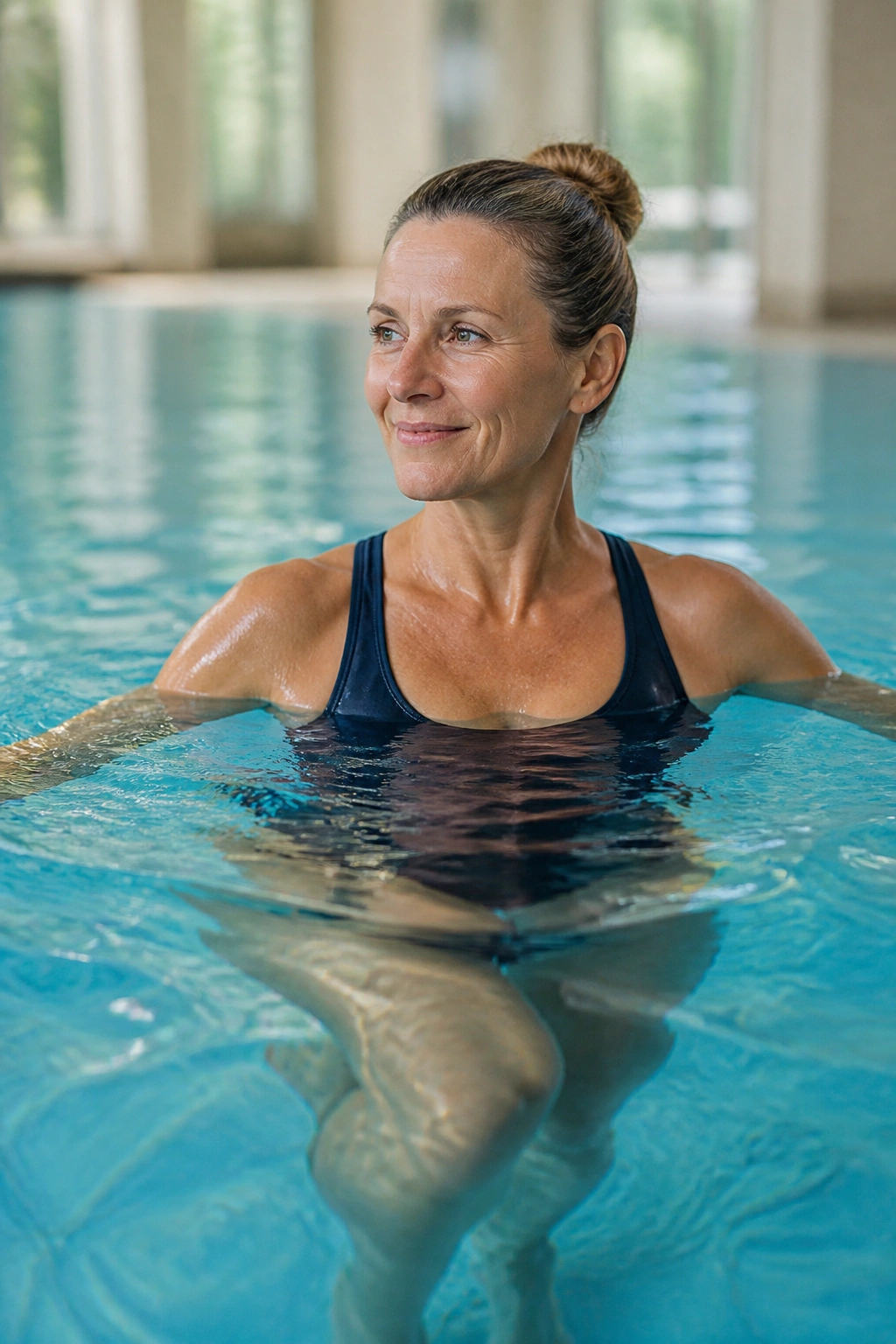
Chest-deep water changes everything. The floor still gives you something to push against, but your body weight gets cut down so much that your knees usually stop feeling every little step.
How to Make It Work
Start with simple forward walking for 2 to 3 minutes. Then add backward walking for another minute or two, because that tiny change wakes up your quads in a way that often feels kinder than land work.
From there, side steps are worth adding. They hit the hips, and hips matter a lot when knees are angry. A session can be as simple as 4 rounds of 2 minutes forward, 1 minute backward, and 1 minute side stepping. That doesn’t sound fancy. It works.
- Stay in water deep enough that you feel light, not bouncy.
- Keep your steps short and steady.
- Use your arms a bit more if you want the effort to rise.
- Stop if the pool floor starts to feel like a hard slap instead of gentle support.
One useful rule: if you can feel your foot slamming down, the water is probably too shallow for your knee’s taste.
Pool walking is boring in the best way. Boring means repeatable.
4. Swim Laps with Easy Repeats
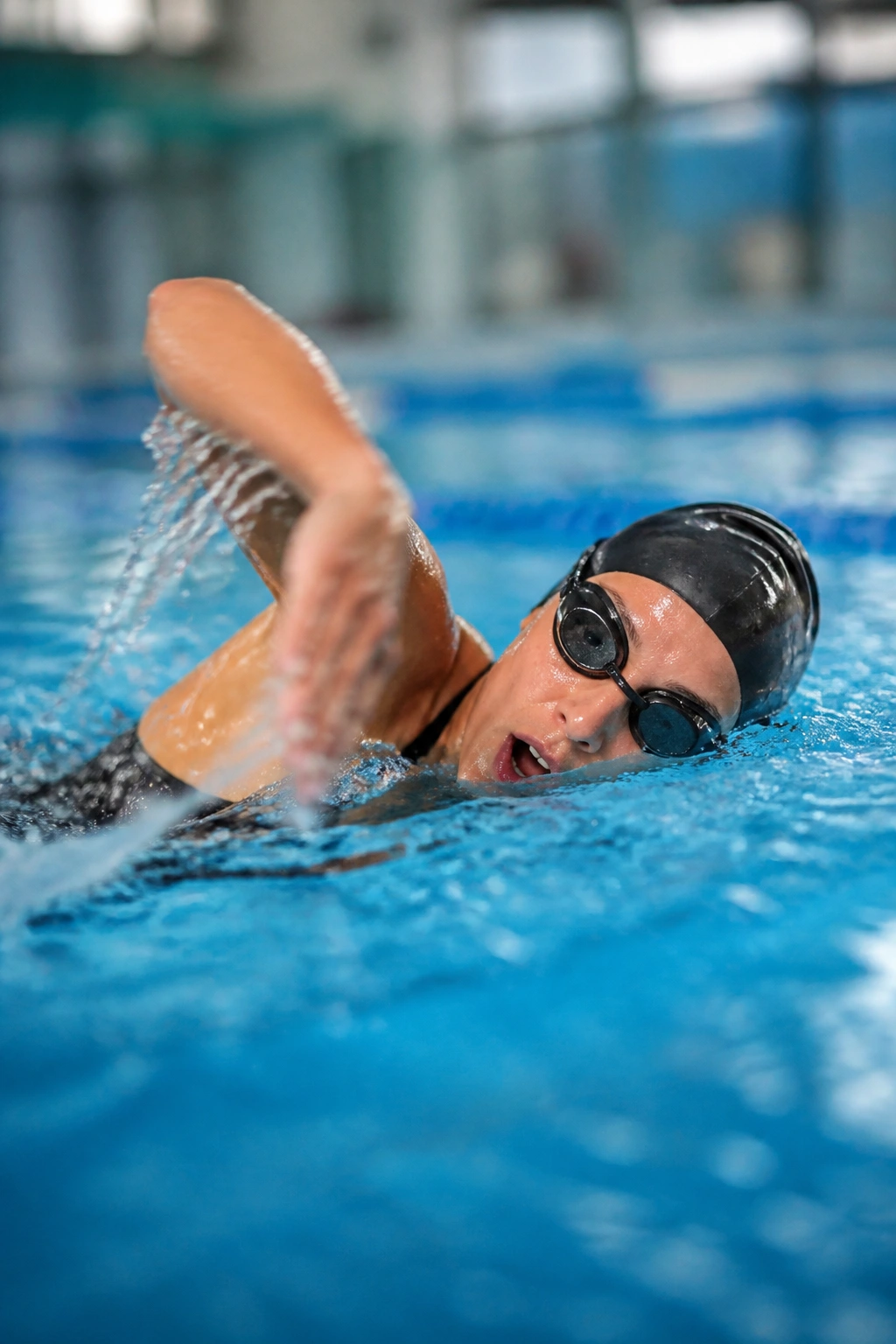
Swimming sounds obvious, but the stroke matters more than the pool itself. A calm freestyle session can be a gift to sore knees, while the wrong kick can make the front of the knee grumble for no good reason.
Best Stroke Choices
Freestyle and backstroke are usually the safest bets because they let you keep the legs moving in a narrow, controlled way. Breaststroke is the one I’d watch closely, since the wide whip kick can bother some knees, especially if the joint already feels irritated.
A pull buoy can be useful here. Slide it between your thighs and it lifts the legs a bit, which lets you turn the session into a near upper-body workout when kicking is the thing that hurts.
- Try 8 to 12 lengths with 20 to 30 seconds of rest.
- Keep the kick small and relaxed.
- Use a pull buoy if the knee dislikes push-off or kicking.
- Leave the fins at home unless you already know your knees tolerate them.
If the wall turn hurts, shorten the session and swim fewer lengths with more rest. Sharp pain on the push-off is the pool telling you to scale back.
This is one of those workouts where “easy” is not a flaw. It’s the point.
5. Aqua Aerobics with Water Dumbbells
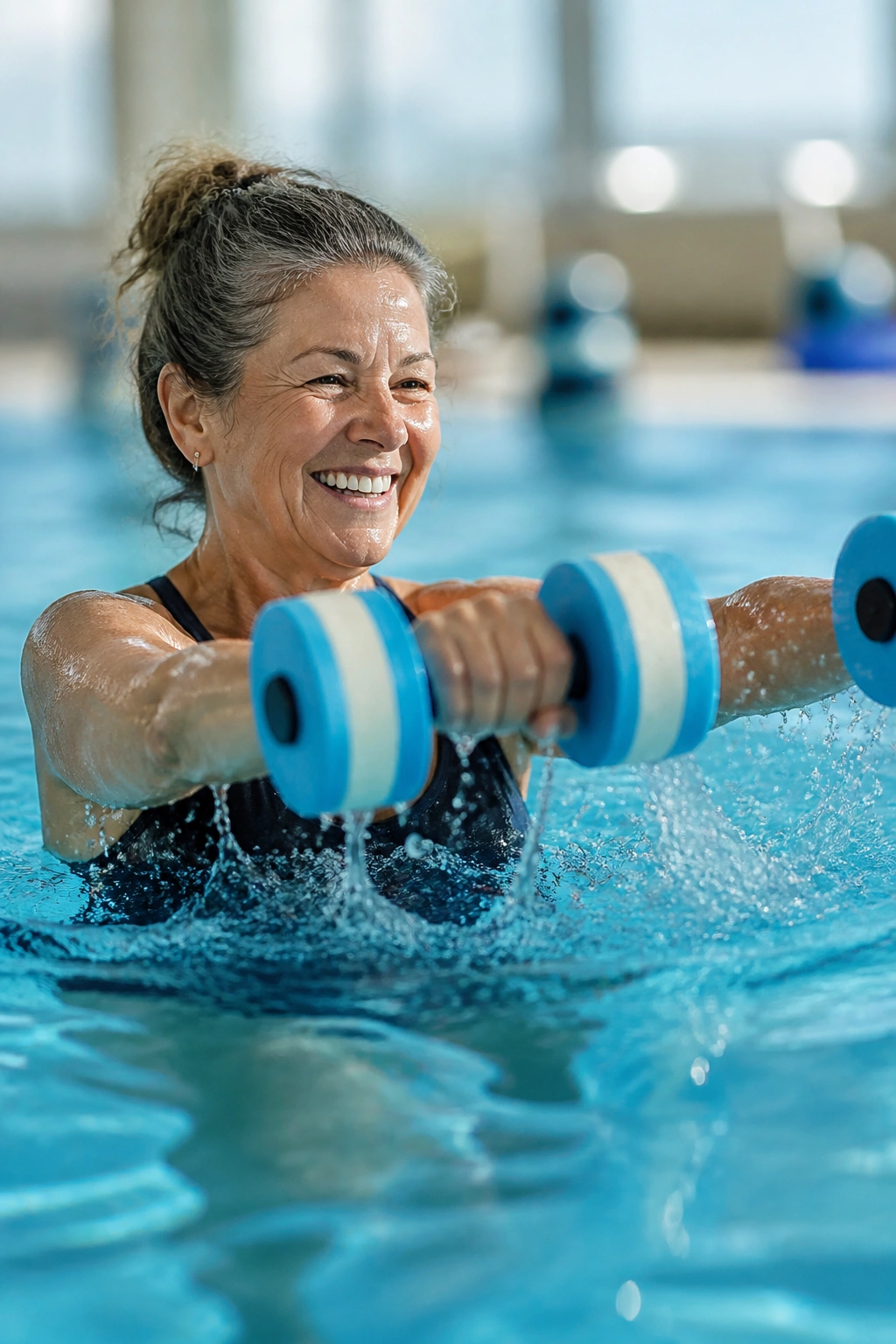
Aqua aerobics looks gentle from the pool deck, then you get in and discover your legs are working against a thick, wet wall of resistance. That’s the charm of it. The water slows everything down and takes the sting out of land impact.
You can keep the moves small and still get a solid session. Marching in place, side steps, arm presses with water dumbbells, and controlled knee lifts all count. If the front of your knee is grumpy, keep the knee lifts low and stay away from big, fast leg swings.
A good class or solo session usually runs 25 to 45 minutes. That gives you enough time to warm up, push the pace a little, and cool back down without feeling like you got dragged through a boot camp. Use the shallow end if you want more foot contact, or chest-deep water if you want more support.
The best part is the landing disappears. No pounding. No hard stop. Just resistance.
6. Elliptical Trainer Sessions
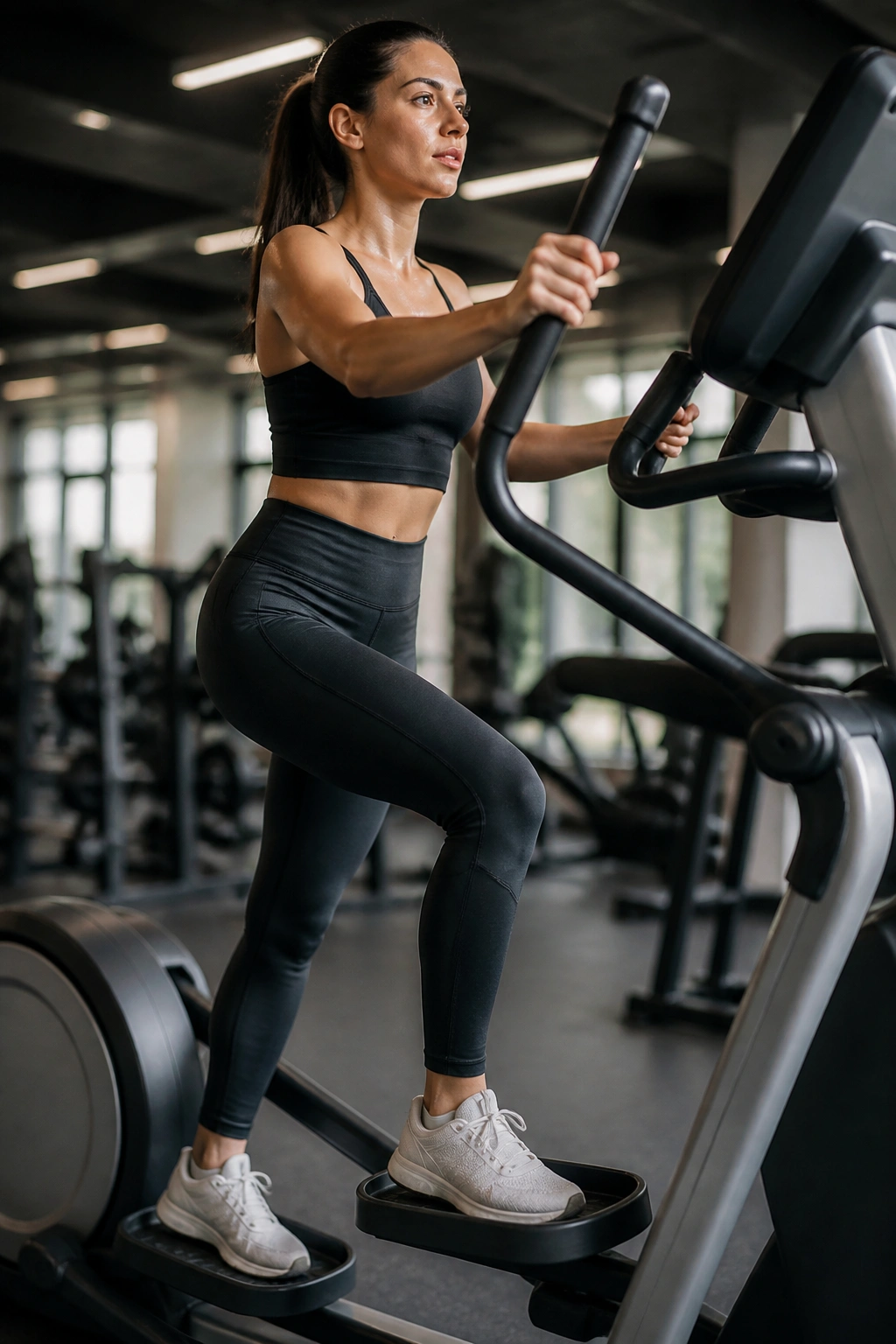
The elliptical helps many sore knees, but only if you stop pretending it’s a stair machine. Smooth glide, low impact, steady rhythm. That’s the whole trick.
The foot pedals keep your feet from slamming into the floor, which is why this machine often sits high on the list for knee-friendly cardio. Still, the machine can be set up badly. Too much incline, too much resistance, or a long aggressive stride can turn a decent workout into an annoying one.
What to Watch For
Keep your feet centered on the pedals. If you drift forward and start tiptoeing through the movement, your lower legs do more work than they should. Hold the handles lightly; death-gripping them usually means you’ve cranked the effort too high.
- Start with 5 minutes easy.
- Add 10 minutes at a moderate pace.
- Finish with 5 minutes easy again.
- Keep resistance low enough that the motion stays smooth and quiet.
If your knee pinches in the front, shorten the stride and lower the incline first. That solves more problems than people expect. And if the machine feels clunky, it may not be the right one for you. Machines vary.
7. Rowing Machine with a Short Stroke
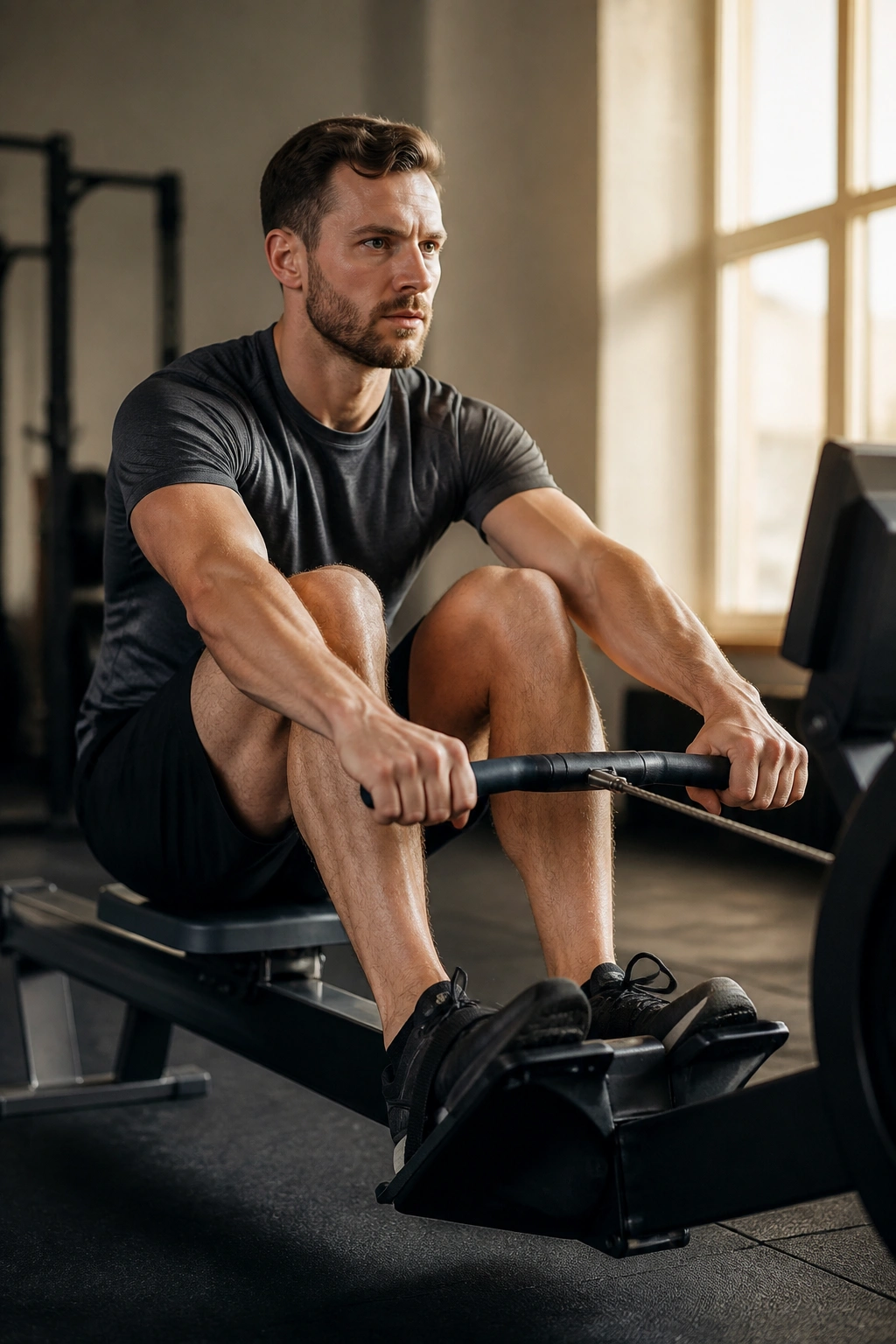
Rowing can feel great or awful, depending on how far you bend the knees. That’s why I’m careful with it for sore knees. Done well, it gives you cardio, back work, and leg drive without pounding. Done badly, it asks for a deep knee bend you may not want today.
The Knee-Friendly Setup
Use a lighter damper setting than you think you need. On most machines, a middle-lower setting is friendlier than a heavy one because it keeps the drive smoother and less jerky. Stay tall, slide in under control, and don’t collapse into a deep catch.
A short stroke usually helps. You do not need to jam your knees all the way up to your chest. Stop the slide before the bend gets cramped, then drive back with a smooth push and a gentle swing through the hips.
- Keep the strap snug over the mid-foot.
- Stay relaxed in the shoulders.
- Stop the session if the catch point hurts.
- Use short intervals, such as 30 seconds on and 60 seconds off.
If the front of the knee gripes every time you come forward on the slide, skip rowing for the day. That’s not failure. That’s good judgment.
8. Upper-Body Ergometer Sprints
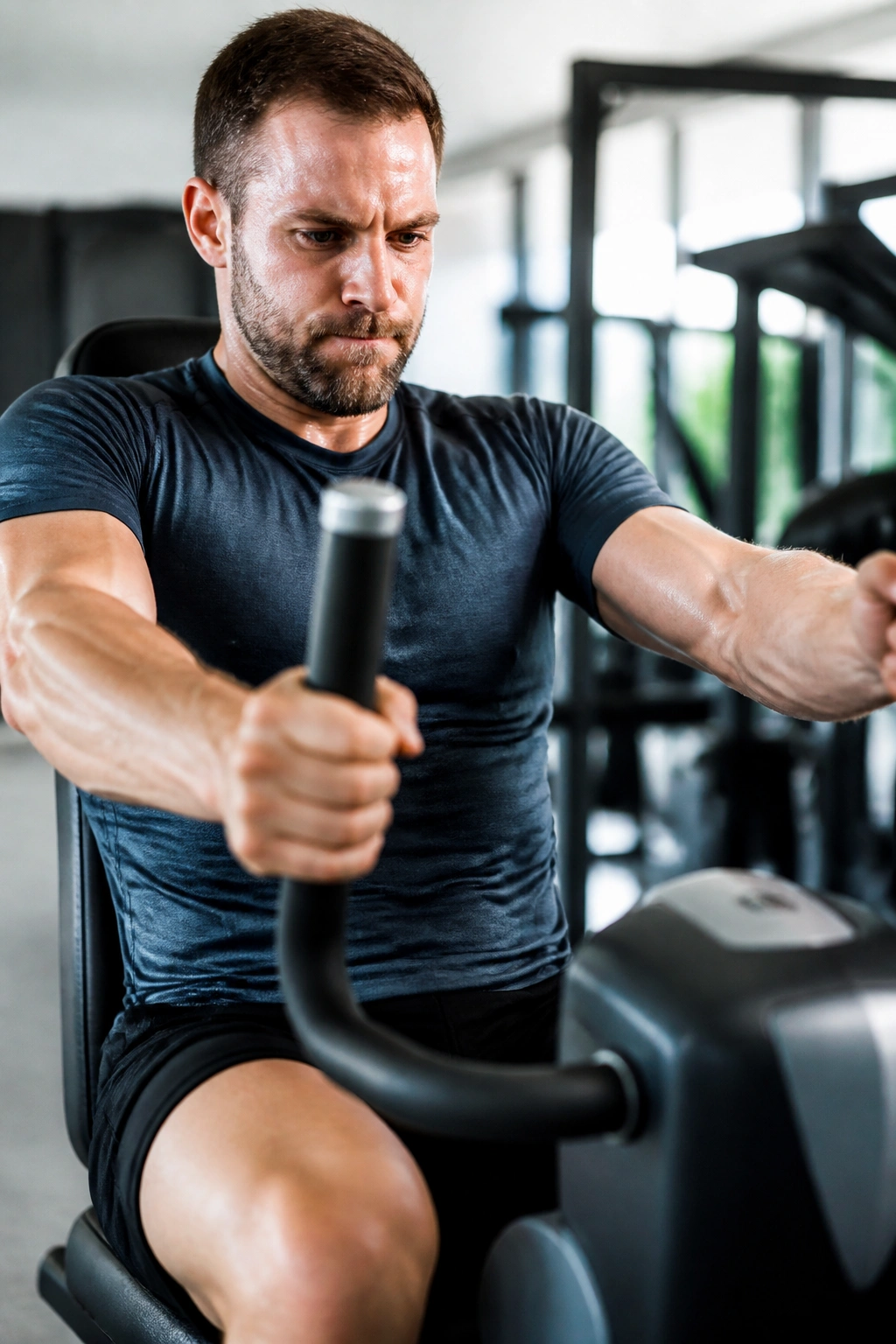
An arm bike is one of the cleanest cardio choices when your lower body needs a break. You sit down, grip the handles, and crank with your arms and upper back while your knees get to mind their own business.
This is a nice option when a knee flare-up is too fresh for bike work or rowing. It also works well if you want intervals without the leg loading that comes with standing circuits. Your shoulders and lats will light up long before your knees do.
Your legs can take the day off.
A simple plan looks like this: 5 minutes easy, then 8 rounds of 20 seconds hard and 40 seconds easy, then a 3-minute cool-down. Keep your elbows soft and your chest lifted. If you shrug the whole time, the neck will complain before the workout gets useful.
This one is underrated. Not glamorous. Useful.
9. Seated Shadow Boxing Rounds
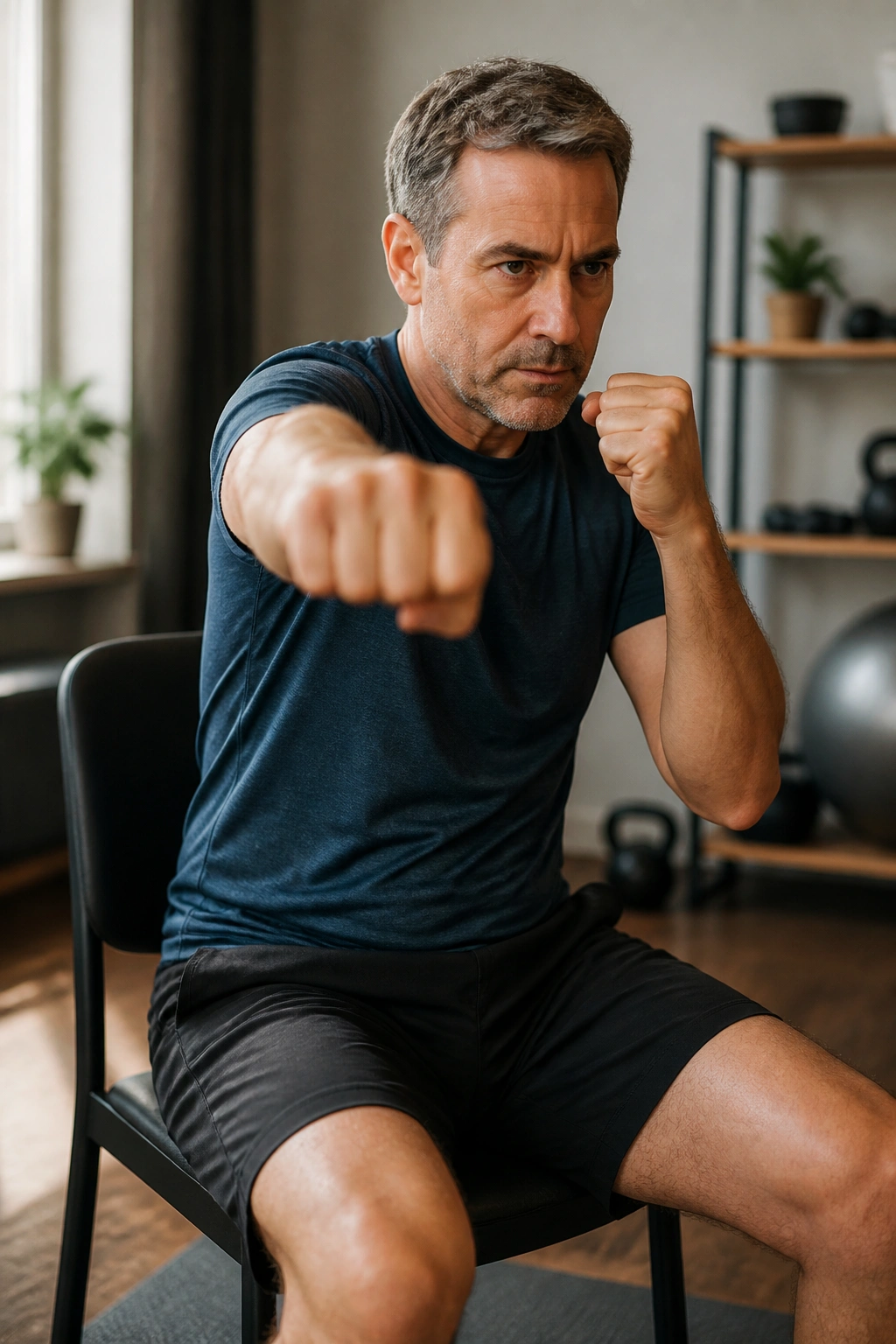
A sturdy chair, a timer, and a pair of wrapped hands are enough. Seated shadow boxing sounds mild until you do three rounds with clean punches and no sloppy movement. Then it feels like work.
The best part is that your feet can stay planted. That means no jumping, no pivoting, and no twisty knee turns just to keep the pace up. You can still train the heart, shoulders, arms, and trunk by staying sharp with the punches.
A Simple Round Structure
Try 2 minutes of steady punching, 30 to 60 seconds of rest, and repeat for 6 to 8 rounds. Use jabs, crosses, short hooks, and quick flurries. Keep the motion from the torso and shoulders, not from swinging your knees around under the chair.
- Sit tall with both feet flat.
- Punch at shoulder height or slightly lower.
- Rotate the torso gently, not violently.
- Rest if your low back starts to arch.
The rhythm matters here. If you get lazy and just wave your hands, the workout disappears. Keep it crisp, and it’s surprisingly good.
10. Resistance Band Strength Circuit
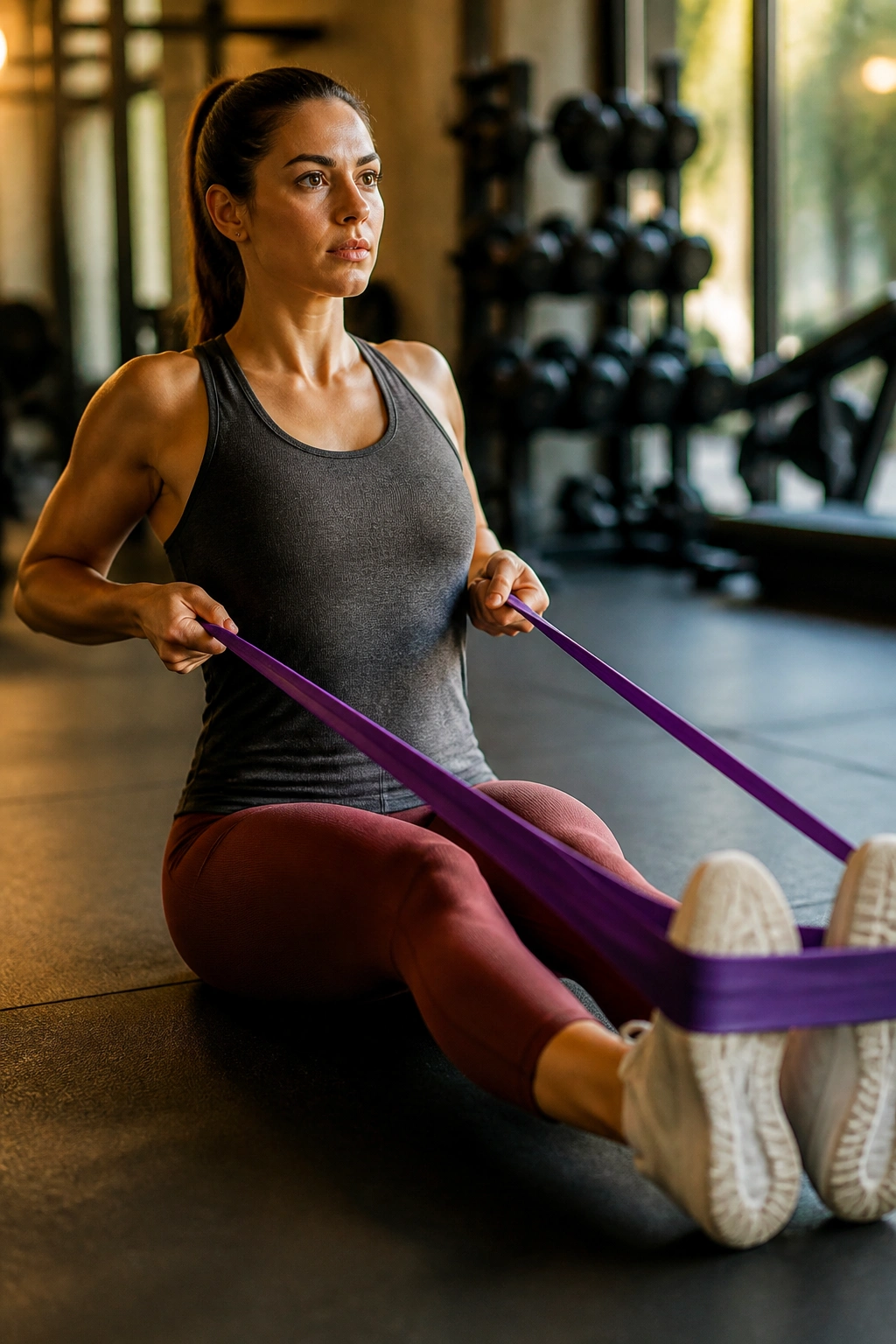
Can strength work count as a workout? Absolutely. In fact, if your knees are sore, a smart band circuit can be one of the best things you do because it trains the muscles that help support the joint without asking for impact.
Moves That Usually Behave
Stick with exercises that keep the knee bend shallow. Seated rows, band pull-aparts, chest presses, and standing hip abductions are all good candidates. You can also do a light banded march if it feels calm, but skip anything that makes the knee dive into a painful angle.
A clean circuit might look like this: 12 seated rows, 15 pull-aparts, 10 chest presses, and 12 hip abductions per side. Rest 30 to 45 seconds, then repeat for 2 to 4 rounds.
- Keep your stance short and stable.
- Use control on the way back, not just on the pull.
- Stop short of deep squats or lunges if they pinch.
- Choose a band that gives tension by the last 3 reps, not one that yanks you around from rep 1.
This is where a lot of people get impatient. Don’t. Slow, steady band work builds useful strength without stirring up the knee.
11. Glute Bridge and Hip Activation Flow
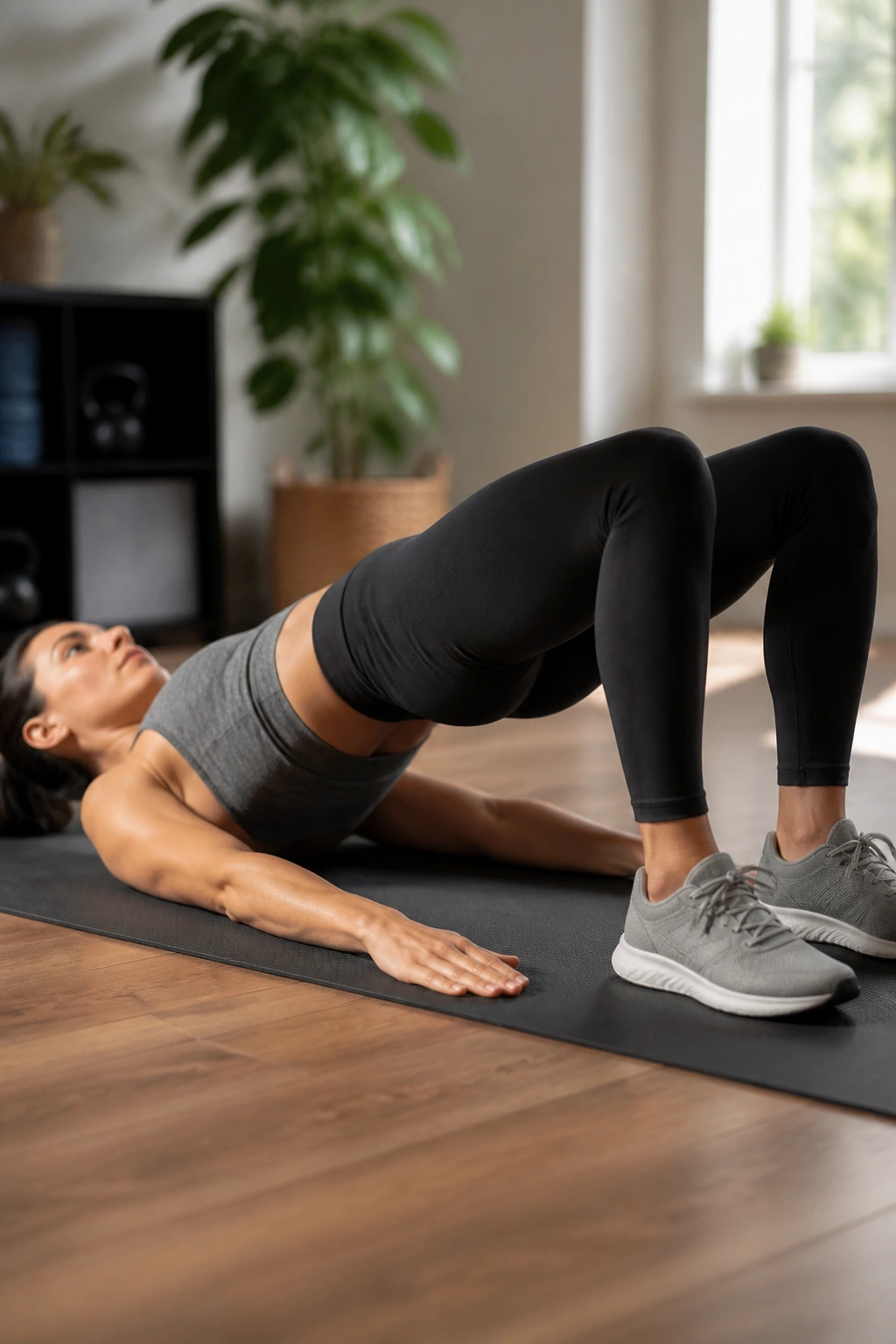
If your hips are weak, your knees often pay for it. That’s the plain version. A glute bridge and hip activation flow targets the muscles that help hold the leg in line so the knee doesn’t end up taking all the stress.
Start on the floor with a basic glute bridge. Press through the heels, lift the hips, and squeeze at the top for 2 seconds before lowering under control. Then move into clamshells, side-lying leg lifts, or a bridge hold with small marches if your knee tolerates it.
You should feel the work in the hips and the back of the thighs, not the kneecap. That’s the useful part. Two rounds of 8 to 12 reps per move is enough for most people to feel a real difference without turning the session into a marathon.
One-sentence check: If the knee hurts more than the glutes, change the angle or stop.
This workout looks quiet. It is not.
12. Mat Pilates for Core Control
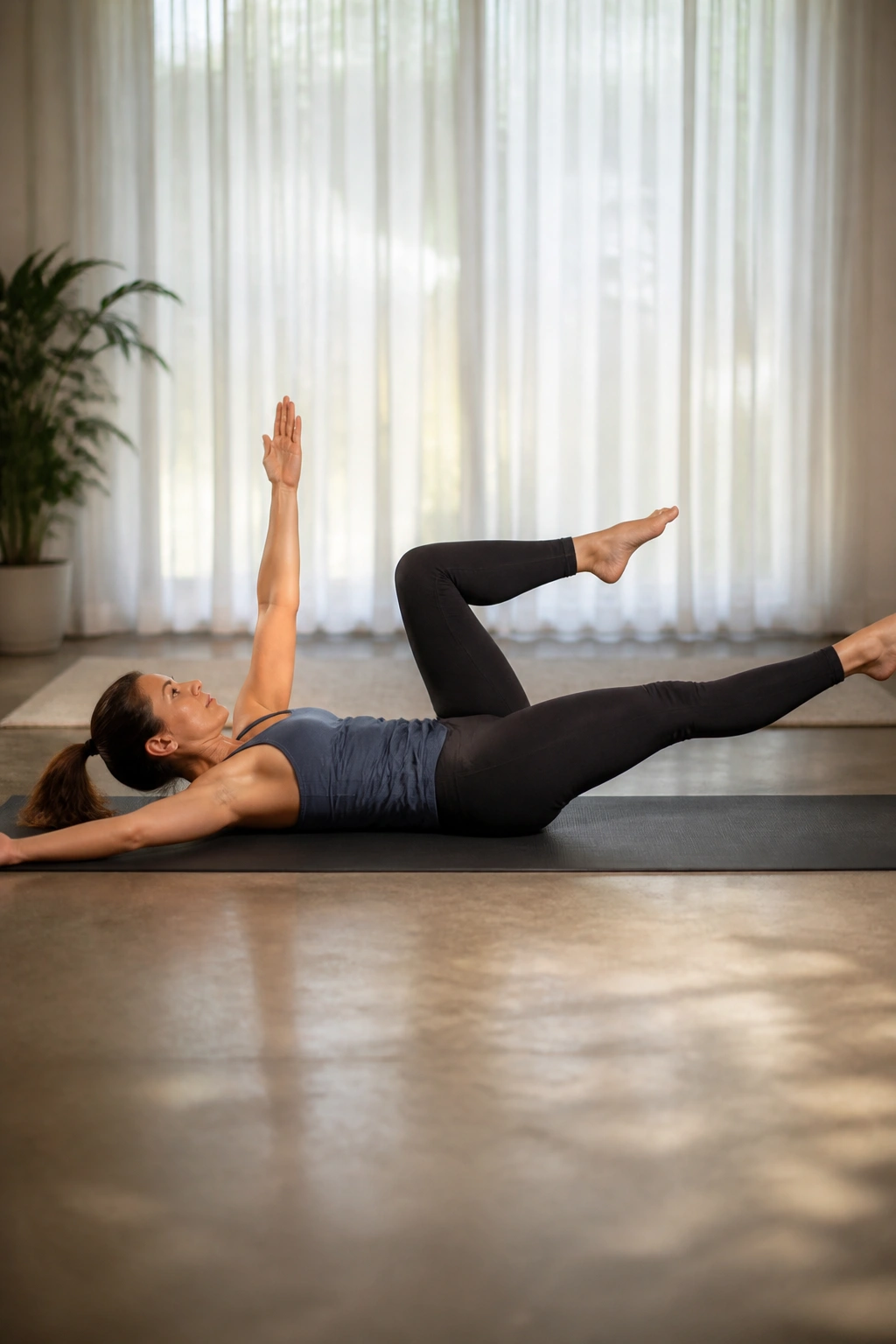
Why does Pilates show up in a knee-friendly list? Because it teaches control before speed. That matters when you’re protecting a sore joint, since sloppy movement usually irritates things faster than hard movement does.
A mat-based session can stay almost entirely floor-focused. Dead bug variations, toe taps, heel slides, side-lying leg series, and slow bridge holds all fit well. They train the trunk and hips, which helps the knee by improving the way you move through daily life.
Good Choices and Bad Ones
Good choices: dead bugs, toe taps, heel slides, side-lying circles, modified bridge holds.
Poor choices for a sore knee day: anything that puts you into a deep kneel, any fast jumping sequence, and plank work that forces an uncomfortable bend in the joint.
Try 20 to 30 minutes at a slow pace, with deliberate breaths and clean form. Pilates should feel precise, not rushed. If your knee starts to ache during a move, shorten the range before you toss the whole session out. Tiny adjustments usually fix more than people expect.
13. Chair Yoga Mobility Flow
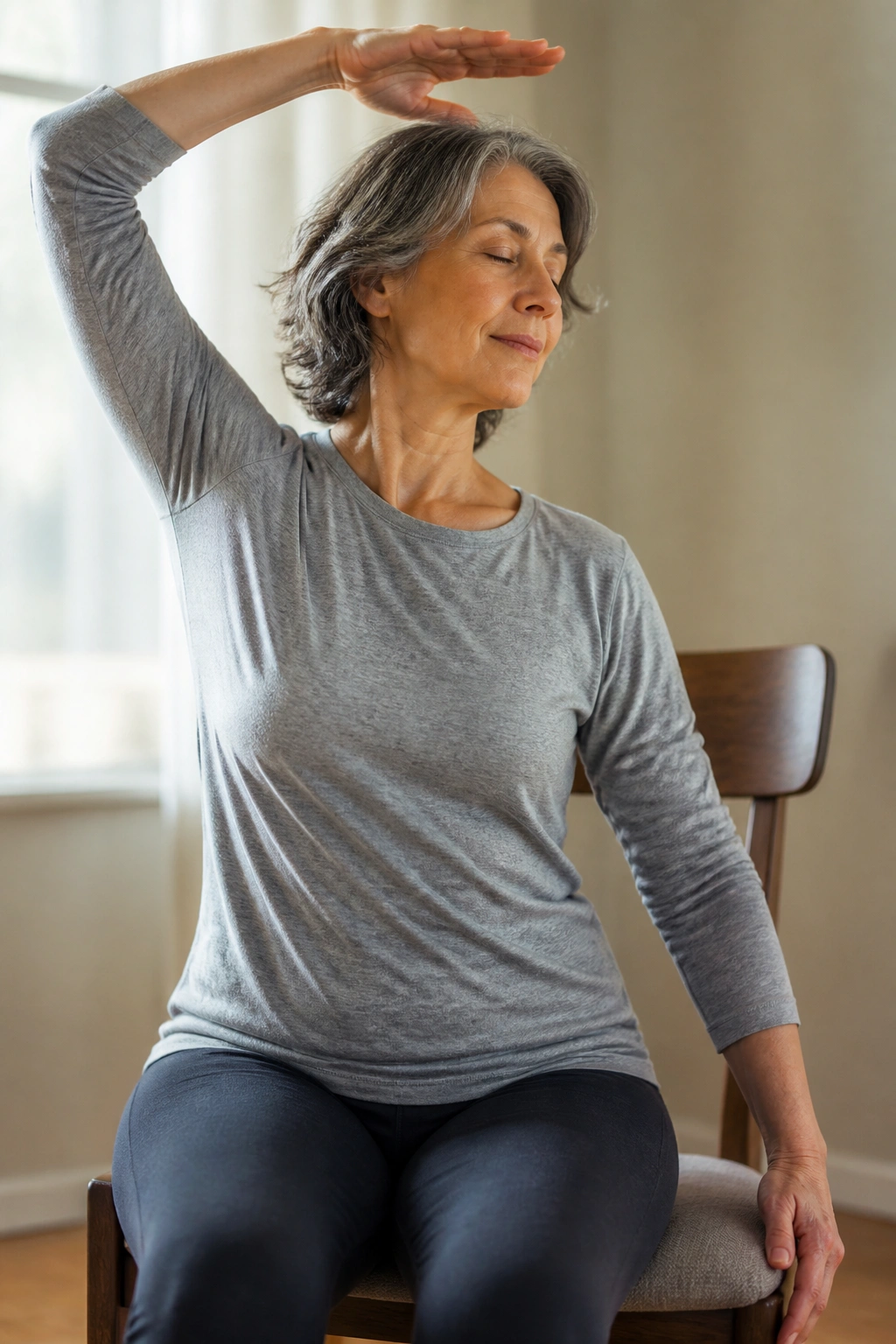
Slow breaths, a firm chair, and a knee that gets to stay out of trouble. That’s the appeal of chair yoga when you’re sore. It gives you a way to move without getting down on the floor or loading the joint with a bunch of extra bending.
A simple flow can include seated cat-cow, ankle circles, gentle seated twists, a figure-4 stretch if your hip likes it, and calf stretches with one leg extended. Hold each stretch for 20 to 30 seconds, or take 5 slow breaths if counting feels annoying.
Do not force the knee.
That part matters more than the fancy pose names. If a seated figure-4 makes the joint feel jammed, skip it and work the ankle, hip, and spine instead. A lot of knee comfort comes from those nearby areas anyway.
Chair yoga is not sweaty in the usual sense, but it can still reset a stiff, unhappy body better than a hard session would.
14. Backward Sled Drags and Short-Step Walks
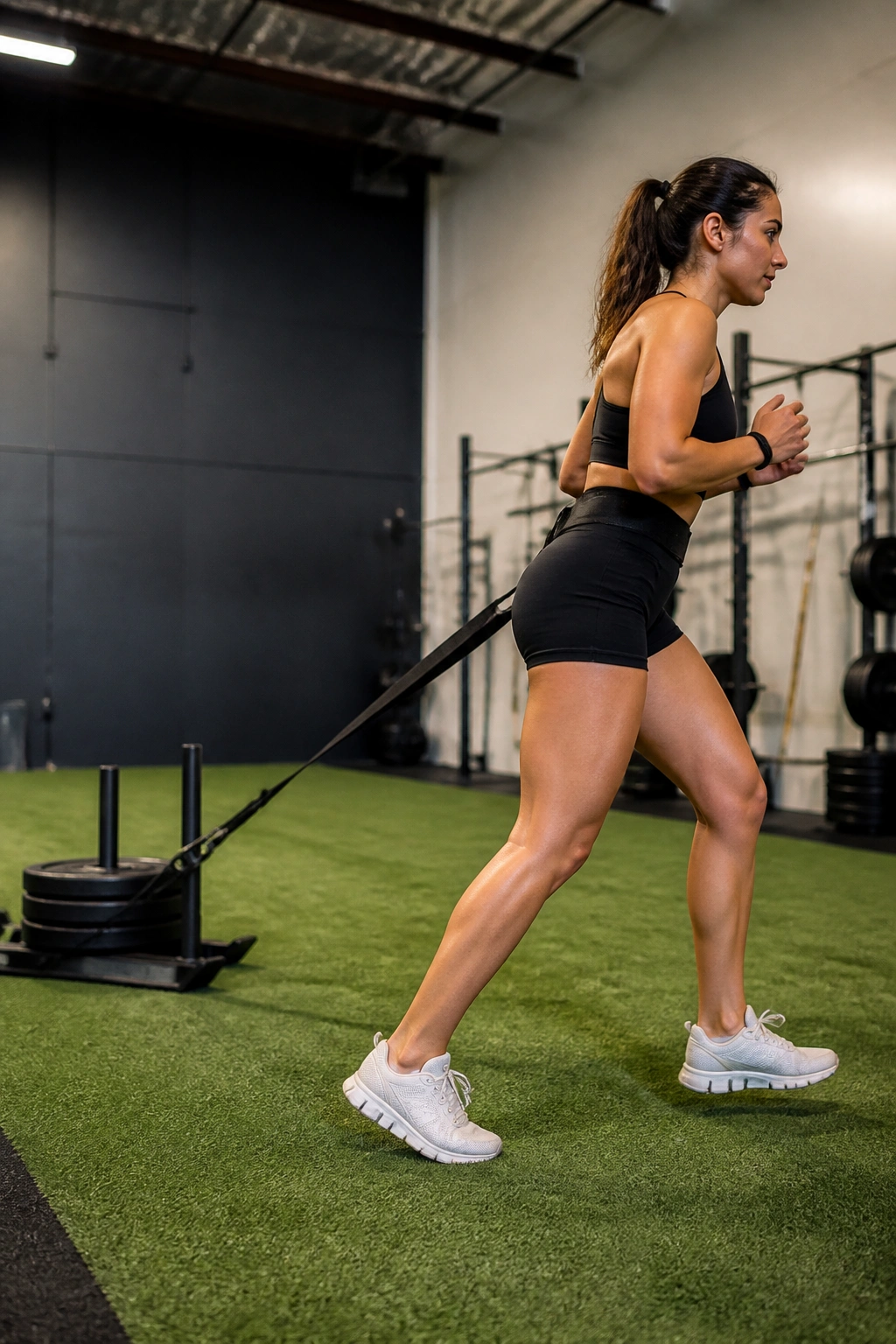
Backward sled drags are a favorite because they load the legs without pounding the joints. Weird on paper. Helpful in practice.
The backward movement shifts the work toward the quads and asks the knee to move through a different angle than walking forward does. For a lot of sore knees, that feels smoother than forward-loaded work. It also gives you a chance to train leg strength without the jolt you get from running or jumping.
A Simple Way to Do It
Use a turf strip, a harness, or sled straps if your gym has them. Start light. Very light. Walk backward with tiny steps for 10 to 20 yards, rest 45 to 60 seconds, and repeat for 6 to 10 trips.
- Keep your torso upright.
- Look where you’re going.
- Use shoes with good grip.
- Clear the floor before you start.
If you do not have a sled, a short backward walk on a clear, flat surface can still be useful. Hold a railing or work near a wall the first time. Balance matters more than ego here.
15. Flat-Ground Walking Intervals
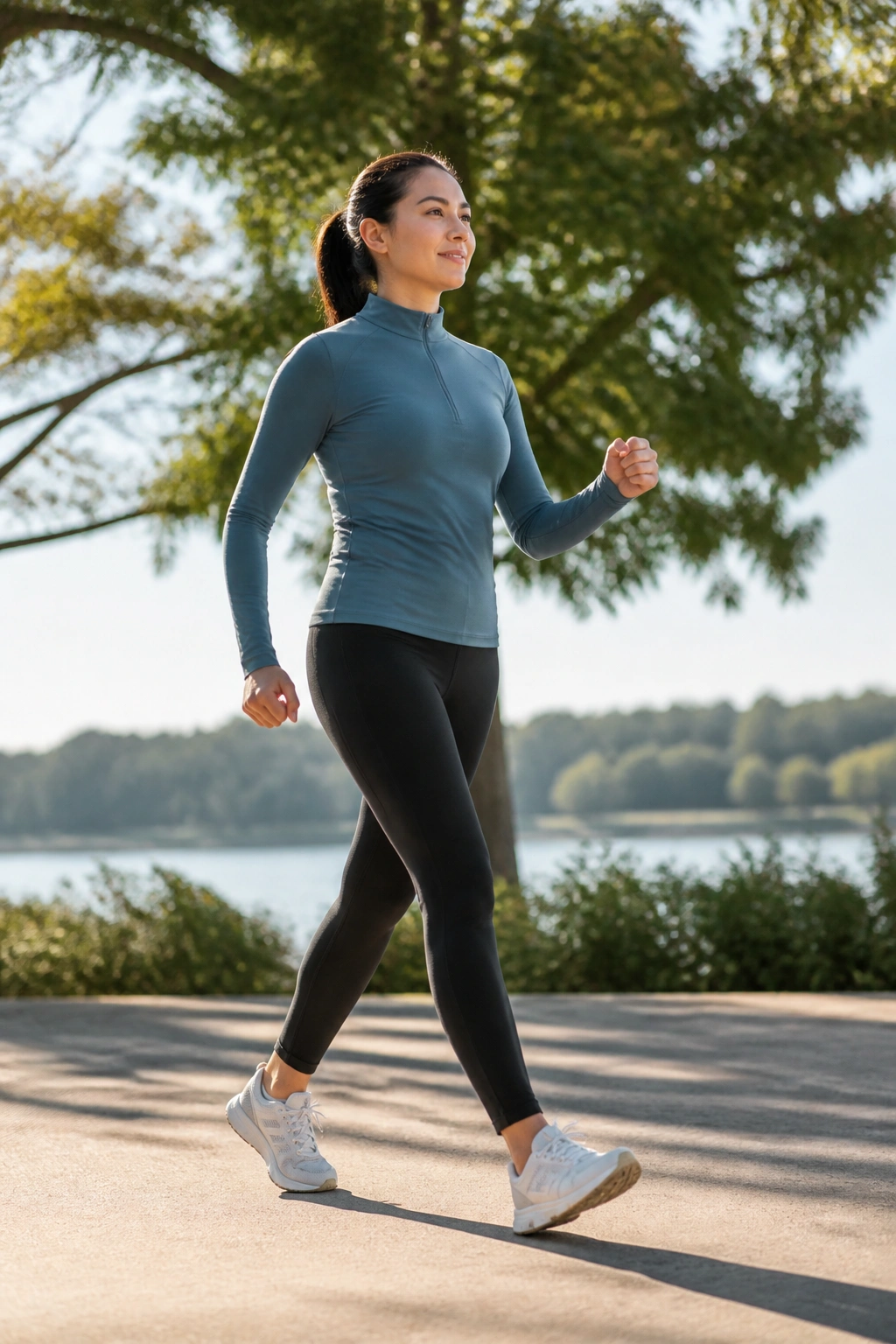
Walking gets dismissed because it’s simple. That’s a mistake.
If your knee can handle regular walking without a spike in pain, a flat-ground interval session can be one of the most practical workouts you own. You still get circulation, leg work, and a mild cardio hit, but you avoid the impact and speed changes that make running hard on sore joints.
A good starting plan is 5 minutes easy, then 1 minute brisk and 2 minutes easy, repeated 5 to 8 times. Keep the route flat. Hills can be fine for some people later on, but they often load the knee harder than expected when you’re already sore. Shorten your stride a little and let your arms swing naturally.
If the knee warms up and settles, that’s a good sign. If the pain climbs with each interval, cut the session short and choose water work or a bike next time. The point is to keep training alive without picking a fight with the joint.
Simple. Not fancy. Useful.
When a knee is sore, the best workout is usually the one that lets you show up again tomorrow. That might be the pool, the bike, the arm ergometer, or a quiet floor session with bands and bridges. The right choice is the one that leaves the knee calmer after you finish than it was when you started.
