



A good strength session shouldn’t leave you guessing. You want work that asks the hips, shoulders, trunk, and grip to pull together, then lets you come back a few days later and do it again.
That’s what steady strength feels like. Not a one-rep brag. More like a body that can squat, push, pull, carry, and brace without folding up the moment the set gets uncomfortable.
I’ve always liked full body exercises that make sloppy form obvious fast. A front-loaded squat tells on a weak brace. A carry exposes a lazy grip. A push-up shows whether your ribs and hips can stay lined up when fatigue creeps in. There’s no hiding for long, which is exactly why these moves work.
The list below leans hard on compound patterns, awkward carries, and a few lifts that punish rushing. Start with clean reps before you chase load. That part matters more than people want to admit.
1. Goblet Squat with a Dumbbell at Chest Height
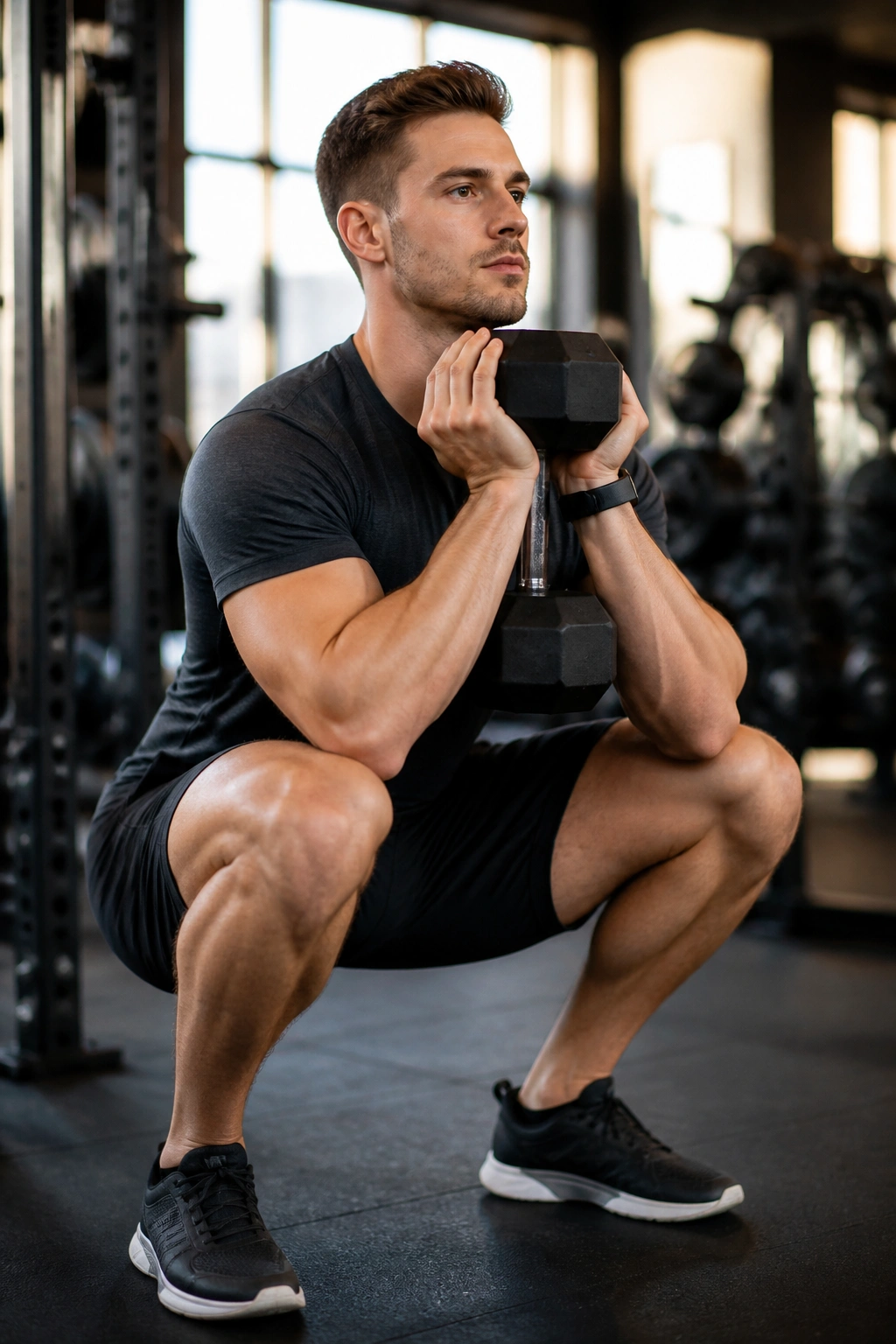
The goblet squat is the squat I keep coming back to when form matters more than ego. Hold a dumbbell or kettlebell close to your chest, and the front load naturally keeps your torso upright while your legs do the real work.
Why the Front Hold Matters
That weight in front acts like a built-in coach. If you lean too far forward, the bell pulls you out of shape. If you stay tall and brace hard through the middle, the whole rep feels smoother and a lot more honest.
A goblet squat is one of the easiest ways to teach full-body tension without chasing huge numbers. Your quads light up, your glutes help drive you out of the bottom, and your upper back has to stay awake the whole time. That’s a nice combination.
- Stand with your feet about shoulder-width apart.
- Hold the bell at chest height, elbows tucked close.
- Sit down between your hips, not forward onto your toes.
- Keep your heels heavy and your chest proud.
- Aim for 6 to 10 controlled reps per set.
If your heels pop up or your lower back rounds, shorten the depth before you add weight. That usually fixes the problem faster than trying to “push through” it.
A small heel wedge can help if ankle mobility is limited. So can a slower descent. Three seconds down, brief pause, then stand up with intent. Clean reps beat deep but messy reps every time.
2. Push-Up with a Straight Line from Head to Heels

A strict push-up is a moving plank that happens to bend your elbows. That’s why it belongs on any list of full body exercises for steady strength.
The chest and triceps get the obvious work, but the rest of the body has to stay braced or the rep falls apart. Glutes stay tight, abs stay engaged, and the shoulder blades move in a controlled way as you lower and press. That is a lot of work for one simple-looking movement.
A lot of people treat push-ups like a chest exercise only. Fair enough, until the hips sag and the head cranes forward. Then it becomes a lower-back and neck problem dressed up as upper-body training.
Use a bench, box, or wall if the floor version gets sloppy. Elevated hands are not cheating. They are a smart way to keep the line from head to heels intact while you build real pressing strength.
For harder sets, slow the lowering phase to 2 or 3 seconds, pause for one count near the floor, then press hard through the base of the palms. That tiny pause removes a lot of bouncing and exposes weak links fast.
3. Romanian Deadlift with a Barbell or Dumbbells
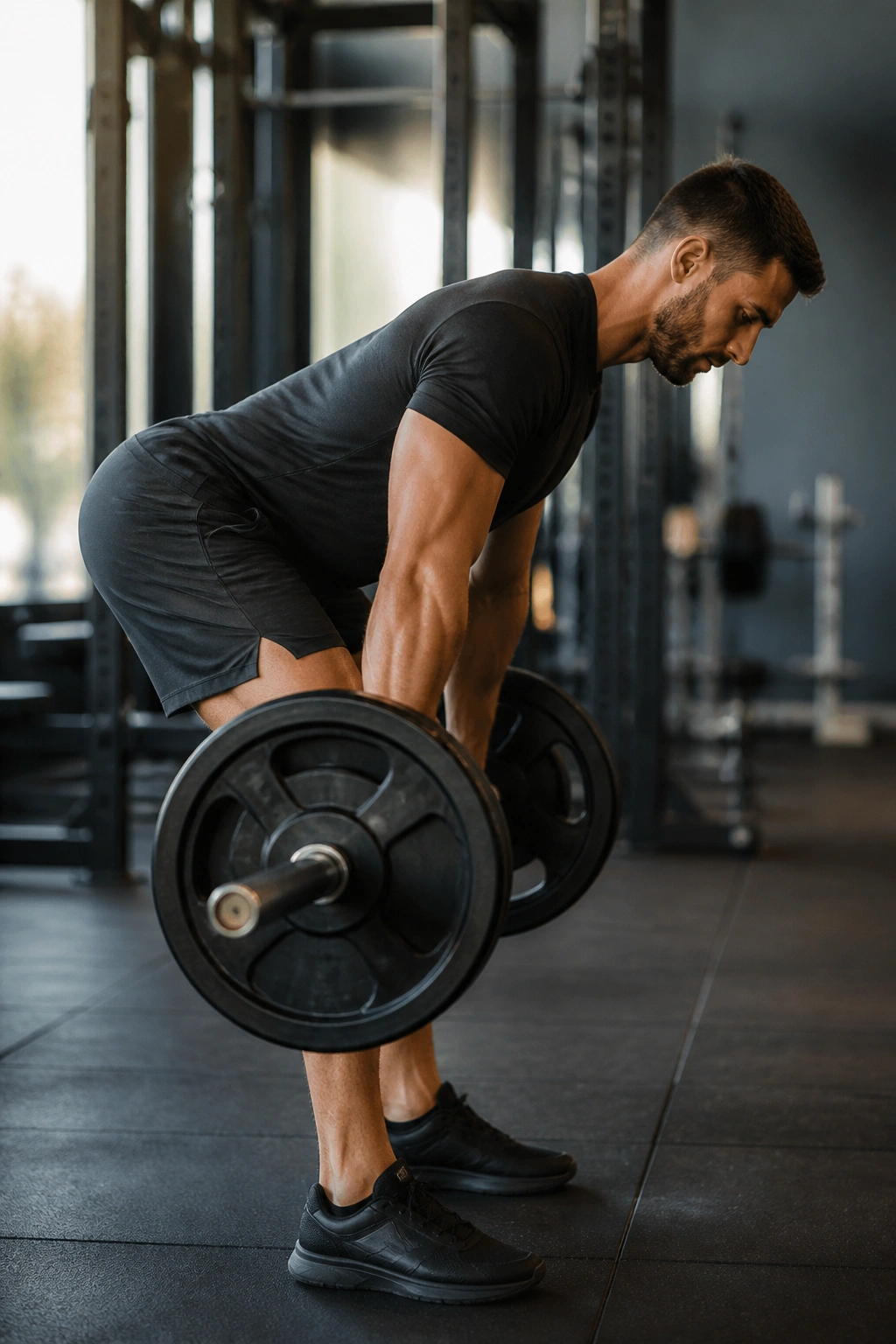
Why does a hinge belong on a full-body list? Because the Romanian deadlift is not only about hamstrings. It also asks your glutes, lats, grip, and trunk to stay connected while the load moves in a straight line.
What You Should Feel
The best RDL rep feels like a long stretch down the back of the legs, not a squat with the bar drifting away from you. Your knees stay soft, your hips shift back, and the weight stays close enough to brush the thighs on the way down.
If the bar slides forward, the whole thing gets ugly fast. Your lower back starts doing work it should not be doing, and the hamstrings lose their clean line of tension. That’s the rep to stop and reset.
A good cue is to think about closing a car door with your hips. Weird image, maybe. It works.
- Keep a slight bend in the knees.
- Push the hips back until the hamstrings feel loaded.
- Keep the weights close to the legs.
- Stop when the back wants to round.
- Stand by driving the hips forward, not by yanking with the lower back.
Most people do well with 5 to 8 reps and a controlled lowering phase. Heavy is useful here, but only if the spine stays quiet. The second the torso starts to fold, the set is over.
4. Pull-Up on a Stable Bar
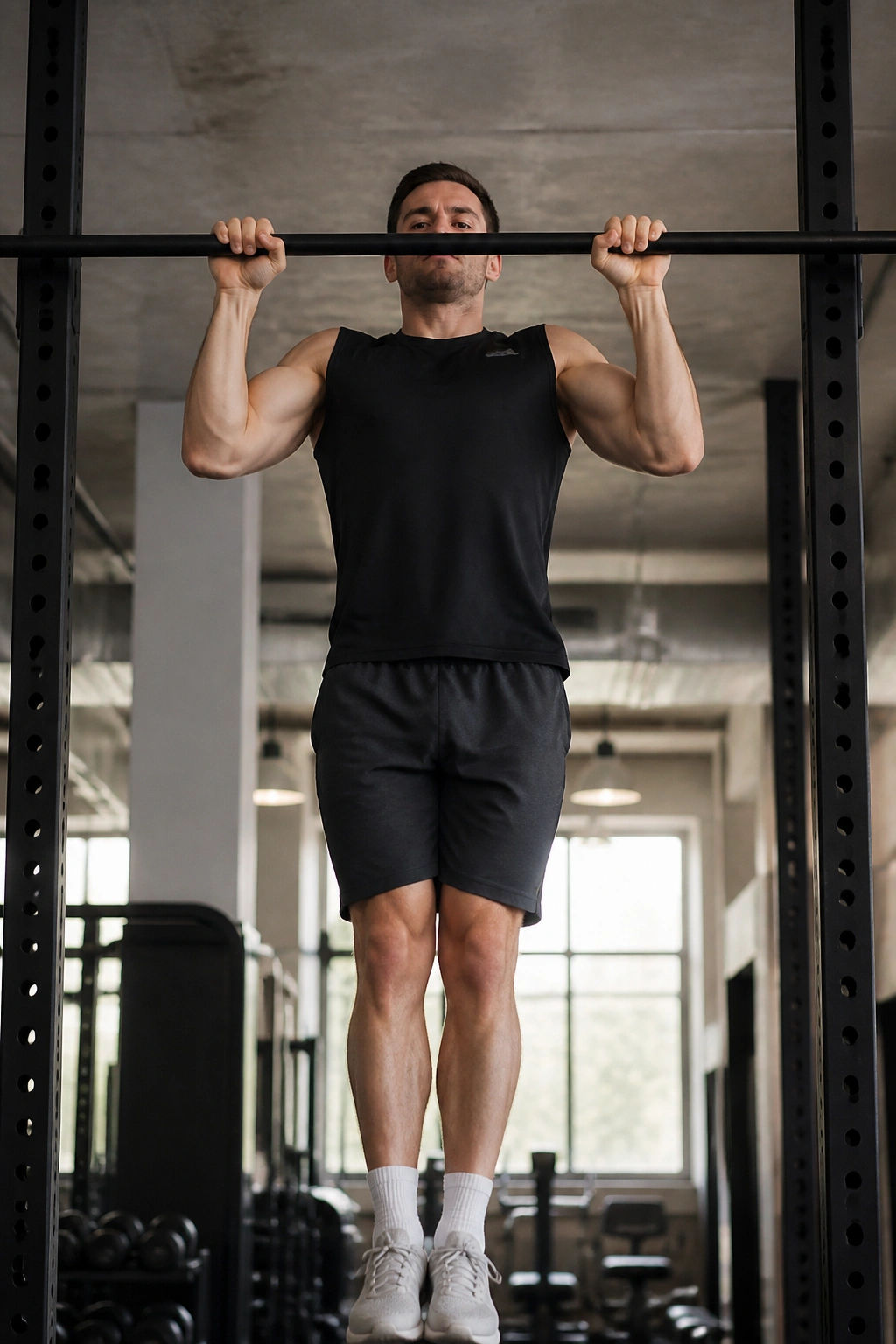
A pull-up looks simple from across the room. Then you hang there and realize your grip, ribcage, shoulder blades, and abs all want a say in the matter.
That’s what makes it such a strong full-body choice. The upper back and arms get the obvious challenge, but your trunk has to stop the body from swinging. If you lose tension through the middle, the rep turns into a wobble.
I like pull-ups because they are brutally honest. There is no way to fake one for long. Either you can hold the shape and pull your chest toward the bar, or you can’t yet.
Assisted Versions That Still Count
- Use a band to reduce the load.
- Try slow negatives, lowering for 3 to 5 seconds.
- Hold the top position for 1 to 2 seconds.
- Use a neutral grip if your shoulders prefer it.
A clean assisted pull-up is worth more than a sloppy full rep with half your body swinging. Build the movement first. The strength follows.
If you can do only one or two strict reps, keep them crisp and stop there. Chasing ugly volume usually wrecks form before it builds much of anything useful.
5. Reverse Lunge with a Tall Torso
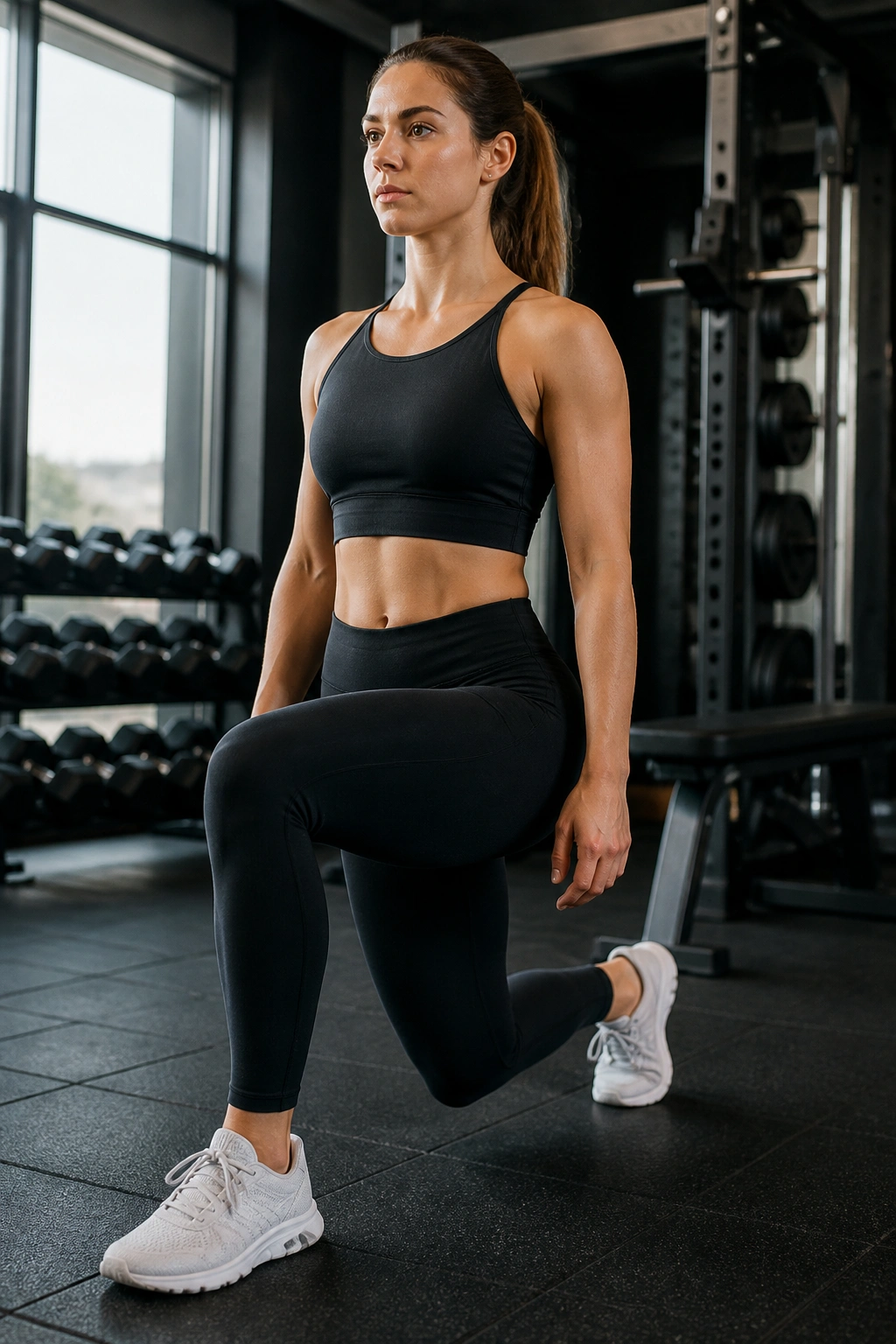
A reverse lunge punishes lazy balance fast. Step back under control, lower with a tall torso, then drive through the front foot and stand up without tipping forward.
I prefer reverse lunges over forward lunges for a lot of people because they usually feel friendlier on the knees and easier to learn. The front foot stays planted, the shin stays a little more vertical, and the movement gives you time to own your position before you load it.
Your back knee should travel toward the floor, not slam into it. That tiny difference matters. It keeps the rep smooth and keeps you from bouncing out of the bottom like you’re in a hurry.
One rep done well will teach you more than ten rushed ones. That sounds dramatic, but it’s true here.
Hold dumbbells at your sides if bodyweight feels easy. If balance becomes the problem before strength does, slow the descent to about 3 seconds and keep your eyes forward. You want the front leg to do the job, not the back foot to kick in and save you.
6. Standing Overhead Press from the Front Rack
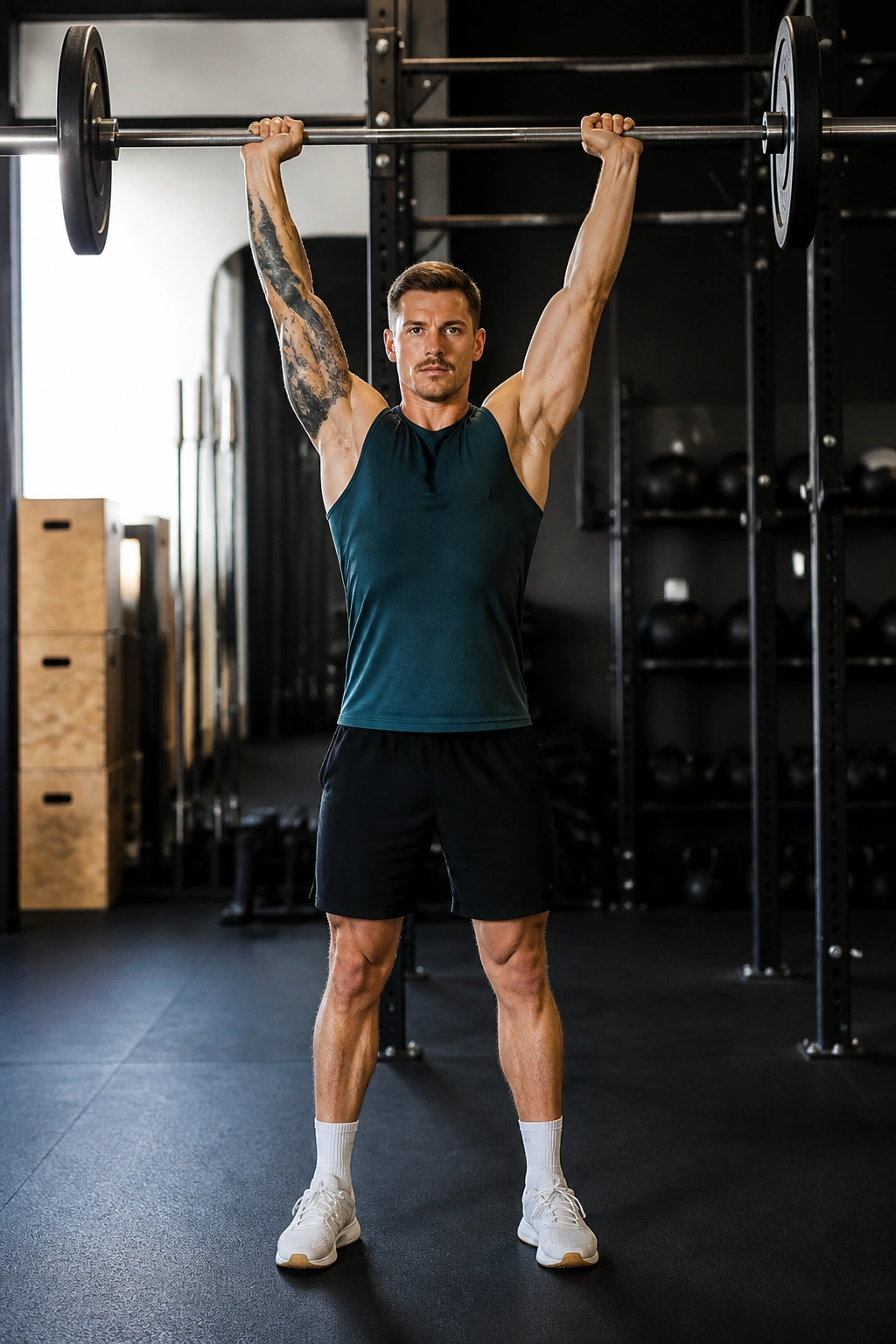
Seated pressing hides a lot. Standing press does not.
That’s why I like it for steady strength. Once you stand up, your glutes have to stay locked, your abs have to stop the ribs from flaring, and your upper back has to keep the whole thing stacked so the weight can travel straight up.
A barbell overhead press feels a little more exacting. Dumbbells let the shoulders move more naturally and can be friendlier if your wrists or elbows complain. I use both, depending on the day.
The mistake I see most is turning the press into a standing lean-back contest. That’s not a press. That’s a lower-back cheat wearing gym clothes.
- Start with the load at shoulder height.
- Brace the middle hard before the first rep.
- Press slightly back so the weight finishes over midfoot.
- Lower under control to the same rack position.
- Stop the set if the ribs start to pop forward.
Three to five hard reps are usually enough for a strength-focused set. More is fine, but only if the torso stays tall and the bar path stays clean. Once the back starts helping too much, the shoulders stop getting the work you wanted.
7. Kettlebell Swing from the Hip Hinge
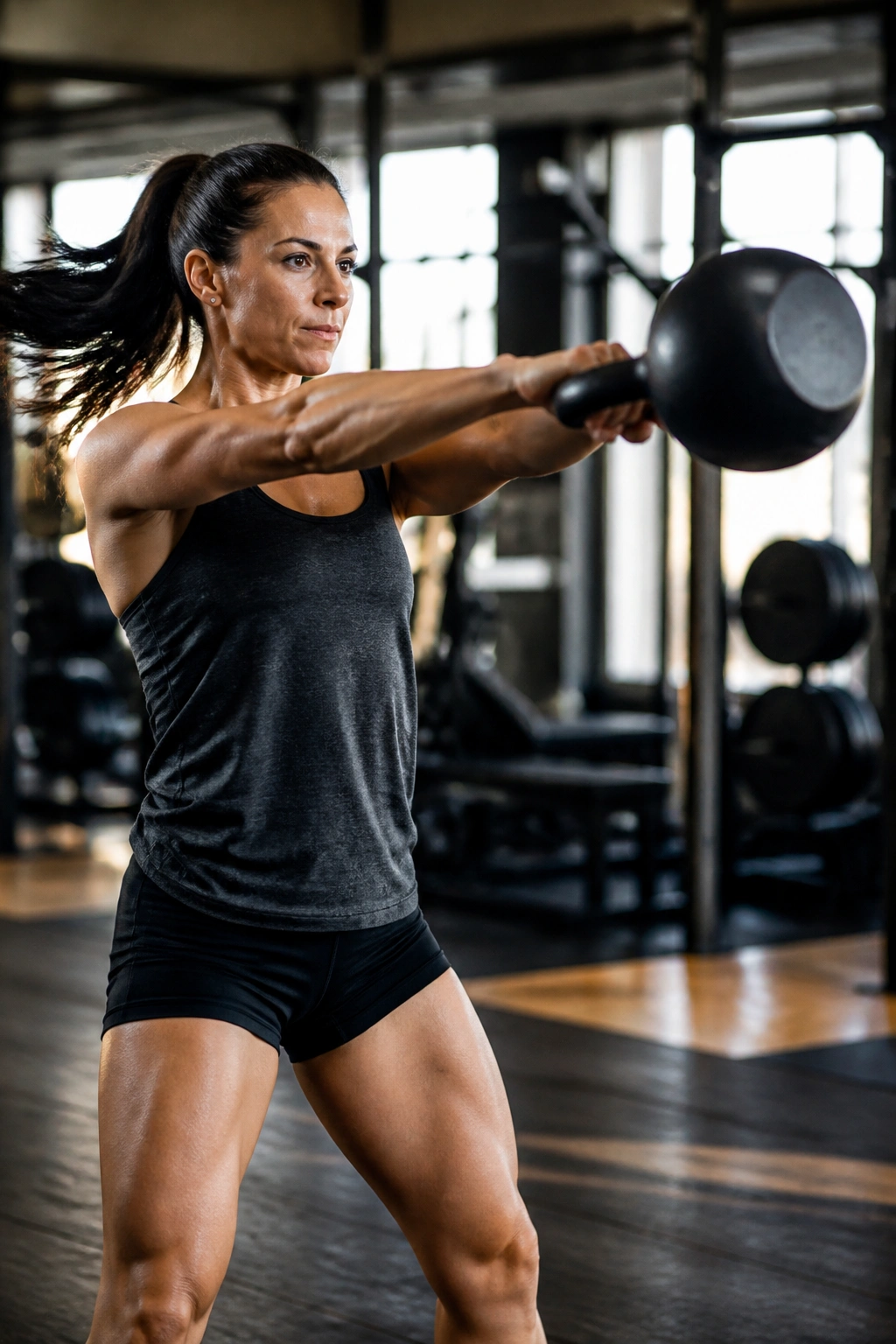
The first good kettlebell swing feels like a snap, not a lift. That matters. If it feels like a squat, the bell usually got written into the wrong story.
The Hinge You Actually Want
The swing is a hip hinge with speed. The hips fire, the bell floats, and the arms act like ropes instead of motors. When the timing is right, the whole rep feels crisp and fast without being chaotic.
Your shoulders should not be yanking the weight up. Your arms just guide the bell while the hips do the real work. If your grip and shoulders are smoked before your glutes, the pattern is off.
A two-handed swing is the best place to start for most people. It keeps the shape simple and makes the hinge easier to learn. One-handed swings come later, after the torso has learned not to twist around.
- Hike the bell back between the legs.
- Snap the hips forward hard.
- Let the bell float to chest height.
- Keep the arms relaxed.
- Stop the set when breathing gets ragged or the hinge gets soft.
I like 10 to 15 reps per set for most people. Enough work to matter. Not so much that the swing turns into a sloppy cardio mess.
8. Renegade Row in a Strong Plank
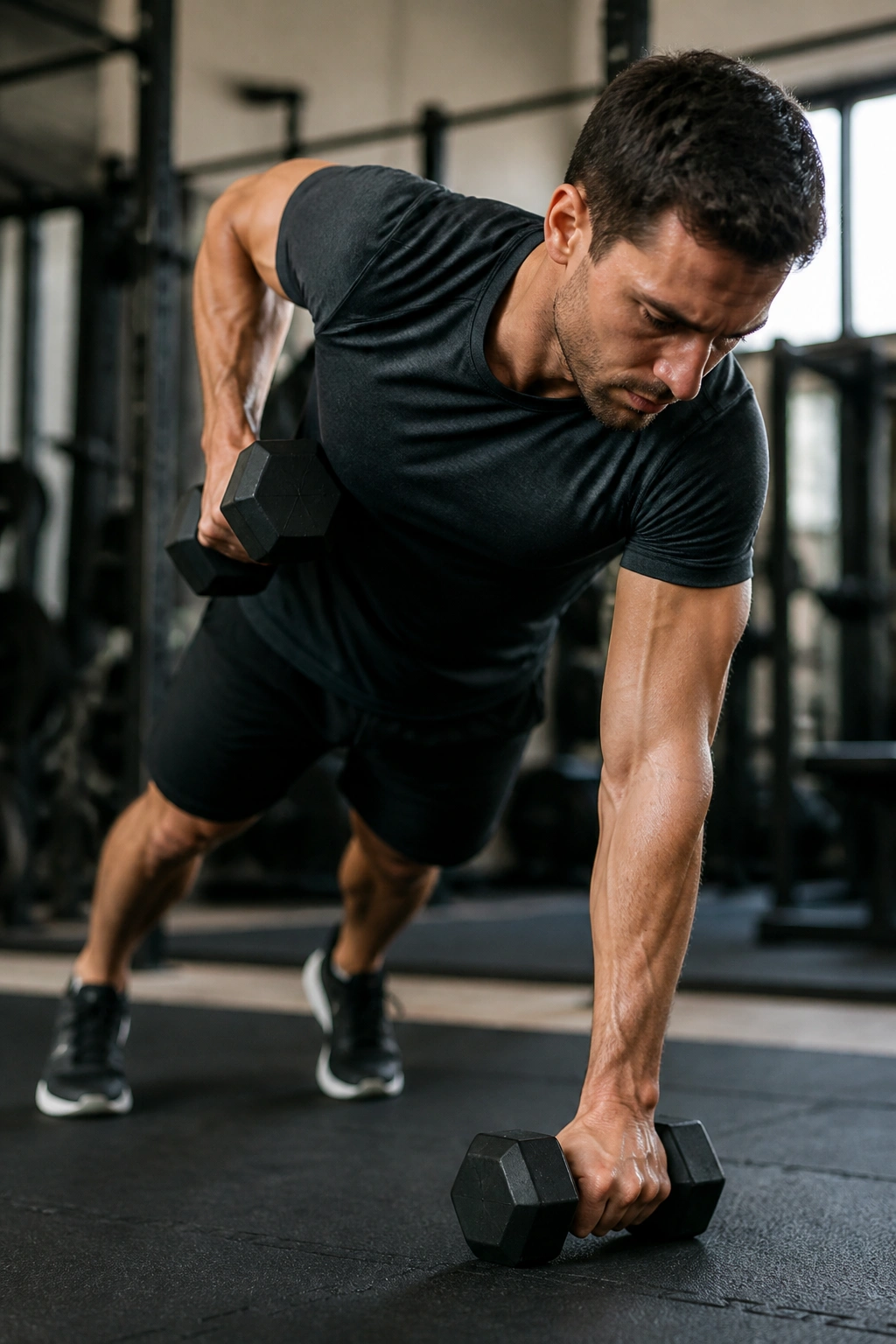
The row is fine; the anti-rotation part is the real training. That’s why the renegade row punches above its weight as a full-body move.
Each pull asks your back to work, but each side of the body also has to resist twisting. The feet push into the floor, the core tightens, and the hips stay square while one arm rows a dumbbell from the floor. It’s a small movement with a nasty amount of honesty.
Use hex dumbbells if you can. Their flat sides give you a stable base, which makes the setup less awkward and the row cleaner. A wider stance helps too. Narrow feet make it harder, but not always better.
I like this one when I want the trunk to work hard without loading it with a barbell. It exposes sloppy midline control fast, which is annoying in the best possible way.
Keep the row short and sharp. Pull the elbow toward the ribcage, set the dumbbell down quietly, then reset before the next rep. Six good reps each side is plenty. Eight if the weight is light and the hips stay still.
9. Farmer’s Carry with Heavy Dumbbells
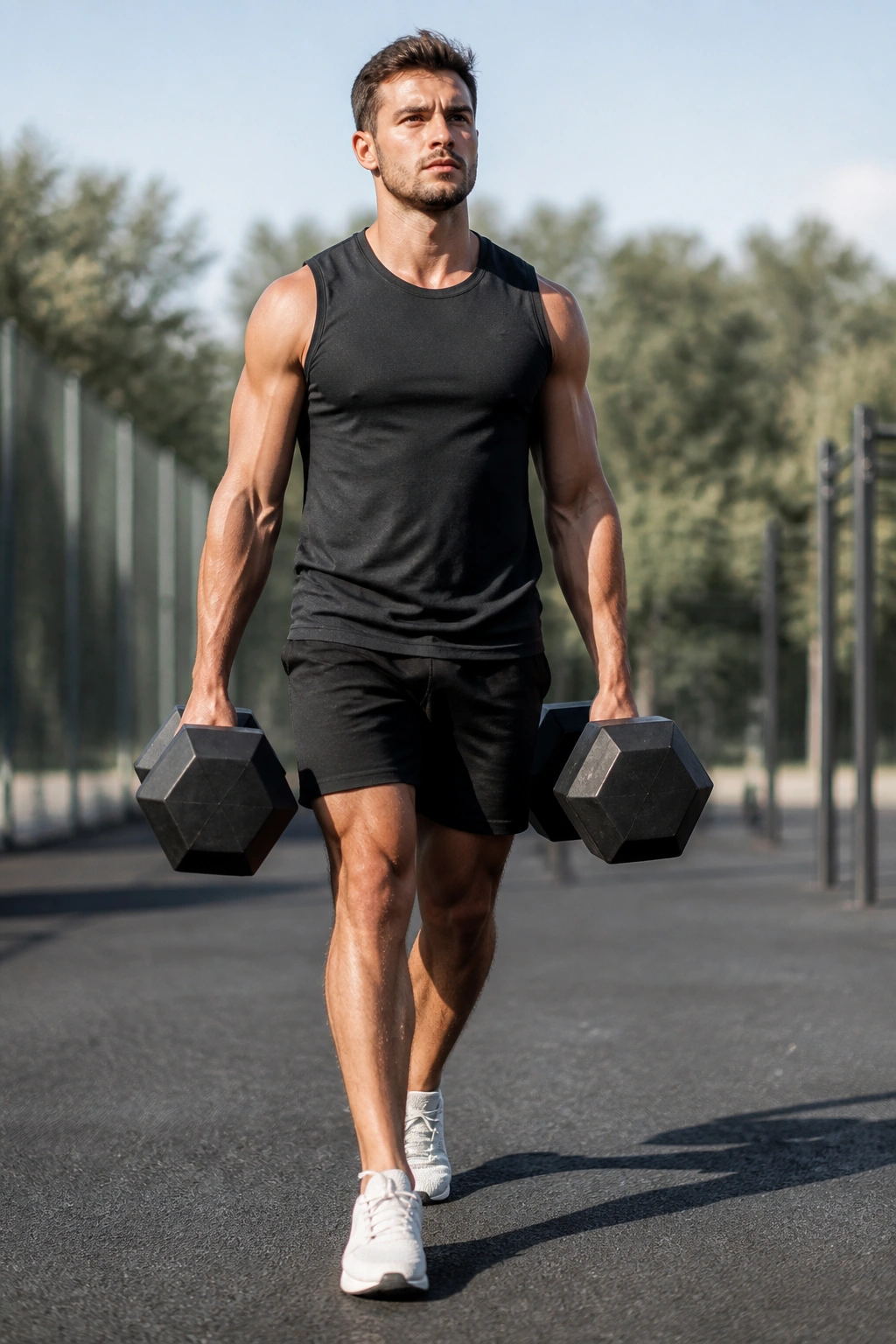
How often do you train grip and posture at the same time? Not enough, if you’re like most people.
The farmer’s carry fixes that in a very plain, very useful way. Pick up two heavy weights, stand tall, and walk. Sounds almost too simple. It isn’t.
Your hands, forearms, upper back, trunk, and legs all get involved. The challenge isn’t just hanging on. It’s staying tall while the load tries to drag your shoulders down and your body side to side.
Carry Options That Matter
- Farmer’s carry: two heavy dumbbells or kettlebells.
- Suitcase carry: one weight on one side, which lights up the obliques.
- Trap-bar carry: more load, less wrist stress.
- Offset carry: one heavier and one lighter weight for extra trunk work.
Choose a load you can walk with for 20 to 40 meters without leaning or scrambling. If the weights are so heavy that your steps turn into a wobble, the set is too much.
There’s a calm confidence in a good carry. Your shoulders stay stacked, your ribs stay quiet, and your stride looks normal even though the load is not. That’s the part I like most.
10. Turkish Get-Up from the Floor
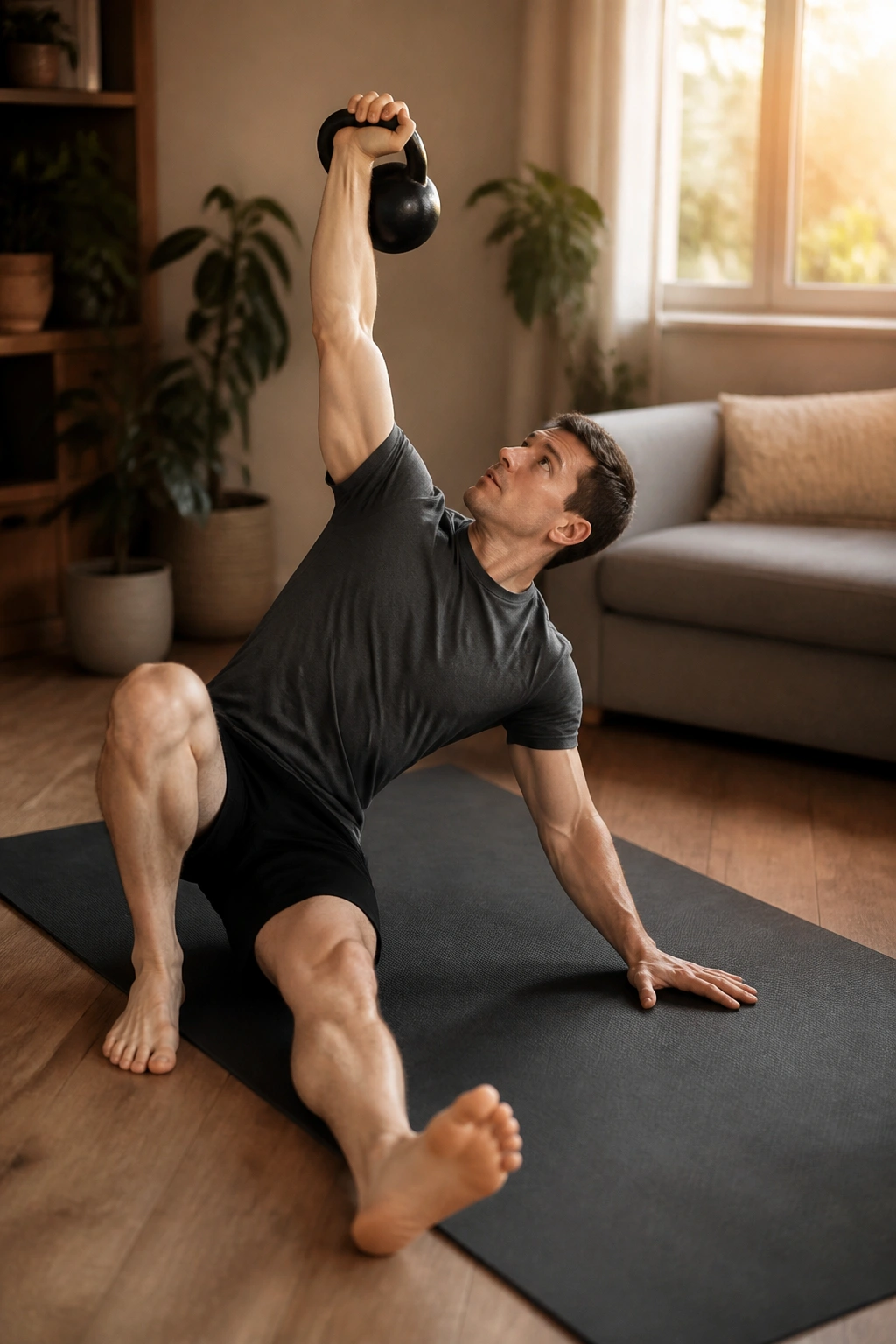
A light kettlebell can humble a strong person fast. The Turkish get-up is proof.
It’s part strength, part coordination, part patience. You start on the floor, get to standing, and then return to the floor without losing the line of the weight or the shape of your body. Every part of the movement asks for control.
Why It Earns a Place
The get-up teaches more than brute force. It builds shoulder stability overhead, hip control through the bridge and sweep, and enough trunk tension to keep the body organized while the base changes under you.
That sounds fancy until you do it. Then it feels like learning how to move all over again.
How to Keep It Clean
- Start with a very light kettlebell or dumbbell.
- Keep your eyes on the weight.
- Move slowly through each transition.
- Pause at the elbow, hand, half-kneel, and standing positions.
- Reverse the same path on the way down.
A load that feels almost silly is a smart starting point. A 5 to 10 pound dumbbell is plenty for the first clean sessions if the pattern is new. The goal is smooth transitions, not a heroic grind.
I like the get-up as a warm-up, a skill drill, or a finisher when the rest of the training is already done. It never feels easy, and that’s part of the appeal.
11. Dumbbell Thruster from Squat to Press
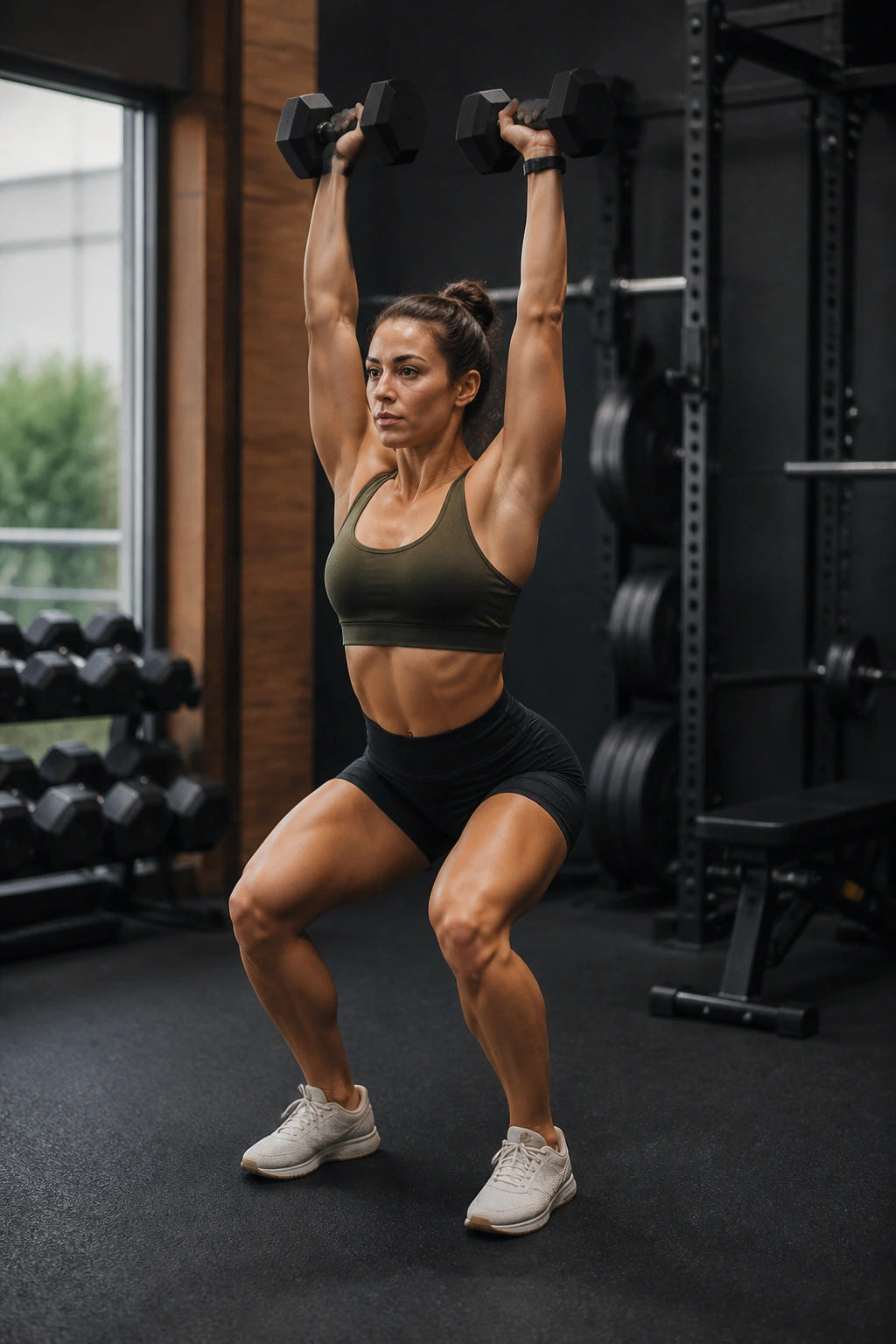
This one doesn’t hide much. The thruster takes a squat, links it to an overhead press, and makes your legs earn the right to help your shoulders.
It is a brutal little full-body exercise when loaded well. The front squat drives the weight out of the bottom, then the press finishes the rep overhead. If the squat is weak, the press gets ugly. If the press is sloppy, the whole rep looks rushed.
I like thrusters when I want strength with a pulse. They raise the heart rate fast, but they still demand real mechanics. The temptation is to turn them into a flailing grind. Don’t.
Use dumbbells if you want a friendlier shoulder path. Use a barbell if you want a tighter rack position and a more direct load. Either way, keep the chest up on the squat and let the legs send the weight into the press.
Five solid reps can feel like plenty. Seven is a lot. Ten starts wandering into survival mode unless the load is light. That’s fine for conditioning, but the form has to stay in charge.
12. Step-Up onto a Box or Bench
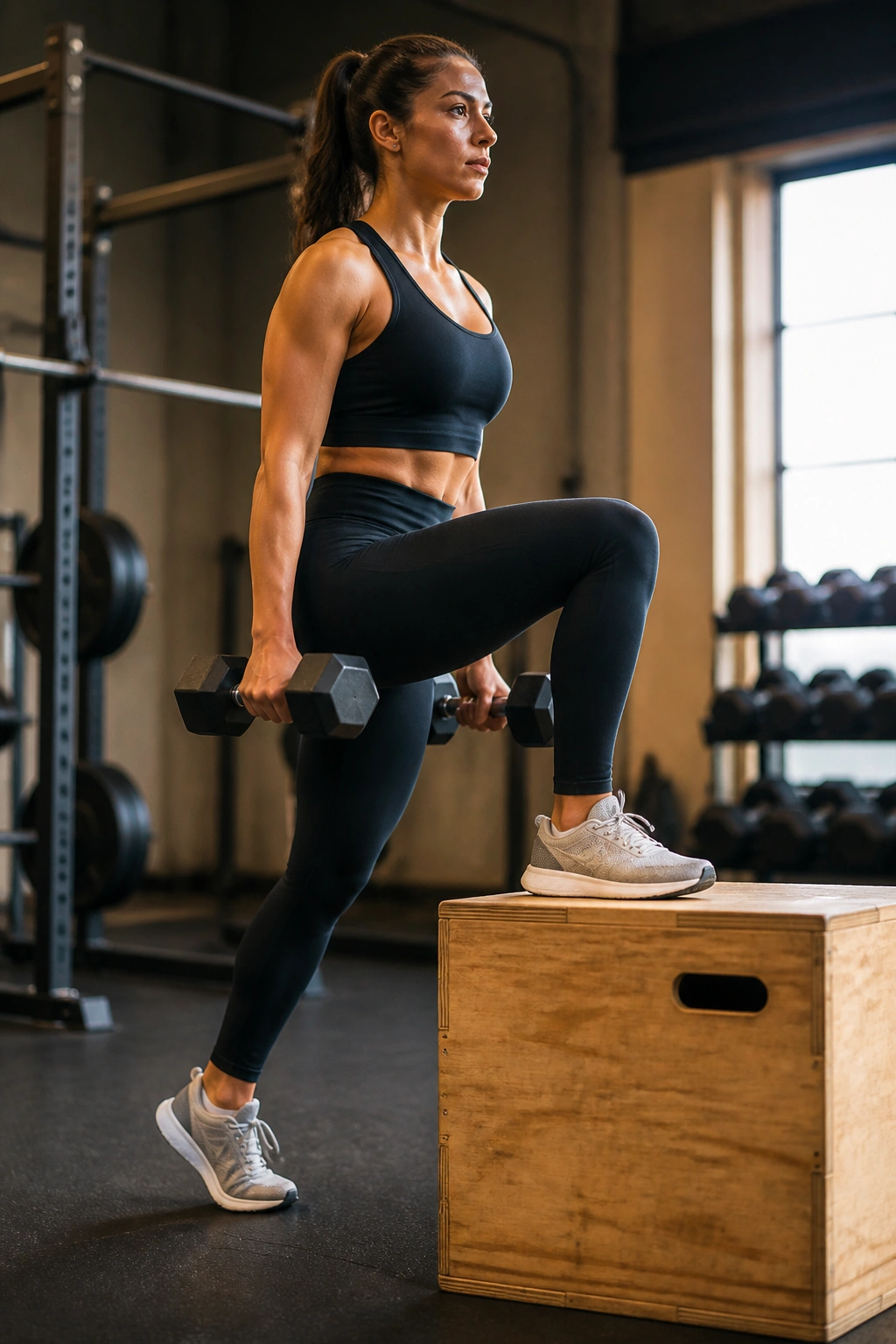
A step-up looks tame until you load it and slow it down. Then it starts acting more like a single-leg test than a warm-up.
Compared with a lunge, the step-up can feel a little cleaner for people who struggle with balance or want a more direct drive from the working leg. The height matters here. Too high, and the hips twist. Too low, and the move gets lazy.
Aim for a box or bench around knee height or a little below. Place the whole foot on the surface, lean slightly forward from the hips, and press through the planted leg until you’re standing tall on top. Then step down under control. No hopping. No cheating off the floor leg.
That last part gets missed a lot. The trailing leg should help with balance, not steal the rep.
- Keep the front foot flat.
- Drive through the heel and midfoot.
- Control the lowering phase.
- Hold dumbbells at your sides when bodyweight gets too easy.
If you wobble at the top, drop the box height before you add weight. A stable step-up with a moderate load beats a shaky high one every time.
13. Bear Crawl across the Floor
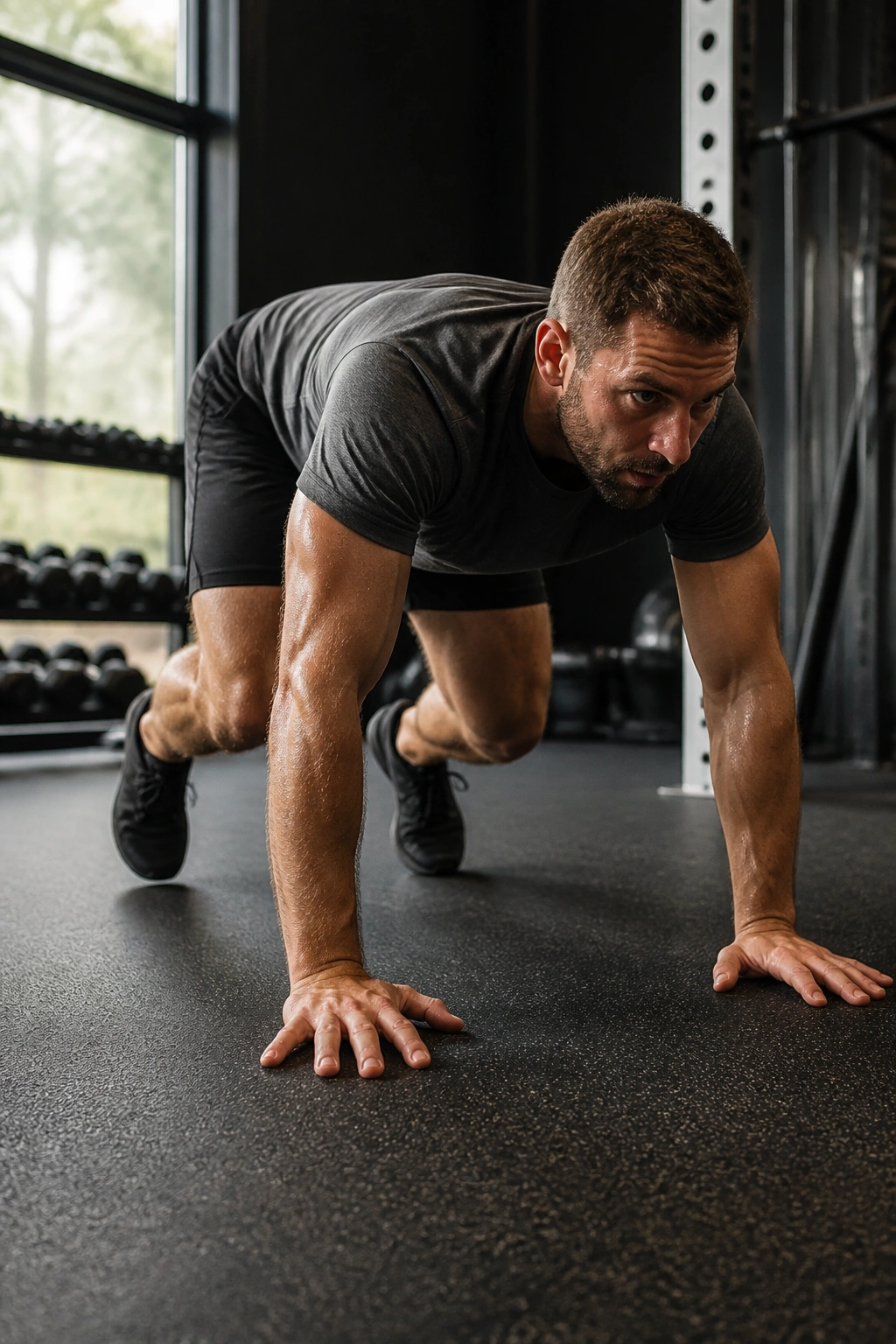
Four limbs, no shortcuts.
A bear crawl looks almost childish until you hold the position for more than a few seconds. Then the shoulders start burning, the trunk starts complaining, and the hips tell you whether they can stay level while you move opposite hand and foot together.
What Good Crawling Feels Like
The knees should hover a couple of inches off the floor, not drift way up toward tabletop height. The back should stay flat enough that your shirt doesn’t bunch like you’re collapsing in the middle. Short steps work better than long lunges.
If the hips rock side to side, slow down. If the lower back arches, lower the knees a touch and shorten the stride. The whole point is control.
- Move opposite hand and foot together.
- Keep the steps short and quiet.
- Hold the knees about 1 to 2 inches off the floor.
- Crawl for 10 to 20 yards or 20 to 40 seconds.
This is one of those exercises I use when I want full-body tension without any fancy setup. No equipment. No excuses. Just a floor and a little bit of humility.
14. Clean and Press with Dumbbells
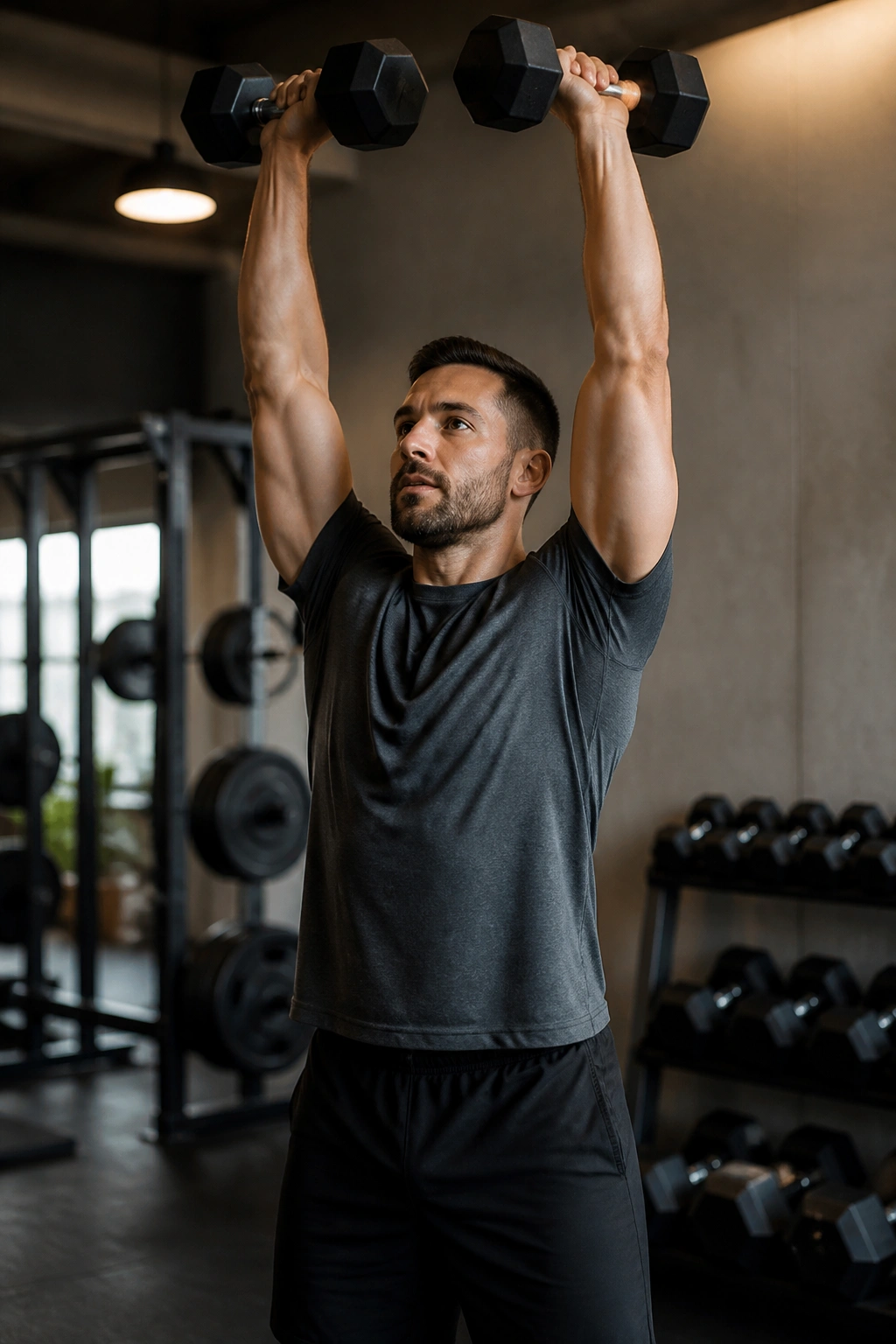
If you want one lift that asks almost everything of the body, this is near the top. A clean and press combines a hinge, a pull, a rack position, and an overhead drive into one clean package.
The clean teaches you to move force from the hips into the hands. The rack position teaches you to catch the weight without collapsing. The press finishes the job overhead, which means the shoulders and trunk still have to stay in order after the lower body has already done its part.
A dumbbell version is easier to learn than a barbell version for most people. Each side can move on its own, which helps if one shoulder is tighter than the other or if the bar path feels awkward. That freedom comes with a catch, though. If you get lazy, the dumbbells start swinging all over the place.
Keep the reps low. Three to five per side is a sensible place to start. Once the clean gets messy, the press almost always follows it downhill.
What Each Part Trains
- Clean: hip drive, timing, and grip.
- Rack: brace, balance, and shoulder position.
- Press: overhead strength and torso control.
That’s a lot for one move. Which is exactly why it earns its place.
15. Sandbag Bear-Hug Carry
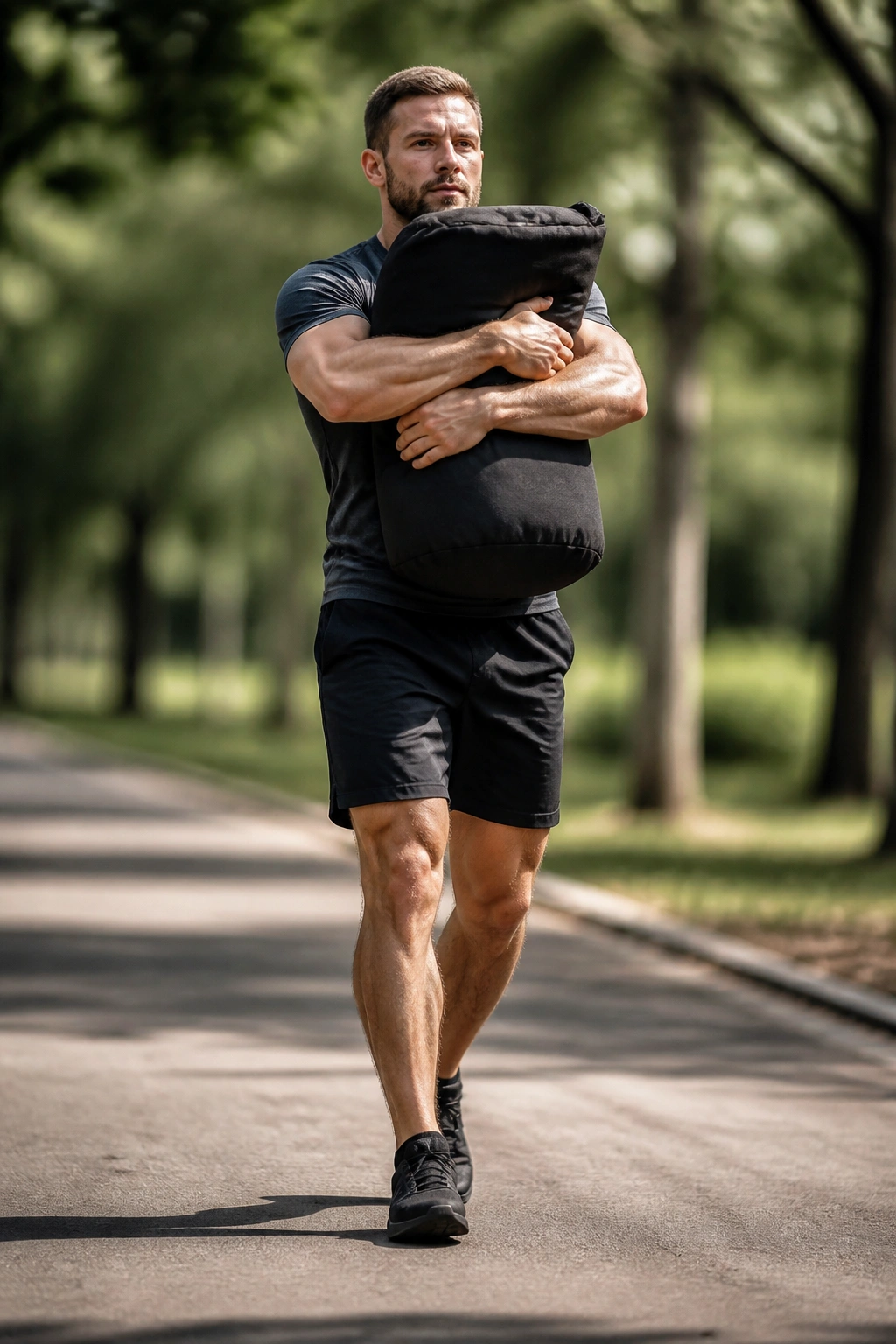
Why does an awkward load build such honest strength? Because a sandbag never sits politely in your hands.
The weight shifts a little with every step, the bag compresses against your chest, and your trunk has to keep re-centering the load the whole time. That makes the bear-hug carry a sneaky monster for the abs, upper back, hips, and grip.
How to Carry It Well
- Hug the bag high against the chest.
- Keep the elbows tucked in close.
- Walk with short, steady steps.
- Stay tall through the ribcage.
- Carry for 20 to 30 meters or 30 to 45 seconds at a time.
The bag should sit high enough that you can breathe, but not so low that it drags your posture forward. If you start leaning back to compensate, the load is too heavy or the distance is too long.
I like sandbag carries at the end of a session because they make a neat workout feel real. Squats, presses, and rows are all useful. A messy load that tests your ability to stay braced while moving seals the deal.
Pick five moves from this list and build around them: one squat, one hinge, one push, one pull, and one carry. That covers a lot of ground without turning training into a circus. Keep the reps clean, the loads honest, and the rest long enough that your next set still looks like the same exercise.
