



A good bodyweight strength training workout at home does not need a dumbbell rack, a fancy timer, or a living room cleared down to the baseboards. It needs leverage, tempo, and enough honesty to make simple moves hard again.
That is where most people go wrong. They chase sweat, not tension. Twenty sloppy squats feel busy; ten slow split squats with a pause at the bottom can wreck your legs in a way that actually builds strength.
The floor is plenty. So is a wall, a patch of open space, and one stubborn decision to stop coasting through reps. A push-up with a three-second lower is a different animal from a fast bounce-and-go version, and bodyweight training gets much better the moment you start treating positions like they matter.
These 30 bodyweight strength training workouts at home use that idea in different ways: ladders, holds, tempo work, unilateral legs, shoulder control, core bracing, and a few sessions that are plain mean in the best way. Pick the one that fits your day, then do it with clean form and no rushing.
1. The 20-Minute Full-Body Circuit

This is the one I’d hand to someone who wants a real home strength workout without fuss. It hits the big patterns, keeps the pace honest, and doesn’t leave gaps where you can mentally drift off.
How to run it
- 40 seconds of work, 20 seconds of rest
- 5 exercises
- 4 total rounds
Use air squats, push-ups, reverse lunges, plank shoulder taps, and glute bridges. Keep the reps smooth, not frantic. On the last 10 seconds of each station, ask yourself if your form still looks the same as it did in the first 10.
Tip: If 40 seconds feels like a grind, cut it to 30 and keep the quality high. That is still a strong session.
2. Push-Up Ladder With Air Squat Reset
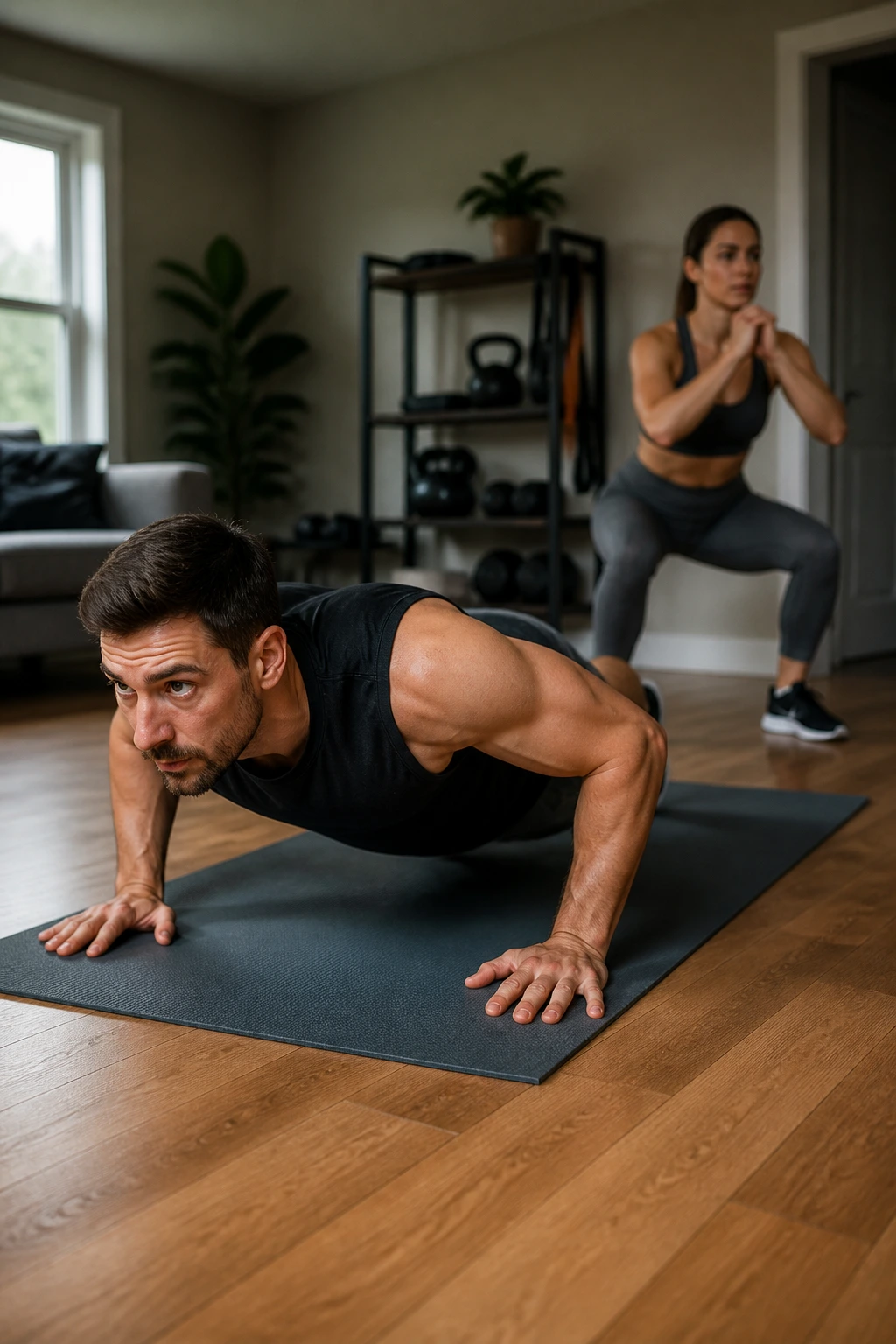
A ladder sounds simple until your chest starts arguing with you. That is the charm of it. You build up, then come back down, and the descending side often feels nastier than the climb.
Do 1 push-up, 10 squats; 2 push-ups, 10 squats; 3 push-ups, 10 squats all the way up to 6 or 7, then reverse the ladder. Rest 30 to 45 seconds after each rung if your form starts getting sloppy. The squats are there to keep your whole body working while the push-up volume climbs.
Harder version? Add a 2-second pause at the bottom of every push-up. Easier version? Put your hands on a couch or sturdy table.
3. Slow-Tempo Split Squat Day
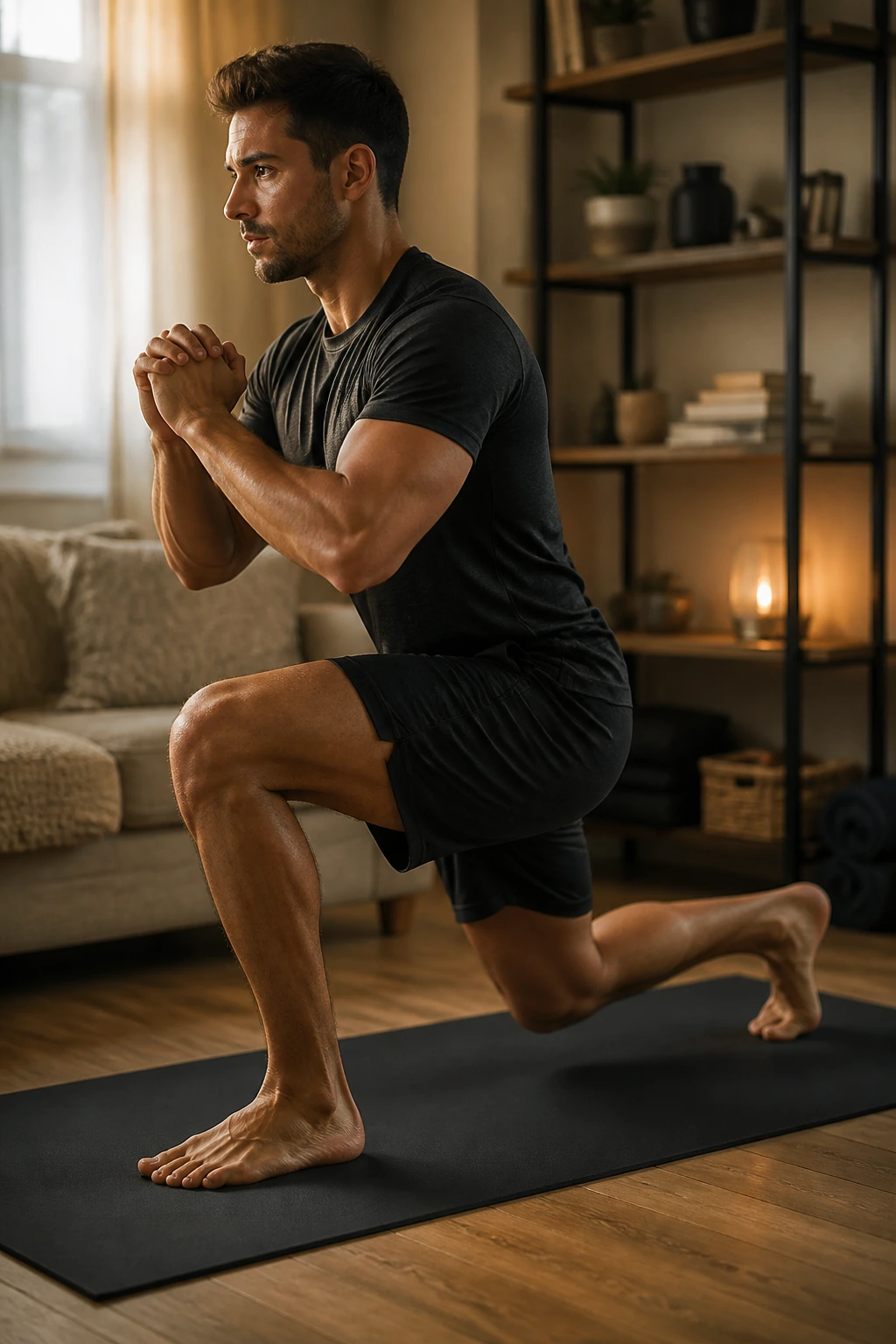
Tempo work is underrated because it feels too easy in the first minute. Then your front thigh starts burning and you remember why it works. Slow lowers build patience, and patience builds control.
Do 4 sets of 6 split squats per leg with a 5-second descent, 1-second pause, and strong stand-up. Finish with 10 single-leg glute bridges per side and a 30-second wall sit. Rest about 60 seconds between sets.
Tempo cues
- Keep your torso tall
- Let the front foot stay flat
- Drive through the whole foot, not just the toes
- Stop the set when you lose balance, not just when you get tired
4. Posterior Chain Floor Series
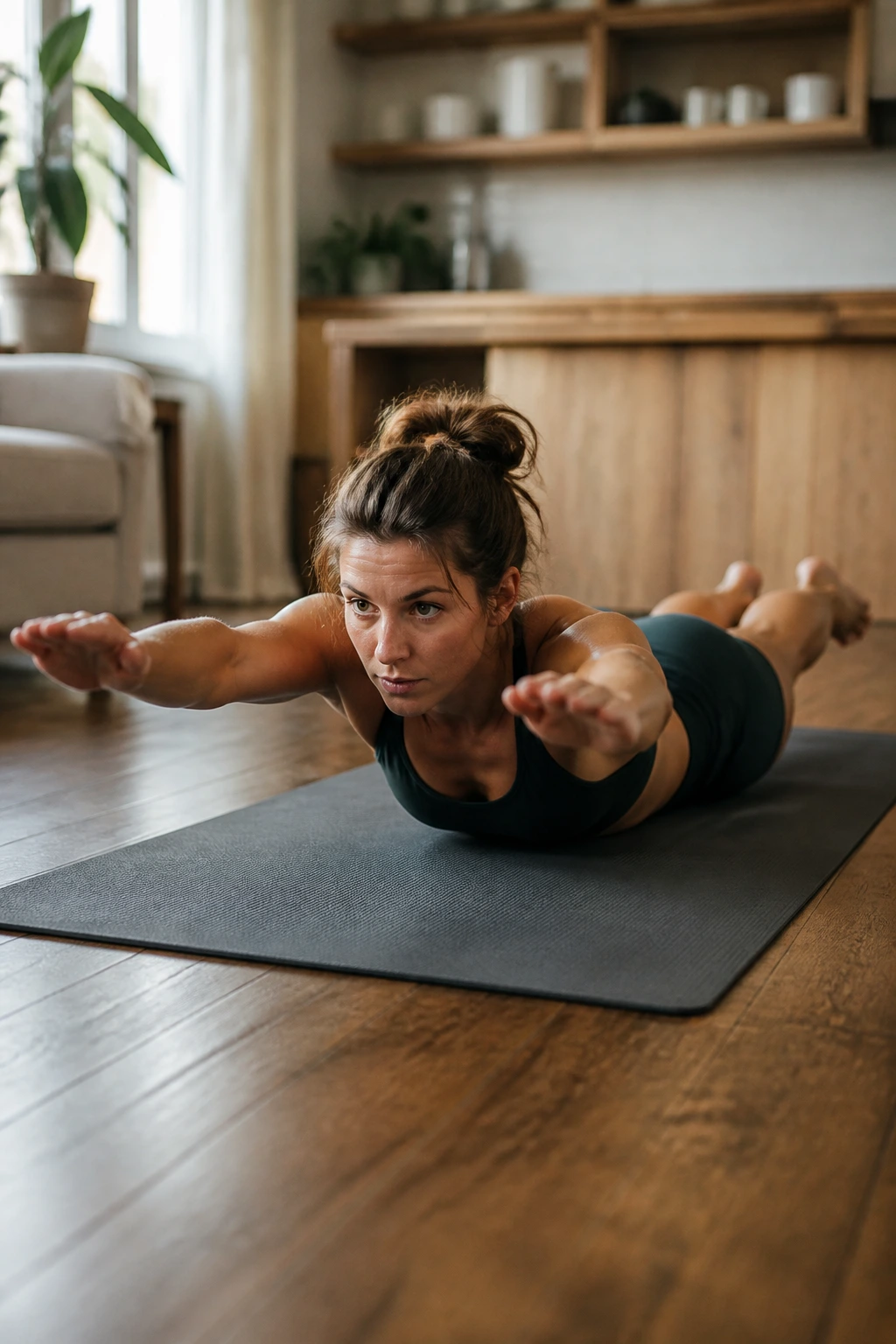
Most home workouts love the front of the body and ignore the back. Bad trade. Your glutes, hamstrings, and upper back deserve their share, especially if you sit a lot.
Start with prone swimmers, superman lift-offs, reverse plank holds, bird dogs, and hamstring walkouts. Three rounds is enough for most people. Hold the top of each superman rep for a full second, and keep the reverse plank crisp so your hips do not sag.
That little pause matters. It turns a floppy floor routine into a real strength session for the backside of the body.
5. The Beginner Reset
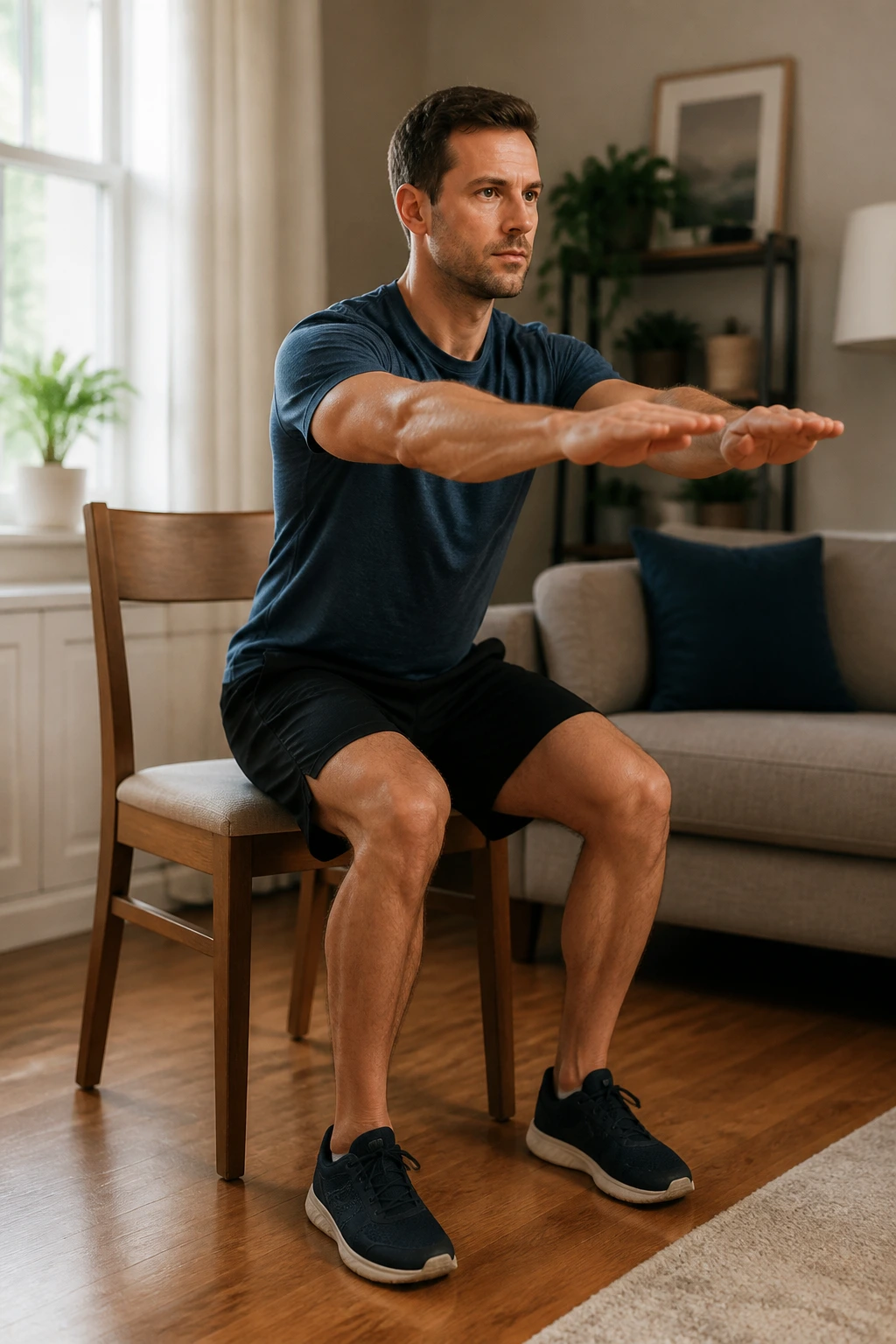
This is the session for anyone getting back into training or coming off a stretch of doing nothing. It is not flashy. Good. Flash is overrated when your joints need a calm re-entry.
Use wall push-ups or incline push-ups, sit-to-stands from a chair, dead bugs, knee planks, and calf raises. Do 3 rounds, resting 30 to 60 seconds as needed. Keep the effort around a 6 out of 10. You should finish feeling worked, not flattened.
A lot of beginners try to “win” the workout on day one. That is a fast way to hate tomorrow. Start cleaner, move better, and give yourself a reason to come back.
6. 10-Minute EMOM Strength Builder
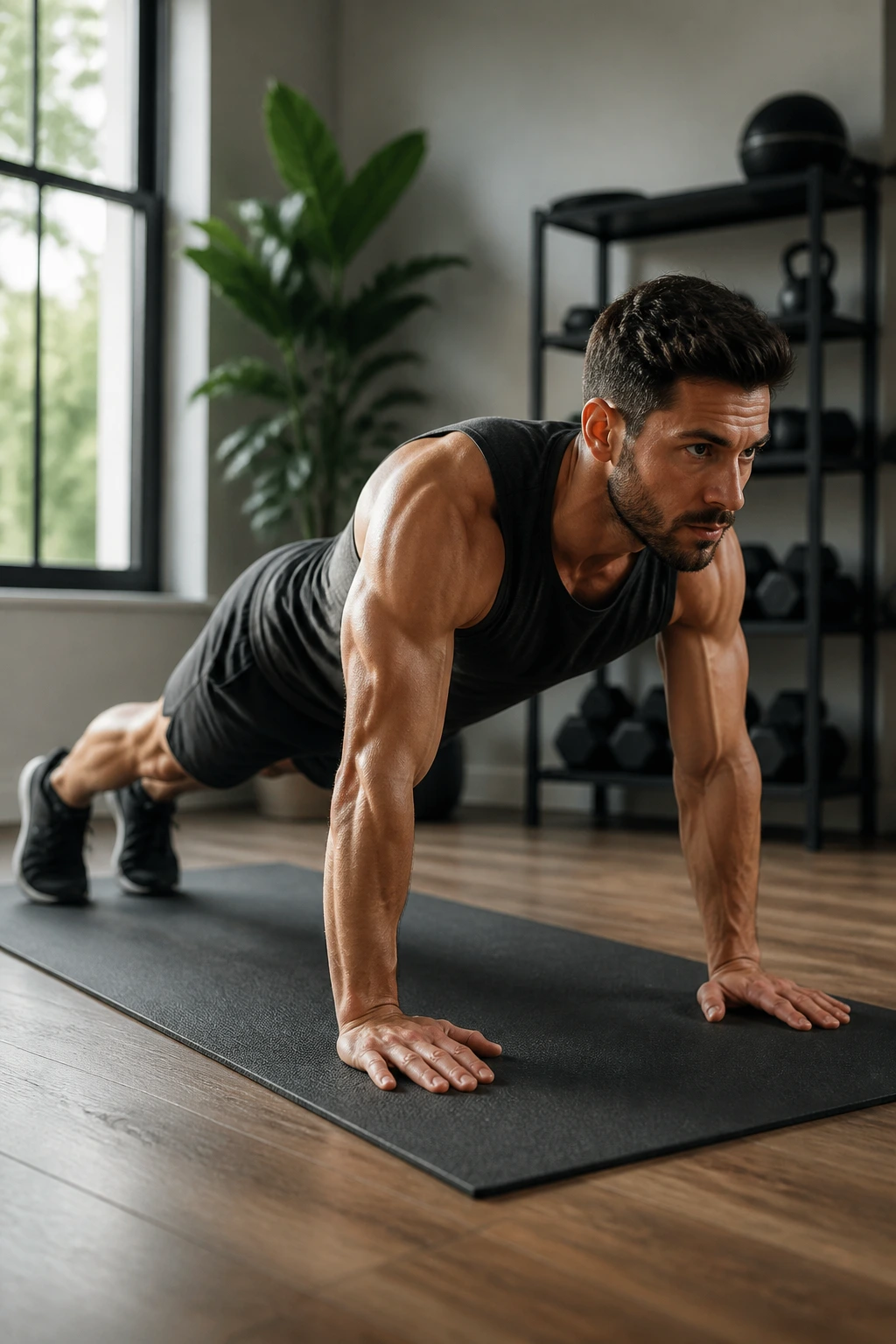
EMOM means every minute on the minute, and it is a neat trick when your schedule is ugly. You get structure, density, and zero room to wander off for a phone scroll.
Minute pattern
- Odd minutes: 8 push-ups, then rest the remaining time
- Even minutes: 12 air squats and an 8-second hollow hold
- Repeat for 10 minutes total
The point is not to race. Finish your work with about 10 to 15 seconds left in each minute. If you need all 60 seconds, the reps are too high for now. If you finish too fast, make the push-ups slower or drop into a harder variation.
7. Unilateral Lower-Body Day

One leg at a time changes everything. Suddenly, your weak side has nowhere to hide, and the workout feels twice as honest. That is not a bad thing.
Do reverse lunges, cossack squats, single-leg glute bridges, and assisted shrimp squats if your knees and balance are ready for them. Three rounds works well, with 8 to 10 reps per side on the first two moves and 6 to 8 on the shrimp squat pattern. Use a wall or chair lightly if balance gets messy.
Good reps look like this
- Front foot stays planted
- Knee tracks over the middle toes
- Hips stay level
- You control the way down
8. Upper-Body Isometric Session
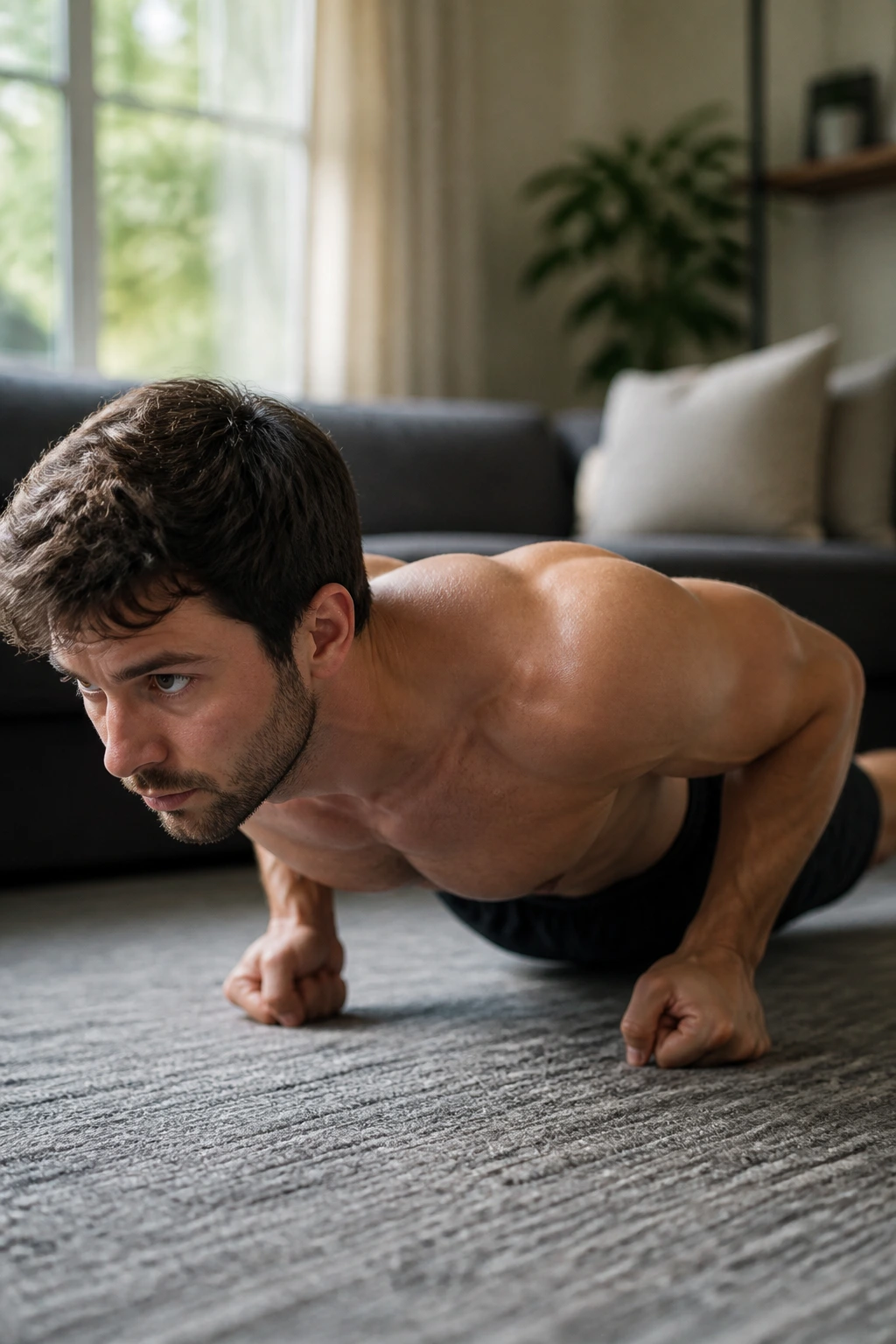
If push-ups are a little too easy but you are not ready for fancy variations, isometrics sit in the sweet spot. You load the position without needing equipment, and the burn shows up fast.
Try bottom-of-push-up holds, pike holds, bear hovers, and wall handstand leans. Hold each for 15 to 25 seconds, then rest about 30 seconds. Run 4 rounds.
The first time through, the movements feel almost polite. The second time, your shoulders start noticing. By round three, your triceps usually stop pretending everything is fine.
9. Core Bracing Session
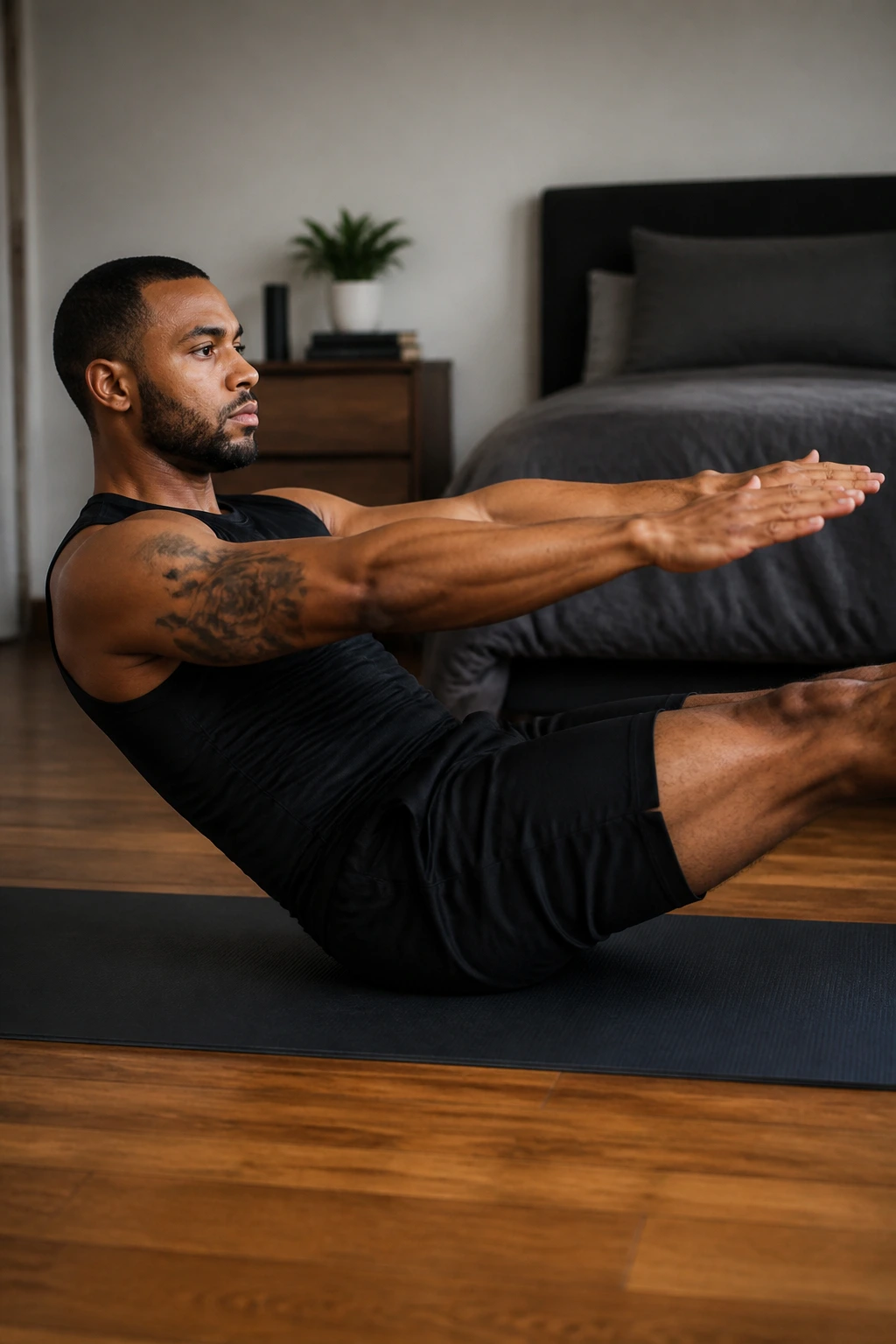
A strong core is not about endless crunches. It is about stopping your ribs from flaring and your low back from taking over. That sounds boring until it fixes the way everything else feels.
Do dead bugs, side planks, hollow body holds, bear planks, and slow mountain climbers. Aim for 3 rounds. Stay with 20 to 30 seconds on the holds and 8 to 10 reps per side on the moving drills.
What to watch for
- Low back staying flat during dead bugs
- Shoulders stacked over elbows in side plank
- Chin tucked slightly in hollow hold
- Hips not bouncing in bear plank
10. The Plyometric Power Circuit
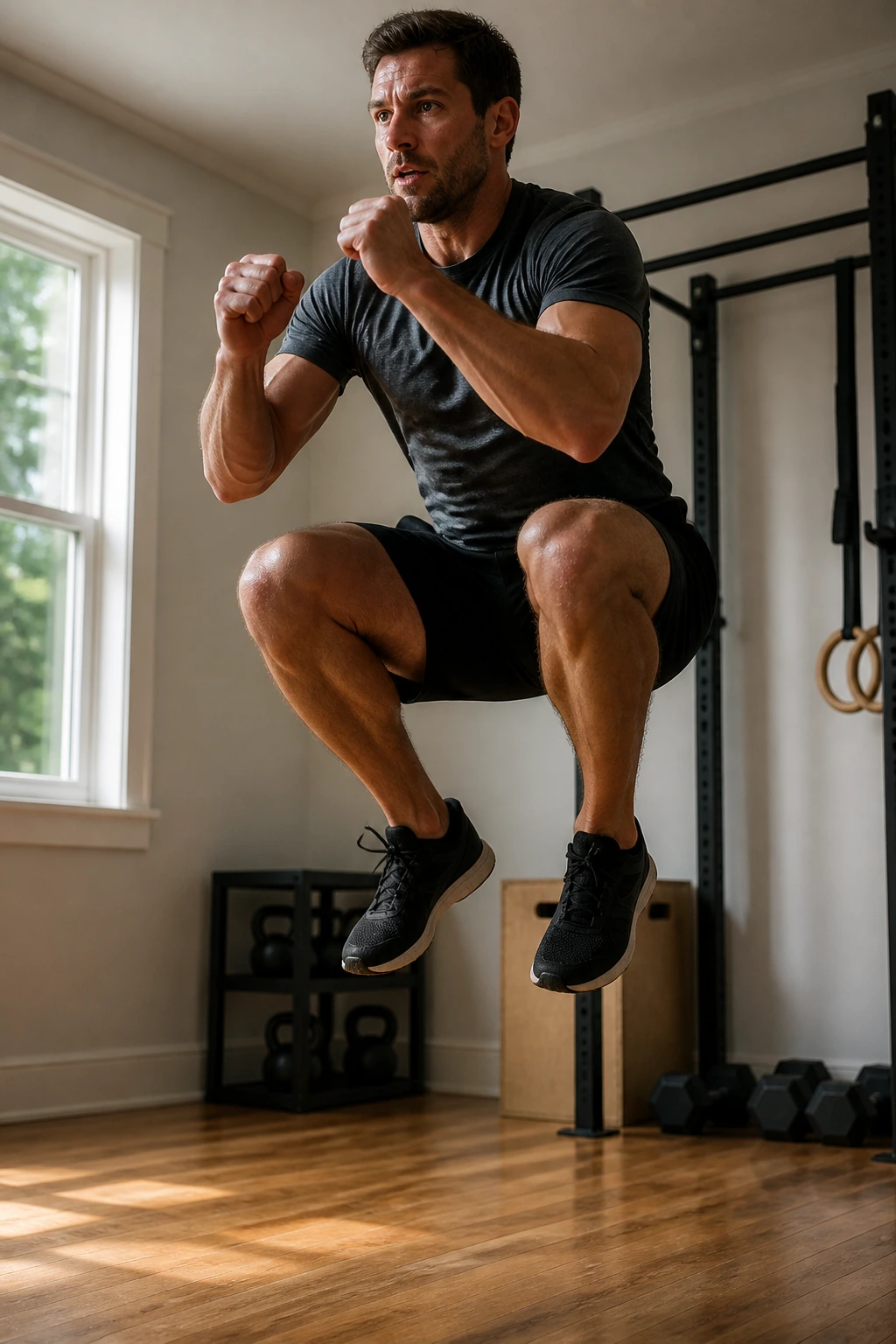
Power work belongs at home too. You just need a little floor space and the discipline to stop before your jumps get sloppy. Quality first. Always.
Use jump squats, explosive push-ups, skater bounds, and squat jumps with a stick landing. Keep the reps low: 5 jump squats, 4 explosive push-ups, 6 skater bounds per side, then rest 60 to 90 seconds. Run 4 to 6 rounds.
If the landing gets loud, the set is over. Soft knees, quiet feet, sharp hands. That is the whole game.
11. Wall-Based Posture Workout
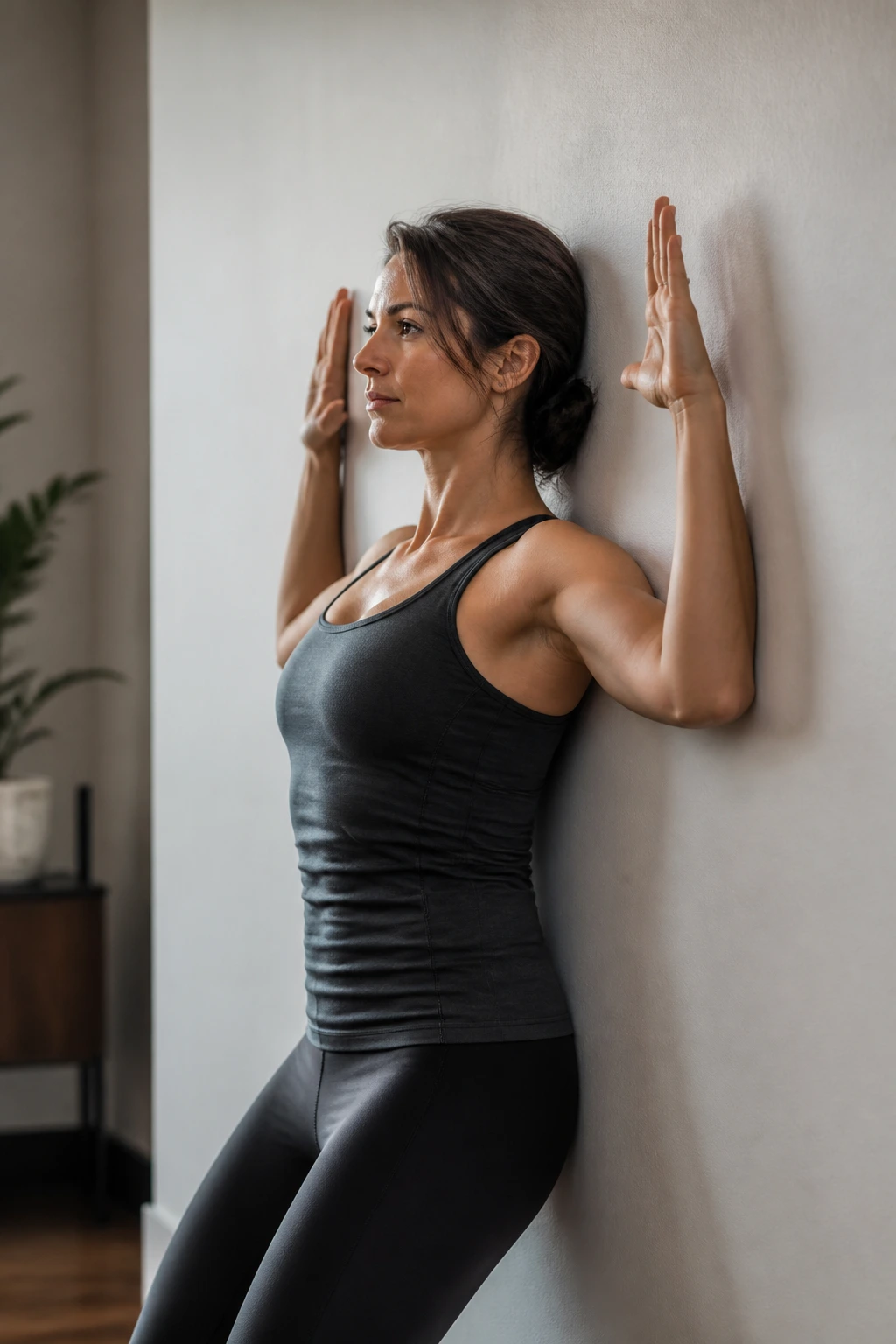
A wall is more useful than people think. It gives you feedback, keeps your rib cage honest, and turns a lazy posture session into something you can actually feel in your upper back.
Do this circuit
- Wall slides — 12 reps
- Wall push-ups — 15 reps
- Wall sit — 45 seconds
- Reverse snow angels — 10 to 12 reps
- Wall calf raises — 20 reps
Run it for 3 rounds. The wall sit should feel like a slow test of patience, and the reverse snow angels should leave your upper back a little tired in a good way. This is a smart option after too much desk time.
12. Quiet Apartment Workout
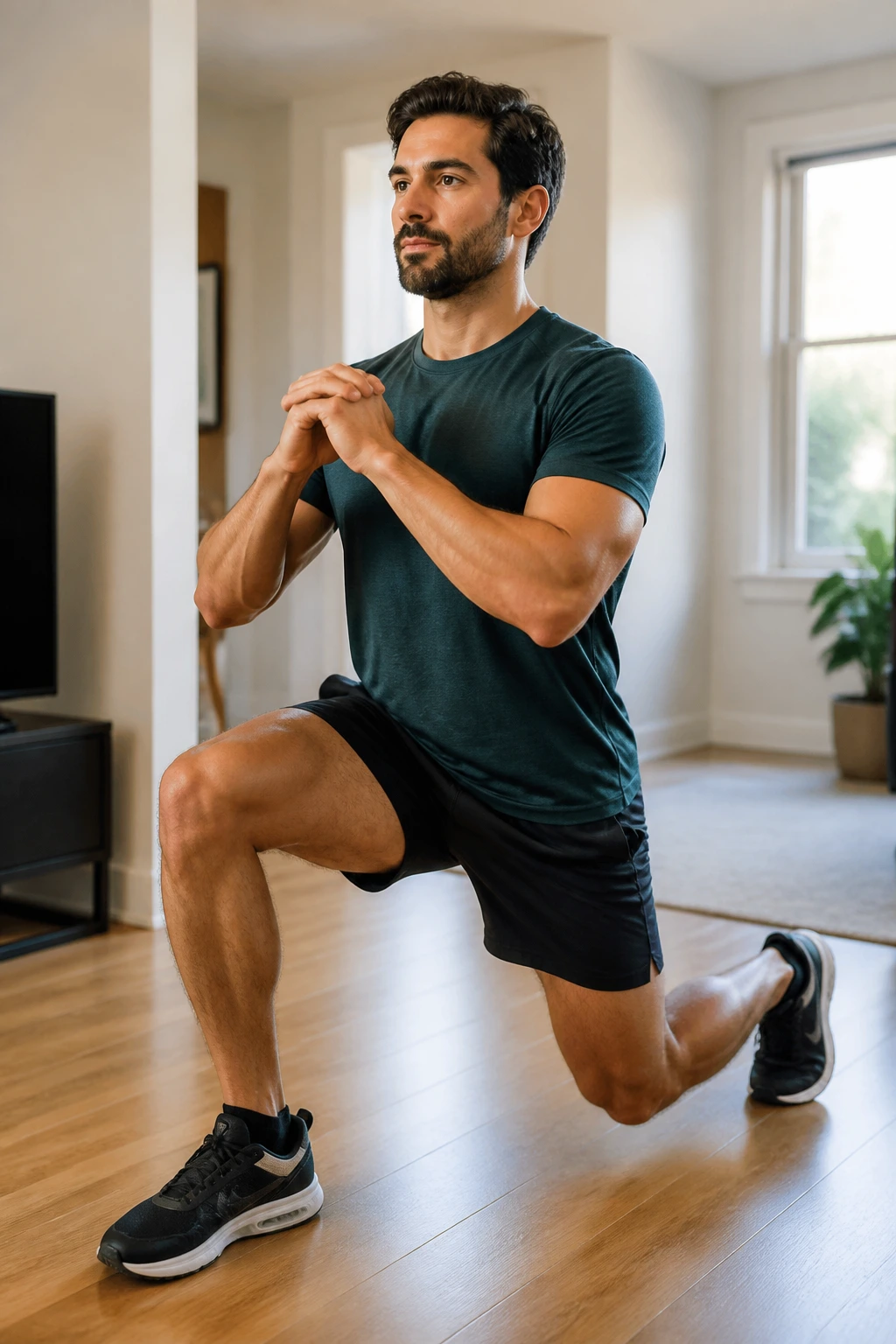
No jumping. No slamming. No apology letters to the downstairs neighbor. Just strength, done with control.
Do split squats, push-ups, glute bridge marches, and bird dogs for 4 rounds. Use 8 reps per side on the split squats, 8 to 12 push-ups, 10 marches per side, and 8 bird dogs per side with a 2-second pause at the top.
Slow eccentrics make this one punch above its weight. Three seconds down on the split squat is enough to make your legs complain without making your floor shake.
13. The Density Ladder

This one is for people who like a clear finish line. You keep collecting reps inside a fixed time window, and the workout gets harder because the rest gets shorter, not because the menu changes.
Set a 12-minute timer and perform 2 push-ups, 4 squats, 6 alternating lunges, and an 8-second hollow hold. On the next round, add one rep to each movement. Keep going until the timer runs out, but stop adding reps if your form starts to drift.
Why it works
You get a built-in progression. The body learns to do more work with less pause, and that makes the session feel tighter every time you repeat it.
14. The 10-Minute AMRAP Benchmark

AMRAP means as many quality rounds as possible, and the word quality matters more than the clock. This is a benchmark, not a chaos test.
Do 6 push-ups, 12 air squats, 8 reverse lunges per leg, and a 20-second plank for 10 minutes. Record how many clean rounds you finish. Next time, try to match the score with better form or squeeze in one extra round.
This is one of my favorite bodyweight strength training workouts at home because it gives you a number to chase. Numbers calm people down. They also keep excuses from getting too comfy.
15. Glute Bridge Progression Day
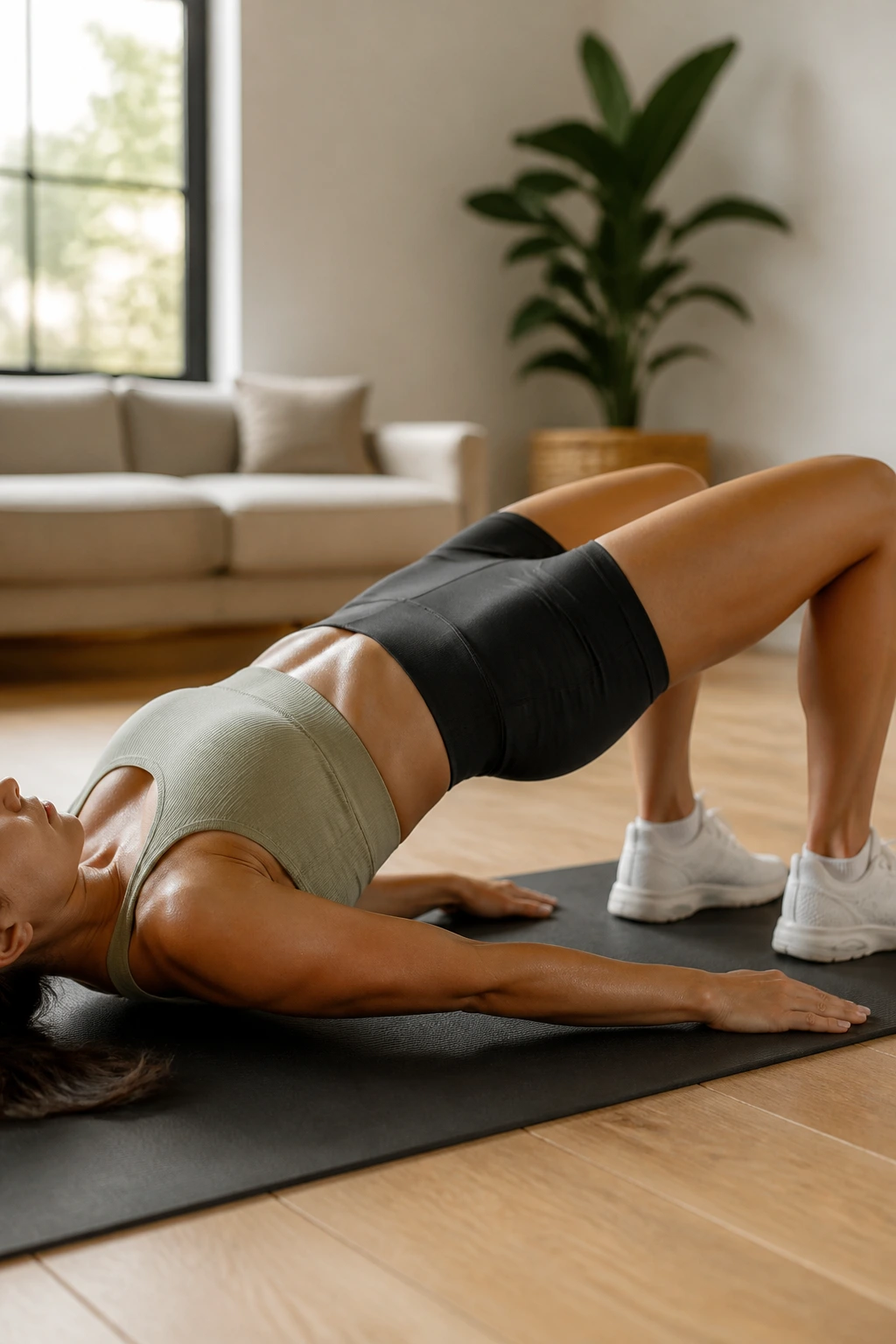
People underrate the glutes because bridges look too easy on paper. Then the hamstrings cramp, the pelvis starts wobbling, and the lesson arrives.
Build from double-leg glute bridges to bridge marches, then single-leg bridges, then a 20-second bridge hold. Do 3 rounds. Start with 15 double-leg reps, 10 marches per side, and 8 single-leg reps per side.
Finish with your feet a little farther from your hips if you want more hamstring work. Move them closer if you want more glute squeeze. Small foot adjustments change the feel more than most people expect.
16. Chest, Triceps, and Shoulder Grinder

This is the push-up day that does not quit. It starts with one hard angle, adds another, and keeps pressure on your shoulders long enough for your shirt to feel like a bad decision.
Sequence
- Diamond push-ups — 6 to 8 reps
- Pike push-ups — 6 to 8 reps
- Close-grip push-ups — 8 to 10 reps
- Shoulder taps — 20 total taps
Rest 60 to 90 seconds between rounds. Do 4 to 5 rounds depending on your level. If the pike push-up is too spicy, shorten the range and keep your head moving in front of your hands. Clean reps beat heroic-looking messes.
17. Knee-Friendly Strength Day
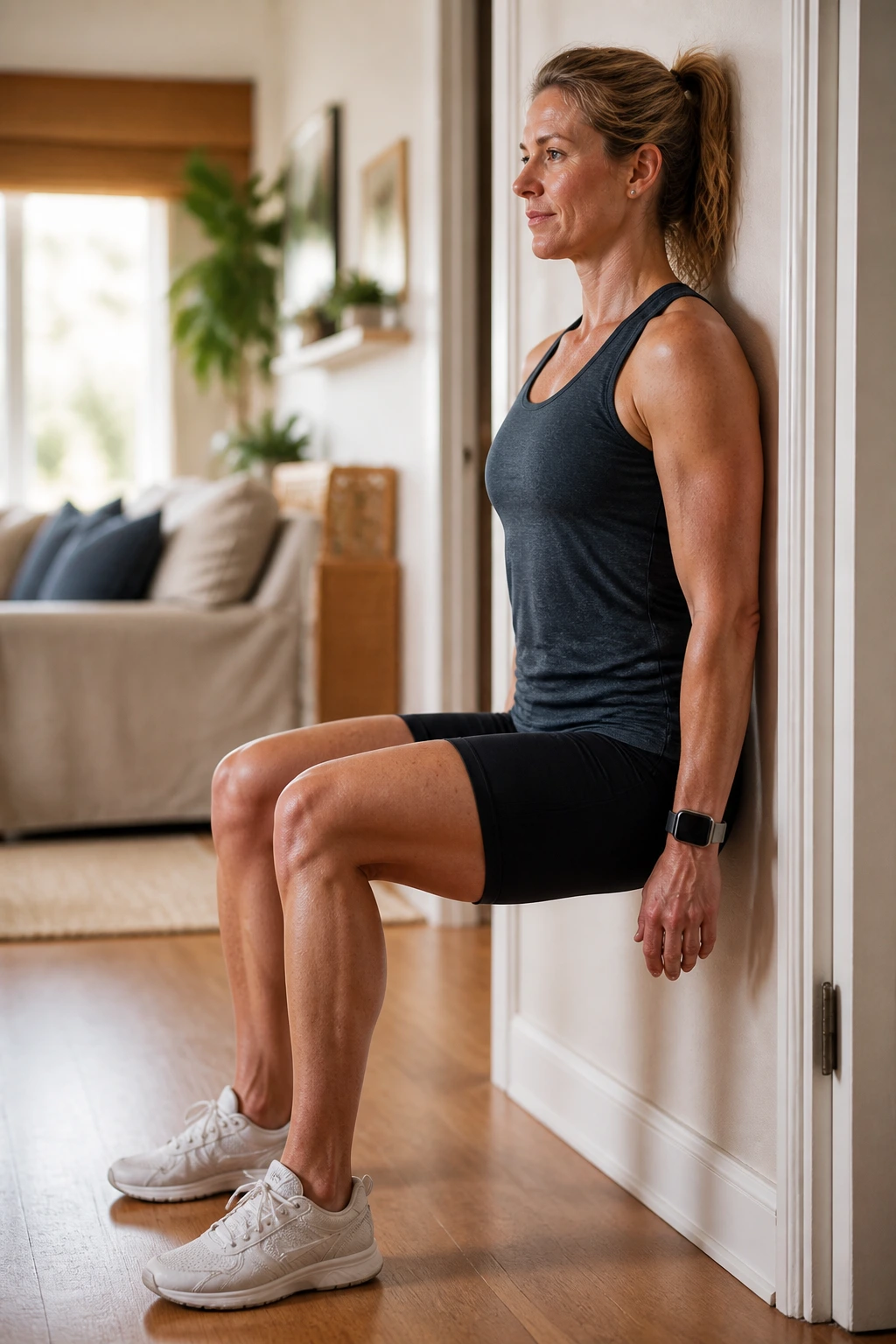
Not every leg workout needs jump squats and deep lunges. Sometimes the knees want steady work, predictable angles, and a little less drama.
Use wall sits, sit-to-stands, short-range split squats, single-leg calf raises, and tibialis raises. Three rounds is enough. Hold the wall sit for 30 to 45 seconds, then do 12 sit-to-stands, 8 short split squats per side, and 15 calf raises per side.
The tibialis raise is the piece people forget. Stand with your back against a wall, feet a few inches out, and lift your toes toward your shins. Small move. Big payoff for ankle control.
18. Back-of-Body Floor Workout
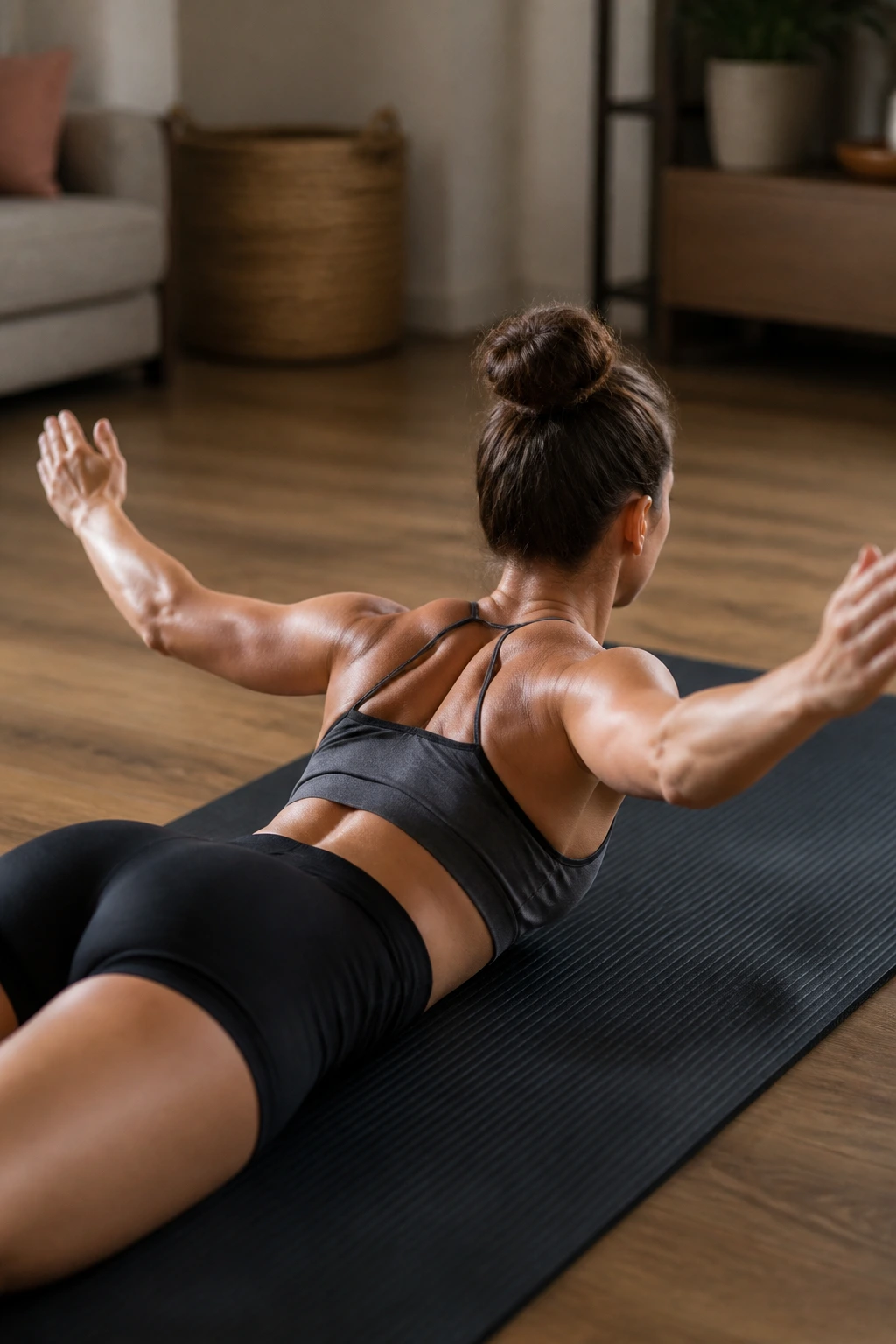
Your upper back should not be a ghost town. If your shoulders round forward all day, floor-based pulling substitutes can at least give those muscles something to do.
Main work
- Prone W raises — 12 reps
- Reverse snow angels — 10 reps
- Superman pulls — 10 reps
- Cobra holds — 20 seconds
- Bird dog reach — 8 reps per side
Run 3 rounds and rest 30 to 45 seconds between moves if needed. Keep your forehead lightly down when you are on the floor, and do not yank your neck into extension. The goal is to feel the muscles between your shoulder blades working, not to crank your lower back into a complaint.
19. Hinge and Hamstring Session
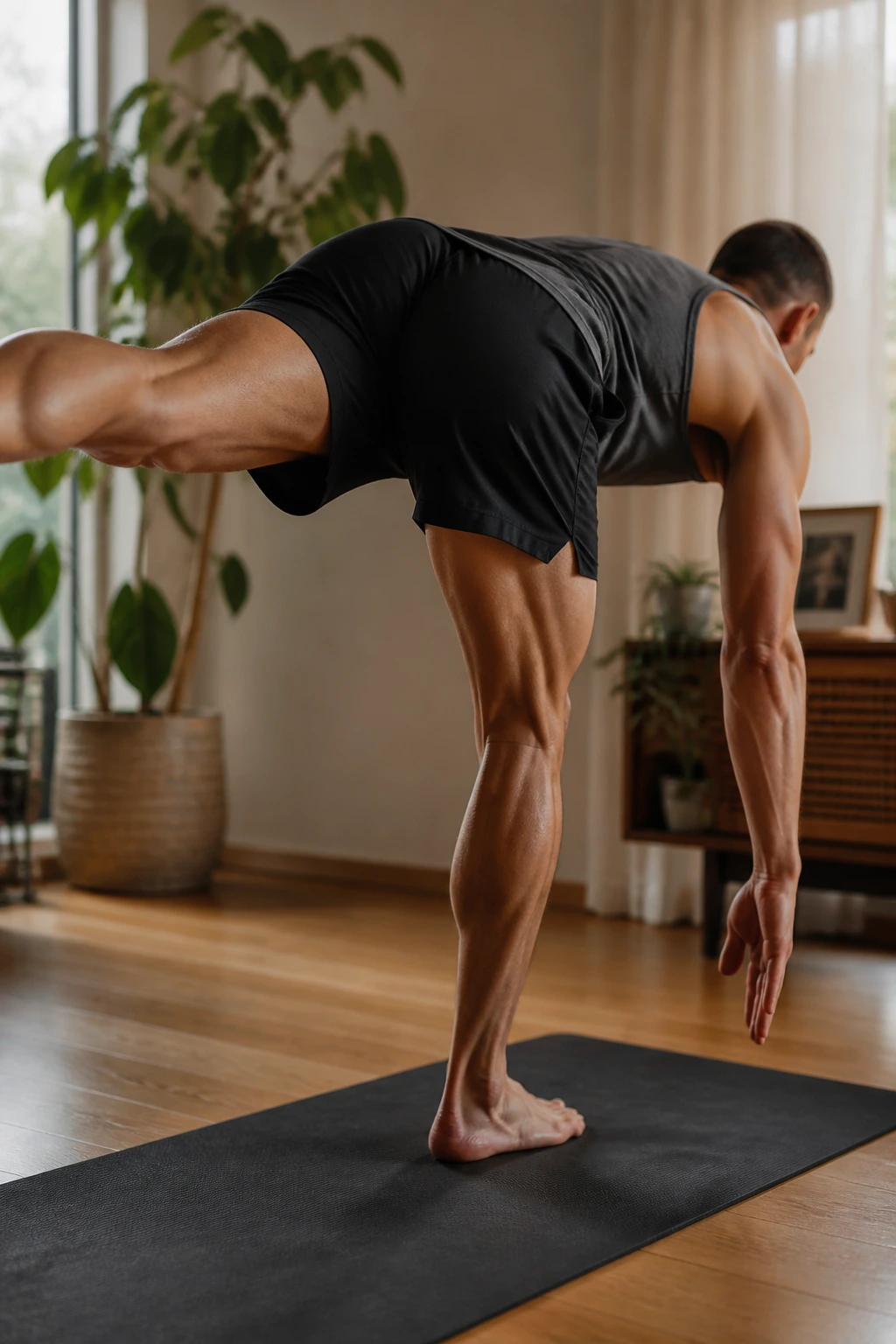
A good hinge pattern does not need weights to matter. It needs control, balance, and a slow load on the back side of the legs. That is enough to expose weak links fast.
Try single-leg RDL reaches, hamstring walkouts, split-stance good mornings, and long-lever glute bridges. Do 8 reps per side on the reaches, 8 walkouts, 12 good mornings, and a 15-second hold on the long-lever bridge. Run 3 rounds.
Keep an eye on this
- Hips stay square
- Standing knee stays soft, not locked
- Back stays long
- Reach happens from the hip, not the lower back
20. One-Side-at-a-Time Total Body
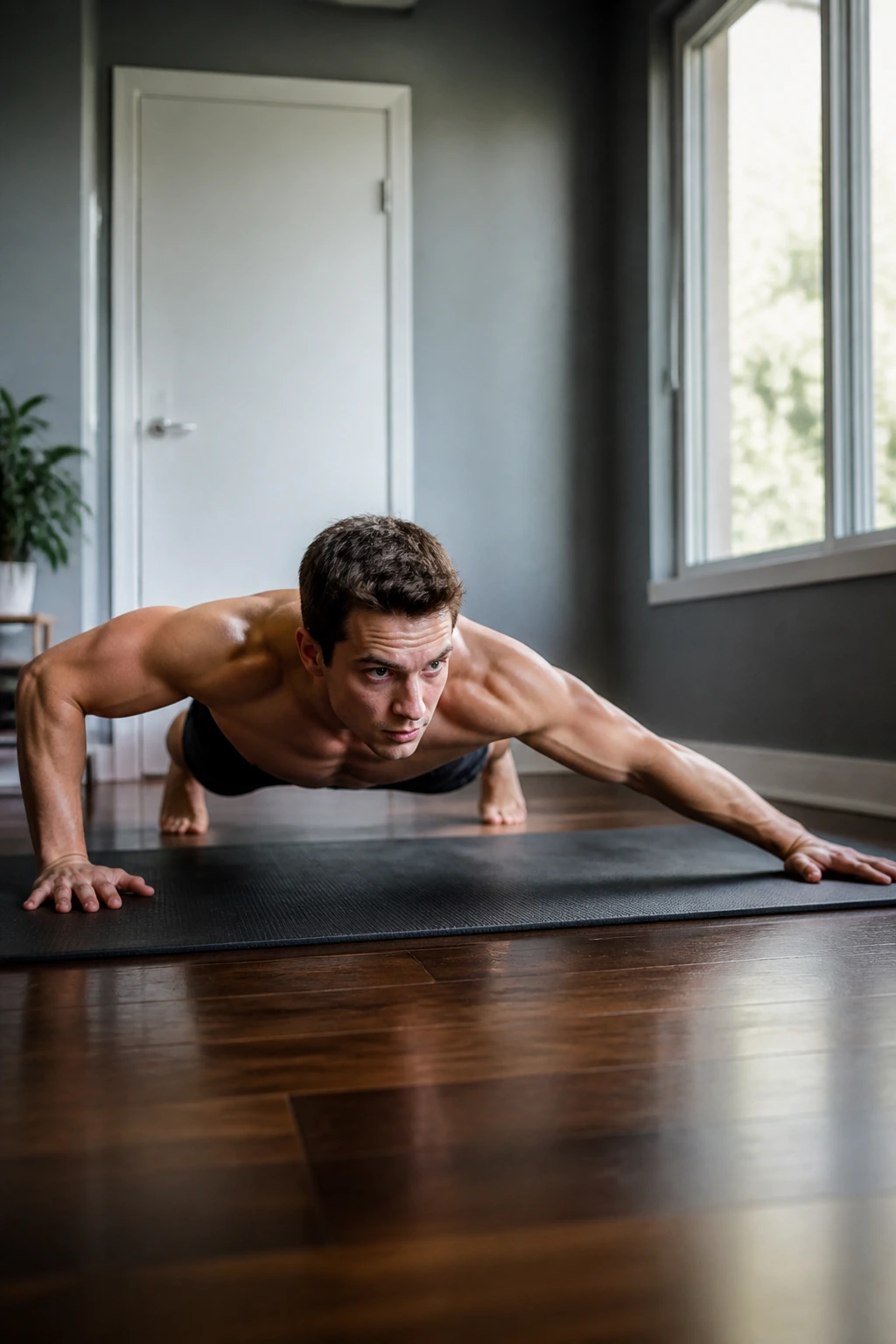
Asymmetry is a sneaky teacher. Once you remove the easy side of the body, you find out where the gaps live.
Do archer push-up progressions, split squats, side planks with reach-throughs, and single-leg glute bridges. Three rounds is plenty. Use 5 reps per side on the push-up pattern, 8 split squats per side, 8 reach-throughs per side, and 10 glute bridges per side.
This workout asks for a little patience on the push-up. If archer push-ups are too far out of reach, widen your hand placement and shift more weight to one side without fully leaving the floor. That still counts.
21. The Hands-Behind-Head Circuit
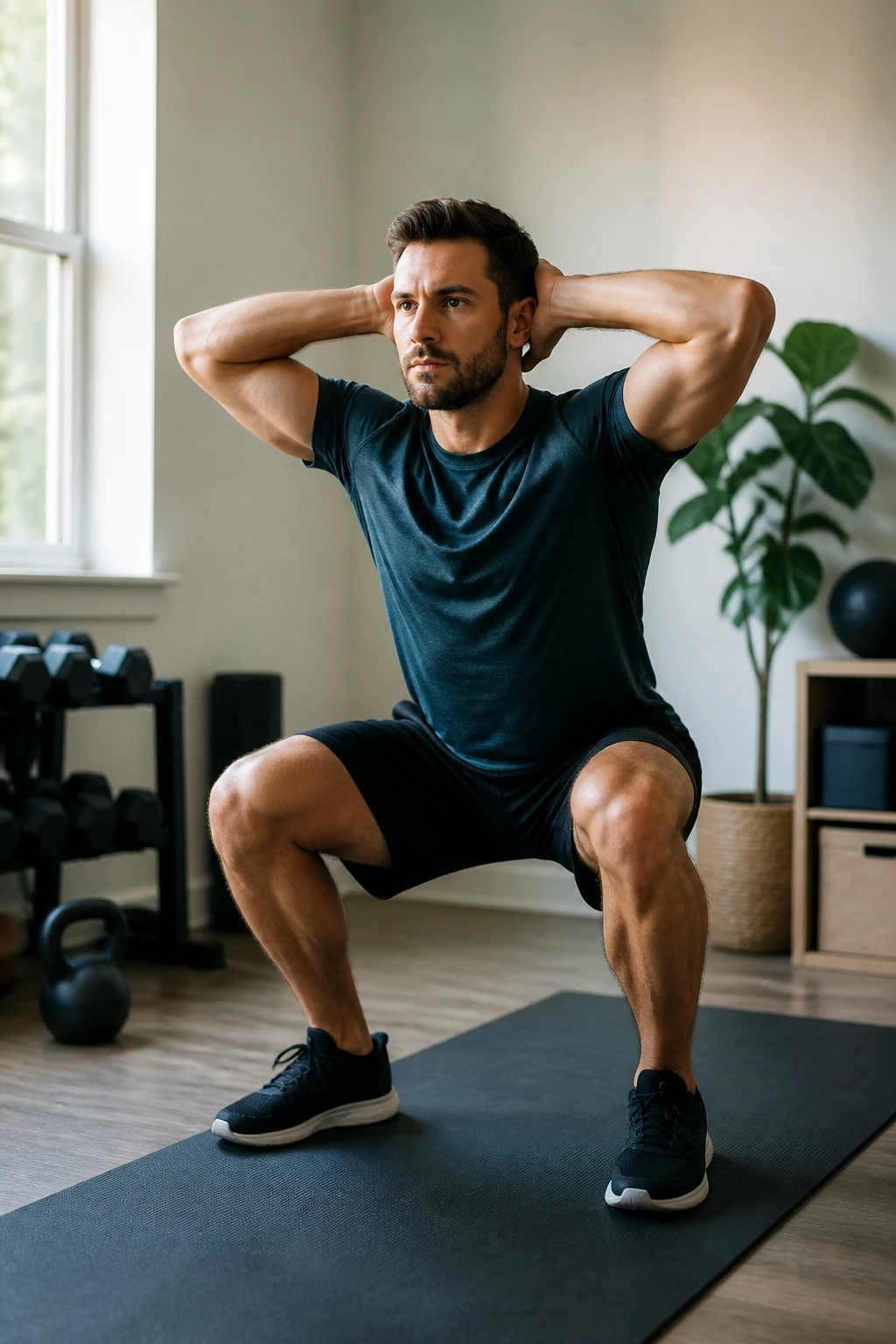
This one looks almost old-school, and I mean that in a good way. The hands-behind-head position keeps your chest open and your torso upright, which makes the lower-body work feel cleaner.
Circuit
- Hands-behind-head squats — 15 reps
- Reverse lunges — 8 reps per side
- Side lunges — 8 reps per side
- Deep squat hold — 30 seconds
- Calf raises — 20 reps
Run it for 3 to 4 rounds. Keep your elbows wide and your ribs stacked over your hips. If you lean forward too much, the position loses its point. This is a posture-first leg session, and that little detail changes how it lands.
22. Seven-Move Strength Complex
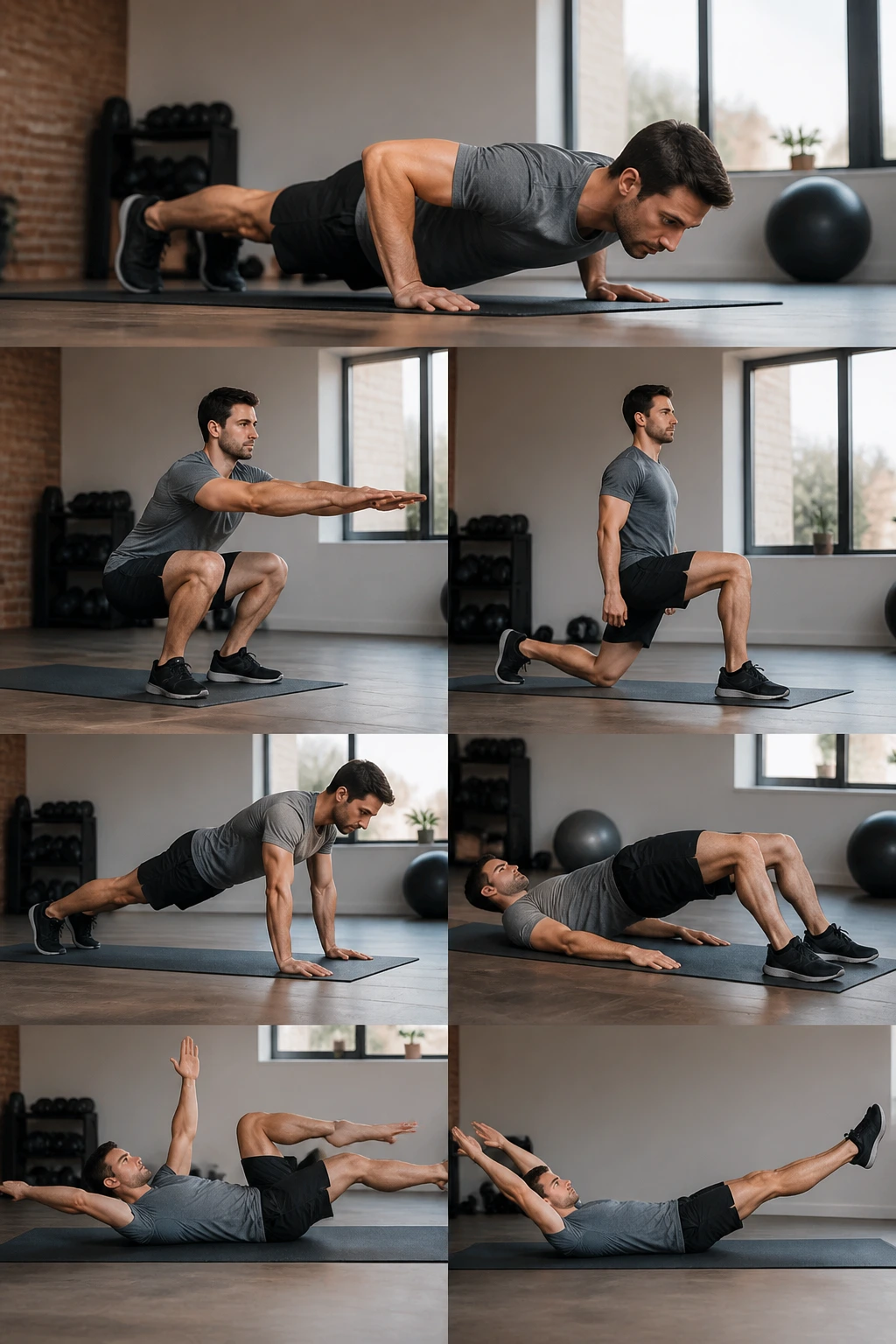
Complexes are useful because they make you work without much dead time. One move rolls into the next, and by the end you realize your whole body has been busy for longer than it felt.
Do one round of 5 push-ups, 10 squats, 6 reverse lunges per side, a 20-second plank, 10 glute bridges, 8 dead bugs per side, and a 20-second hollow hold. Rest 90 seconds, then repeat for 3 rounds.
Why this one sticks
It covers push, legs, core, and posterior chain in one clean loop. If you only have enough energy for one hard session after a long day, this is a strong pick.
23. The 8-Minute Micro Workout
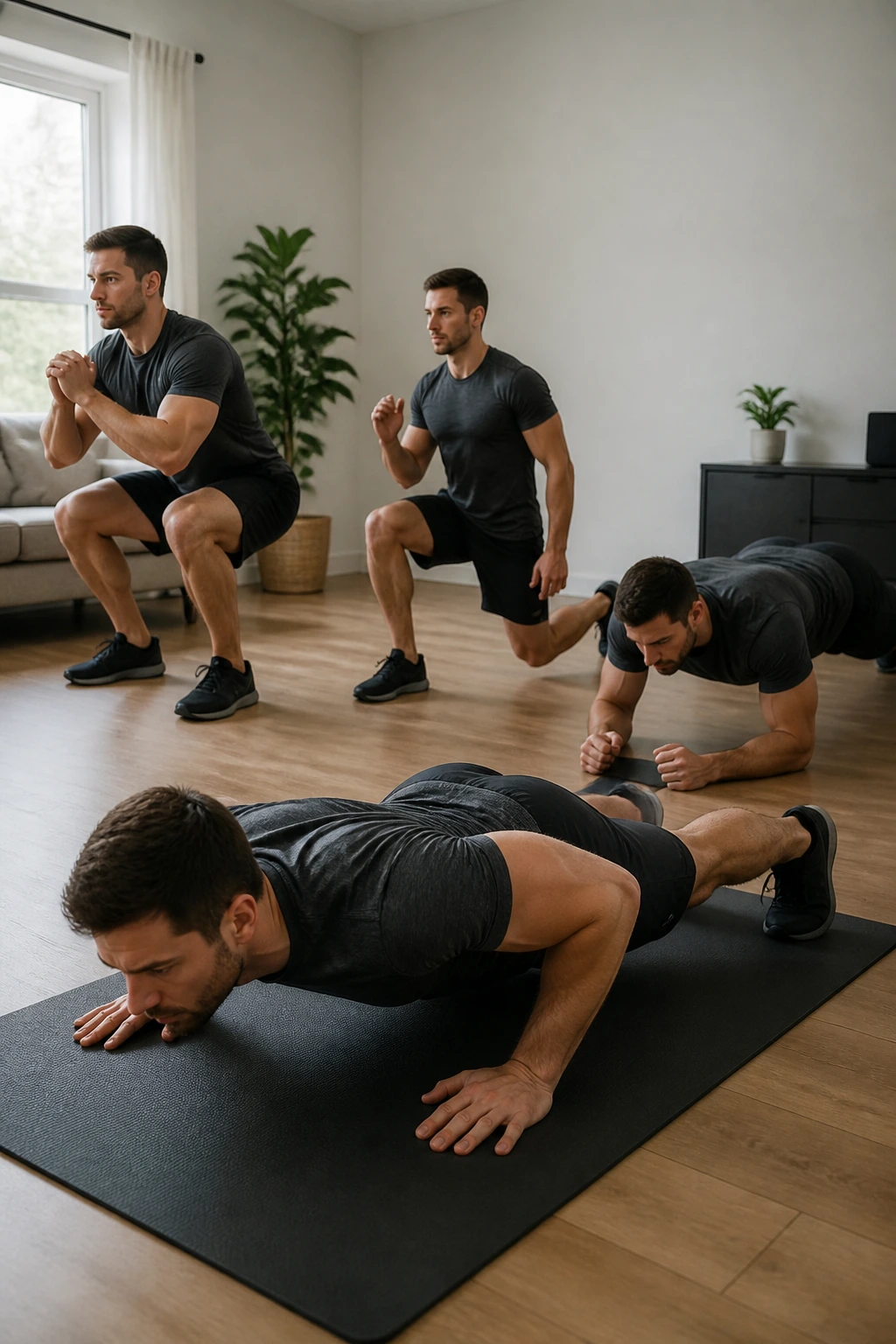
Short workouts get dismissed too fast. Eight focused minutes can do more for consistency than a perfect plan you never open.
Use 20 seconds of work and 10 seconds of rest for push-ups, squats, alternating lunges, and plank holds. Run the four moves twice through for a total of 8 minutes. Keep the reps crisp and stop each set a rep before ugly form shows up.
This is a good one for lunch breaks or the awkward half-hour between work and dinner. No warm-up circus, no equipment hunt, no excuses about time.
24. Side-Body Strength Session
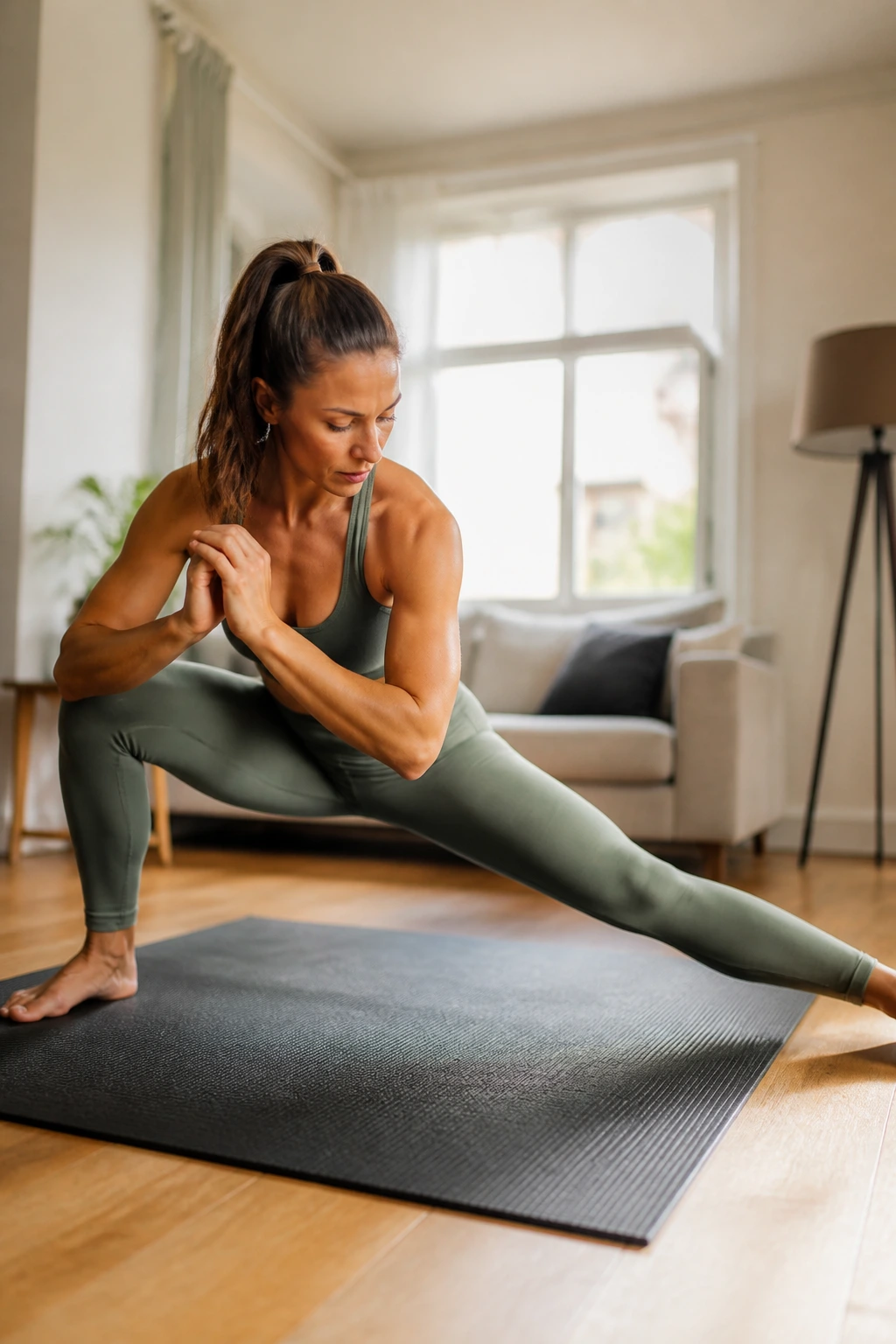
Most people think about front-to-back strength and forget the sides. Bad idea. Your obliques, glute medius, and inner thighs matter more than they get credit for.
Do cossack squats, side planks, curtsy squats, star planks, and lateral squat walks. Three rounds works well. Use 6 cossack squats per side, 20-second side planks, 10 curtsy squats per side, and 15-second star plank holds.
The side lunge patterns can feel awkward the first time. That is normal. Stay low, keep one foot planted, and let the working hip do the job instead of twisting out of it.
25. Anti-Rotation Core Workout
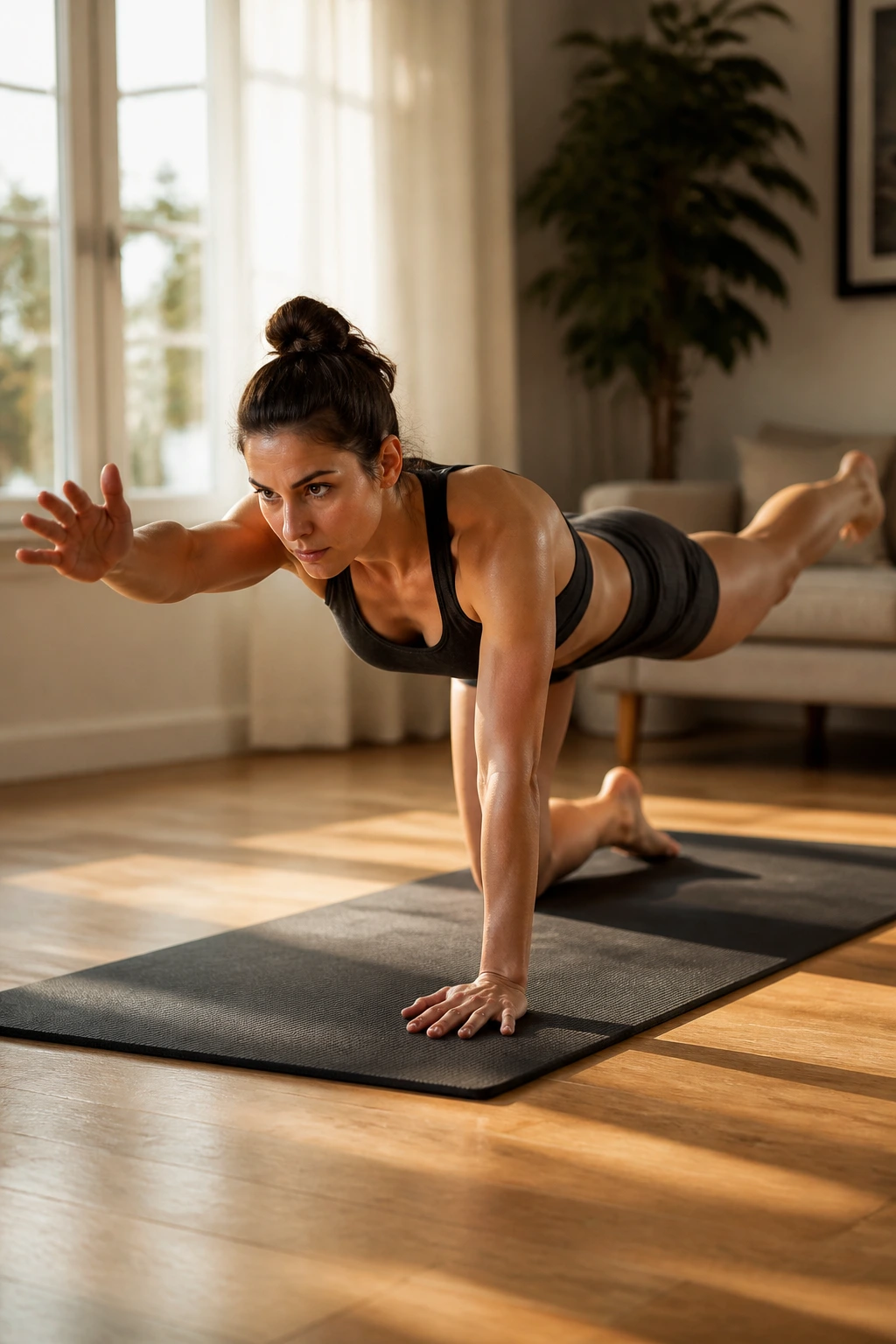
A strong core resists movement. That is the bit people skip when they chase burn for the sake of burn. Anti-rotation work teaches you to stay still when the rest of the body wants to wiggle.
Main sequence
- Bird dog with a 3-second pause — 8 per side
- Plank shoulder taps — 20 total
- Dead bug reach — 8 per side
- Standing cross-body knee drive hold — 8 per side
- Side plank — 25 seconds per side
Move slowly and keep your hips level. If the plank shoulder taps make your pelvis sway, widen your feet. That small adjustment usually fixes more than extra effort does.
26. Advanced Push-Up Variations

This is the day for people who have outgrown standard push-ups and want something sharper. You can only milk the basic version for so long before your body stops paying attention.
Use archer push-ups, pause push-ups, pseudo planche lean push-ups, and one-and-a-half reps. Do 4 sets of each movement, resting 90 seconds between sets. Start with 4 to 6 reps on the harder patterns and 6 to 8 on the pause work.
A simple rule
If your lower back starts sagging, the set is over. The lean, the pause, and the extra half rep only count when your body stays tight. Messy advanced push-ups are just noisy regular push-ups.
27. Mobility-Strength Blend
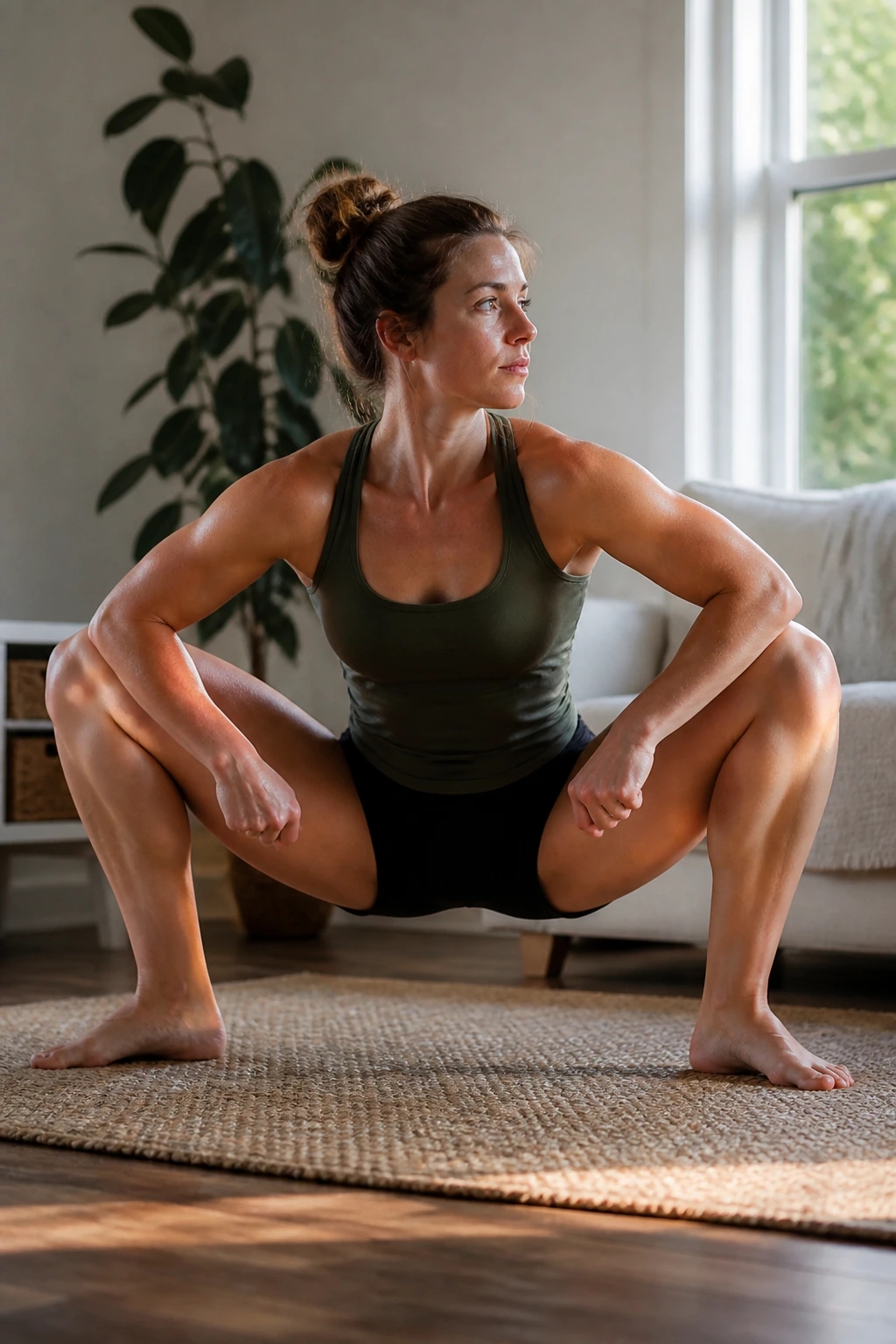
You do not always need a brutal session. Sometimes the smarter move is a workout that opens your hips, loads your legs, and leaves you moving better than you started.
Run deep squat pries, cossack squats, push-up to downward dog, lunge with rotation, and glute bridges for 3 rounds. Hold the deep squat pry for 30 seconds, then use 6 reps per side on the cossacks and lunges, and 10 to 12 glute bridges.
This one feels especially good after a long stretch of sitting. The trick is not rushing through the mobility parts. Sink into them. Breathe. Then make the strength reps count.
28. Low-Impact Strength Conditioning
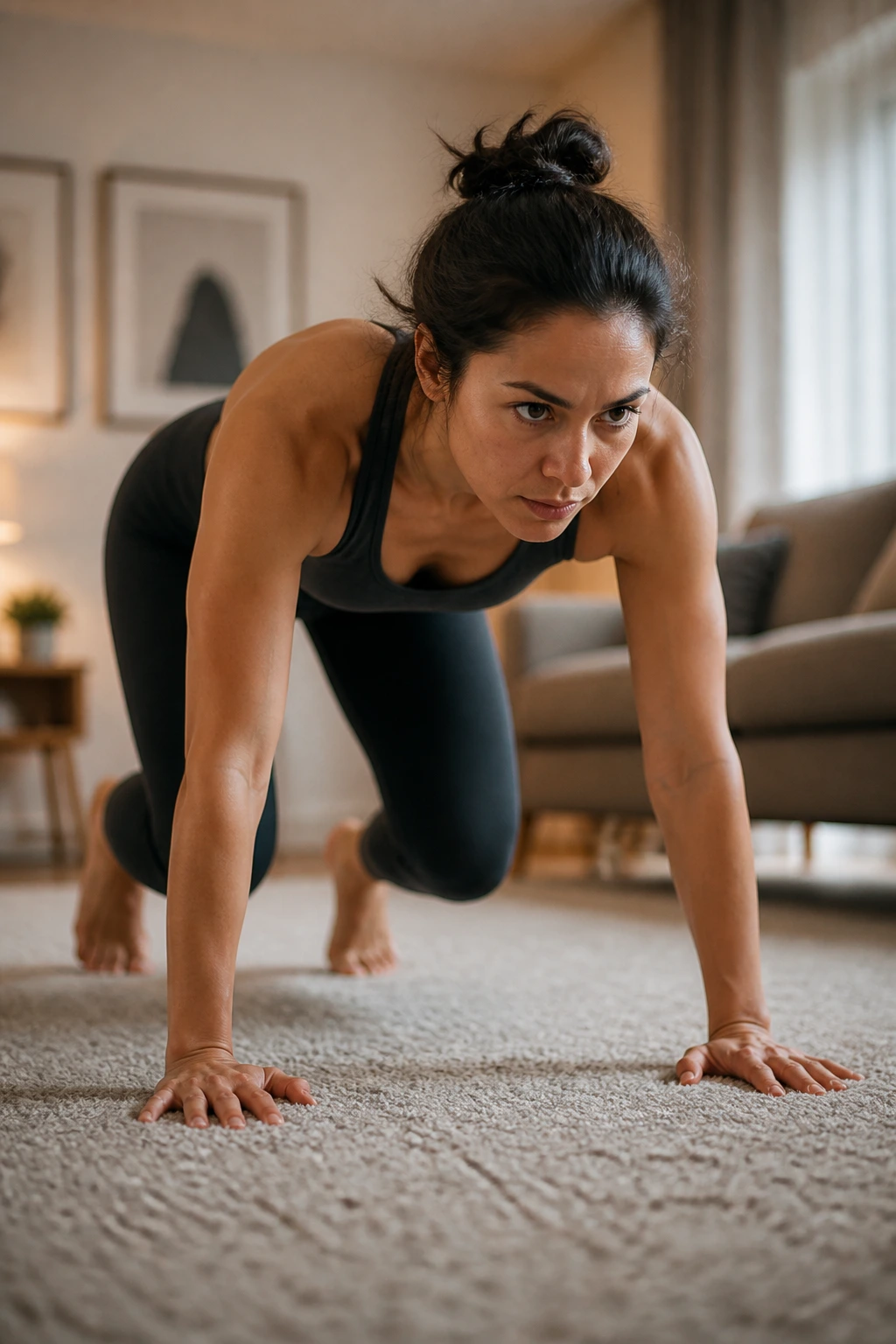
Some days you want work, but not impact. No jumps. No pounding. Just enough pace to make your lungs notice while the muscles still do the heavy lifting.
Circuit
- March in place with knee drive — 30 seconds
- Squat to knee raise — 10 reps per side
- Bear hover — 20 seconds
- Step-back lunge — 10 reps per side
- Rest — 30 seconds
Do 4 rounds. Keep the marching controlled and the bear hover tight. This is a good option when you want a home workout that feels active without rattling the floor or your joints.
29. Recovery Strength Flow
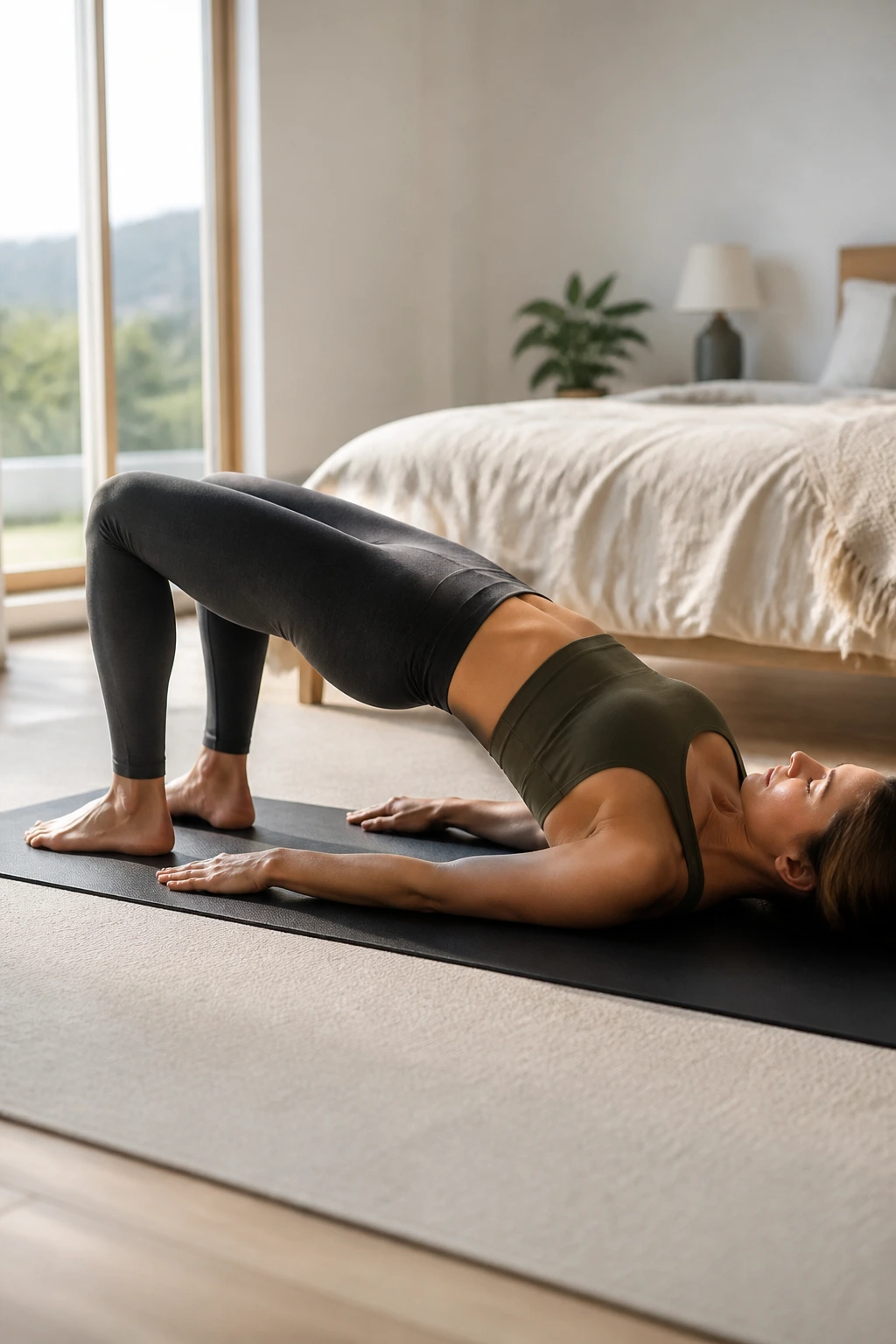
Recovery does not have to mean doing nothing. A light strength flow can wake up sleepy muscles without poking the bear. Useful on the day after a hard session, or honestly, any day your body feels stale.
Use child’s pose to plank transitions, glute bridge holds, bird dogs, supported deep squat holds, and wall sits. Keep each hold around 20 to 30 seconds and move through 2 or 3 rounds at an easy pace.
A recovery session should leave you looser, not drained. If you are breathing hard by the end, you pushed too far. Back off a little, keep the positions clean, and let the work feel restorative.
30. The Workout I’d Put on Repeat
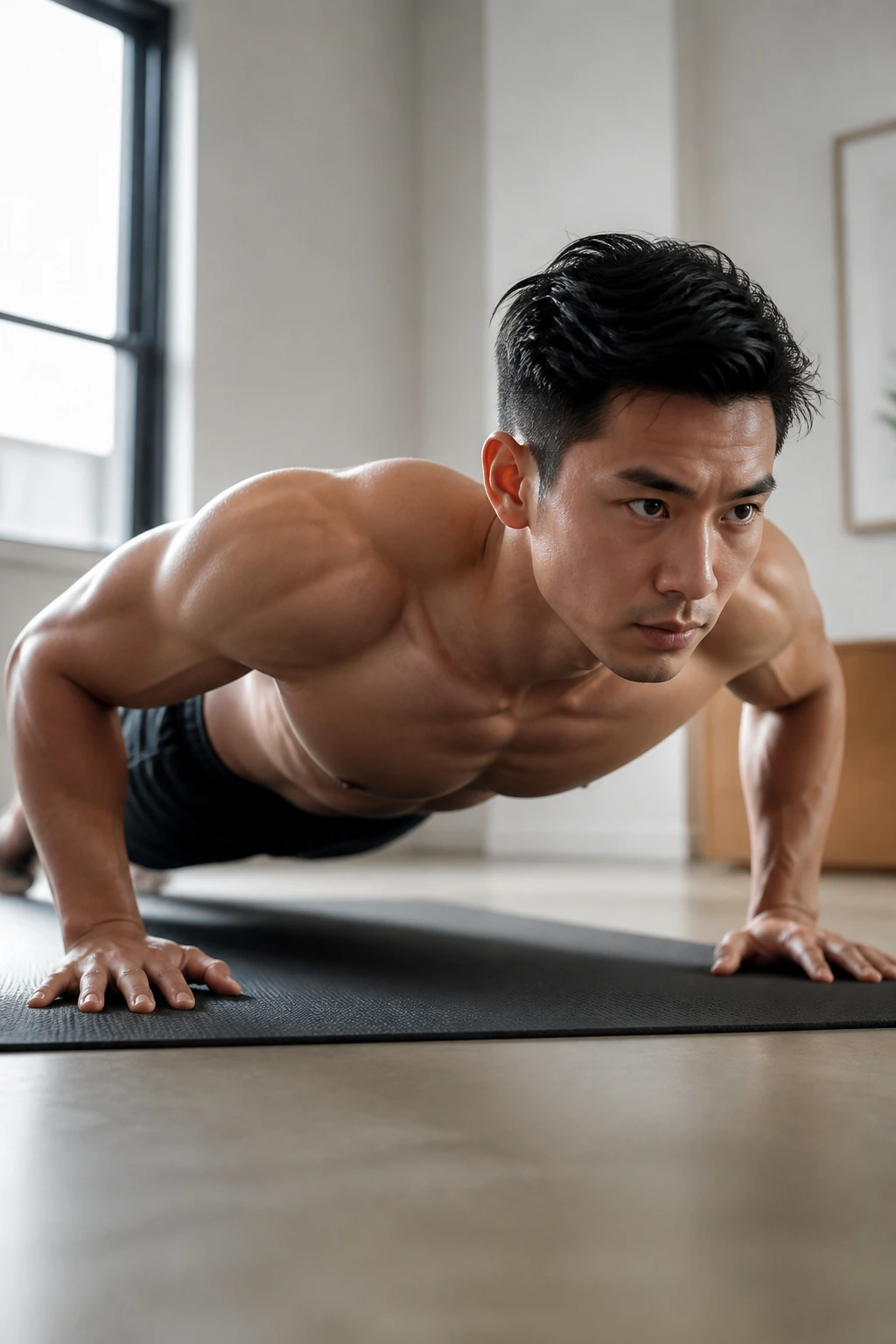
If you only want one home strength session that covers the bases without getting clever, this is the one. It is balanced, straightforward, and hard enough to matter.
Do push-ups, split squats, hollow holds, glute bridges, and prone cobra holds for 3 rounds. Use 8 push-ups, 10 split squats per side, a 20-second hollow hold, 15 glute bridges, and a 20-second prone cobra. Rest 60 to 90 seconds between rounds.
That mix hits the chest, legs, core, and back without dragging the workout into nonsense. Simple is not the same as easy. On a busy week, this is the session I would reach for first, because it does the job and does not waste your time.
