



If you’ve ever finished a set of curls and felt your shoulders working harder than your arms, you’re not doing anything unusual. You’re just seeing how easy it is to cheat on bicep work when the weight is light, the room is small, and there’s no trainer standing over your shoulder.
Bicep workouts for women at home do not need a big setup. A pair of dumbbells, a resistance band, a backpack full of books, or even a sturdy table can give your arms real work if you choose the right movement and keep your form honest. The biceps are small muscles, but they are picky. They respond best to clean reps, controlled lowering, and enough resistance that the last two reps feel like they matter.
One thing gets missed a lot: your arms do not change much if every curl looks the same. A straight curl, a neutral-grip curl, a slow negative, an isometric hold, and a compound pull all stress the biceps a little differently. That mix matters more than people think. Clean reps. Better tension. Less swinging.
1. Standing Dumbbell Curl
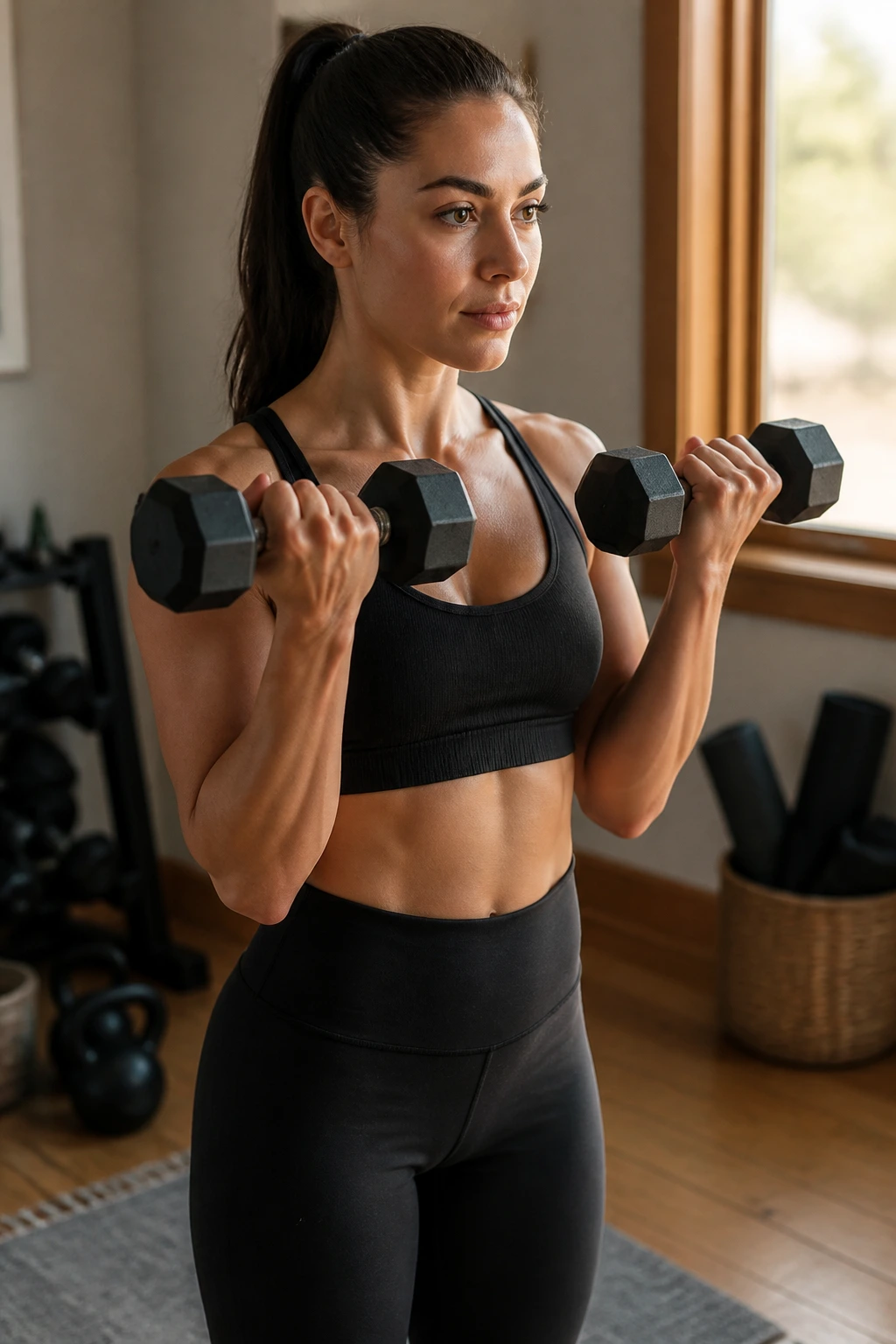
A standing dumbbell curl is the plain black T-shirt of biceps training. Nothing flashy. Still one of the best places to start.
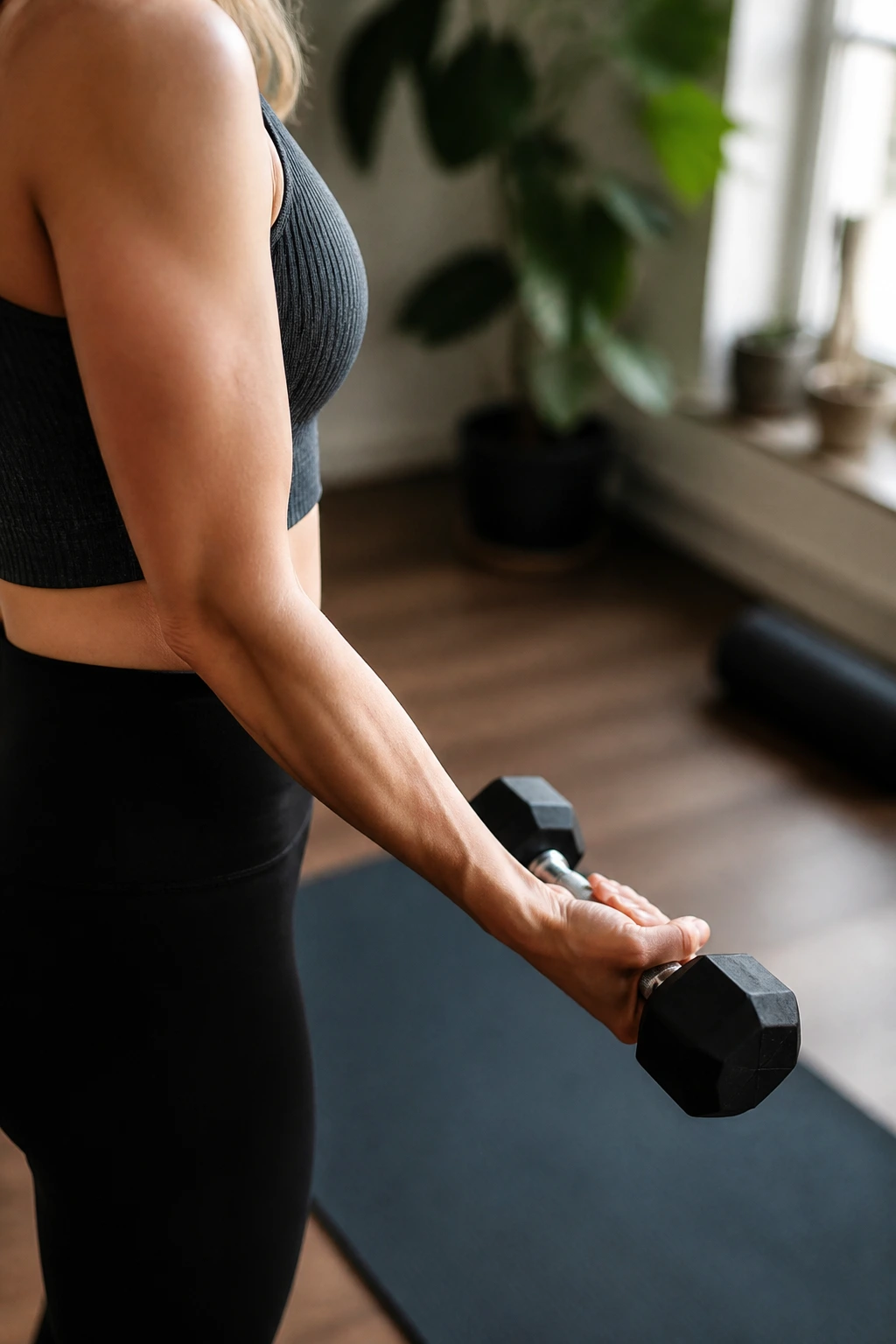
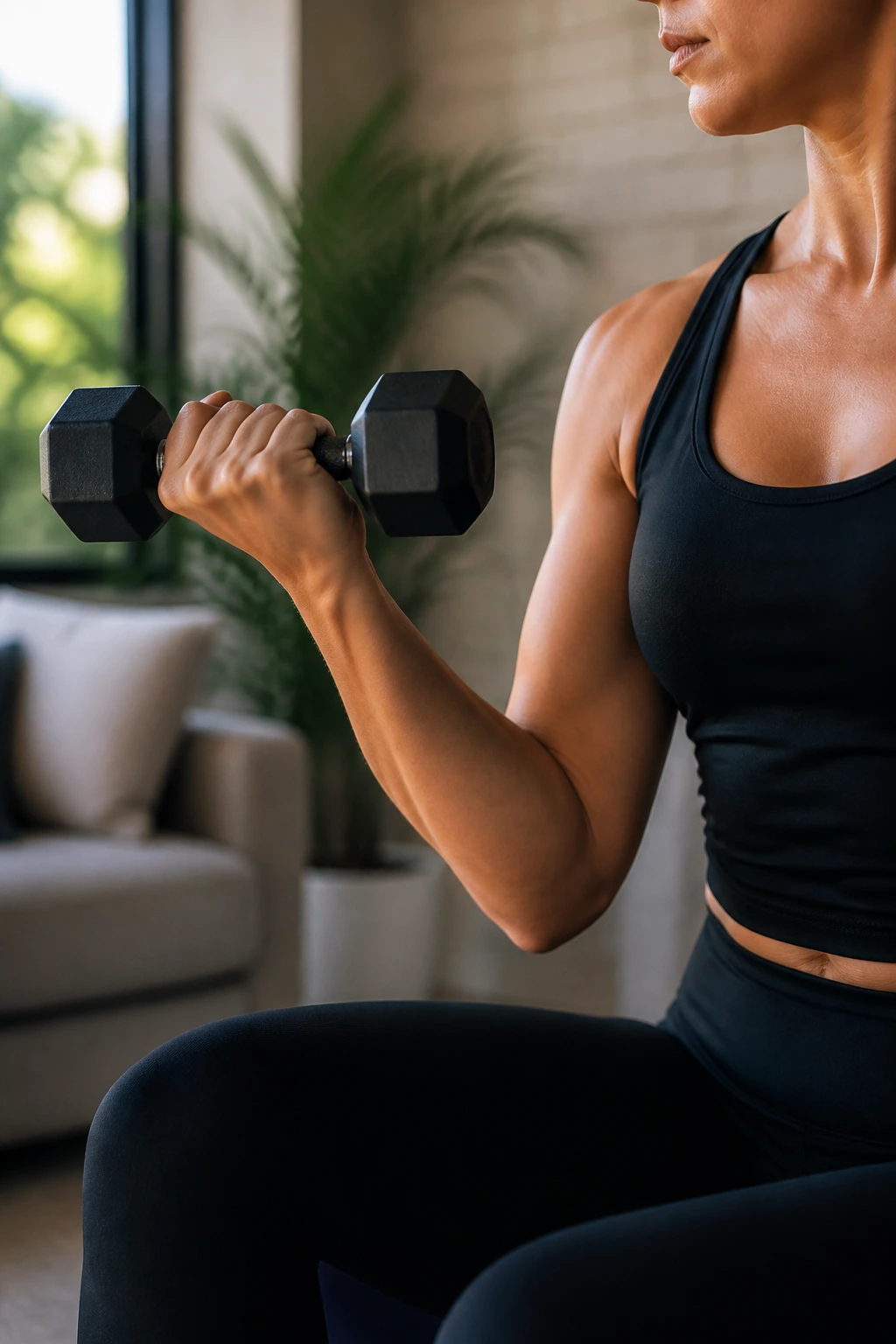
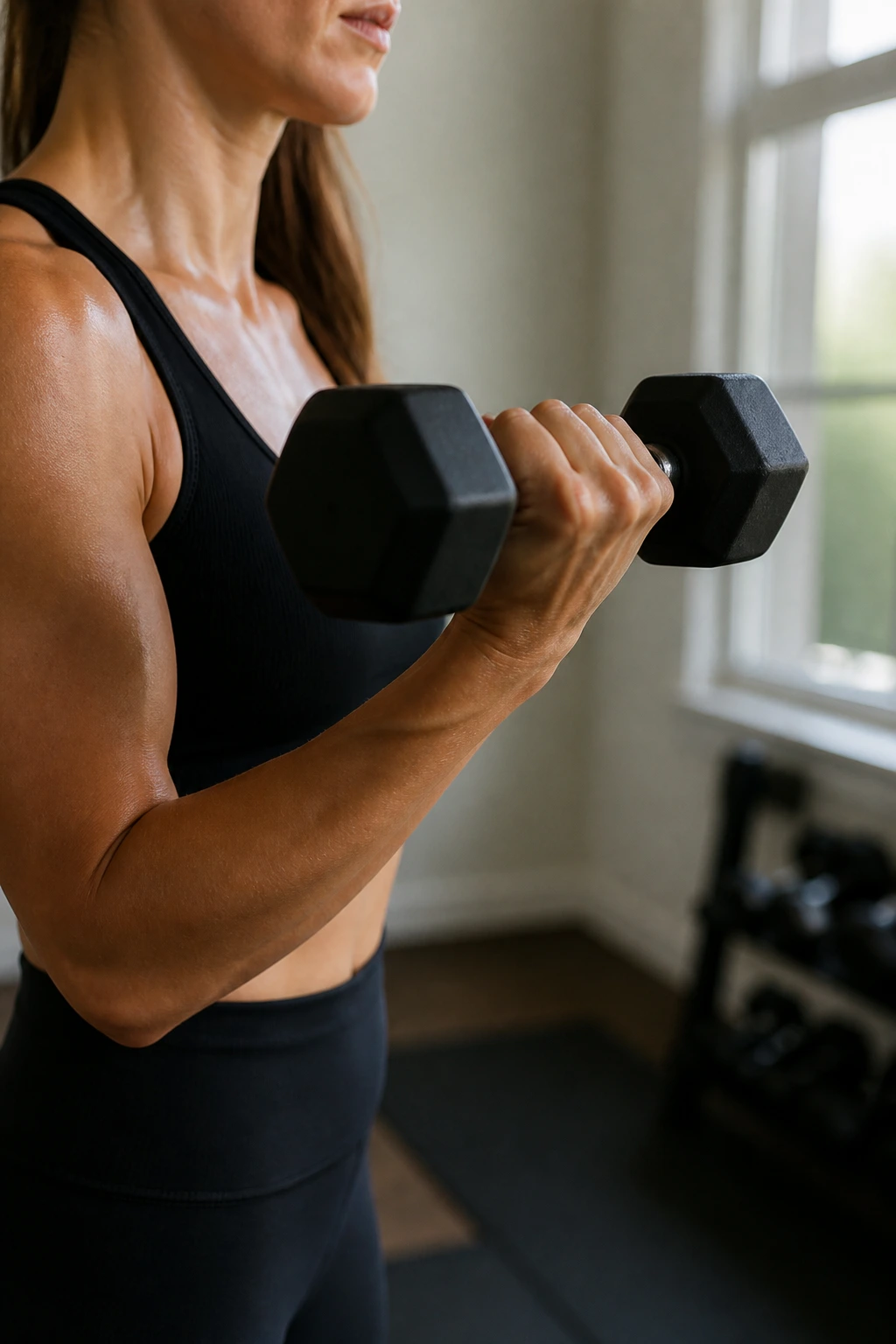
Hold a dumbbell in each hand with your palms facing forward, ribs stacked over your hips, and elbows tucked close to your sides. Curl both weights up for 8 to 12 reps, pause for half a second near the top, then lower them for a slow count of 2 to 3 seconds. If your shoulders roll forward or your lower back arches, the weight is too heavy.
Keep your wrists straight. That tiny detail matters more than most people expect. A bent wrist steals work from the biceps and dumps it into your forearms.
What makes it worth doing
The standing curl lets you feel the full arc of the movement. You can watch your form in a mirror, slow the lowering phase, and learn the difference between a real rep and a half-cheated one. That kind of feedback is gold when you train at home.
If you only have one pair of dumbbells, this is the move I’d keep first. It’s simple, easy to load, and easy to judge. If the last rep still looks tidy, add a rep next set or shorten rest to 45 seconds.
2. Alternating Dumbbell Curl
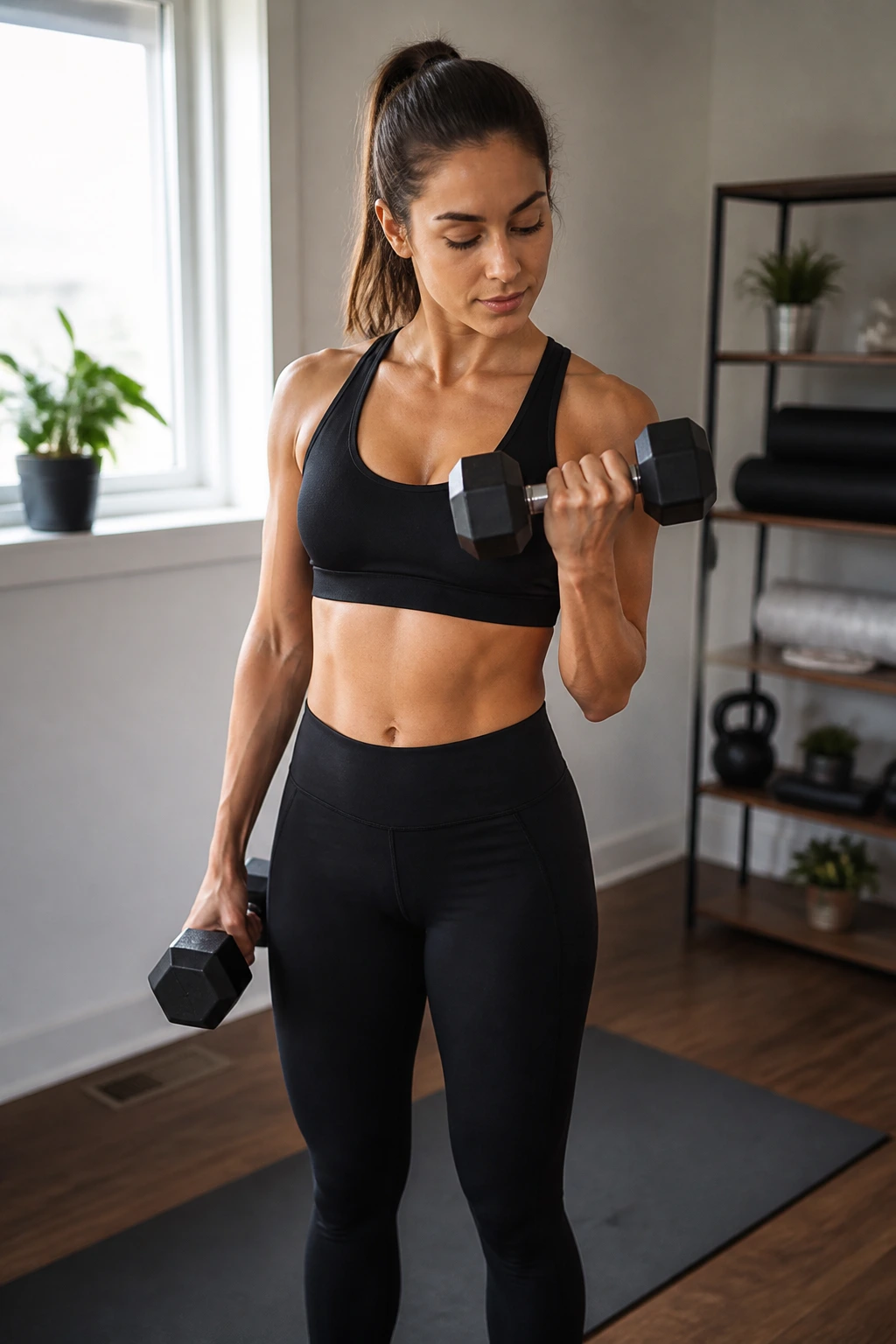
One arm at a time changes the whole mood of the lift. It sounds small, but it isn’t.
With alternating curls, you curl the right arm while the left arm waits, then switch. That little pause keeps you from rushing, and it makes cheating more obvious. Aim for 3 sets of 8 to 10 reps per arm. Stand tall and let the non-working arm stay relaxed, not clamped to your side like it’s bracing for impact.
Why one-arm work helps
Unilateral work exposes weak spots fast. If your right side starts swinging or your left side loses shape at rep seven, you’ll notice immediately. That’s useful. Annoying, yes. Useful, too.
I also like alternating curls for people who train in a cramped room and don’t have much space to move. You only need enough room for one arm path. No bench. No complicated setup. Just a clean curl and a little patience.
Do not lean back to help the weight up. If you need momentum, you need less load.
3. Hammer Curl
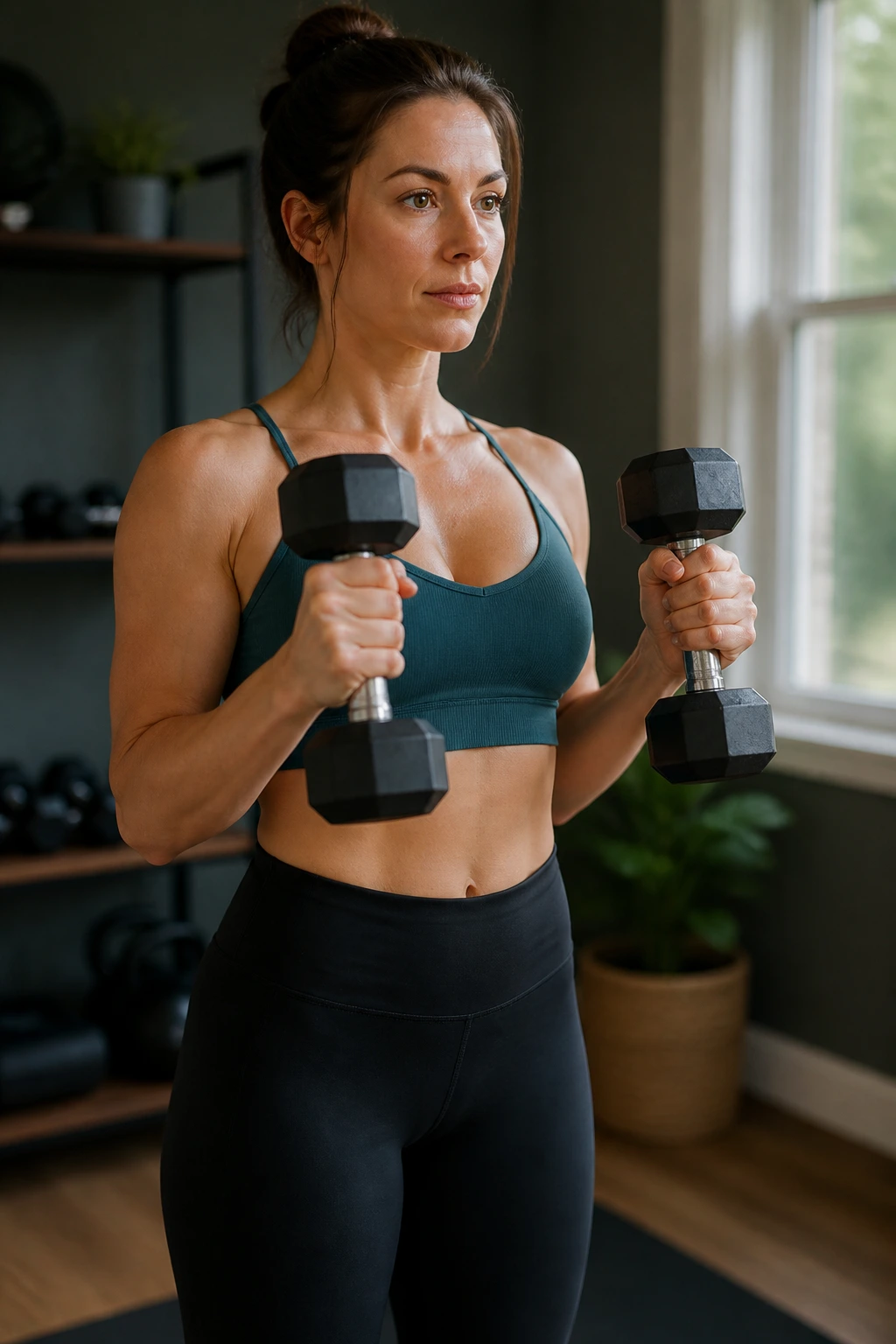
Hammer curls are the shoulder-friendly cousin of the regular curl, and I mean that in the best possible way.
Hold the dumbbells with your palms facing your thighs, then curl them up in the same neutral grip. The movement should feel smooth from bottom to top, with your elbows staying near your ribs. Use 3 to 4 sets of 10 to 12 reps and keep the lowering phase controlled.
Hammer curls hit the brachialis and brachioradialis hard, which is a fancy way of saying they help build the sides and lower edge of the upper arm. That can make the arm look fuller, even if the biceps themselves are not doing every bit of the work.
A small but important detail
If straight curls make your wrists cranky, hammer curls are often the fix. The neutral grip is easier on a lot of people, and it tends to feel more natural when the weights get a little heavier.
They also pair well with other moves. A set of hammer curls after regular curls gives the arm a different stress, and your forearms will notice it. So will your grip.
4. Cross-Body Hammer Curl
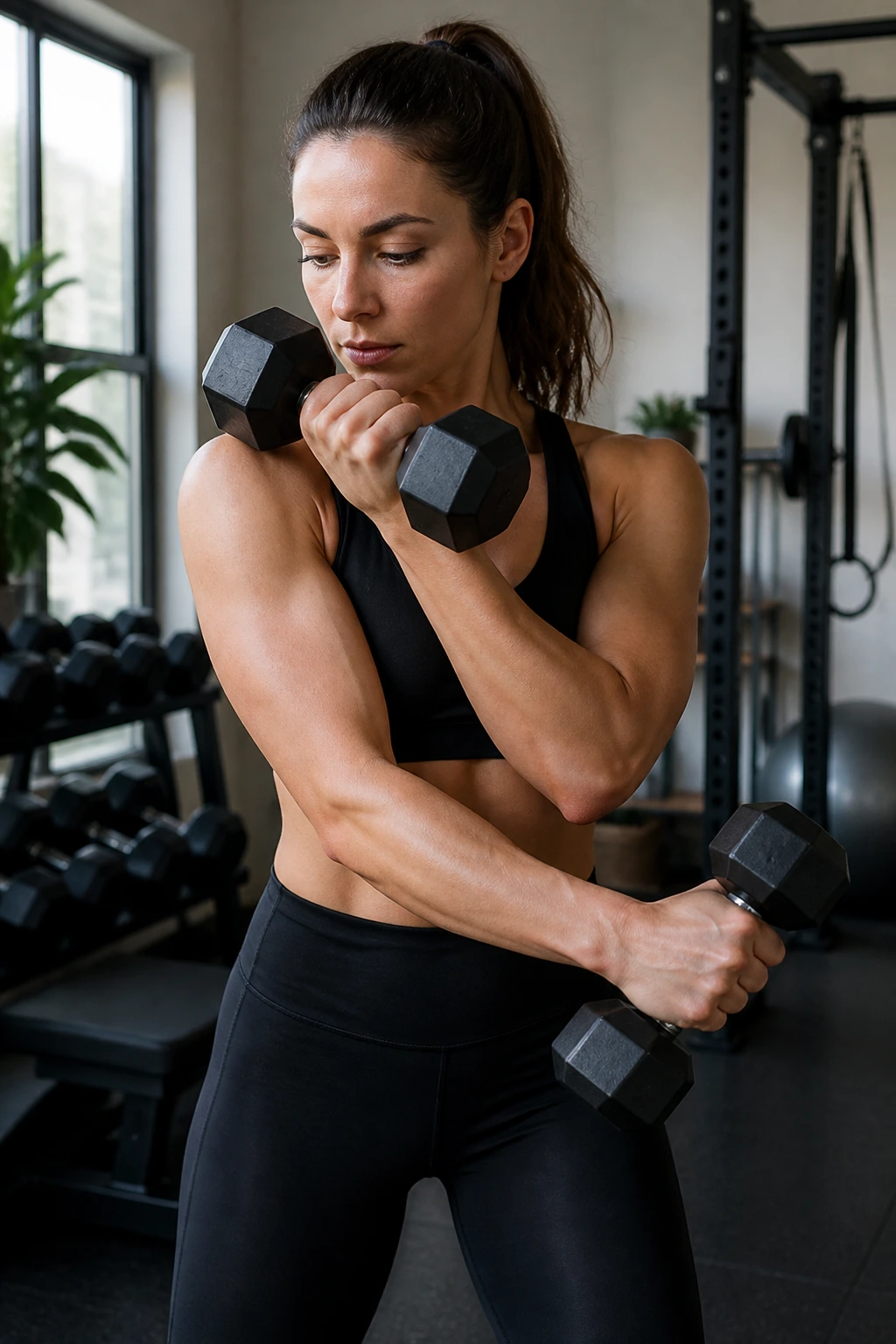
This one looks almost the same as a hammer curl until you start moving.
Instead of curling straight up, bring each dumbbell across your body toward the opposite shoulder. Your right hand moves toward your left pec, and your left hand moves toward your right pec. Use 3 sets of 8 to 10 reps per side and keep the motion tight. No flinging the elbow across your chest.
Why bother? Because the angle changes the pull. It shifts the load a bit and makes each rep feel more deliberate, especially when you lower the weight slowly. The arm path also discourages the wild elbow flare that can creep into home workouts.
If you want a small challenge without needing heavier dumbbells, this is a smart place to go. Same equipment. Different feel.
Squeeze at the top for one second. Not five. One is enough. You’re trying to keep the rep honest, not turn it into a statue contest.
5. Concentration Curl
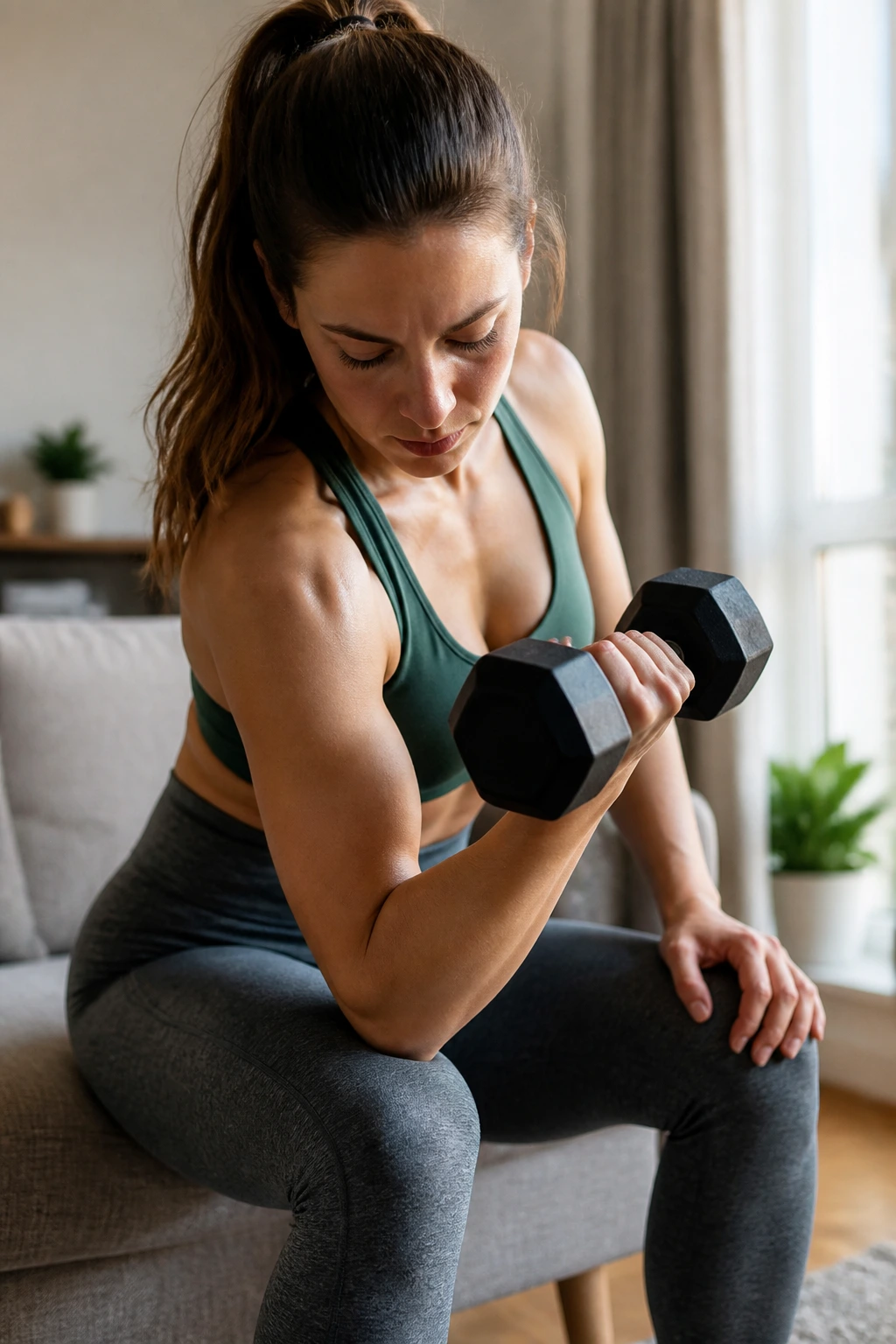
Concentration curls are brutal in a quiet way. They don’t look dramatic, which is part of the charm.
Sit on a chair or couch, brace your elbow against the inside of your thigh, and curl a dumbbell slowly toward your shoulder. Keep your upper arm planted. That fixed elbow makes it much harder to cheat. Try 3 sets of 10 to 15 reps on each side, using a weight that feels lighter than your standing curl load.
What makes it different
The point here is strict isolation. You’re not using body sway, shoulder swing, or momentum to get the dumbbell moving. The arm does the work, and the arm knows it.
This is the kind of move that exposes sloppy form fast. If you rush it, the rep loses all its value. If you pause for a beat at the top and lower the weight slowly, the biceps light up in a way that surprises people the first time.
A concentration curl is also nice when you want a little more mind-muscle connection. That phrase gets overused, but here it actually fits.
6. Resistance Band Curl
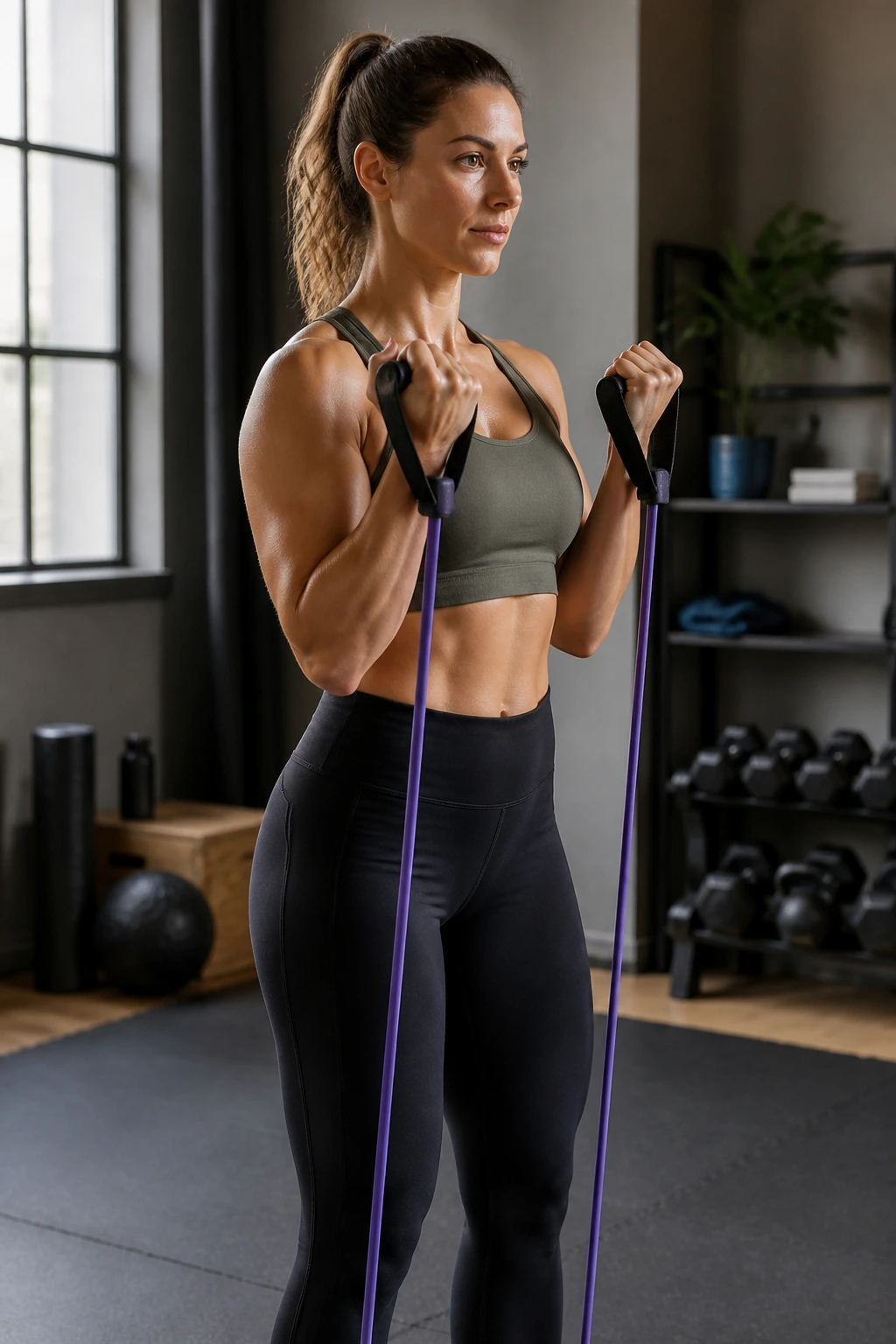
A loop band can be meaner than it looks. That constant tension is no joke.
Stand on the band with both feet, grab the handles or the band ends, and curl your hands toward your shoulders. Keep the band tight even at the bottom so you never lose tension completely. Work for 3 sets of 12 to 20 reps, which usually feels better with bands than it does with dumbbells.
How to set it up
- Step wider if the band feels too easy.
- Step narrower if the top of the curl turns into a shoulder shrug.
- Use a slower lower, about 3 seconds down.
- Stop if the band snaps or feels frayed.
Bands are great at home because they’re quiet, cheap, and easy to pack away. They also make the top of the curl harder, which is where a lot of dumbbell reps get lazy. That top squeeze can humble you fast.
If your room is small or your neighbors hate thumping weights, this is one of the smartest moves on the list.
7. Band 21s
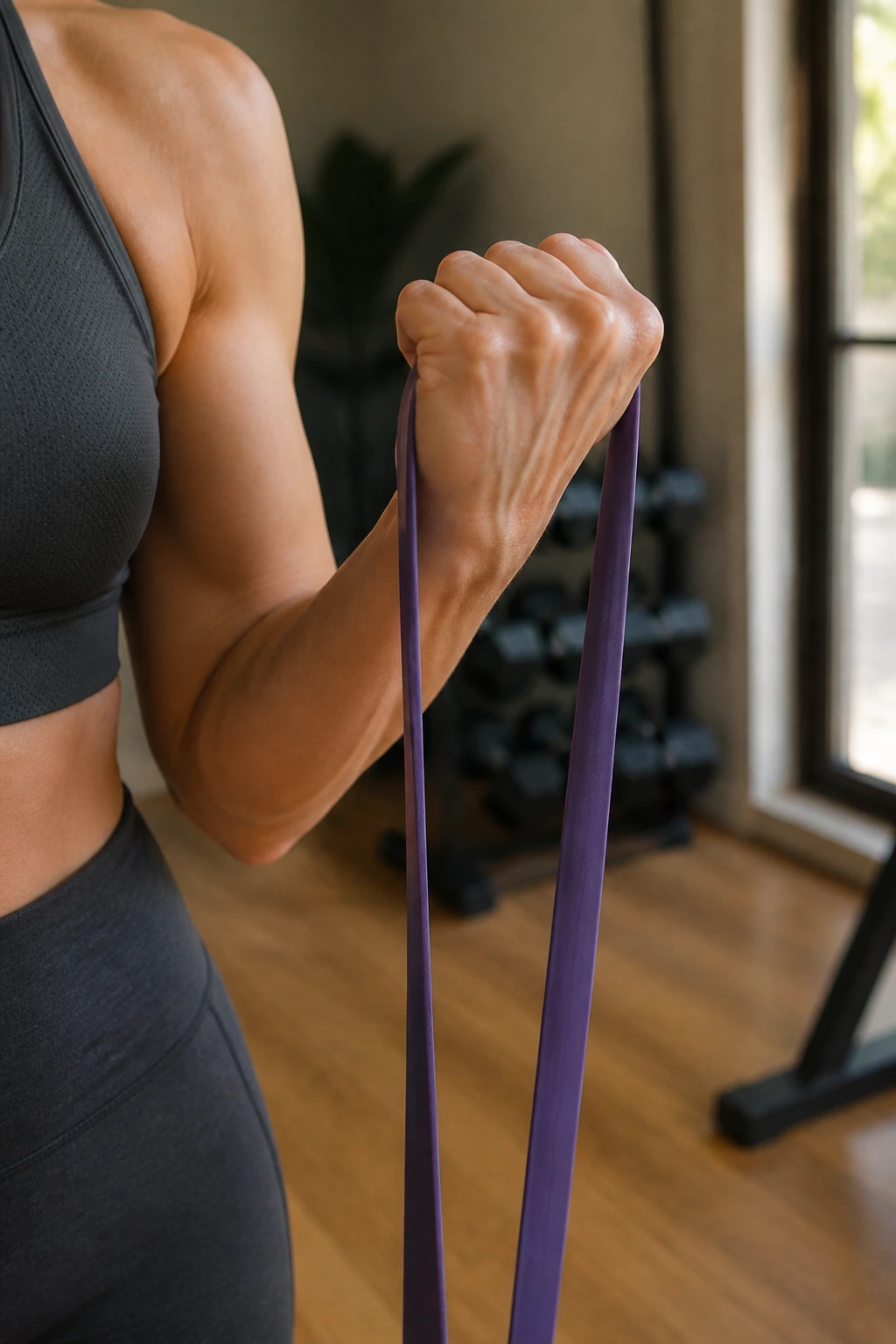
Band 21s are a burn workout, not a macho workout. Different thing.
Do 7 reps in the bottom half of the curl, then 7 reps in the top half, then 7 full reps. That’s one round. Two rounds is plenty for most people, and three is a lot unless the band is very light. Stand tall, keep the elbows pinned, and resist the urge to rush the middle part.
The reason this works is simple. You keep tension where people usually cheat. The bottom half trains the first pull off the thigh, the top half trains the squeeze near the shoulder, and the full reps tie the whole pattern together.
You will feel this one. Fast.
A lot of people treat 21s like a novelty. Fine. They are a novelty. They’re also a nasty little finisher when your regular curl work has gone stale and you want something that leaves the arms hot without needing more equipment.
8. Zottman Curl
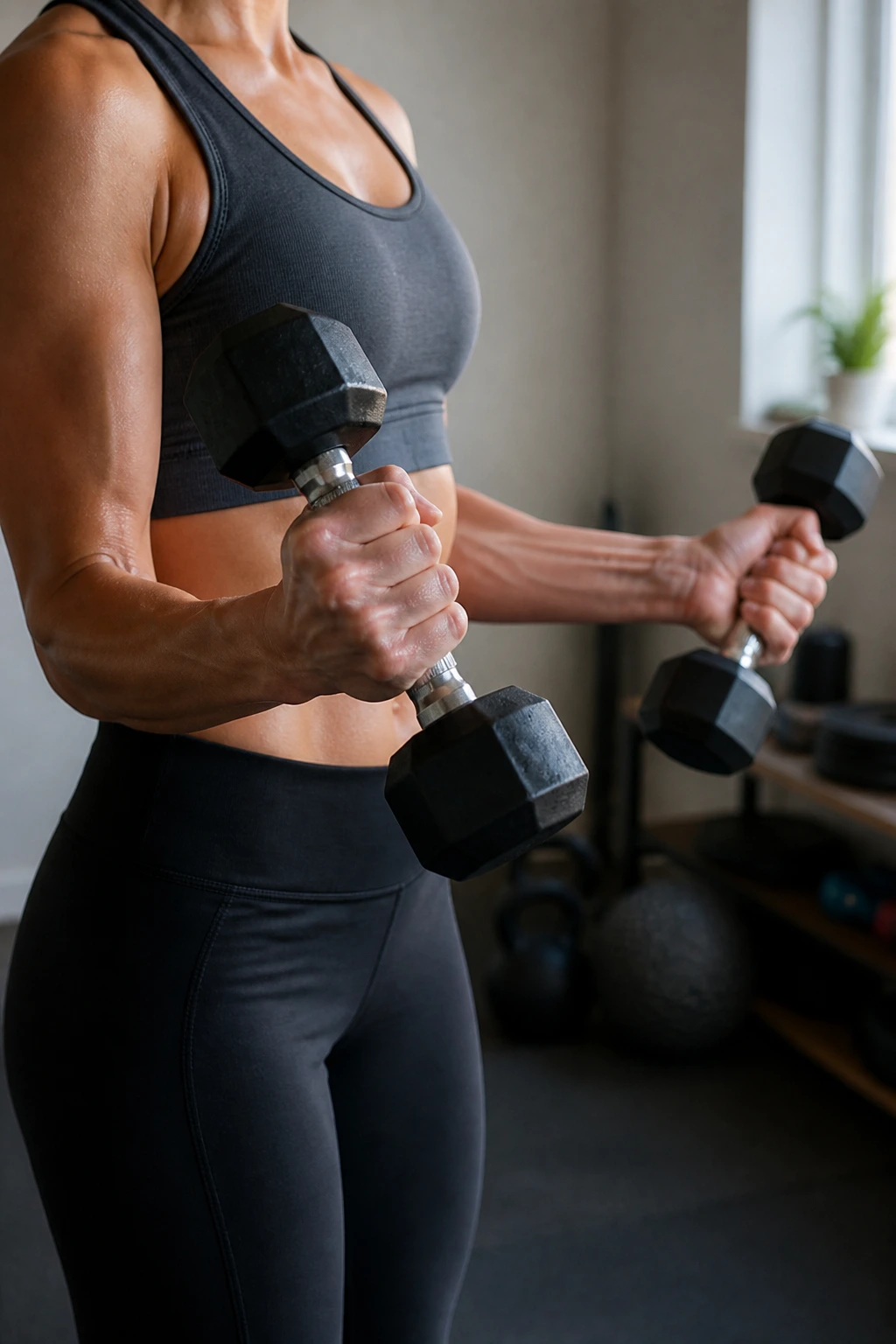
Zottman curls are the neatest trick in the pile.
Curl the dumbbells up with your palms facing forward, then rotate your hands at the top so your palms face down. Lower the weights in that pronated position for 3 seconds. Do 3 sets of 8 to 10 reps. The lowering phase feels awkward at first. That’s normal.
Why I like it
You get two jobs done in one rep. The upward phase hits the biceps like a normal curl. The lowering phase leans harder on the forearms and control muscles. That combination makes the whole arm work harder without needing more weight.
It’s also a good move if your training gets repetitive. Same dumbbells. Same room. Different stress. Your grip will know the difference before your biceps do.
A small warning: if your wrists hate rotation, go light. The point is clean movement, not a circus act with a heavy dumbbell.
9. Backpack Curl
A backpack is not glamorous. It is, however, useful.
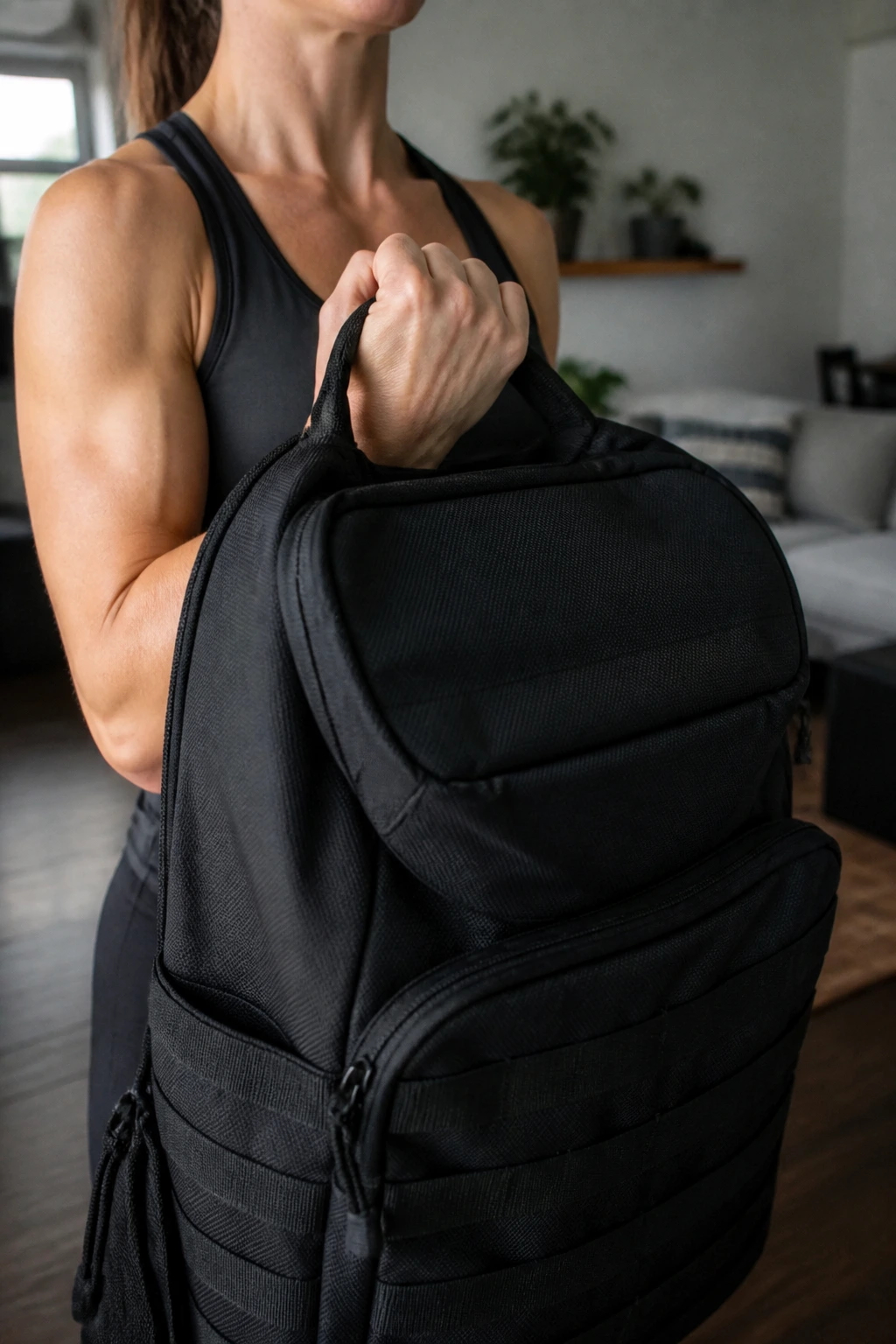
Load a sturdy backpack with books, water bottles, or canned goods. Grab the top handle or the side straps and curl it like a giant awkward dumbbell. Use 3 to 4 sets of 10 to 15 reps, and keep the backpack close to your body so it doesn’t swing like a wrecking ball.
What to watch for
- Check the zippers and seams before you load it.
- Balance the weight so one side doesn’t drag.
- Hold the handle tight enough that the bag stays vertical.
- Lower it slowly, because the shifting load can get sloppy fast.
Backpack curls are a nice answer for anyone who doesn’t own dumbbells yet. They’re also a sneaky way to add load in small increments. Toss in one more book. Try again. That’s progression, just with a zipper.
If you train in a shared space, this move is quiet and practical. No clanking. No setup drama.
10. Slow Eccentric Curl
This is the move I reach for when someone says, “My dumbbells feel too light.”
Curl the weight up normally, then lower it for 5 to 6 full seconds. Yes, really. Use 3 sets of 6 to 8 reps and rest for 60 to 90 seconds between rounds. The lowering phase should feel like a controlled argument with gravity.
Slow eccentrics matter because the biceps do a lot of work while resisting the weight on the way down. That’s the part many people rush. They get the dumbbell up and then let it drop. Waste of a rep.
Lowering control beats heavier weight with sloppy form. Every time.
This style is especially helpful when you only have light dumbbells at home. You can make 8-pound weights feel honest if you slow the descent, stop the swing, and keep the elbow path clean.
11. 90-Degree Isometric Hold Curl
Want to make a light weight feel mean? Freeze it halfway.
Curl the dumbbell until your elbow is bent at about 90 degrees, then hold that position for 20 to 30 seconds. Do 3 to 4 rounds. You can do both arms together or one at a time, depending on what your grip and shoulders can handle.
Why the hold bites
The middle of the curl is a stubborn spot. Holding there keeps the biceps under steady tension without the relief of a full rep. It also forces you to keep your shoulder down and your wrist straight, which sounds simple until the burn starts.
This is a good move on days when you don’t want a long workout but still want your arms to work. Short on time? Do three holds, then leave. That’s enough to make the biceps pay attention.
The hold should feel steady, not jerky. If you’re shaking so hard that the elbow drifts, lower the weight.
12. 1.5-Rep Curl
This one is oddly satisfying and mildly annoying, which usually means it works.
Curl all the way up, lower halfway, curl back up, then lower all the way down. That is one rep. Use 3 sets of 6 to 8 reps with a moderate load. It feels heavier than it sounds because you keep revisiting the hardest part of the lift.
The halfway drop keeps tension on the muscle between full reps. You never get that easy reset at the bottom. Your arms stay “on” the whole time.
I like this one for people who get bored fast. It keeps the brain busy because the pattern is a little different from normal curls, and the biceps feel every inch of it.
Do not rush the middle half-rep. That’s the part people turn into a bounce, and the bounce is where the value leaks out.
13. Spider Curl Over the Couch
If you have a couch, a sturdy ottoman, or the edge of a bed that won’t slide, you can make a spider-curl setup.
Lie chest-down on the incline surface with your arms hanging straight toward the floor, dumbbells in hand. Curl from there with your upper arms staying still. Use 3 sets of 10 to 12 reps and keep the top squeeze short and sharp.
Why it feels so strict
Your torso support takes away most of the cheating. No back swing. No body english. Just elbow flexion and a very honest biceps burn.
That strict angle makes spider curls one of my favorite at-home options when someone says, “I can’t seem to stop swinging.” Good. This setup won’t let you swing much.
Use a lighter weight than you think. The position makes the movement harder than a normal standing curl, and people usually find that out around rep six.
14. Towel Isometric Curl
A towel sounds silly until your arms start shaking.
Stand on the middle of a long towel, grab both ends with your palms up, and curl against the towel’s resistance as if you’re trying to bend it into a horseshoe. Hold the top of the pull for 10 to 15 seconds, then lower with control. Do 3 to 4 rounds.
Quick setup cues
- Stand on the towel with both feet shoulder-width apart.
- Keep your elbows glued near your sides.
- Pull evenly with both hands.
- Stop if the towel slides under your feet.
The big benefit here is tension without extra gear. You’re fighting your own setup, which makes the move surprisingly hard for a bodyweight drill. It’s a good travel option, and it doesn’t need a single weight plate.
This works best when you treat it like an isometric, not a tug-of-war. Smooth tension. No jerking.
15. Under-Table Row
A sturdy table can become a pull station if you’re careful about it.
Lie under the table, grab the edge, and pull your chest toward it with your elbows tucked. Use 3 sets of 6 to 10 reps. If the table shifts, creaks, or feels cheap, skip this one. Furniture safety comes first. No arm workout is worth a flipped table.
Why the biceps care
Rows train the back, sure. They also hammer the biceps because your elbows are doing a lot of flexing under load. That makes this a smart compound move when you want more than a pure curl.
Keep your body rigid, feet planted, and neck relaxed. The motion should look controlled from start to finish. If your hips sag, the exercise turns into a mess fast.
This is one of those home moves that feels a little old-school in the best way. Basic. Hard. Effective.
16. Doorway Chin-Up Negative
If you have a doorway bar, this is a serious biceps move.
Step or jump to the top chin-up position with your palms facing you, chin near the bar, then lower yourself for 3 to 5 seconds. Do 4 to 6 singles, resting 60 to 90 seconds between reps. One clean negative can be enough to light up the arms.
The biceps assist hard in chin-ups because the supinated grip puts them in a strong position. The negative phase is where you build a lot of control, and it can be humbling the first time you try it.
A lot of people rush this movement and drop too fast. Don’t. That descent is the entire point.
If your bar setup feels shaky, use a chair carefully for the start position and make sure the bar is rated for body weight. Cheap hardware is not your friend here.
17. Chair-Assisted Chin-Up Hold
This is the calmer cousin of the negative.
Put a sturdy chair under a doorway bar, step up to the top chin-up position, and hold your chin above the bar for 8 to 12 seconds. Then lower yourself slowly or step down. Try 3 to 5 holds.
What to feel
Your elbows should stay bent, your shoulders should stay down, and your mid-back should stay tight. If your neck cranes forward, you’re losing the position.
This hold is useful when full negatives are too aggressive or your grip gives out early. It lets you practice the top end of the pull, which is often where people feel strongest. There’s still plenty of biceps work there, and the static effort can be sneaky.
If you only have one doorway bar session in the week, I’d rather see three clean holds than ten sloppy attempts. Clean beats messy. Every time.
18. Curl Pulse Ladder
Pulses are not fancy. They are relentless.
Do a set of full curls for 8 to 10 reps, then stay in the top half and add 10 to 15 short pulses, moving only a few inches each time. You can also finish with 10 seconds of mid-range holds. One round is enough to understand the point. Two rounds, maybe. Three and your arms will not be happy.
How to keep it useful
- Keep the pulses small, not wild.
- Stay in control even when the burn kicks in.
- Use a lighter dumbbell than you’d use for straight reps.
- Stop before your shoulders start rising.
This works because the biceps never get to rest. The tension stays high, and the tiny range keeps the muscle under constant pressure. It’s a smart finisher when you want a short workout and a big local burn.
Not elegant. Very effective.
19. Reverse-Grip Backpack Row
If you want biceps and upper back together, this one earns its place.
Hold a loaded backpack with an underhand grip, hinge at the hips, and row it toward your lower ribs. Use 3 sets of 10 to 12 reps. Keep your spine long, knees soft, and elbows close to your sides. The underhand grip gives the biceps more work than a wide overhand row would.
Why it belongs in a biceps list
Compound moves matter. They let you train the arms while also building the back, which helps with posture and gives the curl muscles better support. If you sit at a desk or spend a lot of time hunched over a phone, rows are worth your time.
The backpack should hang straight, not swing. If it bangs against your knees, the load is probably too low or your hinge is too shallow. Fix the position before you add weight.
This one feels a little less isolated than the curl variations, and that’s exactly the point.
20. 10-Minute Biceps Finisher
This is the one I’d save for the end of a home arm day.
Set a timer for 10 minutes and cycle through three moves: 8 dumbbell curls, 8 hammer curls, 10 band curls. Rest only as needed, then repeat until the clock runs out. If you want a harder version, add a 20-second 90-degree hold after each round.
What it should feel like
The first round feels manageable. The second round feels honest. By the third or fourth, the arms start to pump, the grip gets slower, and you’ll probably notice your tempo slipping if you’re not paying attention.
That’s okay, within reason. The point of a finisher is density: a lot of useful work packed into a short window. Keep the form clean enough that the shoulders stay quiet and the biceps keep doing the job.
If you only have time for one biceps workout at home, this is the one I’d use. It’s simple, flexible, and easy to scale with lighter or heavier resistance.
Final Thoughts
The best home biceps work is the stuff you can repeat without guessing. Clean curls, neutral-grip work, slow lowering, and a few hold-based moves will take you a lot farther than chasing random arm burn every time you pick up a weight.
If your equipment is limited, that is not a dead end. It just means tempo, tension, and rep quality matter more. A light dumbbell can still be a serious tool when the lowering phase lasts five seconds and the last rep doesn’t look sloppy.
Pick three or four of these moves, rotate them through the week, and keep the weights honest. Your arms will notice the difference faster than you might expect.
