



If your goal is to tone arms, the fastest mistake is chasing tiny weights and endless reps. The arms change when the work gets hard enough to force adaptation — triceps, biceps, and even the shoulders that frame the upper arm.
No fluff. No magic. Just enough load, enough control, and enough patience to let the muscle do its job.
Once you’ve passed beginner territory, the sweet spot shifts. You can handle heavier dumbbells, cleaner tempo, and combinations that hit the arm from more than one angle in the same session.
I also think the word tone gets used in a sloppy way. What people usually want is firmer upper arms, a little more shape through the triceps, and enough biceps and shoulder work that sleeves fit differently. That comes from lifting with purpose, not from doing 200 lazy curls while staring at the mirror.
Pick a few of these workouts, run them twice a week, and keep the reps honest. The first one is a classic because it gets to the point fast.
1. Close-Grip Push-Up Ladder
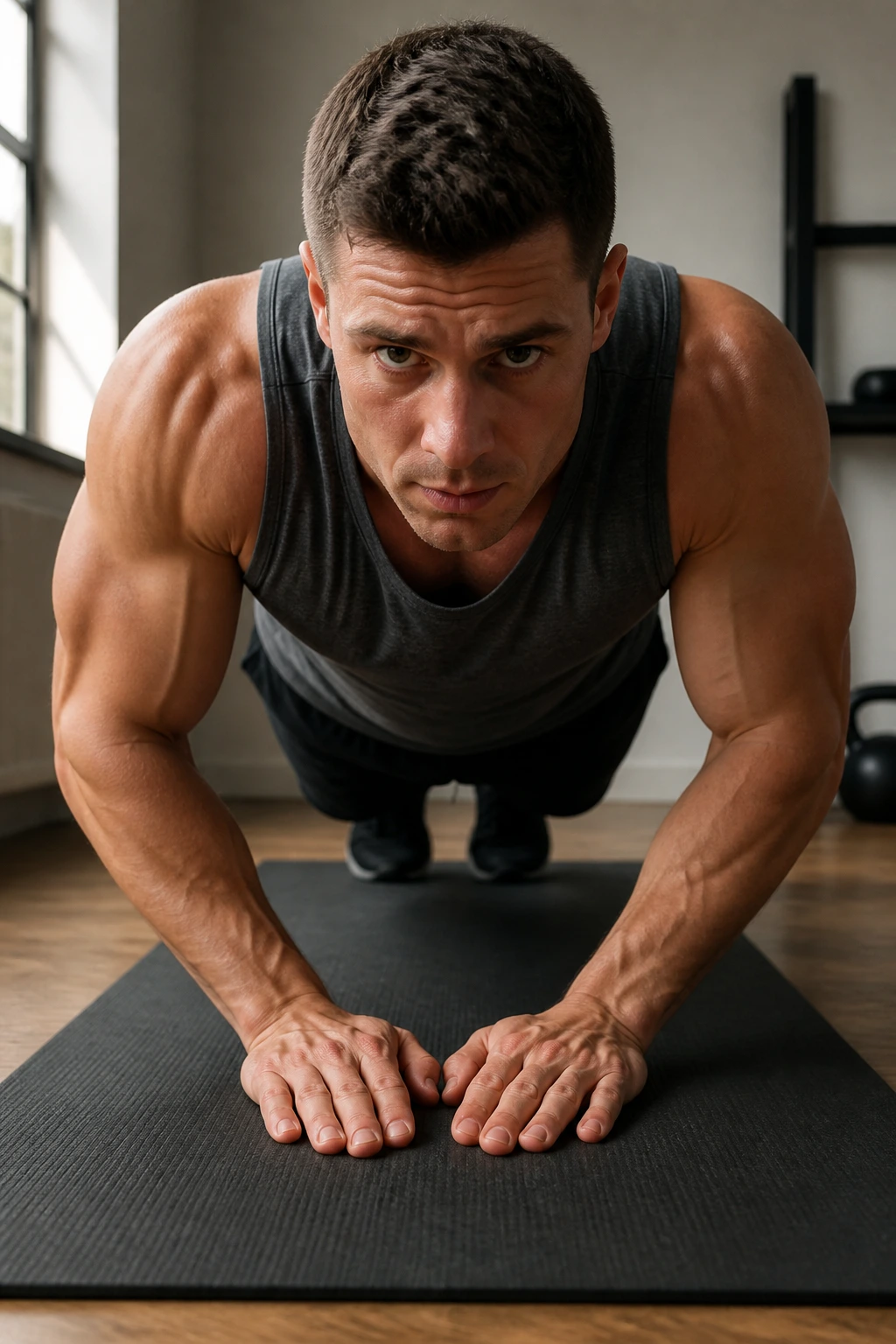
Close-grip push-ups earn their place because they make the triceps work hard without turning the session into a circus. You can load them in a smart way, scale them by elevation, and keep the shoulders involved without letting them steal the show.
No bench required. No cable machine either.
Why the ladder hits harder
The narrow hand position shifts more of the work toward elbow extension, which is exactly where the triceps live. A ladder works well here because the first round feels manageable, then the later rounds start to strip away momentum and expose any sloppy torso position.
Do them on the floor if you can keep your ribs tucked and your body in one line. If your shoulders or wrists grumble, put your hands on a bench or sturdy box and keep the same close hand position.
How to run it
- 10 reps
- 8 reps
- 6 reps
- 4 reps
Rest 30 to 45 seconds between rungs. Rest 90 seconds after the full ladder, then repeat for 3 to 4 total rounds.
Pro tip: Stop each rep with the chest hovering just above the floor and the elbows tracking about 30 to 45 degrees from your sides. If your hips sag, the set is done.
2. Seated Dumbbell Overhead Triceps Extension
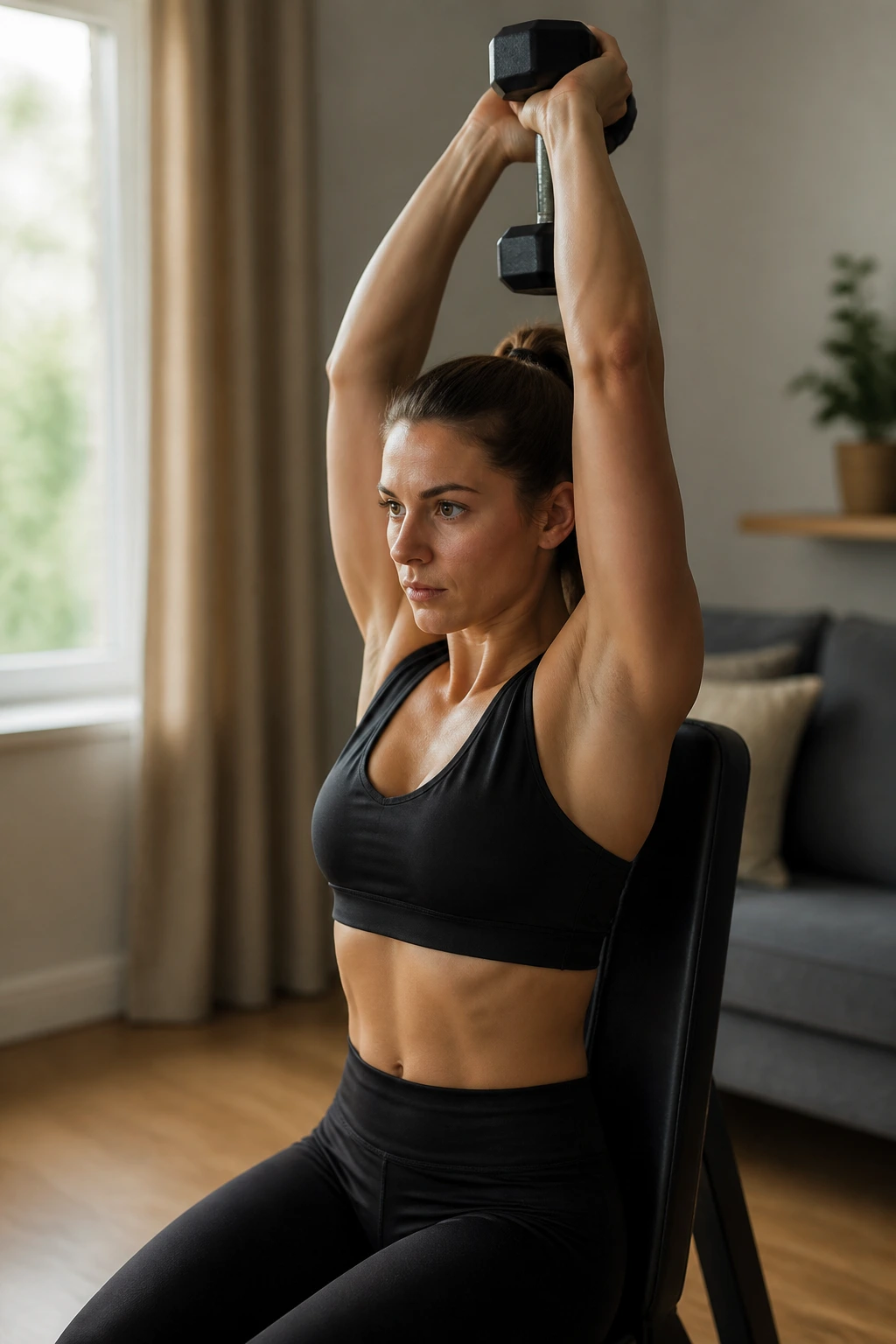
Why do overhead triceps extensions keep showing up in serious arm programs? Because the long head of the triceps gets a bigger stretch when your arms go overhead, and that part of the muscle matters more than most people think.
A single dumbbell works fine. Two dumbbells work too, though I usually prefer one heavier bell when the goal is clean arm tension and not an awkward balancing act.
The setup is simple: sit tall, brace your abs, and let the elbows point mostly forward instead of drifting wide. Lower the weight behind your head until you feel a real stretch along the back of the upper arm, then press up until the elbows nearly lock.
What to watch for
- Sets: 3 to 4
- Reps: 8 to 12
- Rest: 60 to 90 seconds
- Tempo: 2 seconds up, 3 seconds down
A lot of people cut the range short because the stretch feels uncomfortable. That’s the whole point. If the lower position feels safe and your lower back stays quiet, the exercise does its best work there.
3. Hammer Curl to Press Complex
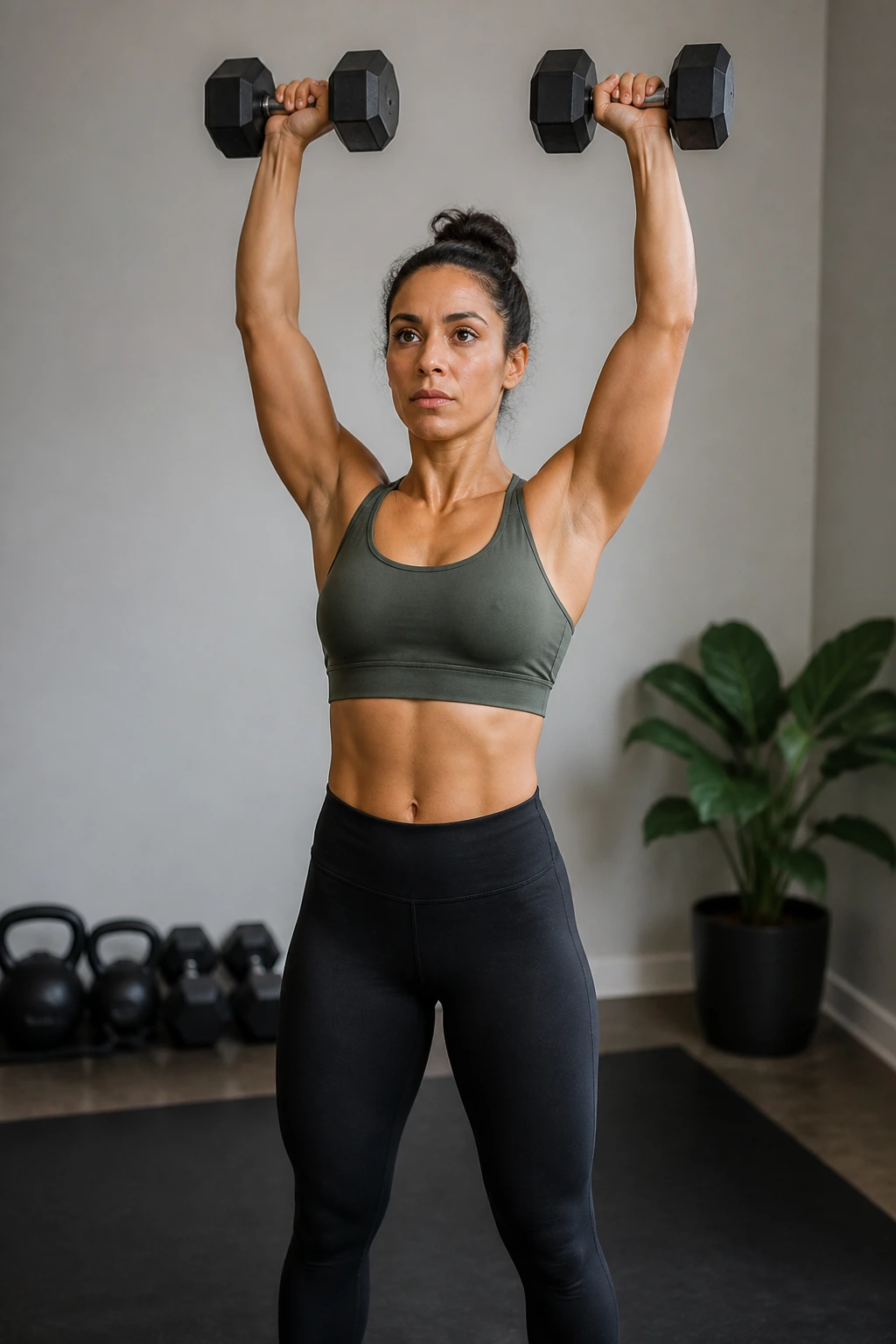
A pair of dumbbells, ten minutes, and a little discipline can light up the arms faster than a long list of random exercises. Hammer curls build the brachialis and forearms, then the press takes that fatigue and asks the triceps and shoulders to finish the job.
I like this one for people who get bored fast. It never stays in one lane for long.
What makes the combo useful
The hammer curl keeps the palms facing in, which usually feels friendlier on the wrists than a straight bar curl. The press that follows is where the workout gets sneaky, because the upper arm is already warm and the triceps have to finish the motion under fatigue.
Use a weight you could handle for 10 clean hammer curls, then press it for 6 to 8 reps without turning the whole thing into a backbend.
Simple format
- 8 hammer curls
- 6 overhead presses
- Rest 60 seconds
- Repeat for 4 rounds
Keep the curl strict. No body swing, no shoulder shrug, no bouncing off the hips. The press should look smooth, not forced. If the second half of the complex turns ugly, the weight is too heavy.
4. Incline Dumbbell Curl
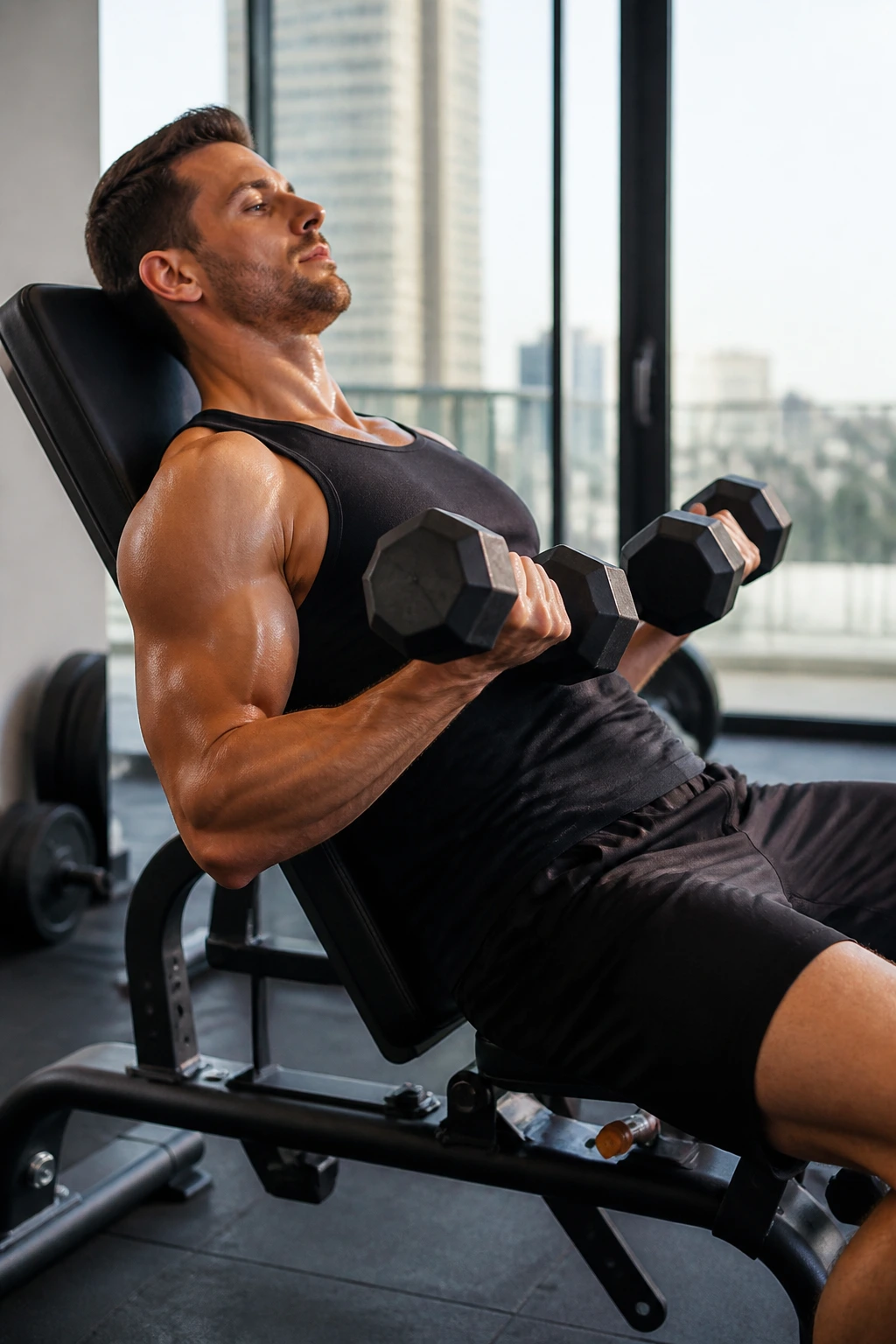
If your curls only look good when you swing them, the incline bench is the fix. It forces the arm behind the torso, takes away a bunch of cheating, and makes the biceps work from a longer position.
That longer stretch matters. You feel it right away.
Lie back on a bench set around 30 to 45 degrees, let your arms hang naturally, and curl with the elbows pinned where they are. The lowering phase should be slow enough that you can feel the dumbbell pull on the biceps for a good 2 to 3 seconds.
What people get wrong
They rush the bottom. That’s the mistake.
The arm should fully lengthen without the shoulder rolling forward. If you let the shoulder dump out of position, the biceps lose tension and the front delt starts helping too much. Keep the chest open, keep the neck relaxed, and stop the rep only when the forearm is nearly vertical at the top.
I’d use 4 sets of 8 to 10 reps here, with 60 to 75 seconds of rest. Heavy enough to matter. Light enough that the last two reps still look tidy.
5. Parallel-Bar Dips
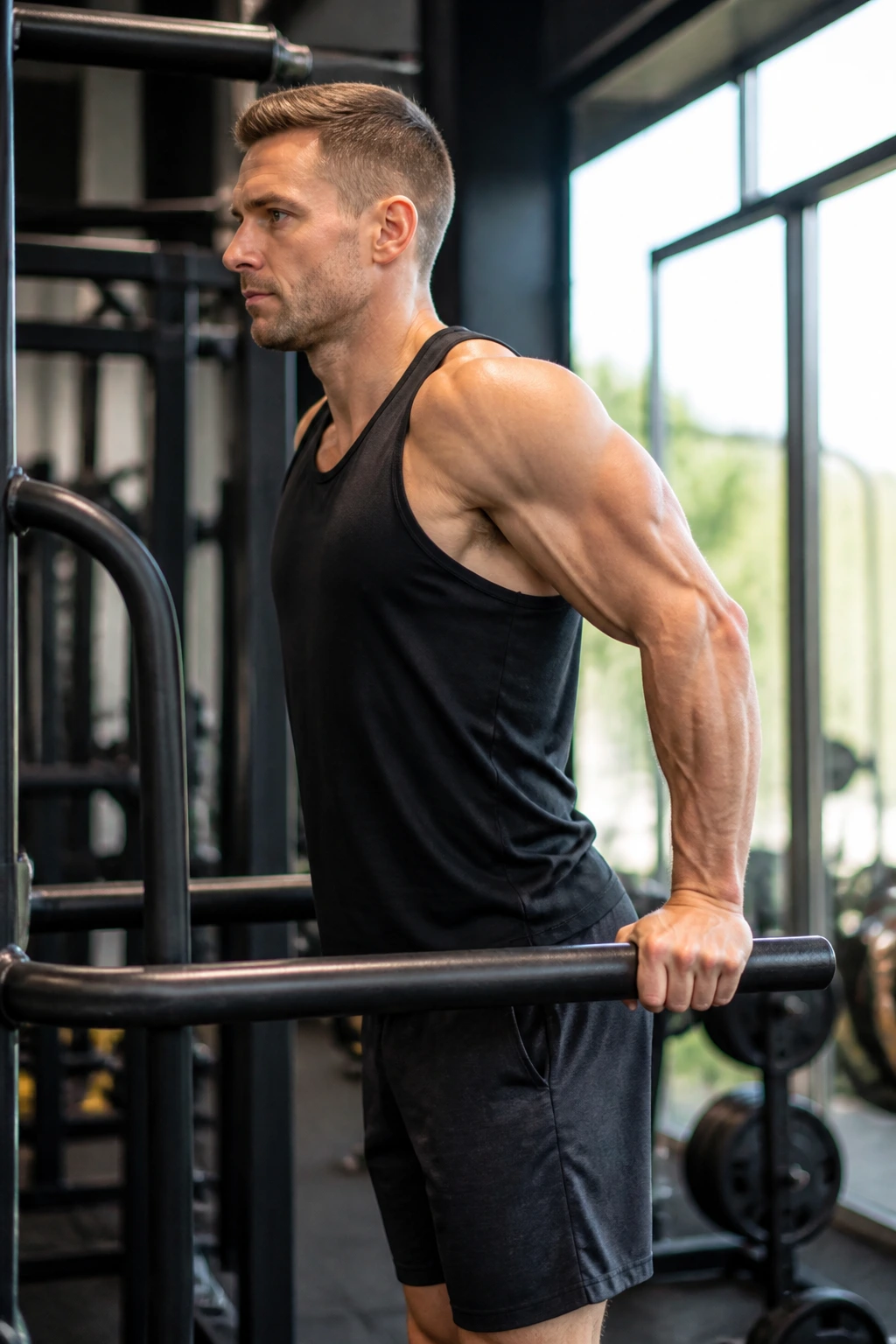
Dips are old-school for a reason. Done well, they hammer the triceps hard and give the chest and shoulders enough work to make the session feel serious instead of decorative.
Upright torso, elbows close, controlled depth. That’s the version I trust for arm focus.
A lot of lifters lean forward too much and turn the movement into a chest-dominant press. Fine if that’s the goal. Not ideal if you want the back of the upper arm to do more of the talking.
Upright vs. forward lean
- Upright body: more triceps
- Slight forward lean: more chest
- Too much depth: irritated shoulders for plenty of people
- Added weight: a good next step once bodyweight sets hit 10 or 12 reps
The lower position should feel strong, not jammed. If your shoulders slide forward and the range gets sloppy, cut the depth by a few inches and keep the elbow angle cleaner. Weighted dips are excellent when you’re past beginner level, but only if your base form is already boring in the best way.
6. Rope Cable Pressdowns
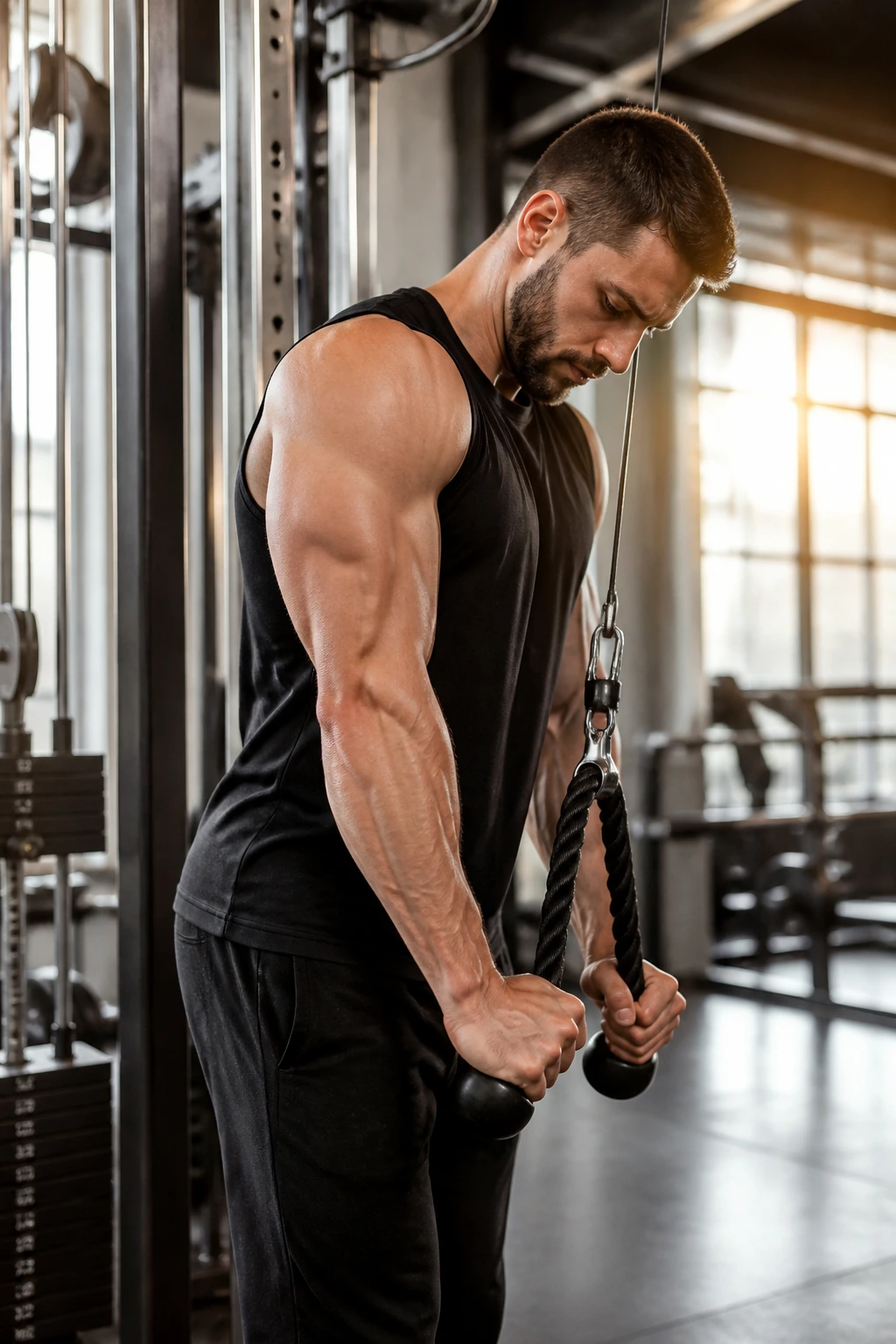
Cable pressdowns can look too simple to matter. Then you do them properly and realize why they’ve survived every flashy arm trend that came and went.
The cable keeps tension on the triceps almost the entire time. Dumbbells don’t do that quite the same way, and bands can lose a little honesty at the top. A cable stack gives you a clean, steady pull that makes the back of the upper arm work without much drama.
How to keep the elbows quiet
Stand tall, set the elbows near the rib cage, and press the rope down until the hands separate at the bottom. The separation is not decoration. It helps you squeeze the triceps a little harder and finish the rep with a strong lockout.
A solid prescription looks like this:
- 3 to 4 sets
- 12 to 15 reps
- 45 to 60 seconds rest
- Last set: a small drop in weight, then 6 to 8 more reps
Keep the shoulders down. If the upper arms drift forward and your torso starts leaning into the stack, the exercise gets sloppy fast. One clean set beats three messy ones.
7. Zottman Curl Circuit
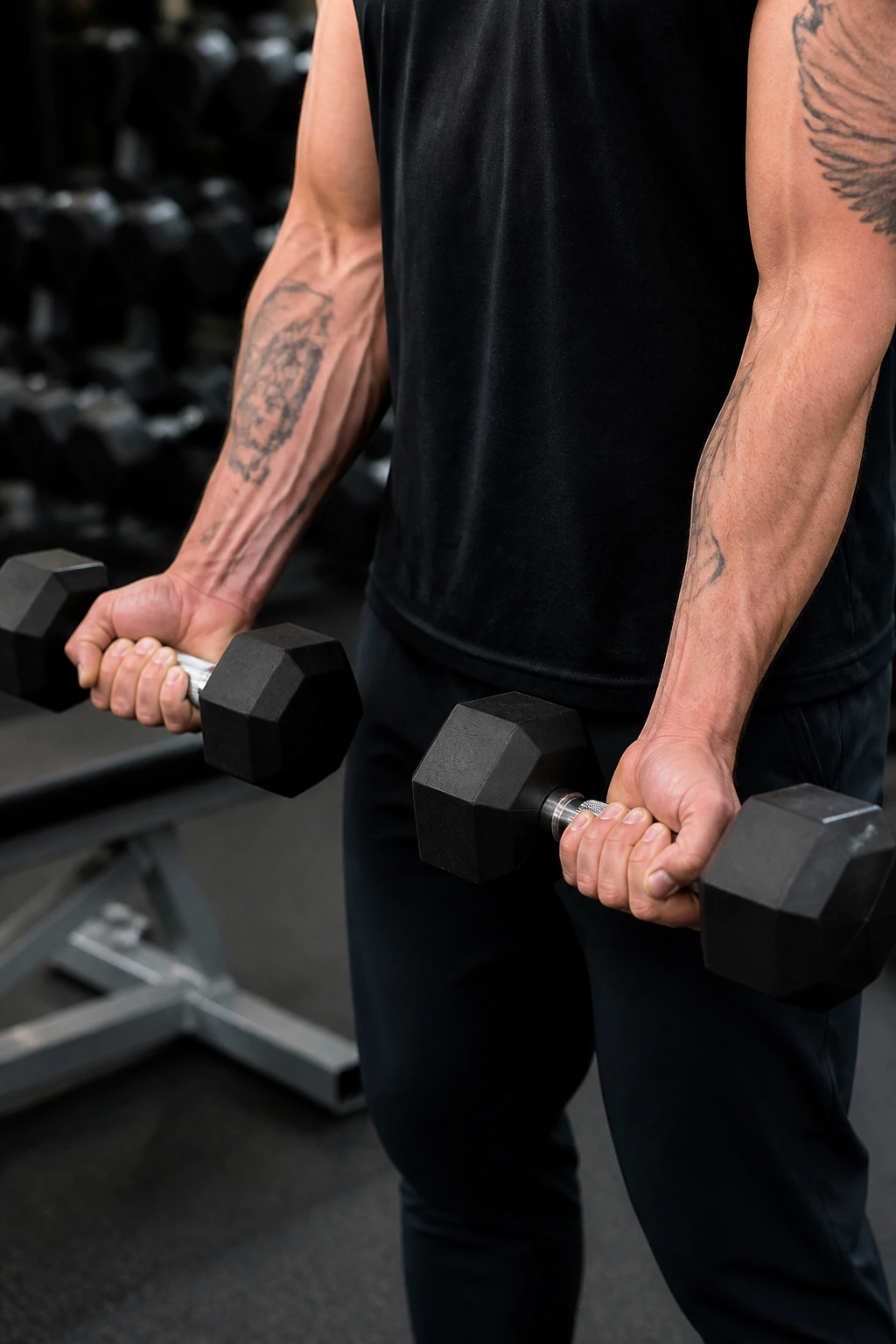
The first time someone sees a Zottman curl, it usually looks a bit strange. Curl up with the palms facing forward, rotate at the top, then lower with the palms facing down. Odd looking? Sure. Worth doing? Absolutely.
This one hits the biceps on the way up and the forearms on the way down. That makes it a good choice when you want the arms to look stronger from more than one angle.
A plain dumbbell curl does not train the lowering phase the same way. The Zottman version does, and your grip notices.
A clean circuit
- 10 Zottman curls
- 12 standing reverse curls
- 30-second farmer carry
- Rest 60 seconds
- Repeat for 3 rounds
The lowering phase should be slower than the curl up. Keep the wrists straight. If the dumbbells crash down or the forearms twist all over the place, the weight is too high. This is one of those exercises where less load with better control usually gives better arm work than ego lifting ever will.
8. Arnold Press for Shoulder and Arm Shape
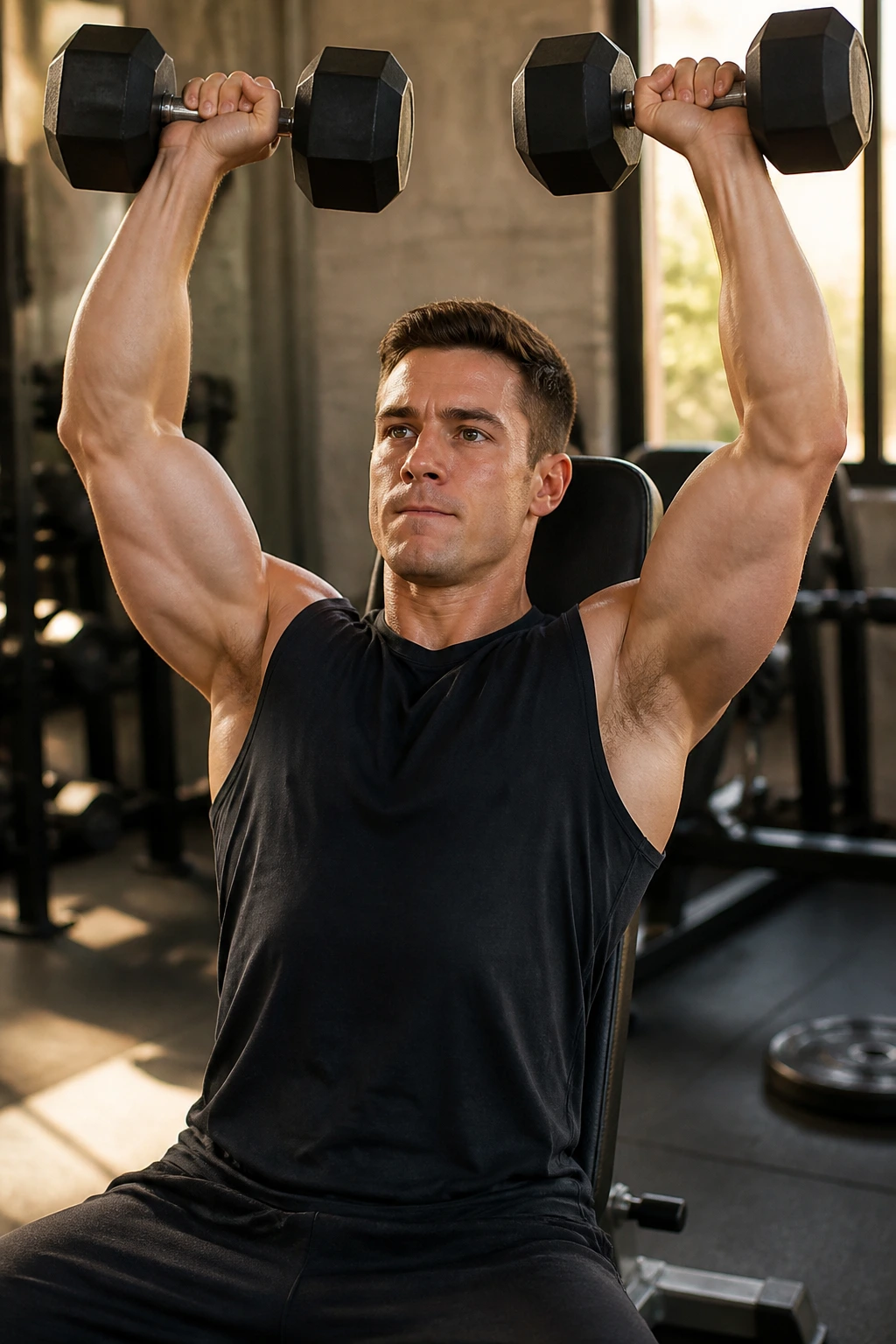
The Arnold press is one of those exercises that gets dismissed by people who only judge things by how many plates hang off the bar. That’s a mistake.
Done with control, it builds the front delts, upper chest, and triceps in a way that helps the arm look fuller from the side. And yes, the rotation makes it feel a little busy at first. That’s part of the charm.
Sit down if you want more stability. Stand if you want more whole-body tension. I prefer seated for arm-focused work because it removes the urge to lean back and turn the lift into a half-standing incline bench impersonation.
The key is the path. Start with palms facing you, press up while rotating, and finish with the palms forward overhead. Lower under control and reverse the motion cleanly. If your wrists hate it, the dumbbells may be too heavy, or the range may be too big for your shoulder structure. That’s not failure. It’s feedback.
9. EZ-Bar Curl and Reverse Curl Pair
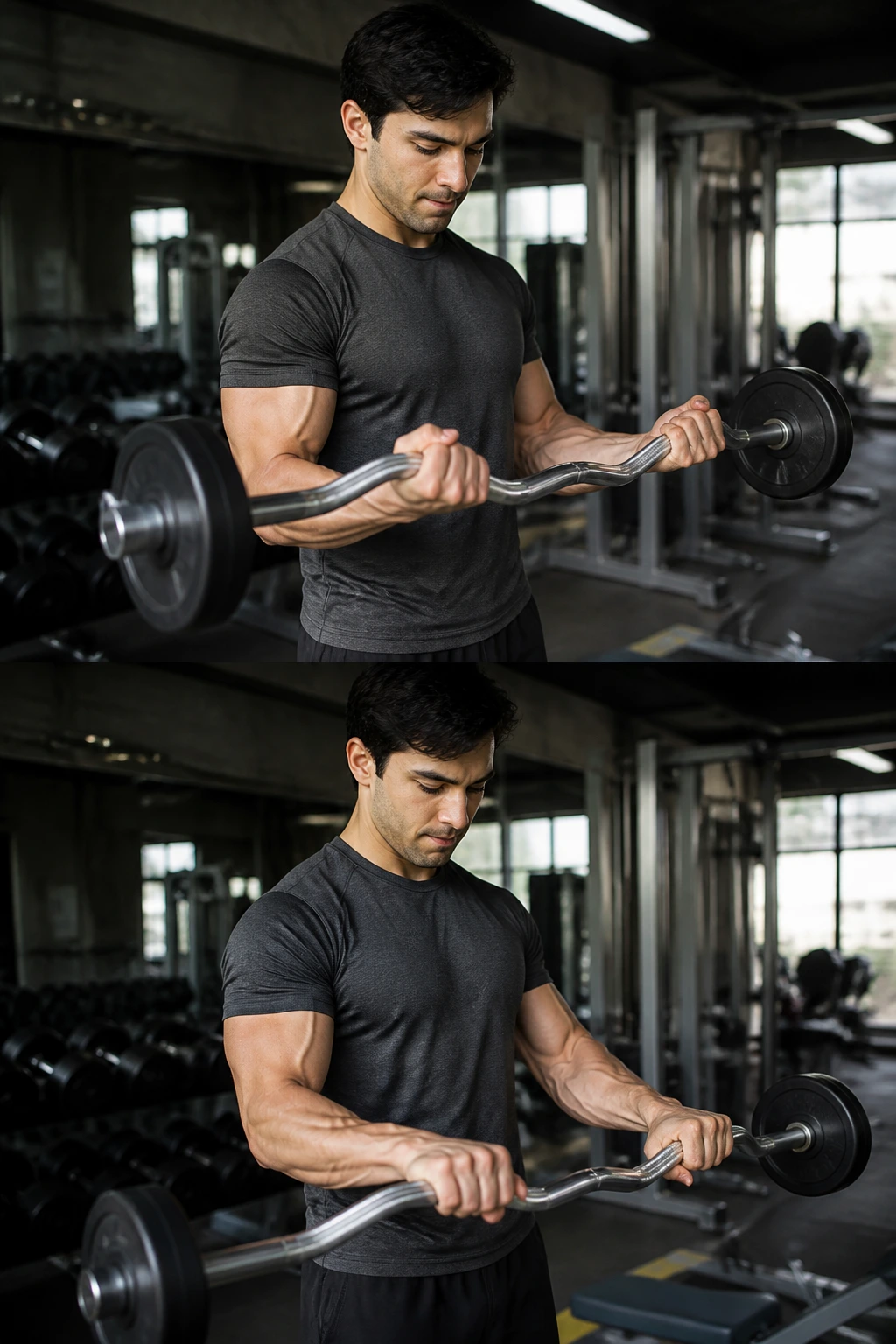
Want biceps work that doesn’t ignore the forearms? Pair an EZ-bar curl with a reverse curl and keep the rest short. That’s a simple fix, and it works better than people expect.
The EZ-bar curl lets the wrists sit in a friendlier angle than a straight bar. The reverse curl flips the grip and shifts more of the work into the brachioradialis and upper forearm. Put them together and the arm gets trained from both sides of the elbow.
A practical pairing
- EZ-bar curls: 8 to 10 reps
- Reverse curls: 10 to 12 reps
- Rest: 60 seconds
- Rounds: 3 to 4
Keep the elbows still on both movements. The straight bar version tempts people to yank with the shoulders, and the reverse curl can get ugly fast if the wrists collapse backward. Use a load you can lower under control, because the lowering phase tells you a lot about whether the set was honest.
This pair works well as a mid-session block or a finisher after pressing.
10. Single-Arm Landmine Press
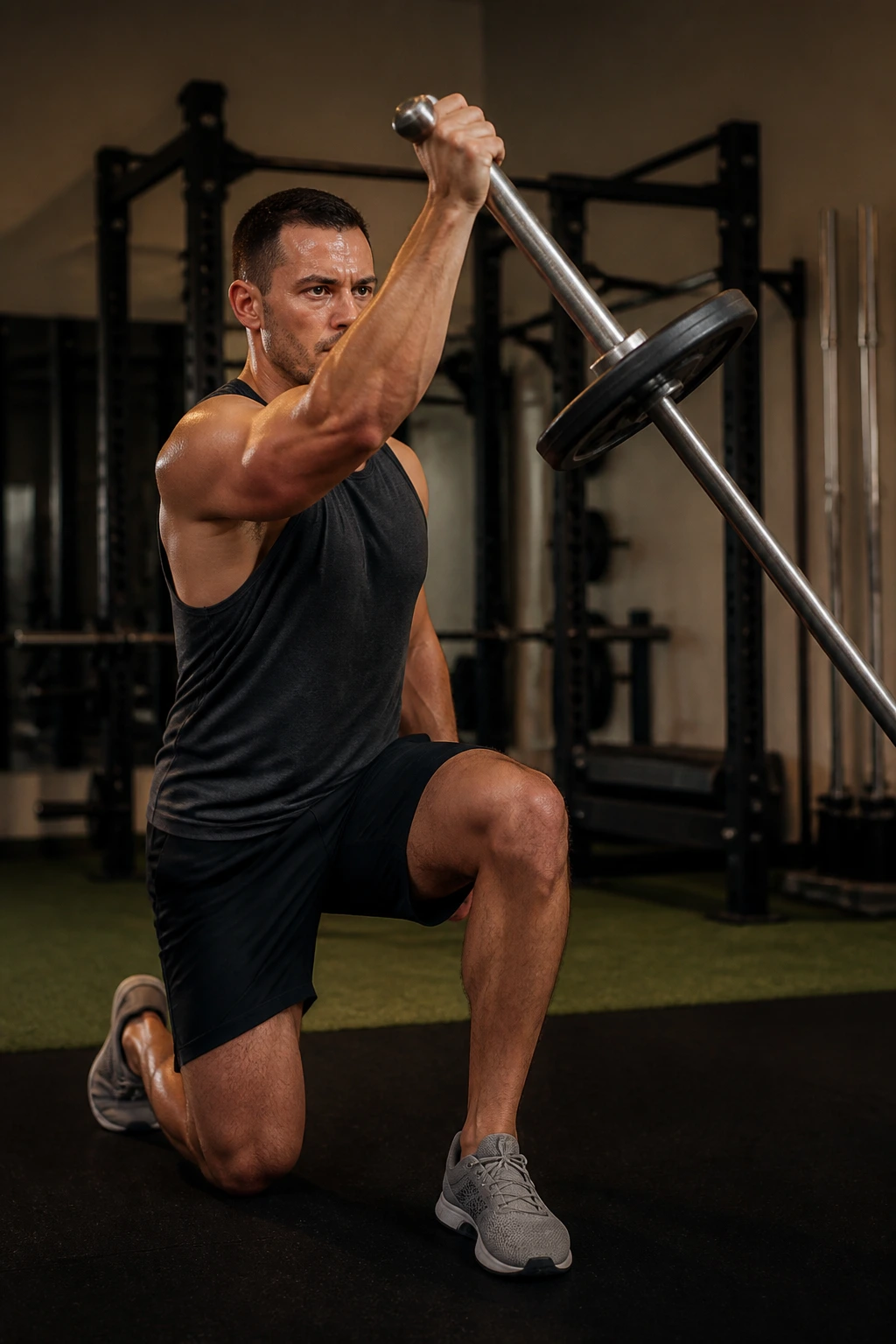
Not every arm workout has to be a curl or a dip. The single-arm landmine press deserves a place because it trains the triceps and shoulders without beating up the joints the way some overhead work does.
The angled bar path is the reason. You press up and forward instead of straight overhead, which tends to feel smoother for a lot of lifters. That makes it a smart choice when you want arm training that still respects tired shoulders.
Half-kneeling is my favorite position here. It forces your ribs to stay down and keeps the movement honest. Stand if you want a little more instability, but the half-kneeling version usually gives cleaner reps and better core involvement.
Good cues to keep in mind
- Drive through the front foot or the planted knee
- Keep the wrist stacked over the forearm
- Finish with the arm fully extended, not shrugging up into the ear
- Use 4 sets of 8 reps per side
The press should feel powerful, not jerky. If you have to lean back hard, the load is too much. Reduce the weight and let the triceps do the boring, necessary work at the top.
11. Chin-Up Negatives for Biceps
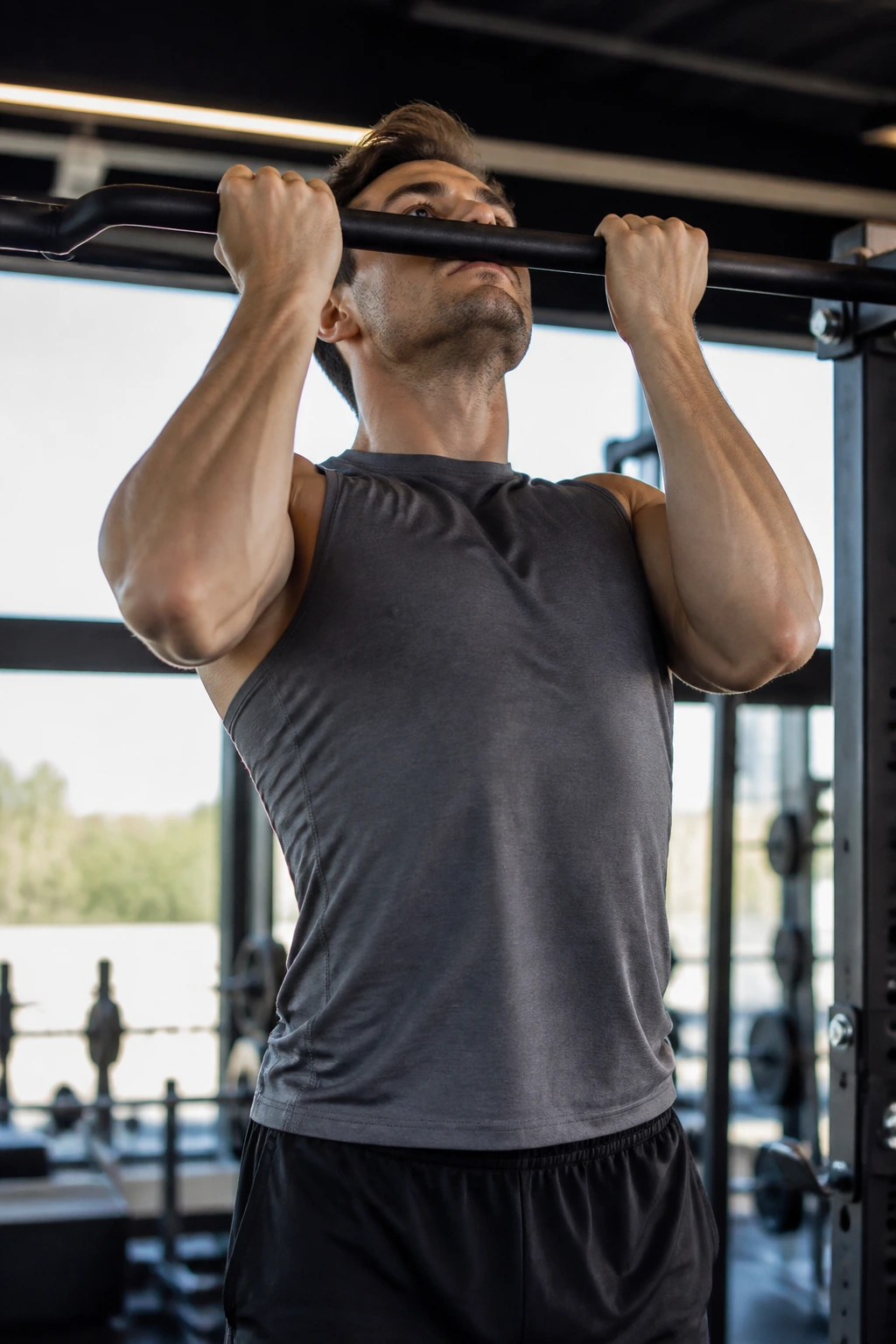
Chin-up negatives are one of those brutal little tools that sneak up on people. You jump or step to the top position, hold for a second, then lower yourself slowly for 4 to 6 seconds. The biceps and lats both have to fight the descent.
That lowering phase matters more than most people think. It’s where the muscle learns to control force, and it usually creates a strong training effect with fewer total reps than a full chin-up set.
How to make negatives count
- Use an underhand grip, hands about shoulder-width
- Start with the chin over the bar
- Lower until the arms are straight
- Rest 90 seconds between reps
A good starting block is 3 to 5 reps for 3 sets. That sounds small until your arms start shaking on rep two. Fine. That’s how negatives work. If your elbows get cranky, shorten the total volume and keep the lowering speed clean rather than grinding through ugly reps.
Once full chin-ups become possible, keep one or two negative sets in the rotation. They still have a place.
12. Skull Crushers on a Bench
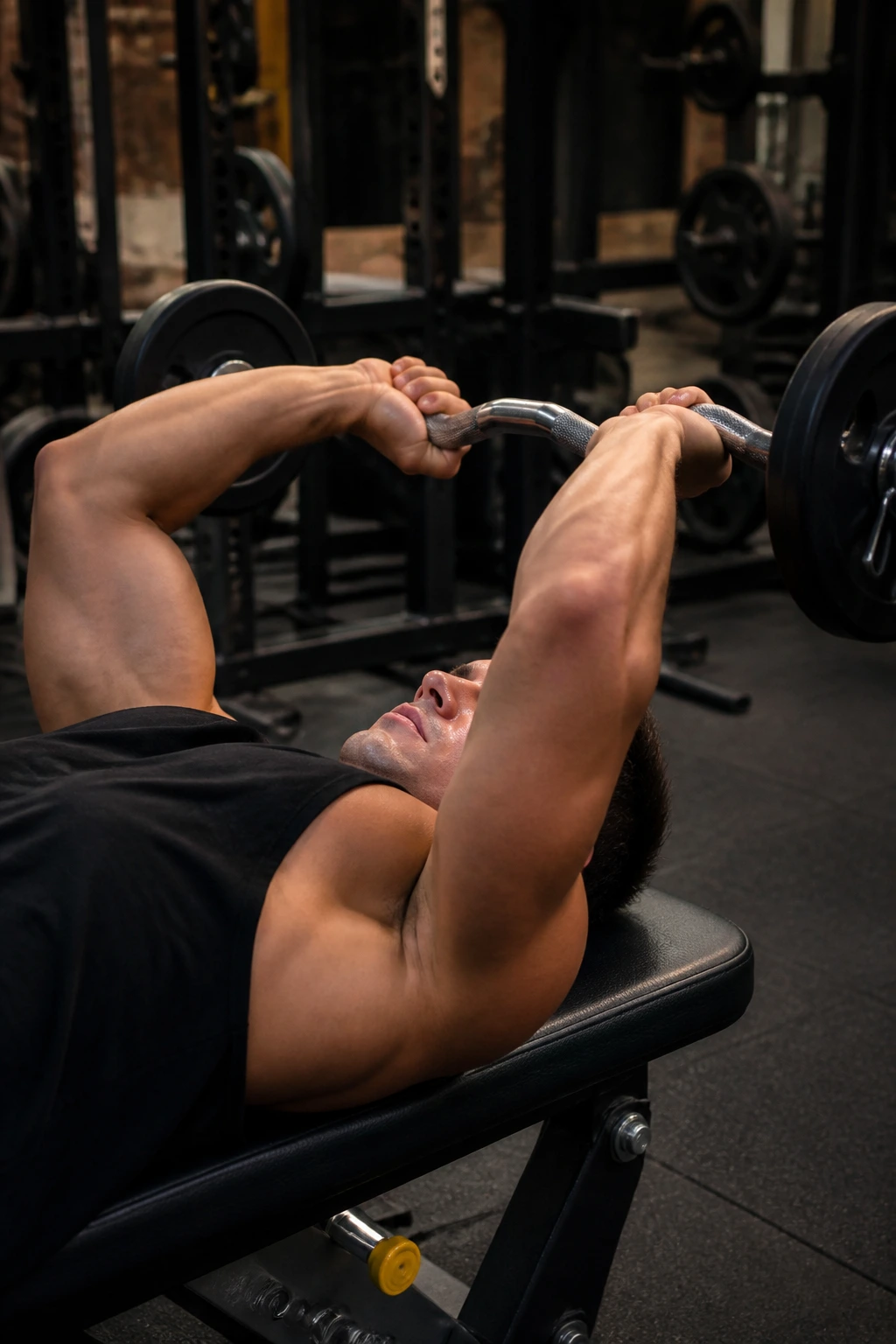
Skull crushers get a bad reputation from lifters who rush them, cut the range short, or pick a weight they have no business touching. Handled properly, they’re one of the better triceps builders in the room.
The name sounds harsher than the movement feels. What matters is where the elbows travel and how well you control the descent.
Lie on a flat bench with an EZ bar or a pair of dumbbells. Lower the weight toward a point slightly behind the forehead, not straight at the nose. That small shift gives the elbows a better line and usually feels kinder on the joints. Keep the upper arms angled back a little, not locked perfectly vertical.
The best version is slow enough that you can feel the triceps lengthen, then forcefully enough on the way up that the lockout still matters. 3 sets of 10 to 12 is a good place to live here. If the elbows flare and the bar bangs around, the load is too heavy. Simple as that.
13. Mechanical Drop Set Biceps Finisher
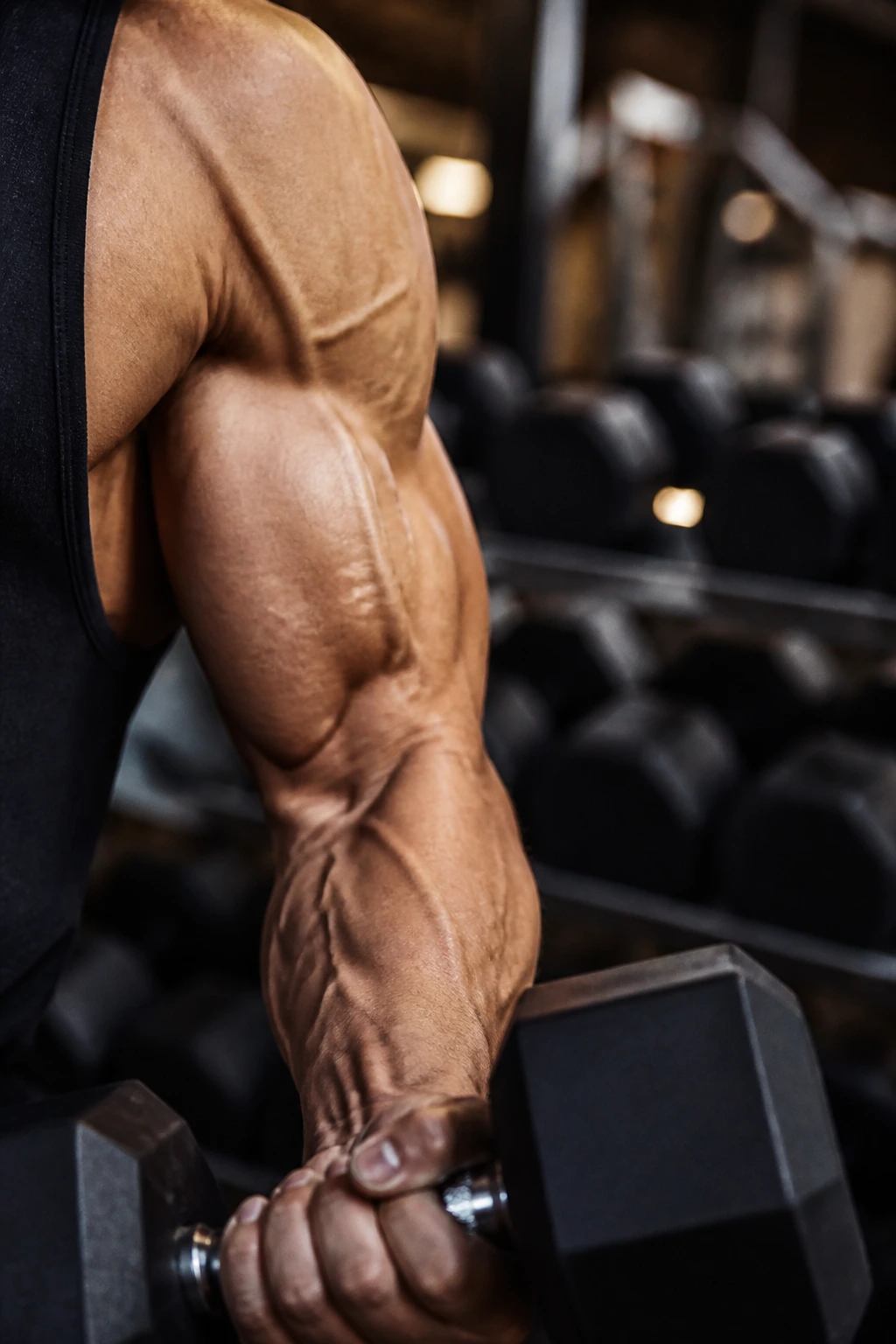
Unlike a normal drop set, this one doesn’t change the weight. You change the leverage.
That’s why it hurts.
Start with incline curls, move to standing curls, then finish with partial reps in the top half of the curl. The dumbbells stay the same, but the movement gets easier in stages, which lets you keep the muscle under tension for longer than a straight set would.
How the leverage changes
- Incline curls: hardest position, biggest stretch
- Standing curls: middle ground, a little more help from body position
- Top-half partials: shorter range, but the biceps stay loaded where they often feel strongest
Use a weight you can manage for 8 incline reps, then 6 to 8 standing reps, then 10 partials without losing control. One round is plenty for most people. Two rounds is a lot.
This finisher belongs at the end of a session, not at the start. It’s too draining to be your first move unless you enjoy making the rest of the workout miserable.
14. Triceps Kickback with a Pause
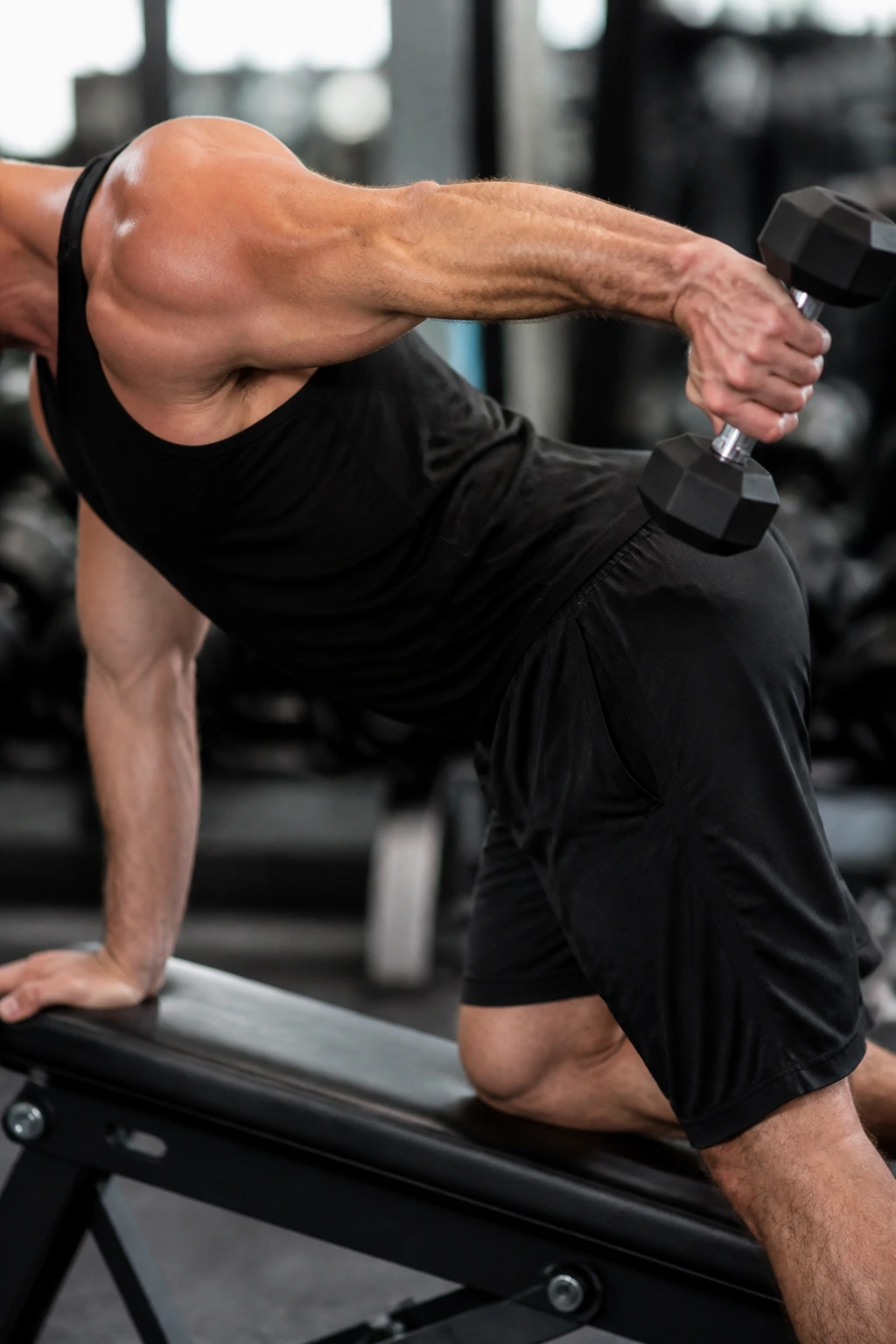
Triceps kickbacks have a bad reputation because people usually load them too heavy and turn the whole thing into a shoulder swing. That is not how to do them, and it is not how to get much out of them either.
The best kickbacks are light, strict, and annoyingly controlled.
Support one hand on a bench, hinge at the hips, and keep the upper arm parallel to the floor. Extend the elbow until the arm is straight, then hold the peak contraction for 2 full seconds before lowering. The pause is the point. Without it, the movement often turns into a tiny shrug with a dumbbell attached.
A simple rule set
- Use a lighter dumbbell than you think
- Keep the elbow fixed in place
- Squeeze hard at the top
- Do 12 to 15 reps for 3 sets
These work best after heavier triceps work, when the muscle is already warm and you want a final precise hit. If you feel it mostly in your back, shoulder, or wrist, the setup has drifted. Reset and make the arm do the job.
15. 12-Minute EMOM Arm Workout
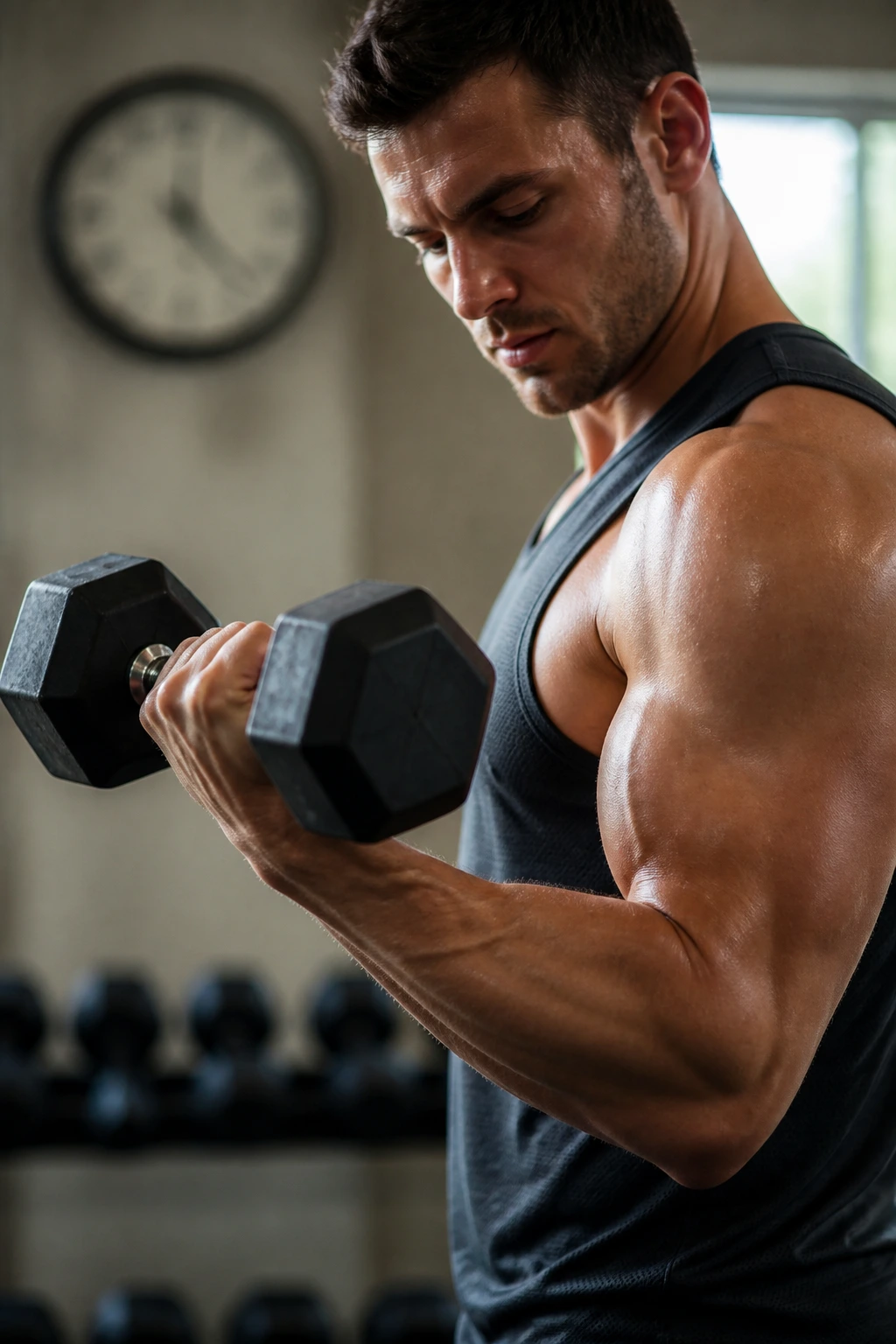
A well-built EMOM can be brutal in the best way. Every minute on the minute, you do one small block of work, then rest for whatever time remains before the next minute starts. It keeps the pace honest and stops you from wandering through the workout like you’ve got all day.
For arms, that structure works because fatigue builds without letting the effort leak out. You stay focused. The reps stay sharp. And the pump comes on fast.
Minute-by-minute layout
- Minute 1: 10 dumbbell curls
- Minute 2: 10 close-grip push-ups
- Minute 3: 10 overhead dumbbell extensions
- Minute 4: Rest or walk slowly
- Repeat the same 4-minute block 3 times
That gives you a 12-minute arm workout with biceps, triceps, and pressing work all in one piece. Choose loads that leave about 15 to 20 seconds of rest in each minute. If you finish with only 3 seconds left, the weight is too ambitious and the set quality will slide.
I like this as a final session of the week or a short add-on after a pull day. It’s compact, mean, and easy to track. If you hit all three rounds cleanly, add a rep to curls or extensions next time before you add weight.
Final Thoughts
Arms get more definition from smart tension than from random volume. Heavy-ish pressing, strict curling, overhead triceps work, and one good finisher will usually beat a long list of half-focused movements.
The triceps deserve more attention than most people give them. They’re the bigger part of the upper arm, and the exercises that stretch and load them well — overhead extensions, dips, pressdowns — tend to pay off faster than endless light curls.
Pick three or four workouts from this list and run them with discipline. Keep one heavy move, one stretch-based move, and one high-rep finisher in the week, and the work starts to show.
