



The first year after a baby arrives has a strange way of turning ordinary things into hard work. A shower feels like a project. A grocery run feels like a field trip. Even a five-minute stretch on the floor can get interrupted by crying, feeding, or the sudden need to find a missing sock that somehow matters more than your own needs.
The best after baby tips usually sound unglamorous. Walk a little. Eat before you’re ravenous. Keep workouts short enough that you can finish them before the next crisis. Plain advice can feel almost insulting when you’re exhausted, but plain advice is often what survives the chaos.
Trying to “bounce back” is a trap. Your body has not forgotten how to move, but it may be healing from pregnancy, birth, surgery, sleeplessness, feeding, and the new habit of carrying a small human with one hip jammed higher than the other. That changes the rules. It also explains why a smart workout plan after baby looks a lot more like steady repair than punishment.
The real win is not a dramatic comeback. It’s building a routine that still works when the nap ends early, the bottle spills, or the day gets away from you before lunch. That starts smaller than most people want to admit.
1. Start with a Ten-Minute Recovery Walk
Ten minutes counts.
A recovery walk is the simplest place to begin because it asks almost nothing from your nervous system, your joints, or your schedule. You do not need a fancy stroller route or a perfect pair of shoes. You need a loop that feels safe, a pace that lets you breathe through your nose most of the time, and the humility to stop before you turn the walk into a test.
Why the Tiny Walk Matters
Walking helps you reconnect with your body without making a big scene about it. After birth, that matters. The hips feel stiff, the back can feel sharp, and your posture may have collapsed into the “I have been holding a baby for three hours” shape. A short walk loosens all of that a bit.
Start with 5 to 10 minutes if that is what your body can handle. If you feel more tired, heavier, or sore afterward, the walk was too much. Shorten it next time. That is not failure. That is feedback.
- Keep your shoulders down and relaxed.
- Take shorter strides if your pelvic floor feels heavy.
- Walk on flat ground before adding hills.
- Bring water if you’re breastfeeding or just plain dry-mouthed from sleep loss.
- Stop if you notice bleeding increases, pain sharpens, or dizziness shows up.
Pro tip: if the walk feels easier on the way home than on the way out, you picked the right intensity.
2. Treat Sleep Like a Split Shift

Eight neat hours is fantasy territory for most new parents. The fix is not pretending that sleep will get perfect; the fix is protecting blocks of rest like they matter, because they do.
A split-shift sleep plan works better than trying to “catch up” in some dramatic, heroic way. One adult handles the baby for the first stretch, the other gets a real block. Or you trade off naps, or you use one protected nap window like it’s an appointment you’d never cancel. The point is not elegance. The point is giving your body at least one stretch long enough to feel the difference.
Sleep loss changes everything else. Your hunger gets louder. Your patience gets thinner. Even simple bodyweight exercises can feel heavier when your brain is running on fumes. If you’ve ever tried to do a workout after three broken nights and felt weirdly weak, that was not laziness talking. That was biology.
A helpful rule: protect one rest block before you protect chores. Laundry can wait. Dishes can wait. A tired nervous system does not improve because the kitchen looks tidy.
And yes, naps count. Short ones count too.
3. Rebuild Your Core From the Floor Up
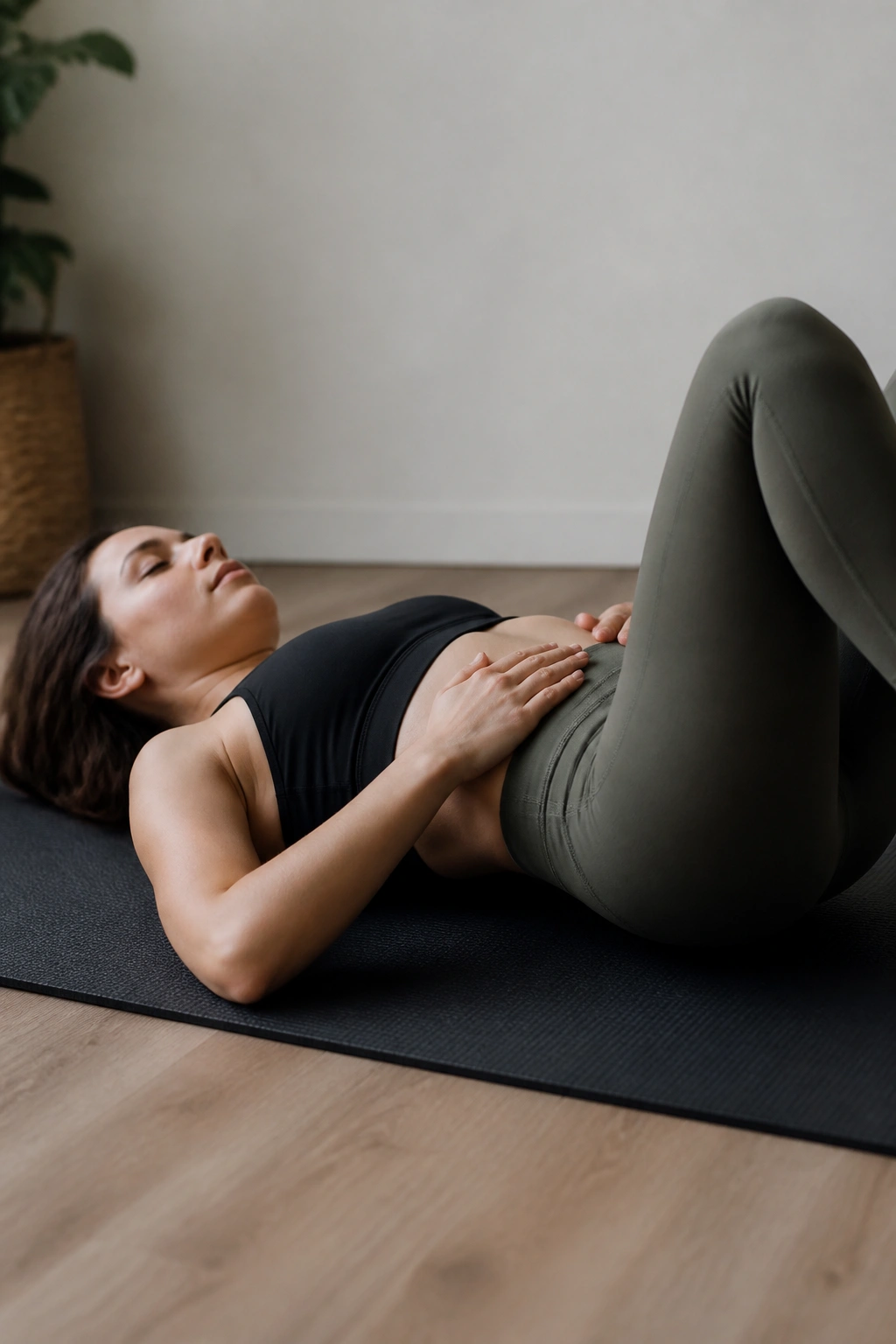
What if the best core work after baby looked almost boring?
That’s the truth most people miss. Crunches and high-effort ab circuits are usually the wrong place to start, especially if your midsection feels unstable, domed, or tender. A smarter plan rebuilds deep core control first: breathing, gentle tension, and movements that don’t make your body brace like it’s under attack.
A Five-Minute Floor Reset
Try this on a mat or carpet:
- 90/90 breathing: lie on your back with knees bent and feet on the floor, then inhale into the ribs for 4 counts and exhale for 6 counts, 5 breaths total.
- Pelvic tilts: rock the pelvis gently for 8 to 10 reps.
- Heel slides: slide one heel away and back, 6 reps per side.
- Dead bug arms only: keep the ribs down and move one arm at a time, 6 reps per side.
- Glute bridges: lift and lower slowly for 8 reps if it feels good.
If your stomach domes in the middle, cut the range smaller. If your lower back arches hard, slow down. If a move feels like strain instead of control, skip it for now.
One clean rep beats ten sloppy ones. Every time.
4. Keep Snacks Where Your Hands Already Go

A hungry parent makes a cranky parent. Also a shaky one. Also a parent who suddenly “forgets” how to make a sensible dinner and ends up eating dry cereal over the sink.
The fix is embarrassingly practical: put food in the places where your life already happens. Keep protein bars in the diaper bag. Put yogurt cups at eye level in the fridge. Leave peanut butter, crackers, and bananas on the counter if that is what gets eaten. A snack you can reach with one hand while holding a baby is worth more than a perfect meal that never happens.
What Actually Works Between Feeds and Naps
You do not need a gourmet spread. You need a few repeatable choices that cover protein, carbs, and a bit of fat so you do not crash an hour later.
- Greek yogurt with fruit and granola
- Peanut butter on toast
- Cheese and crackers
- Hard-boiled eggs
- Trail mix in small containers
- Hummus with pita or baby carrots
- A banana with a handful of nuts
The first year after baby can turn meal planning into a joke, so keep the bar low and the calories nearby. If you wait until you feel hungry enough to “deserve” food, you’ll wait too long.
Eat earlier. Eat plain. Eat again.
5. Make a Morning Mobility Habit That Fits in the Cracks

A workout does not have to feel like a workout to count.
That’s the part a lot of people resist. They think movement has to be sweaty, scheduled, and dressed in proper gear. Not here. A short mobility routine done before the day starts breaking apart can keep your back from seizing, your hips from locking up, and your shoulders from climbing into your ears.
Picture three minutes on the floor before the baby fully wakes up. Cat-cow. Thoracic rotations. Hip circles. Maybe a few calf raises while the kettle boils. None of it is dramatic, but it wakes up parts of you that spend too many hours folded around a feed, a carrier, or a car seat buckle.
Keep the Range Small
The most useful mobility work after baby is the kind you can repeat without thinking. Big dramatic stretches feel nice for about 20 seconds, then you go right back to stiffness if the rest of the day is spent hunching over. Small daily doses win.
Try this simple sequence:
- 5 cat-cows
- 5 thoracic rotations per side
- 10 shoulder rolls
- 8 hip circles each direction
- 10 slow calf raises
You can do it barefoot on the kitchen floor. That’s enough.
6. Use the Stroller as a Training Tool

A stroller walk is not “just a walk” when you use it with intention.
Compared with a rigid gym plan, stroller time is forgiving. Nap windows are messy. Feedings run long. Someone always needs something at the wrong moment. The stroller gives you a moving container for cardio, fresh air, and a little sanity. That makes it one of the best tools in a first-year workout plan.
The trick is to stop treating every outing like a casual meander. Pick one flat loop and use it as a base. After a few days, add short brisk intervals: 1 minute faster, 2 minutes easier. If there’s a hill nearby, push it once and call that the workout. You do not need an hour. You need consistency that survives real life.
Best of all, the stroller walk can be scaled to the day. Sleep disaster? Keep it gentle. Good nap day? Add a few extra pushes or a longer route. That kind of flexibility matters more than the number of calories on some generic app.
Best fit: parents who want movement without arranging childcare or packing a gym bag.
7. Respect the Pelvic Floor Before You Chase Intensity
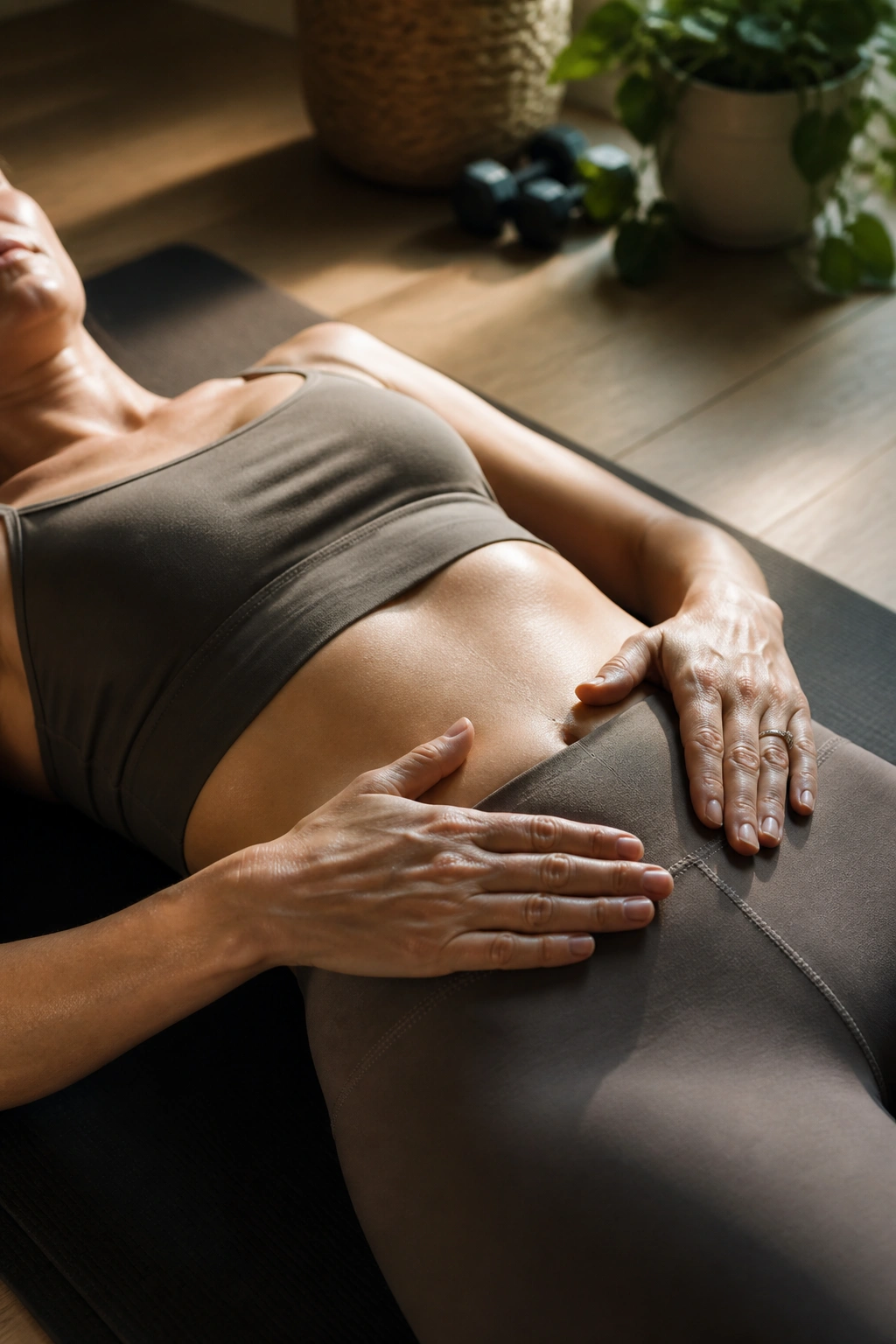
Pelvic floor work is not all Kegels. That idea has caused more confusion than help.
After pregnancy and birth, the pelvic floor can feel weak, tight, sore, or just plain unreliable. Some people leak when they cough or jump. Some feel pressure or heaviness. Some feel nothing unusual until they try to lift something heavier than a laundry basket and suddenly the whole area complains. The response should not be “push harder.” It should be “figure out what this tissue needs.”
A gentle approach usually works better than aggressive ab work. Sometimes that means contraction. Sometimes that means relaxation. Sometimes both. If you’ve got pain with sex, heaviness in the pelvis, leaking that doesn’t improve, or a dragging sensation after exercise, a pelvic floor physical therapist is worth finding. That’s not dramatic. It’s practical.
Signs You Need to Slow Down
- Leaking during coughing, jumping, or lifting
- A bulging or heavy feeling in the pelvis
- Pain in the lower abdomen or pubic area
- Doming or a ridge along the midline of the belly during effort
- A “something is off” feeling that shows up after workouts
If any of that appears, scale back. Lower impact. Smaller range of motion. Slower pacing. Your body is not being difficult; it is sending a message.
8. Lift Weights in 20-Minute Bursts
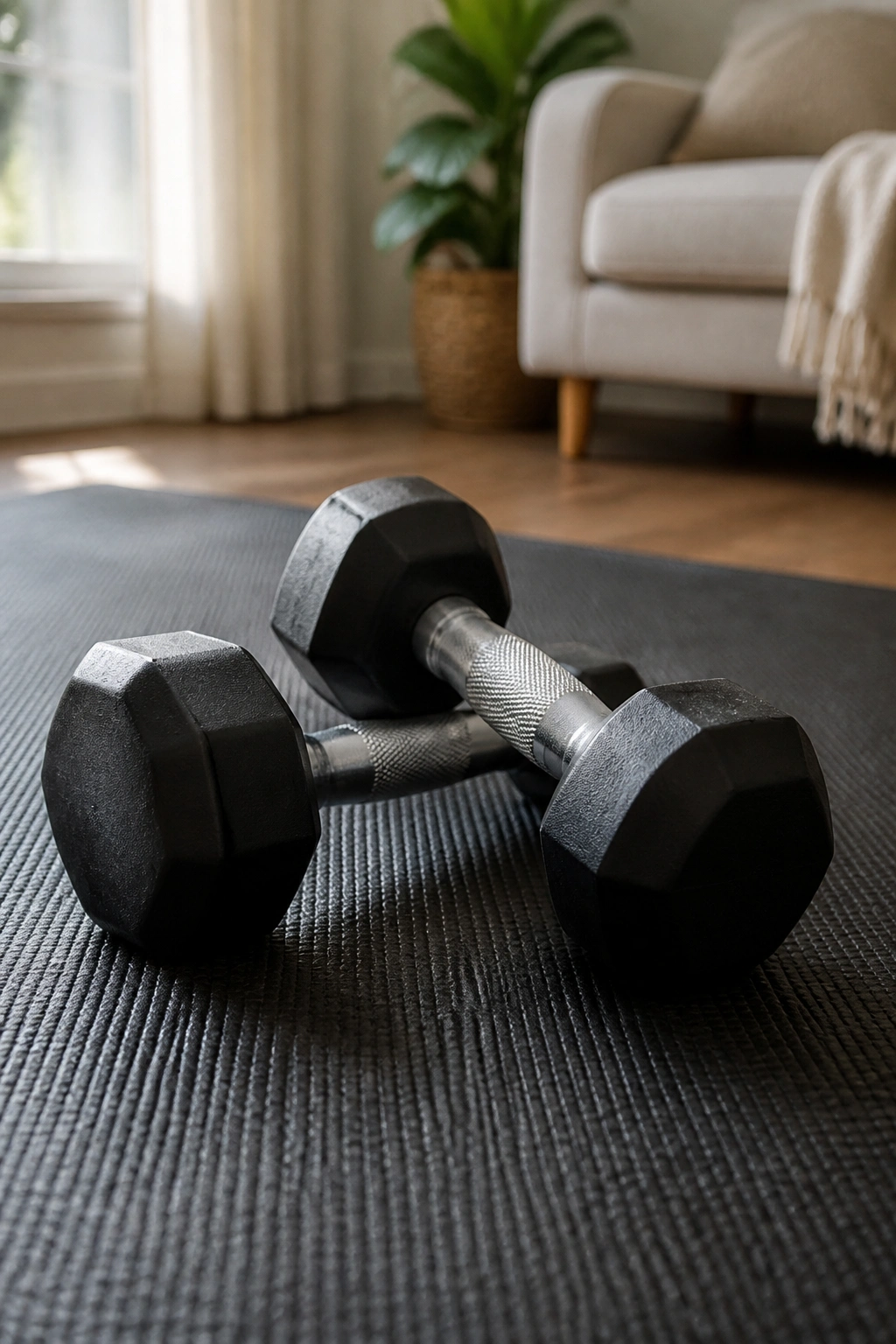
A short strength session is often better than a perfect long one you never get to do.
That’s especially true after baby, when attention is broken into tiny pieces. I like 20-minute lifting sessions for this season because they’re long enough to matter and short enough to survive a bad nap. You can get a lot done with a pair of dumbbells, a resistance band, and a floor.
What a Small Strength Session Looks Like
Try 2 rounds of this:
- 8 goblet squats
- 8 Romanian deadlifts
- 10 one-arm rows per side
- 8 overhead presses per side
- 10 glute bridges
Rest 30 to 60 seconds between moves if needed. Keep the reps smooth. You should finish feeling worked, not wrecked.
The goal is not to chase exhaustion. The goal is to remind your muscles how to produce force without making your abdomen feel like it’s taking a beating. If you can finish the session and still have enough energy to function, you picked a useful weight. If you’re shaky for the next half day, it was too much.
Tiny strength work pays off in sneaky ways: carrying the baby feels easier, stairs feel less rude, and your back may stop acting like a complaint department.
9. Pick One Anchor Workout You Actually Repeat
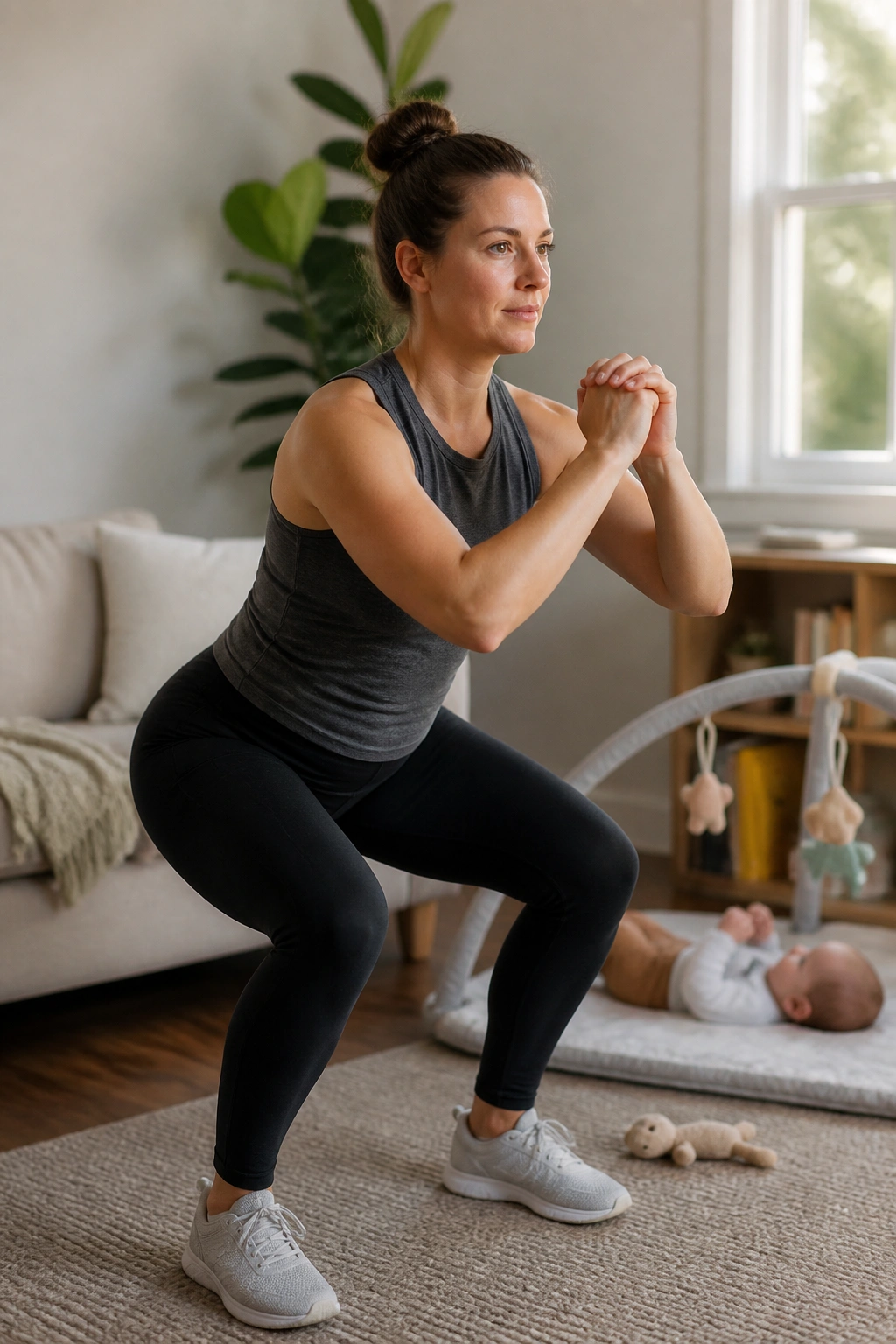
One reliable workout beats three ambitious ones you keep canceling.
A lot of first-year fitness plans fall apart because they ask for too many ideal conditions. The baby has to nap. You have to have energy. The house has to be quiet. Your clothes have to be clean. That is too much dependency for a messy season. Pick one workout that can happen under imperfect conditions and protect it.
Maybe it’s a Tuesday morning walk with intervals. Maybe it’s a Saturday strength circuit in the living room. Maybe it’s a 15-minute yoga flow after the evening feed. The exact form does not matter nearly as much as the fact that it is yours and you repeat it.
The anchor workout becomes a psychological anchor too. When the week goes sideways, you don’t need to ask what to do. You already know. That lowers decision fatigue, which is one of the biggest hidden drains on a new parent.
Keep it plain. Keep it short. Keep it repeatable.
10. Batch Cook the Boring Food Before You Need It

The sexiest meal plan in the world collapses if there’s no food ready when you’re hungry.
That’s the part people hate hearing, because it sounds too domestic to count as fitness advice. It counts. Under-eating makes recovery harder, workouts feel worse, and mood swingier. Batch cooking is less about being organized and more about preventing the 4 p.m. panic that turns everyone into a wreck.
Fill Three Containers, Not a Pinterest Board
Aim for a few building blocks:
- A protein: shredded chicken, eggs, tofu, lentils
- A starch: rice, potatoes, oats, pasta
- A vegetable: roasted carrots, chopped cucumbers, frozen peas, sautéed greens
Make enough for 2 to 3 days, not a heroic week-long project that leaves you exhausted. Cook one tray of food, store it in shallow containers, and keep sauces simple. Olive oil, lemon, salsa, yogurt dressing, or tahini can change the mood fast.
The point is to make the next meal easier than ordering takeout when your blood sugar is on the floor. If you have food assembled, you make better choices without spending more willpower.
Boring food is underrated. It keeps you upright.
11. Accept Help That Saves Steps

“Let me know if you need anything” is nice, but it’s usually useless.
After a baby, you don’t need vague offers. You need help that removes work from your body. That might be someone holding the baby while you shower, carrying groceries upstairs, unloading the dishwasher, or folding the tiny mountain of laundry that reproduces in the corner like it has a secret agenda.
The difference matters. Help that saves steps gives you back energy you can spend on recovery, movement, or sleep. Help that just adds conversation can leave you more tired than before.
Be specific when people offer. Ask for one load of laundry. Ask for a 20-minute baby hold while you walk. Ask someone to drop off food in a container you don’t need to return. Most people are happier with a clear job anyway.
A lot of new parents feel guilty asking. Skip the guilt. You are not building toughness by doing everything the hard way. You are trying to get through a demanding year with your body and sanity intact.
12. Track Symptoms, Not Just Workouts

A workout log is nice. A symptom log is better.
That sounds a little clinical, but it’s the fastest way to learn what your body tolerates. After birth, the same workout can feel fine one day and too much the next, depending on sleep, feeding frequency, hydration, and whether you spent the afternoon carrying a baby on one side like a grocery bag. Counting reps alone misses the real story.
Write Down a Few Simple Things
- Energy level before and after movement
- Any pelvic heaviness, leaking, or pain
- Sleep quality the night before
- Whether the workout made you feel better later or worse later
- Mood after movement
- Any soreness that lasted into the next day
You do not need a fancy app. A note on your phone is enough. The pattern will show up fast. If a 15-minute circuit leaves you wiped for 24 hours, that tells you more than the fact that you completed it. If a walk makes your mood steadier and your back looser, keep that one around.
Data beats guesswork. Especially when your memory has been chewed up by night feeds.
13. Protect Your Shoulders and Neck Like They Matter

That tight knot between your shoulder blades is not random.
It usually comes from hours of feeding, carrying, rocking, and staring down at a baby with your head pushed forward. Your shoulders creep up. Your chin juts out. Your upper back rounds. Then the neck starts barking at you like it has a personal grudge.
The fix is part posture, part load management. Not glamorous. Still worth it.
What Helps in Real Life
- Hold the baby high on your chest instead of low on your hip
- Switch carrying sides before one shoulder gets angry
- Use a carrier that spreads weight across your back
- Do wall slides for 8 reps
- Add chin tucks for 5 slow reps
- Stretch the chest in a doorway for 20 to 30 seconds per side
The shoulder work does not need to be long. It needs to happen often enough to interrupt the slump. If your upper body feels like it’s folding inward all day, ten minutes of care can change the afternoon.
A carrier that fits well matters more than people think. So does not doing every feed, cuddle, and phone scroll in the same slouched shape.
14. Make Rest Days Feel Deliberate

Rest days are not lazy days. They’re the days that let the rest of the plan keep working.
The mistake most new parents make is turning every non-workout day into a cleanup marathon. Then the body never gets a real break. A good rest day should leave you feeling a little better by bedtime than you did at breakfast. That’s the bar.
Keep Recovery Active, Not Empty
A useful rest day might look like this:
- 10-minute easy walk
- 5 minutes of floor breathing
- A longer shower
- Extra water
- Early bedtime if the baby allows it
- No hard lifting, no jumpy cardio, no “I’ll just do one more thing” trap
You can still move. You can still stretch. You just do not have to prove anything. A rest day that includes a light walk and a bit of mobility often feels better than a full stop, especially if your joints get stiff from carrying a baby all day.
The sneaky part is mental. Rest days keep you from turning exercise into another thing you fail at. That matters more than most people realize.
15. Choose a Pace You Can Repeat

The best plan after baby is the one you can still do when life gets ugly.
That might sound obvious, but people keep building routines for their most hopeful days instead of their real ones. Real life includes spit-up on your shirt, a missed nap, and a diaper change that somehow takes 12 minutes because someone will not stop kicking. If your plan only works on perfect days, it is not a plan. It is a wish.
Pick a pace that feels almost too easy at first. Three 15-minute sessions. Daily walks. One strength circuit. A few floor drills while the coffee brews. That kind of rhythm adds up, and it does so without draining the tank you need for everything else.
I like the boring version here. Boring is durable. Boring survives the first year after baby better than flashy does.
Keep the bar low enough that you can step over it on a rough day. That is how a workout habit stays alive long enough to become yours.
