



The best off-day workouts for runners do not leave your legs feeling like a pile of bricks. They wake up the muscles that running alone tends to ignore, give your joints a little more support, and make your stride feel cleaner when you head back out the door.
I’m a fan of strength work that helps running mechanics instead of stealing from them. That means single-leg strength, calves that actually hold up, hips that stay level, a core that doesn’t wobble when you get tired, and enough power that hills stop feeling personal.
The trick is choosing sessions that build you up without turning the off day into another hard day. You want enough load to matter, not so much soreness that your next easy run turns into a shuffle. Start light, keep the reps crisp, and stop a set before your form gets sloppy.
1. Split Squat Session for Quads and Glutes
If I had to pick one off-day strength workout for runners, split squats would be right near the top. They hit the quads, glutes, and adductors in a way that actually looks like running: one leg working, the other leg supporting, and the whole body trying not to wobble.
The beauty here is that you don’t need a huge weight to get a solid training effect. A pair of dumbbells, a bench, or even just your bodyweight can do the job if you slow the lowering phase and keep the front foot planted.
Why it works for runners
- The front leg does most of the work, which matches the demands of running far better than two-legged lifts alone.
- You get hip stability, knee control, and quad strength in the same movement.
- It exposes side-to-side differences fast. That can be annoying. It’s also useful.
Try 3 sets of 6 to 8 reps per leg with 60 to 90 seconds of rest. Keep your torso tall, let the back knee travel down under control, and pause for a second at the bottom if you want more challenge without adding more weight. If your front knee caves inward, the load is too heavy or the stance is too narrow.
2. Single-Leg Romanian Deadlifts for Hamstrings and Balance
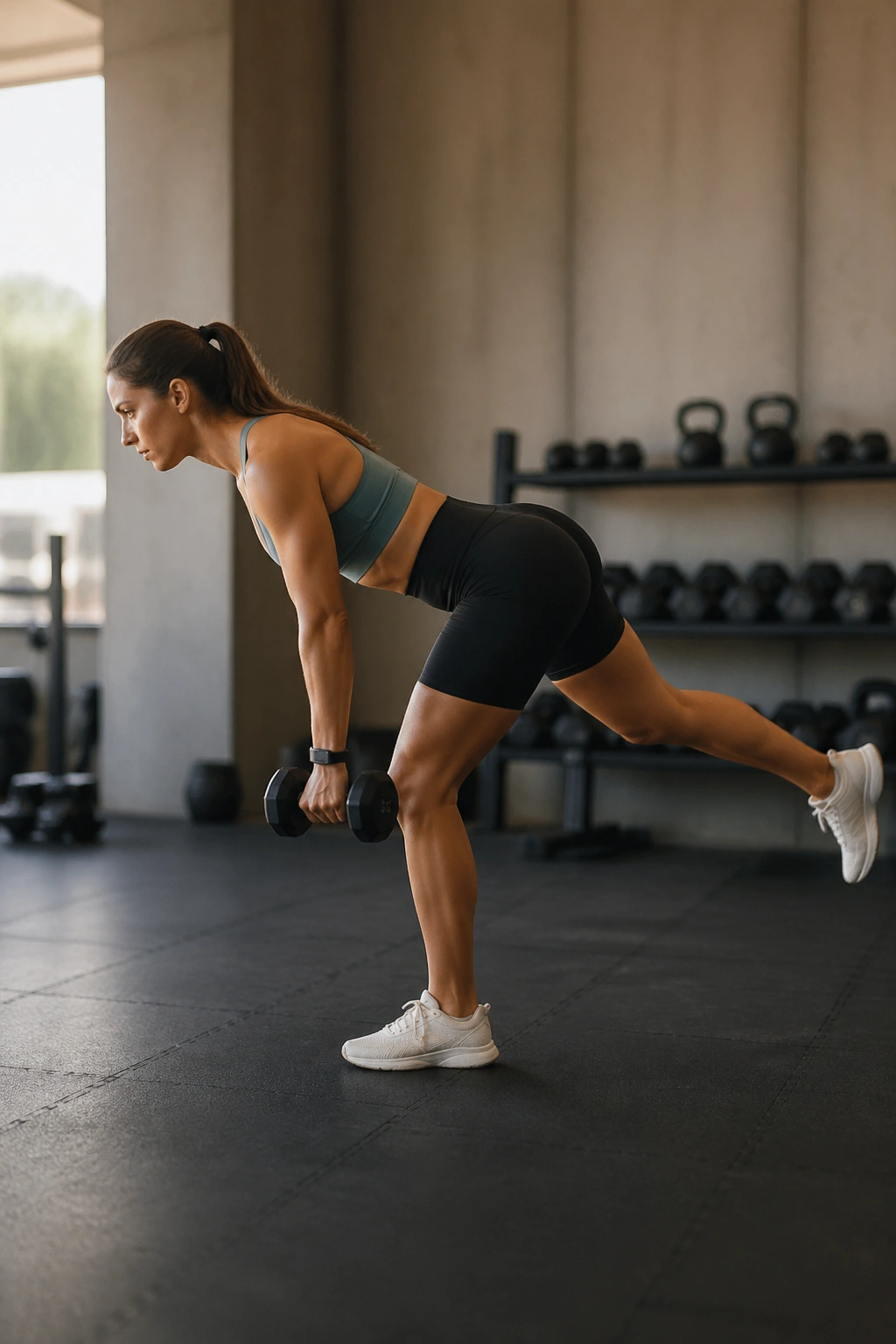
Single-leg Romanian deadlifts are awkward for about ten minutes, and then they start to make sense. That awkwardness is the point. You’re teaching the hamstrings and glutes to control your pelvis while one foot is on the ground, which is basically half of running.
I like these for runners who feel strong in the gym but a little sloppy when the pace changes. The movement teaches you to hinge at the hips without rounding your back or dumping all the work into the lower spine.
Keep the non-working leg long behind you, but don’t force it to stay perfectly straight like some sort of balance contest. A slight bend in the standing knee is fine. In fact, it usually helps.
Simple setup
- Hold one dumbbell in the opposite hand of the standing leg.
- Lower for 3 seconds until your torso is nearly parallel to the floor.
- Stand back up by driving through the heel and midfoot.
- Use 3 sets of 6 to 8 reps per side.
That’s enough. You do not need to wobble through 20 messy reps. If your hips keep opening up, lighten the load and slow down. Clean reps beat fancy reps every time.
3. Step-Up Repeats That Teach Stronger Knee Drive
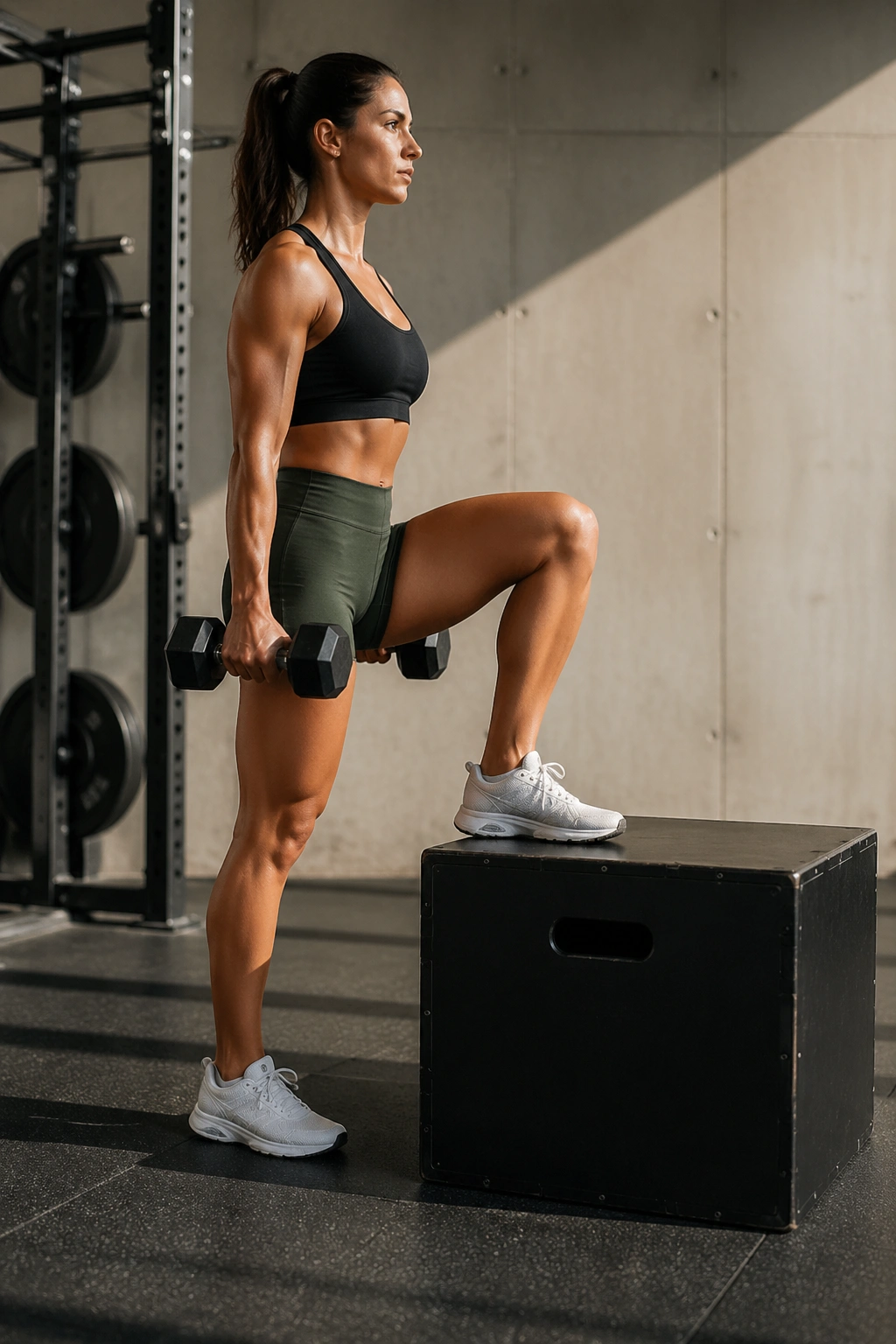
A step-up looks almost boring until you do it properly. Then you feel exactly where your running power comes from. The working leg has to lift, stabilize, and finish the move without a push from the back leg. That makes it a nice bridge between strength work and the way you move up a hill.
Use a box or bench that puts your knee somewhere around hip height or a little lower. Too high and you start cheating with momentum. Too low and the exercise turns into a very mild stair climb, which is fine for warm-ups but not much else.
What I like here is the clean transfer to uphill running. You’re training the same idea: drive the ground away, keep the pelvis level, and stay tall through the torso.
A simple prescription works well:
- 3 to 4 sets of 6 reps per leg
- Hold dumbbells if bodyweight feels too easy
- Lower slowly; don’t drop off the box
- Finish each rep by standing fully on the top leg
One useful cue: think about pressing the whole foot into the box, not just the toes. That small change keeps the glutes involved and the knee happier.
4. Calf Raises for the Gastroc and Soleus
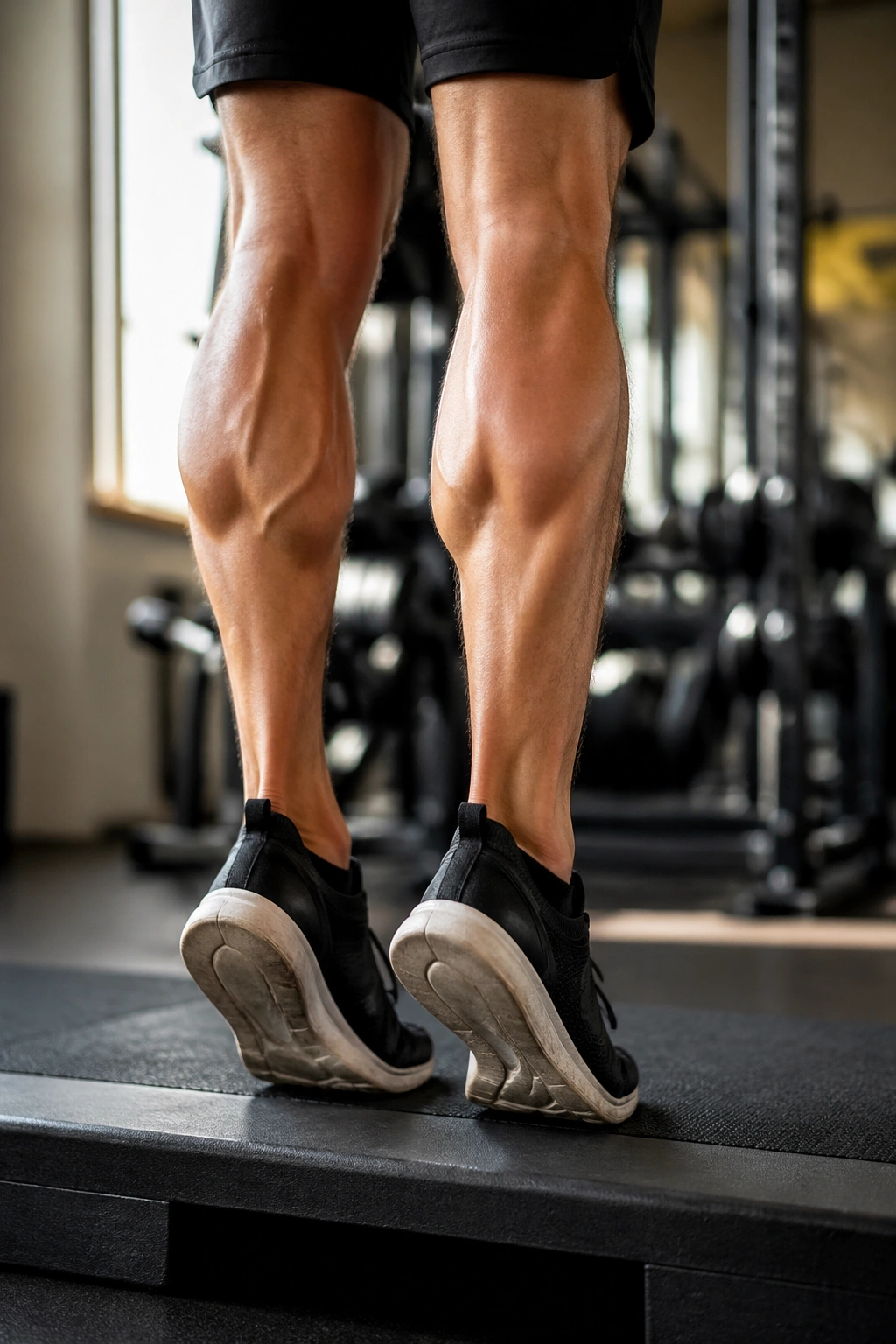
The calf work most runners skip is usually the work they end up needing later. Calves do far more than absorb shock. They help with push-off, ankle stiffness, and the little springy rebound you want when your stride is good.
Do both kinds of raises. Straight-knee raises hit the gastrocnemius, the bigger visible calf muscle. Bent-knee raises shift more load to the soleus, which matters a lot when you’re running for time, not just for show.
Two versions worth doing
- Standing calf raise: 3 sets of 12 to 20 reps, full pause at the top
- Bent-knee calf raise: 3 sets of 15 to 20 reps, slower lowering phase
- Add a 2-second hold at the top if the set feels too easy
- Use a step so the heel can drop below the forefoot for a fuller range of motion
This is not glamorous work. Fine. Boring work is often the work that keeps you running. If you’ve had Achilles grumbles or your lower legs feel cooked after faster sessions, calf strength deserves a spot on the menu.
5. Glute Bridge Marches That Wake Up the Back Side
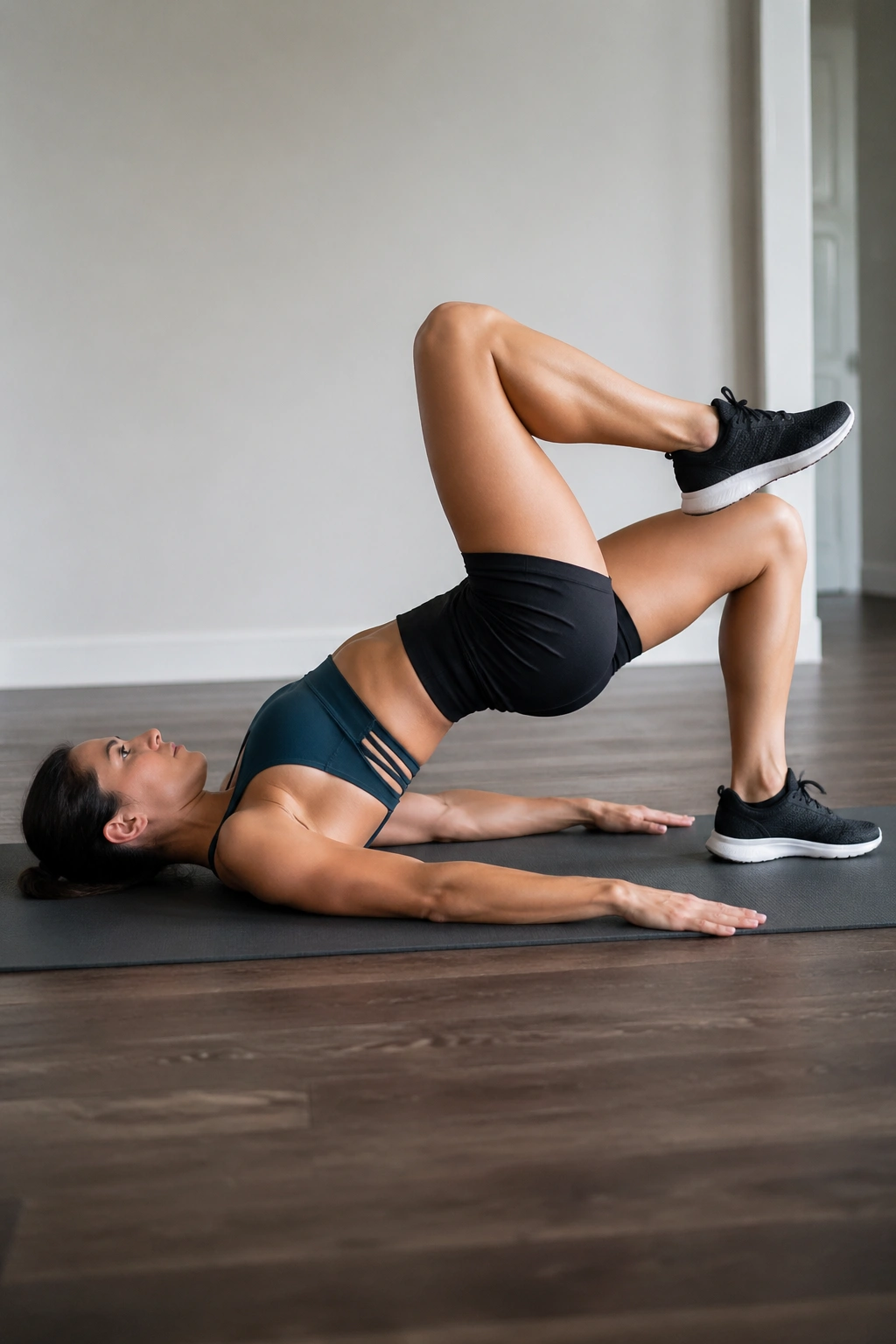
Can a floor exercise matter to your run? Absolutely. Glute bridge marches are one of those moves that looks almost too easy until you realize your pelvis wants to twist the second one foot leaves the floor.
Lie on your back, plant both feet, and lift into a bridge. From there, march one knee toward your chest without letting the hips drop. The body should feel steady, not like a wobbly tent in wind.
A clean little circuit
- Hold the bridge for 20 to 30 seconds.
- March one knee up for 10 total reps.
- Finish with 6 to 8 single-leg bridge lifts per side.
- Rest for 30 to 45 seconds and repeat for 2 to 3 rounds.
Keep your ribs down. That matters. If you arch your lower back to fake the lift, you’re missing the point and feeding the same pattern that makes running posture fall apart late in a long session.
This one works well on a day when your legs feel flat but not beaten up. It’s a small workout with a pretty big carryover.
6. Lateral Band Walks and Monster Walks for Hip Stability
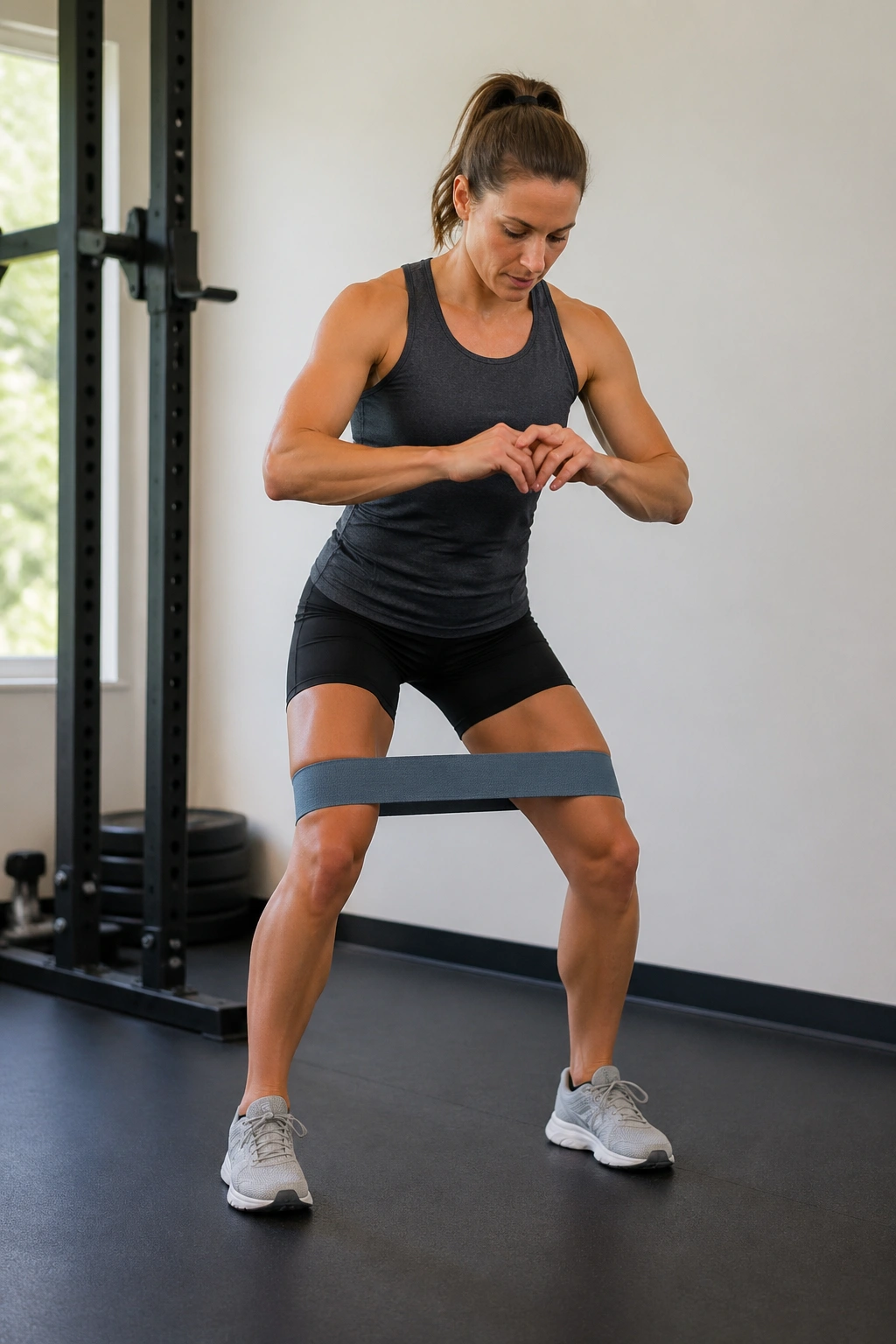
Band work gets mocked because it’s light. Fair enough. But light does not mean useless, and runners who skip this stuff often end up with hips that drift, knees that cave, and a stride that leaks energy sideways.
Lateral band walks and monster walks target the glute medius and the smaller stabilizers around the hip. Those muscles don’t make headlines, but they help keep your pelvis level when one foot is airborne. That’s most of running.
I prefer putting the band just above the knees for beginners and around the ankles for people who already control the movement well. The lower placement is harder. No surprise there.
Use this setup:
- 10 steps to the right, 10 to the left
- 2 to 4 rounds
- Stay low enough to feel the glutes, not the quads burning out instantly
- Keep the toes pointed mostly forward
Don’t sway your upper body to get through the set. That’s cheating, and also a waste. The burn should live in the side of the hip, not in your neck from looking dramatic.
7. Dead Bugs, Side Planks, and Pallof Presses for a Quiet Core
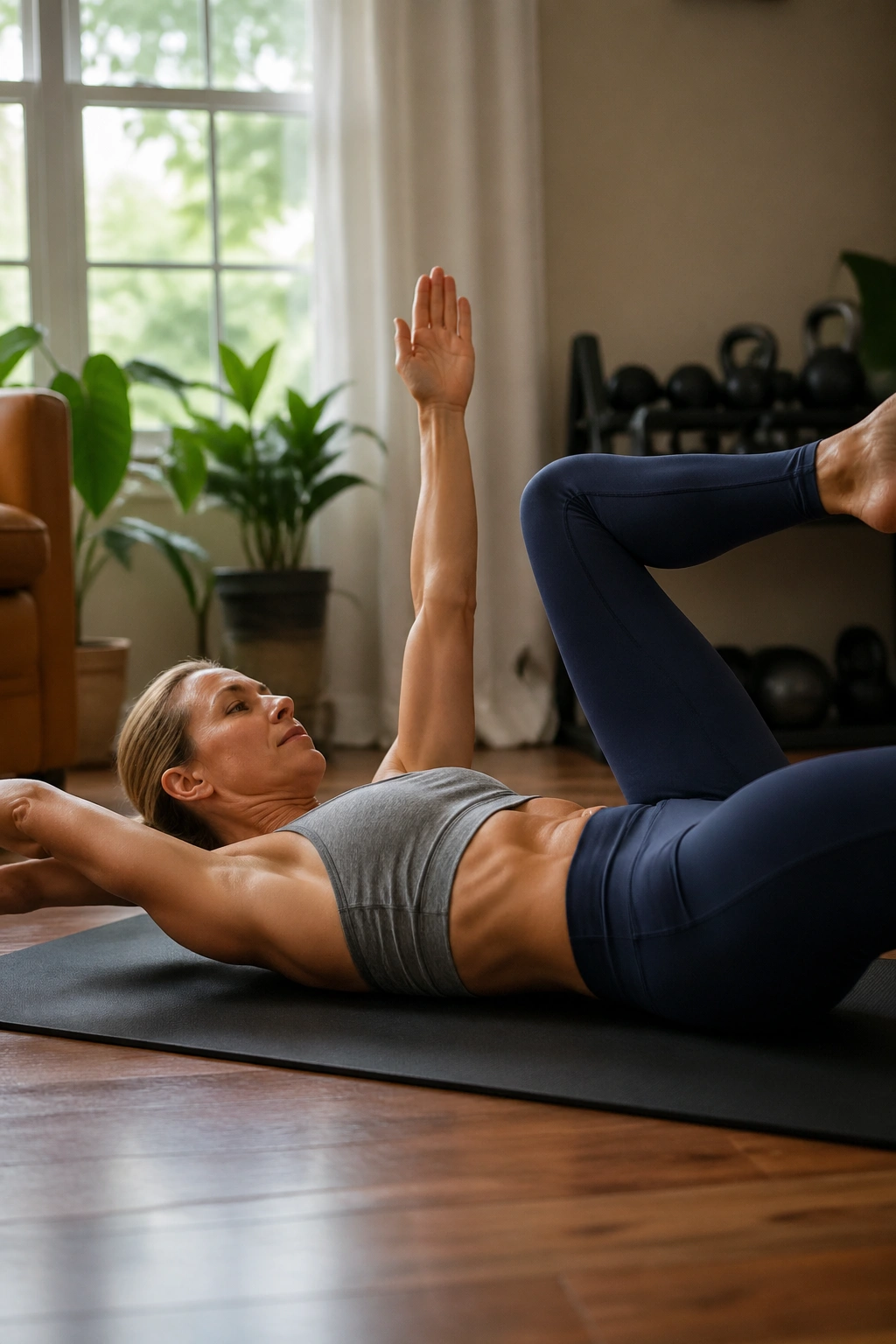
A strong runner’s core is not about six-pack theatrics. It’s about staying still where you need stillness, and moving where you need movement. Dead bugs, side planks, and Pallof presses do that job well because they train anti-extension and anti-rotation rather than endless crunching.
That means your ribs stay stacked over your pelvis, your lower back stops taking over, and your arms and legs can swing without the middle of your body leaking energy everywhere. Fancy? No. Useful? Very.
A simple 10-minute circuit
- Dead bug: 8 reps per side, slow and controlled
- Side plank: 20 to 30 seconds per side
- Pallof press: 10 reps per side with a band or cable
- Repeat for 2 to 3 rounds
Keep the dead bug slow enough that your lower back stays heavy on the floor. In the side plank, think long through the top hip rather than just surviving the hold. The Pallof press should feel like the band is trying to twist you and you’re refusing to cooperate.
If your stride falls apart when you’re tired, this workout usually helps more than another round of sit-ups.
8. Push-Ups, Rows, and Presses for an Upper-Body Session
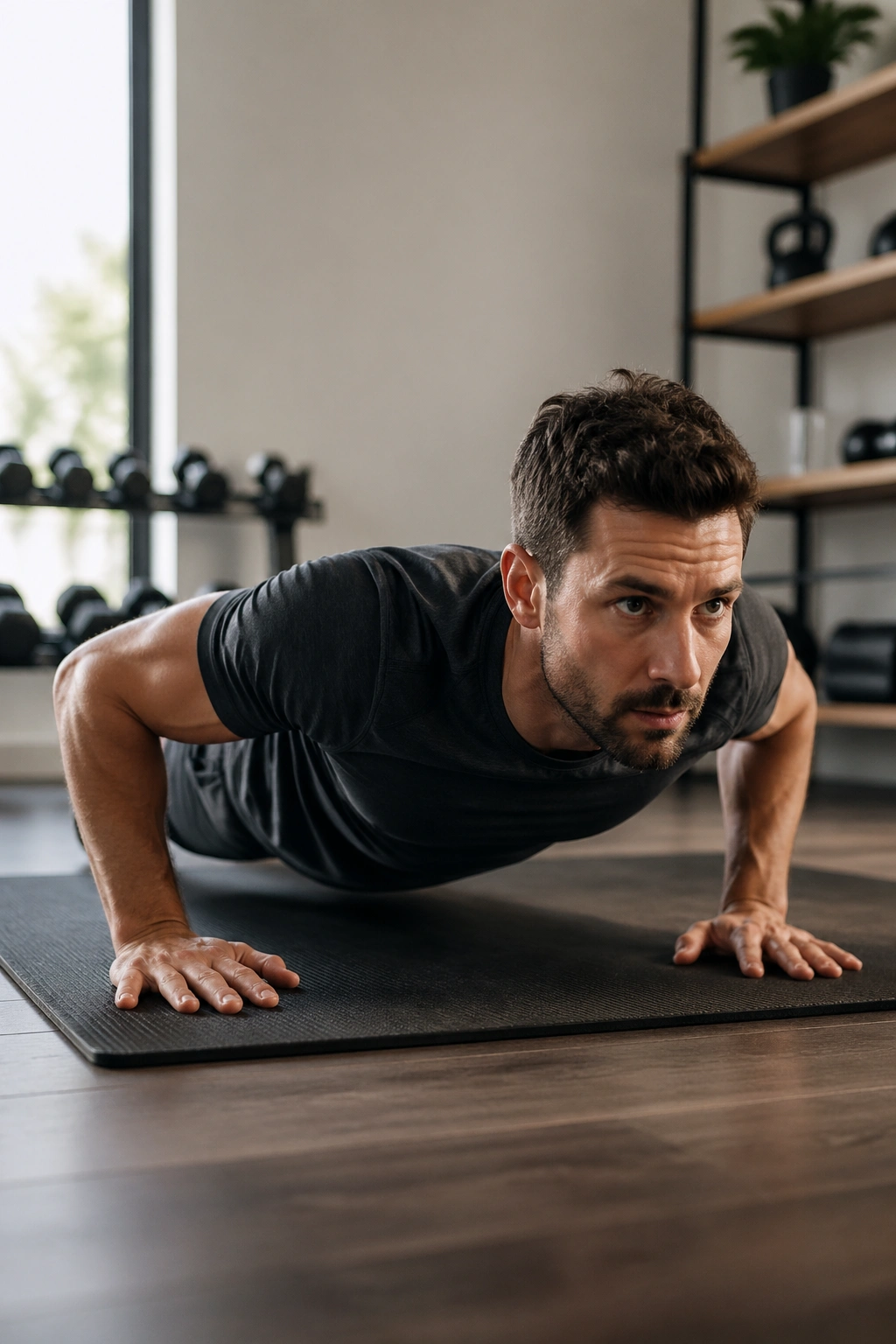
Runners sometimes act like upper-body strength is decoration. It isn’t. Your arms help set rhythm, your back helps hold posture, and your shoulders matter more than people admit once fatigue shows up around mile 8 or 9.
Push-ups, rows, and overhead presses make a tidy little strength session on an off day because they build the upper back and chest without pounding your legs. That makes them a nice companion to lower-body work instead of a replacement for it.
A straightforward session looks like this:
- Push-ups: 3 sets of 8 to 15 reps
- One-arm dumbbell row: 3 sets of 8 to 12 reps per side
- Half-kneeling dumbbell press: 3 sets of 6 to 10 reps per side
The half-kneeling position is worth keeping. It makes your trunk work harder, and it stops you from turning the press into a sloppy lean-back contest. Keep the reps clean. Stop before the shoulders start shrugging up toward your ears.
This is a good day to feel athletic, not destroyed.
9. Goblet Squats to Keep Legs Honest
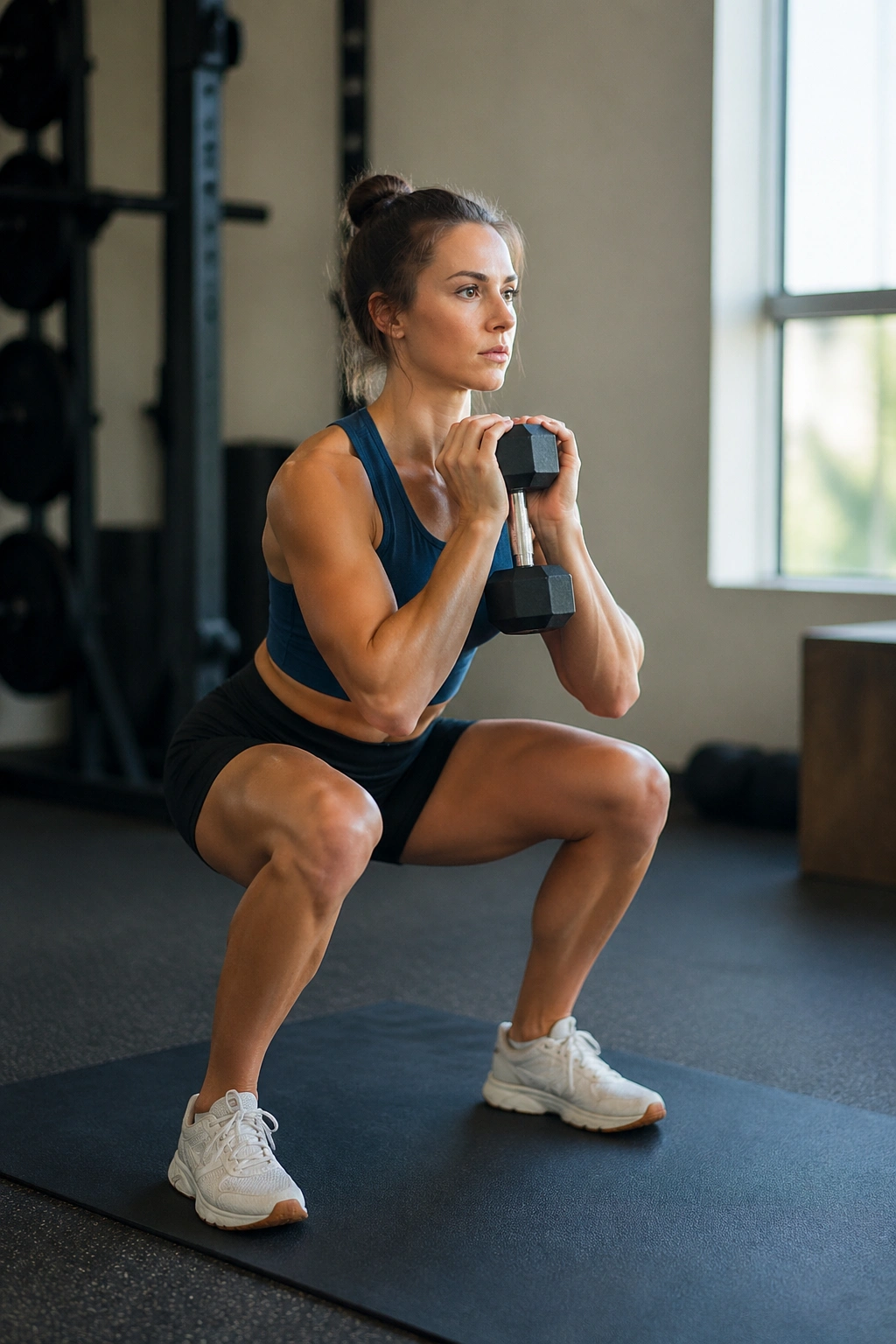
Goblet squats are the simplest full-body strength move a runner can own. One dumbbell or kettlebell held at the chest, feet planted, torso upright, and a squat that asks the hips, quads, and trunk to work together without turning the day into a barbell project.
I like goblet squats because they’re honest. If your heels lift, you’ll know it. If your chest collapses, you’ll know that too. They give useful feedback fast, which is more valuable than loading up weight just to feel impressive.
Use them with a moderate rep range:
- 3 to 4 sets of 5 to 8 reps
- Lower for about 2 to 3 seconds
- Pause for 1 second at the bottom
- Stand up with a smooth drive, not a bounce
If the bottom position feels sticky, try slightly widening your stance or elevating your heels on small plates. That’s not cheating. It’s matching the drill to your body. Heavy goblet squats can work, but for runners I usually prefer quality reps before load.
10. Kettlebell Swings for Hip Snap and Power
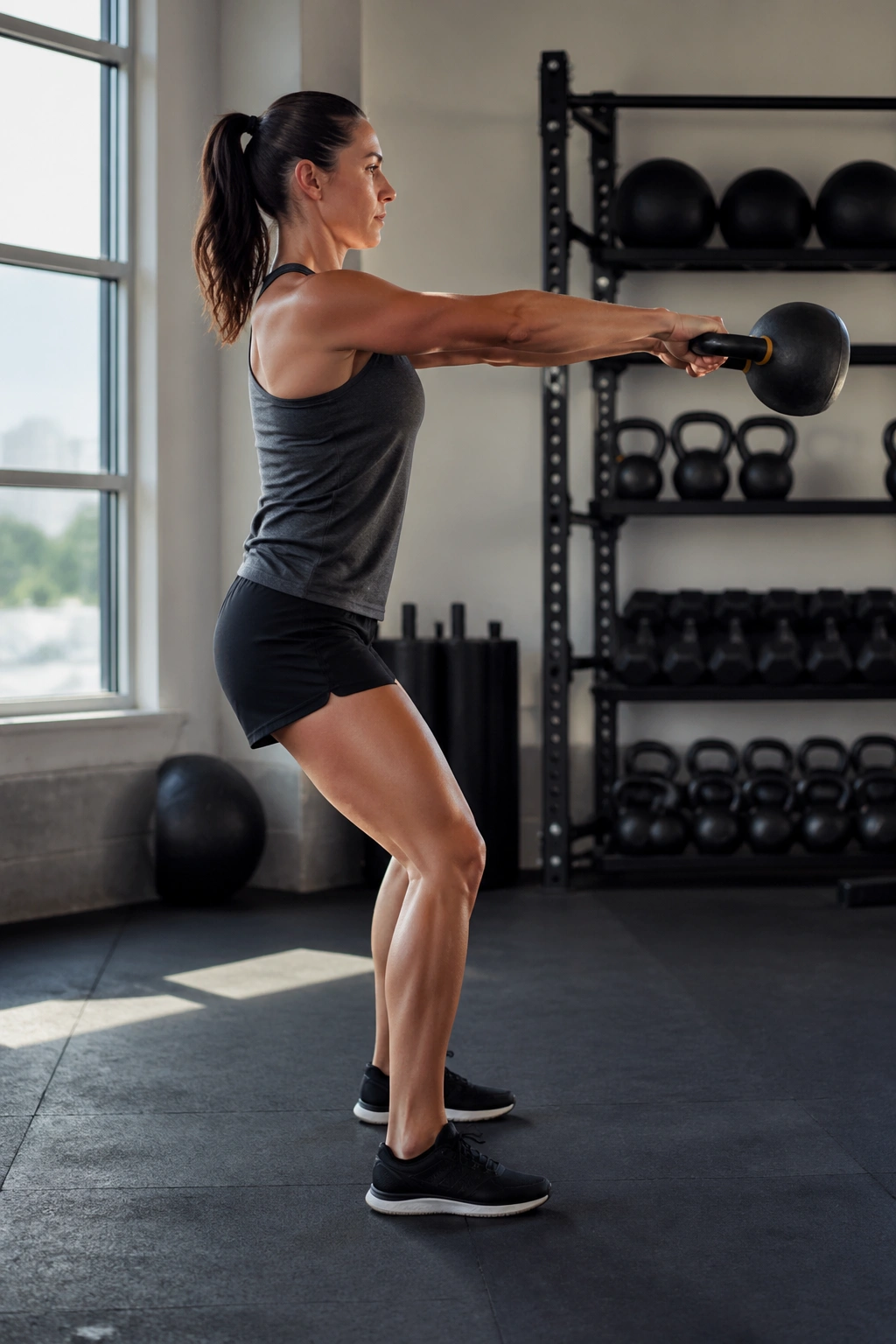
A good kettlebell swing feels snappy. A bad one feels like a front-loaded squat with a flying object. The difference matters, because the swing is meant to train hip power, not make your lower back do overtime.
When the hinge is right, the kettlebell floats. You don’t lift it with your arms. You drive it with the hips. That clean snap is what makes swings useful for runners who want more pop without piling on heavy fatigue.
How to use swings well
- Start with a kettlebell you can control for 10 clean reps
- Do 5 to 10 sets of 10 reps
- Rest 30 to 45 seconds between sets
- Keep the torso braced and the spine neutral
If your shoulders are doing the work, the weight is too light or your hinge is off. If your lower back feels the set first, stop and reset. Swing mechanics get sloppy fast when you chase fatigue.
This is one of the few off-day workouts that can leave you feeling sharper rather than drained, assuming you keep the volume modest.
11. Sled Pushes or Heavy Marches for Low-Impact Power
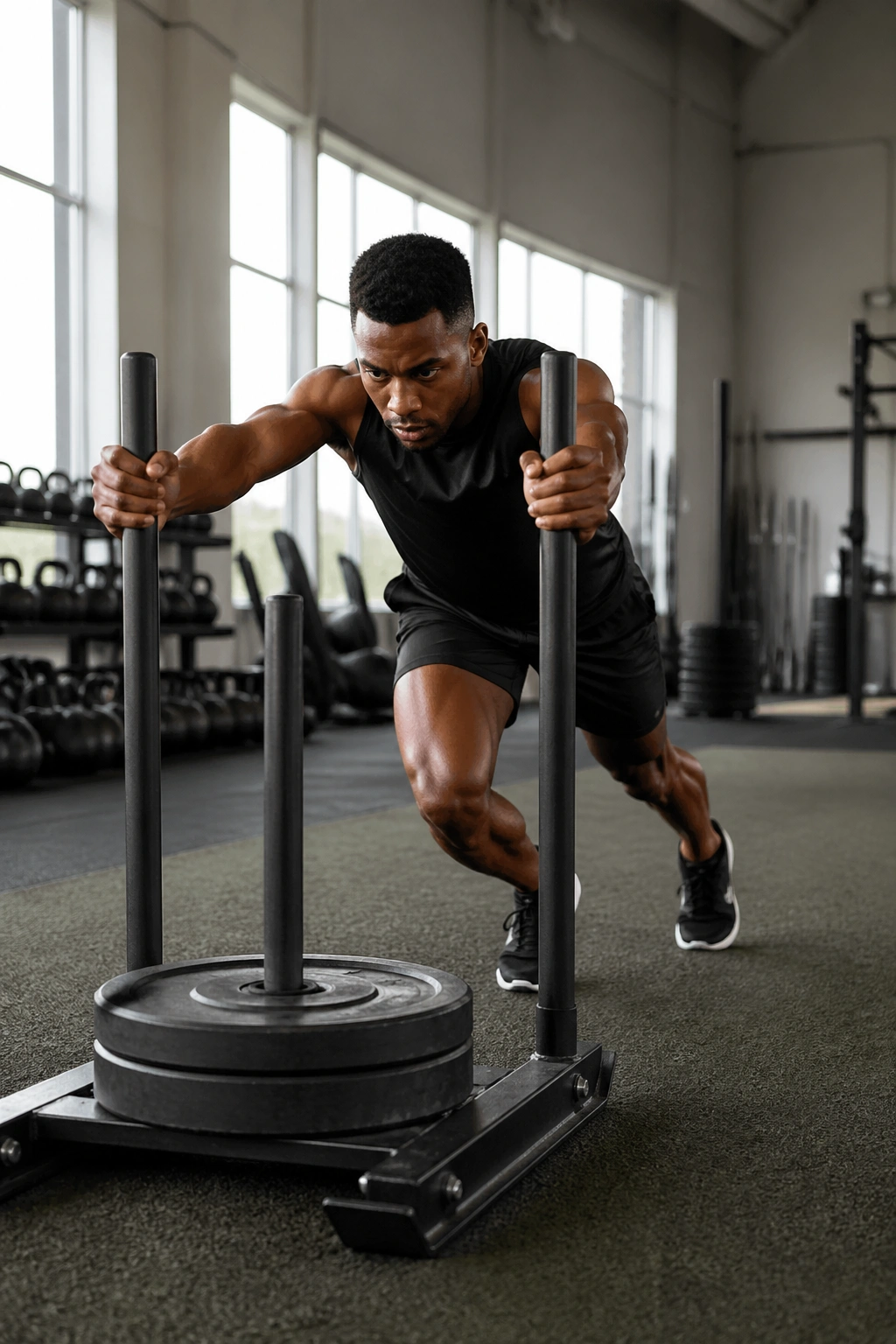
Sled work is the quiet hero of runner strength training. No eccentric pounding. No complicated setup. Just force against the ground, over and over, with less soreness than most lower-body lifts create. That’s a good trade on an off day.
If you have access to a sled, push it for short distances with a forward lean, short steps, and a steady drive. If you do not have one, a heavy march with a sandbag, vest, or loaded pack can scratch a similar itch.
Try this:
- 6 to 8 pushes of 15 to 25 meters
- Rest long enough to keep each push strong
- Keep the torso rigid and the steps quick
- Stop if the low back starts arching or the feet get loud and sloppy
The reason I like sleds for runners is simple. They build force production without the same muscle damage you get from hard eccentric work. That means less wreckage the next day. Nice little bonus.
12. Pogo Jumps and Low Box Hops for Elastic Ankles
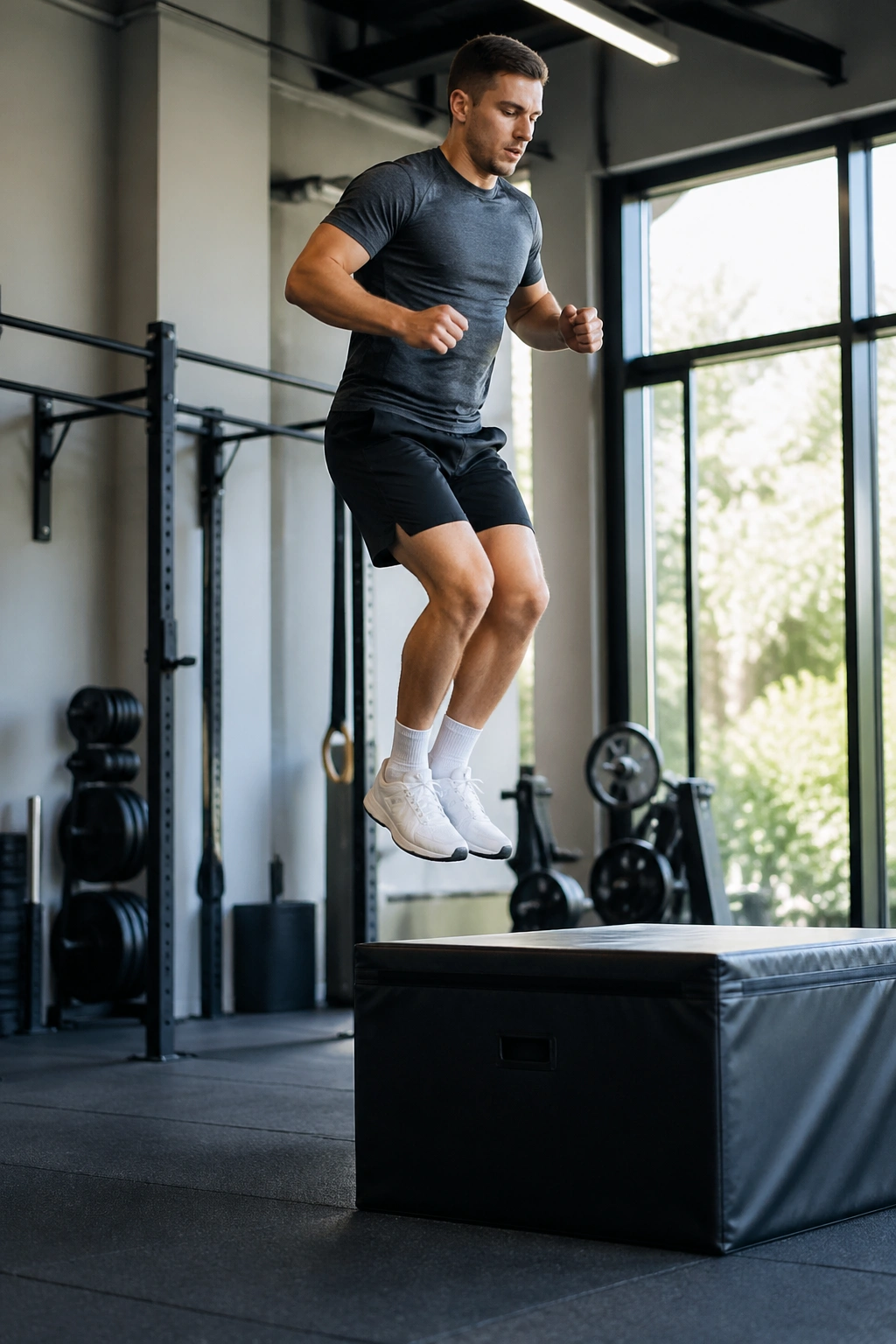
Plyometrics scare people off because they look bouncy. They are bouncy. That’s the point. Small jumps teach the lower legs and feet to store and return force quickly, which is a big part of efficient running.
Pogo jumps are the easiest place to start. Stay upright, keep the knees mostly straight but not locked, and let the ankles do the springing. Low box hops, done carefully, add a tiny bit more demand without turning the session into a max-effort jump day.
Keep the contacts small
- 2 to 4 sets of 15 to 20 pogo contacts
- 3 sets of 5 to 8 low hops onto a short box
- Rest 45 to 60 seconds
- Stop if the landings start getting loud
A useful rule: if you’re pounding the floor instead of bouncing off it, you’ve gone too far. These drills should feel quick and crisp, not punishing. The goal is elastic stiffness, not fatigue.
Use them when your legs are fresh enough to move fast. Don’t tack them onto a day when you already feel heavy.
13. Hip Airplanes and Single-Leg Balance Work
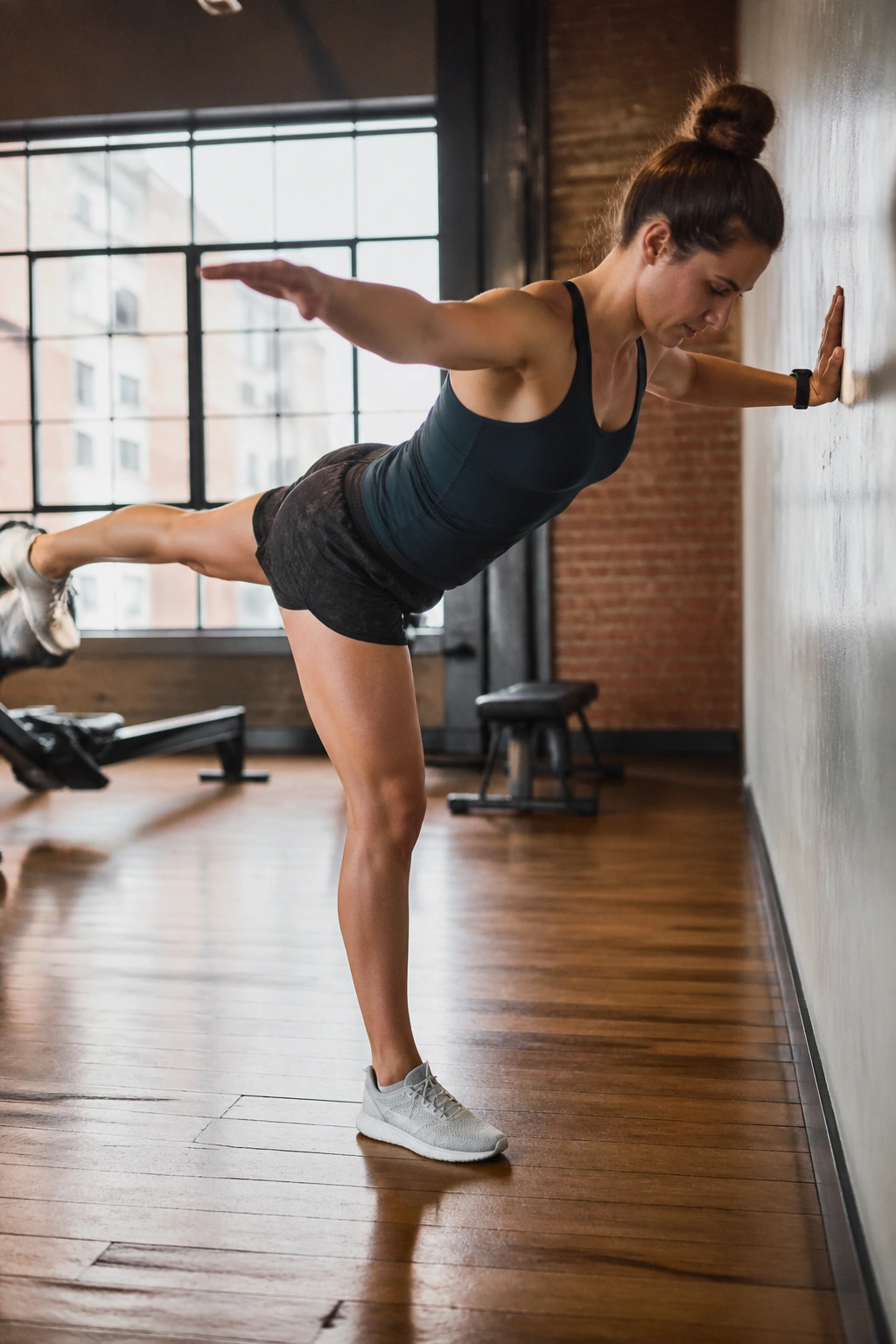
Hip airplanes look strange the first time you do them. Fine. A lot of useful drills look strange. This one asks you to stand on one leg, hinge a little, open and close the pelvis, and keep the standing hip from collapsing. It’s a brutally honest test of control.
Trail runners tend to love this one once they get past the weirdness. Cambered roads, uneven ground, and tired late-race mechanics all demand the same thing: one leg that can hold a line while the rest of the body moves around it.
Use a wall, dowel, or fingertip support at first. That’s not a crutch. That’s smart.
- 2 to 3 sets of 3 to 5 reps per side
- Move slowly through each rep
- Keep the standing foot tripod flat: big toe, little toe, heel
- Don’t rush the rotation
The ankle, hip, and core all talk to each other here. When one gets sloppy, the others usually reveal it. That’s why the drill is so useful. It tells the truth.
14. Farmer Carries and Suitcase Carries for Posture Under Fatigue
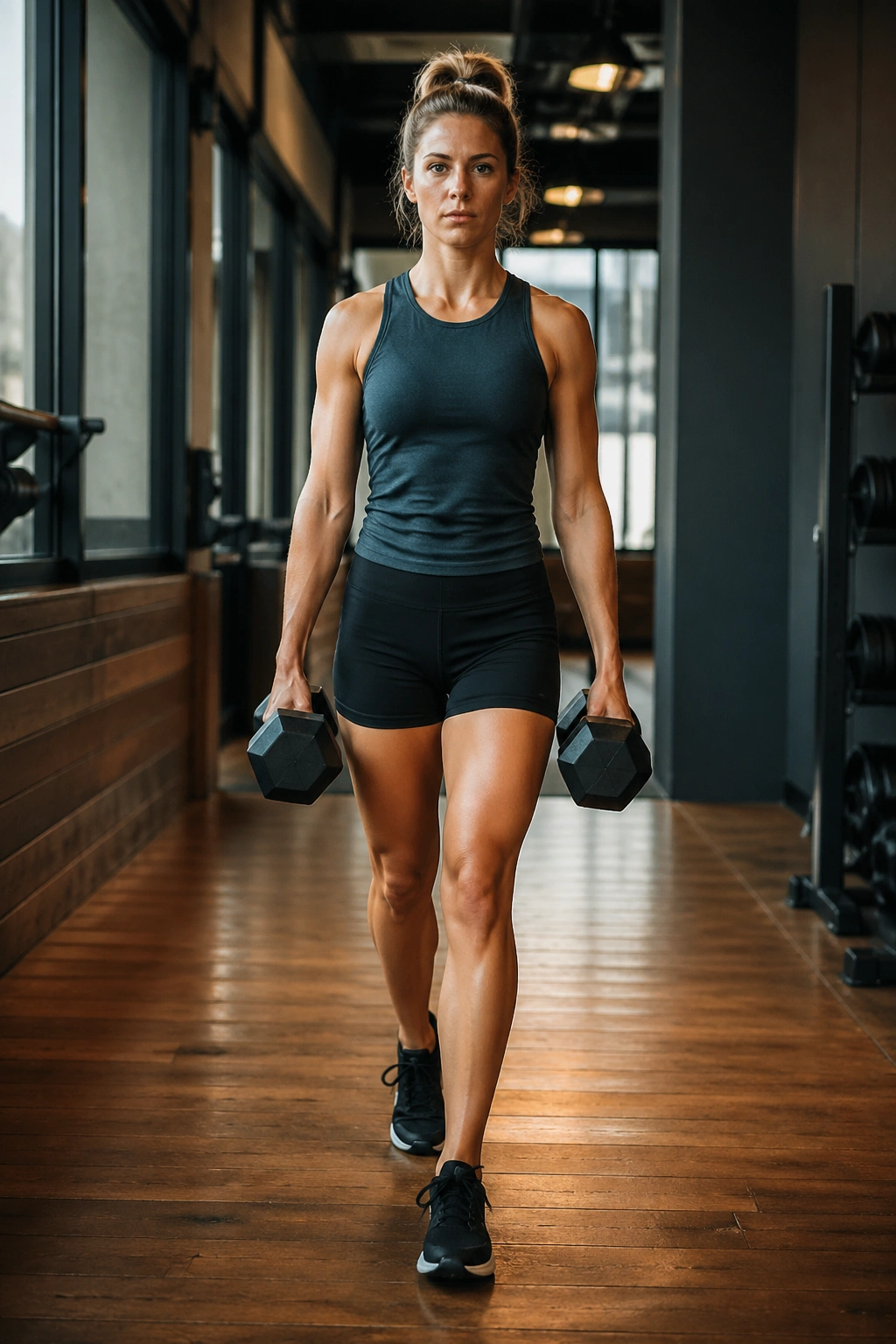
Carry work is underrated because it looks too plain to be special. Pick up something heavy. Walk. Don’t wobble. That’s the whole deal, and it’s more valuable than it sounds for runners who lose posture late in a long effort.
Farmer carries load both hands. Suitcase carries load one side only, which makes your trunk work harder to resist side bending. That one-sided version is especially nice for runners because it teaches anti-tilt strength without needing a complicated setup.
A clean carry session might be:
- 4 to 6 carries of 20 to 40 meters
- Use a weight that makes posture honest but not ugly
- Walk tall with the ribs stacked over the pelvis
- Keep the shoulders down and the neck relaxed
You should feel your grip, your midsection, and your upper back all doing a job. If you feel yourself leaning or marching like a robot, drop the load. Carries are supposed to make you solid, not crooked.
This is one of the easiest off-day workouts to fit into a busy week, and one of the easiest to mess up by going too heavy too soon.
15. Mobility-Strength Reset Sessions for Stiff Off Days
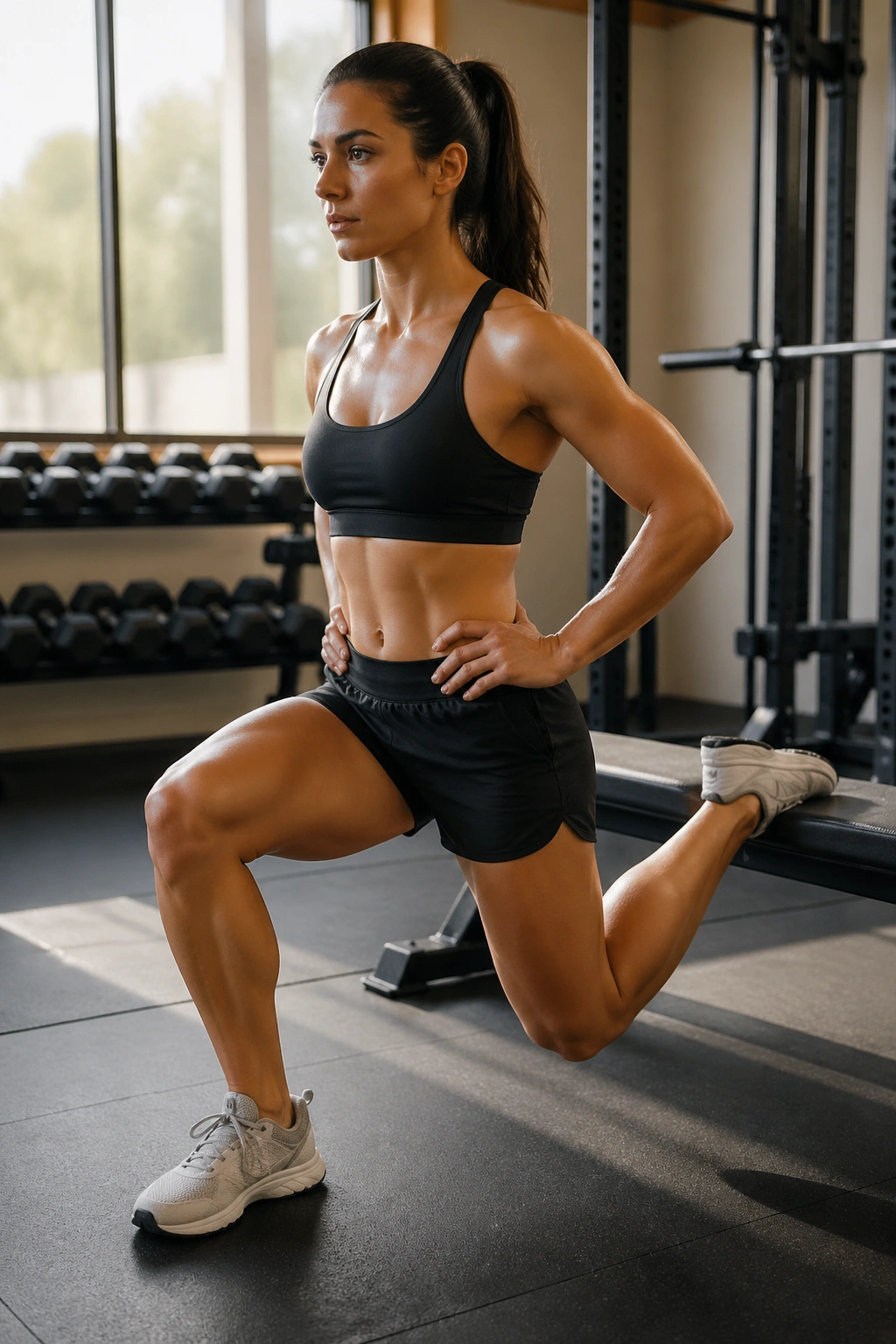
Some off days are not gym days in the usual sense. They’re the days when your calves feel tight, your hips feel glued shut, and the idea of a hard lift sounds like a bad joke. That’s when a mobility-strength reset session earns its place.
I like these sessions because they keep the habit alive without asking your body for a big fight. You get some range of motion, a bit of strength, and a better shot at feeling loose the next morning. Not magical. Just useful.
A simple 20-minute reset
- 90/90 hip switches: 8 reps per side
- Bodyweight split squat holds: 20 seconds per side
- Thoracic rotations on all fours: 6 reps per side
- Single-leg calf raises: 12 reps per side
- Dead bugs: 8 reps per side
- Band pull-aparts: 15 to 20 reps
Run that as a circuit for 2 to 3 rounds, moving calmly and breathing through your nose if you can. The pace should stay easy. If you’re sweating hard, you’ve probably turned a reset into a workout you don’t need.
This is the one I’d keep in the back pocket for weeks when training gets messy. It doesn’t look dramatic. It doesn’t need to. The goal is to leave the session with better joints, quieter calves, and a body that’s ready to run again without protest.
