



The best total body workouts without weights don’t feel like a consolation prize. They feel like somebody turned up the difficulty in a smart way: less setup, less clutter, and a lot more honesty about how much control you actually have over your own body.
No gym required.
That sounds gentle until you’re halfway through a set of slow squats, push-ups, reverse lunges, and mountain climbers with 15 seconds of rest between rounds. Bodyweight training can be brutally effective because it asks for range of motion, tempo, balance, and stamina all at once. A clean 20-minute circuit can leave your legs shaking and your shoulders cooked, especially if you keep the rest short and the movement quality high.
The trick is variety. Some days you want jumping work and sweat flying everywhere. Other days your knees want quiet floors, or your downstairs neighbors do. Some sessions need a timer. Others feel better as ladders, EMOMs, or rep pyramids. That’s where these 25 workouts come in: different styles, different moods, same simple rule — you can get a real full-body session with nothing more than a little floor space and a stubborn streak.
1. Total Body Workouts Without Weights: The 20-Minute Classic Circuit
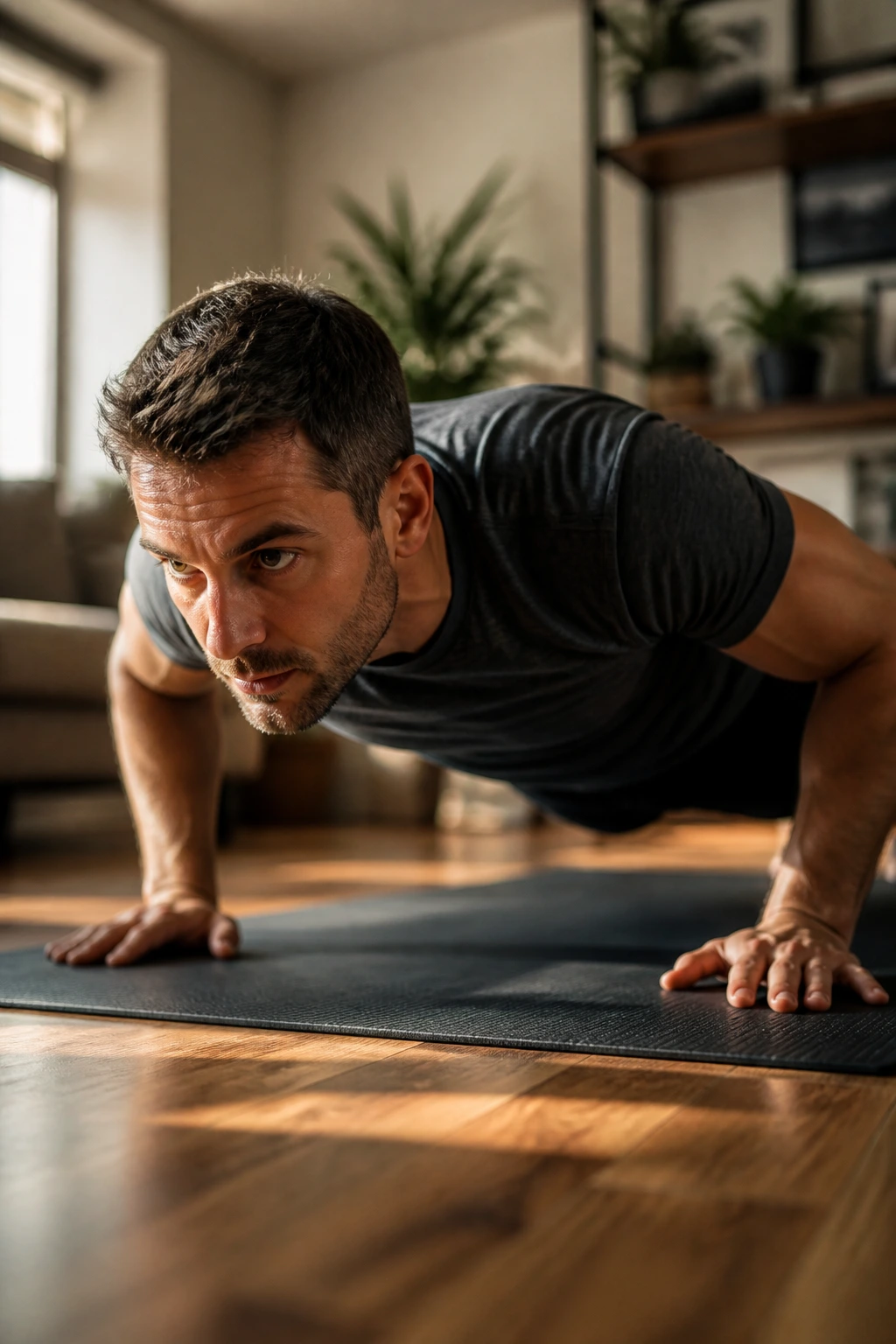
This is the bread-and-butter version. Reliable. Straightforward. Hard enough to count. You’ll move through five exercises for 40 seconds each, then rest 20 seconds, and repeat for 4 rounds.
How to run it
- 40 seconds of air squats
- 40 seconds of push-ups
- 40 seconds of reverse lunges
- 40 seconds of mountain climbers
- 40 seconds of plank shoulder taps
Keep the pace smooth in round one. Round two will already feel different. By round three, the point is not speed; it’s staying clean when your breathing gets noisy.
Best move here: choose a squat depth you can repeat for all 4 rounds. If your last rep looks like a shopping cart collapse, you went too fast.
2. The 12-Minute EMOM That Hits Legs, Chest, and Core
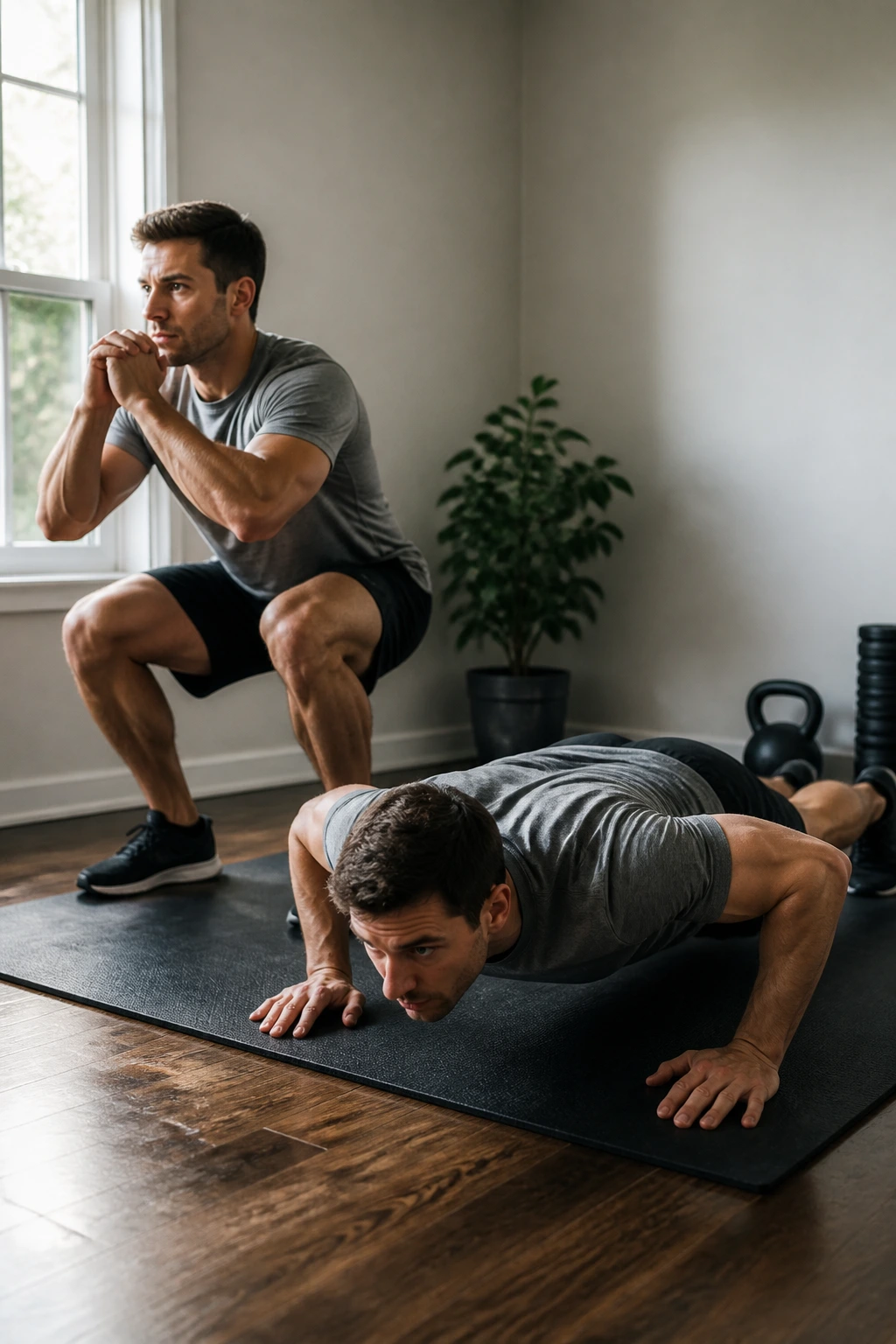
EMOM means every minute on the minute, and it works because the clock does the bossy part for you. Start a new set at the top of each minute, finish the reps fast, and use whatever time is left to breathe. Simple. Mean, too.
Minute 1: 12 squats and 6 push-ups.
Minute 2: 10 alternating lunges and 20 high knees per side.
Minute 3: 30-second plank hold and 10 glute bridges.
Repeat that sequence 4 times for a full 12-minute session.
The whole workout feels compact, but it sneaks up on you. EMOMs reward efficiency, so sloppy reps are wasted reps. Keep your squats crisp, lower your chest all the way on the push-ups, and brace your stomach like someone’s about to poke you in the ribs.
No drama. Just work.
3. An AMRAP Workout That Builds Pace Without Burning You Out
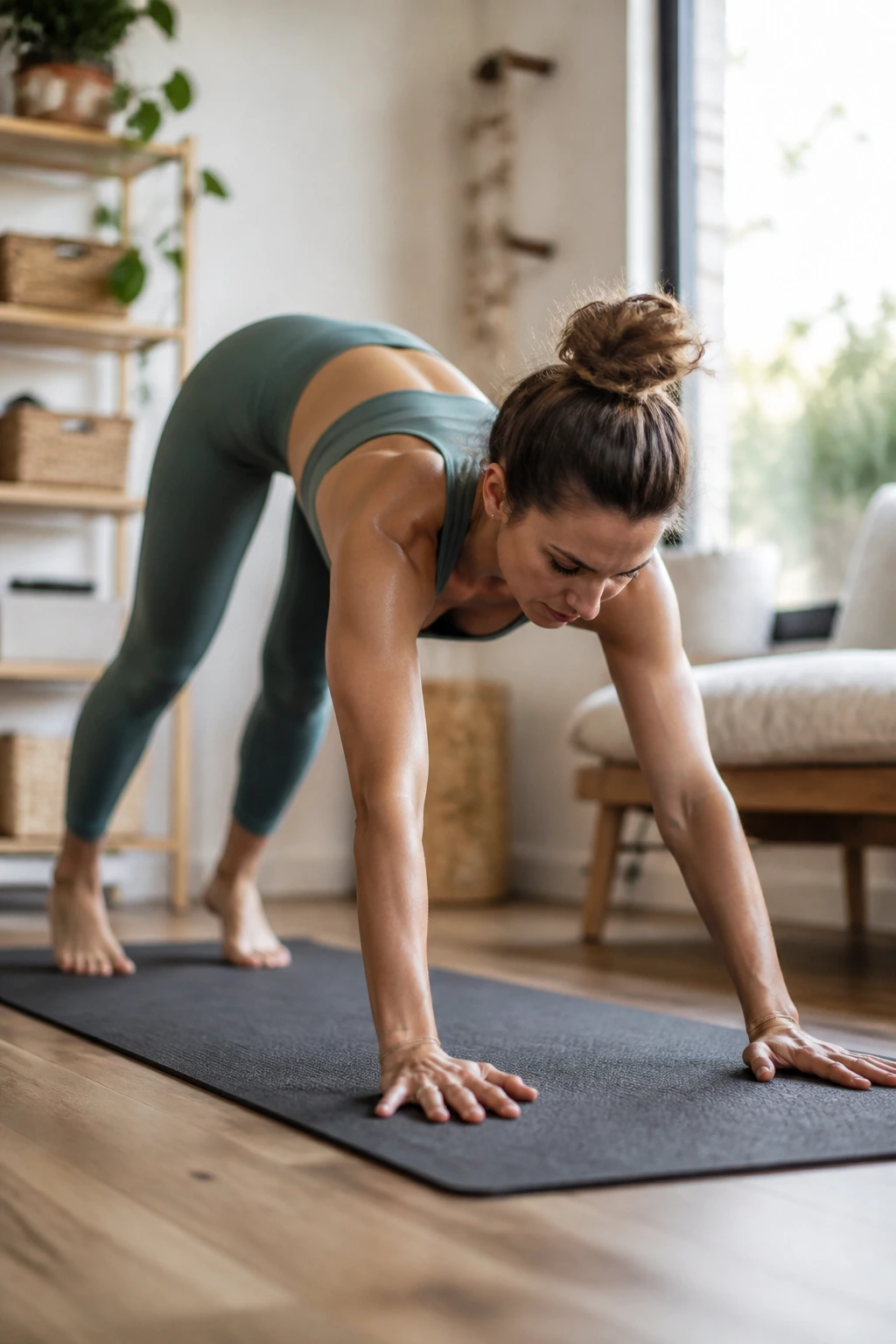
AMRAP stands for “as many rounds as possible,” but I’d rather call this one a controlled scramble. Set a timer for 15 minutes and cycle through a short list without racing the first five minutes like you’ve got something to prove.
Why it works
You get enough variety to keep your whole body busy, but the exercise list is short enough that you can settle into a rhythm. That rhythm matters. Once your breathing settles, your form usually gets better, and that’s where the real work lives.
Do this for 15 minutes
- 5 inchworms
- 10 air squats
- 8 push-ups
- 12 alternating lunge reaches
- 20 mountain climbers
If push-ups start to fall apart, drop to your knees and keep the pace moving. A cleaner modified rep beats a sloppy full rep. Every time.
4. The Rep Ladder That Starts Easy and Gets Spicy Fast
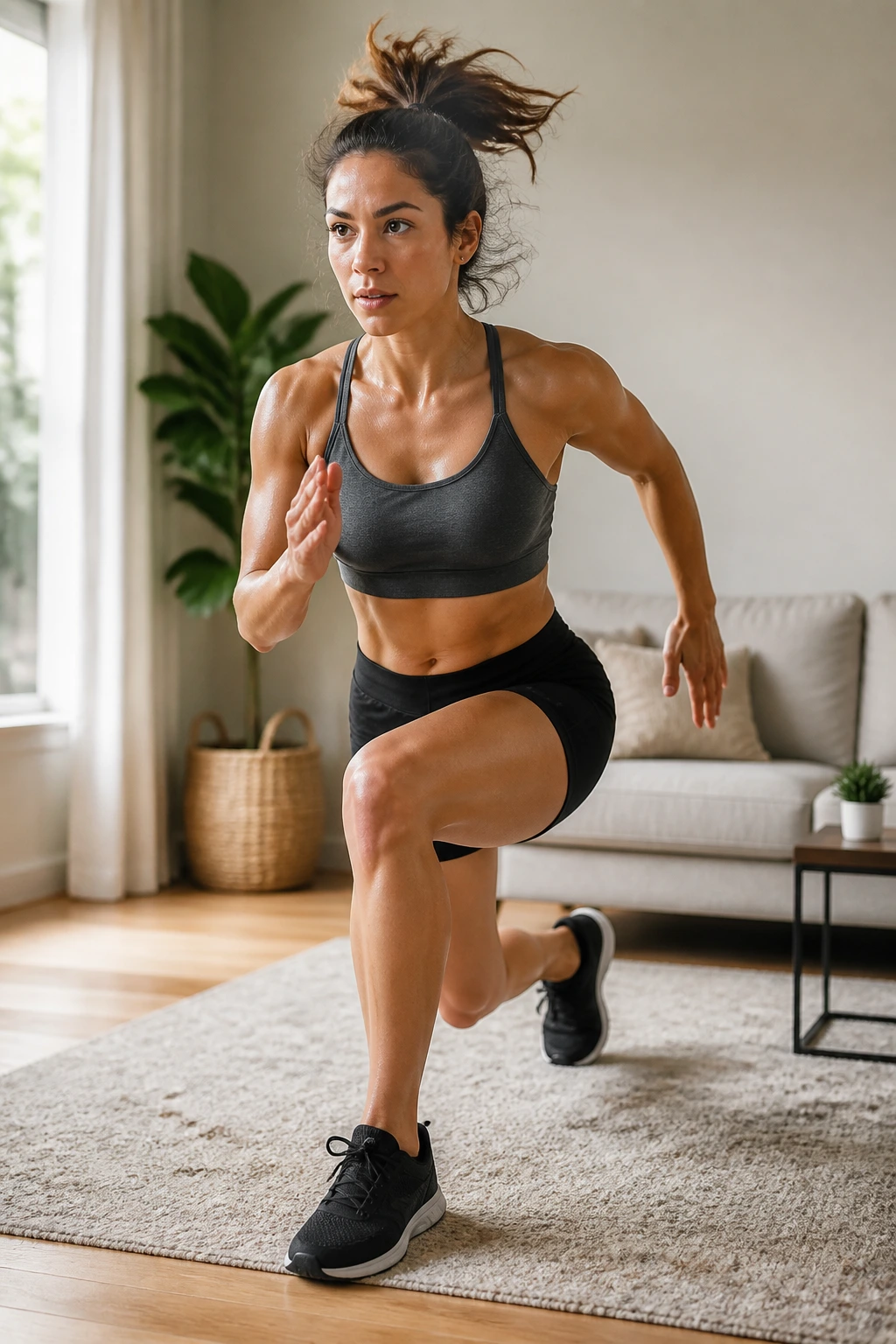
A ladder is sneaky because the first round feels almost polite. Then the reps climb, the rest disappears, and suddenly you’re negotiating with your own lungs.
Try this ladder: 2, 4, 6, 8, 10 reps of each move, with 30 seconds of rest between rounds.
- Squat thrusts
- Push-ups
- Jumping lunges
- Plank knee drives
The first round barely counts as a warm-up. By round four, your legs will feel loaded and your shoulders will be asking questions. If jumping lunges bother your knees, switch to reverse lunges and keep the ladder intact. The workout still lands.
Finish with a one-minute plank. You earned it.
5. Slow-Tempo Strength for When You Want a Harder Session, Not a Faster One
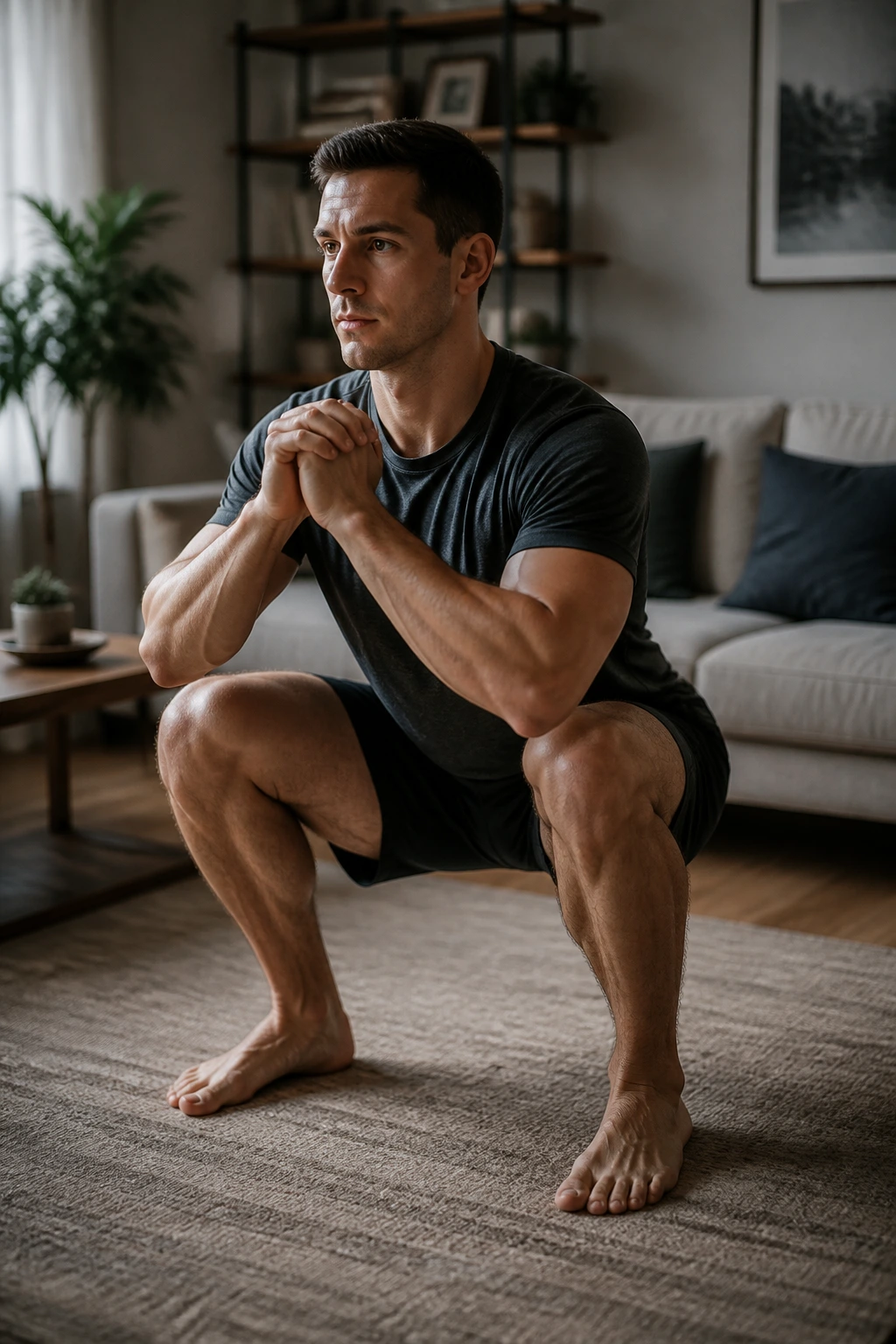
Speed gets all the attention. Tempo does the real dirty work. Slow the lowering phase on your squats and push-ups, and a bodyweight workout suddenly feels much heavier without adding a single plate.
Use a 3-second lower on each rep. On squats, drop for 3, pause for 1, drive up. On push-ups, lower for 3 and press back up without collapsing through the middle. Add split squats, glute bridges, and dead bugs for balance and core work.
This style is especially good when you want strength more than sweat. Your muscles will burn, but the workout won’t feel frantic. It feels more like control under pressure, which is a useful thing to train. Also, slower reps make weak links obvious fast. If one side of your body wobbles or twists, tempo will show it.
6. A Low-Impact Circuit for Quiet Floors and Tired Knees
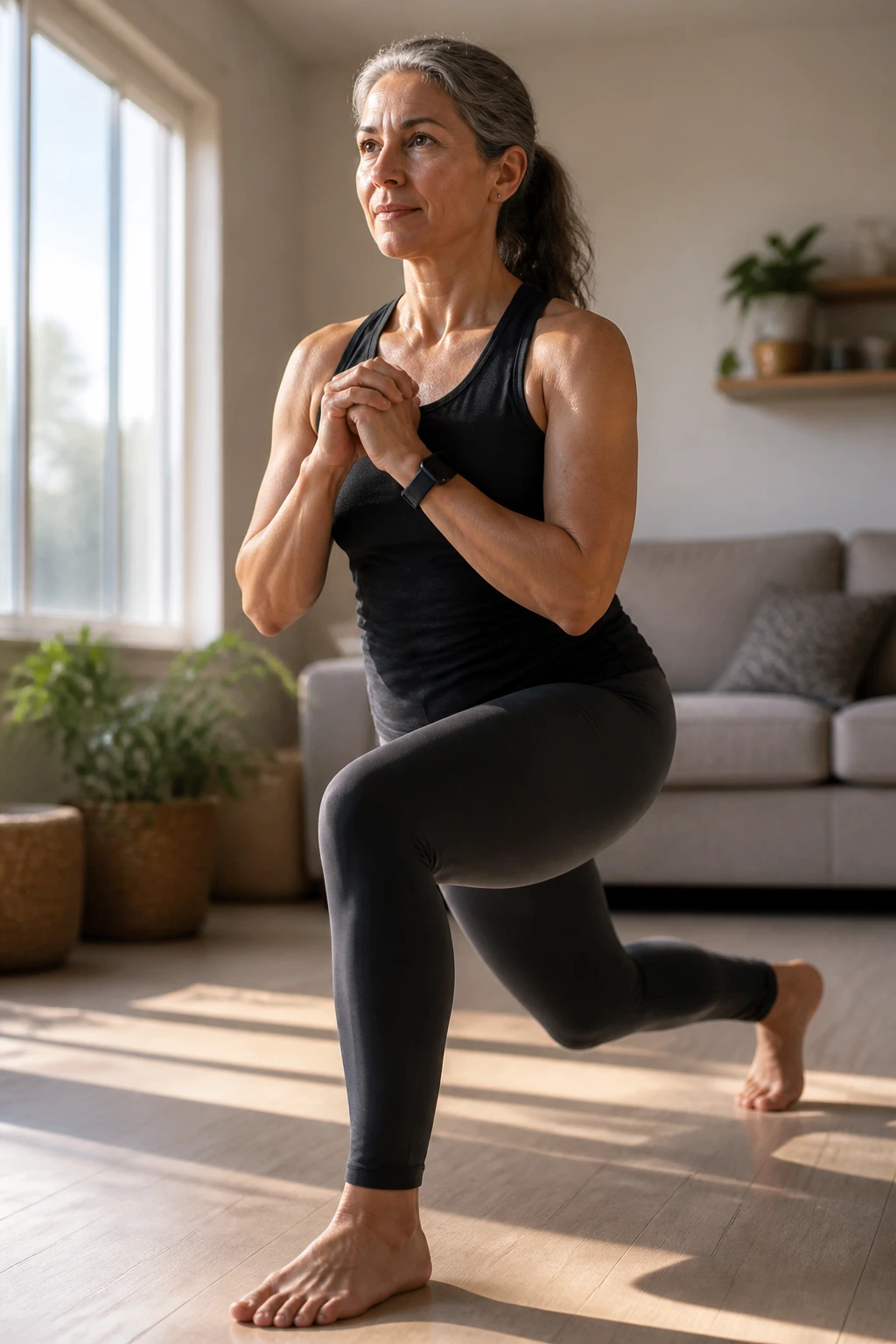
Not every good workout needs jumping. Some of the smartest ones don’t. If your knees are cranky, your floor is loud, or you just don’t want to bounce around, this low-impact circuit still hits the whole body.
What makes it different
Compared with a plyometric session, this version keeps both feet on the ground more often and asks for cleaner control. That makes it easier to repeat, and repetition is where fitness gets built.
Do 3 rounds of:
- 12 step-back lunges
- 10 incline push-ups on a couch or sturdy table
- 12 glute bridges
- 20 slow mountain climbers
- 8 bird dogs per side
Keep each rep deliberate. The slow mountain climbers are the sneaky part; they light up your core without making the room sound like a stampede. A lot of people dismiss low-impact work as easy. It isn’t. It’s just quieter.
7. Plyometric Intervals for Days You Want More Bounce

Plyo work is for the days when you want your heart rate up fast and your legs to remember that they’re springy, not decorative. It’s a punchy 16-minute workout built around 30 seconds of work and 30 seconds of rest.
The setup
- Jump squats
- Skater hops
- Burpees
- Tuck jumps
Do each move for 30 seconds, rest 30 seconds, and repeat the full circuit twice. That’s it.
Keep your landings soft. That matters more than people think. If your feet hit like bricks, your knees pay for it later. Aim for quick rebounds, a tight core, and a quiet landing. Burpees can get ugly when fatigue hits, so keep your plank crisp and step back if you need to. You’re not losing the workout by making it cleaner. You’re making it last.
8. A Core-Heavy Circuit That Still Trains Your Legs and Shoulders
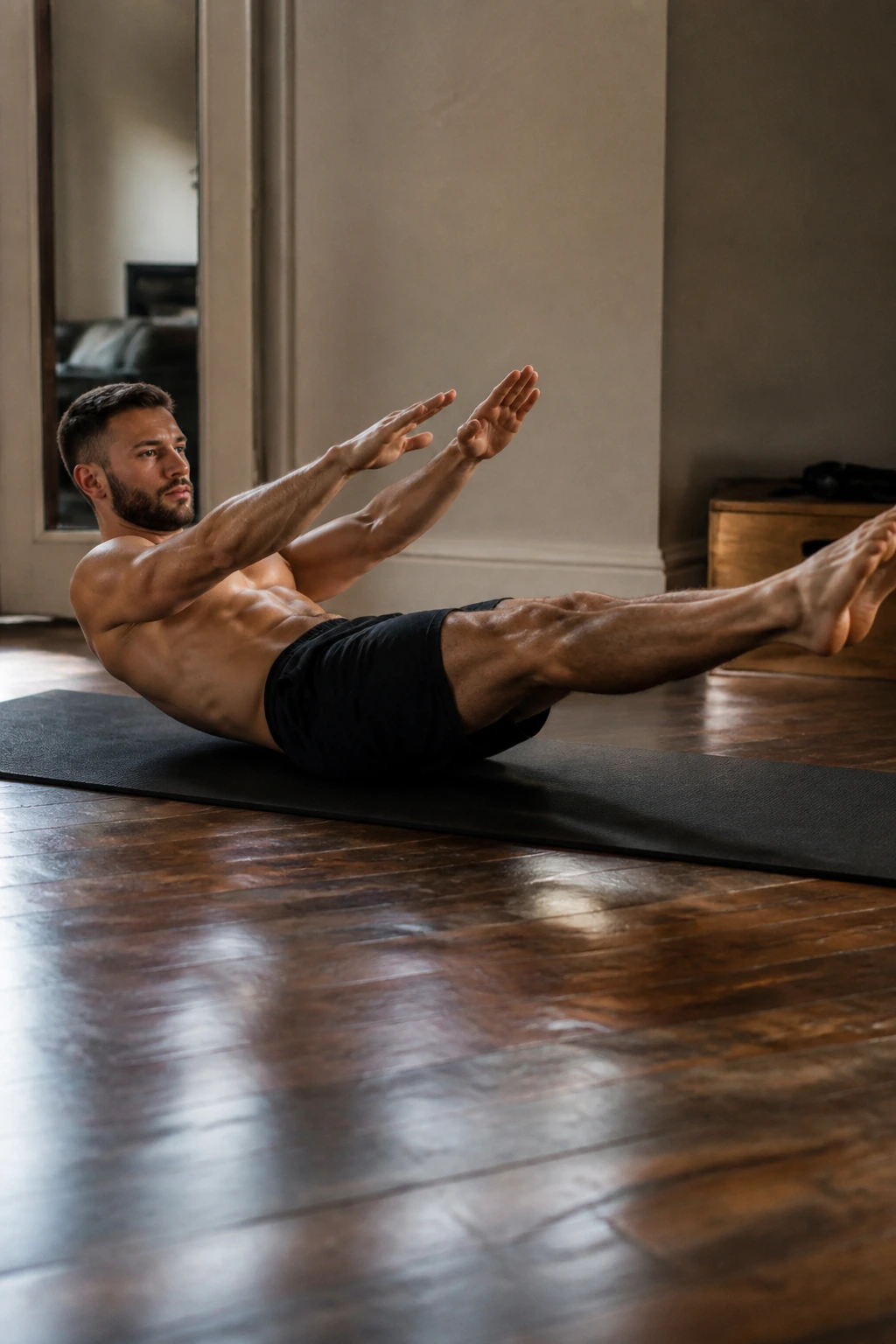
Core workouts get a bad reputation because too many of them are just endless crunches. This one isn’t. It uses the core the way your body actually uses it — to hold you steady while the rest of you moves.
Start with dead bugs, then move into hollow holds, plank shoulder taps, bear crawls, and bicycle crunches. Work for 45 seconds, rest for 15 seconds, and complete 3 rounds.
The dead bug should feel controlled, not rushed. Your lower back should stay pressed down. If it pops up, shorten the range of motion. The hollow hold is the honest part of the workout; if you can’t keep your ribs tucked, you’ll know fast. That feedback is useful. Annoying, but useful.
This session builds better trunk strength than a lot of flashy ab routines. And yes, your shoulders will still get involved.
9. Standing Moves Only for Tiny Spaces and No Mat Days
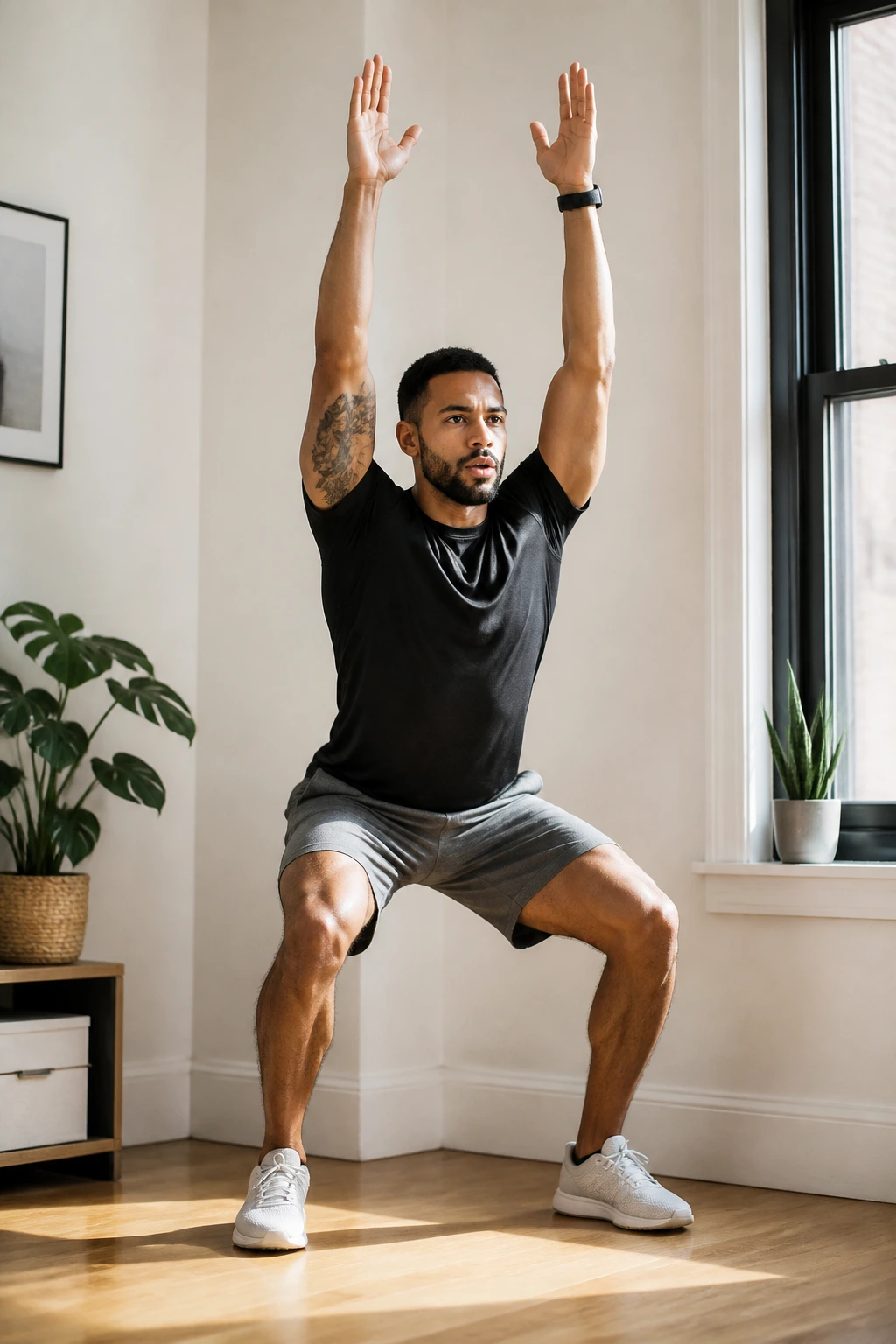
If getting on the floor feels like too much trouble, or you’re working in a room that’s barely wider than your arms, this standing-only workout does the job. No mat. No crawling around. No excuses.
How to pace it
Spend 40 seconds on each move, then rest 20 seconds. Go through 3 rounds.
- Squat to overhead reach
- Alternating knee drives
- Side lunges
- Cross-body punches
- Calf raises with a pause at the top
The good part is that this feels lighter on the joints while still working your legs, shoulders, and heart rate. The cross-body punches add a little rotation, which keeps things from turning into a boring lower-body march. If you want more challenge, add a 2-second pause at the bottom of each squat. That one tiny change matters more than people expect.
10. Bear Crawl Work for a Full-Body Hit

Bear crawls look childish until you do them for time. Then they stop being cute. Fast.
Try a 10-minute circuit built around crawling patterns: 20 seconds bear crawl forward, 20 seconds bear crawl backward, 20 seconds bear hover hold, then 20 seconds rest. Repeat 5 times. Finish with 10 squat-to-plank walkouts.
What to watch for
- Keep knees low, about 2 inches off the floor.
- Spread your fingers and press into the ground.
- Move opposite hand and opposite foot together.
- Don’t let your hips sway side to side.
This kind of work hits shoulders, core, glutes, and coordination all at once. It also exposes sloppy movement immediately. Good. That’s the point. If the crawl gets ugly, slow it down instead of quitting. The body learns a lot from awkward positions.
11. Total Body Workouts Without Weights for Tight Apartments
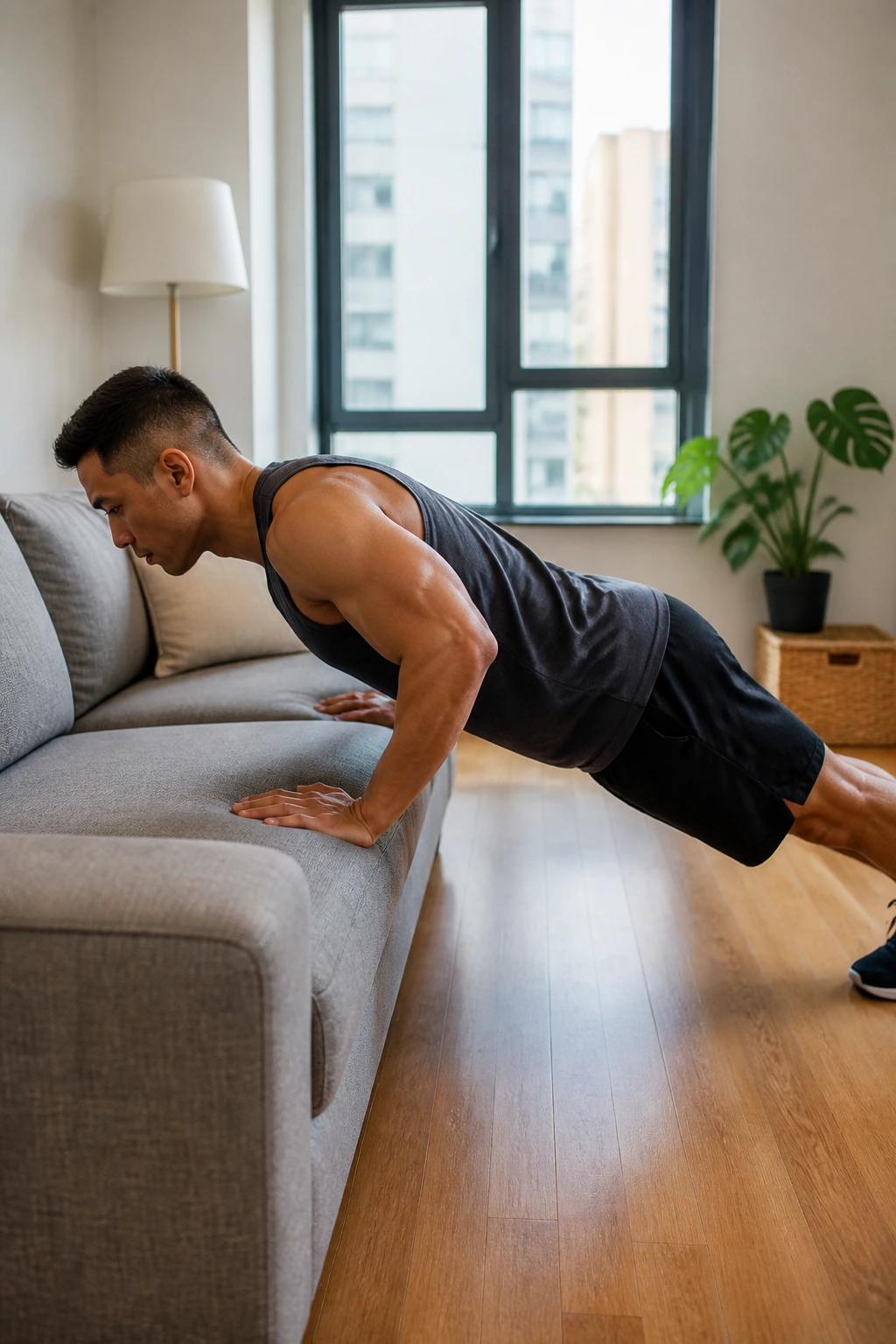
Here’s the version I’d use if I had thin walls, a small rug, and no interest in making my downstairs neighbors hate me. It’s quiet, floor-friendly, and still hard enough to feel like a workout.
Do 4 rounds of:
- 10 slow squats
- 8 incline push-ups
- 10 reverse lunges per side
- 12 glute bridges
- 20-second side plank per side
The nice thing about this style is that it doesn’t depend on speed or jumping. You can keep the movement controlled and still finish breathing hard. I also like it for mornings, when a big burst of impact feels like too much. The workout doesn’t need noise to count. It just needs honest effort.
If you want more challenge, make the lowering phase on the squats and push-ups last 3 seconds. That changes everything.
12. The Tabata Format for Fast, Loud Conditioning
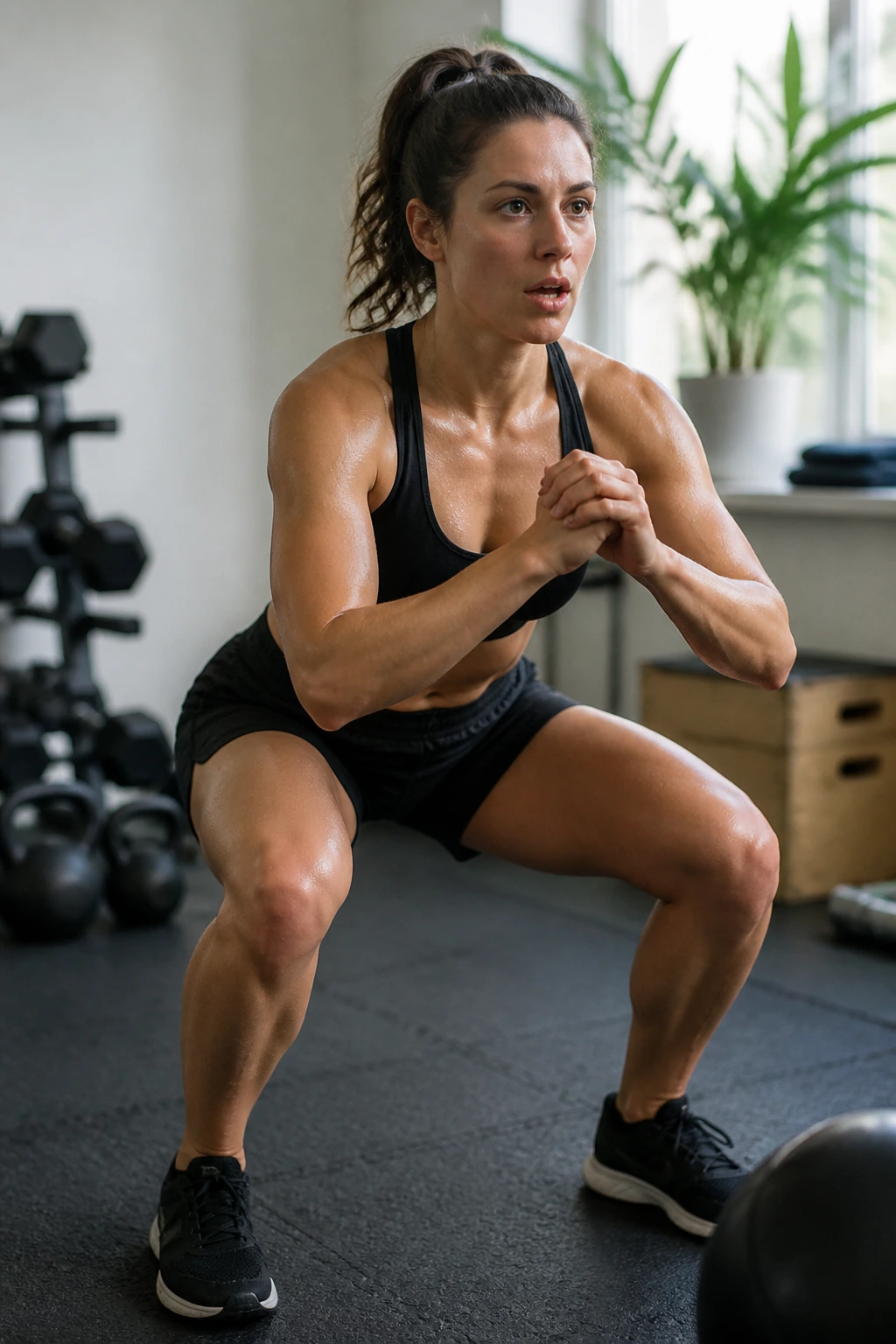
Tabata is short, brutal, and a little rude. Twenty seconds on, 10 seconds off, 8 rounds total. Pick 4 moves and rotate through them twice.
Use:
- Burpees
- Air squats
- Plank jacks
- Skaters
Unlike a long steady circuit, Tabata forces you to keep punching through fatigue in tiny bursts. That makes it a nice fit when you only have 8 to 10 minutes and want your session to feel sharp. The work intervals are short enough that you won’t settle into comfort, which is exactly why it works.
Be careful with the burpees. If your form falls apart by round three, swap them for squat thrusts. Better to keep moving than to turn the workout into a lower-back mess. Tabata looks simple on paper. It doesn’t stay simple for long.
13. Glute and Hamstring Focus Without Touching a Dumbbell
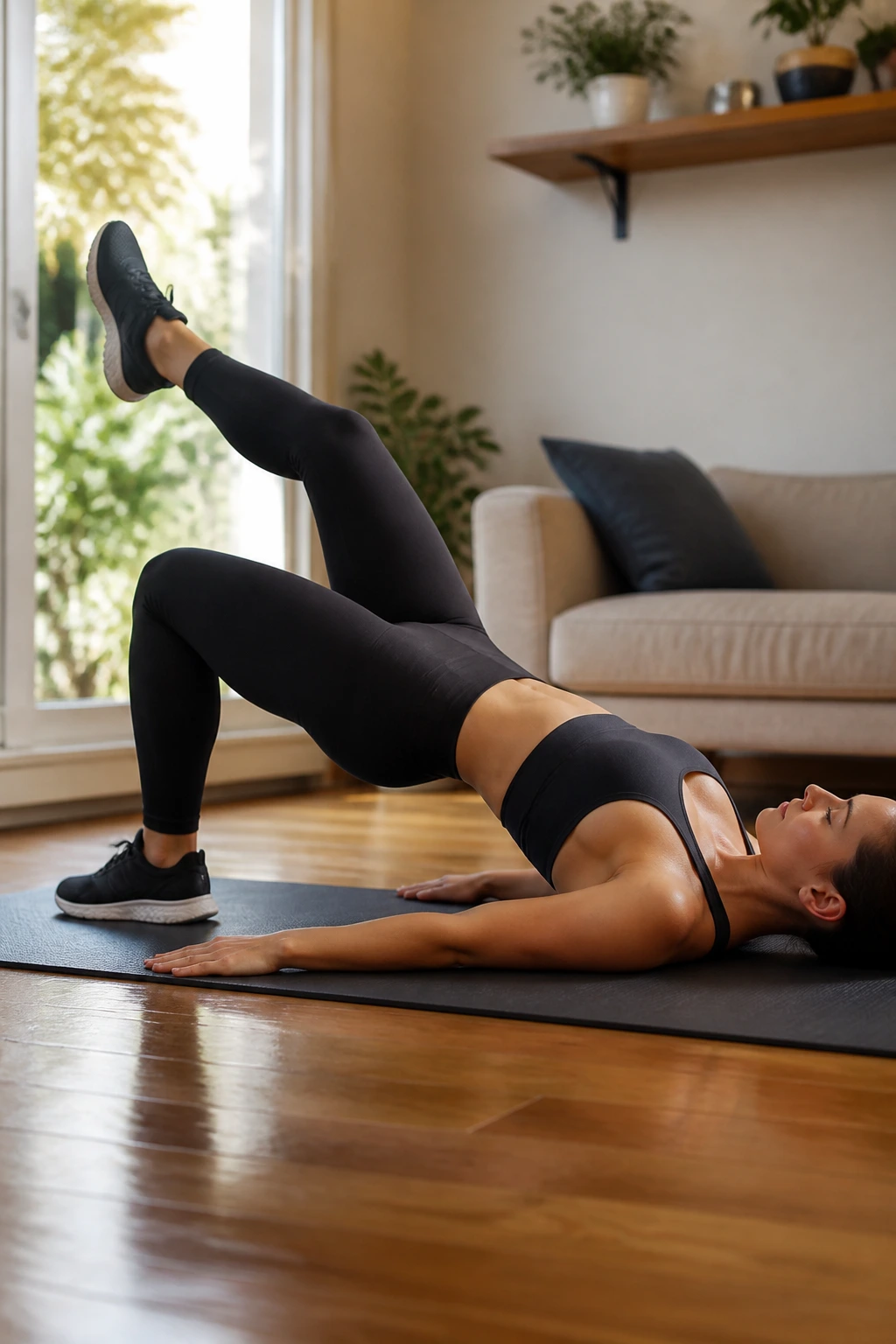
Bodyweight leg work usually turns into quad work unless you plan it better. This session leans back a little and lets the posterior chain do its share.
Use these moves
- Single-leg glute bridges
- Reverse lunges
- Hip hinges with reach
- Hamstring walkouts
- Donkey kicks
Do 3 rounds, 12 to 15 reps per move, with 30 seconds of rest between exercises. The hamstring walkouts are the weird one, and they’re worth it. Start in a glute bridge, walk your heels out a few inches at a time, then walk them back in. It feels awkward the first time. That’s normal.
If you rush the reps, you’ll miss the work. These moves need control and a little patience. The payoff is a session that lights up the back of your legs without any gear at all.
14. An Upper-Body Push Session With Push-Ups, Planks, and Pike Work

What if your chest, shoulders, and triceps want the spotlight? Give them one. This workout is push-heavy, but it still brings the core and legs along for the ride.
Why it hits harder than you expect
Push variations recruit more than your arms. A solid push-up asks your whole body to brace, and pike work adds a shoulder angle that a basic plank never touches.
Do 4 rounds of:
- 8 to 12 push-ups
- 6 to 10 pike push-ups
- 20 plank shoulder taps
- 10 squat-to-plank walkouts
- 30-second high plank hold
Keep your hands under your shoulders and your ribs tucked. If the push-ups get sloppy, elevate your hands on a bench or table. That is not cheating. It’s training at the right level. The goal is quality reps that you can repeat, not a face-first collapse on rep 9.
15. A Lower-Body Burner Built Around Lunges and Squats
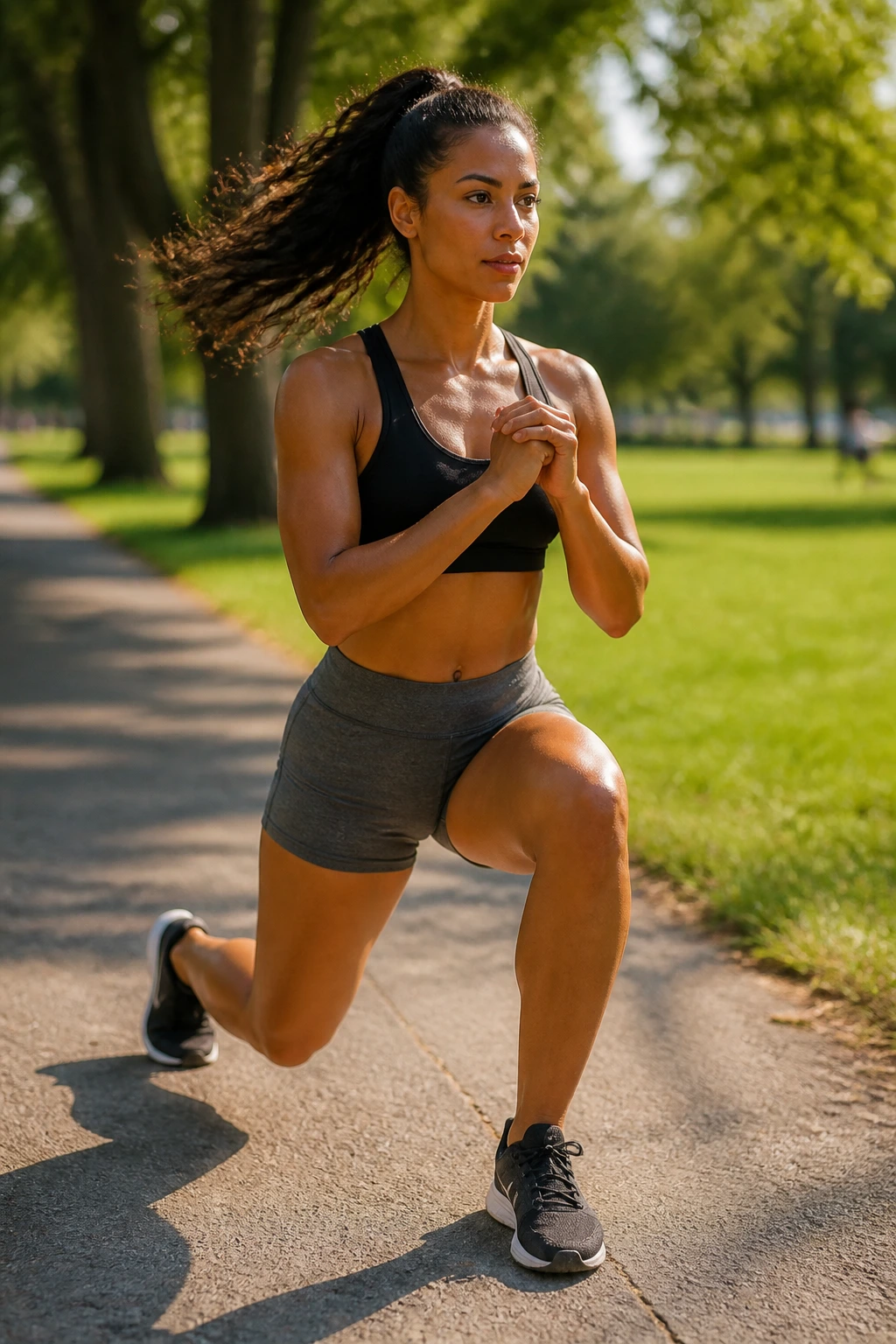
Lunge patterns reveal a lot. Balance, control, hip strength, ankle mobility — all of it shows up fast. This lower-body workout uses that to your advantage.
Start with a ladder of 10 squats, 8 reverse lunges per side, 6 lateral lunges per side, and 4 jump squats. Rest 60 seconds. Repeat for 4 total rounds.
The lateral lunge is the part most people skip, which is a mistake. Side-to-side movement matters. It wakes up the inner thighs and glutes in a way straight-ahead squats do not. If the jump squats feel too sharp, swap in fast bodyweight squats and keep the pace lively.
One small tip: keep your chest proud during the lunges. If you fold forward, the movement turns into a balance drill instead of a leg exercise. The difference is bigger than it sounds.
16. Shadowboxing and Footwork for Cardio That Feels Less Boring
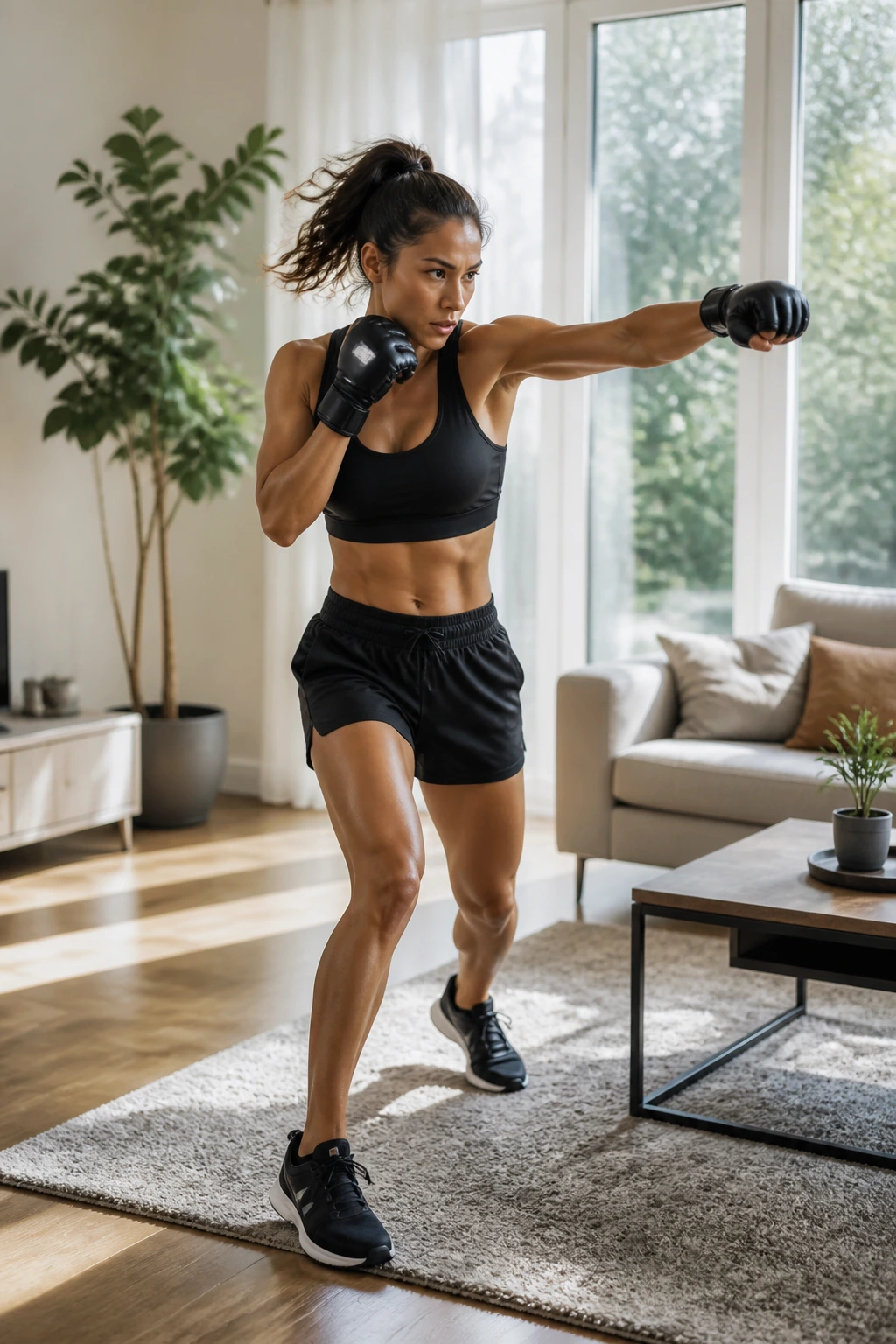
Some workouts feel like training. Some feel like a chore. Shadowboxing sits in the middle in a good way. It’s fast, athletic, and weirdly good at making time disappear.
Do 5 rounds of 2 minutes on, 30 seconds off. Mix:
- Jab-cross combinations
- Hooks with a squat
- Uppercuts with a knee drive
- Quick shuffles
- Sprawl to stand-up drills
Keep your hands up and your feet light. The point is not to look like a boxer in a movie. The point is to stay moving, rotate through your torso, and make your heart rate climb without needing a treadmill. This is one of my favorite no-weight workouts for people who hate repetitive cardio. It has enough variety to stay interesting and enough pace to count.
17. Mobility Meets Strength in One Smooth Floor Flow
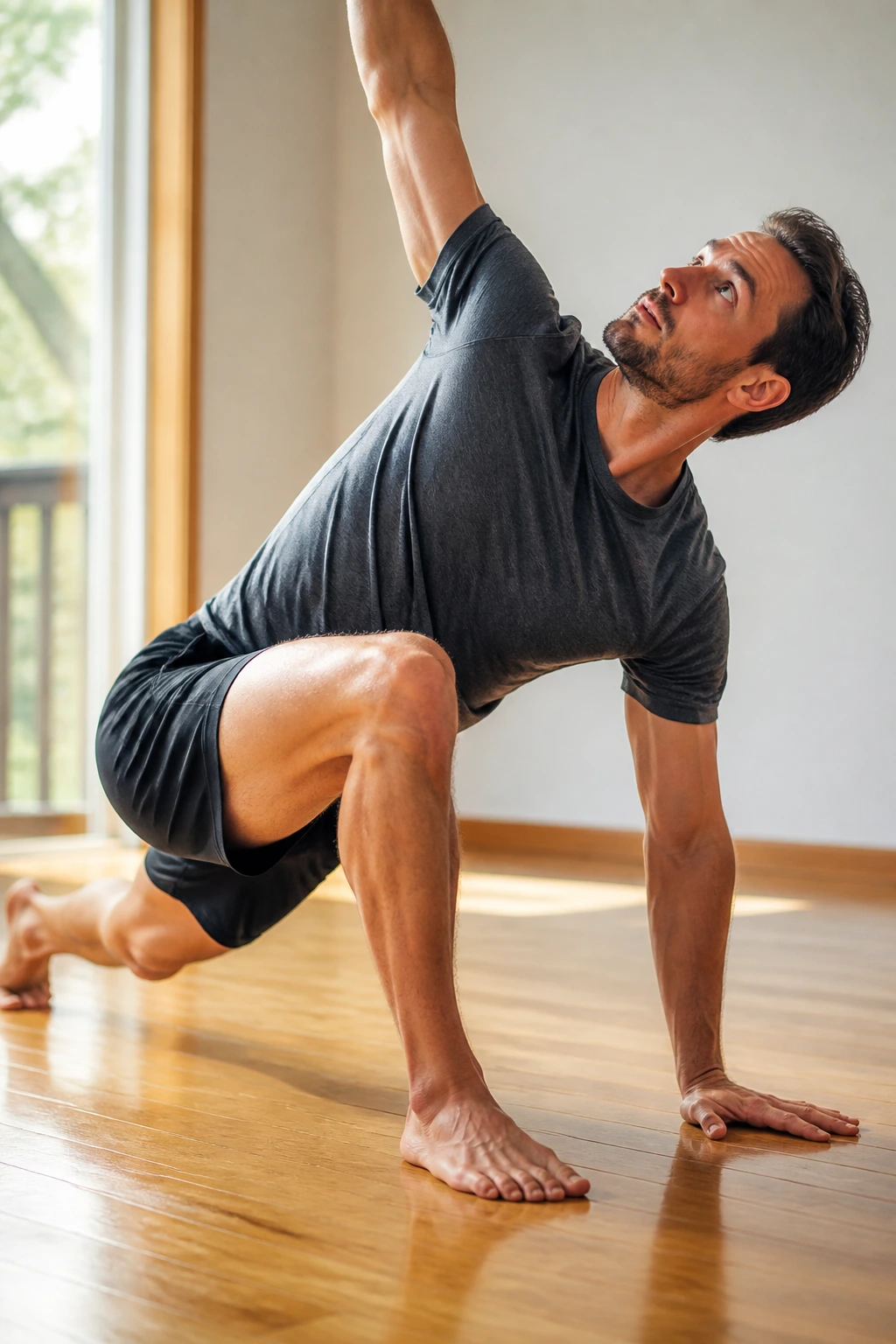
This is the workout I like when the body feels stiff but still needs work. It’s not a recovery day. It’s the thing between recovery and full effort.
Move through:
- Inchworms
- World’s greatest stretch
- Cossack squats
- Plank to downward dog
- Lunge with rotation
Do 3 rounds, holding each move for 30 to 45 seconds or 6 to 8 slow reps per side. Compared with a harder circuit, this one gives your joints a little more room to breathe while still asking for control. It’s especially useful after long sitting days or before a workout that needs better hip opening.
Your hips and upper back should feel warmer by the end, not smashed. That’s the difference. You leave looser, but not lazy.
18. The Pyramid Workout That Feels Simple Until Round Three
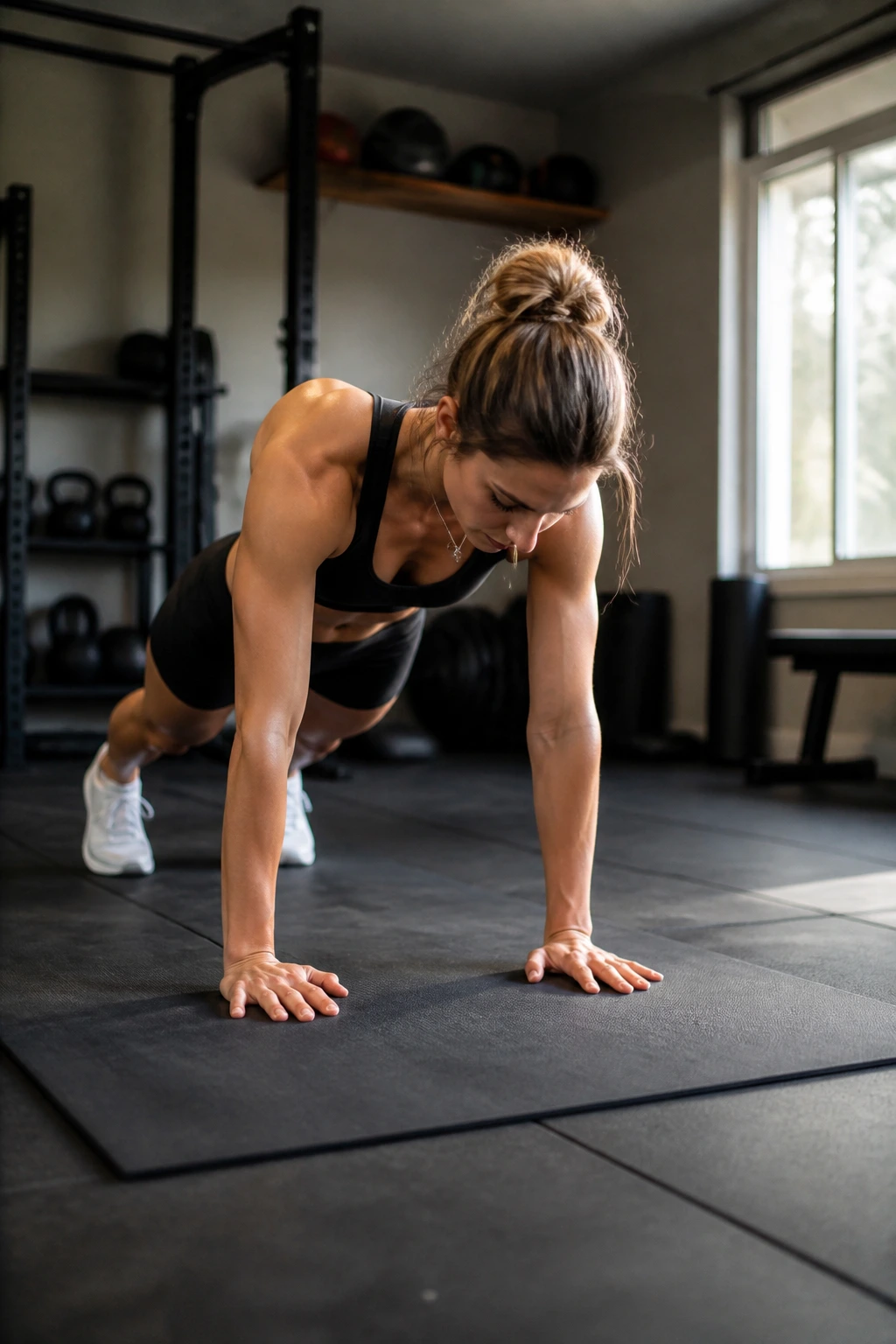
A pyramid sounds harmless because the numbers look neat. Then the reps start climbing and your breathing gets messy.
Try 2, 4, 6, 8, 10, then back down 8, 6, 4, 2. Use the same moves each round:
- Squat thrusts
- Alternating lunges
- Push-ups
- Mountain climbers
Keep rest to 20 seconds between rounds. If you want the workout to lean harder, make the climb up and down continuous with only 10 seconds between each set. That’s enough to keep your heart rate high without turning the whole thing into a sprint.
Pyramids are nice because they give you a built-in finish line. You can always tell yourself, “just one more round,” which is a useful lie. Everybody needs one.
19. The One-Minute Challenge for People Who Like a Timer
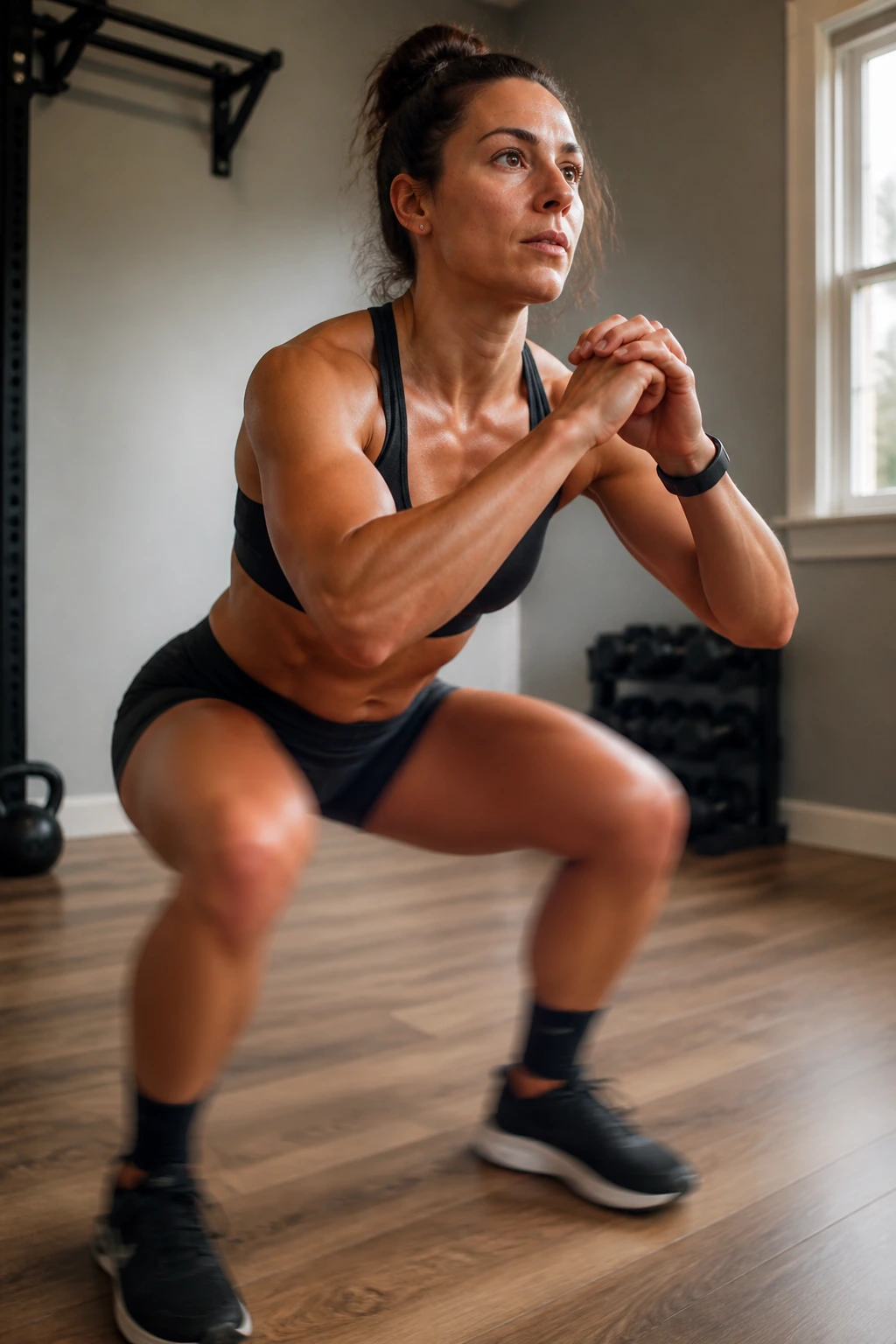
Some people love counting reps. I trust the clock more. A one-minute interval workout is easy to remember and hard to fake.
How to use it
Set 1 minute per move, with 15 seconds rest between stations. Run through 8 moves.
- Air squats
- Push-ups
- Reverse lunges
- Plank jacks
- Glute bridges
- Skaters
- Plank shoulder taps
- High knees
The first 20 seconds of each minute feel manageable. The next 20 decide the workout. The final 20 is where the real pace shows up. If you need to break a set, do it in a way that keeps your form intact. Two small pauses are better than one ugly collapse.
This style works well if you want a session that can stretch to 16 minutes or 24 minutes without changing the structure. Handy. Efficient, too.
20. Cross-Body Coordination Drills That Wake Up Your Whole Frame
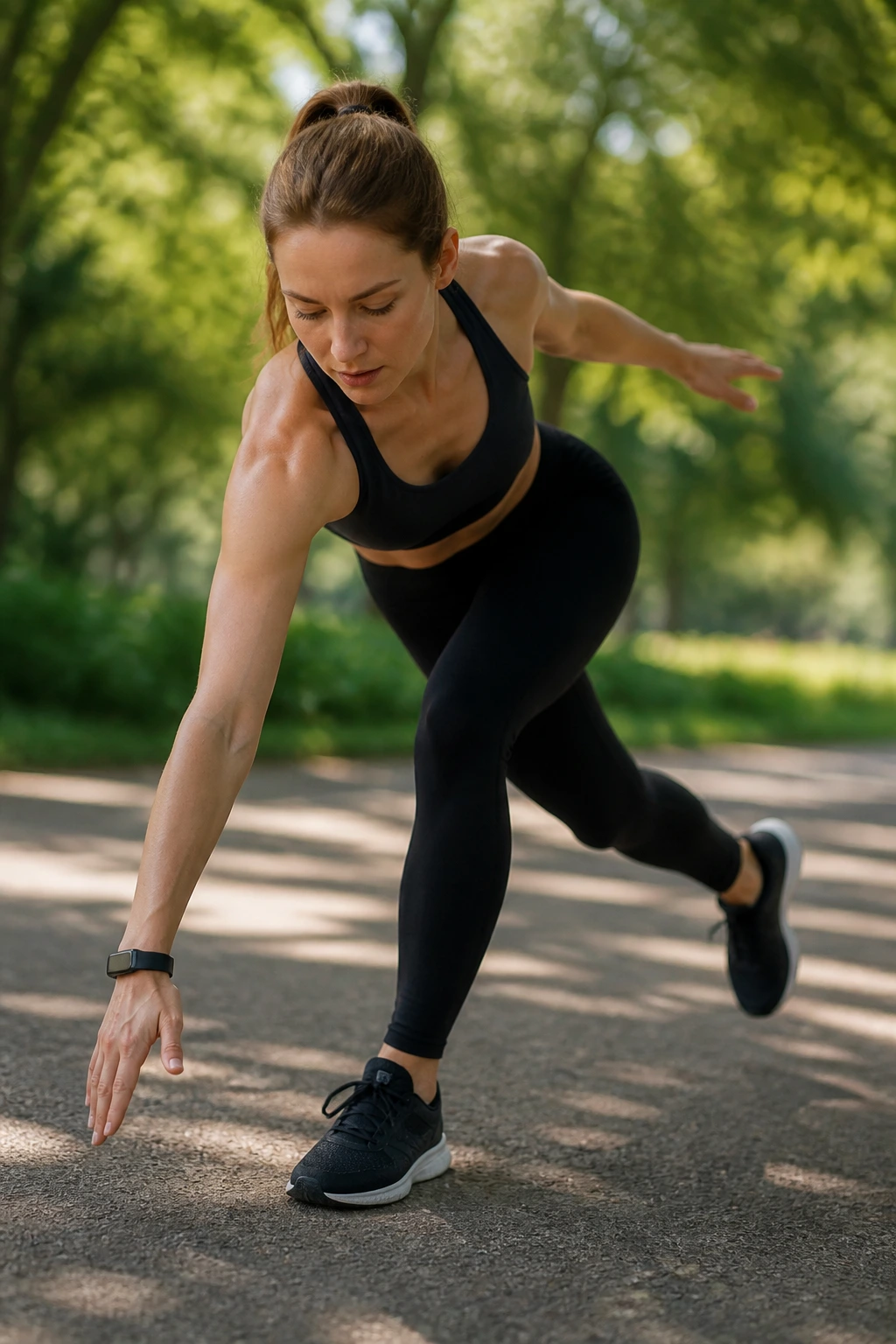
Cross-body work gets overlooked because it doesn’t look flashy. It should. It teaches your body to connect the left side and right side without wobbling all over the place.
Do 3 rounds of:
- Opposite hand-to-knee marches
- Skater reaches
- Plank toe taps
- Bear crawl kick-throughs
- Standing cross-body punches
Why this matters
The coordination piece makes the workout more than cardio. You’re building timing, trunk control, and better movement between upper and lower body. That helps in sports, sure, but it also helps when you’re climbing stairs carrying groceries or turning quickly in a tight space.
Keep the moves smooth, not frantic. If the crawl kick-throughs feel clumsy, slow them down and focus on the rotation. That’s where the value sits anyway.
21. Stair Work for a Harder Workout With One Step
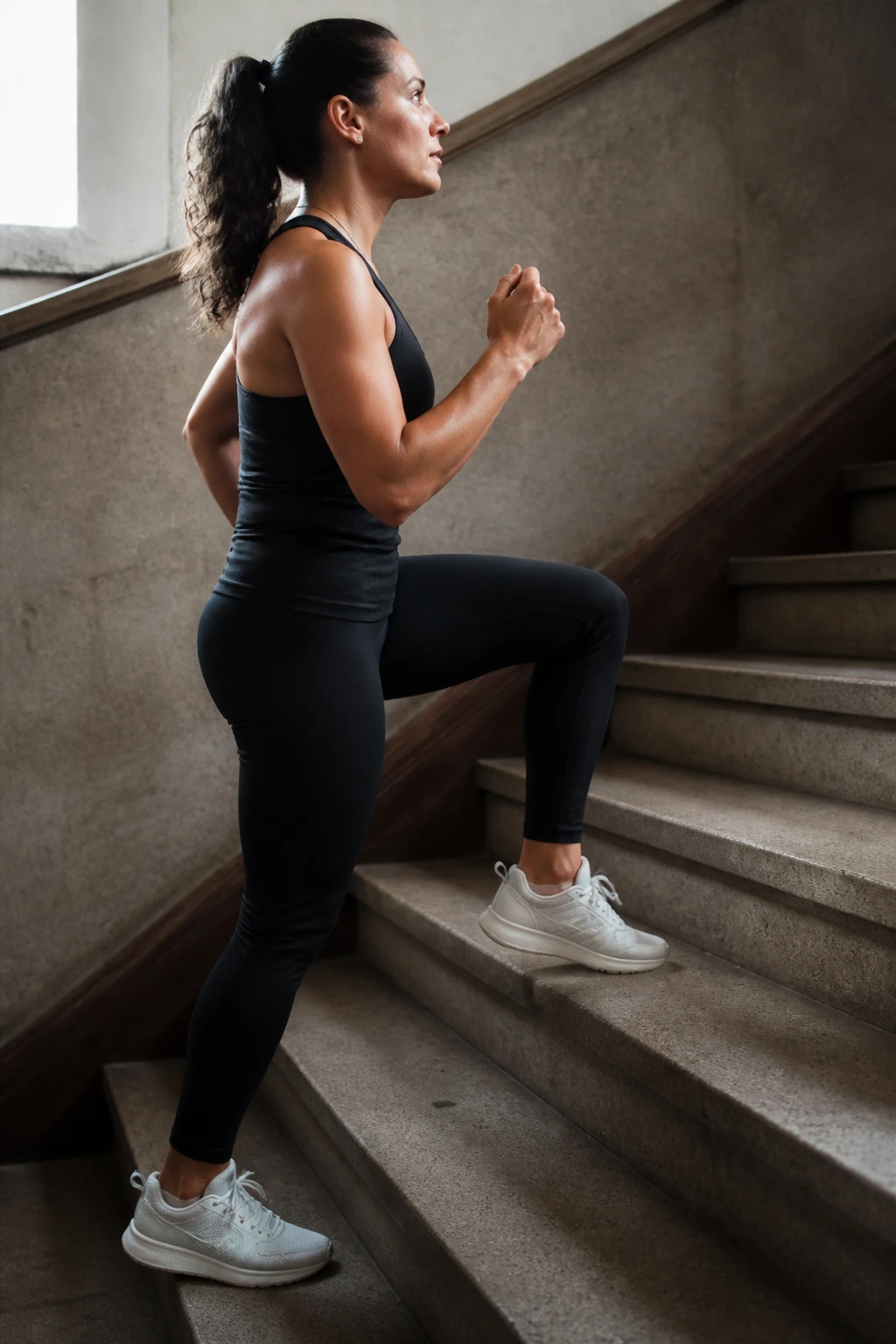
A single stair, box, or sturdy step opens up more exercise options than people expect. It also changes the angle enough to make basic movements sting a bit more.
Do this circuit
- 12 step-ups per leg
- 10 decline push-ups with hands on the step
- 12 triceps dips
- 10 rear-foot-elevated split squats per side
- 20 step climbers
Use 3 rounds and rest 45 seconds between rounds. The step-ups should be driven through the heel. The split squats are where balance gets honest. And yes, the dips can be rough on the shoulders if you sink too deep, so keep the range controlled.
This workout has a gym feel without any equipment. A stair is enough. That’s the nice surprise.
22. A Plank-Heavy Session That Tests Your Midsection Honestly
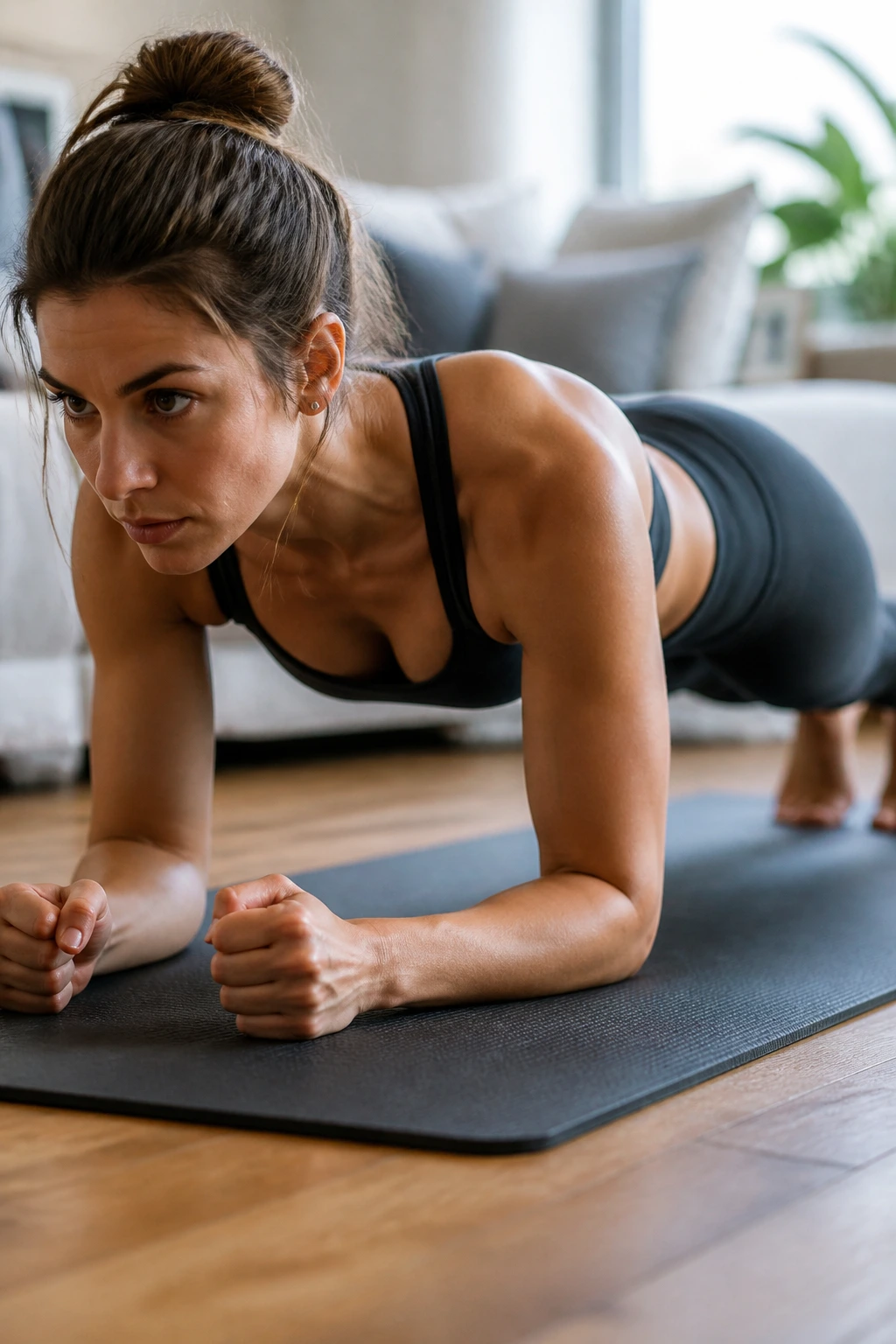
Planks are boring until they aren’t. Once you chain enough variations together, the core has nowhere to hide.
Try 4 rounds of:
- 30-second front plank
- 20 plank shoulder taps
- 30-second side plank per side
- 10 plank knee drives per side
- 20-second plank hold with alternating foot lifts
The key is body position. Keep your hips level, squeeze your glutes, and don’t let your lower back sag. If you feel the work moving mostly into your shoulders, shorten the set and reset. A plank done badly turns into a shrug contest.
I like this one as a finisher after a leg session or a stand-alone core day. It’s not glamorous. It does the job.
23. 30/30 Intervals for Steady Full-Body Conditioning
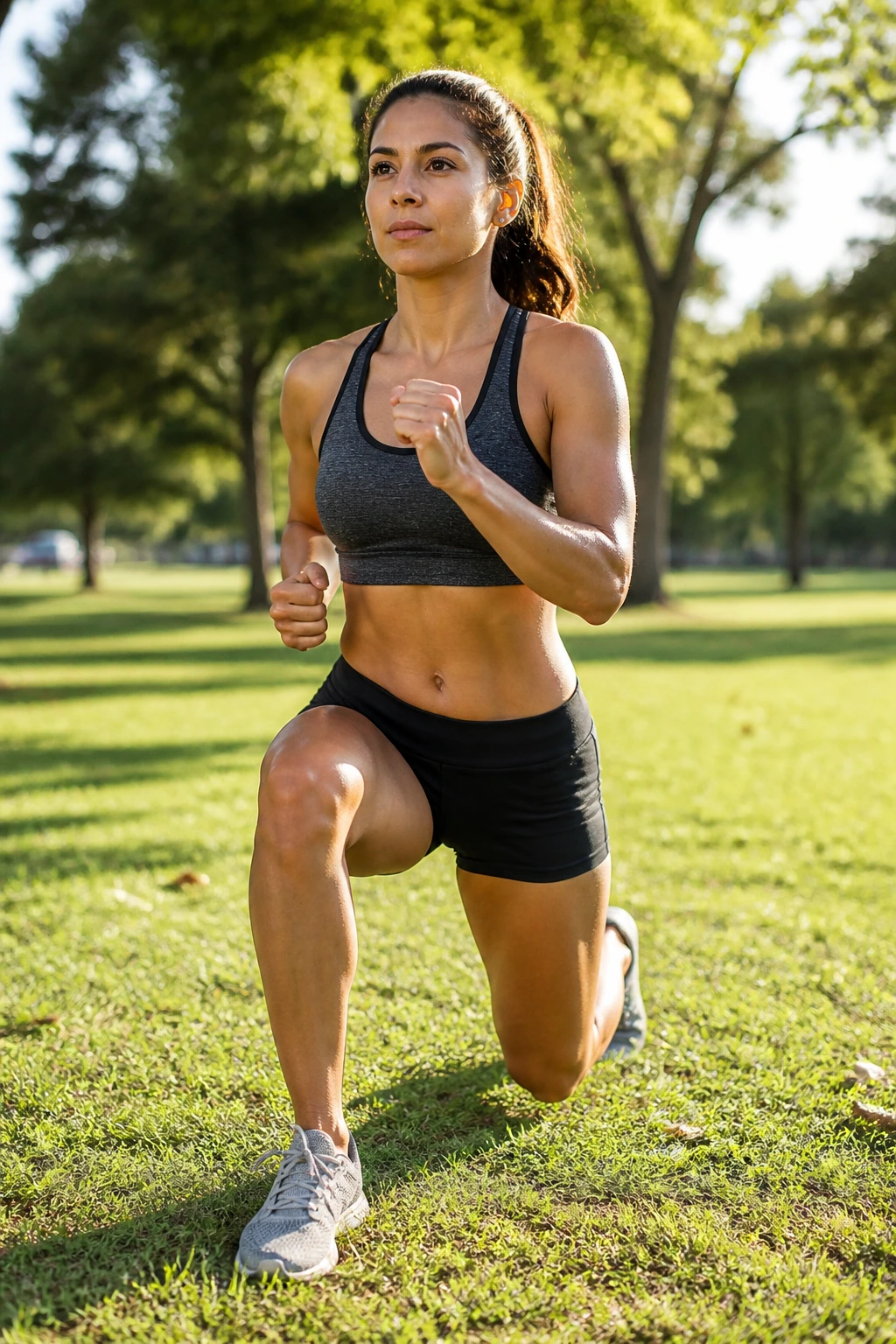
This one is good when you want a workout that sits between easy and punishing. Thirty seconds on, 30 seconds off. No mystery. No overthinking.
Use these 12 stations:
- Squats
- Push-ups
- Alternating lunges
- Mountain climbers
- Glute bridges
- Skaters
- Repeat them once
The 30-second rest keeps your form from completely falling apart, which is why this format works so well for longer sessions. You stay in motion, but you don’t get dragged under. That balance matters if you want to train hard and still leave enough gas for the rest of the day.
Keep a hand towel nearby. You’ll want it.
24. Total Body Circuits With Travel-Style Exercises
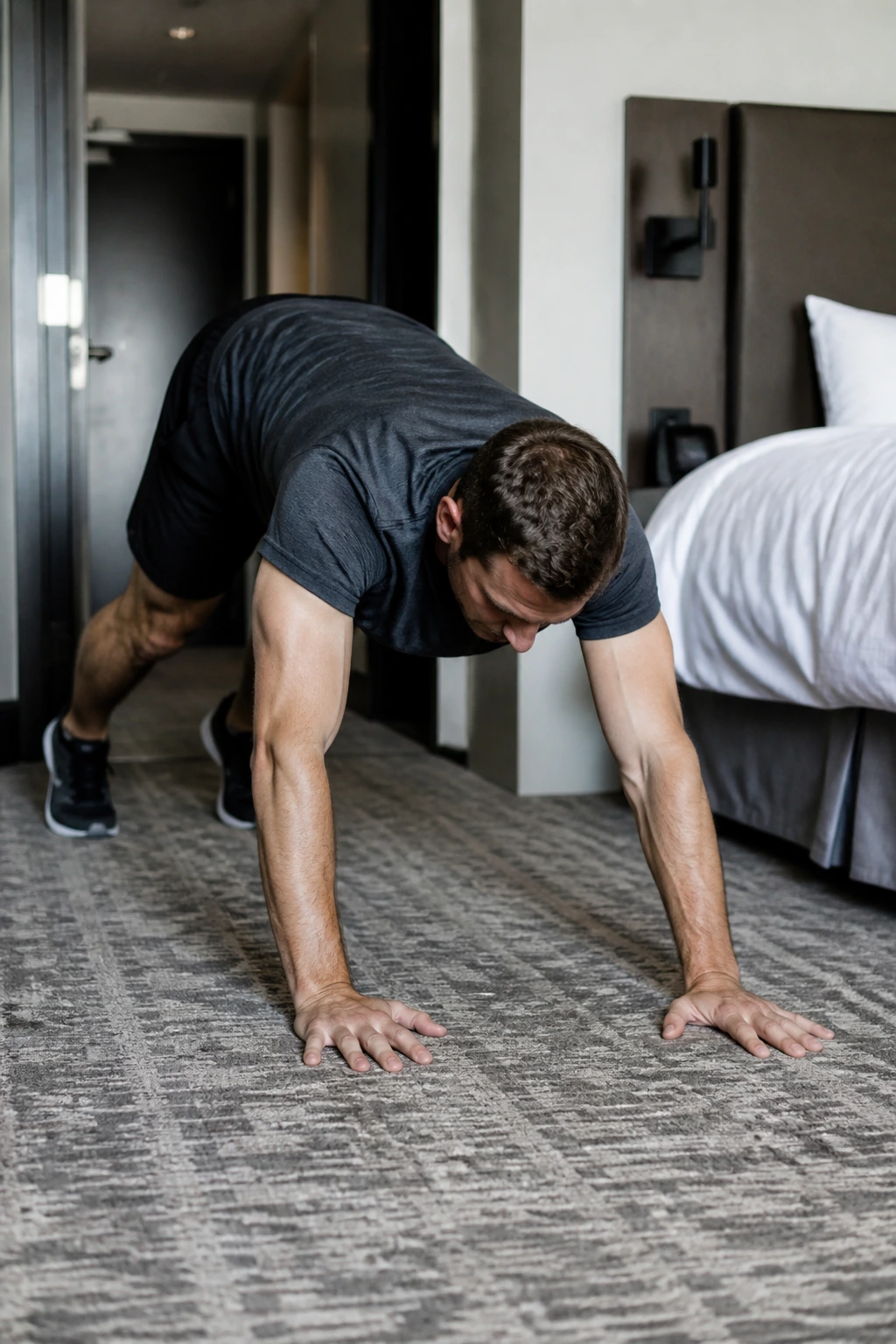
Travel workouts get ignored because they look too simple, but they’re useful for a reason: they need almost no space, and they’re easy to repeat anywhere. Hotel room. Living room. Empty park corner. Doesn’t matter much.
Build the circuit
- 10 bodyweight squats
- 8 push-ups
- 10 alternating reverse lunges
- 20 high knees
- 8 inchworms
Run 4 rounds with 30 seconds of rest. Compared with a more technical workout, this one asks less from your brain and more from your consistency. That can be a relief. You don’t need a complicated setup to train well. You need a plan that works when the room is plain and your energy is average.
This is the kind of workout I keep around because it travels well and never asks for a second bag.
25. A Finish-Strong Total Body Workout Without Weights

If you want a final session that feels like a proper exhale and a hard finish at the same time, this ladder is a good one. It mixes strength, conditioning, and a little grit without becoming a circus.
Run the ladder
Do 5 rounds, descending from 5 to 1:
- Burpees
- Push-ups
- Alternating reverse lunges per leg
- Squat thrusts
- Hollow holds for 20 seconds after each round
Take 30 seconds of rest between rounds. Keep the burpees crisp, not rushed. If your form slips, step back instead of jumping. The same goes for the push-ups. Quality still matters when fatigue is high, maybe even more.
This is the workout I’d save for days when I want to finish feeling worked, not wrecked. Hard enough to earn a shower. Short enough to repeat next week. And that’s the part most people miss: the best no-weight plan is the one you can actually keep doing.
