



Thirty minutes is enough for a real strength workout. Not a fake one with six machines, a long phone scroll, and a warm-up that quietly eats half your session.
The trick is to stop treating short training like a watered-down version of a “proper” workout. Short strength work has to be honest: a big lift, a clear plan, tight rest, and no wandering around the gym trying to remember what comes next. If the session has no shape, it vanishes.
I’ve always liked workouts that leave a little in the tank on purpose. Heavy enough to matter. Short enough that you can repeat them next week without dreading the memory of them. That’s where the good stuff lives — compound lifts, simple pairings, clean sets, and a timer that keeps everybody honest.
And yes, you can absolutely build a solid 30-minute strength routine without turning it into cardio with weights. You just need the right structure.
1. Dumbbell Ladder for the Whole Body
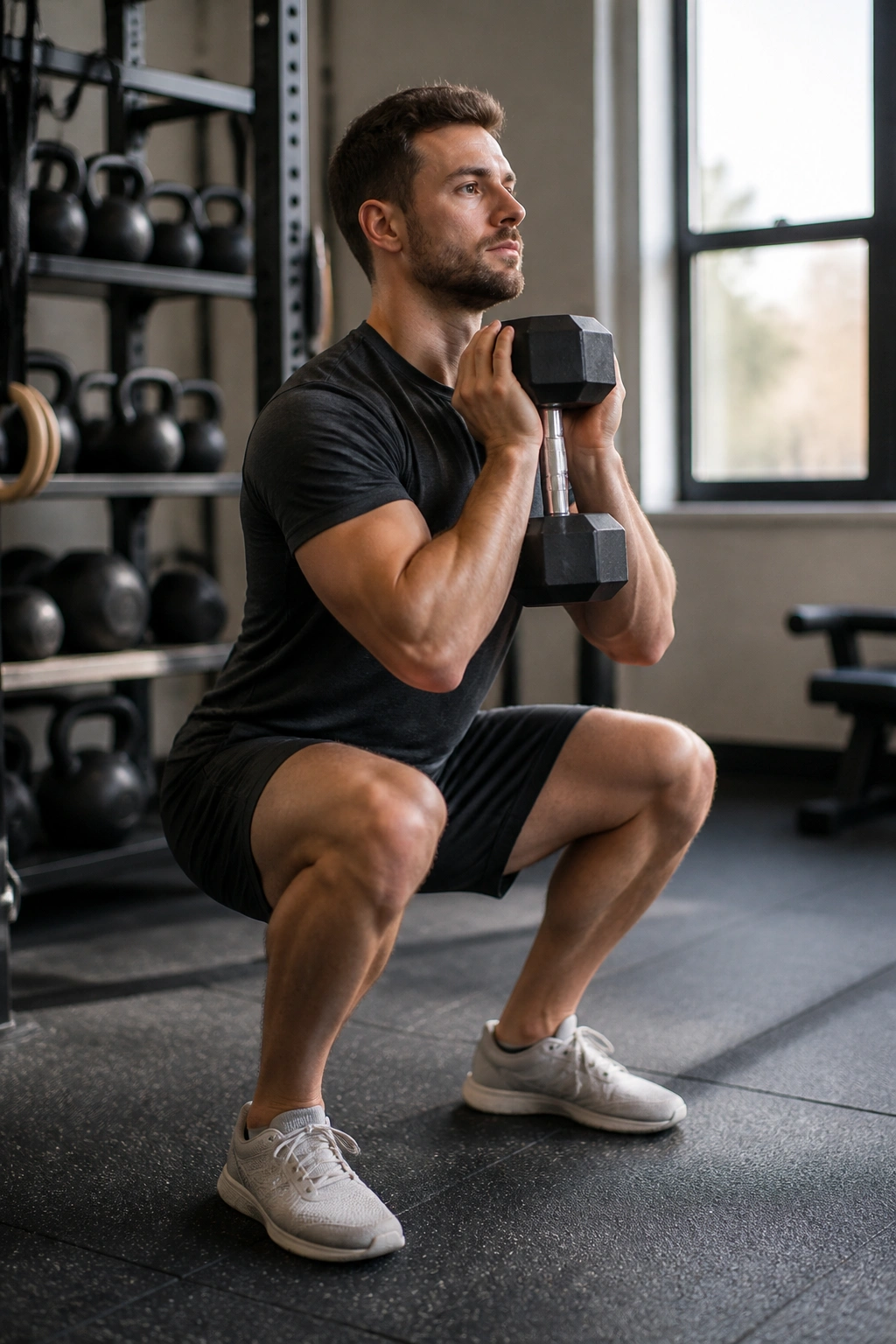
A pair of dumbbells can carry an entire half-hour session if you stop treating them like props.
How the ladder works
Pick four moves: goblet squat, dumbbell floor press, one-arm row, and Romanian deadlift. Do 10 reps of each, then 8, then 6, then 4. Rest only long enough to breathe, usually 30 to 45 seconds between exercises and about 60 seconds between rounds.
That ladder keeps the early sets smooth and the later sets heavy enough to matter. The first round should feel almost too easy. Good. It means you’ll still have control when the 4-rep round shows up and your legs start to complain.
- Goblet squat: 10 / 8 / 6 / 4
- Floor press: 10 / 8 / 6 / 4
- One-arm row: 10 / 8 / 6 / 4 each side
- Romanian deadlift: 10 / 8 / 6 / 4
Tip: choose a dumbbell weight that makes the 6- and 4-rep rounds feel honest, not sloppy.
No fancy setup. No wasted motion. It’s one of the cleanest strength workouts you can finish in 30 minutes.
2. Push-Pull Supersets That Move Fast
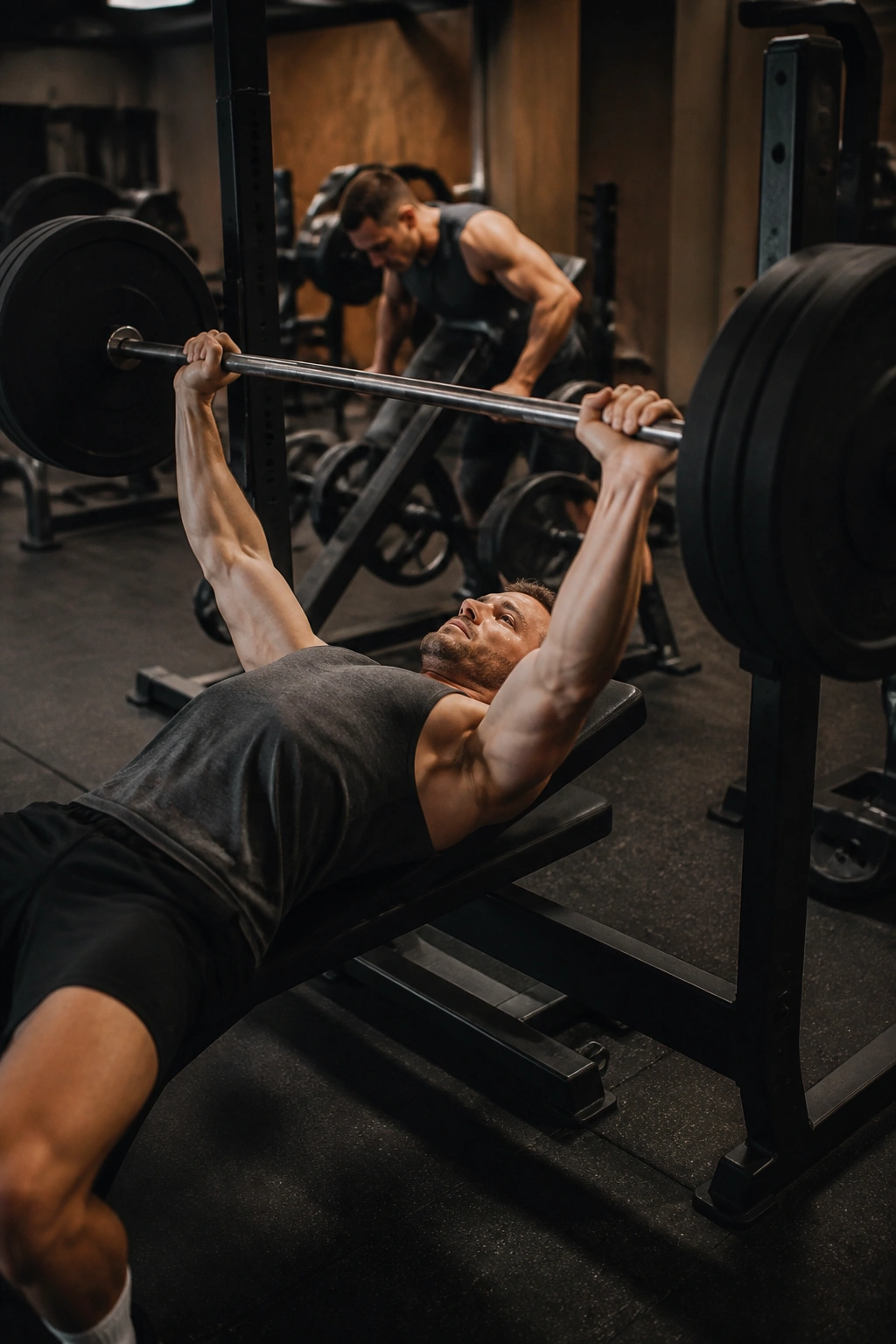
Why drag one muscle group through a solo performance when you can pair it with the thing it naturally balances?
A push-pull superset session is fast because one exercise gives the other a brief break. Pair bench press with chest-supported row, then overhead press with lat pulldown or pull-ups. Do 4 rounds of 6 to 8 reps per movement, resting 45 to 60 seconds after each superset.
The beauty here is simple. Your pressing muscles get a pause while your back works, and your pulling muscles recover while you press. That back-and-forth rhythm lets you keep the weights reasonably heavy without turning the whole thing into a slog.
You can run this in a home gym, a commercial gym, or even a tiny garage setup if you have dumbbells and a bench. It works because the plan is tight, not because it’s complicated.
I’d keep the last set a little gritty, but not ugly. If your shoulders start shrugging and your torso starts chasing the weight, the set is over. Done.
3. EMOM Strength for Busy Days
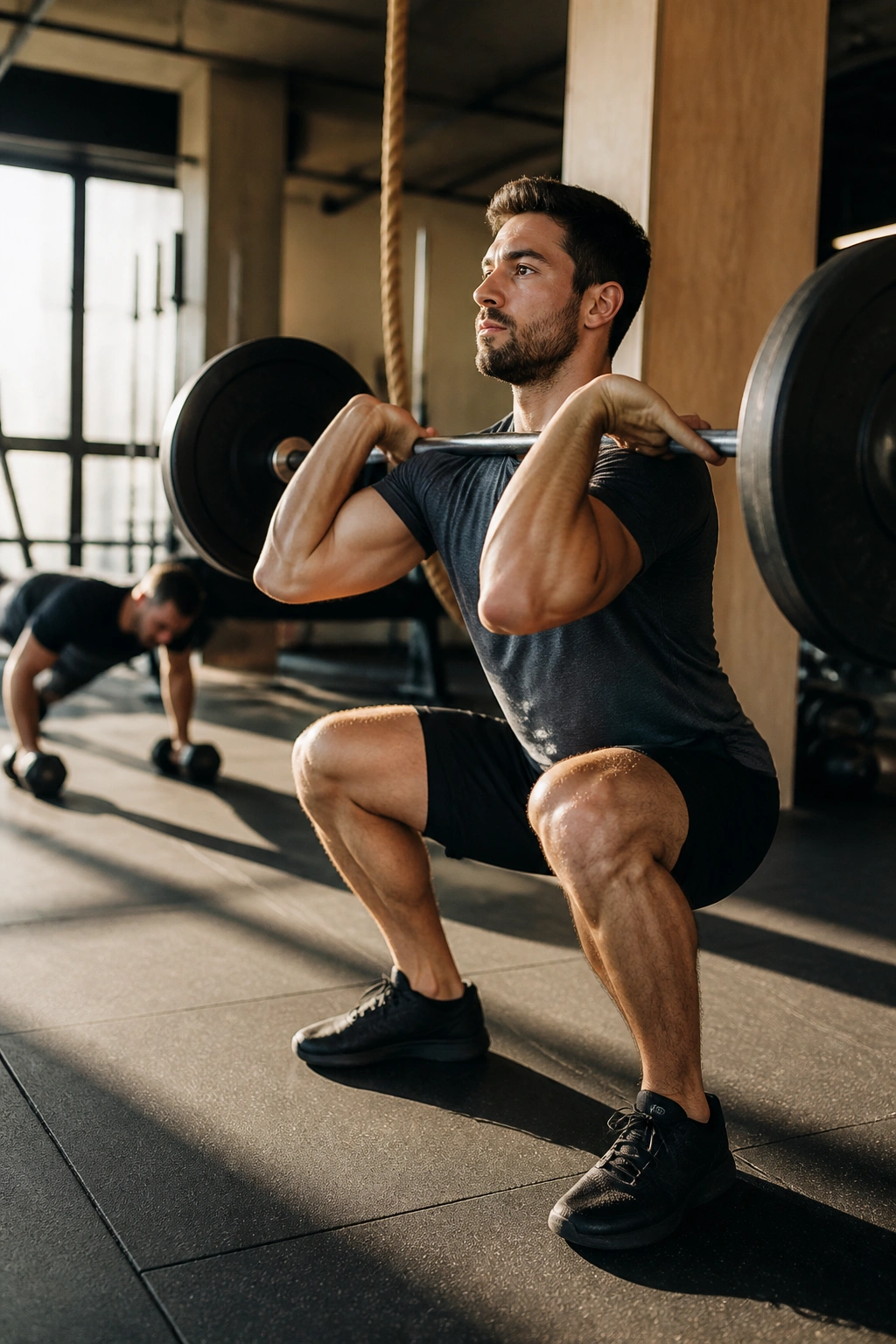
Picture a timer that starts every minute whether you’re ready or not.
That’s the whole point of an EMOM — every minute on the minute. You do a set, rest with the leftover time, and start again when the next minute hits. For strength work, an EMOM keeps the pace sharp without forcing ugly rest periods or endless wandering between stations.
Try this 20-minute block:
- Minute 1: 5 deadlifts
- Minute 2: 6 push-ups with a hard pause at the bottom
- Minute 3: 8 goblet squats
- Minute 4: 6 one-arm rows per side
Repeat five times.
The weights should feel solid, but not all-out. If you need more than about 40 seconds to finish a minute’s work, the load is too heavy for this format.
EMOMs are useful because they create pressure. Not panic. Pressure. That little edge is what keeps people from drifting through short workouts like they have all day.
4. Heavy Lower-Body Triples
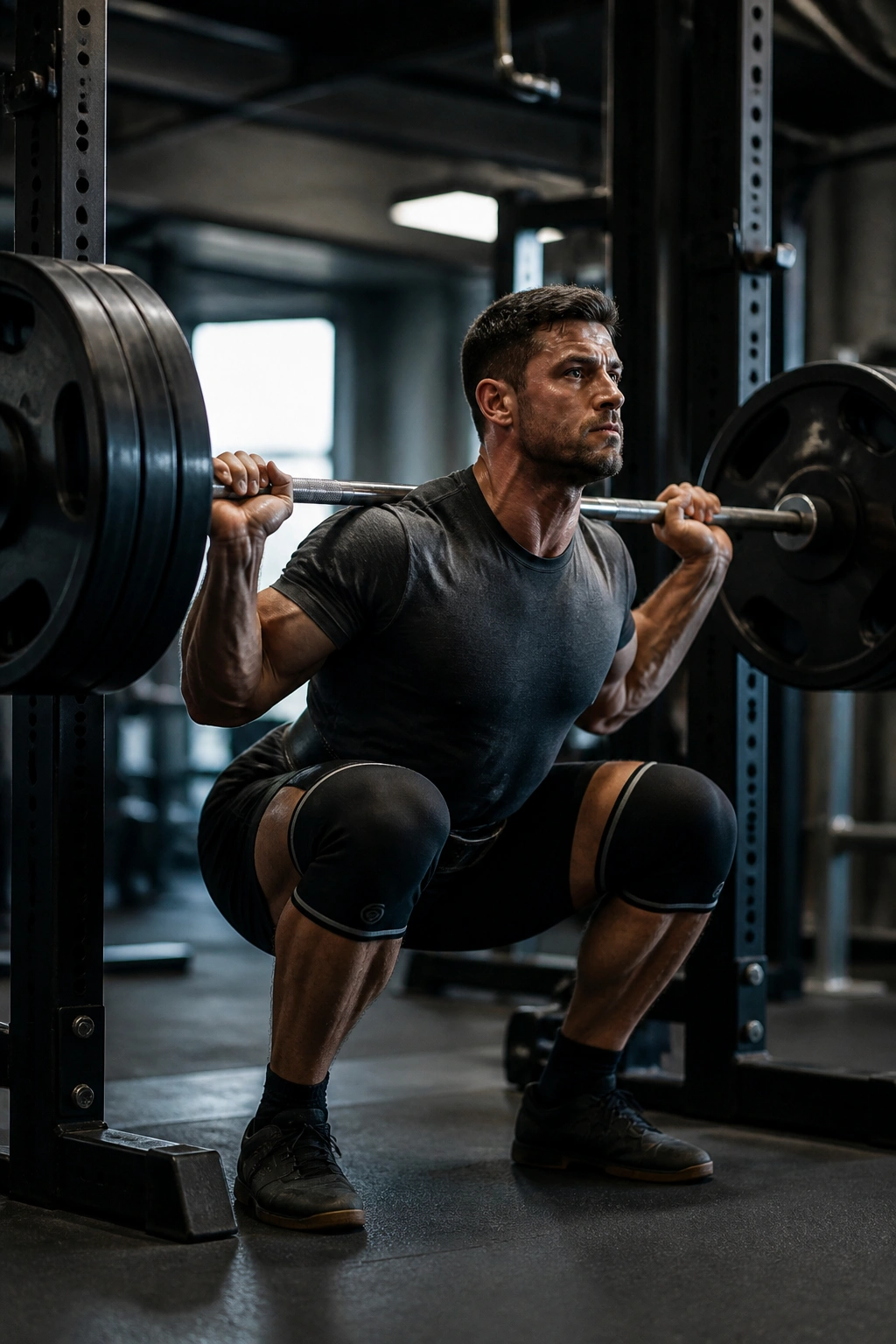
Heavy lower-body work does not need a marathon.
A good 30-minute leg session can live on 3-rep sets, especially if you keep the lift choice simple: back squat, front squat, or trap bar deadlift. Do 5 sets of 3 with 90 seconds to 2 minutes of rest, then finish with 2 sets of 8 split squats per leg.
That’s enough. Really. Most people do too much after their main leg lift and then wonder why every set after the fourth feels soft. I’d rather see five crisp triples than a heap of tired, half-relevant volume.
The lower-body accessories should be short and direct. Split squats, reverse lunges, or step-ups all fit. Pick one and keep moving.
A useful rule: if the bar speed falls off a cliff on set three, the load is a bit too ambitious for a half-hour session. Bring it down 5 to 10 pounds and make the reps look cleaner.
5. Upper-Body Press and Row Block
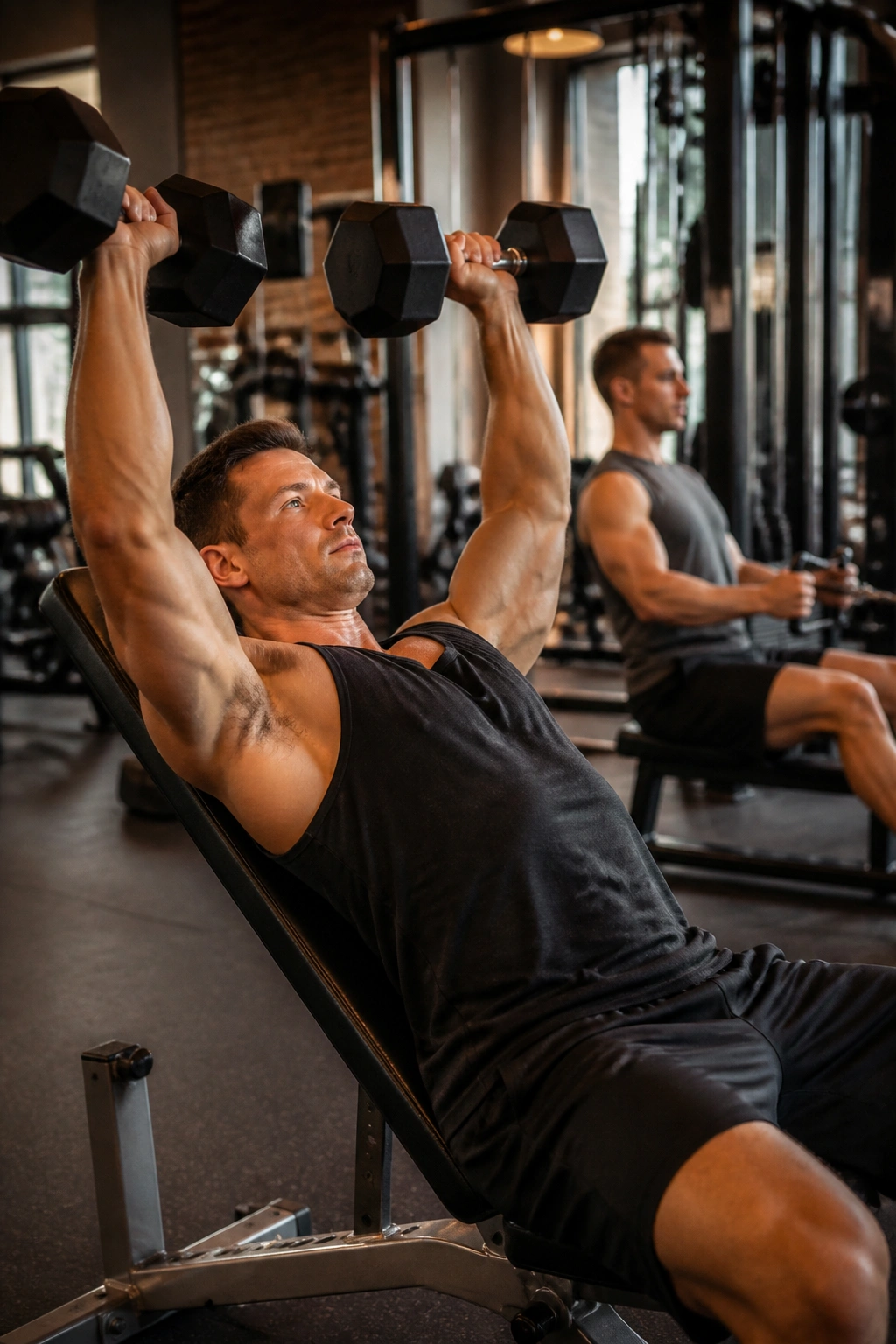
A simple upper-body block can do a lot of work in very little time.
Start with incline dumbbell press for 4 sets of 6, then pair it with seated cable row for 4 sets of 8. After that, use half-kneeling single-arm press and face pulls as a shorter finisher — 2 rounds, 10 reps each, with just enough rest to keep form clean.
The middle 20 minutes
This is the part where the session earns its keep. The incline press gives you a stable pressing angle that’s usually kinder to the shoulders than flat barbell work, and the row balances the whole thing out. I like this pairing because it doesn’t waste time arguing with gravity.
What to watch for
- Keep your ribs down on the press.
- Pull the cable row to your lower ribs, not your neck.
- Use a controlled lowering phase on both lifts.
- Stop the set when the last rep turns into a grindy mess.
Upper-body day gets better when you stop chasing variety for its own sake. Two big lifts, two support moves, and out the door.
6. Kettlebell Swings and Goblet Squats
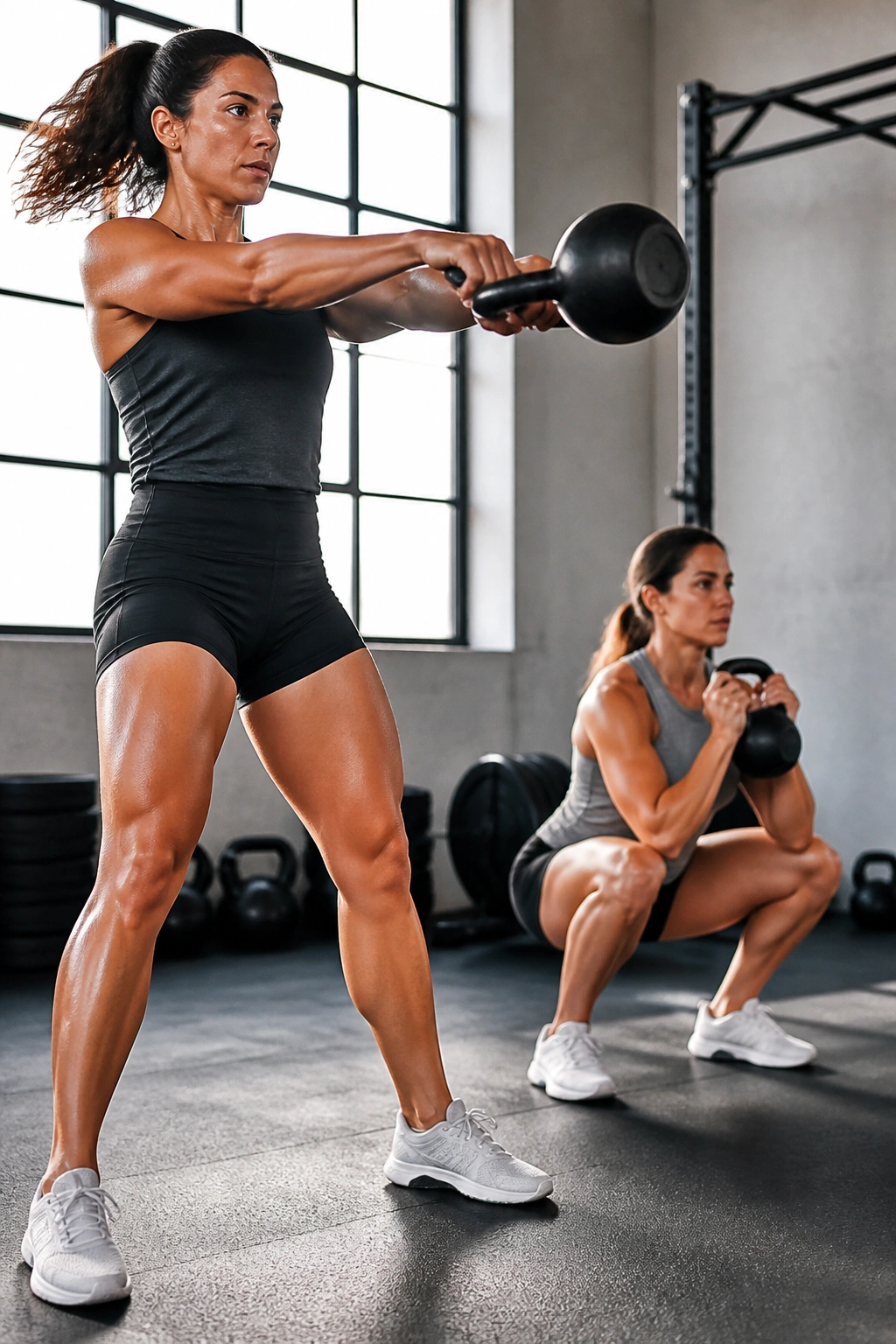
The bell should snap back, not float.
That’s the feel you want in a kettlebell workout: sharp hips, tight trunk, and a goblet squat that stays upright instead of collapsing into a weird folding chair. A simple version is 5 rounds of 12 swings, 8 goblet squats, and 6 push-ups, with 45 seconds of rest after each round.
If you like a little more structure, split the session in half. Do 10 minutes of swings in short bursts, then 10 minutes of goblet squats and push-ups as a superset. Use the last 5 minutes for carries or plank work.
Kettlebells punish sloppy movement fast. That is why they’re so useful. The hinge has to be clean, or the bell tells on you.
One sentence matters here: don’t turn swings into front raises. If the weight is drifting forward instead of being driven by the hips, it’s the wrong load or the wrong pattern.
7. Bodyweight Strength Ladder
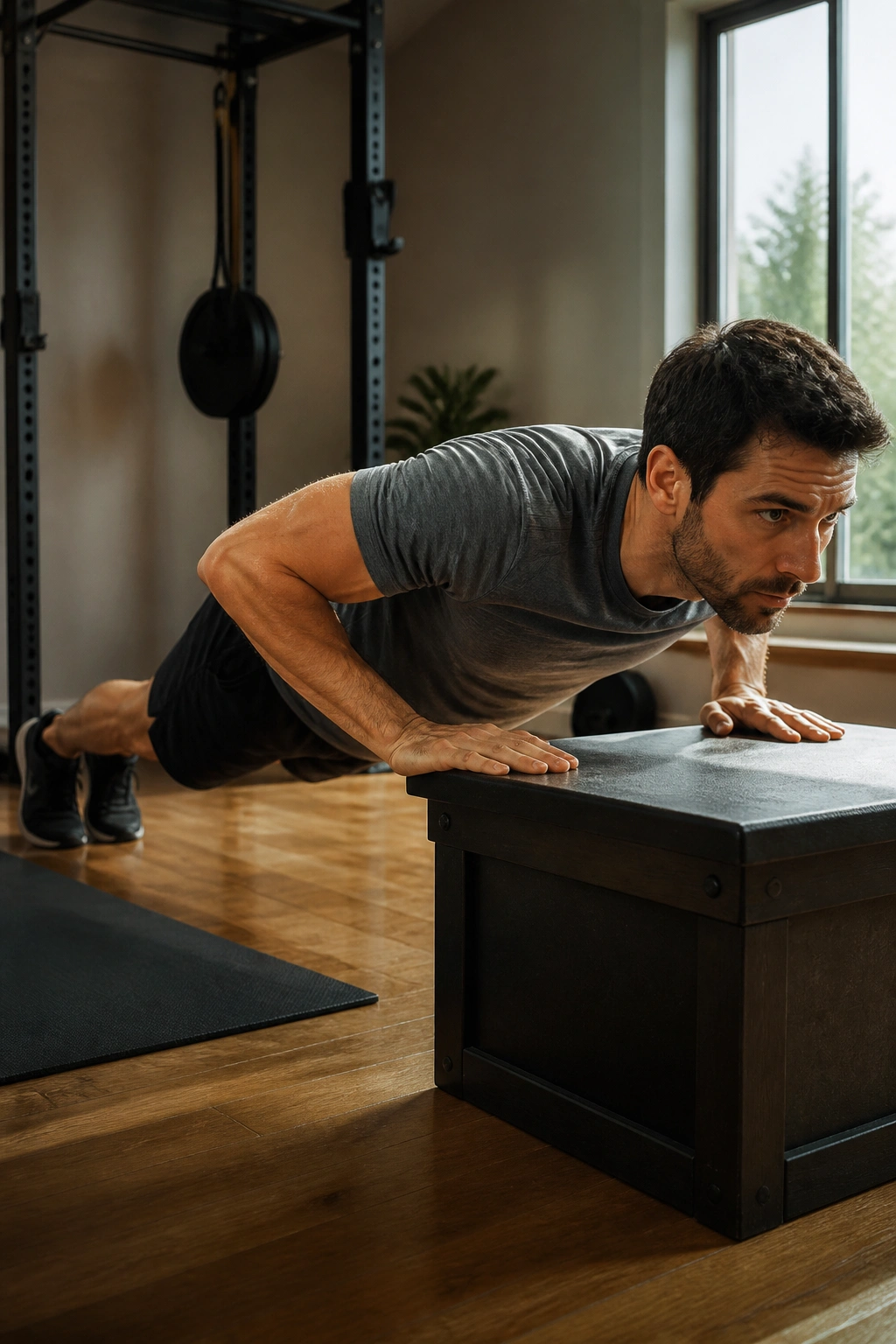
You do not need a rack to train hard.
A bodyweight strength ladder can still be serious if you make the exercises earn their place. Try push-ups, split squats, inverted rows under a sturdy table or bar, and pike push-ups. Run them as 10-8-6-4, or keep it simple with 4 rounds of 12, 10, 8, and 6 reps depending on the move.
How to scale it
If regular push-ups are too easy, elevate your feet. If they’re too hard, put your hands on a bench or sturdy box. For split squats, hold a backpack loaded with books. Small changes matter here. A backpack with 15 to 25 pounds can change the entire feel of the workout.
The nice part about bodyweight strength work is the lack of setup. The annoying part is that you can drift into “hard cardio” without noticing. Keep the reps deliberate, pause for a beat at the hardest point, and don’t rush the lowering phase.
Simple. Hard. Done properly, it’s enough.
8. Single-Side Dumbbell Work

Why bother with one side at a time?
Because most people have one side that cheats. A little. Sometimes a lot. Unilateral work forces the smaller side to show up, and it makes your trunk work harder because you’re fighting rotation while the weight moves.
A good 30-minute version looks like this: Bulgarian split squat, single-arm floor press, one-arm row, suitcase carry. Do 3 sets of 8 on the first three lifts and 3 carries of 30 to 40 seconds per side at the end. Rest about 45 seconds between sides.
Start with the weaker side on each exercise. Match the stronger side to it. Don’t let the strong side do bonus reps just because it can — that habit gets sloppy fast.
This style is especially good if one knee, shoulder, or hip always seems a little cranky. You can adjust load and range without giving up the whole session. That flexibility is worth a lot when time is tight.
9. Deadlift and Carry Circuit
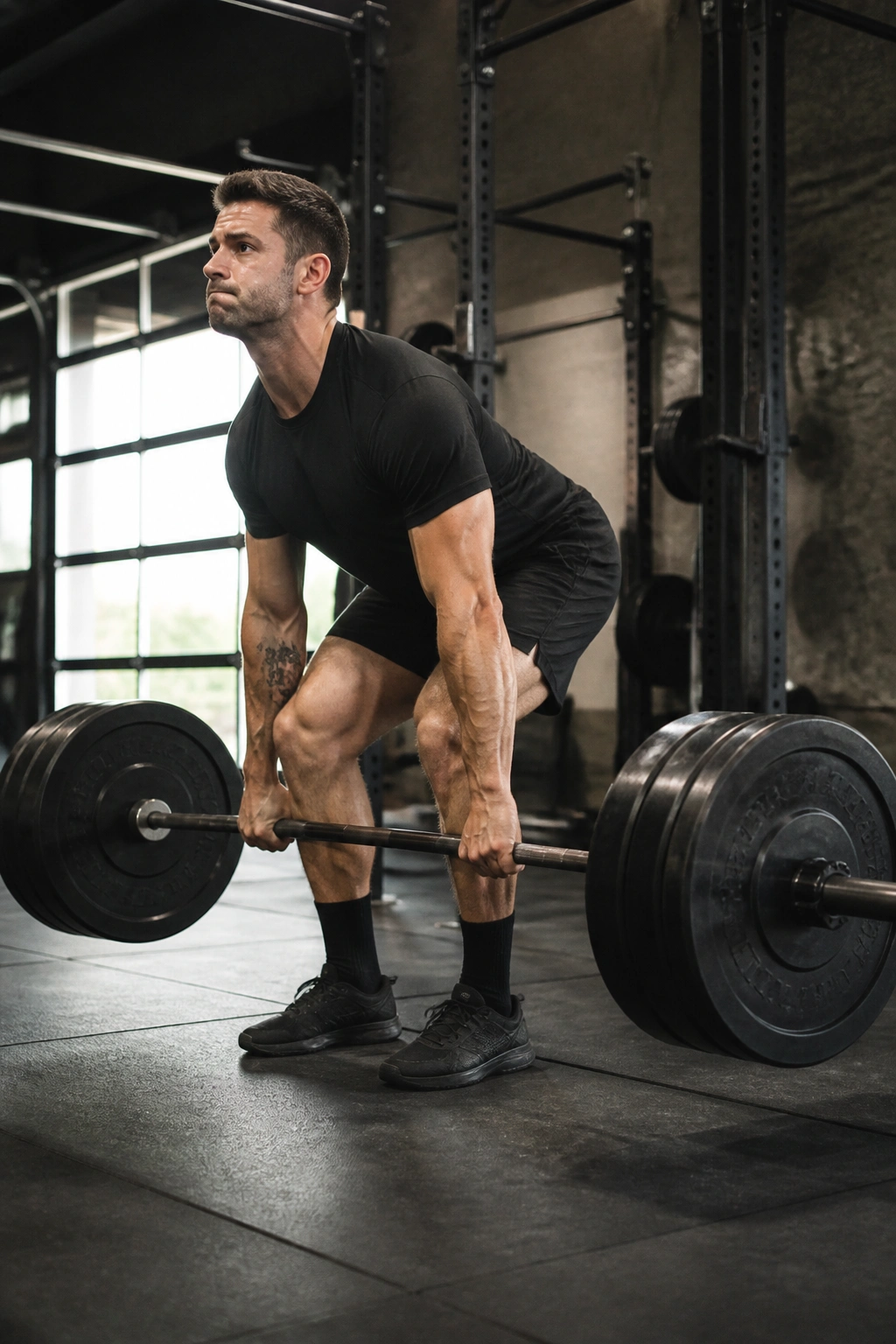
If you only have one hard slot in the day, I’d make it this one.
A deadlift-and-carry workout is brutally efficient. Do 5 sets of 3 deadlifts, then immediately walk 20 to 30 meters with farmer carries or a trap bar. Rest 60 to 90 seconds and repeat. Add front rack carries or suitcase carries if you want a little more trunk work.
Ten deadlifts is too many for this format. That’s the part people get wrong. High-rep deadlifts chew up your grip and your lower back, and they tend to spill over into ugly form before the session is finished. Triple sets keep the quality high.
A carry finishes the job because you can’t fake it. Shoulders down, ribs stacked, steps even. That’s the whole game.
One more thing: if the carry feels easy enough that you could text while doing it, the load is too light.
10. Tempo Training With Slow Reps
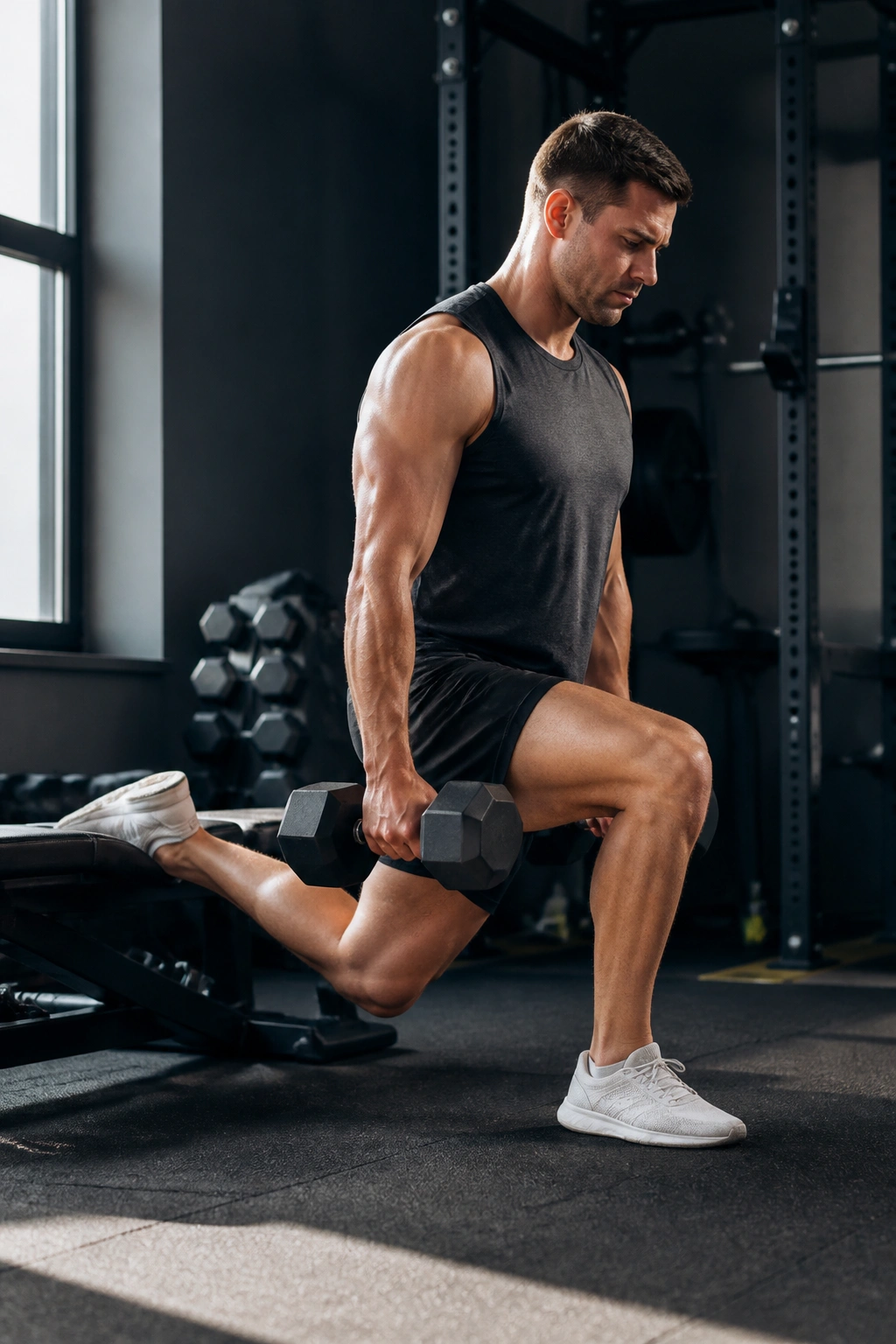
Three-second lowers feel slow. Then they start feeling honest.
Tempo training is the easiest way to make moderate weights feel much heavier without adding more plates. Use a 3-second lowering phase, a 1-second pause, and a smooth drive up on moves like split squats, dumbbell presses, rows, and hip thrusts. Do 3 sets of 6 to 8 reps per exercise.
The magic is in the control. A slower eccentric exposes weak spots fast, especially in the bottom half of a squat or the stretched position of a press. You will feel muscles that normally coast through quicker reps.
This is not the day to chase speed. It’s the day to own position. Keep the reps neat, keep the torso quiet, and stop before the set turns into a wobble.
Worth saying: lighter weights are fine here. The point is tension and control, not bragging about the number on the dumbbell.
11. Pull-Up, Press, and Row Session

Unlike a chest-only day, this one leaves your upper body feeling balanced instead of lopsided.
Start with pull-ups or assisted pull-ups for 4 sets of 4 to 6 reps. Move to standing overhead press for 4 sets of 5, then finish with barbell rows for 3 sets of 6 to 8. Rest 90 seconds between sets and keep the transitions short.
The anchors
Pull-ups set the tone. If they’re rough, use a band or an assisted machine, but keep the movement strict. The overhead press should be smooth enough that your lower back stays quiet. Barbell rows finish the session by loading the upper back without beating up the shoulders.
A small fix that helps
- Squeeze your glutes on the press.
- Pull your chin over the bar without kicking.
- Row to the lower ribs, not the chest.
- Leave one rep in reserve on the last set.
That’s a strong half-hour right there. Not flashy. Useful.
12. Squat and Bench Density Block
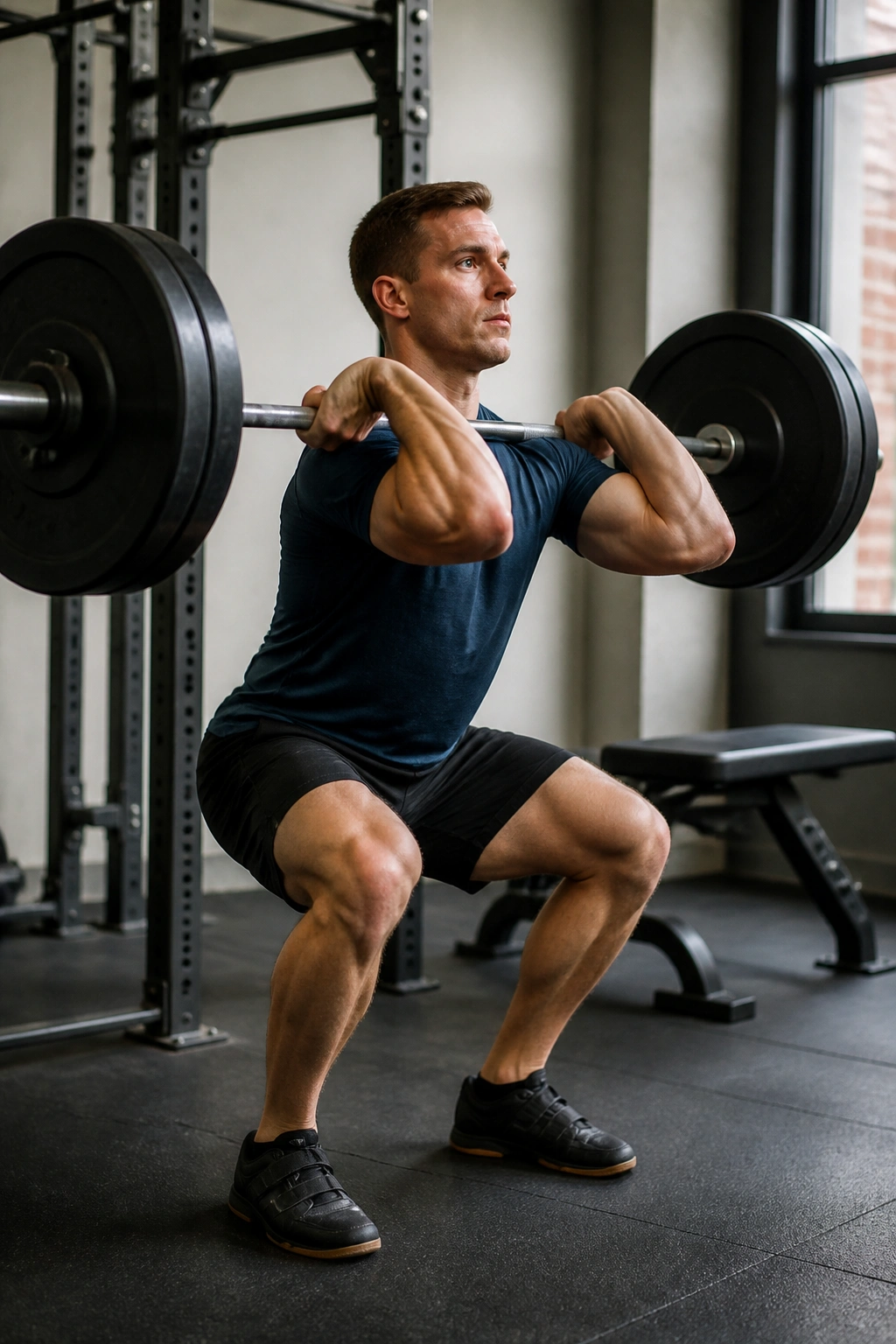
Set a timer for 20 minutes and stop negotiating with it.
A density block means you get a fixed window and you do as much high-quality work as you can inside it. For this one, alternate front squat for 4 reps and bench press for 5 reps. Keep cycling until the 20-minute block ends. Then use the last 10 minutes for light mobility or a short core finisher.
This style works because the timer removes decision fatigue. No wondering whether you should do one more warm-up set, one more machine, one more little thing. You either finish the next round in time or you don’t.
The sets should feel solid but not maximal. If you’re grinding every rep by the second round, the load is too ambitious for a density block. Drop it 5 to 10 percent and keep the quality high.
I like this format for lifters who need structure more than variety. It’s direct. It’s a little ruthless. Good.
13. Sandbag Grind Workout
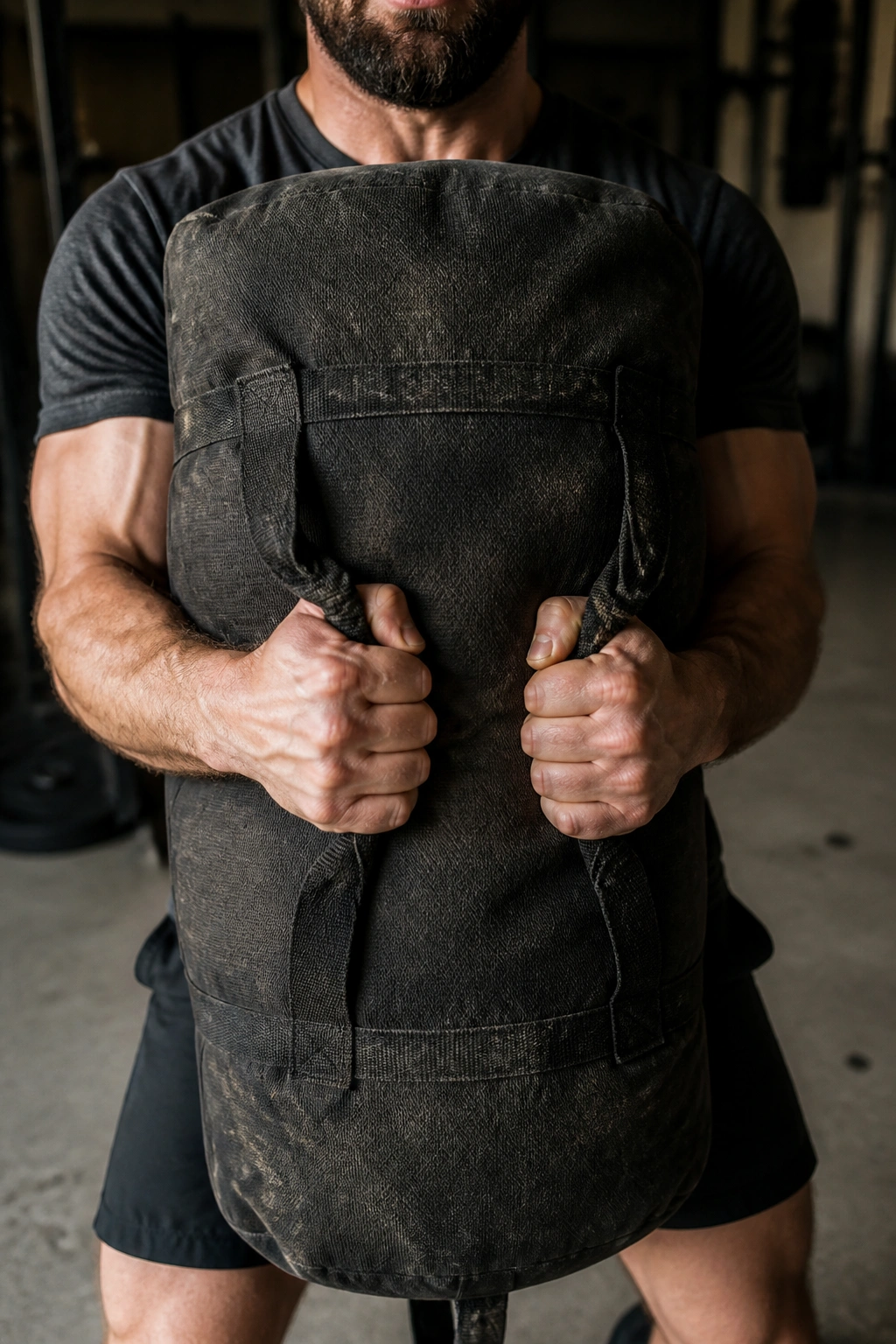
A sandbag in a garage changes the mood fast.
It shifts, it squeezes your ribs, and it refuses to sit where you want it to. That’s exactly why it’s useful. A simple sandbag workout can be bear-hug squats, sandbag shouldering, rows, and carries. Do 4 rounds of 6 squats, 5 shoulderings per side, 8 rows, and a 30-second carry.
The moves
- Bear-hug squat: stay tall and keep the elbows pulled in.
- Shouldering: roll the bag up the thigh before you pop it to the shoulder.
- Row: hinge hard and pull with the elbows.
- Carry: hug tight and breathe through your nose if you can.
Sandbags are rough in the best way. They force you to brace, and they make every rep look a little less polished than a barbell. That’s fine. Sometimes ugly is useful.
If the bag feels too light, slow the lowering phase to 3 seconds. That fixes the problem faster than piling on more load in a hurry.
14. Resistance-Band Strength Circuit
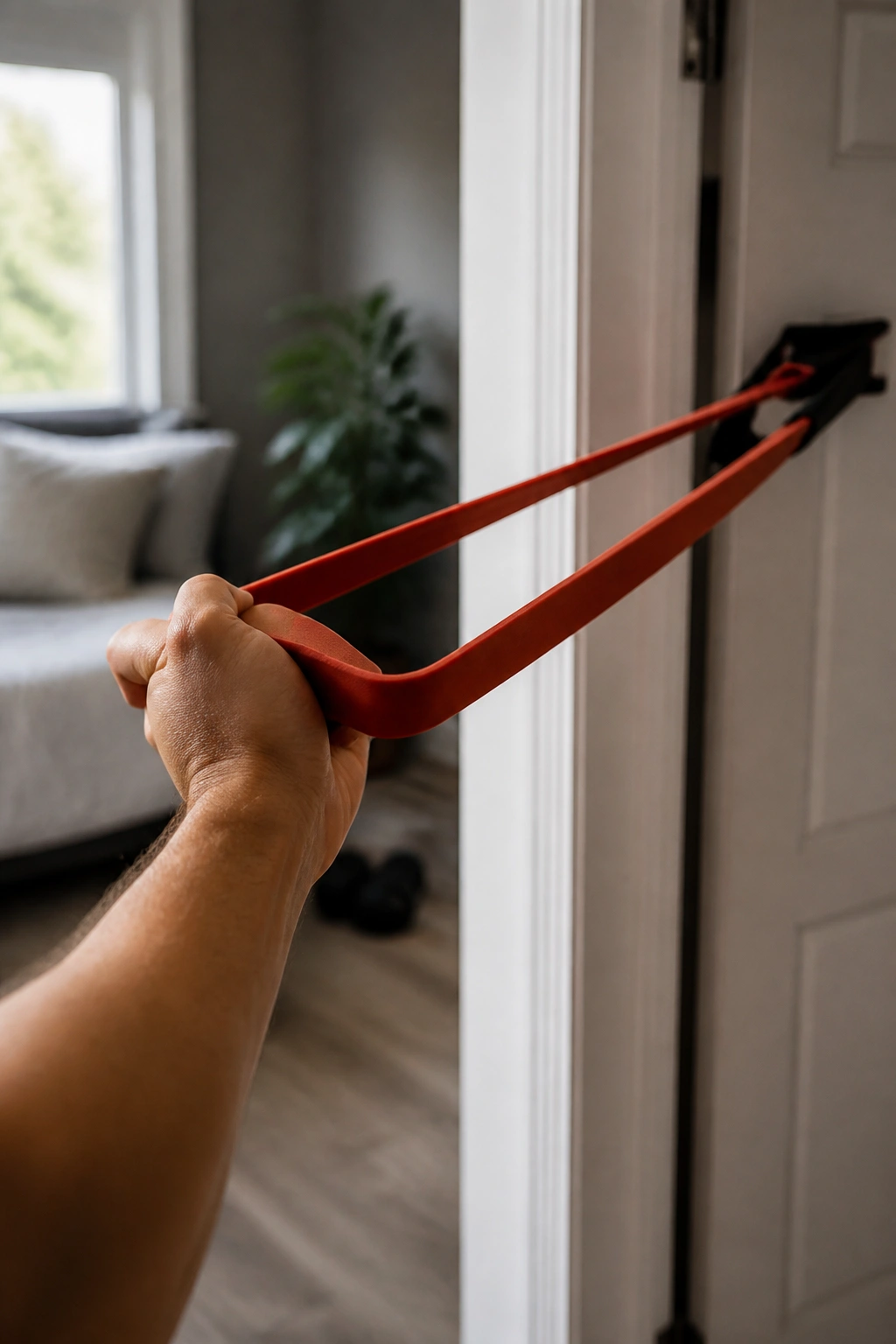
Bands are not a fallback.
Used well, they’re a compact way to get real tension in a short workout, especially at home or while traveling. Anchor a band low and high, then run banded rows, band chest presses, band split squats, and band good mornings. Do 3 to 4 rounds of 12 to 15 reps, resting 20 to 30 seconds between moves.
The key is setup. A band that’s too slack at the start of the rep does almost nothing. Step far enough from the anchor that the band is already working before the first inch of movement.
A quick caution: check the door anchor, the post, or whatever you’re using. Bands snap in rude ways when people get casual about setup. Not worth it.
This kind of session is sneaky. It looks mild. Then the last round starts burning your shoulders and hamstrings in a way you did not predict.
15. Core and Anti-Rotation Session
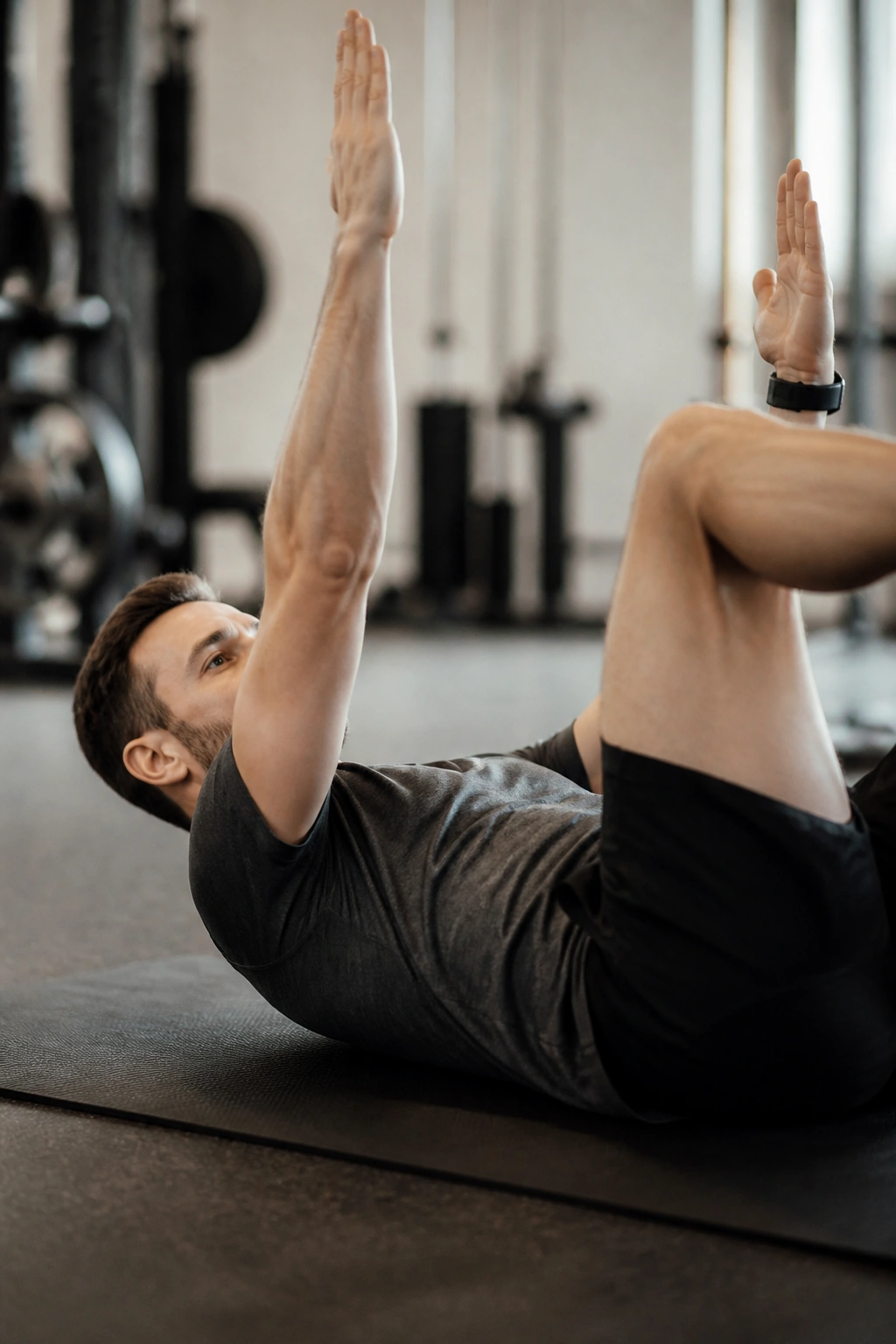
Why does your trunk matter in a 30-minute strength workout?
Because your trunk is the transfer point. If it leaks force, the rest of the lift gets messy. A good anti-rotation session can be short and sharp: dead bugs, Pallof presses, side planks, suitcase carries, and plank shoulder taps.
What to feel
You want the ribs down and the pelvis steady. No twisting through the low back. No flinging the arms around and calling it core work. Clean core training feels almost boring while you’re doing it — and then your heavy lifts feel more stable later.
A strong version of this workout looks like:
- Dead bug: 3 sets of 8 per side
- Pallof press: 3 sets of 10 per side
- Side plank: 3 sets of 30 to 40 seconds per side
- Suitcase carry: 3 walks of 20 to 30 meters per side
That’s enough. Really. Core training does not need to be a circus.
16. Trap Bar Power Session
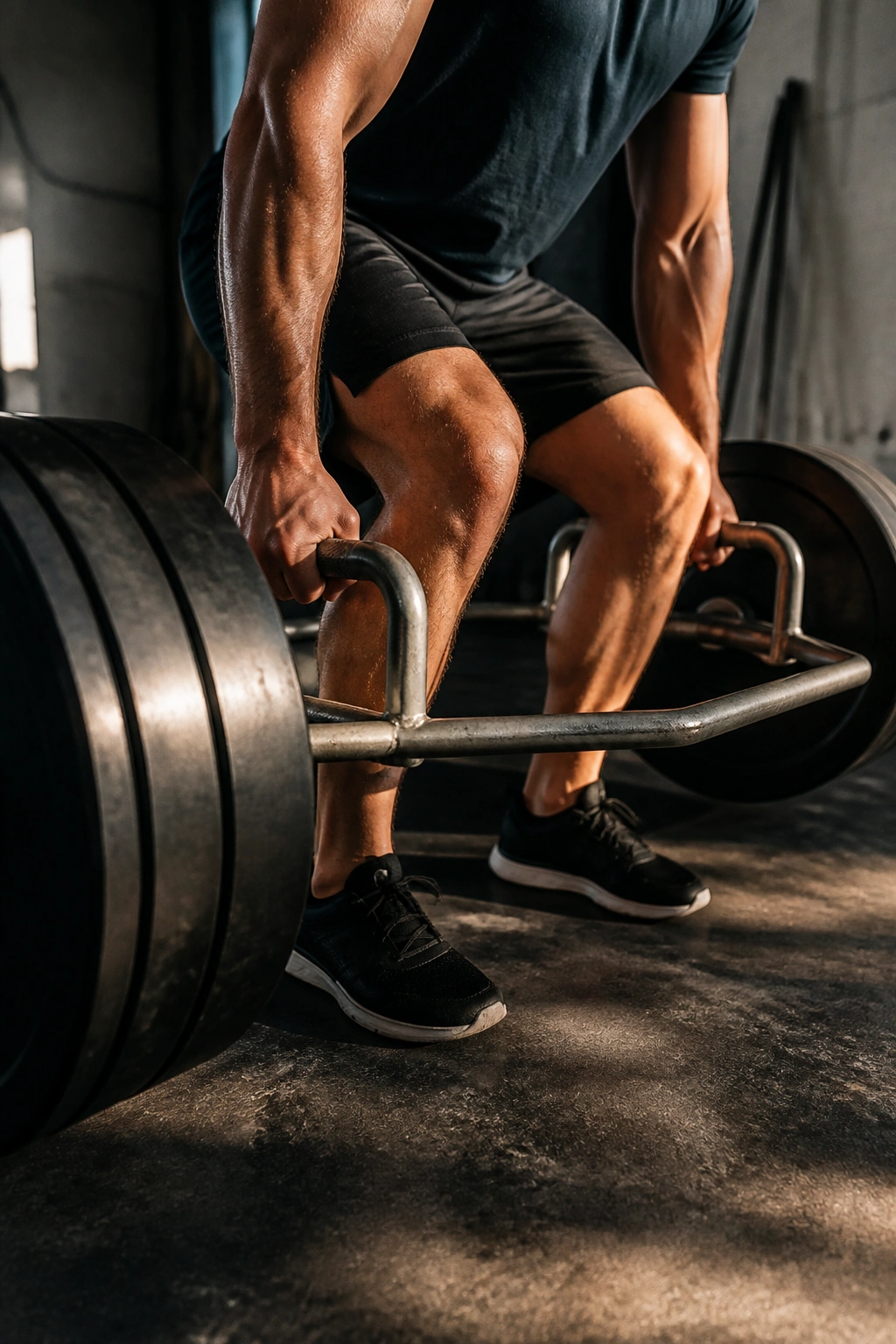
Trap bar deadlifts are one of the shortest paths to a hard, useful strength workout.
The bar path is easier to manage than a straight bar deadlift, which means you can usually move a decent load with less fuss. Do 5 sets of 3 trap bar deadlifts, then add 3 sets of 5 jump shrugs or loaded carries if you want a power finish.
The trap bar shines because it doesn’t demand a huge learning curve. Your hands are by your sides, your torso stays more upright, and the whole lift tends to feel friendlier on the back than a long-grind conventional setup.
I like this format for people who want strength without spending half the session on technical setup. Get under the bar. Brace. Stand up hard. Done.
A small detail matters here: if your hips shoot up first, the load is too heavy or you’re tired already. Fix that before adding more weight.
17. Glute and Hamstring Builder
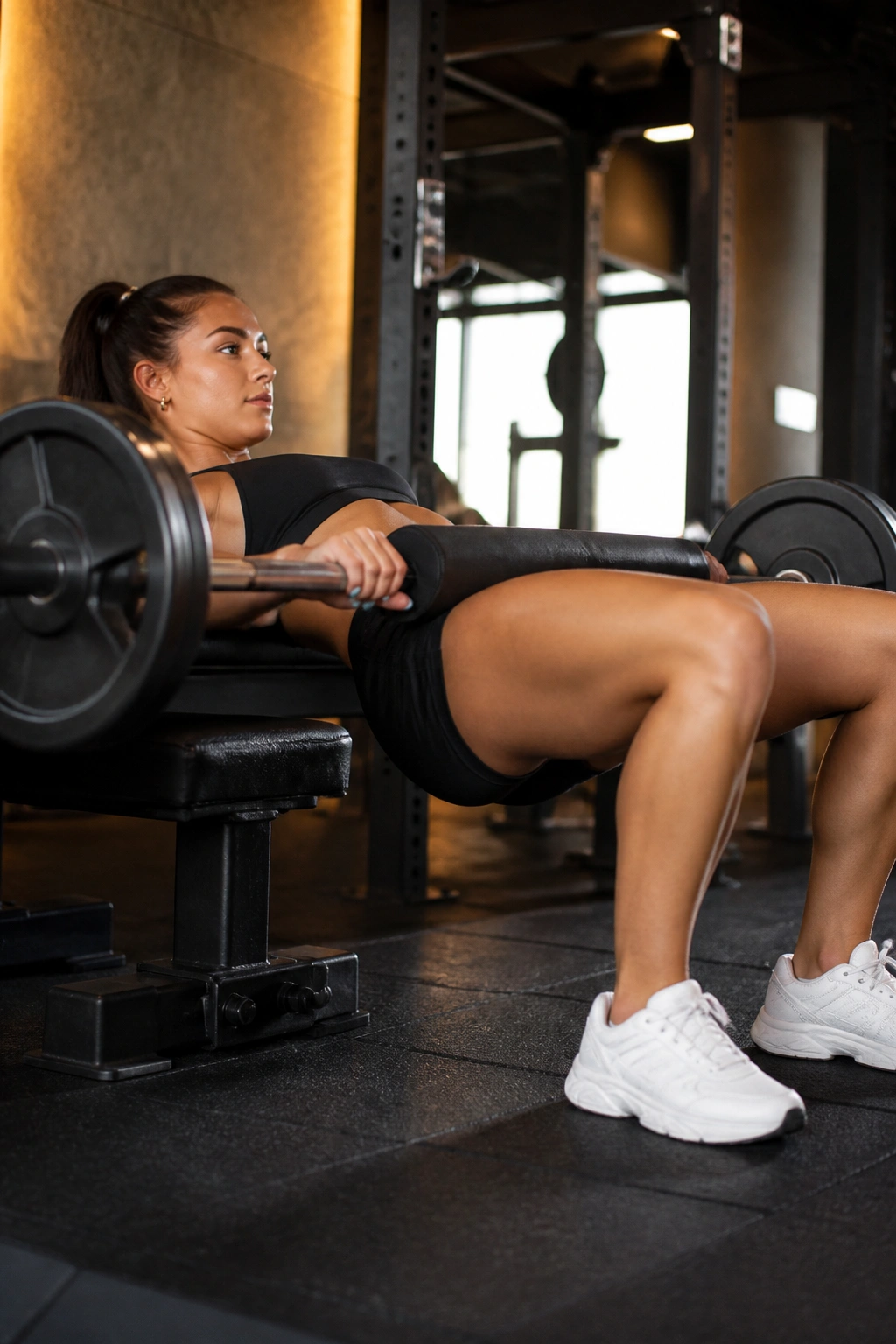
The glutes wake up fast when you stop rushing the hinge.
A short posterior-chain session can be built around Romanian deadlifts, hip thrusts, hamstring curls, and reverse lunges. Do 3 rounds of 8 RDLs, 10 hip thrusts, 10 curls, and 8 reverse lunges per leg. Rest 45 to 60 seconds between rounds.
The RDL should stay controlled all the way down, with the hamstrings loaded and the spine long. At the top of the hip thrust, pause for 1 full second and squeeze the glutes hard. That pause matters more than people think.
A useful sequence
Start with the heaviest movement first — usually the RDL. Then move to the hip thrust, then a curl or glute bridge variation, and finish with the lunges. That order keeps your best energy for the lifts that need it.
This workout feels simple until the last round. Then the back of your legs starts speaking loudly.
18. Shoulder and Upper-Back Day

Shoulder day does not need 12 tiny exercises and a yoga mat.
A better 30-minute version is overhead press, lateral raise, rear-delt row, and face pull. Run 3 supersets of press and row, then finish with 2 short rounds of raises and face pulls. Keep the reps in the 8 to 12 range and the rest around 30 to 45 seconds.
The goal is not to annihilate your delts. The goal is to build strong shoulders that move well and don’t feel cranky every time you reach overhead. That means clean pressing, controlled lifting, and enough upper-back work to keep the shoulder blade moving the way it should.
Arm circles do not count.
Use a moderate load, pause briefly at the top of the raise, and keep your neck long. If your traps take over every set, the weight is too heavy. Drop it and clean up the line of motion.
19. Hotel Room Strength Workout
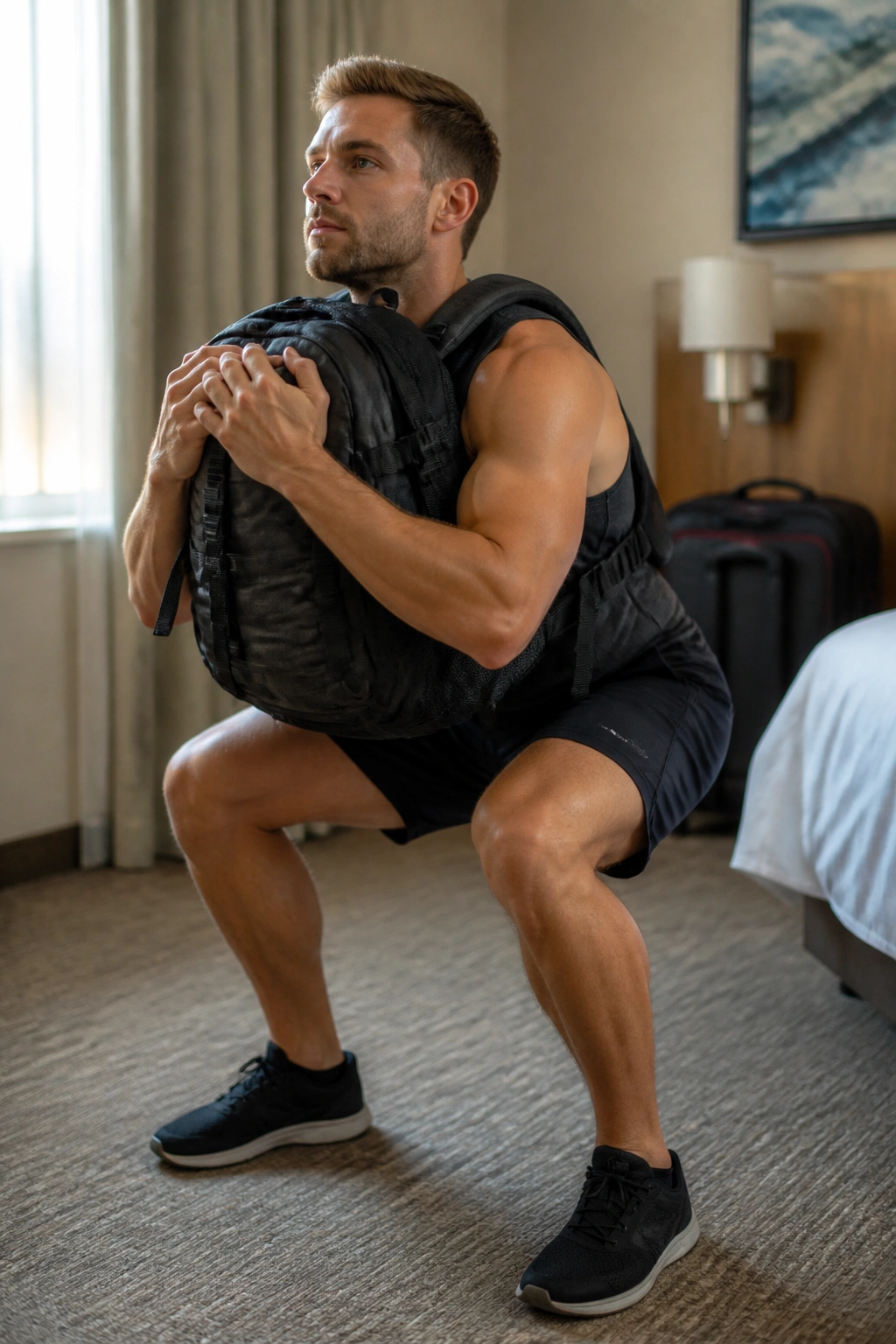
Hotel rooms are awkward, which is exactly why this workout exists.
You can get a lot done with a backpack, a pair of dumbbells if you packed them, or pure bodyweight. My favorite travel setup is backpack front squats, push-ups, Bulgarian split squats using the bed, and suitcase carries around the room or hallway. Do 4 rounds of 10 squats, 12 push-ups, 8 split squats per leg, and a 30-second carry.
The room setup
- Clear one lane to walk.
- Put the backpack where you can grab it fast.
- Use the bed edge for rear-foot support only if it feels stable.
- Keep the movement quiet so you don’t shake the room at 6 a.m.
A travel workout should be blunt and low-drama. No complicated equipment. No setup that takes longer than the session. Just enough load to remind your legs and upper body that they still belong to you.
If the backpack is too light, add books, water bottles, or anything dense. Weirdly effective.
20. The Repeatable Full-Body Reset
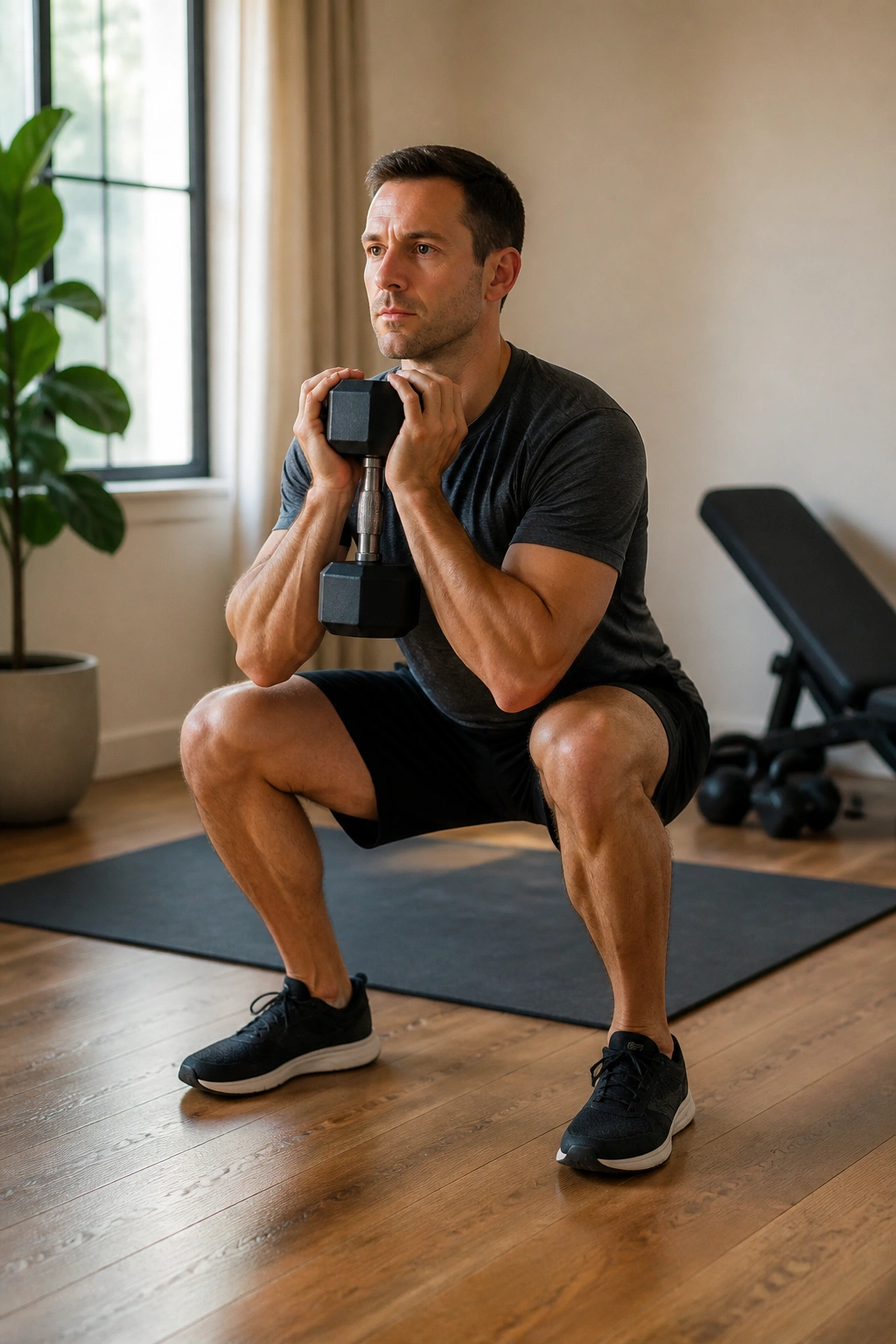
When you want one plan you can keep coming back to, make it this one.
Use goblet squat, dumbbell bench press, one-arm row, Romanian deadlift, and farmer carry. Do 3 rounds of 8 reps on the first four movements and 30 to 40 seconds of carries at the end. Rest about 60 seconds between rounds.
This is the kind of workout that works on good days and bad days. If you feel fresh, load it heavier. If you’re a little flat, keep the weights moderate and focus on clean reps. The template doesn’t care; it still gets the job done.
A clean half-hour session should leave you feeling trained, not chased. That’s the sweet spot. Enough work to matter, enough control to repeat it again soon, and no junk volume hiding in the corners.
