



Upper body stretches after a workout matter most when your shoulders feel tight but not injured. You know the feeling: your chest has gone a little rounded after pressing, your lats are clamped from pull-ups or rows, and your neck is carrying the leftovers from every set above shoulder height.
The mistake is to rush straight from the rack to the car and call it recovery. A few well-chosen stretches can help you get your range of motion back, calm the grippy feeling in the traps, and make tomorrow’s training less miserable. What matters most is gentle pressure, not a dramatic pull that leaves you wincing.
I like post-workout stretching that is specific. Chest work needs chest opening. Pulling work needs lat and rear-delt length. Grip-heavy sessions usually ask for forearm stretches too, because your elbows and wrists are part of the same complaint even if they do not act like it. Start with the big openings, then work down to the smaller stuff.
1. Cross-Body Shoulder Stretch
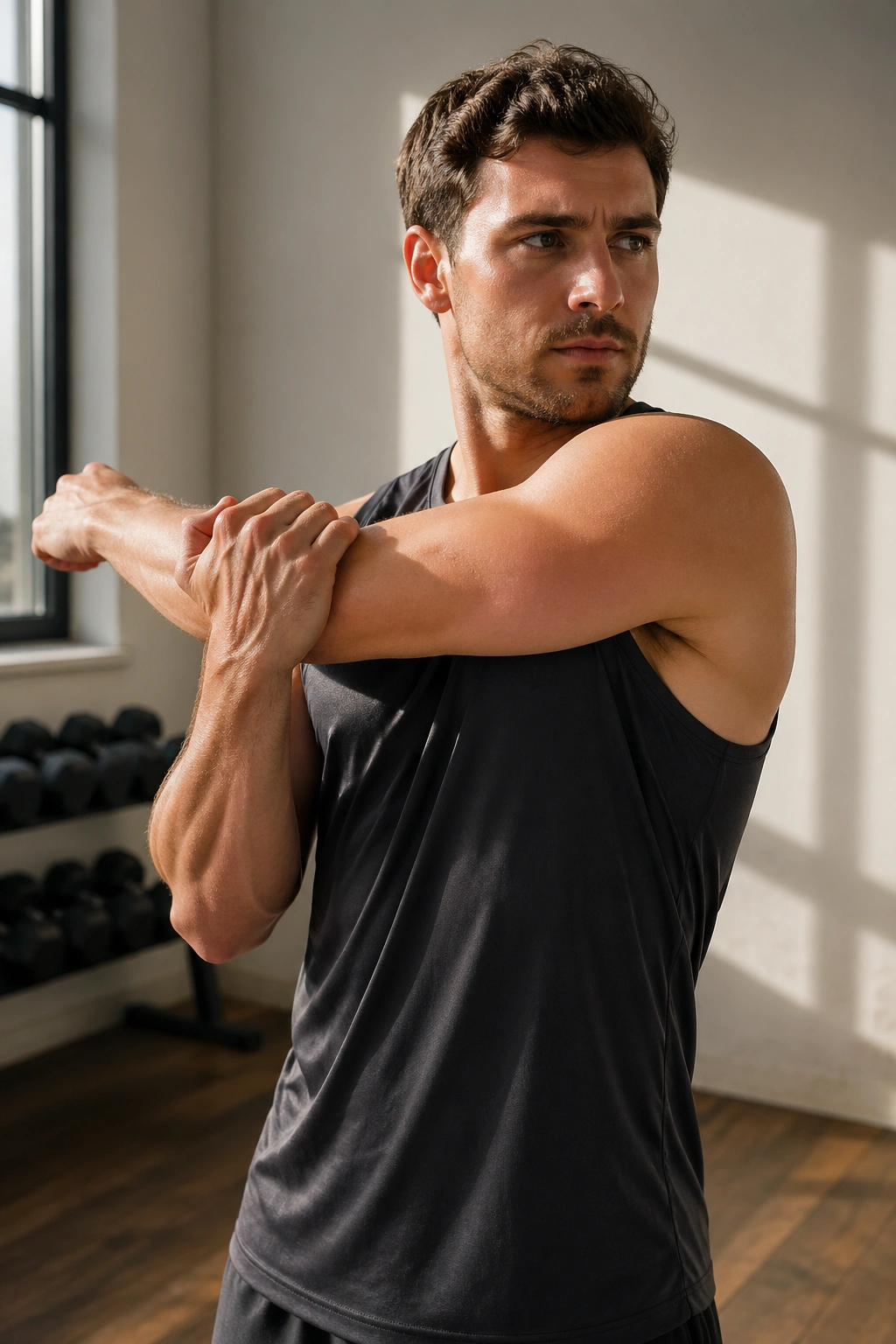
A tight rear shoulder can make everything else feel off. The cross-body shoulder stretch is the first one I reach for after pressing, heavy rows, or any session where the upper arm lived in front of the body for too long.
Pull one arm across your chest at shoulder height, keep the shoulder down, and use the opposite hand just above the elbow to guide — not yank — the stretch. You should feel the pull across the back of the shoulder, not a bite in the joint. If the hand creeps toward your neck, you usually lose the stretch and turn it into a shrug.
- Hold for 20 to 30 seconds per side.
- Keep your chest tall and your ribs quiet.
- Stop if the shoulder feels pinchy in the front.
No shrugging. That one mistake changes the whole thing.
This works especially well after bench pressing because it targets the back of the deltoid and the tissue around the shoulder blade. A lot of people twist their torso to fake more range. Don’t. The stretch gets better when the body stays still and the arm does the moving.
2. Doorway Chest Stretch After a Workout

Why does a doorway stretch feel so different from simply rolling your shoulders back? Because it opens the pecs in the exact position most lifters spend all day and all workout long: arm up, shoulder slightly forward, chest shortened.
Set your forearm on a door frame with the elbow around shoulder height, then step the same-side foot forward until you feel the front of the chest lengthen. Keep the neck relaxed. The ribs will want to flare, and that is where people usually cheat the stretch. A small step is enough.
How to Set It Up
The best version is boring. Good.
Place the elbow and forearm against the frame, not the wrist. Then rotate your torso away just a few degrees and pause. You do not need to sink into the doorway like you are trying to win a dramatic photo contest. You want the stretch across the pec major and, if the arm angle is a little higher, the pec minor near the front of the shoulder.
A short hold works well here: 20 seconds, then switch sides. If the front of the shoulder feels jammed, move the arm lower and reduce the step. The stretch should feel broad across the chest, not sharp near the joint.
3. Overhead Triceps Stretch

This is the cleanest fix for that heavy, locked-up feeling behind the arm. It does more than the triceps, too. Overhead pressing, dips, and even pushups can leave the back of the upper arm feeling thick and stubborn.
Reach one arm overhead, bend the elbow, and let the hand fall between the shoulder blades. The opposite hand can give a light assist at the elbow. Keep the chin level and the ribs down so you do not turn the stretch into a lower-back arch. If you lean too far, you will feel it in the spine before you feel it in the triceps.
Do each side for 15 to 25 seconds, then repeat once if the arm still feels tense. The better cue is simple: the elbow points up, the shoulder stays low, and the neck stays long.
A nice detail here — and it matters more than people think — is hand position. If the elbow drifts far behind the head, the shoulder can complain. Keep the arm closer to the ear. That is usually enough.
4. Thread the Needle Stretch
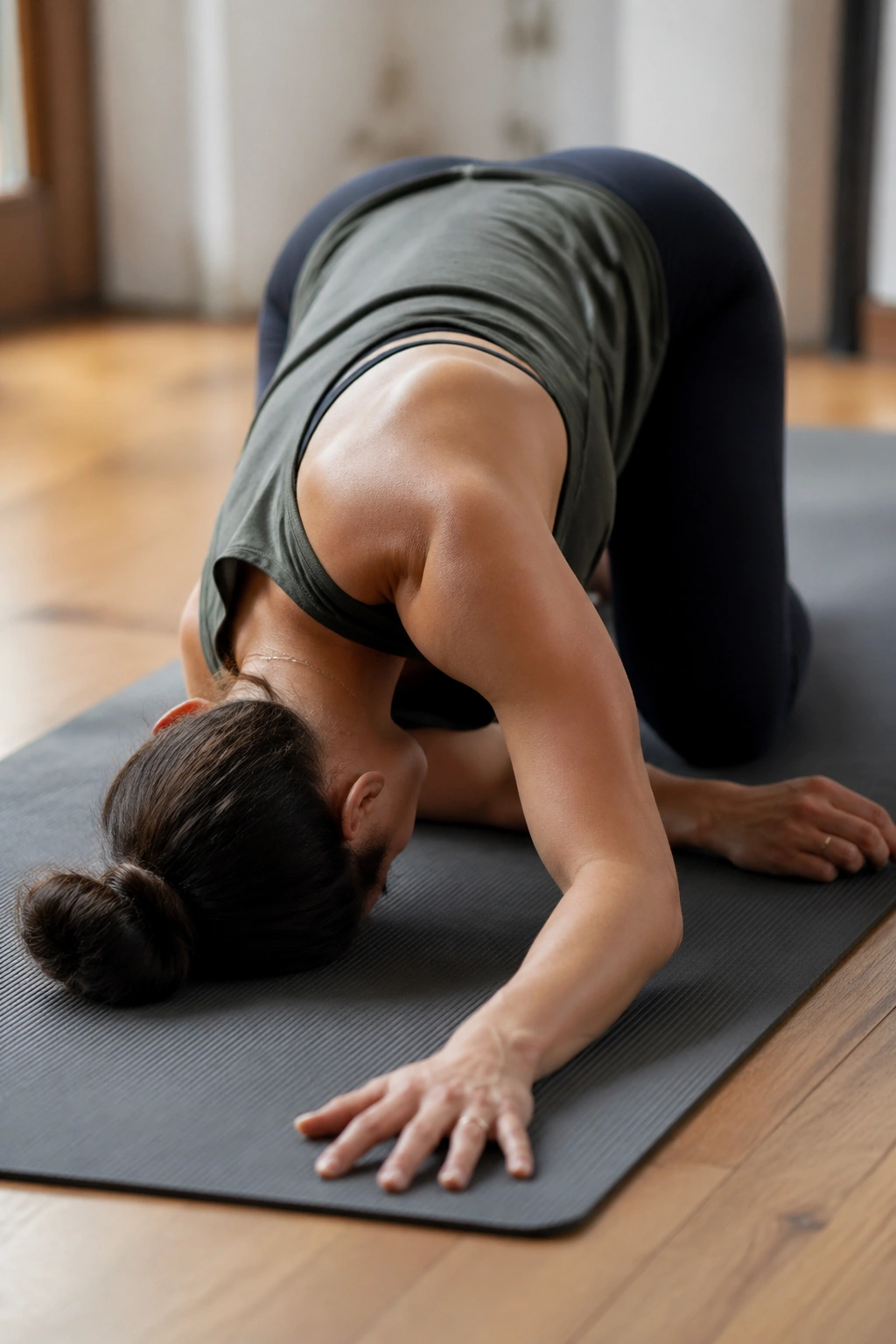
After a heavy row day, the space between the shoulder blades can feel welded shut. Thread the needle handles that feeling well because it combines rotation, shoulder opening, and a little upper-back release in one motion.
Start on hands and knees. Slide one arm under the other, palm up if that feels better, until the shoulder and temple can rest lightly on the floor. Keep the hips stacked above the knees instead of collapsing back. That little detail changes the stretch from a sloppy slump into a real upper-back opener.
What to Feel
- A soft pull through the rear shoulder
- A gentle twist through the upper back
- Less pressure between the shoulder blades on the side you are opening
Breathe into the ribs on the floor side. On the first few rounds, the stretch may feel small. That is fine. A lot of people force too much twist and end up feeling it in the lower back. Better to stay compact and let the breath do some work.
Hold for 3 to 5 slow breaths per side. That pace usually works better than a hard timed hold because the tissue settles in a little farther with each exhale.
5. Child’s Pose with Side Reach
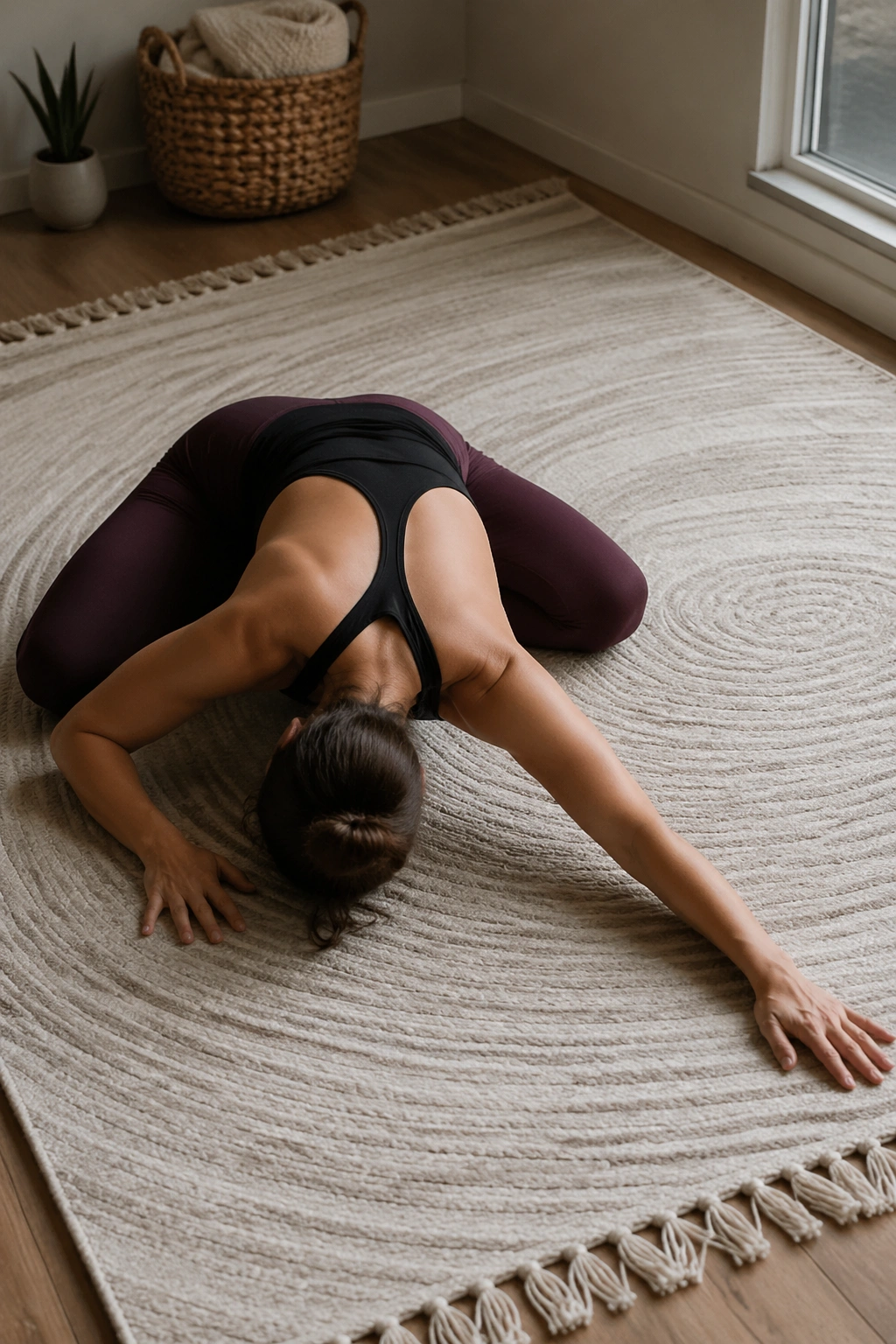
This is one of the few stretches that gets the lats, side ribs, and shoulders in one shot without making you fight for position. It looks simple. It is simple. That is part of why it works.
Drop into child’s pose with the knees wide enough that your belly has room. Walk both hands forward, then take one hand a few inches farther to the right or left. The stretch shifts into the side body of the opposite side, which is where many lifters feel the tightest tug after pull-ups and pulldowns.
Breathe low and slow.
A lot of people forget that the lat does not only live on the back. It wraps around and influences how your ribs move, especially when the arms are overhead. If you do overhead pressing, climbing, swimming, or even a lot of carrying, this stretch tends to feel like a sigh.
Hold each side for 20 to 30 seconds. If the hips feel cramped, widen the knees more or place a folded towel under the ankles. The goal is a long line from hip to fingertips, not a crunched low back.
6. Wall Lat Stretch
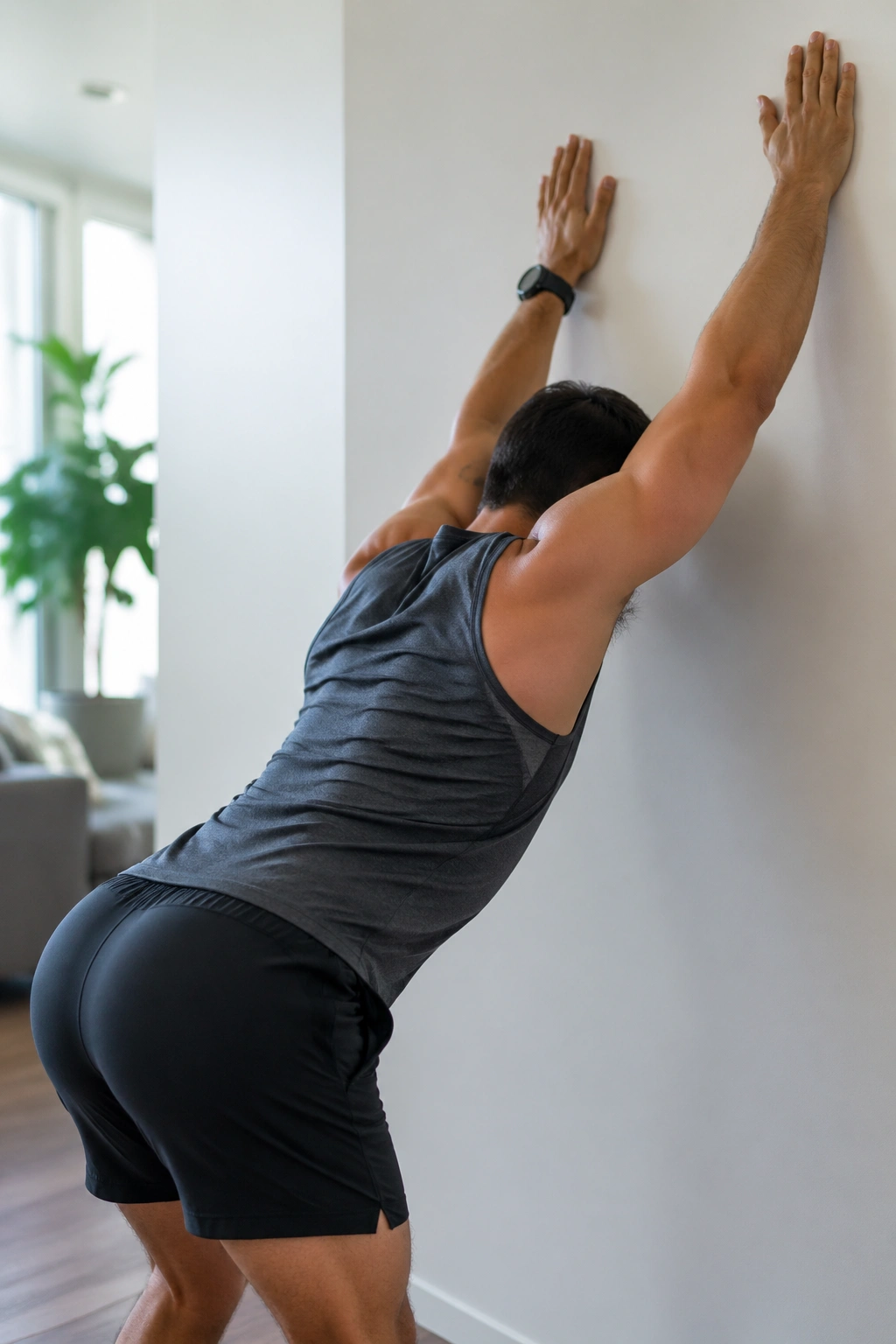
The lat stretch most people do is too sloppy. They shrug, arch, and call it done. A better wall lat stretch keeps the spine honest and puts the pull where it belongs: along the side of the back.
Keep It in the Lats
Face a wall, place both hands high on it or on a sturdy bench, and walk the feet back until the arms are long. Then send the hips back and slightly down. The chest should melt toward the floor a little, but the lower back should not collapse into a big arch. If it does, move the feet farther back and soften the knees.
You’ll feel this after pull-ups, pulldowns, and rows because the lats help drive all of those motions. When they stay shortened, overhead positions get sticky fast.
What People Get Wrong
- Letting the shoulders creep up toward the ears
- Hanging on the joints instead of the muscles
- Turning the stretch into a spine bend
A good wall lat stretch should feel like the side of the torso is lengthening from the armpit to the hip. Hold it for 20 seconds, breathe out, and then reach the hands a touch farther if the body lets you. That tiny second reach usually does more than forcing a giant stretch right away.
7. Neck Side Bend Stretch

Do not yank on your neck after shrugs, carries, or pressing. That is how a useful stretch turns into a cranky one.
Sit or stand tall, let one ear drift toward the same-side shoulder, and place the opposite hand lightly on the side of the chair, bench, or thigh for balance. The idea is to lengthen the upper trap and the side of the neck, not to crush the spine into a hard bend. Keep the chin level, or slightly tucked if that feels better.
If the hand on top is pulling hard, back off.
- Hold for 10 to 15 seconds per side.
- Keep the jaw loose.
- Stop if you feel tingling, numbness, or a sharp pinch.
That last part is worth saying plainly. Neck stretches should feel mild. A deep stretch is one thing. A weird nerve sensation is another. If the sensation travels into the arm, skip it and move on.
This one pairs well with chest and shoulder opening because the upper traps often tighten when the front of the body stays shortened. The neck is usually not the problem by itself. It is the messenger.
8. Eagle Arms Stretch
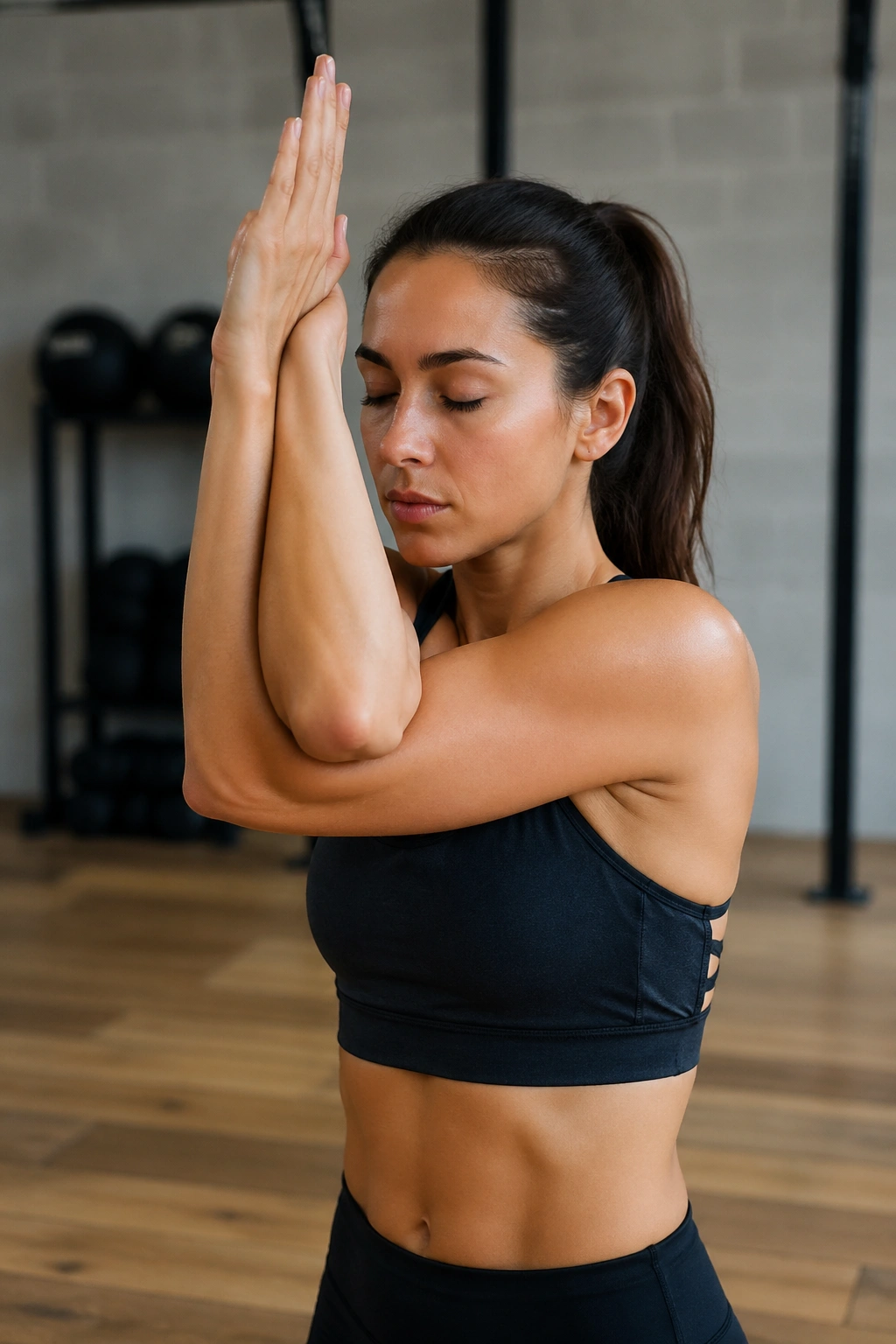
Unlike a doorway chest stretch, eagle arms round the upper back while opening the space between the shoulder blades. That makes it a nice choice after rows, dead hangs, or any workout that leaves the rear delts feeling thick and full.
Wrap one arm under the other in front of the chest, then bend the elbows and try to bring the backs of the hands or palms toward each other. Lift the elbows a little, relax the shoulders, and keep the ribs from flaring. If the hands do not touch, that is fine. Mine usually do not, and they do not need to.
The stretch should feel like the upper back is widening and the rear shoulder is lengthening. If the wrists hate the position, keep the forearms crossed and hold the shoulders instead. That version still works.
A short hold of 20 to 30 seconds is enough. After that, switch the arm wrap and repeat. The interesting part here is how quickly the upper back starts to feel more open once the shoulder blades are allowed to move away from each other instead of being pinned together.
9. Prayer Stretch on a Bench
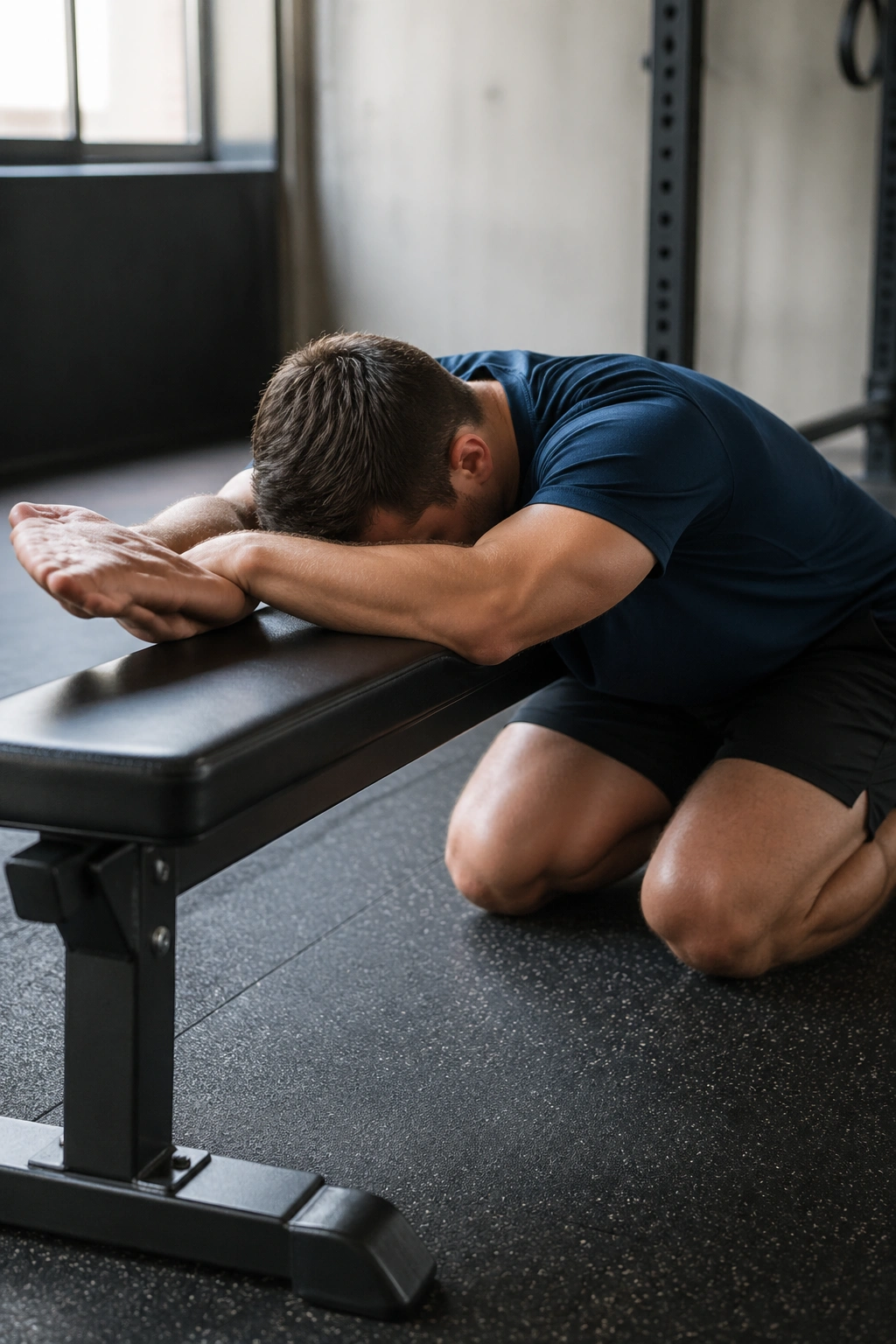
If your workout had pull-ups, pulldowns, or a lot of overhead work, this bench prayer stretch is the first thing that will tell you where the lats are hiding. It feels a little awkward at first, then suddenly useful.
Kneel or stand in front of a bench, place both forearms on top, and sit the hips back while letting the chest sink. Keep the elbows apart enough that the shoulders can breathe. If you bring the hands together too much, the stretch slides away from the lats and gets more into the shoulders.
The nice part is that this stretch scales well. A higher bench gives a milder version. A lower bench or box gives more range. That makes it easier to use after a hard session when your back is too tired for anything fancy.
Hold it for 3 to 5 breaths, then walk the hands a little farther forward if the torso allows. That second inch is usually where the good stuff happens. Not before.
10. Biceps Wall Stretch
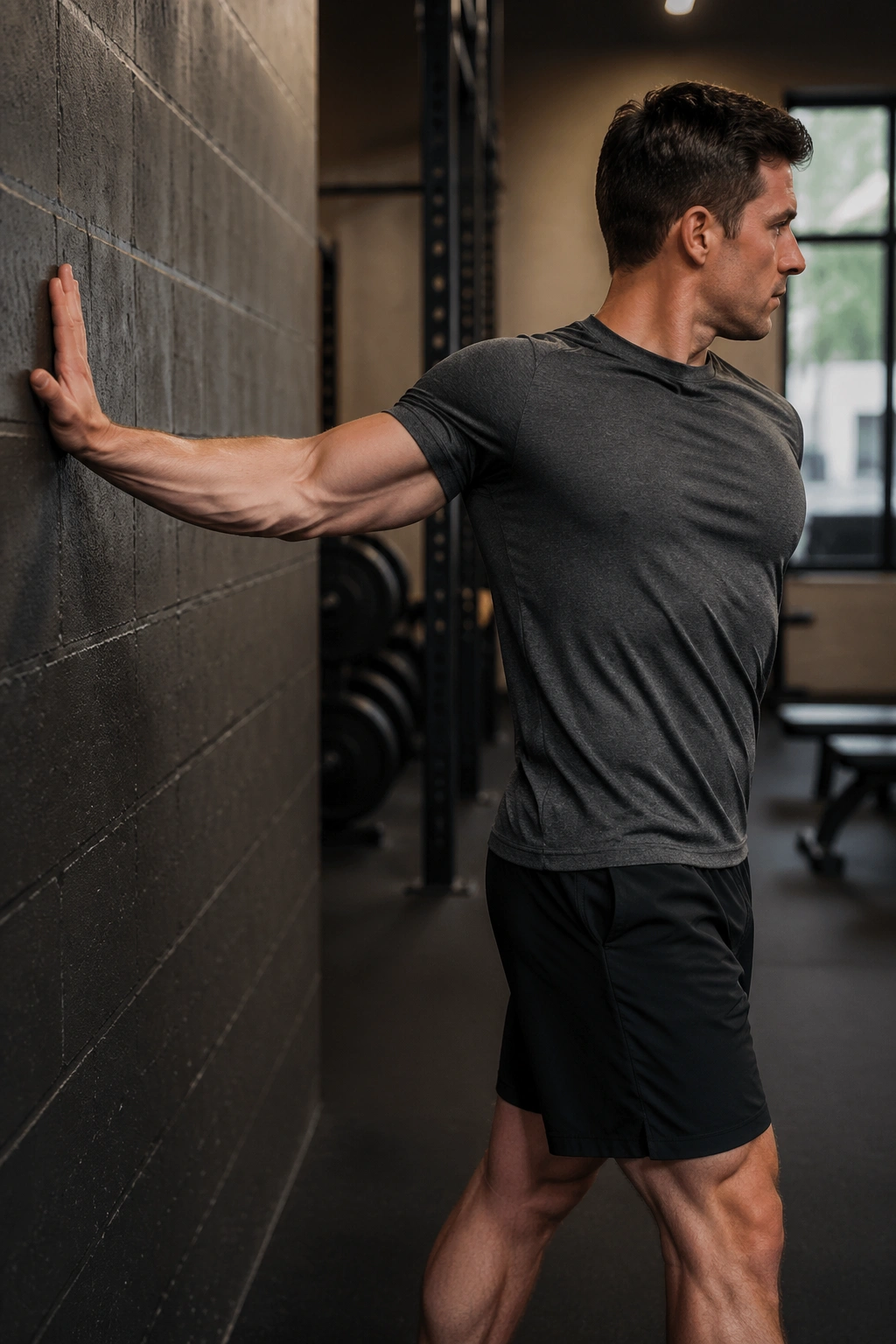
Ever notice how your biceps and front delts tighten together after curls and pressing? This stretch goes after that front-side tension, which is easy to ignore until you try to reach overhead and everything feels sticky.
How to Feel the Front of the Shoulder Open
Stand next to a wall and place one arm straight behind you with the palm on the wall at about shoulder height. Gently rotate your torso away until you feel the front of the upper arm and shoulder lengthen. Keep the elbow soft, not jammed, and keep the shoulder from creeping upward.
That small rotation is enough. A lot of people go too far and end up twisting the spine instead of stretching the arm. The front of the shoulder should feel open, almost like the collarbone has more space.
A few quick cues help:
- Keep the chest tall
- Turn away slowly
- Hold for 15 to 20 seconds
- Back off if the shoulder pinches in front
This stretch feels especially good after incline pressing, dips, or any workout that leaves the front line of the body shortened. It is not flashy. It works because it hits a position people spend a lot of time avoiding.
11. Forearm Flexor Stretch
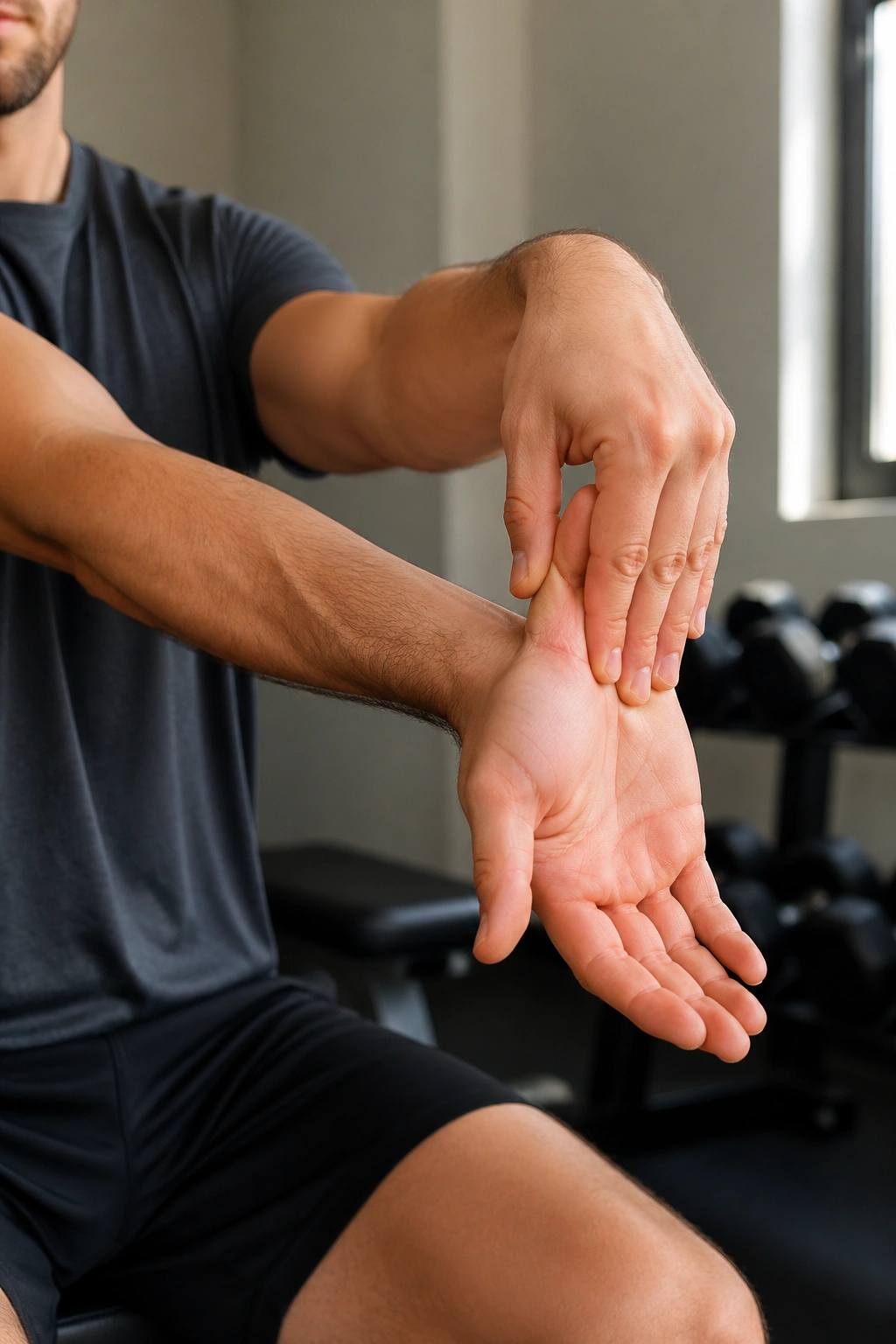
Grip-heavy training does strange things to the forearms. They feel small, but they get tired fast, and when they do, everything from the elbow to the wrist starts talking back.
Extend one arm in front of you with the palm facing up. Use the other hand to gently pull the fingers down and back, opening the underside of the forearm. Keep the elbow straight but not locked. If you lock it hard, the stretch can jump into the joint instead of the muscle.
- Hold for 20 seconds on each side.
- Keep the wrist movement light.
- Stop if the fingers start tingling.
This is a good one after deadlifts, curls, rows, climbing, racquet sports, or even a long day of laptop work. The forearm flexors get short and tense in more places than people expect. You feel it most along the meatier inside edge of the forearm, not in the palm.
One useful habit: soften the shoulder on the stretched side. If the shoulder hikes up, the stretch gets dragged into the upper trap and loses some of its value.
12. Forearm Extensor Stretch

The back of the forearm tightens in a different way, almost like a thin cable running from the elbow to the knuckles. After lots of gripping, that line can feel stubborn and a little sore to the touch.
Turn the arm so the palm faces down, then gently curl the fingers toward you with the opposite hand. The wrist should flex while the elbow stays long. Keep the pressure modest. If you pull hard, the stretch becomes a wrist complaint instead of a forearm stretch.
The sensation is usually quieter than the flexor stretch. You may feel it more near the top of the forearm or around the outer elbow. That is normal. A smooth, boring pull is what you want here.
Do 15 to 20 seconds per side, and pair it with the flexor stretch if your session involved any hard gripping. If one side feels much tighter, spend a second round there. The imbalance usually shows up in daily life sooner than it does in the gym.
13. Open-Book Thoracic Rotation
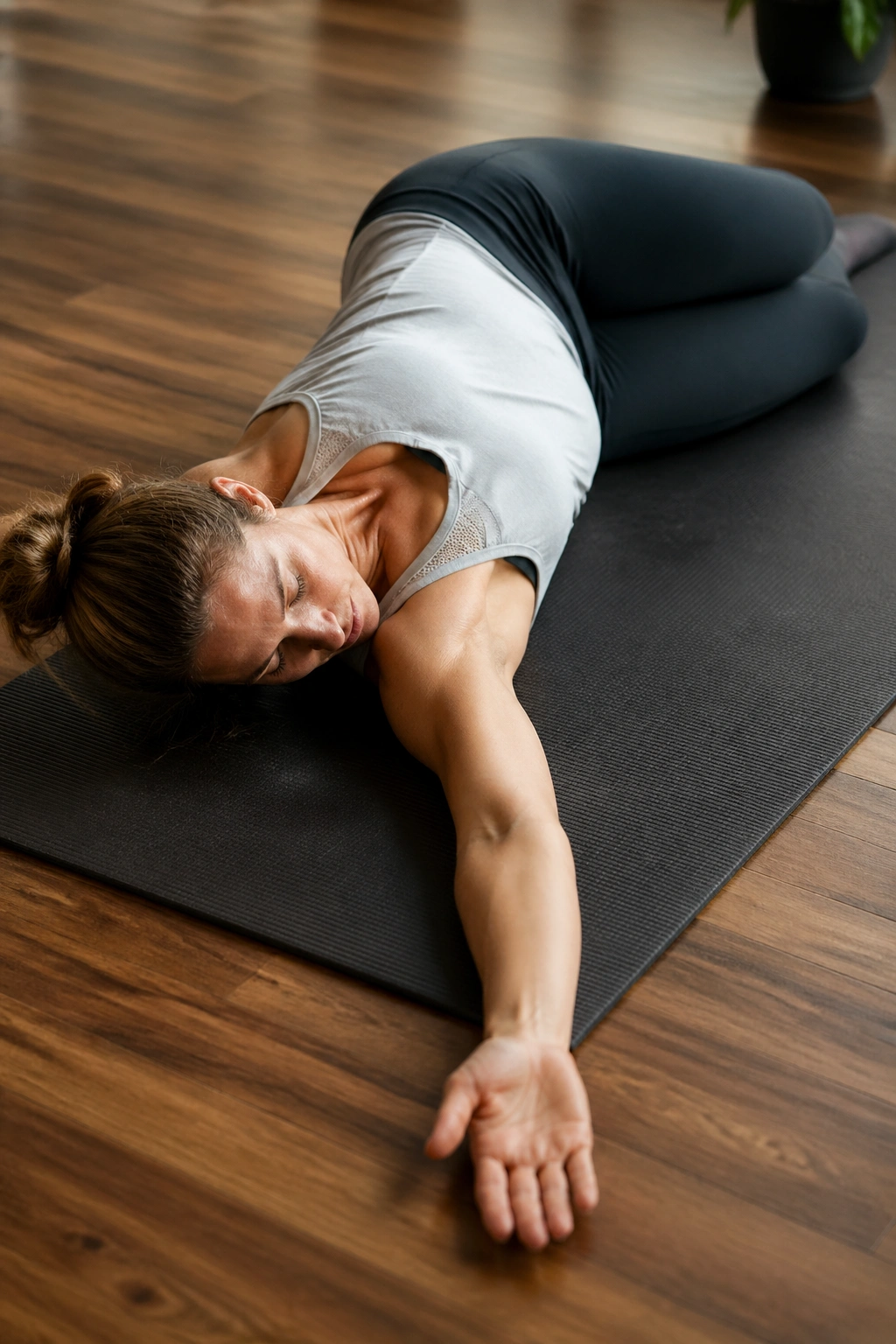
The upper back loves to get stiff. Sitting, pressing, carrying, rowing — it all feeds the same problem if the thoracic spine never gets to rotate well.
Lie on one side with the knees bent and stacked. Extend both arms in front of the chest, then open the top arm across the body until it reaches toward the floor on the other side. Follow the hand with the eyes. The motion should come from the upper back, not from flinging the shoulder or forcing the low spine to twist.
That little eye-tracking detail matters more than it sounds. It helps the rib cage and upper spine turn together instead of making the arm do all the work. A good open-book stretch can make the chest feel less boxed in, especially after pressing days.
How to Breathe Through It
Take 3 to 4 slow breaths on each side. On the exhale, let the top shoulder settle a bit closer to the floor. Do not chase the floor with force. The body usually gives you a little more range on the second or third breath anyway.
14. Foam Roller Thoracic Extension
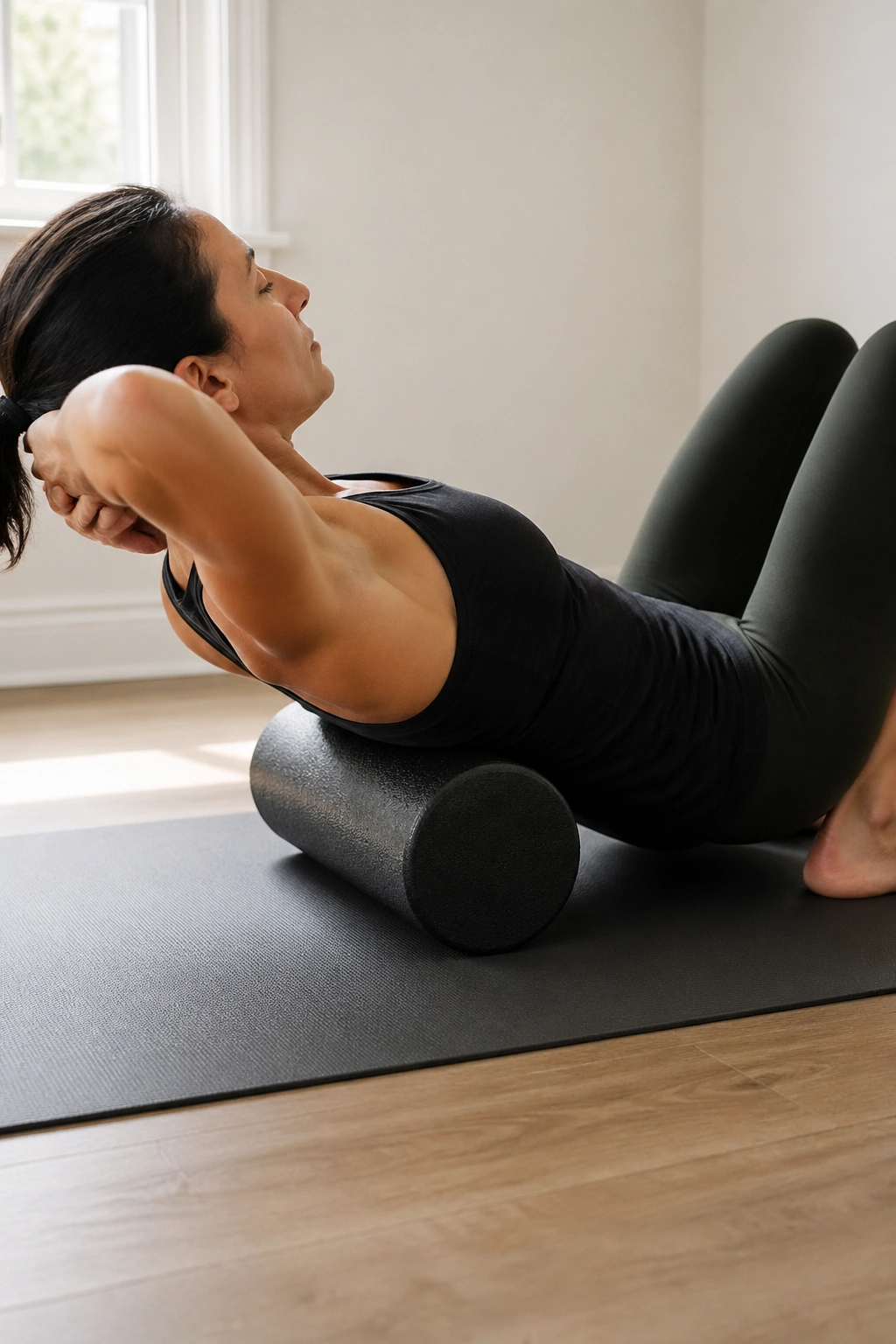
A foam roller under the mid-back can feel awkward for about ten seconds, then ridiculously useful. It is one of the better options when the upper back feels stiff but the shoulders themselves are not the main issue.
Place the roller across the mid-thoracic area, not the low back, and support the head with both hands. Bend the knees, plant the feet, and gently extend the upper back over the roller. Come back to neutral, shift the roller up or down an inch, and repeat. The motion should be small and controlled, not a big bend.
If you feel pressure in the neck, use your hands to support the head more. If you feel it in the lower back, move the roller higher. The sweet spot is usually between the shoulder blades, where the ribs and spine want a little more movement.
- Do 6 to 8 slow extensions
- Pause on tight spots for 1 to 2 breaths
- Avoid rolling over the lumbar spine
The real value here is that it gives the thoracic spine room to move before you chase shoulder stretches that are secretly blocked by the back.
15. Standing Side Bend with Overhead Reach
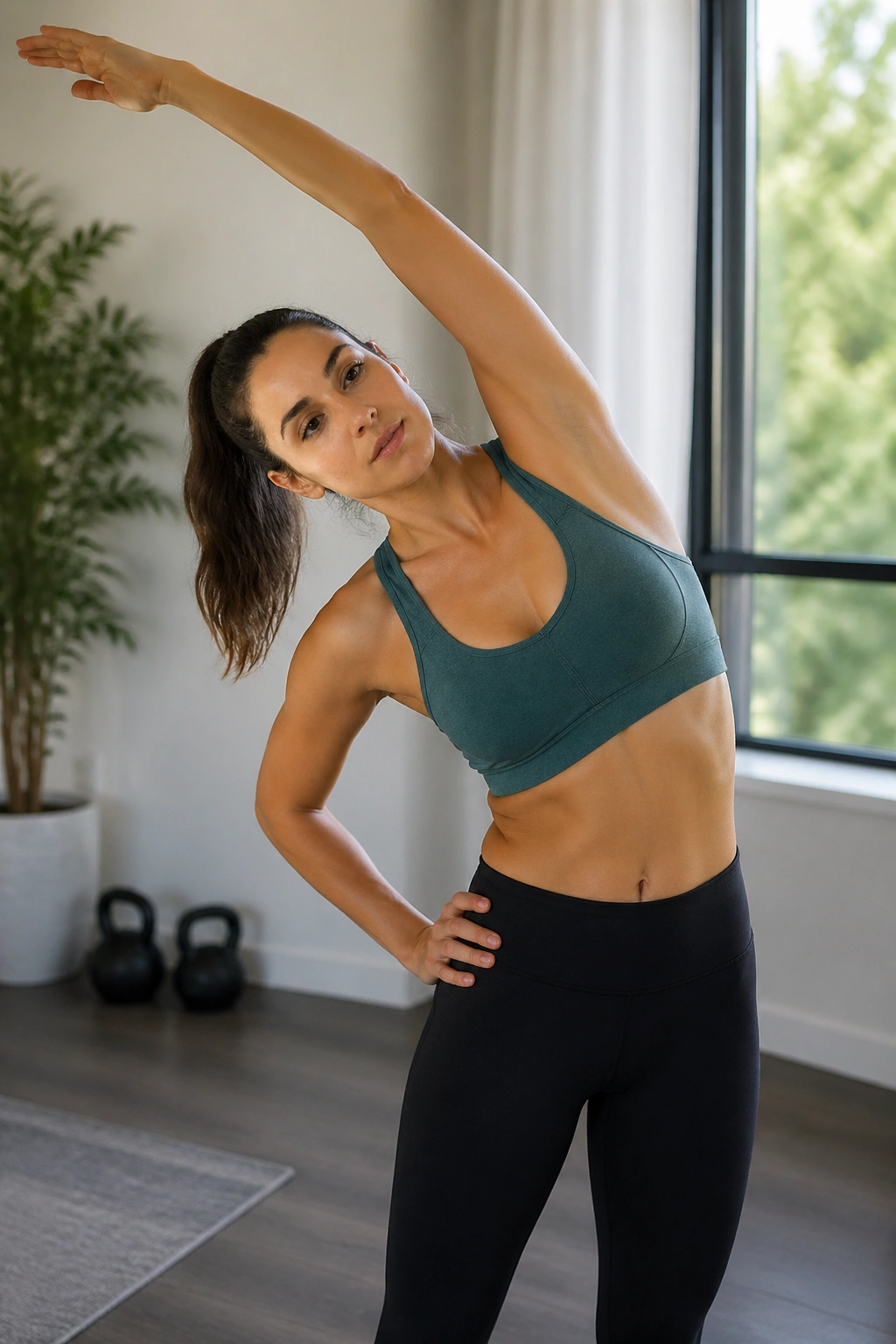
Save one long stretch for the finish. The standing side bend with an overhead reach feels like a clean exhale after the rest of the session, and it ties together the lats, side body, and triceps without a lot of setup.
Stand tall, reach one arm overhead, and lean the torso gently to the opposite side. Keep the hip on the stretched side heavy and the ribs from jutting forward. If you twist the chest open too much, the stretch slides away from the side body. You want a long line from the fingertips down toward the outer hip.
This one is easy to use after almost any upper-body day because it does not ask much from tired joints. You can breathe into the side ribs and hold the position for 20 to 30 seconds per side. A mirror helps the first few times, just so you do not drift into a sideways bend with a twist.
It also pairs well with the lat stretch and the overhead triceps stretch. That combination gives the upper body a simple, finishing sequence that feels calm rather than fussy. Which, frankly, is the whole point.
Final Thoughts
The best upper body stretches after a workout are the ones that match what you trained. Pressing days usually want chest, triceps, and shoulder work. Pulling days usually want lats, rear delts, and forearms. A mixed session can take a little from each.
Short routines beat heroic ones. Five minutes done well will help you more than a 20-minute stretch marathon you hate so much you skip it next time.
If you want one easy rule to remember, use this: start with the biggest tight area, keep the stretch mild, and breathe until the body stops fighting you. That is usually where the good release happens.
