



You drop your keys on the counter, shed your shoes, and feel it immediately. That deep, radiating stiffness in your quads, the tightness in your calves that makes every step toward the shower feel like you’re walking on stilts. We have all been there. Running is a beautiful, rhythmic sport, but it is also brutal on the lower body. If you want to keep logging miles without paying the price in chronic aches or nagging injuries, you cannot simply collapse onto the couch the moment you finish your cooldown.
The body needs a reset button. While some runners swear by ice baths or massage guns, the most accessible, honest, and effective tool you have is simple, static, and dynamic stretching. It is not about forcing your limbs into painful shapes. It is about lengthening the fibers that have spent the last hour contracting and shortening.
When you stretch correctly, you are not just pulling on a muscle; you are signaling to your nervous system that the workout is over. You are telling your muscles that it is safe to release, to flush out the metabolic byproducts, and to begin the repair process. This is the difference between feeling human the next morning and feeling like you need a crane to get out of bed.
1. Standing Calf Stretch
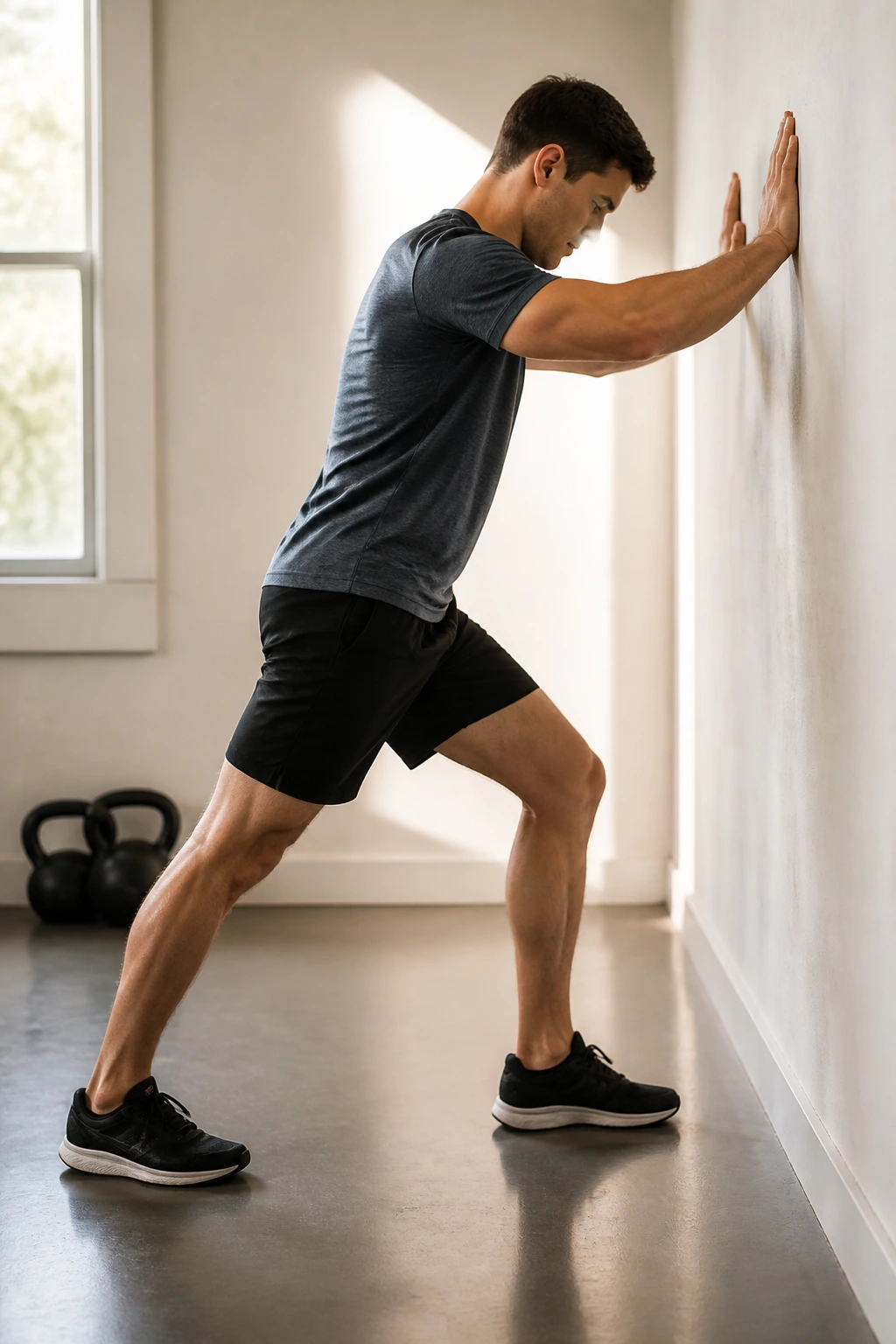
This is the bread and butter of running recovery. Your calves—the gastrocnemius and soleus muscles—take a massive beating with every foot strike. They are responsible for pushing you off the ground, and they often end up tight and “ropey” after a run.
To do this right, find a wall. Place your hands against it for balance. Step one foot back, keeping the heel firmly planted on the ground. The back leg should be straight, not bent. Lean forward until you feel a gentle pull in the calf of the back leg.
The mistake people make? Bending the back knee. Keep that leg locked straight to target the upper calf muscle. If you want to hit the lower part, the soleus, you have to bend the back knee slightly while keeping the heel down. Do both variations. Your calves will thank you. Hold for 45 seconds per side. Do not rush this; the muscle fibers need time to relax.
2. Seated Hamstring Stretch
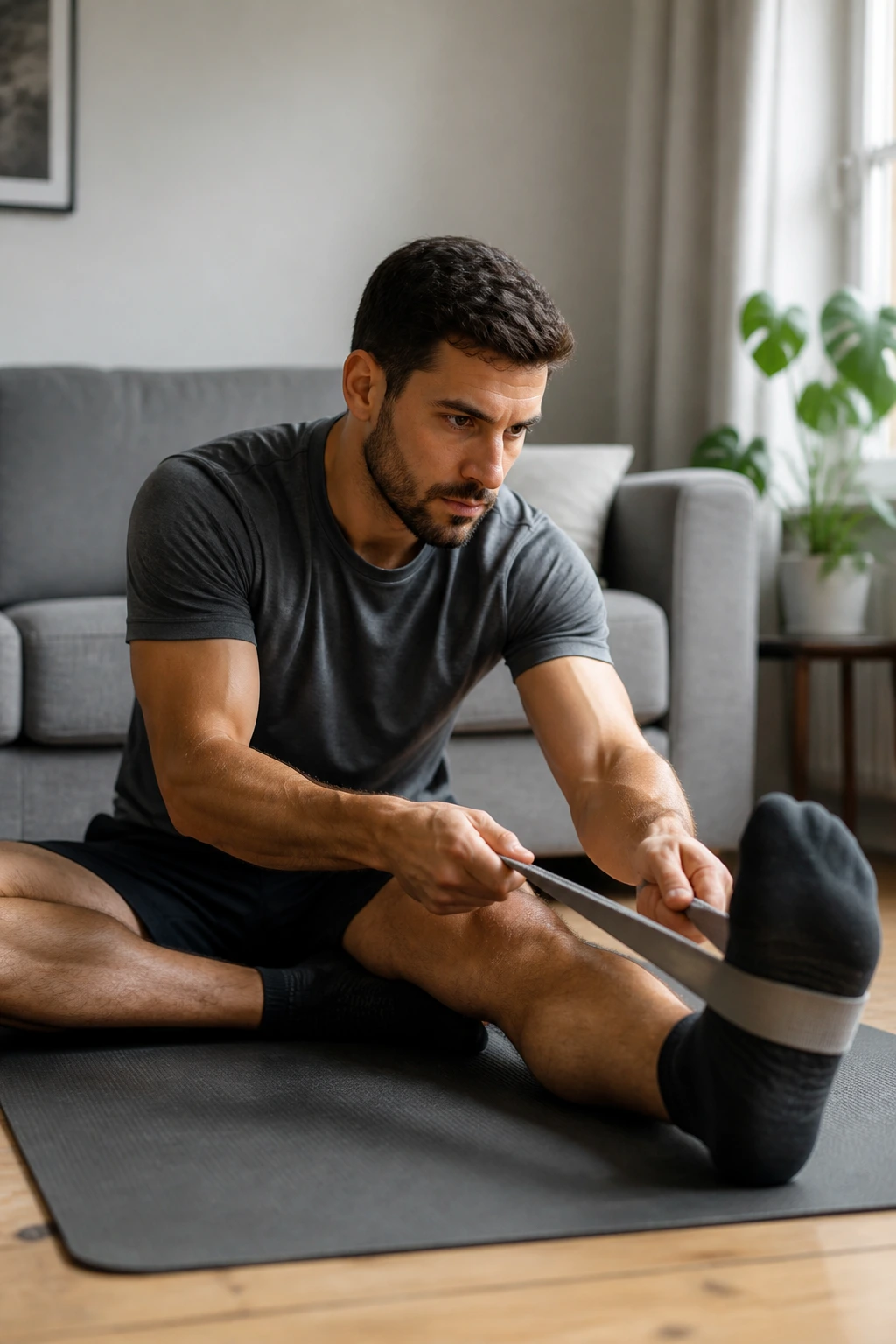
Hamstrings are often the culprits behind lower back pain in runners. If yours are tight, they pull on your pelvis, which creates a chain reaction up your spine.
Sit on the floor with your legs extended in front of you. Bend your left knee and rest the sole of your left foot against your right inner thigh. Now, hinge at your hips—not your waist—toward your straight right leg. Reach for your shin, your ankle, or your toes if you can.
Keep your back as flat as possible. If you round your back to reach your toes, you are cheating the stretch and losing the focus on the hamstring. Use a strap or a towel around the ball of your foot if you cannot reach comfortably. Pull gently on the strap to deepen the stretch. Hold for a solid minute, breathe deeply, and then switch sides.
3. Standing Quad Stretch
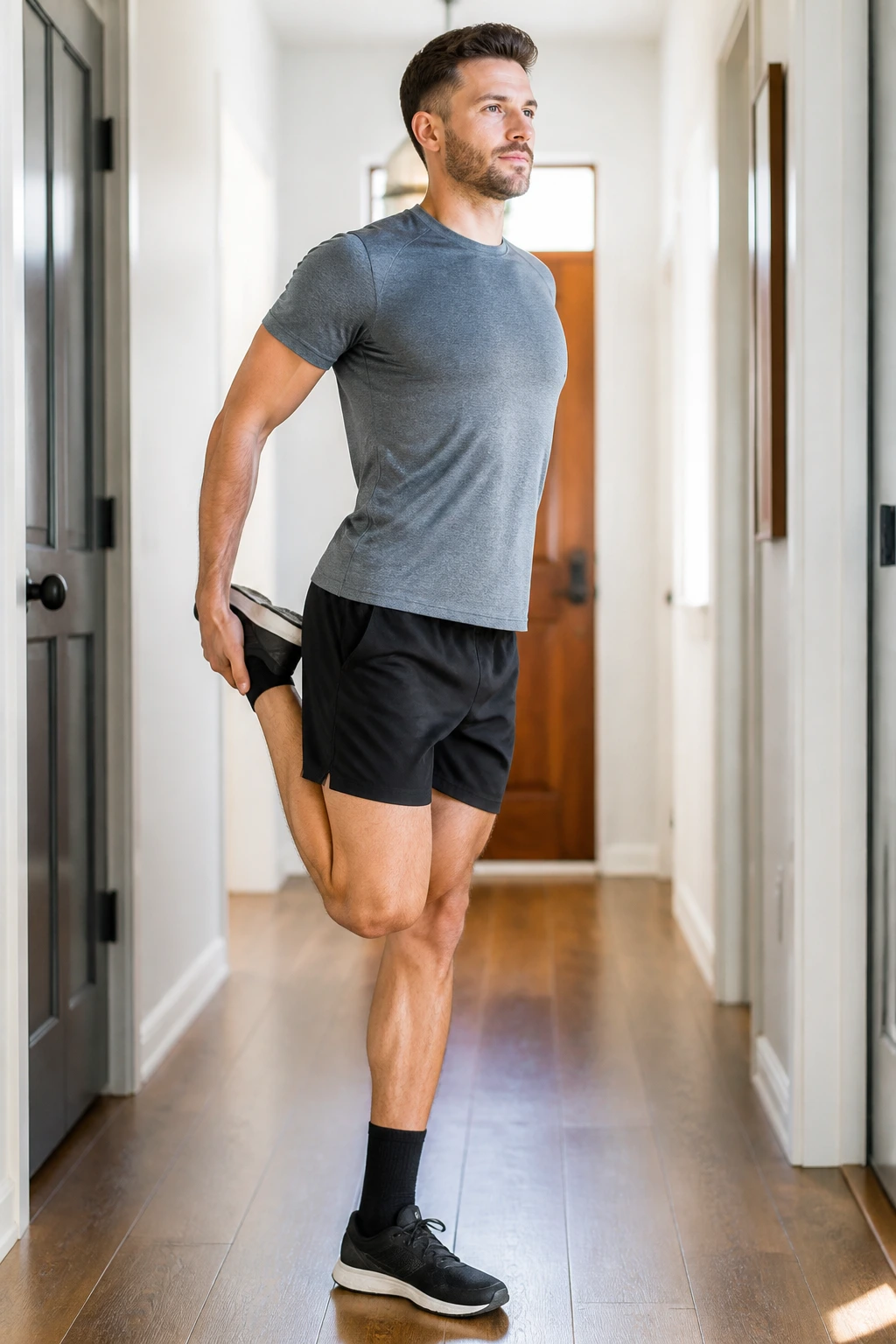
After a long run, your quads can feel like two concrete pillars. This classic stretch is essential for knee health, as the quadriceps attach right near the knee joint.
Stand on your left leg. If you are unsteady, hold onto a wall or a sturdy piece of furniture. Bend your right knee and grab your right ankle with your right hand. Pull your heel toward your glutes.
Here is the secret: Do not let your knee splay out to the side. Keep your knees close together, almost touching. Most importantly, push your hips forward slightly. This engages the hip flexors and deepens the stretch in the quads. If you just pull the heel back, you might miss the full length of the muscle. Hold for 30 to 45 seconds on each side.
4. Glute Bridge
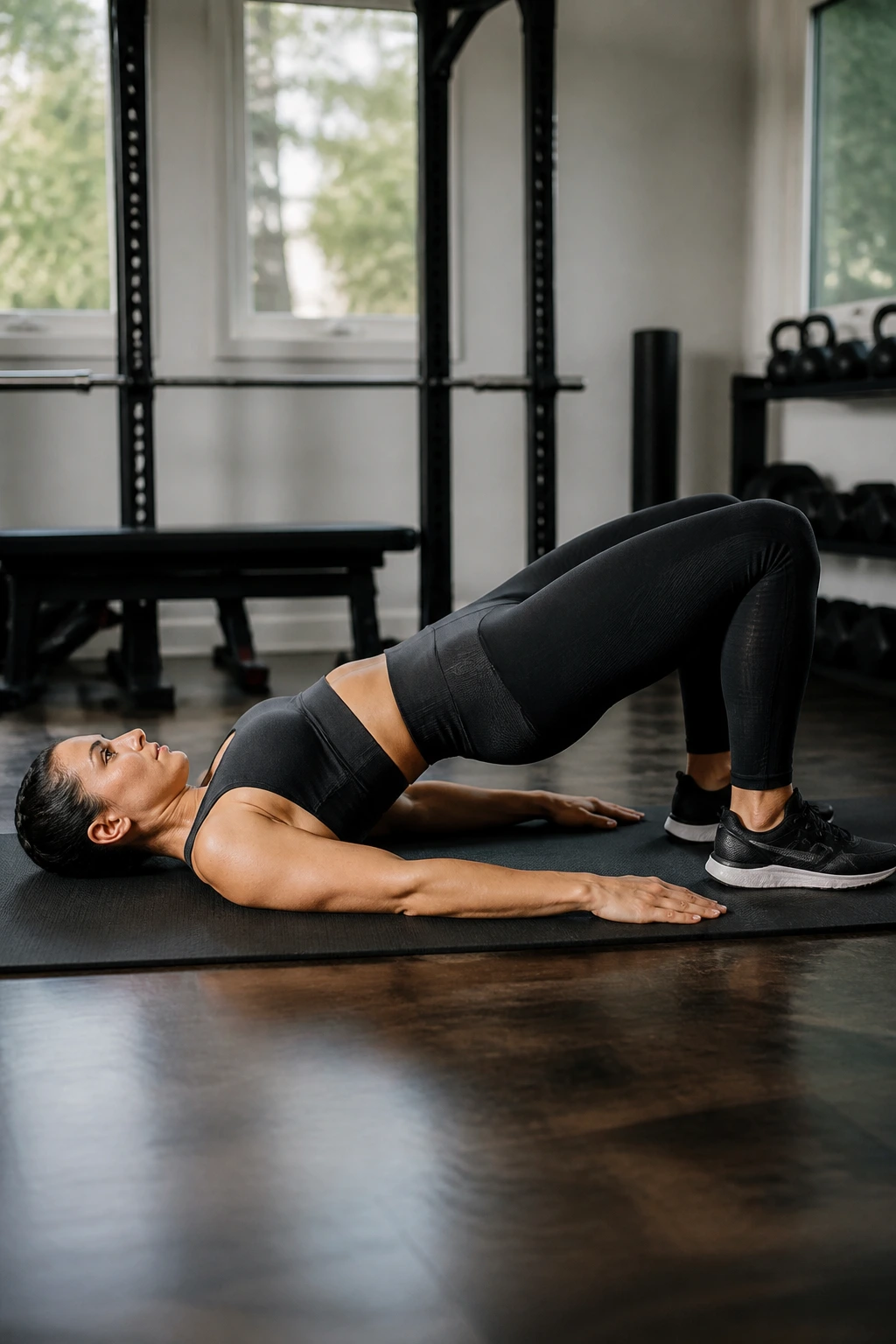
Wait, isn’t this a strengthening exercise? Yes, but it is also a fantastic recovery move for runners. It helps reset the pelvis and fires up the glutes, which often go “dormant” or get tight from compensating during long runs.
Lie on your back with your knees bent and feet flat on the floor, hip-width apart. Lift your hips toward the ceiling, squeezing your glutes at the top. Hold for a second, then lower back down.
This isn’t about reaching for the sky; it is about finding that sweet spot of activation. Perform 15 to 20 reps slowly. It helps to counteract the “hunched” posture of running and wakes up the posterior chain without putting too much stress on your already fatigued muscles. It feels like a massage for your lower back.
5. Figure-Four Stretch
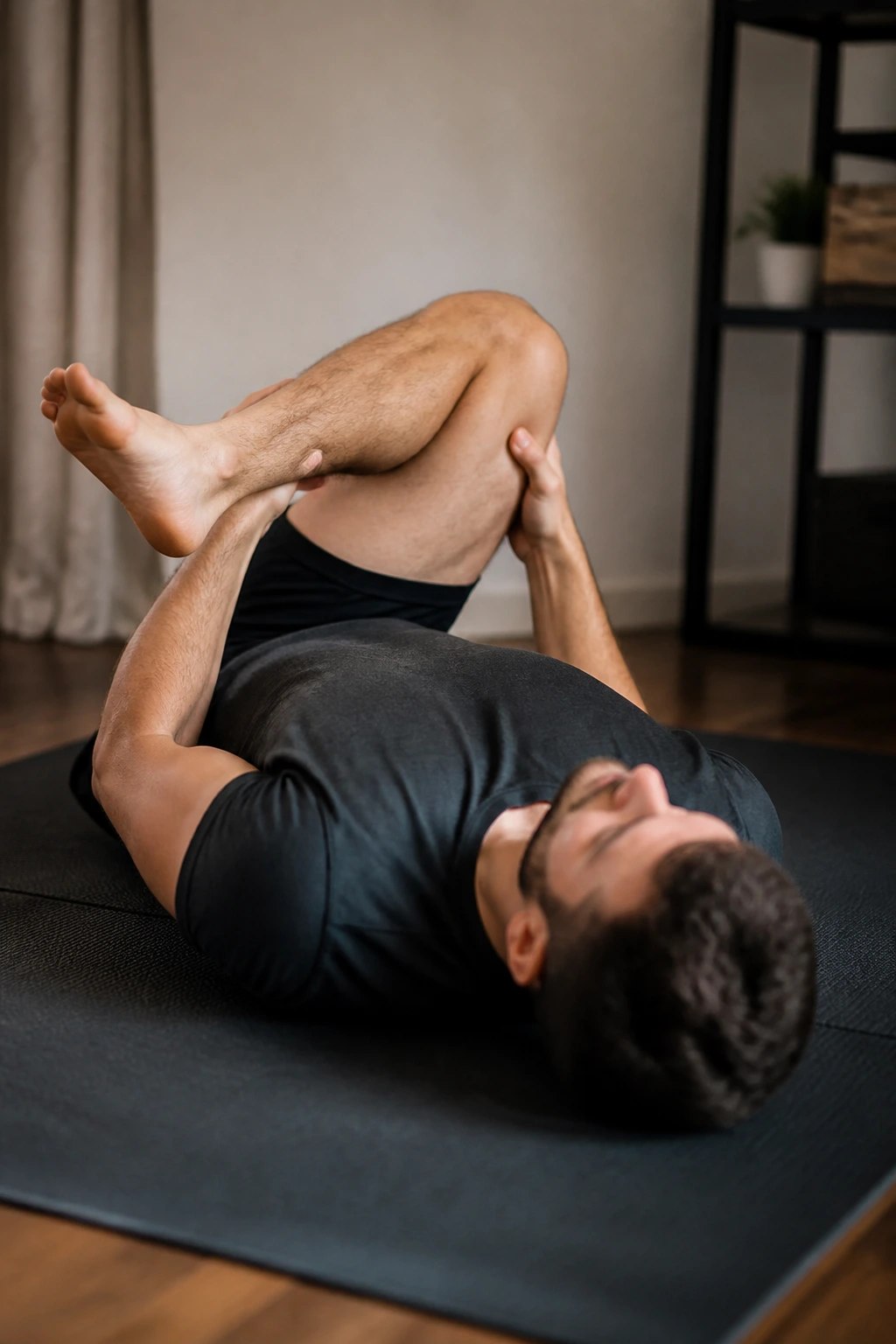
If you have ever felt a sharp, shooting pain in your glute that feels like it’s going down your leg, you might have tight piriformis muscles. This stretch is the ultimate remedy.
Lie on your back with your feet flat on the floor. Cross your right ankle over your left knee, creating a “figure-four” shape. Reach through the opening of your legs and grab the back of your left thigh. Gently pull your left leg toward your chest.
You should feel a deep, satisfying release in your right glute. Keep your head and shoulders on the ground. If you pull too hard, you might strain your neck. Let the weight of your arms do the work. Hold for 60 seconds. This is often the most revealing stretch—you will immediately know which side is tighter.
6. Pigeon Pose
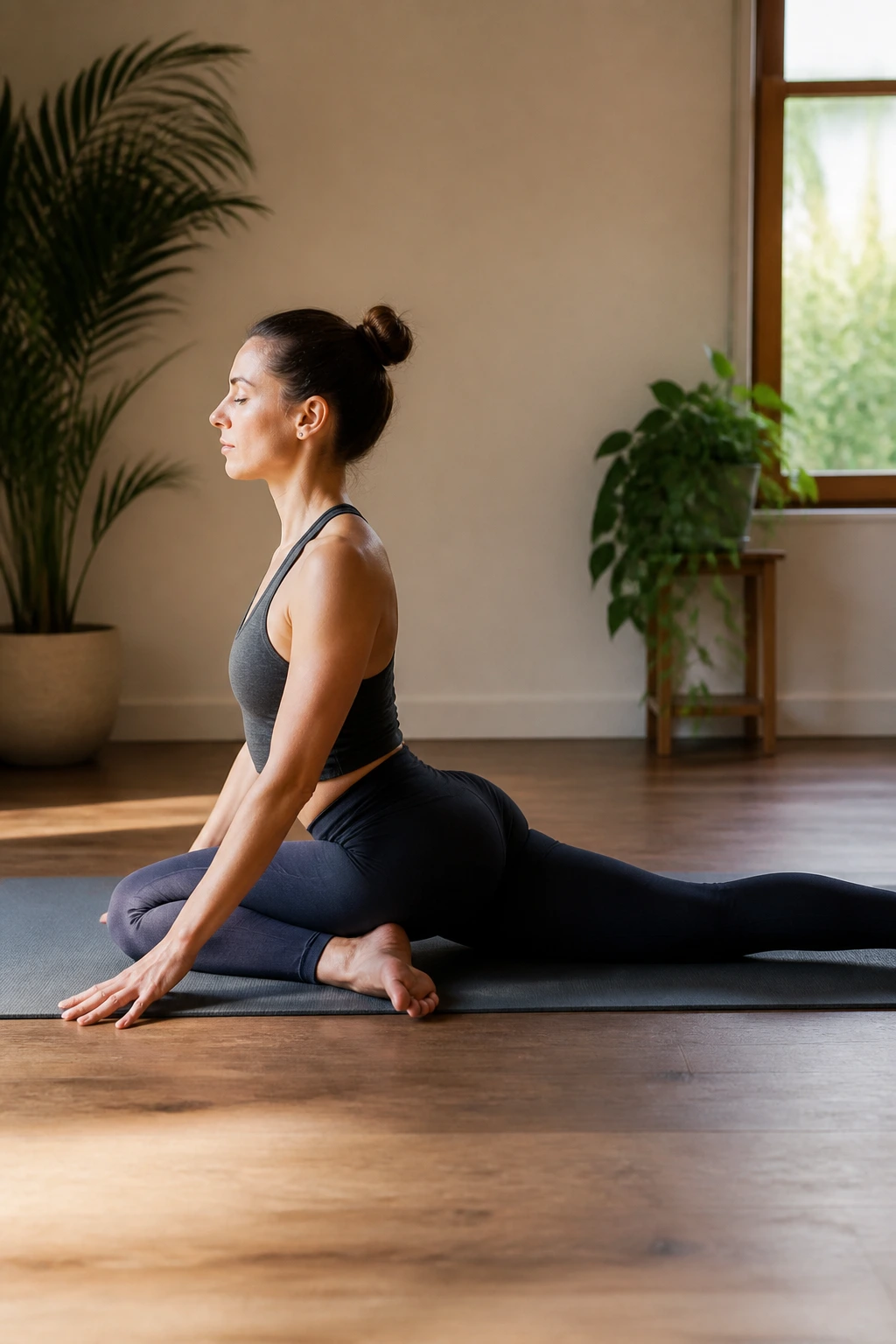
The Pigeon Pose is the king of hip openers. It is not always the most comfortable position, but it is one of the most effective for runners who spend hours with their hips locked in a repetitive motion.
Start in a plank position. Bring your right knee forward and place it behind your right wrist. Extend your left leg straight back behind you. The goal is to get your right shin as parallel to the front of your mat as possible, but listen to your knee—if it hurts, pull the heel closer to your groin.
Keep your hips square to the floor. Do not lean over to one side. If you are flexible, fold forward over your front leg. If you are tight, stay upright on your hands. Breathe into the resistance. This stretch targets the glute and the deep hip rotators. Stay here for at least one minute.
7. Butterfly Stretch

This stretch opens up the inner thighs, or adductors, which often get ignored during the standard leg-day routine.
Sit on the floor with your back straight. Bend your knees and bring the soles of your feet together, allowing your knees to fall outward. Hold onto your feet or ankles.
Gently use your elbows to press down on your inner thighs. Do not bounce your knees; that creates tension, which is exactly the opposite of what we want. Keep your chest lifted and your spine tall. If you lean forward, you will feel the stretch move deeper into the groin area. It is a simple position, but effective for those of us who carry tension in our hips.
8. Lunge with Twist
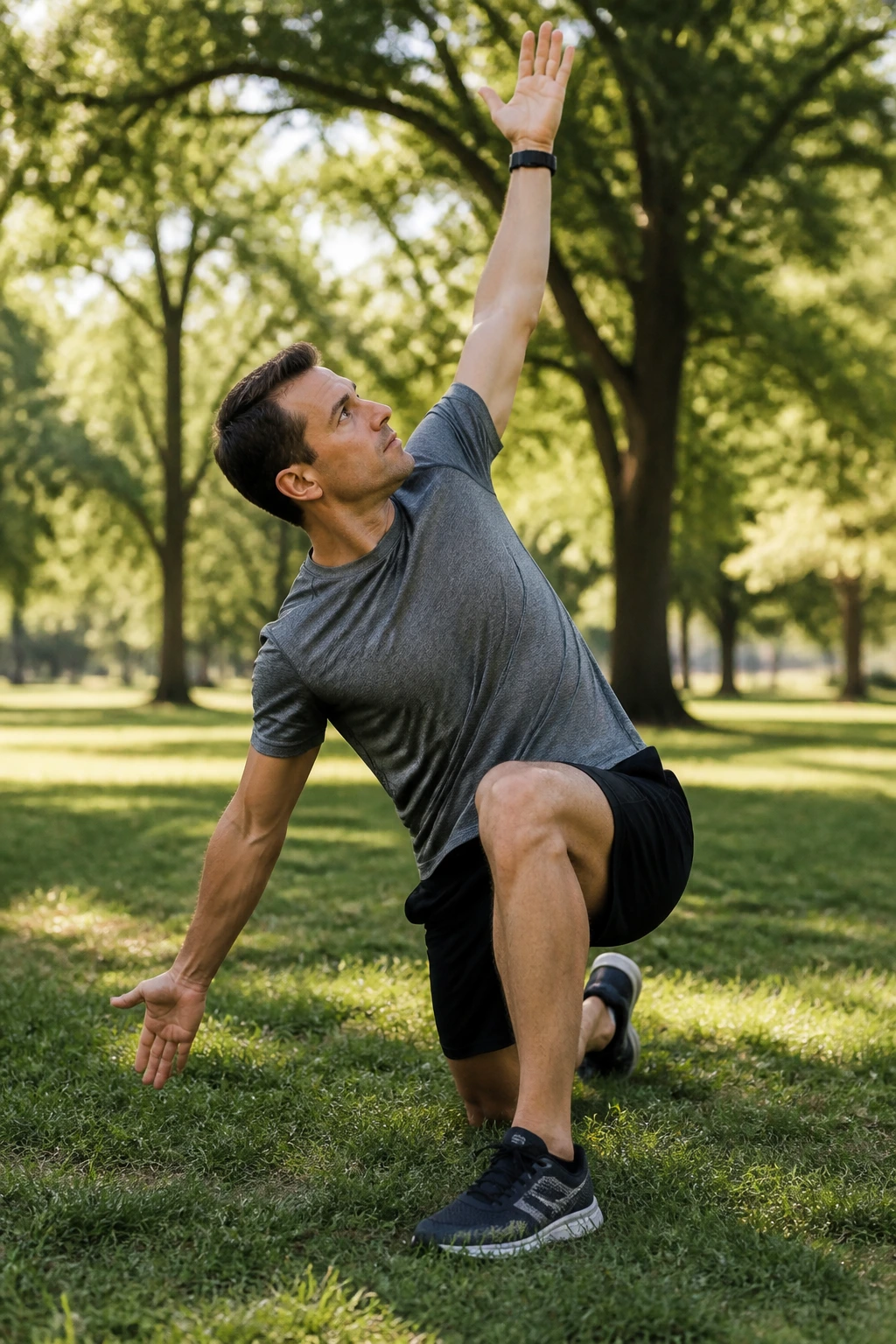
Runners often focus on moving in one plane—forward. But your body needs to handle rotation, too. This dynamic stretch hits the hip flexors and opens up the thoracic spine.
Step into a deep lunge with your right leg forward. Keep your left knee hovering just off the ground or resting gently on a mat. Reach your left arm up to the sky, and then twist your torso toward the right, reaching your right hand back behind you.
This movement is incredible for unlocking the tight, compressed feeling in your torso after an hour of running. It also forces you to stabilize, which is a great way to check in on your core strength after a workout. Do 10 controlled twists on each side.
9. Downward Dog
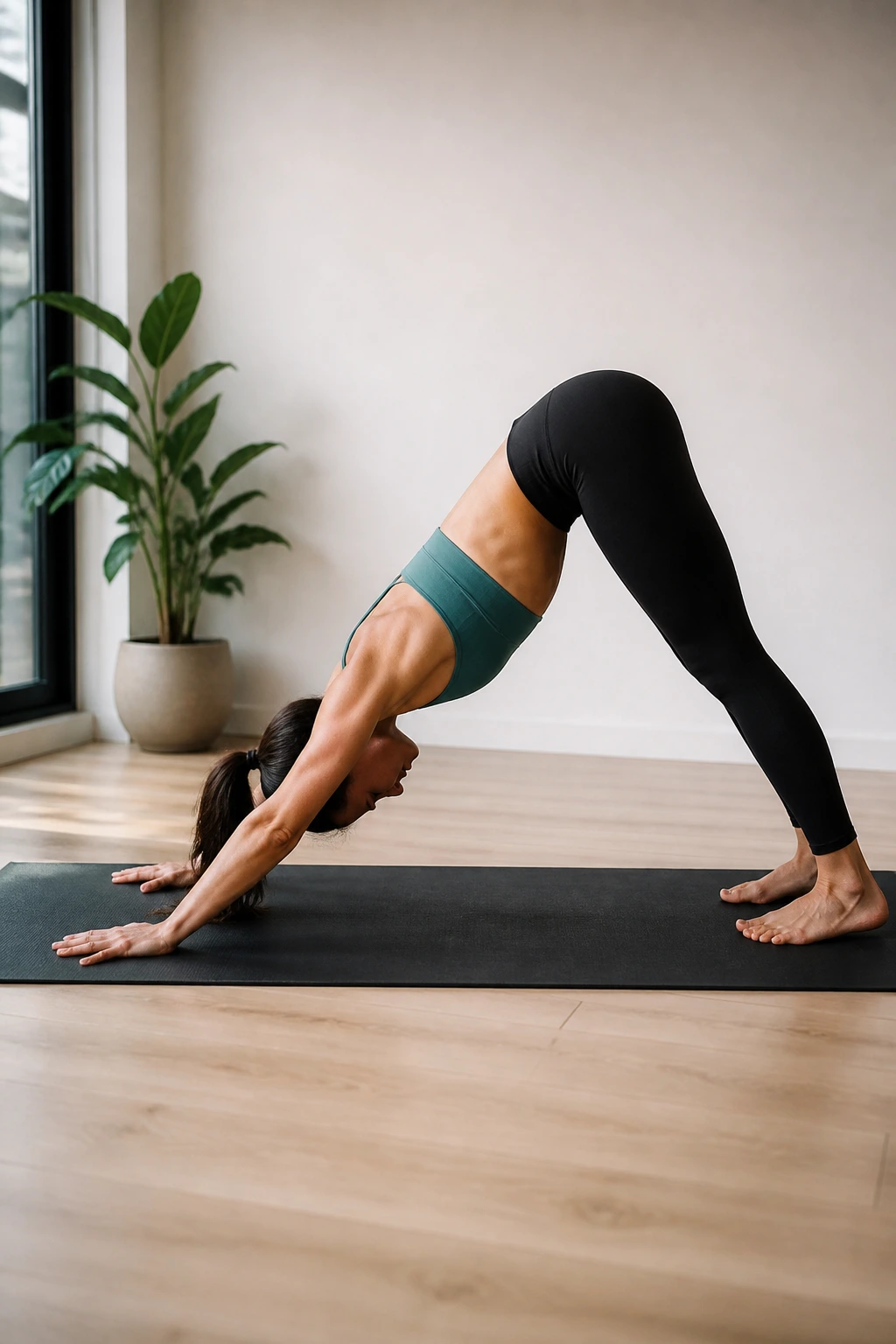
You do not need to be a yoga practitioner to see the benefits of Downward Dog. It is a full-body reset, focusing on the hamstrings, calves, and even the shoulders.
Start on your hands and knees. Tuck your toes, lift your hips high, and push your body into an inverted “V” shape. Spread your fingers wide and press through your palms.
The trick here is to pedal your feet. Bend one knee, press the opposite heel toward the ground, and then switch. This provides a dynamic stretch for the calves and hamstrings. Keep your neck relaxed; let your head hang heavy between your arms. Hold the final position for 30 seconds, focusing on lengthening your spine.
10. Standing IT Band Stretch
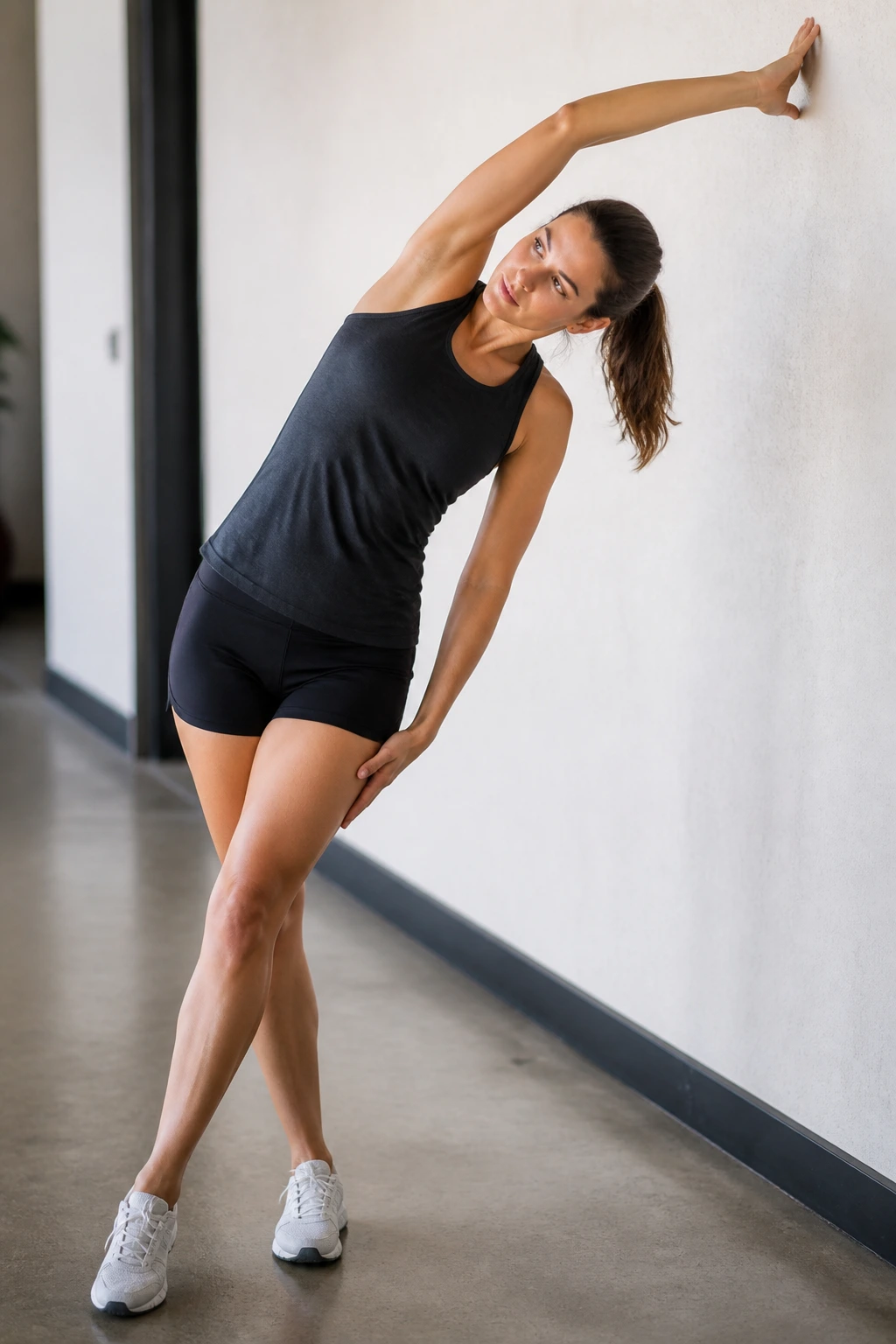
The Iliotibial (IT) band is not a muscle, so you cannot stretch it directly, but you can stretch the muscles that pull on it, like the glute medius and the tensor fasciae latae (TFL).
Stand near a wall. Cross your right leg behind your left leg. Reach your right arm up and over your head toward the wall. Lean your hips to the right, feeling the stretch along the outside of your left hip and thigh.
It should feel like a gentle pull along the side of your leg. If you feel sharp pain, ease off. This is a common trouble area for distance runners. Focus on keeping your torso upright, rather than collapsing forward. Hold for 30 seconds on each side.
11. Toe Raises and Calf Raises
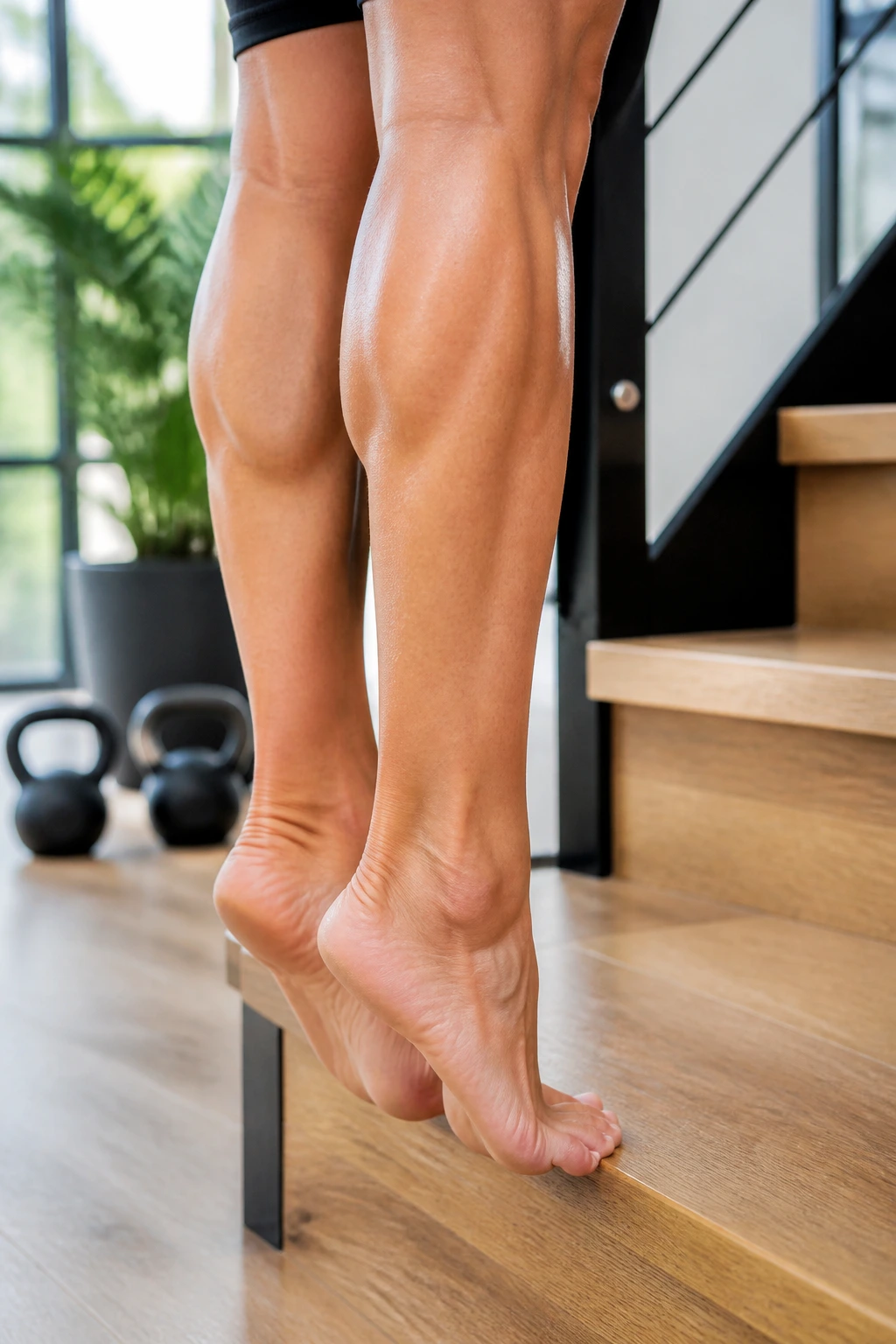
After the impact of running, your ankles can get stiff, and the muscles around the shin often feel neglected. This is less of a “stretch” and more of a “mobilization” movement.
Stand on the edge of a step. Let your heels hang off the edge. Slowly lower your heels down to feel a deep stretch in your calves (the eccentric phase), then rise up onto your toes.
Do this for 20 reps. It helps improve range of motion in the ankle joint and strengthens the muscles that support the lower leg, which is essential for preventing shin splints. It is the perfect bridge between a stretch and a strength move.
12. Kneeling Shin Stretch
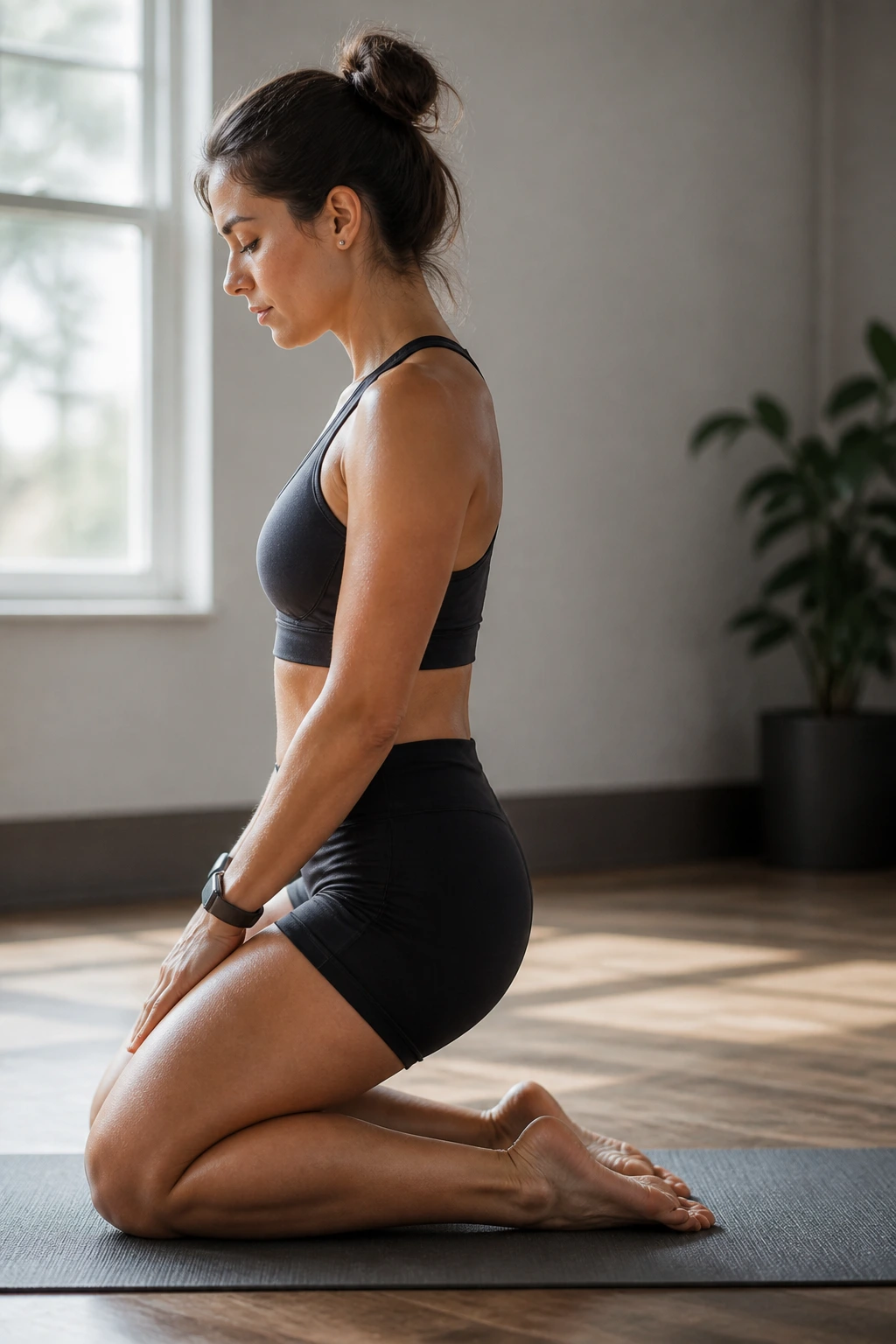
Shin splints are the bane of many runners. If you feel tightness in the front of your lower leg, this is the move you need.
Start on your knees on a mat or soft surface. Sit back on your heels. If you can, lift your knees slightly off the ground while keeping your feet tucked under you. You will feel an intense stretch running down the front of your shins and through the tops of your feet.
If lifting your knees is too much, simply leaning back while on your knees is enough. This targets the tibialis anterior, a muscle that works overtime every time you take a step. Hold for 30 seconds.
13. Supine Hamstring Stretch
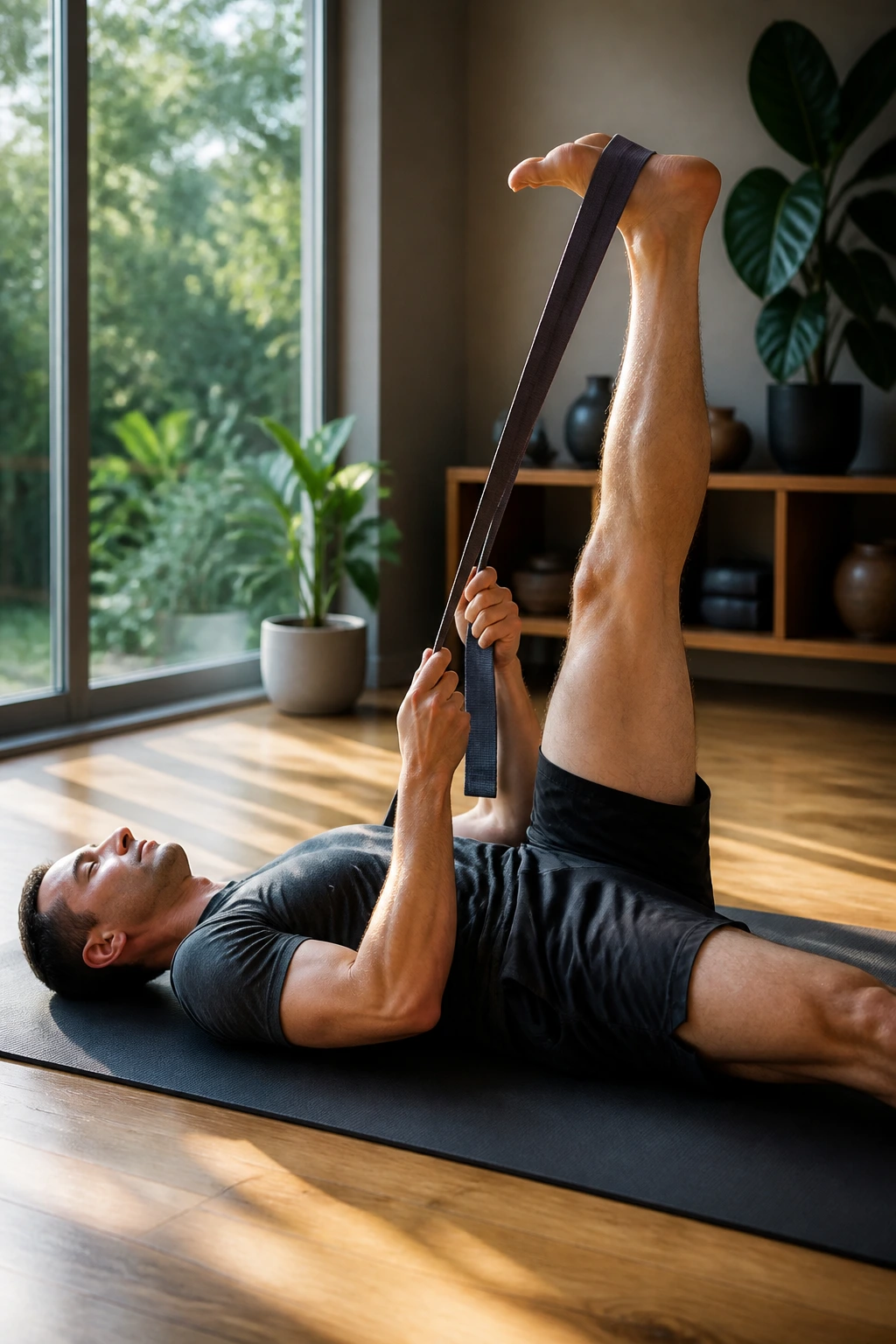
This is the “pro” version of the seated hamstring stretch because it removes the temptation to round your lower back.
Lie on your back. Keep your left leg flat on the ground. Raise your right leg toward the ceiling. Loop a towel, yoga strap, or resistance band around the ball of your right foot.
Gently pull the leg toward you while keeping the knee straight. Your goal is to keep the lower back glued to the floor. If your lower back starts to arch, you have pulled the leg too far. This isolation makes it much safer for your back and more effective for the hamstrings. Hold for one minute on each side.
14. Cobra Pose
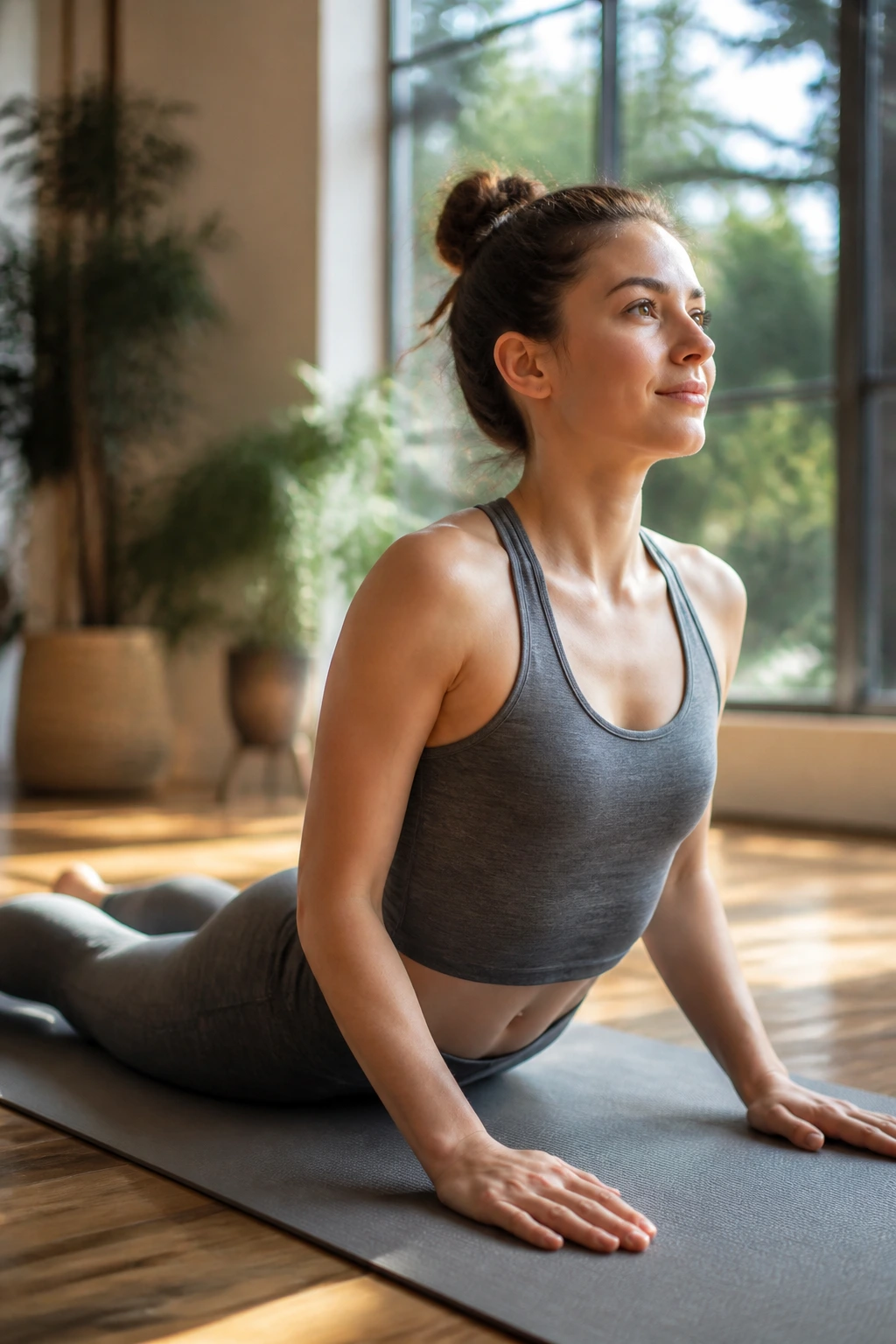
Running requires you to maintain a forward-leaning posture, which can tighten the abs and hip flexors. Cobra pose reverses this.
Lie on your stomach. Place your hands under your shoulders. Slowly push your chest off the floor, keeping your hips and legs grounded.
Do not go so high that you feel pain in your lower back. This is meant to open the front of the body, not crunch the back. You will feel a nice stretch in the abs and the front of the hips. Look straight ahead, not up, to protect your neck. Hold for 30 seconds, breathe, and lower down slowly.
15. Side-Lying Quad Stretch
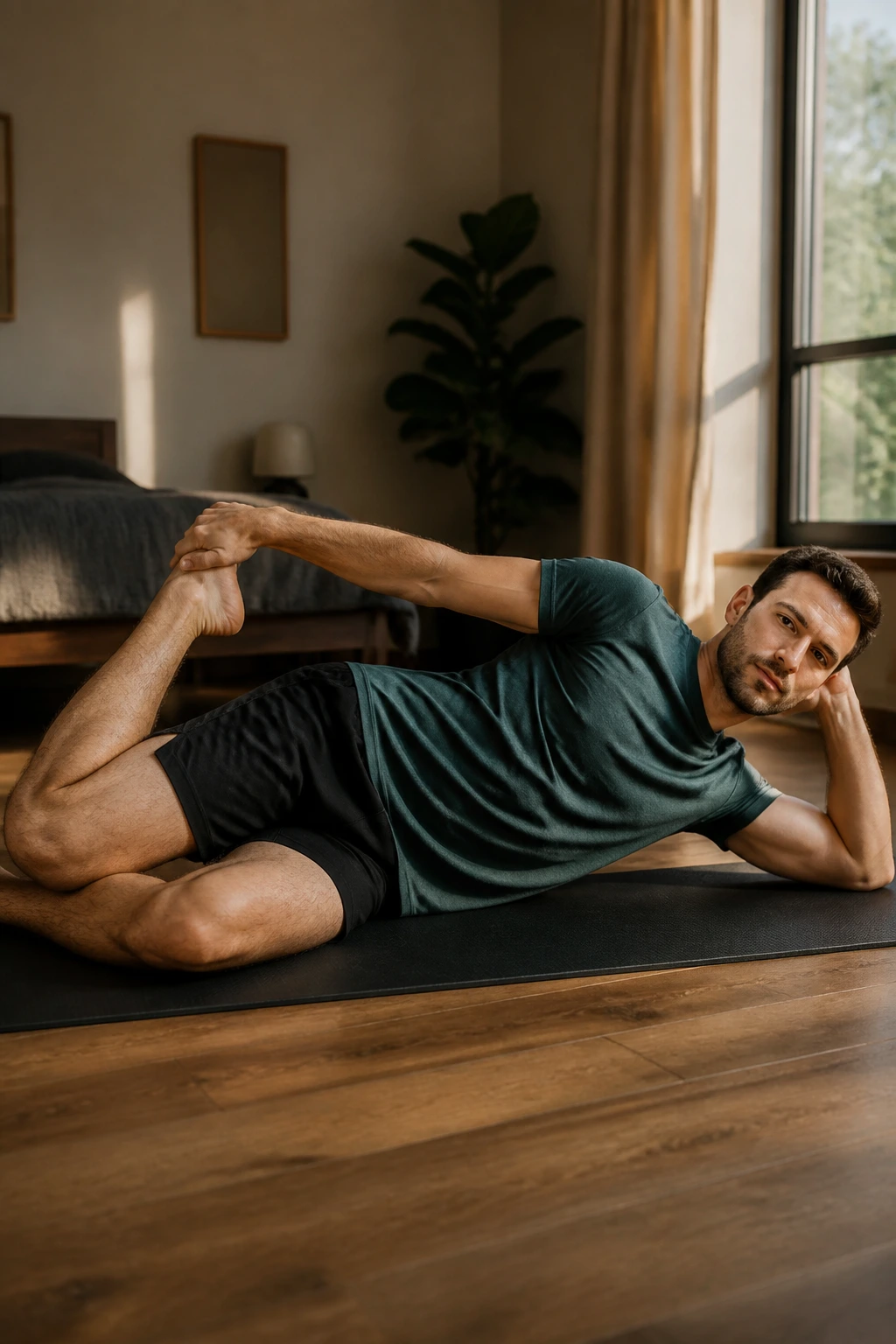
If you find the standing quad stretch too hard on your balance or your back, this is the superior alternative.
Lie on your side. Bend your top knee and grab your ankle with your hand. Pull your heel toward your glute.
The advantage here is that you can perfectly control the alignment. You can press your hips slightly forward to feel a deep release in the hip flexor, and you are lying on the floor, so there is zero risk of falling. It is a very relaxing, low-stress way to get the job done. Spend one minute on each side.
16. Seated Forward Fold
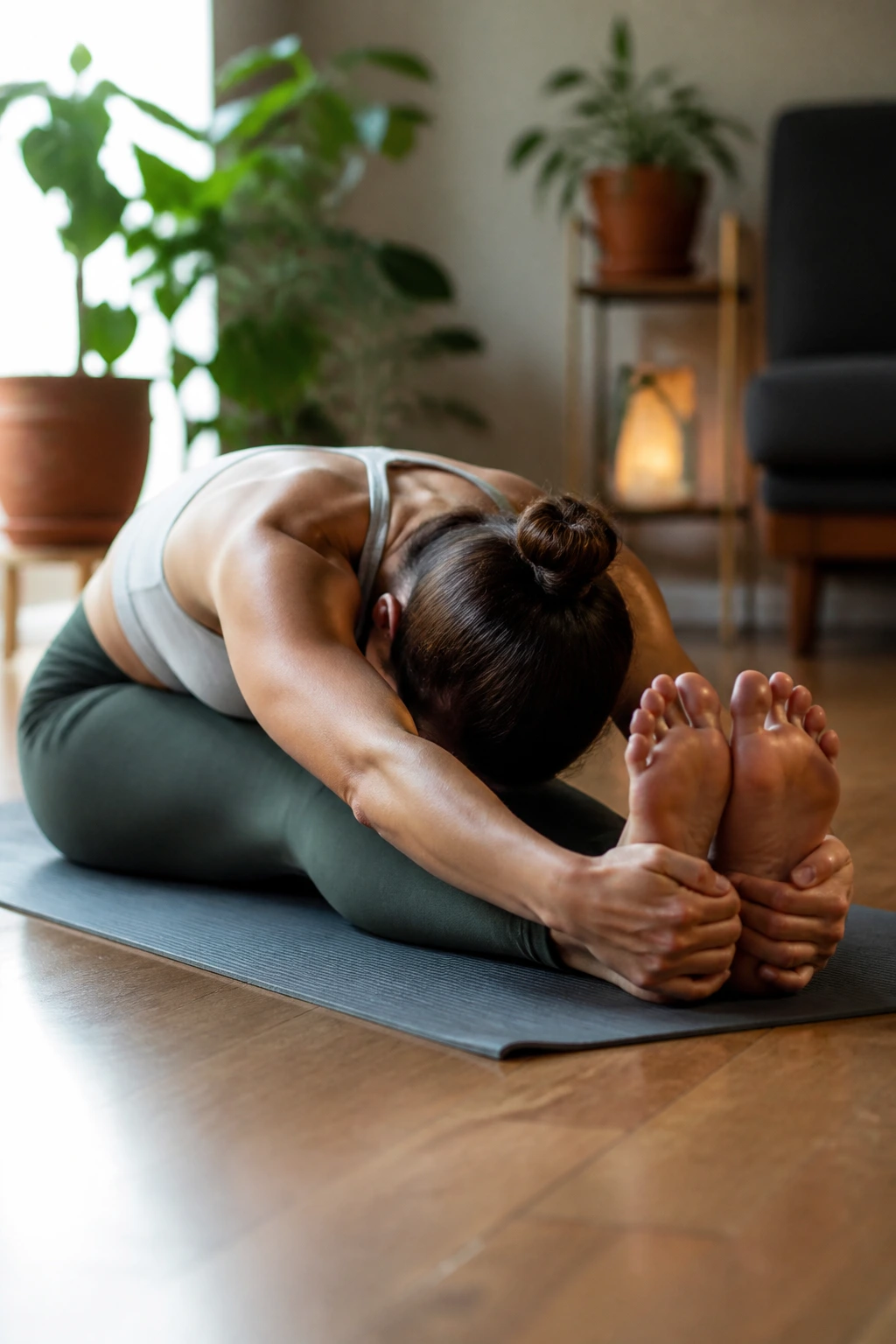
This is a classic for a reason. It stretches the entire posterior chain, from your heels all the way up to your neck.
Sit on the floor with your legs straight out in front of you. Take a deep breath, and as you exhale, hinge forward from your hips. Reach for your toes, your ankles, or simply place your hands on the floor beside your legs.
The key is to keep the legs engaged. Flex your feet toward your face. This stretches the calves and the hamstrings simultaneously. If you just let your feet flop, you lose half the benefit. Relax your shoulders and let your head fall naturally. Hold for one minute.
17. Wall-Supported Leg Up
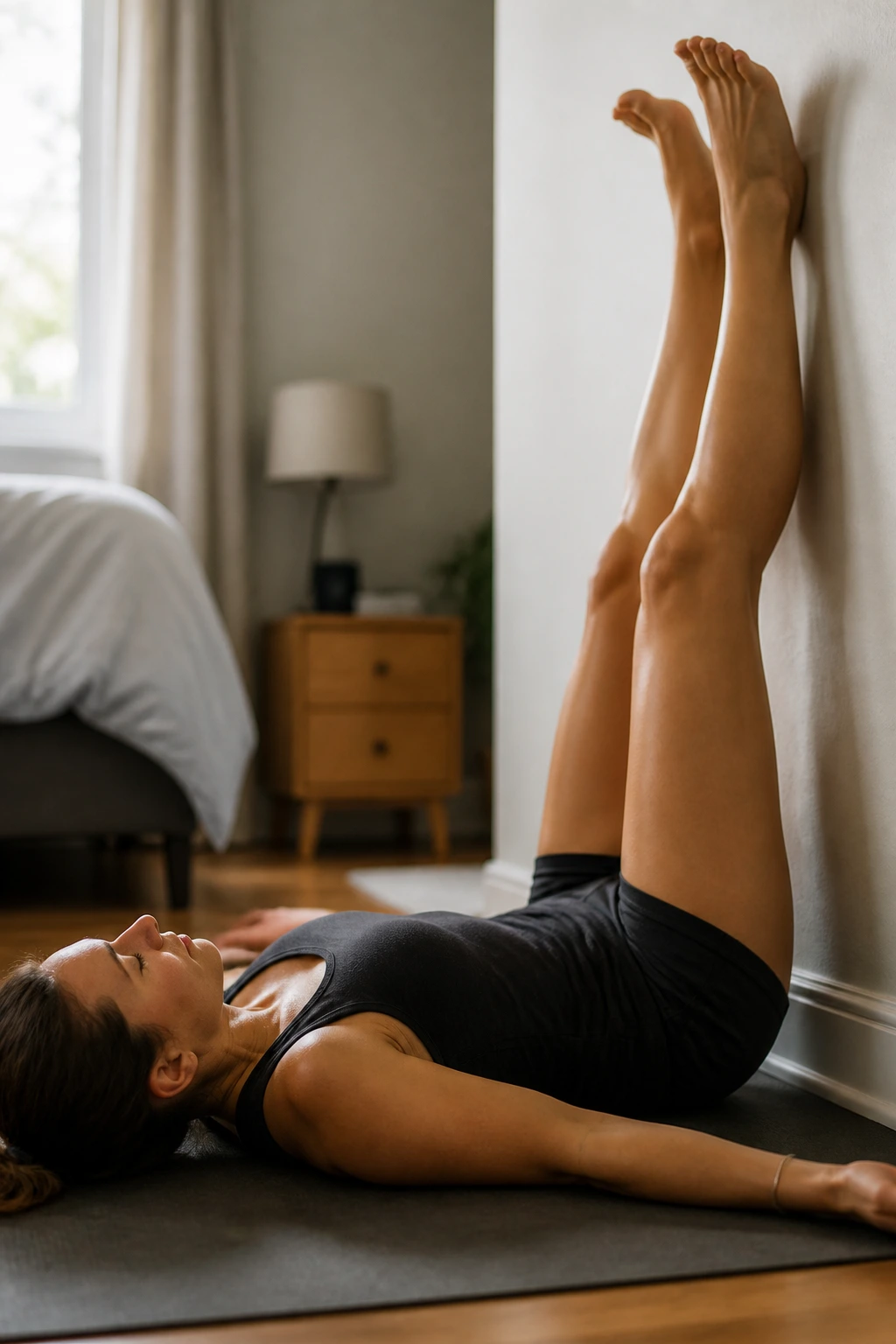
This is less of a “stretch” and more of a recovery technique. It helps drain fluid from the legs and helps lower your heart rate after a hard run.
Find an empty wall space. Lie on your back and scoot your hips as close to the wall as possible. Extend your legs straight up the wall.
Just lie there. Let gravity do the work. It takes the pressure off your leg veins and helps ease that heavy, tired feeling in your calves and thighs. Stay here for 5 to 10 minutes. It is the perfect time to meditate, listen to a podcast, or just zone out. It is often the most appreciated “stretch” of the entire list.
18. Hurdler Stretch
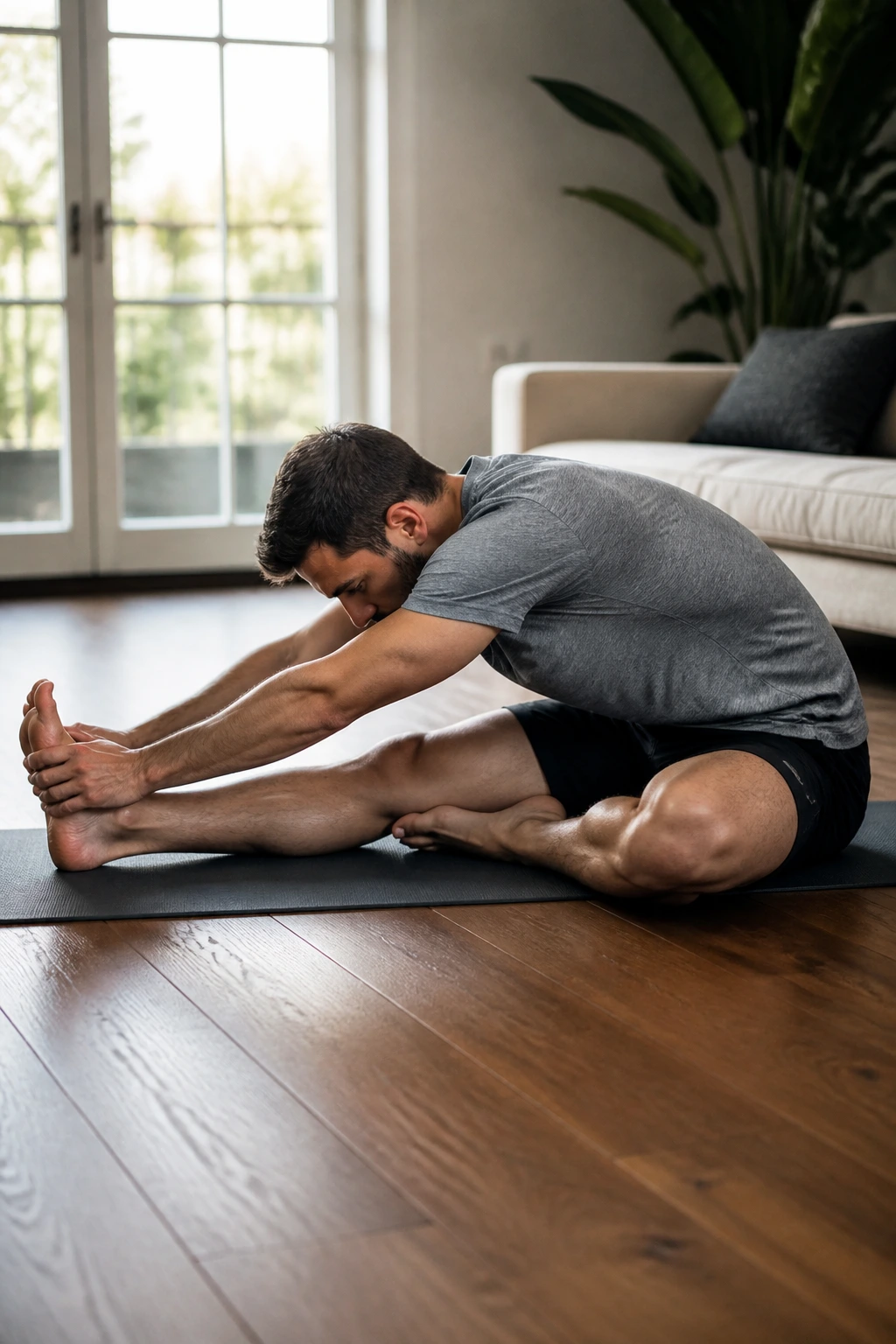
This is a bit more aggressive and hits the hamstrings and the inner thigh, but it requires a bit of caution.
Sit with one leg extended straight and the other bent at the knee, foot tucked back near your glute. Fold forward over the straight leg.
This targets the hamstrings, but because the other leg is tucked back, it also opens up the hip on that side. Only do this if you have healthy knees. If the tucked knee feels weird, revert to the standard seated hamstring stretch. It is a great way to hit different angles of the hamstring muscle group. Hold for 45 seconds per side.
19. Standing Quad-to-Glute Stretch
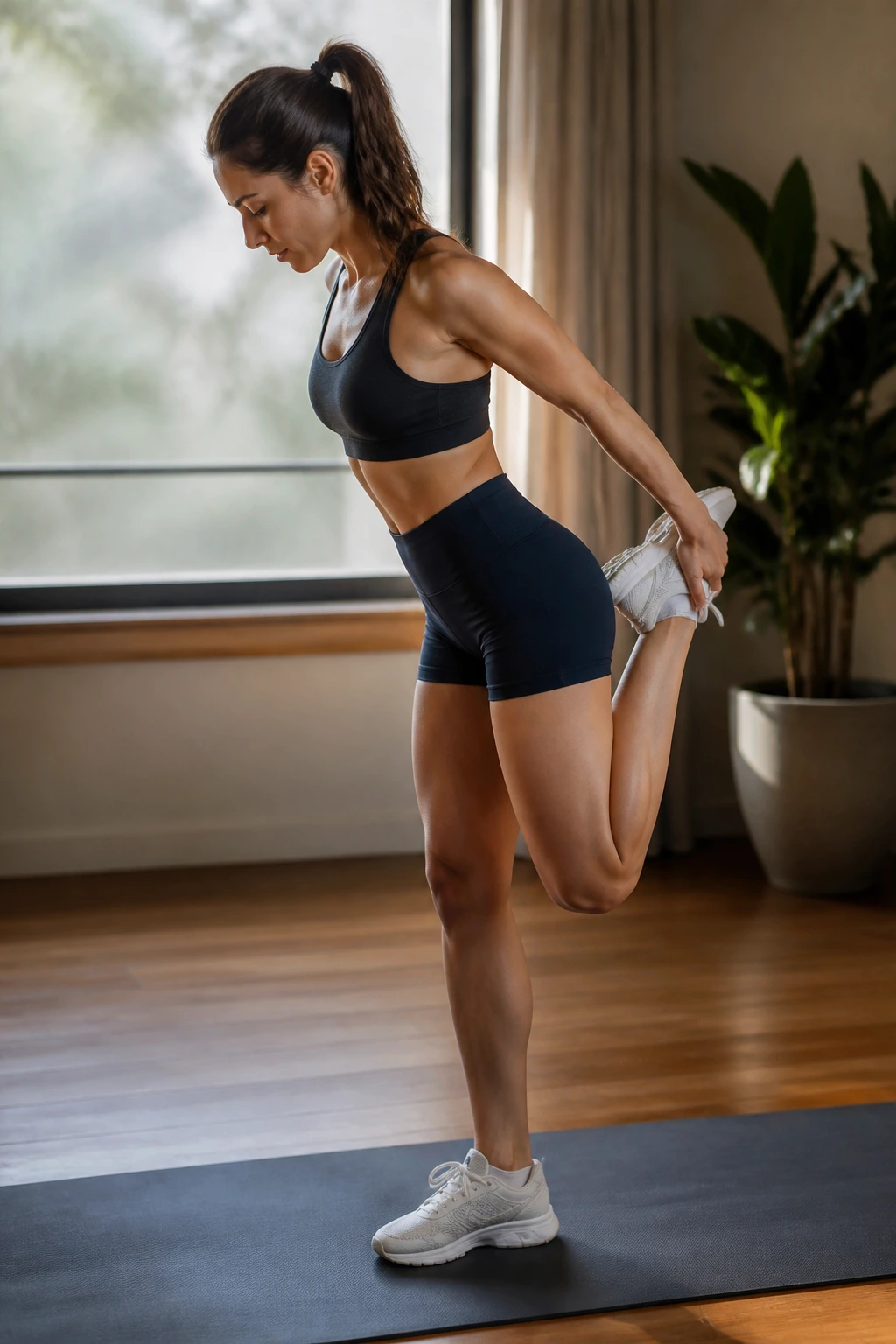
This is a hybrid move that tests your stability while stretching the quads and the glutes at the same time.
Stand on your left leg. Bend your right knee and hold your ankle. While you pull the heel toward your glute, simultaneously tilt your torso slightly forward.
This creates a unique stretch that feels different from a standard quad pull. By adding that slight hinge at the hip, you engage the glutes of the standing leg and stretch the hip flexors of the bent leg. It’s a multitasker. Do 30 seconds on each side.
20. Deep Squat Hold
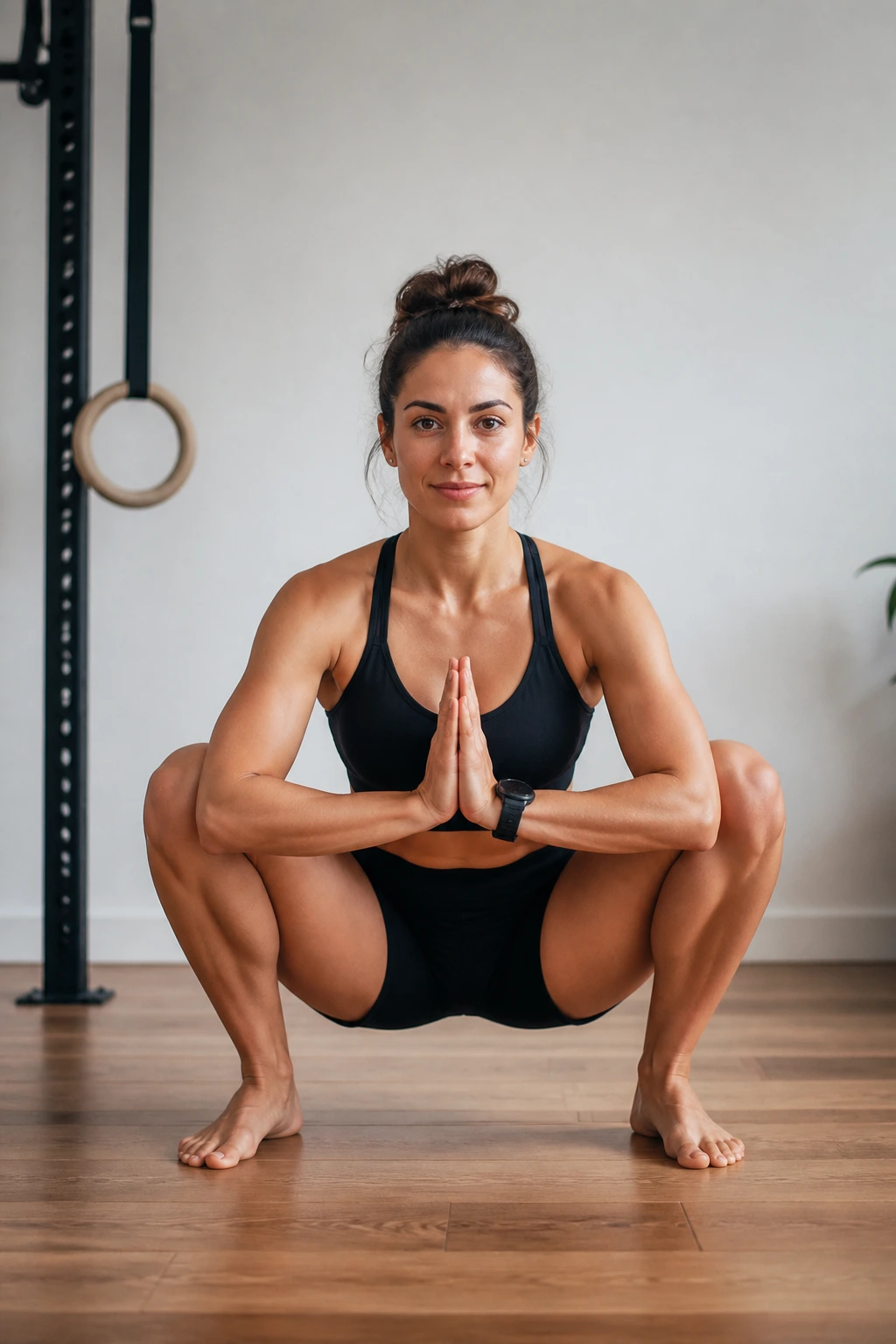
This is the ultimate test of mobility. If you can do this, your hips and ankles are likely in good shape.
Stand with your feet slightly wider than shoulder-width apart. Squat down as low as you can, keeping your heels on the ground.
If your heels lift, widen your stance or hold onto a doorframe for support. Once you are in the bottom of the squat, use your elbows to push your knees outward. Keep your chest up. This opens up the hips, the ankles, and the lower back all at once. Hold for 45 seconds. It is a humbling but highly effective reset button for your entire lower body.
Final Thoughts
Recovery is not just something you do when you are hurt. It is a part of the training cycle, as essential as the miles you log or the intervals you crush. These stretches are not about reaching nirvana or achieving extreme flexibility; they are about maintaining the mechanical integrity of your legs.
Consistency beats intensity every time. You are better off doing ten minutes of gentle, focused stretching every single day than forcing a brutal, hour-long session once a week that leaves you sore and grumpy. Listen to your body. Some days you will feel loose and fluid; other days, you will feel like a rusty machine. On those rusty days, don’t force it. Just move through the range of motion you have available.
Your running career is a long game. Treat your muscles with respect, give them the time to recover they demand, and you will find that you can run better, longer, and with far less discomfort. Put down the foam roller, step away from the stress of the day, and just breathe into the stretch. Your legs have carried you this far; they deserve the attention.
