



No gym required. That phrase gets thrown around a lot, but the useful part is this: a good set of bodyweight workout plans can build strength, stamina, and control without turning your living room into an equipment graveyard.
What trips people up is not effort. It’s structure. Ten random push-ups, a few squats, then a plank held until your lower back starts bargaining with you is not a plan; it’s a mood. A real routine gives your body a clear job, a clear rest window, and a way to get a little harder over time.
Bodyweight training gets interesting because it exposes weak links fast. If your hips wobble in a split squat or your ribs flare in a plank, the floor tells on you. That can be annoying. It is also why these workouts work.
The 20 plans below cover beginners, regular home trainers, and people who want a tougher session without touching a machine. Some are quiet, some are sweaty, some are short enough to squeeze between errands, and one or two are the kind you remember on the stairs later. Start where your form stays clean, then keep nudging the work forward.
1. The 20-Minute Beginner Bodyweight Workout Plan
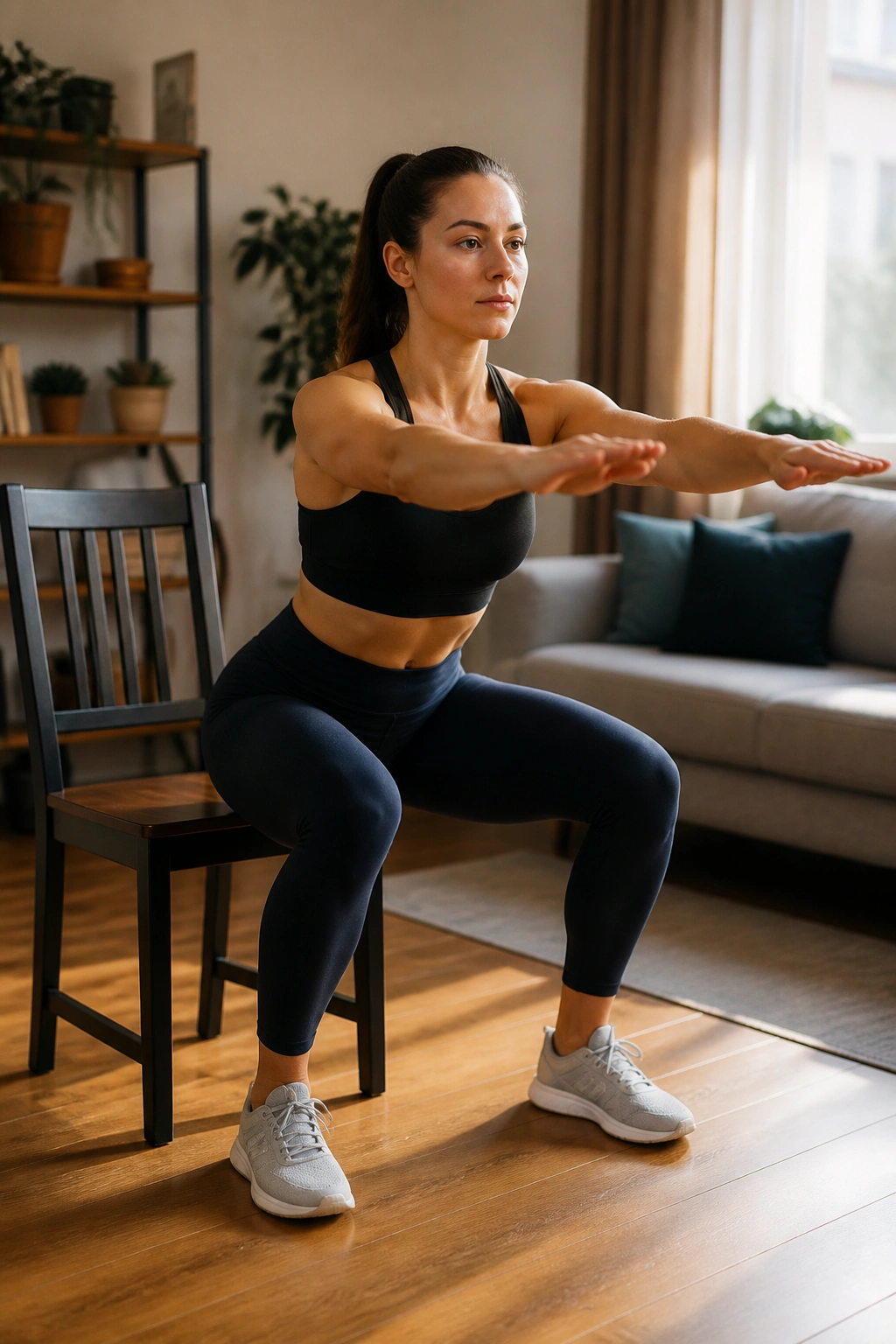
If a push-up still feels far away, start here. This plan keeps the movement simple, the pace honest, and the rest long enough that you can actually keep your shape instead of flailing through it.
The sweet spot is 2 rounds of a short circuit with 30 to 45 seconds of rest between moves. That sounds almost too easy until you do the last round and feel your legs and shoulders talking back.
The Main Circuit
- 8 chair squats with a slow 2-second lower
- 6 incline push-ups on a counter, desk, or sturdy wall
- 10 glute bridges with a 1-second squeeze at the top
- 20-second plank on forearms or hands
- 8 bird dogs per side with a steady reach
The point is not to rush. The point is to learn the shape of each movement. If your squat turns into a forward fold, raise the chair a little higher. If push-ups on the floor are still out of reach, wall push-ups are fine and useful.
Beginner rule: stop each set with one or two good reps left. That habit pays off later. It keeps your joints happier and makes the next session feel less like a punishment.
2. The Three-Day Push-Pull-Legs Split
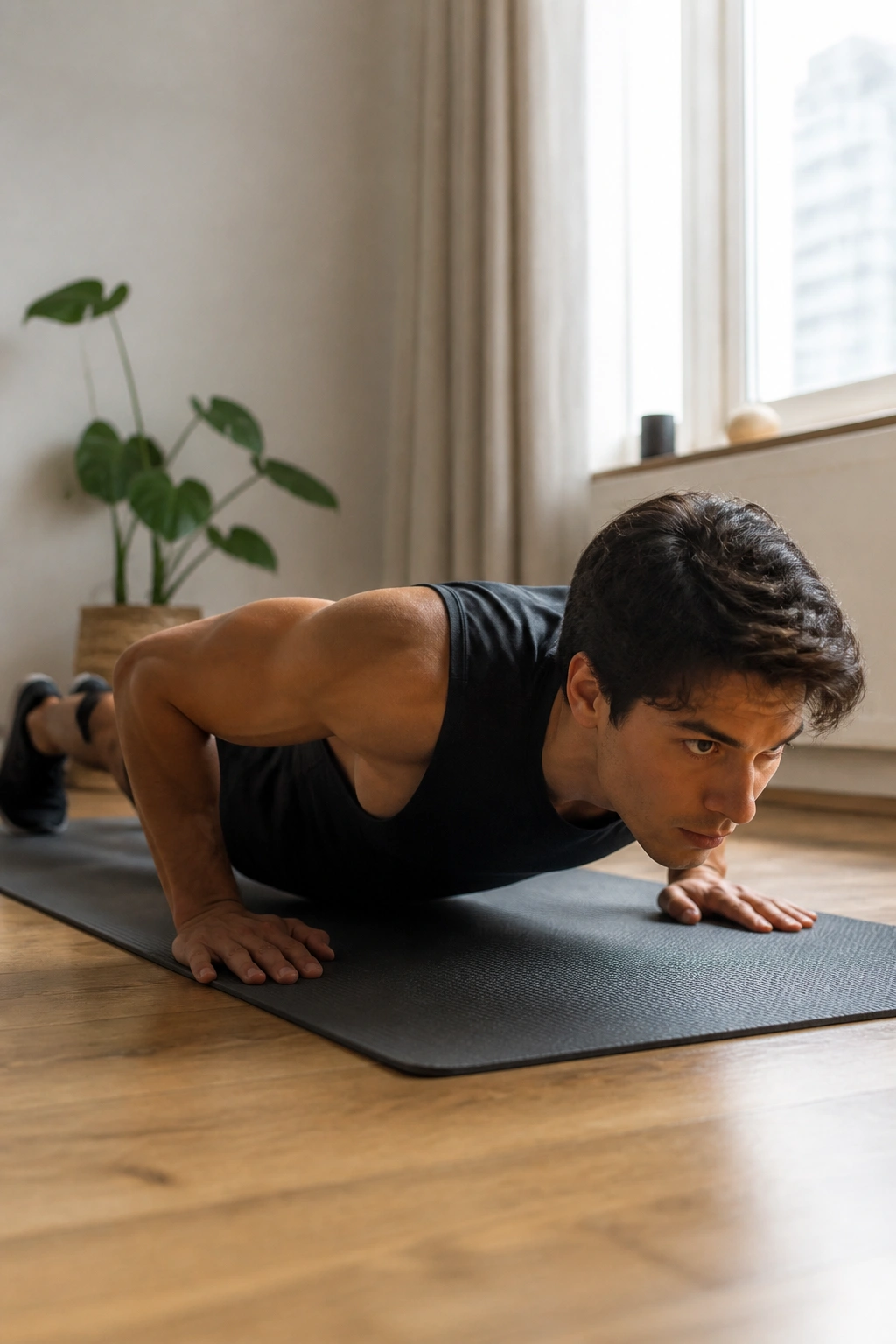
Want a split that feels more like training and less like random sweat? This is one of the cleanest bodyweight workout plans for people who like a little structure without needing a barbell rack.
The reason it works is simple: your upper body and lower body get separate focus, and your joints stop taking the same hit every day. Push day hammers chest, shoulders, and triceps. Pull day gives the back some work. Leg day handles the lower half and all the stuff people skip until the stairs get rude.
A Simple Weekly Layout
- Day 1: Push — push-ups, pike push-ups, shoulder taps, triceps dips on a chair
- Day 2: Pull — prone Y-T-W raises, reverse snow angels, superman holds, towel isometrics
- Day 3: Legs — split squats, squats, glute bridges, calf raises
I like this plan for people who want to train at home more than twice a week but do not want full-body fatigue every session. The pull day is the one people underestimate. No, it won’t feel like a heavy row machine session. But it will wake up the upper back, which helps posture and makes your push work cleaner.
Keep the reps in the 8 to 15 range, and use slower lowering on the hard sets. That little pause at the bottom of a push-up? It tells the truth.
3. The No-Jump Apartment-Friendly Plan
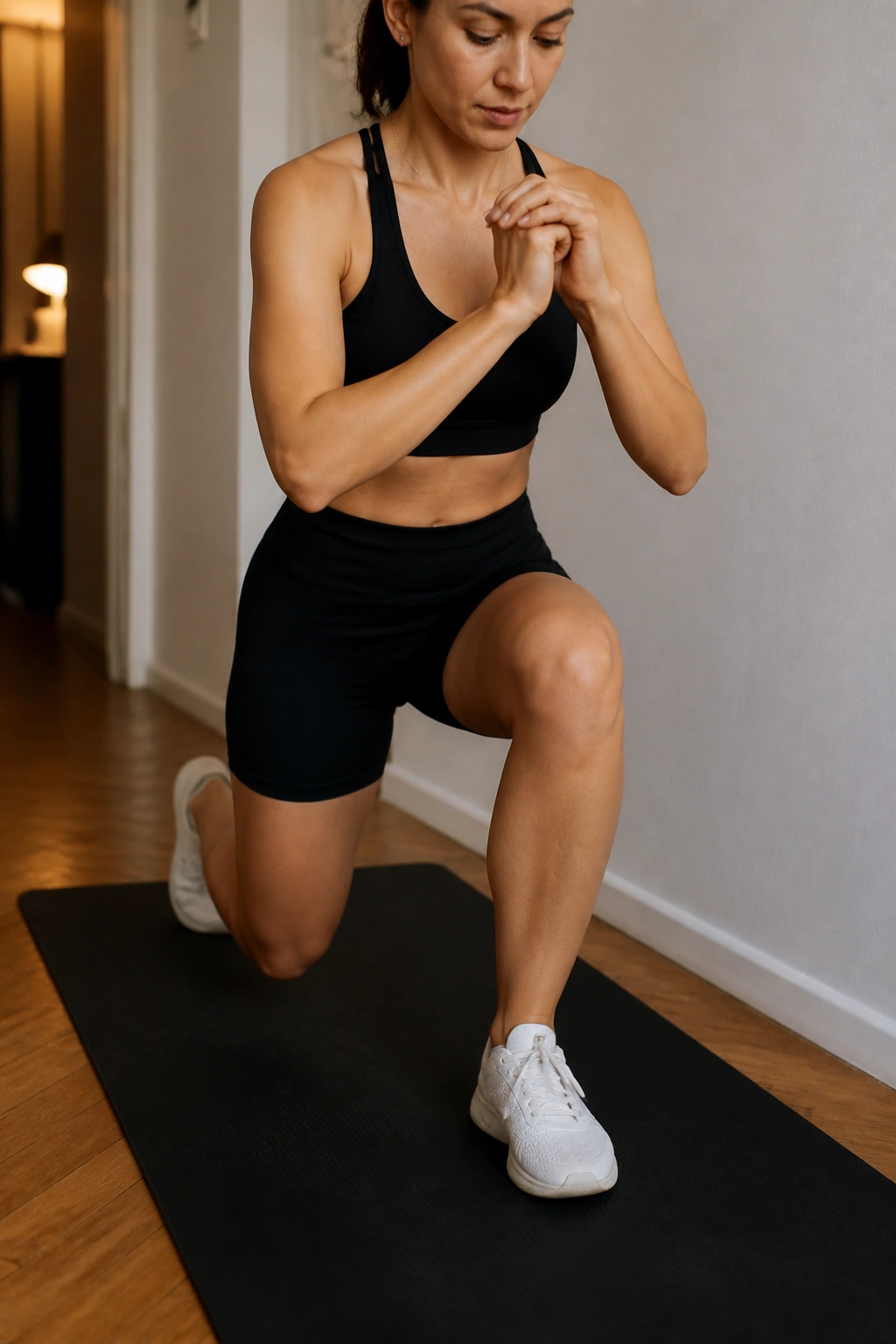
A third-floor apartment and a sleeping baby change how you train. So does a thin floor and a neighbor who seems to live with a broom handle in the ceiling. This plan keeps the noise down and the heart rate up.
The trick is tempo. Instead of jumping, you move with purpose. A controlled step-back lunge or a slow mountain climber can make your legs burn just fine, thank you.
Why It Works in Small Spaces
- 40 seconds of work, 20 seconds of rest
- 4 rounds
- Move quietly, land softly, and keep your feet close to the floor
- Use a mat if your knees or wrists need a little cushion
A good round here might look like step-back lunges, squat-to-calf-raise, slow mountain climbers, plank shoulder taps, and a side plank hold. You can keep the whole session under 25 minutes and still leave sweaty.
I prefer this style when I want effort without impact. It is also useful when motivation is low, because the lack of jumping takes away one excuse. Your lungs still get the message. Your downstairs neighbors do not have to.
4. The EMOM Full-Body Plan
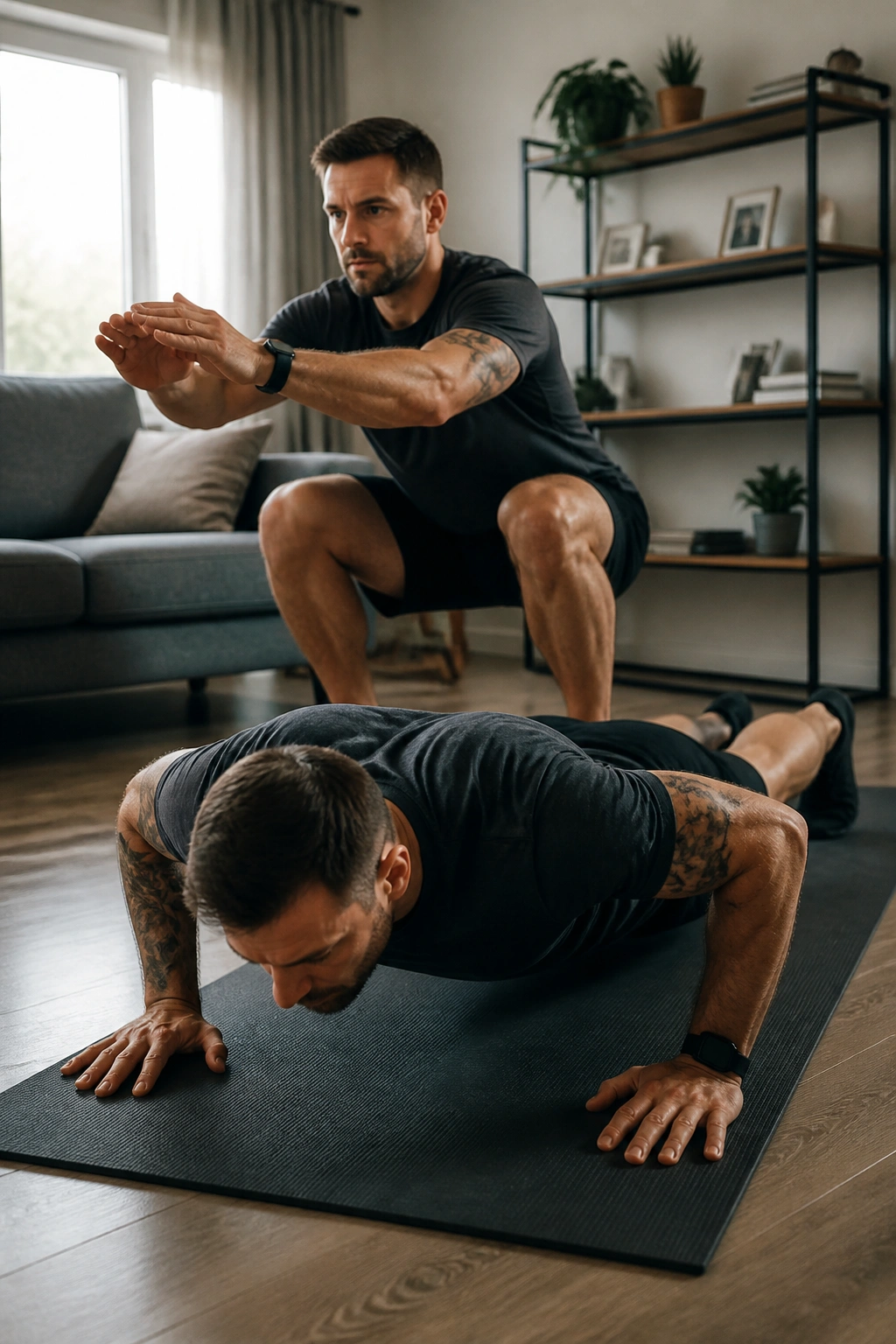
EMOM works because the clock does half the coaching. Every minute on the minute, you do the reps, then rest with whatever time is left. It sounds tidy because it is tidy. That’s the appeal.
For most people, 12 to 16 minutes is enough. Longer can be fine, but EMOMs get sloppy fast if you chase time instead of form. Keep the reps honest and leave a few seconds at the end of each minute to breathe.
Sample 12-Minute EMOM
- Minute 1: 10 squats
- Minute 2: 8 push-ups
- Minute 3: 12 reverse lunges, total
- Minute 4: 20-second hollow hold
Repeat that pattern 3 times. If you finish a minute with more than 20 seconds left, the reps were probably too easy. If you are still grinding on the next minute’s start, cut a rep or two.
EMOM sessions are good for people who like clear edges. No wondering when to stop. No wandering. Just work, recover, work again. The pace stays brisk, which makes it a smart bridge between beginner circuits and tougher conditioning blocks.
5. The Lower-Body Burner Plan
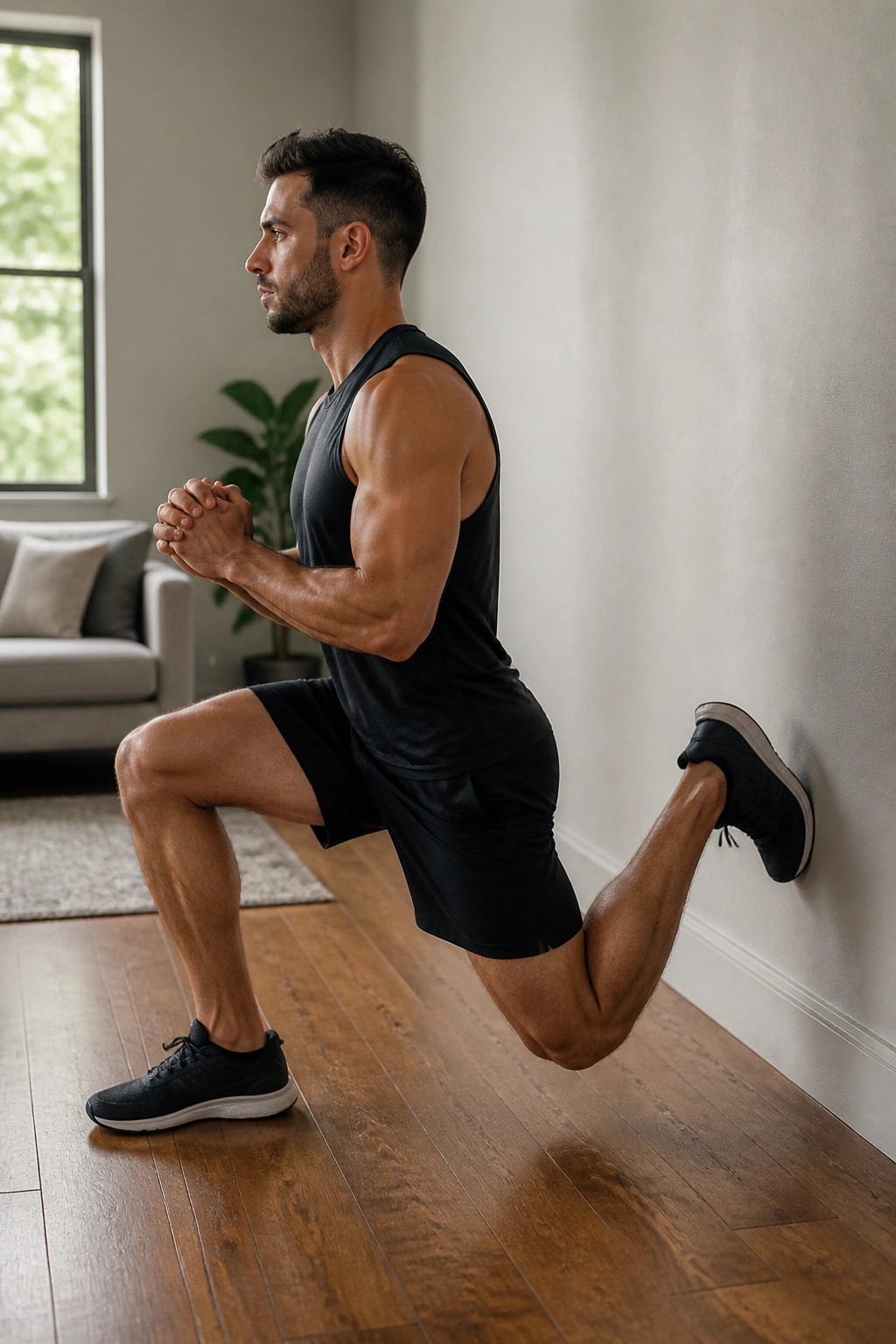
The first time I used a lower-body bodyweight plan like this, stairs felt rude. That’s the honest truth. You do not need jumps to make your legs complain; you need single-leg work, good range, and a little patience.
This version leans into split squats and slow eccentrics. That means the lowering phase matters more than the coming up phase. It’s the kind of detail people skip right before they discover their quads.
- 3 rounds
- 10 split squats per side
- 12 glute bridges
- 30-second wall sit
- 15 calf raises
- 8 lateral lunges per side
If you are newer, hold onto a wall or chair during the split squats. If you are stronger, add a 3-second lower on each rep and pause for one beat near the bottom. That tiny pause changes the whole feel.
This is one of my favorite plans for people who want stronger legs without pounding their knees with jumps. It’s straightforward, but not easy. Big difference.
6. The Upper-Body Strength Plan

Bodyweight upper-body work gets dismissed fast, mostly by people who do half a push-up and call it a day. That’s lazy thinking. A smart upper-body plan can build pressing strength, shoulder control, and enough chest and triceps work to matter.
The order matters. Start with the hardest pressing move while you’re fresh, then move to shoulder work, then finish with smaller stability pieces. Clean reps beat ugly volume every time.
What to Put First
- Push-ups or incline push-ups
- Pike push-ups
- Scapular push-ups
- Prone Y-T-W raises
- Hollow body hold or plank finisher
I like 3 to 4 sets of each main move, with 6 to 12 reps on the push work and 20 to 30 seconds on the stability work. If wrists are unhappy, use fists or push-up handles. If shoulders feel pinchy, shorten the range and slow the tempo.
This plan is best for people who already have some basic pressing strength and want more of it without turning the session into a cardio contest. It is not flashy. It works because it respects the shape of the shoulder.
7. The Core and Posture Plan

Your ribs should feel stacked, your low back quiet, and your breathing a little more controlled by the end of this session. That is the goal. Not six-pack theater. Real control.
Core work gets dumbed down all the time, usually into endless crunches. I’m not a fan. A better bodyweight workout plan uses anti-extension and anti-rotation moves, which means your trunk resists movement instead of just flexing over and over.
Breathing and Brace
- Dead bug: 8 reps per side
- Side plank: 20 to 30 seconds per side
- Bird dog: 6 slow reps per side
- Hollow hold: 15 to 25 seconds
- Glute bridge march: 10 total marches
Here’s the part people miss: breathe behind the brace. Don’t hold your breath the entire time. A gentle exhale helps the ribs come down and makes the core work feel cleaner.
This plan is great on days when your back feels a little stiff from sitting or after a heavier leg session. It should feel firm, not frantic. If your neck starts doing the work, ease up and shorten the hold.
8. The Travel-Day Hotel Room Plan
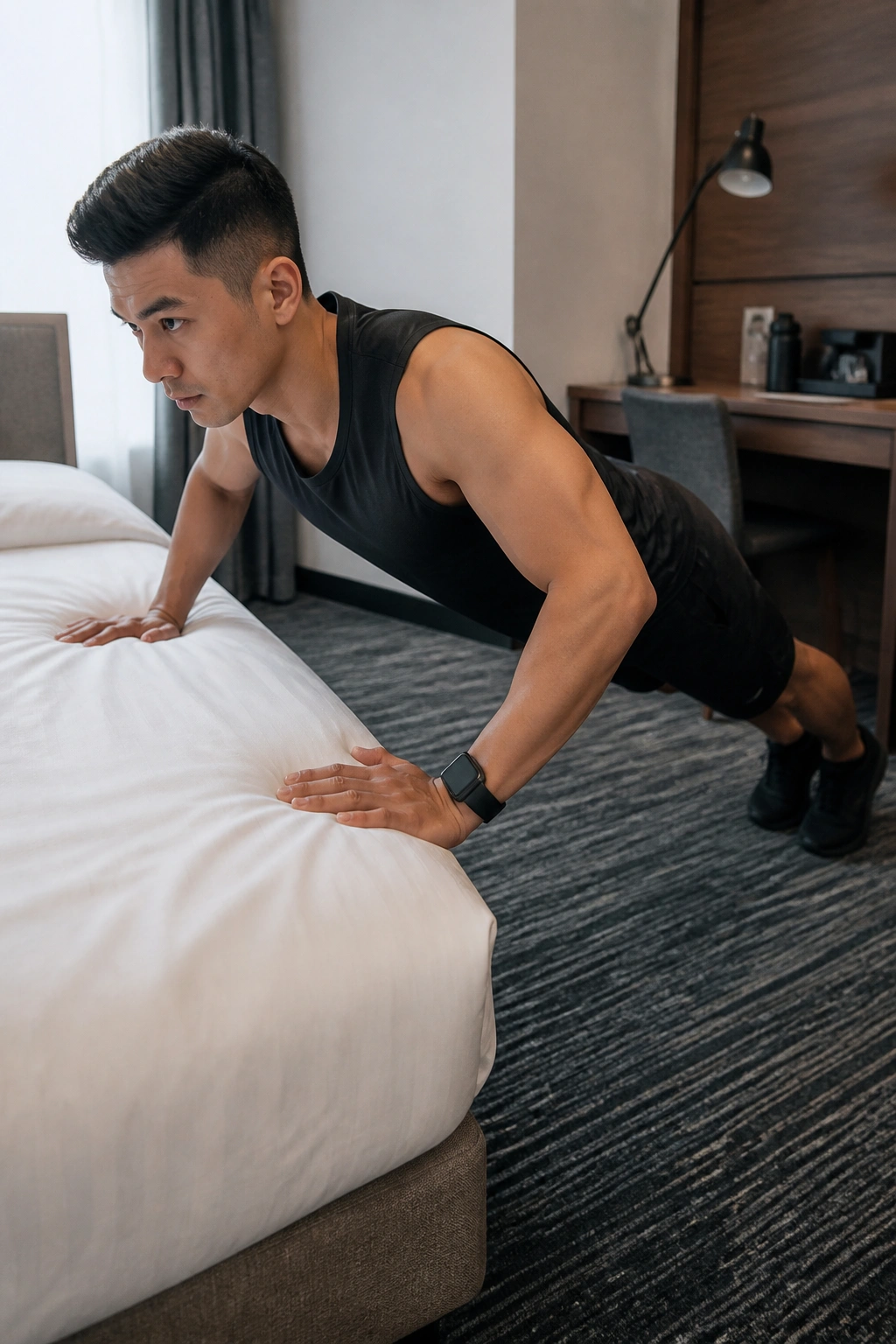
What do you do when the room is tiny and the floor feels a little sticky? You keep the session short, quiet, and smart. No one needs a suitcase full of excuses.
This is the kind of plan I like for travel because it needs almost nothing. A towel helps. A mat helps more. A carpet and a willingness to breathe through the awkward first minute help most.
Keep the Session Quiet
- 30 seconds squat to reach
- 30 seconds reverse lunge
- 30 seconds incline push-up on the bed edge or desk
- 30 seconds plank shoulder tap
- 30 seconds dead bug
- 30 seconds rest
Repeat 3 rounds. That gives you a 10- to 15-minute workout depending on how much you pause between exercises.
If the hotel floor is slick, skip anything that slides. If your wrists hate the bed edge, do push-ups on the wall. Travel workouts do not need to look heroic. They need to keep the routine alive while your schedule is messy.
9. The Active Recovery Flow
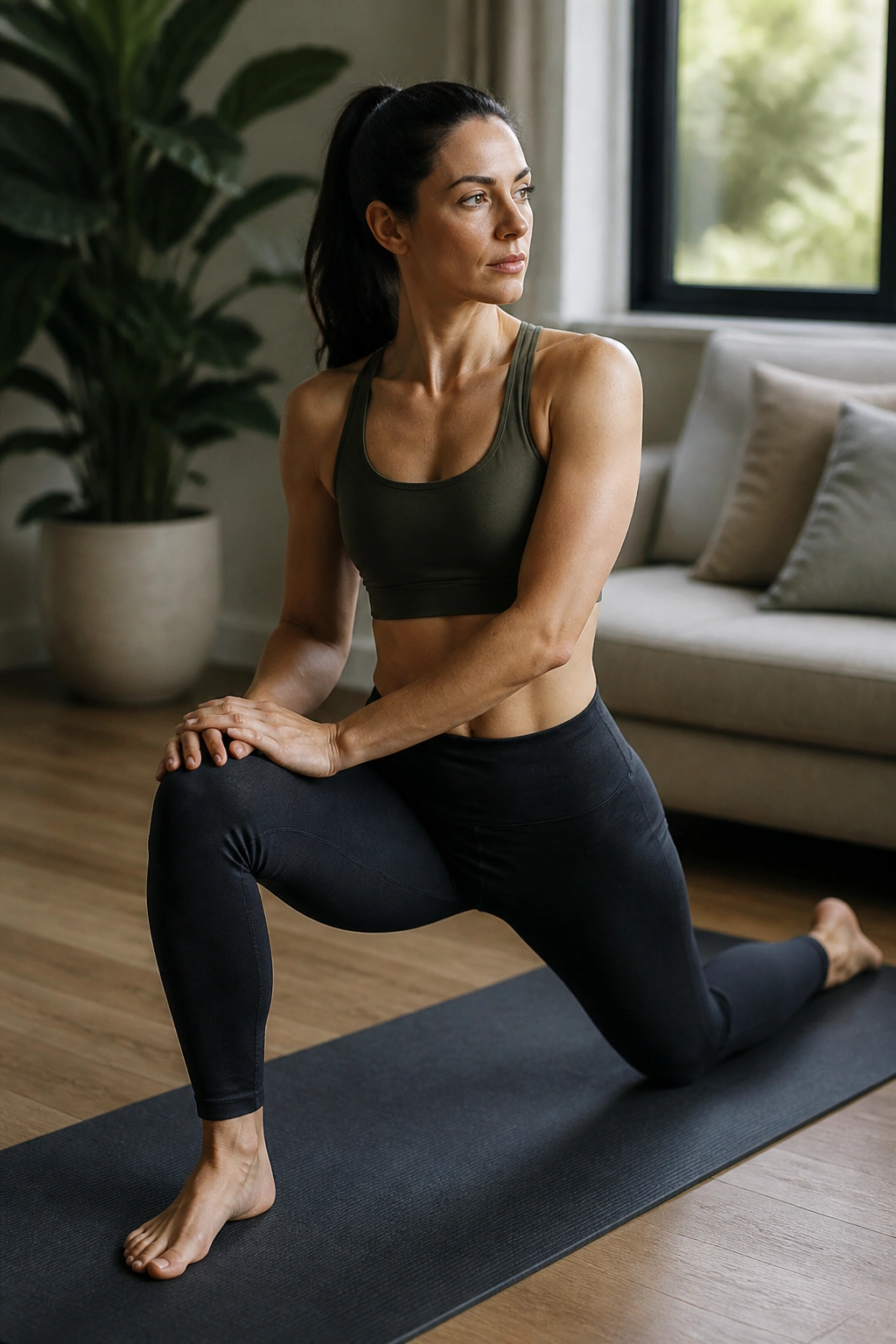
Rest day does not have to mean lying on the couch until your hips forget their job. A good active recovery flow should leave you looser, not smoked.
This is where slower movement shines. You’re not chasing sweat. You’re clearing stiffness, getting blood moving, and reminding your joints that they still know how to fold and extend without drama.
A solid flow might include cat-cow, deep squat holds, thoracic rotations, glute bridges, calf raises, and a kneeling hip flexor stretch. Spend 30 to 45 seconds on each position, then move on without rushing.
One of my favorite touches is a slow nasal-breathing walk in place for one minute between rounds. It sounds too easy. It is not. That little reset changes the tone of the whole session.
Use this after hard lower-body training, after a long day of sitting, or on mornings when your body feels like an old hinge. It should feel useful, not impressive.
10. The 30-Minute Full-Body Circuit

Six movements, four rounds, one timer. That’s the shape of this plan, and it’s a good one if you want a session that feels complete without eating your whole evening.
The rhythm is 40 seconds on, 20 seconds off. That leaves enough time to move with purpose and enough rest to keep the next station from falling apart.
The Circuit
- Squats
- Push-ups
- Alternating reverse lunges
- Plank shoulder taps
- Glute bridges
- Bicycle crunches
The first round feels manageable. The third round starts to bite. The fourth round is where pacing matters. If you sprint the first two, you’ll pay for it later with ugly reps and a wobbly plank.
This is one of the better bodyweight workout plans for general fitness because it hits legs, upper body, core, and conditioning in one go. No single piece gets all the love, which is part of the point. The body likes balance more than chaos.
11. The Conditioning Sprint Plan
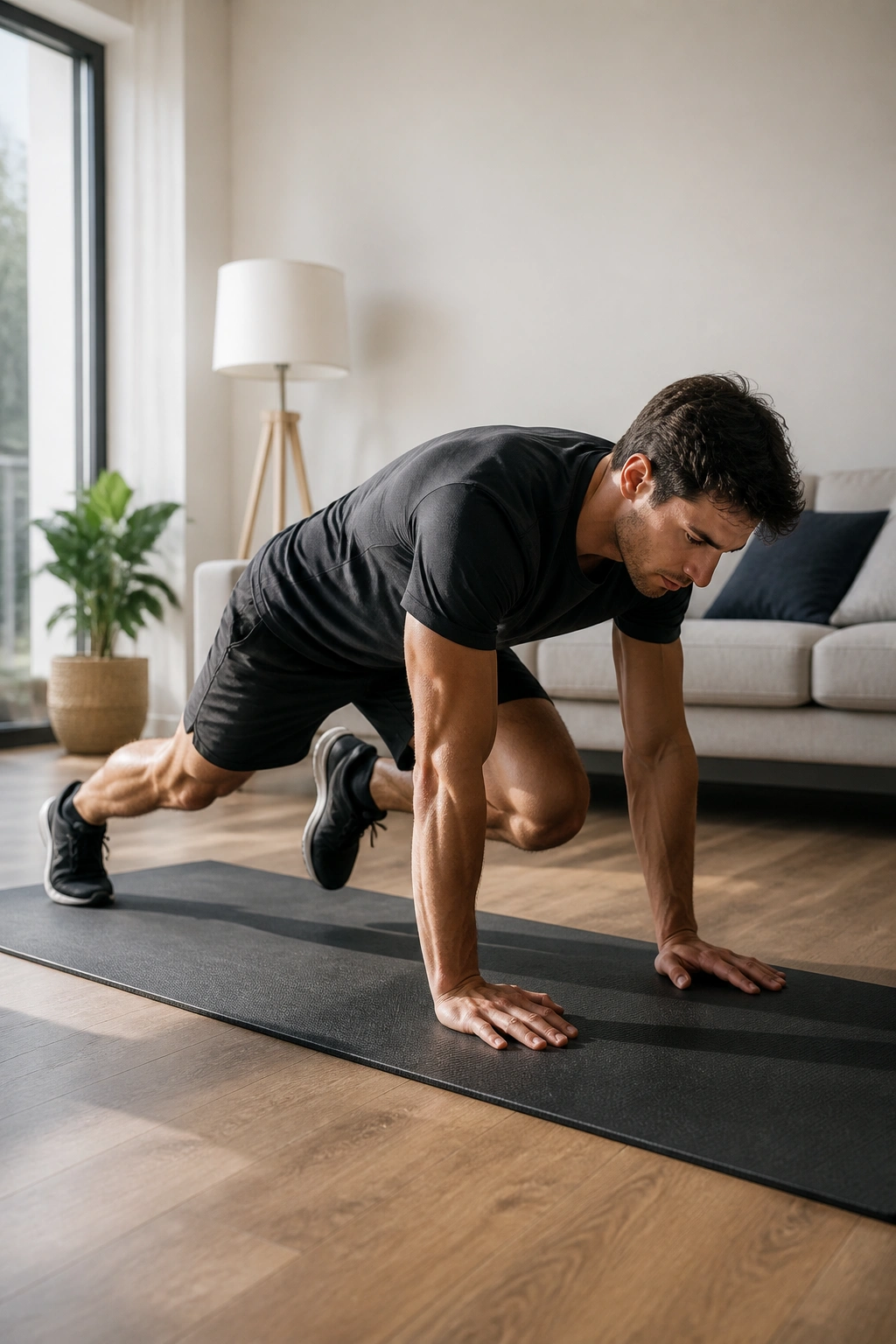
If your goal is to breathe hard without a treadmill, this is the blunt instrument. Short bursts, short rests, and moves that make your heart rate climb fast. No mystery here.
Keep the work intervals around 20 to 30 seconds, then rest for 30 to 40 seconds. That recovery matters. Skip it and the session turns into sloppy survival, which is not the same thing as training.
Burpees, skaters, fast high knees, squat thrusts, and mountain climbers fit well here. Pick 4 moves, then do 6 to 10 rounds. If one move falls apart first, drop it and keep the others.
This plan is for people who already have a base and want a hard conditioning hit. Beginners can use slower versions: step-back burpees, marching high knees, or skaters without the jump. Same idea. Less impact.
I’d avoid using this plan on tired knees or after a brutal leg day. The whole point is speed and crisp movement. If the landing gets noisy, you’re already past the useful zone.
12. The Strength-Endurance Ladder

Unlike straight sets, ladders keep you honest because the reps climb before your ego does. Then, just when you’re sure you’ve got it, the numbers climb again.
A classic ladder might go 2-4-6-8-10 and then back down if you’re feeling good. Use one main movement for each pattern, or pair two moves together. Push-ups and squats are the obvious pair, but lunges and planks work too.
A Sample Ladder
- 2 push-ups
- 4 squats
- 6 reverse lunges per side
- 8 push-ups
- 10 squats
- Rest 60 to 90 seconds
- Repeat once or twice
The reason this works is simple: early rounds feel easy, which keeps technique sharp, and later rounds teach you how to hold form while tired. That is the useful part.
This is a nice middle ground for people who want more than a beginner circuit but aren’t chasing all-out conditioning. It builds staying power without asking you to redline the whole time. And yes, the middle of the ladder gets annoying. That’s part of the charm.
13. The First-Timers Progression Plan
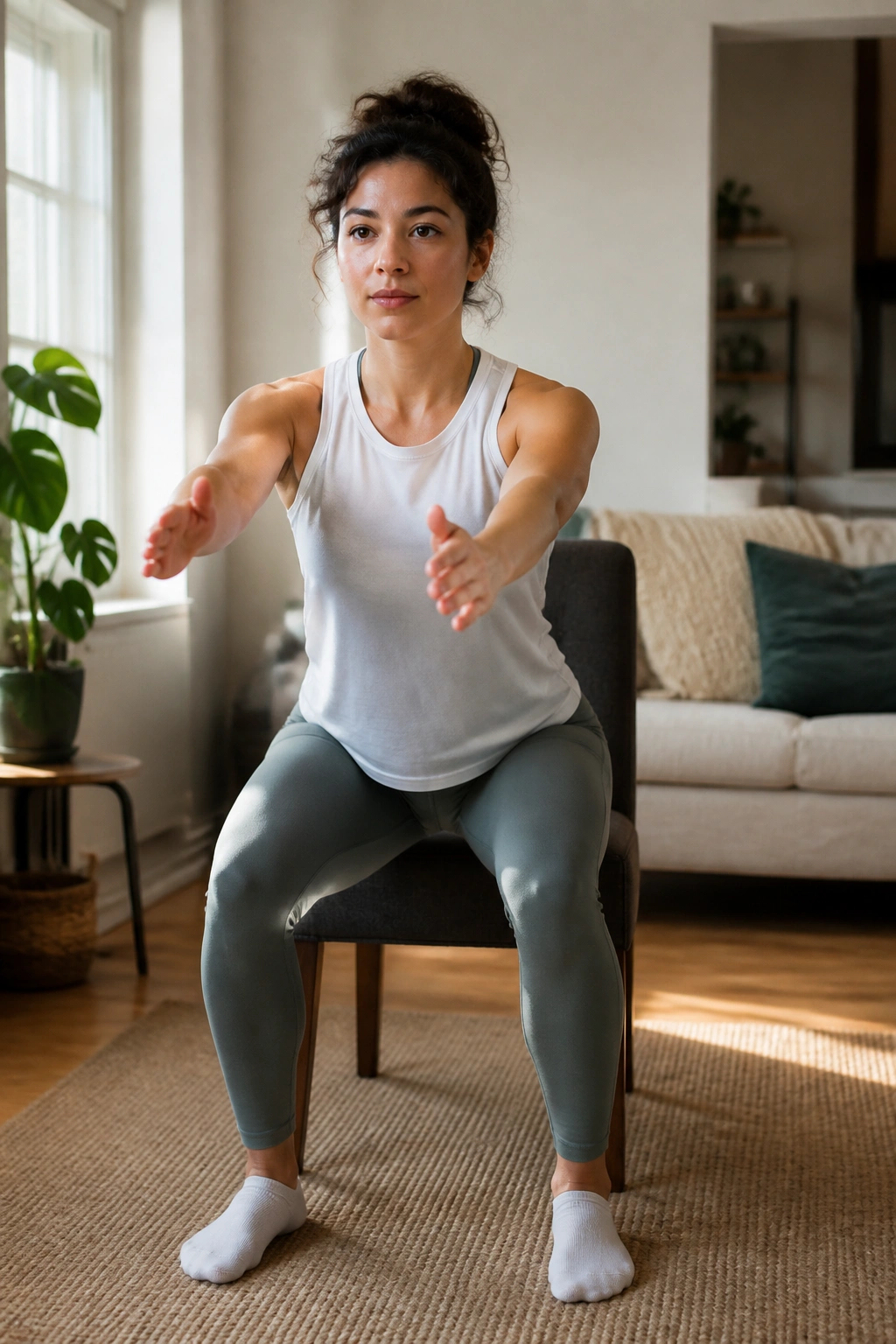
Never followed a workout plan before? Good. Start smaller than you think and make the movements look clean before you worry about speed or soreness.
The first week should be about shape, not drama. Use 2 sessions, each with 4 exercises, and keep the whole thing under 15 minutes. A sit-to-stand, wall push-up, dead bug, and glute bridge will teach you more than a wild circuit ever will.
Week One
- 1 set of 8 to 10 reps per move
- 45 to 60 seconds of rest
- Stop when you feel your form wobble
Week Two
- 2 sets of the same moves
- Rest drops to 30 to 45 seconds
- Add a slow lowering phase on squats and push-ups
The best sign you’re ready to move on is not soreness. It’s control. If you can repeat the movement without losing your balance or holding your breath, you’re earning progress.
This plan is boring in the best way. It creates a base. And that base makes every harder plan later on feel less like a guessing game.
14. The Advanced Density Plan

Ten minutes. No excuse-making. That is the point of density work, and it is one of the nastier ways to make bodyweight exercise feel hard without adding gear.
Pick a handful of tough moves and collect as many quality rounds as you can in a fixed window. I like 10 to 15 minutes for this because it’s long enough to matter and short enough that form usually stays honest.
Try this:
- 8 strict push-ups
- 12 jump squats
- 10 V-ups
- 8 alternating lunges per side
- 20-second plank
Move through as many rounds as possible without turning the reps into garbage. If your push-ups sag, stop there. If your jump landings get loud, cut the jumps.
This style is best for advanced trainees who already know how to pace themselves. It rewards discipline more than ego. And that is why it tends to produce better sessions than the “do everything until you hate life” approach.
15. The Joint-Friendly Low-Impact Plan
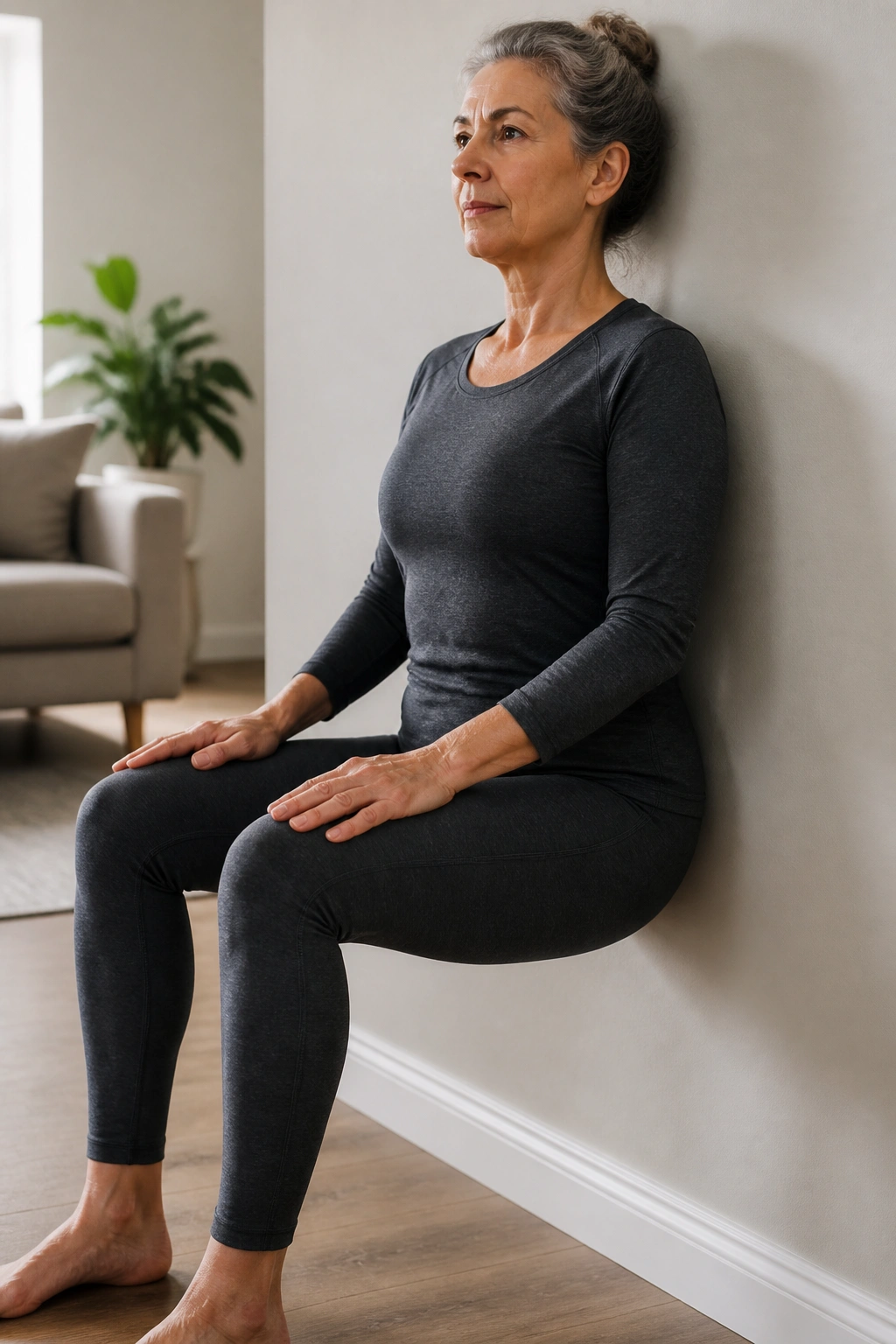
Knees should feel warm, not irritated. Shoulders should feel worked, not pinched. That’s the standard here, and it matters more than fancy exercise names.
Low-impact does not mean low effort. It means fewer jumps, fewer hard landings, and more time spent under tension. The muscles still work. The joints get a break from the pounding.
What to Keep Slow
- Wall sit for 20 to 45 seconds
- Chair squats for 8 to 12 reps
- Glute bridge hold for 20 seconds
- Step-back lunges for 6 to 10 reps per side
- Incline push-ups for 6 to 12 reps
I like this plan for older trainees, people rebuilding confidence after a long break, and anyone whose joints get cranky with impact. It can also be a smart deload week when you want to stay active but not beat yourself up.
Use a slow count on the way down, pause for a second, then stand. That pause does a lot of work. More than people think. Sometimes the quietest sessions are the ones that leave the strongest legs.
16. The Pyramid Reps Plan

More reps do not always mean more chaos. A pyramid can actually feel calmer than a flat circuit because you know the climb has a shape.
A simple version is 2-4-6-8-10-8-6-4-2. You can use one movement, like push-ups, or pair two, like squats and lunges. The rise and fall keeps your pacing honest.
I like pyramids because they give you a clear middle point. By the time you hit the top, you know where your form starts to drift. That makes the lower half of the pyramid useful too, because you can compare how clean the early reps felt to the late ones.
If you want a harder version, slow the lowering phase on the way up and shorten rest to 20 to 30 seconds. If you want a friendlier version, cap the top at 8 instead of 10. Same structure. Different bite.
This plan fits people who like numbers and enjoy a little rhythm in the workout. It has a nice sense of progression without feeling random.
17. The Push-Up and Squat Split

Monday can be push-ups; Tuesday can be legs; Wednesday can be easy walking. That kind of split is simple enough to remember and useful enough to repeat.
The main idea is to alternate upper- and lower-body emphasis across the week so each area gets enough work and enough recovery. A lot of home trainees do better with this than with daily full-body sessions, especially if they’re training hard.
A Simple 4-Day Week
- Day 1: Push-up variations, plank taps, pike push-ups
- Day 2: Squats, reverse lunges, wall sits, calf raises
- Day 3: Rest or light mobility
- Day 4: Push-up ladder, shoulder taps, hollow hold
- Day 5: Split squats, glute bridges, side lunges
- Weekend: Rest, walk, or an easy mobility flow
I like this plan for people who want a little more training volume without smashing the same muscles every day. It’s especially useful if your push-ups are improving faster than your lower body work, or the other way around.
Keep the sessions focused. You do not need to turn every day into a marathon.
18. The Tabata Bodyweight Plan

Tabata is tiny on paper and brutal in practice. Twenty seconds of work, ten seconds of rest, repeated for eight rounds. Four minutes total. That’s the classic format, and it still bites.
The reason Tabata works is that the rests are short enough to keep fatigue high but not so short that you collapse after round two. It’s a neat little engine, and it punishes bad pacing fast.
Pick one move, or alternate between two. Squat jumps and mountain climbers are common choices, but beginners can use air squats and step-back lunges. If the form starts to fold, lower the speed before you lower the standard.
I do not love long Tabata stacks where every interval is a different move and every move is done badly. That’s noise. Better to keep it clean and repeat the same pattern with intent.
Use this as a finisher or a short standalone session. Four minutes can be enough if the effort is sharp.
19. The Mobility-Strength Blend

What if a workout left you looser instead of tighter? That’s the beauty of mixing mobility with strength. You still train, but the session finishes with better hips, better shoulders, and less stiffness.
This plan is especially good on days when sitting has left your body feeling compressed. A deep squat hold after a few controlled reps can open up the ankles and hips in a way that feels useful, not fluffy.
A Simple Flow
- Inchworms for 5 reps
- Cossack squats for 6 reps per side
- Lunge with reach for 5 reps per side
- Side plank for 20 seconds per side
- Deep squat hold for 30 to 45 seconds
Move slowly enough that your breathing stays steady. If one side feels tighter, stay there for a few more seconds. That is not cheating. That is paying attention.
I like this plan as a bridge between training days because it keeps strength in the mix while giving your joints a little more room. It is a good reminder that “workout” does not have to mean “wrecked.”
20. The Flexible Weekly Rotation

The smartest plan is the one you can repeat without dreading it. That’s the real test. Not how hard it looked on paper, but whether you can come back to it next week and still want to train.
A good weekly rotation pulls from the plans above instead of worshipping one style. Beginners usually do best with 3 sessions a week, an active recovery day, and one mobility-focused session. Intermediate trainees can usually handle 4 to 5 sessions if the intensity shifts a little from day to day. Advanced people often progress faster when they stop trying to make every workout feel like a final exam.
A Simple Level-Based Rotation
- Beginner: Plan 1, Plan 9, Plan 19
- Intermediate: Plan 3, Plan 10, Plan 12, Plan 15
- Advanced: Plan 4, Plan 11, Plan 14, Plan 18, Plan 20
Track something small: reps, rest time, hold duration, or how many clean rounds you finished. That tiny bit of record-keeping matters more than people want to admit.
Keep the good habits boring. Clean reps. Reasonable rest. A plan you can actually come back to. That’s where bodyweight training starts to pay off in a way you can feel on the floor, on the stairs, and in the way your body moves the rest of the day.
