



Thirty minute yoga sessions are the sweet spot for most bodies. Fifteen minutes can feel rushed; an hour can start to feel like a project you keep putting off. In half an hour, you can raise your temperature, loosen a few stubborn joints, build a little strength, and still finish with enough breath to stand up without wobbling.
That matters more than people admit. A short, smart practice can change how the rest of the day feels: hips stop barking on the stairs, shoulders sit a little lower, and the next workout starts with less grumbling from your body. I like sessions that have a clear job. Random pose hopping wastes time.
The best yoga session is not always the sweatiest one. Some days you need heat. Other days you need the floor, a strap, and five honest minutes spent lying still while your back settles down.
These fifteen thirty minute yoga sessions cover both moods, and a few in between. Pick the one that matches what your body is asking for right now.
1. A Thirty-Minute Morning Wake-Up Flow for Stiff Backs
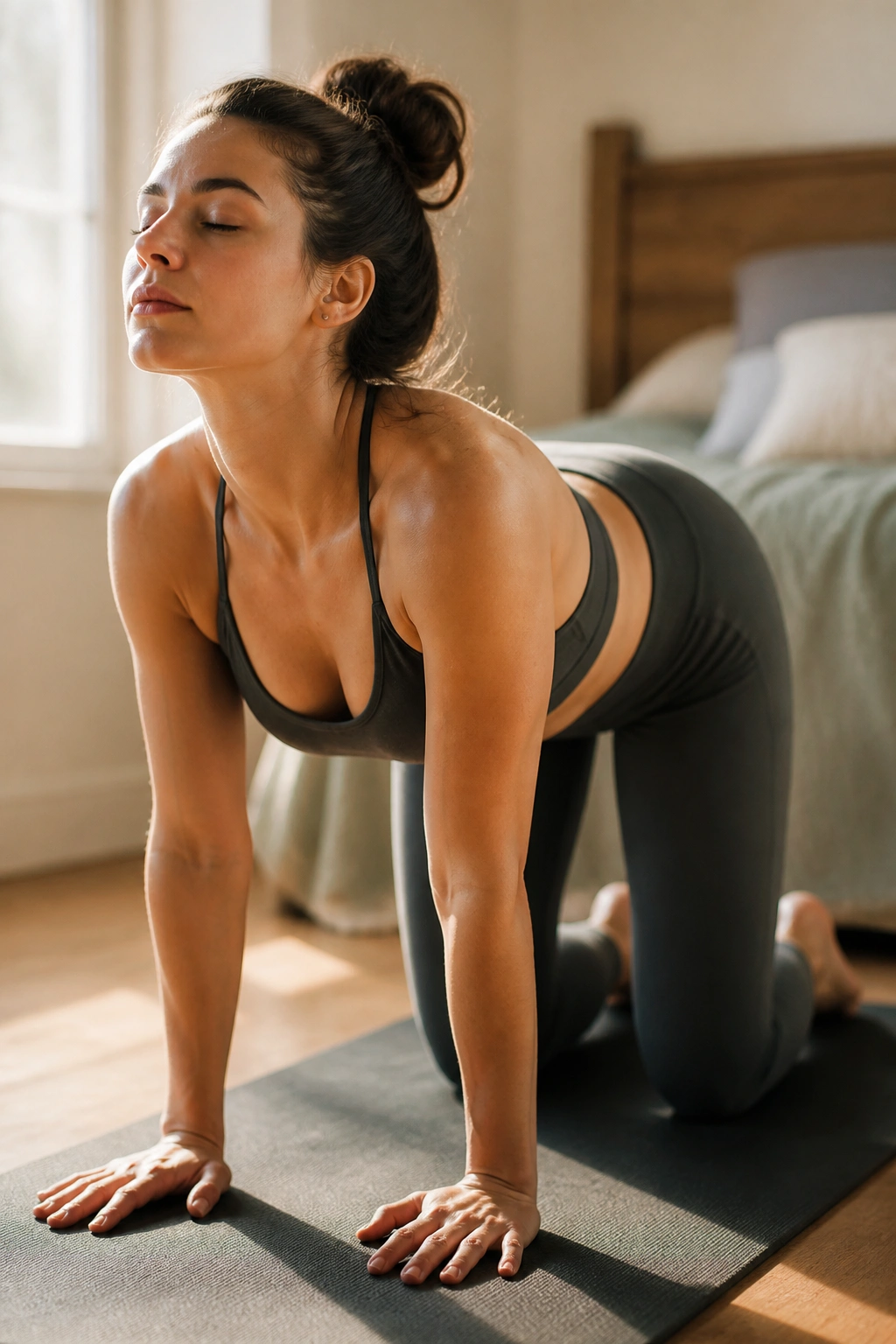
A sleepy spine does not need drama. It needs motion.
This is the kind of morning flow I reach for when the first bend feels rude. Start slow, then build. A few rounds of cat-cow, some low lunges, and a steady walk toward downward dog usually wake things up without making your body feel chased. The point is to soften the first ten minutes of the day, not prove anything.
Why It Feels Better Than a Hard Workout
Morning stiffness tends to live in the back of the hips, the ribs, and the upper back. A short flow that moves all three areas gives you a cleaner start than jumping straight into long holds or fast repeats. You want the joints to glide, not grind.
- 3 minutes of slow breathing in child’s pose or tabletop
- 5 minutes of cat-cow, thread-the-needle, and a few easy down dogs
- 10 minutes of standing half-sun greetings and low lunges
- 7 minutes of hamstring folds with bent knees
- 5 minutes of seated twist, figure-four, or legs-up-the-wall
Skip the urge to touch the floor on the first fold. Bent knees are not a failure. They are the smart choice when your hamstrings still feel half asleep.
A simple mat, one block, and a little patience are enough. If you finish feeling taller than when you started, the session did its job.
2. Thirty-Minute Hip Openers After a Long Sit
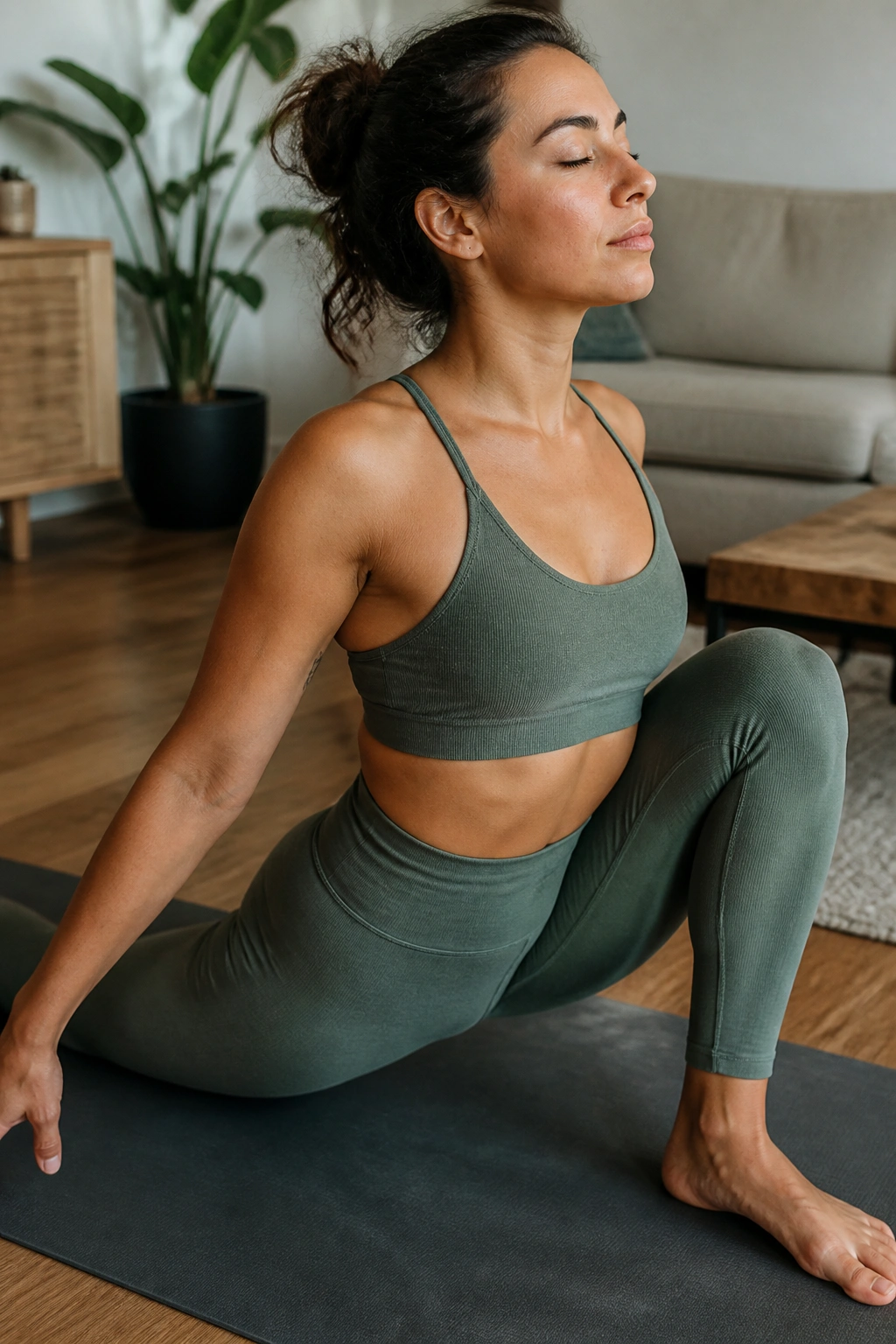
Sitting makes the hips lie to you. They feel tight, but the bigger issue is usually that they have gone quiet.
A long sit can make the front of the hips feel short and the glutes feel lazy. That is why a good hip session should do more than hang out in pigeon pose. You need a mix of lunge work, gentle glute activation, and a few floor shapes that let the pelvis move without pinching the lower back. The shift is subtle at first, then obvious. You stand up and your stride feels less chopped up.
The floor is your friend here.
I like starting with a low lunge on each side, then slipping into half split so the front leg gets a little length without force. After that, a supported figure-four on your back gives the outer hip a break from holding itself together all day. Finish with bridge pose for three to five slow breaths per round. That one small lift often wakes up the back of the body faster than a dozen deep stretches.
If your knees are touchy, pad them. If your hip joint feels pinchy, back out of the deepest angle and keep the shape wider. Deep is not the goal. Better movement is.
3. A Breath-Led Vinyasa That Builds Heat Fast
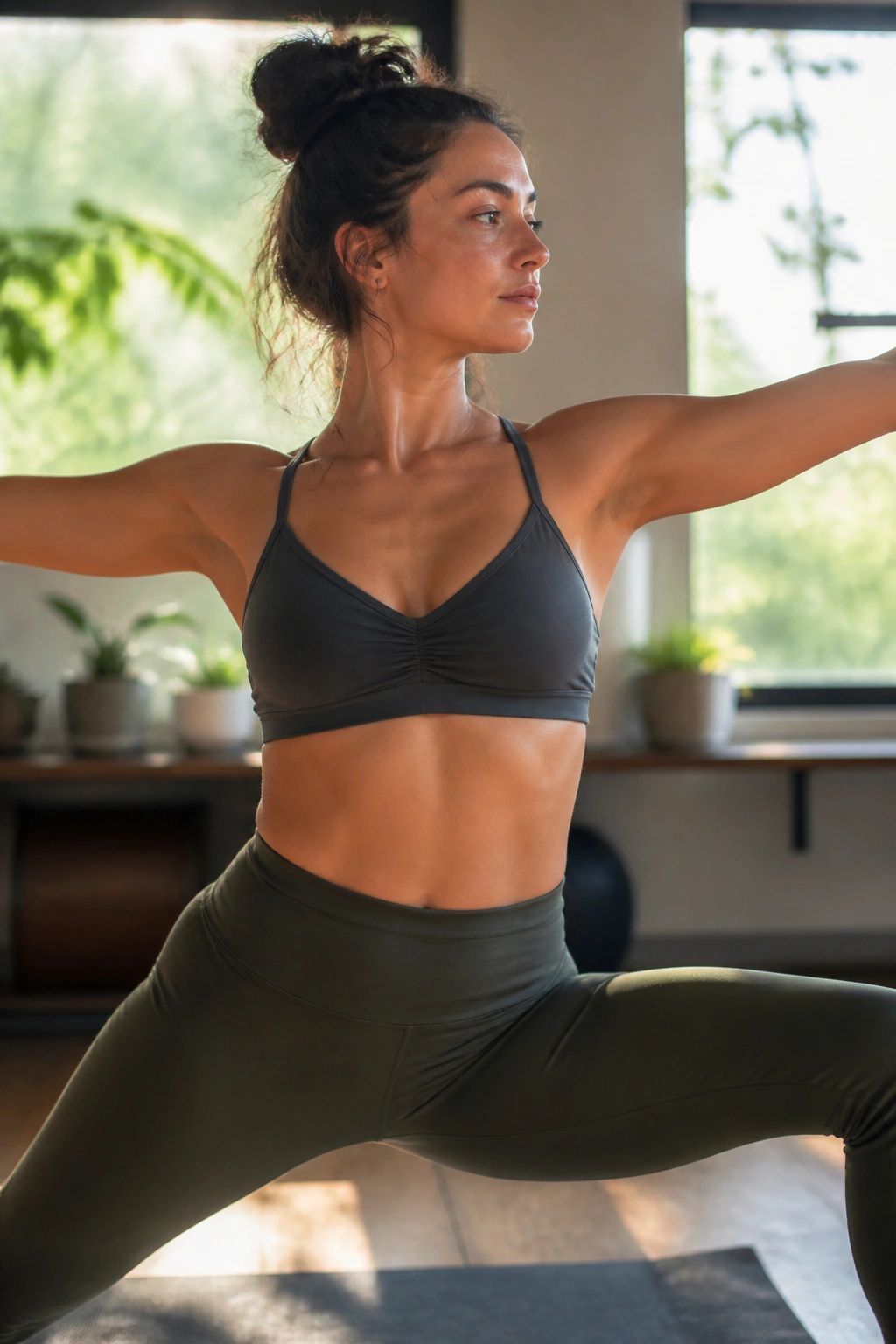
Want sweat without sprinting?
A breath-led vinyasa session earns its place because it gives you heat without the mess of random speed. You move on the inhale and exhale, keep the transitions clean, and let the pace build from the inside out. That usually feels better than forcing intensity from the start. It also keeps you honest; if the breath starts to chatter, you know you pushed too hard.
How to Keep the Middle From Turning Sloppy
The middle ten minutes are where people lose the thread. They start rushing, the feet get noisy, and the shoulders creep toward the ears. I’d rather see a slower, cleaner sequence than a frantic one that falls apart halfway through.
A good thirty minute version can look like this:
- 5 minutes of standing breath and joint circles
- 10 minutes of sun salutations A and B
- 7 minutes of standing postures like crescent lunge, warrior II, and side angle
- 4 minutes of balance work, maybe high lunge to half moon
- 4 minutes of floor cooling with a twist and a short savasana
Keep the transitions smooth, but not rushed. You should be able to hear your own breath the whole way through. If you need to pause after chaturanga, pause. No one is handing out medals for sloppy speed.
This is the session I use when I want to feel warmed up without pounding my joints. It leaves you awake, not wrecked.
4. A Runner’s Hamstring and Calf Release Session
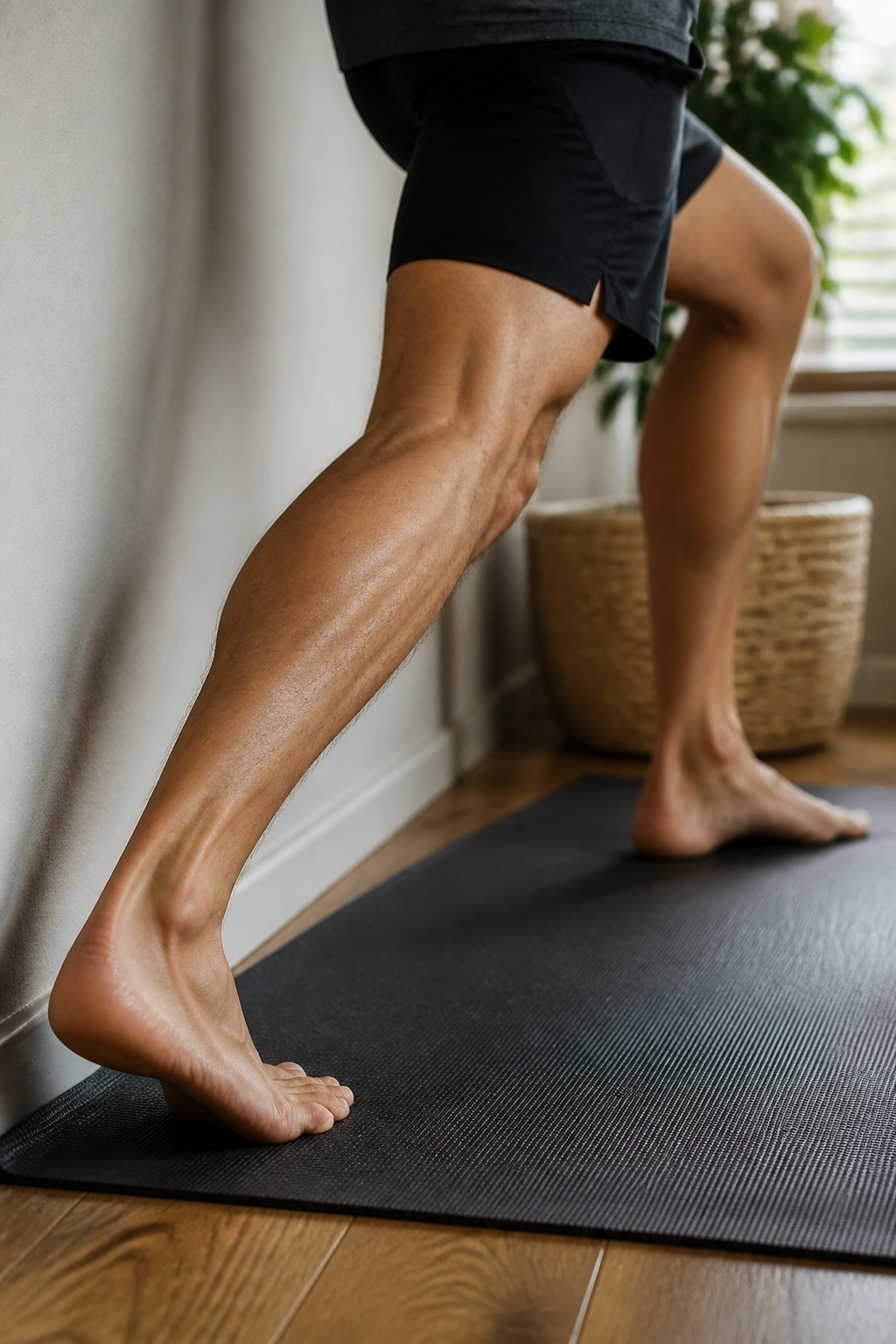
After a run, the calves can feel like short cables.
That is the session I’d build for runners: not a long, dreamy stretch fest, but a practical thirty minutes aimed at the lower legs, hamstrings, and hips. Start with ankle circles and a few calf pumps against the wall. Then move into runner’s lunges, half splits, and a little down dog pedaling. You want the whole back line of the body to soften in layers.
A tight hamstring is not fixed by yanking it. It usually responds better to a combo of length, breath, and hip position. Put the front foot on a block if the floor pulls too hard. Keep the spine long in half split instead of folding like a pocket knife. Small adjustments matter here.
- 2 to 3 minutes of calf work against a wall
- 6 minutes of low lunge and crescent lunge on each side
- 8 minutes of half split, pyramid, and down dog pedal work
- 5 minutes of seated or reclined figure-four
- 4 to 5 minutes of legs-up-the-wall
You should walk away feeling springy, not mushy. That’s the difference. The goal is easier stride mechanics the next time you lace up, not sleepy legs that forgot how to hold you.
5. A Low-Back Relief Flow That Stays Gentle
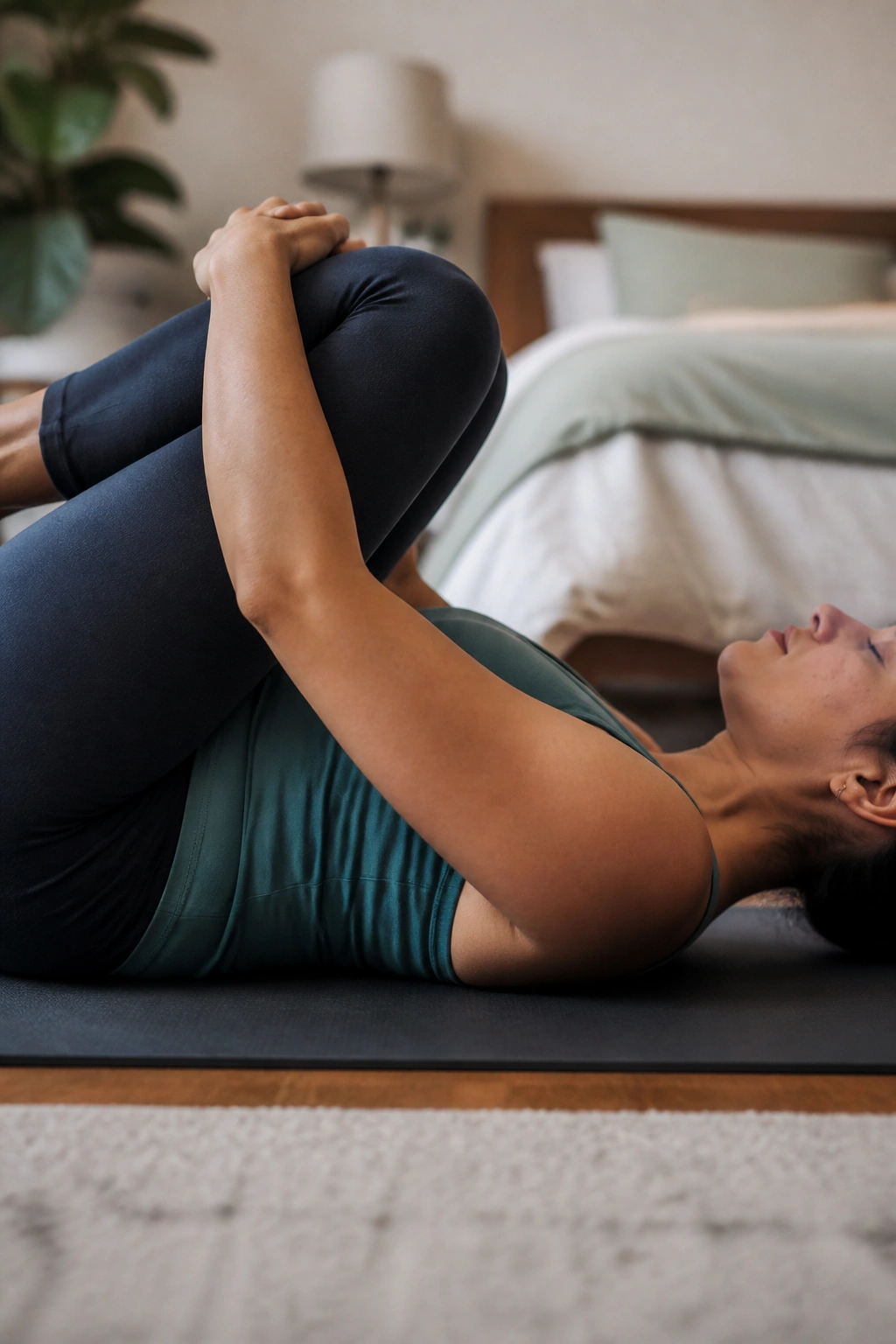
Low back pain does not always need a heroic stretch.
Sometimes the back wants less stretching and more support around it. That means working with the hips, ribs, and breath instead of trying to pry the spine into a bigger shape. I like cat-cow here, but not as a warm-up cliché. Use it to notice where the spine feels sticky. Then move toward sphinx, child’s pose, and a supported bridge. Those shapes give the back a chance to settle without getting cranked.
Gentle beats deep.
A solid low-back session should stay mostly on the floor. If standing work feels too noisy, skip it. A few knees-to-chest rocks can ease the lower spine, and a supine twist can help the waist and side body release without asking the lower back to do all the work. Keep the knees bent in any forward fold. Straight legs can make the back pull harder than it needs to.
One thing I like about this type of practice: it gives you a quick read on the day. If bridge pose feels good, you probably needed some glute wake-up. If it feels wrong, stay with the floor and breathe longer.
A good session leaves you able to stand up without that little catch at the waistband. That’s the win.
6. Balance Work for Ankles, Feet, and Standing Stability
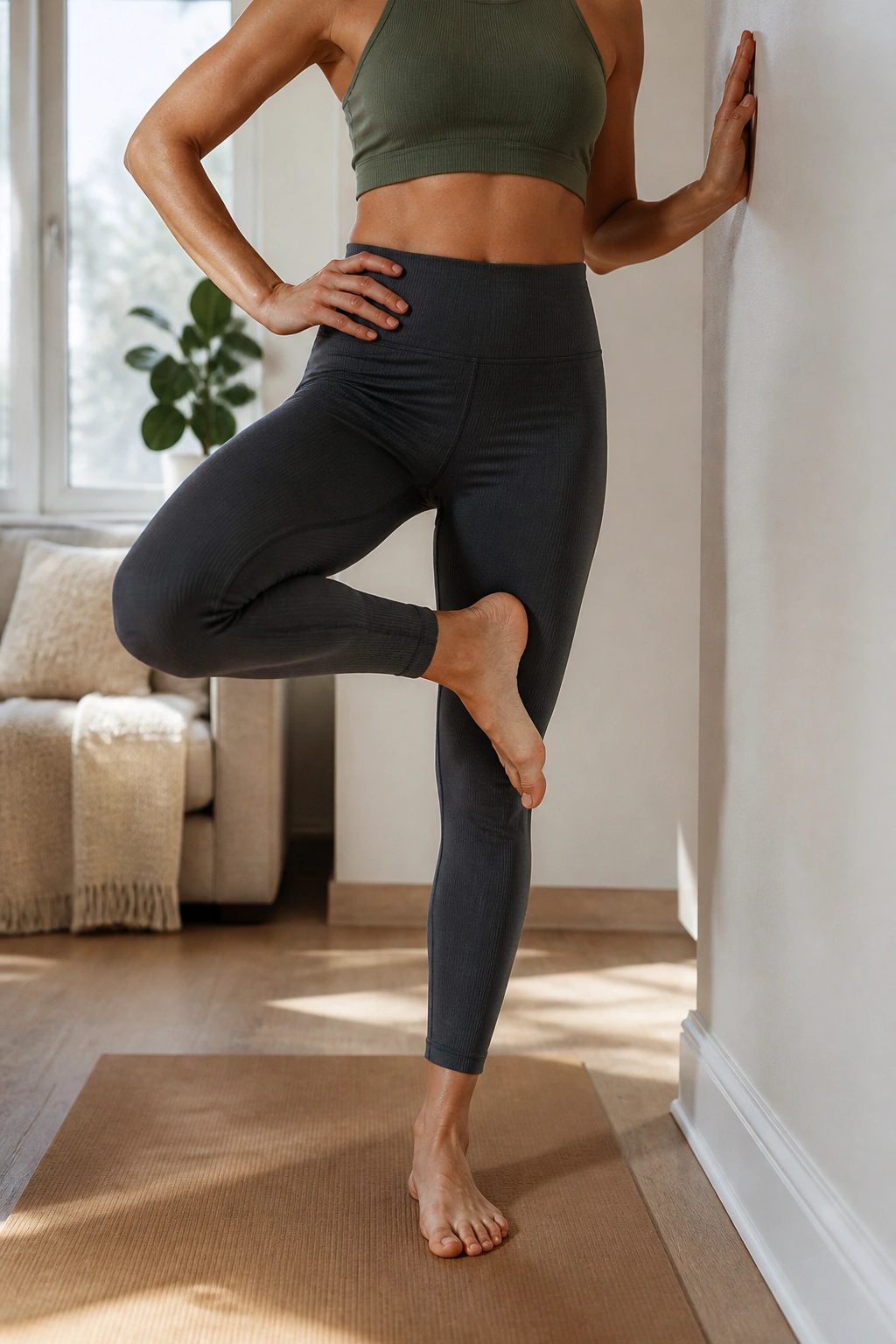
Unlike a stretch-only session, this one makes your feet do some work.
Balance yoga is underrated because it looks calm while it quietly trains the stuff that keeps you from wobbling on stairs, trails, or uneven sidewalks. Tree pose, half moon, and warrior III do a lot more than challenge focus. They ask the ankles to steady, the glutes to fire, and the small muscles under the foot to wake up. If you feel clumsy in single-leg work, this kind of practice pays off fast.
I’m a fan of using a wall here. No shame in it. The wall gives your body a reference point, which means you can work on alignment instead of just fighting to stay upright. Keep the standing foot rooted through the big toe mound, the little toe mound, and the heel. That tripod contact matters more than people think.
A good thirty minute sequence might use a wall for the first half, then taper away from it once the legs start to understand the job. Add heel raises, slow chair pose, and a few standing side leg lifts to round it out.
Best for: people who feel shaky in single-leg deadlifts, anyone who stands all day, and runners who want stronger feet without leaving the mat.
7. Core-Heavy Yoga for Days You Want to Sweat
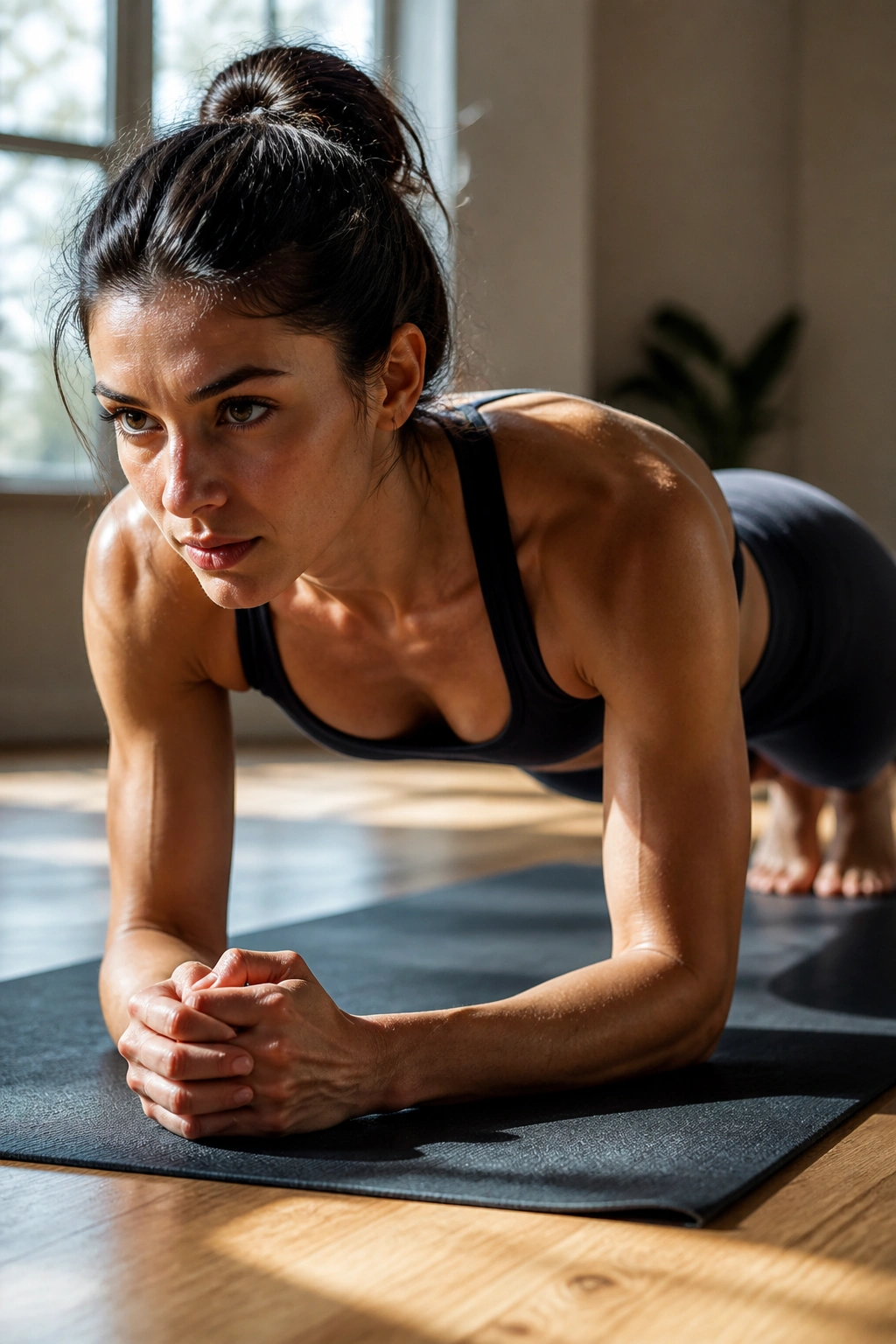
Core yoga works best when it feels honest.
That means you should feel your midsection working, but you should also be able to keep your breath under control. Start with tabletop knee taps, forearm plank, and a few rounds of slow cat-cow to wake up the trunk. Then move into side plank, boat, and low lunge twists. The floor work should feel controlled. Not rushed. Not sloppy. Controlled.
First Five Minutes: Wake Up the Midsection
- Cat-cow for 6 slow rounds
- Tabletop knee taps for 20 total taps
- Down dog to plank transitions for 4 to 6 rounds
Middle Fifteen Minutes: Earn the Sweat
- Forearm plank for 20 to 30 seconds
- Side plank on each side for 15 to 20 seconds
- Boat pose with bent knees for 3 rounds of 20 seconds
- Low lunge with twist, then step back and repeat on the other side
Last Ten Minutes: Let the Work Settle
- Happy baby
- Reclined twist
- A short bridge hold
- Savasana
If your wrists complain, drop to forearms or fists. If your lower back starts doing the job of your abs, shorten the lever by bending the knees. Good core work should feel like the center of the body is awake, not jammed up.
This is the session I use when I want a mat workout that feels earned.
8. Shoulder and Chest Openers for Rounded Posture
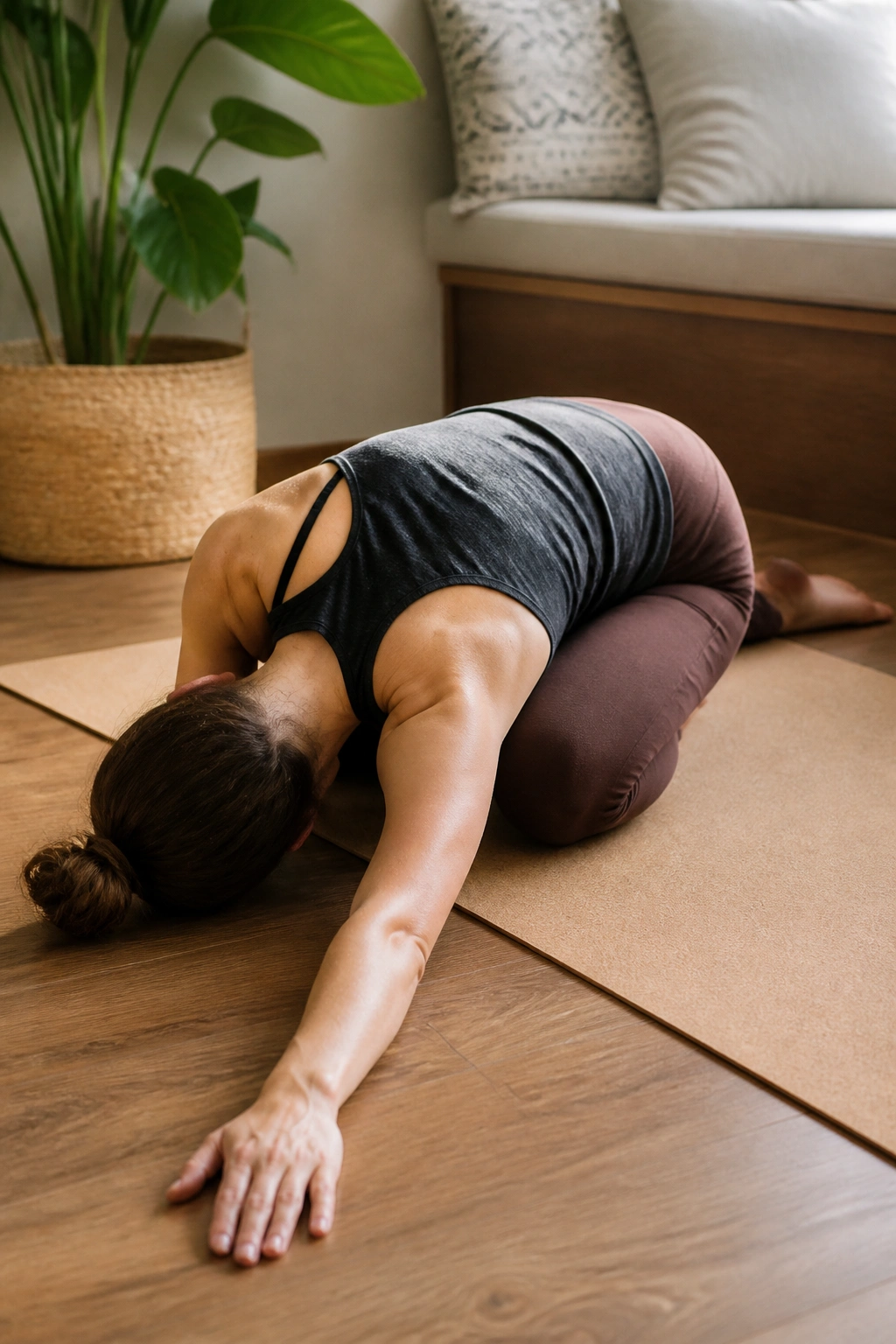
Why do shoulders stay tight even after a good stretch?
Because the front of the body spends so much time folded forward. Phones, desks, steering wheels, and grocery bags all pull the chest in. A smart shoulder session needs more than a quick clasp behind the back. It should open the upper chest, free the space between the shoulder blades, and give the neck a break from carrying everything.
What to Feel, Not Force
Start with puppy pose or a forearm version if your shoulders like support. Thread-the-needle works well here because it lets the upper back rotate without demanding a huge range. Add cactus arms on the floor, a strap chest opener, and maybe supported fish with a block under the upper back. That last one can feel oddly luxurious if you sit a lot.
The rule is simple: the stretch should feel broad, not sharp. If you feel it pinching in the front of the shoulder joint, back off and widen the angle. Use a towel or strap if your hands do not meet. There is no prize for pretzel arms.
A thirty minute version can stay mostly low to the ground, which makes it easy to settle into. When it works, your collarbones feel wider and your neck stops acting like it has a second job.
9. A Quiet Evening Sequence That Helps You Downshift
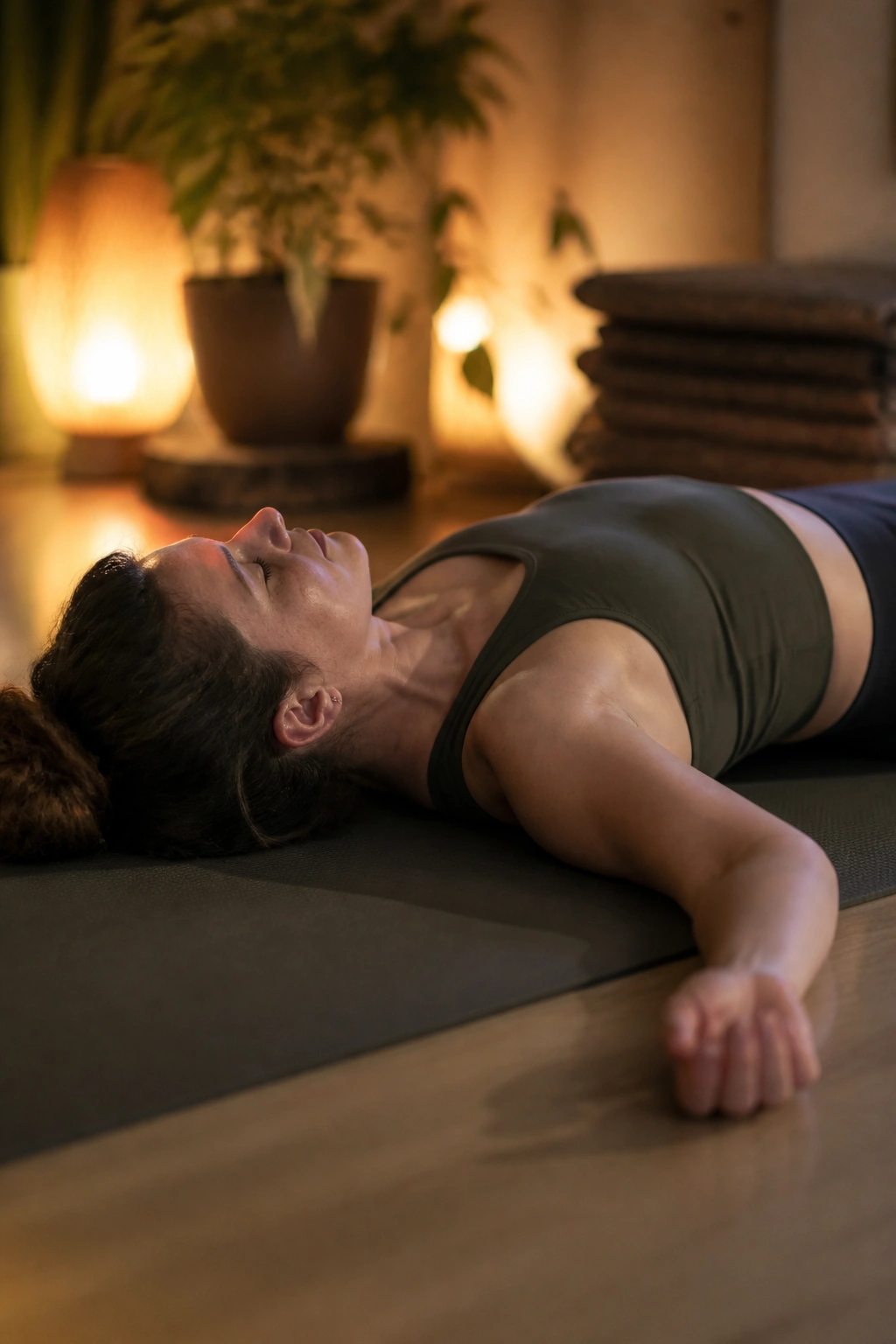
A bright room and a fast class can leave you buzzing.
Even if you like effort, there are nights when your body wants the opposite: floor work, long exhales, and shapes that stop demanding so much from your nervous system. A good evening session uses less standing, less balance, and more stillness. Legs-up-the-wall, reclined bound angle, supported child’s pose, and a long savasana usually do more than a pile of aggressive stretching.
The breathing matters here. Slow exhale. Longer than the inhale if you can manage it. That tiny shift can change the whole feel of the session, because it gives your body a signal to let go. Not all at once. Just enough.
I also like a dim room for this practice. Not dark, just softer. A harsh overhead light can keep your brain a little too alert, and that is the last thing a wind-down session needs.
One more detail: keep the transitions easy. Rolling from your back to your side and back again should feel unhurried. If the floor feels good, stay there. Stillness is not laziness here. It is the point.
10. Yin Holds for Tight Hips and a Busy Mind
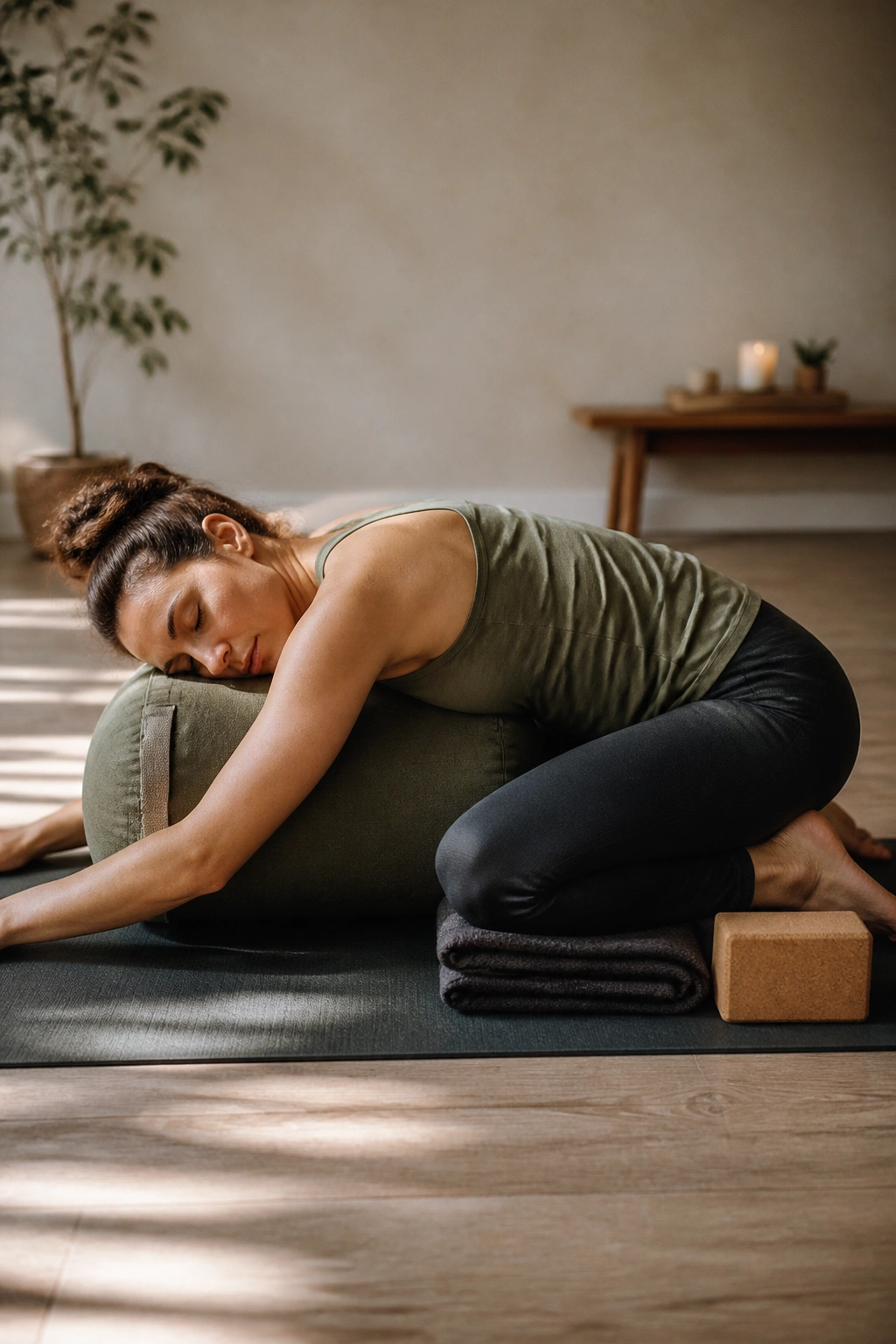
Yin is the session I reach for when my hips feel welded shut.
The whole point is time. Longer holds give the connective tissue a chance to ease open, and they give your brain something plain to pay attention to. A hip-heavy yin session might include butterfly, dragon, sleeping swan, caterpillar, and a reclined twist. Hold each shape somewhere between 90 seconds and 3 minutes, depending on how your body settles.
No bouncing.
Props make this better. A block under the thigh in sleeping swan can take pressure off the knee. A bolster in butterfly can keep the lower back from rounding too much. And if a shape creates sharp pain, come out. Yin asks for patience, not stubbornness.
What I like most is the mental effect. The slow pace forces you to notice little things: where the breath catches, where you brace, where you want to rush out of discomfort. That kind of awareness is useful, even when the hips barely move.
This is not the session for a rushed lunch break. It works best when you can stay on the mat long enough for the first wave of restlessness to pass.
11. Glute-Focused Standing Flow for Leg Strength
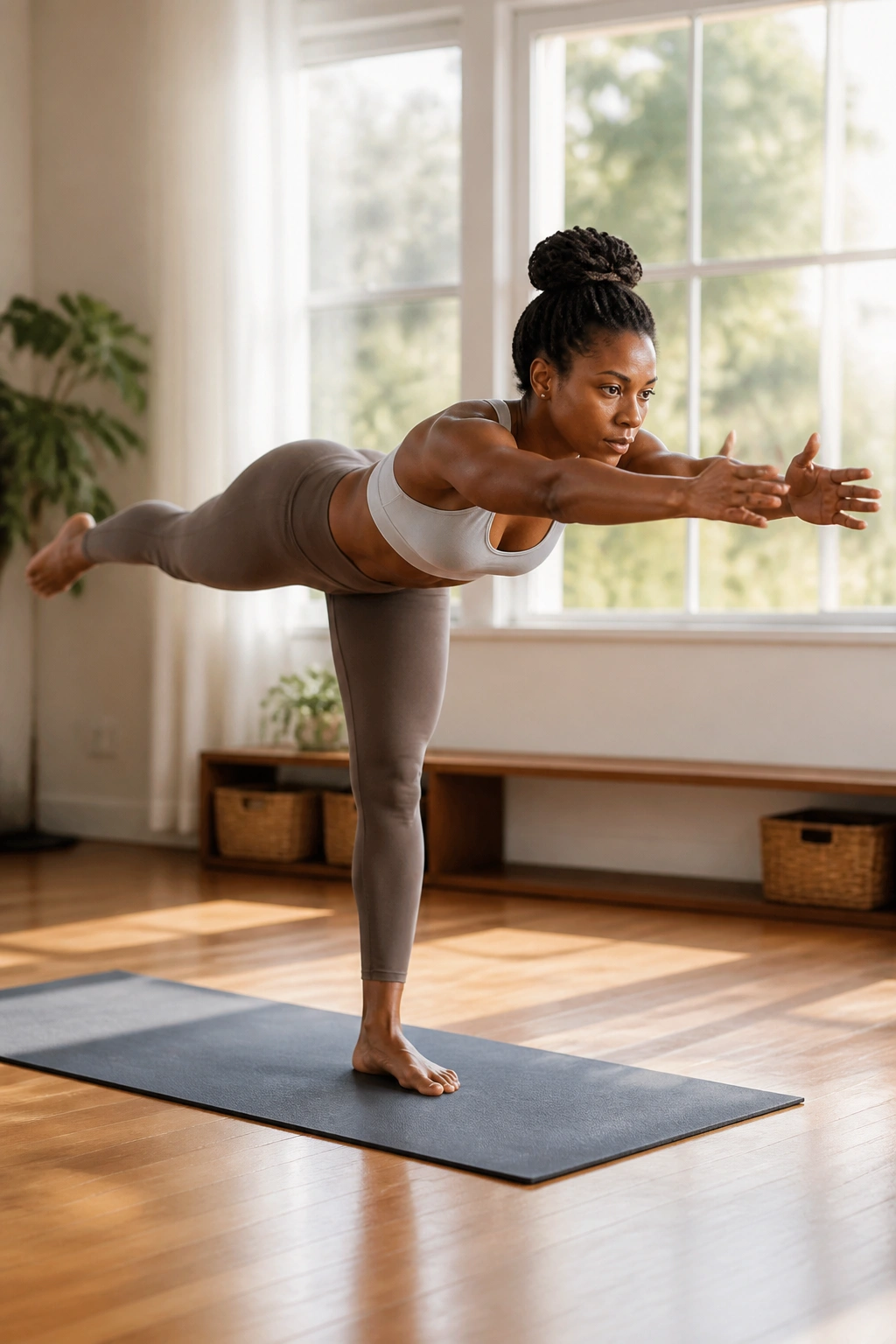
If squats bore you, yoga can still make your legs work.
A glute-focused yoga session looks more graceful than it feels. Chair pose lights up the thighs. Crescent lunges wake the back leg. Warrior III asks the glutes to stabilize the pelvis while the standing foot does a lot of quiet work. The burn is real, but it shows up in a different way than gym-style leg day. Less load, more control.
I like slow tempos for this session. Hold the bottom of chair for five breaths. Pulse the crescent lunge three times, then freeze. Step into bridge and press a block between the thighs if you want more inner-thigh and outer-hip connection. That little squeeze changes the feel fast.
A wall can help with warrior III, especially if balance is not your favorite part of the day. Keep the back leg active and the standing hip level. If the pelvis starts twisting open, shorten the range and try again.
Who it suits: runners who want better hip support, hikers who want steadier climbs, and desk workers whose glutes have gone to sleep. The session leaves the legs warm without needing a machine or a stack of weights.
12. Twists and Spine Mobility for a Cranky Midsection
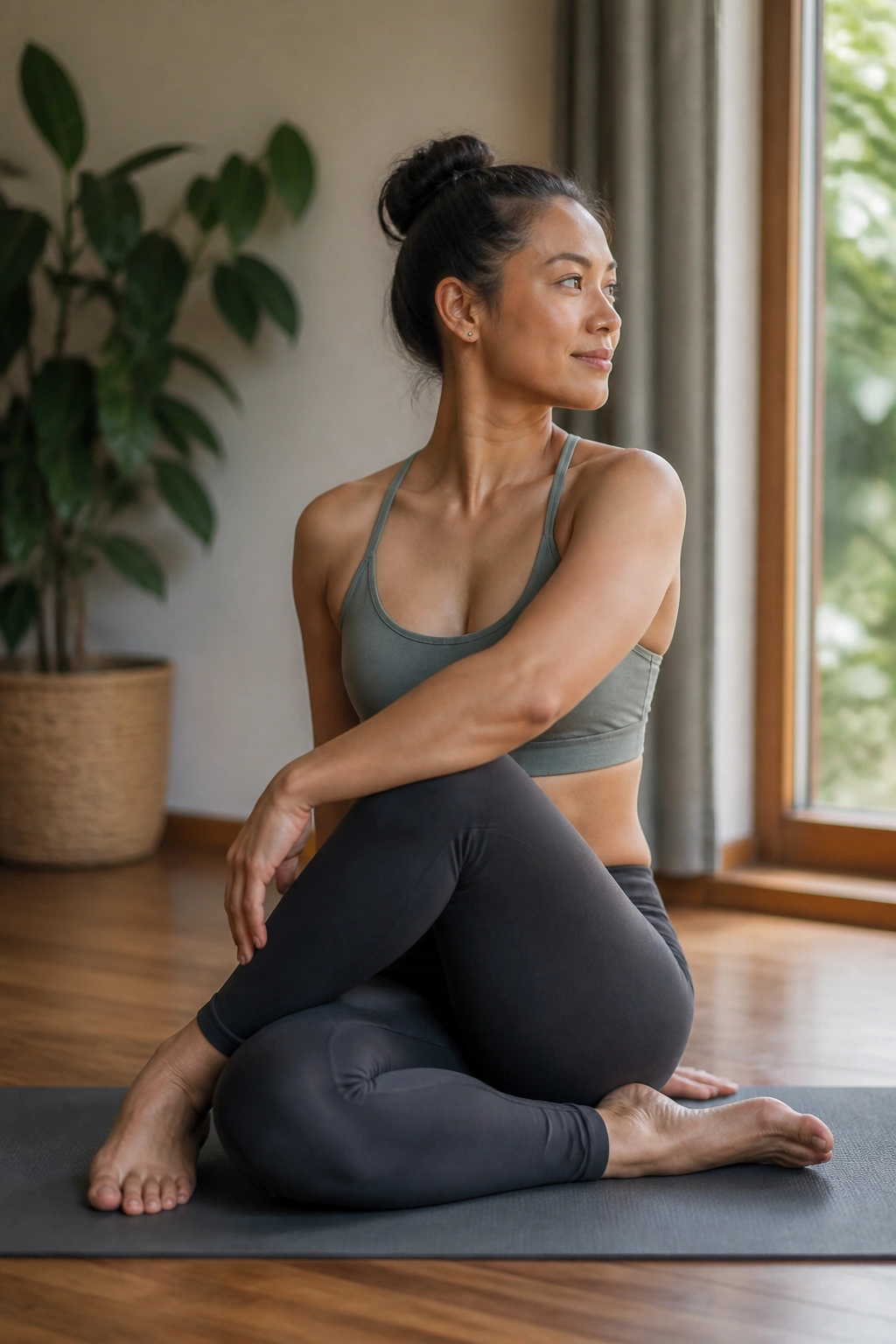
By the end of a good twist session, your ribs should feel like they have room again.
That is what makes twists so useful. They are not only about the spine; they’re about the spaces around it. Breath gets fuller. The upper back moves a little easier. Even the waist can feel less boxed in. The trick is to twist from the rib cage and upper back first, then let the rest follow. If you crank the lower back, the whole thing gets cranky fast.
The session can start on hands and knees with cat-cow, then thread-the-needle on both sides. Move into low lunge with a twist, keeping the pelvis steady. Supine twists and seated twists give you a quieter finish. I like to hold the twist on the exhale and soften on the inhale. That rhythm keeps the movement from turning into a wrestling match.
Gentle is smarter than deep here.
If the pose asks for too much, widen the stance or keep the top hand on the floor. The goal is space, not strain. A twist should make you feel more open through the chest and back, not like you spent ten minutes fighting your own torso.
13. A Thirty-Minute Pre-Run Yoga Warm-Up
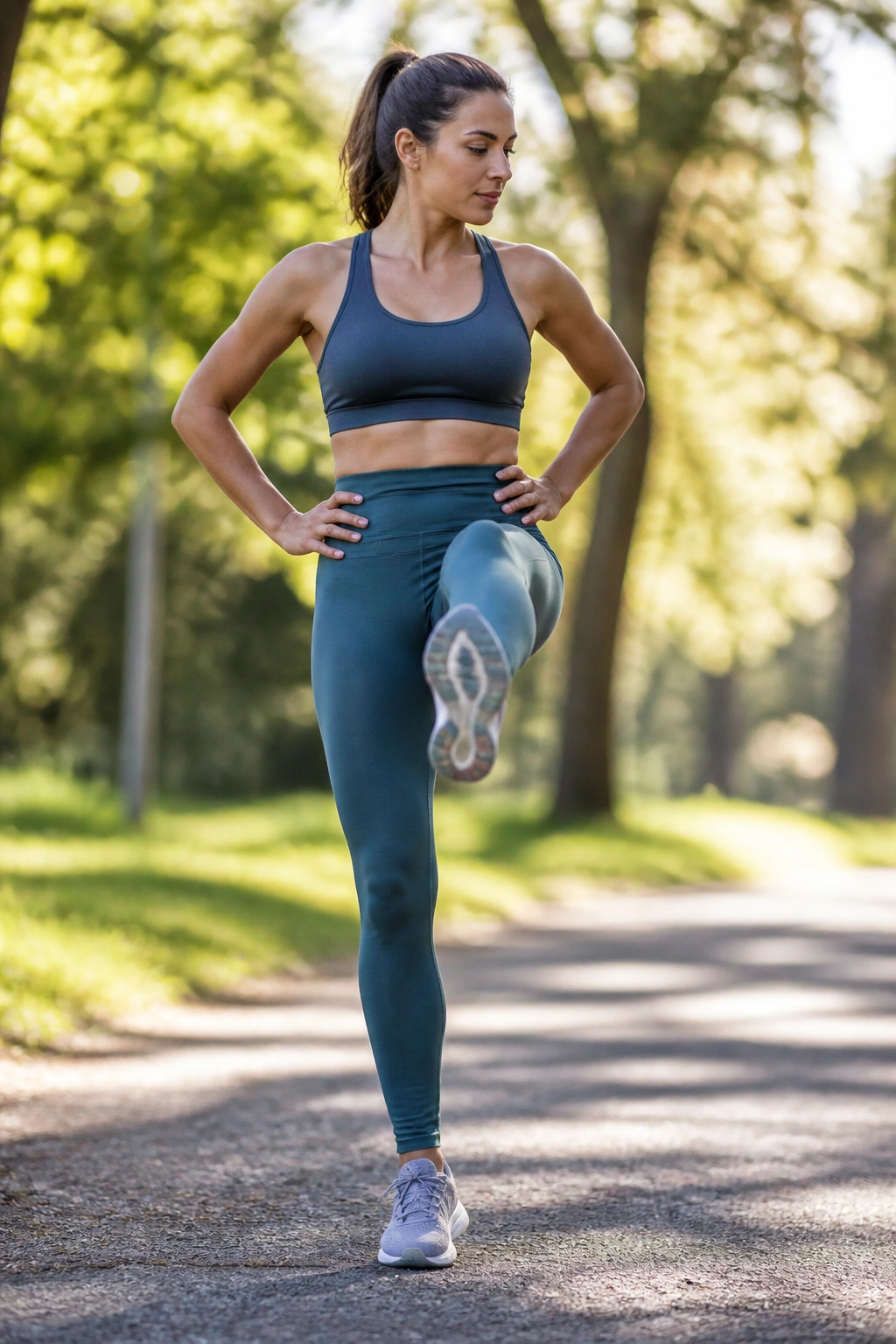
Before a run, long holds are a bad trade.
You want movement, not a big stretch that leaves the legs sleepy. A pre-run yoga warm-up should wake up the ankles, hips, and trunk while keeping everything springy. Think leg swings, low lunges, dynamic hamstring work, and a few short standing flows. The body should feel ready to move forward, not softened into the floor.
- 2 minutes of ankle circles and toe lifts
- 4 minutes of leg swings and marching in place
- 8 minutes of low lunge pulses and crescent lunge transitions
- 8 minutes of half sun salutations and standing side stretches
- 4 minutes of high knee marching or quick step-backs
- 4 minutes of easy breath and calf raises
Keep the range moderate. That matters. A deep pigeon or a long hamstring hold can leave the stride feeling dull for the first mile, which is not what you want. A little dynamic tension is better. The legs should feel coiled, not sleepy.
This is one of those sessions that works best when you stop trying to make it feel like a class. It’s a warm-up. Not a performance.
14. A Midday Energy Reset When You Feel Flat
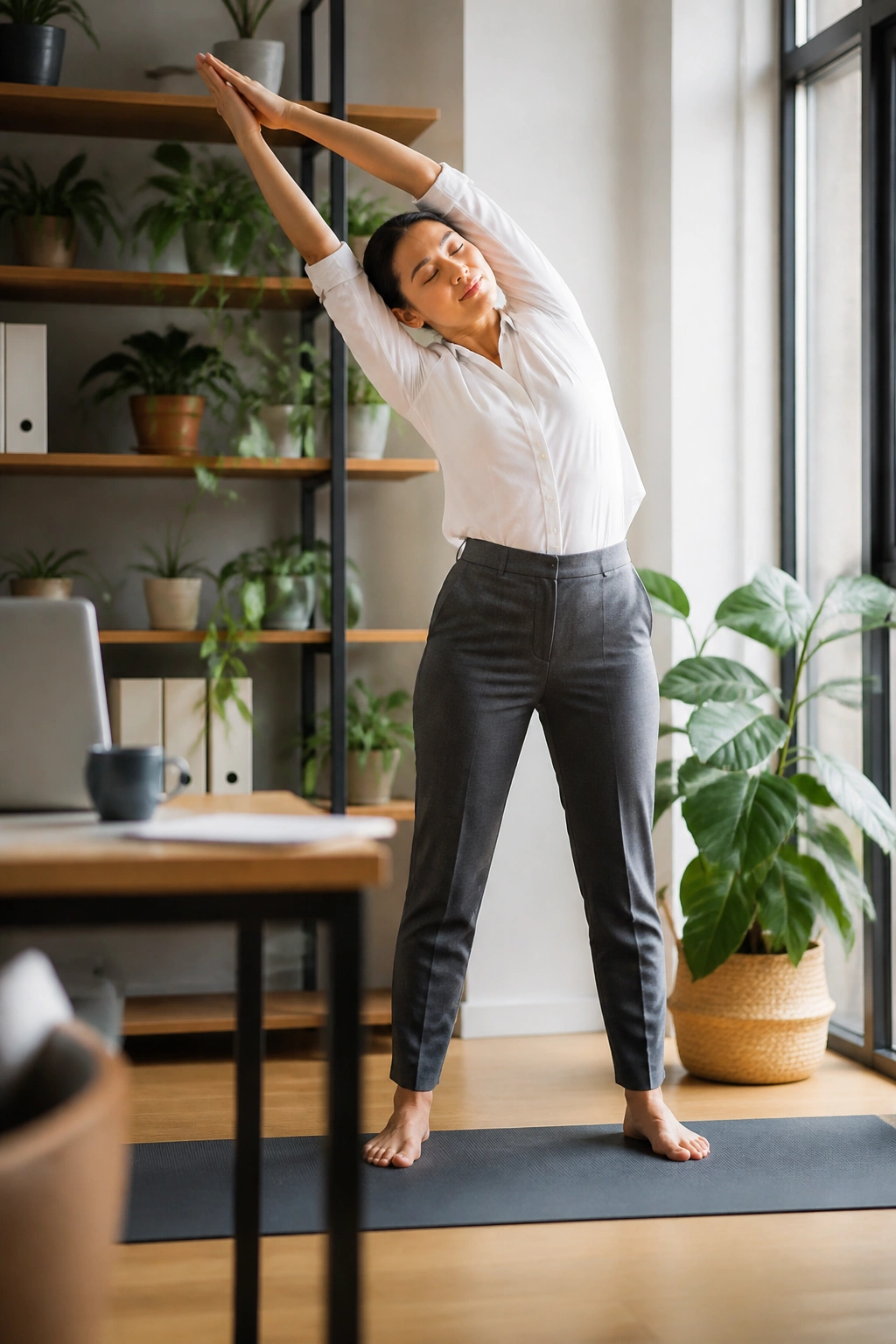
What do you do when your brain is foggy and your body feels flat?
You move in a way that is awake, not draining. A midday reset should be short on fuss and long on circulation. Start with a few rounds of standing breath, then add side bends, low lunges, and a short sequence of half sun salutations. A couple of gentle backbends can help too, especially if you’ve spent the morning folded over a desk.
The Best Shapes for a Slump
Mountain pose sounds boring until you stand in it with your feet rooted and your breath steady. After that, side stretches and cactus arms can open the chest enough to make you feel less compressed. I’d keep the floor work brief here and the standing work crisp. Too much floor time can deepen the fog.
One thing I like about this session: it doesn’t need to be intense to work. Five minutes of moving arms overhead, five minutes of lunge work, five minutes of twisting, and a few slow forward folds can be enough to shift the mood. If the head clears halfway through, stay with the pattern that helped.
Short, focused, and a little brighter. That’s the feel.
15. The All-Purpose Reset Flow for Everything Feels Off
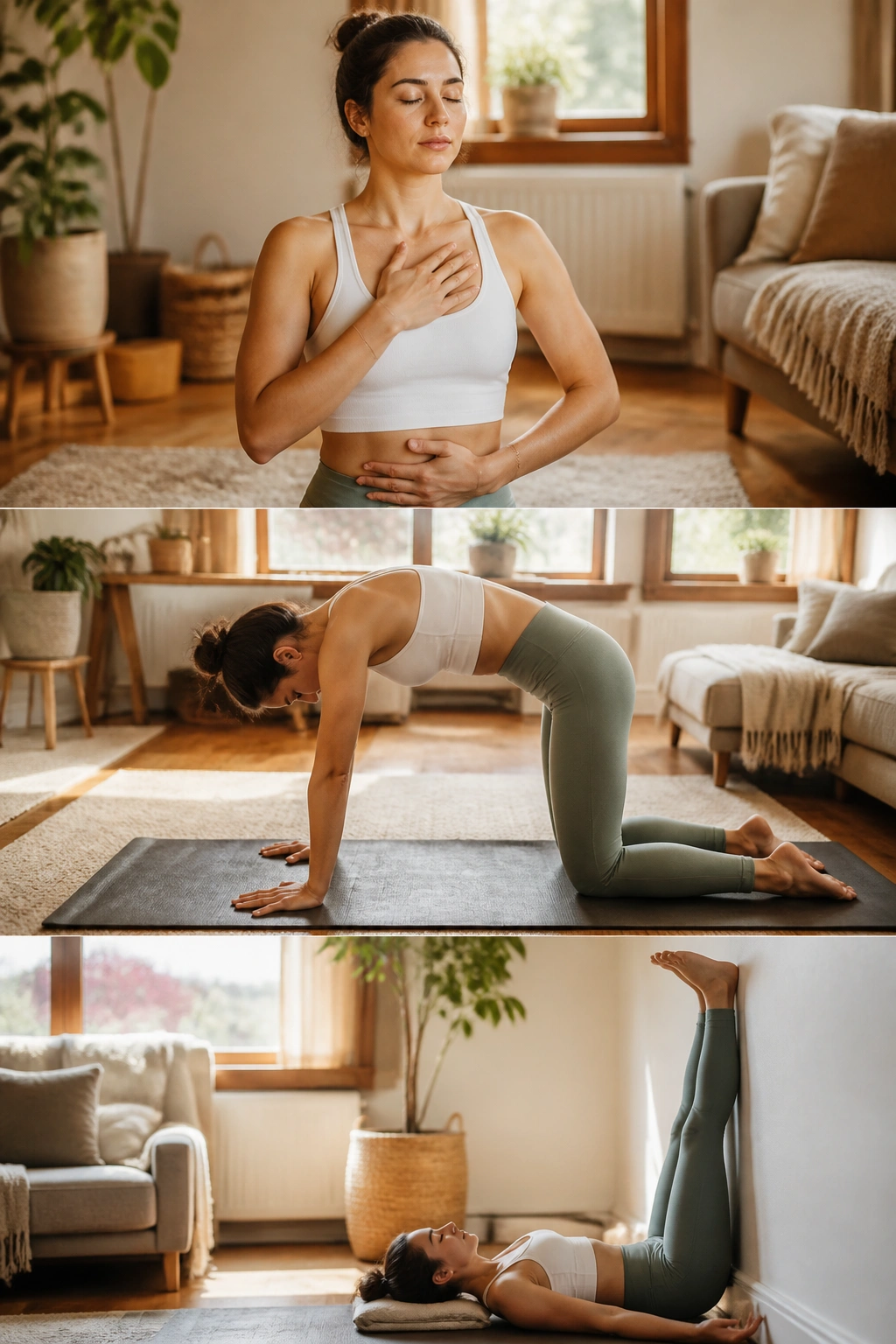
Some days you do not want to choose.
You do not want the sweaty session, the deep hip opener, or the long restorative hold. You want one practice that meets you where you are and gives you a way back into your body. Mine usually starts with breathing, moves through a few standing shapes, then spends the last ten minutes on the floor. Nothing fancy. Nothing showy. It just works when the day has been too noisy for a polished plan.
I’d build it like this: three minutes of breath, six minutes of cat-cow and down dog, eight minutes of lunge work, six minutes of balance or standing side angle, and seven minutes of supine twisting and legs-up-the-wall. That gives you motion, a little strength, and enough quiet at the end to feel like you’ve reset the system.
There’s a nice middle ground here. Not too soft. Not too hard.
If I were keeping only three sessions from this list, I’d save one for stiff mornings, one for post-run recovery, and one for nights when the floor feels better than standing. That mix covers most of real life, which is usually the point of a good thirty minute yoga practice anyway.
