



After a long run, the calves, hips, and feet do not always agree to stop when you stop. They keep humming along for a while, which is why the best stretches for runners after every long run are the ones that calm the body down instead of turning recovery into a second workout.
A good post-run routine is calm, specific, and a little unglamorous. Hold a stretch long enough to let the muscle settle — usually 20 to 45 seconds — breathe out slowly, and back off the second the sensation turns sharp. No bouncing. No yanking on your foot like you’re trying to start a lawn mower. And if one side feels far tighter than the other, that is useful information, not a flaw.
Long runs tend to pull on the same few places over and over: calves from repeated push-off, hip flexors from all that leg swing, quads from hills, hamstrings from braking, and the deep glute muscles that try to keep your pelvis from wobbling. The details matter more than people think. A small change in knee angle or pelvis position can move a stretch from “barely there” to the exact spot that needs it.
You do not need all 15 every time. Pick the ones that match the run you just finished, and save the full lineup for the days when your legs feel like they belong to someone else.
1. Wall Calf Stretch for Runners
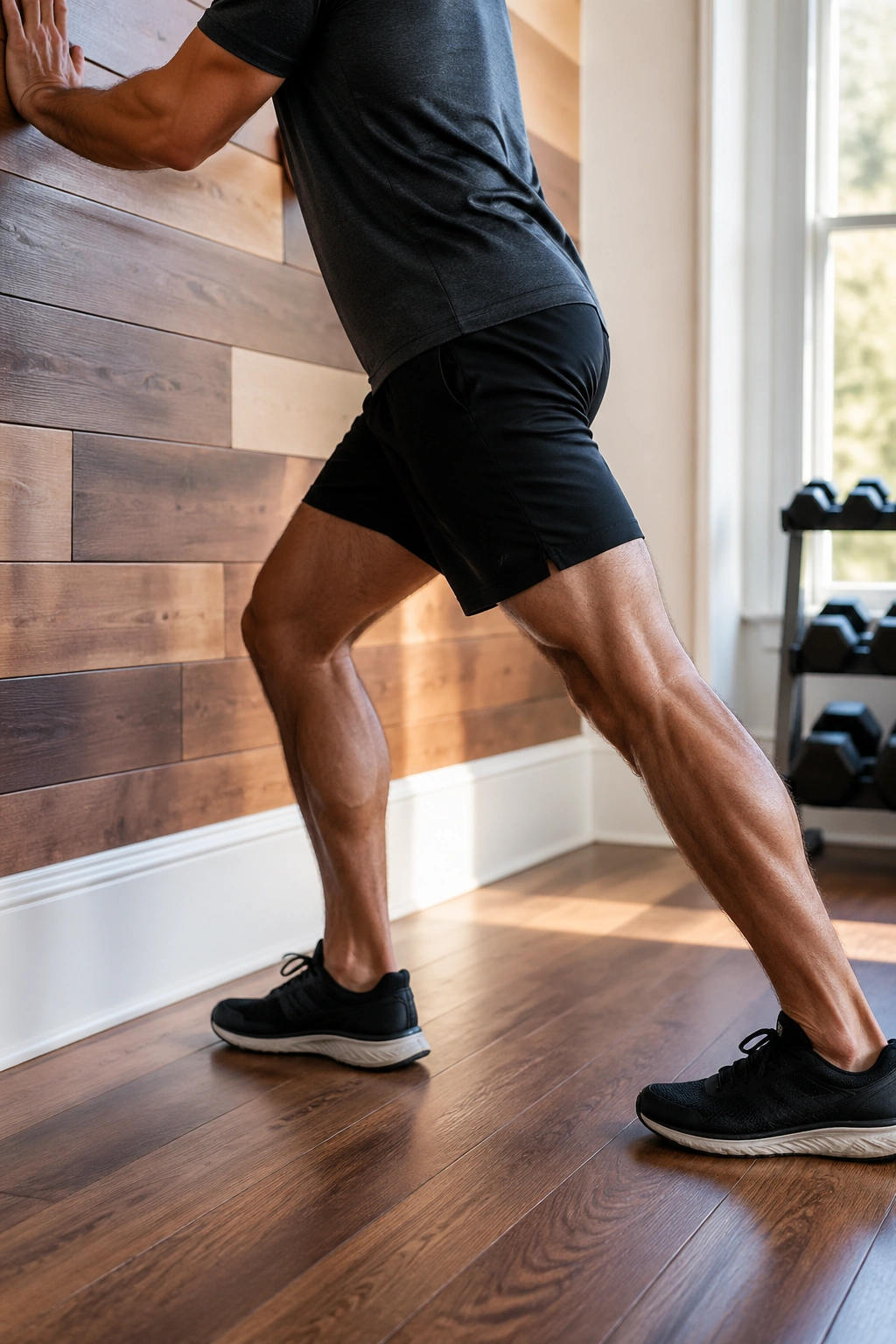
Your calves are usually the first place to complain after a long run.
That sounds obvious, but plenty of runners stretch the ankles by doing random toe points or standing around in socks on a carpet. The wall stretch is better because it loads the calf in a way the muscle understands: heel down, leg long, body angled forward, and no cheating with a tiny bend at the knee.
How to Set It Up
Stand facing a wall with both hands on it. Step one foot back about 2 to 3 feet, keep the back heel flat, and point the back toes straight ahead. The front knee bends slightly while the back leg stays long. You should feel the stretch high in the calf, not in the Achilles tendon.
- Keep the back foot heavy.
- Press the back heel into the floor.
- Hold for 30 to 45 seconds on each side.
- Switch sides without rushing.
If the stretch lands too low, shorten your stance a little. If it lands behind the knee, you’ve probably stepped too far back and locked the leg out hard. Small adjustments fix most of the annoying stuff.
One good calf stretch beats three sloppy ones.
2. Bent-Knee Soleus Stretch
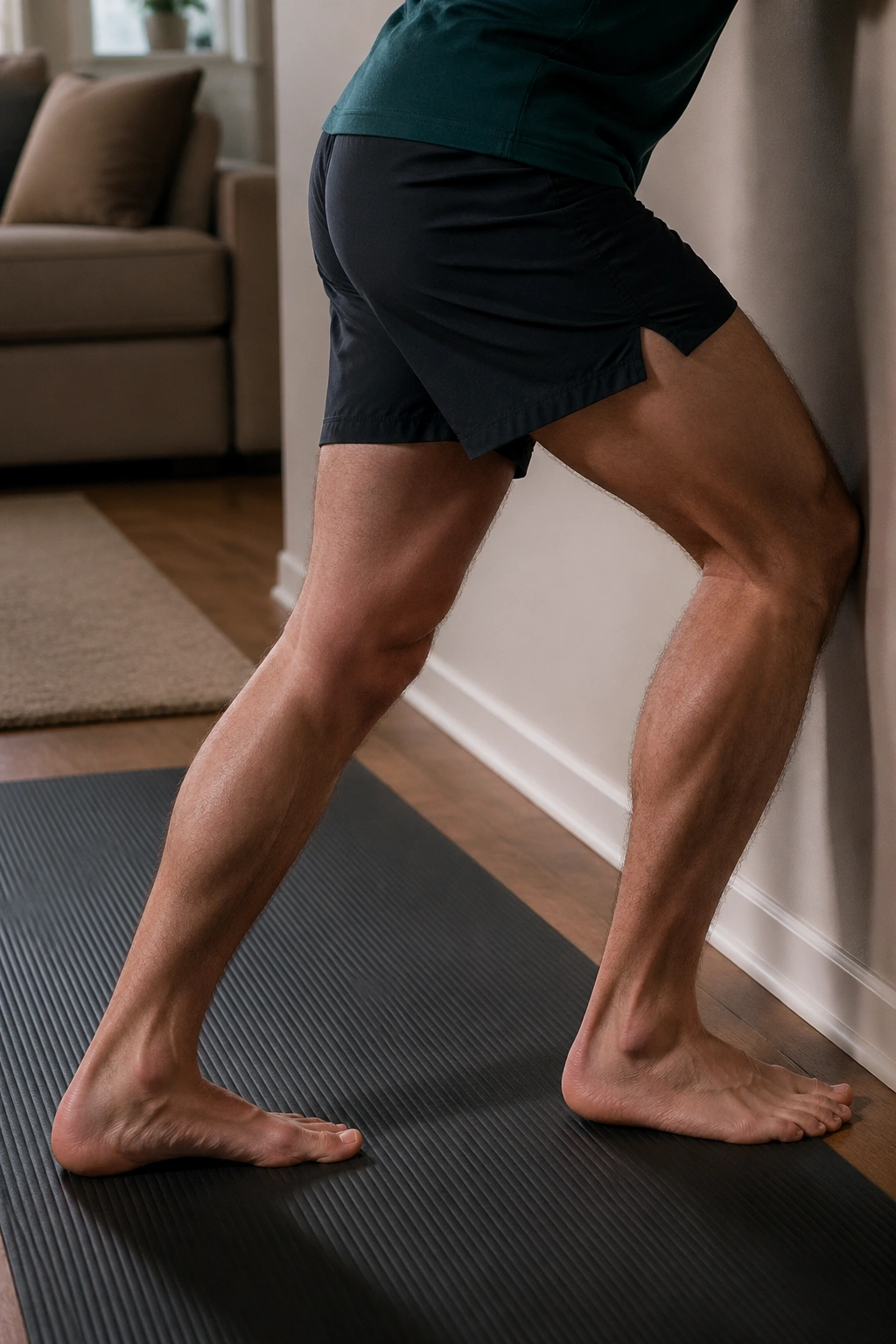
Most runners stop at the straight-knee calf stretch and miss the deeper layer.
That deeper layer is the soleus, and it matters more than people admit, especially after hills, fartlek sessions, or runs where you spent a lot of time on the balls of your feet. The bent-knee version shifts the work lower in the calf and closer to the ankle. It feels less dramatic than the straight-leg stretch, which is exactly why it gets skipped.
Here’s the version I like: keep one foot back, bend both knees a little, and lower your hips straight down while the back heel stays glued to the floor. The stretch should feel broader and lower, almost like the calf is spreading out rather than lengthening in one line. Hold 20 to 30 seconds, come out of it, then repeat once more.
If your heel pops up, you’re losing the point of the stretch. If your arch collapses hard, shorten the stance and keep the pressure more even through the foot. Simple. Also, do not rush this one after a hilly run; the soleus often tightens up when the lower leg has been doing too much work without a break.
3. Half-Kneeling Hip Flexor Stretch for Runners
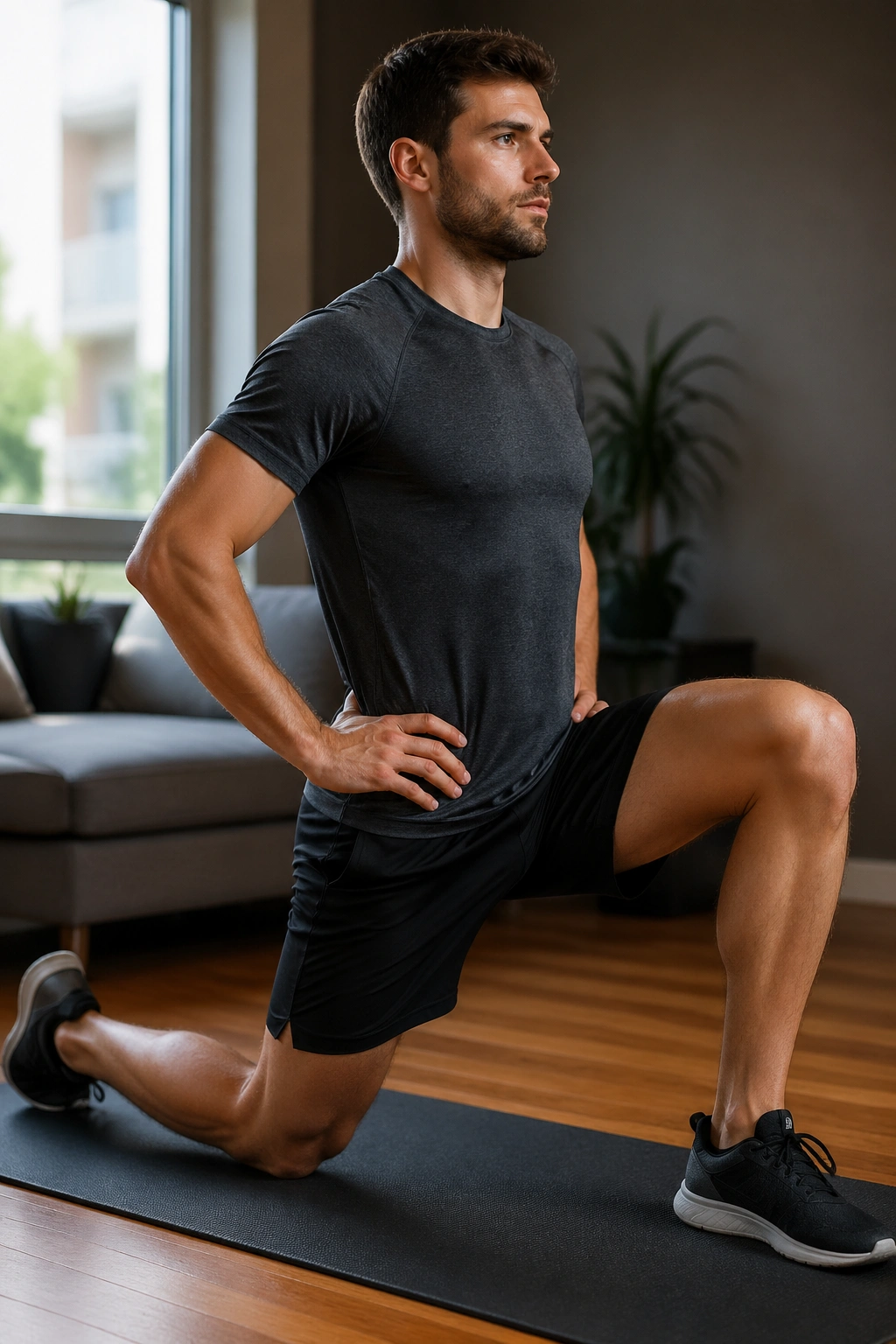
Why does the front of the hip feel so stubborn after a long run?
Because hip flexors spend mile after mile helping lift the thigh forward, and they hate being ignored afterward. A lot of people kneel into this stretch and then dump the pelvis forward, which turns it into a low-back arch instead of a true hip opener. That’s the part that makes it feel fake.
Set the Pelvis First
Drop one knee to the floor with a folded towel under it if the surface is hard. Bring the other foot forward so both knees sit at about 90 degrees. Before you lean forward, tuck the tailbone just a little and squeeze the glute on the kneeling side. That tiny posterior tilt is the whole trick.
Now slide the hips forward only a few inches. You do not need a big lunge. If the stretch is done well, you’ll feel it across the front of the hip and upper thigh on the kneeling side.
- Keep the ribs from flaring up.
- Stay tall through the chest.
- Hold 30 to 40 seconds.
- Switch sides and breathe into the tight spot.
A pad under the back knee helps more than people think. So does patience. This stretch gets better on the second breath, not the first.
4. Standing Quad Stretch With a Tucked Pelvis
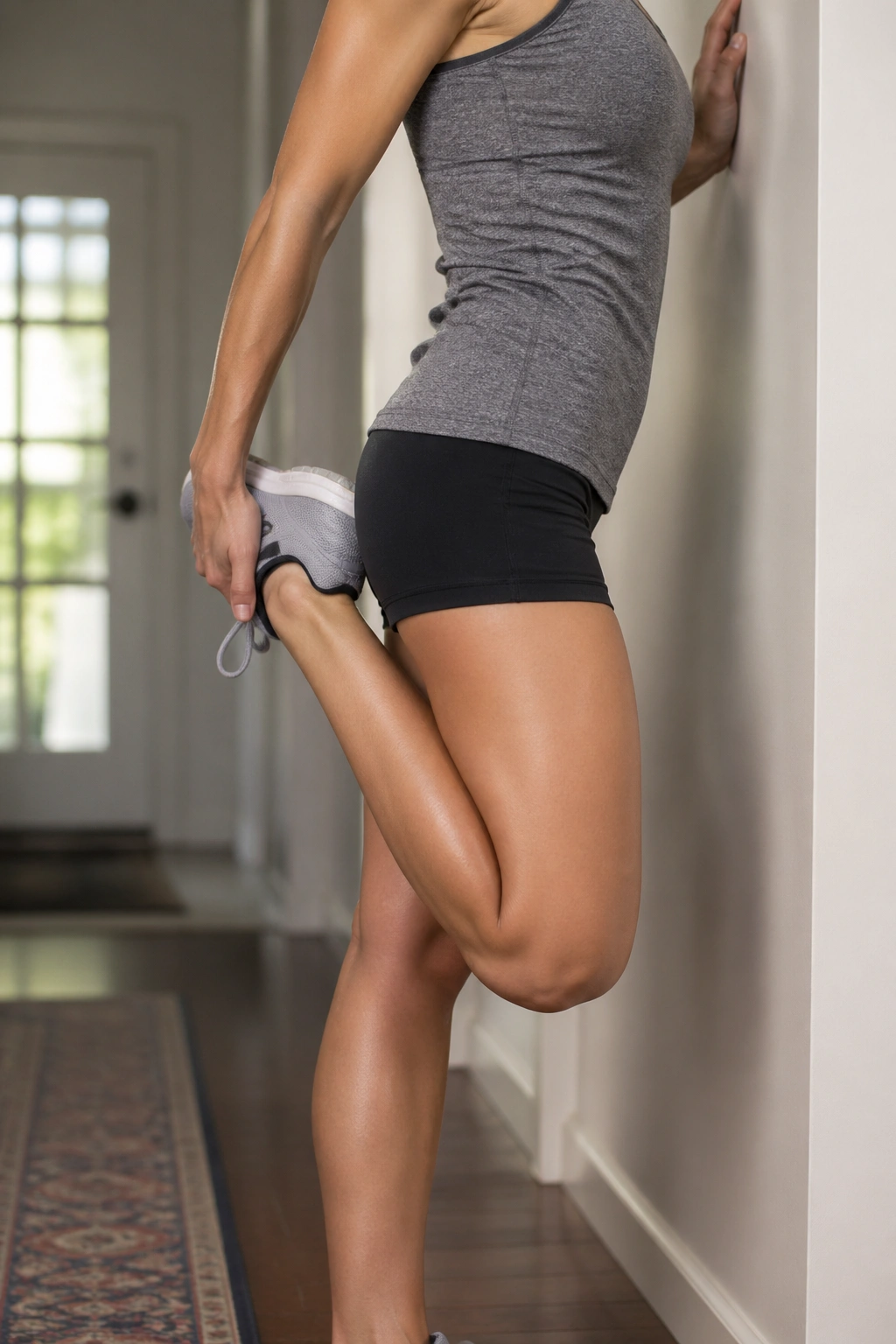
If you’ve ever grabbed your ankle and felt the stretch mostly in your lower back, this is the fix.
The standing quad stretch can be helpful or sloppy, and the difference comes down to one small thing: pelvis position. Without that, you’re just folding your leg back and hoping for the best. With it, the front of the thigh opens up cleanly, especially after hills, hill repeats, or a long run with lots of climbing.
Stand tall near a wall, tree, railing, or chair. Bend one knee, catch the foot behind you, and bring the knees close together. Before you pull the heel in, lightly squeeze the glute on the stretching side and tuck the tailbone under a touch. Then keep the knees pointing down instead of letting the lifted knee drift outward.
- Hold onto support if balance is shaky.
- Keep the standing leg soft, not locked.
- Do 20 to 30 seconds per side.
- Release slowly; don’t let the foot snap away.
A small bend in the standing knee is fine. A huge back arch is not. That’s the part most runners miss, and it’s why the stretch feels dramatic in the wrong place. Get the pelvis set first, and the quad does the rest.
5. Supine Hamstring Stretch With a Strap
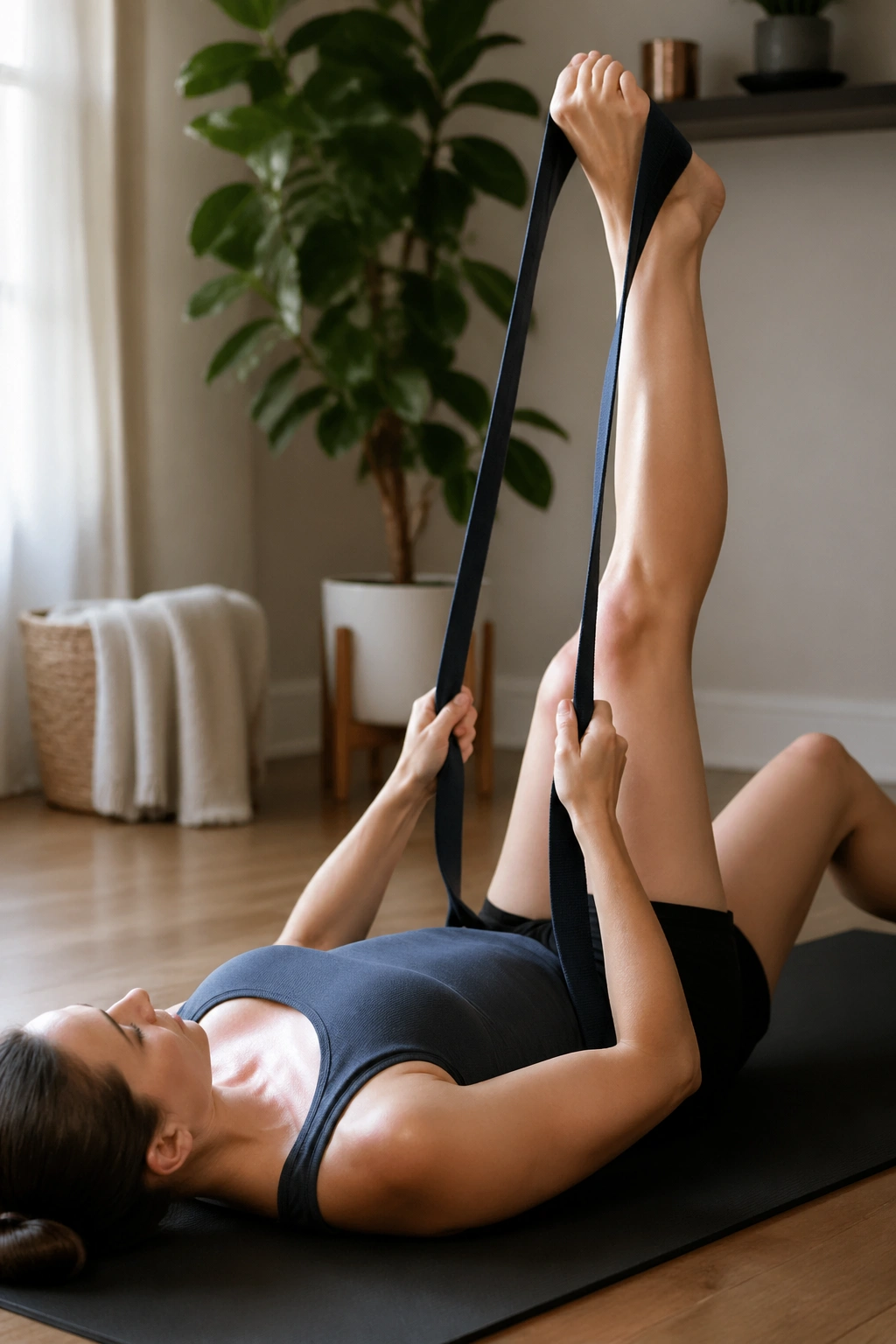
Lying on your back is the easiest way to stop cheating.
That’s the real charm of the supine hamstring stretch. Once you’re flat on the floor, the lower back can’t throw its weight into the movement, and the hamstring has to do the actual work. A strap, towel, or even a long belt around the foot gives you control without forcing the leg too high.
Start with one knee bent and one leg reaching up. Loop the strap around the ball of the foot, then straighten the leg only as far as you can while keeping the opposite hip heavy on the floor. The leg does not need to be locked out. In fact, a small micro-bend at the knee often gives a better stretch and keeps the back of the knee from yelling at you.
Keep the toes relaxed if your calf gets involved too much. Keep the lower back quiet if you feel a tug there. Hold the position for 30 seconds, breathe out slowly, and let the thigh soften instead of trying to force more range. That’s the part most people miss. They tug harder, and the muscle braces harder.
If one side is much tighter, don’t yank it into equality. Spend one extra round on that side and move on.
6. Reclined Figure-Four Stretch for Tight Hips
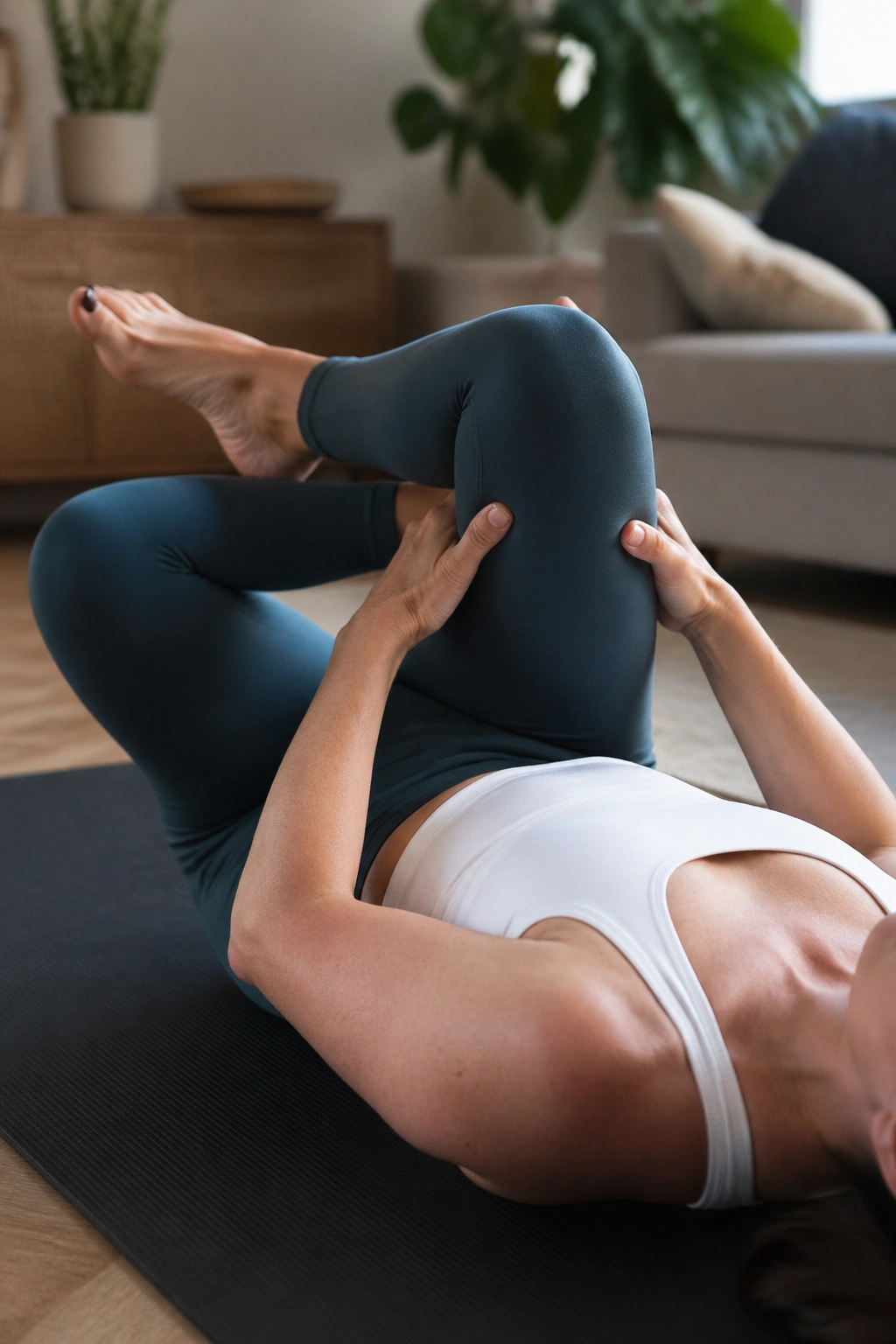
The reclined figure-four is friendlier than the seated version, and I like it better after a long run.
Why? Because lying down takes balance out of the picture. Your hip flexors can relax, your back can rest, and you can bring the knee in only as far as the glutes and deep hip muscles allow. The seated version is fine, but after a long run it sometimes feels like too much all at once, especially if the lower back is tired.
Lie on your back with both knees bent. Cross one ankle over the opposite thigh so the legs make a rough figure four. Flex the crossed foot if the knee likes that better, then hold behind the uncrossed thigh and draw it toward you. The stretch should land in the outside of the hip and deep glute, not in the knee joint.
This is a good one for runners who feel stiff after longer efforts on pavement, or after routes with lots of turns and uneven camber. It gives the hip a chance to open without forcing rotation through the spine.
Hold 30 to 45 seconds per side. If the knee feels pinchy, back off. A wider angle usually helps. This one should feel like a release, not a test.
7. Supported Pigeon Pose for Glutes
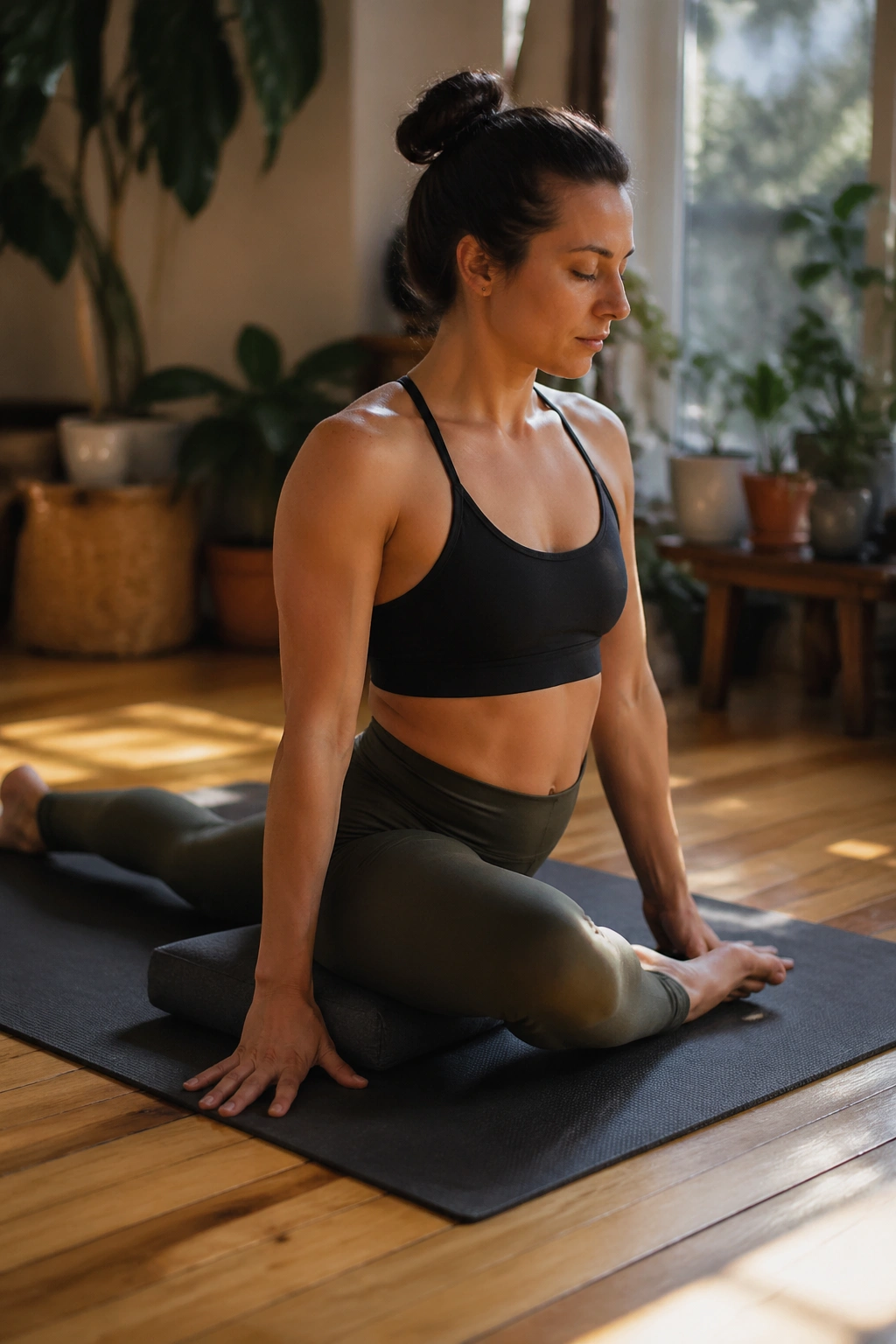
Pigeon pose has a fan base for a reason, but the supported version is the one I trust after a long run.
The full shape can be too aggressive when your glutes, hip capsule, and low back are already tired. A folded blanket or yoga block under the front hip takes the edge off and keeps you from collapsing into the stretch and pretending that counts as mobility. It does not.
How to Keep It Useful
Set one shin in front of you and slide the other leg straight back. The front shin does not need to be parallel to the mat. That’s a yoga photo pose, not a law. Keep the front foot flexed if the knee prefers it, and place a cushion under the hip on the bent-leg side if one side sits much higher than the other.
From there, breathe into the back of the hip. You should feel the stretch in the deep glute and outer hip, not a sharp twist in the knee.
- Stay upright if the back feels crowded.
- Fold forward only if the breath stays easy.
- Hold 20 to 30 seconds first, then build to 45 seconds later.
- Switch sides carefully; the first leg often feels stiffer when you come out.
If pigeon feels like a fight, switch to reclined figure-four. That is not quitting. That is a smart call after a hard run.
8. Butterfly Adductor Stretch
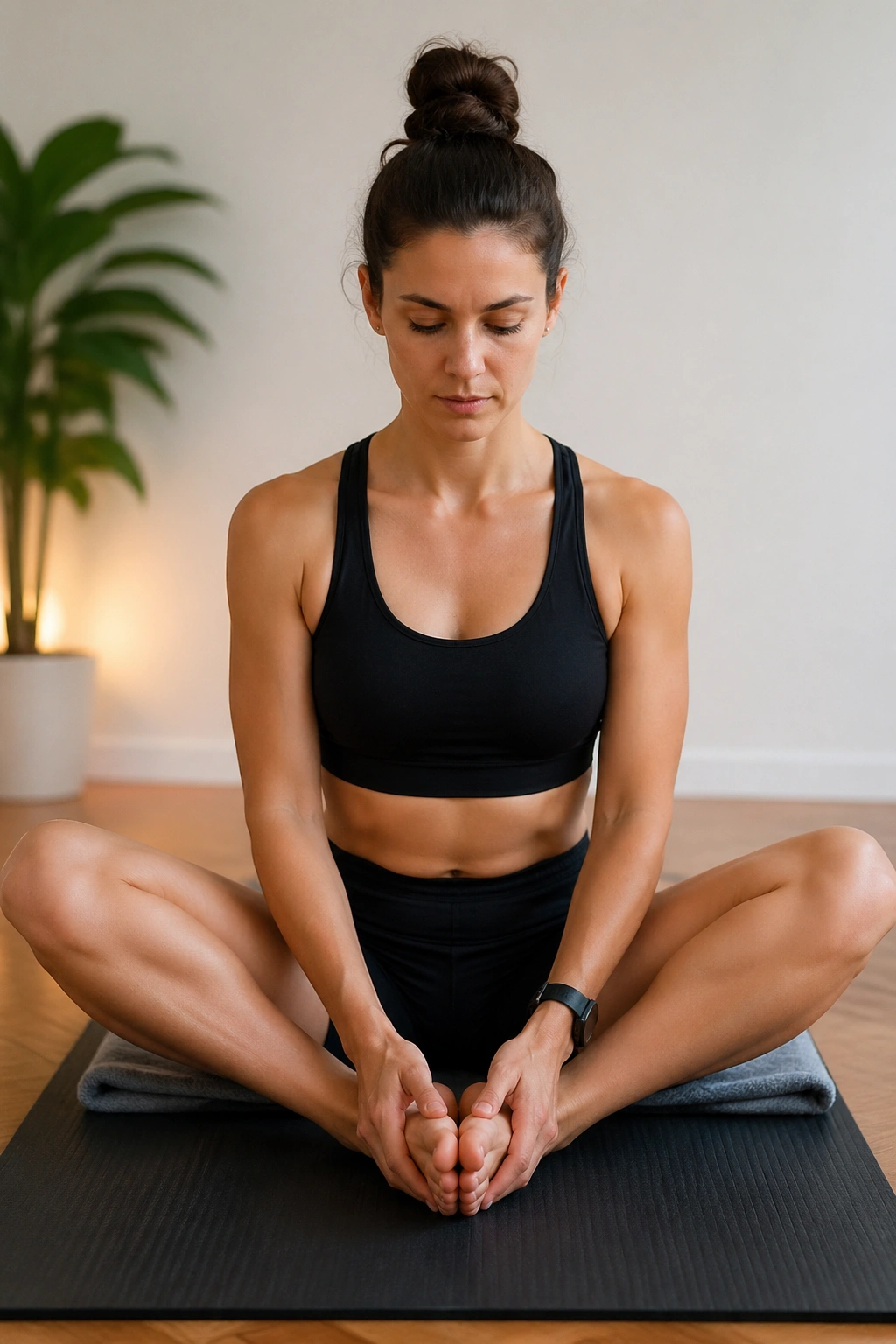
The inner thigh gets ignored all the time, and runners pay for that on the next stride.
Butterfly is simple: sit with the soles of your feet together, let the knees fall outward, and hinge forward from the hips. What makes it useful is not how low you get. It’s whether you stay tall enough to feel the adductors lengthen instead of rounding the back into a soft slump. A lot of people dump their chest toward the floor and miss the target completely.
Put a folded towel under your hips if your pelvis tips backward. That tiny lift makes the stretch easier to control. Then press the feet together lightly and let gravity do the rest. There’s no prize for forcing the knees down. In fact, pushing on them hard can make the hips clamp up.
Hold 30 seconds and take a slow breath every few counts. If one inner thigh feels tuggy after a long run with lots of turns or a faster finish, spend an extra round on that side by leaning slightly toward it. Keep the movement gentle. Adductors tend to guard fast.
This one is not flashy. It works because it asks very little from a tired body.
9. Low Lunge With a Thoracic Twist
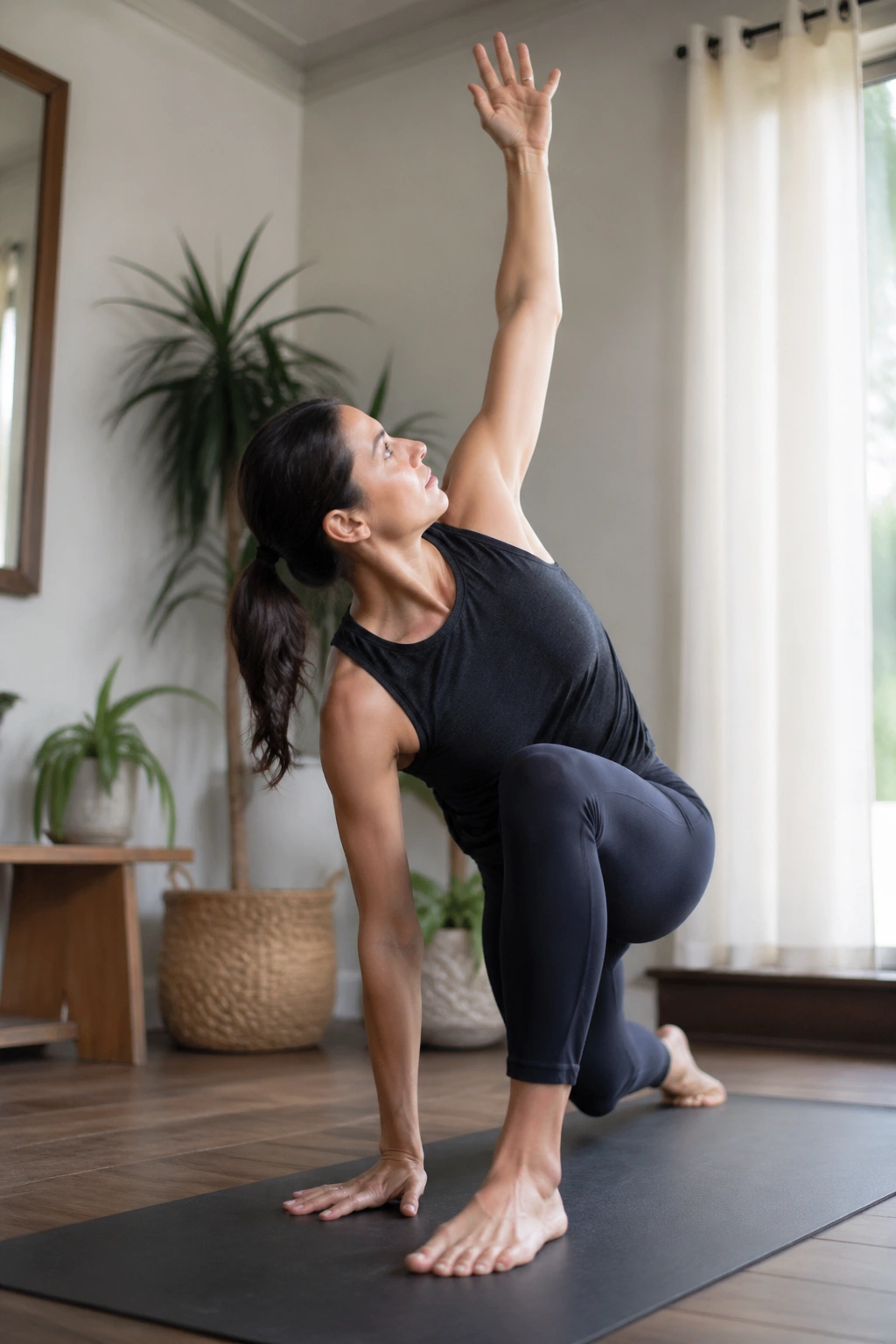
Why mix a hip stretch with a twist?
Because long runs do more than tighten legs. They often lock up the upper back, too, especially if your arms got tense near the end or you spent time staring at the ground. This stretch solves two problems at once: the front of the hip opens, and the rib cage gets a chance to rotate again.
Start in a low lunge with the back knee down and the front foot flat. Place the hand opposite the front foot on the floor or a block inside the leg. Then reach the other arm toward the ceiling and turn from the ribs, not the knee. The back leg stays long and the front hip keeps drifting forward just enough to feel a stretch.
Rotate From the Ribs, Not the Knee
That part matters. If the twist comes from the planted knee, the stretch turns sloppy and can get cranky fast. Keep the lower body steady, let the chest follow the hand, and stop when the breath gets tight.
Take 4 to 5 slow breaths on each side. If the neck starts bossing the movement, soften the gaze and look straight ahead for a breath or two. You want the twist to feel clean, not cranked.
This is a good one for runners who get stiff through the middle of the back after long, repetitive arm swing. It restores a little room.
10. Child’s Pose Side Reach
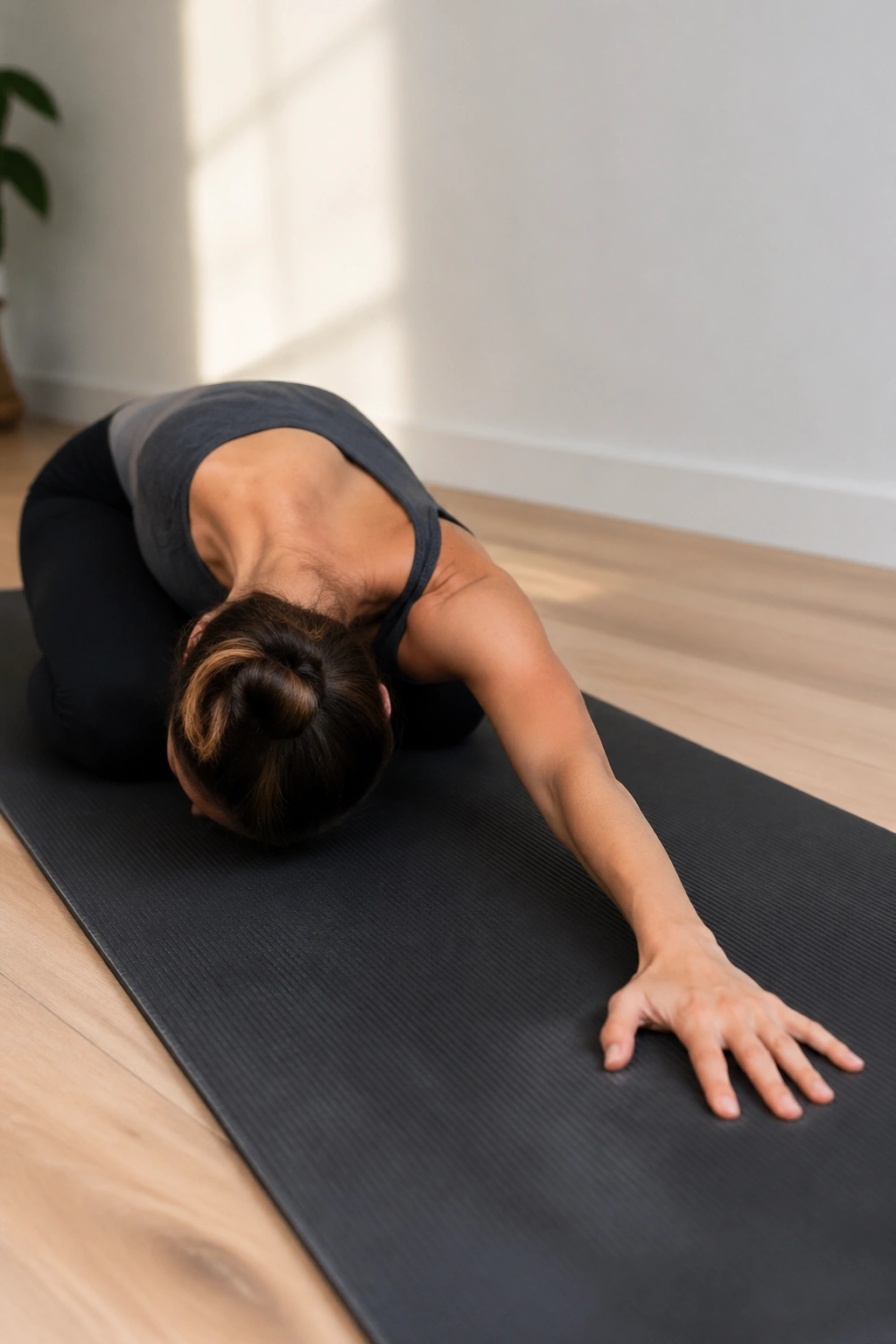
Shoulders often creep upward during a long run, even when you swear you’re relaxed.
By the time you get home, the upper back can feel oddly packed, and child’s pose with a side reach is a clean way to open the lats, side body, and ribs without asking the legs to do much more work. The stretch is quiet, which is part of the appeal after miles of pounding.
Kneel on the floor, sit the hips back toward the heels, and walk both hands forward. Then walk the hands over to the right until the left side body lengthens, hold for a few breaths, and switch. You should feel the stretch under the armpit and along the side ribs, not in the low back.
A rolled towel between the hips and heels can make this far more comfortable if the knees are tired. If your arms feel long enough, reach the fingertips ahead and then gently angle them to one side.
- Hold each side for 20 to 30 seconds.
- Keep the neck soft.
- Breathe into the side that feels short.
- Use a cushion under the shins if kneeling feels rough.
A small stretch here often changes how the whole recovery session feels. Weird, but true.
11. Couch Stretch
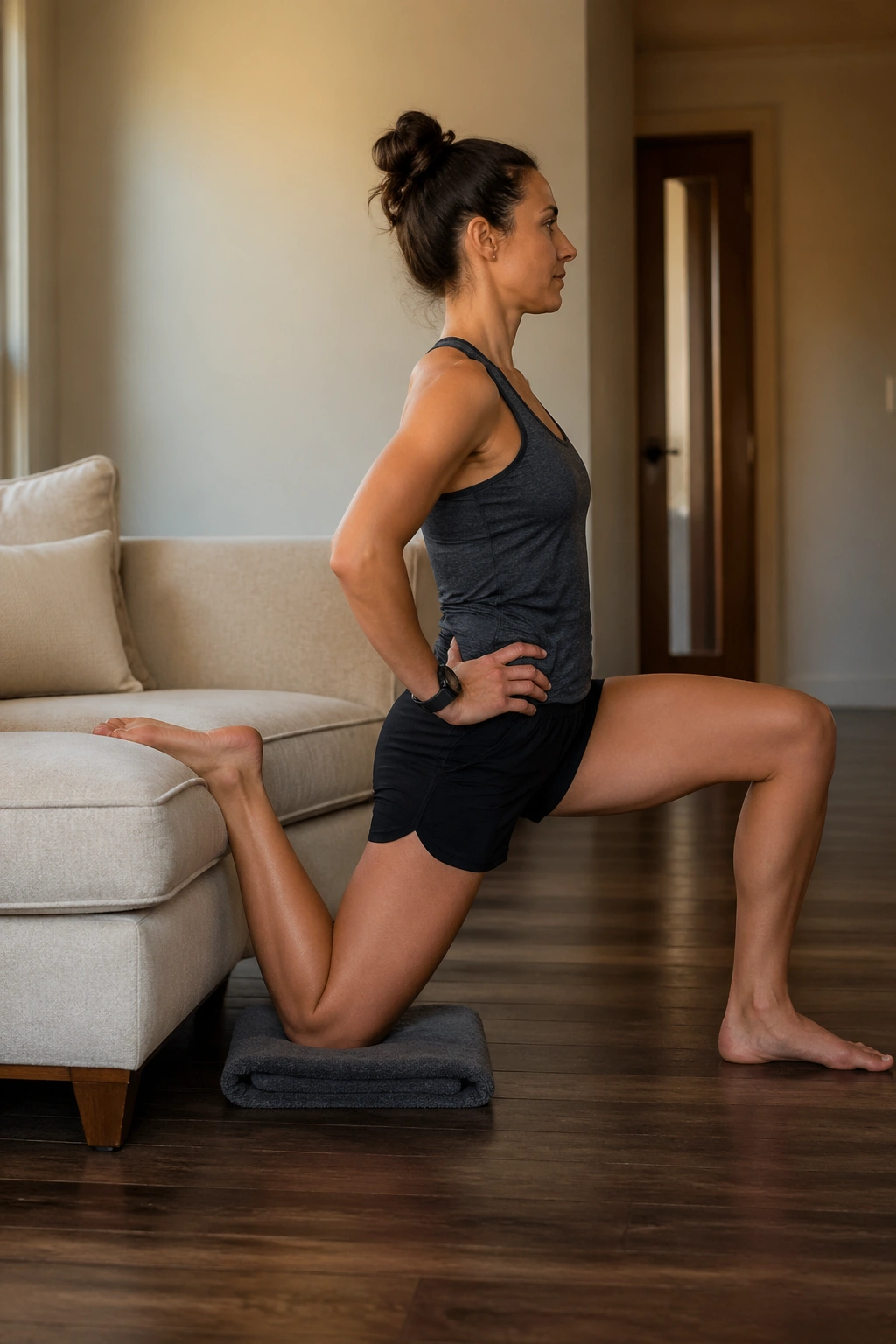
The couch stretch is a bully. I mean that in a good way.
It gets at the quads and hip flexors together, and it does not let you hide from either one. That makes it especially useful after long runs with climbs, hard efforts, or a lot of time on tired legs. It is also the one most people set up badly because the position feels awkward at first, which tempts them to twist out of it.
Place one shin up a couch, bench, or wall with the knee on a folded towel. Step the other foot forward into a lunge. Before you sink into the stretch, squeeze the glute of the leg on the couch and keep the ribs from flaring. That keeps the stretch where you want it: front thigh, front hip, and a little down toward the knee if the quad is tight.
Start with 15 to 20 seconds if this is a new stretch for you. It can feel intense fast, and there is no need to camp out in a painful setup. Breathe, reset, then take a second round. If the low back arches hard, shorten the stance or move the front foot farther out.
This is not a stretch to rush through while checking messages. Give it a minute of respect and it pays back.
12. Seated Spinal Twist
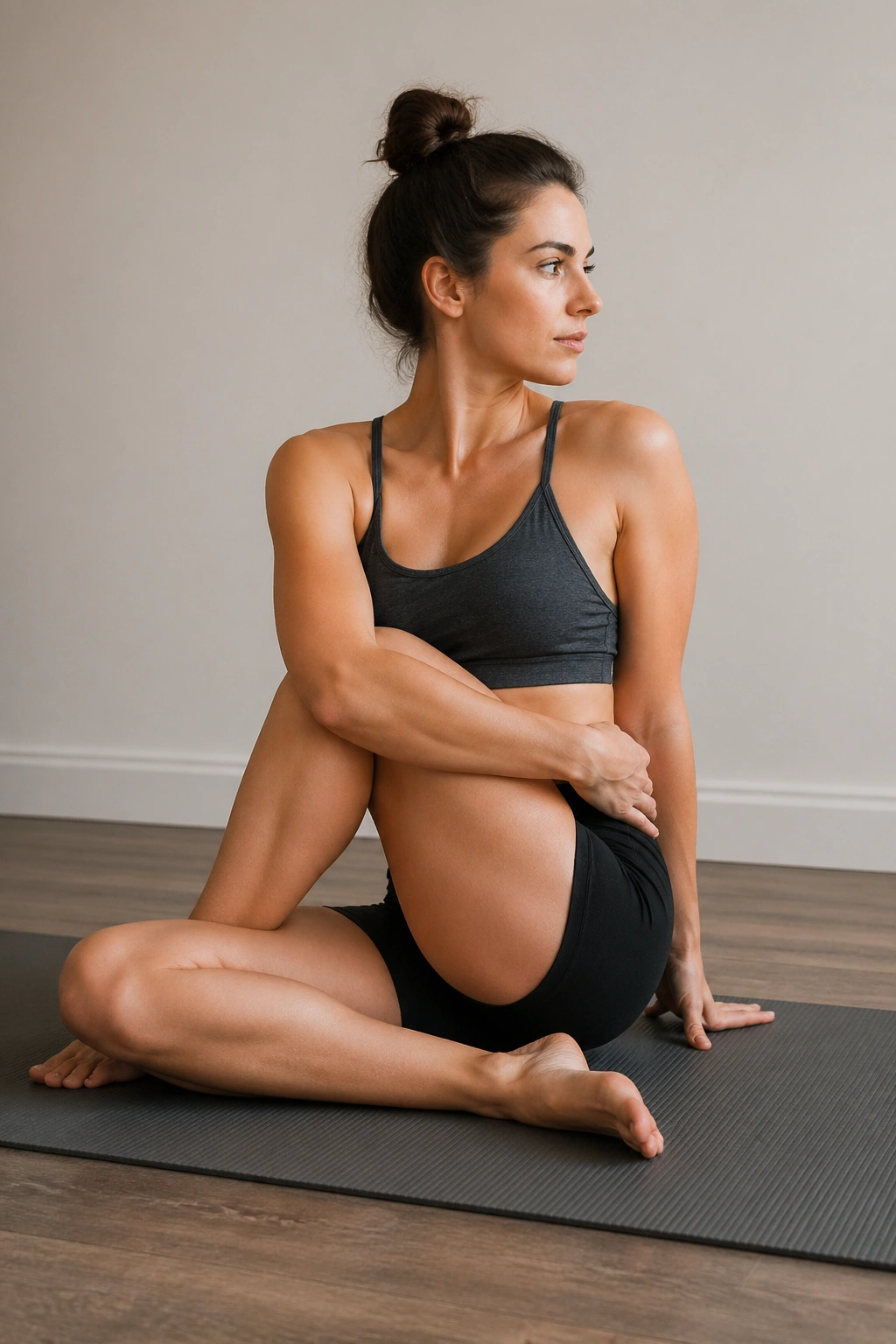
A seated twist is calmer than a standing one, and that matters when your legs are cooked.
Balance can get a little wobbly after a long run. The seated version removes that problem and lets you focus on rotation through the mid-back instead of bracing through the ankles. Sit tall with both sit bones on the floor, cross one leg over or place the foot outside the opposite knee, and turn from the ribs on the exhale.
Keep the twist small at first. A lot of runners crank too far and end up jamming the neck or low back. The real target is the torso, not the outer range. One hand can press lightly into the floor behind you for support, but don’t use the arm to yank yourself deeper.
What Not to Do
- Do not round forward and call it a twist.
- Do not force the knee across the body.
- Do not hold your breath while you turn.
- Do not expect a huge range right away.
Stay here for 3 to 4 slow breaths per side. If the back feels stiff after a long road run, this one helps bring some motion back without much effort. It is subtle. That’s why it works.
13. Wall Ankle Dorsiflexion Stretch
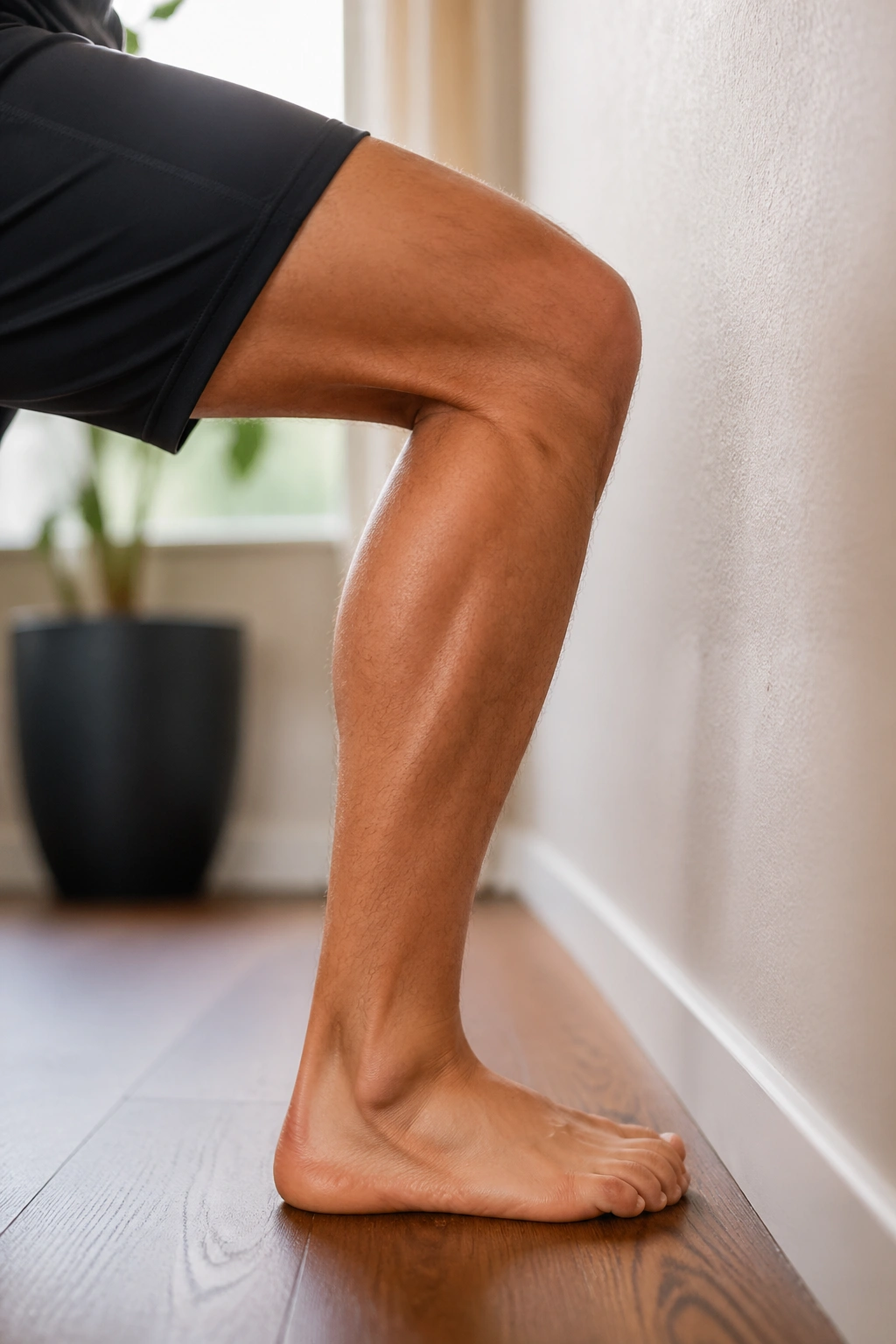
Ankle stiffness is a sneaky reason strides feel choppy after long miles.
If the ankle does not bend well, the whole lower leg starts compensating. The calves work harder, the feet slap more, and the knees can feel like they are searching for room that is not there. The wall ankle drill is one of the simplest ways to check and loosen that up.
Face a wall, place one foot a few inches away from it, and keep the heel flat as you drive the knee toward the wall. The second toe should point straight ahead. If the knee touches the wall too easily, move the foot back a little. If the heel pops up, move it forward. You’re looking for a clean line, not a stretch contest.
Quick Cues That Matter
- Keep the arch from collapsing inward.
- Let the knee travel over the middle toes.
- Repeat 8 to 10 slow reps per side.
- Pause for 1 second at the end of each rep.
This is not flashy, and that’s the beauty of it. A few controlled reps after a long run can make the calves feel less boxed in. It also helps you notice if one ankle is much stiffer than the other, which is useful data for the next few runs.
14. Side-Lying Outer Hip Stretch
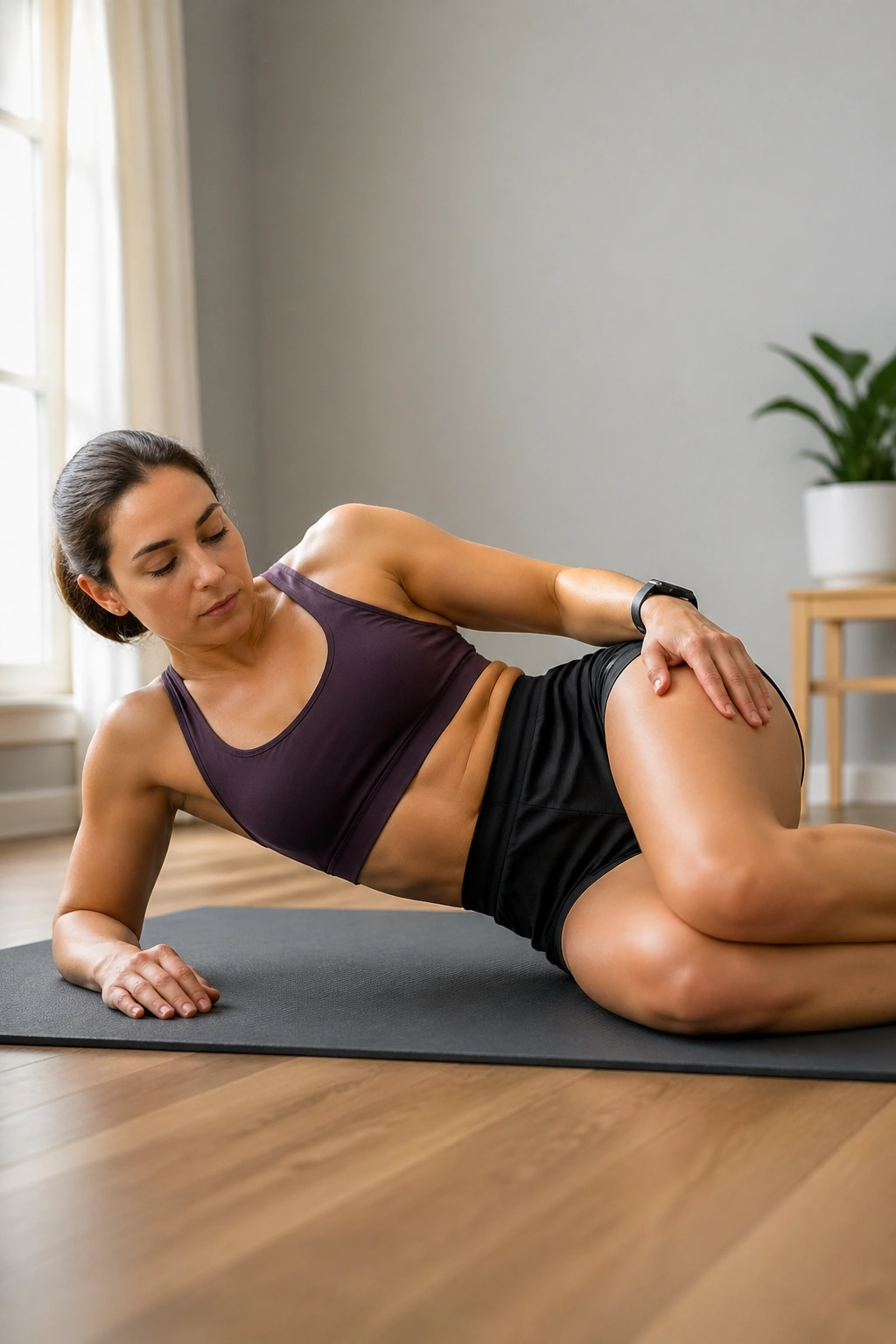
Does the IT band need a stretch? Not really, at least not in the way people usually mean.
The band itself is dense tissue, and it does not lengthen much. What usually needs help is the tissue around it — the TFL, the glute med, and the outer hip muscles that feed tension into that whole side of the leg. A side-lying stretch gives you a cleaner target than the old habit of standing around and crossing one leg behind the other while hoping something magical happens.
Lie on your back or side, cross one leg gently over the other, and let the top leg drift across the body until the outer hip feels like it is letting go. A strap can help if the position feels unstable. Keep the shoulders soft and the lower back from arching. You want the stretch on the outside of the hip, not a wrench through the spine.
This one is useful after long runs on banked roads or cambered pavement, where one side of the pelvis ends up working harder than the other. Hold 20 to 30 seconds and switch. If the outer hip feels pinched, reduce the range and try again. Less is often better here.
15. Legs-Up-the-Wall Recovery Reset
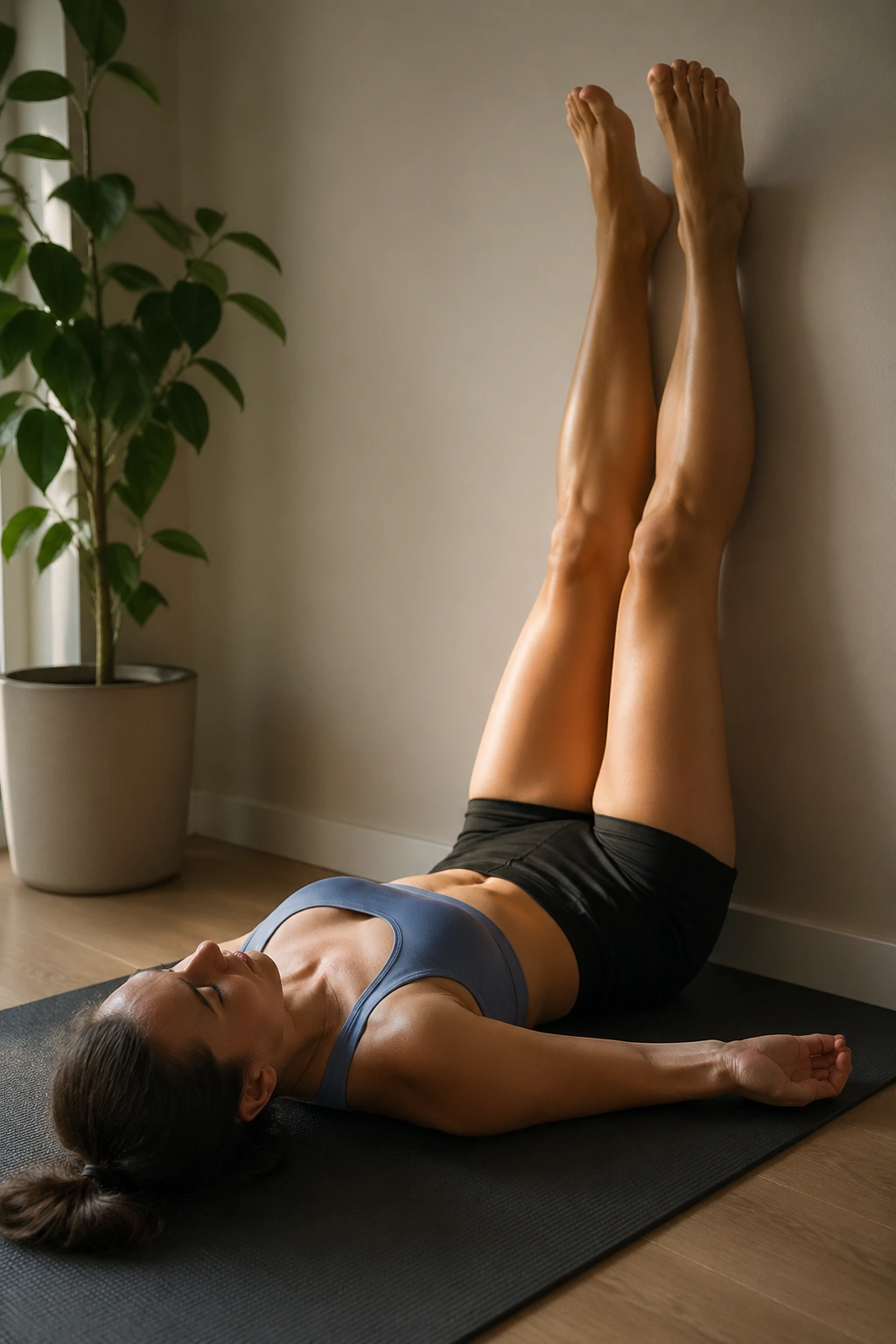
At the end of a long run, the body often wants a minute on the floor more than another stretch.
Legs-up-the-wall is part stretch, part downshift. Lie on your back, swing your legs up a wall, and let the calves rest there while your arms fall out to the sides. That position takes pressure off the feet and ankles, and it gives the whole system a chance to settle. If the hamstrings feel a little tight, scoot the hips farther from the wall. If the low back arches, bring the hips closer.
This is the stretch I reach for when the run was long enough to leave my breathing a bit messy even after I stopped. The quiet matters. Slow exhales, soft jaw, no phone in hand. If you want to add ankle circles or point-and-flex motions, keep them tiny and smooth.
Stay here for 2 to 5 minutes if you have the time. Longer is fine, too, as long as the low back stays comfortable and the legs can relax without tingling. It also works well as the last thing you do before showering, because the transition from upright, pounding miles to flat, supported stillness feels obvious in the best way.
If you only have time for a few stretches after a long run, choose one calf stretch, one hip stretch, one quad or hamstring stretch, and this one. That small mix covers most of what gets beat up on the road, and it doesn’t ask much from tired legs. The point is not to perform. The point is to help the body come back down cleanly, so the next run starts from a better place.
