



A tight lower back can make a simple thing like tying your shoes feel like a project. Sit too long, sleep a little crooked, lift one box wrong, and suddenly your whole middle feels guarded and cranky.
The best back stretches for tight sore lower back days are usually the quiet ones. They don’t yank on the spine. They calm the hips, soften the glutes, and give the lumbar area a little breathing room so it can stop bracing for no clear reason.
Sharp pain is a different story. If a movement sends pain shooting down the leg, brings on numbness or tingling, or feels worse the longer you hold it, back off and get checked by a clinician. Stretching can help a stiff, protective back, but it should not feel like a wrestling match.
Start small. Pick two or three floor-based moves first, hold each one for a few slow breaths, and pay attention to which shapes make the back feel wider instead of tighter. That little bit of listening matters more than chasing a big range of motion.
1. Child’s Pose With Side Reach for a Tight Lower Back
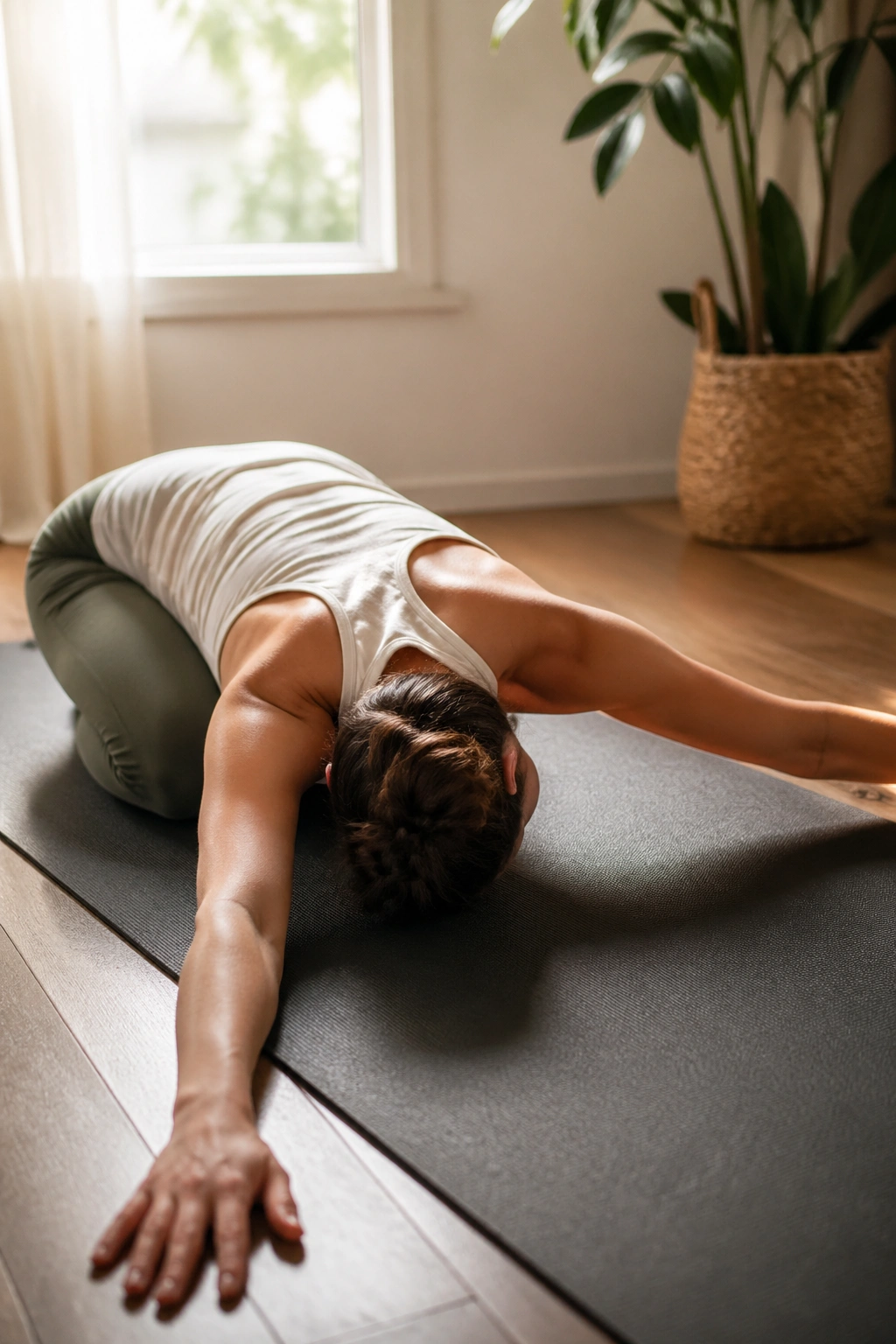
Child’s pose is one of those stretches people reach for instinctively, and on a sore lower back day that instinct is usually right. The side-reach version is even better, because it gets into the side waist and the deep muscle along the low back without forcing a big bend.
Why the Side Reach Helps
When you walk your hands off to one side, you’re changing the line of pull through the lats, ribs, and quadratus lumborum — the deep side-back muscle that loves to get sticky after sitting. That sideways reach often feels less aggressive than a straight fold, which is part of why it works so well.
It’s a clean stretch. No drama.
How to Set It Up
- Kneel on a mat or folded blanket.
- Bring your big toes together and let your knees open wide.
- Sit your hips back toward your heels.
- Walk both hands forward, then nudge them 6 to 10 inches to the right.
- Hold for 3 to 5 slow breaths, then switch sides.
Best cue: keep the hips heavy and the reach easy. If your butt lifts off your heels, you’ve gone farther than you need to.
A pillow under the chest or forehead can make this feel twice as kind. And if the front of one shoulder complains, rest the forearms on a cushion instead of stretching the arms long.
2. Cat-Cow to Loosen a Stiff Spine
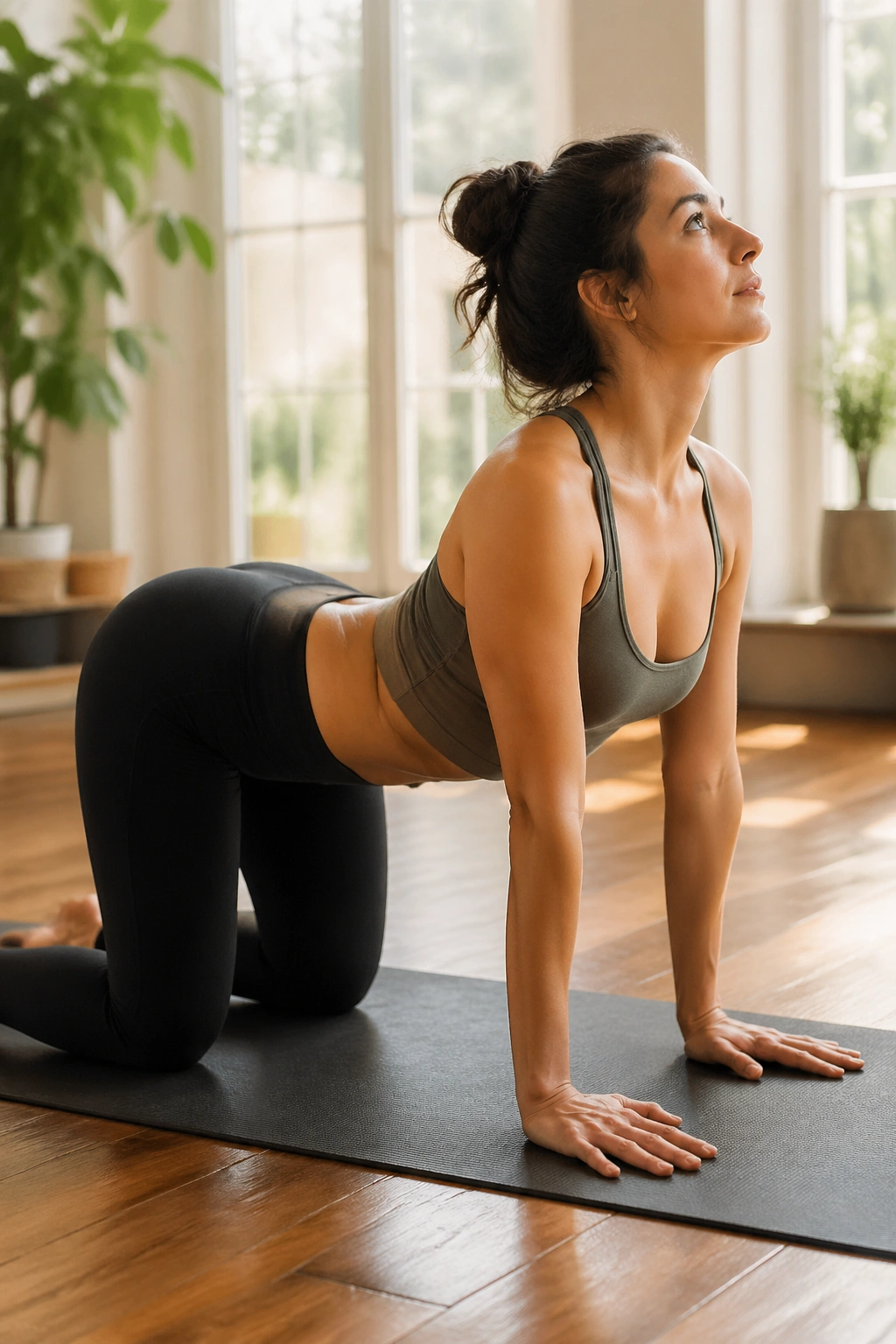
Cat-cow is not a stretch you “win” by going bigger. On a tight lower back day, the smaller version usually works better, because the point is rhythm and gentle motion, not a dramatic arch or round.
Start on hands and knees with your wrists under your shoulders and knees under hips. Inhale as you tip the tailbone up, let the chest glide forward, and keep the belly soft. Exhale as you round the back, press the floor away, and let the chin drift toward the chest without jamming the neck.
Slow wins here.
Six to ten cycles is enough for most people. If one direction feels especially good, linger there for an extra breath or two. If the wrists are fussy, make fists, come onto forearms, or place the hands on a bench so the spine can move without your joints protesting.
The part people skip is the breath. The breath matters. When the exhale is long and slow, the back muscles stop guarding quite so hard, and the whole motion gets smoother instead of choppy.
3. Knee-to-Chest Hold When Your Lower Back Feels Locked Up
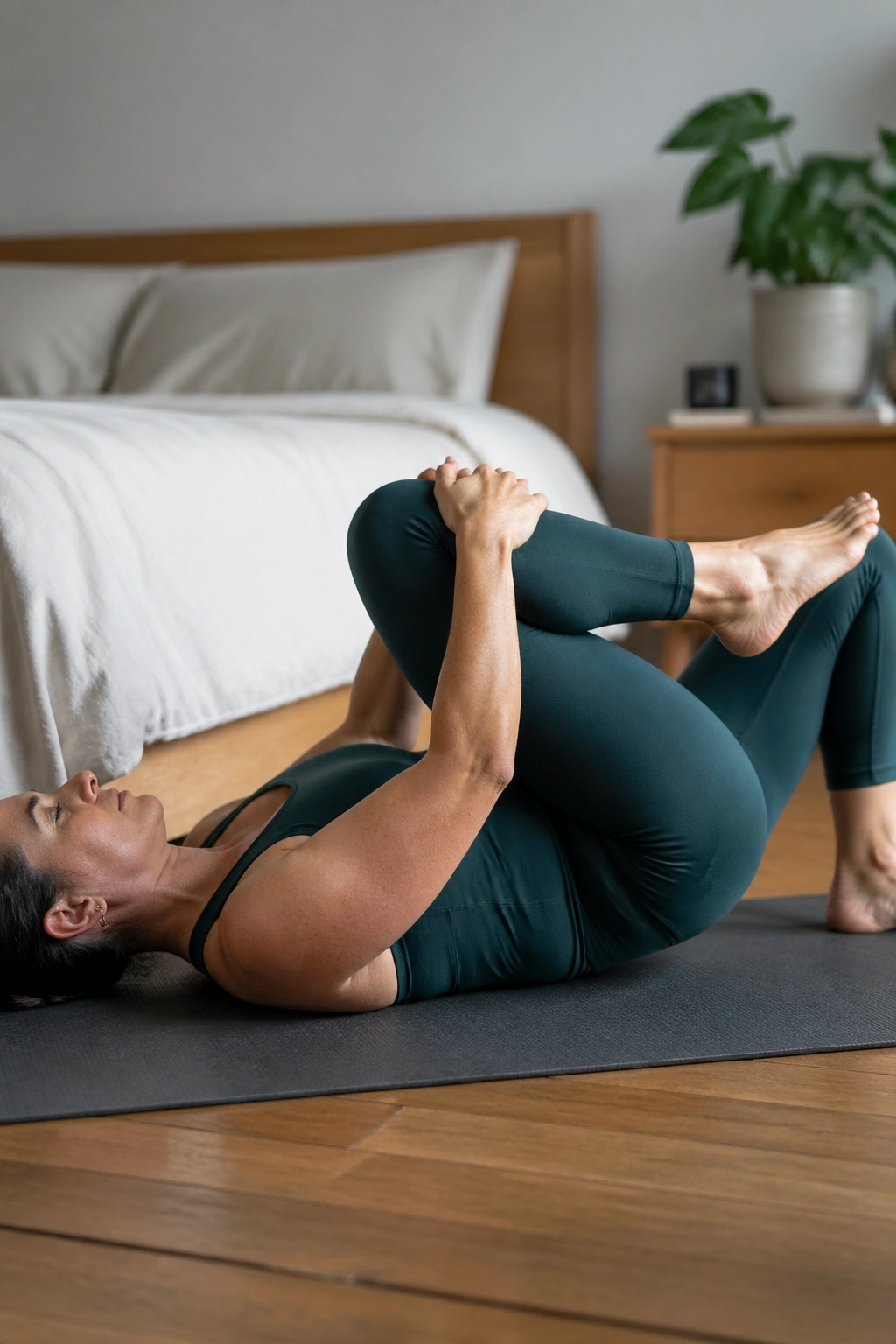
Why does hugging one knee toward the chest feel so relieving? Because it takes load off the lumbar spine without asking it to do anything flashy. It also gives the glutes and deep hip muscles a chance to soften, which is often the part people are missing when they say their “back” hurts.
Lie on your back with both knees bent. Pull one knee toward your chest and keep the other foot on the floor. If that feels easy, bring both knees in together for a fuller stretch, but don’t yank. The lower back should feel lengthened, not crushed.
How to Use It
- Hold behind the thigh or over the shin.
- Keep the tailbone heavy.
- Breathe out as the knee comes in a little closer.
- Stay for 20 to 40 seconds.
- Switch sides, then finish with both knees if it still feels good.
A tiny rock from side to side can feel better than a hard hold. That little sway often calms the low back faster than pulling harder ever does. And if your neck starts to tense, put the head down and unclench the jaw. Oddly enough, that helps a lot.
4. Figure-4 Stretch for Tight Hips and a Grumpy Back
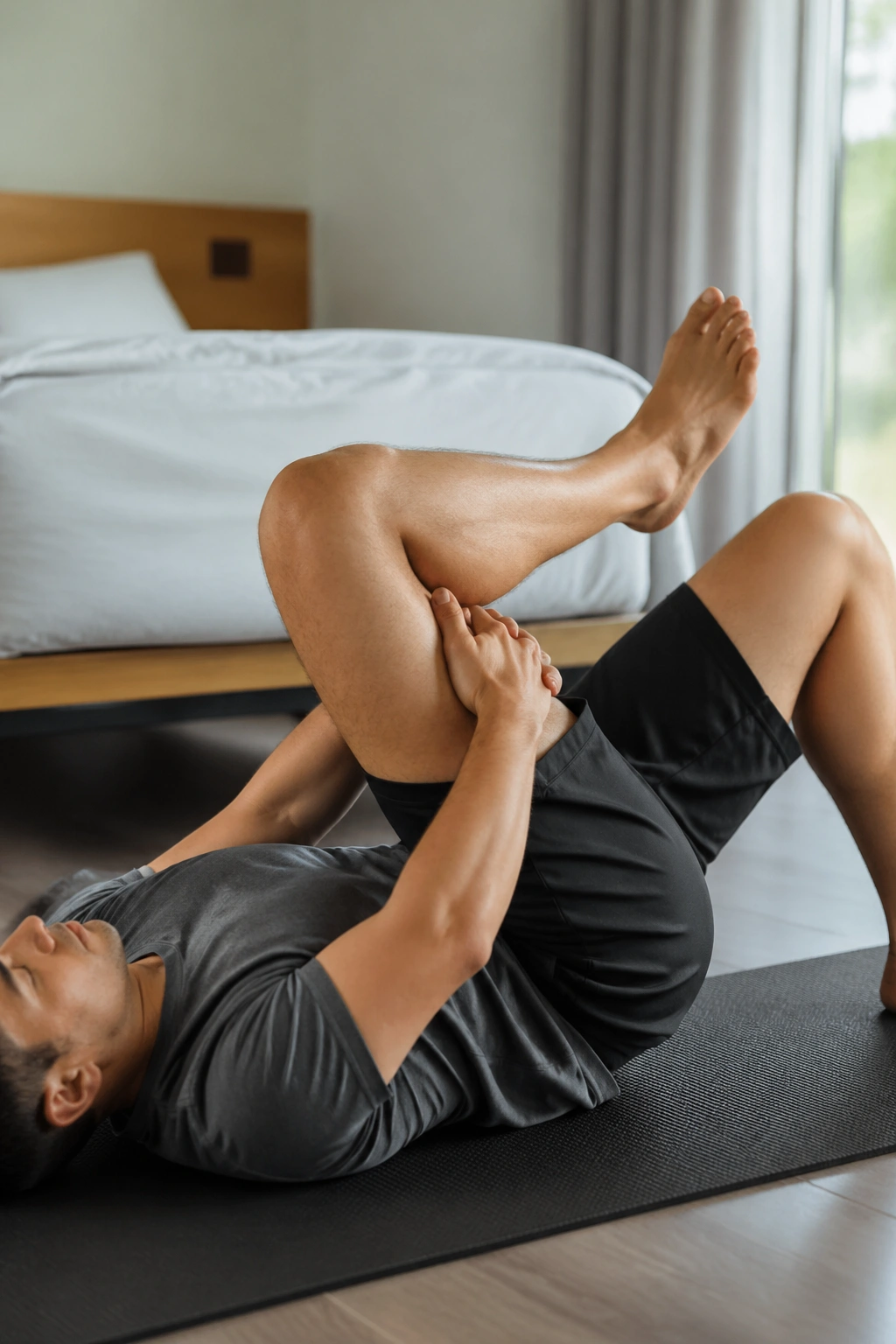
After a long drive or a day of sitting, the low back often looks guilty when the real trouble is sitting in the hips and glutes. The figure-4 stretch goes after that hidden tension. It opens the outer hip, which can take a surprising amount of pressure off the lumbar area.
Lie on your back and cross one ankle over the opposite thigh, making the number 4 shape. Flex the crossed foot so the knee stays happy, then draw the supporting thigh toward you until you feel the stretch in the hip, not the knee. If your thigh won’t come in very far, that’s fine. A smaller shape is still useful.
- Keep the crossed foot active, not floppy.
- Use a strap behind the thigh if your hands can’t reach comfortably.
- Stop if the front of the hip pinches.
- Hold 20 to 30 seconds on each side.
That last point matters. If the stretch feels like it’s digging into the knee joint, back out and adjust the angle. You want outer-hip release, not a tug-of-war with the joint.
5. Pelvic Tilts on the Floor
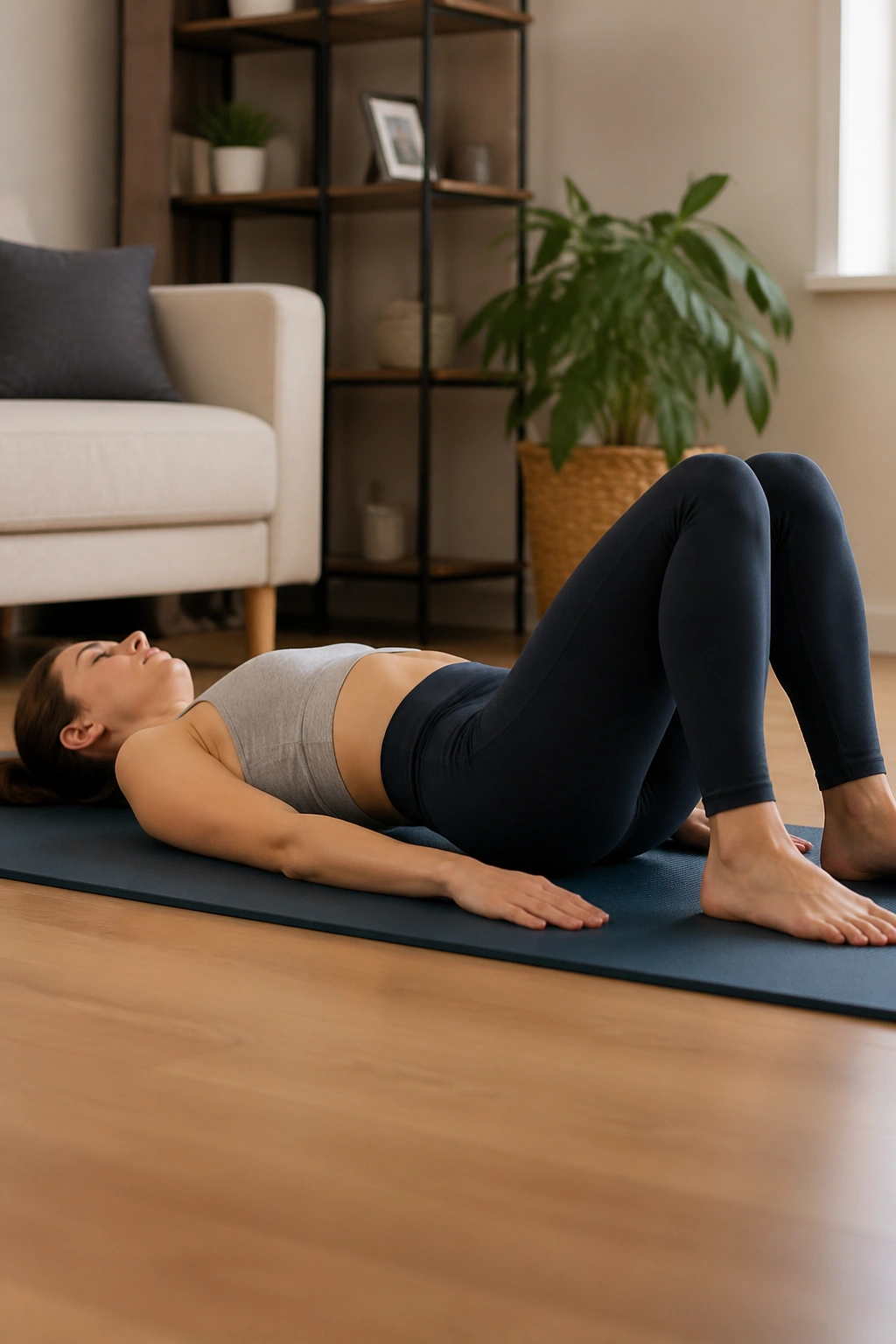
This one looks almost too small to matter. It matters.
Pelvic tilts teach the pelvis to move without the low back doing all the work. On a sore day, that tiny skill is gold, because a cranky back often stays tight simply because it has forgotten how to shift load smoothly. Lie on your back with your knees bent and feet flat. As you exhale, gently flatten the low back into the floor by tipping the pelvis toward you. Then inhale and let the back return to its normal small curve.
No pushing. No squeezing hard.
You’ll usually feel the lower abdomen wake up a little, and that’s a good sign. Ten to fifteen slow reps is plenty. If you hold each tilt for one or two seconds, the movement stays deliberate and easier to feel.
The nice thing about pelvic tilts is that they fit almost anywhere in a routine. They can warm the back up before a deeper stretch, or they can close the whole thing out if your body wants something calm rather than long. If the floor feels hard, slide a thin blanket under the pelvis and keep the range even smaller.
6. Open Book Rotation for Desk-Stiff Ribs and Low Back Relief
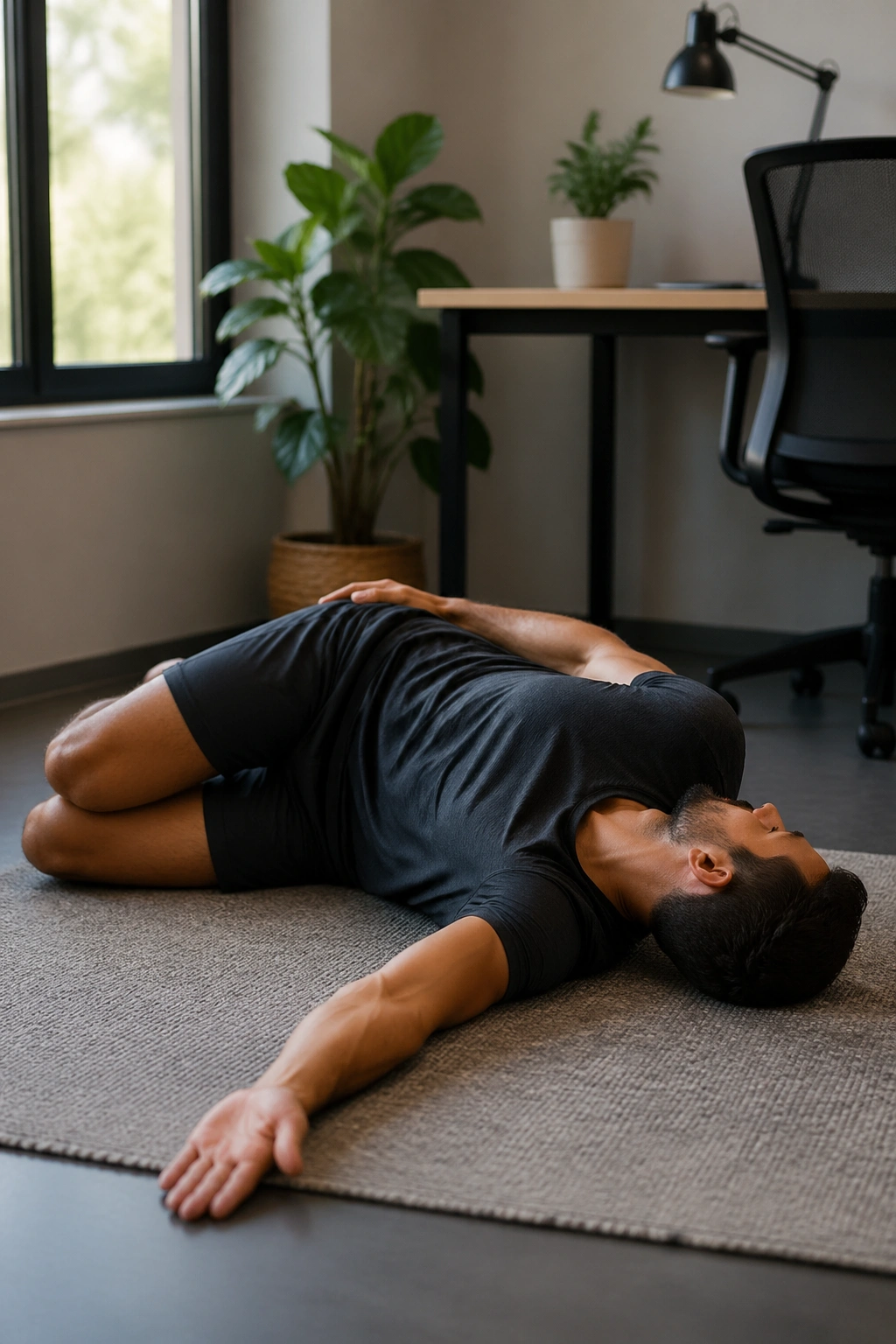
Standing twists look tidy, but they ask a lot of the low back. Open book gives you the same rotational idea with the pelvis pinned down, which is usually kinder when the lumbar area is already annoyed.
Lie on one side with your knees bent and stacked. Stretch both arms straight in front of you, palms together if that feels natural. As you inhale, sweep the top arm in an arc across the body and open it toward the other side, letting the chest follow the hand while the knees stay put. Exhale and melt the shoulder back down.
The twist should live higher than the beltline. That’s the whole point. When the rib cage and mid-back rotate, the lower back gets a break from doing every tiny bit of turning.
If the knees drift apart, place a pillow between them. If the top shoulder wants to collapse forward, only open halfway and stay there. People who sit a lot usually love this stretch because it loosens that stiff, curled-up feeling between the shoulder blades and the pelvis. I like it better than a big standing twist for that reason. It’s calmer, and calm matters when the back is already touchy.
7. Sphinx Pose for Gentle Back Extension
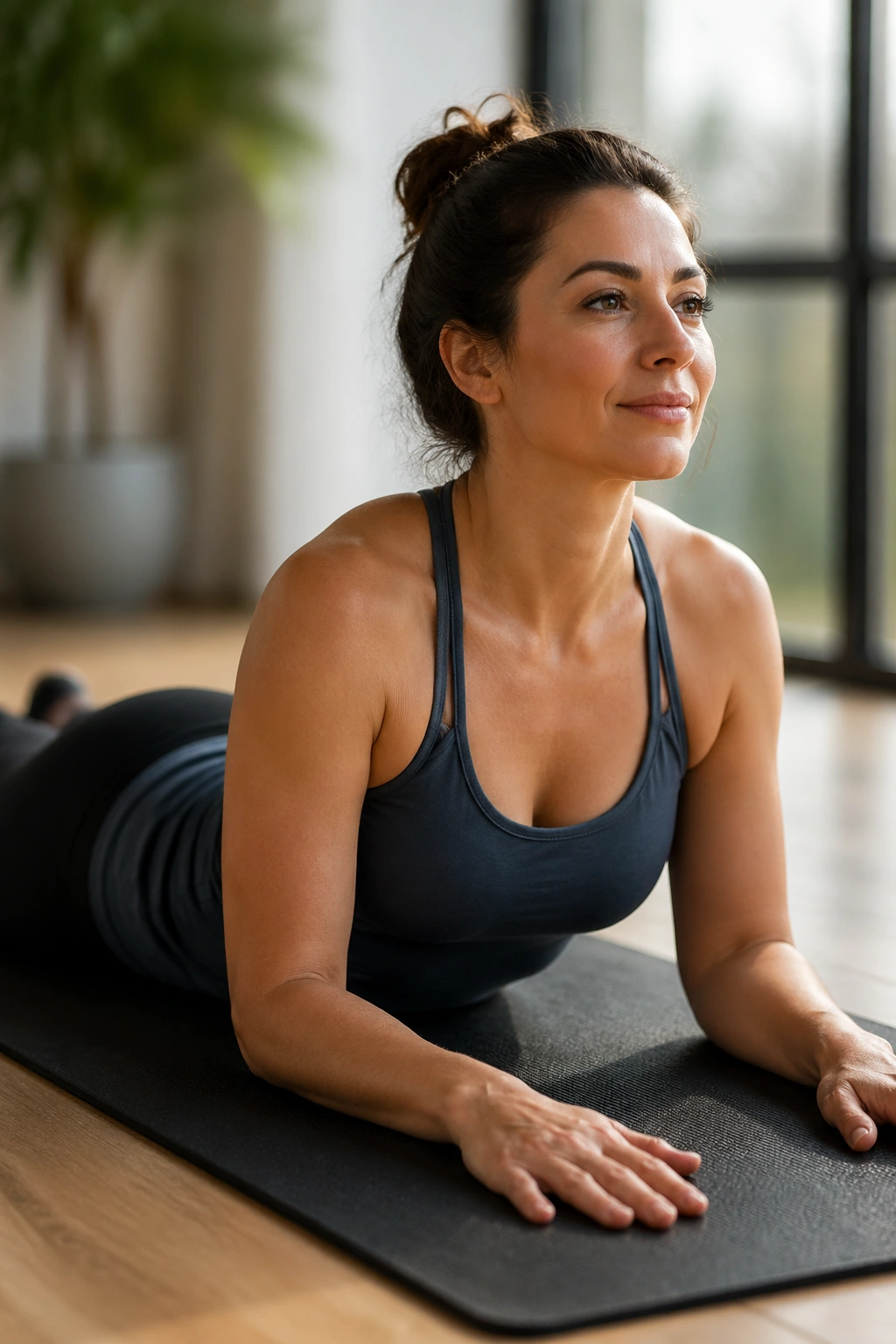
Sometimes a sore lower back wants a little extension, not another fold. Sphinx pose is the gentle version of that idea. It brings the spine into a mild backbend without asking the whole body to crank into a big cobra shape.
Lie on your stomach and prop yourself onto your forearms with your elbows under your shoulders. Let the chest float forward a little, soften the glutes, and keep the front of the pelvis heavy on the mat. The goal is a long line through the front body, not a pinchy squeeze in the lumbar area.
If you feel pressure more than space, come lower. That’s the fix.
You may notice this opens the front of the hips and belly more than it “stretches the back.” That’s normal. A lot of lower-back tightness shows up when the front of the body has gone short from sitting, and sphinx gives you a clean way to reverse that without forcing anything.
Hold for 15 to 30 seconds, rest, then repeat once or twice if it feels good. If extension makes your back complain or gives you a sharp pinch, skip it for the day. A gentle backbend is helpful only when it feels like length, not compression.
8. Thread the Needle for Shoulder and Upper-Back Release
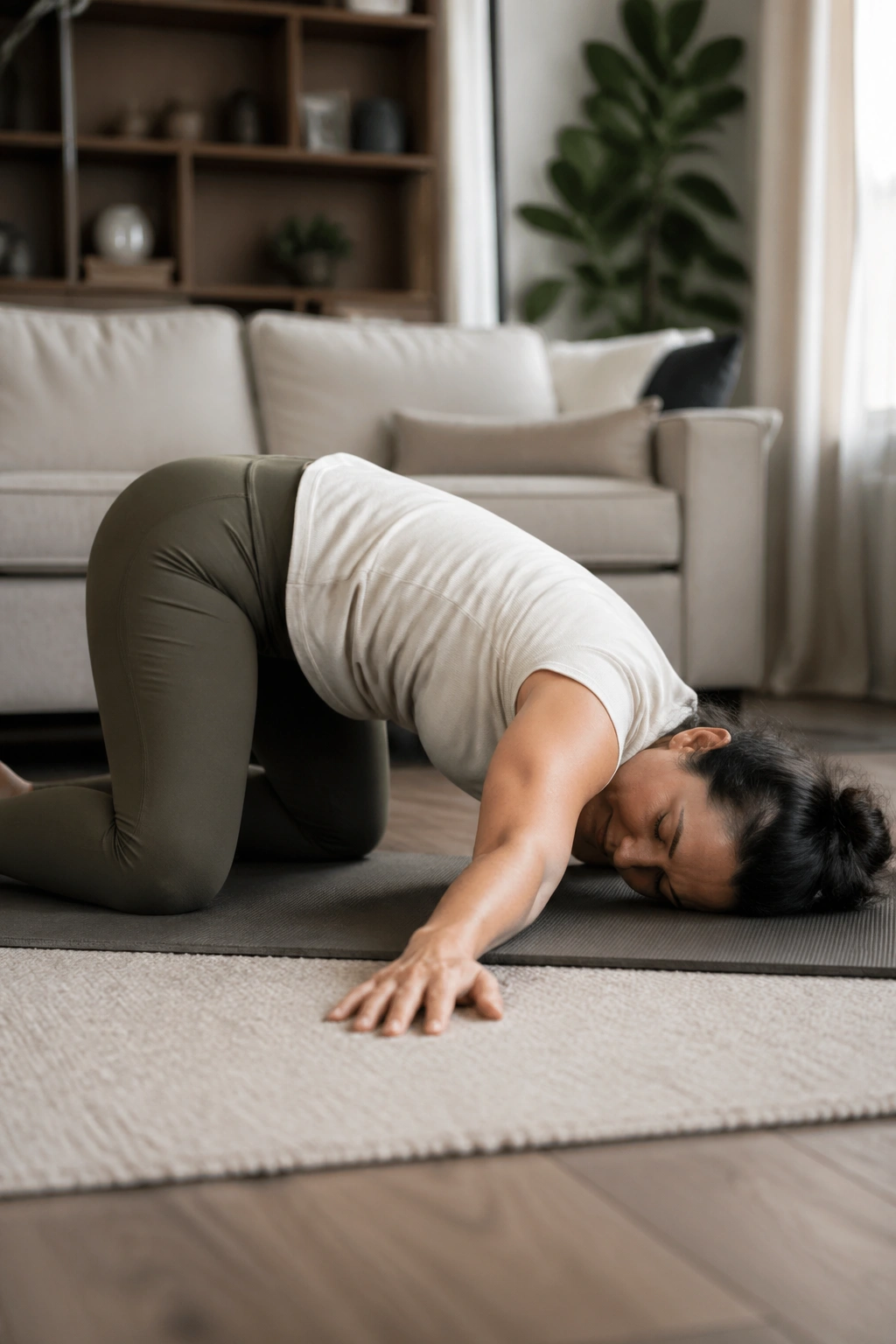
Thread the needle is technically a shoulder stretch, but it earns a place on a sore lower back day because the upper body and low back are always negotiating with each other. If the ribs and upper spine are stiff, the lumbar area often tries to make up the difference. That’s a bad deal.
The Shape to Aim For
Start on all fours. Slide your right arm under your left arm, palm up, and let the right shoulder and side of the head rest on the floor or a block. Keep the hips stacked over the knees instead of sinking backward. That keeps the stretch focused where you want it.
Small Details That Save the Neck
- Let the bottom shoulder relax.
- Keep the supporting hand active.
- Move only as far as the shoulder can settle.
- Put a folded blanket under the head if the floor feels too far away.
The back of the shoulder and the side of the rib cage usually wake up first. That’s good. You’re not looking for a huge twist. You’re looking for the kind of opening that makes the upper body stop dragging on the lower back. Hold for 20 to 30 seconds, then switch sides and let the movement stay smooth.
9. Happy Baby for Deep Hip Release
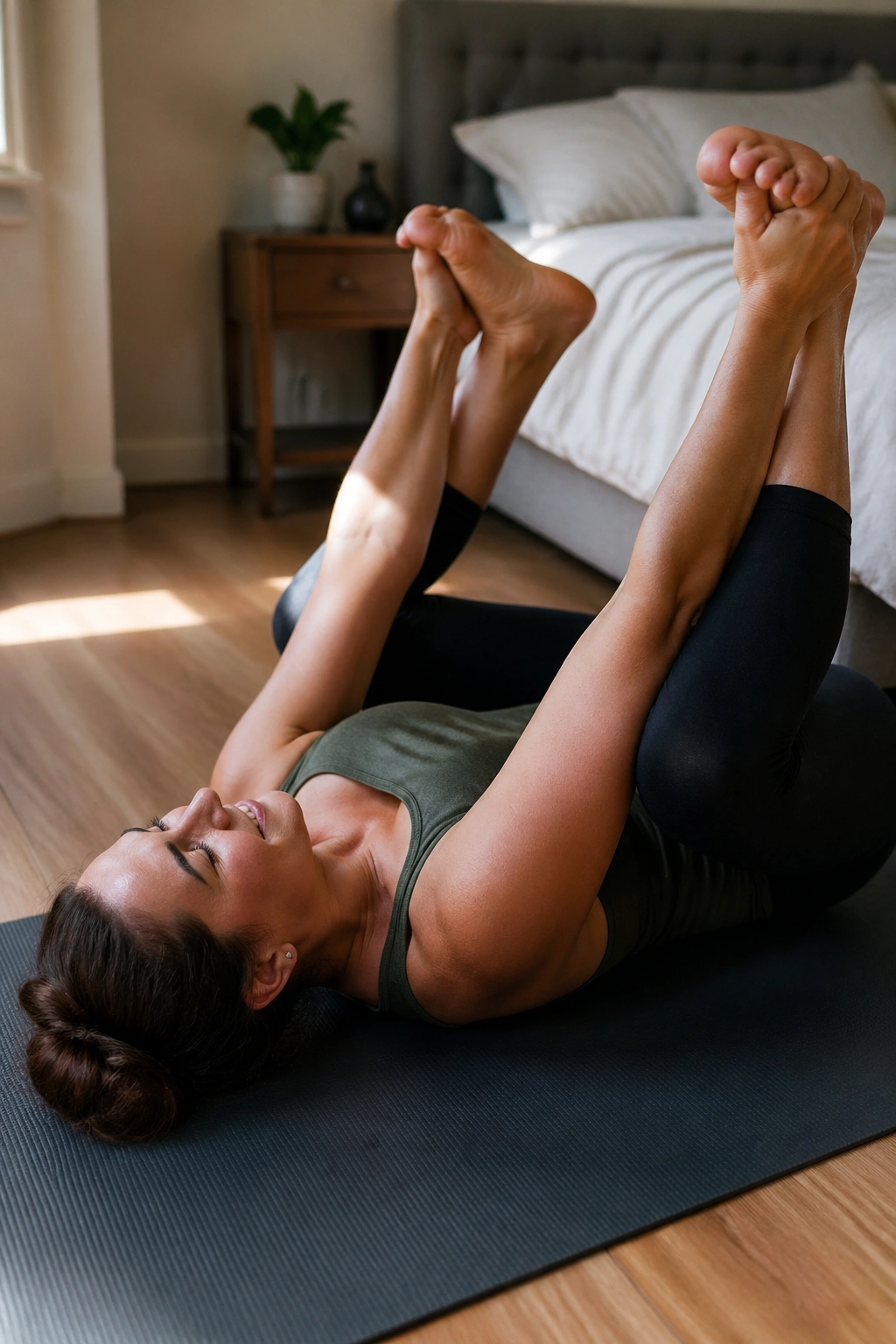
Happy baby looks a little silly, which is part of why it gets skipped. That’s a mistake. On a day when the lower back feels jammed up, the pose can give the hips, glutes, and sacrum a deep, clean release without asking you to stand up and load the spine.
Lie on your back and draw both knees toward your armpits. Grab the outer edges of the feet, the ankles, or the backs of the thighs if that’s easier. Let the knees separate a little wider than the torso while the tailbone stays heavy on the floor. A small rock side to side can feel delicious here.
- Keep the face relaxed.
- Flex the feet if the knees like that better.
- Use a strap around the soles if your hands can’t reach.
- Stay for 20 to 40 seconds, or longer if the position feels steady.
A lot of people hold their breath in this pose because it feels intense in the inner thighs. Don’t. Slow breathing makes the whole thing calmer and usually lets the pelvis settle a bit more. If your low back arches off the floor, bring the knees slightly lower and take the stretch down a notch.
10. Low Lunge for Tight Hip Flexors
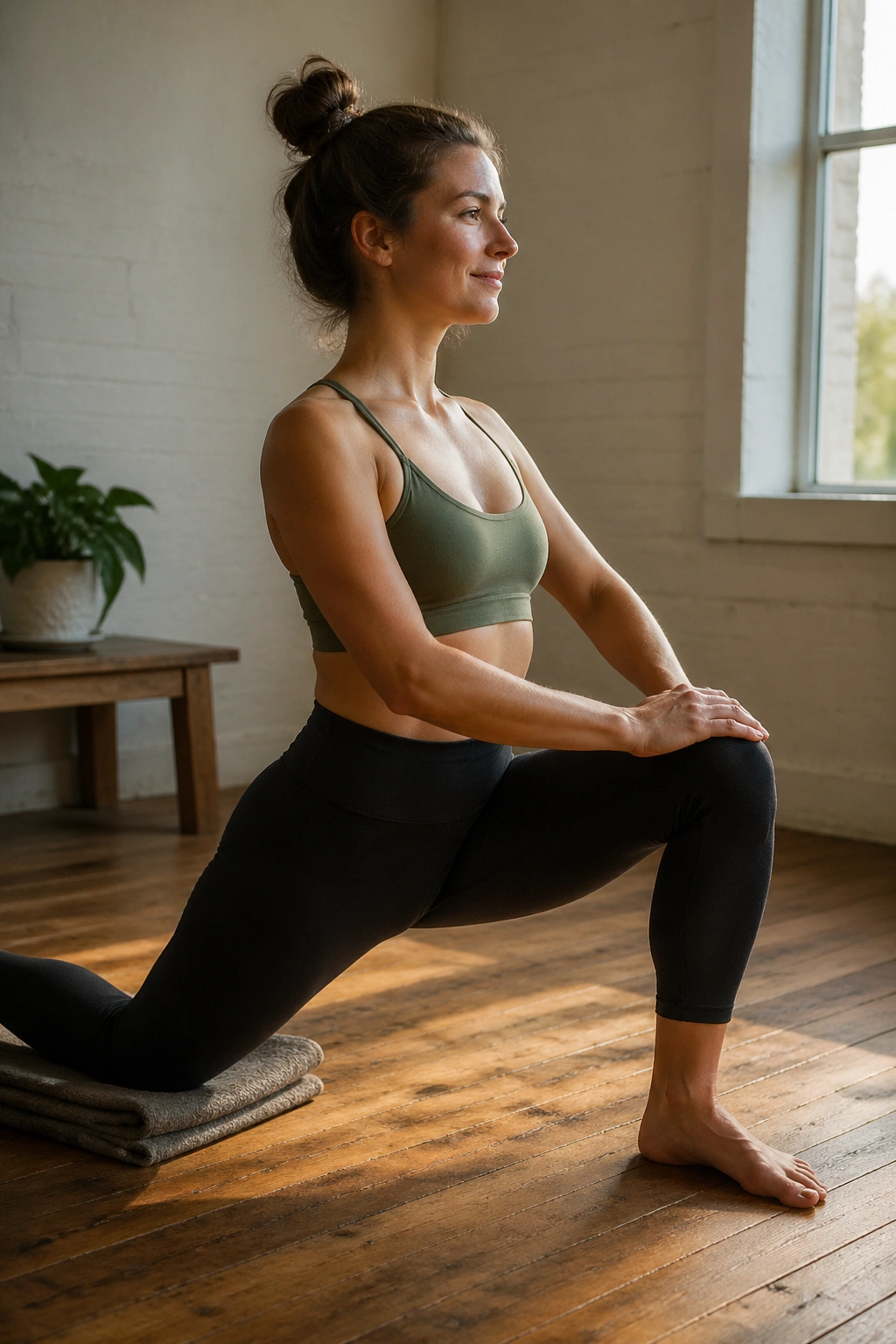
If you sit a lot, the front of the hips may be the real troublemakers. Tight hip flexors can pull the pelvis forward and make the lower back do extra work all day long. A low lunge addresses that better than another hamstring stretch for many people.
Step one foot forward and drop the back knee to the floor on a folded blanket. Shorten the stance if you feel wobbly. Then tuck the pelvis slightly under you — a small tailbone tuck, not a big clench — and squeeze the back-side glute just enough to feel the front of the hip open. Keep the torso upright if you can.
What Makes It Different
A hamstring stretch pulls from behind. This one opens the front of the pelvis, which often matters more on desk-heavy days. You may feel the stretch along the top of the back leg, into the lower belly, or down the front of the thigh.
Use a block under the hands if the floor is too low, and don’t lunge so deep that the low back starts to arch. Twenty to thirty seconds on each side is enough. If the front knee slides forward or the pelvis tips hard, shorten the stance and reset. The pose should feel like a steady opening, not a strain.
11. Supported Seated Forward Fold Without Forcing Your Hamstrings
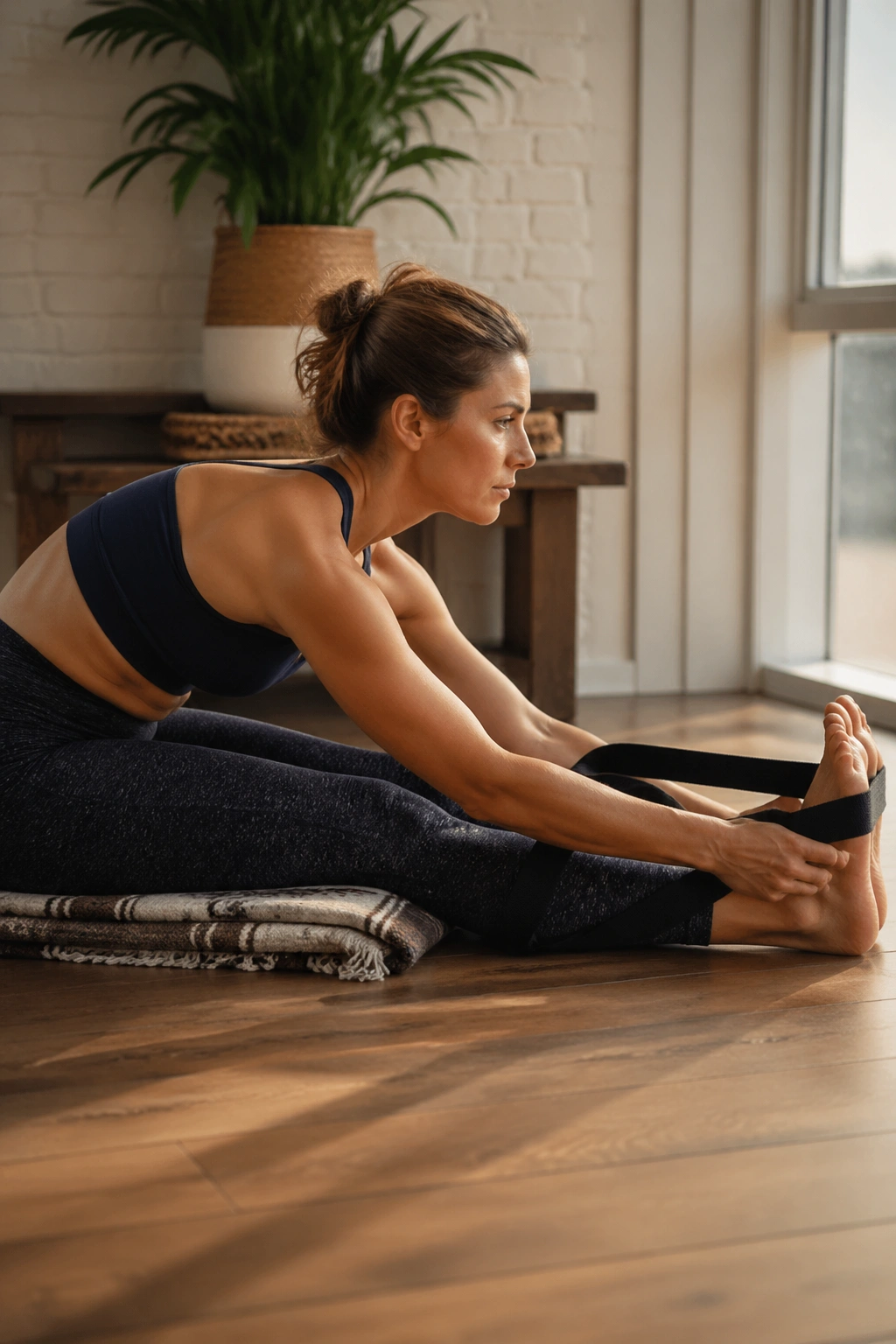
Why does a forward fold calm one back and irritate another? Because the details matter more than the shape. Done with bent knees, a long spine, and a little support under the hips, a seated forward fold can ease the back of the body without turning into a cranky tug on the low back.
Sit on a folded blanket or cushion so the pelvis tips slightly forward. Extend the legs, but keep the knees soft. Reach toward the feet only as far as the back can stay long, and use a strap around the soles if the hands can’t get there without rounding hard. That rounding is where a lot of people lose the benefit.
How to Keep the Fold Long, Not Collapsed
- Bend the knees as much as needed.
- Keep the chest moving forward, not down in a rush.
- Relax the neck.
- Hold 20 to 30 seconds.
- Come up slowly, one vertebra at a time.
This one is best on a back that wants gentle length, not aggressive stretching. If the hamstrings are pulling so hard that the pelvis tucks under and the low back rounds like a question mark, back off. A smaller fold with a strap is smarter. It’s also kinder to the spine.
12. Supine Twist for Ribs, Hips, and a Stiff Midsection
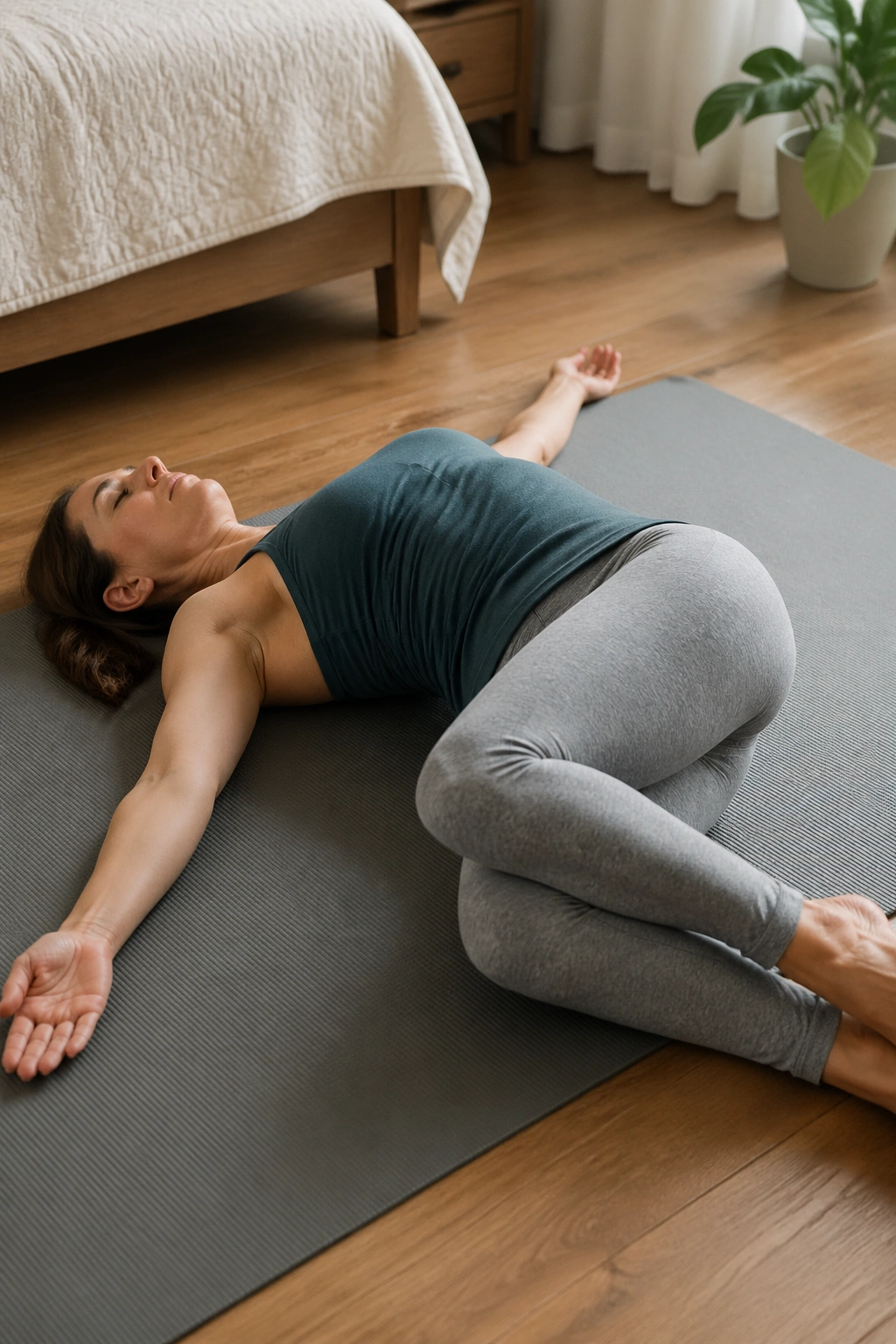
Supine twist is one of the cleanest ways to get a little rotation without asking the standing body to balance at the same time. On a tight lower back day, that stability can make all the difference.
Lie on your back and bring both knees toward your chest. Let them drop to one side, and keep the opposite shoulder heavy on the floor. If the knees don’t reach the mat, place a pillow or block underneath them. That support is not cheating. It’s what makes the stretch usable instead of cranky.
The sensation should spread across the side waist, the ribs, maybe the outer hip. It should not feel like a wrench in the beltline. If it does, bring the knees closer to center and cut the range in half.
A lot of people get too ambitious with twists and crank the knees all the way down. That’s usually too much on a sore back. A small rotation is enough to take the edge off, especially if you breathe into the side ribs for five slow breaths before switching sides. The body loves a little patience here.
13. Standing Forward Fold With Bent Knees
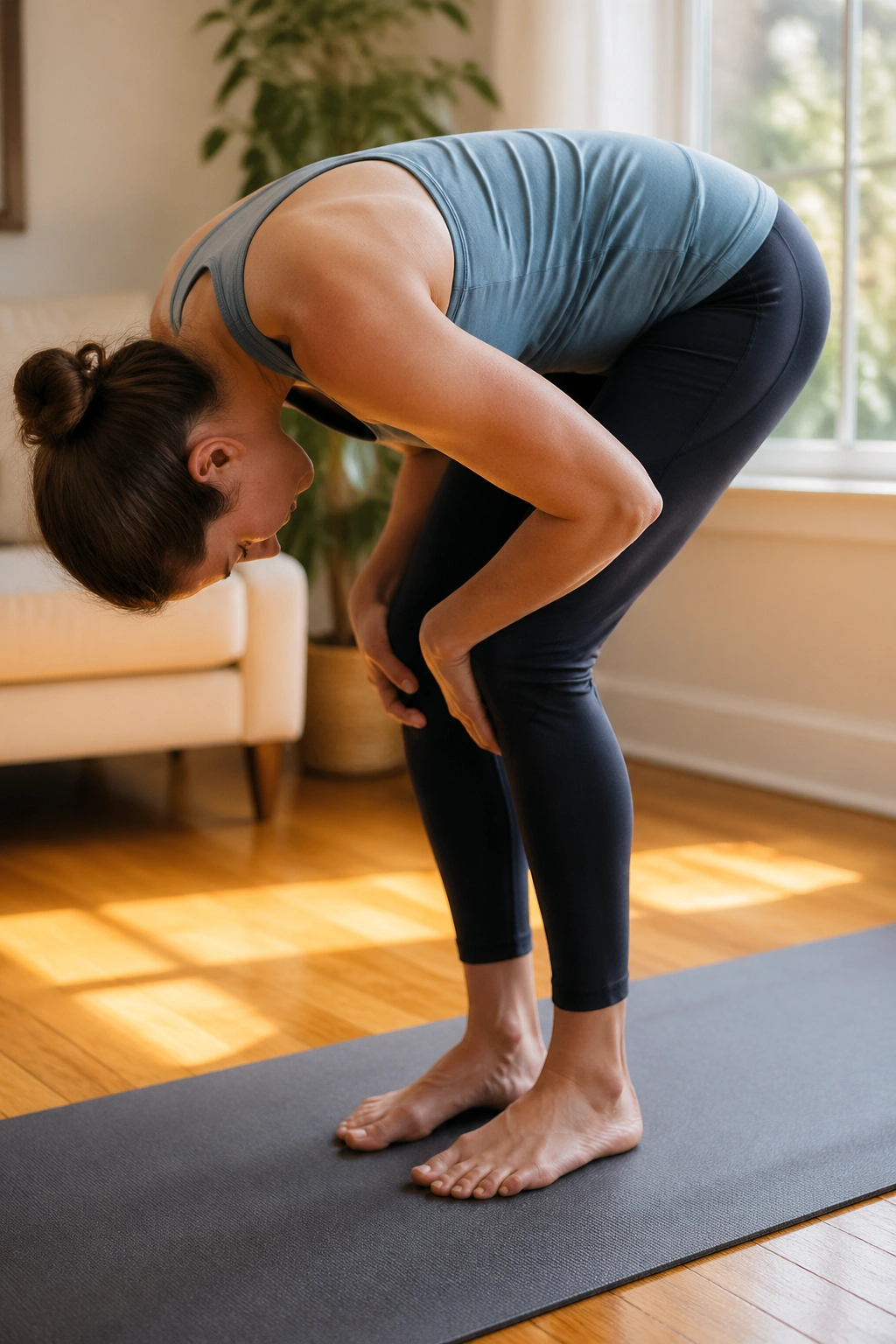
Touching your toes is not the goal. Releasing the back is the goal.
A standing forward fold with bent knees is one of the simplest ways to get a little decompression when you cannot get down on the floor. Stand with your feet hip-width apart, soften the knees, and hinge forward from the hips. Let the hands rest on the thighs, shins, or a sturdy chair seat if that feels safer. The bend in the knees takes pressure out of the hamstrings and gives the pelvis room to tip.
No prize for straight legs.
If the neck feels cranky, keep the head higher and look at the floor a few feet in front of you. If dizziness shows up when you come up, move slower on the way back to standing. That happens more often than people admit, especially when they stand up fast after a long stretch.
This move works well between chores, after a walk, or any time the back feels compressed from being upright too long. Hold for 15 to 25 seconds, breathe steadily, and come back up with bent knees and a long spine. A tiny fold done well beats a dramatic fold done badly.
14. Wall Hamstring Stretch for Long-Sitting Days
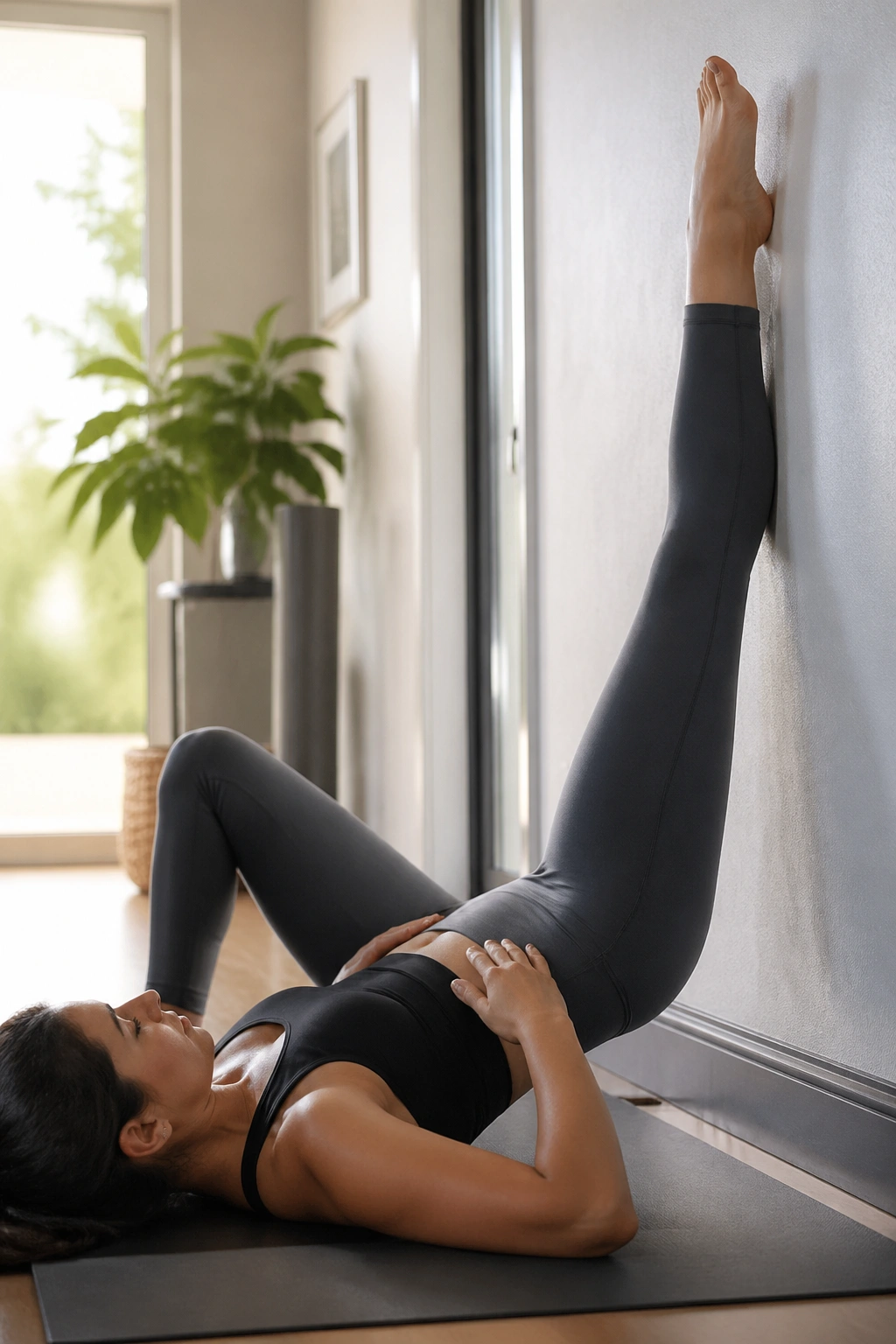
A wall hamstring stretch gives you more control than standing and less strain than a deep floor fold. That makes it a very good option when the back feels tired but the hamstrings are the real thing tugging on the pelvis.
Lie on your back near a wall and place one heel up the wall with the knee slightly bent. The other leg can stay bent with the foot on the floor or be flat on the mat. Slide closer or farther from the wall until you feel a stretch in the back of the thigh without the low back arching off the floor.
How to Make It Useful
- Keep the pelvis heavy.
- Let the toes point up or relax slightly.
- Hold for 30 to 45 seconds.
- Switch sides without jerking.
- Use less height on the leg if the hamstring grabs hard.
The wall helps because it takes balance out of the picture. You can actually notice whether the stretch is in the hamstring or the back. That distinction matters. If the low back starts to lift, move away from the wall a little and lower the leg angle. The stretch should land in the thigh, not in the spine.
15. Windshield Wipers for Easy Spinal Rotation
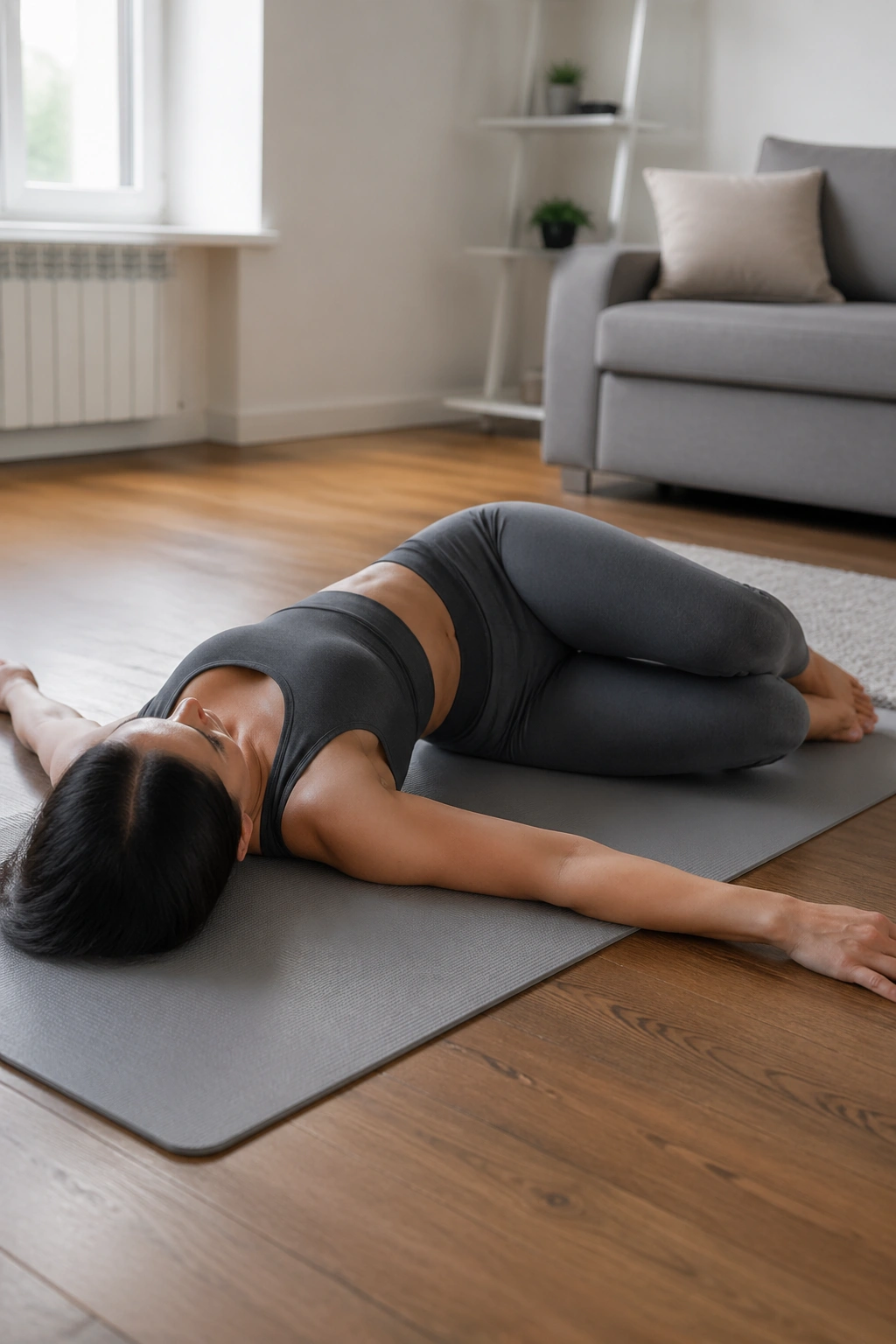
A tiny side-to-side sway can do more for a sore back than a forceful twist. Windshield wipers are the stripped-down version of rotation, and they’re often the safest place to finish a rough-day routine.
Lie on your back with your knees bent and feet flat. Let both knees drift a few inches to the right, then back through center and a few inches to the left. Keep the shoulders relaxed and the motion small. If that feels fine, let the knees travel a little farther, but stop long before the low back complains.
This is not about chasing range. It’s about letting the lumbar area move without bracing. That alone can change how the back feels when you stand up afterward. People with cranky backs often like this one because it never asks for a big commitment.
Try 8 to 12 slow passes, breathing out as the knees drop and breathing in as they come back through center. If one side feels stickier, spend one extra round there. If the back starts to feel worse instead of looser, cut the movement short and stop. On rough days, one gentle rotation move, one hip opener, and one floor stretch is usually enough. More is not always better.
